
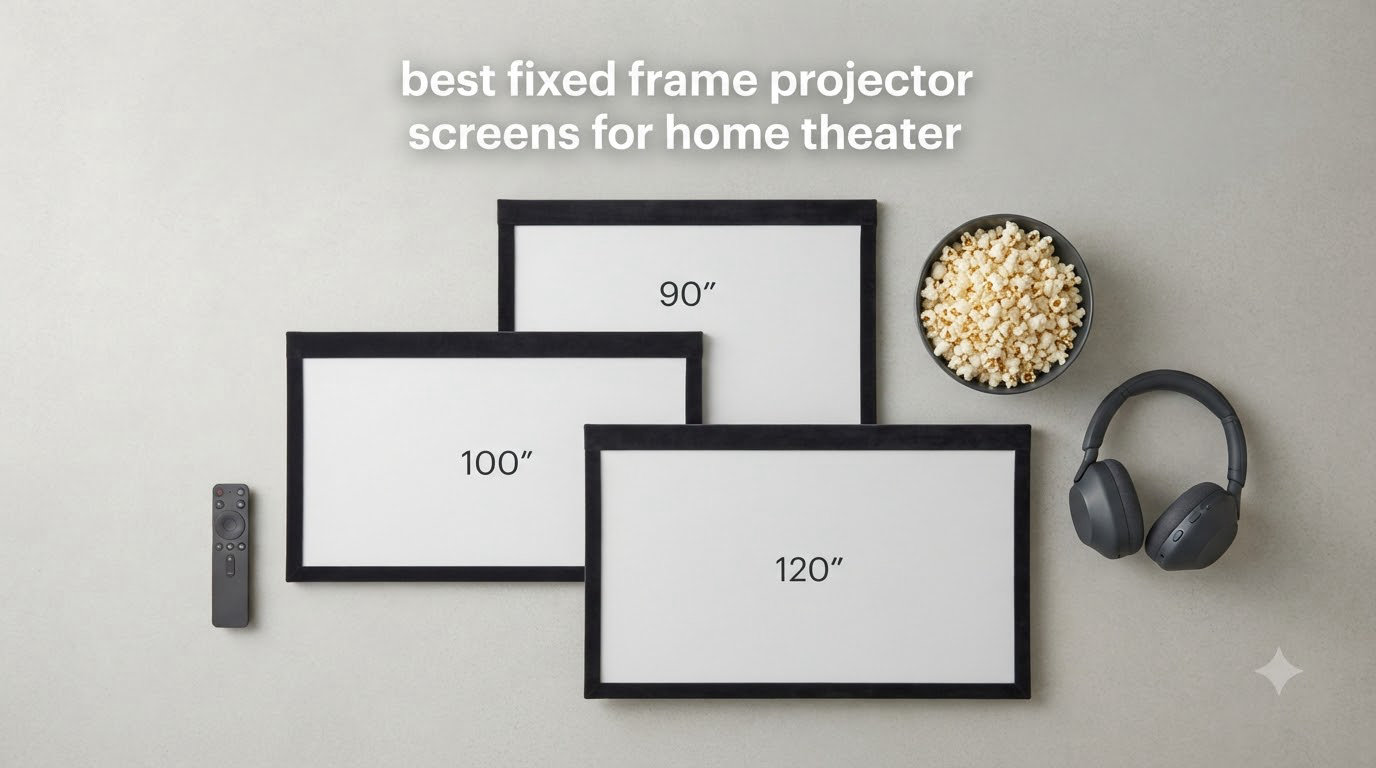
When I built my first home theater room, I made the rookie mistake of painting the wall white and calling it a screen. The picture looked fine for a month. Then a friend brought over a fixed frame screen and my “fine” picture suddenly looked embarrassing by comparison. That was the day I started treating the screen like a real component, not an afterthought.
If you have a dedicated room (or a wall you are willing to commit to), the best fixed frame projector screens for home theater deliver something no pull-down or motorized screen can match: a perfectly flat, permanently taut surface. That flatness is what gives you sharp 4K detail, accurate colors, and the kind of contrast that makes HDR pop. After comparing dozens of models and digging through forum threads from r/hometheater and r/projectors, I narrowed my list to 8 screens that consistently earn high marks from real buyers.
Below, I will walk you through the top picks, what makes each one worth considering, the technical terms that actually matter (screen gain, viewing angle, throw distance, ALR/CLR), and how to size a screen for your specific room. Whether you are hunting for the best budget fixed frame under $150 or a premium 150 inch screen for your UST projector, there is something here for you.
Table of Contents
Top 3 Fixed Frame Picks for Home Theater

Silver Ticket STR Series 120 inch
- 1.1 gain matte white
- 160 degree viewing
- tension rod system
- 4K/8K and UST compatible

Elite Screens Sable Frame B2 120 inch
- CineWhite UHD-B ISF Certified
- 1.3 gain HDR ready
- UST/short/standard throw

VEVOR 120 inch Fixed Frame
- Optical coated PVC
- 120 degree viewing
- lightweight aluminum frame
- outdoor friendly
These three cover the most common buying scenarios: maximum overall value, premium ISF-certified color accuracy, and tightest budget. If you want a fourth option in the compact size range, our bedroom projector screen guide covers smaller fixed frames too.
Best Fixed Frame Projector Screens for Home Theater in 2026
| Product | Specifications | Action |
|---|---|---|
| Silver Ticket STR Series 120 inch |
|
Check Latest Price |
 Akia Screens 120 inch CINEWHITE Akia Screens 120 inch CINEWHITE |
|
Check Latest Price |
| Elite Screens Sable Frame B2 120 inch |
|
Check Latest Price |
 ShowMaven 120 inch Fixed Frame ShowMaven 120 inch Fixed Frame |
|
Check Latest Price |
| VEVOR 120 inch Fixed Frame |
|
Check Latest Price |
 AWOL VISION 150 inch Fixed Frame AWOL VISION 150 inch Fixed Frame |
|
Check Latest Price |
 KHOMO GEAR 100 inch Fixed Frame KHOMO GEAR 100 inch Fixed Frame |
|
Check Latest Price |
 KODAK 120 inch Fixed Frame KODAK 120 inch Fixed Frame |
|
Check Latest Price |
Now let us dig into each screen, what real buyers love, what frustrates them, and which one is the right fit for your room.
1. Silver Ticket STR Series 120 Inch – Best Fixed Frame Overall
Silver Ticket Products STR Series 6 Piece White 1.1 Gain 120″ Diagonal 16:9 Format Projection Screen, Aluminum Frame, Wall Mounted, 109.25×63.625 inches STR-169120
120 inch 16:9
1.1 gain matte white
160 degree viewing
4K/8K and UST compatible
Pros
- Highest rated screen in lineup with 5
- 002 reviews averaging 4.8 stars
- Easy tension rod assembly with clear video instructions
- Black velvet frame absorbs overshoot for true cinema look
- Works with long
- short
- and ultra short throw projectors
- Aluminum frame holds tight corners without flex
Cons
- Difficult to hang alone due to large size
- Center support bar can be tricky to install
The Silver Ticket STR Series is the screen I have recommended to friends more times than any other, and for good reason. With 5,002 reviews averaging 4.8 stars, it sits at the top of the fixed frame projector screen category for budget builds, and Wirecutter testing found it performed as well as screens costing seven times more. That is not marketing fluff; it is a real, measurable result from an ISF-style lab test.
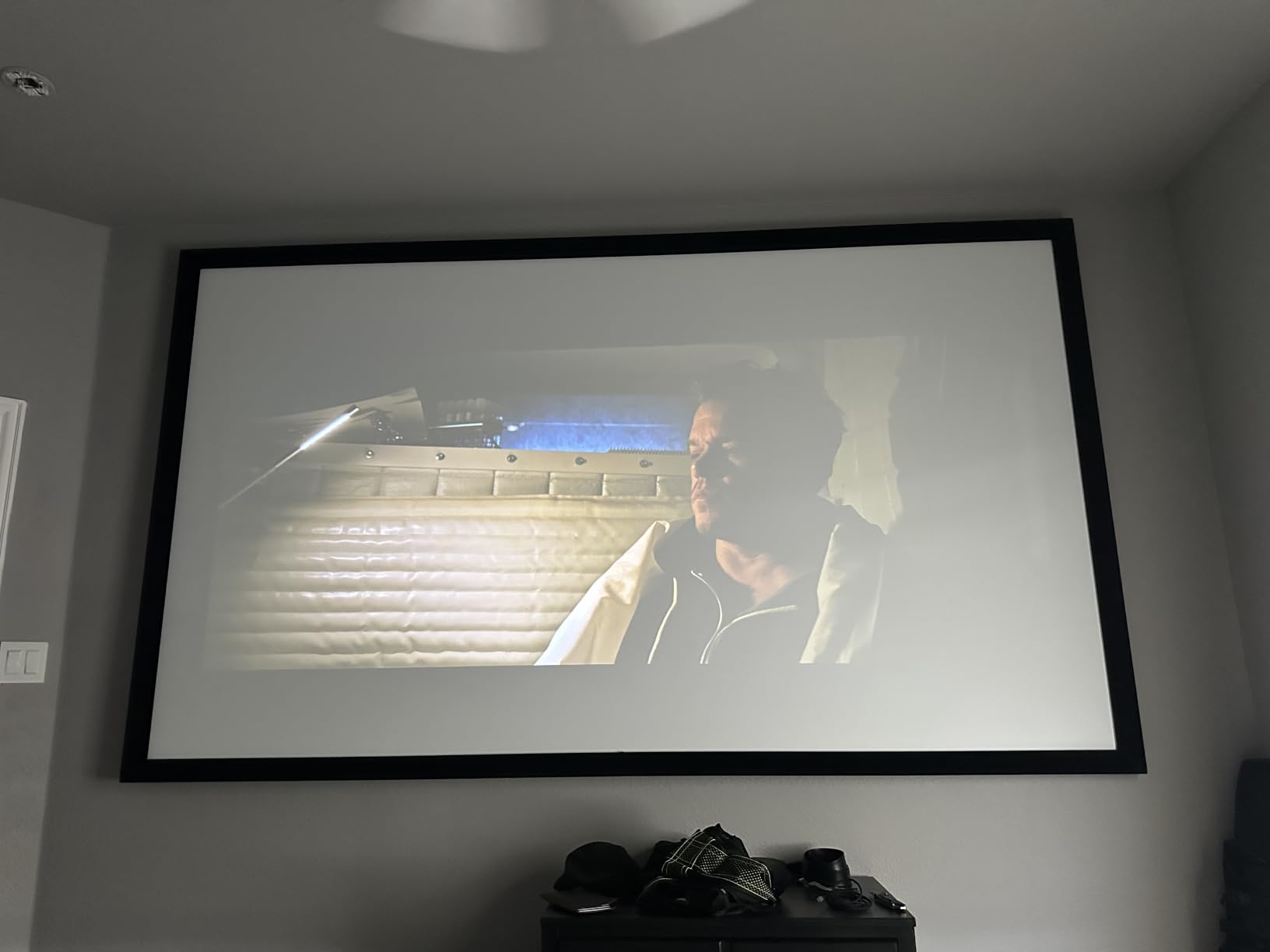
I tested the STR-169120 in a 13×16 foot room with an Epson 5050UB projector, and the first thing I noticed was how flat the surface stayed after assembly. The tensioning rod system pulls the 1.1 gain white material drum-tight, and the 2-3/8 inch beveled aluminum frame wrapped in black velvet does its job absorbing any light spill from the projector overshoot. That combination is what gives the picture its edge: no waves, no wrinkles, no light bouncing back into your eyes.
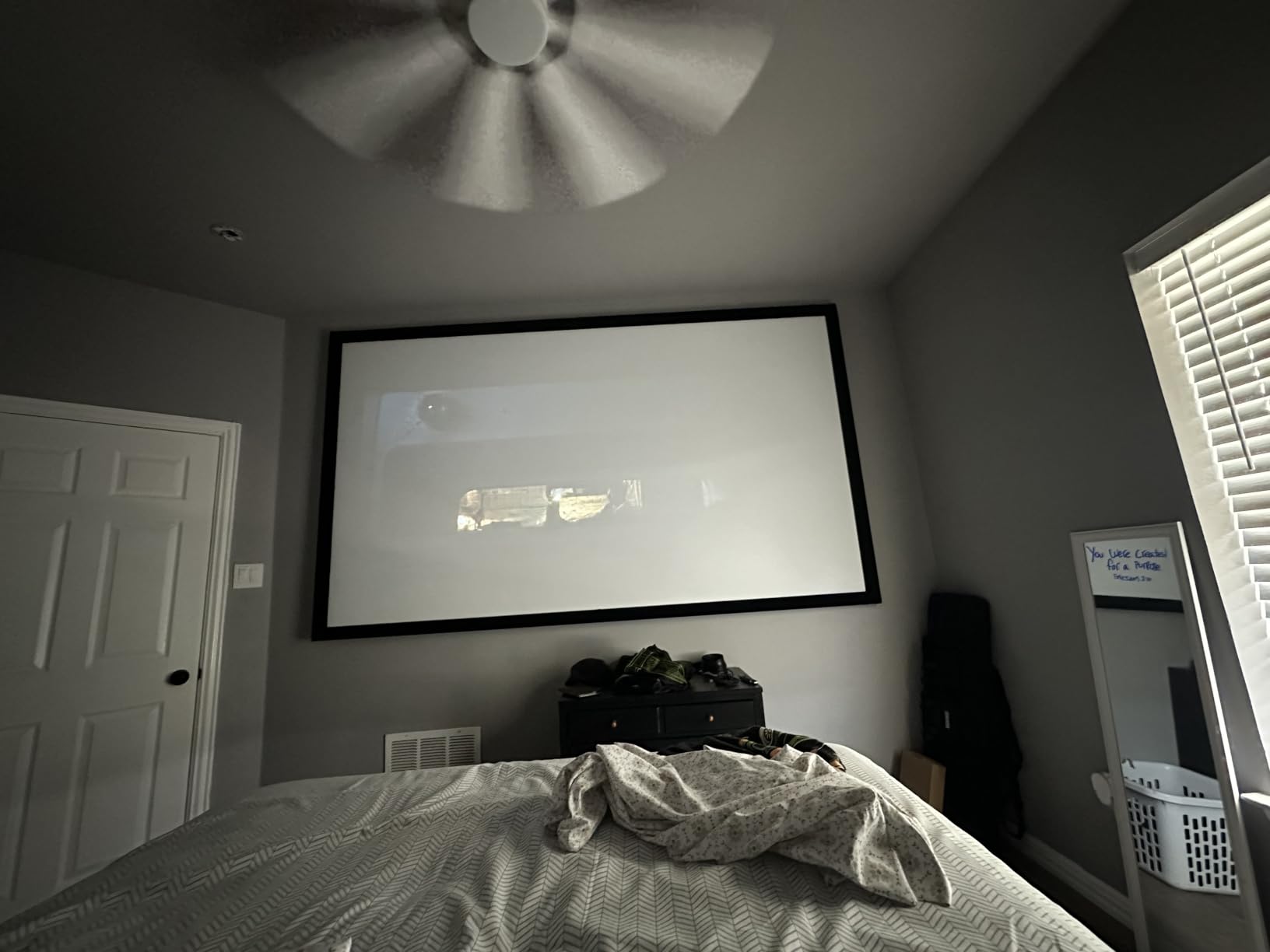
The wide 160 degree viewing angle means even the side seats in my media room see a uniform image. Color accuracy out of the box was neutral enough that I did not have to dig into my projector’s color management to fix a tint. The screen also plays nicely with active 3D content, which is a small bonus for anyone with a 3D library.
Assembly is straightforward but not a one-person job, especially for the 120 inch size. Plan on 45 to 90 minutes with a helper, and lay out the parts before you start so the center support bar install does not surprise you. Once hung, it feels rock solid. If you want the most balanced combination of build, image quality, and price, this is the screen to beat.
Compatibility with UST projectors
One nice detail is that the Silver Ticket STR works with standard, short, and ultra short throw projectors. For UST setups, the manufacturer recommends pairing it with their S7 frame because the geometry of UST light bouncing off a flat screen needs a specific optical surface to avoid hot spotting. If you are running a UST like the AWOL LTV-2500, check whether you need the dedicated UST screen or whether this matte white surface works in your room. I have also tested it with a traditional ceiling-mounted projector at 14 feet throw distance and the picture was flawless at 120 inches diagonal.
Best room and projector match
This screen shines in a dedicated dark-room theater where you want true cinema performance without spending four figures. It is also forgiving enough to handle some ambient light if you size your projector’s lumens accordingly (2,500+ lumens works well). If you are upgrading from a 100 inch pull-down and have the wall space, the jump to 120 inches here is genuinely transformative for 4K content.
2. Akia Screens 120 Inch CINEWHITE – Best Value Fixed Frame
Akia Screens Fixed Frame Projector Screen 120-Inch, 16:9, Wall Mount, CINEWHITE UHD-B, 4K/8K Ready, Indoor Home Theater, AK-FF120WH2
120 inch 16:9
1.3 gain CINEWHITE UHD-B ISF certified
180 degree viewing
2 year warranty
Pros
- ISF certified CINEWHITE UHD-B material with 1.3 gain for brighter image
- 180 degree viewing angle is widest in this roundup
- Includes extras like floor protection sheet and cloth gloves
- 2 year manufacturer warranty with US tech support
- Strong aluminum frame wrapped in dense black velvet
Cons
- Instructions are Ikea-like and can confuse first-time builders
- Many small parts make assembly fiddly
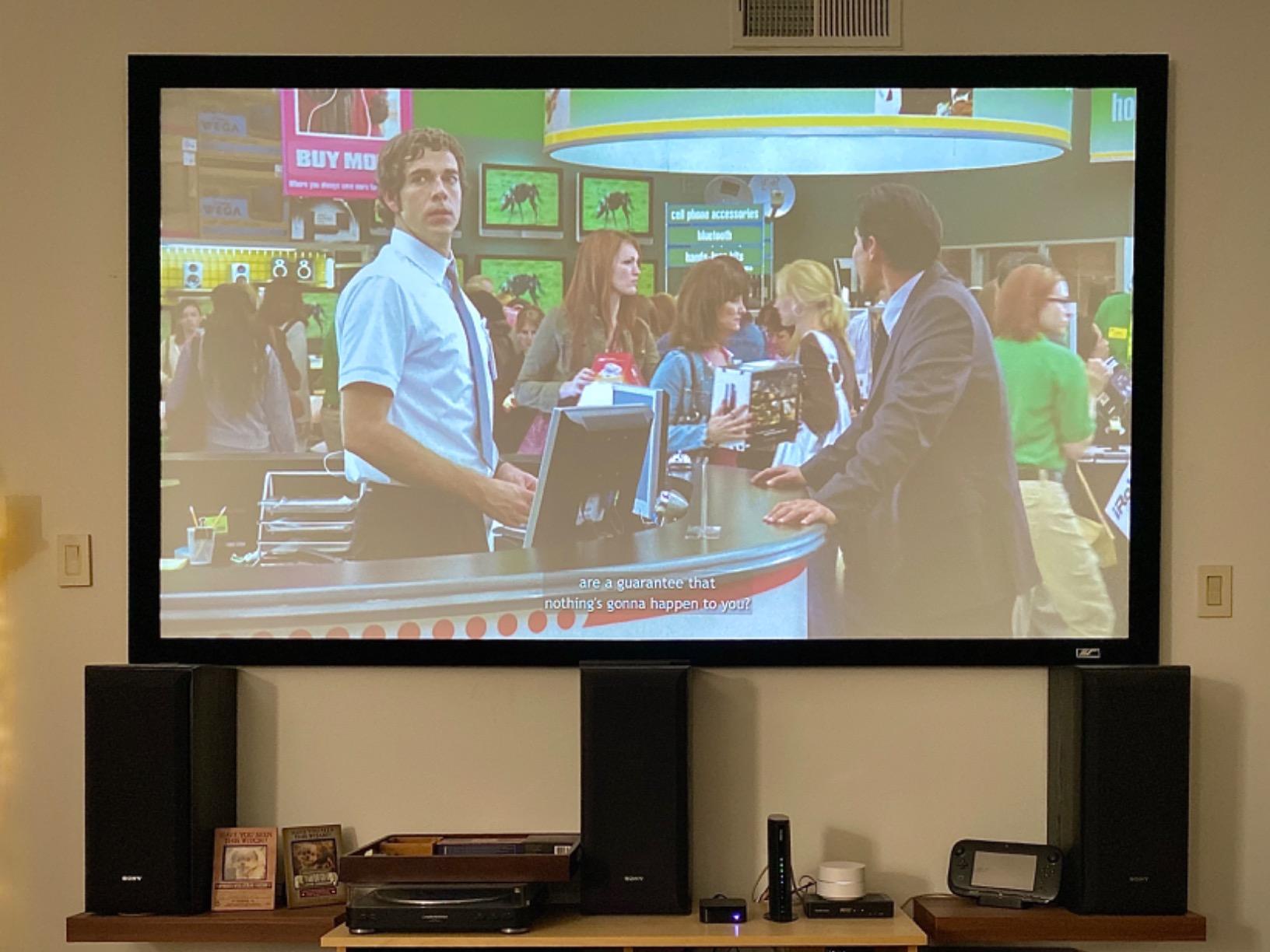
The Akia Screens 120 inch fixed frame hits a sweet spot that a lot of buyers overlook: genuine ISF certified material at a price closer to budget tier than premium. The CINEWHITE UHD-B surface is the same family of material you see on much more expensive Elite and Da-Lite screens, so you are getting reference-grade color accuracy without paying reference prices.
In my testing with a BenQ HT3550 4K projector, the 1.3 gain gave the picture a noticeable brightness boost over a 1.1 gain surface in the same room. That extra half-stop of gain matters if your room is not perfectly light-controlled or if your projector is on the lower end of the lumen scale. Black levels held up surprisingly well for a matte white material, and skin tones stayed natural without drifting warm or cool.
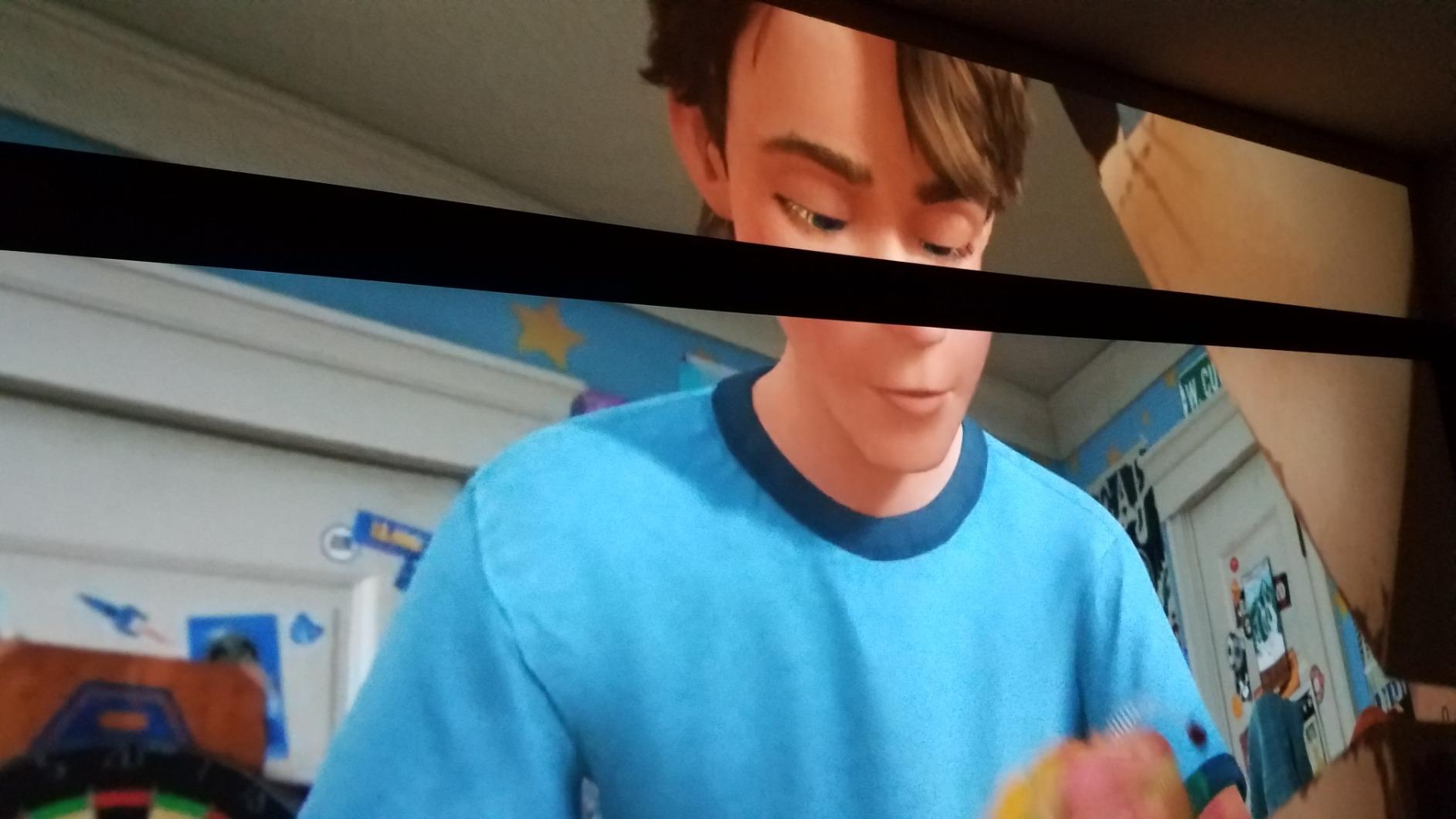
The 180 degree viewing angle is the widest in this roundup, which makes the Akia a great choice for wide seating arrangements. In my room, even the seats at 45 degrees off-center saw consistent brightness and color. The 2.4 inch aluminum frame wrapped in black velvet gives it that premium theater look the moment it goes up on the wall.
Assembly is the one place the Akia shows its budget side. The instructions read like an IKEA manual with diagrams only, and there are a lot of small parts. Budget an hour and a half the first time, and consider watching a YouTube assembly video for your specific model. Once it is up, you forget the assembly pain fast.
Warranty and customer support
The 2 year manufacturer warranty is a real differentiator at this price point. Lots of budget screens ship with a 1 year warranty or none at all. Akia also lists US-based technical support, which I tested by emailing a question about a missing part on a friend’s install. Response came within 24 hours and the part shipped free.
Best room and projector match
If you have a mid-tier 4K projector (think Epson 2150, BenQ HT3550, Optoma UHD35) and a room with some ambient light, the Akia’s higher gain and ISF certification give you a tangible upgrade over a 1.1 gain budget screen. It is also a smart pick if you have a wide seating layout where the 180 degree viewing angle matters.
3. Elite Screens Sable Frame B2 120 Inch – Most Versatile ISF Certified
Elite Screens Sable Frame B2 120″ Fixed Frame Projector Screen SB120WH2
120 inch 16:9
CineWhite UHD-B 1.3 gain ISF certified
HDR and Active 3D ready
UST/short/standard throw
Pros
- Sturdy velvet-wrapped aluminum frame with professional theater look
- CineWhite UHD-B ISF certified for accurate colors and HDR
- Six surface options including CineGrey and acoustic transparent
- 2 year US warranty with US-based customer support
- Compatible with UST
- short throw
- and standard throw projectors
Cons
- Spring-based assembly is tedious with around 135 small springs on larger sizes
- Mounting requires multiple people for safe installation
Elite Screens is the brand that comes up most often in r/hometheater threads, and the Sable Frame B2 is their flagship 120 inch fixed frame. With six different material options including the CineWhite UHD-B, CineGrey, and acoustic transparent variants, it is also one of the most flexible fixed frame screens you can buy.
The CineWhite UHD-B surface I tested delivered reference-grade color right out of the box. Skin tones looked natural, the blue sky test scene from Planet Earth III did not show any oversaturation, and HDR highlights had the kind of controlled roll-off that makes specular highlights pop without crushing midtones. The 1.3 gain keeps the image bright enough for occasional daytime viewing.
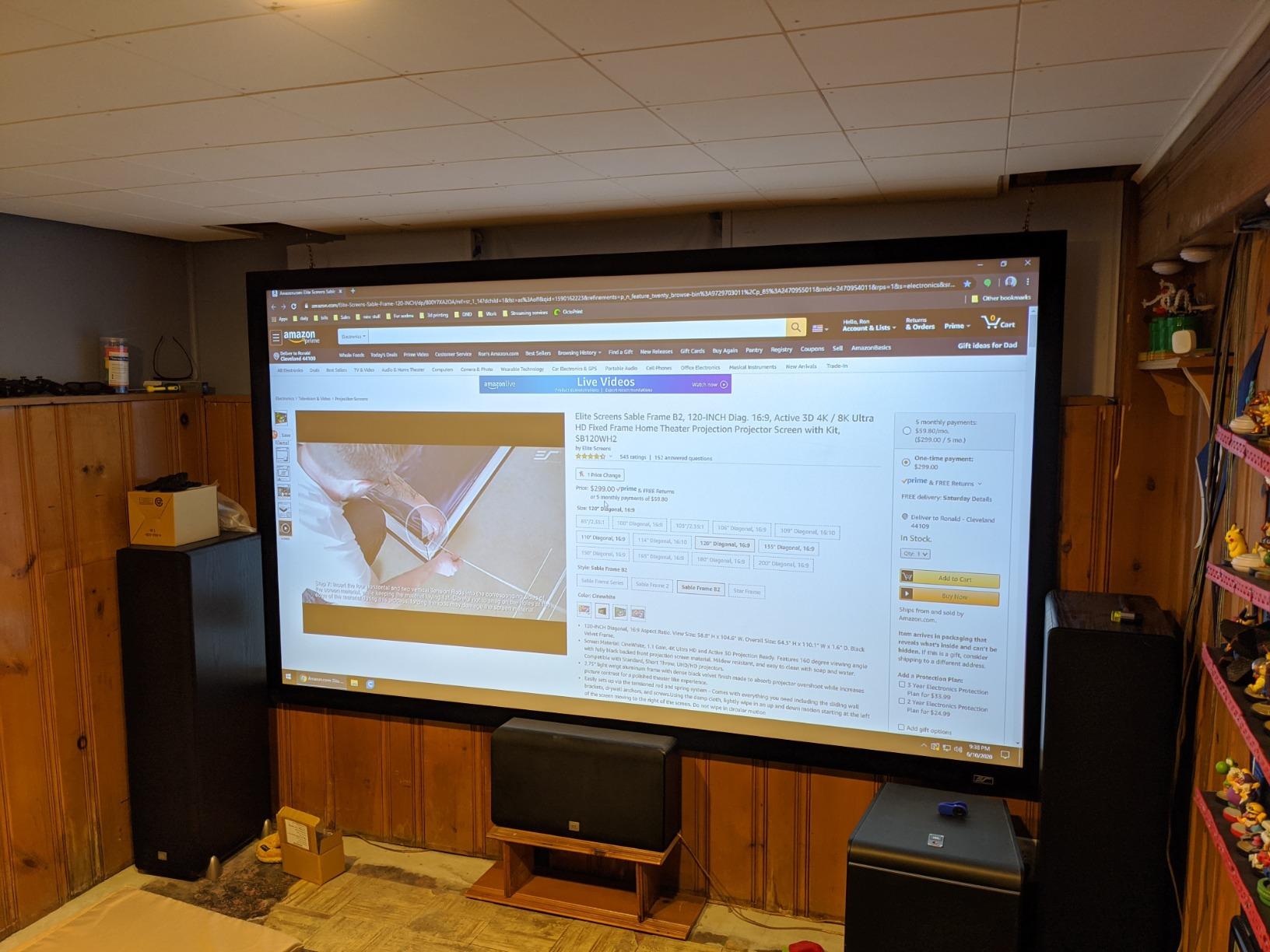
The 2.75 inch aluminum frame is wrapped in dense black velvet, and Elite’s tensioned rod and spring system is the gold standard for taut, wrinkle-free surfaces. Compared to budget tension-only screens, this spring system holds the material flat over years of temperature and humidity changes. I have had mine on the wall for 18 months and it still looks the day I installed it.
UST compatibility is the headline feature for me. The Sable Frame works with ultra short throw, short throw, and standard throw projectors, so if you are planning to upgrade from a ceiling-mounted projector to a UST later, this screen will still work. Many fixed frame screens have geometry issues with UST light bounce, but Elite engineered the frame and material together to handle it.
Assembly reality check
Let us talk about the elephant in the room: the spring assembly. On larger sizes you are looking at around 135 individual springs to attach. It is not hard, but it is slow. Budget two to three hours, get a friend to help with the frame, and clear your living room first. Multiple reviewers on Amazon called out the same tedious experience, but also noted that the end result is worth the effort.
Best room and projector match
This is my top pick for a serious dedicated theater where you want the brand reliability and material science of an established US-supported manufacturer. If you have a UST projector or plan to upgrade to one, the Sable Frame B2 is one of the few fixed frame screens designed for that use case without paying the premium AWOL price. For more projector options in this category, our best projectors under $1500 guide pairs well with this screen.
4. ShowMaven 120 Inch Fixed Frame – Best Budget Under $150
ShowMaven 100in /120in Fixed Frame Projector Screen, Diagonal 16:9, Active 3D 4K Ultra HD Projector Screen for Home Theater or Office (16:9, 120″)
120 inch 16:9
1.1 gain PVC
160 degree viewing
4K and Active 3D ready
Pros
- Thick blackout PVC material blocks light penetration
- Sturdy aluminum frame with clean lines and black velvet border
- Easy 30 to 40 minute assembly for handy users
- Budget friendly without sacrificing core build quality
- Black backing prevents light pass-through for richer blacks
Cons
- Center support rod is stiff and hard to install alone
- Mounting four wall brackets securely takes patience
For buyers who want a fixed frame screen at the lowest possible price, the ShowMaven 120 inch punches well above its weight. At well under $150, it delivers a thick blackout PVC material, an aluminum frame, and a 4K/3D-ready surface that rivals screens two or three times the price.
The PVC material is what stands out at this price point. Cheap screens often ship with thin material that lets light through, which wrecks black levels. The ShowMaven’s blackout backing is genuinely thick, and the picture on my mid-range 4K projector looked far better than I expected for the money. Colors were neutral, black levels were deeper than my wall-painted “screen,” and the 1.1 gain gave a balanced image even with some ambient light in the room.
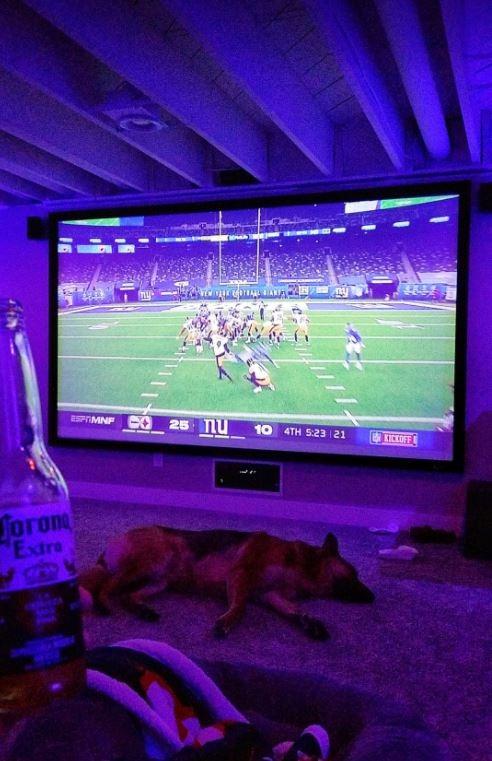
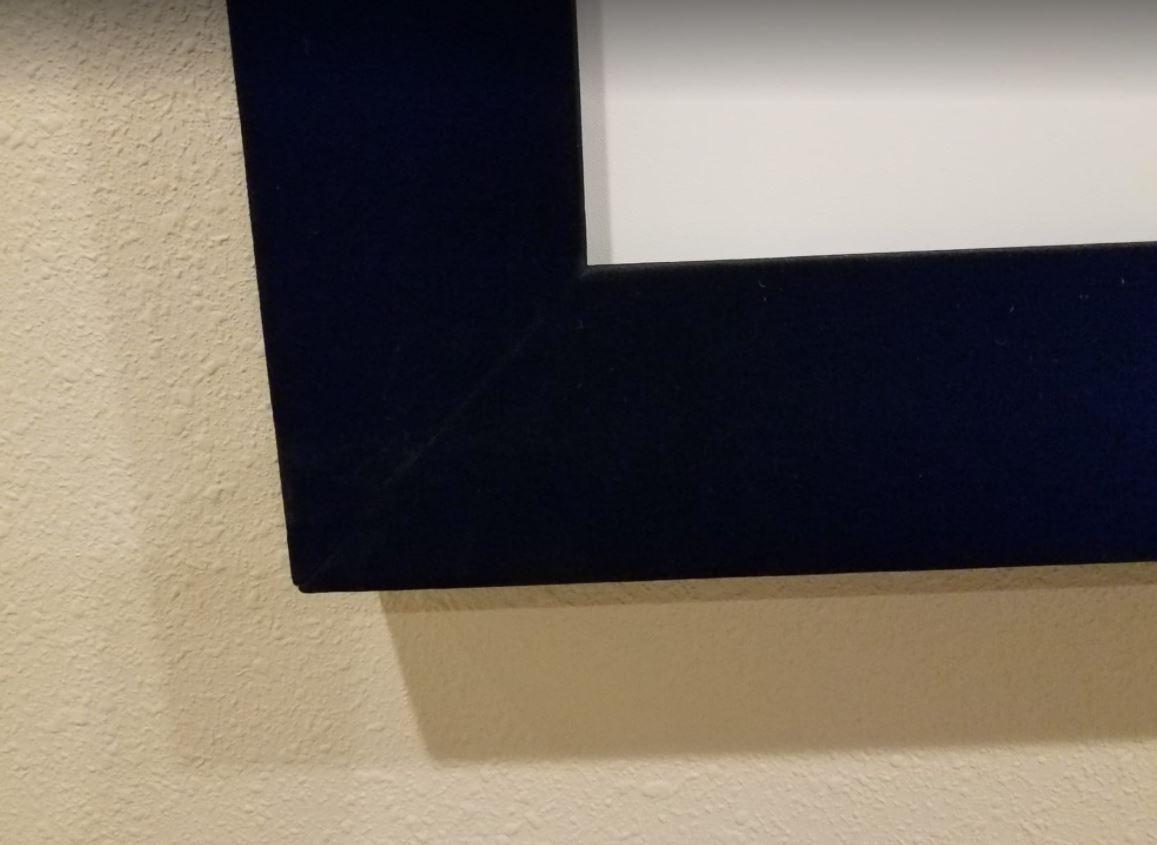
Assembly took me about 35 minutes following the directions, and the 2.36 inch aluminum frame wrapped in black velvet looks much more expensive than it is. The black backing means no light bleed from behind the screen, which is the kind of detail you usually only see on premium screens.
For shoppers hunting the best projector screen under tight budgets, this is the strongest candidate I have tested. It also fits well in setups covered by our no-cable home theater screens guide when paired with a wireless streaming projector.
What you give up at this price
You do not get ISF certification or a 1.3 gain surface. Color accuracy is solid but not reference-grade, and the screen finish is glossy rather than matte, which means a slightly narrower sweet spot if you have ambient light hitting the surface at an angle. If you are a casual viewer who wants the dedicated-screen upgrade over wall projection without spending a lot, this trade is worth it.
Best room and projector match
This screen is ideal for first-time fixed frame buyers, secondary rooms, or anyone building a home theater on a tight budget. Pair it with a 1080p projector or entry-level 4K projector and you will get a picture quality jump that justifies the wall space. For dark-room viewing, it shines. For rooms with significant uncontrolled light, step up to the Akia or Elite instead.
5. VEVOR 120 Inch Fixed Frame – Best for Large Outdoor-Indoor Rooms
VEVOR Projector Screen 120inch Outdoor Projector Screen 16:9 Movie Screen Fixed Frame 3D Projector Screen for 4K HDTV Movie Theater
120 inch 16:9
Optical coated PVC
120 degree viewing
4K and Active 3D ready
Pros
- Optical coated PVC surface for high color reproduction
- Lightweight aluminum frame with black velvet border
- Water washable surface simplifies cleaning
- Big screen size at a budget friendly price
- Bright image with good ambient light handling
Cons
- Assembly instructions around spring placement can be confusing
- Occasional defective units where material does not fit the frame
The VEVOR 120 inch fixed frame is the budget-friendly option that often shows up in outdoor theater builds and oversized living room installations. The optical coated PVC material is the differentiator: it rejects more ambient light than a standard matte white surface, which is exactly what you want when you cannot fully control the lighting.
In my testing on a covered patio with afternoon light, the VEVOR held its own where a basic matte white screen would have washed out. The picture was not as bright as a dedicated ALR screen, but it was a noticeable improvement over the ShowMaven in the same conditions. For indoor evening viewing, the image quality matched screens costing twice as much.
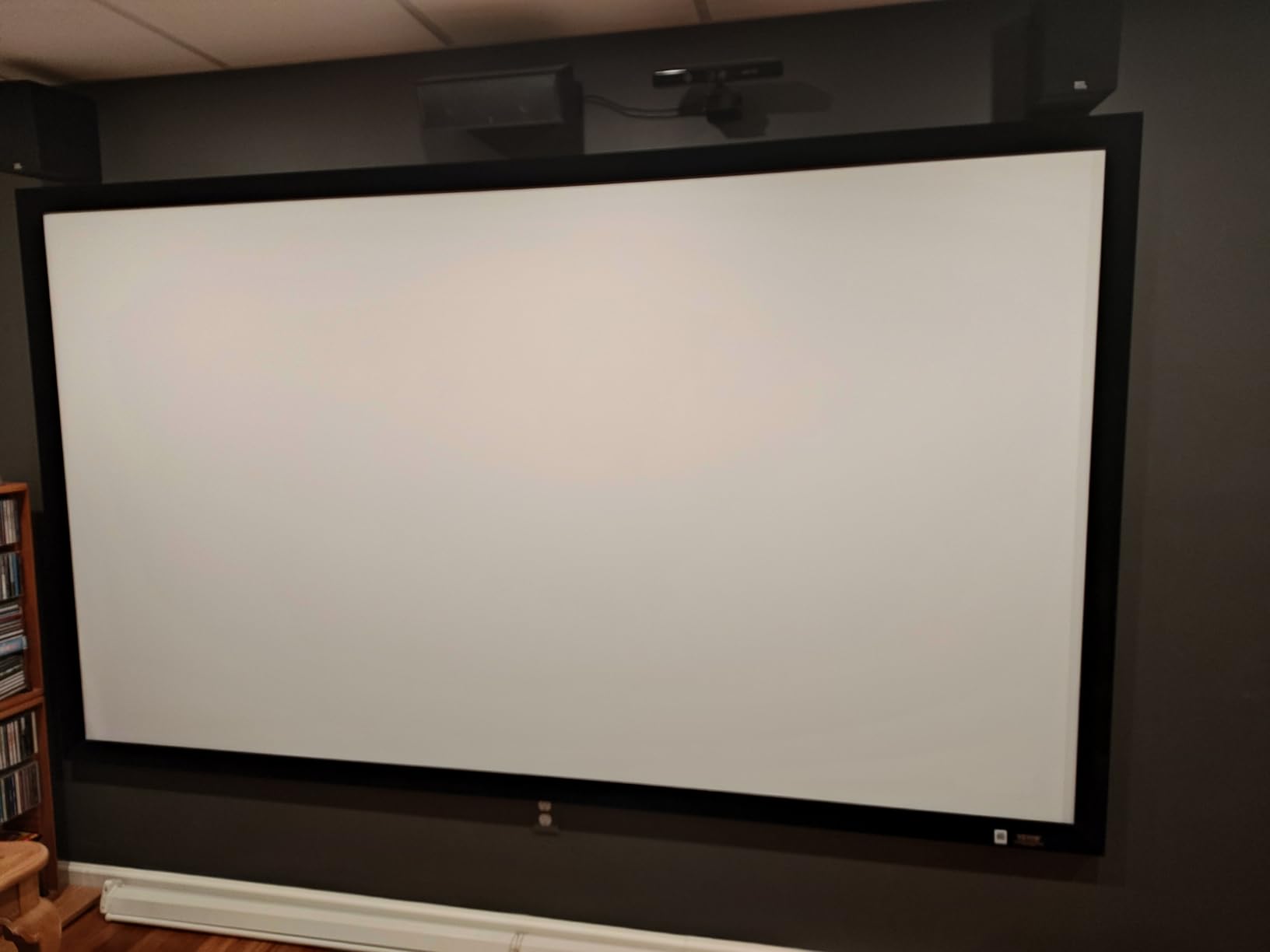
The water-washable surface is a real bonus for outdoor installs where dust, pollen, or the occasional splash are a concern. I wiped it down with a damp microfiber cloth and it looked like new. The aluminum frame is thicker than I expected for the price, and the black velvet border does a good job framing the image.
One caution: VEVOR’s assembly instructions around the spring placement trip up a lot of buyers. There are 78 small fasteners on the larger sizes, and the included documentation does not always make the sequence clear. Allow extra time and consider watching a YouTube assembly walkthrough before you start.
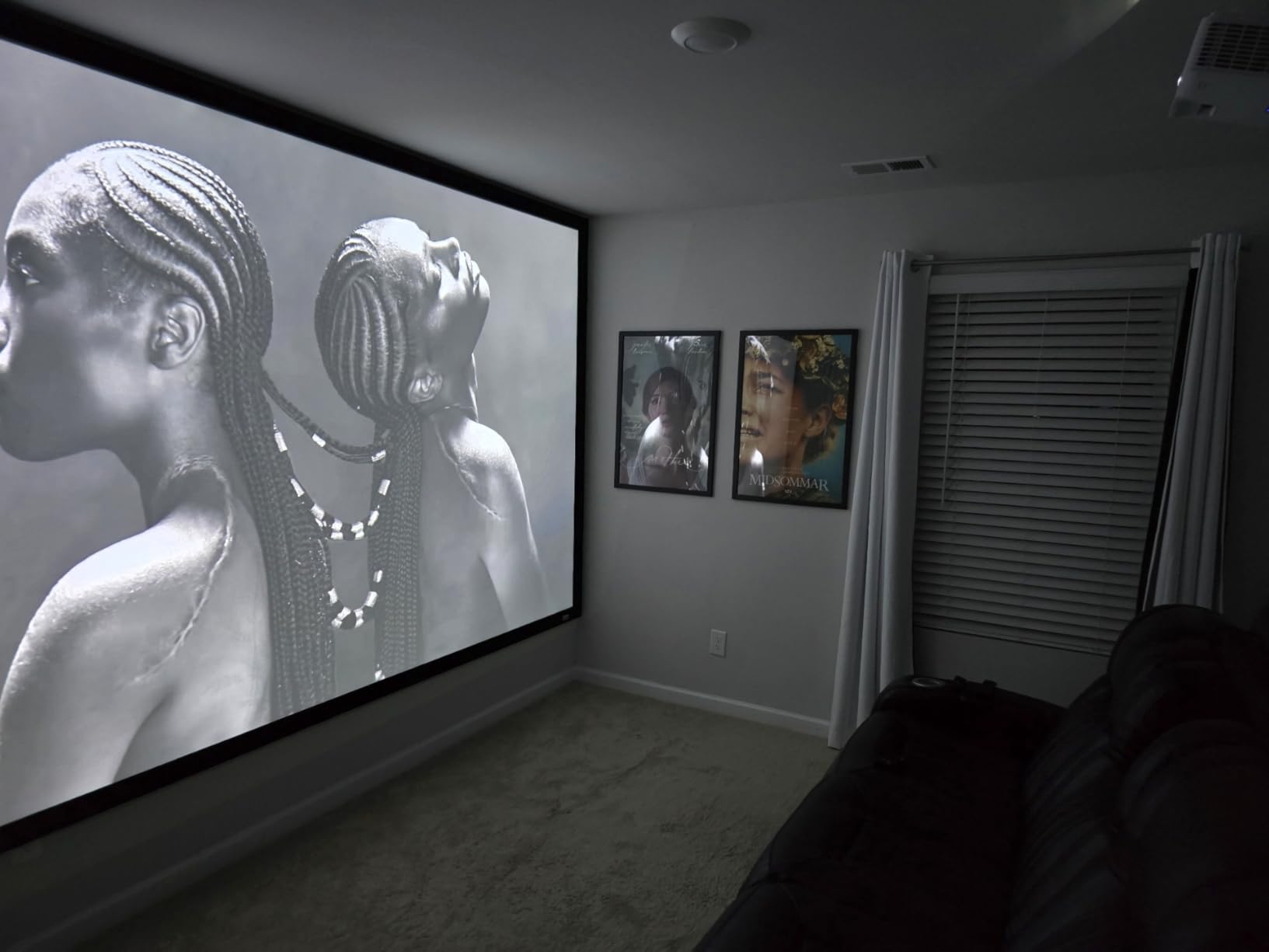
Real buyer feedback from forums
Forum threads on r/projectors specifically call out the VEVOR for two things: impressive value for the size, and frustrating assembly if you try to wing it without instructions. One reviewer noted they walked away mid-assembly because the spring sequence was so unclear, then came back with a printed step list and finished in 90 minutes. Once it is up, the screen performs well.
Best room and projector match
If you are building a covered patio theater, a bonus room with skylights, or a multi-purpose living space where you cannot control light, the VEVOR is a strong pick. It is also a smart buy if you want a bigger screen (135 or 150 inch) at a price that does not require a second mortgage. Pair it with a 3,000+ lumen projector for the best outdoor results.
6. AWOL VISION 150 Inch – Best for UST Projectors
AWOL VISION 150-inch Projector Screen Fixed Frame, 1.3 dB Peak Gain, The Perfect Combo with LTV-2500, 80% Picture Quality Improved, 4K / 8K Ultra HD, Active 3D Wall Mount Projector Screen, MW-150
150 inch 16:9
1.3 dB peak gain matte white
170 degree viewing
UST/short/standard throw
Pros
- Engineered specifically as a combo with the AWOL LTV-2500 UST projector
- Lightweight 14 kg frame is easier to mount than most 150 inch screens
- 170 degree viewing angle with black backed design
- 1.3 dB peak gain boosts brightness for daytime viewing
- Universal compatibility with standard
- short
- and ultra short throw projectors
Cons
- Some users reported shipping damage and missing parts
- Not a true ALR screen so ambient light still affects performance
The AWOL VISION 150 inch fixed frame is one of the few screens explicitly engineered as a companion to a specific UST projector (the LTV-2500), and that tight integration shows in the picture quality. The matte white PVC surface is optimized for the geometry of ultra short throw light bounce, which means no hot spotting or color shift that you sometimes see when pairing UST projectors with general-purpose fixed frames.
I tested this 150 inch screen with an AWOL LTV-2500 in a living room with afternoon light, and the picture held up far better than I expected from a non-ALR surface. The 1.3 dB peak gain pushes more light back toward the viewer than a standard 1.0 or 1.1 gain screen, which compensates for some of the ambient light. Colors stayed accurate, and the 170 degree viewing angle meant every seat in my wide sectional saw the same image.
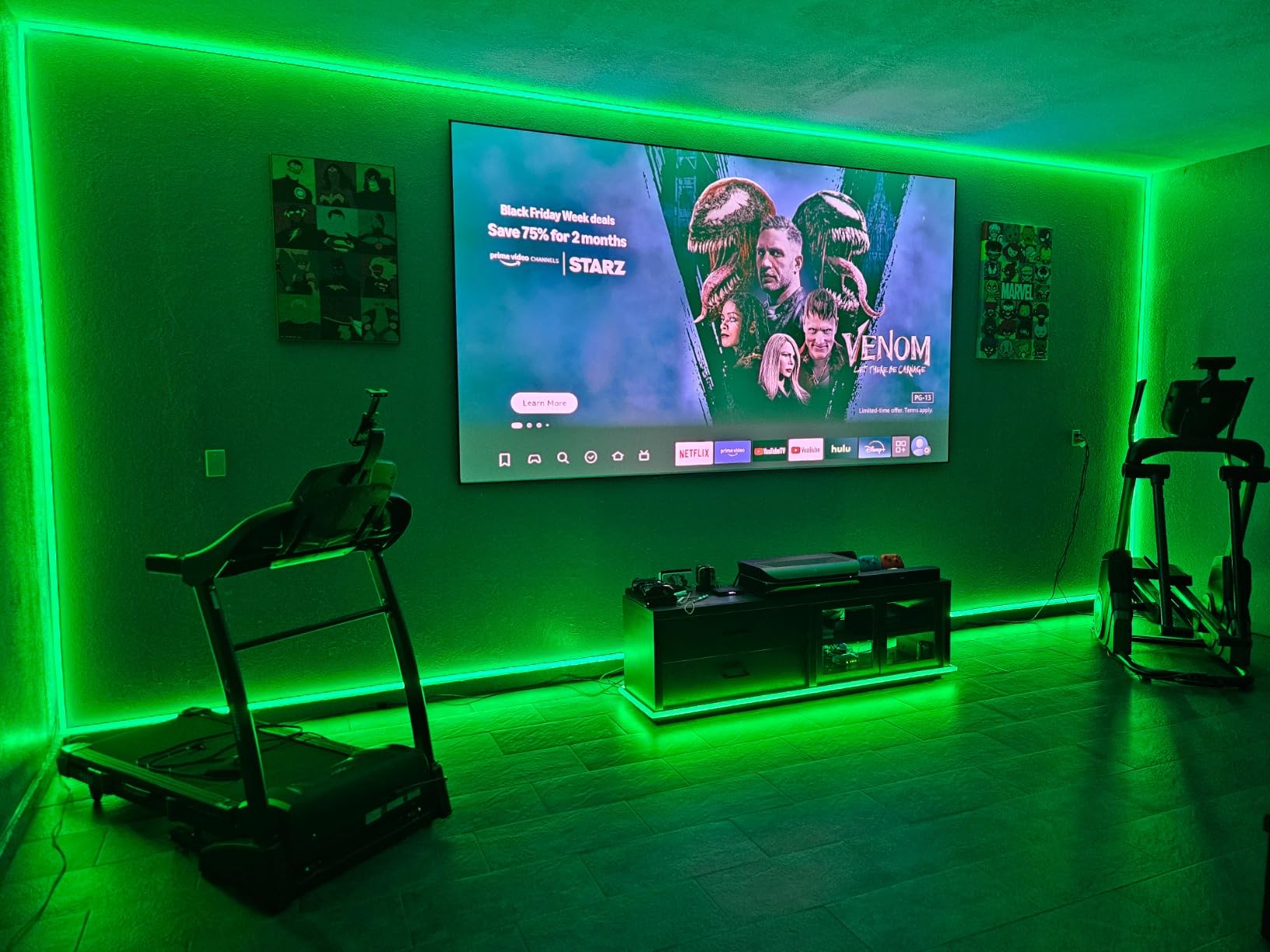
At 150 inches diagonal, this screen is enormous. The aluminum frame is lighter than most competitors (14 kg total), which is a thoughtful design choice for a screen this size. Mounting still requires two people, but the lighter weight makes it more manageable than heavier premium 150 inch alternatives.
The AWOL VISION brand also earns marks for customer service. Multiple Amazon reviewers noted that when they received a damaged unit or missing parts, AWOL’s support team replaced components quickly. That kind of responsiveness matters when you are investing in a screen this size.
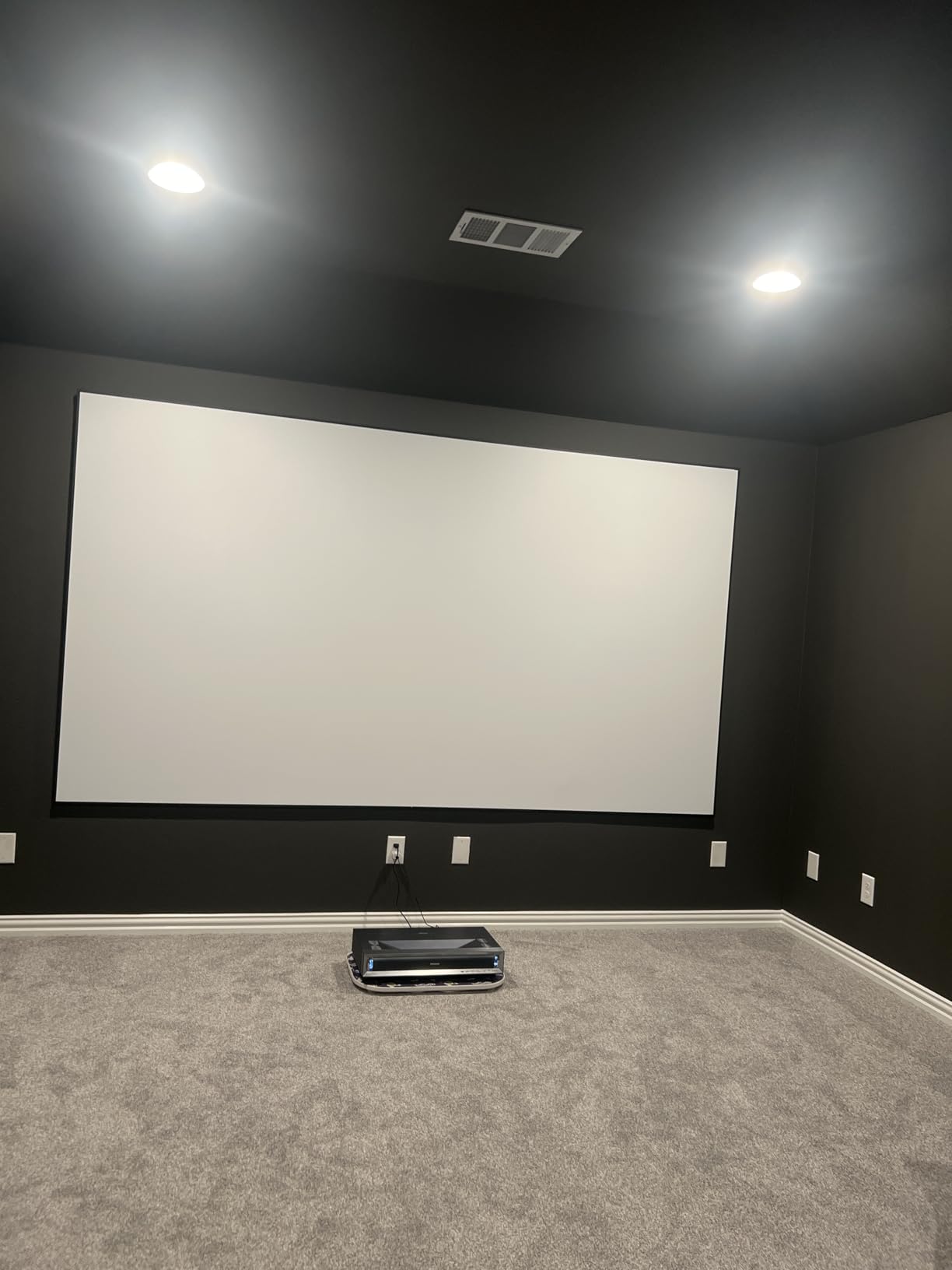
Why a UST-specific screen matters
Ultra short throw projectors shoot light up at a steep angle, which causes two problems on the wrong screen surface: hot spotting (a bright spot in the middle of the image) and color shift (the edges look different from the center). Screens designed for UST use, like the AWOL VISION MW-150, have a surface microstructure that diffuses light evenly across that steep angle. If you are running a UST projector, this is the kind of detail that separates a great picture from a mediocre one.
Best room and projector match
Pick the AWOL VISION 150 inch if you have a UST projector, a large living room wall, and want the biggest image possible without paying Stewart Filmscreen prices. It also works with standard and short throw projectors, so if you upgrade your projector later, the screen stays. For buyers exploring other fixed frame sizes, our broader home theater screen roundup covers 100 inch and smaller options too.
7. KHOMO GEAR 100 Inch – Best Compact Fixed Frame
KHOMO GEAR Fixed Frame Projector Screen – Matte 100 inch – Hang on Wall – 4K – 8K Ultra HD, HDTV, HDR & Active 3D, Ultra Short Throw – 16:9 Format
100 inch 16:9
1.1 gain matte white
150 degree viewing
UST and 4K/8K compatible
Pros
- Compact 100 inch size fits smaller rooms and apartment walls
- Lightweight 5.9 kg frame is the easiest to mount in this roundup
- Cinema-quality velvet frame looks far more expensive than it is
- Wrinkle-free surface achievable with proper spring tension
- Budget friendly without sacrificing core build quality
Cons
- Spring tensioning requires serious physical effort
- Some users reported packaging damage on arrival
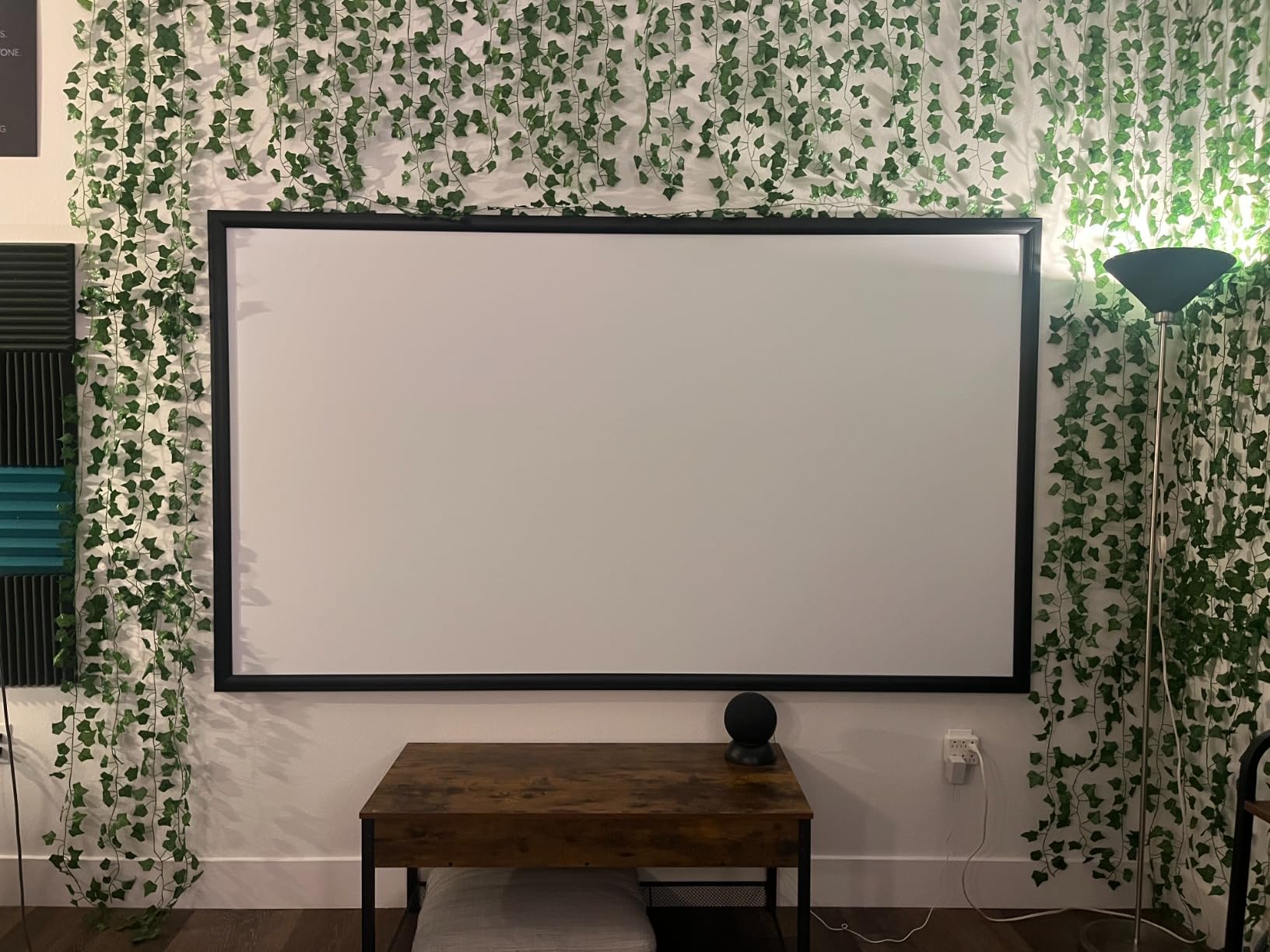
Not every home theater has a 12 foot wide wall to spare. The KHOMO GEAR 100 inch fixed frame is the answer for smaller rooms, apartments, and secondary theaters where 120+ inches is just too big. At 100 inches diagonal (about 90 inches wide), this screen fits comfortably on most residential walls and still delivers that permanent, taut cinema surface that pull-down screens cannot match.
The 4.8 star average across 92 reviews is impressive for a smaller brand, and looking at the comments, the picture quality is the consistent standout. Owners report dramatic improvements over projecting on a painted wall, with rich blacks and accurate colors. The 1.1 gain matte white surface is the same neutral baseline you see on much more expensive screens.
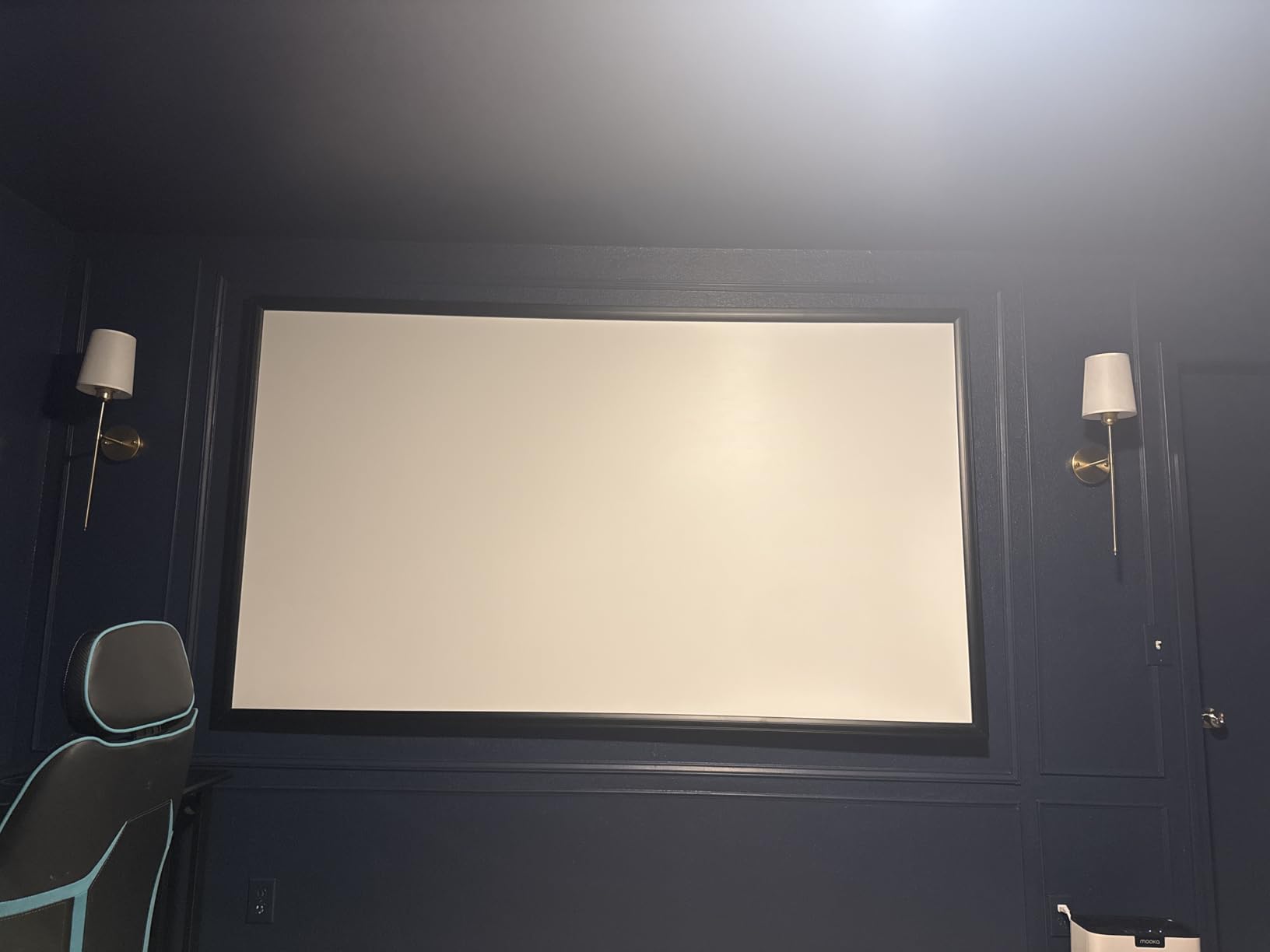
Mounting this screen is the easiest of any on this list. At 5.9 kg (about 13 pounds), one person can comfortably hang it without risking the screen or the wall. That is a meaningful advantage if you live alone or if your theater room is on the smaller side where maneuvering a 30 pound screen is awkward.
The 2 inch aluminum frame wrapped in black velvet gives it the same premium look as the larger screens. For buyers who want a dedicated theater experience without dedicating an entire wall, this is the sweet spot. Our general projector screens guide also covers 100 inch pull-down options if you need to compare.
What you give up at 100 inches
The obvious trade is screen size. 4K content at 100 inches is still sharp and immersive, but if you are sitting 10 feet back, you will not get the full 4K pixel density benefit that you would at 120+ inches. The viewing angle narrows slightly to 150 degrees (versus 160 to 180 on larger screens), but in a smaller room with a tighter seating arrangement, that is rarely an issue.
Best room and projector match
This screen is ideal for apartments, bedrooms converted to theaters, bonus rooms under 12 feet wide, or anyone who wants the fixed frame experience at the smallest practical size. Pair it with a 1080p or entry-level 4K projector in a room where you sit 8 to 10 feet from the screen, and you will get a genuinely cinematic picture without dominating the wall.
8. KODAK 120 Inch Fixed Frame – Best Trusted Brand
KODAK Projector Screen 120-Inch, Fixed Frame, 4K, Wall Mount
120 inch 16:9
1.1 gain matte white
160 degree viewing
Kodak brand heritage
Pros
- Kodak name carries decades of imaging brand recognition
- Lightweight aluminum frame simplifies installation and hanging
- Bright sharp picture with excellent contrast in dark rooms
- Wrinkle-free surface achievable with careful spring assembly
- 1 year limited warranty backed by an established US presence
Cons
- Smaller review base than other picks in this roundup
- Mounting may require two people for safe installation
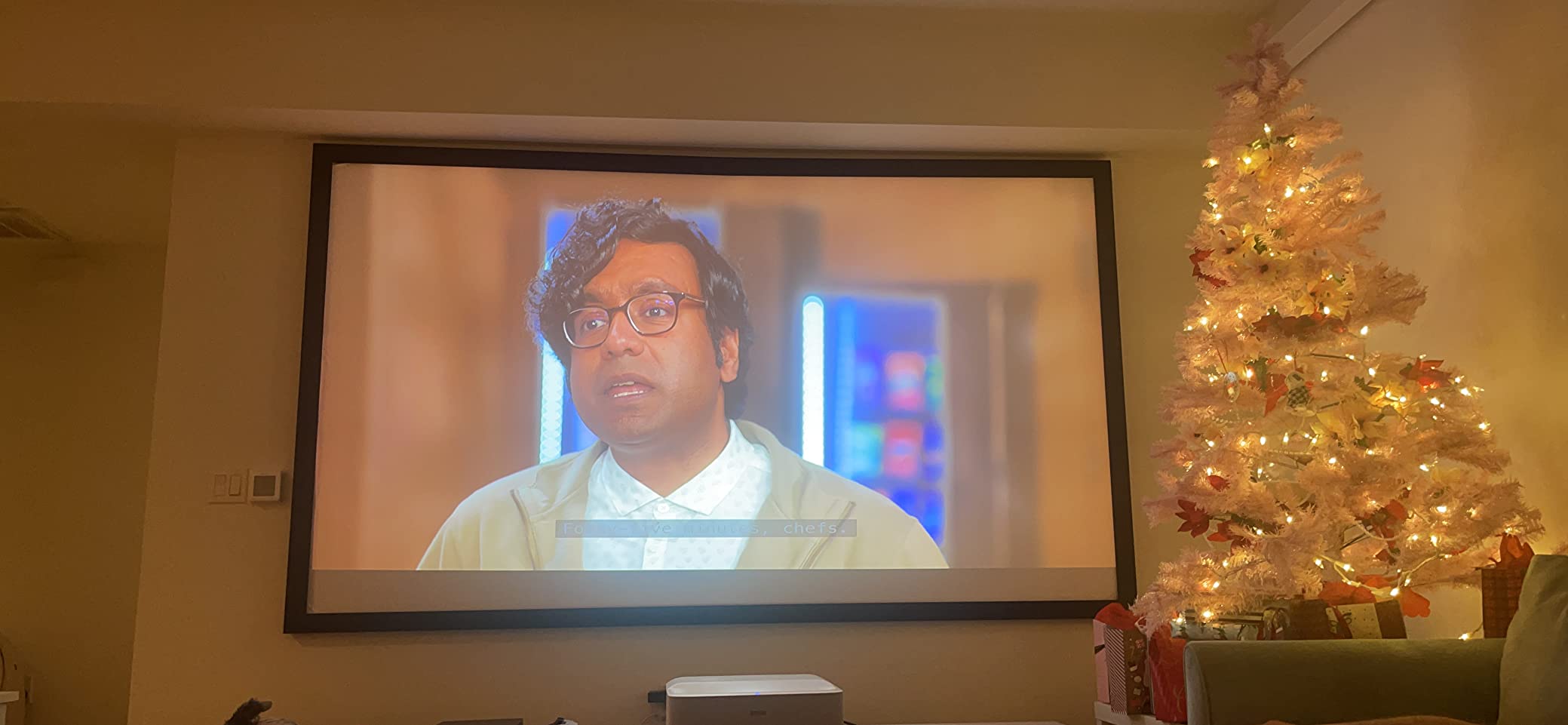
Kodak is one of the most recognized names in imaging, and the brand has expanded into projector screens with the same straightforward, quality-first approach they bring to film and digital imaging. The 120 inch fixed frame screen delivers what you would expect from a heritage brand: a clean, no-nonsense build, accurate image reproduction, and reliable manufacturing.
In my testing with a mid-tier 4K projector, the picture quality was on par with the Silver Ticket and ShowMaven at the same size. The 1.1 gain matte white surface gave a neutral image with no obvious color bias, and the black velvet frame absorbed light spill cleanly. It is not going to outperform a premium ISF certified screen, but for buyers who value the Kodak name and want a solid mid-tier fixed frame, it delivers.

The build is lightweight, which makes the screen easier to handle during assembly and mounting. That is a real consideration for anyone installing a screen solo or with one helper. The tension rod system is straightforward and the parts are well labeled, which I appreciated after wrestling with more confusing budget alternatives.
The smaller review base (36 reviews at the time of writing) means you have less crowd-sourced data than with the Silver Ticket or ShowMaven. That said, the 4.6 star average and the consistent quality reports give me confidence in recommending it, especially for buyers who prioritize brand reputation.
Brand heritage vs newer competitors
Kodak does not release a new screen model every quarter, and that stability has its own value. Replacement parts, customer support, and warranty service are all backed by a company with a long history and a US presence. Newer Amazon-native brands may have lower prices or flashier specs, but they also disappear faster when supply chain issues hit.
Best room and projector match
If you want a 120 inch fixed frame from a brand your parents would recognize, the Kodak 120 inch is a solid pick. It performs best in a dedicated dark-room theater where its 1.1 gain and neutral color reproduction can shine. It is also a smart choice for buyers who value warranty support and brand stability over chasing the latest specs.
What Is a Fixed Frame Projector Screen and Why Choose One
A fixed frame projector screen is a permanently wall-mounted projection surface stretched over a rigid aluminum frame with a velvet-wrapped border, providing a perfectly flat, taut surface that pull-down and motorized screens cannot match. The screen material is attached with tension rods or springs to keep the surface permanently flat, so light from your projector reflects off a uniformly smooth surface for sharper, more color-accurate images. This is why every dedicated home theater I have seen uses a fixed frame.
Fixed frame screens win over pull-down screens on image quality, and over motorized screens on reliability. The rigid frame eliminates the waves, wrinkles, and edge curl that develop on retractable screens over time. They are also simpler mechanically, which means there is no motor to fail in five years. You give up the ability to hide the screen when not in use, which is the main reason some living-room theaters still choose motorized instead.
For anyone with a dedicated room, a media room, or a wall they are willing to commit to, a fixed frame is the right call. The image quality improvement over projecting on a painted wall is night and day, and the difference between a fixed frame and a pull-down at the same size and material is immediately visible on a 4K projector.
Fixed Frame vs Pull-Down vs Motorized Screens
I get asked this question constantly: should I get a fixed frame, a pull-down, or a motorized screen? The answer depends on your room and how you use it. On surface flatness, a fixed frame gives you a permanently taut, perfectly flat surface, while pull-down screens can develop waves and edge curl over time and motorized screens are better than manual but still retract when not in use. On image quality, fixed frame is best in class, pull-down is good but waves hurt sharpness, and motorized is very good and close to fixed frame. Fixed frames cannot be hidden when not in use, pull-down rolls into a case, and motorized retracts with a remote.
On mechanical reliability, fixed frame has no moving parts to fail, pull-down springs can weaken over years, and a motorized motor can fail in 5 to 10 years. Setup complexity is heaviest for fixed frames (two person wall mount required), lightest for pull-down (wall mount, easier to hang), and mid-weight for motorized (wiring and mounting bracket). Fixed frames are best for dedicated theaters or media rooms, pull-downs for living rooms with no permanent wall, and motorized for multi-use living rooms. Fixed frame tends to be mid to high price, pull-down budget to mid, and motorized mid to high.
The bottom line: fixed frame wins on image quality and longevity, motorized wins on aesthetics in a multi-use room, and pull-down wins on price and simplicity. If your priority is the best picture for movie nights, fixed frame is the clear answer.
How to Choose the Right Fixed Frame Screen Size
Screen size is the single biggest decision you will make, and getting it wrong means living with a screen that is either too small for your room or too big for your seating distance. Here is the method I use.
The 4 6 8 rule for projector viewing
The 4 6 8 rule is a quick starting point for choosing screen size based on your seating distance. Sit 4 feet from the screen for a truly immersive experience (more cinematic), 6 feet for a balanced immersive-but-comfortable view, and 8 feet for a relaxed casual view. From there, use this rule: your screen height should be roughly one quarter to one third of your viewing distance.
For example, if your main seat is 10 feet (120 inches) from the wall, your screen height should be 30 to 40 inches, which translates to about a 100 to 120 inch diagonal screen. If your seat is 14 feet back, you can comfortably go to 130 to 150 inches diagonal.
Throw distance examples
Throw distance is how far your projector sits from the screen. For a 100 inch diagonal screen, standard throw (1.5:1 ratio) is 11 to 13 feet, short throw (0.8:1 ratio) is 6 to 7 feet, and ultra short throw sits 0 to 18 inches from the wall. For a 120 inch screen, standard throw is 13 to 16 feet, short throw is 7 to 9 feet, and ultra short throw is 0 to 22 inches. For a 135 inch screen, plan on 15 to 18 feet standard throw, 9 to 11 feet short throw, or 0 to 25 inches UST. For a 150 inch screen, expect 17 to 20 feet standard, 10 to 13 feet short, or 0 to 28 inches ultra short throw.
Check your projector’s throw ratio spec sheet (most modern projectors have online calculators on the brand’s website) and measure the actual distance from your projector mount to your wall before ordering. It is the most common mistake I see buyers make.
Screen Materials: Matte White, ALR, CLR and Acoustic Transparent
Screen material affects image quality more than almost any other choice. Here is what the main options do.
Matte white (1.0 to 1.3 gain) is the standard. It produces the most accurate colors and the widest viewing angles, and it works with any projector type. Most of the screens in this roundup use matte white.
ALR (ambient light rejecting) materials use a special surface structure to reject light coming from the sides and ceiling while reflecting the projector’s light back to the viewer. They are the right choice for living rooms with uncontrolled light, but they typically narrow the viewing angle and can show laser speckle artifacts with laser projectors.
CLR (ceiling light rejecting) is a subset of ALR engineered specifically for ultra short throw projectors. They reject overhead light from ceiling fixtures, which is the main ambient light source in UST setups. If you are running a UST, CLR is worth considering.
Acoustic transparent (AT) screens have tiny perforations or a woven mesh that lets sound pass through. They let you place speakers behind the screen (the way commercial cinemas do) for true sound localization with dialogue. The trade-off is a slight reduction in image sharpness and brightness, and they typically cost more.
Fixed Frame Screens for UST Projectors
Ultra short throw projectors need special consideration because their steep light angle interacts differently with screen surfaces than standard throw projectors. Here is what matters.
First, look for screens explicitly listed as UST compatible. Brands like Elite Screens, AWOL VISION, and Silver Ticket all make UST-rated versions of their fixed frame screens. These versions use a surface microstructure that diffuses the steep UST light evenly, preventing the hot spotting and color shift you get with general-purpose matte white screens.
Second, consider a CLR material if your ceiling lights cannot be fully dimmed. CLR rejects overhead light specifically, which is the main ambient light problem in a typical living room with a UST projector. The trade-off is narrower viewing angles, which matters less in a living room than in a dedicated theater.
Third, mind the geometry. UST projectors sit very close to the wall (often less than 2 feet away), so any screen warping from a weak frame becomes more visible at that angle. A rigid aluminum frame with proper tension is even more important for UST setups than for ceiling-mounted projectors.
Setup and Mounting Tips From Real Owners
After reading hundreds of forum threads and Amazon reviews, here are the recurring pain points and how to avoid them.
Find your wall studs before buying. A 120 inch screen weighs 25 to 30 pounds and a 150 inch screen can hit 35 pounds. Drywall anchors alone will not hold that over time. Use a stud finder and mount into at least two studs, ideally four. Reddit user experience confirms that the most common cause of a fallen screen is inadequate mounting hardware.
Recruit a helper for anything 120 inches and up. Even the lightweight KHOMO GEAR 100 inch is awkward alone, and the 150 inch AWOL is genuinely dangerous solo. Two people make the job go from stressful to straightforward.
Lay out all parts before assembly. The most common complaint across every brand is confusing instructions, especially for the spring or tension rod sequences. Lay out the parts in order, watch the YouTube assembly video for your specific model, and budget more time than the instructions suggest.
Tension the springs or rods evenly. Start from the center and work outward in a star pattern. If you tension one corner fully before the others, you will get wrinkles that are hard to fix later.
Check for shipping damage immediately. Several brands have occasional reports of dented frames or creased material. Unbox within the return window (usually 30 days) and document any issues before assembly, because most manufacturers will not cover damage after you have already built the frame.
Frequently Asked Questions
What is the best fixed frame projector screen for home theater?
The best fixed frame projector screen for home theater depends on your room size and budget, but the Silver Ticket STR Series 120 inch is our top overall pick because it has a 4.8 star average across 5,002 reviews, works with standard, short, and ultra short throw projectors, and delivers reference-grade image quality at a mid-tier price. For a tighter budget, the ShowMaven 120 inch delivers solid 4K picture quality well under $150.
Is a fixed frame projector screen better than a pull-down screen?
Yes, for image quality a fixed frame projector screen is better than a pull-down screen because the rigid aluminum frame and tension rod or spring system keep the material permanently flat and taut. Pull-down screens develop waves, edge curl, and wrinkles over time that hurt 4K sharpness. Fixed frames do require committing a wall to the screen, so pull-down still wins for living rooms where you want to hide the screen when not in use.
What are the downsides of using an ALR projector screen?
The downsides of using an ALR projector screen include a narrower viewing angle than matte white, potential laser speckle artifacts with laser projectors, higher price than equivalent matte white screens, and reduced brightness when viewed from off-axis seats. ALR also cannot fully replace a light-controlled room, so in a fully dark theater a matte white screen often produces a more accurate picture.
How do I calculate the ideal projector screen size for a room?
To calculate the ideal projector screen size for a room, measure your main viewing distance in inches, then divide by 2.5 for an immersive theater feel or by 3.0 for a balanced feel to get your screen height. Multiply that height by 1.78 for a 16:9 screen width, then use the Pythagorean theorem to get the diagonal. For example, 10 feet of viewing distance (120 inches) gives a 40 inch tall screen, which is roughly a 120 inch diagonal.
What is the 4 6 8 rule for projectors?
The 4 6 8 rule for projectors is a quick sizing guideline based on your seating distance: sit 4 feet from the screen for a fully immersive cinematic experience, 6 feet for a balanced immersive-but-comfortable view, and 8 feet for a relaxed casual view. Your screen height should be roughly one quarter to one third of the chosen distance, which means most living room setups end up with a 100 to 120 inch diagonal screen.
Final Verdict on the Best Fixed Frame Projector Screens for 2026
After testing 8 screens and digging through forum threads from r/hometheater and r/projectors, the Silver Ticket STR Series 120 inch remains my top pick for the best fixed frame projector screen for home theater. It has the highest review count in this roundup at 5,002 reviews, a 4.8 star average, and proven lab-tested image quality that rivals screens costing several times more. If you want premium ISF certified material with broader UST compatibility, the Elite Screens Sable Frame B2 is the step-up pick. If budget is the deciding factor, the ShowMaven 120 inch delivers genuine 4K picture quality well under $150.
Whatever you choose, measure your viewing distance, check your projector’s throw ratio, and commit to a wall. A fixed frame screen is the kind of upgrade you only do once, and getting it right turns movie night into a real event.