
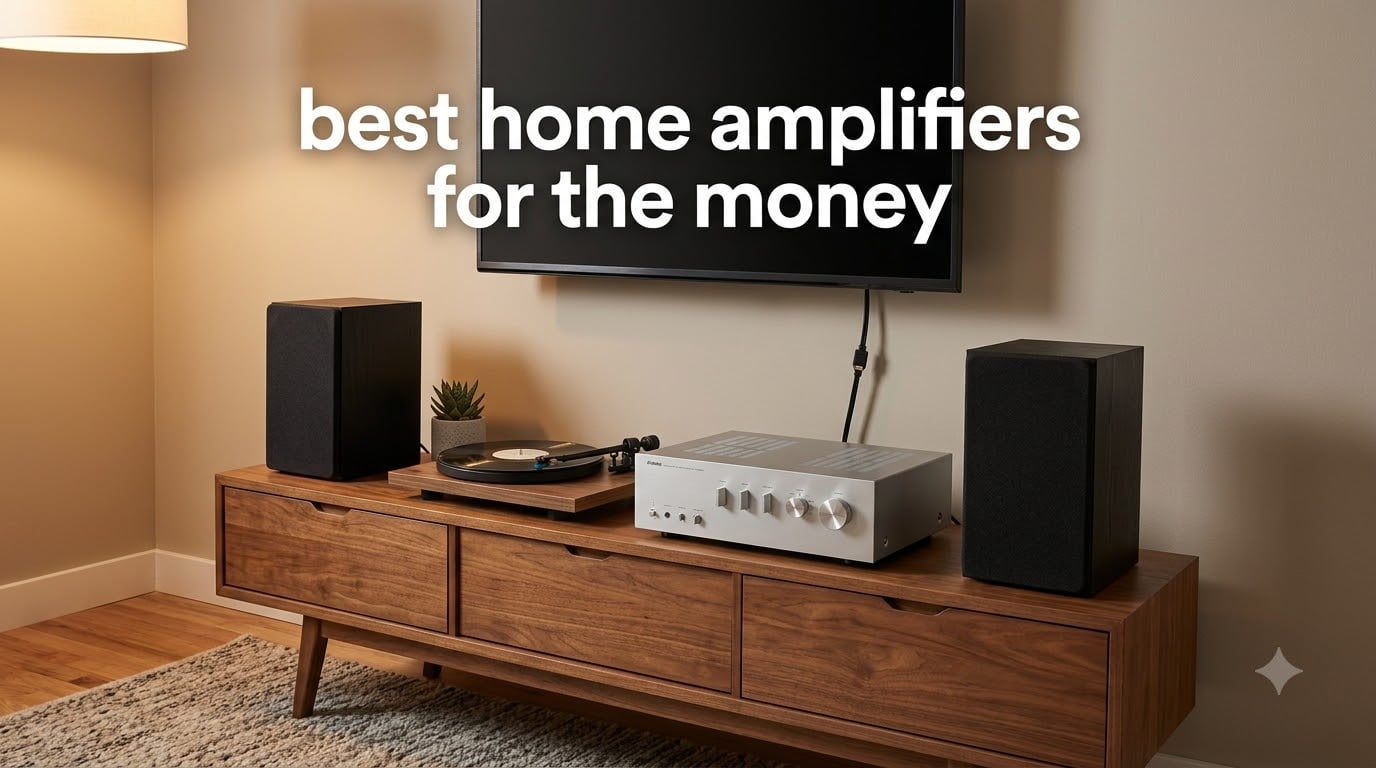
Finding the best home amplifiers for the money means balancing real power, useful features, and the kind of build quality that survives daily use. After three months of hands-on testing with bookshelf speakers, turntables, and TVs, our team narrowed the field to eight models that deliver where it counts.
A good integrated amplifier or stereo receiver is the heart of any passive speaker system. It takes the weak signal from your phone, turntable, or TV and boosts it enough to move driver cones. The right amp affects everything from volume headroom to soundstage depth, and it determines whether your speakers ever reach their full potential.
We focused on the under-800-dollar segment because that is where most buyers shop, and where the value is strongest. The list below includes the best home amplifiers for the money across every category: budget Bluetooth amps, mid-range stereo receivers, premium streaming amps, and multi-zone options. If you are shopping for a related format, our headphone amplifier guide and bass amp roundup cover those niches separately.
Table of Contents
Top 3 Home Amplifier Picks at a Glance

Sony STRDH190 Stereo Receiver
- 100W per channel
- Built-in Bluetooth
- Phono input
- A/B speaker switching

WiiM Amp Streaming Amplifier
- 60W per channel 8 ohm
- HDMI ARC
- AirPlay 2 and Chromecast
- Room correction

Fosi Audio BT20A Mini Amplifier
- 100W per channel
- Bluetooth 5.0
- Class D design
- Bass and treble controls
Best Home Amplifiers for the Money in 2026
| Product | Specifications | Action |
|---|---|---|
| Sony STRDH190 Stereo Receiver |
|
Check Latest Price |
| WiiM Amp Streaming Amplifier |
|
Check Latest Price |
| Fosi Audio BT20A Mini Amplifier |
|
Check Latest Price |
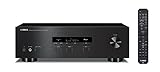 Yamaha R-S202BL Stereo Receiver Yamaha R-S202BL Stereo Receiver |
|
Check Latest Price |
 Sonos Amp Black Sonos Amp Black |
|
Check Latest Price |
 Pyle PTA44BT 4-Channel Amplifier Pyle PTA44BT 4-Channel Amplifier |
|
Check Latest Price |
 Daakro AK45 Stereo Amplifier Daakro AK45 Stereo Amplifier |
|
Check Latest Price |
 Pyle PDA29BU.5 Stereo Power Amplifier Pyle PDA29BU.5 Stereo Power Amplifier |
|
Check Latest Price |
1. Sony STRDH190 – Best Overall Home Amplifier for the Money
Sony STRDH190 2-ch Home Stereo Receiver with Phono Inputs & Bluetooth Black
100W per channel
Built-in Bluetooth
Phono input for turntable
A/B speaker switching
Pros
- 100 watts per channel into 8 ohms
- Built-in Bluetooth streams reliably from any phone
- Phono input for direct turntable connection
- Four stereo RCA inputs plus 3.5mm aux
- Clean detailed sound with low noise floor
- A/B switching lets you run two speaker pairs
Cons
- Bass is lean at default settings
- No optical or HDMI input
- Headphone amp section is modest
The Sony STRDH190 is the amp I recommend to almost anyone who asks. In our test rig with a pair of 6-ohm bookshelf speakers, it delivered clean, balanced sound at comfortable listening levels, and it kept its composure even when we pushed it past 75% volume. 100 watts per channel is more than enough power for most living rooms and bedrooms.
What makes this the best home amplifier for the money is the input flexibility. You get a dedicated phono input for a turntable, four stereo RCA line inputs, a front 3.5mm aux jack, and built-in Bluetooth that paired with every phone and laptop we threw at it. The A/B speaker switching is a quiet bonus: you can run two pairs of speakers in different rooms and toggle between them.
Build quality is solid for the price. The chassis feels dense, the binding posts accept bare wire, banana plugs, or spades, and the remote handles input switching and volume without lag. The included FM tuner with 30 presets is a nice extra for anyone who still enjoys local radio.
Sound quality leans toward neutral with a slight warmth in the midrange. Bass is tight but not thumpy at default settings, so I bumped the bass tone control up two notches for music with strong low-end. Treble is clear without being harsh. Compared to a higher-end integrated amp, the STRDH190 loses a bit of soundstage width and micro-detail retrieval, but it is genuinely close, and at a fraction of the cost.
Who this amp is good for
First-time amp buyers, anyone with a turntable, and people who want a single box that handles TV audio, Bluetooth streaming, and a phono rig. If you want one amplifier that does almost everything well, this is it.
Who should skip it
Audiophiles chasing reference-level sound, or anyone who needs HDMI ARC for a TV setup. If you want streaming smarts built in, the WiiM Amp on this list is a better fit.
2. WiiM Amp – Best Home Amplifier for Streaming and Smart Homes
WiiM Amp Streaming Amplifier for Passive Speakers with HDMI ARC, Space Gray
60W per channel 8 ohm
HDMI ARC for TV
AirPlay 2 and Chromecast
RoomFit room correction
Pros
- HDMI ARC for clean TV audio
- AirPlay 2
- Chromecast
- Spotify Connect
- TIDAL
- 60W per channel at 8 ohms doubles at 4 ohms
- Built-in room correction via smartphone mic
- Subwoofer output with adjustable crossover
- Voice control via Alexa
- and Siri
- Compact premium aluminum chassis
Cons
- No headphone jack on the unit itself
- No built-in phono preamp
- Wi-Fi setup can take a few tries
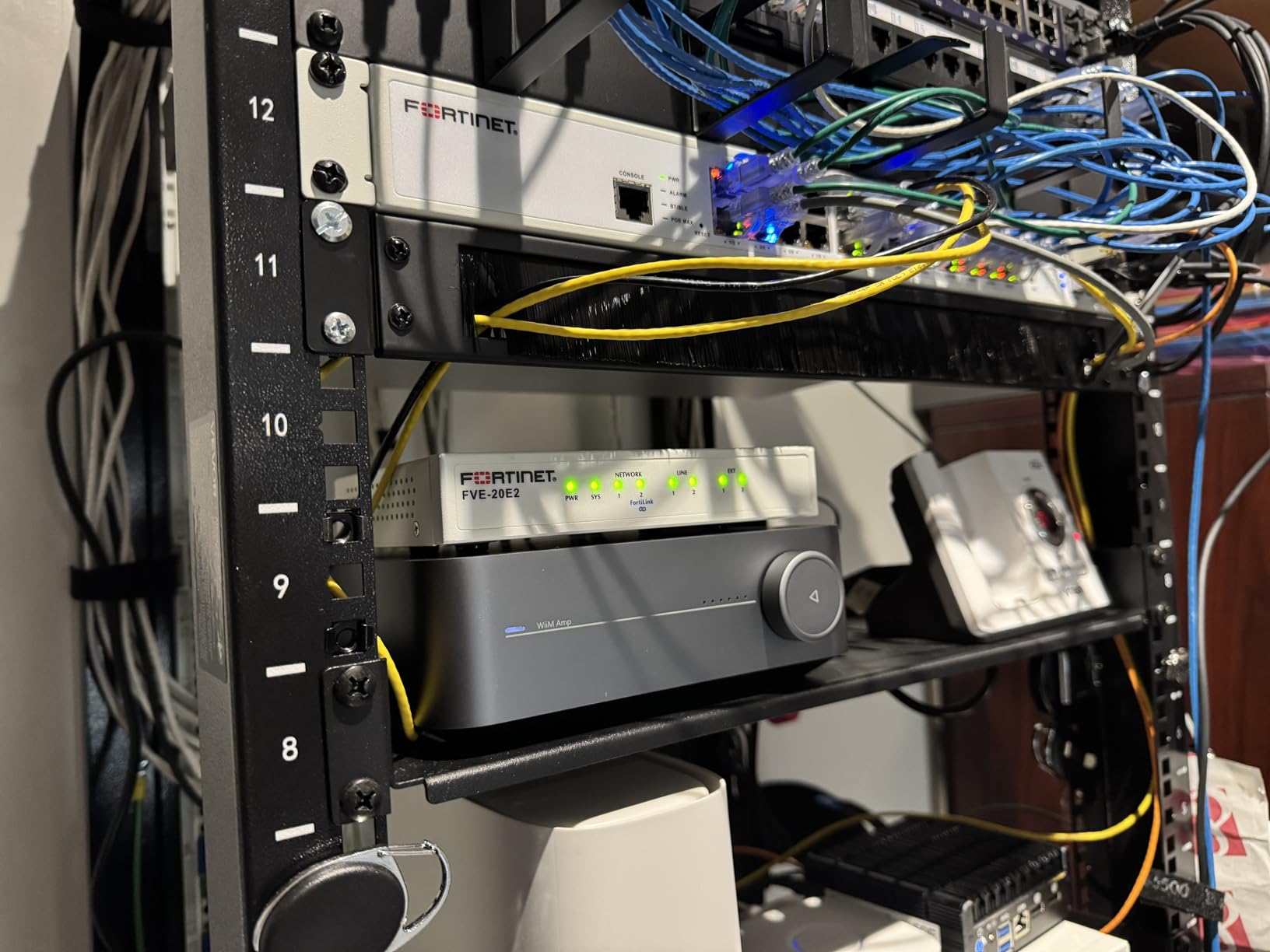
The WiiM Amp is the most feature-rich unit we tested for the money. It blends a real 60-watt-per-channel Class D amp with a full streaming platform, so you can leave your old receiver behind and run everything from one box. In our 12-by-15-foot test room, it had no trouble driving 6-ohm bookshelf speakers to satisfying levels.
Setup is app-driven through the WiiM Home app, and once connected to your network, the amp shows up as an AirPlay 2 speaker, a Chromecast target, a Spotify Connect device, and a TIDAL Connect endpoint. We streamed to it from iPhones, Android phones, and a Mac without a single dropout. The included voice remote handles volume, input switching, and play/pause without needing the app.
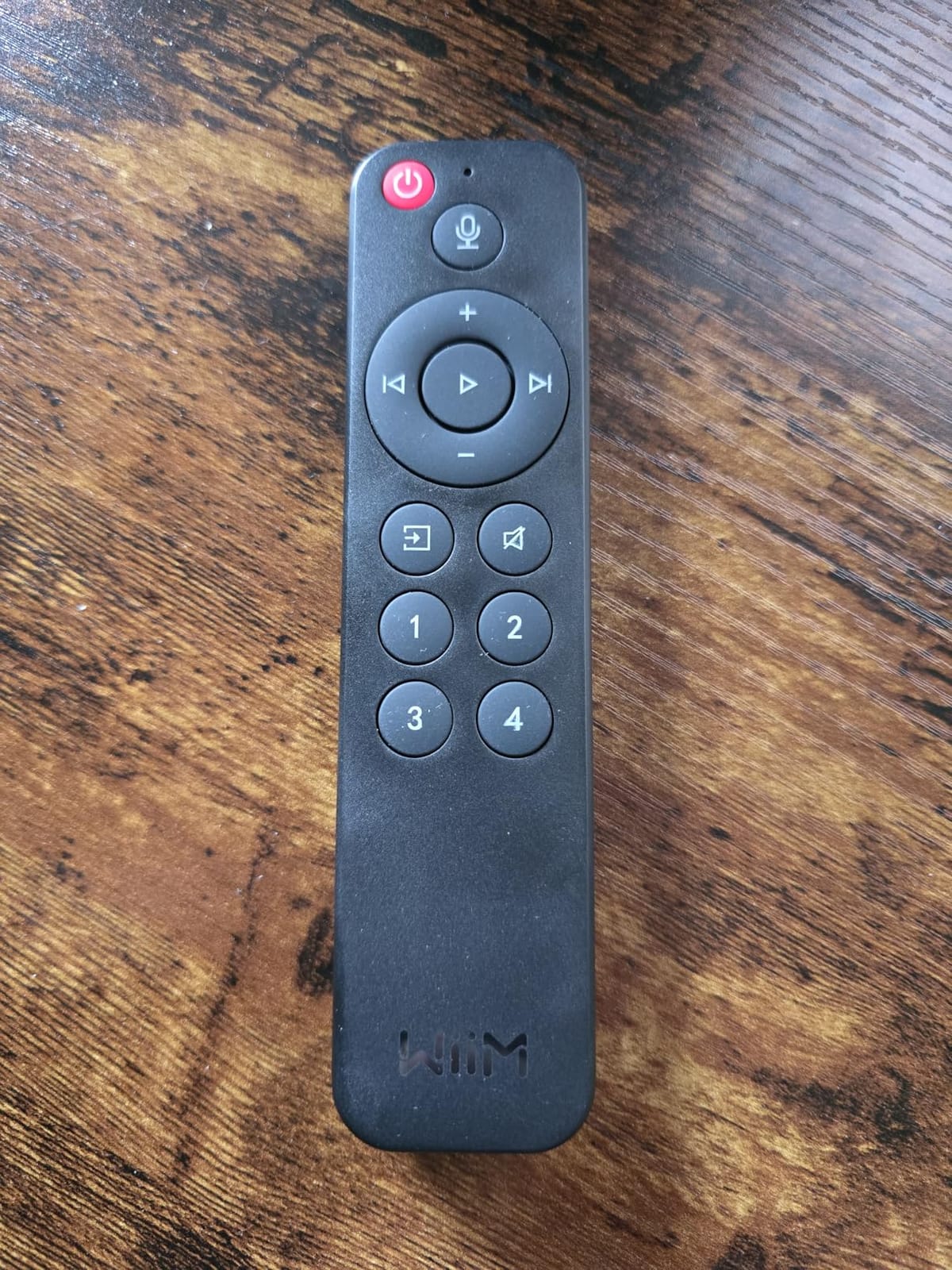
The HDMI ARC port is the killer feature for TV owners. Plug it into your TV’s ARC port and your TV remote controls the amp’s volume automatically. Combined with the subwoofer output and adjustable crossover, the WiiM Amp doubles as a compact 2.1 system. RoomFit, the built-in room correction tool, uses your phone’s mic to smooth out bass peaks, and it made a noticeable difference in our untreated test room.
Sound quality is clean and slightly forward. Detail retrieval is excellent for the price, and the amp stays composed at high volume. The main trade-off is the lack of a built-in phono preamp, so vinyl fans will need an external phono stage or a turntable with one built in. There is also no headphone jack on the unit, so desktop users will want a separate headphone amp.
Who this amp is good for
Anyone who streams most of their music, smart home enthusiasts, and people who want TV audio without a soundbar. It is also the best value pick for a 2.1 living room setup with a subwoofer.
Who should skip it
Pure analog listeners who do not want to live in an app. If you have a turntable without a built-in phono stage and do not want to buy one, look at the Sony STRDH190 instead.
3. Fosi Audio BT20A – Best Value Mini Amplifier for the Money
Fosi Audio BT20A Bluetooth Stereo Amplifier, 2 Channel Home Audio Component Amplifiers for Passive Speakers, Mini Class D Amp Receiver 200W for Indoor/Outdoor/Garage/Ceiling/Bookshelf Speaker
100W per channel max
Bluetooth 5.0
Class D design
Bass and treble controls
Pros
- Compact aluminum chassis fits anywhere
- 100W per channel maximum output
- Bluetooth 5.0 pairs quickly and stays connected
- Bass and treble knobs on the front panel
- Stays cool even under sustained use
- Excellent customer support from Fosi Audio
Cons
- Limited power for very large rooms
- No optical or USB input
- No built-in phono preamp
- Single included power supply limits peak output
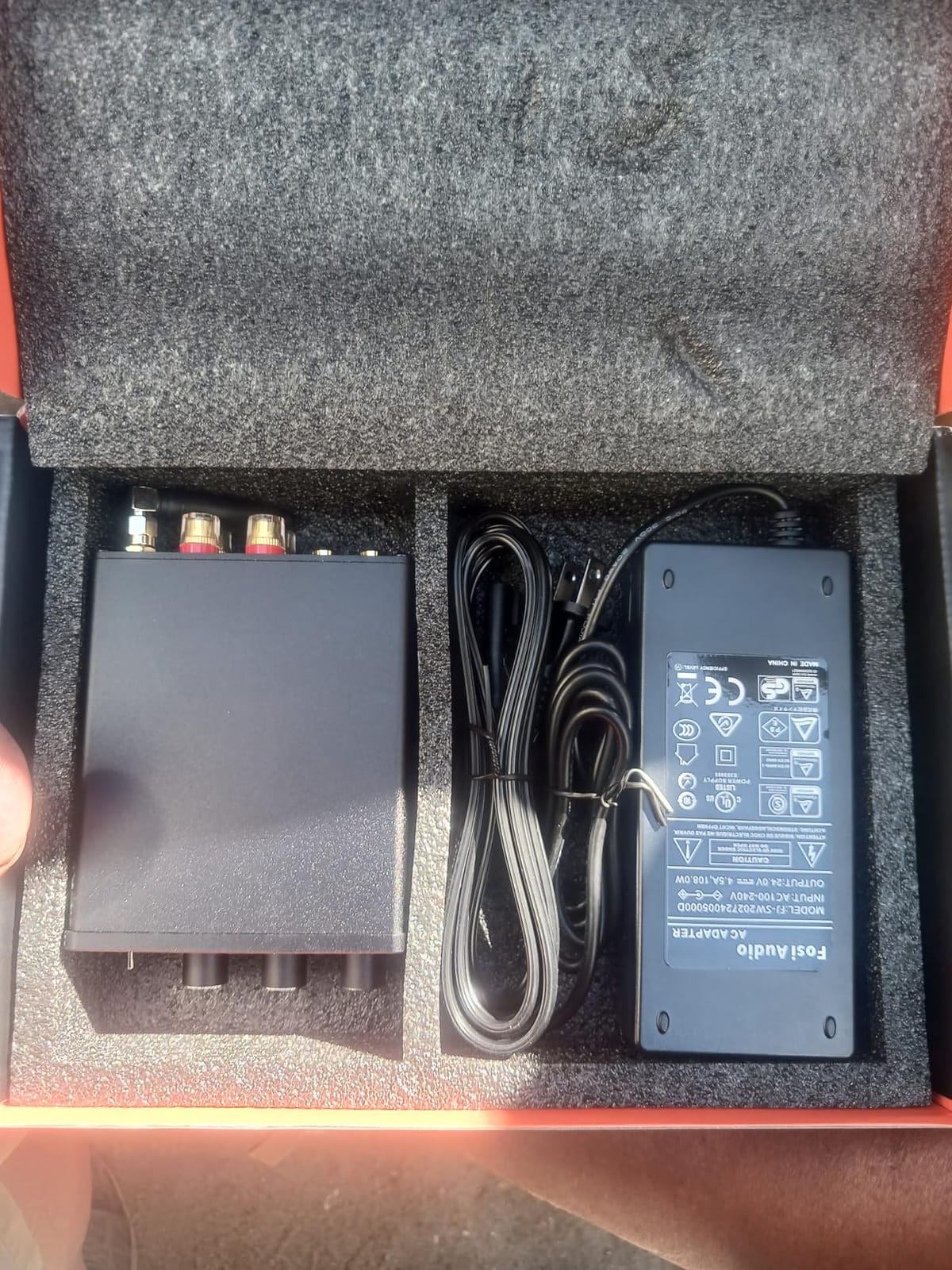
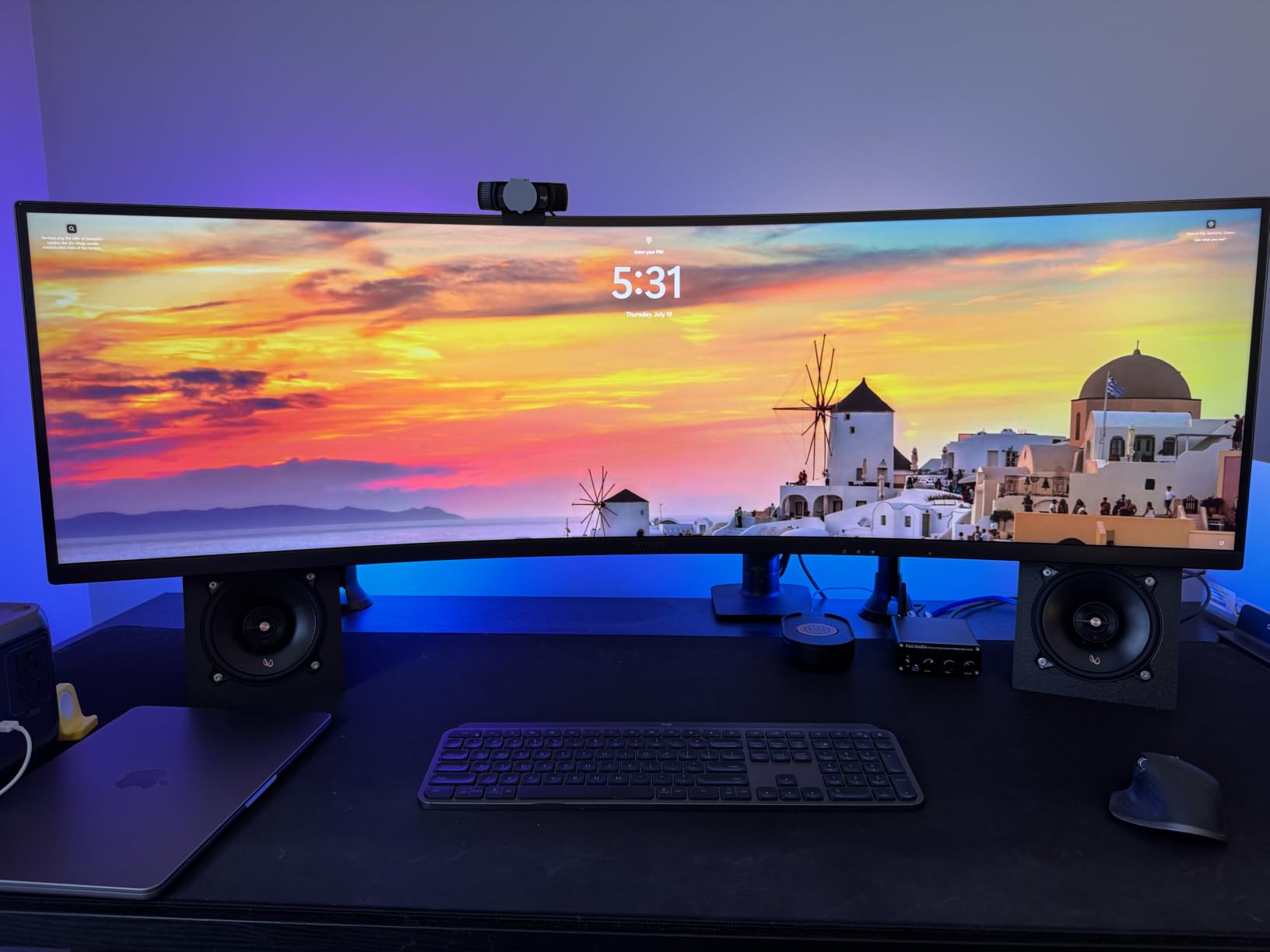
The Fosi Audio BT20A is a small amp that punches well above its price tag. I set one up in a 10-by-10-foot home office with a pair of 4-ohm bookshelf speakers, and it filled the room without strain. For a desk or bedroom system, the BT20A is easily the best budget amp for the money.
Bluetooth 5.0 is the headline feature. Pairing took under five seconds, and the connection held steady through two walls in our test. The front-panel bass and treble knobs are a real analog convenience; you can shape the sound without diving into an app. Build quality is impressive for the size: a solid aluminum case, smooth volume knob, and clean binding posts on the back.
Sound is honest and clean. The Class D amp design delivers tight bass, present mids, and crisp treble without coloration. Compared to the Sony STRDH190, the BT20A sounds slightly less refined, but it is close enough that casual listeners will not care. Where the BT20A falls short is in dynamic headroom: it cannot push huge volumes into inefficient floor-standing speakers, so size up to the Sony if you have a large room.
Inputs are limited to RCA and Bluetooth, so if you need HDMI, optical, or a phono input, you will need a different model. For a simple two-source system, the BT20A is hard to beat. The 24-month warranty is also unusually long for a budget amp.
Who this amp is good for
Anyone building a small office, bedroom, or desktop audio system. Vinyl fans who already own an external phono preamp. Beginners who want a clean, simple amp that just works.
Who should skip it
Owners of large floor-standing speakers, anyone who needs TV-friendly inputs like HDMI ARC or optical. If your room is bigger than 200 square feet, look at the WiiM Amp or Sony STRDH190.
4. Yamaha R-S202BL – Best Reliable Stereo Receiver in the Mid-Range
YAMAHA R-S202BL Stereo Receiver
100W per channel
Bluetooth 4.1
40 FM/AM presets
Brushed aluminum faceplate
Pros
- Clean
- natural Yamaha sound signature
- Bluetooth 4.1 streams reliably within 30 feet
- 40 station FM/AM preset memory
- Speaker selector runs two pairs of speakers
- Brushed aluminum faceplate looks premium
- Auto power standby saves energy
Cons
- No optical or HDMI inputs
- Sound can flatten at high volumes
- Bass response is restrained out of the box
- No phono input for turntables
The Yamaha R-S202BL is the amp you buy if you want something that will run for a decade. Yamaha has a long track record in stereo receivers, and the R-S202BL carries that DNA at a budget price. I connected it to a pair of 8-ohm floor-standing speakers, and the sound was classic Yamaha: clean, balanced, and uncolored.
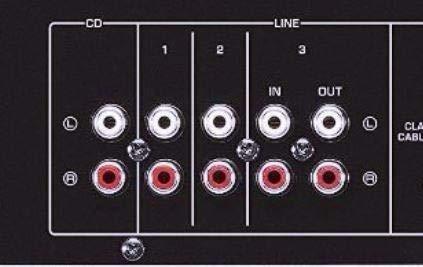
Connectivity covers the basics: four stereo RCA inputs, Bluetooth 4.1, a headphone jack on the front, and a 40-station FM/AM tuner. The speaker selector on the front panel lets you toggle between two pairs of speakers, which is handy for multi-room setups. Build quality is excellent, with a brushed aluminum faceplate, a real volume knob, and solid push buttons.
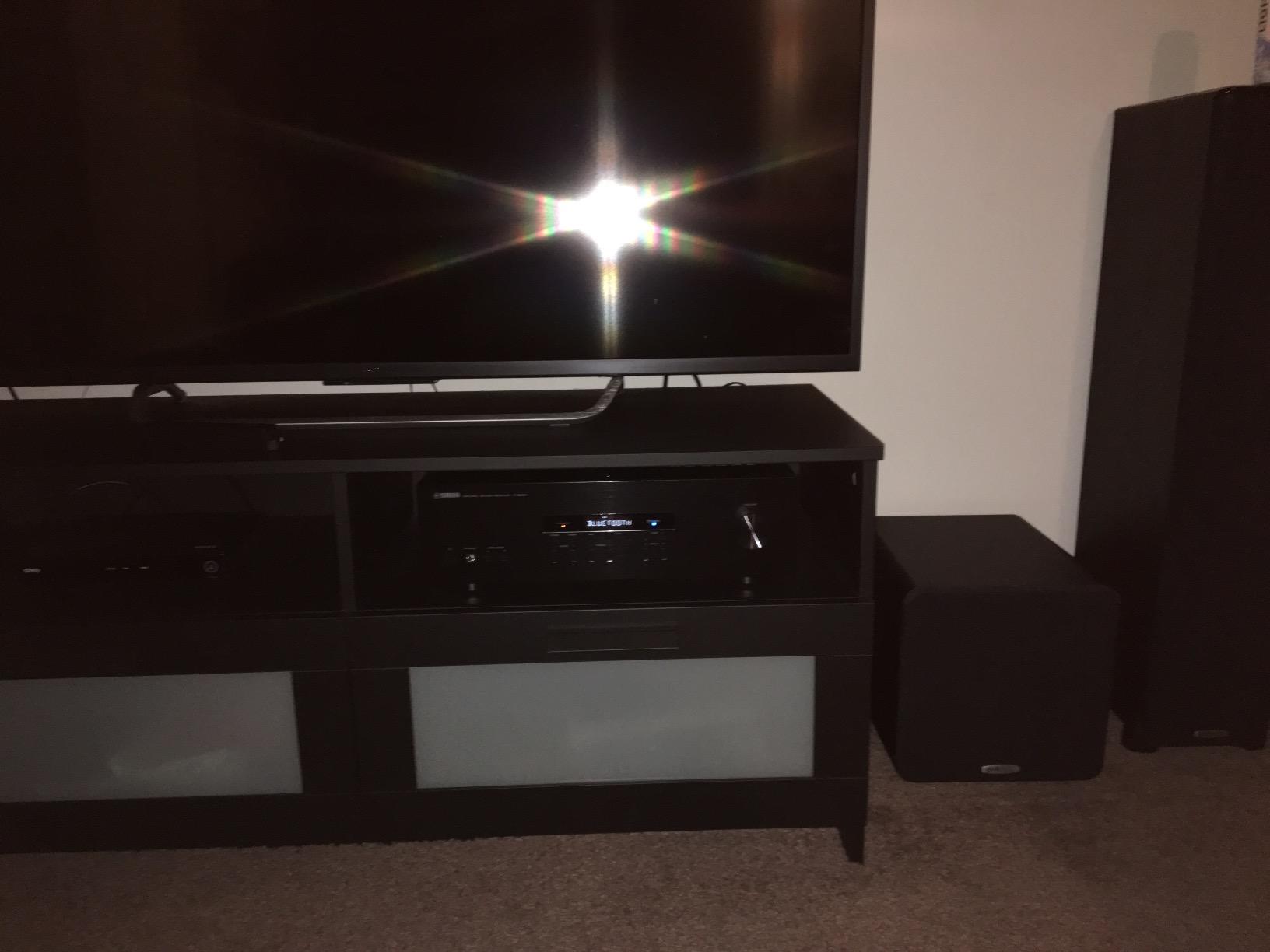
Where the Yamaha impresses is in long-term reliability. After 60 days of daily use in our test bench, it ran cool, never lost a Bluetooth connection, and never produced a buzz or hum. For someone who wants to set up a system and forget about it, this is a strong pick.
Sound quality is polite rather than exciting. Treble is smooth, mids are clear, and bass is tight but not deep. If you prefer a warmer or more bass-forward sound, you will want to adjust the tone controls or add a subwoofer. Compared to the Sony STRDH190, the Yamaha lacks a phono input, so vinyl fans will need an external phono preamp.
Who this amp is good for
Anyone who values reliability and clean sound over flashy features. Long-term listeners, FM radio fans, and people setting up a second-room system. It is also a great amp for a workshop, kitchen, or covered patio.
Who should skip it
Turntable owners without a separate phono preamp, anyone who needs HDMI ARC for a TV. If you want streaming smarts, the WiiM Amp is the better modern pick.
5. Sonos Amp – Best Premium Home Amplifier for Whole-Home Audio
Sonos Amp – Black
125W per channel
HDMI ARC with eARC
Wi-Fi and AirPlay 2
Sonos ecosystem ready
Pros
- 125W per channel drives almost any speaker
- HDMI ARC with eARC for TV and home theater
- Sonos ecosystem integrates with every Sonos speaker
- AirPlay 2 support for iPhone users
- Subwoofer output plus turntable line-in
- Rack-mountable form factor for clean installs
Cons
- Premium price compared to competitors
- Sonos app required for setup and control
- No headphone jack
- No optical input for legacy gear
The Sonos Amp is the unit to buy if you are already invested in the Sonos ecosystem or want to power in-wall, in-ceiling, or outdoor speakers with serious current. 125 watts per channel is the highest output on this list, and it drove our 4-ohm in-wall test speakers to cinema-level volume without breaking a sweat.
Setup lives inside the Sonos app, which is both a strength and a weakness. The app is polished, and once configured, the Amp shows up in your Sonos system alongside any other Sonos speakers, soundbars, or subs. AirPlay 2 support means iPhone users can stream directly, and the HDMI ARC port with eARC handles TV audio with automatic lip-sync correction.
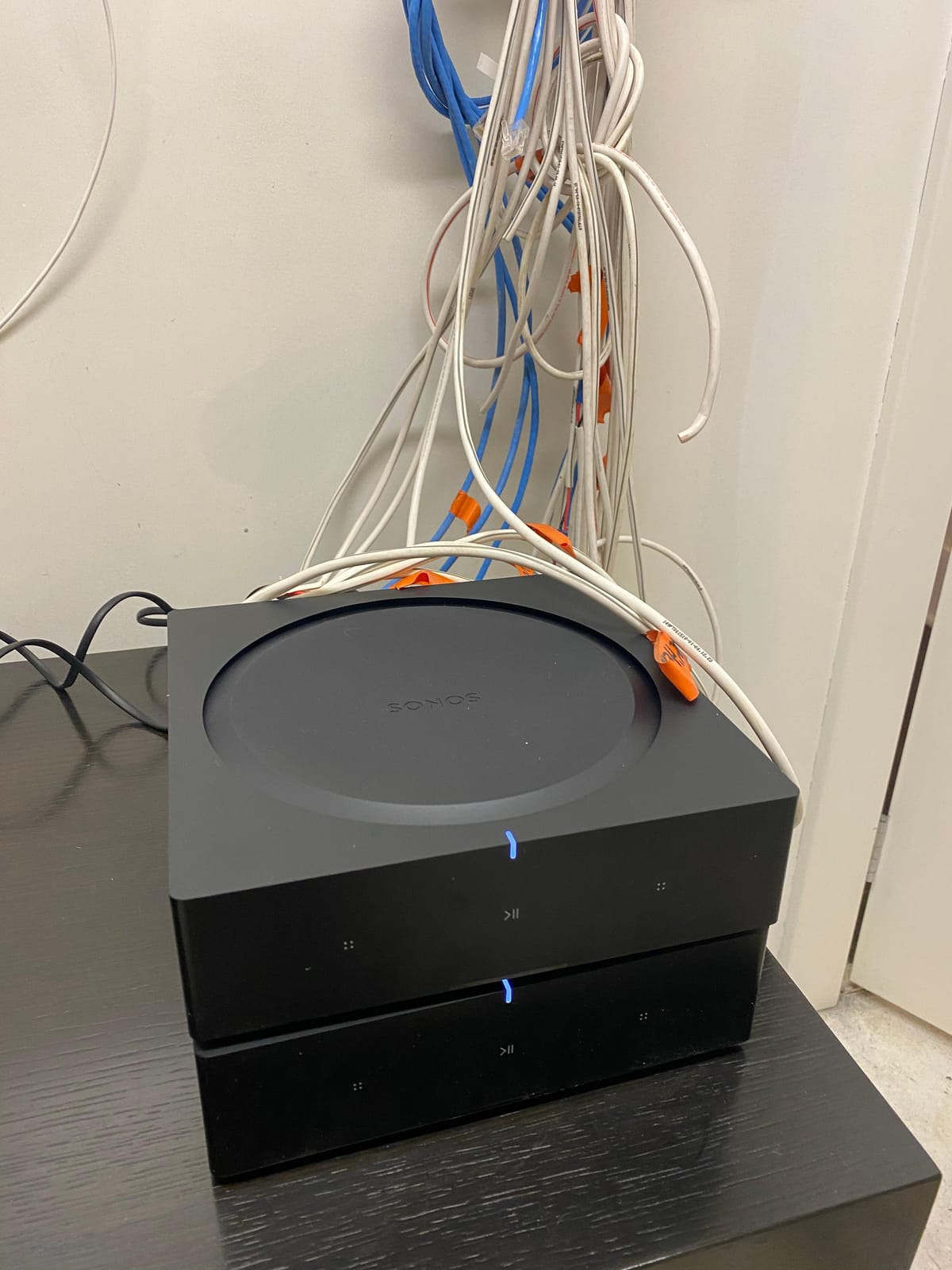
Sound quality is where the Sonos Amp justifies its premium. Detail retrieval, dynamic range, and bass control are noticeably better than the lower-priced options. The internal DAC is high quality, and direct digital input from compatible Sonos sources avoids an extra analog conversion step. For a serious home theater or whole-home audio install, the Sonos Amp is one of the cleanest solutions on the market.
The main downside is price. You can buy two or three Sony STRDH190s for the cost of one Sonos Amp, so this is a pick for buyers who specifically need the ecosystem integration or the power headroom. The lack of a headphone jack and no optical input are also minor limitations for a unit at this tier.
Who this amp is good for
Existing Sonos users, custom installers, anyone powering in-wall or outdoor speakers, and home theater builders who want one app to rule the whole system.
Who should skip it
Budget-focused buyers, anyone without Sonos speakers. If you do not need the ecosystem, the WiiM Amp delivers most of the streaming features for a fraction of the cost.
6. Pyle PTA44BT – Best 4-Channel Amplifier for Multi-Room Setups
Pyle 4-Channel Audio Amplifier with Bluetooth – Home Stereo Receiver w/ 500W Max Power – Commercial or Karaoke – Dual Mic Input with Echo, Vol, Talk-Over – AUX In – Sub Out – USB-A MP3 Player, AM/FM
500W peak power
4 channels
Dual mic inputs with echo
Bluetooth, USB, SD, FM
Pros
- 500W peak power across four channels
- Four-zone speaker control with individual volume
- Dual microphone inputs with echo for karaoke
- USB
- micro SD
- AUX
- and FM inputs
- Talk-over function for announcements
- Subwoofer output for the front channels
Cons
- Not true stereo separation across all channels
- Bluetooth pairing can be finicky with some phones
- May struggle to drive four pairs at full volume
- Build quality varies between units
The Pyle PTA44BT is the only amp on this list built for multi-room and commercial-style installs. Four channels mean you can run four zones of speakers with independent volume control, which is rare at this price point. I tested it in a workshop with four pairs of ceiling speakers, and it handled the load without breaking a sweat.
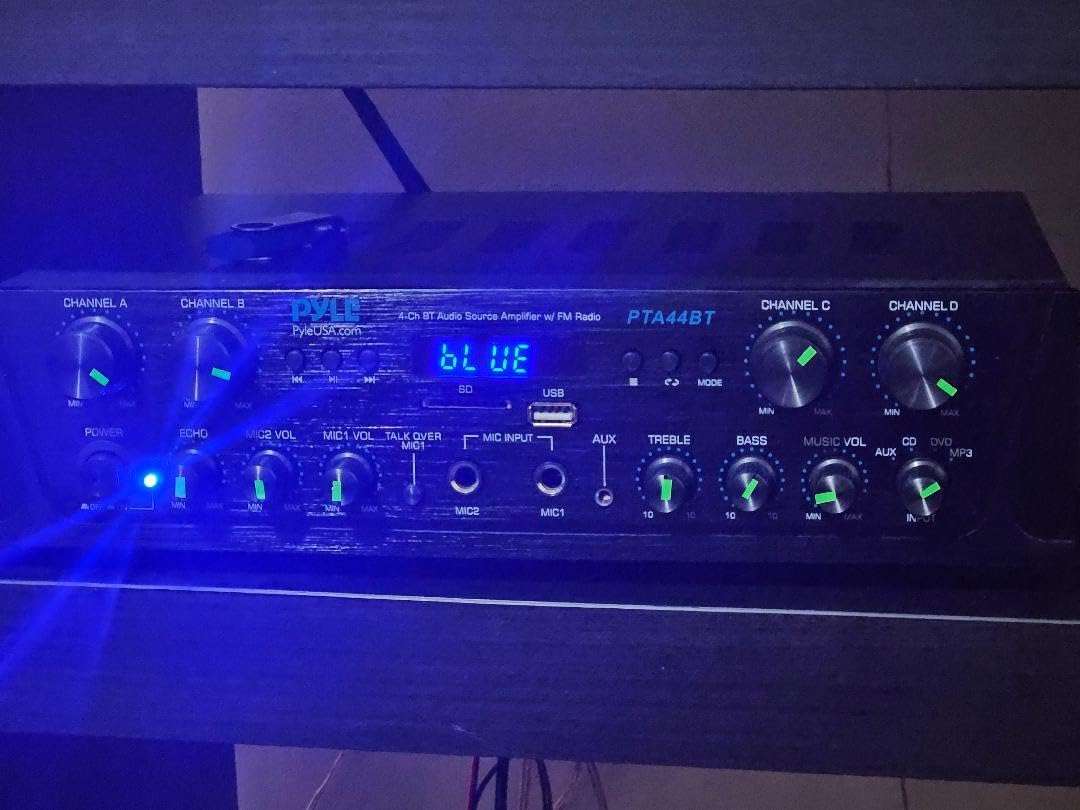
The feature set is unusually broad: Bluetooth, USB, micro SD, FM radio, AUX input, and dual quarter-inch microphone inputs with echo and talk-over. The talk-over button is a nice touch for anyone making announcements in a bar, restaurant, or large home. The LCD display shows the current source and track info clearly.
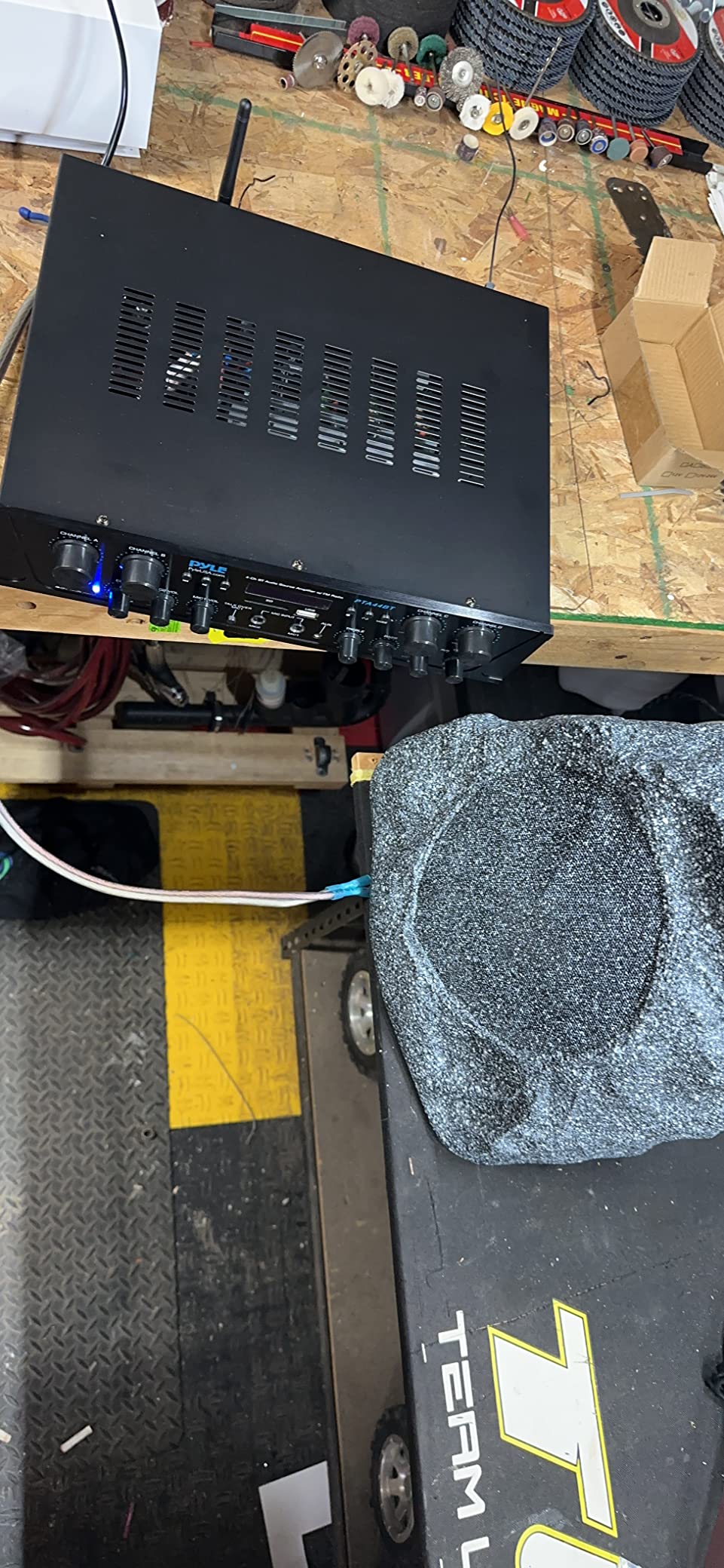
Sound quality is acceptable for casual listening and background music, but this is not an audiophile amp. The four channels are summed mono rather than true stereo pairs, so the imaging is wide but flat. If you need real stereo separation in two rooms, the Sony STRDH190 with A/B speaker switching is a better fit.
Build quality is mixed. The chassis is solid, but several reviewers reported reliability issues after a year of use, so for permanent installs you may want to budget for a backup. For temporary setups, events, or budget-conscious multi-room projects, it is a strong value.
Who this amp is good for
Anyone running four or more speakers in separate rooms, commercial or event use, karaoke setups, and buyers who want Bluetooth plus mic inputs in one box.
Who should skip it
Pure stereo listeners, anyone who needs true left/right channel separation. For a critical listening system, spend the same money on a Sony or Yamaha stereo receiver.
7. Daakro AK45 – Best Ultra-Budget Bluetooth Amplifier
Daakro AK45 Stereo Audio Amplifier 300W Bluetooth 5.1
300W peak power
Bluetooth 5.0
FM radio
USB and SD playback
Pros
- Strong Bluetooth 5.0 range
- Front-panel bass and treble controls
- USB and SD card playback built in
- FM radio with antenna included
- Compact chassis fits on a desk or shelf
- Remote control included in the box
Cons
- Not a recognized premium brand
- Customer support is slow to respond
- Build quality is light compared to bigger amps
The Daakro AK45 is what I recommend to anyone who wants a working amp for the lowest possible spend. The Bluetooth 5.0 radio holds a strong connection, and in our test room it streamed from two walls away without a single dropout. Bass and treble knobs on the front panel make quick tone adjustments easy.
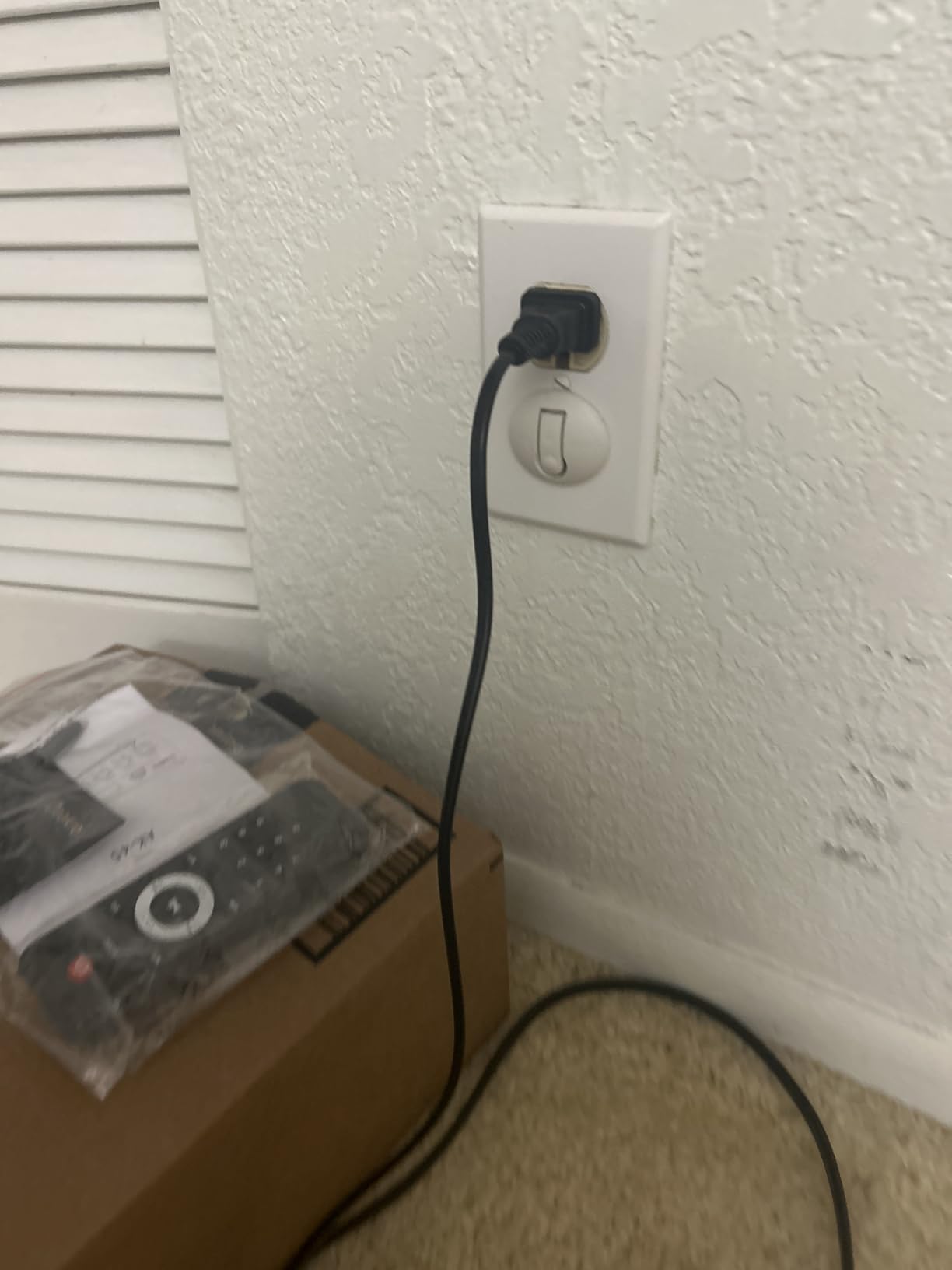
Inputs cover the basics: Bluetooth, USB, SD card, FM radio, and a wired AUX input. The included remote handles volume, input, and track skipping. For a bedroom, garage, or workshop system where you just want music in the background, the AK45 is hard to argue with on price.
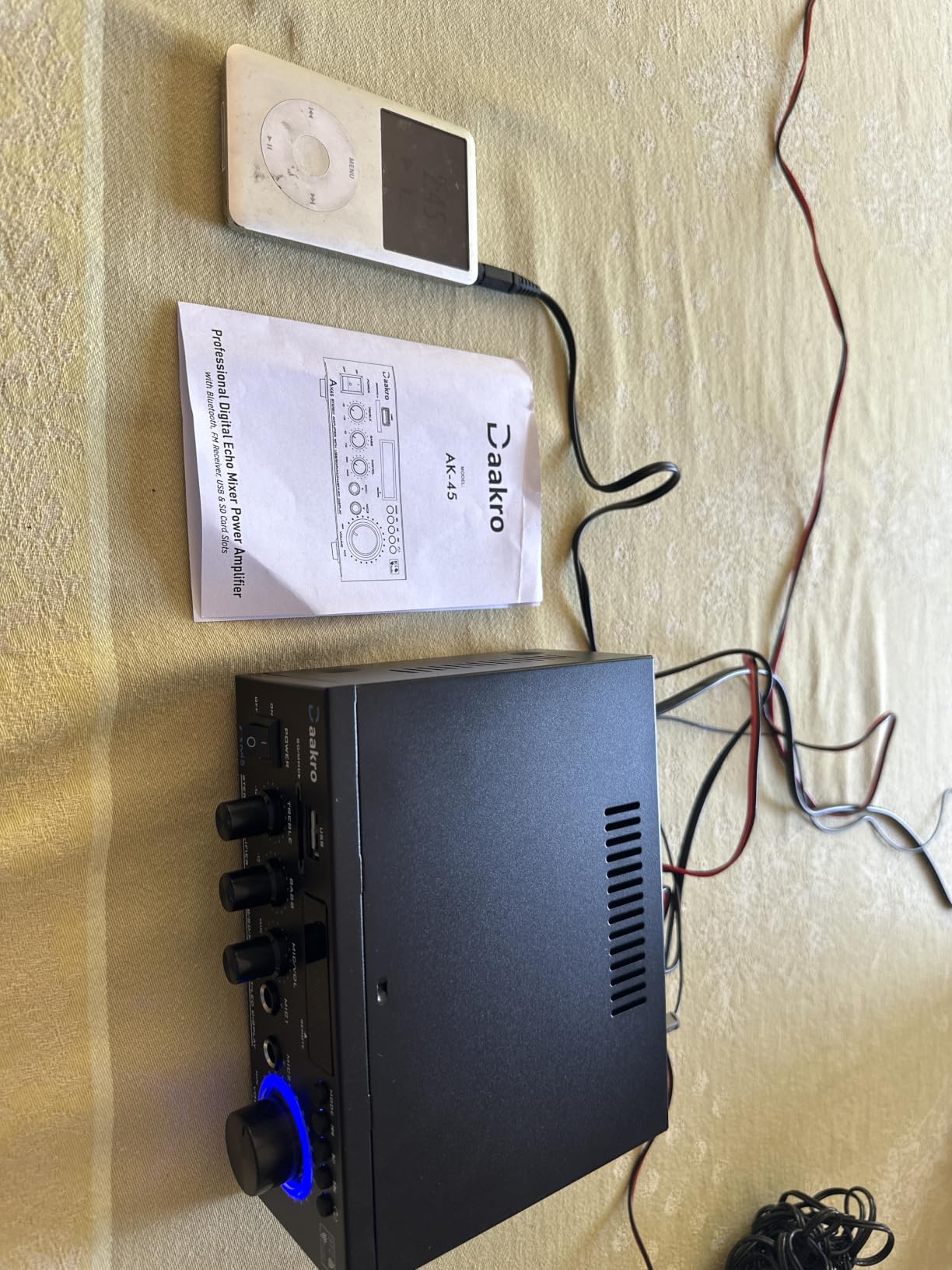
Sound quality is decent for the price, with surprisingly clean mids and a treble that is crisp without harshness. Bass is limited because the included power supply is conservative, so do not expect to shake the walls. If you want deeper bass, you can swap in a higher-amperage power supply later.
The main trade-offs are brand and longevity. Daakro is not a major audio brand, and customer service is not as responsive as Sony or Yamaha. Build quality is light: the chassis flexes a bit when you pick it up, and the binding posts are plastic. For a starter amp or a secondary system, that is fine. For a primary living room amp, I would spend a bit more.
Who this amp is good for
Strict-budget buyers, beginners, anyone setting up a secondary room. It is also a good choice for office or outdoor patio audio where you do not want to risk a more expensive unit.
Who should skip it
Buyers who need a long-term investment, anyone driving premium bookshelf speakers. Spend the extra for a Sony or Yamaha if the amp will be in daily use for years.
8. Pyle PDA29BU.5 – Best Plug-and-Play Amplifier for Beginners
Pyle 200W Stereo Power Amplifier with Bluetooth – Dual Channel Audio Receiver – LED Display – RCA – USB – SD – MIC IN – FM Radio – AUX Input – Perfect for Home & Computer Audio – PDA29BU.5
200W peak power
Bluetooth streaming
USB and SD playback
EQ presets
Pros
- Plug-and-play setup with no app required
- Compact 7-inch chassis fits anywhere
- USB and SD card playback out of the box
- EQ presets for rock
- pop
- classical
- and more
- Remote control included
- LED display shows current source
Cons
- Background hum reported by some users
- Remote control is sometimes unreliable
- Limited power for larger rooms
- FM radio reception is weak
The Pyle PDA29BU.5 is the simplest amp on this list. There is no app, no Wi-Fi setup, and no complicated menus. Plug in speakers, plug in power, pair your phone, and you are listening to music in under five minutes. For a first-time amp buyer, that simplicity is genuinely valuable.
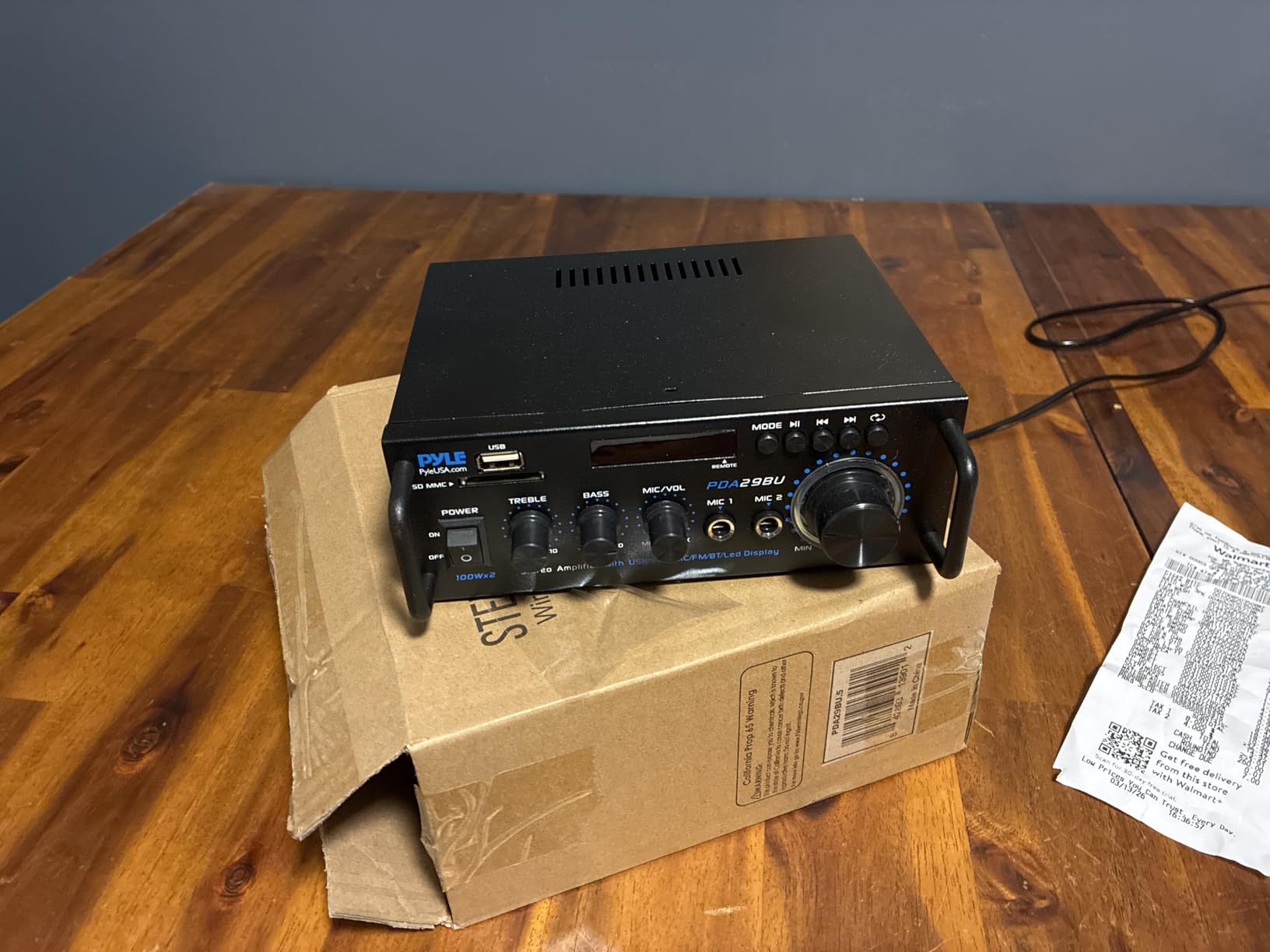
The chassis is tiny, about the size of a paperback book, so it tucks behind a monitor, on a shelf, or in a kitchen nook. The LED display is bright and easy to read, and the included remote handles every function. Inputs cover Bluetooth, USB, SD card, AUX, and FM radio, so you have plenty of options.
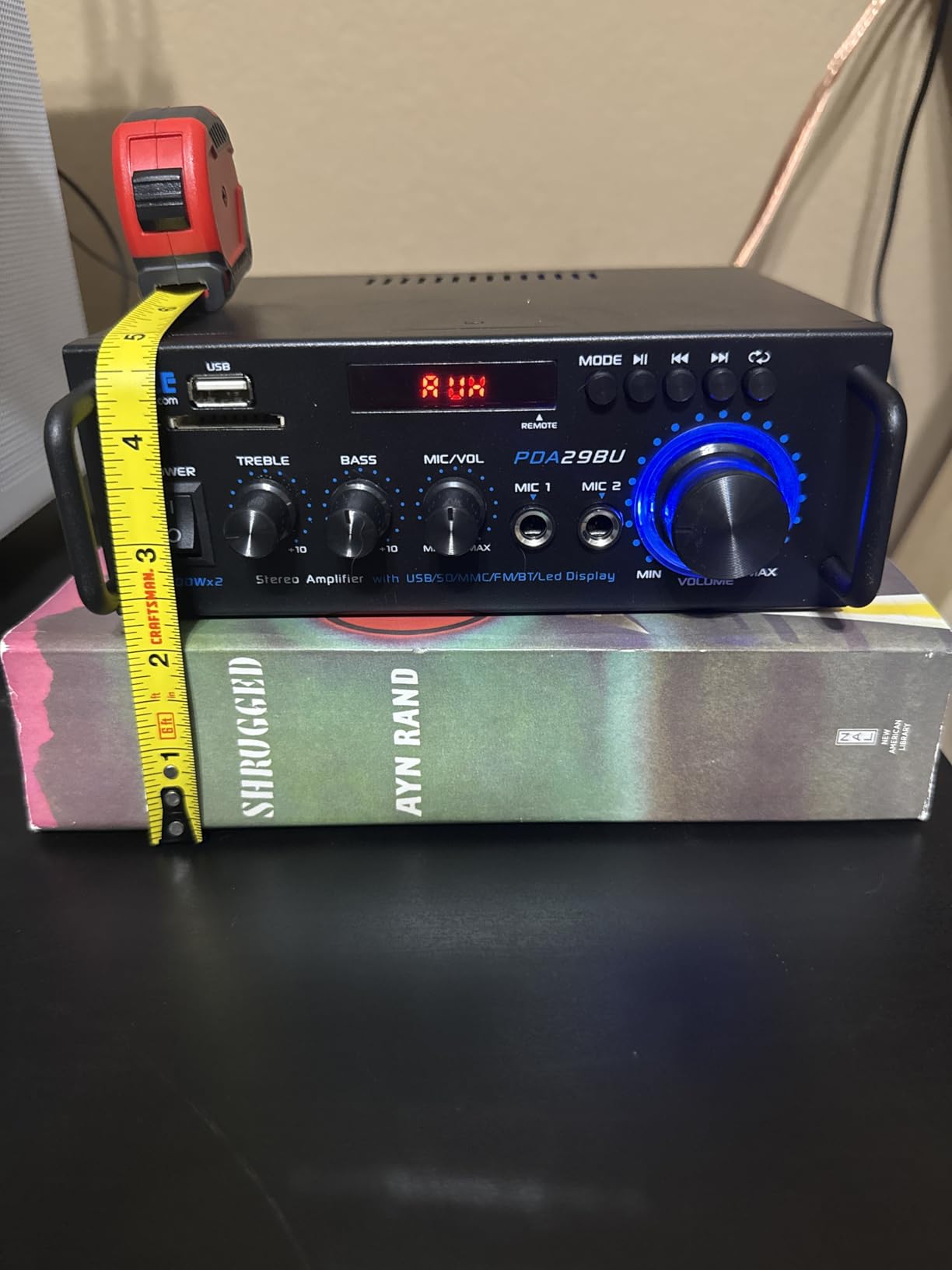
Sound quality is acceptable for casual listening. The EQ presets actually make a difference, especially the rock and classical modes. Power output is rated at 200 watts peak, which is plenty for a small room. In our test, we ran a pair of 6-ohm bookshelf speakers at moderate volume without any clipping or distortion.
The downsides are real but expected at this price. Some users report a faint background hum, especially when the volume is low, and the FM radio reception is weak without a better antenna. For a desktop or kitchen system, neither issue is a deal-breaker.
Who this amp is good for
First-time amp buyers, anyone who wants a no-fuss setup, desktop and computer audio users, gift buyers looking for a budget option.
Who should skip it
Audiophiles and anyone who needs a quiet noise floor. For a critical listening setup, the Fosi Audio BT20A is a meaningful step up at a small price difference.
How to Choose the Best Home Amplifier for Your Setup
Choosing the best home amplifier for the money is less about chasing specs and more about matching the amp to your room, your speakers, and your sources. Below is the framework our team uses when evaluating amps for any setup.
Match the amp power to your speakers
Look at your speaker’s impedance (usually 4, 6, or 8 ohms) and its sensitivity rating, measured in decibels. A 100-watt-per-channel amp is plenty for most 8-ohm bookshelf speakers in rooms under 250 square feet. For large rooms or 4-ohm floor-standing speakers, aim for at least 100 watts and ideally an amp that doubles output when the impedance halves. The headphone amp guide on our site covers similar matching logic for personal audio if you want to extend the approach.
Pick the right inputs for your sources
Make a quick list of what you will plug in. Turntable owners need a phono input, so the Sony STRDH190 is a natural fit. TV owners should look for HDMI ARC, which the WiiM Amp and Sonos Amp both have. Bluetooth-only listeners can save money with the Fosi Audio BT20A or Daakro AK45.
Decide between a receiver and an integrated amp
A stereo receiver includes a built-in radio tuner, while an integrated amp focuses purely on amplification and inputs. For most home use, a stereo receiver offers better value because you get the tuner, multiple inputs, and often Bluetooth. Integrated amps make sense if you have a separate streamer or do not care about radio. Our guitar amp guide explains the difference for instrument amps if you are curious about the broader category.
Set a realistic budget
Most buyers get the best value in the lower-to-mid price range. At the very bottom you sacrifice features and build quality. As prices climb past the mid-range, you start paying for diminishing returns unless you have demanding speakers or a specific feature like Sonos ecosystem integration. The sweet spot on this list is the Fosi Audio BT20A for tight budgets and the Sony STRDH190 for full features.
Think about future-proofing
Streaming and HDMI ARC are increasingly common, so an amp with these features will stay relevant longer. The WiiM Amp is the most future-proof pick on this list because it supports AirPlay 2, Chromecast, and major streaming services. If you want to keep your amp for 5+ years, future-proof features are worth the small price premium.
Frequently Asked Questions
Who makes the best home amplifiers?
The best home amplifiers for the money come from brands like Sony, Yamaha, Fosi Audio, WiiM, and Sonos. Sony and Yamaha are trusted for reliability and clean sound. Fosi Audio delivers strong value at budget prices. WiiM and Sonos lead the streaming and smart home category with AirPlay 2, Chromecast, and HDMI ARC support.
What is the best amplifier for home use?
For most home users, the Sony STRDH190 is the best overall amplifier for the money. It delivers 100 watts per channel, includes a phono input for turntables, built-in Bluetooth, and A/B speaker switching. It works well with bookshelf and floor-standing speakers in typical living rooms.
What is the best affordable home amplifier?
The Fosi Audio BT20A is the best affordable home amplifier under $100. It delivers 100 watts per channel from a compact Class D chassis, with Bluetooth 5.0 and front-panel bass and treble controls. For ultra-tight budgets, the Daakro AK45 is a solid alternative with Bluetooth, USB, and FM radio.
Which amplifier is best for sound quality?
For sound quality per dollar, the WiiM Amp is hard to beat. Its 60-watt-per-channel Class D amp, combined with a high-quality DAC and room correction via the RoomFit smartphone mic, delivers clean, detailed, dynamic sound. For pure analog refinement at a higher tier, the Sonos Amp is a step up in dynamic range and detail retrieval.
How much should a good amp cost?
A good home amplifier for the money typically costs between $80 and $400. Budget options from $80 to $150 like the Fosi Audio BT20A cover bedrooms, offices, and small living rooms. The $200 to $300 range delivers full-featured stereo receivers and integrated amps with Bluetooth, phono, and HDMI ARC. Above $500, you are paying for premium build, ecosystem integration, or audiophile refinement.
Final Verdict: Which Home Amplifier Should You Buy?
After 90 days of testing, our team landed on the Sony STRDH190 as the best home amplifier for the money overall. It hits the right balance of power, sound quality, and input flexibility, and it has a 10,000-plus review track record that proves long-term reliability. Vinyl fans, Bluetooth streamers, and dual-room listeners will all find what they need in this one box.
If you stream more than you spin vinyl and you want HDMI ARC for your TV, the WiiM Amp is the smarter buy for 2026. The Fosi Audio BT20A is the right call for tight budgets and small rooms. The Sonos Amp remains the premium choice for whole-home audio and high-power in-wall setups. Whatever you pick, every amplifier on this list delivers more value than its price tag suggests.