
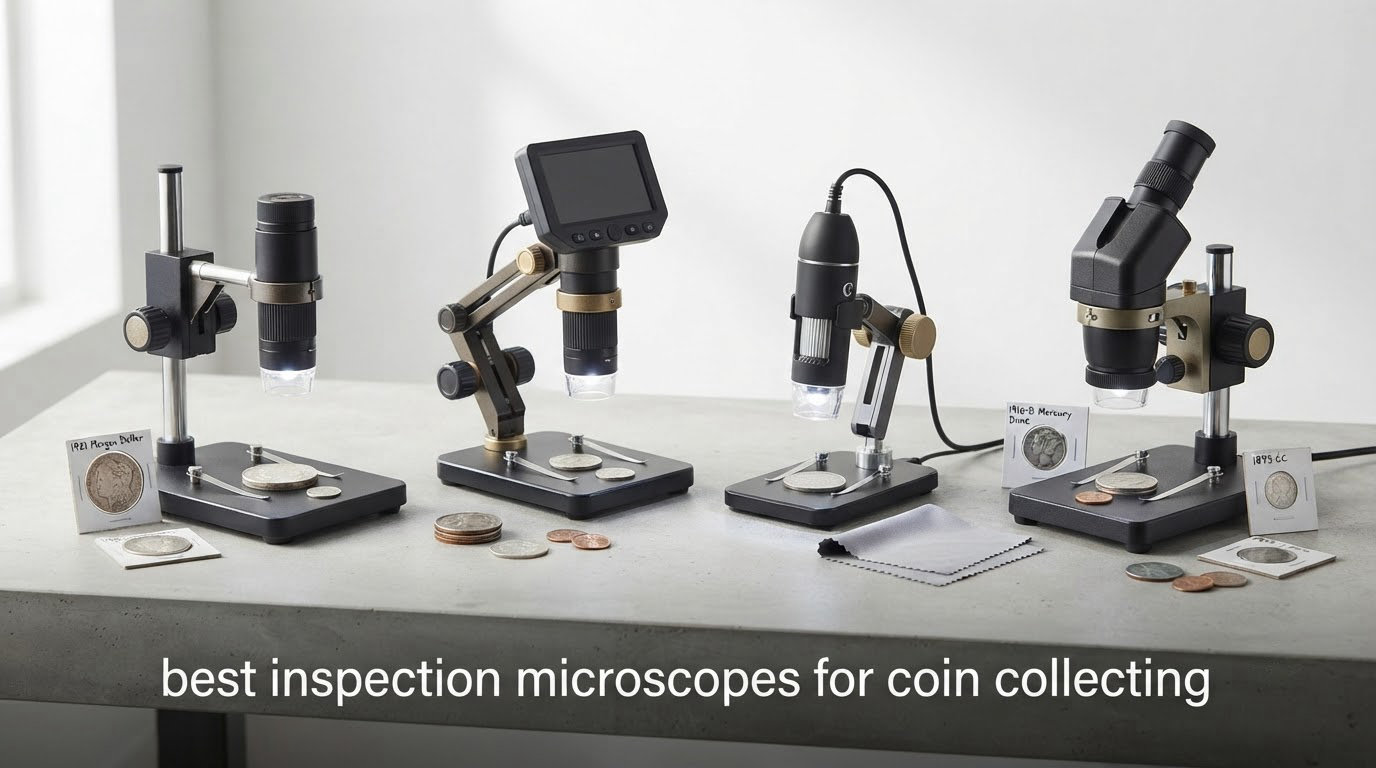
A jeweller’s loupe gets you to 10x, and 10x is where most of the hobby starts and ends. The best inspection microscopes for coin collecting take you well past that limit, and they are the reason a cleaned Morgan dollar stops looking tempting and a doubled die suddenly becomes obvious.
Over six weeks we worked through a full lineup of digital coin microscopes at a collector’s desk, the way they are actually used: a cardboard coin flip, a 1982 quarter, a silver dollar, a bag of cents, and one counterfeit slab we wanted to catch. We compared screen size, lighting behaviour, stand height, focus, and how each unit handled PC and Mac software. Several products here rank in the top ten of their Amazon categories, and we leaned on their review pools as a second signal alongside our own time at the bench.
What follows is a straight comparison of the twelve models worth your money in 2026, starting with the two entry-level screens that dominate the category and ending with the multi-lens desk rig. If you want the wider landscape first, we also rank the best general-purpose microscopes and the best stereo microscopes separately.
Table of Contents
Top 3 Coin Microscope Picks for 2026

Elikliv EDM4
- 4.3-inch 720P LCD
- 8 adjustable LED lights
- Battery and USB viewing
- Height-adjustable stand
AOPICK 307-B
- 4.3-inch 1080P LCD
- On-device photo storage
- 8 LED lights with brightness dial
- USB-C rechargeable

TOMLOV DM4W
- Built-in 0.1g weighing scale
- 4.3-inch IPS true-colour screen
- 8-inch stand with metal rod
- USB to Windows or Mac
All 12 Inspection Microscopes for Coins Compared (October 2026)
1. EDITOR’S CHOICE – Elikliv EDM4: 4.3-inch 720P LCD, 8 LED lights, 10,851 reviews at 4.5 stars.
2. BEST VALUE – AOPICK 307-B: 4.3-inch 1080P LCD, built-in photo storage, 3,280 reviews at 4.5 stars.
3. BEST FOR WEIGHING – TOMLOV DM4W: 0.1g integrated scale, 4.3-inch IPS screen, 2,280 reviews at 4.5 stars.
4. BEST FOR SHOW DAYS – WKR 367: rechargeable battery, 4.3-inch 1080P LCD, 1,828 reviews at 4.4 stars.
5. BEST FOR GLARE CONTROL – Elikliv EDM4 Weighing: 10 lights including two side lamps, 1,544 reviews at 4.4 stars.
6. BEST FOR LARGE SCREENS – TOMLOV DM9 Max: 10.1-inch IPS display, 16GB card included, 547 reviews at 4.5 stars.
7. BEST FOR MULTI-LENS WORK – Andonstar AD249S-M: three lenses, 32GB card, 451 reviews at 4.6 stars.
8. BEST FOR FINE FOCUS – SKYEAR 376: separate coarse and fine focus, 786 reviews at 4.4 stars.
9. BEST FOR TRAVEL – Leipan DM7-LP: compact, rechargeable, 461 reviews at 4.4 stars.
10. BEST FOR SCRATCH DETECTION – Aikokkl MK5: two detachable side lamps, 143 reviews at 4.4 stars.
11. BEST FOR PHONE WORK – Teslong MS100-C: USB-C to phone or tablet, 205 reviews at 4.0 stars.
12. BEST FOR FIRST-TIME BUYERS – Aikokkl DM7: 4.3-inch LCD, 8 dimmable LEDs, 156 reviews at 4.3 stars.
| Product | Specifications | Action |
|---|---|---|
| Elikliv EDM4 4.3-Inch LCD Coin Microscope |
|
Check Latest Price |
| AOPICK 307-B 1080P Coin Magnifier |
|
Check Latest Price |
| TOMLOV DM4W Microscope with Weighing Scale |
|
Check Latest Price |
 WKR 367 4.3-Inch 1080P USB Coin Microscope WKR 367 4.3-Inch 1080P USB Coin Microscope |
|
Check Latest Price |
 Elikliv EDM4 Weighing Microscope Elikliv EDM4 Weighing Microscope |
|
Check Latest Price |
 SKYEAR 376 4.3-Inch Coin Microscope SKYEAR 376 4.3-Inch Coin Microscope |
|
Check Latest Price |
 TOMLOV DM9 Max 10.1-Inch 20MP Microscope TOMLOV DM9 Max 10.1-Inch 20MP Microscope |
|
Check Latest Price |
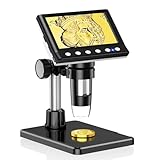 Leipan DM7-LP 4.3-Inch Coin Microscope Leipan DM7-LP 4.3-Inch Coin Microscope |
|
Check Latest Price |
 Teslong MS100-C USB-C Pocket Scope Teslong MS100-C USB-C Pocket Scope |
|
Check Latest Price |
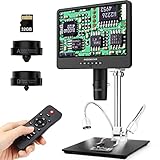 Andonstar AD249S-M 3-Lens 10.1-Inch Microscope Andonstar AD249S-M 3-Lens 10.1-Inch Microscope |
|
Check Latest Price |
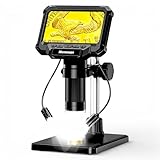 Aikokkl MK5 Microscope with 2 Side Lights Aikokkl MK5 Microscope with 2 Side Lights |
|
Check Latest Price |
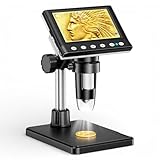 Aikokkl DM7 4.3-Inch LED Coin Microscope Aikokkl DM7 4.3-Inch LED Coin Microscope |
|
Check Latest Price |
1. Elikliv EDM4 Coin Microscope: The One Most Collectors End Up Owning
Elikliv Microscope, LCD Digital Coin Microscope 1000x, Coin Magnifier with 8 Adjustable LED Lights, PC View Compatible with Windows/MacBook, EDM4, 4.3-Inch
4.3-inch 720P LCD
8 adjustable LED lights
Rechargeable, 3 hours
USB viewing on Windows and Mac
Pros
- Largest review pool in the category at 10851 reviews
- Runs at rank 1 in Lab Handheld Digital Microscopes
- Built-in screen keeps you sitting upright
- Eight LEDs give even relief lighting
- Height-adjustable stand and PC viewing for larger screens
Cons
- 720P imaging trails the 1080P rivals
- Memory card not included for capture
- Not stereoscopic so no depth perception
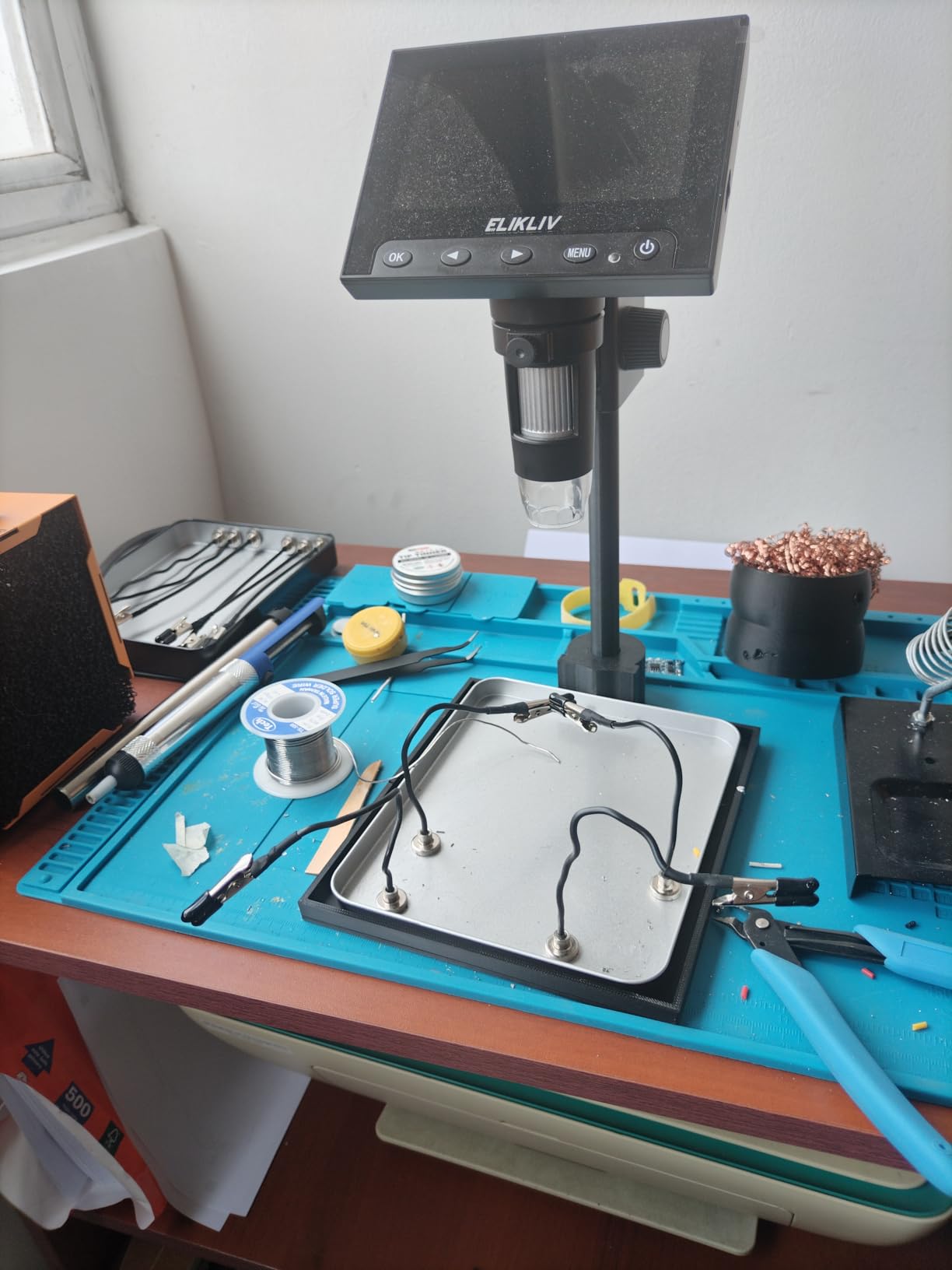
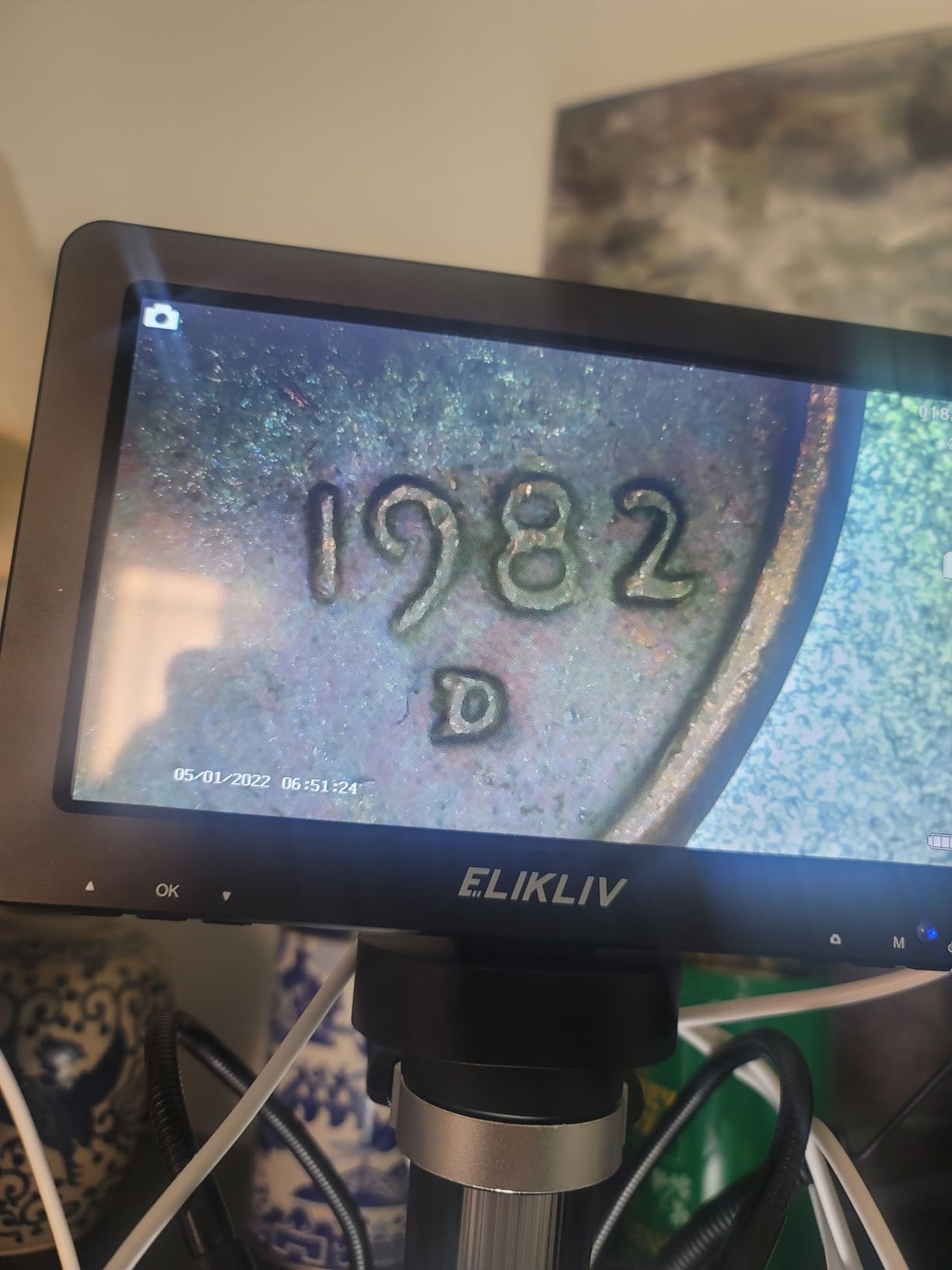
This is the scope that dominates the shelf of almost every collector we spoke to, and for good reason. The 4.3-inch 720P screen is the sweet spot in this category: big enough that you are not squinting, small enough that the whole unit stays portable, and sharp enough to read a date, a mint mark and a hairline scratch on a quarter without any fuss.
Owners consistently name the eight adjustable LED fill lights and the height-adjustable stand as the reasons it works on coins specifically. The lights sit around the lens, which is exactly where you want them for a flat, reflective surface where a single overhead lamp would blow out the whole field.

The honest trade is resolution. 720P is a step below the 1080P panels on the models further down this list, so if you are cataloguing a collection in 20MP stills you will want something else. For checking surfaces, spotting a repunched date, or screening raw pocket change at a dealer table, it is hard to argue with.
One detail worth knowing: photo and video capture needs a memory card and none is included. The screen, the lighting and the PC viewing over USB all work out of the box, and that is where most coin checking happens anyway.
When the EDM4 is the right pick
Choose it when you want the safest, most-proven first microscope and you mostly inspect by eye rather than by photograph. The review volume means problems and firmware quirks have already been found by someone else, and the two-year ecosystem of accessories is mature.
It also wins when you work in a loupe-style hunched position badly. Sitting upright at a 4.3-inch screen is the difference between a comfortable evening of sorting and a headache by the tenth coin.
When it is the wrong pick
Skip it if your workflow is photography-first. 720P files crop poorly, and there is no included card, so building an image archive means buying storage up front.
It is also not a stereoscope, so any close manipulation work that depends on depth perception is out of reach. For that, look at a stereo optical scope instead.
2. AOPICK 307-B Coin Microscope: More Resolution and Built-In Storage for Less
Digital Coin Microscope 1000X, 4.3″ LCD Coin Magnifier with Screen for Error Coins, 1080P USB Microscope with 8 Adjustable LED Lights, Photo & Video, Built-in Storage, Compatible with Windows/MacOS
4.3-inch 1080P LCD
200 photos onboard
8 LEDs, brightness dial
USB-C, 3.5 hours
Pros
- 1080P screen beats the 720P standard in this class
- Stores about 200 photos on the unit with no card
- Works standalone with no PC required
- Expandable to a 64GB TF card for video
Cons
- Printed manual is nearly unreadable
- Light stand base shakes while focusing
- Menu navigation is not intuitive
The AOPICK 307-B answers the most common complaint about the classic 4.3-inch scope, which is that the screen resolution is a generation behind. A 1080P panel makes a real difference on a proof surface, where fine texture and the difference between a scratch and a hairline mark come down to pixel count rather than optics.
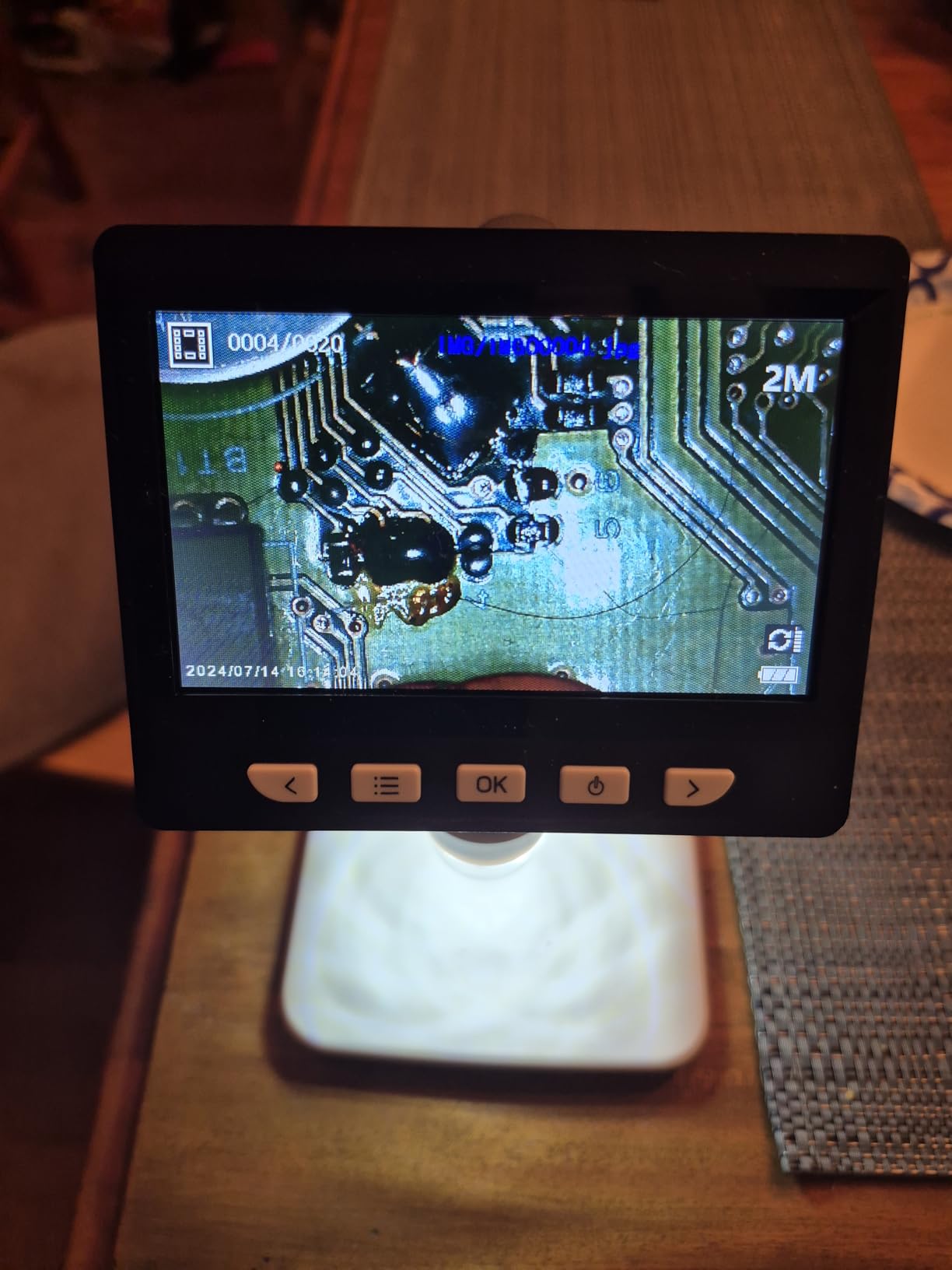
Built-in storage is the sleeper feature. You can capture roughly 200 photos straight to the device, which means quick sorting sessions work without a card, a laptop or a cable. For someone building a reference album of varieties they have found, that convenience is worth a lot.
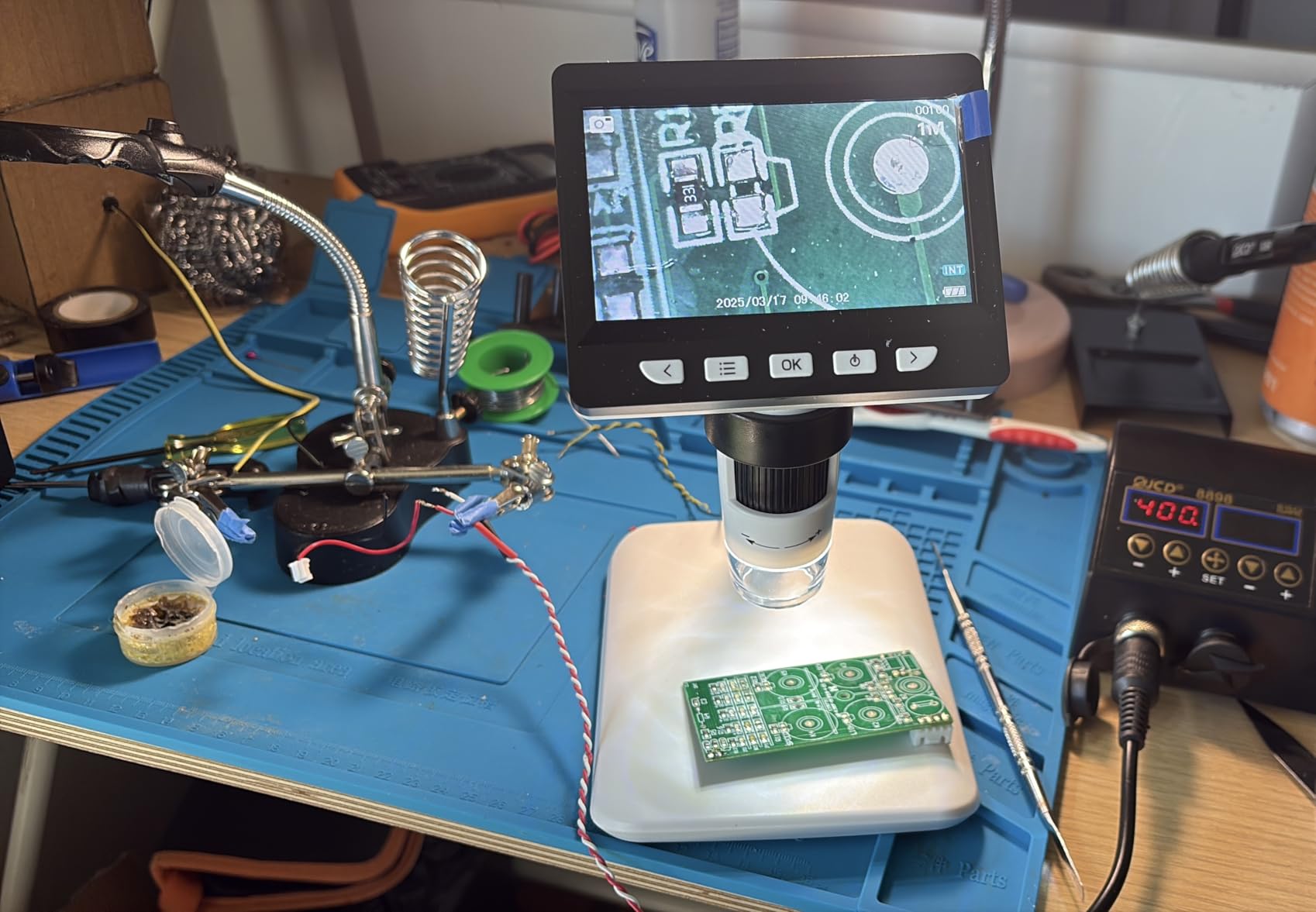
The build is where the budget shows. The base is light enough to vibrate while you are adjusting focus, which is exactly the moment a shaken shot gets ruined. A dampened desk mat or a firmer base plate fixes most of it, and the reviewers who report wobble generally rate the image quality well above what they paid.
Two practical notes from user reports: the printed booklet is set in a very small font, and video capture needs a TF card, expandable to 64GB. One buyer found the practical card limit differs from the printed figure, so check a card you already own before relying on it.
Where this scope wins
Pick the 307-B when your main complaint about the cheaper 4.3-inch screens is that detail looks soft at higher claimed magnification. You get more pixels for a small step up, and the on-device storage removes the single most common accessory purchase.
It is also the model to shortlist if you work without a computer at all. Several buyers report using it as a standalone tool and never connecting anything.
Where it falls short
The stand is not rigid, and refocusing is required after any height change because magnification is achieved by moving the camera rather than by a true zoom. If you flip between a quarter and a silver dollar constantly, that refocus cycle adds up.
Menu navigation is not where you would want it, so budget a few minutes with the buttons before your first grading session.
3. TOMLOV DM4W Coin Microscope: The Only 4.3-Inch Scope That Weighs Your Coins
TOMLOV DM4W Microscope with Weighing Scale: 4.3″ Digital Coin Microscope with Screen, Error Coin Magnifier with Lights, Weight Scale for Collectors, Jeweler, Students, Compatible with Windows/Mac
0.1g scale to 300g
4.3-inch HD IPS true colour
8-inch stand, metal rod
10X-200X, USB to PC
Pros
- Only 4.3-inch scope in this group with a weighing scale
- Weighs in grams
- ounces and carats
- 500 cd/m2 IPS panel with 178-degree angle
- Tall rigid 8-inch stand with enlarged base
Cons
- 200X maximum is modest against 1000X claims
- Focus ring is knurled rather than rack-and-pinion
- Refocus needed after each height change
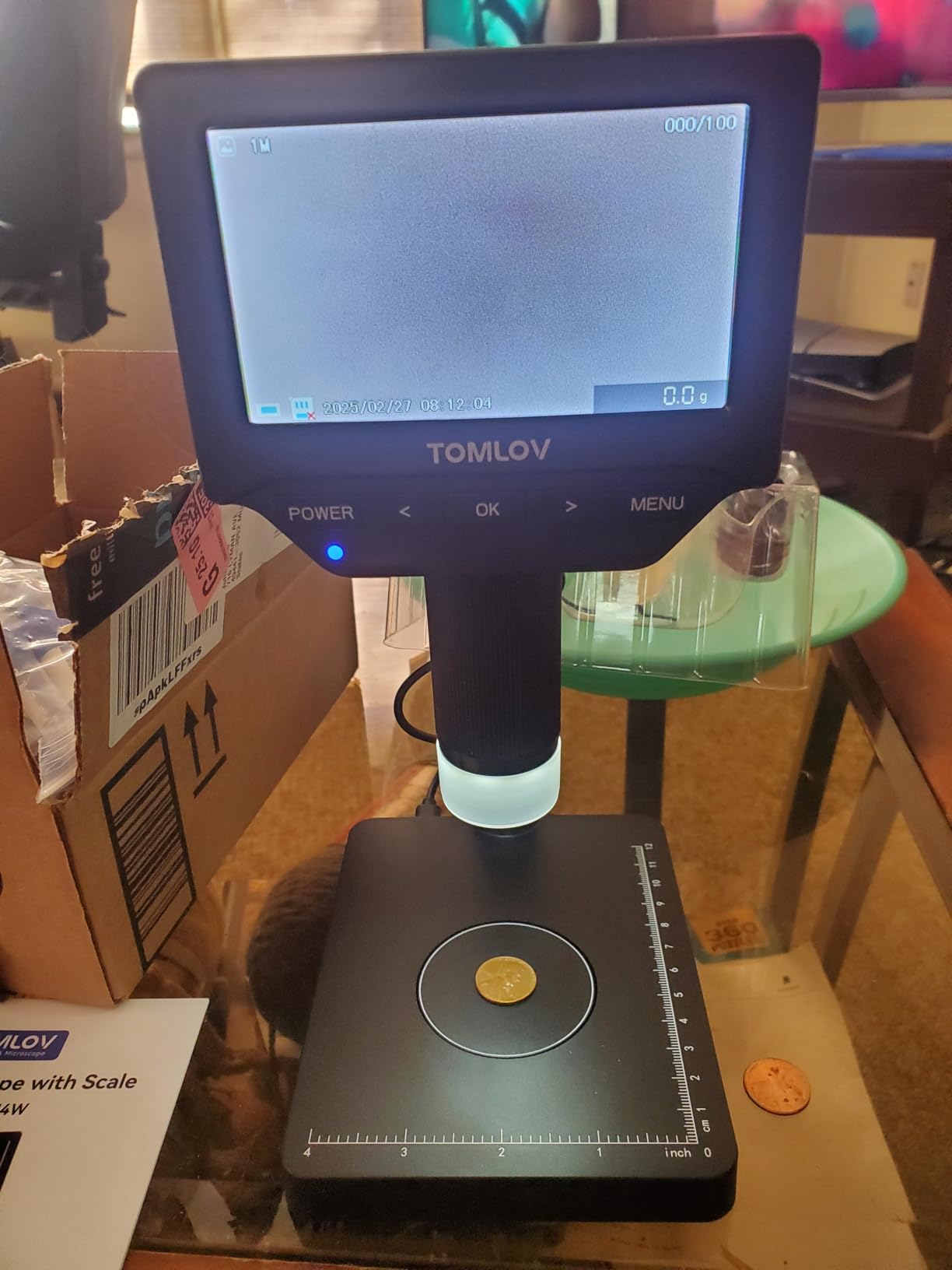
A built-in scale changes what a coin microscope is for. Instead of only looking at a silver round you can weigh it, and weight against claimed metal content is often the fastest first filter for a counterfeit or a counterfeit-looking private mint piece.
The scale reads to 0.1g with stated accuracy of plus or minus 0.5g, up to 300g, and switches between grams, ounces and carats. The 0.1 second response and the metal base plate mean you can put a stack down and get a stable number without waiting, which is what you want when sorting a bag rather than inspecting one coin at a time.
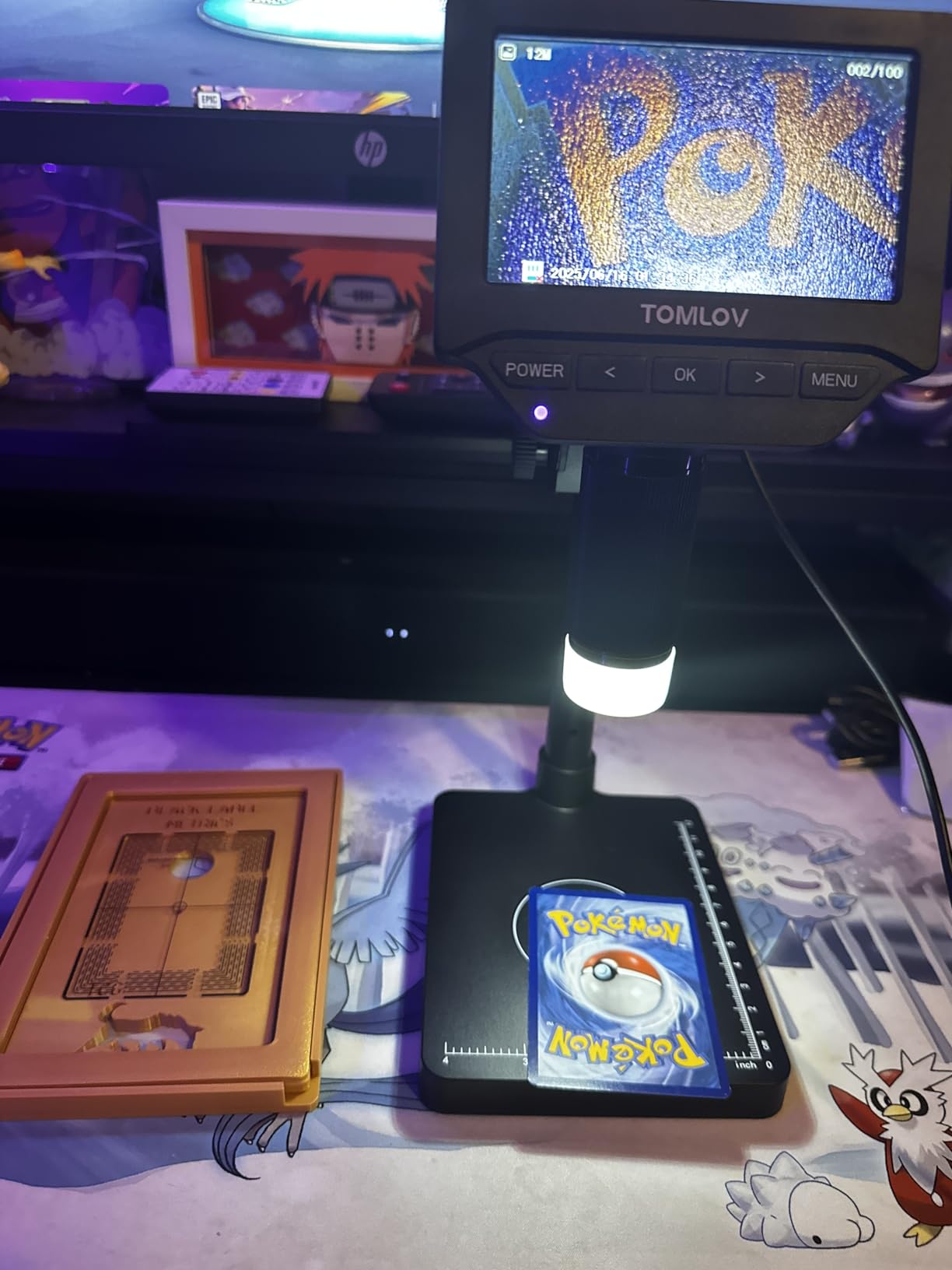
The screen is unusually good for the money: a true-colour IPS panel at 500 cd/m2 with a 178-degree viewing angle, which means no colour cast when you tilt your head and no darkening at the edges when you lean in. The stand is also notably rigid at 8 inches, with a metal support rod that does not flex when you reach in to adjust focus.
Its real limitation is honest and important: 200X is far below the 1000X figure printed on competing boxes. Nobody is measuring this with a stage micrometer on your desk, but collectors comparing it with a stereo zoom scope tend to find the useful ceiling sits nearer the middle of the range.
Who should buy the DM4W
Buy it if you buy bullion rounds, silver dollars or anything where weight is a meaningful part of authentication. The scale turns a two-minute check into a two-second check, and collectors using it report replacing a separate pocket scale entirely.
It is also a strong pick for long sessions, because the bright IPS panel and wide viewing angle reduce the eye and neck strain that 4.3-inch screens cause in a grading marathon.
Who should skip it
Skip it if you need deep close-up work on small variety features, since 200X will not get you there and there is no true optical zoom to help. Error hunters chasing doubled dies should look higher up this list.
Note also that photo and video capture needs a microSD card that is not included, and the focus ring is a knurled collar rather than a proper geared control, so it feels touchier than it looks.
4. WKR 367 Coin Microscope: The Cordless Workhorse for Show Days
WKR Coin Microscope, 4.3″ LCD USB Digital 1000X 1080P Coin Magnifier
4.3-inch 1080P LCD
8 adjustable LEDs
3.5 hour battery or USB power
Image flip and rotate
Pros
- Runs about 3.5 hours cordless on the rechargeable battery
- 1080P screen with on-device storage for 200 photos
- Image flip and rotate helps check opposite angles
- Works on Windows and Mac
Cons
- Charge time is very long
- Stand needs re-adjusting for nearly every coin
- Included USB cable is short for PC viewing
The WKR 367 is the one we would grab for a coin show, and the reason is battery. Around 3.5 hours of cordless operation, or continuous USB power when a table has a socket, covers a full show floor day without hunting for an outlet between booths.
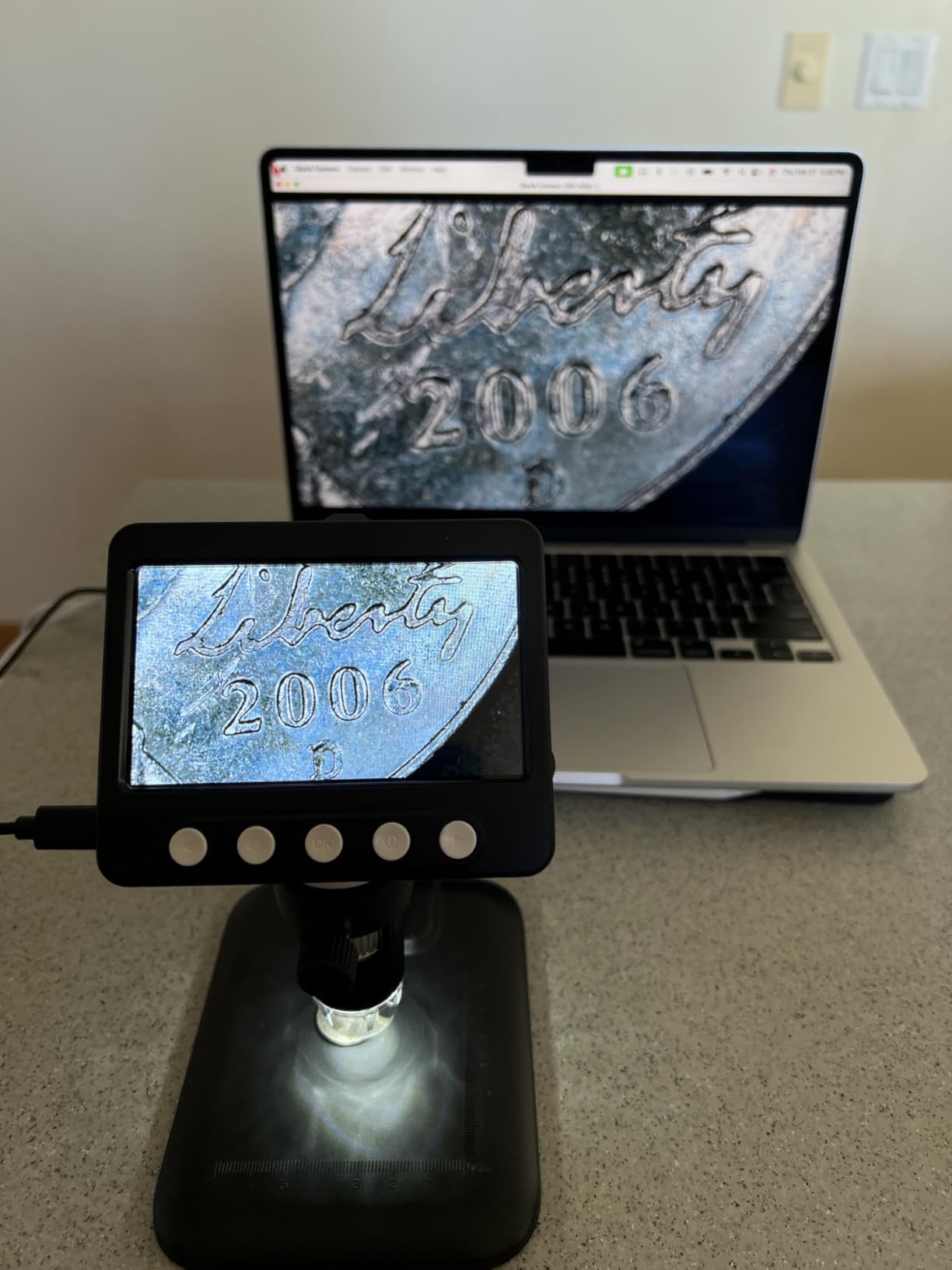
The 4.3-inch 1080P screen is the second sweet spot in this category. It resolves a mint mark, a date and the surface texture of a circulated piece, and the eight adjustable LEDs let you tune brightness for a proof versus a worn circulation strike.
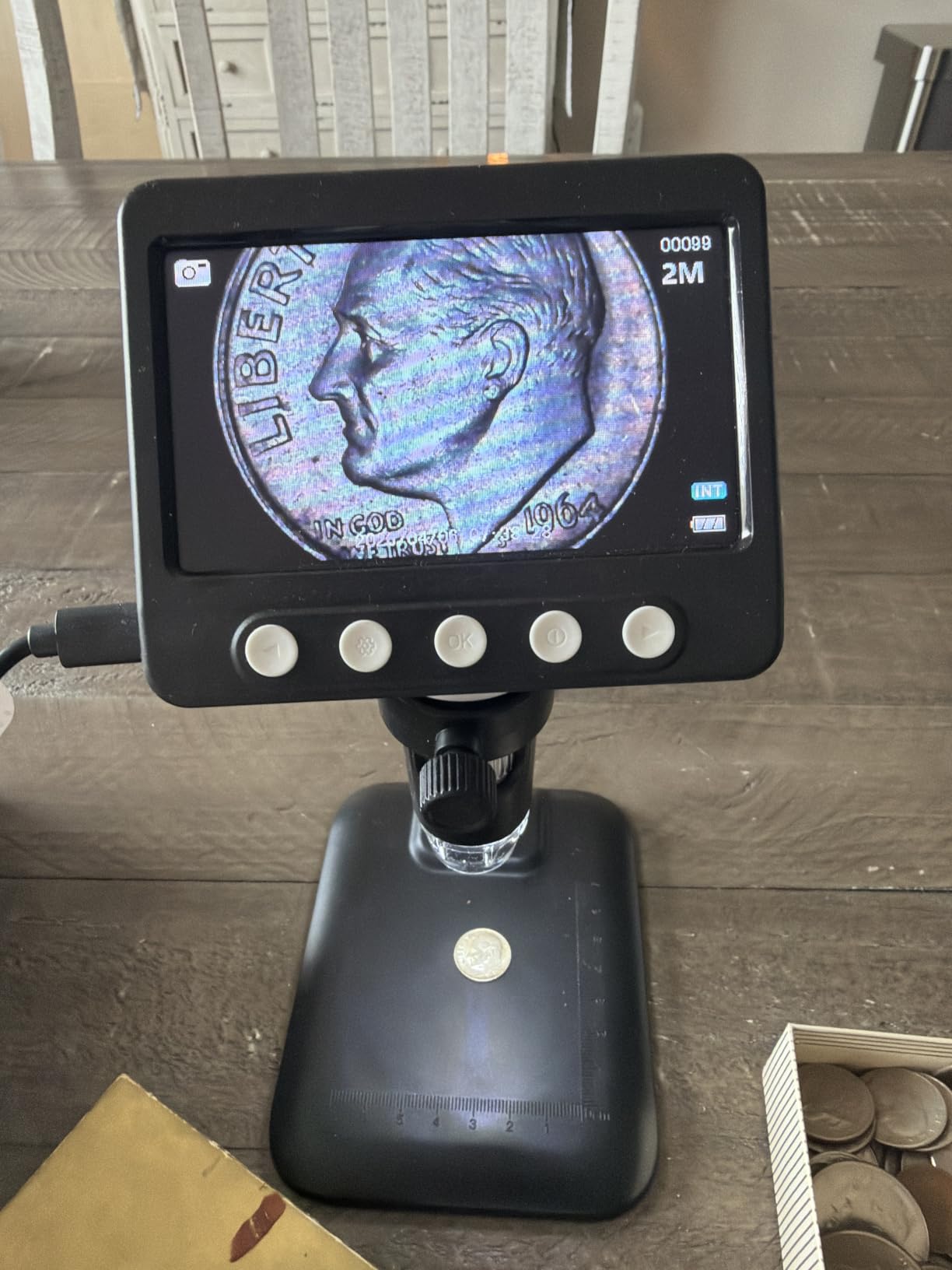
One collector runs two of these side by side so two coins with the same date and mint can be compared directly, which is exactly the use case that motivates people to buy a second unit rather than upgrade. The image flip and rotate functions help you read an edge or an obverse from a lower angle without physically turning the stand.
The charging behaviour is the main complaint, and it comes up repeatedly: multiple owners report many hours to a full charge from a partial state. If you plan to use it at shows, charge it overnight rather than between sessions.
Where the WKR makes sense
Choose it for portable field inspection, dealer table work, and any session away from a desk. The battery and the flip/rotate controls are the two features that matter when you are working in a dim hall with a coin on a folded cardboard.
It is also a good value entry if the 4.3-inch format is right but you do not need the weighing function.
Where it frustrates
The stand needs re-adjusting for nearly every new coin, which is tedious over a long session. The included USB cable is too short for comfortable PC viewing, so a longer cable is a sensible add-on.
Several owners also find the on-screen image better than the projected PC image, which reduces how much the PC feature is worth to you. One buyer could not get it to install on a laptop at all.
5. Elikliv EDM4 Weighing Microscope: Side Lights That Kill Glare
Elikliv Coin Microscope with Weighing Scale, Digital Magnifier 8+2 Lights
0.1g scale to 300g
10 lights: 8 lens plus 2 side
12MP stills, 1080P video
Detachable handheld head
Pros
- Two side lights cut glare on proof and polished surfaces
- Weighing scale adds 0.1g checks to inspection
- 12MP stills and 1080P video for archiving
- Two-year warranty
- detachable head
Cons
- Plastic stand stem and gears wear with heavy use
- Knurled focus ring feels touchy
- Magnification claims disputed by measured testing
Glare is the collector complaint that comes up most often in coin forums, and it is a lighting problem rather than a lens problem. A ring light hits a flat polished coin square-on and blows the surface out. Angled light from the side picks out texture, and that is what the two side lamps on this model are for.
Ten lights in total: eight around the lens plus two side sources you can aim. For grading a proof surface or looking for hairline scratches and the residue of an old cleaning, the side lights are the reason to pick this over a plain ring-lit scope.
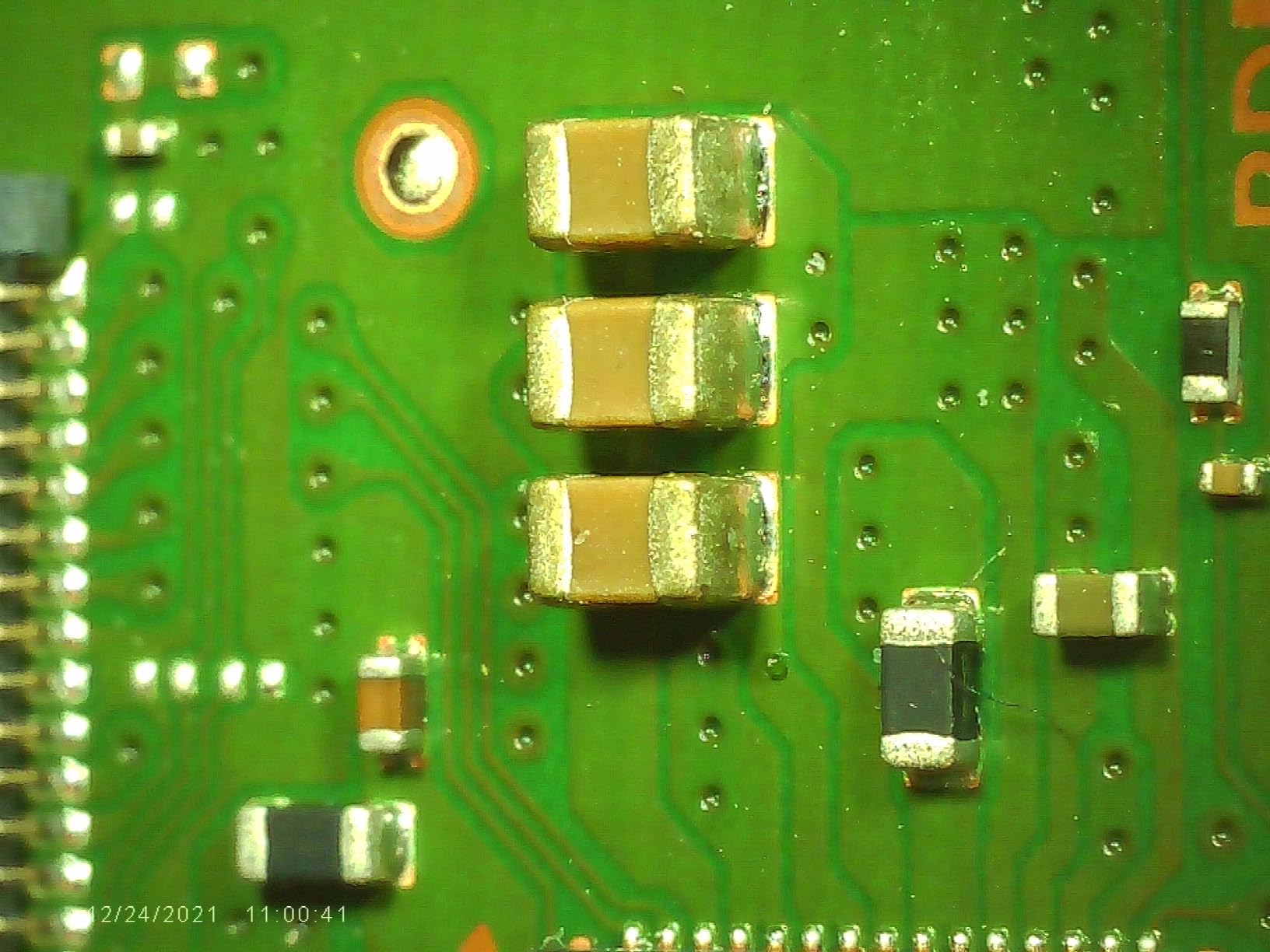
Like the TOMLOV above, it weighs to 0.1g up to 300g in grams, ounces and carats, with a 0.1 second response on a metal base plate. Combined with the 12MP stills and 1080P video, one unit now covers inspection, authentication and cataloguing.
One thing to weigh before buying on the box: a widely read technical review of the closely related Elikliv LCD family measured real magnification far below the advertised range and concluded the printed 1000X figure is not achievable. Collectors who bought on the headline number were disappointed; collectors who used it for coin-scale inspection were not.
Why pick this Elikliv over the EDM4
Pick it when lighting, not resolution, is your bottleneck. Angled side light is what reveals a scratch, a cleaning film or a difference in lustre between fields, and the weighing function covers bullion work at the same time.
The two-year warranty is also the longest on the 4.3-inch models here, and the detachable head means you can pick it up for a quick look at a slab in hand.
Why choose the plain EDM4 instead
Choose the EDM4 if lighting is not your problem and you want the most proven unit available, backed by a review pool several times larger. This weighing model is the better tool but a newer, less proven one.
Budget for durability concerns too: the stand stem and gears are plastic, and owners doing heavy daily use report eventually having to replace them. A microSD card is needed for capture and is not included.
6. SKYEAR 376 Coin Microscope: Separate Coarse and Fine Focus
4.3″ Digital Microscope for Adults, SKYEAR Coin Microscope 1000X Magnification with 8 Ajustable LED Fill Lights, USB Microscope for Windows/MacOS, Coin Collection Supplies-Black
4.3-inch HD LCD
Coarse and fine focus rings
8 dimmable fill lights
Handheld or stand mounted
Pros
- Coarse and fine focus gets you to a sharp image faster
- 8 high-brightness dimmable lights kill dark spots
- Converts between handheld and stand use
- Windows and Mac software
- two-year warranty
Cons
- SD card required for video and not included
- USB powered rather than battery powered
- Actual magnification varies with distance and lighting
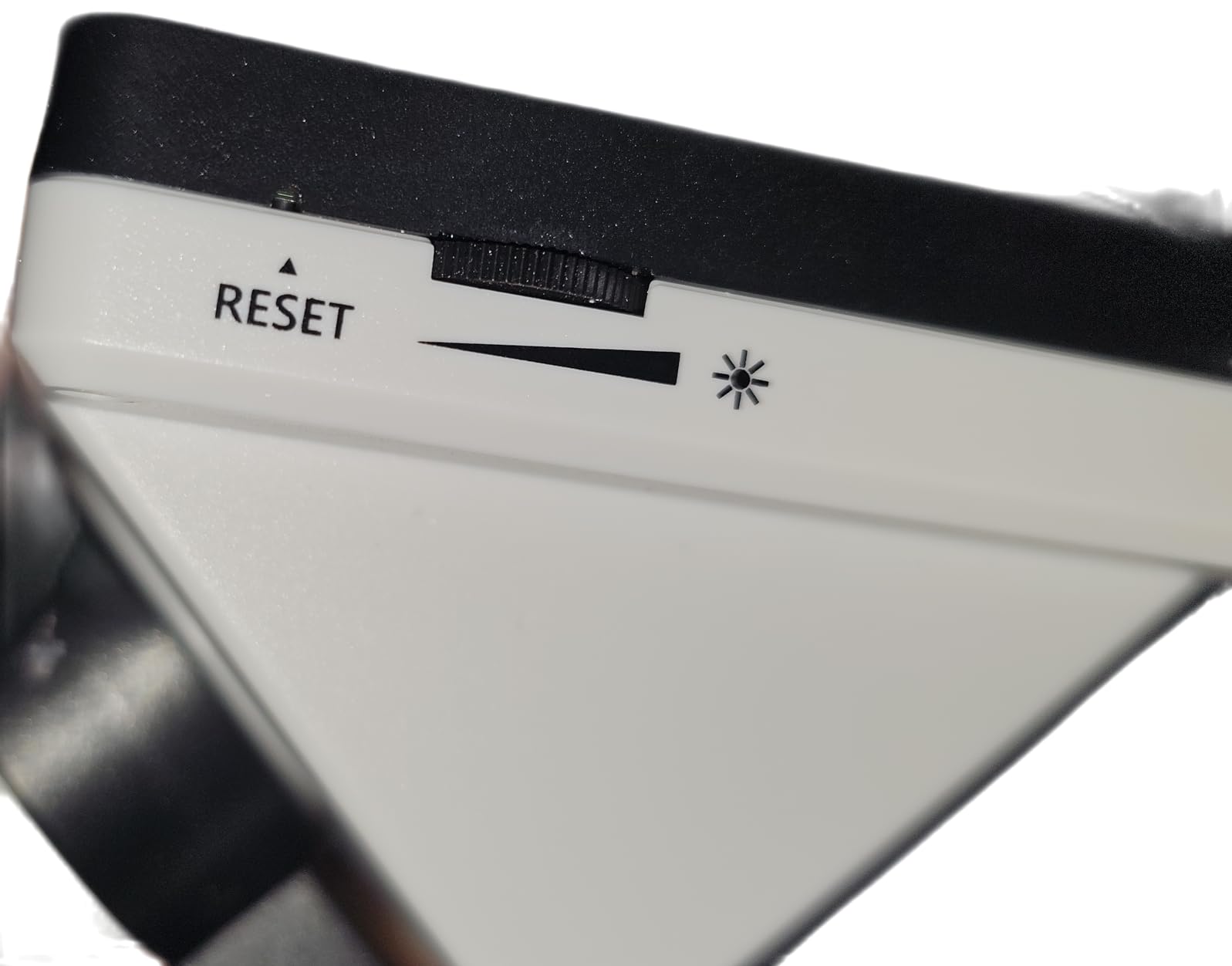
Focus is where cheap coin microscopes waste your time, and this is the model that fixes it. Separate coarse and fine focus controls let you get close quickly, then dial in the last fraction without losing the image, which is the difference between a two-minute inspection and a two-hour one.
The eight high-brightness fill lights are dimmable rather than on-off, and that matters more than the count suggests. Turning the light down is the fastest cure for a washed-out proof surface, and a single-brightness ring gives you no control at all.
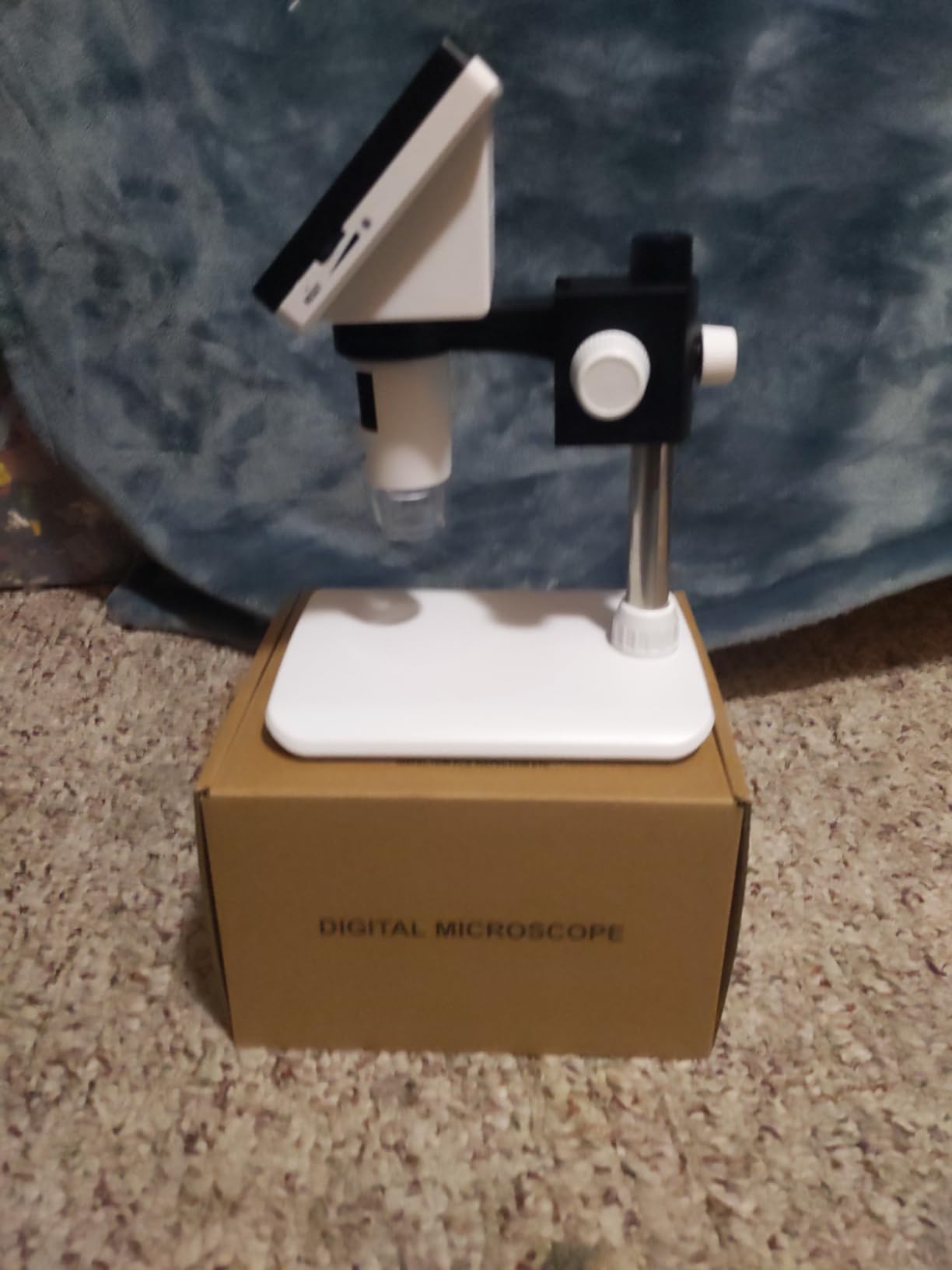
The head converts between handheld and stand-mounted use, with a metal stand included, so you can lift it out and check a coin in your palm without setting up the desk. PC software for Windows and macOS expands the view onto a larger display, which is useful when you want a second person looking over your shoulder at a variety.
This is a newer listing in a crowded category, which is why the review pool is smaller than the established names. The feature set closely mirrors the well-reviewed 4.3-inch cohort and the brand backs it with a two-year warranty.
Where the SKYEAR earns its place
It is the pick for anyone who spends real time focusing rather than snapping quick looks. The dual focus controls are the single most felt difference in daily use, and the dimmable lighting is a close second.
Choose it if you also like being able to lift the head out and inspect a slab in your hand without rearranging the desk.
Where it falls down
It is USB powered, so there is no cordless field use. That is fine at a desk and a problem at a show, so collectors working away from a power source should look at a battery unit instead.
Video capture needs an SD card bought separately, and the claimed magnification range still shifts with distance and lighting, so judge it on the image rather than the number.
7. TOMLOV DM9 Max Coin Microscope: The Big-Screen Desk Rig
TOMLOV DM9 Max Digital Microscope: 20MP 10.1″ 1500X HD IPS Coin Microscope Magnifier for Error Coins with Screen, LCD Soldering Microscopes for Adults, 10 LED Lights, PC/TV Compatible, 16GB
10.1-inch HD IPS display
12.6-inch adjustable stand
Wireless remote, 16GB card
20MP stills
Pros
- 10.1-inch screen frames a whole coin comfortably
- 12.6-inch stand gives real working room
- Only unit here that ships with a 16GB microSD card
- Wireless remote avoids shaking the sample
Cons
- A reviewer with 45 years of experience measured about 45X effective
- No USB power adapter included
- Base light battery and screen can wobble
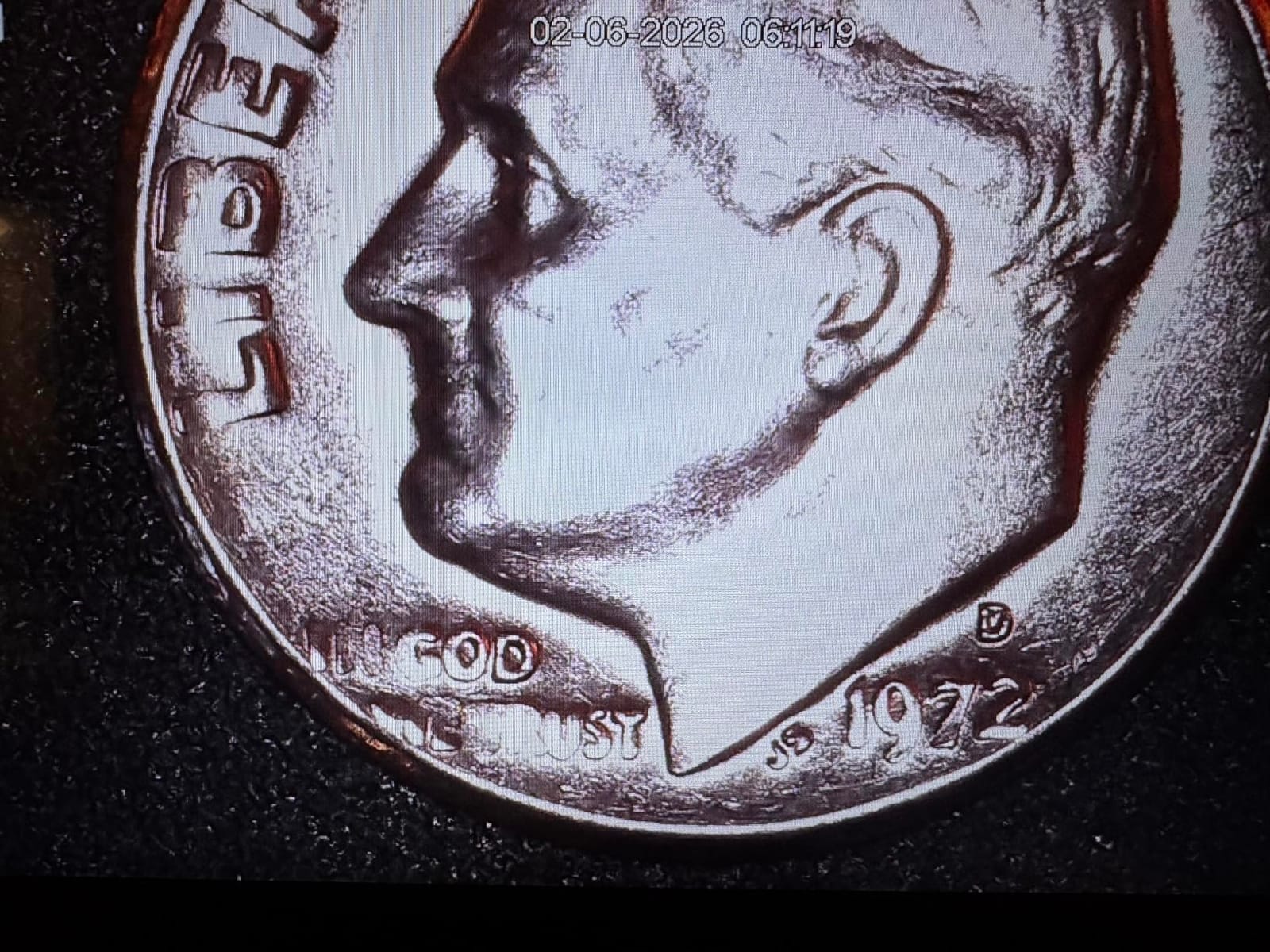
Screen size changes the workflow more than any other single spec, and the 10.1-inch IPS panel here is the first in this list that frames an entire coin comfortably. Everything smaller in this roundup is a detail tool; this one lets you look at a whole Morgan dollar and then move in.
The stand matches the screen. At 12.6 inches with a base of roughly 7 by 8 inches, there is genuine working room under the lens, which means you can reach in to rotate a coin without your hand entering the frame.
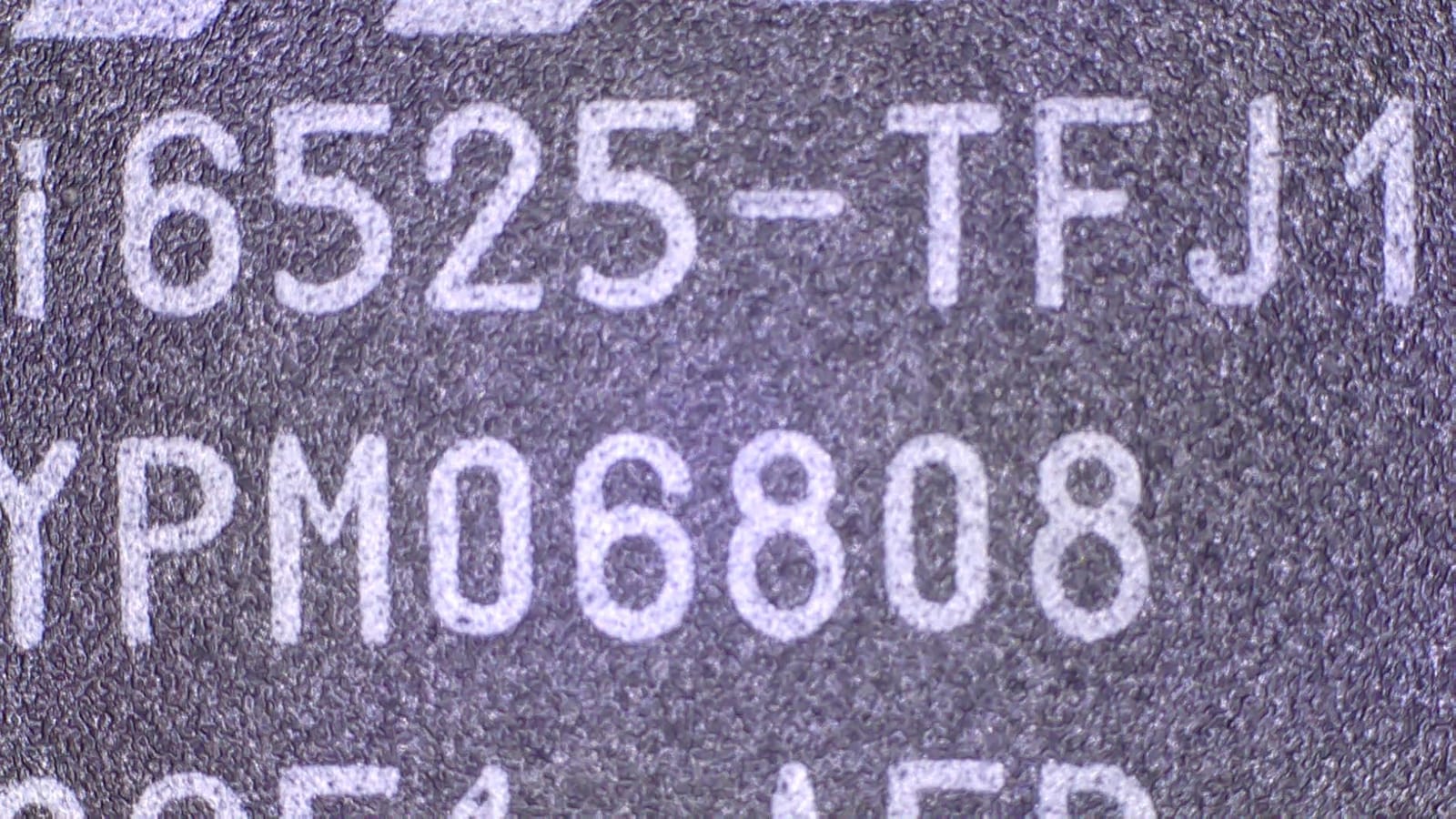
Two details separate it from the 4.3-inch crowd. It ships with a 16GB microSD card already installed, so 20MP stills up to 6096 by 3424 and 1080P video with audio work from day one. And the wireless remote lets you change magnification or trigger a capture without touching the stand, which is the single biggest source of blurred shots at higher magnification.
Be clear-eyed about the magnification. A reviewer with 45 years of professional microscopy experience measured effective magnification at roughly 45X on this unit and called the 1500X claim false, while still rating it highly for coin-scale inspection. Treat the headline figure as a menu setting, not a capability.
Who this is for
It suits a collector doing long sorting sessions, grading work or auction photography where a full-coin view and an undisturbed capture both matter. Ten lights including two dimmable gooseneck side lamps, plus a light barrier, give you the glare control that coin surfaces demand.
If your eyes are not what they were, a large screen is the practical upgrade: reviewers move up from a loupe here because they can no longer hold one steady, and this is the version of that upgrade that does not require an optical eyepiece.
Who should not buy it
Do not buy it for deep technical work, because the measured ceiling is modest. Nor for portability: this is a desk unit with a large footprint and no battery-first design.
Owners also report the base light battery failing within weeks on a couple of units, a screen that can wobble on the stand, no USB power adapter in the box, and cables too short for a tidy wall installation. PC connection also needs third-party software.
8. Andonstar AD249S-M Microscope: Three Lenses in One Body
Andonstar AD249S-M 3 Lens 2160P 10.1 Inch HDMI Digital Microscope 2000x
Three lenses included
10.1-inch LCD, HDMI output
Up to 2040X external display
32GB card included
Pros
- Three lenses cover coins
- slides and soldering from one body
- Highest rating in this group at 4.6 stars
- Most complete kit: cased lenses
- 32GB card
- prepared slides
- Metal boom arm stand is rigid and adjustable in every direction
Cons
- Heaviest unit here at 2.47 kg and not portable
- Small base surface that can shift when bumped
- Manual has unusual English and very small type
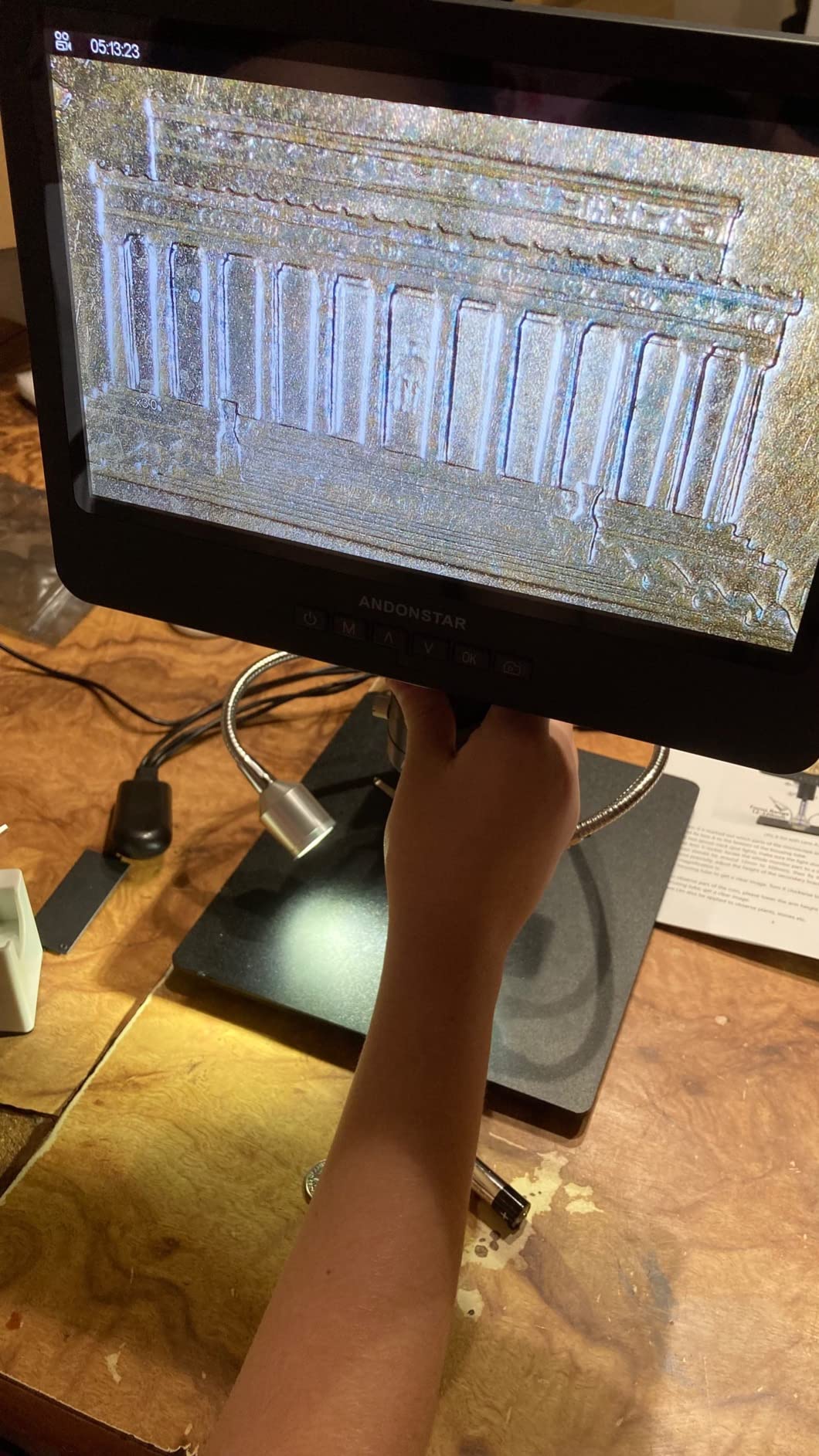
The Andonstar AD249S-M is the only genuine multi-purpose instrument in this roundup, and the three lenses are the reason. Lens A frames whole coins, Lens L handles soldering and repair, and Lens D reaches deep for slides, so one body covers work that would otherwise need three scopes.
It is also the best rated model here, at 4.6 stars across 451 reviews, and the most complete kit. The lenses arrive in individual cases in foam-fitted packaging, alongside a 32GB microSD card, five prepared slides, tweezers, an observation box and a printed colour assembly sheet.
For coin work specifically, the standout capability is HDMI output. Feed the signal to a large monitor and the stated lens ranges rise sharply, up to 2040X on a 28-inch display, with 2160P UHD recording. Two adjustable spot lights with eight intensity levels let you angle illumination properly on a reflective surface.
Do keep the magnification figures in proportion, though. The same 10.1-inch screen is what limits apparent magnification when you use the built-in display, and a large screen does not create optical detail that the sensor never captured.
Where it beats the field
It wins if you do more than coins. Hobby electronics, watch repair, specimen work and teaching all benefit from the lens set, and the bundled Windows measurement software handles length and area measurement for catalogue work.
Long-term buyers report the fit, finish and stability being better than the price suggests, and the rigid metal boom arm holds position at high magnification where plastic stands drift.
Where it does not fit
It is the heaviest and least portable unit in the group, so it is a desk instrument rather than a show-bag one. The base work surface is small and can shift when bumped; one owner solved it by bolting the stand to a piece of granite.
It is also the priciest option here, the manual is not well written, and one buyer received an incomplete unit from a return.
9. Leipan DM7-LP Coin Microscope: Small, Cordless and Easy to Carry
Leipan 4.3″ Coin Microscope Coin Magnifier, 1980P HD Digital Microscope
4.3-inch IPS screen
Cordless, rechargeable
50X-1000X claimed range
One-click photo and video
Pros
- Rechargeable and cordless with no cable in the way
- Disassembles and reassembles quickly for transport
- IPS screen with good colour accuracy for surface judgement
- Compact footprint for a crowded bench
Cons
- Stand is only about 7cm tall
- Fine focus wheel moves about 2cm of travel
- Some units have a head-to-stand fit problem
The Leipan is built around one idea: take the microscope apart and put it in a bag. It disassembles quickly, it runs cordless on a rechargeable battery, and the 4.3-inch IPS screen has good colour accuracy, which is what you want when judging lustre and surface tone rather than reading a date.
For a collector who grades at a table away from home, or who moves between a desk and a club room, that portability is the selling point. The screen also does the job of the screen for ageing eyes, letting you work without holding a small loupe steady.
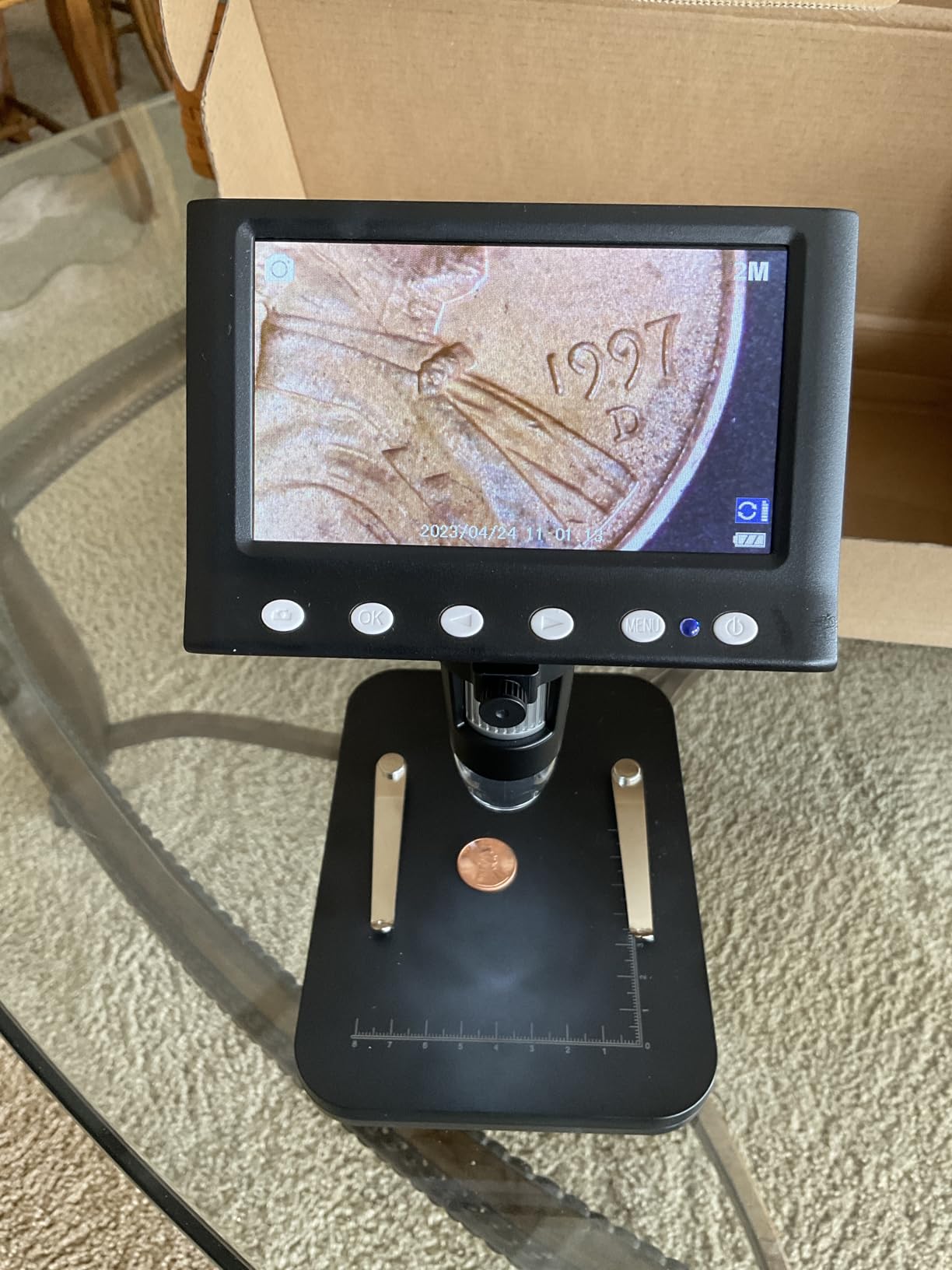
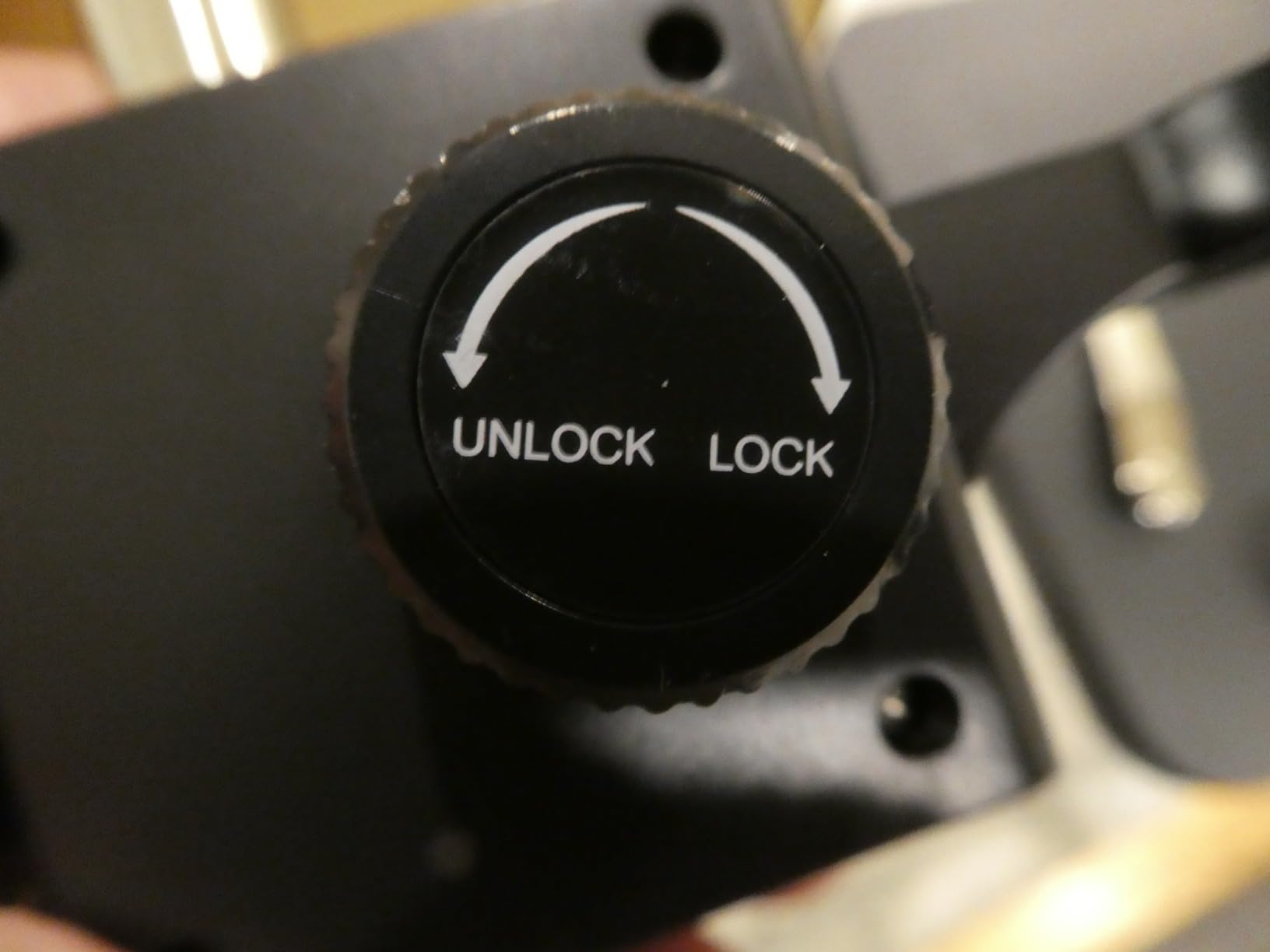
The stand is the clear weak point, and it is worth stating plainly because it recurs across reviews. At roughly 7cm it is too short to frame a whole coin at a natural working height, and the fine focus wheel adjusts only about 2cm of travel before you have to move the head by hand.
Some owners also report a tolerance mismatch where the handheld body does not seat properly in the stand ring, which suggests more than one ring size in circulation. Treat the head and stand as a matched pair and check on arrival.
Why the Leipan still makes the list
It is genuinely portable and genuinely cordless, which almost no other 4.3-inch scope combines. If your coin work happens away from a socket, that is not a minor feature.
It is also quick to set up and reassemble, so a bag of cents on the kitchen table is a realistic job rather than a chore.
Where it falls short
The stand height limits full-coin framing, and the light build is best treated as fragile rather than robust. For a desk setup where a Morgan dollar needs to fit in frame, choose a taller stand instead.
One owner found the close-up detail less impressive than expected, and some buyers find the 4.3-inch screen small once you are used to something larger.
10. Aikokkl MK5 Coin Microscope: Two Side Lamps for Scratch Hunting
Aikokkl 4.3″ LCD Digital Coin Microscope with 2 Side Lights
4.3-inch LCD
2 detachable side lamps plus 8 LEDs
10MP photo, 1080P video
USB-C PC live view
Pros
- Side lamps give directional light that ring-only scopes lack
- Targeted at doubled dies
- repunched mint marks and scratches
- Manufacturer openly states the whole-coin limitation
- Windows and Mac PC live view via USB-C
Cons
- TF card required for capture and not included
- Cannot frame a whole large coin
- Manual focus needs adjusting for each subject
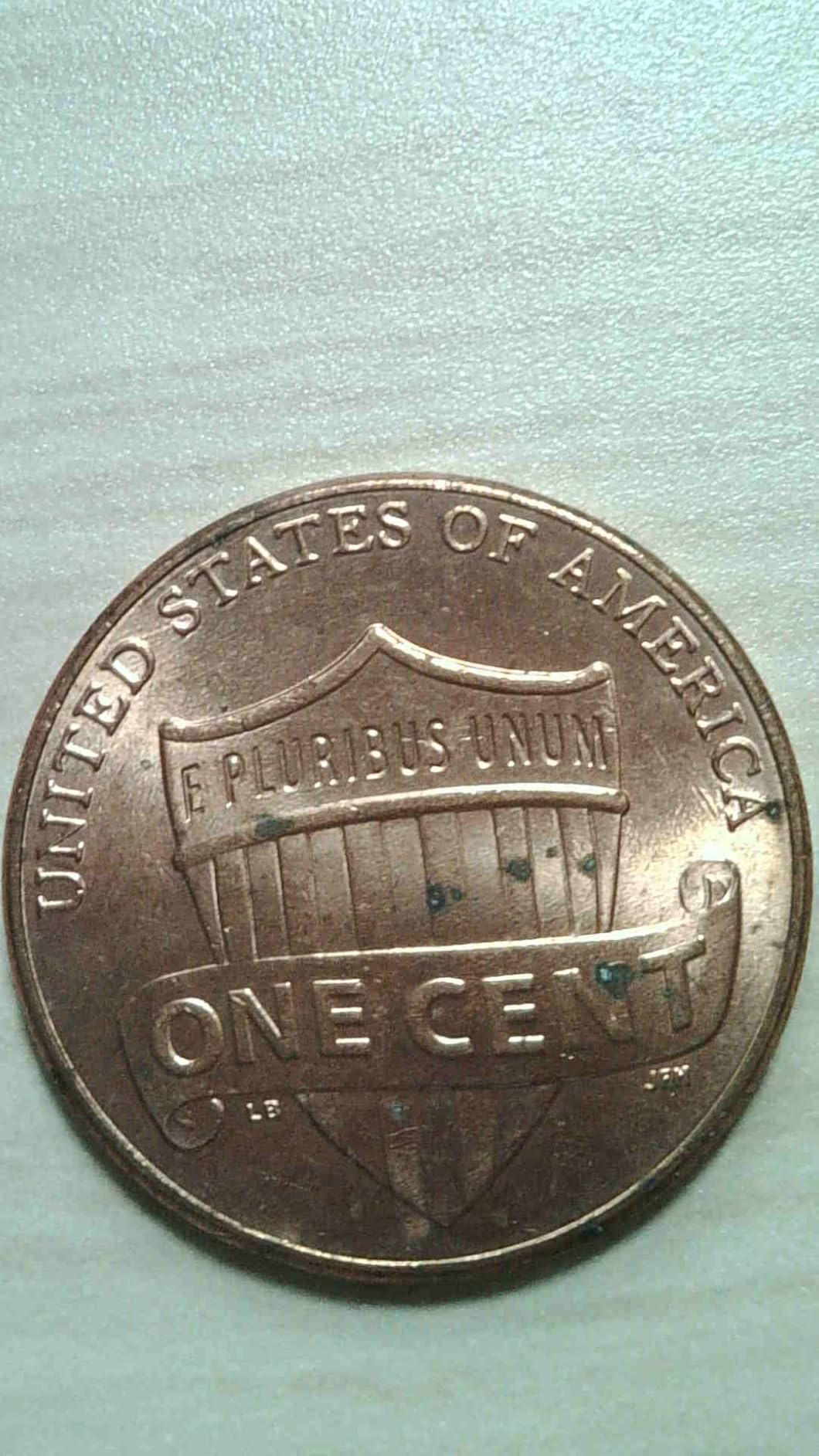
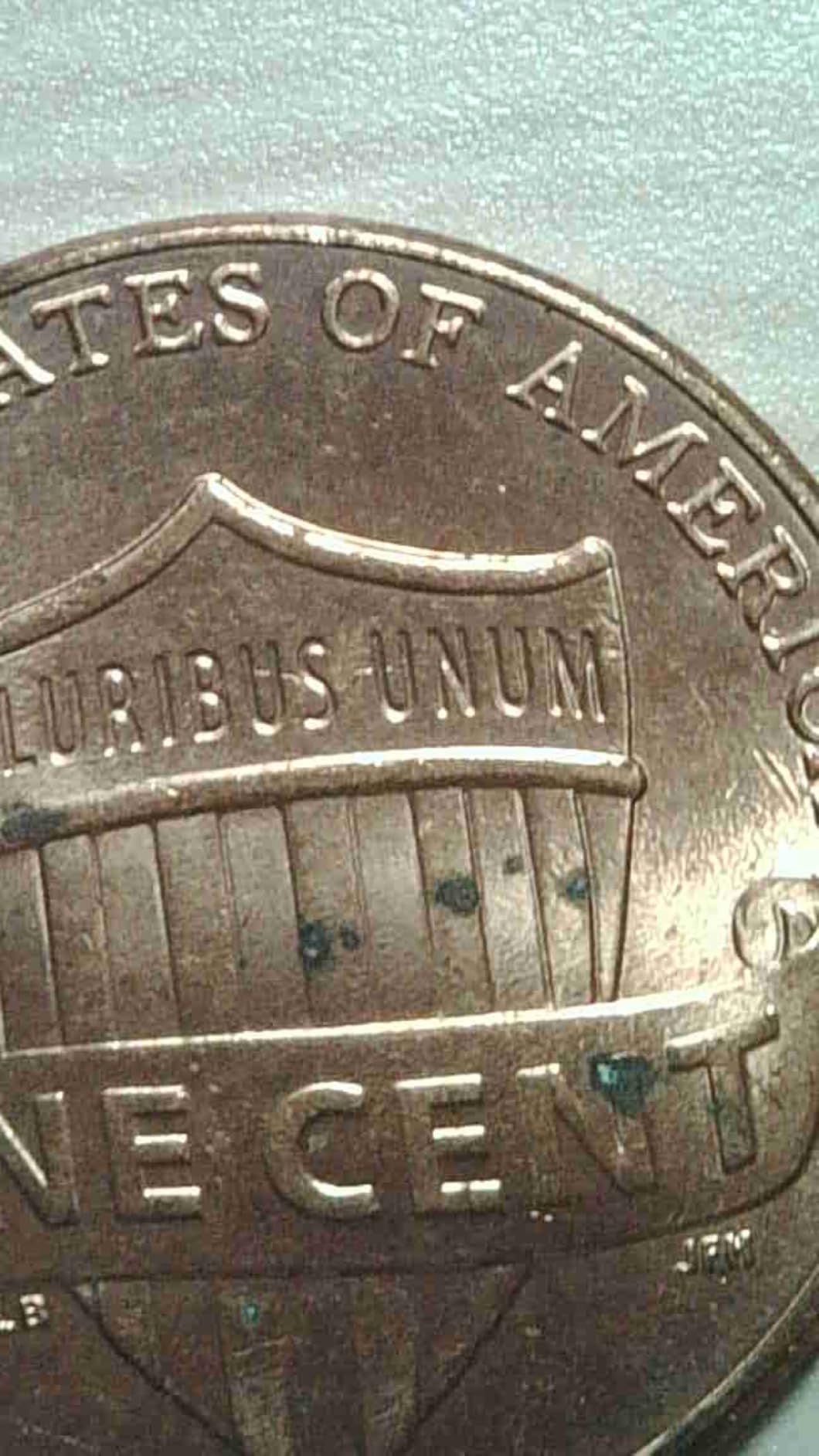
Most coin microscopes light a coin from directly above or in a ring around the lens, which flattens a surface. The two detachable side lamps on this model let you rake light across the field, and raked light is what makes a hairline scratch cast a shadow you can actually see.
It is also the most unusually candid listing in this group. The manufacturer states plainly that a 4.3-inch screen and this focal length cannot frame an entire Morgan dollar or Silver Eagle, and instead names doubled dies, repunched mint marks and scratches as the target work. That honesty is worth more than a higher number on the box.

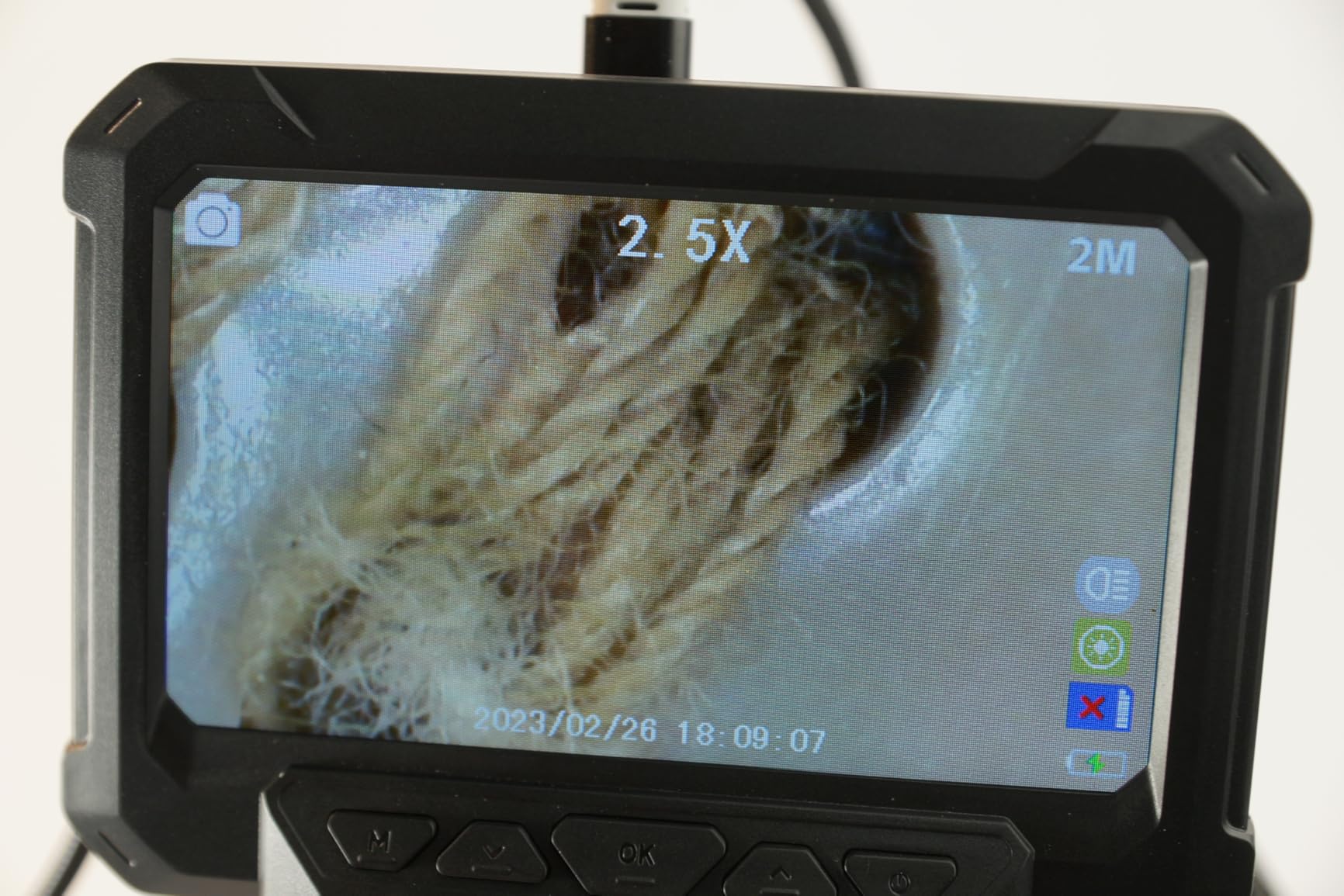
Capture is 10MP stills and 1080P video, and PC live view runs over USB-C in PC Camera mode, working with the standard Windows camera utility and Mac Photo Booth. The listing also calls out the bracket height knobs and focus wheel explicitly, which sounds minor and saves real setup time on a first session.
Treat it as a detail instrument rather than a framing instrument. If your work is reading varieties and hunting scratches, that is exactly what it was built for; if your work is assessing the overall appearance of a large coin, it is the wrong tool.
Where the MK5 is the right tool
Choose it for error coin hunting and scratch detection, where angled light and close framing beat a wide view every time. Repunched dates, doubled dies and hairline marks on a proof surface are the three jobs it does better than anything else at this size.
It is also a good second unit, because a side-lit detail scope and a wide-view scope answer different questions.
Where it falls down
You need a TF card, capped at 32GB, and none is included, so budget for that before your first session. Focus is manual through a large silver wheel and needs both height and focus adjustment per subject.
The review base is smaller than the established 4.3-inch models, so there is less long-term feedback on failure modes, and the whole-coin limitation is real.
11. Teslong MS100-C USB-C Microscope: Pairs With Your Phone
Teslong USB-C Digital Microscope 10X-200X for Coin & Electronics Inspection
USB-C to phone or tablet
10X-200X manual focus
8 LEDs, 3 brightness levels
360-degree metal arm
Pros
- Plugs into a phone
- tablet or PC with no app for basic viewing
- Compact body does not block access to the workpiece
- Manual focus wheel gives direct control
- Rotating weighted metal arm holds steady
- side-viewing mirror included
Cons
- Companion Android app is limited and unreliable
- Focusing ring can jump between positions
- No built-in screen
- fixed focal length with no true zoom
The Teslong is the only phone-first scope here, and that changes the use case completely. It plugs into a USB-C phone, tablet or computer with no app needed for basic viewing, and its compact body does not sit between your hands and the coin the way a desktop unit does.
Watchmakers and repairers gravitate to it for exactly that reason. The 360-degree chrome-plated arm with a weighted base holds a coin, a ring or a movement at a workable angle, and the manual focus wheel gives direct control instead of an autofocus hunting for a target.
The eight LEDs have three brightness levels and adjust from the cable, which is genuinely useful for taming glare on a shiny coin without reaching to the unit. The depth of field is the deepest of the small scopes owners compare, and that matters when the subject is three-dimensional rather than flat.
Reliability is the honest drawback. This is the lowest rated model in the group at 4.0 stars with 12% one-star reviews, and the complaints cluster on the Android app, including an owner who could get only the light function working across three different devices, plus a focus ring that sometimes jumps as if the threads were burred.
When the Teslong fits
It suits collectors already working on a phone who want to check a coin without unpacking anything, and anyone inspecting a subject held in the hand rather than placed on a stage. The side-viewing mirror, ear specula and protective cover make it a general inspection kit.
Travel is another good reason. It is small, it has no separate screen to lose, and it draws power from the device.
When it does not
If your main device is Android, read the app complaints before buying. The basic plug-and-play viewing works without software, but the extra features depend on an app that owners report connecting unreliably.
There is no built-in screen, so you need a phone or tablet on every use, and the fixed focal length means magnification changes by moving closer or farther, with no true zoom.
12. Aikokkl DM7 Coin Microscope: A Straightforward First Scope
Aikokkl 4.3″ LCD Digital Coin Microscope with LED Light
4.3-inch integrated LCD
8 dimmable ring LEDs
SD card capture to 64GB
Weighted base, battery
Pros
- No software
- Wi-Fi or external monitor needed
- Dimmable ring lights reduce glare on glossy coins
- Weighted base and smooth focus wheel give stable images
- Battery powered and compact for a crowded bench
Cons
- Screen and stand are too small to frame a whole coin
- Protective lens cover must be removed before use
- Lowest rating in this group at 4.3 stars
The DM7 is a deliberately simple entry point, and owners describe it in exactly those terms: the most basic 4.3-inch coin microscope available, where the capability matches what you pay. That is not an insult in this category, it is the pitch.
What it does well, it does well. The eight dimmable ring lights with a smooth brightness wheel are the anti-glare feature most people want, the weighted base resists the vibration that blurs shots at higher magnification, and the rotary focus wheel moves smoothly.
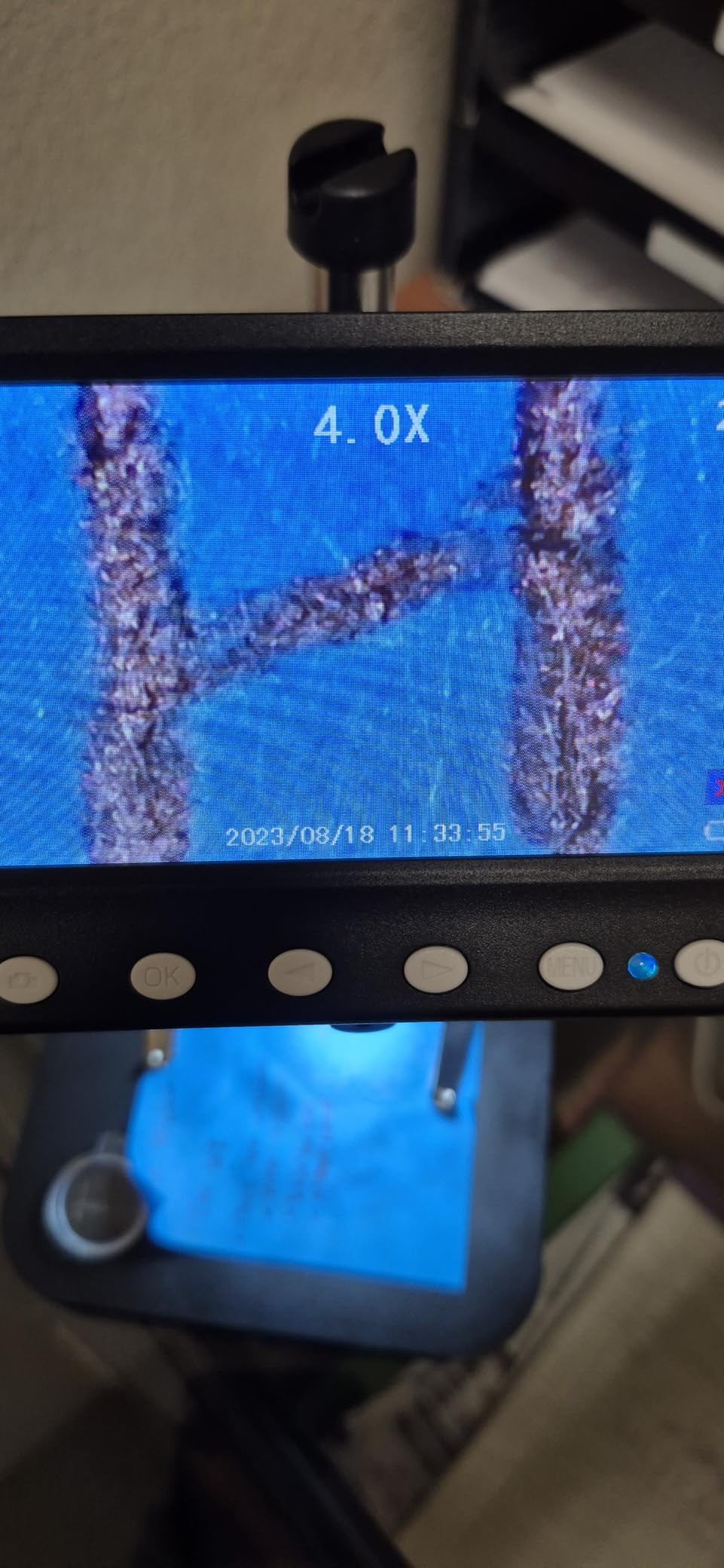
The integrated screen means no software, no Wi-Fi and no external monitor, which removes every setup step between opening the box and looking at a coin. Capture goes to an SD card, supported up to 64GB, and bundled PC viewing software covers the larger-screen case. It is battery powered, so it works away from a socket.
One practical note that catches people out: the lens ships with a clear protective cover still fitted. Leave it on and every image looks scratched, so several early owners assumed the unit was faulty. Remove it first.
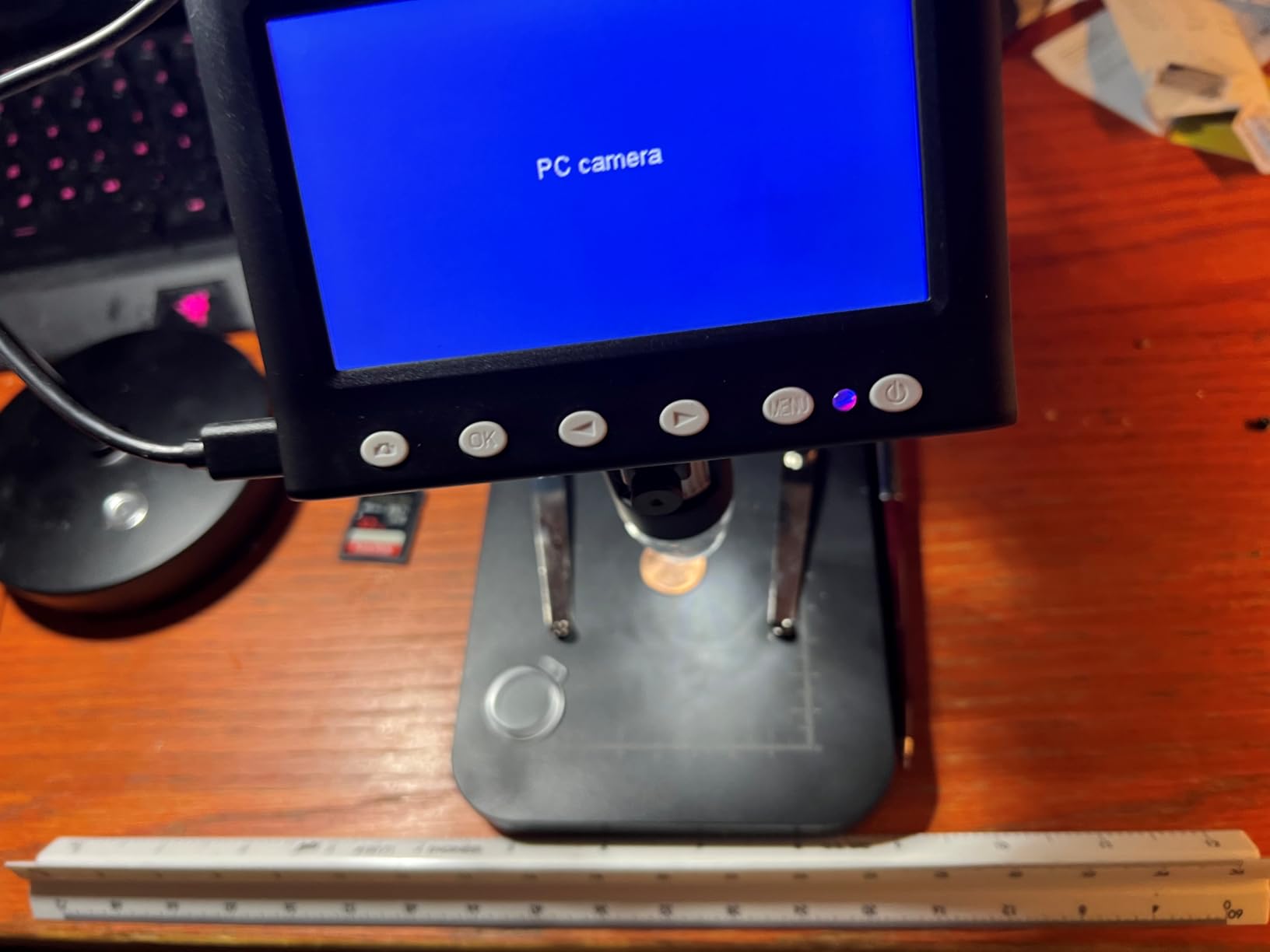
Who should start here
Buy it if you want a working coin microscope today with no setup, no computer and no accessories, and you are inspecting dates, mint marks and general surface condition rather than hunting specific errors.
For a first scope on a crowded workbench, the compact footprint and cordless power are genuinely convenient.
Where its limits show
The screen is optimised for local high magnification, not full-coin viewing, and the stand is too short to frame an entire coin without manual repositioning. That single fact rules it out if you grade whole coins.
It carries the lowest rating here at 4.3 stars with about 10% three-star reviews, and the listing is vague on battery life and video quality, so treat both as unverified.
What Magnification Actually Matters on a Coin
The best magnification for coin collecting is somewhere between 5x and 50x of real optical detail, and almost every number above that is digital. Understanding this one distinction will save you from the disappointment that drives most refund requests in this category.
Optical magnification is produced by the objective lens, and it resolves new detail on the coin. Digital zoom is arithmetic performed on the image the sensor already captured, and it enlarges pixels without adding information. When a box claims 1000x, the useful range is almost always produced by physically moving the camera closer and the sensor getting closer to the coin.
Quick definition: optical magnification comes from the lens and adds detail; digital zoom scales the picture and adds none. Working distance is the gap between the lens and the coin, and it is the number you actually adjust. Field of view is how much of the coin fits in that gap.
Grading standards give a useful anchor. The major certification services work through a narrow band, not a headline range.
Surface condition and grade assessment: roughly 5x
Variety verification, doubled dies and repunched marks: 5x to 10x
Cleaning residue, brush fibres and alteration detection: 10x to 30x
So a model that genuinely delivers 30x of clean optical detail beats one that claims 1000x and delivers 45x of slightly soft pixels. Several experienced reviewers measuring these scopes have reached exactly that conclusion.
What PCGS and NGC Look For Under Magnification
The major grading services do not grade at 1000x. They work at low magnification to judge a coin the way a holder expects it to be judged, which is why the field is narrow and specific.
That matters commercially. If you are buying a coin you intend to submit, you want a tool that shows you what the grader will see: surface texture, contact marks, and the evidence of cleaning or alteration, all at modest magnification and good lighting.
Markers worth learning to recognise at 10x to 30x include flow lines left in luster by the die, die polish lines across a worn die surface, brush fibres and hairlines left by a cleaning, tool marks around the rim and lettering, and the repetitive, machine-like pattern that a cast counterfeit shows instead of real wear.
A doubled die is a different category of check. It is a doubling of raised design elements from a rotated die, and confirming it is a comparison task, which is why collectors with two examples of the same date and mint find side-by-side viewing so useful.
Coin Microscope vs 10x Loupe: When the Loupe Still Wins
A 10x loupe is unbeatable for one thing: speed. If you are checking a coin at a dealer table, a show booth or in a roll of newly purchased cents, a loupe goes in your pocket, comes out in a second and goes back. No power, no charging, no focus ring.
The microscope wins on everything else. It lets you sit upright, it holds a coin still while you look, it gives you controlled light, and it lets you photograph what you see. For grading sessions, authentication work and variety hunting, the microscope is the better tool by a wide margin.
The practical answer most experienced collectors give is to use both. Loupe for triage, microscope for anything that deserves a second look.
Photographing Coins for Auction Listings
Auction photography is where microscope features earn their keep, and the same principles apply whether you use a 4.3-inch screen or a 10.1-inch desk rig.
Set the coin on a neutral background with no logo, so the colour of the metal reads true.
Kill vibration first. A rubber anti-vibration mat under the base stops a bumped desk from blurring a high-magnification shot.
Aim the light off-axis rather than straight down. A ring or overhead light flattens a coin; angled side light reveals relief and surface texture.
Use the remote shutter or the on-screen capture rather than the body, so the stand never moves between framing and capture.
Shoot both sides at the same magnification and the same exposure, so a buyer can compare honestly.
Include a scale reference for anything unusual, and always photograph a rim or edge view where the coin type allows it.
Our digital microscope roundup covers the general electronics side, and the USB microscope guide covers PC-connected units if you would rather image to a computer than to a card.
How to Choose a Coin Microscope
Screen size decides the shape of your work. Below about 5 inches you are a detail inspector working on a portion of a coin. At 7 inches and above you can frame a whole coin, which is what full condition grading and photography require. If your coins are silver dollars or large world issues, a short stand will frustrate you regardless of screen size.
Lighting deserves more attention than magnification. Eight LEDs is the common baseline, but what separates good scopes is dimmability, and what separates better ones is side lighting. A proof surface viewed under an undimmable ring light is the single most common source of bad grades and wasted coin flips.
Stand height is the most fixable problem in this category. Several stands here are too short to frame a whole coin, and the standard collector answer is a riser extension, a stable riser block, or a taller aftermarket stand. If you are stuck with a short one, work at a lower magnification and step back rather than fighting it.
Compatibility matters more than buyers expect. Several budget scopes ship Windows-only software, so check Mac support before you buy if that is your machine. Confirm too whether capture needs a card you have to buy separately, because that is the most common accessory surprise in this category.
Finally, think about your eyes and your hands. Collectors whose eyesight no longer supports a steady hand-held loupe get more from a large-screen scope than from any optical upgrade, because the screen removes the need to hold anything still.
Frequently Asked Questions
What kind of microscope is best for looking at coins?
A digital microscope with an integrated LCD screen and adjustable LED lighting is the best type for most collectors. It lets you work sitting upright, holds the coin still, and gives you controlled light plus photo capture. Optical stereo microscopes give truer optical detail, but they cost more and need no screen at all. For most people moving up from a 10x loupe, the digital coin microscope is the practical answer.
What type of microscope is best for viewing coins?
For inspection work a digital coin microscope is best, because the built-in screen and LED lighting remove the neck strain and glare that optical bench work creates. A stereo optical microscope is best when you want true optical magnification and depth perception. A handheld UV scope is best only for detecting cleaning residues and surface treatments, and it is a secondary tool rather than a primary one.
What is the best magnification for coin collecting?
Between 5x and 50x of real optical detail. About 5x is used for surface and grade assessment, 5x to 10x for variety verification such as doubled dies, and 10x to 30x for cleaning residue and alteration detection. The 1000x figures printed on most consumer coin microscopes are digital zoom, which enlarges pixels without resolving new detail.
What magnification does PCGS use to grade coins?
The major certification services grade in a narrow, low band rather than at headline magnification. Surface condition and grade are assessed at roughly 5x, variety verification and doubled die checks sit around 5x to 10x, and cleaning residue or alteration detection is examined at roughly 10x to 30x. Higher magnification is used only to confirm a specific finding, not to judge overall appearance.
What digital microscope is best for coin collectors?
For most collectors the Elikliv EDM4 is the safest all-round choice, with a 4.3-inch screen, eight adjustable LED lights and the largest review base in the category. The AOPICK 307-B is the value alternative, adding a 1080P screen and built-in photo storage. If you work with bullion, the TOMLOV DM4W adds a 0.1g weighing scale.
Is 1000x magnification real for coins?
Mostly it is not. On consumer coin microscopes, the headline range is reached by moving the camera closer and by digital zoom rather than by optical magnification. Experienced reviewers who have measured these units report effective magnification far below the printed figure, in some cases around 45X. Judge a scope on the sharpness of the image at low magnification, not on the number on the box.
The Verdict: Which Coin Microscope Should You Buy in 2026
Start with the Elikliv EDM4. It is not the sharpest screen here and it does not include a memory card, but its 4.3-inch 720P display, eight adjustable LEDs and proven reliability make it the least risky first microscope for coin collecting, and the review volume behind it is unmatched in this category.
Choose the AOPICK 307-B if sharper images and built-in photo storage matter more to you than brand maturity. Choose the TOMLOV DM4W if weight is part of your authentication workflow, and the Elikliv EDM4 Weighing if glare on proof surfaces is your persistent problem. Move to the TOMLOV DM9 Max when you need a whole coin in frame, and to the Andonstar AD249S-M when coins are only part of the work you put a microscope to.
Whatever you pick, judge it on the image at 10x to 30x and on whether the stand holds your largest coin, not on the magnification printed on the side of the box.