
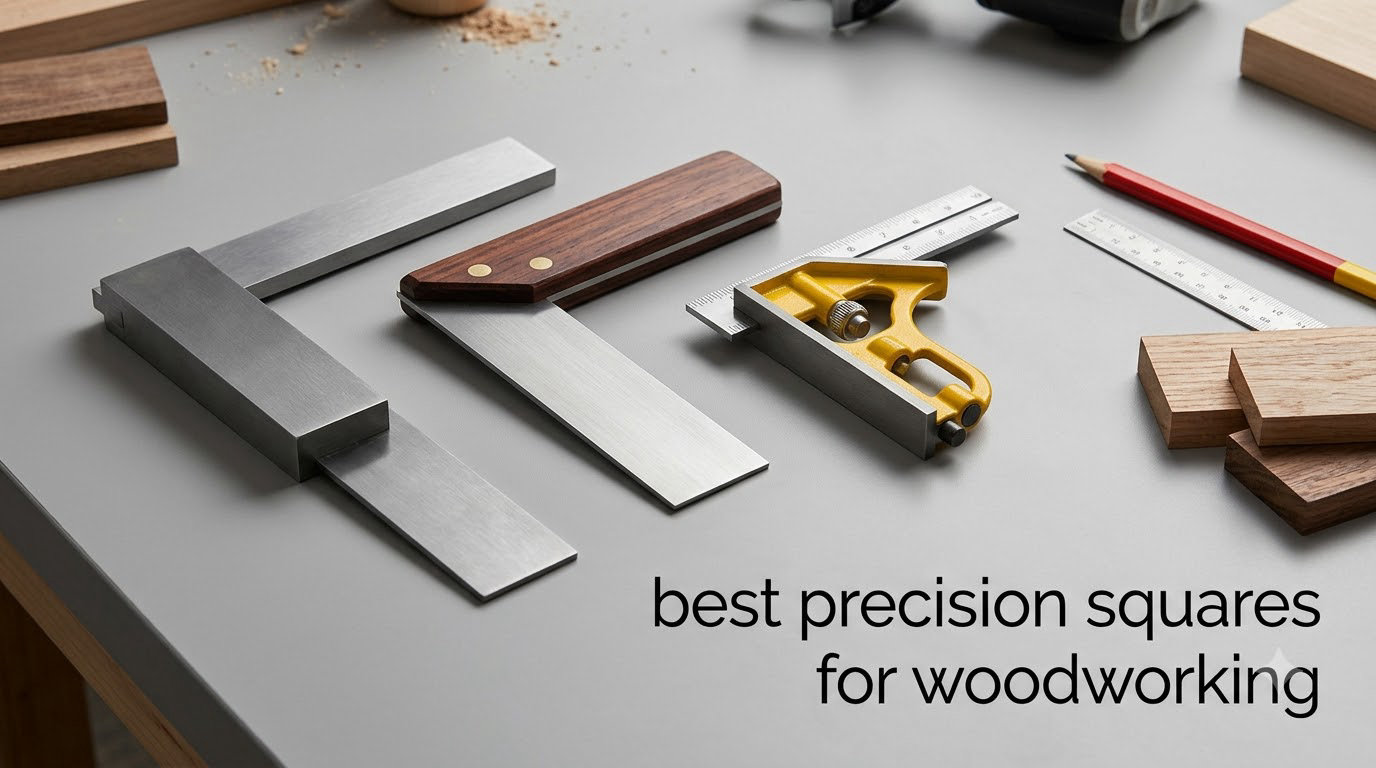
A precision square is a layout tool machined to hold a true 90 degree angle tight enough to trust for layout lines, machine setup and joinery checking, usually to within a thousandth of an inch. The best precision squares for woodworking give you one reference edge that everything else in the shop gets measured against, which is why a single good square pays for itself faster than any other measuring tool you can buy.
We spent weeks putting a dozen of them through the same routine: check squareness against a known-good reference, run the parallel line test, mark a full panel layout, and see how each one held up to being dropped, oiled and leaned on. What follows covers all three square families you will actually meet in a shop, from tiny machinist squares to full-size framing tools, and it names the compromises instead of hiding them.
Two things came out of that testing immediately. Accuracy claims are only as good as the square you verify them against, so we explain how to check any square at home later in this guide. And the cheapest square in the roundup was not the one we ended up recommending, because consistent tolerance matters more than a headline number.
Table of Contents
Top 3 Picks for the Best Precision Squares for Woodworking in 2026
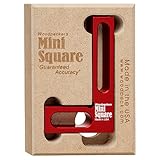
Woodpeckers Mini Square
- 1-1/8 inch by 2 inch inside check
- Red anodized aluminum
- 3.2 ounces
- Made in USA

Woodpeckers 12 Inch Precision Square
- CNC machined within 0.001 inch
- Solid cast aluminum
- Self-standing thick base
- Laser etched scales
Groz 6 Inch Precision Steel Square
- 16 micron squareness rating
- Hardened spring steel blade
- Self-locking rivets
- Ground and lapped faces
The Mini Square takes the top slot because it is the one we ended up reaching for most, and it holds a 4.8 rating across 695 reviews. The 12 inch Woodpeckers square is the one to buy if your work is mostly machine setup, and the Groz is the pick when you want a graduated machinist square with a published micron figure behind it.
All 12 Precision Squares Side by Side (October 2026)
| Product | Specifications | Action |
|---|---|---|
| Woodpeckers Mini Square |
|
Check Latest Price |
| Woodpeckers 12 Inch Precision Woodworking Square |
|
Check Latest Price |
| Groz 6 Inch Precision Steel Square |
|
Check Latest Price |
 iGaging 4 Inch and 6 Inch Double Square Set iGaging 4 Inch and 6 Inch Double Square Set |
|
Check Latest Price |
 WORKPRO 8 Inch Try Square WORKPRO 8 Inch Try Square |
|
Check Latest Price |
 KAPRO Ledge-It Try and Mitre Square KAPRO Ledge-It Try and Mitre Square |
|
Check Latest Price |
 LARMEIL 12 Inch Framing Carpenter Square LARMEIL 12 Inch Framing Carpenter Square |
|
Check Latest Price |
 Preciva 12 Inch Stainless Steel Square Preciva 12 Inch Stainless Steel Square |
|
Check Latest Price |
 Frienda 4 Piece Machinist Square Set Frienda 4 Piece Machinist Square Set |
|
Check Latest Price |
 Shinwa 1.75 Inch Brass Machinist Square Shinwa 1.75 Inch Brass Machinist Square |
|
Check Latest Price |
 Boomgood 4 Inch DIN 875 Grade 1 Machinist Square Boomgood 4 Inch DIN 875 Grade 1 Machinist Square |
|
Check Latest Price |
 T Tulead 50x40mm Carbon Steel Machinist Square T Tulead 50x40mm Carbon Steel Machinist Square |
|
Check Latest Price |
1. Woodpeckers Mini Square for Pocket Checks on Blades and Irons
Woodpeckers Mini Square, Made in USA, Small Pocket Woodworking Square for Setup, Assembly, Checking Cutting Edge
1-1/8 inch by 2 inch inside check
Red anodized aluminum
3.2 ounces
Custom fitted tray
Pros
- Machined aluminum will not chip knife edges or plane irons
- Anodized red finish reveals light gaps instantly
- Small enough to live in an apron pocket
- Custom fitted tray included
Cons
- Not graduated so it cannot mark layout lines
- Too small to register on a large panel
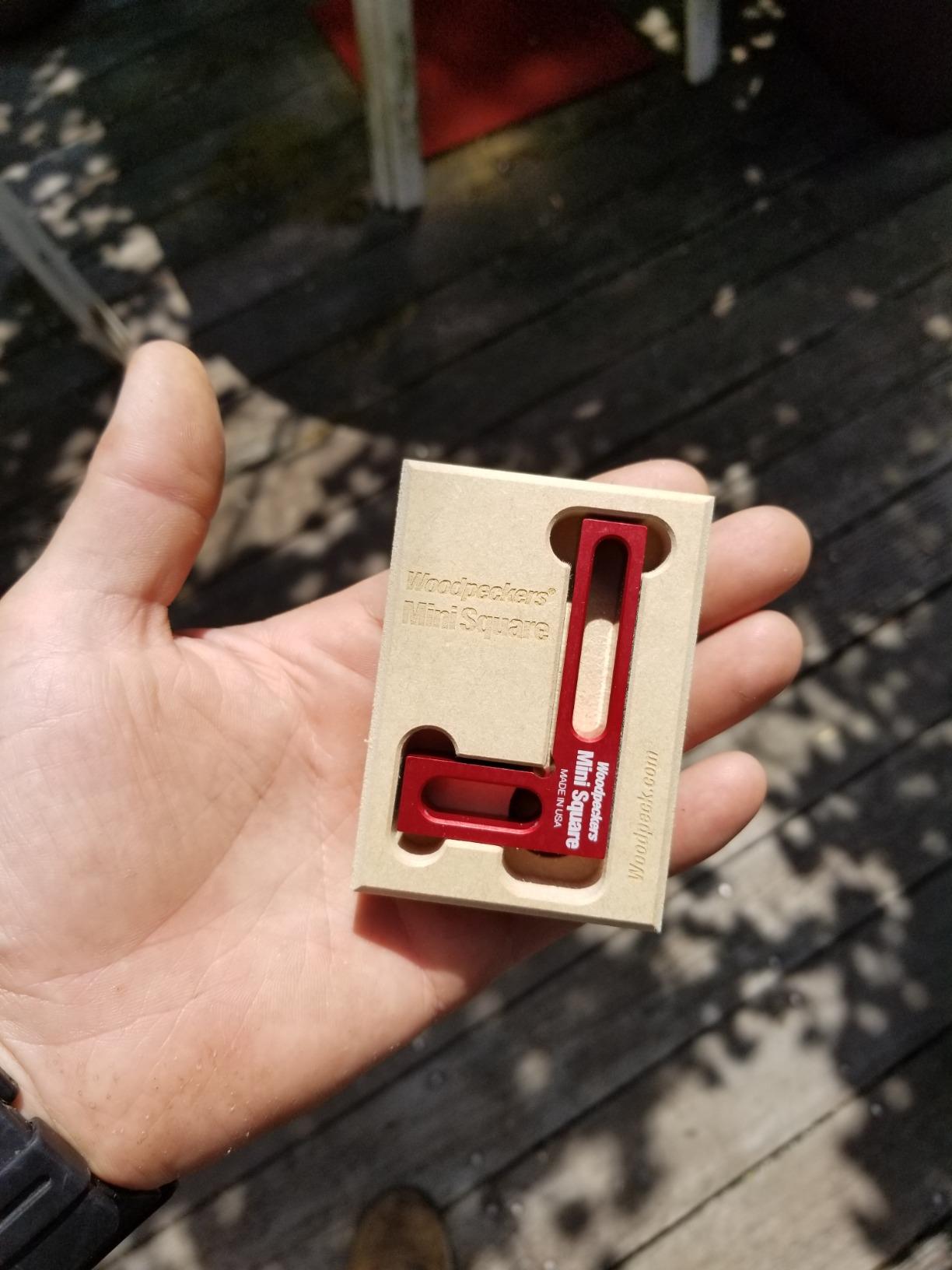
This is the square that turned my shop around. It has a 1-1/8 inch by 2 inch inside opening, so it drops over a saw blade, a chisel back, a plane iron or the end of a workpiece and tells you instantly whether that edge is square.
The red anodized finish is doing more work than it looks like. A gap under the red surface shows up as a bright line, which makes catching a light gap on a blade far easier than squinting at raw steel. That single feature is why it became the tool I reach for before every blade change.
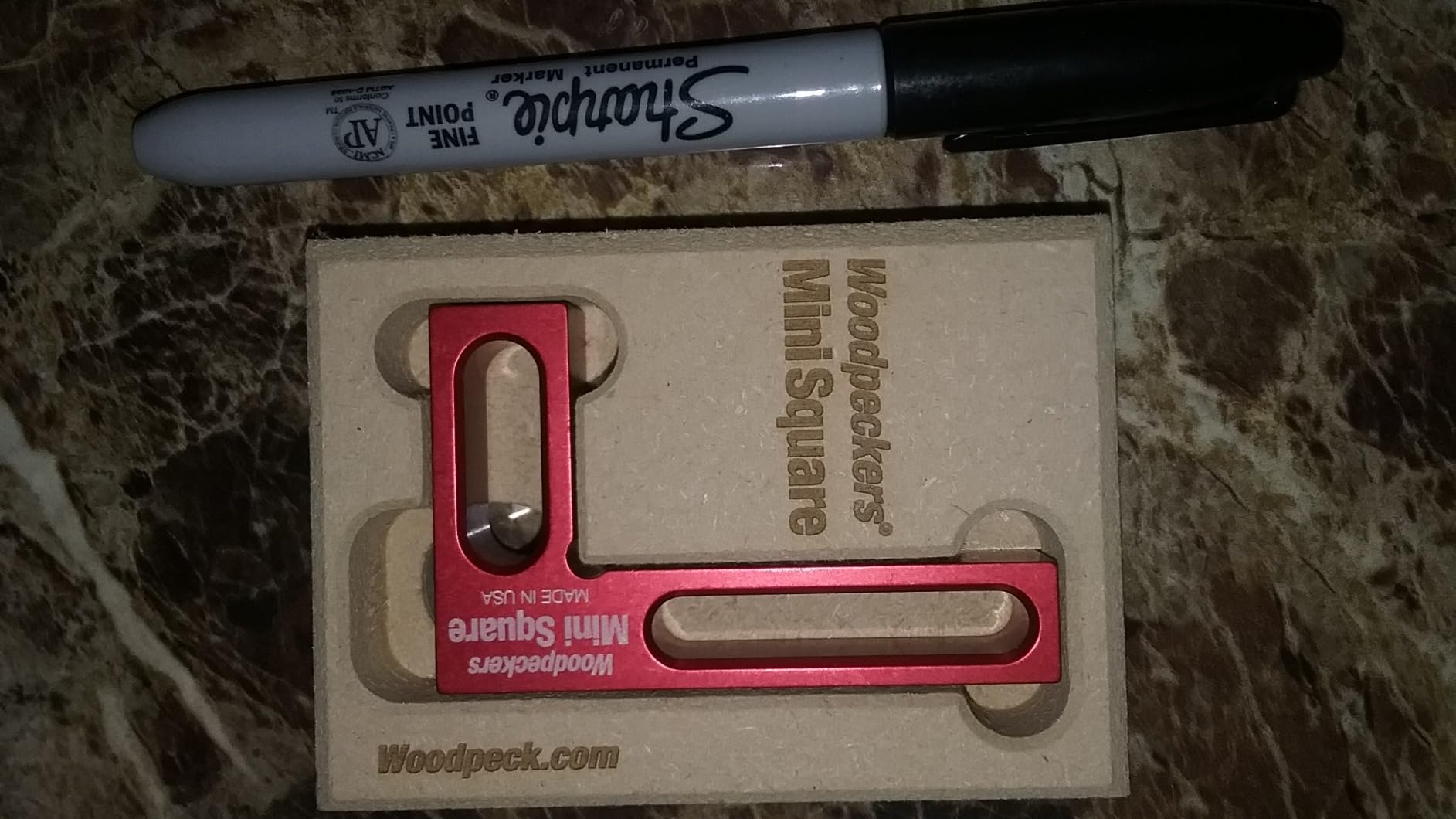
At 3.2 ounces it disappears into a pocket, and machined aluminum will not chip a cutting edge if you knock it. It comes with a custom fitted tray, which matters more than it sounds, because a loose square rattling around a tool drawer is how squares get lost. Made in the USA.
Who this square suits
It suits anyone who does hand tool work, sets up a table saw blade, or checks the squareness of a small part. The 2.5 inch by 1.5 inch footprint means it registers on small work and small hardware without moving. Owners on woodworking forums consistently describe it as a go-to pocket square for exactly these checks.
Where it falls short
It has no graduations at all, so it checks squareness and nothing else. If you need to mark a 9 inch line on a panel, you need a second tool. It also cannot span a full sheet of plywood, which is why I pair it with the 12 inch Woodpeckers square below rather than choosing between them.
2. Woodpeckers 12 Inch Precision Square for Squaring Up Machines
Woodpeckers Precision Woodworking Square, 12 Inch, Aluminum, USA Made, Feature Packed Square, Self Standing, Shoulder Lip, Laser Engraved Scales
CNC cast aluminum to 0.001 inch
Self-standing base
Inside shoulder lip
Laser etched scales
Pros
- Machined from solid cast aluminum to within 0.001 inch along the full length
- Thick base stands upright for hands-free checks
- Inside shoulder lets you mark either edge flat down
- Laser etched scales on both sides resist wear
Cons
- Bulky at 14.5 inches long by 10 inches wide
- Only 1/16 inch graduations with no 1/32 inch marks
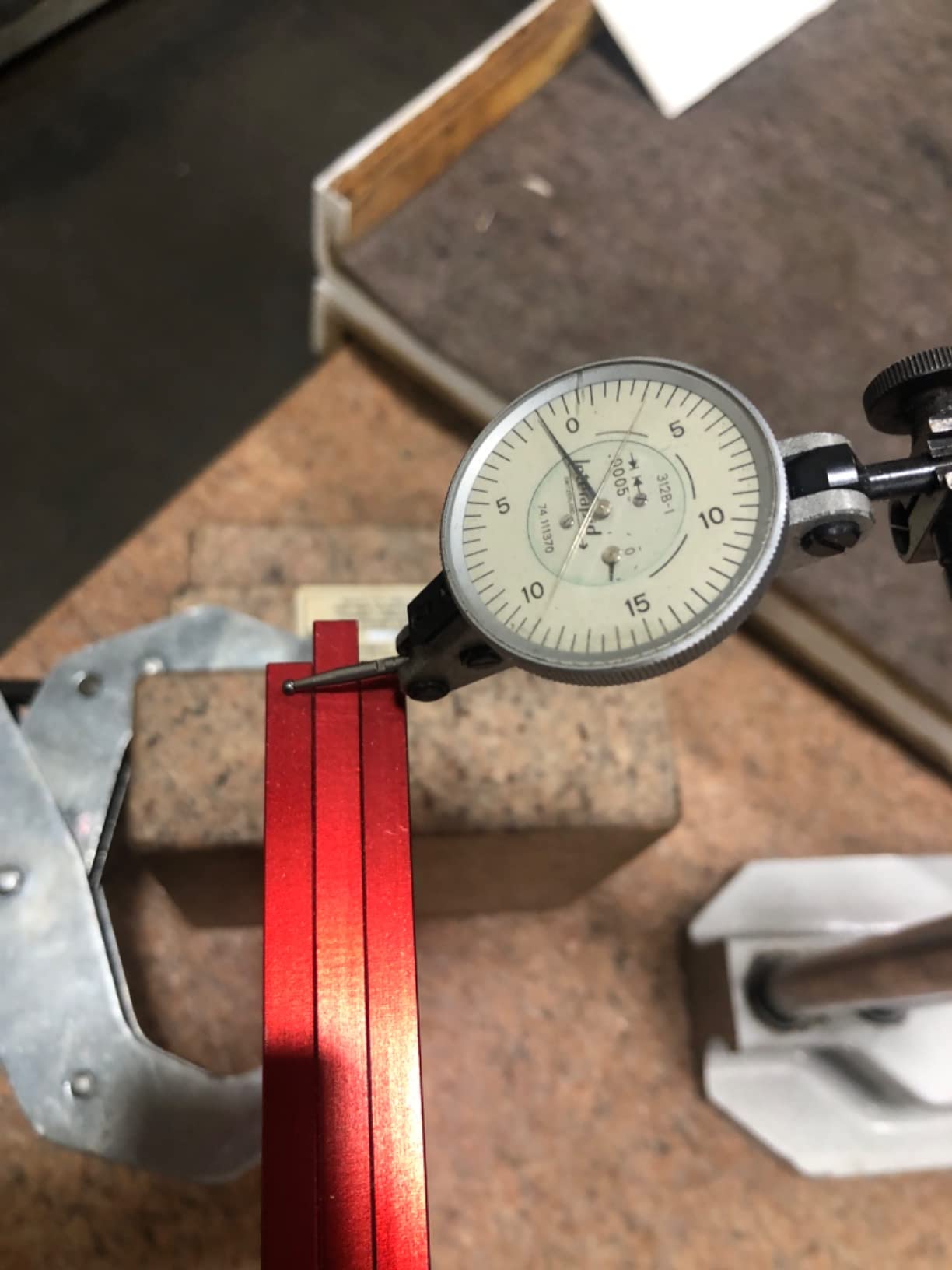
This is the one I use for table saw setup, fence alignment and jointer checks. It is machined from a solid piece of cast aluminum tool plate on CNC equipment to an accuracy of 0.001 inch along the full length, which is a real published figure rather than a marketing phrase.
The thick base is the feature I did not expect to care about. It lets the square stand upright on its own, so you can set it against a fence and walk around to look at the gap without holding it, which is close to how a machinist would check the same thing.
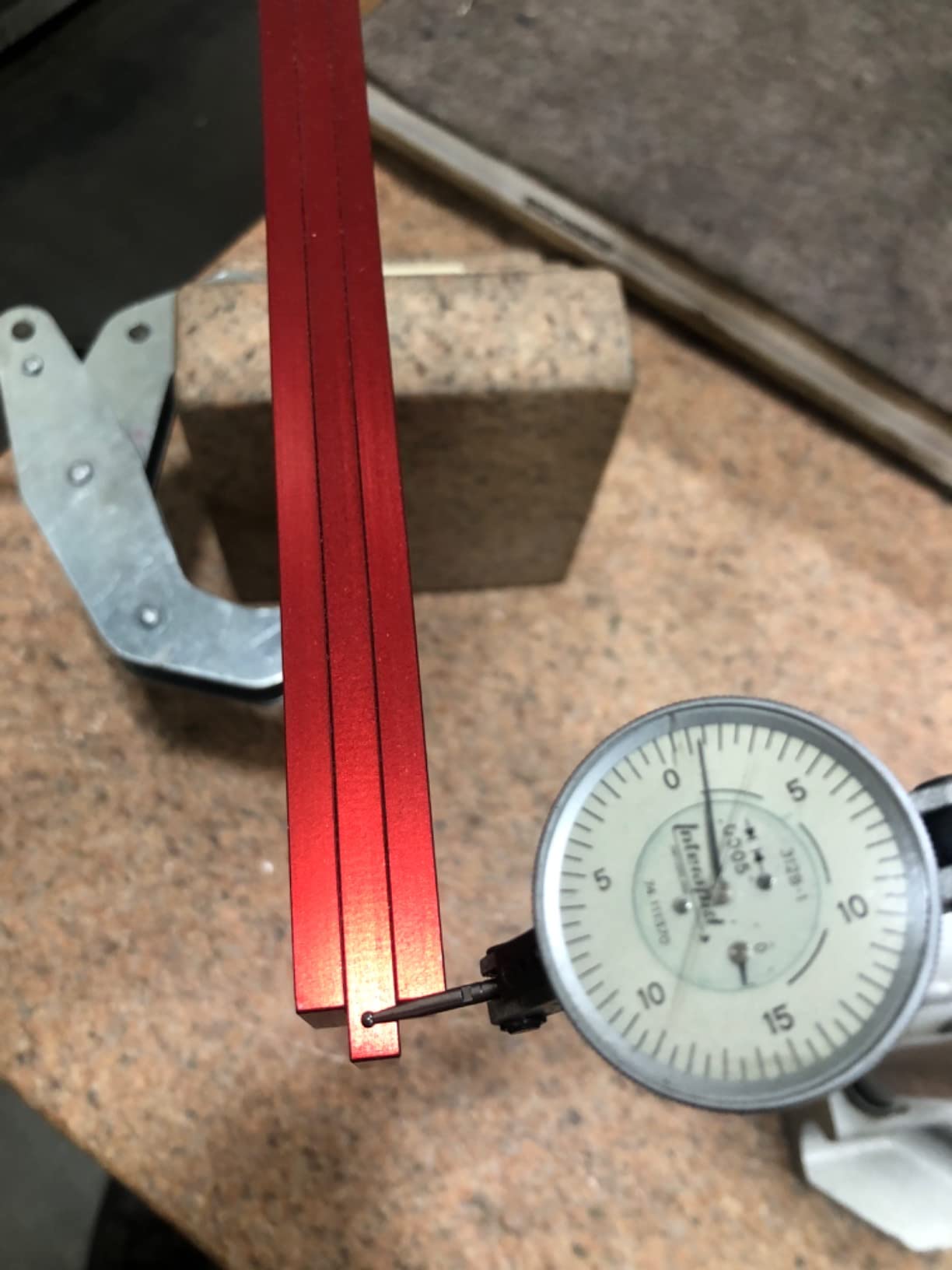
Handle cheeks are joined with two stainless steel dowel pins, which holds the whole assembly rigid, and the laser etched 1/16 inch scales run down both sides of the ruler so you can read them with the square facing either way. Owners report the build accuracy and the hands-free design as the two things that justify the spend.
Who this square suits
It suits a shop where machines get set up, fences get adjusted and panels get squared, and it is the natural companion to the Mini Square. Owners also mention Woodpeckers repairing a square that had been dropped, which is a service few tool makers in this category offer at all.
Where it falls short
At 14.5 inches long and 10 inches wide it is a big object to own and a bigger one to store, and it includes a Rack-It wall mount for a reason. The 1/16 inch scale is coarse for fine layout, so a separate rule is still needed for tight joinery work.
3. Groz 6 Inch Precision Steel Square for Published Micron Accuracy
Groz 01003 6″ Precision Steel Square, 16 Microns Squareness
16 micron squareness
Hardened spring steel blade
Self-locking rivets
Ground and lapped faces
Pros
- 16 micron squareness rating is a measurable published figure
- Blade and stock ground together for parallelism
- Hardened rivets stop the blade shifting under impact
- Available as singles or a 3 piece set
Cons
- No graduations for general layout marking
- Not every piece that arrives is perfectly square
Groz publishes a squareness rating of 16 microns, and that is exactly the kind of hard number worth hunting for. Sixteen microns is well under a thousandth of an inch, so a square like this has room to spare for checking fences, shoulders and blade alignment.
The construction is the classic machinist approach: a hardened spring steel blade permanently fixed to the stock with tapered self-locking rivets, then ground and lapped for parallelism and straightness. A groove in the inner corners keeps burrs and shop dirt from pushing the reading out, which is a detail that quietly extends tool life.
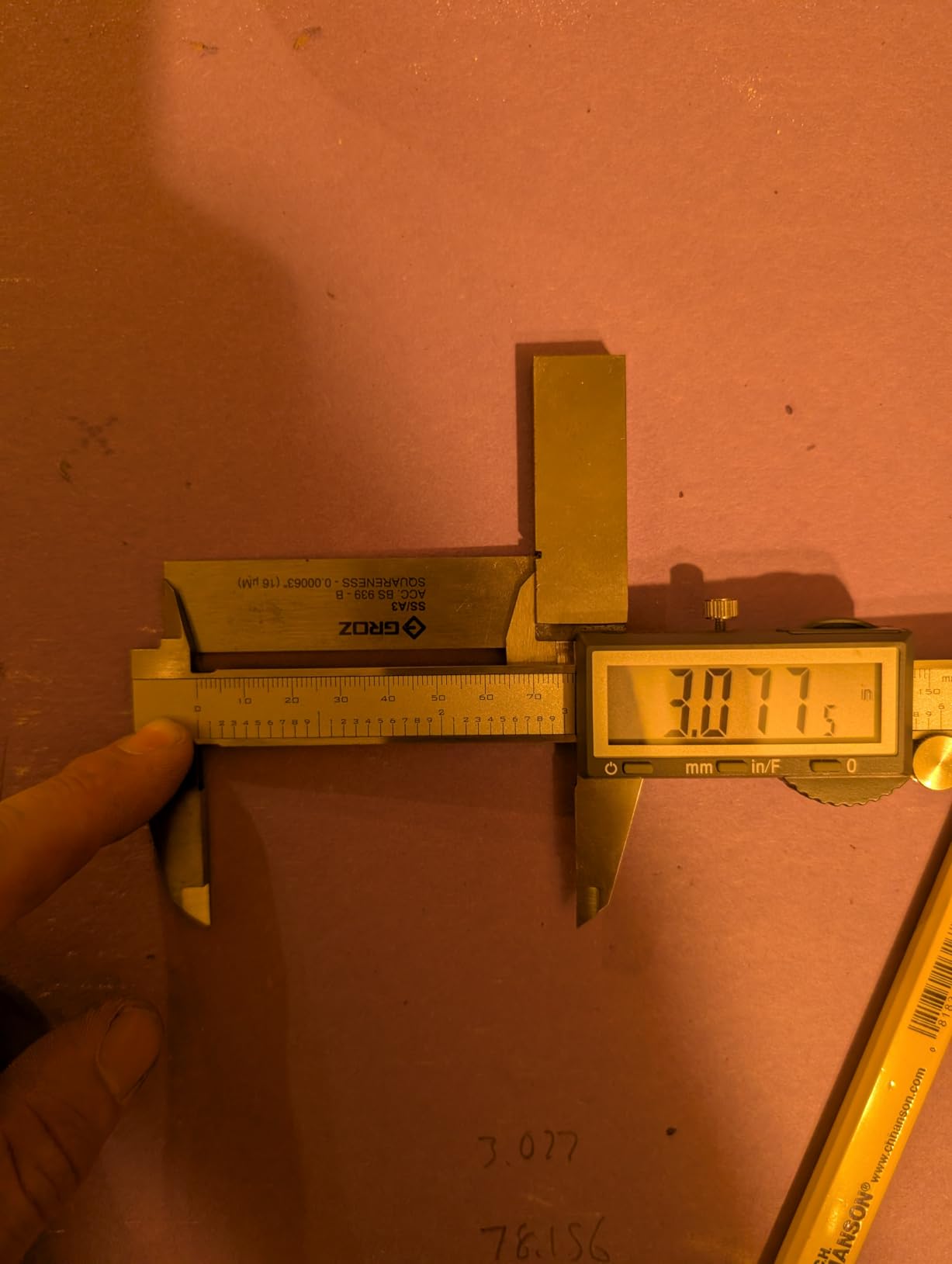
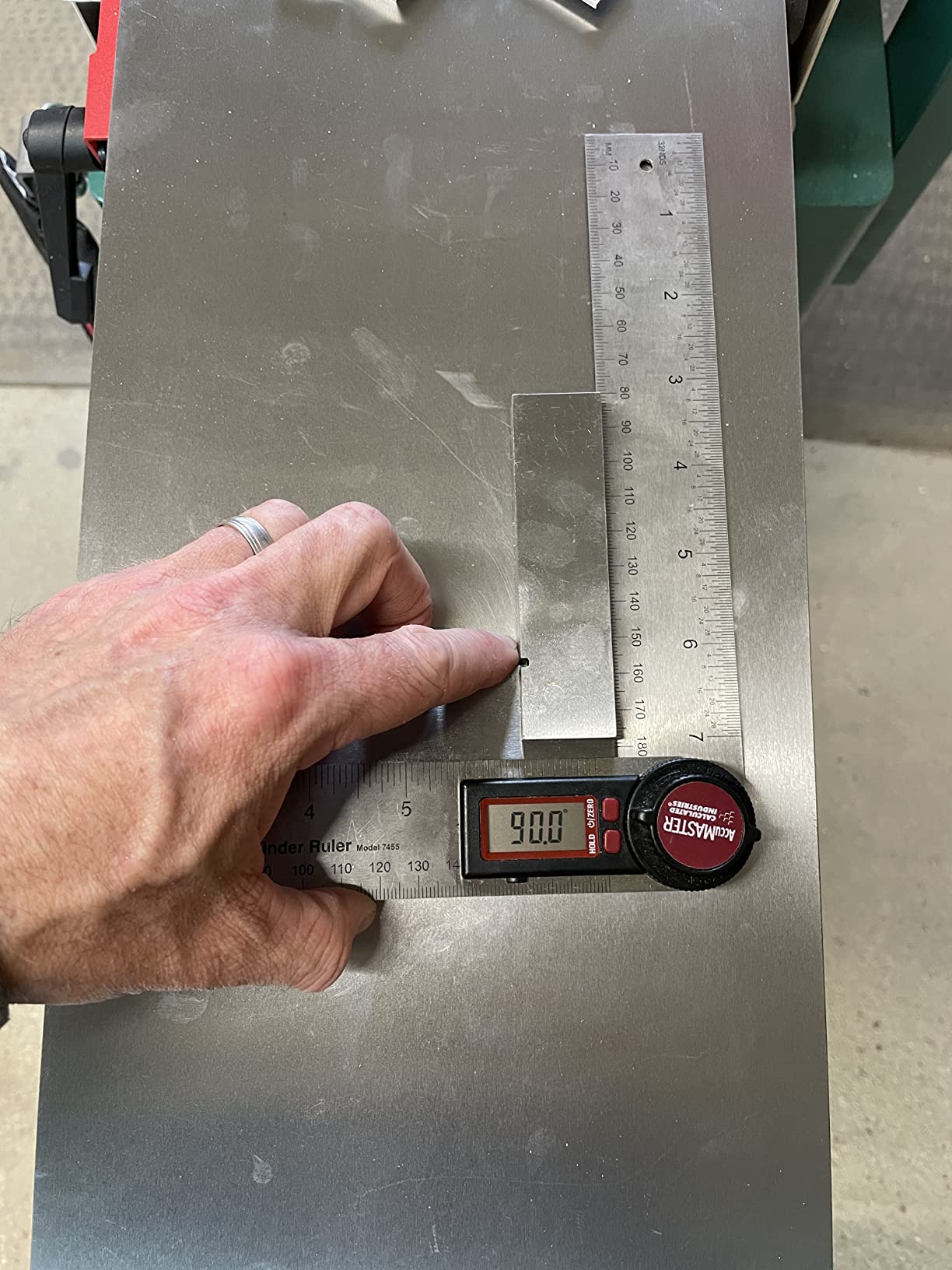
Buyers report confirming the advertised squareness independently with gauge blocks, parallel line tests and backlighting, and several compare it directly against premium machinist squares they already own. Weight at 10.88 ounces gives it a planted feel on a bench that lighter squares lack.
Who this square suits
It suits a woodworker moving from general layout into real machine setup, and anyone who wants a spec they can hold a supplier to. The same family comes in 2 inch, 4 inch and 6 inch singles plus a 3 piece set with cases, so you can match size to the job rather than buying one compromise length.
Where it falls short
It is a checking square, not a marking square, with no graduations at all. A small number of buyers received pieces that did not verify square, which is normal for any budget tier, and it is the reason we keep the verification method in this guide rather than trusting the box.
4. iGaging 4 Inch and 6 Inch Double Square Set for Two Sizes in One Case
iGaging 4″ & 6″ Double Square Set 4R Steel Blade High Precision Woodworking
4 inch and 6 inch squares in one set
1/64 inch graduations
Cast iron heads
Foam insert case
Pros
- Over 1100 reviews confirm consistent accuracy at this tier
- Two sizes cover small corners through machine setup
- 1/64 inch graduations are finer than most layout squares
- Hardened satin chrome blades resist wear
Cons
- Fit and finish a step below premium machinist tooling
- Knurled adjustment can be stiff and may need light oil
- Inch scale only with no metric option
The iGaging set is the value pick of the group, and over 1100 reviews is the deepest body of feedback any square in this roundup carries. Owners commonly check it against Starrett squares and gauge blocks and report that it holds up, which is a stronger endorsement than any star rating on its own.
You get a 4 inch square with a 2.5 inch base and a 6 inch square with a 3.75 inch base, both with hardened precision ground satin chrome 4R blades marked in 1/64 inch increments. That graduation is finer than most of the try squares in this list, which makes it useful for real layout work rather than only checking.
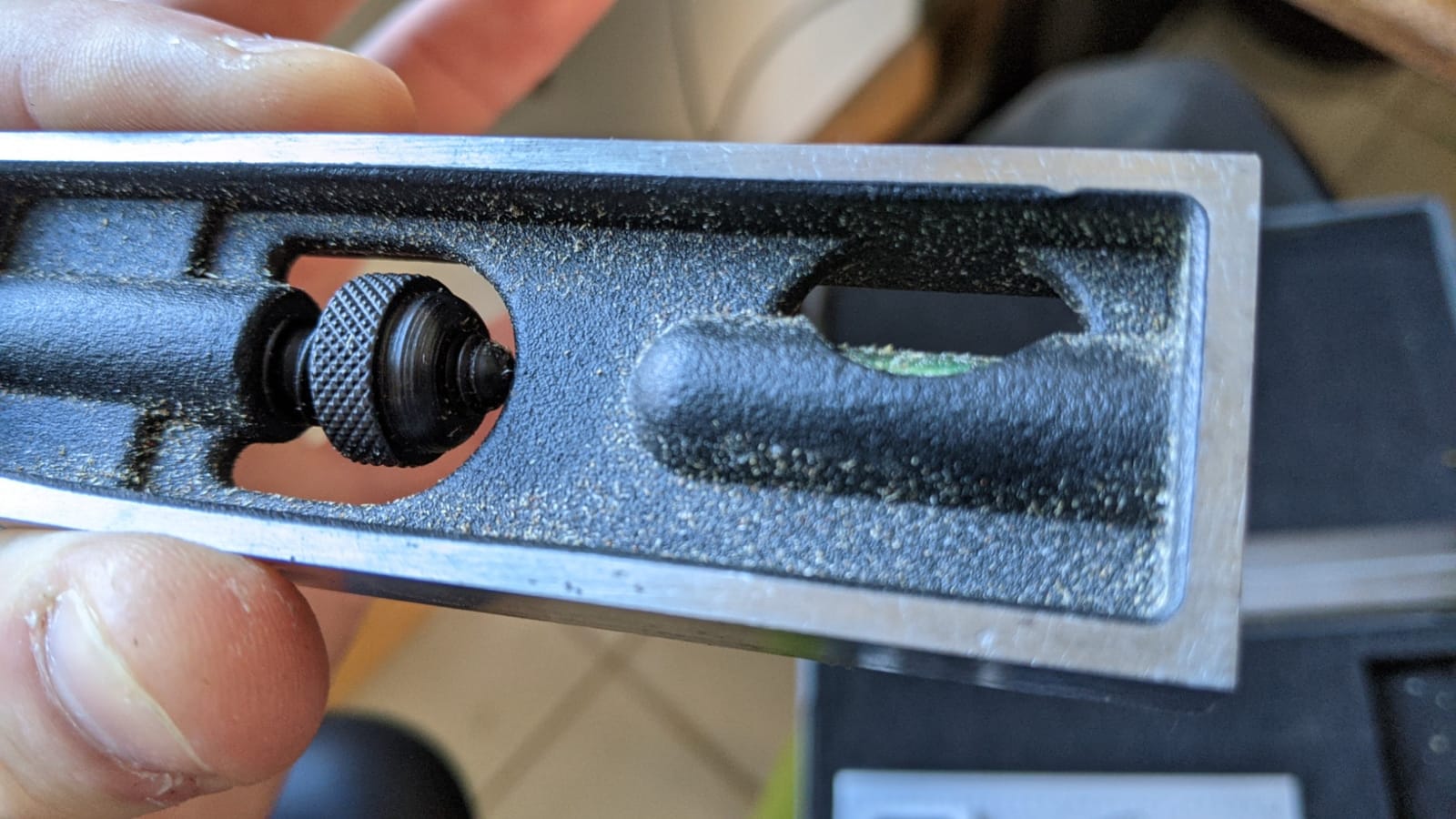
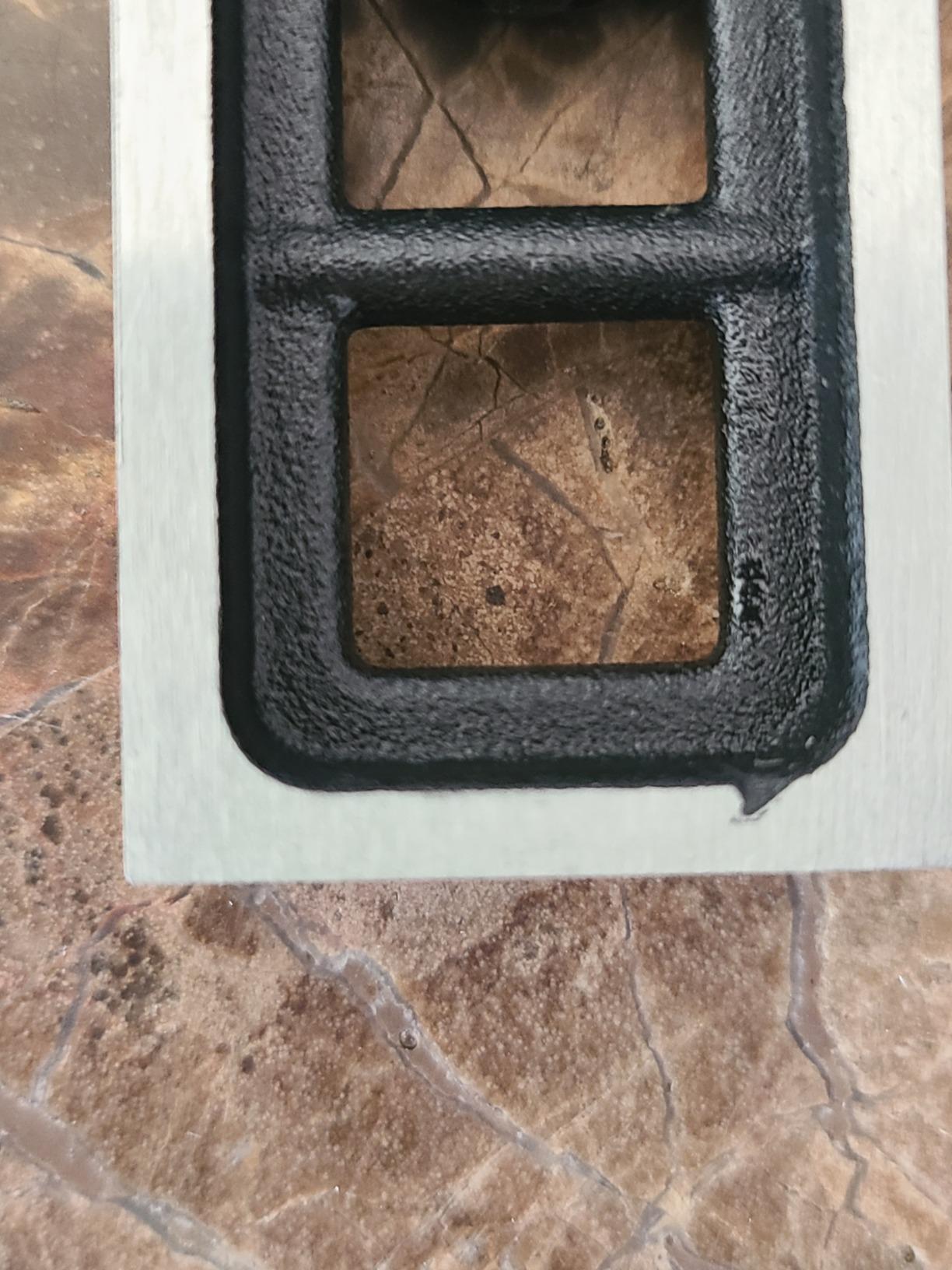
Cast iron heads resist wear, and the foam insert case means both squares survive being carried to a job site. The satin chrome finish is smooth and easy to read, and the whole set stays compact enough to live in a drawer rather than on the wall.
Who this square suits
It suits a hobbyist who wants to graduate past a single square without buying two separate tools, and a pro who wants a spare in the van. The two base sizes cover everything from checking a small inside corner to squaring a machine fence.
Where it falls short
The fit and finish are a step below premium machinist tooling, and reviewers mention stiff adjustment screws that respond better to a drop of oil. The scale is inch only, and some owners with older eyes find the markings hard to read under bright shop lighting.
5. WORKPRO 8 Inch Try Square for a First Layout Tool
WORKPRO 8-Inch Try Square, Woodworking Square with Aluminum Handle
8 inch stainless blade
Aluminum alloy handle
Inch and cm scales
45 degree handle angle
Pros
- Dual inch and metric scales cover most layout work
- Laser etched markings are crisp and will not rust off
- Two pencil marking points speed up repeat lines
- Lightweight 280 g body is easy to carry
Cons
- Aluminum handle can mark a finished workpiece if dropped
- General layout accuracy rather than machinist grade
If you want one square that does layout and nothing else, this is the honest starting point. The 8 inch stainless blade is fixed to an aluminum alloy handle by three pins, and the scale is laser etched in 1/8 inch and 1/16 inch increments with centimeters on one face and inches on the other.
The details that get used most are small ones. Two pencil marking points at 1 cm and 19 cm speed up repeated parallel lines, and a 45 degree angle molded into the handle gives you a diagonal reference for marking without a protractor.
Who this square suits
It suits a beginner assembling a first tool kit, and anyone working in a shop that mixes metric and inch stock. At 280 g it is light in the hand for long layout sessions, and a stainless blade does not need oiling the way plain steel does.
Where it falls short
This is a layout tool, not a precision square, and it should not be used to certify a machine setup. The aluminum handle is also the part most likely to mark a finished surface if you drop it, so keep it off the bench when a panel is in the glue-up stage.
6. KAPRO Ledge-It Square for Marking Angles Without a Protractor
Kapro – 353 Professional Ledge-It Try & Mitre Square – For Leveling and Measuring – Features Stainless Steel Blade, Retractable Ledge, and Etched Ruler Markings – 8 Inch
1/32 inch graduations on first 4 inches
Angle holes 10 to 60 degrees
Retractable ledge
Pros
- Etched stainless graduations outlast printed scales
- Marking holes cover the angles you actually use
- Parallel openings speed up repeated marking
- Cast aluminum handle with three milled surfaces
Cons
- Ledge adds bulk compared with a plain try square
- A noticeable share of ratings sit at 3 stars or below
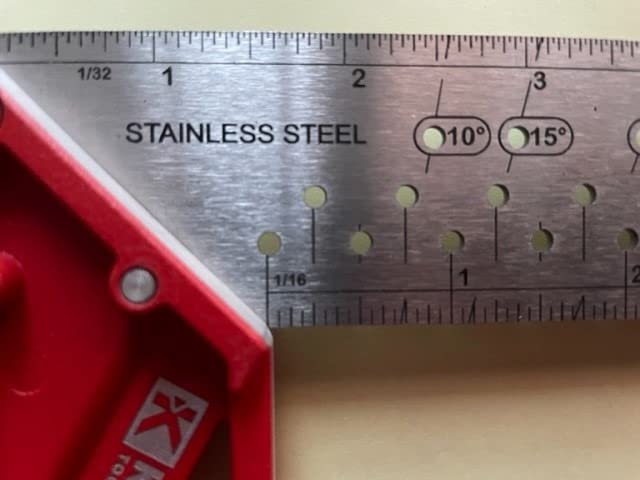
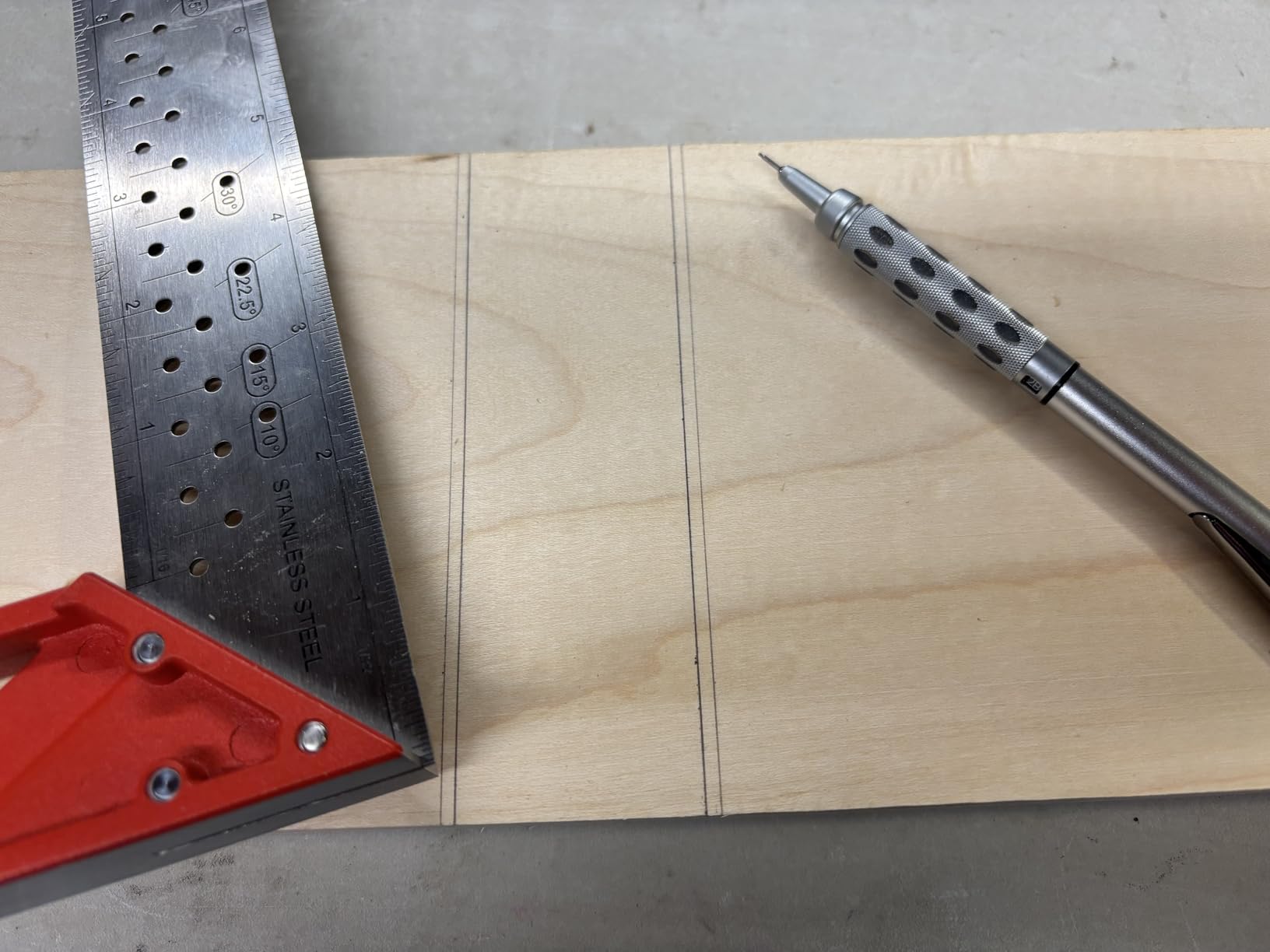
The KAPRO is built around a simple idea: put the angles you need directly in the tool. Marking holes sit at 10, 15, 22.5, 30, 45, 50 and 60 degrees, so a 22.5 degree mitre or a 30 degree brace goes straight onto the line without a protractor in the picture.
Graduations are permanently etched into the stainless blade at 1/32 inch for the first 4 inches and 1/16 inch for the rest, which is the right split, because fine marks matter near the corner and rarely further out. Openings every 1/4 inch along the blade make parallel pencil marking fast and repeatable.
The retractable ledge supports the handle hands-free so you can push a pencil through instead of chasing a moving edge. The cast aluminum handle has three milled surfaces, and it comes with a one year warranty against normal wear.
Who this square suits
It suits trim, framing and general carpentry where you mark the same angle more than once. Reviewers value the etched scale durability, since etched marks do not wear off the way stamped or printed numbers do on a cheaper rule.
Where it falls short
That 18 percent share of ratings at 3 stars or below points to mediocre squareness, so do not lean on it to certify a precision setup. The ledge is also the reason the tool measures 8.5 inches long by 5.91 inches wide, so it is not a pocket tool.
7. LARMEIL 12 Inch Framing Square for Long Layout Lines
LARMEIL 12 Inch Framing Carpenter Square, Woodworking Square Ruler, Try Square Tool, L Square Ruler, Layout Tool, Right Angle Ruler with Retractable Ledge and Scribe Mark Pin
12 inch aluminum layout format
Retractable ledge
Scribe mark pin
Deep stampings with white marks
Pros
- 12 inch format suits framing roofing and stair layout
- White graduations on deep stampings stay readable
- Rust proof aluminum body
- Retractable ledge stabilises repeat marking
Cons
- Try square precision rather than machinist grade
- Scribe pin and ledge are basic next to premium tools
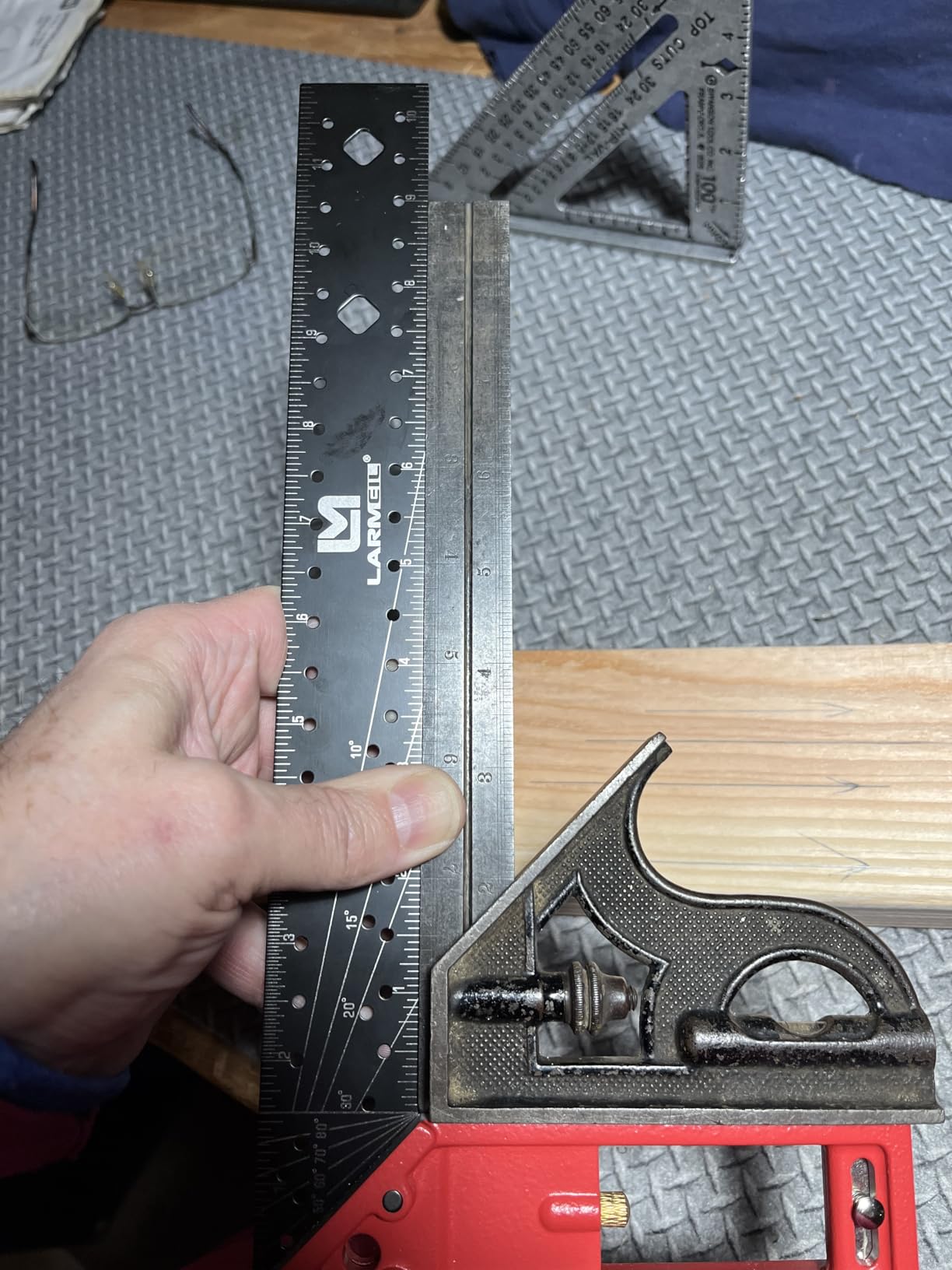
Twelve inches is the length you want when the marking out runs past a foot, whether that is rafter layout, stair stringers or a full sheet of plywood. The blade covers 0 to 12 inches and the body is a single 12 inch length of aluminum at roughly one inch wide, so it stays light in the hand.
The graduations are deep stampings filled with bright white, which is a very different approach from laser etching. Stamped numbers can eventually wear, so this is a tool you check periodically rather than one that will read perfectly for decades.
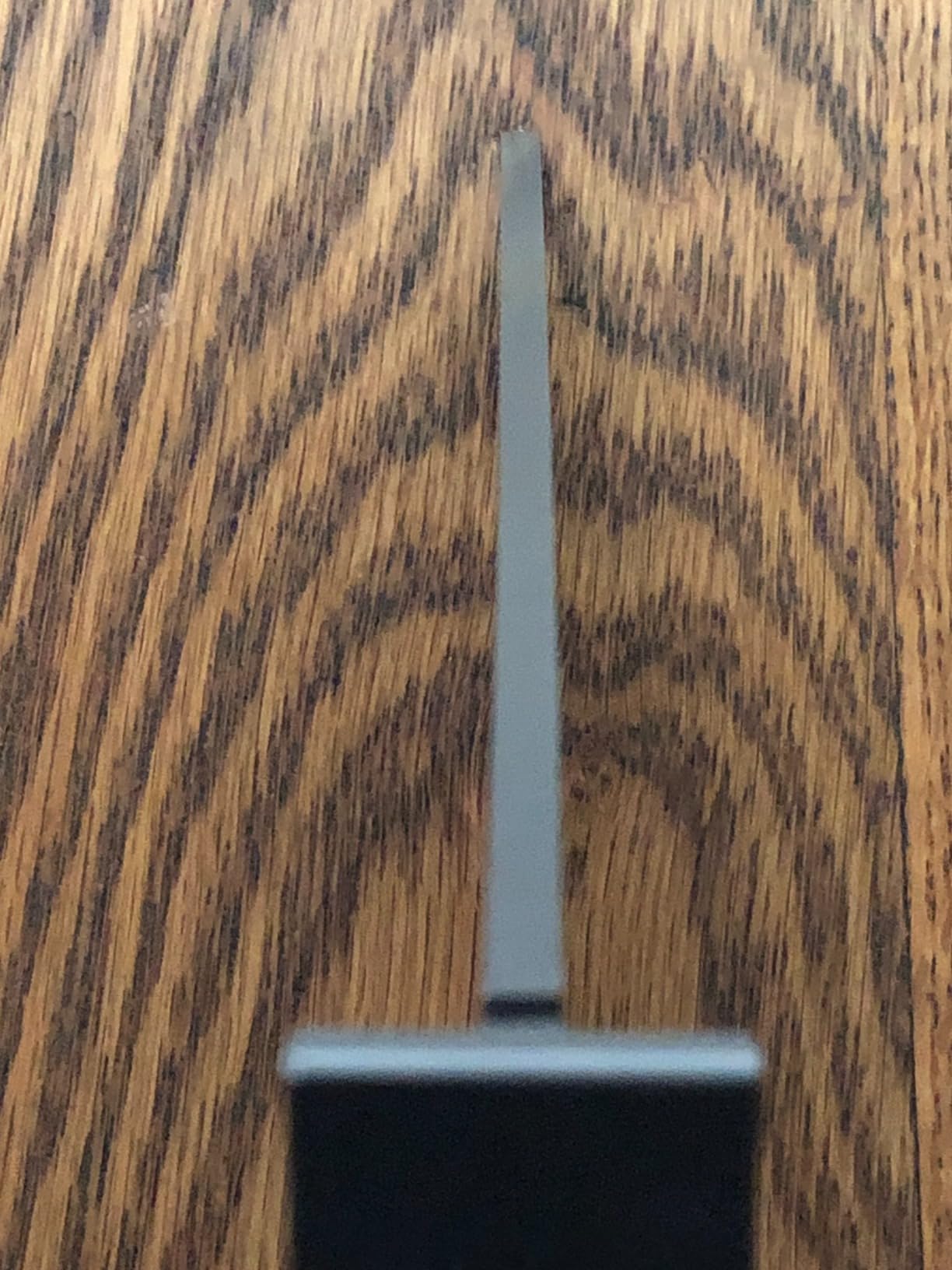
The retractable ledge adds stability when you are pulling a long line rather than just setting one mark, and the scribe mark pin lets you run parallel lines from a fixed datum. The seller also offers a two month replacement, which is worth knowing for a tool this size.
Who this square suits
It suits framing, roofing and stair work where long straight layout lines matter more than fine tolerance. Buyers treat it as a dependable everyday carpenter square, and the rust proof aluminum body means it can live in a trailer or a damp garage.
Where it falls short
Do not confuse this with a precision square. It is a try square for layout, and the scribe pin and ledge are simple compared with the same features on premium tools. Stamped markings are also the first thing to fade after a few years of pencil friction.
8. Preciva 12 Inch Stainless Steel Square for Fine Notch Spacing
12” Woodworking Square Ruler – Preciva Right Angle Ruler Carpenter Square Layout Tool, Features Stainless Steel Blade, Retractable Ledge, 1/16” and 1/32” Notch Spacing and Multi-Angle Scribe Mark
1/16 inch notch spacing
1/32 inch in first 2 inches
Ten angle marking holes
Included scribing needle
Pros
- 1/32 inch notches in the first 2 inches give real fine layout
- Laser calibrated scale resists scratching
- Ten angle holes plus an included scribing needle
- Retractable ledge steadies the handle
Cons
- Not a machinist grade precision square
- A small share of reviews report accuracy complaints
The Preciva is a 12 inch, 300 mm square, so it works for metric stock as well as inch work. What makes it interesting is the notch spacing: 1/16 inch along the blade and 1/32 inch through the middle two inches, which is where most fine layout actually happens.
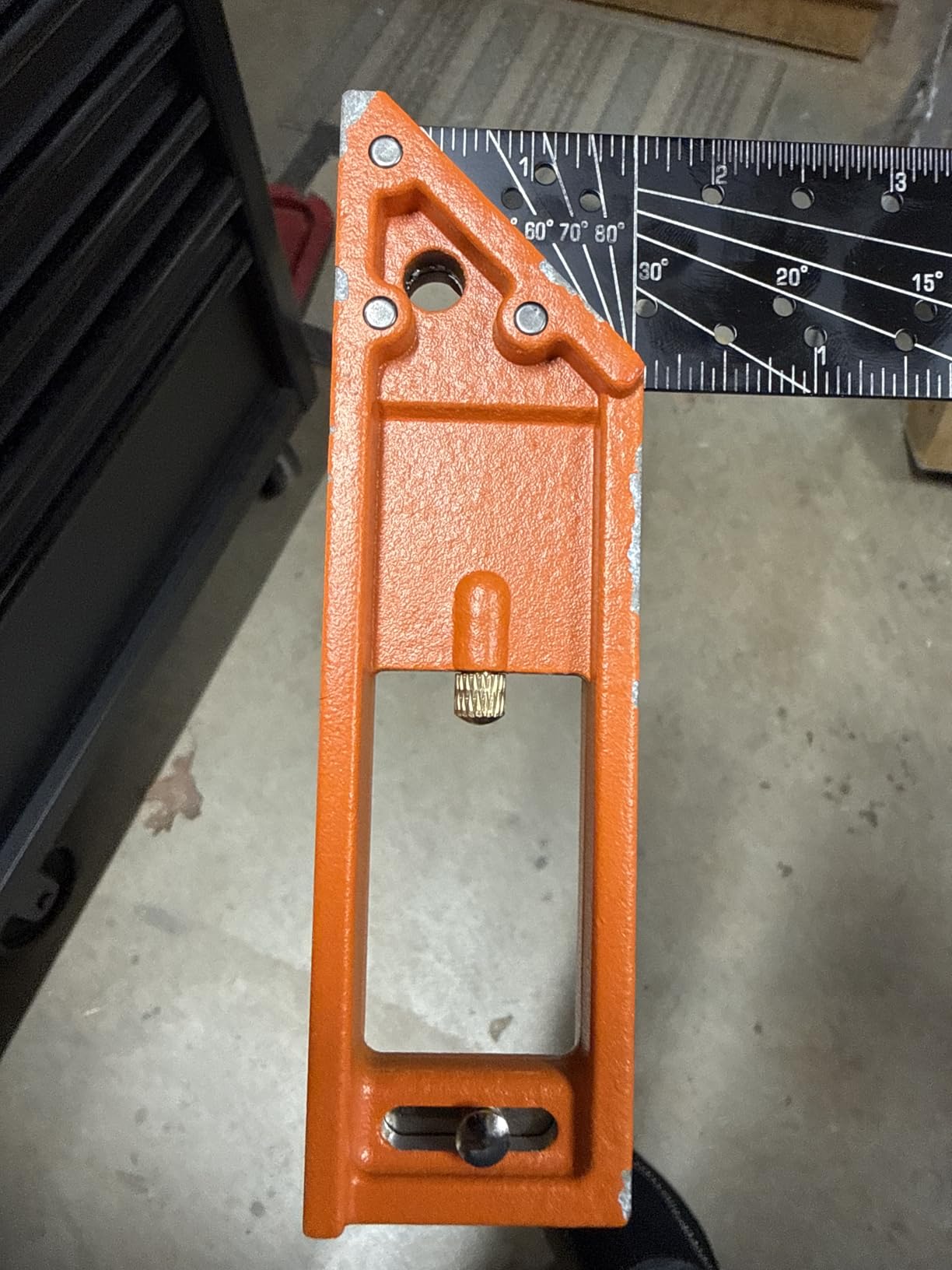
Marking holes cover ten common angles from 10 through 90 degrees, and a scribing needle is included in the box for lines you need to be dead straight. The retractable metal ledge stabilises the handle while you work, and a hanging hole makes storage simple.
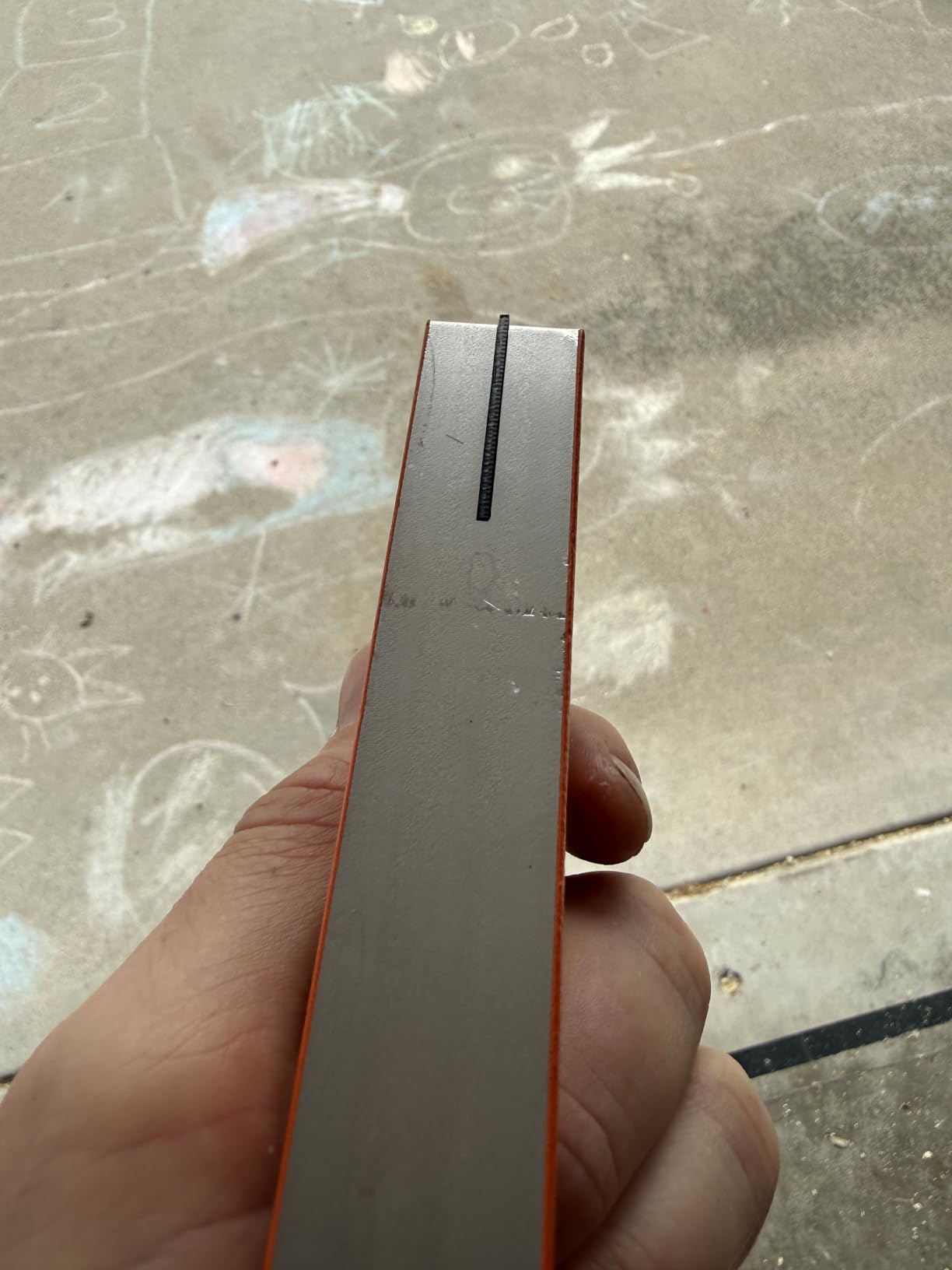
The scale lines are laser calibrated rather than printed, so they resist scratching as the blade gets worked on. Owners like the durable scale and the range of angle holes, and treat it as a capable layout tool rather than metrology gear. It carries a one year warranty and a 30 day return guarantee.
Who this square suits
It suits a woodworker laying out fine joinery or repeat drill patterns where a 1/32 inch step matters. The included needle and the calibrated scale make it a good companion to a machinist square, not a replacement for one.
Where it falls short
Around 6 percent of ratings sit at 3 stars, which reads as a handful of accuracy complaints on a tool that is not claiming machinist tolerance anyway. The 12 inch format also makes it too large for pocket work on a job site.
9. Frienda 4 Piece Machinist Square Set for a Complete Starter Kit
Frienda Machinist Square Set, 2″, 3″, 4″ and 6″ Precision Machinist Squares
2 3 4 and 6 inch sizes
Carbon steel rivet links
Matching beam dimensions
Individual cases
Pros
- Four sizes cover small inside corners through general setup
- All squares share the same beam and blade width and thickness
- Low cost per square when you need several sizes
- Bright smooth finish is easy to read
Cons
- Quality control varies and some pieces arrive out of square
- Rivet links can loosen with use
- Carbon steel needs care in a humid shop
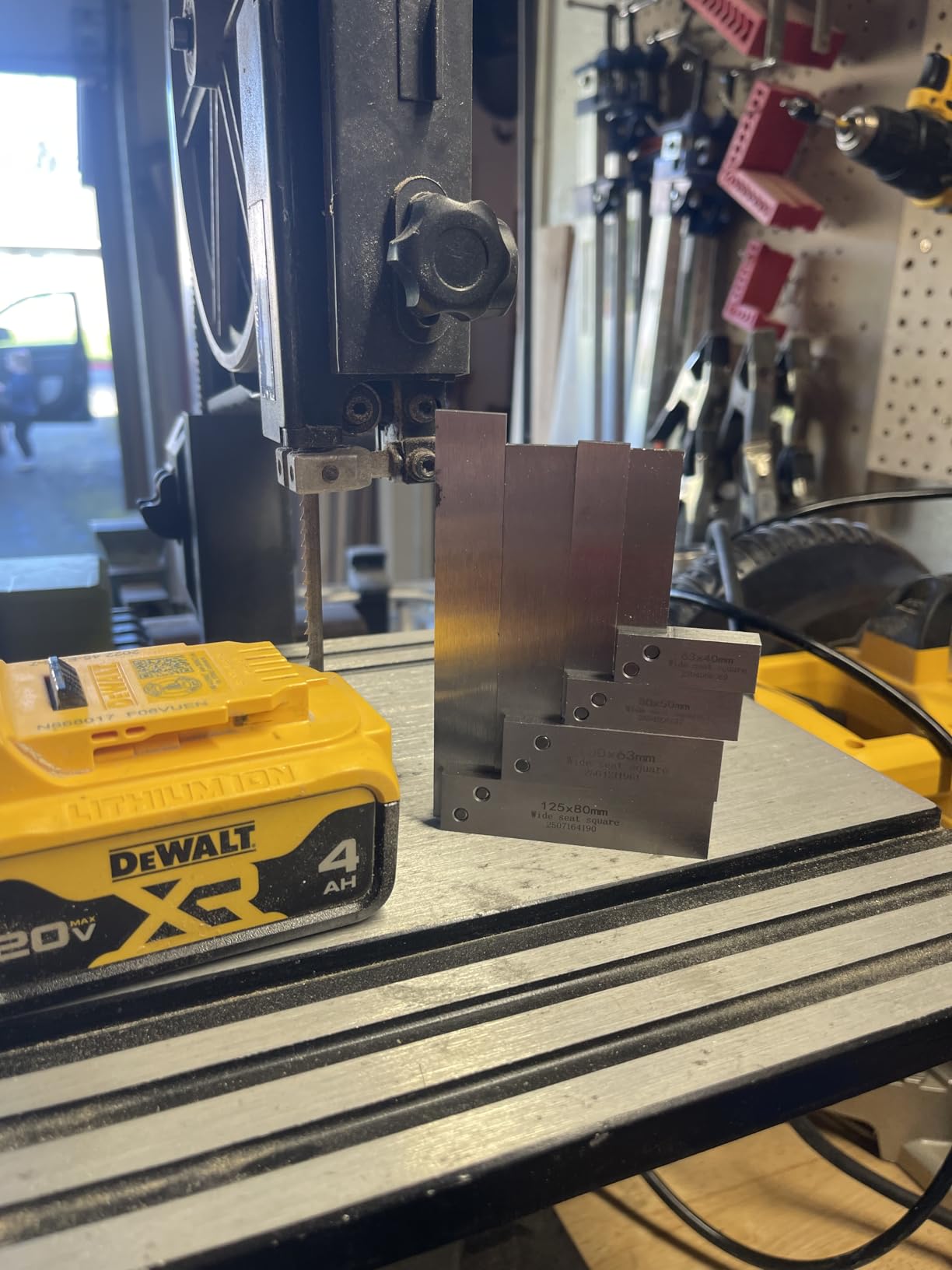
Most machinist square sets mix sizes that do not relate to each other. This one deliberately uses the same beam and blade width and thickness across all four pieces, so a 2 inch and a 6 inch can be used together as a combination to check a longer line or a different angle.
The construction is carbon steel with a rivet link attachment that keeps blade and stock rigid. Each size comes in its own case, which is genuinely useful for a mobile shop, although four boxes does add up in the drawer.
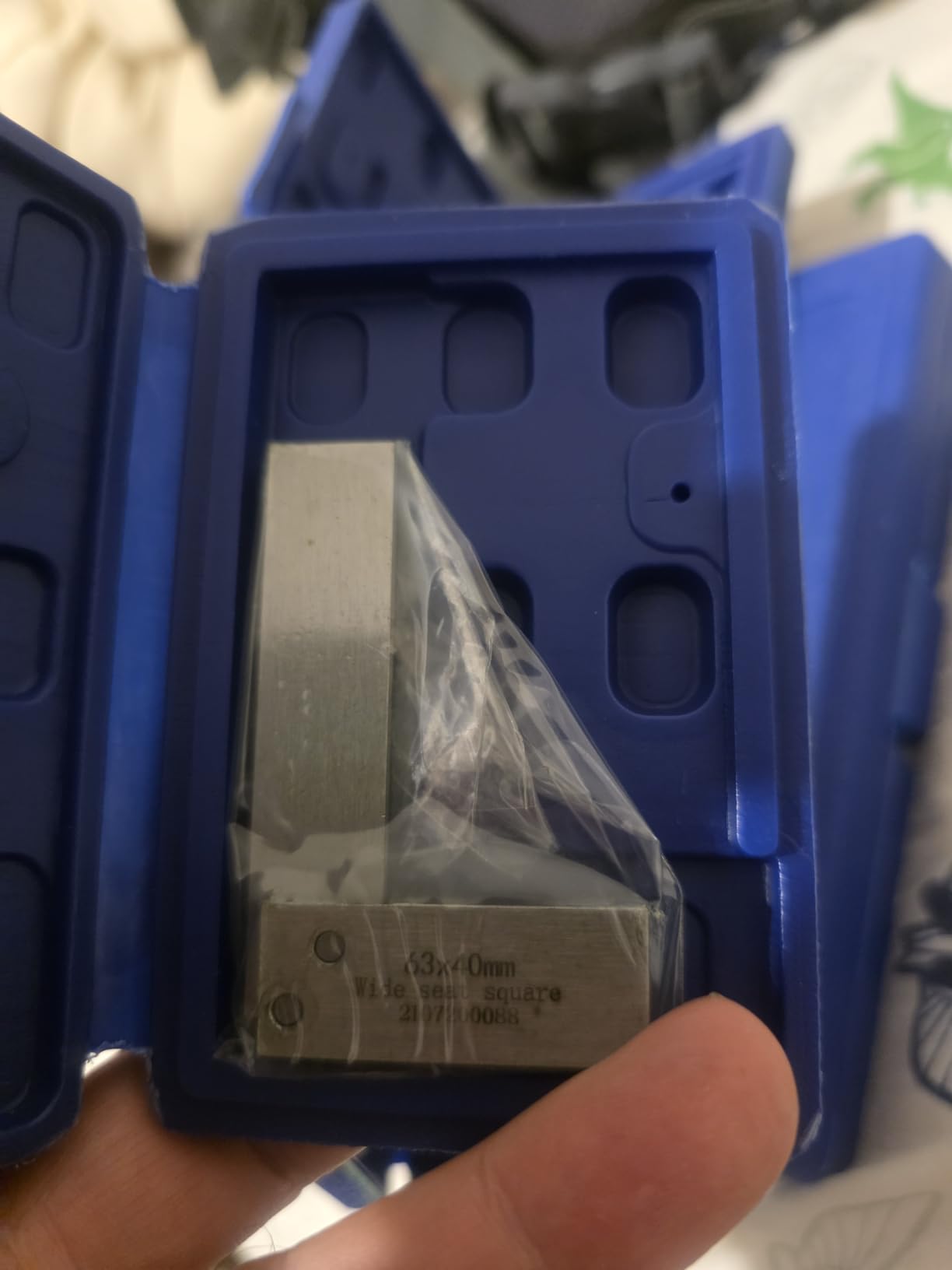
Buyers like the size range and the low cost per square, and a number of them report checking their pieces square against a Woodpeckers reference and finding them acceptable. The bright, smooth finished surface is easy to read and easy to wipe clean.
Who this square suits
It suits a hobbyist who wants one purchase to cover a range of sizes instead of guessing which length will be needed. The uniform dimensions across the set are the feature that makes it more useful than a random assortment of budget squares.
Where it falls short
This is the lowest rated square in our roundup at 4.3, and the reason is quality control rather than design. Buyers report individual pieces arriving out of square and rivets loosening over time, so verify each one against a known-good reference before trusting it in a glue-up.
10. Shinwa 1.75 Inch Brass Machinist Square for Small Inside Corners
Shinwa 1.75″ / 4.5 cm Solid Brass Stainless Steel Machinist Square 62020
1.75 inch solid brass body
Stainless steel blade
9.07 g weight
Rust resistant brass
Pros
- Solid brass will not rust in a humid shop
- Light at just over half an ounce so it can be carried anywhere
- Useful on small inside corners and blade setup
- Traditional Japanese inspection square style
Cons
- Brass is softer than steel and dents over time
- Small size limits use on larger workpieces
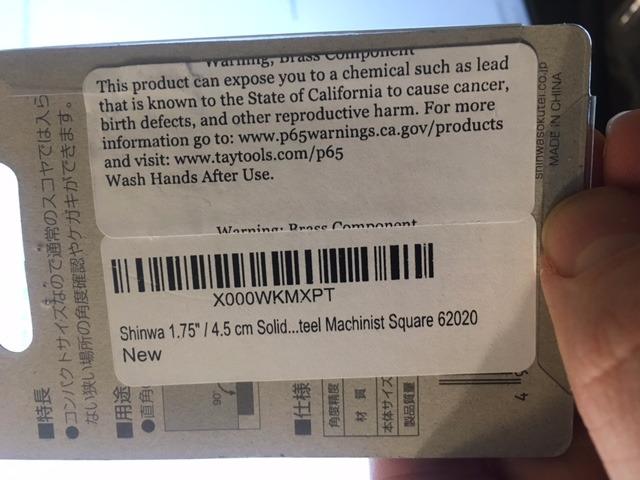
The Shinwa is an old style inspection square: a solid brass body with a stainless steel blade, built at 1.75 inches, or 4.5 cm. Brass does not rust, which makes it a genuinely good choice for a humid shop or a marine project where a steel square would spot.
At 9.07 grams it weighs about as much as a folded pair of glasses, so it stays in your pocket for the small checks that get skipped when the tool is in a drawer. The compact form factor is aimed squarely at inside corners and blade setup.
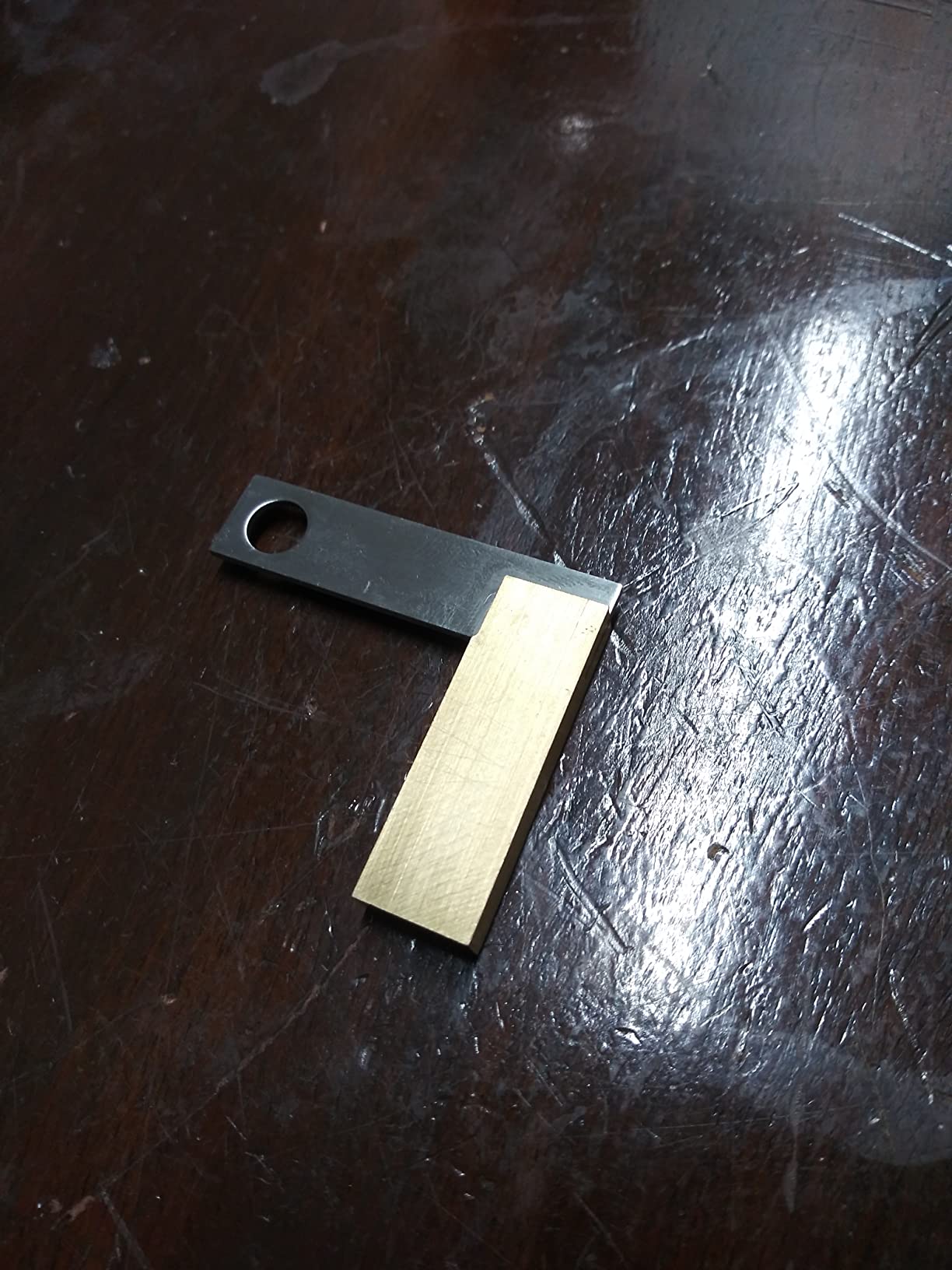
Owners value the traditional construction and the pocketable size for quick squareness checks, with occasional mentions of the brass showing wear over years of use. For a tool this small, the simplicity of the design is the appeal: there is little to break.
Who this square suits
It suits a detail worker checking small inside corners, a model maker, or anyone who wants a corrosion-proof check in a damp environment. It also works as a second opinion tool when a bigger square is being used close to the limit of its size.
Where it falls short
Brass is softer than hardened steel, so dings show up over time and can knock the reference face out of flat. At 1.75 inches it is simply too small to register on a panel or a machine fence, so it complements a larger square rather than replacing one.
11. Boomgood 4 Inch Machinist Square with a DIN 875 Grade 1 Claim
Machinist Square Precision Engineer Wide Seat Square 90 Right Angle Ground Hardened Steel Angle Ruler 4 x 2.5 Inch
DIN 875 Grade 1 standard
Hardened tempered polished steel
Wide seat base
Self-locking rivets
Pros
- States a DIN 875 Grade 1 accuracy standard
- Wide seat is easy to position while marking
- Solid weighty feel for the money
- Small plastic case included
Cons
- Quality control is inconsistent across pieces
- Arrives coated in protective grease that must be wiped off
- Sharp edges may need light sanding
DIN 875 Grade 1 is the German standard machinist squares are graded against, and this one states it openly. Construction is hardened, tempered and polished steel with a ground and polished beam and blade, plus tapered self-locking rivets holding the two together, which is the right way round for impact resistance.
At 4 inches with a 2.5 inch wide seat, it is sized for bench work rather than for a full sheet. The wide seat is genuinely useful, because it gives you something to push against when you are drawing a line and a narrow rib to fight.
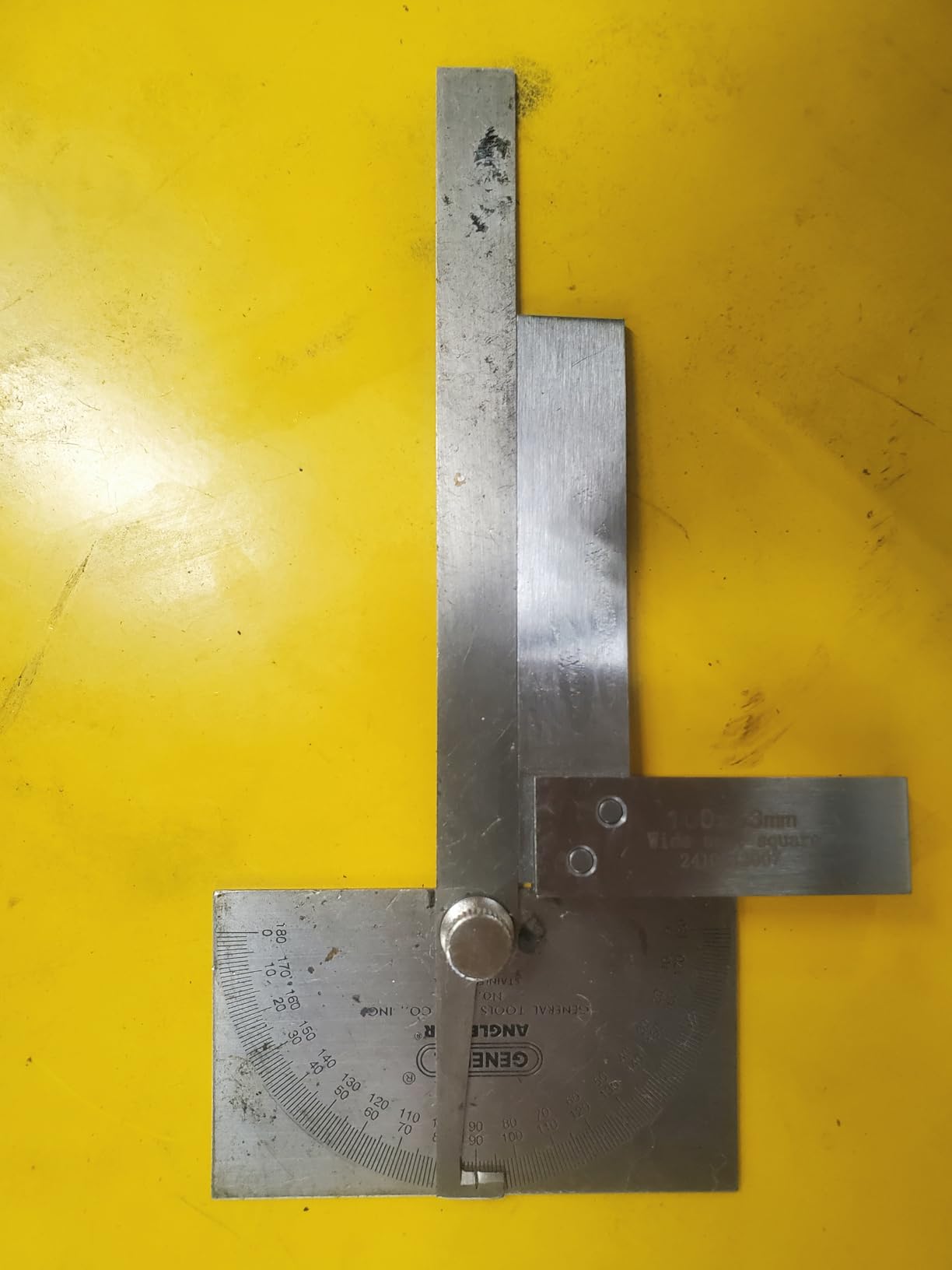
With over 1000 reviews it carries a large body of owner feedback, and that feedback is split. Owners praise the wide seat, the weight and the accuracy enough to align saw and miter blades, while others report pieces that measure out of square straight out of the box.
Who this square suits
It suits a budget buyer who wants a stated international standard on the listing rather than a vague accuracy claim. The wide seat makes it a good marking square for small parts, and the included plastic case keeps it from getting knocked around in a drawer.
Where it falls short
The quality control is inconsistent, and that is the honest headline here: verify before you trust it. It also arrives coated in protective grease that needs wiping off, and the edges can carry small dings that want a light pass with abrasive before first use.
12. T Tulead 50x40mm Carbon Steel Machinist Square for Small Layout Work
T Tulead Machinist Square Carbon Steel Precision Square 50x40mm
50 by 40 mm carbon steel body
Milled inner corner groove
Three sizes offered
Lightweight layout tool
Pros
- Lowest cost functional machinist square in the roundup
- Carbon steel construction is solid for the size
- Milled groove keeps burrs out of the inner corner
- Also offered in 75 by 50 mm and 100 by 70 mm
Cons
- Small 2 inch size limits use on larger workpieces
- No graduations on the blade for layout marking
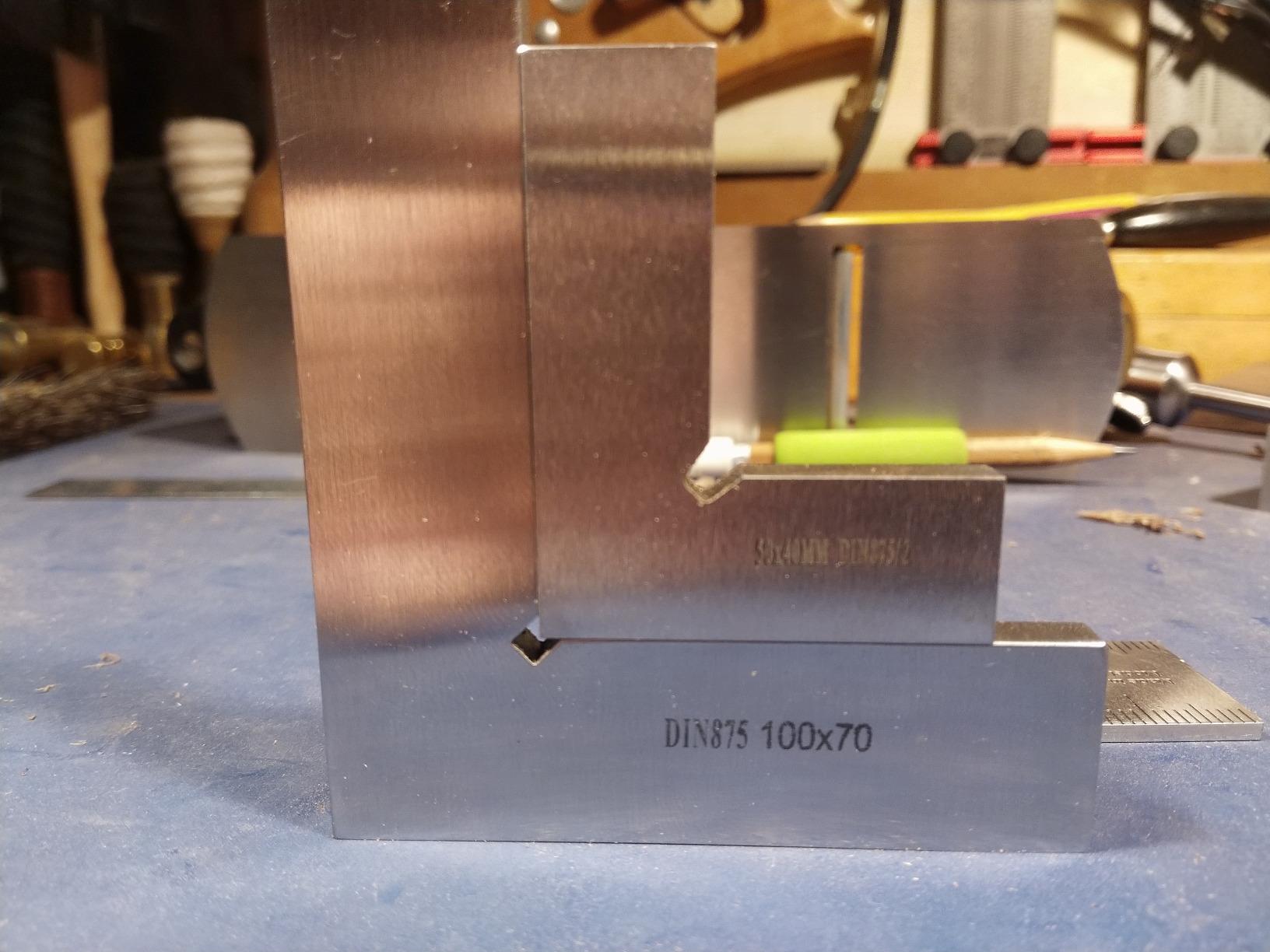
At 50 by 40 mm, roughly 2 inches by 1.57 inches, this is about the smallest square that still counts as a machinist square rather than a gauge. It is 5 mm thick carbon steel with a milled groove in the inner corner to clear burrs and debris, which is the detail that keeps the reading honest over time.
Buyers describe it as a capable budget machinist square for layout and small scale squareness checks, with satisfaction driven mostly by what it costs. It is also offered in 75 by 50 mm and 100 by 70 mm if you find yourself wanting more length later.
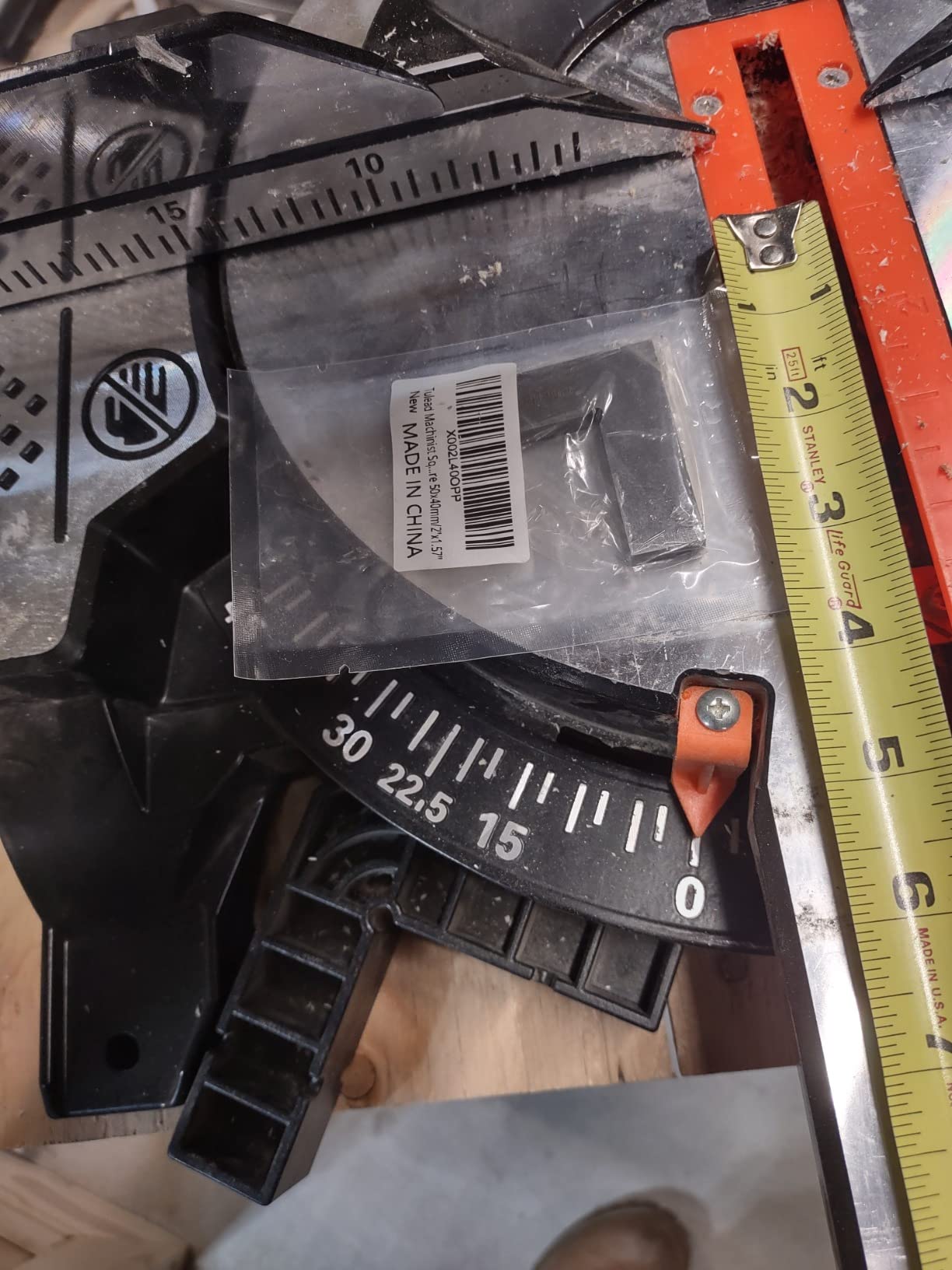
At 4.7 stars it rates better than several pricier squares in this list, which tells you something useful about how a simple tool with tight quality control can outperform a complicated one. For checking a small part or a jig, it does its job without ceremony.
Who this square suits
It suits a hobbyist who wants a real machinist square for jig building or small parts without spending serious money, or anyone who needs a spare to sit next to the tools. The small size is also genuinely portable, which a 12 inch square will never be.
Where it falls short
A 2 inch square cannot register on a panel, a fence or a full workpiece, so it is a specialist tool rather than a general one. There are no graduations on the blade, and there is no stated tolerance figure, so you should verify it rather than assume.
How to Choose a Precision Square in 2026
What actually makes a square accurate
Three things decide whether a square holds a true 90 degree angle over time, and the rest is finishing detail.
First, one-piece construction. When the blade and the base are milled from a single block of metal there is no joint that can shift, while a riveted or screwed assembly depends entirely on the fasteners holding their position. Second, material and hardening: hardened and tempered steel survives drops, anodized aluminium stays light, and cast iron resists wear in the handle. Third, shoulder or lip registration, because a registered shoulder lets the square seat against a workpiece without sliding, which is what makes a line drawn from it repeatable.
Ground and lapped faces matter too, since lapping produces a flat, parallel surface rather than merely a smooth one. And check whether graduations are engraved or laser etched, because stamped numbers wear off while etched ones do not.
Which square family you need
Most confusion in this category comes from mixing up families that do different jobs. A machinist or engineer square, the kind with a hardened blade fixed to a wide seat, is built for checking and machine setup. A double square pairs a graduated blade with a cast head so you can read and mark angles on a small part.
A fixed-blade precision woodworking square is the big cast aluminium tool with a self standing base, aimed at squaring up machines and full panels. A try square is a layout tool with a handle and a graduated blade for marking lines, and it is not a checking instrument. Speed squares and framing squares trade a little accuracy for reach and convenience, which is a reasonable trade for rafters and roofing but not for a glue-up.
Combination squares sit in between, with a removable head and blades, and remain useful for marking. Forum consensus is fairly settled on this: a machinist square is what you want for set-up, and a good 12 inch try square on a solid bench is plenty for beginners building furniture.
How to check whether a square is in spec
You do not need a metrology bench to do this. Three checks cover almost everything.
First, the parallel line test. Draw a long line on a sheet of paper or a piece of MDF, then roll the square along the line on its side and check that the edge stays tight. A square that wanders is out of spec no matter what the listing says. Second, the five squares around a board test: hold a square against the same workpiece edge repeatedly, rotating it through different positions, and confirm the contact is identical every time. Third, the backlight test, which is the fastest: hold the square up to a bright window with its inside corner open and look for light coming through. A true square shows an even, dark line at the corner.
Whatever you test, test against something you already trust. That reference square is worth more than any single tool in this list, and most builders keep one as a shop master for exactly that reason.
Set or single, and which size
Start with size. A 4 inch machinist square covers bench work, small jigs and blade setup. A 6 inch adds reach for fences and cabinet parts. A 12 inch square is the one you want for full panels and machine squaring, and it is too big to be your only square.
Sets make sense when the price per square drops or when the sizes share a design, which is why the four piece machinist set is worth considering for a mobile shop. A single 6 inch square plus a pocket square is the most sensible hobbyist combination, and it is what this roundup keeps coming back to.
Care, storage and what kills accuracy
Never pry with a square, strike it with a mallet, or use it as a clamp stop. Aluminium dents permanently, and a ding in the working face is a finished job you cannot mark straight into. Dropping a square flat onto concrete does the same thing quietly, which is why steel holds up better in a rough shop.
Keep steel squares lightly oiled and stored dry, and always wipe off the protective grease that arrives on new budget steel. Stainless and anodized surfaces need far less attention, though a drop of oil on a stainless blade still slows burr build-up. Give each square a case if you own more than one, because the drawer is where squares go missing. Finally, verify a square after any drop, and re-verify your shop master once a year so the whole system stays honest.
Frequently Asked Questions
Which square is better, JessEm or Woodpeckers?
Woodpeckers builds a one-piece CNC cast aluminium square published at 0.001 inch accuracy, with a self standing base and laser etched scales, and it costs considerably more. JessEm competes at a lower tier with a lighter aluminium body and 1/16 inch scribe holes. For machine setup and a guaranteed figure, Woodpeckers is the stronger pick; for general layout, JessEm covers most needs for less.
Are Starrett squares worth it for woodworking?
Starrett is treated as the gold standard in measurement gear, and plenty of woodworkers use one as a shop master square to verify everything else they own. Whether that accuracy is needed depends on your work: furniture making is usually well served by a good 6 inch machinist square, while a professional making repeatable production cabinets benefits from the machinist grade tolerance. Buy one as a reference tool rather than as a daily marker.
What is the best square for woodworking?
For most woodworkers the best square is a 6 inch machinist square paired with a 12 inch graduated try square. The machinist square checks machine setup, fences and blade squareness, and the try square handles marking out at full sheet size. Add a small pocket square for checking blade and plane iron edges and you have covered every task in a normal shop.
How do I know if my square is accurate?
Run the parallel line test: draw a long line on paper or MDF, roll the square along it on its side and check that the edge stays tight. Repeat the check with the square at several positions on the same workpiece edge, and finish with the backlight test, holding the inside corner up to a bright window to look for an even dark line rather than light. Verify against a square you already trust.
What size machinist square do I need?
A 4 inch machinist square covers bench work, jigs and blade setup, and a 6 inch adds the reach you want for fences and cabinet parts. A 12 inch square is for full panels and squaring up machines, but it is too large to be your only square. If you buy one, make it a 6 inch and pair it with a graduated try square for marking.
The Verdict: Which Precision Square to Buy in 2026
Buy the Woodpeckers Mini Square first. It holds a 4.8 rating across 695 reviews, it will not damage a cutting edge, and it catches a light gap on a blade faster than anything else in this roundup. Pair it with the 12 inch Woodpeckers square for machine setup and you have covered the two jobs that actually fail in a home shop.
Add the Groz 6 inch square if you want a published micron figure and a graduated machinist standard, or the iGaging double square set if you would rather have two sizes and a case for less. Whatever you choose, verify it once against a reference you trust, keep it in a case, and never pry with it. That is the whole difference between the best precision squares for woodworking and an expensive mistake.