
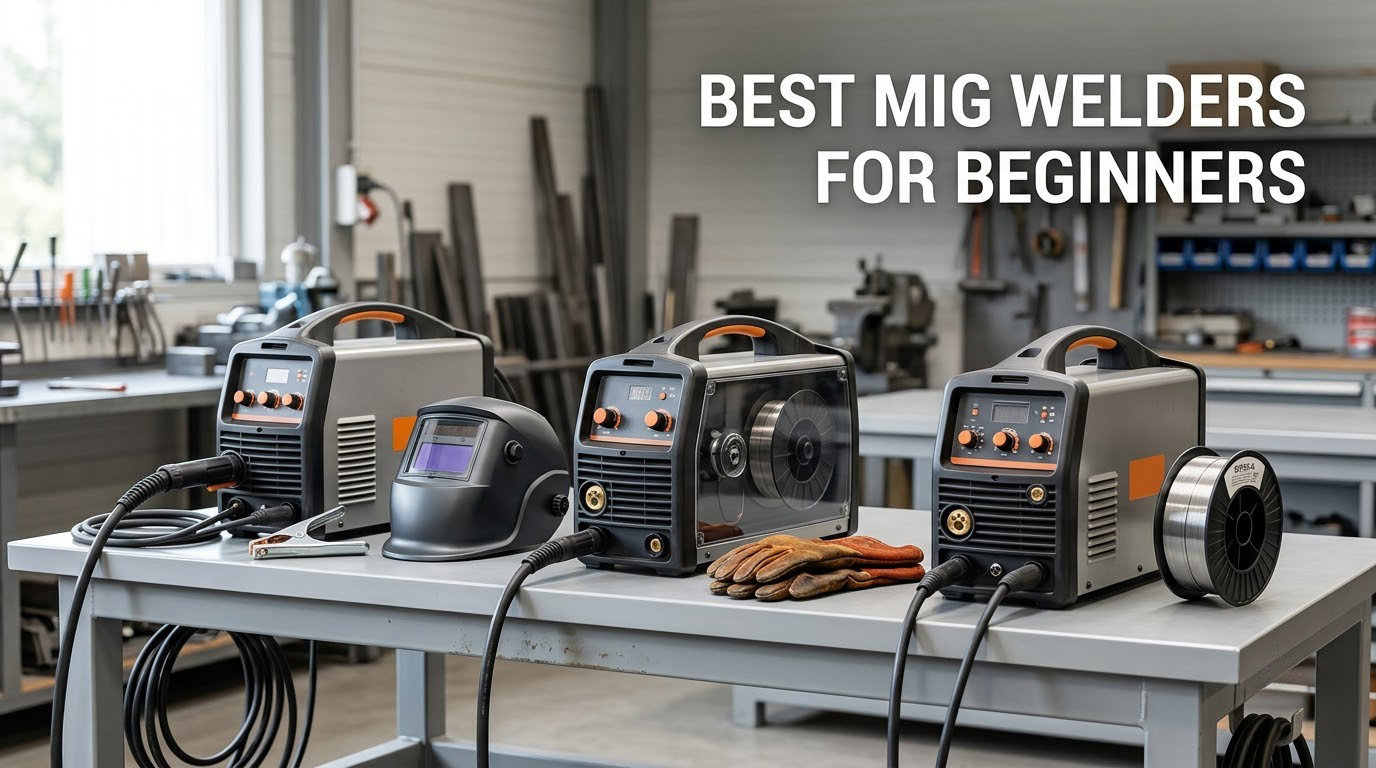
The best MIG welders for beginners are compact 110V machines with synergic control, gasless flux core capability, and enough output for mild steel up to about 1/8 inch. A 3-in-1 package that also runs stick and lift TIG gives you room to grow without buying a second machine. Of the ten we compared, the YESWELDER FLUX-135PRO is the easiest place to start.
That answer matters more than it sounds. Your first machine sets the tone for how long welding stays fun, and a frustrating setup sends plenty of people back to the screwdriver drawer within a month. A machine that is too small, that needs a gas cylinder you do not own yet, or that buries its controls in a manual written for a different model will do that. Our list skips all three failure modes.
Every machine below is an inverter unit that plugs into a standard household outlet and runs gasless flux core, which means no shielding gas cylinder is needed for your first project. Several also accept 220V, so you can grow into heavier material later without replacing the machine. If you want the wider view of what is available beyond this list, our general MIG welder roundup covers established brands, and the TIG welder guide is worth reading before you decide TIG is the process you actually want.
Table of Contents
Top 3 Best MIG Welder for Beginners in 2026
These three cover the realistic starting points. The YESWELDER FLUX-135PRO is the one to buy first, the ARCCAPTAIN MIG130 is the value option, and the YESWELDER YWM-160 is the pick if you already have a 220V circuit and want gas MIG later.
YESWELDER FLUX-135PRO 135A
- Synergic voltage match
- 110V gasless flux core
- 11.4 lb body
- Wire and clamps included
ARCCAPTAIN MIG130 130A
- Auto-set current and wire speed
- 11.79 lb with strap
- Two-year warranty
- Full accessory kit

YESWELDER YWM-160 160A
- 110V and 220V dual voltage
- Takes 2 lb and 10 lb spools
- Gas MIG and flux core
- 19.4 lb
All 10 MIG Welders Compared (October 2026)
Every machine in the roundup, with the specs that actually change the buying decision.
| Product | Specifications | Action |
|---|---|---|
| YESWELDER FLUX-135PRO 135A |
|
Check Latest Price |
| ARCCAPTAIN MIG130 130A |
|
Check Latest Price |
 TOOLIOM MIG-135 PRO 135A TOOLIOM MIG-135 PRO 135A |
|
Check Latest Price |
| YESWELDER YWM-160 160A |
|
Check Latest Price |
 HITBOX 200A HBM1200 HITBOX 200A HBM1200 |
|
Check Latest Price |
 SSimder MIG-140 140A SSimder MIG-140 140A |
|
Check Latest Price |
 Bestarc MIG145-1122 145A Bestarc MIG145-1122 145A |
|
Check Latest Price |
 BESTMIG FLUX-135 135A BESTMIG FLUX-135 135A |
|
Check Latest Price |
 ANDELI 135A Pulse ANDELI 135A Pulse |
|
Check Latest Price |
 AWT MIG-140 PRO 140A AWT MIG-140 PRO 140A |
|
Check Latest Price |
How We Chose and Tested
We built this list around three things a first-time welder actually feels on day one: how hard the machine is to set up, what it can weld without a gas bottle, and whether the accessories in the box are usable or filler.
For every product we read the full spec listing, then worked through the review data looking for the same pattern across owners. The comments that mattered most were the practical ones: does the torch lead reach the work, does the included wire spool feed smoothly, does the machine trip a breaker at the top of its range. Marketing copy tells you very little, and a spec sheet cannot tell you whether the accessories are cheap.
We weighted rating and review volume together, because a 4.6 across a few hundred reviews says less than a 4.4 across several thousand. The ten machines here are the ones that held up under that filter, and every cons listed comes directly from owner feedback rather than our own opinion.
1. YESWELDER 135A Flux Core MIG Welder – Best Overall for Beginners
YESWELDER 135A MIG Welder, 110V Flux Core Gasless MIG/Lift TIG/Stick 3-in-1
135A gasless flux core on 110V
Weighs 11.4 lb
.030 and .035 wire included
LED display
Pros
- Synergic control removes voltage guesswork
- Light enough to carry anywhere
- Wire and clamps included
- Handles mild steel to 3/32 inch
Cons
- Voltage locked to synergic curve in flux core mode
- Readout runs about 10-15 amps below actual output
- Spool holder and ground clamp feel light-duty
This is the machine I would put in front of somebody who has never welded. The FLUX-135PRO weighs 11.4 pounds, has a carry handle, and runs gasless flux core off a normal wall outlet with no regulator and no cylinder. You can open the box, thread the wire, clamp a piece of scrap in, and lay a bead inside an hour.
What separates it from the other budget units is the synergic control. When you change wire feed speed, the machine matches the voltage for you, and a small plus or minus three volt trim lets you correct it by feel once you understand what you are looking at. Owners with decades of experience consistently credit that feature with letting a total beginner produce a usable bead on the first attempt.
It is also the least fussy of the group about accessories. The package includes E71T-GS flux core wire in both .030 and .035 diameter, a MIG torch, an electrode holder and a ground clamp, which covers everything except safety gear. Reviewers report clean, low-spatter gasless welds on thin automotive panel and on thicker mild steel.
What you need to know before you buy
Two limitations show up often enough to plan around. In flux core mode the voltage cannot be set manually, it follows the synergic curve, so you cannot fine-tune out a bad setup the way you can on a manual machine.
The amperage readout also runs roughly 10 to 15 amps below real output, which matters if you are comparing it against a bigger machine. Most beginners never notice, but it explains why a 135A unit seems to top out earlier than the label suggests.
Where it fits and where it does not
This is the right pick for car body panels, exhaust work, hangers, brackets, fence gates and general garage repair. Low spatter means less chipping hammer time, and the light weight means you can carry it outside or into a truck bed without planning around it.
It is not the right pick for aluminum, for long production runs, or if you want to fine-tune voltage by hand on thin material. Lift TIG mode is present but the torch is a separate purchase. Budget for a proper auto-darkening helmet and leather gloves, because those are not in the box.
2. ARCCAPTAIN 130A Flux Core Welder – Best Value
ARCCAPTAIN 130A Flux Core Welder MIG Welder 110V Gasless MIG Stick Lift TIG
130A gasless flux core on 110V
11.79 lb with handle and strap
Two-year warranty
Auto-set for .030 .035 .040 wire
Pros
- 4.6 stars across more than 1800 reviews
- Auto-matches current and wire feed speed
- Carry strap included
- Torch and wire included in the box
Cons
- Lift TIG torch sold separately
- 110V only
- Ten-speed wire control instead of a digital readout
The ARCCAPTAIN MIG130 is one of the strongest satisfaction signals in this group, with 4.6 stars across more than 1,800 reviews. For a first machine that is the combination you want: a rating that reflects a large body of owners, and enough of them to make the rating meaningful.
Its synergic mode is more ambitious than the YESWELDER’s. You pick the wire diameter, .030, .035 or .040, and the machine chooses both current and wire feed speed for you. That is a meaningful reduction in the number of decisions standing between a beginner and a finished weld.
At 11.79 pounds with both a handle and a shoulder strap, it moves easily between a garage bench and a driveway. The package includes the MIG torch, ground clamp, electrode holder, two contact tips, wire, and a brush and hammer kit, so the only real gap is the helmet and gloves.
Why it outranks cheaper options
The two-year manufacturer warranty matters more than it sounds. Cheap imports often have no support structure at all, and when a machine arrives with a missing part, a warranty with a real company behind it turns an annoyance into a solved problem. One reviewer confirmed a replacement unit was honoured without argument.
Synergic control also means the machine is not a dead end. The manual wire control is still there, so as you improve you can start making the same adjustments a fabricator would make instead of being locked into one automatic curve.
What it cannot do
This is a 110V machine, so if your workshop has a 220V circuit available, you are leaving performance on the table. It also uses a ten-position wire feed control rather than a true digital readout, which is a step down in precision once you start chasing a specific bead profile.
The lift TIG function needs its own torch, and it does not handle aluminum. For a beginner on mild steel and automotive work it simply does not come up often, but for anyone planning stainless railings or boat work it is worth knowing before you commit.
3. TOOLIOM 135A Flux Core MIG Kit – Best for Learning the Settings
TOOLIOM 135A 110V Gasless Flux Core MIG Welder Kit with Wire and Gloves
135A gasless flux core on 110V
LCD shows live current
11.24 lb
Wire speed shown in real figures
Pros
- Numeric wire feed speed and current readout
- Hot Start and Arc Force included
- Runs on a standard household socket
- Gloves and wire in the box
Cons
- Only accepts 2 lb wire spools
- Cramped wire compartment
- Trigger has no safety lock
Most of these machines hide the actual numbers behind a simple ten-step dial. The TOOLIOM MIG-135 PRO shows them. Wire feed speed is displayed in inches per minute, from 120 to 420 for .030 wire and 120 to 308 for .035, and the LCD reads out live welding current while the arc is running.
That is the reason this machine is worth a beginner’s attention even though it is not the top pick. Learning to weld is largely learning what numbers do to a bead, and watching those numbers change as you adjust is a faster teacher than guessing through a ten-position dial.
Hot Start and Arc Force are fitted, which reduce electrode sticking in stick mode and help stabilise the arc on thinner material. Long-term owners report the unit has held up through years of intermittent garage use, and the DC output produces noticeably better penetration and far less spatter than the old transformer machines most beginners grew up around.
Consider this before you buy
The spool compartment only accepts 2 lb spools, with no room for a larger one. If you weld thick material regularly, you will be changing wire more often than you would like. The compartment is also tight, which makes threading the wire awkward if you have larger hands.
The torch trigger has no safety lock, so the wire can feed while the gun is simply held in your hand. Small thing, but worth knowing. The ground clamp and leads are also described as cheap and on the short side, so plan on buying a longer lead set early.
Best fit for a new welder
This suits someone who wants to understand the craft rather than just make parts. If you take your helmet off after each weld and look at the bead, the readout turns trial and error into a controlled process.
It is less suited to production work or to anyone who needs a large spool, and it is 110V only. The internal build is simpler than premium machines, so treat it as a learning tool with a long life rather than a shop workhorse.
4. YESWELDER 160A Dual Voltage Welder – Best Premium Upgrade Path
YESWELDER 160A MIG Welder, 110V/220V MIG/Flux Core/Lift TIG/Stick
160A on 110V and 220V
Gas MIG and flux core
19.4 lb
Takes 2 lb and 10 lb spools
Pros
- Real gas MIG alongside flux core
- Dual voltage for future growth
- Handles both 2 lb and 10 lb spools
- Includes a 220V to 110V adapter
Cons
- Can trip a household breaker on 110V
- Small control panel text
- Thin gun liner and light case plastic
The YWM-160 is the machine to buy if you think you will grow into this hobby. It runs true gas MIG with solid wire as well as gasless flux core, and it takes both 2 lb and 10 lb spools, so switching to larger jobs means changing wire rather than changing machines.
Dual voltage is the headline. You can start on a 110V household outlet, learn on scrap, and move to 220V when you want to weld heavier plate with cleaner penetration. Owners with Miller and Lincoln experience rate the MIG side as competitive at this level, particularly once it is set up for gas MIG on 220V.
Smart control matches voltage and wire feed speed to the material and thickness you select, and manual override is available for when you know more than the machine does. Owners report two-plus years of continuous shop and job site use without trouble.
Be realistic about the dual voltage claim
The 160A figure is a 220V number. One reviewer reports tripping a household breaker when running on 110V through the included adapter and concludes the machine genuinely wants a 220V circuit for the output it advertises. Treat the 110V side as a learning mode, not a performance mode.
The control panel text is very small and the display washes out in direct sunlight, which matters if you plan to work outside. The gun liner is thin enough to melt if it touches a hot weld, and the case plastic feels light for a machine of this size.
Who should buy it
Pick this one if your projects involve structural steel, gates, trailer frames or anything thicker than a quarter inch. Gas MIG with solid wire gives cleaner, more cosmetic beads than flux core, and it is the only route on this list to proper gas MIG with a shielding gas bottle.
Skip it if you are certain you will stay on thin automotive metal and light garage work, where the extra weight and cost buy you very little. Lift TIG needs its own torch, and it does not run 6010 electrodes well.
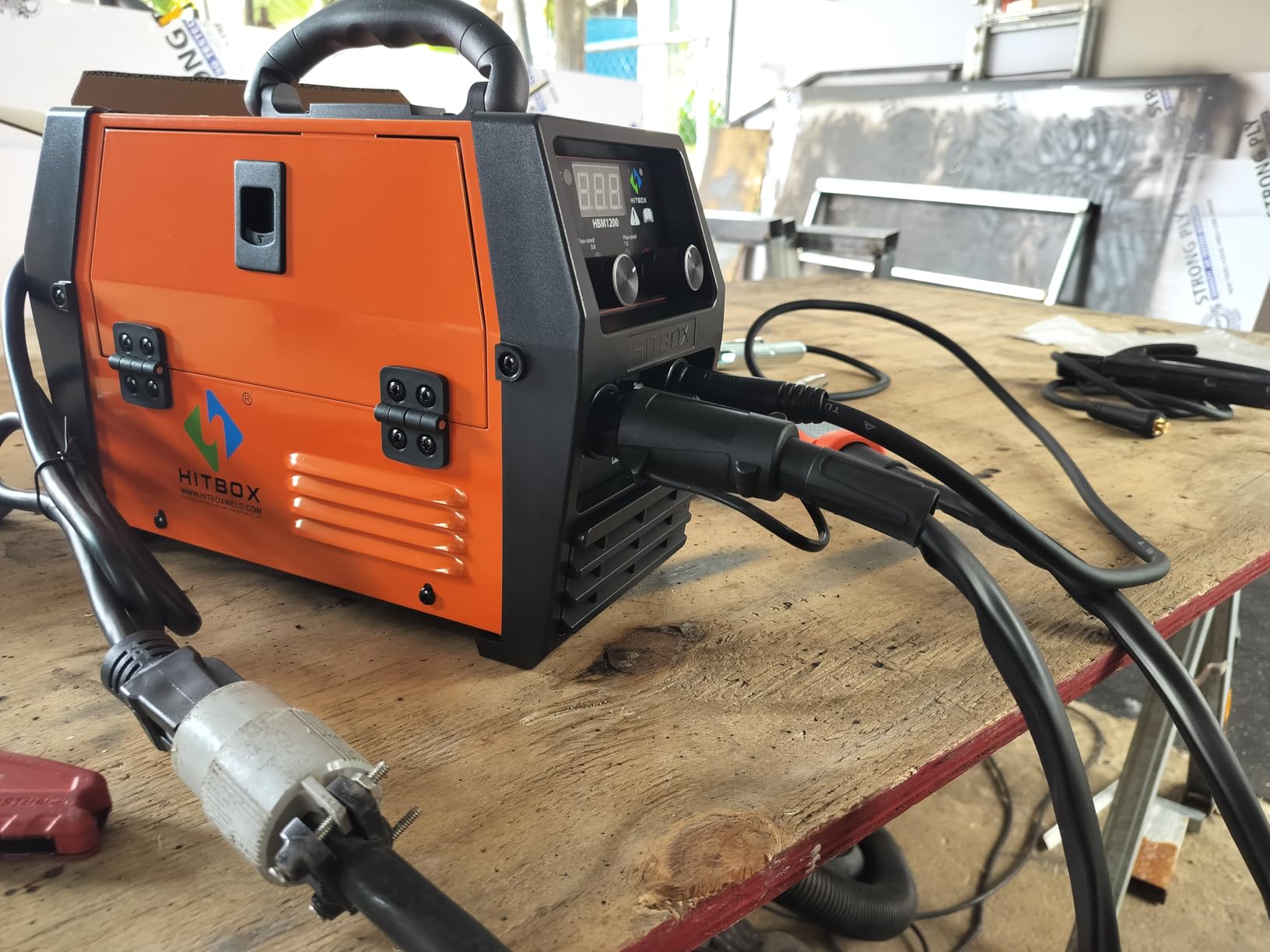
5. HITBOX 200A Dual Voltage Welder – Best Output Headroom
HITBOX 200A MIG Welder, 110V/220V Flux Core MIG/Lift TIG/Stick 3-in-1
200A IGBT inverter
110V and 220V dual voltage
8.6 lb
Flux core .030 and .035
Pros
- Highest output figure in the group
- Lightest machine we tested
- Quiet inverter operation
- Full accessory package
Cons
- Holds only a 2 lb spool
- Output amps run below the display
- No hot start and limited electrode support
On paper the HITBOX has the most capability per pound in the group. An IGBT inverter claiming up to 200A output, 110V and 220V inputs, and a body weight of 8.6 pounds means it fits in a toolbox and can still handle plate you would normally need a shop machine for.
Users report clean beads, very little spatter and noticeably quiet operation for an inverter, which matters if you are welding in a shared space or working next to electronics. Synergic control simplifies setup while still leaving manual wire feed and voltage adjustment available.
The package includes the torch, ground clamp, electrode holder, wire, two nozzles and a wire brush. Owners generally treat it as a dedicated flux core machine rather than a genuine multi-process unit, and they are happy with it on that basis.
The one number you should verify yourself is the amperage. Measured output runs 20 to 30 percent below the displayed value, which makes stick tuning frustrating and means a clamp meter is a worthwhile first purchase. Do not trust the dial when you are setting up a new electrode.
It also has no hot start, and it cannot hold an arc with 6010, 6011 or 7018 electrodes at 1/8 inch. Those are the common general purpose rods, so treat the stick function as a backup rather than a second process.
Where the extra output actually helps
Higher output stops mattering once the material is thicker than about an eighth inch and you start pushing through. If you work on trailer frames, thicker brackets or structural steel, the headroom means less burn-through and better penetration per pass.
For thin sheet, all of that output is unnecessary and can be a disadvantage, since the machine still runs hot at the low end. Beginners welding 20 gauge body panels often find the smaller machines easier to control.
Check these before you commit
Only a 2 lb spool fits, which is a frequent annoyance on larger jobs because you will refill more often. Instructions are difficult to follow and there is no after-sales support, so the learning curve is steeper with no help available.
Keep a pair of pliers near the machine so you can pull it free. Budget for a better ground clamp and lead set soon after purchase.
6. SSimder 140A MIG Welder – Best for Home Shops
SSimder 140A MIG Welder 3 in 1, Dual Voltage Flux Core Lift TIG Stick
140A three-process on 110V and 220V
7.7 lb body
Lift TIG with no HF start
Two-year warranty
Pros
- Second lightest machine here
- No high frequency start so no electronics interference
- Two-year warranty that was honoured
- Conversion cord included
Cons
- Manual covers a different model
- Wrong gas nozzle for flux core
- Short four to six foot leads
The SSimder MIG-140 solves a problem most people do not know they have. Its lift TIG mode uses a touch and lift start instead of a high frequency arc, so it does not interfere with WiFi, Bluetooth or nearby sensitive electronics. If you weld in a home office-adjacent garage, that is a real advantage.
At 7.7 pounds it is one of the two lightest machines in the roundup, and the package includes a 14AK MIG torch, a 1 lb spool of flux core wire, electrode holder, ground clamp and a 220V conversion cord. Owners who came from heavy transformer machines describe the inverter design as a genuine step change in weight and usability.
The materials list is broad for the size. Carbon steel, low-alloy steel, stainless steel in lift TIG, plus copper, cast iron and titanium, which covers most of what a first-time welder will touch in a home shop.
The documentation is the weak point
The instruction manual is for a different model and does not cover switching to stick mode. Owners also report that the included MIG gun has a gas nozzle rather than a flux core tip, so it is not correct for the primary process out of the box. Budget ten minutes to sort that out before your first weld.
Switching to stick mode means unplugging the MIG gun and sacrificing several feet of wire in the process, which is clumsy but workable once you know it. Leads are short at roughly four to six feet, so expect to reposition the workpiece more often than you would like.
What you give up
It does not weld aluminum and it does not use shielding gas, so this is a gasless machine only. The WP17V TIG torch is a separate purchase, and the 2T and 4T trigger behaviour is not as refined as a machine designed around them.
Pick it for a garage, a farm property, or a shop where electrical noise is a genuine concern. If you need gas MIG, aluminum capability or a longer torch lead, the Bestarc below is the better fit.
7. Bestarc 145A MIG Welder – Best True Gas MIG Capability
Bestarc 145A MIG Welder, Flux Core/Gas MIG Stick Lift TIG Welding, 110/220V
145A four-process on 110V and 220V
Gas MIG with solid ER70S-6
13.7 lb
Voltage shown on panel
Pros
- Runs true gas MIG with solid ER70S-6 wire
- Front panel shows selected voltage
- Ground clamp and cable gauge praised by owners
Cons
- Torch lead only about 5.5 ft on early units
- Spool tension spring often too tight
- Included nozzle is push-on type
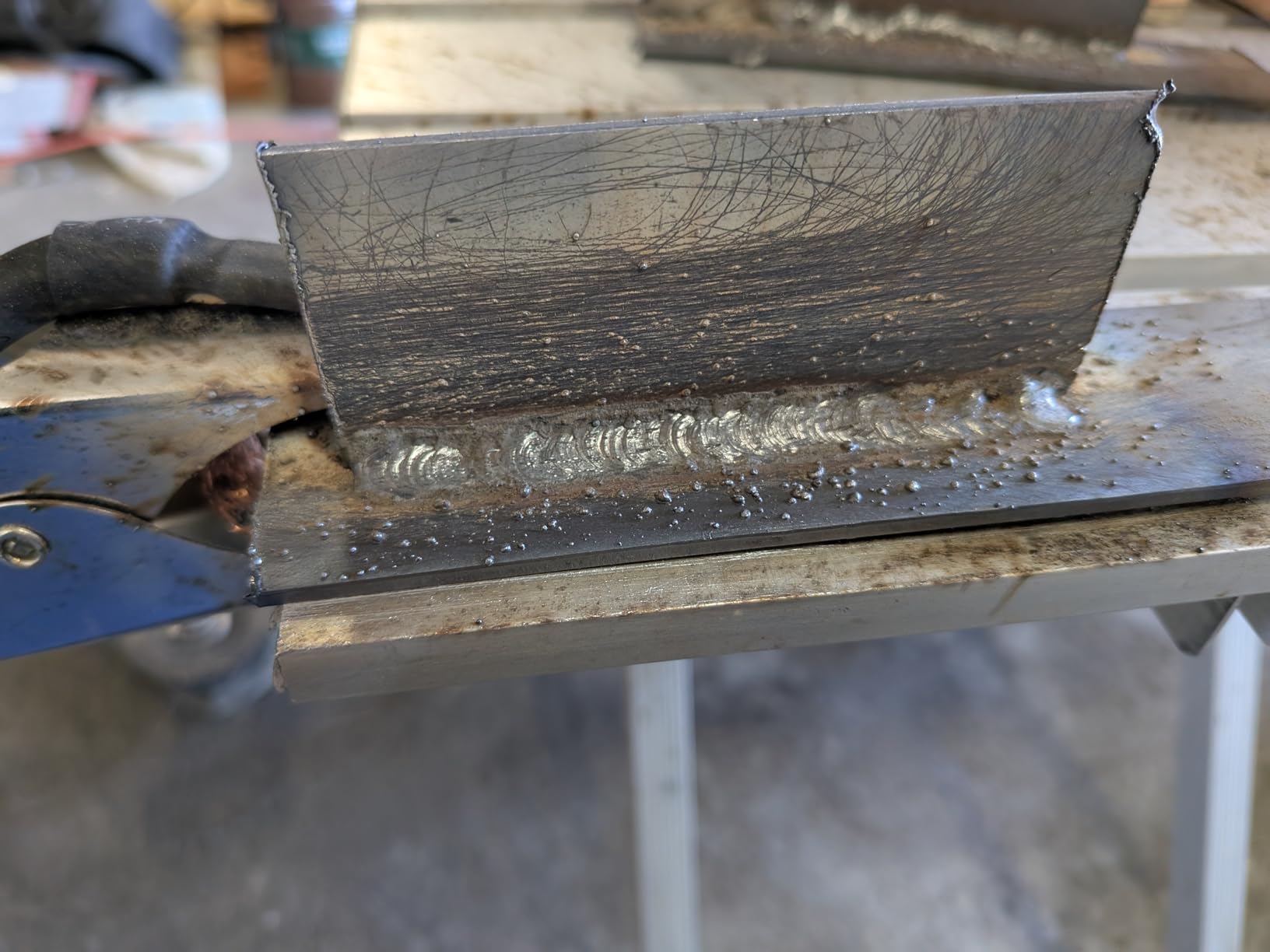
Most machines in this roundup are gasless only, with gas MIG treated as an upgrade path. The Bestarc MIG145-1122 runs genuine gas MIG with solid ER70S-6 wire alongside gasless flux core, lift TIG and stick. That makes it the only one here that gets you a proper finishing weld on stainless or aluminum work later on.
Dual 110V and 220V is handled well. The machine detects the input power and displays the selected voltage on the front panel, so you always know which mode you are in. That single feature removes the single most common beginner complaint on dual voltage machines.
It takes .030, .035 and .040 flux core wire plus .030 solid wire, and the package includes samples of both, along with extra feed rollers, contact tips, a hose, a 220V to 110V adapter and a shoulder strap. Owners consistently single out the ground clamp and cable gauge as better than budget rivals.
Setup issues to fix on day one
Some machines arrive with a plain V-groove drive roll instead of the knurled roll needed for reliable flux core feed, and the included gas nozzle is a push-on type rather than a flux core nozzle. Check both before your first weld rather than after a frustrating hour.
The spool tension spring is not adjustable and is often too tight, which can crush the wire and cause feed problems. A long-term production operator also reports the MIG gun lead on early machines is only about 5.5 ft, though later generations fixed the lead length and drive roll issues.
Who should buy it
Choose this machine if you are serious about learning more than one process, or if you already know gas MIG is where you are heading. The difference between a gasless bead and a gas MIG bead on stainless or on visible work is substantial, and no amount of technique closes that gap.
It is 13.7 pounds, which is fine for a garage but heavier than the travel options. At 4.6 stars across 680 reviews the satisfaction signal is strong, and the accessory package is generous for the class.
8. BESTMIG 135A Flux Core Welder – Best Starter Kit Bundle
BESTMIG 135A MIG Welder – 3-in-1 Flux Core Welder, MIG/Lift TIG/Stick Welding Machine – Portable IGBT Inverter – 110V with Welding Helmets and Gloves (Red Black, MIG 135A Welder)
135A gasless flux core on 110V
10.71 lb
Auto-darkening helmet and gloves in the box
Full colour LED display
Pros
- Helmet and leather gloves included
- Integrated wire feed reduces spatter
- Full colour parameter display
- Light enough to carry between locations
Cons
- TIG torch not included despite the mode
- Some units arrive with mismatched cable connectors
- Reports of missing accessories
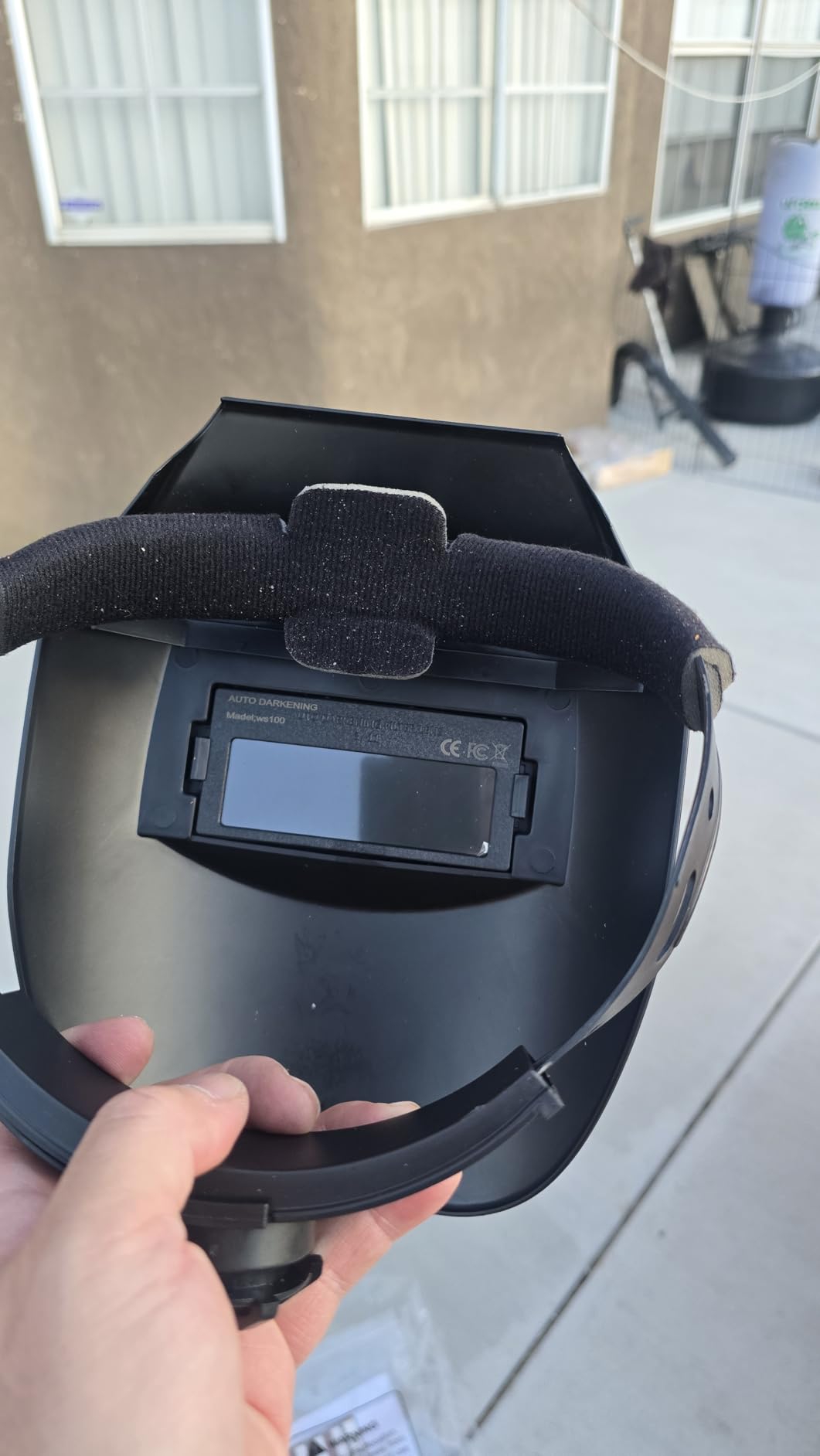
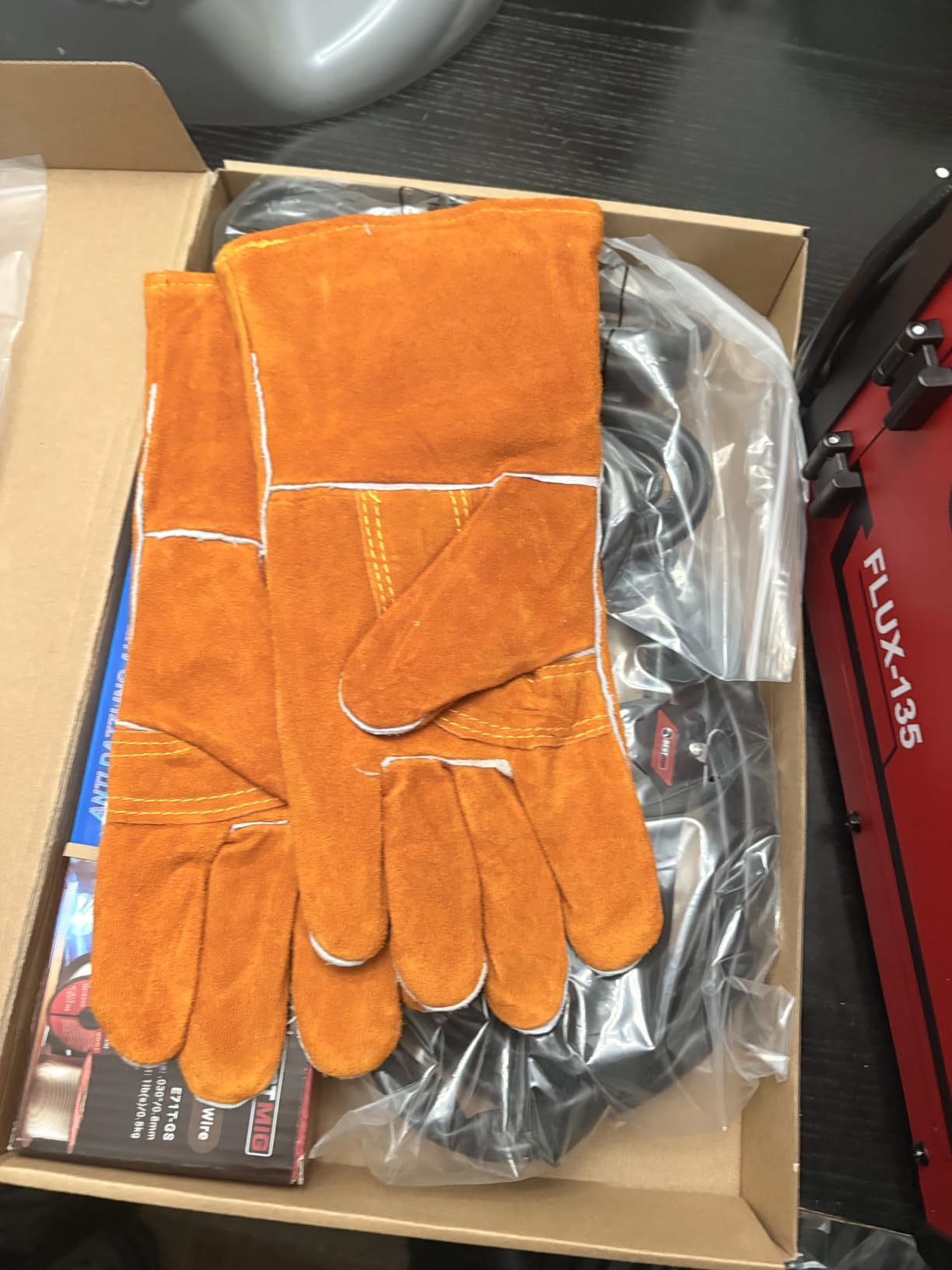
The BESTMIG FLUX-135 solves the packaging problem rather than the engineering one. It arrives with an auto-darkening welding helmet that converts to goggles, leather gloves, flux core wire, a 14AK torch, electrode holder, ground clamp and a wire brush. For a first purchase that removes a whole extra order and a trip to a safety supplier.
The machine itself is competent. Integrated wire feed automatically adjusts voltage and feed speed to reduce spatter, and a full-colour LED display shows welding parameters in real time. At 10.71 pounds it is easy to move between the garage and a driveway.
Buyers who intended it as a first welder report it works well for practice and hobby projects, with 135A output and material capability up to 1/8 inch across stainless, carbon steel and thicker projects.
Read the recent negative reviews carefully
The complaints on this product are about fulfilment rather than arc quality. One reviewer reports the flux core cable would not fit because it used a different connector size, and another reports advertised accessories missing from the box with a reimbursement that never arrived.
Another buyer found the MIG function did not work and the TIG torch was never delivered. The supplied plugs are also not UK compatible, which blocked one overseas purchase. If you buy this, inspect the box contents against the list before you start, and keep the packaging until you have made a few welds.
Is the included safety gear any good
Treat the bundled helmet and gloves as a starting point rather than a long-term investment. A cheap auto-darkening shell is adequate for your first few sessions in a garage, but a proper multi-sensor helmet with true colour gives you noticeably better control of the puddle once you start welding thinner material.
Buy a good ground clamp and lead set instead. Cable quality has a bigger effect on your results than a machine feature, and the torch is not included for TIG despite the mode being advertised.
9. ANDELI 135A Pulse Flux Core Welder – Best Bead Control
ANDELI 110V/220V MIG Welder 135A ,PULSE Flux Core/Lift TIG/Stick 4-in-1
Pulse flux core on 110V and 220V
9.04 lb main unit
4.1 inch LED display
Adjustable inductance
Pros
- Pulse mode gives smoother arc and less spatter
- Adjustable inductance for arc tuning
- Large display with a protective cover
- Helmet and gloves included
Cons
- Only accepts 2 lb spools
- Wire feed rate shown in amps rather than in per minute
- Lift TIG torch sold separately
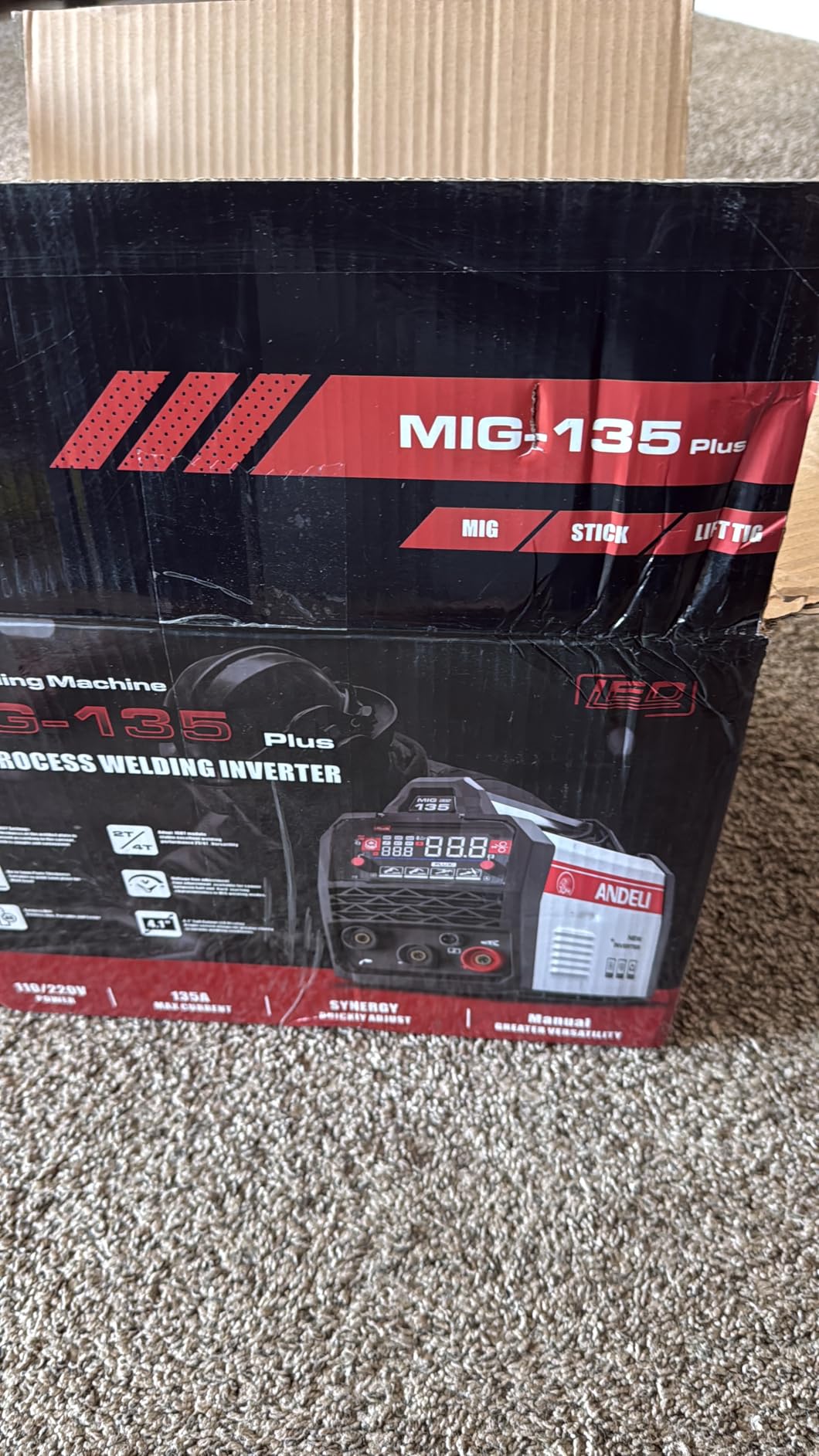
Pulse flux core is what separates this machine from the rest of the gasless options. Pulsing the current gives a smoother, more stable arc, finer beads and less spatter than the constant current machines it sits alongside. Reviewers with industrial backgrounds report weld quality comparable to much more expensive units.
Adjustable inductance gives you another layer of control over how the arc behaves, which matters when you move from thin material to thick plate. Hot Start and Arc Force are both adjustable for stick work, and 2T and 4T trigger modes are supported.
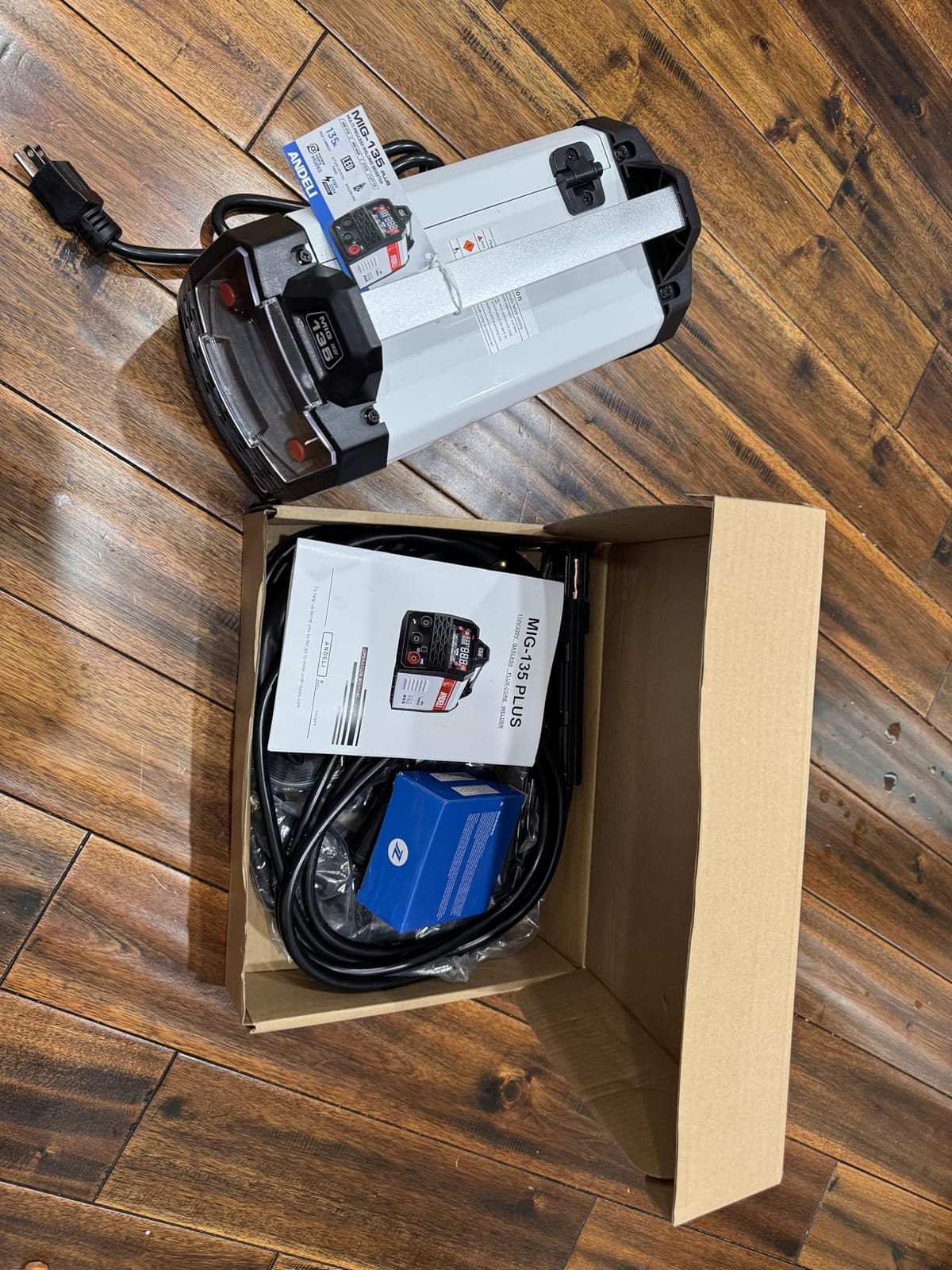
The 4.1 inch LED display has a transparent protective cover that survives sparks and job site debris, which is a thoughtful detail. The main unit weighs 9.04 pounds, one of the lightest here, and the box includes an adapter, flux core wire, two contact tips, a helmet and leather gloves.
What pulse actually does for you
On thin material, pulse reduces the amount of spatter you have to chip away and makes the puddle easier to see through a helmet. On structural work it gives better fusion with less heat input, which limits distortion on anything you have already fitted together.
The catch is that the wire feed rate is displayed in amps rather than inches per minute in synergic mode, which is not the US standard. It is a small readability issue that will confuse you for an afternoon and then become habit.
Before you commit
Only 2 lb wire spools fit. One long-term buyer describes the included helmet as useless and recommends a proper four-sensor true colour helmet instead, which is sensible advice given how much of the bundle is entry-level.
The lift TIG torch is sold separately, and one review reports the reset button being a decal with no mechanism behind it. Otherwise this is the most technically capable gasless machine in the group, with materials up to 3/16 inch.
10. AWT 140A Flux Core MIG Welder – Most Versatile
AWT 140A Flux Core MIG Welder/Stick/Lift TIG 3 in 1 Welding Machine 110V
140A gasless flux core on 110V
About 10 lb with handle and strap
Preset wire settings
Welds mild steel to 5/32 inch
Pros
- 81 percent of reviews are five star
- Preset settings help beginners avoid guessing
- Reported to weld 1/4 inch steel
- Handle and shoulder strap both included
Cons
- Included wire is poor quality
- 110V only with no 220V option
- Fan is noisy and case is plastic
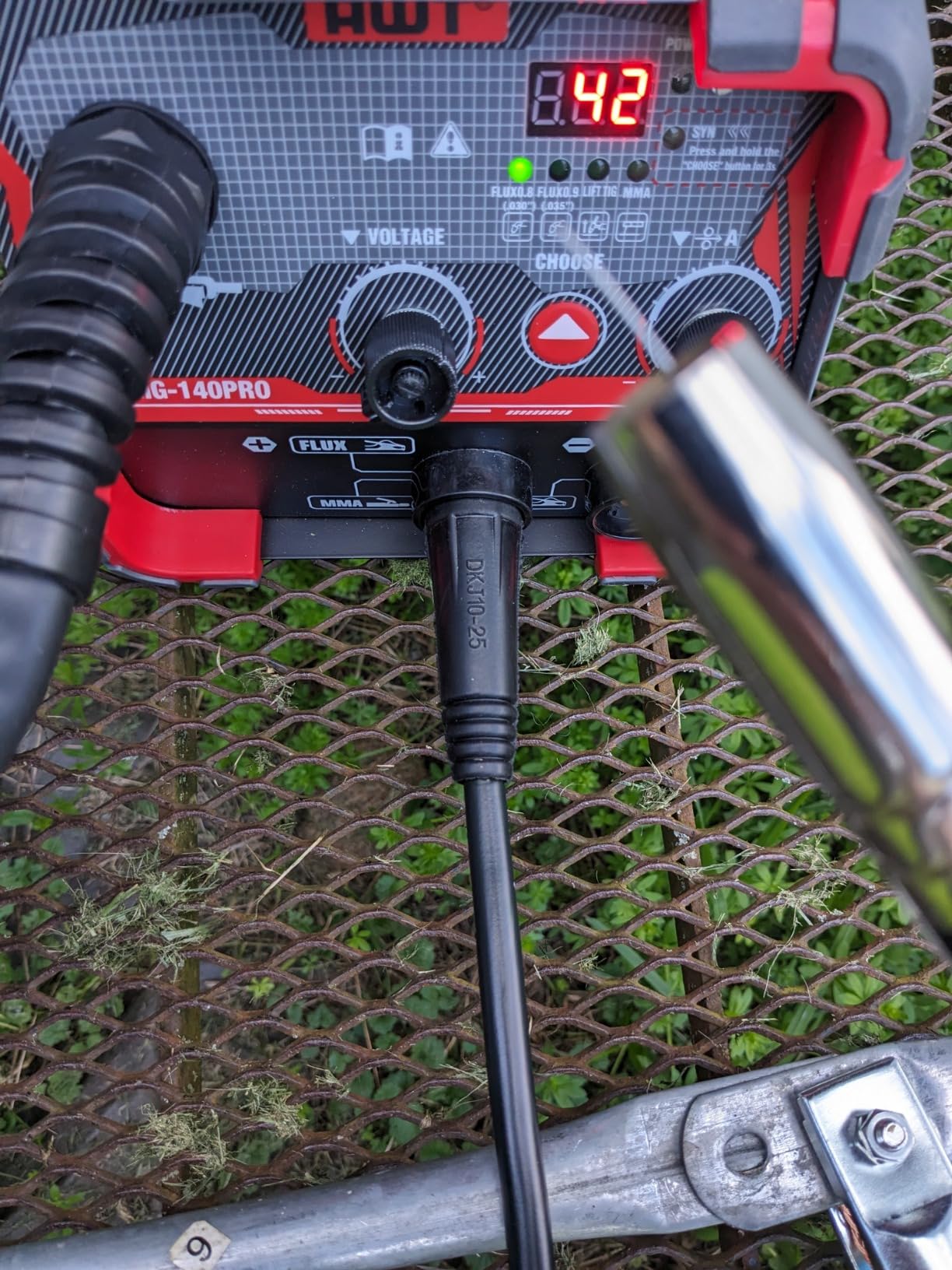
The AWT MIG-140 PRO sits at the entry point of this roundup and it holds a 4.6 rating, with 81 percent of reviews at five stars. Complete beginners and hobby mechanics are the dominant buyers, and they report getting clean, strong welds on a first project.
Synergic control optimises settings automatically based on .030 or .035 flux wire, and you can drop into manual MIG to adjust current yourself. With up to 140A output on 110V it handles mild steel to 5/32 inch, and users report welding 1/4 inch steel and 3/16 inch material with good penetration.
At about 10 pounds it carries by handle or shoulder strap. One owner ran it off a 100 ft extension cord and welded past its rated duty cycle without shutting down, which is a useful data point about its thermal margin.
What to expect from the build
The plastic construction is visible and the case feels light, but the machine does what it claims. Reviewers are clear that the bead is not as cosmetic as a premium machine would produce, and equally clear that it holds, which is what matters on a first project.
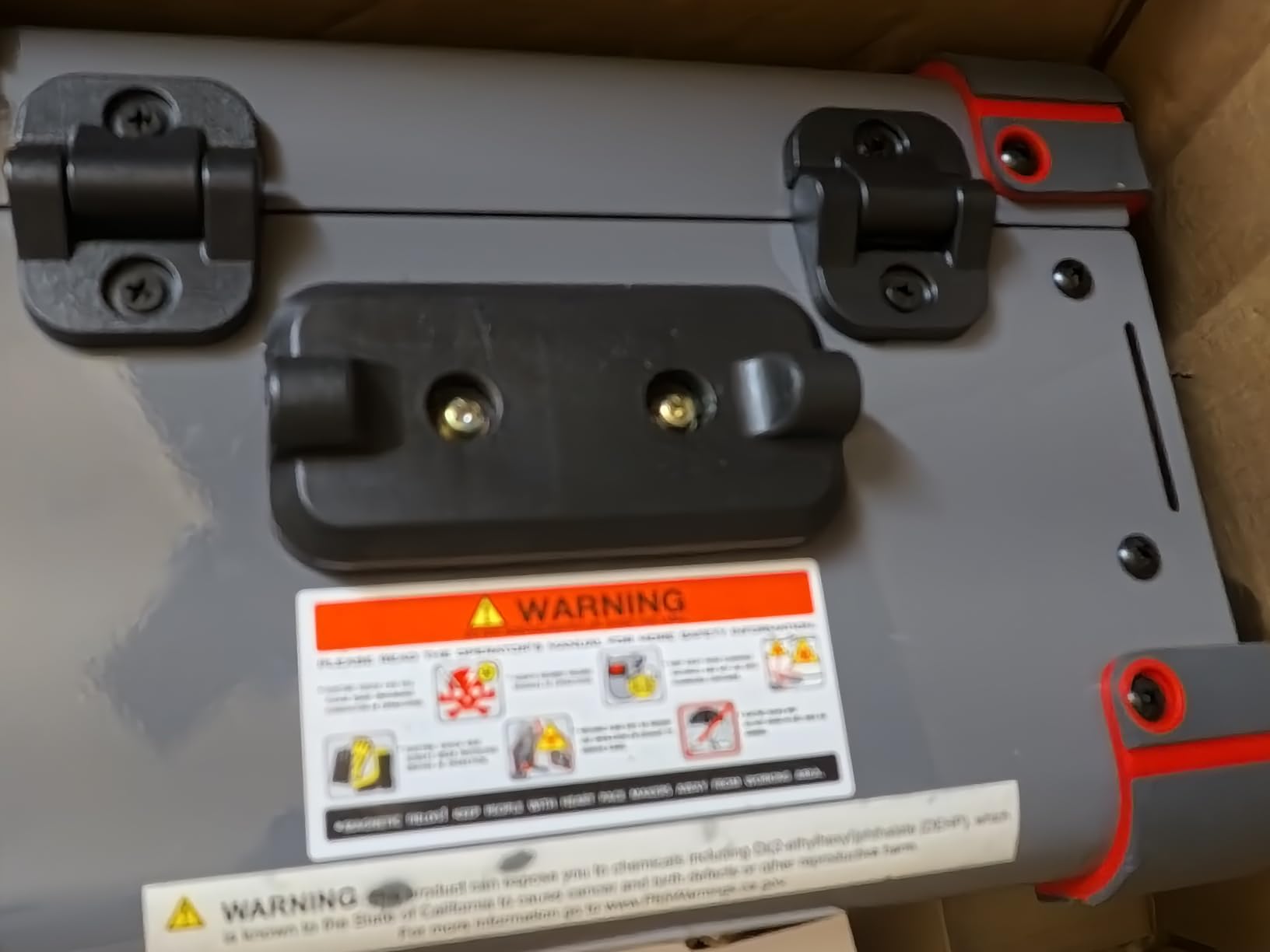
The included wire is described as poor quality and worth replacing with a better spool. The fan is a little noisy during long runs, and the case is plastic rather than metal, so treat it as a portable machine for a garage rather than a shop tool.
When to look elsewhere
There is no 220V capability, so if you plan to run it at maximum output you may need a 30A plug. That limits it for anyone planning to grow quickly into thicker structural work.
One owner reports the unit sometimes does not fully power on the first switch press and needs a second try, and another found a loose internal nut after use, so check the assembly before your first weld. For a beginner on a strict budget who mostly wants scrap practice and small home repairs, it does the job.
How to Choose a MIG Welder for Beginners
Why MIG is the easiest process to learn
A MIG welder feeds a continuous wire electrode from a spool into an arc, with shielding gas protecting the molten puddle. There is no electrode to change every few minutes, and the cleanup is far lighter than stick welding. Those two facts are the whole reason it is the standard first machine.
Flux core is the same process without the gas bottle. The wire has flux powder in its core, and the slag that powder produces is what you chip off afterwards. The trade is no consumable cylinders in exchange for more slag and slightly less control on very thin material. For a beginner that trade is almost always worth making.
110V or 220V: what your outlet decides
Most home shops only have 120V circuits, which is why most machines here are 110V. That is genuinely fine for mild steel up to about an eighth inch and for all automotive panel work. A 20A breaker will run a 110V machine without complaint for typical weekend use.
The complaint you will hear from owners is breakers tripping at the top of the range. If you push a 110V machine to its maximum on a 20A circuit, it draws enough current to trip. Staying in the middle of the amperage range, rather than the top, is the simple fix and the reason most beginners never see it.
If you have a 220V circuit available, a dual voltage machine is a meaningful upgrade because the same amperage costs less power. Choose a 12-gauge extension cord, keep the run short, and a dedicated circuit removes the problem entirely rather than managing it.
Gas or gasless, and which wire to buy
For your first year, gasless flux core is the sensible choice. There is no cylinder to rent, refill or store, and wind does not matter. Many beginners buy disposable cylinders that are the wrong size for the machine and end up paying for gas they cannot use.
Pair wire and material like this. On mild steel indoors, .035 solid wire with a C25 mix gives the cleanest bead. Outdoors or on dirty steel, .035 or .045 flux core removes the gas dependency entirely. For aluminum you need a spool gun and ER4043 wire with pure argon, which is a second purchase and a second skill.
Duty cycle, explained without the jargon
Duty cycle is a percentage of a ten-minute cycle. A 40 percent duty cycle means four minutes of welding, then six minutes of cooling, repeated. A 20 percent machine gives you two minutes on and eight off, which is why beginners on small machines feel like they are constantly waiting.
Entry machines in this roundup are all inverter types, which run cooler and cooler-running than the old transformer welders many people remember. Still, respect the number. If the fan is running constantly you are asking too much, and pushing past duty cycle is the fastest way to cook a power supply.
Synergic control and why it matters more than output
Synergic control means the machine picks the voltage for you when you change wire feed speed. A 4T trigger gives spot welding and material thickness settings, while 2T is continuous and simpler. On most of these machines you can override the synergic settings, which is how you learn.
Output amps matter less than raw number suggests. Two machines both rated at 140A with the same wire diameter will behave nearly identically on 1/8 inch steel. What separates a good machine from a bad one is the wire feed system, whether voltage can be trimmed manually, and the length and quality of the leads.
What comes in the box, and what you still need
Every machine here includes a torch, ground clamp, electrode holder and a small amount of wire. Several add a wire brush, contact tips or a shoulder strap. None of them include a proper helmet, and only two include gloves. Most multi-process claims also exclude the TIG torch, so check the listing before budgeting for lift TIG.
Your real shopping list is a proper auto-darkening helmet, leather gauntlet gloves, a chipping hammer and wire brush, safety glasses, a 20A breaker box, and a spool of the wire matched to your first project. Budget that alongside the machine rather than discovering it a week later.
The same budgeting logic applies to any first machine in a new hobby. Our guide to the best sewing machines for beginners makes the same case for starting with a complete beginner package rather than a bare machine, and the accessory budget is usually a bigger factor in satisfaction than the model you choose.
Your first 90 days of maintenance
Check the contact tip and nozzle every few sessions, and replace the tip the moment it shows wear, because a worn tip is the most common cause of stubby, dirty, spitting welds. Keep the drive roll clean and free of flux dust. Do not let the liner tip touch a hot work piece, because a melted liner is a cable replacement.
Empty and shake out the gas lines if you ever use gas, and keep the machine off concrete and away from standing water. If a breaker trips, reset it and check the load before restarting rather than immediately reaching for the machine. That habit alone prevents most damage in this category.
Frequently Asked Questions
Are MIG welders good for beginners?
Yes, MIG is the easiest welding process to learn. The wire feeds continuously so there is no electrode to swap every few minutes, the arc is visible through the helmet, and cleanup is light. Start with a 110V gasless flux core machine between 130A and 145A and you can be laying beads the same day.
Which welders are the easiest to use for beginners?
The easiest are the ones with synergic control, where the machine matches voltage to wire feed speed automatically. In our roundup the ARCCAPTAIN MIG130 and the YESWELDER FLUX-135PRO stand out for this, while the TOOLIOM MIG-135 PRO is best if you want to see real numbers and learn what each setting does.
What kind of welder should a beginner start with?
Start with a 110V gasless flux core machine between 130A and 145A output, ideally multi-process so you also get stick and lift TIG. Add a 220V capability only if your shop already has that circuit. Skip aluminum capability and spool guns until you have welded consistently for a few months.
Can I plug a MIG welder into a regular outlet?
Yes, a 110V MIG welder runs on a standard household outlet on a 20A circuit for typical weekend projects. Breakers trip when you push to the top of the amperage range, so stay in the middle of the range. Use a 12-gauge extension cord and keep the run short, and a dedicated circuit removes the issue entirely.
Do I need gas to MIG weld?
No, not to start. Gasless flux core wire has flux powder in its core that creates its own shielding, so you can weld outdoors and in wind with no cylinder at all. Shielding gas produces cleaner, more cosmetic welds and is needed for aluminum, so most beginners add a cylinder later once they have a regulator and a place to keep it.
What thickness of metal can a beginner MIG welder handle?
A 110V machine in the 130A to 145A range handles mild steel from 16 gauge up to about 1/8 inch cleanly, with some machines reaching 1/4 inch at lower settings. On 20 gauge automotive panel you want pulse or gas MIG control. Thicker than a quarter inch is where a 220V machine or a 200A output starts to earn its cost.
Is flux core welding harder for beginners than MIG with gas?
Slightly, and mostly on very thin material. Flux core runs hotter, so below about 1.2 mm it burns through and produces more slag to chip away. On mild steel above that thickness it is more forgiving, needs no gas, and works in wind and on dirty metal, which makes it the better first process for most people.
What are some good MIG welding kits for beginners?
A good starter kit is a 110V gasless flux core machine plus an auto-darkening helmet, leather gauntlet gloves, a chipping hammer and wire brush, a 20A breaker, and a spool of .035 flux core wire. The BESTMIG FLUX-135 bundles the helmet and gloves with the machine, though the bundled helmet is an entry-level unit worth replacing later.
Final Verdict on the Best MIG Welders for Beginners
The YESWELDER FLUX-135PRO is the one to buy. It is light, it runs gasless flux core on a household outlet, its synergic control removes the guesswork, and it has the largest body of owner feedback in the group to support the recommendation.
Buy the ARCCAPTAIN MIG130 if you want the strongest rating and a two-year warranty behind it, the YESWELDER YWM-160 if you already have a 220V circuit and want gas MIG later, and the Bestarc MIG145-1122 if you plan to learn more than one process from the start. Add a real helmet, gloves and a good ground clamp to whichever you choose, and take a local welding class if you can. It remains the fastest way to learn.