
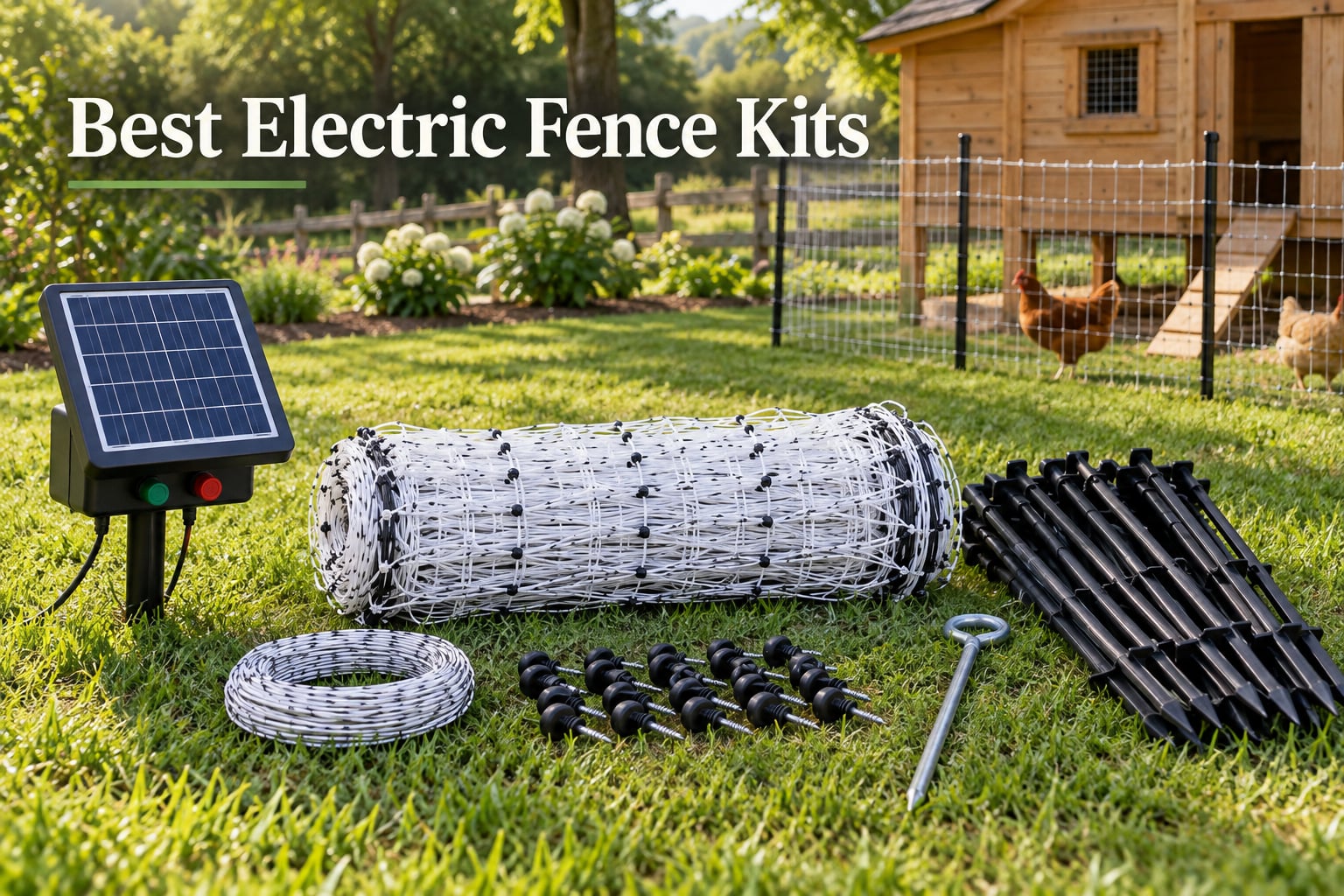
Electric fencing stopped being a ranch-only product years ago, but the shopping experience has not caught up. Listings all call themselves an “electric fence kit” while shipping a bare energizer with no wire, no posts, and no ground rod, which is the single biggest source of returns in this category and the reason forum threads keep asking what a kit is supposed to contain.
So this roundup treats the word “kit” strictly. An electric fence kit is a bundled set that combines an energizer (the battery or mains powered charger that pulses current onto the fence) with the conductive fence material such as polywire, electric netting or conductive tape, plus the posts, insulators and ground rods needed to install something that actually shocks. We pulled the specs, read the owner feedback, and checked exactly what leaves the box in each of the 12 sets below.
Our team compared all 12 kits on joule output, coverage, power source, post quality and the recurring complaints in the review data. If you are still deciding between a physical barrier like vinyl fence panels and an electric line, start with the kit type section below, because the type dictates everything that follows. This guide was last updated for 2026 and covers the best electric fence kits for backyard chickens, horses, goats, gardens and remote pasture.
Table of Contents
Top 3 Electric Fence Kits We Trust Most in 2026

Premier 1 PoultryNet Plus
- 100 ft of 48 in netting
- 4 FiberTuff posts
- SolarStop 80 solar energizer
- Ground rod and tester in box

Kiouposy 656 ft Yellow Polywire
- 656 ft of 1/8 in polywire
- 6 stainless steel conductors
- 50 screw-in insulators
- Socket tool for a drill
RentACoop 48 x 168 Poultry Net
- 168 ft of net over 1700 sq ft
- Triple-braided steel and copper
- Posts every 12 feet
- Repair kit and warning sign
The Premier 1 PoultryNet Plus is the one to start with if you want a working run this afternoon: netting, posts, a solar energizer, a ground rod, a wiring harness and a digital fence tester together in a single box. The Kiouposy polywire carries the joint-highest owner satisfaction here at 4.6 stars across 162 ratings, and it is the best fencing material for building your own strand line. The RentACoop net is the most established product in the group with 902 ratings behind it, and it covers the largest single run of poultry net at 168 feet.
All 12 Best Electric Fence Kits at a Glance (September 2026)
| Product | Specifications | Action |
|---|---|---|
| Premier 1 PoultryNet Plus 48 x 100 |
|
Check Latest Price |
 Gallagher Smart Fence 2 Portable Gallagher Smart Fence 2 Portable |
|
Check Latest Price |
 Starkline 48 x 164 Solar Poultry Kit Starkline 48 x 164 Solar Poultry Kit |
|
Check Latest Price |
 Starkline 48 x 164 AC Poultry Kit Starkline 48 x 164 AC Poultry Kit |
|
Check Latest Price |
 Starkline 35 x 164 All-in-One Solar Starkline 35 x 164 All-in-One Solar |
|
Check Latest Price |
 Starkline Sheep and Goat AC Kit Starkline Sheep and Goat AC Kit |
|
Check Latest Price |
| RentACoop 48 x 168 Poultry Net |
|
Check Latest Price |
 VEVOR 48 x 168 PE Net Fencing Kit VEVOR 48 x 168 PE Net Fencing Kit |
|
Check Latest Price |
 MorningRo 0.25J Charger Kit MorningRo 0.25J Charger Kit |
|
Check Latest Price |
 Kanayu 1640 ft Poly Wire Kit Kanayu 1640 ft Poly Wire Kit |
|
Check Latest Price |
| Kiouposy 656 ft Yellow Polywire |
|
Check Latest Price |
 Sweetude 660 ft Poly Wire Kit Sweetude 660 ft Poly Wire Kit |
|
Check Latest Price |
Two things decide most purchases, and both come out of the key features column. Power source determines whether you need mains power within reach of the fence line, and whether the kit includes an energizer at all determines how much else you have to buy. Six of these twelve include an energizer in the box; the other six are fence material, posts or insulators only, and they are the right choice if you already own a working charger.
Electric Fence Kit Types Explained: What You Are Actually Buying
Retail listings use one word for four different products, so the first step is picking a type. The type decides everything downstream, including whether you need to run mains power to the fence line.
Type 1: all-in-one net kits. These arrive with electric netting, posts, an energizer, a ground rod and usually a tester. The Premier 1 PoultryNet Plus and the three Starkline kits with a bundled energizer ship posts, an energizer and a ground system together, and they are the fastest route to a working run. Their limitation is fixed length: you cannot extend a 100-foot net to 300 feet without buying more net.
Type 2: net-only kits. The RentACoop and VEVOR nets give you the fence and the posts but no energizer, because most buyers already have a charger or want to size the joule output themselves for the acreage. These are the cheapest way to expand an existing poultry setup.
Type 3: portable strand systems. The Gallagher Smart Fence 2 packs posts, polywire and reels into a single 16-pound unit for rotational grazing and temporary paddock divisions. Nothing here holds an animal that has never met an electric fence, and the energizer is still sold separately.
Type 4: strand wire and insulator kits. The Kanayu, Kiouposy and Sweetude sets are fencing material only, while the MorningRo kit pairs a charger with wire and insulators. If you are building a garden or dog boundary along an existing fence line, this is the format you want.
On coverage claims, a word of caution. Marketplace chargers routinely advertise 10 or even 35 miles of range, and that figure assumes a bare wire on clean posts in flat ground with perfect grounding. The MorningRo 0.25-joule unit in this roundup is rated to 5 miles under ideal conditions, and one owner reported little to no pulse at 250 feet with vegetation on the line. Judge a charger by joules and by honest fence length, not by the marketing range.
1. Premier 1 PoultryNet Plus: Best All-in-One Kit for Backyard Chickens
Premier 1 PoultryNet® Plus, Starter Kit for Chickens – 48″H x 100’L
48 x 100 ft poultry net
4 FiberTuff posts
SolarStop 80 solar kit
Ground rod and tester
Pros
- Energizer
- ground rod and tester all in the same box
- 4.6 stars across 126 ratings
- 48 in height deters raccoons and foxes
- Net rolls out and relocates for rotation
Cons
- Shortest pre-assembled net in the group at 100 ft
- Needs real ground contact to shock properly
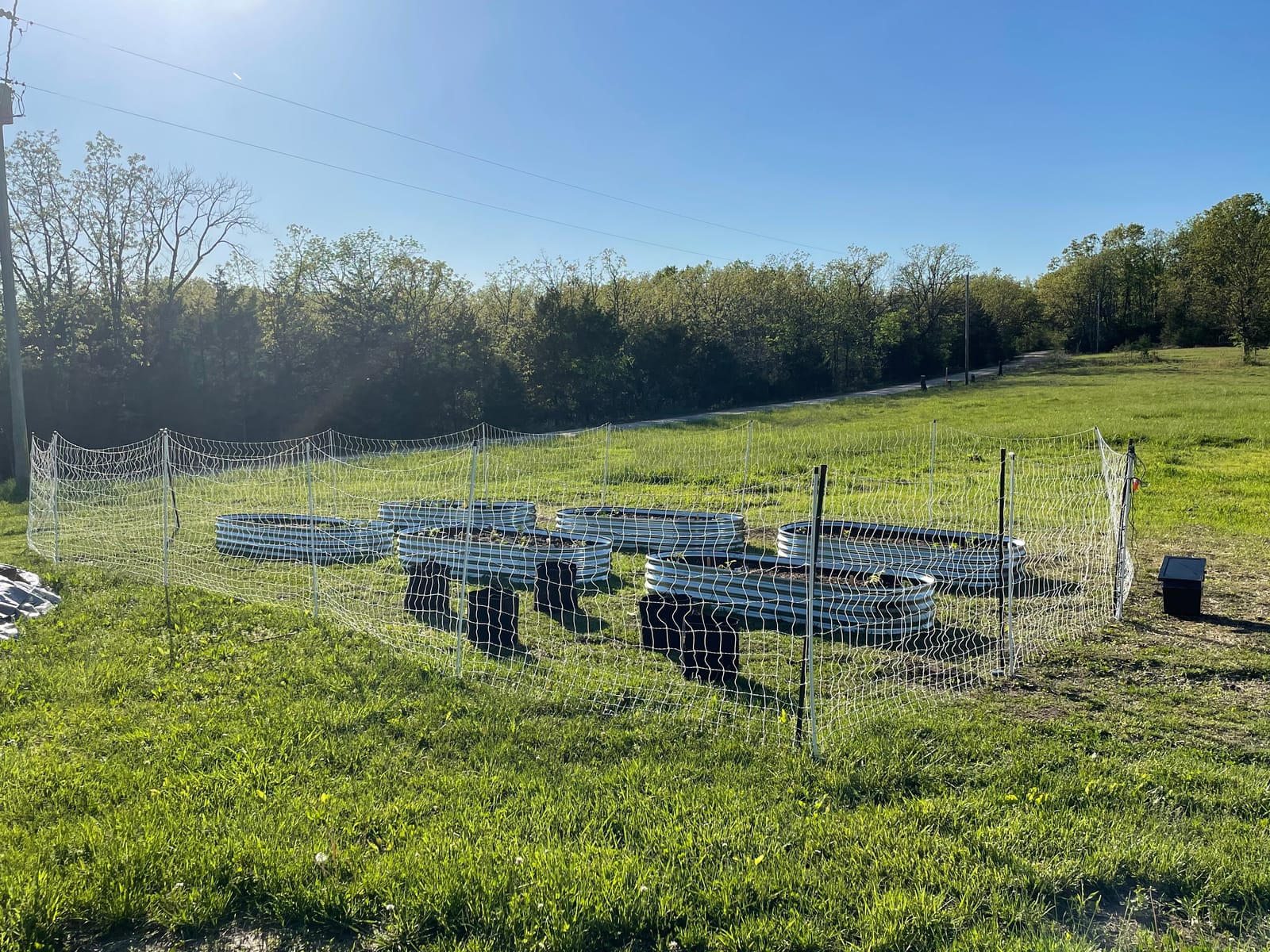
The Premier 1 PoultryNet Plus is a 48-inch by 100-foot double-spiked white and black electric netting roll bundled with four 48-inch FiberTuff support posts, a SolarStop 80 solar energizer, a ground rod, a wiring harness and a digital fence tester. Out of twelve kits, that is the box most people assume they are buying when they search for an electric fence kit, and it is the only one that delivers all of that together.
At 100 feet it forms a usable backyard run rather than a full enclosure, and the 48-inch height is the number that matters for predator work. Raccoons, foxes and dogs are the animals this height is designed to stop, and the SolarStop 80 handles the poultry load without an outlet nearby.
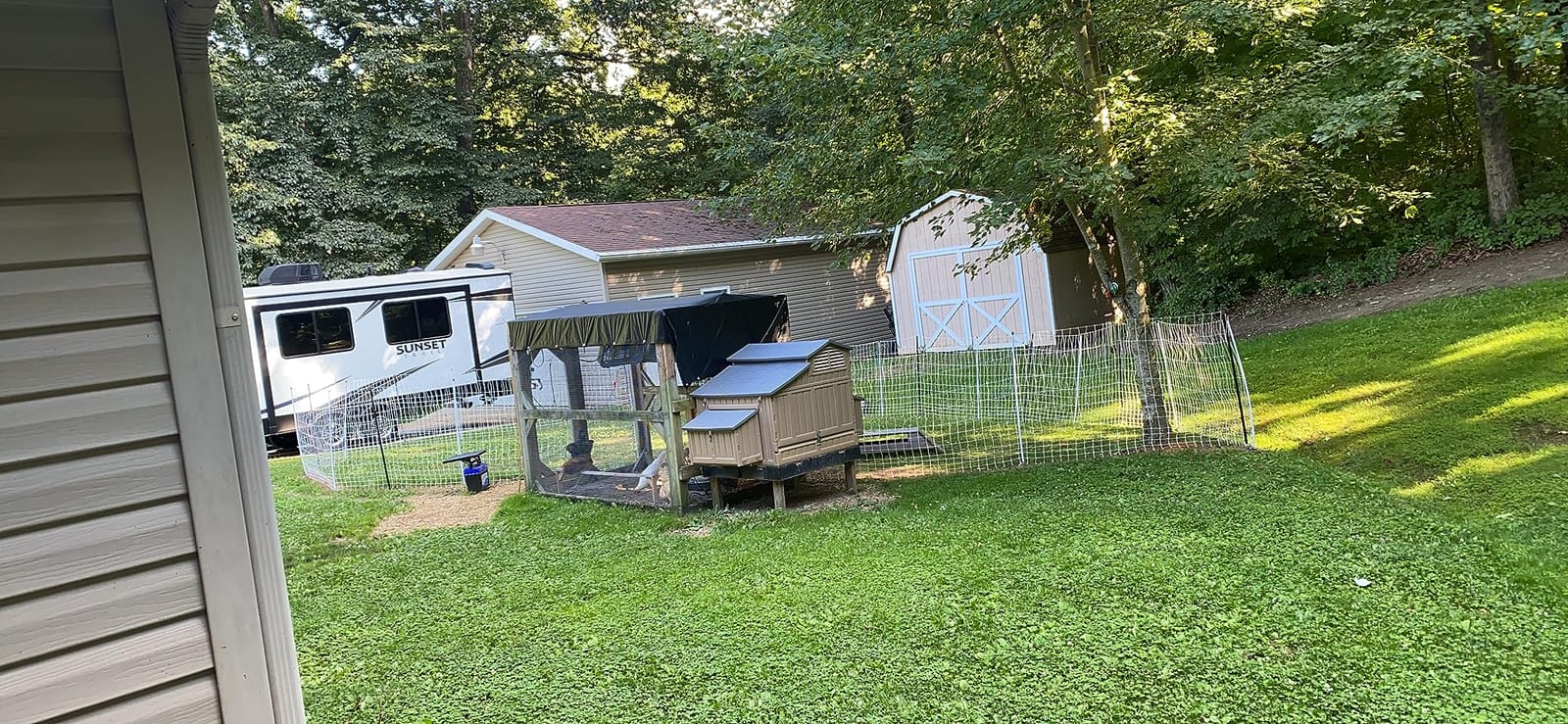
Owner feedback is excellent at 4.6 stars across 126 ratings, with 82% five-star. Buyers consistently single out the all-in-one packaging, the sturdiness of the FiberTuff posts and the way the netting relocates between runs as the flock’s access changes. A digital fence tester in the box is a small detail that most competitors omit, and it lets you confirm the whole run is live rather than guessing.
One thing to be clear about: the manufacturer states plainly that the fence must be properly energized to be effective, and the kit includes a single ground rod. Homesteaders are near-universal on the fact that the circuit is finished by the earth, so if your ground rod sits in dry or rocky soil you may need to add another couple of rods before the shock reaches the fence line properly.
What you get for the money
A netting-only kit plus a separate charger plus a separate ground rod plus a tester means four separate orders and four separate deliveries. This kit removes three of them, and for a first-time buyer that convenience is worth more than the extra 60 feet a larger net would give you.
When this kit is the wrong choice
It is the wrong choice for anyone fencing more than a small run, because 100 feet is short. It is also the wrong choice if your site is shaded most of the day, since a solar energizer’s output depends on panel exposure. And if you keep sheep or goats rather than poultry, move to a strand-wire kit instead, because poultry netting height and structure are not built for pushing animals.
2. Gallagher Smart Fence 2: Best Kit for Rotational Paddocks
Gallagher Smart Fence 2 Portable Electric Fence for Livestock
328 ft of four-strand fence
10 integrated posts
35.5 in installed height
16 lb collapsible system
Pros
- Longest pre-assembled four-strand run at 328 ft
- Integrated posts and multi-reel tensioning
- Weighs 16 lb for easy transport
- Built for rotational grazing
Cons
- Energizer and grounding gear not included
- Electrified line is not a rigid physical barrier
The Gallagher Smart Fence 2 creates up to 328 feet of four-wire electric fence from three lines of braided polywire and one highly conductive Turbo Braid line, with ten integrated fence posts and a multi-reel tensioning system. Installed height is approximately 35.5 inches, and the whole packed unit weighs about 16 pounds.
That 328-foot figure is the longest pre-assembled multi-strand run in this roundup, and it is why this system shows up on rotational grazing setups. The four-strand layout at roughly 35 inches suits cattle, sheep, goats and horses that have already been trained to respect electric fencing, and the multi-reel tensioning means you can roll out a strip in the morning and pull it back in the evening.
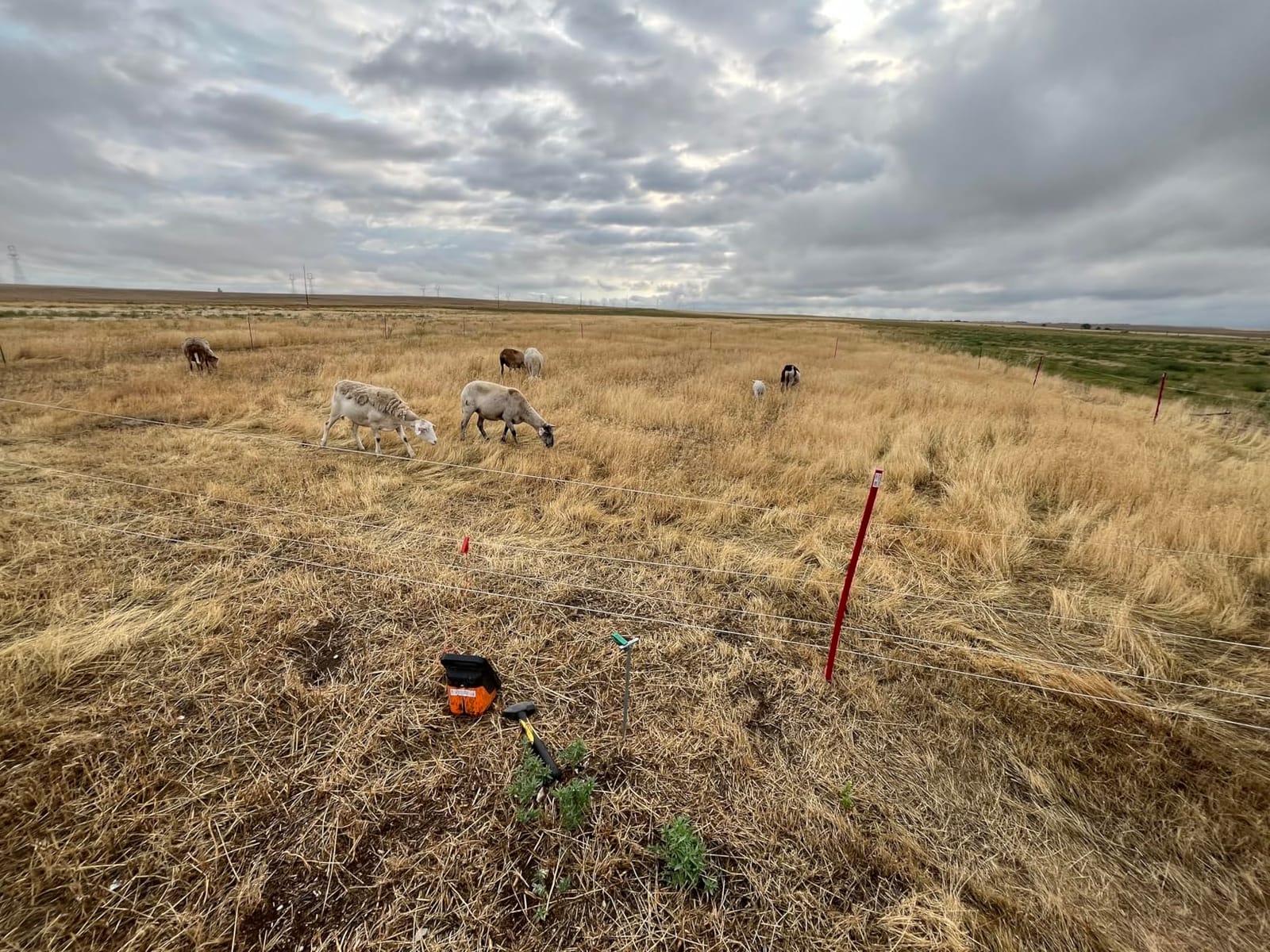
Owners rate it 4.2 stars from 147 ratings with 66% five-star, and the recurring praise is speed of setup and how little fuss relocation takes. The recurring complaint is the same one the manufacturer prints on the box: the Smart Fence 2 must be connected to a compatible energizer or an existing powered fence, and an energizer and grounding equipment are not included. Budget for a separate charger before you start building.
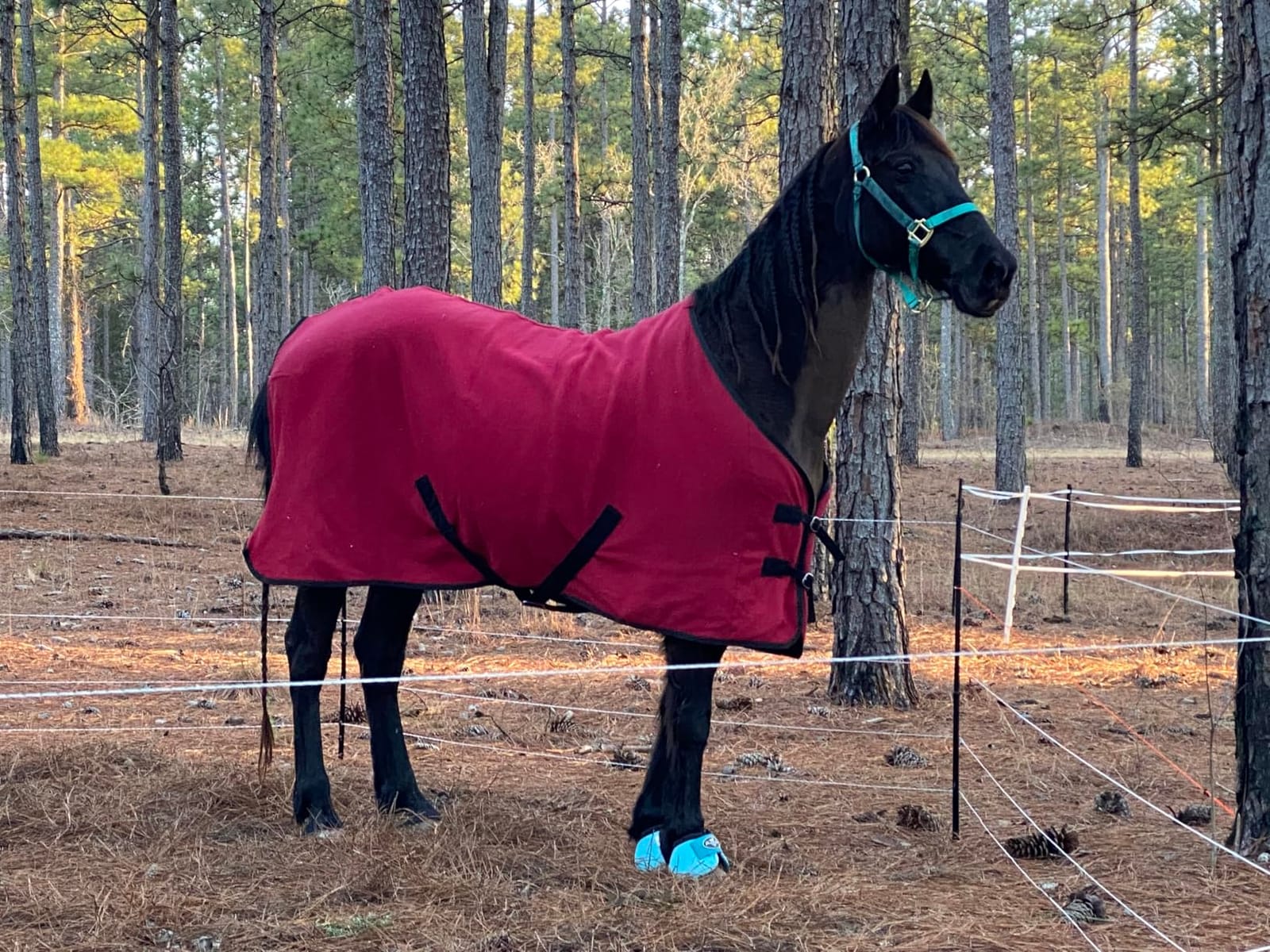
Because the strands do the containing rather than the wire’s physical strength, this is not a rigid barrier. Horse owners in particular tell us consistently that young or impatient animals need a physical rail or netting running alongside the electric strand for the first few weeks while they learn the boundary.
Why strand count matters here
Four strands gives you a spacing pattern that a single hot wire cannot. The lower strands take care of animals that push under or try to slip through, and the conductive Turbo Braid line is the one that carries the pulse where vegetation or ground contact would otherwise bleed it away. That is the difference between a fence that reads as a boundary and one animals walk through.
What to buy alongside it
You need an energizer sized to your acreage and a proper ground system. If you already run an electric fence somewhere on the property, this kit will simply connect to it. If not, treat the charger and three ground rods as a separate line item in your budget rather than an afterthought, because without them you have an expensive roll of wire.
3. Starkline 48 x 164 Solar Poultry Netting Kit: Best Solar Poultry System
Starkline 48″ x 164′ Premium Electric Poultry Netting Solar Kit | White/Blue All-in-One Solar Electric Fence Kit for Backyards, Homesteads, Farms, and Ranches
48 x 164 ft netting
S400 solar energizer
Covers 1600 sq ft
Installs in 45 minutes
Pros
- No outlet or extension cord needed
- Over 1600 sq ft of enclosure
- Two-plus years of steady operation reported
- Netting moves easily for rotation
Cons
- Included fiberglass poles reported flimsy
- Some buyers report weak shock and charger failure
- Fine netting is labor-intensive to reconnect
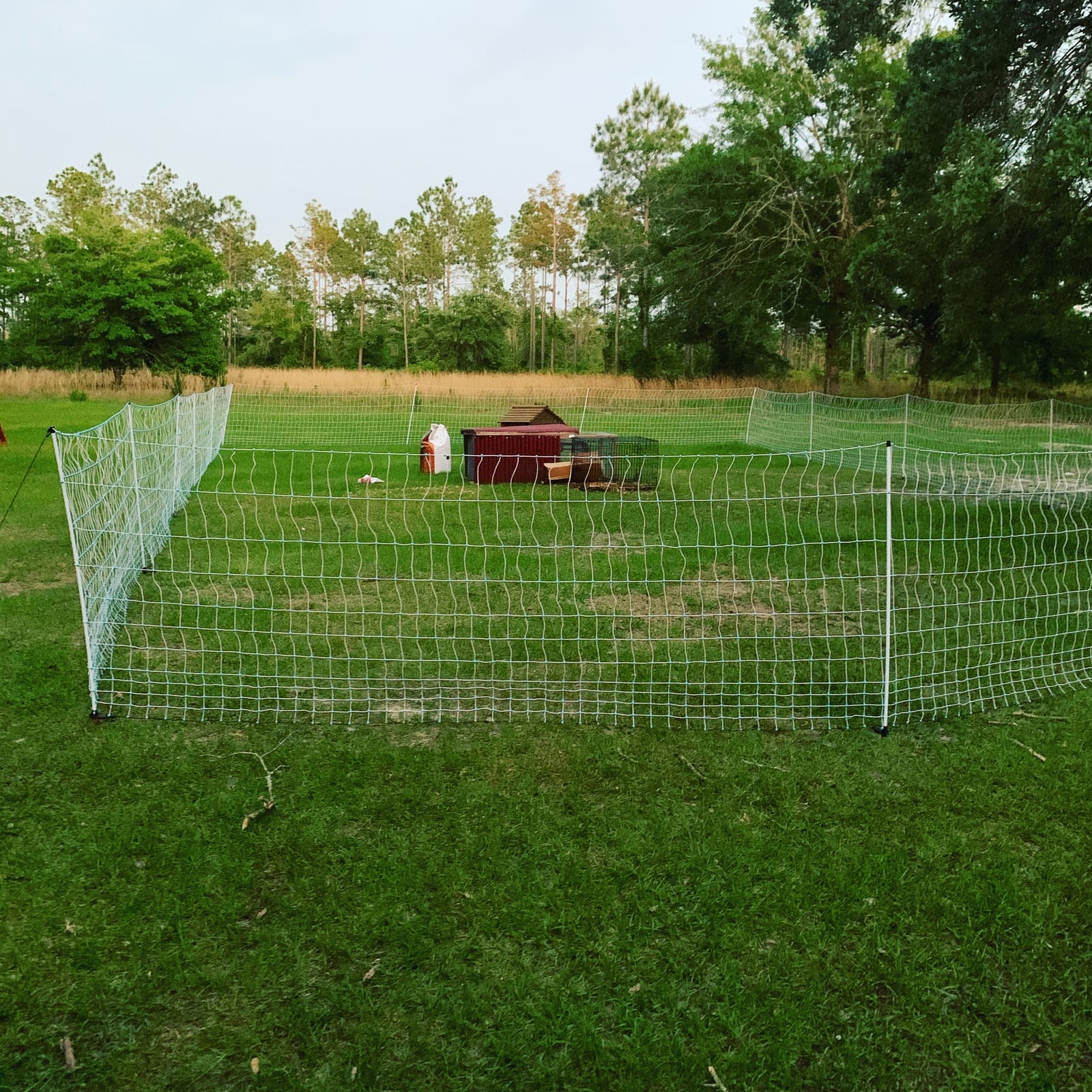
The Starkline 48-inch by 164-foot Premium Electric Poultry Netting Solar Kit pairs white and blue poultry netting with an S400 solar energizer, a grounding rod, a fence tester, connectors and accessories, covering up to 1,600 square feet of enclosure. The stated install time is under 45 minutes and the whole package weighs 30 pounds.
Solar is the reason this one earns its place. It removes the need for an extension cord or an outlet at the fence line, which is the deciding factor for anyone building a run at the far end of a property. The 164-foot net is 64 feet longer than the Premier 1 roll, so it builds a genuinely usable enclosure rather than a run.
Owners report two-plus years of steady operation with the fence holding predators out, and the net is described as durable and stable. Predator coverage is specified against mink, raccoons, foxes, coyotes and skunks, which covers the usual suburban and small-farm threats. At 4.2 stars across 64 ratings, with 69% five-star, the experience is solid rather than exceptional.
The main complaint thread is the fiberglass poles. Several buyers report they are flimsier than expected and need extra supports to stay upright, and a minority report weak shock output plus a solar charger that stopped working after a few weeks. If you hit a rocky site, budget for additional support poles rather than assuming the included count will hold a line on uneven ground.
Solar sizing and cloudy weeks
Solar runtime is the number one complaint about every solar kit in this category, and it comes down to panel size, not marketing. A small panel keeps the battery topped up on sunny days and drains in a long grey week, and the “days of runtime” figure printed on the box almost always assumes full sun. Position the panel where it gets unobstructed daylight for as much of the day as the site allows.
Netting vs. strand wire for this size
At 48 inches and 164 feet, netting is the right call for poultry because it stops chicks from walking through. If your problem animals are goats, sheep or anything that pushes against a fence rather than pecking through it, a strand-wire system holds up better. Netting also has to be kept clear of weeds and grass, and a mow line along the base of the run is part of the ongoing maintenance.
4. Starkline 48 x 164 AC Poultry Netting Kit: Best Mains-Powered Poultry Kit
Starkline Electric Poultry Netting Kit – AC Energizer (48″ x164′ White/Blue Poultry Netting) (12/48/3) All-in-One Electric Fence Kit for Backyards, Homesteads, Ranches or Farms
0.8J SL-8 AC energizer
16 fiberglass posts
Forms a 40 x 40 run
Ground rod and tester
Pros
- Stiff fiberglass posts stand straight with little sag
- Longer electric lead wires than cheaper kits
- Poultry learn boundaries quickly
- Rated for up to 500 ft of net
Cons
- Energizer failures reported after days to months
- Netting droops on uneven ground
- Weak against sheep and small goats
This Starkline kit combines 48-inch by 164-foot white and blue poultry netting with a 0.8-joule SL-8 AC energizer, a grounding rod, a fence tester, connectors and accessories to form a 40-foot by 40-foot electrified enclosure. It includes 16 solid fiberglass posts with galvanized double-spiked stakes, and the energizer is rated to power up to 500 feet, or three full-size nets.
That three-net capacity is the quiet advantage here. If you plan to run separate daytime and nighttime enclosures, or a quarantine pen, the SL-8 gives you headroom that the smaller chargers cannot. The package arrives at 22 pounds, which is lighter than the solar version in this roundup, and setup is again quoted at under 45 minutes.
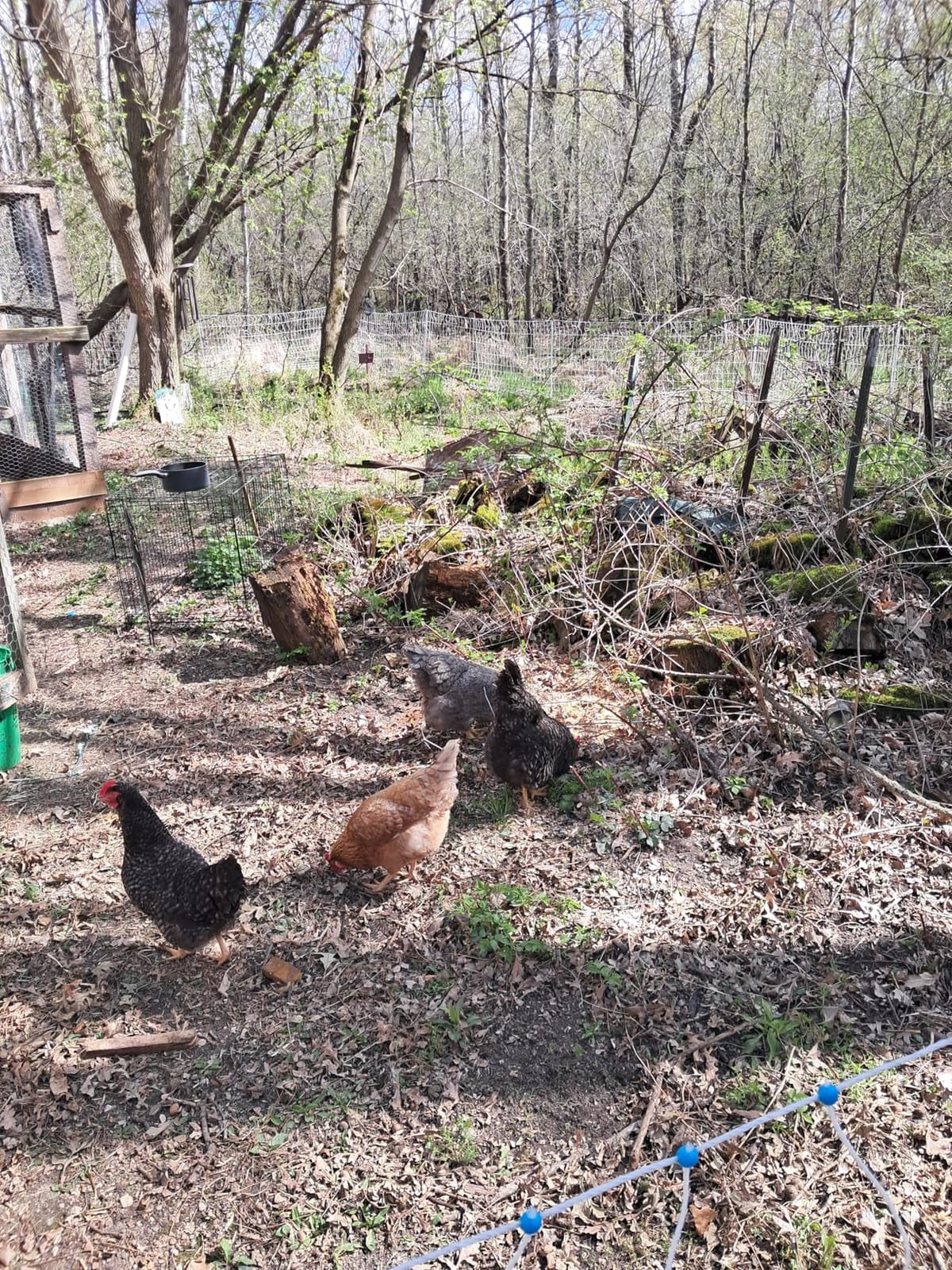
Post quality is where this kit earns its reputation. Owners consistently note that the solid fiberglass posts stand straight with minimal sag, unlike the flimsier PVC posts in competing kits, and the electric lead wires are longer than those on cheaper poultry netting kits. Poultry tend to learn their boundaries quickly once the net is live. At 4.2 stars from 56 ratings, with 66% five-star, the feedback is positive with a clear caveat.
That caveat is energizer durability: several reviews report the unit failing anywhere from a few days to a couple of months, and one support interaction reportedly described the unit as not weather-proof for outdoor use. If you live somewhere with sustained rain, ask about the enclosure rating before you commit, and keep a spare charger on hand if this run is your only containment.
Grounding is non-negotiable on this kit
The grounding rod is in the box, which puts this kit ahead of the net-only options, but one rod is a starting point rather than a finished ground system. Multiple sources agree on three properly connected rods as the working consensus. In wet soil you will get more from one rod; in dry or stony ground you will need all three to move the current back into the earth.
Where it falls short
Reviewers are direct that this net is not effective for sheep or small goats, and recommend electrified strand wire instead. That is a physical property of 48-inch poultry netting, not a defect. It also droops on uneven ground and needs regular weed and grass management underneath, so plan a mowing schedule alongside the fence line.
5. Starkline 35 x 164 All-in-One Solar Kit: Best for Goats and Gardens
Starkline 35″x164′ Electric Netting All-in-One Solar Kit for Goats, Sheep, Gardens, Beehives, Dogs, and More for Backyards, Homesteads, Farms and Ranches
35 x 164 ft electric netting
All-in-one solar kit
20 lb total weight
Goats, bees and gardens
Pros
- One owner had it charged and placed in 30 minutes
- Effective against deer
- bear
- raccoon
- rabbit
- fox
- coyote and skunk
- Solar power needs no wiring
- Arrives complete
Cons
- 35 in height is jumpable by chased goats
- Netting tangles when moved or stored
- Wax-coated anchor lines fray and are hard to knot
The Starkline 35-inch by 164-foot Electric Netting All-in-One Solar Kit is aimed squarely at mixed smallholding use, covering goats, sheep, pigs, gardens, beehives and dogs. It packs at 20 pounds, protects crops and livestock from deer, bear, raccoon, rabbit, fox, coyote and skunk, and moves easily to rotate grazing areas.
That animal list is unusually broad for a 35-inch net, and it is why this kit earns a place in a roundup otherwise dominated by poultry products. A 164-foot solar net you can drag to the vegetable beds in June and back to the goat paddock in September solves a different problem from a fixed chicken run, and one owner reported having it charged, running and placed in 30 minutes.
At 4.2 stars across 44 ratings with 66% five-star, the sentiment is warm. Kit completeness is the word that comes up most often, along with how the solar supply frees the fence from any wiring constraint.
Height is the real limit here
Thirty-five inches is tall enough for chickens, small dogs and most goats in normal conditions. It is also short enough that a determined or chased goat can clear it, and reviews flag exactly that. If you have jumpers, run a second strand above the net top or add a physical rail rather than relying on the netting height alone.
Handling and storage
The two complaints that come up repeatedly are tangling when the net is moved or put away, and wax-coated anchor lines that fray and are difficult to knot. Roll the net rather than folding it, store it dry, and inspect the anchor lines each season. Both are manageable habits, so budget a few minutes after each move.
6. Starkline Premium Sheep and Goat Netting Kit: Best for Small Herds
Starkline Premium Electric Sheep & Goat Netting Kit- AC Energizer (9/35/8) for Backyards, Homesteaders, and Livestock Owners
9/35/8 net at 35 in
0.8J AC energizer
6 stainless top wires
14 posts with 6 in stakes
Pros
- Simple to spike in and roll out for relocation
- Small-herd goat owners report reliable containment
- 6 stainless steel top wires aid conductivity
- Tent pegs and rope included
Cons
- 0.8J output judged weak against bears
- One review reports the energizer failing outdoors
- Netting tangles if moved carelessly
The Starkline Premium Electric Sheep and Goat Netting Kit is a 9/35/8 net at 35 inches, large enough for a 40-foot by 40-foot enclosure yet compact enough to roll up for storage. It includes a 0.8-joule AC energizer rated for up to three 164-foot premium sheep nets, 14 posts with 6-inch galvanized double-spiked stakes, and reinforced plastic vertical struts every 7 inches to limit sag.
The conductive detail that separates this from generic net is the six stainless steel wires in the top strand, which maintain constant conductivity and low resistance along the run. That matters on long lines where a sparse-wire top strand bleeds voltage away from the far end. The 7-inch strut spacing is what keeps the net upright between posts.
Small-herd goat owners describe it as the first electric fence that reliably held their animals in, which is high praise from people who have usually tried cheaper net first. It is simple to spike in and roll out when you move to new grazing. At 4.0 stars across 76 ratings, it carries the lowest average rating among the 12 kits reviewed here, and the reason is consistent.
Why the 0.8-joule output is a real limit
Several owners with larger predators upgraded from this energizer to a 3.5-joule unit, and reviews judge 0.8 joules insufficient for determined predators such as bears. For goats and sheep on a small holding with no bear pressure, that is fine. If you are anywhere in bear country, budget for a higher-output charger from the start rather than replacing this one later.
Outdoor durability question
One review states the energizer stopped working and that support described it as not weather-proof for outdoor use, and a second common note is that the netting tangles if moved without care. Weigh those against the portability and conductivity benefits. For a dry site with a sheltered mounting point, this is a strong value; for an exposed ridge with constant rain, choose a charger with a stated outdoor rating.
7. RentACoop 48 x 168 Poultry Net: Best Kit for Large Flocks
RentACoop Poultry Netting Electric Fence – 48″ H x 168′ L
48 in x 168 ft net
Posts every 12 ft
Triple-braided steel and copper
Over 1700 sq ft
Pros
- Most-reviewed kit in the group at 902 ratings
- Triple-braided steel and copper give consistent power
- Pre-attached posts make relocation fast
- Repair kit and warning sign included
Cons
- Energizer
- voltmeter and ground rod sold separately
- Net is fixed to posts at 12 ft intervals
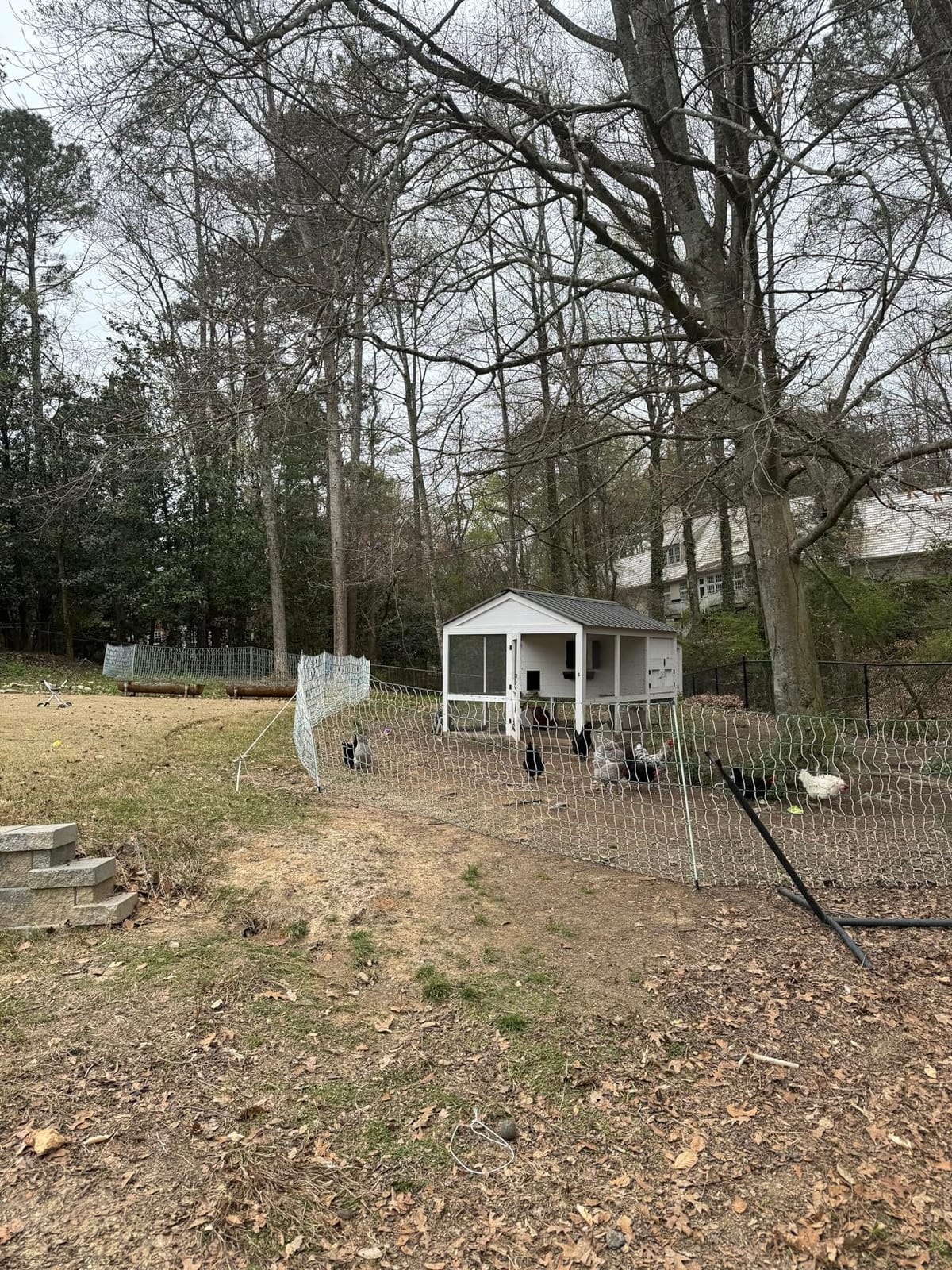
The RentACoop Poultry Netting Electric Fence is 48 inches high by 168 feet long, built from triple-braided stainless steel and copper conductive wires that deliver steady current with a compatible low-impedance intermittent pulse energizer. The energizer is sold separately. Pre-attached FRP posts are spaced every 12 feet, and the net covers more than 1,700 square feet.
At 902 ratings, this is the most-reviewed kit in the roundup by a wide margin, and that volume of long-term owner feedback is worth more to a buyer than any spec sheet. It is also one of only two kits here with a stated 42-inch height option, which matters if you are containing lighter birds or want a lower profile for visibility.
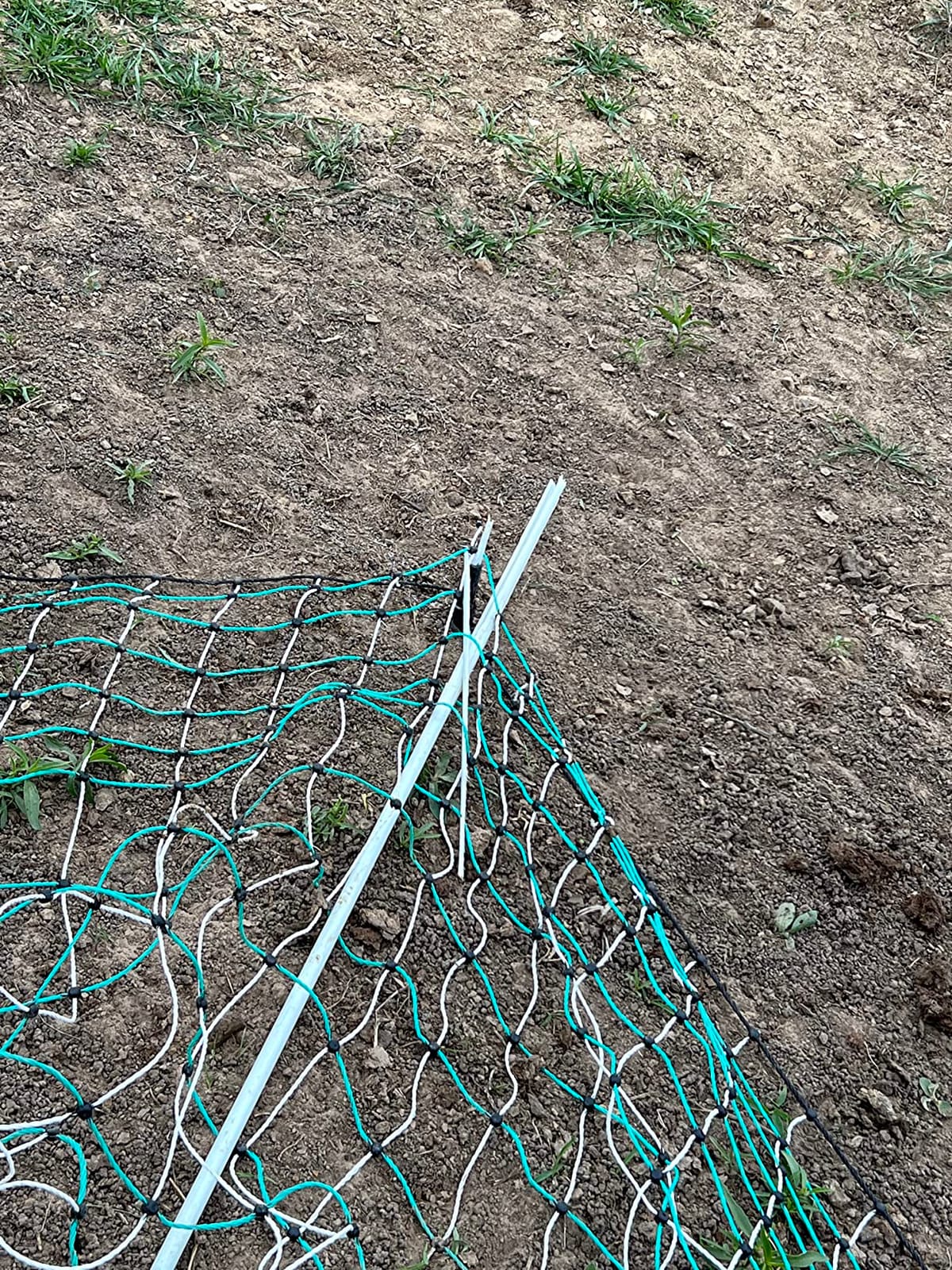
Owners rate it 4.3 stars with 64% five-star, and the praise concentrates on consistent conductive wiring, fast setup and stable posts. On uneven ground, the double-spiked posts, mini-posts, metal stakes and corner guy lines are what keep the run upright, and the box includes a repair kit and a warning sign, both of which are quietly useful once a net has been live through a season.
The box list includes one 48-inch by 168-foot net, four U-shaped stakes with guy lines, 14 metal stakes, four mini-posts, an instruction booklet, one repair kit and one warning sign. Sold separately are the solar or plug-in energizers, gate handle kit, voltmeter and grounding rod.
Why the review volume matters here
A large review base tends to mean a product that has been installed, moved, repaired and reinstalled many times over several seasons, which is exactly the durability signal you cannot get from a launch-year listing. It also means failures, if they exist, would show up in the ratings. Here they do not: the four percent one-star share is among the lowest of the twelve kits reviewed.
What you have to source yourself
You will need to buy a separate charger and ground rod, which is the most common complaint in the reviews. The upside is that you choose the joule output, so you can run a small solar charger for a backyard run and a larger one later for more acreage without replacing the net.
8. VEVOR 48 x 168 PE Net Fencing Kit: Budget Pick
VEVOR Electric Poultry Netting, 48″ H x 168′ L, PE Net Fencing Kit with Posts & Double-Spiked Stakes, Utility Portable Mesh for Chickens, Ducks, Geese, Rabbits, Used in Backyards, Farms, and Ranches
48 in x 168 ft PE net
4.73 lb total weight
Warning sign and repair kit
AC, solar or DC ready
Pros
- Least expensive of the complete netting kits here
- Lightweight at 4.73 lb so it moves easily
- Includes warning sign and repair kit
- Accepts AC
- solar or DC power
Cons
- Energizer and grounding hardware sold separately
- Light build loads up more in wind or with livestock
The VEVOR Electric Poultry Netting kit is a 48-inch by 168-foot PE net at 1.21 by 51.2 meters, supplied with double-spiked stakes and fiberglass posts on precise spacing for stability. A warning sign and a repair kit are included, and the net accepts AC110-240V external power, a solar panel, or DC supplies, none of which come with it.
It weighs 4.73 pounds. The other complete netting kits in this group weigh between 20 and 30 pounds, so this is a fundamentally different object: a light portable net rather than a rigid enclosure system. For moving a run around a small yard, that lightness is a feature. In strong wind or against heavy animals, it is a liability.
Owners rate it 4.2 stars from 67 ratings with 69% five-star, and the feedback centers on value, light weight and durable fiberglass posts. It suits chickens, ducks, geese and rabbits, and additional 50-inch by 164-foot and 42-inch by 164-foot livestock variants exist if you want a different profile.
When the low weight works in your favor
If your plan is rotational use in a suburban yard, a net this light can be rolled, carried and re-erected by one person in minutes. There is also a scientifically spaced grid rather than a wide mesh, which is what stops chicks from slipping through the lower openings. Weather-resistant construction and a windproof kit are part of the package.
What the light build costs you
At 4.73 pounds, the net carries noticeably less structural mass than the 22 to 30 pound fiberglass-post kits, so wind load and animal pressure reach the fabric directly. Expect more sag on uneven ground and more tensioning during a storm. Add posts rather than accepting a loose line, and remember the energizer is a separate purchase.
9. MorningRo 0.25 Joule Charger Kit: Best Starter Kit for Garden Fences
MorningRo Electric Fence Charger Kit 0.25 J 5 Mile 80 Insulators 985ft Wire
110V AC plug-in at 0.25J
80 insulators plus tool
985 ft of 14AWG wire
Rated to 5 miles
Pros
- Mains powered so sunlight and batteries are irrelevant
- 4.3 stars from 58 ratings with 77 percent five-star
- Reinforced existing fences and stopped dog escape attempts
- Insulators rated for rain
- snow and temperature extremes
Cons
- Ground rod and cable sold separately
- Weak output over long runs with one report of little pulse at 250 ft
- Needs a mains outlet at the fence line
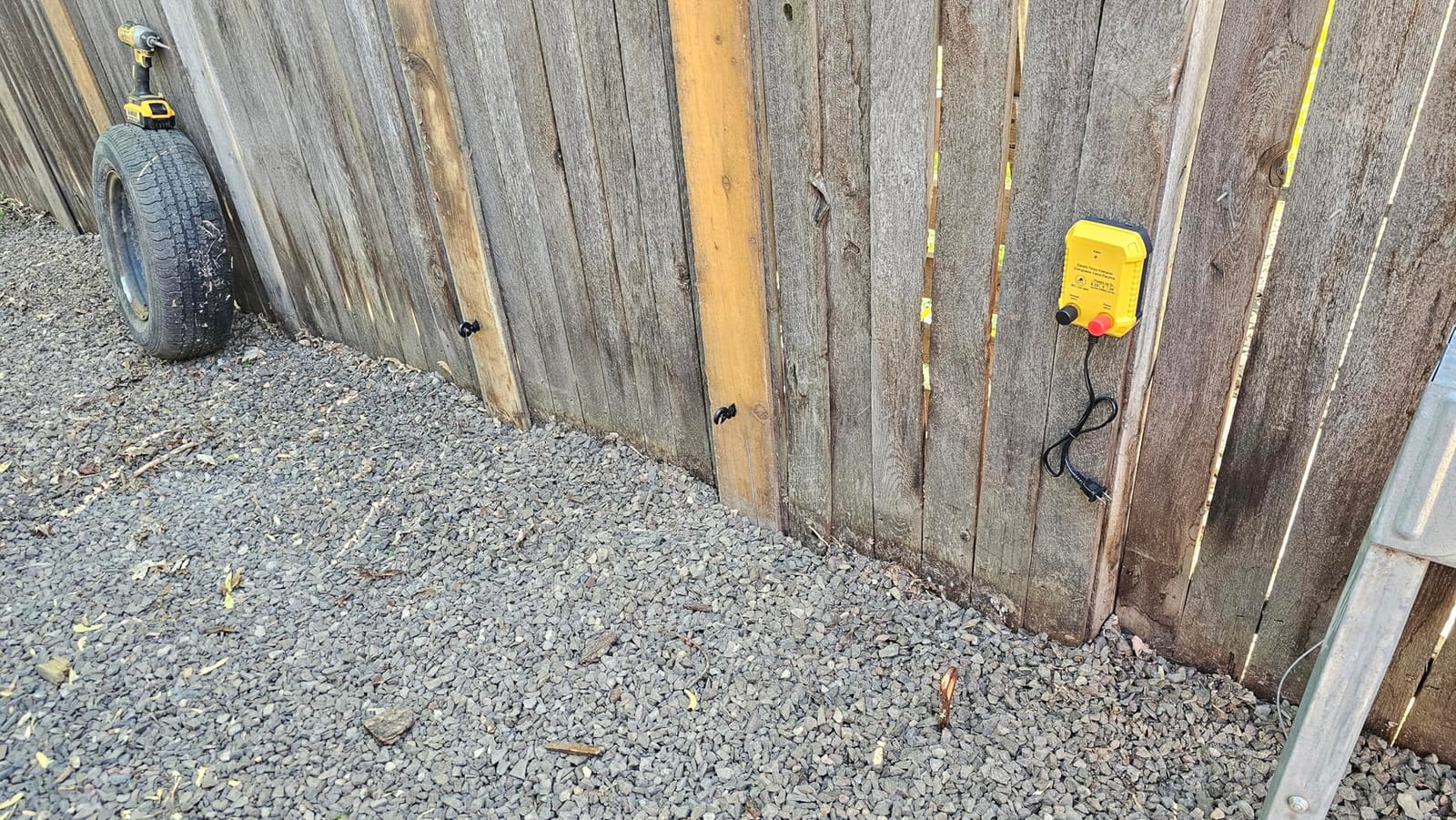
The MorningRo kit is the only entry in this roundup that pairs a charger with a full run of wire and hardware: a plug-in 110V AC energizer rated at 0.25 joules and up to 5 miles, 80 black insulators, an insulator socket tool and one 985-foot roll of 14AWG aluminum fence wire rated at 38,000 PSI. The ground rod must be purchased separately.
Because it is mains powered, sunlight and battery condition stop being variables, which makes it the most predictable option for a garden, orchard or dog boundary near a building. The wire is real fence wire rather than polywire, and the insulators are a PP and PE combination rated for extreme temperatures, rain and snow.
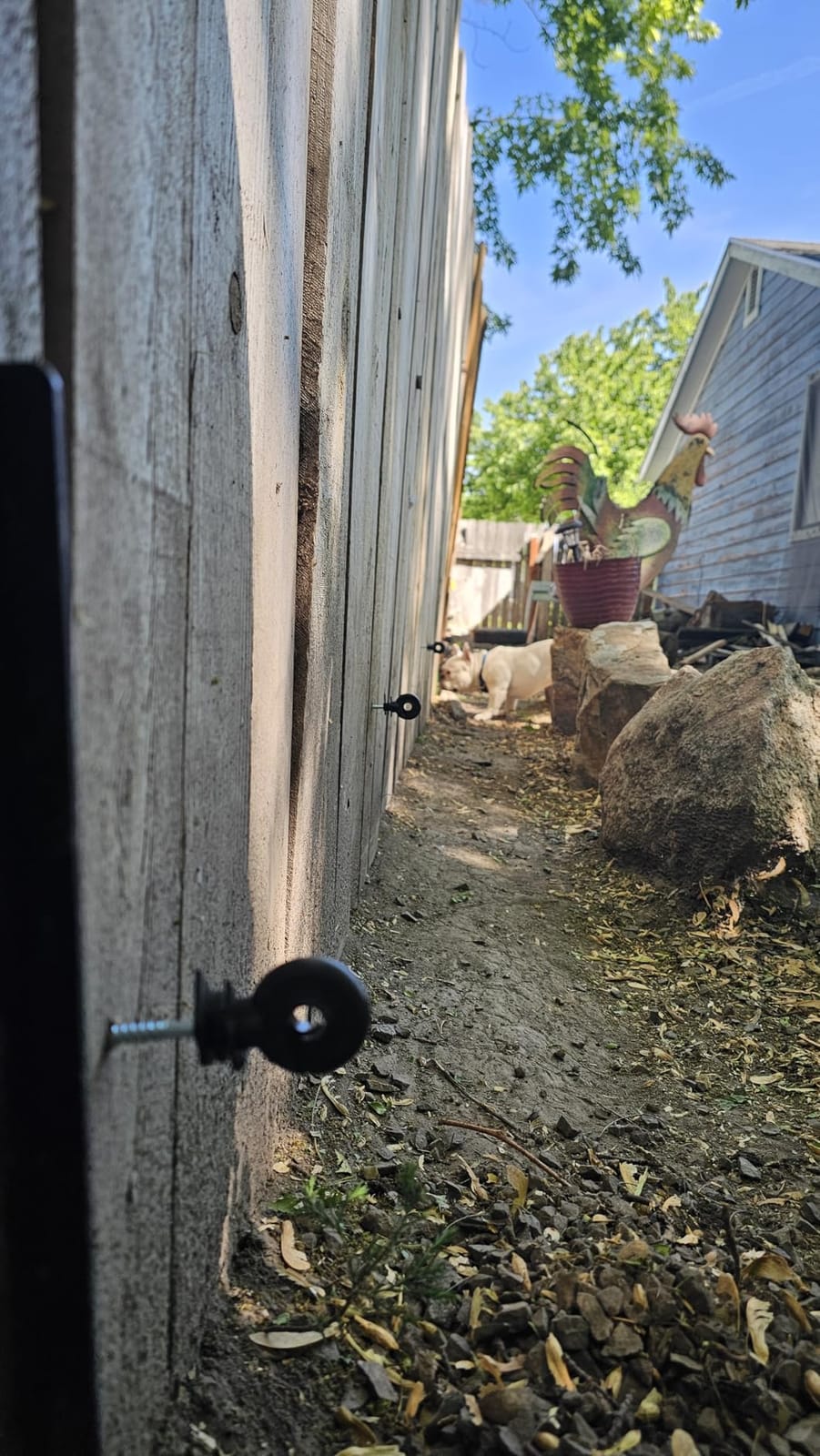
Owners report using it to reinforce existing fencing and to stop persistent escape behavior in dogs, and one long-term report describes it holding up through a full year of outdoor exposure and weather abuse. It also carries a 77% five-star share, among the highest in the group, across 58 ratings for a 4.3 average. Multiple joule options exist in the same family, from 0.15J to 1J, so you can step up later without changing the format.
The two honest limits: the ground rod, insulated cable and wire clamps are not in the box, and without a ground the fence will not deliver a shock. And 0.25 joules is genuinely modest, with one reviewer reporting little to no pulse at 250 feet. That is fine for reinforcing an existing fence, less fine for a long new perimeter.
What this kit is genuinely good at
This is a reinforcement kit, not a boundary kit. If you already have a garden fence, a retaining edge or a chain-link run and you want animals to stop pushing through it, a single strand on the existing structure with these insulators solves the problem at a fraction of the cost of new fencing. The socket tool makes fitting the insulators to wooden posts fast.
Where the joule rating bites
Joules describe stored energy per pulse, and energy is what carries through weeds, brush and moisture. A 0.25-joule charger on a short, clean, well-grounded run performs very well. The same charger on a 250-foot line with vegetation touching the wire will not, and no setting change will fix that, because the load is stealing the pulse. Clear a strip along the fence line or step up to the 0.5J or 1J version.
10. Kanayu 1640 ft Poly Wire Kit: Best for Long Perimeter Runs
Kanayu 52 Pcs Electric Fence Kit 1640 ft Yellow Poly Wire 50 Insulators
1640 ft of poly wire
25 black ring insulators
25 yellow T-post insulators
Socket tool included
Pros
- 4.4 stars from 120 ratings with 70 percent five-star
- Longest run of fencing material here at 1640 ft
- Works for armadillos
- raccoons
- deer and horses
- Reusable and rust resistant
Cons
- No energizer
- ground rod or posts included
- One review reported a missing socket tool
The Kanayu set is a fencing material kit, not a powered one: 1,640 feet, or 500 meters, of 0.12-inch poly wire, 25 black fence ring insulators, 25 yellow T-post insulators and a socket tool. The poly wire is woven from six interwoven stainless steel wires with 33 nylon ropes for tensile strength at low weight, and a 3,366-foot version exists for larger perimeters.
At 1,640 feet this is more than double any other poly wire roll here, and at 4.4 stars from 120 ratings with 70% five-star it is one of the best-reviewed products here. Owners report it working against armadillos, raccoons, deer and horses, and the wire is reusable and rust resistant for repeated temporary-fencing use.
The black ring insulators are a plastic and steel combination for attaching wire to wooden posts, and the yellow T-post insulators fit wire up to 0.21 inches. The insulators can be installed and removed without leaving debris in the ground, which is what makes temporary setups practical.
Plan around what is missing
There is no energizer, no ground rod and no posts in this box. That is not a flaw if you already have a working charger, and it is a significant cost if you are starting from nothing. A 1,640-foot perimeter also demands a charger with real output, because the voltage at the far end of a long run is where cheap systems fail.
Wire diameter and animal type
At 0.12 inches with six stainless steel conductors, this wire handles poultry, small livestock, garden pests and deer deterrent work. It is not a physical barrier for horses, and a determined large animal will push through it. For horses, run tape or netting alongside the strand, which is the same combination horse owners recommend for the Gallagher system.
11. Kiouposy 656 ft Yellow Polywire: Best for Visible Temporary Strands
656 Feet Electric Fence Polywire & 50 Pcs Electric Fence Insulator, Portable Electric Fencing Poly Wire Rope Line 6 Steel Strands for Reliable Conductivity & Rust Resistance
656 ft of 1/8 in polywire
6 stainless steel conductors
50 screw-in insulators
Drill socket tool
Pros
- 4.6 stars from 162 ratings with 83 percent five-star
- One owner reports two years holding against raccoons
- Bright yellow strand is easy to see
- Stainless conductors resist rust
Cons
- Requires a drill or impact driver
- No energizer
- ground rod or posts
- One reviewer reported a wire break
The Kiouposy kit is 656 feet, or 200 meters, of 1/8-inch bright yellow polywire made from six stainless steel conductors and 30 nylon strands, with 50 screw-in wooden post insulators and one insulator socket tool that connects to an electric drill. Length options run from 330 feet to 3,285 feet.
At 4.6 stars across 162 ratings with an 83% five-star share, this is the joint-highest-rated product in the roundup on owner satisfaction, with the highest five-star share of any kit here. Two details explain why. The six stainless steel conductors give low resistance and reliable conductivity, and owners specifically report that they outperform plain aluminum wire in the field. And the bright yellow color is easy to see against most backgrounds, which cuts accidental contact for anyone, human or animal, working nearby.
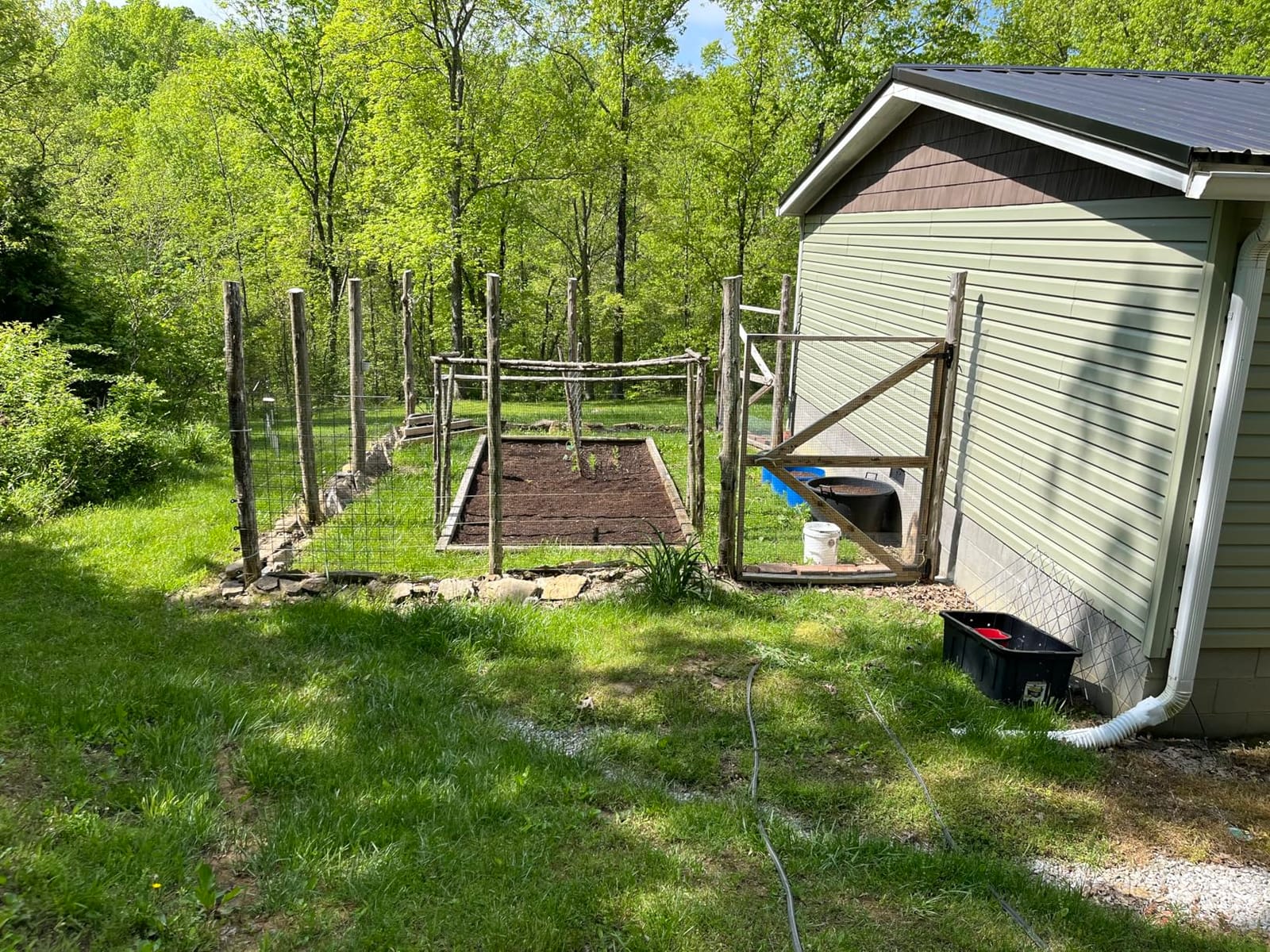
Durability reports are among the strongest in this group: one owner describes the wire holding up for two years against raccoons and returning for a second purchase. The insulators have a smooth surface, an anti-rust coating and sharp self-tapping threads, and the wire is rust and UV resistant enough to be installed, repaired, spliced and rewound over years of farm use.
The practical requirement is a drill. The socket tool drives the screw-in insulators with an electric drill or impact driver, so this is a fast-install kit for anyone with one and a slower afternoon for anyone without. No energizer, ground rod or posts are included.
Why visibility is a real feature
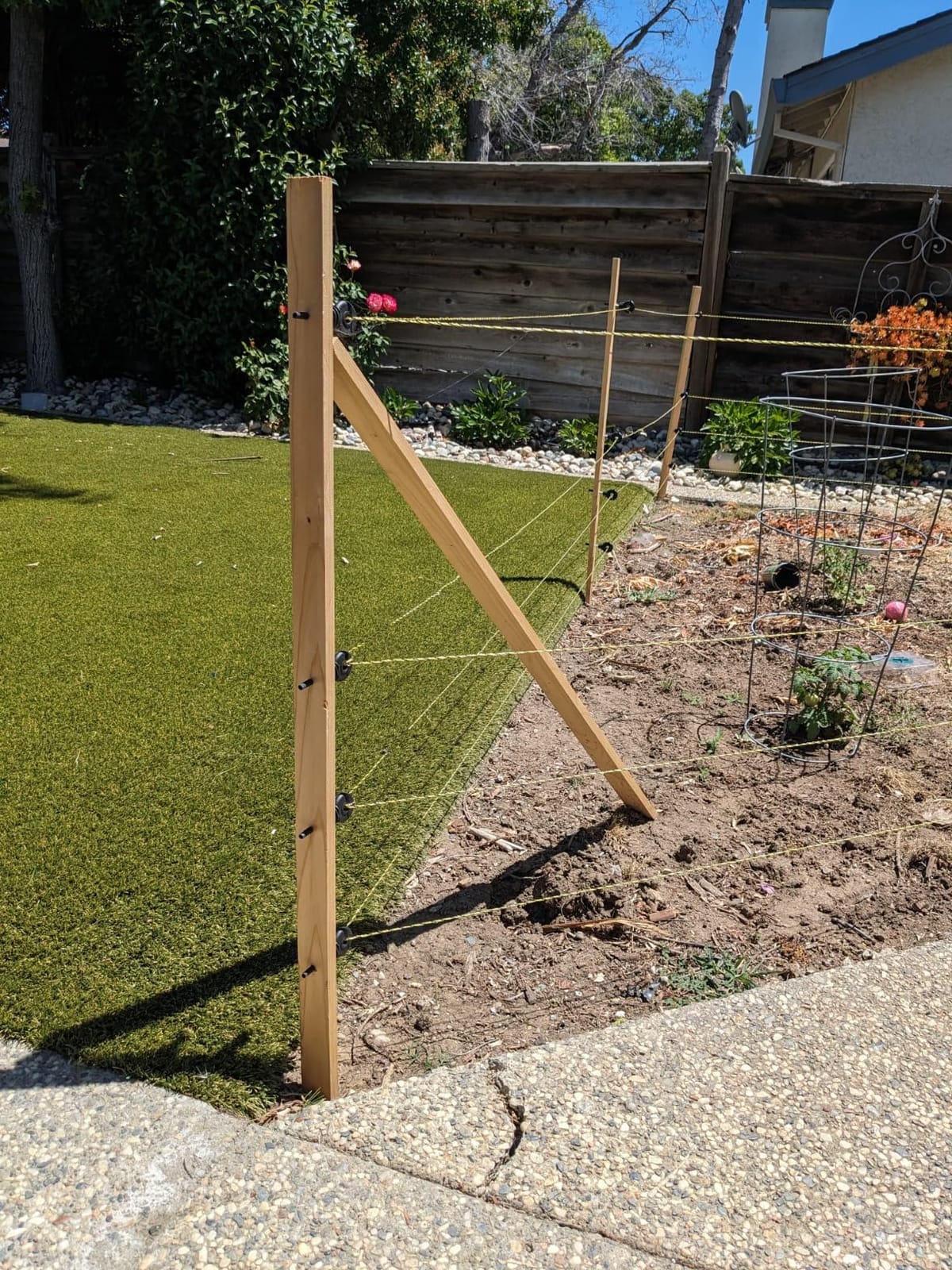
Most polywire is nearly invisible in grass and at dusk, which is a genuine hazard around children, pets and livestock. A bright yellow strand solves that at no cost in performance, and it also makes the fence line obvious to animals learning the boundary. For temporary paddock divisions that go up and come down, that visibility speeds up training.
When to choose this over the other wire kits
Pick this one for short to medium temporary runs where someone works near the fence, or where rust is the deciding factor after a season outdoors. Choose the Kanayu set when you need more than 1,000 feet in a single roll. Choose the Sweetude bundle when you want the most insulator rings per kit. All three are material-only, so the charger and ground system come out of the same separate budget line.
12. Sweetude 660 ft Poly Wire Kit: Best for Garden Enclosures
Sweetude Electric Fence Kit, 660 in Electric Fence Polywire 100 Insulators
660 ft of polywire
100 black insulator rings
6 stainless steel conductors
Gloves included
Pros
- 4.3 stars from 66 ratings with 68 percent five-star
- 100 insulators is the largest insulator count in a kit here
- Reported working for dog pens
- deer and wild boar exclusion
- Gloves included for safe installation
Cons
- Energizer
- ground rod and posts not included
- One verified review measured severe voltage drop along the run
The Sweetude Electric Fence Kit bundles a 660-foot roll of 0.12-inch polywire upgraded to 1/8-inch diameter with six stainless steel conductors, 100 black insulator fence rings, one electric fence insulator and a pair of gloves. The wire is stainless steel with anti-rust and UV resistance, and it works with electric fencing reels for roll-in, roll-out deployment.
One hundred insulator rings in a single bundle is the largest insulator count among these kits, and at 660 feet it covers a generous garden perimeter or a dog pen. The gloves are a small touch that matters more than it sounds like it should, because fitting many insulators by hand is slow and the self-tapping screws bite.
Owners rate it 4.3 stars from 66 ratings with 68% five-star and report it working for dog pens, deer exclusion in food plots and against wild boar in corn fields. The kit is compatible with most electric fence energizers and fence ring posts, so it slots into an existing setup without a specific brand match.
The voltage drop report worth reading
One detailed verified review measured voltage falling from 7,000 V at the energizer to under 60 V at the far end of the run, and attributed it to sparse metal filaments in the wire. That is the single most useful complaint in the whole roundup, because it describes the failure mode that catches every polywire buyer: the strand is installed correctly, the charger is working, and the fence still does nothing at the far end.
How to avoid that outcome
Keep runs short, keep the wire off the ground and vegetation, and splice cleanly so resistance does not build at every joint. Test at the far end rather than at the charger, with a voltmeter or a fence tester, before you trust the run. If you need more than 660 feet, add a second roll rather than extending this one, and treat any measured drop as a signal to shorten the span.
How to Choose an Electric Fence Kit in 2026
How many joules do you actually need? Joules measure the stored energy in each pulse, and that energy is what survives weeds, brush, moisture and poor connections on its way down the fence. Match the number to your fence length and your conditions, not to the marketing range. A 0.25 to 0.5 joule charger is genuinely sufficient for a small garden, a dog boundary or a short chicken run on clean posts. Poultry netting in the 160 to 170-foot range with a solar panel wants closer to 0.8 joules, which is where the SL-8 and S400 units in this roundup sit. Long polywire runs, dense vegetation or predator pressure from bears, deer and raccoons push you to 3 joules and above.
Which power source fits your site? Mains AC gives the most consistent output and no maintenance, but it needs an outlet at the fence line. Solar removes the wiring constraint entirely and is the right answer for remote paddocks and off-grid acreage, at the cost of depending on panel exposure. DC 12V sits between the two, running off a battery you recharge or a vehicle, and it is common in kits where the charger doubles as a portable unit.
What is the fence material made of? Electric netting is a physical mesh that stops animals physically, which is why it is the right choice for poultry and the wrong choice for goats. Polywire is a single visible strand that costs far less per foot and handles large perimeters well, but it relies on training rather than physical resistance. Electric tape is wider and more visible than polywire and is the usual choice for horses. High-tensile steel wire is the strongest option and the most expensive per foot.
Does the kit include an energizer? Six of the twelve kits reviewed here include one, and six do not. That single fact changes the real cost of the kit more than any other spec, so check the box list before you commit. A material-only kit makes sense if you already have a working charger. Otherwise, budget the charger, the ground rod, the insulated lead cable and a voltmeter as part of the purchase.
What are the downsides of electric fencing? There are real ones, and ignoring them leads to disappointment. An electric fence works by training, so an animal that has never encountered one may test it repeatedly before it learns. Vegetation touching the wire bleeds the pulse away and means routine mowing. A weak ground system makes the whole fence useless regardless of the charger. Power is a single point of failure, since one dead charger ends all containment. And for large animals such as horses and cattle, a strand alone is not a physical barrier, so many owners run a rail or netting alongside it.
For context on cost per linear foot, homesteaders regularly point out that a rigid 8-foot deer net runs into four figures for a small plot, which is the main reason people look at electric options in the first place. Electric fencing wins decisively on installed cost per foot and on install time, typically hours rather than days, but it wins only if the system is actually live.
Where you are deciding between a rigid panel perimeter and a hot wire, our guides to vinyl fence panels and aluminum fence panels cover the cases where a physical barrier is the better answer, and an electric strand is only ever a supplement to a real fence rather than a replacement for one.
Grounding and Installation: Why Fences Fail After Rain
Grounding is the single most common reason an electric fence stops working, and it is the part most kits leave incomplete. The energizer pushes current onto the fence wire, an animal completes the circuit by touching the wire and standing on the ground, and the current must travel back into the earth through the ground system. If that return path is weak, the shock is weak no matter how many joules the charger advertises.
Multiple sources agree on three properly connected ground rods as the working consensus, spaced several feet apart and joined by the same conductor used for the ground lead. Why three? More rods mean more surface area in contact with soil, and a lower overall resistance. The timing matters as much as the count, because wet soil conducts far better than dry soil, which is why a fence that performs in spring can disappoint in an August drought and a well-watered winter soil will make an under-grounded system look fine.
Does the fence have to make a complete loop? No. There are two ways to return the current. In a full loop, the live wire runs out and a second, non-live wire returns to the charger, which is the most efficient arrangement and the one to use on long perimeters. In an electrode-return system, the fence is a single strand and the current travels through the animal and into the earth to the ground rods, then back to the charger’s earth terminal. Electrode return is normal for portable setups and poultry runs, and it works, but it puts more demand on the ground system, which is exactly why grounding failures show up there first.
The grounding symptoms listed below come up again and again in owner feedback, and each one has a specific cause and fix.
Symptom: fence goes weak after rain. Cause: waterlogged soil can temporarily raise ground resistance, or more often rain has raised the load by wetting weeds and grass that are now stealing the pulse. Fix: mow a clear strip along the wire and check the ground rod connections for corrosion.
Symptom: no shock anywhere. Cause: an ungrounded system is the usual answer, since current has no return path. Fix: install and connect the ground rods, and confirm the ground lead is actually attached to the energizer earth terminal rather than to a live post.
Symptom: shock is strong at the charger and gone at the far end. Cause: voltage drop along a long or thin run, a poor splice, or vegetation loading. Fix: measure at the far end with a voltmeter, shorten the run, and re-splice cleanly.
Symptom: one section of fence is dead. Cause: a broken or contaminated wire, a post touching the strand, or a bad insulator letting the wire leak to a post. Fix: isolate the section, then check insulators and hardware at each post.
Symptom: birds perch on the netting and drain it. Cause: a grounded conductive net gives birds a path to ground. Fix: run a top wire insulated above the net or use a top line on separate insulators so perching birds do not complete the circuit.
Before you trust any new installation, test it end to end with a voltmeter or fence tester rather than a fence light, and test again at the farthest point from the charger. That single habit catches most failures before the animals find them.
Safety and Legal Rules for Electric Fencing in 2026
Safety is the reason to read the fine print rather than skip it. A correctly installed energizer delivers a brief pulse that trains an animal to avoid the boundary, and that pulse is designed to be unpleasant rather than injurious. The risks come from installation errors, not from the equipment working as intended.
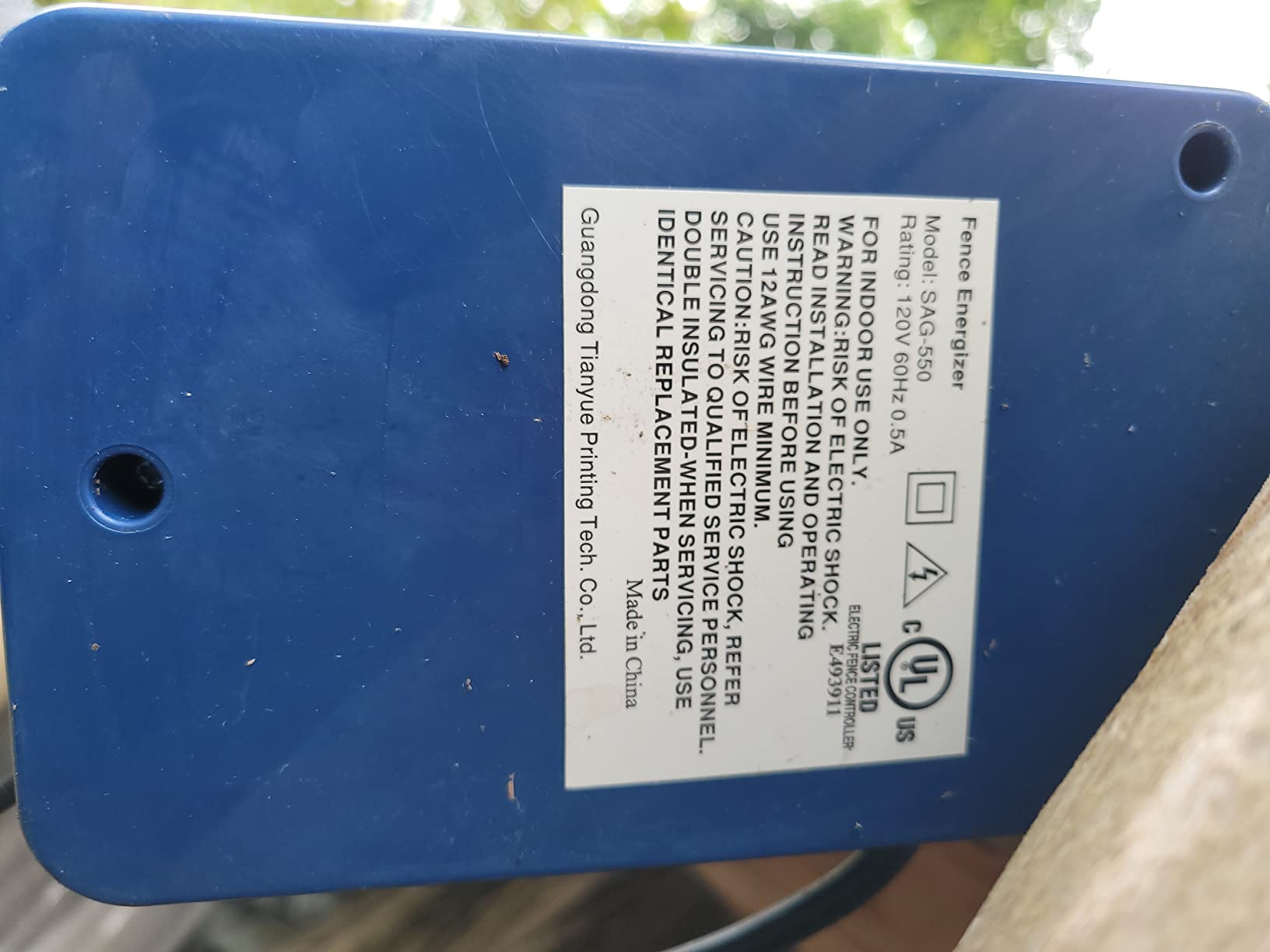
Check for a safety certification. Look for a UL or ETL listing on the energizer. A listed unit has been evaluated for the specific failure modes that matter, including surge protection and isolation. Several reviews in this roundup report energizer failures after a few weeks, and in every one of those cases a listed unit with a stated outdoor rating would have been the safer specification.
Post warning signs. Signs at entry points are standard practice, and two of the kits reviewed here include one: the RentACoop net and the VEVOR kit. If you build a fence from wire and insulators, buy signs with your first order rather than later.
Keep children away from the fence line and the energizer. A fence is low, portable and often in play areas, so supervise small children around it and mount the energizer out of reach on a post or wall rather than at child height.
Animals are safe with correct installation. Chickens, goats and horses are not harmed by a properly installed electric fence, which is a frequent question from first-time buyers. The danger is a fence energizer mounted in an area where animals can chew the lead cable or a low strand that a small animal can trap its beak or legs in, so run the wire high, keep the lead cable out of reach, and use a fence with mesh openings large enough that no animal can get a head through.
Know your local rules. Electric fencing is legal for most agricultural and property use, but signage, placement and sometimes permits are controlled locally, and rules for fencing that affects migratory deer or hunting access are stricter. Check your county or municipal ordinances before building, particularly if the fence crosses a boundary others use.
Frequently Asked Questions
How many joules is a good electric fence?
Match joules to fence length and ground conditions, not to a marketing range. A 0.25 to 0.5 joule charger handles a small garden, dog boundary or short chicken run on clean posts. Poultry netting in the 160 to 170 foot range with a solar panel wants close to 0.8 joules. Long polywire runs, heavy vegetation or bear and deer pressure need 3 joules or more.
Do I really need three ground rods for an electric fence?
Three properly connected ground rods is the widely accepted setup, spaced several feet apart and joined with the same conductor as the ground lead. More rods mean more soil contact and lower resistance. A single rod can work in damp soil, but fences that go weak after rain are almost always a grounding problem rather than a charger problem.
Does an electric fence have to make a complete loop?
No. A full loop runs a live wire out and a separate return wire back, which is the most efficient arrangement for long perimeters. An electrode-return system uses a single strand, with the current travelling through the animal into the earth to the ground rods. Electrode return is normal for portable fences and poultry runs, and it depends more heavily on a solid ground system.
Can chickens be shocked by an electric fence?
A properly installed electric fence trains animals to avoid the boundary and does not injure poultry. The risks come from installation mistakes: a low strand a bird can trap, or a lead cable within reach of chewing. Run the wire high, keep cables out of reach, and check that no mesh opening is small enough for a head to catch.
What are the downsides of electric fencing?
An electric fence works by training, so untested animals may push through repeatedly. Vegetation touching the wire steals the pulse and means routine mowing. A weak ground system makes the fence useless regardless of the charger, and a dead charger ends all containment at once. For horses and cattle a strand is not a physical barrier, so many owners run a rail or netting alongside it.
What are the best electric fence kits for poultry?
For a complete first-time setup, the Premier 1 PoultryNet Plus is the most complete kit reviewed, with netting, posts, a solar energizer, a ground rod and a tester in one box. For the largest run, the RentACoop 48 by 168 net covers over 1700 square feet with 902 owner ratings behind it, though its energizer is sold separately. The Starkline 48 inch kits add a bundled solar or mains energizer to a 164 foot net.
The Verdict: Which Electric Fence Kit Should You Buy?
For a backyard flock starting from nothing, the Premier 1 PoultryNet Plus is the best electric fence kit in 2026 because it is the only one in this roundup that arrives with netting, posts, a solar energizer, a ground rod and a tester in a single box, and it holds a 4.6 average across 126 ratings. For a larger poultry run, the RentACoop 48 by 168 net gives you 1,700 square feet of coverage and the largest review base here, provided you budget for a separate charger and ground rod. For rotational grazing with cattle, sheep, goats or trained horses, the Gallagher Smart Fence 2 puts 328 feet of four-strand fence in a 16-pound package.
For goats, gardens and beehives, the Starkline 35 by 164 all-in-one solar kit moves between the paddock and the vegetable beds. For anyone building strand wire by hand, the Kiouposy yellow polywire has the strongest owner satisfaction in the group, and the Kanayu 1640-foot set covers the longest perimeter. For a mains-powered garden or dog boundary, the MorningRo kit pairs a 0.25-joule charger with 985 feet of real fence wire.
Whatever you pick, budget the ground system and the grounding rods as part of the fence, not as an extra. Grounding is what decides whether the pulse reaches the far end of the run, and it is the difference between a fence that works and one that stops working the first wet week.