
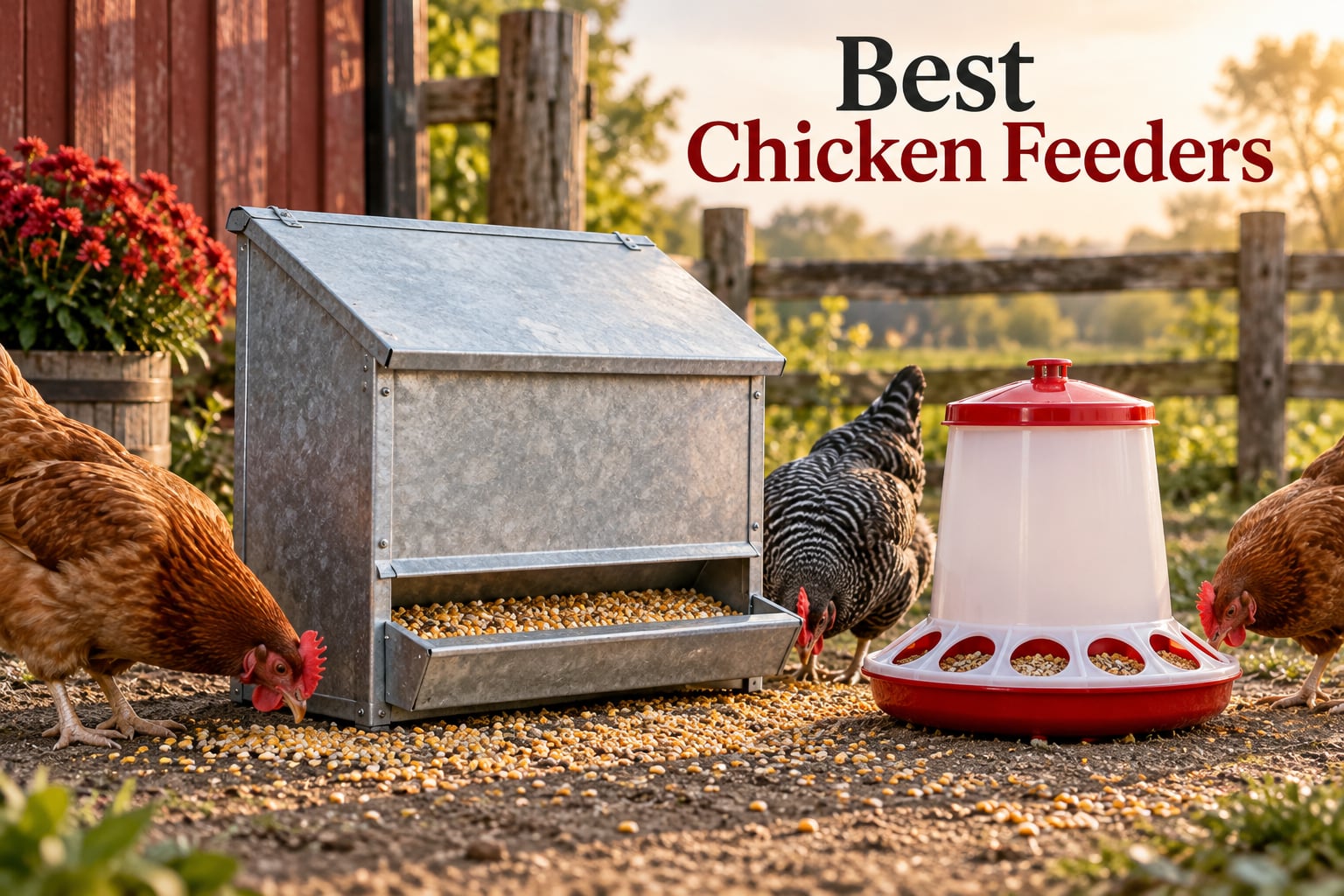
The best chicken feeder is a gravity-fed, no-waste hopper or a treadle feeder that keeps feed dry, off the ground, and out of reach of rodents and wild birds. For most backyard flocks, a port-style hopper with a locking lid is the easiest win. Treadle feeders are worth it when rats are a genuine problem.
I have kept hens for the last several years and have gone through more feeders than I want to admit, from a rained-in plastic bucket to a 50-pound hopper that turned out to be far too much feed for six birds. The failure mode is almost always the same: feed gets spilled, the spilled feed attracts rats and wild birds, and disease follows. Pick a feeder that fixes the spill problem first and everything else gets easier.
This roundup covers twelve of the best chicken feeders for 2026, from small port feeders that cost very little to galvanized steel hoppers built for flocks of twenty birds and up. I looked at capacity, material, how well the feeding ports stop feed being billed out onto the ground, and what happens in real weather rather than on a product page.
We also spend time on the questions that rarely get answered honestly: how many hens one feeder really feeds, whether treadle feeders are genuinely rat proof, and how to train a flock that refuses to step on anything new. If you are still choosing housing, start with our best chicken coops guide first, then come back here for the feeder.
Table of Contents
Top 3 Picks for Best Chicken Feeders in 2026

ZenxyHoC 6-Port No-Waste Feeder
- 6 feeding ports
- No-waste downward opening
- Rainproof cover
- Easy to install

OverEZ 50 lb Gravity Feeder
- 50 lb capacity
- Three feeding ports
- UV-resistant plastic
- Easy-refill top

Grandpa’s Feeders 20 lb Treadle
- Treadle-activated lid
- Galvanized steel
- Anti-flick grill
- Feeds 6 chickens 10 days
My first stop for most people is the port feeder, because it is the least fiddly to introduce and the cheapest mistake to make. My pick for flocks where rats are already a known problem is the treadle. And if you want one thing that solves both problems at once, a locking galvanized hopper is the middle path.
The 12 Best Chicken Feeders Compared (September 2026)
| Product | Specifications | Action |
|---|---|---|
| ZenxyHoC 6-Port No-Waste Feeder |
|
Check Latest Price |
| OverEZ 50 lb Gravity Feeder |
|
Check Latest Price |
 ZINZINULER Feeder and Waterer Set ZINZINULER Feeder and Waterer Set |
|
Check Latest Price |
| Grandpa’s Feeders 20 lb Treadle |
|
Check Latest Price |
 RentACoop 25 lb Metal Trough Feeder RentACoop 25 lb Metal Trough Feeder |
|
Check Latest Price |
 Little Giant 60 lb Dome Feeder Little Giant 60 lb Dome Feeder |
|
Check Latest Price |
 RentACoop 40 lb Treadle Feeder RentACoop 40 lb Treadle Feeder |
|
Check Latest Price |
 Omlet 12 lb No Waste Feeder Omlet 12 lb No Waste Feeder |
|
Check Latest Price |
 Pawaboo 55 lb Feeder Pawaboo 55 lb Feeder |
|
Check Latest Price |
 Tgeyd 95 lb Feeder Tgeyd 95 lb Feeder |
|
Check Latest Price |
 GADFISH 55 lb Feeder GADFISH 55 lb Feeder |
|
Check Latest Price |
 Tgeyd 30 lb Feeder Tgeyd 30 lb Feeder |
|
Check Latest Price |
Capacity is the first column I check, and the number printed on the box is not the number that matters. What matters is how long the feed sits in the hopper, because feed that sits for weeks gets damp, goes mouldy, and advertises its location to everything with teeth. Rules of thumb for sizing are in the capacity section below.
1. ZenxyHoC 6-Port No-Waste Feeder – Best Overall Chicken Feeder
Chicken Feeders No Waste, DIY Automatic Poultry Feeder – 6 Ports Red
6 feeding ports
No-waste downward opening
Rainproof cover with rubber gasket
BPA-free plastic
Pros
- Feeding ports cut spillage
- Rainproof cover with gasket
- Includes hole saw and drill
- Highest review volume in this roundup
Cons
- Needs drilling into your own container
- Plastic can go brittle in harsh weather
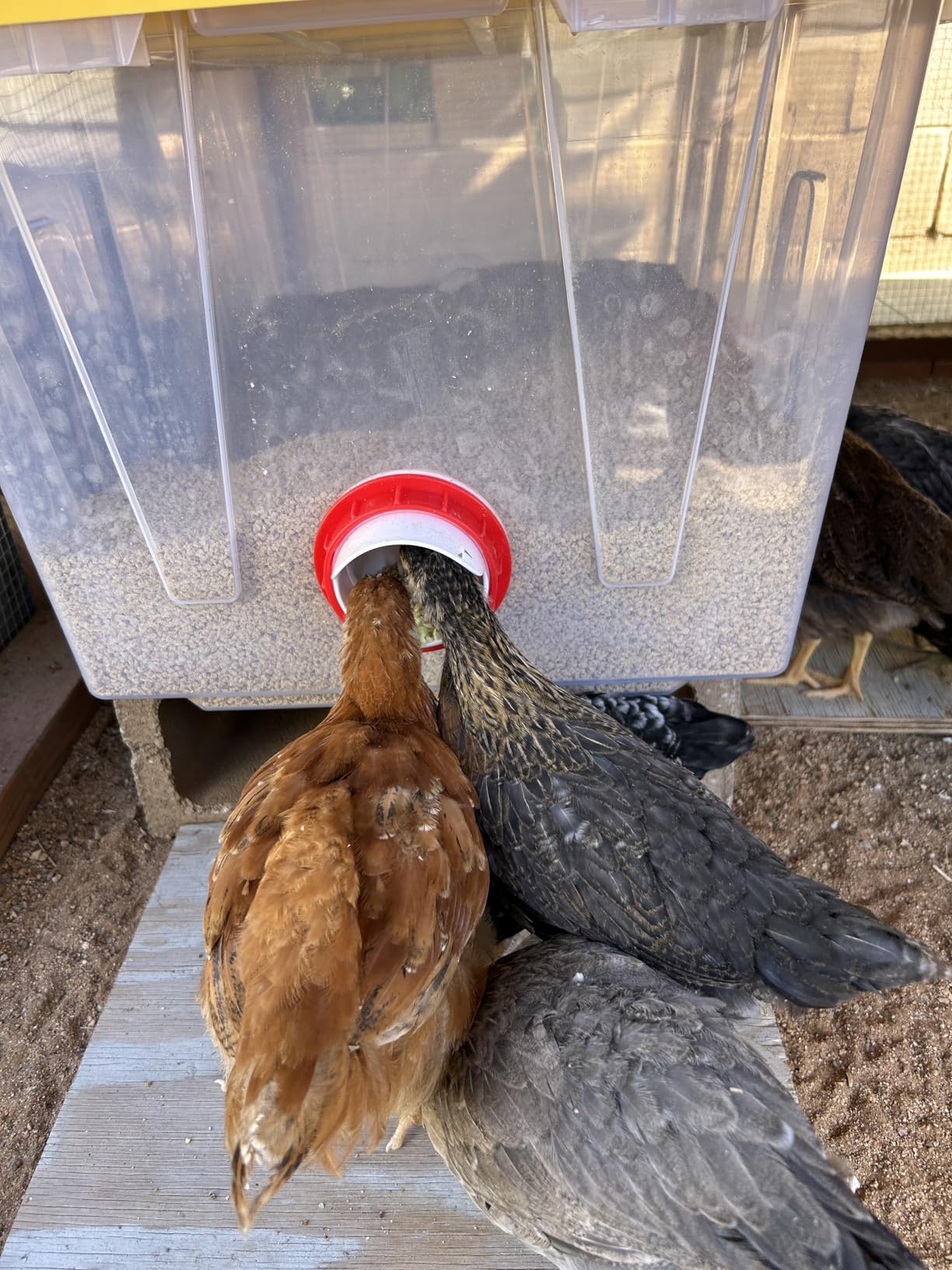
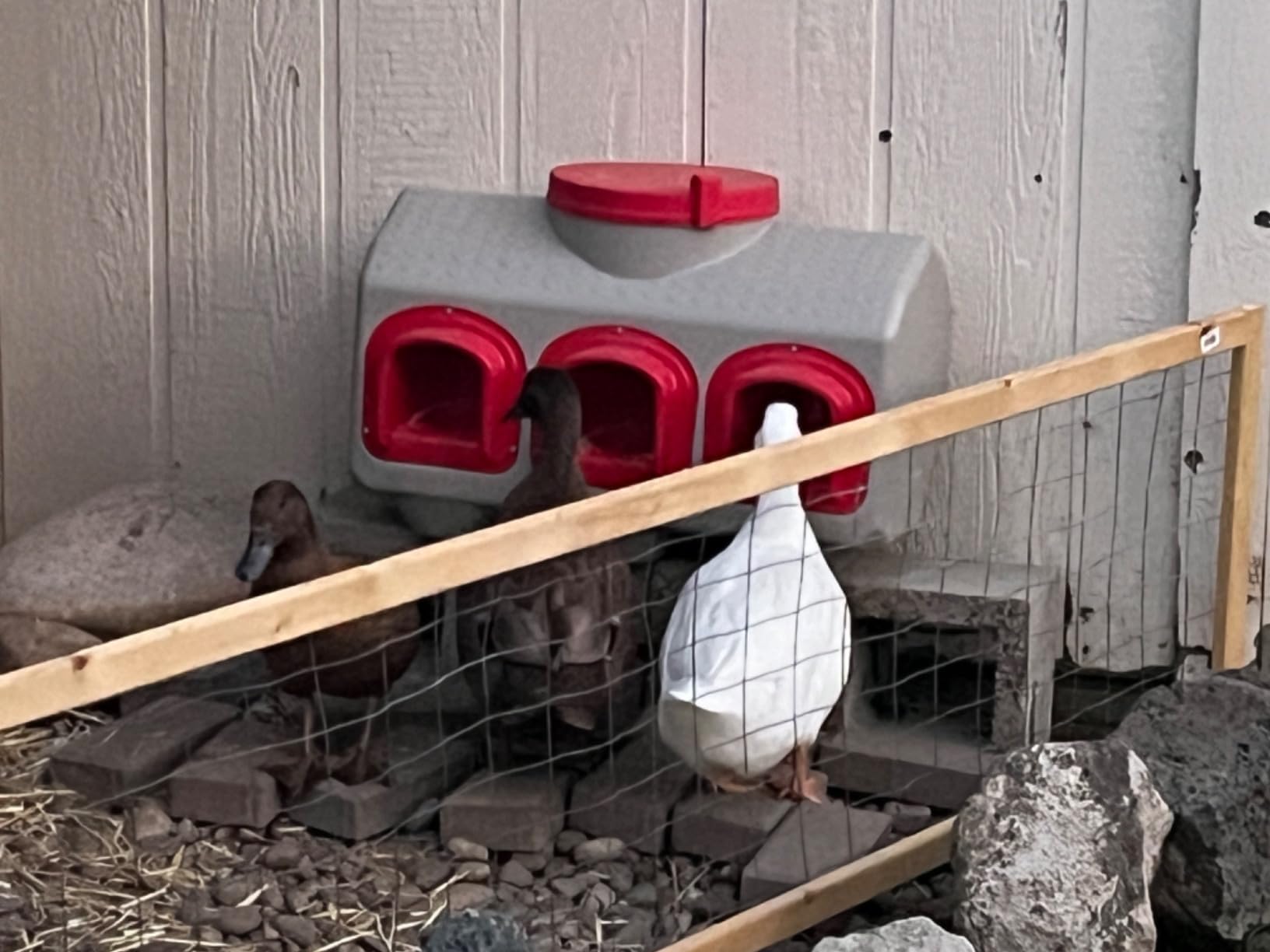
This is the feeder I recommend to anyone starting out. The design is simple: a tray that screws onto a container you supply, with a downward-angled feeding opening that means a hen reaching in cannot fling feed sideways onto the ground. In a six-hen run that difference is the whole ballgame.
What sold me was the number of ports. Six birds can eat at once, so you do not get one dominant hen parking herself on the feeder and barring the rest. My own flock is small and mixed, and the wider port spacing stopped the crowding I used to get with a single-port bucket.
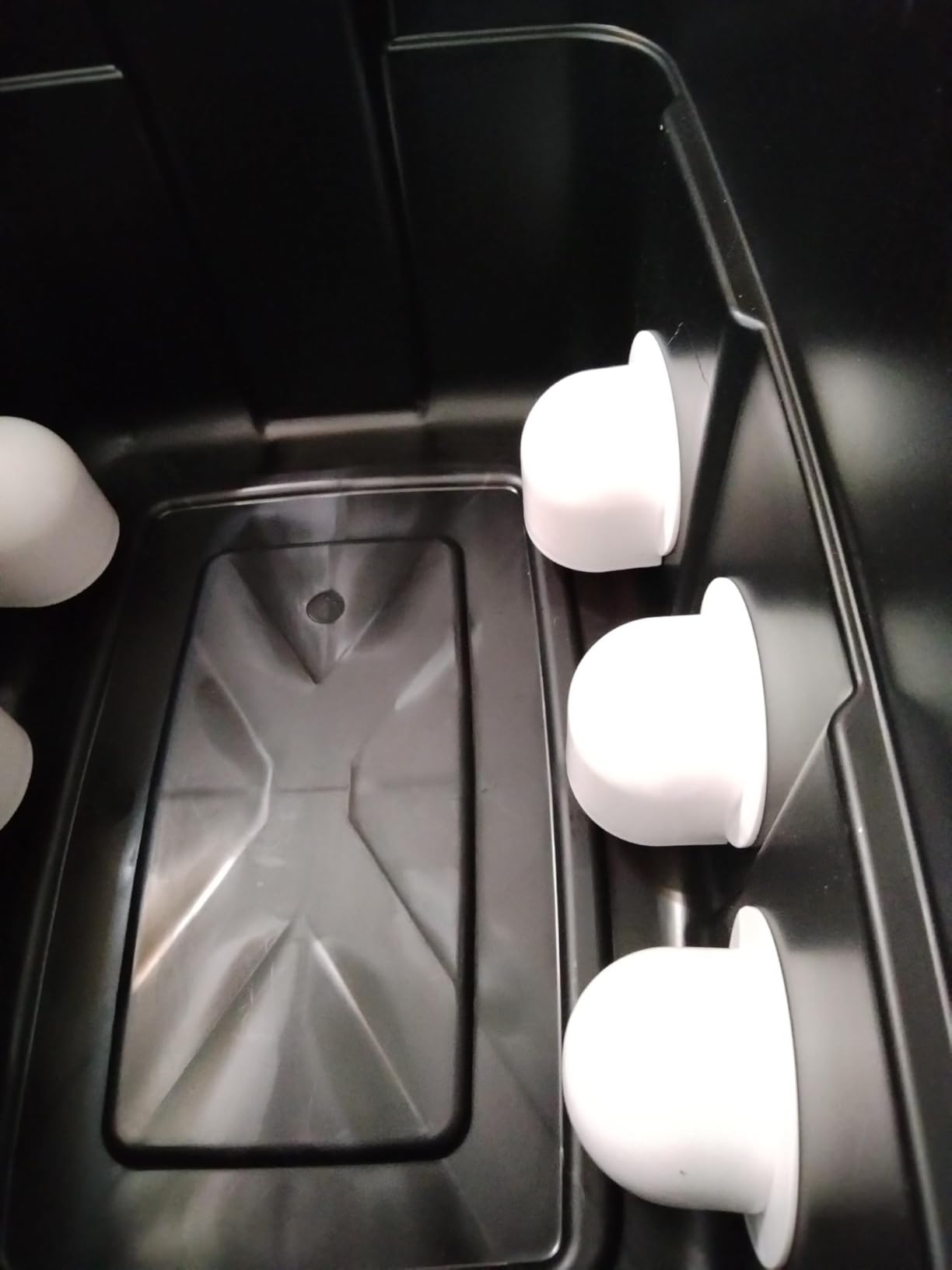
Installation is a drilling job, and I want to be straight about that. A hole saw and a drill bit come in the box, which is better than sourcing your own, but you still need a container with a flat enough lid to seal properly. I drilled a standard food-grade bucket and the gasket on the rainproof cover closed cleanly afterwards.
Feed flow is gravity-fed, so it needs no electricity and no counterweight to adjust. The one thing I would change is the material. BPA-free plastic is fine for a shaded run, but a feeder in full sun for years will eventually look chalky and may crack in a hard frost, so I would not build a permanent setup around it.
Who this feeder suits
This suits a backyard flock of roughly four to ten hens, anyone who wants waste reduction without paying for a steel hopper, and anyone comfortable with a small one-time drilling job. It also works well as a secondary feeder placed away from the main station, which is my preferred fix for a bully hen.
Where it falls short
It falls short on long-term outdoor durability, on total capacity, and for anyone who wants zero assembly. It also does nothing about rodents, since the feed sits accessible in an open container. Treat it as a waste-control tool rather than a security device.
2. OverEZ 50 lb Gravity Feeder – Best for Large Flocks
OverEZ Chicken Feeder – Holds 50 Pounds of Feed – Inside or Outside Hen Coop – Large Gravity Fed Automatic Poultry Dispenser – No Waste Rainproof Design
Holds 50 pounds of feed
Three feeding ports
UV-resistant BPA-free plastic
Port overhang stops water runoff
Pros
- Large 50 lb capacity
- Easy-refill wide mouth top
- UV-resistant plastic
- Overhanging ports shed water
Cons
- Bulky for small coops
- Does not deter determined rodents
This is the hopper I would buy for a flock of ten to twenty hens that eats a proper layer ration every day. Fifty pounds sounds sensible until you do the maths, and then you realise it is close to three weeks of feed for a dozen birds. That is a lot of time for feed to sit in a hopper.
The upside is refill frequency. I fill it once a week and forget it, which matters in winter when everything is frozen solid and the last thing I want is a dawn trip to the coop with a bucket. The wide-mouth top takes a full scoop without a funnel or a funnel-less mess down my boots.
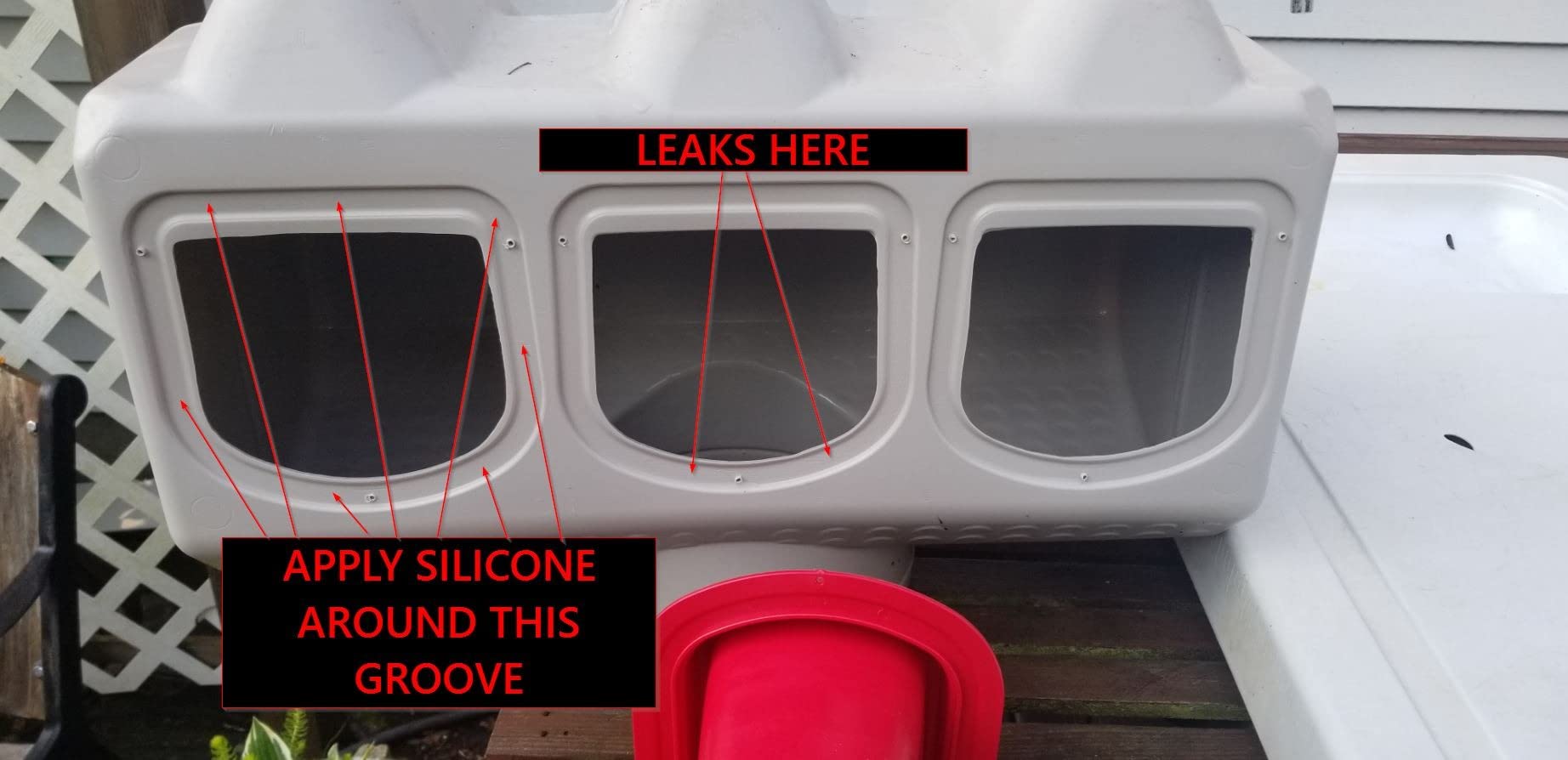
The port overhang is a detail I appreciate more than I expected to. It keeps rainwater running off the outside of the port rather than down into the feed, which is the difference between feed that survives a wet week and feed that goes mouldy in three days. The angled gravity flow means it empties down to the last few pounds rather than leaving a dead layer behind.
UV-resistant plastic is the right call for a feeder meant to live outside permanently. It is a large box, measuring 13 by 17 by 23 inches, so measure your coop floor before committing. Three ports is not a lot for fifteen birds, and I would pair it with a second port feeder if bullying shows up.
Who this feeder suits
This suits anyone with ten hens or more, or anyone with a long driveway and a real dislike of daily refills. It also suits flocks that free-range hard and are eating noticeably more than a housed flock would.
Where it falls short
It falls short for small flocks, where the 50-pound capacity becomes a problem rather than a feature. It is plastic, so it will not stop a determined rat, and three feeding ports will not keep twenty birds from crowding. If pests are your main worry, look at a treadle or a hopper with a locking lid instead.
3. ZINZINULER Feeder and Waterer Set – Best All-in-One Starter Set
Automatic Port Chicken Feeder and Cup Waterer Set
Feeder holds 16 lbs of feed
Waterer holds 3 gallons
Port feeder reduces waste
Hang or wall-mount
Pros
- Feeder and waterer in one set
- Port design reduces waste
- Extra spare parts included
- Easy to assemble
Cons
- Nipple line can leak at the nut
- Hanging hooks can flip under weight
If you are setting up a coop from scratch and have not chosen your equipment yet, this set removes one decision. You get a sixteen-pound port feeder and a three-gallon cup waterer with a nipple option, and both can hang from the same sort of hardware.
The feeder side is the part I care about, and it performs like the other good port feeders: feed drops only as the hen pulls at it, and the port lip keeps the rest in. Sixteen pounds is a sensible fortnight of feed for five or six hens, which lands in the useful middle rather than either extreme.
Assembly took me under ten minutes with no instructions beyond the parts themselves, and the box includes spare hardware, which is genuinely useful because these feeders lose a hook sooner or later. It is also 4.78 pounds, so it is substantial enough that wind does not swing it around.
Honest word on the waterer: the nipple line needs the nut tightened properly or it will weep, and the cups collect debris that you need to clear weekly. A few owners report that the hanging hooks can flip when the bins are heavy, so I hang it from a fixed bracket rather than a loose hook.
Who this feeder suits
This suits first-time keepers building one run from nothing, and anyone who wants feeding and watering hung in the same place. It also suits a flock small enough that a twelve-pound feed store is a comfortable refill rhythm.
Where it falls short
It falls short if you want the two functions separated, or if you already have a waterer you are happy with. The 4.2 rating reflects that, and a few buyers report slow email support when something arrives damaged, which is worth knowing before you rely on a warranty.
4. Grandpa’s Feeders 20 lb Treadle – Best Rodent-Resistant Treadle
Grandpas Feeders Automatic Chicken Feeder – 20 lbs No Waste Poultry Feeder, Rat Proof & Rodent Proof Treadle Chicken Feeder, Galvanized Steel with Lid, Feeds 6 Chickens up to 10 Days
20 lb galvanized steel capacity
Treadle-activated lid
Anti-flick grill
Full coverage weather-proof lid
Pros
- Treadle keeps the lid shut when no hen is eating
- Galvanized steel lasts decades
- Anti-flick grill cuts waste
- 30-year brand history
Cons
- Heaviest unit in the range at 10 pounds
- Metal heats in direct sun
- Flock needs training to use it
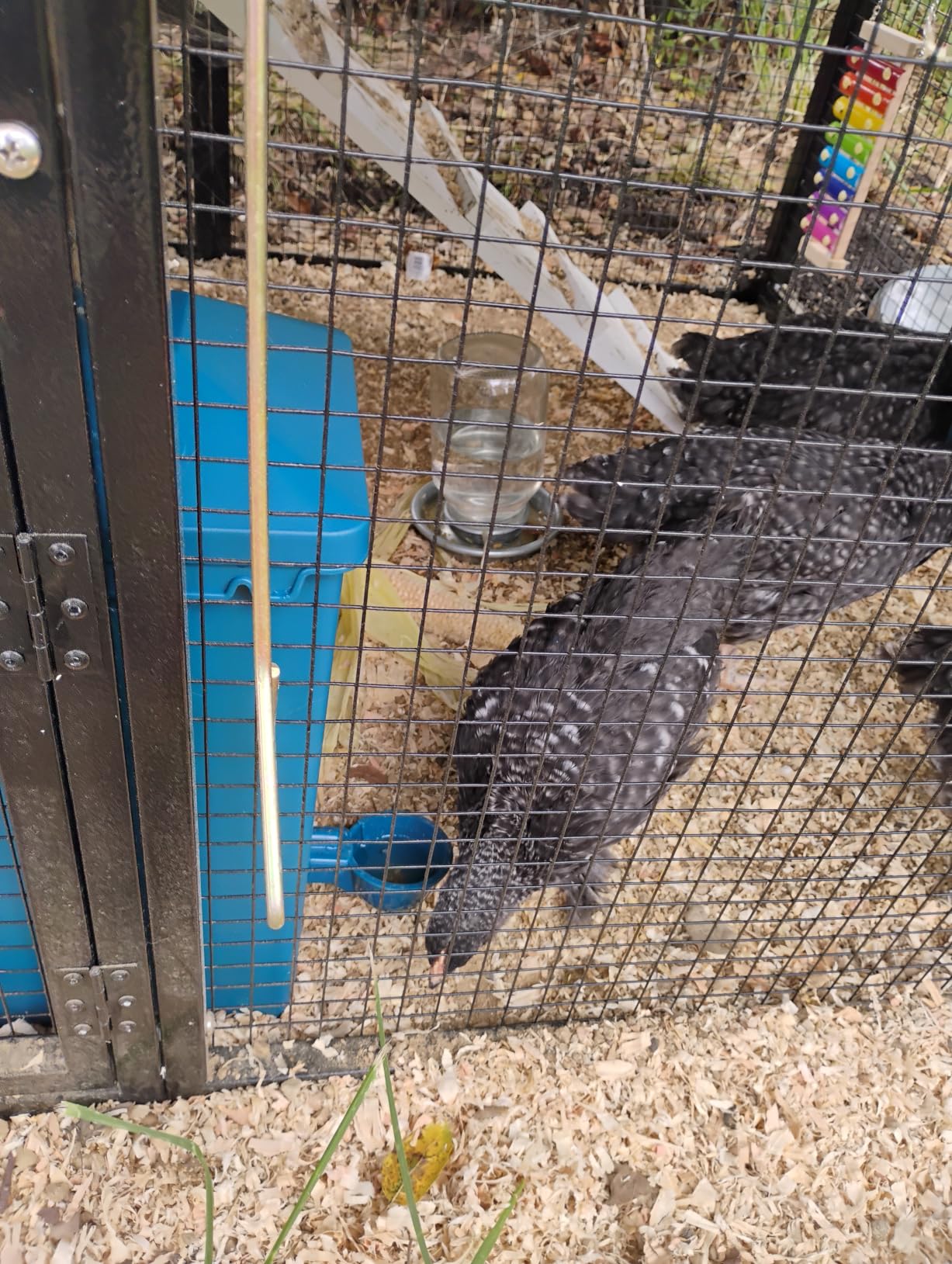
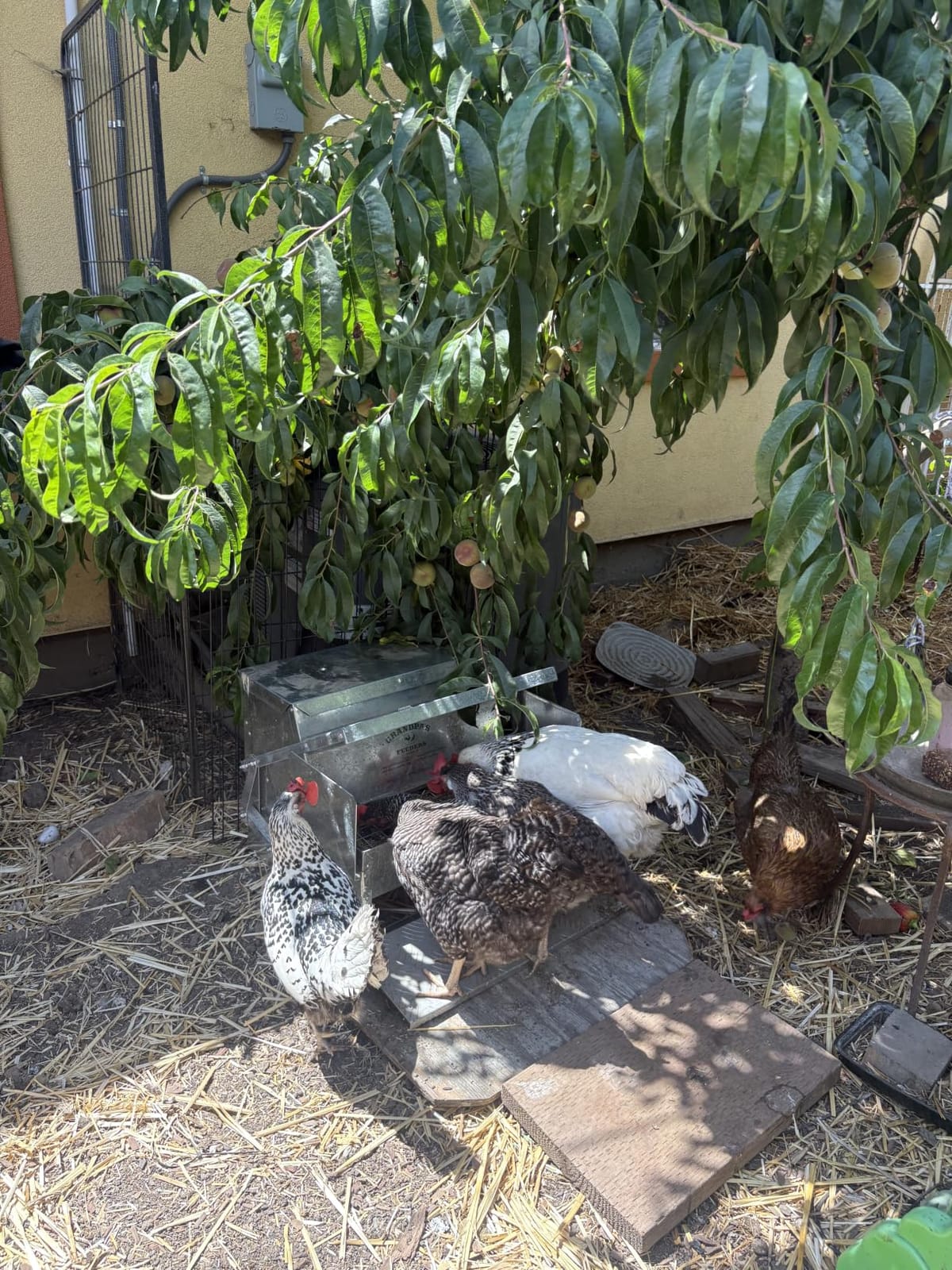
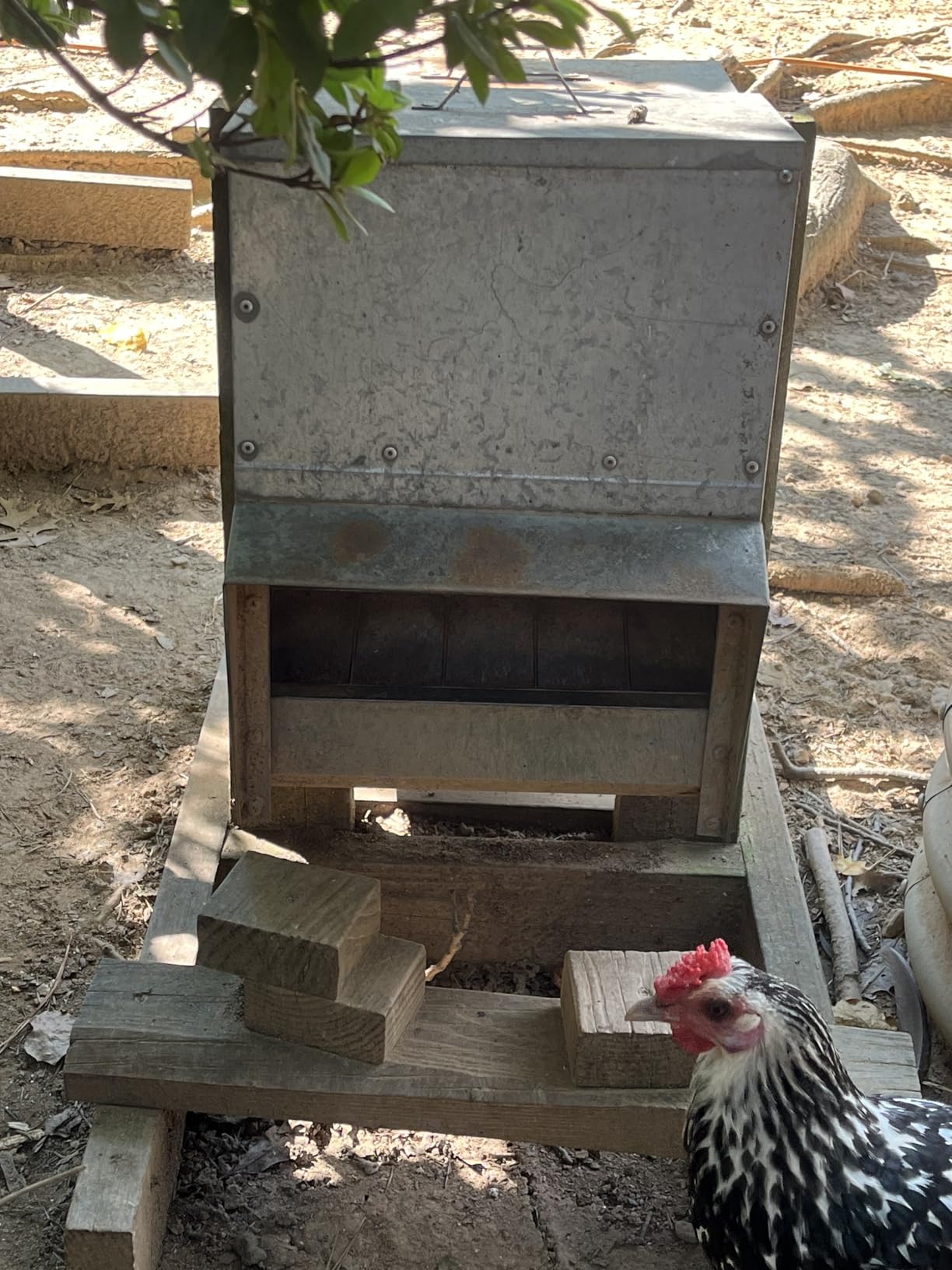
This is the treadle I would put in a run with a known rat problem, and it is the design most people mean when they say a rat proof chicken feeder. The lid only lifts when a hen stands on the pedal at the front. No weight on the pedal, no opening, no access.
Manufacturer figures put it at feeding six chickens for up to ten days on a full hopper, which is a genuinely useful number when you are trying to plan a weekend away. On the BackYard Chickens forum, the manufacturer states the medium non-soft-close model is the best value in the range, which is a reasonable steer for most flocks.
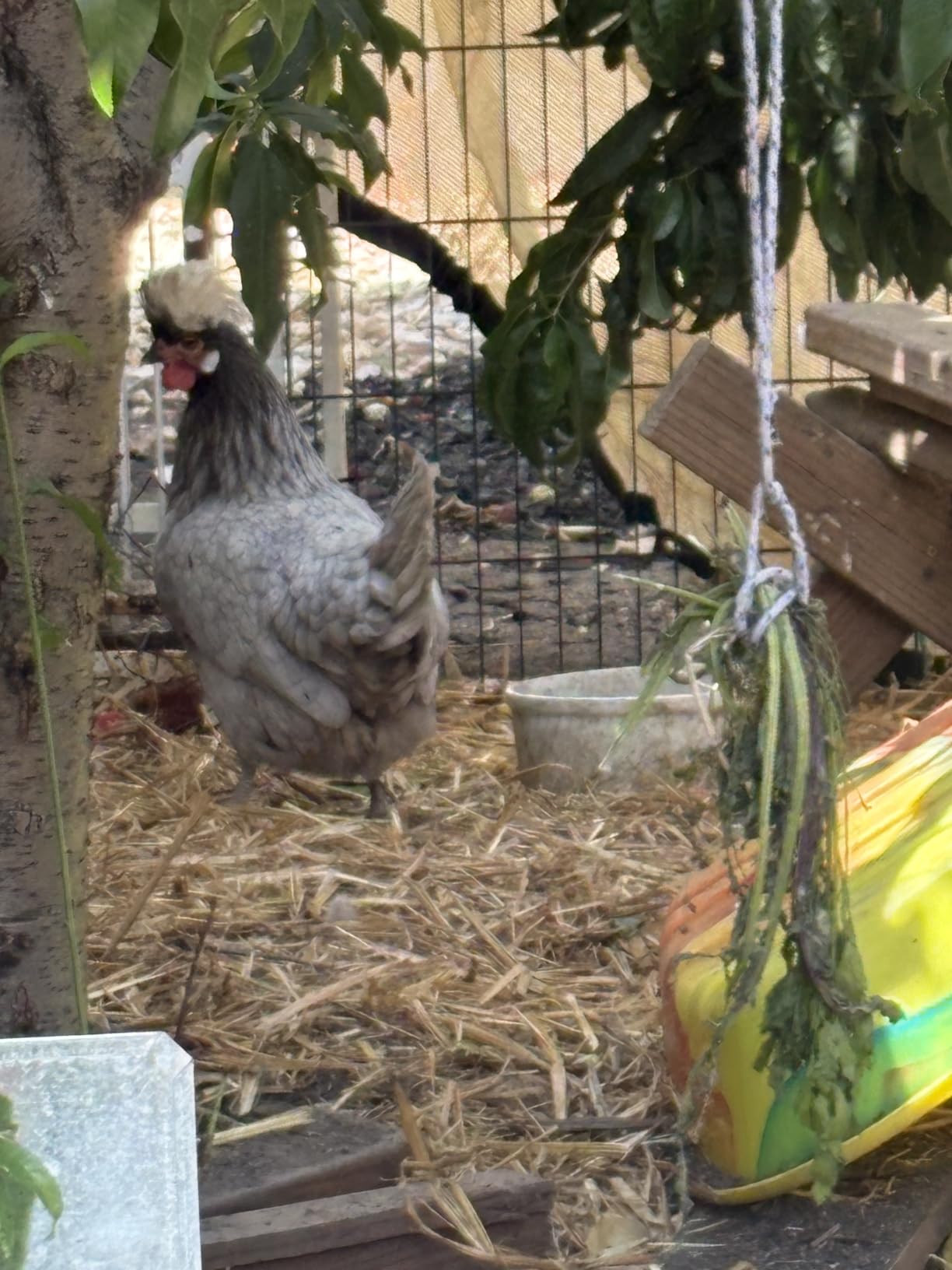
The galvanized steel is the real long-term argument. It will not crack, it will not fade, and the same unit can live outdoors for years. The built-in side guards are there because birds can injure themselves on sharp sheet metal, and that is the kind of detail that separates a real product from a marketplace copy.
The anti-flick grill is what keeps feed in the trough instead of on the ground. Without it, hens flick feed sideways while eating and you are back to the same waste problem every feeder type is supposed to solve. It is ten pounds empty, so plan where it goes before you lift it.
Who this feeder suits
This suits a flock of four to eight hens in an area with rats or squirrels, and anyone who plans to travel for a few days at a time. It also suits a long-term build, where a feeder that survives ten winters is cheaper than replacing plastic every three.
Where it falls short
It falls short on weight and on first-week patience. Some hens refuse to step on it without a week of training, and the metal gets hot in direct sun, so shade it in summer. It is also the priciest single feeder in this roundup, and forum owners debate whether the premium is always worth it.
5. RentACoop 25 lb Metal Trough Feeder – Best in Rainy Climates
RentACoop 25lb Gravity-Fed Metal Trough Feeder with Lid & Rain Cover
25 lb galvanized capacity
Removable rain hood
Side view window for feed level
Adjustable interior grate
Pros
- Galvanized sheet metal with stainless screws
- Removable rain hood sheds water
- Window shows feed level at a glance
- Adjustable grate suits different birds
Cons
- Can arrive dented in transit
- Metal gets hot in direct sun
- Not suitable for chicks
If you are in a wet climate, a removable rain hood is worth more than any other feature on this list, and this is the feeder that has one. The hood lifts off in summer and snaps back on when the weather turns, which stops the persistent damp that ruins feed in a wet week.
The side window is the feature I did not expect to like as much. Instead of lifting the lid and looking down into a dark box, you glance sideways and see how much feed is left. On a wet morning with a flashlight in one hand, that is genuinely useful.
Galvanized sheet metal with stainless steel screws is a proper outdoor specification, and stainless screws matter more than they sound, because ordinary screws are the first thing to rust and seize on a metal feeder. The magnetic lid holds shut in wind without a latch that can warp or break.
The adjustable interior grate lets you change the gap for different birds, which matters if you are mixing sizes. It is rated for medium breeds and holds 25 pounds, and there is a 10-pound version in the same range if your flock is on the small side.
Who this feeder suits
This suits a wet coastal or high-rainfall run, a flock of five to ten hens, and anyone who does not want to guess how much feed is left. It also suits anyone keeping a mixed flock, because the grate adjusts as birds grow.
Where it falls short
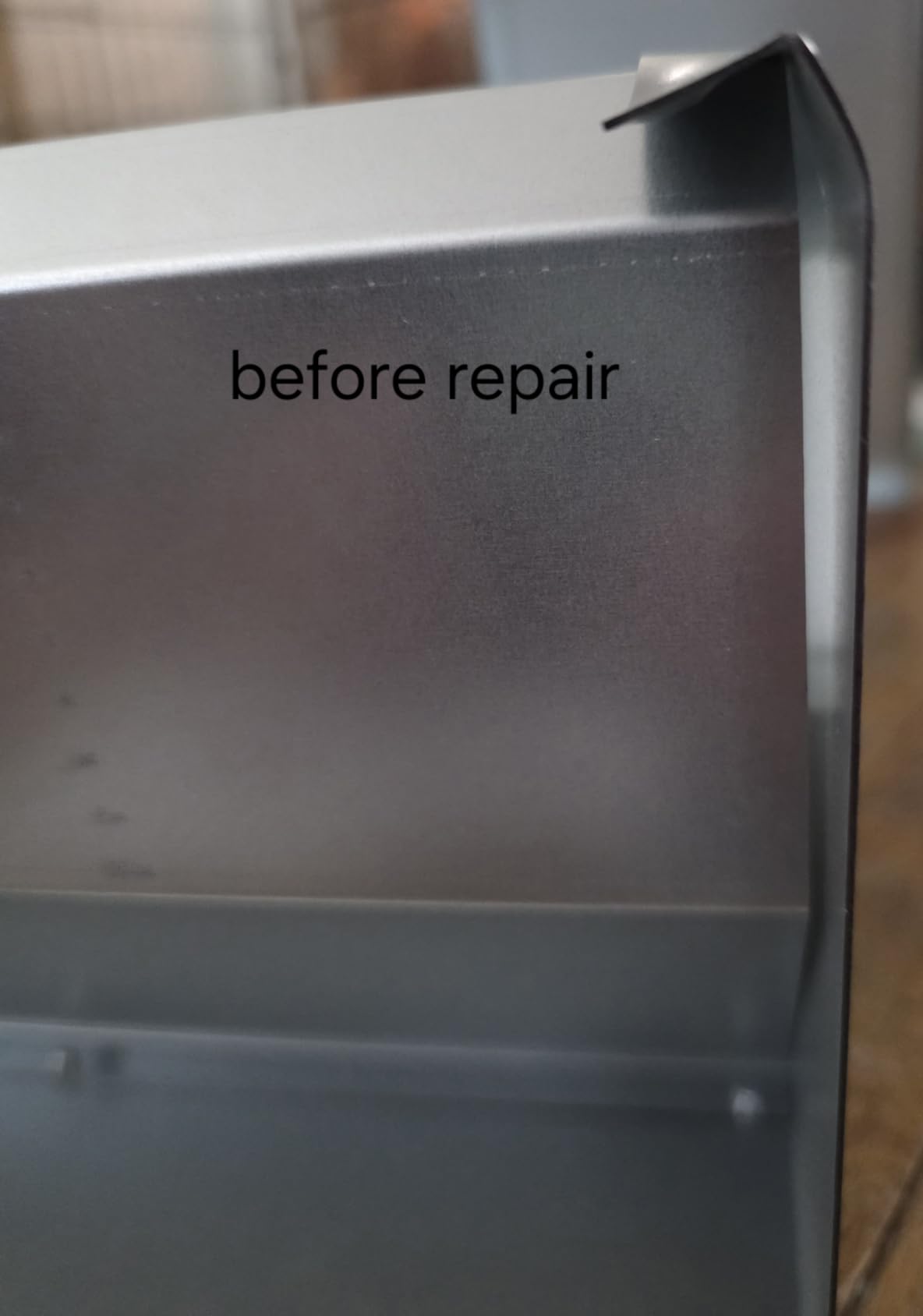
It falls short for chicks, which cannot reach a trough-style feeder, and for anyone expecting rodent protection, since gravity feed is always available. Some owners report feed flow stopping after long use when fines compact at the outlet, and metal arrives with dents often enough that owners mention it.
6. Little Giant 60 lb Dome Feeder – Best for Feed-Level Visibility
Little Giant® Plastic Dome Feeder | Heavy Duty Plastic Gravity Fed Poultry Feed Container Tank | Backyard Poultry for Hobbyists, Farmers and Ranchers | 60 LB
60 lb capacity
Transparent feed jar
Feed Saver ring cuts spillage
Three legs keep it off the ground
Pros
- Transparent jar shows feed level
- 60 lb capacity
- Three legs keep feed off the ground
- Assembles without tools
Cons
- Large footprint
- Not rodent-proof
- Open design invites wild birds
The dome shape is not decoration. A curved top sheds water and does not give a perching bird a flat ledge to sit on, and the transparent jar means you can see the feed level from across the run without opening anything. For a large flock feeding straight out of this thing twice a week, that visibility is the whole appeal.
The Feed Saver ring is the anti-waste part. It reduces the diameter right at the base so birds cannot rake feed out sideways, which is the same principle as a feeding port but applied to a big open trough. Three legs lift the whole unit clear of the ground, so damp dirt stays away from the feed opening.
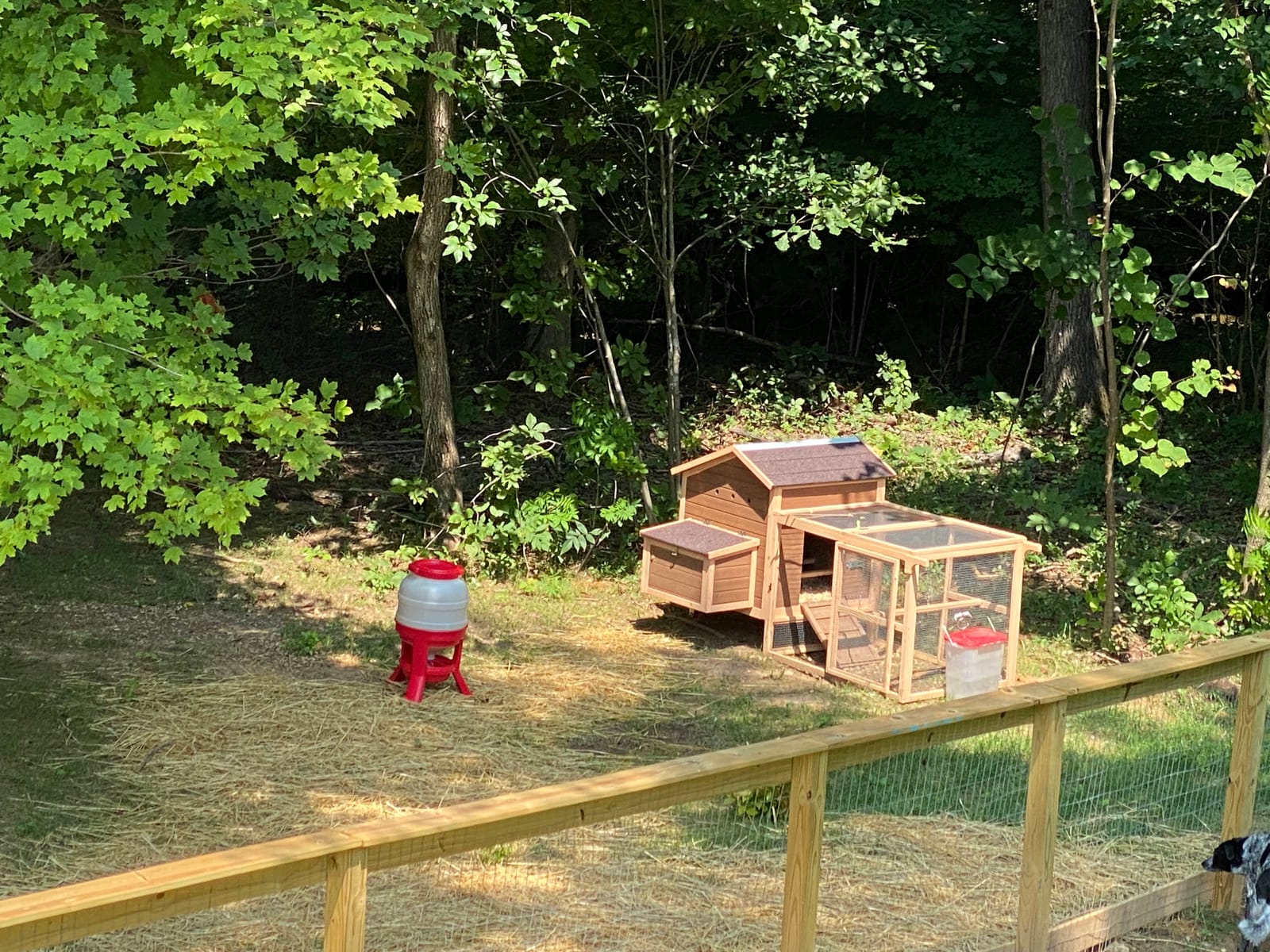
Heavy-duty plastic is specified to withstand heat and cold, and it goes together and comes apart without tools, which makes cleaning simple. There are 35, 45, and 60-pound versions, so you can size down without changing style. It is also the oldest design here, first listed in 2018, and it is still going strong.
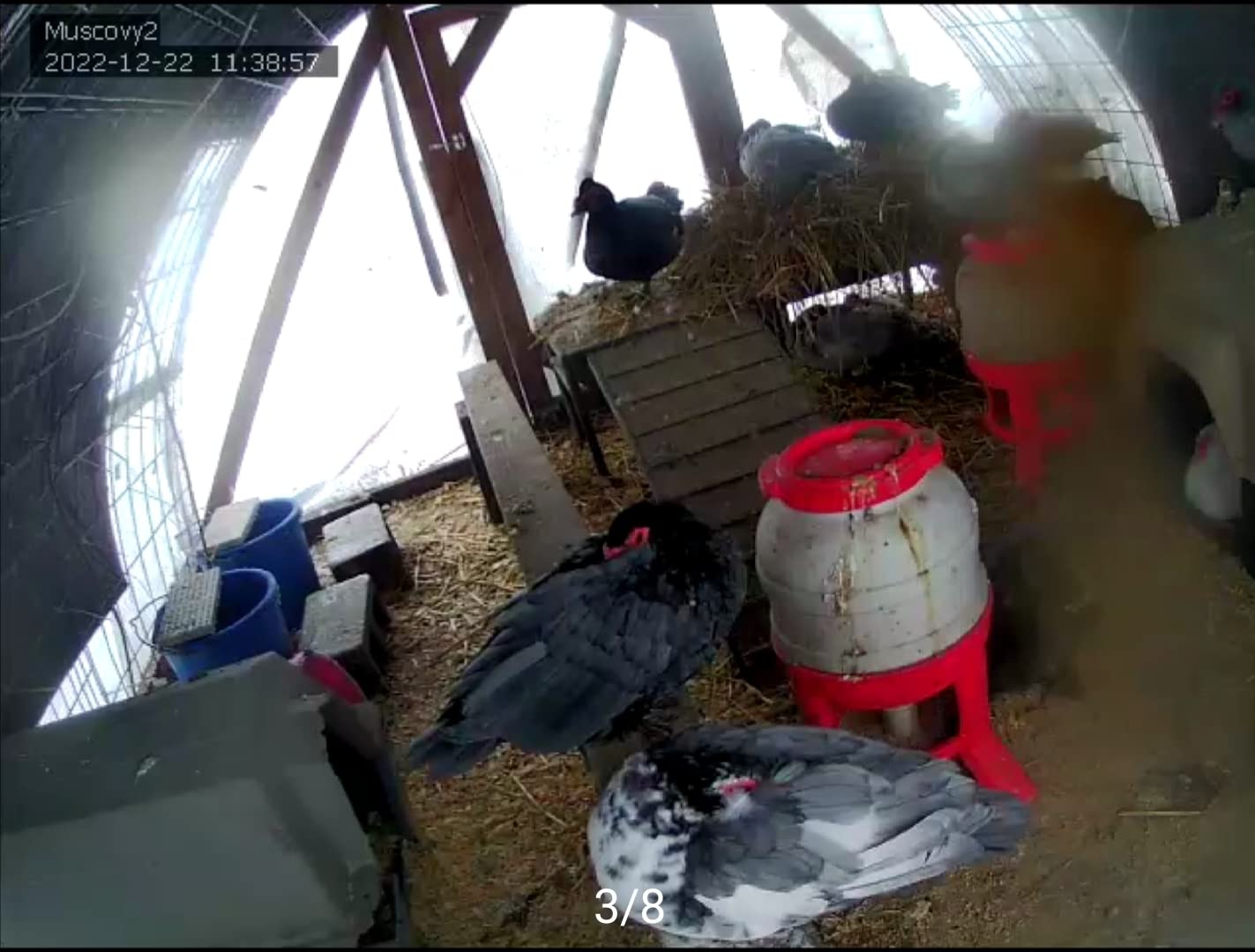
I want to be blunt about the limitation. This is an open feeder, so a wild bird that gets into the run will eat from it, and a determined rat can too. Its strength is volume and visibility, not security, and pairing it with a locked store or a smaller port feeder covers both bases.
Who this feeder suits
This suits flocks of fifteen hens or more, and anyone who buys feed in bulk and wants a full feed store they can see at a glance. It also suits a sheltered or enclosed run where wild birds are not a daily problem.
Where it falls short
It falls short on footprint, since it measures 30.75 inches long, and on any run with an active pest problem. It is not sized for chicks, and plastic of any kind can crack in sustained extreme cold even when the spec claims otherwise.
7. RentACoop 40 lb Treadle Feeder – Best Rodent Protection
RentACoop Automatic Treadle Chicken Feeder, Rat Proof No Waste, 40 lb
40 lb galvanized capacity
Treadle step opens only when birds eat
Detachable step weight for small birds
Adjustable feed-flow plate
Pros
- Blocks rats mice squirrels and wild birds
- Step weight lets bantams work the treadle
- Step lock for overnight security
- Feed-flow plate adjusts to feed type
Cons
- Heaviest unit here at 27.6 pounds
- Quality control varies between units
- Some hens never take to the treadle
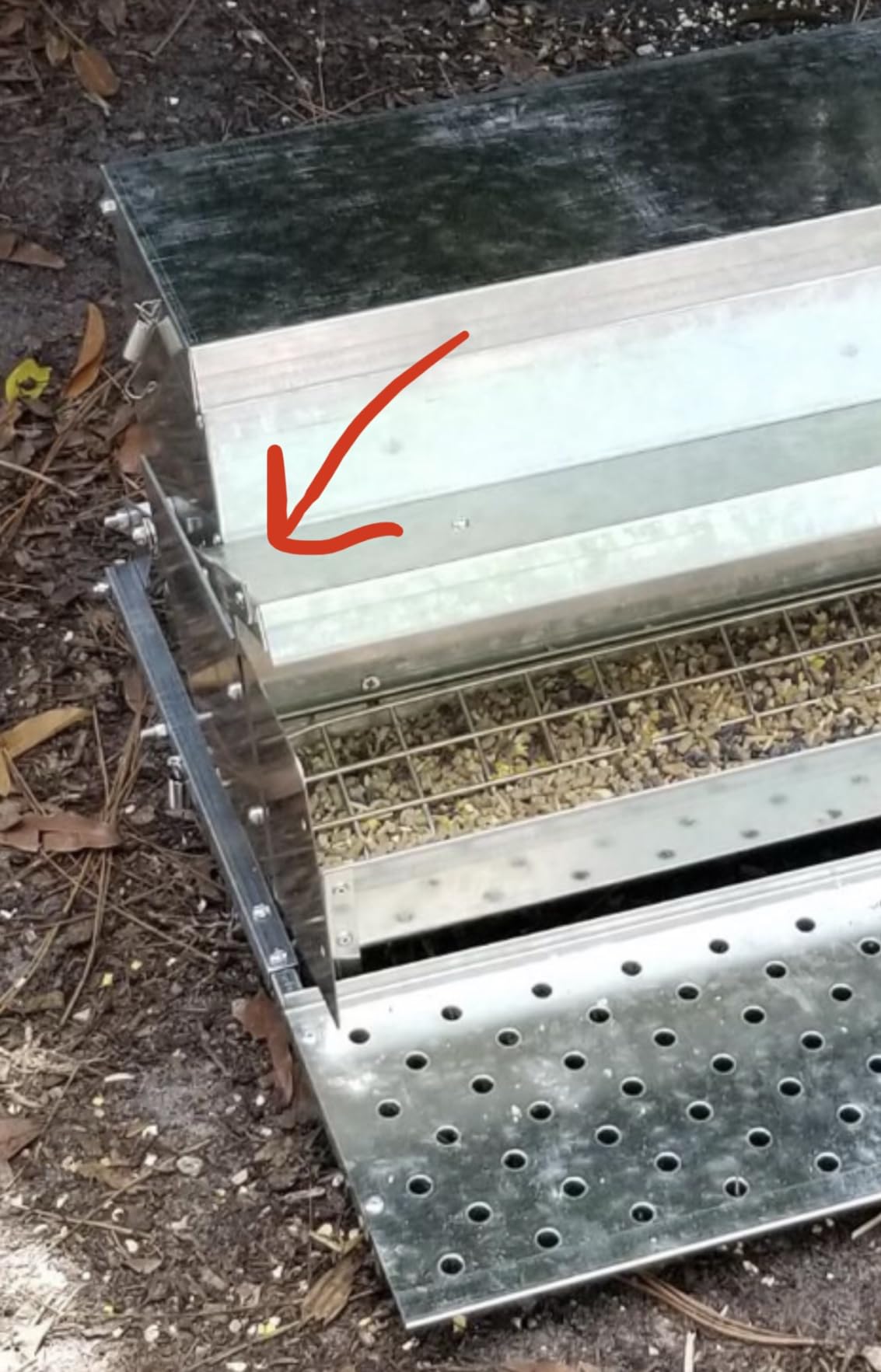
This is the most complete pest answer in the roundup. A step lock secures the pedal overnight, the grate stops feed being billed out where a rat can reach it, and the safety blinders mean birds feed from the front only. Rats, mice, squirrels and wild birds all find a closed lid and a port they cannot pull feed from.
The detachable step weight is the detail that separates this from cheaper treadles. Bantams and other light breeds cannot open a treadle built for a hen, so you remove weight from the pedal until your lightest bird can trigger it. Without that adjustment, a treadle feeder can simply exclude the birds you bought it for.
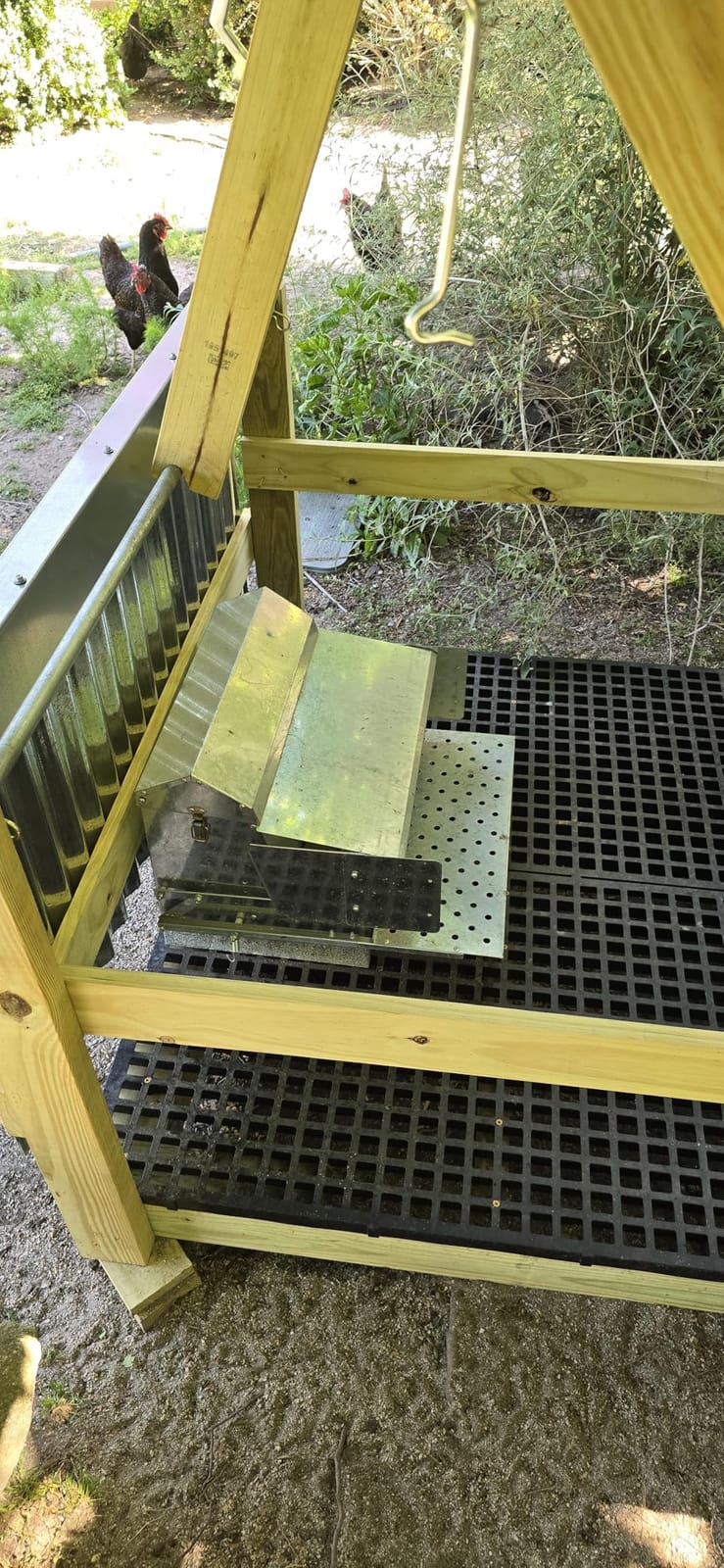
The adjustable feed-flow plate matters if you change feed. Pellets flow differently from mash and differently again from whole grain, and being able to restrict the opening is how you keep a heavy feed from bridging or a light one from pouring out. There is also a removable rain hood and an anti-roost lid.
At 27.6 pounds empty you will move this once, on a dolly, and then leave it. Quality control is the weak point in reviews, with owners reporting misaligned treadles and lid gaps on arrival, so inspect it before you trust it with a fortnight of feed.
Who this feeder suits
This suits a run with a real rodent problem, a flock of eight to fifteen hens, and any mixed flock including bantams. It also suits anyone who wants a locking overnight step and adjustable flow for different feed forms.
Where it falls short
It falls short on weight and on patience. Some chickens never learn to use it, and a few owners note that squirrels heavy enough can still trigger the treadle, so it is not a squirrel-proof box. Check the alignment on arrival, because a misaligned pedal will not seal.
8. Omlet 12 lb No Waste Feeder – Best for Reducing Feeding Aggression
Omlet No Waste Chicken Feeder for Coop | 12lb Anti-Spill Poultry Feeder with 5 Feeding Ports | Feeds 6 Hens for 7 Days | Hanging or Free Standing | Weatherproof
12 lb capacity
5 individual no-spill feeding ports
Hanging or free-standing
Separates into 3 pieces
Pros
- Five separate ports spread the flock out
- Weighs 2.17 kg so it is easy to lift
- Comes apart in seconds for cleaning
- Locking lid keeps feed dry
Cons
- Bantams may struggle to reach the ports
- Not ideal with roosters
- Flows poorly with crumble in some setups
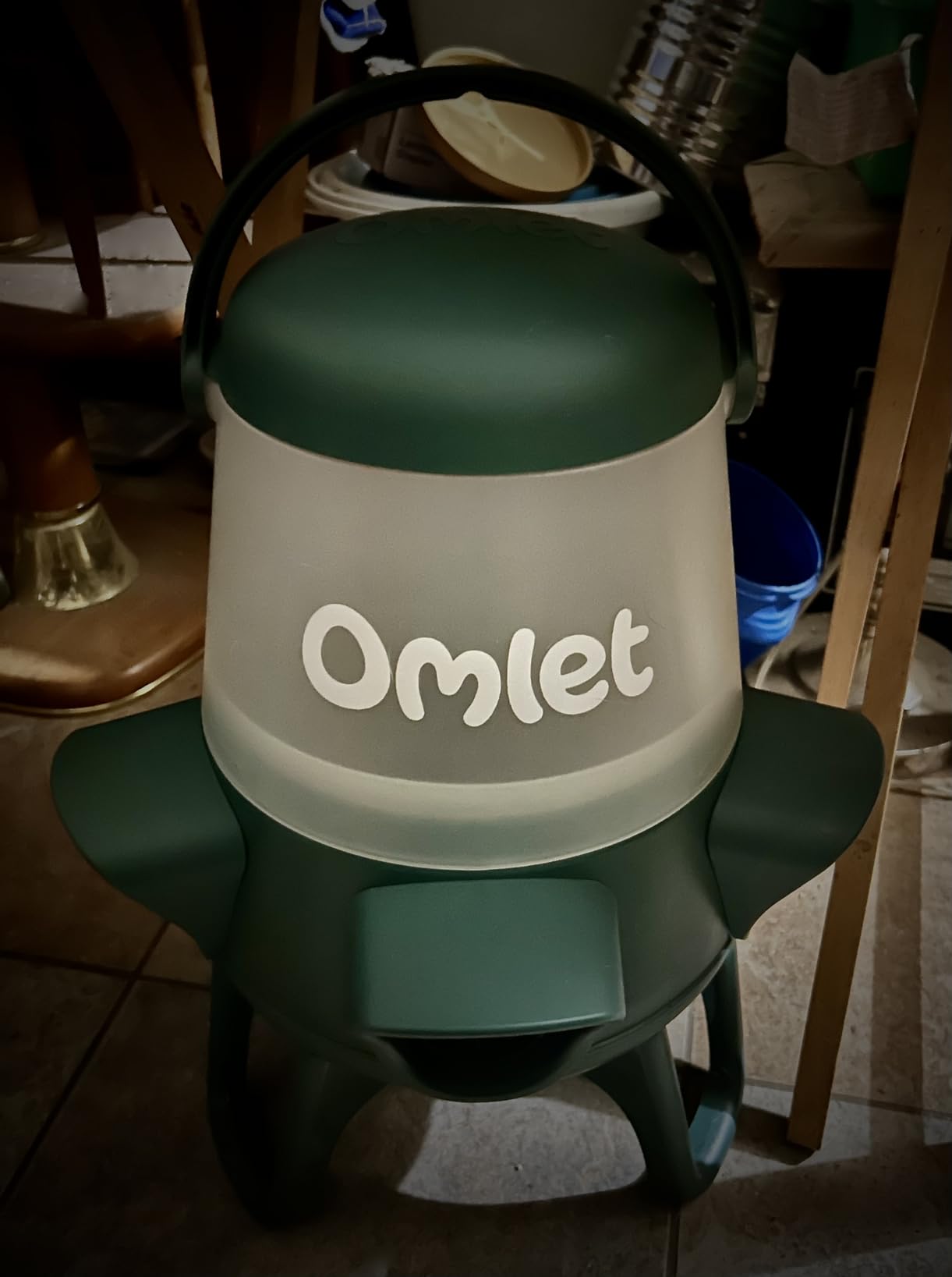
Every port is a separate feeding station for one bird. That is the design decision, and it is the most effective answer I have found to a dominant hen parking herself on the feeder and excluding the rest of the flock. You cannot guard five holes at once.
At 2.17 kg this is the lightest feeder in the roundup, and that matters more than the capacity figure suggests. You can lift it with one arm to check for mould, carry it to clean, or hang it at coop height without a struggle. The maker states 12 lb covers six hens for seven days.
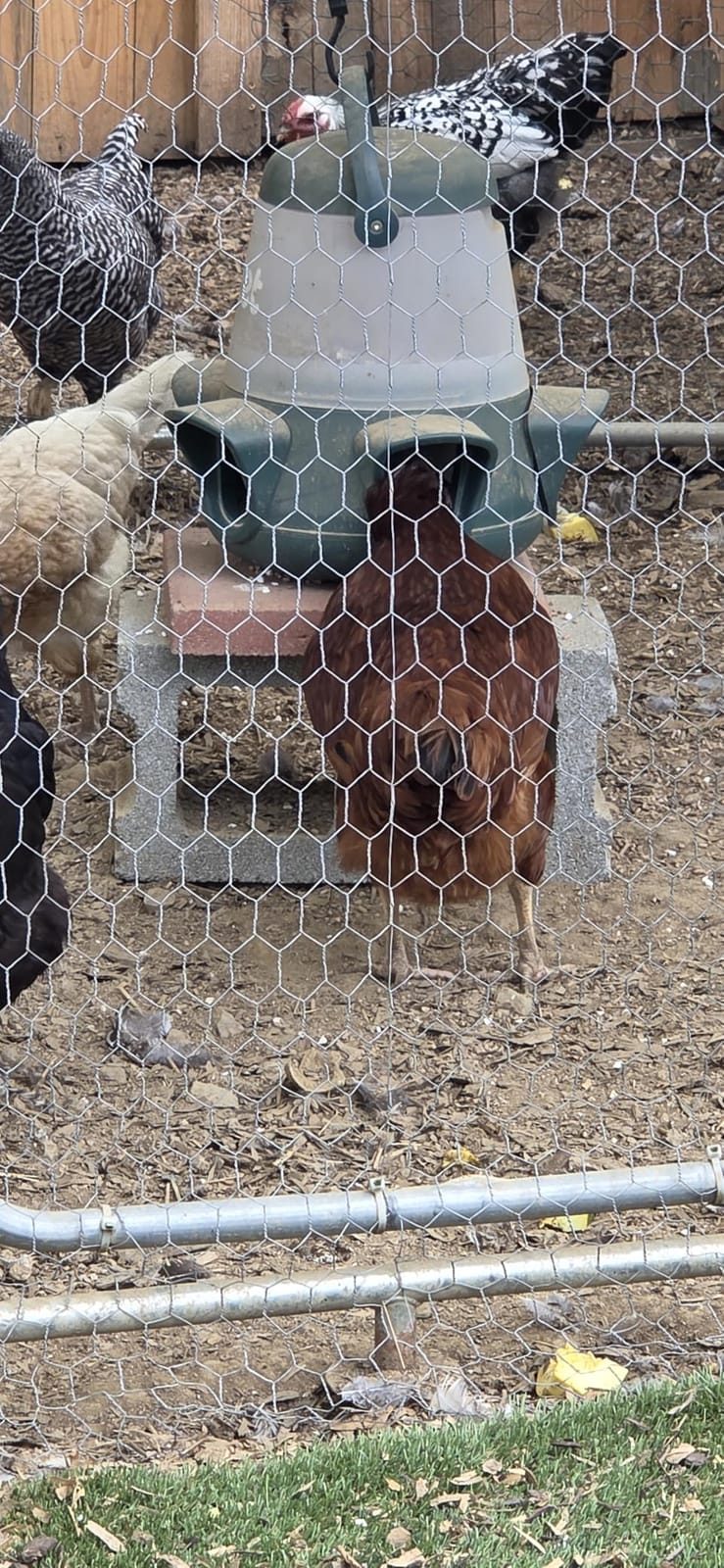
It separates into three pieces, and that is the fastest cleaning of anything I have tested. A feeder you can actually scrub is a feeder that does not develop mould, and mouldy feed is one of the three recurring problems in this whole guide. Docking legs let you run it freestanding or hang it, which lets you raise it above the reach of younger birds.
No-spill enclosed ports mean the feed you pay for stays in the tray. BPA and PFAS-free food-safe plastic is the specification here, and a locking lid keeps birds and weather out while the feeder is stored between runs.
Who this feeder suits
This suits small flocks of four to eight hens with one bully in the mix, and anyone who wants individual feeding stations. It also suits a mixed flock where a rooster is present, since he takes his share at a port rather than monopolising the whole unit.
Where it falls short
It falls short for bantams and other small birds, which may not reach the ports comfortably, and the 12-pound capacity means frequent refills for anything above six hens. Owners using crumble report the flow can be slow, and the review count of 307 is the lowest of the twelve here.
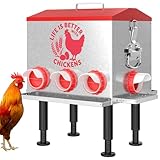
9. Pawaboo 55 lb Feeder – Best Mid-Size Galvanized Hopper
Pawaboo 55LBS Large Capacity Automatic Chicken Feeder
55 lb in 36 litres
7 feeding ports
Aluminum-coated galvanized steel
Adjustable legs from 5.9 to 10.6 inches
Pros
- Seven ports for a mid-size flock
- Aluminum-coated steel resists rust
- Sloped top drains rain and blocks perching
- External trays catch spilled feed
Cons
- Overkill for a very small flock
- Metal heats in direct sun
- Assembly required
Fifty-five pounds is the capacity sweet spot for most backyard flocks, and this is the metal feeder that hits it. It sits between a 30-pound box that empties every three days and a 95-pound box that will not empty for a month, which is exactly the problem with oversized hoppers.
Seven feeding ports means a flock of ten to fifteen can eat without a queue forming. The external trays beneath the ports catch what does get flicked, which is a quietly effective way to reduce waste, because the spilled feed stays inside the fence and above ground where a rat cannot simply eat it undisturbed.
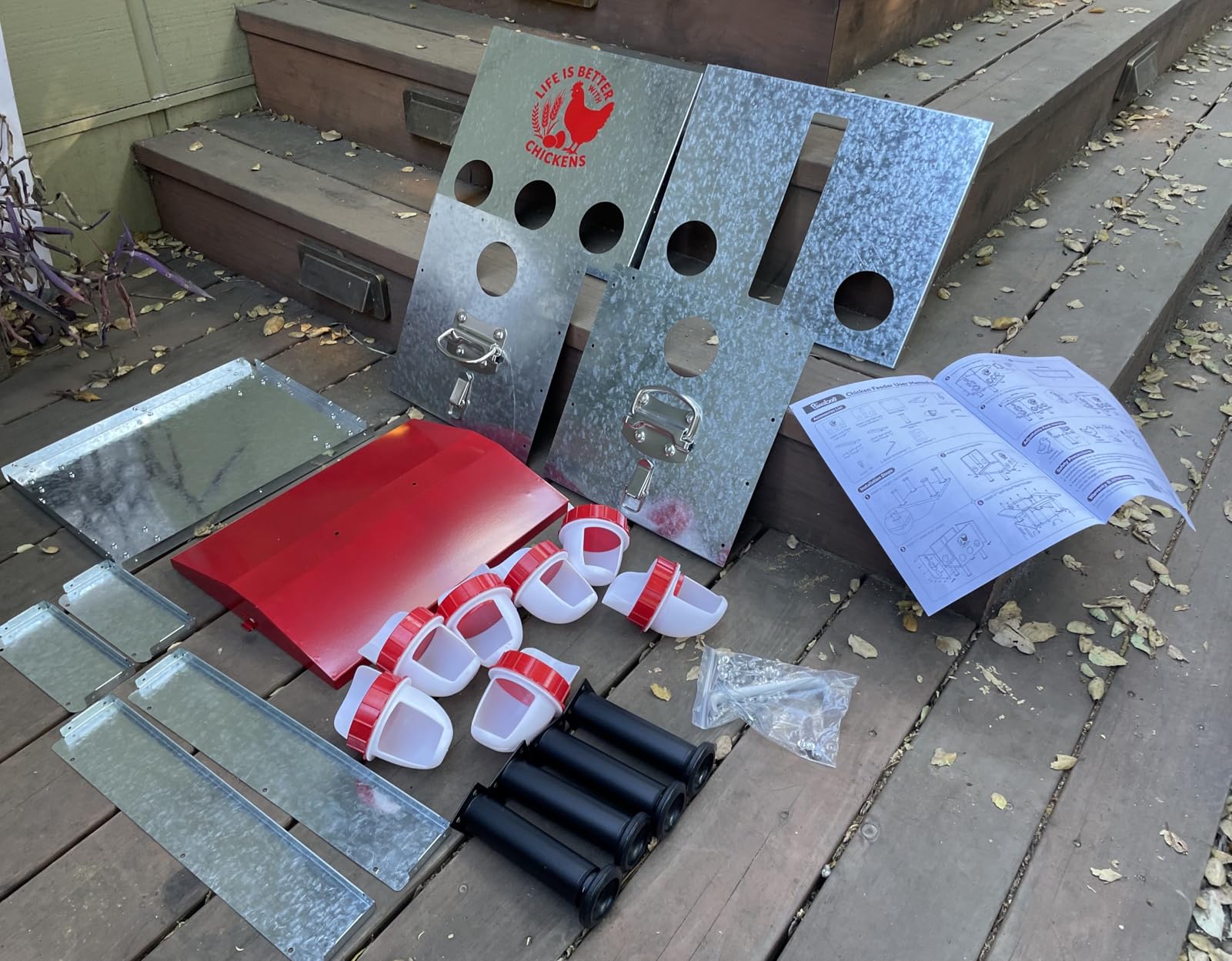
The sloped top does two jobs: it drains rainwater off the lid and it removes the flat perch that hens will otherwise climb onto and roost over the feeder. Adjustable legs from 5.9 to 10.6 inches let you raise the ports to hen neck height, which cuts the amount of feed scratched out onto the ground.
Aluminum-coated galvanized steel is a step up in corrosion resistance over plain galvanised sheet, and the lid locks so the feed is secure when the run is quiet. It weighs 14.77 pounds, so pick your spot carefully, and expect an afternoon of assembly.
Who this feeder suits
This suits a flock of ten to eighteen hens, and anyone who wants a metal hopper that is neither too small nor absurd. It also suits a flock with a rooster, since seven ports spread the pressure.
Where it falls short
It falls short for a flock of four or five, where 55 pounds would sit too long and go stale. Like the other metal feeders here, it heats in direct sun, so shade it. With 218 reviews it has the second-smallest evidence base in this roundup, which is worth weighing against a longer-established name.
10. Tgeyd 95 lb Feeder – Best for Flocks of 20 Birds and Up
95 lb Chicken Feeder with 10 No-Waste Ports – Extra-Large Galvanized Metal Poultry Feeder with Adjustable Height Heavy-Duty Stand – Outdoor Feed Box for Chickens, Ducks & Geese
95 lb capacity
10 no-waste feeding ports
Galvanized and stainless steel
Adjustable height stand
Pros
- Ninety-five pounds is a genuine fortnight-plus of feed
- Ten ports serve a large flock at once
- Adjustable height grows with the birds
- Locking lid and riveted handles
Cons
- Very heavy at 19.8 pounds
- Impractical for a small backyard run
- Feeds too slowly for a tiny flock
This is the one to buy if you keep twenty birds or more, or if you genuinely do not want to think about feed for a couple of weeks. Ninety-five pounds at a normal consumption rate is a long, long stretch before anything can go stale or attract attention.
Ten no-waste feeding ports is a lot of feeding positions, and it is what makes the capacity usable rather than theoretical. A hen can be interrupted mid-meal by five other birds without losing her place, which keeps the whole flock eating at the same rate instead of in shifts.
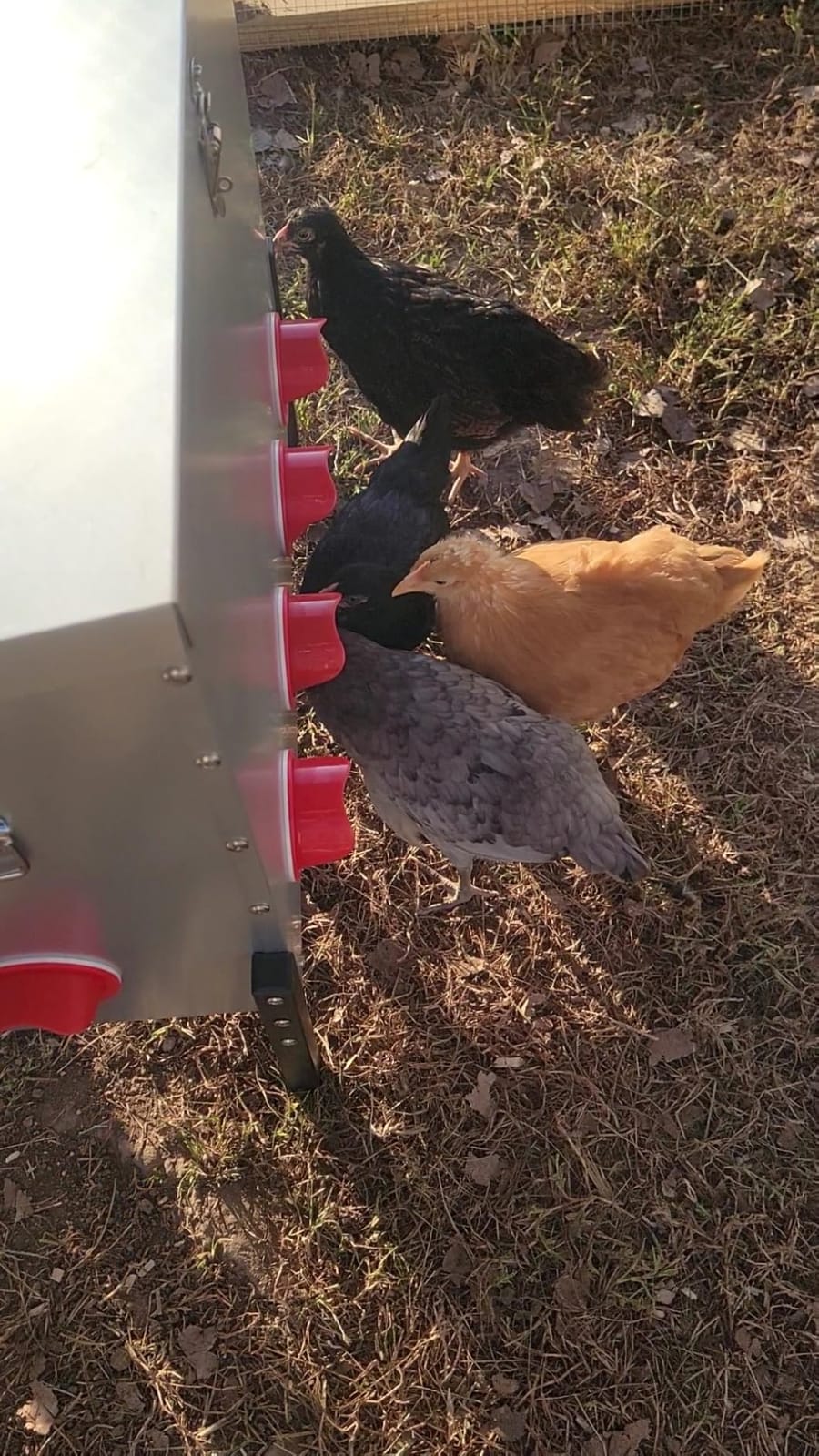
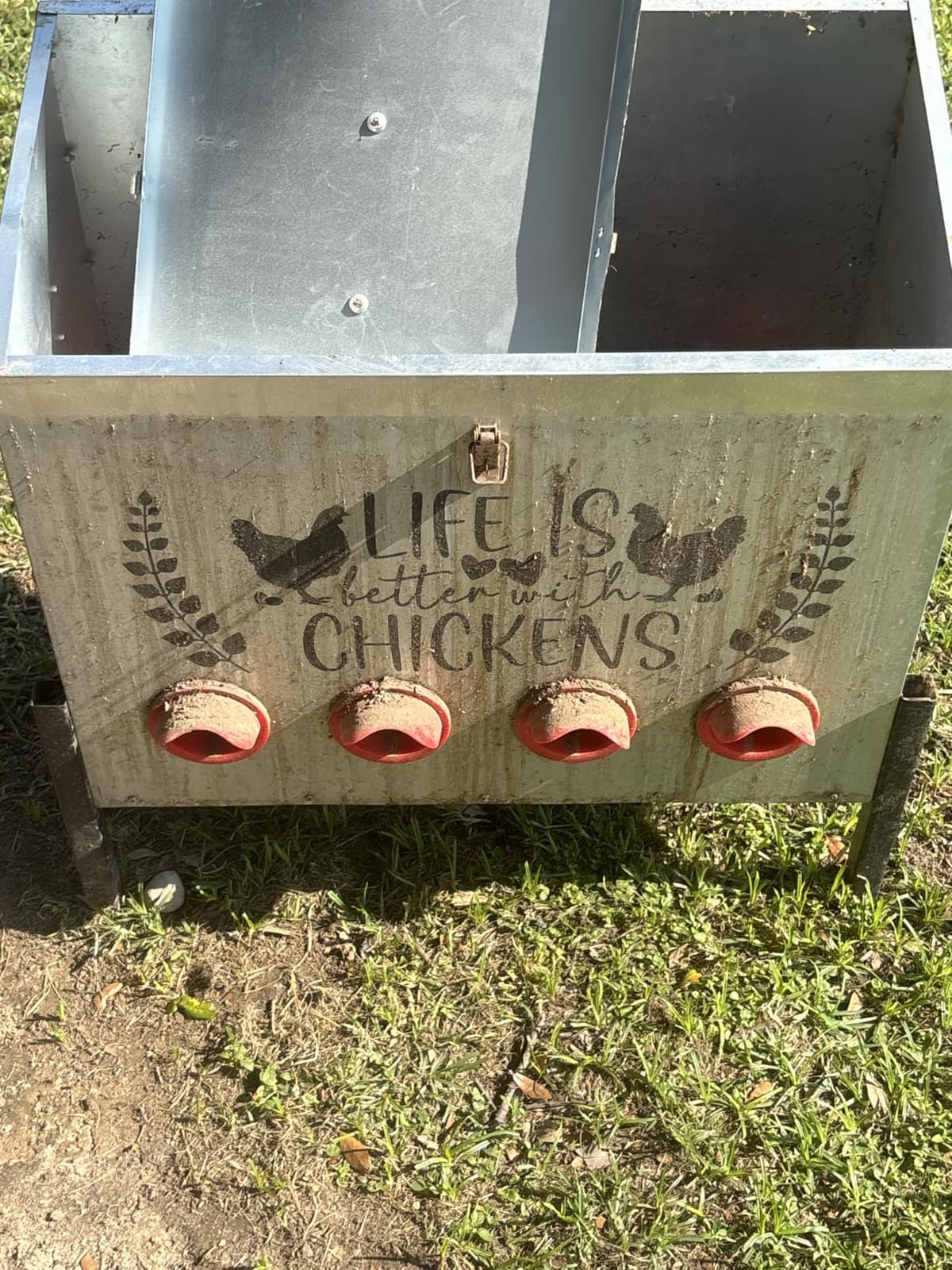
The adjustable height stand is the feature that makes it grow with the flock. Set it low for chicks and pullets, raise it as they mature to hen neck height, and the ports stay at the right level throughout. The locking lid keeps rain out and vermin out, and riveted handles are what you grab when you need to shift it.
It is 23.6 by 12.2 by 25.8 inches and weighs 19.8 pounds empty, close to 115 pounds full, so plan the floor space and get help moving it. Galvanized and stainless steel is a durable build for years outdoors, which is the main reason to buy something this heavy.
Who this feeder suits
This suits a flock of twenty or more birds, a household that wants fortnight-long feed autonomy, and anyone raising chicks through to adult hens on one unit. It also suits a farm-scale run with a solid floor area to spare.
Where it falls short
It falls hard for a small flock, because feed sitting for months invites rodents and mould and no small flock needs that much. It is the heaviest unit in this roundup and awkward to reposition once filled, and with 169 reviews it has the smallest evidence base here.
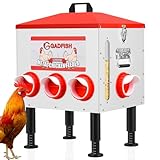
11. GADFISH 55 lb Feeder – Best Tool-Free Height Adjustment
GADFISH 55 lbs Large Capacity Automatic Chicken Feeder – 8 Feeding Ports, No Waste Chicken Feeder, Height-Adjustable Legs & Secure Locking Lid for Chickens, Ducks & Poultry
55 lb capacity
8 feeding ports
Tool-free rotating legs
Conical metal lid
Pros
- Tool-free height adjustment as birds grow
- Conical lid stops perching and drains rain
- Aluminum-coated sheet resists rust
- Wider base for stability on soft ground
Cons
- Assembly required
- Metal heats in direct sun
- 11 percent of reviews are 1-star
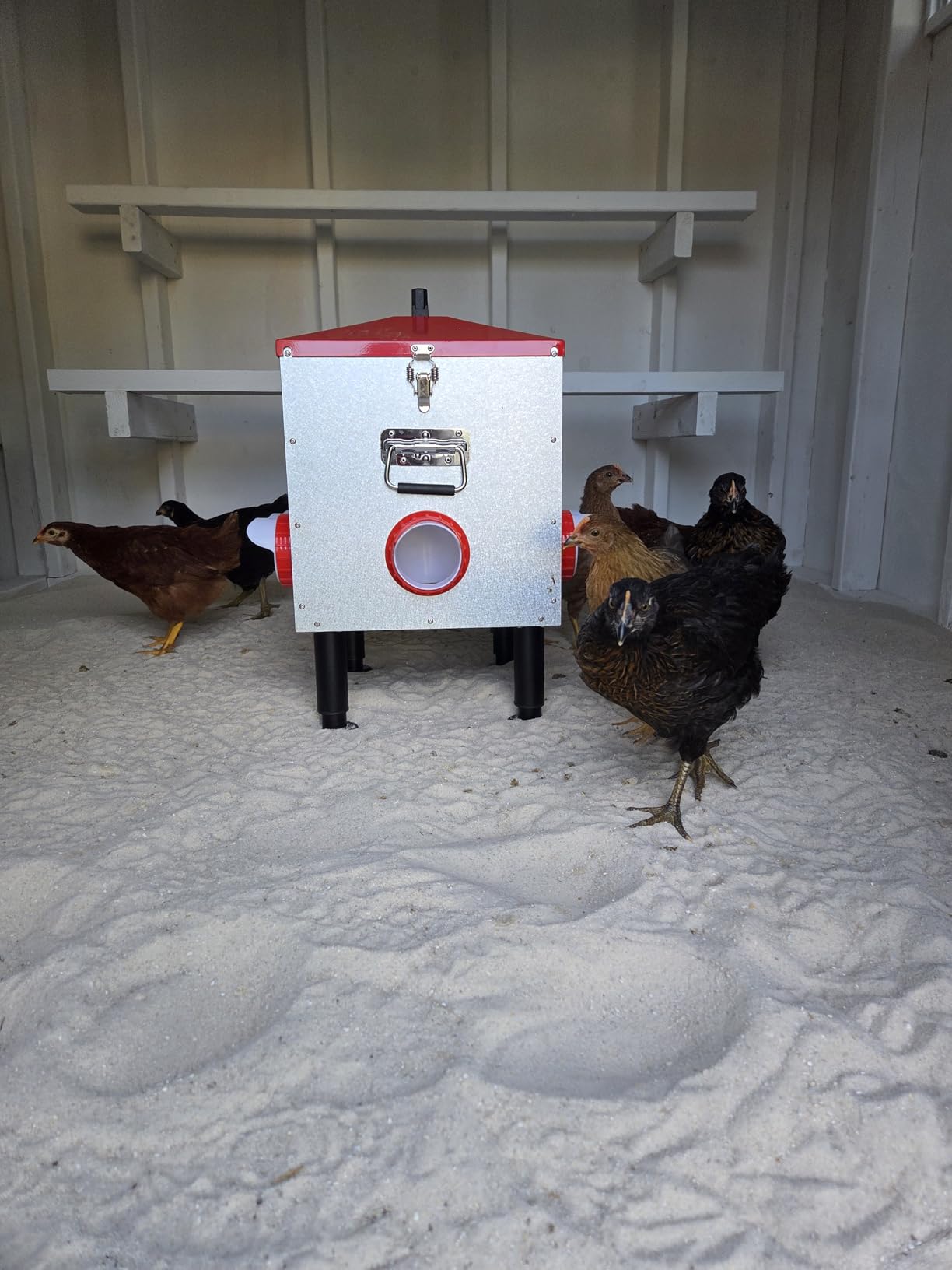
The rotating leg mechanism is the thing I would not expect from this category, and it is genuinely useful. No tools, no disassembly, no lost hardware in the mud, and you can raise or lower the whole feeder in a minute as pullets grow into hens.
Eight feeding ports on a 55-pound hopper is a good ratio, and the extended port tubes are what reduce waste, because a hen has to reach up into the port rather than rake feed sideways across a tray. The conical lid keeps rain off and denies perching, which is the same reasoning as the sloped top on the Pawaboo.

Aluminum-coated galvanized sheet metal is specified to resist rust and animal damage, and the increased base contact area helps on soft or uneven ground, where a narrow-legged feeder tips. It lists at 16.1 pounds and 12.6 by 21.06 by 16.14 inches, with a locking lid for security between rounds.
It is a more recent design, first listed in mid-2025, and that shows in the review pattern. Most owners like the adjustment and the waste reduction, but 11 percent of reviews are one-star, with durability complaints the most common theme. I would treat it as the flexible option rather than the one to build a whole system around.
Who this feeder suits
This suits a flock that is growing fast, or one that mixes chicks, pullets and adult hens where the port height needs to change often. It also suits anyone on soft ground who has had feeders tip over.
Where it falls short
It falls short on track record rather than design, and on sun exposure, since the metal gets hot. Assembly is required, and if you want a feeder you will not think about for a decade, the older galvanized models here have more years of owners reporting back.
12. Tgeyd 30 lb Feeder – Best Value Galvanized Feeder
Tgeyd 30 lb Chicken Feeder with 6 No-Waste Ports – Heavy-Duty Outdoor Metal Feeder with Adjustable Height, Locking Lid & Riveted Handles – Rustproof Feed Box for Poultry & Backyard Chickens
30 lb capacity
6 no-waste feeding ports
Galvanized metal body
Adjustable height with locking lid
Pros
- Thirty pounds suits a small flock for about a week
- Rustproof galvanized metal at a low cost
- Locking lid and riveted handles
- Adjustable height from chick to hen
Cons
- Narrow 6.3 inch body takes more floor space
- Only six ports for a large flock
- Smaller capacity than the 55 and 95 pound models
This is the one I would tell people to buy if they want metal without the treadle price tag or the oversized-hopper problem. Thirty pounds empties in about a week for eight to ten hens, which is a refill rhythm most people find natural rather than annoying.
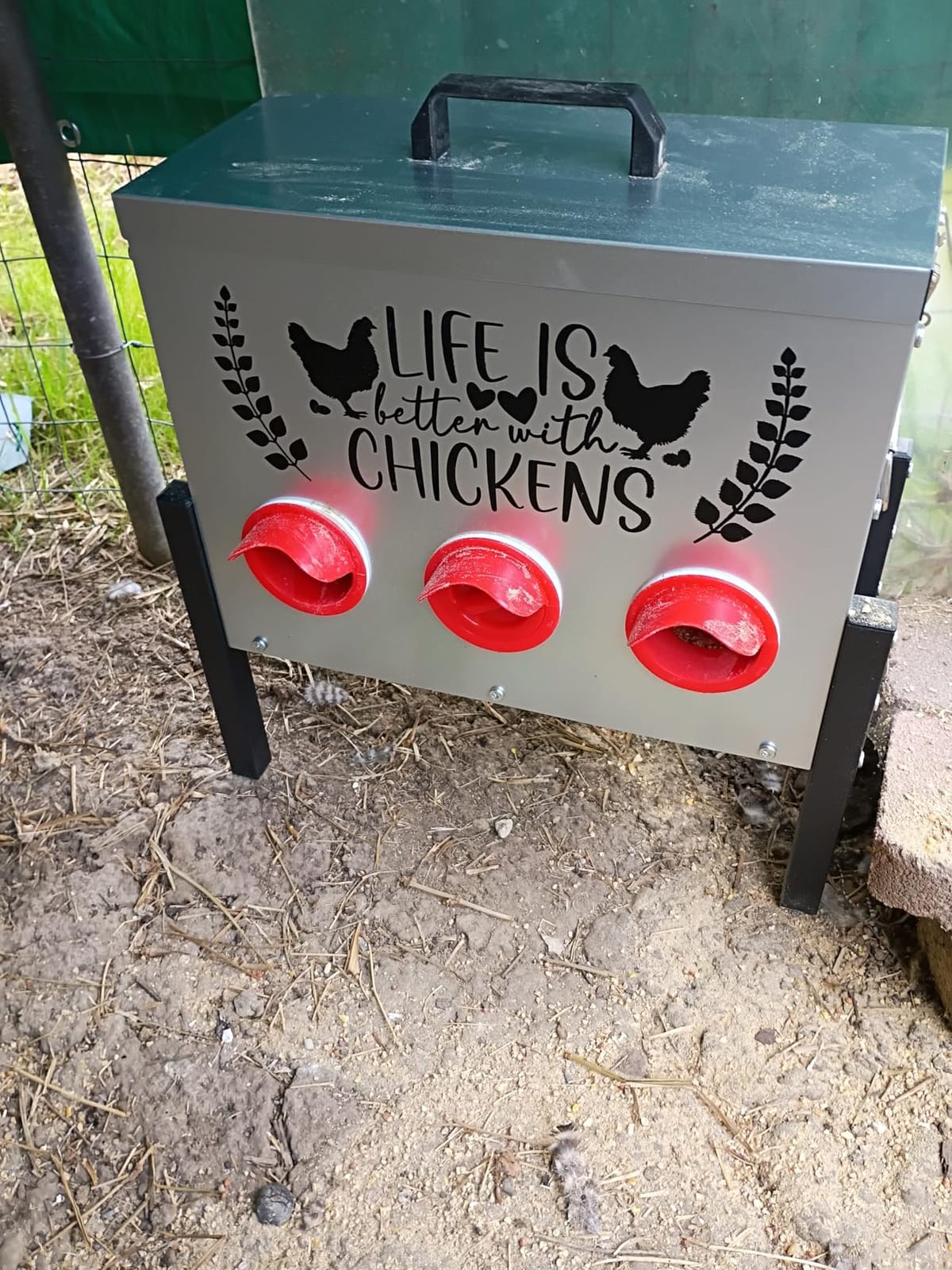
Six no-waste feeding ports, adjustable height and a locking lid on a galvanized body covers most of what matters. A locking lid in particular is the underrated feature here, because it is the difference between feed that stays dry through a storm and feed that has to be thrown out.
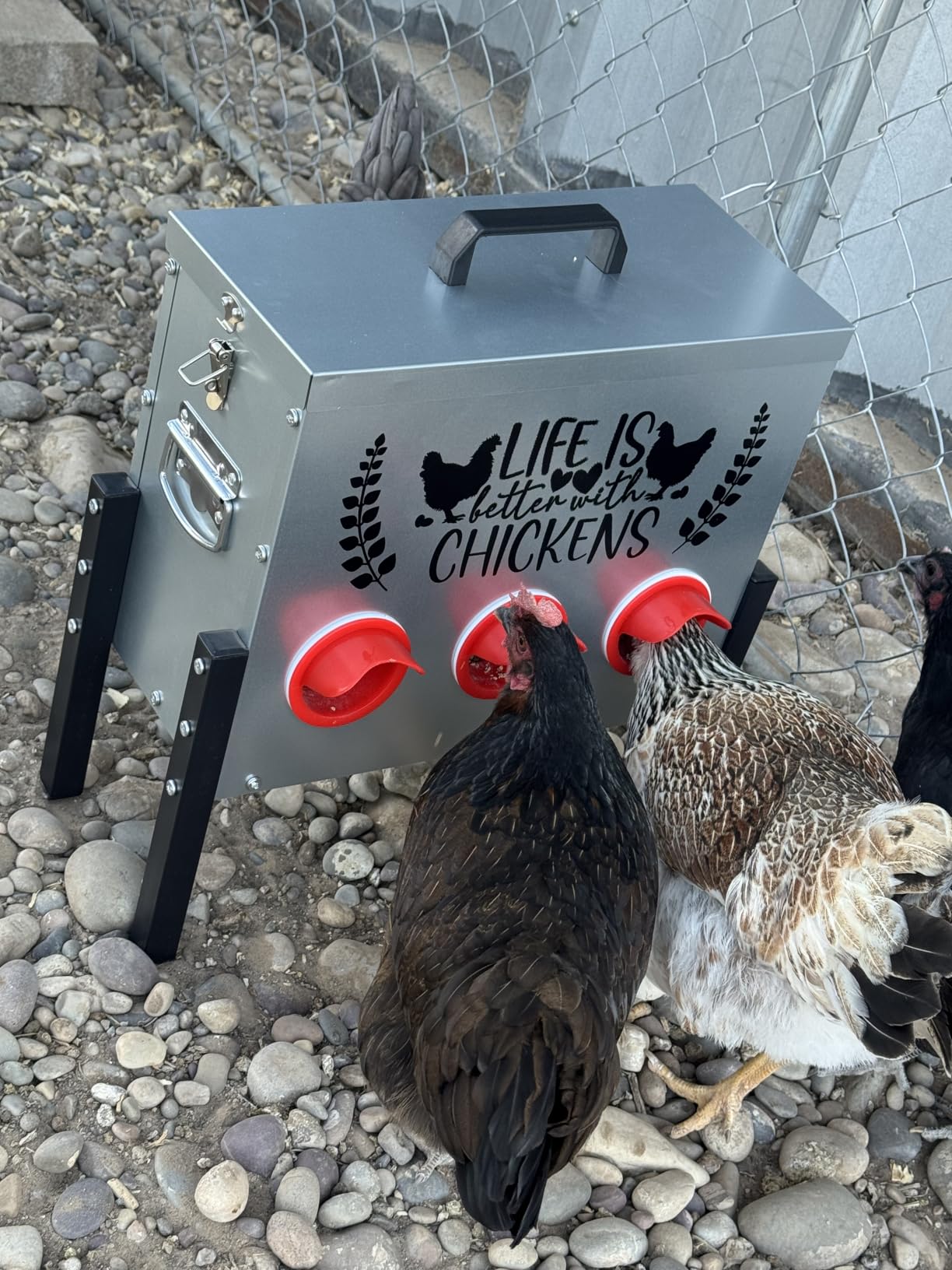
The adjustable height does the job it claims, letting you start chicks low and raise the ports as the birds grow. Riveted handles are a small upgrade over welded ones because they will not crack at the weld line, which is where cheap metal feeders usually fail first. It weighs 9.5 pounds, light enough to reposition on your own.
The body is 16.1 by 6.3 by 12.2 inches, and that narrow 6.3-inch width is worth measuring. It is a slim, tall unit, so the footprint is smaller than the capacity suggests, but it is less stable in a wind unless you put it against a wall or in a sheltered corner.
Who this feeder suits
This suits a first flock of six to ten hens, and anyone who wants a metal hopper with a lid that locks but does not want to spend treadle-feeder money. It also suits a mixed flock where you need the height to change as birds grow.
Where it falls short
It falls short for a flock above about twelve birds, where six ports and 30 pounds means constant refills. The narrow base is less stable outdoors in wind than the wider metal models, and the 4.2 rating reflects a smaller share of five-star reviews than the leaders here.
How to Choose a Chicken Feeder
Choose by pest pressure and flock size first, and only then by capacity. The best chicken feeders for a tidy indoor run of six hens are very different from what works for twenty pastured birds in a rat-prone area, and the mistake I see most often is buying a huge hopper for a small flock.
Feed waste comes first
Every wasted gram lands on the ground and tells rats and wild birds exactly where you keep feed. Look for feeding ports with a downward or enclosed opening, or a grate that stops a hen flicking feed out. An open trough with no barrier will always lose feed, and no amount of lid design fixes that. This is also what stops your hens billing out, the flick-and-scratch behaviour that drives keepers to buy a new feeder in the first place.
Rodents and pest birds
Be sceptical of the word rat proof, because it is repeated uncritically by brands. Treadle feeders genuinely defeat rats, mice and squirrels, and forum owners have photographed rats working together on a treadle to weigh it down, which is the honest failure mode. A locking lid plus a port that hangs feed out of reach is the more honest second line of defence, and removing spilled feed every night does more than any feeder.
Rain, sun and cleaning
A raised port lip and an overhanging hood keep water out of the feed, and that is the difference between feed that survives a wet week and feed that moulds in three days. Metal feeders last longer but heat up in direct sun, so shade them in summer. For cleaning, count the pieces: a feeder that separates into three is one you will actually scrub rather than rinse and hope.
Height, refill and bully hens
Set the ports at roughly the neck height of your smallest hen, which keeps feed inside rather than scattered. Plan refills around a fortnight away rather than three months, so feed never sits long enough to go stale or attract vermin. Finally, buy two feeders for any flock of six or more and place them apart, because one feeder means one dominant hen controls the food.
If you have a separate problem with feed theft from the run, our squirrel-proof bird feeder guide covers the housing side. Larger birds can be a factor too, and we cover the housing side of that in the best game feeders roundup.
How Many Chickens Can One Feeder Feed?
A laying hen eats roughly 120 to 150 grams of layer feed a day, and that single number lets you size any feeder in seconds. Multiply your hen count by that range to get daily use, then divide the feeder’s capacity by it to get days between refills.
Worked example: six hens at 130 grams each is about 780 grams a day, or about 5.5 kg a week. A 12 kg feeder is therefore a little over two weeks of feed for that flock. Grandpa’s states its 20 lb model feeds six chickens for up to ten days, which sits in the same band once you allow for the fact that not every bird eats every day.
As a working guide, budget one port feeder for every six to eight hens, one treadle for six to eight hens, and one large hopper for every twelve to eighteen. When you plan a trip, fill to the days you will be away rather than to the brim, and keep a spare filled container in a sealed metal bin indoors.
Two things change the maths. Fermented feed roughly doubles the day count on an open feeder because birds eat less of it, and it is worth planning for. With 60 lb feeders, feed can sit for weeks in a small flock, which is exactly how feeders end up moulding.
How to Train Chickens to Use a Treadle Feeder
Most chicken owners report that a flock learns this faster than they expect. The chickenfans team reported 12-week-old birds figuring out a Feed-O-Matic in 10 to 15 minutes once it was propped open and baited, while adult birds took a few more days. On BackYardChickens, one keeper running 7 to 11 hens says every new bird learned by watching the others, with no training at all.
Step one: make sure the feeder is solid and does not rock, because a pedal that moves underfoot is a pedal no hen will trust. Step two: prop the lid open with a block so the mechanism stays open and birds can see and reach the feed. Step three: scatter mealworms inside the open feeder so the reward is inside, not beside it.
Step four: remove the prop once you see a bird eating from inside, and let the mechanism close normally while they are in there. Step five: be patient, and expect adults to take days rather than minutes. Do not chase a hen or force her onto the pedal, because that teaches the flock to avoid the feeder entirely.
If you are moving a flock between feeders, a related decision comes up: whether to run a mobile setup. We covered that in our best chicken tractors guide, and scheduled feeding in our automatic feeder roundup covers the same on-demand logic for other pets.
Frequently Asked Questions
What type of feeder is best for chickens?
A gravity-fed port feeder with a locking lid is the best all-round choice for most backyard flocks, because it cuts feed waste, keeps rain out and is easy to clean. A treadle feeder is better when rats or squirrels are a real problem, because the lid only opens when a hen is eating. Open trough feeders are the cheapest and the least secure.
What is the best treadle chicken feeder?
Grandpa’s Feeders 20 lb galvanised treadle is the best all-round treadle, with an anti-flick grill that stops waste and a full-coverage weatherproof lid. RentACoop 40 lb is the pick for heavier pest pressure, because the step weight can be removed so bantams can operate it and the step locks securely overnight.
What is the best rodent-proof chicken feeder?
A treadle feeder is the most effective design against rodents, since the lid stays shut until a hen stands on the pedal. No feeder is completely vermin-proof, and rats working together can weigh down a light treadle. A hopper with a locking metal lid plus removing spilled feed each night completes the defence.
How many chickens can one feeder feed?
Budget one feeder for every six to eight hens, or one large hopper for every twelve to eighteen. A laying hen eats roughly 120 to 150 grams of feed a day, so a 12 kg feeder covers six hens for a little over two weeks. Filling to the brim on a small flock means feed sits long enough to go mouldy.
Are treadle feeders really rat proof?
They are much more rodent-resistant than any open or gravity feeder, but calling them rat proof overstates it. Rats have been photographed working together to weigh a treadle down, and squirrels heavy enough can trigger a pedal on their own. Treat a treadle as strong deterrence, not a guarantee.
Final Verdict: Which Chicken Feeder Should You Buy?
The ZenxyHoC 6-Port No-Waste Feeder is the best chicken feeder for most people in 2026. It has the highest rating and the largest review base in this roundup, it cuts spillage better than an open bucket, and the drilling job is a one-off that anyone with a drill can handle.
Where rats are a genuine problem, the Grandpa’s Feeders 20 lb treadle is the answer, and the RentACoop 40 lb is the version to pick if you keep bantams alongside hens. For a flock of fifteen or more, the Pawaboo 55 lb is the right capacity and the Tgeyd 95 lb covers twenty-plus birds properly.
Whatever you choose, buy two for any flock of six or more, keep them out of the sun, and never fill one to the brim. Feed waste, damp feed and vermin are what make a feeder feel like a bad purchase, and all three are fixable with the right box.