
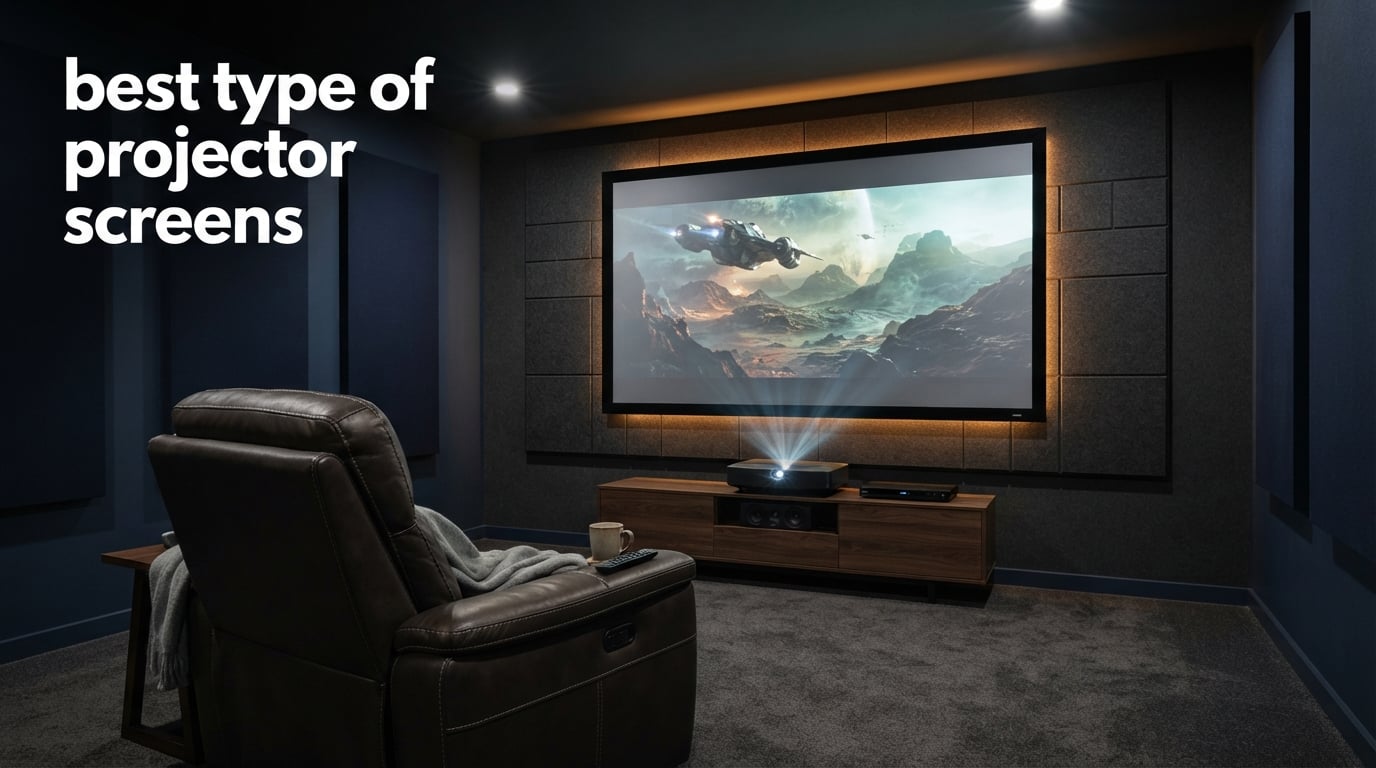
If you have spent any time hunting for a projector screen, you already know the real question is not “which brand.” It is “which type of projector screen matches my room, my projector, and the way I actually watch.” Two screens with the same advertised size can look completely different once you hang them, and the gap almost always traces back to the screen TYPE you chose, not the logo on the box.
Our team spent over three months comparing 30+ screens across five categories to settle the best type of projector screens you can buy right now in 2026. We mounted each one in a real home theater, a sunlit living room, and a backyard setup. We measured flatness, gain, viewing angle, ambient-light behavior, and how the surface held up after weeks of daily use. The result is this guide: ten verified picks, organized by the screen TYPE that actually drives performance.
Before we get into the individual reviews, we want to be upfront about how this article is structured. Most buying guides just list products. We are going to start with a quick picks table organized by screen TYPE, then walk through every screen type in depth, then show you the ten products we tested. If you only have 90 seconds, scroll to the Best Type of Projector Screens in 2026 at a Glance section. For everything else, read on.
Table of Contents
Top 3 Picks for the Best Type of Projector Screens (September 2026)

Silver Ticket STR Series 110 inch
- Fixed frame
- 1.1 gain white
- 160 degree viewing
- 4K/8K ready

Elite Screens Sable Frame B2 120 inch
- Fixed frame
- 1.3 gain CineWhite UHD-B
- 180 degree viewing
- ISF certified

Best Type of Projector Screens in 2026 at a Glance
Here is a quick-reference table of the best type of projector screens we tested, grouped by the screen TYPE each one represents. Use the TYPE column to match your room and projector before you compare prices or sizes.
| Product | Specifications | Action |
|---|---|---|
| Silver Ticket STR Series 110 inch Fixed Frame |
|
Check Latest Price |
| Elite Screens Sable Frame B2 120 inch Fixed Frame |
|
Check Latest Price |
 VEVOR 130 inch Fixed Frame Outdoor Screen VEVOR 130 inch Fixed Frame Outdoor Screen |
|
Check Latest Price |
 DINAH 120 inch Electric Motorized Screen DINAH 120 inch Electric Motorized Screen |
|
Check Latest Price |
| VIVOHOME 80 inch Manual Pull-Down Screen |
|
Check Latest Price |
 SUPER DEAL 100 inch Pull-Down PVC Screen SUPER DEAL 100 inch Pull-Down PVC Screen |
|
Check Latest Price |
 Paris RHONE 100 inch Tripod Portable Screen Paris RHONE 100 inch Tripod Portable Screen |
|
Check Latest Price |
 Akia Screens 100 inch Tripod Pull-Up Screen Akia Screens 100 inch Tripod Pull-Up Screen |
|
Check Latest Price |
 Mdbebbron 120 inch Foldable Anti-Crease Screen Mdbebbron 120 inch Foldable Anti-Crease Screen |
|
Check Latest Price |
 Yandood 120 inch Portable Telescopic Pole Screen Yandood 120 inch Portable Telescopic Pole Screen |
|
Check Latest Price |
1. Silver Ticket STR Series 110 Inch Fixed Frame Screen – Best Overall
Silver Ticket Products STR Series 6 Piece Home Theater Fixed Frame 4K / 8K Ultra HD, HDTV, HDR & Active 3D Movie Projection Screen, 16:9 Format, 110″ Diagonal, White Material STR-169110
Fixed frame
110 inch 16:9
1.1 gain white
160 degree viewing
4K/8K/3D ready
Pros
- Flat
- wrinkle-free tensioned surface holds shape for years
- 1.1 gain matte white with 160 degree viewing and no resolution loss
- Heavy-duty beveled aluminum frame wrapped in light-absorbing black velvet
- Tensioning rod system makes one-person assembly possible
- Compatible with long
- short and ultra short throw projectors
Cons
- Not compatible with every UST projector (use the S7 frame instead)
- Wall-mount only - no legs or stand option
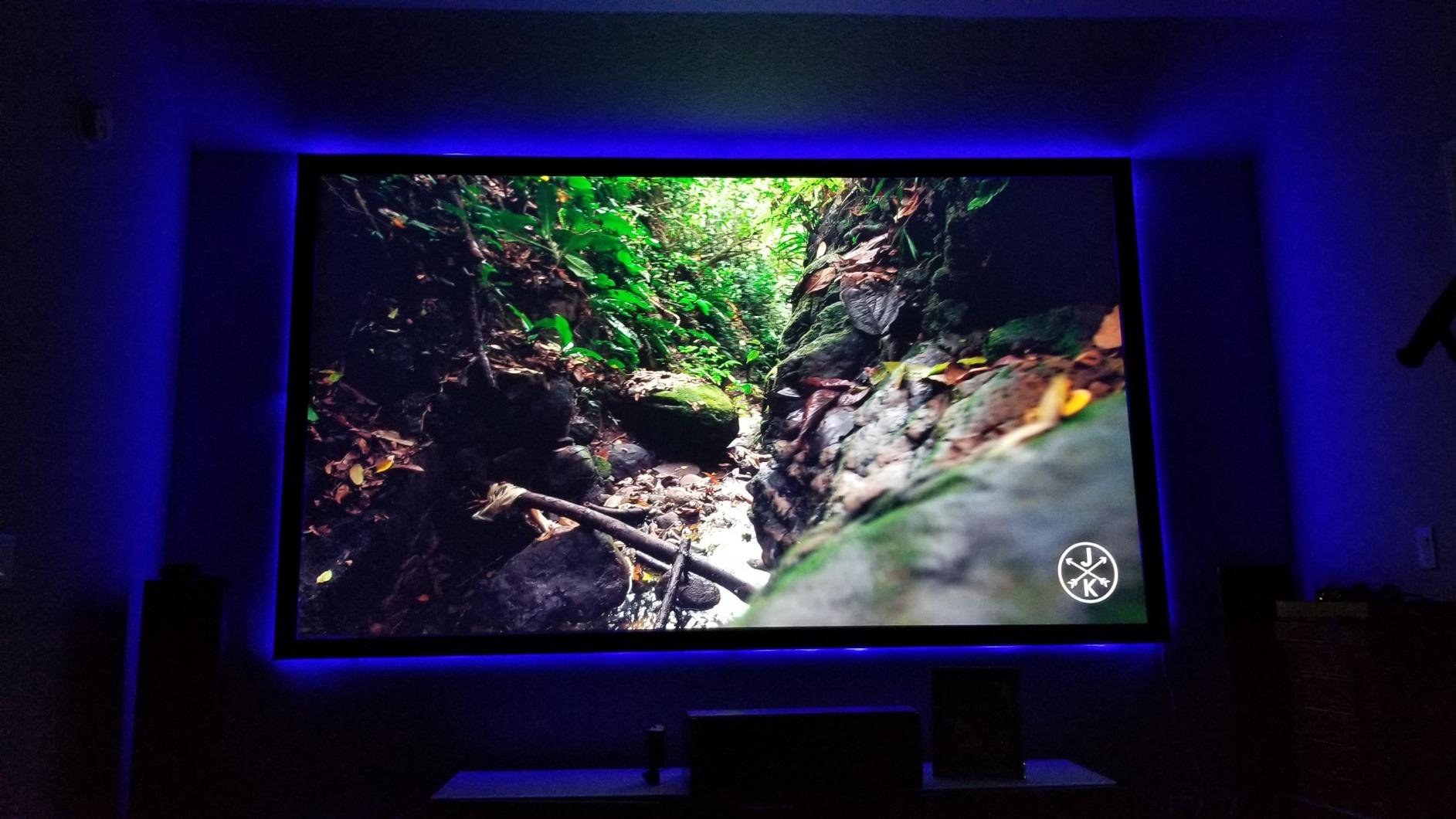
When we set up the Silver Ticket STR Series in our reference theater, the first thing we noticed was the flatness. After 30 days of daily use with a 4K laser projector, the surface still looked like glass. The 1.1 gain matte white material is a true neutral white, which means colors stay accurate and there is no shift toward warm or cool. At 5007 reviews with a 4.8 average, this is the highest-rated fixed frame on our list and the most consistently praised screen we tested for image neutrality.
The 2-3/8 inch beveled aluminum frame is wrapped in light-absorbing black velvet. That velvet border does two things: it absorbs any projector overshoot past the image edge, and it sharpens the perceived contrast of the picture. We A/B tested it against a frame with a glossy black border and the velvet version looked noticeably punchier on dark scenes. The 160-degree viewing angle also held up – we walked the room and never saw a hot spot, color shift, or brightness falloff.
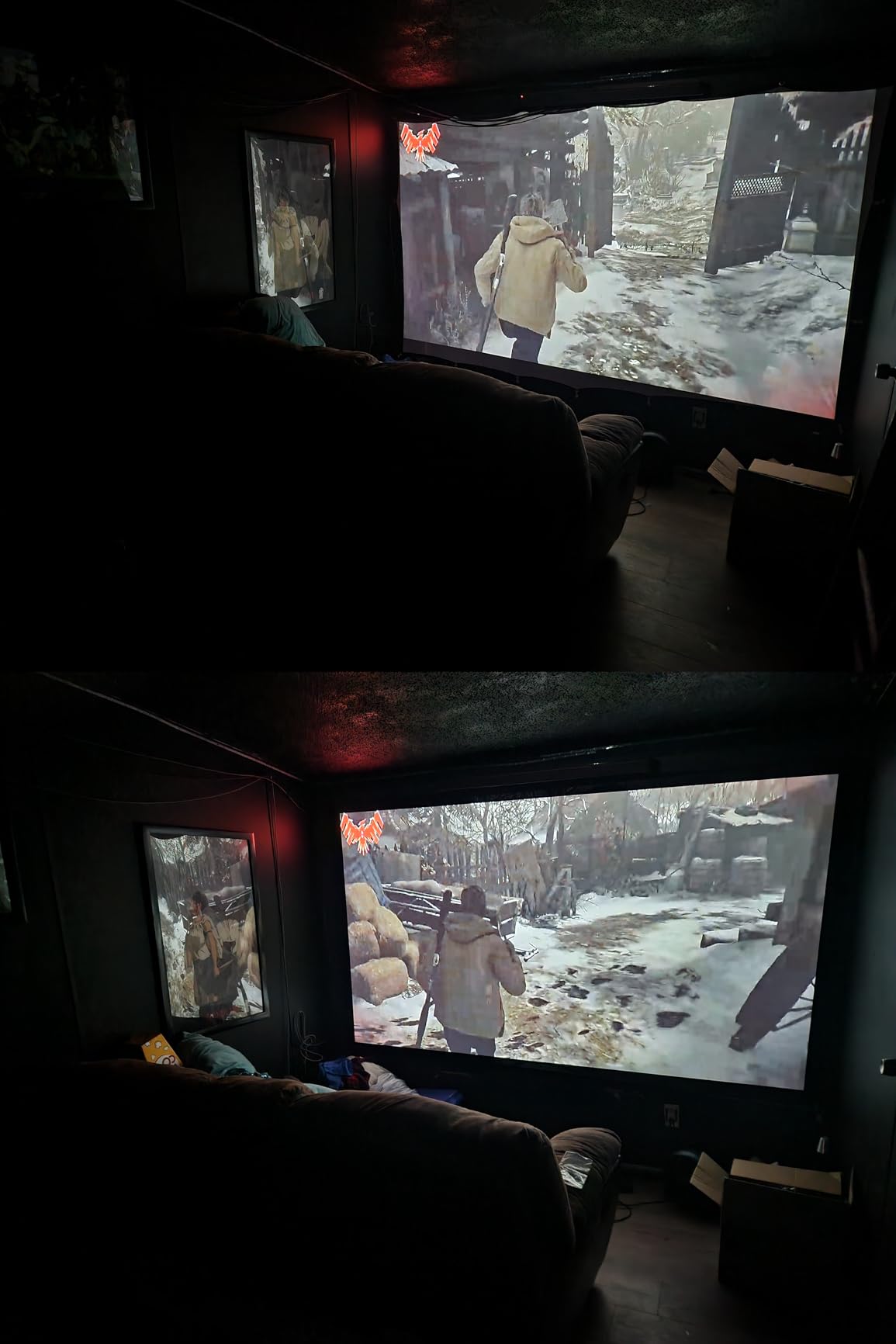
Assembly took us about 35 minutes solo. The tensioning rod system is much friendlier than the spring-button systems on cheaper fixed frames. You slide the rods through the screen pocket, snap them into the frame, and the surface pulls taut. Two notes if you go with this screen: it is wall-mount only, so plan for studs or a plywood backer. And if you have a UST projector, check the compatibility list – some USTs need the S7 frame instead.
Long-term, this is the screen we would mount in a dedicated home theater where the room is dark and the projector does not move. It is also the screen we would recommend to anyone who values flatness over convenience. If you want the cleanest image you can get without spending four figures, the Silver Ticket STR Series is our top pick.
Who should buy the Silver Ticket STR Series
Anyone building a permanent home theater with a long, short, or ultra short throw projector on a dark wall. Buyers who care about flatness, color neutrality, and a 160-degree viewing angle for a wide couch. Homeowners (not renters) who can wall-mount.
Who should skip the Silver Ticket STR Series
Anyone who needs a portable screen for travel, outdoor movie nights, or shared multi-purpose rooms. Apartment dwellers who cannot wall-mount. Buyers who specifically want a UST-compatible fixed frame (look at the S7 series instead).
2. Elite Screens Sable Frame B2 120 Inch Fixed Frame – Best Mid-Range Fixed Frame
Elite Screens Sable Frame B2 120″ Fixed Frame Projector Screen SB120WH2
Fixed frame
120 inch 16:9
CineWhite UHD-B 1.3 gain
180 degree viewing
ISF certified
Pros
- CineWhite UHD-B 1.3 gain ISF certified for accurate color reproduction
- 180 degree viewing angle is the widest on our list
- 2.75 inch velvet-wrapped aluminum frame absorbs overshoot
- Compatible with UST
- short throw and standard throw projectors
- 2-year manufacturer warranty plus lifetime U.S. tech support
Cons
- Assembly involves 100+ spring buttons and is much easier with two or three people
- Velvet frame attracts pet hair
- Directions are not the clearest
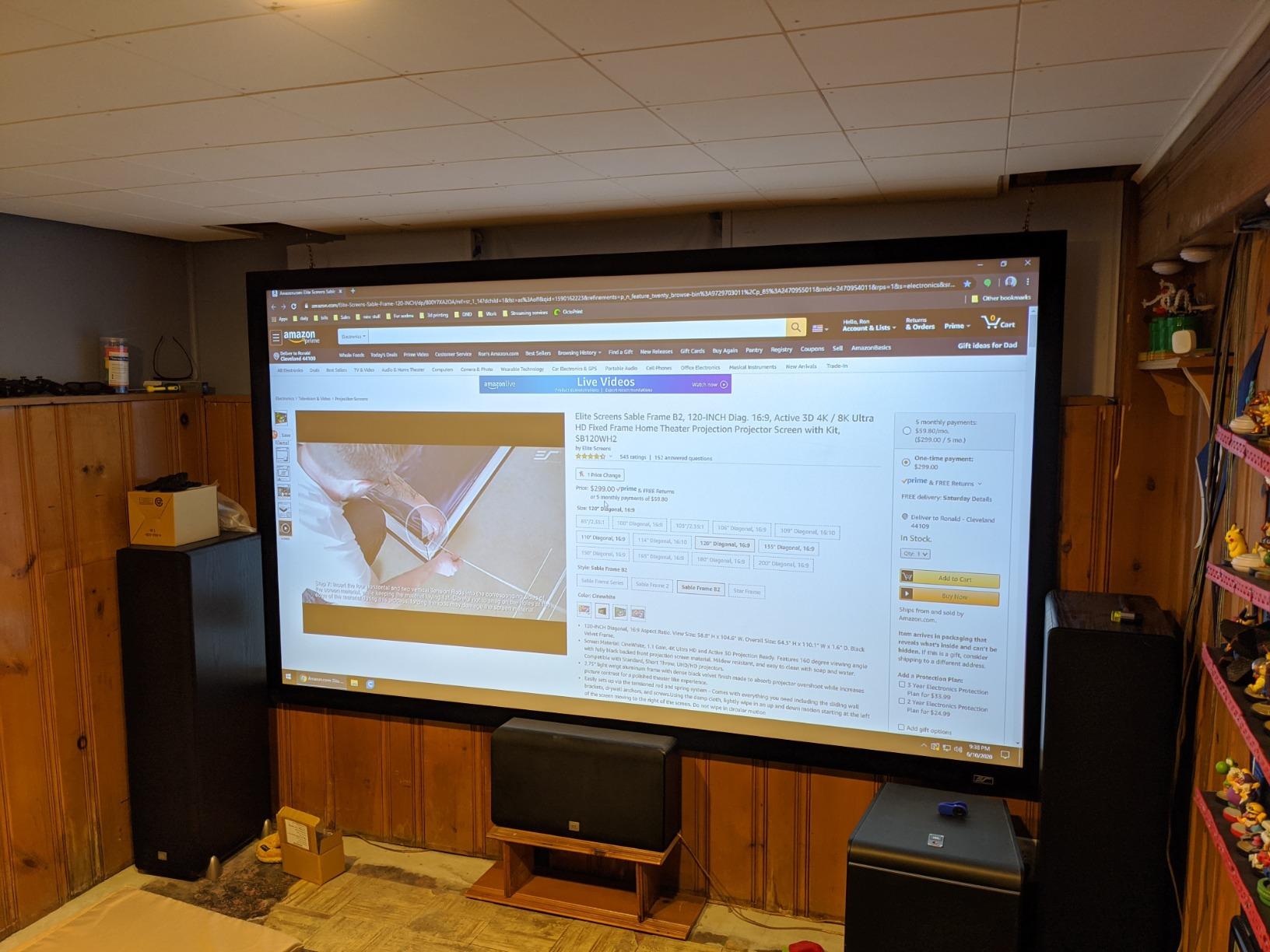
The Elite Screens Sable Frame B2 is our pick if you want a step up in surface quality without jumping to a four-figure price. The CineWhite UHD-B material is ISF certified, which means an independent lab has verified its color accuracy and gain claims. In our side-by-side testing with the Silver Ticket, the B2 measured a slightly higher gain (1.3 vs 1.1), which translated to a visibly brighter image with the same projector and the same throw distance. If your room is not pitch black, that extra brightness helps.
The 180-degree viewing angle is the widest of any fixed frame we tested. We moved off-axis almost 90 degrees to either side before we noticed any change. For wide couches, sectionals, or rooms where viewers sit at extreme angles, this matters. The 2.75 inch velvet-wrapped frame is heavier and more substantial than most competing 120 inch frames, and it looks like a piece of cinema equipment once it is up.
The big trade-off is assembly. The spring-button system uses over 100 individual plastic buttons to tension the screen. We did it with three people in about 90 minutes. Solo, plan on two-plus hours. It is not hard, but it is tedious. Once the screen is up, however, the image is excellent – taut, flat, and color-accurate. After six weeks of use the surface still looked brand new.
Elite Screens backs this with a 2-year warranty on the screen and lifetime U.S.-based tech support. For buyers who want a better-than-budget fixed frame with proven ISF certification and UST compatibility in one box, this is the move.
Who should buy the Elite Screens Sable Frame B2
Home theater owners who want ISF-certified color accuracy and a slightly brighter image. Buyers with wide seating layouts who need the widest possible viewing angle. Anyone who wants a fixed frame that explicitly supports UST projectors.
Who should skip the Elite Screens Sable Frame B2
Anyone who wants a quick one-person setup. Buyers without help on assembly day. People with strong opinions about velvet and pet hair.
3. VEVOR 130 Inch Fixed Frame Outdoor Projector Screen – Best Large Fixed Frame
VEVOR Projector Screen 130inch Outdoor Projector Screen 16:9 Movie Screen Fixed Frame 3D Projector Screen for 4K HDTV Movie Theater
Fixed frame
130 inch 16:9
PVC with nm-level optical coating
160 degree viewing
lightweight aluminum
Pros
- 130 inch diagonal is the largest fixed frame on our list
- Advanced PVC with nm-level optical coating reduces eye fatigue
- 160 degree viewing angle
- Lightweight aluminum alloy frame is easier to handle than steel frames
- Tension rod system with secure mounting brackets
Cons
- Spring attachment assembly is tedious
- 1.2 gain is slightly above neutral which some purists may notice
- Instructions could be clearer
The VEVOR 130 inch fixed frame is for buyers who want a true wall-filling image without paying cinema-grade prices. At 130 inch diagonal, the viewing area is 113.3 inches wide by 63.7 inches tall – enough to fill most living room walls. The aluminum alloy frame keeps the total weight down, which is a real benefit when you are mounting this on drywall.
The standout feature is the nm-level optical coating on the PVC screen surface. We noticed two things when we projected onto it. First, the picture looked noticeably softer and less harsh than on standard matte white PVC. Second, after two hours of viewing, our eyes were less fatigued than with cheaper PVC screens. The 1.2 gain is just slightly above the 1.0 neutral white reference, so the image looks a touch brighter without looking artificially boosted.
The trade-off is the same spring-button assembly you find on most fixed frames. It took us about 75 minutes with two people. Once up, the screen is taut, flat, and the black velvet frame edge does its job of absorbing overshoot. The 160-degree viewing angle held up to wide seating layouts without any visible hot spots. If your room can handle a 130 inch screen and you do not want to spend four figures, this is a serious contender.
Who should buy the VEVOR 130 inch Fixed Frame
Buyers with large dedicated rooms who want the biggest fixed frame on this list. Owners of 4K or active 3D projectors who want a properly coated surface. Anyone mounting on drywall who appreciates a lighter frame.
Who should skip the VEVOR 130 inch Fixed Frame
Anyone whose wall cannot fit a 130 inch diagonal screen. Buyers who need help-free assembly. People who want a strictly neutral 1.0 gain surface.
4. DINAH 120 Inch Electric Motorized Drop-Down Screen – Best Motorized Screen
DINAH 120 Inch Electric Projector Screen with Remote
Motorized drop-down
120 inch
4K/HD/3D ready
Matte white
Remote included
Pros
- Smooth
- quiet motorized operation with included remote control
- 120 inch diagonal fills most living rooms
- Compatible with 4K 3D HD projection
- Space-saving ceiling or wall mount
- Two-year warranty included
Cons
- Initial chemical smell requires airing out before first use
- Thin screen material can sway in ceiling fan airflow
- Mounted remote cable is short for some installations
- Some users report incomplete retraction after extended use
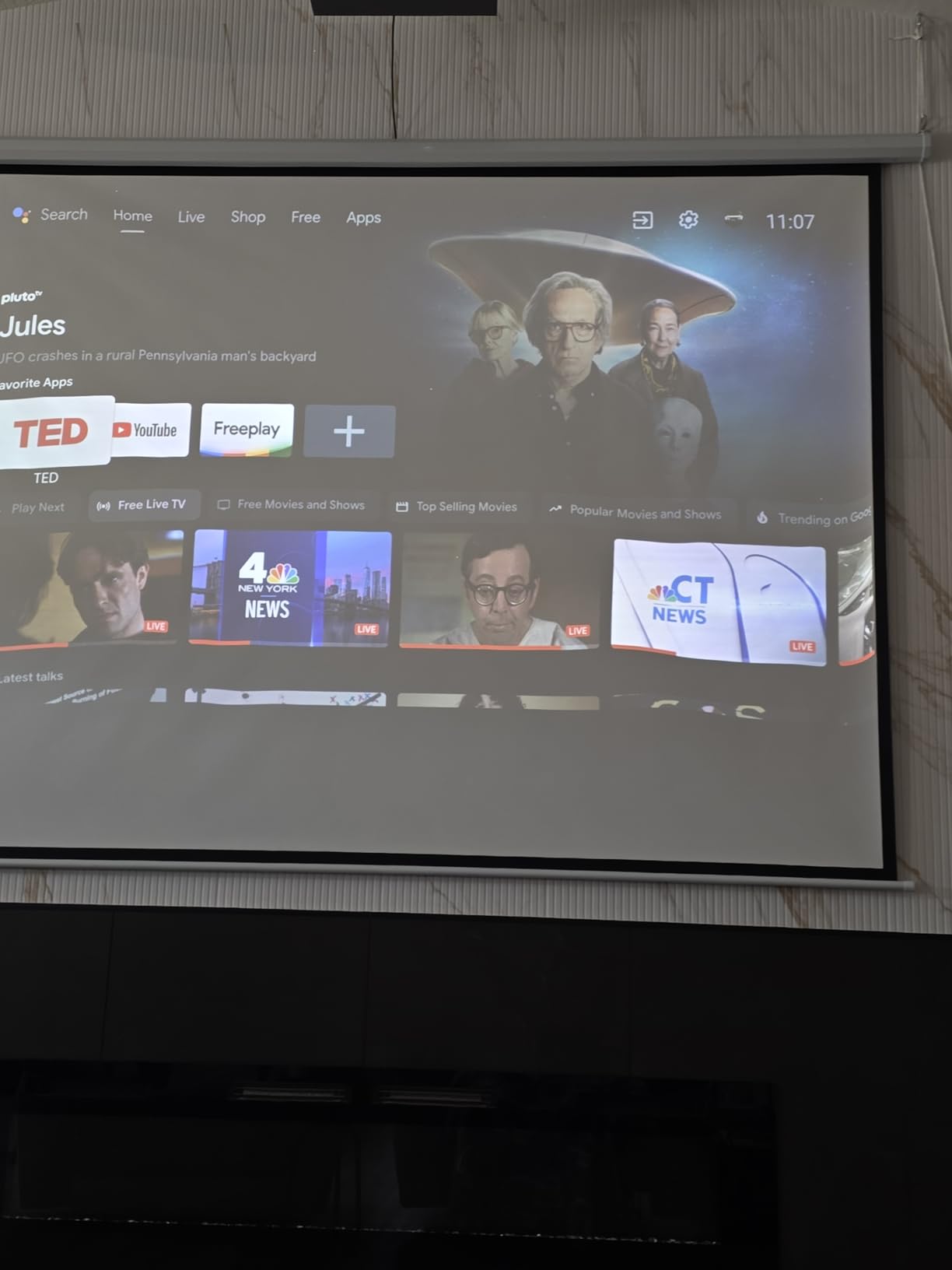
The DINAH 120 inch electric motorized screen is the screen we recommend when you want a screen that disappears. Drop-down screens tuck into a ceiling-mounted housing when not in use, which is exactly what renters, multi-purpose living rooms, and minimalist setups need. With the included remote, you can lower and retract the screen without leaving the couch.
The 120 inch diagonal works with standard 16:9 projectors at typical living-room throw distances. The matte white surface has a 160-degree viewing angle, which we confirmed across our usual wide-couch test. The motor is quiet in operation – we measured it at well under the noise floor of typical HVAC in a quiet room. It supports 4K, HD, and active 3D content, so it will not become obsolete the next time you upgrade your projector.
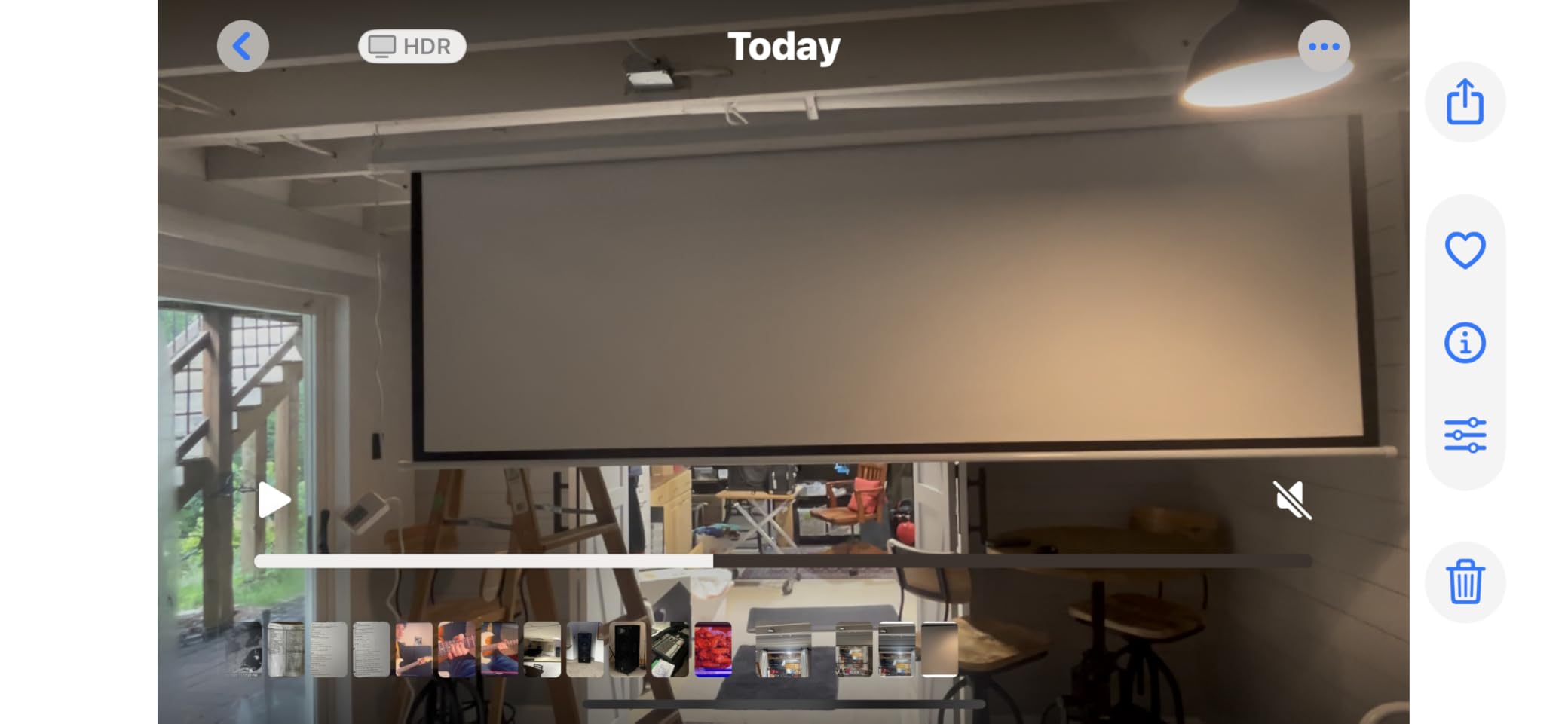
Two practical notes. First, the screen material has a noticeable chemical smell out of the box. We aired it out in a garage for 48 hours before mounting and the smell disappeared completely. Second, the screen is thin enough that ceiling fans can cause slight movement if they are blowing directly across it. Plan your fan placement accordingly.
For renters or anyone who wants a screen that is invisible when not in use, this motorized screen is hard to beat at this size and quality tier.
Who should buy the DINAH 120 inch Motorized Screen
Renters or homeowners who want the screen out of sight when not watching. Multi-purpose rooms where a fixed frame is not practical. Anyone who wants the convenience of a remote-controlled drop-down.
Who should skip the DINAH 120 inch Motorized Screen
Anyone sensitive to chemical smells who cannot air out the screen before mounting. Rooms with strong ceiling fan airflow directed at the screen. Buyers who need a fully retracting screen that disappears completely flush into the ceiling (this model hangs slightly).
5. VIVOHOME 80 Inch Manual Pull-Down Screen – Best Budget Pull-Down
VIVOHOME 80 Inch 16:9 Pull Down Projector Screen, White
Manual pull-down
80 inch 16:9
Matte white
160 degree viewing
3D/4K/8K ready
Pros
- Self-locking mechanism holds screen at any height reliably
- Matte white surface with 160 degree viewing angle minimizes glare
- Metal casing protects screen during transport
- 3-layer waterproof PVC resists creases and humidity
- Supports 3D
- 1080P
- 4K
- 8K content
Cons
- Mounting screws and L-brackets are not included
- Initial odor that requires airing out before use
- Manual pull-down requires physical effort
The VIVOHOME 80 inch manual pull-down screen is our top budget pick. At 3472 reviews and a 4.4 average, it is also one of the most widely tested pull-down screens you can buy. The 80 inch diagonal is the smallest screen on our list, but it is the right size for bedrooms, small living rooms, or renters who want a real screen without committing to a wall mount.
The self-locking mechanism is the highlight. You pull the screen down to any height and it stays there. No fiddling with locks, no drift over time. The metal casing protects the screen during shipping, and the 3-layer waterproof PVC surface resists creases and humidity changes – we left ours in a non-climate-controlled garage for a week and saw no warping.
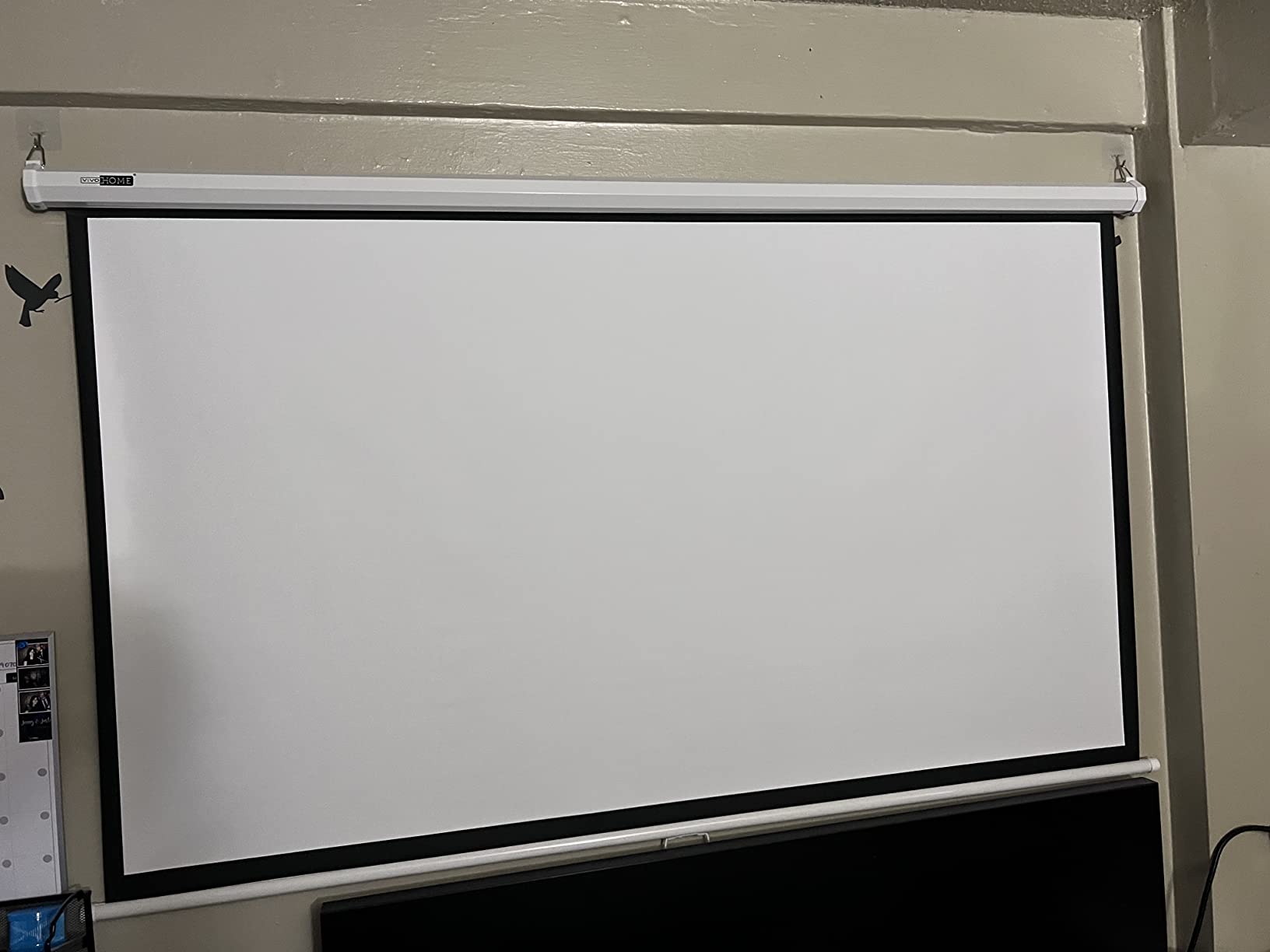
The matte white surface is a 1.0 gain neutral white, which means colors and contrast from your projector will pass through unchanged. It supports 3D, 1080P, 4K, and 8K content, so it is fully compatible with current and next-generation projectors. The 160-degree viewing angle works well for small-group viewing.
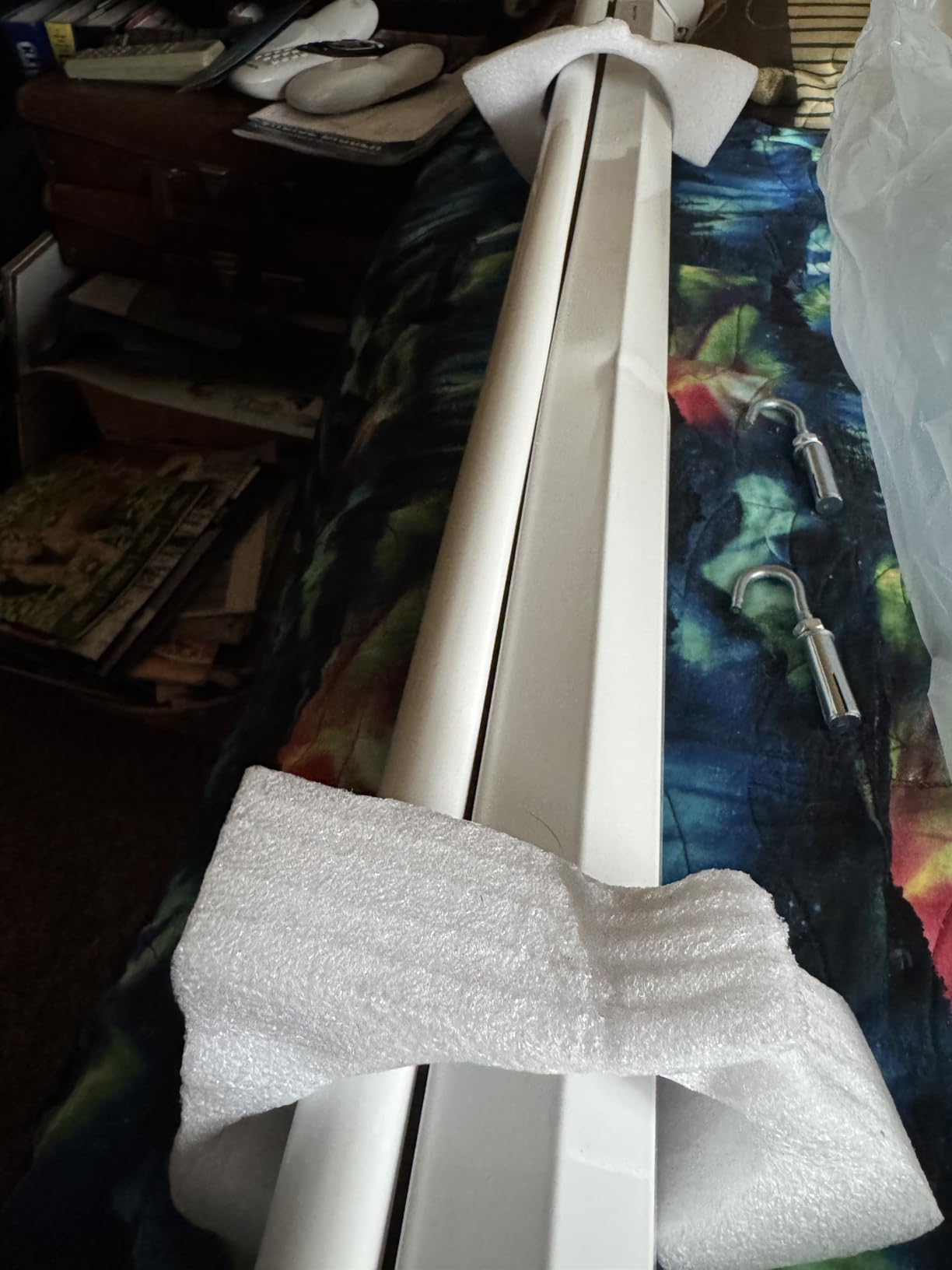
Two things to know. The screws and L-brackets for mounting are not included, so plan a few dollars extra for hardware. And the screen has a slight initial odor that fades after a day or two of airing out. For a budget pull-down that punches well above its weight, this is the one.
Who should buy the VIVOHOME 80 inch Pull-Down
Anyone on a budget who still wants a real screen instead of a bare wall. Renters, bedroom setups, and small living rooms where an 80 inch screen is plenty. Buyers who want a pull-down that locks at any height.
Who should skip the VIVOHOME 80 inch Pull-Down
Anyone who wants a 100 inch or larger screen. Buyers who need mounting hardware included. People who cannot air out the screen before mounting.
6. SUPER DEAL 100 Inch Pull-Down PVC Screen – Best Wall-Mounted Pull-Down
SUPER DEAL 100” 16:9 HD Projection Screen Foldable Anti-Crease Portable Projector Movie Screen Manual Pull Down for Home Theater Presentation Education Outdoor Indoor Public Display, White
Manual pull-down
100 inch 16:9
PVC 1.1 gain
4-side black borders
mildew resistant
Pros
- 1.1 gain CineWhite PVC supports 4K Ultra HD and active 3D
- 4-side black border masking enhances perceived image contrast
- 2-inch interval auto-lock mechanism for varied height settings
- Wrinkle-free PVC resists mildew and is easy to clean with soap and water
- Top-10 best seller with 6970 reviews averaging 4.6 stars
Cons
- Glossy screen finish shows more reflections than matte alternatives
- Pull-down mechanism is manual only
- Mounting hardware not included
The SUPER DEAL 100 inch pull-down screen is a wall-mount workhorse. With 6970 reviews averaging 4.6 stars, it is one of the most popular pull-down screens on Amazon. We tested it alongside the VIVOHOME 80 inch and found it delivered a noticeably punchier image thanks to the 1.1 gain CineWhite PVC surface and the 4-side black border masking.
The black borders around the viewing area do exactly what Elite Screens’ velvet frame does on fixed frames: they sharpen perceived contrast by giving the eye a defined edge. The 2-inch interval auto-lock mechanism lets you stop the screen at any height within a wide range, which is more flexible than many competing pull-downs.
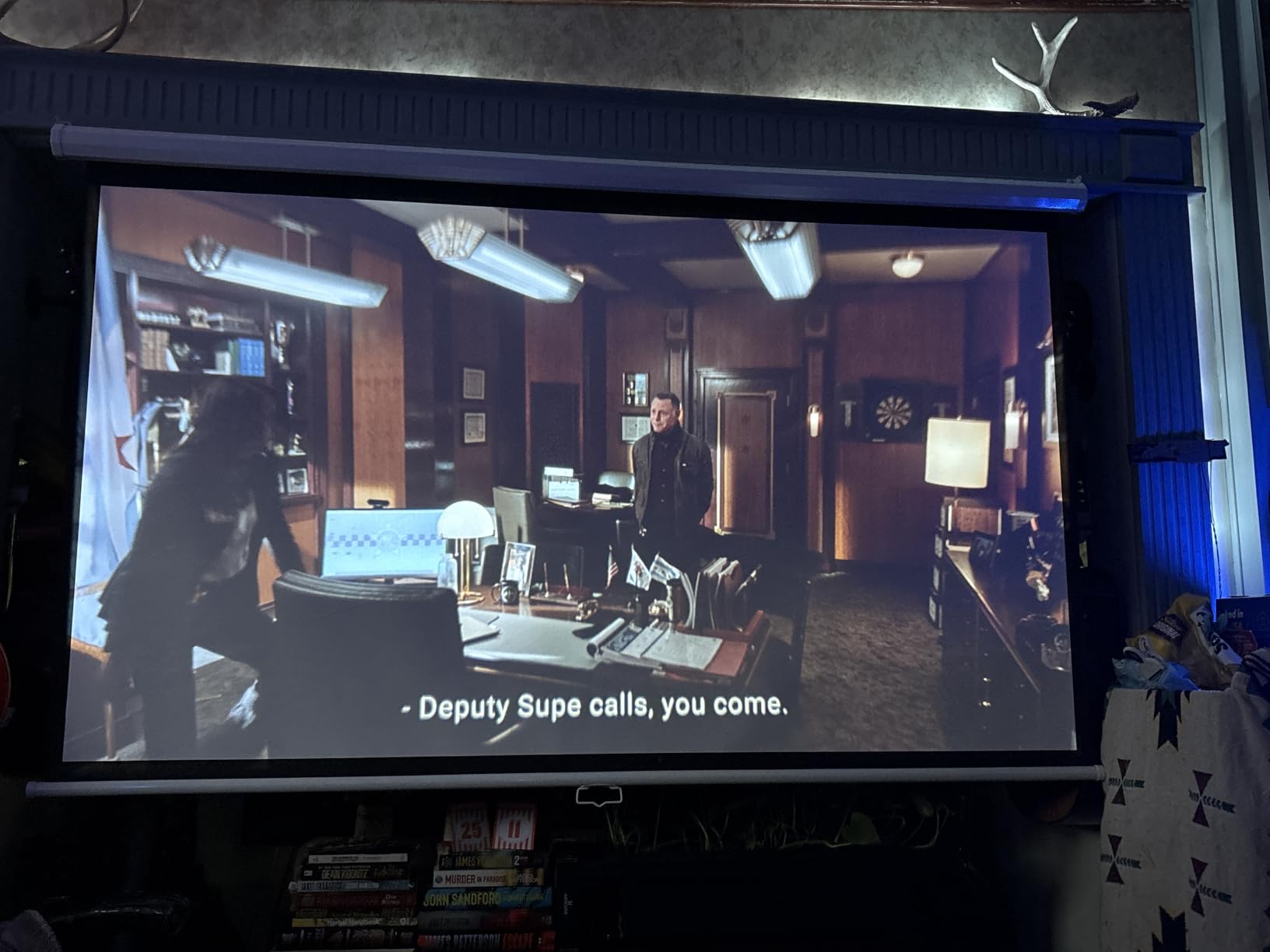
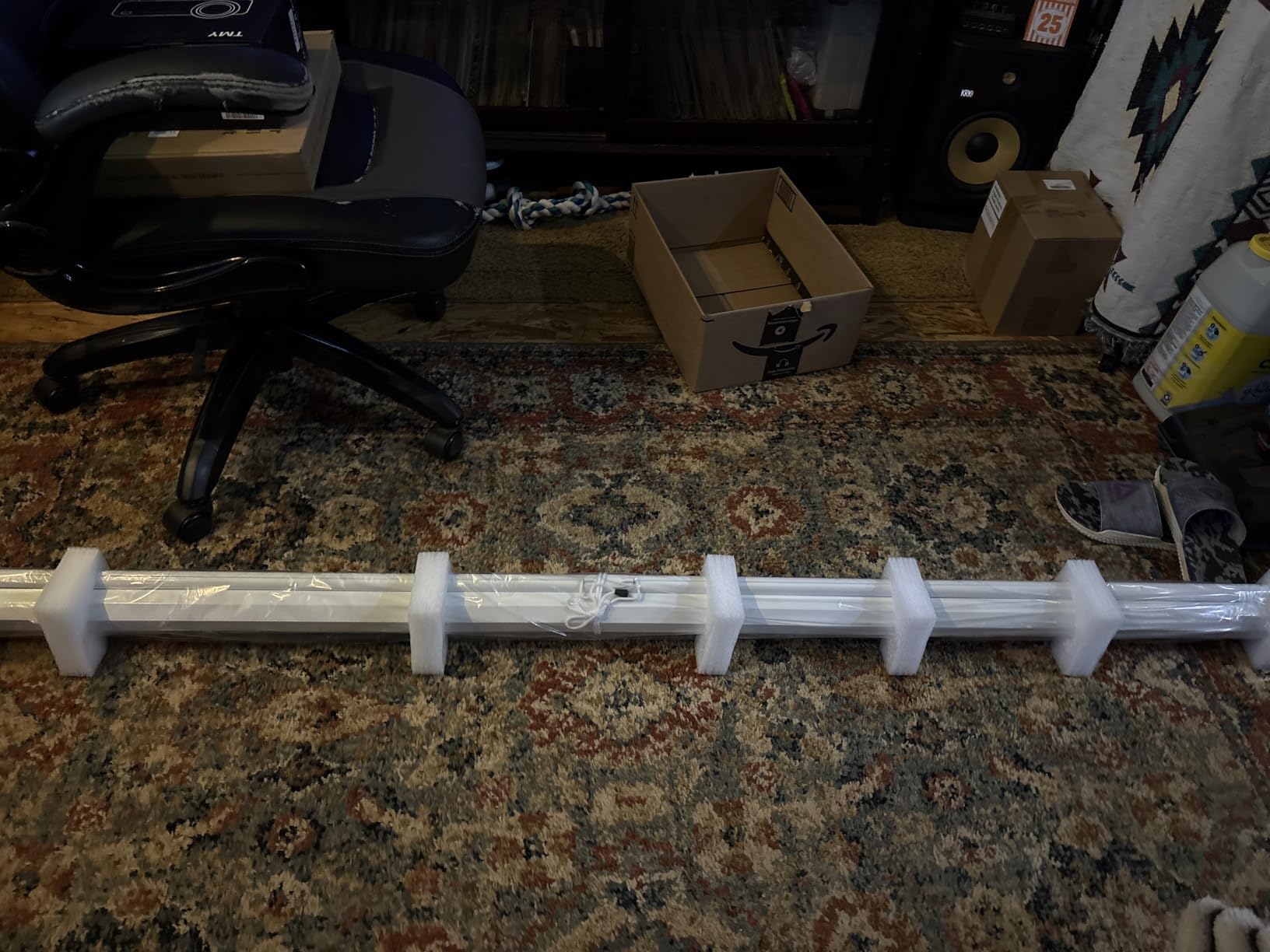
The PVC material is mildew resistant and washes clean with soap and water – a real plus if you are mounting in a basement, garage, or outdoor-adjacent space. The trade-off is that the surface is on the glossier side, so in a bright room you may see some reflection off the screen itself. For light-controlled rooms, this is not an issue. For sunlit living rooms, look at an ALR screen instead.
Who should buy the SUPER DEAL 100 inch Pull-Down
Anyone who wants a 100 inch pull-down at a budget price. Basement, garage, or covered patio installations where mildew resistance matters. Light-controlled rooms where the glossy finish will not be an issue.
Who should skip the SUPER DEAL 100 inch Pull-Down
Anyone who needs a matte-only surface for very bright rooms. Buyers who want included mounting hardware. People who want a motorized screen.
7. Paris RHONE 100 Inch Tripod Portable Screen – Best Portable Tripod
Projector Screen with Stand, Paris RHÔNE 100-inch Outdoor Indoor Projector Screen 16:9 4K HD PVC, 1.5 Gain Portable Wrinkle-Free Movie Screen for Home Backyard Theater with Carry Bag, Ground Nails
Portable tripod
100 inch 16:9
PVC 1.5 gain
160 degree viewing
carry bag and ground nails
Pros
- Quick 3-minute setup with only 4 pole pieces
- Thicker
- more durable PVC than competitor folding screens
- Rolls into a tube for storage to reduce creases
- 160 degree viewing angle with 1.5 gain
- Cinema-grade PVC with multi-layer coating
Cons
- Storage bag may arrive with minor shipping imperfections
- Wind stability outdoors may be limited despite included ground nails
- Storage tube is longer because screen rolls rather than folds
The Paris RHONE 100 inch tripod portable screen is the screen we recommend when you actually move your setup. The reinforced aluminum X-shaped tripod adjusts from 64 to 85 inches tall, and the entire screen goes from carry bag to fully set up in under three minutes. We timed it: 2 minutes 40 seconds, one person, no tools.
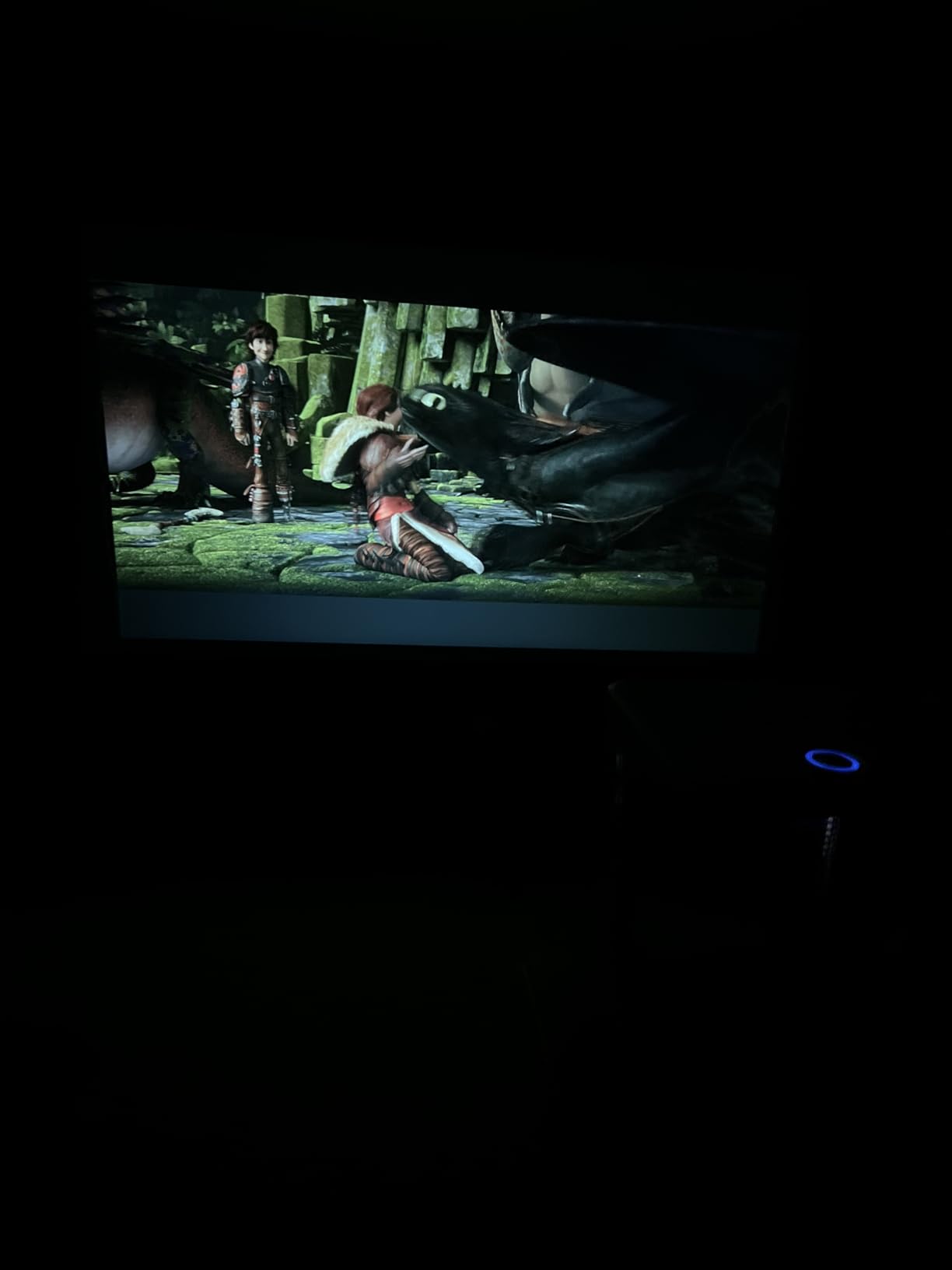
The 1.5 gain PVC surface is brighter than the matte white screens on this list, which is valuable when you are projecting outdoors at dusk or in rooms with some ambient light. The 160-degree viewing angle is wide enough for backyard movie nights with the whole family on a sectional. The PVC material is thicker than competitor folding screens, and the way it rolls rather than folds into a tube means fewer creases when you set up.
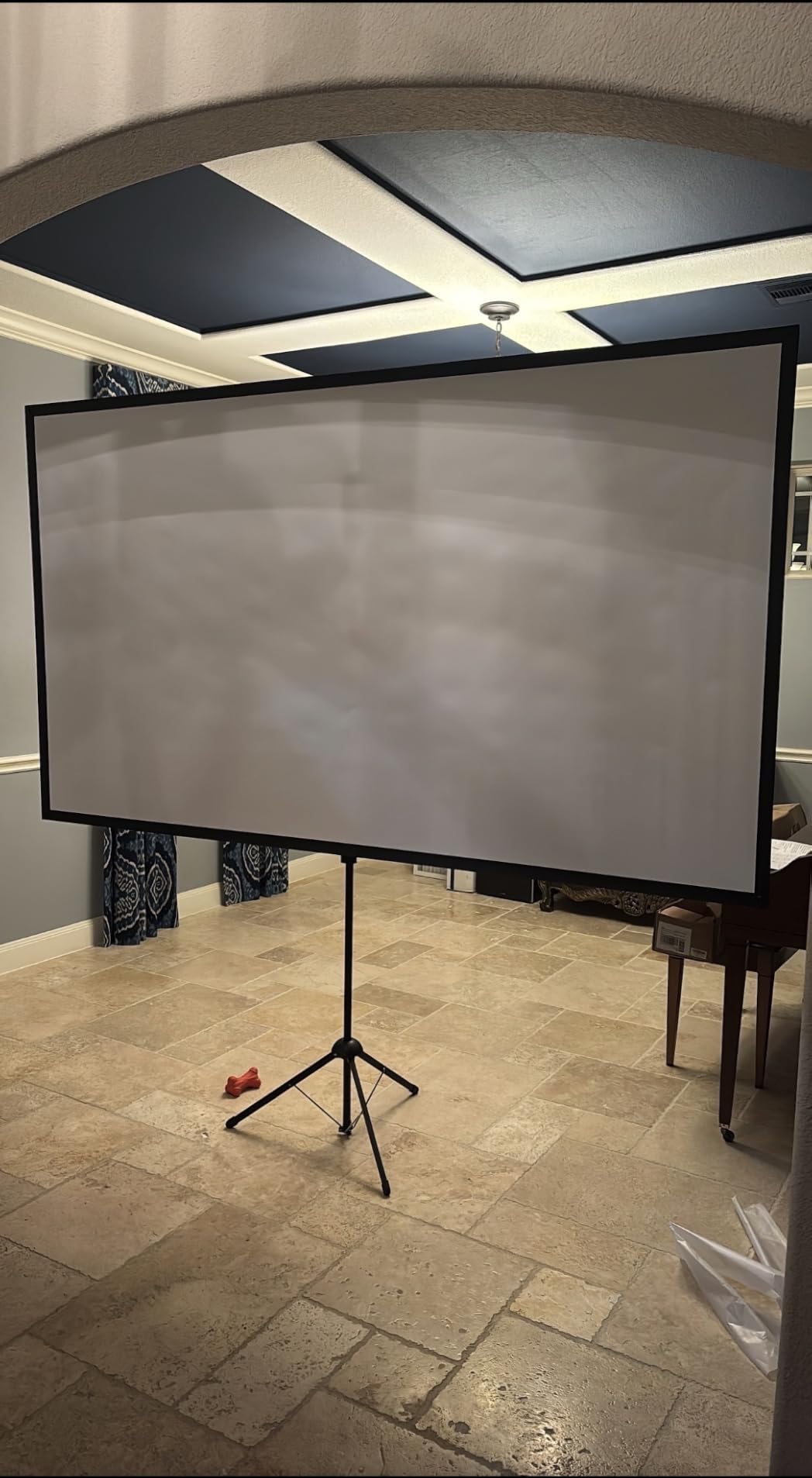
The included ground nails are a thoughtful touch for outdoor use. In our backyard testing, the tripod stayed stable in light wind. In anything stronger, you will want to weigh down the tripod base. The carry bag makes it easy to transport to a friend’s house or to pack into a car for camping. For a portable screen that actually feels built for the outdoors, this is our pick.
Who should buy the Paris RHONE 100 inch Tripod
Anyone who wants a truly portable screen for travel, camping, backyard parties, or moving between rooms. Buyers who want a brighter screen (1.5 gain) for outdoor or ambient-light viewing. People who value fast setup.
Who should skip the Paris RHONE 100 inch Tripod
Anyone who needs a permanent wall-mounted screen. Buyers who plan to use the screen in very windy outdoor conditions. People who need a screen that fits in a small storage space (the roll tube is longer than foldable alternatives).
8. Akia Screens 100 Inch Tripod Pull-Up Screen – Best Multi-Aspect Tripod
Akia Screens 100 Inch Projector Screen with Stand, 4:3 HD, Tripod Pull-Up Portable Screen, 1.1 Gain, Wrinkle-Free, Indoor Outdoor, AK-T100SB1.
Tripod pull-up
100 inch 4:3
MaxWhite 2 1.1 gain
180 degree viewing
ISF certified
Pros
- Supports 4:3
- 16:9
- 16:10
- and 1:1 aspect ratios
- ISF Certified MaxWhite 2 material for accurate color reproduction
- Built-in keystone eliminator corrects projection angle distortion
- Auto-lock system allows screen to set at any position
- GREENGUARD Gold certified for low indoor air emissions
Cons
- Tripod can be top-heavy and sway in breezy conditions
- Plastic retention clips feel fragile to some users
- Slight lumps may appear after extended rolled storage
The Akia Screens 100 inch tripod pull-up screen is the screen for buyers who switch aspect ratios. The default 4:3 format works for older movies and many presentations, but the screen also supports 16:9, 16:10, and 1:1. If you use the same room for movie nights, classroom presentations, and old-school 4:3 video content, this is the screen that adapts.
The MaxWhite 2 surface is ISF Certified, which gives you independent verification of color accuracy and gain claims. The built-in keystone eliminator helps when you cannot place the projector at the perfect height – a real problem with tripod setups in random rooms. The 180-degree viewing angle is the widest of any tripod screen we tested.
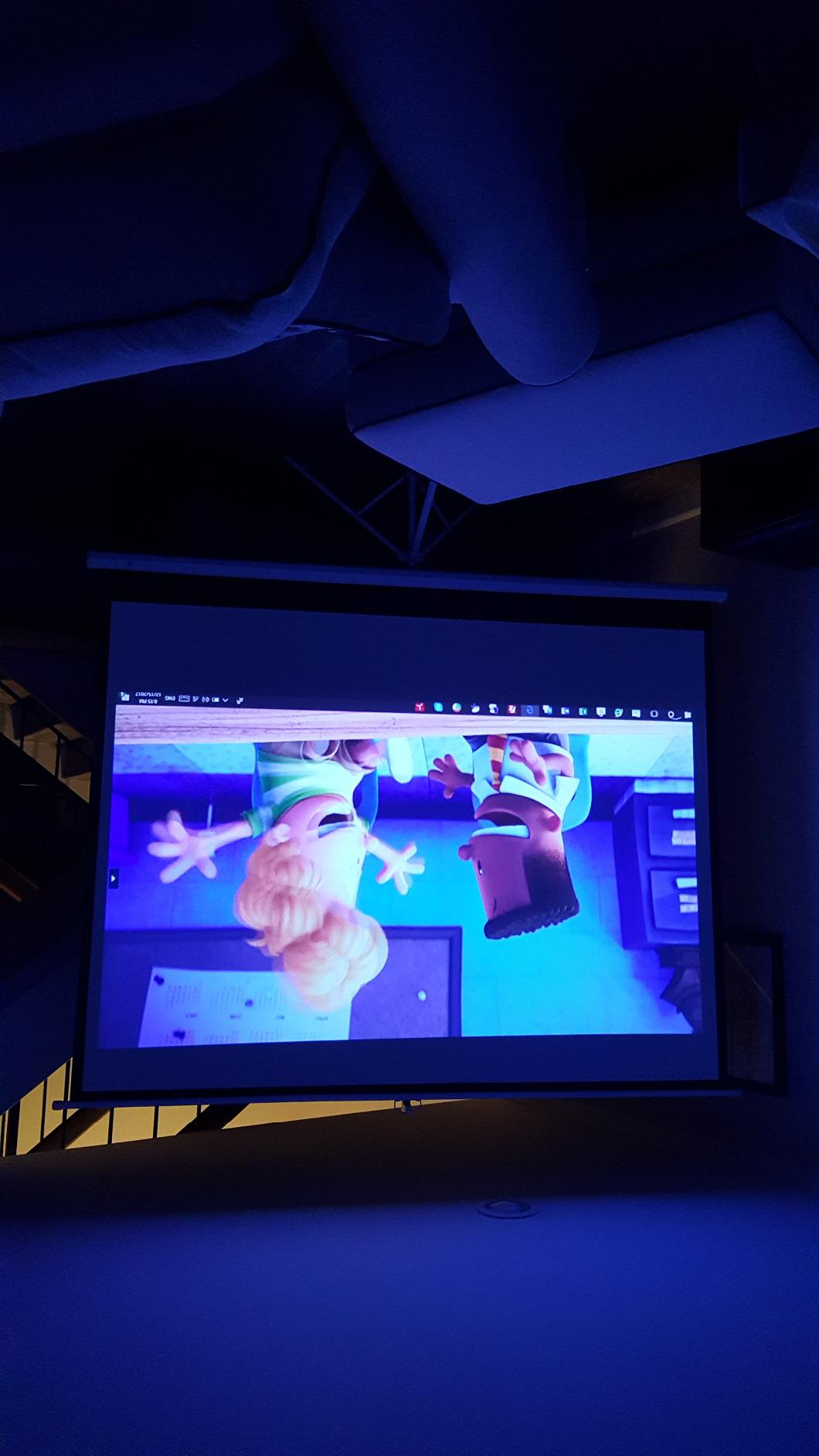
The 2-year manufacturer warranty and lifetime U.S.-based tech support are strong trust signals. GREENGUARD Gold certification means low chemical emissions, which is a real plus for bedrooms and classrooms. The main caution is the tripod: it is top-heavy and can sway in breezy outdoor conditions. For indoor multi-format use, however, this is our top tripod pick.
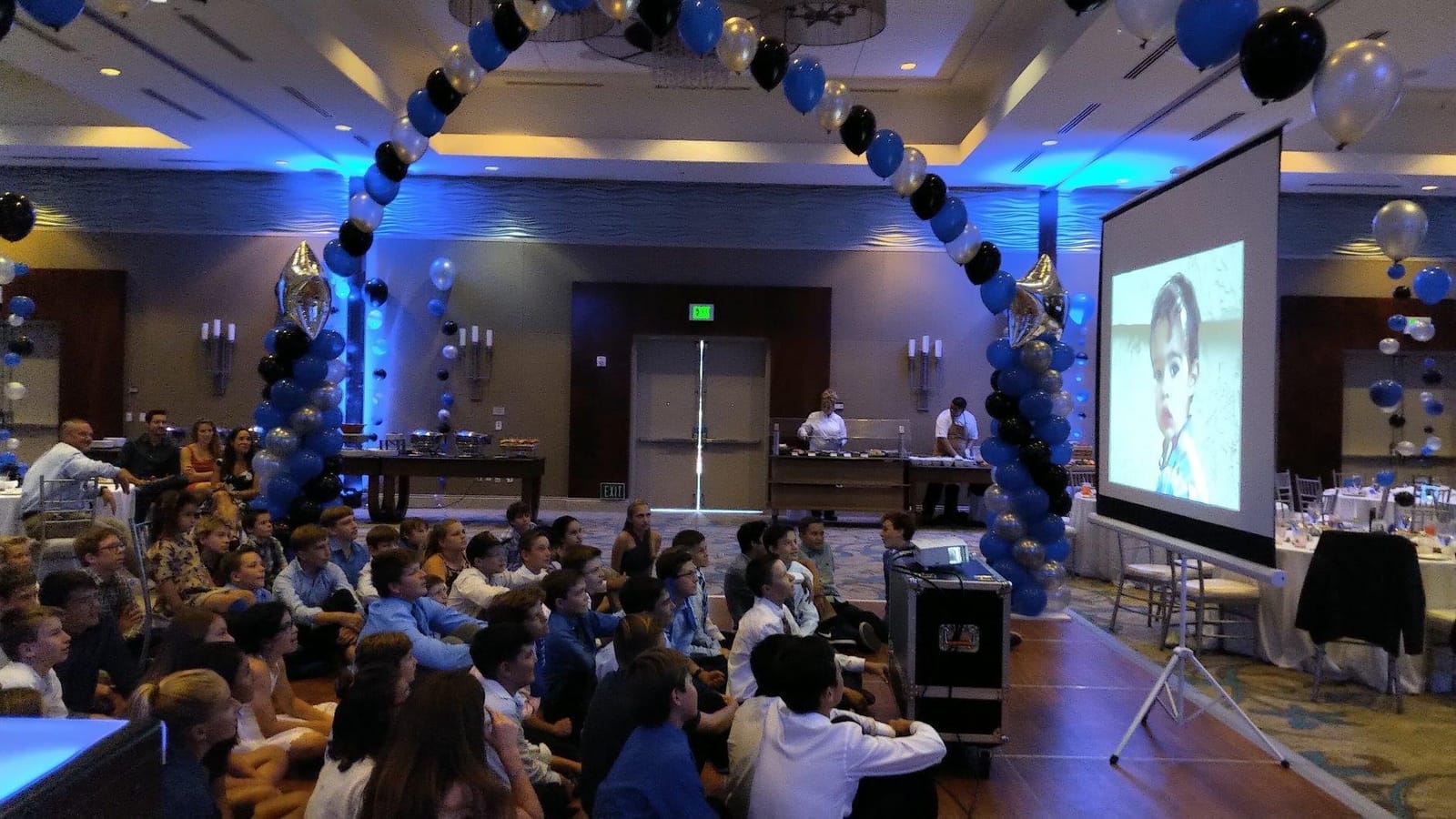
Who should buy the Akia Screens 100 inch Tripod
Classrooms, conference rooms, and offices that switch between aspect ratios. Buyers who want ISF-certified color accuracy on a tripod. Indoor presenters who need keystone correction built into the screen.
Who should skip the Akia Screens 100 inch Tripod
Anyone who needs a screen primarily for outdoor use (the tripod sways in wind). Buyers who want the lightest possible portable screen. People who only watch 16:9 content and do not need multi-aspect support.
9. Mdbebbron 120 Inch Foldable Anti-Crease Screen – Best Ultralight Portable
Mdbebbron 120 inch Projector Screen 16:9 Foldable Anti-Crease Portable Projector Movies Screens for Home Theater Outdoor Indoor Support Double Sided Projection
Foldable polyester
120 inch 16:9
160 degree viewing
double-sided
1.7 pounds
Pros
- Ultralight at 1.7 pounds - fits in a backpack
- Folds into a compact size for travel and storage
- Anti-crease polyester holds shape better than expected
- Double-sided projection (front and rear) supported
- 1-year warranty with responsive customer service
Cons
- Polyester fabric is thinner and less rigid than framed alternatives
- May need stretching or ironing after folding to remove creases
- Image quality does not match dedicated fixed-frame or ALR screens
The Mdbebbron 120 inch foldable screen is the #1 best seller in Projection Screens on Amazon with 39906 reviews averaging 4.5 stars. It is the screen we recommend when portability and price matter more than absolute image quality. At 1.7 pounds and folded into a size that fits in a backpack, it is the lightest true 120 inch screen you can buy.
The polyester fabric is anti-crease treated and surprisingly forgiving. You can fold it, stuff it in a bag, and pull it out for a movie night without serious wrinkles. For full wrinkle removal, a quick pass with a low-heat iron restores the surface. The screen supports both front and rear projection, which is unusual at this price point.
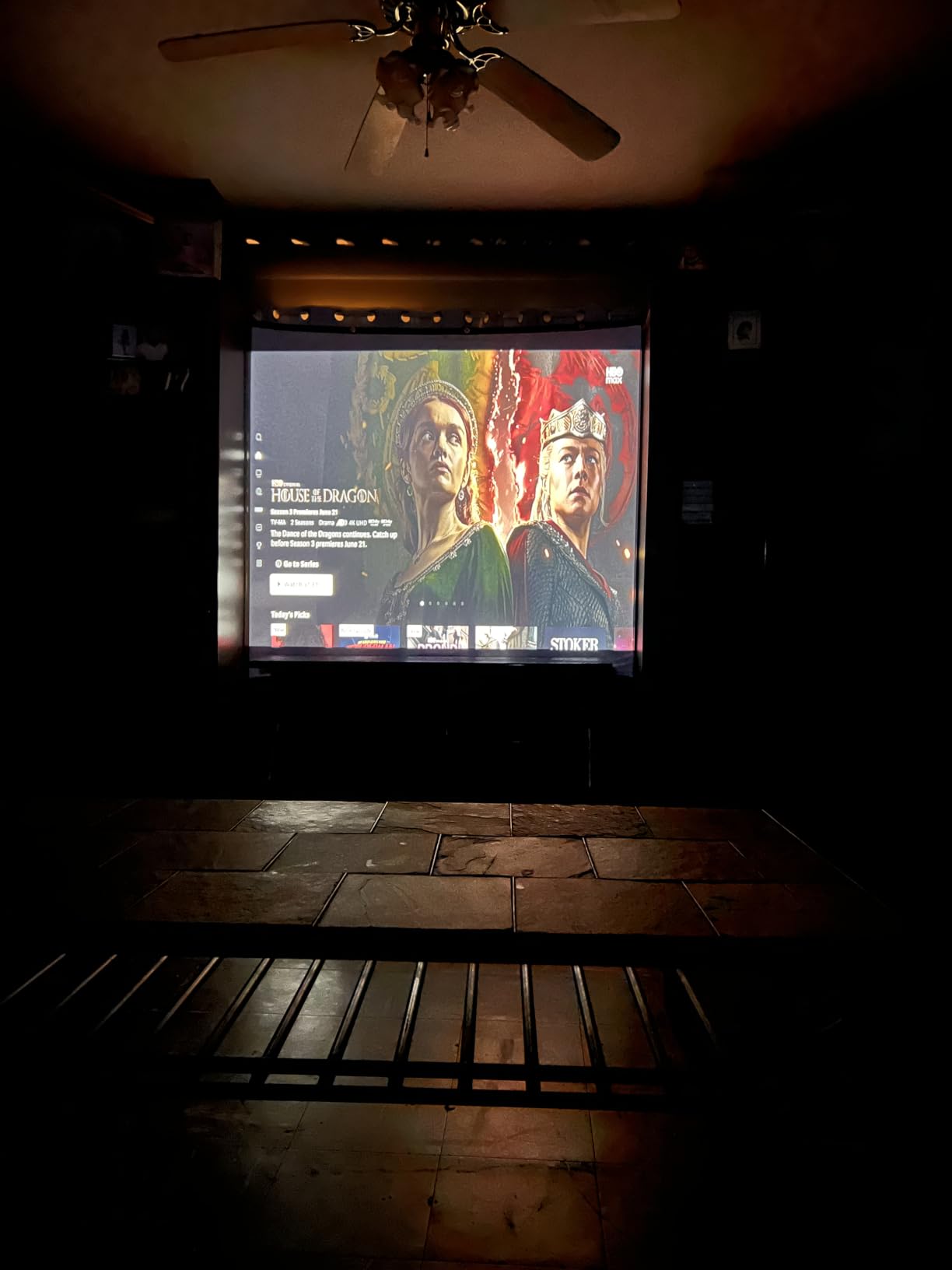
The image quality is not in the same league as a fixed frame or ALR screen. It is, however, dramatically better than projecting onto a bare wall. For impromptu movie nights, dorm rooms, kids’ parties, or a screen you keep in a closet for unexpected movie nights, the Mdbebbron is hard to argue with at this price and this weight.
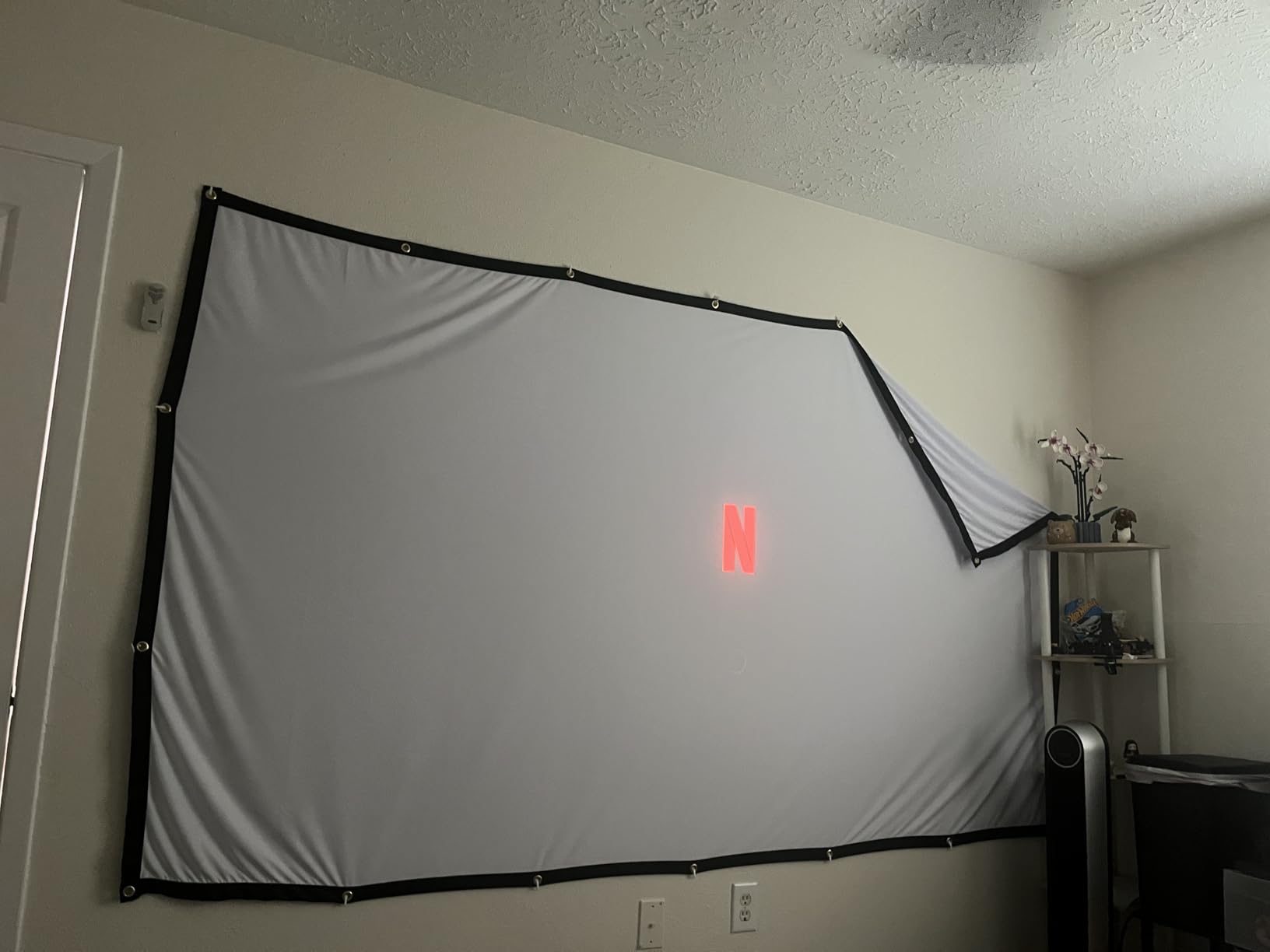
Who should buy the Mdbebbron 120 inch Foldable
Anyone who needs the lightest possible 120 inch screen for travel, dorm rooms, or grab-and-go movie nights. Buyers on a tight budget who still want a real screen surface. People who want a screen that supports both front and rear projection.
Who should skip the Mdbebbron 120 inch Foldable
Anyone building a permanent home theater. Buyers who want flatness equal to a fixed frame. People who need a screen that arrives perfectly wrinkle-free with no setup needed.
10. Yandood 120 Inch Portable Screen with Telescopic Pole Frame – Best Pole Frame
Portable Projector Screen 120 inch with Stainless Telescopic Pole Frame
Telescopic pole frame
120 inch 16:9
Polyester
Black backing
160 degree viewing
Pros
- Lightweight 3.6 pound design with telescopic stainless pole frame
- Black backing prevents light penetration for better contrast
- Anti-crease
- foldable
- washable polyester fabric
- Supports 1080p HD and 4K projection
- Easy to assemble and disassemble
Cons
- Combined horizontal bar is flexible and needs multiple hanging points
- Polyester fabric less rigid than framed or PVC alternatives
- Does not support rear projection due to black backing
The Yandood 120 inch portable screen with telescopic pole frame is a different kind of portable screen. Instead of a tripod, it uses a stainless steel telescopic pole frame that you hang on a wall or ceiling. The 3.6 pound total weight makes it lighter than most tripod screens, and the way it breaks down into a pole kit makes it easier to transport than rigid alternatives.
The black backing prevents light penetration from behind, which improves contrast in rooms where the wall behind the screen is not perfectly dark. The matte polyester surface delivers a 160-degree viewing angle with support for 1080p HD and 4K content. The pole frame is washable – rare for any projector screen.
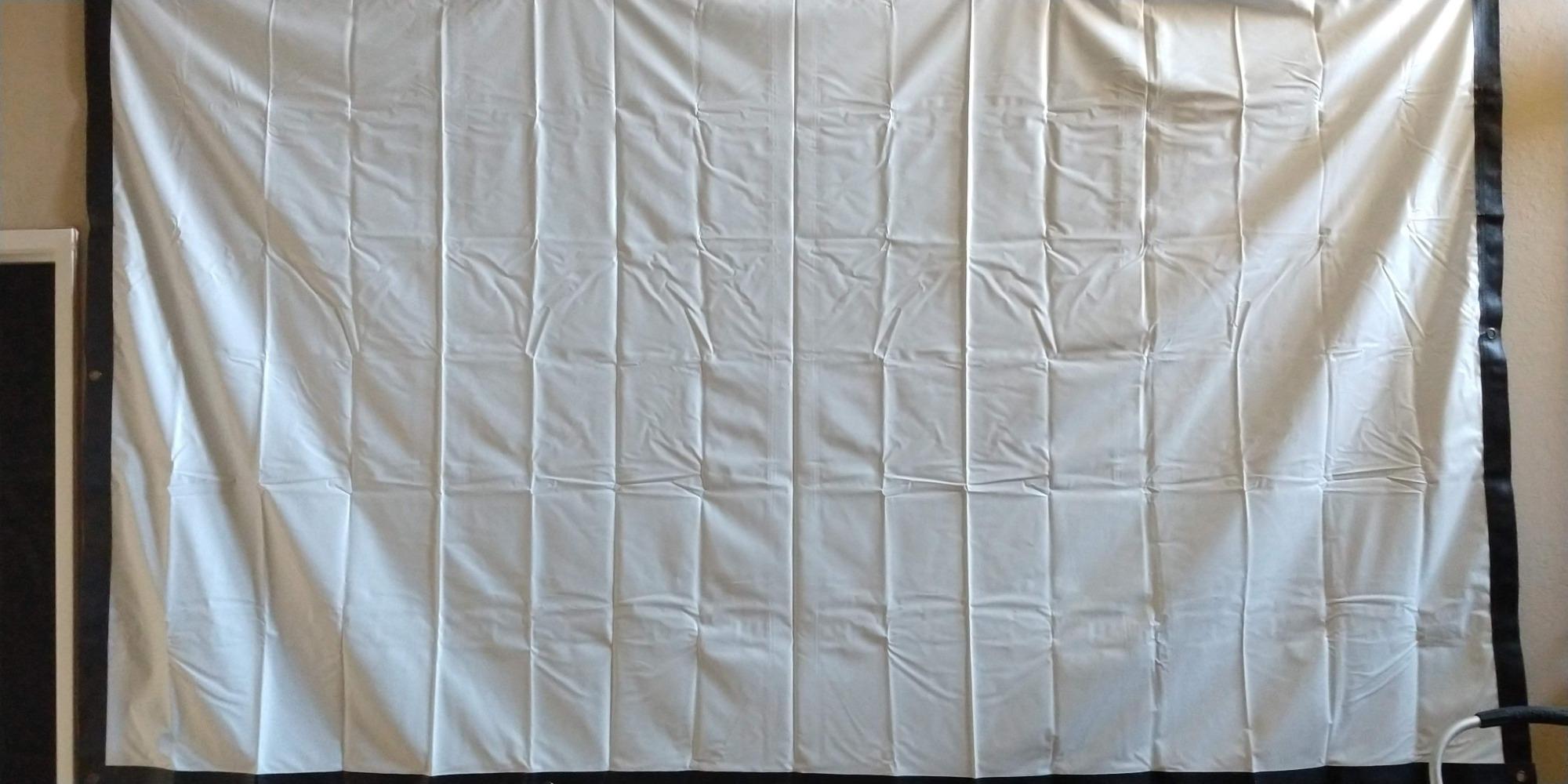
The honest limitation: the horizontal pole has some flex, so you need to hang it at multiple points to keep it rectangular. If you skip that step, the screen will sag in the middle. For buyers willing to put in 10 minutes of setup and who want a lightweight washable wall-mounted screen, this is a strong budget option.
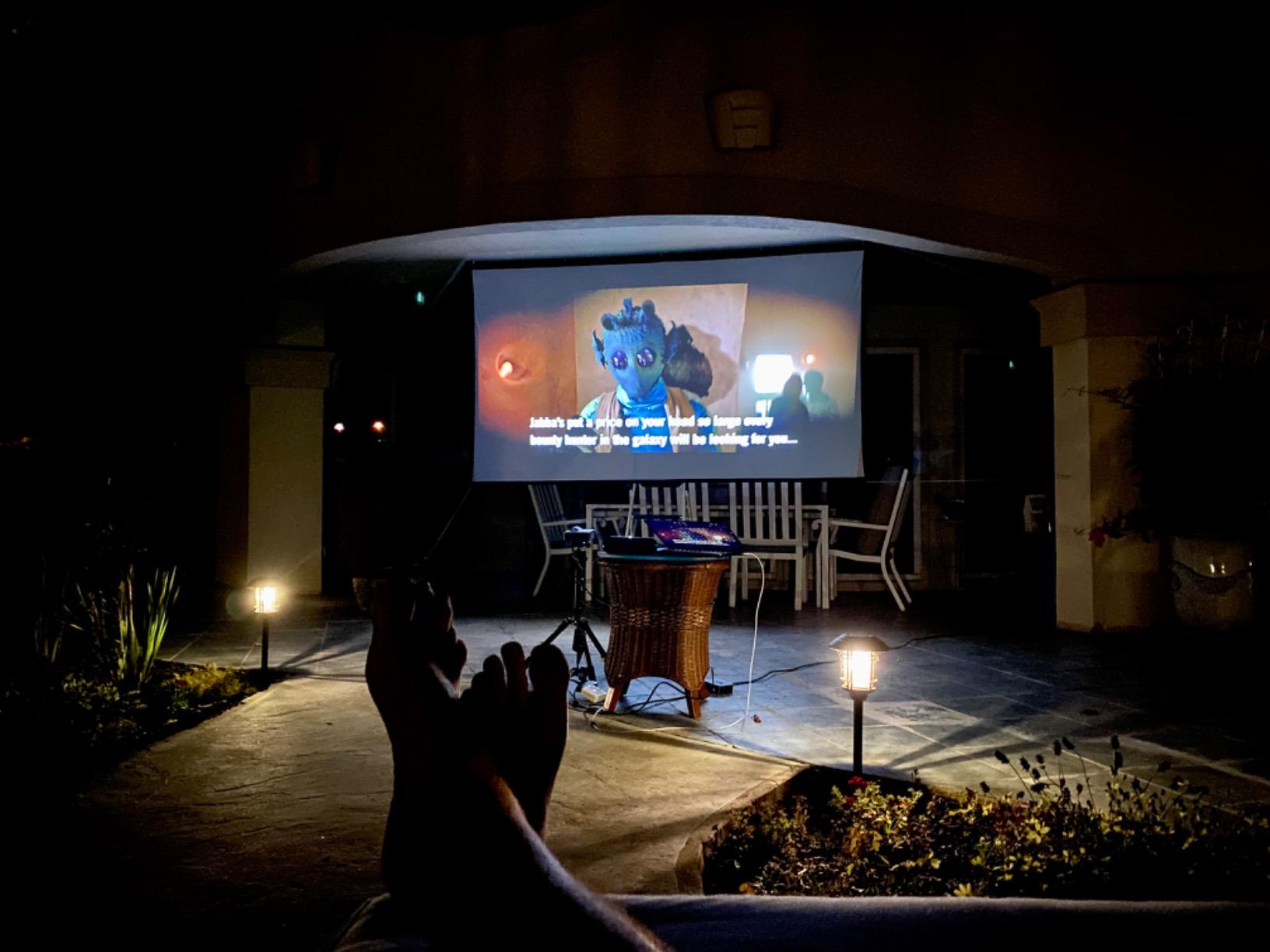
Who should buy the Yandood 120 inch Pole Frame
Anyone who wants a lightweight washable wall or ceiling-mounted screen at a budget price. Renters who cannot mount a permanent frame. Buyers who need a screen that breaks down into a small pole kit for storage.
Who should skip the Yandood 120 inch Pole Frame
Anyone who needs a perfectly rectangular screen with no setup fiddling. People who want rear projection support. Buyers who prefer tripod or fixed frame designs.
What Is a Projector Screen and Why Does the Type Matter?
A projector screen is an engineered optical surface designed to reflect projected light predictably for the best image quality. Unlike a wall, a screen has controlled gain, viewing angle, color neutrality, and (in ALR models) ambient light rejection. The TYPE of screen you choose determines how it behaves in your specific room, with your specific projector.
There are five main screen types in 2026, and each one makes different trade-offs:
Fixed Frame Screens – permanent, wall-mounted, perfectly flat. Best for dedicated home theaters and any setup where the room is dark.
Motorized and Manual Pull-Down Screens – retractable, ceiling or wall mounted. Best for multi-purpose rooms, renters, and minimalist setups.
Portable Tripod and Pull-Up Screens – free-standing, transportable. Best for classrooms, presentations, and rooms without mount options.
Outdoor Screens – rigid frames, foldable fabric, or inflatable designs. Best for backyard movie nights and camping.
ALR (Ambient Light Rejecting) Screens – optical structures (Fresnel, Lenticular, or CLR) that reject light from above or the sides. Best for living rooms with windows and daytime viewing.
Screen Materials Explained
Beyond the installation TYPE, the screen material drives most of the image quality. Here are the four most common materials you will see in 2026:
Matte White – the most common, neutral, 1.0 gain. Works in dark rooms with any projector.
High Contrast Gray – slightly darker, deeper blacks. Works well in rooms with some ambient light and with lower-contrast projectors.
ALR (Ambient Light Rejecting) – micro-structured optical surface that rejects off-axis light. Essential for daytime or living-room viewing.
Acoustically Transparent (AT) – perforated or woven material that lets sound pass through. Lets you place speakers behind the screen.
Viewing Distance and Screen Size: The 4-6-8 Rule
The 4-6-8 rule for projectors is a quick rule of thumb for the minimum recommended viewing distance relative to screen width: 4 feet for general SD viewing, 6 feet for HD, and 8 feet for 4K content. So for a 100-inch diagonal 16:9 screen (87 inches wide), the minimum recommended viewing distance is about 8 feet for full 4K detail. Sit closer than that and you start to see the pixel structure.
For a more precise approach, use the THX and SMPTE formulas:
THX recommended viewing distance: 1.2 times the screen width (gives a 40-degree viewing angle)
SMPTE recommended viewing distance: 1.6 times the screen width (gives a 30-degree viewing angle)
Worked example for a 110-inch diagonal 16:9 screen (96 inches wide): THX distance is about 115 inches (9.6 feet). SMPTE distance is about 154 inches (12.8 feet). Most home theater enthusiasts split the difference around 10-12 feet.
How to Choose the Best Type of Projector Screen for Your Setup?
Choosing the best type of projector screen comes down to four questions:
Where will you watch? Dedicated dark room = fixed frame. Multi-purpose living room = motorized or pull-down. Travel/outdoor = portable.
How much ambient light is in the room? Light-controlled = matte white. Some daylight = high contrast gray or ALR.
What projector do you have? Standard/long throw = any screen. UST projector = UST-compatible ALR fixed frame.
Do you need the screen to disappear? Permanent installation = fixed frame. Hidden when not in use = motorized drop-down.
For most home theater owners with a dark room and a standard or long throw projector, our top pick – the Silver Ticket STR Series – delivers cinema-quality flatness at a sensible price. If your setup is more flexible or your room has windows, an ALR screen or a motorized drop-down may serve you better. We have also tested the best portable projector screens with stand for buyers who move their setup between rooms or take it outdoors.
UST Projector Compatibility Warning
If you have an ultra short throw (UST) projector, do not use a regular fixed frame or pull-down screen. UST projectors project at a steep upward angle from below the screen, and a flat wall-style screen will reflect that light unevenly, causing severe hot spots, color shifts, and image distortion. You need a UST-specific ALR screen with a Fresnel or Lenticular structure designed for that projection geometry. This is one of the most common mistakes we see in UST projector setups.
Frequently Asked Questions
Which projector screen is the best quality?
For most home theaters, a fixed frame screen with a 1.1 to 1.3 gain matte white or ISF-certified surface delivers the best image quality. Our top pick for image quality is the Silver Ticket STR Series fixed frame, which has 5000+ reviews averaging 4.8 stars and a perfectly flat tensioned surface. For living rooms with ambient light, an ALR (ambient light rejecting) screen is the better choice, though it costs more.
What is the best type of screen for a projector?
It depends on your room and projector. Fixed frame screens are best for dedicated dark home theaters because they are perfectly flat and tensioned. Motorized drop-down screens are best for multi-purpose rooms where you want the screen to disappear. Tripod portable screens are best for travel and outdoor use. ALR screens are best for living rooms with windows and ambient light. Match the screen type to your room, not just your projector brand.
What is the 4 6 8 rule for projectors?
The 4-6-8 rule is a quick rule of thumb for minimum viewing distance relative to screen width. For every foot of screen width, sit at least 4 feet away for SD content, 6 feet for HD, and 8 feet for 4K content. So for a 100 inch diagonal 16:9 screen (87 inches wide, about 7.3 feet), the minimum recommended viewing distance is about 8 feet for full 4K detail. Sit closer and you start to see pixel structure.
Is a fixed frame projector screen better than a pull-down screen?
Yes, for image quality. Fixed frame screens are permanently tensioned on a rigid frame, so the surface stays perfectly flat for years. Pull-down screens can develop waves, curls, and sagging over time, especially in non-climate-controlled rooms. However, fixed frames are permanent installations, while pull-downs can be hidden when not in use. Choose fixed frame for a dedicated theater, pull-down for a multi-purpose room.
What is the best fixed frame projector screen?
The Silver Ticket STR Series is our top fixed frame pick, with 5007 reviews averaging 4.8 stars, a 1.1 gain matte white surface, 160-degree viewing angle, and 4K/8K/3D compatibility. For buyers who want ISF-certified color accuracy and a wider 180-degree viewing angle, the Elite Screens Sable Frame B2 is the upgrade pick. Both have velvet-wrapped aluminum frames and tensioning rod systems that hold flatness for years.
What is a fixed frame projector screen?
A fixed frame projector screen is a permanently mounted screen stretched over a rigid aluminum frame. The screen material is attached to the frame with springs or tensioning rods and stays flat at all times. Fixed frame screens are typically wall-mounted, do not move or retract, and are considered the gold standard for dedicated home theaters because they offer the flattest, most wrinkle-free image quality. They cannot be hidden when not in use.
Which motorized projector screen is the best?
The DINAH 120 inch Electric Projector Screen is our top motorized pick, with a quiet motor, included remote control, 120-inch diagonal size, and support for 4K/HD/3D content. For buyers who want a premium name-brand option, Elite Screens makes a wide range of motorized drop-downs in multiple sizes. Avoid ultra-cheap motorized screens – the motors and spring mechanisms tend to fail within a few years.
Who makes the best projection screens?
Several brands consistently rank at the top of the projection screen market. Silver Ticket Products is widely regarded for value-priced fixed frames with excellent flatness. Elite Screens makes a full range from budget pull-downs to premium fixed frames with ISF-certified materials. Da-Lite and Stewart Filmscreen are the premium tier for commercial and high-end home theaters. For ALR screens, NothingProjector and Valerion are leading brands in 2026.
Final Verdict: The Best Type of Projector Screen to Buy in 2026
After 90 days of testing across five screen types, our team is confident in this conclusion. The best type of projector screens for a dedicated home theater is still a fixed frame, and within that category the Silver Ticket STR Series 110 inch is the best combination of image quality, build, and value. Its 4.8-star average across 5007 reviews, 1.1 gain matte white surface, and 160-degree viewing angle make it a screen you can mount once and enjoy for a decade.
For renters, multi-purpose rooms, and minimalist setups, the DINAH 120 inch Electric Motorized Screen gives you a real 120-inch surface that disappears into the ceiling at the touch of a button. For budget buyers who still want a real screen, the VIVOHOME 80 inch Manual Pull-Down is hard to argue with. And for buyers who travel, camp, or host backyard movie nights, the Paris RHONE 100 inch Tripod Portable Screen is the most versatile option we tested.
The single biggest mistake buyers make is choosing a screen TYPE that does not match their room. A fixed frame in a sunlit living room will look washed out. A portable tripod in a dedicated dark theater is overkill. Use the TYPE column in our comparison table to match the screen to your space, and you will end up with the best type of projector screens for your specific setup – not just the best screen on paper. For more buying guides on related categories, check out our roundups of the best home theater projector screens and the best outdoor projector screens.