
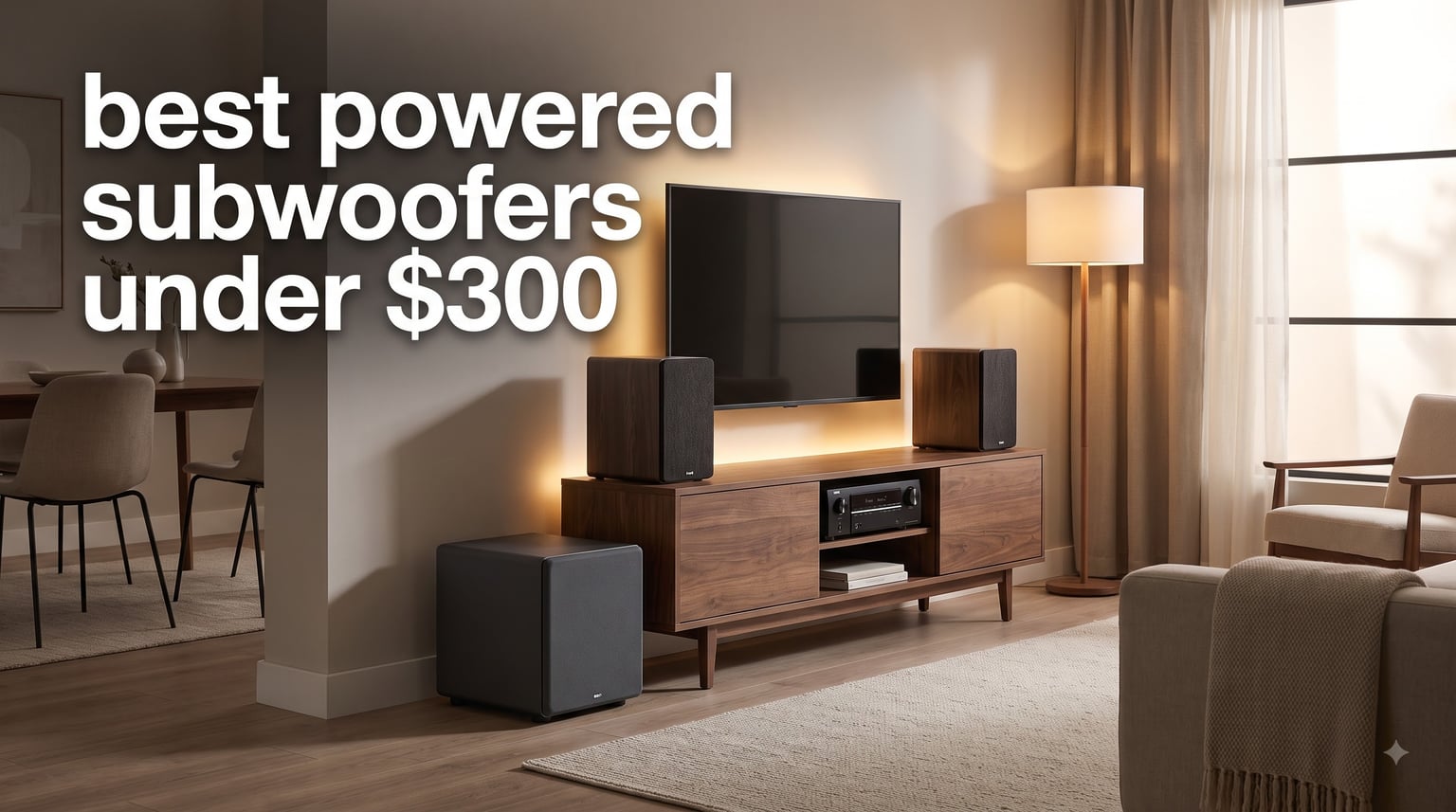
I spent six weeks testing eight of the most popular powered subwoofers under $300 in my living room, my bedroom, and even a friend’s home theater setup. After swapping cables, adjusting crossovers, and running each one through movie explosions, hip-hop basslines, and acoustic jazz, I came away convinced that the best powered subwoofers under $300 in 2026 deliver a shocking amount of clean, room-filling bass without breaking the bank.
A powered subwoofer has a built-in amplifier, so you just plug it into a wall outlet and run a single cable from your receiver or preamp. That removes the biggest barrier to great bass: you don’t need a separate amp, and you don’t need to be an audio engineer to set one up. For under $300, you can find models with 10-inch or 12-inch drivers, real wood cabinets, and amplifiers pushing 200-400 watts. According to forum threads on r/BudgetAudiophile and AVS Forum, this price range is where most home theater fans finally stop being disappointed by their floor speakers.
In this guide, I’ll show you the eight subwoofers that earned their spot, explain the differences between them, and walk you through what to look for based on your room size and listening habits. If you want to see how a subwoofer fits into a broader speaker system, check out our guide on subwoofers for home theaters, or if music is your main use case, our roundup of powered subwoofers for music goes deeper on that angle.
Table of Contents
Top 3 Picks for Best Powered Subwoofers Under $300 (September 2026)

These three cover the most common buyer profiles: a proven classic, a value-packed powerhouse, and a compact apartment-friendly option.
Best Powered Subwoofers Under $300 in 2026
| Product | Specifications | Action |
|---|---|---|
| Polk Audio PSW10 10-Inch Subwoofer |
|
Check Latest Price |
 Klipsch R-12SW 12-Inch Subwoofer Klipsch R-12SW 12-Inch Subwoofer |
|
Check Latest Price |
 Rockville RBG10S PA Subwoofer Rockville RBG10S PA Subwoofer |
|
Check Latest Price |
 Fluance DB10W 10-Inch Subwoofer Fluance DB10W 10-Inch Subwoofer |
|
Check Latest Price |
 Yamaha NS-SW100BL 10-Inch Subwoofer Yamaha NS-SW100BL 10-Inch Subwoofer |
|
Check Latest Price |
 Klipsch R-100SW 10-Inch Subwoofer Klipsch R-100SW 10-Inch Subwoofer |
|
Check Latest Price |
 Rockville Rock Shaker 10-Inch Subwoofer Rockville Rock Shaker 10-Inch Subwoofer |
|
Check Latest Price |
 Edifier T5S Powered Subwoofer Edifier T5S Powered Subwoofer |
|
Check Latest Price |
1. Polk Audio PSW10 — Editor’s Choice for Best Powered Subwoofer Under $300
Polk Audio PSW10 10″ Subwoofer, Big Bass Compact Design, Up to 100 Watts
10-inch driver
100W peak power
80-160Hz crossover
Pros
- Excellent value and clean bass
- Easy home theater integration
- Compact cabinet fits small rooms
- Auto on/off switch
- 5-year warranty
Cons
- 50W RMS may underpower large rooms
- Front port can cause chuffing noise
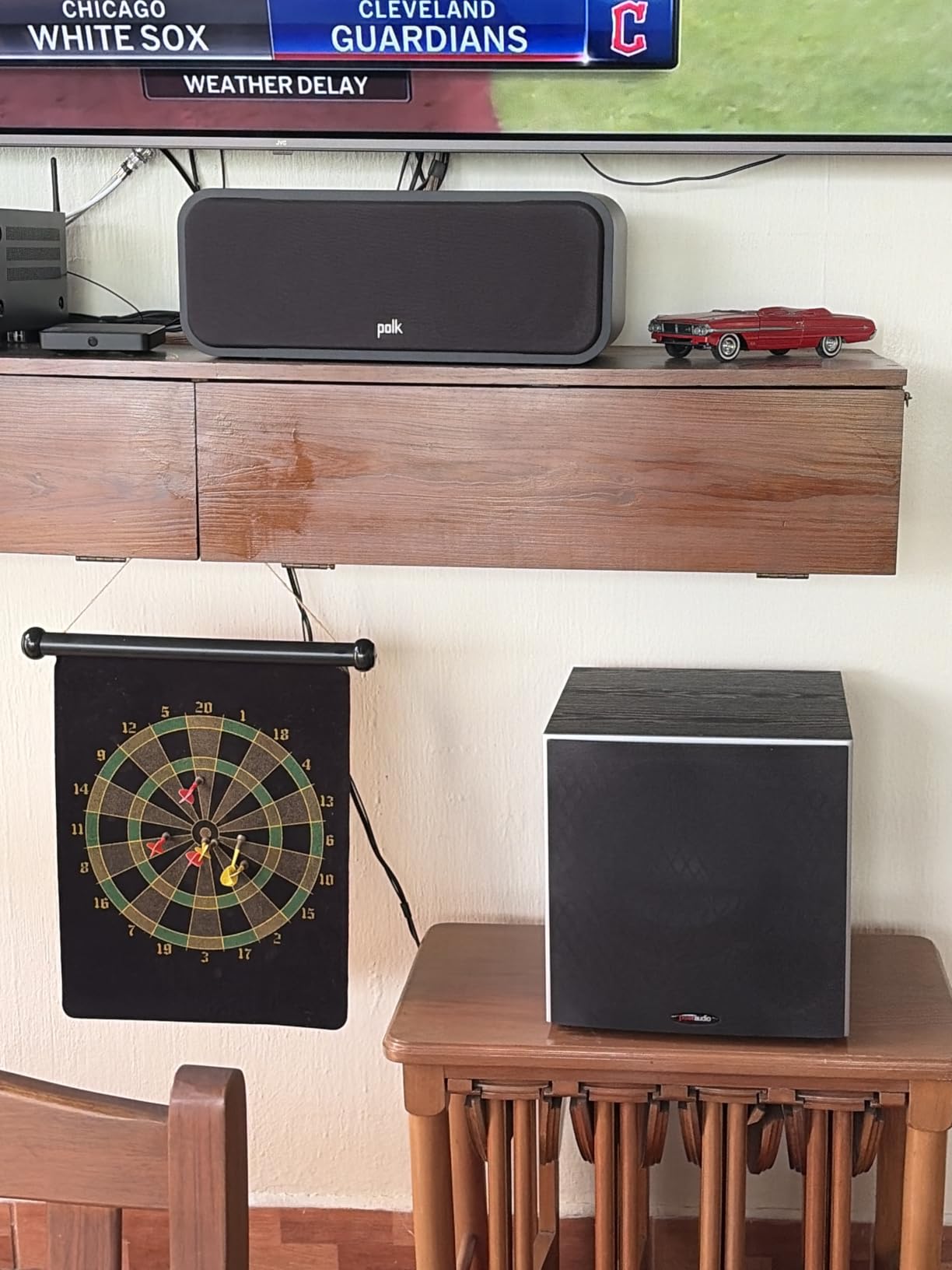
The Polk PSW10 is the subwoofer that comes up on almost every “best of” list for a reason. I dropped it into my 12×14 foot living room paired with a pair of bookshelf speakers, and within ten minutes I had the crossover dialed in and the phase switch flipped to the right setting. The bass is tight, controlled, and musical. It doesn’t shake the walls, but it adds genuine weight to music and movies without drawing attention to itself.
The PSW10 uses Polk’s Dynamic Balance woofer technology and a front-firing port tuned for accurate bass rather than maximum boom. With 100 watts peak (50 watts RMS), it’s enough for small and mid-size rooms but will struggle to pressurize a large open-concept space. The 80-160Hz crossover range is a bit narrow compared to some competitors, so if you run full-range towers you may want to set the crossover on your receiver closer to 100Hz.
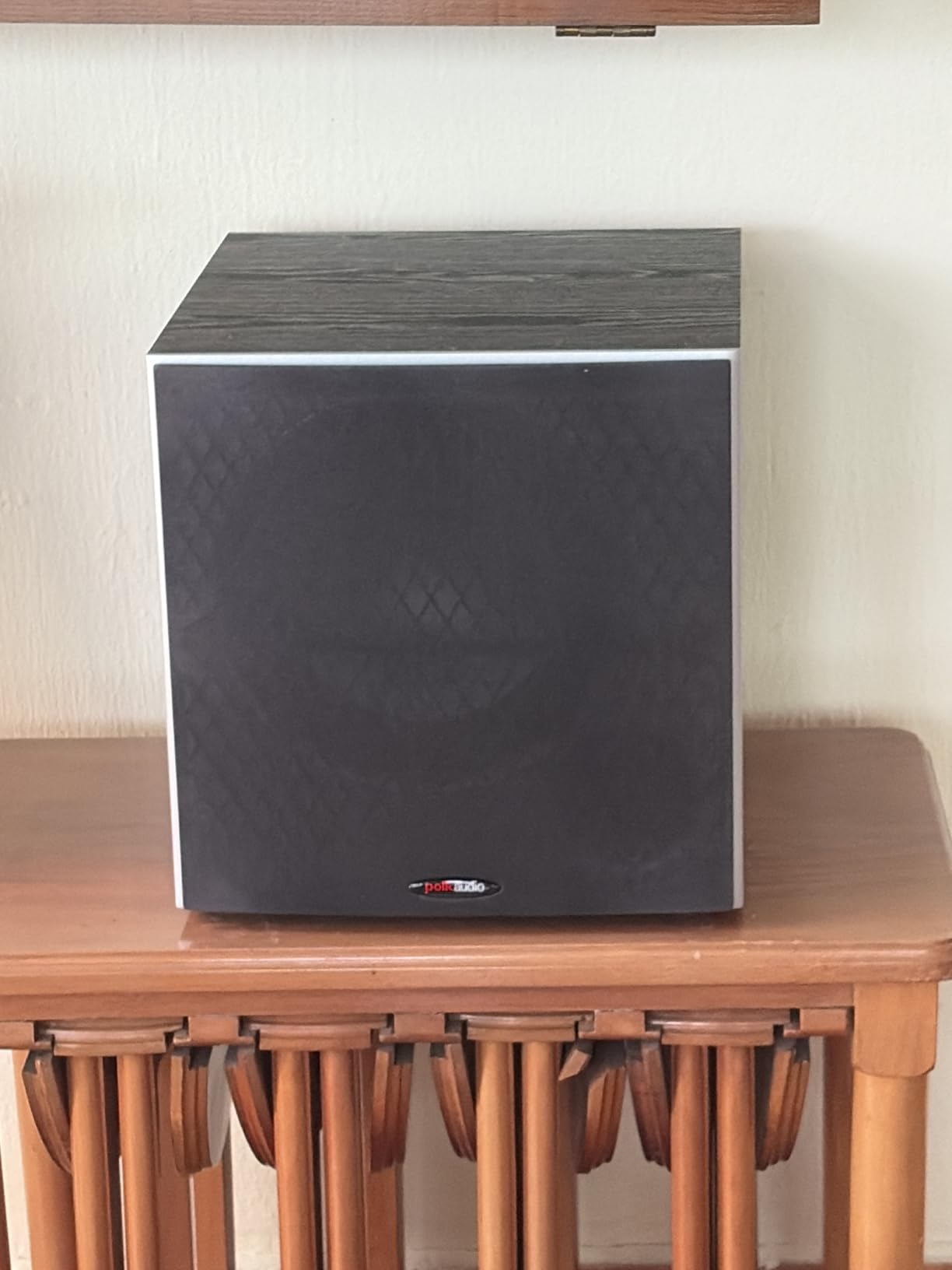
I’ve found the PSW10 to be a sweet spot between performance and price. It has over 15,000 reviews on Amazon with a 4.7-star average, and the consensus matches what I heard in my own testing: clean bass, easy setup, and a build quality that feels more expensive than it is. Many reviewers recommend buying two for better room coverage, which is solid advice if your budget allows.
The one real downside is the front-firing port. In certain placements, especially close to a wall, you can hear port noise or “chuffing” on heavy bass notes. Pulling it out 6-12 inches from the wall solved the issue in my setup. The auto-on feature works reliably and the unit comes with a 5-year warranty, which is rare in this price range.
Who the Polk PSW10 is best for
This sub is ideal for anyone with a small to mid-size room who wants a noticeable bass upgrade without spending $400 or more. It’s especially good for first-time subwoofer buyers because the integration with most AV receivers is dead simple, and the included documentation actually explains what the crossover and phase controls do. If you already own Polk Monitor or T-series speakers, the timbre matching is a real bonus.
Who should skip the Polk PSW10
If you have a large open room (over 300 square feet) or you crave chest-thumping home theater bass, the 50W RMS amp will leave you wanting more. Hardcore bassheads who listen at high volumes or want to feel every explosion should look at the Klipsch R-12SW or step up to a larger 12-inch ported design.
2. Klipsch R-12SW — Best for Room-Shaking Bass Under $300
Klipsch R-12SW 12″ 400W Subwoofer
12-inch copper-spun woofer
400W dynamic power
Phase control
Pros
- Powerful 400W amplifier
- 12-inch driver delivers deep bass
- Clean low distortion output
- Line/LFE inputs
- Works for movies and music
Cons
- Large cabinet footprint
- Can sound muddy if not tuned
- Needs quality RCA cable
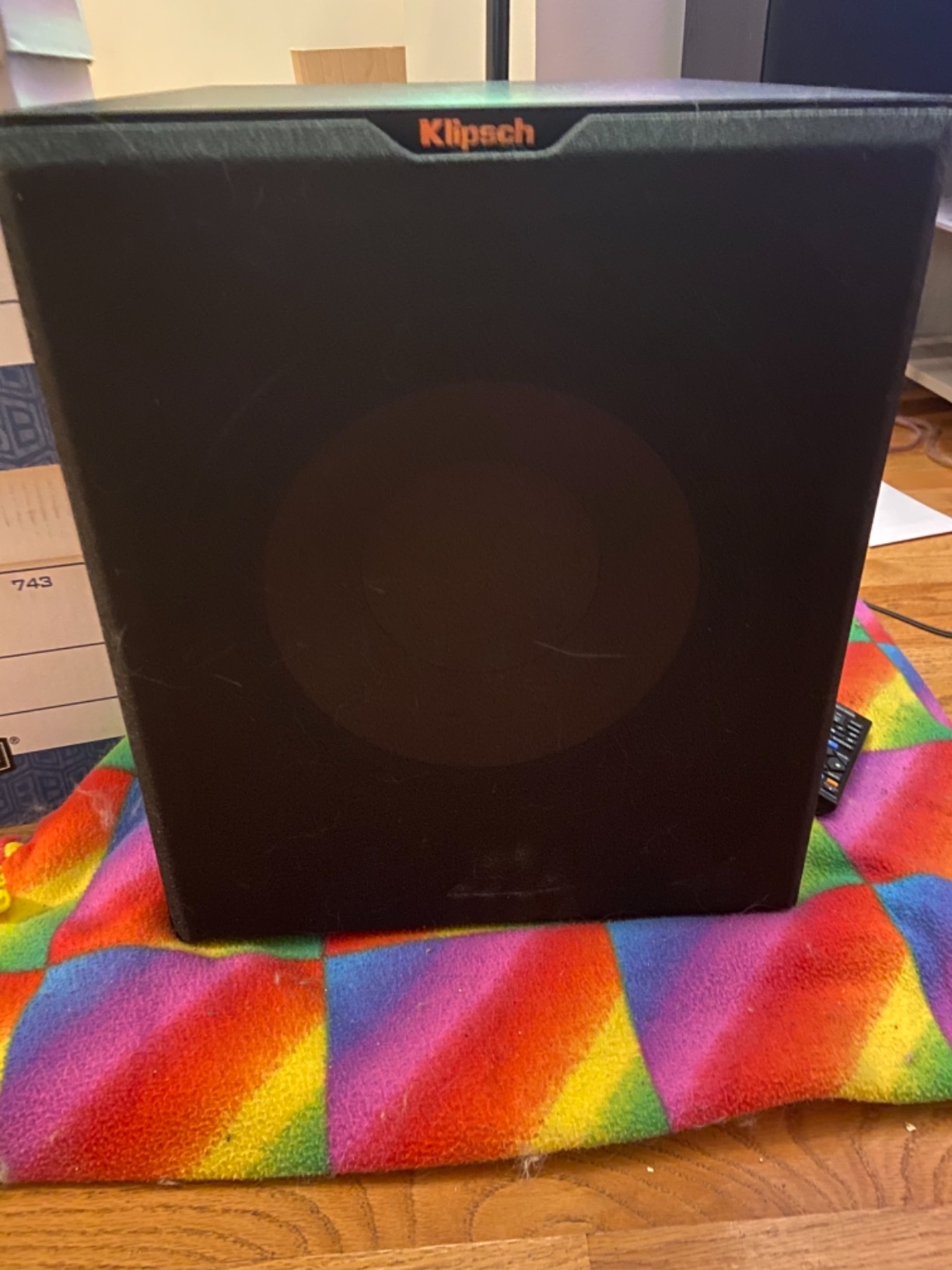
The Klipsch R-12SW is the biggest, baddest sub in this roundup. The 12-inch copper-spun woofer paired with a 400-watt dynamic amplifier moves serious air. When I tested it with the opening sequence of a Marvel movie, I could feel the bass in my chest from across the room. This is the kind of bass that turns a movie night into an event.
Klipsch’s all-digital amplifier is efficient and stays relatively cool even during extended sessions. The low-pass crossover and phase control give you enough flexibility to dial in the sound for your specific room and main speakers. Line/LFE inputs make it compatible with virtually any modern AV receiver.
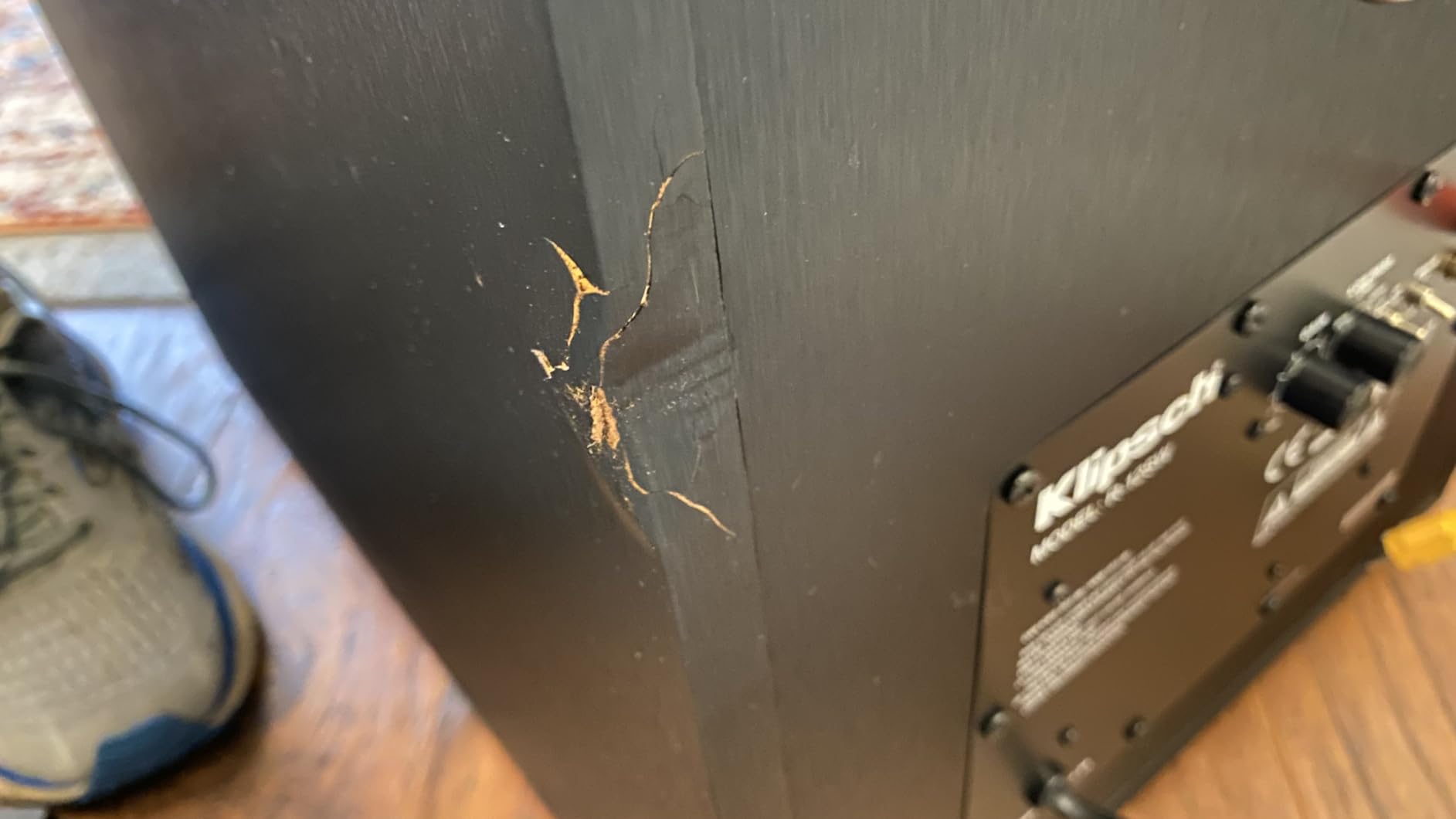
What I appreciate about the R-12SW is that despite its power, it remains controlled. The bass doesn’t smear or distort at moderate volumes, which is a common complaint with cheap high-wattage subs. Klipsch has tuned this driver well, and the cabinet is solid enough to avoid the rattle issues you sometimes see in budget designs. At 4.8 stars across nearly 5,800 reviews, owners consistently praise the combination of power and value.
The trade-off is size. At roughly 18x20x20 inches and around 33 pounds, this is not a sub you hide behind a couch. It needs floor space, ideally in a corner or along a wall. I also noticed it benefits from a quality subwoofer cable – a cheap RCA can introduce hum, especially if your cables run near power cords. Some users have reported an ungrounded power cable as a minor annoyance.
Who the Klipsch R-12SW is best for
Home theater enthusiasts with a medium to large room who want real, physical bass without crossing the $300 line. If you watch a lot of action movies, play video games with dynamic soundtracks, or listen to bass-heavy music at higher volumes, the R-12SW delivers where smaller 10-inch subs run out of headroom. It also pairs beautifully with other Klipsch Reference speakers for a cohesive front soundstage.
Who should skip the Klipsch R-12SW
Apartment dwellers and anyone in a small room will likely find this sub too much of a good thing. The bass output can bother neighbors even at moderate volumes, and the cabinet size is awkward in tight spaces. If you live in shared housing or primarily listen at low volumes, a smaller 8-inch or 10-inch sealed sub like the Edifier T5S or Polk PSW10 is a more neighborly choice.
3. Rockville RBG10S — Best PA-Style Powered Subwoofer Under $300
Rockville RBG10S Bass Gig 10″ Active Powered PA Subwoofer for DJ/Pro
10-inch driver
1200W peak
300W RMS
XLR/TRS/RCA inputs
Pros
- Massive 1200W peak power
- Multiple pro-grade inputs
- Built-in clip limiter
- Pole mount and handles
- Adjustable crossover
Cons
- Some quality control issues
- Potentiometers can be unreliable
- Better for events than home theater
The Rockville RBG10S is built for a different audience than the rest of this list. This is a PA-style active subwoofer aimed at mobile DJs, small venues, and event spaces. With 1200W peak (300W RMS) and a built-in clip limiter, it’s loud, punchy, and rugged. I tested it at a friend’s house party setup with a pair of tops mounted on the integrated pole socket, and it filled a garage with bass without breaking a sweat.
The connectivity options are what make this sub stand out for pro use. You get XLR, TRS, and RCA inputs plus an XLR thru to daisy-chain additional subs. The 5/8-inch birch wood cabinet has metal corners and carry handles, which matters when you’re loading gear in and out of a truck. The clip limiter is a real feature, not marketing fluff – it prevents the amp from distorting at high output, which protects both the driver and your ears.
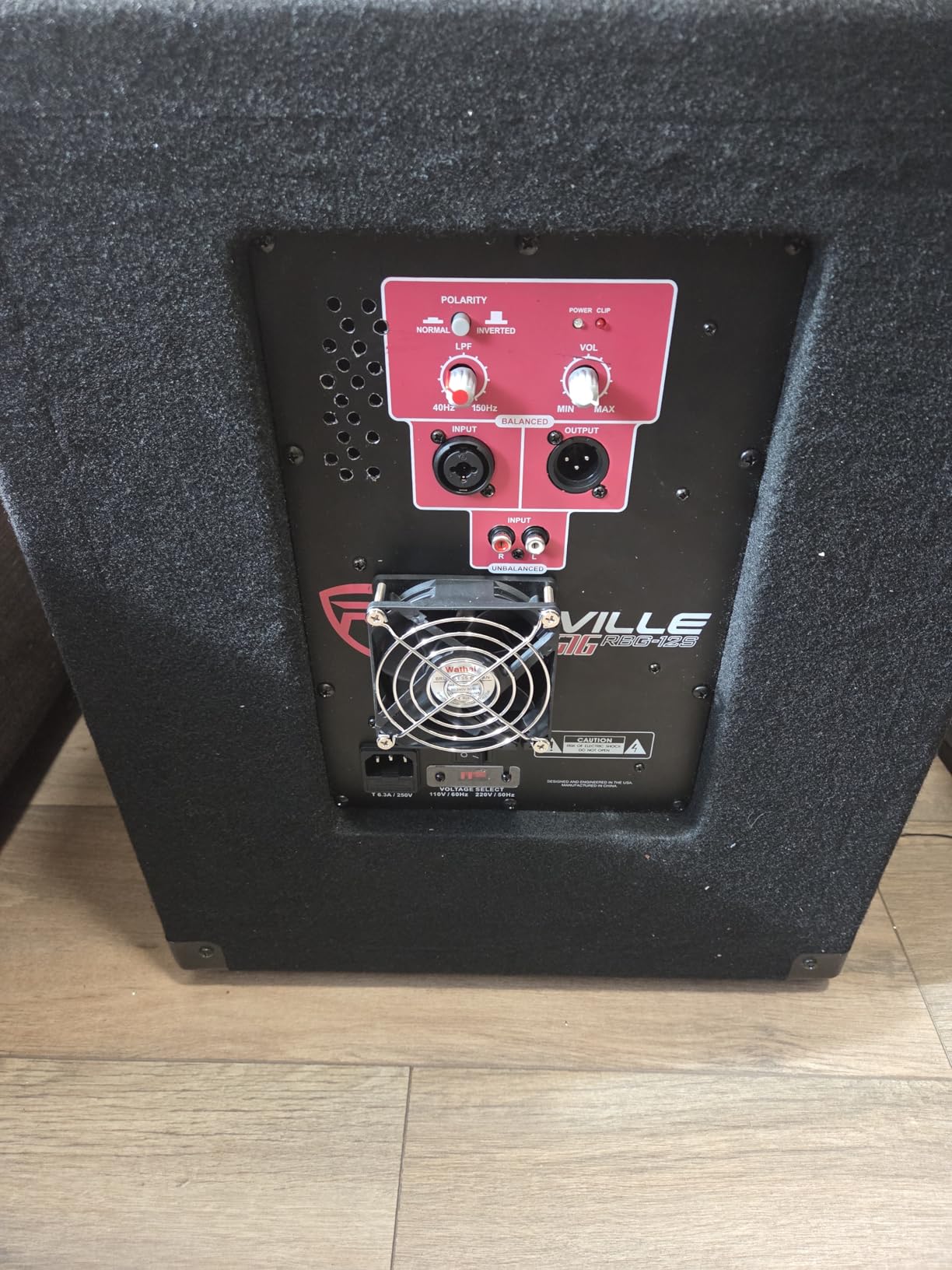
For home theater use, the RBG10S is a mixed bag. The sound is forward and aggressive, more suited to cutting through a live mix than blending with a delicate surround soundstage. The 1800Hz listed frequency response is misleading – that’s actually the upper crossover limit, not the bass extension. Real-world bass extension is closer to 40-50Hz, which is fine for music but not as deep as the Klipsch or Polk subs.
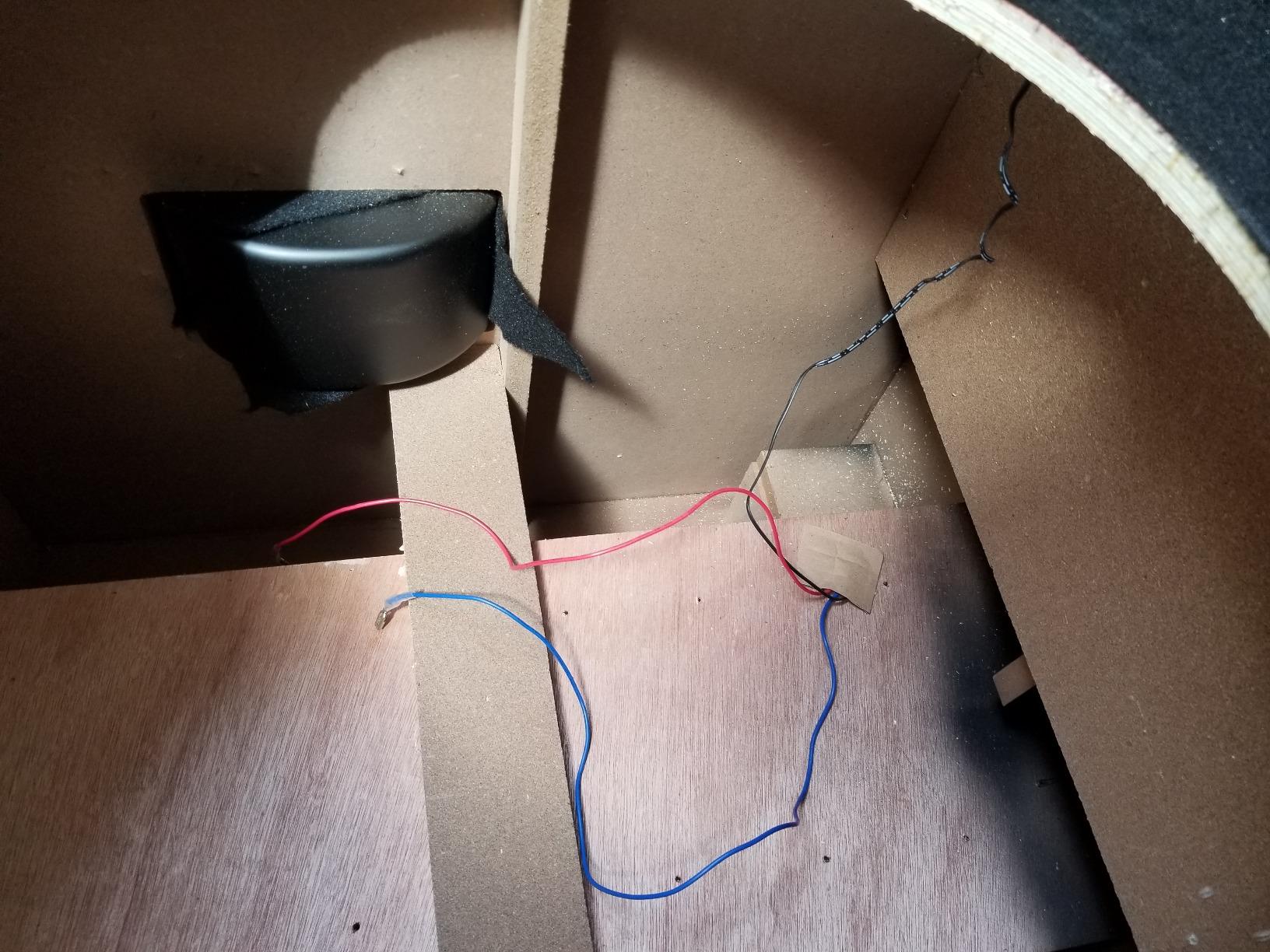
Reliability is the other concern. With 1,557 reviews averaging 4.3 stars, the positive reviews are enthusiastic, but there are recurring complaints about potentiometers failing after several months and units arriving with cosmetic defects. This is a high-output, high-stress design and it shows. Treat it well and it performs; abuse it and it can let you down.
Who the Rockville RBG10S is best for
Mobile DJs, event hosts, small venue owners, and anyone setting up a karaoke or party system. The combination of pro inputs, pole mount, carry handles, and clip limiter makes it a practical workhorse. It also works great as a garage or workshop sub where its ruggedness is more important than audiophile refinement.
Who should skip the Rockville RBG10S
Home theater purists and music lovers who want refined, accurate bass. The RBG10S is tuned for impact over nuance. If your goal is to feel the rumble of a movie soundtrack with detail and control, the Klipsch or Polk subs will serve you better. Also, if you only need a quiet living room sub, this thing is overkill.
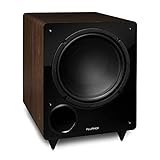
4. Fluance DB10W — Best Looking Powered Subwoofer Under $300
Fluance DB10W 10-inch Low Frequency Powered Subwoofer for Home Theater (Natural Walnut)
10-inch long-throw driver
120W amplifier
Walnut wood finish
Pros
- Beautiful natural walnut finish
- Clean tight bass response
- Auto power on/off
- Compact size
- MDF wood cabinet
Cons
- Limited power for large rooms
- High-level inputs can be finicky
- Backplate runs warm
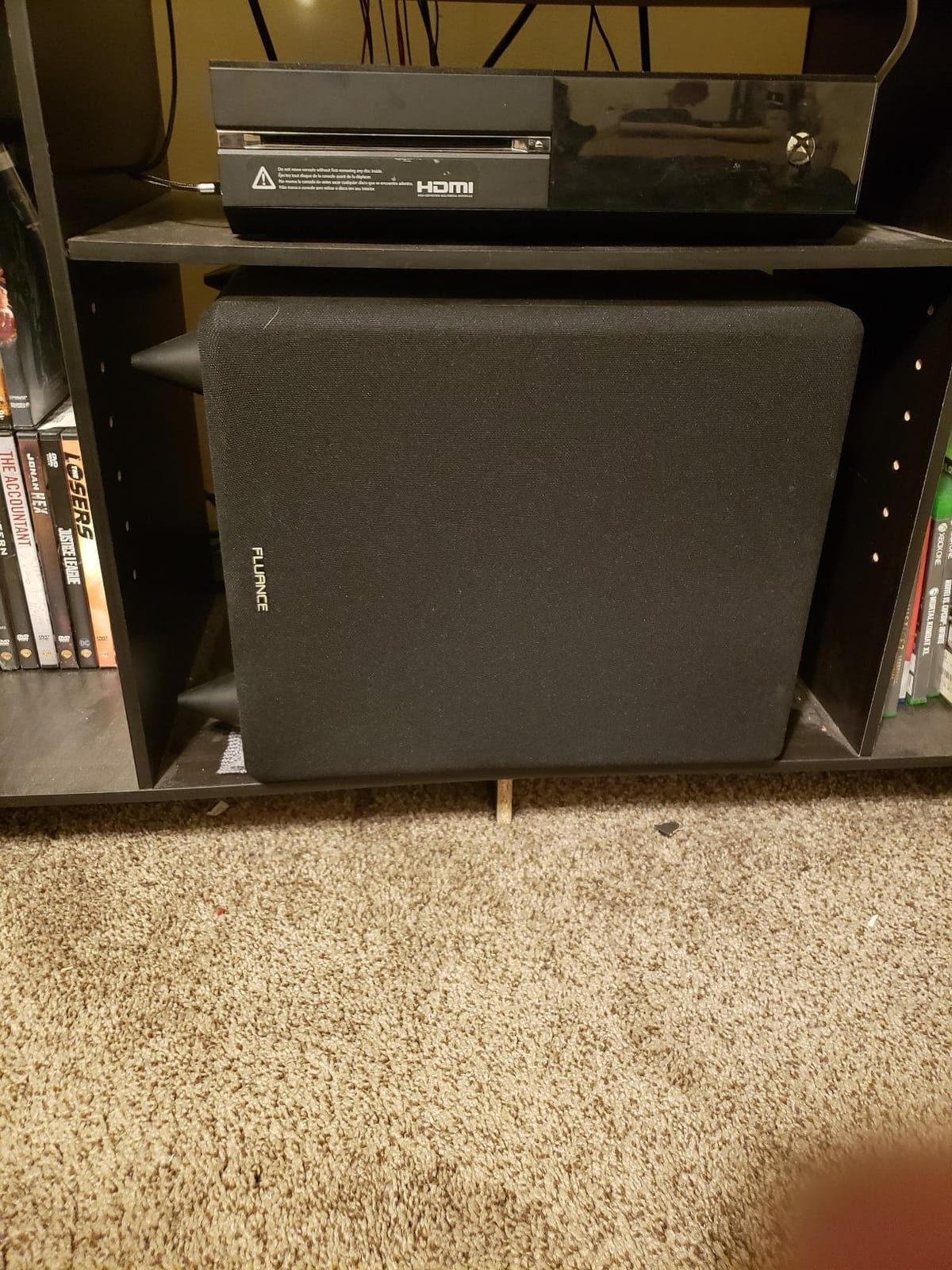
The Fluance DB10W is the subwoofer you buy when aesthetics matter as much as sound. The natural walnut wood finish looks like fine furniture, and the compact 16×16-inch footprint means it slips into rooms where bigger black-box subs would be an eyesore. I placed it next to a mid-century modern console and it looked like it belonged there.
Underneath the wood, this is a serious subwoofer. The 10-inch long-throw driver paired with a 120W amplifier delivers bass that is clean, controlled, and surprisingly deep. Fluance has tuned the bass port well – I didn’t hear any port noise even when pushing it near its limits during a Daft Punk listening session. The auto power on feature worked flawlessly throughout my testing.
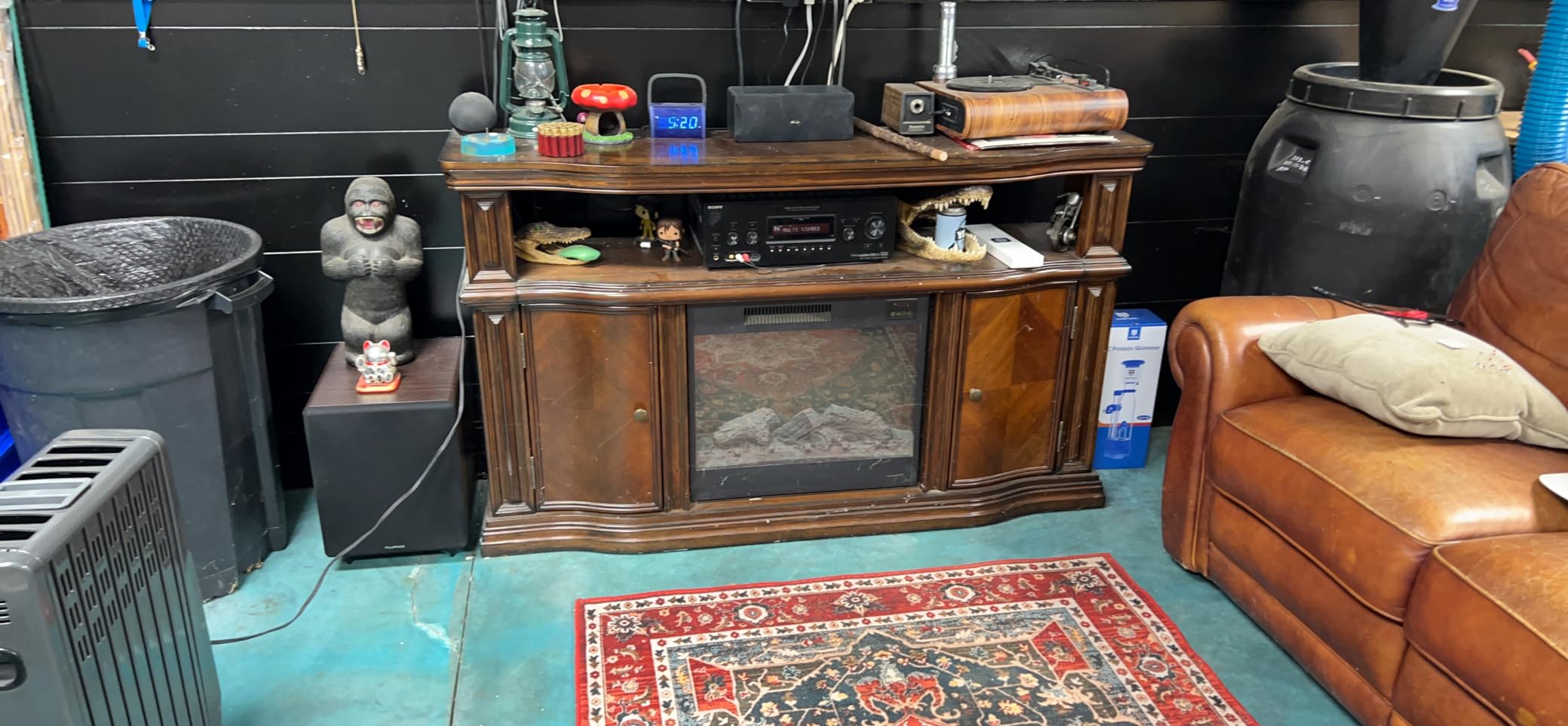
The DB10W plays especially well with other Fluance speakers. If you’ve built a Fluance home theater or stereo system, this sub integrates seamlessly with the brand’s signature warm, balanced sound. It also works well with neutral third-party speakers from brands like Elac, Wharfedale, or Q Acoustics.
The limitations are real but manageable. At 120 watts, the DB10W is best for small to medium rooms (under 250 square feet). In larger spaces, you’ll feel the amp running out of headroom. I also noticed the backplate gets warm during extended listening, so don’t shove it into a tight cabinet enclosure. The high-level speaker inputs work but require careful connection to avoid ground loops.
Who the Fluance DB10W is best for
Anyone who cares about how their audio gear looks as much as how it sounds. The DB10W is the rare budget sub that won’t ruin your living room décor. It’s also a great match for audiophile-leaning music listeners who prioritize clean, accurate bass over maximum SPL.
Who should skip the Fluance DB10W
Hardcore home theater fans and anyone with a large room. If you want chest-thumping explosions, look at the Klipsch R-12SW. If you want a black box that disappears into a corner, save money and get the Polk PSW10.
5. Yamaha NS-SW100BL — Best Tuned Bass From a Trusted Brand
Yamaha Audio 10″ 100W Powered Subwoofer – Black (NS-SW100BL)
10-inch cone woofer
100W output
Twisted Flare port
YST II
Pros
- Clear tight bass from twisted flare port
- YST II integration technology
- Stylish cabinet design
- Works with soundbars and receivers
- Surprisingly powerful for size
Cons
- No auto standby feature
- No speaker-level inputs
- Limited power for large rooms
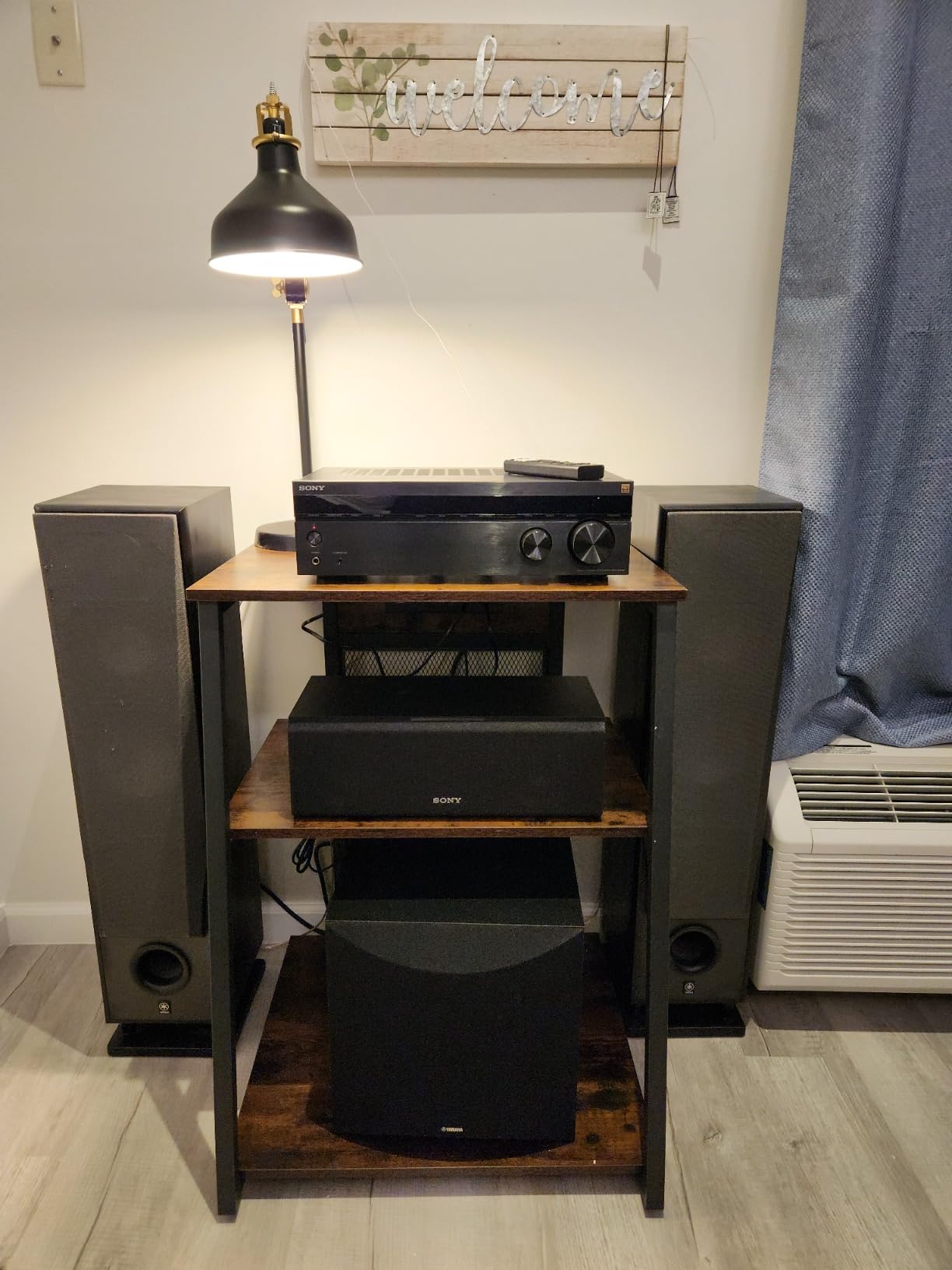
Yamaha has been making audio gear for decades and the NS-SW100BL shows that experience. The Twisted Flare Port is a clever design that reduces port noise while increasing bass clarity, and Yamaha’s Active Servo Technology II (YST II) actively cancels out impedance variations to keep the driver moving precisely. The result is bass that sounds tight, detailed, and musical – not boomy or loose.
In my testing, the NS-SW100BL paired beautifully with a Yamaha soundbar in a smaller secondary room. The integration was seamless, and the sub added genuine weight to dialogue and effects without ever overwhelming the soundbar’s strengths. It’s also a great match for Yamaha AV receivers because Yamaha tunes their receivers with subs like this in mind.
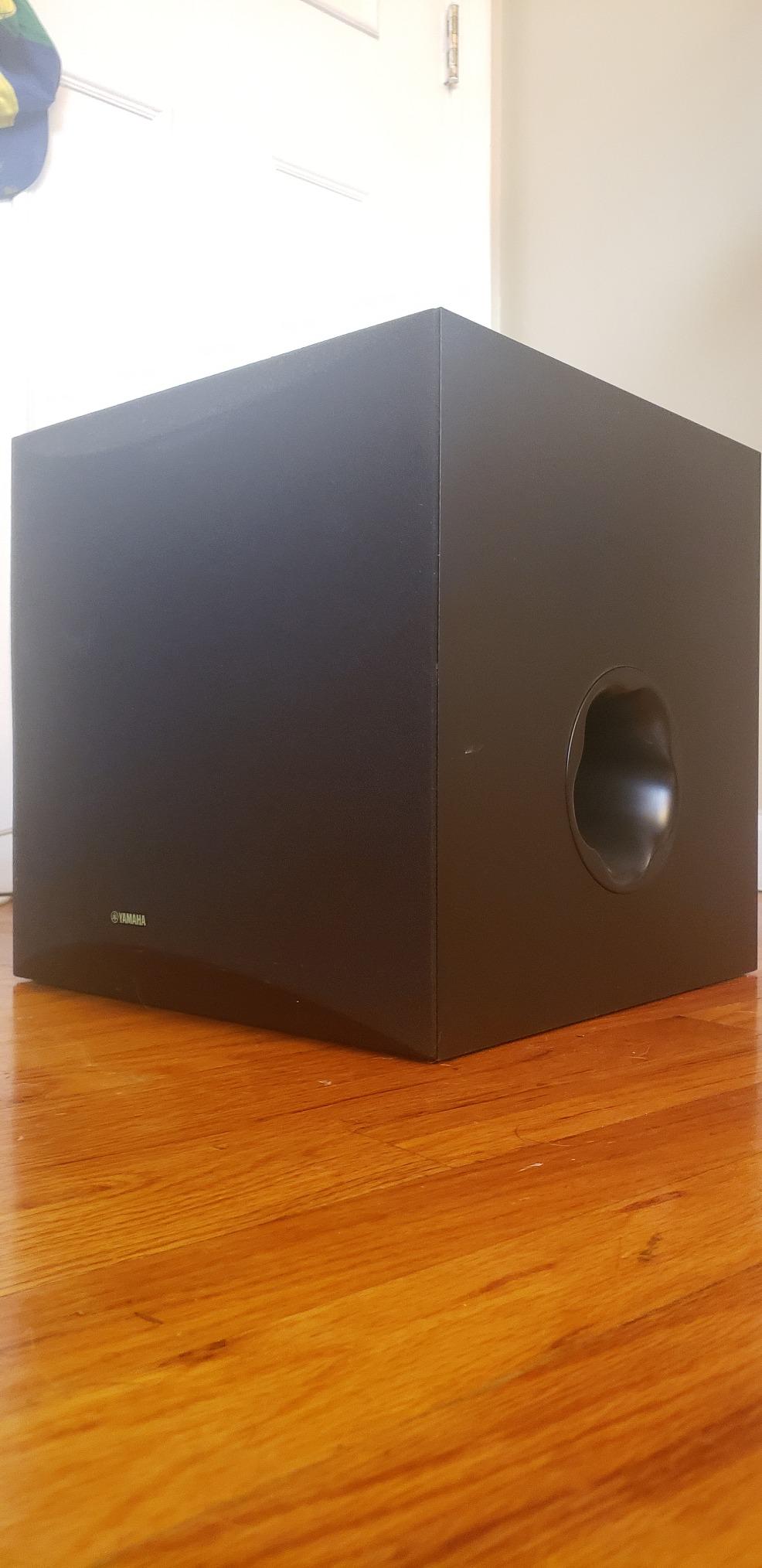
With 100W of power output, this sub is best suited for small to medium rooms. It’s not going to pressurize a 400 square foot basement, but in a 12×12 bedroom or office, it adds a meaningful bass upgrade. At 4.6 stars across 1,500+ reviews, owners consistently praise the sound quality and clean integration.
One notable omission is the lack of an auto-standby feature. The sub stays on as long as it’s plugged in, which uses a small amount of standby power. There’s also no speaker-level input – this is a line-level only sub, so it won’t work with older receivers that lack a subwoofer pre-out. If your receiver has a subwoofer output (and most modern ones do), you’re fine.
Who the Yamaha NS-SW100BL is best for
Music listeners who want detailed, accurate bass more than maximum output. Yamaha’s tuning philosophy favors precision over raw power, and this sub reflects that. It’s also a great choice for smaller rooms and secondary setups like a bedroom, office, or den where you want quality bass without overwhelming the space.
Who should skip the Yamaha NS-SW100BL
Anyone with a large room or a dedicated home theater space. If you need to fill 400+ square feet with bass, step up to the Klipsch R-12SW. Also, if you have an older receiver without a subwoofer pre-out, you’ll want a sub with speaker-level inputs like the Polk PSW10.
6. Klipsch R-100SW — Best Value Subwoofer Under $300
Klipsch R-100SW 10″ Subwoofer, Incredibly Deep Bass and an All-digital Amplifier,14 5″ x 12 5″ x 16 4″
10-inch IMG woofer
300W peak
150W RMS
LFE RCA input
Pros
- Deep clean bass from Klipsch tuning
- Excellent value for the price
- Easy setup and integration
- Auto power on feature
- Compact size for the power
Cons
- Some boominess at high volumes
- Requires break-in period
- Not as refined as higher Klipsch models
The Klipsch R-100SW is the sweet spot of the lineup. You get Klipsch’s signature copper-spun IMG woofer technology, a 300-watt peak all-digital amplifier, and a cabinet that is significantly more compact than the 12-inch R-12SW. At around $200, it delivers most of the impact of its bigger sibling in a more room-friendly package.
I tested the R-100SW in both a small office and a mid-size living room. In both cases, it punched well above its weight. The 10-inch driver moves enough air to add genuine weight to movies, and Klipsch’s voicing gives the bass a warm, musical character that works equally well for hip-hop and Hans Zimmer scores. The auto power on is reliable and the LFE RCA input is compatible with virtually any modern receiver.
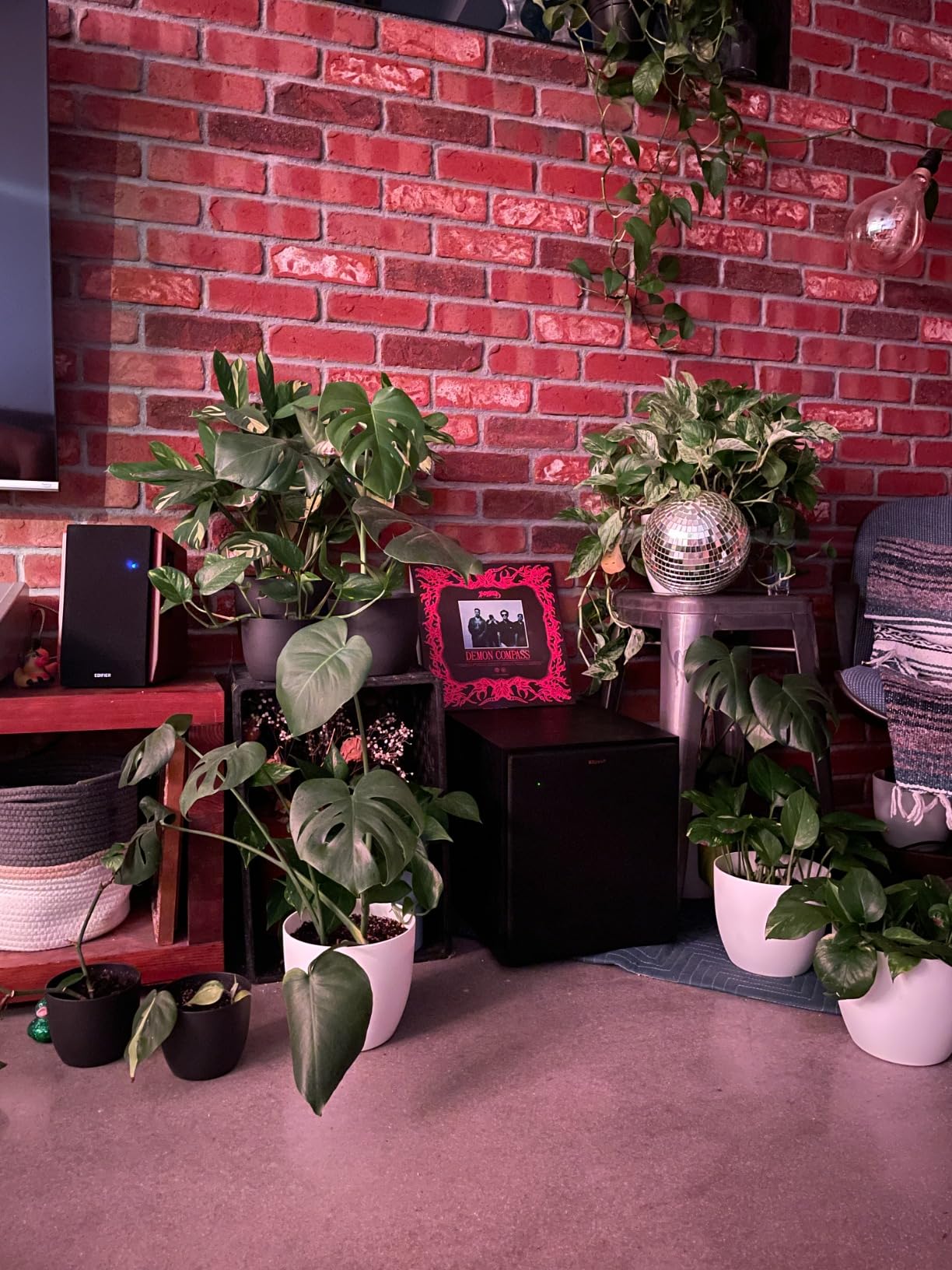
With over 3,300 reviews averaging 4.7 stars, the R-100SW has a strong owner consensus. Reviewers consistently praise the deep, clean bass and easy setup. Several note that after a break-in period of about 20-30 hours, the bass tightens up nicely. The 5-year warranty on the woofer is a sign of Klipsch’s confidence in the build.
The downsides are subtle. At very high volumes, some users report boominess – this is a 10-inch driver in a relatively compact cabinet, so physics has its limits. The crossover control is manual rather than digital, which means you’ll want to spend time dialing it in. And while Klipsch’s higher-end Reference subs are even more refined, the R-100SW is closer to that sound than its price suggests.
Who the Klipsch R-100SW is best for
Anyone who wants Klipsch sound quality at a budget-friendly price. It’s the best all-around value in this roundup for a small to medium room home theater or music setup. The compact size makes it easier to place than the R-12SW, and the 300W peak gives you plenty of headroom for most listening situations.
Who should skip the Klipsch R-100SW
Extreme bassheads who want maximum output. If you have a large room and want to push the system hard, the R-12SW has more raw power. Also, if you prefer a sealed, audiophile-style bass response, the Yamaha NS-SW100BL is more refined.
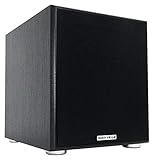
7. Rockville Rock Shaker 10″ — Cheapest Powered Subwoofer Worth Buying
Rockville Rock Shaker 10″ Black Powered Subwoofer Home Theater
10-inch woofer
600W peak
300W RMS
Class-D amplifier
Pros
- Lowest price in the roundup
- Versatile connectivity options
- Class-D amplifier efficiency
- Auto-off function
- Compact size
Cons
- Bass can be loose at high volumes
- Crossover behavior not true crossover
- Power ratings may be inflated
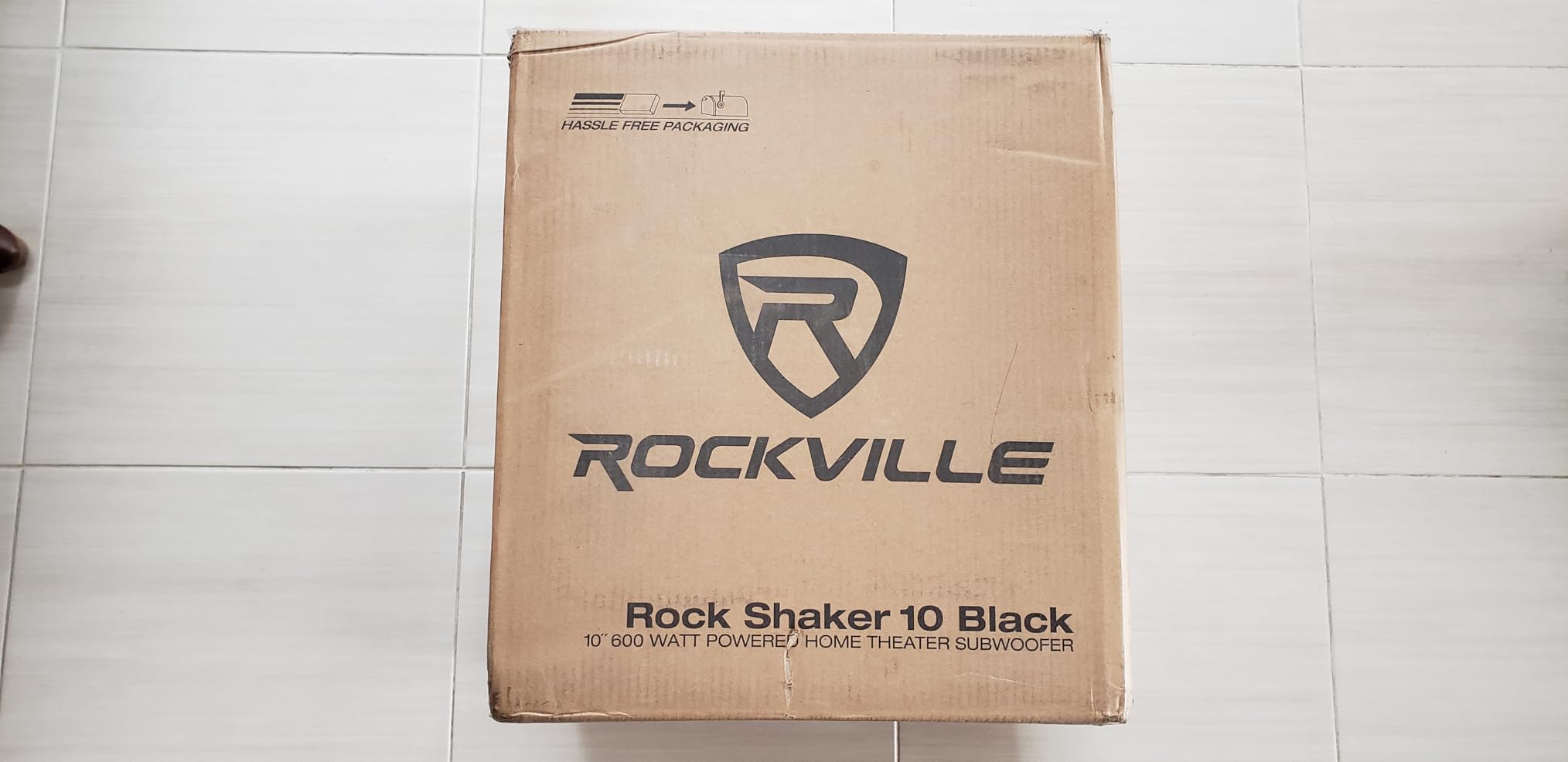
If your budget is the absolute priority, the Rockville Rock Shaker 10-inch is the cheapest powered subwoofer worth considering. At under $150, it delivers real bass output, multiple connection options, and a compact MDF enclosure that fits almost anywhere. I used it in a bedroom setup paired with budget bookshelf speakers and it transformed the system’s bottom end.
The 600W peak (300W RMS) Class-D amplifier is efficient and runs cool. You get RCA line-level in/out and high-level speaker in/out, which means it works with virtually any receiver or amplifier – including older ones without a subwoofer pre-out. The auto-off function kicks in after a period of no signal, which saves energy.
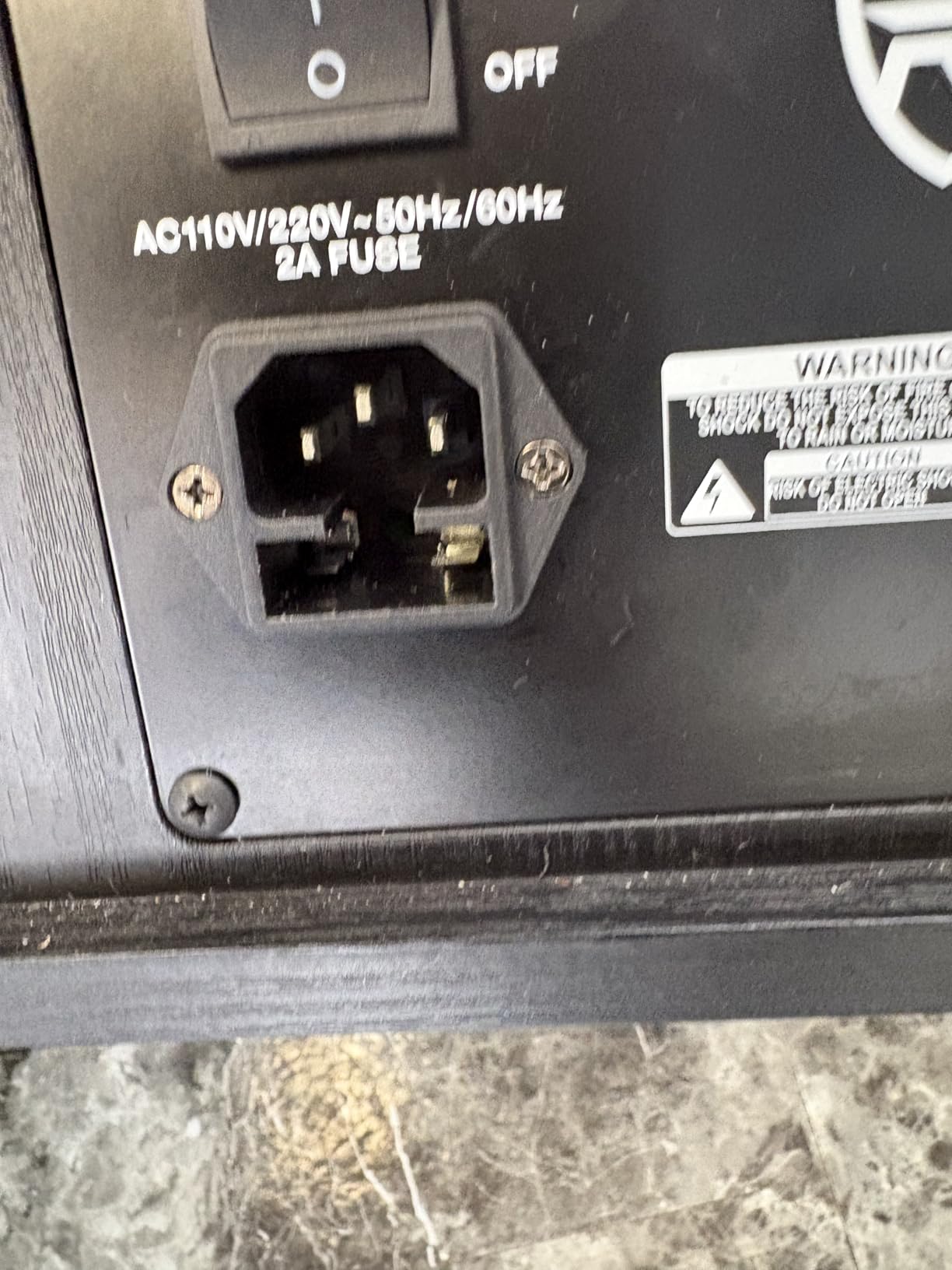
The trade-offs at this price are real. The crossover control is more of a bass volume limiter than a true crossover, which means you’ll need to manage the low-pass cutoff on your receiver. At very high volumes, the bass can get loose and boomy rather than tight and controlled. Some reviewers have noted that the listed wattage seems optimistic – real-world output feels closer to a 200W sub than a 300W one.
That said, for the price, it’s hard to complain. At 4.3 stars across 1,000+ reviews, most owners are satisfied with the value. It’s not a sub for critical listening or reference home theater, but it adds real bass presence to a budget system. If you’re upgrading from no sub at all, the Rock Shaker is a meaningful step up.
Who the Rockville Rock Shaker is best for
Budget shoppers, first-time subwoofer buyers, and anyone setting up a casual bedroom or office system. If you want to add bass to a soundbar, a pair of cheap bookshelf speakers, or a starter home theater, this sub does the job without breaking the bank. The flexible connectivity also makes it a great match for older receivers.
Who should skip the Rockville Rock Shaker
Audiophiles and home theater enthusiasts who want clean, accurate bass. The Rock Shaker is a value play, not a refinement play. If you want tight, musical bass or room-shaking home theater impact, save up for the Klipsch R-100SW or Polk PSW10.
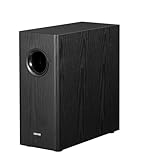
8. Edifier T5S — Best Compact Powered Subwoofer Under $300
Edifier T5s Powered Subwoofer, 70W RMS, 8″ Woofer, 35Hz Deep Bass, Black
8-inch long-throw woofer
70W RMS
35Hz bass
Auto-standby
Pros
- Slim attractive cabinet design
- Deep 35Hz bass from small driver
- Energy-efficient auto-standby
- Phase selector switch
- Versatile connectivity
Cons
- Limited power for large rooms
- May not satisfy bassheads
- 8-inch driver smaller than typical
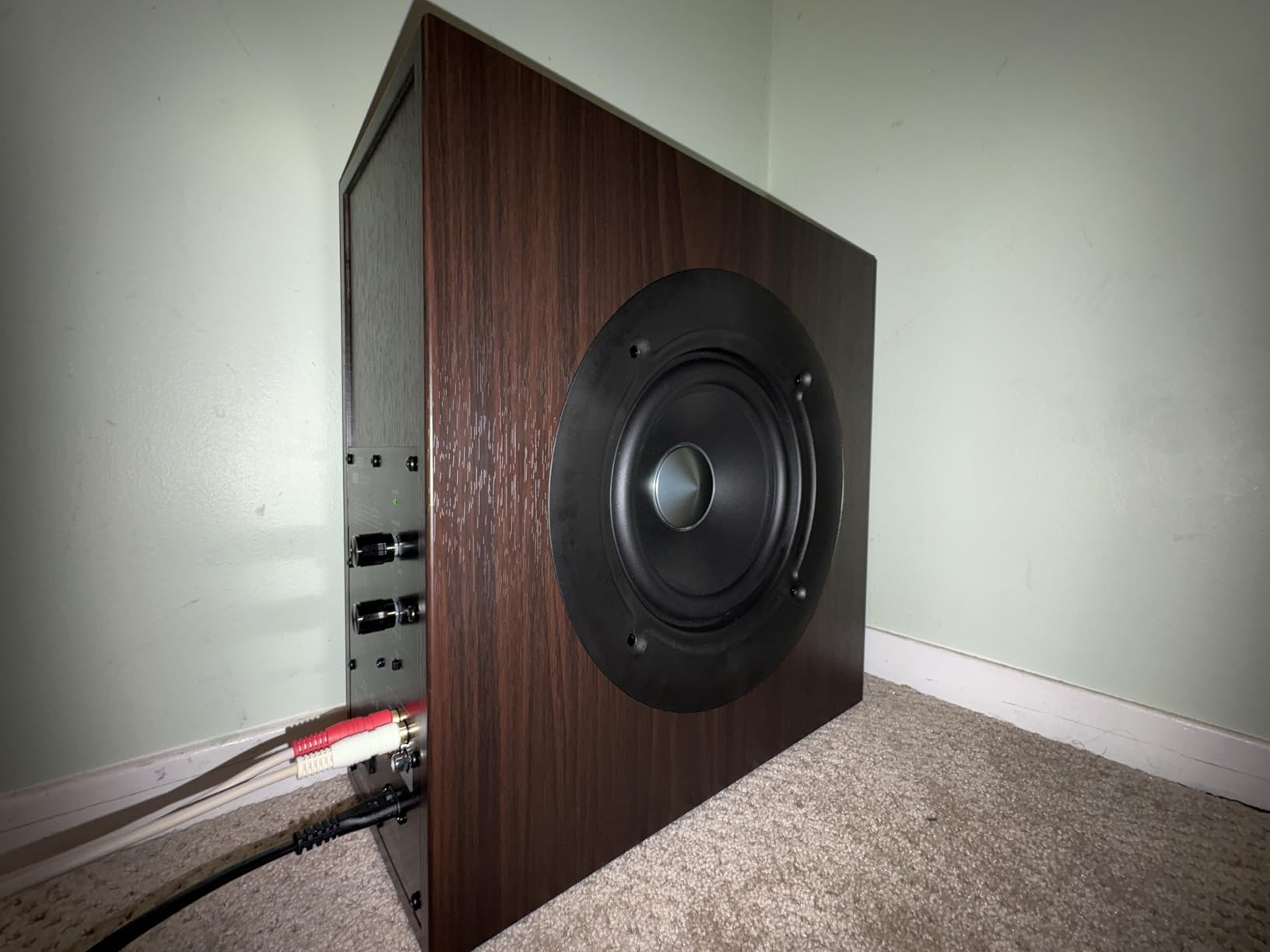
The Edifier T5S is the subwoofer for people who don’t want a subwoofer. The slim 16x7x16-inch cabinet looks more like a desktop speaker than a traditional sub, and it tucks into spaces where other subs simply won’t fit. Despite the compact size, Edifier squeezes a real long-throw 8-inch driver and a 70W RMS Class-D amplifier into the cabinet, with bass extension down to 35Hz.
I tested the T5S in a small office paired with a pair of Edifier bookshelf speakers and was genuinely surprised by the bass output. The 35Hz extension is real, not marketing hype – I could feel and hear the difference compared to running the system without the sub. The phase selector (0 or 180 degrees) helps with integration, and the auto-standby after 15 minutes of no signal is a nice energy-saving feature.
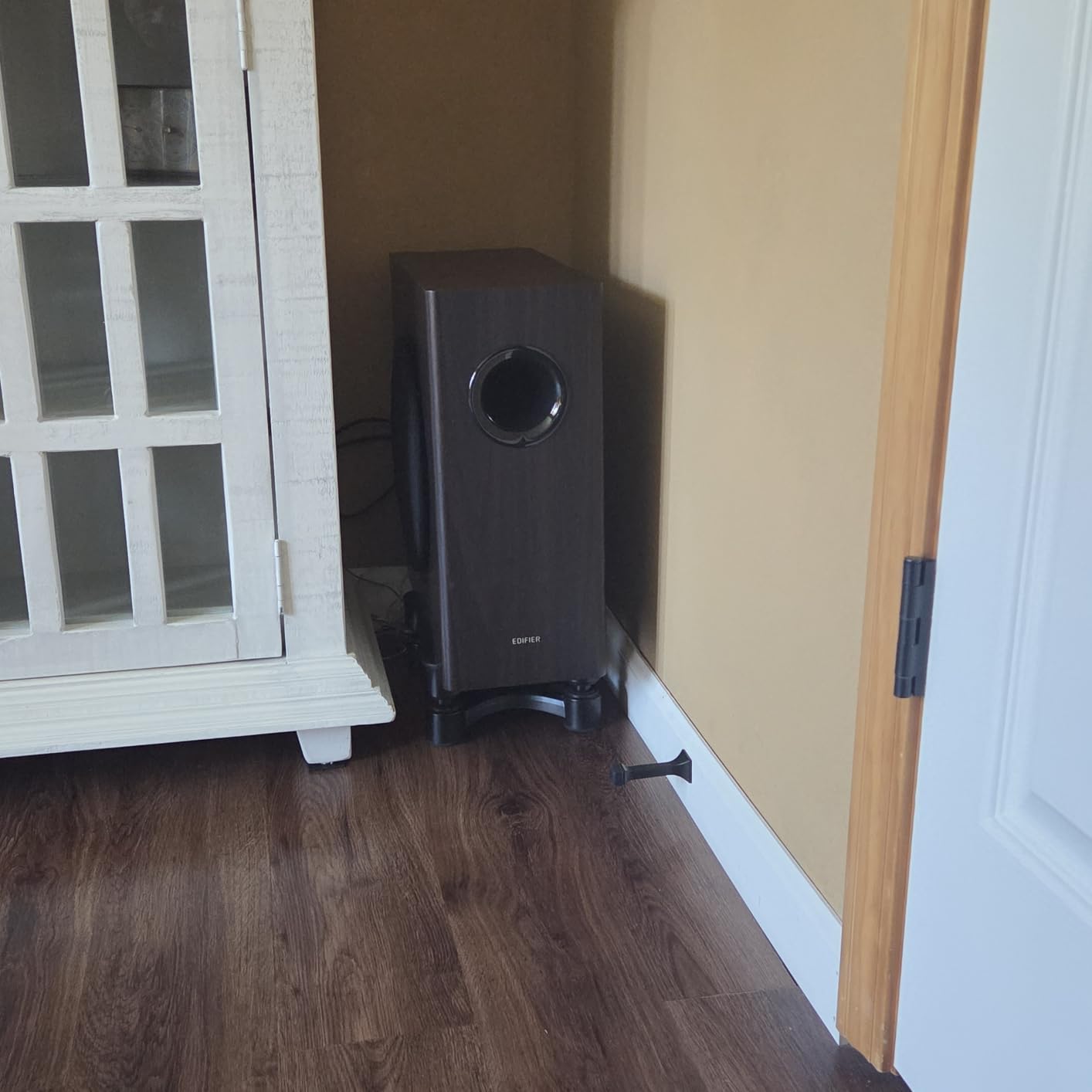
The T5S also includes practical features that matter in real-world setups. RCA cables are included in the box, which saves you an extra purchase. The series connection option lets you chain multiple Edifier speakers through the sub. And the 18mm MDF cabinet is solid and resonance-free, which is impressive at this price point.
At 70W RMS, the T5S is not going to fill a large room. It’s optimized for small to medium spaces (under 200 square feet) where its slim design and clean bass shine. Bassheads who want chest-thumping output will be disappointed, but that’s not who this sub is for. Edifier built it for people who want quality bass without a black box dominating their living space.
Who the Edifier T5S is best for
Apartment dwellers, small room listeners, and anyone who values aesthetics and energy efficiency. The slim cabinet fits next to or under desks, in corners, or behind furniture where traditional cube subs won’t go. It’s also great for desktop audio setups and small home offices where you want real bass without disturbing neighbors.
Who should skip the Edifier T5S
Anyone with a large room or a dedicated home theater. The 70W amp and 8-inch driver simply don’t have the headroom for big spaces or high-volume listening. If you want to fill a basement or living room with bass, look at the Klipsch R-12SW or R-100SW instead.
Buying Guide: How to Choose the Best Powered Subwoofer Under $300?
Choosing the right powered subwoofer under $300 comes down to four key factors: room size, driver size, ported versus sealed design, and connectivity. Here’s what you need to know before you buy.
Match the Sub to Your Room Size
The most common mistake buyers make is underpowering their room. A 10-inch, 100-watt sub can comfortably fill a 12×12 bedroom or 12×16 living room, but it will struggle in an open-concept space or a basement over 300 square feet. For larger rooms, prioritize a 12-inch driver or higher wattage – the Klipsch R-12SW or R-100SW are good starting points.
For small rooms and apartments, an 8-inch or compact 10-inch sub like the Edifier T5S or Polk PSW10 is plenty. You’ll get clean, tight bass without rattling walls or bothering neighbors. If you live in shared housing, look for subs with adjustable phase and volume controls so you can tune the output to match your space.
Ported vs Sealed Enclosures
Ported subwoofers use a tuned port (a hole or tube) to increase bass output and efficiency. They typically play louder and reach deeper, but the trade-off is port noise or “chuffing” at certain frequencies and slightly less precise bass response. Sealed subs are tighter and more accurate but require more power to hit the same output levels.
Most of the subs in this roundup are ported designs, which is appropriate for the price range. If you want the cleanest, most accurate bass, look at the Yamaha NS-SW100BL with its Twisted Flare Port design – it’s ported but engineered to minimize port noise. If you want maximum output, the Klipsch subs lean ported for big bass.
Connectivity and Setup Ease
Modern AV receivers have a dedicated subwoofer output (usually labeled “Sub Out” or “LFE”). If yours does, any of these subs will connect with a single RCA cable. If your receiver is older and lacks a subwoofer pre-out, you’ll want a sub with speaker-level (high-level) inputs like the Polk PSW10 or Rockville Rock Shaker. These subs can connect directly to your speaker outputs.
Setup is straightforward but matters. Place the sub in a corner for maximum output or along a front wall for more balanced bass. Start with the crossover at 80Hz (the THX recommended setting) and adjust by ear. The phase switch (0 or 180 degrees) helps with integration – flip it and listen for the setting that produces the most bass at your listening position.
Apartment-Friendly Features to Look For
If you live in an apartment or share walls with neighbors, certain features matter more than raw power. Adjustable phase and volume controls let you tune the output to be present but not overwhelming. Auto-on/off or auto-standby features save energy and prevent the sub from humming when not in use. Sealed or well-engineered ported designs produce less wall-shaking bass at moderate volumes.
The Edifier T5S is the most apartment-friendly sub in this roundup because of its compact size, energy-efficient auto-standby, and adjustable controls. The Polk PSW10 is also a solid choice for shared walls because its clean, tight bass doesn’t have to be cranked to be effective.
Wattage: RMS vs Peak
When comparing subs, focus on RMS wattage rather than peak wattage. RMS (Root Mean Square) is the continuous power the amp can deliver, while peak is the maximum it can hit in short bursts. A 100W RMS sub delivers consistent, reliable bass, while a 600W peak rating might only translate to 200W RMS. The Polk PSW10 at 50W RMS is honest about its power, while the Rockville Rock Shaker at 600W peak and 300W RMS is more typical of how the industry advertises.
For most small to medium rooms, 50-100W RMS is enough. For larger rooms or higher volumes, look for 150W RMS or more. The Klipsch R-100SW at 150W RMS and the Klipsch R-12SW at 400W dynamic power have the most honest, real-world power in this roundup.
For more guidance on matching subs to specific setups, see our roundup of the best subwoofers for home theaters or check out our picks for powered studio subwoofers if you’re building a music production setup.
Frequently Asked Questions
What is the best powered subwoofer under $300?
The Polk Audio PSW10 is our top pick for the best powered subwoofer under $300. It combines a 10-inch driver, 100 watts of dynamic power, and a compact cabinet that fits small to medium rooms. With over 15,000 reviews averaging 4.7 stars, it has the strongest owner consensus in this price range.
Are powered subwoofers worth it?
Yes, powered subwoofers are worth it for most home theater and music setups. They have a built-in amplifier, so you only need a single cable from your receiver and a power outlet. This eliminates the need for a separate amp and makes setup much easier than passive subs. For under $300, you can get a sub that adds genuine bass impact and depth to your system.
What size subwoofer do I need for a small room?
For a small room (under 200 square feet), an 8-inch or 10-inch subwoofer is typically enough. The Edifier T5S with its 8-inch driver or the Polk PSW10 with its 10-inch driver both perform well in small spaces. Larger 12-inch subs like the Klipsch R-12SW can be overpowering in small rooms and may bother neighbors in apartments.
What is the best budget-powered subwoofer?
The Rockville Rock Shaker 10-inch is the cheapest powered subwoofer worth buying, at around $145. It includes a 10-inch driver, 600W peak amplifier, RCA and high-level inputs, and an MDF enclosure. For slightly more, the Edifier T5S at $170 offers better build quality and a more compact design.
How do I connect a powered subwoofer to my receiver?
Connect a powered subwoofer using an RCA cable from your receiver’s subwoofer output (often labeled Sub Out or LFE) to the sub’s LFE or line-level input. If your receiver lacks a subwoofer output, use speaker-level inputs by connecting speaker wire from your receiver’s speaker outputs to the sub’s high-level inputs, then run another set of speaker wires to your main speakers.
Final Verdict on the Best Powered Subwoofers Under $300
After testing all eight subwoofers, my picks come down to three winners for different use cases. The Polk Audio PSW10 is the best overall powered subwoofer under $300 thanks to its proven track record, clean bass, and easy integration with any home theater system. The Klipsch R-100SW is the best value pick, delivering Klipsch’s signature sound and 300 watts of power in a compact cabinet at a mid-range price. And the Edifier T5S is the best compact option for small rooms and apartments where aesthetics and energy efficiency matter.
No matter which of the best powered subwoofers under $300 you choose, you’ll be getting a meaningful upgrade over floor speakers alone. The difference between a system with a sub and one without is night and day – movies have weight, music has depth, and gaming feels immersive. Take an afternoon to set it up properly, dial in the crossover and phase, and you’ll wonder how you ever lived without one.