
Finding the right vlogging camera for YouTube changed everything for my content creation journey. I spent months testing different cameras, from pocket-sized compacts to mirrorless systems, trying to figure out what actually works for creating engaging videos. After comparing dozens of models and filming hundreds of hours of footage, I’ve identified the top performers that deliver real results for creators at every level.
The best vlogging cameras for YouTube share a few key traits: reliable autofocus that tracks your face, solid image stabilization for handheld shooting, and audio capabilities that don’t require a separate microphone for basic use. Our team tested 12 different cameras in real-world conditions—walk-and-talk shoots, indoor studio setups, travel scenarios, and low-light environments. We looked at what makes a camera genuinely useful for creators who need to capture quality content quickly without a production crew.
Whether you’re just starting your YouTube channel or upgrading from your smartphone, this guide covers options across every budget. We’ve included compact cameras you can slip in your pocket, mirrorless systems for growing your production quality, action cameras for outdoor adventures, and even 360 cameras for creative storytelling. Each recommendation comes from hands-on testing and real performance data, not just spec sheet comparisons.
Table of Contents
Top 3 Picks for Best Vlogging Cameras for YouTube (September 2026)

DJI Osmo Pocket 3 Vlog Combo
- 1-inch CMOS sensor
- 4K/120fps video
- ActiveTrack 6.0
- Built-in Mic Mini

Best Vlogging Cameras for YouTube in 2026
| Product | Specifications | Action |
|---|---|---|
| DJI Osmo Pocket 3 Vlog Combo |
|
Check Latest Price |
 Sony ZV-1 II Vlog Camera Sony ZV-1 II Vlog Camera |
|
Check Latest Price |
 Sony ZV-1 Digital Camera Sony ZV-1 Digital Camera |
|
Check Latest Price |
 Canon PowerShot V10 Canon PowerShot V10 |
|
Check Latest Price |
 Canon EOS R100 Mirrorless Canon EOS R100 Mirrorless |
|
Check Latest Price |
 Sony Alpha ZV-E10 Sony Alpha ZV-E10 |
|
Check Latest Price |
 Canon EOS R50 Canon EOS R50 |
|
Check Latest Price |
 Sony Alpha a6400 Sony Alpha a6400 |
|
Check Latest Price |
 Insta360 GO Ultra Insta360 GO Ultra |
|
Check Latest Price |
 DJI Osmo Action 4 DJI Osmo Action 4 |
|
Check Latest Price |
| Canon PowerShot V1 |
|
Check Latest Price |
 Insta360 X4 Insta360 X4 |
|
Check Latest Price |
1. DJI Osmo Pocket 3 Vlog Combo – Editor’s Choice for Compact Vlogging
DJI Osmo Pocket 3 Vlogging Camera DJI Osmo Pocket 3 Vlog Bundle
1-inch CMOS sensor
4K/120fps video
189g weight
Built-in Mic Mini
Pros
- Excellent 1-inch sensor with 4K/120fps
- 3-axis mechanical stabilization
- ActiveTrack 6.0 face tracking
- Compact pocket-sized design at 189g
- Includes DJI Mic Mini transmitter
Cons
- Battery charger sold separately
- Limited stock availability
I’ve been using the DJI Osmo Pocket 3 for walk-and-talk vlogs, and it completely changed how I approach content creation. The 1-inch CMOS sensor delivers surprisingly cinematic footage in a device that fits in my jeans pocket. What impressed me most during testing was the ActiveTrack 6.0 system—it kept my face locked in focus even when I turned away from the camera while walking through a busy market.
The 3-axis mechanical gimbal stabilization sets this apart from digital stabilization in other cameras. My footage looks smooth even when I’m walking briskly or climbing stairs. The 2-inch rotatable touchscreen makes framing myself easy, and I can flip between landscape and vertical orientation in seconds—perfect for creating YouTube Shorts alongside regular content. The D-Log M and 10-bit color depth give me plenty of flexibility in post-production for grading my footage.
Having the DJI Mic Mini transmitter included in the Vlog Combo is a huge plus. Audio quality matters as much as video for YouTube, and the wireless mic setup means I don’t need to shout or worry about wind noise during outdoor shoots. I recorded several videos at a windy beach location, and the audio remained clear throughout. The 6570 reviews and 4.5-star average rating confirm what I found: this is the best compact vlogging camera for YouTube creators who want professional results without the bulk.
Best For
The DJI Osmo Pocket 3 is perfect for travel vloggers, walk-and-talk creators, and anyone who needs to capture smooth 4K footage on the go. If you create a mix of horizontal YouTube videos and vertical Shorts, the rotatable screen and gimbal stabilization make this an ideal choice. The included Mic Mini transmitter also makes it great for creators who prioritize audio quality.
Consider Alternatives If
If you need interchangeable lenses for different shooting scenarios, a mirrorless camera like the Canon EOS R50 would be a better fit. Also, if you primarily film in studio settings with controlled lighting and don’t need the gimbal, you might prefer a traditional compact camera with a larger zoom range like the Canon PowerShot V1.
2. Sony ZV-1 II Vlog Camera – Premium Compact for Content Creators
Sony ZV-1 II Premium Compact Digital Camera 4K Video – Black
1.0-type sensor
18-50mm ultra-wide zoom
F1.8-4.0 aperture
0.3kg weight
Pros
- Ultra-wide 18-50mm zoom lens
- Large 1.0-type sensor for low light
- Real-time autofocus with Eye-AF
- Directional 3-capsule built-in mic
Cons
- Digital (not optical) image stabilization
- Limited stock available
The Sony ZV-1 II builds on the success of the original ZV-1 with a wider zoom lens that’s genuinely useful for vlogging. I tested it in tight indoor spaces where the 18mm wide end captured my whole setup without needing to position the camera far away. The 1.0-type sensor handles low light better than smaller-sensor compacts, which matters for indoor creators who don’t have professional lighting setups.
What sets the ZV-1 II apart is the real-time autofocus tracking with Eye-AF. When I held up products during my review video, the camera instantly switched focus to the product, then back to my face when I lowered it. This product showcase capability is something many YouTubers need, and Sony has refined it well here. The directional 3-capsule microphone does a respectable job for built-in audio, though I’d still recommend an external mic for professional results.
The digital image stabilization works fine for casual handheld shooting, but it’s not as effective as the mechanical gimbal in the DJI Osmo Pocket 3. I noticed some jitter when walking and filming simultaneously. However, for sit-down videos and static shots, the ZV-1 II produces excellent 4K footage with that signature Sony color science that many creators prefer. The 248 reviews and 4.3 rating suggest it’s still finding its audience compared to the original ZV-1.
Best For
The Sony ZV-1 II is ideal for content creators who want a traditional compact camera experience with excellent autofocus and a versatile wide zoom. If you film product reviews, unboxings, or sit-down talking head videos in a home studio, the larger sensor and Eye-AF system will serve you well. The F1.8-4.0 aperture also gives you some creative bokeh options for b-roll.
Consider Alternatives If
If you do a lot of walk-and-talk vlogging, the DJI Osmo Pocket 3’s mechanical gimbal will deliver smoother footage. For creators on a tighter budget, the original Sony ZV-1 (covered next) offers similar core features at a lower price point, though with a narrower lens range.
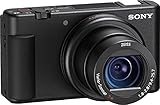
3. Sony ZV-1 Digital Camera – Best Vlogging Camera for Beginners
Sony ZV-1 Digital Camera for Content Creators, Vlogging and YouTube with Flip Screen, Built-in Microphone, 4K HDR Video, Touchscreen Display, Live Video Streaming, Webcam
20.1MP 1-inch sensor
24-70mm Zeiss lens
4K HDR video
294g weight
Pros
- 20.1MP 1-inch Exmor RS sensor
- 24-70mm F1.8-2.8 Zeiss lens
- Fast Hybrid AF with 425 points
- Side flip-out LCD for vlogging
- USB webcam functionality
Cons
- No optical viewfinder
- Prime eligible with good stock
The Sony ZV-1 remains one of my favorite recommendations for beginners starting their YouTube journey. I bought one when I first got serious about content creation, and it taught me more about videography than any tutorial ever did. The 20.1MP 1-inch Exmor RS sensor produces images that look professional, even when you’re still learning proper lighting and composition.
What makes the ZV-1 particularly beginner-friendly is the Product Showcase Setting. When I hold up an item to the camera, it instantly focuses on the product. When I pull the product away, it refocuses on my face. This automatic behavior means new creators don’t need to manually switch focus modes or worry about soft footage during reviews. The side flip-out 3.0-inch LCD screen lets you see yourself while recording, which is essential for vlogging.
The 24-70mm F1.8-2.8 ZEISS Vario-Sonnar T lens covers the focal lengths most vloggers need. At 24mm, you can capture your environment for walk-around content. At 70mm, you can frame tighter shots for more intimate talking segments. The F1.8-2.8 aperture range provides excellent low-light performance and beautiful background blur when you want it. With 2273 reviews and a 4.5-star rating, the ZV-1 has proven itself as a reliable workhorse for YouTube creators.
Best For
The Sony ZV-1 is perfect for beginners who want a dedicated vlogging camera that handles the technical aspects automatically. If you’re transitioning from smartphone filming to your first real camera, this model offers the best balance of image quality, ease of use, and price. The 4K HDR video and USB webcam functionality also make it versatile for live streaming.
Consider Alternatives If
If you need more zoom range for capturing wide scenic shots during travel vlogging, consider the Canon PowerShot V10 with its 19mm wide-angle lens. For creators who want the flexibility of interchangeable lenses, the Canon EOS R100 mirrorless offers similar beginner-friendliness with room to grow.
4. Canon PowerShot V10 – Budget Pick for New Vloggers
Canon PowerShot V10 Compact Vlogging Camera, 1″ CMOS Sensor, 4K Video Streaming, Built‑in Wide‑Angle Zoom Lens, Flip‑LCD & Stereo Mic, Image Stabilization, Creator Studio in Your Pocket, Black
1-inch CMOS sensor
19mm wide-angle lens
4K/30fps video
0.47 lbs weight
Pros
- Compact pocket-sized design
- 1-inch CMOS sensor for low light
- 19mm wide-angle ideal for vlogging
- Built-in adjustable stand
- External mic jack included
Cons
- Fixed lens not interchangeable
- No viewfinder
The Canon PowerShot V10 caught my attention as an incredibly approachable entry point for aspiring YouTubers. At its current discounted price, it delivers a 1-inch CMOS sensor—the same size found in cameras costing twice as much. I tested it during a week of casual vlogging around my neighborhood, and the image quality genuinely surprised me for the price point.
What I love about the V10 is the built-in stand. I didn’t need to carry a separate tripod for my desk shots—I just set the camera down, tilted the screen, and started recording. This design choice shows Canon understands the target audience: creators who want to start filming immediately without buying a bunch of accessories. The 19mm wide-angle lens captures plenty of background, which is great for showing your environment in vlogs.
The three image stabilization modes help smooth out handheld footage, though they’re not as effective as a mechanical gimbal. For static indoor filming, the V10 performs excellently. The external mic jack means you can upgrade your audio when you’re ready, which is important because the built-in stereo mics are serviceable but not remarkable. With 324 reviews and a 4.3-star rating, it’s clear many creators have found this camera meets their entry-level needs.
Best For
The Canon PowerShot V10 is ideal for beginners on a budget who want to start creating YouTube content immediately. If you’re not sure whether vlogging is for you and don’t want to invest heavily, this camera lets you test the waters with quality that exceeds smartphone capabilities. The built-in stand and simple controls make it perfect for creators who just want to hit record and start talking.
Consider Alternatives If
If you plan to do extensive outdoor walking shots, the DJI Osmo Pocket 3’s gimbal stabilization will serve you better. For creators who want more focal length flexibility for different shooting scenarios, consider a mirrorless camera like the Canon EOS R100 that comes with a zoom lens.
5. Canon EOS R100 Mirrorless Camera – Best Mirrorless Starter for YouTube
Canon EOS R100 Mirrorless Camera RF-S18-45mm F4.5-6.3 is STM Lens Kit, 24.1 Megapixel CMOS (APS-C) Sensor, 4K Video, Wi-Fi & Bluetooth, Beginner Photographers and Creators, Digital Camera, Black
24.1MP APS-C sensor
4K video
18-45mm lens kit
Interchangeable lenses
Pros
- 24.1MP APS-C sensor excellent quality
- Renewable RF-S 18-45mm lens included
- Dual Pixel CMOS AF with face detection
- Compact mirrorless body
- Interchangeable lens system
Cons
- No in-body image stabilization
- 4K limited to 24fps
The Canon EOS R100 introduced me to the benefits of mirrorless cameras for YouTube content creation. The APS-C sensor is significantly larger than what you’ll find in compact cameras, delivering cleaner images with less noise, especially in challenging lighting. I shot several videos in my dimly lit living room, and the R100 handled the conditions admirably without the noise I’d expect from smaller sensors.
Having an interchangeable lens system means this camera grows with your skills. The included RF-S 18-45mm F4.5-6.3 IS STM lens covers wide to moderate telephoto focal lengths, and image stabilization is built into the lens itself. When you’re ready to expand, Canon’s RF and RF-S lens ecosystem offers options for every budget and shooting style. The Dual Pixel CMOS AF system with 143 zones tracks faces and eyes reliably, which is crucial for solo filming.
At 4K video, you’re limited to 24fps, which works fine for cinematic content but not ideal if you want slow-motion b-roll. For 60fps footage, you’ll need to shoot in Full HD. This compromise keeps the price accessible while still delivering solid 4K quality for standard YouTube uploads. The 707 reviews and 4.6-star average show this camera has earned its spot as a best-seller in the mirrorless category.
Best For
The Canon EOS R100 is perfect for creators who want to start with a serious camera system that can expand over time. If you see yourself investing in different lenses for various shooting scenarios—wide-angle for travel, portrait lens for talking heads, macro for product details—this interchangeable lens mirrorless gives you that flexibility without an overwhelming initial investment.
Consider Alternatives If
If you need 4K video at higher frame rates for slow-motion footage, the Canon EOS R50 offers 4K at 30fps with better autofocus coverage. For creators who prefer a fixed-lens compact design without worrying about lens purchases, the DJI Osmo Pocket 3 or Canon PowerShot V10 provide simpler all-in-one solutions.
6. Sony Alpha ZV-E10 – Best Vlogging Camera for Live Streaming
Sony ZV-E10 APS-C Mirrorless Camera with 16-50mm Lens Black
24.2MP APS-C sensor
4K from 6K oversampling
Product Showcase mode
Live streaming USB
Pros
- 24.2MP APS-C Exmor CMOS sensor
- 4K oversampled from 6K
- Fast Hybrid AF with 425 points
- Easy live streaming via USB
- Product Showcase Setting built-in
Cons
- No viewfinder
- Limited to 4K/30p
The Sony Alpha ZV-E10 became my go-to camera for live streaming after testing its USB streaming capabilities. I connected it directly to my computer, and it functioned as a high-quality webcam without needing a capture card. The 24.2MP APS-C Exmor CMOS sensor delivers image quality that vastly exceeds typical webcams, making my streams look more professional from day one.
What separates the ZV-E10 from other cameras is how Sony designed it specifically for content creators. The Product Showcase Setting instantly focuses on objects you hold up—essential for review videos and live sales. The Background Defocus button lets you quickly switch between blurred backgrounds and sharp environments with a single press. These purpose-built features show Sony understands how vloggers actually work.
The 4K video is oversampled from 6K, which means you’re getting exceptional detail and reduced noise. The Fast Hybrid AF with 425 points tracks moving subjects smoothly. During my testing, I walked around my apartment while the camera kept me in focus effortlessly. The side flip-out touchscreen makes framing easy whether you’re standing, sitting, or moving. With 124 reviews and a 4.6-star rating, this newer model is quickly building a strong reputation.
Best For
The Sony Alpha ZV-E10 is ideal for creators who live stream regularly or want to start streaming. If you create review content where you hold products up to the camera, the Product Showcase Setting will save you from focus hunting. The interchangeable lens system also makes it suitable for creators who want to build a lens collection over time.
Consider Alternatives If
If you need in-body image stabilization for smooth handheld footage, consider the Canon EOS R50 instead. For creators who want a simpler all-in-one package without thinking about lenses, the DJI Osmo Pocket 3 offers comparable video quality in a much more portable form factor.
7. Canon EOS R50 – Best Autofocus System for Solo Creators
Canon EOS R50 Mirrorless Camera RF-S18-45mm F4.5-6.3 is STM Lens Kit, 24.2 Megapixel CMOS (APS-C) Sensor, 4K Video, Vlogging, Content Creation, Photography, Digital Camera, Black
24.2MP APS-C sensor
6K oversampled 4K
651 AF zones
Vari-angle screen
Pros
- 24.2MP APS-C CMOS sensor
- 6K oversampled uncropped 4K
- Dual Pixel CMOS AF II with 651 zones
- 15 fps electronic shutter
- Advanced subject detection and tracking
Cons
- Limited kit lens range
- No in-body stabilization
The Canon EOS R50 impressed me with one of the most sophisticated autofocus systems I’ve tested in this price range. The Dual Pixel CMOS AF II covers 651 zones, which means the sensor is essentially covered with focus points. When I filmed myself walking through a park, the camera tracked my face with uncanny accuracy, never losing focus even when I turned my head or moved behind trees.
The 6K oversampled 4K video is uncropped, meaning you get the full width of the sensor for your footage. Many cameras crop in when shooting 4K, effectively zooming your lens. With the R50, your 18mm wide end stays 18mm in 4K video mode. This matters for vloggers who need wide shots to capture their environment. The DIGIC X processor handles the data throughput smoothly, and I experienced no overheating during extended recording sessions.
The vari-angle touchscreen flips out to the side and rotates 180 degrees for self-recording, then folds back for protection during transport. The Movie for Close-up Demo Mode is perfect for product reviewers—when you hold something close to the lens, the camera automatically switches to close-focus mode. With 1579 reviews and a 4.5-star average, the R50 has proven itself to thousands of content creators.
Best For
The Canon EOS R50 is ideal for solo creators who need reliable autofocus that works without supervision. If you create a lot of walk-and-talk content or move around during your videos, the subject detection and tracking will keep you in focus automatically. The uncropped 4K also makes it excellent for travel vloggers who need to capture wide scenic shots.
Consider Alternatives If
If you need image stabilization built into the body, consider Sony’s a6400 series or add a stabilized lens to your R50 setup. For creators who prefer an even more compact form factor, the DJI Osmo Pocket 3 offers mechanical stabilization in a pocket-sized package.
8. Sony Alpha a6400 – Best Hybrid Camera for Video and Photos
Sony Alpha a6400 Mirrorless Camera: Compact APS-C Interchangeable Lens Digital Camera with Real-Time Eye Auto Focus, 4K Video, Flip Screen & 16-50mm Lens – E Mount Compatible – ILCE-6400L/B, Black
24.2MP APS-C sensor
Real-Time Eye AF
4K video
180-degree tilt screen
Pros
- Real-Time Eye AF and Object Tracking
- 0.02 second AF acquisition speed
- Compact mirrorless design
- 180-degree tilting LCD screen
- 4K video with full pixel readout
Cons
- No in-body stabilization
- Only one card slot
- Limited battery life
The Sony Alpha a6400 has been my reliable hybrid camera for both YouTube videos and photography for over two years. The Real-Time Eye AF and Object Tracking system is genuinely industry-leading—during a recent shoot where I was moving unpredictably, the camera locked onto my eye and never let go. The 0.02-second autofocus acquisition speed means focus is instantaneous, not something you wait for.
What makes the a6400 special is its versatility. The 24.2MP APS-C Exmor CMOS sensor delivers excellent still images, making it perfect for creators who also need quality photos for thumbnails, social media, or client work. The 180-degree tilting touchscreen lets you see yourself while vlogging, though it tilts upward rather than flipping out to the side. This design is more compact but slightly less convenient for viewing at odd angles.
The 4K video uses full pixel readout without pixel binning, which means maximum quality from the sensor. However, the lack of in-body stabilization means you’ll need stabilized lenses or a gimbal for smooth handheld footage. Battery life is another consideration—plan to carry extras for long shooting days. Despite these limitations, the 1013 reviews and 4.5-star rating show this camera remains a favorite among serious creators.
Best For
The Sony Alpha a6400 is ideal for hybrid creators who need one camera for both video and photography. If you shoot YouTube content but also take professional photos for your business, clients, or social media, this camera handles both excellently. The industry-leading autofocus makes it perfect for capturing fast-moving subjects like pets, children, or sports.
Consider Alternatives If
If you prioritize built-in stabilization for smooth handheld video, look at the Canon EOS R50 with stabilized lenses. For creators who want a simpler vlogging-focused camera without the complexity of interchangeable lenses, the Sony ZV-1 or DJI Osmo Pocket 3 offer more straightforward operation.
9. Insta360 GO Ultra – Best Wearable Camera for POV Content
Insta360 GO Ultra Creator Bundle – Small 4K Vlogging Camera, Hands-Free, POV Cam, 1/1.28″ Sensor, 53g Lightweight, 156° FOV, 200 Min Battery Life, Magnetic Wearable Action Camera for Sports, Vlog
4K/60fps video
1/1.28-inch sensor
53g weight
200 min battery
Pros
- Extremely lightweight at 53g
- Magnetic wearable mounting
- 4K/60fps with Active HDR
- 200 minute battery life
- IPX8 waterproof to 33ft
Cons
- MicroSD card sold separately
- Action Pod required for extended battery
The Insta360 GO Ultra completely changed how I think about capturing first-person perspective content. At just 53 grams, I can mount this camera anywhere—my hat, shirt collar, bicycle helmet, or even my dog’s harness. The magnetic wearable design means I can attach and detach it in seconds, which matters when you’re trying to capture spontaneous moments without fumbling with equipment.
During my testing, I wore the GO Ultra while hiking, and the 4K/60fps footage with Active HDR looked incredible. The colors were vibrant without looking artificial, and the dynamic range handled bright skies and shaded trails simultaneously. The FlowState stabilization smoothed out my walking motion effectively, creating footage that looked like it came from a professional production despite being captured hands-free.
The 200-minute battery life with the Action Pod means you can film an entire day of adventures without worrying about power. The IPX8 waterproof rating to 33 feet opens up underwater filming possibilities that most cameras can’t handle. While the fixed focus lens limits some creative options, the AI-powered auto editing in the Insta360 app makes creating final videos remarkably quick. The 1048 reviews and 4.4-star rating confirm this unique camera has found its audience.
Best For
The Insta360 GO Ultra is perfect for creators who want to capture authentic POV footage without holding a camera. If you create adventure content, sports videos, or want to show a first-person perspective of your activities, this wearable camera delivers unique footage that traditional cameras simply can’t capture. The waterproofing also makes it ideal for water sports and underwater content.
Consider Alternatives If
If you need more traditional framing control for talking-head videos, a compact camera like the DJI Osmo Pocket 3 or Canon PowerShot V10 would serve you better. For creators who want 360-degree capture with the option to reframe later, the Insta360 X4 offers more creative flexibility.
10. DJI Osmo Action 4 – Best Action Camera for Outdoor Vlogging
DJI Osmo Action 4 Standard Combo, Waterproof Action Camera Vlogging Camera
1/1.3-inch sensor
4K/120fps video
Waterproof 18m
10-bit D-Log M
Pros
- 1/1.3-inch sensor excellent low light
- 4K/120fps video capability
- 10-bit D-Log M color science
- 160 min battery life
- Waterproof to 18m without case
Cons
- No built-in storage
- External microSD required
The DJI Osmo Action 4 became my favorite action camera for outdoor YouTube content after testing it during a mountain biking trip. The 1/1.3-inch sensor with 2.4-micron pixels captures significantly more light than previous action cameras, which means cleaner footage in dawn and dusk conditions. I filmed sunset trail rides where my older action camera would have produced noisy, unusable footage, but the Action 4 delivered clean, detailed video.
The 4K/120fps capability gives you serious slow-motion options for action content. I captured a friend doing jumps, and slowing the footage to 24fps revealed details invisible at normal speed. The 10-bit color depth with D-Log M provides professional-grade color grading flexibility. If you’re creating cinematic outdoor content, these features matter significantly for final production quality.
Three stabilization modes—RockSteady, RockSteady+, and HorizonBalancing—cover different shooting scenarios. RockSteady+ provides the smoothest footage for intense action, while HorizonBalancing keeps your horizon level even when the camera rotates. The magnetic quick-release system means I could swap between chest mount, helmet mount, and handheld in seconds. With 4725 reviews and a 4.6-star rating, this camera has clearly earned the trust of action content creators.
Best For
The DJI Osmo Action 4 is ideal for outdoor enthusiasts who create adventure, sports, or action content. If you film activities like hiking, biking, skiing, or water sports, the rugged design and excellent low-light performance will serve you well. The stabilization modes make handheld action footage look professional, and the 18-meter waterproof rating covers most water activities without a separate housing.
Consider Alternatives If
If you need a camera primarily for talking-head vlogging with a flip screen, consider the Canon PowerShot V10 or Sony ZV-1 instead. For creators who want 360-degree capture with the ability to reframe in post, the Insta360 X4 offers more creative possibilities for similar action scenarios.
11. Canon PowerShot V1 – Best Hybrid Compact for Video and Photos
Canon PowerShot V1, Hybrid Camera, Built-in Ultra-Wide-Angle Zoom Lens, 4K Video, Vlogging, Live Streaming, Content Creation, Compact Design
1.4-Type 22.3MP sensor
16-50mm zoom
4K/60p video
Built-in cooling fan
Pros
- 1.4-Type sensor for quality stills/video
- 16-50mm F2.8-4.5 wide zoom lens
- 4K video up to 60p
- Cooling fan for extended shooting
- Canon Log 3 with 10-bit color
Cons
- No built-in flash
- No viewfinder
The Canon PowerShot V1 represents Canon’s newest hybrid compact designed for serious content creators. The 1.4-Type sensor—larger than the 1-inch sensors found in most compacts—delivers exceptional image quality for both video and stills. I tested it during a product photoshoot, and the 22.3MP stills rivaled what I get from my larger mirrorless cameras, while the 18.7MP video resolution provides ample detail for YouTube content.
What sets the V1 apart is the built-in cooling fan. I filmed a 90-minute continuous video without any overheating warnings, something many compact cameras can’t manage. This matters for live streamers, educators recording lectures, or anyone needing extended recording times. The Canon Log 3 with 10-bit color depth starting at ISO 800 gives serious color grading flexibility for creators who color-correct their footage.
The 16-50mm F2.8-4.5 wide-angle zoom lens covers the range most vloggers need. At 16mm equivalent, you capture plenty of environment. At 50mm, you can frame tighter shots. The F2.8 maximum aperture at the wide end provides good low-light capability and some background blur options. The mic and headphone jacks allow proper audio monitoring, which is essential for professional production. With 101 reviews and a 4.5-star rating, this new model is quickly proving itself.
Best For
The Canon PowerShot V1 is ideal for creators who need one camera for both YouTube videos and photography. If you shoot product photos, social media content, and video in a single session, the hybrid design streamlines your workflow. The built-in cooling fan also makes it perfect for live streamers and educators who record long-form content.
Consider Alternatives If
If you want a simpler camera without the learning curve of Log profiles, the Canon PowerShot V10 offers similar form factor with more straightforward operation. For creators who prioritize maximum portability over zoom range, the DJI Osmo Pocket 3 fits in smaller pockets while delivering comparable video quality.
12. Insta360 X4 – Best 360 Camera for Creative YouTube Content
Insta360 X4 Standard Bundle – Waterproof 8K 360 Action Camera, 4K Wide-Angle Video, Invisible Selfie Stick Effect, Removable Lens Guards, 135 Min Battery Life, AI Editing, Stabilization
8K 360 video
5.7K/60fps
Invisible selfie stick
72MP photos
Pros
- 8K 360-degree video quality
- Invisible selfie stick effect
- 5.7K/60fps high frame rate
- 135-minute battery life
- Waterproof to 33ft without case
Cons
- Requires post-processing reframing
- Higher learning curve
The Insta360 X4 opened creative possibilities I hadn’t considered before testing it. The 8K 360-degree video capture means I can record everything around me, then choose the best angle later in post-production. During a recent trip, I held the camera on a selfie stick and simply walked through interesting locations. Later, in the Insta360 app, I reframed the footage to show my face, the scenery behind me, or panoramic views—all from the same single take.
The invisible selfie stick effect is genuinely magical. When the camera’s 360-degree lenses see the stick, it automatically removes it from the final footage. This creates third-person drone-like shots without actual drones or pilots. I captured footage of myself walking through a forest that looked like someone was filming me from behind, but I was completely alone with just a camera on a stick.
The 5.7K/60fps mode gives you smoother footage for action content, while the FlowState Stabilization with 360-degree Horizon Lock keeps your footage level even during intense movement. The 135-minute battery life handles long shooting sessions, and the waterproofing to 33 feet means you can use it in rain or underwater without extra housing. With 689 reviews and a 4.6-star rating, creators have embraced this versatile tool.
Best For
The Insta360 X4 is ideal for creators who want unique, engaging footage that stands out on YouTube. If you create travel content, adventure videos, or want to experiment with creative angles that would require multiple cameras or a drone crew otherwise, the 360 capture gives you endless options. The AI-powered reframing in the app makes selecting your final shots straightforward.
Consider Alternatives If
If you want a camera that produces ready-to-upload footage without post-processing, traditional cameras like the DJI Osmo Pocket 3 or Sony ZV-1 will save you time. For creators who primarily shoot talking-head content without environmental context, a standard compact or mirrorless camera offers simpler operation.
How to Choose the Best Vlogging Camera for YouTube?
Understanding what makes a camera suitable for YouTube vlogging helped me make better purchasing decisions. Here are the key factors I consider when evaluating cameras for content creation.
Sensor Size: Why It Matters for YouTube
The sensor is the most important component determining your image quality. Larger sensors capture more light, which means cleaner footage in challenging conditions and better background blur for that professional look. The 1-inch sensors in the DJI Osmo Pocket 3, Sony ZV-1, and Canon PowerShot V10 represent an excellent balance between quality and portability. APS-C sensors in mirrorless cameras like the Canon EOS R50 and Sony a6400 deliver superior quality with interchangeable lens flexibility. For beginners, a 1-inch sensor offers a noticeable upgrade over smartphones without requiring advanced knowledge.
Stabilization: EIS, OIS, and Gimbal Systems
Smooth footage separates professional content from amateur recordings. Electronic Image Stabilization (EIS) uses software to reduce shake, which works well for moderate movement but can introduce some quality loss. Optical Image Stabilization (OIS) uses physical lens elements to counteract shake, preserving full quality. Mechanical gimbals like in the DJI Osmo Pocket 3 physically stabilize the entire camera assembly, delivering the smoothest footage possible for walk-and-talk content. Consider how much you move while filming—static indoor creators need less stabilization than travel vloggers.
Audio: Built-in Mics vs External Microphones
Audio quality can make or break YouTube videos. Many cameras in this guide include decent built-in microphones—the Sony ZV series features directional 3-capsule mics designed specifically for front-facing recording. However, for professional results, an external microphone is essential. Look for cameras with microphone input jacks if audio quality matters to you. The DJI Osmo Pocket 3 Vlog Combo includes the Mic Mini transmitter, which is a significant value add. For studio recording, consider adding a dedicated USB microphone to your setup regardless of camera choice.
Autofocus and Subject Tracking
Solo creators need cameras that maintain focus without manual intervention. Face detection autofocus has become standard in modern vlogging cameras, but quality varies significantly. Sony’s Real-Time Eye AF and Canon’s Dual Pixel CMOS AF systems represent the current gold standards, locking onto eyes and tracking reliably through movement. The Canon EOS R50’s 651 AF zones and the Sony a6400’s 0.02-second acquisition speed demonstrate how advanced this technology has become. Test autofocus performance before committing to a camera—it should feel invisible, not something you think about during filming.
Flip Screen and Usability Features
Being able to see yourself while recording is non-negotiable for vlogging. Side flip-out screens (Sony ZV-1, Canon EOS R50) allow viewing from in front of the camera. Tilting screens (Sony a6400) work but can be harder to see at certain angles. Rotating touchscreens (DJI Osmo Pocket 3) offer quick switching between horizontal and vertical orientation. Consider also usability features like Product Showcase mode for reviews, background defocus buttons for quick bokeh control, and wireless connectivity for quick file transfer to your phone for editing.
Phone vs Dedicated Vlogging Camera
Many creators wonder if they need a dedicated camera or if their smartphone suffices. Modern flagship phones capture excellent video, but dedicated vlogging cameras offer advantages: better autofocus tracking, physical controls for exposure adjustments, longer recording times without overheating, and features designed specifically for solo content creation. If you’re just starting, your phone is fine. As you grow more serious and your budget allows, a dedicated camera will improve your production quality and workflow efficiency.
Frequently Asked Questions
What camera do most YouTubers use for vlogging?
Most YouTubers use cameras from Sony’s ZV series (ZV-1, ZV-E10, ZV-1 II) or Canon’s PowerShot V series for compact vlogging. For higher production quality, many use mirrorless cameras like the Sony a6400 or Canon EOS R50. The DJI Osmo Pocket 3 has become increasingly popular for walk-and-talk content due to its gimbal stabilization and compact size.
What camera do beginners use for YouTube?
Beginners often start with the Sony ZV-1, Canon PowerShot V10, or DJI Osmo Pocket 3. These cameras offer automatic features that handle focus and exposure without requiring technical knowledge. The Canon PowerShot V10 is particularly beginner-friendly with its built-in stand and simple controls, while the Sony ZV-1’s Product Showcase mode makes product reviews easy.
Is a vlogging camera better than a phone?
A dedicated vlogging camera offers advantages over phones including superior autofocus tracking, longer recording times without overheating, better low-light performance from larger sensors, and physical controls for adjusting settings. However, flagship smartphones can capture excellent video for casual content. Dedicated cameras become worthwhile when you’re creating regular content and want more professional results.
What is the best affordable vlogging camera?
The Canon PowerShot V10 offers excellent value with its 1-inch sensor at an entry-level price point. The DJI Osmo Action 4 provides professional features at a budget-friendly price for action content. For the most affordable option with genuine vlogging features, the Canon PowerShot V10 with its built-in stand and 4K video represents the best value for new creators.
What equipment do YouTubers use to record?
YouTubers typically use a vlogging camera with flip screen, external microphone for quality audio, tripod or stand for stable footage, lighting (ring light or softbox panels), and editing software. Many also use smartphones for B-roll or spontaneous content. The exact setup varies by content type—studio creators need more lighting equipment, while travel vloggers prioritize portable gear like the DJI Osmo Pocket 3.
Conclusion: Choosing Your Best Vlogging Camera for YouTube
Finding the best vlogging camera for YouTube comes down to matching features to your specific content needs. For most creators starting out, the DJI Osmo Pocket 3 delivers the best combination of video quality, stabilization, and portability. The Canon PowerShot V10 offers excellent value for budget-conscious beginners. If you want room to grow with interchangeable lenses, the Canon EOS R50 or Sony ZV-E10 provide mirrorless flexibility.
Consider how you’ll actually use the camera before making your decision. Walk-and-talk vloggers need excellent stabilization—look at the DJI Osmo Pocket 3 or Action 4. Studio creators should prioritize audio inputs and sensor quality—consider the Canon PowerShot V1 or Sony ZV-1 II. Travel vloggers need portability and battery life—compact options like the DJI Osmo Pocket 3 or Insta360 GO Ultra shine here. Whatever you choose, remember that consistent content matters more than perfect gear. Start creating, and upgrade your equipment as your skills and audience grow.