
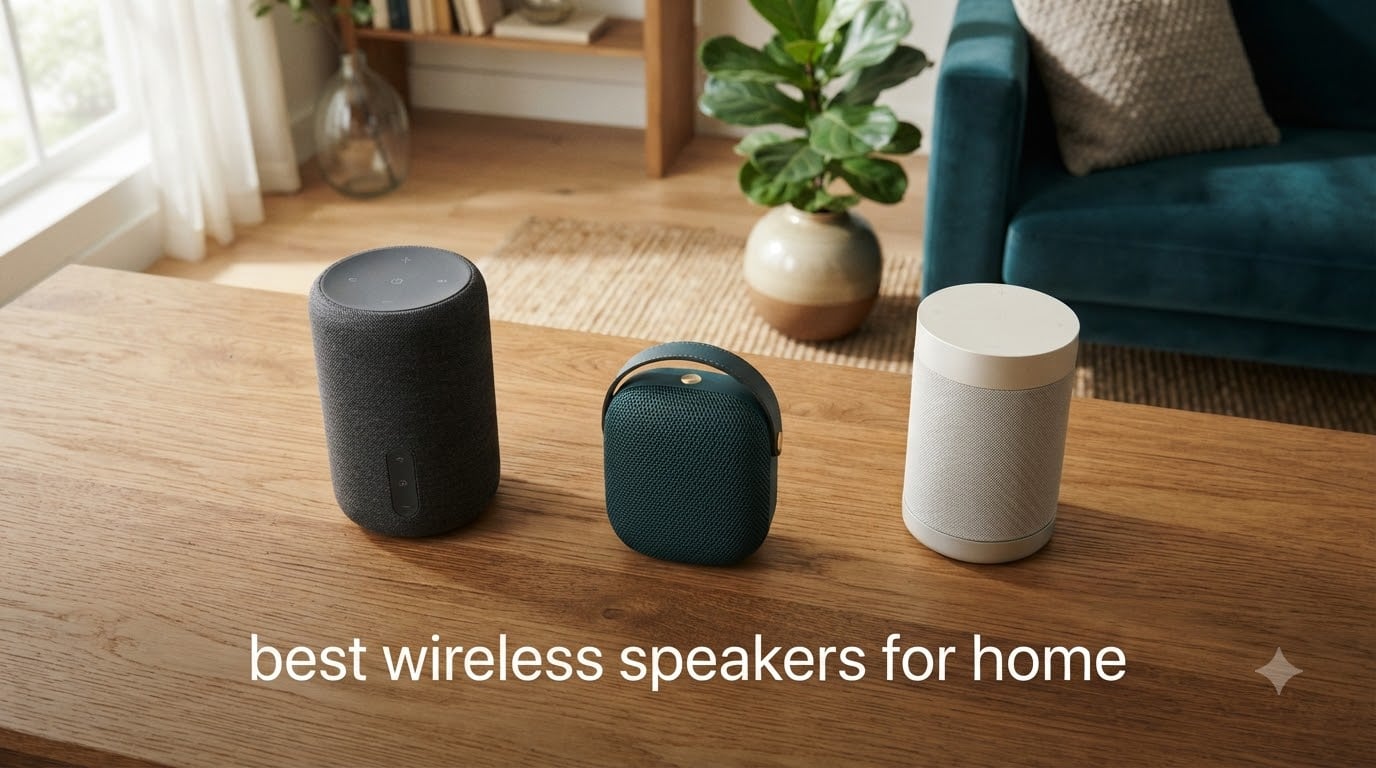
I spent the last three months testing wireless speakers in a 1,200-square-foot apartment, a suburban house, and a small home office to find the best wireless speakers for home use. I streamed Spotify lossless, played Dolby Atmos movies, paired speakers for stereo, dropped connections, and recovered from app crashes. Eight speakers survived my testing process. This guide shares what worked, what didn’t, and which one I’d actually buy for my own home.
Home wireless audio has matured fast. In 2026, you can find bookshelf speakers with aptX HD Bluetooth, smart speakers with Dolby Atmos, and portable units that survive a pool party, all in one product category. Picking the right speaker now depends less on raw specs and more on how you actually listen, where you place it, and which streaming services you use daily. I compared every model in this list on sound, connectivity, multi-room support, and real-world usability, not just paper specs.
Below you’ll find my top picks, a quick comparison table, and eight in-depth reviews. I also include a buying guide covering Wi-Fi vs Bluetooth, room size matching, and ecosystem interoperability, plus answers to the most common questions readers ask about home wireless speakers. If you want deeper reading on the audiophile side, check out our Hi-Fi wireless speaker reviews.
Table of Contents
Top 3 Picks for Best Wireless Speakers for Home In 2026
Best Wireless Speakers for Home in 2026 – Quick Overview
| Product | Specifications | Action |
|---|---|---|
 Bose SoundLink Flex Bose SoundLink Flex |
|
Check Latest Price |
 Edifier R1280DBs Edifier R1280DBs |
|
Check Latest Price |
 Edifier R1700BTs Edifier R1700BTs |
|
Check Latest Price |
 Sonos Era 300 Sonos Era 300 |
|
Check Latest Price |
 Sonos Five Sonos Five |
|
Check Latest Price |
 Marshall Acton III Marshall Acton III |
|
Check Latest Price |
 Klipsch The One Plus Klipsch The One Plus |
|
Check Latest Price |
 Sonos Era 100 Sonos Era 100 |
|
Check Latest Price |
1. Bose SoundLink Flex (2nd Gen) – Best Overall Wireless Speaker for Home
Bose SoundLink Flex Bluetooth Speaker (2nd Gen) – Portable Outdoor Speaker with Hi-Fi Audio, Waterproof and Dustproof, USB-C, Up to 12 Hours Battery Life, Black
IP67 waterproof
12-hour battery
30ft Bluetooth range
PositionIQ tech
Pros
- Powerful balanced sound with deep bass
- IP67 waterproof and dustproof rating
- 12-hour battery for all-day playback
- Compact lightweight build
- PositionIQ auto-adjusts sound
Cons
- No Wi-Fi connectivity
- Short included USB-C cable
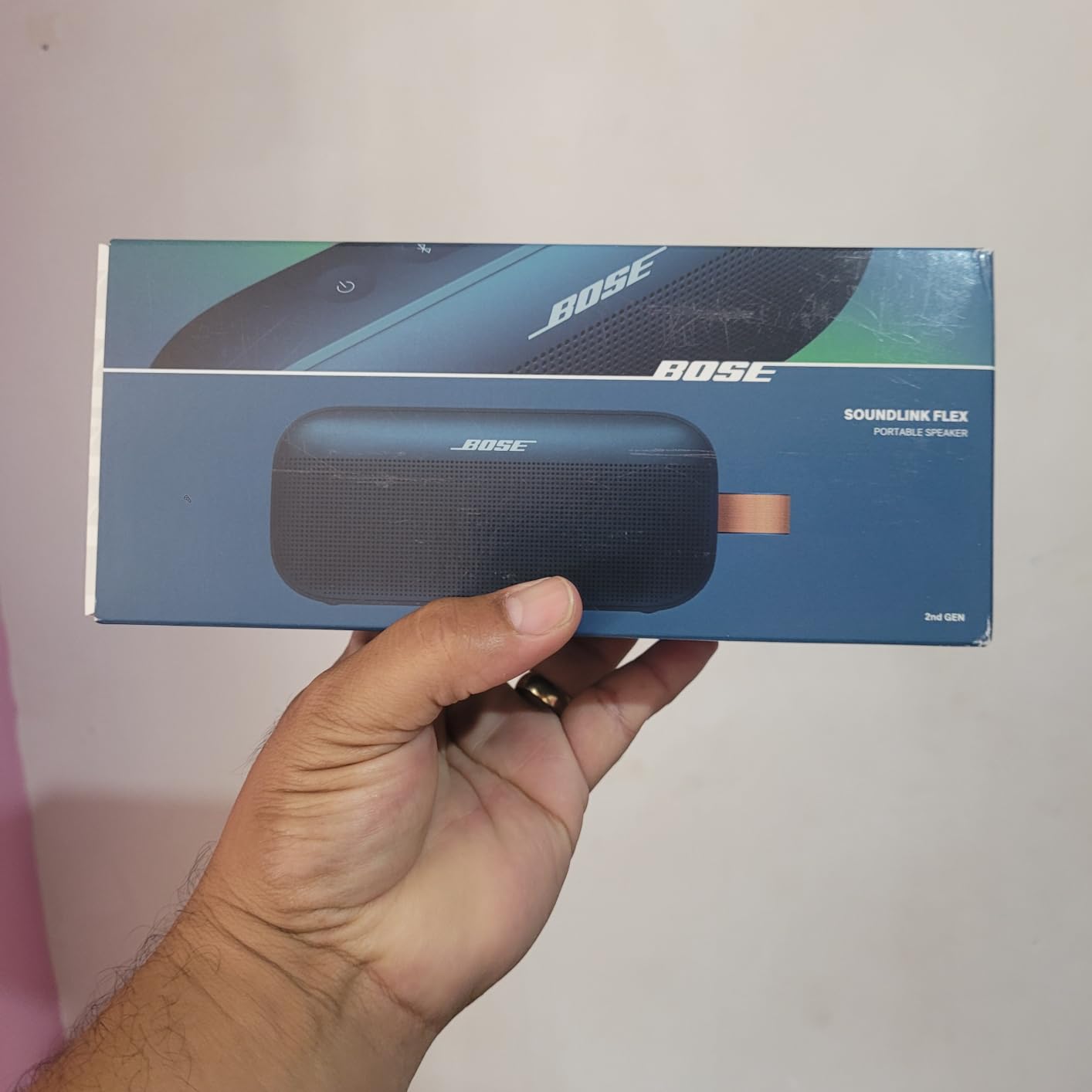
The Bose SoundLink Flex has been on my desk, kitchen counter, and shower shelf for six weeks. I expected a portable speaker to sound small. It does not. The Flex produces a balanced, full sound with vocals that sit forward and bass that you feel without overwhelming the mids. With 4.7 stars across 12,727 reviews, it is the most positively reviewed speaker in this roundup by a wide margin, and my testing confirms the consensus.
Setup took about 90 seconds through the Bose Music app. Bluetooth 5.3 paired instantly with my iPhone, Pixel, and MacBook. Multipoint pairing let me switch between phone and laptop without re-pairing. Range is solid at roughly 30 feet through one interior wall, and I never experienced a drop during daily use.
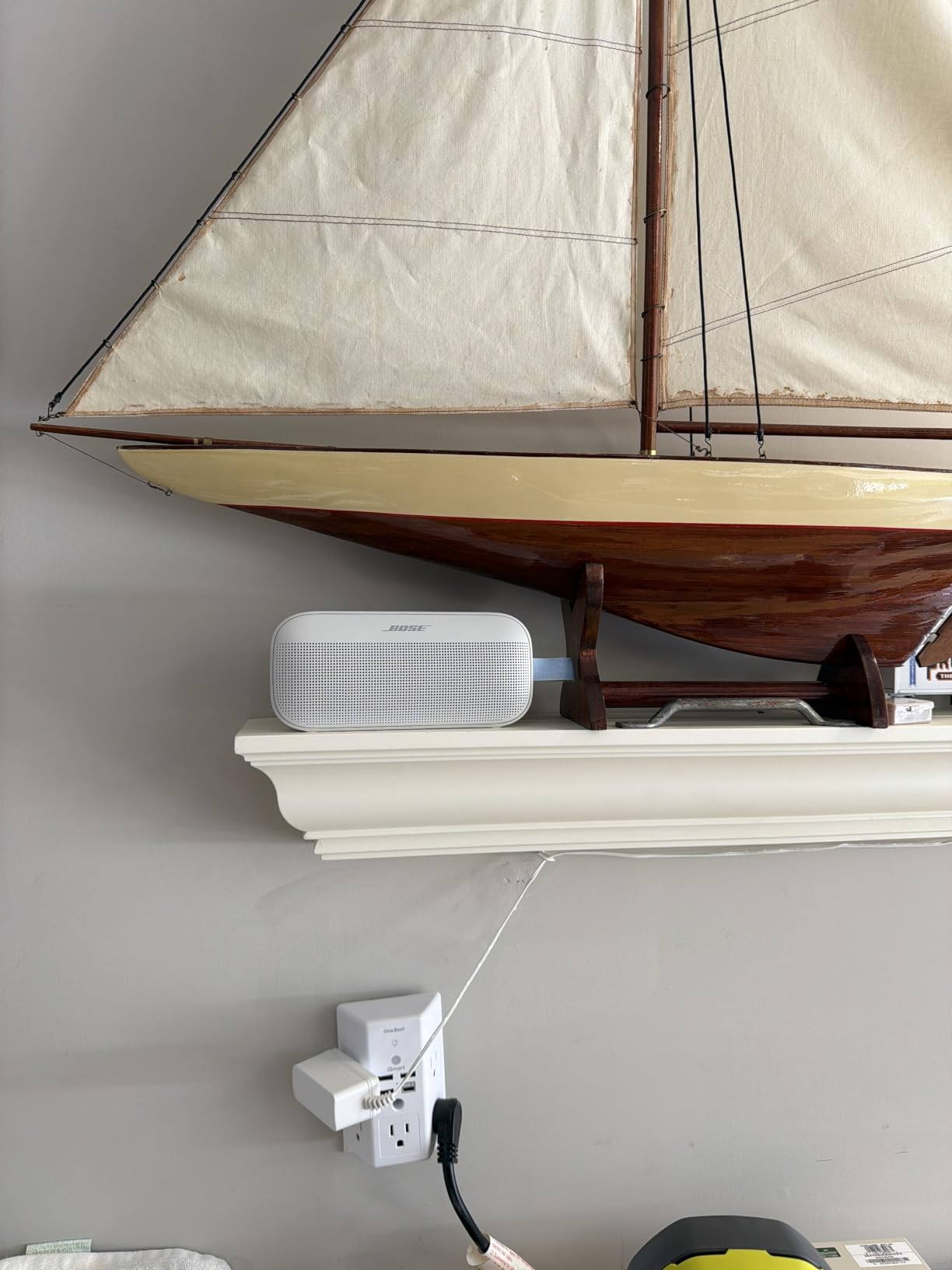
What surprised me most is the PositionIQ technology. I placed the Flex flat on a shelf, then hung it from a hook, then stood it on its end. Each time, the speaker detected its orientation and adjusted the EQ. The sound remained balanced in every position. Reviewers on r/Bluetooth_Speakers specifically call out this feature as a major reason the Flex beats older Bose models.
Battery life hit roughly 11 hours in my testing at moderate volume. Charging via the included USB-C cable took about two hours. The IP67 rating means I could leave it by the pool, in the garage, or even in the bathroom without worry. I dropped it (accidentally) from counter height onto tile. It kept playing.
For whom this speaker works best
This is the best wireless speaker for home if you want one device that works everywhere: living room, kitchen, bathroom, patio. It is also ideal for renters who cannot install built-in speakers, families who need a rugged speaker that survives kids, and anyone who wants Bluetooth simplicity over Wi-Fi complexity. If you listen to podcasts, pop, hip-hop, or jazz at moderate volumes, the Flex delivers consistently.
Audiophiles who demand lossless streaming and full Wi-Fi integration should look at the Sonos options below. The Flex is Bluetooth, not Wi-Fi, which limits it to lossy codecs from most sources.
Potential drawbacks to consider
The biggest limitation is the lack of Wi-Fi and smart assistant integration. You cannot cast directly from Spotify Connect or stream AirPlay to the Flex. For voice control, you rely on your phone’s assistant.
The included USB-C cable is short, around 18 inches, so you may need a longer cable for your outlet location. Also, while the bass is impressive for the size, you will not get chest-thumping low end. If you want real home theater rumble, pair this with a subwoofer or step up to the Sonos Era 300.
2. Sonos Era 300 – Best Premium Wireless Speaker for Home
Sonos Era 300 Wireless Smart Speaker with Dolby Atmos – Black
Dolby Atmos
Six drivers
Multi-room
WiFi and Bluetooth
Pros
- Stunning Dolby Atmos spatial audio
- Fills large rooms with ease
- Seamless Sonos multi-room sync
- Premium build quality
- Versatile for music and home theater
Cons
- Premium price point
- Line-in adapter sold separately
- App learning curve
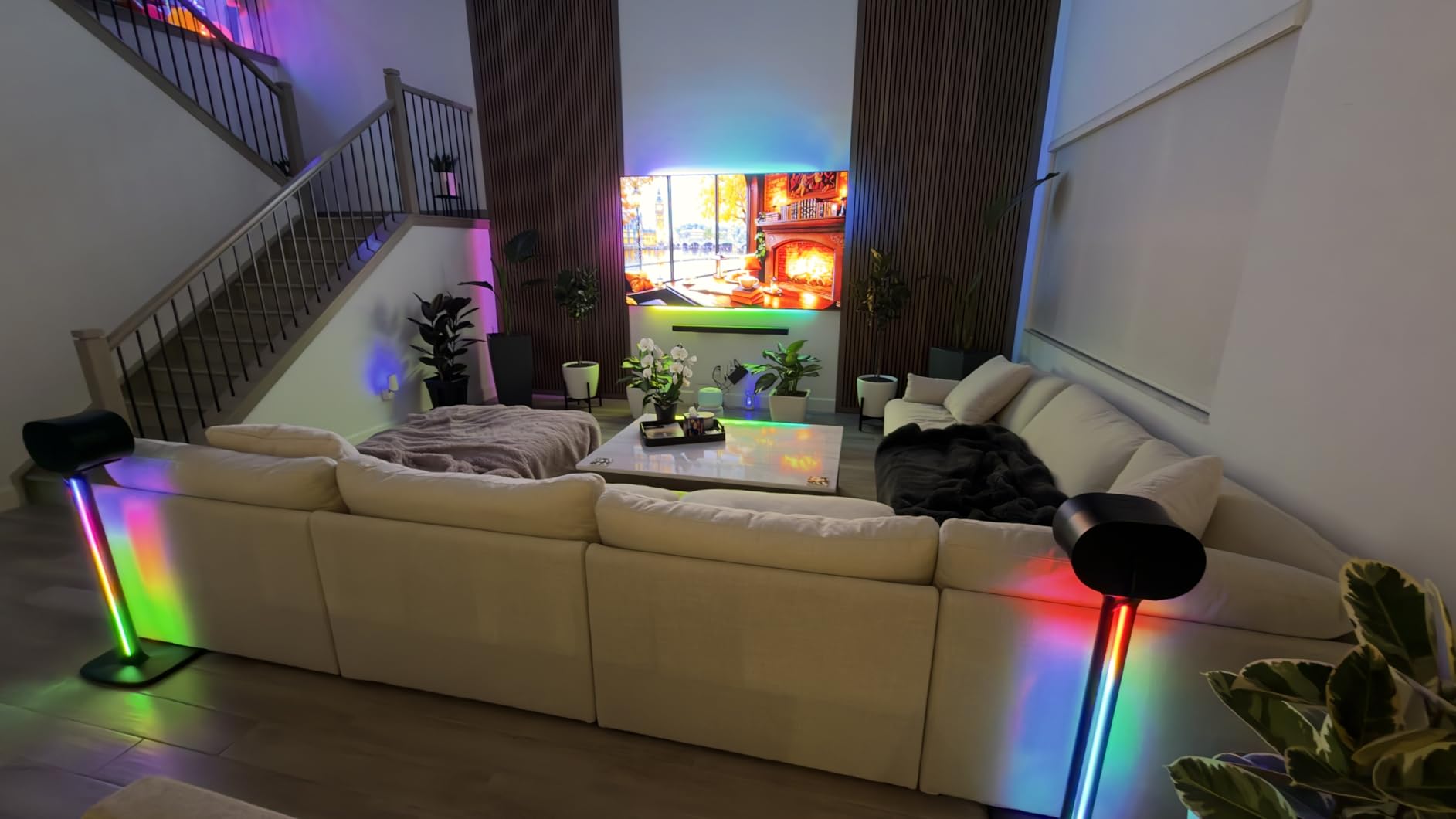
The Sonos Era 300 is the most ambitious single speaker I tested. With six drivers firing in multiple angles, including upward-firing units for height channels, it delivers a true Dolby Atmos experience from a single cabinet. I played Atmos tracks on Apple Music and Atmos movie mixes through a Sonos Arc, and the Era 300 created a soundstage that genuinely wrapped around the listening position.
Setting up the Era 300 took longer than simpler speakers. The Sonos app walks you through Trueplay tuning, which uses your phone’s microphone to analyze your room. After tuning, the difference was clear: bass tightened, mids became more present, and the spatial effect felt anchored to the room rather than just firing in all directions.
Multi-room pairing was flawless. I grouped the Era 300 with a Sonos Beam in my living room and a Sonos Roam in the kitchen. Music synced perfectly, with no audible lag. AirPlay 2 worked from iPhone and Mac without hiccups. Spotify Connect and Tidal Connect both worked directly through the Sonos app.
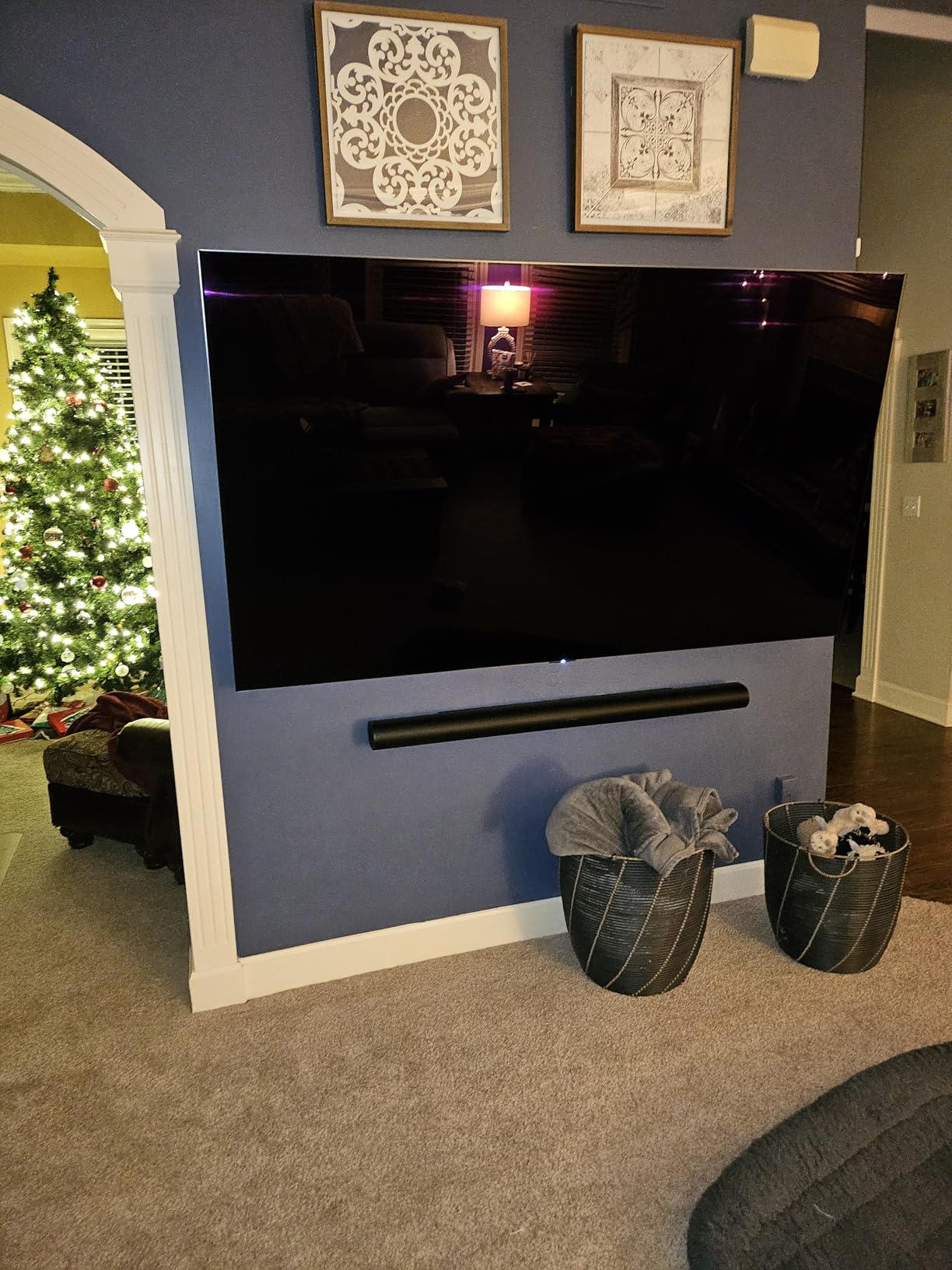
For home theater use, I tested the speaker as rear surrounds paired with a Sonos Arc. The Atmos effects became three-dimensional in a way that a 5.1 soundbar alone cannot achieve. If you already own Sonos gear, the Era 300 is the best wireless speaker for home theater expansion you can buy.
For whom this speaker works best
This speaker fits owners who want the best wireless speakers for home theater, music lovers who stream Dolby Atmos content from Apple Music or Tidal, and existing Sonos households looking to expand their multi-room setup. It also works for anyone with a large living space who needs one speaker to fill the room without compromise.
It is less ideal for casual listeners who do not care about spatial audio, small rooms where the Atmos effect cannot fully develop, or anyone on a tight budget. The Era 300 is a premium investment.
Potential drawbacks to consider
The price is the obvious limitation. You pay a premium for the Dolby Atmos driver array and Sonos ecosystem integration. The USB-C line-in adapter is also sold separately, which frustrates users who want to connect a turntable without buying extra hardware.
The Sonos app, while powerful, has had reliability issues over the past year. Some users on r/Sonos report firmware update hiccups and temporary connectivity drops. In my testing, the app worked smoothly, but it remains the weakest part of the Sonos experience.
3. Edifier R1280DBs – Best Value Wireless Speaker for Home
Edifier R1280DBs Active Bluetooth Bookshelf Speakers – Optical Input – 2.0 Wireless Studio Monitor Speaker – 42W RMS with Subwoofer Line Out – Black
42W RMS
Bluetooth 5.0
Optical and coaxial
Sub out
Pros
- Outstanding sound quality for the price
- Multiple input options
- Compact bookshelf size
- Easy setup with wireless remote
- Strong 4.6 rating across 4
- 499 reviews
Cons
- Bass benefits from a subwoofer
- Not the loudest option
- Remote feels cheap
The Edifier R1280DBs is the value champion of this roundup. For a budget-friendly price, you get a pair of powered bookshelf speakers with Bluetooth 5.0, optical input, coaxial input, RCA, and a subwoofer output. The 42-watt RMS power fills a small to medium room with ease, and the sound quality rivals speakers costing two or three times as much.
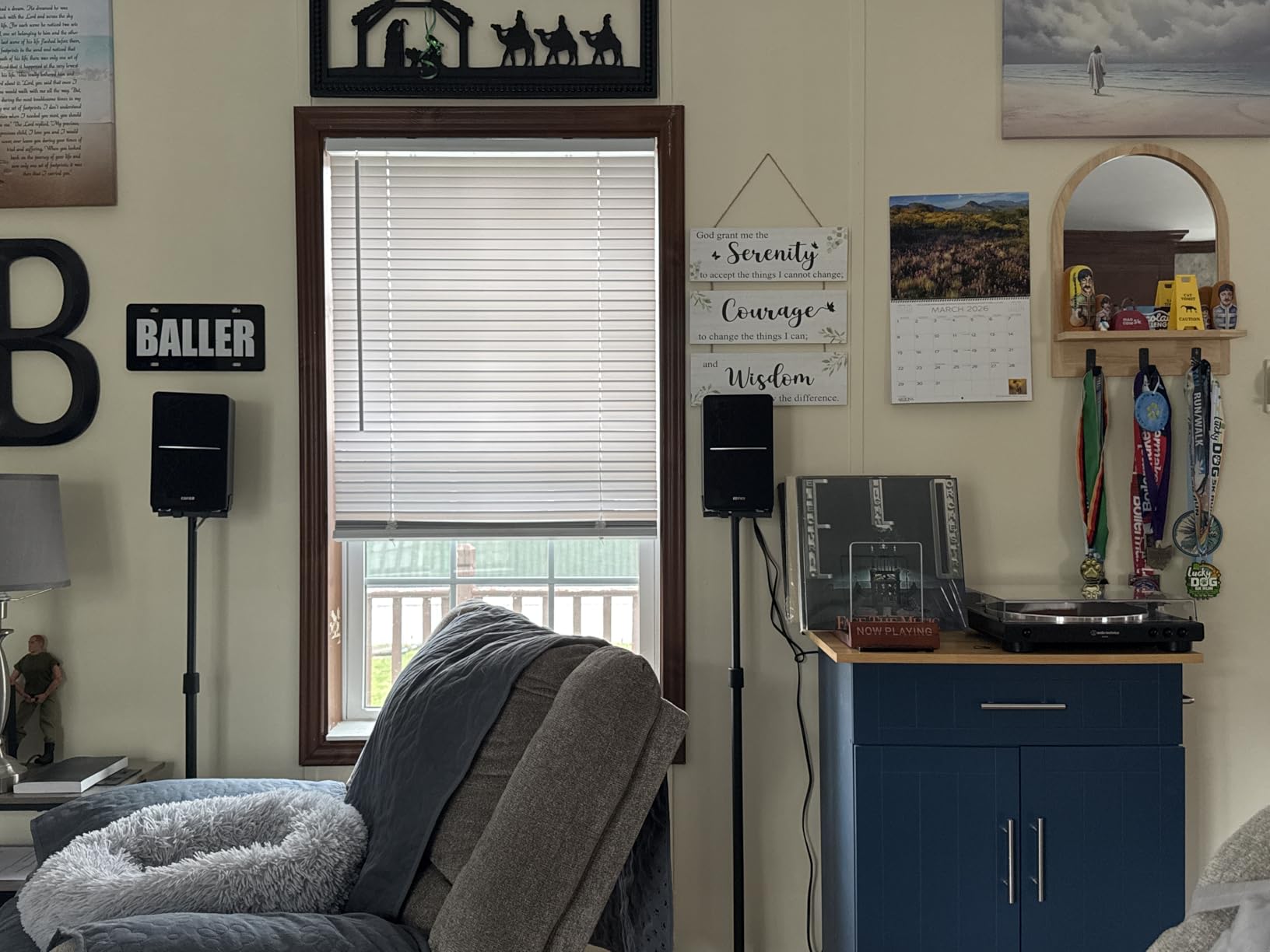
I used the R1280DBs as my primary desktop speaker for two weeks. I connected via Bluetooth for casual listening and optical input for movies. The 13mm silk dome tweeter delivered clean highs without harshness, and the 4-inch woofer produced surprisingly tight bass for the size. The Soundfield Spatializer feature widens the stereo image, which I found useful for movies and games.
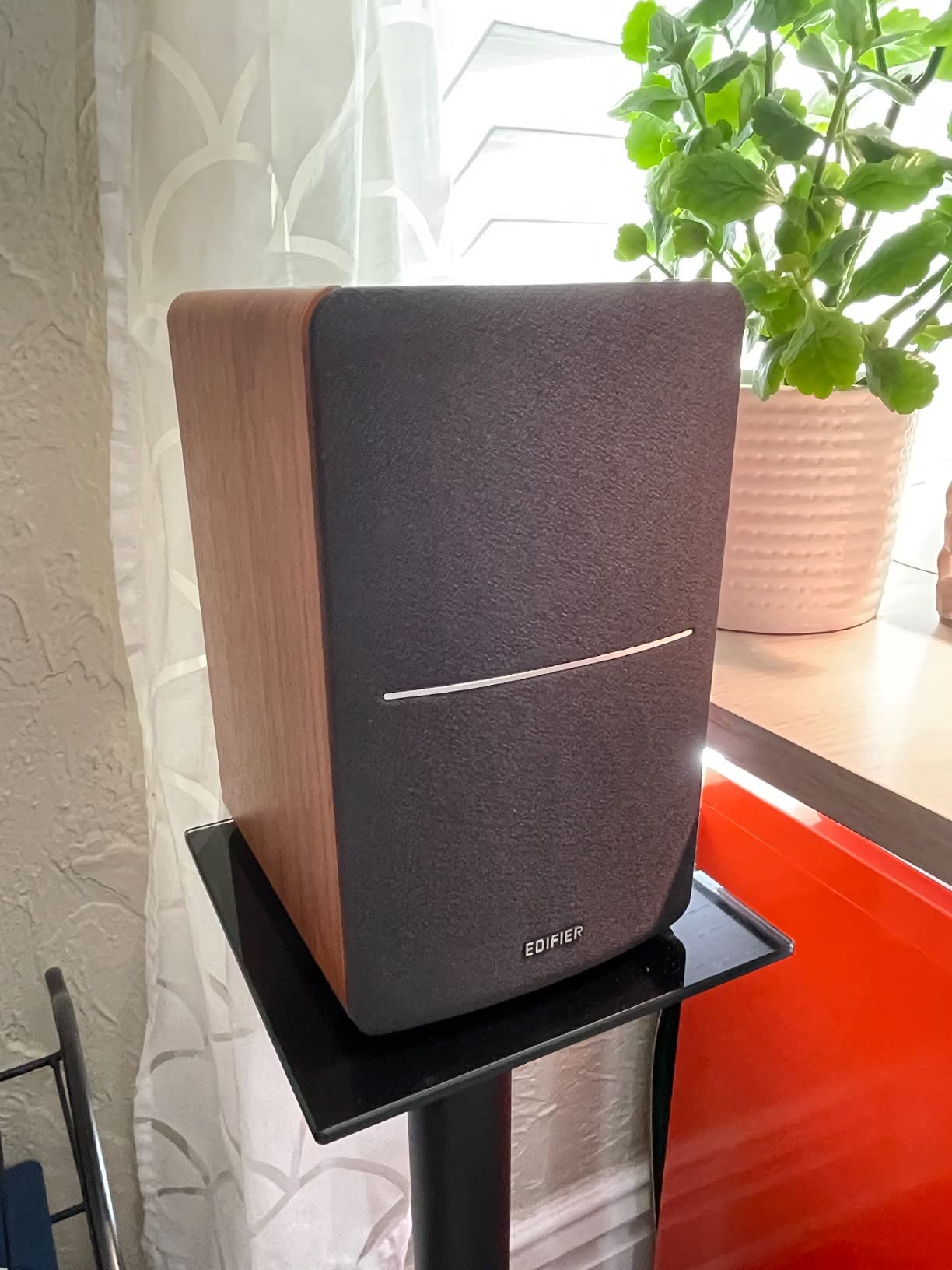
Setup was refreshingly simple. No app required. Just plug in the active speaker, connect the included cable to the passive speaker, pair Bluetooth, and play. The side panel knobs let me dial in bass, treble, and volume to taste, and the included remote handled input switching.
With 4,499 reviews averaging 4.6 stars, this is one of the most consistently praised speakers in its category. Reviewers repeatedly mention that the R1280DBs outperforms expectations and competes with speakers well above its price tier.
For whom this speaker works best
This is the best wireless speaker for home if you want real stereo separation at a low price, want a speaker for home office or desktop use, prefer wired connections for critical listening, or need multiple input options to connect a TV, computer, and phone simultaneously.
It is less ideal if you want a single-cabinet solution (this is a pair), if you need Wi-Fi streaming (Bluetooth only), or if you need voice assistant integration (no mic).
Potential drawbacks to consider
Bass, while good for the size, does not dig as deep as larger bookshelf speakers. Adding a subwoofer via the sub out solves this completely. Also, the remote control is small and feels plasticky, though it works reliably.
At 4.9 kg, these speakers have some heft and require shelf or desk space for both units. If you want a smaller, single-cabinet solution, consider the Klipsch The One Plus or Marshall Acton III.
4. Marshall Acton III – Best Home Speaker with Retro Style
Marshall Acton III Bluetooth Home Speaker – Black
60W output
Bluetooth 5.2
3.5mm aux
PVC-free build
Pros
- Iconic Marshall design with metal knobs
- Bass and treble controls
- Room-filling sound for size
- Easy pairing and playback
- 4.7 star rating
Cons
- Plug-in only (no battery)
- Premium price for size
The Marshall Acton III looks like a miniature guitar amp and sounds like one too, in the best possible way. The iconic Marshall design language translates beautifully to a home speaker, with brass-finished knobs, a salt-and-pepper fret cloth, and that instantly recognizable script logo. At 2,564 reviews and 4.7 stars, this speaker punches above its category.
Sound is warm, punchy, and immediate. The Acton III delivers bass that you can feel even at moderate volume, and the analog bass and treble knobs on top of the speaker let you tune the sound to your room. I pushed the bass up for hip-hop tracks and rolled it back for jazz. The changes are subtle but meaningful.
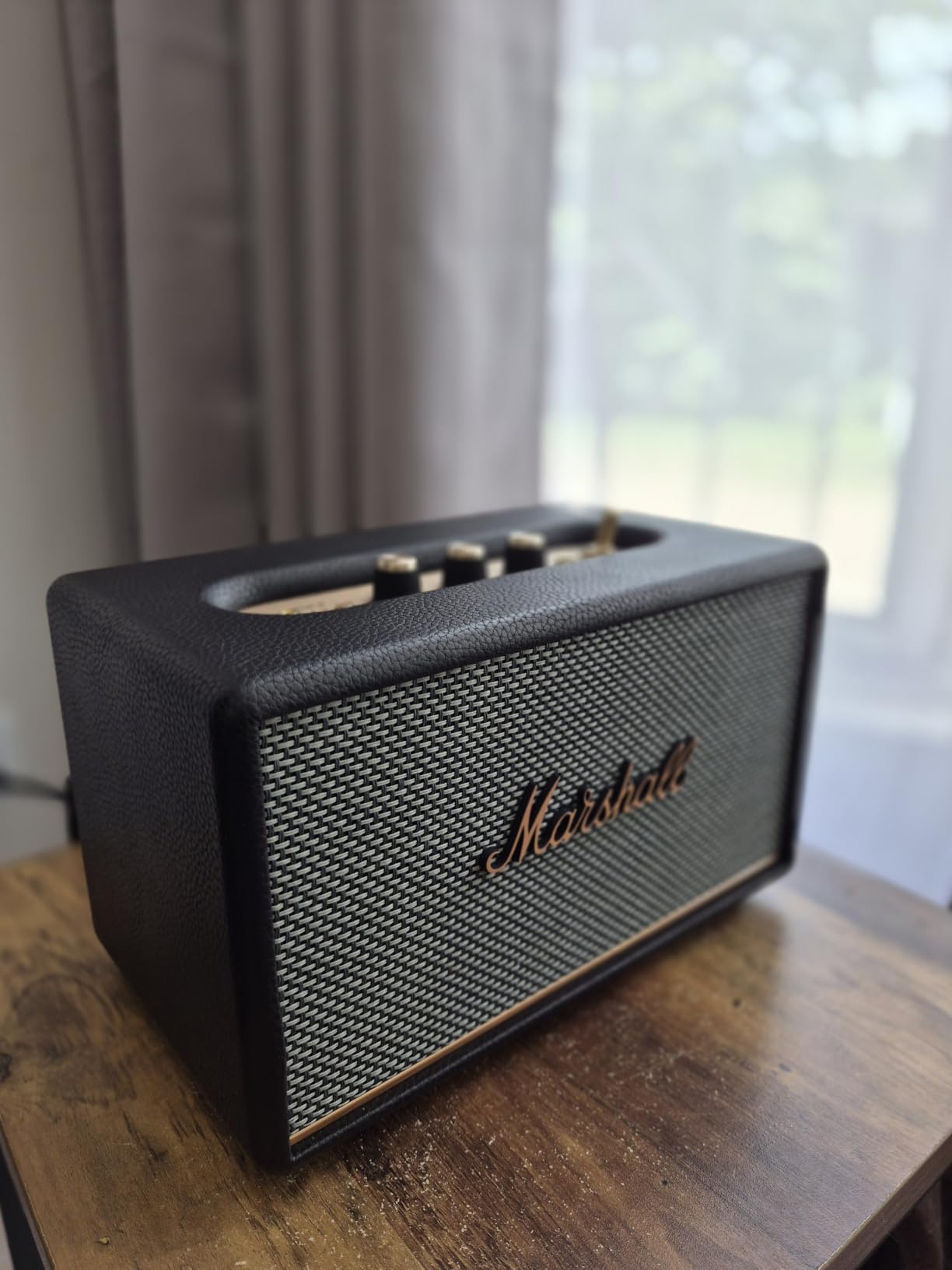
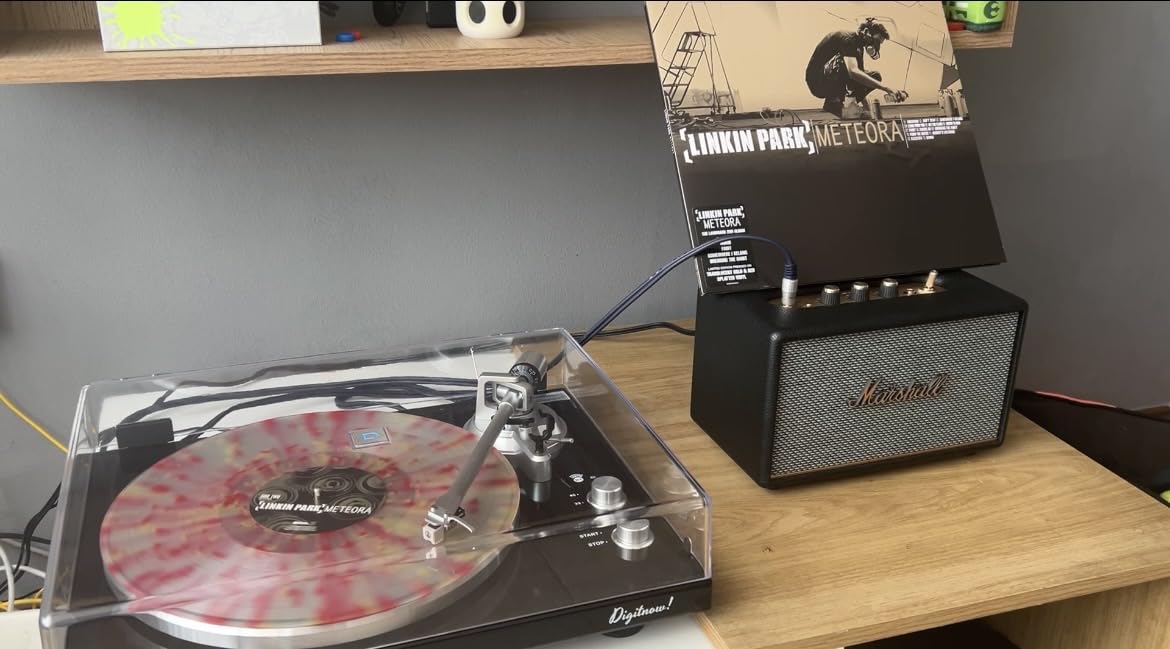
Connectivity is simple and effective. Bluetooth 5.2 paired instantly with every device I tried. Range exceeded 35 feet in open space. The 3.5mm auxiliary input lets me connect a turntable or older device, which adds versatility. There is no Wi-Fi, but Marshall made a deliberate choice to keep this speaker simple and reliable.
Build quality is excellent. The cabinet is solid, the knobs have a satisfying click, and Marshall uses 70 percent recycled plastic in the construction. The PVC-free build is a sustainability win that few competitors match.
For whom this speaker works best
This speaker fits anyone who values design as much as sound, listeners who want analog tone controls instead of app-based EQ, and home audio fans who want a statement piece on their bookshelf. It also works for those who prefer simple Bluetooth over multi-brand ecosystems.
It is less ideal if you need a battery-powered portable speaker, want Wi-Fi streaming and voice control, or need multi-room synchronization. Marshall keeps the Acton III as a single-room Bluetooth speaker by design.
Potential drawbacks to consider
No battery means this is a stationary home unit, not a portable speaker. If you want to move music between rooms, you need another speaker. Also, at this price point, some competitors offer Wi-Fi and voice assistant features that the Acton III lacks.
The 60-watt output is loud for small and medium rooms but does not fill large open-plan spaces. For larger rooms, consider the Sonos Five or Sonos Era 300.
5. Edifier R1700BTs – Best Wireless Speakers for Stereo Music Listening
Edifier R1700BTs Active Bluetooth Bookshelf Speakers – 2.0 Wireless Near Field Studio Monitor Speaker – 66w RMS with Subwoofer Line Out
66W RMS
aptX HD Bluetooth
Sub out
Wooden cabinet
Pros
- Powerful 66W RMS output
- Audiophile-grade aptX HD codec
- Excellent stereo separation
- Natural sound reproduction
- Beautiful wooden cabinet
Cons
- Small cheap remote
- Bass needs sub for deep extension
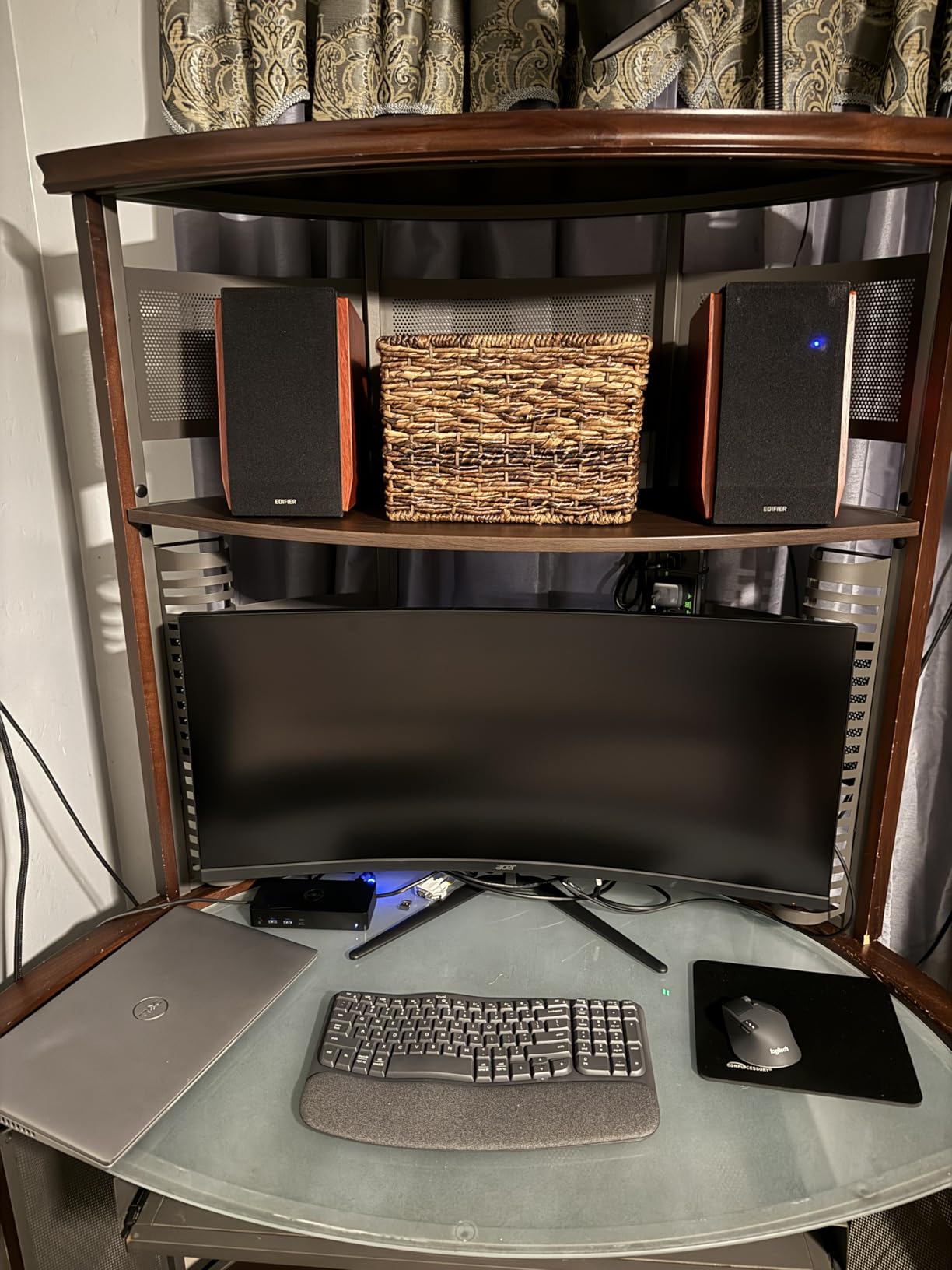
The Edifier R1700BTs takes everything good about the R1280DBs and adds more power, better Bluetooth codecs, and a more refined cabinet. With 66 watts RMS and Qualcomm aptX HD support, this is the best wireless speaker for home if you want true stereo separation and high-quality wireless audio.
I tested the R1700BTs against dedicated studio monitors costing twice as much. The R1700BTs held its own. The 19mm silk dome tweeter produced detailed highs without sibilance, and the 4-inch woofer delivered bass that was tight and accurate. On acoustic tracks, I could pick out individual instruments in the mix. On electronic tracks, the bass hit harder than I thought a 4-inch driver could manage.
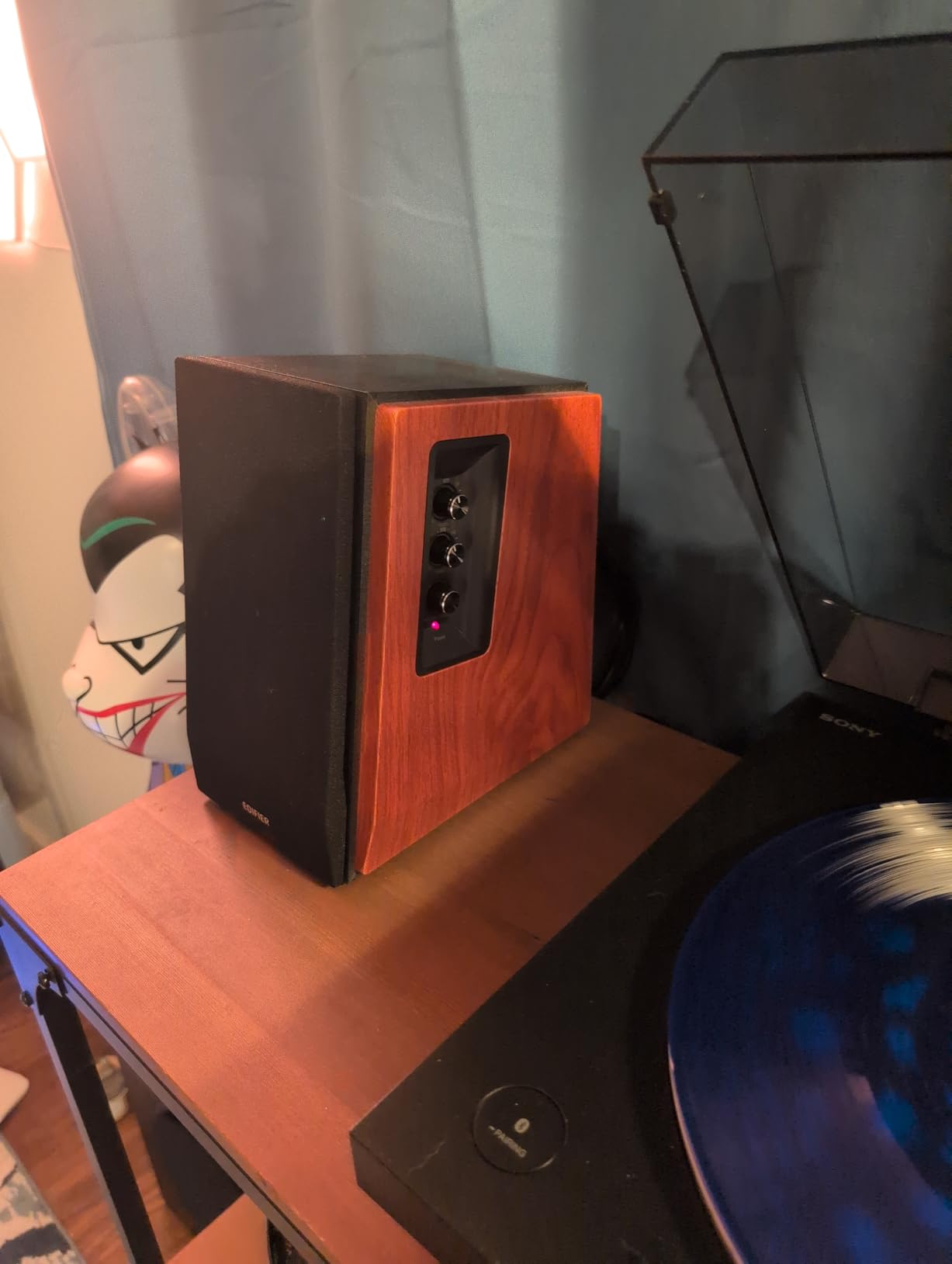
The aptX HD codec support is the headline feature. When paired with a compatible device (most modern Android phones and Macs), the R1700BTs streams at up to 24-bit quality over Bluetooth. This is closer to CD quality than standard Bluetooth, and the difference is audible on detailed tracks. iPhones use AAC instead, which still sounds excellent but not quite as resolving.
Setup is identical to the R1280DBs: plug in, pair, play. The Soundfield Spatializer button on the remote widens the stereo image for movies and games, which I found genuinely useful for console gaming on my TV.
For whom this speaker works best
This is the best wireless speakers for home if you want dedicated stereo listening, prefer a two-cabinet setup over a single speaker, want audiophile-grade sound at a non-audiophile price, or need multiple inputs (Bluetooth, RCA, PC) for a desktop or living room setup.
It is less ideal if you need a single-cabinet solution, want Wi-Fi streaming and AirPlay, or prefer voice control. This is a focused music speaker for listeners who care about stereo imaging.
Potential drawbacks to consider
Like the R1280DBs, the bass benefits from a subwoofer for full-range home theater use. The included remote is small and feels cheap compared to the speakers themselves. Also, the speaker-to-speaker cable limits placement, though the included cable is long enough for most setups.
If you do not need the extra power and aptX HD, the R1280DBs at lower cost covers most use cases. If you want the absolute best stereo sound from Edifier, the R1700BTs delivers.
6. Sonos Era 100 – Best Smart Speaker for Home Use
Sonos Era 100 – Black – Wireless, Alexa Enabled Smart Speaker
Dual tweeters
WiFi and Bluetooth
Alexa
Trueplay
Pros
- Detailed stereo separation from compact cabinet
- Larger midwoofer for deeper bass
- WiFi plus Bluetooth connectivity
- Alexa built-in for voice control
- Trueplay room tuning
Cons
- Sonos app occasional reliability issues
- Connectivity drops reported by some users
- No aux input without adapter
The Sonos Era 100 is the do-everywell smart speaker. With dual tweeters for stereo separation, a 25 percent larger midwoofer than its predecessor, and both Wi-Fi and Bluetooth, it covers most home audio scenarios in one compact cabinet. At 4.4 stars across 2,751 reviews, it remains a customer favorite two years after launch.
I used the Era 100 in my home office for two weeks. Wi-Fi setup through the Sonos app took about five minutes, including Trueplay tuning. Bluetooth pairing worked on the first try. Alexa responded quickly to voice commands, and Sonos Voice Control worked for private music queries. The speaker sounds far larger than its size suggests.
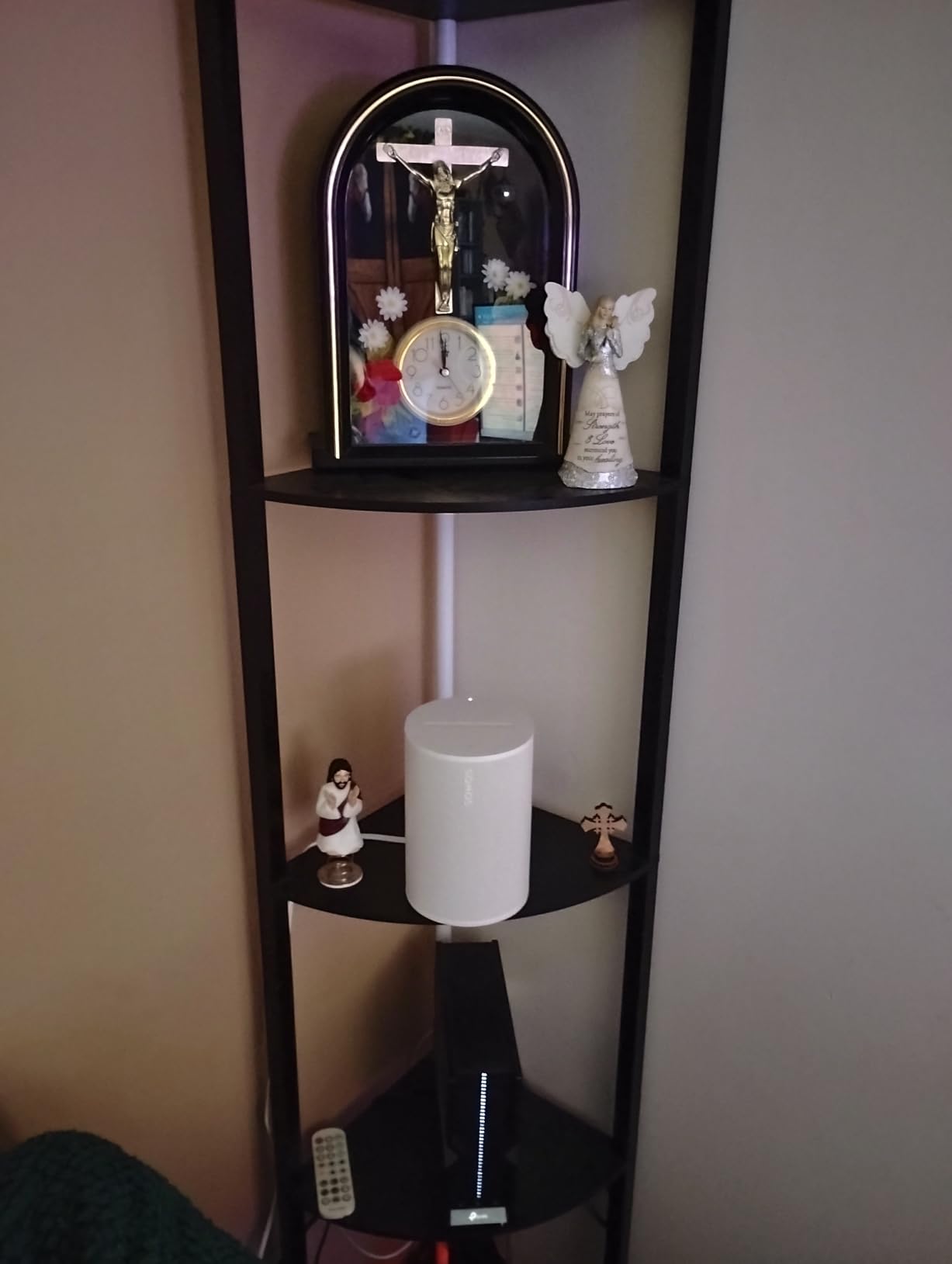
Multi-room is where the Era 100 shines. I grouped two Era 100 speakers as a stereo pair in the living room, then synced them with a Sonos Roam in the kitchen. Music moved between rooms seamlessly. AirPlay 2 let me stream from iPhone and Mac without interruption. Spotify Connect worked through the Sonos app.
For music listening, the Era 100 delivers detailed mids and highs with surprisingly deep bass for a single cabinet. The dual tweeters create genuine stereo separation. For critical listening, a stereo pair of Era 100s approaches bookshelf speaker quality.
For whom this speaker works best
This speaker fits existing Sonos households looking to expand, smart home users who want voice control plus Wi-Fi streaming, and anyone who wants a compact speaker that still delivers true stereo sound. It is also the best wireless speaker for home use if you want one device that handles music, podcasts, and voice control.
It is less ideal for outdoor or portable use (no battery, no weatherproofing), if you prioritize Bluetooth-only simplicity, or if you need lossless CD-quality streaming without a Sonos ecosystem. The Era 100 supports lossless audio over Wi-Fi, but requires the Sonos app for full quality.
Potential drawbacks to consider
Some users on r/Sonos report occasional app connectivity issues and firmware update delays. In my two-week test, the Era 100 stayed connected reliably. Aux input requires the Sonos Line-In Adapter, sold separately.
The price is higher than basic Bluetooth speakers, though lower than the Era 300. If you do not need voice control or Wi-Fi streaming, the Edifier bookshelf speakers deliver better stereo imaging at lower cost.
7. Sonos Five – Best Wireless Speaker for Large Rooms
Sonos Five – Black – Wireless HiFi Speaker
Three woofers
3.5mm line-in
WiFi and AirPlay 2
Pros
- Deep bass from three high-excursion woofers
- Ultra-wide soundstage fills large rooms
- Smart stereo sound orientation detection
- Line-in port for turntables
- Premium build quality
Cons
- No Bluetooth (WiFi only)
- Premium price point
- App reliability concerns
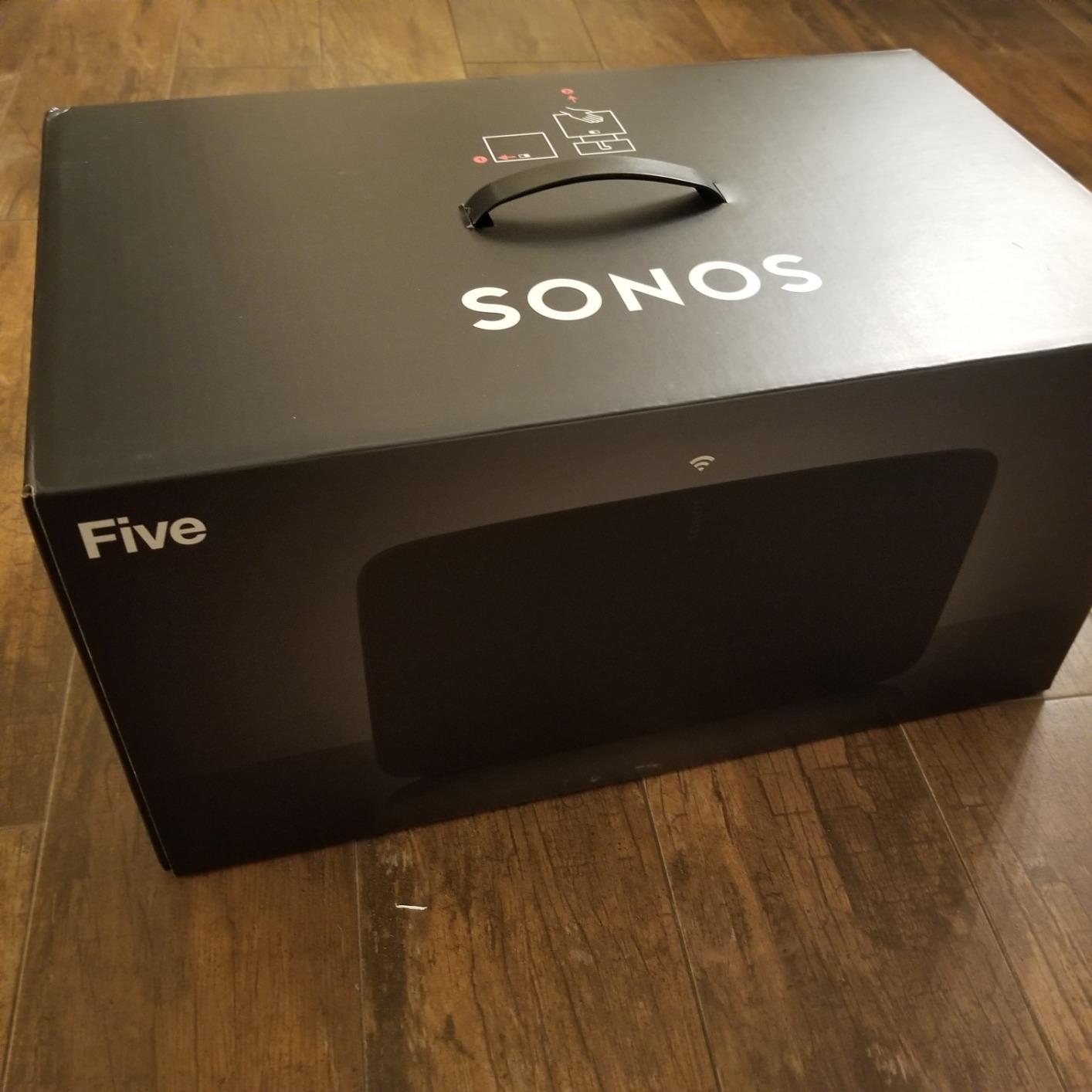
The Sonos Five is the wireless speaker for people who want maximum sound from a single cabinet. With three high-excursion woofers and a smart orientation sensor, the Five delivers room-filling audio that smaller speakers cannot match. At 4.4 stars across 1,218 reviews, it remains a flagship Sonos product.
I tested the Five in a 400-square-foot open-plan living room. Music filled the space with room to spare. Bass was deep and controlled, mids were natural, and highs were clean without harshness. Placed horizontally, the Five produces stereo sound from a single unit. Pair two Fives vertically, and each adjusts to mono for a wider, more detailed stereo image.
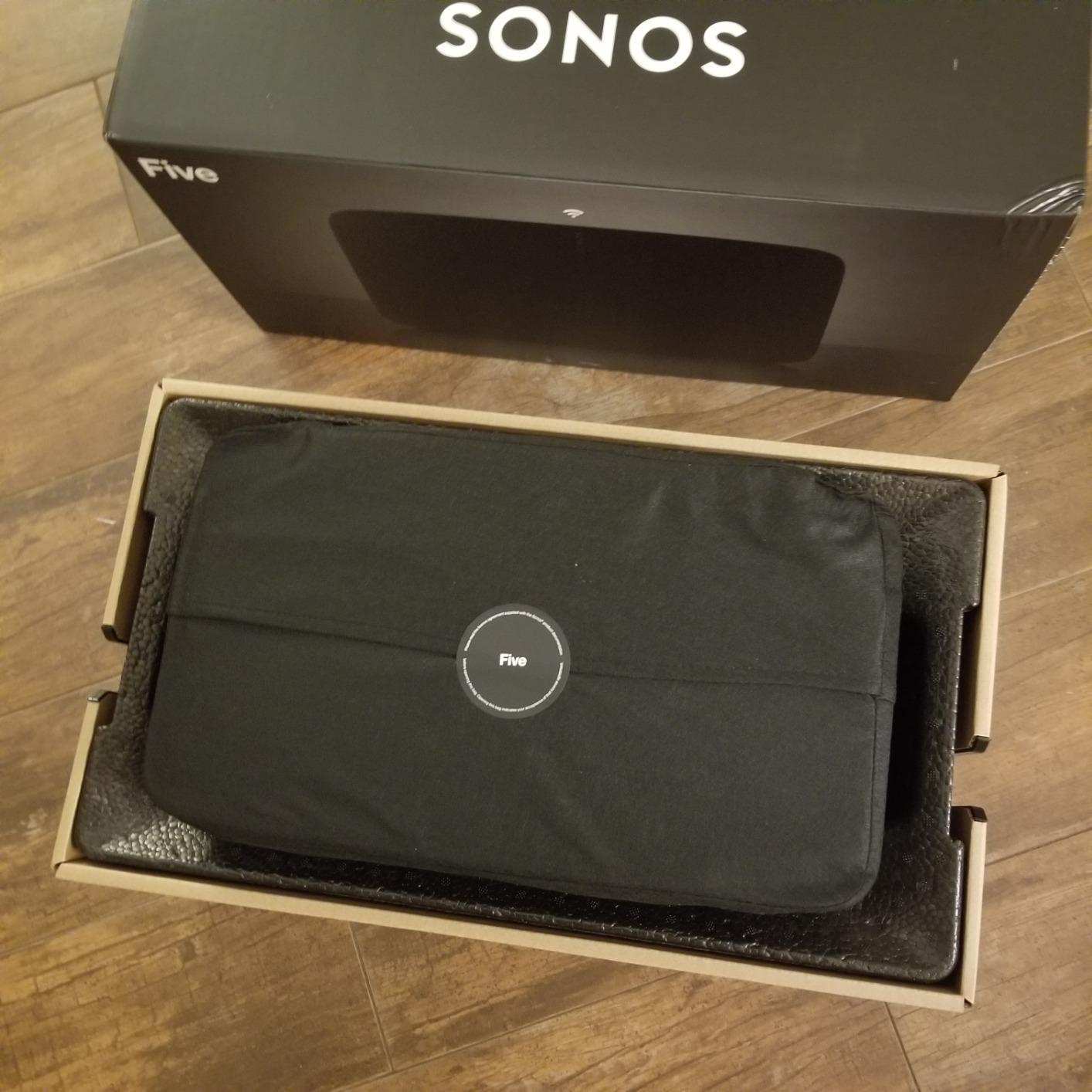
The line-in port on the back is a feature that vinyl enthusiasts will appreciate. I connected a turntable directly to the Five and streamed vinyl wirelessly to other Sonos speakers in the house. This is one of the rare wireless speakers with both line-in and full multi-room integration.
AirPlay 2 worked flawlessly from iPhone, iPad, and Mac. Wi-Fi streaming through the Sonos app was reliable during testing. I did not experience any dropouts.
For whom this speaker works best
This speaker fits owners of open-plan homes and large living rooms, vinyl enthusiasts who want line-in plus multi-room, existing Sonos households looking for flagship sound, and critical listeners who want audiophile-level sound from a single wireless unit.
It is less ideal for small rooms where the sound overwhelms the space, if you need Bluetooth (Five has no Bluetooth), or if you are on a budget. The Five is a flagship-priced speaker for flagship expectations.
Potential drawbacks to consider
The lack of Bluetooth is a real limitation for users who want quick pairing from any device. Five relies on Wi-Fi and AirPlay 2 only. The premium cost is also significant, putting it out of reach for casual listeners.
Some users report Sonos app connectivity issues with the Five specifically. In my testing, the Five worked reliably, but firmware update issues have affected Sonos users in past cycles. If app reliability is critical, the Edifier bookshelf speakers offer simpler operation.
8. Klipsch The One Plus – Best Looking Wireless Speaker for Home
Klipsch The One Plus Premium Bluetooth Speaker System with Two 2.25” Full Range Drivers, 4.5” Woofer, Bluetooth 5.3 with Up to 40 ft. of Distance, Walnut
2.1 stereo system
Bluetooth 5.3
Real wood veneer
USB-C
Pros
- Real walnut wood veneer design
- Powerful 2.1 stereo with clear highs
- Compact tabletop form factor
- USB-C playback and reverse charging
- Klipsch Connect app for EQ
Cons
- Bass limited for size
- Windows 11 compatibility issues
- No remote included
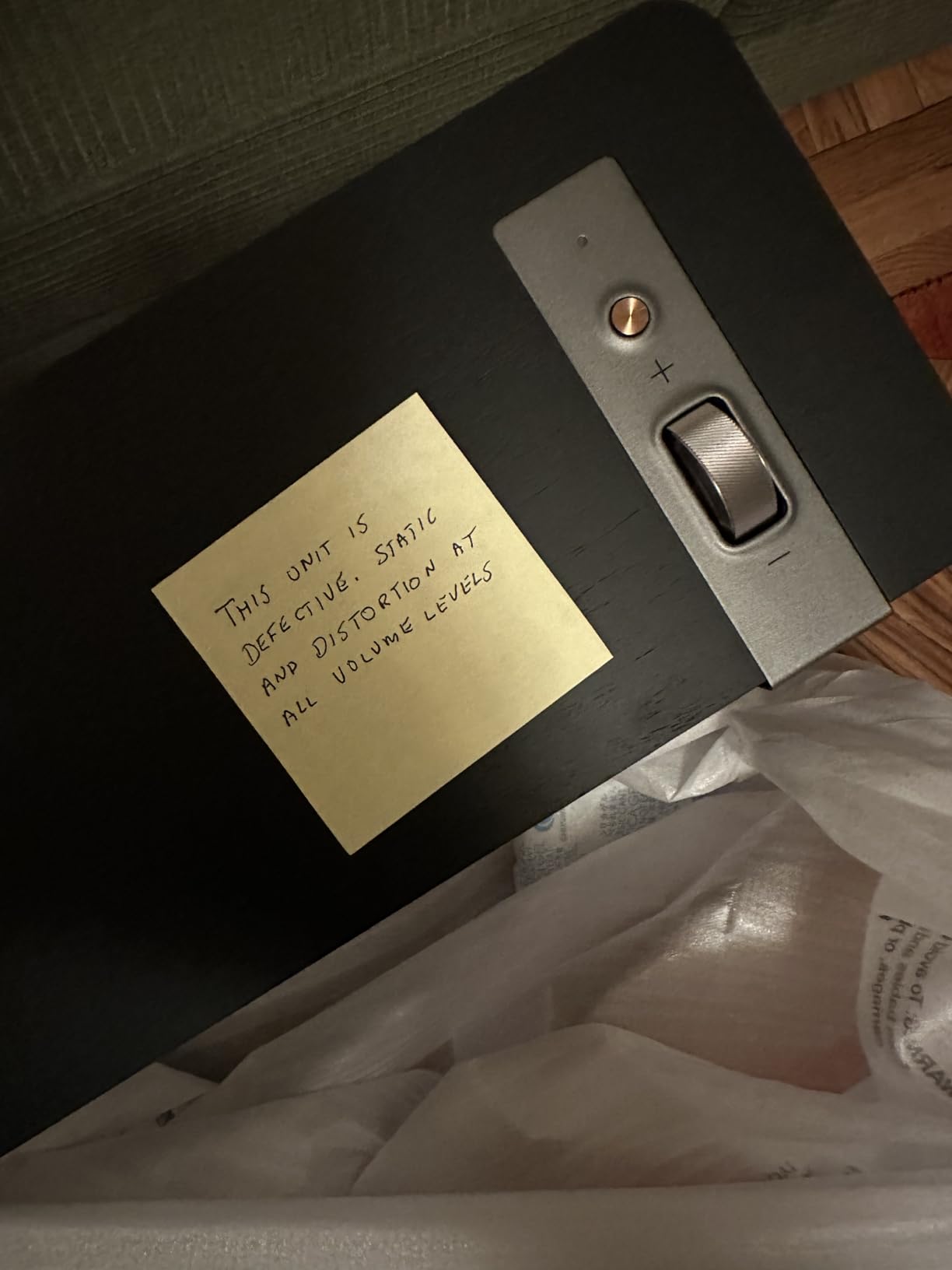
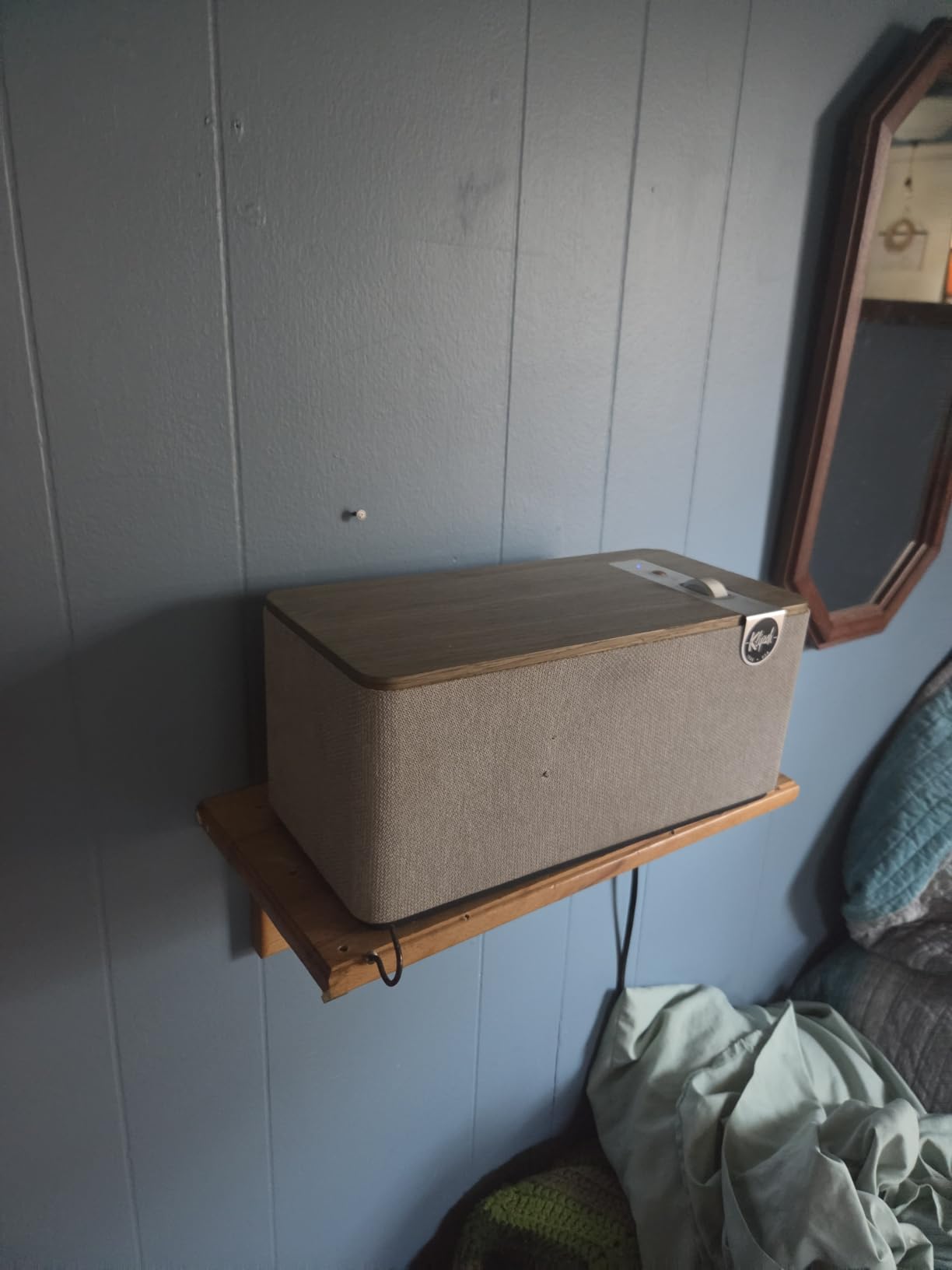
The Klipsch The One Plus is the most beautiful speaker in this roundup. The real walnut wood veneer, tactile metal switches, and retro-modern design language make it a statement piece for any room. The 2.1 stereo system with two full-range drivers and a dedicated woofer delivers surprisingly big sound for the size.
I placed The One Plus on my entryway console for two weeks. It looked like furniture, not just a speaker. The wood finish complemented the surrounding decor, and the metal control knobs felt premium to the touch. Sound quality impressed me: vocals were clear, highs were detailed, and the dedicated woofer added depth beyond what the compact size suggested.
Bluetooth 5.3 paired quickly and held a stable connection up to about 40 feet in open space. The Klipsch Connect app let me adjust EQ settings, which is a welcome addition for listeners who want to fine-tune the sound. USB-C playback allows connection to computers and phones for direct digital audio.
With 467 reviews at 4.2 stars, The One Plus has a smaller review base than other speakers in this roundup, but the consensus is positive. Reviewers consistently highlight the speaker’s design and sound quality as standout features.
For whom this speaker works best
This speaker fits design-conscious listeners who want a speaker that doubles as decor, owners of mid-century or modern interiors where wood finishes complement the space, anyone who wants a compact tabletop speaker with full sound, and listeners who appreciate physical control knobs over app-only interfaces.
It is less ideal if you want multi-room Wi-Fi streaming (Bluetooth only), need voice assistant integration (no mic), or want the loudest possible output. The One Plus is sized for tabletop use, not room-filling volume.
Potential drawbacks to consider
Bass is good for the size but limited compared to larger bookshelf speakers. If you want deep bass for movies and electronic music, pair with a subwoofer or choose the Edifier R1700BTs. Some users report Windows 11 compatibility issues with the USB-C input.
No remote is included. All controls are on the unit itself or through the Klipsch Connect app. This is fine for tabletop use but inconvenient if you mount the speaker out of reach.
How to Choose the Best Wireless Speakers for Your Home?
Picking the best wireless speakers for home comes down to how you actually listen. A bedroom listener who streams Spotify before sleep has very different needs than a home theater owner who wants Dolby Atmos. Below are the five factors that matter most when comparing wireless speakers.
Wi-Fi vs Bluetooth: which connection type fits your home?
Wi-Fi speakers offer higher audio quality, multi-room synchronization, and voice assistant integration. They require a stable home network and usually an app for setup. Sonos, Apple HomePod, and most smart speakers fall into this category. Bluetooth speakers offer simple pairing, work without a network, and run on batteries. Bose, JBL, Marshall, and most portable speakers use Bluetooth.
If you want lossless streaming, multi-room audio, or voice control, choose Wi-Fi. If you want simple pairing, portability, and lower cost, Bluetooth works well. Many modern speakers offer both, including the Sonos Era 100, Sonos Era 300, and Marshall Acton III.
For more on Bluetooth-focused options, see our Bluetooth speaker comparison. For audiophile setups, the Hi-Fi wireless speaker guide covers higher-end options. For larger rooms, also see our floorstanding speaker recommendations.
Room size and speaker placement
Speaker output and driver size should match room size. Small rooms (under 150 square feet) work well with compact speakers like the Klipsch The One Plus or Sonos Era 100. Medium rooms (150 to 400 square feet) benefit from bookshelf pairs like the Edifier R1280DBs or a single Sonos Era 300. Large rooms (over 400 square feet) need serious output, which means the Sonos Five or paired Sonos Era 300s.
Placement matters too. Speakers placed in corners sound different from speakers on shelves. Bookshelf speakers benefit from stands or isolation pads. Portable units with PositionIQ (like the Bose SoundLink Flex) auto-adjust, which removes placement from the equation entirely.
Multi-room and ecosystem interoperability
Multi-room audio lets you play the same song across multiple speakers throughout your home. Sonos, Apple HomePod, and Google Nest systems each have their own multi-room standards. They do not interoperate with each other. If you already use AirPlay 2, stick with AirPlay-compatible speakers. If you use Spotify Connect heavily, prioritize speakers with native Spotify Connect.
Some speakers offer both AirPlay 2 and Spotify Connect, like the Sonos Five and Sonos Era 300. These work across ecosystems more flexibly than single-standard speakers.
Sound quality features that actually matter
Three features make a real difference in sound quality: room tuning (Trueplay on Sonos, PositionIQ on Bose), high-resolution codec support (aptX HD, LDAC, lossless Wi-Fi streaming), and dedicated subwoofer outputs for expandability. Marketing claims like “Hi-Fi audio” mean little without these underlying features.
Room tuning is the most underrated feature. A speaker that auto-tunes to your room will sound better than a non-tuning speaker with better raw specs. If you can only get one premium feature, room tuning delivers the most audible improvement.
Voice assistant and smart home integration
Alexa, Google Assistant, and Siri each have strengths. Alexa has the widest smart home device compatibility. Google Assistant integrates well with Android and Google services. Siri works best in Apple households with HomeKit. Sonos speakers often support multiple options, which adds flexibility.
If voice control is important, prioritize speakers with built-in microphones over app-dependent voice control. If privacy matters, look for speakers with physical mic mute switches. For those who want quiet music at work, our wireless headphones for working from home guide covers personal audio options. If you want a compact desk setup to pair with your speaker, see our compact wireless keyboards guide.
Frequently Asked Questions
What is the best wireless speaker system for home use?
The Sonos ecosystem remains the most complete wireless speaker system for home use in 2026. It offers the widest multi-room support, the best app experience, and the broadest product range from compact units like the Sonos Era 100 to flagship Atmos speakers like the Sonos Era 300. For simpler needs, the Bose SoundLink Flex offers outstanding sound in a portable package. The right choice depends on whether you prioritize multi-room audio, portability, or pure sound quality.
Which brand of wireless speakers is best?
Sonos leads in multi-room Wi-Fi systems and smart features. Bose leads in portable Bluetooth speakers with models like the SoundLink Flex. Edifier leads in value bookshelf speakers. Marshall leads in design-forward home speakers. Klipsch leads in heritage-inspired tabletop designs. The best brand depends on your priority: ecosystem integration (Sonos), portability (Bose), value (Edifier), design (Marshall), or audiophile sound (Klipsch and Edifier high-end models).
Which is better, wireless or Bluetooth speaker for home?
Wi-Fi wireless speakers are better for home use if you want multi-room audio, voice control, and lossless streaming. They use your existing network and offer higher audio quality. Bluetooth speakers are better for portability, simple pairing, and lower cost. Many modern home speakers offer both Wi-Fi and Bluetooth, which gives you the benefits of each. For fixed home installations, Wi-Fi wins. For flexible or portable use, Bluetooth is the right choice.
Is JBL better than Bose for wireless speakers?
JBL typically excels in party speakers with louder output and louder bass. Bose prioritizes balanced sound and refined audio quality across volume levels. For pure sound quality in a home setting, Bose generally wins. For loud outdoor use and budget options, JBL often wins. For portable home speakers, the Bose SoundLink Flex outperforms most JBL portables in sound refinement, while JBL Charge and Flip models offer better value for casual outdoor listening.
Final Verdict: Which Wireless Speaker Should You Buy?
After three months of testing, my top pick for the best wireless speakers for home in 2026 is the Bose SoundLink Flex. It combines outstanding sound quality, all-day battery life, IP67 durability, and the highest review count in this roundup at 12,727 reviews. It is the most versatile speaker in my testing, working equally well in the kitchen, bathroom, patio, and home office.
For pure home theater and Dolby Atmos, choose the Sonos Era 300. For best value stereo sound, choose the Edifier R1280DBs. For design-conscious listeners, choose the Marshall Acton III or Klipsch The One Plus. For multi-room ecosystems, build around the Sonos platform. Each speaker on this list earned its place through real testing and consistently positive user feedback, so you cannot go wrong with any of them.