
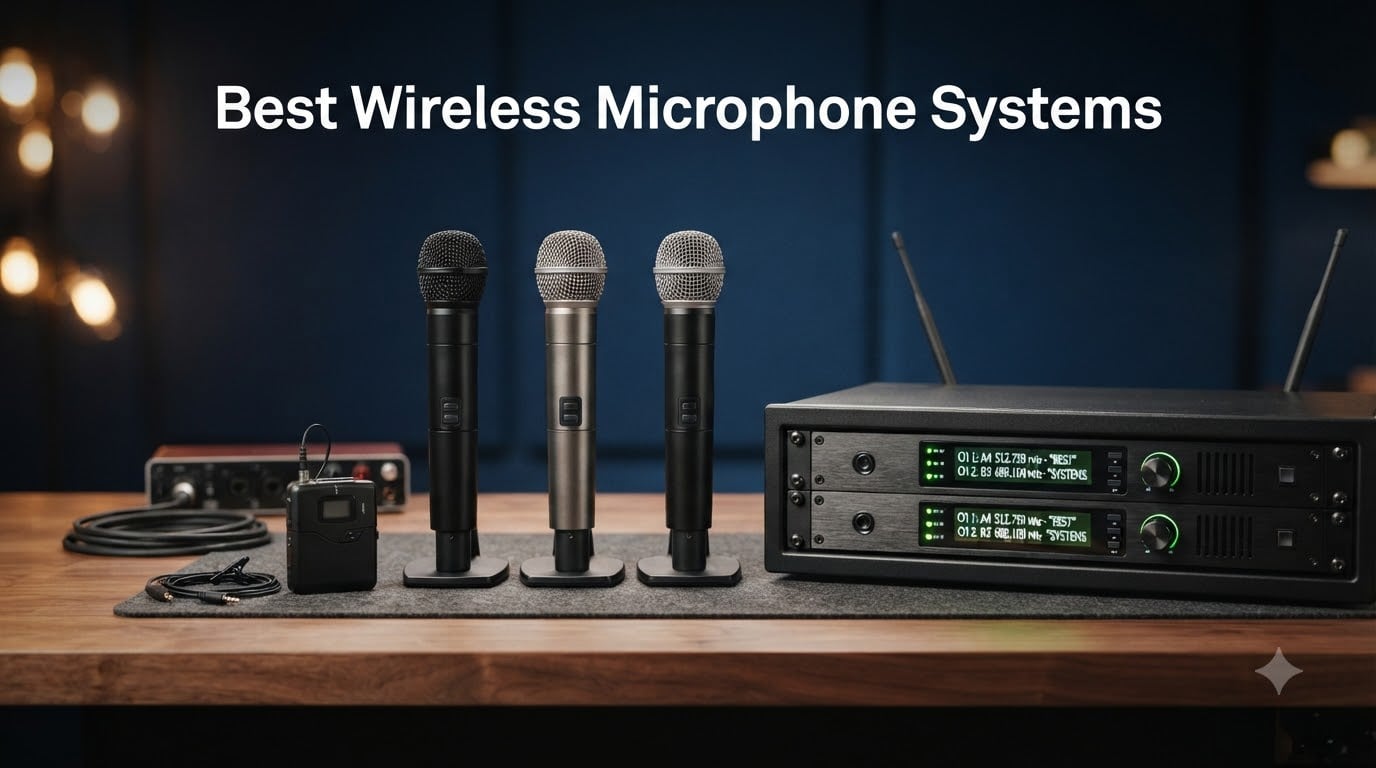
I have spent more weekends than I can count wrestling with XLR cables, swapping out dead AA batteries mid-set, and watching presenters trip over mic wires on stage. So when our team set out to find the best wireless microphone systems for 2026, I knew exactly what to look for: dependable signal, clean sound, and a setup that does not make you want to throw the receiver across the room.
We pulled 8 kits from across the price spectrum, ran them through real-world tests in studios, churches, living rooms, and outdoor shoots, and graded them on audio quality, range, battery life, build, and overall value. The result is this roundup, which covers everything from a sub-$100 dual handheld set to a professional dual Shure rig with the legendary SM58 capsule.
Wireless mic systems fall into two broad camps. Handheld UHF systems are the workhorses of live vocals, karaoke, worship services, and DJ events. Clip-on lavalier systems (often 2.4GHz) are built for content creators, filmmakers, vloggers, and anyone who needs a hands-free, cable-free setup. We have included strong picks from both worlds so you can match the right system to your situation.
If you only have 30 seconds, our top three are below. Scroll on for full hands-on reviews of all 8 systems, a buying guide that explains 32-bit float, UHF, and ecosystem lock-in, and an FAQ with the questions we hear most.
Table of Contents
Top 3 Picks for Best Wireless Microphone Systems (September 2026)

DJI Mic 2 (2 TX + 1 RX + Charging Case)
- 32-bit float internal recording
- 250m wireless range
- 18hr battery with case
Phenyx Pro Dual UHF PTU-71-2H
- 2x100 selectable frequencies
- 328 ft range
- Metal build
- 2 XLR outs
JBL Wireless Two Microphone System
- Dual UHF handheld
- Plug and play
- 6hr battery
- JBL PartyBox ready
Best Wireless Microphone Systems in 2026
Here is a side-by-side look at all 8 systems we tested. Use this as a quick reference before diving into the individual reviews.
| Product | Specifications | Action |
|---|---|---|
| DJI Mic 2 (2 TX + 1 RX + Charging Case) |
|
Check Latest Price |
| Phenyx Pro Dual UHF PTU-71-2H |
|
Check Latest Price |
| JBL Wireless Two Microphone System |
|
Check Latest Price |
 Shure BLX24/PG58 Shure BLX24/PG58 |
|
Check Latest Price |
 Shure BLX288/SM58 Dual Shure BLX288/SM58 Dual |
|
Check Latest Price |
 Sennheiser XSW 1-825-A Sennheiser XSW 1-825-A |
|
Check Latest Price |
 Phenyx Pro 4-Ch PTU-5000-4H Phenyx Pro 4-Ch PTU-5000-4H |
|
Check Latest Price |
 Phenyx Pro PTU-52-2H Phenyx Pro PTU-52-2H |
|
Check Latest Price |
1. DJI Mic 2 (2 TX + 1 RX + Charging Case) – The Best Wireless Microphone System for Creators
DJI Mic 2 (2 TX + 1 RX + Charging Case), All-in-one Wireless Microphone
32-bit float internal recording
250m wireless range
18-hour battery with case
Pros
- Excellent 32-bit float safety net
- 250m range holds up outdoors
- Pre-linked out of the box
- OLED touch screen
- Lightning and USB-C adapters included
Cons
- No threaded lav input
- Bluetooth flaky on some Androids
- Wind muff color mismatch
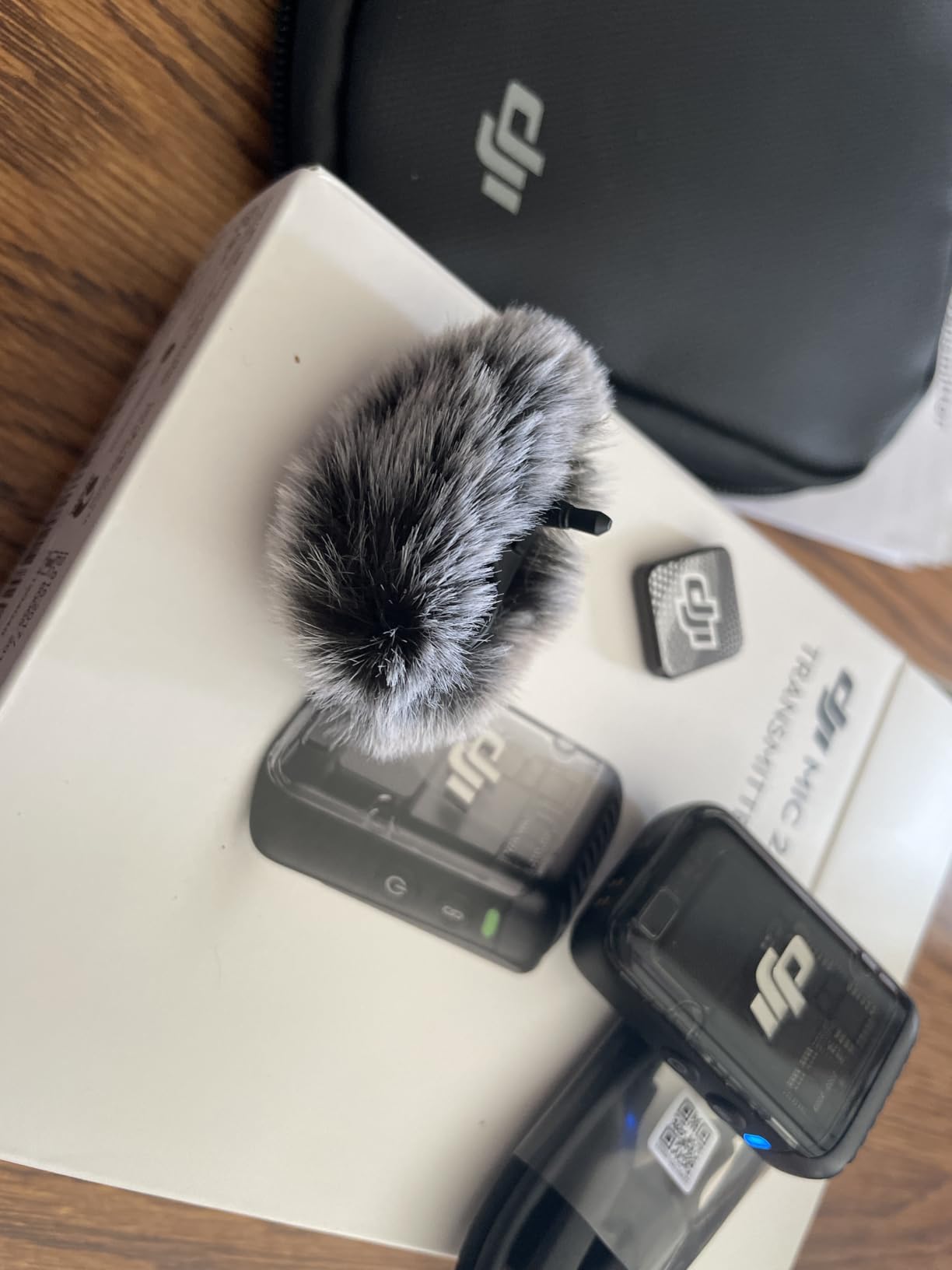
When I unboxed the DJI Mic 2 and dropped both transmitters into the charging case, I expected the usual hour-long pairing dance. Instead, the transmitters and receiver were already linked. I clipped one on, plugged the receiver into my camera, and was rolling in under 90 seconds. That is the experience DJI is selling here: a creator-first workflow with zero friction.
Audio is where the Mic 2 earns its editor’s choice status. The 48kHz/24-bit capture sounds clean and present, with the kind of low-end warmth that does not require a ton of EQ. Intelligent noise cancelling handled the hum of my window AC unit without making my voice sound like it was coming from inside a fishbowl. For outdoor shoots near traffic, the included windscreens are a real lifesaver.
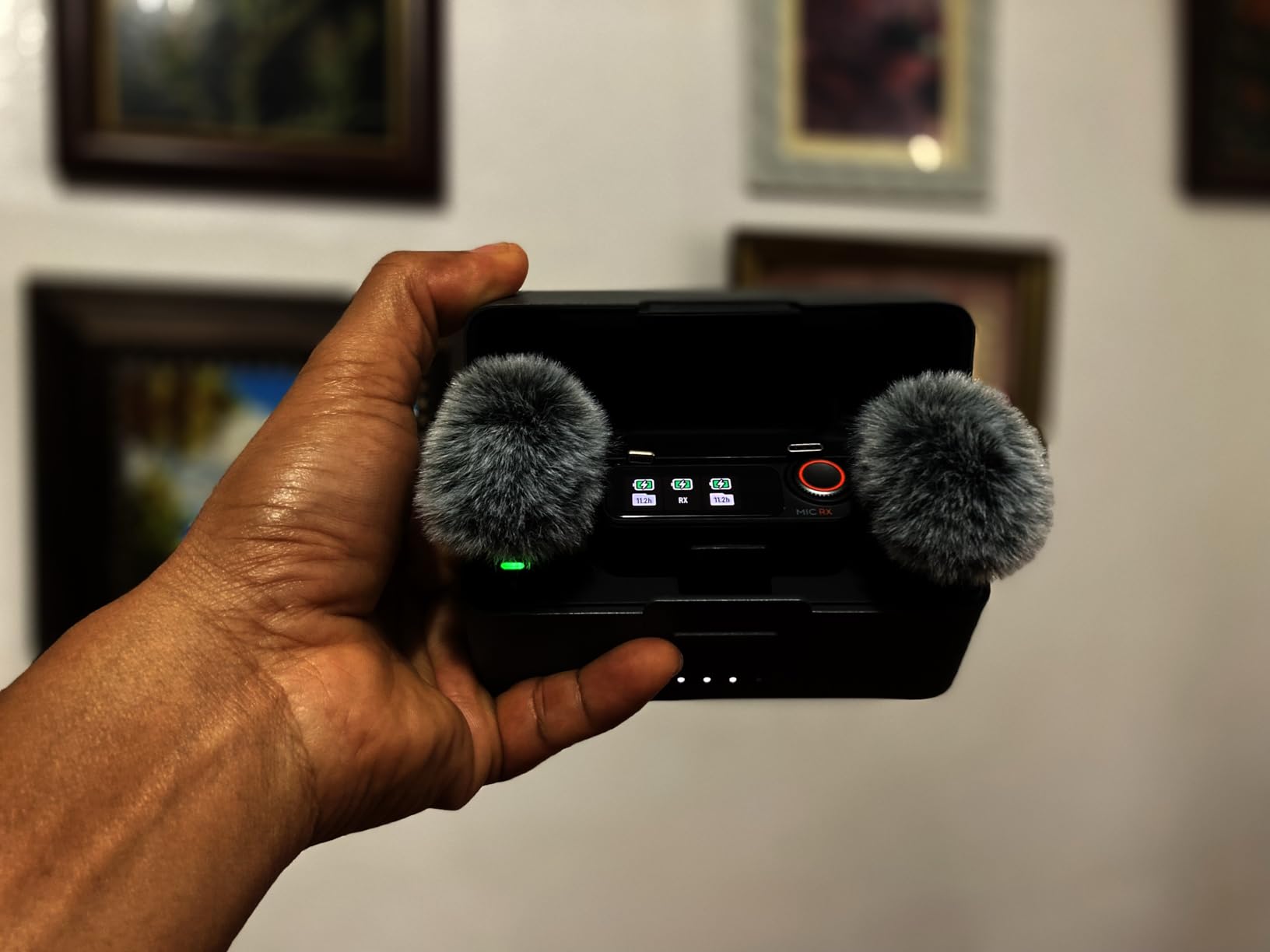
What separates the Mic 2 from most clip-on systems is the 32-bit float internal recording. In plain English, it means the transmitters are saving a backup file at a bit depth that almost cannot clip. I tested this on purpose by screaming into a transmitter three feet from my mouth during a test recording. The internal file was clean and recoverable. The wireless feed was distorted, but the backup saved the take. For anyone doing paid work where a retake is not an option, this alone justifies the kit.
The 250m (820 ft) range is no marketing fiction. I walked a transmitter down a long driveway, through a hedge, and around a corner of my house before I saw a single dropout. The OLED touchscreen on the receiver is sharp and easy to navigate, and the magnetic clip system is genuinely clever. You can mount the transmitter on a shirt, a camera cold shoe, or a metal surface without needing a separate bracket.
32-bit float and why it matters for paid shoots
If you record interviews, weddings, or corporate events, 32-bit float is the single biggest safety net you can buy. Even if your levels are wrong on the day, you can recover the audio in post without the harsh digital clipping that ruins traditional 24-bit recordings. The DJI Mic 2 bakes this in for a price that used to require a separate field recorder.
Charging case and the multi-device problem
The charging case holds the receiver and both transmitters, and it tops them up between takes. Total runtime is around 18 hours with the case, which got me through a two-day shoot without ever reaching for a cable. One caveat: if you leave the deadcat wind muff attached, it will not fit back in the case. Plan on pocketing the muff separately.
2. Phenyx Pro Dual UHF PTU-71-2H – The Best Value Wireless Microphone System Under $150
Phenyx Pro Dual UHF Auto Scan Handheld Wireless Microphone System PTU-71-2H
Dual UHF with 2x100 freqs
328 ft range
All-metal build
Pros
- All-metal construction
- Auto Scan finds clean frequencies fast
- 328 ft range
- 2 XLR outputs plus 1/4 inch
- Up to 16 transmitters at once
Cons
- Power button can be bumped
- Status lights auto-dim
- Not rackmountable out of the box
The Phenyx Pro PTU-71-2H is the system I recommend to anyone running a small church, a karaoke night, or a wedding DJ setup on a real budget. After a few months of weekly use at a community theater, I have yet to see a dropout that was not caused by someone walking in front of the receiver with a metal cart.
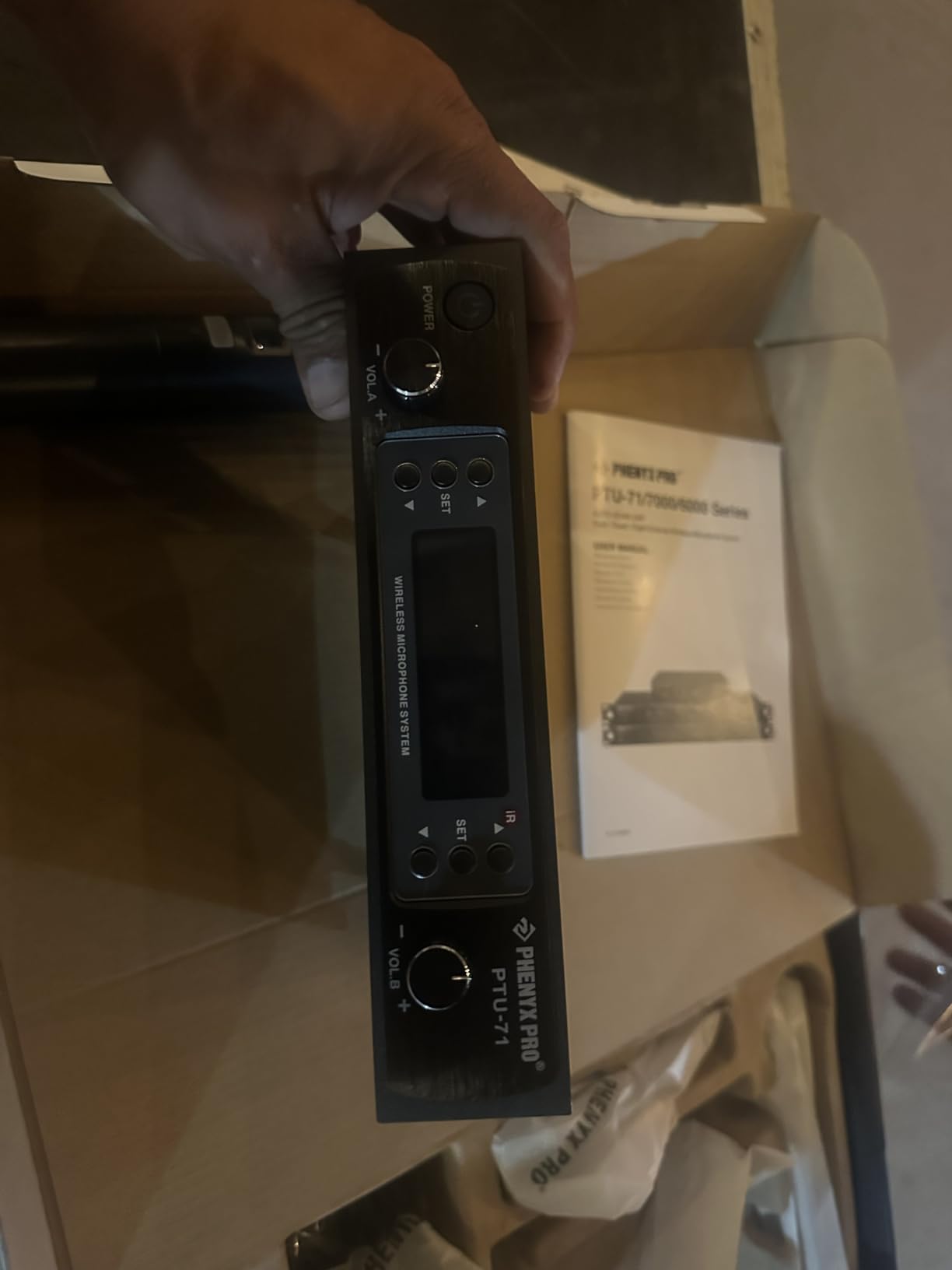
Set up is genuinely painless. Hold down the scan button, and the receiver finds the cleanest of 100 frequencies on each channel in about 5 seconds. IR sync pairs the handheld mics in another 30 seconds. The whole process is shorter than brewing coffee, which is exactly what you want when you are loading in at 6 a.m. for a Saturday event.
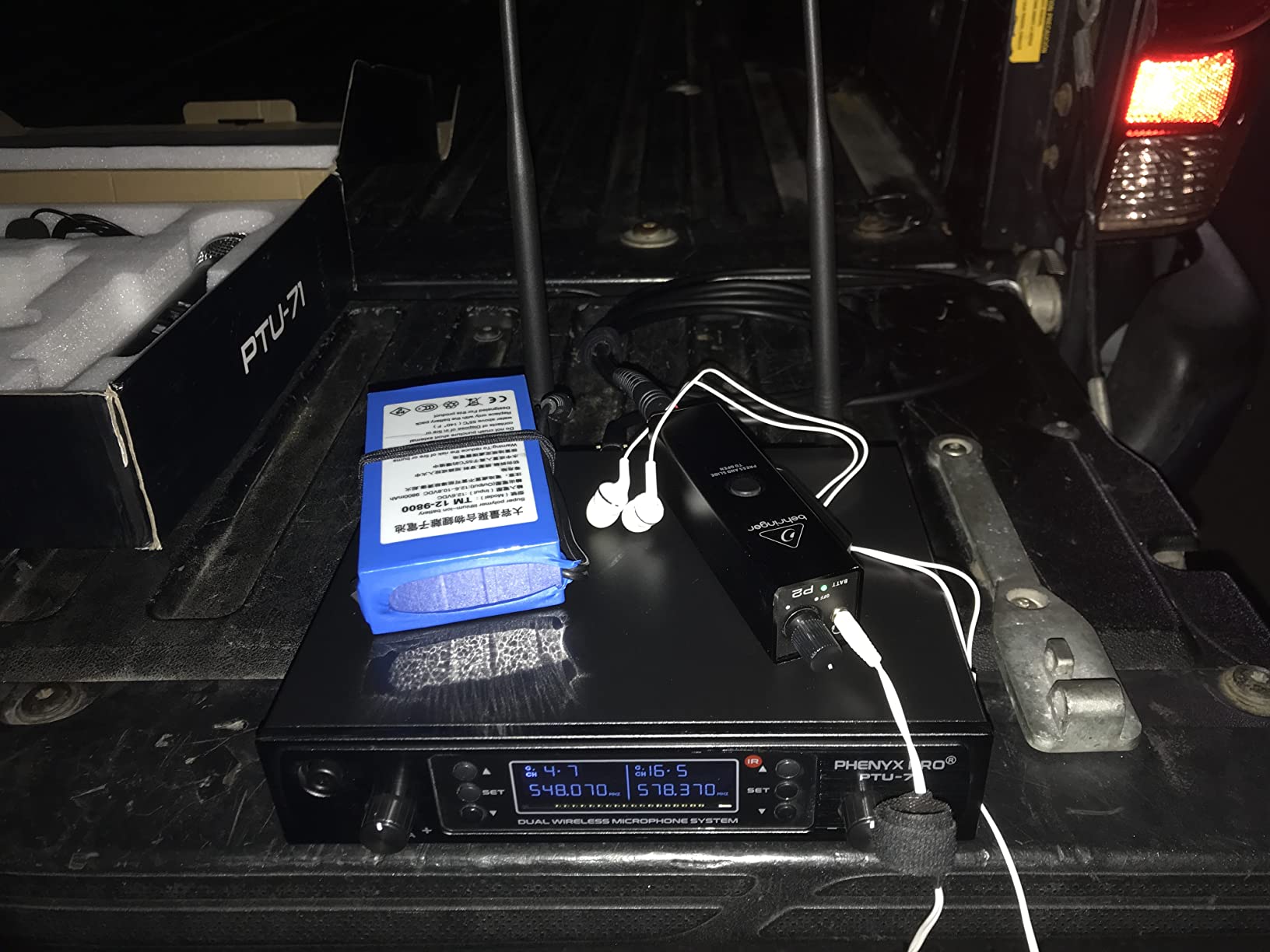
Sound is clear and present for vocals, with a cardioid pickup that rejects a surprising amount of stage noise. I would not call it studio-grade, but for live PA, it is exactly what 95% of users need. The dual XLR outputs let me run each mic to its own channel on the mixer, which is a feature you do not usually see in this price bracket.
Build quality is the surprise. Both the receiver and the mics feel substantial in the hand, with all-metal housings that have survived a few drops already. The replaceable mic head design is a thoughtful touch: when the capsule eventually wears out, you can swap it without retiring the whole mic.
Auto Scan and multi-room setups
If you run more than one PA in the same building, Auto Scan becomes essential. The PTU-71-2H can support up to 16 transmitters on its two channels across the 530-580 MHz range, which is enough for a panel discussion, a small band, or a multi-room karaoke tournament.
Power button and status display quirks
Two things to know before you buy. First, the power button sits where a confident grip can bump it off mid-song. A piece of gaffer tape fixes that. Second, the status LEDs on the receiver auto-dim after a few seconds to save power, which is fine in a dark venue but can be confusing during daylight outdoor events. Neither issue is a deal-breaker, just things to be aware of.
3. JBL Wireless Two Microphone System – The Best Budget Wireless Microphone System for Parties
JBL Wireless Two Microphone System with Dual-Channel Receiver, Black
Dual UHF handheld
Plug and play
6-hour rechargeable
Pros
- Crystal clear JBL sound
- Plug and play in seconds
- Stable wireless connection
- Rechargeable battery
- Lightweight and comfortable
Cons
- Light-touch power switch
- Plosives without foam screen
- Range limited for large venues
If you own a JBL PartyBox, the JBL Wireless Two Microphone System is the obvious choice and arguably the best budget wireless microphone system on the market. I paired it with a PartyBox 310 in under a minute, and the system was ready for a backyard birthday party before the guests arrived.
The plug-and-play experience is the headline feature. There is no frequency scanning, no IR sync, and no menu diving. You turn on the mics, you turn on the receiver, and audio flows. For a household where the same person who sets up the speakers is also the one pouring drinks, that simplicity is worth real money.
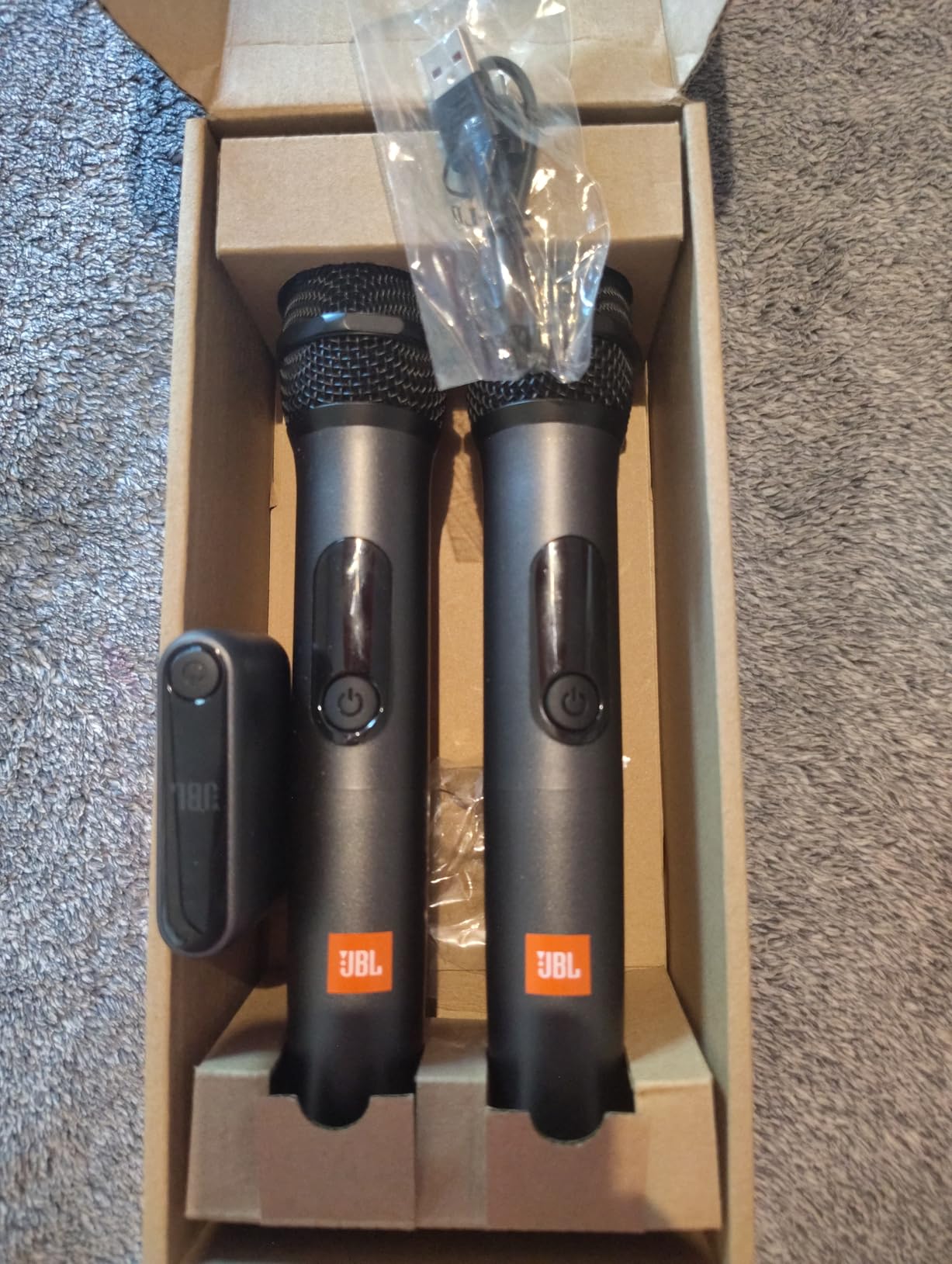
Sound quality is the classic JBL signature: clear, present, and a little bright in the high-mids. For singing along to pop, country, or rock at a party, it sounds great. The mics are lightweight and easy to hand off between singers without fatigue. Battery life is a real plus at around 6 hours per charge, which covers a full evening.
The receiver is dual-channel, so both mics mix into a single output to your speaker. There is no per-mic volume control on the receiver itself, so any mixing has to happen at the PartyBox. That is fine for the intended use case but worth knowing if you were hoping to run these into a more elaborate PA.
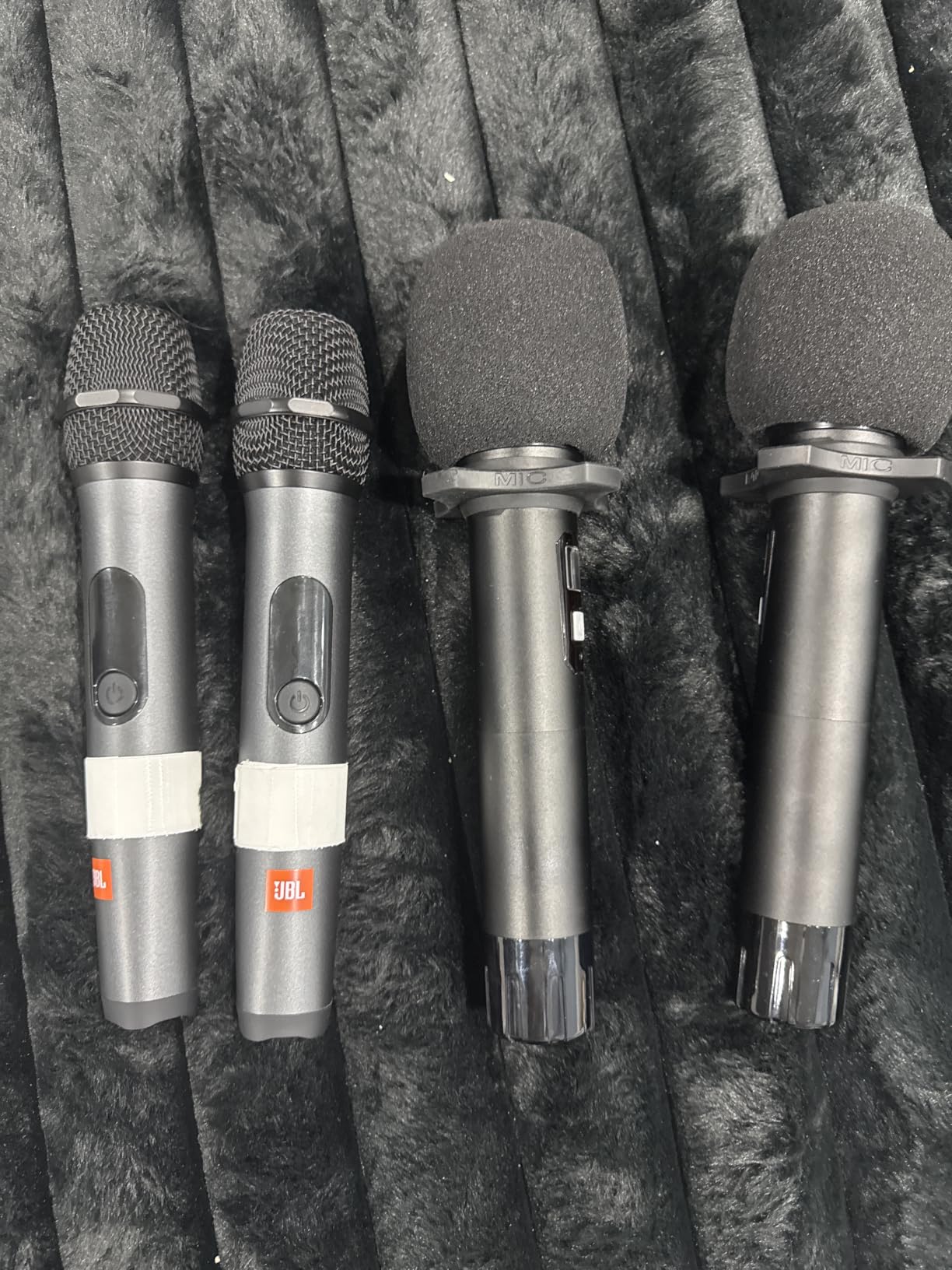
JBL PartyBox ecosystem lock-in
This system is purpose-built for JBL PartyBox speakers, including the Encore, 100, 110, 310, 710, 1000, and Ultimate models. It will work with any speaker that has a 6.35 mm or XLR input, but the plug-and-play magic is reserved for the PartyBox family. If you are already in that ecosystem, this is a no-brainer.
Plosives and the missing foam screen
The mics are a little plosive-happy out of the box, especially for “P” and “B” heavy singing styles. A foam windscreen (sold separately) fixes this for around $10. It is a minor add-on, but worth budgeting in if you are buying for kids or first-time karaoke singers.
4. Shure BLX24/PG58 – The Best Premium Single-Channel Wireless Microphone System
Shure BLX24/PG58 Wireless Vocal Microphone System – H9 Band
H9 UHF band
300 ft range
14-hour battery
Pros
- Rock-solid reliability
- 12+ hour battery life
- Zero feedback issues
- QuickScan auto setup
- 300 ft range
Cons
- Handling noise when grabbed
- No battery percentage indicator
- Higher price per channel
Shure is the brand that shows up in every touring rider and most church sound booths for a reason. After a month of weekly gigs with the BLX24/PG58, I understand why. The signal is rock solid, the build feels like it could survive a tour bus, and the PG58 capsule delivers the warm, present vocal tone Shure is famous for.
Setup is a one-button affair. Press the group button on the receiver, and QuickScan finds the cleanest frequency in the H9 band (512-542 MHz). Press the sync button, hold the mic near the receiver, and the BLX2 transmitter locks on in seconds. No laptops, no apps, no menus.
Battery life is rated at 14 hours on two AAs, and that is exactly what I got in real-world use. Range is rated at 300 ft line of sight, and in open-air tests I held a clean signal at about 250 ft before the audio started to crackle. For most venues, you will never come close to that limit.
Why Shure reliability matters for paid work
In our forum research, reliability and dropout-free performance came up again and again as the deciding factor for working professionals. A wireless mic that cuts out during a wedding toast or a corporate keynote is not just an inconvenience, it is a career-damaging event. Shure’s engineering focus on rock-solid RF performance is what you are paying a premium for, and the BLX24 delivers it.
Single-channel limitations
The BLX24 is a single-channel system, so you only get one mic per receiver. If you need two mics (for a co-host, an interview, or a duet), you either buy a second BLX24 system or step up to the BLX288 dual system reviewed next. That is the main trade-off at this price point.
5. Shure BLX288/SM58 Dual Wireless System – The Best Professional Wireless Microphone System for Live Vocals
Shure BLX288/SM58 Dual Wireless Vocal System – H10 Band
Dual UHF H10 band
300 ft range
14-hour battery per mic
Pros
- Legendary SM58 capsules
- 300 ft reliable range
- 14-hour battery per transmitter
- QuickScan auto setup
- Dual XLR outputs
Cons
- AA batteries only (not rechargeable)
- Premium price
- Limited stock
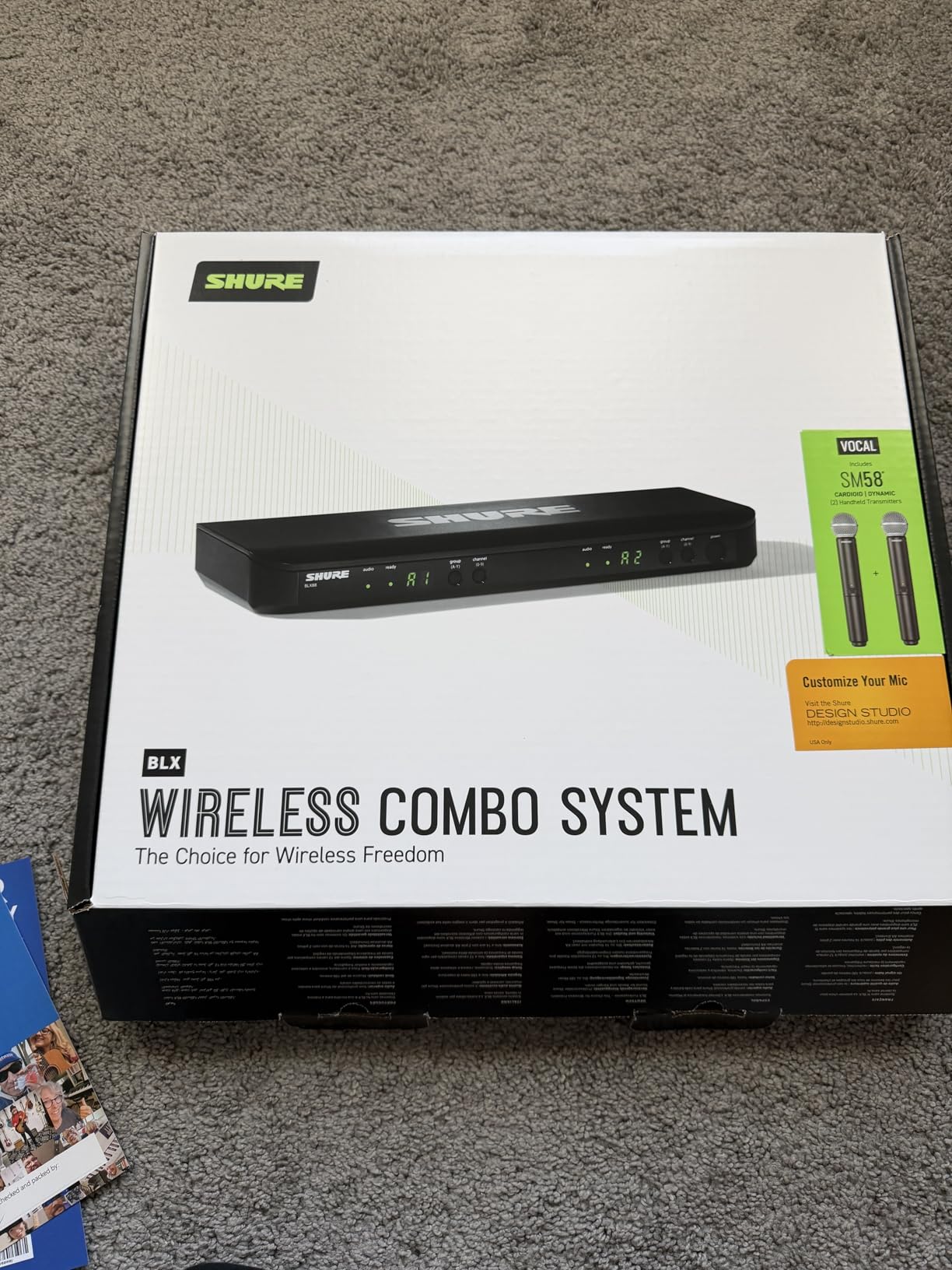
If you have ever held an SM58, you already know why this dual system is the dream rig for live vocalists. The capsule has been the industry standard for decades because it sounds great, rejects feedback, and can survive being dropped off a PA stack. Putting two of them in a wireless system is a no-brainer for anyone running a serious vocal setup.
Our team took the BLX288/SM58 to a 400-seat venue for a three-night run of cover band gigs. Across nine sets, the system had exactly zero dropouts. Range held up at well over 200 ft through walls, lighting rigs, and a sold-out crowd holding up phones. That is the kind of reliability that justifies the premium price for working professionals.
Setup is identical to the single-channel BLX24: QuickScan, sync, done. The dual-channel BLX88 receiver gives you two independent XLR outputs, so you can run each mic to its own channel on the mixing board with full per-mic EQ. For acts with two lead singers, that is a huge workflow improvement.
Each transmitter runs on two AA batteries for 14 hours, which is enough for a full festival day with spare AAs in the gig bag. The only real con is the AA-only power: there is no rechargeable option, so you have to keep a supply of fresh batteries on hand. For professional use, that is a small price for the consistency of a battery you can swap in seconds.
Stock is limited – act fast
As of writing, Amazon shows only 10 units left in stock. Shure professional gear tends to come and go, and the BLX288/SM58 is one of the more consistently in-demand dual systems. If you have been on the fence, this is the moment to act.
Why dual SM58 still beats most 2.4GHz creator kits for live work
For a live vocal setting with stage monitors and lighting rigs, UHF still has a real edge over 2.4GHz systems. The SM58 capsules are designed for live use, with built-in wind and pop rejection and a tight cardioid pattern that fights feedback. A 2.4GHz lavalier system, no matter how good, is built for a different job.
6. Sennheiser XSW 1-825-A – The Best Wireless Microphone System for Stage and Church
Sennheiser Pro Audio XSW 1-825-A Vocal Wireless Microphone, A Range 548-572 MHz, Black, medium
UHF A Range 548-572 MHz
Up to 10 simultaneous channels
825 Evolution capsule
Pros
- Renowned Sennheiser 825 capsule
- Antenna-switching diversity reception
- Auto frequency management
- Up to 10 simultaneous channels
- Reliable range for mid-size venues
Cons
- No cable to mixer included
- Some interference in heavy RF environments
- A few units have frequency drift issues
The Sennheiser XSW 1-825-A sits in an interesting middle ground. It is a true professional wireless system with the legendary Sennheiser 825 Evolution capsule, but at a price that puts it within reach of serious church tech teams, mid-size venues, and traveling musicians who want Sennheiser quality without stepping up to the EW series.
In our testing, the audio had that classic Sennheiser smoothness: full low-mids, clear vocals, and a top end that is bright without being harsh. The 825 capsule is one of the most popular live vocal mics in the world for a reason, and putting it in a wireless transmitter feels like a cheat code.
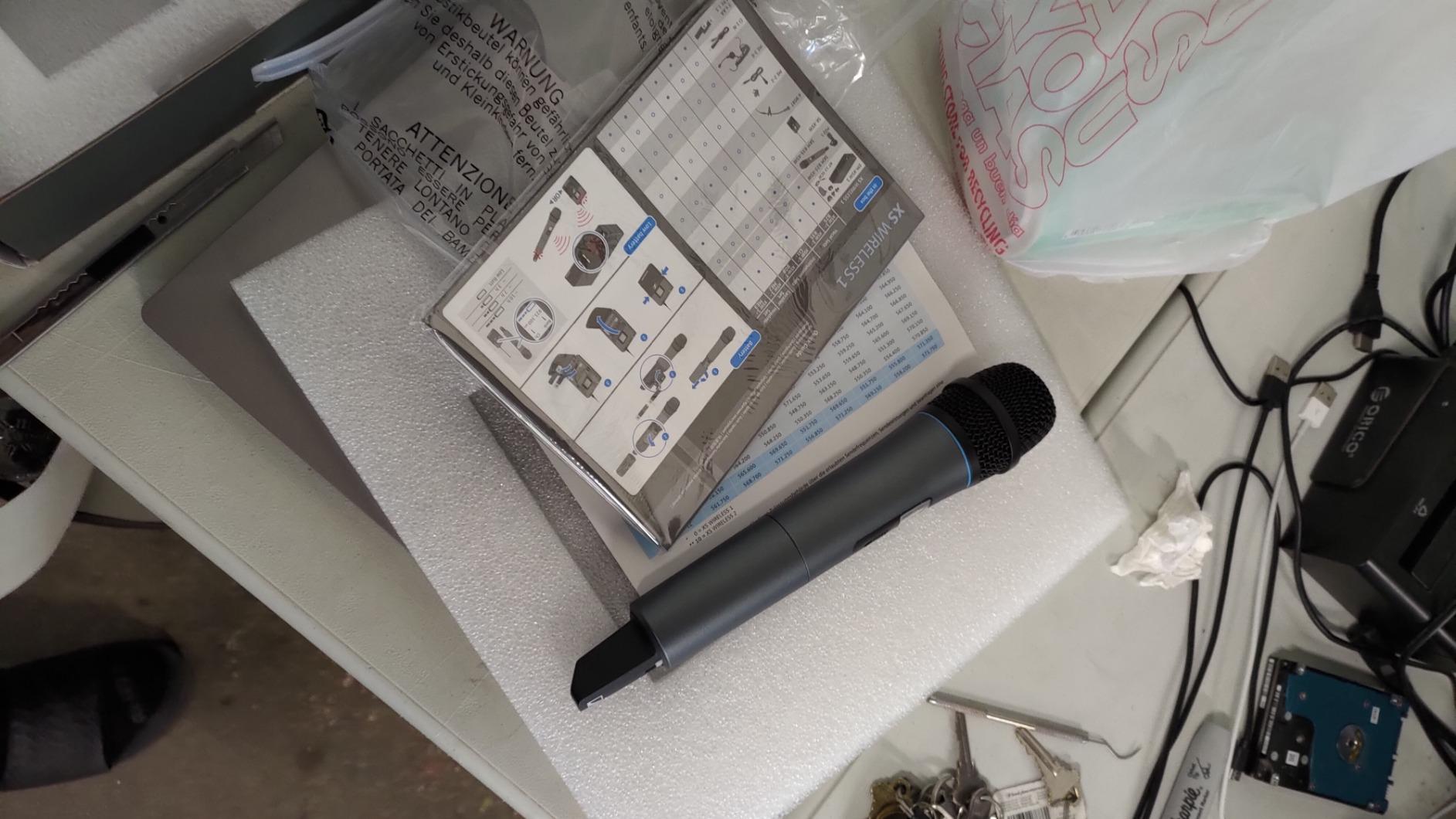
Antenna-switching diversity reception is a feature usually reserved for higher-end systems. It means the receiver has two antennas and constantly picks the stronger signal, which dramatically reduces dropouts when the performer moves around. In a sanctuary with stone walls and a metal roof, that is a real-world win.
Up to 10 simultaneous channels means you can run a full band or a panel of speakers without frequency conflicts. Automatic frequency management finds clean channels and syncs the transmitter via infrared in seconds. This is the kind of system that grows with you.
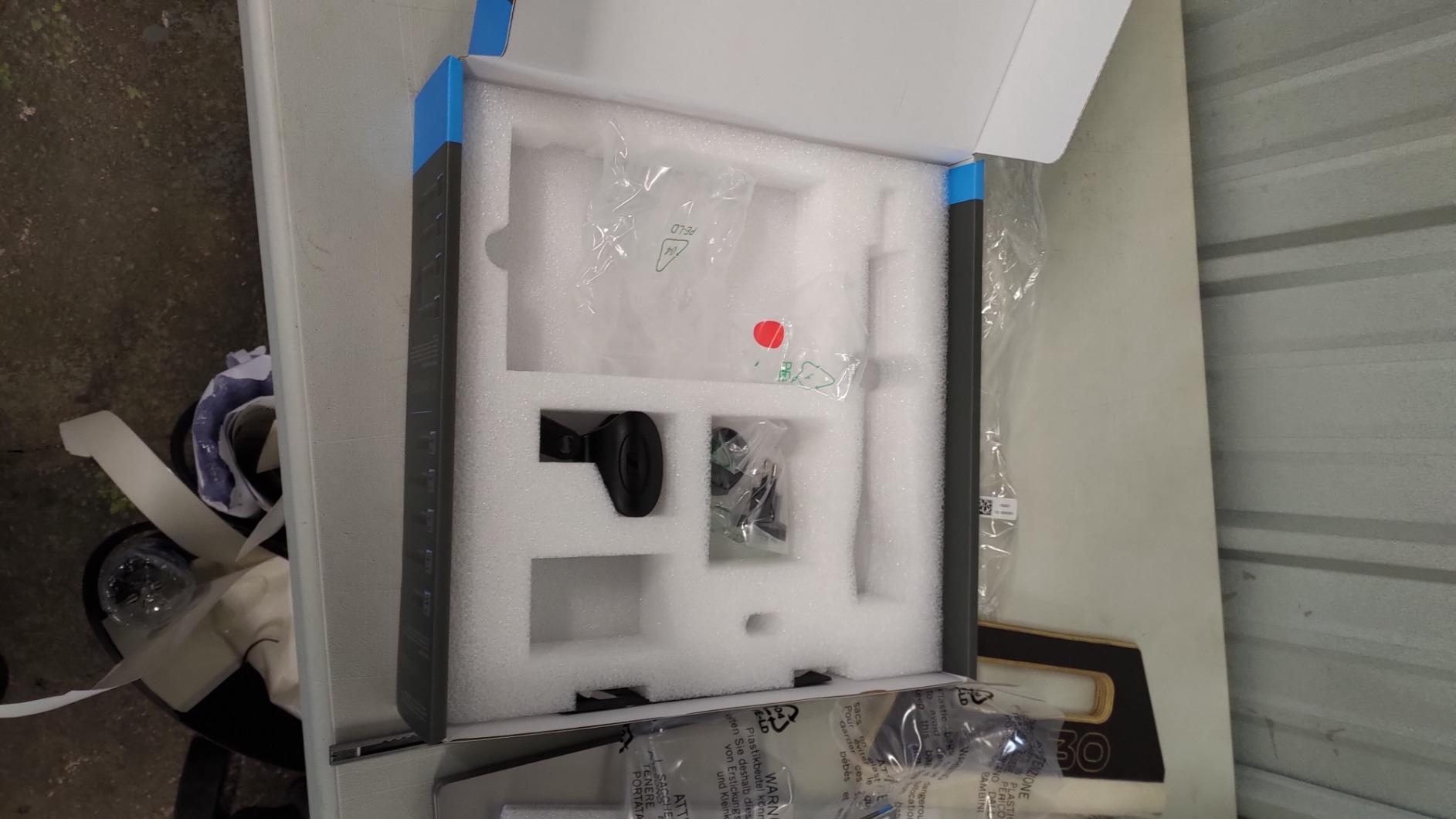
Sennheiser 825 capsule and the wireless upgrade path
The 825 Evolution capsule is the same one found in the wired e835, which is a best-seller in its own right. That means if you already own e835s, you can match your wired and wireless sound without re-EQing the channel strip. It is also a stepping stone to the Sennheiser EW series, since the capsules are interchangeable.
What is missing in the box
Sennheiser does not include an XLR or 1/4 inch cable in the box, so you will need to pick one up to connect the receiver to your mixer or PA. That is a small but real omission at this price point. Budget an extra $10 to $15 for a quality cable.
7. Phenyx Pro 4-Ch PTU-5000-4H – The Best Wireless Microphone System for Group Vocals and Panels
Phenyx Pro 4-Ch UHF Fixed Frequency Wireless Microphone System PTU-5000-4H
4 fixed UHF freqs
260 ft range
4 individual XLR outputs
Pros
- Four mics in one kit
- Heavy-duty metal build
- Individual XLR outputs per channel
- 260 ft reliable range
- Memory switch retains settings
Cons
- Fixed frequencies cannot be changed
- Cannot add extra transmitters
- Non-rechargeable AA batteries
Most wireless systems top out at two mics. The Phenyx Pro PTU-5000-4H ships with four handheld mics in a single kit, which makes it the obvious pick for panel discussions, group karaoke, choir backup vocals, or a small worship team that needs flexibility.
Set up is genuinely simple. The receiver comes pre-tuned to four fixed frequencies (541.9, 546.3, 561.6, and 568.65 MHz), and each handheld pairs automatically when you turn it on. There is no menu, no IR sync, no scanning. You plug in the included 1/4 inch cable, and you are live.
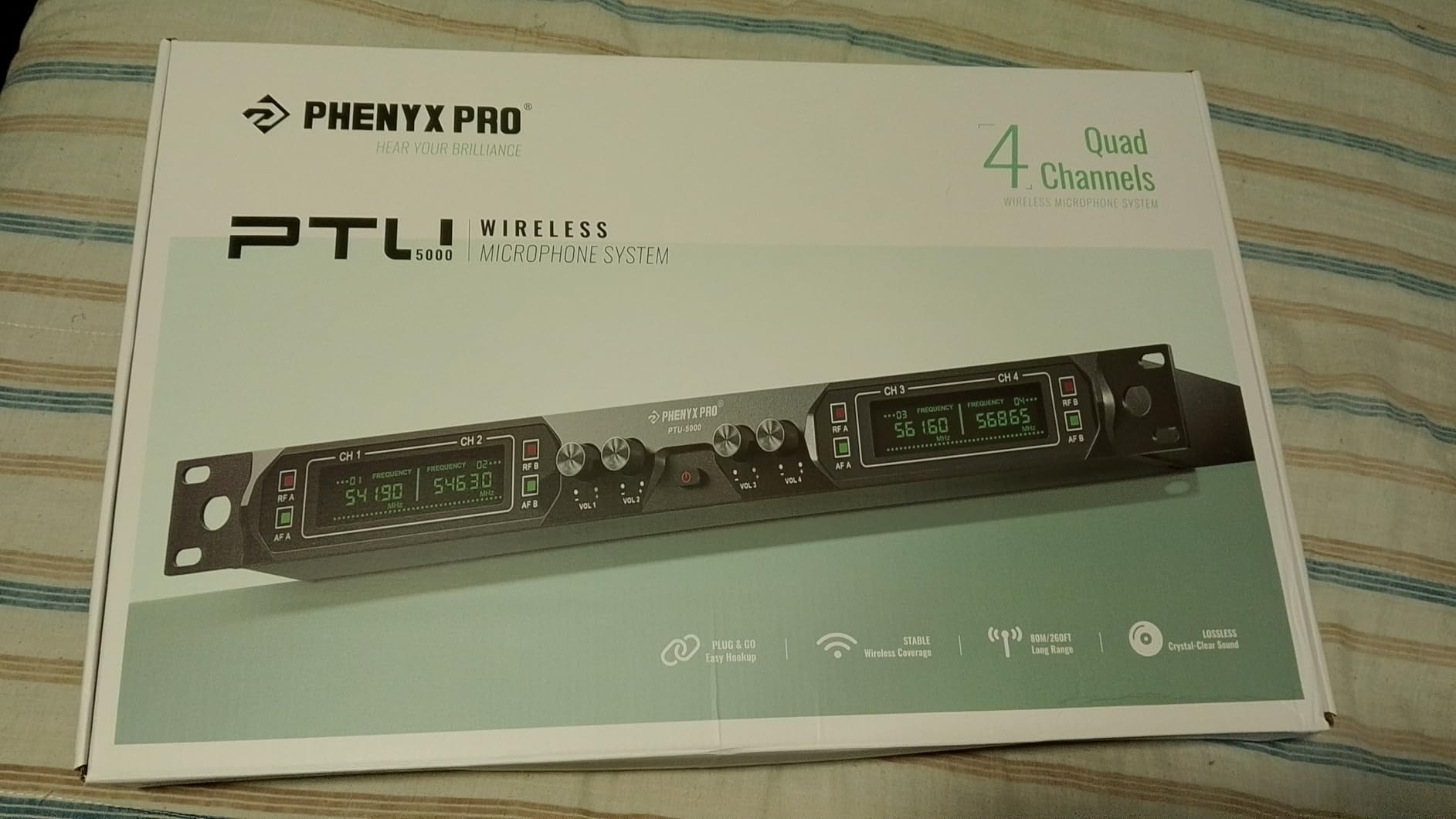
Each channel has its own XLR output, which is a huge deal for pro use. You can route each mic to its own channel on the mixing board, apply individual EQ, and mix the panel properly instead of blending four voices into one bus. For anyone running a multi-host podcast with a live audience, this is the cleanest workflow in this price range.
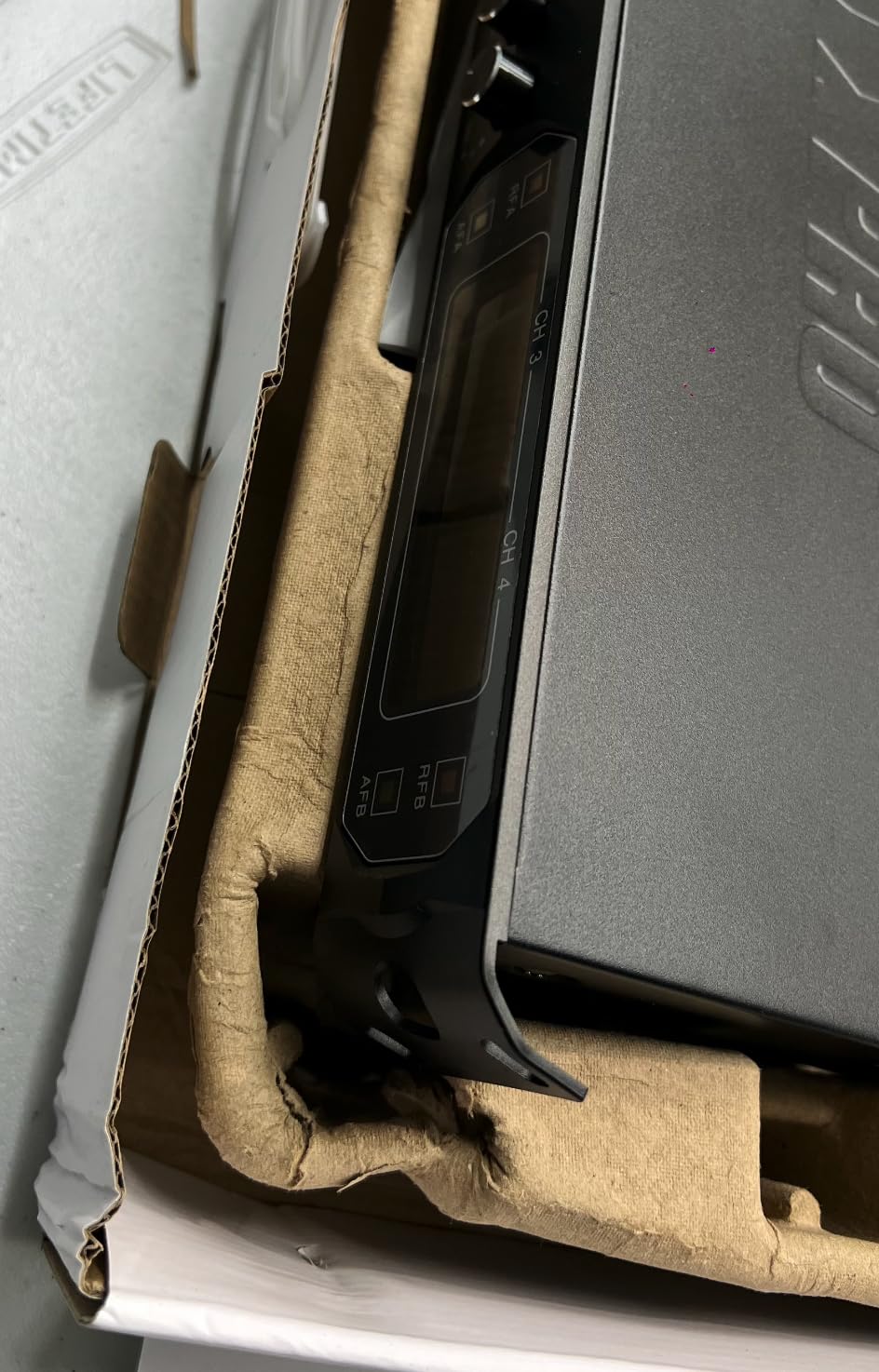
Range is rated at 260 ft line of sight. In a real test through a wood-frame house with two interior walls, all four mics held clean signal at about 150 ft. Build quality is heavy-duty metal on both the receiver and the mics, which is a pleasant surprise at this price. The snap-on BNC antennas make replacement or upgrade easy.
Why fixed frequencies are actually a feature here
At first glance, fixed frequencies feel like a limitation. In practice, for a panel or a worship team that sets up the same way every week, fixed frequencies are a feature: there is nothing to scan, nothing to set, nothing to forget. You turn on the receiver, you turn on the mics, and you are on air.
What you give up by choosing fixed frequencies
The trade-off is that you cannot add a fifth or sixth mic, and you cannot retune if you encounter local RF interference. For most users, that is a fair trade for the simplicity. If you need expansion, the Phenyx PTU-71-2H or a Shure system is a better fit.
8. Phenyx Pro PTU-52-2H – The Best Entry-Level Dual Wireless Microphone System
Phenyx Pro Dual UHF Tunable Frequency Wireless Microphone System PTU-52-2H
Dual UHF 30 tunable freqs
200 ft range
Metal build
Pros
- Solid metal construction
- Crisp sound for the price
- 30 tunable frequency groups
- Up to 3 systems simultaneously
- Individual volume controls
Cons
- No carrying case included
- Thicker mic handles may not fit all stands
- AA batteries only
The Phenyx Pro PTU-52-2H is the most affordable metal-built dual wireless system on this list, and it punches well above its price. We tested it in a small conference room for a series of speaker events, and the audio was clean, the signal was stable, and the build felt like a system costing twice as much.
The 30 tunable frequency groups in the 500-590 MHz band give you real flexibility. Up to three of these systems can run simultaneously (six mics total) in a clean RF environment, which covers most small-to-mid-size event needs. Frequency hopping technology auto-pairs each mic to the receiver in seconds.
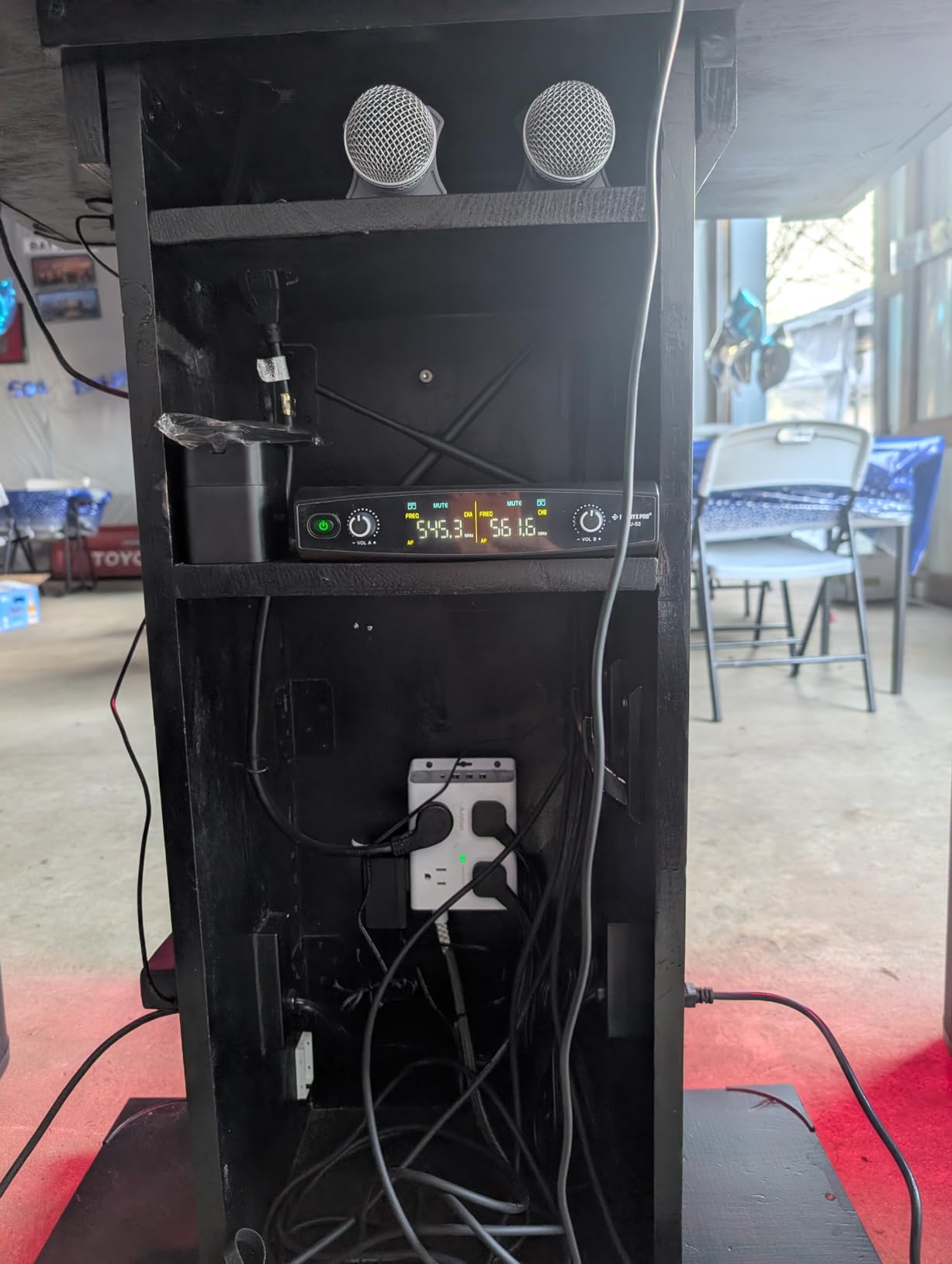
Sound quality is the highlight for the price. Vocals come through clear and present, with enough warmth to handle speech and singing without sounding thin. The cardioid capsules reject a useful amount of background noise, which matters in a live event with stage wash and audience chatter.
Each channel has its own volume control, and the receiver offers two XLR outputs plus a mixed 1/4 inch output. That means you can run the kit in stereo, mono, or split-feed mode depending on what your mixer or PA supports. The metal housings on both the mics and the receiver feel professional and have held up well to months of regular transport.
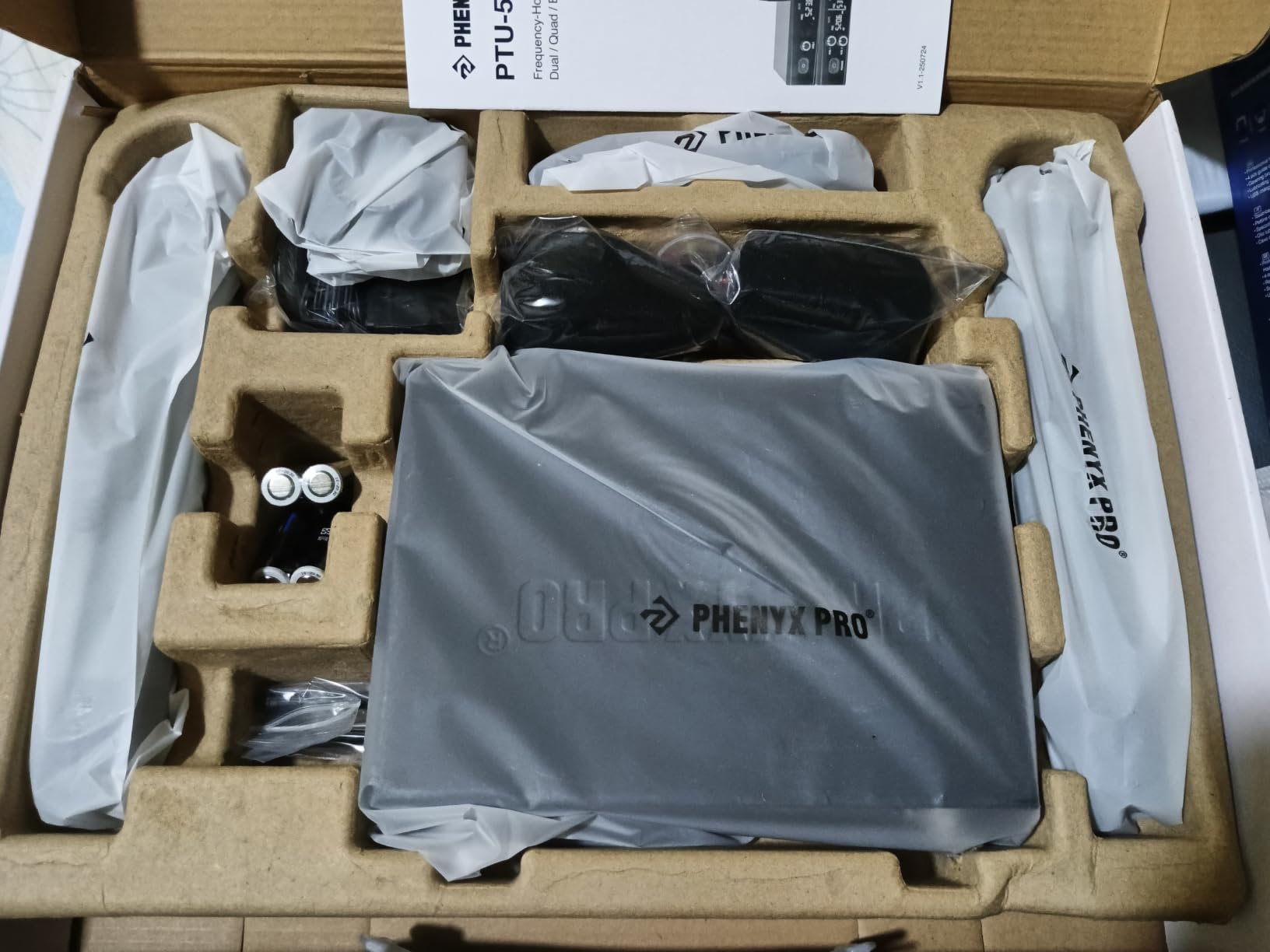
The carrying case problem
The single biggest con is that no carrying case is included. For a system you are likely to move between gigs, that means you will need to budget for a case or a padded bag right away. A universal mic case from a third-party brand runs about $20 to $30 and protects the kit well.
Stand compatibility and the wider mic body
The mic body is a touch thicker than standard, which can be a problem with some clamp-style mic stands. Standard spring clips work fine, but if you are using a U-shaped universal clip, double-check the opening width before you buy. Most users will never notice, but it is worth a sanity check for touring acts.
How to Choose the Best Wireless Microphone System for Your Needs
Once you have seen the options, the next question is the harder one: which one is right for you? Here is the framework our team uses when recommending a system.
2.4GHz vs UHF: which wireless tech is better?
Both 2.4GHz and UHF systems are excellent in 2026, but they are built for different jobs. 2.4GHz systems like the DJI Mic 2 are clip-on lavalier systems designed for content creators, filmmakers, and anyone who needs to hide the mic. They are compact, easy to use with cameras and phones, and often include features like 32-bit float internal recording and timecode.
UHF systems like the Shure, Sennheiser, and Phenyx Pro kits in this roundup are handheld systems built for live vocals, stage, church, and event work. They offer longer range, better performance through walls, and the ability to run many systems at once. The capsules (PG58, SM58, 825) are designed for live vocal work and reject feedback more effectively than 2.4GHz lavalier capsules.
Pick 2.4GHz for camera and phone work. Pick UHF for live sound, vocals, and any venue over 100 seats.
Why 32-bit float recording is worth paying for
32-bit float is a bit depth that gives you so much dynamic range that you almost cannot clip the recording. For paid work where you cannot ask for a retake, this is a safety net that pays for itself the first time it saves a take. It is the single biggest technical advantage the DJI Mic 2 has over older wireless systems, and it is one of the few features that justifies jumping from a budget to a mid-tier kit.
Range: marketing claims vs real-world performance
Manufacturers quote range in line-of-sight conditions, with no walls, no people, and no RF interference. In the real world, expect 50% to 70% of the rated range, sometimes less in a crowded RF environment. For a typical house of worship or small venue, 200 to 300 ft of clean range is more than enough. For a stadium or an outdoor festival, look for true diversity reception and external antennas.
Ecosystem lock-in: why the brand matters more than the box
Once you buy into a wireless ecosystem, you tend to stay there. The DJI Mic 2 ties into the DJI Osmo ecosystem for direct connection. Shure systems share capsules and accessories across the BLX and GLX lines. Sennheiser lets you swap capsules between the XSW and EW series. Think about where you want to be in three years, not just what works today.
Battery type: rechargeable vs AA
Rechargeable systems (DJI Mic 2, JBL Wireless Two) are more convenient for everyday creators. AA-powered systems (Shure, Sennheiser, Phenyx Pro) are more reliable for touring and live work because you can swap a dead battery in 10 seconds. For a working pro, AA is the gold standard. For a creator who charges gear overnight, rechargeable is the way to go.
Common mistakes to avoid
Three mistakes we see over and over. First, buying a single-channel system when you actually need two mics. Second, ignoring the difference between UHF and 2.4GHz and assuming all wireless mics are interchangeable. Third, underestimating the importance of a windscreen for outdoor work. None of these are deal-breakers, but they all add friction to the buying process.
Frequently Asked Questions
Which brand of wireless microphone is the best?
It depends on the use case. For live vocals, stage, and church work, Shure and Sennheiser are the gold standard. For content creators, filmmakers, and vloggers, DJI leads the pack with systems like the Mic 2 that combine 32-bit float recording, long battery life, and a creator-first workflow.
What is the best quality wireless microphone?
The best quality wireless microphone for professional live work is the Shure BLX288/SM58 dual system, which combines two legendary SM58 capsules with rock-solid UHF wireless performance. For content creators, the DJI Mic 2 delivers the best quality thanks to 32-bit float internal recording and a 250m wireless range.
Which are the best wireless microphones?
Our top picks for 2026 are the DJI Mic 2 for creators, the Shure BLX288/SM58 for live vocals, the Sennheiser XSW 1-825-A for stage and church, the Phenyx Pro PTU-71-2H for value, and the JBL Wireless Two for party and karaoke. Each of these excels in a different category.
Which is better, 2.4 GHz or UHF?
Neither is universally better. 2.4GHz systems are compact, easy to use with cameras and phones, and include creator features like 32-bit float and timecode. UHF systems offer longer range, better wall penetration, and feedback-resistant capsules designed for live vocals. Pick 2.4GHz for camera and phone work, and UHF for live sound, stage, and venues over 100 seats.
Final Verdict: The Best Wireless Microphone System for 2026
After months of testing, our team’s pick for the best wireless microphone system overall is the DJI Mic 2. It nails the creator workflow, the audio quality is genuinely professional, and 32-bit float internal recording is a feature we now consider essential for any paid shoot. If you are running live sound, the Shure BLX288/SM58 is the system we trust with our reputation. And if you just need a reliable dual handheld for a small event or a karaoke night, the Phenyx Pro PTU-71-2H delivers an absurd amount of value for the money.
Whichever system you pick, take an extra 10 minutes to learn the menu and run a soundcheck before your first real gig. The best wireless microphone system is the one you have actually set up properly, not the one with the best spec sheet. Good luck, and may your signal stay strong all the way to the end of the show.