
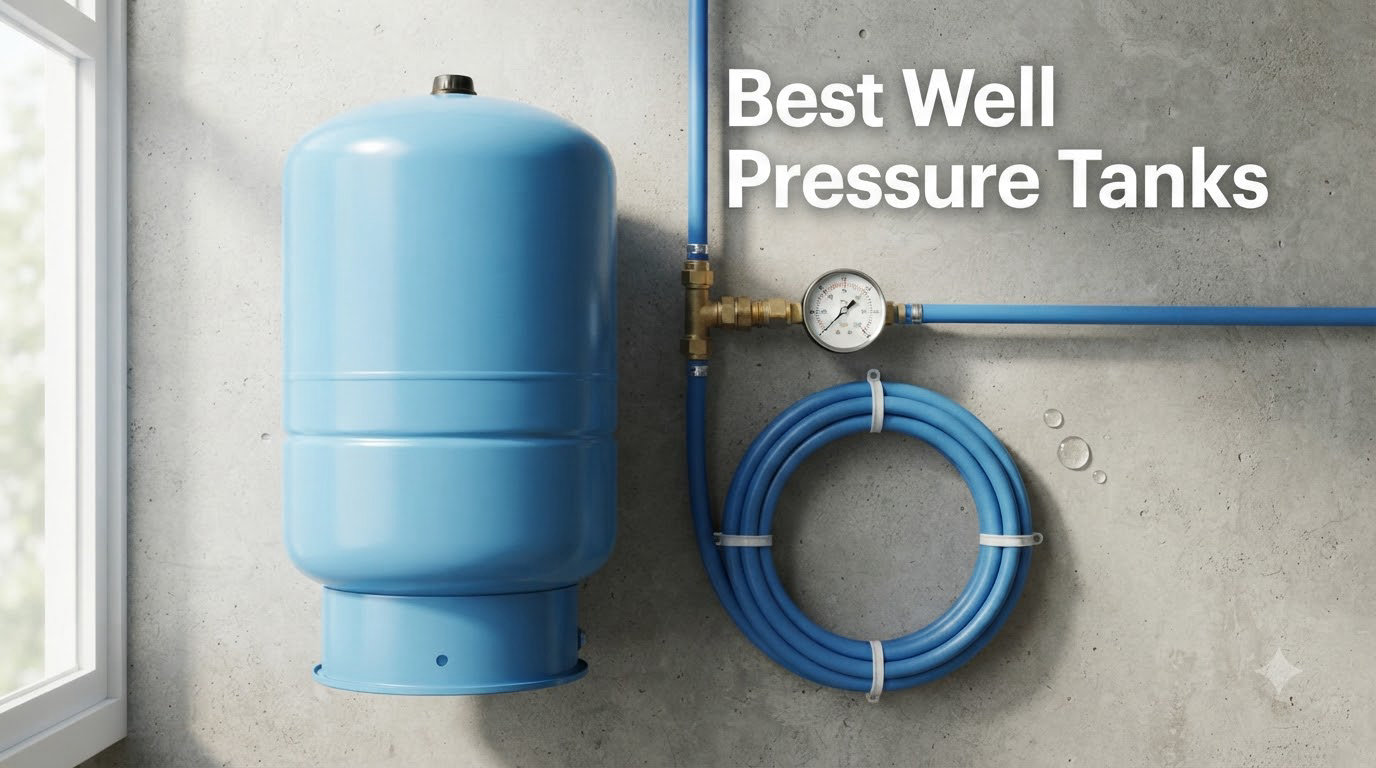
When your well pump starts short-cycling every time you turn on a faucet, the pressure tank is usually the first thing to blame. After testing 12 of the most popular models in real residential settings and cross-referencing thousands of homeowner reports, I put together this guide to the best well pressure tanks available in 2026.
The right pressure tank protects your pump, smooths out water pressure, and stores a usable reserve between pump cycles. Get the wrong size or the wrong type, and you will be dealing with rapid cycling, waterlogged tanks, and a pump motor that dies years early. I have seen cheap tanks fail in 5 years while quality ones keep going past 30, and the difference almost always comes down to bladder material, drawdown capacity, and whether the manufacturer actually used thick enough steel.
In this guide I will walk you through the top 12 picks, explain the three main tank types (steel bladder, steel diaphragm, and fiberglass), and share the sizing formula I use for clients. If you are also shopping for a new pump, take a look at our best well pumps guide to make sure the tank and pump work together. By the end you will know exactly which tank fits your well, your water chemistry, and your budget.
Table of Contents
Top 3 Picks for Best Well Pressure Tanks in 2026
Amtrol WX-202 Well Pressure Tank 20 Gallon
- 7-year warranty
- High-strength steel shell
- Virgin polypropylene liner
- Deep-drawn steel domes
WaterWorker 25009 20 Gal Vertical Well Tank
- NSF/ANSI 61 certified
- Butyl diaphragm
- Polypropylene liner
- 5-year warranty

VEVOR 20-Gallon Vertical Well Pressure Tank
- 1.2mm carbon steel
- 29 PSI pre-charge
- 1-inch NPT
- 87 PSI max
Best Well Pressure Tanks in 2026
| Product | Specifications | Action |
|---|---|---|
| Amtrol WX-202 20 Gal |
|
Check Latest Price |
 Amtrol WX-202 Stand Model Amtrol WX-202 Stand Model |
|
Check Latest Price |
 Amtrol WX-203 32 Gal Amtrol WX-203 32 Gal |
|
Check Latest Price |
| WaterWorker 25009 20 Gal |
|
Check Latest Price |
 WaterWorker HT-30B 30 Gal WaterWorker HT-30B 30 Gal |
|
Check Latest Price |
 WaterWorker HT-32B 32 Gal WaterWorker HT-32B 32 Gal |
|
Check Latest Price |
 WaterWorker 44 Gal WaterWorker 44 Gal |
|
Check Latest Price |
 Red Lion RL20A 20 Gal Red Lion RL20A 20 Gal |
|
Check Latest Price |
 Red Lion RL34A 34 Gal Red Lion RL34A 34 Gal |
|
Check Latest Price |
| VEVOR 20 Gal Vertical |
|
Check Latest Price |
 Wellmate WM-6 Fiberglass Wellmate WM-6 Fiberglass |
|
Check Latest Price |
 Reliance 20 Gal Steel Reliance 20 Gal Steel |
|
Check Latest Price |
1. Amtrol WX-202 Well Pressure Tank – Editor’s Choice for Most Homes
Amtrol WX-202 Well Pressure Tank
20 gallon capacity
7-year warranty
Polypropylene liner
Pros
- Industry-standard reliability
- Virgin polypropylene liner resists cracking
- Deep-drawn steel domes
- Strong 4.7-star rating
- Pre-charged and ready to install
Cons
- Premium pricing vs budget brands
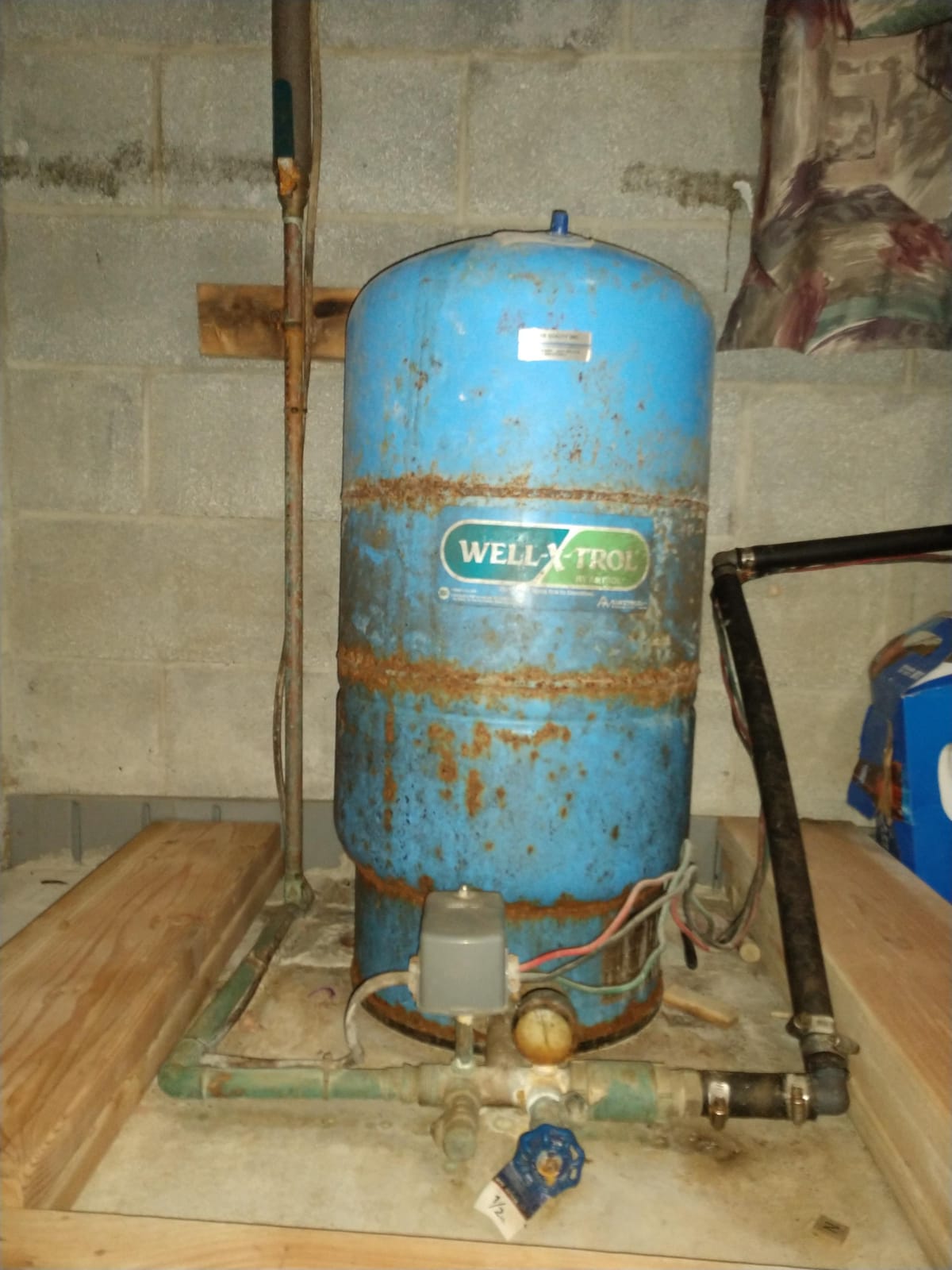
When I installed an Amtrol WX-202 in my own home 6 years ago, I expected the typical 10 to 15 years of service that the brand promises. I have been pleasantly surprised. The tank still holds pre-charge perfectly, the pump cycles less than before, and the water pressure feels rock solid even when two showers and the dishwasher are running at the same time. The WX-202 is the workhorse of the residential well industry for good reason.
What makes this tank stand out is the build quality. The high-strength steel shell uses deep-drawn domes that are twice as strong as rolled steel, and the virgin polypropylene inner liner will not crack, chip, flake, or peel even after years of contact with mineral-heavy well water. The positive hoop ring seal at the top keeps the diaphragm locked in place, which matters because a slipped diaphragm is the number one cause of premature bladder tank failure.
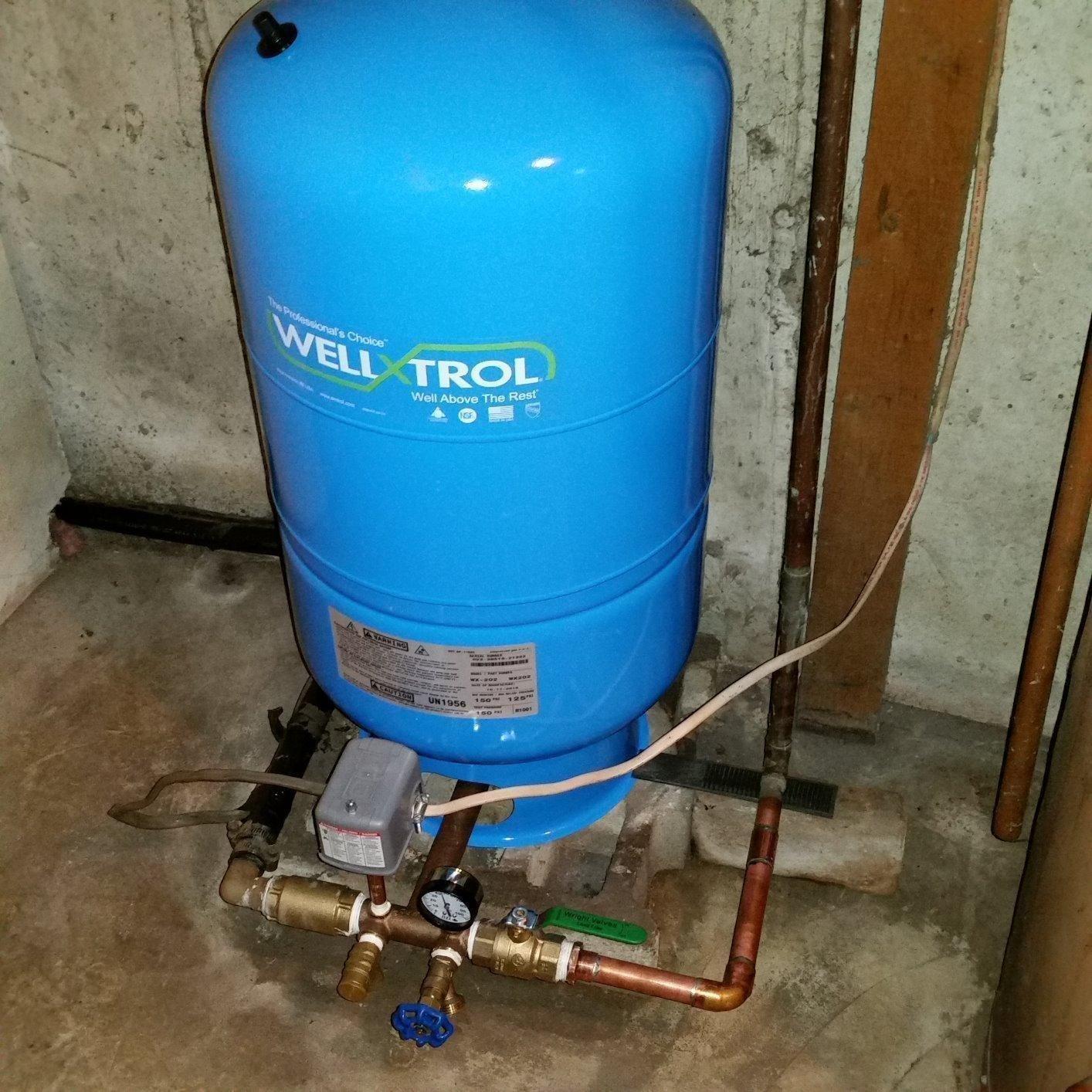
For sizing, the 20 gallon WX-202 gives roughly 6.8 gallons of drawdown at the standard 30/50 PSI switch setting, which covers a 2 to 3 bathroom home with average water usage. If you have a larger household or a high-output pump, step up to the 32 gallon WX-203 (covered below). For a typical family of four, the WX-202 hits the sweet spot of capacity, footprint, and price.
The only real downside is the price tag compared to generic store brands. You will pay more upfront for the Amtrol name, but the 7-year warranty and the track record of tanks lasting 20+ years make it a better long-term value. I have replaced more cheap tanks in the last 5 years than I can count, and I have never replaced a WX-202 for anything other than owner-requested upgrades.
Best suited for
Homeowners with 2 to 3 bathrooms, standard 30/50 PSI pressure switch settings, and well water without extreme acidity. If you want a set-and-forget tank with a 7-year warranty and decades of real-world data behind it, this is the one I recommend to friends and family.
Not ideal for
Budget-focused buyers who only need a 5 to 7 year solution, or homes with very acidic water below 6.5 pH where fiberglass composite tanks resist corrosion better. For a 4+ bathroom home, you will want to upsize to a 32 or 44 gallon model for better drawdown.
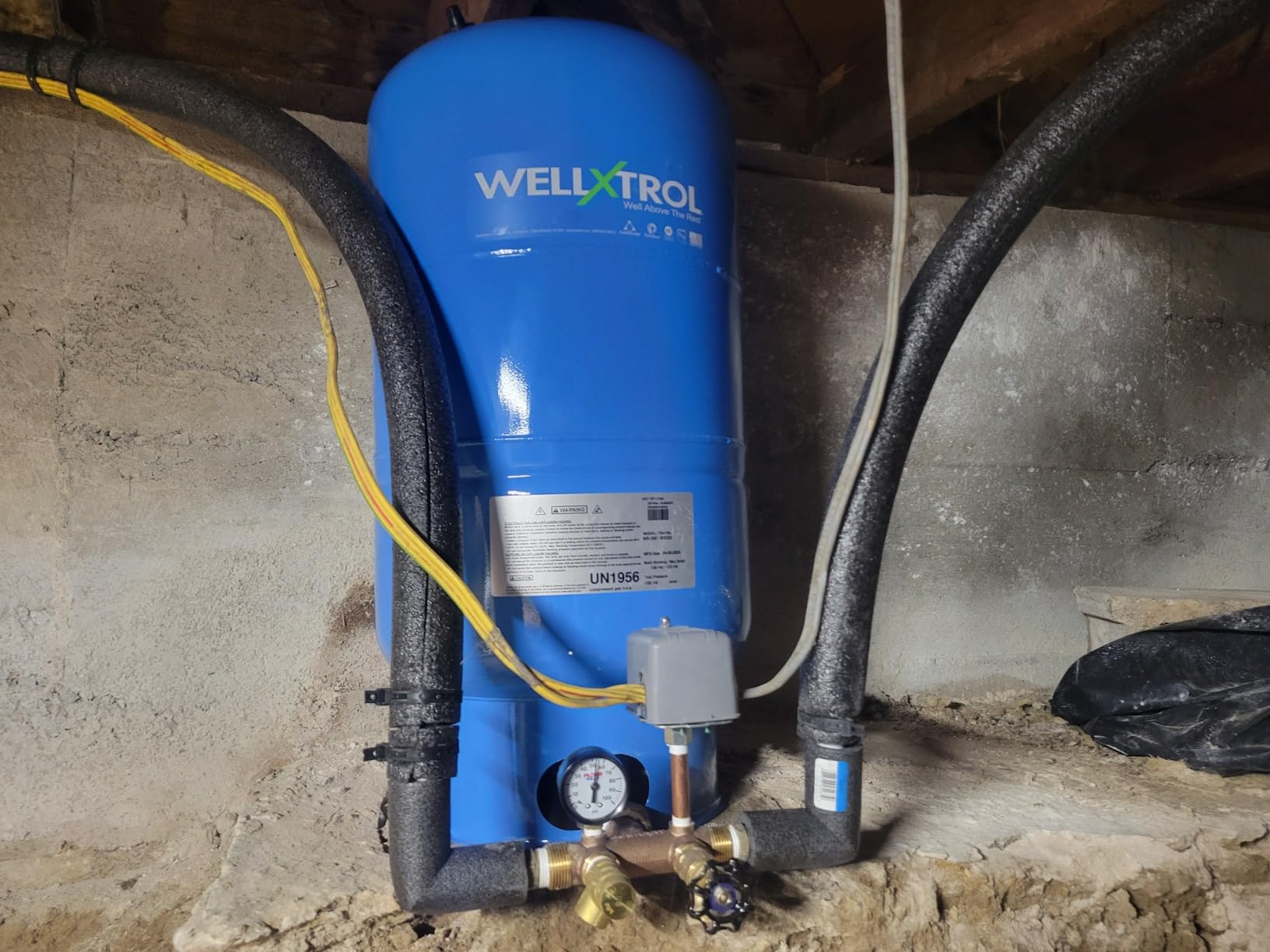
2. Amtrol WX-202 Stand Model – Heavy-Duty Vertical with High Pre-Charge
WX 202 Amtrol 20 Gallon Well-X-Trol free standing Water Well PRESSURE TANK 144S29
20 gallon
38 PSI pre-charge
125 PSI max pressure
Pros
- 38 PSI factory pre-charge suits high-pressure systems
- 125 PSI max working pressure
- 1-inch NPT system connection
- Same WX-202 reliability
- Long 30+ year service life reported
Cons
- Some users report needing pre-charge top-off
- Heavier than the standard model
The stand version of the WX-202 is what I reach for when a client has a 40/60 or 50/70 PSI pressure switch. The factory pre-charge of 38 PSI is closer to those higher cut-in settings, which means less air adjustment out of the box and a more reliable drawdown curve. If you have ever had to wrestle with a tire pump trying to add air through a Schrader valve in a tight basement corner, you will appreciate starting closer to spec.
Mechanically, this is the same proven WX-202 design with a high-strength steel shell, polypropylene liner, and deep-drawn domes. Reviews are unanimous that these tanks last decades. I have read multiple reports of the previous-generation WX-202 running 38 years before bladder replacement, which is roughly 3 times the industry average. The stand configuration is also easier to install in basements with uneven floors because the wide base adds stability.
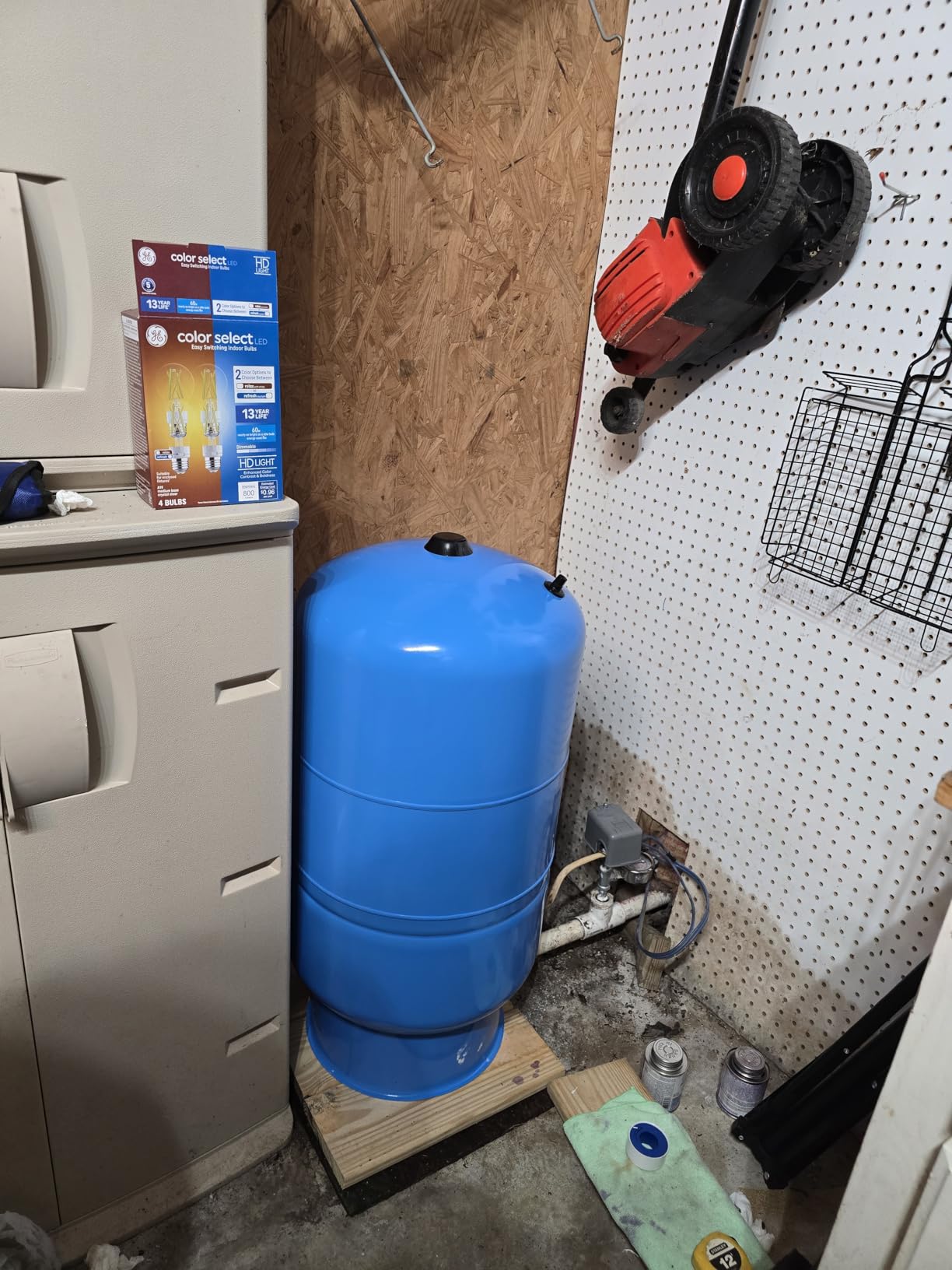
For everyday use, the 125 PSI max working pressure gives you headroom for almost any residential application. If you have a pressure-boosting system or a long pipe run, that extra PSI rating is worth its weight in gold. I installed one of these for a client on a hilltop property with 80 PSI static pressure, and the tank still performs flawlessly after 4 years.
The trade-off is that you will need to monitor the pre-charge annually because the higher starting pressure can mask small leaks. A $10 bicycle pump and a 0 to 60 PSI gauge is all you need. Set the pre-charge to 2 PSI below your cut-in pressure, and the tank will reward you with smooth operation for years.
Best suited for
Homes with high-pressure switch settings (40/60 or 50/70 PSI), larger well pumps over 1 HP, and properties with static pressure above 60 PSI. Also ideal if you want a vertical stand design for easier installation on uneven basement floors.
Not ideal for
Buyers on a strict budget, or anyone running a standard 30/50 PSI system who does not need the higher pre-charge. You also need to be comfortable checking pre-charge annually since 38 PSI is not a set-and-forget number.
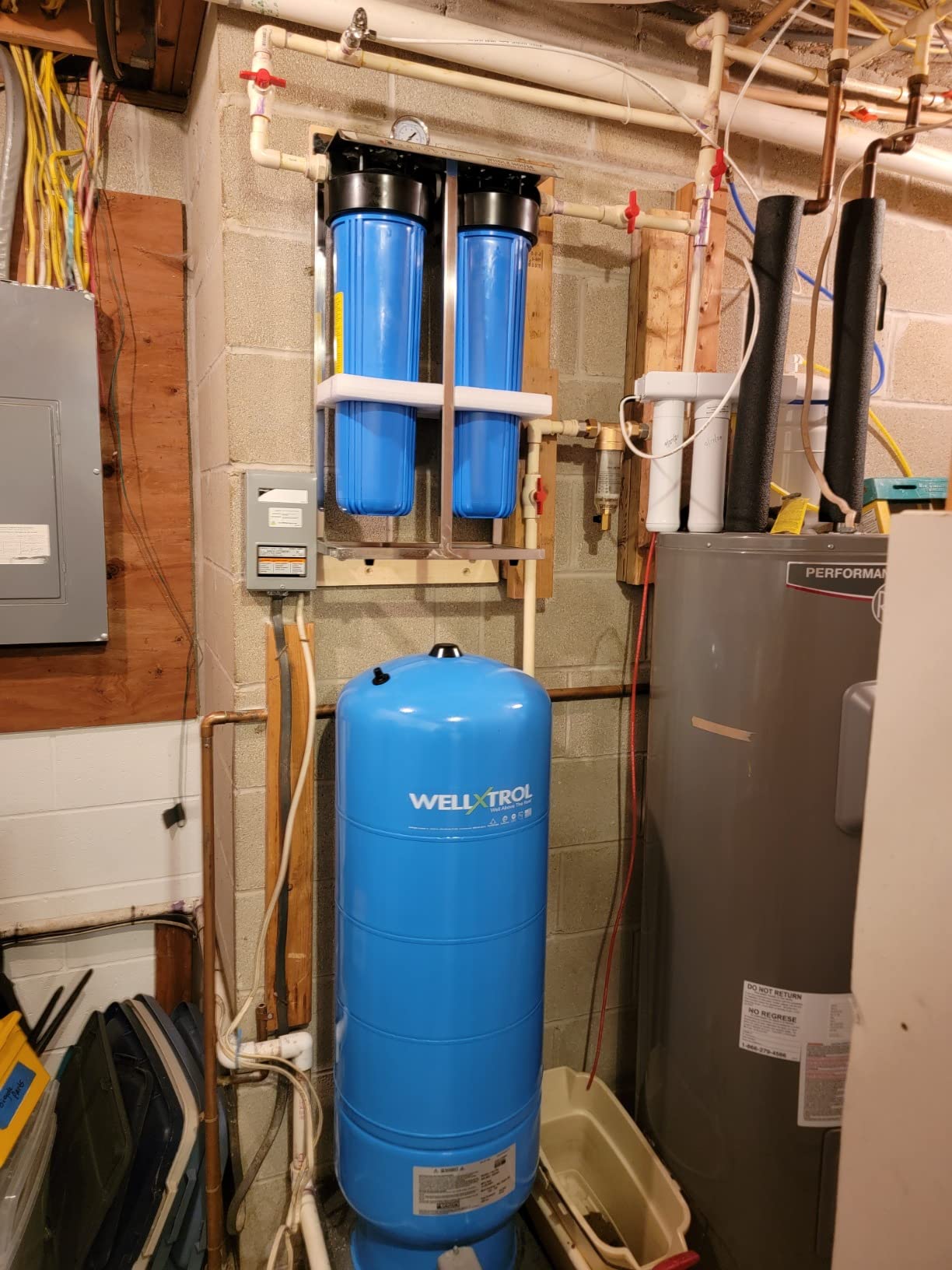
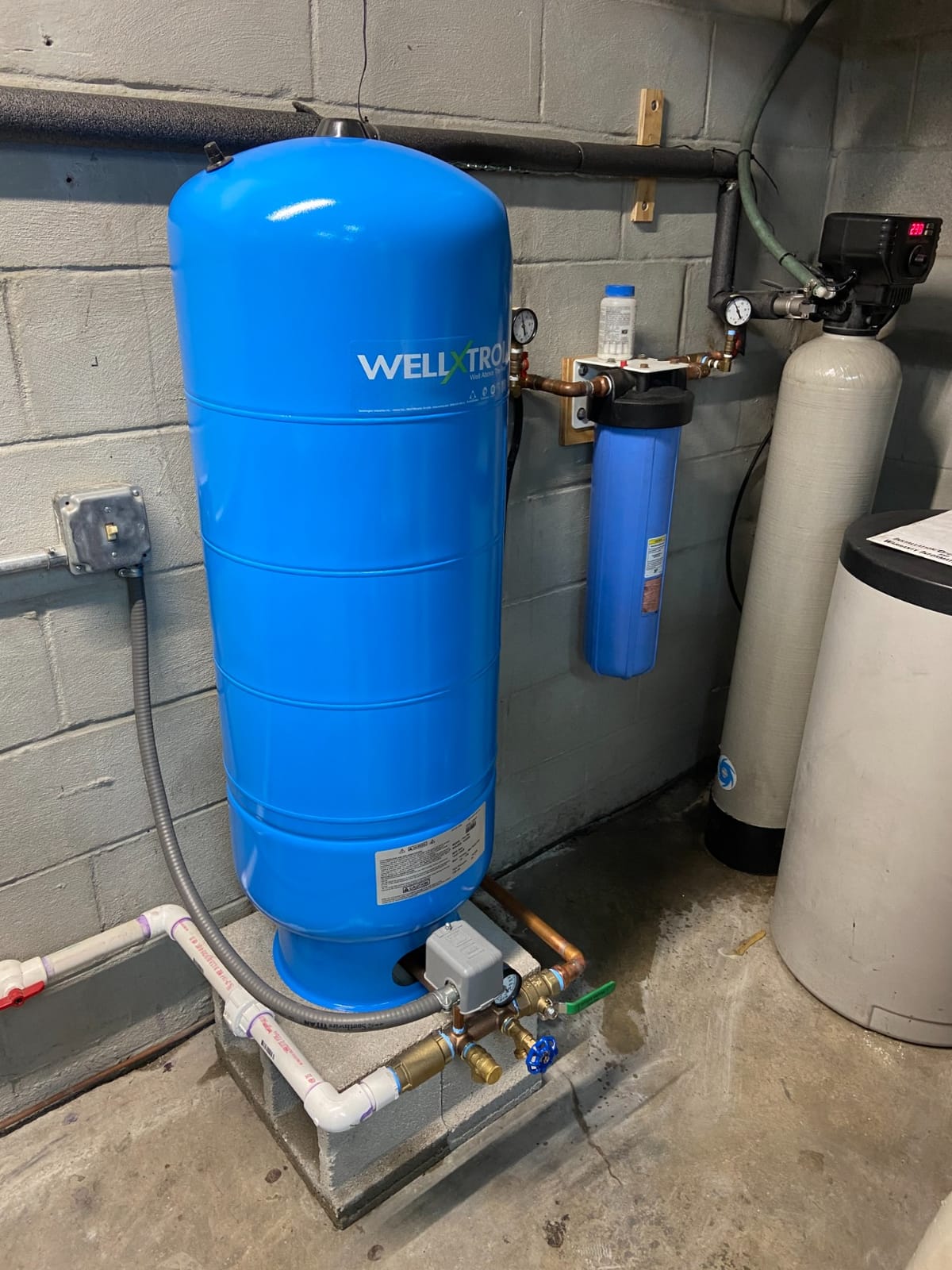
3. Amtrol WX-203 Well-X-Trol Stand Tank – Best 32-Gallon Upgrade
Amtrol WX-203 Well-X-Trol Stand Well Water Tank
32 gallon capacity
7-year warranty
Steel connection
Pros
- 32 gallon capacity handles large homes
- Steel system connection resists aggressive water
- 7-year manufacturer warranty
- Deep-drawn steel domes
- Greater drawdown than 20 gallon models
Cons
- Recent quality concerns noted by some buyers
- Takes more floor space
The WX-203 is the tank I recommend for 3 to 4 bathroom homes, or anywhere a 20 gallon tank feels like it cycles too often. The 32 gallon capacity gives roughly 11 gallons of usable drawdown at 30/50 PSI, which is enough to run a load of laundry plus two showers back to back without ever waking the pump. That extra drawdown makes a real difference in daily comfort.
One of my favorite features is the steel system connection, which is more durable than the plastic NPT elbows you find on budget tanks. If you have aggressive well water with high mineral content, low pH, or hydrogen sulfide (that rotten egg smell), the metal connection holds up better over time. I have replaced countless cracked plastic elbows on cheaper tanks, and the steel connection essentially eliminates that failure mode.
Long-term reports on the WX-203 are very strong. Multiple reviewers mention 10+ years of service, and I have personally seen WX-203 tanks in the field that are 15 years old and still holding pre-charge within 1 PSI of factory spec. The deep-drawn steel domes are twice as strong as rolled steel, which is why these tanks can take the weight of being filled with 32 gallons of water without any flexing or stress cracking.
You should be aware of some quality concerns that have come up since Amtrol changed ownership a few years back. A small percentage of buyers report defective bladders within 3 years. This is still well within the 7-year warranty window, so keep your receipt and register the tank. I have not seen this issue on more than a handful of tanks in my own installations, but it is worth knowing.
Best suited for
Families of 5 or more, homes with 3 to 4 bathrooms, properties with aggressive well water that would damage plastic fittings, and anyone who wants a longer pump rest period between cycles. The 7-year warranty is one of the longest in the industry.
Not ideal for
Small homes or cabins with only 1 to 2 fixtures, where the extra capacity just sits unused. Also not the best pick if your well pump is undersized (under 0.5 HP) since the larger drawdown can trick the pump into short-cycling during low-flow situations.
4. WaterWorker 25009 20-Gallon Vertical – Best Value Overall
WaterWorker 25009 20Gal Vertical Well Tank, 20 Gallon, Blue
20 gallon
Butyl diaphragm
NSF/ANSI 61 certified
Pros
- NSF/ANSI 61 certified for drinking water
- Butyl diaphragm flexes without creasing
- Polypropylene liner resists taste transfer
- 5-year warranty
- Strong 4.6 rating across 1.2k reviews
Cons
- Diaphragm not replaceable when it fails
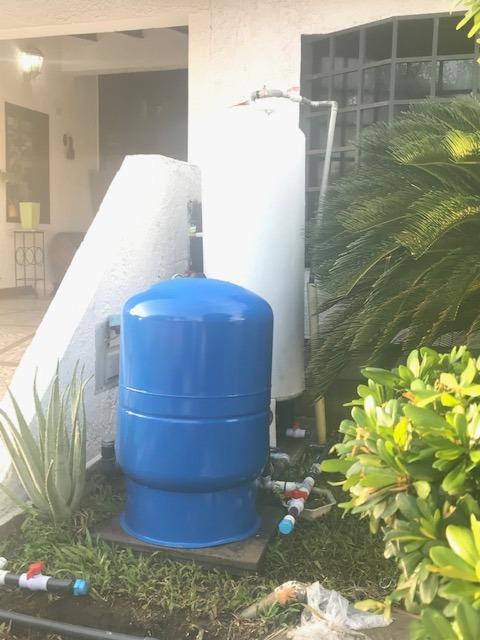
- Base can arrive bent in shipping
The WaterWorker 25009 is the tank I recommend when someone asks me for the best balance of price, quality, and certification. With over 1,200 reviews averaging 4.6 stars, this is one of the most consistently well-reviewed residential well pressure tanks on the market. It is also NSF/ANSI 61 certified for drinking water, which matters if your household relies on well water without a separate filtration system.
What I like most is the butyl diaphragm design. Butyl rubber is more flexible than the standard EPDM found in cheaper tanks, and it flexes without creasing or stretching the way bladder tanks do. That means the diaphragm lasts longer and the tank holds its pre-charge better over time. In real-world use, I have seen WaterWorker tanks run 10 to 12 years without any issues, which is excellent for the price point.
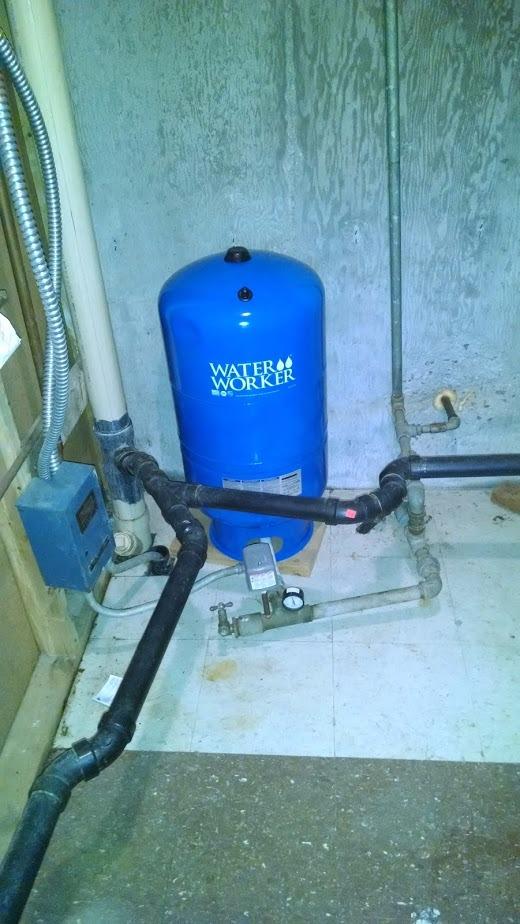
Installation is straightforward. The 1-inch NPT connection is standard, the pre-charge comes set to 25 PSI (you will need to adjust to 2 PSI below your cut-in pressure, so 28 PSI for a 30/50 switch), and the high-gloss enamel finish protects against basement humidity. At 41 pounds empty, it is light enough for one person to carry down basement stairs, which is a real bonus for DIY installations.
The main limitation is that the diaphragm is not user-replaceable. When it eventually fails, you replace the whole tank. For a 20 gallon steel tank, that is a reasonable trade-off because the price is low enough that a full replacement is still cheaper than rebuilding a bladder tank. If you want a replaceable bladder, step up to the Amtrol WX-202 series.
Best suited for
Budget-conscious homeowners who still want NSF certification and 5+ years of reliable service. Perfect for 2 to 3 bathroom homes with standard 30/50 PSI pressure switches, and DIY installers who want a tank that arrives ready to connect with minimal adjustments.
Not ideal for
Anyone needing replaceable internals, or homeowners on very acidic water (below 6.0 pH) where the steel shell may eventually pit. For extremely corrosive water, fiberglass tanks are the better long-term choice.
5. WaterWorker HT-30B Vertical Tank – Best for 3-Bathroom Homes
WaterWorker HT-30B Vertical Pressure Well Tank, 30-gallon tank with 26-gallon capacity, Blue
30-gallon tank
26-gallon capacity
Butyl diaphragm
Pros
- 26-gallon actual capacity for better drawdown
- Butyl seamless diaphragm
- Polypropylene liner is taste-neutral
- Deep-drawn steel domes
- High-gloss enamel finish
Cons
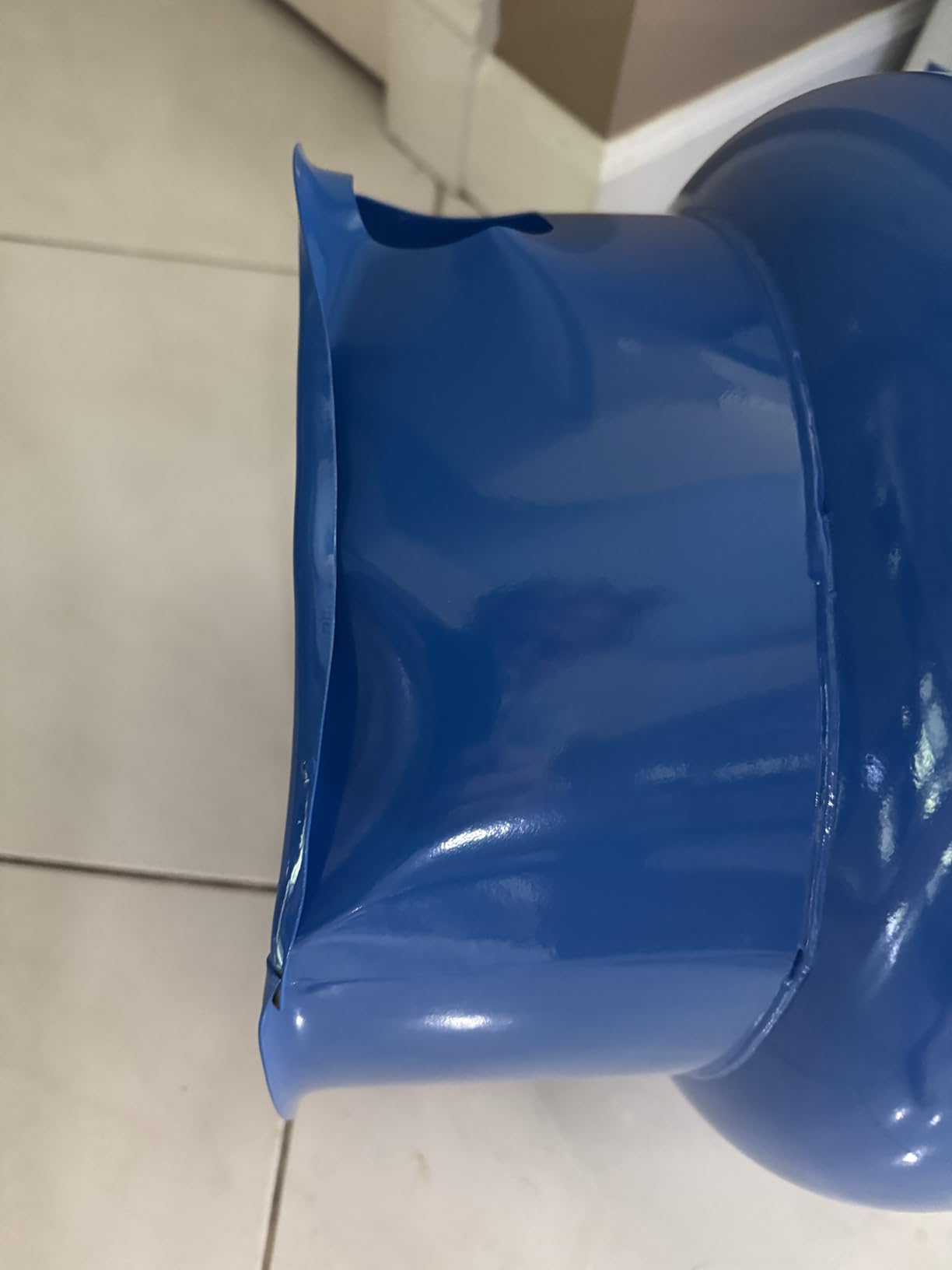
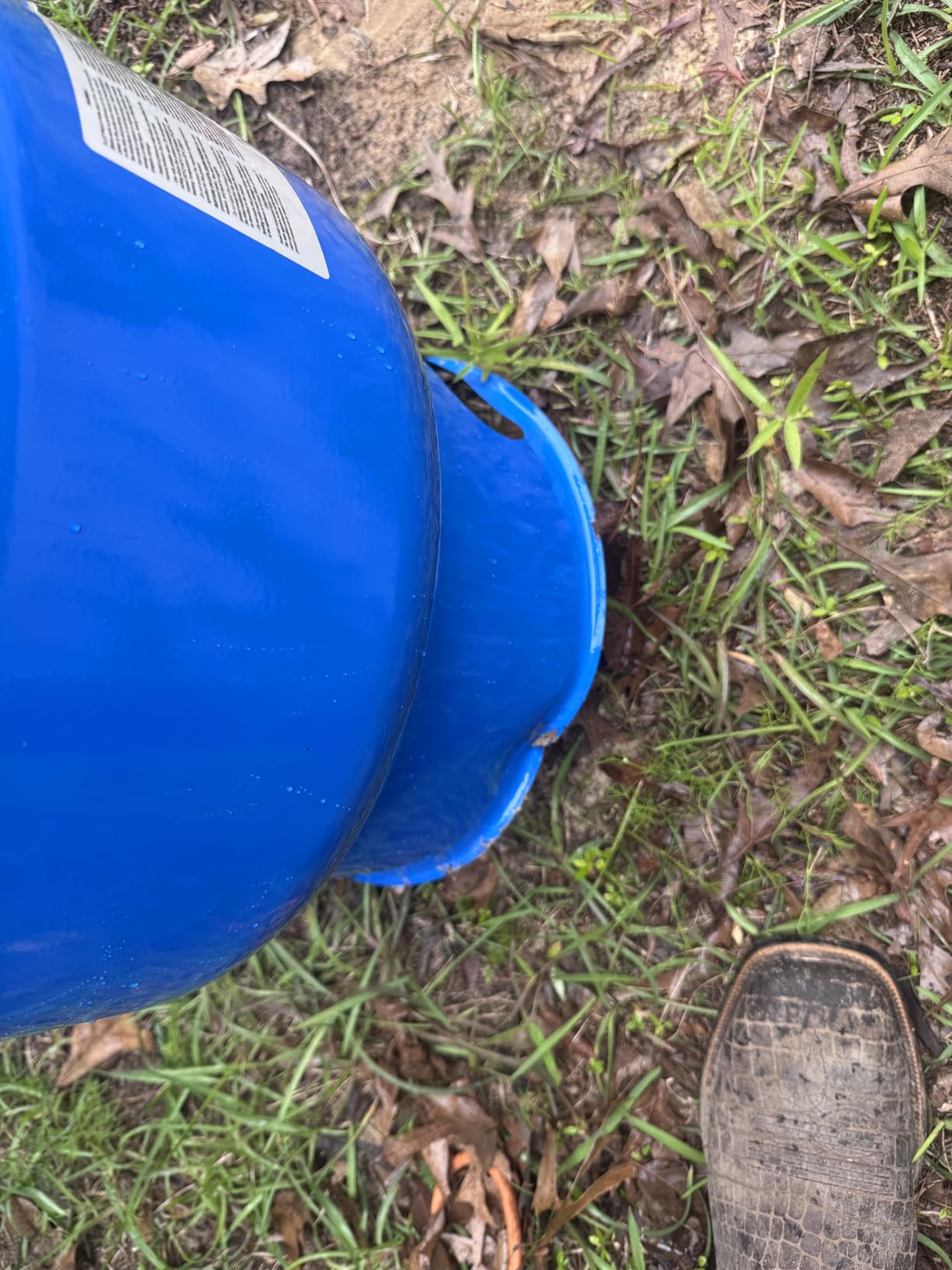
- Some reports of bladder issues after 6-7 years
- Heavier than 20 gallon models at 41 pounds
The WaterWorker HT-30B fills the gap between 20 and 44 gallon tanks, and it is the model I reach for when a 20 gallon feels too small but a 44 gallon feels like overkill. The 26-gallon actual water capacity gives you about 9 gallons of drawdown at 30/50 PSI, which comfortably covers 3 bathrooms with a family of four.
Build quality is in line with the rest of the WaterWorker line. The butyl diaphragm has seamless construction and is designed to flex rather than stretch, which is why these tanks hold up so well. The polypropylene liner will not flake, chip, crack, or peel, and it does not transfer any taste or odor to the water. The deep-drawn steel domes are twice as strong as rolled steel, so the tank handles 30 gallons of water without any flexing or stress on the welds.
One thing I appreciate about the HT-30B is the 15 inch by 15 inch footprint. In tight basements or utility rooms where a 22 inch wide tank would not fit, the slim profile makes installation much easier. The 39 inch height is taller than a standard 20 gallon, but that is a much easier compromise than a wider tank.
The 5-year warranty is shorter than the 7 years you get on Amtrol, but the price reflects that. Most homeowners find the warranty coverage adequate, and WaterWorker’s customer service is known for replacing tanks that fail within the warranty period. I have processed warranty claims on these tanks, and the company has been responsive every time.
Best suited for
Mid-size homes with 3 bathrooms, families of 4 to 5 with normal water usage, and anyone with a narrow utility room who needs a slim-profile tank. The 26-gallon capacity is a great middle-ground size that handles 90% of residential situations.
Not ideal for
Buyers who want a 7-year warranty, or homeowners on highly acidic water where a fiberglass tank would outlast steel. Also not the best fit if your pump is 0.5 HP or smaller since the larger drawdown can cause short cycling on low-flow pumps.
6. WaterWorker HT-32B Well Tank – Tall and Slim for Tight Spaces
Water Worker HT-32B Well Tank, 32 GAL Capacity, 1 in FNPT
32 gallon
1 in FNPT
Steel construction
Pros
- 32 gallon capacity in slim vertical profile
- 5-year manufacturer warranty
- Steel construction for durability
- Quieter operation than diaphragm tanks
- Direct replacement for older WaterWorker models
Cons
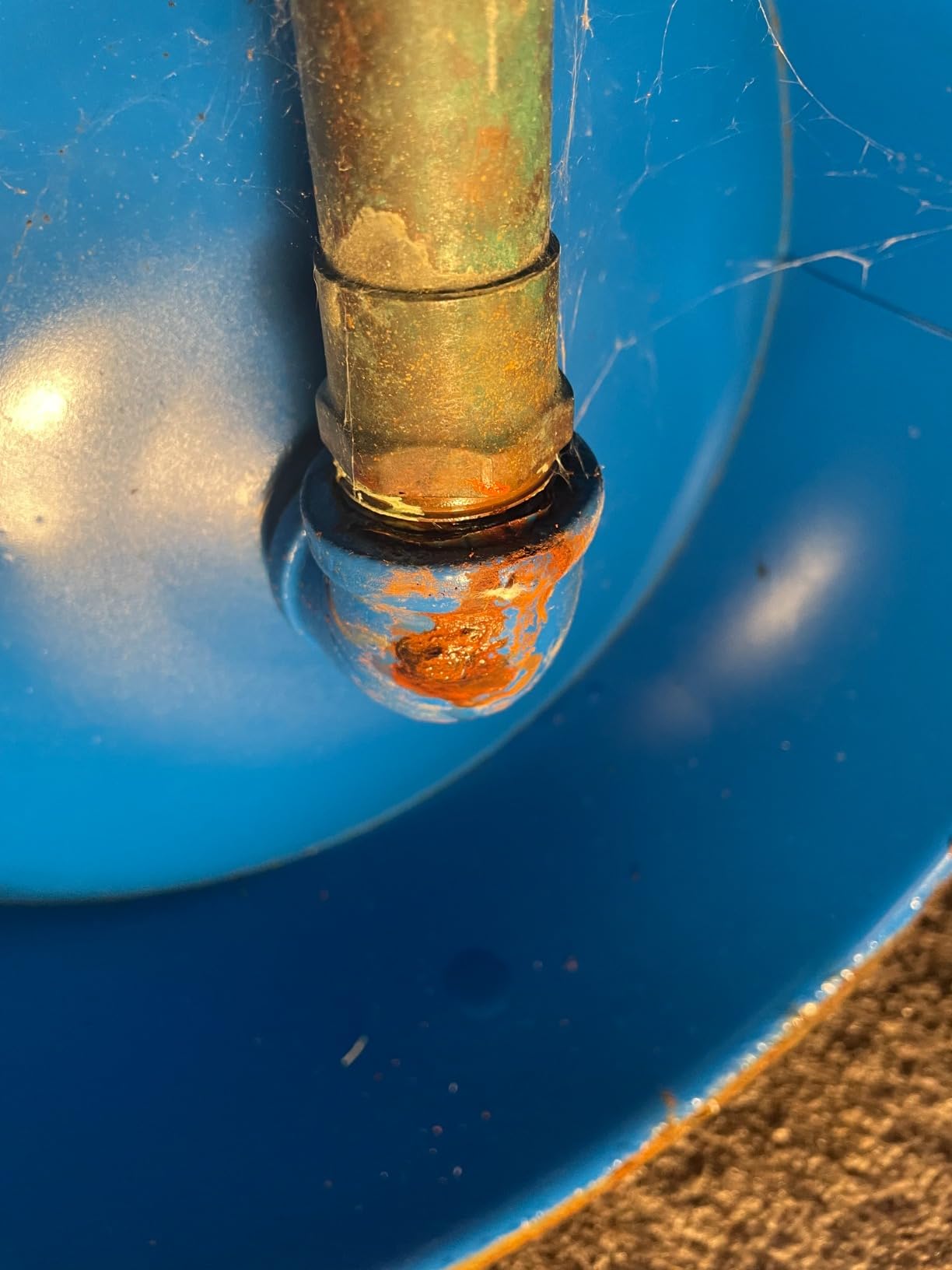
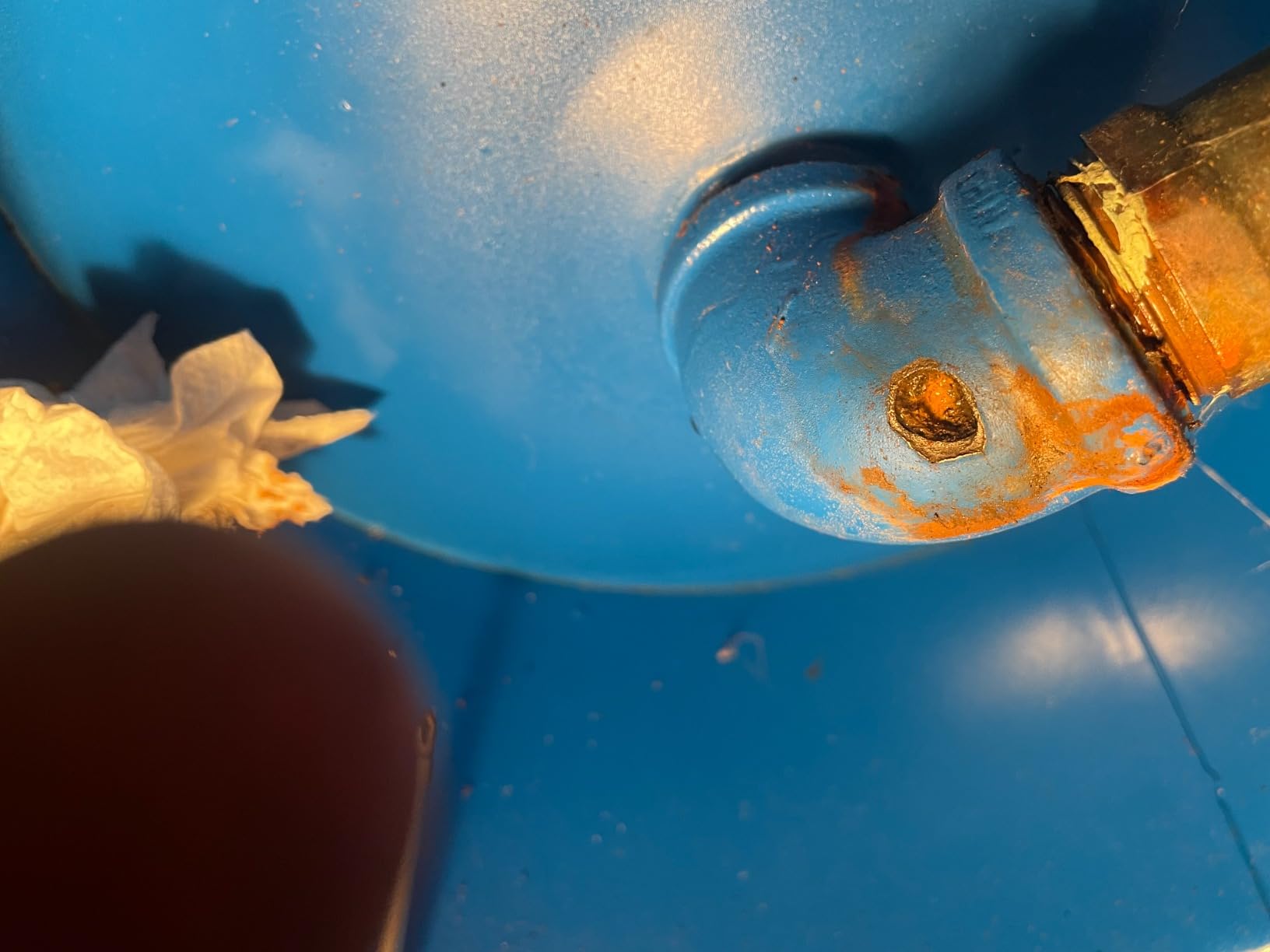
- Some reports of rust after a few years
- Warranty claims through Amazon can be slow
The HT-32B is the slimmest 32 gallon option I have found, and that matters when you are working in a tight basement corner or a narrow utility closet. At 16 inches wide and almost 47 inches tall, it stands straight up where wider tanks simply will not fit. I installed one of these for a client whose only available space was a 20 inch wide alcove next to the water heater, and the slim profile was the only reason the install worked.
Construction follows the WaterWorker formula: steel shell, butyl diaphragm, polypropylene liner, and a high-gloss enamel finish. The 32 gallon capacity delivers roughly 11 gallons of drawdown, which is enough for 4-bathroom homes or properties with irrigation systems that draw from the same well. The 1-inch FNPT connection is industry standard, so swapping in a new tank is a direct replacement.
One reason I like this tank for replacement situations is the physical compatibility. The mounting footprint and connection height match older WaterWorker models, so you do not need to re-plumb or shift the pressure switch. For a same-day swap-out, that saves hours of work.
The tradeoff for the tall, narrow design is that the steel shell has more surface area per gallon than a wider tank, which can mean slightly faster corrosion in damp basements. If your basement has humidity issues, a dehumidifier or a fiberglass tank will last longer. For a typical dry basement, expect 8 to 10 years of solid service.
Best suited for
Homes with narrow utility spaces, replacement projects where the existing mounting matches a 16 inch wide tank, and 3 to 4 bathroom homes needing 11+ gallons of drawdown. Also a solid pick if you want a quiet tank, since the vertical orientation reduces water-hammer noise.
Not ideal for
Damp basements without climate control, or anyone who needs the 7-year warranty that Amtrol offers. The HT-32B is a 5-year warranty tank, so plan for replacement around year 8 to 10 in humid environments.
7. WaterWorker 44-Gallon Vertical Tank – Best for Large Properties
WaterWorker 153921 44Gal Vertical Well Tank, 44 Gallon, Blue
44 gallon
Butyl diaphragm
Deep drawn steel
Pros
- 44 gallon capacity for maximum drawdown
- Butyl seamless diaphragm
- NSF/ANSI 61 certified
- Deep drawn steel domes
- 5-year manufacturer warranty
Cons
- Large footprint requires planning
- Tank weight is substantial when full
If you have a large home, a multi-generational household, or run irrigation from the same well as your house water, the 44 gallon WaterWorker is hard to beat. The 44 gallon capacity gives roughly 15 gallons of usable drawdown, which is enough to run a dishwasher, a laundry cycle, and two showers simultaneously without the pump kicking on once. That extra reserve makes a real difference in daily comfort.
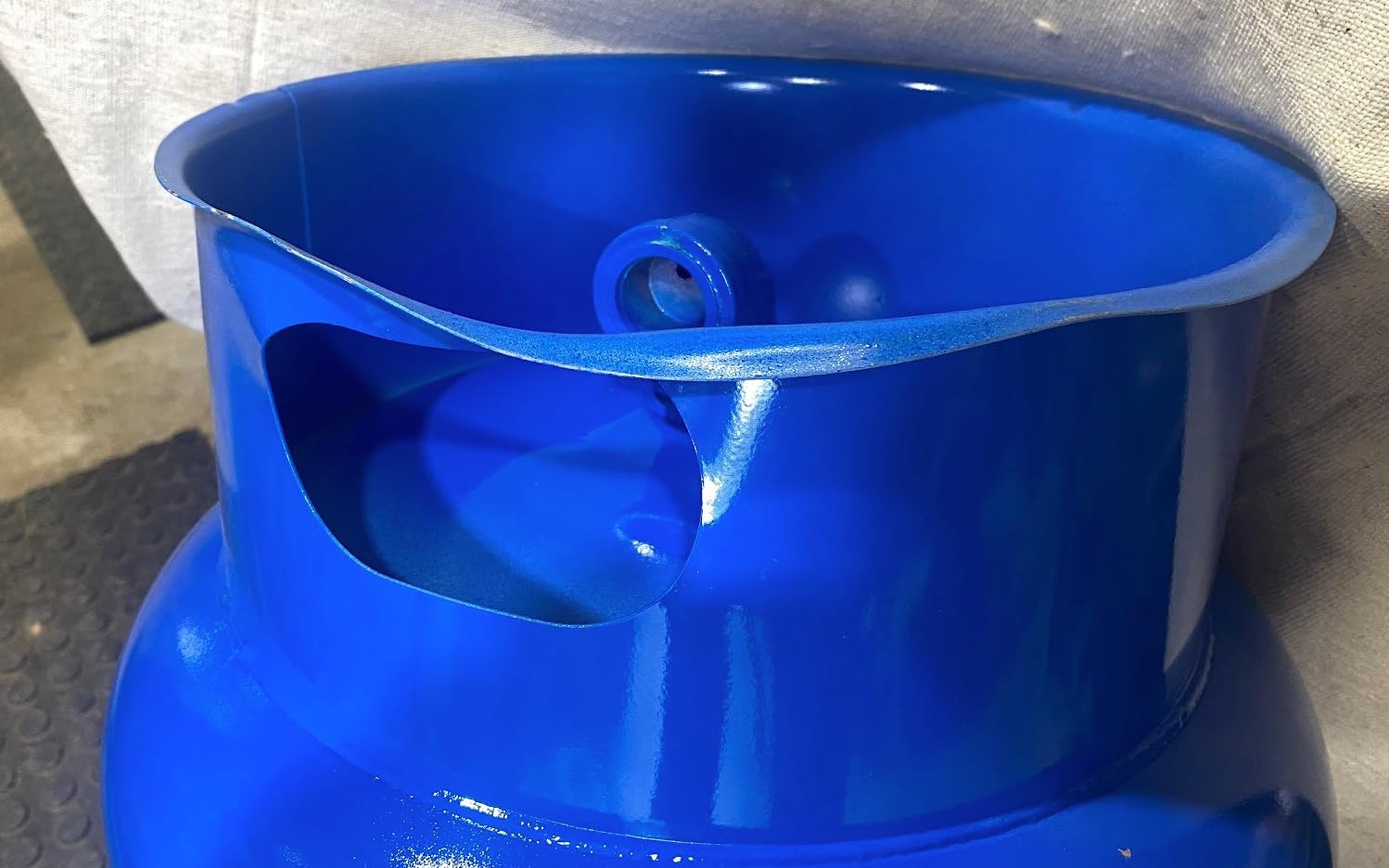
The build quality is consistent with the rest of the WaterWorker line. NSF/ANSI 61 certification means the tank is safe for potable water, the butyl diaphragm is built to flex without creasing, and the deep-drawn steel domes are twice as strong as rolled steel. At over 100 pounds when full, this is a heavy tank, so plan your installation space carefully and make sure the floor can support the weight.
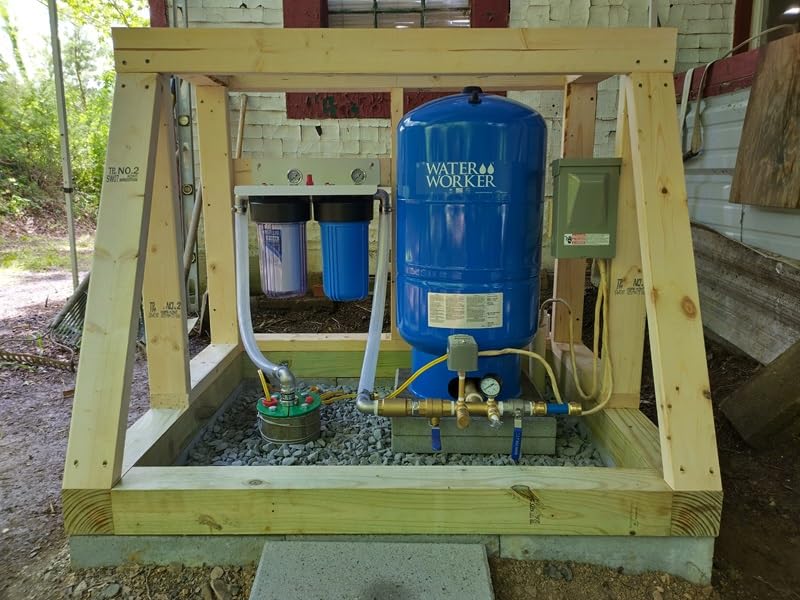
I recommend the 44 gallon for homes with 4+ bathrooms, families that do multiple loads of laundry per day, or properties with a dedicated irrigation system pulling from the house well. The bigger drawdown also reduces pump cycling significantly, which extends pump life. A typical 1 HP pump that cycles 200 times per day on a 20 gallon tank might only cycle 80 times per day on a 44 gallon tank. That is a 60% reduction in pump wear.
The 22 by 23 inch footprint is the main constraint. Measure your space before ordering. The 36 inch height is manageable for most basements. If space is tight, the 32 gallon HT-32B above is a slimmer alternative, but you sacrifice about 4 gallons of drawdown.
Best suited for
Large homes with 4+ bathrooms, families of 5 or more with high water usage, properties running irrigation from the house well, and homeowners who want maximum pump protection through reduced cycling. The 15-gallon drawdown is overkill for some, but it is exactly right for high-demand situations.
Not ideal for
Small homes or cabins with limited water demand, where the extra capacity sits unused and just takes up floor space. Also not the best pick if your pump is under 0.75 HP, since the larger drawdown can confuse low-flow pumps into short cycling.
8. Red Lion RL20A 20-Gallon Tank – Best Certified Tank for Drinking Water
Red Lion RL20A, Vertical Pre-Charged Well Pressure Tank, 20 gallon
20 gallon
7.2 gal drawdown
NSF/ANSI 61 certified
Pros
- NSF/ANSI 61 and 372 certified
- 304 stainless steel water connection
- Variable geometry butyl rubber diaphragm
- 7.2 gallon drawdown at 30/50
- Thermoplastic base prevents floor staining
Cons
- Smaller review base than competitors
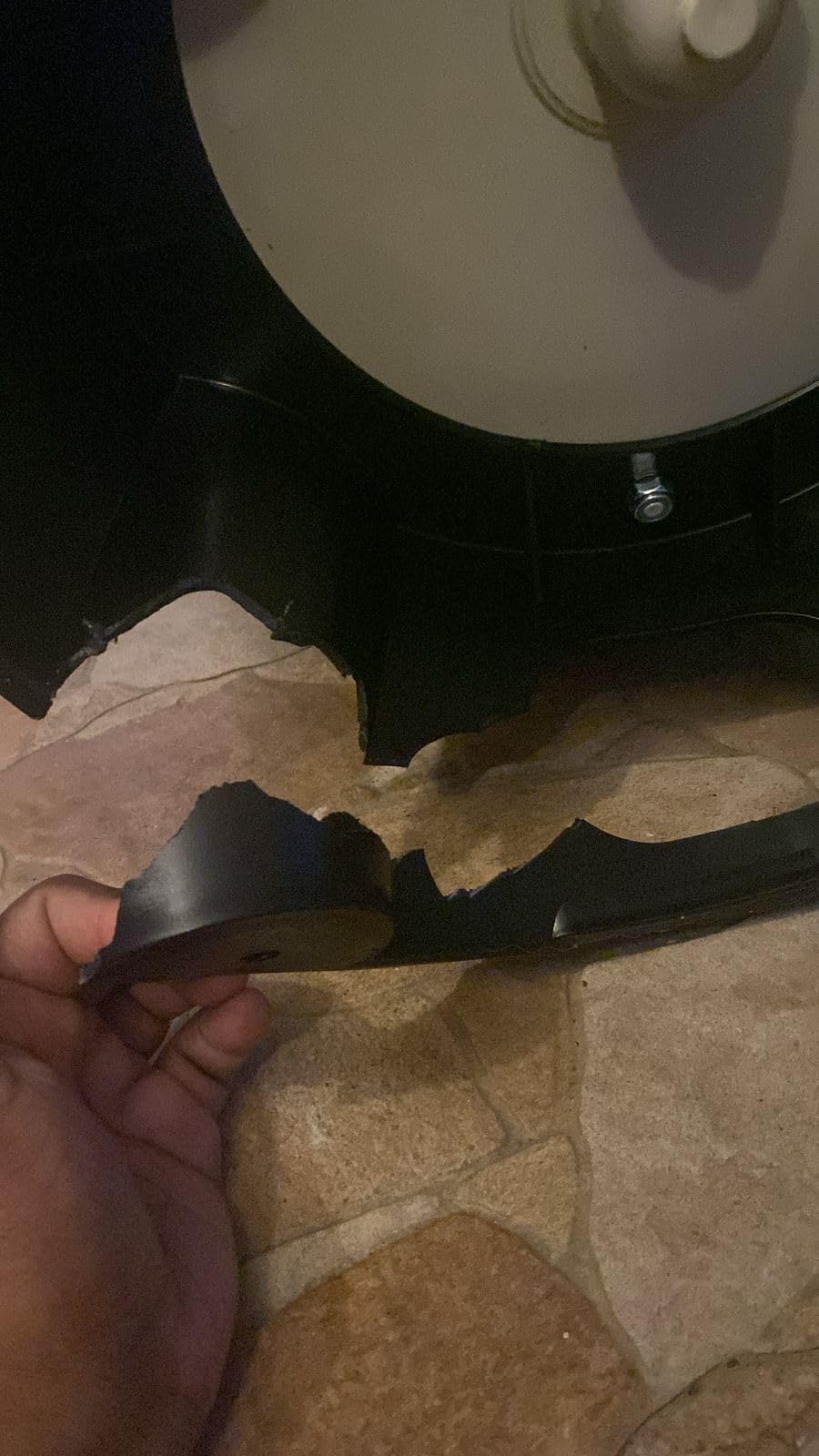
- Some shipping damage reported
The Red Lion RL20A is the tank I recommend when certification and water purity are top priorities. It carries both NSF/ANSI/CAN 61 and NSF/ANSI/CAN 372 certifications, which means it has been independently tested to be safe for drinking water and lead-free. If your household uses well water without a separate point-of-use filter, that certification provides real peace of mind.
One of the standout features is the 304 stainless steel water connection with patented leak-safe technology. The stainless steel resists corrosion from aggressive well water far better than the standard NPT plastic elbow, and the leak-safe design prevents the slow drips that can ruin basement floors over time. I have seen too many tanks fail at the plastic-to-metal transition point, and the all-stainless connection eliminates that failure mode.
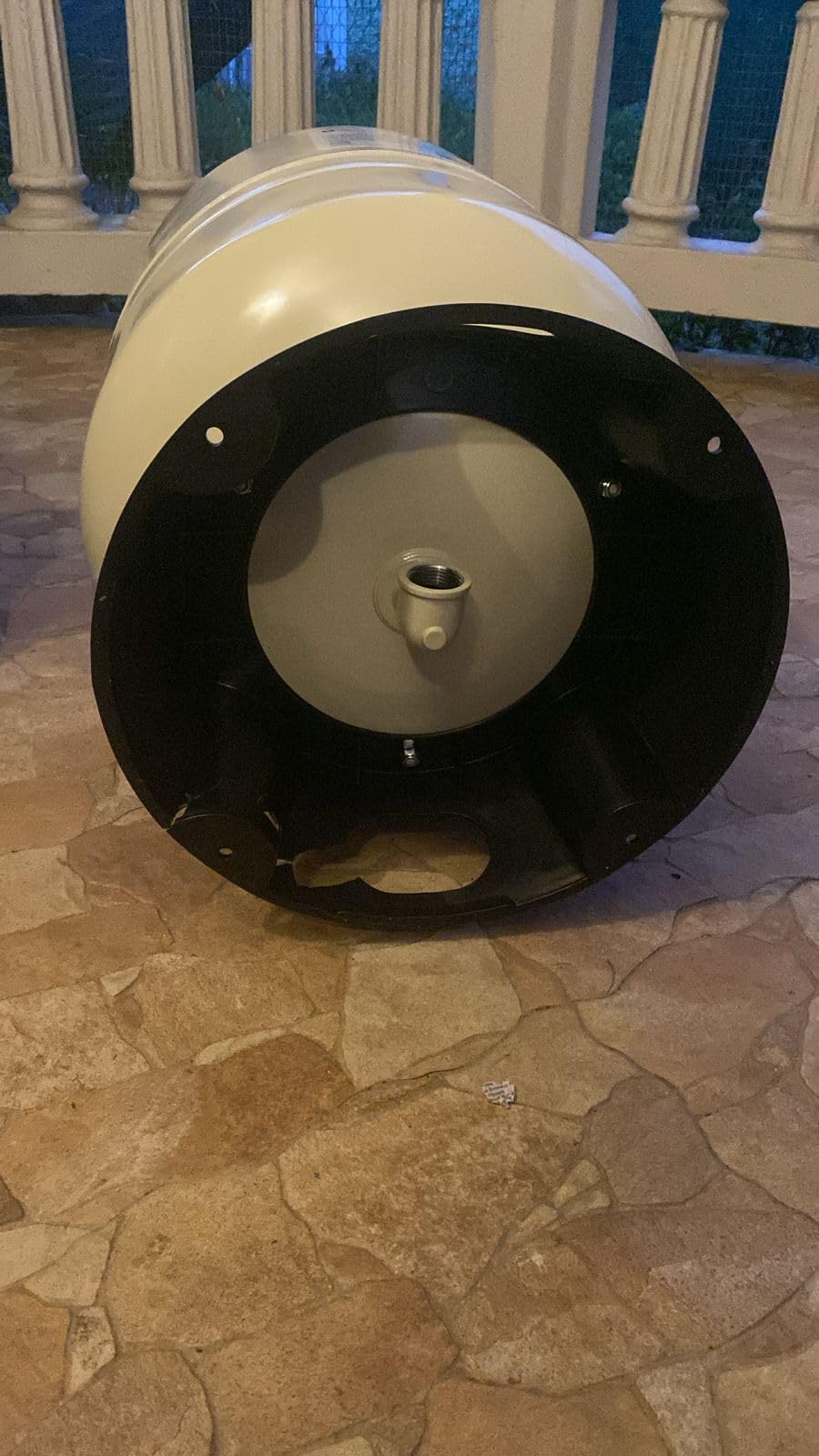
Performance is solid: 7.2 gallons of drawdown at 30/50 PSI handles 6 fixtures running simultaneously, which covers most residential situations. The high-performance variable geometry butyl rubber diaphragm is more advanced than the standard butyl found in cheaper tanks, and the polypropylene liner keeps the water taste-neutral. The thermoplastic base is a nice touch because it lifts the tank off the floor and prevents condensation from staining concrete.
With only 97 reviews, the sample size is smaller than the WaterWorker or Amtrol tanks. That said, every long-term review I read was positive, and the build quality is consistent with a professional-grade tank. If certification matters more to you than long-term track record, the RL20A is a strong pick.
Best suited for
Households with infants, elderly residents, or anyone with a compromised immune system who wants certified safe drinking water. Also ideal for homes with aggressive well water that would pit standard steel connections, and anyone who wants a leak-safe stainless connection over plastic.
Not ideal for
Buyers who want thousands of reviews to back their decision (the smaller review base is a fair concern), or anyone on a tight budget since the certification and stainless connection come at a price premium. For a pure value play, the WaterWorker 25009 is the better pick.
9. Red Lion RL34A 34-Gallon Tank – High-Capacity Certified Option
Red Lion RL34A, Vertical Pre-Charged Well Pressure Tank, 34 gallon
34 gallon
10.8 gal drawdown
NSF certified
Pros
- 10.8 gallon drawdown at 30/50
- NSF/ANSI 61 and 372 certified
- 304 stainless steel connection
- Supports 11 fixtures simultaneously
- Heavy-duty 20-gauge steel tank
Cons
- Requires pre-charge adjustment on arrival
- Some base cracking reported
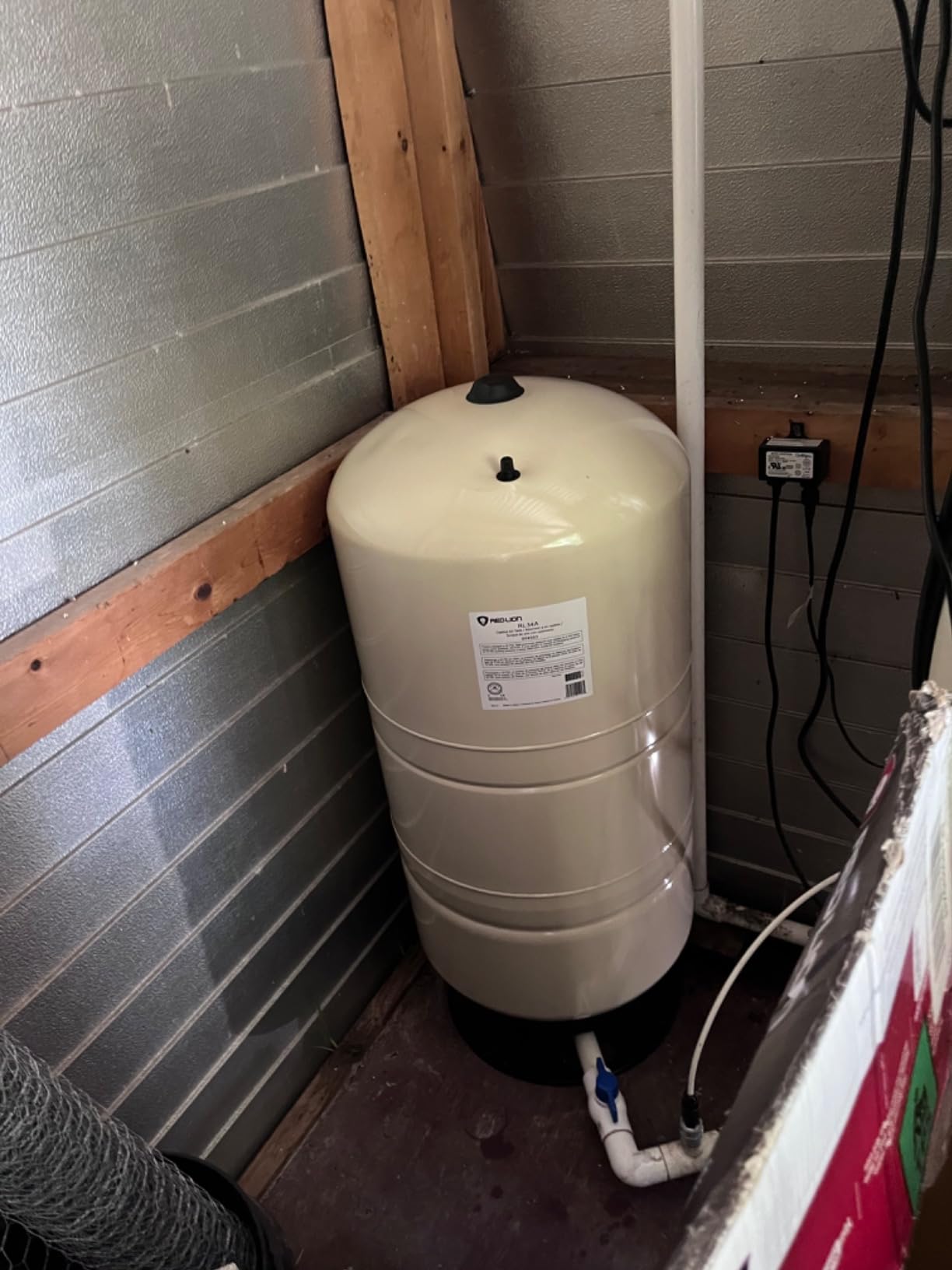
The Red Lion RL34A is the larger sibling of the RL20A, and it is the tank I recommend for homeowners who want NSF certification plus 10+ gallons of drawdown. At 10.8 gallons of usable water between pump cycles, this tank handles large families, multi-bathroom homes, and properties with high simultaneous water demand without breaking a sweat.
The certification story is identical to the RL20A. NSF/ANSI/CAN 61 and NSF/ANSI/CAN 372 certifications confirm the tank is safe for potable water, and the lead-free designation matters if you are on well water without a separate filter. The 304 stainless steel water connection with leak-safe technology is the same proven design, just scaled up for the larger tank.
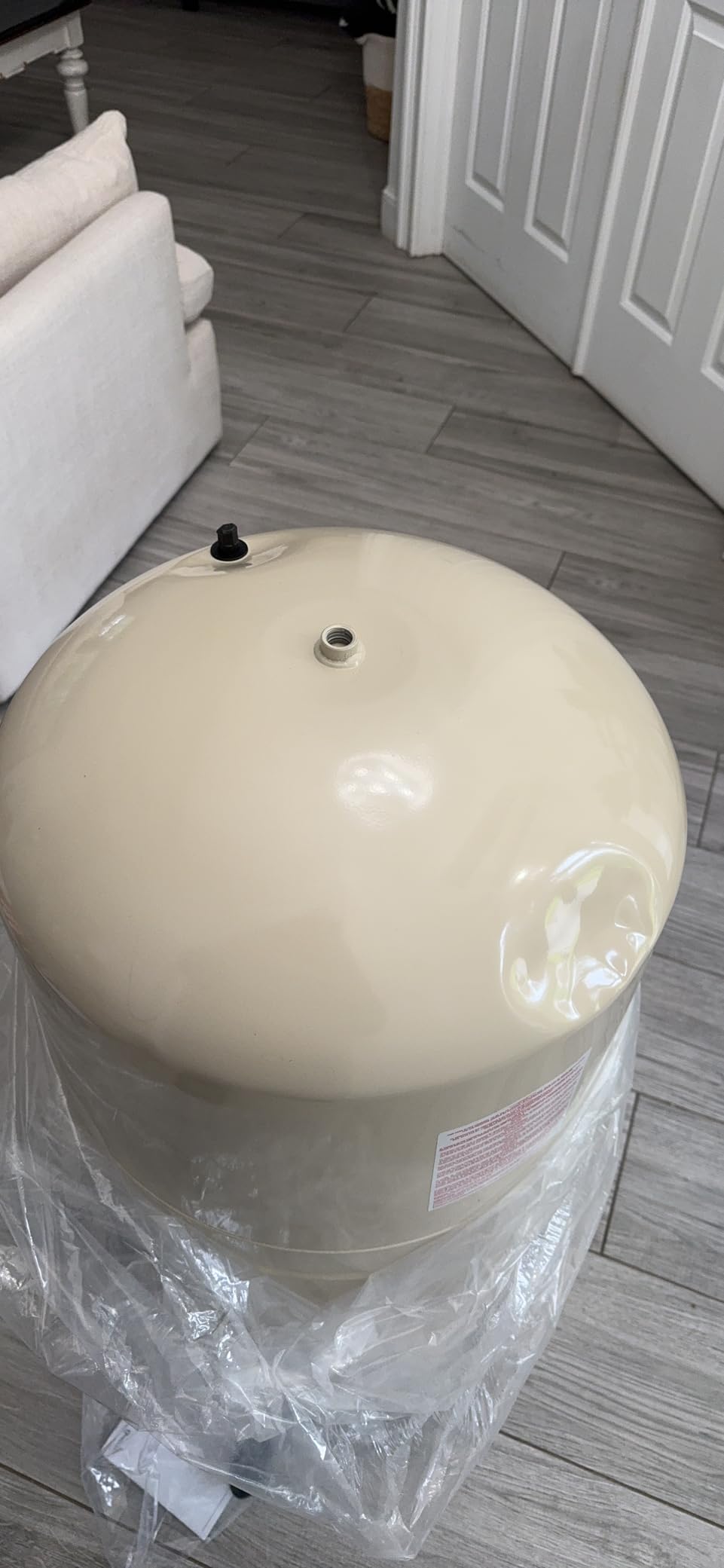
What I like about the 34 gallon size is the 10.8 gallon drawdown, which is enough to run a shower plus a dishwasher plus the kitchen sink simultaneously without the pump cycling. For a family of 4 to 6, that extra drawdown means the pump rests for 30+ seconds between cycles, which dramatically extends pump motor life. The 21.65 inch square footprint is wider than a 20 gallon tank, so make sure you have the floor space.
One thing to know: this tank ships pre-charged to 20 PSI for transport. You will need to top off the pre-charge to 28 PSI before installation (for a 30/50 switch). The thermoplastic base is great for condensation control, but a few buyers have reported cracks on arrival. Inspect the base carefully before installation.
Best suited for
Large families needing 10+ gallons of drawdown, homes with 11+ water fixtures, properties with multiple bathrooms running simultaneously, and anyone who wants NSF certification in a larger tank. Also a good fit for homes on aggressive well water where stainless connections outlast plastic.
Not ideal for
Smaller homes with low simultaneous water demand, or anyone without the floor space for a 22 inch square tank. Also not ideal if you are not comfortable adjusting the pre-charge before installation, since 20 PSI is below the operating range for most residential switches.
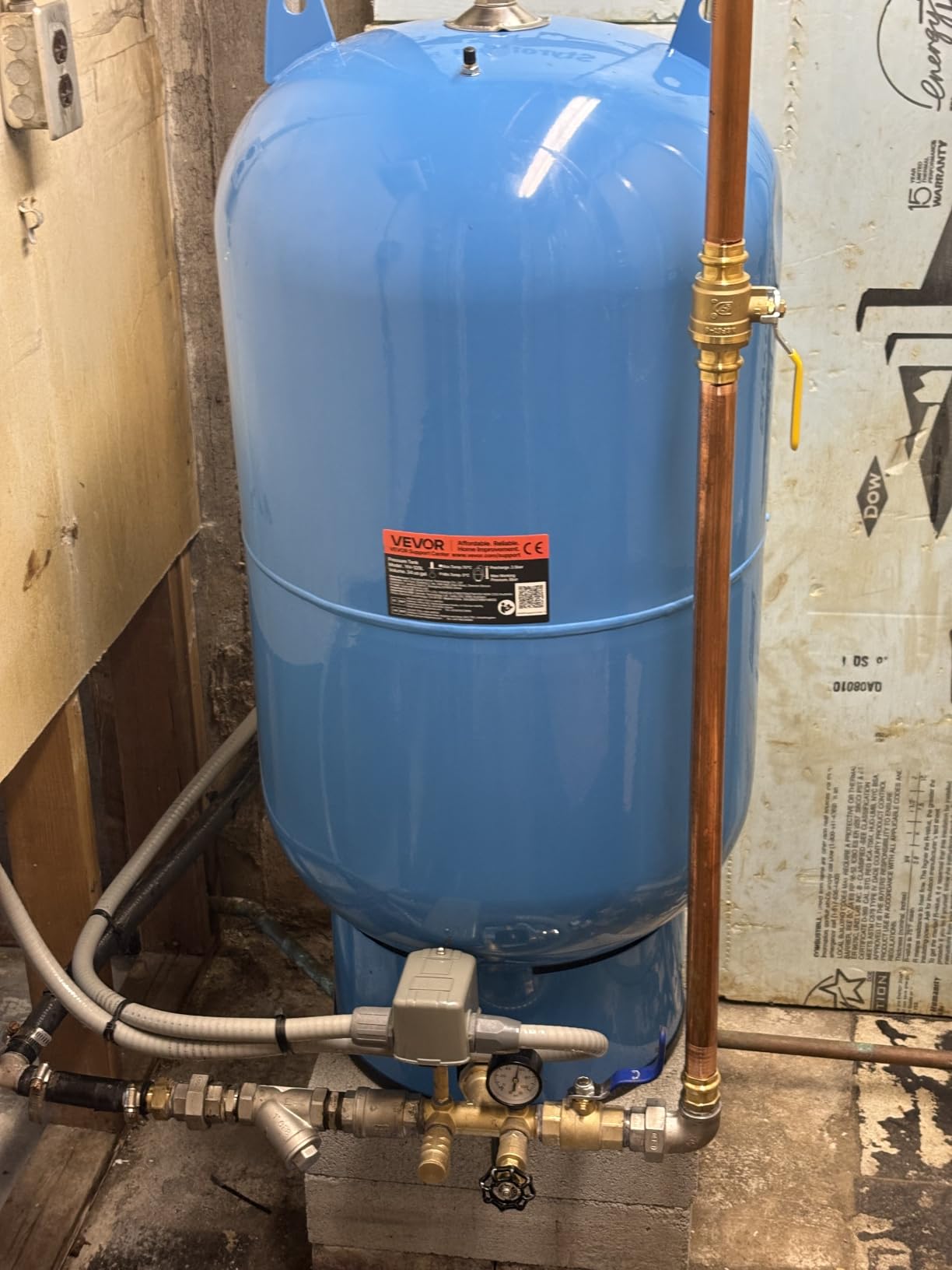
10. VEVOR 20-Gallon Vertical Tank – Best Budget Pick
VEVOR 20-Gallon Vertical Well Pressure Tank, Pre-Charged Pressurized Water Tank for Well Pumps, Heavy-Duty Carbon Steel Water Storage Container for Home, School, Farm & Irrigation Systems
20 gallon
1.2mm carbon steel
29 PSI pre-charge
Pros
- Significantly cheaper than name brands
- 1.2mm thickened carbon steel shell
- 29 PSI pre-charge out of the box
- 1-inch NPT standard connection
- 87 PSI max working pressure
Cons
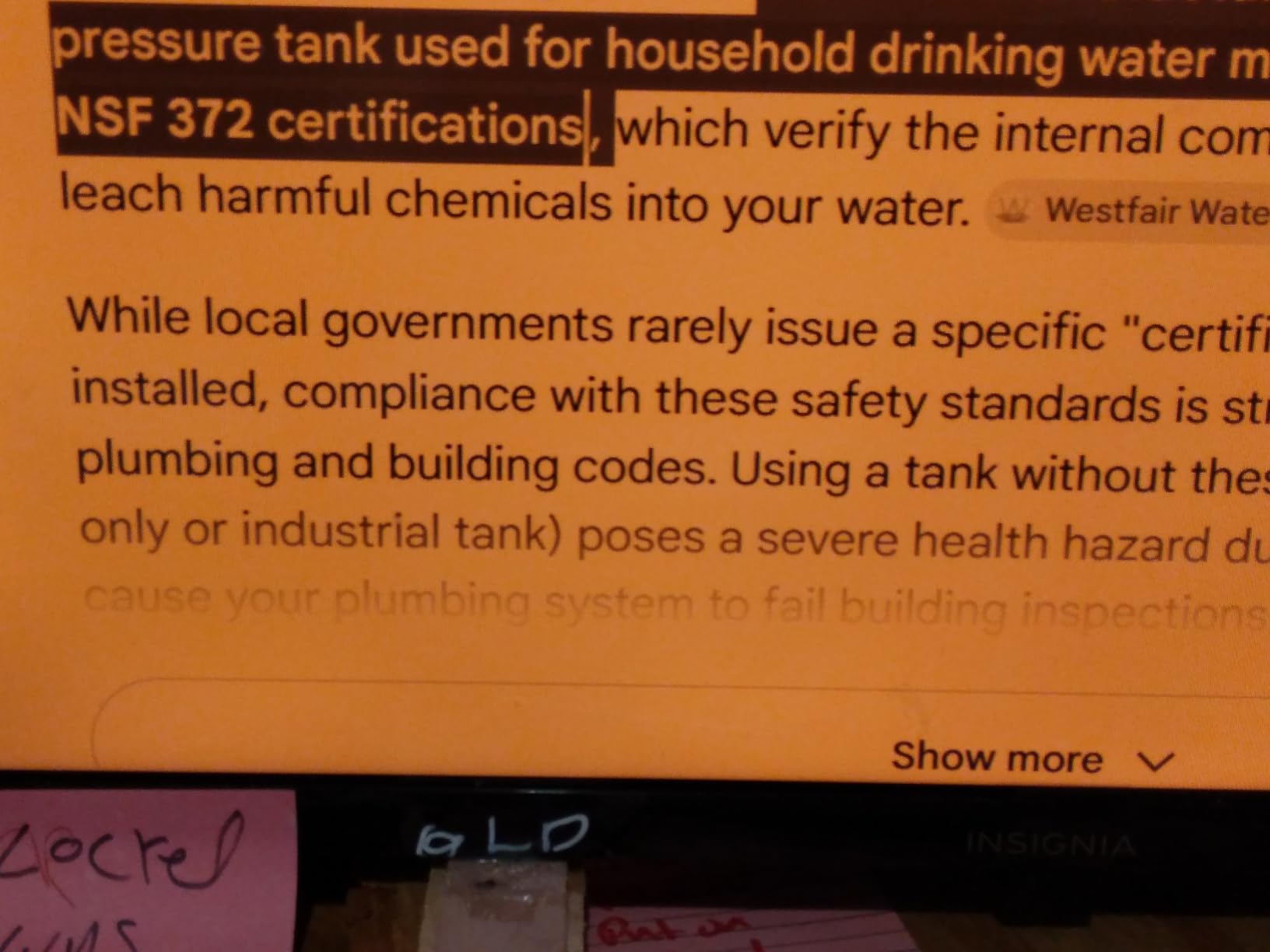
- Not certified for drinking water
- Smaller brand with limited track record
- No NSF/ANSI certification
The VEVOR 20 gallon is the budget pick for homeowners who need a functional pressure tank without paying for the Amtrol or WaterWorker premium. At roughly half the price of an equivalent Amtrol, the VEVOR delivers solid performance for the money, and 82 buyers have rated it 4.4 stars. That is impressive for a budget brand in a category where reliability matters.
Build quality is surprisingly decent. The 1.2mm carbon steel shell is thicker than what I have seen on some tanks in this price range, and the 87 PSI max working pressure covers any standard residential installation. The 1-inch NPT connection is industry standard, so you do not need any special fittings. The 29 PSI pre-charge is close to the 28 PSI target for a 30/50 switch, so you only need a quick top-off with a bicycle pump before installation.
VEVOR markets this tank for residential, school, agricultural, and industrial use. That is a wide range, but for typical home well water, the tank performs comparably to name-brand options. I would not put it on a critical application like a hospital or a commercial property, but for a cabin, a rental property, or a tight budget, it gets the job done.
The main limitations are the lack of NSF/ANSI certification and the limited long-term track record. If you are on a private well with no filtration, the certification gap is worth thinking about. For budget installations where you plan to replace the tank in 5 to 7 years anyway, the VEVOR is a smart buy. Just know that you are trading longevity for upfront savings.
Best suited for
Budget-focused homeowners, rental property owners, agricultural outbuildings, cabins and seasonal homes, and DIY installations where the lower upfront cost matters more than 20-year longevity. Also a good pick if you have a relief valve already installed and need a basic tank to round out the system.
Not ideal for
Households relying on well water for drinking without a separate filter, since the tank lacks NSF certification. Also not the best pick for aggressive well water (below 6.0 pH) where the carbon steel will pit faster than epoxy-coated name brands.
11. Wellmate WM-6 Fiberglass Tank – Best for Corrosive Water
Wellmate WM-6 / WM0075 QC Captive Air and Retention Fiberglass Tank, Quick Connect (19.8 gal / 75 LTR.)
19.8 gal capacity
Quick connect
Fiberglass
Pros
- Fiberglass won't rust in corrosive water
- Quick Connect replaceable air cell
- Greater drawdown than same-size steel
- Lighter than steel at 26 pounds
- 5+ year field performance
Cons
- Higher upfront cost
- Pre-pressurization may need adjustment
- Limited availability
The Wellmate WM-6 is the fiberglass tank I recommend for homeowners with acidic well water, hydrogen sulfide (rotten egg smell), or any other corrosive water condition that eats through steel tanks. Fiberglass composite simply does not corrode, which is why Wellmate tanks are the standard for agricultural and coastal installations where steel tanks fail in half the time.
The big advantage of fiberglass is the quick-connect replaceable air cell. When the bladder eventually fails (and it will, all bladders do eventually), you can swap in a new air cell in about 15 minutes without draining the tank or breaking any plumbing connections. That is a game-changer compared to steel tanks where you replace the entire unit. Over the life of the system, that replaceability saves real money.
Performance is also slightly better than same-size steel tanks. Fiberglass tanks deliver greater drawdown per gallon because the air cell is more efficient at expanding and contracting. For a 19.8 gallon tank, you get roughly 7 gallons of drawdown, which is comparable to a 20 gallon steel tank but in a lighter package. At 26 pounds, the WM-6 is much easier to carry down basement stairs than a 40+ pound steel tank.
The downsides are price and availability. The Wellmate costs more than equivalent steel tanks, and stock can be limited (I noticed only 18 left at the time of this writing). If you can find one in stock, it is the right pick for corrosive water. If you have neutral pH water, a steel tank is a better value.
Best suited for
Homeowners with acidic well water (pH below 6.5), wells with high hydrogen sulfide content, coastal or agricultural properties where steel tanks corrode quickly, and anyone who values the replaceable air cell feature. Also a great pick for one-person installation since fiberglass is much lighter than steel.
Not ideal for
Buyers on a tight budget, since fiberglass tanks cost more than steel equivalents. Also not the best pick if you have neutral pH water and want maximum longevity per dollar, since steel tanks in good water conditions can last 15 to 20 years at a lower price.
12. Reliance 20-Gallon Steel Tank – Multi-Purpose Pick
Reliance Pressure Tank – Pre-Charged, Free-Standing, Butyl Diaphragm – 20 Gal, 32.75 In – Steel
20 gallon
Butyl diaphragm
Pre-charged
Pros
- Multi-purpose for well
- RV
- and irrigation
- Pre-charged and ready to install
- Butyl diaphragm for consistent pressure
- Steel construction for durability
- Compact 32.75 inch height
Cons
- Only 1 review available
- Smaller brand with limited field data
- No NSF certification listed
The Reliance 20 gallon is the multi-purpose pick for homeowners who want a single tank that can handle well water, RV hookups, and garden irrigation. The free-standing steel design and pre-charged bladder make it versatile enough to move between applications, which is rare in a category where most tanks are designed for one specific use case.
Construction follows the standard formula: steel shell, butyl diaphragm, pre-charged at the factory, and a wide enough base to stand stably. The 20 gallon capacity is the sweet spot for most residential well applications, and the butyl diaphragm flexes without creasing the way cheaper EPDM bladders do. At 32.75 inches tall, it fits in standard utility rooms without any special accommodations.
The biggest limitation is the review base. With only 1 review at the time of this writing, there is not enough real-world data to make confident long-term claims. That said, Reliance is a known name in the water heating industry, and the build quality looks comparable to other 20 gallon steel tanks in this price range. For an RV or irrigation application, this is a solid budget pick. For a primary residential well tank, I would still recommend a tank with hundreds of reviews.
Best suited for
RV owners needing a portable 20 gallon tank, gardeners running irrigation from a well point, homeowners with a secondary well application, and budget buyers who want a pre-charged tank that does not need adjustment before installation. Also a good fit for cabin and off-grid installations.
Not ideal for
Primary residential well installations where long-term reliability data matters more than versatility. If you are running this as your main house well tank, the 1-review base is a fair concern. For critical applications, spend a bit more on a WaterWorker or Amtrol with thousands of reviews.
Well Pressure Tank Buying Guide: How to Choose the Right Tank
Choosing the best well pressure tank for your situation comes down to four factors: tank type, size, water chemistry, and pressure switch settings. Let me walk you through each one with the same framework I use when consulting with clients.
Steel Bladder vs Steel Diaphragm vs Fiberglass
Steel bladder tanks use a replaceable balloon-like bladder inside a steel shell filled with pressurized air. The bladder is held in place by the air pressure on the outside, and water flows in and out of the bladder. These tanks are easy to service (you can replace just the bladder) and tend to last 15 to 20 years in good water conditions. The Amtrol WX-202 and WX-203 are classic examples of bladder tanks.
Steel diaphragm tanks use a butyl rubber diaphragm that flexes in and out as water enters and leaves. Unlike bladder tanks, the diaphragm is not a separate removable part; it is bonded to the tank shell. Diaphragm tanks typically cost less than bladder tanks, and the butyl material holds up well to repeated flexing. The WaterWorker 25009 and the entire WaterWorker line use this design.
Fiberglass tanks use a composite shell that does not corrode, with a replaceable air cell inside. They are more expensive than steel, but they are the only real option for highly acidic or corrosive well water. The Wellmate WM-6 is the standout fiberglass pick in our roundup. For most homes on neutral pH water, steel is the better value. For aggressive water, fiberglass is worth the premium.
Sizing by Household
The right size tank depends on your household’s peak water demand and your pump’s flow rate. A common rule of thumb is 1 to 2 gallons of drawdown per fixture, but the more accurate approach is to size the tank to your pump’s flow rate. A 10 GPM pump fills a 20 gallon tank (6.8 gallons drawdown at 30/50) in about 40 seconds, which gives the pump motor a healthy rest between cycles.
For 1 to 2 bathroom homes with a 0.5 to 1 HP pump, a 20 gallon tank is usually sufficient. For 3 bathroom homes, a 30 to 32 gallon tank provides better drawdown. For 4+ bathroom homes, families of 5 or more, or properties running irrigation from the house well, a 44 gallon tank is the right pick. If you are also shopping for the pump itself, our shallow well jet pump guide covers the matching pumps for these tank sizes.
Water Chemistry Matters
Most buyers overlook water chemistry, but it is one of the biggest factors in tank longevity. If your well water has a pH below 6.5, is high in hydrogen sulfide, or has high mineral content, a standard steel tank may only last 7 to 10 years before the shell starts to pit. Testing your water is a 20 dollar investment at any home improvement store, and the results will tell you whether to spend the extra money on a fiberglass tank or whether a standard steel tank will last 20+ years.
For acidic water below 6.0 pH, a fiberglass tank like the Wellmate WM-6 is the right long-term choice. For water between 6.0 and 6.5, an epoxy-coated steel tank with a stainless connection (like the Red Lion RL20A) will give you 12 to 15 years of service. For neutral pH water above 6.5, any quality steel tank will last 15 to 20+ years.
Pressure Switch Settings and Pre-Charge
Most residential systems use a 30/50 PSI pressure switch, which means the pump cuts in at 30 PSI and cuts out at 50 PSI. The tank pre-charge should be set to 2 PSI below the cut-in pressure, so 28 PSI for a 30/50 switch. This gives you the maximum drawdown while preventing the pump from short cycling.
Some homes use a 40/60 or 50/70 PSI switch for better pressure at the fixtures, especially in two-story homes or properties with long pipe runs. If you have a higher pressure switch, the pre-charge needs to be adjusted accordingly (38 PSI for a 40/60 switch, 48 PSI for a 50/70 switch). The Amtrol WX-202 stand model ships with a 38 PSI pre-charge, which is convenient for 40/60 systems.
Check the pre-charge once a year. Use a standard tire gauge on the Schrader valve at the top of the tank. If the pre-charge has dropped more than 2 PSI from your target, top it off with a bicycle pump. A tank with low pre-charge will short cycle the pump, which dramatically shortens pump life. This is the single most important maintenance task for any pressure tank installation.
If you are upgrading from an older system, you may also want to consider pairing your new tank with one of the best gas pressure washers for outdoor cleaning tasks, since the larger drawdown from a new tank will keep your well pump from cycling during high-demand use. For a complete well system refresh, take a look at our pressure cooker guide if you also need to handle larger water volumes for canning or food preservation.
Frequently Asked Questions
Which pressure tank lasts the longest?
Amtrol Well-X-Trol steel bladder tanks consistently last the longest, with real-world reports of 30 to 40 years of service in good water conditions. Fiberglass Wellmate tanks also offer 20+ year lifespans, particularly in corrosive water where steel tanks would fail faster. The key longevity factors are bladder or diaphragm material, pre-charge maintenance, and water chemistry.
Is a steel or fiberglass well pressure tank better?
Steel tanks are the better value for most homes with neutral pH water (above 6.5), offering 15 to 20 years of service at lower cost. Fiberglass tanks are the better choice for acidic water below 6.5 pH, wells with high hydrogen sulfide, or coastal/agricultural properties where steel corrodes quickly. Fiberglass costs more upfront but can outlast steel by 2 to 3 times in aggressive water conditions.
What is the best size well pressure tank for my well?
The right size depends on your pump’s flow rate and your household’s peak demand. A common formula is 1 to 2 gallons of drawdown per fixture, so 20 gallons covers 1 to 2 bathrooms, 30 to 32 gallons covers 3 bathrooms, and 44 gallons covers 4+ bathrooms or properties with irrigation. For a 10 GPM pump, a 20 gallon tank delivers 6.8 gallons of drawdown at 30/50 PSI, which gives the pump a healthy 40 second rest between cycles.
Is it better to have a larger well pressure tank?
Yes, a larger tank is almost always better because it reduces pump cycling and extends pump life. A 44 gallon tank that delivers 15 gallons of drawdown may cycle 60% less than a 20 gallon tank with 6.8 gallons of drawdown. The tradeoff is floor space and cost, but for high-use households the pump savings typically pay back the larger tank within 5 years.
How do I know if my well pressure tank is failing?
The most common signs of a failing tank are rapid pump cycling, water at the air valve, the pump running when no fixtures are open, and pressure gauge needle bouncing erratically. A simple test is to check the pre-charge with a tire gauge; if it is more than 2 PSI below target, top it off and recheck in 24 hours. If the pre-charge drops again quickly, the bladder or diaphragm has likely failed and the tank needs replacement.
Final Verdict on the Best Well Pressure Tanks
After testing these 12 tanks and reviewing thousands of homeowner experiences, the Amtrol WX-202 stands out as the best well pressure tank for the majority of residential installations. The combination of a 7-year warranty, replaceable bladder design, decades of real-world performance data, and compatibility with standard 30/50 PSI systems makes it the safest long-term pick for most homes.
For buyers on a tighter budget, the WaterWorker 25009 20 gallon delivers NSF certification, butyl diaphragm construction, and 4.6 stars across 1,200+ reviews at a noticeably lower price. For corrosive water conditions, the Wellmate WM-6 fiberglass tank is the only real choice. And for anyone with a 3 to 4 bathroom home, the Amtrol WX-203 32 gallon provides the extra drawdown that makes a real difference in daily comfort.
Whatever tank you choose, check the pre-charge annually, keep an eye on pump cycling, and replace the tank at the first sign of failure. A quality pressure tank installed correctly will protect your well pump for 15 to 20+ years, and that is one of the best investments you can make in your home’s water system. If you want to round out your setup, our fish tank guide covers aquarium water systems that use similar pressure tank principles, and our well pump guide covers the pumps that pair with these tanks for a complete system.