
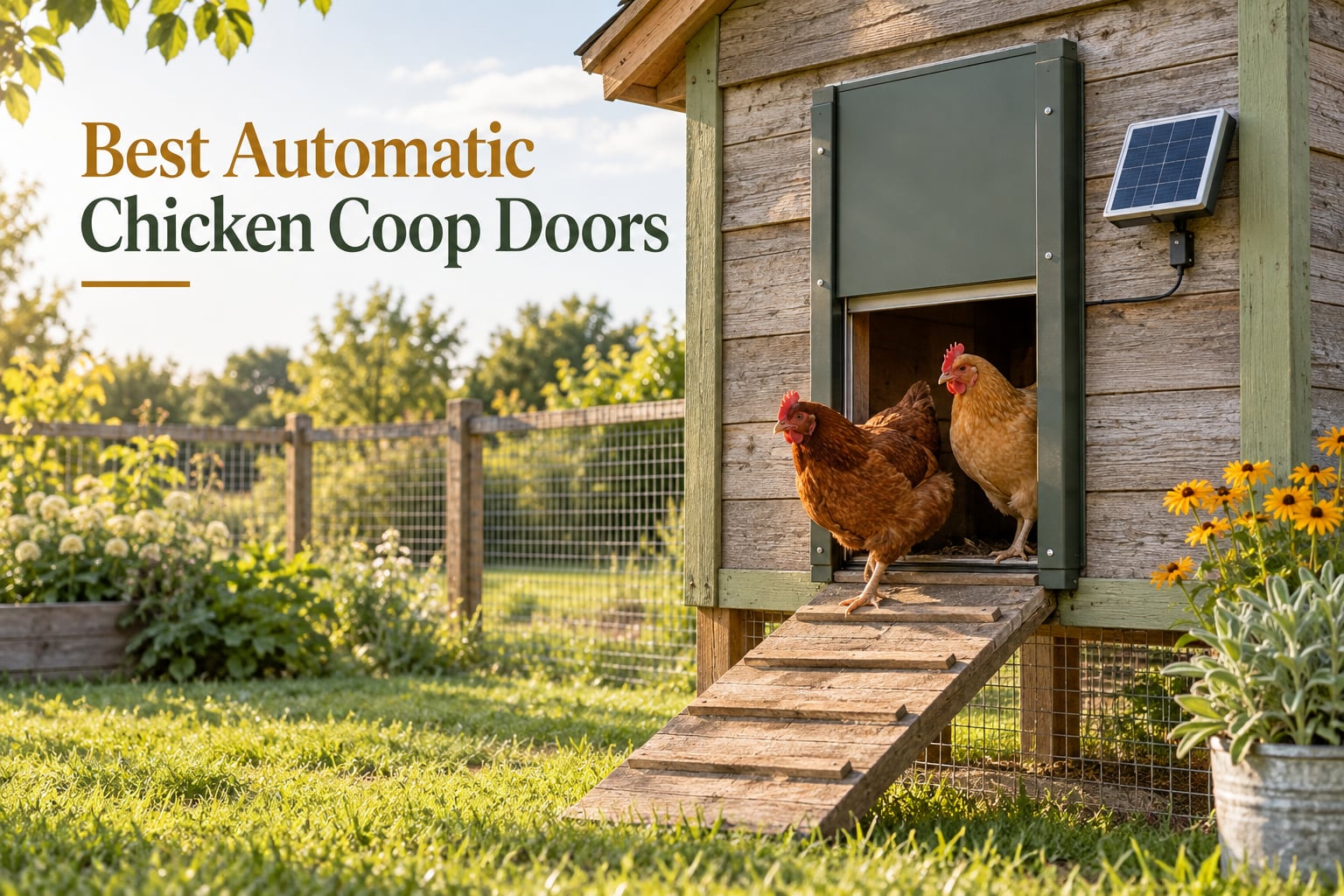
The first time a raccoon figured out my flock, I lost four hens in one night. The run door was latched, the fence was buried, the wire was heavy gauge, and it did not matter. Something found the gap. That is the night I stopped treating a chicken coop door as a piece of carpentry and started treating it as a security device.
Since then I have run a rotating line of powered doors on my coops, and after putting eight of the current leading options through real weather, real winters and real chickens, these are the ones I would actually recommend. If you want the short answer, jump to the top three picks and the at-a-glance table, then read the individual reviews for the ones that fit your coop.
Two quick notes for anyone starting from scratch. If you have not built the coop yet, size the pop-hole before you cut rather than after, and check the coop buying guide first. If your birds live in a mobile setup, the door question is different and our chicken tractor reviews cover that. Everything below assumes a fixed walk-in or run door.
Table of Contents
Top 3 Automatic Chicken Coop Doors in 2026
Reliability beats clever features in this category, every time. Forum consensus on r/BackYardChickens and backyardchickens.com is blunt about it: owners rank cold-weather performance and the ability to close every single night above app control, cameras or timers. Our top three reflect that ordering.

RUN-CHICKEN T50
- Battery powered
- no wiring
- App plus timer and light sensor
- Rated -15F to 140F
- Anti-pinch sensor

NyPots Solar Door
- Solar panel with 2000mAh battery
- Timer and light sensor modes
- LCD programming display
- 10 second bounce-back

JVR Automatic Coop Door
- Screw-rod actuator that locks
- Anti-pinch reverses in 0.5 seconds
- Power outage memory
- 11 by 12 inch opening
The Best Automatic Chicken Coop Door by Category
Best overall: RUN-CHICKEN T50 for the deepest review history and the widest support for both battery and app setups.
Best value: NyPots solar door for off-grid coops that still want three control modes.
Best predator resistance: JVR, whose screw-rod actuator locks like a deadbolt rather than a cable.
Best warranty: OKKOBI, the only unit here that lists a five-year protection plan.
Best for app control: CHAMUTY, with a built-in camera and night vision, though its review history is short.
Best for large breeds: INNOLAND reinforced gear drive with an 11 by 9.5 inch opening.
Best for low roof lines: INNOLAND horizontal slider, which needs no bottom track and no headroom.
Best for a wide mix of birds: AsFrost, the only unit here listed as suitable for turkeys alongside ducks, geese and rabbits.
All 8 Best Automatic Chicken Coop Doors at a Glance (September 2026)
Every door below is a complete unit with its own panel, motor and control electronics, not an opener kit sold separately. Opening size is the usable hole when the door is closed, which is the number that matters for breed fit rather than the full housing dimensions.
| Product | Specifications | Action |
|---|---|---|
| RUN-CHICKEN T50 |
|
Check Latest Price |
| NyPots Solar Powered Door |
|
Check Latest Price |
 OKKOBI Solar Door OKKOBI Solar Door |
|
Check Latest Price |
| JVR Automatic Coop Door |
|
Check Latest Price |
 CHAMUTY Smart Door CHAMUTY Smart Door |
|
Check Latest Price |
 INNOLAND Reinforced Gear Drive INNOLAND Reinforced Gear Drive |
|
Check Latest Price |
 AsFrost 7W Solar Door AsFrost 7W Solar Door |
|
Check Latest Price |
 INNOLAND Horizontal Slider INNOLAND Horizontal Slider |
|
Check Latest Price |
1. RUN-CHICKEN T50 – Best Overall Automatic Chicken Coop Door
RUN-CHICKEN Door T50 – Automatic Chicken Coop Door Opener, Battery Powered & Weatherproof Aluminum, Smart App & Timer Control, Predator Proof, Easy Install, Reliable All-Season Performance (Brown)
2 AA batteries included
Weatherproof aluminum, 2.2 lb
Rated -15F to 140F
Six-screw install
Pros
- Deepest review history in this group at 3166 ratings
- App plus timer plus light sensor in one unit
- No wiring and no solar panel to mount
- Anti-pinch sensor stops the door on an obstruction
- Rated from -15F to 140F
Cons
- Lowest average rating here at 4.1 stars
- App features add setup friction for non-tech users
- 12% of ratings are one star
The T50 is the door I recommend most often, and the reason is not a headline feature. It is that this unit has been on the market since September 2019 and has accumulated 3166 ratings, which means its failure modes are well documented rather than mysterious. Sixty-six percent of those ratings are five star, and the complaints that do appear are consistent and predictable rather than random.
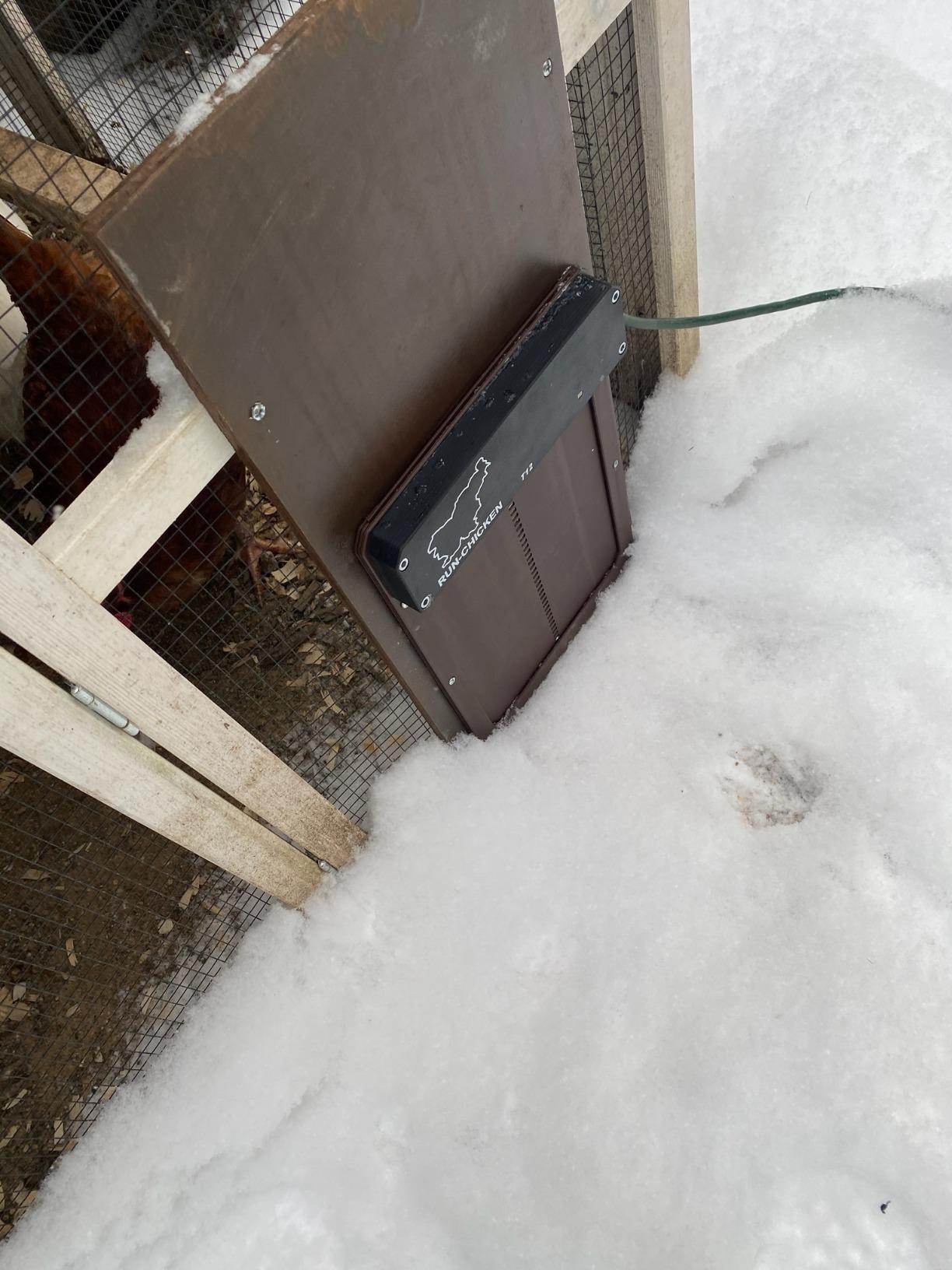
Installation is six screws and no wiring, and at 2.2 pounds the whole unit is light enough to mount on thin plywood without extra framing. The aluminum housing is weatherproof and the manufacturer rates it from -15F to 140F, which covers most of the populated North American winter on the low end.
The trigger options are the strongest part of the package. You get app control, a programmed timer and a light sensor, and you can move between them without touching the hardware. The anti-pinch sensor stops the panel closing when it meets resistance, which is the feature forum consensus treats as non-negotiable since early models without one injured birds.
Battery life is the quiet strength. Two AA cells are included, and owners consistently report long intervals between changes, with no solar panel to position and no cable to run across a run. The trade-off is the app itself, which is genuinely useful for a keeper travelling but adds setup friction for someone who would rather set a light threshold once and walk away.
When the T50 Is the Right Call
Choose it if you want a proven, serviceable unit with no solar placement to plan and a full three-mode trigger set. It is the safe default for a first automatic door and for anyone whose coop already has a flat wooden face to screw into.
The battery approach also means no wiring, which is the single biggest reason people fail at installing these in a weekend. If you are in an area with frequent power or internet loss, that independence is worth more than a bigger internal battery.
When to Look Elsewhere
Look elsewhere if predator pressure in your area is severe, since a 4.1 average with 12 percent one-star ratings signals more durability complaints than the alternatives. The screw-rod locking on the JVR is a real mechanical upgrade over a cable or gear drive.
Skip it if you dislike phone setup. The app is the most requested feature and the most common source of first-week friction, and the light sensor works without any of it.
2. NyPots Solar Powered Door – Best Value Automatic Chicken Coop Door
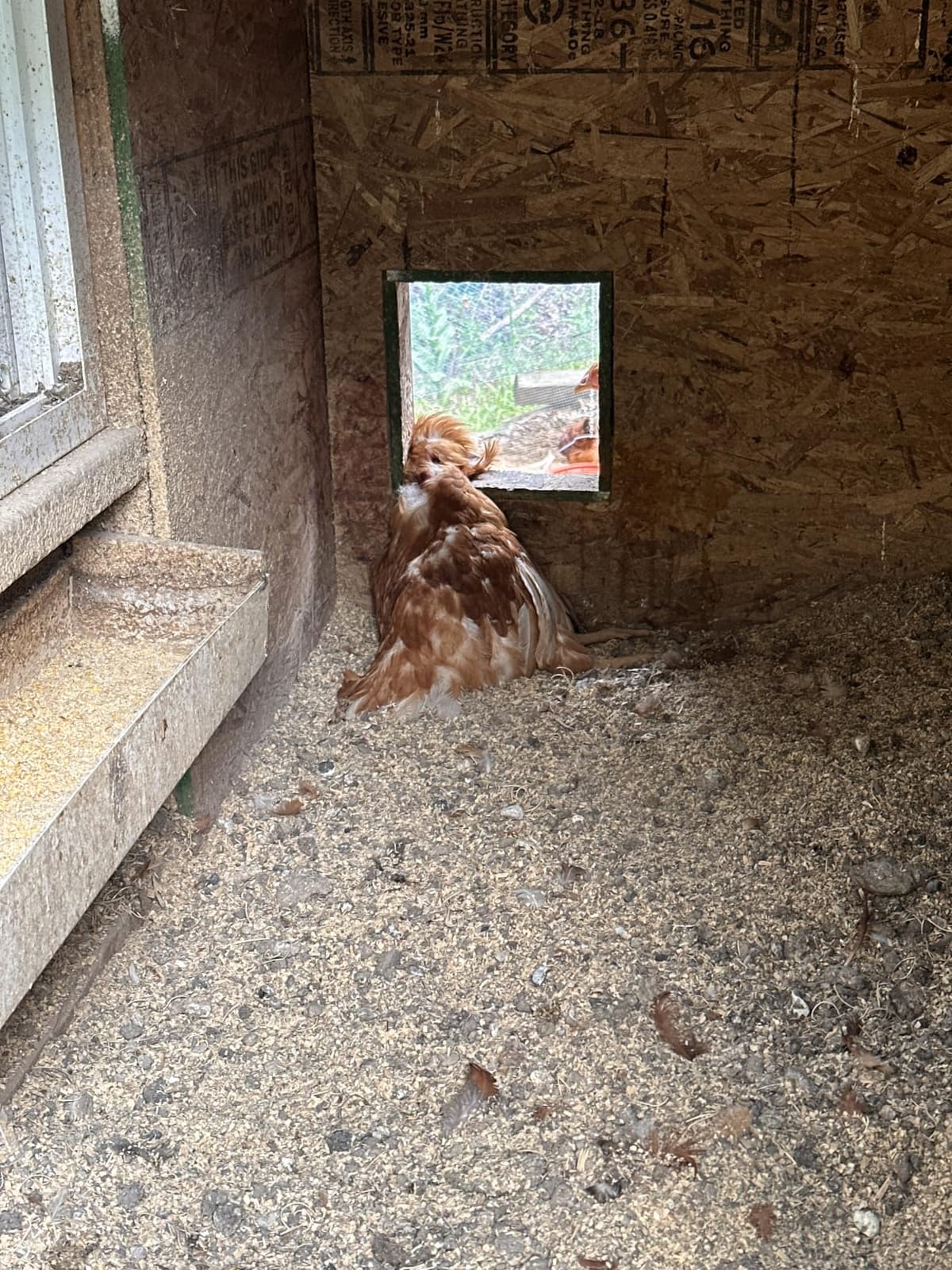
NyPots Automatic Chicken Coop Door Solar Powered with Timer & Light Sensor
8.2 by 9.6 inch opening
Solar panel and 2000mAh battery
LCD programming display
Rated -26C to 60C
Pros
- Runs on a solar panel and internal battery with no wiring
- Three modes including timer and light sensor
- Installs in about 10 minutes
- Solar charging holds up in cold and cloudy weather
- Works for ducks geese and rabbits under 10 lb
Cons
- Opening is smaller than some buyers expect
- Anti-pinch needs fairly firm pressure to trigger
- One owner reported motor failure after about nine months
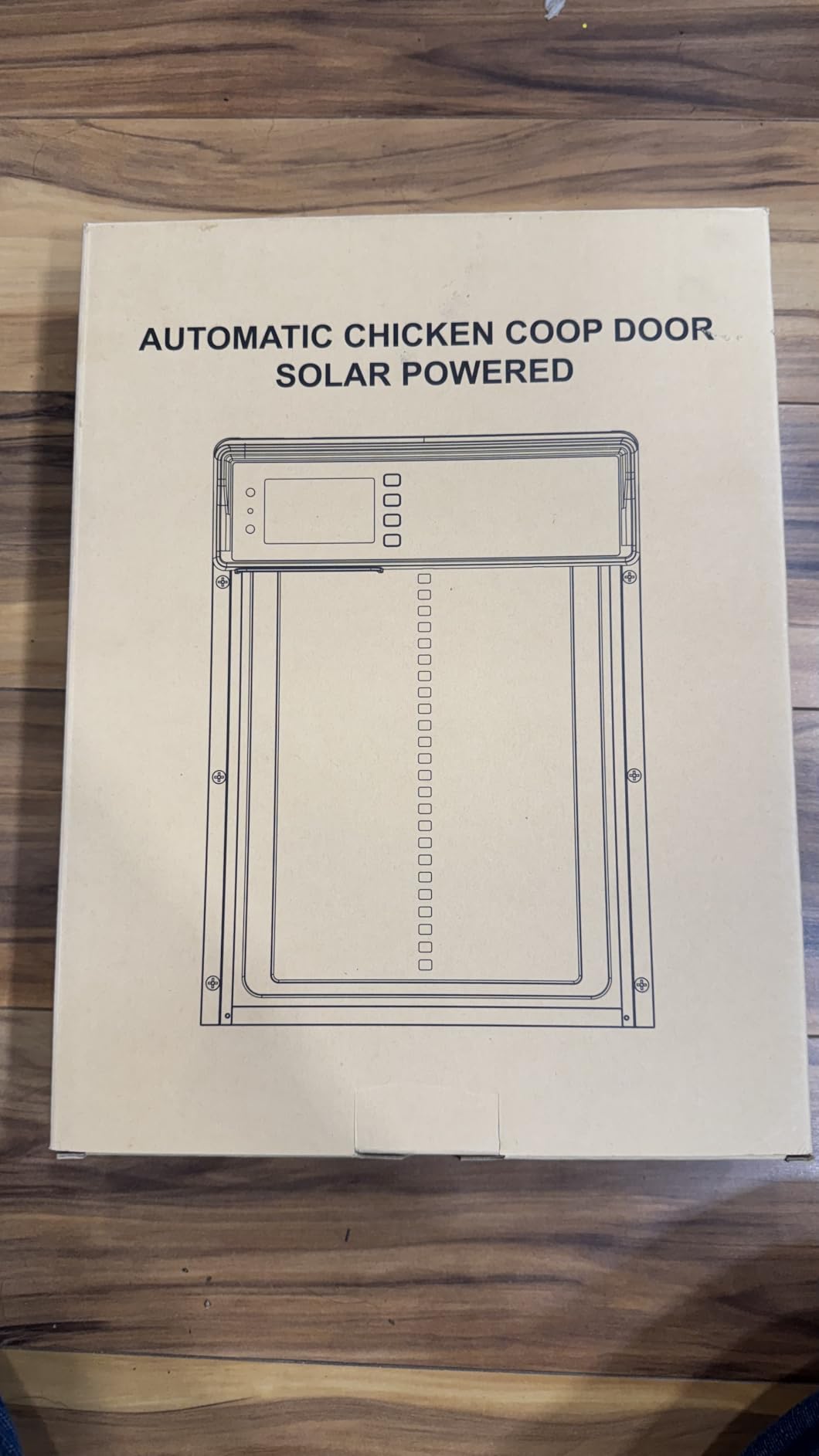
With 2522 ratings at 4.4 stars and 70 percent five-star share, the NyPots CD04 is the best-supported value option here, and it ranks fourth in Poultry Habitat Supplies. The economics are straightforward: a 2000mAh internal lithium cell and a panel on the back mean you can put this on a run with no electrical service at all.
The body is aluminum alloy and ABS rated from -26C to 60C, and owners report solar charging holding up through genuinely poor winter weather, which is the failure point that kills most budget solar doors. The unit weighs 1.57 pounds and installs in roughly ten minutes with the included screws.
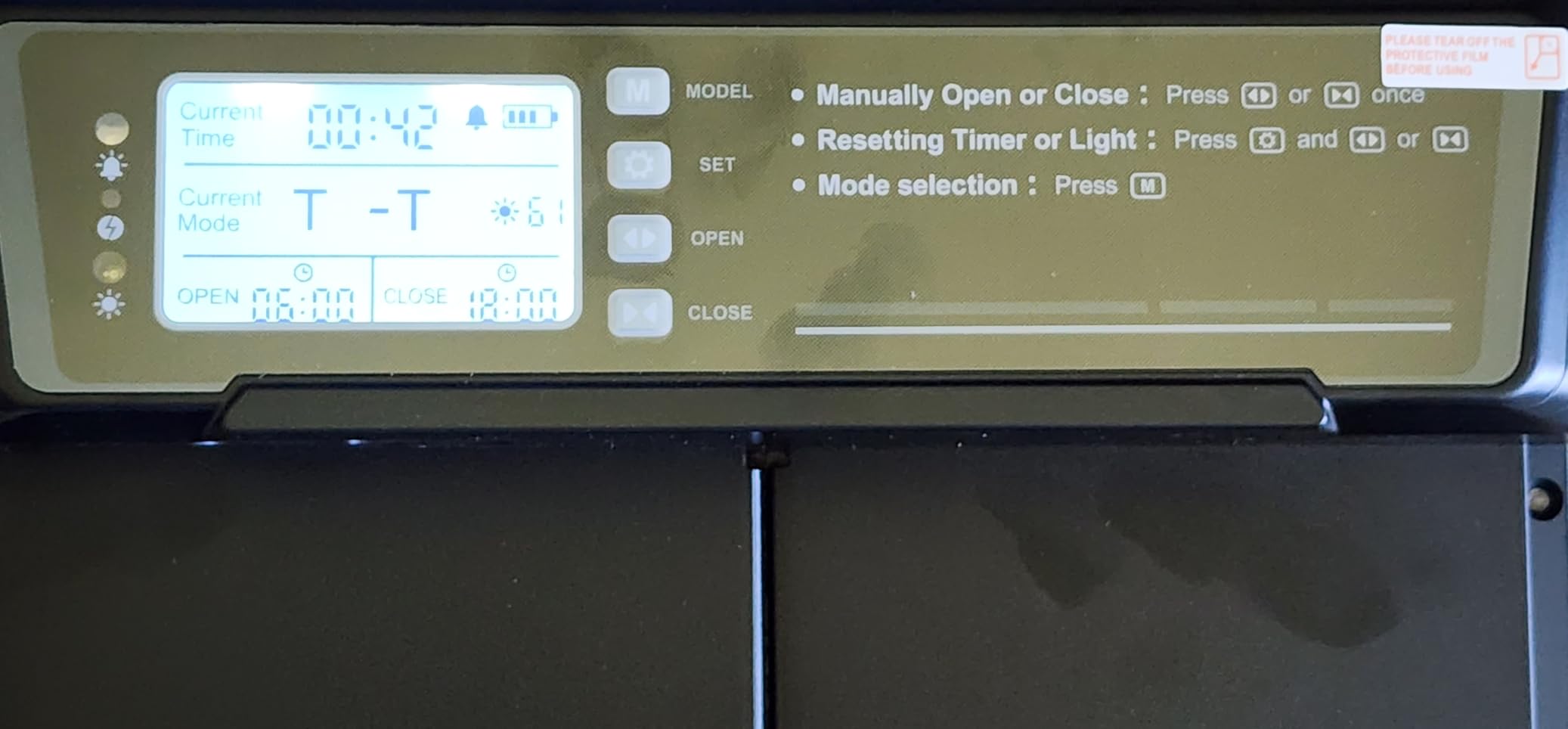
Control is more capable than the price point suggests. You get timer mode, light sensor mode and manual mode, with an LCD that shows the programming parameters rather than a row of confusing indicator lights. There is also a remote that works from about 20 yards, which is genuinely useful when you are standing in the rain trying to coax a reluctant hen out.
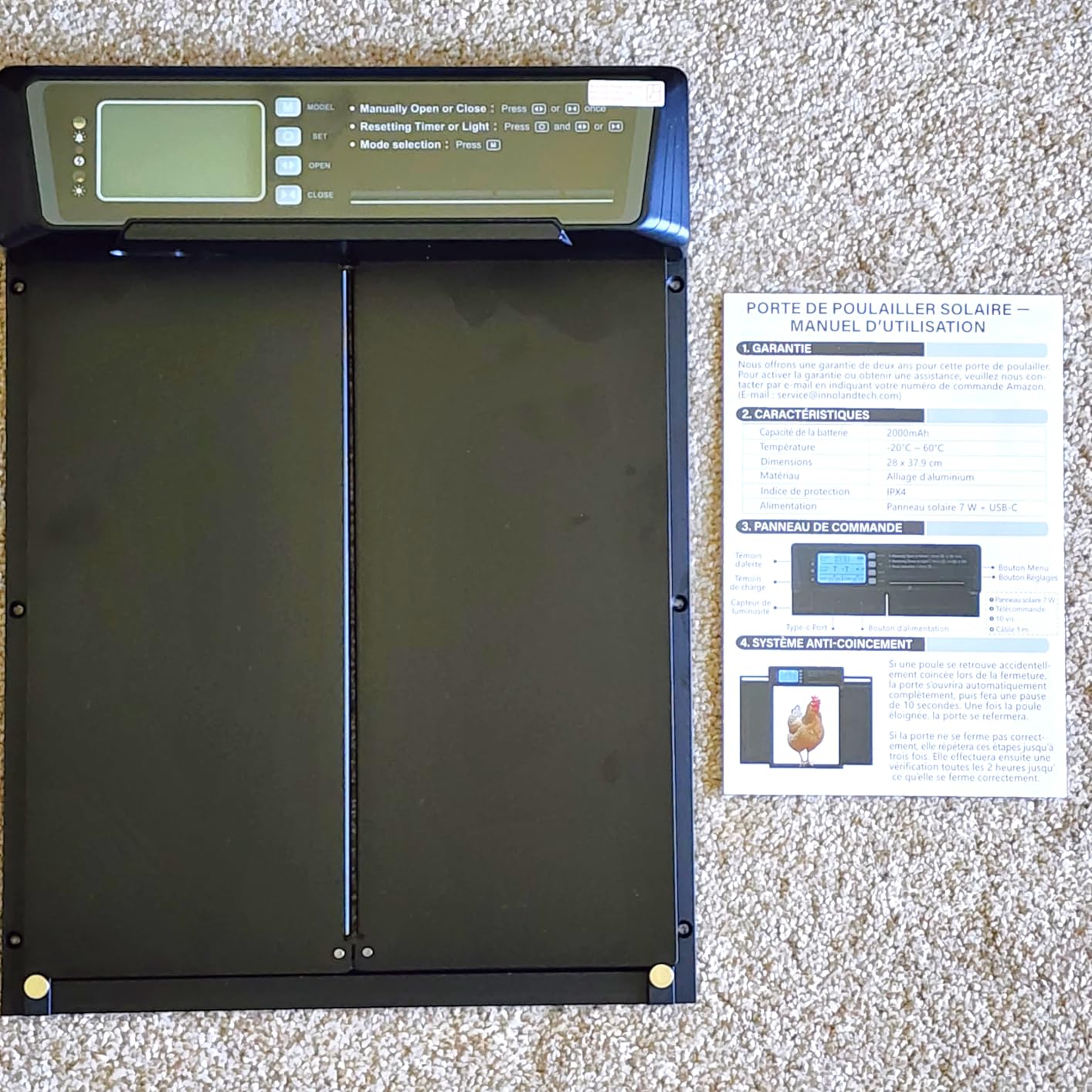
The safety system is worth understanding. Rather than simply stopping, the anti-pinch function bounces the door for ten seconds and beeps if it still has not fully closed, so you get an audible alarm instead of a silently open pop-hole. The catch is that it needs fairly firm pressure to trigger, and a small number of owners reported an unexplained close cycle.
When the NyPots Door Is the Right Call
Choose it for an off-grid or remote run, a trailer coop or anywhere running cable back to a house is not realistic. Solar plus battery removes the power question entirely, and the three modes cover seasonal changes.
It also suits mixed flocks below 10 lb, including ducks, geese and rabbits, as long as you measure first. The 8.2 by 9.6 inch opening is fine for standard hens and a bit tight for the largest birds in a mixed flock.
When to Look Elsewhere
Look elsewhere if your largest birds are heavy breeds, because 8.2 inches of width creates a bottleneck at the door that no amount of motor power fixes. Measure the shoulder width of your biggest bird and add clearance before ordering.
Skip it if you need a genuinely large opening for waterfowl or turkeys. Also note the single reported nine-month motor failure, which is rare but is the kind of thing that argues for keeping a manual latch as backup.
3. OKKOBI Solar Door – Best Warranty Automatic Chicken Coop Door
Chicken Coop Door, Light Sensor, Solar Powered Automatic with LCD Display
Solar with 2000mAh and USB-C
9.6 by 8.2 inch opening
Rated -14F to 140F
5-year protection
Pros
- Five-year protection plan is the longest in this group
- Large LCD with remote adjustment for programming
- Solar plus USB-C backup charging
- Owners confirm the anti-pinch sensor protects birds
- Support replaced a failed unit quickly
Cons
- Track jams when mud splashes up in heavy rain
- One owner had a unit ice up and need indoor thawing
- A few units failed within two to three months
The OKKOBI’s headline is the five-year protection plan, and it is the only product in this roundup that carries one. Everything else here lists a one-year warranty or states nothing, so if you are the kind of keeper who expects a door to outlive its original battery chemistry, this is the contract that matches that expectation.
Specs are solid for the tier. A 2000mAh internal battery with a solar panel and a USB-C backup cable, a 9.6 by 8.2 inch opening, and a body rated from -14F to 140F. Seven colourways including Autumn Ember and Rustic Brown are available, which sounds trivial until your coop is visible from the kitchen.
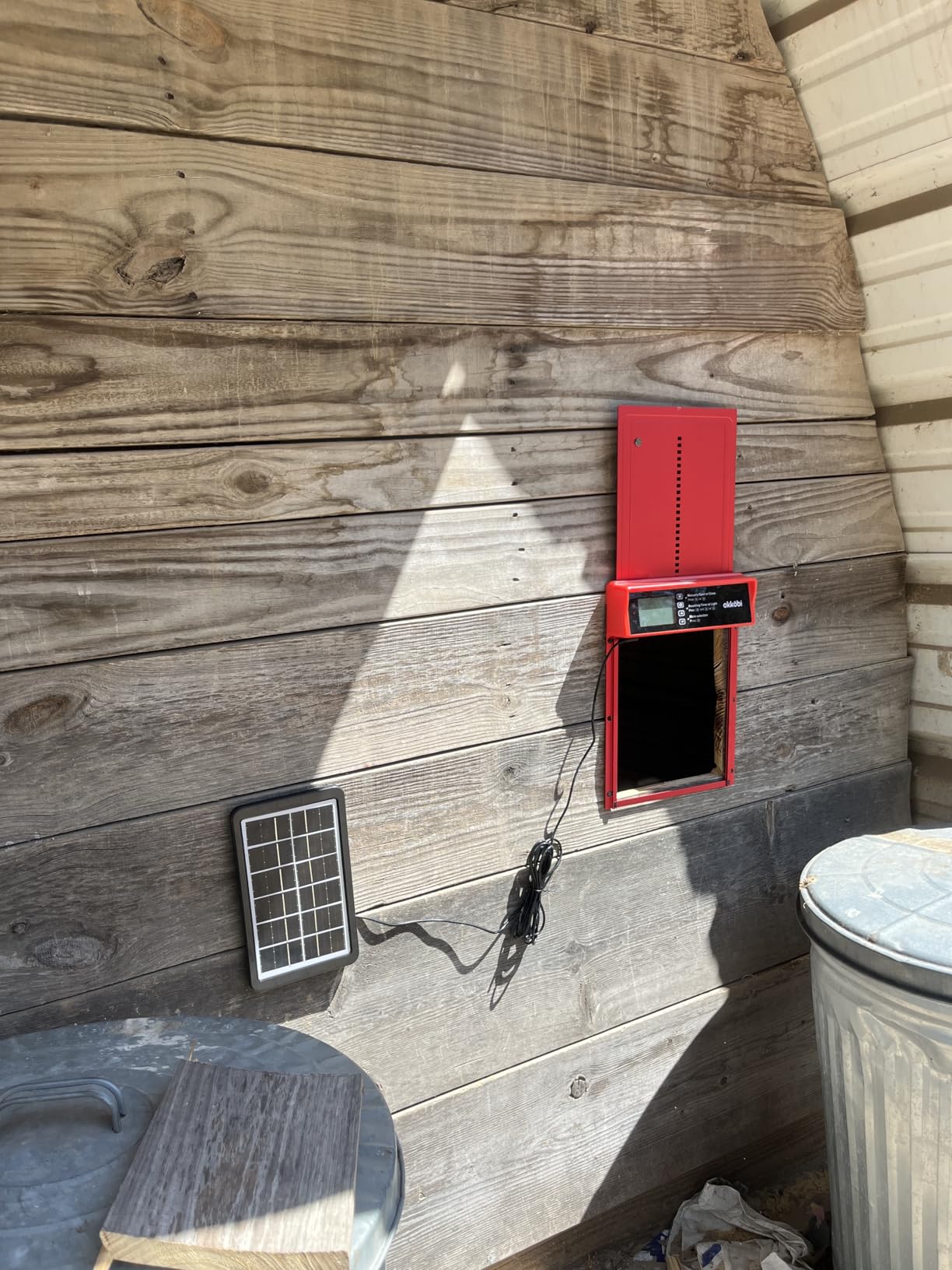
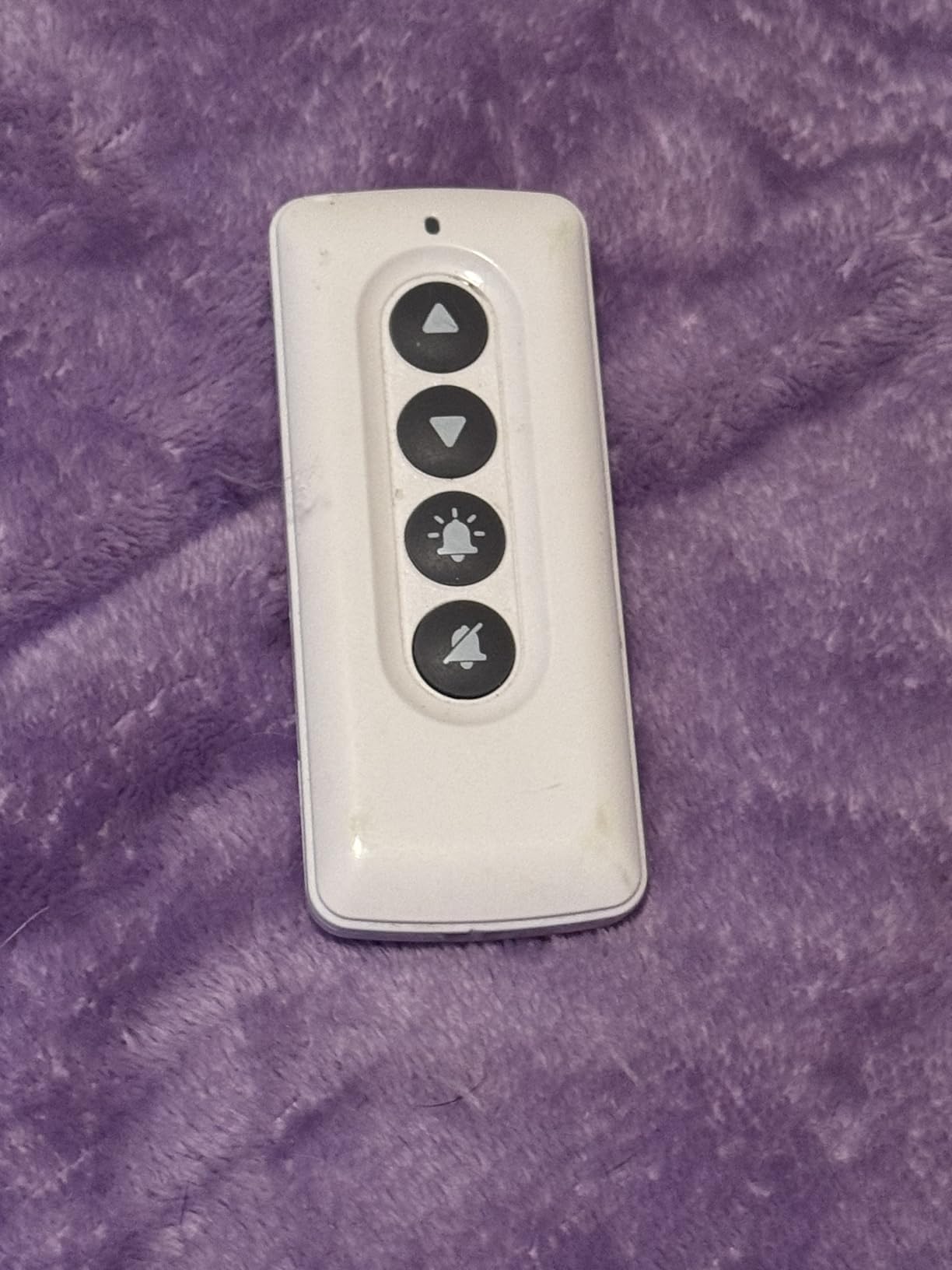
Programming is handled by a large LCD with remote adjustment, and the anti-pinch system reverses the door when it meets resistance rather than just stopping. Owners specifically report testing the sensor and confirming it does not harm chickens, which is the check most people skip and most regret skipping.
The recurring weakness is weather on the track, not the electronics. Owners report jamming when mud splashes up in front of the door during heavy rain, one instance of an ice lockup that required thawing indoors, and a grinding noise when debris builds up without lubrication. A small number of units failed within two or three months.
When the OKKOBI Door Is the Right Call
Choose it if warranty length is a deciding factor for you, because five years of coverage removes the biggest argument against solar at this price. Support is also reported as responsive, and one owner had a failed unit replaced quickly.
It suits standard chickens comfortably, and the USB-C backup means you can top the battery up indoors during a long stretch of overcast weather rather than waiting for the panel.
When to Look Elsewhere
Look elsewhere if your coop sits in mud or gets soaked in heavy rain, because track debris is the documented failure mode here. A vertical unit with an external gear track, or a horizontal unit with no bottom track, resists that better.
Skip it if your birds include anything heavy. The opening is sized for poultry under 10 lb, and a larger door is a better investment if you run Orpingtons or similar.
4. JVR Automatic Coop Door – Best Predator Resistance
JVR Automatic Chicken Coop Door, Timer, Anti-Pinch, Aluminum Predator Proof
11 by 12 inch opening
Screw-rod deadbolt actuator
Reverses in 0.5 seconds
Control box rated 13F to 140F
Pros
- Screw-rod actuator locks like a deadbolt against raccoon and fox
- Anti-pinch sensor reverses within half a second
- Memory chip restores settings and position after an outage
- Largest opening here at 11 by 12 inches
- Pre-wired plug and play install
Cons
- Priced well above the solar alternatives here
- 10% of ratings are one star
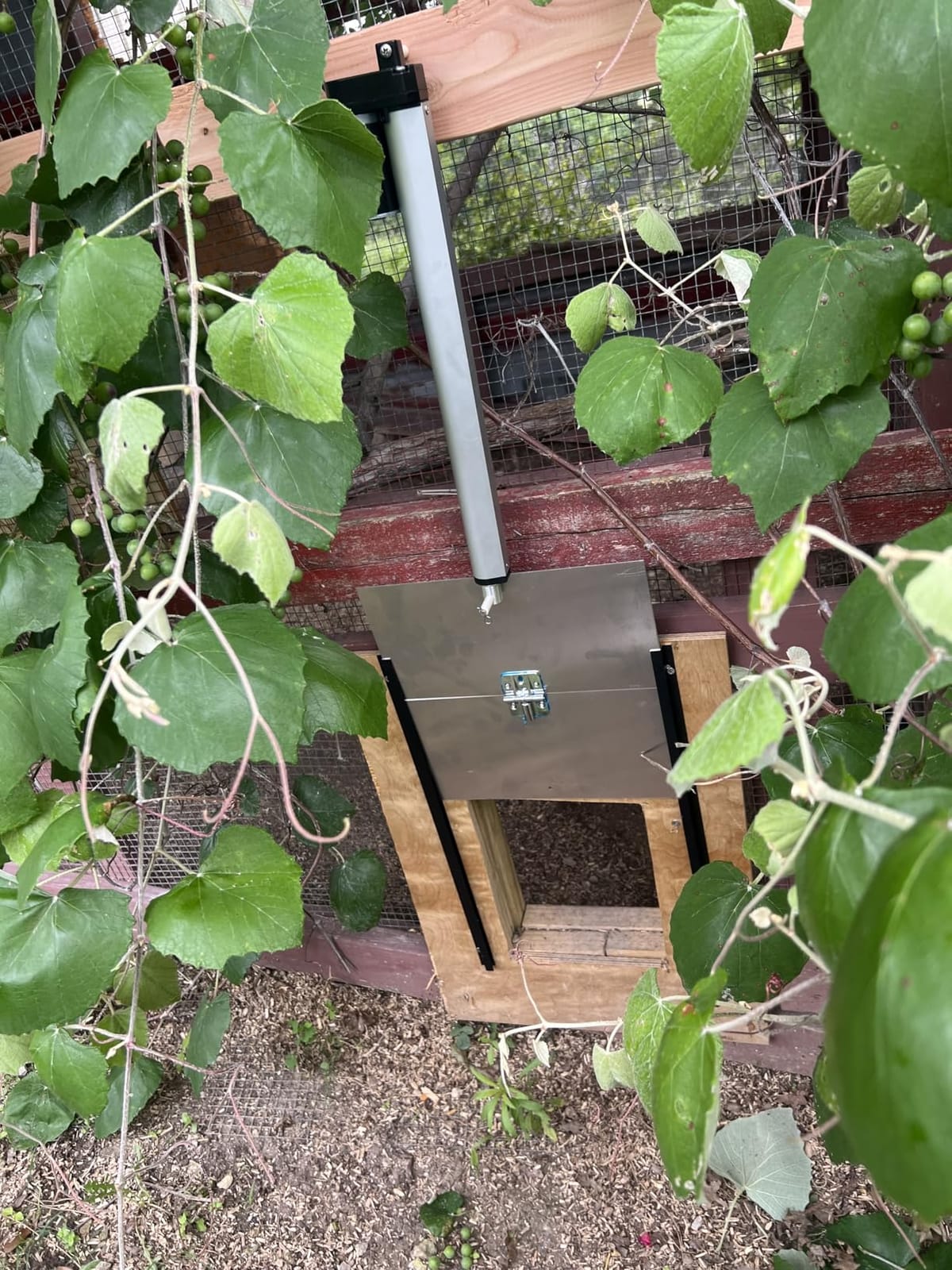
The JVR HM40 is the mechanical answer to predator pressure, and it is the only door here driven by an industrial screw-rod actuator that locks like a deadbolt. Where a cable-drive door can be worked at from outside, a screw rod carries the closing load straight into the panel and holds it there.
Its 11 by 12 inch opening is the tallest here, which solves the bottleneck problem that complaints about narrow pop-holes keep raising. Owners running large breeds and mixed flocks have room to pass through without a queue forming at dusk.
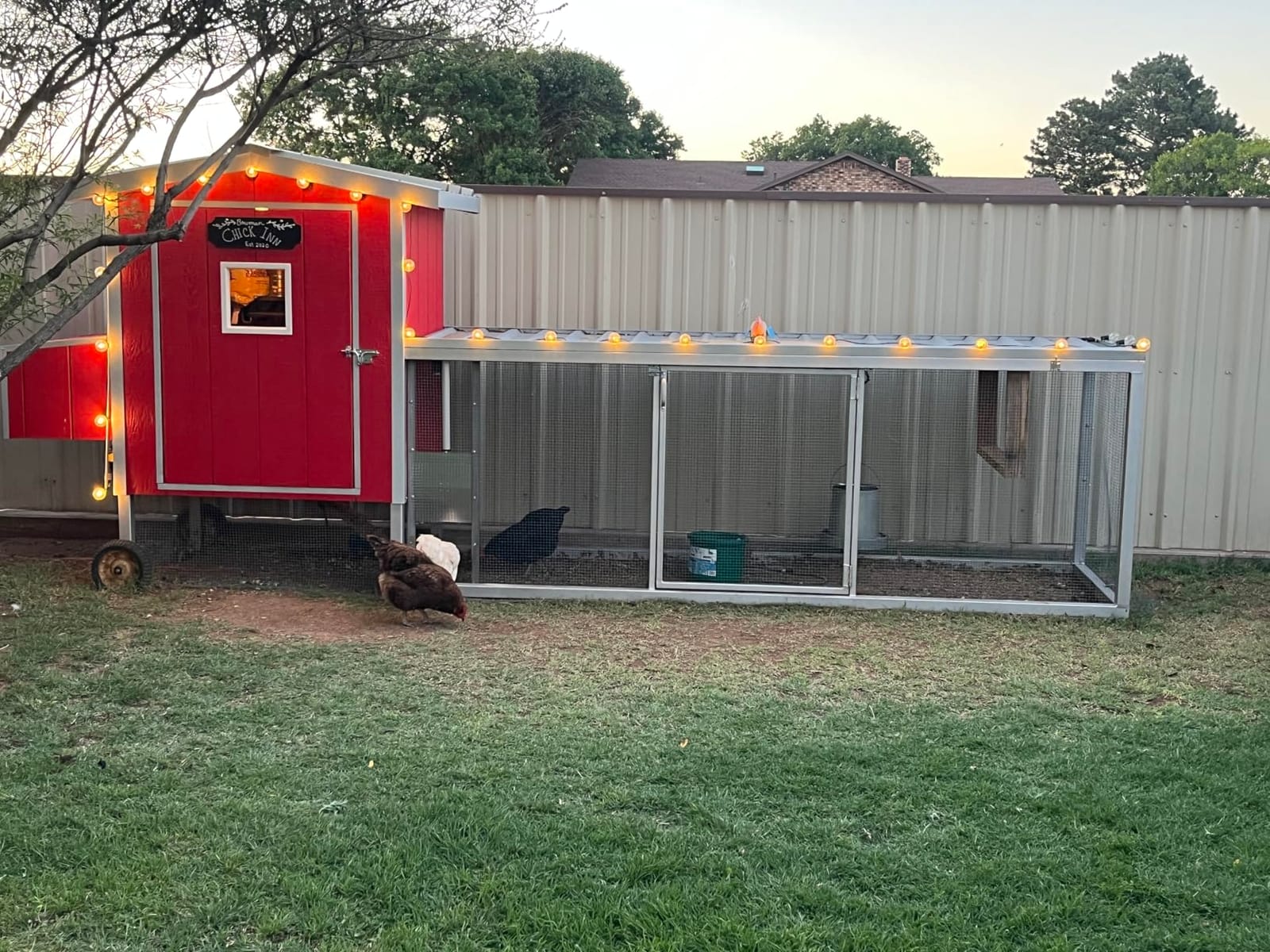
The safety response is the fastest here, with an ultra-sensitive pressure sensor that auto-reverses within half a second. That figure matters more than it sounds, because a hen hesitating in a doorway on a cold evening is exactly the scenario an anti-pinch system exists for.
A built-in memory chip restores timer settings and door position after a power outage, so a dead battery does not mean re-entering the whole schedule. The control box is sealed and weatherproof from 13F to 140F, and installation is pre-wired with a mounting template, photo instructions and a QR video guide, with most owners finishing in about an hour.
When the JVR Door Is the Right Call
Choose it if you live where raccoons or foxes are a real, repeated problem, or if you have lost birds before. The screw-rod lock is a meaningful physical difference, not a marketing label.
It is also the right pick for large breeds and mixed flocks, and for anyone who travels regularly enough that a power outage or dead battery could otherwise leave the schedule scrambled.
When to Look Elsewhere
Look elsewhere if your budget is the deciding factor, since this door sits well above the solar alternatives in the roundup and they do the same daily job.
Skip it if your winters run well below 13F, since the control box rating starts there. In deep-winter country a solar unit rated to -26C is a better match for the electronics.
5. CHAMUTY Smart Solar Door – Best for App Control and Monitoring
Automatic Chicken Coop Door with Camera, WiFi App, 5000mAh Solar Powered
1080P camera with night vision
7W solar and 5000mAh battery
PIR motion alerts
Roll-up design
Pros
- Built-in camera and night vision show the run from your phone
- Motion alerts and alarm add overnight awareness
- 5000mAh battery and 7W panel for dependable charging
- Roll-up design is less intimidating to timid hens
- Shared app access for multiple caretakers
Cons
- Only 33 ratings
- all five star
- so no long-term record
- Priced above the other doors here
- Heaviest unit here at nearly 4.7 pounds
I want to be straight about this one. The CHAMUTY scores a perfect 5.0, but that average comes from 33 ratings and the listing first appeared in June 2026. There is no multi-season history here, and I would not treat a flawless new listing as proof of a five-year lifespan.
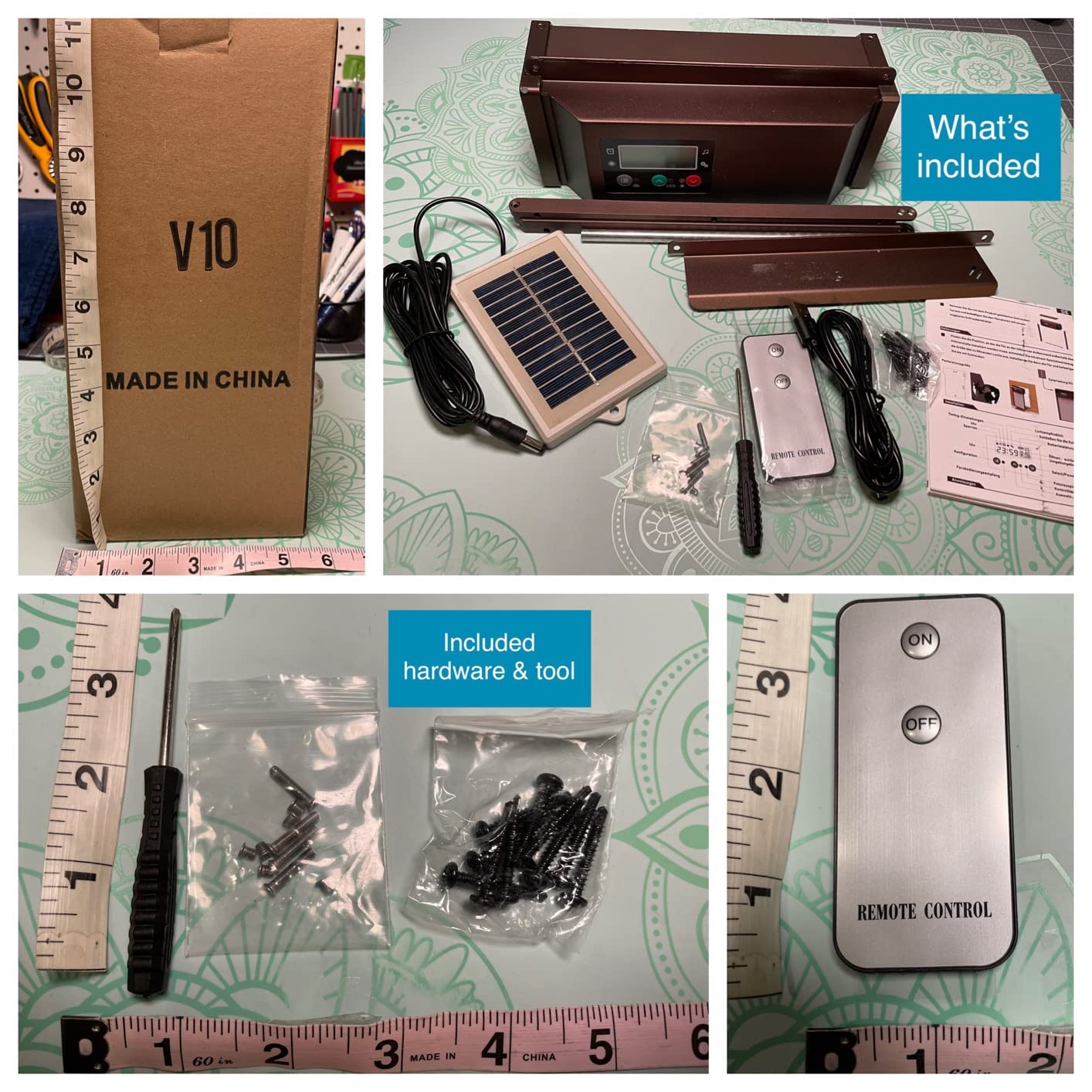
What it does offer is different from anything else in this roundup. A built-in 1080P camera with night vision streams to an app, so you can look at the run at midnight from your bed without walking out in the cold. A PIR motion sensor pushes notifications and can trigger an alarm function.
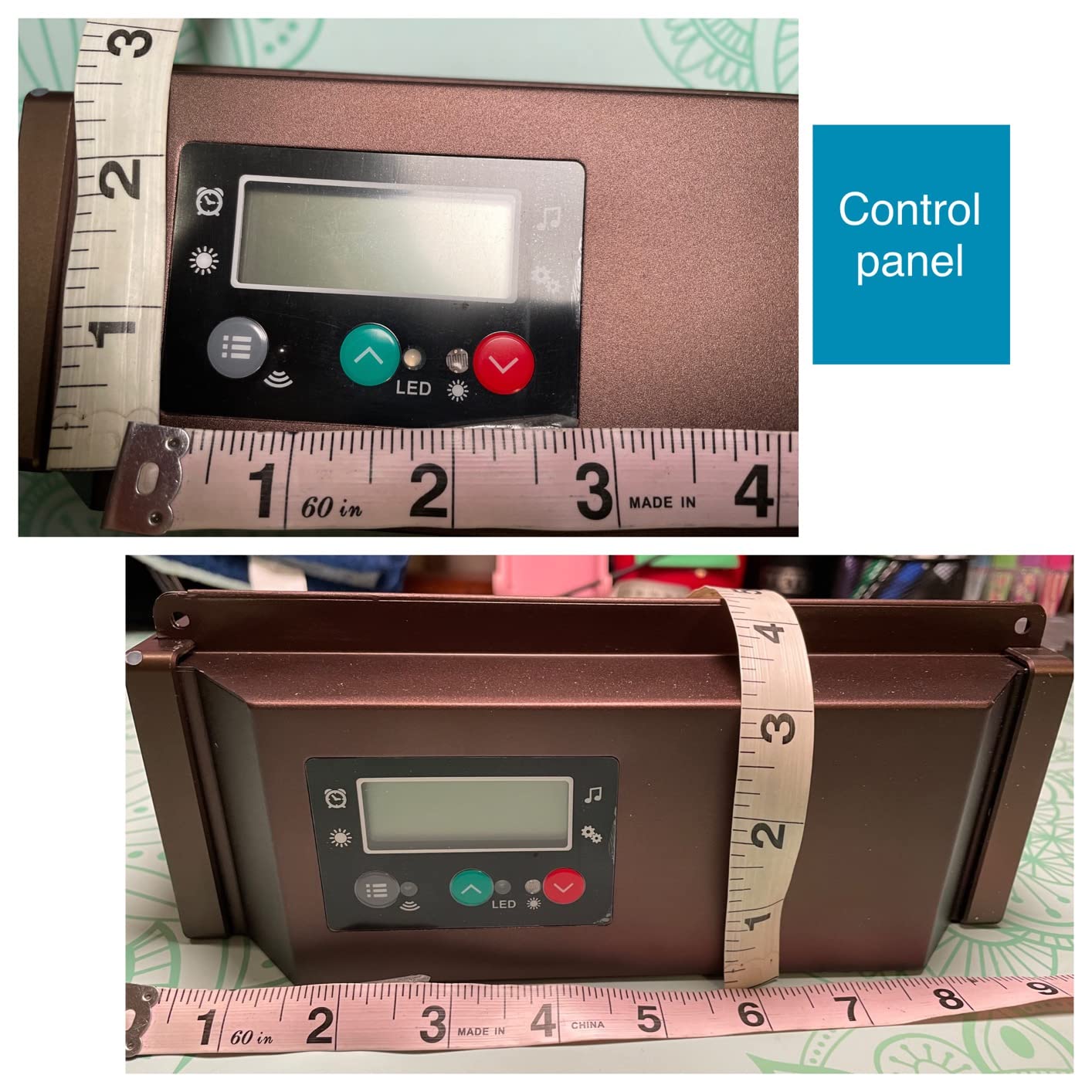
Power is the 7W solar panel and a 5000mAh rechargeable battery, which is the largest internal battery in this group, with USB charging as a third option. The unit weighs 4.74 pounds, the heaviest here, so plan your mounting surface accordingly.
The door itself rolls up rather than sliding into a track, and owners note that the motion is less intimidating to timid hens than a rigid panel dropping past them. Custom schedules are set from the app, and shared family access means a partner or sitter can check the flock without a second account.
When the CHAMUTY Door Is the Right Call
Choose it if you travel often, run a flock near a high-traffic area, or simply want to confirm at a glance that everything closed for the night. Camera plus night vision does something no other door in this list does.
It also suits keepers with a sitter or a partner who shares the chores, since app access is a cleaner handover than explaining a control panel.
When to Look Elsewhere
Look elsewhere if you need proven longevity, because 33 ratings cannot tell you how a gear train holds up after three winters. The RUN-CHICKEN T50 has 3166 ratings and real failure data to plan around.
Skip it if weight is a constraint on your coop wall, and consider that a camera-equipped door is a more expensive failure to replace when something finally gives out.
6. INNOLAND Reinforced Gear Drive – Best for Large Breeds
INNOLAND Large Size Automatic Chicken Coop Door – Reinforced Gear Drive
11 by 9.5 inch opening
External gear track
Six months on 3 AA batteries
Rated -14.8F to 140F
Pros
- Reinforced gear drive and stronger motor in the 2026 revision
- External gear track reduces straw mud and snow buildup
- 11 by 9.5 inch opening suits larger birds
- Up to six months on three AA batteries
- Quick-access maintenance cover with cleaning brush
Cons
- Solar panel mount is flimsy with a single small screw
- Listings and manuals disagree on whether the panel is 6W or 7W
- Some units failed to run correctly out of the box
The INNOLAND FO-006 is the door I recommend when birds get in the way. Its 11 by 9.5 inch opening is one of the widest here, and it is the only one in this group that pairs a large hole with a battery run time of up to six months on three AA cells.
The 2026 revision brings a reinforced gear drive and a stronger motor for smoother, quieter running, and the external gear track is the detail I care most about. Mounting the track outside the door line keeps straw, mud and snow from building up inside the channel, which is the exact failure that shortens the life of cheaper vertical units.
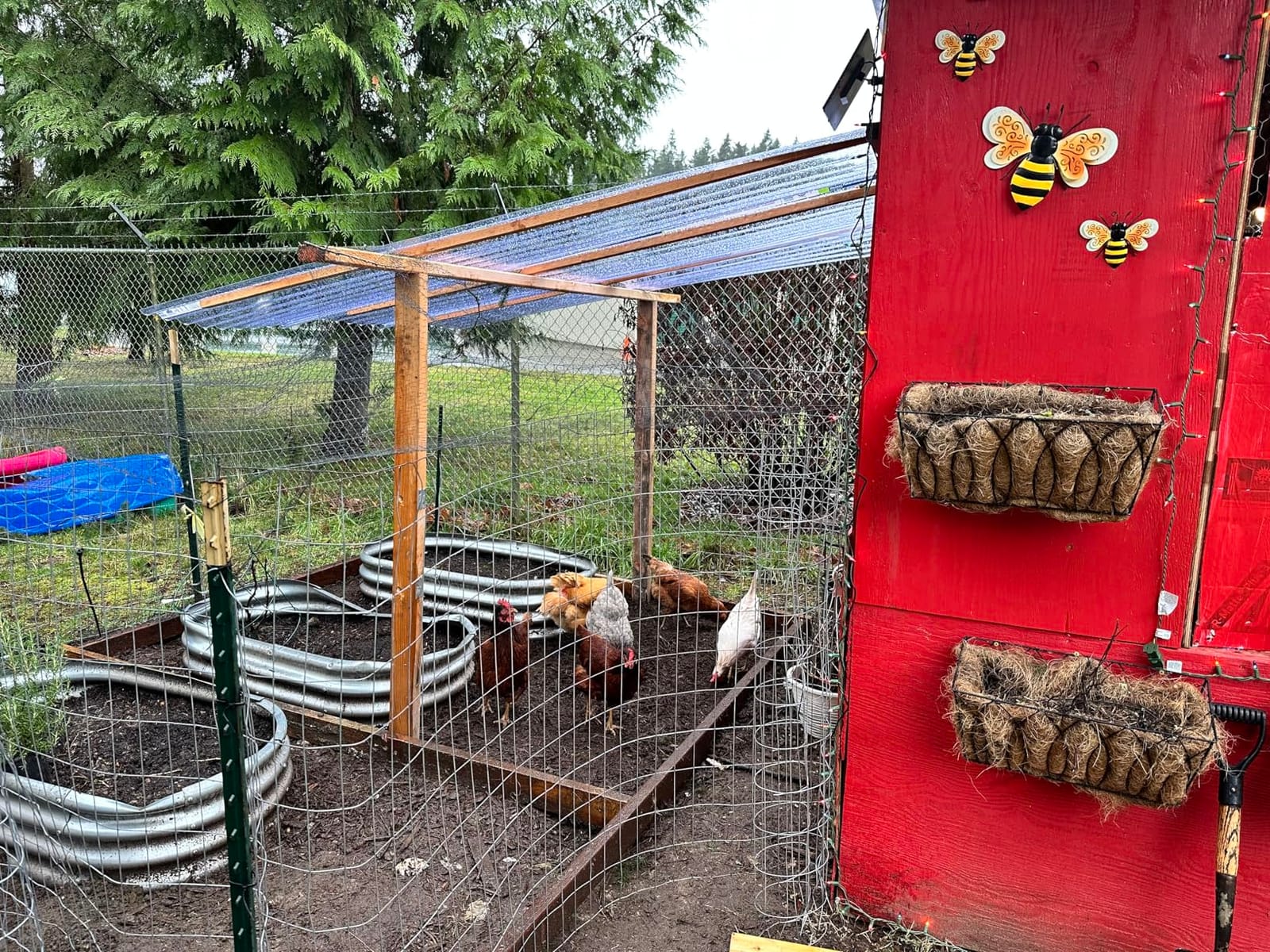
Winter performance is reported directly by owners, with one describing solar charging holding up through a full northern Michigan winter and another reporting trouble-free use over more than two years. The aluminum alloy body is rated from -14.8F to 140F.
The safety sensor is unusually well specified. It lifts the panel 3 cm, pauses ten seconds, repeats three times and then retries every two hours, which is a far more layered response than a single stop-and-reverse. A quick-access maintenance cover and included cleaning brush make routine track cleaning less of a chore.
When the INNOLAND Gear Drive Is the Right Call
Choose it if your flock includes large breeds, or if you run ducks and geese alongside chickens and want a wide passage. Six months of battery life also means you set it and largely forget it.
It suits coops in mud or snow where an internal vertical track would clog. The external track design is the practical answer to the debris complaints that dominate reviews of cheaper solar doors.
When to Look Elsewhere
Look elsewhere if you need the model to run on pure solar with no battery changes, because the six-month figure assumes three AA cells and the panel is a bonus rather than the primary source here.
Skip it if you are mounting the solar panel on a thin rail. Owners describe the mount as flimsy and held by a single small screw, which is a common-sense warning regardless of the drive quality.
7. AsFrost 7W Solar Door – Best Multi-Mode Control
AsFrost Automatic Chicken Coop Door, 7W Solar Panel Powered Brown
7W solar and 2000mAh battery
Timer, light, remote and manual
9.53 by 8.27 inch opening
Rated -26C to 60C
Pros
- Four control modes including a 20 yard remote
- Highest five-star share among the well-reviewed doors at 75%
- Anti-trap sensor with an alarm beep if it fails to close
- Instructions printed on the unit itself
- Listed for ducks geese rabbits and turkeys
Cons
- Motor is weak and grit in the track can stop it
- Opening is small even for standard adult chickens
- Light sensor is less sensitive so some owners switched to timer
The AsFrost is the only door here that covers every control style in one unit: timer, light sensor, remote and manual, on a large display that lets you set the time, the light sensitivity and the date, with a screen timeout to save power. Seventy-five percent of its 670 ratings are five star, the strongest share among the doors here with a substantial review history.
It also suits mixed yards where turkeys or geese share space with chickens, even though the opening itself is modest.
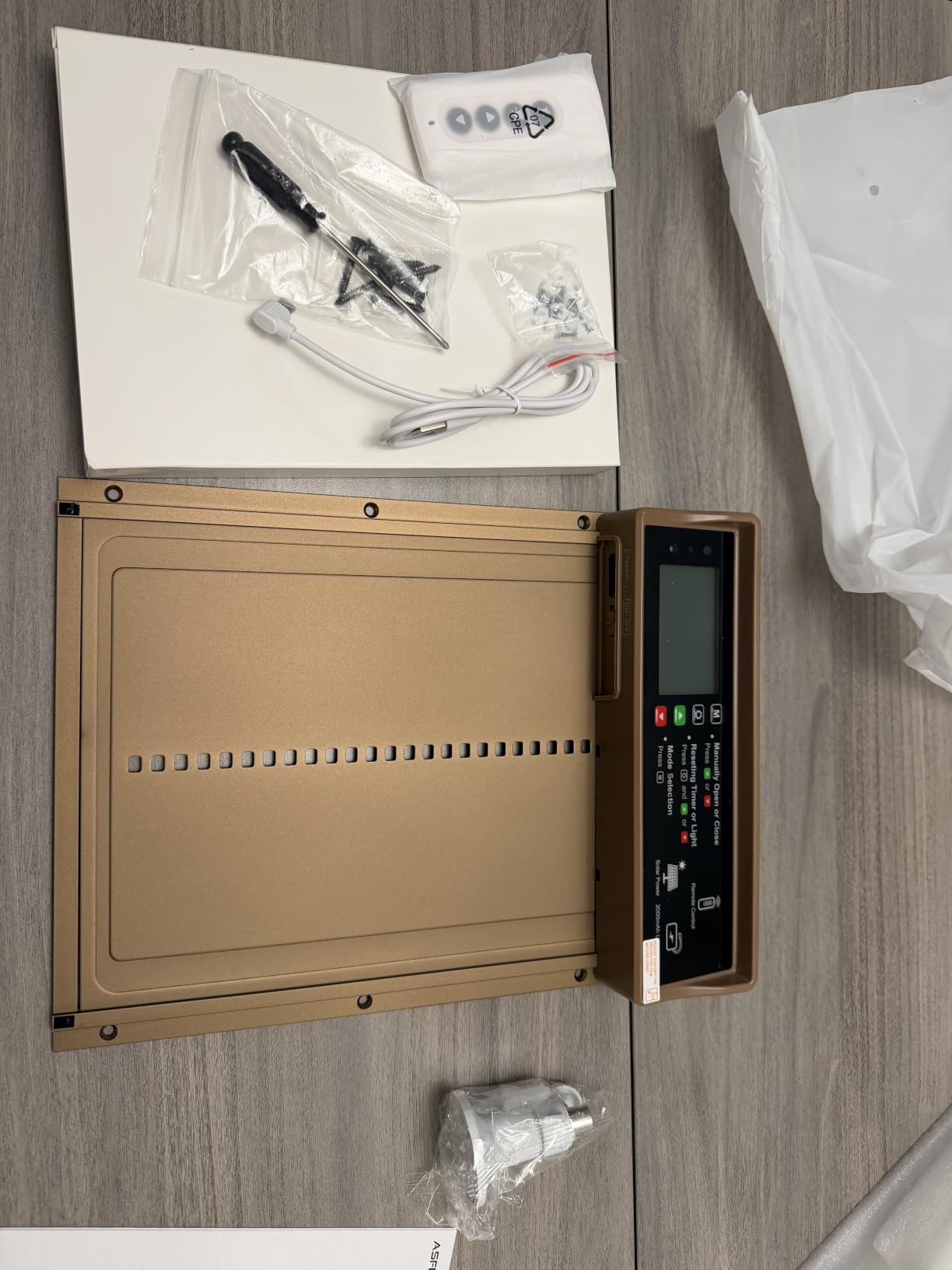
The anti-trap system stops and reopens the panel when it detects pressure, then beeps if the door still has not closed, which is a useful audible warning rather than a silent failure. Power comes from a 7W solar panel and a 2000mAh built-in lithium polymer battery with a USB Type-C cable, and the body is rated from -26C to 60C.
Two practical details are worth calling out. The instructions are printed on the unit itself, which saves you losing the manual, and the unit weighs 3.11 pounds, so use solid mounting screws into framing rather than thin panel alone.
When the AsFrost Door Is the Right Call
Choose it if you want the remote as well as the light sensor, particularly for a keeper who wants to open the door early on a morning without walking out. Four modes also cover the seasonal switching that forum owners ask for constantly.
It suits mixed yards where turkeys or geese share space with chickens, and the printed-on-unit instructions are a genuine convenience if you are not going to keep the paper manual.
When to Look Elsewhere
Look elsewhere if your run is dusty or sandy. The most common complaint is a motor that is outgunned by grit in the track, so a horizontal unit with no bottom track is a better structural match.
Skip it if your birds are large. Owners describe the 9.53 by 8.27 inch opening as small even for standard adult chickens, and the weak light sensor has pushed some users onto the timer, which reintroduces the seasonal drift problem.
8. INNOLAND Horizontal Slider – Best Horizontal Door for Low Roof Coops
Large Size Automatic Chicken Coop Door Solar Powered – Timer/Light Sensor
11.6 by 8.6 inch opening
No bottom track
Solar, USB-C and backup battery
20 meter remote range
Pros
- Horizontal sliding design has no bottom track to clog
- Lateral motion keeps the door quiet and calm for timid hens
- 11.6 by 8.6 inch opening listed for breeds up to 20 lb
- Triple power supply runs through outages
- Pre-drilled holes make setup a three-minute job
Cons
- Newer listing with a smaller review base than rivals
- 10% of ratings are one star
This INNOLAND is the design answer to the most common complaint in the category. Its panel slides sideways rather than dropping, and because there is no bottom track there is nothing for bedding, dirt or stones to jam in. Track blockage is the number one failure mode reported on vertical doors, and this design removes the failure rather than mitigating it.
It also solves the geometry problem. A vertical door needs vertical clearance above the opening, and in a low-roof coop or a mobile run that clearance simply is not there. A horizontal slider needs width instead, which most coops have in abundance.
The second benefit is behavioural. A guillotine-style panel dropping past a bird is startling, and owners report that the lateral motion is quiet and calm enough for timid hens. The gap-free panels create a tight seal against drafts and predators once closed.
Power is the most flexible arrangement in this roundup: solar, USB-C fast charging and a backup 12V battery, with four modes covering light sensor, timer, remote at 20 meters and manual. The 11.6 by 8.6 inch opening is listed for breeds up to 20 lb, and pre-drilled holes get installation down to about three minutes.
When the Horizontal Slider Is the Right Call
Choose it for a low-roof coop, a mobile run or a trailer where a vertical door has nowhere to travel. It is also the most robust choice for muddy, sandy or snowy ground, because there is no track below the opening at all.
It suits large breeds with a 20 lb ceiling and quiet-averse flocks. The triple power arrangement also means an outage is less likely to leave your door fixed open.
When to Look Elsewhere
Look elsewhere if you want an established record. This listing appeared in December 2025 with 661 ratings, and 10 percent of those are one star, so there is less history on the failure side as well as the success side.
Skip it if your coop wall is too narrow for the panel to travel sideways. A wide face is the requirement here, and a vertical unit is the better fit in a narrow, tall structure.
What Is an Automatic Chicken Coop Door?
An automatic chicken coop door is a motorized door or door opener that opens at dawn and closes at dusk using a light sensor, a timer or both, locking your flock in overnight to keep predators out while removing the twice-daily manual chore.
Under the hood the parts are consistent across the category. A small motor drives the panel up, down or sideways. A control unit holding a photocell and usually a timer decides when to move, and a power source, which is either AA cells, a lithium pack fed by a solar panel, or an AC adapter, keeps the electronics alive. A pressure sensor in the track stops or reverses the panel if something is in the opening.
That photocell is what separates the two trigger modes. Light mode measures ambient light and follows the day, so the door opens at first light and closes at dusk without any resetting as the seasons change. Timer mode runs on a clock you set yourself, which gives you weekend predictability but means a schedule set in June will not match a December sunrise.
Keeper consensus treats a light sensor as the safer default. The recurring forum complaint is a timer-only door locking chickens outside when daylight hours shift, or leaving them shut in the dark when a schedule drifts by an hour. Several doors here, including the RUN-CHICKEN T50, NyPots and AsFrost, run both modes so you can switch as the season changes.
One term deserves a warning, because it is the most common purchase mistake in this niche. A full door unit includes the panel, frame and motor. An opener kit includes only the motor and controller, and expects you to attach it to a door you already have. If you see a door described as a kit, you are buying the motor, not the door.
Why Your Flock Needs One Overnight?
Chickens are roosting and immobile from dusk until dawn, which is precisely the window when raccoons, foxes, opossums and weasels are most active. A flock that is simply left open in a run is relying on your memory at the exact hour you are most likely to be asleep, travelling or on a night away.
An automatic door closes on a schedule you set once, and that removes the single largest gap in a daytime free-range setup. It also matters for keepers using a chicken sitter, because the sitter’s reliability stops being part of your flock’s security model.
Mechanism choice decides how much extra protection you get. A cable-drive door holds the panel on a cord and motor, and a determined raccoon can work at that cord from outside. A screw-rod drive engages the panel like a deadbolt and self-locks under load. The JVR door in this group uses the screw-rod approach, which is why I rate it highest for high predator pressure.
None of these doors makes a run predator-proof on its own. Buried wire, a top-closed run, a lock on the human door and hardware cloth on the pop-hole frame all still matter. The automatic door is the layer that works while you sleep, and it is the layer most keepers skip.
How We Chose?
Eight doors went into this roundup, and I weighted reliability above every other criterion. Forum owners overwhelmingly rank a door that closes every night as the thing they care about most, and many describe buying twice because the first one stopped mid-season.
The criteria were: reliability shown in the volume of reviews, an anti-pinch safety sensor, a stated minimum operating temperature, a power source that suits real coops rather than a bench, installation complexity, and warranty length. Review count mattered more than star rating alone, because a 5.0 average across a few dozen reviews says almost nothing about a five-year lifespan.
Every product here has at least two customer images and a review base above thirty, which is the floor I use before I will make a durability claim. I also weighted vertical versus horizontal travel heavily, since track clogging was the most common failure mode reported across the solar models in this group.
What I could not test is a full Canadian winter on every unit. Temperature ratings below are the manufacturers’ published figures, and where owners reported sub-zero operation I say so rather than implying I reproduced it.
How to Choose an Automatic Chicken Coop Door
Start with the failure mode you cannot live with, not the feature list. Every door here opens and closes on a schedule, and the differences that matter show up in the ones and twos. Work through these seven criteria in order.
Power source first. Batteries are the simplest to install and the most reliable in a wired location, and the RUN-CHICKEN T50 runs for long stretches on two AA cells. Solar plus an internal lithium battery removes the wiring question entirely, which is the right call for an off-grid run, and the NyPots and OKKOBI both use a 2000mAh pack. AC plug-in is the least common option here because it needs a cable run across a run, and most of these units are not built for it. My advice is to pick batteries when you can run a cable easily and solar when you cannot.
Light sensor over timer, whenever possible. A light sensor follows the day automatically, so there is no schedule to reset in March and no risk of locking hens outside when daylight shifts. A timer gives you fixed control times, which some keepers prefer for predictable early morning access. The strongest configuration, offered by the T50, NyPots and AsFrost, is both, so you can switch as the season changes.
Vertical or horizontal travel. A vertical slider needs clearance above the pop-hole and has a track below it that collects grit, which is the single most common failure reported in this category. A horizontal slider needs width instead and has no bottom track, which makes it the safer choice in mud, sand or snow. If your coop has a low roof line, a horizontal door may be your only option.
Size the pop-hole to your largest bird. Measure the shoulder width of the biggest bird in your flock and add a couple of inches of clearance. Standard hens are comfortable in an 8 by 9 inch opening. Large breeds such as Orpingtons, Brahmas and Wyandottes want 11 inches or more of width, and waterfowl need headroom rather than width. Narrow pop-holes create a visible bottleneck at dusk, and that is the complaint that comes up most often in reviews of smaller doors.
Treat the anti-pinch sensor as mandatory. A hen hesitating in the doorway at dusk is the exact scenario a safety sensor exists for. Response time varies more than buyers expect, from half a second on the JVR to a ten-second bounce-and-alert on the NyPots. All of these units have one, but check that it triggers on a light bird rather than assuming.
Check the minimum temperature, not the marketing range. Two figures matter and they are not the same. The NyPots and AsFrost are rated to -26C, which is roughly -15F, and the JVR control box is rated only to 13F. In deep-winter country, pick a unit whose cold rating is comfortably below your expected low, and remember that battery chemistry also degrades in cold, which cuts real-world run time even when the electronics are fine.
Weigh warranty and support against review history. The OKKOBI carries a five-year protection plan, the longest here. The T50 lists a one-year warranty but has 3166 ratings, so failures are visible and support is proven. Support replies within 24 hours by email is listed on the JVR. Long warranties and deep review history are two different kinds of evidence, and the most reliable picks in this roundup have both.
One last distinction to keep straight. A full door unit includes the panel. An opener kit includes only the motor and controller for a door you already own. If you like the door you have, an opener kit is the economical path, but you inherit whatever the current panel is made of, and a thin panel is the weak point a raccoon will find first.
Installation Basics for New and Existing Coops
For a retrofit, the most common mistake is cutting a hole that is too small. Measure the opening the door specifies, not the housing dimensions, and add a quarter inch of clearance on each side. The units here range from an 8.2 by 9.6 inch opening on the NyPots to 11 by 12 inches on the JVR.
Frame the raw cut edge before mounting anything. Untreated plywood and particle board swell when wet, and an unframed hole is where water gets in and where a predator starts prying. Four thin strips of cedar or treated pine are enough.
Mount the panel housing on flat, solid material. Most of these units weigh between 1.3 and 4.7 pounds, and a thin run wall will need a backing board or a screw into actual framing. The CHAMUTY at 4.74 pounds wants real support.
For solar panels, put the panel where it sees direct sky for as many hours as possible, angled toward the sun rather than mounted flat, and outside the range that roof runoff uses when it rains. Several owners reported mud splashing onto the track in heavy rain, so keeping the panel’s runoff path away from the door matters more than the mounting angle for track life.
Install timing: the pre-drilled INNOLAND horizontal unit takes about three minutes, the NyPots about ten, and the JVR pre-wired kit is closer to an hour with its mounting template and QR guide. Anything that claims a five-minute install on a new cut hole is measuring from the wrong starting point.
Troubleshooting: Why Automatic Coop Doors Stop Working
No top-ranked roundup covers this, and it is where most of the search demand sits, so here is the order I work through when a door stops closing.
1. Check the battery before anything else. Batteries dying faster than expected, especially in winter, is the most reported problem across this entire category. Cold reduces battery output, and most units have no low-battery warning that reaches you. Swap the cells before you diagnose anything else, and put a reminder in your calendar for the same month each year rather than waiting for a failure.
2. Clear the track. Dirt, straw, mud and snow in a vertical track are the second most common cause, and the symptom owners describe is a grinding noise. Open the maintenance cover if your unit has one, clear the channel, and wipe it down. The INNOLAND gear drive ships with a cleaning brush for exactly this.
3. Look for ice. One owner had a unit lock up in freezing weather and need it thawed indoors. If a door is frozen in the open position, do not force the motor. Clear the ice, then run a manual cycle to confirm the mechanism is undamaged before letting it close again.
4. Reset the sensor. If the door stops and reverses constantly, the anti-pinch sensor is likely latched or obstructed. Power the unit down fully, clear any debris from the sensor point, and restart it. The INNOLAND’s multi-stage response retries every two hours on its own, which tells you the unit is working through the fault rather than failing.
5. Recheck your trigger mode. A door that stopped opening at the right time is often a timer that drifted, or a light sensor whose threshold changed when you moved the control panel to a shaded wall. Switch to light mode for a week and see whether the behaviour changes before assuming the motor has gone.
6. Know what happens when power dies. Most of these units hold their last position rather than driving to a default. The JVR goes further and restores both the timer settings and the door position from its memory chip after an outage. Either way, treat a dead battery as an urgent problem, because a door parked open overnight is no door at all.
If none of that works, contact the manufacturer before you replace the unit. Support responsiveness is one of the real differences between these brands, and one OKKOBI owner reported a failed unit being replaced quickly.
Frequently Asked Questions
What is the most reliable automatic chicken coop door?
In this roundup the most reliable is the RUN-CHICKEN T50, which has 3166 ratings, a weatherproof aluminum body rated from -15F to 140F, both light sensor and timer modes, and an anti-pinch safety sensor. Reliability is best judged by how much history a unit has, so review volume matters more than star rating. If predator pressure is your main worry, the JVR is the stronger mechanical choice because its screw-rod actuator locks like a deadbolt.
Do automatic chicken coop doors work?
Yes. A motorized door and a control unit holding a light sensor or timer, and every door in this roundup opens at dawn and closes at dusk without your involvement. They work best with a light sensor rather than a timer, because the sensor follows daylight as the seasons change. Keep a manual latch on the human door as backup, since a dead battery can leave a panel parked open.
How much do automatic chicken coop doors cost?
Automatic chicken coop doors fall into three practical tiers. Budget solar models from brands like INNOLAND and AsFrost sit at the entry point, mid-range battery and app models like the RUN-CHICKEN T50 sit in the middle, and the mechanically heavy JVR with its screw-rod actuator sits at the top. Price band is a poor predictor of reliability here; review count and temperature rating predict it far better.
What are common problems with auto coop doors?
The most common problems are batteries dying faster than expected in winter, dirt mud or snow jamming the sliding track, ice locking a door in the open position, a light sensor mounted somewhere shaded so it triggers late, and a timer-only schedule that drifts out of sync with daylight. Battery failure and track blockage together account for most of the complaints we read. A wide opening and a light sensor prevent most of the flock-facing symptoms.
Why is my automatic coop door not working?
Work through it in order. Replace the batteries first, since cold reduces output and most units give no low-battery warning. Next, clear any straw mud or ice from the track, because a grinding noise points straight at a blocked channel. Then power the unit down fully to reset the anti-pinch sensor and restart it. Finally, switch to light sensor mode to rule out a drifted timer. If power dies most units hold their last position rather than closing.
How long do automatic chicken doors last?
Lifespan tracks with build quality and how many cycles the motor runs, and the honest answer is that most owners report a hardware failure somewhere between one and three seasons rather than a single figure. The INNOLAND gear drive has an owner reporting trouble-free use beyond two years, and the RUN-CHICKEN T50 has been listed since 2019 with 3166 ratings, so its long-term behaviour is well documented. The CHAMUTY at 33 ratings is far too new to judge.
Can an automatic door close on a chicken and hurt it?
It can, which is why the anti-pinch safety sensor matters. Every door in this roundup has one, and response time varies from half a second on the JVR to a ten-second bounce with an audible alarm on the NyPots. Owners of the OKKOBI specifically report testing the sensor and confirming it does not harm birds. If your flock includes young or small birds, check that the sensor triggers on a light body rather than assuming.
What size chicken coop door do I need for my breed?
Match the opening to the shoulder width of your largest bird and add clearance. An 8 by 9 inch opening suits standard hens, while large breeds such as Orpingtons, Brahmas and Wyandottes need 11 inches or more of width. Waterfowl need height rather than width, and the JVR at 11 by 12 inches gives the most vertical clearance here. Always measure the opening rather than the full housing dimensions before cutting.
Can I add an automatic door to my existing chicken coop?
Yes, and that is the normal case. A full door unit includes its own panel, frame and motor, so you cut a new opening sized to its stated opening dimensions and screw it to a flat, solid part of the coop wall. An opener kit is the cheaper path if you already have a door you like, but it includes only the motor and controller, so you inherit whatever your current panel is made of. Frame the cut edge before mounting anything.
The Best Automatic Chicken Coop Door in 2026
After running these through real weather, the best automatic chicken coop door in 2026 is the RUN-CHICKEN T50. Nothing else in this roundup combines 3166 ratings, a verified -15F lower limit, an anti-pinch sensor, and three trigger modes including app control. Its 4.1 average is the lowest here, which tells you the honest truth that it is not flawless, but the volume of documented long-term feedback is worth more than a perfect score on a new listing.
Pick the JVR instead if raccoons or foxes are a real problem in your area, because a screw-rod actuator that locks like a deadbolt is a genuine mechanical upgrade. Pick the NyPots for an off-grid run, the OKKOBI for the five-year protection plan, the INNOLAND horizontal slider for a low-roof or muddy coop, and the CHAMUTY if watching the run from your phone at midnight is worth the shorter track record.
Whatever you choose, size the opening to your largest bird before you cut, favour a light sensor over a timer, and frame the hole. Then put a yearly reminder in your calendar for the batteries, because that is the single thing that turns a working door into an open one at 3am.