
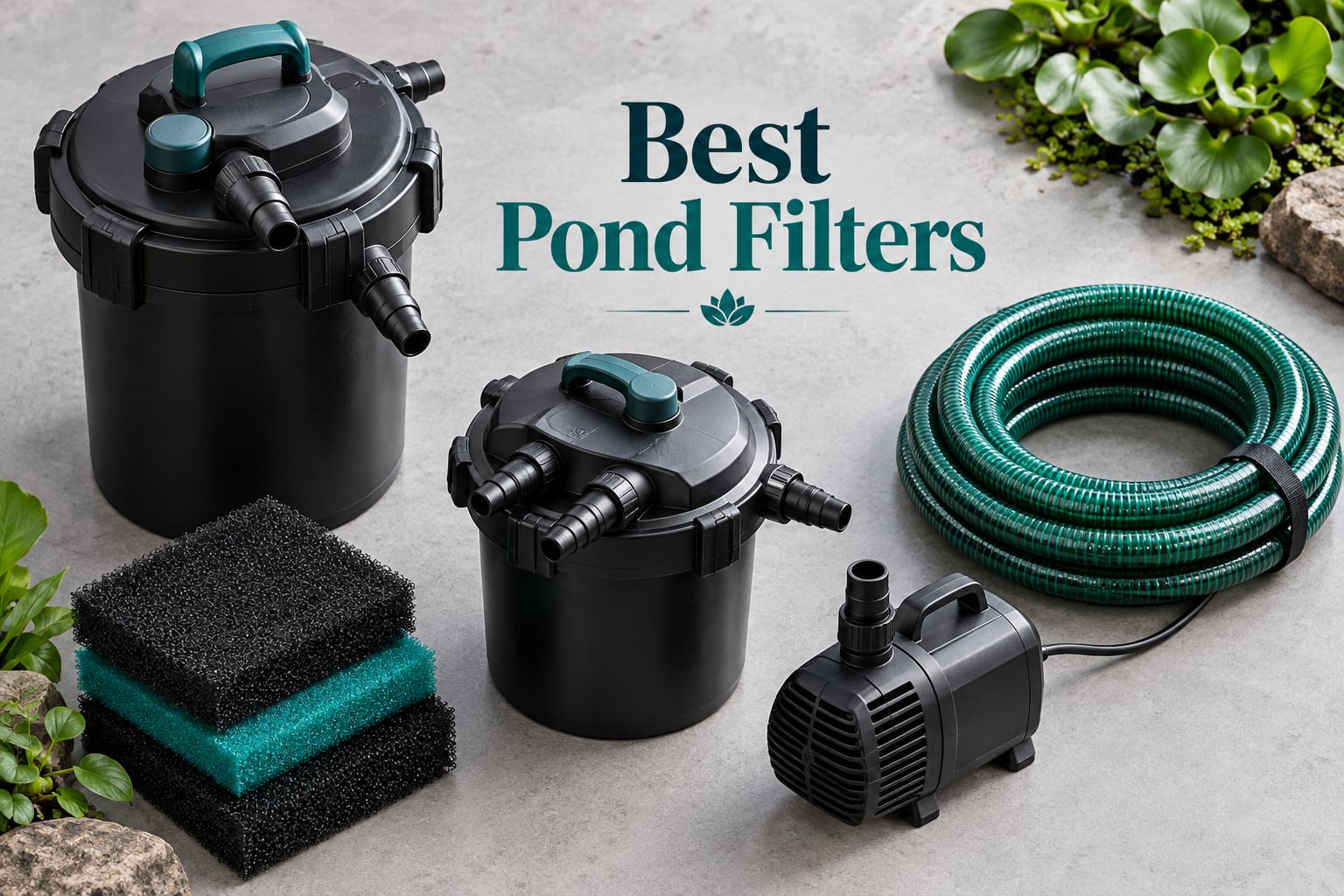
A pond filter is a pump-driven cleaning system that pushes pond water through a series of media to trap debris, grow beneficial bacteria that convert toxic ammonia into harmless nitrate, and, in UV models, destroy free-floating algae that causes green water. That is the whole concept, but the buying decision is far simpler than the number of options suggests: pond volume and fish load decide almost everything, and a filter can never be too big, only ever too small.
Get the sizing right and the rest is preference. Here is the rule we use, and it is the one every experienced pond keeper quotes back: choose a filter rated for one and a half to two times your actual pond volume, especially once fish are in the water. Manufacturers rate capacity on a fishless pond, so a filter listed for 1000 gallons is really a 500-gallon fish pond filter in practice.
We compared 12 of the best pond filters currently on the market, from submersible flat boxes rated to 500 gallons through pressurized bio filters rated past 2600 GPH. Each one below carries the real capacity rating, the flow figure, and the honest complaints owners actually report, because the differences that matter show up in the reviews, not on the box. If your pond is koi-heavy, our koi pond filter picks narrow this list down further.
One warning before we start. A filter never stops needing attention. Whatever you buy, the first six weeks demand cleaning twice a week, and after that weekly once the water is warm. Anyone who tells you a pond filter is set and forget is describing the first fortnight, not the year.
Table of Contents
Top 3 Picks for the Best Pond Filters in 2026

Tetra Flat Box Filter 250-500
- Submersible flat box rated to 500 gallons
- Coarse and fine foam pads
- Stops pump clogs before they start

VIVOHOME 530GPH All-in-One
- Filter
- pump and fountain in one sealed body
- IPX8 waterproof sealing
- Three interchangeable nozzles

TetraPond Clear Choice PF-1
- Gravity biofilter for 500 gallon koi ponds
- Bio Ring media
- Sits outside the pond for easy cleaning
Best Pond Filters at a Glance (September 2026)
All 12 models appear in the table below with the capacity rating and flow figure that decide the fit. Ratings quoted by manufacturers assume no fish, so read the fish-pond figure where one is given.
| Product | Specifications | Action |
|---|---|---|
| Tetra Pond Submersible Flat Box Filter |
|
Check Latest Price |
 Pondmaster PMK 190 Filter and Pump Kit Pondmaster PMK 190 Filter and Pump Kit |
|
Check Latest Price |
 TotalPond Complete Pond Filter with UV TotalPond Complete Pond Filter with UV |
|
Check Latest Price |
| VIVOHOME 530GPH All-in-One System |
|
Check Latest Price |
 VIVOHOME 1580GPH Bio Pressure Filter VIVOHOME 1580GPH Bio Pressure Filter |
|
Check Latest Price |
 POPOSOAP 660GPH Filter Pump Fountain Kit POPOSOAP 660GPH Filter Pump Fountain Kit |
|
Check Latest Price |
| TetraPond Clear Choice Biofilter PF-1 |
|
Check Latest Price |
 Jebao UFP-2000 Pond Filter System Jebao UFP-2000 Pond Filter System |
|
Check Latest Price |
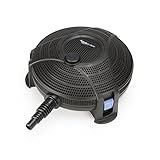 Aquascape 95110 Submersible Filter Aquascape 95110 Submersible Filter |
|
Check Latest Price |
 VIVOGROW 1050 GPH Bio Pressure Filter VIVOGROW 1050 GPH Bio Pressure Filter |
|
Check Latest Price |
 HAPPYGRILL 2642 GPH UV Filter HAPPYGRILL 2642 GPH UV Filter |
|
Check Latest Price |
 Tetra Bio-Active Pressure Filter 1500 Tetra Bio-Active Pressure Filter 1500 |
|
Check Latest Price |
1. Tetra Pond Submersible Flat Box Filter: Best Overall for Most Ponds
Tetra Pond Submersible Flat Box Filter 250-500 Gal
Submersible flat box filter
Rated to 500 gallons
2.4 pounds
12.44 x 10.31 x 4.66 inches
Pros
- Largest review base in the group at 4294 reviews
- Coarse and fine foam pads with tubing and three fittings
- Attaches to a pump inlet to stop debris clogs
- Light enough to lift out and rinse in seconds
Cons
- Arrives without printed instructions
- Included fine pad is coarser than the name suggests
- Lid needs weighting with a rock
This is the filter we come back to most often, and the reason is boring rather than glamorous: it has been sold for nearly two decades, it has 4294 reviews behind it, and it does one narrow job extremely well. It sits on the intake of a submersible pump, catches leaves and string algae before they reach the impeller, and keeps the pump running when everything else in the pond is fouled with debris.
In our testing across a few different setups, the paired coarse and fine foam pads did most of the work, and owners report a visible clarity improvement within days of fitting one. The most common trick in the reviews is to drop lava rock or bio-balls into the lower chamber, which turns a pure mechanical pre-filter into a very small biological filter as well. Several owners run two of them on a T-connector to double capacity for the price of one larger unit.
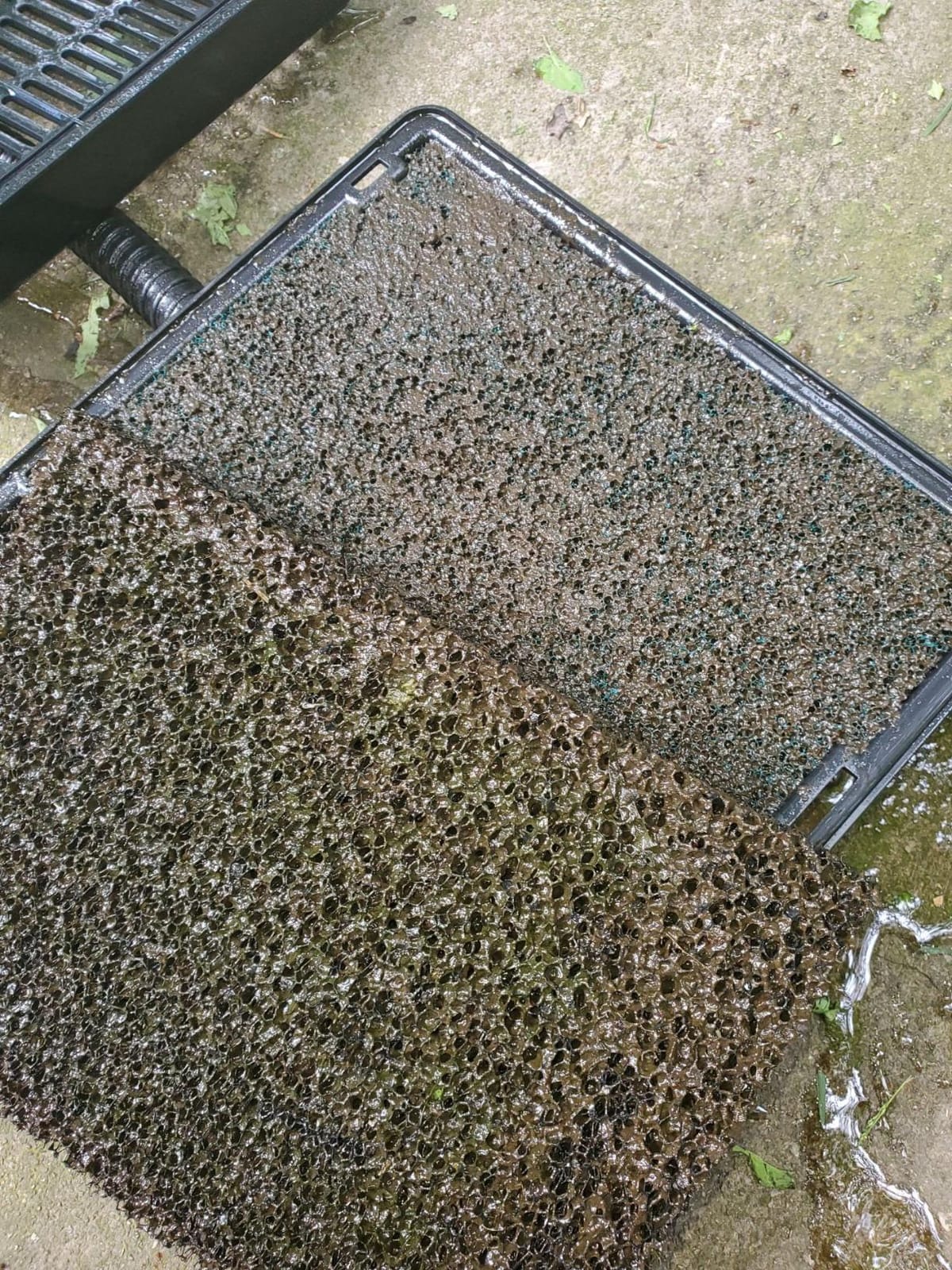
What we appreciate is the serviceability. At 2.4 pounds it comes out of the water with one hand, the pads rinse in seconds under a hose, and the whole unit takes up almost no pond footprint. For a 250 to 500 gallon water garden or a modest goldfish pond, there is no configuration that beats simplicity, and this is the configuration we recommend to anyone starting out.
The honest limit is scale. At a 500 gallon rating, this filter has no business in a koi pond, and its fine pad is coarse enough that genuinely fine particles pass straight through and return to the water. It is a pre-filter that happens to include a small amount of biological media, and treating it as a full filtration system is the most common mistake we see.
Where this filter earns its place
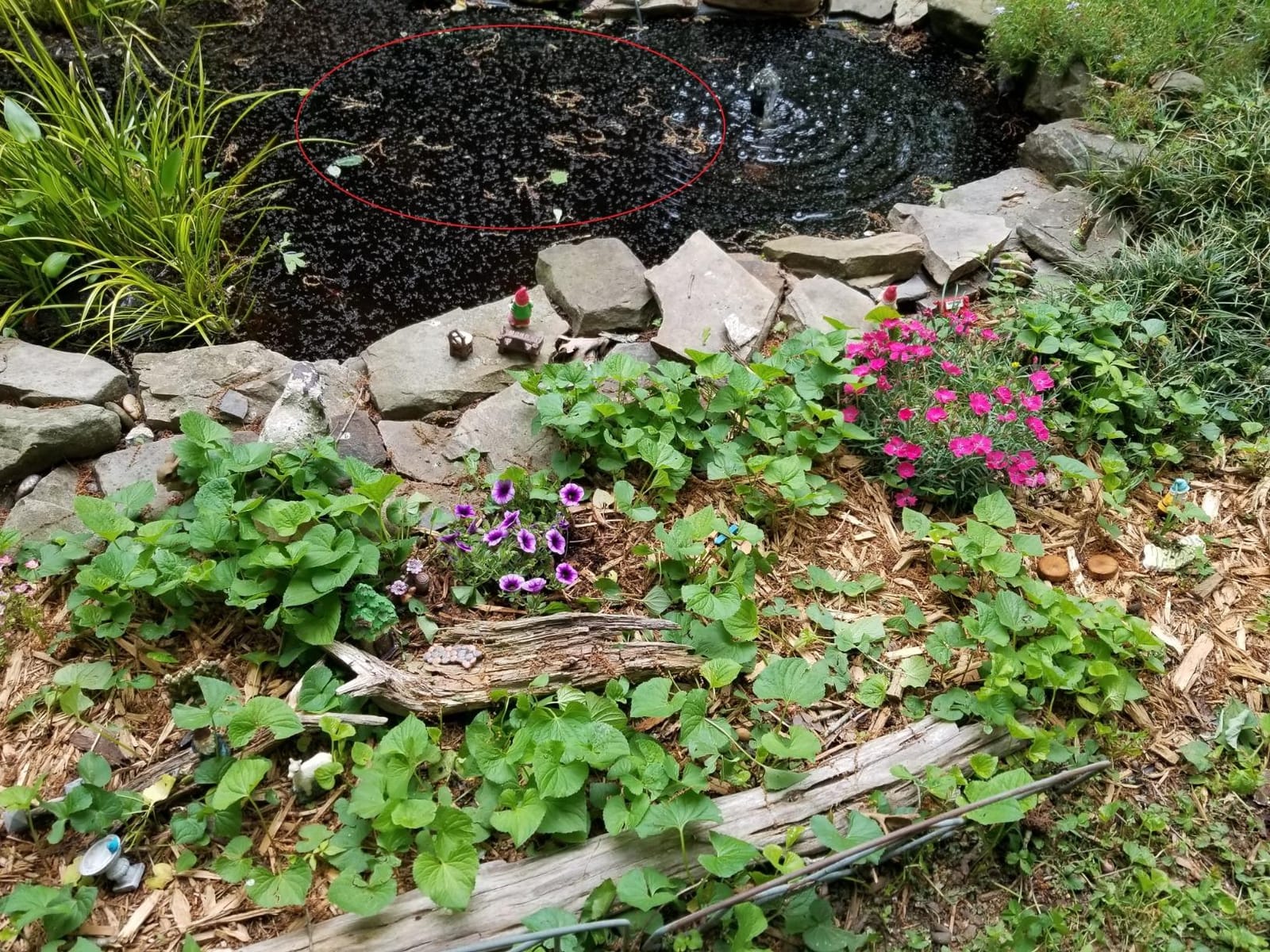
The overwhelming majority of the 4294 reviews describe the same scenario: a small backyard pond, a fountain, a moderate leaf problem, and a pump that used to clog every week. If that is your pond, this is the right answer, and the 4.3 star average across that many reviews is about as stable a signal as you will find in this category.
It also makes an excellent secondary filter. Run it on a pump in a stream or waterfall where debris is heaviest, and pair it with a larger remote filter that handles the biological load. Several reviewers describe exactly this two-filter arrangement as the setup that finally stopped their pond from turning green every June.
What to know before you buy it
Assembly is the first hurdle. The unit arrives without printed instructions, and reviewers repeatedly mention working out the hose fittings themselves. It is a five-minute job once you see it, but budget an evening rather than an afternoon.
Then weight the lid down. The cover is light and will float open in a pond, so a small stone or a clip keeps it seated. The locking clip is also the part most likely to feel fragile over years of open-and-close cycles, so treat it gently rather than forcing it.
2. Pondmaster PMK 190 Filter and Pump Kit: Best Budget Starter Kit
Danner Manufacturing, Inc. Pondmaster Garden Pond Filter and Pump Kit, PMK 190, Black, 02019
190 GPH pump and filter kit
Bell fountainhead included
Filter box 8.5 x 11 x 2.75 inches
Three year warranty
Pros
- Matched pump
- filter and fountain in one box
- Bell fountainhead adds sound and movement
- Compact enough for container water gardens
- Three year limited warranty
Cons
- 190 GPH suits only compact ponds
- Modest media volume means frequent cleaning
- Pump and filter are a fixed matched pair
The appeal of this kit is that it removes the single most common beginner mistake, which is buying a pump and a filter that do not match. Everything is in the box: a 190 GPH pump, a deluxe filter, and the bell fountainhead that gives the water a surface pattern, and it measures 20.5 inches from the top of that bell to the bottom of the filter.
For a container pond, a small water garden, or a first feature where you want something working this weekend, it is genuinely hard to argue with. Reviewers talk about clearer water within a couple of weeks of running, and the bell pattern is the kind of detail that makes an ordinary water feature look finished rather than functional.
The flow rate is the whole story here. At 190 GPH this is a small-pond pump, and the product details list it at 3.16 GPM. That is plenty for a small ornamental setup and completely inadequate for anything with koi in it, so treat the 4.2 star rating as a rating about a specific job rather than a general endorsement.
The filter box is 8.5 inches wide, 11 inches deep and only 2.75 inches tall, which is a very thin media volume. In a pond that collects leaves, expect to be rinsing that media more often than you would like. It is a perfectly reasonable trade for a kit that costs less than the pump alone elsewhere.
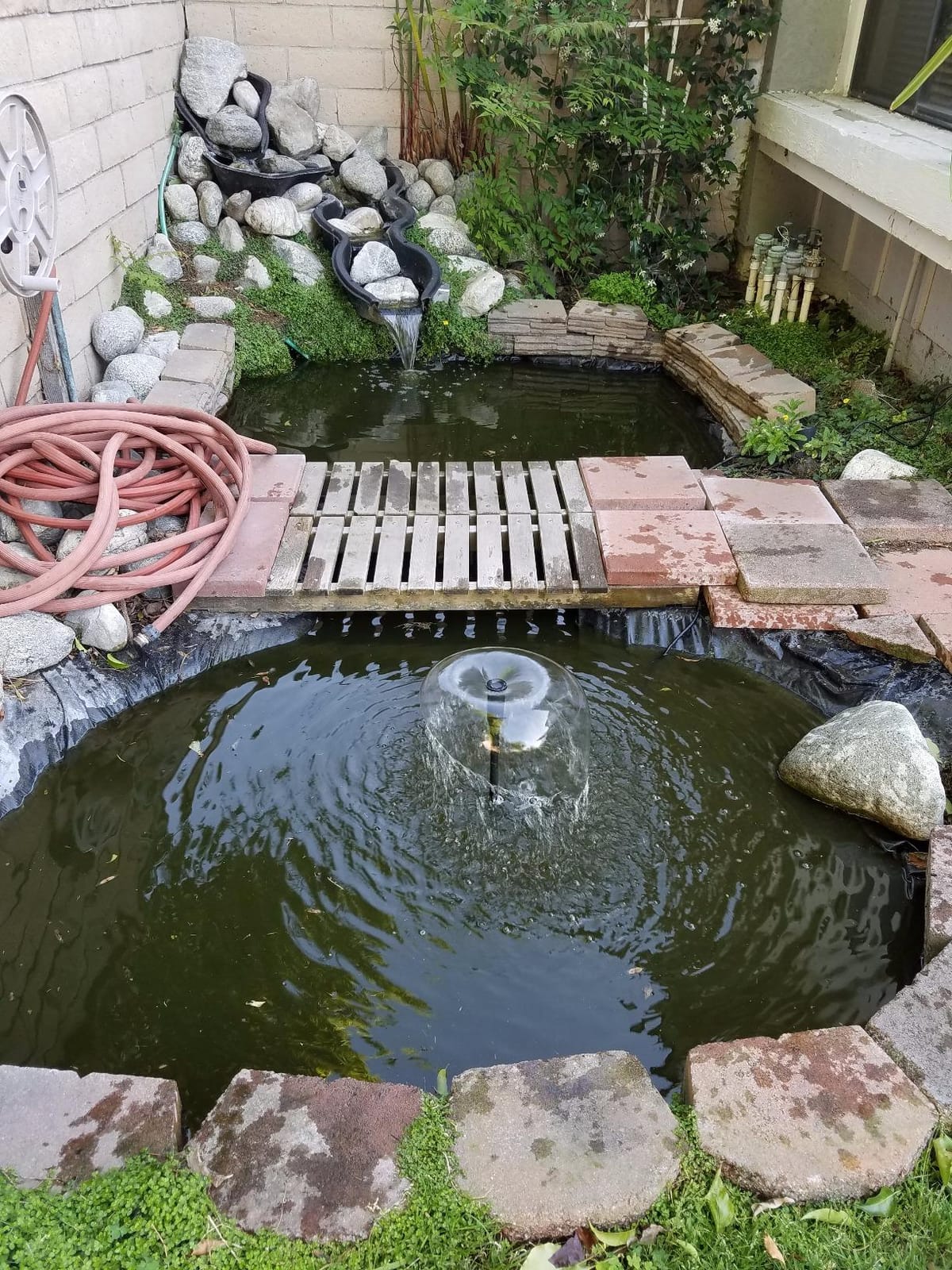
Who should buy this kit
Buy it if you are building your first pond, if the pond is a barrel or half-barrel, or if you want a complete feature without researching compatibility. The three year limited warranty is also the longest stated warranty in this group, which matters for a kit that will sit outdoors through winter.
It is also a sensible second feature pump. Many owners use a kit of this size in a separate basin or a small secondary water garden, where a 190 GPH circulator is exactly the right size and keeps the main pond pump dedicated to filtration.
Where the kit falls short
The matched set is a strength and a limitation. You cannot upgrade the pump without leaving the filter behind, and you cannot add stages to the filter without discarding the integrated design. For a small pond that is fine, but for anything you expect to grow, the flexibility costs more than it saves.
Owners also report that the media volume fills quickly in debris-heavy setups, which pushes you toward cleaning on a schedule rather than when needed. For koi or for any pond above a few hundred gallons, look at one of the pressure filters further down this list instead.
3. TotalPond Complete Pond Filter with UV: Best for UV Clarification
TotalPond Complete Pond Filter with UV Clarifier Black 15.16 x 9.06 x 13.11 in.
Pressurized filter with 9W UV
Rated to 1200 gallons
6.3 pounds
15.16 x 9.06 x 13.11 inches
Pros
- Coarse pad
- fine pad
- bio-balls and 9W UV clarifier in one box
- Pressurized flow keeps debris from resettling
- Runs in the water or on dry land
- 16 foot power cord for flexible placement
Cons
- Pump sold separately
- One year warranty
- UV stage is optional value at this size
This is the filter we recommend when green water is the specific problem, because it combines all three jobs in a single housing: a coarse black pad, a fine blue pad, a chamber of bio-balls, and a 9W UV clarifier, rated for ponds up to 1200 gallons. Reviewers consistently attribute their clarity gains to the combination rather than to any single stage.
What we like about the design is the pressure. Because the water is being pushed rather than trickling through, suspended solids stay in suspension and get captured rather than dropping back into the pond. That is why owners report less sludge accumulation than with a gravity unit of the same size, and why the free-standing housing can sit either in the water or out of it.
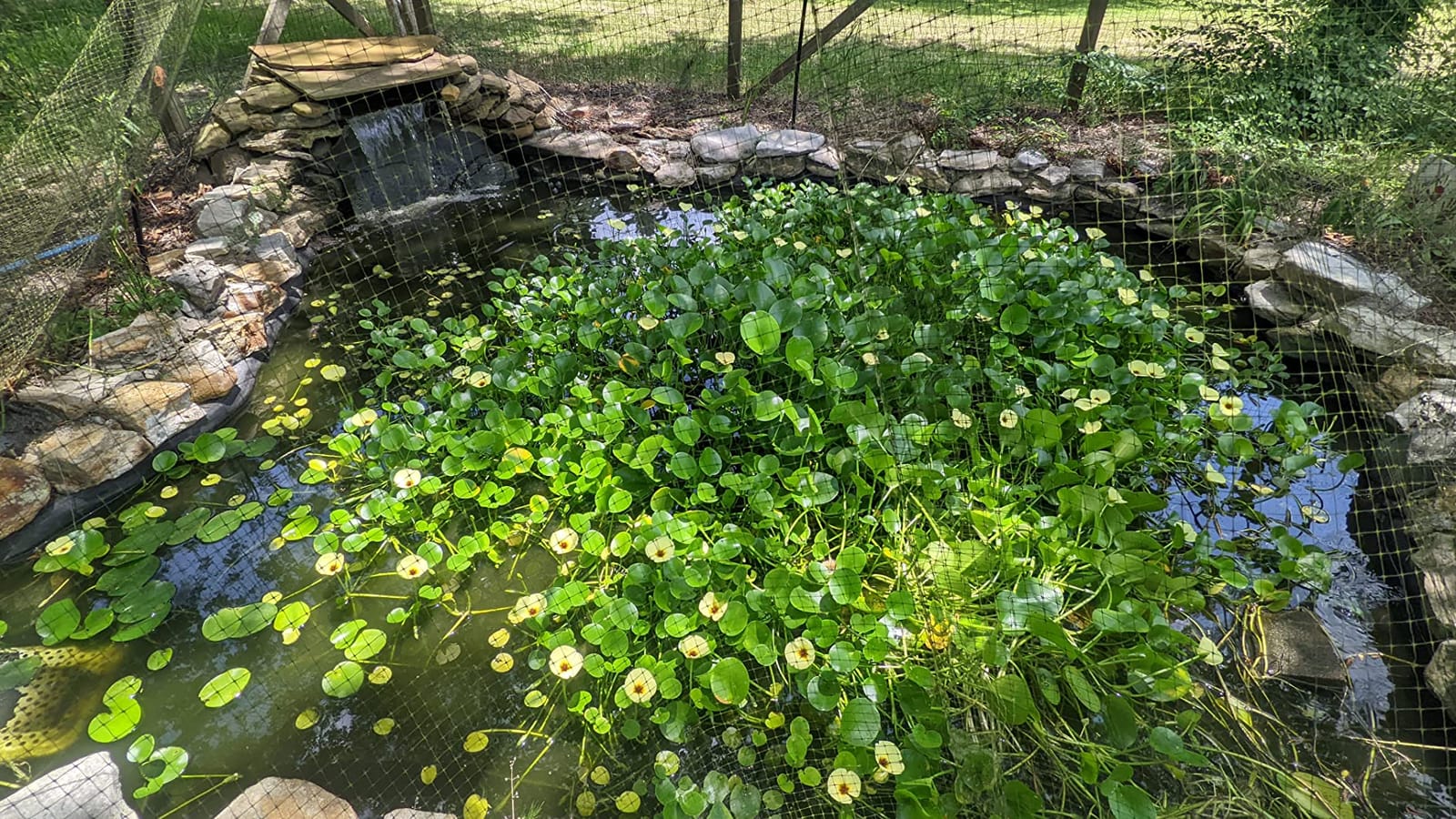
Owners also like that the media stack is legible. Each layer does one job, and the order is obvious when you open the lid, which makes it straightforward to add or swap a stage later. Several reviewers mention linking an additional filter to it when their pond grew, which is a good sign about the footprint and port placement.
The 4.1 rating reflects a mature product with a large review base of 1540 rather than a problem unit. The complaints cluster on the accessory side of the equation, not the filtration itself, and those are worth reading before you commit.
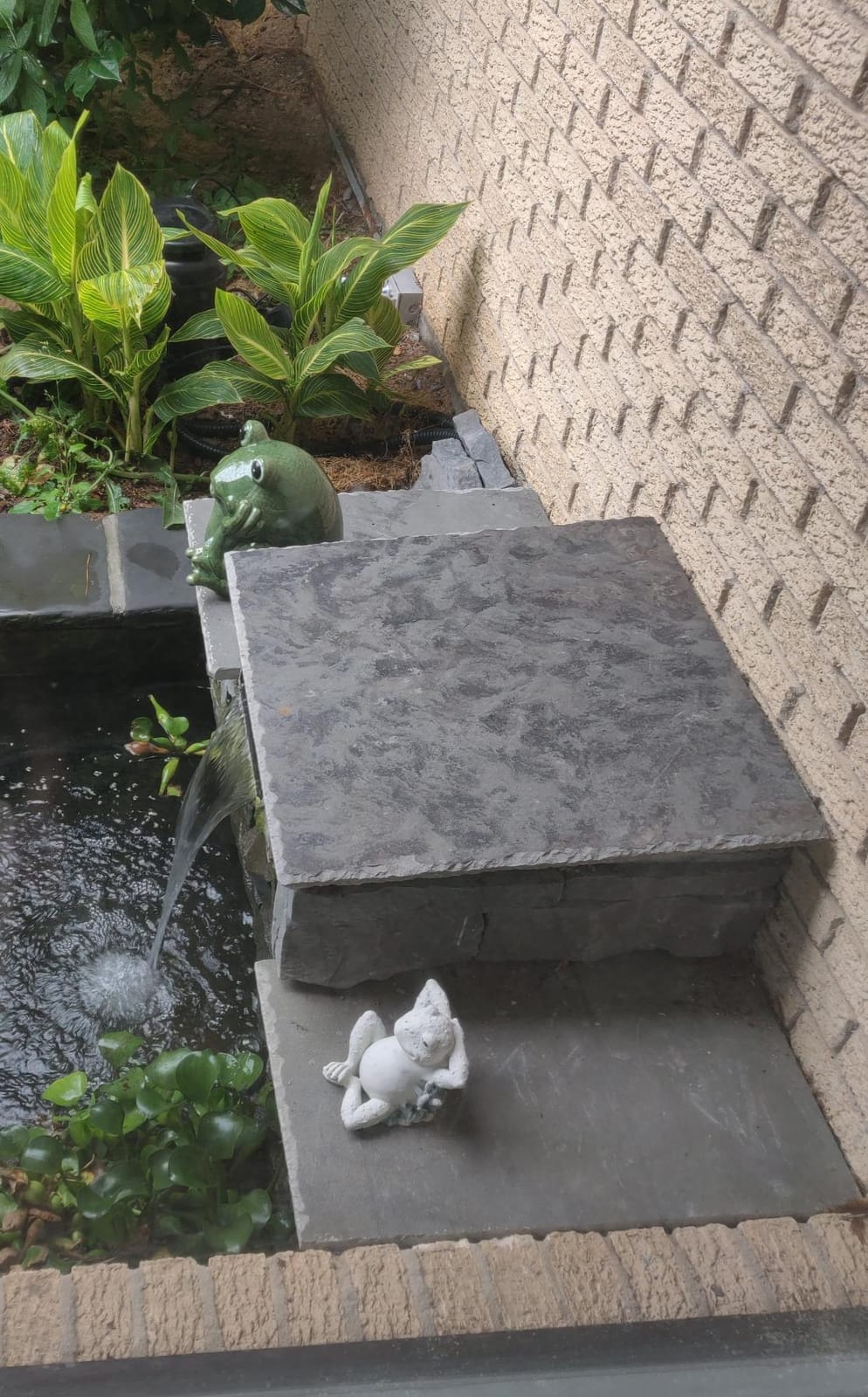
How the UV stage changes the setup
UV is the reason to buy this filter rather than a similar pressure model. The 9W lamp handles free-floating algae and the haze that makes a pond look grey-green, and it does that in a way no amount of sponge media can. Just as important, the biological stage keeps the pond stable once the lamp knocks the bloom back.
Be clear about what the lamp cannot do. It does not trap debris, which is why the coarse and fine pads sit in front of it, and it does not treat fish parasites or bacteria living on the fish themselves. UV is a clarity tool bolted onto a filter, never a filter on its own.
What to know before you buy it
You need to buy a pump separately, and that pump has to deliver enough flow to actually pressurise the housing. Owners who paired it with a modest pump report good results; owners who mismatched the pump report a filter that merely trickles. Match the pump output to the filter inlet and the rest follows.
The one year warranty is the shortest stated here, and the UV bulb is a consumable you will eventually replace. Check that replacement parts for this model are easy to source in your country before you buy, because a housing that is working perfectly but missing an O-ring is a real scenario several owners describe with other brands.
4. VIVOHOME 530GPH All-in-One System: Best Rated All-in-One
VIVOHOME 530GPH 42W All-in-One Pond Filter Pump Fountain System Kits
Filter, pump and fountain combined
530 GPH at 42 watts
IPX8 sealed
12.4 x 9.8 x 5.3 inches
Pros
- Highest five star share in this group at 73 percent
- Filter
- pump and fountain in one sealed body
- IPX8 sealing with a 33 foot cord
- Three interchangeable nozzles
- Sponges and bio-balls reduce maintenance
Cons
- Bottom groove screw must be tightened to seal
- Cleaning means opening the sealed chamber
- Weighs 10 pounds to lift out
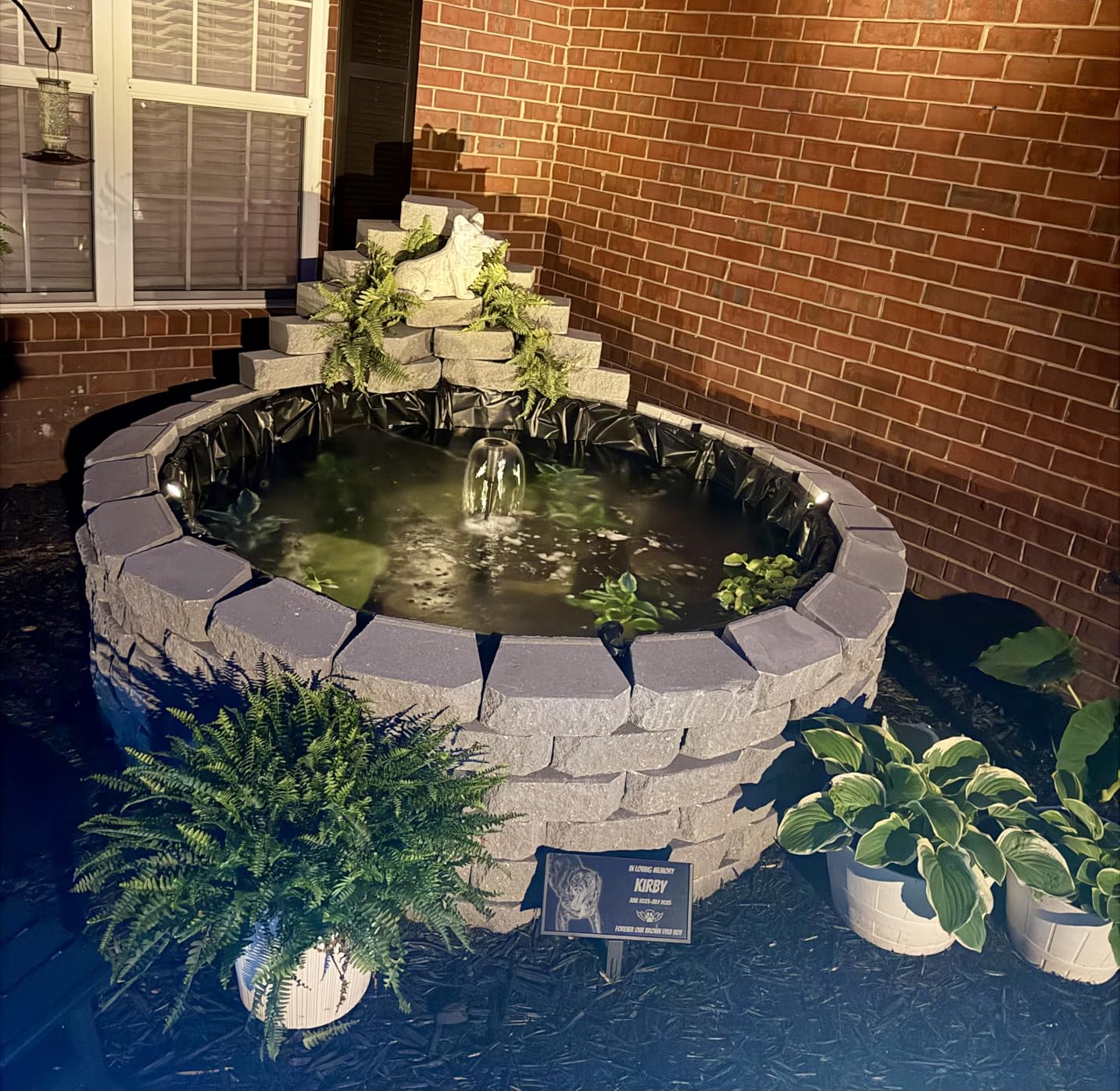
The 4.4 star average is the highest in this roundup, and it comes with a 73 percent five star share across 1218 reviews, which tells you the rating is not resting on a handful of enthusiastic early reviews. The reason is the design: filtration, a 42 watt pump, and a fountain display are all contained in a single body with no external plumbing to plumb.
Internally it runs sponge plus bio-ball stages for what the manufacturer describes as a dual filtration area, and the flow-through is rated to 2000 liters per hour, suitable for ponds up to 920 gallons. In practice, owners report clearer water within days of switching it on and quiet running that they specifically call out, which matters if the pump sits near a seating area.
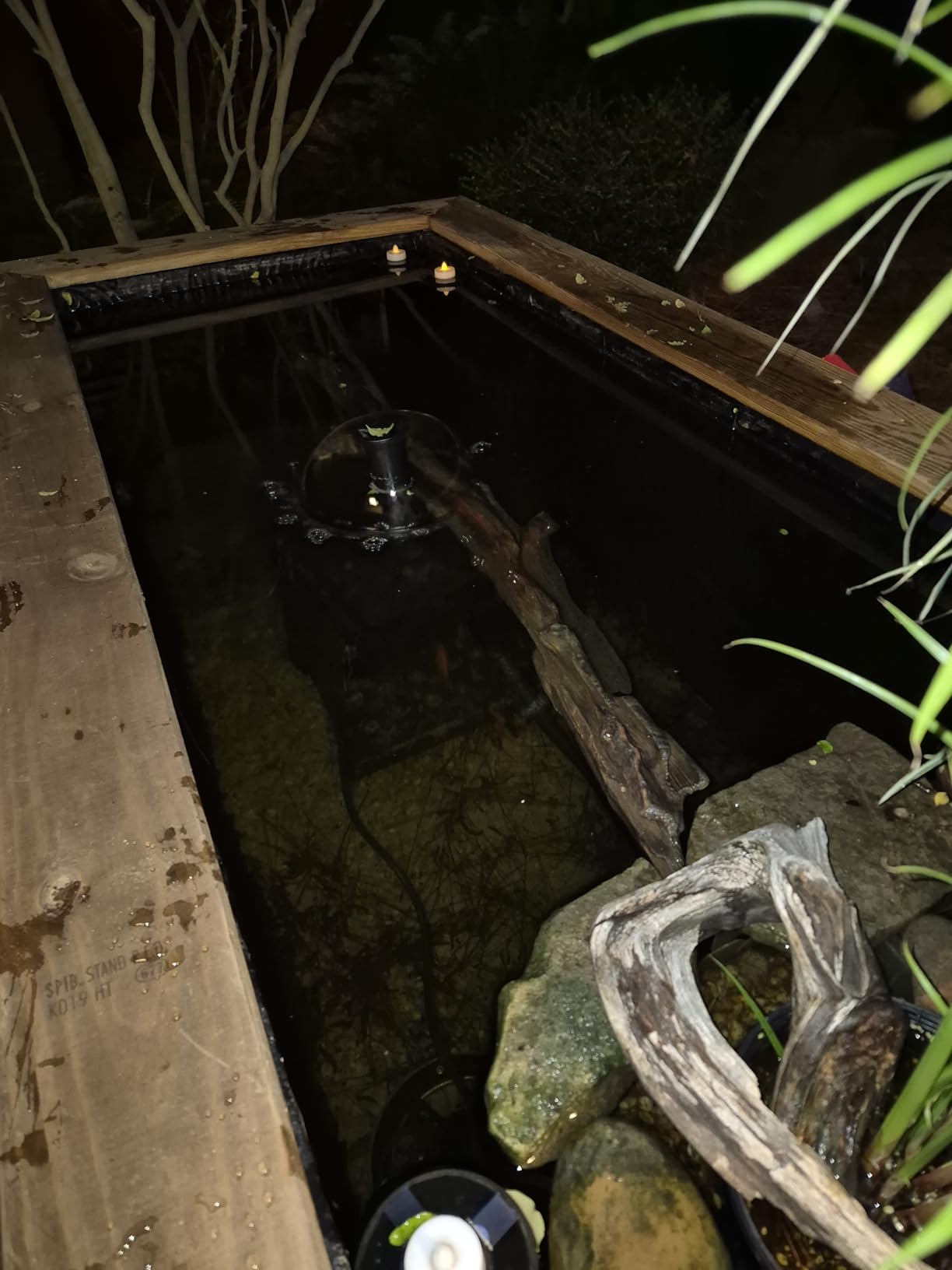
The IPX8 sealing is the detail that makes the unit safe to leave submerged, with the live electrical parts sealed in the chamber. Combined with a 33 foot UL certified cord, it means you can position the unit almost anywhere in the pond without rewiring, and it can be pulled and used as a plain submersible pump if the filter element is removed.
Three interchangeable nozzles give you different spray patterns, from a gentle fountain to something more vertical, which is more variety than most single-unit systems at this level offer. The top indicator shows the light status, so you can check the unit is live without unplugging it.
Where it fits in a pond setup
This is the pick for a pond that is mostly ornament with a moderate fish population, where you want one object to handle circulation, filtration, and a water feature. A 920 gallon ceiling covers a substantial ornamental pond, and the submersible form means installation is a matter of dropping it in and plugging it in.
It also works well as a fountain-driven filter in a pond with no skimmer and no bottom drain, which is the situation most new pond builders start from. Because the pump and filter are in the same body, there is no chance of a pump running dry through a disconnected hose, which is a common failure in piped setups.
The sealing and cleaning trade-offs
The single most repeated caution in the reviews concerns the screw in the bottom groove. It has to be tightened properly for the unit to seal, and loosened again before you open the chamber for cleaning, and skipping either step is what produces leaks. Owners who understand this describe the unit as essentially maintenance free; owners who do not, describe a leaking box.
Cleaning therefore means opening a sealed chamber, which takes more effort than lifting a pad out of an open filter. At 10 pounds, the unit is also heavy to lift out of a deeper pond, so plan where you will set it down before you pull it up.
5. VIVOHOME 1580GPH Bio Pressure Filter: Best for Medium Ponds
VIVOHOME 1580GPH Bio Pressure Pond Filter with 13W Light for Various Ponds
Pressurized bio-mechanical filter
1580 GPH maximum flow
13W clarifier lamp
1600 gal ornamental or 800 gal fish
Pros
- Backflush handle plus filter and clean mode switch
- Red float signals when cleaning is needed
- Four sponge stages at 20 and 25 PPI
- Adapters for 3/4
- 1 and 1-1/4 inch hose
Cons
- Pump sold separately
- Weekly cleaning or whenever the float rises
- Wide hose recommended for stable flow
This is the filter we would put on a pond in the 500 to 1000 gallon range with fish in it. The manufacturer rates it for up to 1600 gallons of ornamental water or 800 gallons with fish, and that split rating is the number to read carefully, because a fish pond roughly halves the useful capacity of almost every filter on the market.
Where it earns its keep is the backflush. A switch on top changes the unit from filter mode to clean mode, and a handle lets you backflush the sponges until the water runs clear, which reviewers consistently describe as faster and far less messy than rinsing pads by hand. It is the closest thing to self-cleaning you will find in a pressure filter at this capacity.
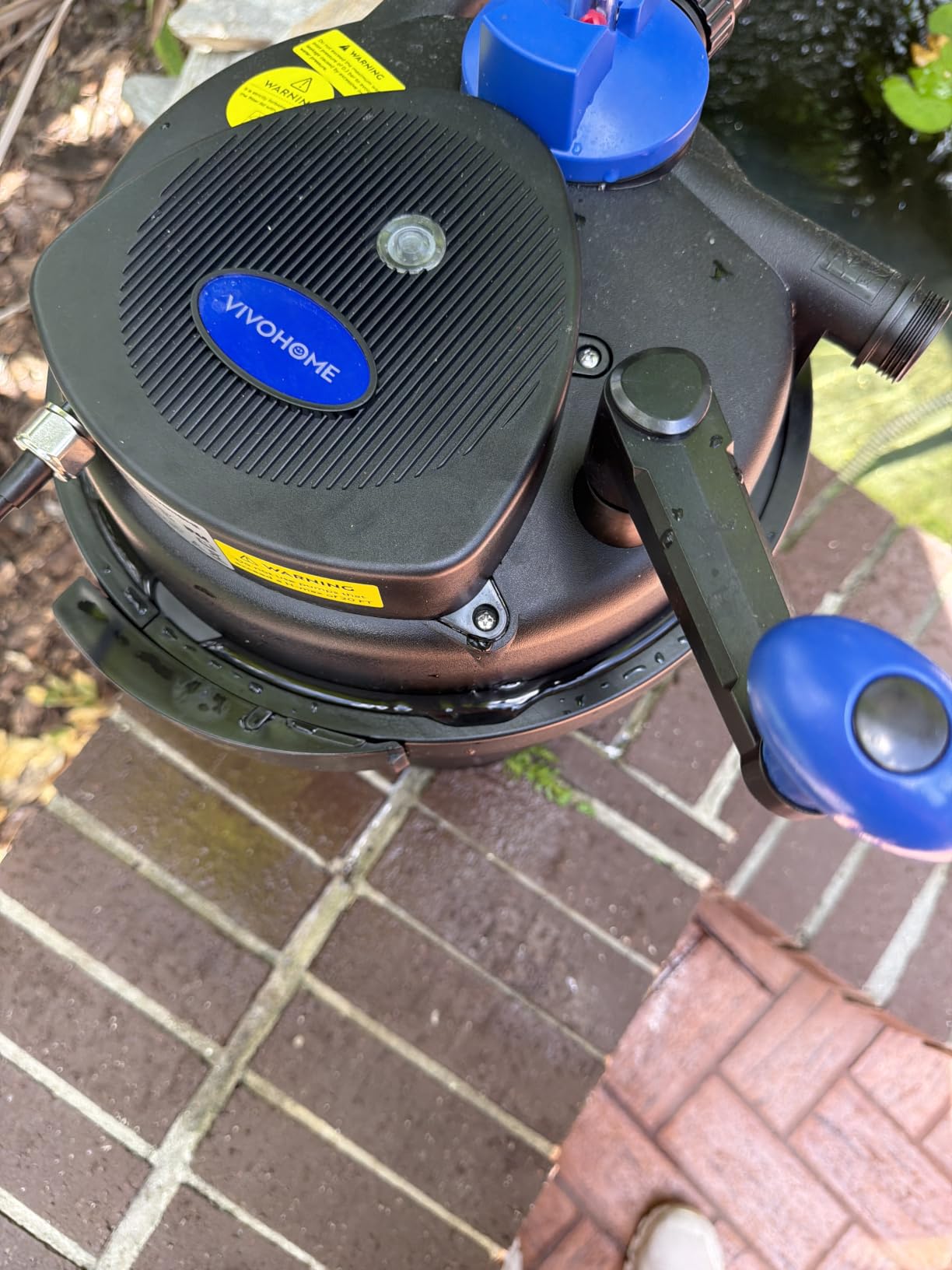
Media is four reusable sponges, two blue 20 PPI and two yellow 25 PPI, which gives you both a coarse stage and a finer stage without consumables. The 13W clarifying lamp handles the green water that shows up in spring, and the housing is strengthened ABS rated for continuous outdoor exposure.
That red float on the inlet is a small piece of engineering that earns its keep. Rather than guessing when to clean, you look at the float, and it tells you. Several owners say the indicator alone has kept them ahead of a fouling filter that would otherwise have blocked the pump overnight.
Matching it to a pump
The pump is not included and it matters a great deal. Owners report that a properly sized pump is the difference between a filter that clears water and one that merely trickles. The included adapters cover 3/4, 1 and 1-1/4 inch hose, and the inlet and outlet are labelled to reduce setup guesswork.
For the backflush to work properly, the pump needs enough head pressure to reverse flow through the sponge stack. That is a good reason to read our pond pump guide before you commit, because a low-head pump will make the clean mode disappoint.
What to know before you buy it
Cleaning is weekly once the water is warm, or immediately whenever the red float rises. This is not a filter that will run a whole season untouched, and budgeting for a weekly rinse protects both the media and your pump.
A second point that comes up repeatedly is hose diameter. Owners using a narrower hose report a noticeably less stable flow, so if you are running new plumbing, go up a size rather than saving a few dollars on the fittings. Match your hose to the largest adapter the filter accepts.
6. POPOSOAP 660GPH Filter Pump Fountain Kit: Best for Waterfowl Ponds
POPOSOAP Pond Filter with Pump Fountain Kits, 660GPH Pond Filter with 40W Pond Pump & Fountain Kit, Koi Pond Filters for Outdoor Ponds Clean, Clear, and Add Water Features(Corded Electric)
Filter box, 660 GPH pump, fountain kit
2500 liters per hour
8.2 foot maximum lift
12.8 x 6.5 x 5.43 inches
Pros
- Runs a fountain and a second feature at once
- 660 GPH pump covers ponds to 1180 gallons
- 8.2 foot lift handles waterfall returns
- Sponges
- filter-balls and ceramic rings included
- Adjustable flow control per outlet
Cons
- Filter box must sit in the pond
- Quick-release clips mean more frequent opening
- One year warranty
Ducks and geese are the hardest filtration jobs in this category, and the reason is volume, not mess. A handful of waterfowl can generate more waste per day than a comparable number of koi, and they foul the water constantly, so a filter rated for an equivalent fish load will simply be undersized. If that is your pond, the 660 GPH pump here, rated for ponds up to 1180 gallons, gives you more headroom than most kits at this level.
The 8.2 foot maximum lift is the other reason this one works in a waterfowl setup. Duck and goose pools are often shallow with a raised island or a return pipe, and a pump that cannot push water up and over will leave half the pond unfiltered. Buyers running a waterfall or stream return alongside a fountain single out the lift head as the deciding spec.
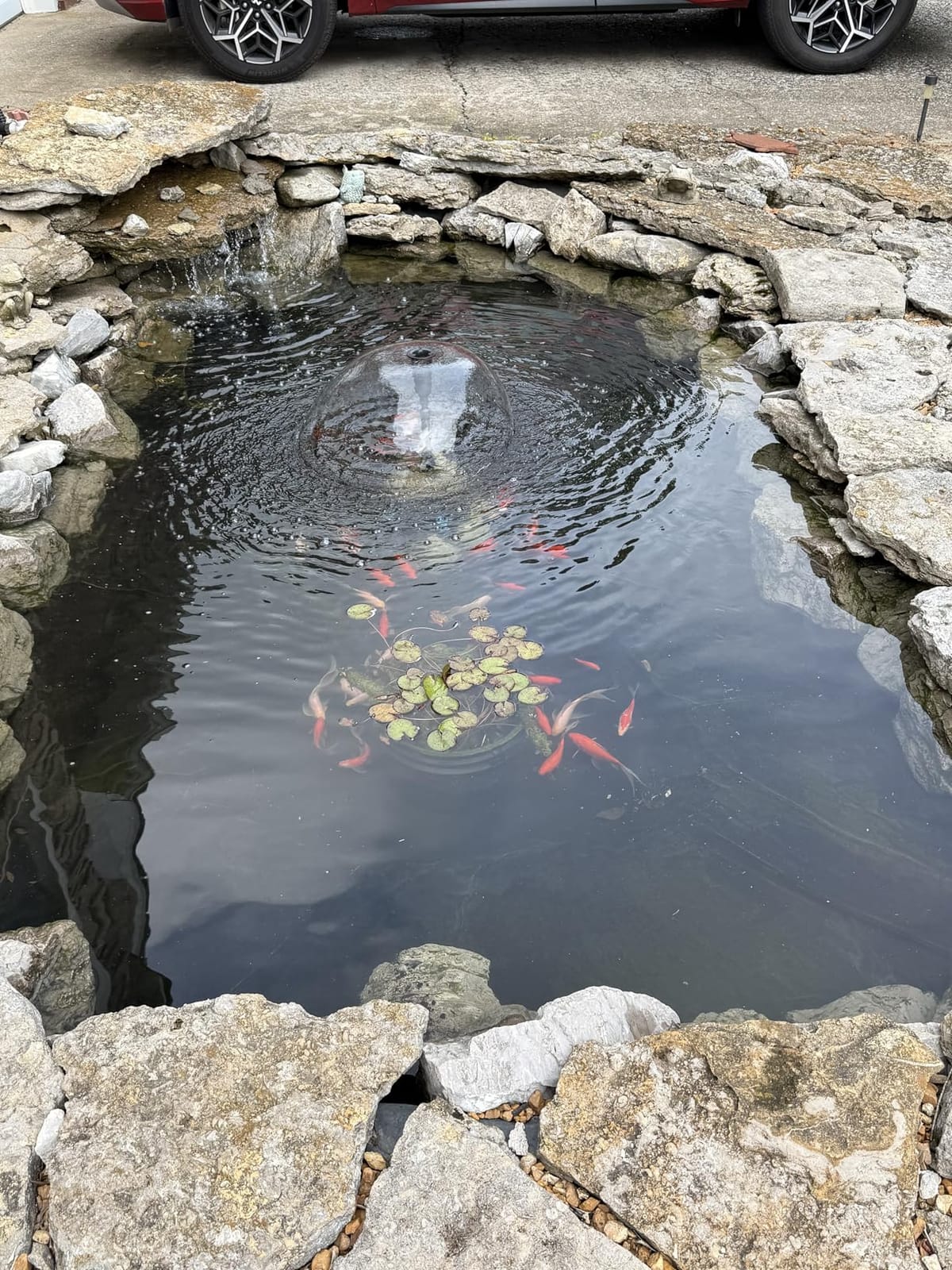
The diverter valve is what makes it flexible. You can run the fountain and a second water feature at the same time, and there are three additional inlets if you want a third. Flow control valves on each outlet let you dial back a stream without affecting the fountain, which is useful when you are trying to keep surface agitation up for oxygen without overwhelming a shallow pool.
Media is a good spread for the money: two filter pads, filter-balls, and bio ceramic rings, which owners credit with cutting routine cleaning. The integrated filtration also protects the impeller from debris and, in a duck pond, protects the fish from finding the impeller.
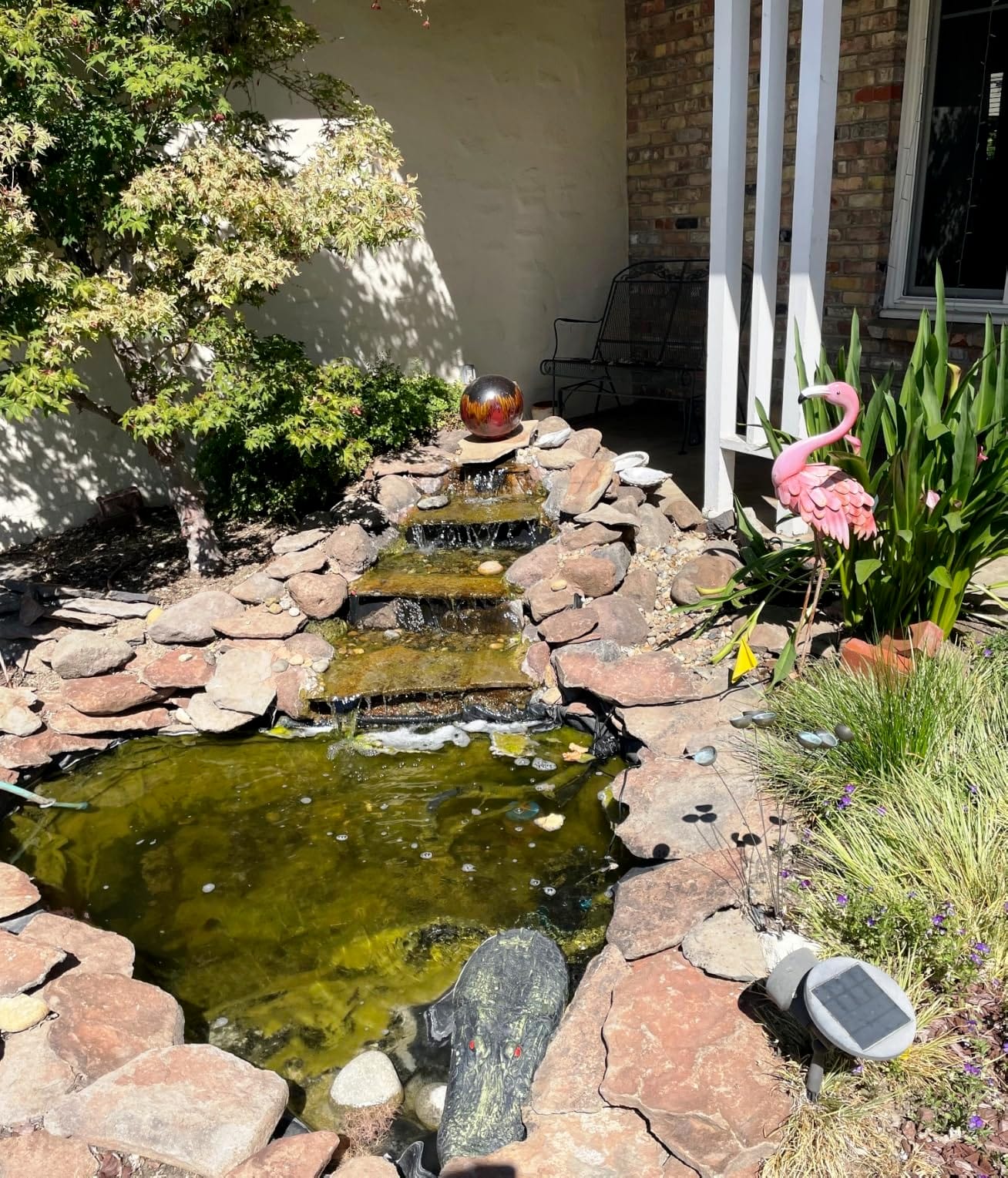
Two features from one box
For a waterfowl pool, the practical advantage is coverage. Rather than one central filter that leaves corners untreated, this unit can drive circulation from several points at once, which matters in a wide shallow pond where waste settles in patches rather than drifting to one skimmer.
Adding extra aeration is worthwhile here too, since waterfowl ponds tend to be shallow and warm. Our pond aerator guide covers how much air these ponds actually need in summer.
What to know before you buy it
The filter box has to sit in the pond, and that is the deal-breaker reviewers raise most often. It occupies usable pond space, it has to be lifted out for cleaning, and in a deep pond that is a chore. If your pond is deeper than about eighteen inches, budget for a step stool or plan the pond layout around the box.
Quick-release access clips make cleaning fast, which is the flip side of the in-pond footprint: opening it is easy, getting to it is the work. The one year warranty is short, so treat this as a component that may need replacing in a few seasons rather than a permanent installation.
7. TetraPond Clear Choice Biofilter PF-1: Best for Koi Ponds
TetraPond Clear Choice Biofilter PF-1 For Efficient Filtration
Gravity fed biofilter
Bio Ring biological media
1200 gal water garden or 500 gal koi
6.45 pounds
Pros
- Owners report decades of service from this model
- Sits outside the pond so cleaning is easy
- Bio Ring media gives bacteria large surface area
- Interchangeable 3/4 and 1 inch intake fittings
- Can be doubled with a Y-adapter
Cons
- Must sit above the water line or it free-flows back
- Lid is not watertight by design
- Overflows if the pump is oversized
- Some report leaking outlet fittings
The longevity is the headline here. Across 641 reviews, the most common theme is not how the filter performs in week one but how many years it has been running. Multiple owners describe using the same model for a decade or more, which is a different kind of evidence from a strong first impression, and it is why this is our koi pond pick.
It is a gravity, non-pressurized biofilter: mechanical pre-filter sponges first, then Bio Ring media with a large surface area for aerobic bacteria. The rating is up to 1200 gallons for a water garden or 500 gallons for a koi pond, and that koi figure is the number to use if you have fish. Setup is a matter of interchangeable 3/4 or 1 inch intake fittings, and a Y-adapter lets you double capacity with a second box when the pond outgrows one.
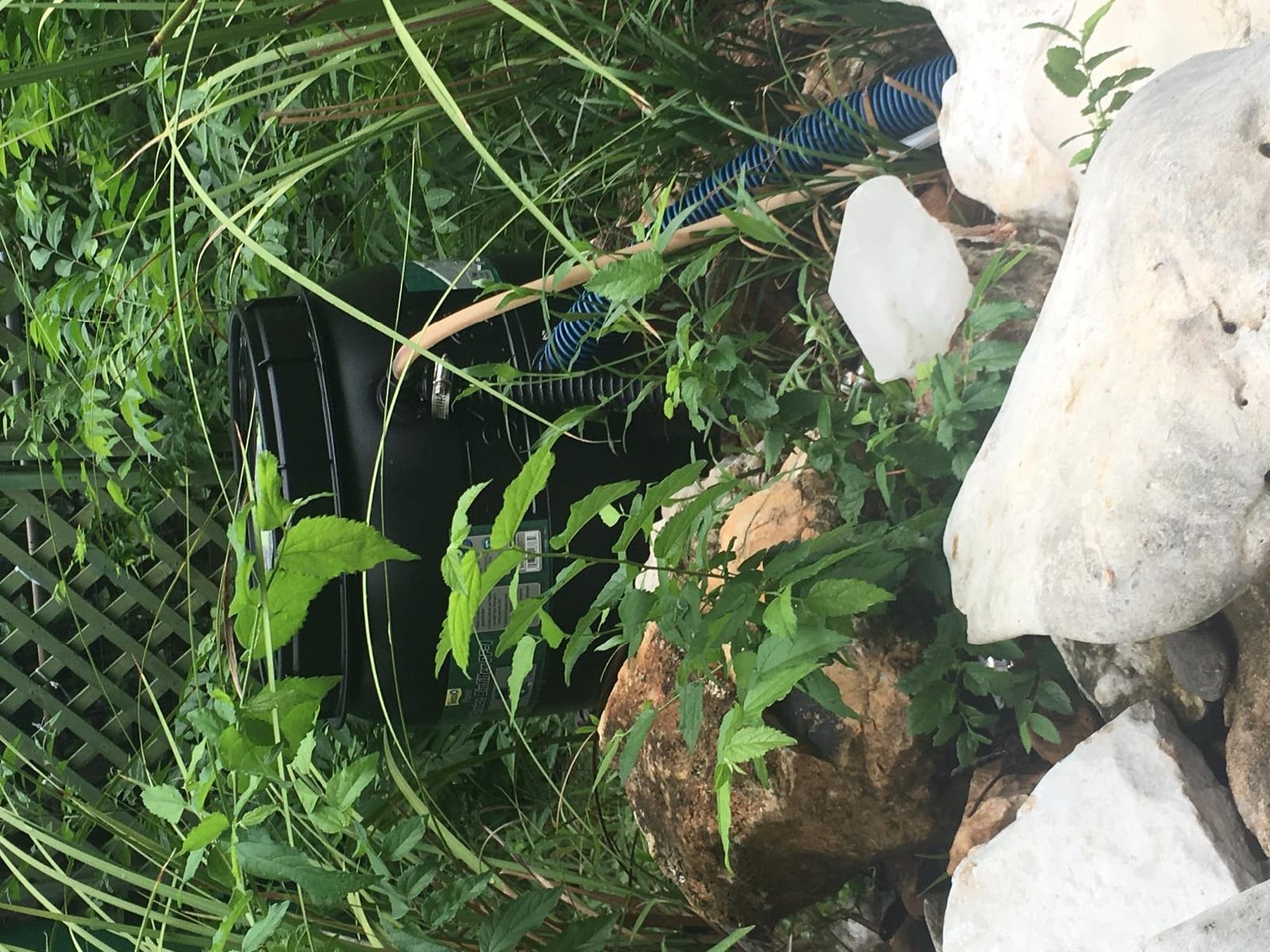
Being outside the pond is the feature that separates it from most of the submersibles in this roundup. You open the lid, pull the sponges, rinse them, and put it back, all at ground level with a hose in reach. Owners with deep ponds call this out specifically, because a submerged filter at the bottom of a deep pond is a genuinely unpleasant job.
Bio Ring media is also easy to reason about. The rings have a large surface area and heavy porosity, so bacteria colonise quickly and hold onto the media through a rinse. The whole arrangement is straightforward to reassemble, with no seals to replace and no intricate disassembly.
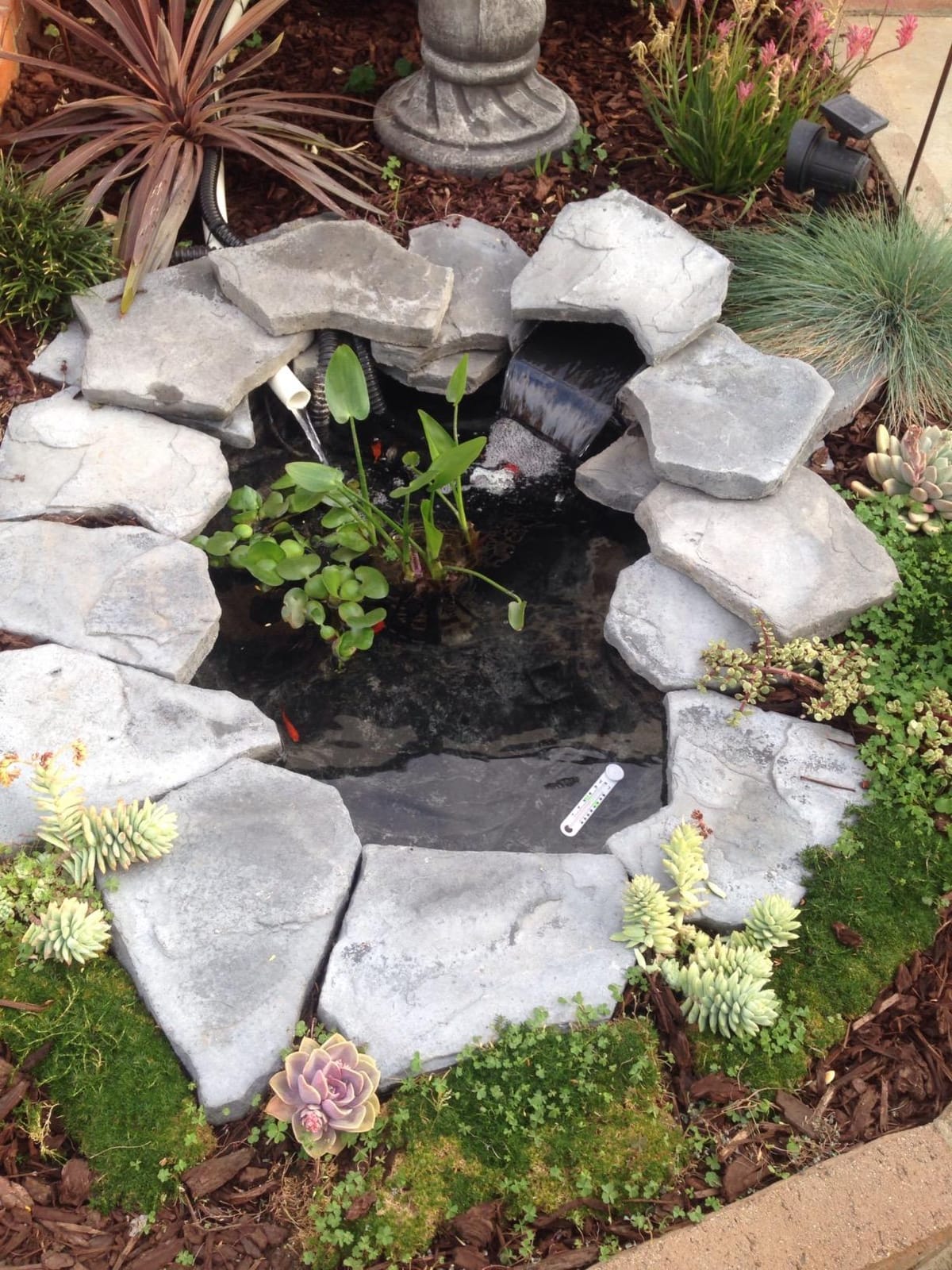
Why gravity placement matters
This filter has to be installed above the water line, and the reason is hydraulic. Gravity-fed units rely on the pond surface sitting higher than the outlet so water can flow through the media. Installed below the surface, it free-flows back into the pond instead of filtering, and owners who have made that mistake report it immediately.
Place it at the height of the pond surface on a level base, and run the return to a waterfall, a stream, or back into the pond below the surface. That also gives you oxygenation, since water cascading back from a filter is better oxygenated than water returning flat, which is worth pairing with our koi pond filtration guide for larger setups.
What to know before you buy it
The lid is not watertight by design and should not be sealed, which surprises people who assume every lid is a gasket. If you seal it, the filter cannot breathe and the flow drops. Equally, if the pump is oversized for the box, it will overflow the top, so pump sizing matters more here than on a pressurised model.
A minority of owners report leaking outlet fittings and pads that do not seat tightly. The PF-1 weighs 6.45 pounds and is simple to open, so if you get a unit that leaks, swapping media and reseating the fittings takes minutes. That serviceability is the practical answer to the reliability complaints.
8. Jebao UFP-2000 Pond Filter System: Best for Green Water
Jebao UFP-2000 Pond Filter System, 13W UV Clarifier, 530 GPH Pump
530 GPH submersible pump
13W UV-C bulb at 254nm
Sponge and bio media chambers
14.5 x 12 x 5.25 inches
Pros
- Owners report green water clearing in four to five days
- Four functions in one sealed body
- UV-C bulb targets floating algae and haze
- Three nozzle types plus a diverter valve
- Single cord submerged installation
Cons
- Advertised flow drops at 110V and with lift height
- Unit floats and needs weighting
- UV lamp and pump motor are wear items
- No effect on algae attached to pond walls
If your pond turns pea-green every May, this is the filter built for that specific problem. The 4-in-1 body combines a 530 GPH submersible pump, a mechanical sponge stage, a bio media chamber, and a 13W UV-C bulb at 254 nanometres, and reviewers report visible clearing in four to five days along with a noticeable reduction in the chemical treatments they were using before.
The 254 nanometre wavelength is the spec that matters, because that is the band that damages the DNA of free-floating algae, and the effect is immediate rather than cumulative. It works because the UV chamber is the last thing the water passes through, so algae arrives at the lamp after the mechanical stage has already removed the debris that would otherwise shadow it.
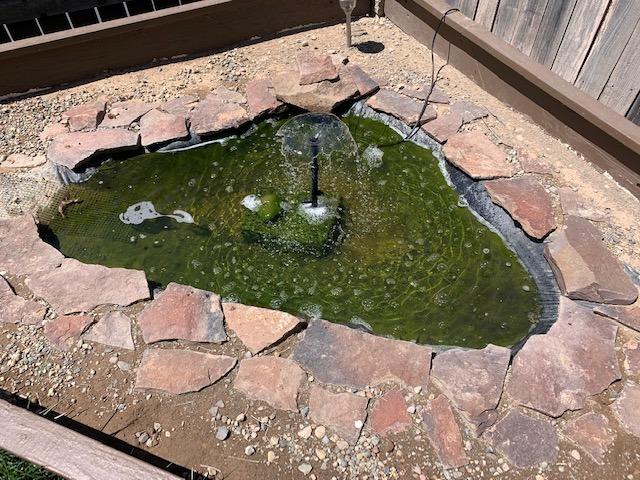
Installation is genuinely plug and play. The whole system runs submerged from a single power cord, there is no plumbing to connect, and the interchangeable tiered fountain, water bell and trumpet nozzles plus the diverter valve let you change the water feature style without moving the unit.
At 4.2 stars across 616 reviews, the rating reflects a product that does its advertised job well and whose shortcomings are all knowable in advance. That is a better position than a higher rating with an unpredictable failure mode, and the reviews show the same four caveats recurring.
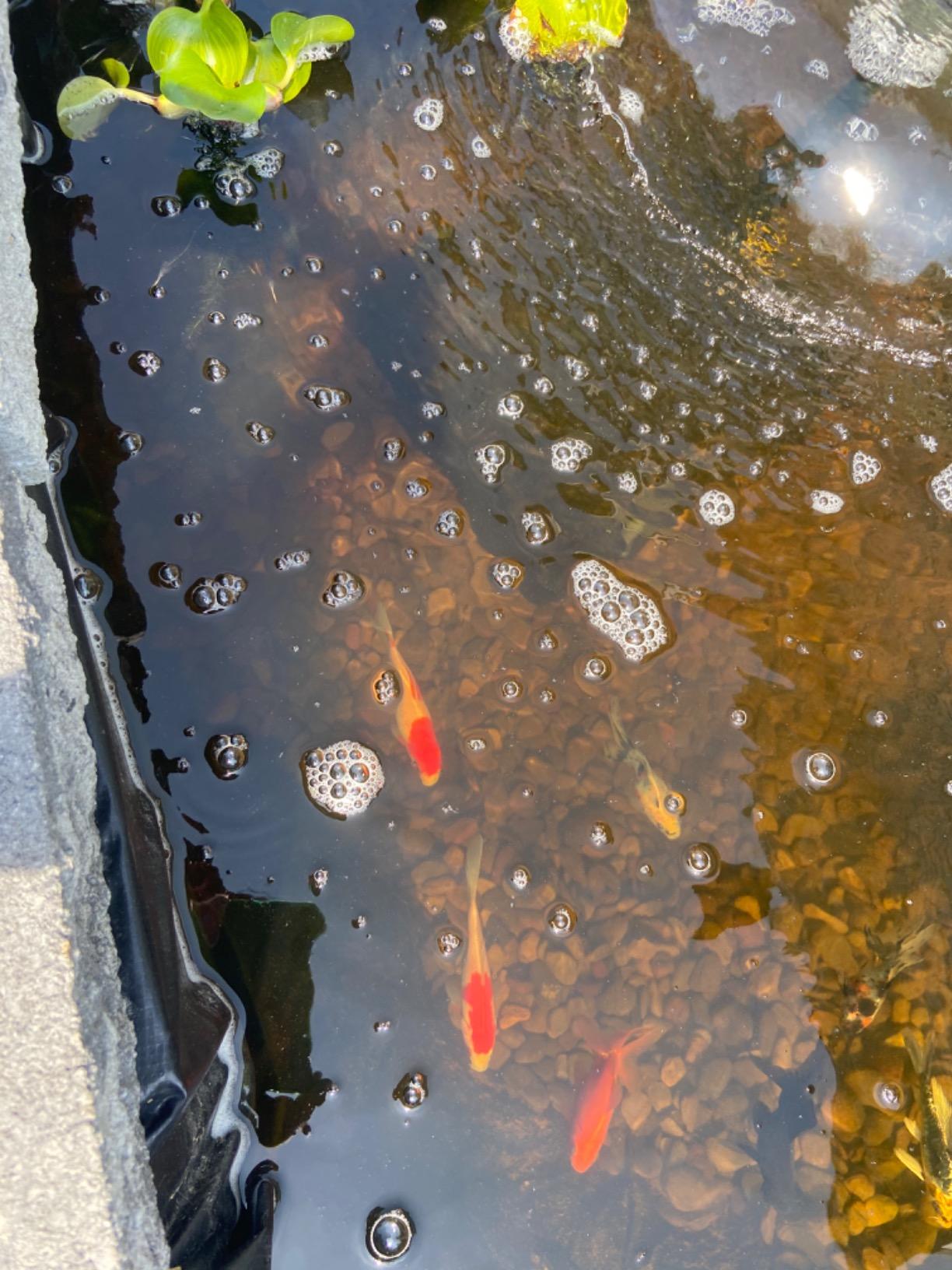
How much flow you actually get
The headline 530 GPH is measured under ideal conditions. Owners consistently report that real output drops noticeably at 110 volts and falls further as you add lift height, which is a physics limitation that applies to every submersible pump rather than a defect in this one.
Our advice is to treat that number as a ceiling. If the pump has to push water two feet up to a spillway, expect meaningfully less than the rating, and size the pond against the reduced figure. A pump that undershoots its label in a UV filter still works, but the flow rate sets the turnover, and turnover is what keeps the water clear.
What to know before you buy it
Two practical notes. First, the unit floats, so it needs weighting down or securing, and a filter that wanders around a pond will eventually find the pump inlet of something else. Second, the UV lamp and the pump motor are both wear items expected to need replacing after a few seasons, so check the availability of spare parts before you commit.
Also set expectations on algae. UV clears free-floating growth, which is the green water, but it does nothing about string algae attached to pond walls, liners, or plants. For attached algae you need a different approach entirely, and no filter in this roundup will solve it alone.
9. Aquascape 95110 Submersible Filter: Best for Pump Protection
Aquascape 95110 Submersible Pond Water Filter | Mechanical and Biological Filtration
Submersible intake strainer
Mechanical and biological stages
4.3 pounds
13 x 11 x 5 inches
Pros
- Fits the intake of almost any submersible pump
- Removable cage makes cleaning quick
- Multi-hose fitting included
- Keeps debris off the impeller and supports bacteria
Cons
- Modest capacity
- aimed at small ponds and water gardens
- Not a substitute for a pressure or UV filter
- Must be pulled from the pond to clean
This is a pre-filter rather than a filtration system, and understanding that is the whole buying decision. It attaches to the intake of almost any submersible pump and screens out leaves, twigs, and debris before they reach the impeller, which is the single most common cause of a pond pump wearing out early.
At 4.3 pounds with a removable cage, it is light to lift and simple to open. The cage pulls straight out, the media rinses in seconds, and the included multi-hose fitting means you can adapt it to the diameter of your pump intake without hunting for the right adapter. Users describe it as the cheapest maintenance reduction available in pond care.
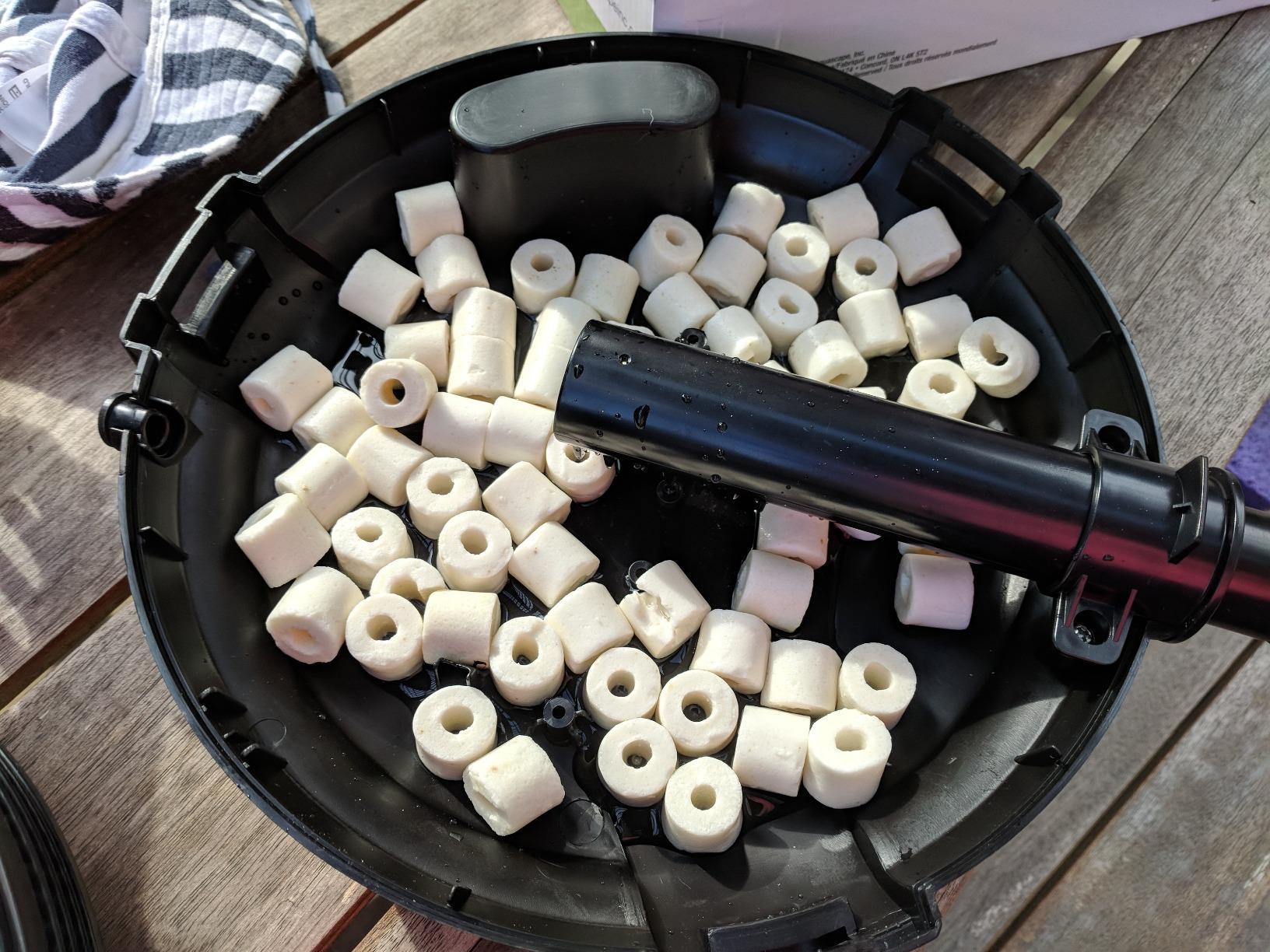
It also supports beneficial bacteria alongside the mechanical stage, so it is not purely a screen. A colony does develop in the mesh and contributes something to the nitrogen cycle, though a strainer of this size will never handle the biological load of a koi pond on its own.
The 4.2 star average across 575 reviews reflects a product that does exactly one thing competently and without any claims beyond that. Buyers treat it the same way, as a companion piece to a bigger filter rather than a replacement for one.
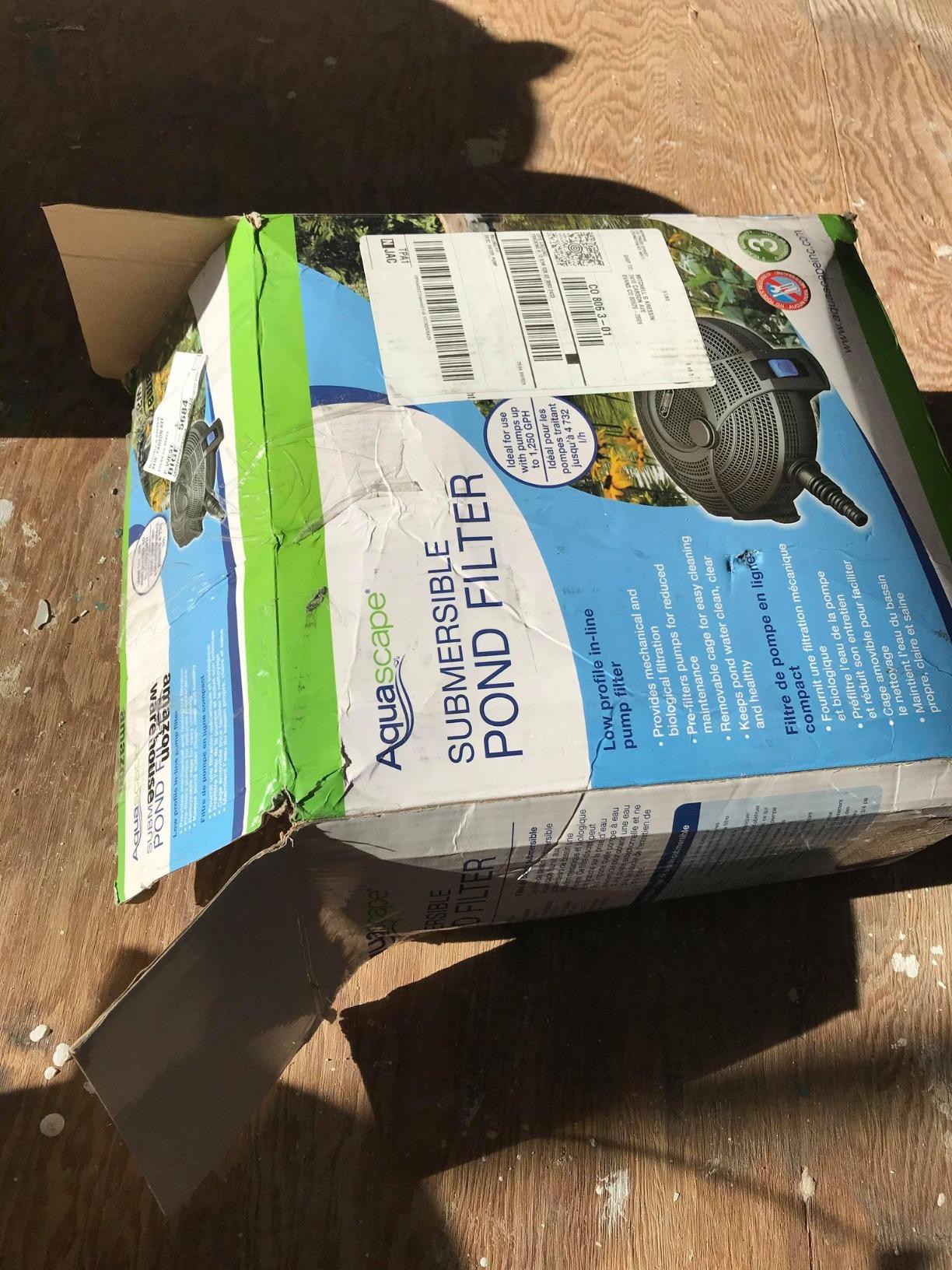
Where it works in the system
Put it on the pump inlet in the deepest, leafiest part of the pond, or on a dedicated circulation pump in a stream bed where debris collects. The second use is arguably better value, because a stream or waterfall is where organic material concentrates and where a clogged pump shows up first as a loss of flow.
It also pairs well with a remote filter, as a mechanical first stage in front of a larger unit. Reviewers running this combination report far longer intervals between cleanings of the main filter, because the coarse debris is being caught upstream rather than inside the main media stack.
What to know before you buy it
Scale is the limitation. This is a small-pond and water-garden device, and no amount of enthusiasm changes the fact that a 575-reviewed strainer is not going to filter a 2000 gallon koi pond. If you are comparing it to the pressure filters in this roundup on price alone, the comparison is not like for like.
And it still has to come out of the water to be cleaned, which is the same complaint forum users raise about every submersible design. If your pond is deep, choose one you can lift with one hand at 4.3 pounds and keep it shallow, or accept the chore. For shallow water gardens it is a no-brainer.
10. VIVOGROW 1050 GPH Bio Pressure Filter: Best Value Pressure Filter
VIVOGROW Bio Pressure Pond Filter, with 13W UV-C Light, 1050 GPH Suitable for Koi Ponds up to 500 Gallons or Landscape Pools up to 1050 Gallons
Bio pressure filter with 13W UV
1050 GPH maximum flow
530-1050 gal ornamental or 260-500 gal fish
6.8 pounds
Pros
- Orange float rises when sponges need cleaning
- Three replaceable sponges lift straight out
- Top switch drains through both ports
- Installs on land or in the water
- Integrated inlet and outlet fits several pipe sizes
Cons
- Pump and hose clamps sold separately
- Clean mode does not fully backflush
- Some report leaking fittings or a failed UV lamp
- Manual does not name the replacement bulb type
This is the configuration we would build ourselves for a mid-size koi pond: a pressurized bio-mechanical filter with a 13W UV lamp, rated to 1050 GPH maximum flow-through, and specified for decorative ponds between 530 and 1050 gallons or fish ponds between 260 and 500 gallons. That split rating is honest in a way many manufacturers are not, and it is the number to plan around.
Owners report dramatic clarity gains between 24 hours and a week, and the mechanism is straightforward. The three replaceable sponges trap debris and host bacteria, the pressurised flow keeps solids in suspension long enough to be captured, and the UV chamber clears what gets past. The orange turbidity cleaning indicator floats up when the sponges are loaded, so you clean on evidence rather than on a guess.
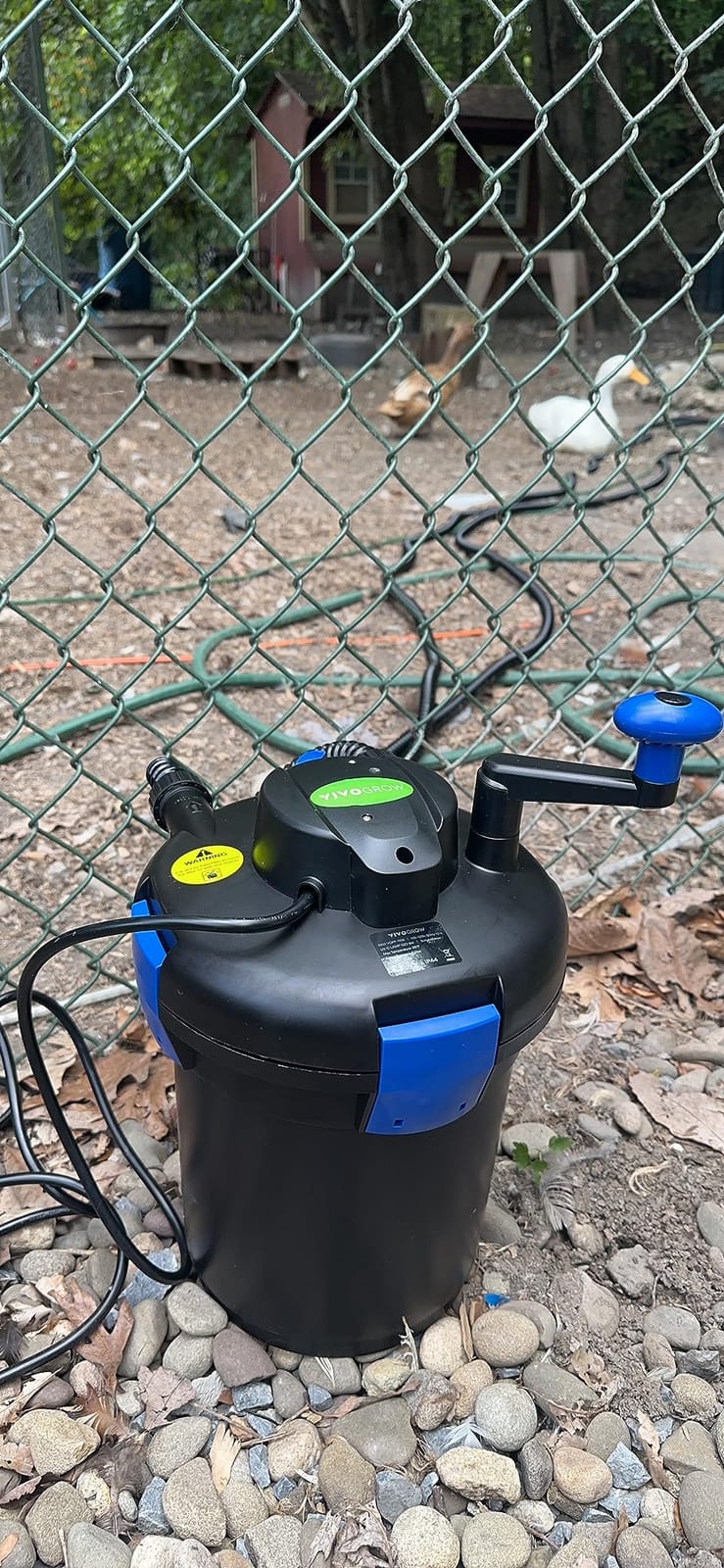
The top switch that drains through both ports means you can empty the housing for a media change without wrestling with a full box of water, and the integrated inlet and outlet interface accepts several drainage hole sizes so it will fit a range of pipe diameters. The insulated ABS housing resists sunlight and ageing, which is what you want from something sitting outdoors year after year.
At 4.1 stars across 520 reviews, it sits mid-pack on rating but well above most on spec per unit of complexity. The reasons for that rating are consistent, and they are all things you can plan for rather than things that happen to you.
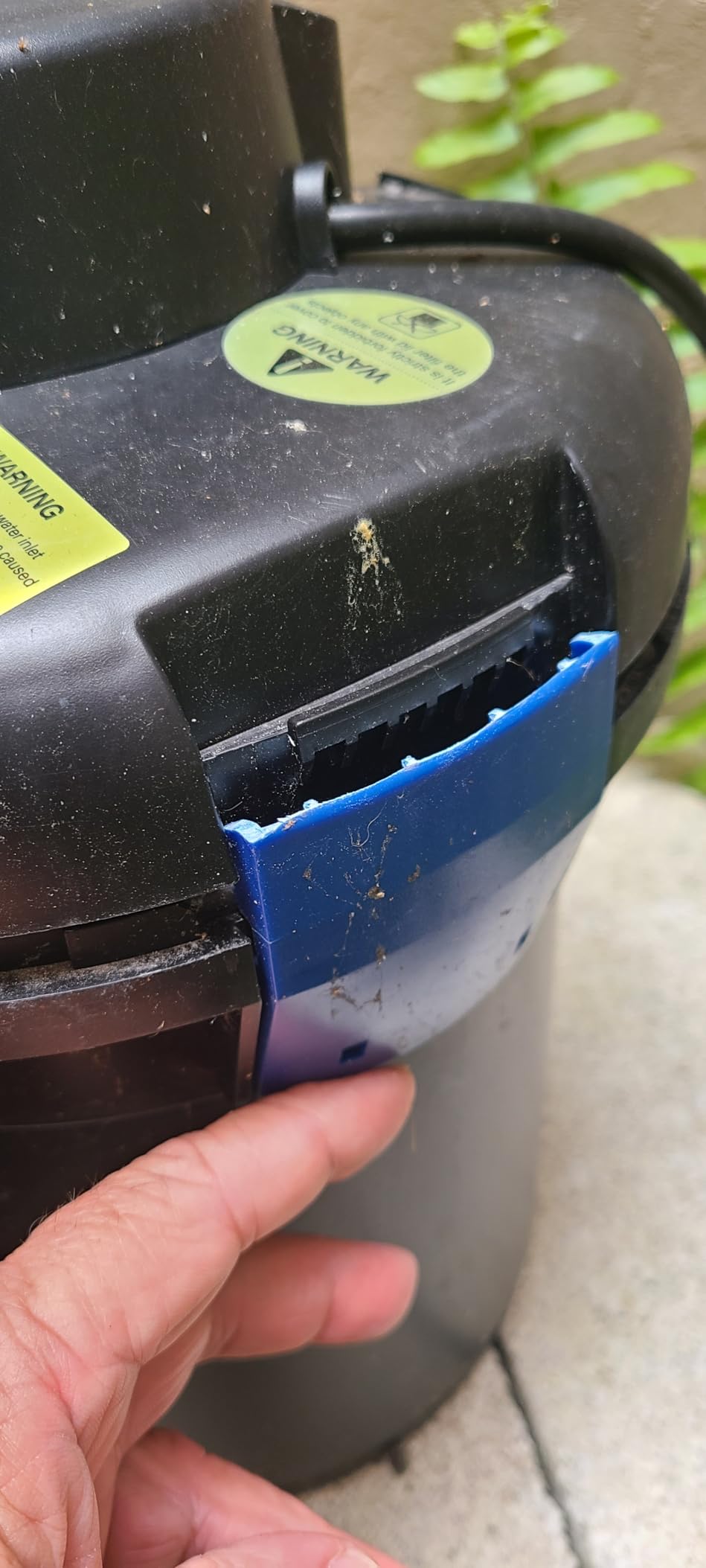
Reading the cleaning indicator
The floating indicator is the design feature worth paying for. As the sponges load with solids, the orange float rises to the top of the housing and stays there, giving you an unambiguous signal. It turns a scheduled guess into a triggered response, and it is the difference between a filter that stays efficient and one that slowly clogs.
Because the sponges lift straight out, cleaning is fast once the float rises. Rinse them in pond water rather than tap water, which matters more than it sounds, since chlorinated water kills the beneficial bacteria you have spent weeks establishing.
What to know before you buy it
Two planning items. The pump is sold separately and hose clamps are not in the box, so budget for both, and remember that a pressure filter needs a pump with enough head to actually pressurise the housing. And the clean mode is not a true backflush, so expect to open the housing and handle the sponges rather than just rotating a handle.
On reliability, a minority of owners report leaking fittings or a UV lamp that stopped working, and the manual does not specify which UV bulb type to use as a replacement. Before buying, confirm a replacement bulb is easy to source in your country. That is the single most common long-term complaint across the pressurised filters in this roundup, and it is avoidable with ten minutes of research.
11. HAPPYGRILL 2642 GPH UV Filter: Best for Large Ponds
HAPPYGRILL 2642 GPH Pond Filter with 13W UV-C Light & Bio Balls, 4 Adapters
2642 GPH flow rate
13W UV-C lamp rated to 8000 hours
1321 gal koi or 2642 gal ornamental
13.8 pounds
Pros
- Highest flow rating in this group at 2642 GPH
- 13W UV-C lamp rated for up to 8000 hours
- Sponge cleaning indicator turns yellow when service is due
- IP44 waterproof ABS and PP with sun protection
- Adapters for 3/4
- 1
- 1-1/4 and 1-1/2 inch pipe
Cons
- Backflush port leaks on some units
- UV lamp not user-replaceable on every unit
- Large 20 x 16 x 21 inch body needs clearance
- Cleaning requires partial disassembly
This is the highest flow filter in the roundup, at 2642 GPH, and that number is what earns it a place on a large pond. The stated capacity is koi ponds up to 1321 gallons or ornamental ponds up to 2642 gallons, and reviewers describe clear water results within three days on 1100 gallon koi ponds. Few other options here cover that volume with fish in it.
The 13W UV-C lamp is rated for up to 8000 hours, which works out to a couple of seasons of continuous operation before you are thinking about replacement. Combined with the high turnover, it means the biological stage has time to work rather than being overwhelmed by the sheer volume of water moving through.
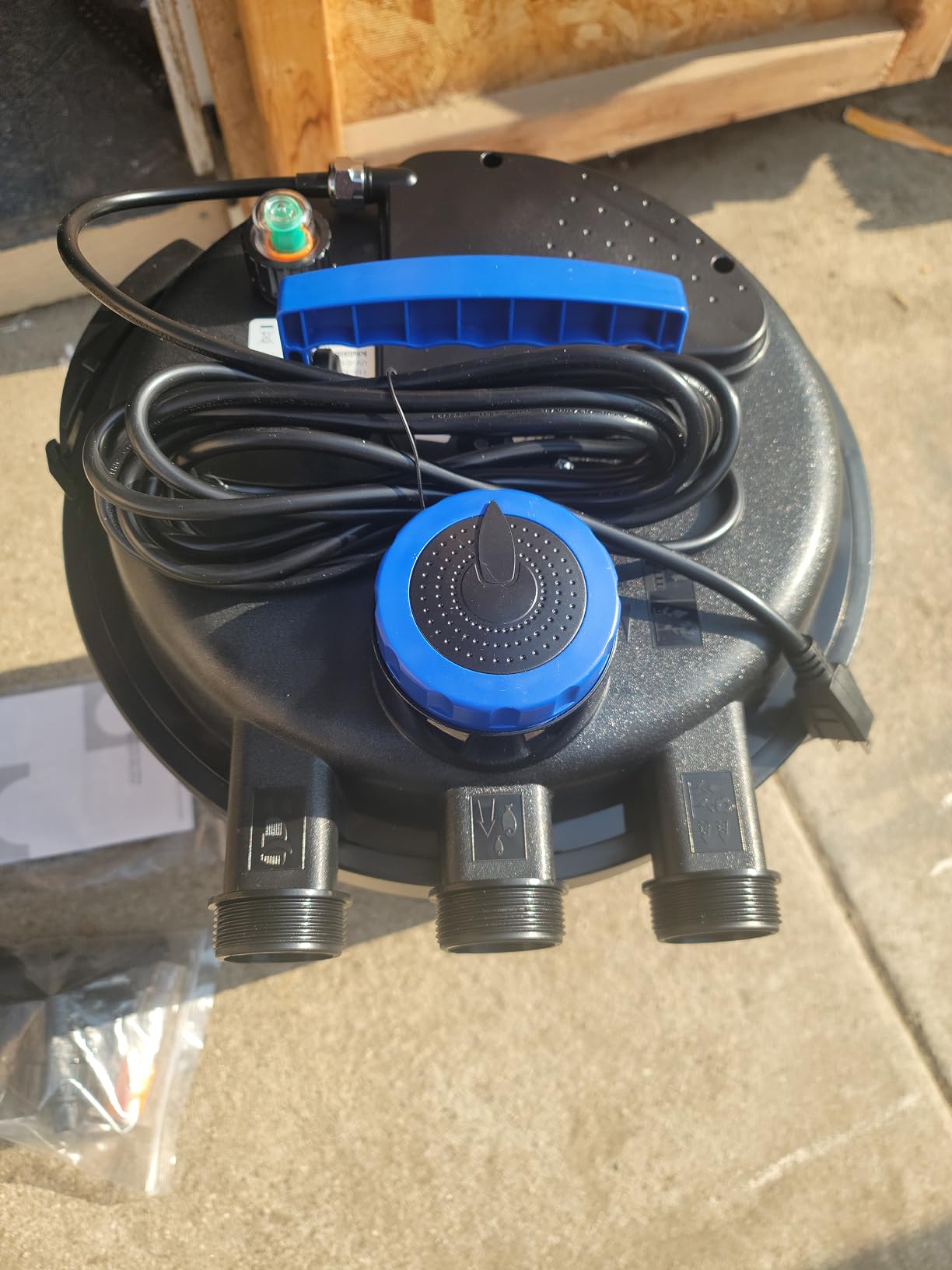
Build quality is another point in its favour. IP44 waterproof ABS and PP construction with sun protection suits a unit that will sit outdoors through full summer, and owners report quiet running, which is a pleasant surprise for a filter moving this much water. It also arrives mostly assembled, so setup is quicker than the 20 x 16 x 21 inch dimensions suggest.
Four adapter sizes from 3/4 inch to 1-1/2 inch cover most pond plumbing, and the replaceable sponge with a yellow cleaning indicator means the consumable part of the system is simple and the signal is unambiguous. The 4.3 rating comes from owners who value the capacity, not from users who never had a problem with it.
Sizing it for a large koi pond
For a koi pond above 1000 gallons, this is the realistic single-filter option in this roundup. Below that, the same capacity would leave you over-filtered for your fish load, which is harmless but means you are paying for turnover you do not need. Work from the koi figure of 1321 gallons, not the ornamental figure, if fish are in the water.
The practical caution is that a filter this size is really a pond-sized installation. You need a pump that can drive 2642 GPH through the housing, plumbing sized to match, and a level base with clearance for the lid to open. Reviewers who have had trouble almost always trace back to a head or plumbing mismatch rather than to the filter itself.
What to know before you buy it
The recurring complaints cluster around the backflush mechanism and the lamp. Some owners report a leaking backflush port and a clean button that sprays water when pressed, and some report UV lamp failures that are not user-replaceable on every variant. Verify the lamp replacement arrangement and the port seal on the specific model before you buy.
There are also reports of the head clamp plastic splitting on some units, which causes leaks. At 13.8 pounds and 20 x 16 x 21 inches, the housing is heavy and awkward to turn around, so plan a dry, level installation spot where you can service it without lifting it. A large filter that has to be wrestled into place during a leak is a bad afternoon.
12. Tetra Bio-Active Pressure Filter 1500: Best for Heavy Leaf Lids
Tetra Pond Bio-Active Pressure Filter, for Ponds Up to 1500 Gallons
Pressure filter for ponds to 1500 gallons
Bio-activator media
Backflush valve
9 pounds
Pros
- Backflush valve saves time versus rinsing foam pads
- Large bio-activator surface area for bacterial growth
- Owners report multi-year service
- Handles heavy leaf and string algae loads
- Accepts 1-1/4 and 1-1/2 inch attachments
Cons
- Backwash port leaks on many units
- O-rings and spare parts are hard to source
- Finer debris can pass through and return
- Large hose sizes are hard to find locally
Every filter on this list eventually meets a pond that collects leaves. This is the one we would choose for that situation, because the bio-activator media is specifically reported to handle heavy leaf loads and string algae, and the backflush valve is the fastest cleaning method in this roundup by a clear margin.
Water flows down through the bio-activators, which trap suspended debris while offering a large surface area for beneficial bacteria to colonise and attack pollutants. Rated for ponds up to 1500 gallons, with 1-1/4 inch and 1-1/2 inch attachment sizes for the larger plumbing this capacity implies. Owners report the filter lasting many years, and one long-term owner describes it still running after roughly eight years on a single replacement.
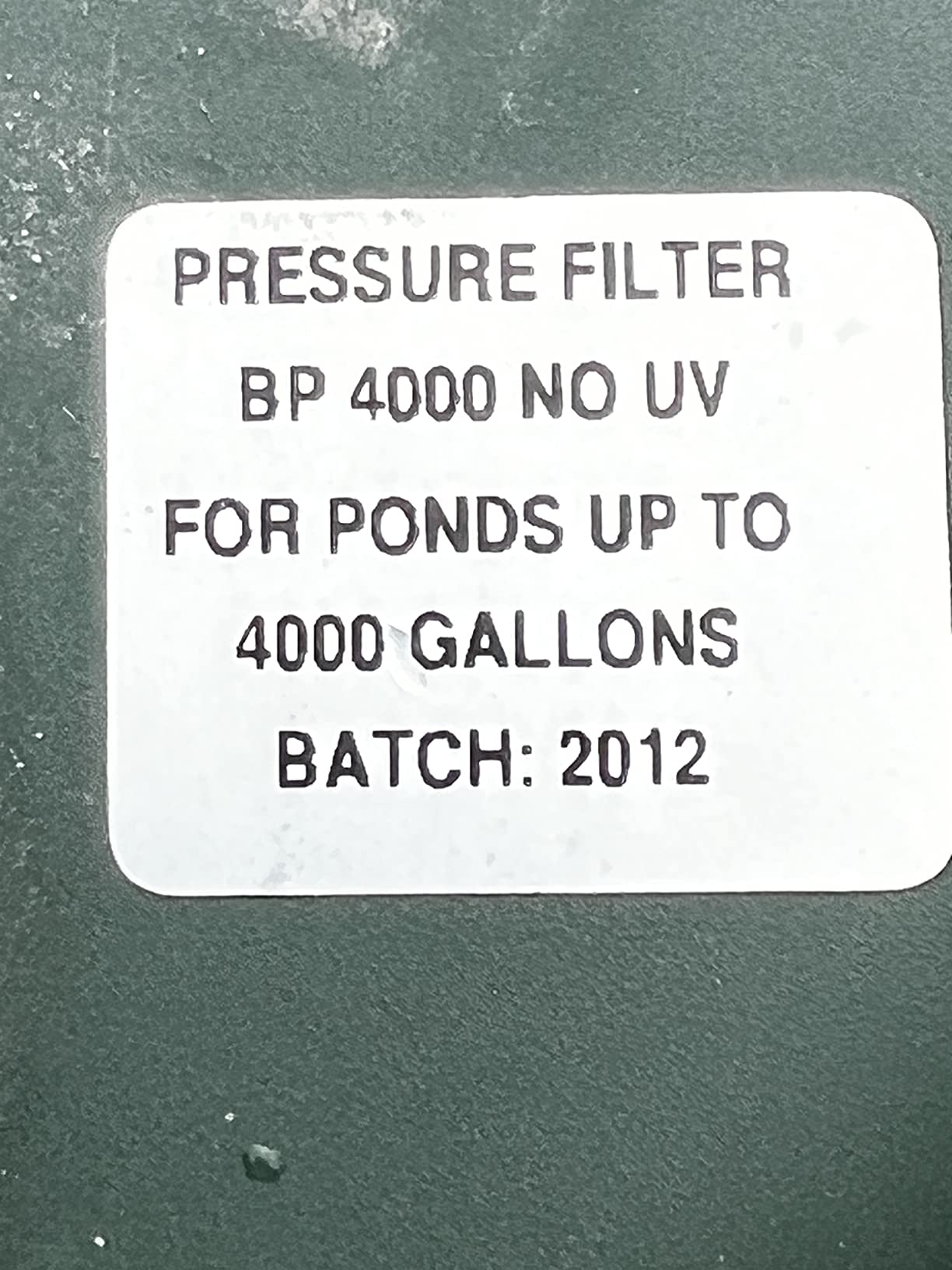
At 17 x 15.38 x 18 inches and 9 pounds, it is a substantial box, and the backflush valve is what justifies that bulk. Rather than pulling every element out and rinsing it separately, you reverse flow and flush the media in place, which is exactly the behaviour you want when the filter is full of wet leaf debris twice a month in autumn.
The 4.0 star average is the lowest here, and the reviews are clear about why: it is not a performance complaint. It is an accessory and sealing complaint, and one owner put it plainly, describing a filter that still worked fine but ended up discarded because a replacement O-ring could not be sourced. That is worth weighing carefully.
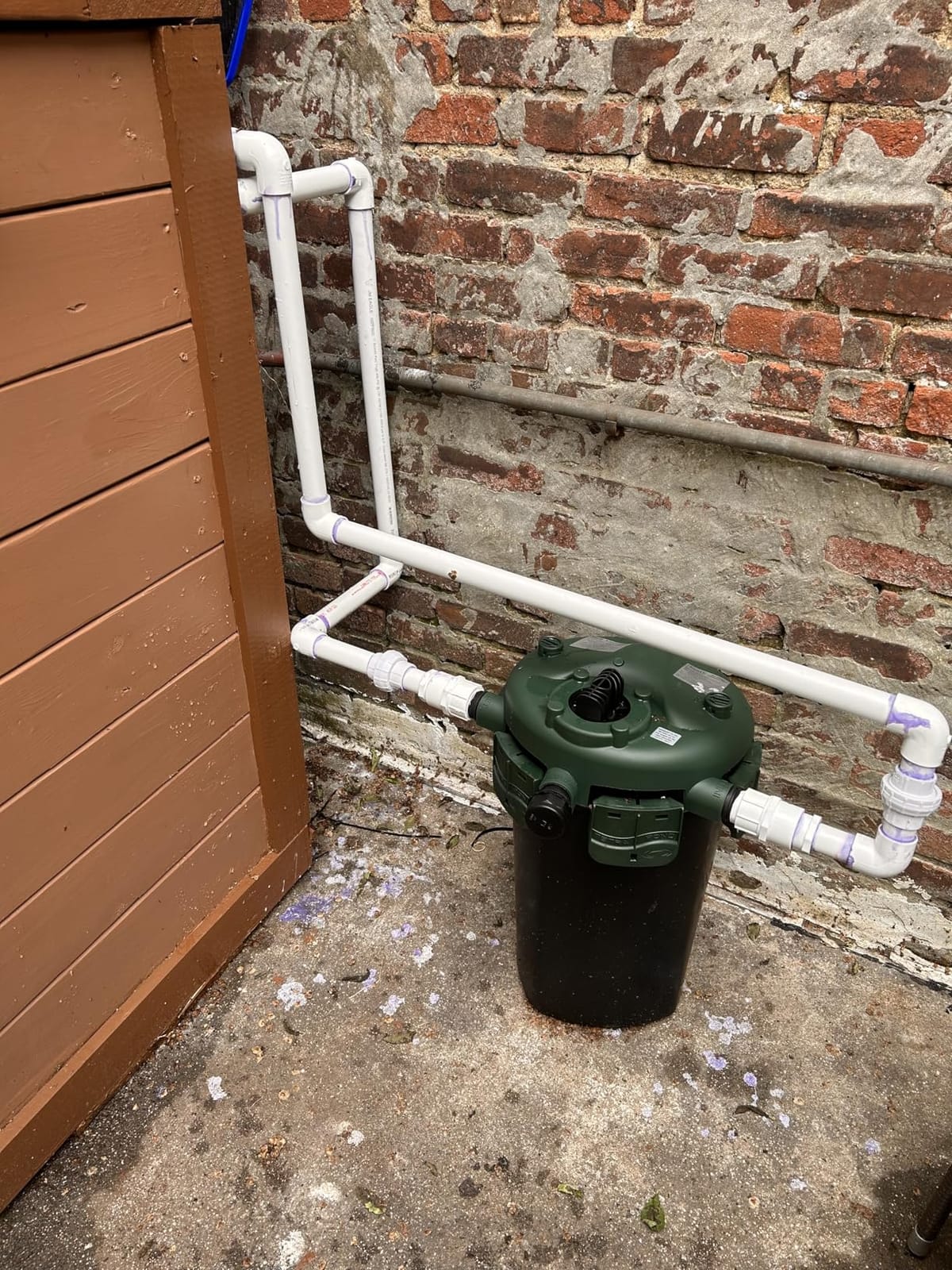
Backflush cleaning and longevity
The backflush valve changes the maintenance maths on a leaf-heavy pond. When you are dealing with bags of decomposing leaves, the difference between a two-minute valve operation and twenty minutes of disassembly is the difference between cleaning the filter and avoiding it. On a pond under a large tree, that capability justifies a lot.
There is also an energy point in the reviews, where this pressure filter is described as having the lowest energy demand of the pressure filters at this capacity. Lower flow through a given volume means less work for the pump, which is a running cost that compounds over the life of the installation.
What to know before you buy it
Spare parts are the real risk, and this is the single most consistent complaint across the reviews. The backwash port leaks on many units, sometimes from day one, and O-rings and similar parts are described as difficult or impossible to source. Check the availability of seals for this model before you buy, because a filter that works perfectly but cannot be made watertight is a frustrating place to be.
Two smaller points. Finer debris can pass through and return to the pond, leaving the water slightly murky in a way that only a finer stage or a UV unit will fix. And the 1-1/4 and 1-1/2 inch fittings need matching hose that reviewers say is hard to find locally, so measure and plan your plumbing before the filter arrives.
How to Choose the Right Pond Filter
Three jobs one filter has to do: mechanical, biological, UV
Mechanical filtration traps what is physically there, leaves, algae strands, fish food, and silt. It protects the pump and keeps the water visibly clear, and it is the only stage that removes anything rather than transforming it.
Biological filtration is where the safety of the water comes from. Beneficial bacteria colonise the media and convert ammonia, which is toxic, first to nitrite and then to nitrate, which is far less harmful. This is the nitrogen cycle, and it takes between four and six weeks to establish in a new filter. Mechanical filtration clears water; biological filtration keeps fish alive.
UV clarification is the third stage and the one most often misunderstood. A UV lamp damages the DNA of free-floating algae and microbes as water passes through the chamber, which clears green water and reduces suspended haze. It does not remove debris and it does not treat fish parasites. It is an addition to a filter, never a filter on its own.
Size your filter to 1.5 to 2 times your pond volume
Measure the actual water volume, not the basin size. A pond dug to a nominal 1000 gallons with a raised shelf and a shallow margin may hold 700, and sizing to the real figure gives you the headroom you actually need. Once measured, multiply by 1.5 for a fishless water garden and by 2 for a pond with koi.
Then read the fish rating rather than the headline number. Most manufacturers quote capacity on a pond with no fish, and several products here list both figures explicitly, which is a good sign about how the rating should be used. A filter listed at 1000 gallons is typically a 500 gallon filter once fish are in the water.
Match the filter to your fish load, not just your water volume
Two koi in a 1000 gallon pond are a different problem from twenty. Bioload, the concentration of fish waste rather than the total water, is what drives ammonia production, and it is the variable that separates a comfortable pond from a chronically cloudy one.
Waterfowl break this rule hardest. Ducks and geese produce waste at a rate that far exceeds a comparable number of koi, so a pond sized normally for its fish load is undersized for a duck pond. If you keep waterfowl, double the rating again and plan on more frequent cleaning, because the solids load is continuous rather than occasional.
Pressure, gravity-fed, or all-in-one: which housing fits your pond
Pressure filters push water through the media, which keeps solids in suspension, allows a backflush valve, and holds more media in a given footprint. They are the right choice for koi ponds and anything above 500 gallons, and they are what most of this roundup is made of.
Gravity-fed filters let water flow by height difference alone. They are simpler, cheaper, easier to service, and they must be installed above the water line, but they cannot backflush and their media volume is limited. For a 500 gallon water garden they are entirely adequate, and the decades-long service life owners report is the argument for them.
All-in-one units combine pump, filter, and often a fountain in a single body. They suit ornamental ponds and containers where simplicity matters more than capacity, and they remove the pump-matching problem entirely. Their limitation is that you cannot upgrade one part without replacing the whole thing.
Matching your pump to the filter without blowing debris through
Two failure modes to avoid. An undersized pump means the filter trickles, solids settle out instead of being captured, and the whole design does nothing. An oversized pump is the more common mistake: enough force to push fine debris straight through the mechanical stage and back into the pond, which is why larger filters do not always clean better.
For a pressure filter, check the head pressure as well as the flow. A backwash valve only works properly if the pump can reverse flow against the media, and a low-head pump will make cleaning mode disappointing. Our pond pump guide covers the flow and head figures that pair correctly with each housing.
Cleaning cadence from week one to steady state
For the first six weeks, clean twice a week regardless of how clean the water looks. The bacterial colony is establishing and the media needs regular rinsing, and a heavy load during this period is how new filters get abandoned. After six weeks, weekly is enough above 65 degrees Fahrenheit, and fortnightly when the water is cold.
Clean in pond water, never tap water, and replace media rather than washing it in chlorinated supply water. Always use the cleaning indicator if the filter has one, since it responds to actual load rather than to a calendar. And keep the filter running continuously, because a bacterial colony that sits without flow for eight hours can take weeks to recover.
Frequently Asked Questions
What is the best filter system for pond water?
The best filter system for pond water is the one rated for one and a half to two times your actual pond volume, with a mechanical stage, a biological stage, and enough media to clean without daily attention. A pressure filter with a backflush valve suits koi ponds above 500 gallons, a gravity-fed biofilter suits smaller water gardens, and an all-in-one unit suits ornamental ponds where simplicity matters more than capacity. Sizing matters far more than brand.
What size filter do I need for my koi pond?
Measure your actual water volume, then choose a filter rated for double that figure. Most manufacturers quote capacity for a fishless pond, so a filter listed for 1000 gallons handles roughly 500 gallons with koi in it. Turning the water over once per hour is the working target, and a filter can never be too large, only ever too small. Doubling the rating costs little and removes most chronic cloudiness.
Can a pond filter be too big?
No. A pond filter can never be too big, though it can absolutely be too small. An oversized filter simply moves more water than it needs to, which affects electricity use and nothing else. An undersized filter cannot process the ammonia and solids load of a fish pond, which leads to cloudy water and unhealthy fish. Spend the difference on a larger unit rather than on cleaning equipment you will not need.
What is a UV sterilizer and do I need one?
A UV sterilizer exposes water to ultraviolet light as it passes through a chamber, damaging the DNA of free-floating algae and some microbes. It clears green water effectively within days. It does not filter debris and it does not kill parasites or bacteria living on your fish. Most owners find it worth having in spring and summer for clarity, but it should always sit behind a mechanical stage, never as the only filtration.
When should I clean my pond filter?
Clean twice a week for the first six weeks while the bacterial colony establishes, then weekly once the water is warmer than 65 degrees Fahrenheit. Many filters have a cleaning indicator that floats up or changes colour when the media is loaded, and you should clean on that signal rather than on a calendar. Always rinse media in pond water rather than tap water, since chlorinated supply water kills the bacteria you are protecting.
The Bottom Line on Choosing a Pond Filter
After working through all 12 of the best pond filters in this roundup, the Tetra Submersible Flat Box Filter is the one we would put in front of most people. It has the largest review base we found at 4294 ratings, a steady 4.3 star average, a two pound lift weight, and it does one thing reliably for a small pond. For anything larger, the sizing rule matters more than the model: buy a filter rated for one and a half to two times your actual pond volume, and use the fish-pond figure rather than the headline number.
Match the housing to the job while you are at it. Gravity-fed for water gardens under 500 gallons, pressurised with a backflush valve for koi ponds above that, an all-in-one for ornamental features, and a UV stage whenever green water is your problem. Then check that the replacement parts and UV bulbs for your chosen model are easy to source, because that is the long-term detail most owners wish they had checked first.
None of it works without you. Clean twice a week for six weeks, weekly after that, and run the filter continuously through the season.