
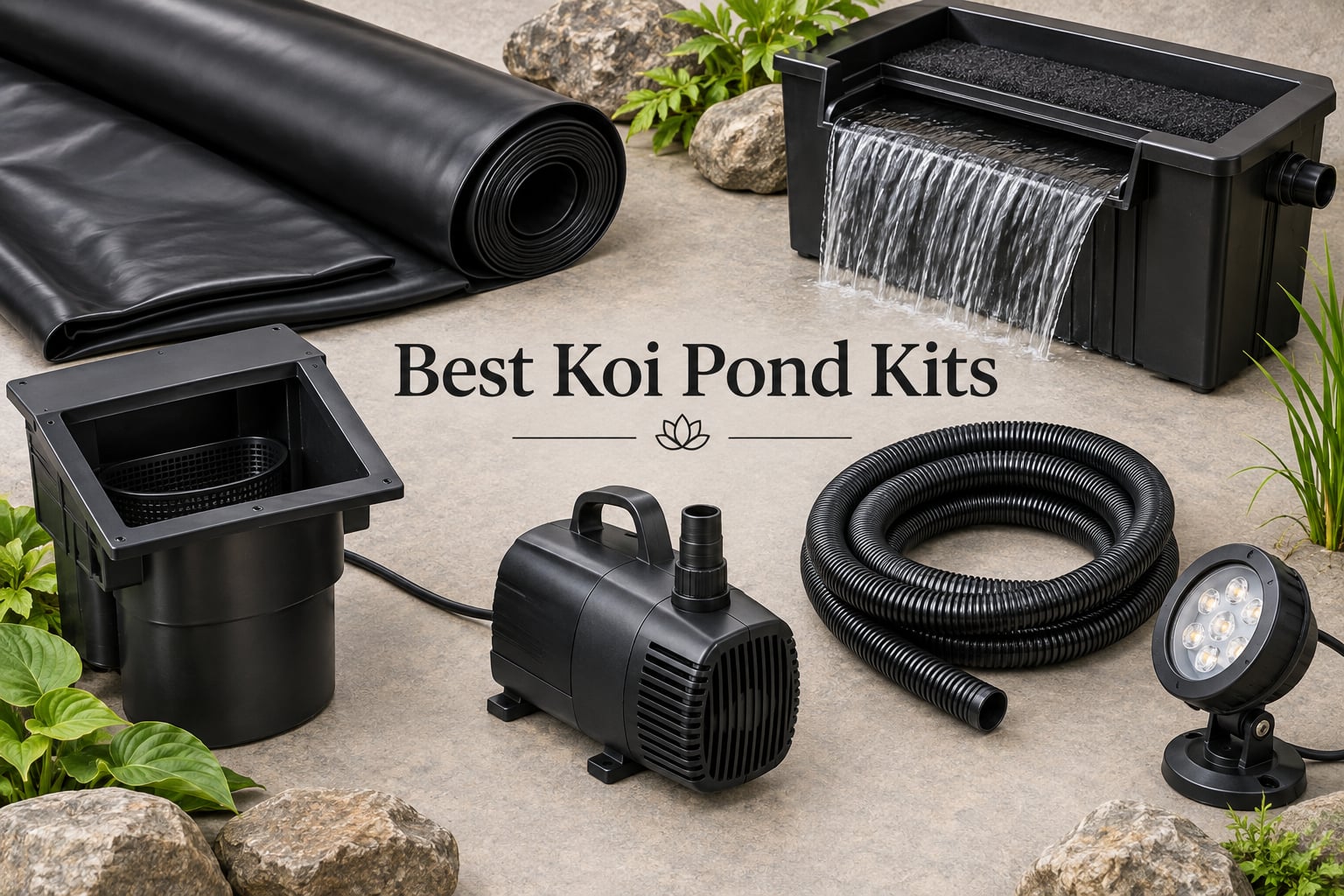
The best koi pond kit is the one that ships with a liner, a pump, a skimmer, a filter and enough plumbing that you are not lying on wet grass at 8pm trying to guess which pipe diameter matches which fitting. That is the entire pitch, and it is a better pitch than it sounds, because pond building fails at the compatibility step far more often than it fails at the digging step.
I spent weeks reading spec sheets, warranty terms and owner reviews across the complete bundles currently sold for backyard ponds, plus a decade of forum threads from koi keepers who have already made the expensive mistakes. Six kits earned a real place here, and the honest headline is that only three of them can genuinely be called koi ponds rather than decorative water gardens.
That distinction matters more than any other factor in this guide. A koi pond that fails usually fails on depth and filtration capacity, not on hardware. Koi produce heavy waste, they tolerate temperature swings far worse than goldfish, and a shallow pond in a hard winter is a pond that loses fish. Before we get into the picks, one rule sets the whole list: anything under roughly 500 gallons and 3 feet deep is a goldfish pond, no matter how good the pump is. Our reviews of the best koi pond filters explain why capacity is the number that decides success or failure.
Everything below reflects what is actually inside each box as of 2026, including the parts manufacturers quietly leave out. Weights, flow rates, gallonages, warranty lengths and review counts are taken from the manufacturer and owner data, not from marketing copy.
Table of Contents
Top 3 Best Koi Pond Kits for 2026

Simply Ponds 2100 Kit
- 2100 GPH variable-speed pump
- 45 mil EPDM liner with lifetime warranty
- 16 inch waterfall filter and 7 inch skimmer
- 300 sq ft underlayment included

Aquascape 8×11 Pond Kit
- Complete skimmer and BioFalls pair
- Energy-efficient EcoWave pump
- 8 x 11 foot footprint
- Weather-resistant components

PondBuilder Crystal 4000
- 4000 GPH variable-speed pump
- 20 inch waterfall with aeration tubing
- 45 mil EPDM liner
- 300 sq ft geotextile underlayment
All 6 Koi Pond Kits Compared (September 2026)
| Product | Specifications | Action |
|---|---|---|
| Simply Ponds 2100 GPH Water Garden Kit |
|
Check Latest Price |
| Aquascape DIY Backyard Pond Kit 8 x 11 |
|
Check Latest Price |
| PondBuilder Crystal 4000 GPH Pond Kit |
|
Check Latest Price |
 Complete Pro 5200 GPH Pond Kit Complete Pro 5200 GPH Pond Kit |
|
Check Latest Price |
 Koolatron Koolscapes 400 Gallon Kit Koolatron Koolscapes 400 Gallon Kit |
|
Check Latest Price |
 Smiley Scapes 6 x 9 Liner and Pump Kit Smiley Scapes 6 x 9 Liner and Pump Kit |
|
Check Latest Price |
What a Koi Pond Kit Actually Includes
A koi pond kit is a pre-matched bundle of the core components of a backyard fish pond, sold as one purchase so you do not have to size and match each part yourself. The full bundle usually contains eight components, and you can check for every one of them before buying.
Liner – a flexible sheet of 45 mil EPDM rubber that forms the pond basin.
Pond underlayment – a nonwoven geotextile fabric laid between the ground and the liner to stop sharp rocks from puncturing it.
Pump – rated in gallons per hour.
Skimmer – sits at the pond surface and traps leaves and floating debris.
Filter – either a biofalls waterfall filter with a mat of biological media or a pressure filter with bio-media.
Flexible PVC plumbing – typically 1.5 or 2 inch, with all the fittings and a check valve.
LED pond light – in most mid-size and larger kits.
Waterfall foam and the miscellaneous installation hardware.
Here is the part no competitor on the search results will tell you plainly: that is what a kit contains, not what you need. Every kit in this roundup leaves out rock and gravel for the waterfall, actual aquatic plants, an auto-fill or overflow kit, a bottom drain, a winter cover, a fill hose, filter media in some cases, and the labour to move several hundred pounds of stone. Our buying guide covers what each omission costs you in practice.
Two more things you will never find on a retailer page. First, the gallonage printed on a box is the water volume at a stated depth, and that depth is often 1.5 feet, which is far too shallow for koi. Second, review counts in this category are thin, so a kit with 30 reviews and a 4.6 average tells you less than a kit with 448 reviews and a 4.1 average. We weigh both.
1. Simply Ponds 2100 GPH Kit – Best Overall for a First Koi Pond
Simply Ponds 2100 GPH Water Garden Koi Pond Kit 15 x 20 Ft EPDM Liner
2,100 GPH variable-speed pump
45 mil EPDM liner
16 inch waterfall filter
7 inch skimmer
Pros
- Complete bundle covering liner
- pump
- skimmer
- filter
- light and plumbing
- 45 mil EPDM liner with limited lifetime warranty
- Variable-speed pump and LED lighting included
- Free-form liner trims to any shape
- 300 sq ft underlayment protects against punctures
Cons
- Pump warranty is 2 years
- shorter than the liner and filter
- Requires a full weekend of excavation and rock work
This is the kit I keep coming back to, and the reason is simple arithmetic rather than excitement. It ships a 15 x 20 foot sheet of 45 mil EPDM LifeGuard liner, which is enough material to build an 11 x 16 foot basin, plus a 2,100 GPH variable-speed pump, a 16 inch waterfall filter, a 7 inch skimmer, 300 square feet of underlayment, an LED spotlight, kink-free tubing and a can of waterfall foam. For a first serious koi pond, that is a genuinely complete box.
Owner reviews average 4.2 out of 5 across 110 ratings. The praise is consistent and specific: the package really is complete, the liner is thick and forgiving, and the free-form sheet can be trimmed to whatever shape your yard allows rather than forcing you into a rectangle. The 2-year pump warranty is the most common complaint, and it is a fair one, since the liner carries a limited lifetime warranty and the skimmer and waterfall filter each carry 5 years. Long-term owners on koi forums broadly agree that filtration capacity matters more than any single part in the box, which is why this bundle lands where it does.
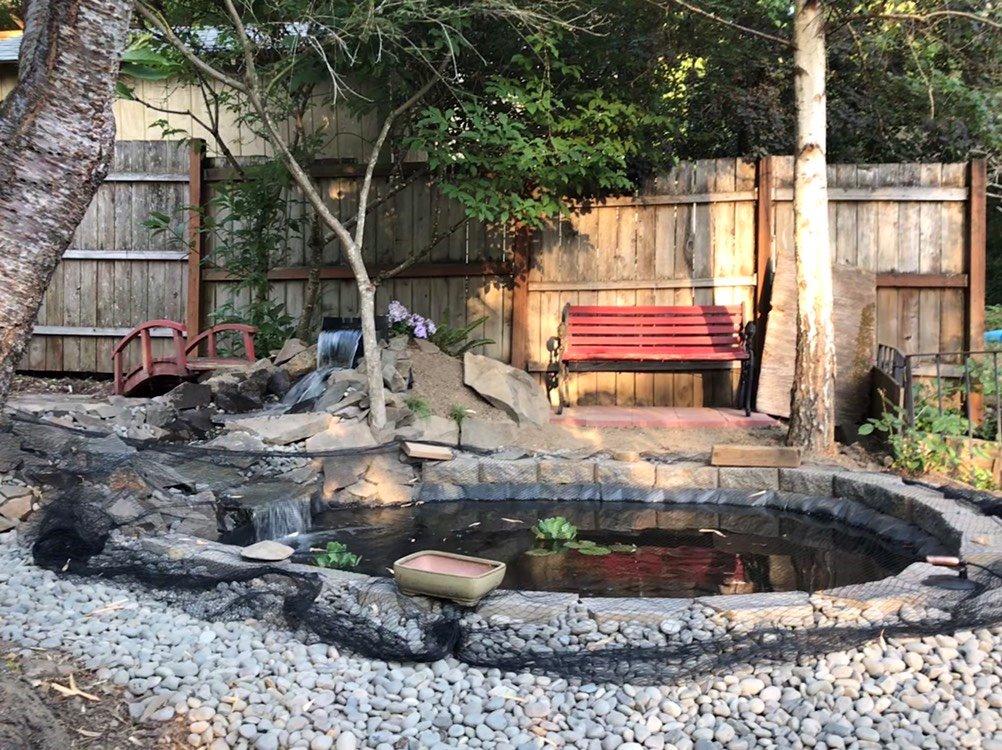
The warranty spread is worth understanding. Liner limited lifetime, skimmer and waterfall filter 5 years, pump 2 years, LED light 2 years. Pumps are consumables, and no manufacturer in this category sells you a 20-year pump. Plan for a replacement rather than feeling shortchanged.
One practical detail that catches people: at 1.5 feet of water depth, this liner gives you a 2,100 gallon pond. That depth is not a koi depth. Experienced keepers consistently put the practical floor at 3 feet and the ideal at 4 feet, both for swimming room and for surviving a cold snap. Dig deeper than the box suggests and let the extra liner become a wider shelf or a deeper edge.
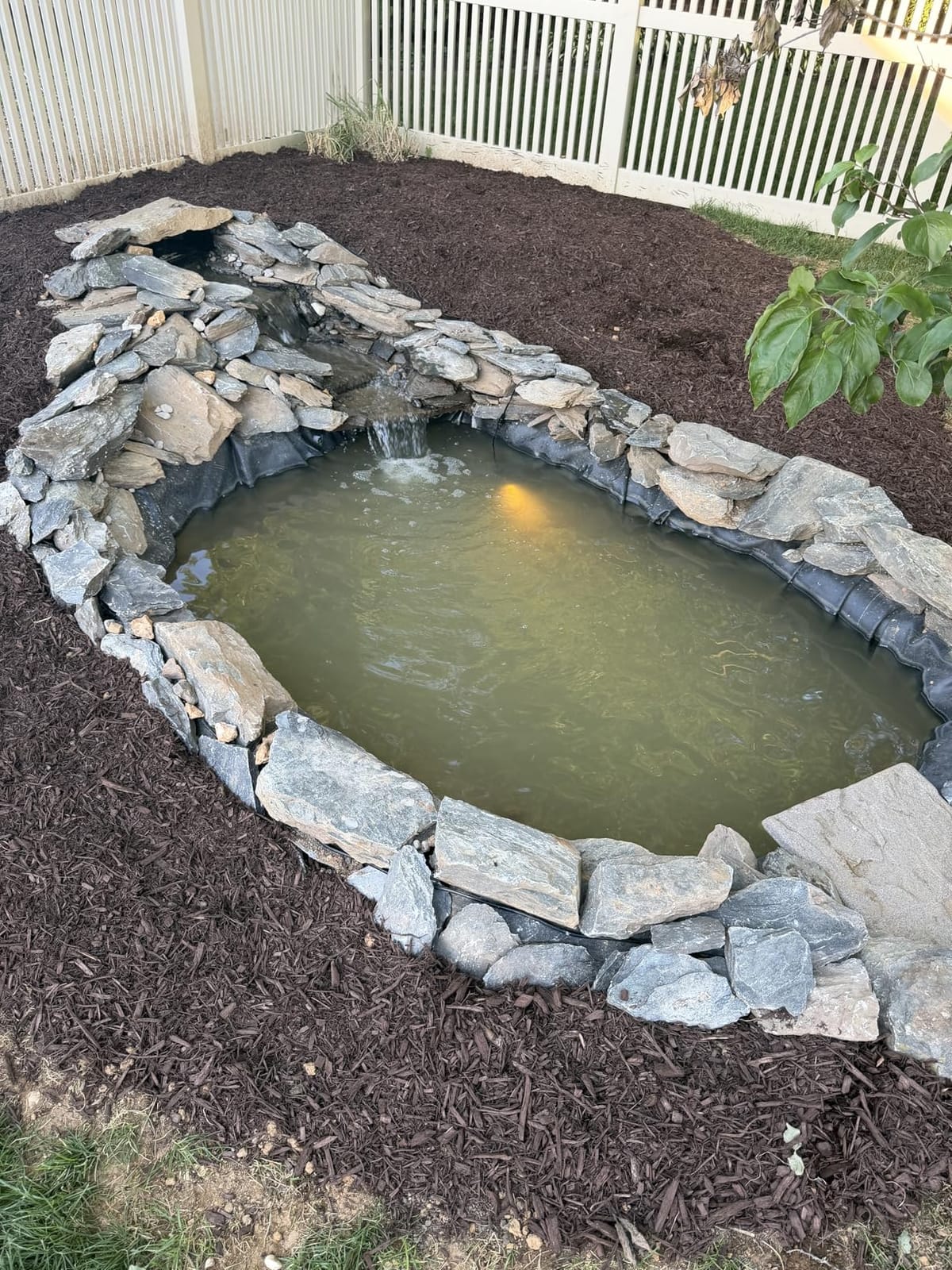
Where an 11 x 16 pond fits in a real yard
An 11 x 16 foot basin at 3 feet deep is roughly 4,000 gallons of water, which is a substantial hole and a substantial volume of water to manage. The liner sheet is 15 x 20 feet, so you need roughly a 20 by 24 foot working area once you allow room for the skimmer, the waterfall filter, the berm and a path around the pond.
Fit matters more than people expect. A pond that butts up against a fence gives you nowhere to run the waterfall and nowhere to stand when you clean the skimmer. Leave at least 3 feet of access on the filter side.
What you have to add before you add fish
Budget for rock, gravel, plants and a winter cover on top of the kit, because none of those are in the box. The one can of waterfall foam also will not finish a full rock waterfall, so plan on picking up more or sealing with plain foam.
Do not cut the liner until the pond is full. This is the single most repeated warning across every pond forum we read, and it is the difference between a pond that survives its first week and a pond you have to drain and start again. A liner trimmed too early relaxes, pulls out of its trench and leaks at the seam.
2. Aquascape DIY Backyard Pond Kit 8 x 11 – Best Value
Aquascape DIY Backyard Pond Kit 8 x 11 feet – Complete Water Garden Ecosystem with Pump, Skimmer, and Filter, 99765
8 x 11 foot complete pond package
Skimmer plus BioFalls filtration
EcoWave energy-efficient pump
Pros
- Highest average rating in the group at 4.6 out of 5
- Genuinely all-in-one with skimmer and BioFalls
- Energy-efficient pump keeps water moving and oxygenated
- Weather-resistant components
- Supported by an established pond brand
Cons
- Large footprint on a small yard
- 8 x 11 foot basin is smaller than the 15 x 20 liner kits
Aquascape is the brand most pond builders in the country recognise, and this 8 x 11 foot package is the cleanest expression of the kit idea we found. It pairs a mechanical skimmer for surface debris with a BioFalls waterfall filter that does the biological work, driven by an energy-efficient EcoWave pump. Three pieces, one loop, no guesswork about which brand of fitting goes with which.
Owner ratings come in at 4.6 out of 5 across 30 reviews, the highest average in this group, with 79 percent of those ratings at five stars. Reviewers repeatedly single out that the package really is complete and that the EcoWave pump is reliable. The reservation everyone shares is the fact that an 8 x 11 foot pond is a modest footprint if you were hoping for a proper swimming hole.
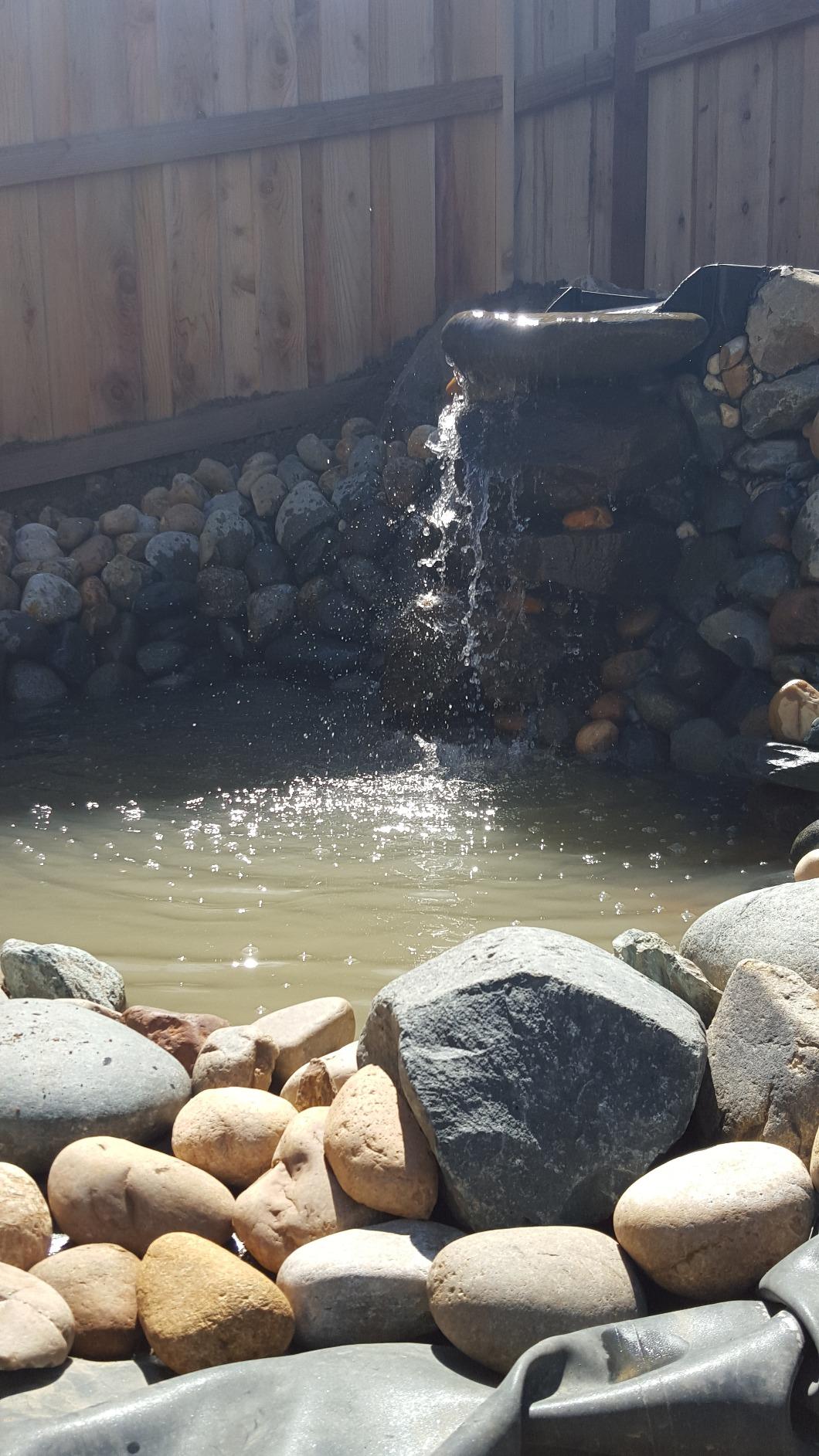
One transparency note: Aquascape states that each component carries a limited manufacturer warranty and that the length varies by component, with details available from the manufacturer. That is less specific than the itemised warranty lines you get with the Anjon-built kits, where the liner, skimmer, filter, pump and light each carry a stated number of years. If warranty length is a deciding factor for you, ask before you order.
A skimmer, a BioFalls filter and an energy-efficient pump is the exact trio that forum regulars tell first-time builders to prioritise, because a pond without a skimmer is a pond that turns green by July no matter what else you install.
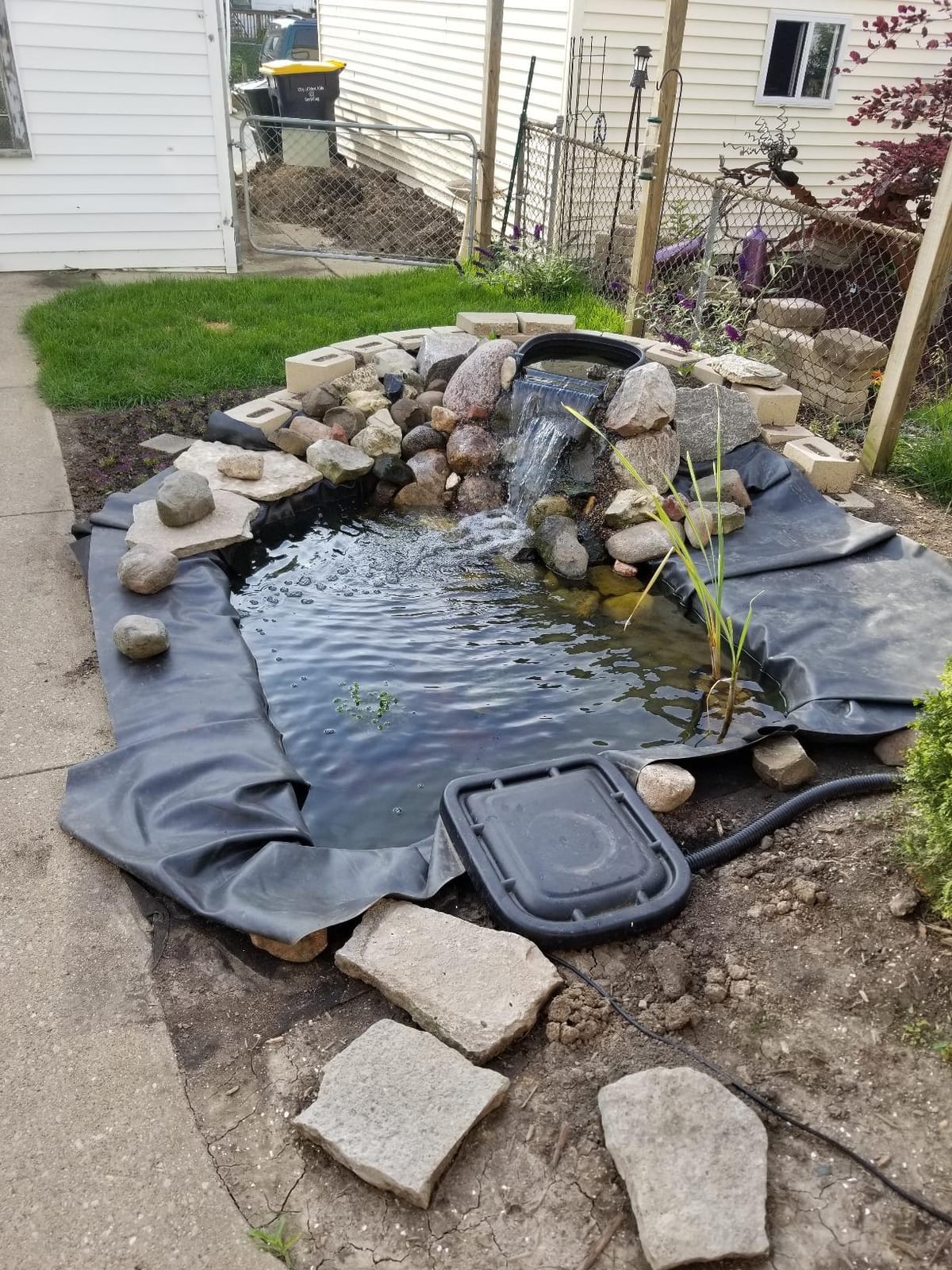
What the BioFalls and skimmer pair actually does
Water leaves the pond through the skimmer, which catches leaves, petals and floating debris in a mesh basket before the water ever reaches the filter. From there the pump lifts water to the BioFalls, where it trickles down over a filter mat seeded with beneficial bacteria. Those bacteria convert ammonia and nitrite into nitrate, and the falling water adds oxygen on the way back. Rock and gravel around the filter host more bacteria, which is why the waterfall earns its space in the layout rather than being pure decoration.
That is the whole ecosystem in two components. Long-term owners consistently advise overinvesting in filtration because koi waste loads are heavy and koi immune systems are weaker than most fish. This kit gets that principle right at the design stage.
Where the small footprint bites
An 8 x 11 foot pond with a skimmer at one end and a waterfall at the other leaves you limited room for shelves, plants and deep zones. At 3 feet deep it holds somewhere in the region of 1,500 to 2,000 gallons, which is a workable koi volume but a tight one.
If your yard gives you room, the same brand sells larger kits and the logic scales. If your yard is small, this footprint is a genuine advantage and the premium over a generic kit buys you a system that works without modification. We walked through the sizing math in more detail with our picks of the best pond pumps, because pump size and pond volume have to be decided together.
3. PondBuilder Crystal 4000 GPH Kit – Top Rated Ecosystem Bundle
HALF OFF PONDS PondBuilder Crystal 4000 GPH Pond Kit 15 x 20 Ft EPDM Liner
4,000 GPH variable-speed pump
20 inch waterfall filter with aeration
45 mil EPDM liner
Pros
- Coordinated skimmer
- waterfall
- pump
- liner and underlayment in one box
- 45 mil EPDM liner with limited lifetime warranty
- Aeration tubing adds oxygen for fish health
- Variable-speed pump and LED light
- Multiple liner size options
Cons
- Pump warranty of 2 years is the shortest in the package
- Waterfall foam runs out before a large rock feature is finished
- No dedicated bio-media beyond the waterfall filter mat
This is the kit I would describe as the best balance in the roundup, and the strongest argument for it is the aeration tubing built into the 20 inch PondBuilder Crystal waterfall. Aeration matters more than most buyers realise, and having it in the box removes one more decision. Owners rate it 4.2 out of 5 across 52 reviews and consistently credit the coordinated Crystal skimmer and waterfall, the lifetime-warranted liner and the aeration.
On paper the package covers a 15 x 20 foot 45 mil EPDM liner, a 4,000 GPH Aqua Pulse variable-speed pump, the 20 inch waterfall with aeration tubing, a 7 inch skimmer with leaf basket, 300 square feet of geotextile underlayment, a 1-watt LED spotlight, kink-free tubing and waterfall foam. The skimmer and the waterfall are the same brand, which matters more than it sounds; matching bodies mean the plumbing and fittings line up without modification.
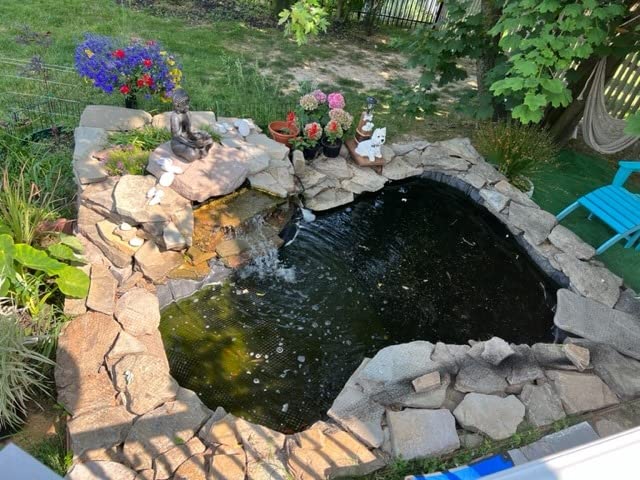
Unlike the 5,200 GPH kit further down this list, this one does not mix manufacturers between the skimmer and the waterfall. Owners note the 2-year pump warranty is the shortest warranty in the package, which is a fair criticism but a standard one across the whole category, and that the single can of waterfall foam is not enough for a large rock feature. Both are fixable with a short extra order.
The kit also comes in five liner sizes, from 15 x 15 up to 20 x 25 feet, so you can size the basin to the yard rather than forcing the yard to the kit. That flexibility is worth checking before you commit, because the liner is the one component you cannot easily swap later.
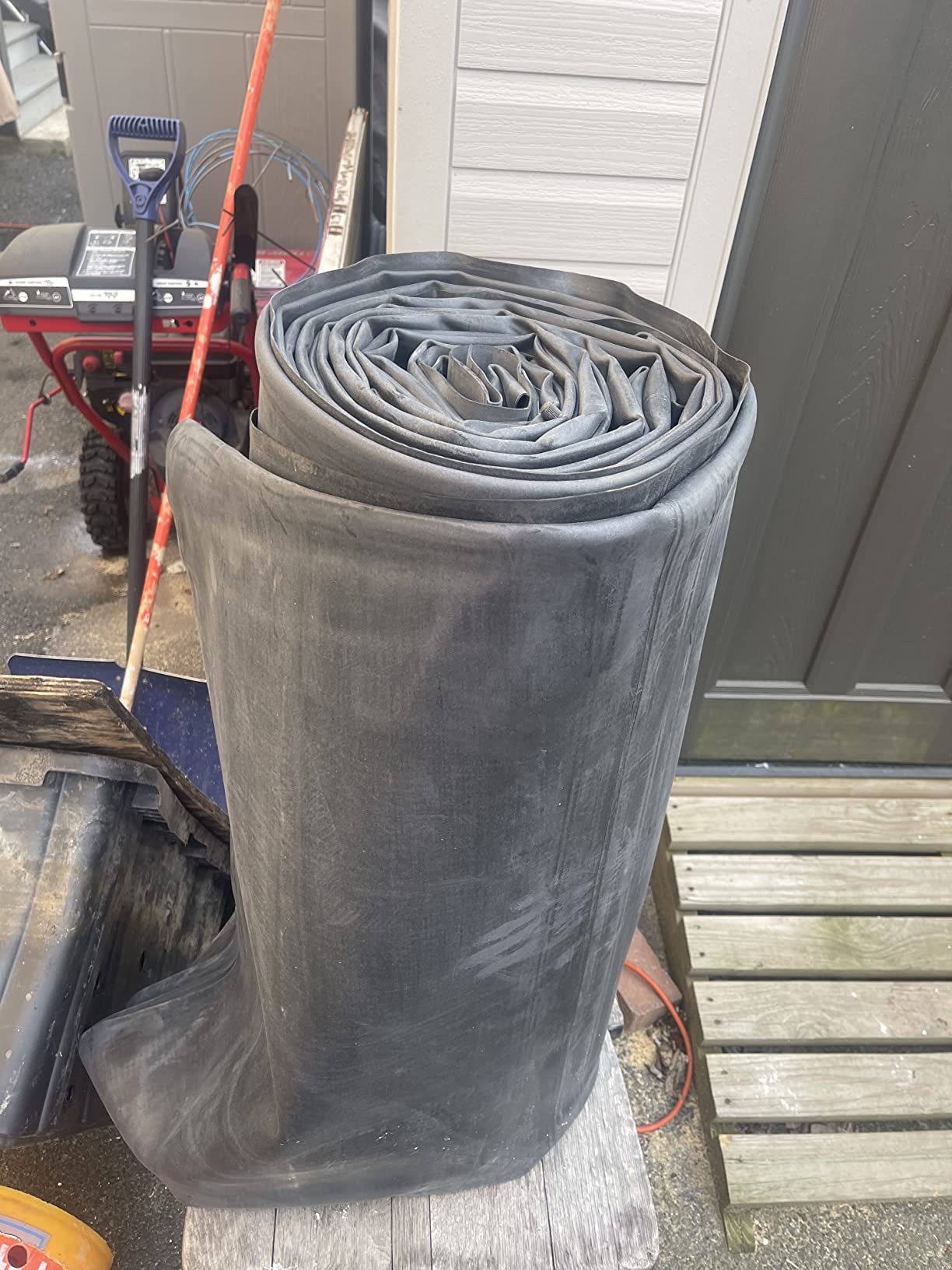
Sizing the pump against the 1,900 gallon figure
The printed 1,900 gallon figure assumes 1.5 feet of water depth, and the 4,000 GPH pump is sized for that. Run the turnover calculation honestly: 4,000 GPH multiplied by 24 hours gives 96,000 gallons moved per day. Against 1,900 gallons that is a turnover of more than 50 times per day, which is far more than a koi pond needs.
That spare capacity is not wasted. It means you can run the pump at a lower setting on a variable-speed model, which cuts electricity cost and reduces the constant turbulence that drives gas exchange. It also means the filter is not being starved of flow.
The aeration detail that matters for fish health
Air exchange is what keeps koi alive in warm water, and it is the piece most first-time builders skip because they assume a waterfall is decorative. The aeration tubing in this waterfall box gives you a second, more diffuse air input that supplements the water falling back into the pond.
Summer is when this earns its keep, and it is also when you should read up on dedicated units. Our guide to the best pond aerators covers when a separate air pump is worth adding for a pond this size, and it is a cheaper addition than most people expect.
4. Complete Pro 5200 GPH Kit – Best for Large Ponds and Heavy Fish Loads
HALF OFF PONDS Complete Pro 5200 GPH Pond Kit 15 x 20 Ft EPDM Liner
5,200 GPH variable-speed pump
22 inch Savio Livingponds waterfall filter
2 inch flexible PVC
Pros
- Largest pump in the roundup paired with a 22 inch waterfall filter
- Components properly matched to the liner size
- Clear instructions and helpful video resources
- 45 mil EPDM liner with lifetime warranty
- Support responds quickly when a piece is missing
Cons
- Skimmer and waterfall are different brands so fittings may not match
- Included check valve assembly can sit crooked
- Two cans of waterfall foam fall short of a full rock feature
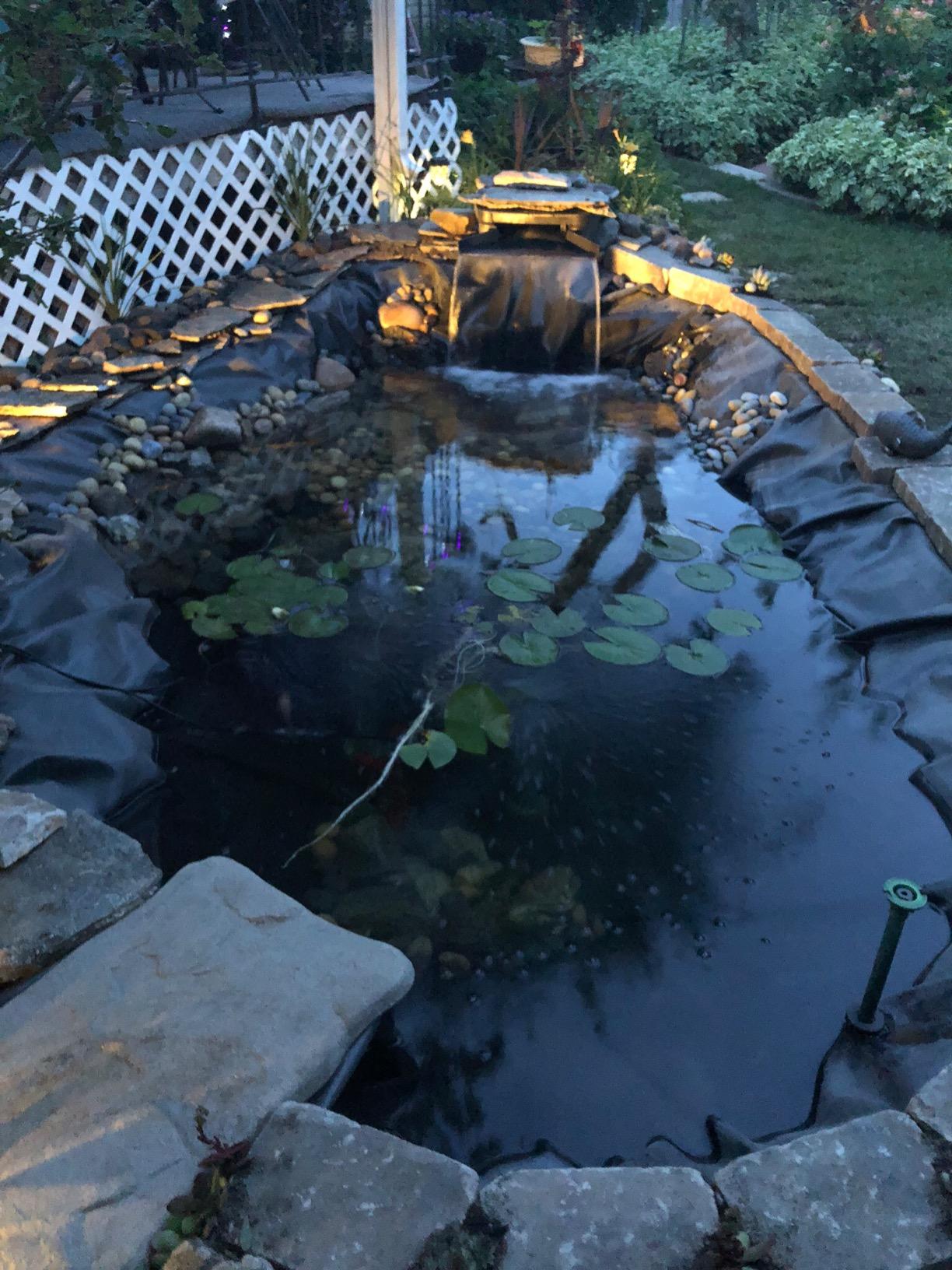
This is the biggest specification in the roundup, and at 4.4 out of 5 across 31 reviews it also has the second highest average rating here. The 5,200 GPH Aqua Pulse variable-speed pump is the largest in the group, and it is paired with a 22 inch Savio Livingponds waterfall filter carrying a 5-year warranty plus a PondBuilder Crystal Falls skimmer that also carries 5 years. On paper, that is a serious system.
The 2 inch flexible PVC length is longer than the 1.5 inch tubing in the mid-size kits, which reduces friction loss across longer runs.
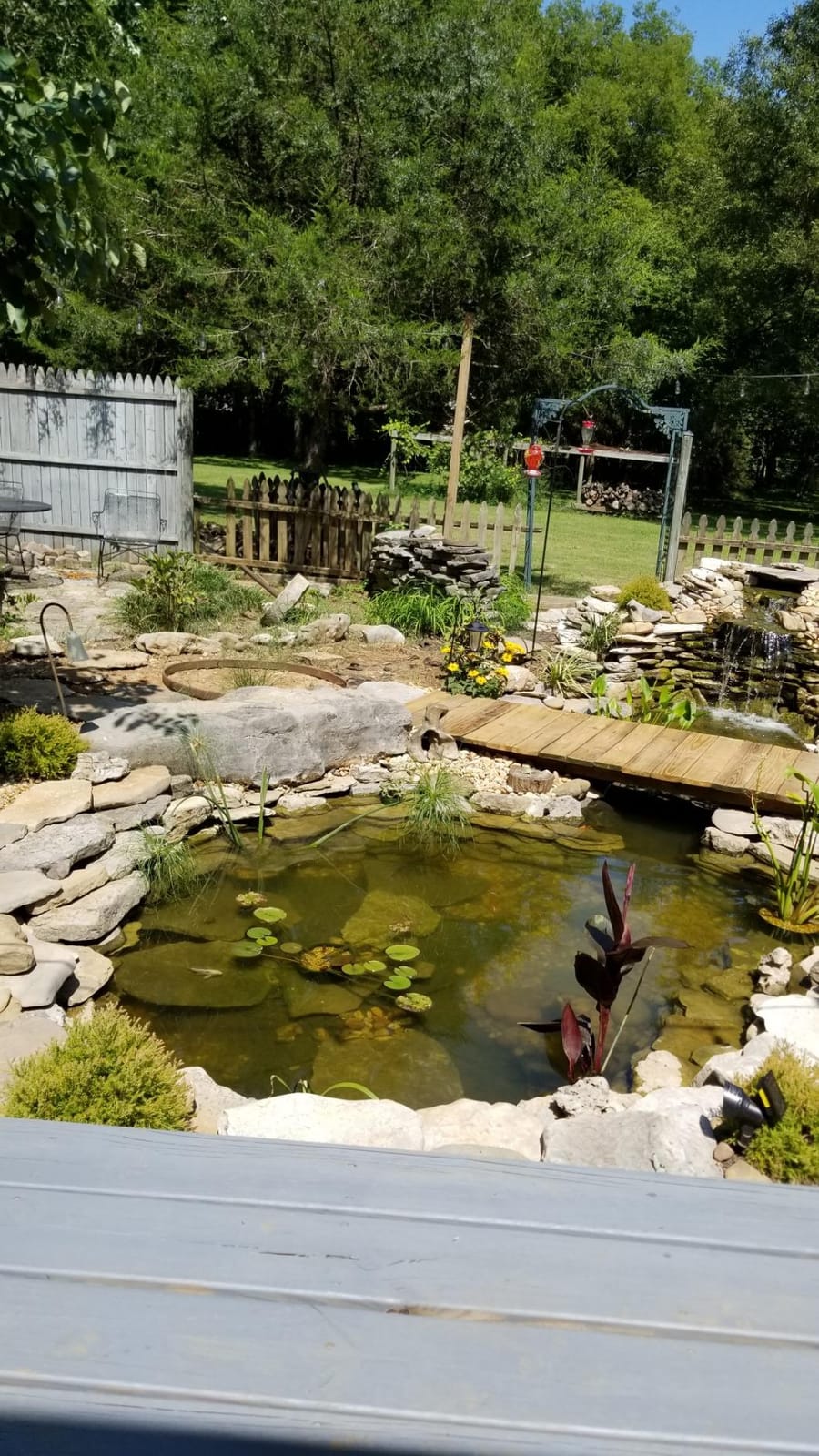
Now the friction. This package pairs a Savio waterfall filter with a PondBuilder skimmer, so the two bodies are from different manufacturers and the included pipe and fittings may not physically match.
Two more real drawbacks. The two 16 ounce cans of waterfall foam will not complete a substantial rock waterfall, and this is a 190 pound package that needs a second pair of hands to move into position. On the positive side, reviewers report that support sends replacement parts quickly when a piece is missing.
When 5,200 GPH is right and when it is overkill
This pump is right when you are digging a genuinely large basin, keeping more than ten koi, or building a pond with a long water return run. Against a realistic 3,000 gallon basin, 5,200 GPH delivers a turnover above 40 times per day, more than adequate.
The practical check is the filter, not the pump. A 22 inch Savio Livingponds waterfall filter has real capacity behind it. If you are only planning a handful of koi in a smaller pond, the 16 inch and 20 inch waterfalls in the other kits are more than sufficient, and you would be buying flow you cannot use. The saving goes straight into rock, plants and a proper winter cover, which improve the pond far more than unused gallons per hour.
The mixed-brand plumbing you will likely rework
Before you commit, lay out the skimmer position, the waterfall position and the pump position, then check the fitting diameters on both bodies against the 2 inch pipe supplied. If they disagree, buy the correct adapters and a short length of extra pipe before you commit rather than after. It is a fifteen minute job that saves an hour on a Sunday.
The same evening is a good time to run a leak test. Fill the basin with a hose, let it sit overnight and check the water level before you place any rock. Finding a pinhole in a full pond means draining the whole thing, and forum owners describe that as the most expensive mistake in pond building. Underlayment, careful liner handling and trimming last are the three habits that prevent it.
5. Koolatron Koolscapes 400 Gallon Kit – Best Budget Starter Water Garden
Koolatron Koolscapes 400 Gallon Starter Pond Kit with 340 GPH Pump, Water Bell and Double Daisy Fountain Nozzles, 10 x 10 Ft Flexible Liner, Floating Solar Light, Fish-Friendly Backyard Koi Pond Kit
400 gallon flexible liner
340 GPH submersible pump
Solar floating lantern
Two fountain nozzles
Pros
- Thick durable liner that trims easily for free-form digging
- Setup beyond the digging is straightforward with clear instructions
- Customisable fountain with two nozzles and a telescopic riser
- Solar lantern adds night interest
- Withstands dog wading without puncturing
Cons
- No filter included so koi keepers must add filtration
- Pump has a limited lifespan running continuously with fish
- Packed kits have been missing pump parts
- Solar light is dim and fake plants fade in direct sun
With 448 reviews, this is by a wide margin the most reviewed pond kit in the roundup, and that makes its 4.1 average a more trustworthy signal than any 30-review average here. Reviewers consistently credit the thick, easily trimmed liner, the clear instructions and most of them finished a working water feature in a weekend is a claim many reviewers make.
Owners also report it holds up to dogs wading through it without puncturing, which is not nothing in a family yard.
The 10 x 10 foot one-piece flexible liner is non-toxic and rated for koi, goldfish and frogs. The 340 GPH Koolscapes PJ-340 submersible pump is fully submerged, quiet and low power, and it ships with two interchangeable fountain heads, a water bell and a double daisy, plus a diverter and a telescopic riser for adjusting height and flow. A solar floating lantern rounds out the package. The whole thing weighs 6.1 pounds and carries a 1-year limited parts and labour warranty.
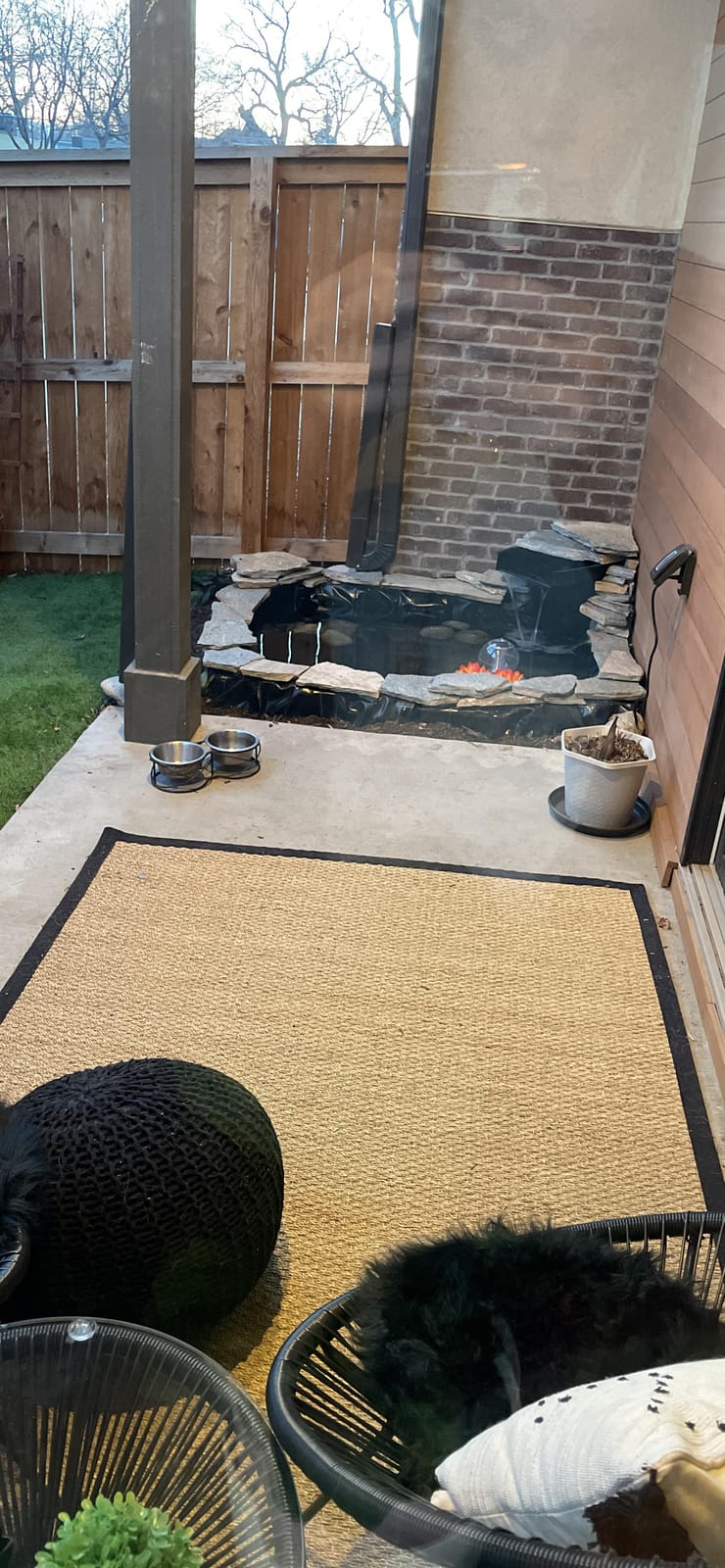
Here is the honest catch, and it is not minor. There is no filter in this box, at all. Reviewers say the same thing: koi keepers almost always add filtration, and most replace the pump as well, because a 340 GPH pump with no filter struggles once fish are producing waste. Buyers also report incomplete pump parts, and that the solar lantern is dim and the fake lily pads fade in direct sun.
The liner is the reason this kit still works for a real pond. Because it is a thick free-form sheet rather than a thin moulded insert, you can dig to 3 feet if you buy extra liner or shape the basin within the sheet you have. That is a genuine advantage over resin preforms, and it is why we rank this above kits with better ratings but a fixed basin.
Why the 400 gallon mark is the koi line in the sand
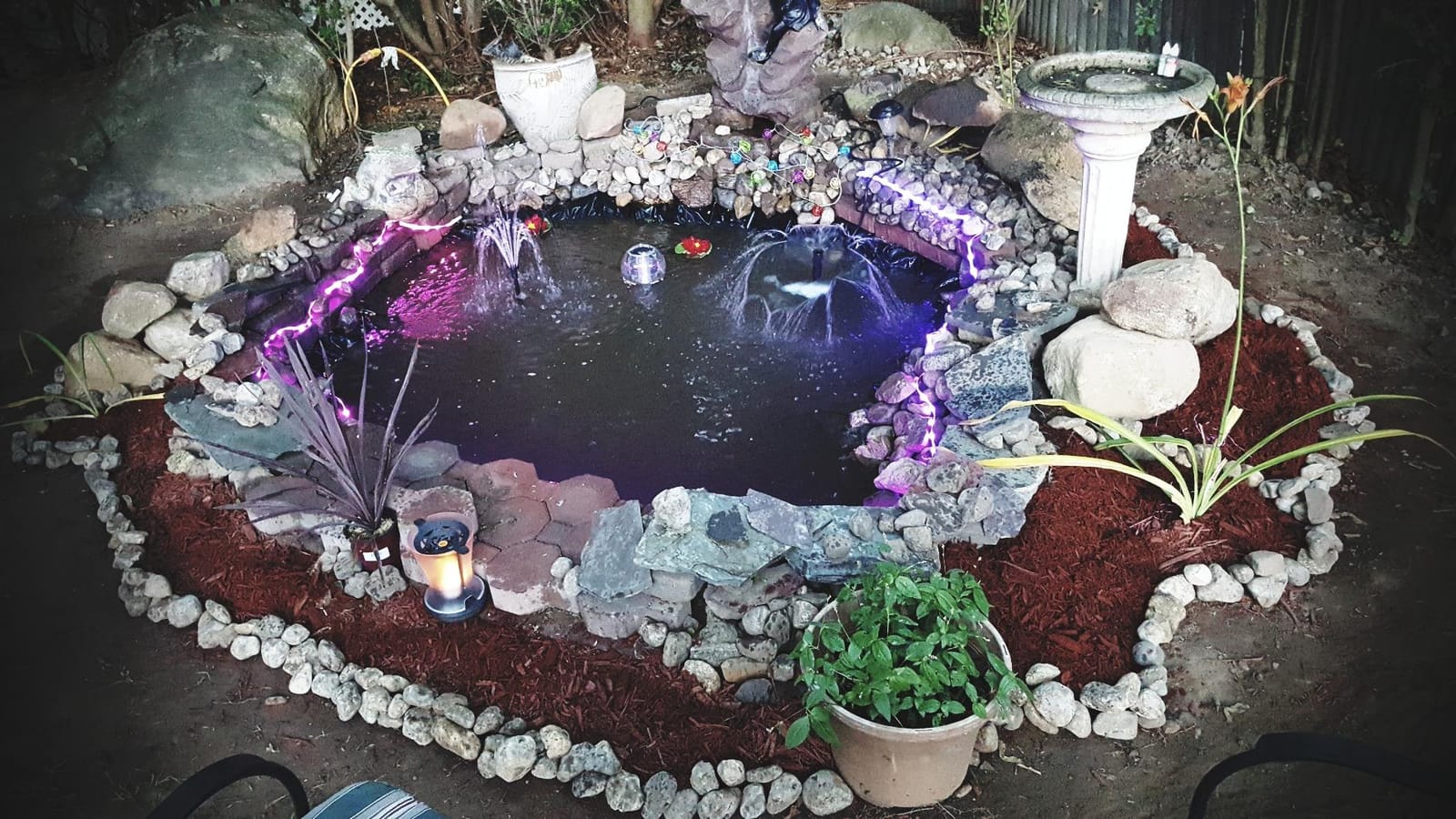
At 400 gallons this is a goldfish and ornamental pond, not a koi pond. The math is not close. Experienced hobbyists state 3 feet as the practical minimum depth for koi and 2 feet as acceptable only if you are not keeping koi, and they treat sub-500-gallon volumes as unsuitable because the thermal buffer is too small and the filtration margin is too thin.
So treat this as a two-stage purchase. Use it as a complete, low-friction water garden with fountain heads and lilies now, and if you later want koi, dig deeper, add a filter and add a more capable pump. Our picks among the best koi pond filters cover the capacity range that matches a properly sized fish pond.
The pump upgrade almost every owner makes
The recurring complaint in reviews is that the included pump has a limited lifespan when running continuously with fish in the pond. It is designed as a display pump for a feature rather than as a circulation engine for a stocked pond, and treating it as the latter is where the disappointment comes from.
Plan to budget for a variable-speed pump sized to your actual finished volume rather than to the sheet size, and expect to add a filter at the same time. Doing both in one session is far easier than adding a filter in year two. Also consider a rock border rather than the pearl-necklace look that cheap kits tend to push, and a real planting scheme, since living plants do real filtering work that no foam can.
6. Smiley Scapes 6 x 9 Liner and Pump Kit – Best for a Patio Water Garden
Smiley Scapes Pond Kit Water Garden Fountain KOI Pond KIT Liner & Pump 9′ X 6′ Liner & 5 Water Lilies
6 x 9 foot one-piece liner
264 GPH submersible pump
Five water lilies included
Pros
- Affordable entry point for a small backyard feature
- One-piece flexible liner can be trimmed to any shape or depth
- Non-toxic material safe for koi goldfish and frogs
- Quiet low-power pump that is easy to clean
- Interchangeable fountain nozzles and realistic lilies included
Cons
- No filtration system included so fish-heavy setups need a filter
- 6 x 9 foot liner limits the pond to a modest water garden
- Included fake lilies fade quickly in direct sun
This is the smallest and lightest kit here, and it exists for a specific job: a decorative water feature you can build in an afternoon. It ships a 6 x 9 foot one-piece flexible liner, a 264 GPH pump with interchangeable fountain head nozzles, and five realistic water lilies with flowers. The total weight is 8 pounds. Reviewers rate it 4.0 out of 5 across 89 reviews and describe it consistently as a low-cost, simple way to get a small water feature running.
The liner material is non-toxic and rated safe for koi, goldfish and frogs, and because it is a flexible sheet rather than a moulded insert you can trim it into any shape or cut it to whatever depth suits the space. The pump runs quietly, draws little power and is easy to pull out and clean, which matters a lot in a feature this size.
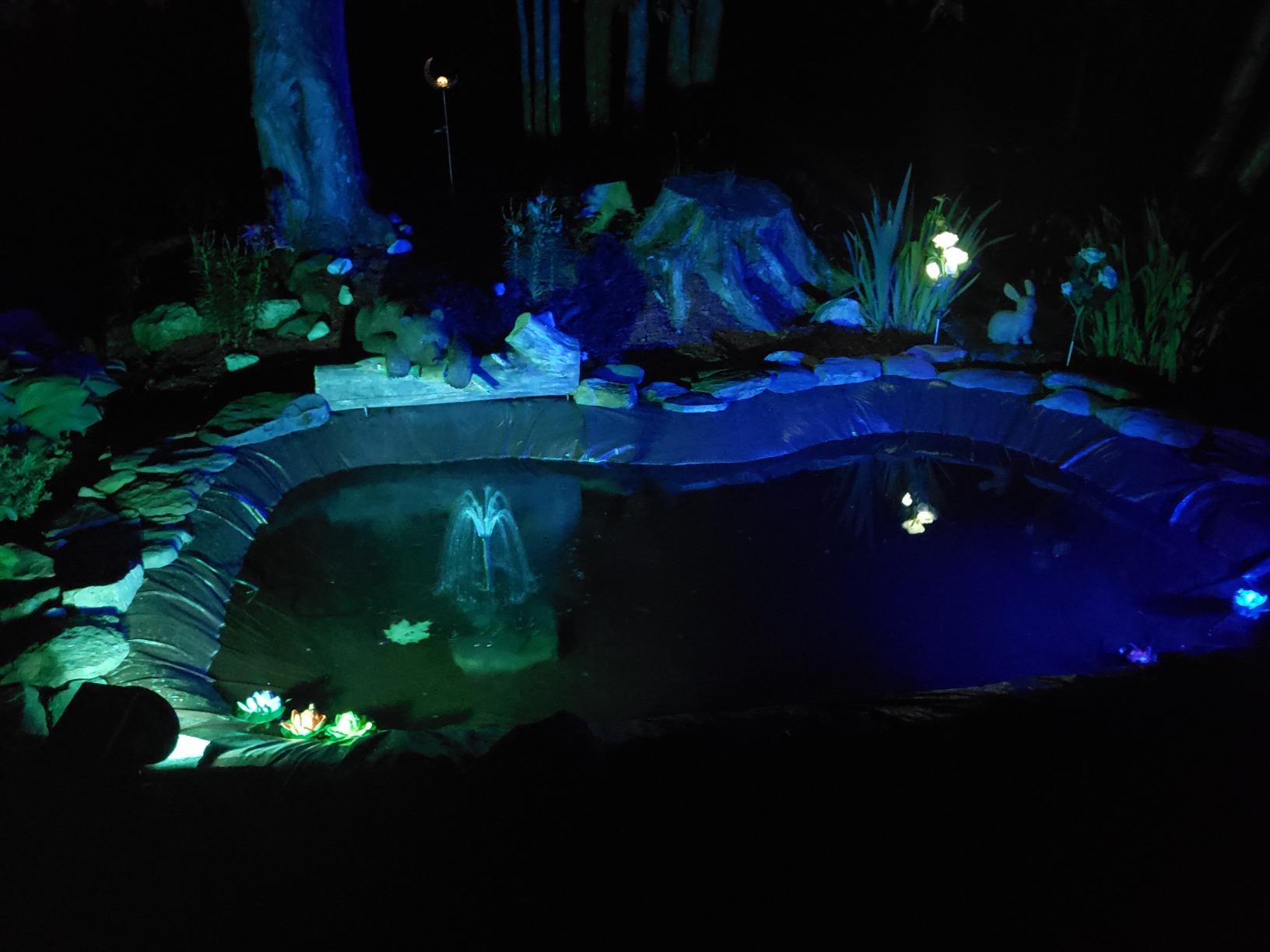
Be clear-eyed about what this is. There is no filtration hardware in the box at all, the 6 x 9 foot liner caps your pond at a modest water garden, and the decorative lilies fade quickly in direct sun. Buyers wanting koi consistently add a filter, and at this scale the addition starts to cost a meaningful share of the original spend.
That said, for a patio setting, a rental property where you cannot dig, or a first water feature to learn on, the kit does one job and does it cheaply. The same no-dig logic applies if you have a rocky yard or a tight urban space, and it is the reason above-ground and patio ponds exist as their own category rather than as a compromise.
What 264 GPH means for a pond this small
At this scale the pump has plenty to do. A 6 x 9 foot liner trimmed to a 4 by 7 foot basin at 1 foot deep holds roughly 200 gallons, and 264 GPH against 200 gallons is a turnover a little under one and a half times per hour, or around 32 times a day. That is more than enough to keep the water moving and oxygenated, and the fountain nozzles add the surface agitation that does the rest.
Turn that same pump figure against a real koi pond and it becomes obviously inadequate, which is the cleanest way to see why pond size and pump size are one decision rather than two. Flow rate only makes sense in relation to volume, and any kit judged on gallons per hour alone is being judged on the wrong number.
Why it works as a display feature and not a koi home
Volume is the reason. A 200 gallon pond has no thermal buffer, so a hot week or a cold snap moves the water temperature fast, and koi are vulnerable to exactly that. It also has no filtration, so waste accumulates in a closed loop and the water will green within weeks once fish are present. Both problems are solvable with a filter and a deeper basin, but at which point you are buying your way toward a different, larger kit.
My honest recommendation is to buy this one for what it is and enjoy it as a feature, then size up when you are ready for fish. If you want fish from day one, the 400 gallon Koolscapes kit or the 8 x 11 foot Aquascape package are far better starting points, and both leave you room to grow.
How Deep Does a Koi Pond Need to Be?
A koi pond needs a minimum depth of 3 feet, and 4 feet is the ideal target. Experienced hobbyists consistently treat 3 feet as the practical floor because it gives koi room to swim and, more importantly, a thermal buffer large enough to carry them through a cold snap. A 2 foot pond is only acceptable if you are not keeping koi at all.
Depth is not the same as volume, and this is where kit packaging misleads people. The gallonage printed on a koi pond kit box is calculated at 1.5 feet of water depth, so a kit advertised at 2,100 gallons is really a 2,100 gallon pond at 1.5 feet, which is a display depth. Dig the basin to 3 feet and the same liner footprint gives you roughly 3,500 to 4,000 gallons.
The second reason depth matters is structural. A steeper wall holds liner tension; a shallow slope lets the liner creep and pull out of its trench, which is the leading cause of leaks in a new pond. Build two 8 inch shelves along the edges, keep the central basin at 3 to 4 feet, and make sure the liner is fully underwater before you trim it.
For cold climates, depth is the reason you also need a freeze-protection plan. A deeper pond stratifies rather than freezing solid, and a shallow one does not. If your winters are hard, budget for a de-icer or an aerator that keeps a hole open in the ice, and remember that the pump must keep running through winter because a stopped pump in freezing water is a cracked pump.
How to Choose a Koi Pond Kit Without Guessing
The reason to buy a kit rather than assemble parts is compatibility. Forum users praise kits specifically for removing the guesswork around matching pump size to filter capacity and plumbing diameters. But a kit only saves you that work if you check four things before you order, and those four checks are where a good kit and a disappointing kit diverge.
Match gallons to filter capacity, not the other way round
Filter capacity is the number that decides whether a koi pond succeeds, because koi produce far more waste than most fish and have weaker immune systems. A common rule of thumb in the forums is that filter capacity should be generous relative to pond volume, with 1,000 gallons of rated filter capacity as a common starting point for a serious koi pond, and many experienced owners running filters rated well above their actual volume.
Read the filter rating, not the marketing adjective. A 16 inch or 20 inch waterfall filter is a real, meaningful upgrade over a small box filter, and a 22 inch one gives you room for a dozen-plus koi. If a kit pairs a big pump with a small filter, you have bought flow with nowhere to put it.
EPDM liner versus PVC liner
EPDM rubber at 45 mil is the liner to look for, and every kit in this roundup that is serious about fish uses it. The EPDM liners in this roundup carry a limited lifetime warranty, which is the strongest liner warranty available in the category. EPDM tolerates cold better than PVC, resists puncture from ordinary yard debris, and flexes without cracking over years of freeze and thaw cycles.
PVC liner is cheaper per square foot but is thinner, more prone to cracking with age and ultraviolet exposure, and usually carries a much shorter warranty. For a first pond with koi, this is not the place to save. A liner leak discovered after the pond is full and full of rock is the single most expensive failure mode in this hobby, and the underlayment in the kit exists specifically to prevent it.
Pump GPH and turnover rate
Turnover is pump flow multiplied by 24, divided by pond volume, and it tells you whether the pump is matched. A 2,000 GPH pump on a 2,000 gallon pond gives a turnover of 24 times per day, which sits comfortably in the range experienced owners describe. A 340 GPH pump on the same pond gives under 5, which is nowhere near enough for a stocked koi pond.
Variable-speed pumps are worth paying for because they let you drop flow in winter and reduce cost, and every mid-size and large kit in this roundup includes one. A quiet, low-power pump also means you can leave it running overnight, which matters more for filtration than raw gallons per hour suggests.
Above-ground and patio ponds as a no-dig path
If you rent, have a rocky yard or a tight urban lot, a no-dig or above-ground pond is a legitimate path rather than a compromise. The trade-offs are real: less volume, faster temperature swings, and a liner that is exposed at the edges rather than buried in a trench. But a raised pond can be built to 3 feet and hold koi if you use enough depth, which is why the flexible liners in the two smallest kits here are worth understanding before you dismiss them.
The 6 x 9 foot and 10 x 10 foot sheets in this roundup can both be trimmed to shape and stacked or bermed to add depth. What they cannot do is give you a large water volume cheaply. If your heart is set on koi rather than a display feature, budget for a genuine in-ground basin and treat the patio kit as a second pond.
What a koi pond kit does not include
This is where the true cost hides, and no competitor on the search results quantifies it. A koi pond kit typically excludes rock and gravel for the waterfall, aquatic plants, an auto-fill and overflow kit, a bottom drain, a winter cover, a fill hose, additional filter media in many cases, and all of the labour to move stone.
Work out the additions for yourself before you commit. Rock, gravel, a winter cover, extra media and a handful of plants are all real line items on top of the kit figure, and a first-time builder routinely discovers that the kit represents a portion rather than the whole of the project cost. A bottom drain in particular is close to impossible to retrofit, so if you want one you want a kit and a layout designed around it from the start.
Whether a kit is worth it at all depends on your starting point. Buy a kit when you want a weekend build without researching pump-to-filter flow rates and plumbing diameters, which is exactly what a beginner needs. Build piececemeal instead if you already own a pump and filter, need a non-standard shape, want a bottom drain and auto-fill, or are comfortable sourcing parts individually and saving the kit premium.
The First 6 Weeks and the Seasonal Routine
The first six weeks decide whether your pond succeeds, and almost all of the anxiety in koi forums comes from this window. The good news is that a pond is not an aquarium. Once cycled, it needs no routine water changes; the ecosystem does the work. The bad news is that the cycle itself must be allowed to complete without fish in it.
Fill the pond and run the filter and pump with no fish for several weeks, adding a small amount of pure bottled water or a bacterial culture to seed the bio-media and watching the water. Test ammonia and nitrite weekly, and add fish only when both read zero consistently. Adding a handful of inexpensive sacrificial fish sooner is a common shortcut, but it risks burning them, and forum regulars consistently advise against it.
Once stocked, test ammonia and nitrite weekly for the first month, then settle into a monthly routine, testing pH and hardness as well. Keep the skimmer basket emptied as often as weekly in leaf season, because a full skimmer is the most common cause of a sudden algae bloom in a pond that had been clear. Clean the filter media in a bucket of pond water, never under a tap, since tap water kills the bacteria you are trying to keep.
On predators, yes, a koi pond will attract snakes, and herons and raccoons are a bigger threat in most regions. A pond with sloping shelves and dense planting gives fish somewhere to hide, but herons will still take fish, so many owners run bird netting over the surface. For snakes, a fine mesh skirt around the pond edge keeps them out without harming them. If you have herons in your area, netting is the difference between a pond that keeps its fish and one that does not.
Frequently Asked Questions
Is 3 feet deep enough for koi?
Yes, 3 feet is the practical minimum for a koi pond, and 4 feet is the ideal target. The depth gives fish room to swim and, more importantly, creates a thermal buffer large enough to carry them through a cold snap. A 2 foot deep pond is only acceptable if you are not keeping koi. Note that the gallonage printed on most kits is calculated at 1.5 feet of depth, so a kit advertised at 2,100 gallons becomes roughly 3,500 to 4,000 gallons when dug to 3 feet.
How deep do you need to make a koi pond?
Dig the central basin to at least 3 feet and aim for 4 feet if your climate has hard winters. Add two 8 inch shelves along the edges, which hold liner tension and stop the liner creeping out of its trench. Keep the deepest point in the middle and vary the depth across the pond rather than building a flat bottom. Never trim the liner until the pond is full, because a liner cut too early relaxes and leaks at the seam.
What is the best size koi pond for keeping koi?
Roughly 1,000 to 2,000 gallons is the sweet spot for a home koi pond, with about 1,500 gallons a comfortable minimum for a small group. Below 500 gallons you are effectively building a goldfish pond, because the thermal buffer is too small and filtration margins get thin. Above 2,000 gallons, filtration capacity becomes the limiting factor rather than space, so budget a larger filter before you buy more liner.
What is the smallest size koi pond I can build?
Around 500 gallons at a minimum of 3 feet deep is the smallest pond we would call a genuine koi pond, and anything smaller is best kept for goldfish and ornamental fish. A 10 x 10 foot flexible liner can be dug to 3 feet to reach that volume, or a 15 x 20 foot sheet will comfortably exceed 3,000 gallons. The constraint is almost always filtration capacity rather than liner size, so check the filter rating before finalising a size.
What is the best type of filter for a koi pond?
A biological waterfall filter, also called a biofalls filter, paired with a mechanical skimmer is the most common and most forgiving choice for koi. A pressure filter with dedicated bio-media is the alternative, and it suits ponds with awkward shapes where a waterfall will not fit. A skimmer is not optional; a pond without surface debris removal will turn green every summer. Sand filters are effective for polishing water but are rarely the primary biological filter on a koi pond.
Are sand filters good for koi ponds?
Sand filters are good at trapping fine particles and polishing water, which makes them useful as a second stage, but they are rarely the primary biological filter for a koi pond. They backflush frequently, and the dirty discharge is a recurring task that new pond builders underestimate. Koi need stable, bacteria-heavy bio-media rather than mechanical polishing, so a waterfall or pressure filter with bio-media should handle the biological load and a sand filter can follow it if you want clearer water.
Does a koi pond need a bottom drain?
No, but a bottom drain is close to impossible to retrofit after the pond is built, so decide early. It gives you a place to attach a gravel vacuum, which makes cleaning the pond bottom far easier, and it can be plumbed to an auto-fill and overflow system. If you skip it, plan on a long-handled gravel vacuum that reaches from the bank. New pond builders who regret skipping a drain usually regret skipping the auto-fill and overflow even more.
Can koi survive in dirty water and are koi ponds hard to keep?
A koi pond is not hard to keep once it is cycled. Unlike an aquarium, a mature pond needs no routine water changes because rock, gravel, plants and filter media host the bacteria that convert ammonia into nitrate. It is hard for the first four to six weeks, while the cycle establishes and before any fish go in. Ongoing work is mostly skimming the skimmer basket, cleaning filter media in pond water, and trimming plants.
Which Koi Pond Kit Should You Buy?
For most first-time koi keepers, the Simply Ponds 2100 GPH kit is the one to buy. It is the best balance in this roundup: a 45 mil EPDM liner with a limited lifetime warranty, a 2,100 GPH variable-speed pump, a 16 inch waterfall filter, a 7 inch skimmer, underlayment, a light and all the plumbing, from a manufacturer that builds all of it.
If you want the fewest decisions and will accept a smaller pond, the Aquascape 8 x 11 foot package is the cleanest system, with the best owner rating here at 4.6 out of 5. If you want the most filtration per unit of money, the PondBuilder Crystal 4000 GPH kit is hard to argue with, and its aeration tubing is a detail the others leave you to solve.
For a large pond with a heavy fish load, the Complete Pro 5200 GPH kit has the capacity, provided you are prepared to sort out the mixed-brand fittings and plan the heavy lift with a second pair of hands. For a display water garden, the Koolatron 400 gallon kit and the Smiley Scapes 6 x 9 kit both work, with the Koolatron’s much larger review base making it the more reliable buy.
Whichever you choose, dig to 3 feet, size the filter to the fish load rather than the liner, and do not trim the liner until the pond is full. Those three habits account for most of the difference between a pond that runs for a decade and one that does not. Happy digging, and check the current figures for any of these kits before you order.