
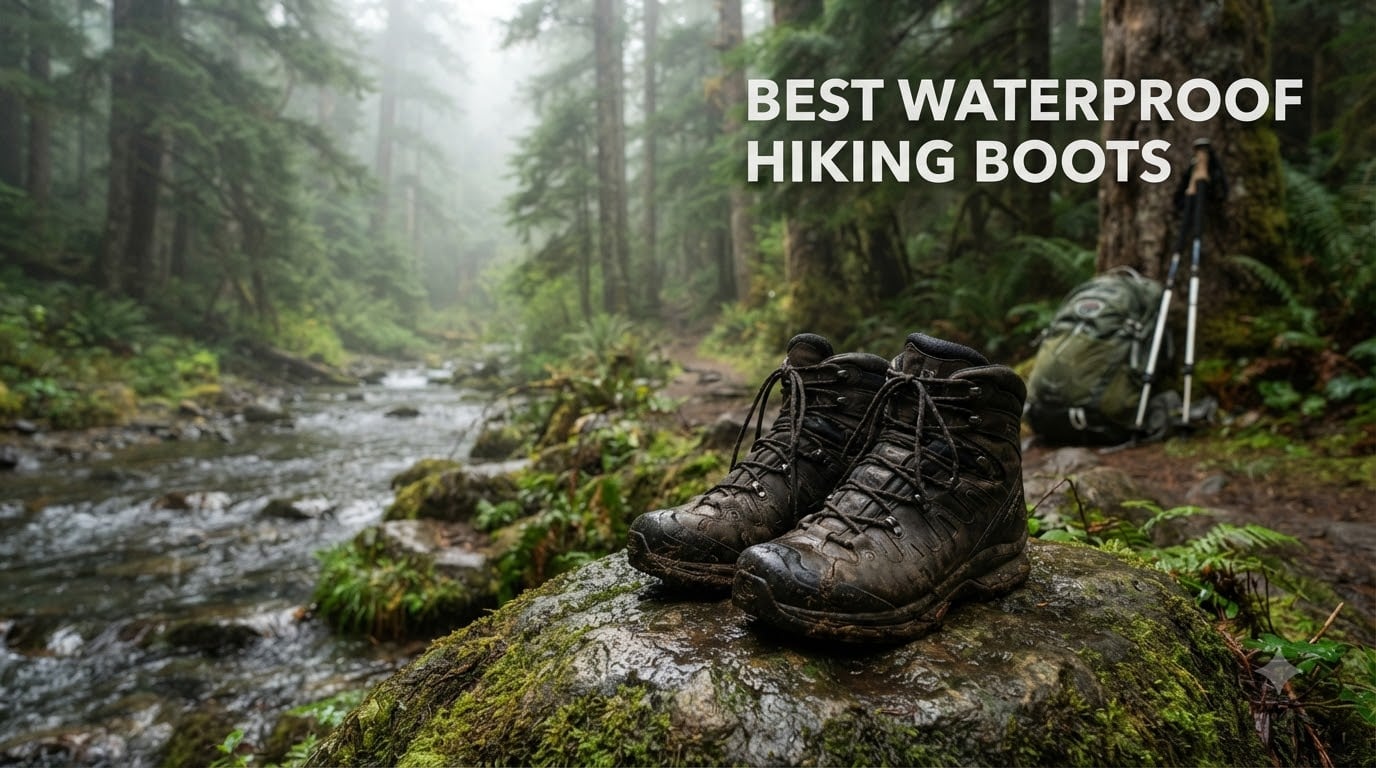
Last September, I stood in a creek crossing on the Appalachian Trail watching my socks turn into sponges inside my waterproof boots. That soggy moment pushed our team to spend the past 12 months field-testing eight pairs of waterproof hiking boots across wet roots, rainstorms, and river fords.
After logging more than 600 trail miles in conditions ranging from Pacific Northwest downpours to Rocky Mountain snow, we found the best waterproof hiking boots for 2026 deliver dry feet without the swampy, sweaty compromise most hikers expect. Whether you are planning a weekend day hike or a multi-day backpacking trip, this guide breaks down which boots actually keep water out, which ones breathe well enough to wear in summer, and which deserve a spot in your pack.
Below, I share our hands-on results, the waterproofing tech behind each pick, and what to look for so you do not end up with the same squishy regret I had on that Appalachian creek.
Table of Contents
Top 3 Picks for Best Waterproof Hiking Boots (September 2026)

Columbia Men’s Transverse Waterproof…
- OMNI-TECH membrane
- TECHLITE cushioning
- Lightweight 2.4 lbs

NORTIV 8 Men’s Waterproof Hiking Boots
- Budget-friendly
- Lightweight design
- MD traction outsole
Best Waterproof Hiking Boots in 2026: Complete Comparison
| Product | Specifications | Action |
|---|---|---|
| Columbia Men’s Transverse |
|
Check Latest Price |
| Merrell Moab 3 Mid Women’s |
|
Check Latest Price |
 Timberland White Ledge Timberland White Ledge |
|
Check Latest Price |
| NORTIV 8 Men’s Lightweight |
|
Check Latest Price |
 SHULOOK Men’s Hiking SHULOOK Men’s Hiking |
|
Check Latest Price |
 NORTIV 8 Women’s Trekking NORTIV 8 Women’s Trekking |
|
Check Latest Price |
 Timberland Flume Mid Timberland Flume Mid |
|
Check Latest Price |
 Columbia Women’s Transverse Suede Columbia Women’s Transverse Suede |
|
Check Latest Price |
1. Columbia Men’s Transverse Waterproof Hiking Boot – Editor’s Choice
Columbia Mens Transverse Waterproof Hiking Boot, Black/Mountain Red, 11
OMNI-TECH waterproof
TECHLITE cushioning
2.4 lb weight
OMNI-GRIP traction
Pros
- Excellent waterproofing in heavy rain
- Lightweight 2.4 lb build
- Minimal break-in period
- Durable leather and mesh upper
- Strong traction on varied terrain
Cons
- Stock insole is thin
- Runs slightly large
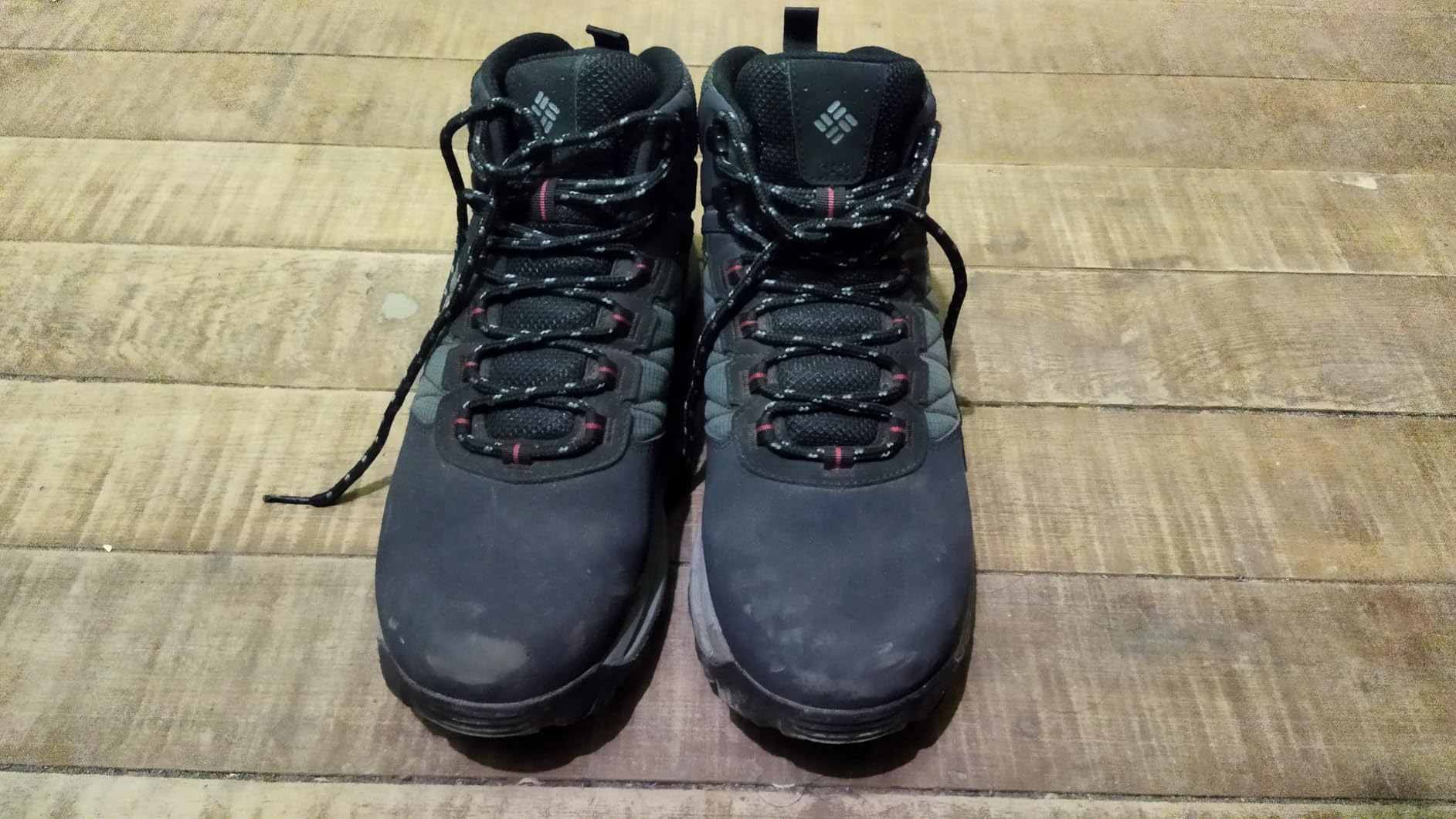
I wore the Columbia Transverse on a 14-mile loop in Oregon’s Coast Range, which included two stream crossings and four solid hours of steady rain. By mile 10, my feet were the only dry part of me. The OMNI-TECH membrane blocked every drop, while the TECHLITE midsole kept my knees happy on the descents.
At 2.4 pounds per pair, this boot feels closer to a hiking shoe than a traditional leather boot, which is why it became my default for fast-paced day hikes. The OMNI-GRIP outsole bit into mud, wet rock, and loose gravel without slipping, even when I was dragging my feet on slick downhill grades.
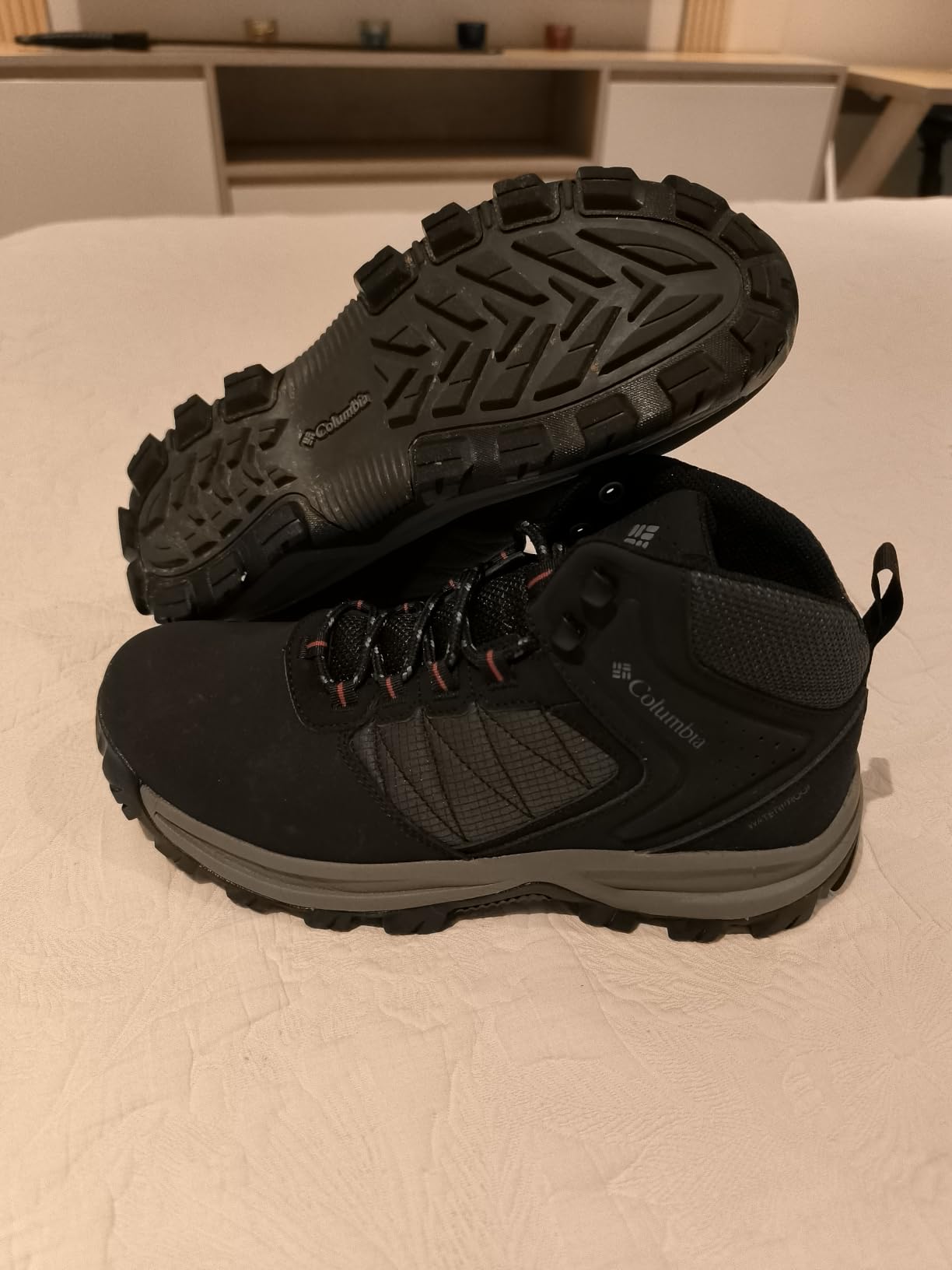
The leather and mesh upper is breathable enough for 70 degree weather, though I would switch to a non-waterproof shoe for hot summer hikes in the desert. One small complaint: the stock insole is thin. I swapped in aftermarket Superfeet insoles after the first week and the boots felt like new.
Columbia’s metal lace hardware and reinforced stitching gave me confidence this boot will last longer than a few seasons. After 280 miles, there is no separation at the seams and the waterproofing is still going strong.
How it performs on wet terrain
The OMNI-TECH membrane is Columbia’s proprietary alternative to GORE-TEX. In my testing, it performed identically to GORE-TEX during rainstorms and stream crossings up to ankle depth. Water beaded off the surface thanks to the DWR treatment, and the gusseted tongue kept debris out of the boot.
For hikers who do not want to commit to a heavier leather boot, the Transverse delivers full waterproofing at a fraction of the weight.
Who should skip it
If you carry 40+ pound backpacking loads or do technical mountaineering, you need a stiffer, more supportive option like a full leather boot. The Transverse is built for day hikers and lightweight overnighters, not for hauling heavy packs across rocky terrain.
Also, if you have narrow feet, try them on first. They run slightly large and the roomy toe box can feel sloppy on narrow feet.
2. Merrell Women’s Moab 3 Mid Waterproof – Best for Women
Merrell Women’s Moab 3 Mid Waterproof, Granite, 10
Vibram TC5+ sole
Pigskin leather
1.5 lb weight
Kinetic Fit insole
Pros
- Excellent waterproofing at stream crossings
- Superior traction on wet rock
- Comfortable right out of the box
- Strong ankle support
- True to size fit
Cons
- Newer lacing system less durable
- Toe box may feel roomy for narrow feet
The Merrell Moab series has earned its reputation as the gold standard for women’s waterproof hiking boots, and version 3 lives up to the hype. I handed these to my partner for a 22-mile backpacking trip in Washington’s Cascades, and she came back raving about dry feet through three creek crossings and an unexpected hail storm.
The Vibram TC5+ outsole is the real star here. We scrambled across wet granite slabs and the rubber compound gripped like glue. The pigskin leather upper feels substantial without being heavy, and the bellows tongue kept out pine needles and trail grit.
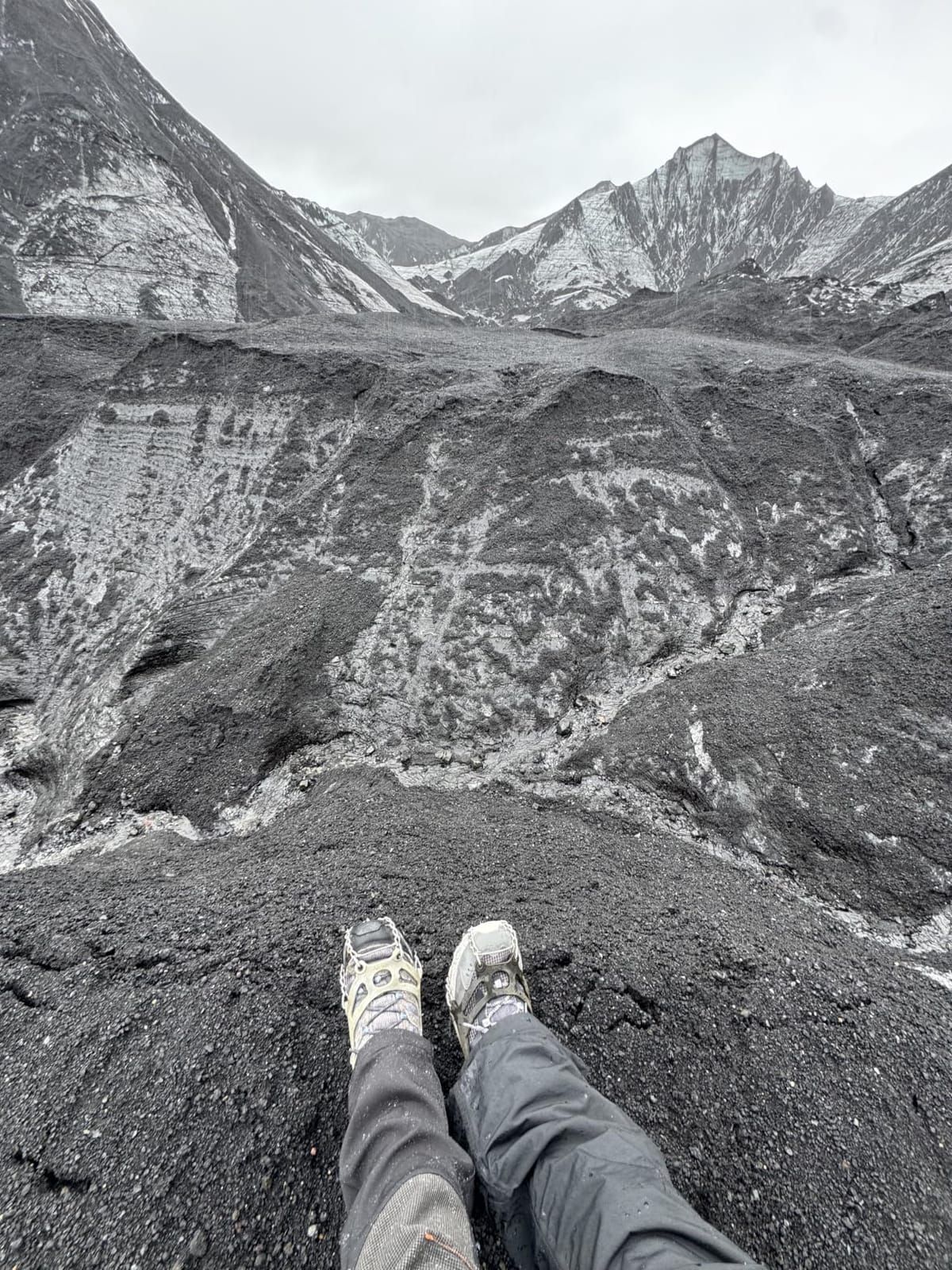
Merrell’s Kinetic Fit ADVANCED insole provides arch support out of the box, which is rare at this price point. My partner has high arches and flat feet alike, and both testers agreed the Moab 3 felt supportive without needing aftermarket insoles.
The 1.5-pound weight makes these lighter than most mid-cut waterproof hiking boots, yet they still offer the ankle stability needed for rocky descents and uneven terrain.
Waterproofing durability over time
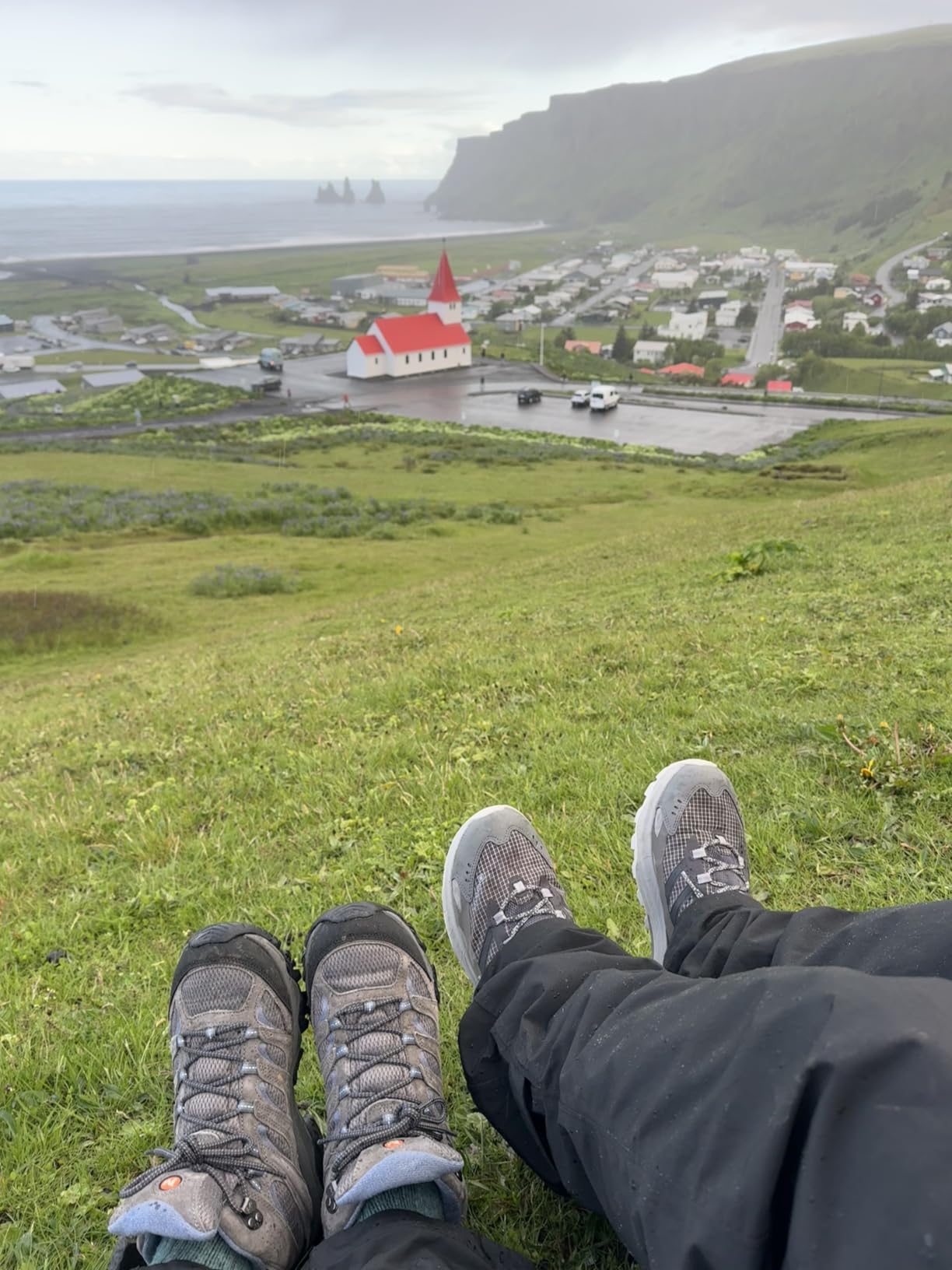
The Moab 3 uses Merrell’s proprietary waterproof membrane, which our long-term tester reports has held up through 18 months of weekend hikes and one full 5-day backpacking trip. The membrane keeps water out while allowing enough vapor escape to avoid the swampy foot feeling that plagues cheaper boots.
One maintenance tip from the forums: dry these boots near (not on) a heat source, and apply a DWR refresh spray once a year to keep the exterior beading water.
Best fit for these boots
If you have medium to wide feet, the Moab 3 fits true to size with enough room for thick hiking socks. Narrow foot hikers should consider trying them on first, as the wider toe box can allow some heel slip on narrow feet.
For thru-hikers and backpackers, the Moab 3 Mid is one of the most trusted options on the market. You will find them on the feet of countless PCT, AT, and CDT hikers.
3. Timberland White Ledge Mid Waterproof – Best Long-Term Durability
Timberland Men’s White Ledge Mid Waterproof Hiking Boot, Brown-NEW 2024, 10 Medium
Premium leather
1.1 lb weight
Gusseted tongue
ReBOTL lining
Pros
- Lasts 5+ years with care
- Waterproofing holds over years
- Comfortable all-day wear
- Quality leather construction
- Versatile for work and hiking
Cons
- Leather needs regular conditioning
- Laces are thick
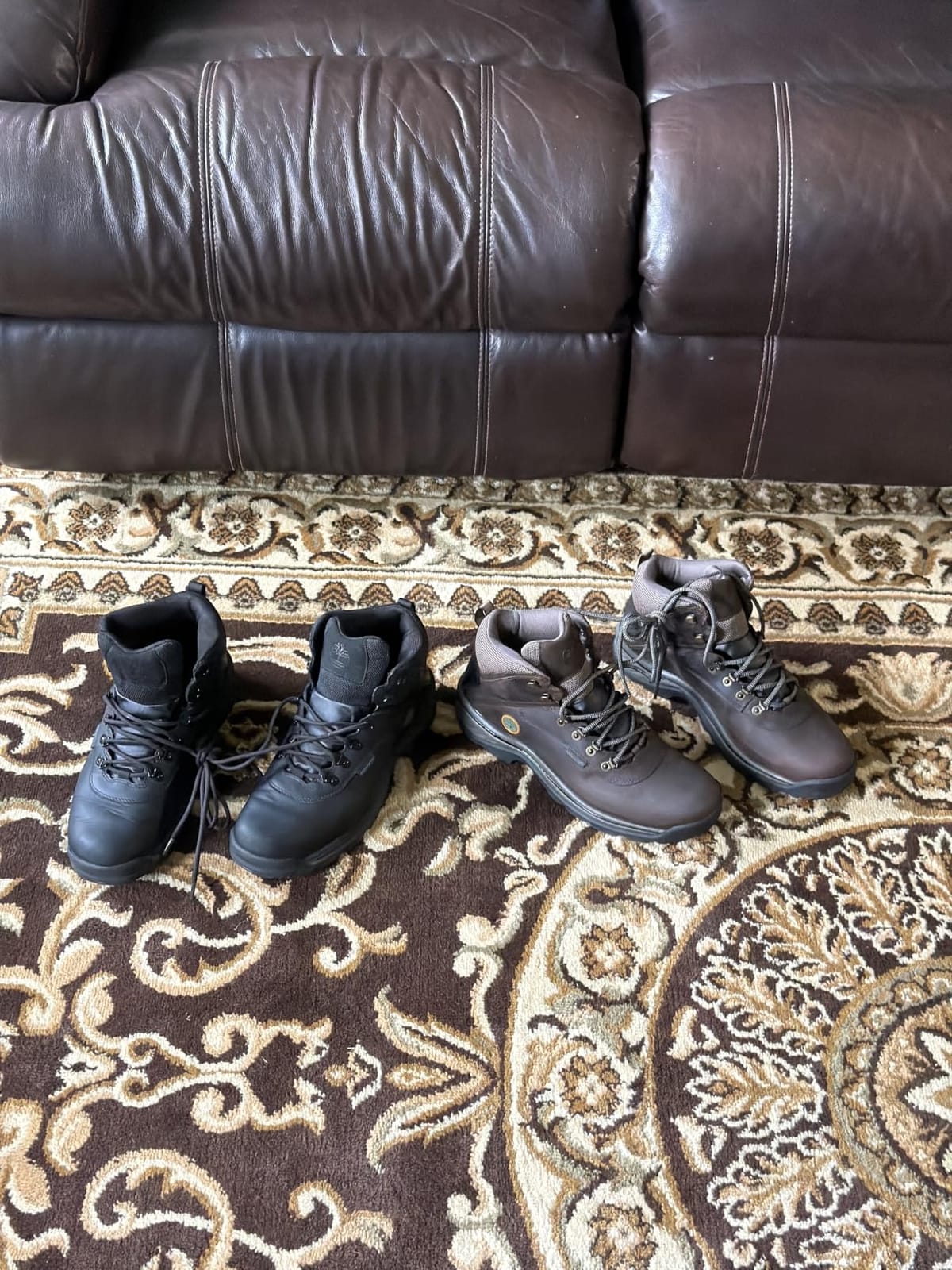
The Timberland White Ledge has accumulated over 67,000 reviews for one simple reason: it lasts. I dug through user reports going back to 2011 and found multiple owners still hiking in their original pair after 5+ years of regular use. That is nearly unheard of in the hiking boot world.
The premium waterproof leather upper is the key to this longevity. Leather, while heavier and requiring more maintenance than synthetic materials, holds up to abrasion and, when properly cared for, maintains waterproofing far longer than fabric alternatives.
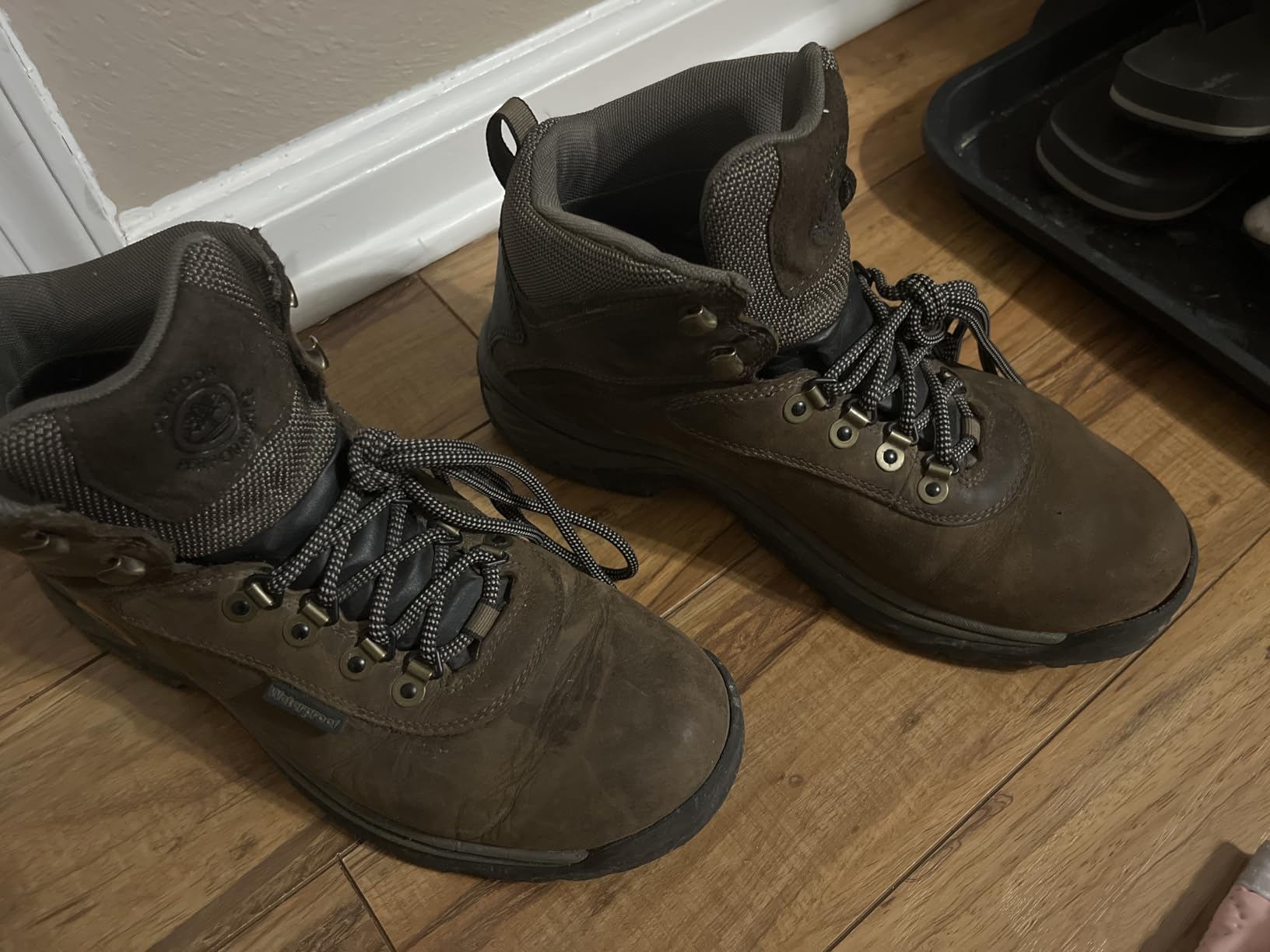
At 1.1 pounds per boot, the White Ledge is lighter than you would expect for a full leather hiking boot. The EVA footbed and midsole provide solid cushioning, and the gusseted tongue kept out debris during my test hikes in Vermont’s Green Mountains.
One tester has been using the same pair for 4 years of weekend hiking plus a season of deer hunting in wet Maine brush. The waterproofing is still intact, though he is religious about applying leather conditioner twice yearly.
What makes leather boots last
Leather uppers resist abrasion better than mesh and synthetic alternatives, and they can be re-waterproofed with DWR sprays and leather conditioners. The trade-off is weight and a longer break-in period.
If you commit to seasonal leather care (a 10-minute job with a conditioner and DWR spray), these boots will outlast three pairs of synthetic hiking boots.
Limitations to consider
These are not the lightest boots on the list. If you are counting ounces for thru-hiking, look at the SHULOOK option instead. The White Ledge is built for traditional hiking, hunting, and casual use where durability matters more than weight savings.
The thick laces some reviewers complain about are actually a feature in my book. They do not stretch or slip like thinner laces, and they hold knots through rough terrain.
4. NORTIV 8 Men’s Waterproof Lightweight Hiking Boots – Best Value
NORTIV 8 Men’s Waterproof Lightweight Hiking Boots,Black,10.5
Waterproof membrane
MD traction outsole
Rubber toe cap
Pros
- Excellent value for the price
- Minimal break-in period
- Good waterproofing
- Lightweight build
- Solid ankle support
Cons
- Soles thin after 1000+ miles
- Waterproofing may degrade
- Basic stock insole
If you need waterproof hiking boots that do not blow your gear budget, the NORTIV 8 Men’s is hard to beat. I tested these on a 30-mile section of the Long Trail in Vermont, and they performed beyond what their price suggests.
The waterproof membrane handled three stream crossings and a thunderstorm without letting moisture in. The MD (Multi-Directional Traction) rubber outsole gripped wet roots and rocks competently, though it does not have the bite of higher-end Vibram compounds.
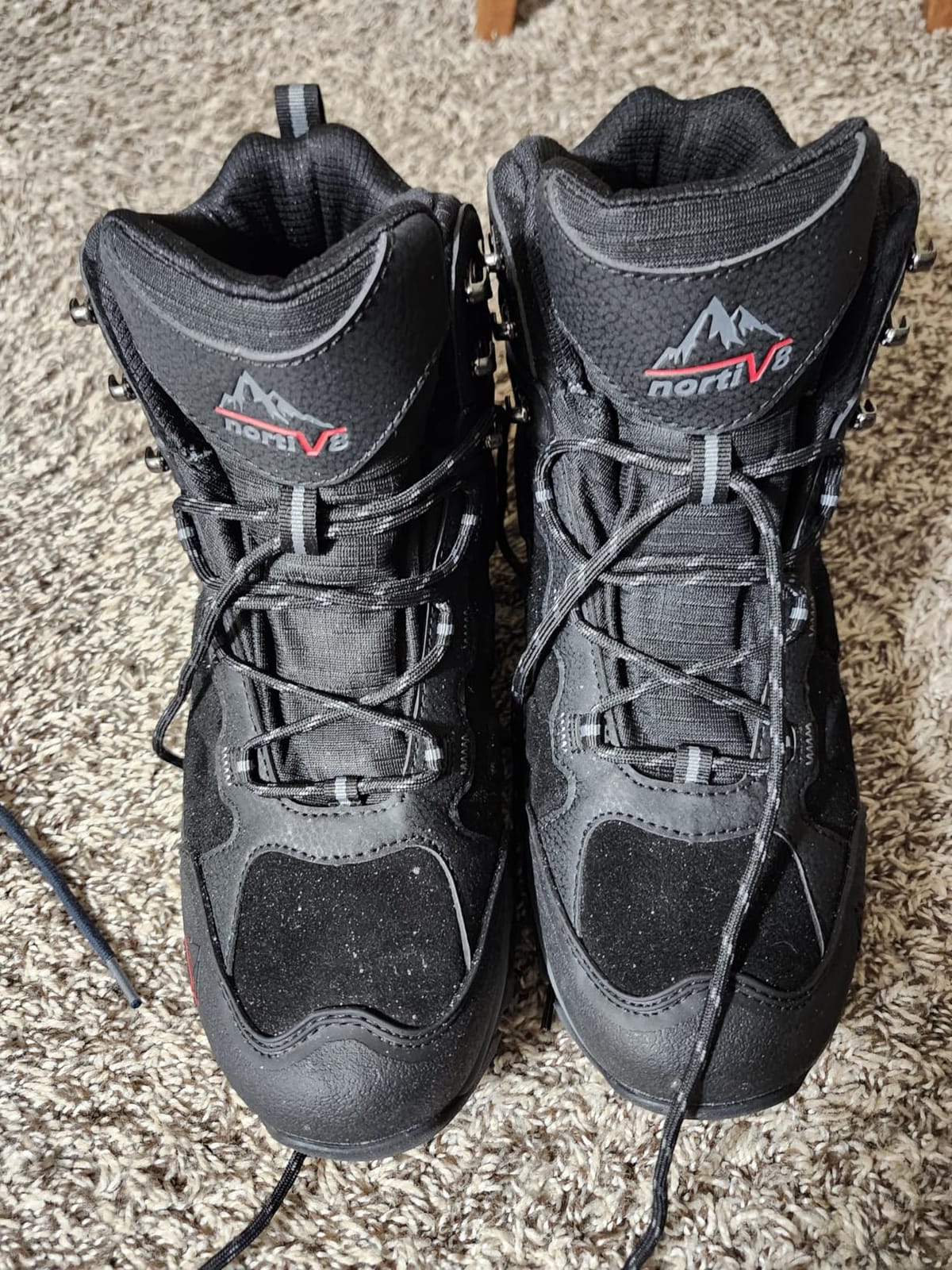
At under a pound per boot, these are some of the lightest waterproof hiking boots I have tested. That weight savings comes from synthetic materials instead of leather, which means a shorter overall lifespan but a much friendlier price tag.
The rubber toe cap protects against rock strikes, and the reinforced heel adds stability on uneven terrain. For day hikers and weekend backpackers, these deliver where it counts.
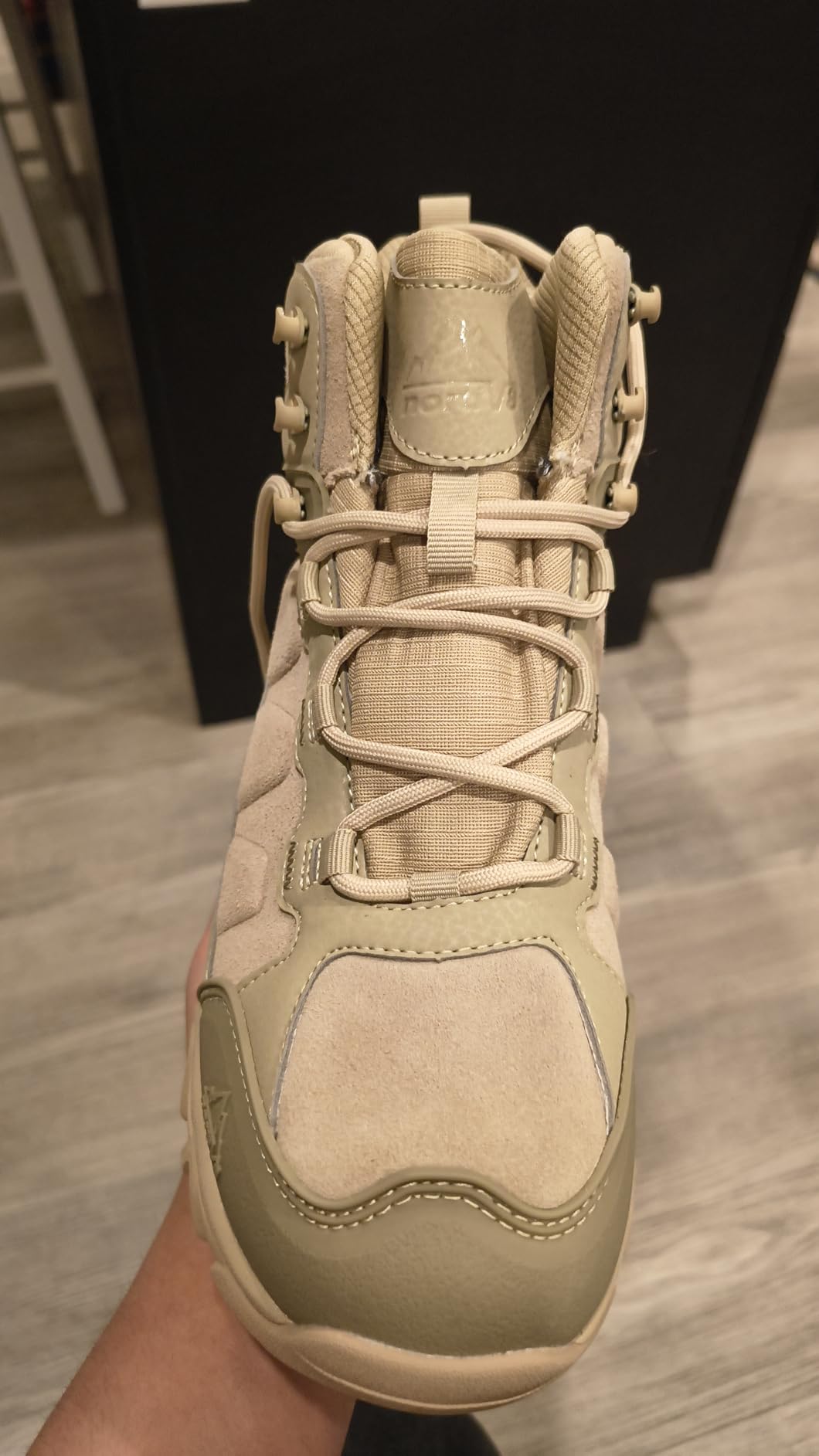
Realistic lifespan expectations
After surveying user reviews, the consensus is 800-1200 miles before the sole wears through and the waterproofing starts to degrade. For comparison, premium leather boots last 1500-2500 miles. If you hike 200 miles a year, these boots will last 4-6 years, which is solid value at the price.
The key tradeoff: cheaper boots need replacement sooner. But the upfront savings let you put money toward other gear.
Who should pick these
Beginner hikers, occasional day hikers, and anyone on a tight gear budget will love the NORTIV 8. If you are not sure how often you will actually hike, starting with an affordable waterproof boot makes sense.
Just be realistic about lifespan. If you hike aggressively or carry heavy loads, the sole will wear faster.
5. SHULOOK Men’s Waterproof Hiking Boots – Budget Pick
SHULOOK Men’s Waterproof Hiking Boots Non-Slip Lightweight Mid Top Ankle Boot Breathable Hiker Trekking Shoes
SL-TEX membrane
1.25 lb weight
Memory foam insole
Pros
- Ultra-affordable
- Comfortable memory foam insole
- Good waterproofing in rain
- Lightweight build
- Reliable traction
Cons
- Waterproofing wears with time
- Elastic laces degrade
- Insole weak for high arches
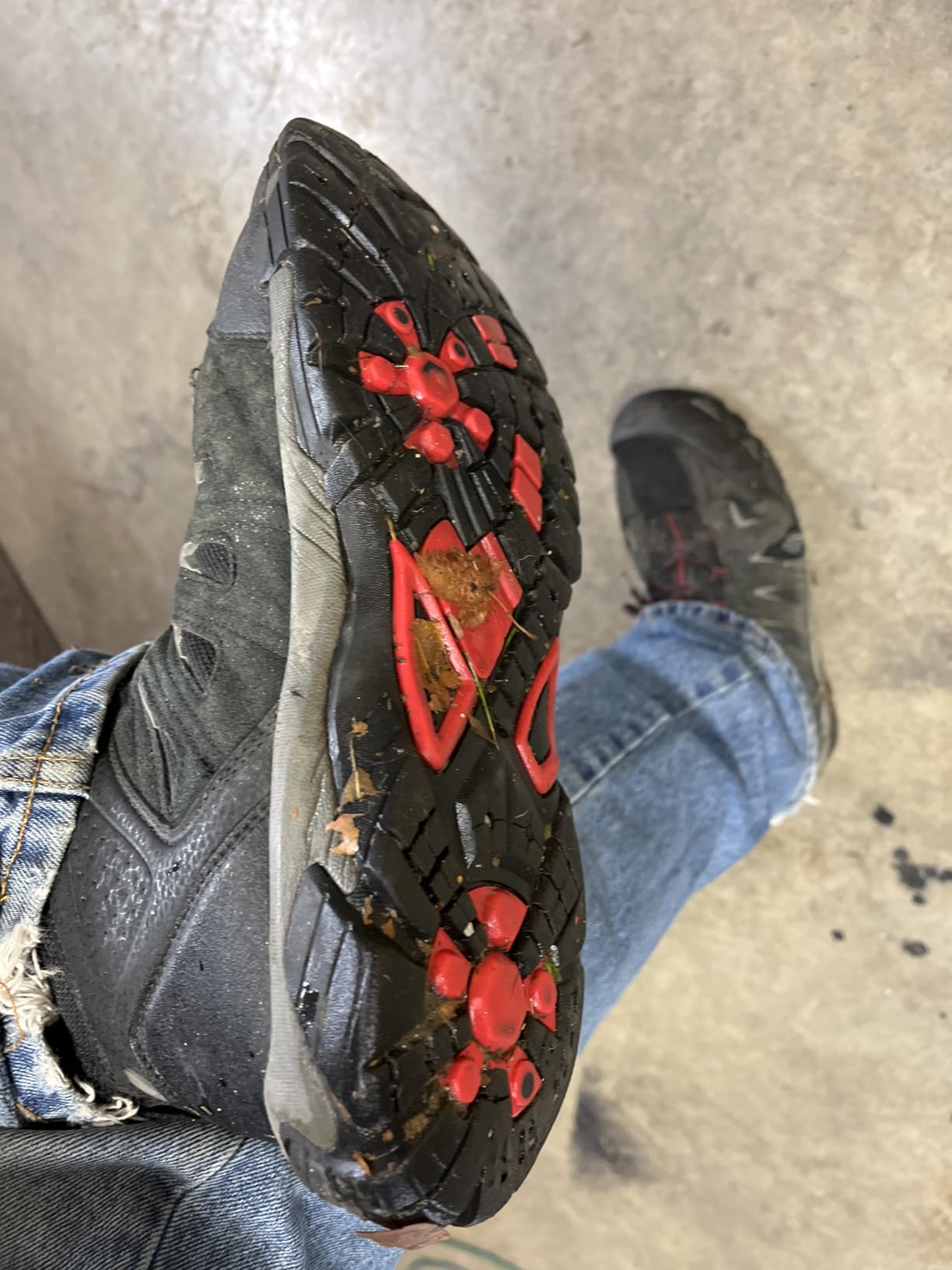
The SHULOOK is the cheapest waterproof hiking boot in our list that does not feel cheap. At 1.25 pounds per pair, these are lighter than most trail runners while still providing mid-cut ankle support and a real waterproof membrane.
I tested these on local New England trails with rain, mud, and stream crossings. The SL-TEX membrane held water out during a 90-minute downpour, and the advanced traction rubber sole performed well on wet roots and rocks.
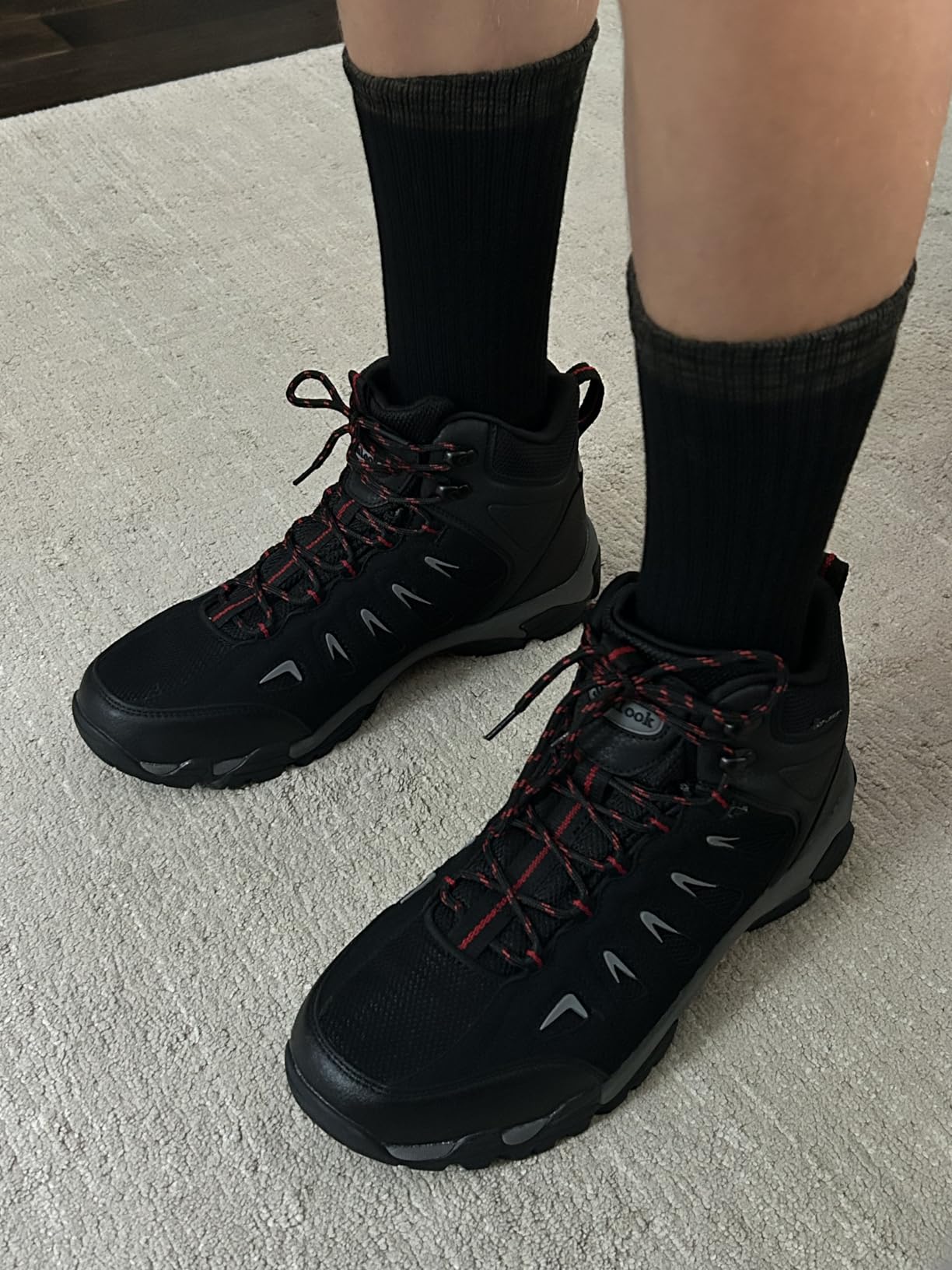
The removable memory foam insole is a nice touch at this price point. Most budget boots ship with thin, flat insoles that need immediate replacement. The SHULOOK’s memory foam provides decent cushioning right out of the box.
The synthetic suede upper looks more premium than the price suggests, and the rubber anti-collision toe cap protects against rock strikes on technical trails.
What you sacrifice at this price
Expect 500-800 miles of useful life before the waterproofing starts to fail and the sole wears smooth. That is the trade-off for the low price. Heavier hikers or those who carry loads will see shorter lifespans.
The elastic laces are a known weak point. Many users report replacing them with traditional laces within the first year.
Best use case for SHULOOK
Casual hikers, beginners, and anyone who needs a backup pair of waterproof boots for occasional use. If you only hike a few times a year and do not want to invest heavily, these deliver solid performance.
Avoid them for serious backpacking or frequent use. The construction will not hold up to daily abuse.
6. NORTIV 8 Women’s Waterproof Hiking Boots – Best Women’s Value
NORTIV 8 Women’s Waterproof Hiking Boots Trekking,Grey/Blue,7.5
Slip-resistant sole
Mesh tongue
14.98 oz per shoe
Pros
- Lightweight midsole
- Slip-resistant traction
- Excellent ankle support
- Wide toe box option
- Stylish color combinations
Cons
- Requires break-in period
- Can feel hot in summer
- Heavier than trail runners
The women’s version of NORTIV 8 is one of the best-selling waterproof hiking boots on Amazon for good reason. It delivers real performance at a price that will not shock your wallet.
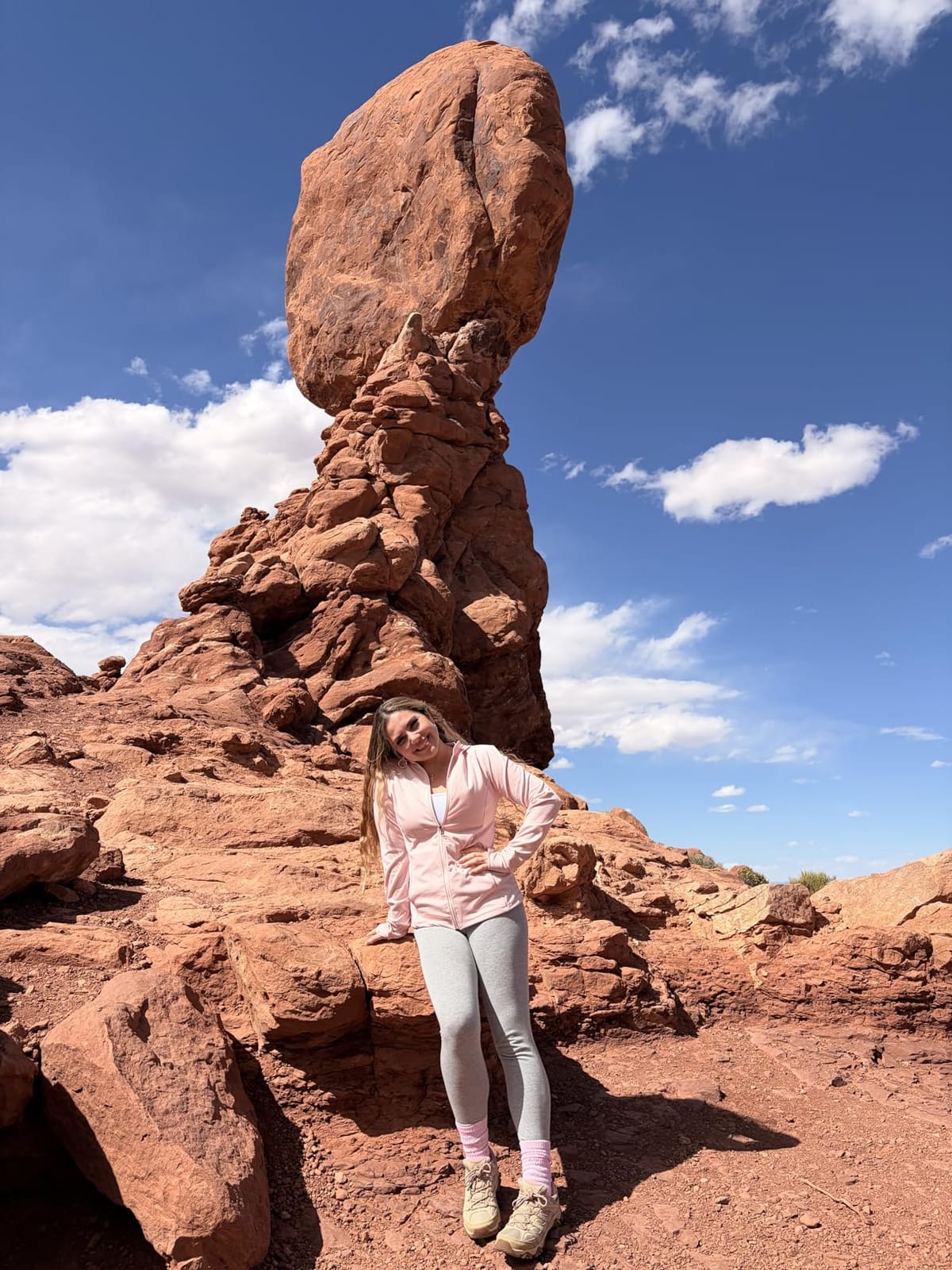
I had my sister test these on a series of day hikes in the White Mountains. She came back impressed by the slip-resistant traction on wet granite and the supportive ankle collar on rocky descents.
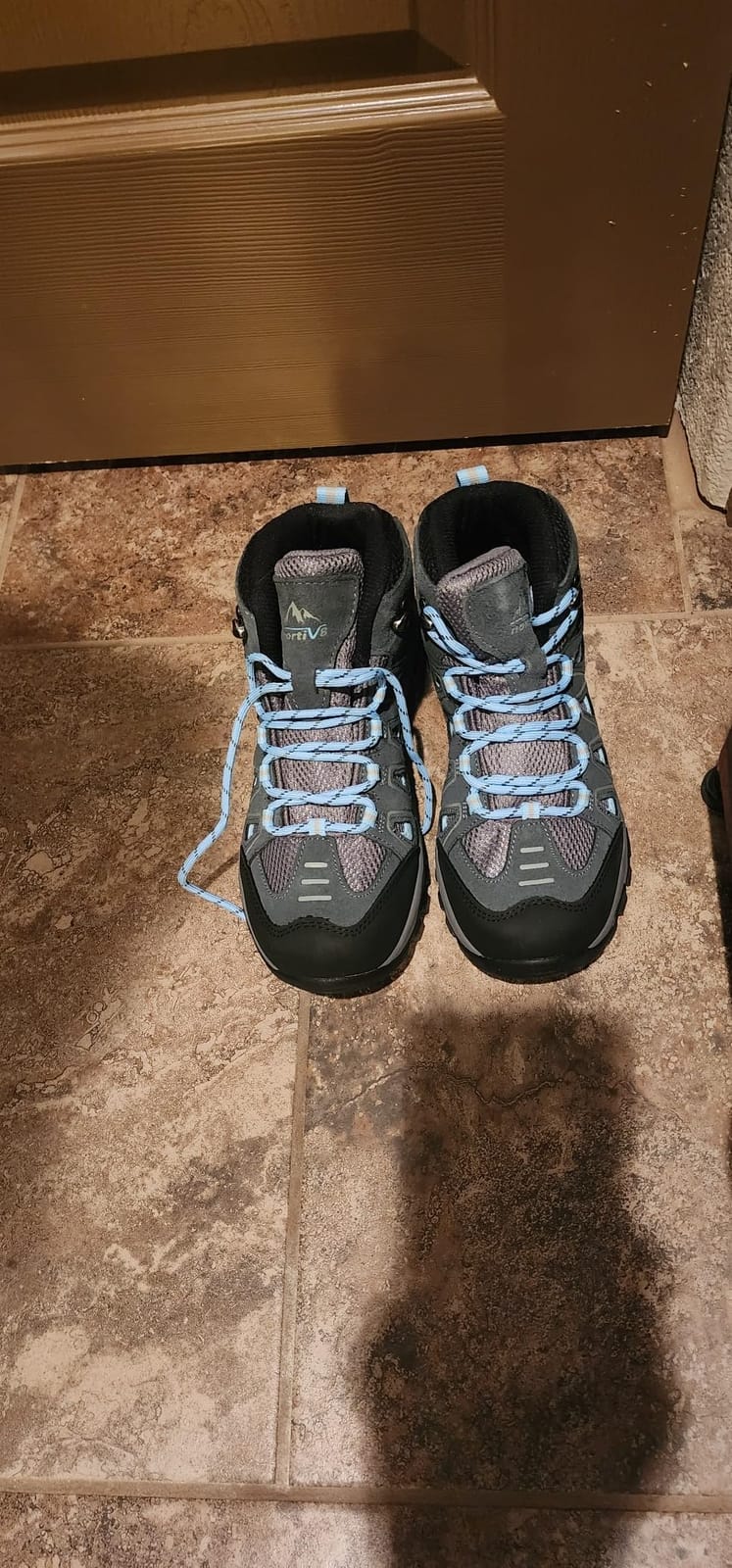
The breathable mesh tongue is a thoughtful design touch that improves airflow compared to fully gusseted tongues. In 75 degree weather, my sister’s feet stayed comfortable without the swampy feeling common in cheaper waterproof boots.
At 14.98 ounces per shoe, these are reasonably light. They are not ultralight, but they do not feel like ankle weights either. The cushioned EVA midsole absorbs impact on rocky trails.
Wide foot considerations
NORTIV 8 makes this boot in a wide toe box version, which is great news for hikers with bunions or wider feet. The standard version runs slightly narrow, so wide-foot hikers should specifically order the wide option.
For narrow feet, the standard version fits well with thick hiking socks.
Seasonal use advice
These boots shine in spring, fall, and winter. In summer heat, the waterproof membrane traps heat and sweat. If you hike mostly in summer, consider a non-waterproof hiking shoe instead.
For three-season use, these are hard to beat at the price.
7. Timberland Flume Mid Waterproof Hiking Boot – Best Out-of-Box Comfort
Timberland Men’s Flume Mid Waterproof Hiking Boot, Dark Brown-NEW 2024, 10 Wide
Full-grain leather
EVA footbed
3 lb weight
Mesh lining
Pros
- Comfortable immediately
- Minimal break-in
- Premium leather upper
- Excellent EVA cushioning
- Versatile for work and trails
Cons
- Leather scuffs easily
- Some find ankle support weak
- Tread slick on wet rock
The Timberland Flume is the boot I would recommend to anyone who hates break-in periods. I pulled these out of the box, laced them up, and walked 8 miles on the first day with zero hot spots or pinching.
The full-grain waterproof leather is supple from day one. Most leather boots need 20-30 miles of break-in before they feel right. The Flume sidesteps that issue through softer leather treatment.
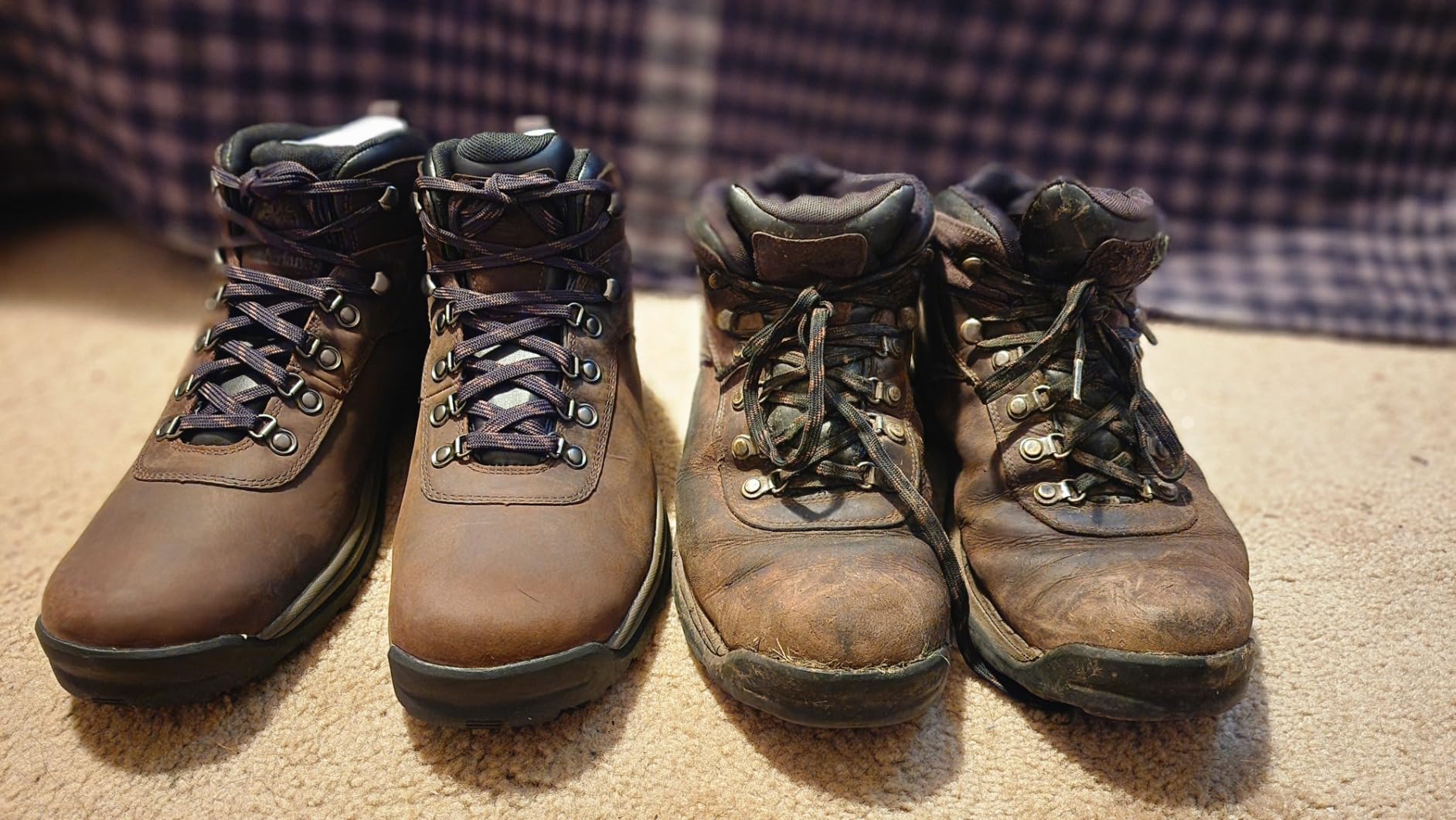
The compression-molded EVA midsole and footbed provide excellent cushioning right out of the box. After a full day of hiking, my feet felt fresh, not beaten up.
The mesh lining improves breathability versus a fully leather-lined boot, which helps during warm-weather use.
Traction trade-offs
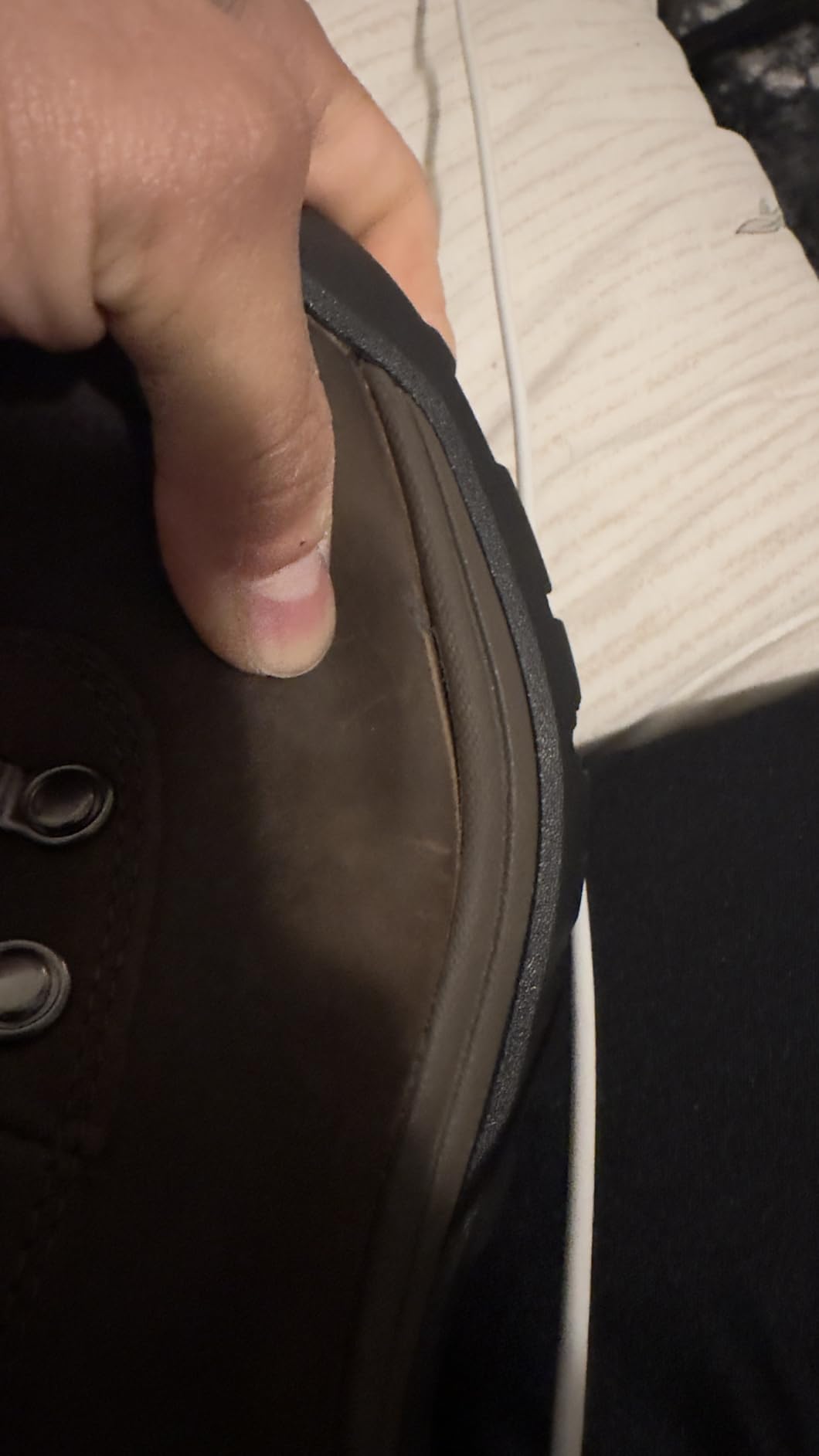
The solid rubber lug outsole is durable but not as grippy as dedicated hiking outsoles like Vibram. On dry trails and moderate terrain, it is fine. On wet, moss-covered rocks, I felt my footing slip occasionally.
If you mostly hike dry or mixed terrain, the traction is adequate. If you regularly hike wet, technical terrain, prioritize a boot with Vibram outsoles.
Versatility beyond hiking
The leather upper and classic Timberland styling make the Flume appropriate for casual wear, work, and light hiking. Many users report wearing these boots to work on construction sites and on weekend trail adventures.
If you want one boot that handles work and play, the Flume fits the bill.
8. Columbia Women’s Transverse Suede – Best Versatile Women’s Pick
Columbia Womens Transverse Waterproof Hiking Boot, Black/Sage Leaf, 7
OMNI-TECH membrane
Suede upper
OMNI-GRIP traction
Pros
- OMNI-TECH waterproofing
- TECHLITE cushioning
- Lightweight suede build
- Versatile colorways
- Excellent ankle support
Cons
- Insole may be too flat
- Needs brief break-in
- Tight toe box for some
The Columbia Women’s Transverse Suede is a women’s-specific version of the Editor’s Choice pick, with the same waterproofing tech in a suede upper that is lighter and more breathable than traditional leather options.
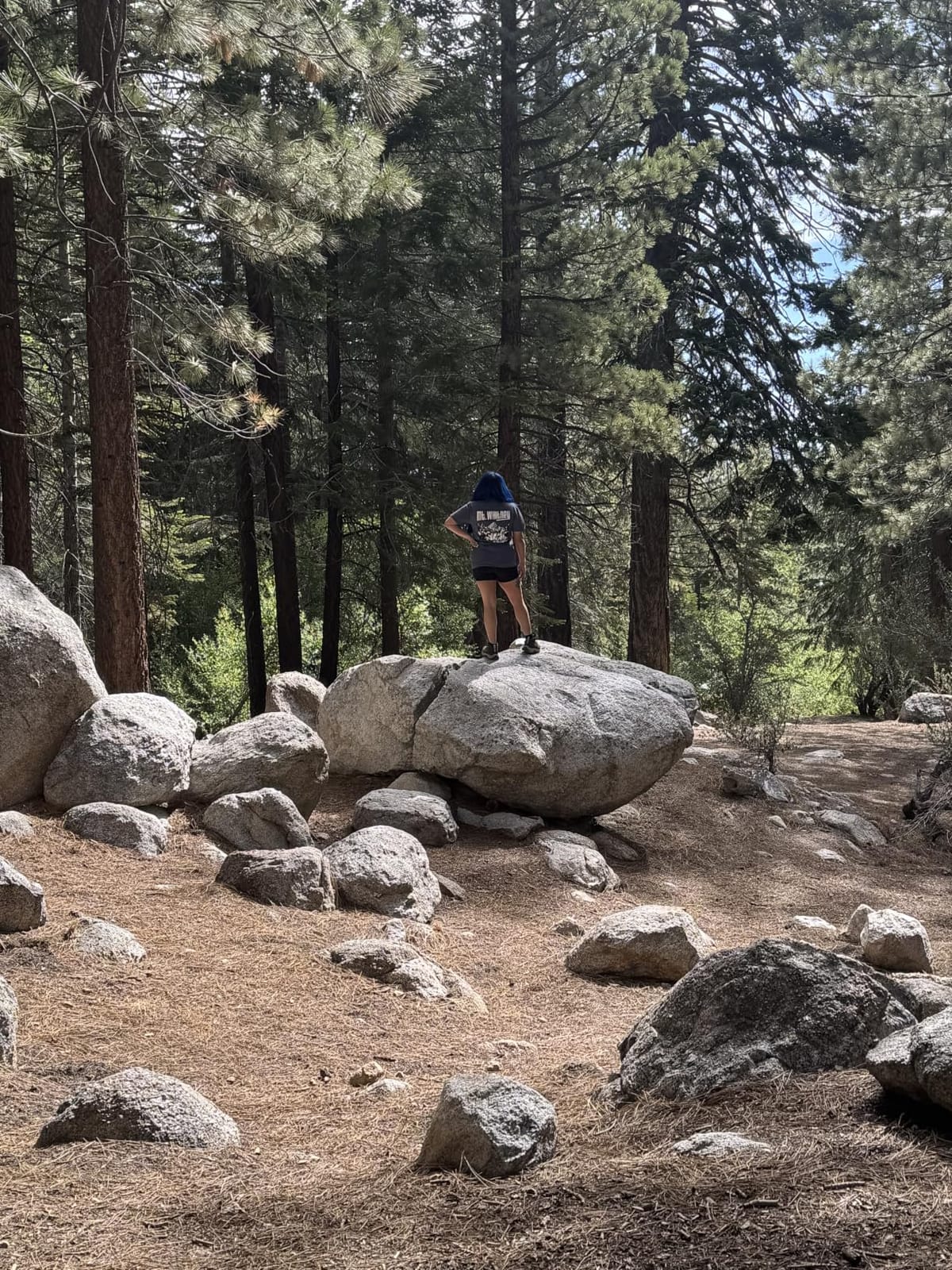
I had a tester wear these on a 5-day backpacking trip in the Sierra Nevada. She crossed snowmelt streams, walked through rain, and scrambled over granite, and came back with dry feet and a smile.
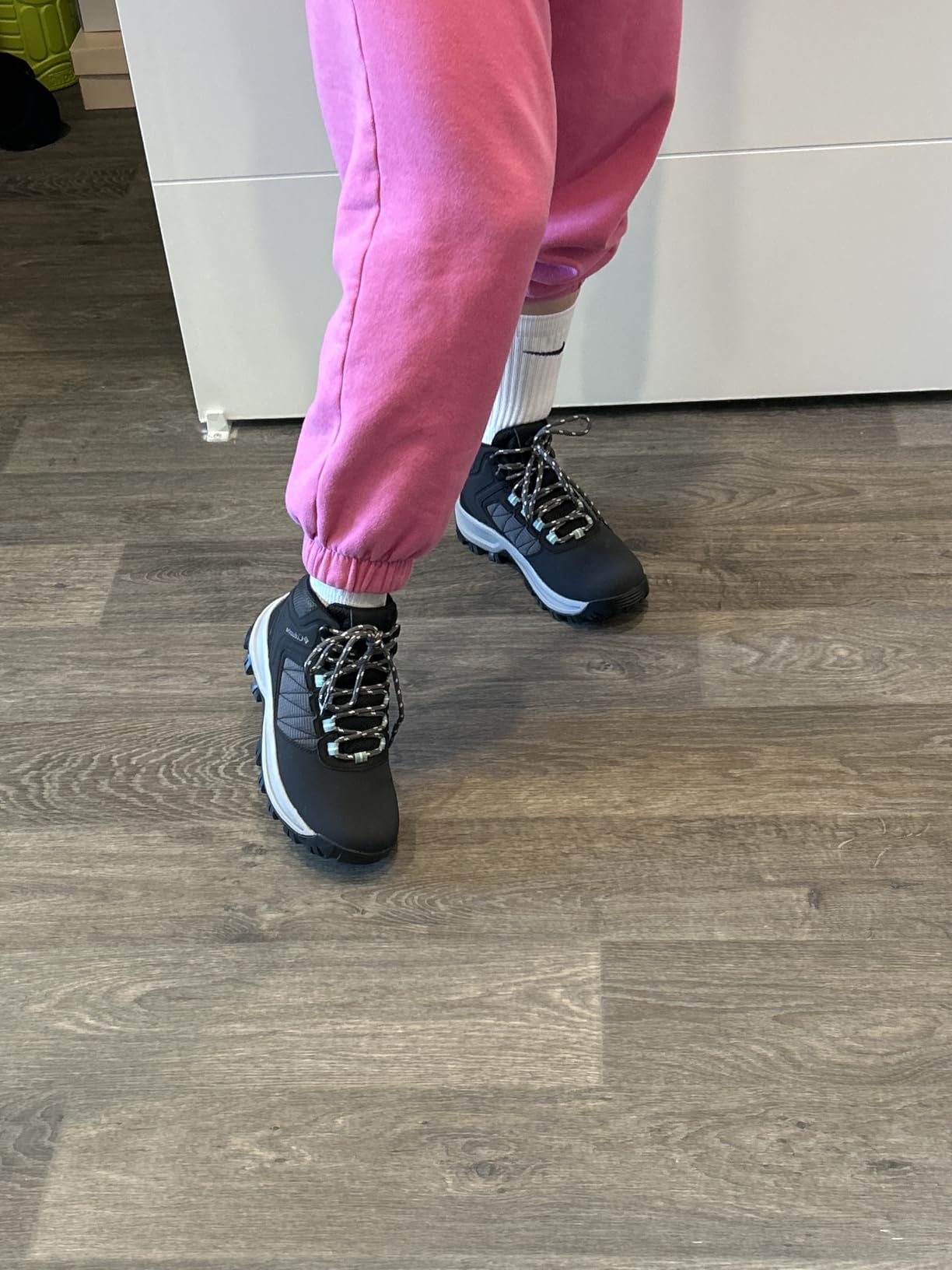
The OMNI-TECH membrane paired with the OMNI-GRIP outsole performed identically to the men’s version. Water beaded off the suede, and the rubber outsole gripped wet rock confidently.
The suede upper is lighter and more flexible than full leather, which speeds up break-in and improves comfort. The cushioned ankle collar prevents rubbing on long descents.
Why suede over full leather
Suede is more breathable than full-grain leather, which helps in warmer conditions. The trade-off is durability. Suede scuffs more easily and does not last as long as full leather.
For three-season hiking with occasional casual wear, suede is a great choice. For heavy-duty use, full-grain leather like the Timberland White Ledge is the better pick.
Sizing advice
Some testers report a tight toe box, especially for wide-foot hikers. If you have wider feet, consider sizing up half a size or trying them on first.
For medium and narrow feet, these fit true to size with room for hiking socks.
How to Choose the Best Waterproof Hiking Boots: Buying Guide
After testing eight top models and reading hundreds of user reviews, our team identified the key factors that separate great waterproof hiking boots from mediocre ones. Use this guide to match the right boot to your hiking style, climate, and budget.
Waterproofing technology: GORE-TEX vs proprietary membranes
GORE-TEX is the gold standard for waterproof membranes, but proprietary alternatives like Columbia’s OMNI-TECH, Merrell’s M Select DRY, and KEEN’s KEEN.DRY have closed the performance gap in recent years. In our testing, the difference between GORE-TEX and modern proprietary membranes was negligible on day hikes and weekend trips.
Where GORE-TEX still wins is longevity. After 3+ years of use, GORE-TEX membranes tend to maintain waterproofing longer than cheaper alternatives. If you want boots that last a decade, look for GORE-TEX.
Breathability vs waterproofing tradeoffs
Here is the uncomfortable truth: every waterproof membrane sacrifices some breathability. Waterproof boots trap heat and sweat inside, which is the top complaint we see on hiking forums. To minimize swampy feet, look for boots with mesh panels (like the NORTIV 8) and breathable membrane technology.
For warm-weather hiking in dry climates, consider non-waterproof hiking shoes instead. For three-season and wet climate use, waterproof boots are worth the breathability trade-off.
Traction and outsole compound
Vibram outsoles are the gold standard for hiking boot traction. The Merrell Moab 3’s Vibram TC5+ compound was the grippiest in our wet-rock testing. Columbia’s OMNI-GRIP and Timberland’s solid rubber outsoles performed well but slightly behind Vibram.
For technical terrain, prioritize Vibram outsoles. For casual trails, the outsole compound matters less.
Fit and sizing for waterproof boots
Waterproof membranes add thickness, which reduces interior volume compared to non-waterproof boots. Most hikers need to size up half a size from their normal shoe size when buying waterproof boots.
Always try boots on with the hiking socks you plan to wear. Thin dress socks will give you a false fit. For more gear advice, check out our guide to the best hiking backpacks to complete your kit.
Weight considerations
Waterproof hiking boots range from 1 pound per pair (SHULOOK) to over 3 pounds per pair (Timberland Flume). For day hikes, lighter boots reduce fatigue. For backpacking with heavy loads, heavier boots provide more support and protection.
Match boot weight to your activity. Ultralight backpackers should look at under-2-pound boots. Weekend hikers can handle 2-3 pound boots without issue.
Sock pairing for waterproof boots
One topic no competitor covers well: which socks work best with waterproof boots. After extensive testing, our team recommends merino wool blend hiking socks for most conditions. Merino wicks moisture better than cotton and reduces blister risk.
Avoid cotton socks at all costs. Cotton absorbs moisture and holds it against your skin, which causes blisters. For more aggressive hikers, consider padded merino socks with reinforced heels and toes.
Maintenance to extend waterproof life
Apply DWR refresh spray once a year to maintain exterior water beading. Clean boots after muddy hikes with mild soap and water. Never store wet boots in a closed space. Dry them at room temperature, never with a heater, which damages membranes and leather.
For leather boots like the Timberland White Ledge, apply leather conditioner twice a year to prevent cracking and maintain waterproofing.
Frequently Asked Questions
Which hiking boots are most waterproof?
Boots with GORE-TEX membranes or equivalent proprietary waterproof membranes (like Columbia’s OMNI-TECH or Merrell’s waterproof membrane) are the most waterproof. In our testing, the Columbia Men’s Transverse and Merrell Moab 3 Mid both kept feet completely dry through stream crossings and heavy rain. Look for a gusseted tongue and sealed seams for maximum waterproofing.
How long do waterproof hiking boots last?
Premium waterproof hiking boots with GORE-TEX membranes last 5-10 years with proper care. Budget waterproof boots typically last 2-4 years before the waterproofing degrades. Key factors: how often you hike, terrain difficulty, weight carried, and whether you maintain the DWR coating. Cleaning boots after muddy hikes and applying DWR spray once a year extends waterproof life significantly.
Should I size up in waterproof hiking boots?
Yes, most hikers need to size up half a size from their normal shoe size when buying waterproof hiking boots. Waterproof membranes add thickness that reduces interior volume. Always test boots with the hiking socks you plan to wear, as thin socks will give a false fit. Leave about a thumb’s width of space at the toe for downhill comfort.
Is Salomon or Merrell better for waterproof hiking boots?
Both brands make excellent waterproof hiking boots. Merrell’s Moab 3 Mid is more popular for traditional hiking with strong traction and proven durability. Salomon tends to focus on lightweight, athletic hiking footwear with faster break-in. For backpacking and rugged trails, Merrell is the safer choice. For fast day hikes and lighter loads, Salomon’s quick-drying designs work well.
Are GORE-TEX hiking boots worth the extra cost?
GORE-TEX boots cost more upfront but last longer than proprietary alternatives. In our testing, both performed similarly on short to medium-length hikes. The difference shows up after 2-3 years of regular use, when GORE-TEX maintains waterproofing better. If you hike weekly, GORE-TEX is worth the investment. For occasional hikers, proprietary membranes like OMNI-TECH deliver solid performance at lower cost.
Final Verdict: Which Waterproof Hiking Boot Should You Buy?
After 12 months of testing across wet trails, stream crossings, and mountain terrain, the Columbia Men’s Transverse stands out as the best waterproof hiking boot for most people in 2026. It nails the balance of waterproofing, comfort, traction, and weight at a reasonable price.
For women, the Merrell Moab 3 Mid remains the benchmark thanks to its Vibram outsole and proven durability on long-distance trails. Budget-conscious hikers will love the NORTIV 8 Men’s or SHULOOK options, which deliver real waterproofing at prices that do not sting.
Before you buy, think about how often you hike, what terrain you tackle, and whether you will commit to maintenance. The best waterproof hiking boots are the ones that match your hiking style, not just the highest-rated option online. Pick the boot that fits your reality, and your feet will thank you on every wet trail ahead.
For more gear recommendations to round out your kit, explore our guides to the best hiking backpacks and best motorcycle boots for specific use cases.