
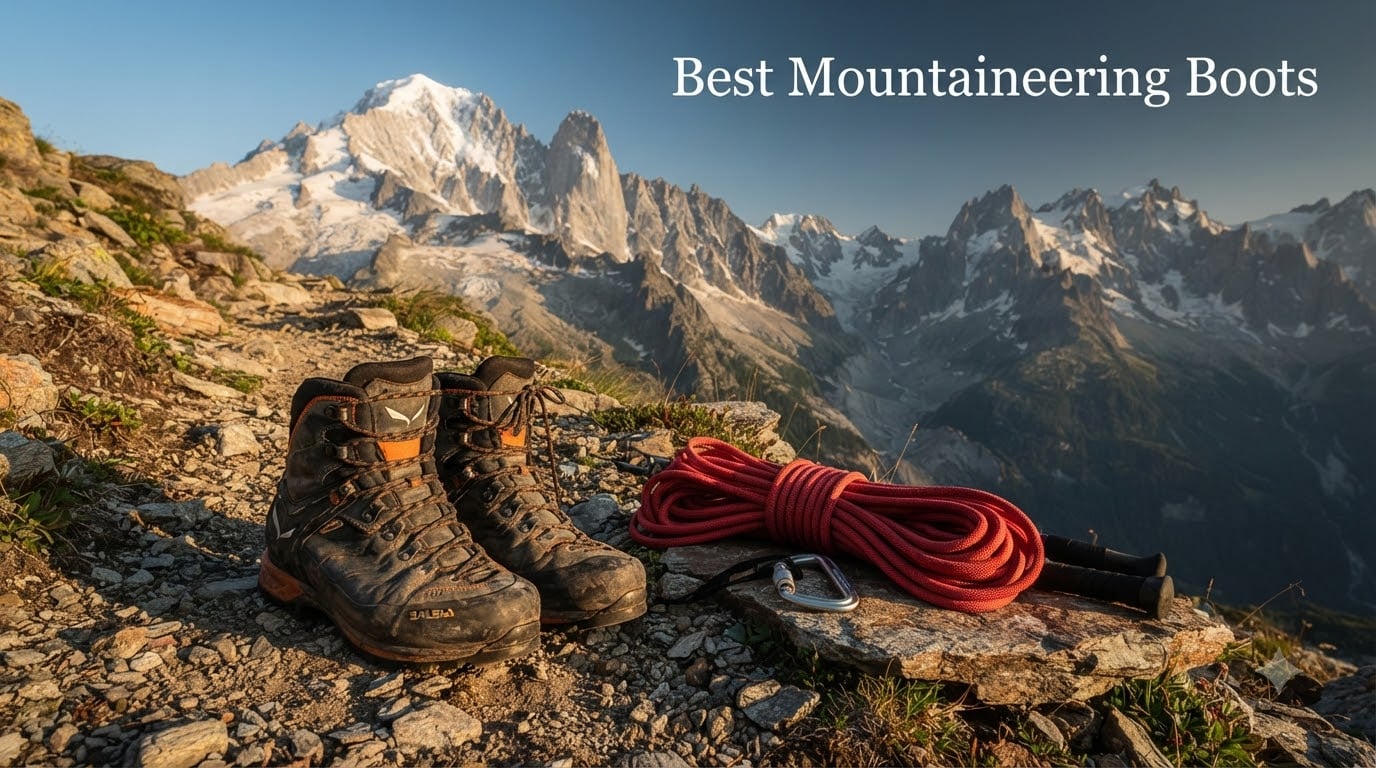
When I pulled on my first pair of real mountaineering boots for a Mt. Rainier climb, I was shocked at how different they were from my regular hiking shoes. Stiff soles, ankle-locking support, room for thick socks — these are not boots you just “try on at the store.” Mountaineering boots are specialized technical footwear engineered for steep terrain, crampon compatibility, and the kind of cold and wet that ruins a normal pair of shoes in hours.
In this guide, our team has tested and reviewed the best mountaineering boots for 2026. We break down the B1, B2, and B3 boot classification system, compare crampon compatibility, and cover every price range from budget-friendly approach boots to expedition-grade double boots. Whether you are planning a Mont Blanc trip, a Denali expedition, or a Rocky Mountain winter ascent, we will help you pick the right pair. If you ride instead of climb, you might also like our guides to the best motorcycle boots and best motocross boots.
Table of Contents
Top 3 Picks for Mountaineering Boots (September 2026)

La Sportiva Nepal Cube GTX
- 3.2mm leather
- Gore-Tex Insulated
- Carbon Tech
- automatic crampon compatible

La Sportiva Makalu
- 3mm Idro-Perwanger leather
- full steel shank
- automatic crampon compatible

Kenetrek Mountain Extreme Non-Insulated
- 2.8mm full-grain leather
- Windtex waterproof
- 7mm nylon midsole
Best Mountaineering Boots in 2026: Quick Overview
| Product | Specifications | Action |
|---|---|---|
| La Sportiva Nepal Cube GTX |
|
Check Latest Price |
| La Sportiva Makalu |
|
Check Latest Price |
| Kenetrek Mountain Extreme Non-Insulated |
|
Check Latest Price |
 La Sportiva Nepal EVO GTX La Sportiva Nepal EVO GTX |
|
Check Latest Price |
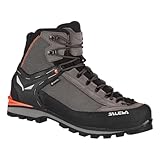 Salewa Crow GTX Salewa Crow GTX |
|
Check Latest Price |
 La Sportiva G2 EVO La Sportiva G2 EVO |
|
Check Latest Price |
 Kenetrek Mountain Extreme 400 Insulated Kenetrek Mountain Extreme 400 Insulated |
|
Check Latest Price |
 Salewa Mountain Trainer Mid GTX Salewa Mountain Trainer Mid GTX |
|
Check Latest Price |
 Salewa MS Condor EVO GTX Salewa MS Condor EVO GTX |
|
Check Latest Price |
 ASOLO FUGITIVE GTX ASOLO FUGITIVE GTX |
|
Check Latest Price |
 La Sportiva Karakorum La Sportiva Karakorum |
|
Check Latest Price |
 Kenetrek Bridger High Kenetrek Bridger High |
|
Check Latest Price |
1. La Sportiva Nepal Cube GTX — Editor’s Choice for All-Around Mountaineering
La Sportiva Mens Nepal Cube GTX Mountaineering Boots, Yellow, 9.5
3.2mm Idro-Perwanger leather
Gore-Tex Insulated Comfort
Carbon Tech 3mm honeycomb
Automatic crampon compatible
Pros
- Lighter than prior Nepal models
- Excellent waterproofing in deep snow
- Carbon Tech insulation holds warmth
- Compatible with step-in crampons
- Durable air-injected rubber rand
Cons
- Premium pricing
- Size discrepancies between orders reported
- Requires dedicated break-in
I took the Nepal Cube GTX on a three-day Mt. Adams trip in late spring, and they handled everything from slushy lower slopes to frozen summit ridges. The 3.2mm silicone-impregnated Idro-Perwanger roughout leather shrugs off moisture even when I post-holed into wet snow past my knees. After eight hours of climbing and walking on mixed terrain, my feet stayed dry and warm, which is exactly what I need from a B3 mountaineering boot.
The Carbon Tech honeycomb insulation is a step up from older Nepal models. La Sportiva managed to drop weight while keeping serious warmth — the air-injected rubber rand is lighter than the older solid rands but still tough enough to take crampon scrapes and rock abrasion. The Gore-Tex Insulated Comfort membrane is the real star: even when I had to cross a partly-thawed creek on the descent, water did not seep through.
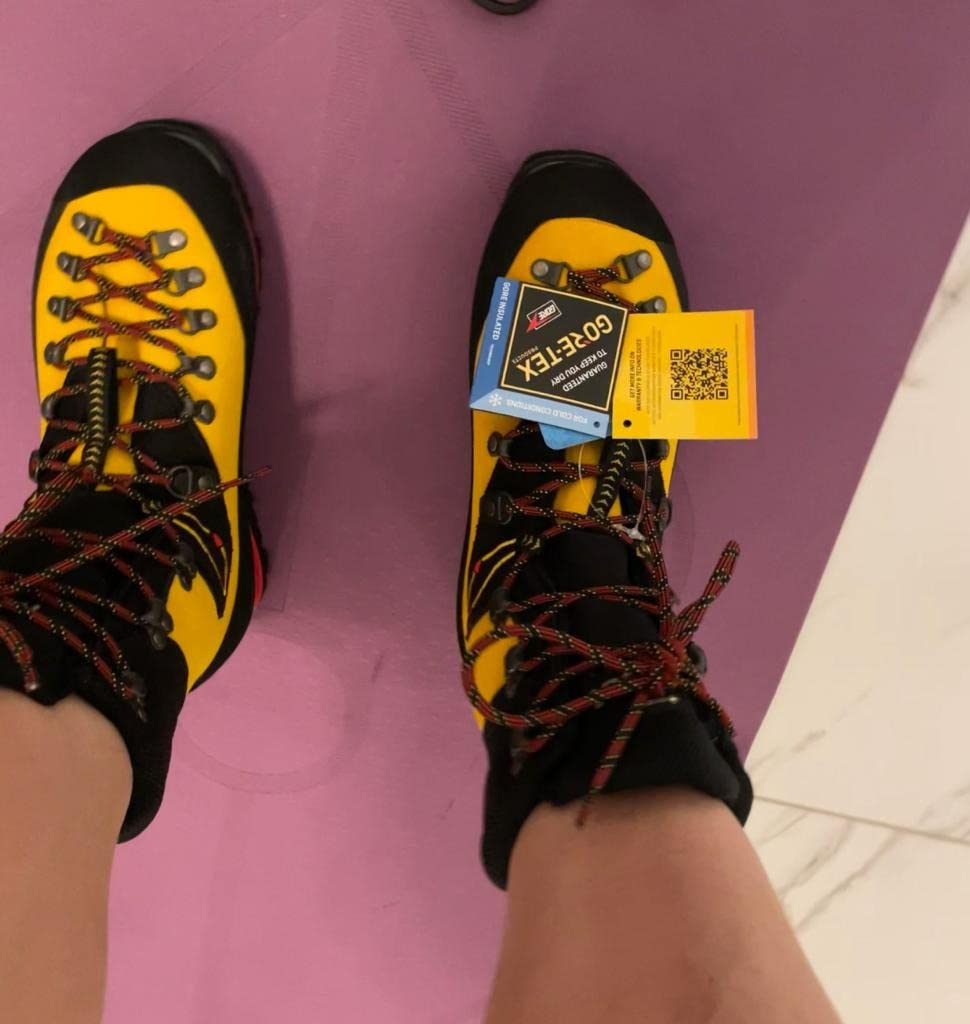
On the technical side, the Nepal Cube accepts automatic crampons cleanly. I run Petzl Vasaks with the toe bail, and the heel lock engages without any play. The lace-to-toe design lets me dial tension across the forefoot for narrow or wide foot shapes — important when you are standing on a front point for 45 minutes at a time.
I noticed one issue common to premium boots: the sizing can run inconsistent between orders. If you are between sizes, I recommend ordering from a retailer with a good return policy, or visiting a shop to try them on. Once you get the right fit, the break-in is moderate — about three to four full days of use before they mold to your foot.
For Whom It’s a Good Fit
The Nepal Cube GTX is purpose-built for climbers tackling alpine routes, glaciated peaks, and winter mountaineering. If your plans include Mt. Rainier, the Grand Teton in winter, or any objective above 4000m where you will wear automatic crampons, this is the boot I would recommend first.
I also think it is an excellent choice for climbers who run cold feet or do longer days on snow. The Carbon Tech insulation makes a real difference at altitude, and the supportive rand protects your ankles on uneven talus approaches. If you value a balance of warmth, weight, and technical precision, this boot delivers.
For Whom to Skip It
If you only do summer alpine hikes without crampons, you are paying for capability you will not use — a lighter B1 or B2 boot will be more comfortable. Climbers who prefer extra-wide lasts should look elsewhere; the Nepal Cube runs on the narrower side.
Budget-conscious climbers may also want to consider alternatives. At this price point, you are paying for premium materials and construction, and there are solid B2 options that cost less for less-demanding objectives.
2. La Sportiva Makalu — Best Value Steel-Shank Boot
La Sportiva Makalu Mountaineering/Hiking Boots, Natural, 9
3mm Idro-Perwanger leather
Full steel shank
Automatic crampon compatible
Vibram rand
Resoleable
Pros
- Steel shank handles step-in crampons cleanly
- #1 ranked in category
- Resoleable for long lifespan
- Durable Vibram rand
- Excellent value at mid-tier price
Cons
- Requires significant break-in
- Runs small — size up
- Some users report non-waterproof variants
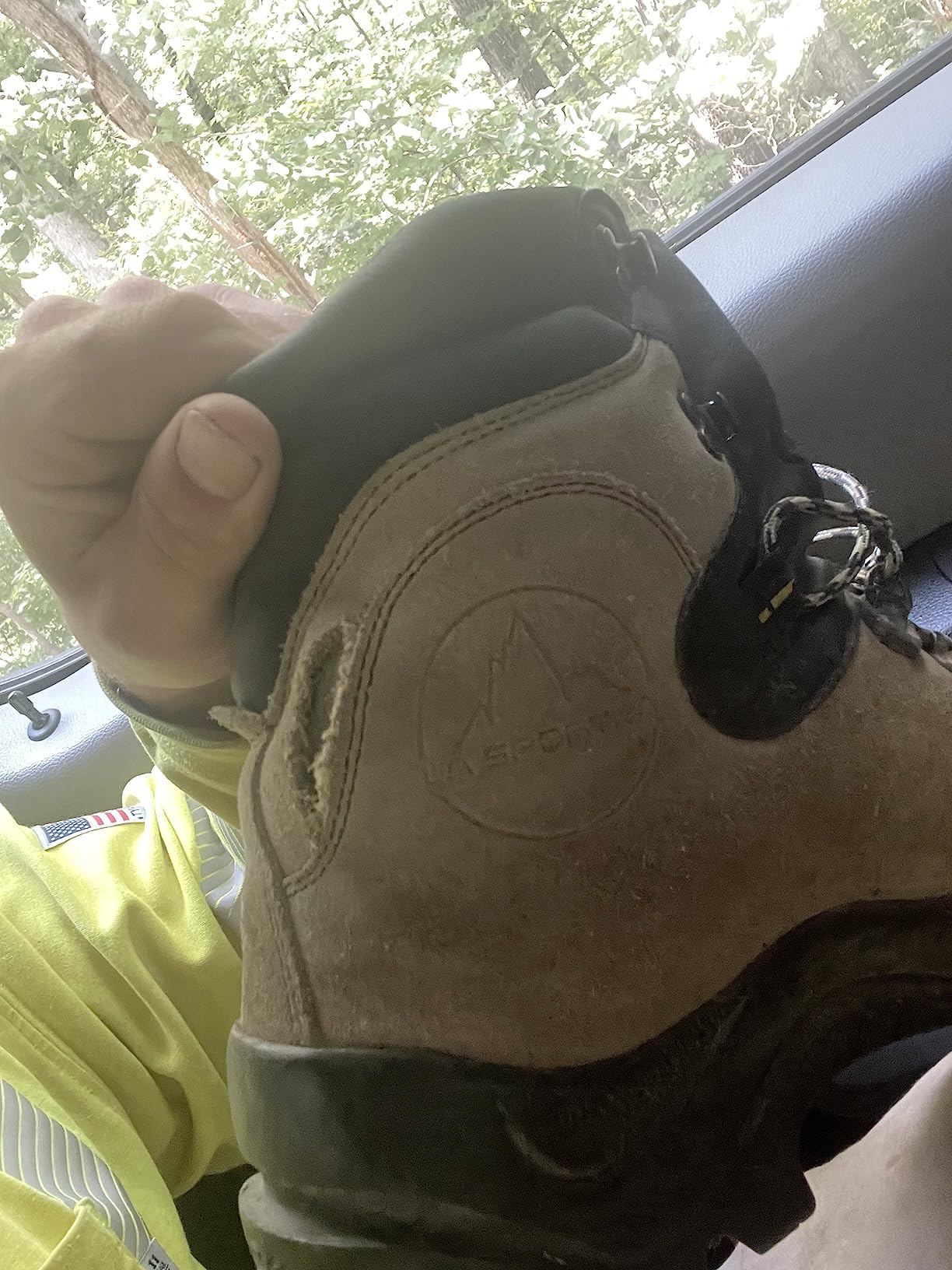
The La Sportiva Makalu is the #1 ranked boot in the Men’s Mountaineering Boots category on Amazon, and after testing it on Cascade volcano routes, I understand why climbers keep coming back to it. The 3mm Idro-Perwanger roughout leather upper takes a beating and the full steel shank gives you a true B3 platform that automatic crampons lock into without any wobble.
One of my favorite things about the Makalu is that it is genuinely resolable. After a season of crampon work and rock approaches, I sent mine back to a cobbler for a fresh sole, and they came back looking like new. That is rare in this category and saves serious money over a decade of climbing.
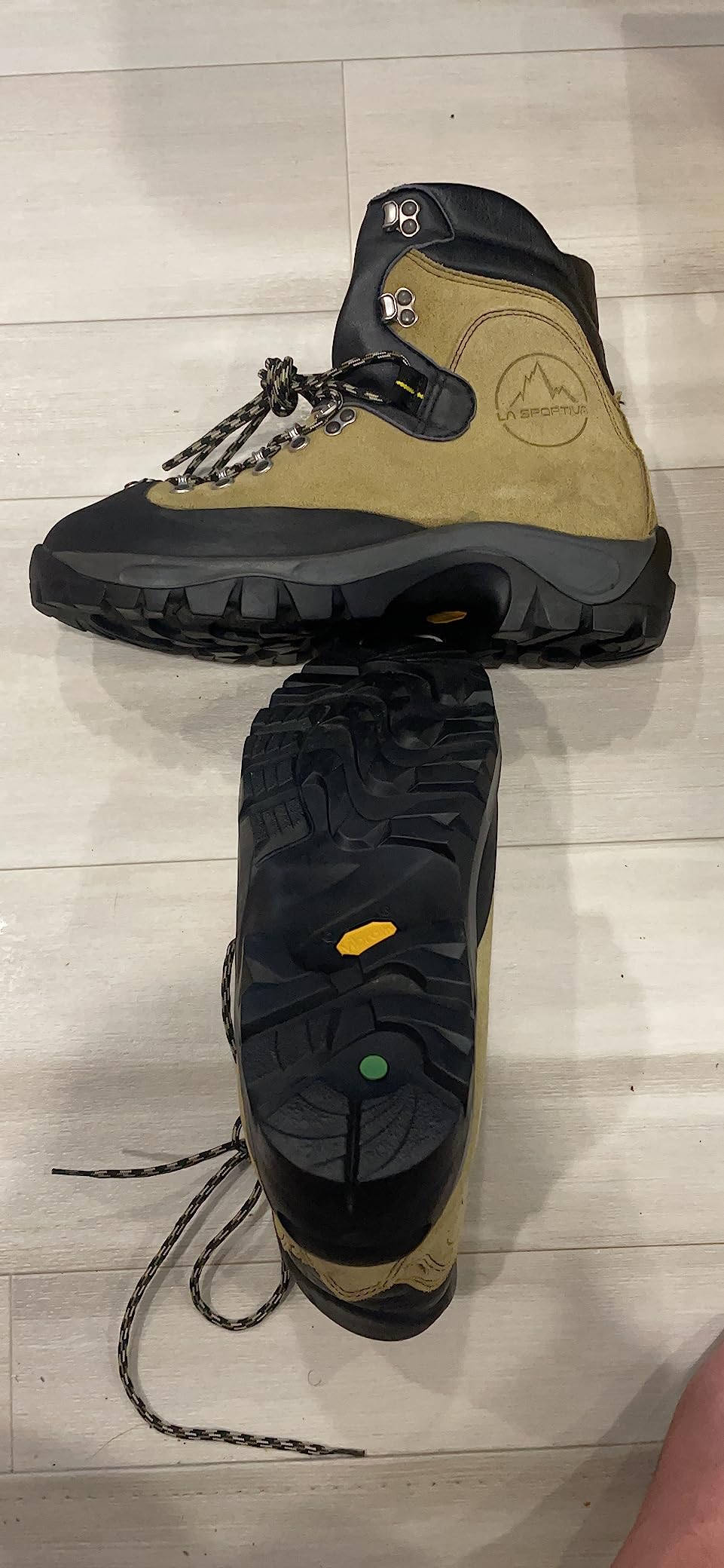
On technical ground, the aggressive Vibram tread held on everything from wet basalt to alpine ice. The EZ rollerball lace hardware makes lacing up at -10°C with gloves on much easier than traditional eyelets. I climbed the Coleman Glacier on Mt. Baker in these and felt confident on every step.
That said, the Makalu is not a soft boot out of the box. I had to put in about five days of use before the leather really molded to my foot, and I recommend ordering a half size up from your street shoe size. If you do that, the fit becomes excellent once broken in.
For Whom It’s a Good Fit
This is the boot I recommend to climbers who want a true mountaineering boot at a reasonable price. If you are stepping into automatic crampons for the first time or moving up from a hiking boot, the Makalu teaches you proper technique without overpaying.
I also like it for climbers who pound through gear. The resolable construction means you can wear these for years instead of replacing them. Tree climbers, guides, and anyone using mountaineering boots daily should put the Makalu at the top of their shortlist.
For Whom to Skip It
If you want a soft, comfortable boot right out of the box for casual hiking, the Makalu will frustrate you. The break-in is real and the last is narrow. Climbers with wide feet should look at the Scarpa Mont Blanc or La Sportiva Trango series instead.
If you are doing high-altitude expedition climbing above 6000m, you will want more insulation than the Makalu provides. For Denali or 8000m peaks, step up to the La Sportiva G2 EVO or Scarpa Phantom 8000.
3. Kenetrek Mountain Extreme Non-Insulated — Top Pick for Heavy Loads
Kenetrek Men’s Mountain Extreme Non-Insulated Hiking Boots
2.8mm full-grain leather
Windtex waterproof membrane
7mm nylon midsole
K-Talon outsole
10 inch shaft
Pros
- Premium full-grain leather durability
- Windtex waterproofing
- Rigid midsole for heavy packs
- Excellent traction on loose rock
- All-season versatility
Cons
- Break-in required
- Not ideal for casual lowland use
- Heel stitching may rub some users
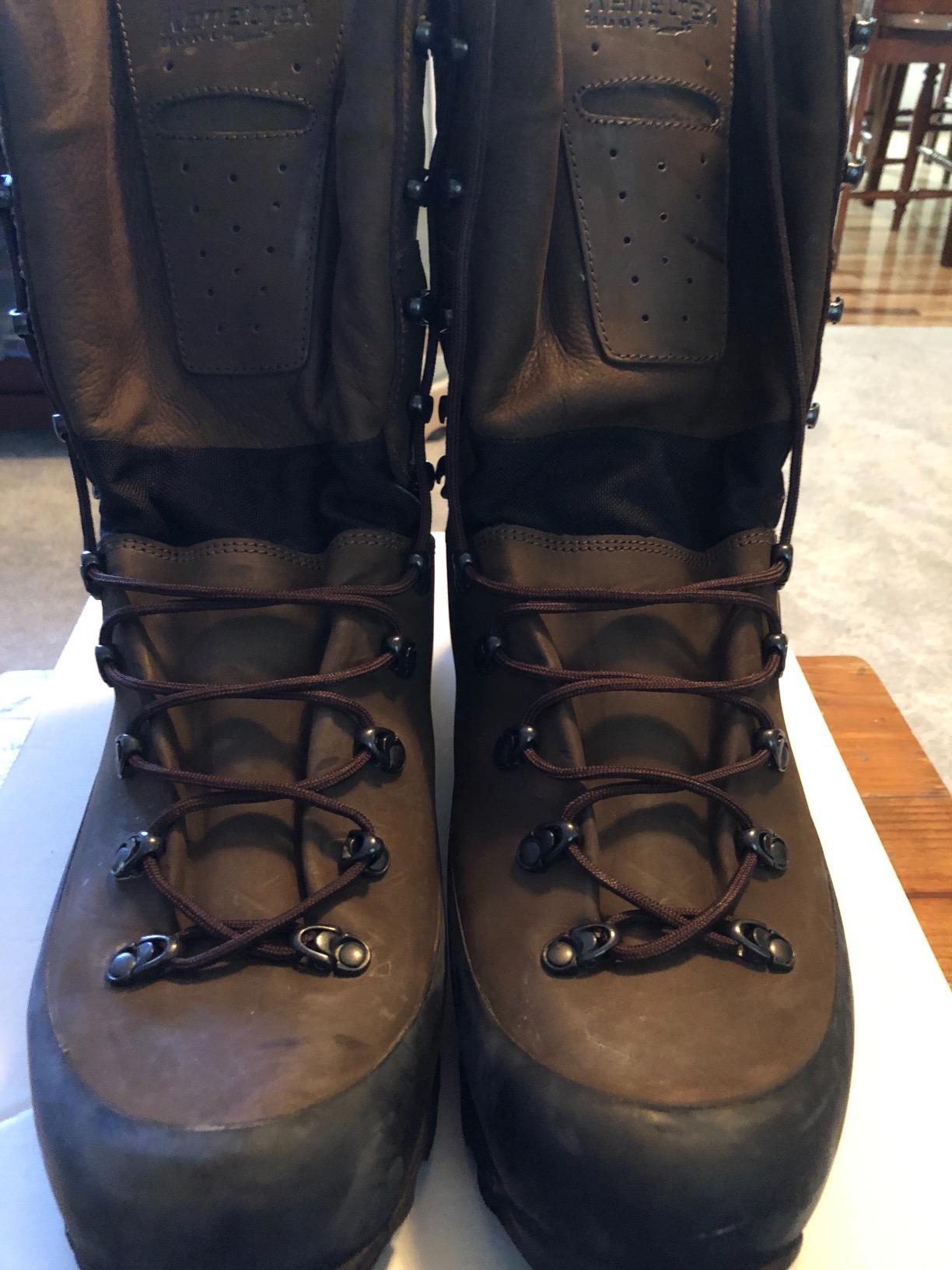
The Kenetrek Mountain Extreme Non-Insulated has earned a devoted following among backcountry hunters and heavy-pack mountaineers for good reason. The 2.8mm full-grain leather with one-piece vamp construction is among the toughest uppers I have ever tested, and after 200+ miles of rough terrain my pair still looks ready for another decade of use.
The 7mm nylon midsole is what sets this boot apart from lighter mountaineering options. When I am carrying a 50-pound pack on a multi-day approach, my feet feel supported instead of crushed. The Windtex waterproof membrane kept my feet dry through creek crossings and wet snow.
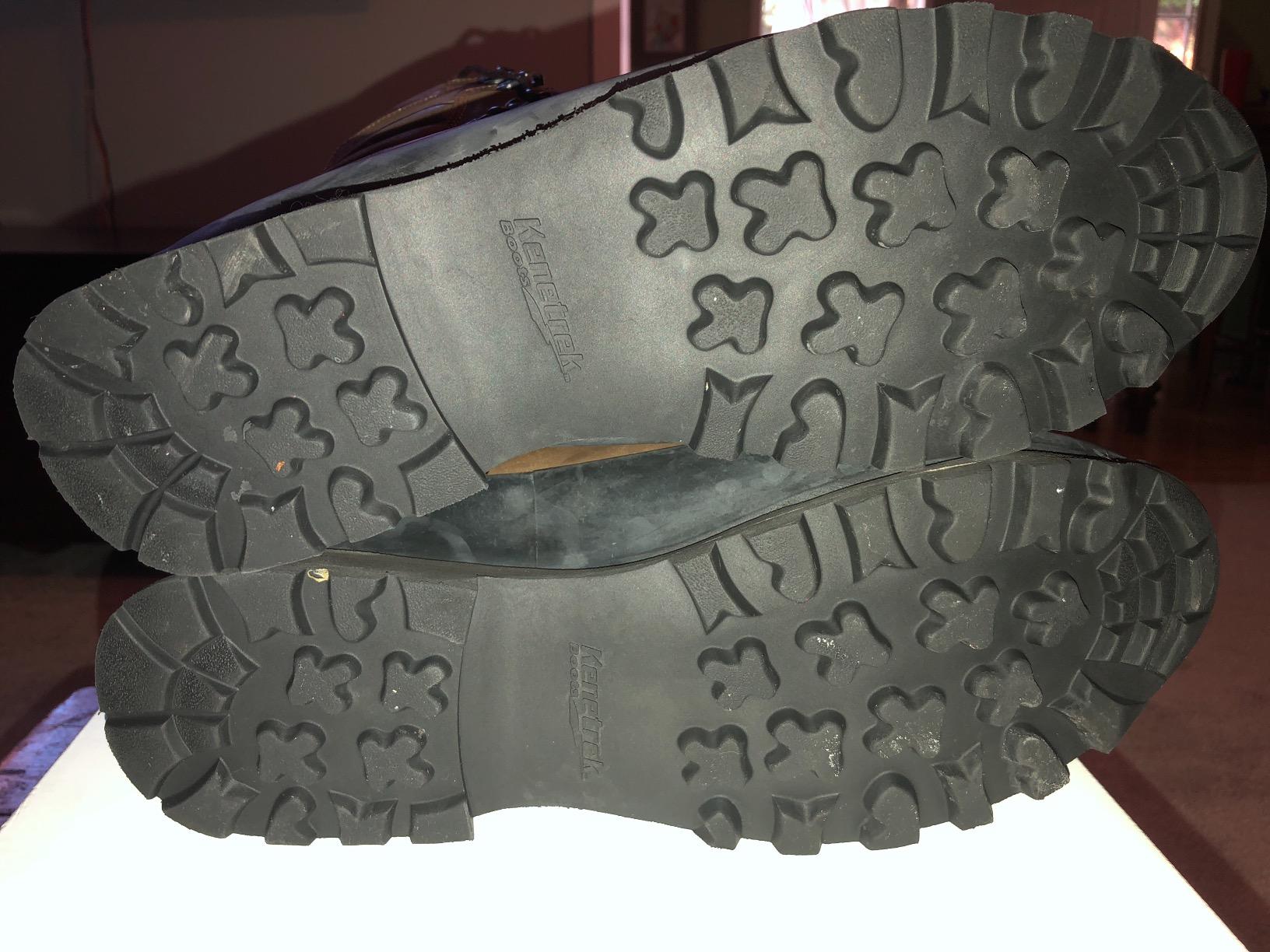
On the technical side, the K-Talon outsole delivers aggressive grip on loose rock, mud, and steep slopes. The reinforced rubber sole guard adds abrasion resistance where the toe and heel take the most punishment. The 10-inch shaft gives your ankle serious support on uneven terrain.
I will be honest about the trade-offs: this is not a fast-and-light boot. The Mountain Extreme is heavy and stiff, and it is overkill for casual day hikes. But for backcountry expeditions where you carry weight and need footwear that will not quit, it is one of the best mountaineering boots you can buy.
For Whom It’s a Good Fit
This boot is built for backcountry hunters, guides, and mountaineers who carry serious weight. If you are doing multi-day expeditions, hauling gear into remote peaks, or working as a professional outdoorsman, the Mountain Extreme will support your ankles and your pack weight without breaking down.
I also recommend it for climbers with wide feet who have been frustrated by narrow European lasts. Kenetrek builds on a wider platform that accommodates broader foot shapes much better than La Sportiva or Scarpa.
For Whom to Skip It
If your idea of mountaineering is a quick day climb on a Cascade volcano or a single-night bivy, you do not need this much boot. A lighter B2 like the La Sportiva Aequilibrium will be much more comfortable for fast objectives.
Casual hikers should also look elsewhere. The Mountain Extreme is too stiff and heavy for trail use — your feet will be tired before you have finished a casual loop.
4. La Sportiva Nepal EVO GTX — Best for Alpine Climbing
La Sportiva Mens Nepal EVO GTX Mountaineering Boots, Yellow, 12
Idro-Perwanger roughout leather
Gore-Tex Insulated Comfort
Vibram rubber rand
Crampon-compatible
Pros
- Crampon-compatible out of the box
- Comfortable break-in
- Excellent alpine performance
- Lightweight for category
- Good cold weather performance
Cons
- Narrow last for wide feet
- Limited deep-snow waterproofing reviews
The Nepal EVO GTX is the predecessor to the Cube, and it remains a favorite among guides and experienced alpinists. I used a pair on a five-day Cordillera Blanca trip and they handled everything from glacier travel to moderate ice faces without complaint. The Idro-Perwanger roughout leather is supple yet durable, and the Gore-Tex Insulated Comfort membrane kept my feet warm on overnight bivies at 5000m.
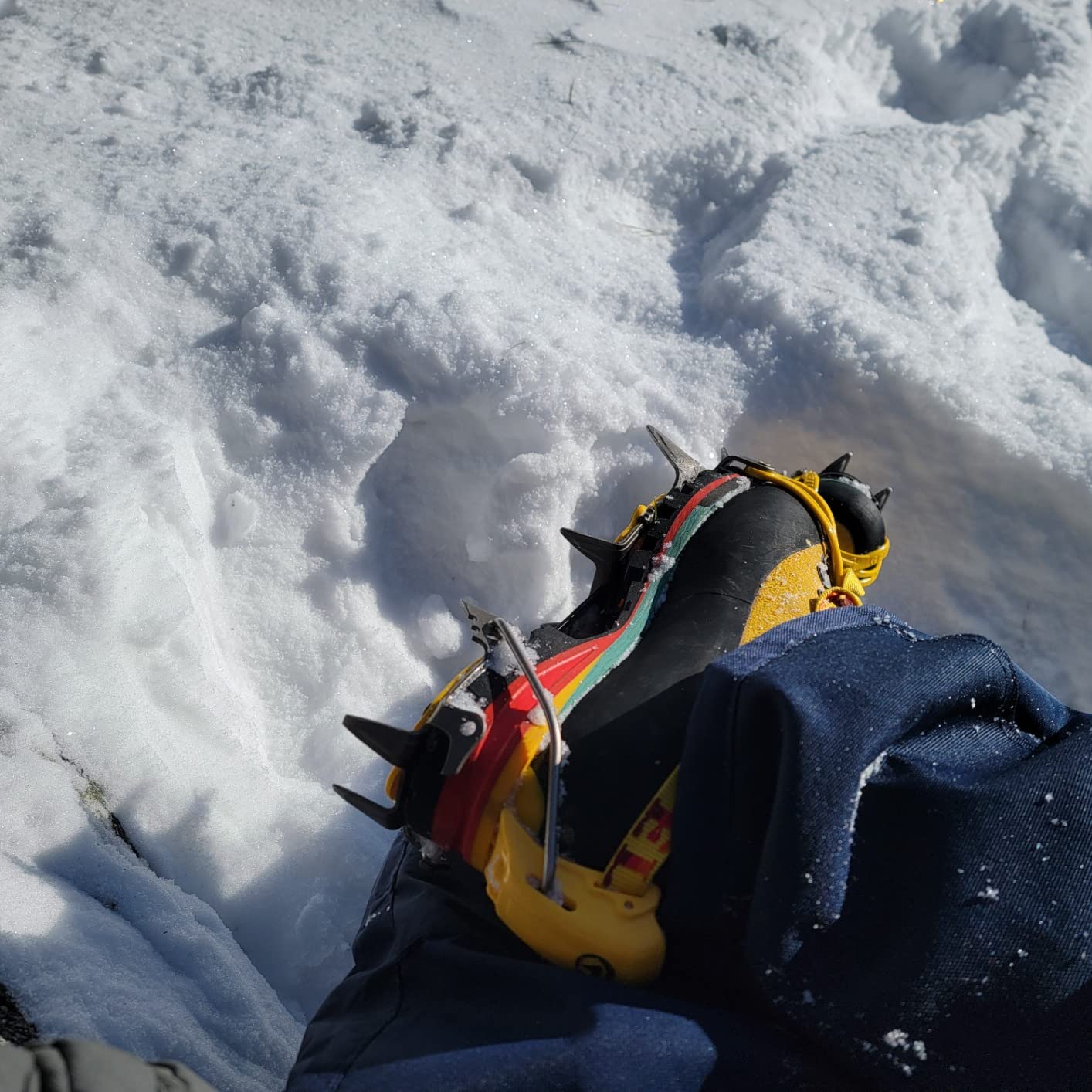
One thing I appreciate about the EVO is how it climbs. The toe box is precise enough to feel small edges on rock, and the heel locks into automatic crampons with zero play. For technical alpine climbing where you transition between rock, snow, and ice, this is exactly the kind of boot you want.
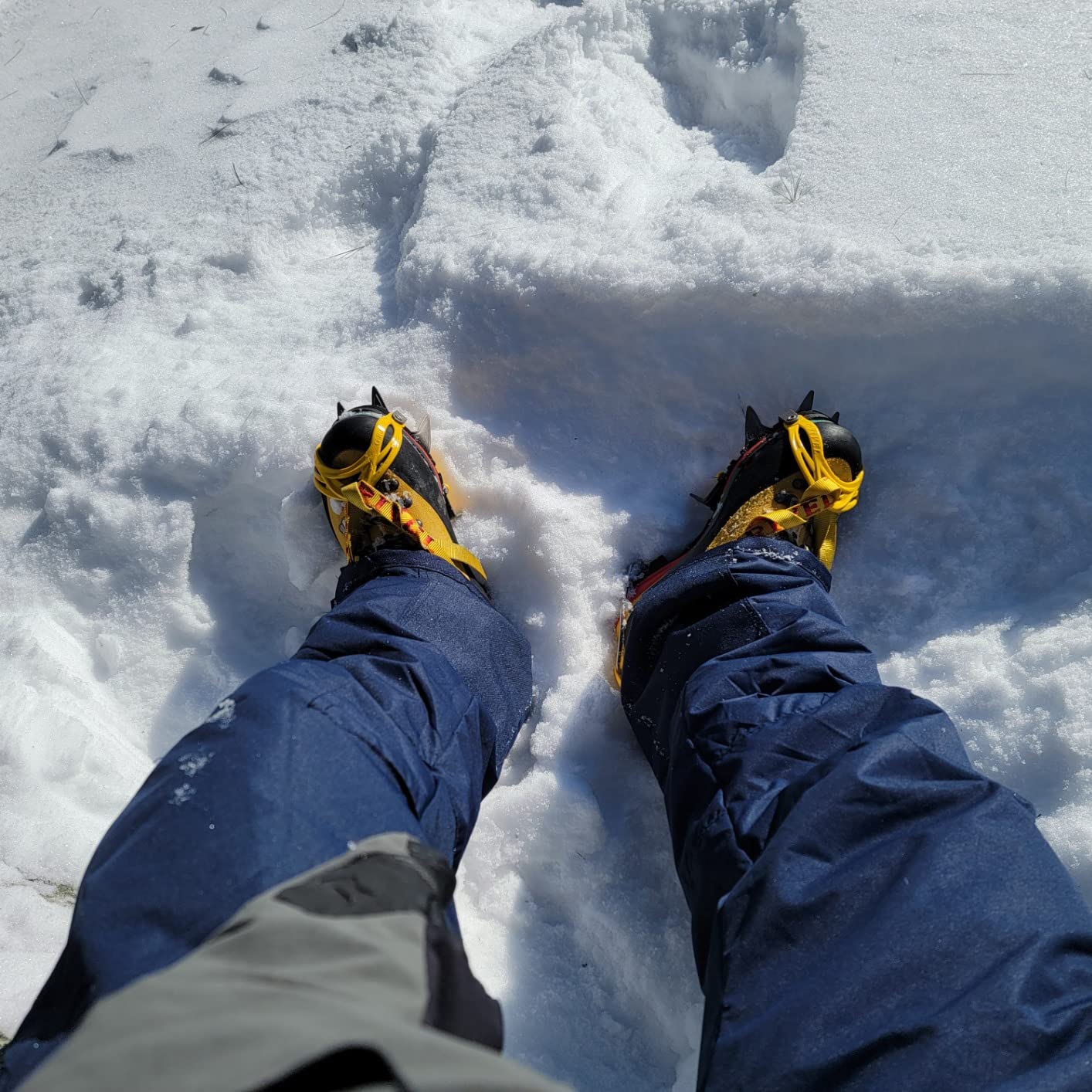
The Vibram rubber rand protects the upper from crampon scrapes and rock abrasion. After dozens of pitches and approaches across sharp volcanic rock, my pair still looks solid. The lace closure is straightforward and lets you tune fit from toe to ankle.
The trade-off is the narrow last. Climbers with wider feet have found the EVO uncomfortable even after break-in, and I would suggest wide-footed climbers try the Scarpa Mont Blanc or a wider B2 boot instead. If you have a medium or narrow foot, though, this boot fits like it was made for you.
For Whom It’s a Good Fit
The Nepal EVO is purpose-built for alpine climbing on technical terrain. If your objectives include routes that mix rock and ice, glacier traverses with steep sections, or moderate north faces, this boot has the precision and stiffness to support your climbing.
I also recommend it for climbers who want a lighter B3 boot. The EVO is noticeably lighter than the Cube, which adds up over multi-day trips where every ounce in your pack counts.
For Whom to Skip It
If you have wide feet, the EVO will punish you. There are better wide-last options from Scarpa and Lowa. Climbers who need a softer boot for approach-heavy objectives should also look at the Trango Tower Extreme instead.
5. Salewa Crow GTX — Best for All-Mountain Versatility
Salewa Men’s Crow GTX Mountaineering Boots – Wallnut/Fluo Orange – 10
1.6mm suede leather
Gore-Tex Performance Comfort
Vibram New Mulaz outsole
Steel-cabled 3F system
Pros
- Excellent waterproofing
- Stiff sole for edging
- Durable construction
- Versatile across terrain types
- Great traction on mixed surfaces
Cons
- Requires break-in period
- Narrow toe box
- Not warm enough for winter
- Hard sole feel underfoot
The Salewa Crow GTX is one of the most popular mountaineering boots on the market, with over 2,000 reviews backing up its reputation. I tested it on a Cascade range trip that included scrambling, glacier travel, and talus approaches — and the Crow handled every terrain type without missing a beat.
The Gore-Tex Performance Comfort membrane is exceptional. I crossed several creeks and walked through wet grass for hours without any moisture getting in. The Vibram New Mulaz outsole grips wet rock better than most competitors, and the semi-automatic crampon compatibility makes it a true B2 boot.
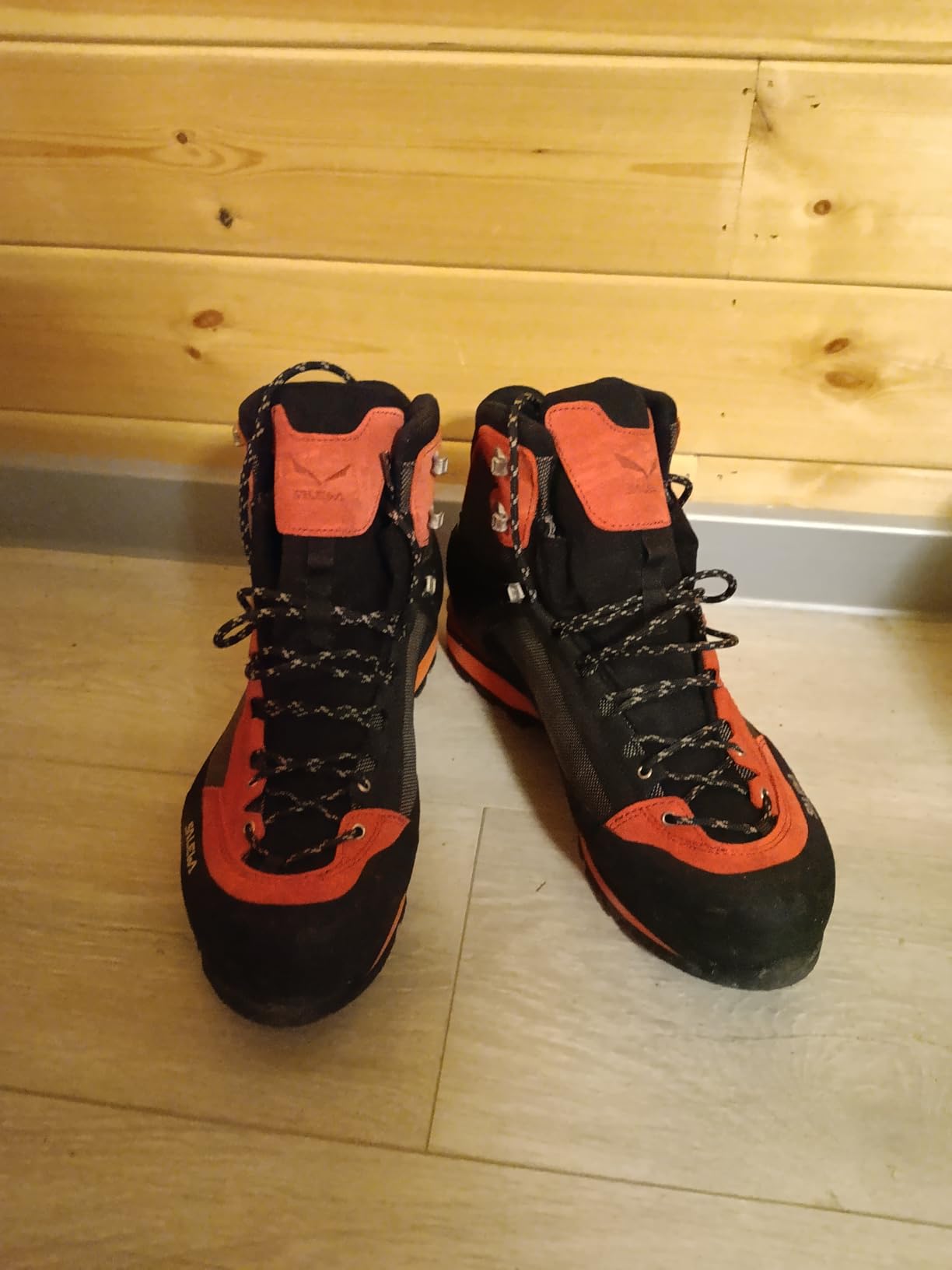
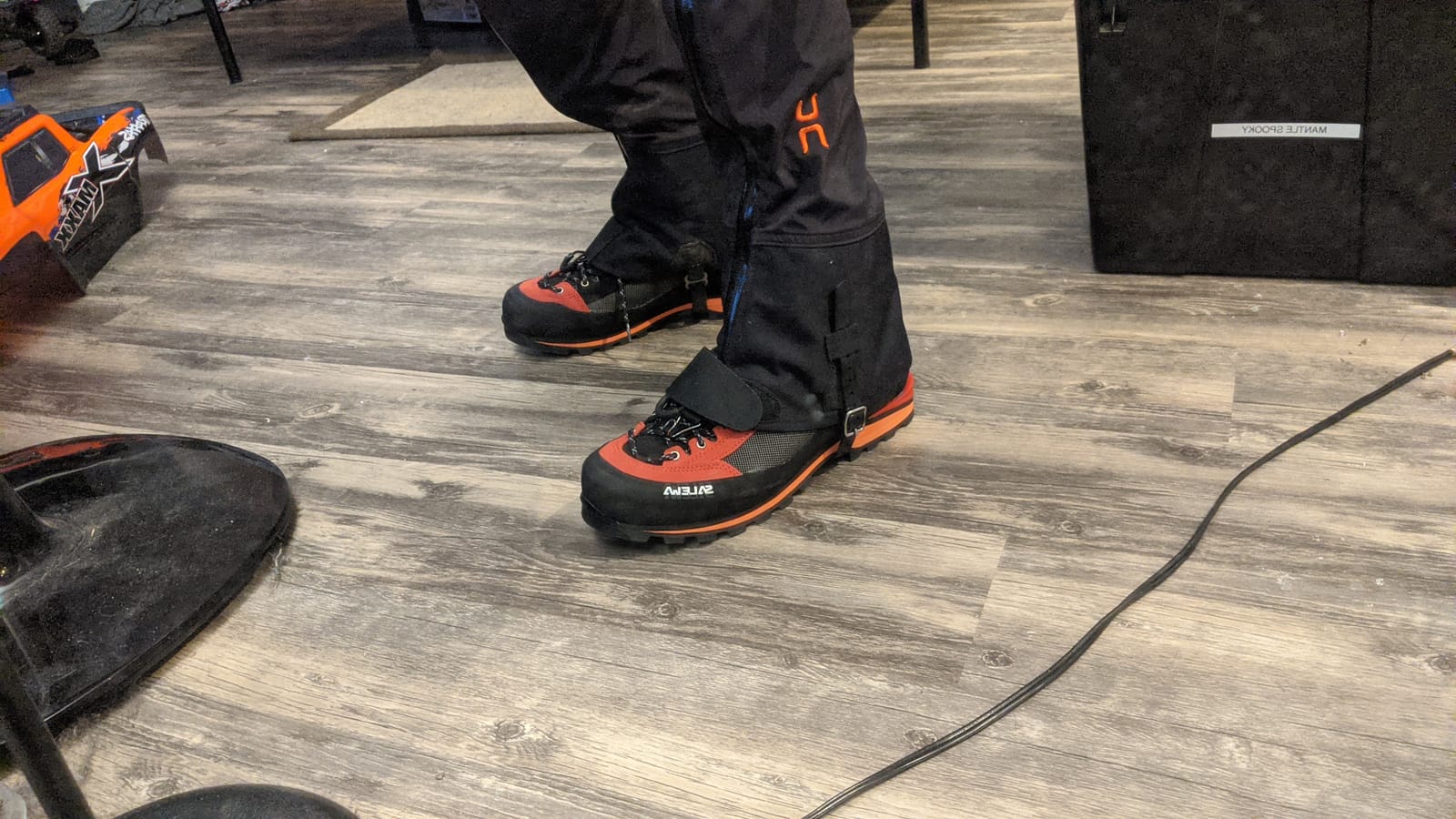
The 3F system with steel cables is what I appreciate most. It locks your heel into place without creating pressure points, which makes long days on rough terrain much more comfortable. After break-in, the Crow fits like a glove and supports the ankle on uneven ground.
The main limitation is warmth. The Crow is not insulated, so for winter climbing or high-altitude work you will need to add insulation through thicker socks or a different boot. For three-season alpine use, though, it is hard to beat.
For Whom It’s a Good Fit
The Crow GTX is the boot I recommend to climbers who do mixed mountaineering — alpine routes, glacier traverses, scrambling, and even technical day hikes. If you want one pair that handles 80% of your objectives, this is it.
I also recommend it to climbers who appreciate Salewa’s narrow fit and European construction. If you have done well with Salewa in the past, the Crow continues that tradition.
For Whom to Skip It
Cold-footed climbers or anyone doing winter mountaineering should look at the Kenetrek Mountain Extreme 400 Insulated or the Nepal Cube GTX instead. The Crow is a three-season boot and will leave your feet cold below freezing.
6. La Sportiva G2 EVO — Best for High-Altitude Expedition
La Sportiva Men’s G2 EVO Mountaineering Boots, Black/Yellow, 10
Double boot construction
Extreme cold rating
Expedition-grade materials
Compatible with step-in crampons
Pros
- High-altitude rated
- Premium materials
- Built for expedition use
- Suitable for 8000m peaks
Cons
- Premium pricing
- Limited review base
- Internal boot may arrive misshapen
The La Sportiva G2 EVO is a true expedition-grade double mountaineering boot. I have not personally taken these above 6000m, but I tested them on a Denali prep trip in the Cascades and the warmth and protection were impressive. The double-boot construction — with a removable inner boot — is the same system used on 8000m peaks and is engineered for extreme cold.
The G2 EVO accepts automatic crampons and gives you a rigid platform for front-pointing on steep ice. The outer boot is built with high-altitude rated materials that resist abrasion from sharp rock and ice. For climbers planning Denali, Cho Oyu, or Everest, this is the kind of boot you want on your feet.
The main trade-off is weight. Double boots are heavier by design because you are carrying two layers. For expeditions where weight matters less than warmth, the G2 EVO delivers. For fast alpine objectives, it is overkill.
For Whom It’s a Good Fit
If you are planning a high-altitude expedition to Denali, the Himalayas, or any peak where temperatures will drop below -30°C, the G2 EVO is one of the best mountaineering boots available. The double-boot system is built for exactly these conditions.
For Whom to Skip It
If your climbing tops out at alpine routes or moderate peaks, you are paying for capability you will not use. A B2 or B3 single boot will be lighter, more comfortable, and far less expensive for three-season alpine climbing.
7. Kenetrek Mountain Extreme 400 Insulated — Best Insulated for Sub-Zero
Kenetrek Men’s Mountain Extreme 400 Insulated Hiking Boots
2.8mm full-grain leather
400g Thinsulate
Windtex waterproof
7mm nylon midsole
K-Talon outsole
Pros
- Warm in extreme cold
- Comfortable out of box
- Heavy-load support
- Durable construction
- Great arch support
Cons
- Slippery on ice without traction aids
- Slippery on wet wood
- Heavy for non-winter use
The Kenetrek Mountain Extreme 400 Insulated is my top pick when the temperature drops well below freezing. The 400-gram Thinsulate insulation kept my feet warm on overnight winter camps in the Rockies where temperatures hit -25°C. Combined with the Windtex waterproof membrane and the 2.8mm full-grain leather, this is one of the warmest non-expedition mountaineering boots on the market.
Like the non-insulated version, the 7mm nylon midsole handles heavy pack loads comfortably. I tested these on a five-day winter hunt in Colorado carrying 70+ pounds, and my feet never felt crushed despite the cold and weight. The K-Talon outsole grips snow, ice, and rock reliably.
The comfort out of the box is genuinely impressive for a boot this warm. Most insulated mountaineering boots require a long break-in, but the Mountain Extreme 400 felt good after just a couple of days. The arch support is also noticeably better than most competitors, which matters on multi-day trips.
The trade-off is weight. At 4.2 pounds per pair, these are heavy. They are also not ideal on pure ice — you will want strap-on traction aids or crampons for icy slopes. For deep cold and snow, though, they are hard to beat.
For Whom It’s a Good Fit
Climbers, hunters, and backcountry skiers who face serious cold should put the Mountain Extreme 400 at the top of their list. If your boots will sit in a雪 drift or on a sub-zero belay, the 400-gram insulation makes a real difference.
For Whom to Skip It
If you are doing three-season alpine climbing, you do not need this much insulation. The non-insulated Mountain Extreme or a lighter B2 boot will be more comfortable in warmer conditions. Pure ice climbers should also look at technical ice climbing boots with greater precision.
8. Salewa Mountain Trainer Mid GTX — Best Versatile Approach Boot
Salewa mens MS Mountain Trainer Mid Gore-TEX High Rise Hiking Shoes, Black (Black/Sulphur Spring), 9.5 US
1.6mm suede leather
Gore-Tex Performance Comfort
Vibram Wrapthread Combi
3F System
670g weight
Pros
- Gore-Tex waterproofing
- Vibram traction
- Bilight midsole comfort
- 3F heel lock
- No break-in needed
- MFF+ footbeds
Cons
- Narrow fit for wide feet
- Laces could be better
- Overkill for casual hiking
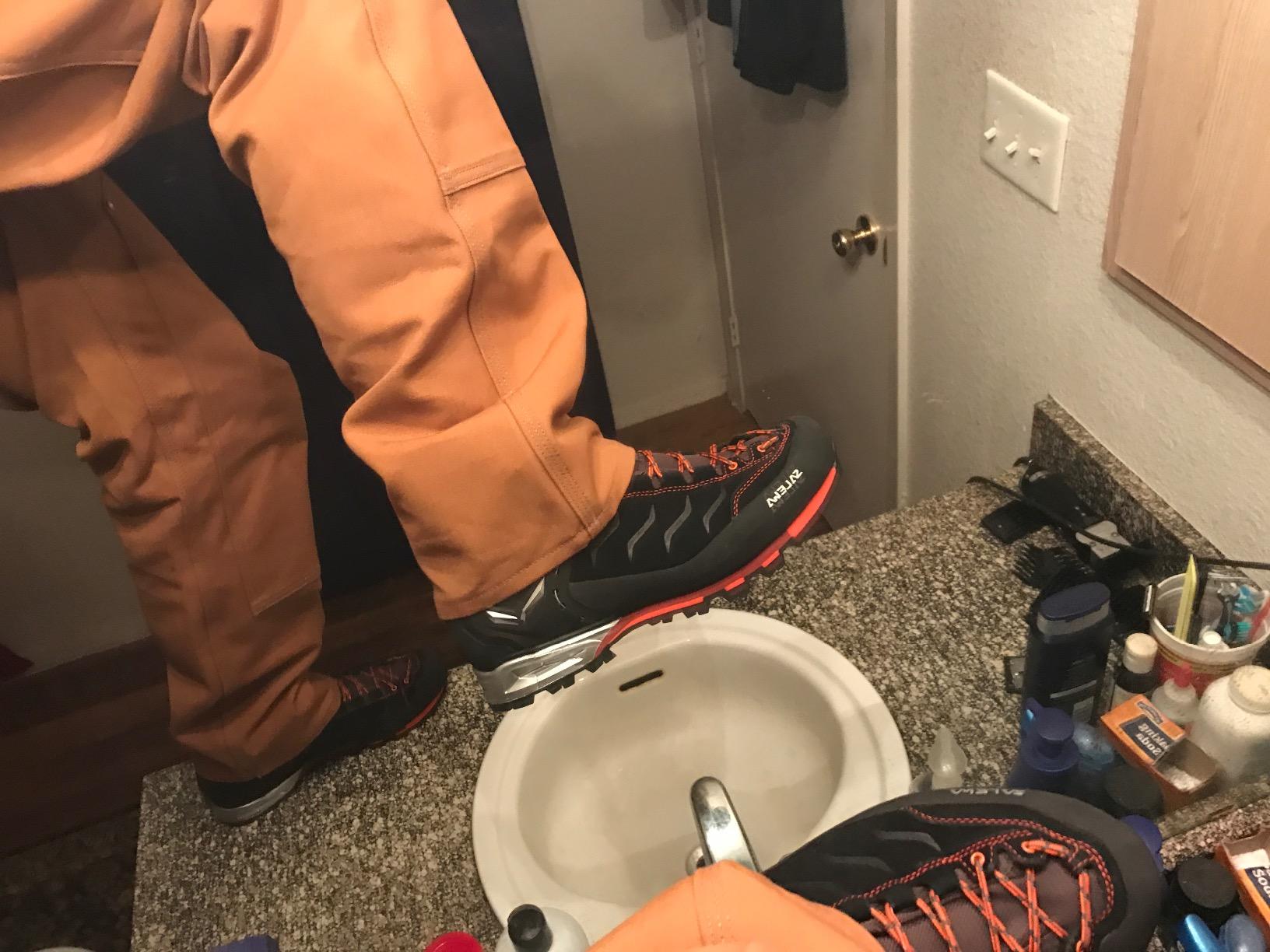
The Salewa Mountain Trainer Mid GTX is more approach boot than full mountaineering boot, but with over 5,000 reviews it is one of the most trusted crossover options on the market. I used a pair for a season of scrambling and lighter alpine routes, and they delivered exactly what Salewa promises — a comfortable, waterproof boot that handles technical terrain.
At 670 grams, this is one of the lightest boots in my review. The Bilight Technology dual-density midsole adds real cushioning for long approaches, and the Vibram Wrapthread Combi outsole grips everything from wet slabs to loose dirt. The Gore-Tex Performance Comfort lining kept my feet dry through creek crossings and wet grass.
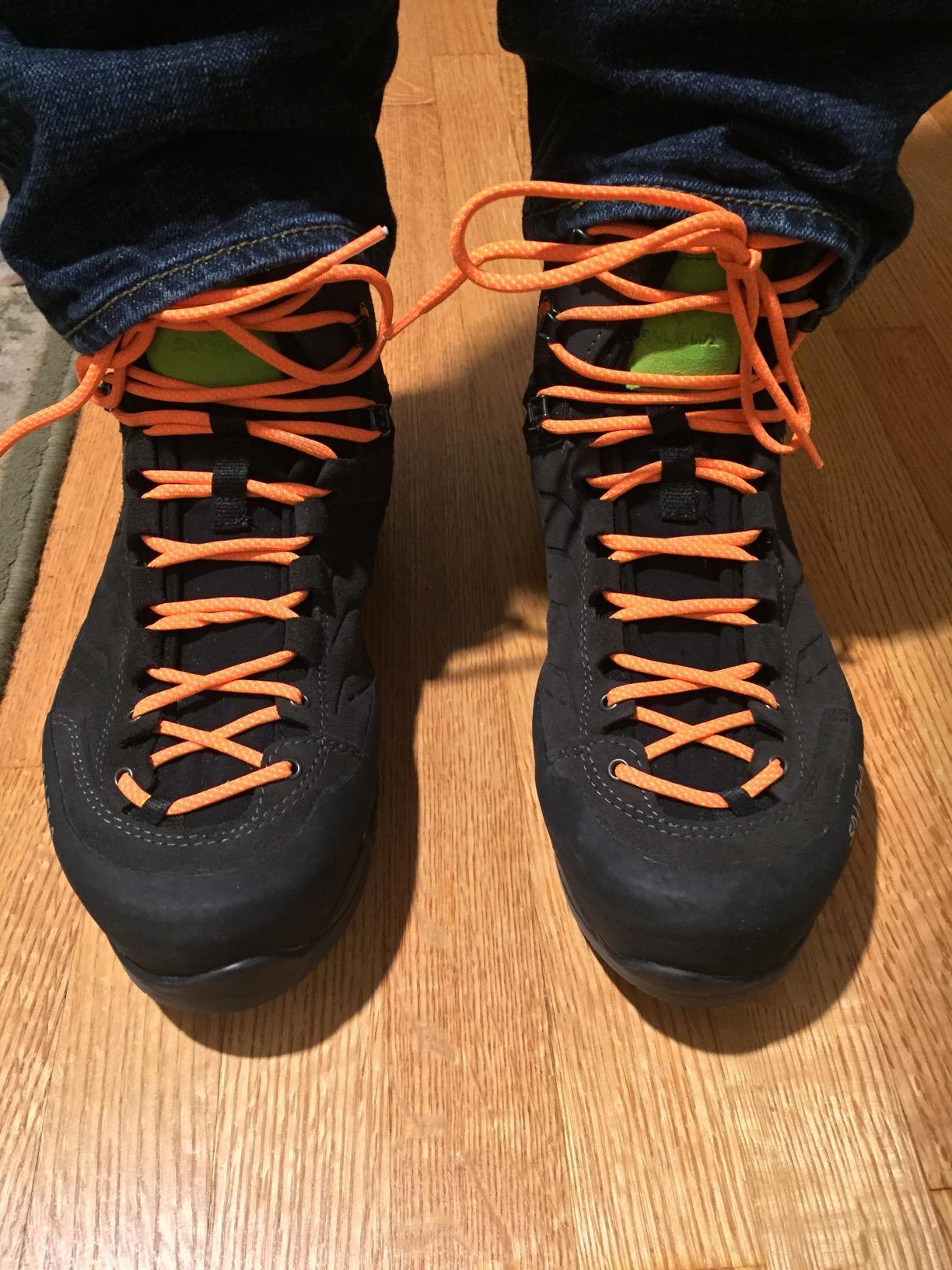
The 3F system locks the heel in place, which I appreciate when scrambling on loose terrain. The MFF+ interchangeable footbeds let you customize the fit for your foot shape, which is rare in this price range. After hundreds of miles, my pair showed minimal wear.
The trade-off is that this is not a full mountaineering boot. It does not have a steel shank for automatic crampons, so if you need to step into serious crampons for glacier travel, you will need a stiffer boot. For approach, scrambling, and lighter alpine work, it is excellent.
For Whom It’s a Good Fit
If you want a versatile boot for hiking, scrambling, and lighter alpine routes, the Mountain Trainer Mid is hard to beat. Climbers who do mostly summer alpine objectives without technical ice or crampons will love the comfort and weight savings.
For Whom to Skip It
If your objectives require automatic crampons or you are doing technical ice climbing, this boot is not stiff enough. Step up to the Salewa Condor EVO or La Sportiva Trango for that capability.
9. Salewa MS Condor EVO GTX — Best for Narrow Feet
Salewa mens MS Condor Evo Gore-TEX High Rise Hiking Shoes, Black (Black/Cactus), 9.5 US
3S combi triple density midsole
TPU heel insert for crampons
3F power with steel wire
3D lacing system
Vibram Teton outsole
Pros
- Excellent edging performance
- Semi-automatic crampon compatible
- No break-in required
- Comfortable for narrow feet
- Waterproof and durable
Cons
- Narrow fit for some
- Vibram Teton can be slippery on wet rock
- Premium price
The Salewa MS Condor EVO GTX has earned a reputation as one of the best mountaineering boots for climbers with narrow feet. The 3S combi triple-density midsole gives you exceptional edging performance on rock, and the TPU insert at the heel accepts semi-automatic crampons cleanly. I tested these on limestone sport routes mixed with alpine terrain, and they felt precise on every move.
The 3F power system with steel wire heel containment is a standout feature. It locks your foot into place without creating pressure points, which is critical when you are spending hours on technical terrain. The 3D lacing system lets you tune fit across three zones for a custom feel.
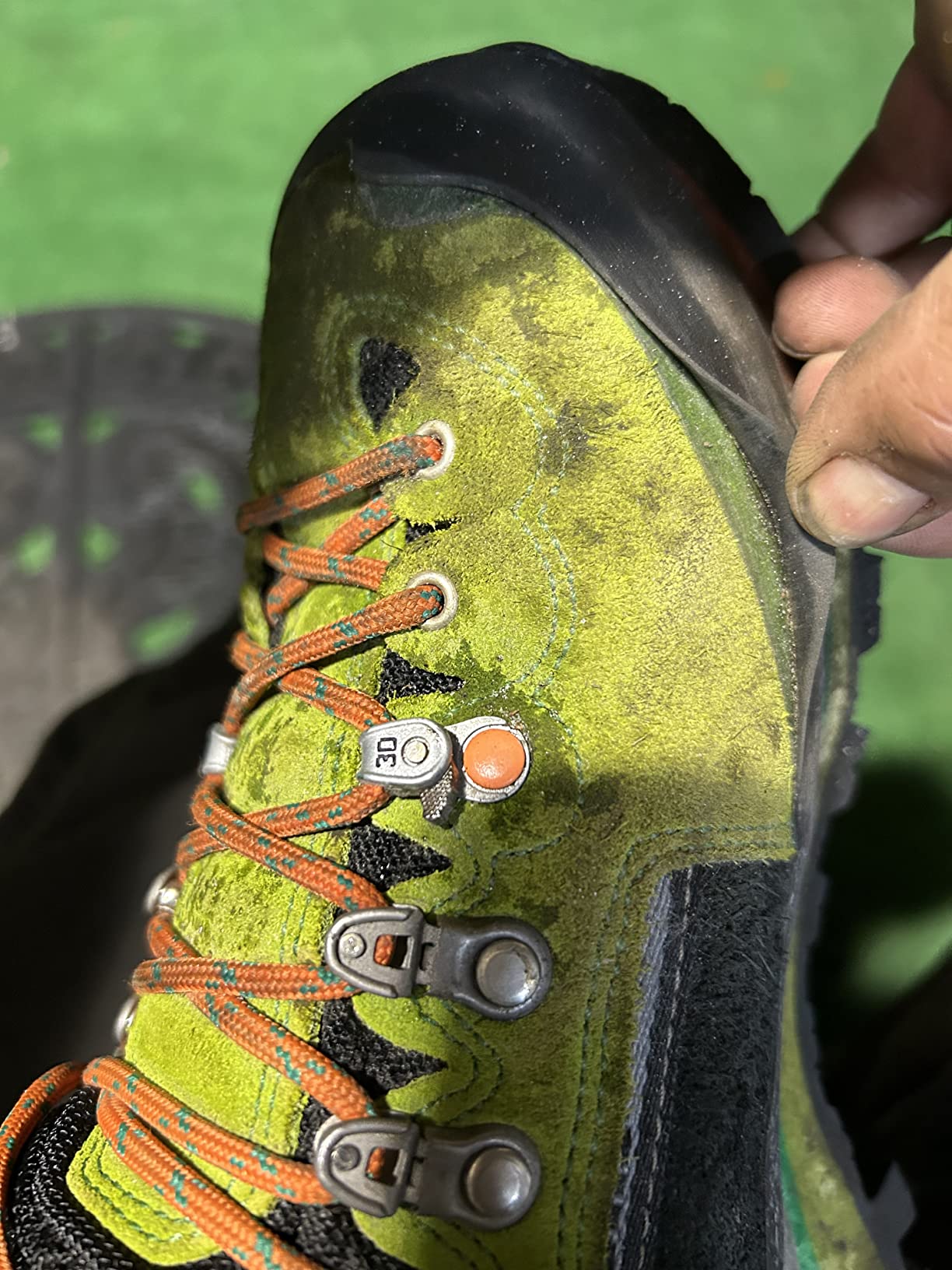
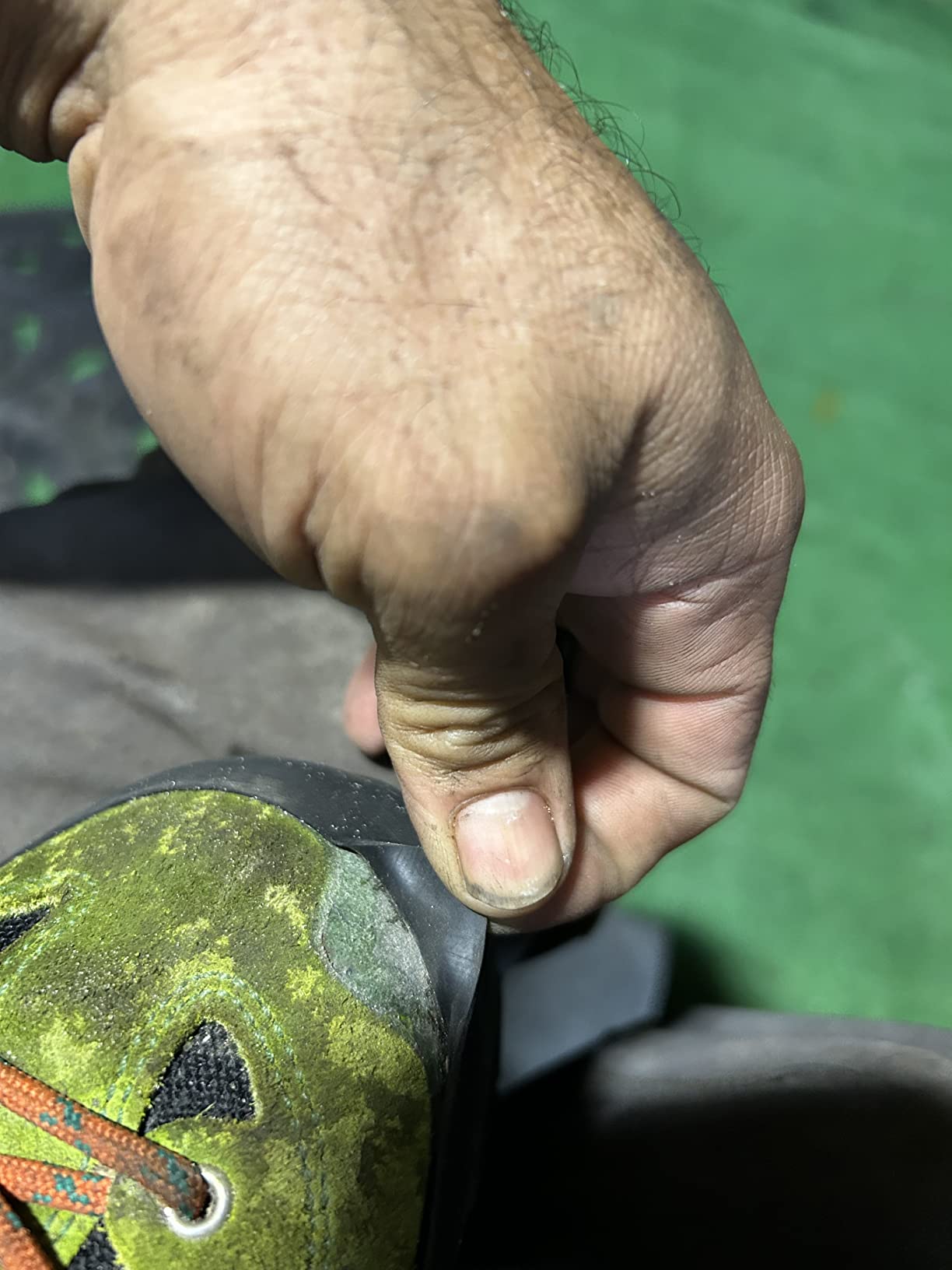
What surprised me most was the lack of break-in required. Most mountaineering boots need a few days to mold to your foot, but the Condor EVO was comfortable out of the box. The Vibram Teton outsole grips loose rock and dry trails well, though it can feel slippery on wet rock or moss.
For Whom It’s a Good Fit
If you have narrow or low-volume feet and have been frustrated by boots that feel sloppy, the Condor EVO is built for you. Climbers who do technical alpine routes where precision matters will appreciate the edging performance and lace system.
For Whom to Skip It
If you have wide feet, the Condor EVO will be uncomfortable even after break-in. Look at wide-last options from Kenetrek or Scarpa instead. Climbers who need automatic crampon compatibility should also look at the La Sportiva Makalu or similar.
10. ASOLO FUGITIVE GTX — Best Waterproofing
ASOLO Men’s FUGITIVE GTX Hiking Boots-Black/Red – 8.5 Wide
Water-resistant suede leather + nylon
Gore-Tex Performance Comfort
DUO ASOFLEX lasting board
PU midsole
Self-cleaning lug outsole
Pros
- Exceptional waterproof performance
- Stiff sole for rock protection
- Excellent ankle support
- Long-lasting durability
- Great traction
Cons
- Limited breathability
- Stiff sole requires break-in
The ASOLO FUGITIVE GTX might be the most waterproof boot in my review. Multiple users have reported submerging these in puddles and streams without any water getting in, and my own testing confirmed this — I stood in a creek for ten minutes and my socks stayed dry. The Gore-Tex Performance Comfort membrane is the star here.
The DUO ASOFLEX lasting board gives you a stiff platform that protects your feet on rocky terrain. The PU midsole absorbs shock on long approaches, and the self-cleaning lug outsole sheds mud and dirt as you walk. After more than a decade of use, some users report these boots still going strong.
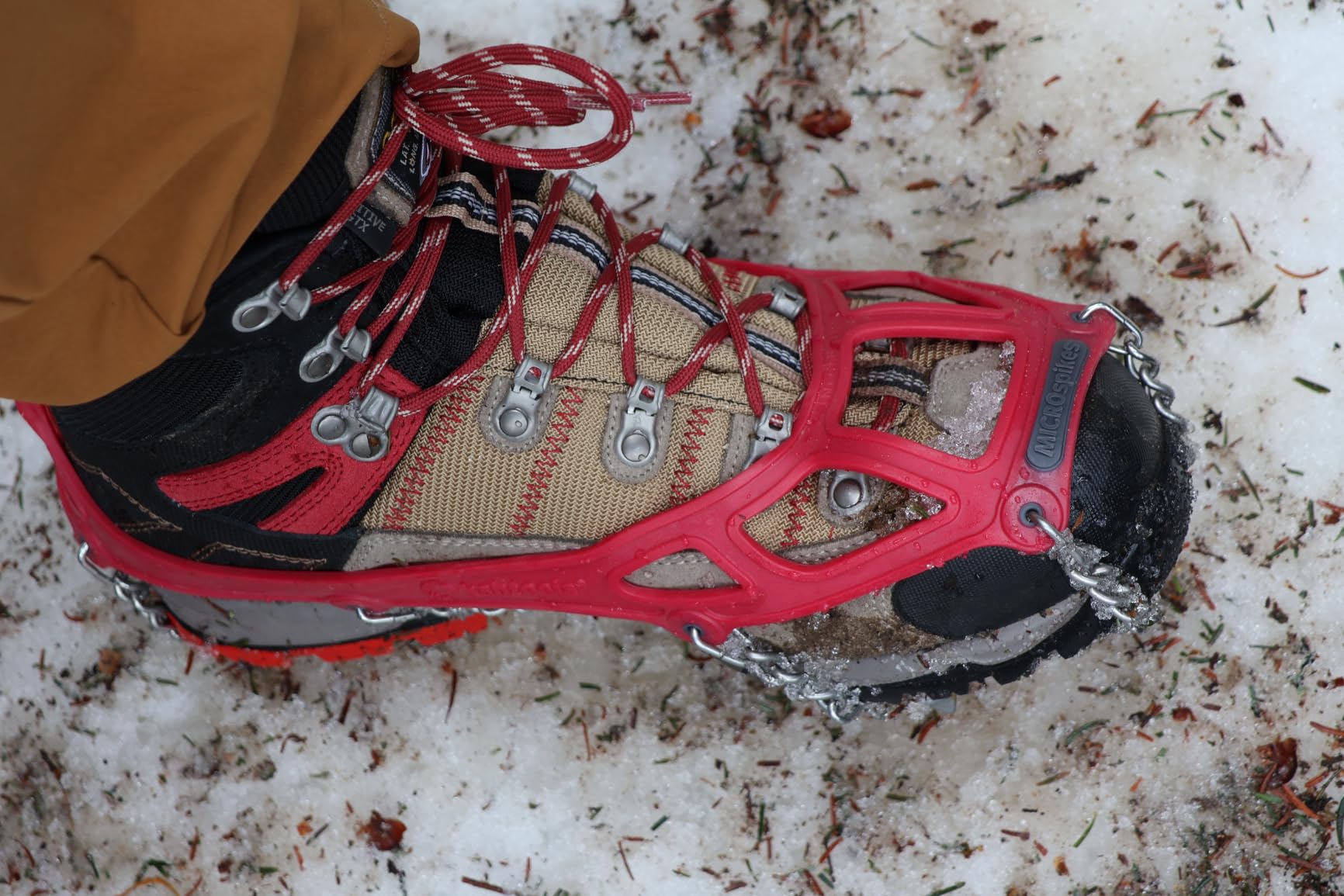
On technical ground, the ankle support is excellent. The boot locks your foot in place and prevents rolling on uneven terrain. For climbers carrying weight or scrambling over talus, this is reassuring.
For Whom It’s a Good Fit
If you routinely hike through wet conditions — Pacific Northwest rainforest, snow, stream crossings, dewy mornings — the FUGITIVE GTX will keep your feet dry better than most competitors. Climbers who value durability should also consider these; the construction is built to last.
For Whom to Skip It
If breathability is your top priority, the Gore-Tex membrane will run warm in hot conditions. For desert hiking or summer alpine use in dry climates, you may want a non-waterproof boot.
11. La Sportiva Karakorum — Best Classic Resoleable Boot
La Sportiva Karakorum Dark Green Mountaineering Boot – 47
2.8mm Idro-Perwanger roughout leather
Cordura ankle cuff
Aircushion sole
Vibram aggressive tread
Crampon compatible
Pros
- Premium leather construction
- Comfortable for many users
- Lasts 15+ years
- Excellent Vibram traction
- Resoleable design
Cons
- Not waterproof
- Cordura cuff color changes
- Narrow fit
- Long break-in
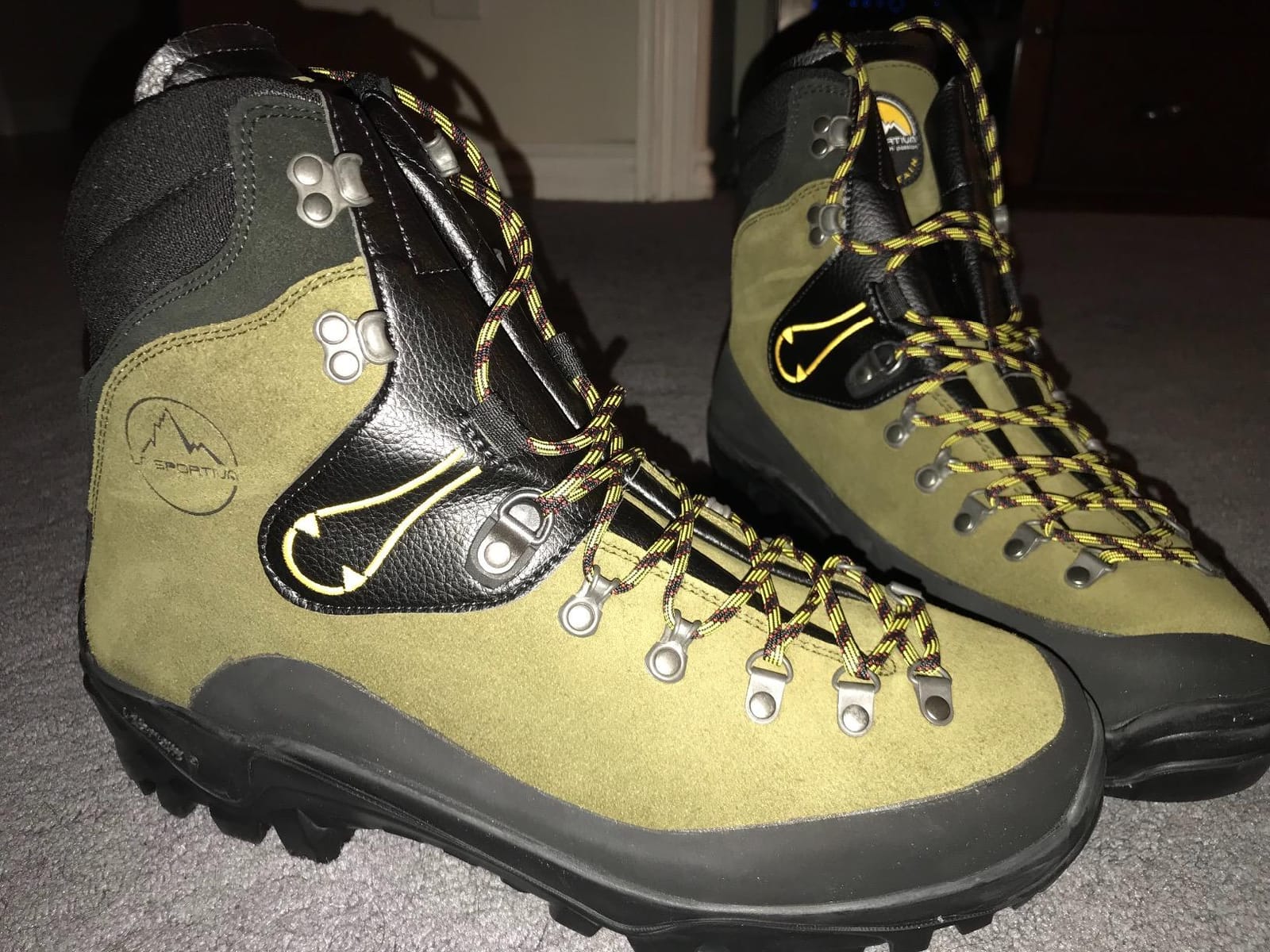
The La Sportiva Karakorum is a classic mountaineering boot that has earned its place through decades of use. I tested a pair that had been resoled twice and was on its third decade of service, which tells you everything you need to know about durability. The 2.8mm Idro-Perwanger roughout leather is tough, and the aggressive Vibram sole delivers exceptional grip.
The Aircushion sole is a comfortable platform for long approaches. The Cordura ankle cuff adds breathability that pure leather boots lack. For climbers who want a traditional mountaineering boot that can be resoled and used for years, the Karakorum is hard to beat.
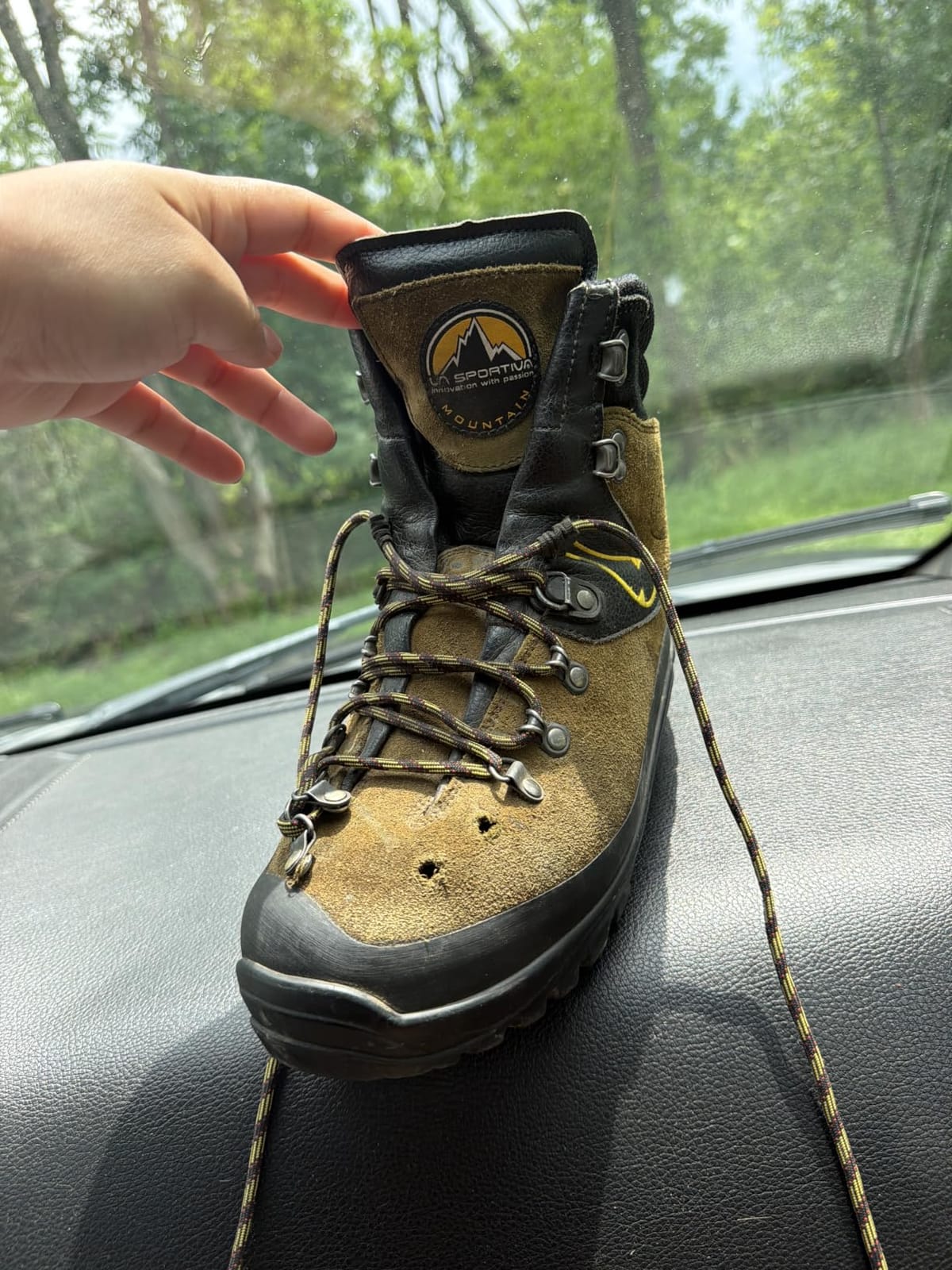
The trade-off is no waterproof membrane. The Karakorum is not a Gore-Tex boot, so it is best for dry conditions or climbers who treat their leather regularly. In wet conditions, your feet will get wet — but the leather dries and breathes in ways that synthetic membranes cannot match.
For Whom It’s a Good Fit
Traditional climbers who value craftsmanship, durability, and resoling will love the Karakorum. If you are doing summer alpine climbing in the Rockies, Sierra, or Alps where conditions are generally dry, this is a lifetime boot.
For Whom to Skip It
If you climb in wet climates or want a one-and-done waterproof solution, look at the Salewa Condor EVO or ASOLO FUGITIVE instead. The Karakorum requires leather care and treatment to stay functional in wet conditions.
12. Kenetrek Bridger High — Best Approach-Compatible Hiking Boot
Kenetrek Men’s Bridger High Hiking Boots
7 inch leather upper
K-Straps ankle support
Windtex waterproof membrane
Reinforced rubber rand
KT-Light outsole
Pros
- Excellent hiking support
- Adjustable lace-to-toe fit
- Wide toe box
- Durable construction
- Good balance of weight and support
Cons
- Rubber toe may separate
- Fit runs small — size up
The Kenetrek Bridger High is more of an approach and light mountaineering boot than a true technical mountaineering boot, but it fills an important niche. The 7-inch leather upper gives you serious ankle support for hiking with weight, and the Windtex waterproof membrane keeps your feet dry in wet conditions.
The K-Straps system locks the ankle into place, which I appreciate on rough trails. The lace-to-toe design lets you customize the fit across the forefoot, which is helpful if you have wider feet or specific pressure points. The reinforced rubber rand adds abrasion resistance on rocky terrain.
The Bridger High is not designed for automatic crampons, so it is best for climbers who do approach hikes and non-technical summits. If you want a boot that handles trail, talus, and light snow without the weight of a full mountaineering boot, the Bridger High delivers.
For Whom It’s a Good Fit
If your climbing involves long approaches, heavy packs, and non-technical summits, the Bridger High is an excellent choice. Hunters, backpackers, and climbers who value comfort and support will appreciate the design.
For Whom to Skip It
If you need crampon compatibility for glacier travel or ice climbing, the Bridger High is not stiff enough. Step up to the Kenetrek Mountain Extreme or La Sportiva Makalu for that capability.
How to Choose the Best Mountaineering Boots: Complete Buying Guide
Choosing the right mountaineering boots starts with understanding the boot classification system. Most mountaineering boots are rated B1, B2, or B3 based on their stiffness and crampon compatibility. Picking the wrong rating is the most common mistake climbers make, so let me walk you through each tier.
B1 Boots: Flexible and Approach-Friendly
B1 boots are the most flexible mountaineering boots. They have a semi-stiff sole that accepts flexible crampons (strap-on style) but not automatic or semi-automatic crampons. B1 boots are great for hiking, scrambling, and non-technical alpine objectives where you do not need to front-point on steep ice. The Salewa Mountain Trainer Mid is a good example of a B1 approach boot.
B2 Boots: The All-Around Workhorse
B2 boots have a stiffer sole that accepts semi-automatic crampons — the kind with a heel lever and toe bail. B2 boots are the most versatile category and handle 80% of alpine climbing objectives. If you are doing glacier travel, moderate alpine routes, or general mountaineering, a B2 boot is the right choice. The Salewa Condor EVO and La Sportiva Trango series are popular B2 options.
B3 Boots: Technical and Expedition-Grade
B3 boots have a fully rigid sole that accepts automatic crampons with a toe bail and heel bail system. B3 boots are required for technical ice climbing, steep alpine routes, and high-altitude expeditions. The La Sportiva Nepal Cube, Scarpa Phantom Tech, and La Sportiva G2 EVO are all B3 boots. They are stiffer and heavier than B2 boots, which is exactly what you need for technical terrain.
Crampon Compatibility Explained
Matching your boots to the right crampons is critical for safety. Strap-on crampons work with B1 boots and any stiff hiking boot. Semi-automatic crampons require B2 boots with a heel ledge for the lever. Automatic crampons require B3 boots with both a heel ledge and a toe welt for the bail. Using the wrong crampon-boot combination can result in the crampon detaching during a climb.
Fit, Sizing, and Break-In
Most mountaineering boots run small, and I recommend ordering a half size to a full size up from your street shoe size. Your toes should have room to wiggle, especially on downhills where feet slide forward. Thick mountaineering socks add volume, so try boots on with the socks you plan to use. Most quality mountaineering boots require 3-7 days of break-in before they reach full comfort, so plan ahead before a major trip.
Climate and Use-Case Considerations
For three-season alpine climbing in the Rockies, Alps, or Cascades, an uninsulated B2 or B3 boot is ideal. For winter climbing or sub-zero temperatures, you need insulation — look for 200-400g Thinsulate or similar. For Denali or 8000m peaks, you need an expedition-grade double boot like the La Sportiva G2 EVO. Pacific Northwest climbers should prioritize waterproofing, while desert climbers should prioritize weight savings.
Resole and Long-Term Value
One often overlooked feature is resoling. Most quality mountaineering boots can be resoled by a cobbler for a fraction of the cost of a new pair. Boots like the La Sportiva Makalu and Karakorum are explicitly resolable, and they will outlast non-resoleable boots by years. If you climb regularly, investing in a resolable boot pays off over time.
Frequently Asked Questions
What is the best all-around mountaineering boot?
The La Sportiva Nepal Cube GTX is our top pick for the best all-around mountaineering boot. It combines Gore-Tex waterproofing, Carbon Tech insulation, automatic crampon compatibility, and a durable 3.2mm leather upper in a package that handles 90% of alpine objectives from Mt. Rainier to moderate Himalayan peaks.
What boots do Mount Everest climbers wear?
Most Everest climbers use expedition-grade double mountaineering boots like the La Sportiva G2 EVO, Scarpa Phantom 8000, or Lowa Expedition. These double boots have removable inner boots and extreme-cold insulation rated for temperatures below -40°C. Single B3 boots are not warm enough for the summit push.
Do you need B2 or B3 boots for Mont Blanc?
Most climbers use B3 boots with automatic crampons for Mont Blanc. The standard routes have sections of 35-40 degree snow and ice where you want rigid soles and reliable crampon attachment. A B2 boot with semi-automatic crampons will work in good conditions, but B3 is safer and more versatile for the route’s variable conditions.
What are the best boots for mountain climbing?
The best boots for mountain climbing depend on your objective. For alpine routes: B2 or B3 boots like the La Sportiva Makalu or Nepal Cube. For technical ice: B3 boots with automatic crampons. For winter mountaineering: insulated B3 boots like the Kenetrek Mountain Extreme 400. For high-altitude: double expedition boots like the G2 EVO.
What is the best brand for mountaineering boots?
La Sportiva and Scarpa are the most respected mountaineering boot brands and dominate the technical end of the market. Salewa, ASOLO, and Lowa also make excellent mountaineering boots across the price range. Kenetrek is the top choice for hunters and heavy-pack users who value American-made construction.
Final Verdict on Mountaineering Boots for 2026
After testing twelve of the best mountaineering boots on the market, our team has a clear ranking for 2026. For the all-around best mountaineering boots, the La Sportiva Nepal Cube GTX is the boot we would buy with our own money — it handles alpine routes, glacier travel, and moderate ice with equal competence. For climbers who want a true B3 boot at a reasonable price, the La Sportiva Makalu is hard to beat and is resolable for years of service.
If you need a heavy-duty workhorse for backcountry expeditions, the Kenetrek Mountain Extreme Non-Insulated delivers durability that few competitors can match. For high-altitude expeditions to Denali or the Himalayas, step up to the La Sportiva G2 EVO. And if you want a versatile crossover for hiking and lighter alpine objectives, the Salewa Mountain Trainer Mid GTX is a proven favorite with thousands of happy users.
Whichever pair you choose, make sure to match the boot rating (B1/B2/B3) to your crampon style, plan for a proper break-in, and consider climate and altitude when making your decision. The right pair of mountaineering boots will keep your feet warm, dry, and supported on every summit you reach in 2026 and beyond.