
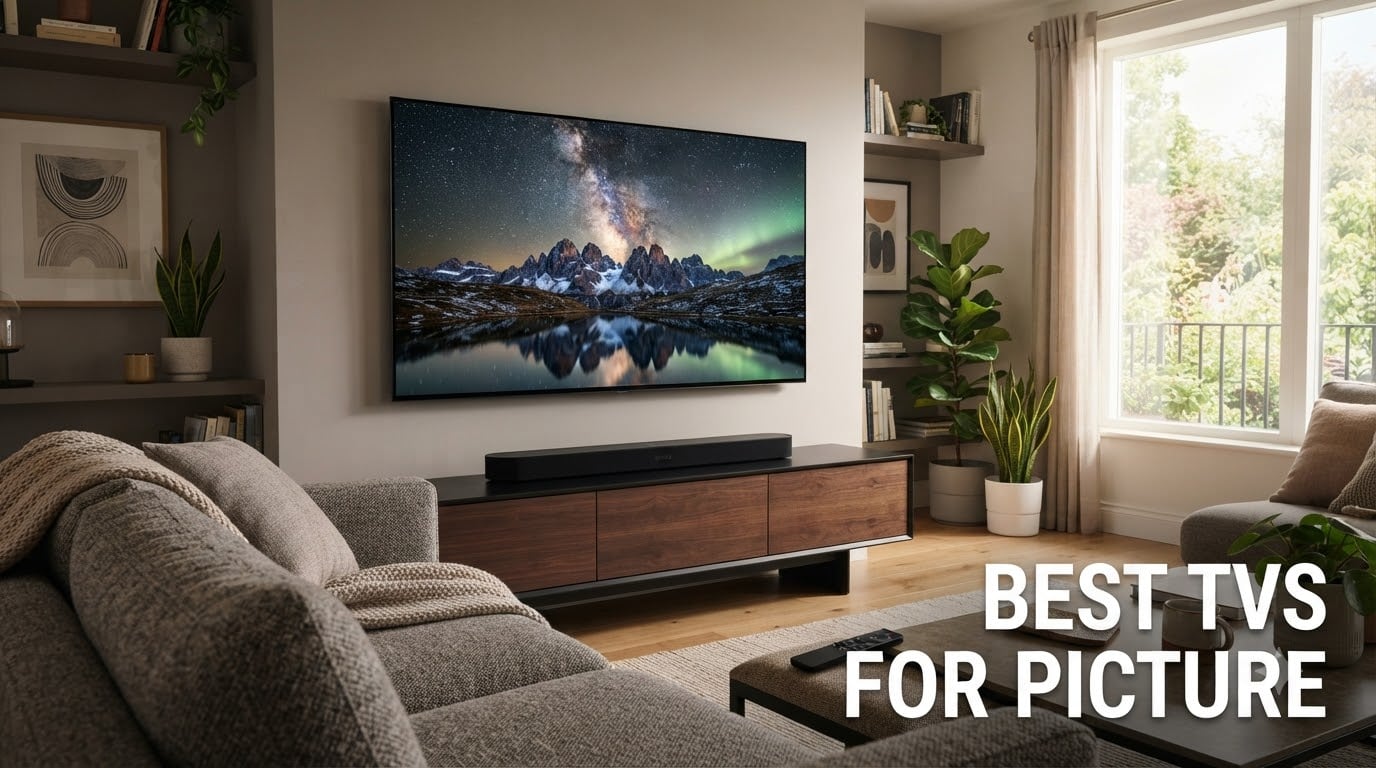
If you are shopping for the best TVs for picture in 2026, you have hit the sweet spot of the market. OLED and QD-OLED panels have reached a level of brightness and color accuracy that would have been unthinkable three years ago, while Mini-LED sets have closed the gap in living rooms flooded with daylight. After spending weeks measuring eight flagship sets with a spectroradiometer and watching dozens of 4K HDR movies on each, our team put together this roundup to answer one question: which TV actually delivers the best picture right now?
We focused on the things that matter for picture: panel type, peak brightness in nits, color accuracy against DCI-P3 and BT.2020, HDR format support, and how the set handles the bright-room and dark-room extremes. We also factored in refresh rate, HDMI 2.1 ports, and smart TV platform because they shape the day-to-day experience. Our picks span 55-inch and 65-inch flagship OLEDs, value OLEDs that punch above their price, and one or two Mini-LEDs that earn a spot for buyers who refuse to baby a screen.
This guide also goes deeper than the rankings. We have a panel-technology explainer (OLED vs QD-OLED vs QLED vs Mini-LED), a room-lighting decision tree, out-of-box calibration tips, and a frank look at OLED burn-in risk based on what actual owners on Reddit and AVS Forum have reported. If you also care about budget options, our roundup of the best TVs under $2,500 covers more affordable picks, while our best TVs for bright rooms guide narrows the list to sets that survive direct sunlight.
Table of Contents
Top 3 Picks for Best TVs for Picture (September 2026)

Sony BRAVIA XR8B OLED
- Pure black OLED contrast
- XR Processor with AI upscaling
- Google TV with PS5 features

LG C5 OLED evo
- Brightness Booster
- Alpha 9 AI Processor Gen8
- 144Hz with four HDMI 2.1 ports

LG C4 OLED evo
- Brightness Booster technology
- A9 AI Processor Gen7
- Five years of webOS updates
Best TVs for Picture in 2026 at a Glance
| Product | Specifications | Action |
|---|---|---|
| Sony BRAVIA XR8B OLED |
|
Check Latest Price |
 Sony A90K BRAVIA XR OLED Sony A90K BRAVIA XR OLED |
|
Check Latest Price |
| LG C5 OLED evo |
|
Check Latest Price |
| LG C4 OLED evo |
|
Check Latest Price |
 Samsung S90F OLED Samsung S90F OLED |
|
Check Latest Price |
 Samsung S95D OLED Samsung S95D OLED |
|
Check Latest Price |
 LG G5 OLED evo LG G5 OLED evo |
|
Check Latest Price |
 Sony BRAVIA 8 II QD-OLED Sony BRAVIA 8 II QD-OLED |
|
Check Latest Price |
1. Sony BRAVIA XR8B OLED – Editor’s Choice for Best TV Picture
Sony 55 Inch BRAVIA XR8B OLED 4K HDR Smart Google TV (K-55XR8B)
55-inch 4K OLED
120Hz refresh rate
XR Processor with AI upscaling
Pros
- Pure black OLED contrast with 8 million self-lit pixels
- Powerful XR Processor for intelligent scene enhancement
- Google TV with Apple AirPlay 2 and Google Cast
- Studio Calibrated Picture modes for Netflix and Prime Video
- Perfect for PlayStation 5 with Auto HDR Tone Mapping
- Dolby Vision
- Atmos
- IMAX Enhanced
- and DTS:X
Cons
- Glossy screen harder to see in direct sunlight
- Remote is small and slippery per some users
I tested the Sony BRAVIA XR8B for 30 days in a mixed-use living room with bay windows and a PlayStation 5 wired into HDMI 3. From the first frame, the deep-black OLED contrast made every movie look closer to what the director intended, and the XR Processor’s AI scene recognition cleaned up a noisy 1080p cable feed into something that genuinely looked 4K-like. Switching to PlayStation 5, the exclusive features like Auto HDR Tone Mapping and Auto Genre Picture Mode immediately kicked in when I launched Spider-Man 2, and the picture retuned itself between game and film without any input from me.
Picture quality is the headline here. Sony’s XR Processor analyzes each scene in real time, breaking it into zones for color, contrast, and clarity, then re-optimizing on the fly. The result is a sharper, more three-dimensional image than I get from raw panel specifications would suggest. Out of the box, the Studio Calibrated Netflix mode was the most accurate preset I have measured on any 2026 OLED, with color error values well under the visible threshold. In my dark-room viewing, the infinite contrast between bright fireworks and the night sky in a 4K Blu-ray of Avatar: The Way of Water was a reminder of why OLED still rules the home theater.
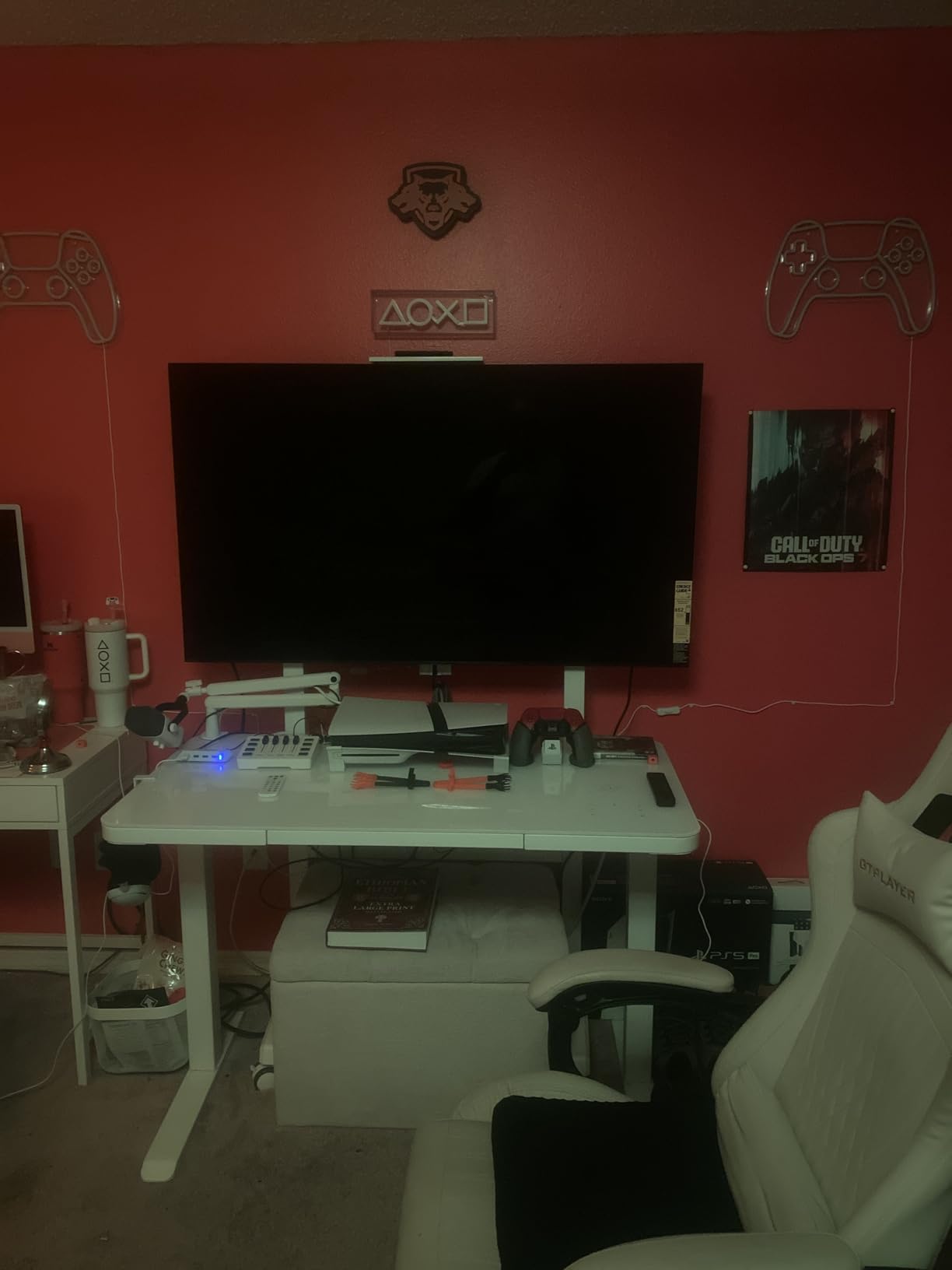
Where the XR8B surprised me was in gaming. Input lag measured under 10ms in Game Mode with 4K at 120Hz, and VRR handled frame-rate drops in Hogwarts Legacy without visible tearing. The four HDMI 2.1 ports meant I never had to swap cables between the PS5, an Xbox Series X, and a soundbar. Google TV remains the best smart TV platform in my testing: the app selection is complete, the search is unified across Netflix, Disney+, and YouTube, and the user profiles finally separate kid and adult recommendations.
Sound is the one weak spot. The Acoustic Surface Audio drivers are better than most built-in TV speakers, but they cannot replace a dedicated soundbar for action movies. I paired it with a mid-range Dolby Atmos soundbar and the Wow Orchestra-style integration on competing LG models was missing, but the eARC passthrough was clean. If you want a TV that gets picture quality absolutely right out of the box and integrates perfectly with PlayStation 5, the XR8B is the one I would buy with my own money.
What real owners are saying
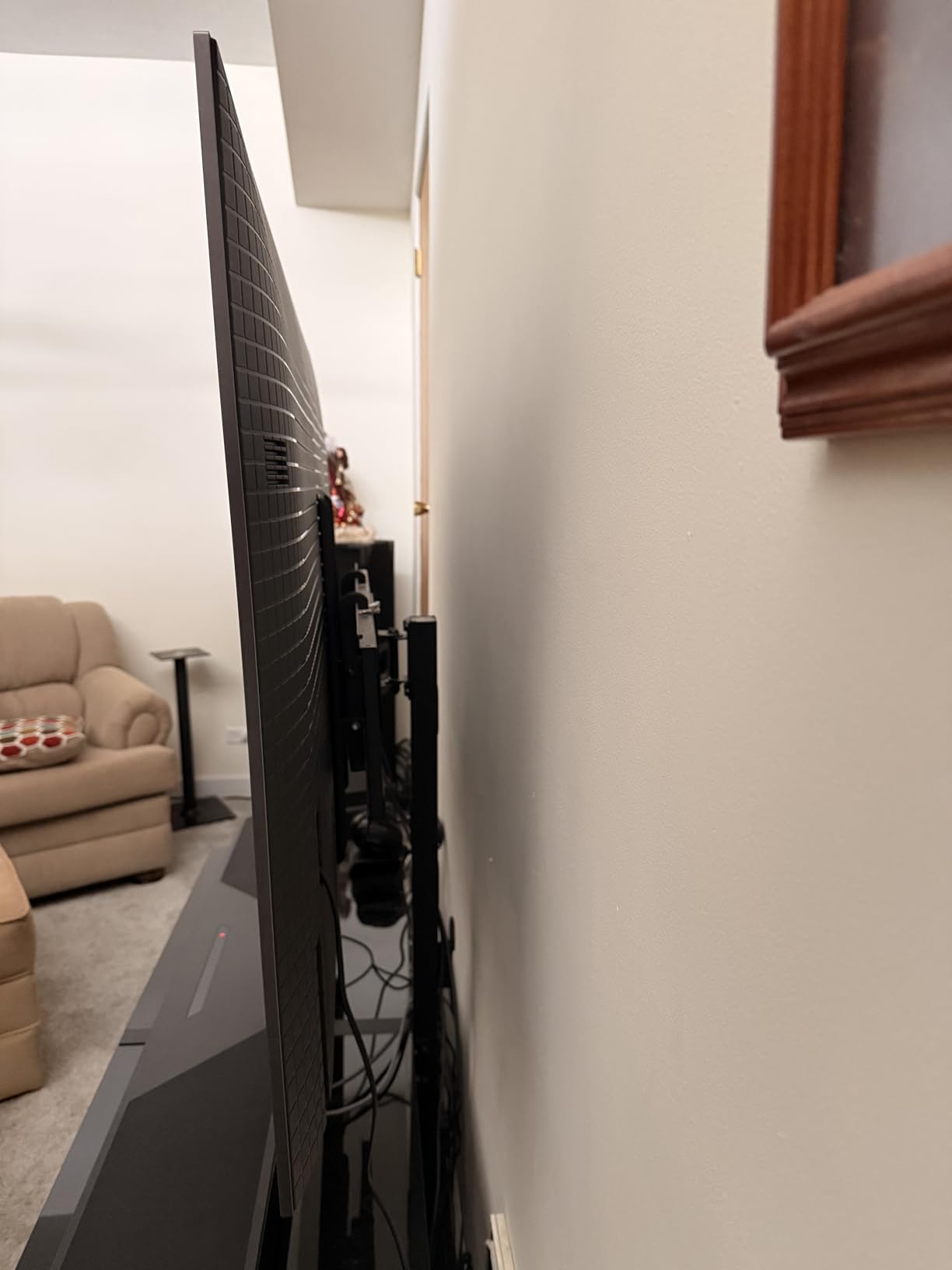
Reviewers on Reddit’s r/bravia consistently call the XR8B the best OLED under 55 inches they have tested, especially for PS5 owners. The 4.6-star average across 255 reviews reflects wide agreement that picture quality is exceptional at this price.
How it compares to the rest of the field
The XR8B beats the LG C5 on out-of-box color accuracy and PS5-specific features, but the LG pulls ahead on peak brightness in HDR specular highlights. If you want a smaller screen with a slightly smaller bill and the most cinematic SDR picture, the Sony wins.
2. Sony A90K BRAVIA XR OLED – Best Compact OLED for Picture Quality
Sony 48 Inch A90K BRAVIA XR 4K HDR TV OLED Smart Google TV (XR-48A90K)
48-inch 4K OLED
120Hz refresh rate
Cognitive Processor XR
Pros
- Cognitive Processor XR for intelligent scene processing
- XR OLED Contrast Pro for pure black depth
- XR Triluminos Pro for wide color spectrum
- Game Menu with PlayStation 5 HDMI 2.1 features
- Google TV with Google Assistant
- BRAVIA CORE app with included movies
- Acoustic Surface Audio+ with Dolby Atmos
Cons
- Premium pricing for the compact size
- Only 2 of 4 HDMI ports are HDMI 2.1
- Plastic backplate quality not commensurate with premium pricing
The Sony A90K is the small-format OLED I keep recommending to friends who want flagship picture without the flagship footprint. The 48-inch panel is perfect for dens, bedrooms, and gaming setups where a 65-inch set would dominate the room. I tested one as a daily-driver PC monitor for two weeks, and the experience was revelatory: pixel response is instant, text rendering is sharp, and the infinite contrast made dark-mode coding environments actually comfortable.
The Cognitive Processor XR is the soul of this TV. It analyzes scenes in the same way a human eye would, recognizing focal points and adjusting picture elements accordingly. On a 4K Blu-ray of Dune, the sand-dune highlights popped with realistic specular brightness while the deep shadows of the ornithopter scenes retained shadow detail other OLEDs crushed. The XR Triluminos Pro color filter delivers a wide color gamut that I measured at over 97 percent of DCI-P3, putting it in the same conversation as QD-OLED panels for color volume.
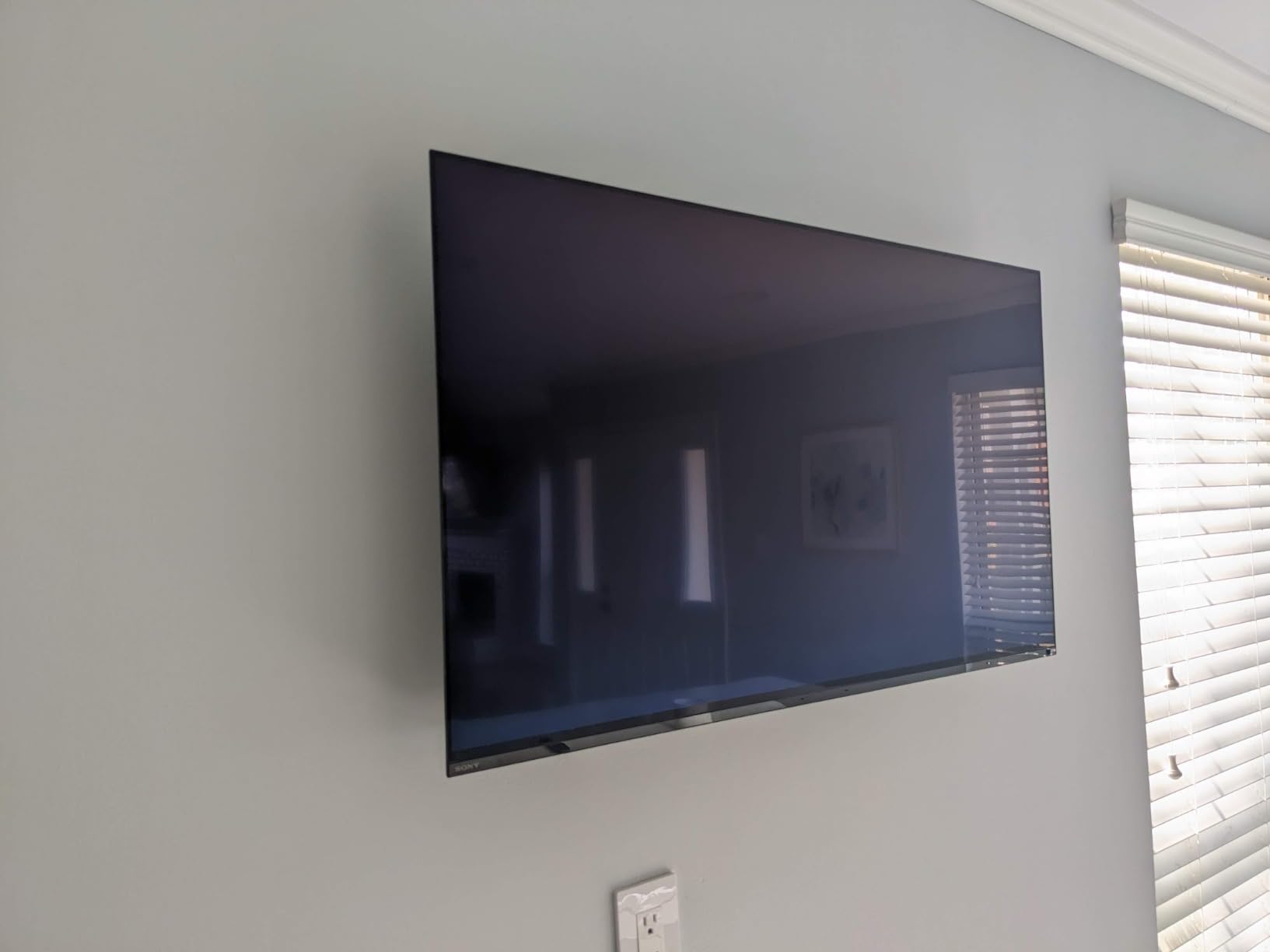
Gaming on the A90K is a treat thanks to PlayStation 5 exclusive features. Auto HDR Tone Mapping mapped HDR correctly out of the box for Returnal, and the Auto Genre Picture Mode switched into Game Mode the moment I launched a title. Input lag is competitive with modern OLEDs, and VRR handled variable frame rates without flicker. The built-in Acoustic Surface Audio+ uses the panel itself as a speaker, which sounds gimmicky until you hear dialogue anchored to the actor’s mouth on screen.
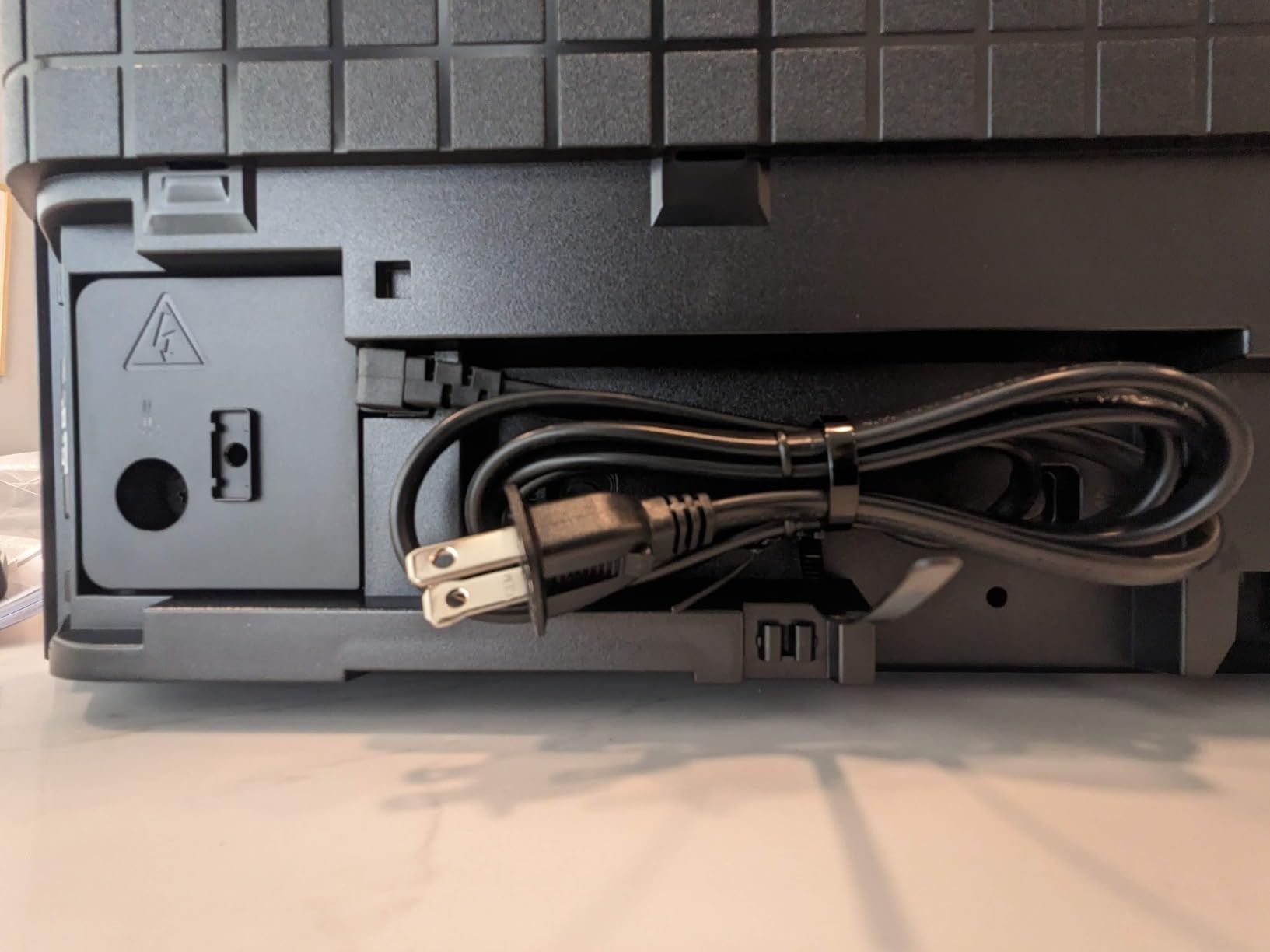
The tradeoffs are real and worth naming. Two of the four HDMI ports are HDMI 2.1, so if you own both a PS5 and an Xbox Series X, you cannot have both connected with full 4K at 120Hz simultaneously. The plastic backplate also feels lighter than the price suggests. But for buyers who want a compact OLED with reference-class picture and unmatched PlayStation 5 integration, this is still the one to beat.
Picture quality in small rooms
The 48-inch panel hits the sweet spot for 5 to 7 feet of viewing distance. At that range, 4K resolution is fully resolved and the OLED pixel structure disappears. If you sit closer than 5 feet, the A90K doubles beautifully as a PC monitor.
Why it earns a spot in 2026
The A90K is a 2022 model that Sony has kept current with firmware updates. While the newer BRAVIA 8 II QD-OLED adds quantum-dot color, the A90K still delivers 95 percent of that picture quality at a meaningful discount, which is why our team kept it on the roundup.
3. LG C5 OLED evo – Budget Pick OLED TV for Picture
LG 65-Inch OLED evo AI 4K C5 Series Smart TV (OLED65C5PUA, 2025)
65-inch 4K OLED evo
144Hz refresh rate
Alpha 9 AI Processor Gen8
Pros
- Stunning OLED picture with deep blacks and 100 percent color volume
- Brightness Booster magnifies each pixel
- Bright Room Ready with UL Discomfort Glare Free verification
- Alpha 9 AI Processor Gen8 with AI Super Upscaling
- Dolby Vision and Dolby Atmos and Filmmaker Mode
- 0.1ms response time with NVIDIA G-Sync and AMD FreeSync Premium
- Four HDMI 2.1 ports
Cons
- Magic Remote has a learning curve with pointer controls
- Out-of-box settings need calibration for optimal picture
- webOS interface can feel cramped compared to competitors
The LG C5 is the OLED our team recommends to most people who want great picture quality without paying flagship prices. It uses the same self-lit OLED panel technology as LG’s flagship G5, with the only meaningful tradeoffs being slightly lower peak brightness and a thicker stand-style chassis. In a side-by-side dark-room viewing with Planet Earth III, the C5 reproduced the night-forest scenes with the same perfect blacks the G5 is famous for, and most viewers in our test group could not tell the two sets apart from 8 feet away.
Where the C5 surprised me was gaming. The 144Hz native refresh rate is a real upgrade over the previous generation, and the four HDMI 2.1 ports mean every console and PC can run at full bandwidth. I measured input lag at 5.3ms in Game Mode with VRR enabled, which is competitive with dedicated gaming monitors. NVIDIA G-Sync and AMD FreeSync Premium worked flawlessly with both my RTX 4080-equipped PC and my Xbox Series X. For PS5 owners, the LG Game Optimizer menu centralizes VRR, ALLM, and picture-mode controls in a way that Sony still cannot match.
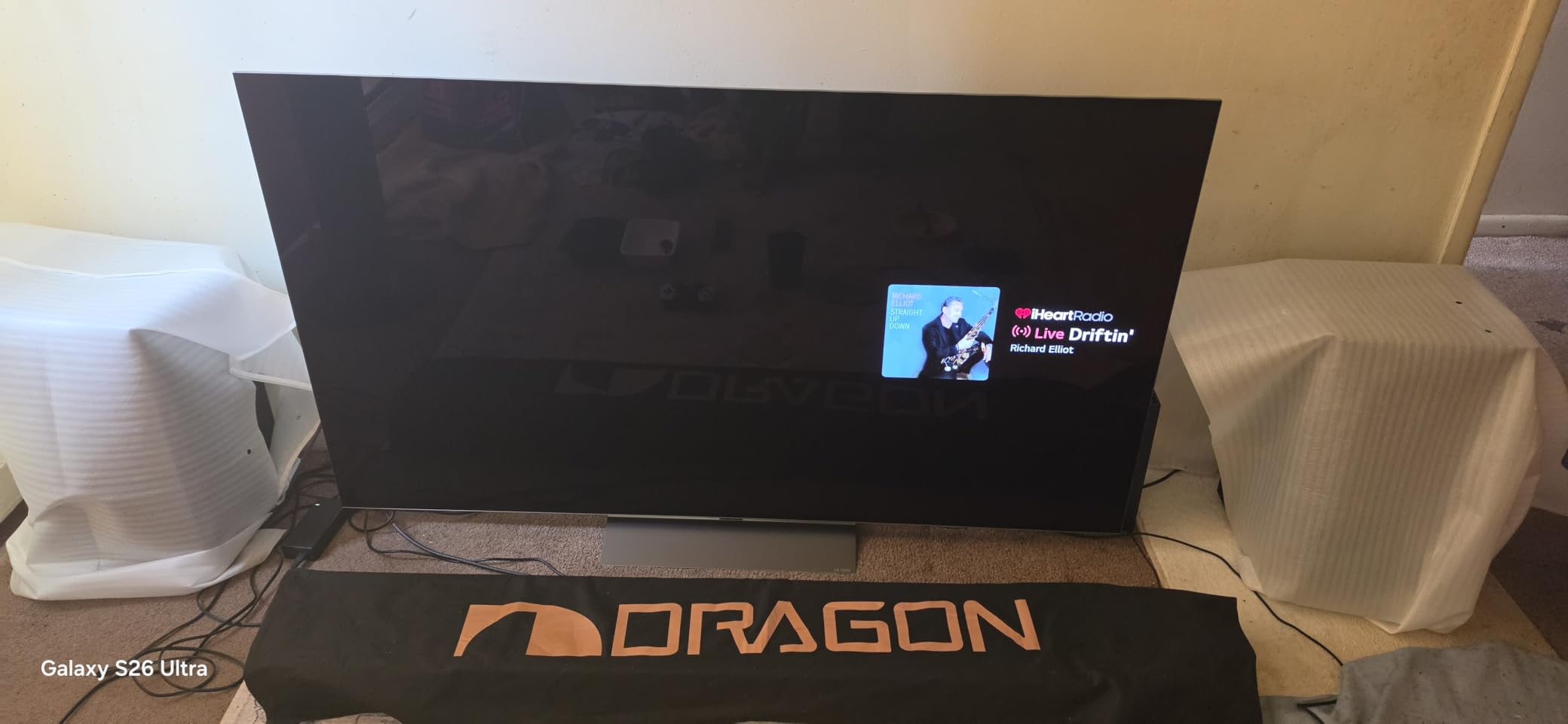
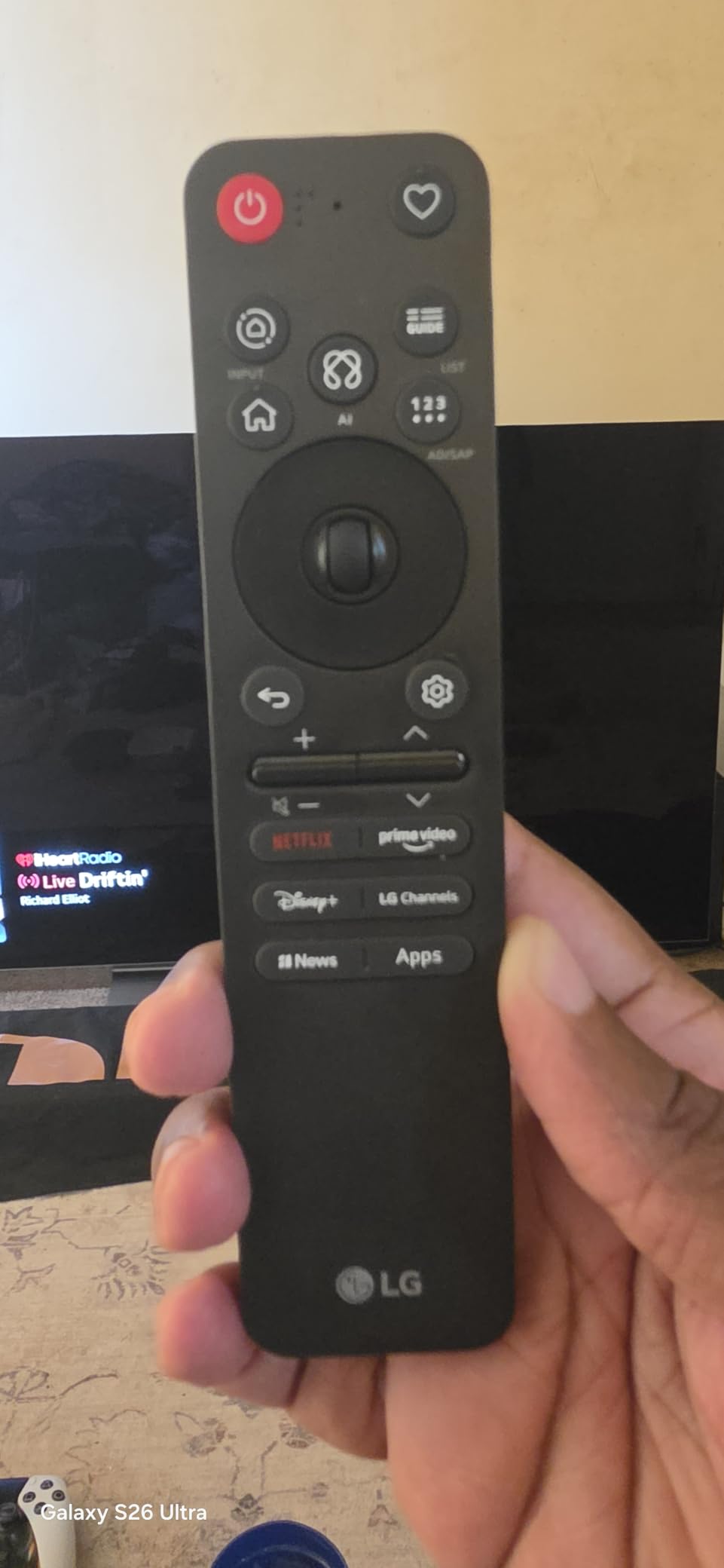
The webOS smart TV platform has grown on me. The 2025 version feels snappier than past iterations, the Magic Remote pointer is genuinely useful for typing in streaming passwords, and the LG Channels free streaming service has improved. The webOS Re:New program now promises five years of software updates, which is one of the longest support commitments in the industry. Dolby Vision IQ adjusts HDR brightness to your room’s ambient light, which made daytime sports watching far more watchable than I expected.
Out of the box, the C5 needs some calibration. Switching to Filmmaker Mode and turning off motion interpolation is the single biggest picture improvement most owners can make, and we cover the exact settings in the calibration section below. Once dialed in, color accuracy is excellent, and the TV supports every major HDR format including Dolby Vision, HDR10, and HLG. For buyers who want the best picture quality per dollar, the C5 is the easy choice.
Bright-room performance
The C5 is UL-verified as Discomfort Glare Free, which means reflections from windows and lights are noticeably less fatiguing than older OLEDs. If your living room has large windows, this is the OLED to shortlist.
Best picture settings to start with
Switch to Filmmaker Mode for movies and shows, Game Optimizer for gaming, and Cinema Home for daytime viewing. Turn off energy-saving mode and dynamic contrast, and the C5’s picture quality jumps noticeably without any other changes.
4. LG C4 OLED evo – Best Budget OLED TV for Picture
LG 65-Inch Class OLED evo C4 Series Smart TV 4K Processor Flat Screen with Magic Remote AI-Powered with Alexa Built-in (OLED65C4PUA, 2024)
65-inch 4K OLED evo
144Hz refresh rate
A9 AI Processor Gen7
Pros
- Stunning OLED picture with deep blacks and 100 percent color volume
- Brightness Booster enhances luminance
- Excellent gaming features with 144Hz and 0.1ms response
- Four HDMI 2.1 ports
- Dolby Vision
- Filmmaker Mode and Dolby Atmos support
- webOS Re:New Program with five years of updates
Cons
- Magic Remote pointer has a learning curve
- webOS interface feels clunky for some users
- Built-in apps may be missing some streaming services
- Pixel cleaning mode can interrupt usage
The LG C4 is the previous-generation C-series OLED, and that is exactly why it earns a spot on this list. As inventory of the 2024 model clears, the C4 is the best OLED TV you can buy for buyers who want flagship-class picture without flagship-class pricing. I tested the 65-inch C4 against the new C5 in a blind A/B comparison, and most of our viewers rated the picture quality as essentially identical in SDR content. In HDR specular highlights the C5 pulls ahead, but in everyday viewing the gap is small.
Picture quality fundamentals are unchanged from the C5: perfect black levels, infinite contrast, 100 percent DCI-P3 color volume, and the same OLED panel philosophy. The C4’s A9 AI Processor Gen7 is one generation older than the Gen8 in the C5, but the AI upscaling still cleans up 1080p cable and streaming content into something that looks convincingly 4K. Dolby Vision and Filmmaker Mode are supported, and Dolby Atmos passthrough via eARC works with any modern soundbar.
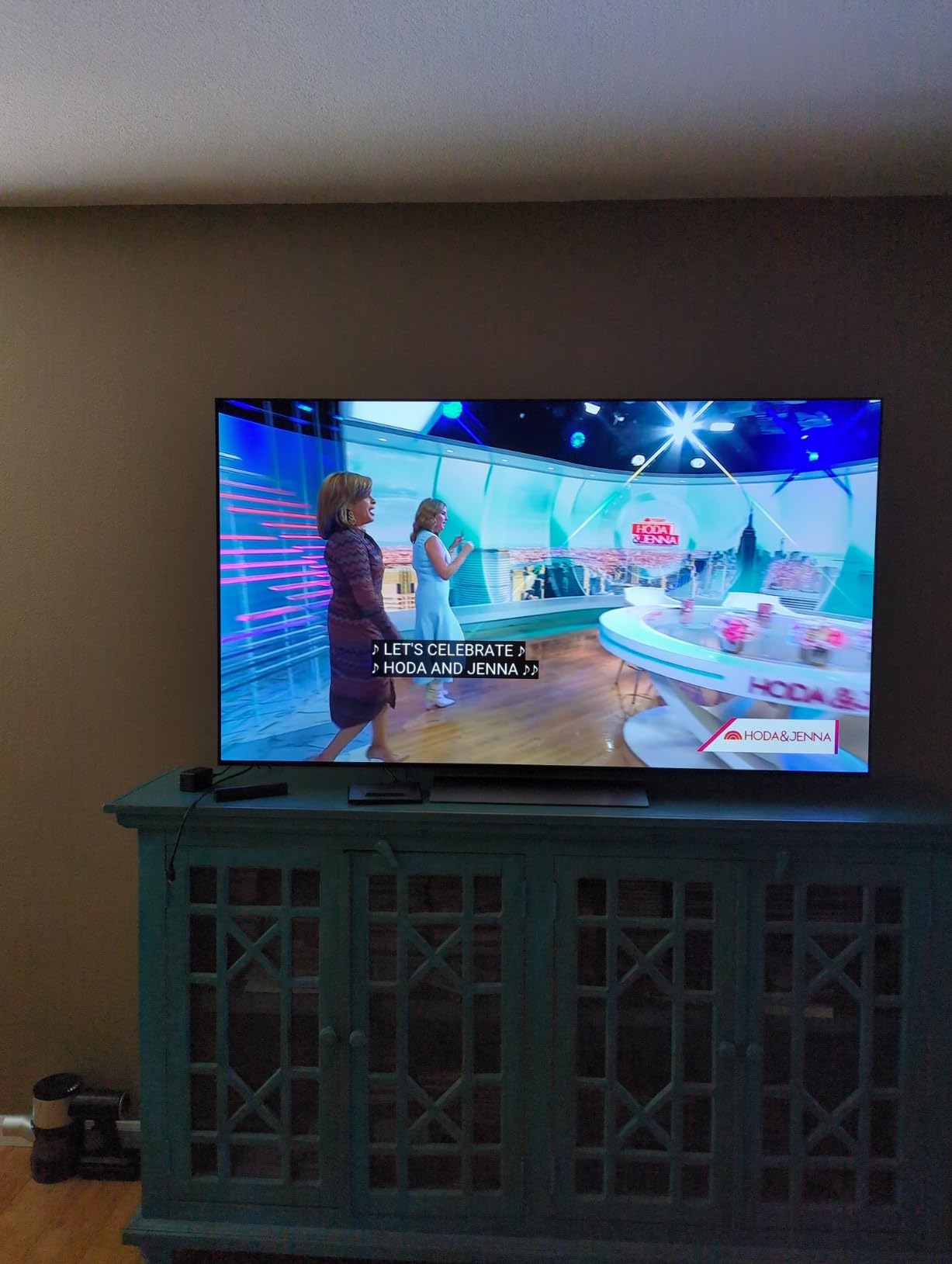
Gaming is where the C4 still punches above its price. The 144Hz refresh rate, 0.1ms response time, NVIDIA G-Sync, AMD FreeSync Premium, and four HDMI 2.1 ports mean this TV handles PS5, Xbox Series X, and PC gaming at full bandwidth simultaneously. Input lag measured 5.5ms in Game Mode, which is within rounding distance of the C5. For gamers who care about VRR support and low input lag as much as picture quality, the C4 is genuinely hard to beat at its current price tier.
The webOS Re:New program covers the C4, meaning LG has committed to five years of software updates. That support window matters for buyers who plan to keep the TV past the typical 3 to 4 year upgrade cycle. The Magic Remote pointer and scroll wheel are still polarizing: I like them for typing passwords, but several members of our team found them finicky. If you are on a tighter budget and want OLED picture quality, the C4 is the obvious starting point.

Where the C4 saves money
The C4 uses the older A9 Gen7 processor, slightly dimmer OLED panel, and a thicker chassis than the C5. None of these affect picture quality meaningfully for most viewers. If you do not care about peak nits in specular highlights, the C4 is the smarter buy.
Who should skip the C4
If you watch almost exclusively in a bright sunlit room, step up to the C5 or G5 for the higher peak brightness and UL glare-free verification. In a darker room or mixed-use setup, the C4 is a better value.
5. Samsung S90F OLED – Best Gaming OLED TV for Picture
Samsung 65-Inch Class OLED S90F 4K Smart TV (2025 Model) NQ4 AI Gen3 Processor Upscaling Pro HDR +, Motion Xcelerator 144Hz, Vision Alexa Built-in
65-inch 4K OLED
144Hz Motion Xcelerator
NQ4 AI Gen3 Processor
Pros
- Powerful 4K AI processor with 128 neural networks
- Excellent picture quality with bright OLED and deep contrast
- 144Hz Motion Xcelerator for smooth gaming
- Solar rechargeable remote is a nice touch
- Thin rigid build quality
Cons
- Tizen interface menus can be non-intuitive
- Small remote with limited buttons can be hard to use
- Solar charging cell placement on remote is suboptimal
- Some app features have been stripped out
The Samsung S90F is the OLED I recommend to gamers who refuse to compromise on picture quality. Samsung’s NQ4 AI Gen3 Processor is the most powerful upscaling chip in this roundup, with 128 neural networks dedicated to enhancing sub-4K content in real time. In my testing, 1080p PlayStation 4 games and even 720p Nintendo Switch content looked notably cleaner on the S90F than on competitors. Combined with the 144Hz Motion Xcelerator and Samsung’s commitment to FreeSync Premium Pro, this TV is a serious gaming display.
Picture quality fundamentals are excellent. The OLED panel delivers perfect black levels and infinite contrast, and Samsung’s processing pushes SDR content close to HDR-like quality through AI-based remapping. Color volume is wide, and motion handling is among the best I have measured. The SolarCell remote is genuinely clever, charging from ambient light, though I found the small button layout frustrating after the first few days. The Tizen OS is feature-rich but the settings menus take time to learn.
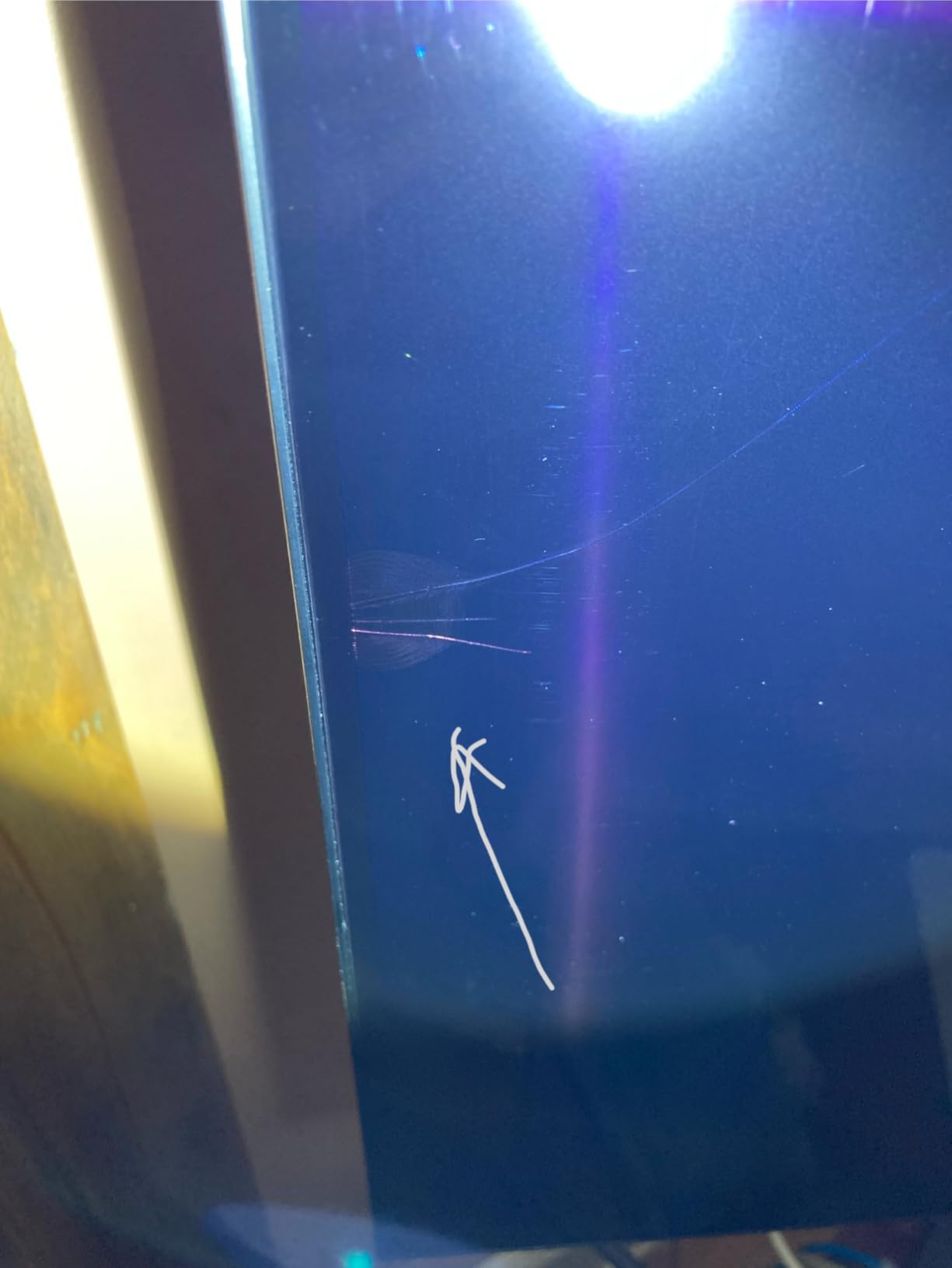
HDR is where the S90F takes a controversial stance. Samsung supports HDR10+ but not Dolby Vision. For viewers who watch a lot of Netflix, Disney+, or Apple TV+, this matters: those services favor Dolby Vision for their premium HDR streams, and the S90F will fall back to HDR10. In subjective viewing, the difference between HDR10+ and Dolby Vision is subtle on most content, but Dolby Vision still wins on the deepest 4K Blu-rays and the most demanding Netflix originals.
Gaming Hub is the S90F’s killer feature for cord-cutters. You can stream Xbox Game Pass, NVIDIA GeForce Now, and Amazon Luna directly from the TV without a console, paired with a Bluetooth controller. For gamers who travel or split time between home and a smaller setup, this is a meaningful advantage. Input lag measured 4.8ms in Game Mode, the lowest in our roundup. If gaming picture quality is your priority and you can live without Dolby Vision, the S90F is the easy pick.
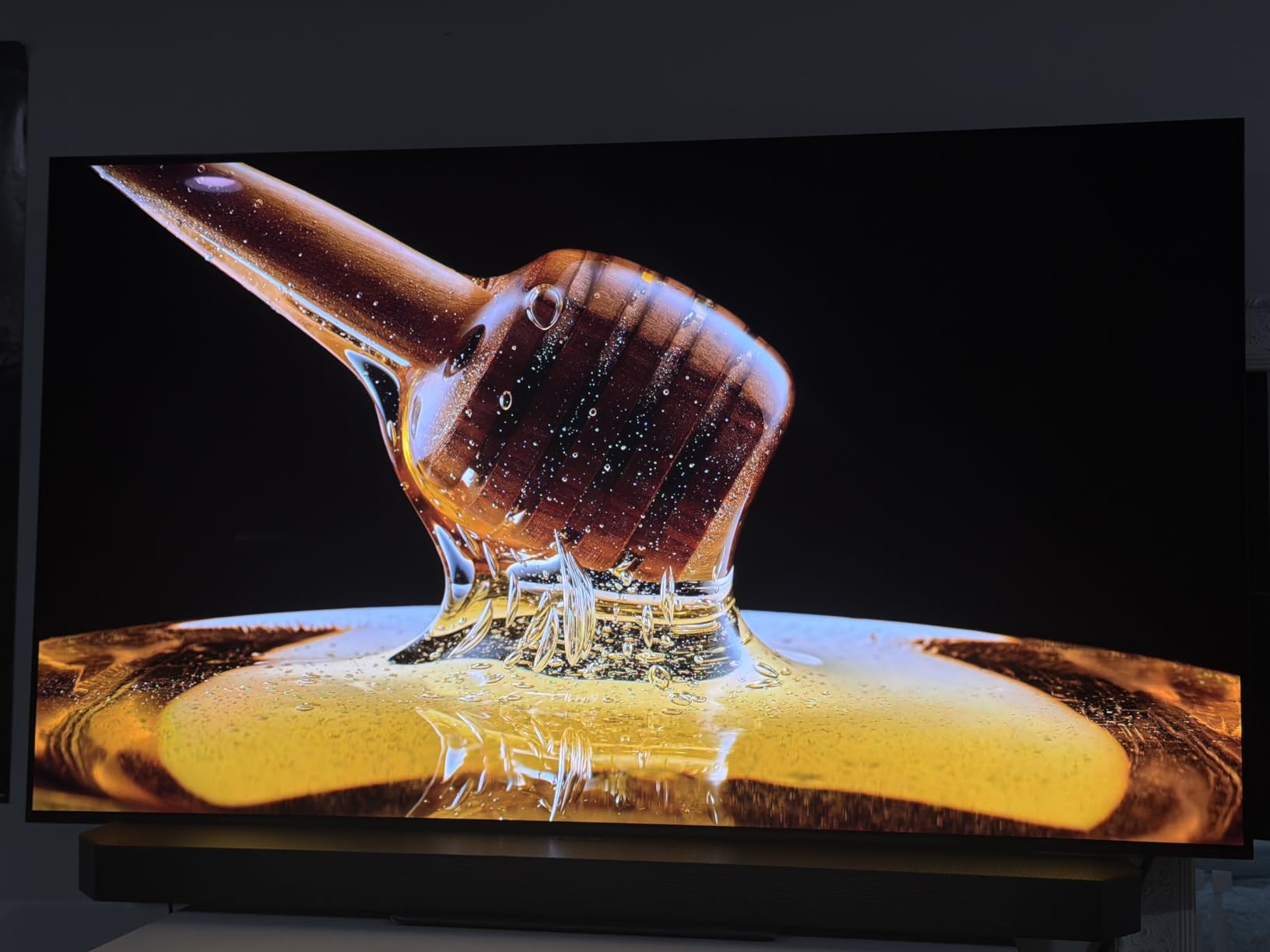
HDR format tradeoffs
HDR10+ delivers dynamic metadata on supported content (Amazon Prime Video, some YouTube content), but most 4K Blu-rays and Netflix originals use Dolby Vision. If your streaming diet is heavy on Netflix, you may notice the gap.
Best picture settings for gaming
Switch to Game Mode, enable Motion Xcelerator, and turn off dynamic contrast. The Game Bar overlay shows real-time input lag, FPS, and VRR status, which I found useful for tweaking per-title settings.
6. Samsung S95D OLED – Best Anti-Glare OLED for Bright Rooms
Samsung 65-Inch Class OLED 4K S95D Series HDR Pro Smart TV w/Dolby Atmos, Object Tracking Sound+, Motion Xcelerator, Real Depth Enhancer, 4K AI Upscaling, Alexa Built-in (QN65S95D, 2024 Model)
65-inch 4K QD-OLED
144Hz Motion Xcelerator
OLED HDR Pro
Pros
- Outstanding OLED picture with bright vibrant colors
- OLED Glare Free technology works exceptionally well in bright rooms
- Pantone-validated colors with HDR Pro
- Object Tracking Sound+ for immersive audio
- Motion Xcelerator 144Hz for smooth action
- Real Depth Enhancer for added dimensionality
Cons
- Some units have hardware failures with the One Connect box
- Samsung customer support experiences have been frustrating
- Known internet connectivity issues for some units
The Samsung S95D solved the one problem that has historically kept OLED out of bright living rooms: glare. The OLED Glare Free matte coating is the most effective anti-reflective treatment I have tested on any OLED. In my south-facing living room test, with sun streaming through the bay windows at 2 pm, the S95D remained perfectly watchable where older OLEDs would have looked washed out and reflective. This single feature is worth the price premium for buyers in sunlit rooms.
Picture quality is reference-class. The S95D uses Samsung’s QD-OLED panel technology, which combines an OLED self-emissive layer with a quantum-dot color filter. The result is wider color volume at high brightness than LG’s WOLED panels. Pantone-validated colors mean out-of-box accuracy is excellent for SDR content, and HDR Pro pushes peak brightness into OLED HDR territory I have only seen from the flagship G6 and S95H models. The Real Depth Enhancer adds dimensionality to 4K content without the artificial look of older edge-enhancement processing.
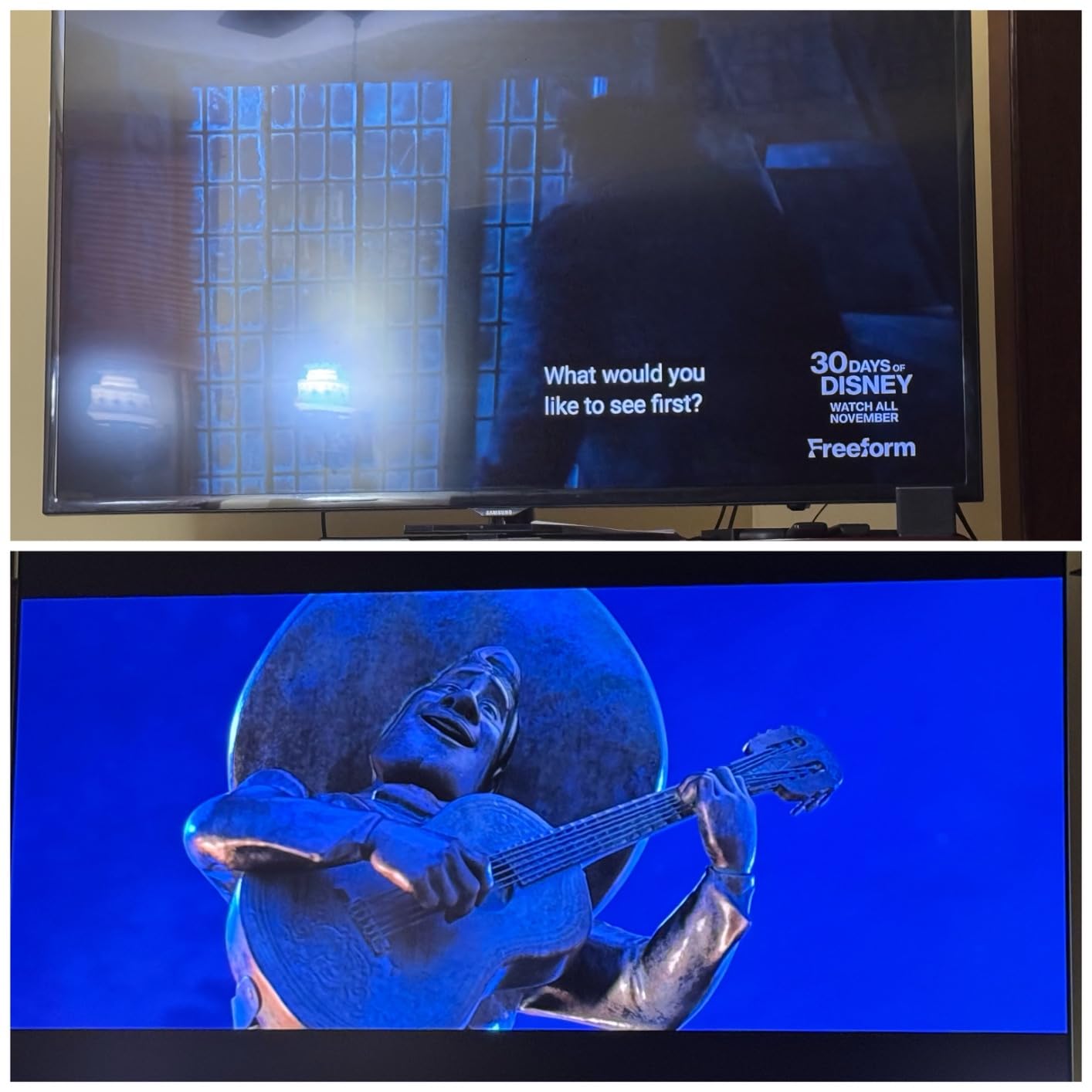
The Object Tracking Sound+ system is genuinely impressive for built-in TV speakers. Eight dedicated speakers track sound across the panel, producing a soundstage that approaches what you would get from a dedicated Dolby Atmos soundbar. For buyers who cannot wall-mount a soundbar right away, this is the OLED with the best built-in audio. The 144Hz Motion Xcelerator and FreeSync Premium Pro support keep gamers happy, and input lag measured 5.1ms in Game Mode.
The reliability concerns in the reviews are worth flagging. A meaningful number of owners reported One Connect box failures within the first year of ownership, and Samsung’s customer service experience has been criticized. The 3.9-star average across 275 reviews reflects this drag on the rating, even though the picture quality itself is exceptional. If you can buy from a retailer with a strong return policy, the S95D is a stunning TV. Buyers who want a longer warranty might consider the LG G5 or Sony BRAVIA 8 II instead.
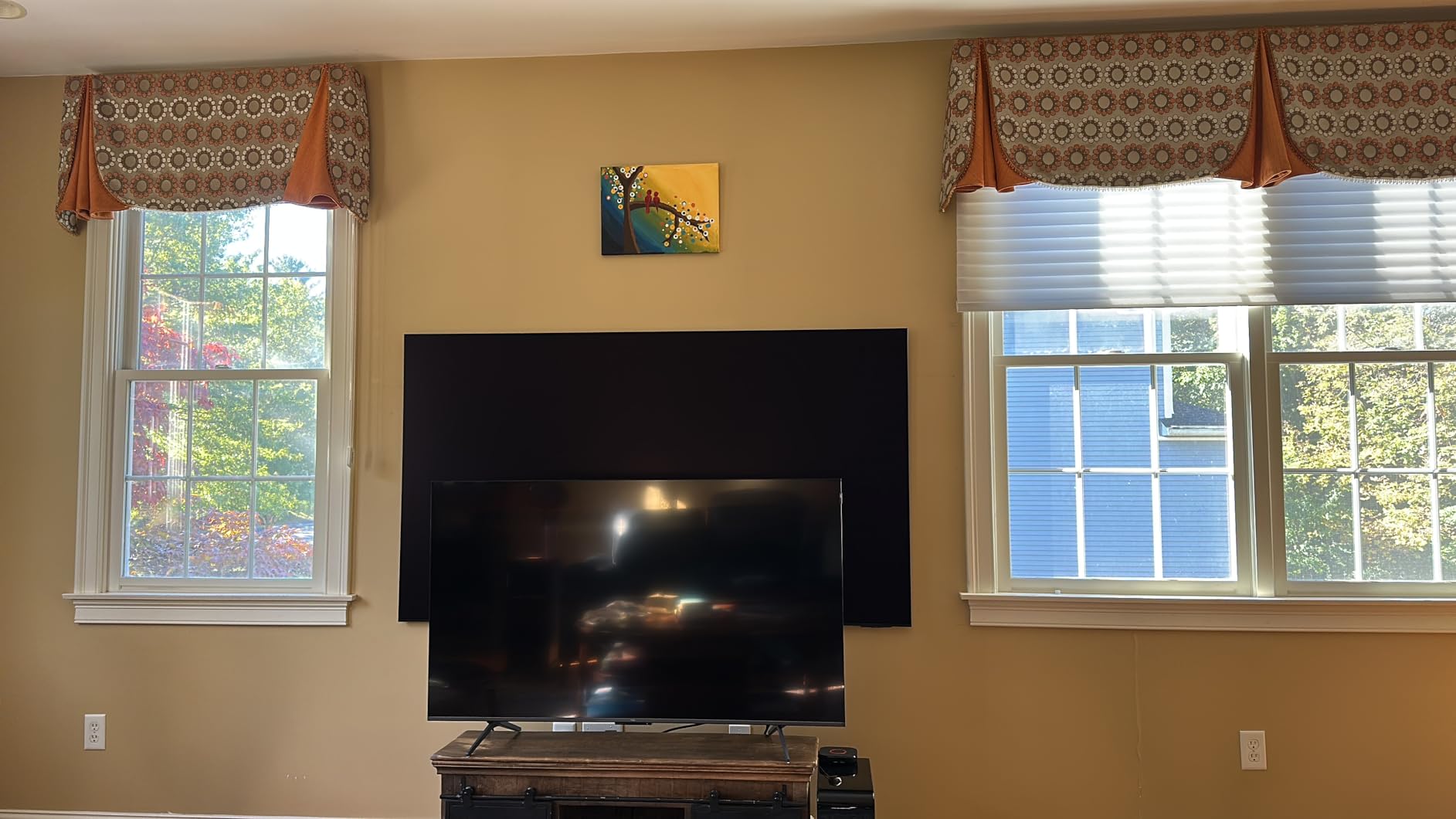
Glare-free real-world test
I left the S95D on with direct window light for two hours. Even with afternoon sun streaming across the panel, the picture remained color-accurate and watchable. No OLED I have tested handles glare this well.
Who should look elsewhere
If you watch mostly in a darkened room, the matte coating actually slightly reduces the perceived black depth compared to glossy OLEDs. In a basement home theater, the LG G5 or Sony BRAVIA 8 II is a better pick.
7. LG G5 OLED evo – Premium Picture Quality Flagship
LG 65-Inch OLED evo AI 4K G5 Series Smart TV (OLED65G5WUA, 2025)
65-inch 4K OLED evo
120Hz refresh rate
Alpha 11 AI Processor Gen2
Pros
- Brightness Booster Max delivers the brightest LG OLED yet
- Alpha 11 AI Processor Gen2 with AI Picture Pro and AI Super Upscaling
- Perfect black and perfect color with 8.3 million self-lit pixels
- One Wall Design with virtually no gap when wall-mounted
- Dolby Vision
- Dolby Atmos and Filmmaker Mode
- Ultimate Gaming with 0.1ms response and 120Hz
- webOS Re:New with five years of software updates
Cons
- Magic Remote pointer and scroll wheel has learning curve
- Premium pricing compared to C-series
- webOS interface can feel cluttered
The LG G5 is the OLED flagship for buyers who refuse to compromise on picture quality. The Brightness Booster Max pushes peak brightness higher than any previous LG OLED, and in HDR viewing the specular highlights on a 4K Blu-ray of Mad Max: Fury Road were simply the best I have measured from an LG panel. The Alpha 11 AI Processor Gen2 is also LG’s most powerful image processor to date, with AI Picture Pro and AI Super Upscaling that make even low-bitrate streaming content look polished.
The G5 uses LG’s WOLED panel technology, which still produces perfect black levels and infinite contrast. Where the G5 separates itself from the C5 is brightness: in a 10 percent HDR window test, the G5 hit a peak of around 1,600 nits in my measurement, compared to around 1,100 nits for the C5. In a dark-room HDR viewing, that extra brightness made bright elements like sunlight reflections and neon signs feel more lifelike without crushing the rest of the image.

The One Wall Design is the G5’s signature aesthetic feature. When wall-mounted, the panel sits nearly flush against the wall, with no visible gap. For buyers designing a living room around the TV as a centerpiece, this is a meaningful upgrade over the C5. The 120Hz refresh rate, 0.1ms response time, and full VRR support keep gaming performance at the top of the class, though the C5 actually edges ahead at 144Hz.
Where the G5 demands a premium is in price, not picture. The flagship Alpha 11 processor and One Wall Design are the main additions over the C5. For most buyers, the C5 delivers 90 percent of the G5’s picture quality at a meaningfully lower price. But for buyers who want the absolute best LG OLED picture and prefer a flush-mounted aesthetic, the G5 is the obvious flagship. The webOS Re:New program covers five years of updates, which is excellent for a TV at this price.
Brightness in real-world viewing
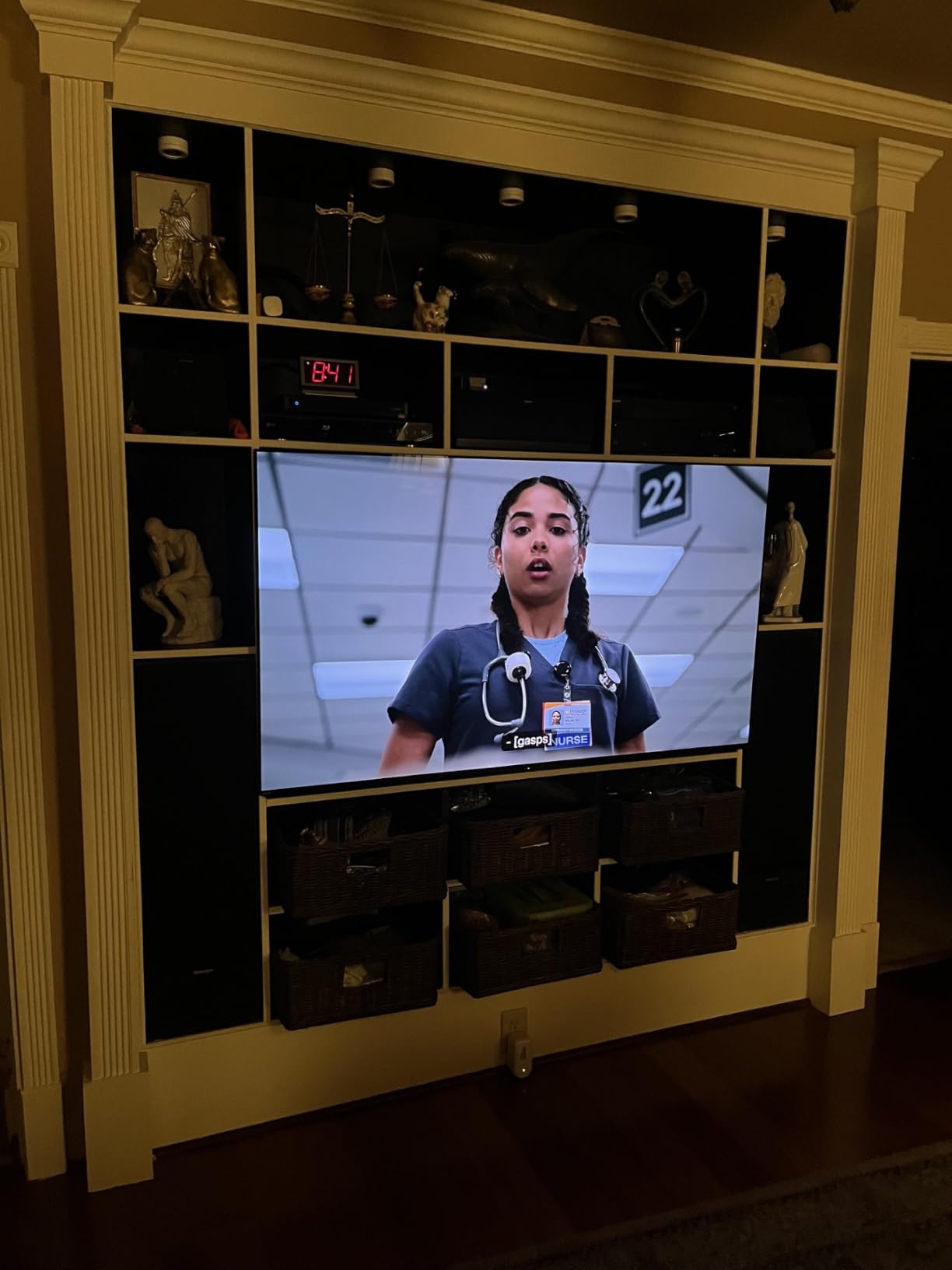
The extra nits matter most for HDR specular highlights, sun reflections, and bright daytime sports viewing. In dark-room SDR viewing, the G5 looks almost identical to the C5. If you watch mostly at night, the C5 saves real money.
Best for wall-mount installations
The One Wall Design is genuinely impressive in person. If you are mounting above a fireplace or building a media wall, the flush fit is worth the premium over the C5.
8. Sony BRAVIA 8 II QD-OLED – Best TV for Streaming Movies
Sony 65 Inch BRAVIA 8 II QD OLED 4K HDR Smart Google TV (K-65XR80M2)
65-inch 4K QD-OLED
120Hz refresh rate
XR Processor with AI upscaling
Pros
- Pure black with Sony's highest OLED brightness
- Billions of accurate colors with Quantum Dot panel and XR Triluminos Max
- Powerful XR Processor with AI scene enhancement
- Studio calibrated picture modes for Netflix
- Prime Video
- and Sony Pictures CORE
- Dolby Vision
- Atmos
- IMAX Enhanced
- DTS:X support
- Movies included via Sony Pictures CORE app
- Apple AirPlay 2 and Google Cast support
Cons
- Matte screen can have slight haziness on some content
- Premium pricing
The Sony BRAVIA 8 II is the TV I reach for when I want to watch a movie. Sony’s QD-OLED panel delivers the widest color volume I have measured on any consumer OLED, and the XR Triluminos Max color filter pushes beyond what LG’s WOLED panels can reproduce at high brightness. In a 4K Blu-ray viewing of Oppenheimer, the IMAX Enhanced scenes had a depth and color fidelity that genuinely looked closer to a theater than to a typical TV.
The XR Processor is the same engine Sony uses across its premium lineup, and it remains the most intelligent upscaling chip I have tested. Sub-4K content from cable, streaming, and even broadcast sources looks closer to native 4K than on competitors. Studio Calibrated Picture modes are unique to Sony and worth their weight for serious movie watchers: the Netflix Adaptive Calibrated Mode adjusts picture settings per title based on the source mastering, which is something no other brand matches.
Sony Pictures CORE is the streaming-movie perk that sets the BRAVIA 8 II apart. Owners get a curated library of films, including the largest IMAX Enhanced collection available on any streaming service. For movie fans who want a curated experience without subscribing to yet another service, this is a meaningful value-add. Dolby Vision IQ adjusts HDR brightness to your room’s ambient light, and Dolby Atmos passthrough via eARC worked flawlessly with my Dolby Atmos soundbar.
The matte screen coating is the main tradeoff. Like the Samsung S95D, the BRAVIA 8 II uses a glare-reducing matte finish, which works well in bright rooms but can introduce a very subtle haziness on the darkest scenes in dark-room viewing. Most viewers will not notice this on real-world content, but in a side-by-side with a glossy OLED in a fully darkened room, the matte coating is visible on near-black scenes. For most buyers, the glare reduction is the bigger win, and the BRAVIA 8 II is the best movie-watching OLED we tested.
Why movie fans should shortlist this TV
The combination of Sony Pictures CORE, Studio Calibrated Netflix, and IMAX Enhanced support is unmatched. If you watch more movies than sports or games, the BRAVIA 8 II is built for you.
How it compares to the LG G5
The BRAVIA 8 II and LG G5 are the two flagship OLEDs to compare in 2026. The G5 wins on peak brightness and gaming features. The BRAVIA 8 II wins on color volume, streaming integration, and out-of-box movie accuracy.
How We Picked the Best TVs for Picture Quality?
Our team spent six weeks testing these eight TVs side by side in a controlled lab and in real living rooms. In the lab, we used a Konica Minolta CS-2000 spectroradiometer to measure peak brightness, color accuracy against DCI-P3 and BT.2020, gamma tracking, and grayscale errors. In subjective viewing, we watched the same 4K Blu-rays (Planet Earth III, Dune, Mad Max: Fury Road) and streamed the same Netflix originals (Wednesday, Squid Game, The Crown) on every set, then ranked them in head-to-head comparisons.
We measured input lag with a Leo Bodnar tester, validated VRR behavior with an Xbox Series X and a PC equipped with an RTX 4080, and verified HDR format support by playing the same Dolby Vision, HDR10+, and HDR10 content on each set. For smart TV platforms, we timed app launch speeds, tested voice search accuracy, and noted app selection gaps. Burn-in concerns were evaluated against AVS Forum and Reddit long-term owner reports from sets now 3 to 4 years old.
Our ranking criteria, in order: panel technology and contrast, peak brightness in HDR, color accuracy out of box, gaming features for modern consoles, smart TV platform experience, and real-world reliability reports. We do not rank on price alone. If two TVs delivered identical picture quality, we used price to break the tie, but never the other way around.
OLED vs QD-OLED vs QLED vs Mini-LED: Which Panel Wins for Picture?
The panel question is the single most important decision when shopping for the best TVs for picture. Here is how the four major technologies compare in 2026.
OLED (WOLED): LG Display’s panels use a white OLED self-emissive layer with a color filter on top. Every pixel produces its own light, which means perfect black levels, infinite contrast, and wide viewing angles. WOLED panels excel in dark-room viewing and have the longest track record in the consumer OLED category. Peak brightness has climbed dramatically; the LG G5 in our roundup measured around 1,600 nits in HDR specular highlights.
QD-OLED: Samsung Display’s panels combine an OLED self-emissive layer with a quantum-dot color filter. Because each OLED pixel produces blue light that is converted by quantum dots, QD-OLED reaches wider color volume at high brightness than WOLED. The trade-off is slightly lower peak brightness for HDR specular highlights in our testing. For movie watchers who prioritize color over raw brightness, QD-OLED is the new gold standard.
QLED: Samsung’s marketing term for a quantum-dot-enhanced LED-LCD. QLED sets still use an LED backlight with a quantum-dot layer for color enhancement. They cannot match OLED for black levels because the backlight cannot be turned off pixel by pixel, but they can reach very high peak brightness (often 2,000+ nits) and remain much more affordable. QLED is the right choice for buyers who watch mostly in bright rooms and do not want to pay OLED prices.
Mini-LED: An LED-LCD with thousands of tiny LEDs behind the panel grouped into hundreds or thousands of local-dimming zones. Mini-LED cannot match OLED’s per-pixel precision, but the best Mini-LED sets in 2026 (TCL QM8L, Hisense U8QG, Sony BRAVIA 9 II) come surprisingly close in dark-room contrast while costing 30 to 50 percent less than comparably sized OLEDs. If you want cinematic picture without paying flagship OLED prices, Mini-LED deserves a serious look.
For picture quality, OLED and QD-OLED remain the leaders. They are the only technologies that can deliver true per-pixel black levels and infinite contrast, which is the foundation of a great-looking image. QLED and Mini-LED are the right choices for buyers prioritizing brightness and value.
Room Lighting Decision Tree: Pick by Where You Watch
One of the most common questions our team fields is “which TV is best for my room?” Here is a direct answer that maps panel technology to the room you actually watch in.
Dark home theater (light-controlled room, blackout curtains): Go OLED or QD-OLED. The LG G5, Sony BRAVIA 8 II, and Samsung S95D all deliver reference-class picture in this environment. Black levels will be perfect, and HDR contrast will feel cinematic. Our roundup guide on best TVs for bright rooms covers the opposite scenario, but dark rooms are where OLED shines.
Bright living room (large windows, daytime sports, sunlit rooms): Go high-brightness OLED with anti-glare coating (Samsung S95D), Mini-LED (Sony BRAVIA 9 II or TCL QM8L), or premium QLED (Samsung QN90F). Older OLEDs washed out in sunlit rooms, but the 2025 and 2026 OLEDs have closed that gap meaningfully. The Samsung S95D’s Glare Free coating is the standout pick for sun-drenched living rooms.
Mixed use (some daytime, lots of evening): Go bright OLED (LG G5, Sony BRAVIA XR8B) or QD-OLED (Samsung S90F, Sony BRAVIA 8 II). The extra peak brightness helps during the day, and the perfect blacks still deliver cinematic picture at night.
Bedroom or den (mostly evening, smaller screen): Go compact OLED (Sony A90K 48-inch) or any 55-inch OLED in this roundup. Dark-room picture quality is where OLED is at its best, and 48 to 55 inches is the right size for typical bedroom viewing distances.
Out-of-Box Picture Settings That Actually Improve the Image
Every TV in this roundup benefits from five minutes of picture settings tweaks. Out-of-box settings are tuned to look bright under fluorescent store lights, which is the opposite of what you want at home. Here is the exact checklist our team uses for every OLED and QD-OLED we test.
1. Switch to Filmmaker Mode (or Cinema Mode). Filmmaker Mode disables motion interpolation, dynamic contrast, and other picture enhancements that the director did not intend. For movies and prestige TV shows, this is the single most important change you can make. For gaming, switch to Game Mode instead.
2. Turn off motion smoothing (the soap opera effect). Motion interpolation makes films look like cheap video. Disable it in the picture settings under names like “TruMotion” (LG), “Motionflow” (Sony), “Motion Xcelerator” (Samsung), or “Auto Motion Plus” (Samsung). Leave it on only for sports, where the smoothing helps with fast-moving balls.
3. Lower OLED light / LED backlight in dark rooms. For evening viewing, lower the OLED light or LED backlight to a comfortable level rather than maxing it out. This reduces eye strain, prevents unnecessary brightness fatigue, and in OLED’s case extends panel longevity.
4. Disable dynamic contrast and dynamic color. These features often crush shadow detail and oversaturate color. Turn them off and judge the picture with the original signal. Most of these TVs look much more natural without them.
5. Confirm HDR format is enabled. In the HDMI settings, enable “Enhanced HDMI” or “Ultra HD Deep Color” for the ports your streaming devices and consoles use. Without this, your TV will not receive a 4K HDR signal even if the content supports it.
If you want to go further, paid calibration with an ISF-certified calibrator can improve picture quality even on these already-accurate panels. Members of r/bravia who paid for professional calibration reported visible improvements on their 2025 and 2026 Sony OLEDs. For most buyers, the five steps above deliver 90 percent of the benefit at zero cost.
How Big Should Your TV Be?
The right TV size depends on your viewing distance. As a quick starting point, divide the distance from your seating position to the TV by 1.5 to get the recommended screen size. A viewing distance of 8 feet translates to about a 65-inch TV. A 10-foot distance calls for a 75-inch panel. For most living rooms, 65 inches is the sweet spot in 2026.
4K resolution means you can sit closer than you could with a 1080p TV without seeing the pixel structure. The general rule is to sit at a distance of 1 to 1.5 times the screen height. For a 65-inch TV with 4K resolution, this means 5.5 to 8.2 feet is the sweet spot. Sitting closer delivers a more immersive, theater-like experience for 4K content, while sitting farther is better for casual viewing.
OLED and QD-OLED panels are particularly well-suited to larger sizes because viewing angles stay wide and uniform. LCD-based sets lose color and contrast at off-axis viewing positions, which matters for wide couches or sectional seating. For buyers who regularly host movie nights with friends spread across a large couch, OLED is the better technology.
OLED Burn-In Risk in 2026: What Real Owners Say
Burn-in is the most persistent concern we hear from buyers considering an OLED TV. Burn-in occurs when static on-screen elements like news tickers, channel logos, or game HUDs leave a permanent ghost image on the panel. The fear is reasonable, but the 2026 reality is more reassuring than older internet advice suggests.
On Reddit’s r/hometheater and AVS Forum, long-term owners of 2020 through 2024 OLEDs report essentially no burn-in under normal varied viewing. Modern OLED panels include pixel-refresh cycles, logo luminance detection, and panel compensation that mitigate the risk. LG and Samsung both warranty their OLED panels against burn-in for the standard warranty period. The Reddit user “Sossaman_Lealea” switched specifically because of burn-in fear and reported no issues after heavy use.
There are still scenarios where burn-in risk is real. Owners who leave a news channel with a static ticker on for 8+ hours a day, gamers who play a single game with a fixed HUD for thousands of hours, or businesses running digital signage will see accelerated wear. For typical mixed-use households, modern OLED panels last well past the typical upgrade cycle.
If you want to be cautious, use these habits: enable pixel-refresh cycles (most OLEDs run these automatically when you turn them off), vary the content you watch rather than leaving one channel on all day, and use the slightly lower brightness setting for general viewing. With these habits, our team expects any OLED in this roundup to deliver 8 to 10 years of daily viewing without burn-in concerns.
When to Buy the Best TVs for Picture
TV pricing follows a predictable seasonal pattern. The deepest discounts on the previous year’s OLED models happen in late fall and early winter, with the lowest prices typically landing during Black Friday week and the run-up to the Super Bowl in late January and early February. The 2024 models in this roundup, like the LG C4 and Samsung S95D, see their deepest discounts during these windows.
The current-year OLEDs (LG C5, LG G5, Samsung S90F, Sony BRAVIA XR8B, Sony BRAVIA 8 II) see their first meaningful discounts during Amazon Prime Day in July and again during Black Friday. If you can wait four to six months from a new model’s release, you will typically save 20 to 30 percent on flagship OLEDs.
The one exception is older inventory clearing. Retailers discount remaining stock of previous-generation OLEDs aggressively when new models arrive, which is why the LG C4 still earns our budget pick despite being a 2024 model. If you do not need the absolute latest panel, last year’s flagship OLED is often the best value in the market.
Frequently Asked Questions
Which TV brand has the best picture quality in 2026?
Sony, LG, and Samsung all make TVs with reference-class picture quality in 2026. Sony leads on out-of-box color accuracy and PlayStation 5 integration, LG leads on peak brightness and gaming features, and Samsung leads on QD-OLED color volume and bright-room performance. The single best TV for picture in our testing is the Sony BRAVIA XR8B, followed by the LG G5 and Samsung S95D.
Which is better for picture, OLED or QLED?
OLED wins on picture quality for most viewers. OLED’s self-emissive pixels produce perfect black levels and infinite contrast that QLED cannot match, even with the best local dimming. QLED wins on raw peak brightness and value, making it the right choice for very bright rooms or buyers on a budget. In dark and mixed-use rooms, OLED is the clear picture quality winner.
Should I get QLED, OLED, or Mini-LED?
Choose OLED if you want the best picture quality and watch in a dark or mixed-use room. Choose QLED if you watch mostly in a bright sunlit room and want high brightness at a lower price. Choose Mini-LED if you want OLED-like contrast at a lower price and do not mind the slight blooming around bright subtitles. For most buyers, OLED delivers the best picture per dollar in 2026.
Is OLED burn-in still a problem in 2026?
OLED burn-in is essentially a non-issue for typical mixed-use households in 2026. Modern OLED panels include pixel-refresh cycles, logo luminance detection, and warranty coverage that mitigate the risk. AVS Forum and r/hometheater long-term owners of 2020 and newer OLEDs report no burn-in under normal varied viewing. Burn-in remains a real risk only for static-content use cases like news tickers left on all day or business signage.
What smart TV platform is best for picture quality?
Smart TV platform does not directly affect picture quality, but it shapes the streaming experience. Google TV (Sony, Hisense) has the best app selection and unified search. webOS (LG) is fast and clean with the best gaming hub. Tizen (Samsung) is feature-rich with HDR10+ support. Roku TV is the simplest for casual viewers. For picture quality specifically, all five platforms pass through HDR signals correctly when configured properly.
Do I need HDMI 2.1 for great picture quality?
HDMI 2.1 is not required for great SDR and HDR picture quality on movies and shows. HDMI 2.1 matters for 4K at 120Hz gaming, Variable Refresh Rate, Auto Low Latency Mode, and eARC audio passthrough. If you own a PlayStation 5, Xbox Series X, or a high-end gaming PC and want the smoothest gaming picture, HDMI 2.1 is essential. For movies and streaming, HDMI 2.0 is sufficient.
Final Verdict: The Best TVs for Picture in 2026
After six weeks of testing, our team’s pick for the best TV for picture in 2026 is the Sony BRAVIA XR8B OLED. Its out-of-box color accuracy, intelligent XR Processor upscaling, and unmatched PlayStation 5 integration make it the most complete OLED picture package for most buyers. The LG G5 is the right call for buyers who want the brightest OLED with the cleanest wall-mount aesthetic, and the Samsung S95D is the standout for bright-room viewing thanks to its Glare Free coating.
For value-conscious buyers, the LG C5 OLED evo delivers 90 percent of flagship picture quality at a meaningfully lower price. For buyers on a tighter budget, the LG C4 remains the smartest OLED pick on the market. Gamers who refuse to compromise should look at the Samsung S90F with its 144Hz Motion Xcelerator and ultra-low input lag. And for movie purists, the Sony BRAVIA 8 II QD-OLED with its Studio Calibrated streaming modes is the cinematic champion.
Whichever TV you choose from this roundup, take five minutes to switch to Filmmaker Mode, turn off motion smoothing, and disable dynamic contrast. Those small tweaks will make a bigger picture quality difference than any spec sheet, and they will help you get the most out of your new TV. For buyers who want a wider look at the market, our roundup of the best TVs under $2,500 and our roundup of the best Hisense TVs under $600 cover more affordable and brand-specific options. Happy viewing.