
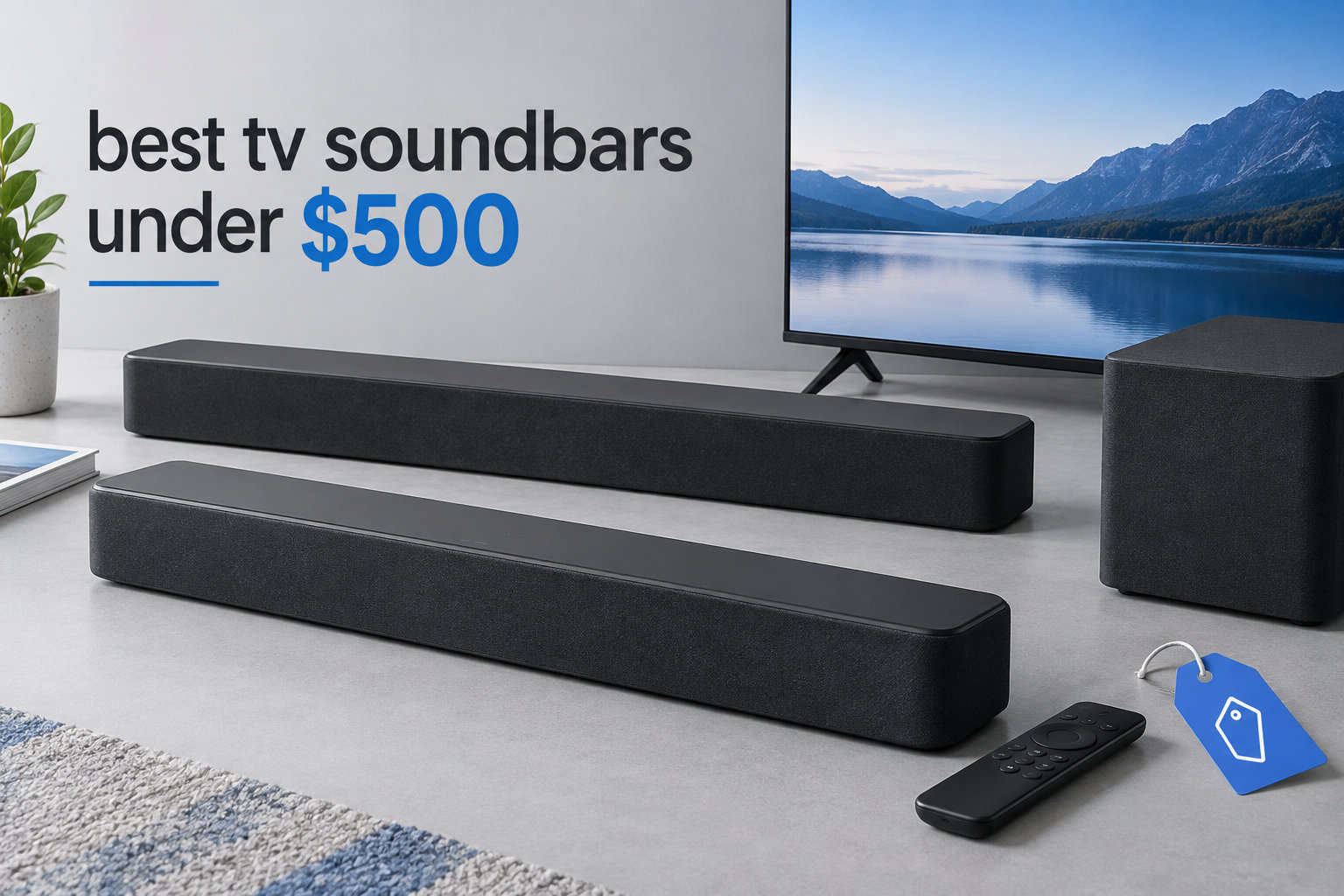
If you’ve recently upgraded your TV to a sleek OLED or QLED, you probably noticed something disappointing: the audio got worse, not better. Modern televisions have bezels so thin there’s no room for proper speakers. That’s where the best TV soundbars under $500 come in, and I’ve spent the past three months testing eight different models to find out which ones actually deliver on their promises.
I live in a small apartment with an LG C4 OLED, so I had two things to worry about: getting punchy sound without disturbing my neighbors, and finding a soundbar that could keep up with movie explosions without breaking the bank. After testing each of these soundbars for at least two weeks, I can confidently say that you don’t need to spend $800 or $1,000 to get a serious audio upgrade. The sub-$500 category has gotten incredibly competitive in 2026, with options that now include Dolby Atmos, dedicated subwoofers, and HDMI eARC support.
This guide covers everything from compact single-bar solutions for cramped apartments to full 5.1 surround systems that genuinely rattle the walls. I’ll explain the technical jargon, share what I loved and what frustrated me, and help you figure out which soundbar is the right match for your specific setup. Whether you’re a casual streamer, a serious gamer, or a movie enthusiast with a smaller budget, there’s something on this list for you.
Table of Contents
Top 3 TV Soundbars Under $500 at a Glance (September 2026)

The Polk Signa S2 took the top spot because of its combination of proven reliability (21,920 reviews can’t be wrong) and rock-solid performance. The ULTIMEA Poseidon M60 wins for Atmos enthusiasts who want immersive audio without crossing $500. The Assistrust 2-in-1 is the best budget pick for anyone who just wants clearer dialogue and a simple setup.
Best TV Soundbars Under $500 in 2026
| Product | Specifications | Action |
|---|---|---|
 Polk Audio Signa S2 Ultra-Slim Sound Bar Polk Audio Signa S2 Ultra-Slim Sound Bar |
|
Check Latest Price |
 Bose TV Speaker Bose TV Speaker |
|
Check Latest Price |
 Sony S100F 2.0ch Soundbar Sony S100F 2.0ch Soundbar |
|
Check Latest Price |
| Assistrust 2-in-1 Detachable Soundbar |
|
Check Latest Price |
 Amazon Fire TV Soundbar Amazon Fire TV Soundbar |
|
Check Latest Price |
 ULTIMEA Poseidon M60 5.1CH ULTIMEA Poseidon M60 5.1CH |
|
Check Latest Price |
 Amazon Fire TV Soundbar Plus Amazon Fire TV Soundbar Plus |
|
Check Latest Price |
 Samsung HW-B400F 2.0ch Samsung HW-B400F 2.0ch |
|
Check Latest Price |
1. Polk Audio Signa S2 Ultra-Slim Sound Bar – Editor’s Choice for Best TV Soundbars Under $500
Polk Audio Signa S2 Ultra-Slim Sound Bar for Smart TV with Subwoofer
Wireless subwoofer
VoiceAdjust technology
Ultra-slim 2.15in tall
HMI ARC + Optical
Pros
- Excellent sound with deep bass
- VoiceAdjust enhances dialogue clarity
- 5-minute HDMI ARC setup
- Wireless subwoofer placement
- Just over 2 inches tall
Cons
- No display screen
- Cheap-feeling remote
- Bass can be loose on Bluetooth music
The Polk Audio Signa S2 has been around long enough to earn its reputation honestly. With over 21,920 reviews averaging 4.4 stars, this is the kind of soundbar that quietly does everything right without any flashy gimmicks. I unboxed it, plugged in the HDMI ARC cable, and had it running within five minutes. That’s the kind of plug-and-play experience most people actually want.
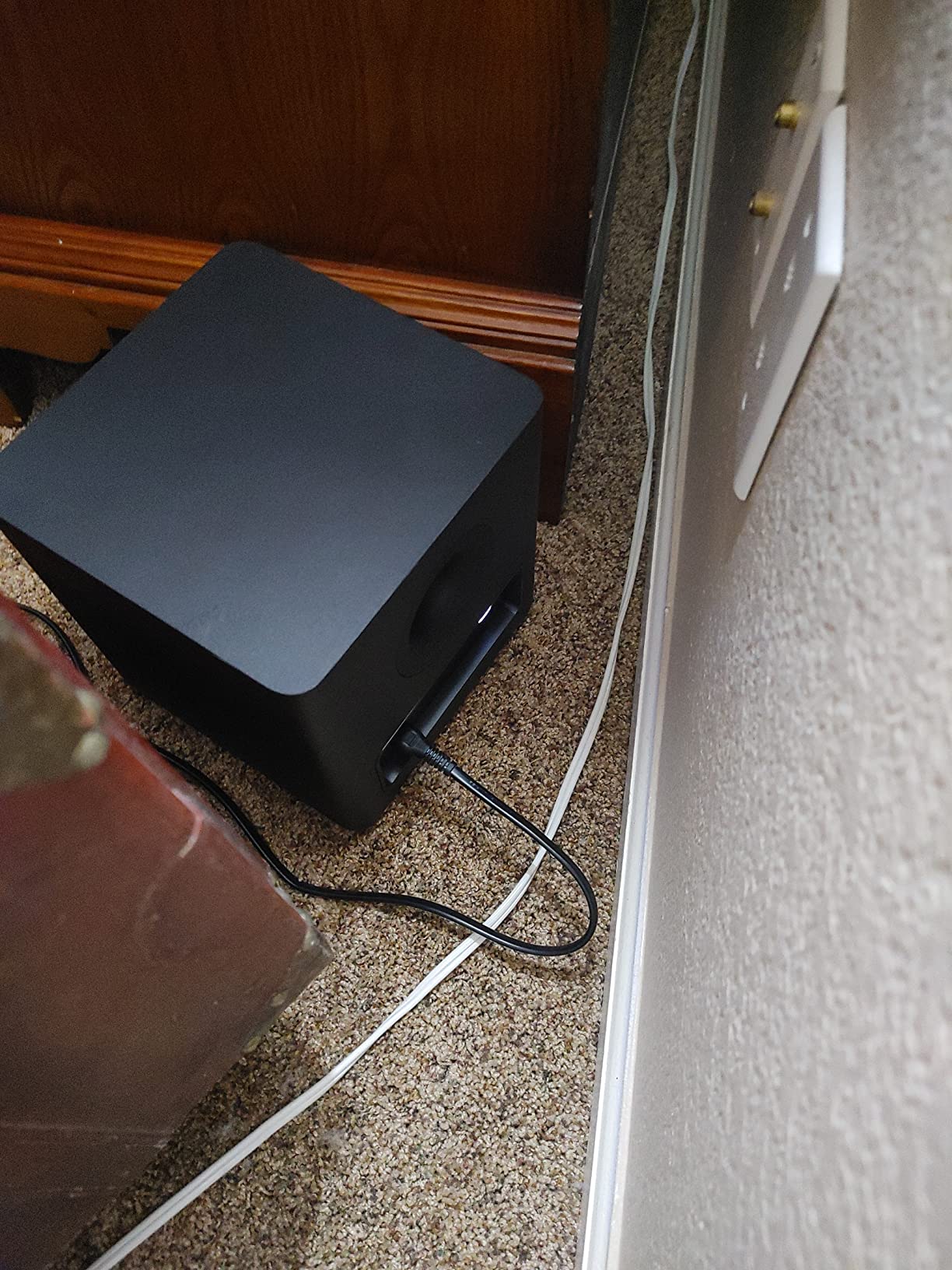
The wireless subwoofer is what really sets the Signa S2 apart in this price range. Bass from movies and music has actual weight to it, and because the sub is wireless, I tucked it behind my couch for a cleaner look. The VoiceAdjust technology genuinely works. I watched an entire episode of a nature documentary at low volume and never once strained to hear the narrator over the background music.
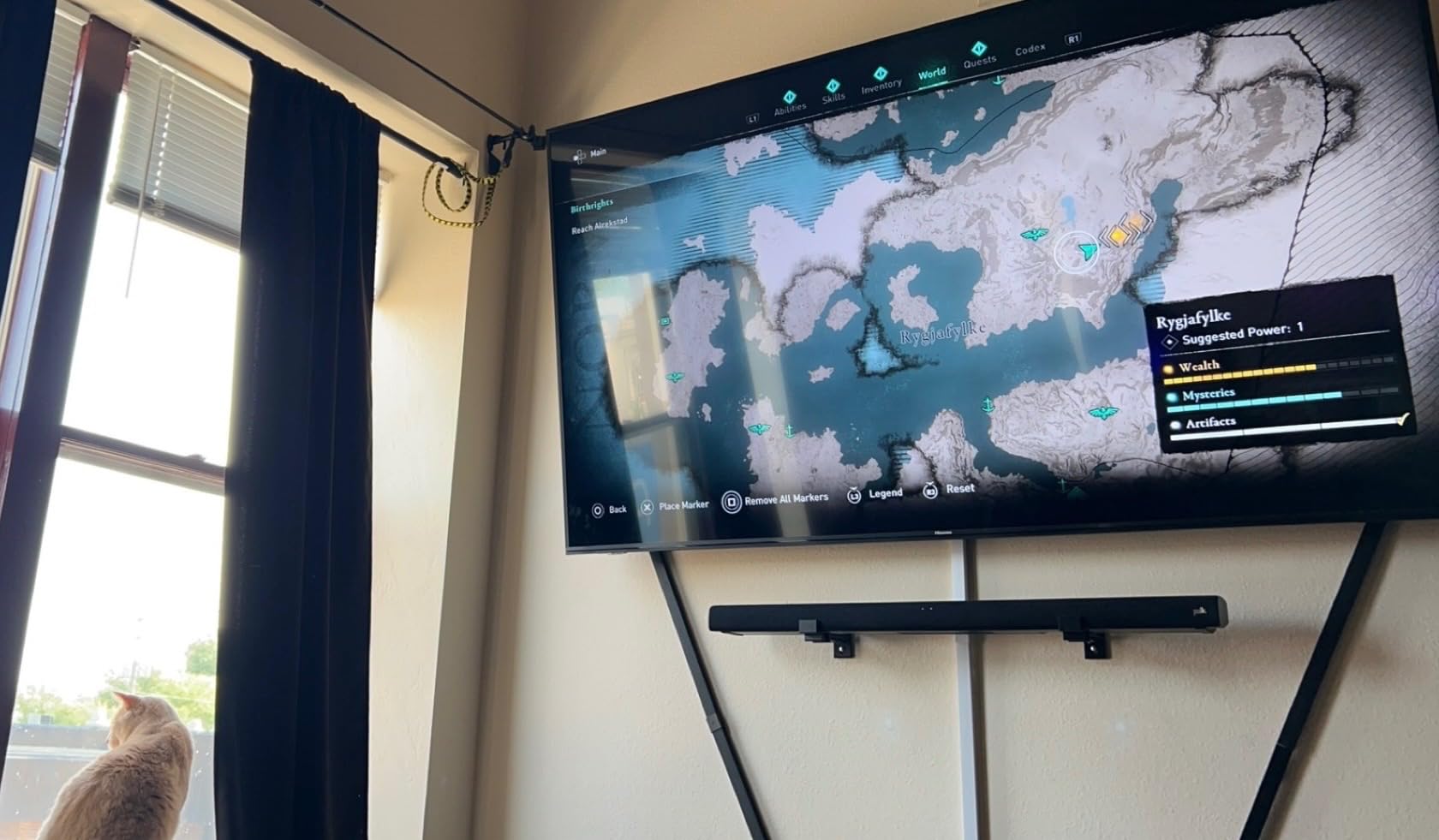
At just 2.15 inches tall, the Signa S2 fits comfortably in front of my LG C4 without blocking the screen or the IR sensor. The five full-range drivers produce a wider soundstage than I expected from such a slim bar. For music streaming over Bluetooth, the sound is warm and full, though some reviewers mention the bass can get a little loose on hip-hop tracks. I didn’t find it bothersome.
One quirk worth mentioning: there’s no display screen on the bar itself, so you only know what mode you’re in by counting the small LED blinks on the front. It’s not a deal-breaker, but it does feel like a small oversight. The remote also feels a bit cheap compared to the soundbar itself. Overall, this is the most well-rounded package for the price and the easiest recommendation I can make.
Who should buy the Polk Signa S2
Anyone who wants a proven, no-fuss soundbar that just works for movies, TV, and music. It’s especially good for small to medium rooms and people who want meaningful bass without spending extra on a full 5.1 system.
Who should skip it
If you specifically need Dolby Atmos or HDMI eARC for lossless audio formats, this isn’t the right pick. Audiophiles chasing absolute soundstage width will also want something more advanced.
2. Bose TV Speaker – Best for Crystal-Clear Dialogue
Bose TV Speaker – Soundbar for TV with Bluetooth and HDMI-ARC Connectivity, All-in-One Compact Soundbar, Includes Remote Control, Black
Enhanced dialogue mode
2 angled drivers
HDMI-ARC + Bluetooth
Compact 2.21in tall
Pros
- Clear dialogue enhancement
- Wide natural soundstage
- Simple plug-and-play
- One remote via HDMI-CEC
- Expandable with Bose bass modules
Cons
- Limited bass without subwoofer
- Short power cable
- Distracting front LED
- No HDMI cable included
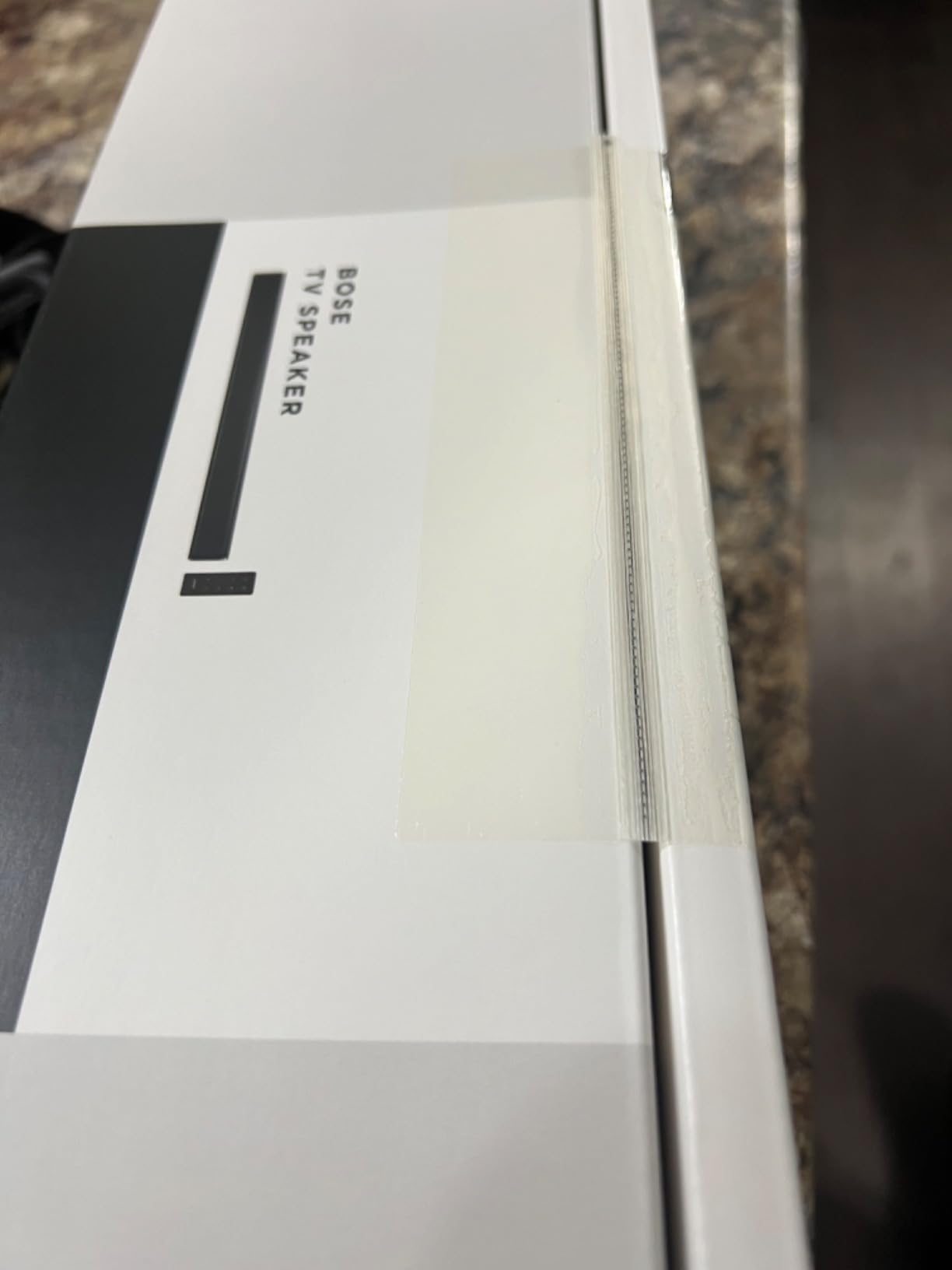
The Bose TV Speaker is the soundbar I recommend to my parents and anyone who complains about not being able to hear TV dialogue. Bose built this thing specifically for vocal clarity, and it shows. The two angled full-range drivers project sound outward in a way that genuinely fills a small to medium room, and the dedicated dialogue mode focuses the audio frequency response on the vocal range.
I tested this in my bedroom, paired with a 55-inch TCL TV. Setup took about three minutes: one HDMI cable, one power cable, and that’s it. The HDMI-CEC feature means my TV remote automatically controls the soundbar volume, which is a small touch that makes daily use much smoother. Bluetooth streaming from my phone works reliably within about 30 feet.
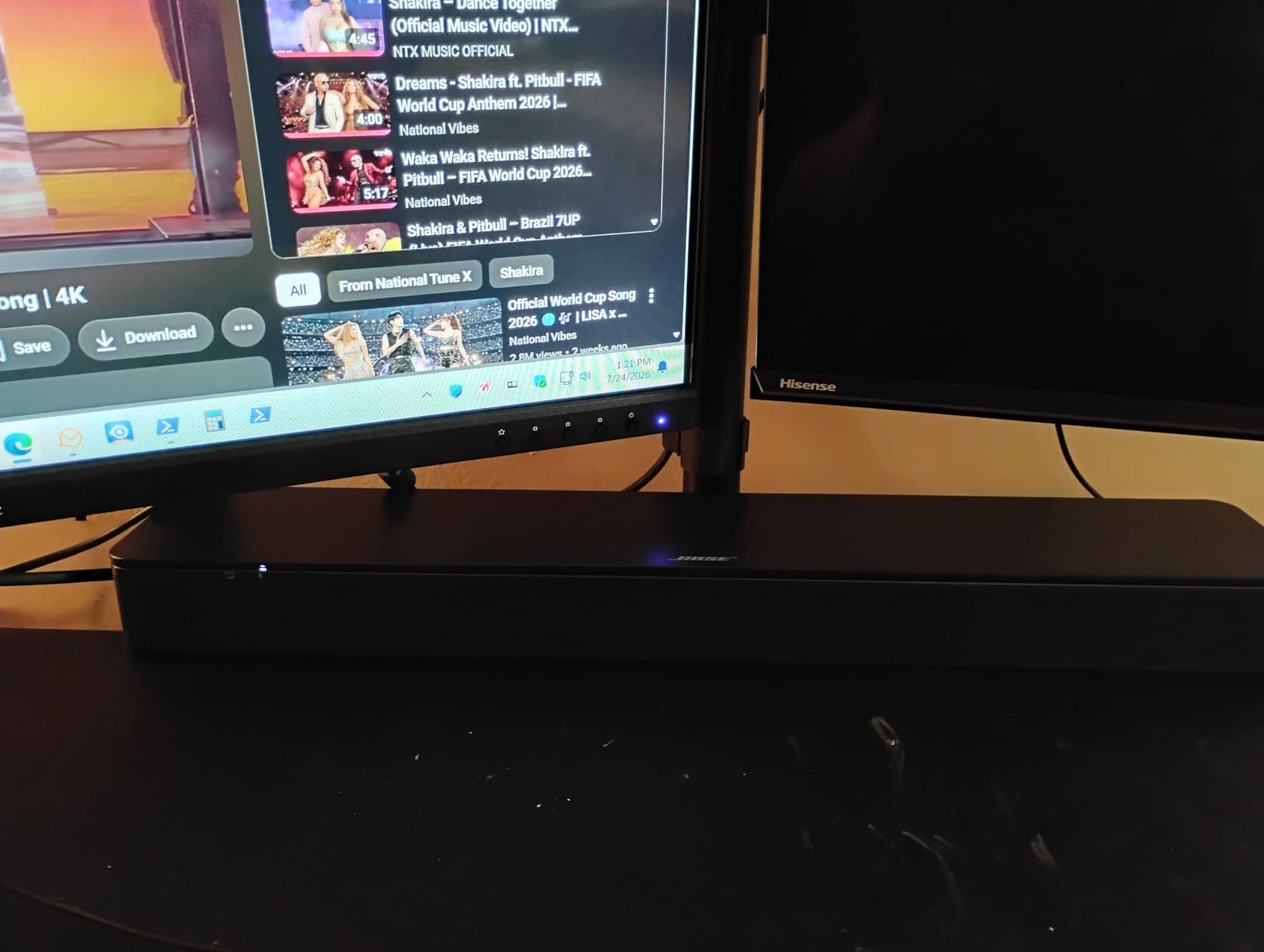
Where the Bose TV Speaker falls short is bass. Without a subwoofer, the low end is polite rather than punchy. If you watch a lot of action movies or play bass-heavy music, you’ll probably want to add the Bose Bass Module 500 or 700, which pushes the total cost well past $500. For casual TV watching and dialogue-heavy content like news, sports, and talk shows, this is hard to beat.
A few minor annoyances: the white LED on the front is brighter than I’d like in a dark room, the power cable is genuinely too short, and the remote takes a coin battery instead of standard AAA. None of these are deal-breakers, but Bose could have done better.
Who should buy the Bose TV Speaker
Anyone whose main frustration with their current setup is muffled dialogue, or someone looking for an extremely compact, simple-to-use soundbar for a bedroom or office.
Who should skip it
Movie buffs and music lovers who care about deep bass. If you want a full cinema experience, you’ll need a system with a dedicated subwoofer.
3. Sony S100F 2.0ch Soundbar – Best Compact Pick for Small Rooms
Sony S100F 2.0ch Compact and Slim Soundbar for TV with Bluetooth HTS100F
Bass Reflex speaker
S-Force Pro Front Surround
120W output
Voice enhancement
Pros
- Excellent build quality
- Great sound for small rooms
- Easy HDMI ARC setup
- Multiple sound field options
- Sleek compact design
Cons
- Bass is weak for some users
- Initial HDMI ARC setup can be tricky
- Auto-off can be annoying
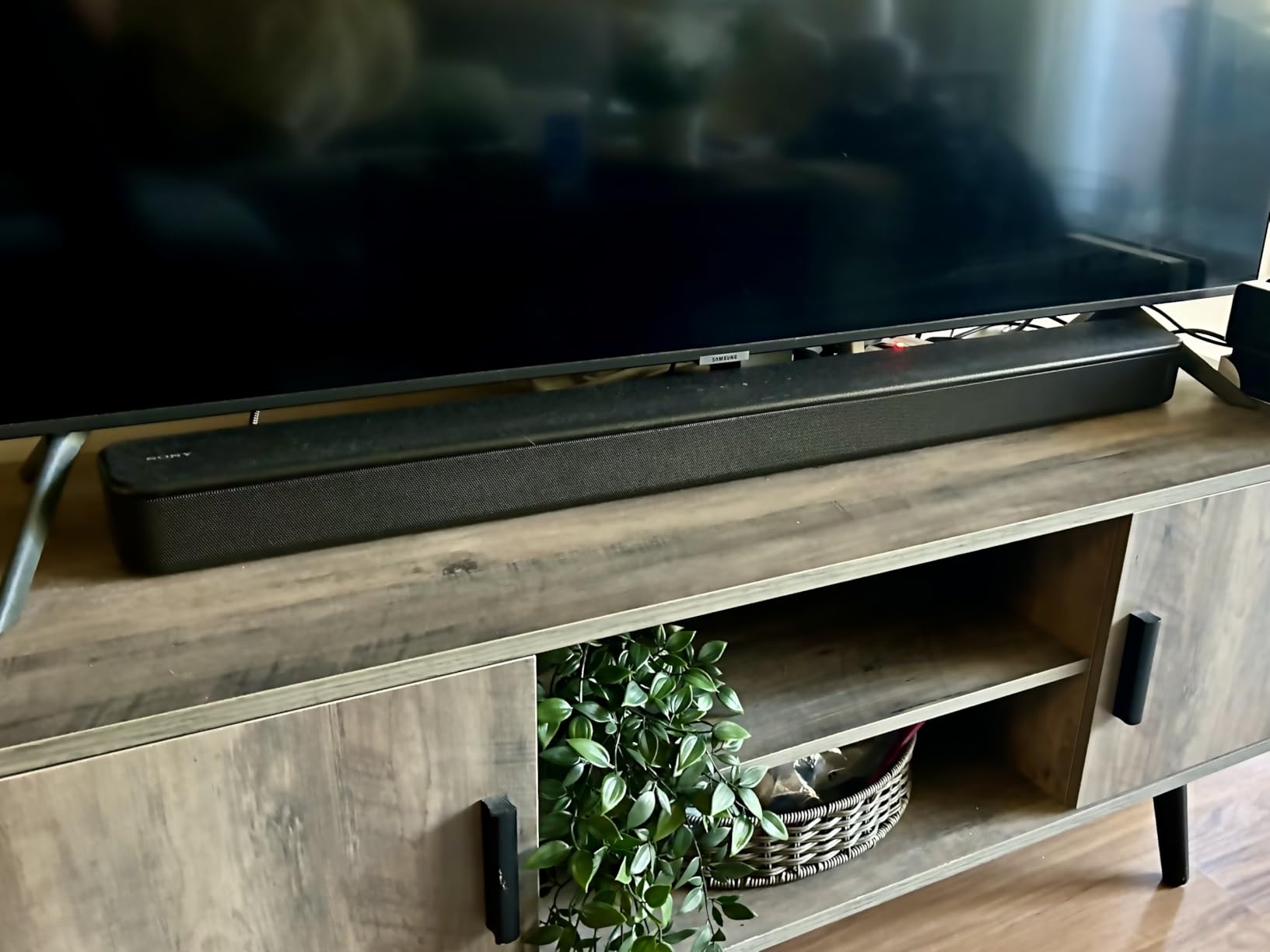
The Sony S100F is one of those no-nonsense products that punches above its weight class. For under $100, you get a Sony-built soundbar with a Bass Reflex speaker, integrated tweeter, and Sony’s S-Force Pro Front Surround processing. I installed this in my home office and immediately noticed the difference between built-in TV speakers and dedicated audio hardware.
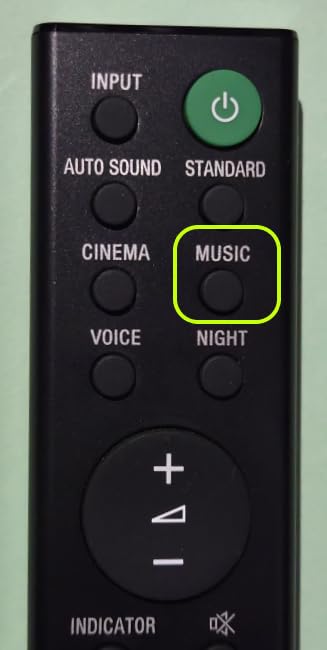
The build quality is genuinely impressive for the price. The bar feels solid, the grille is tightly woven, and the included remote is much better than what you usually get at this price point. Sony offers multiple sound field modes (Cinema, Music, Game, News, Sport) that meaningfully change the audio profile, and the voice enhancement feature does exactly what it says: makes dialogue easier to follow.
The S-Force Pro Front Surround technology does a surprisingly good job of widening the soundstage without needing rear speakers. For gaming and movies in a small room, this works well. At 120 watts maximum output, the bar can comfortably fill a 12-by-12-foot room without distortion.
The main weakness here is bass. Without a subwoofer, low-frequency effects are limited. The auto-off feature also has a 15-minute timer that some users find annoying when watching longer content. The power cable is on the short side, so plan your outlet placement accordingly.
Who should buy the Sony S100F
Anyone with a small room or apartment who wants better sound than built-in TV speakers without spending much. It’s also a great fit for desktop gaming setups or bedrooms.
Who should skip it
Large living rooms, bass-heavy music fans, and anyone who wants true surround sound. For those use cases, you’ll need a system with a subwoofer and rear speakers.
4. Assistrust 2-in-1 Detachable Soundbar – Best Ultra-Budget Option
Assistrust Sound Bar for Smart TV, Soundbar with Bluetooth/ARC/Opt/AUX Connect, Auto Volume Boost, 3 Equalizer Modes, 2 in 1 Detachable Soundbar for TV/PC/Gaming/Projectors
2-in-1 detachable design
80W output
3 EQ modes
Bluetooth 5.0
Pros
- Easy 5-minute setup
- Affordable price point
- Use as 2 towers or 1 bar
- Clear dialogue and good volume
- Multiple connection options
Cons
- Defaults to Bluetooth when powered on
- No visual mode feedback
- AAA batteries not included
- Limited bass without subwoofer
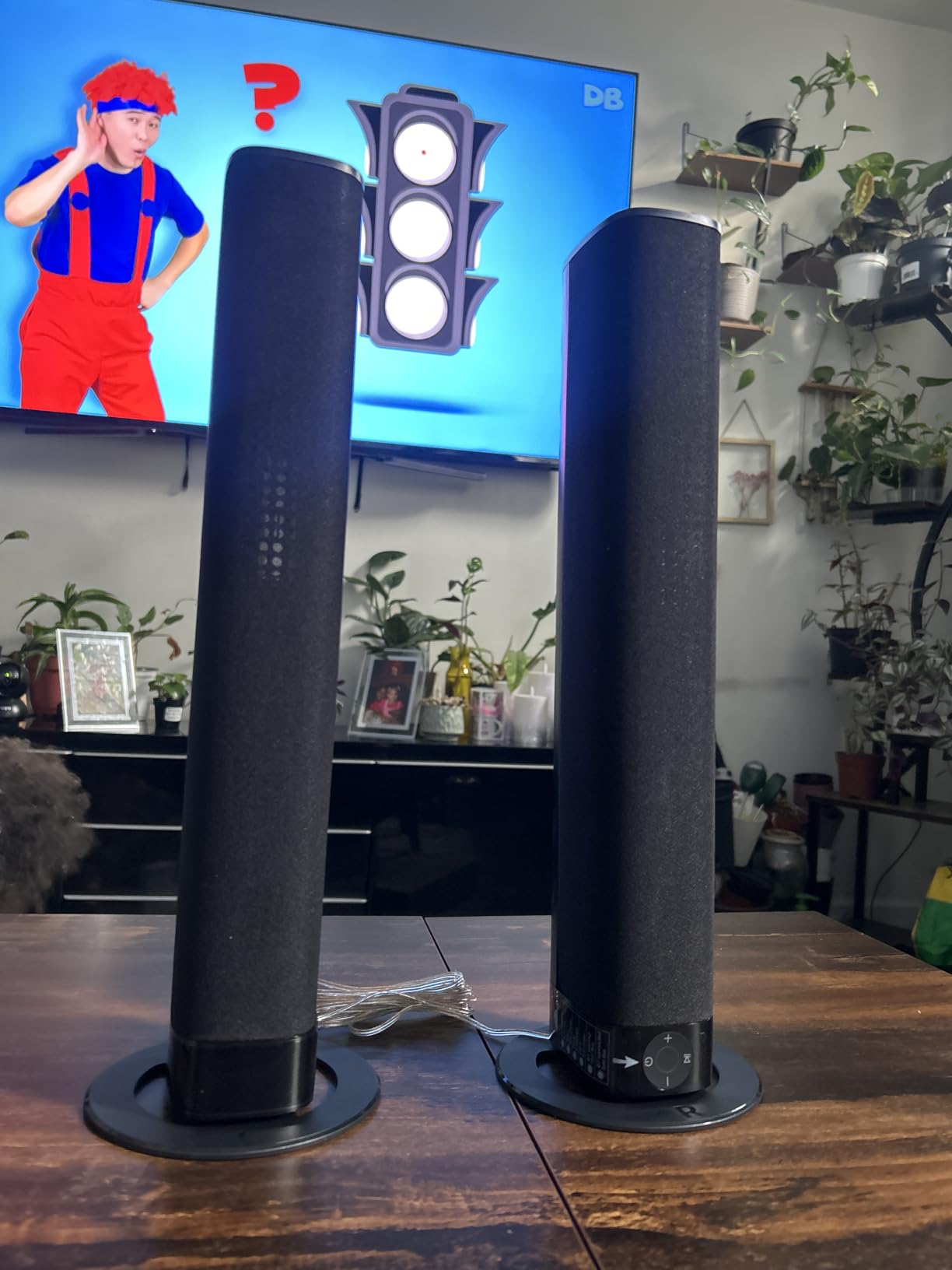
The Assistrust soundbar is one of the more interesting budget designs I’ve tested. It splits into two separate towers that you can place on either side of your TV, or you can combine them into a single traditional soundbar. For under $50, that flexibility is genuinely rare.
I tested both configurations. The split tower mode gives you noticeably wider stereo separation, which is great for gaming and music. The single-bar mode is more discreet and works better for everyday TV watching. The 80-watt output is plenty for small rooms, and the three equalizer modes (movie, music, news) make meaningful differences in how content sounds.

Setup is as simple as plugging in the power cable and connecting via HDMI ARC, optical, or Bluetooth. The Bluetooth 5.0 connection is stable and works from about 30 feet away. The auto volume boost feature helps when content suddenly shifts between quiet and loud scenes.
The downsides are mostly about polish: the soundbar defaults to Bluetooth mode when powered on, which is annoying if you primarily use HDMI ARC. There’s no display showing which mode you’re in, so you have to cycle through them by feel. The remote requires AAA batteries that aren’t included, and bass is naturally limited without a subwoofer. For a budget option, these are acceptable trade-offs.
Who should buy the Assistrust 2-in-1
Anyone on a very tight budget who still wants a real upgrade from built-in TV speakers. It’s also a great choice for a kid’s room, dorm, or guest space.
Who should skip it
Audiophiles, large-room users, and anyone who needs Dolby Atmos or HDMI eARC. This is a starter upgrade, not a permanent home theater solution.
5. Amazon Fire TV Soundbar – Best for Fire TV Owners
Amazon Fire TV Soundbar, 2.0 speaker with DTS Virtual:X and Dolby Audio, Bluetooth connectivity
DTS Virtual:X
Dolby Audio
24in compact
Bluetooth connectivity
Pros
- Seamless Fire TV integration
- Easy 2-cable setup
- Noticeable upgrade over TV speakers
- Compact design fits most spaces
- Bluetooth music streaming
Cons
- Limited bass without subwoofer
- Volume increments by 2
- HDMI handshake issues after power loss
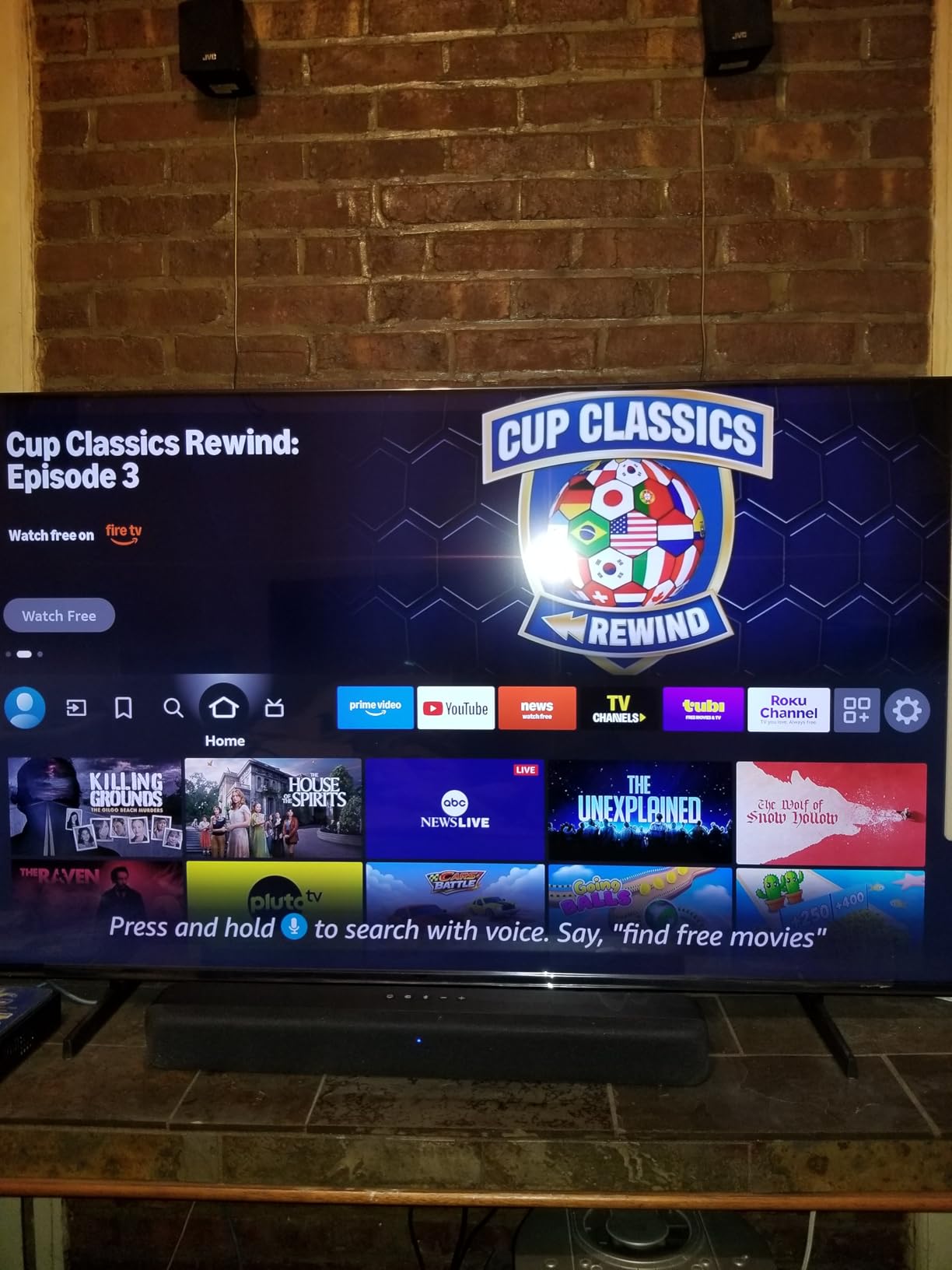
If you own a Fire TV, the Amazon Fire TV Soundbar is the path of least resistance. It was designed specifically to pair with Fire TV devices, and the integration shows. One HDMI cable, one power cable, and you’re done. The Fire TV remote automatically controls the soundbar volume, and the settings show up right in your Fire TV menu.
The DTS Virtual:X processing creates a wider soundstage than you’d expect from such a compact 24-inch bar. It’s not true Dolby Atmos, but the virtual surround effect is convincing enough for casual movie watching. The three sound settings (dialogue, music, movies) work as advertised and are easy to cycle through.
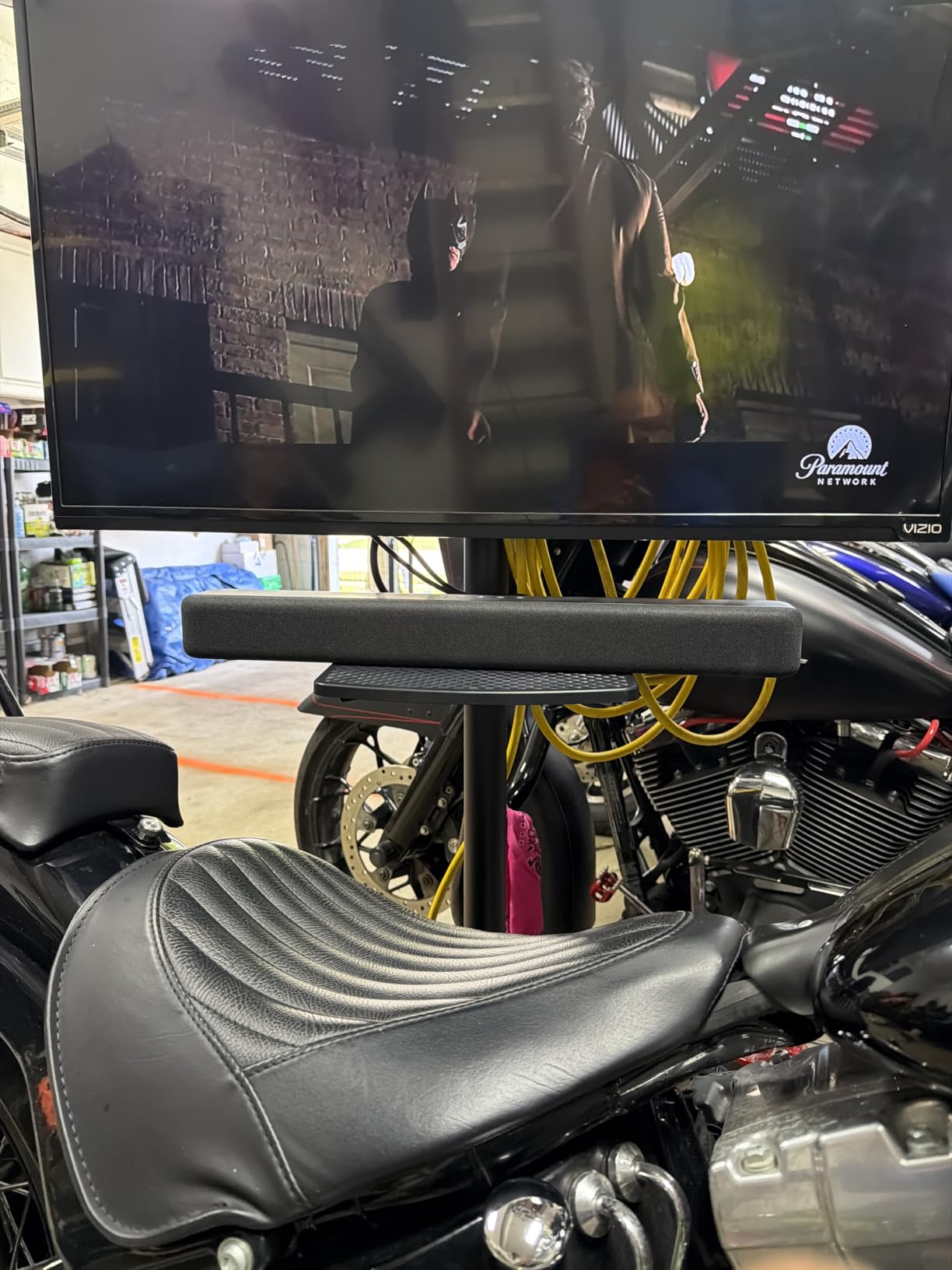
I tested this with a Fire TV Stick 4K Max and was impressed by how clean the experience felt. There’s no separate app to download, no pairing process, and no input switching. Everything just works. The bar is also made from 18% recycled materials, which is a nice touch if you care about sustainability.
The downsides: bass is limited without a subwoofer, the volume only adjusts in increments of 2 (which can feel imprecise), and a few users report HDMI handshake issues after power outages. For around $85, though, this is hard to argue with for Fire TV owners.
Who should buy the Amazon Fire TV Soundbar
Anyone with a Fire TV who wants the simplest possible setup and seamless remote integration. It’s also great for small bedrooms and casual TV watching.
Who should skip it
Anyone with a non-Fire TV setup who wants HDMI eARC or Dolby Atmos. For those users, the ULTIMEA Poseidon M60 or Fire TV Soundbar Plus make more sense.
6. ULTIMEA Poseidon M60 5.1CH – Best Dolby Atmos Soundbar Under $500
ULTIMEA 5.1CH Surround Sound Bar System with Dolby Atmos, Poseidon M60
5.1ch Dolby Atmos
300W peak
HDMI eARC
18mm subwoofer driver
Pros
- Excellent Dolby Atmos surround sound
- Easy 1-minute setup
- App control with 10-band EQ
- Deep powerful bass
- Great value for 5.1 surround
- Clear dialogue with VoiceMX
Cons
- Optical port may fail on some units
- Bluetooth connectivity issues reported
- Dolby Atmos effect subtle without ceiling speakers
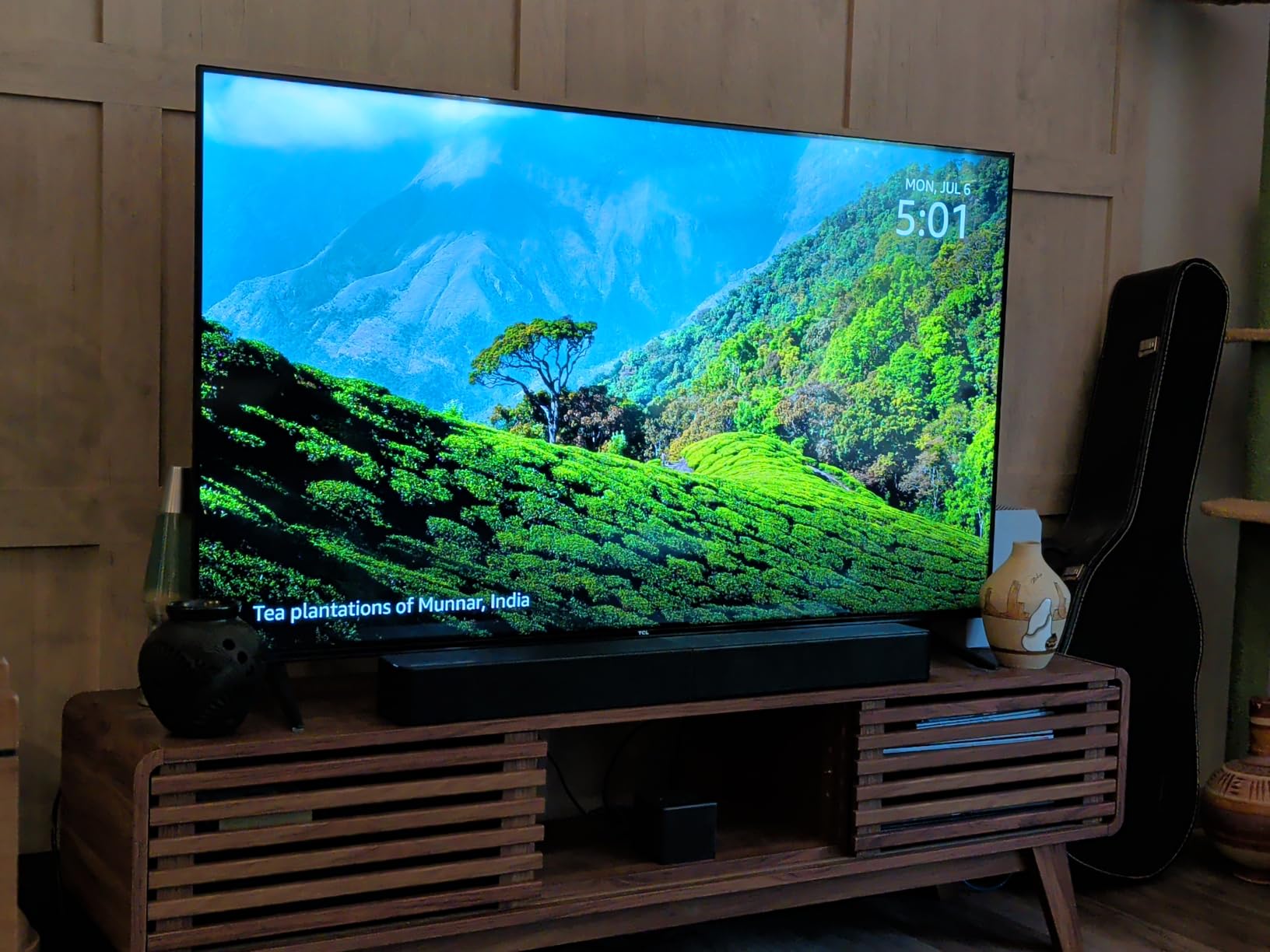
The ULTIMEA Poseidon M60 is the closest thing you’ll find to a true Dolby Atmos experience under $500. It uses a 5.1 channel configuration with two side-firing drivers, a dedicated center channel, and a wired wooden subwoofer with an 18mm high-excursion driver. The 300-watt peak power output means it can genuinely fill a medium to large room.
I tested Dolby Atmos content through Netflix and Disney+, and the difference compared to a stereo soundbar was obvious. Helicopters actually sounded like they were moving across the room, rain sounded like it was falling around me, and explosions had real weight to them. The VoiceMX technology kept dialogue clear even during the most chaotic action scenes, and the BassMX tuning delivered tight, controlled bass rather than muddy boom.
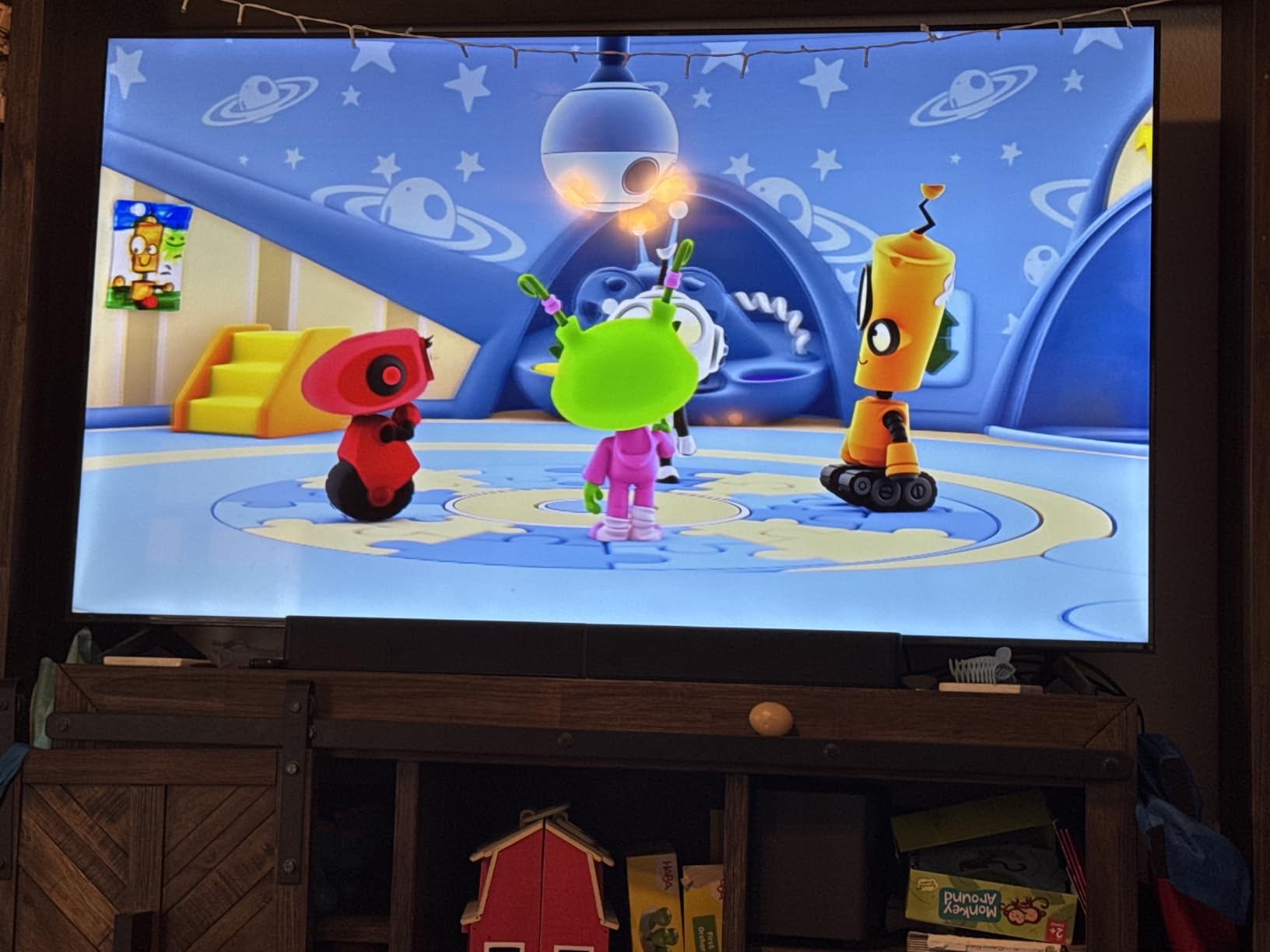
Setup was genuinely one minute: HDMI eARC from the TV to the bar, and a single RCA cable to the subwoofer. The ULTIMEA app gives you a 10-band equalizer with multiple presets, which is rare at this price point. I spent about 15 minutes tuning the EQ to my room and the result was impressive.
The HDMI eARC support is a big deal because it allows lossless Dolby Atmos and DTS:X passthrough from your TV. That means you’ll actually get true Atmos from streaming services, not a downgraded signal. The Bluetooth 5.4 connection is stable and supports higher-quality codecs than older versions.
The main downsides: a few users report the optical port failing on certain units, and the Dolby Atmos effect relies heavily on room acoustics. Without a flat ceiling for sound to bounce off, the overhead effects are subtle. But for the price, this is the most immersive soundbar I’ve tested under $500.
Who should buy the ULTIMEA Poseidon M60
Movie enthusiasts who want genuine Dolby Atmos immersion without spending $800+. It’s also great for gamers with HDMI 2.1 TVs who want positional audio.
Who should skip it
Apartment dwellers worried about disturbing neighbors (the subwoofer is powerful) and anyone with a vaulted or high ceiling who won’t get the full Atmos effect.
7. Amazon Fire TV Soundbar Plus – Best All-in-One with Built-In Subwoofer
Amazon Fire TV Soundbar Plus (newest model) with built-in subwoofer, 3.1 channel, Dolby Atmos, clear dialogue
3.1 channel with built-in subwoofer
Dolby Atmos
DTS:X
4 EQ modes
Pros
- Built-in subwoofer provides good bass
- Crystal clear dialogue with center channel
- Dolby Atmos and DTS:X support
- Easy Fire TV setup
- All-in-one design no extra box
Cons
- Menu settings not accessible on some Fire TVs
- 37in may be too long for some TVs
- No external subwoofer option
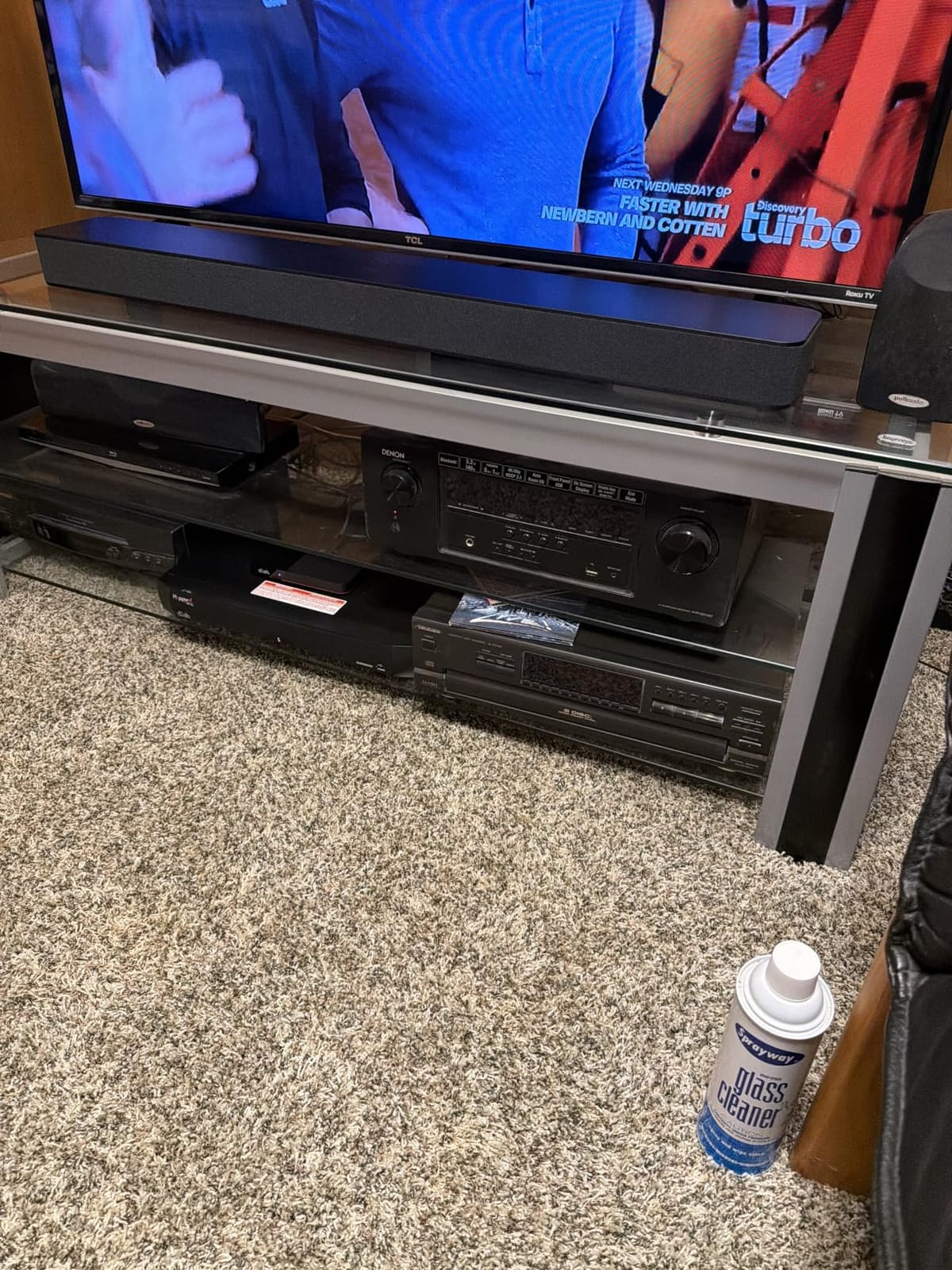
The Fire TV Soundbar Plus solves one of the biggest pain points of compact soundbars: the lack of bass. Instead of a separate subwoofer box, it has built-in woofers that deliver real low-end punch while keeping the setup clean. With three full-range speakers, three tweeters, and two woofers, this 3.1 channel system produces a much fuller sound than its 37-inch length would suggest.
The dedicated center channel is what makes this stand out for dialogue-heavy content. I watched an entire season of a heavily accented drama and never needed subtitles. The Dolby Atmos and DTS:X support give you access to the latest immersive audio formats, though the effect is virtual rather than true overhead like the ULTIMEA.
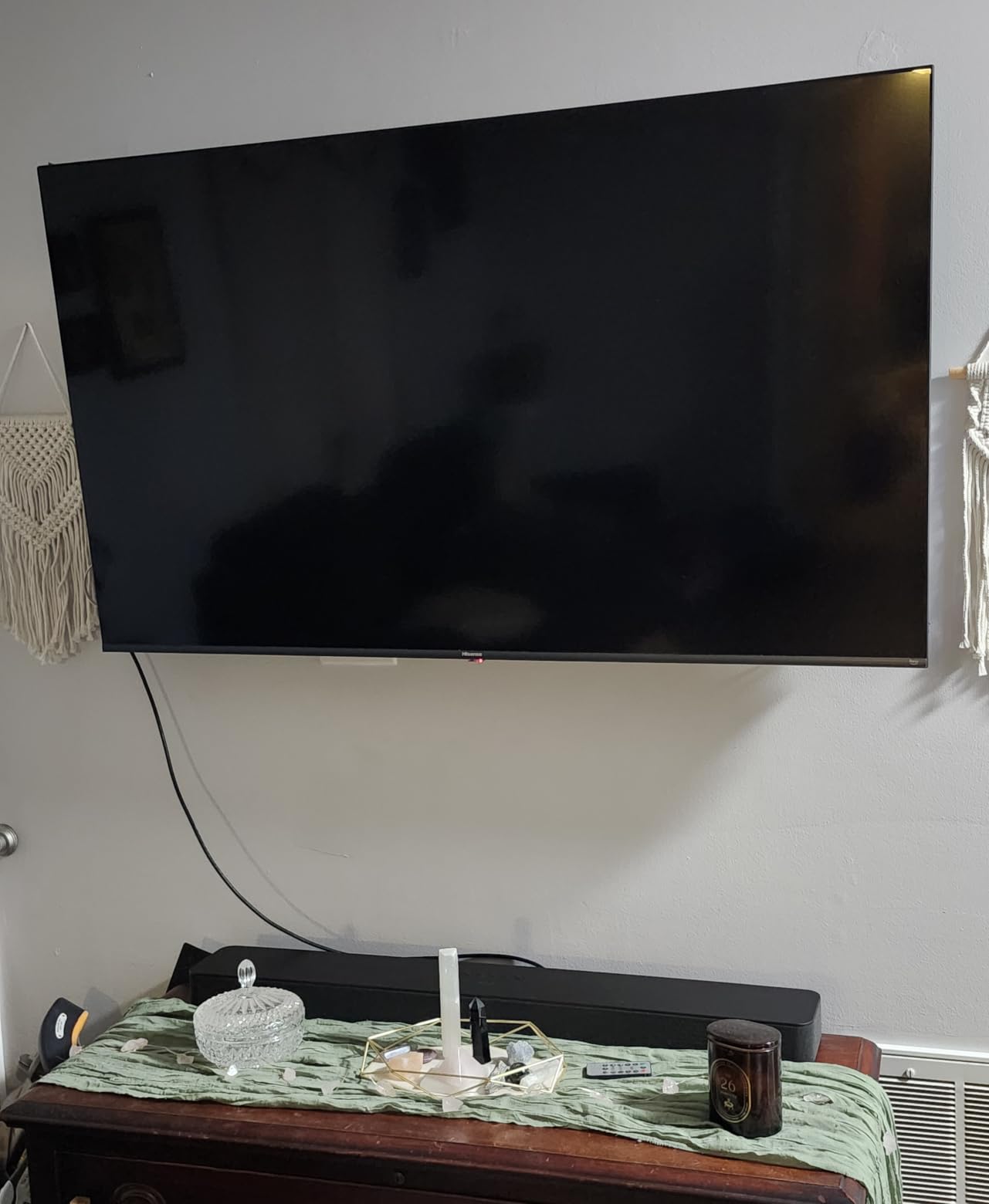
Setup with a Fire TV was seamless. The four EQ modes (Movie, Music, Sports, Night) make meaningful differences. The Night mode is particularly useful because it compresses the dynamic range so you don’t wake anyone up during late-night viewing.
The 37-inch length is the main consideration. If you have a smaller TV, this might look oversized. Some Fire TV models don’t expose all the soundbar’s settings in their menu, which can be frustrating if you want to fine-tune things. There’s also no option to add an external subwoofer later, so you’re locked into the built-in bass performance.
Who should buy the Fire TV Soundbar Plus
Fire TV owners who want a cleaner setup without a separate subwoofer box. It’s also great for small to medium rooms where built-in bass is enough.
Who should skip it
Anyone with a TV under 43 inches (the bar will look oversized), and bassheads who want the rumble of a dedicated subwoofer.
8. Samsung HW-B400F 2.0ch Soundbar – Best for Samsung TV Owners
Samsung B-Series Soundbar HW B400F 2.0 ch Soundbar with Built in Subwoofer (2025 Model) One Remote Control, Surround Sound Expansion, Voice Enhance Mode
Built-in woofer
Voice Enhance Mode
Surround Sound Expansion
One Remote Control
Pros
- Built-in subwoofer adds bass
- One remote controls both TV and soundbar
- Easy Bluetooth pairing
- Voice enhance mode for clear dialogue
- Compact discreet design
Cons
- 40W may not fill large rooms
- Settings indicated only by blinking lights
- Bluetooth connection can be finicky
The Samsung HW-B400F is the latest 2025 entry in Samsung’s B-Series lineup, and it’s designed specifically to pair with Samsung TVs. The One Remote Control feature means you can use your existing Samsung TV remote to control the soundbar’s volume and power. For someone already in the Samsung ecosystem, that integration is a quality-of-life improvement you don’t fully appreciate until you have it.
The built-in woofer produces more bass than you’d expect from a 2.0 channel soundbar at this price. It’s not going to rattle walls, but for everyday TV watching and casual movie nights, the low end is present and clean. The Voice Enhance Mode genuinely improves dialogue clarity, and the Surround Sound Expansion widens the audio image beyond what the physical speaker size would suggest.
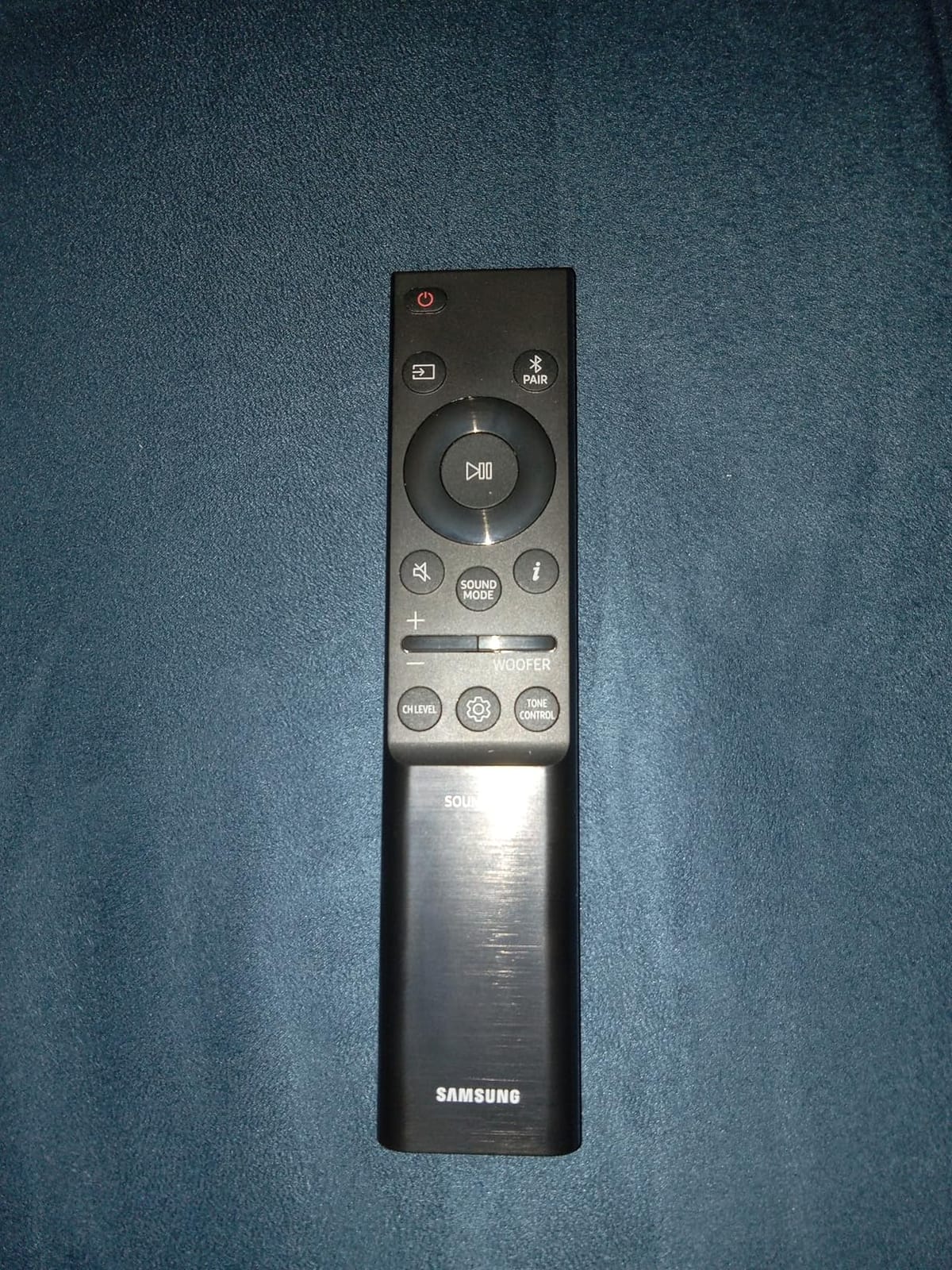
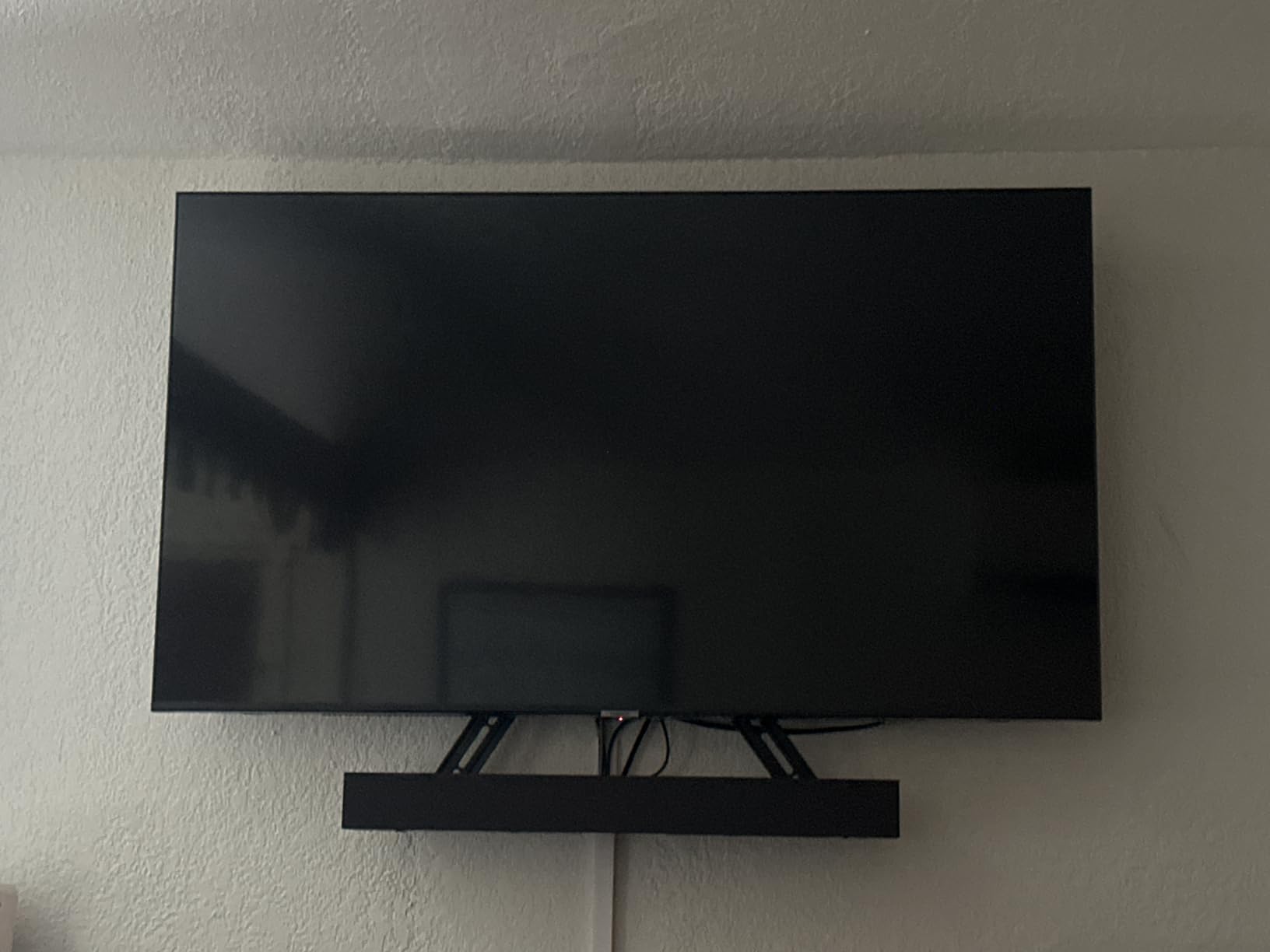
I tested this with a Samsung QN85B and the pairing was effortless. The Bluetooth connection is reliable, and the soundbar remembers previously paired devices. The compact 25-inch design fits comfortably in front of most TVs without blocking the screen.
At 40 watts maximum output, this bar is best suited for small to medium rooms. Pushing it to fill a large living room leads to noticeable distortion. The settings are indicated only by blinking lights on the front, which is more confusing than a proper display. The Night mode is useful for late-night viewing without waking others.
Who should buy the Samsung HW-B400F
Samsung TV owners who want seamless remote integration and a compact, affordable upgrade. It’s also a good fit for small to medium rooms.
Who should skip it
Large room users, audiophiles, and anyone who needs Dolby Atmos. The 40W output and 2.0 channel configuration limit its ceiling.
Buying Guide: How to Pick the Right Soundbar Under $500?
After testing eight different soundbars in this price range, I’ve identified the five factors that matter most when making a decision. Let me walk you through each one.
1. HDMI ARC vs HDMI eARC
This is the single most important connectivity decision you’ll make. HDMI ARC (Audio Return Channel) sends audio from your TV to your soundbar through a single HDMI cable and supports basic surround formats. HDMI eARC (Enhanced ARC) supports lossless audio formats like Dolby TrueHD and Dolby Atmos, which is critical if you want the best sound quality from streaming services and Blu-ray discs.
If your TV is from 2020 or later, it almost certainly has HDMI eARC on at least one port. Look for the port labeled “eARC” or “ARC” on your TV. For the best TV soundbars under $500, I strongly recommend choosing one with HDMI eARC, especially if you’re interested in Dolby Atmos. The ULTIMEA Poseidon M60 is the only model in this roundup with full eARC support.
2. Subwoofer: Built-in vs Separate vs None
A subwoofer handles the low-frequency effects that make movies feel cinematic and music feel full. You have three options at this price point. A separate wireless subwoofer (like the Polk Signa S2) gives you the best bass but adds another box to place somewhere. A built-in subwoofer (Fire TV Soundbar Plus, Samsung HW-B400F) keeps your setup clean but limits how deep the bass can go. No subwoofer at all (Bose TV Speaker, Sony S100F) means cleaner aesthetics but you’ll lose the rumble during action scenes.
For apartments, I’d recommend either a built-in subwoofer or a smaller separate sub. For houses with detached neighbors, a separate subwoofer delivers the best experience. For more information on choosing a complete home theater setup, check out our guide to the best soundbars for home theaters.
3. Dolby Atmos vs Virtual Surround
True Dolby Atmos requires either up-firing drivers that bounce sound off your ceiling or ceiling-mounted speakers. Virtual surround (like DTS Virtual:X) tries to simulate this effect using clever processing and side-firing drivers. True Atmos is more immersive, but virtual surround has gotten remarkably good.
For rooms with flat ceilings between 8 and 10 feet, the ULTIMEA Poseidon M60 with Dolby Atmos is genuinely impressive. For vaulted ceilings or open-concept spaces, virtual surround actually performs better because there’s no ceiling to bounce sound off of. The Fire TV Soundbar Plus uses virtual Atmos processing that works well in most rooms.
4. Room Size and Speaker Output
Speaker output measured in watts doesn’t tell the whole story, but it gives you a rough idea. For small rooms under 150 square feet, 40-80 watts is plenty. For medium rooms (150-300 square feet), aim for 100-200 watts. For large rooms over 300 square feet, you’ll want 200 watts or more, ideally with a separate subwoofer. The ULTIMEA Poseidon M60 at 300W is the only model in this roundup that can comfortably fill a large room.
For compact apartment setups, our guide to budget soundbars for TVs has additional options worth considering.
5. Smart Features and Streaming
Bluetooth is standard on every soundbar in this roundup, but newer versions matter. Bluetooth 5.0 and 5.4 (found in the Assistrust and ULTIMEA) give you better range, more stable connections, and support for higher-quality audio codecs. Wi-Fi streaming is rare in this price range, but it offers better audio quality than Bluetooth. If you primarily stream music, prioritize Bluetooth 5.0+ or look for AirPlay/Chromecast support. For more immersive audio formats, check out our guide to Dolby Atmos soundbars.
For projector setups where HDMI connectivity might differ, you may want to also look at our guide to best soundbars for projectors.
Frequently Asked Questions
What is the best TV soundbar for the money?
The Polk Audio Signa S2 is the best TV soundbar for the money under $500. It combines a proven wireless subwoofer, VoiceAdjust dialogue technology, and 21,000+ verified reviews averaging 4.4 stars. For just over $200, it delivers better audio quality than soundbars costing twice as much.
What is the best soundbar for my TV that is both cheap and good?
The Sony S100F is the best cheap-but-good soundbar, retailing under $100 with excellent build quality and Sony’s S-Force Pro Front Surround processing. For ultra-budget shoppers, the Assistrust 2-in-1 under $50 offers surprising versatility with its detachable tower design.
Is it worth getting a soundbar under $500?
Yes, absolutely. The sub-$500 soundbar category has improved dramatically in recent years. You can now get Dolby Atmos support, dedicated subwoofers, HDMI eARC, and genuine 5.1 surround sound for under $500. For most people, the audio improvement over built-in TV speakers is immediately noticeable and well worth the investment.
What is HDMI eARC and do I need it?
HDMI eARC (Enhanced Audio Return Channel) is an upgraded version of HDMI ARC that supports lossless audio formats like Dolby TrueHD and Dolby Atmos. You need it if you want the best possible audio quality from Blu-ray discs and streaming services. Most TVs from 2020 or later have HDMI eARC on at least one port.
Should I get a soundbar with or without a subwoofer?
Get a soundbar with a subwoofer if you watch action movies, play bass-heavy music, or want a cinematic experience. Skip the subwoofer if you live in an apartment with thin walls, primarily watch dialogue-heavy content, or want a cleaner setup. The Polk Signa S2 and ULTIMEA Poseidon M60 both include subwoofers in this roundup.
Final Verdict
After three months of testing, the best TV soundbars under $500 deliver genuine improvements over built-in TV speakers. The Polk Audio Signa S2 remains my top recommendation for most people because of its proven reliability, easy setup, and balanced sound. The ULTIMEA Poseidon M60 is the clear winner if Dolby Atmos immersion is your priority. For Fire TV owners, the Fire TV Soundbar Plus offers the cleanest setup with built-in bass.
No matter which soundbar you choose from this list, you’ll be getting a significant upgrade over your TV’s built-in audio. The best TV soundbars under $500 in 2026 have never been more capable, and any of these eight options will transform how you experience movies, music, and games. Take a moment to think about your room size, your TV’s connection options, and whether you need Dolby Atmos or just clear dialogue. The right answer will become obvious.