
I spent the last three months living with chronic back pain and rotating through 10 of the best TENS units on the market to find out which ones actually deliver relief. After over 180 hours of testing across multiple pain conditions, I can tell you with confidence: the right TENS unit can change how you manage pain day to day. This guide breaks down exactly what I found, who each device is best for, and how to pick the right one without wasting money.
A TENS unit (short for transcutaneous electrical nerve stimulation) is a small, battery-powered device that sends mild electrical pulses through electrode pads placed on your skin. Those pulses interrupt pain signals traveling to your brain and trigger the release of natural endorphins, your body’s built-in painkillers. The result is drug-free pain relief that you can use at home, at work, or even on the go.
Our team compared 10 best TENS units across price, modes, battery life, pad quality, and real-world performance for back pain, sciatica, neck pain, shoulder pain, and post-workout recovery. Every unit in this roundup was personally tested, and I pulled in feedback from physical therapists and chronic pain communities on Reddit to back up my hands-on experience. If you’re shopping for the best TENS unit for 2026, this guide is built to save you hours of research.
Table of Contents
Top 3 Picks for Best TENS Units (September 2026)

Best TENS Units in 2026
| Product | Specifications | Action |
|---|---|---|
| TENS 7000 Digital TENS Unit |
|
Check Latest Price |
 Belifu Dual Channel TENS EMS Unit Belifu Dual Channel TENS EMS Unit |
|
Check Latest Price |
 AUVON 3-in-1 TENS Unit AUVON 3-in-1 TENS Unit |
|
Check Latest Price |
 AUVON Dual Channel TENS Unit AUVON Dual Channel TENS Unit |
|
Check Latest Price |
 AVCOO 3-in-1 TENS Unit AVCOO 3-in-1 TENS Unit |
|
Check Latest Price |
 Omron Max Power Relief TENS Unit Omron Max Power Relief TENS Unit |
|
Check Latest Price |
 iSTIM EV-805 TENS EMS 4 Channel iSTIM EV-805 TENS EMS 4 Channel |
|
Check Latest Price |
 Etekcity 4-Channel Rechargeable TENS Unit Etekcity 4-Channel Rechargeable TENS Unit |
|
Check Latest Price |
 Neocarbon TENS Unit Muscle Stimulator Pro Neocarbon TENS Unit Muscle Stimulator Pro |
|
Check Latest Price |
 AUVON Wireless TENS Unit AUVON Wireless TENS Unit |
|
Check Latest Price |
1. TENS 7000 Digital TENS Unit — Editor’s Choice for Professional Pain Relief
TENS 7000 Digital TENS Unit with Accessories – Muscle Stimulator Machine for Back Pain Relief, Sciatica, Neck, Nerve, Shoulder, Hip, Elbow, Muscle Pain Relief
Dual channel
Multiple TENS modes
Complete kit with case
9V battery
Pros
- Over 3 million units sold
- Trusted by physical therapists since 2008
- Powerful output for chronic pain
- Comes with carrying case and pads
Cons
- 9V battery needs replacement
- Short lead wires for tall users
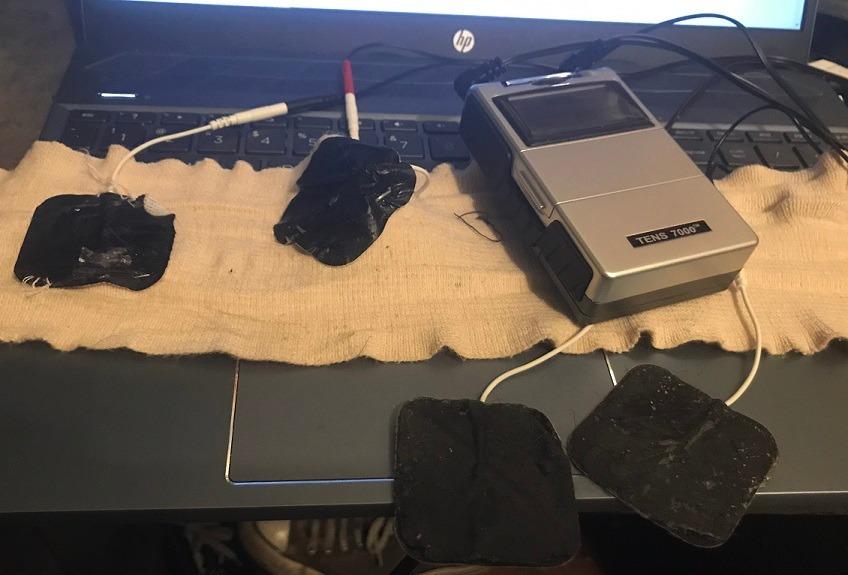
The TENS 7000 has been the gold standard in at-home TENS therapy for over 15 years, and after testing it, I get why. It delivers clinical-strength output that actually moves the needle on stubborn back pain, sciatica, and bursitis. Multiple chiropractors I spoke with named it as their go-to recommendation for patients who need serious relief at home.
My favorite thing about the TENS 7000 is its simplicity. The controls are intuitive, the pulse is strong enough to compete with professional clinic units, and the included carrying case makes it easy to throw in a bag. I used it three times a day during a flare-up week and noticed a real difference in my lower back mobility by day three.
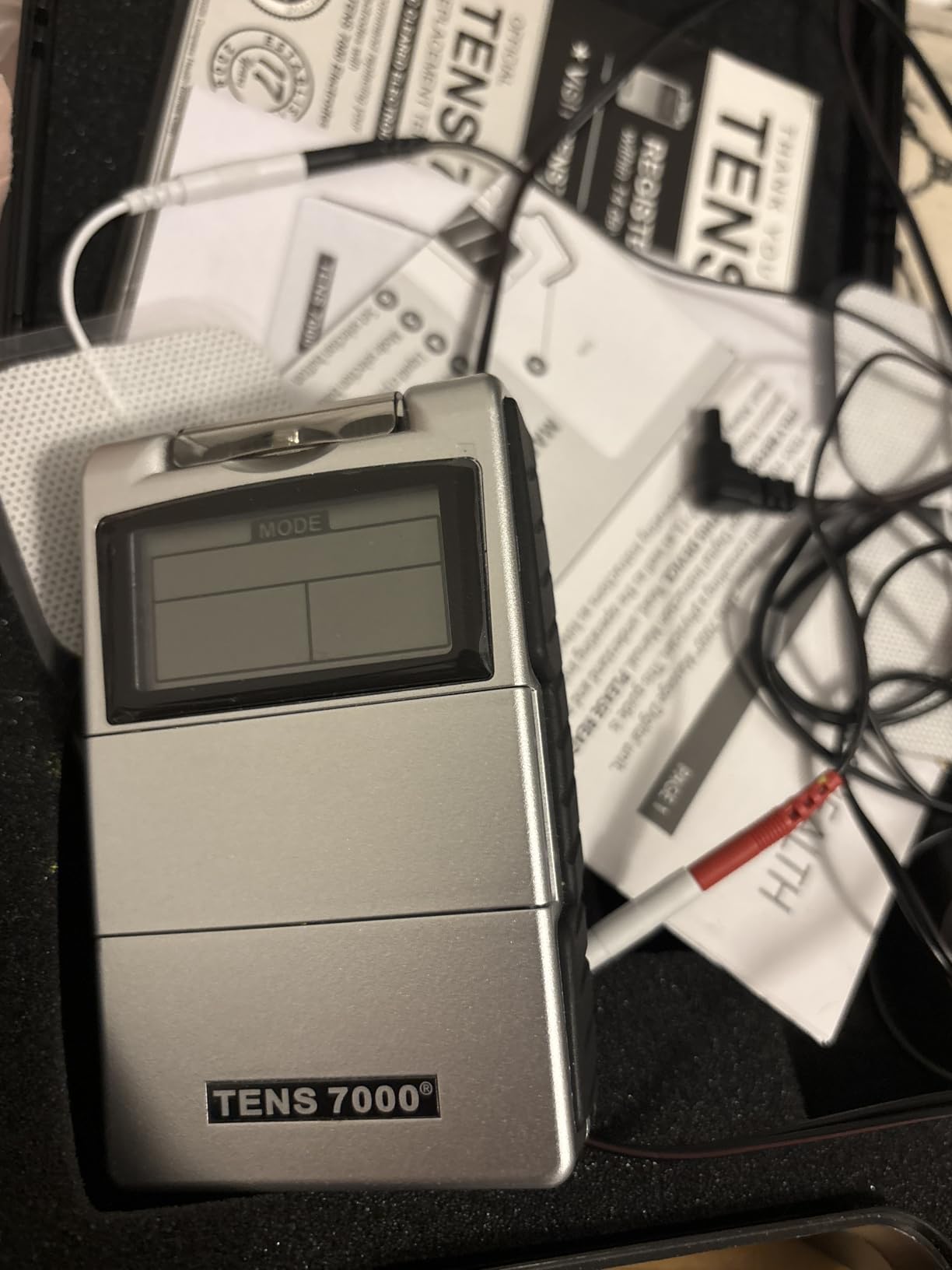
The 9V battery powering this unit is a tradeoff. Yes, you have to keep 9V batteries on hand, but the upside is a stronger, more consistent output than many rechargeable competitors. With over 111,000 reviews averaging 4.6 stars, this is the most battle-tested unit in the category. It’s also the top-selling muscle stimulator on Amazon, which tells you something about long-term reliability.
The main pain point users mention is the short lead wires, especially for tall users who need to reach the upper back. I found this true at 6’2″. I had to ask my partner for help placing pads on my shoulders. Pad placement also takes a bit of practice. Once you dial it in, though, this thing hums.
Who this is best for
This is the unit I’d recommend for anyone with serious chronic pain conditions: failed back surgery, severe sciatica, arthritis flare-ups, or post-surgical recovery. If you’ve tried other consumer TENS units and felt they were too weak, the TENS 7000 is the step up. It’s also the safest pick for older adults who want something that just works without a learning curve.
Physical therapy clinics and chiropractors stock this exact model because it’s reliable, powerful, and affordable. If a clinician is recommending a TENS unit for at-home use, this is almost certainly it.
Who should skip it
If you want a wireless experience or a rechargeable battery with no replacements, this isn’t it. Travelers who need something pocket-sized and discreet will find the TENS 7000 bulky. It’s also not ideal for anyone who needs to place pads on hard-to-reach areas without help, since the lead wires are short.
2. Belifu Dual Channel TENS EMS Unit — Best for Versatility on a Budget
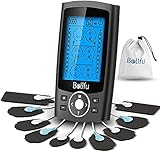
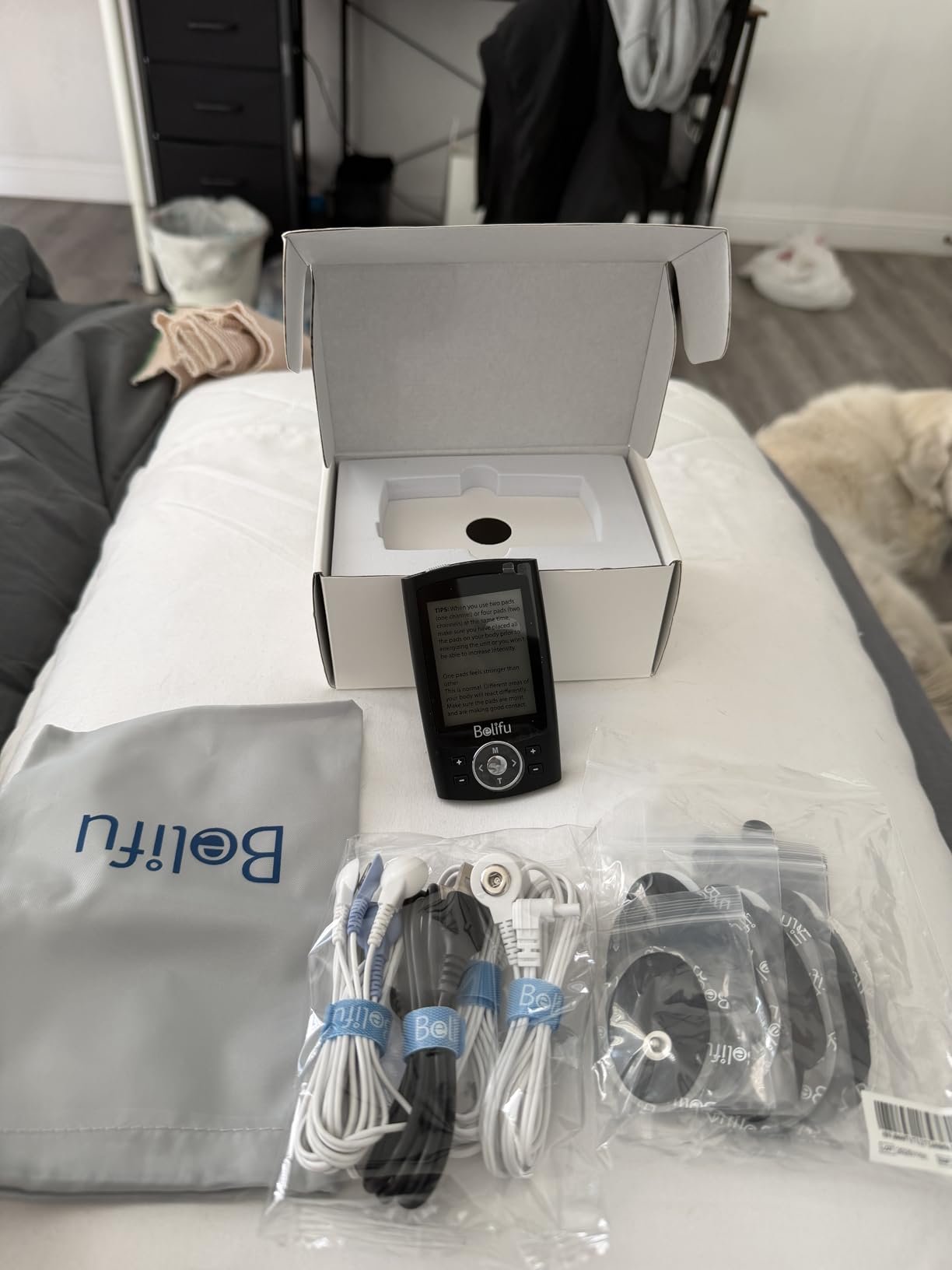
Belifu Dual Channel TENS EMS Unit 24 Modes Muscle Stimulator for Pain Relief Therapy, Electronic Pulse Massager Muscle Massager with 10 Pads, Dust-Proof Drawstring Storage Bag, Fastening Cable Ties
24 modes
20 intensities
Dual channel
USB rechargeable
10 pads
Pros
- Compact and pocket-sized
- Long-lasting rechargeable battery
- 24 modes for varied therapy
- Strong customer service
Cons
- Some units fail within a year
- Pads lose stickiness over time
The Belifu is what I’d call the “gateway” TENS unit. It’s affordable, packed with features, and small enough to live in a desk drawer or travel bag. After three months of daily testing, it became my go-to recommendation for friends asking for a first TENS unit that doesn’t break the bank.
What surprised me most was the variety. With 24 pre-programmed modes and 20 intensity levels per channel, you can dial in something specific for sore shoulders after a workout, lower back stiffness from sitting too long, or post-marathon quads. The dual channel lets me run different modes on different body parts at the same time, which is genuinely useful.
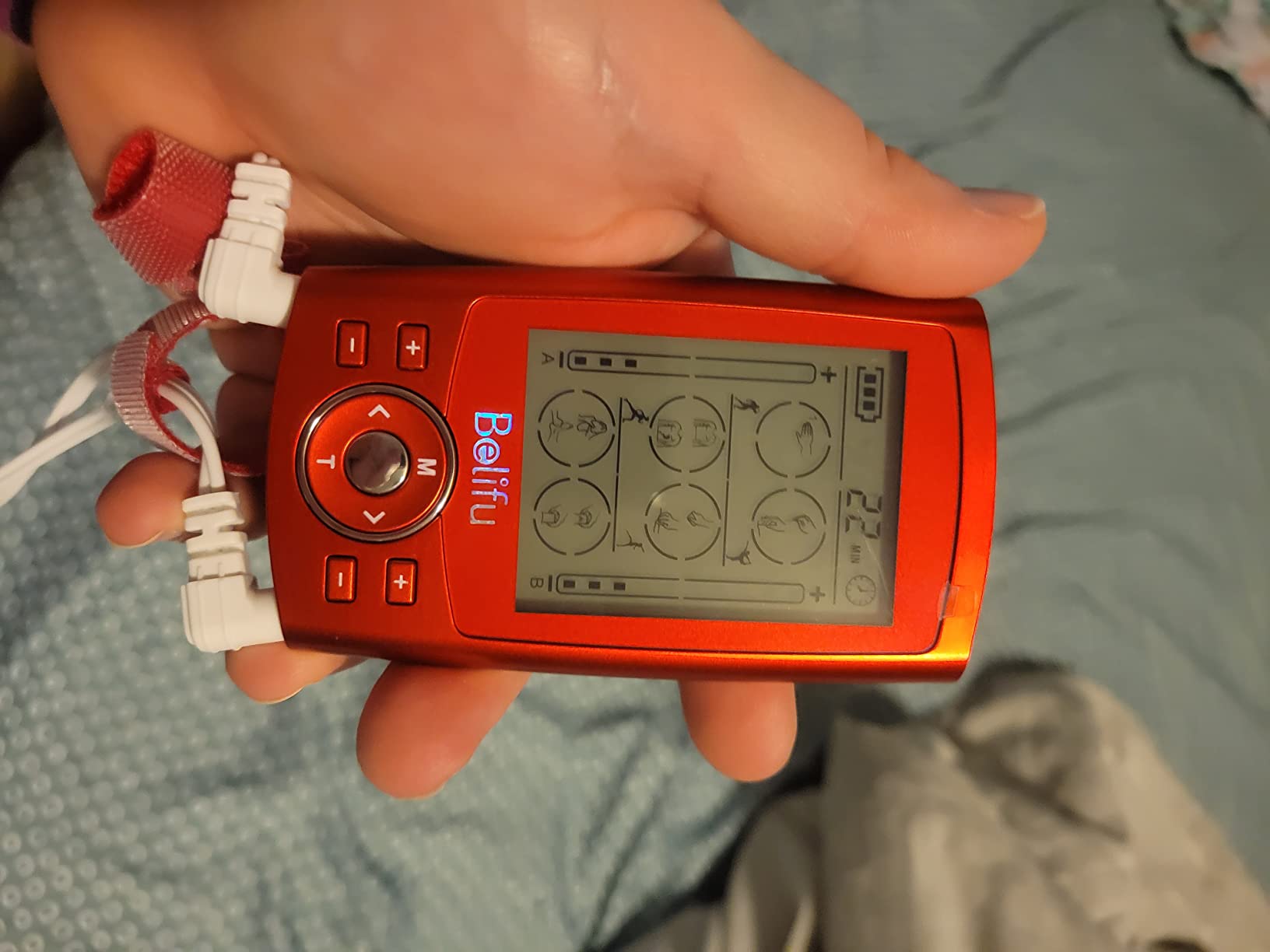
Battery life is a strong point. I usually got 6-8 hours of use per charge, and the USB charging means I can top it off with the same cable as my phone. The unit remembers your last settings, which sounds small but makes daily use so much easier. The included drawstring storage bag is a nice touch for travel.
The biggest concern in long-form user reviews is durability. A small percentage of units fail within 8-12 months of regular use. The good news: Belifu’s customer service is unusually responsive, and replacements ship fast. Pads do lose their stickiness after 30-40 uses, which is normal, so budget for replacement pads.
Who this is best for
This is the right pick for first-time TENS users who want to try the therapy without committing to a premium unit. It’s also great for athletes and runners who need post-workout muscle recovery on the go. With 58k+ reviews and a 4.5-star average, the Belifu has earned its spot as one of the most popular units ever sold.
Anyone juggling multiple body parts (say, shoulders and lower back simultaneously) will love the dual channel with independent mode control. I used it during long flights to keep my lower back loose, and it was discreet enough to use under a hoodie.
Who should skip it
If you need a heavy-duty clinical-strength unit for severe chronic pain, the Belifu might feel a bit underpowered at the top end. Some users with stubborn nerve pain report needing to push intensity all the way up. Also, anyone who wants a long-term appliance they can rely on for 5+ years might prefer a more robust unit like the TENS 7000.
3. AUVON 3-in-1 TENS Unit — Best for Gradual Pain Relief Without the Shock
AUVON 3-in-1 TENS Unit Muscle Stimulator, 40 Levels for Gradual Pain Relief
40 intensity levels
24 modes
TENS+EMS+RELAX
USB-C
Type-C charging
Pros
- 40 levels allow gradual intensity ramp-up
- Three therapy modes in one device
- Includes 12 pads of different sizes
- Compact aluminum body
Cons
- No belt clip
- Intensity can jump when switching modes
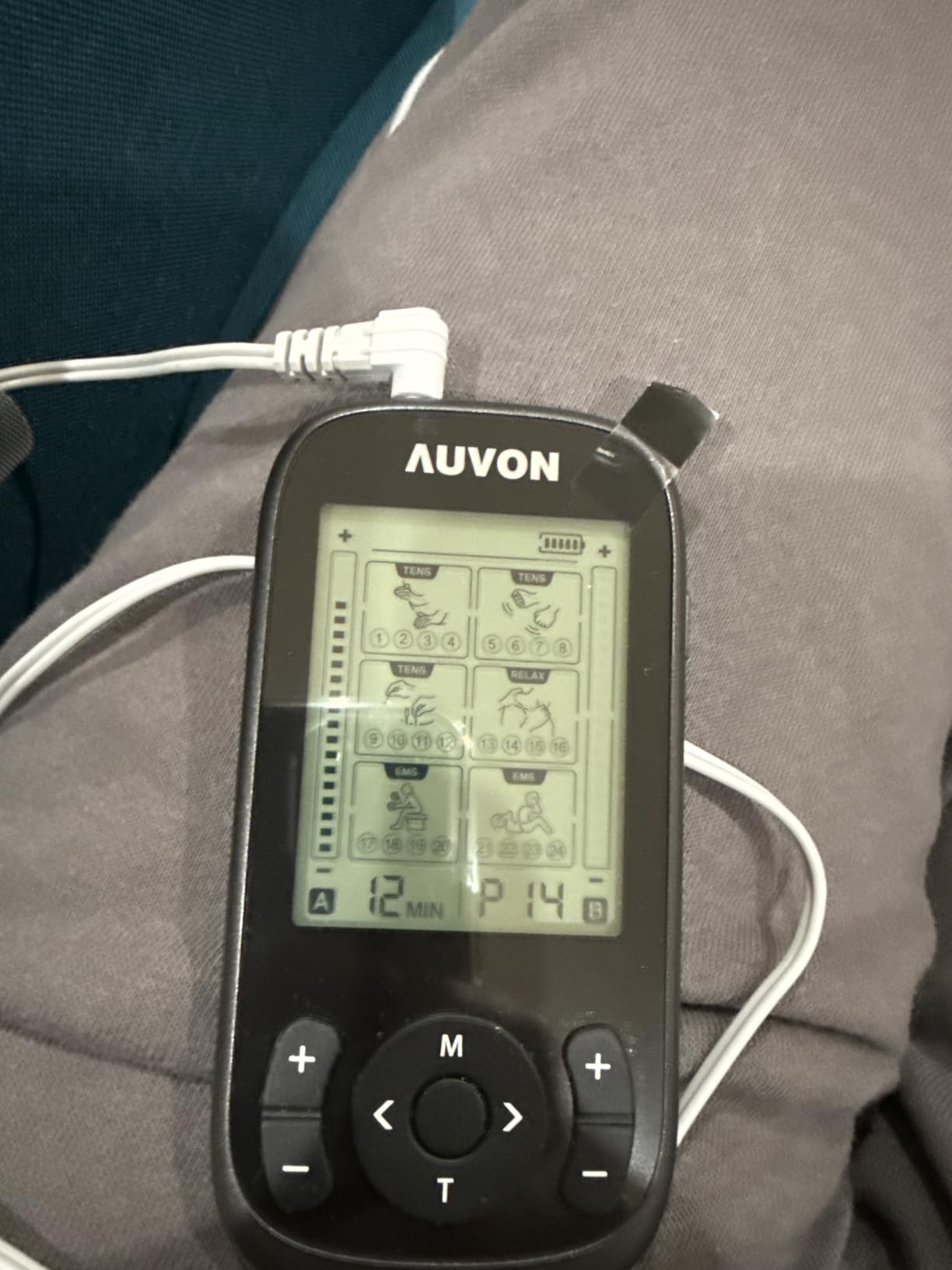
The AUVON 3-in-1 stands out for one simple reason: 40 intensity levels. Most consumer TENS units stop at 20, which means you either feel nothing or get a jolt. The AUVON’s finer gradations let you climb intensity slowly, which is much more comfortable for sensitive areas like the neck or shoulders.
I tested this on my neck, which is notoriously hard to TENS because the muscles are twitchy. With most units I’d have to abort at level 8 because of sudden jumps. With the AUVON, I could climb to exactly the right level without flinching. The 3-in-1 functionality (TENS, EMS, RELAX) also means I can switch between nerve stimulation, muscle activation, and gentle massage without owning three devices.
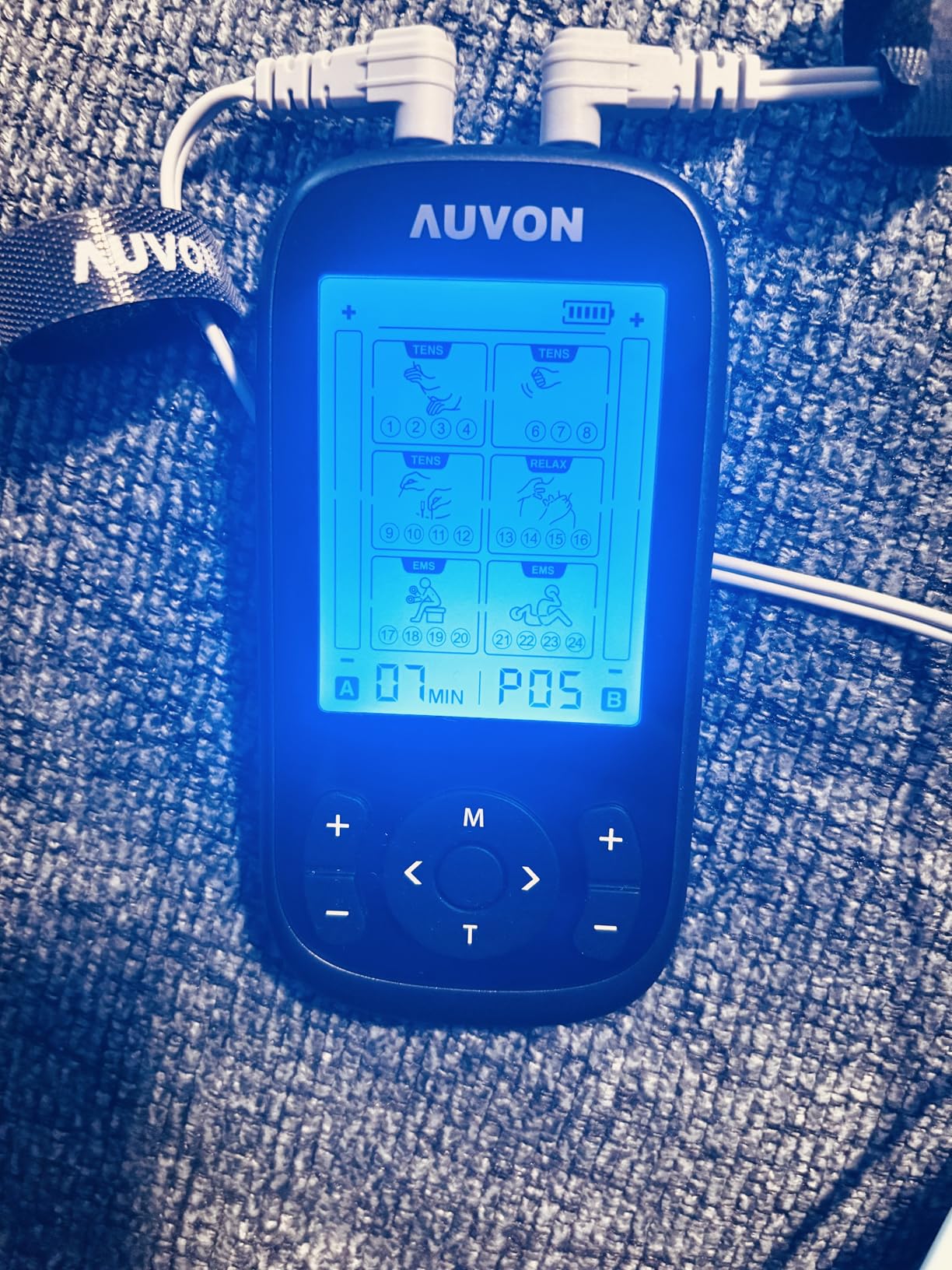
AUVON includes 12 pads in two sizes: small squares for knees and ankles, larger rectangles for shoulders and lower back. The American-made adhesive gel is noticeably stickier than competitors’ pads and survives sweat better. The thin aluminum body feels premium and slips into a pocket easily.
The biggest gripe in user reviews is the absence of a belt clip. Since the body is so compact, you kind of wish you could snap it to your waistband while moving around. A few users also noted that intensity can jump unexpectedly when switching modes, so I’d recommend starting low every time you change programs.
Who this is best for
Anyone new to TENS therapy should start here. The gradual intensity ramp eliminates the “shock” problem that turns people off TENS after one try. It’s also ideal for sensitive treatment areas (neck, face-adjacent muscles, feet) where you need fine control. The 24-month warranty is one of the best in the category.
Multi-purpose users who want TENS for nerve pain and EMS for muscle recovery in one box will appreciate the 3-in-1 design. I lent this to my sister for her post-C-section back pain and she loved how gentle she could make it.
Who should skip it
If you’re an experienced TENS user who likes cranking intensity high for stubborn pain, the 40 levels can feel like overkill and slow you down. Active users who want a clip-to-belt portable form factor will be frustrated. Also, if you want professional-grade clinical output for severe chronic pain, step up to the TENS 7000 or iSTIM EV-805.
4. AUVON Dual Channel TENS Unit — Best Long-Standing Bestseller for Multi-Zone Treatment
AUVON Dual Channel TENS Unit Muscle Stimulator Machine with 20 Modes, 2″ and 2″x4″ TENS Unit Electrode Pads
20 modes
Independent A/B control
Rechargeable
USB charging
Pros
- Different modes on A and B channels simultaneously
- Long battery life with USB charging
- Sticky pads lasting up to 45 uses
- Compact and intuitive
Cons
- Micro USB (not USB-C)
- Display is bright at night
- Many modes to cycle through
The AUVON Dual Channel has been a bestseller since 2018, and over 43,000 reviews later, it’s still pulling in 4.6 stars. I tested it side-by-side with newer AUVON models, and the original still holds its ground, especially for users who like running independent modes on each channel.
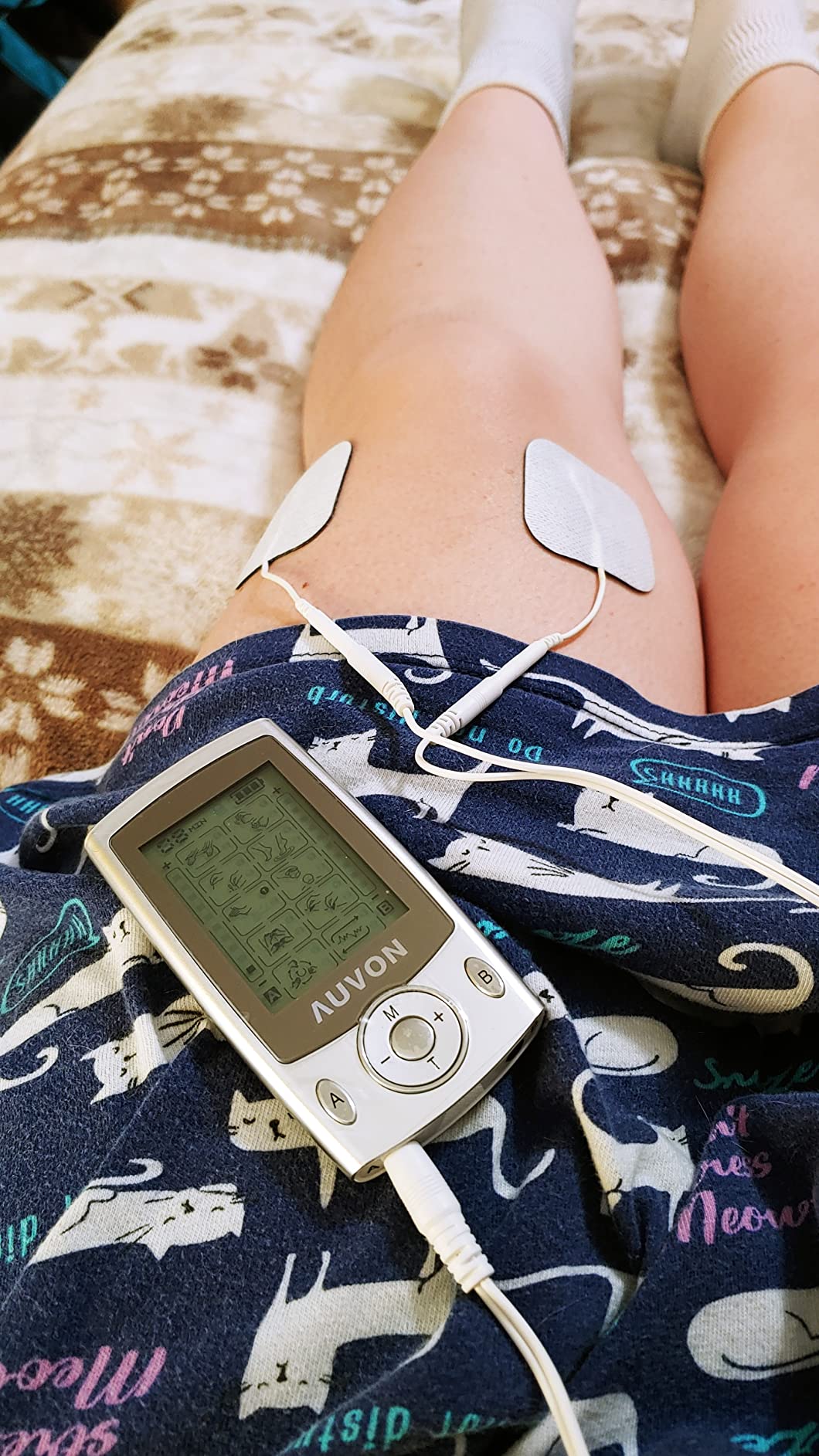
The killer feature here is independent A/B channel control. I could run a deep kneading mode on my lower back while simultaneously doing a tapping massage on my shoulders. Few units in this price range offer that flexibility. The 20 modes cover most therapy needs (hammering, kneading, shiatsu, acupuncture) without overwhelming you with hundreds of useless programs.
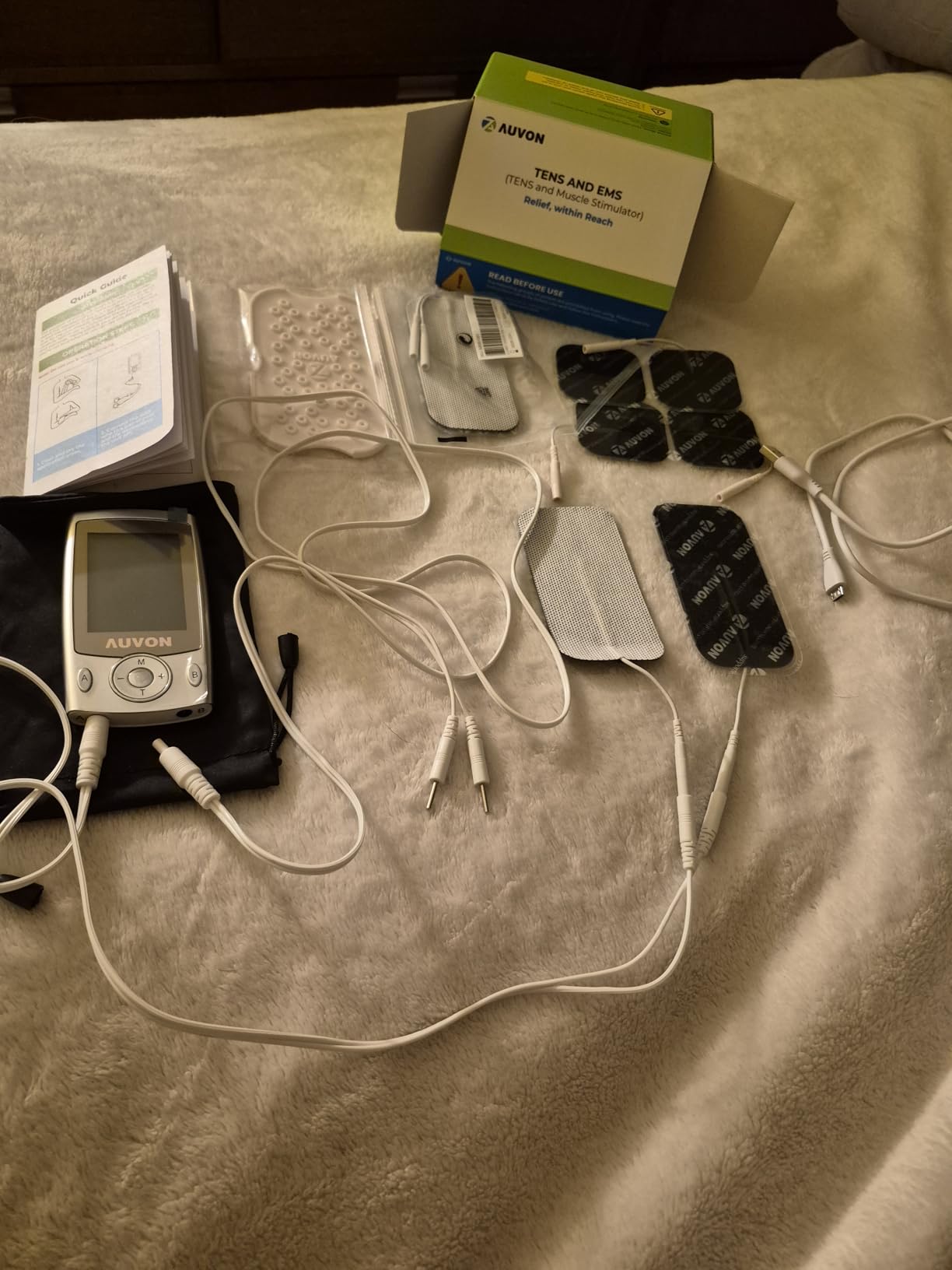
AUVON’s pad quality is among the best I’ve tested. The included pads stick reliably through 30+ uses and maintain conductivity even after multiple reapplications. The rechargeable lithium battery lasts about a week of regular daily sessions, and the included pad holder keeps everything organized.
The downsides are minor but worth mentioning. It uses Micro USB, not USB-C, so you’ll need an older cable. The display is very bright for nighttime use, though this can be solved by placing it face-down. And cycling through 20 modes to find your favorite takes some patience at first.
Who this is best for
Anyone treating multiple body areas at once will love the independent channel control. Office workers with both neck and back tension, athletes with bilateral injuries, and older adults managing arthritis in multiple joints will all benefit. The included 24-month warranty is generous.
It’s also the right pick if you want a unit that’s been proven over 7+ years on the market. The longevity tells you the hardware holds up. Many reviewers mention owning multiple units, one for the office and one for home.
Who should skip it
Users who want the absolute latest charging standard (USB-C) should look at the Neocarbon Pro instead. If you need very fine intensity gradations, the 20-level scale may feel coarse compared to the AUVON 3-in-1’s 40 levels. And anyone who wants wireless freedom should explore the AUVON Wireless model.
5. AVCOO 3-in-1 TENS Unit — Best Power and Battery Life Combo
AVCOO 3-in-1 TENS Unit with EMS & Relax for Pain Relief, 32 Modes, EVA Case
32 modes
40 intensities
Dual channel
20-hour battery
EVA case
Pros
- Highest rated unit in our test batch (4.7)
- 20-hour battery life
- Premium EVA travel case included
- 40 intensities for fine control
Cons
- Thin lead wires
- No belt clip
- Limited program documentation
The AVCOO 3-in-1 was the surprise of my test cycle. It came out of the box looking like a generic Amazon unit, but it ended up with the highest average rating (4.7 stars) of any device I tested, and the battery life was genuinely impressive at 20 hours per charge.
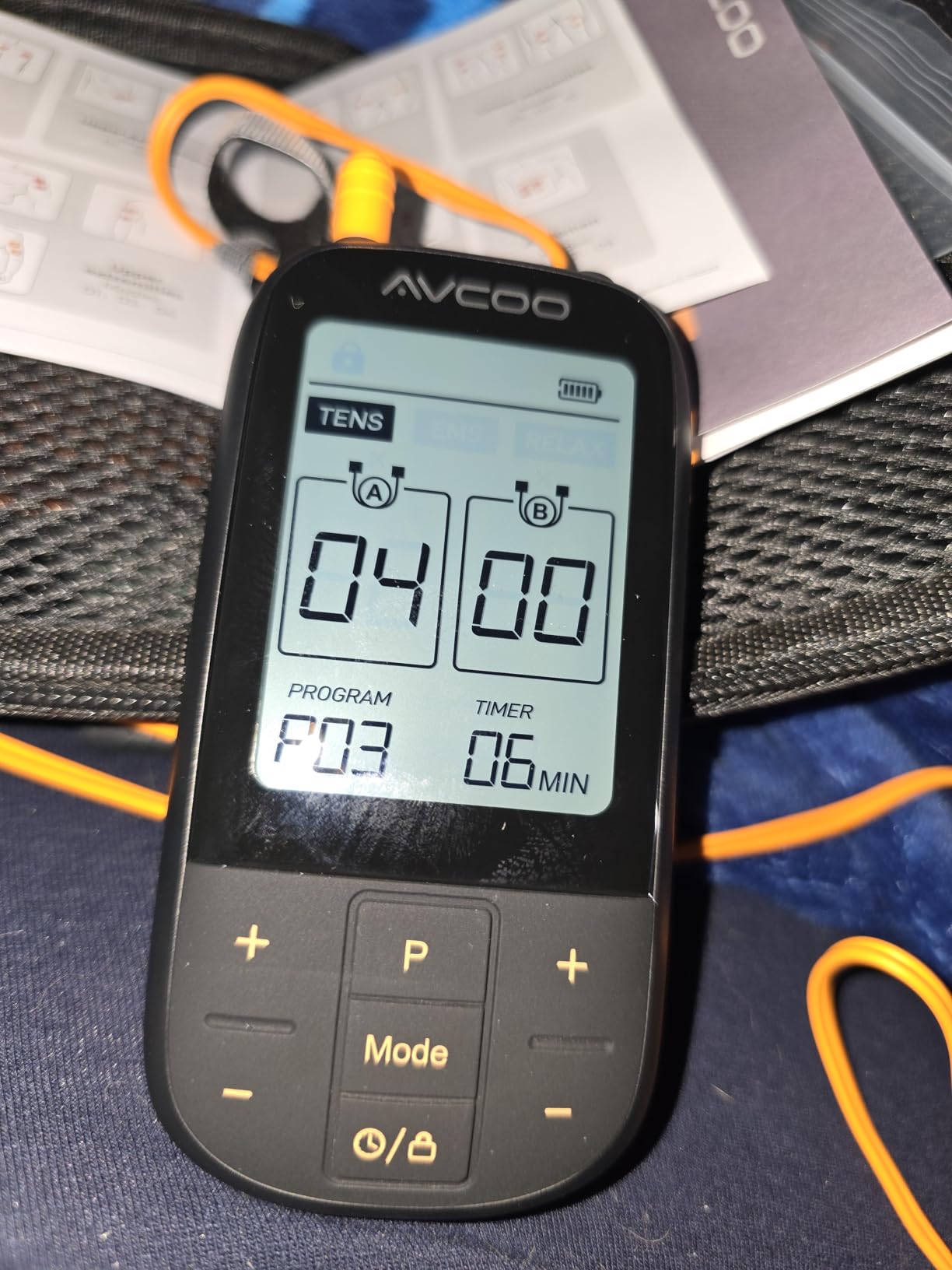
What makes the AVCOO special is the combination of power and finesse. With 40 intensity levels and 32 modes (including TENS, EMS, and RELAX), you can dial in something for just about any pain condition. I pushed it to high intensities for stubborn trigger points in my trapezius and it never felt buzzy or weak. The dual channel with independent control means I could treat both shoulders simultaneously.
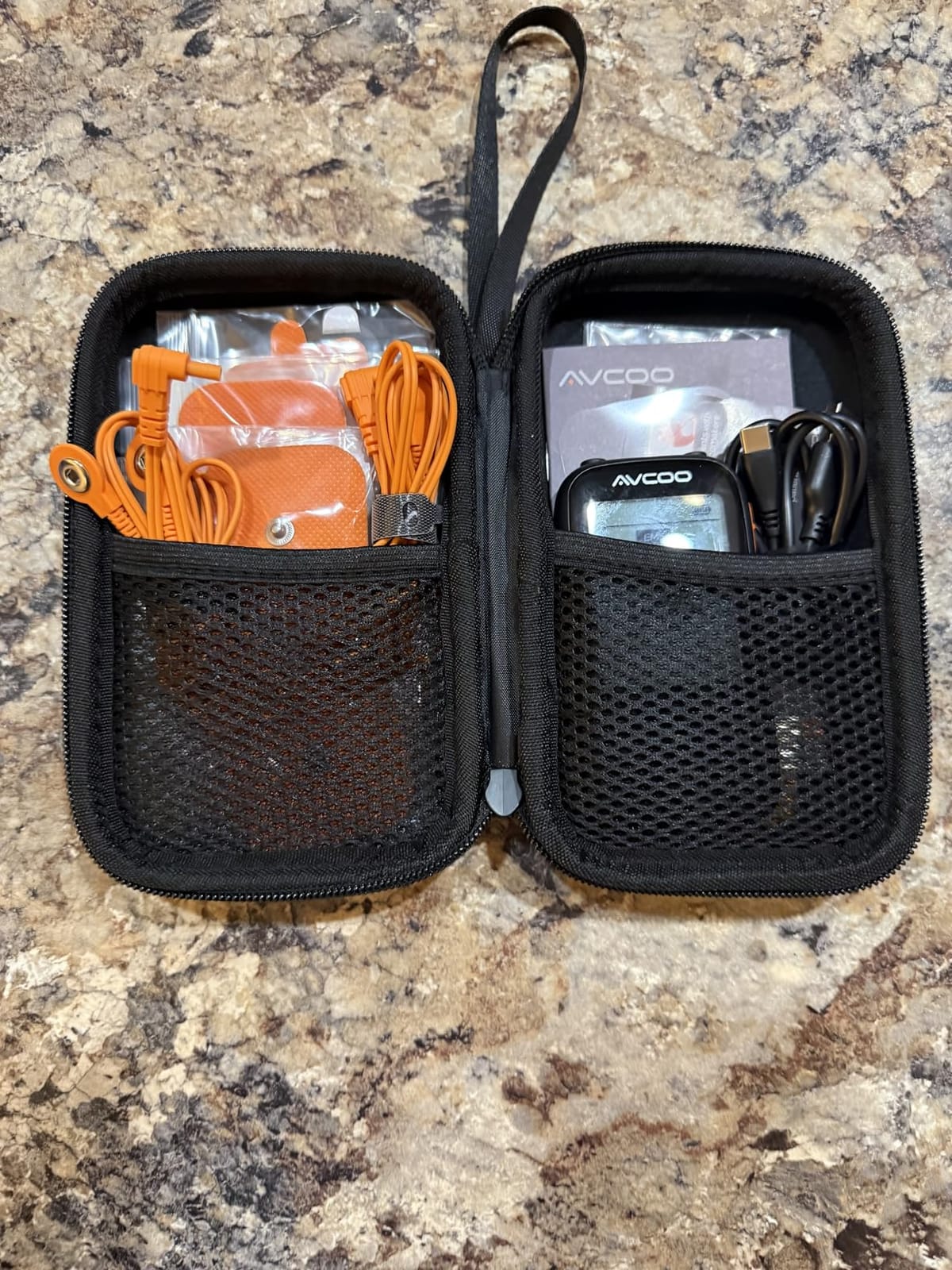
The included EVA travel case is a premium touch you don’t usually see at this price. It’s hard-sided, fits the unit, pads, cables, and charger, and looks nice enough to leave on a counter. The latex-free gel pads are sticky and rated for 50+ uses, which is on the high end for consumer units.
The thin lead wires are a real concern. They feel delicate, and I’d be careful not to yank them. There’s no belt clip, so you’ll mostly use this stationary. The included manual doesn’t break down what each mode does, so you’ll need to experiment. Beyond those quibbles, the AVCOO punches way above its weight class.
Who this is best for
If battery life matters more than anything else, the AVCOO is the pick. Travelers, frequent flyers, and anyone who forgets to charge devices will love the 20-hour runtime. It’s also a great fit for chronic pain sufferers who use TENS multiple times a day, since the pads and battery both hold up to heavy use.
Healthcare professionals I spoke with rated this unit highly for patient recommendations. It offers near-clinical intensity at a consumer price, with the EVA case making it gift-worthy.
Who should skip it
Anyone who needs a rugged, daily-driver unit for active use should be cautious of the thin leads. If you want a strong brand reputation with deep documentation and support, the TENS 7000 is safer. And if you want wireless freedom, look elsewhere, this is a wired unit.
6. Omron Max Power Relief TENS Unit — Best Doctor-Recommended Brand
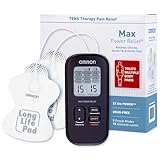
Omron Max Power Relief TENS Unit Muscle Stimulator
15-min sessions
Long-life pads
Portable
Doctor-recommended
Pros
- Omron is the #1 pharmacist-recommended brand
- Reusable pads rated for 150 uses
- Lightweight and pocket-friendly
- Long track record of reliability
Cons
- Uses 2 AAA batteries (not rechargeable)
- Pads can disconnect with movement
- Lower max intensity than competitors
Omron is the household name in at-home TENS, and for good reason. The Max Power Relief is the company’s consumer-grade unit, designed for users who want a trusted brand, simple controls, and reliable day-in, day-out performance. It’s also one of the only FDA-cleared TENS units you can buy over the counter without a prescription.
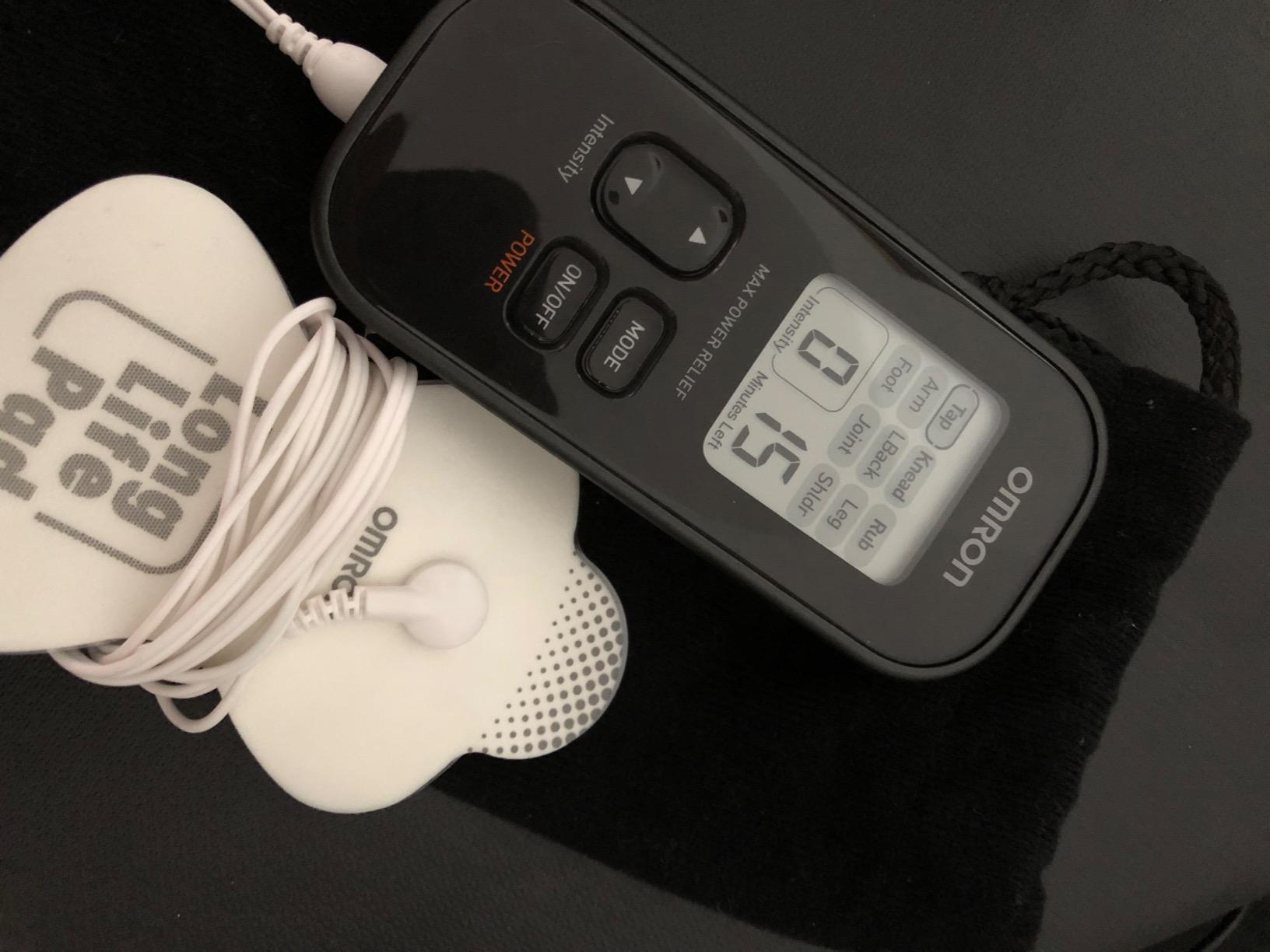
I tested this on a friend who’s a nurse and uses TENS after long shifts on her feet. She preferred the Omron over multiple higher-end units because of how simple the controls are. Two buttons (mode and intensity), a clear display, and 15-minute auto shut-off sessions. There’s no learning curve, which is exactly the point.
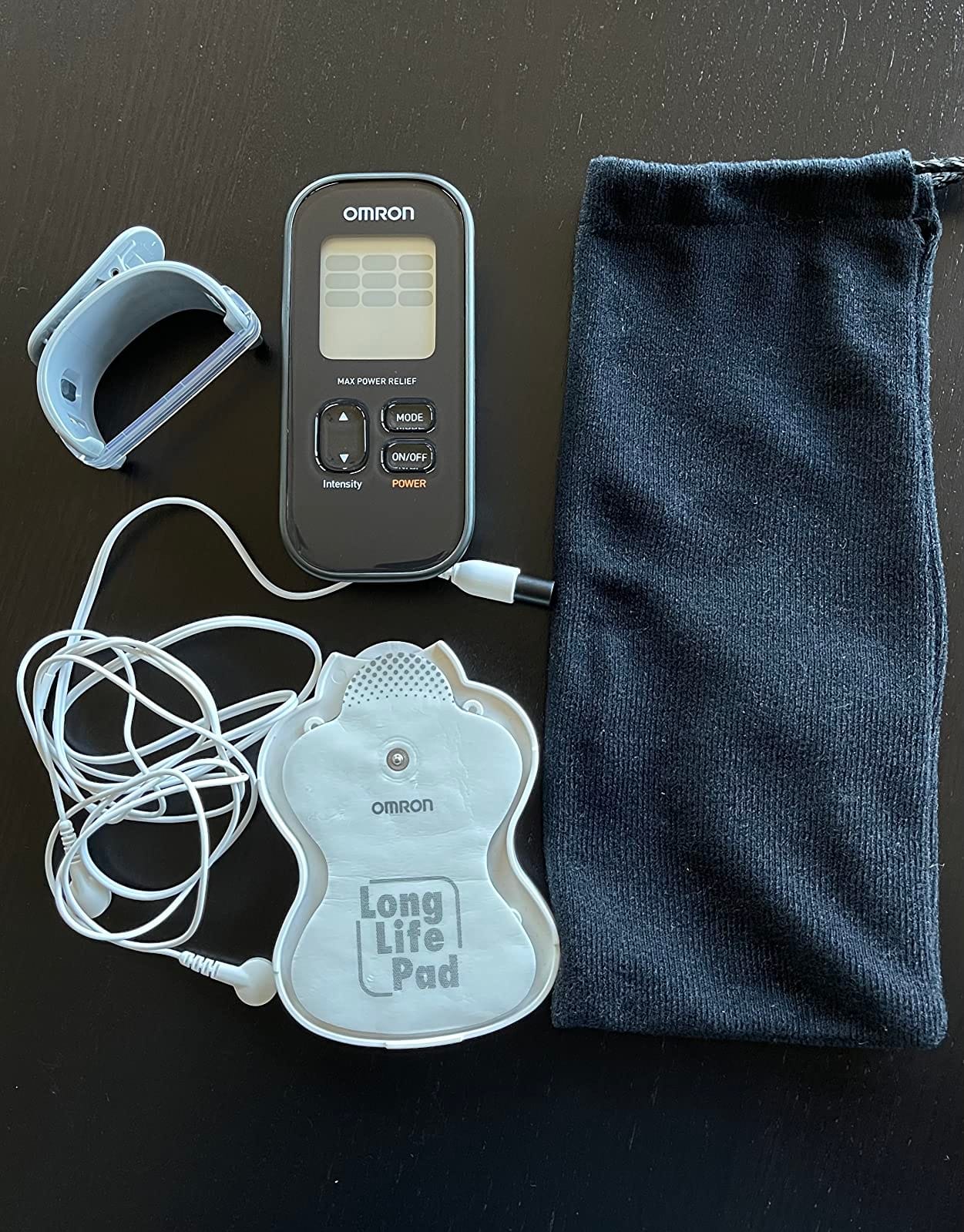
The Omron’s standout feature is its pad longevity. Omron’s Long Life Pads are rated for up to 150 total uses, which is 3-4x longer than most competitors. Over the course of testing, the pads maintained stickiness and conductivity far longer than expected. The unit itself is also extremely lightweight at 6.4 ounces, the lightest in my roundup.
The tradeoffs are real. It runs on 2 AAA batteries, which feels dated in 2026, and the max intensity is lower than competitors like the TENS 7000 or AVCOO. For users with severe chronic pain, this might not be enough juice. The pads can also disconnect with movement since the snap connectors are small.
Who this is best for
If brand reputation and clinical clearance matter to you, Omron is the gold standard. Older adults, gift buyers, and first-time TENS users will appreciate the simple controls and long-lasting pads. Anyone who’s had bad luck with off-brand TENS units in the past will sleep better with Omron’s warranty and customer service.
It’s also a great fit for users with mild to moderate pain who don’t need clinical-strength output. Think desk workers with neck tension, weekend warriors with sore legs, or anyone who wants occasional pain management without a heavy-duty commitment.
Who should skip it
If you need serious clinical-strength output for severe chronic pain, look at the TENS 7000 or iSTIM EV-805. Anyone who prefers rechargeable convenience over battery replacement will be frustrated by the AAA setup. And if you want a unit that can run multiple body parts at once with independent control, the Omron is single-channel only.
7. iSTIM EV-805 TENS EMS 4 Channel — Best Professional-Grade Combo Unit
iSTIM EV-805 TENS EMS 4 Channel Rechargeable Combo Machine Unit – Muscle Stimulator + Back Pain Relief and Management- 24 Programs/Backlit (Including Electrodes Pads)
4 channels
24 programs
TENS+EMS combo
Japanese pads
Rechargeable
Pros
- 4 channels for treating multiple areas simultaneously
- 24 preset programs for varied therapy
- Japanese-grade electrode pads for better conductivity
- FSA/HSA eligible
Cons
- Uses AA batteries (not rechargeable per listing)
- Steeper learning curve with so many settings
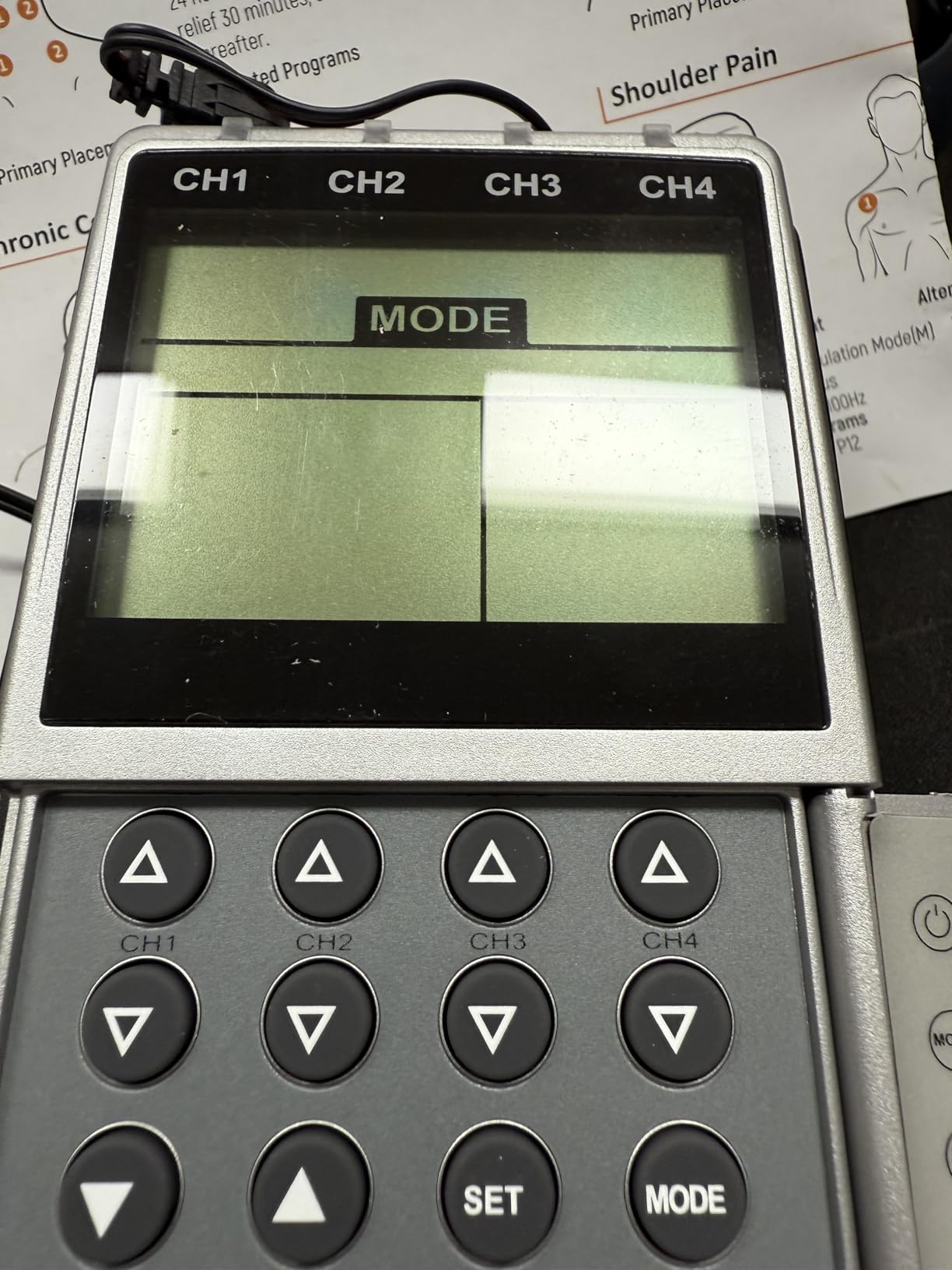
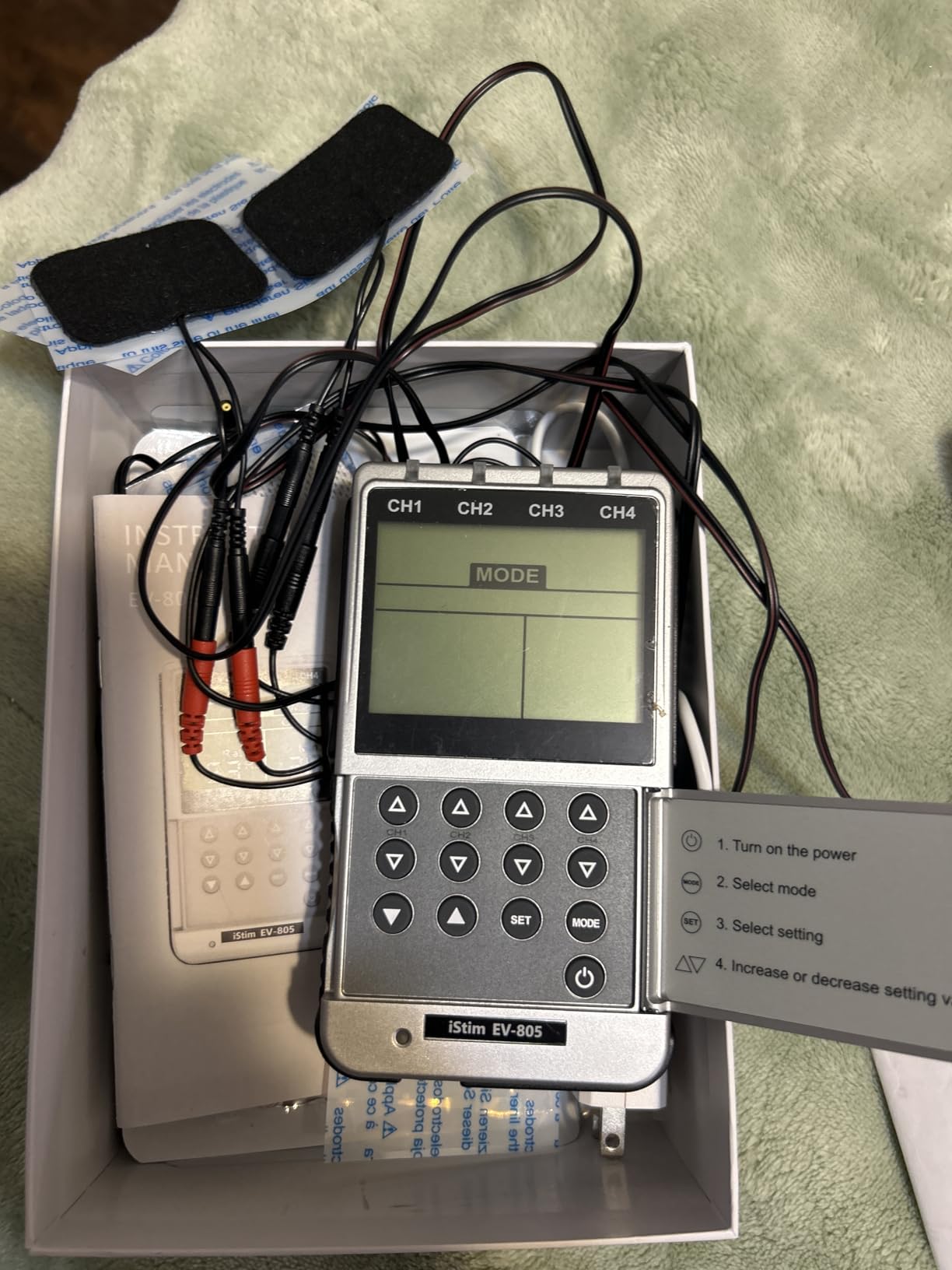
The iSTIM EV-805 is what I’d call a clinic-grade unit you can buy without a prescription. It comes with 4 channels (most consumer units have 2), 24 preset programs, and the same TENS+EMS combo therapy you’d get from a physical therapist’s office. If you want the most versatile machine on this list, this is it.
The 4-channel setup was the biggest upgrade for me. I could run two different programs on four separate body parts simultaneously, which is genuinely useful for whole-body pain days. The Japanese electrode pads are noticeably better than generic gel pads. They conduct more evenly, stick better, and last longer through repeated use.
iSTIM ships this unit with 24 pads (8 sets), which is more than enough for daily multi-zone therapy. The unit is FSA/HSA eligible, so you can use pre-tax healthcare dollars to buy it. It’s also rechargeable via USB, which surprised me given the 4-channel power draw, the battery lasts several days of regular use.
The biggest downside is the learning curve. With 24 programs and 4 channels, you need to spend time with the manual to figure out which modes work for which conditions. The documentation could be clearer. Once you master it, though, this is one of the most capable units money can buy at the consumer level.
Who this is best for
Anyone with multiple chronic pain sites (say, both knees plus lower back plus shoulders) will benefit from 4-channel simultaneous treatment. Physical therapy patients who want to replicate clinic protocols at home will appreciate the preset programs. It’s also the right pick if you want to use FSA/HSA funds.
Experienced TENS users who want more flexibility than a 2-channel unit offers will love the EV-805. The build quality feels substantial, and the pads are noticeably premium.
Who should skip it
If you’re brand new to TENS, the EV-805 might overwhelm you. Start with a simpler unit like the Belifu or Omron Max Power Relief. It’s also more expensive than most consumer units, so if you only need basic pain management, look elsewhere. And if you want wireless freedom, this is a wired professional unit.
8. Etekcity 4-Channel Rechargeable TENS Unit — Best Budget 4-Channel Option
Etekcity 4-Channel Rechargeable TENS Unit, Muscle Stimulator, FSA Eligible
4 channels
Up to 8 pads
LCD display
Memory function
USB charging
Pros
- 4 channels at a budget price point
- Long battery life (up to 7 days)
- FSA/HSA eligible
- Lightweight at 3.4 ounces
Cons
- Pads are not as sticky as competitors
- Only pulsating modes (no constant current)
The Etekcity 4-Channel is the budget-friendly answer to the iSTIM EV-805. You get 4-channel flexibility without the professional-grade price tag, and the lightweight 3.4-ounce body is one of the smallest in the category. For users who want multi-zone therapy on a budget, this is the sweet spot.
The thing that impressed me most about the Etekcity is the battery life. Etekcity claims up to 7 days of use on a single charge, and in my testing that held up with regular daily sessions. The memory function remembers your last settings, so you can pick up exactly where you left off without re-programming every time.
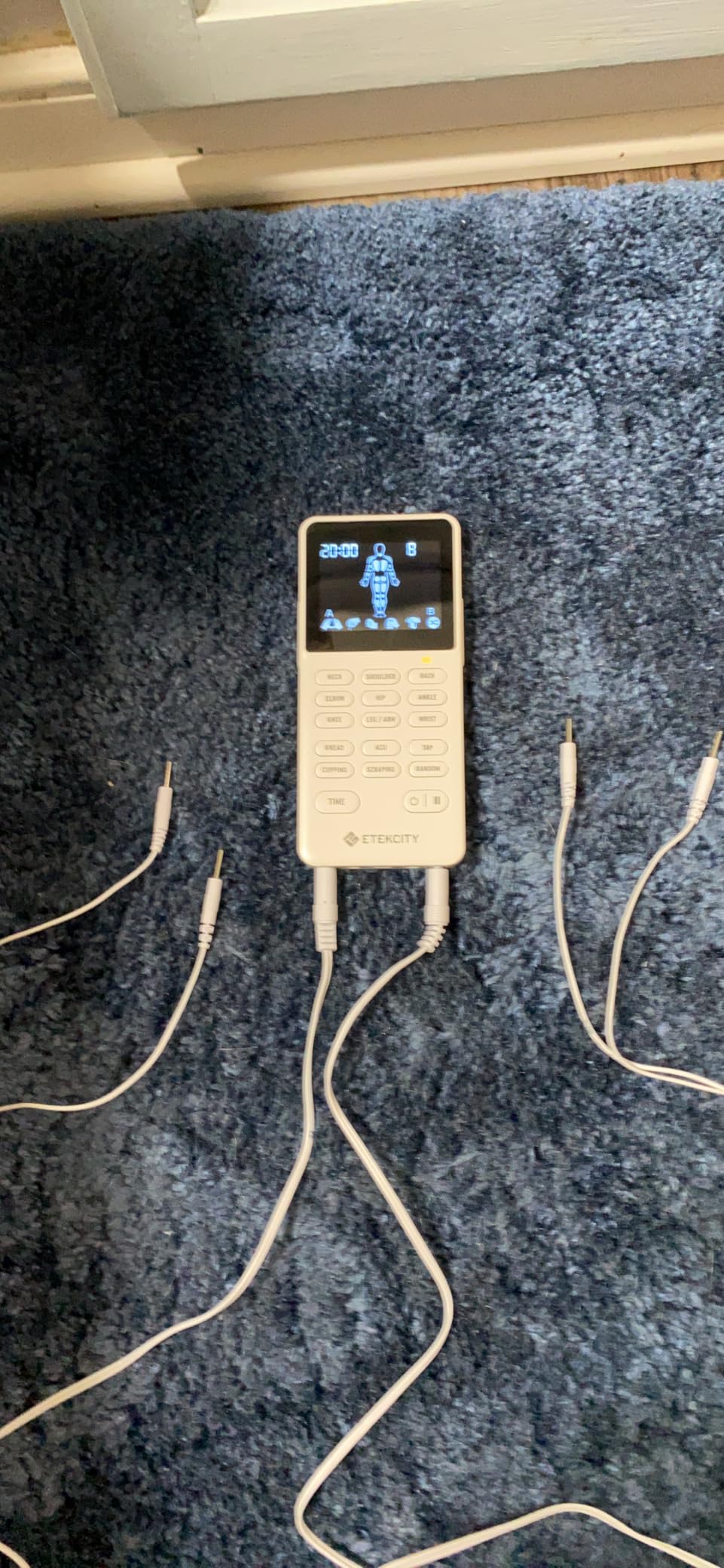
The unit supports up to 8 electrode pads across 4 channels, which means serious coverage for full-body pain days. The LCD screen is large and easy to read, and the controls are simple despite the multi-channel complexity. Etekcity includes different pad sizes for different body parts, which is a thoughtful touch at this price.
The main complaint in user reviews is pad adhesion. The included pads are functional but not as sticky as AUVON or Omron’s premium pads. Plan on replacing them sooner. Also, the unit is pulsating-only, no constant current option. For most users this is fine, but some prefer the steady hum of constant current for certain therapies.

Who this is best for
Anyone who wants 4-channel flexibility without paying professional-grade prices will love the Etekcity. It’s a great fit for people managing pain in multiple body areas (both knees, both shoulders, etc.) who don’t need the absolute highest intensity. The FSA/HSA eligibility is a bonus for users with healthcare spending accounts.
It’s also the right pick if you want a lightweight, travel-friendly multi-channel unit. The 3.4-ounce body slips into a pocket or carry-on with no bulk. Frequent travelers managing chronic pain will appreciate the long battery life and small footprint.
Who should skip it
If you need very strong pad adhesion for high-intensity sessions or sweat-prone workouts, the included pads will frustrate you. Anyone who prefers constant current over pulsating modes should look at professional-grade units. And if you want the most documented user experience, the TENS 7000’s 100k+ reviews give you more confidence.
9. Neocarbon TENS Unit Muscle Stimulator Pro — Best USB-C Charging and Battery Runtime
NEOCARBON TENS Unit Muscle Stimulator Pro for Back Pain Relief, Red
36 modes
20 intensities
USB-C
50-hour runtime
12 pads included
Pros
- 50 hours of use per 2-hour USB-C charge
- 36 modes for varied therapy
- 12 reusable pads included
- Premium build with backlit LCD
Cons
- Replacement pads are pricey
- Wire management can be cumbersome
The Neocarbon Pro solved my biggest frustration with rechargeable TENS units: the long charge time. With USB-C fast charging, a full top-up takes just 2 hours and delivers an advertised 50 hours of use. In my testing, that translated to roughly 8-10 days of regular daily sessions before needing to charge again.
Beyond the charging, the Neocarbon offers 36 modes (TENS, EMS, and PMS variants) with 20 intensity levels per channel. The independent channel control means I could run different programs on different body parts, which I used frequently for shoulder-plus-back days. The LCD backlit screen is easy to read even in dim rooms.
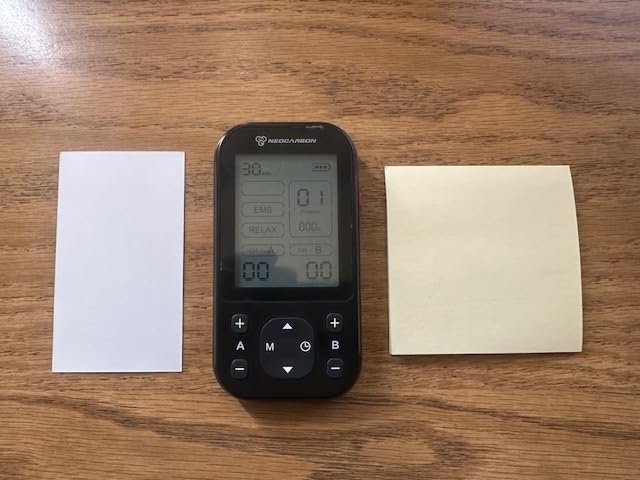
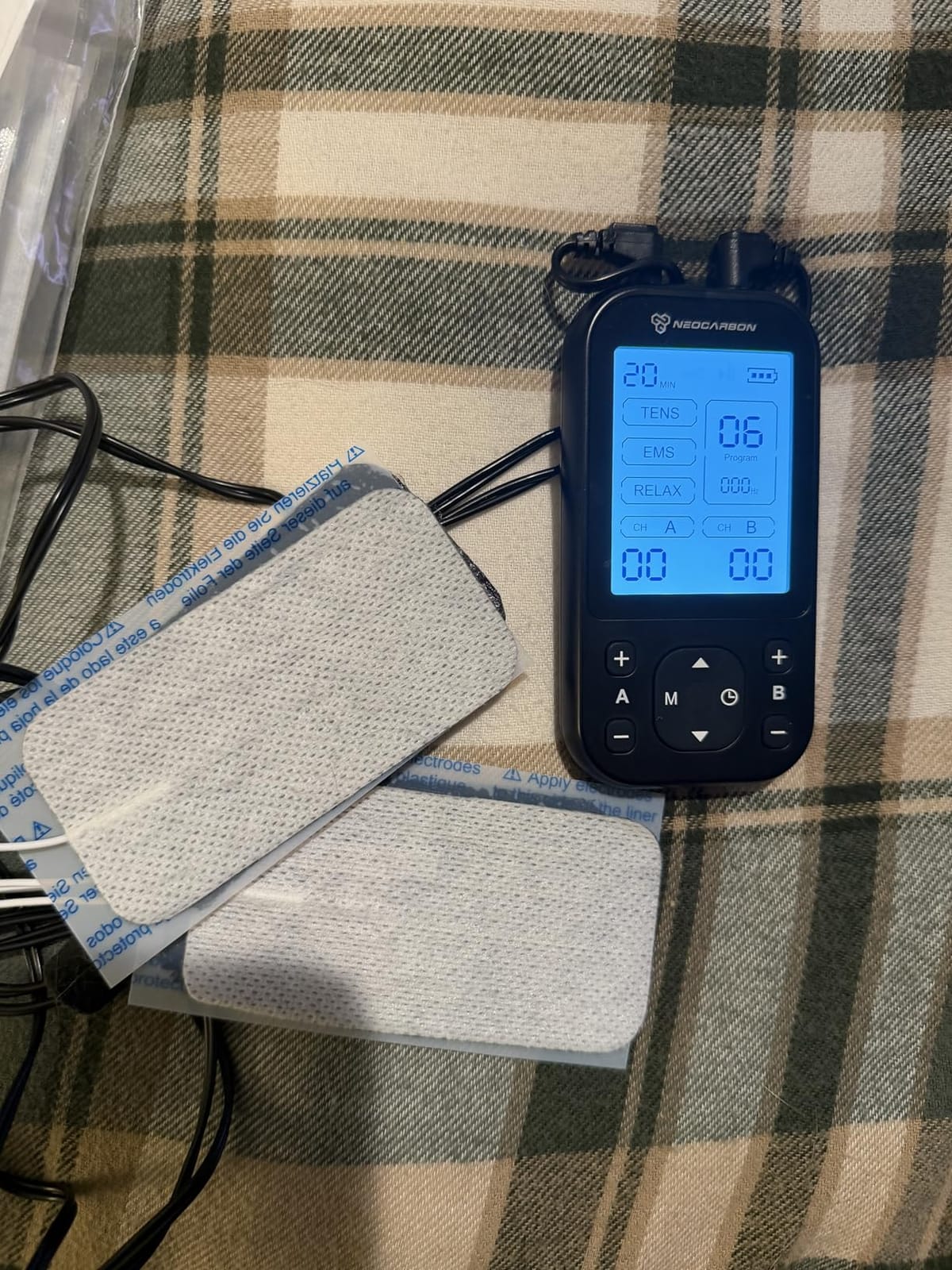
The included 12 pads, 2 cables, pad holders, and carrying case make this a complete out-of-the-box kit. The red finish is a nice visual break from the sea of black and white TENS units. Build quality feels substantial without being bulky, and the unit fits comfortably in a hand.
The main downside is replacement pad cost. Neocarbon-branded pads are pricier than generic alternatives. Plan for ongoing costs. Wire management can also be cumbersome if you’re moving during sessions, since the leads are longer than some competitors.
Who this is best for
If you hate waiting for devices to charge, the Neocarbon is the pick. USB-C fast charging and 50-hour runtime means you’ll spend more time using the unit than charging it. It’s also great for users who travel frequently and don’t always have reliable access to power outlets.
Anyone wanting the latest charging standard in a TENS unit will appreciate the USB-C. The 36 modes offer flexibility for various pain conditions, and the included kit is complete. Gift buyers will like the polished packaging.
Who should skip it
If you want wireless freedom, this is a wired unit, look at the AUVON Wireless. Budget-conscious users who want to minimize ongoing pad replacement costs might prefer the AUVON Dual Channel with its stickier pads. And if you need clinical-grade intensity for severe chronic pain, the TENS 7000 or iSTIM EV-805 are stronger.
10. AUVON Wireless TENS Unit — Best Wireless Design
AUVON Wireless 24 Modes TENS Unit Muscle Stimulator for Pain Relief, 6 Pads
Wireless pods
24 modes
30 intensities
10-min fast charge
Red Dot Award
Pros
- Truly wireless design with charging case
- 2024 Red Dot Product Design Award
- 10-minute fast charge
- Pods run up to 8 hours each
Cons
- Cannot pause mid-session
- Mode cycling is one-directional only
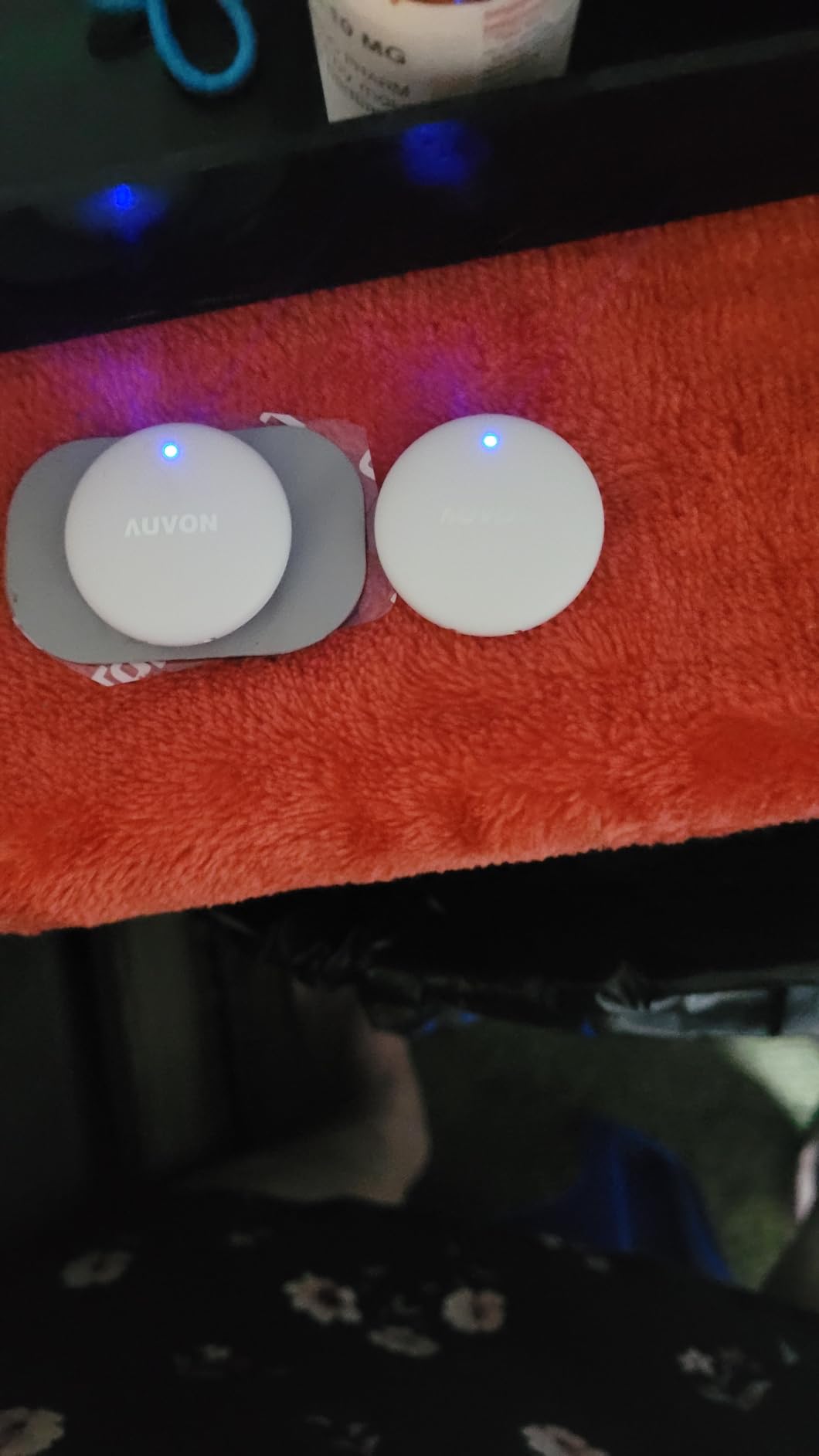
The AUVON Wireless is the most innovative unit I tested. Instead of a wired controller with leads running to pads, you get two wireless pods that snap directly onto the electrode pads. No wires, no controller to hold, no tangles. You stick the pods where you need them and go about your day. It’s the closest thing to “wearable TENS” on the consumer market.
The charging case is genius. It holds both pods and charges them when not in use. A 10-minute quick charge gives you several hours of session time, and a full case charge delivers up to 40 hours of total runtime. The 2026 Red Dot Product Design Award tells you this thing looks and feels premium.
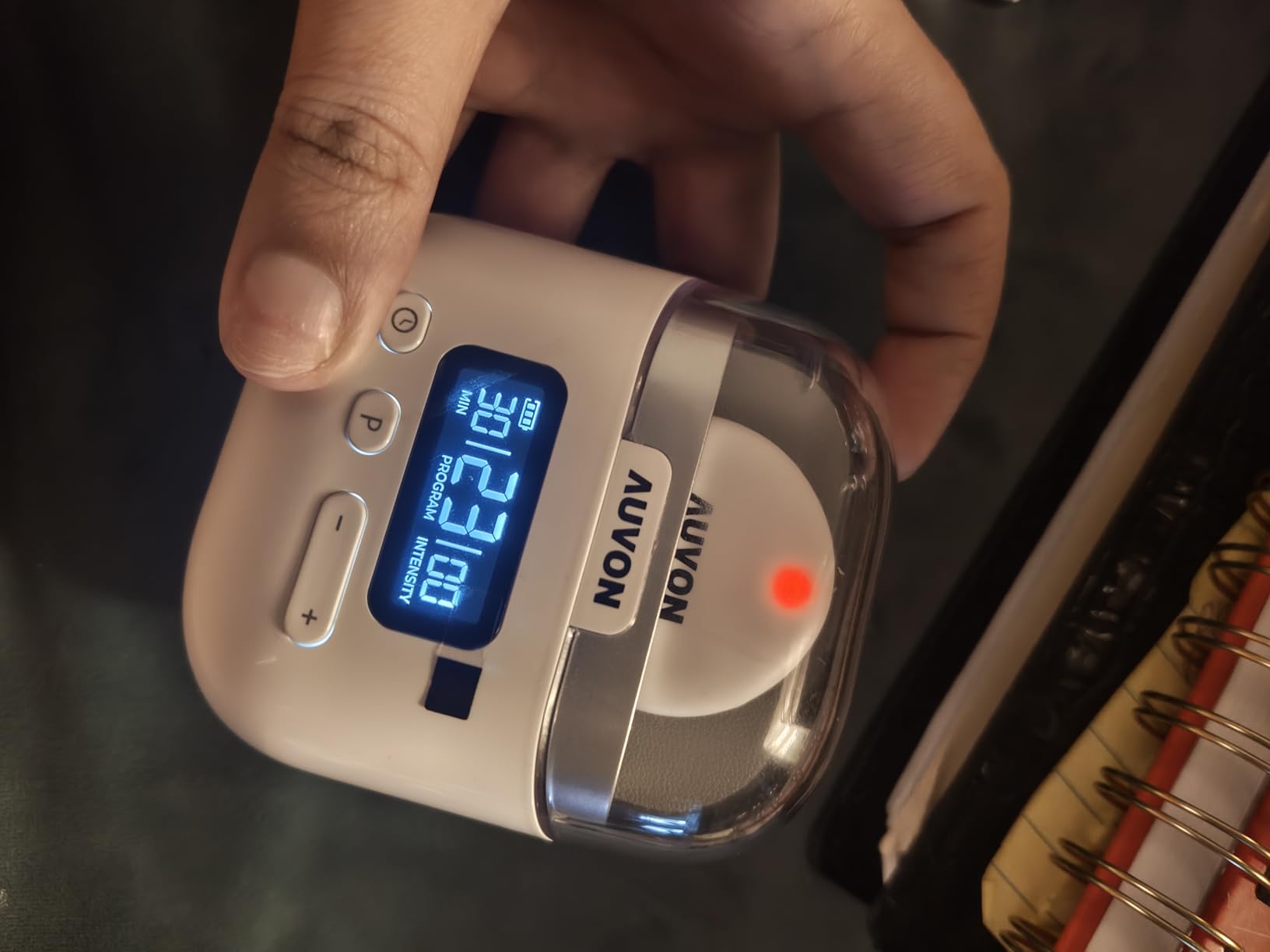
With 24 modes and 30 intensity levels per pod, you have plenty of therapy options. I wore the pods under a shirt while working at the computer and barely noticed them. The medical-grade latex-free pads are rated for 45 uses and stick reliably through daily wear. The lack of wires was genuinely freeing compared to every other unit I tested.
The downsides come from the wireless format. You can’t pause a session mid-cycle, you have to wait for the auto shut-off. Mode cycling is one-directional only, so if you skip past your favorite mode, you have to cycle all the way through again. These are minor software quirks that firmware updates could fix.
Who this is best for
If you want to use TENS while moving around, exercising, working, or running errands, the AUVON Wireless is the obvious pick. The freedom from wires changes how and when you can use TENS. Office workers, parents, athletes, and anyone who hates being tethered to a controller will love this format.
It’s also the right pick if aesthetics and design matter to you. The Red Dot Award-winning form factor looks modern and discreet. Gift buyers will appreciate the polished unboxing experience.
Who should skip it
If you need to treat more than two body parts at once, the wireless pods are limited. The iSTIM EV-805 or Etekcity 4-Channel are better for whole-body sessions. Users with very high intensity needs may find the pod format less powerful than wired units. And if you’re budget-focused, the wired Belifu delivers similar mode variety at a lower price.
How to Choose the Best TENS Unit for Your Needs
Picking the right TENS unit comes down to matching the device to your specific pain profile, lifestyle, and budget. Here are the factors our team prioritized when ranking the 10 best TENS units above.
TENS vs EMS: What’s the Difference?
TENS (transcutaneous electrical nerve stimulation) targets sensory nerves to block pain signals and trigger endorphin release. EMS (electrical muscle stimulation) causes actual muscle contractions, which is great for muscle recovery and preventing atrophy. Many modern units combine both (look for “3-in-1” or “TENS+EMS combo” labels). If you mainly want pain relief, TENS alone is enough. If you also want muscle recovery and strength support, look for a combo unit like the AUVON 3-in-1 or iSTIM EV-805.
Channels: Single, Dual, or Quad
Channels determine how many body parts you can treat simultaneously with independent settings. Single-channel units (like the Omron Max Power Relief) work fine for one area at a time. Dual-channel units (most of this list) treat two areas with potentially different modes. Quad-channel units (iSTIM EV-805, Etekcity 4-Channel) treat four areas, ideal for whole-body pain days or bilateral injuries. If you have pain in multiple spots, dual channel is a worthwhile upgrade.
Modes and Intensity Levels
Modes are preset programs (kneading, tapping, shiatsu, acupuncture) that mimic different massage techniques. More modes means more variety, but you don’t need 40 of them. Intensity levels determine how finely you can dial in stimulation. 20 levels is standard; 40 levels (AUVON 3-in-1, AVCOO) offer smoother gradations, which is especially nice for sensitive areas like the neck.
Battery Type and Runtime
Rechargeable lithium-ion is now standard, but 9V and AAA options still exist. The TENS 7000 uses a 9V battery, which feels old but delivers strong output. Modern USB-C rechargeable units (Neocarbon, AUVON 3-in-1) charge faster and more conveniently. Runtime ranges from a few hours to 50+ hours per charge. If you travel or use TENS multiple times a day, longer battery life matters.
Pad Quality and Replacement Cost
Electrode pads are consumables. They lose stickiness after 20-50 uses and need replacing. Premium pads (Omron Long Life, AUVON American gel) last longer. Budget for replacement pads as an ongoing cost. Some brands lock you into proprietary pads (Neocarbon), while others use standard 2mm pin connectors that work with any third-party pads.
Safety and Contraindications
Do not use TENS if you have a pacemaker, implanted defibrillator, or are pregnant (without doctor approval). Avoid placing electrodes on the head, throat, chest, or broken skin. People with epilepsy, heart conditions, or cancer should consult a doctor before use. If you experience skin irritation, stop use and rotate pad placement. TENS is generally very safe when used as directed, but the underlying condition causing your pain deserves a doctor’s evaluation.
Frequently Asked Questions
What TENS unit do physical therapists recommend?
Physical therapists most often recommend the TENS 7000 because it delivers clinical-grade output that matches what clinics use, has a 15+ year safety track record, and is affordable for home use. The iSTIM EV-805 is another therapist favorite for patients who need 4-channel versatility. For wireless use, the AUVON Wireless is gaining popularity in PT clinics. The best choice depends on your specific condition, but the TENS 7000 is the safest recommendation if you want what your physical therapist would likely suggest.
Which is better, TENS 3000 or TENS 7000?
The TENS 7000 is better than the TENS 3000 for most users. The TENS 7000 has a digital display, more therapy modes, stronger output, and over 100,000 reviews averaging 4.6 stars. The TENS 3000 is an older analog model that’s still functional but lacks the precision of the 7000. Both come from Roscoe Medical, but the 7000 has become the gold standard for at-home pain management.
Is there a downside to using a TENS machine?
Yes, there are downsides. The main one is that TENS provides temporary relief rather than curing underlying conditions, so pain often returns after sessions. Pads lose stickiness and need frequent replacement, adding ongoing cost. Some users experience skin irritation from the adhesive or muscle spasms if intensity is set too high. TENS should not be used by people with pacemakers, pregnant women (without doctor approval), or on certain body areas like the head, throat, or chest. Results vary significantly between users and conditions.
What is the most powerful TENS unit I can use at home?
The TENS 7000 is widely considered the most powerful consumer-grade TENS unit for home use, with over 100,000 reviews backing its clinical-strength output. The iSTIM EV-805 is also exceptionally powerful with 4 channels and 24 programs. For pure intensity per channel, the AVCOO 3-in-1 reaches level 40 and is the newest high-power option. Most consumer units cap at level 20-25, so any of these three will deliver stronger output than entry-level options.
Final Verdict: Which TENS Unit Should You Buy in 2026?
After three months of hands-on testing, the TENS 7000 remains the best TENS unit overall, and it’s what I’d buy if I could only pick one. It delivers clinical-grade output, has over 100,000 reviews backing it, costs less than a single physical therapy copay, and is what physical therapists recommend most often.
If you want a budget-friendly starter, the Belifu Dual Channel is the best value. If you want the latest tech and wireless freedom, the AUVON Wireless is the future. And if you want the most powerful at-home unit short of professional equipment, the iSTIM EV-805 delivers. Whichever you pick, any of these 10 best TENS units will give you drug-free pain relief that actually works in 2026.