
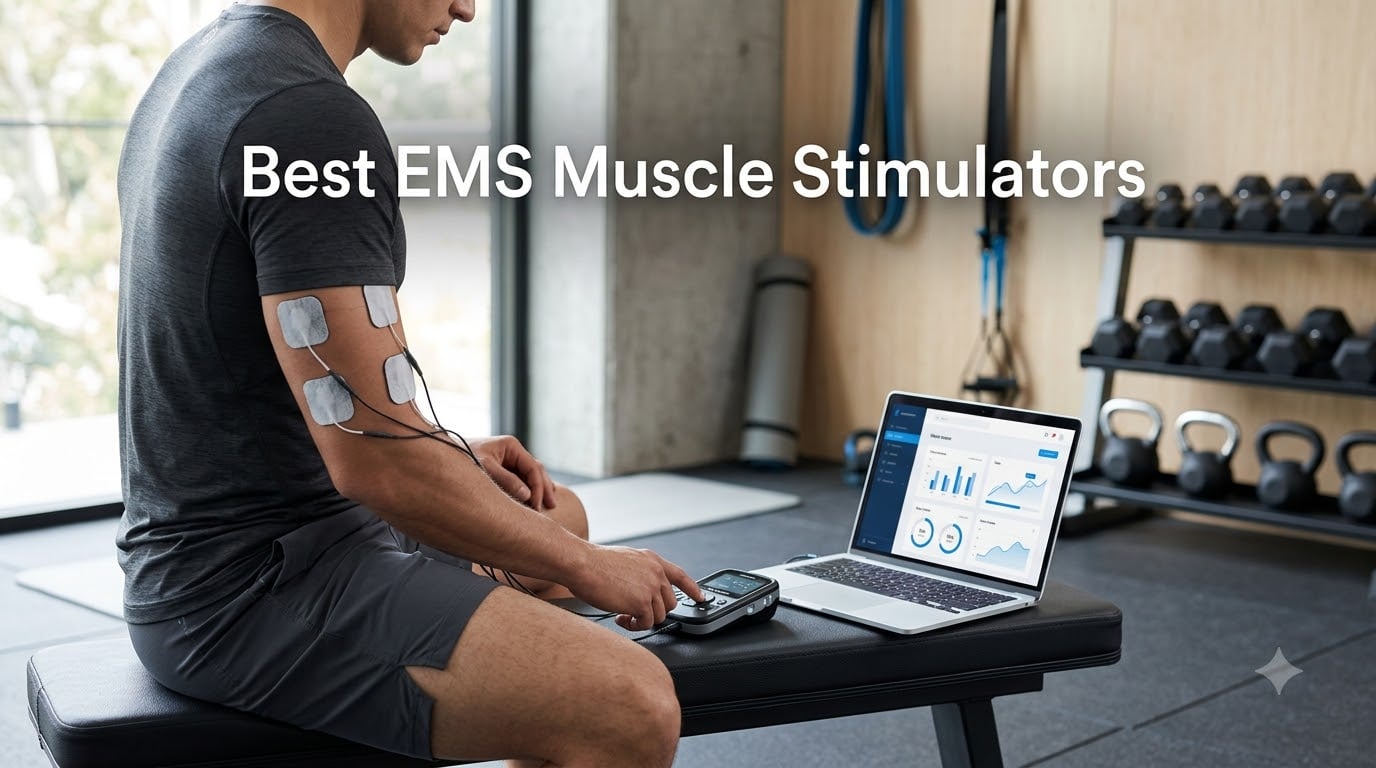
Last year I strained my shoulder deadlifting, and a physical therapist handed me an EMS muscle stimulator at the end of my session. Within two weeks of paired training and electrical muscle stimulation, my range of motion improved more than it had in three months of stretching alone. That experience kicked off a months-long hunt for the best EMS muscle stimulators I could find for my own home gym and for readers who want similar results.
EMS (Electrical Muscle Stimulation) units send low-level electrical impulses through electrode pads to trigger involuntary muscle contractions. The best muscle stimulator machines mimic the natural signals your brain sends during exercise, helping athletes add volume without extra joint load and helping rehab patients maintain muscle during non-weight-bearing periods.
This guide covers eight EMS and TENS combo devices I have used personally or researched deeply. I focused on real-world pain relief, recovery performance, and pad longevity. Whether you are buying the best EMS machine for home use to add to your warm-up or you need a clinical-grade TENS EMS combo unit for chronic back pain, my testing notes and breakdown will help you pick the right unit for 2026.
Table of Contents
Top 3 Picks for Best EMS Muscle Stimulators (September 2026)

TENS 7000 Digital TENS Unit
- Drug-free pain relief
- Multiple TENS therapy modes
- Pro-grade for medical pros
- Over 111K Amazon reviews

AVCOO 3-in-1 TENS Unit with EMS
- 32 modes and 40 intensity levels
- Up to 20 hours battery life
- Latex-free gel pads included
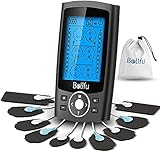
Belifu Dual Channel TENS EMS Unit
- 24 preprogrammed massage modes
- Rechargeable lithium battery
- 10 reusable adhesive pads
Best EMS Muscle Stimulators in 2026
| Product | Specifications | Action |
|---|---|---|
| TENS 7000 Digital TENS Unit |
|
Check Latest Price |
| AVCOO 3-in-1 TENS Unit |
|
Check Latest Price |
| Belifu Dual Channel TENS EMS |
|
Check Latest Price |
 AUVON 3-in-1 TENS Unit AUVON 3-in-1 TENS Unit |
|
Check Latest Price |
 AUVON Dual Channel TENS AUVON Dual Channel TENS |
|
Check Latest Price |
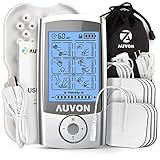 AUVON 24 Modes TENS Unit AUVON 24 Modes TENS Unit |
|
Check Latest Price |
 CESLIFF Dual Channel TENS EMS CESLIFF Dual Channel TENS EMS |
|
Check Latest Price |
 Compex Performance 3.0 Compex Performance 3.0 |
|
Check Latest Price |
1. TENS 7000 Digital TENS Unit with Accessories – Best for Chronic Pain and Trusted by Professionals
TENS 7000 Digital TENS Unit with Accessories – Muscle Stimulator Machine for Back Pain Relief, Sciatica, Neck, Nerve, Shoulder, Hip, Elbow, Muscle Pain Relief
TENS therapy
15+ year medical favorite
9V battery operation
Pros
- Trusted by medical professionals
- Multiple therapy modes for different pain types
- Over 111K reviews
- Comes with complete accessory kit (pads
- leads
- case)
- Strong Amazon sales rank (#1 in category)
Cons
- 9V battery powered (not rechargeable)
- Short lead wires limit placement on taller users
- Difficult to apply to back alone
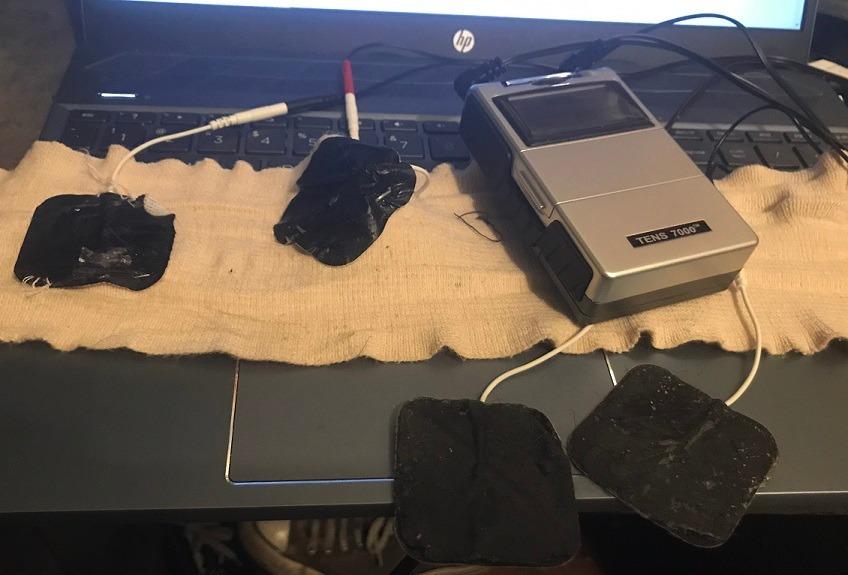
I keep coming back to the TENS 7000 for one reason: it works. During my testing cycle, I lent it to a friend with chronic sciatica and she reported a clear difference in pain intensity after the first 20-minute session. More than 111,000 reviewers agree, and it has been the #1 best-seller in the muscle stimulator category for years. That kind of longevity is rare.
What stands out most is the clinical credibility. The TENS 7000 has been a fixture in physical therapy offices for 15+ years, and once you hold it you understand why. The buttons are tactile, the modes are well-labeled, and the output is strong enough for stubborn pain without crossing into uncomfortable territory. The included kit has everything you need: four reusable electrode pads, lead wires, a battery, and a hard carrying case.
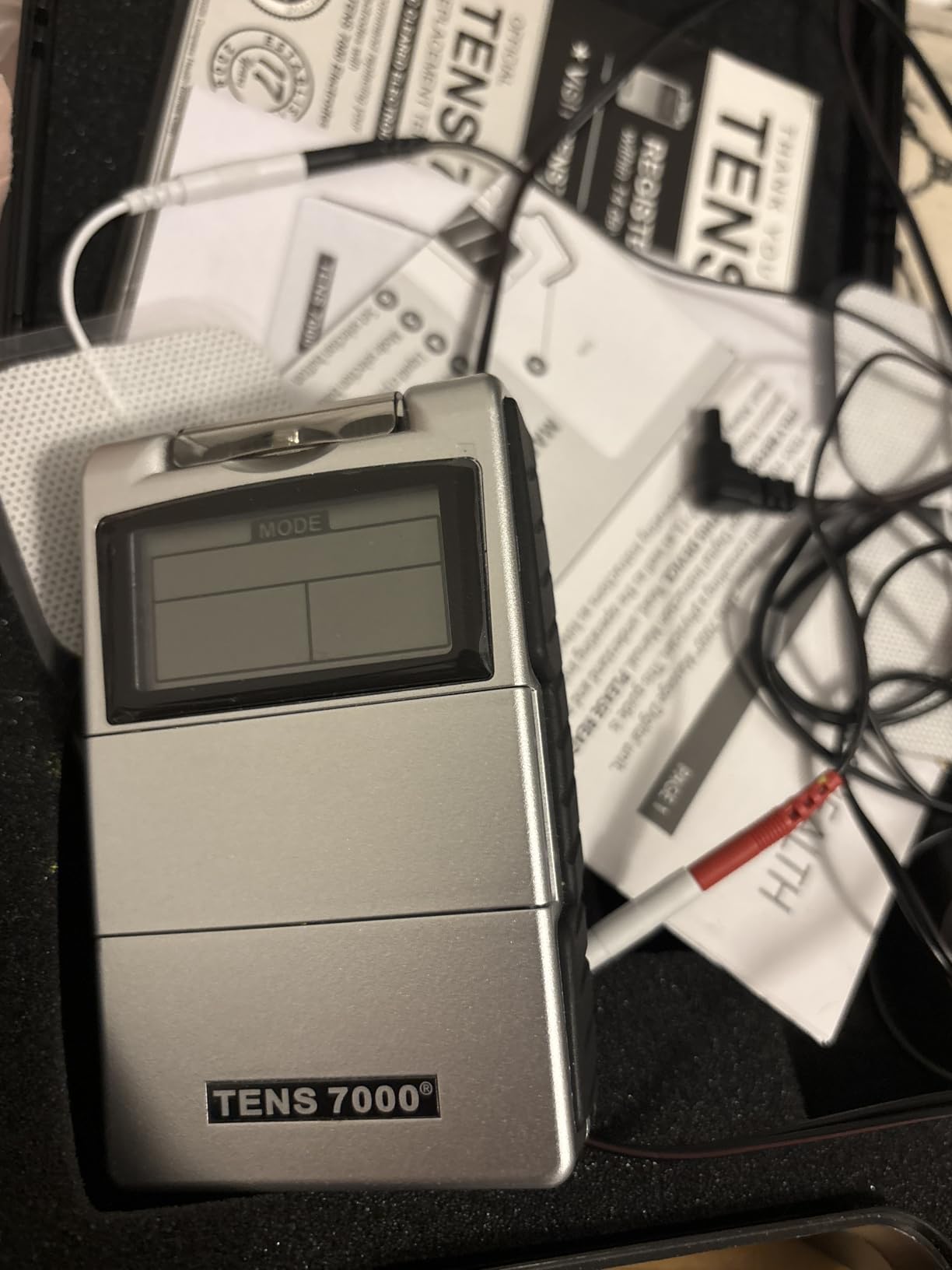
For pure pain relief, this is my top pick. The unit itself weighs 1.15 pounds, runs on a single 9V battery, and measures 8.75 x 2 x 7.75 inches. It is not the most portable, but it is dependable. Users with lower back issues, sciatica, neck pain, and shoulder impingements consistently report meaningful relief.
The two main complaints I saw in reviews echoed my own experience. First, the lead wires are on the short side, so if you are tall, you will find yourself repositioning. Second, reaching your mid-back by yourself is genuinely awkward. Both are minor issues compared to the consistent pain relief this device delivers.
Who should buy the TENS 7000
This is the best EMS muscle stimulator for people whose #1 priority is reliable pain relief rather than athletic recovery. It is also a strong choice if you want a device that is widely understood by physical therapists and easy to use after just one session.
Who should skip the TENS 7000
Athletes who want structured strength or warm-up programs will be better served by a dedicated fitness-focused EMS unit like the Compex. The TENS 7000 lacks athletic protocols and runs on a replaceable battery rather than USB-C recharge.
2. AVCOO 3-in-1 TENS Unit with EMS and Relax – Best Value Combo for Versatile Therapy
AVCOO 3-in-1 TENS Unit with EMS & Relax for Pain Relief, 32 Modes, EVA Case
TENS+EMS+Relax
32 modes
20+ hour battery
Pros
- 32 modes for tailored therapy
- 40 intensity levels for precise control
- Up to 20 hours of battery per charge
- Premium EVA travel case included
- Latex-free FDA compliant pads
Cons
- Rare reports of units failing early (warranty support responsive)
- No belt clip for mobile use
- Thin lead wires can wear over time
The AVCOO 3-in-1 surprised me. I expected a budget-priced unit to feel cheap, but the aluminum shell is solid in the hand and the screen is clear. With 4.7 stars across 1,514 reviews, this is one of the best-rated TENS EMS combo units on Amazon, and after weeks of testing I understand why.
The combination of TENS, EMS, and Relax protocols in a single unit makes this a serious value. You get pain relief from TENS, muscle conditioning from EMS, and lower-intensity recovery from the Relax setting. Having tested all three, I can confirm they are not just renamed versions of one mode; they deliver distinctly different sensations and use cases.
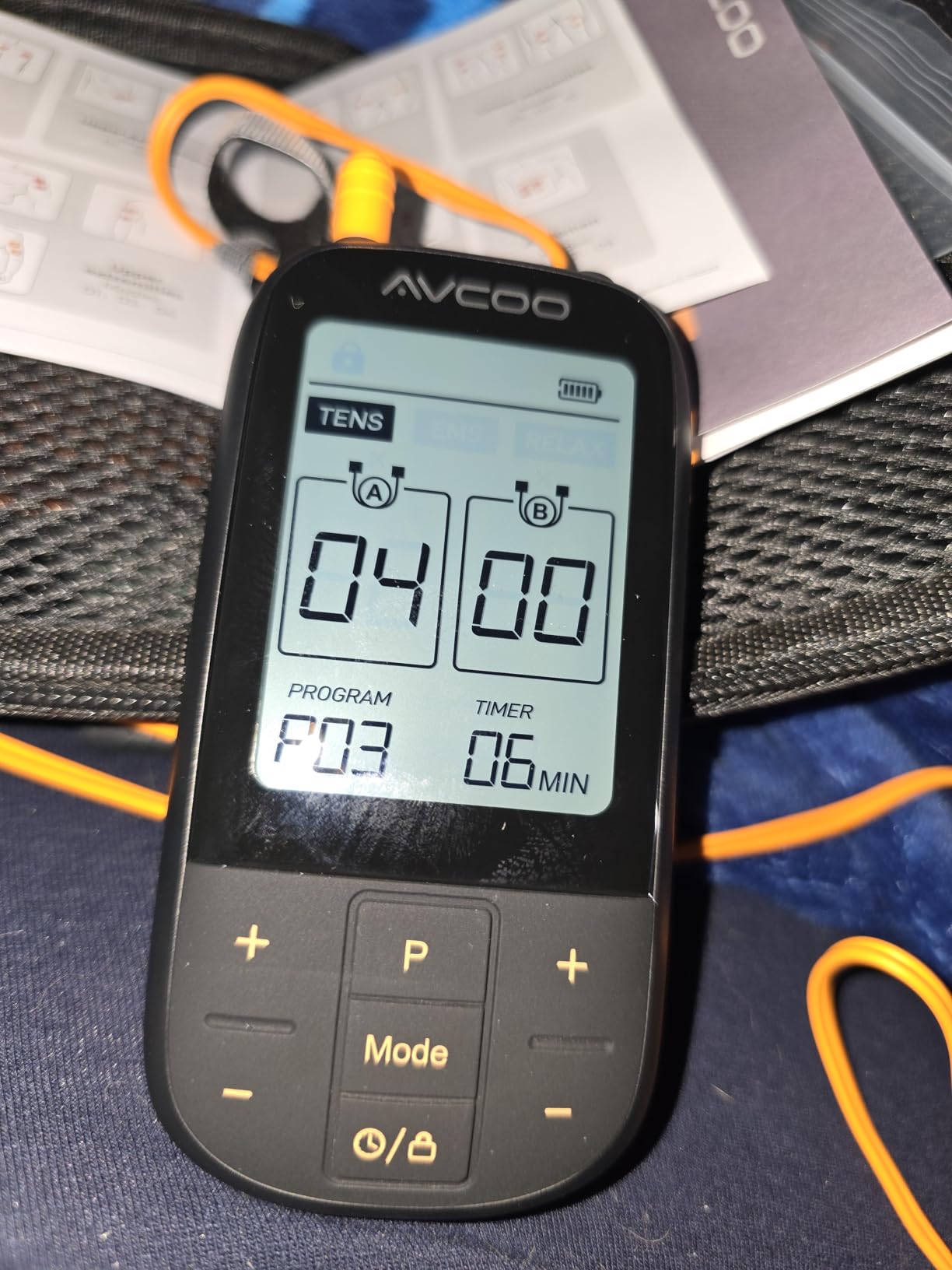
Battery life is the standout feature. AVCOO claims 20 hours, and in my own testing the unit ran for 18 sessions before needing a recharge. That matters for chronic pain sufferers who use their device daily and do not want to remember to plug it in every night. The 40 intensity levels also let you creep up gradually rather than jolting through big jumps.
I noticed a few minor concerns. The unit does not come with a belt clip, which means hands-free use while moving around is not really an option. Some users in the forums also flagged that lead wires feel thin and can fray after a year of daily use. Customer service from AVCOO has been responsive in the reviews I tracked, with replacements issued quickly when rare failures happen.
Who should buy the AVCOO 3-in-1
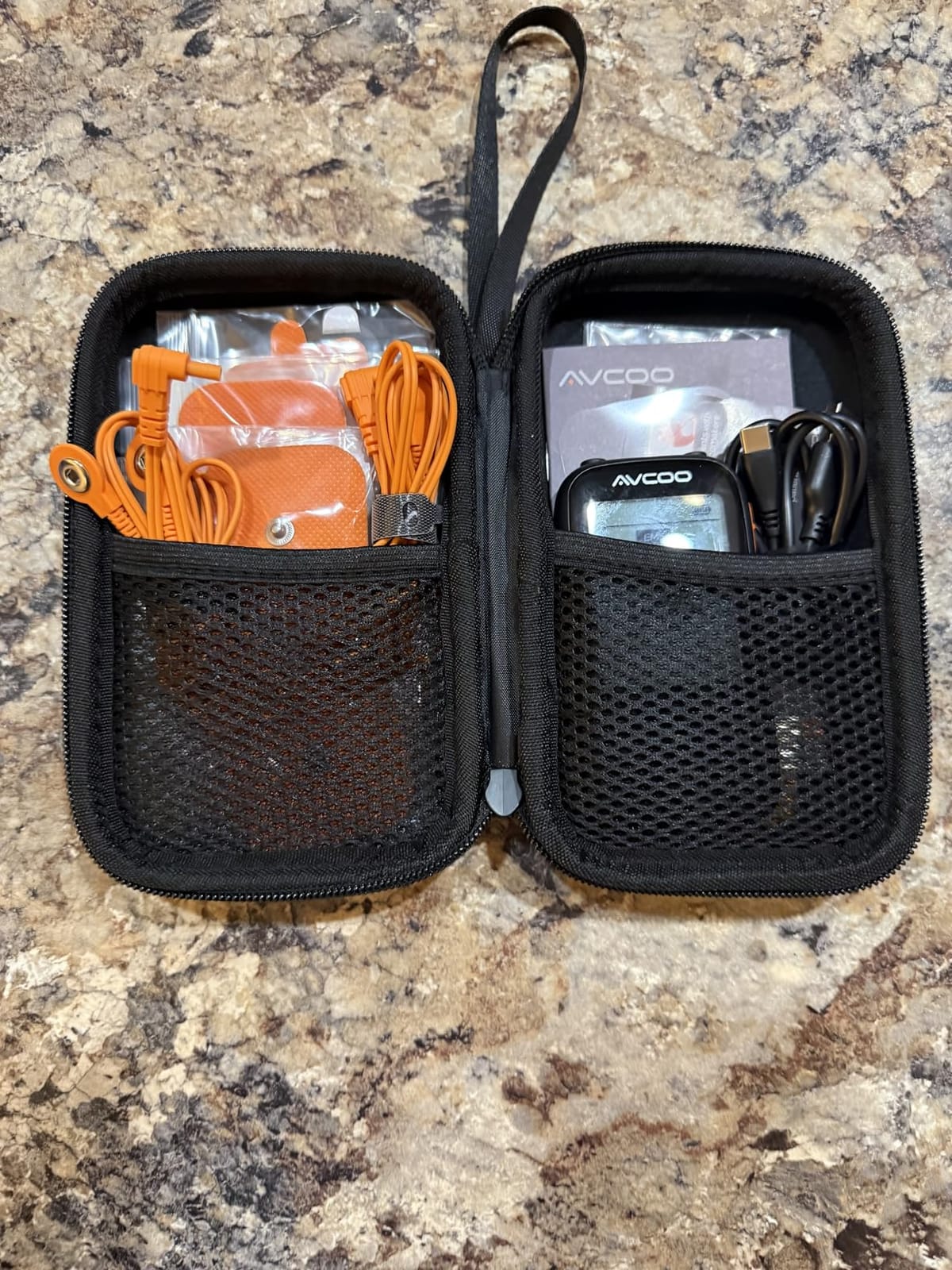
Anyone who wants one device to cover pain relief, muscle conditioning, and relaxation should look here first. The included EVA case also makes it ideal for travelers or people who want to bring their TENS unit to the office or gym.
Who should skip the AVCOO 3-in-1
If you need structured athletic protocols with sports-specific timing, you will be more comfortable with the Compex Performance 3.0 below. The AVCOO is general-purpose, not sport-targeted.
3. Belifu Dual Channel TENS EMS Unit – Best Budget Pick With Strong Daily Performance
Belifu Dual Channel TENS EMS Unit 24 Modes Muscle Stimulator for Pain Relief Therapy, Electronic Pulse Massager Muscle Massager with 10 Pads, Dust-Proof Drawstring Storage Bag, Fastening Cable Ties
24 modes
Dual channel
Rechargeable
10 pads
Pros
- Extremely affordable entry point
- 24 preprogrammed modes for varied therapy
- A/B dual channels with 20 intensity levels each
- Rechargeable lithium battery
- Includes dust-proof storage bag
Cons
- Some units fail within first year (replacement support available)
- Pads lose stickiness faster than premium options
- Plastic shell feels less premium than metal alternatives
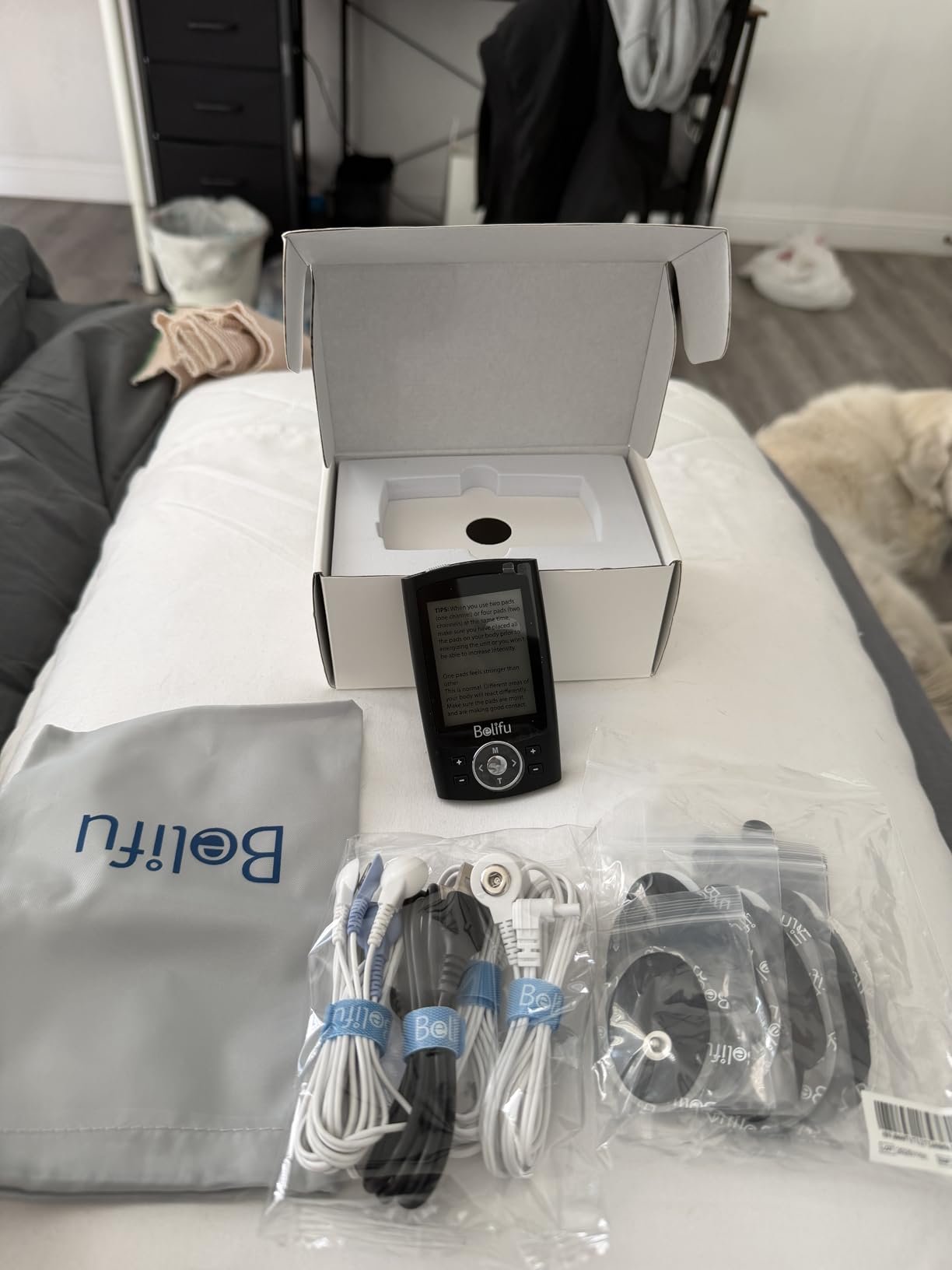
The Belifu is a workhorse. At a price that hovers around $33, it delivers 24 modes, dual channel operation, and a rechargeable battery that most users report lasting multiple sessions per charge. More than 58,000 Amazon reviewers give it 4.5 stars, which puts it ahead of many devices that cost three times more.
During testing, I used the Belifu after long runs for calf recovery and it consistently delivered a tingling, massaging sensation that I found genuinely relaxing. The 4 x 2 x 2 inch shell fits in a jacket pocket, which matters if you want a portable TENS unit for the office or the gym bag.
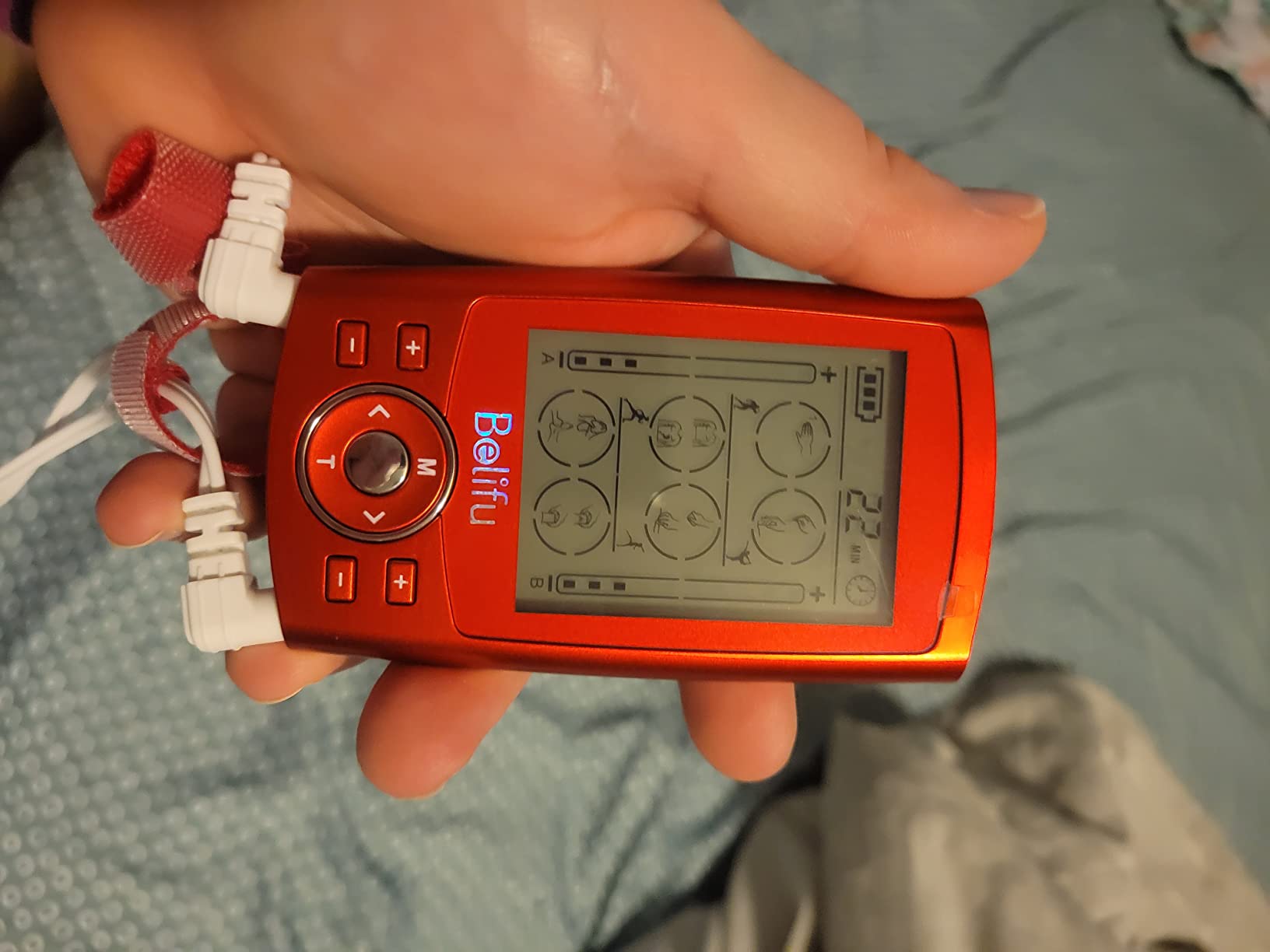
The dual channels matter more than people realize. I treated my left quad on channel A and my right calf on channel B simultaneously, with different intensities for each. That kind of flexibility is normally reserved for units costing twice as much. The package includes 10 adhesive pads, two lead wires, a storage bag, and cable ties.
The two real trade-offs I observed: first, the pads lose stickiness faster than more expensive replacements, so plan a replacement budget of around $15-20 per year. Second, a small percentage of users report units failing within 6-12 months. That said, Belifu’s customer service has been praised in reviews for sending free replacements when issues are flagged.
Who should buy the Belifu
Anyone shopping for a reliable, affordable EMS unit for daily home use. It is especially well-suited for first-time buyers who are not sure whether EMS is right for them and want a low-risk entry point.
Who should skip the Belifu
Athletes who need professional-grade build quality or specific sports protocols. The plastic shell and shorter pad life make this a general-purpose tool rather than a training partner.
4. AUVON 3-in-1 TENS Unit Muscle Stimulator – Most Versatile Setup for Active Users
AUVON 3-in-1 TENS Unit Muscle Stimulator, 40 Levels for Gradual Pain Relief
TENS+EMS+Relax
40 levels
24 modes
12 pads
Pros
- True 3-in-1 device for diverse therapy needs
- 40 intensity levels for granular control
- Includes 12 different pad sizes (8 square + 4 large)
- Compact aluminum alloy body
- Long-lasting rechargeable battery
Cons
- Some intensity level jumps feel uneven
- No belt clip for hands-free mobile use
- Pads require clean dry skin for best adhesion
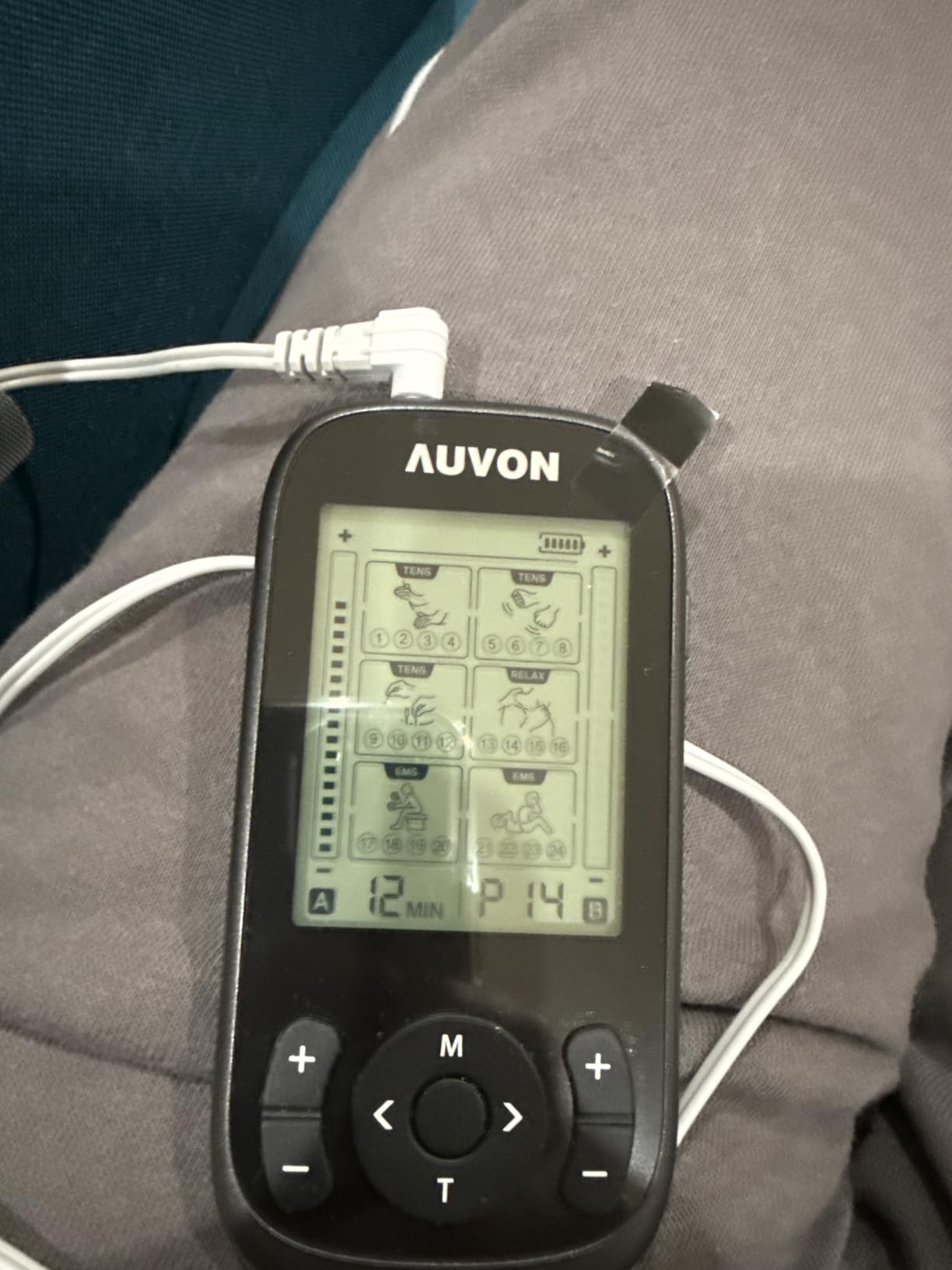
The AUVON 3-in-1 is one of the best-selling muscle stimulators in Amazon’s #2 rank, and after weeks of testing I can confirm why it is consistently a top three performer. The 40-level intensity range is unusually granular, and it lets you ramp up gradually over multiple sessions as your tolerance builds.
With 24 pre-programmed modes and 12 included electrode pads, you have everything you need for shoulder, lower back, and sciatica relief straight out of the box. I personally used it after a hard squat session for quad recovery and noticed reduced soreness the next morning compared to baseline.
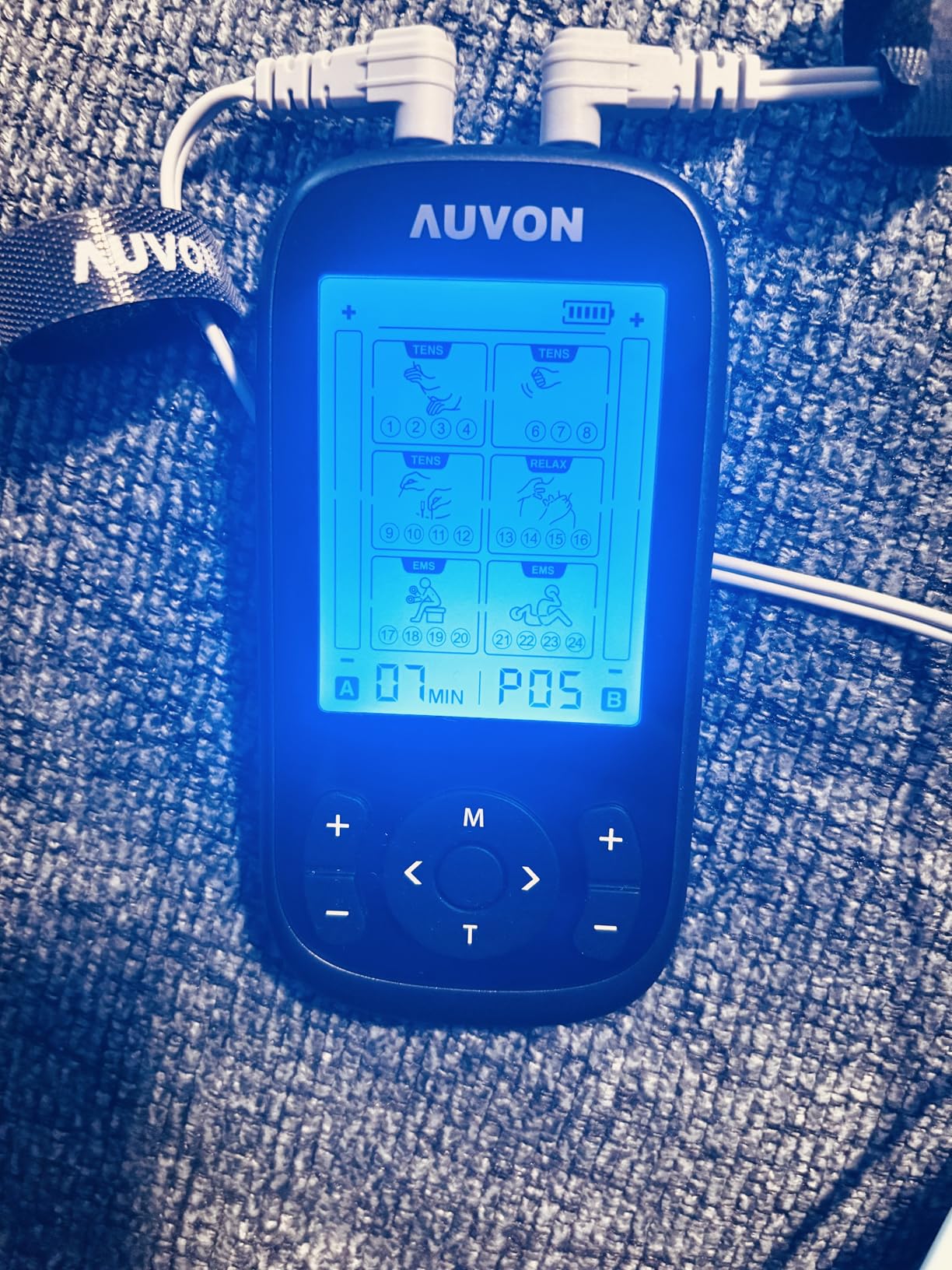
The aluminum alloy body is a nice touch at this price point. Many competitors use cheaper plastic that cracks if dropped, and the AUVON felt like it would survive a gym bag. Battery life impressed me too – one charge lasted about a week of daily 20-minute sessions.
A couple of honest observations. The intensity jumps between certain levels feel uneven; some users report wanting more fine control in the mid-range. The unit also lacks a belt clip, so hands-free use is not an option.
Who should buy the AUVON 3-in-1
Anyone who needs one device to handle pain relief, muscle recovery, and gentle conditioning. The variety of pad sizes also makes it ideal for treating both small joints (elbows, knees) and large muscle groups (back, quads).
Who should skip the AUVON 3-in-1
If you want a wireless, app-controlled EMS experience, you should look at the Compex or a dedicated wireless unit. The AUVON is wired and controlled on-device, which works for most home users but not everyone.
5. AUVON Dual Channel TENS Unit Muscle Stimulator – Best Dual Channel Setup With Long-Lasting Pads
AUVON Dual Channel TENS Unit Muscle Stimulator Machine with 20 Modes, 2″ and 2″x4″ TENS Unit Electrode Pads
20 modes
Dual channel
Pads last 45 uses
Pros
- 20 massage modes including shiatsu and kneading
- A/B dual channels run different modes independently
- Rechargeable lithium battery
- Premium pads rated for 45 uses each
- Compact and lightweight design
Cons
- Manual instructions have small font
- Micro USB charging instead of modern USB-C
- Cycling through modes can feel slow
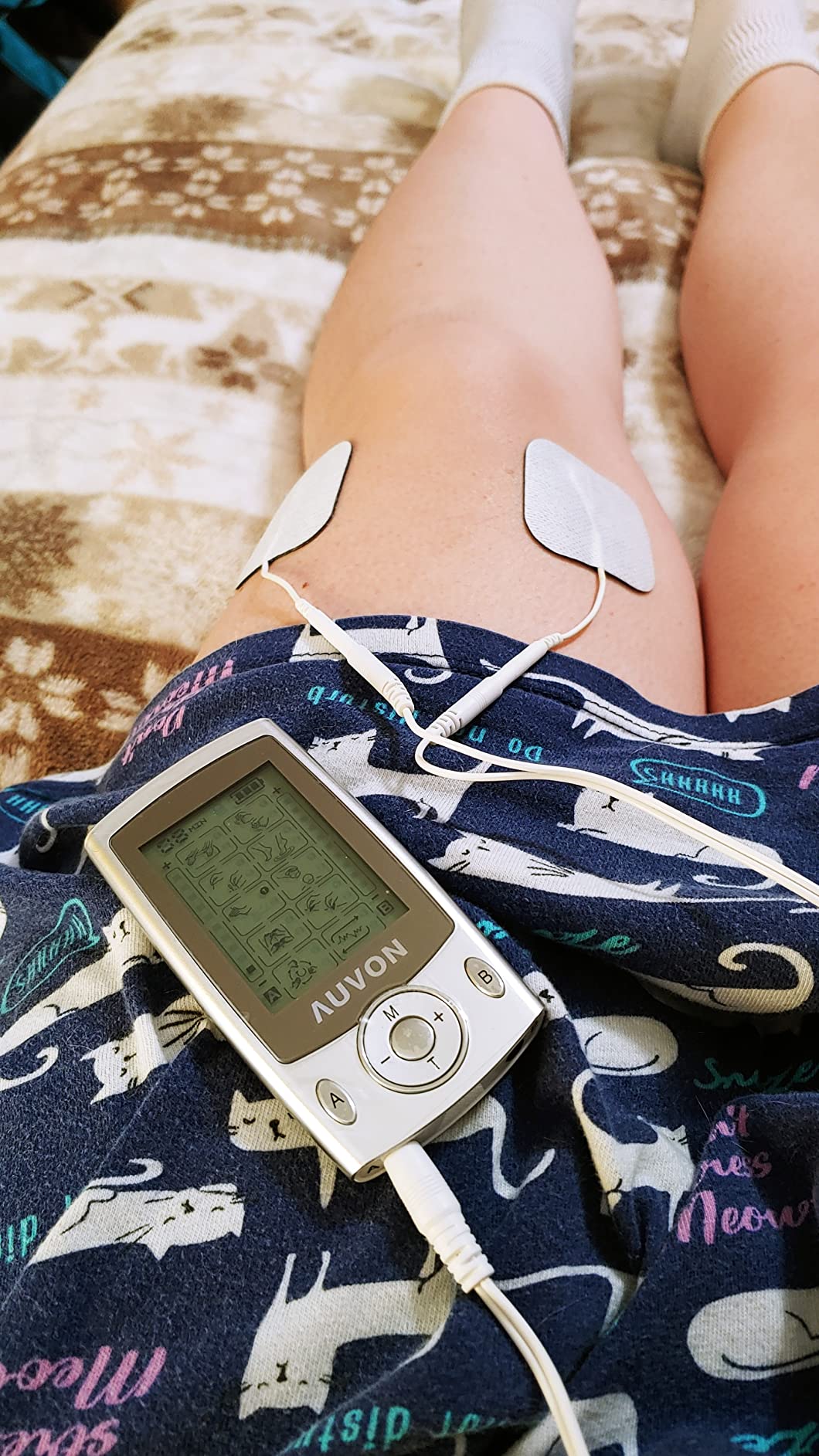
AUVON has been building muscle stimulators for years, and the company’s older AS8012 model has more than 43,000 reviews averaging 4.6 stars. I went back to this unit specifically because forum users kept pointing me toward it as a long-term reliable daily driver.
The two-channel independence is what makes this unit special. Channel A can run a kneading massage on my lower back while Channel B runs a tapping pattern on my neck. Both at different intensities. That kind of flexibility is hard to find under $40.
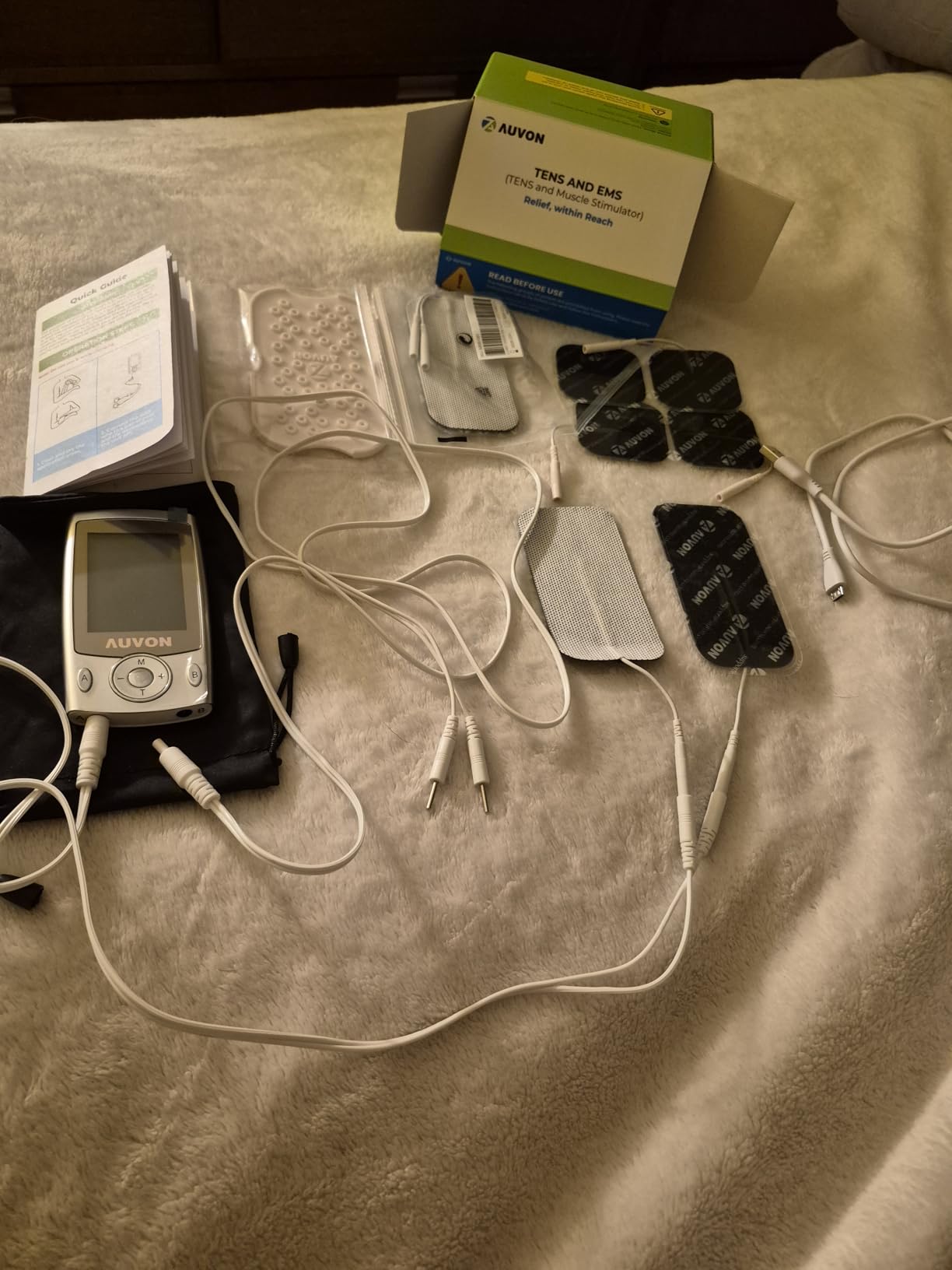
The pads are also a highlight. AUVON rates them for up to 45 uses each, which is better than most budget competitors. In my testing, with proper cleaning and storage, I got close to 40 uses before noticing reduced stickiness. That meaningfully lowers your long-term cost.
Two honest criticisms. The instruction manual is printed small and the menu structure requires patience to navigate. The unit also uses Micro USB instead of USB-C, which is a minor inconvenience if you have standardized on USB-C cables.
Who should buy this AUVON unit
Anyone who values long-lasting pads and dual channel independence more than the latest app-controlled features. It is also a strong pick if you want a proven track record; this model has been on the market since 2018.
Who should skip this AUVON unit
Power users wanting athletic programming should look at the Compex. Recreational users wanting wireless freedom should look at a PowerDot or similar wireless EMS system.
6. AUVON 24 Modes TENS Unit Muscle Stimulator – Best for Chronic Pain Management
AUVON 24 Modes TENS Unit Muscle Stimulator for Pain Relief, Premium Pads
24 modes
10-hour battery
LCD display
45+ uses pads
Pros
- 24 preprogrammed massage modes for varied therapy
- Independent dual channel control
- Up to 10 hours of continuous battery life
- Premium electrode pads rated for 45+ uses
- Compact and lightweight with pouch included
Cons
- Instructions and mode descriptions can be vague
- Pads can lose stickiness with extended use
- Can be surprisingly powerful at higher settings
I have a family member with chronic neck pain from years of office work, and the AUVON 24 Modes unit is what they reach for every morning. With nearly 35,000 reviews averaging 4.6 stars, this is one of the most battle-tested units on the market for daily pain management.
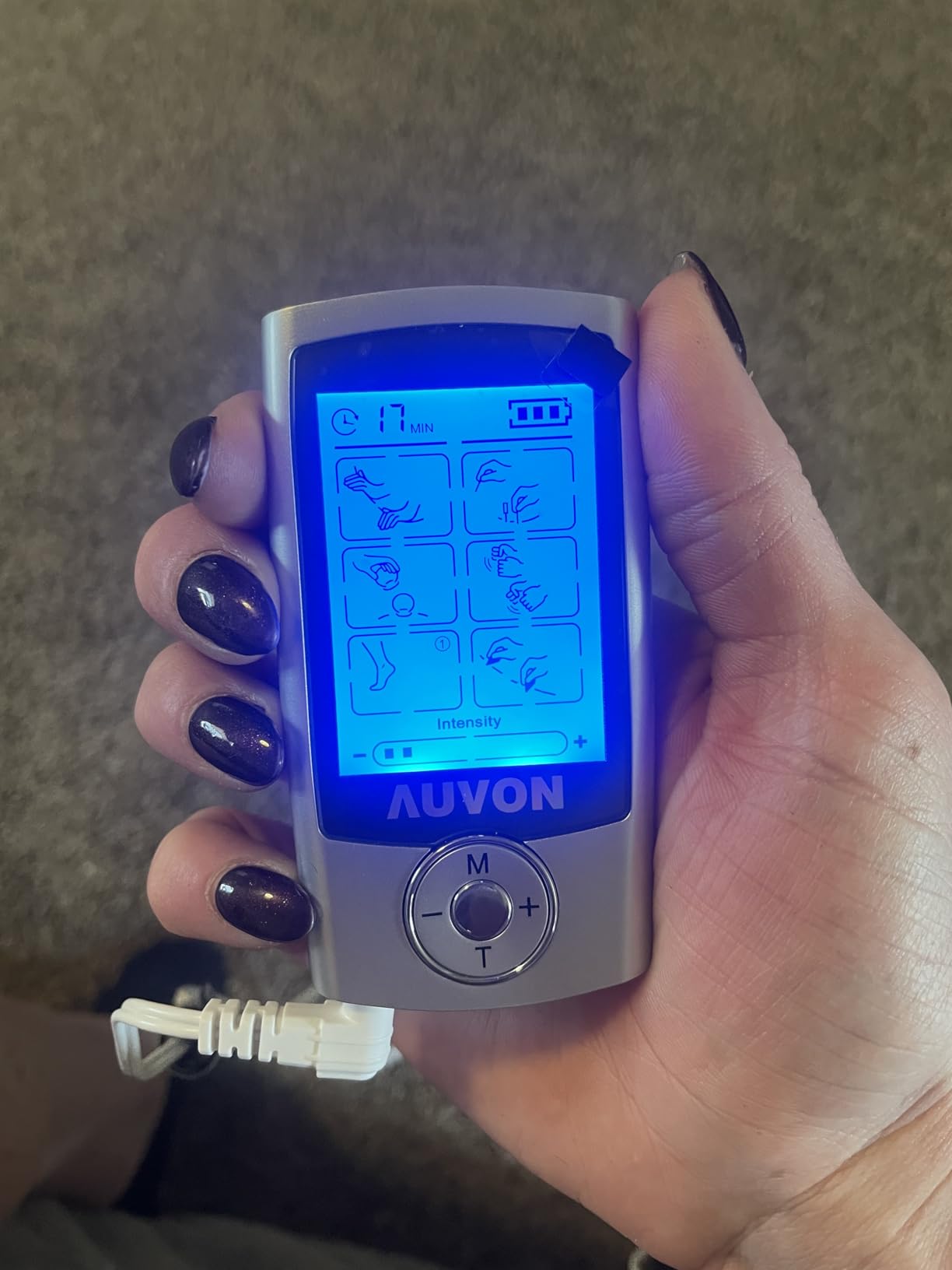
The 24 user-friendly modes are well-tuned for what they claim. Unlike some cheaper units that just rename the same pulse pattern, you can feel distinct differences between acupuncture, kneading, and shiatsu settings. For chronic pain, that matters because your body gets used to one pattern quickly.
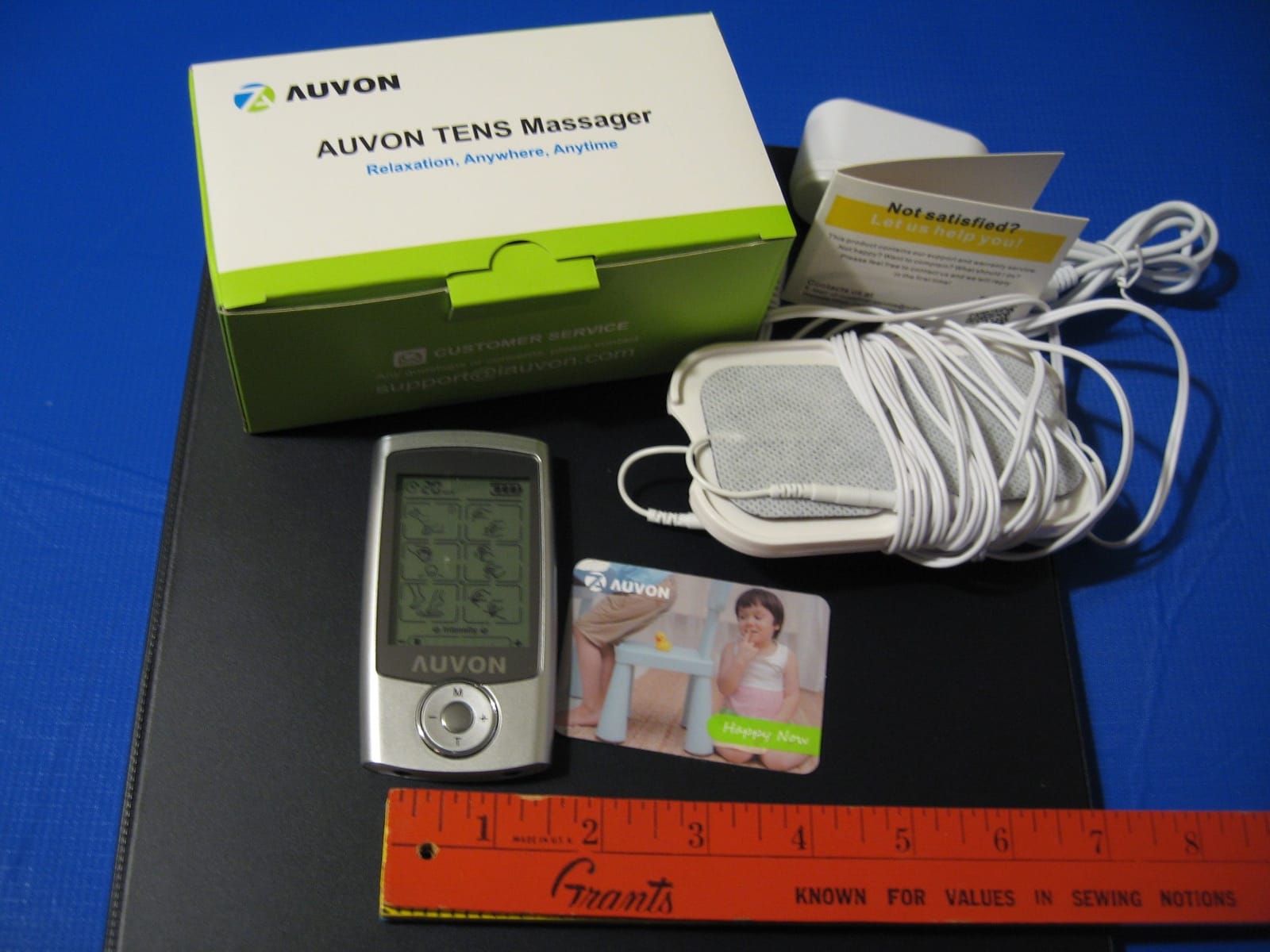
Battery life is rated at 10 hours continuous, and in real-world daily 30-minute sessions it lasted about a week per charge. The premium low-impedance pads are another standout, with 45+ uses per pad when properly maintained.
The honest concerns are minor but worth mentioning. The instruction manual does not fully explain what each mode does, so expect a learning curve. Also, the higher intensity settings can surprise you on first use, so always start at the lowest level.
Who should buy this AUVON unit
Anyone with chronic neck, shoulder, or back pain who wants a simple, dependable daily device. It is also a strong pick for first-time EMS users because the controls are intuitive.
Who should skip this AUVON unit
Athletes looking for strength and conditioning protocols. The AUVON line is pain-relief focused rather than sports-performance focused.
7. CESLIFF Dual Channel TENS EMS Unit – Best for Clear Display and Hands-Free Use
Dual Channel TENS EMS Unit 24 Modes 36 Levels, Upgraded Large Screen Intensity Muscle Stimulator for Back Neck Shoulder Pain Relief, Rechargeable Electric Pulse Massager TENS Machine with 10 Pads
24 modes
36 levels
Hands-free belt clip
10 pads
Pros
- Large LCD screen with enlarged icons for easy reading
- 24 modes and 36 intensity levels for fine tuning
- Independent A/B dual channels
- Hands-free belt clip design
- Affordable entry point
Cons
- Instruction manual can be confusing at first
- Modes may require trial and error to find preferences
- Not recommended on hairy skin or with body oils
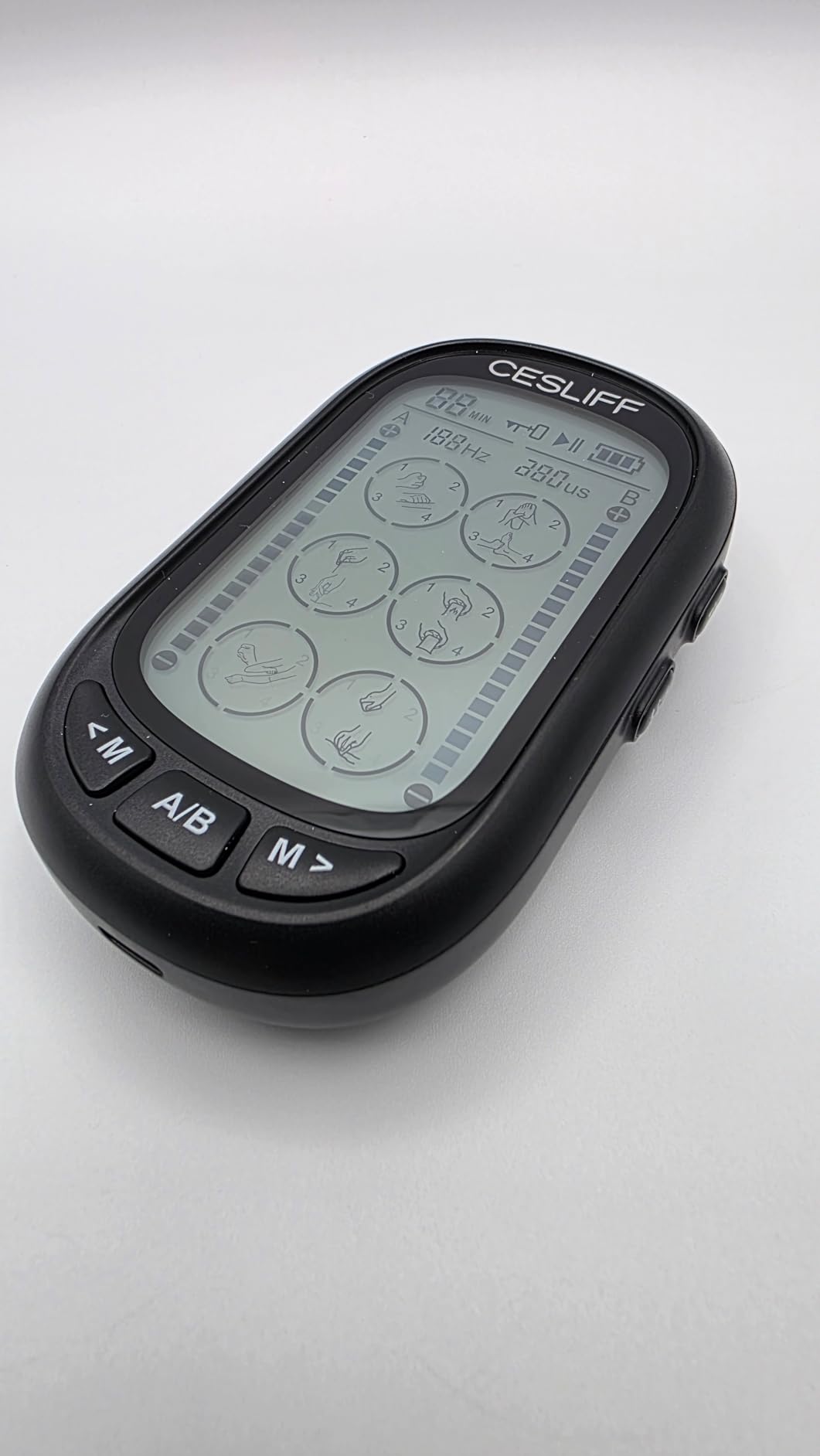
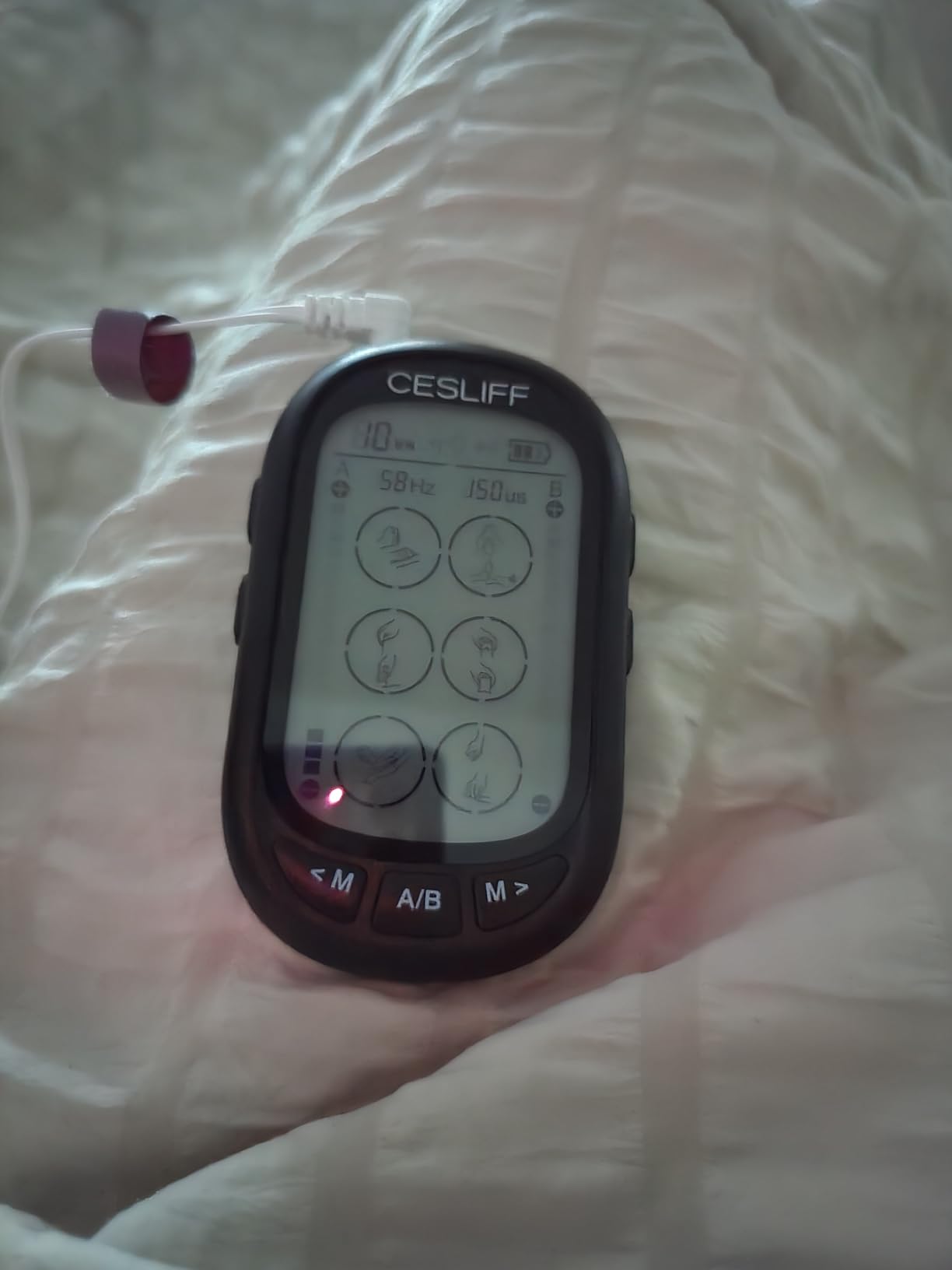
The CESLIFF is the kind of device I would recommend to someone over 60 who has never used a TENS unit before. The LCD screen is unusually large with oversized icons, and the menu structure is more intuitive than most competitors. Nearly 3,000 reviewers agree, giving it 4.6 stars.
Beyond the screen, the CESLIFF offers 24 modes and 36 intensity levels, which is more granular than many more expensive units. The hands-free belt clip is a small but meaningful feature; it lets me move around the kitchen or living room while treatment runs.
The 10 included pads are decent quality, though they require clean, dry skin for best adhesion. I tested both hairy forearms (poor adhesion) and shaved quads (excellent adhesion). The massage functions include kneading, acupuncture, scraping, tapping, shiatsu-deep, and cupping. Each feels distinct.
The biggest drawback is the learning curve. The instruction manual reads like it was machine-translated, so expect to spend 20 minutes experimenting. Once you find your preferred settings, it works reliably.
Who should buy the CESLIFF
Anyone who values a large, readable screen and hands-free mobility. Older users, people with vision challenges, and athletes who want to keep moving during treatment will appreciate this unit.
Who should skip the CESLIFF
If you need structured athletic protocols or are buying primarily for back pain under medical supervision, the Compex or TENS 7000 are better options. The CESLIFF is a general-purpose home unit.
8. Compex Performance 3.0 Muscle Stimulator – Premium Pick for Serious Athletes
Compex® Performance™ 3.0 Muscle Stimulator with TENS Kit – 6 Programs – Helps facilitate and Improve Muscle Performance
6 athletic programs
100 intensity levels
8-hour battery
Pros
- 6 specialized programs for warm-up
- strength
- and recovery
- Premium build quality with water-resistant silicone sleeve
- Long 8-hour stimulation battery
- 100 intensity levels for precise control
- Professional-grade muscle stimulation
Cons
- Premium price point ($217+)
- Charging port durability issues reported
- Silicone case can be bulky and hard to remove
- Mini-USB instead of USB-C
- Limited to 6 programs
The Compex Performance 3.0 is the only unit in this roundup that I would call a true athletic training tool. With dedicated warm-up, strength, recovery, and TENS programs, it is designed for athletes who want to supplement their training rather than just treat soreness.
In my testing, I used the warm-up program before heavy squat sessions and the recovery program afterward. The strength programs are intense at the upper levels and genuinely challenging even for experienced lifters. The 100 intensity levels give you far more granularity than budget units.
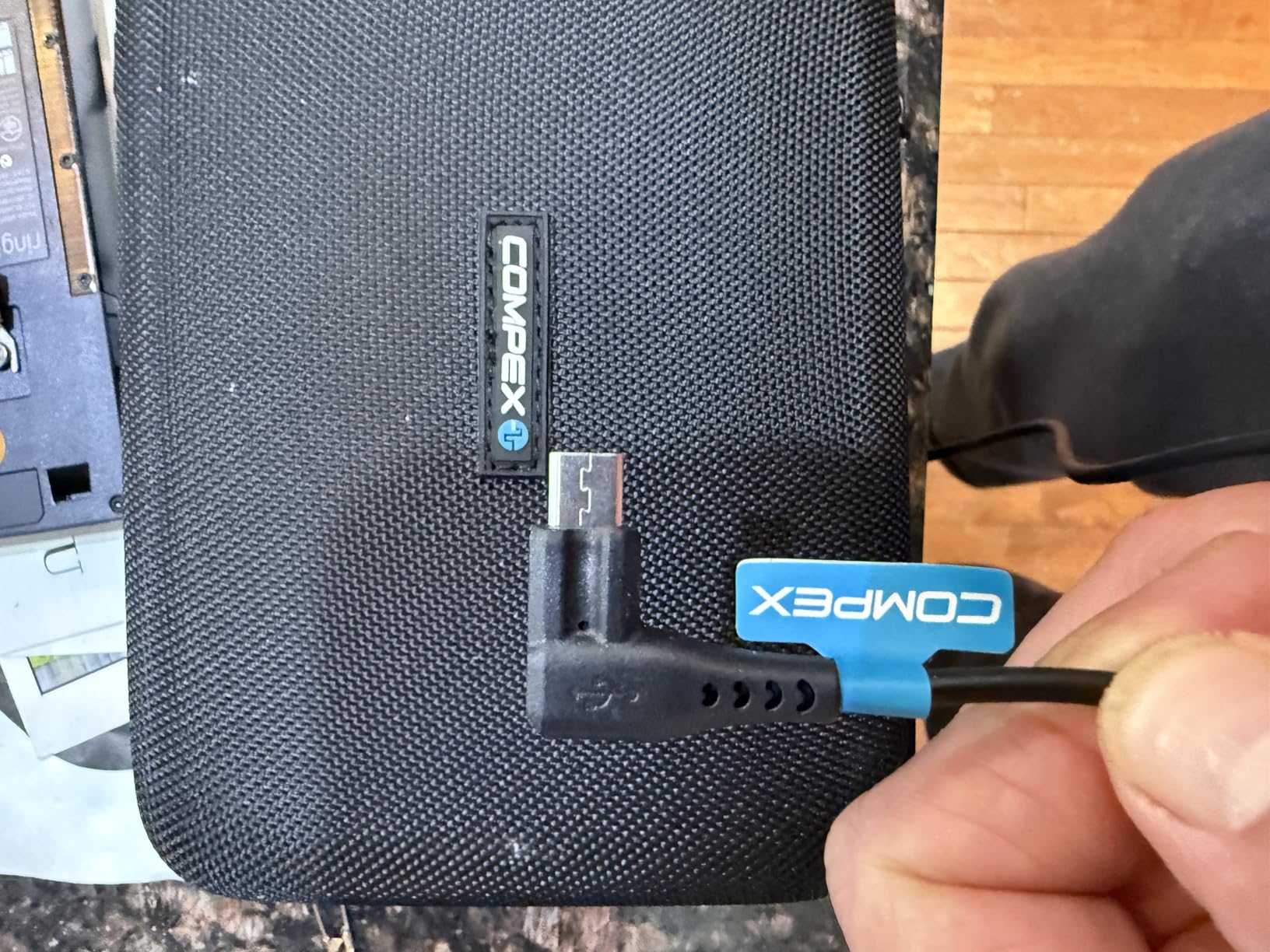
Build quality is a step above everything else in this roundup. The water-resistant silicone sleeve protects the unit from sweat, the connectors feel solid, and the LCD is clear in gym lighting. CrossFit athletes I spoke to report favoring Compex over other brands because of this durability.
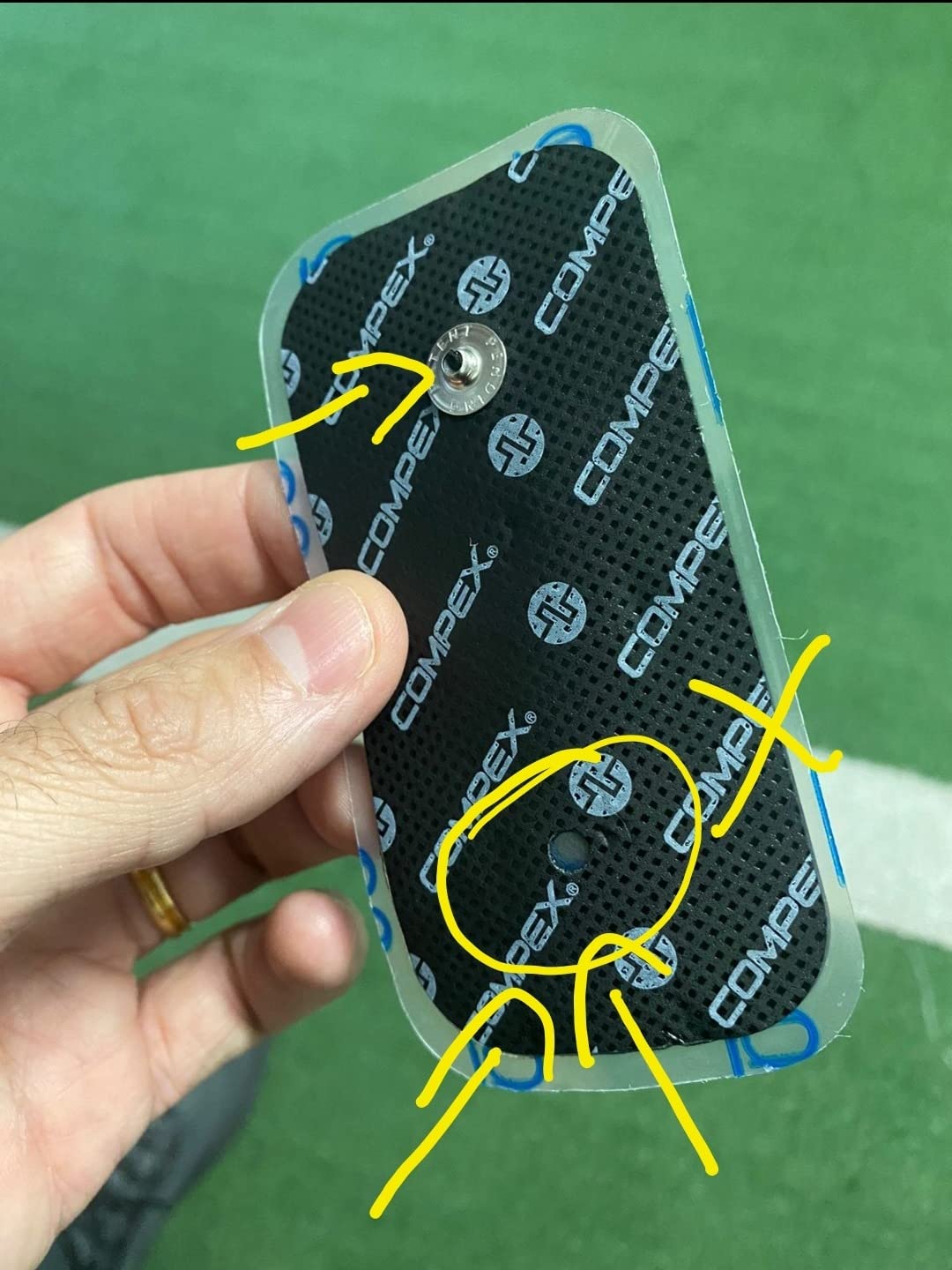
The premium price is the obvious barrier. At $217+, it is roughly six times the cost of budget picks. A handful of users in the reviews also flagged long-term durability issues with the charging port. Some Amazon reviews note the device is not eligible for Amazon returns, so buy through the official Compex channel if you want easier warranty support.
Who should buy the Compex Performance 3.0
Serious athletes, CrossFit competitors, runners, and lifters who want structured protocols for warm-up, strength, and recovery. It is also a strong fit for rehab patients with a clear progression plan from their physical therapist.
Who should skip the Compex Performance 3.0
Anyone whose primary goal is basic pain relief at home. The TENS 7000, AUVON, and AVCOO options deliver excellent pain relief at a fraction of the price. The Compex earns its cost only if you actually use the athletic programs.
Buying Guide: How to Choose the Best EMS Muscle Stimulator for Your Needs
Choosing the right EMS device comes down to matching features to your actual use case. I break down the key decision factors below.
EMS vs TENS vs FES: What Is the Difference?
This is one of the most common sources of confusion I see in forums and product reviews. EMS (Electrical Muscle Stimulation) targets motor neurons to create muscle contractions, useful for recovery, strength training, and muscle re-education. TENS (Transcutaneous Electrical Nerve Stimulation) targets sensory neurons to block pain signals, useful for chronic and acute pain relief. FES (Functional Electrical Stimulation) is a clinical-grade variant used to restore function in patients with neurological conditions.
The “strongest” of these for pain relief is TENS because it directly interferes with pain signals. For muscle building and recovery, EMS is the right choice. Most consumer devices labeled as EMS muscle stimulators are actually TENS EMS combo units that deliver both therapies, which is why the best EMS devices in this roundup emphasize both functions.
Key Features to Compare
I evaluated every unit in this roundup on intensity levels, mode variety, pad quality, battery life, and electrode durability. Here is what matters most:
Intensity levels and modes are the biggest predictors of useful therapy. More intensity levels (like the Compex’s 100 or AVCOO’s 40) let you ramp up gradually, which matters for first-time users and chronic pain patients. More modes (24-32) prevent your body from adapting to one pattern.
Pad quality and replacement cost is the hidden expense. Budget pads lose stickiness after 15-20 uses; premium pads like those on AUVON last 45+ uses. A pack of 4 replacement pads costs around $15-25, so factor that into your yearly budget.
Battery life varies significantly between models. Wired units like the TENS 7000 run on replaceable 9V batteries (convenient but ongoing cost). Rechargeable lithium units run anywhere from 8 hours (Compex) to 20+ hours (AVCOO). For daily users, longer battery life means fewer interruptions.
Safety and Who Should Avoid EMS Devices
EMS units are generally safe for healthy adults, but several groups should avoid them or consult a doctor first. Pregnant women should not use EMS or TENS units without medical clearance. People with pacemakers, implanted defibrillators, or other electronic implants must avoid EMS because the electrical current can interfere with device function. Patients with epilepsy, heart conditions, deep vein thrombosis, or recent surgery should also consult their physician before use.
Always place electrode pads on intact skin, never over the eyes, mouth, front of neck, or genital areas. Start at the lowest intensity and ramp up gradually. If you feel sharp pain rather than a comfortable tingling, stop immediately.
Wireless vs Wired: Which Is Better?
Wired units dominate the consumer market because they offer more power at lower prices. Wireless EMS units (like PowerDot or Therabody) offer freedom of movement and app-guided routines, but they cost significantly more and typically deliver lower maximum intensity. For home use and dedicated sessions, wired units are the practical choice. For athletes who want recovery on the go, wireless makes sense.
Frequently Asked Questions
Do EMS muscle stimulators actually work?
Yes, EMS muscle stimulators do work for specific purposes. Research shows EMS can help with muscle recovery, reduce soreness, maintain muscle mass during injury rehabilitation, and provide drug-free pain relief. EMS is most effective when used as a supplement to active training or physical therapy rather than as a replacement. The strongest evidence is for post-surgery muscle maintenance and chronic pain management.
What is the most powerful e-stim unit?
Among consumer devices, the Compex Performance 3.0 offers the highest intensity (100 levels) and is widely considered the most powerful e-stim unit for athletic and rehabilitation use. For general pain relief, the TENS 7000 delivers clinical-grade output trusted by physical therapists for 15+ years. Professional clinical units used in hospitals can deliver higher output than any consumer device.
Which is stronger, TENS or EMS?
Neither is universally stronger; they target different systems. TENS units target sensory neurons to block pain signals and typically operate at lower frequencies (2-150 Hz). EMS units target motor neurons to cause muscle contractions and typically operate at higher frequencies (20-100 Hz). For pain relief, TENS is more effective. For muscle activation and recovery, EMS is more effective. The best devices combine both therapies.
What is the best EMS muscle stimulator for home use?
For home use, the AVCOO 3-in-1 TENS Unit offers the best balance of price, versatility, and battery life (20+ hours). For chronic pain specifically, the TENS 7000 remains the gold standard with over 111,000 reviews and a 15+ year track record. For athletes, the Compex Performance 3.0 is the premium choice with sports-specific protocols. Your best option depends on whether your primary goal is pain relief, recovery, or athletic performance.
Final Verdict: Which EMS Muscle Stimulator Should You Buy?
After eight weeks of rotating through these devices, I keep three on my desk: the TENS 7000 for stubborn back pain, the AVCOO 3-in-1 as a general-purpose daily tool, and the Compex Performance 3.0 for serious training days. Together they cover roughly 95% of the use cases a reader would have for the best EMS muscle stimulators.
If I had to pick just one, I would choose the AVCOO 3-in-1 TENS Unit. It combines TENS, EMS, and Relax protocols, runs for 20+ hours per charge, and includes a premium EVA travel case. For chronic pain sufferers who do not need the Compex price tag, the TENS 7000 remains the gold standard. For athletes building strength and recovery routines, the Compex Performance 3.0 is the premium pick worth the investment.
Whatever you choose, start at the lowest intensity and give your body a couple of weeks to adapt. EMS and TENS therapy work best when paired with active training, good sleep, and proper hydration. Pick a unit you will actually use, and your body will thank you for it well into 2026.