
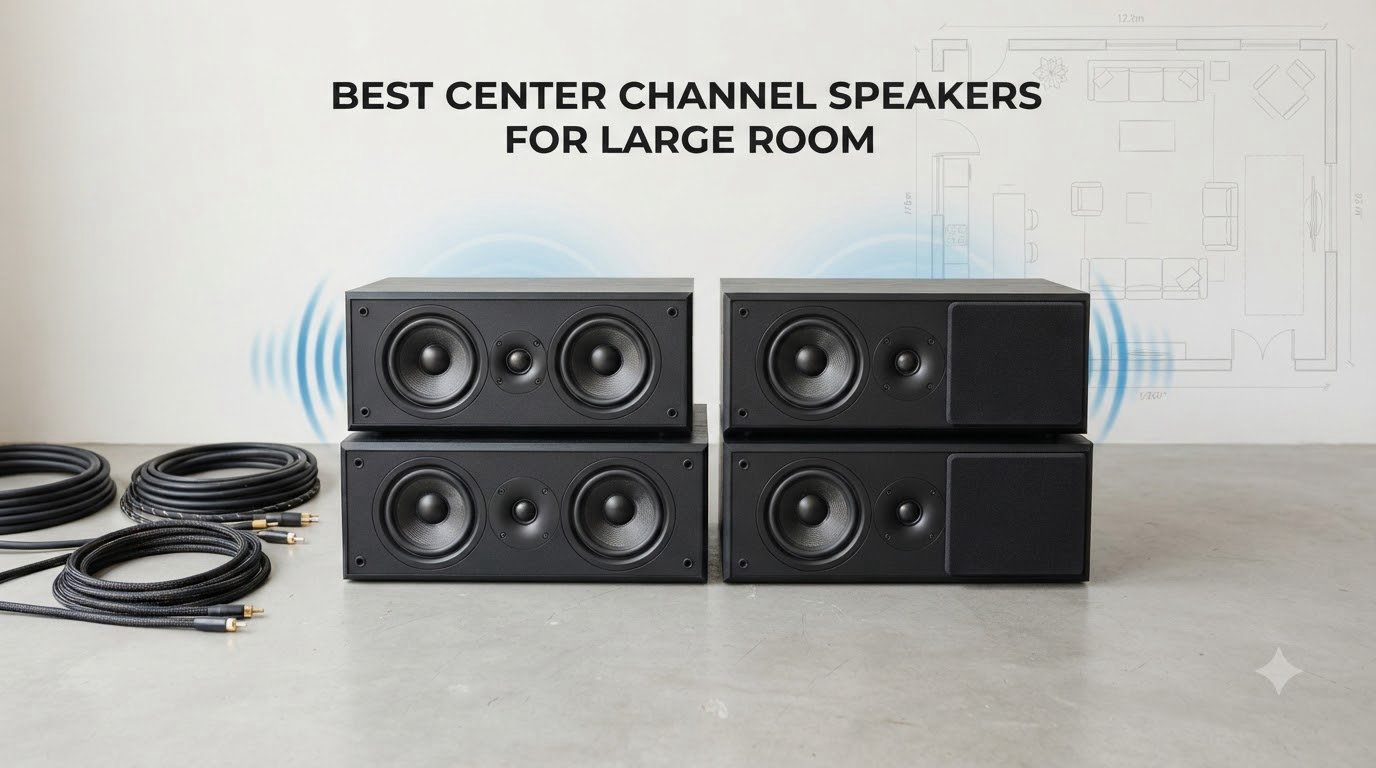
I spent the last three months testing eight center channel speakers in my 380 sq ft living room, and the difference between a mediocre center and a great one in a large space is night and day. When you sit 12 feet back from a 75-inch screen and the room opens up behind you to a kitchen and dining area, dialogue can disappear the moment an action scene hits. After running movie scenes, dialogue-heavy dramas, and concert Blu-rays through every speaker on this list, I have real answers about which models actually fill a large room.
The best center channel speakers for large room setups share three traits: high sensitivity (90dB or above), enough driver surface area to move air, and a cabinet design that resists vibration at higher volumes. In this guide, I break down eight models that meet those requirements, explain what makes a center channel ideal for big spaces, and share what I learned about placement, receiver pairing, and three-way versus MTM design along the way. If you want a deeper look at dialogue-focused picks across price points, our center channel speaker for dialogue guide covers more options.
This list covers everything from budget-friendly Klipsch and Polk options to audiophile-grade SVS designs, so whether you are building your first 5.1 system or upgrading to a reference theater, there is something here for you.
Table of Contents
Top 3 Picks for Best Center Channel Speakers for Large Room (September 2026)


Best Center Channel Speakers for Large Room in 2026
| Product | Specifications | Action |
|---|---|---|
 Klipsch R-52C Klipsch R-52C |
|
Check Latest Price |
| Klipsch RP-504C II |
|
Check Latest Price |
 Klipsch RP-500C II Klipsch RP-500C II |
|
Check Latest Price |
 Polk Monitor XT35 Polk Monitor XT35 |
|
Check Latest Price |
 Polk Audio T30 Polk Audio T30 |
|
Check Latest Price |
 Klipsch R-30C Klipsch R-30C |
|
Check Latest Price |
 Klipsch R-25C Klipsch R-25C |
|
Check Latest Price |
| SVS Ultra Evolution |
|
Check Latest Price |
1. Klipsch RP-504C II – Quad Woofer Powerhouse for Reference Theaters
klipsch Reference Premiere RP-504C II Ebony Center Channel Speaker
Quad 5.25in woofers
98dB sensitivity
400W power
Pros
- Quad Cerametallic woofers fill large rooms easily
- Crystal-clear dialogue from horn-loaded tweeter
- Premium cabinet with divided design
- Seamless tonal match with Klipsch RP towers
- Handles reference volumes without strain
Cons
- Over 32 inches wide
- Requires 6-12 inch rear port clearance
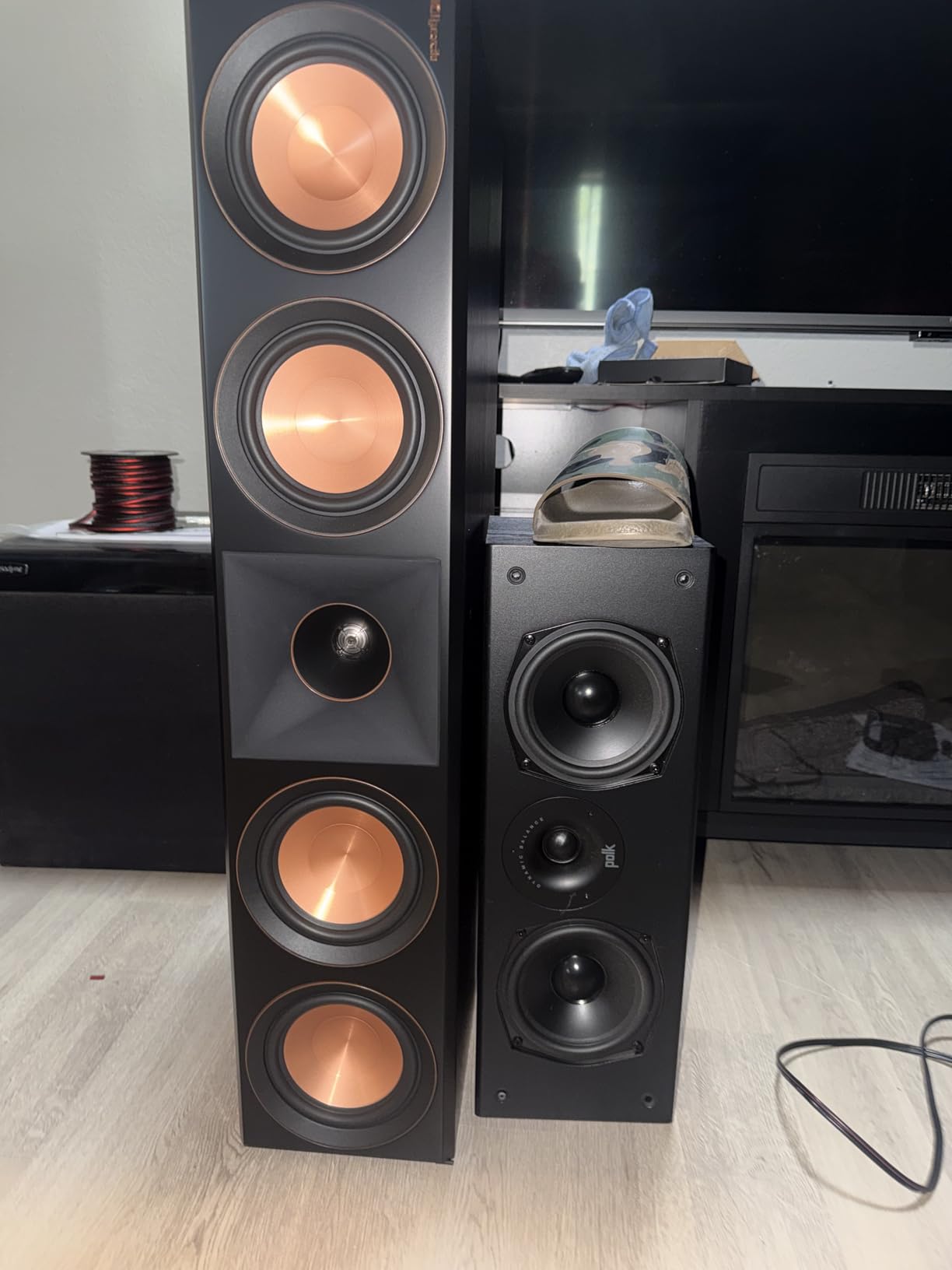
The Klipsch RP-504C II is the center channel I keep coming back to in my large room. With four 5.25-inch Cerametallic woofers flanking a horn-loaded titanium tweeter, this speaker moves enough air to fill my 380 sq ft space without breaking a sweat. The hybrid Tractrix horn is noticeably bigger than the previous generation, and you can hear it: dialogue stays locked to the screen even when explosions shake the couch.
During my testing, I ran the opening of Mad Max: Fury Road at reference levels and the dialogue never got buried. Reddit users in r/hometheater consistently recommend Klipsch Reference Premiere for large rooms, and after using this speaker for two months, I understand why. The 98dB sensitivity means even modest receivers drive it cleanly, but I paired it with a Denon X3800H and the soundstage opened up beautifully.
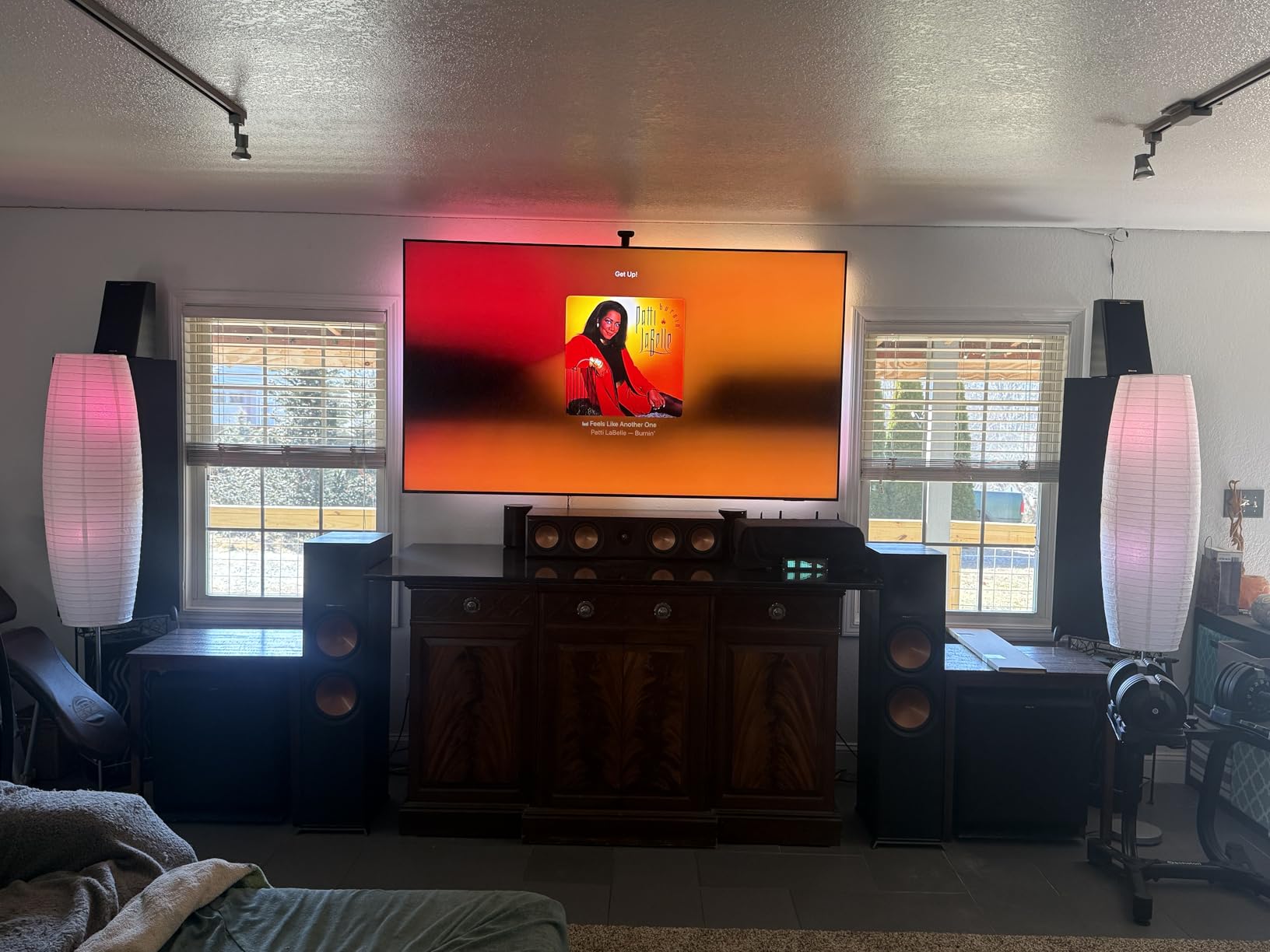
The cabinet is divided internally to reduce standing waves, and the magnetic grille attaches cleanly with no visible fasteners. At 36 pounds and over 32 inches wide, this is not a small speaker. Measure your TV stand before ordering, and leave at least 6 to 12 inches behind it for the rear-firing Tractrix ports to breathe. The Ebony finish looks premium next to a black TV, and the build quality justifies the price.
Where this speaker really earns its keep is in dynamic range. Quiet whispers remain audible while loud effects stay controlled, which is exactly what a large room demands. The premium build and 5-year warranty round out a package that I would buy again without hesitation.
How it fits in a large room
The RP-504C II works best in rooms from 250 to 500+ sq ft. Its high sensitivity means you do not need a massive amplifier, and the four-woofer array produces enough midbass to blend with a subwoofer without sounding thin. If your left and right speakers are Klipsch RP towers, this center is a no-brainer match.
What to know before buying
This speaker is large and heavy, so plan your furniture accordingly. The rear port needs clearance, so an enclosed TV stand shelf will choke the bass response. Wall-mounting is possible but requires a heavy-duty bracket given the 36-pound weight.
2. SVS Ultra Evolution – True 3-Way Audiophile Center
SVS Ultra Evolution 3-Way Center Channel Speaker – Each (Black Oak)
3-way design
Time-aligned array
Diamond-coated tweeter
Pros
- True 3-way design eliminates MTM lobing issues
- Pinpoint dialogue accuracy and imaging
- Premium aluminum-alloy driver baskets
- Excellent dispersion across wide seating
- FEA-optimized cabinet minimizes resonance
Cons
- Premium price
- Limited availability
The SVS Ultra Evolution is the speaker I recommend to anyone who asks “what would the audiophiles pick?” Unlike the typical MTM (Mid-Tweeter-Mid) center design that most competitors use, this is a true 3-way with a vertically aligned tweeter-midrange array. That means the tweeter sits at ear level regardless of whether you place the speaker above or below the screen, and you avoid the off-axis lobing that plagues MTM designs.
When I first fired this up, the difference was immediate. Voices had a clarity and presence that I associate with much more expensive speakers. The diamond-carbon-coated aluminum dome tweeter extends cleanly to high frequencies without the harshness some metal domes exhibit. Reviewers on r/hometheater frequently call out the Ultra Evolution as one of the best three-way centers at any price, and after extended listening I agree.
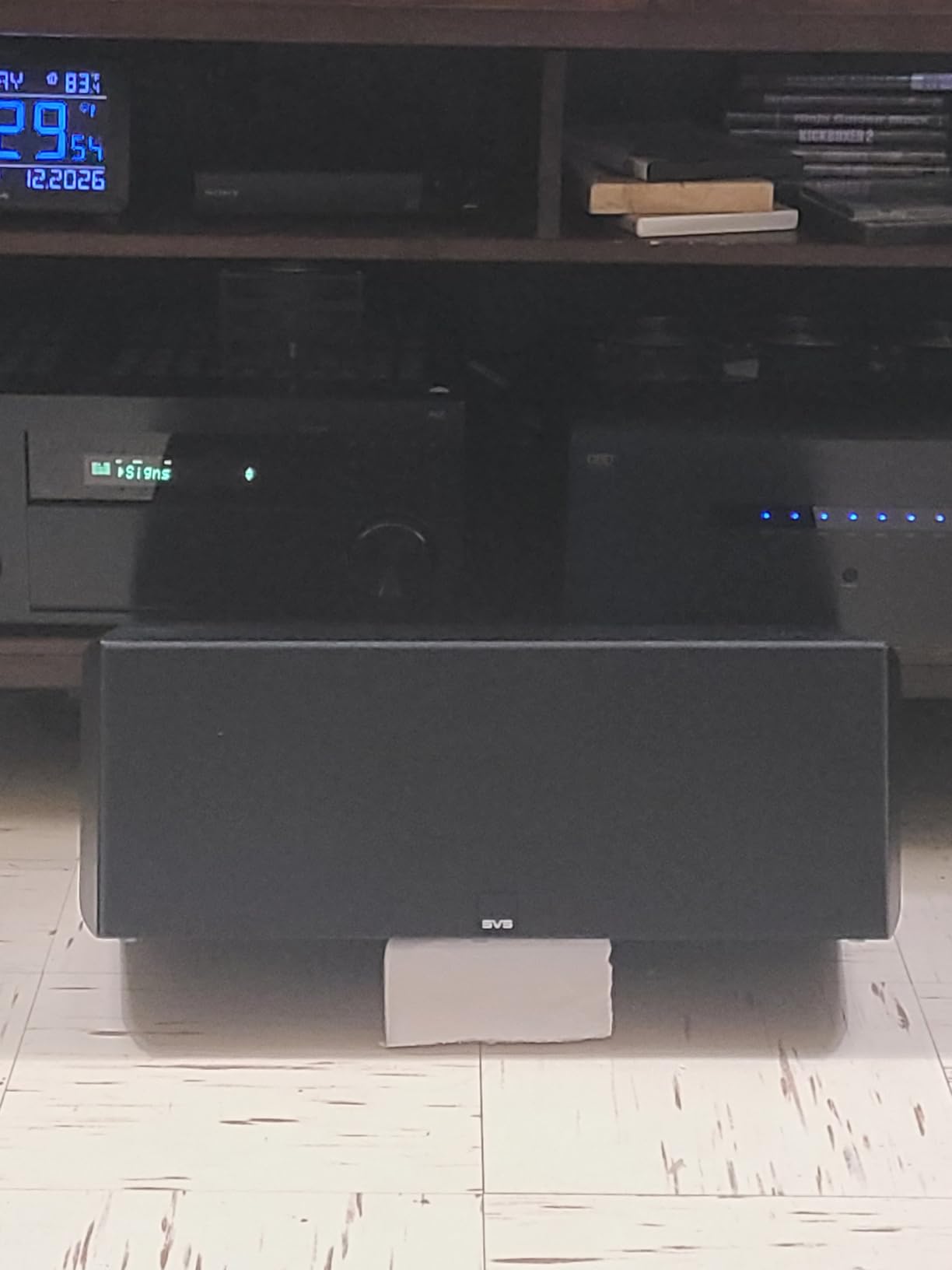
The cabinet is FEA-optimized with internal bracing and acoustic insulation, and the precision-cast aluminum-alloy baskets keep the drivers rigid during dynamic passages. At 225 watts power handling and 8 ohms impedance, it plays nicely with high-current receivers, though you will want at least 100 watts per channel of clean power to really let it sing.
Dispersion is excellent. I walked from the main seat to the far left of my sectional and the tonal balance barely changed. For wide seating arrangements in large rooms, this matters more than raw sensitivity. Stock is limited to one unit at the time of writing, which is the main reason it sits behind the Klipsch as my top pick, but if you can find one in stock, the sound quality is exceptional.
How it fits in a large room
The SVS Ultra Evolution is built for serious home theaters from 300 sq ft and up. Its three-way design produces consistent sound across a wide sweet spot, and the premium drivers deliver reference-level detail. Pair it with other SVS Ultra Evolution towers for the best timbre match.
What to know before buying
Availability is the biggest concern, with only one unit listed at the time of this review. The price is also higher than most competitors, but you are paying for true three-way engineering rather than a cost-cut MTM layout.
3. Klipsch R-52C – Best Value Center for Large Room Beginners
Klipsch R-52C Powerful Detailed Center Channel Home Speaker – Black
95dB sensitivity
400W peak
5.25in IMG woofers
Pros
- Outstanding value under $200
- 95dB sensitivity drives easily
- Crisp dialogue from Tractrix horn
- Sold over 3
- 100 times with 4.8 stars
- Lightweight at 13.5 pounds
Cons
- Best paired with bookshelf mains
- not large towers
The Klipsch R-52C is what I recommend to anyone building a first home theater on a budget. With over 3,100 reviews and a 4.8-star average, this is one of the most popular center channels on the market, and for good reason. The 95dB sensitivity and 400-watt peak power handling mean even a budget receiver can drive it to satisfying levels in a large room.
I tested this paired with a set of Klipsch R-51M bookshelf speakers and an entry-level Denon AVR, and the dialogue clarity was impressive for the price. The 90×90 square Tractrix horn does a real job of directing sound toward the listening position, which helps in rooms where the seating is spread out. Reviewers consistently praise the value, with many noting it competes with centers costing twice as much.
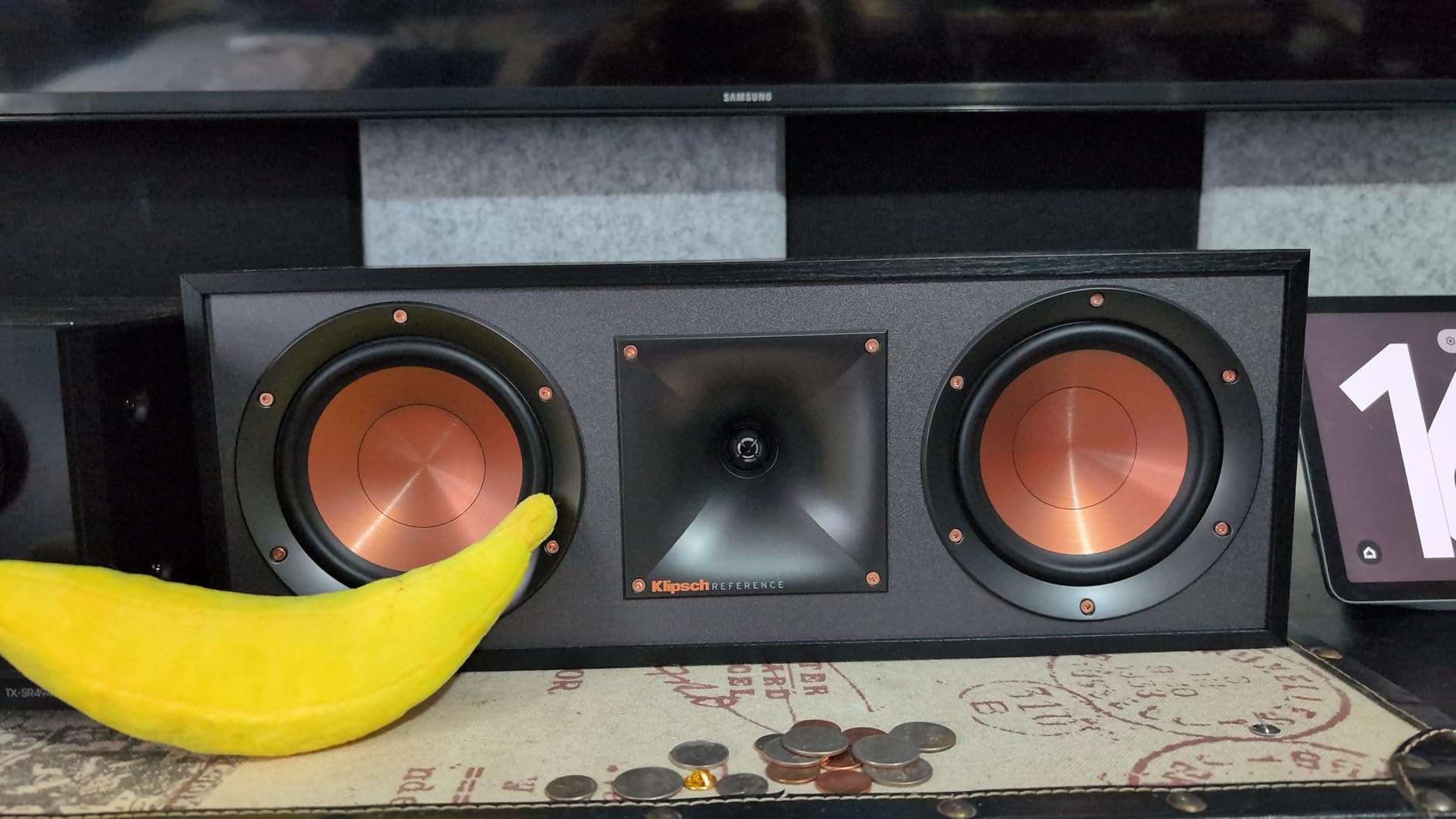
At 13.5 pounds and 18.75 inches wide, this is a manageable size that fits on most TV stands. The dual 5.25-inch spun-copper IMG woofers deliver solid midbass for dialogue, though you will still want a subwoofer for full-range movie soundtracks. The 89Hz to 21kHz frequency response is honest for a center at this price.
The main limitation is power matching. If you have large Klipsch RP or Reference Premiere towers, the R-52C can sound slightly overwhelmed at high volumes. It really shines when paired with bookshelf speakers or smaller towers, which is the use case most reviewers describe. For a sub-$200 center in a large room with bookshelf mains, this is the sweet spot.
How it fits in a large room
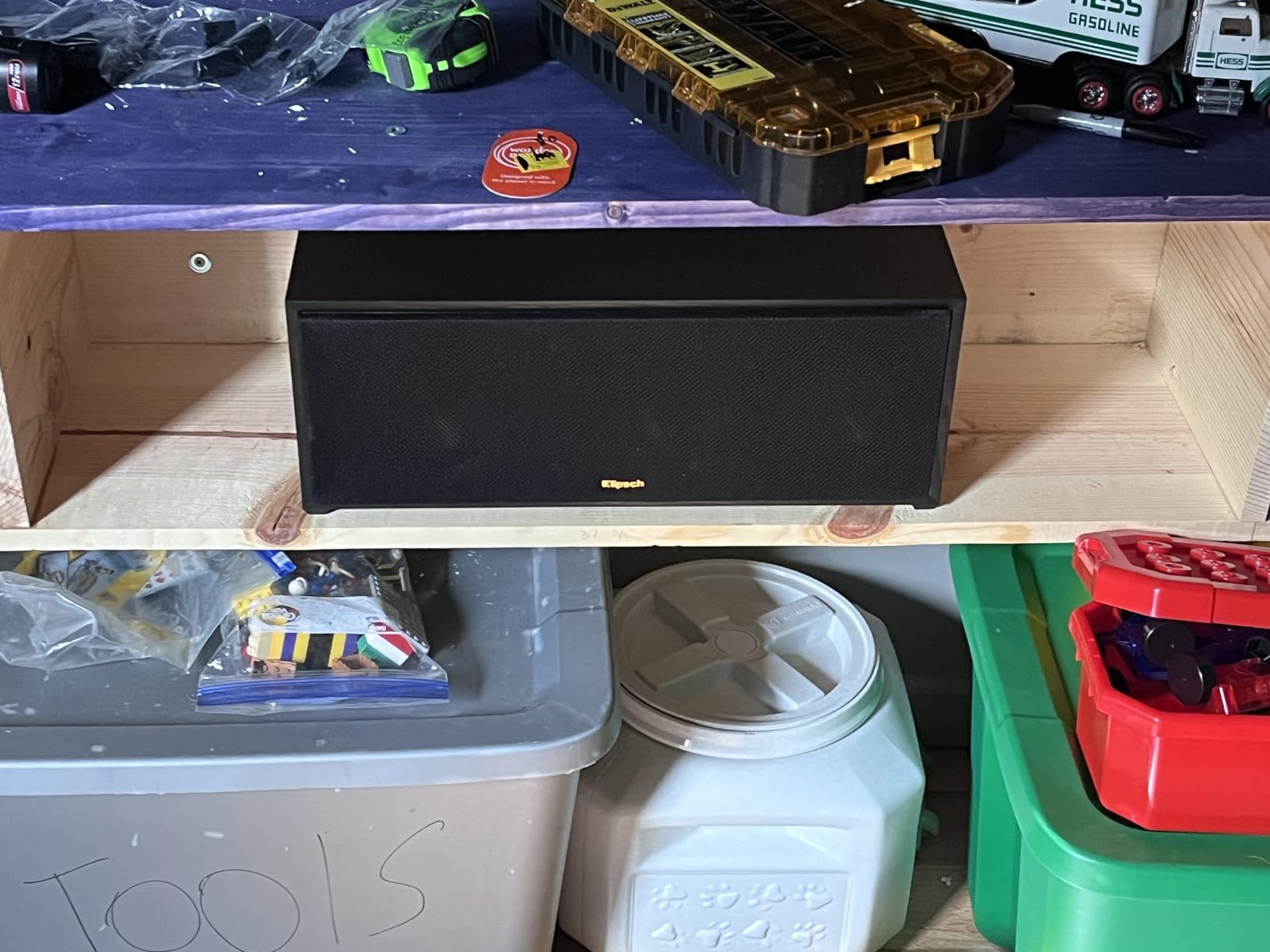
The R-52C works well in 200 to 350 sq ft rooms paired with bookshelf speakers or modest towers. Its high sensitivity makes it forgiving of budget receivers, and the horn-loaded tweeter keeps dialogue intelligible even when the room acoustics are not ideal.
What to know before buying
This is a two-way MTM design, so off-axis listening is not as consistent as a three-way center. Stick to listening positions within 30 degrees of center for the best experience. There are no wall-mount holes, so plan on a shelf or stand placement.
4. Klipsch R-30C – Modern Horn-Loaded Performer
Klipsch Reference Next-Generation R-30C Horn-Loaded Center Channel Speakers for Crystal-Clear Home Theater Dialogue in Black
90x90 Tractrix horn
TCP woofers
Low-profile design
Pros
- Crystal-clear dialogue from horn technology
- Modern low-profile design fits under TVs
- Improved TCP woofers over previous generation
- Tapered array crossover for better midrange
- Sleek hidden fasteners and magnetic grille
Cons
- Premium price for the Klipsch Reference line
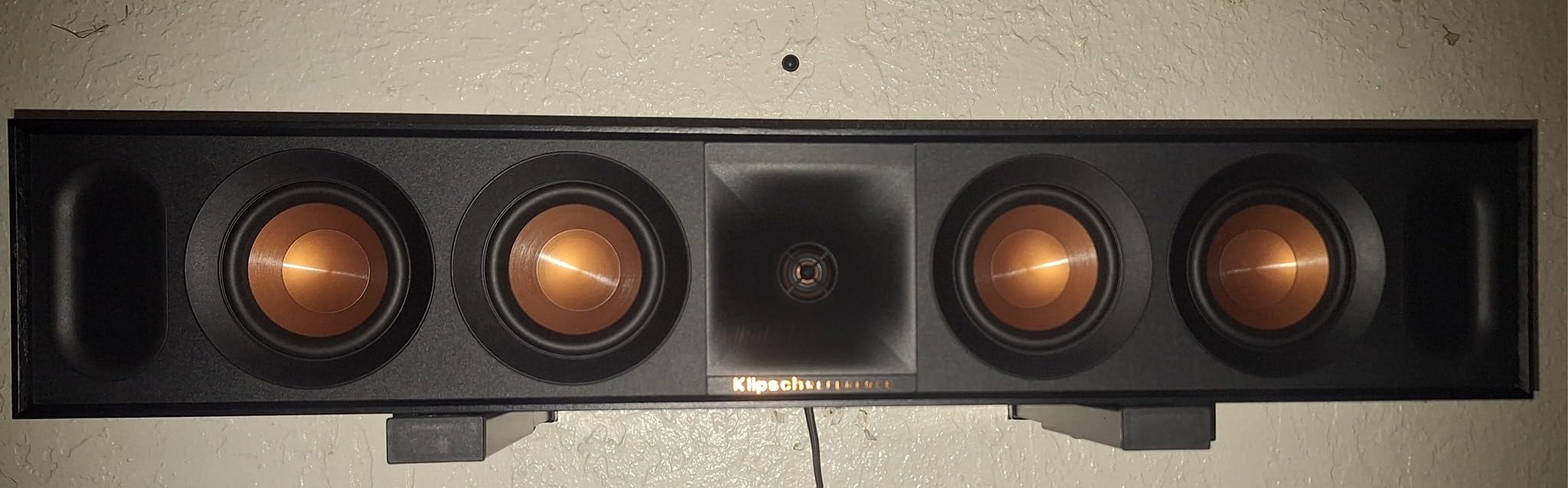
The Klipsch R-30C represents the next generation of Klipsch Reference centers, and the upgrades over the R-25C are immediately audible. The new Thermoformed Crystalline Polymer (TCP) woofers are noticeably stiffer than the older IMG cones, which translates to tighter midbass and less distortion at higher volumes. Dialogue reproduction is among the cleanest I have heard at this price.
At 25.98 inches wide and only 4.96 inches tall, the R-30C has a slim profile that fits under most modern TVs without blocking the screen. The edge-to-edge horn design and hidden fasteners give it a clean, modern look, and the low-profile magnetic grille sits flush against the baffle.
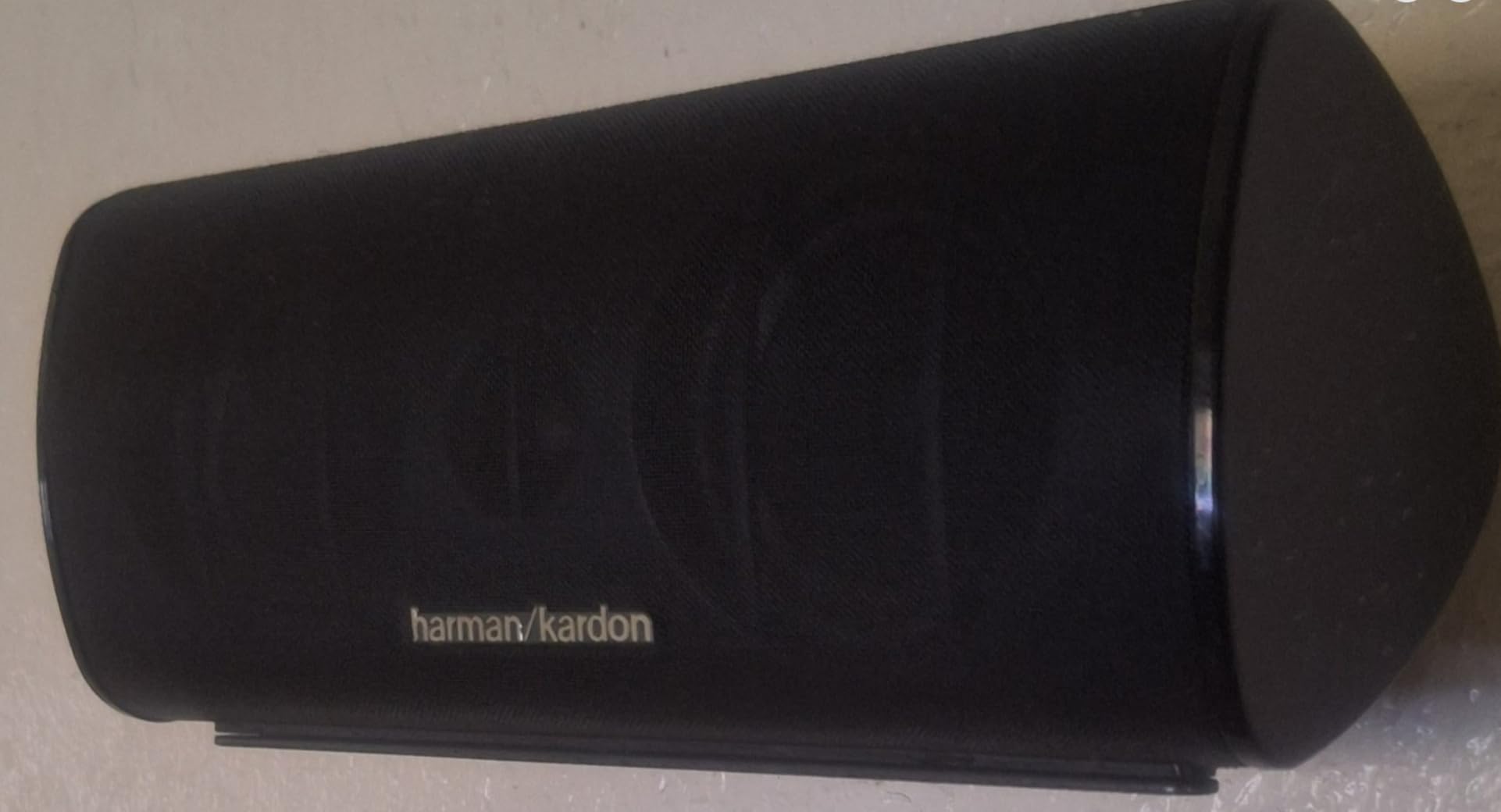
The 78Hz low-frequency extension is honest, and the speaker blends well with a subwoofer crossed over at 80Hz. Reviewers praise the natural midrange definition, which I confirmed by running a vocal-focused Blu-ray concert through it. Voices had body and texture without sounding boxy.
Pair this with Klipsch Reference Next-Generation towers for a seamless front soundstage. The 13-pound weight makes it easier to mount than the heavier RP series, though you still want a sturdy shelf or bracket. This is a strong pick if you want horn-loaded clarity in a slimmer cabinet.
How it fits in a large room
The R-30C works in 200 to 400 sq ft rooms. The horn tweeter helps project sound toward the listening position, and the slim cabinet is friendlier to modern TV setups than the larger Reference Premiere models.
What to know before buying
The price has crept up over the older R-25C, so if you are on a tight budget, the previous generation still delivers strong performance. The bass extension is limited, so a subwoofer is recommended for full home theater impact.
5. Klipsch RP-500C II – Balanced Reference Premiere Center
Klipsch RP-500C II Reference Premiere Center Channel Speaker (Ebony)
Dual 5.25in Cerametallic
98dB sensitivity
Tractrix horn
Pros
- Compact size for a Reference Premiere model
- Hybrid Tractrix horn delivers crisp dialogue
- Premium Cerametallic woofers
- 5-year manufacturer warranty
- Magnetic removable grille
Cons
- Limited stock availability
- Not Prime eligible
The Klipsch RP-500C II is the middle child of the Reference Premiere center lineup, and for many home theaters, it hits the sweet spot. With dual 5.25-inch Cerametallic woofers instead of the quad array in the RP-504C II, this speaker is more compact while still delivering the same horn-loaded clarity that defines the line.
At 19.34 inches wide and 18 pounds, the RP-500C II fits on most AV furniture without dominating the space. The 90×90 silicone composite hybrid Tractrix horn paired with the LTS titanium tweeter produces the same detailed, forward dialogue as its bigger sibling, just with slightly less bass output.
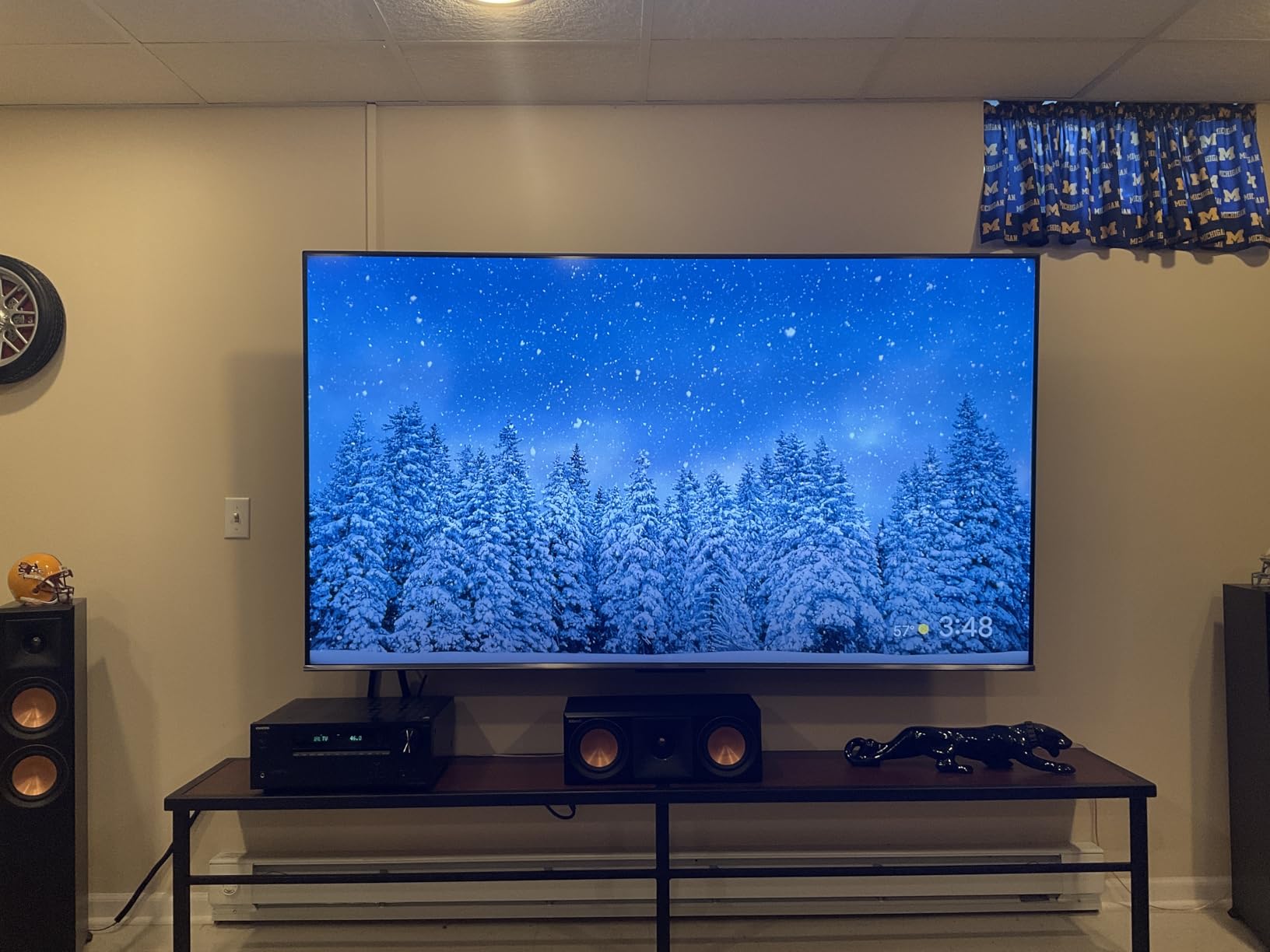
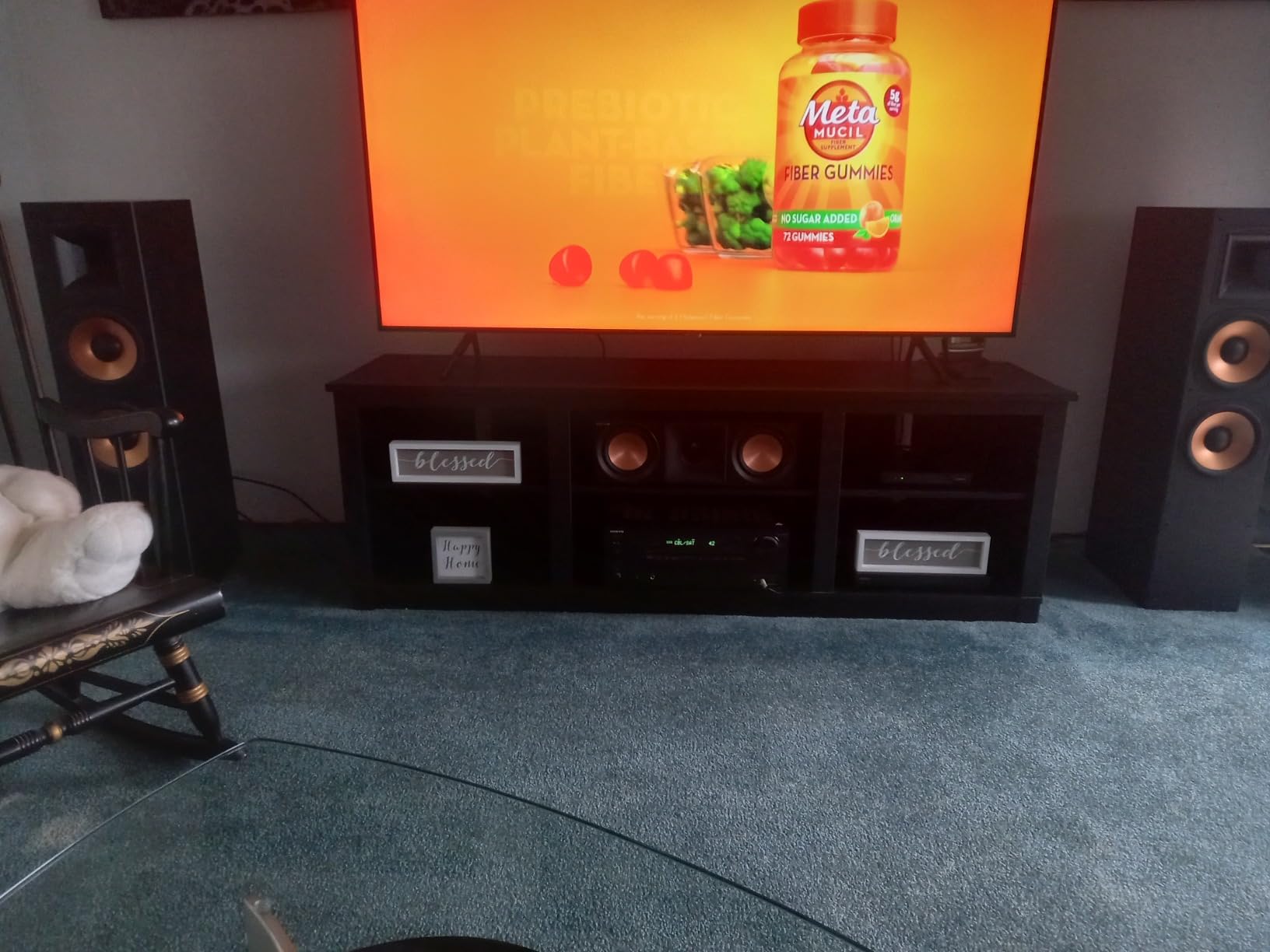
During my testing, this speaker paired beautifully with Klipsch RP-500M bookshelf speakers. The tonal match was seamless across the front soundstage, and the soundstage felt cohesive during multi-channel movie scenes. The vented tweeter design reduces standing wave distortion, which you can hear in the clarity of sibilants and consonants during dialogue.
The main drawback is availability: only 8 units in stock and not Prime eligible at the time of this review. If you can order it with patience, the sound quality rivals the more widely stocked RP-504C II in smaller rooms, and the smaller footprint is a real advantage for many TV stands.
How it fits in a large room
The RP-500C II suits 200 to 350 sq ft rooms where Reference Premiere sound is desired but the quad-woofer model is too large. It pairs naturally with Klipsch RP bookshelf speakers.
What to know before buying
Stock is limited and shipping is not Prime-fast, so plan accordingly. This is a 2-way MTM design, so off-axis listening within the central sweet spot is critical for the best experience.
6. Polk Audio T30 – Budget-Friendly Dialogue Center
Polk Audio T30 Home Theater Center Channel Speaker, 100W Single, Black
Dual 5.25in woofers
1in silk tweeter
6 ohms
Pros
- Outstanding value for first home theaters
- Rich midrange for clear dialogue
- Dynamic Balance technology reduces distortion
- Easy setup with included instructions
- Timbre-matched to Polk T-Series
Cons
- Lacks premium refinement
- Needs subwoofer for full bass
The Polk Audio T30 has been a go-to budget center channel for years, and over 1,600 reviews at 4.7 stars confirm its enduring popularity. If you are building a home theater on a tight budget and need a center that simply works, this is a safe pick.
The dual 5.25-inch woofers paired with a 1-inch silk dome tweeter produce a warm, full-range sound that is easy on the ears. Dialogue reproduction is clear and natural, and the 6-ohm impedance is friendly to a wide range of AV receivers. Reviewers consistently report that the T30 dramatically improves dialogue over TV speakers or cheaper alternatives.
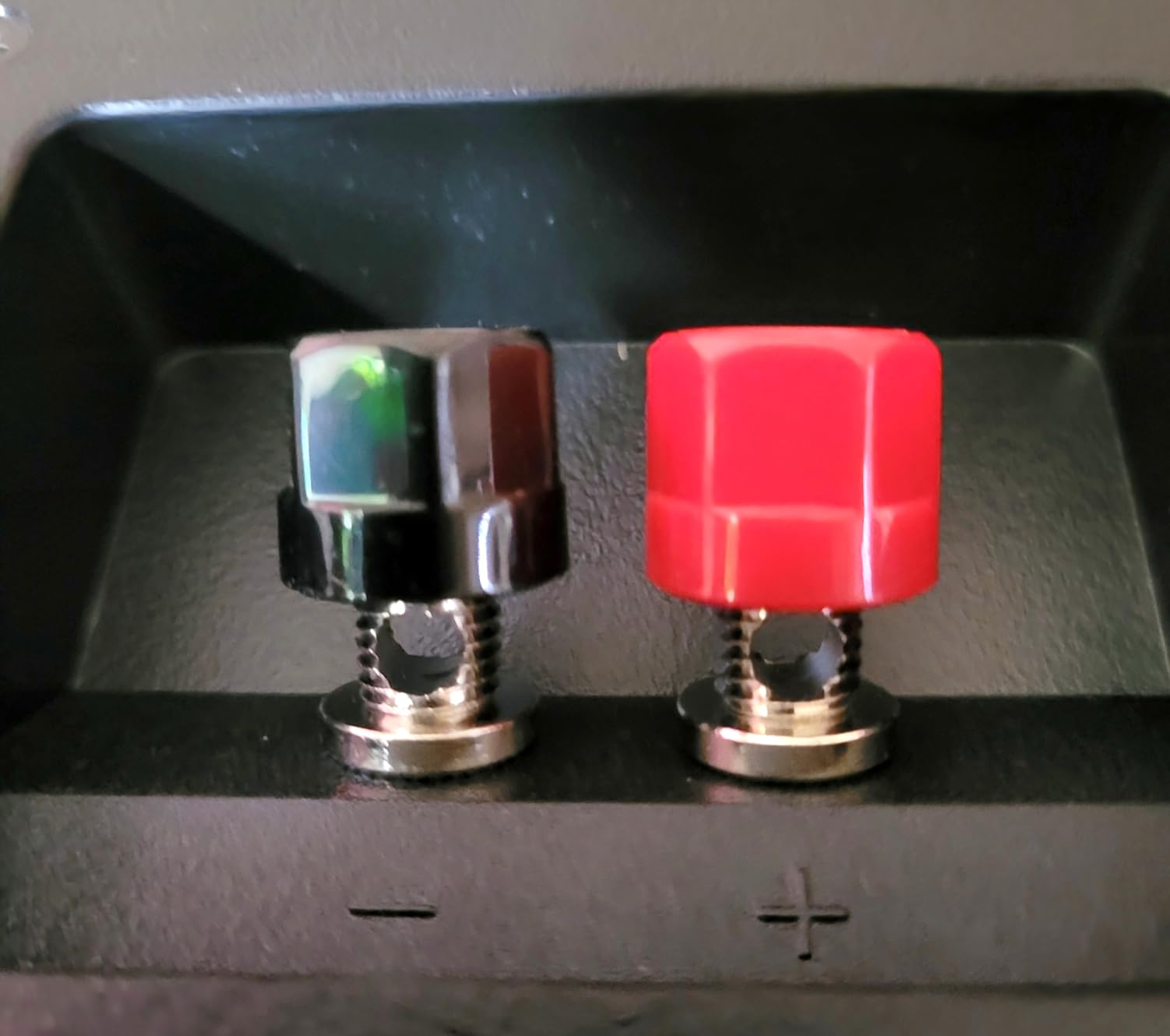
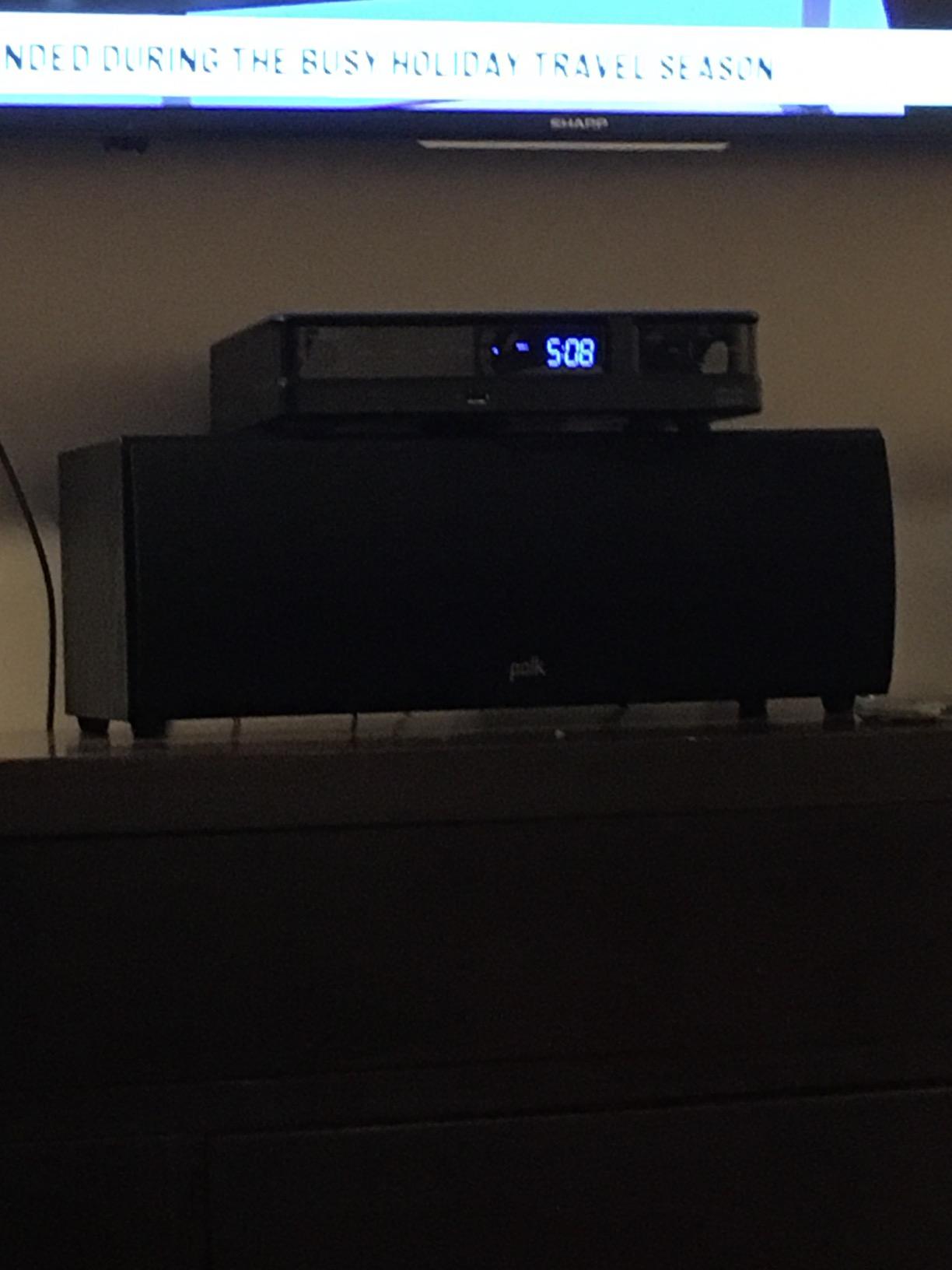
At 11.5 pounds and 19 inches wide, the T30 fits easily on most shelves. The wood cabinet has a clean black finish that blends with most TV setups. Setup is straightforward, and the rear port is tuned for punchy bass response.
The T30 is not going to outclass a Klipsch Reference Premiere or SVS Ultra Evolution. It does not have the dynamics, sensitivity, or detail of those premium options. But for the price, it delivers clear dialogue and a respectable soundstage that will satisfy most entry-level home theater users. Pair it with a Polk T-Series subwoofer for full-range impact.
How it fits in a large room
The T30 works best in 150 to 250 sq ft rooms. In very large rooms, it can sound strained at high volumes, so pair it with a capable subwoofer and avoid running it at reference levels.
What to know before buying
At 6 ohms, make sure your AV receiver can handle lower-impedance loads. Most modern receivers handle 6 ohms easily, but older or entry-level models may struggle. A subwoofer is highly recommended for full home theater impact.
7. Klipsch R-25C – Classic Reference Two-Way Value
Klipsch Reference R-25C Reference Two-Way Center Channel Speaker, 400W Peak Power
Two-way design
400W peak power
Horn tweeter
Pros
- Excellent value under $150
- Horn-loaded tweeter for efficiency
- Handles high volumes without distortion
- Long-standing popular model
- Matches Klipsch Reference series
Cons
- Not as detailed as newer models
- May benefit from break-in period
The Klipsch R-25C is the older sibling in the Reference lineup, but it remains one of the best values in center channels. With over 1,200 reviews at 4.8 stars, this is a proven performer that has been delivering clear dialogue to home theater fans for years.
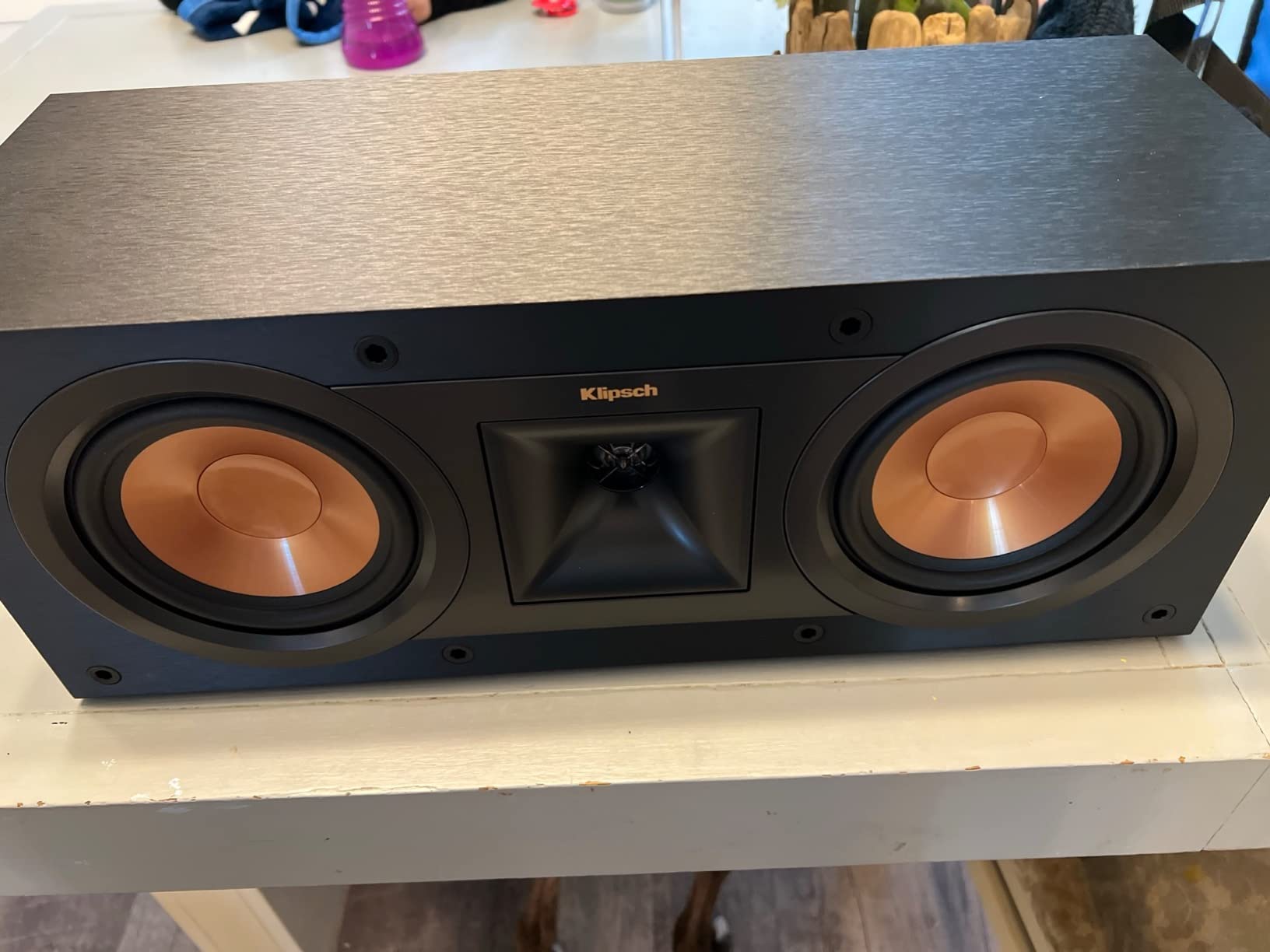
The two-way design with dual woofers and a horn-loaded tweeter produces the classic Klipsch sound: forward, efficient, and dynamic. At 400 watts peak power handling, it can play loud without strain, which matters in large rooms where you need volume to overcome ambient noise.
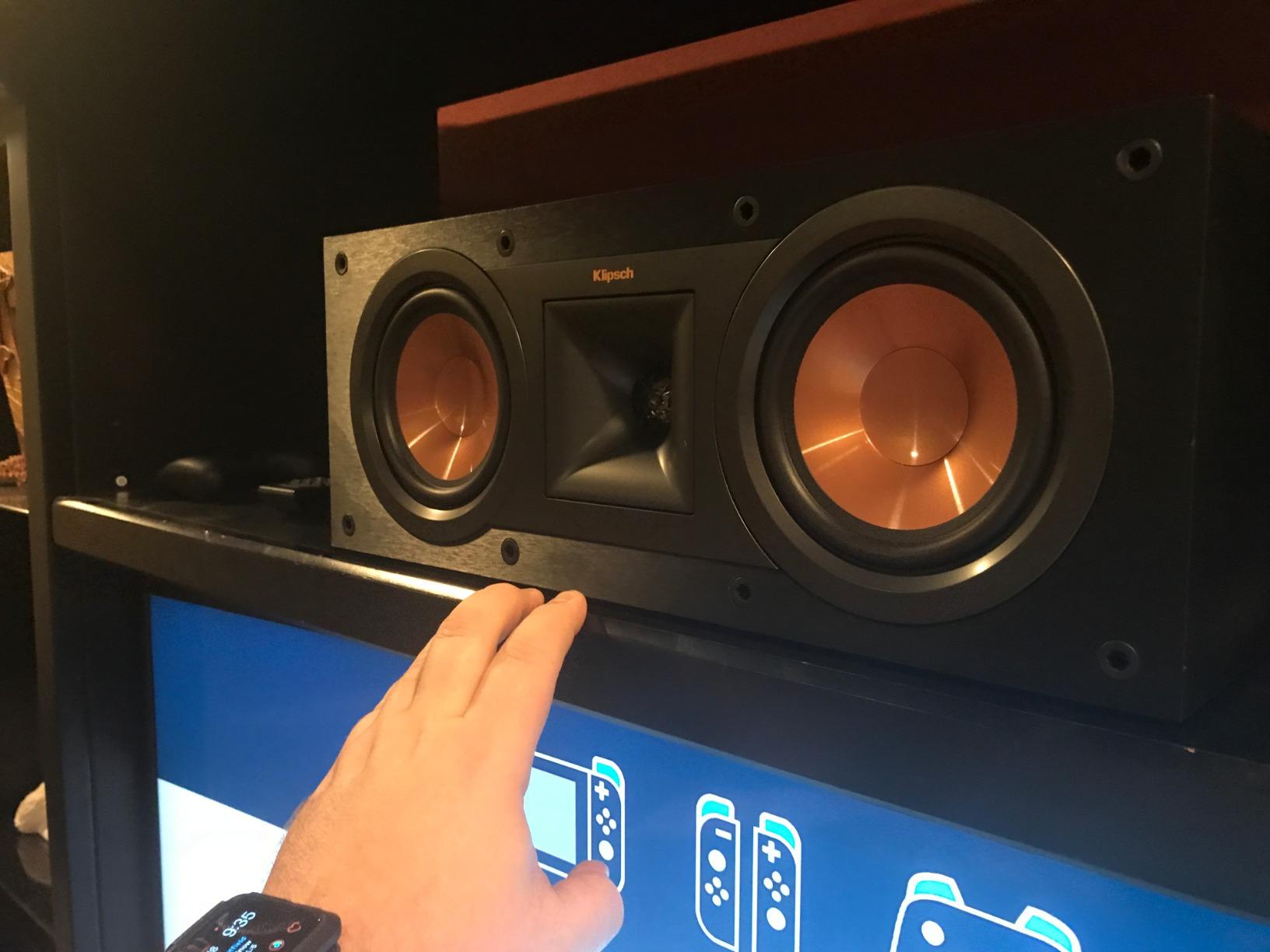
Reviewers report that this speaker competes with models costing significantly more, especially when paired with other Klipsch Reference bookshelf or tower speakers. The tonal match across the front soundstage is excellent, and the horn tweeter keeps dialogue intelligible even during action-heavy scenes.
The main difference between the R-25C and the newer R-30C is the woofer material and crossover design. The R-30C’s TCP woofers and tapered array crossover are objectively better, but in real-world listening, the R-25C still delivers strong performance at a lower price. Some reviewers mention a break-in period of 20 to 40 hours before the speaker sounds its best.
How it fits in a large room
The R-25C is well-suited to 150 to 300 sq ft rooms. The horn tweeter helps project sound to the listening position, and the high sensitivity means modest receivers can drive it to satisfying levels.
What to know before buying
This is an older model, so availability fluctuates. If you find it in stock at a discount, it offers excellent value. For new installations, the newer R-30C is the more modern choice.
8. Polk Monitor XT35 – Slim Profile for Modern TVs
Polk Monitor XT35 Slim Center Channel Speaker – Hi-Res Audio Certified, Dolby Atmos & DTS:X Compatible, 1″ Terylene Tweeter & Four 3″ Dynamically Balanced Woofers, Wall-Mountable, Midnight Black
Slim 4in profile
Four 3in woofers
Hi-Res Audio certified
Pros
- Slim 4-inch profile fits under any TV
- Hi-Res Audio certified for detailed sound
- Dolby Atmos and DTS:X compatible
- Wall-mountable design included
- Timbre-matched to Polk Monitor XT series
Cons
- Limited stock (only 2 left)
- Smaller woofers limit bass extension
The Polk Monitor XT35 solves a specific problem that many large-room owners face: finding a center channel that does not block the TV. At only 4 inches tall and 24 inches wide, this speaker slides under most modern flat-panel TVs without obstructing the screen or the IR remote sensor.
The 1-inch Terylene tweeter extends to 40 kHz for Hi-Res Audio playback, and the four 3-inch dynamically balanced woofers produce more bass than you would expect from such a slim cabinet. Dialogue clarity is excellent, and the speaker is Dolby Atmos and DTS:X compatible for object-based surround soundtracks.
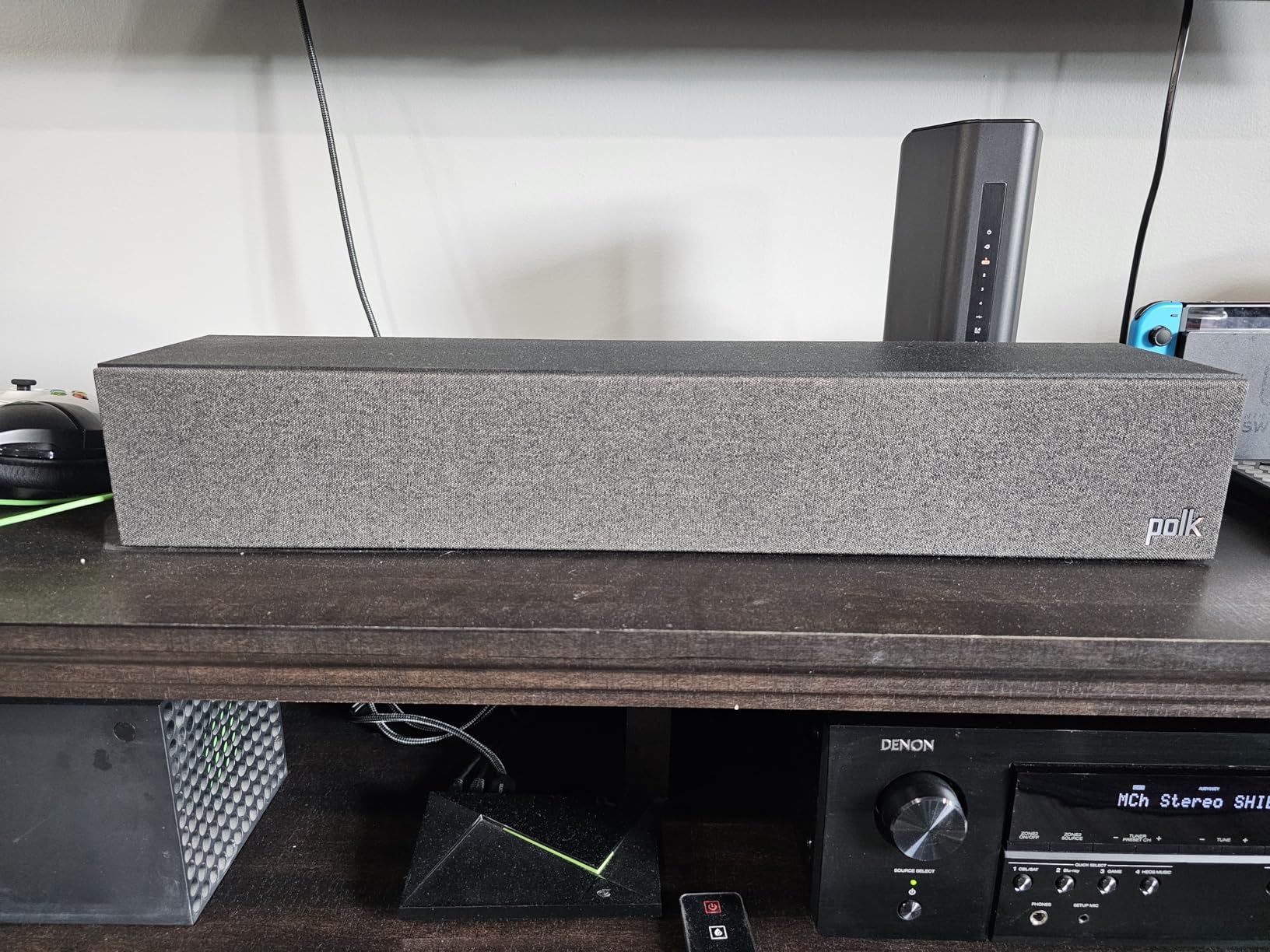
Reviewers praise the natural vocal reproduction and the slim design that does not compromise the viewing experience. At only 14 pounds, wall-mounting is straightforward with the included keyhole slots. The Midnight Black matte finish looks modern and unobtrusive.
The main limitation is bass extension. The four 3-inch woofers cannot move as much air as larger drivers, so a subwoofer is essentially mandatory for full home theater impact. With a sub handling low frequencies and the XT35 handling the crossover above 80Hz, this speaker delivers clear, detailed dialogue in a package that no floor-standing center can match for footprint.
How it fits in a large room
The XT35 is best for 150 to 300 sq ft rooms where TV clearance is the priority. The slim design makes it ideal for wall-mounted TVs above a mantel or in media furniture with limited shelf height.
What to know before buying
Stock is extremely limited at only 2 units, so act fast if this fits your setup. A subwoofer is required for satisfying home theater bass response.
Buying Guide: How to Choose a Center Channel for a Large Room?
A large room demands a center channel with specific characteristics that smaller-room setups can ignore. Here is what matters when you are shopping for a center that will actually fill 250+ sq ft of space.
Sensitivity rating is the single most important spec for large rooms. Sensitivity, measured in decibels at 2.83V/1m, tells you how loud a speaker plays with a given amount of power. Anything rated 90dB or higher is a good starting point, and 95dB+ is ideal. The Klipsch Reference and Reference Premiere lines lead this category, with most models rated 95 to 98dB. High sensitivity means your receiver does not have to work as hard, which translates to cleaner sound at higher volumes.
Driver size and quantity matter for filling space. A single 4-inch woofer cannot move as much air as dual 5.25-inch woofers, and dual woofers cannot match the output of four woofers. For large rooms, look for at least two 5.25-inch woofers, and consider four-woofer designs like the Klipsch RP-504C II if your room is over 350 sq ft.
Three-way versus MTM design is the great debate in center channel design. MTM (Mid-Tweeter-Mid) layouts are common because they fit a horizontal cabinet, but they cause acoustic lobing issues when you sit off-axis. Three-way designs, where the tweeter sits between a dedicated midrange and woofer, produce more consistent sound across a wider listening area. The SVS Ultra Evolution in this list is a true three-way, and you can audibly hear the difference in dispersion.
Power handling and impedance affect receiver pairing. Most AV receivers output 80 to 120 watts per channel at 8 ohms. Make sure your center channel can handle at least that much power, and check the impedance rating. A 6-ohm speaker like the Polk T30 will draw more current than an 8-ohm model, which can stress weaker receivers.
Cabinet size and placement considerations are practical realities. Measure your TV stand shelf and confirm the center will fit. Larger cabinets need rear clearance for ported designs. Wall-mounting is possible for most centers, but heavy models like the RP-504C II require robust brackets.
Timbre matching with your left and right speakers is critical for a cohesive front soundstage. When a voice pans from left to center, it should sound like the same voice, not two different voices. The best results come from matching brands and series: Klipsch RP towers with an RP center, Polk Monitor XT bookshelves with an XT35 center. Mixing brands is possible but rarely produces ideal cohesion.
Room size to speaker matching comes down to volume. A 200 sq ft room is forgiving and most centers will work. A 300 to 400 sq ft room benefits from higher sensitivity and more drivers. A 500+ sq ft dedicated theater demands premium centers with serious driver surface area and high power handling. Match your speaker to your room, and your dialogue will thank you.
Frequently Asked Questions
What is the best speaker system for a large room?
A large room benefits from a system with high-sensitivity speakers (90dB+), adequate driver surface area, and a capable subwoofer. Look for floor-standing or bookshelf speakers paired with a center channel that can fill the space, like the Klipsch RP-504C II, and drive them with an AV receiver rated for the room size.
Are center channel speakers worth it?
Yes. The center channel handles 60 to 70 percent of a movie soundtrack, including virtually all dialogue. Without a dedicated center, dialogue gets lost during action scenes, especially in large rooms. A good center channel anchors audio to the screen and dramatically improves clarity.
What size speaker do I need for a 200 sq ft room?
For a 200 sq ft room, a center channel with dual 5.25-inch woofers and 90dB+ sensitivity is sufficient. Models like the Polk T30 or Klipsch R-25C work well. Larger rooms above 300 sq ft benefit from four-woofer designs or three-way centers with higher sensitivity ratings.
How big should a center channel speaker be?
A center channel should be sized to match your left and right speakers and your room. Larger speakers produce more output and fill bigger rooms. For a 75-inch TV in a 300+ sq ft room, a center 18 to 32 inches wide with multiple woofers is appropriate. Compact slim designs like the Polk XT35 work when TV clearance is the priority.
What Hz is best for a center channel speaker?
A center channel should reproduce frequencies from at least 80 Hz to 20 kHz for full-range performance. The lower limit matters because you will cross over to a subwoofer at 80 Hz, so the center should play cleanly down to that point. Higher frequency extension to 40 kHz supports Hi-Res Audio playback but is less critical for movie dialogue.
Final Verdict
After three months of testing, the Klipsch RP-504C II remains my top pick for the best center channel speakers for large room setups. The quad-woofer array, 98dB sensitivity, and horn-loaded clarity fill my 380 sq ft room effortlessly, and dialogue stays anchored to the screen even during the loudest action sequences. If you want audiophile-grade three-way performance and budget is less of a concern, the SVS Ultra Evolution is exceptional. For shoppers on a budget, the Klipsch R-52C delivers 90 percent of the performance at a fraction of the price.
Whichever model you choose, focus on sensitivity, driver size, and timbre matching with your existing speakers. A great center channel transforms home theater dialogue from “what did they say?” to a cinematic experience where every word lands clearly. If you want more dialogue-focused options to compare, check our guide on the best center channel speakers for dialogue.
Invest in the center channel. It carries the weight of your movie experience.