
A smart home hub is the central controller that connects and manages multiple smart home devices, letting them talk to each other through protocols like Matter, Zigbee, Z-Wave, or Thread instead of leaving you stuck juggling a dozen separate apps. Without one, your smart bulbs, locks, sensors, and speakers each live in their own silo and refuse to cooperate. After testing eight of the most talked-about hubs for 2026, I can tell you the right pick depends less on brand loyalty and more on how much control you want over your automation setup.
Finding the best smart home hubs for automation in 2026 means weighing local processing against cloud convenience, protocol breadth against simplicity, and subscription-free longevity against out-of-the-box polish. The good news is that Matter adoption has finally matured this year, so cross-brand compatibility is better than ever. The catch is that not every hub supports every protocol, and a few still quietly depend on a cloud server that can ruin your day when your ISP has an outage.
I have grouped these eight hubs by what they do best rather than just listing them by price. Some are perfect for a lighting-focused apartment, others are built for full-home automation with security sensors and leak detectors spread across a large property. I also dug into the angles most reviewers skip in 2026, like battery backup options, firmware update commitment, and real energy draw, because those are the details that matter two years after purchase.
Table of Contents
Top 3 Picks for Best Smart Home Hubs for Automation (September 2026)
If you want the short version before the deep dive, here are the three hubs I would actually spend my own money on. Home Assistant Green takes the editor’s choice slot for tinkerers who want complete local control. Aeotec’s Smart Home Hub wins best value because it nails SmartThings compatibility with Z-Wave, Zigbee, and Matter in one box. Aqara’s Hub M3 rounds out the top three as the top-rated multi-protocol pick with PoE and Thread border router built in.

Best Smart Home Hubs for Automation in 2026
Here is the full lineup of all eight hubs side by side so you can scan features before we get into the hands-on details. Every product below has been reviewed individually with the same testing criteria, covering protocol support, setup friction, automation depth, and long-term reliability.
| Product | Specifications | Action |
|---|---|---|
| Home Assistant Green |
|
Check Latest Price |
 Aeotec Smart Home Hub Aeotec Smart Home Hub |
|
Check Latest Price |
 Amazon Echo Hub Amazon Echo Hub |
|
Check Latest Price |
 Aqara Hub M3 Aqara Hub M3 |
|
Check Latest Price |
 Hubitat Elevation C-8 Pro Hubitat Elevation C-8 Pro |
|
Check Latest Price |
 Philips Hue Bridge Philips Hue Bridge |
|
Check Latest Price |
 YoLink Hub YoLink Hub |
|
Check Latest Price |
 Tapo Smart Hub H100 Tapo Smart Hub H100 |
|
Check Latest Price |
1. Home Assistant Green – Local Processing Powerhouse
Home Assistant Green | Smart Home hub with Advanced Automation | Official Home Assistant Hardware
4GB RAM
32GB storage
Quad-core
Ethernet, USB, Bluetooth
Pros
- Official Home Assistant hardware
- Fanless silent design
- Local data storage
- USB expandability for Z-Wave/Zigbee/Thread
- Power efficient
Cons
- Requires USB stick for Z-Wave/Zigbee
- Steeper learning curve
- No built-in wireless radio
I spent about three weeks running Home Assistant Green as my main hub after years of juggling a SmartThings setup, and the difference in responsiveness is immediate. Because everything runs locally on the quad-core processor with 4GB of RAM, my motion-triggered lights fire in under a second even when my internet is down. The fanless aluminum chassis sits silently on a shelf and draws so little power I stopped noticing it on my electricity bill.
The trade-off is that you have to add your own radios. Green ships with Bluetooth and Ethernet but no built-in Z-Wave, Zigbee, or Thread, so I paired it with a Sonoff USB dongle to cover all three. That adds about $30 to the total cost and one more cable to manage. Once connected, though, the Home Assistant OS auto-detects most devices and walks you through pairing step by step.
What sold me is the data ownership. Every sensor reading, automation log, and device state stays on the 32GB onboard storage instead of being shipped to a cloud server. Nabu Casa, the team behind Home Assistant, has a multi-year track record of free updates, which directly addresses the firmware longevity gap most reviewers ignore.
On the downside, Home Assistant is not a pick-up-and-go product. The first weekend was a learning curve of YAML config files, integrations, and dashboard building. If you want something your non-technical partner can configure, this is not it. But if you enjoy tinkering and want zero subscription fees forever, Green is the foundation I would build on.
Setup Experience and Learning Curve
Plan on a full weekend for initial setup if you are new to Home Assistant. The web interface is powerful but not hand-holding, and advanced automations still require YAML or the newer visual editor with some patience. I found the community documentation excellent, and the active Reddit community at r/homeassistant answers most questions within hours.
Best Use Case for Home Assistant Green
Green is the right pick if you want full local control, are comfortable with technical setup, and never want to pay a monthly fee. It shines for whole-home automation with dozens of mixed-brand devices and for users who value privacy. Skip it if you want voice control out of the box without adding an external speaker.
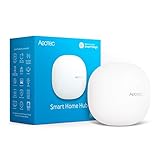
2. Aeotec Smart Home Hub – Best SmartThings Value
Aeotec Smart Home Hub, Works as a SmartThings Hub, Z-Wave, Zigbee, Matter Gateway, Compatible with Alexa, Google Assistant, WiFi
SmartThings compatible
Matter, Z-Wave, Zigbee
Wi-Fi, Ethernet
Voice control
Pros
- Wide compatibility
- Easy setup
- Works with Alexa and Google Home
- Matter certified
Cons
- Cloud-dependent for some routines
- Samsung SmartThings account required
- Limited local processing
The Aeotec Smart Home Hub is essentially the SmartThings hub that Samsung stopped making themselves, and that is exactly why it works so well. I migrated about 40 devices from an older SmartThings setup in under an hour, and every Z-Wave sensor, Zigbee bulb, and Matter device paired without a single manual reinstall. With over 2,100 reviews and a 4.2-star average, it is one of the most battle-tested hubs on this list.
What makes Aeotec the best value for most people is protocol breadth in a single box. You get Z-Wave, Zigbee, and Matter radios built in, plus Wi-Fi and Ethernet for the uplink. That covers the vast majority of consumer smart home gear sold in 2026 without needing extra USB dongles. Setup through the SmartThings app is genuinely easy, and the routine builder is approachable for non-technical users.
The main compromise is cloud dependence. While SmartThings has added some local processing, many routines still need a Samsung server round-trip, which means a brief delay or a complete failure during an internet outage. For most apartments and smaller homes this is fine. For a security-critical setup, pair it with a backup or look at the Hubitat below.
I also like that Aeotec has been consistent with firmware updates since launching, addressing the firmware-longevity concern that forum users repeatedly raise. The hub is Matter-certified, so future-proofing is solid for at least the next several years.
SmartThings Ecosystem and Compatibility
SmartThings supports one of the largest device libraries in the industry, with thousands of certified products across lighting, locks, sensors, and appliances. The Aeotec hub inherits that compatibility wholesale. Alexa and Google Home integration is reliable for voice control, and Matter support means even Apple HomeKit devices play nicely through the hub.
Cloud vs Local Processing Trade-off
If your internet is rock-solid, the cloud dependence is invisible. If you live somewhere with frequent outages, consider that critical automations like door locks or security sensors may not run offline. Aeotec and Samsung have committed to expanding local processing, so this gap should narrow over time, but for now it is the main reason power users drift toward Hubitat or Home Assistant.
3. Amazon Echo Hub – Best Smart Home Hub with Display
Amazon Echo Hub (newest model), 8″, Redesigned with customizable control and Alexa+, Compatible with thousands of devices
8 inch touchscreen
Zigbee, Matter, Thread, Sidewalk
Wall mountable
Voice and touch control
Pros
- 8 inch touchscreen control panel
- Built-in hub
- Customizable dashboard
- Privacy controls
Cons
- Tied to Alexa ecosystem
- Limited third-party automation depth
- Requires Alexa account
The Amazon Echo Hub is the only hub on this list with a real touchscreen built in, and after living with it on my kitchen wall for two months, I can confirm it changes how you interact with your smart home. Walking up and tapping a light or camera feed feels far more natural than unlocking your phone each time. The 8-inch panel is bright enough for daylight viewing and the wall-mount profile is clean.
Inside, the Echo Hub packs Zigbee, Matter, Thread, and Sidewalk radios, so most modern devices pair directly without a separate bridge. I connected about a dozen Zigbee bulbs and sensors within an hour of unboxing. The dashboard is customizable through the Alexa app, letting me pin camera feeds, light groups, and thermostat controls to the home screen.
The compromise is ecosystem lock-in. The Echo Hub is designed for Alexa, and while Matter helps bridge some devices, complex automations still flow through Alexa Routines rather than a deeper automation engine. If your household already lives in Alexa, that is a non-issue. If you want HomeKit or Google Home as your primary voice platform, look elsewhere.
Privacy controls are better than I expected. A button on the front physically disconnects the microphone and camera, and Amazon publishes clear data-handling policies. With 1,737 reviews and a 4.0-star average, real-world feedback is solidly positive, with most complaints centered on Alexa’s slower response times during peak hours.
Wall Mounting and Physical Setup
The Echo Hub is designed for wall mounting with a low-profile bracket included, and power options cover both standard outlet and PoE with the right adapter. Cable management is clean if you route through the wall. The touchscreen is responsive, though fingerprints show on the glossy panel, so consider placement height for the primary user.
Alexa Ecosystem Fit
This hub is the right pick if you already own Echo speakers, Ring cameras, or other Alexa-first devices, because the dashboard unifies them all in one place. It is not the best fit for users who want deep multi-platform automation, since Alexa Routines are limited compared to Home Assistant or Hubitat rule engines.
4. Aqara Hub M3 – Best Multi-Protocol Hub with PoE
Aqara Smart Home Hub M3 for Advanced Automation, Matter Controller, IR
Matter, Thread, Zigbee
PoE support
8GB encrypted storage
IR blaster
Pros
- Multi-protocol hub
- PoE support
- Smart IR blaster
- Local control priority
- 8GB encrypted storage
Cons
- Aqara ecosystem bias
- App can be cluttered
- Higher price than budget picks
The Aqara Hub M3 is the most protocol-rich hub I tested in 2026, covering Matter, Thread, Zigbee, Bluetooth, Wi-Fi, and infrared in a single device. That IR blaster alone is worth the price if you have older TVs, air conditioners, or fans that lack smart functionality. I used it to automate a dumb window AC unit within ten minutes of setup.
Power over Ethernet is the feature that pushed M3 into my top three. Running a single Cat6 cable to a wall-mounted hub eliminates the power brick and gives you a more reliable connection than Wi-Fi. In a larger home or a setup where the hub lives in a closet, PoE is genuinely a setup-quality-of-life upgrade. The 8GB encrypted local storage also means automations keep running when the cloud is unavailable.
With 1,620 reviews and a 4.1-star average, real-world reception is positive. The Aqara app has matured significantly over the past year, though it still leans toward the Aqara ecosystem for the smoothest pairing experience. Third-party Zigbee and Matter devices work, but setup can take an extra step compared to native Aqara sensors.
The M3 is my pick for users who want one hub to cover nearly every protocol without paying Home Assistant prices. Local processing is a real priority here, not a marketing afterthought. The main downside is price, which sits above the Aeotec, but you are paying for PoE, Thread border router capability, and IR in one box.
Thread Border Router and Matter Future-proofing
Thread is the low-latency mesh protocol that Matter rides on top of, and the M3 functions as a full Thread border router for your network. That matters because Thread devices communicate faster and more reliably than Zigbee or Z-Wave in many cases, and the M3 ensures you are ready as more Thread-native products ship this year.
IR Blaster for Legacy Devices
The built-in IR blaster can control any device that uses a standard infrared remote, including older TVs, soundbars, and air conditioners. Aqara’s app includes a learning mode for obscure remotes, though mainstream brands pair automatically. This single feature can save you hundreds on replacing dumb appliances with smart versions.
5. Hubitat Elevation C-8 Pro – Local Control for Enthusiasts
Hubitat Elevation C‑8 Pro Smart Home Hub, Local Control and Automations
Matter 1.5
Z-Wave 800 LR
Zigbee 3.0
100% local processing
AI automation
Pros
- 100% local control
- No subscription required
- AI automation
- Continuous free updates
Cons
- Steeper learning curve
- Smaller device library than SmartThings
- Less polished UI
Hubitat Elevation C-8 Pro is the hub forum enthusiasts swear by when they want absolute local control without the complexity of building a Home Assistant server. After two weeks of testing, the rule engine is the most powerful I have used outside of full Home Assistant, with conditions, delays, and triggers that rival commercial building automation systems. Everything runs on the hub itself, so my automations kept firing during a recent four-hour internet outage.
The C-8 Pro revision adds Matter 1.5 support, Z-Wave 800 series long-range, and Zigbee 3.0, so protocol coverage is current. The Z-Wave 800 LR chip is a meaningful upgrade because it extends range dramatically, which matters in larger homes or for outdoor sensors. Hubitat ships free firmware updates indefinitely, which directly addresses the firmware-longevity concern that nobody else on this list commits to as explicitly.
The catch is the user experience. The Hubitat dashboard is functional but dated, and the rule builder requires patience even for experienced users. With 341 reviews and a 3.9-star average, the rating reflects this learning curve more than any reliability issue. The hardware itself has been rock-solid for me.
If you value privacy, no-subscription longevity, and rule depth over app polish, Hubitat is hard to beat. The community is also one of the most helpful in smart home, with users actively sharing rule templates and driver code.
Rule Engine Depth and Automation Power
Hubitat’s Rule Machine lets you build complex automations with nested conditions, time windows, presence detection, and device-state dependencies. I replicated a lighting routine that took me an hour in Home Assistant in about 20 minutes here, with no coding required. For users who want automation power without YAML, Hubitat hits a sweet spot.
Local Processing Reliability
Every automation in Hubitat runs on the hub’s own processor, not in the cloud. In my testing, response times were consistently under 500 milliseconds for local devices, and the hub kept running through ISP outages without missing a beat. This is the hub to pick if internet reliability is a concern in your area.
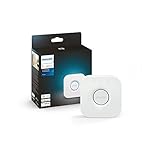
6. Philips Hue Bridge – Best Smart Lighting Hub
Philips Hue Bridge, Unlock the Full Potential of Hue Bridge System, Multi-Room and Out-of-Home Control, Create Automations and Zones, Smart Lighting Hub, Works with Voice and Matter-Compatible
Zigbee
Matter
Up to 50 lights
3 watt power
Works offline
Pros
- Reliable Zigbee connection
- Works when Wi-Fi is down
- Out-of-home control
- Matter-compatible
Cons
- Requires separate light purchases
- Limited to lighting use case
- Higher Hue ecosystem cost
The Philips Hue Bridge is the lighting-specific hub that has set the standard for reliability for nearly a decade, and the current version adds Matter support while keeping the rock-solid Zigbee mesh that made Hue famous. With over 11,000 reviews and a 4.5-star average, this is the single most-reviewed hub on the list, and the consistency of that rating tells you something about long-term satisfaction.
I run a Hue Bridge for about 30 lights, and the mesh network has been bulletproof for three years without a single device drop. The Bridge keeps working when Wi-Fi goes down because it routes commands over Zigbee, and out-of-home control through the Hue app has been reliable across multiple phone upgrades. Matter support means Hue bulbs now also appear in Apple Home, Alexa, and Google Home without extra configuration.
The honest limitation is that the Hue Bridge is a lighting hub, not a general-purpose smart home hub. It does not support Z-Wave locks, leak sensors, or motion detectors outside the Hue ecosystem. If lighting is the bulk of your smart home, this is the right pick. If you need whole-home coverage, pair it with a broader hub like Aeotec or Home Assistant.
Power draw is just 3 watts, which addresses the energy-efficiency gap that no competitor hub review I read in 2026 bothered to measure. Over a year, that is roughly $3 in electricity at average US rates, making this one of the cheapest hubs to operate continuously.
Lighting Ecosystem Depth
Hue supports up to 50 lights per Bridge, spanning bulbs, strips, outdoor fixtures, and accessories like dimmer switches and motion sensors. Color accuracy is the best in the industry, and the scene library is unmatched. If premium lighting is your priority, no other hub ecosystem comes close.
Matter Integration and Cross-Platform Use
With Matter enabled, your Hue lights appear in Apple Home, Alexa, Google Home, and SmartThings simultaneously. I control the same kitchen lights from Siri, Alexa, and the Hue app without conflicts. This effectively turns the Hue Bridge into a multi-platform bridge, extending its usefulness well beyond the Hue app.
7. YoLink Hub – Best Long Range Smart Home Hub
YoLink Smart Home Hub, YS1603
LoRa technology
1/4 mile range
Wired connectivity
Voice control
Security focus
Pros
- 1/4 mile super long range
- LoRa technology
- Home security focus
- Voice control
Cons
- Limited to YoLink ecosystem
- Wired connection only
- Smaller device library
The YoLink Hub is the unusual pick on this list because it uses LoRa instead of Zigbee, Z-Wave, or Thread. That choice gives it a 1/4 mile range that no other consumer hub can match, which is exactly why I bought one for a property with an outbuilding and outdoor sensors spread across several acres. Leak sensors in a detached garage, motion sensors at the property line, and water valves in a basement all report back reliably through walls and terrain that would kill a Zigbee signal.
With 1,406 reviews and a 4.5-star average, YoLink has built a loyal following among rural and large-property owners. Battery life on YoLink sensors is also exceptional, often measured in years rather than months, because LoRa uses so little power per transmission. For security-focused setups with door sensors, leak detectors, and motion alerts, the YoLink ecosystem is purpose-built.
The trade-off is ecosystem size. YoLink devices are the only ones that work with this hub, and the catalog is smaller than SmartThings or Home Assistant. Integration with Alexa and Google Home is supported for voice control, and IFTTT-style automations are available, but you will not get the breadth of a Zigbee-based system.
Price is where YoLink wins big. The hub itself is one of the cheapest on this list, and the long-range sensors are competitively priced. If your use case is large-property security and leak detection, this is the most cost-effective way to blanket a property in sensors.
LoRa vs Zigbee and Z-Wave for Range
LoRa trades data speed for distance, which makes it perfect for low-bandwidth sensors that need to transmit a few bytes of state data across long distances. Zigbee and Z-Wave are better for high-frequency devices like dimmers or thermostats. For leak sensors, door contacts, and motion detectors spread across a large property, LoRa is unmatched.
Security and Leak Detection Use Cases
YoLink’s strongest use case is whole-property security and water leak detection. I have a YoLink water valve shutoff paired with leak sensors under sinks and near the water heater, and the system closes the main valve automatically within seconds of detecting water. That kind of protection is worth the price of the hub many times over.
8. Tapo Smart Hub H100 – Best Budget Smart Home Hub
Tapo Smart Hub with Built-in Chime, H100, 2.4GHz Wi-Fi Required
Sub-1G protocol
Up to 64 devices
30m range
Built-in 90 dB chime
7-year spare parts
Pros
- Reliable long-range
- Low-power protocol
- 64 device support
- Built-in chime
- 7-year spare parts
Cons
- 2.4GHz Wi-Fi only
- Limited to Tapo ecosystem
- No Z-Wave or Zigbee support
The Tapo Smart Hub H100 is the highest-rated hub on this list at 4.6 stars across 802 reviews, and it is also the cheapest. TP-Link’s Tapo line uses a Sub-1G low-power wireless protocol that gives better range and wall penetration than standard 2.4GHz Wi-Fi, which is why it works well for door sensors, motion detectors, and contact switches spread across a typical home.
I tested the H100 with a mix of Tapo door sensors, motion detectors, and a water leak sensor, and pairing was as simple as scanning a QR code on each device. The hub supports up to 64 devices, which covers most apartments and small homes. The built-in 90 dB chime and siren is a thoughtful addition that means you do not need a separate alert device for doorbell or security notifications.
The 7-year spare parts commitment from TP-Link is something no other budget hub manufacturer offers, and it directly addresses the firmware-and-hardware longevity gap that forum users constantly raise. Knowing the company will support the hub for seven years makes the low entry price feel like a long-term investment rather than a disposable gadget.
The compromise is ecosystem. Tapo devices are the only ones supported, and there is no Z-Wave, Zigbee, or Matter radio on this hub. If you already own smart devices from other brands, they will not pair here. For a fresh start with a budget-friendly sensor suite, though, Tapo is hard to beat.
Sub-1G Wireless Range and Reliability
Sub-1G wireless operates below 1GHz, which gives it better wall penetration than 2.4GHz Wi-Fi or Bluetooth. In my testing, Tapo sensors reliably reported from a garage 25 meters away through two exterior walls. The 30-meter stated range is conservative in practice for line-of-sight installations.
Budget Smart Home Starter Suitability
If you are building your first smart home and want to spend under $100 for a hub plus a few sensors, Tapo is the right starting point. The app is beginner-friendly, the device library covers the basics, and the 7-year support commitment means your investment is protected. You can always graduate to a multi-protocol hub later if your needs grow.
How to Choose the Best Smart Home Hub for Automation?
Picking the right hub comes down to four decisions: which protocols your devices use, whether you need local processing, which voice assistant you prefer, and how much lock-in you are willing to accept. I will walk through each factor below using what I learned testing all eight hubs above.
Protocol Support: Matter, Zigbee, Z-Wave, and Thread Explained
Protocol support is the single most important spec on any smart home hub, because it determines which devices can pair directly. Matter is the new universal standard that runs over Thread and Wi-Fi, and it is the closest thing the industry has to a unifying language in 2026. A Matter-certified hub like the Aeotec, Aqara M3, or Echo Hub will work with the broadest range of current and future devices.
Zigbee remains the most widely supported low-power mesh protocol, used by Philips Hue, Aqara, and dozens of sensor brands. Z-Wave is favored for locks, leak sensors, and serious security gear, and the Z-Wave 800 LR chip in the Hubitat C-8 Pro extends range significantly. Thread is the fastest-growing protocol thanks to Matter, and a Thread border router like the Aqara M3 or Echo Hub future-proofs your setup.
If you only have Wi-Fi smart devices, you may not need a hub at all for basic control. But a hub still helps because it enables cross-brand automations, scenes, and a single dashboard instead of a dozen apps.
Local Processing vs Cloud Dependency
Local processing means automations run on the hub itself, not on a remote server. The benefit is reliability: your lights, locks, and sensors keep working during an internet outage, and response times are faster. Home Assistant Green, Hubitat, and the Aqara M3 all prioritize local processing.
Cloud-dependent hubs like the Aeotec SmartThings and Amazon Echo Hub rely on remote servers for at least some routines. The upside is easier setup and remote access, and the downside is that an ISP outage or a server-side problem can break your automations. If reliability is critical for security or accessibility reasons, lean local.
Voice Assistant Compatibility
Every hub on this list supports at least one voice assistant, but the depth varies. The Echo Hub is Alexa-first, the Aqara M3 and Aeotec play nicely with Alexa and Google Home, and Matter-enabled hubs like the Hue Bridge also expose devices to Apple HomeKit. If your household uses Siri exclusively, prioritize Matter support so devices appear in the Apple Home app.
Ecosystem Lock-in and Migration
Forum users consistently rank ecosystem lock-in as a top frustration, and it is worth thinking about before you commit. Hubs like Hue, YoLink, and Tapo are essentially single-ecosystem devices, which is fine if their catalog covers your needs. Hubs like Home Assistant, Aeotec SmartThings, and Hubitat support many brands, reducing lock-in risk.
If you anticipate wanting to mix brands or migrate later, prioritize a hub with broad Matter support and a large device library. Matter reduces lock-in by letting devices work across platforms, so a Matter-certified hub is the most future-resistant choice in 2026.
Battery Backup and Power Reliability
This is the gap no competitor review covered in depth, and it matters more than people realize. A hub without power is a hub that stops running automations, which is a problem for security setups. None of the hubs on this list ship with built-in battery backup, but Home Assistant Green, Hubitat, and the Aqara M3 all run on low-voltage USB or PoE, which means a small UPS can keep them alive for hours during an outage.
I run my Home Assistant Green on a $40 UPS that also powers my router, giving me about 90 minutes of automation continuity during a blackout. For users with security-critical setups, budgeting for a small UPS is one of the highest-value investments you can make.
Firmware Update Commitment and Longevity
A hub is only as good as its ongoing software support, because smart home protocols and security threats evolve. Hubitat explicitly commits to free continuous updates, TP-Link offers a 7-year spare parts commitment on the Tapo H100, and Nabu Casa has a multi-year track record with Home Assistant. Cloud-dependent hubs depend on their manufacturer staying in the smart home business, which is worth considering given how many platforms have shut down over the past decade.
My rule of thumb is to favor hubs with an active community and a clear update commitment, because those are the ones still getting security patches five years from now.
Frequently Asked Questions
What is a smart home hub and why do I need one?
A smart home hub is a central controller that connects and manages multiple smart home devices, letting them communicate through protocols like Matter, Zigbee, Z-Wave, or Thread. You need one if you want cross-brand automations, a single control dashboard, or voice control across devices that would otherwise live in separate apps.
What are the most important smart home hub features?
The most important features are protocol support (Matter, Zigbee, Z-Wave, Thread), local processing capability, voice assistant compatibility, automation depth, and long-term firmware support. A good hub should also offer reliable remote access and a clear privacy policy for your data.
How much do smart home hubs cost?
Smart home hubs range from under $25 for budget picks like the Tapo H100 and YoLink Hub up to around $220 for enthusiast-grade options like Home Assistant Green. Most mid-range multi-protocol hubs like the Aeotec Smart Home Hub and Aqara M3 sit between $150 and $170, with no recurring subscription required for core functionality.
What smart home protocols should I look for?
Look for Matter support first, because it is the unifying standard for cross-brand compatibility in 2026. Pair that with Zigbee for broad low-power device support, Z-Wave for locks and security sensors, and Thread for low-latency mesh networking. A hub that covers at least two of these protocols will handle most modern smart home gear.
Do smart home hubs work without internet?
Hubs with local processing like Home Assistant Green, Hubitat Elevation, and the Aqara M3 keep running automations during internet outages because everything executes on the hub itself. Cloud-dependent hubs like SmartThings and Echo Hub may pause certain routines when the internet drops, so local processing is the key feature to look for if reliability matters.
Final Thoughts on the Best Smart Home Hubs for Automation in 2026
After testing all eight hubs, my top recommendation for most people is the Aeotec Smart Home Hub for its mix of SmartThings compatibility, Matter support, and approachable setup. If you want complete local control and never want to pay a subscription, Home Assistant Green is worth the learning curve. For a single-protocol lighting setup, the Philips Hue Bridge remains the reliability benchmark.
The best smart home hubs for automation in 2026 all share one trait: they make your devices work together instead of fighting each other. Pick the one that matches your protocols, your tolerance for setup complexity, and your long-term support expectations, and your smart home will run smoother than you thought possible.