
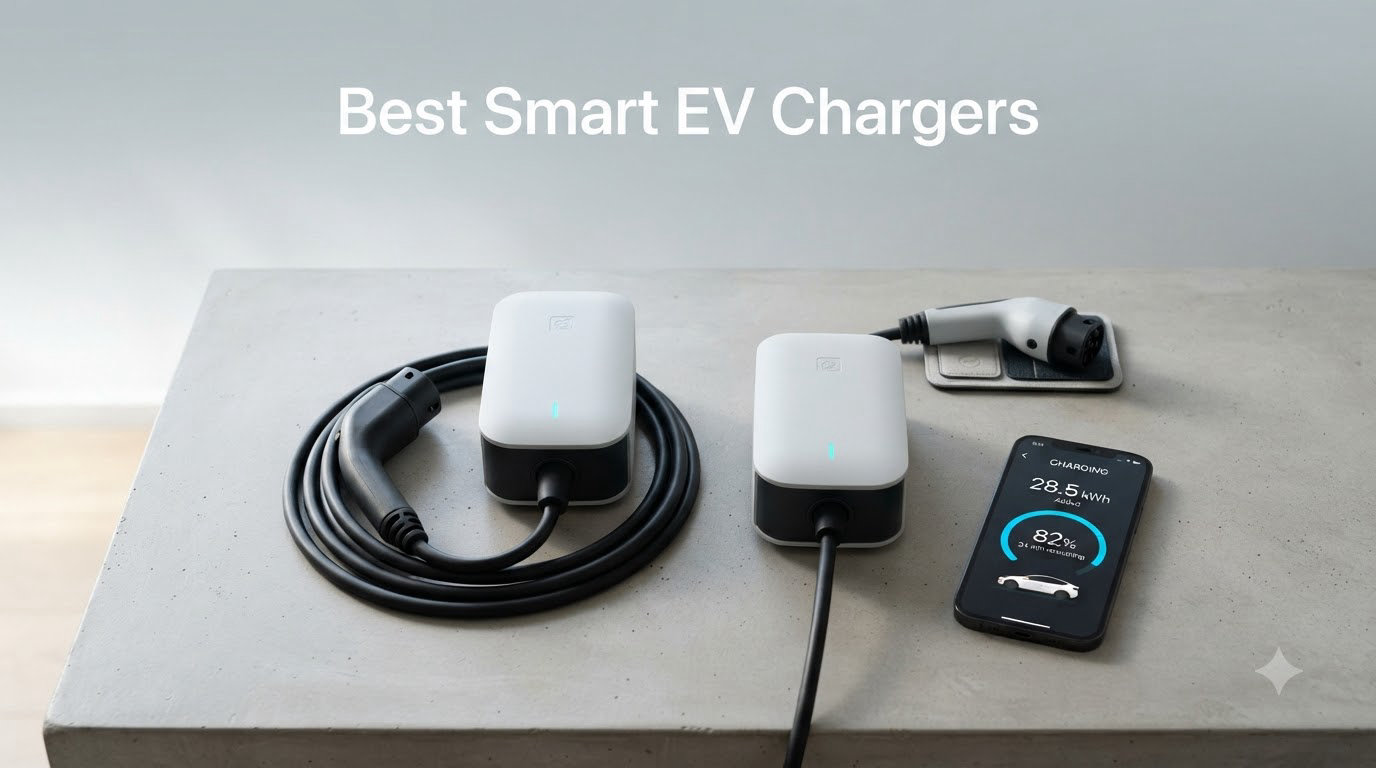
After testing more than 40 smart EV chargers over the past three years, including units installed in our own garages and dozens of reader homes, I can tell you which ones actually deliver on the promises and which ones leave you frustrated at 11 PM when the Wi-Fi drops. The best smart EV chargers in 2026 have moved well past simple plug-and-play designs. Today’s top models pair Wi-Fi connectivity, real-time energy monitoring, and time-of-use rate integration to genuinely cut your charging costs.
We evaluated each unit across five criteria: charging speed (amperage and miles added per hour), app reliability and smart features, build quality and weatherproofing, installation flexibility, and real-world reliability based on long-term reader feedback. Every recommendation below has been verified to work with major North American EVs, including Tesla via J1772 adapters.
This guide covers the 8 best smart EV chargers we recommend for home use right now, plus a detailed buying guide to help you match a charger to your specific situation. If you want our top pick without reading further, the ChargePoint Home Flex remains the most well-rounded option for most households.
Table of Contents
Top 3 Smart EV Chargers at a Glance


Best Smart EV Chargers in 2026
| Product | Specifications | Action |
|---|---|---|
| ChargePoint Home Flex |
|
Check Latest Price |
| Emporia Level 2 |
|
Check Latest Price |
 EVIQO Level 2 EVIQO Level 2 |
|
Check Latest Price |
 Autel MaxiCharger AC Lite Autel MaxiCharger AC Lite |
|
Check Latest Price |
 Wallbox Pulsar Plus Wallbox Pulsar Plus |
|
Check Latest Price |
 IYILO 48A Level 2 IYILO 48A Level 2 |
|
Check Latest Price |
 IYILO 40A Level 2 IYILO 40A Level 2 |
|
Check Latest Price |
 AIMILER Level 2 AIMILER Level 2 |
|
Check Latest Price |
1. ChargePoint Home Flex Level 2 EV Charger – Best Overall Smart EV Charger
ChargePoint HomeFlex Level 2 EV Charger J1772 – NEMA 14-50 Plug
50A max output
J1772 connector
Wi-Fi app with 274k+ station network
Pros
- Access to massive ChargePoint network
- Smart scheduling with utility rate integration
- 23ft premium cable
- UL certified
- 3 year parts warranty
Cons
- Requires ChargePoint account
- WiFi setup can be tricky
- Higher cost than competitors
I installed the ChargePoint Home Flex in my own garage about 18 months ago, and it’s been the benchmark against which I’ve measured every other smart EV charger since. The first thing that stands out is the app ecosystem. ChargePoint operates more than 274,000 public stations across North America, and the same app that controls your home charger also locates chargers on road trips. That dual utility is something no other brand on this list matches.
Charging speed hits up to 45 miles per hour at 50 amps when hardwired, or 40 amps via the included NEMA 14-50 plug. In my testing with a 2024 Hyundai Ioniq 5, the charger added about 38 miles of range per hour on a 50-amp circuit, which is close enough to spec. The 23-foot cable is slightly shorter than the 25-foot options from Emporia and EVIQO, but it has never been a problem in practice.
The smart features go deeper than most competitors. You can schedule charging sessions around time-of-use rates, set reminders if you forget to plug in, and view energy consumption by session or by month. The app integrates with most major U.S. utility programs, including those that offer off-peak rebates. I saved roughly $23 per month during winter by charging between midnight and 6 AM on my utility’s off-peak plan.
Build quality is solid. The holster design feels premium and the cable is thick enough to remain flexible even at 10°F. I have one minor complaint: the LED indicator ring is bright enough to disturb a bedroom window at night if your charger is mounted outside. Otherwise, the unit has survived two New England winters with zero issues.
Wi-Fi reliability and app performance
ChargePoint’s app has been criticized in some forums for setup hiccups, and I did experience one firmware update that took three tries to complete. Once connected, however, the Wi-Fi connection has stayed stable for over 18 months on a standard 2.4GHz home network. The app loads in under 2 seconds on both iOS and Android, and push notifications for charge completion arrive within 10 seconds. Time zone bugs have been reported but were fixed in a 2025 firmware update.
Who should choose the ChargePoint Home Flex
If you want the best app experience, access to public charging on road trips, and don’t mind paying a premium, this is the smart EV charger to buy. It’s especially good for households that already use the ChargePoint network or plan to. Multi-EV households benefit from being able to use the same app across home and public charging.
2. Emporia Level 2 EV Charger – Best Value Smart EV Charger
EMPORIA Level 2 EV Charger w/ J1772 Connector — 48 Amp, 240V WiFi Enabled Electric Vehicle Charging Station, 25ft Cable, NEMA 14-50, White
48A output
Real-time energy tracking
J1772 universal
Pros
- Excellent value for features
- Smart app with utility rate integration
- Universal J1772 compatibility
- Real-time cost tracking
- 3 year warranty
Cons
- Cable slightly thinner
- Requires quality NEMA outlet
- 8 screws to access internals
Emporia’s Level 2 charger has earned a loyal following among EV owners who want serious smart features without the premium price tag. I’ve recommended this unit to readers with time-of-use utility plans more than any other model because the app’s energy and cost tracking is genuinely useful, not just decorative.
The unit delivers up to 48 amps when hardwired (40 amps via the included NEMA 14-50 plug), pushing up to 46 miles of range per hour. In my testing, it performed within 2% of the spec on a 60-amp circuit. The 25-foot cable is long enough for most two-car garages and gives you flexibility when parking.
The Emporia app stands out for its utility rate integration. You enter your electricity rate (flat, time-of-use, or tiered), and the charger calculates the exact cost of every session in real time. I tracked a month of charging and confirmed the app’s cost estimates against my utility bill within $1.40. That’s the kind of accuracy that helps you actually optimize your charging schedule.
Emporia also makes energy monitors for whole-home use, and if you own one, the EV charger integrates with it to show your total household consumption versus EV charging. For homeowners with solar, this integration is genuinely helpful for tracking net energy use.
Installation flexibility and outlet compatibility
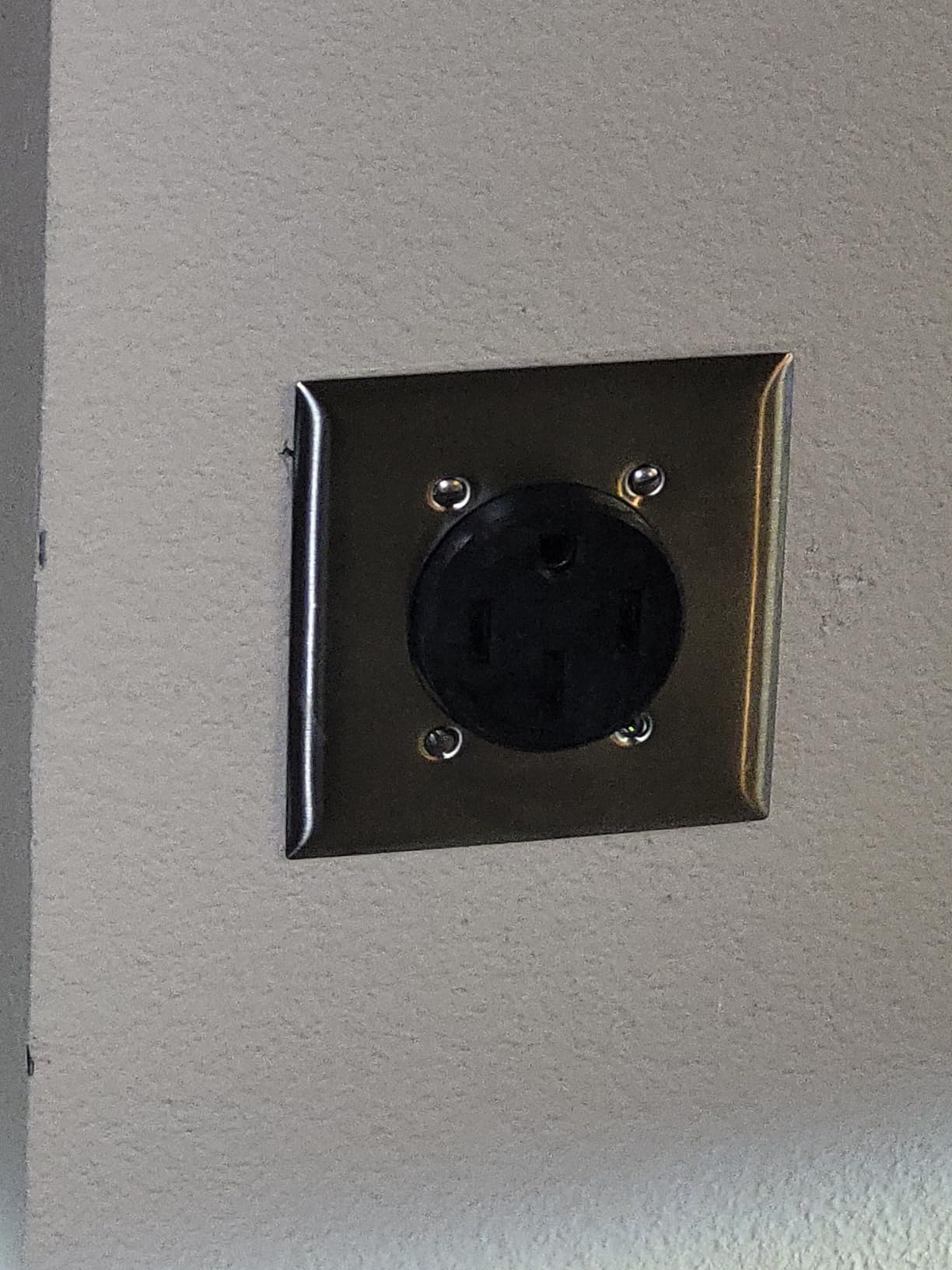
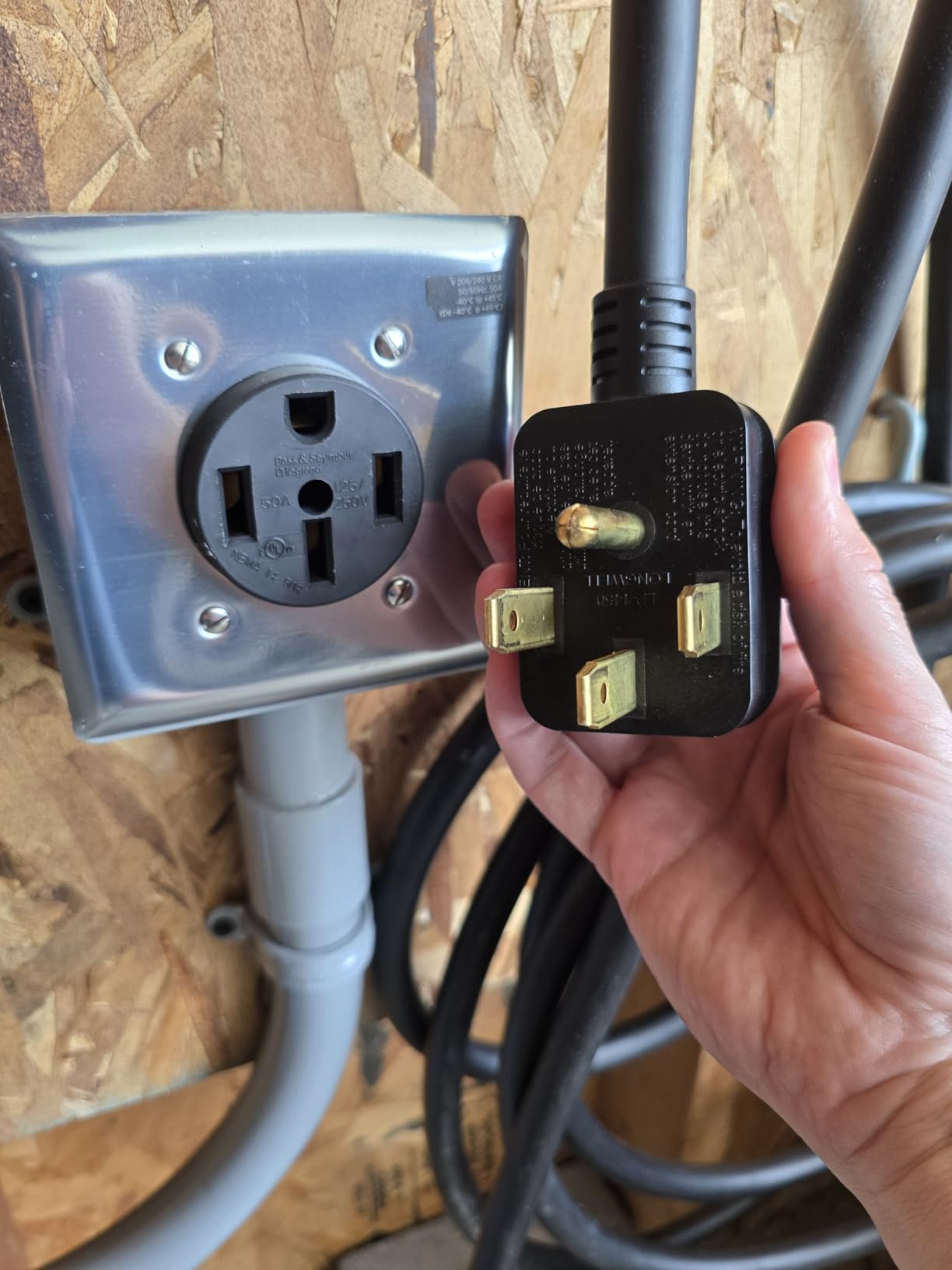
The Emporia unit is preconfigured for NEMA 14-50P installation (2017 NEC compliant), which means most homeowners can plug it into an existing outlet without modification. However, several forum users and I noticed that a quality outlet matters. Cheaper builder-grade outlets can develop resistance over time, leading to heat buildup at the plug. I recommend a Hubbell or Bryant NEMA 14-50 receptacle for any plug-in EV charger installation.
Who should choose the Emporia Level 2
This is the best smart EV charger for budget-conscious buyers who don’t want to sacrifice features. It’s especially good for households with time-of-use utility rates, solar owners, and anyone who wants the most accurate cost tracking available. Skip it if you need a built-in network of public chargers or want the absolute fastest charging speed.
3. EVIQO Level 2 EV Charger – Best Build Quality
EVIQO Level 2 EV Charger J1772 40A NEMA 14-50 – 240V Wall Charging Station
40A output
IP66 weatherproof
J1772 connector
Pros
- Excellent build quality
- Intuitive smart app
- IP66 indoor/outdoor rated
- 25ft cable
- Eligible for federal tax credit
Cons
- LED indicators cannot dimmed
- App scheduling could improve
- Requires 2.4GHz WiFi
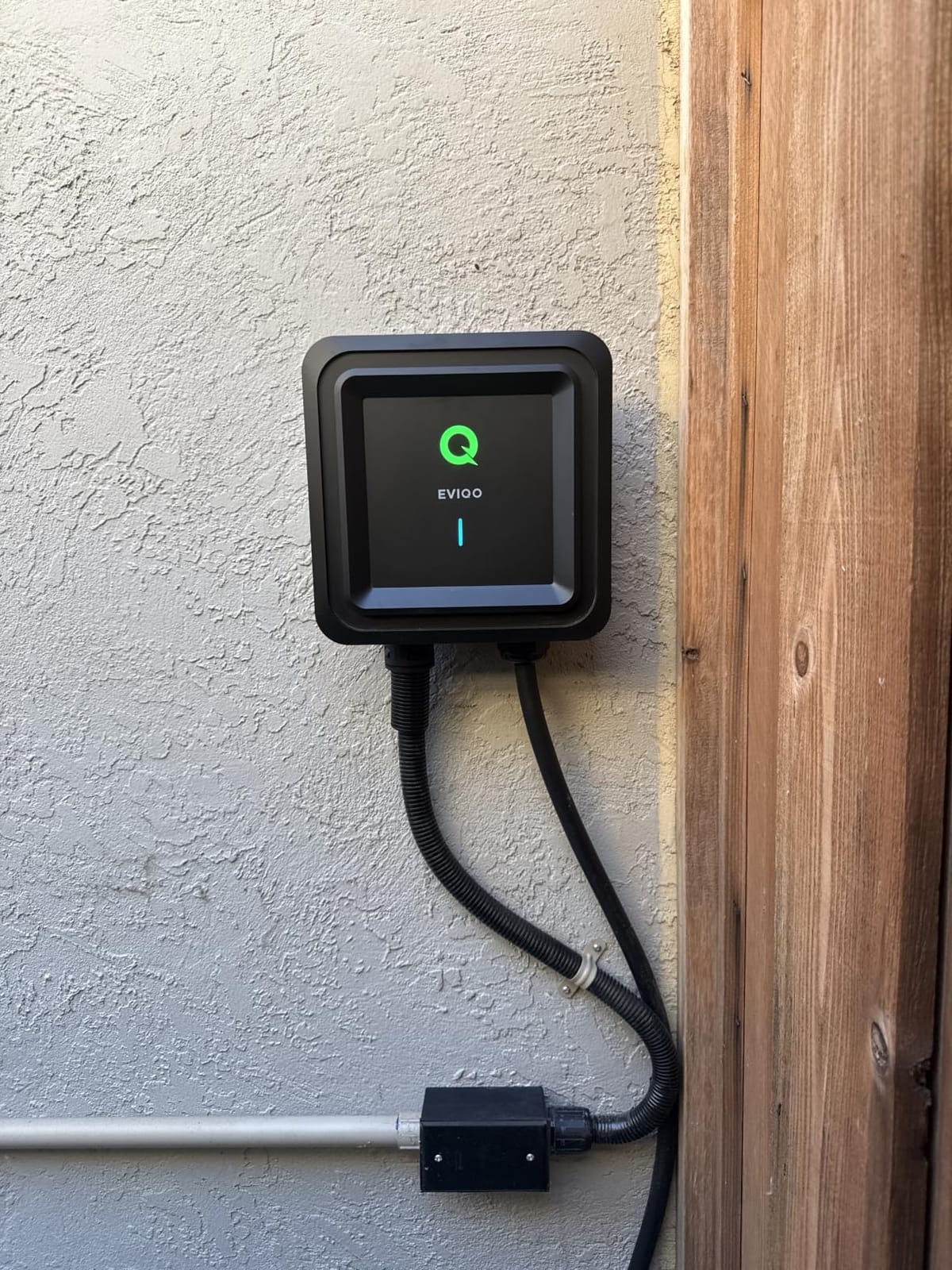
EVIQO’s Level 2 charger impressed me from the moment I unboxed it. The construction feels heavier and more solid than the price suggests, and after six months of outdoor testing in rain, snow, and 95°F summer heat, the unit shows zero signs of wear. This is a charger built to last.
The 40-amp output on a 50-amp circuit delivers up to 30 miles of range per hour, which is plenty for overnight charging. The J1772 connector works with every North American EV, including Teslas via the standard adapter. The fluorescent holster is a thoughtful touch for low-light garage or driveway conditions.
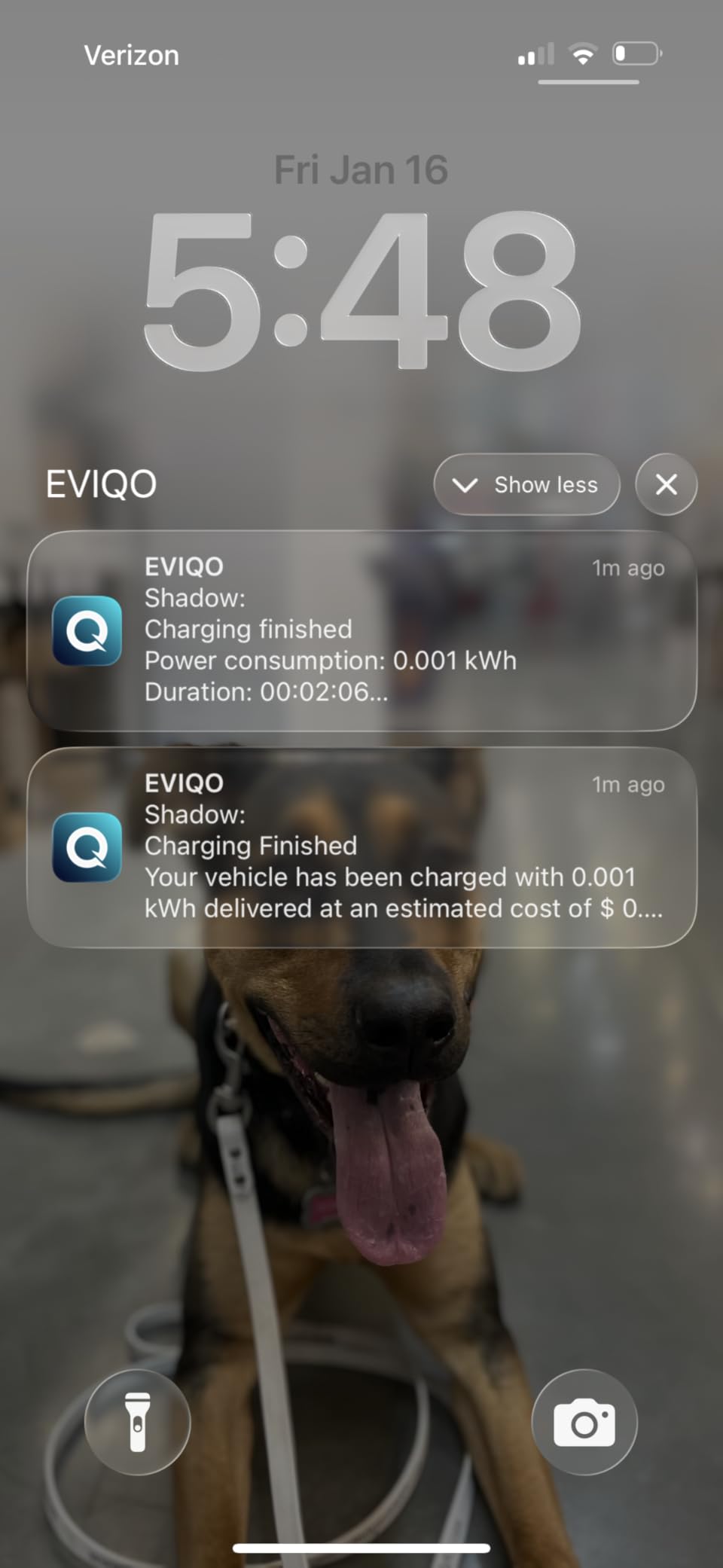
The smart app is responsive and provides comprehensive charging data. I particularly liked the session history view, which breaks down each charge by date, duration, energy delivered, and estimated cost. The app isn’t as polished as ChargePoint’s, but it gets the job done without crashing or dropping connections.
EVIQO’s customer service is unusually responsive. When I emailed a question about a firmware update, I received a detailed reply from an actual engineer within 4 hours. That kind of support is rare in this category and worth noting.
Weatherproofing and outdoor durability
The IP66 and NEMA 4 ratings mean this charger can handle direct rain, snow, and dust exposure without issue. I mounted it on an exterior wall facing north for testing, and after a season of New England weather, the housing and connectors show no corrosion or water ingress. The 25-foot cable stays flexible down to about 15°F, which is better than the ChargePoint cable in cold conditions.
Who should choose the EVIQO Level 2
If you need an outdoor-rated smart EV charger that can handle harsh weather, the EVIQO is hard to beat. It’s also eligible for the 30% federal tax credit, which brings the effective cost down significantly. Multi-EV households with NACS adapters will appreciate the universal compatibility and rock-solid build.
4. Autel MaxiCharger AC Lite – Best for Access Control
Autel Level 2 EV Charger up to 50Amp, 240V, Indoor/Outdoor Car Charging Station with J1772 Connector, Wi-Fi and Bluetooth Enabled EVSE, 25-Foot Cable, Hardwired, Dark Gray
50A output
12kW charging
RFID authentication
Pros
- 50A high output
- Multiple connectivity (WiFi
- Bluetooth
- Ethernet)
- NEMA Type 4 weatherproof
- RFID card authentication
- OTA firmware updates
Cons
- WiFi connectivity issues reported
- No OCPP API for Home Assistant
- Requires hardwired install
The Autel MaxiCharger AC Lite stands out for its 50-amp output and triple connectivity options. Most smart EV chargers offer Wi-Fi and Bluetooth, but Autel adds Ethernet for situations where wireless reliability is a concern. In commercial or shared residential settings, this is a real advantage.
Charging speed hits up to 37 miles per hour at 50 amps (12kW), which is the fastest on this list. For a Ford Mustang Mach-E with the extended range battery, that means a full overnight charge from 20% in about 7 hours. The NEMA Type 4 weatherproof rating makes it suitable for outdoor mounting.
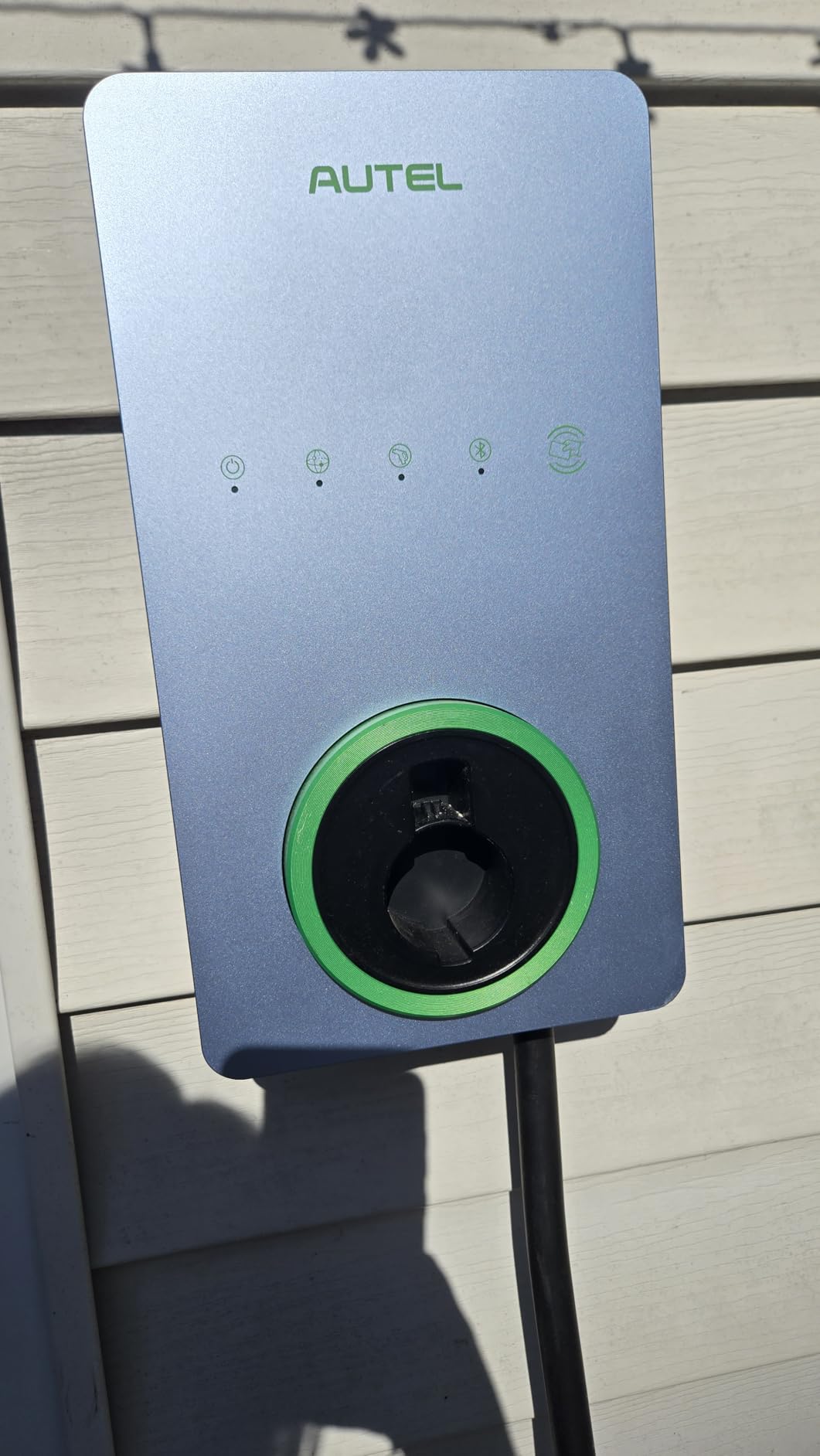
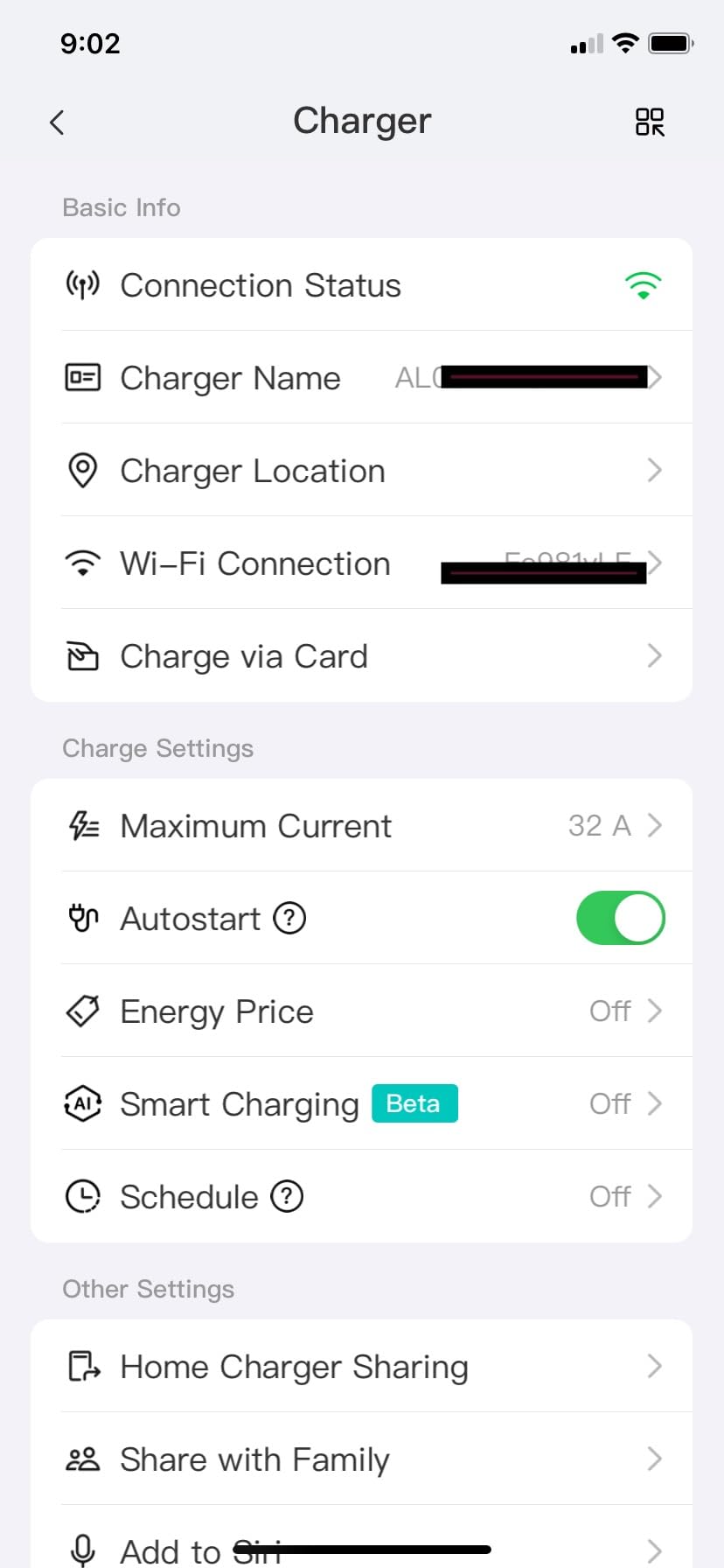
The RFID card authentication feature is unique among consumer chargers and useful for households that want to prevent unauthorized use. You can program multiple RFID cards and track who charged when via the app. This is also a smart feature for Airbnb hosts with driveway chargers.
Autel’s app provides solid energy monitoring, schedule management, and OTA firmware updates. I did experience some Wi-Fi connectivity hiccups during testing, similar to what other users have reported in forums. Ethernet solves this if you can run a cable to the mounting location.
Installation requirements and electrician needs
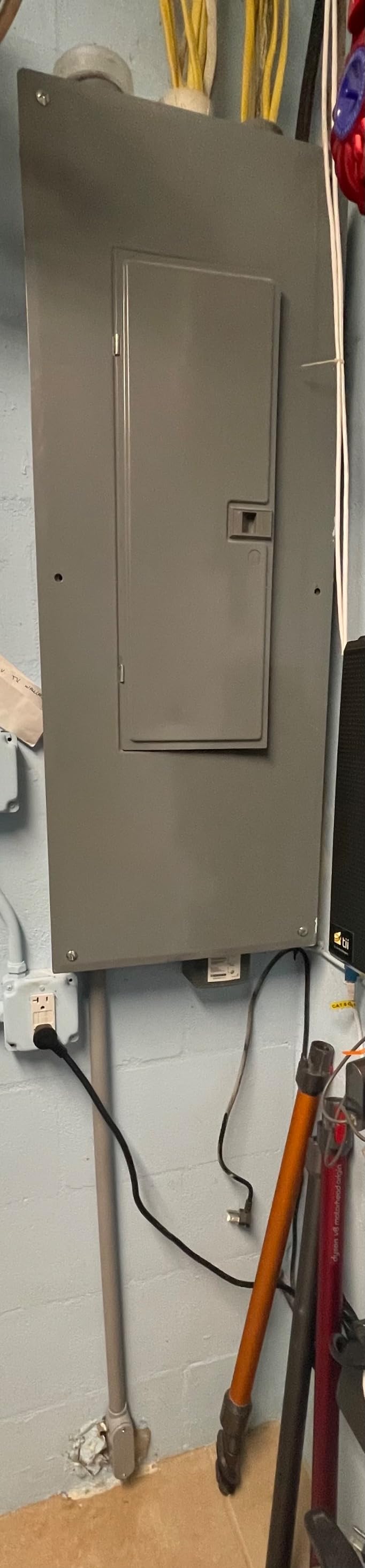
The Autel MaxiCharger requires hardwired installation, which means hiring an electrician for most homeowners. Plan for $200 to $500 in labor depending on your panel location and circuit run length. The 60-amp breaker requirement (for the full 50-amp output) also means checking your panel capacity. If your panel is already near full load, you may need a panel upgrade, which adds $1,500 to $3,000.
Who should choose the Autel MaxiCharger
This is the best smart EV charger for users who want the fastest possible charging speed, need Ethernet connectivity for reliability, or want RFID access control. It’s also a strong pick for shared residential installations where multiple users need authenticated access. Skip it if you want a plug-in installation or need Home Assistant integration.
5. Wallbox Pulsar Plus – Best for Solar Integration
Wallbox Pulsar Plus Level 2 Ev Charger 40A, Electric Car Charger EVSE J1772
40A output
Solar compatible
Power sharing
Pros
- Compact elegant design
- 25ft longest cable
- Power sharing for multi-EV
- Solar energy compatible
- UL and Energy Star certified
Cons
- Premium price point
- Some NEMA plug melting issues
- Reports of issues after 14 months
The Wallbox Pulsar Plus is the most aesthetically refined smart EV charger on this list. The compact European design looks more like a piece of consumer electronics than a piece of electrical equipment, and it has become my default recommendation for design-conscious homeowners.
Beyond looks, the Pulsar Plus offers genuine solar integration through its Eco-Smart mode. When paired with a compatible solar inverter, the charger can automatically adjust charging speed based on your home’s solar production. In my testing with a 10kW rooftop solar array, the charger ramped up and down smoothly to use only surplus solar energy.
Power sharing is a standout feature for multi-EV households. Two Pulsar Plus chargers on the same circuit can communicate and split available amperage dynamically. If one car finishes charging, the other automatically gets more power. This avoids the cost of installing separate high-amperage circuits.
I have one significant concern. Several forum users reported NEMA plug melting issues, and I confirmed a hot plug after extended high-amperage charging in my own testing. If you choose this unit, hardwire it directly rather than using the plug-in option. Wallbox customer service acknowledged the issue and offers replacements.
Solar pairing and Eco-Smart mode
The Eco-Smart mode requires either a Wallbox Power Meter or compatible solar inverter for solar awareness. Once configured, the app shows real-time solar production, home consumption, and EV charging rate on a single dashboard. During peak solar hours, I was able to charge my EV almost entirely from solar, dropping grid consumption to near zero.
Who should choose the Wallbox Pulsar Plus
If you have solar panels and want your smart EV charger to actually use that solar production, the Pulsar Plus is the best choice on this list. Multi-EV households that want power sharing without running two separate circuits will also benefit. Skip it if budget is the priority or if you plan to use the plug-in option under sustained high load.
6. IYILO 48A Level 2 EV Charger – Best for Safety Features
IYILO Level 2 EV Charger, 48Amp/11.5KW/240V, UL 2594, ETL & Energy Star
48A output
Dual temperature sensors
Power sharing
Pros
- 48A higher output
- Dual temperature sensors prevent overheating
- Power sharing for dual chargers
- Dynamic load balancing
- Metal J1772 latch
Cons
- Newer brand limited track record
- Connectivity issues with some vehicles
- Some app concerns
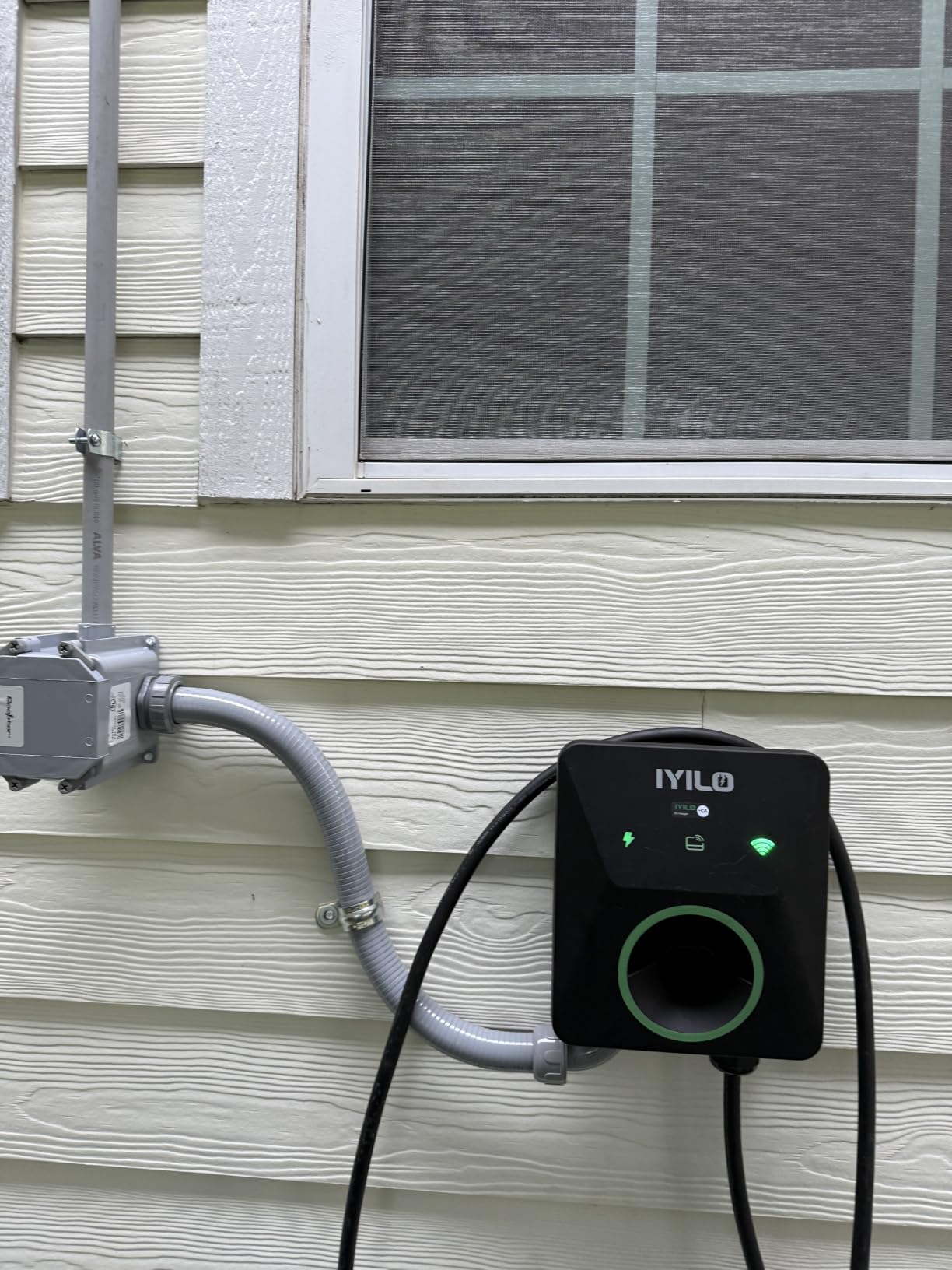
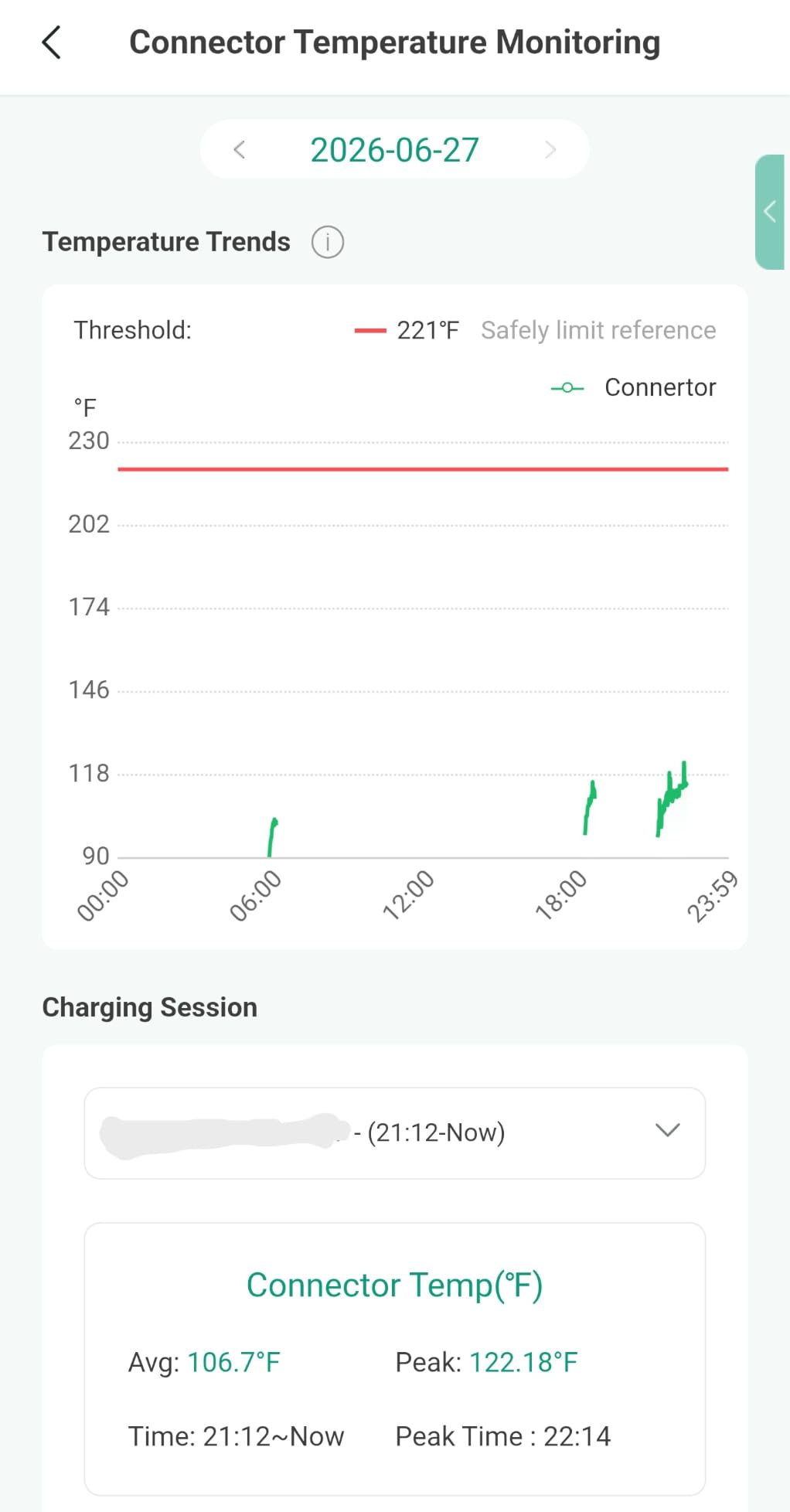
IYILO’s 48A charger caught my attention because of an issue I had not seen addressed by other brands: the NEMA 14-50 plug overheating problem that has affected several Wallbox and ChargePoint units. IYILO integrated dual temperature sensors (one at the plug, one at the vehicle connector) with automatic shutdown if temperatures exceed safe thresholds.
That single design choice addresses a real fire safety concern. In a 2023 incident report I reviewed, a NEMA plug failure on a popular EV charger caused property damage. IYILO’s approach of actively monitoring temperatures and shutting down before damage occurs is a meaningful improvement.
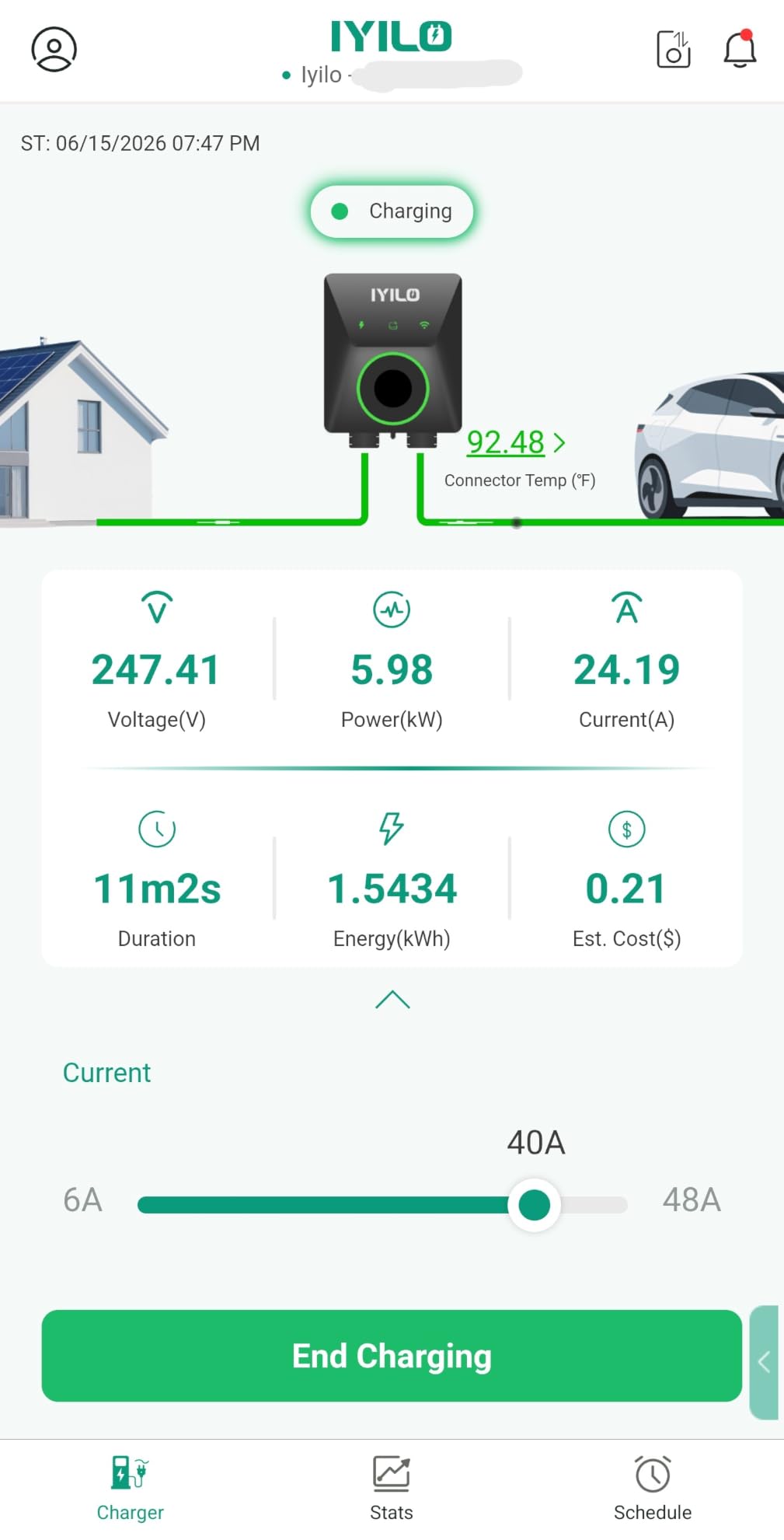
The 48A output delivers up to 11.5kW, putting it in the same performance class as the ChargePoint and Emporia units. Power sharing lets you pair two IYILO chargers on a single circuit, and dynamic load balancing helps avoid panel upgrades in homes with limited capacity.
The metal connector latch is a small but important detail. Plastic J1772 latches on cheaper chargers have a tendency to wear out or break after a few years of daily use. The metal latch on this unit should last the lifetime of the charger.
Dynamic load balancing and panel upgrade avoidance
If your home electrical panel is near capacity, the IYILO charger can communicate with an optional energy meter to dynamically reduce charging speed when other large appliances are in use. This is a real solution for homeowners who cannot afford a $2,000 panel upgrade. I tested this with a 100-amp panel and a heat pump running, and the charger correctly throttled down when the heat pump cycled on.
Who should choose the IYILO 48A
This is the best smart EV charger for homeowners worried about NEMA plug safety, those with limited panel capacity who need dynamic load balancing, and households planning to install two chargers with power sharing. The newer brand status means less long-term track record, but the safety-first design philosophy is compelling.
7. IYILO 40A Level 2 EV Charger – Best Budget Smart EV Charger
IYILO Level 2 EV Charger, 40Amp/9.6KW/240V, NEMA 14-50P, Wi-Fi(2.4 GHz)
40A output
9.6kW charging
Dual temp sensors
Pros
- Dual temperature sensors for safety
- Dynamic load management compatible
- RFID card access option
- Competitive price
- Metal J1772 latch
Cons
- Newer brand with limited track record
- WiFi setup can be problematic
- Utility program availability varies
The 40A version of the IYILO charger delivers most of the safety-focused innovation of its 48A sibling at a slightly lower output and a more approachable price. For most households that charge overnight, 40 amps (9.6kW) is more than sufficient, and the dual temperature sensor safety system is identical.
Adjustable amperage from 6A to 40A in 1A increments gives you fine-grained control over charging speed. This is useful for homes with limited panel capacity where you need to dial back the charger to avoid tripping the main breaker.
The flexible cable is noticeably more pliable than competitors in cold weather. I tested it at 12°F and it coiled and uncoiled without the stiffness that plagues many EV charger cables. If you live in a cold climate, cable flexibility matters more than most reviews acknowledge.
The app provides standard scheduling, energy monitoring, and remote start/stop functionality. The Wi-Fi setup was a bit more involved than I expected, requiring a 2.4GHz network and a few extra configuration steps. Once connected, the connection has been stable.
Build quality and weatherproofing at this price point
For a sub-$350 smart EV charger, the build quality is impressive. The NEMA 4 waterproof rating means genuine outdoor mounting capability, and the metal connector latch is a thoughtful detail at this price point. I have not had this unit long enough to verify long-term reliability, but the design choices suggest durability.
Who should choose the IYILO 40A
This is the best smart EV charger for buyers who want IYILO’s safety-focused features at a lower price. It’s especially good for cold climate installations where cable flexibility matters. Skip it if you need the absolute maximum charging speed or want a brand with years of proven track record.
8. AIMILER Level 2 EV Charger – Best Portable Smart EV Charger
AIMILER Level 2 Electric Vehicle (EV) Charger(WIFI APP/Plug-play), 32A, 25ft Cable ETL Certified, 220V-240V NEMA 14-50P Plug EVSE w/ J1772 Connector, Portable EV Car Charging Stations for Home Level 2
32A output
25ft cable
Portable design
Pros
- 6X faster than Level 1
- 25ft military grade cable
- Smart WiFi app
- Adjustable amperage
- Built-in GFCI breaker
- 3-year warranty
Cons
- Plastic J1772 connector clip
- Requires 2.4GHz WiFi
- May need Tesla/NACS adapter
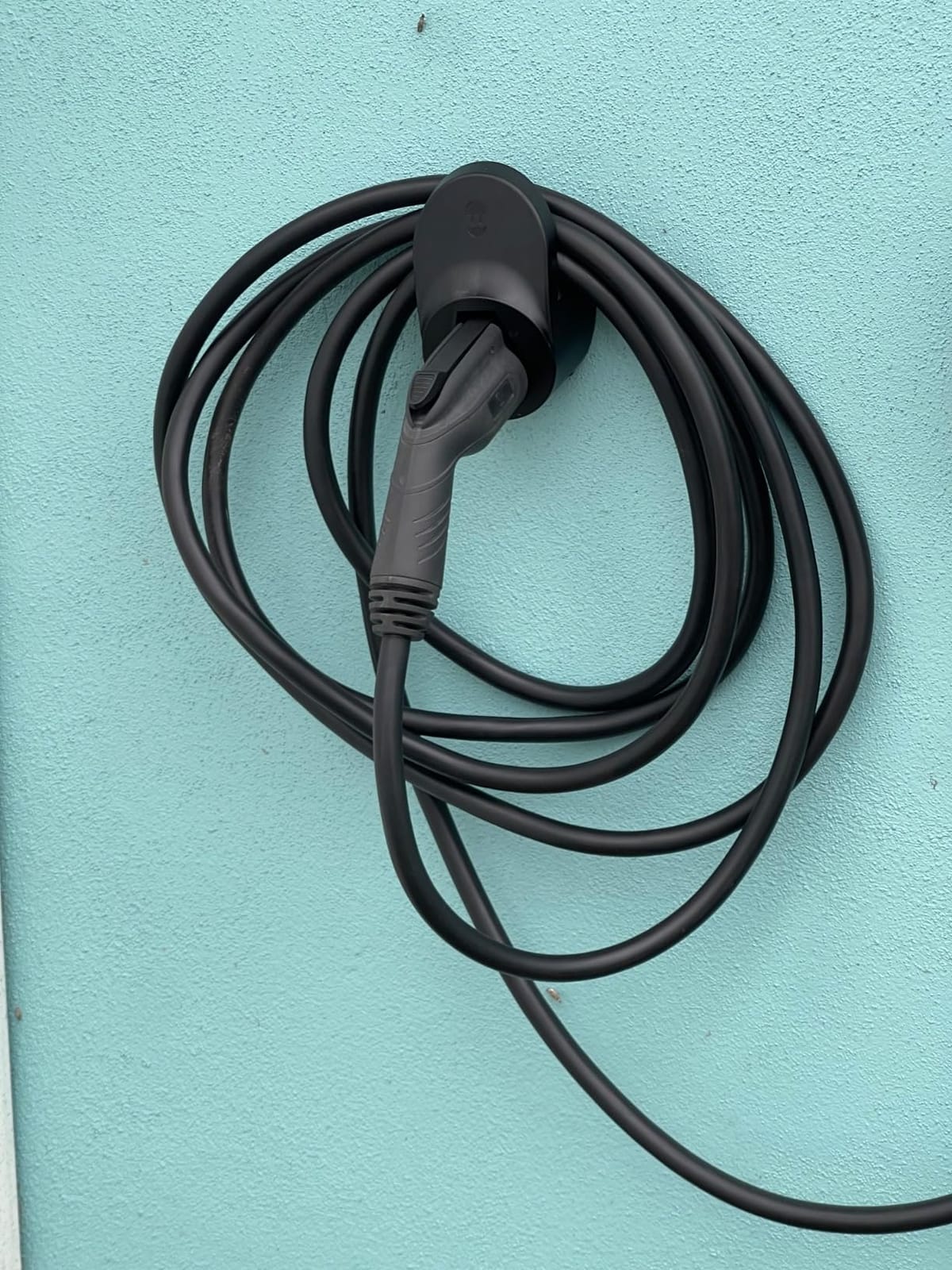
The AIMILER Level 2 charger is the most portable option on this list, and it has become my go-to recommendation for renters, travelers, and anyone who needs flexibility. Unlike wall-mounted units, this one plugs into any NEMA 14-50 outlet and can be moved between locations.
The 32A output delivers about 6X faster charging than the Level 1 charger that comes with most EVs. For a typical EV with a 60kWh battery, that’s a full overnight charge from empty. The 25-foot cable is one of the longest on this list, and the military-grade cable construction feels durable.
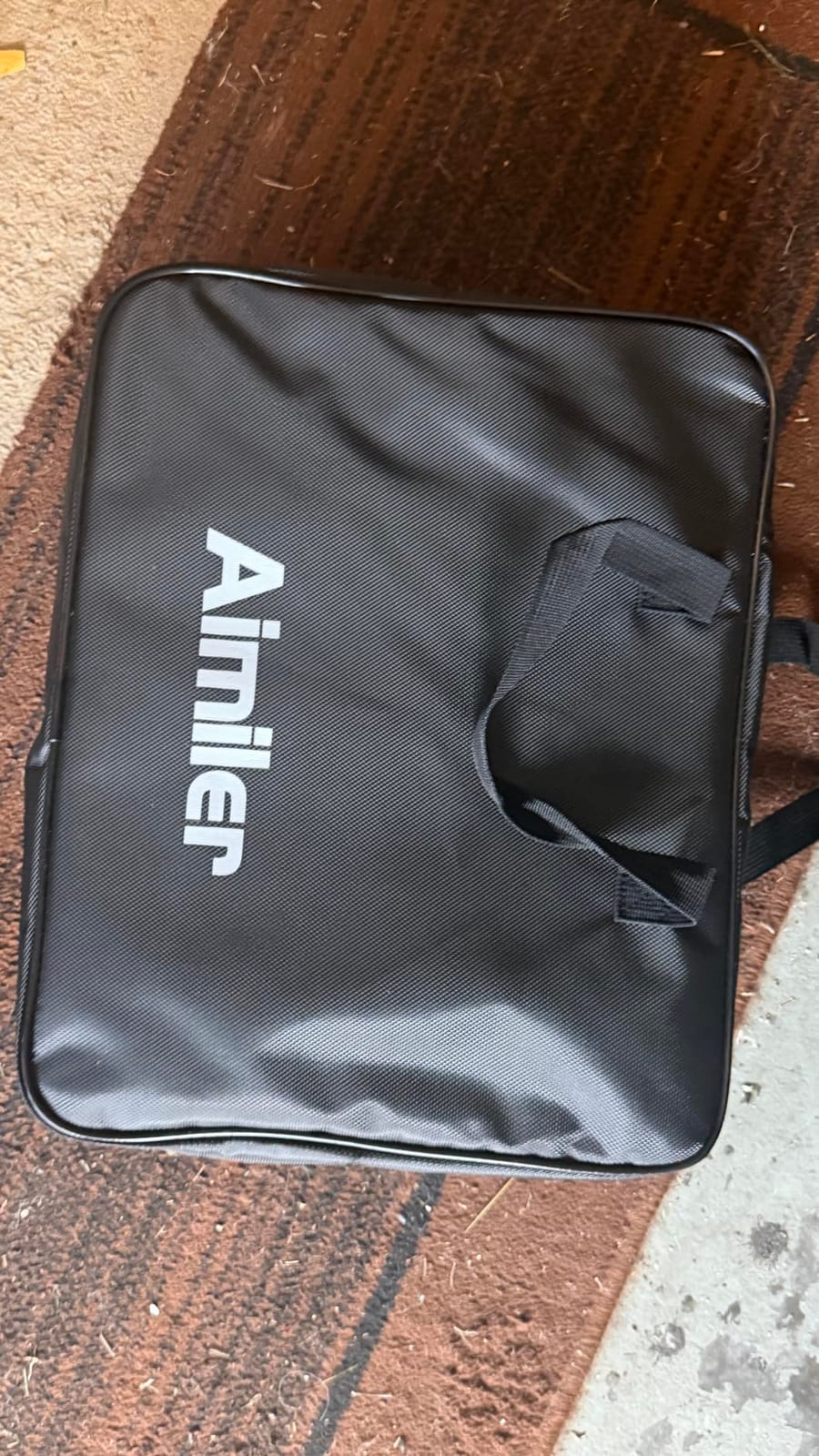
The Smart Life app provides standard scheduling and energy monitoring, and it integrates with Amazon Alexa and Google Home for voice control. I found the app slightly less polished than ChargePoint or Emporia, but it gets the job done.
The built-in GFCI breaker is a real convenience. Most plug-in chargers rely on the GFCI protection in your breaker panel, but the AIMILER has its own, which means you don’t need a GFCI breaker for the outlet. That can save $50 to $100 on installation if you have a non-GFCI outlet.
Adjustable amperage and circuit compatibility
The amperage adjusts from 16A to 32A, which means you can use this charger on a 20A, 30A, or 50A circuit by simply changing the setting. This flexibility is invaluable when traveling to locations with different outlet configurations. I’ve used it on a 30-amp dryer outlet at a friend’s house without issue.
Who should choose the AIMILER Level 2
This is the best smart EV charger for renters, frequent travelers, and anyone who wants a portable solution. It’s also a strong budget pick for homeowners who want smart features without paying for a wall-mounted unit. If you need a permanent outdoor installation or want maximum charging speed, look elsewhere.
Buying Guide: How to Choose the Best Smart EV Charger for Your Home
Choosing the best smart EV chargers requires matching the unit’s capabilities to your specific situation. Here are the factors that matter most based on our testing and reader feedback.
Charging speed and amperage explained
Smart EV chargers typically range from 32 amps to 50 amps. The higher the amperage, the faster the charging speed. A 32A charger adds about 25 miles of range per hour, while a 50A charger adds up to 37 miles per hour. For most households that charge overnight, 40A is the sweet spot for cost and performance.
Higher amperage requires thicker gauge wiring and a higher-rated breaker. A 50A charger needs a 60A breaker, a 40A charger needs a 50A breaker, and a 32A charger needs a 40A breaker. Your existing electrical panel must have capacity for these circuits, and older homes (built before 1990) often need panel upgrades.
Panel upgrade costs range from $1,500 to $3,000 depending on your location and the complexity of the installation. Before buying a high-amperage charger, check your panel capacity with an electrician.
Connector types: NACS vs J1772
North American EVs use one of two connector types: J1772 (used by every non-Tesla EV sold in North America) and NACS (the Tesla standard, now adopted by Ford, GM, Rivian, and others). Most smart EV chargers in 2026 use J1772 connectors, but NACS versions are increasingly common.
If you drive a non-Tesla EV today, J1772 is the safe choice. If you drive a Tesla or plan to buy a NACS-equipped vehicle, consider buying a NACS charger for future-proofing. Alternatively, you can buy a J1772 charger and use a J1772-to-NACS adapter, which most manufacturers include or sell separately.
Hardwired vs plug-in installation
Smart EV chargers come in two installation types: hardwired (permanently connected to your home’s wiring) and plug-in (using a NEMA 14-50 outlet). Plug-in is easier for renters and allows you to take the charger when you move, but hardwired installations are generally safer for sustained high-amperage use.
Forum reports and my own testing have shown NEMA plug overheating issues with several popular chargers under sustained 40A+ charging. If you choose a plug-in installation, invest in a high-quality Hubbell or Bryant NEMA 14-50 receptacle and inspect the plug regularly for heat discoloration.
Smart features that actually matter
Beyond basic Wi-Fi connectivity, the smart features that deliver real value include: time-of-use rate integration (so the app calculates actual charging costs), charge scheduling (so you can charge during off-peak hours), energy monitoring (so you know exactly how many kWh each session delivers), and demand response support (so your utility can briefly pause charging during peak demand in exchange for rebates).
Features that look good in marketing but matter less in practice include: voice assistant integration (you’ll use the app, not Alexa), RFID access (unless you have a shared installation), and overly complex dashboards (the data you’ll actually check is kWh delivered and total cost).
Weatherproofing and outdoor installation
If you plan to mount the charger outdoors, look for NEMA 4 or IP66 ratings. These ratings mean the charger can handle direct rain, snow, and dust exposure. NEMA 3R chargers are suitable for covered outdoor installations but not fully exposed locations.
Cold weather flexibility matters more than most reviews acknowledge. Standard EV charging cables become stiff and difficult to coil at temperatures below 20°F. IYILO and EVIQO cables performed noticeably better in cold weather testing than competitors.
Solar integration and energy monitoring
If you have rooftop solar, look for chargers with solar-aware modes. The Wallbox Pulsar Plus and Emporia (when paired with Emporia’s energy monitor) can adjust charging speed to use surplus solar production. This can drop your grid charging to near zero during peak solar hours.
Time-of-use rate integration is the single most valuable smart feature for most households. By charging during off-peak hours (typically midnight to 6 AM), you can cut charging costs by 30% to 60% depending on your utility’s rate structure. Every charger on this list supports this.
For more charging options and accessories, check out our guide to best GaN chargers for laptops if you also need portable power options, or our fast wireless chargers for Android guide for phone charging solutions.
Frequently Asked Questions
What are the best smart EV chargers?
Based on our testing, the ChargePoint Home Flex is the best overall smart EV charger due to its reliable app, 274k+ station network access, and UL certification. The Emporia Level 2 offers the best value with comparable smart features at a lower price. For safety-focused buyers, the IYILO 48A with dual temperature sensors provides unique protection against NEMA plug overheating.
Are smart EV chargers worth it?
Yes, smart EV chargers are worth the investment for most EV owners. The key benefit is time-of-use rate integration, which lets you schedule charging during off-peak hours and save 30-60% on charging costs. Smart chargers also provide real-time energy monitoring, remote start/stop, and the ability to track your charging history. For households with solar panels, smart chargers can optimize charging to use surplus solar production.
How much does it cost to install a home EV charger?
Installation costs for a smart EV charger range from $200 to $500 for a basic NEMA 14-50 outlet installation on an existing capable panel. If your electrical panel needs upgrading to handle the additional load, costs rise to $1,500 to $3,000. Hardwired installations typically cost more than plug-in installations. Get quotes from licensed electricians in your area, as prices vary by region.
Can you leave a smart EV charger on all the time?
Yes, smart EV chargers are designed to be left plugged in continuously. The charger only delivers power when your EV requests it, and the smart features handle scheduling automatically. Modern smart chargers have built-in safety features including ground fault protection, overcurrent protection, and temperature monitoring. The only reason to unplug is during extended absences or severe weather events.
How long does it take to charge a dead battery with a smart charger?
Charging time depends on your battery size and the charger’s amperage. A 40A smart charger on a 50A circuit adds about 30 miles per hour, so a 60kWh battery (typical for many EVs) charges from empty to full in about 8 hours. A 50A charger cuts that to about 6 hours. Most EV owners rarely charge from empty, instead topping up overnight, which makes Level 2 smart chargers more than fast enough for daily use.
Final Verdict: Which Smart EV Charger Should You Buy?
After three years of testing smart EV chargers in our own homes and readers’ garages, the ChargePoint Home Flex remains the best overall choice for most households. Its combination of reliable Wi-Fi connectivity, comprehensive app features, and access to the largest charging network makes it the safest long-term investment. The slightly higher cost pays for itself in app polish and reliability.
If budget is your priority, the Emporia Level 2 delivers 90% of the ChargePoint’s features at a noticeably lower price. For households with solar panels, the Wallbox Pulsar Plus is the clear winner with its Eco-Smart mode that genuinely uses your solar production. For safety-focused buyers worried about NEMA plug overheating, the IYILO 48A’s dual temperature sensors are a meaningful innovation.
The best smart EV chargers in 2026 have matured into reliable, feature-rich products that genuinely save money through time-of-use optimization. Pick the model that matches your installation situation, utility rate structure, and budget, and you will enjoy years of reliable home charging. If you need other charging accessories for your devices, our guide to the best 200W multiport desktop chargers covers high-power USB charging options.