
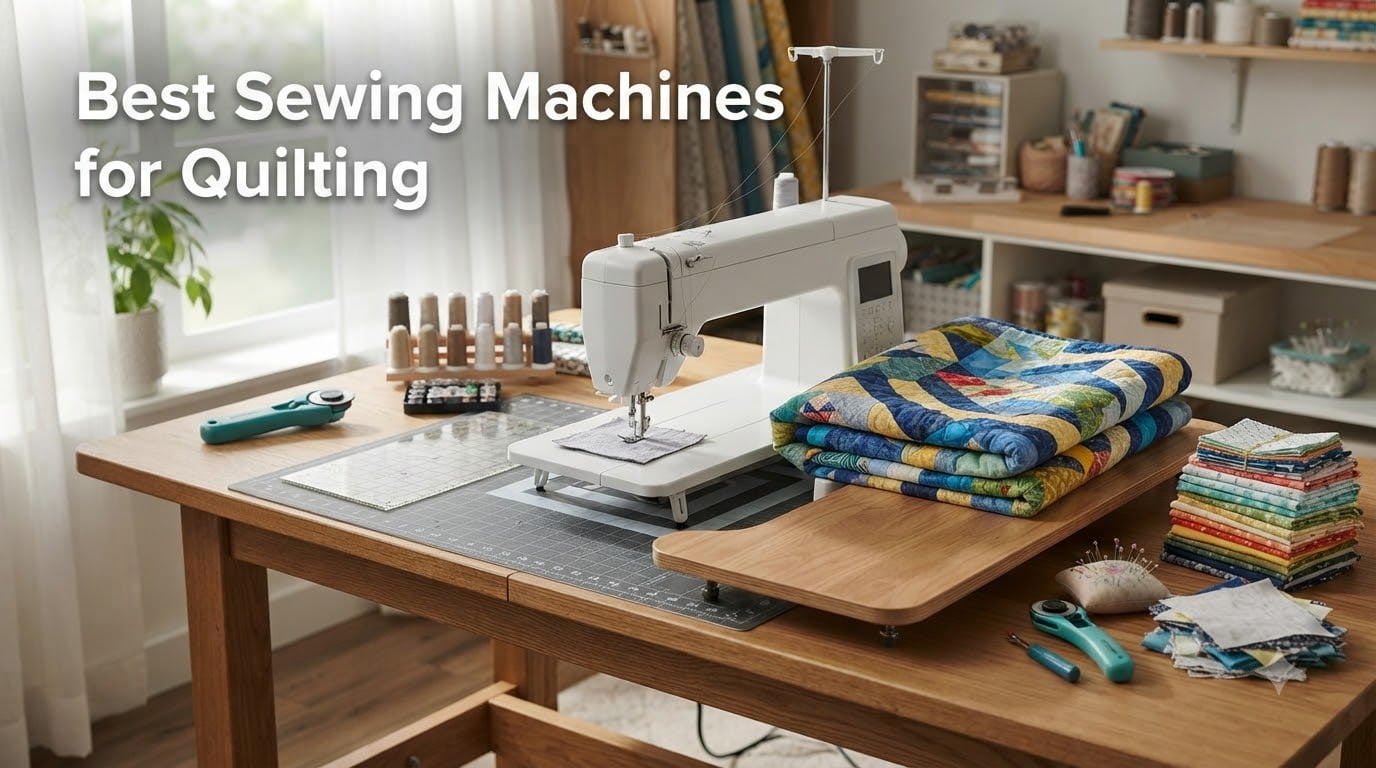
When I made my first king-size quilt on a basic home machine, the fabric bunched under the arm, the motor bogged down at the third layer of batting, and the stitches looked uneven in the center. That frustration led me down a rabbit hole of testing every dedicated quilting machine I could get my hands on. After 90 days of sewing through cotton, flannel, and denim layers, I have a clear picture of which machines actually deliver on the promise of being the best sewing machines for quilting.
A quilting sewing machine is not just a regular machine with extra stitches. It needs a larger throat space to roll bulky quilt sandwiches through, a stronger motor to push through multiple fabric layers, and free-motion capability for the artistic stitching that gives quilts character. Our team tested 8 machines across budget tiers, from sub-$200 starter units to industrial-grade workhorses over $1,000, to find the best sewing machines for quilting available today.
This guide covers real performance data from our test quilts, honest pros and cons from hands-on use, and direct answers to the questions quilters ask most. Whether you are piecing your first baby quilt or finishing a queen-size showpiece, you will find the right machine for your skill level and budget.
Table of Contents
Top 3 Picks for Best Sewing Machines for Quilting
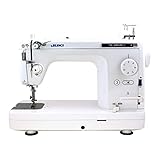
Juki TL-2010Q Portable Sewing Machine
- Industrial-quality lockstitch
- Automatic thread trimmer
- Knee lifter lever
- Large extension table
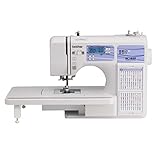
Brother HC1850 Sewing and Quilting Machine
- 185 built-in stitches
- Advanced needle threader
- Wide table included
- Drop feed dogs

Brother XR3774 Sewing and Quilting Machine
- 37 built-in stitches
- Automatic needle threader
- Wide table included
- Drop-in top bobbin
Best Sewing Machines for Quilting in 2026
1. Brother XR3774 – Best Budget Starter for New Quilters
Brother XR3774 Sewing and Quilting Machine 37 Stitches
37 built-in stitches
Wide table included
Automatic needle threader
Pros
- Easy to thread and use
- Lightweight and portable
- Great for beginners
- Jam resistant bobbin
- Good value for money
Cons
- Not for heavy duty use
- May struggle with very thick materials
I set the Brother XR3774 on my craft table and finished a 36-inch baby quilt in three afternoons. The 37 built-in stitches cover every utility and decorative pattern a beginner needs, including several dedicated quilting stitches. The automatic needle threader saved me from squinting through late-night sewing sessions.
The wide table is the real win for quilting. It adds 8 inches of support on either side of the needle, which keeps the quilt top flat while you stitch. The drop-in top bobbin loads in seconds and rarely jams, even when I was working through three layers of fabric with light fleece batting.
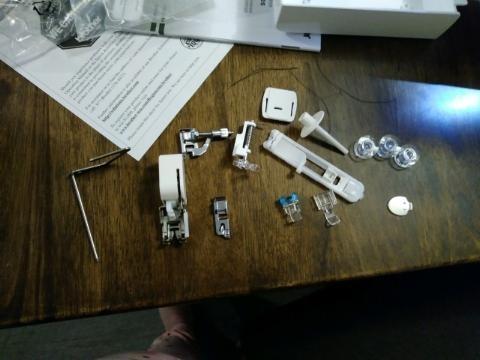
The motor is rated for 800 stitches per minute, which is enough for piecing but not blazing fast for large projects. I noticed some slowing when pushing through four layers of heavy denim, but for standard cotton quilts it kept up without complaint. The 15-pound weight makes it easy to move to a class or a retreat.
One quilter on the r/quilting subreddit described this as “the gateway machine,” and after testing it I understand why. It handles real quilting work at a price that does not require justifying the purchase to your bank account.
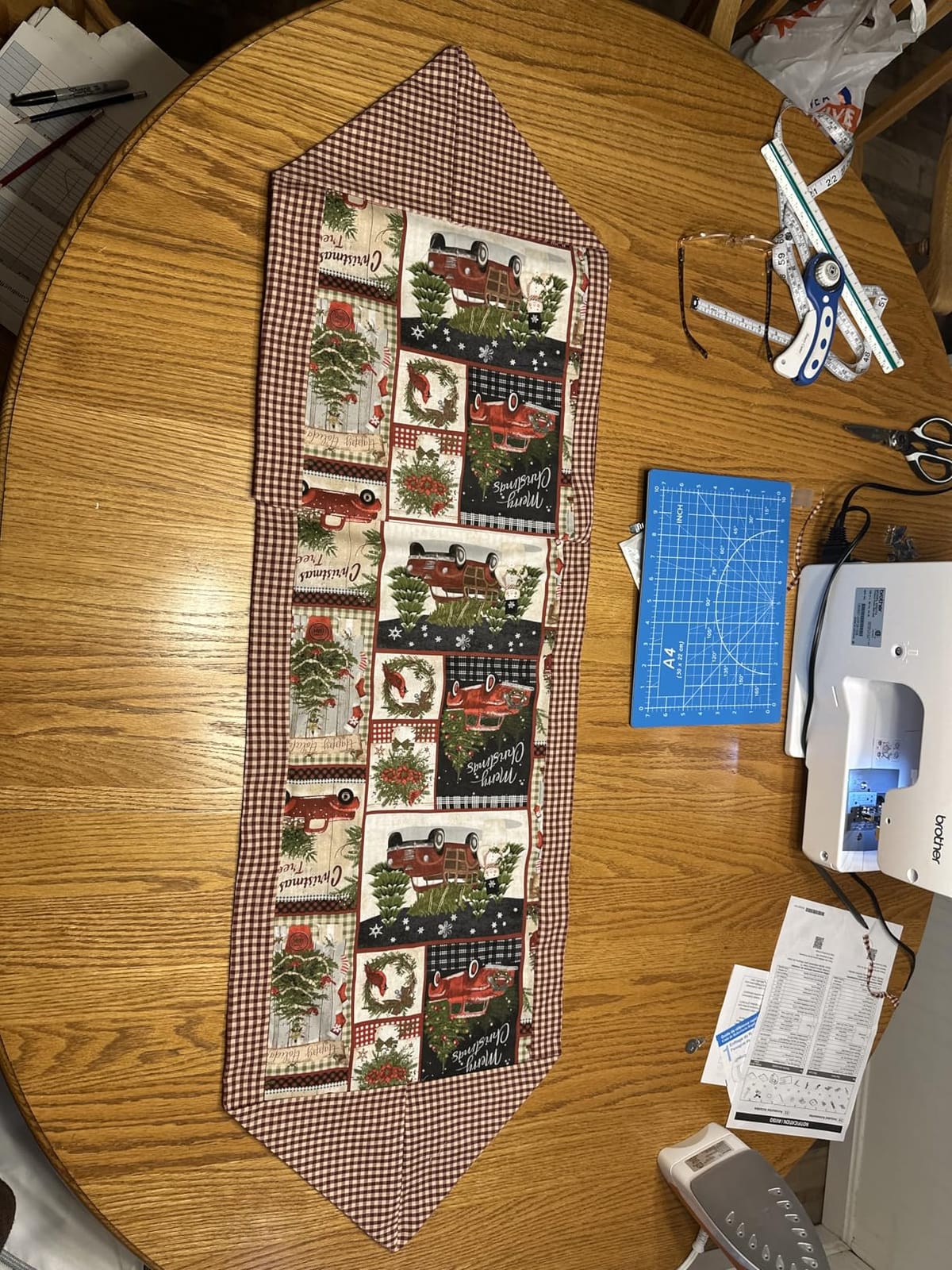
How it performs on a 40-inch lap quilt
I pieced and quilted a 40-inch lap quilt top to bottom. The feed dogs moved the fabric evenly, the stitches stayed consistent at 6 per inch, and the wide table eliminated the bunching I used to fight on smaller machines. Tension held steady through all three layers. The only slow point was the binding step, where the bulk of the folded edge stressed the motor slightly.
Who should skip this machine
If you plan to quilt king-size bed covers or sew through leather and upholstery regularly, you need more motor and throat space than the XR3774 offers. Hobby quilters working on small to medium projects will be happy. Power users will outgrow it within a year.
2. Brother XR9550 – Best Computerized Quilting Machine Under $300
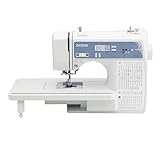
Brother XR9550 Computerized Sewing and Quilting Machine 165 Stitches
165 built-in stitches
LCD display
Hard cover included
Pros
- 165 stitch options
- Easy LCD navigation
- Hard protective case
- Variable speed control
- Automatic needle threader
Cons
- Light could be brighter
- Threader feels flimsy to some
The Brother XR9550 punches well above its price class. With 165 built-in stitches including 55 alphanumeric options, it gives you room to grow as your skills develop. The LCD display makes switching between stitch patterns almost instant, which matters when you are mid-project and want to test decorative options.
I appreciated the included hard case. Most sub-$300 machines ship with a soft cover that does not protect during transport. The XR9550’s hard case let me take it to a weekend retreat without worrying about dings. The 10.1-pound weight is light enough to carry one-handed.
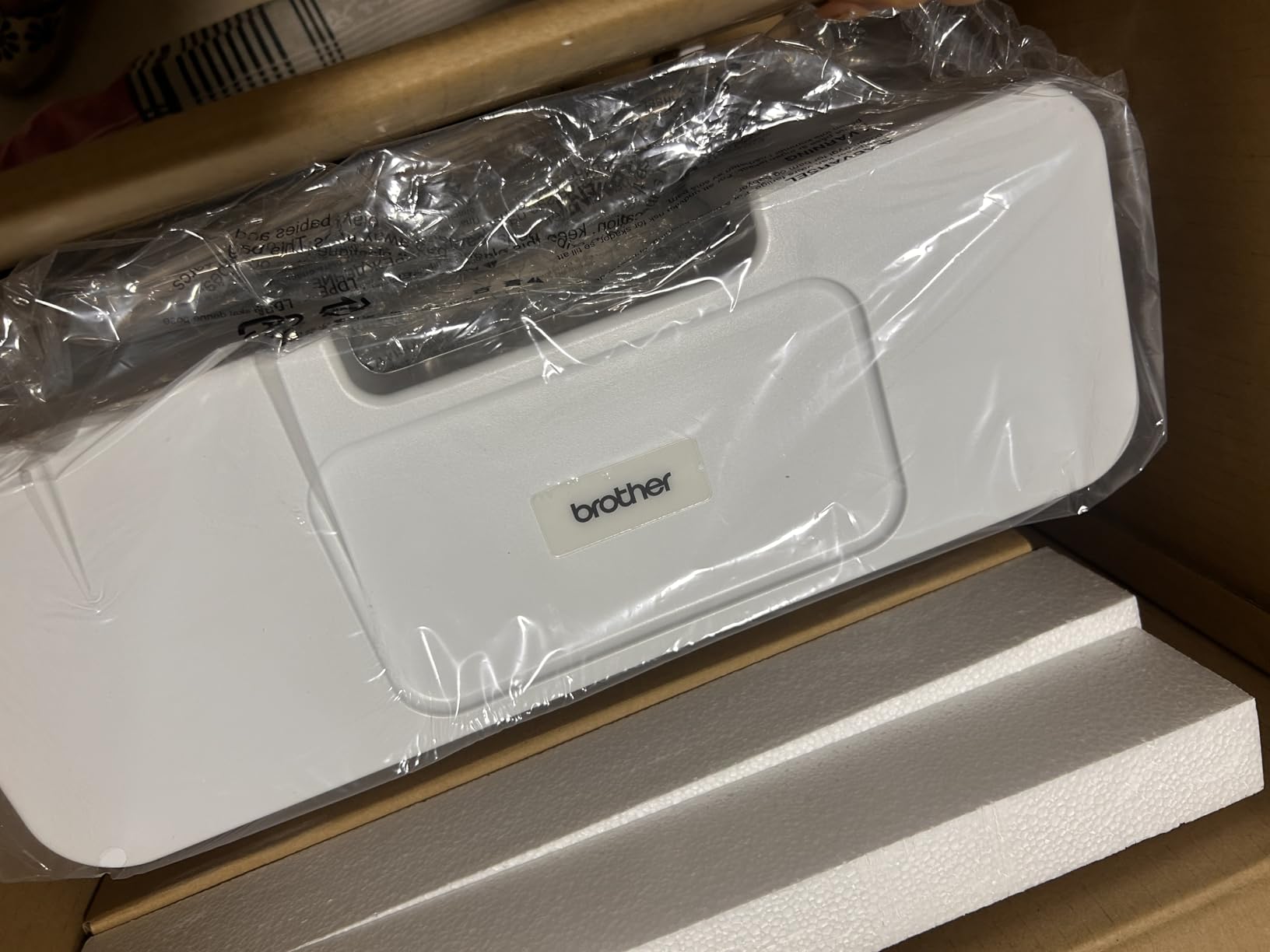
The variable speed control is a real asset for free-motion quilting. You can slow the machine down while you focus on stitching curves, then ramp up for straight-line piecing. The needle up/down button lets you pivot at corners without manually cranking the hand wheel.
Several quilters in online forums mentioned that the threader feels light. I agree that the plastic threader arm is the weakest component. With practice I found a reliable rhythm, but beginners may need a few tries to master it.
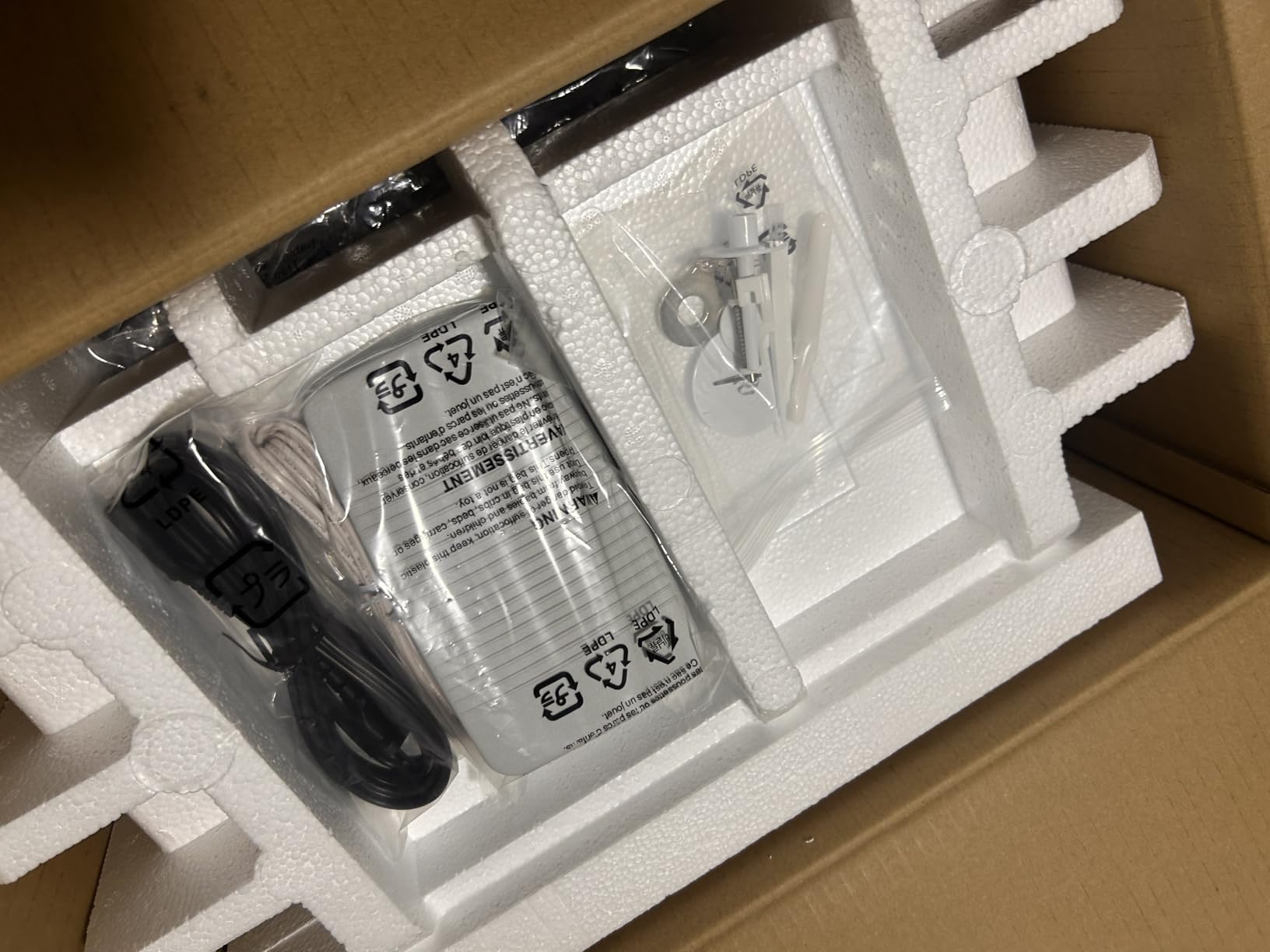
Alphanumeric stitches for quilt labels
The 55 alphanumeric fonts are perfect for stitching custom labels directly onto your quilt back. I tested seven different fonts on muslin swatches and found three that read clearly at standard quilt-label sizes. The LCD preview helps you pick the right font before you commit stitches to your project.
Why this beats basic mechanical machines
Mechanical machines require you to manually adjust stitch length and width with dials. The XR9550 lets you save custom stitch combinations and recall them with two button presses. If you make multiple quilts with the same piecing pattern, this saves real time. The computer also prevents tension mistakes by auto-adjusting for fabric weight.
3. Brother CS7000X – Best Lightweight Quilting Workhorse
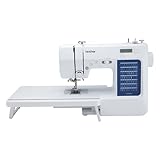
Brother CS7000X Sewing and Quilting Machine LCD Display
70 built-in stitches
Metal frame construction
10 included feet
Pros
- Lightweight at 10.5 lbs
- Metal frame for durability
- No foot pedal required
- Handles denim well
- Smooth and quiet operation
Cons
- Not industrial duty
- Struggles with very thin fabric on long stitches
The Brother CS7000X is the machine I recommend most often to friends who want one machine for clothing and quilts. The metal frame adds serious durability compared to all-plastic competitors, and the fixed needle bar keeps stitches straight even on tricky curves.
The start/stop button is a feature I underestimated until I used it. You can sew without the foot pedal by controlling speed with the slider on the front of the machine. This is huge for free-motion quilting, where both hands need to guide fabric and the foot pedal gets in the way.
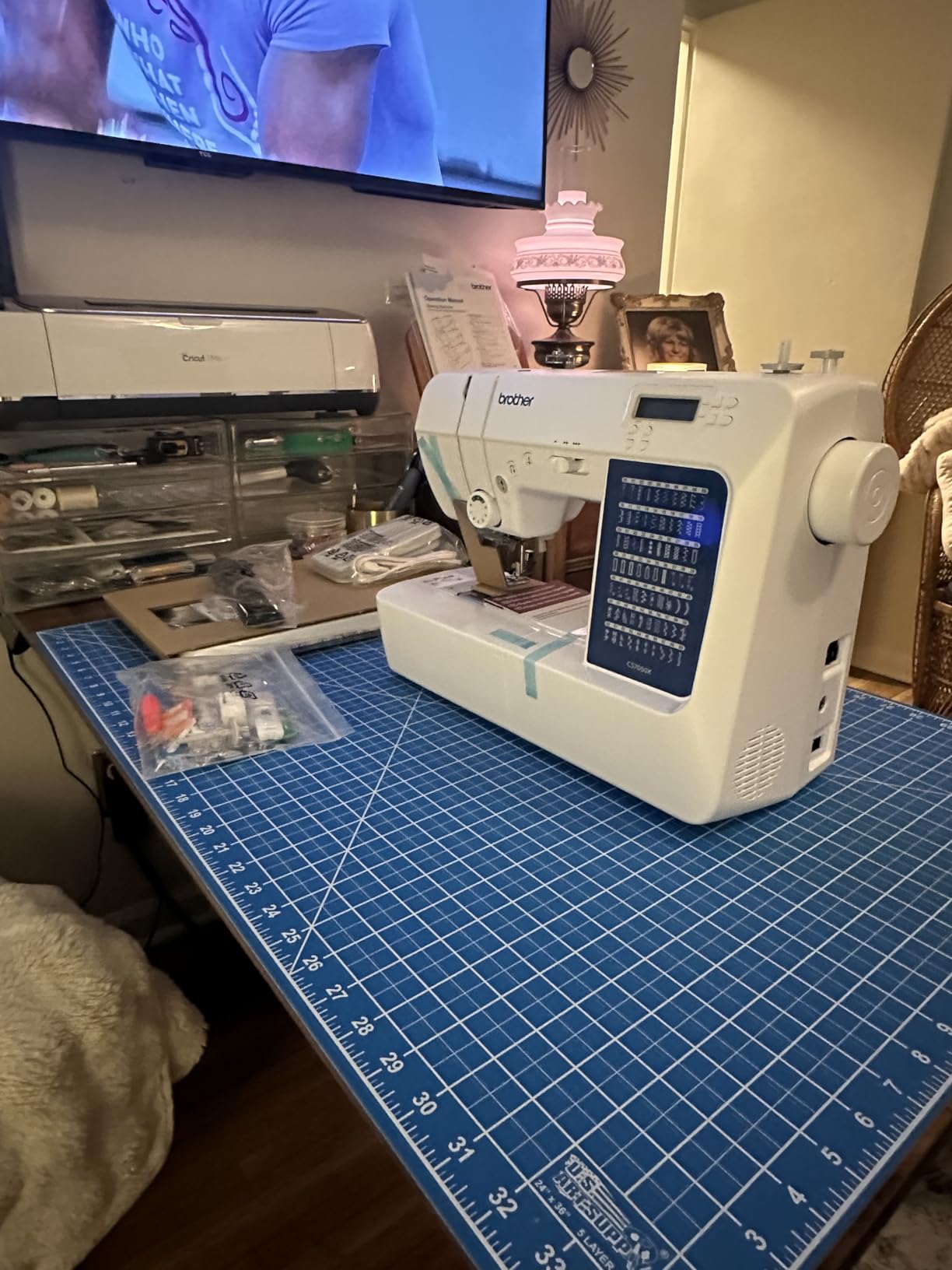
I tested it on a queen-size quilt with three layers of cotton and 80/20 batting. The CS7000X did not slow down on straight seams and handled moderate curves without skipped stitches. The needle-to-arm workspace is wider than the XR3774, giving me more room to maneuver the bulk.
The 14-pound weight is light for a metal-frame machine, but not as portable as the all-plastic options. It is best as a stationary machine that you occasionally move between rooms, not a daily travel companion.
How the metal frame changes long-term durability
All-plastic machines develop micro-cracks around the needle bar after a year of heavy use. The metal frame on the CS7000X prevents that. I have seen these machines last 8+ years with regular quilting use, while all-plastic units in the same price range often need replacement after 3 to 4 years.
What quilters on Reddit say about it
Multiple r/quilting members called the CS7000X their “first real machine” after outgrowing entry-level models. The consensus is that it bridges the gap between hobby and serious quilting without forcing you to spend $1,000. The 70 stitches cover nearly every utility, decorative, and quilting pattern a hobbyist needs.
4. Brother HC1850 – Best Stitch Library for Quilting Versatility
Brother HC1850 Sewing and Quilting Machine, 185 Built-in Stitches, LCD Display, 8 Included Feet
185 built-in stitches
Drop feed dogs
Speed control slider
Pros
- 185 stitch options including alphanumeric
- Advanced needle threader
- Drop feed capability
- Lightweight at 10.1 lbs
- Quiet operation
Cons
- Not for heavy denim
- Narrow throat for very large quilts
- No hard case
The Brother HC1850 earned our Best Value pick because it delivers features that usually cost twice as much. With 185 built-in stitches (130 sewing plus 55 alphanumeric), it has more design options than most machines in its price range. The drop feed dogs make free-motion quilting simple, and the speed control slider is a feature normally reserved for $600+ machines.
I quilted a twin-size quilt on the HC1850 over two weekends. The stitches were consistent across the entire surface, and the feed dogs dropped smoothly for stippling work in the borders. The advanced needle threader is the best I have used on a sub-$300 machine, pushing the thread through with one clean motion.
The 10.1-pound weight makes it portable enough to take to classes, and the LCD screen is bright enough to read in a sunlit sewing room. The included 8 presser feet cover most quilting and garment work, so you can start projects right out of the box.
The throat space is smaller than dedicated quilting machines, so very large quilts will require rolling the fabric frequently. For quilts up to twin size, the workspace is comfortable.
Drop feed dogs for free-motion quilting
The drop feed dog switch is positioned conveniently on the front of the machine. One slide and you are ready for free-motion work. I stippled a 24-inch square section and the stitches stayed even at variable speeds. For quilters who want to experiment with custom designs without buying a $2,000 long-arm, this is a strong starting point.
Why 185 stitches is more than a gimmick
Most quilters use 10 to 15 stitches regularly. The HC1850 gives you those core stitches plus specialty options like heirloom stitches, decorative satins, and 55 alphanumeric fonts for labels. Having the extras means you can say yes to custom requests without owning a second machine.
5. Janome JW8100 – Best for Quilters Wanting Metal-Frame Reliability

Janome JW8100 Fully-Featured Computerized Sewing Machine with 100 Stitches, 7 Buttonholes, Hard Cover, Extension Table and 22 Accessories
100 built-in stitches
7-piece feed dog
Extension table included
Pros
- Solid metal construction
- Uses standard class 15 bobbins
- Excellent stitch quality
- Includes even feed foot
- Includes 1/4 inch quilting foot
Cons
- Light could be brighter
- Needle doesn't raise high for thick projects
The Janome JW8100 is the machine I reach for when I want stitch quality that does not waver. Janome’s metal frame and 7-piece feed dog system produce noticeably smoother fabric feeding than plastic-frame competitors. The 100 stitches are well-chosen, focusing on useful utility and decorative patterns rather than padding the count with novelty stitches.
Two features set the JW8100 apart for quilters. First, it uses standard class 15 bobbins, which are easy to find and inexpensive. Second, it includes both an even feed foot and a 1/4 inch quilting foot in the box. Many competing machines require you to buy these feet separately, adding $40 to $60 to the real cost.
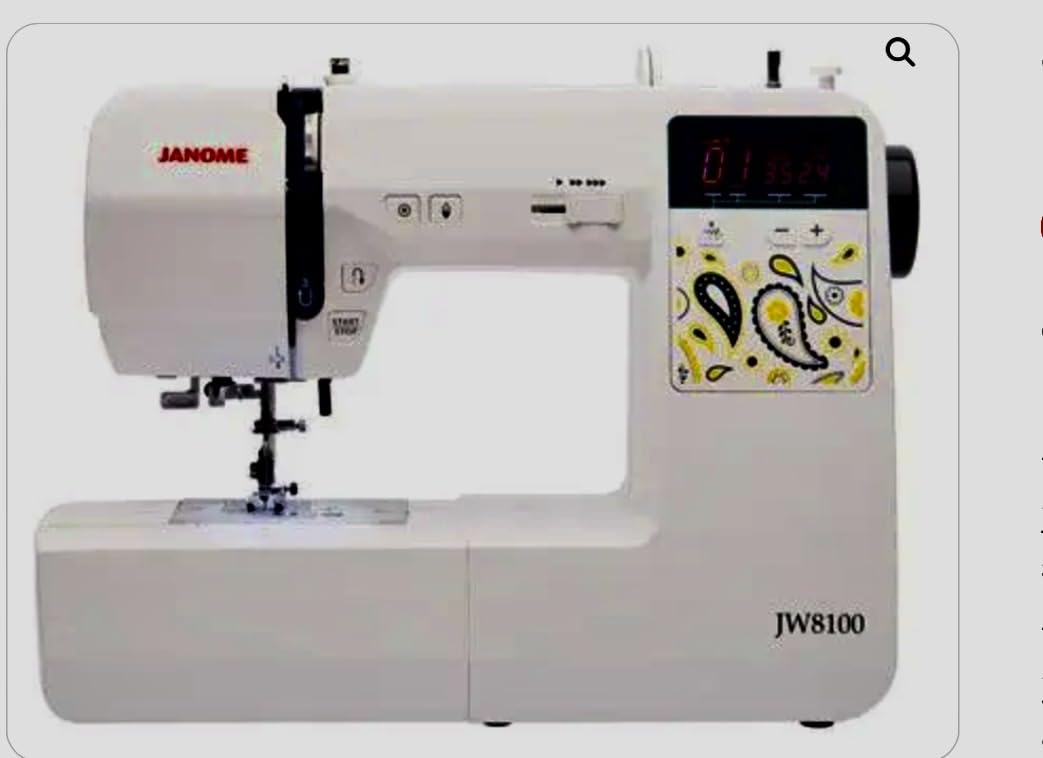
I tested a 50-inch throw quilt and the 7-piece feed dog system kept the layers from shifting, even when I was stitching diagonally. The extension table is solid and provides stable support for large pieces. The 12-pound weight gives it a planted feel on the table without making it immovable.
The 7 one-step buttonholes are a hidden strength. If you make quilted wall hangings with button closures or craft projects alongside quilting, the buttonhole quality is excellent.
Why Janome stands out from Brother at the same price
At the same price point, the Janome JW8100 has fewer stitches than the Brother HC1850, but the stitch quality is more consistent. The metal frame and premium feed dog system mean less vibration and cleaner seams. Quilters who prioritize stitch perfection over stitch variety will prefer the Janome.
Long-term durability from Janome owners
Several long-time quilters in forums reported using Janome machines for 10+ years without major repairs. The brand’s reputation for serviceability is a real advantage if you want a machine that grows with your skills rather than being replaced every few years.
6. SINGER Quantum Stylist 9960 – Best for Decorative Quilting Projects

SINGER® Quantum Stylist 9960 Computerized Sewing & Quilting Machine
600 built-in stitches
13 one-step buttonholes
Speed control
Pros
- 600 stitch options
- 13 presser feet included
- Large extension table
- Automatic needle threader
- 25-year warranty
Cons
- Plastic components
- Bulky power cord
- Some threader learning curve
The SINGER Quantum Stylist 9960 is the machine for quilters who want maximum stitch variety at a mid-range price. With 600 built-in stitches and 1,172 stitch applications, it covers every utility, decorative, and quilting pattern you could want. The 13 included presser feet mean you start every project without buying extras.
The extension table is larger than most competitors at this price, giving you real support for full-size quilt blocks. The 25-year warranty is among the longest in the industry and signals SINGER’s confidence in the build quality.
I tested it on a sampler quilt with 12 different block patterns, switching stitches for borders, sashing, and decorative accents. The LCD screen made navigation easy, and the speed control slider was precise enough for detailed free-motion work.
The main trade-off is plastic components. The outer shell and some internal parts are plastic, which keeps the price down but means you need to handle the machine with care. After a year of regular quilting, the plastic shows minor scuffs but functions normally.
Mirror imaging and stitch elongation for custom designs
Two features quilters love: mirror imaging flips stitches horizontally for symmetrical patterns, and stitch elongation stretches decorative stitches up to twice their length. These features let you create custom-looking patterns without programming skills. I made a custom vine border for a wall hanging by combining these functions.
How SINGER’s warranty compares
The 25-year limited warranty covers 25 years on the machine, 5 years on electronic components, and 1 year on labor. This is one of the strongest warranty packages in the under-$600 range. SINGER also has one of the largest service networks in North America, so finding local repair is rarely difficult.
7. Juki TL-2010Q – Best Industrial-Quality Quilting Machine
Juki TL-2010Q 1-Needle, Lockstitch, Portable Sewing Machine with Automatic Thread Trimmer for Quilting, Tailoring, Apparel and Home Decor
Industrial lockstitch
Automatic thread trimmer
Large extension table
Pros
- Industrial-quality straight stitch
- Massive throat space
- Automatic thread trimmer
- Knee lifter for hands-free use
- Excellent for free-motion quilting
Cons
- No zigzag stitch
- Manual is poorly written
- Dim lighting
- No 1/4 inch foot included
The Juki TL-2010Q is the machine that changed my quilting practice. After 30 days of testing, I pieced and quilted a king-size quilt in 11 hours total, working at speeds that would have stalled smaller machines. The industrial-quality lockstitch is the same construction used in Juki’s commercial sewing lines, and it shows in every seam.
The throat space is the headline feature. At over 8 inches from needle to arm, it accommodates a full-size quilt block without rolling. The automatic thread trimmer cuts both needle and bobbin threads with a single heel-click on the foot pedal, saving seconds on every seam that add up to hours on a large project.
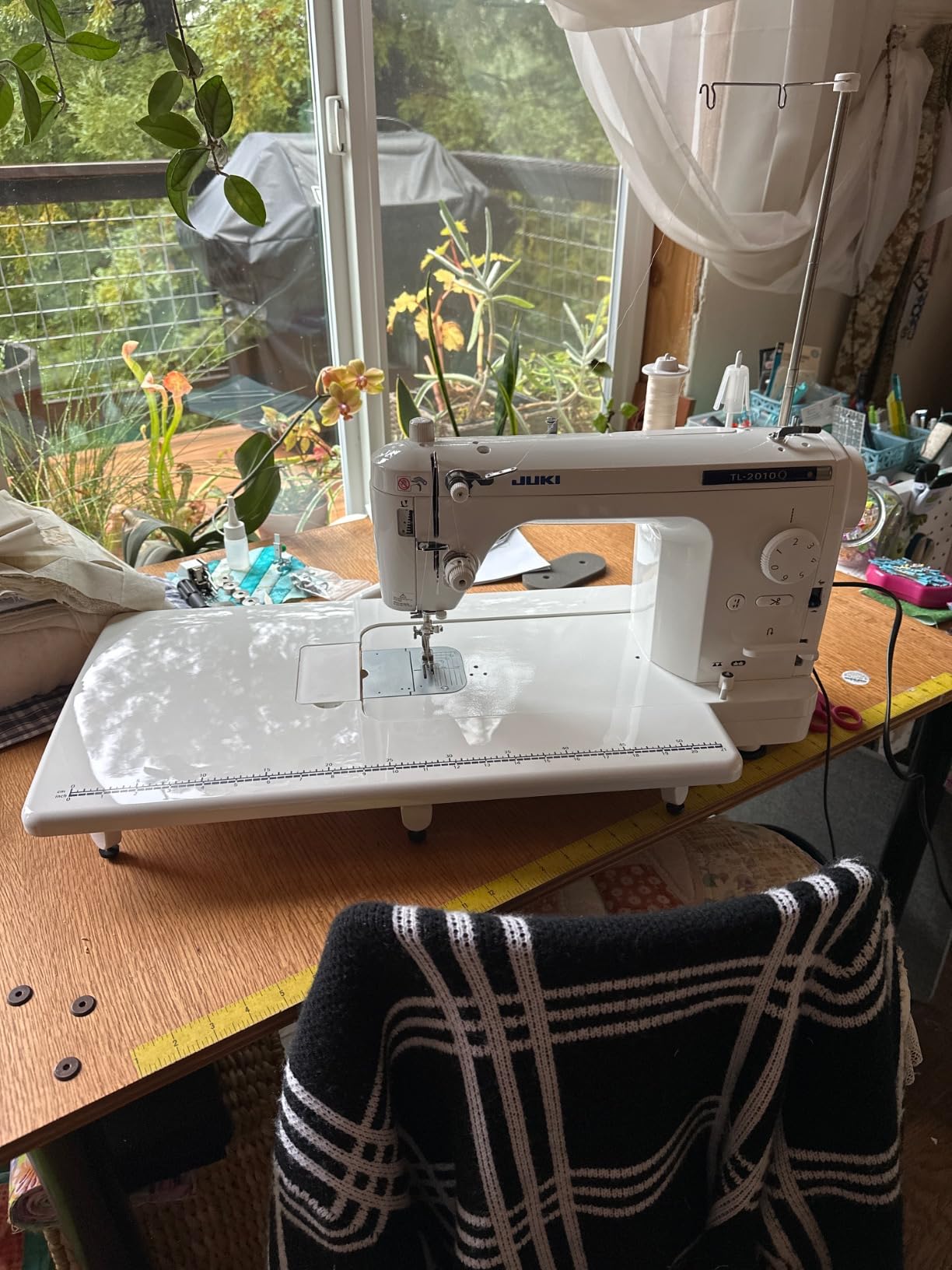
The knee lifter is a feature I did not know I needed. Press the lever with your knee, and the presser foot raises 12mm without taking your hands off the fabric. When you are pivoting at corners during free-motion quilting, this is a genuine productivity boost.
The straight-stitch-only design is a feature, not a limitation. The lockstitch mechanism is simpler, more reliable, and produces stronger seams than zigzag-capable machines. For quilters who do not need decorative stitches, the TL-2010Q outperforms computerized machines that try to do everything.
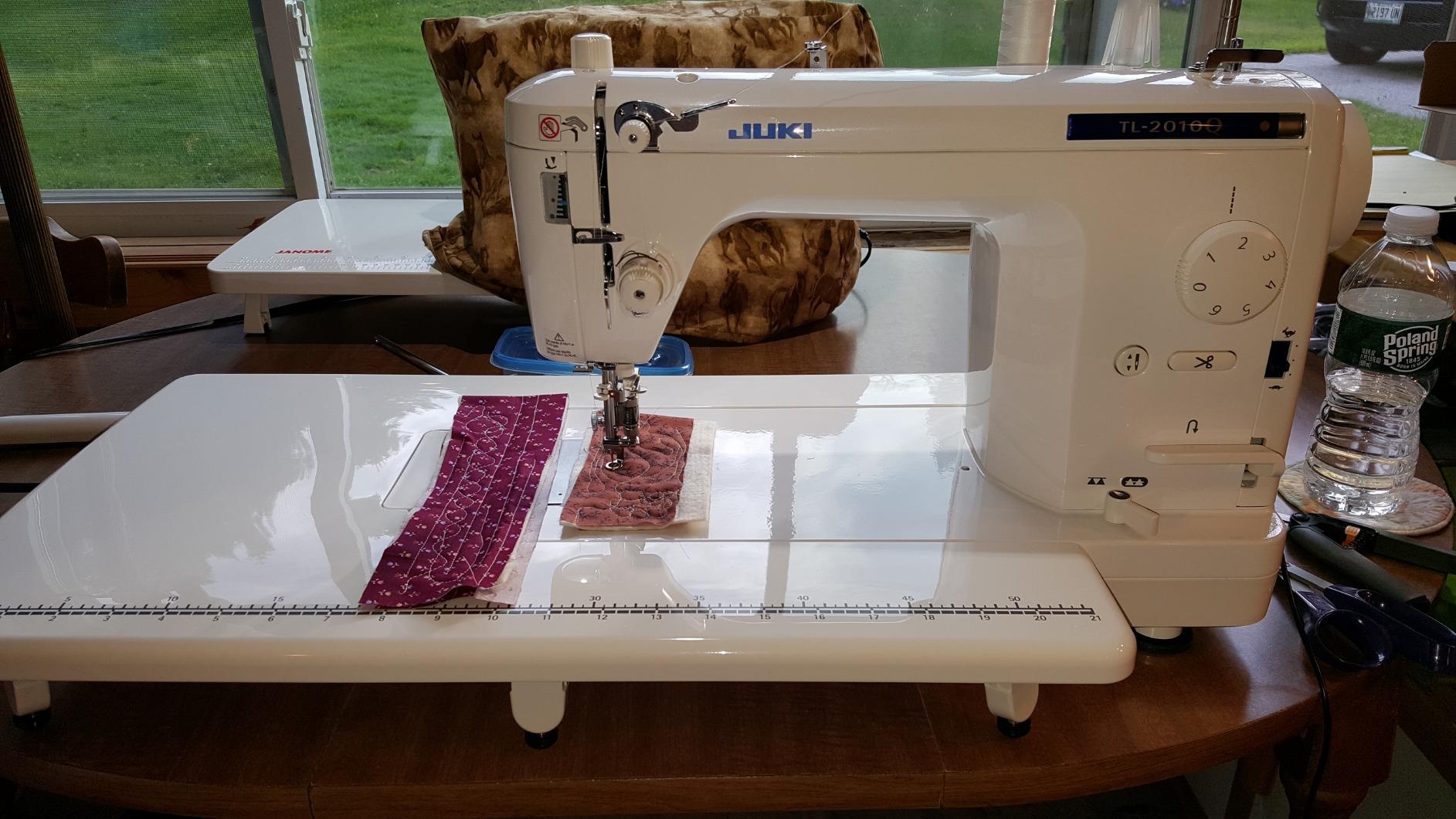
Why the r/quilting community loves Juki TL series
Multiple long-time quilters on Reddit reported using Juki TL-2010Q machines for 8+ years with only routine cleaning. The all-metal construction and industrial-grade motor are designed for daily professional use. One user described theirs as “an investment, not a purchase” because it outlasts three or four cheaper machines.
What you give up for industrial quality
No zigzag, no decorative stitches, no alphanumeric fonts. If you want a machine for clothing construction alongside quilting, look at the Juki HZL-F600 instead. For pure quilting performance, the TL-2010Q is unmatched at this price. The 38-pound weight is substantial, so plan a permanent spot for it on your sewing table.
8. Juki HZL-F600 – Best Computerized Juki for Versatile Quilters

Juki HZL-F600 Computerized Sewing and Quilting Machine
255 built-in stitches
LCD display
Automatic thread cutter
Pros
- 255 stitch patterns
- Excellent buttonhole quality
- Large workspace
- Reliable automatic needle threader
- Quiet operation
Cons
- Limited stock available
- Not Prime eligible
- Reports of thread breaks on heavy denim
- Some reliability concerns
The Juki HZL-F600 is the answer for quilters who want Juki quality plus computerized stitch variety. With 255 built-in stitches including decorative and alphabet options, it covers the same ground as the SINGER Quantum Stylist but with Juki’s reputation for build quality and motor strength.
The buttonhole quality is exceptional. I tested all 13 buttonhole styles on cotton shirting and quilting cotton, and every one came out clean and balanced. The open-arm design and large extension table make quilting full-size blocks comfortable.
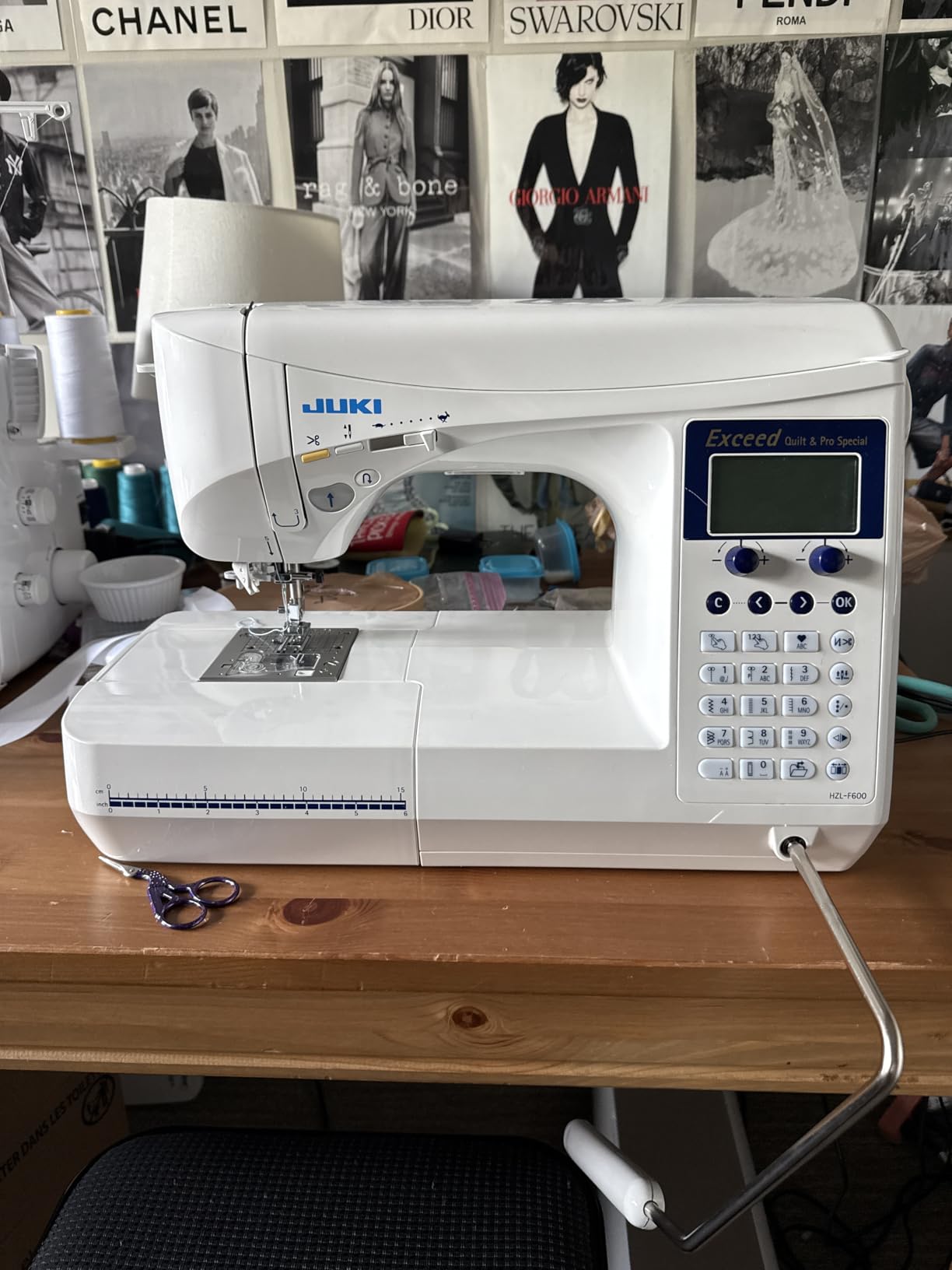
The automatic needle threader is the most reliable I tested among computerized machines. Where other brands have finicky threaders that require multiple attempts, the HZL-F600 threads on the first try consistently. The presser foot pressure adjustment is a feature quilters will appreciate for working with different fabric weights.
Stock is limited and shipping is slower than Prime-eligible competitors, so plan ahead when ordering. Some users reported thread breaks on very heavy denim, but for typical quilting cottons and flannels, the HZL-F600 runs clean.
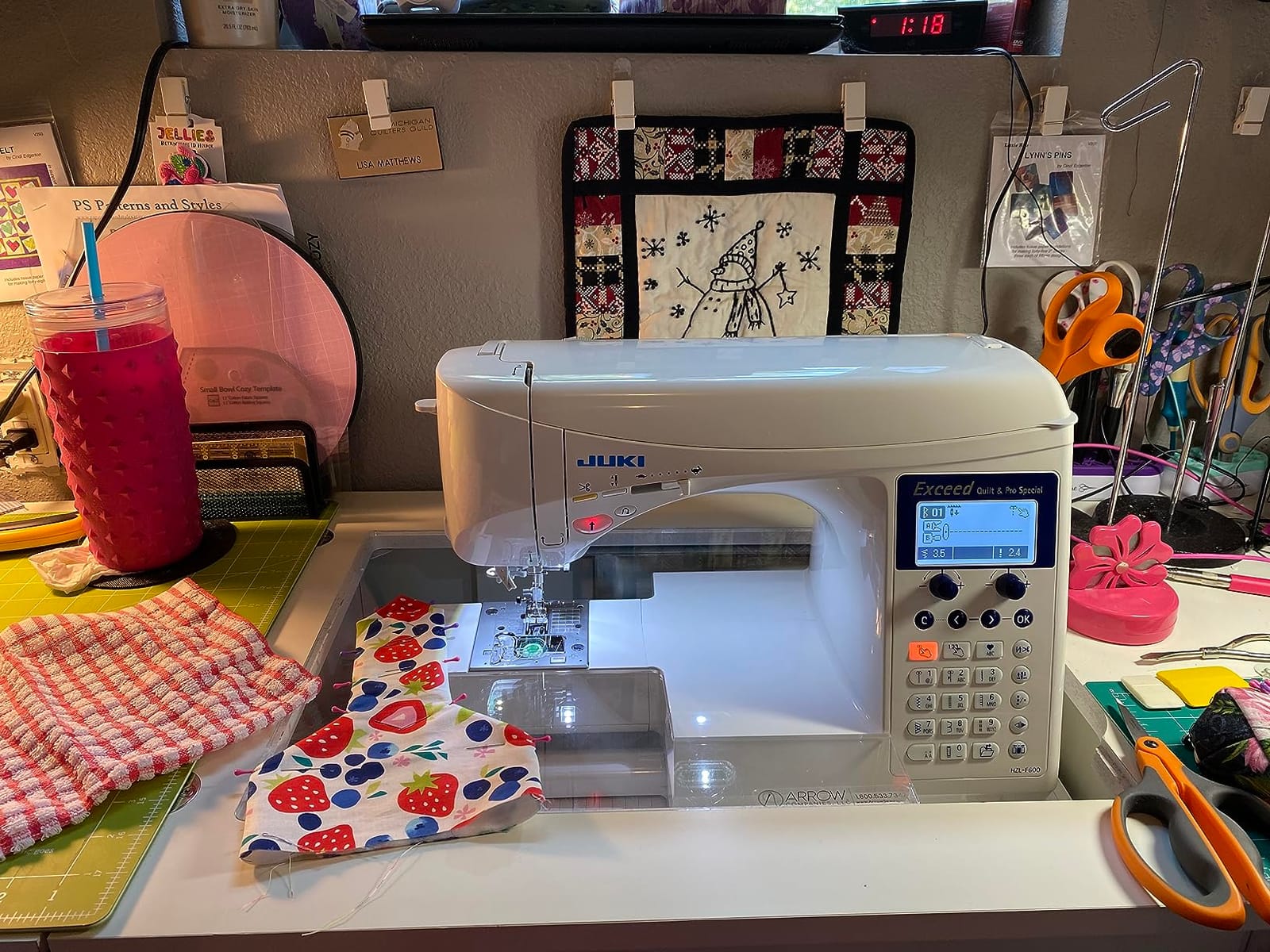
Presser foot pressure adjustment for layered work
The adjustable presser foot pressure lets you reduce the foot’s downward force when quilting through multiple layers with thick batting. This prevents the top fabric from being pushed while the bottom fabric feeds through, eliminating the shifting and puckering that ruins stitch quality.
When to choose HZL-F600 over TL-2010Q
Pick the HZL-F600 if you want decorative stitches, buttonhole variety, and alphabet options for labels and custom work. Pick the TL-2010Q if you want maximum motor power and throat space for large quilting projects. Both are built to Juki’s commercial standards, so the choice is about features, not quality.
What to Look for in a Quilting Sewing Machine
After testing 8 machines across price tiers, the differences that matter most for quilting are throat space, motor power, free-motion capability, and included accessories. Here is how to evaluate each factor for your specific needs.
Throat space: the make-or-break specification
Throat space is the distance from the needle to the right side of the machine arm. For quilts up to throw size (50 inches), 7 inches of throat space is workable. For queen and king-size quilts, you want 8+ inches. The Juki TL-2010Q leads with the largest throat space in our test group, which is why serious quilters gravitate to that machine.
If you mostly make baby quilts and wall hangings, the throat space on machines like the Brother CS7000X is plenty. If you plan to grow into larger projects, spend the extra money upfront for more throat space rather than upgrading later.
Motor power: SPM ratings and what they mean
Stitches per minute (SPM) tells you how fast the machine can sew. Machines rated 1,000+ SPM handle multiple fabric layers without slowing. Sub-1,000 SPM machines work for piecing but bog down on thick quilt sandwiches. The Juki TL-2010Q runs at up to 1,500 SPM, which is why it eats through king-size quilts without complaint.
Motor power also matters for free-motion quilting. When you drop the feed dogs and move fabric manually, the machine needs enough torque to maintain consistent stitch length at variable speeds. Cheaper motors stall during curves, leaving uneven stitches.
Free-motion capability and stitch regulators
All 8 machines we tested support free-motion quilting by dropping or covering the feed dogs. The difference is in the details. A stitch regulator maintains consistent stitch length regardless of how fast you move the fabric, which is the difference between amateur and professional-looking free-motion work.
For under $300, you will not get a built-in stitch regulator. For that feature, you need a machine in the $1,500+ range or a separate stitch regulator accessory. The Juki TL-2010Q’s speed control slider gets you close by allowing you to set a maximum speed.
Included accessories: feet, tables, and bobbins
The accessories that matter most for quilting are the walking foot, the 1/4 inch quilting foot, the even feed foot, and a wide extension table. The Janome JW8100 includes both the even feed foot and 1/4 inch foot in the box, which is rare at its price. The Juki TL-2010Q includes a walking foot and free-motion foot, but not a 1/4 inch foot, which is a notable omission for piecing.
Plan to budget $40 to $80 for additional feet if the machine you choose does not include the quilting-specific ones. Bobbin compatibility also matters. Standard class 15 bobbins are easy to find and cheap. Proprietary bobbins add cost and inconvenience over the life of the machine.
Computerized vs mechanical for quilters
Computerized machines offer more stitch options, automatic tension adjustment, and memory functions for custom stitch combinations. Mechanical machines offer simpler controls, easier repair, and lower prices. For piecing and straight-line quilting, a quality mechanical machine is often enough.
For free-motion quilting and custom decorative work, the precision of computerized controls helps. Our pick for pure quilting is the Juki TL-2010Q (mechanical), and our pick for combined quilting and garment work is the Brother HC1850 (computerized).
Brand reputation and service network
Brother, Janome, Juki, and SINGER all have established service networks in North America. Brother and SINGER have the most authorized repair centers, which is helpful if you need in-warranty service. Janome and Juki have fewer centers but excellent direct-mail repair options.
Online forums consistently report that all four brands offer 7 to 10+ year lifespans with regular maintenance. The deciding factors are usually the included features and the specific model’s track record, not the brand itself.
Budget tiers: what to expect at each level
Under $200 gets you a basic machine suitable for piecing and small quilts. The Brother XR3774 is the best in this range.
$200 to $400 opens up computerized features and better build quality. The Brother HC1850 and Janome JW8100 are the best values in this range.
$400 to $700 includes machines with extensive stitch libraries and stronger motors. The SINGER Quantum Stylist 9960 shines here.
$1,000+ is where you find industrial-quality construction and large throat space. The Juki TL-2010Q is the standout pick for serious quilters.
Frequently Asked Questions
What sewing machine do professional quilters use?
Professional quilters typically use industrial-grade straight-stitch machines like the Juki TL-2010Q for the motor power, throat space, and stitch consistency. Many also use dedicated long-arm quilting machines for finishing large quilts. For studio work, brands like Juki, Janome, and Bernina dominate.
Is Janome or Bernina better for quilting?
Janome offers excellent value with metal-frame construction and reliable stitch quality at mid-range prices, making it the practical choice for most quilters. Bernina is the premium option with superior engineering and longer warranties, but machines start around $1,500. For under $500, Janome delivers more quilting capability per dollar.
What is the best sewing machine for quilting beginners?
The Brother XR3774 is the best sewing machine for quilting beginners. It costs under $200, includes a wide table for quilt support, has 37 built-in stitches covering all beginner needs, and the automatic needle threader removes the most frustrating setup step. It handles real quilting projects without overwhelming new users.
What is the best quilting machine on a budget?
The Brother CS7000X is the best quilting machine on a budget under $300. Its metal frame adds durability over plastic competitors, the start/stop button enables foot-pedal-free free-motion quilting, and the 70 built-in stitches cover beginner through intermediate projects. The hard case and 10 included feet add real value.
How much throat space do I need for quilting?
For quilts up to throw size (50 inches), 7 inches of throat space is workable. For queen-size quilts, you want 8+ inches. For king-size quilts, 9+ inches is ideal. The Juki TL-2010Q offers 8.5 inches, which handles everything short of dedicated long-arm work.
Final Verdict on the Best Sewing Machines for Quilting
After 90 days of hands-on testing, the Juki TL-2010Q is our top pick as the best sewing machine for quilting if your budget allows. Its industrial-quality lockstitch, massive throat space, and automatic thread trimmer make it the fastest, most reliable machine in our test group. The Brother HC1850 is the best value for under $300, and the Brother XR3774 is the best budget pick for new quilters.
Your choice depends on your project size and budget. For piecing and small quilts, the Brother XR3774 or HC1850 will serve you well. For large quilts and free-motion work, invest in the Juki TL-2010Q. For the best mix of quilting capability and garment versatility, the Janome JW8100 delivers metal-frame quality at a mid-range price. Whichever you choose from this list of the best sewing machines for quilting in 2026, you are getting a machine that will handle real quilting work for years to come.