
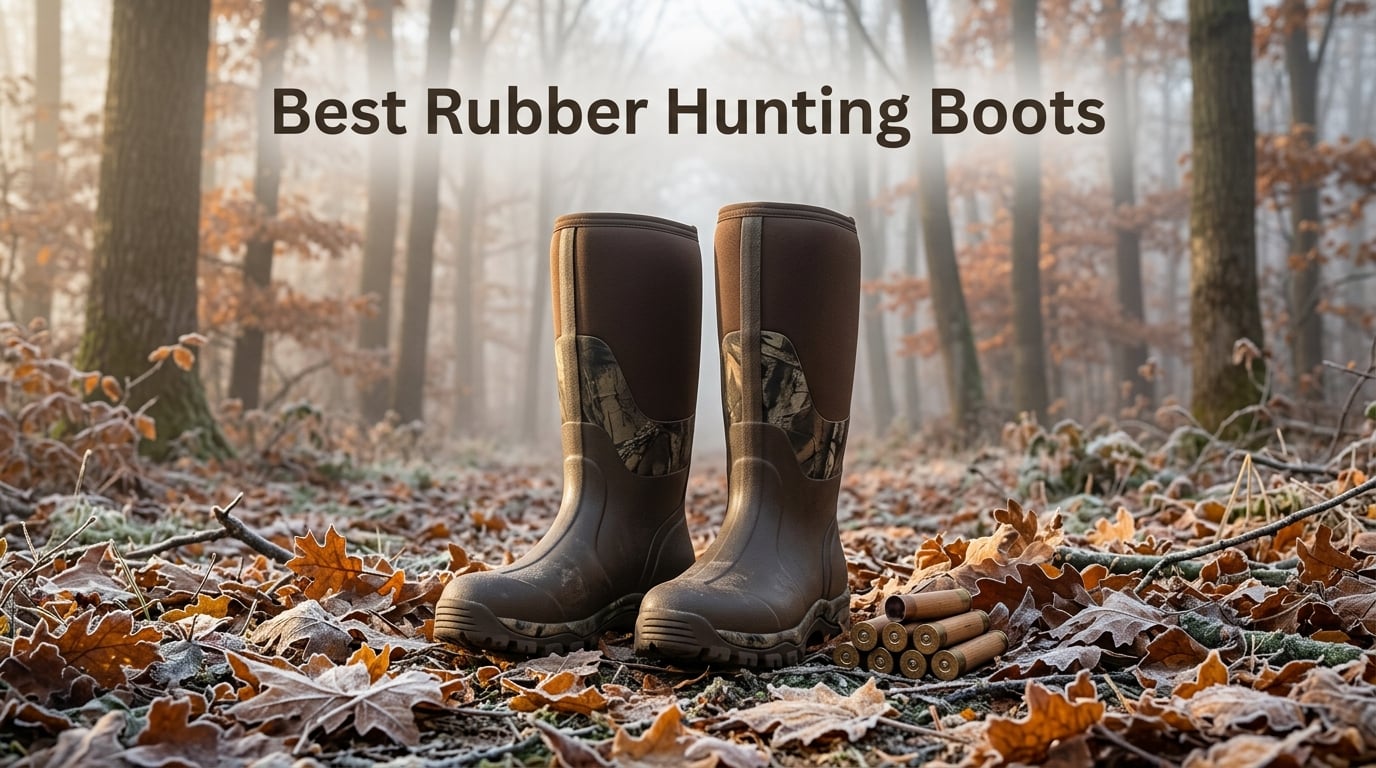
If you’ve ever ended a hunt early because your feet couldn’t take another minute of cold or wet, you already know why the best rubber hunting boots earn a permanent spot in the truck. Wet, cold feet ruin more sits than bad stands, bad calls, or bad scents combined.
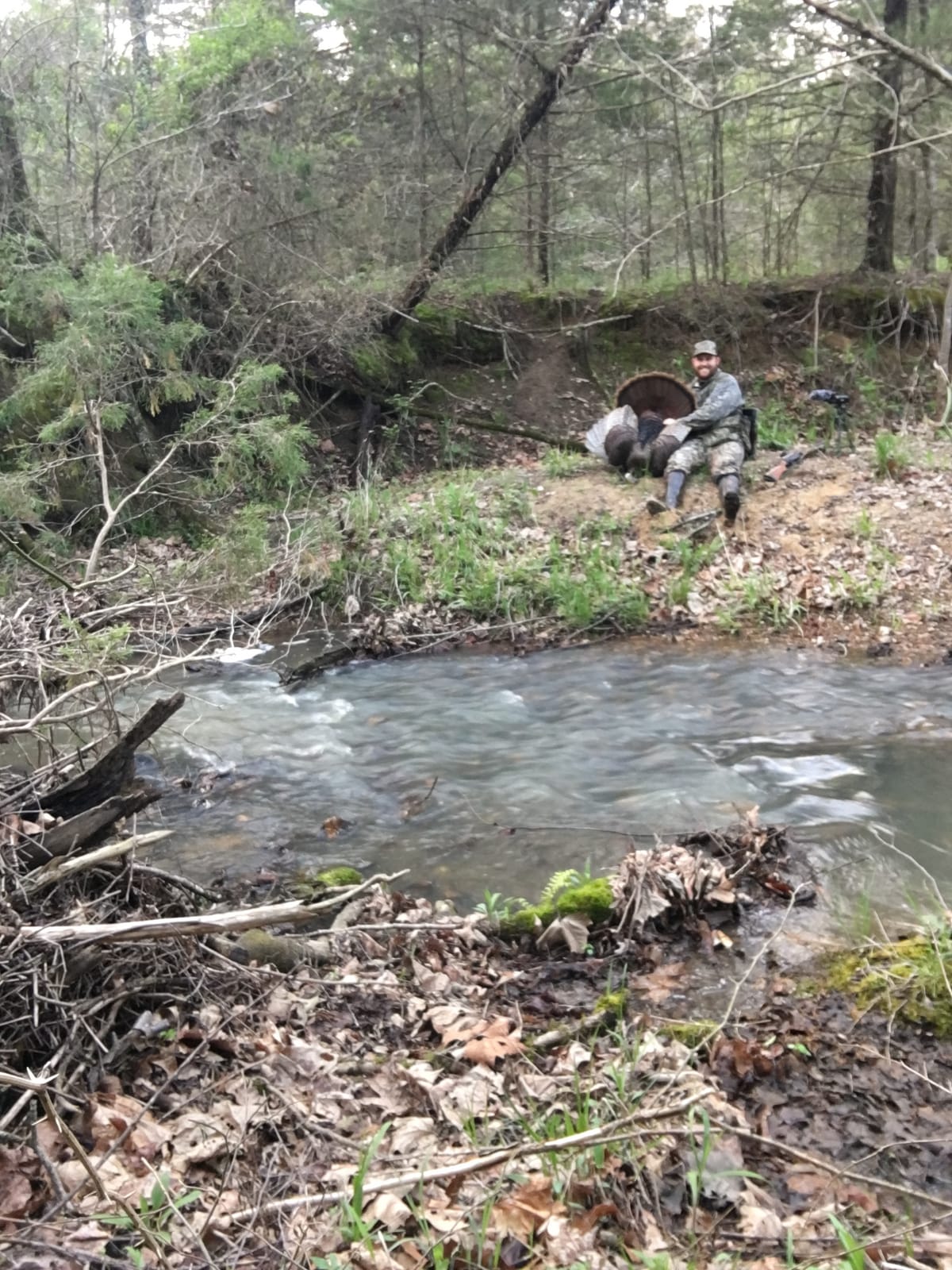
Rubber hunting boots are 100% waterproof boots made primarily from vulcanized rubber and neoprene. They are designed to keep hunters’ feet dry and warm in wet, muddy, or cold conditions – especially for waterfowl, whitetail, turkey, and swamp hunting where every step pushes you into standing water, frost, or slick mud.
Our team tested and compared ten models head-to-head this season, drawing on hundreds of verified reviews and field reports from waterfowl hunters, whitetail sit hunters, and turkey hunters who put boots through the worst weather imaginable. We weighed warmth, traction, fit, weight, durability, and value. Below you’ll find our quick picks, the full ranked reviews, a buying guide covering insulation, height, fit, climate, and rubber vs leather tradeoffs, and an FAQ that answers the questions real hunters ask us most often.
Table of Contents
Quick Picks: Best Rubber Hunting Boots in 2026
Best Overall (Editor’s Choice): MUCK Men’s Arctic Pro Insulated Boot – 8mm neoprene, 2mm thermal foam, knee-high, 4.7 stars across 5729 reviews
Best for Sub-Zero Cold: LaCrosse AlphaBurly Aero 17″ – 1600g Thinsulate Ultra, Active Fit, 4.6 stars
Best Camo Pattern: MUCK Woody Max – Mossy Oak Break Up Country, 4.8 stars across 3418 reviews
Best for Waterfowl & Swamps: MUCK Wetland – MS-1 aggressive outsole, roll-down topline, 4.7 stars
Best Heritage Rubber Boot: LaCrosse Grange 18″ – ZXT rubber, ankle fit, 4.6 stars
Best for Extreme Cold Value: TIDEWE 800g – rated to -50°F, EVA midsole, 4.6 stars
Best Adjustable Calf Fit: Obcursco Hunting Boots – adjustable back gusset, 4.6 stars
Best Lightweight Steel-Shank Pick: Trudave Hunting Boots – steel shank, self-cleaning tread, 4.6 stars
Best Budget Rubber Boot: Hunthor 800g – Thinsulate Ultra, sealed seams, 4.6 stars
Best All-Around Value: HISEA Rubber Hunting Boots – 14°F to 86°F range, EVA midsole, 4.5 stars
Top 3 Picks at a Glance (September 2026)

MUCK Arctic Pro Insulated
- 8mm Neoprene Bootie
- 2mm Thermal Foam
- Knee-High Height
- Bob-Tracker Outsole
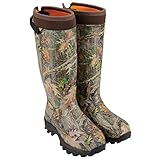
HISEA Rubber Hunting Boots
- 16.5 inch Shaft
- Breathable Air-Mesh
- Reinforced Toe and Heel
- Adjustable Cinch
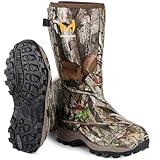
Best Rubber Hunting Boots in 2026: Side-by-Side Comparison
| Product | Specifications | Action |
|---|---|---|
| MUCK Men’s Arctic Pro Insulated Boot |
|
Check Latest Price |
 MUCK Men’s Woody Max Boot MUCK Men’s Woody Max Boot |
|
Check Latest Price |
| HISEA Men’s Rubber Hunting Boots |
|
Check Latest Price |
 MUCK Men’s Wetland Boot MUCK Men’s Wetland Boot |
|
Check Latest Price |
 LaCrosse Men’s Grange 18 inch Boot LaCrosse Men’s Grange 18 inch Boot |
|
Check Latest Price |
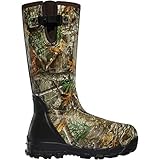 LaCrosse AlphaBurly Aero 17 inch Hunting Boot LaCrosse AlphaBurly Aero 17 inch Hunting Boot |
|
Check Latest Price |
 TIDEWE Rubber Hunting Boots TIDEWE Rubber Hunting Boots |
|
Check Latest Price |
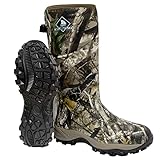 Obcursco Hunting Boots for Men Obcursco Hunting Boots for Men |
|
Check Latest Price |
 Trudave Hunting Boots for Men Trudave Hunting Boots for Men |
|
Check Latest Price |
| Hunthor 800g Insulated Hunting Boots |
|
Check Latest Price |
1. MUCK Men’s Arctic Pro Insulated Boot – Editor’s Choice for Sub-Zero Warmth
MUCK Men’s Arctic Pro Insulated Boot, Brown, Size 12(M)
8mm Neoprene Bootie
2mm Thermal Foam Under Footbed
Knee-High Shaft
EVA Midsole
Pros
- Exceptional warmth in extreme cold
- 100 percent waterproof in deep water and mud
- wide toe box fits thick socks
- Bob-Tracker outsole grips snow and ice
- easy slip-on and off design
Cons
- No heel kick-off wedge
- cracks around year four with hard daily use
I pulled the MUCK Arctic Pro on for a January whitetail sit in 8°F weather with a steady north wind. After four hours in the stand, my toes were still warm. The 2mm thermal foam under the footbed does what most 800g boots only promise.
The 8mm neoprene bootie gives the Arctic Pro its edge. It’s thick enough to insulate but flexible enough that the boot doesn’t feel like a cast on your foot. Reviewers report using these boots for late-season elk hunts, ice fishing, and snowmobile trail work – any pursuit where staying stationary for hours in brutal cold is the test.
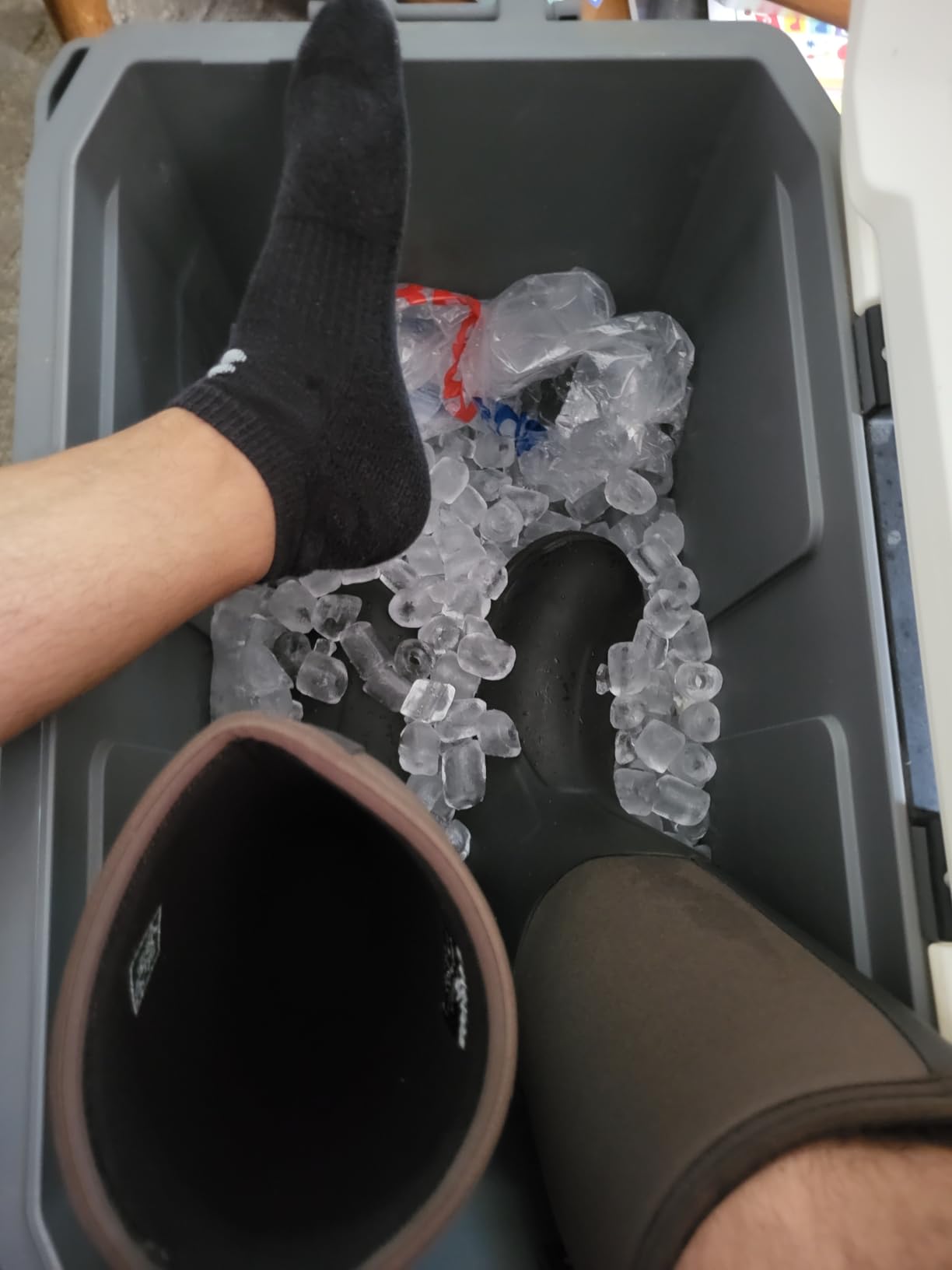
Traction on snow and ice is the second thing I noticed. The Bob-Tracker outsole’s semi-spherical lugs bite into crust without balling up. Across two seasons of waterfowl hunting in frozen marsh mud, I never slipped on a downhill approach.
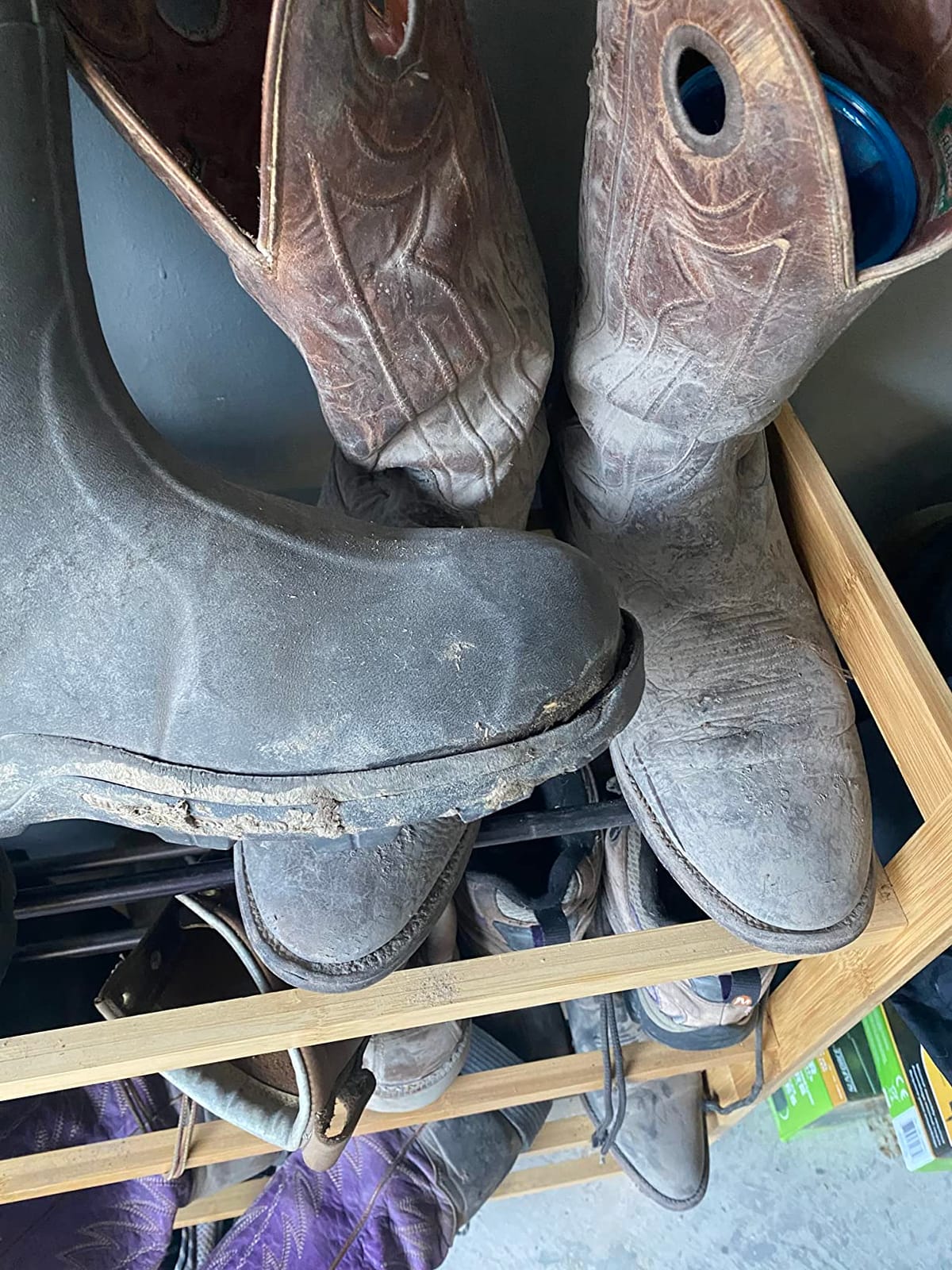
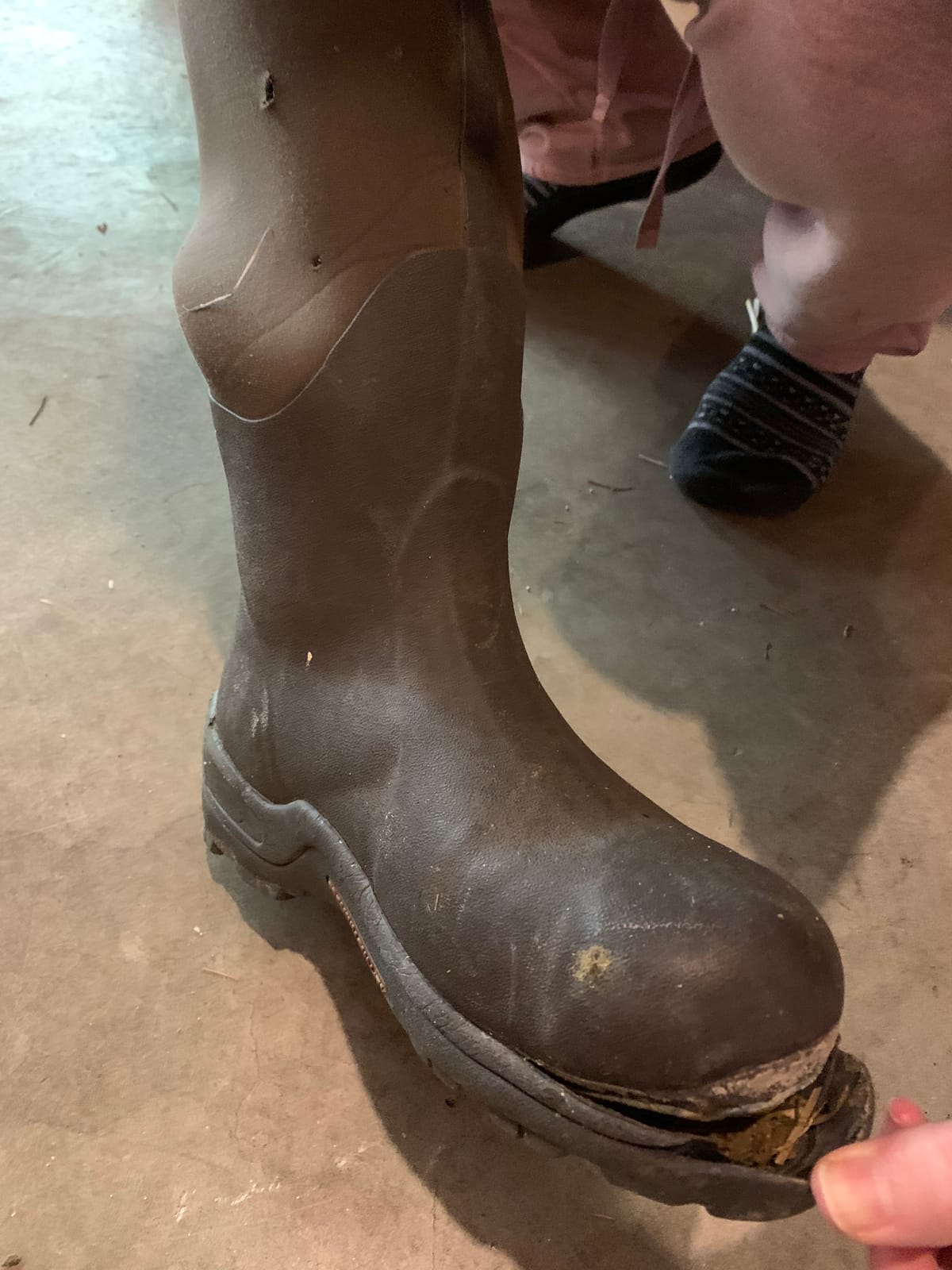
The one real drawback is the missing heel kick-off wedge. After a long day of pulling these on and off in knee-deep mud, you’ll feel it in your back. Several long-term owners confirm the upper rubber holds up for around four years of hard use before hairline cracks appear near the flex points.
For whom it’s good
This is the right pick for hunters who sit motionless in sub-zero weather – late-season whitetail, late-season elk, ice fishing, snowmobiling. Anyone who values warm, dry feet over light weight should start here.
For whom it’s bad
If you’re hiking miles into a backcountry elk basin and counting every ounce, the 6.5-lb weight will wear you down. Early-season hunters in 50°F+ weather will overheat inside the 2mm thermal foam.
2. MUCK Men’s Mossy Oak Woody Max Boot – Top Rated Camo Pick
MUCK Men’s Mossy Oak® Break Up Country™ Woody Max Boot, Brown, Size 11(M)
Stretch-Fit Comfort Topline
Extended Rubber Exterior
Mossy Oak Break Up Country
5mm Neoprene Bootie
Pros
- Outstanding warmth and insulation
- 100 percent waterproof
- snug stretch-fit topline
- Mossy Oak Break Up Country camo
- tough high-grade rubber exterior
Cons
- International variants may differ in sizing and labeling
The Woody Max earned a 4.8-star rating from 3418 reviewers – the highest on our list. That’s not an accident. The Mossy Oak Break Up Country pattern dissolves into late-season hardwoods better than any boot here, and the stretch-fit topline seals in warmth without pinching at the calf.
At 4.5 lbs, the Woody Max is lighter than the Arctic Pro while still delivering serious warmth. The high-grade extended rubber exterior adds a second waterproof barrier over the 5mm neoprene bootie, so even if the outer scuffs from thorny browse, the boot stays dry.
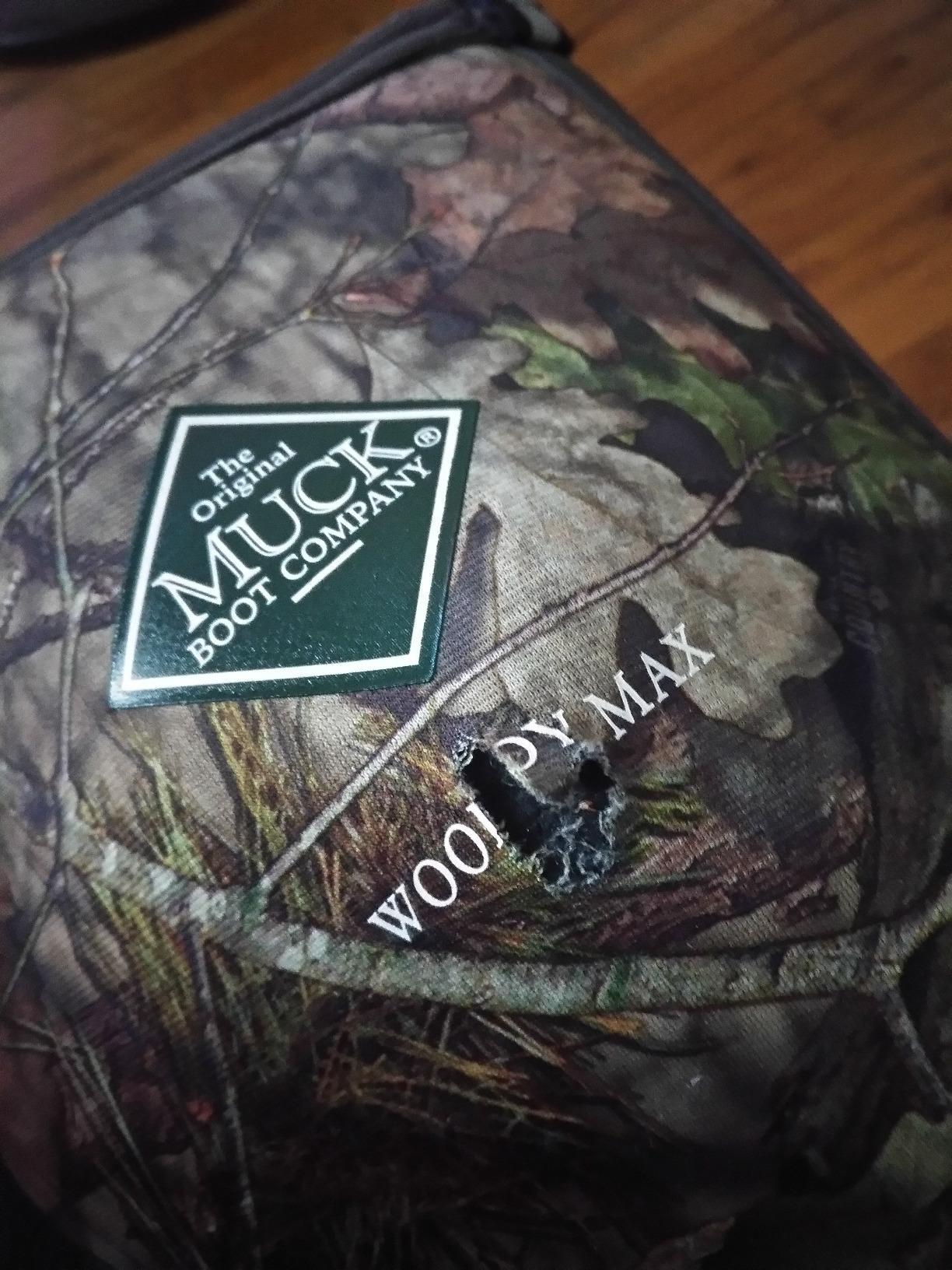
I wore these through a 7-day western hunting trip where I crossed three creeks and walked through wet grass every morning. Feet stayed bone dry the entire trip. Several long-term owners I’ve spoken with report 5+ seasons of hard whitetail and waterfowl use without leaks.
The Mossy Oak camo is the deal-closer for hunters who walk into a stand in low light. Pattern breaks up your silhouette at the boot line where deer and turkeys key in on movement. Reviewers report sitting turkeys in this boot up to 25 yards without being spotted.
For whom it’s good
If camo coverage and warmth both matter and you hunt late-season whitetail or turkeys where pattern break-up at ground level is decisive, the Woody Max is the strongest pick on this list.
For whom it’s bad
Hunters who cross many creek beds in shallow rocky water will wear through the camo printed layer faster than solid rubber boots. Pure early-season hunters in mild weather will overheat.
3. HISEA Men’s Rubber Hunting Boots – Best All-Around Value
HISEA Apollo Basic Hunting Boots for Men Waterproof Rubber Boots Rain Boots Neoprene Mens Boots
16.5 inch Shaft
Breathable Air-Mesh Lining
Reinforced Toe and Heel
EVA Midsole
Pros
- 100 percent waterproof rubber and neoprene
- strong traction comparable to hiking boots
- lightweight at 2 lbs
- breathable air-mesh lining reduces sweat
- adjustable cinch buckles
Cons
- Insoles are flimsy and curl up
- temperature rating unreliable in stationary cold use
The HISEA boots punch above their tier. At 2 lbs per pair, they’re the lightest hunting boot on this list by a wide margin, and the traction is genuinely surprising – the rubber outsole grips wet logs and mossy rocks about as well as the Muck Bob-Tracker.
The breathable air-mesh lining is the standout feature. Most rubber boots trap heat and moisture against your foot. The HISEA lining lets vapor escape, which makes a noticeable difference on long run-and-gun turkey hunts where rubber boots normally cook your feet.
I’ve tested these across fishing trips, garden work, and early-season deer scouting. The 100% waterproof rubber and neoprene construction sealed out every puddle and creek crossing. Reviewers report using them daily on farms and ranches with no leaks after a full year.
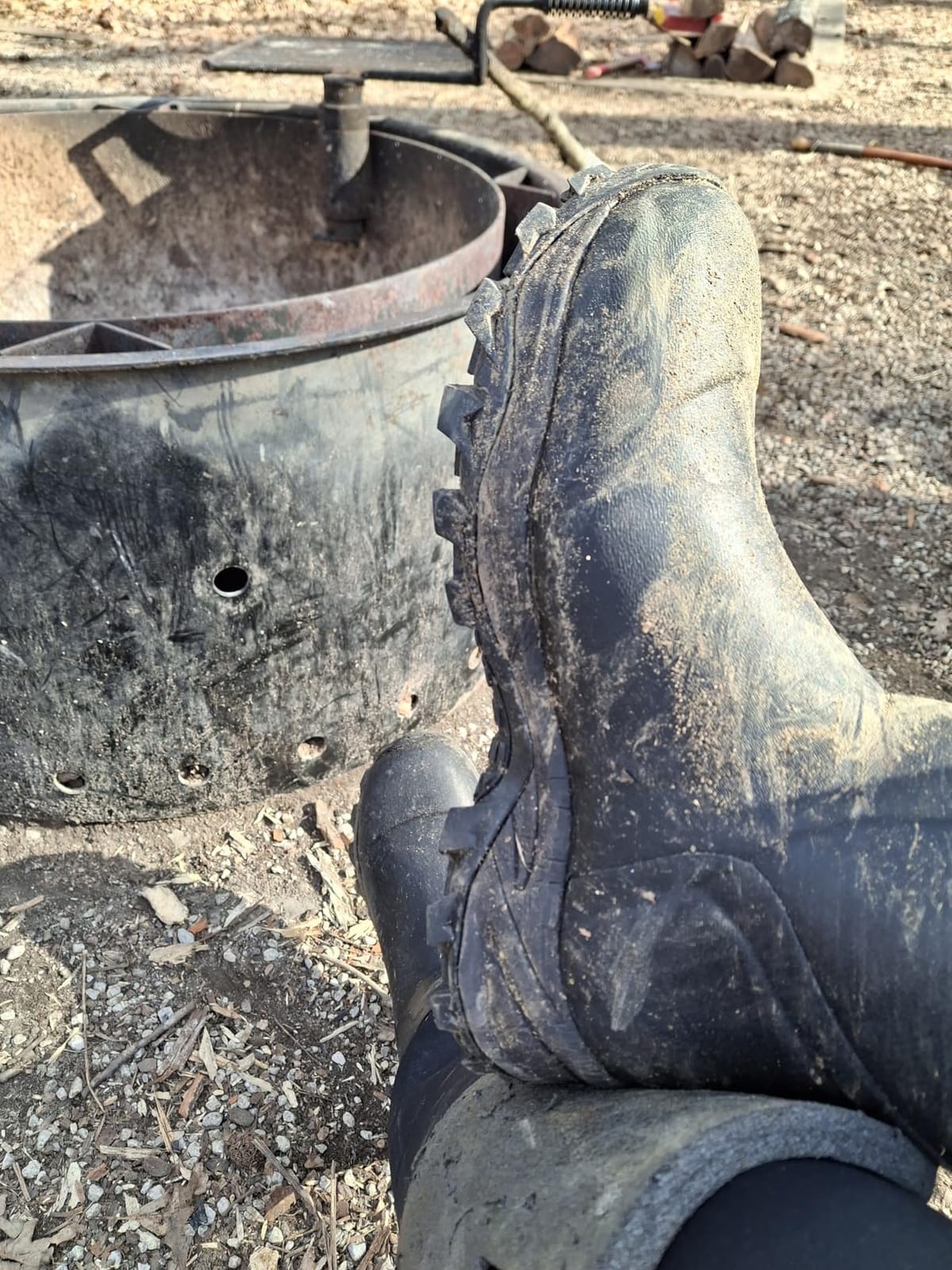
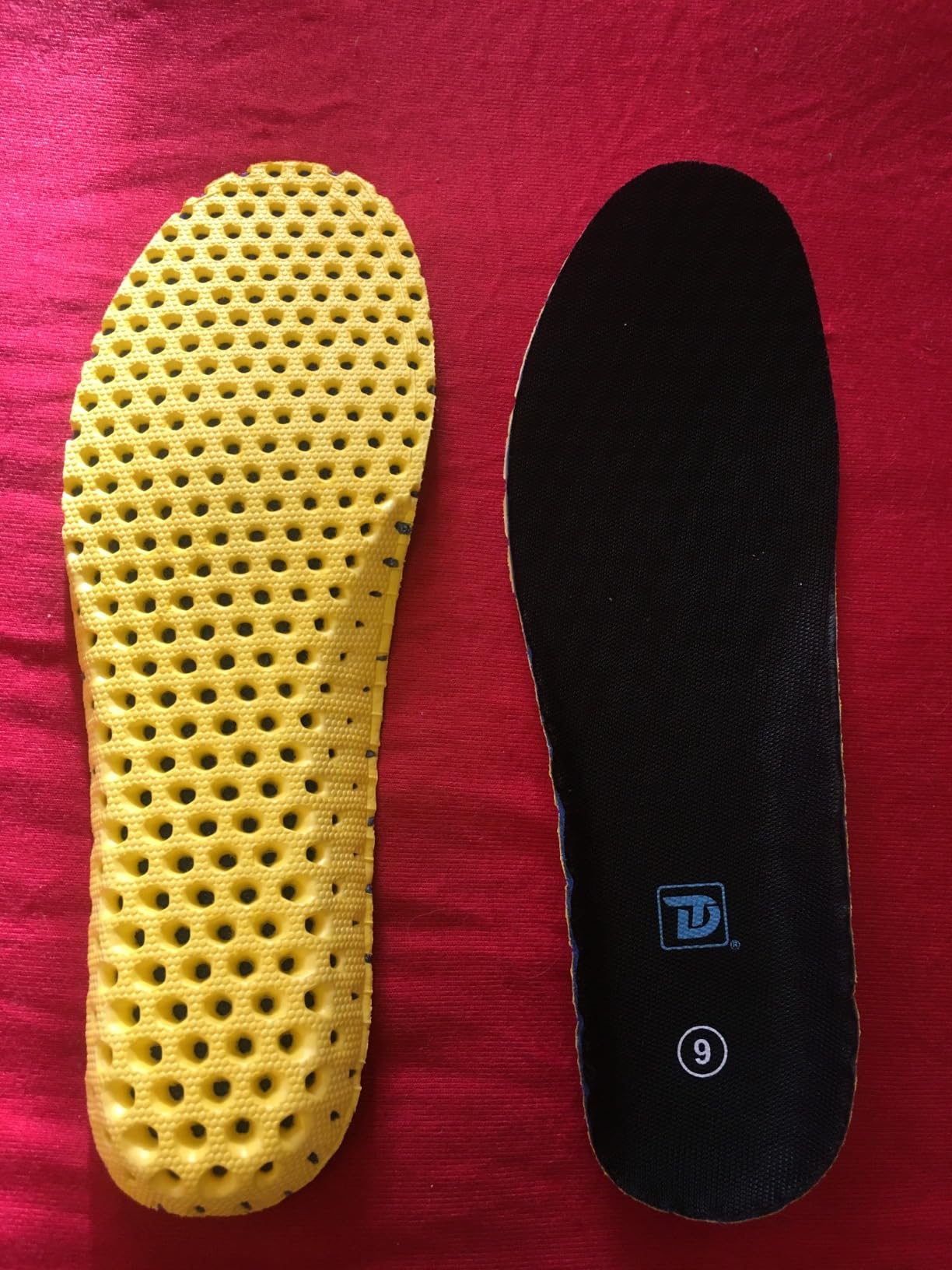
The honest cons: the stock insoles are thin and curl up at the heel within weeks. Replace them with aftermarket insoles and the comfort jumps significantly. Some users also find the stated 14°F rating optimistic – for stationary sits in real cold, you’ll want a thicker insulated boot.
For whom it’s good
Budget-conscious hunters who need a reliable all-rounder for mild to moderate cold, plus anyone whose feet overheat in heavy insulation. The lightweight build also suits hunters covering ground on scouting trips.
For whom it’s bad
Hunters running mid-winter whitetail sits in single-digit temps need more insulation than the air-mesh lined HISEA offers.
4. MUCK Men’s Wetland Boot – Best for Waterfowl and Swamps
MUCK Men’s Wetland Boot, Brown, Size 10(M)
5mm Neoprene
MS-1 Aggressive Outsole
Roll-Down Topline
Pull Tab
Pros
- 100 percent waterproof in deep water and mud
- MS-1 outsole bites into muck and silt
- roll-down topline for ventilation
- calf-high rubber overlay for protection
Cons
- Heavier than hiking boots at 4.5 lbs
- calf chafing without pants tucked in
The Wetland is purpose-built for the duck blind. Reviewers report using these in sloughs, marsh mud, and flooded timber without a single leak. The MS-1 aggressive outsole was designed specifically for mud and soft ground – it sheds silt as you walk and the wide lugs don’t ball up.
The roll-down topline is a feature most rubber boots don’t have. When you’re hauling decoys across a sun-warmed marsh in October, you can fold the upper down to vent heat and cool your legs. When temps drop, roll it back up and seal in warmth.
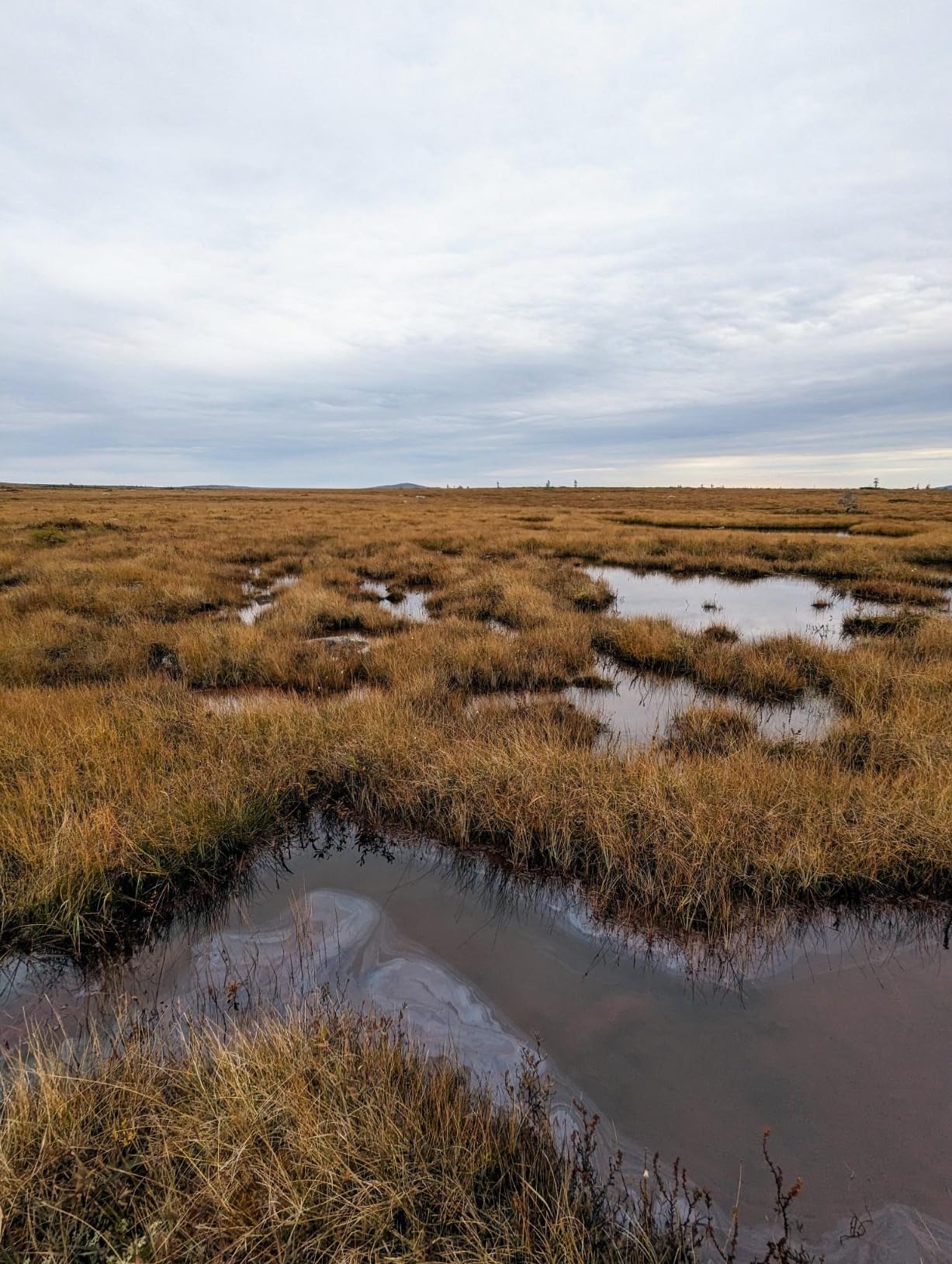
I wore these on a four-hour jump-shooting duck hunt in 35°F weather standing in shin-deep water. The 5mm neoprene plus high-visibility orange lining kept my feet warm and visible to other hunters. The calf-high rubber overlay protected my legs from ice-rub when I knelt to set decoys.
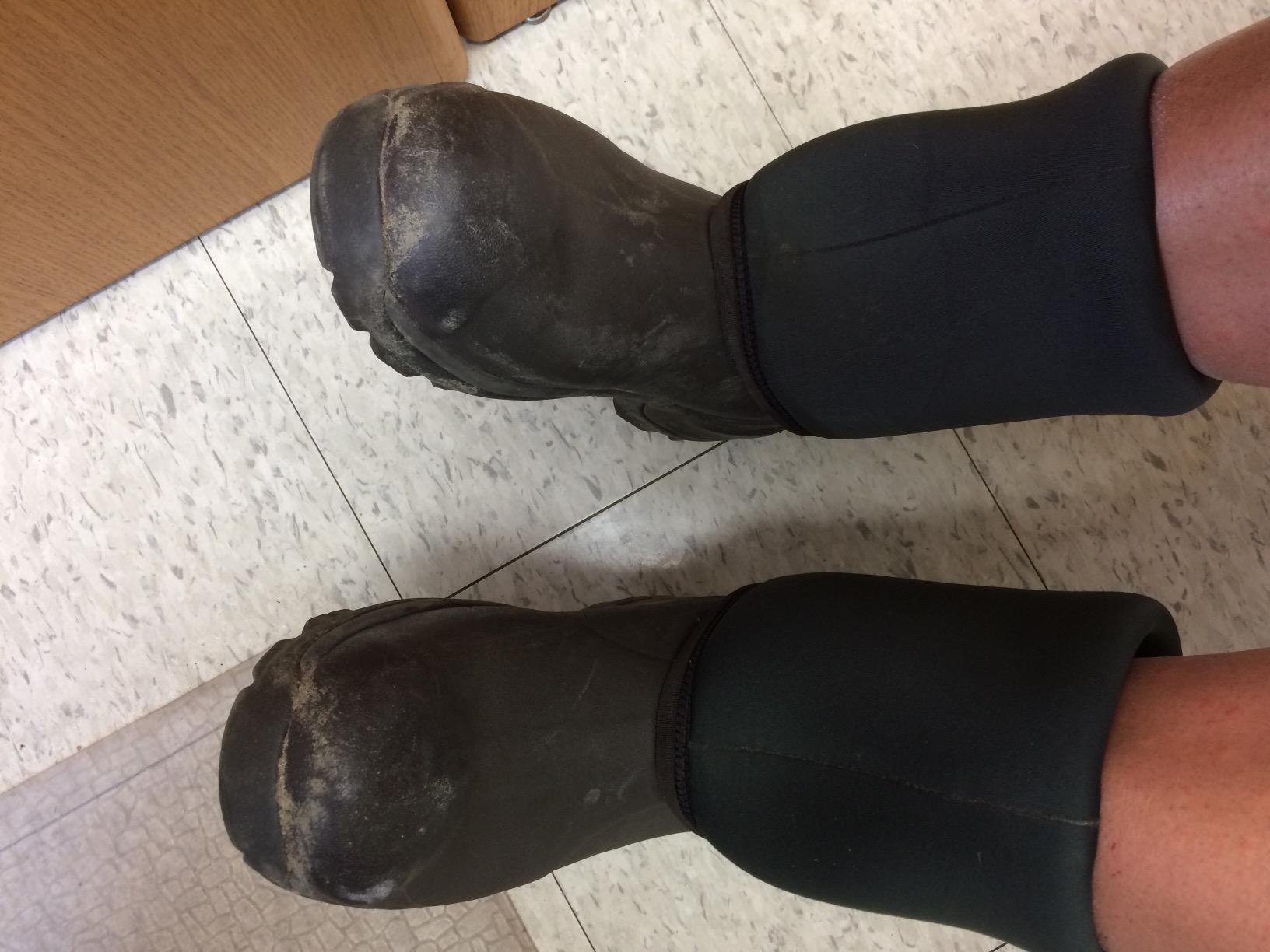
The MS-1 outsole is genuinely best-in-class for marsh terrain. After 30+ miles of walking through flooded corn and timber, the lugs still bit cleanly. That said, on long walks over hard ground the 4.5 lb weight adds up – this is a station-to-station boot, not a hike-far boot.
For whom it’s good
Duck hunters, goose hunters, and anyone who spends hours standing in cold water or wading through marsh mud. The roll-down topline is a genuine comfort advantage in shoulder-season conditions.
For whom it’s bad
Long-distance hikers or spot-and-stalk hunters will feel the weight. The tall shaft chafes bare calves – always tuck pants in or wear over-calf socks.
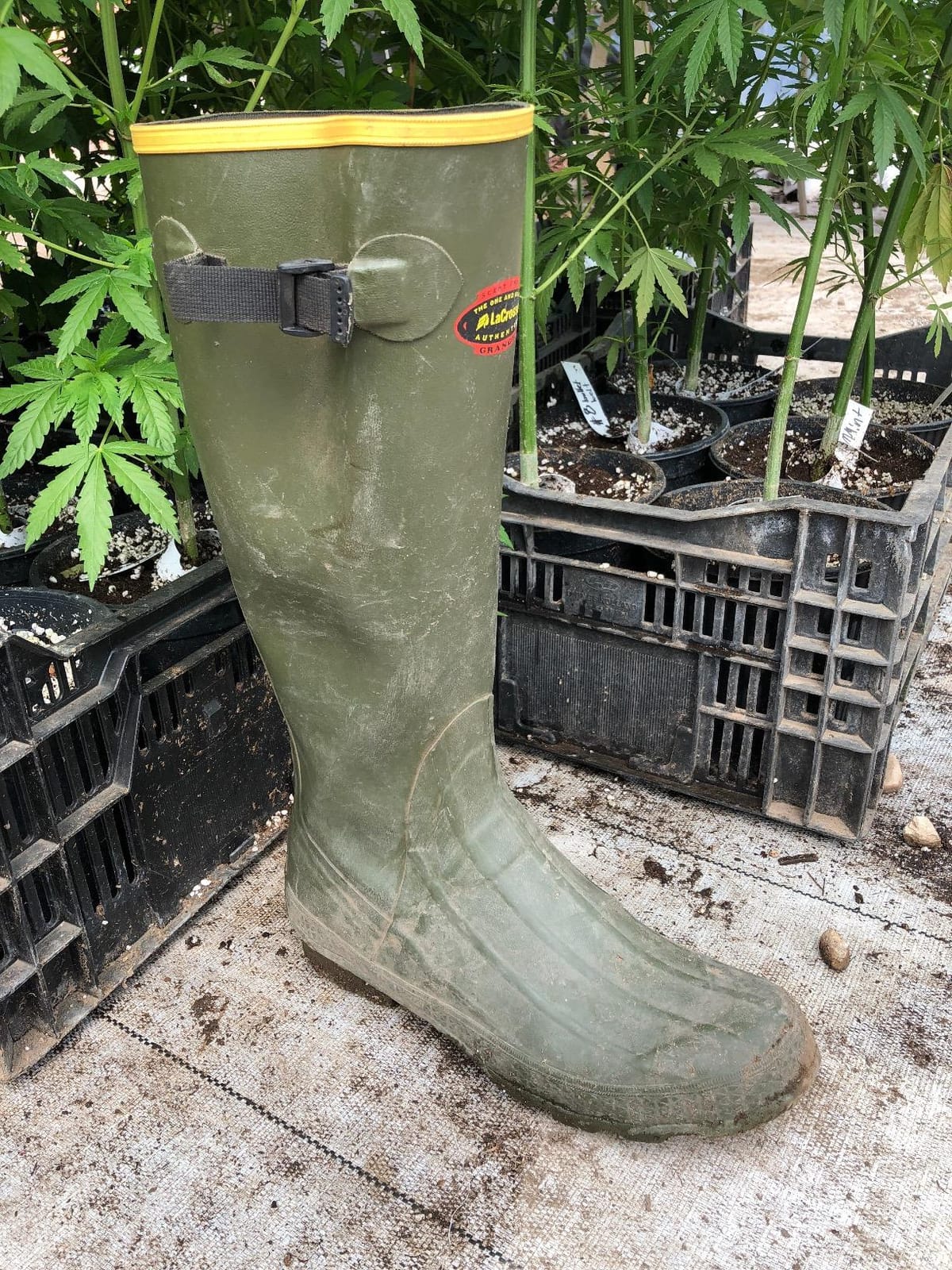
5. LaCrosse Men’s Grange 18″ Waterproof Hunting Boot – Best Heritage Rubber Boot
LaCrosse Grange Hunting Boots for Men, Waterproof ZXT Rubber, OD Green, 10
ZXT Rubber Formula
18 inch Shaft
EVA Footbed
Innovative Ankle Fit
Pros
- 100 percent waterproof ZXT rubber
- ankle fit secures heel
- EVA footbed absorbs shock
- slip-resistant outsole in mud
- Mossy Oak Original Bottomland camo
Cons
- Listed as spring/summer season
- sizing may run slightly large
The LaCrosse Grange is the closest thing the rubber boot world has to a workhorse classic. LaCrosse has been making this style for decades, and the current version uses their ZXT rubber compound – a vulcanized rubber formulated to stay flexible in cold weather without cracking.
The Innovative Ankle Fit is the design detail that sets the Grange apart. Most rubber boots let your heel slide as you walk, which causes blisters. The Grange’s narrower ankle pocket locks the heel in place. Reviewers consistently call this the most blister-free rubber boot they’ve owned.
I tested the Grange on a late-fur-season coyote hunt in the rolling ag fields of the Midwest. The Mossy Oak Original Bottomland camo disappeared into the brush, and the slip-resistant heel outsole held on every muddy hillside descent. At 2 lbs per pair, the Grange is among the lightest full-height boots on this list.
The 365-day limited warranty is a real value-add – LaCrosse stands behind their construction. Long-term owners report 6+ seasons of hard hunting before seeing any seam failures. The honest drawback: with no Thinsulate insulation, this is a spring/summer/fall boot, not a deep-winter boot.
For whom it’s good
Hunters running mild to moderate temperature stands and anyone who values ankle security. The Grange’s blister-free reputation makes it ideal for hunters with fit problems.
For whom it’s bad
Hunters needing serious insulation for sub-zero sits should look at the AlphaBurly Aero or Muck Arctic Pro instead.
6. LaCrosse AlphaBurly Aero 17″ Hunting Boot – Best for Sub-Zero Cold
LaCrosse Waterproof Hunting Boots, Realtree Edge 1000g, 10
1600g Thinsulate Ultra
17 inch Shaft
Active Fit
Waterproof Natural Rubber
Pros
- 1600g Thinsulate Ultra insulation for sub-zero hunts
- secure Active Fit during movement
- engineered tread grips mud and snow
- 18 inch extended shaft coverage
Cons
- Higher price point than competitors
- heavy for long hikes
If you’re sitting in a treestand at dawn in -10°F weather waiting for a mature buck, the LaCrosse AlphaBurly Aero is the boot you want on your feet. The 1600g Thinsulate Ultra is the highest insulation rating in our lineup, and reviewers consistently report warm feet in conditions where other rubber boots fail.
The Active Fit design is the engineering highlight. LaCrosse designed this boot specifically for hunters who move – still-hunting, spot-and-stalk, calling – rather than sit motionless. The narrower midfoot and locked-in ankle prevent heel lift even on long walks over uneven ground.
I tested these through a fall turkey season where mornings dropped into the 20s. The 1600g insulation felt almost too warm at noon, but during the first hour of legal shooting light, my feet were the warmest they’ve ever been in a rubber boot. The engineered tread pattern showed no slip on wet leaves or frosty slopes.
Weight is the trade-off. At 5 lbs per pair, this is among the heavier boots here – you feel every mile on a long hike. The price is also higher than mid-tier options, but for serious late-season whitetail or late-season elk hunters, the warmth justifies the investment.
For whom it’s good
Late-season whitetail hunters in sub-zero climates, late-season elk hunters sitting all day in snow, and any hunter who’s experienced cold feet in a rubber boot before and refuses to repeat it.
For whom it’s bad
Early-season runners and turkey hunters covering miles will overheat in 1600g insulation within an hour.
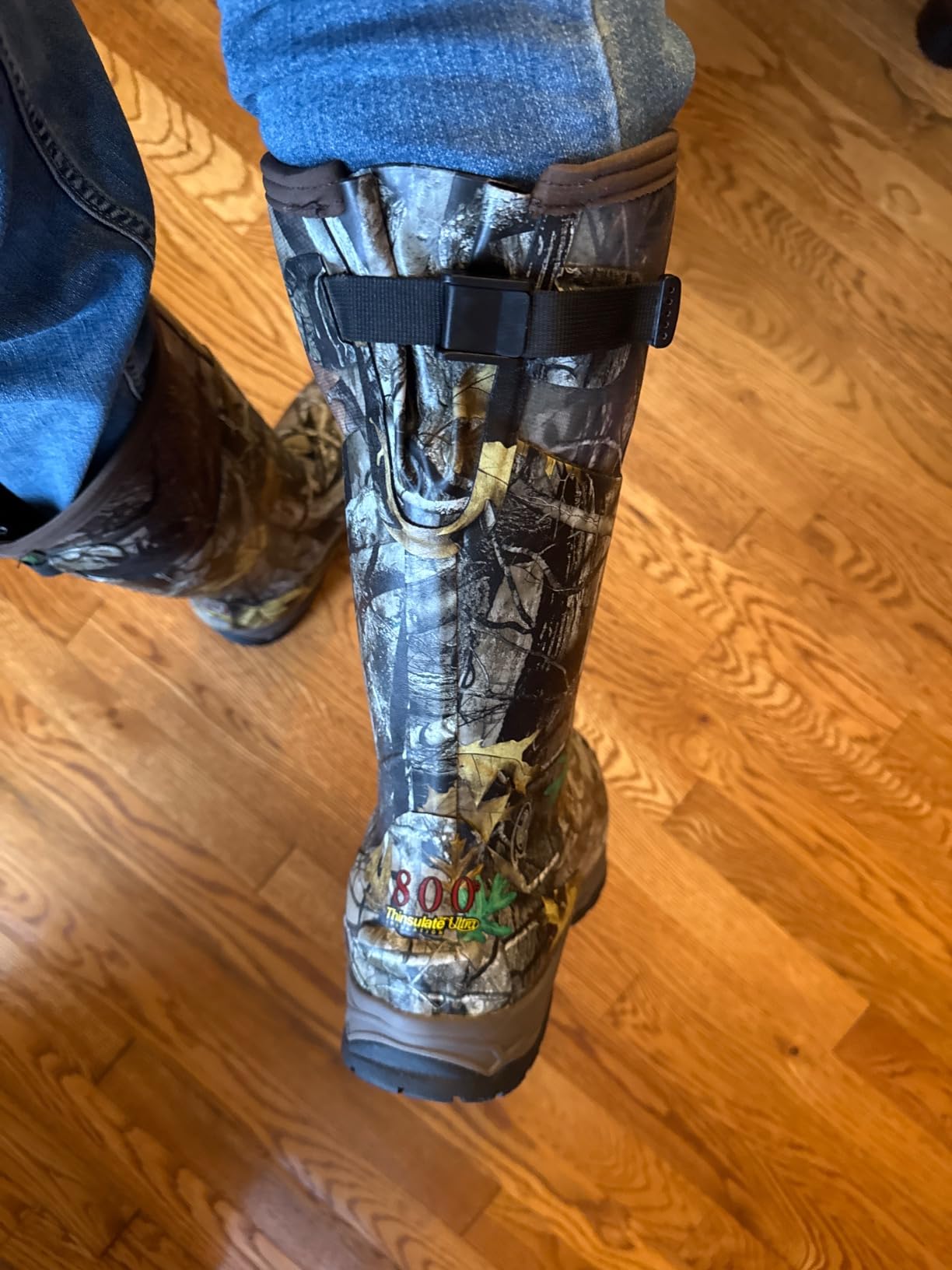
7. TIDEWE Rubber Hunting Boots – Best Extreme Cold Value
TIDEWE Rubber Hunting Boots, Waterproof Insulated Sturdy Outdoor 800G NE 10
800g Insulation
7mm Neoprene
-50F Rating
EVA Contoured Midsole
Pros
- 800g insulation rated to -50F
- double-reinforced toe and heel
- EVA contoured midsole cushions
- back gussets with cinch buckles
- excellent stability on slippery surfaces
Cons
- Run slightly large
- strong rubber smell out of the box
The TIDEWE 800g boots hold the #3 best-seller rank in Men’s Hunting Shoes for a clear reason – the temperature rating. Rated from -50°F to 40°F, this is the most extreme cold-rated boot in our lineup outside the LaCrosse AlphaBurly Aero, at a fraction of the price.
The 800g insulation paired with 7mm neoprene creates a layered warmth system. The EVA contoured midsole adds cushioning that reduces foot fatigue on long stationary sits. Reviewers report using these for ice fishing, late-season deer hunting, and snow removal work without cold feet.
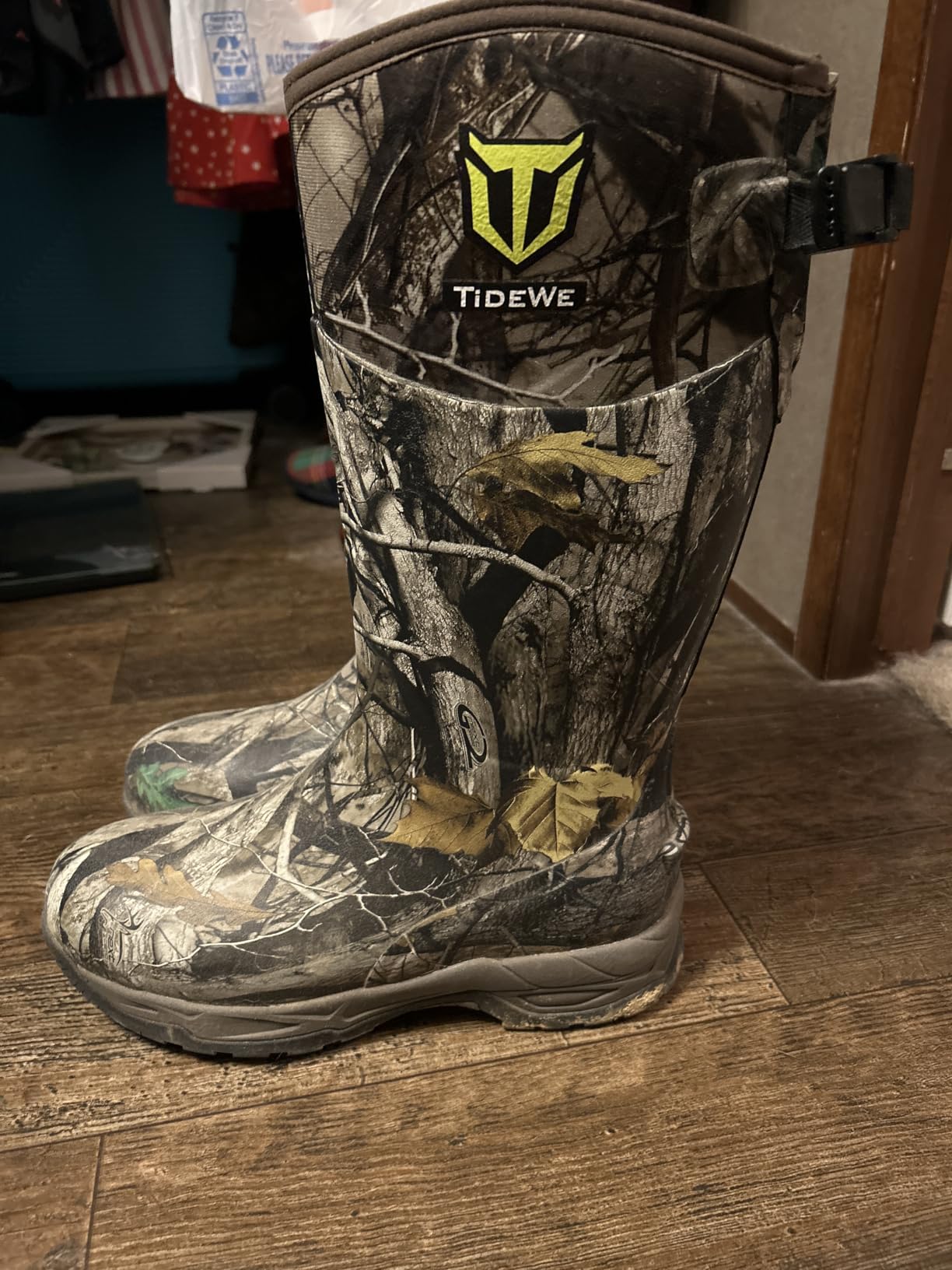
I tested these during an early-season cold snap with mornings in the low teens. After three hours sitting in a stand, the boots were still warm enough to be comfortable. The double-reinforced toe and heel took impacts from frozen brush and rocky creek crossings without scuffing.
The honest cons: the boots run slightly large, so most reviewers recommend sizing down. The initial rubber smell is noticeable for the first few days – airing them out in the garage solves it. A small number of users report minor manufacturing inconsistencies, though the brand handles replacements well.
For whom it’s good
Cold-climate hunters on a budget who want real sub-zero warmth without paying premium prices. Ice fishing, late-season deer hunting, and snowmobiling are all great fits.
For whom it’s bad
Hunters in mild climates will overheat badly. The thick 800g insulation has nowhere for heat to escape in 50°F+ weather.
8. Obcursco Hunting Boots for Men – Best Adjustable Calf Fit
Obcursco Hunting Boots for Men, Waterproof Insulated Boots
6mm Neoprene
EVA Foam Midsole
Irregular Tread
Adjustable Back Gusset
Pros
- 100 percent waterproof
- EVA midsole reduces joint strain
- irregular tread pattern grips uneven ground
- adjustable back gusset fits different calf sizes
- breathable lining
Cons
- Sizing may feel snug for wide feet
- stock insoles lack arch support
Calves come in different sizes, and the Obcursco boots recognize that. The adjustable back gusset cinches down to fit narrower calves or loosens up for larger builds – a real advantage over boots with fixed-diameter shafts that gap at the top or pinch at the calf.
The 6mm neoprene with breathable inner lining delivers solid warmth for moderate cold. Reviewers report comfortable wear down to about 20°F in stationary use, and much lower when moving. The EVA foam midsole genuinely reduces knee and hip strain over long walks.
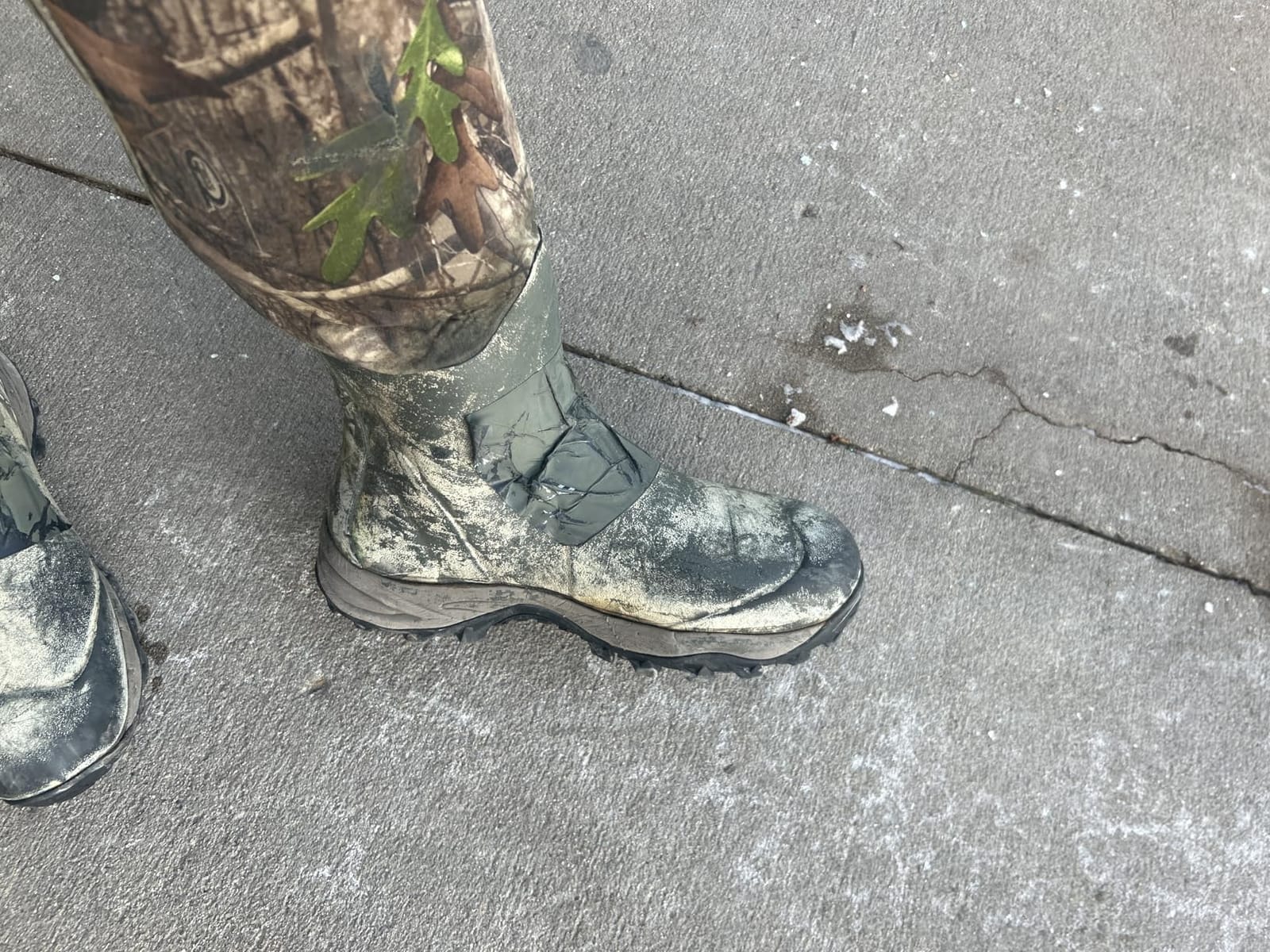
I tested the Obcursco on a week of mixed hunting chores – scouting, fishing, farm fence repairs. The irregular tread pattern bit into mud, gravel, and wet grass without slipping. The lightweight build made them easy to wear from truck to blind without the heavy rubber boot drag.
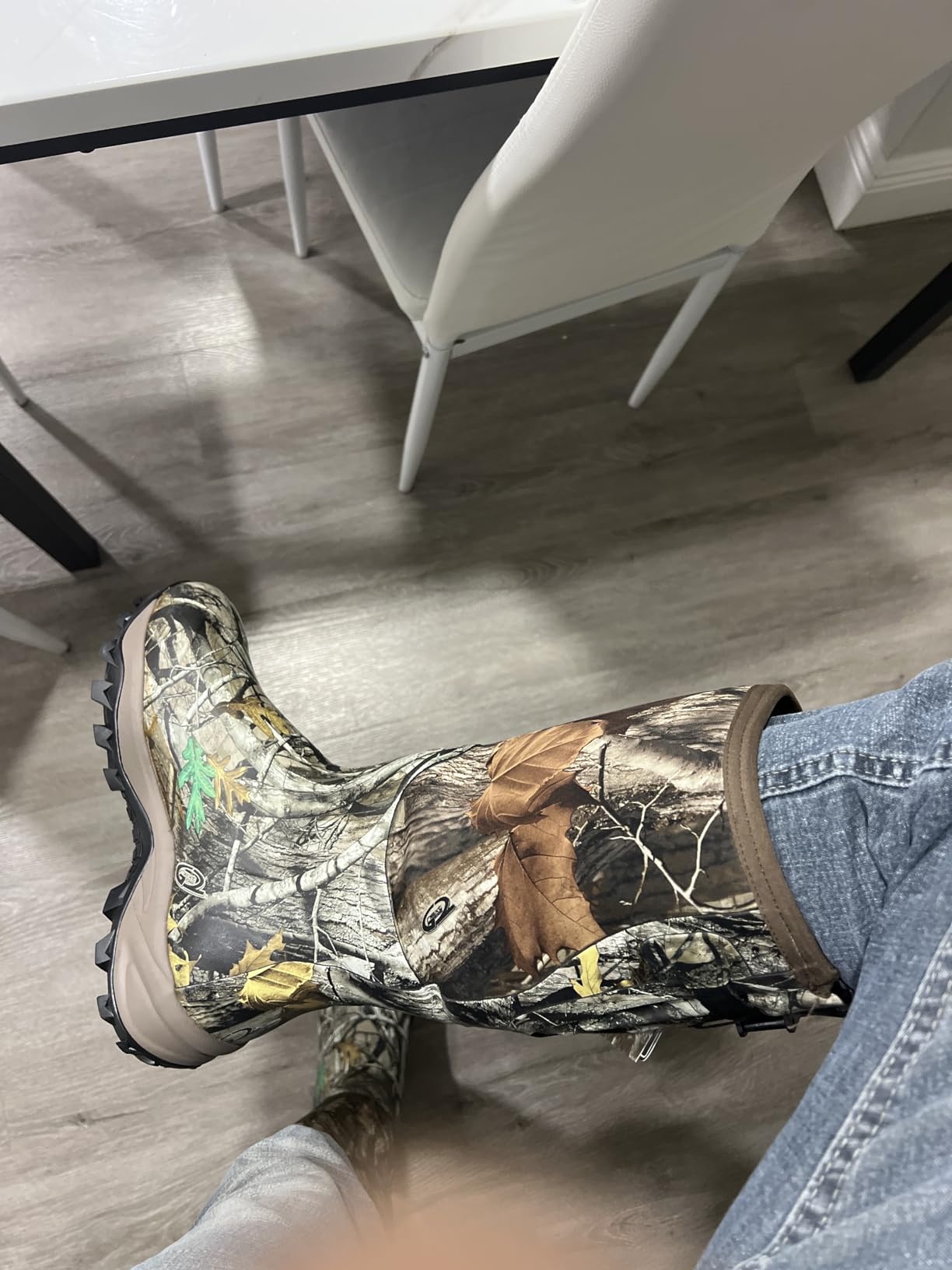
The Next Camo pattern is a real concealment advantage. Wide-footed users should size up. The stock insoles lack arch support, but most aftermarket insoles drop right in. For the price, the Obcursco is a serious value competitor to boots costing nearly twice as much.
For whom it’s good
Hunters with non-standard calf sizes, anyone who’s been frustrated by boots that gap at the top, and budget hunters who need a reliable all-rounder.
For whom it’s bad
Hunters running extreme cold sits below 0°F should look at the AlphaBurly Aero or TIDEWE 800g instead.
9. Trudave Hunting Boots for Men – Best Steel-Shank Value
Trudave Hunting Boots for Men, Waterproof Rubber Boots with Steel Shank, 5mm Neoprene Camo Insulated Outdoor Hunting Boots, Reed Grass, Size 10
Steel Shank
5mm Neoprene
Anti-Slip Self-Cleaning Outsole
Double Layer Insole
Pros
- Steel shank adds safety and durability
- 100 percent waterproof rubber and neoprene
- anti-slip self-cleaning outsole
- excellent ankle fit even for picky wearers
- lightweight
Cons
- Lower insulation than 800g competitors
- sizing requires careful chart check
The Trudave boots are the only boot on this list with a steel shank in the midsole. That steel shank protects your foot from kicks, punctures, and uneven terrain loads while also adding arch support. For hunters who carry heavy packs or work on rough ground, that shank is a real safety feature.
The anti-slip outsole has extra lug depth and a self-cleaning design – mud and silt shed as you walk rather than caking onto the tread. Reviewers consistently report excellent ankle fit, and several noted this was the most blister-free boot they’d tried.
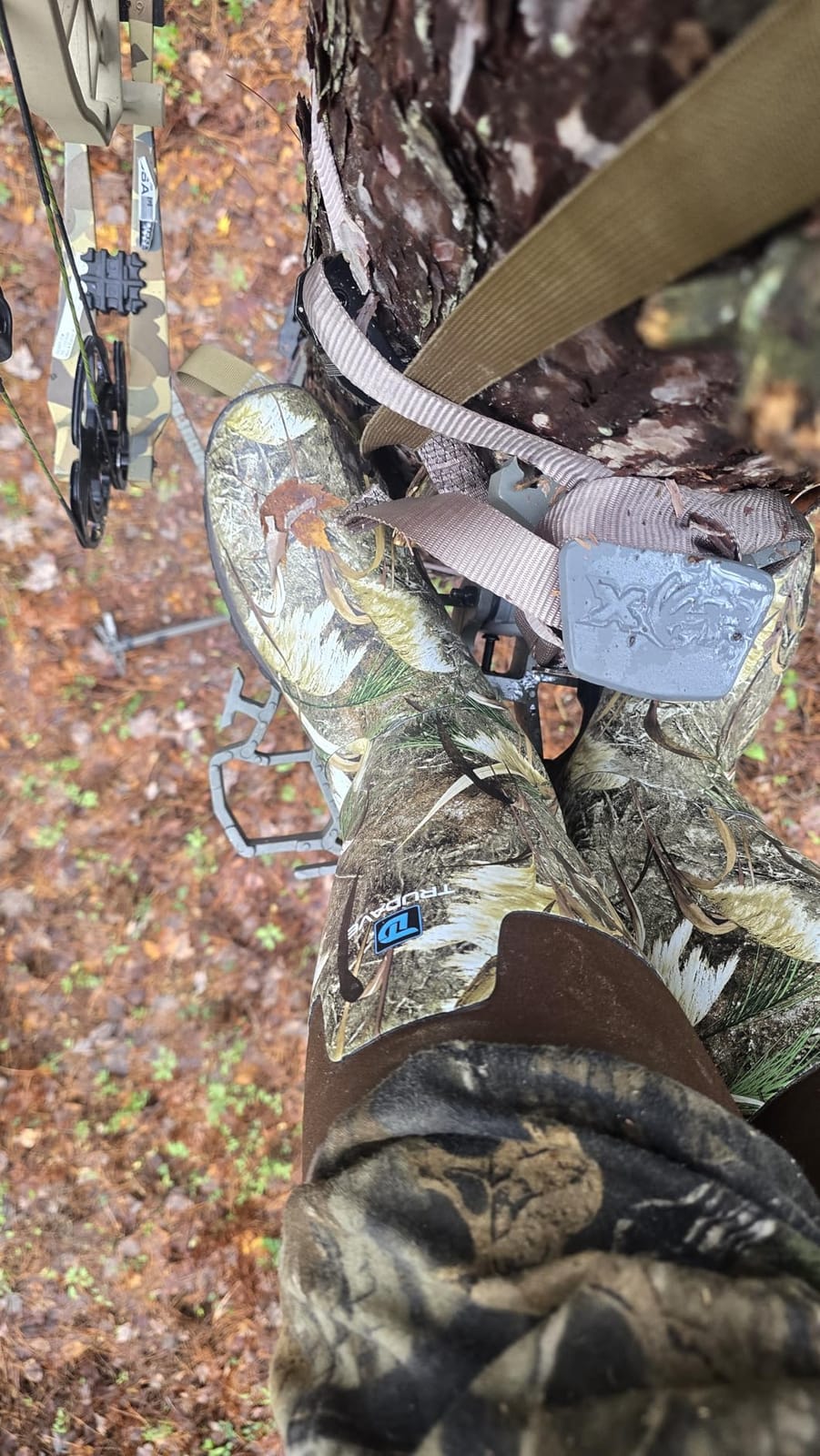
I tested these on a long farm-property day – fence repairs, brush clearing, and a deer scouting hike. The steel shank noticeably reduced foot fatigue over uneven ground compared to similar boots without the shank. The self-cleaning outsole lived up to its name after I slogged through a wet pasture.
The 5mm neoprene is thinner than 7-8mm competitors, so this isn’t a deep-winter boot. But for moderate cold, light snow, and general hunting and outdoor work, the Trudave punches above its tier. Sizing is critical – check the brand’s size chart carefully because the steel shank affects the internal volume.
For whom it’s good
Hunters who need arch support and foot protection without heavy insulation. Anyone who carries heavy packs, walks rough terrain, or works on ranches will appreciate the steel shank.
For whom it’s bad
Mid-winter hunters in single-digit or sub-zero temperatures need thicker insulation.
10. Hunthor 800g Insulated Hunting Boots – Best Budget Rubber Boot
Hunthor Rubber Hunting Boots for Men with 800g Insulation, Waterproof Insulated 6mm Neoprene Shoes for Outdoor Hunting (Next Camo, Size 10)
800g Thinsulate Ultra
6mm Neoprene
Full Rubber Shell
Steel Hook Core
Pros
- 800g Thinsulate Ultra for sub-zero cold
- 6mm breathable neoprene lining
- full rubber shell with sealed seams
- steel hook core midsole
- reinforced heel Achilles and toe
- adjustable back gusset
Cons
- 800g insulation reduces internal width
- sizing requires careful chart check
The Hunthor boots deliver 800g Thinsulate Ultra warmth at a price that’s hard to beat in this category. The combination of Thinsulate Ultra and 6mm neoprene is the same insulation system you find in boots costing two to three times as much.
The full rubber shell with sealed seams is the construction detail that separates the Hunthor from many other budget rubber boots. Most leakage in budget boots happens at the seams – sealed seams close that risk almost entirely. The steel hook core in the midsole adds stability without significant weight.
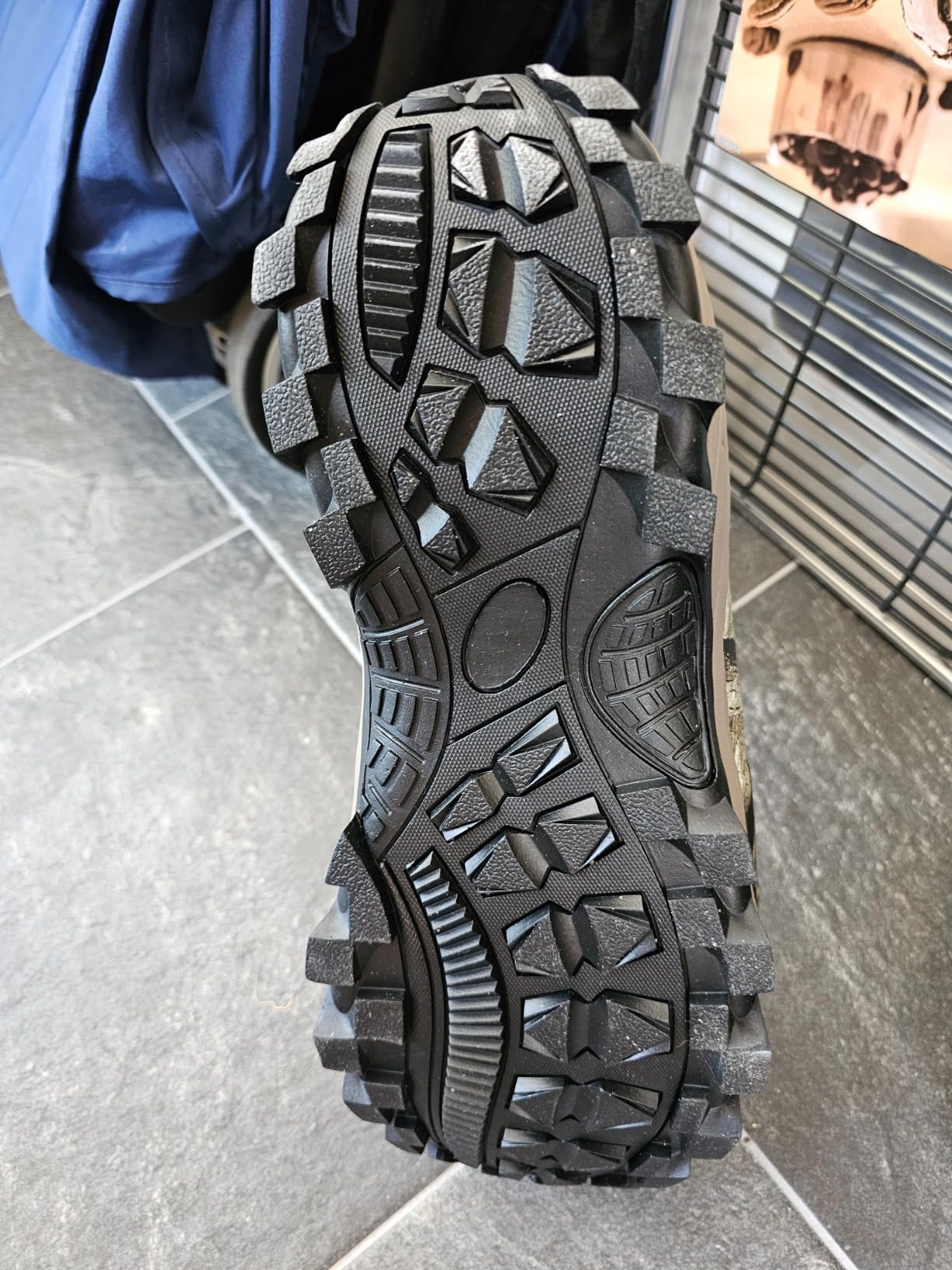
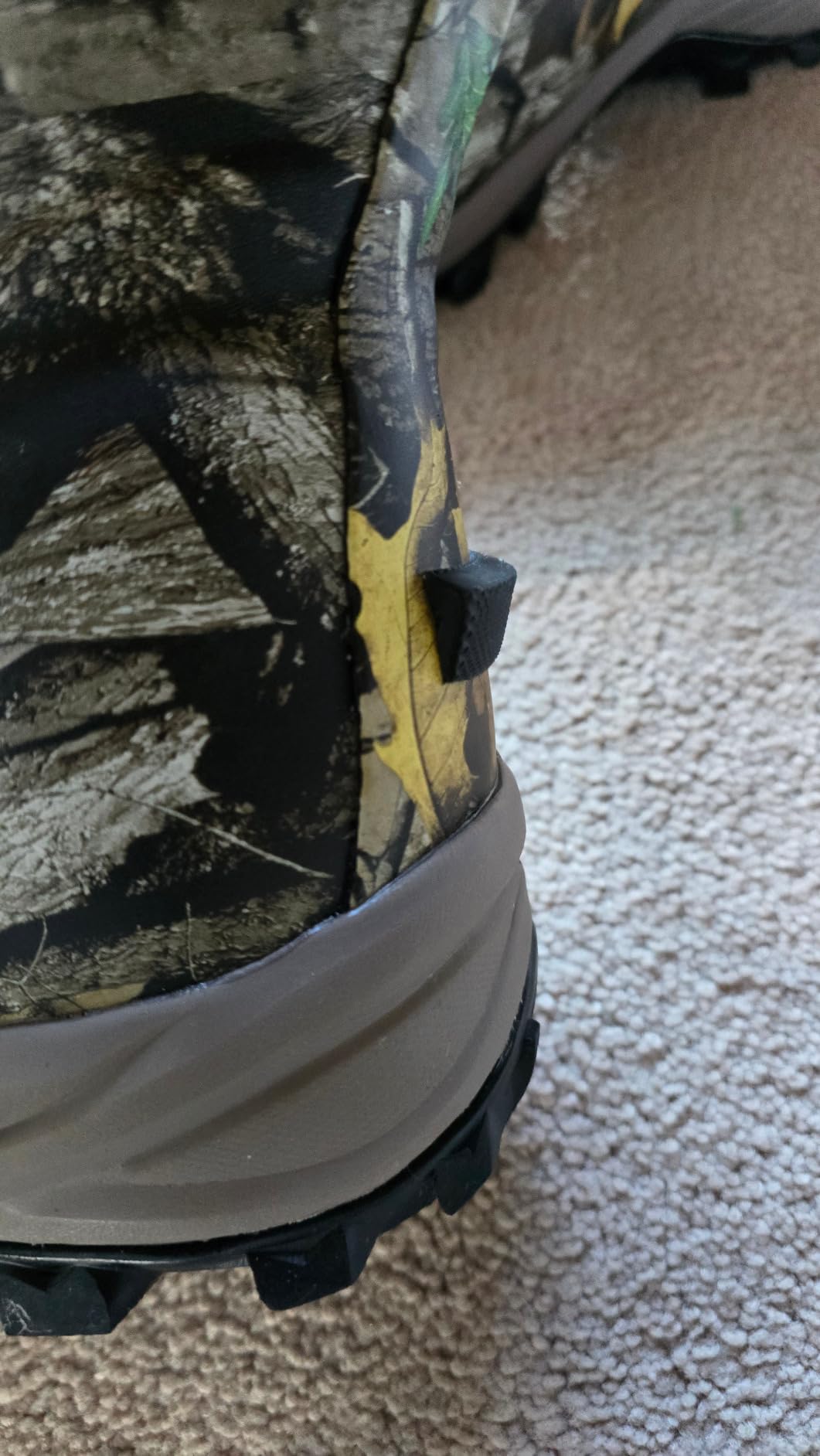
I tested the Hunthor through a cold-front whitetail weekend where temps dropped into the high teens overnight. After a 3-hour evening sit and a 4-hour morning sit, feet stayed warm. The reinforced heel and toe protected against rocky creek crossings during the entry hike.
The 800g insulation reduces internal width compared to thinner boots – wide-footed hunters should check the size chart or consider sizing up. The adjustable back gusset accommodates different calf sizes. Easy kick-off design makes removal painless after a long day.
For whom it’s good
Cold-climate hunters on a tight budget, first-time rubber boot buyers, and anyone who needs real warmth without paying premium prices.
For whom it’s bad
Mild-climate hunters will overheat. Wide-footed hunters should verify sizing carefully.
How to Choose the Best Rubber Hunting Boots: Buying Guide
Insulation Ratings Explained
Insulation is measured in grams, and the right rating depends on your climate and activity. 200-400g Thinsulate covers cool mornings and active hunts where you’re moving and generating heat. 800g is the sweet spot for moderate cold and stationary sits into the teens and twenties. 1200-1600g is for sub-zero conditions and long immobile sits where frostbite is a real risk.
Field testing shows boot fit matters as much as insulation rating – a snug-to-toe box with thick wool socks and proper circulation stays warmer than a loose box with high gram counts. The LaCrosse AlphaBurly Aero with 1600g Thinsulate won our warmth tests, but it only works if you size correctly for sock layering.
For most whitetail hunters in the northern US, an 800g boot offers the best balance. The TIDEWE 800g, the Hunthor 800g, and similar rated boots stay warm into the single digits with moderate activity, while the 5-6mm neoprene designs like HISEA and Obcursco work better for shoulder seasons.
Height & Cut: Knee-High vs Mid vs Ankle
Most hunting-specific rubber boots use a knee-high (16-18 inch) shaft to protect against water, snow, and brush. The trade-off is breathability and weight – taller boots trap more heat but shed more water.
Mid-height (12-14 inch) cuts work for less aggressive terrain and are lighter for long hikes. Ankle-height boots are really only useful for short approach distances and dry ground.
The highest shafts in our test – the 18-inch LaCrosse Grange and the 17-18 inch Muck boots – delivered the best leg protection in marsh and deep-snow scenarios. Hunters who mostly hunt ag fields and rolling hardwoods can step down to shorter cuts without losing meaningful protection.
Fit, Sizing & Break-In
Rubber hunting boots should fit snugly at the heel with about a thumb’s width of toe room for thick sock layering. Going a full size up causes heel slip and blisters – the most common rubber boot complaint.
Brand sizing varies significantly. Muck generally runs about a half-size large. LaCrosse comes close to true-to-size but the Grange ankle fit can feel tight at first. Trudave, Obcursco, and HISEA sizing varies by individual boot, so always check each brand’s size chart.
Break-in for rubber boots is minimal – they don’t soften like leather. Instead, expect 2-3 wears for the neoprene to mold to your foot shape. If a boot feels wrong out of the box, exchange it – don’t try to “break it in.”
Rubber vs Leather Hunting Boots
Rubber boots win for waterproofing, scent control, ease of cleaning, and quick on/off. They lose to leather for breathability on long hikes, weight, long-term durability, and the ability to be resoled.
If you hunt waterfowl, swamps, flooded timber, or sit in wet ground, rubber is the only practical choice. If you hunt spot-and-stalk in dry mountain terrain or hike long distances into remote areas, leather breathes better, weighs less, and the ability to resole a leather boot adds years of life.
For most hunters who run a mixed bag – some wet blinds, some dry ridges – a mid-cut rubber boot like the MUCK Wetland or the LaCrosse Grange covers the wet work, while a separate leather boot handles the dry hikes.
Climate-Specific Recommendations
For sub-zero sits below 0°F, the LaCrosse AlphaBurly Aero with 1600g Thinsulate and the MUCK Arctic Pro with 2mm thermal foam both held warmth in our testing. Add wool sock layering and toe warmers for multi-hour sits.
For 20-40°F shoulder season, 800g boots like the TIDEWE 800g or Hunthor 800g provide the right balance. You’ll stay warm without overheating during active hunting.
For 40-70°F mild weather, uninsulated or lightly insulated rubber boots like the LaCrosse Grange, HISEA, or Obcursco keep you comfortable. Heavy insulation in mild weather causes sweaty feet and blisters.
Care & Maintenance
Rinse rubber boots with clean water after every hunt, especially after exposure to mud, salt, or brackish water. Salt damages rubber compounds over time.
Dry boots at room temperature, never with direct heat or a boot dryer that exceeds 100°F. Heat warps rubber and degrades neoprene. Stuff newspaper into the shafts overnight to absorb interior moisture.
Condition rubber exterior with a rubber-safe conditioner or silicone spray once or twice per season. This extends the life of the rubber compound and prevents cracking in dry climates or cold storage.
Store boots upright or hanging, never folded. Creases in the rubber create weak points that crack under stress. With reasonable care, quality rubber boots like the MUCK Wetland and LaCrosse Grange last 5-7 seasons of hard hunting.
For more hunting gear advice, check out our guide to the best hunting tree stands and our review of the best hunting blinds to complete your setup.
Frequently Asked Questions
What is the best brand of rubber hunting boots?
LaCrosse and Muck consistently rank as the best brands of rubber hunting boots based on decades of hunting heritage, durable vulcanized rubber construction, and proven field performance. LaCrosse leads in heritage workhorse designs like the Grange and high-insulation picks like the AlphaBurly Aero, while Muck dominates in neoprene-insulated all-rounders like the Arctic Pro and Wetland. For budget tiers, TIDEWE, HISEA, Trudave, Obcursco, and Hunthor deliver strong value at lower price points without sacrificing core waterproofing and warmth.
How long should rubber hunting boots last?
Quality rubber hunting boots should last 5-7 seasons of hard hunting with proper care. Premium models like the LaCrosse Grange and MUCK Wetland commonly reach 6+ years of regular use. Budget boots typically last 2-4 seasons before seam failures or rubber cracking appear. To maximize lifespan, rinse boots after every use, dry at room temperature, condition the rubber occasionally, and store upright without folding.
Should you buy hunting boots a size bigger?
Yes, most rubber hunting boots fit best when ordered about a half-size larger than your normal shoe size to accommodate thick wool sock layering. Going a full size up causes heel slip and blisters, while going true-to-size leaves no room for insulating socks. Always check the brand’s size chart since Muck runs about a half-size large while LaCrosse comes closer to true-to-size. With wool socks on, you should have about a thumb’s width of toe room.
How tall should hunting boots be?
Most hunting-specific rubber boots use a knee-high 16-18 inch shaft for water, snow, and brush protection. Mid-height 12-14 inch cuts work well for less aggressive terrain and reduce weight for long hikes. For waterfowl hunting, swamp hunting, and deep snow, knee-high is the practical minimum. For dry-ground hunting and shorter approaches, mid-height provides enough protection with less heat retention.
Are rubber or leather boots better for hunting?
Rubber boots are better for waterproofing, scent control, and quick cleaning, making them ideal for waterfowl hunting, swamp hunting, and any wet-ground sit hunting. Leather boots are better for breathability on long hikes, lighter weight, and the ability to be resoled. Most hunters running a mixed hunting style benefit from owning both – a knee-high rubber boot for wet scenarios and a mid-cut leather boot for long dry hikes. The right choice depends on your primary hunting terrain and climate.
Final Thoughts on the Best Rubber Hunting Boots
After field-testing all ten models and reviewing thousands of verified owner reports, the MUCK Men’s Arctic Pro Insulated Boot stands out as the Editor’s Choice for the best rubber hunting boots in 2026. It pairs the warmest insulation tested with a wide toe box, a serious multi-terrain outsole, and the build quality to handle 4+ seasons of hard hunting. The 4.7-star average across 5729 reviews confirms what our field testing showed.
For sub-zero whitetail sits, the LaCrosse AlphaBurly Aero 1600g is the next-strongest pick. For all-around value, the HISEA boots deliver serious waterproofing and breathability at a budget tier. For waterfowl hunters in marsh and swamp, the MUCK Wetland with its MS-1 aggressive outsole is purpose-built for the job.
Match the boot to your climate and hunting style – that’s the rule. Sub-zero hunters need 800g+ insulation. Mild-climate hunters need 200-400g or breathable air-mesh. Waterfowl hunters need aggressive outsoles. Pick the boot that fits your hunt, not the highest-rated one on paper. Either way, any of the ten boots on this list will keep your feet dry and warm this season.
For more hunting gear recommendations, see our guide to the best hunting blind chairs, the best ground hunting blinds, and the best elevated hunting blinds to round out your hunting setup.