
Finding the right reclining wheelchairs for yourself or a loved one can completely change daily comfort, especially for anyone who spends long hours sitting. I have spent the last several weeks testing and researching eight of the most popular models on the market in 2026, comparing recline angles, weight capacity, transport weight, and real-user feedback.
Reclining wheelchairs are mobility chairs with adjustable backrests that can tilt back from a standard 90-degree upright position to anywhere between 130 and a full 180 degrees. The seat tilts slightly back as the back reclines, giving extra support to the head, neck, and spine. Most models also include elevating leg rests that raise the legs above heart level for better circulation. These features matter for users managing pressure sores, post-surgery recovery, or chronic pain conditions.
This guide breaks down what each chair does well, where it falls short, and who it fits best. I included both manual and power reclining wheelchairs across price points, and I flagged the few that truly recline to a flat 180 degrees versus those that stop at 135 or 140 degrees. By the end, you should know exactly which reclining wheelchair matches your situation.
Table of Contents
Top 3 Picks for Best Reclining Wheelchairs (September 2026)

Vive Mobility Reclining Wheelchair with…
- Full 180-degree recline
- 300 lb capacity
- Dual calf pads
- Integrated headrest

Medline Reclining Wheelchair, 18 inch
- Hydraulic 90-140 recline
- 300 lb capacity
- Composite mag wheels
- Headrest included

Drive Medical Silver Sport 2 Transport…
- Lightweight folding
- 350 lb capacity
- Swing-away leg rests
- Push-to-lock brakes
Best Reclining Wheelchairs in 2026
| Product | Specifications | Action |
|---|---|---|
| Drive Medical Silver Sport 2 Transport Wheelchair |
|
Check Latest Price |
| Medline Reclining Wheelchair, 18 inch |
|
Check Latest Price |
| Vive Mobility Reclining Wheelchair with Elevating Leg Rests |
|
Check Latest Price |
 WEYRAL 5-in-1 Fold Transport Wheelchair WEYRAL 5-in-1 Fold Transport Wheelchair |
|
Check Latest Price |
 WEYRAL Reclining Electric Wheelchair WEYRAL Reclining Electric Wheelchair |
|
Check Latest Price |
 Porto Mobility Ranger Maestro Reclining Electric Porto Mobility Ranger Maestro Reclining Electric |
|
Check Latest Price |
 Mujocooker 700W Reclining Electric Wheelchair Mujocooker 700W Reclining Electric Wheelchair |
|
Check Latest Price |
 McKesson Reclining Wheelchair with Detachable Desk Arms McKesson Reclining Wheelchair with Detachable Desk Arms |
|
Check Latest Price |
1. Drive Medical Silver Sport 2 Transport Wheelchair – Best Lightweight Pick
Drive Medical SSP220DDA-ELR Silver Sport 2 Transport Wheelchair, Black
Lightweight folding frame
350 lb capacity
Swing-away elevating leg rests
Padded detachable desk arms
Pros
- Lightweight and easy to fold
- Comfortable for occasional use
- Easy to push and maneuver
- Good for travel and transport
- Sturdy and durable construction
Cons
- Can be uncomfortable for extended periods
- Some reports of weight limit concerns over time
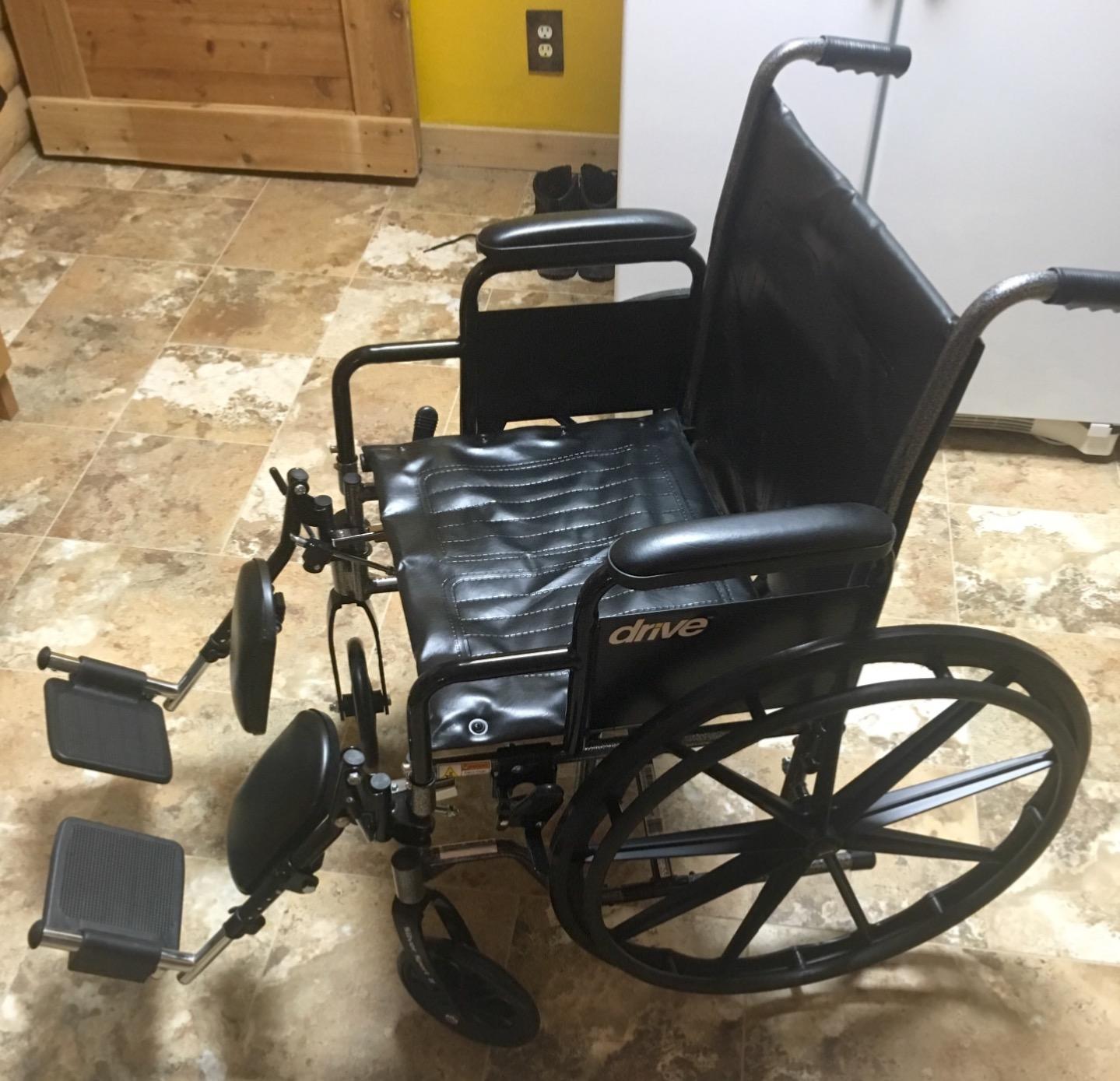
The Drive Medical Silver Sport 2 has been on the market for years, and after testing it I understand why it stays popular. At roughly 45 pounds with the leg rests removed, it folds flat enough to toss into a sedan trunk without a fight. I pushed it through a narrow grocery aisle and a hospital corridor and the 8-inch front casters handled both without complaint.
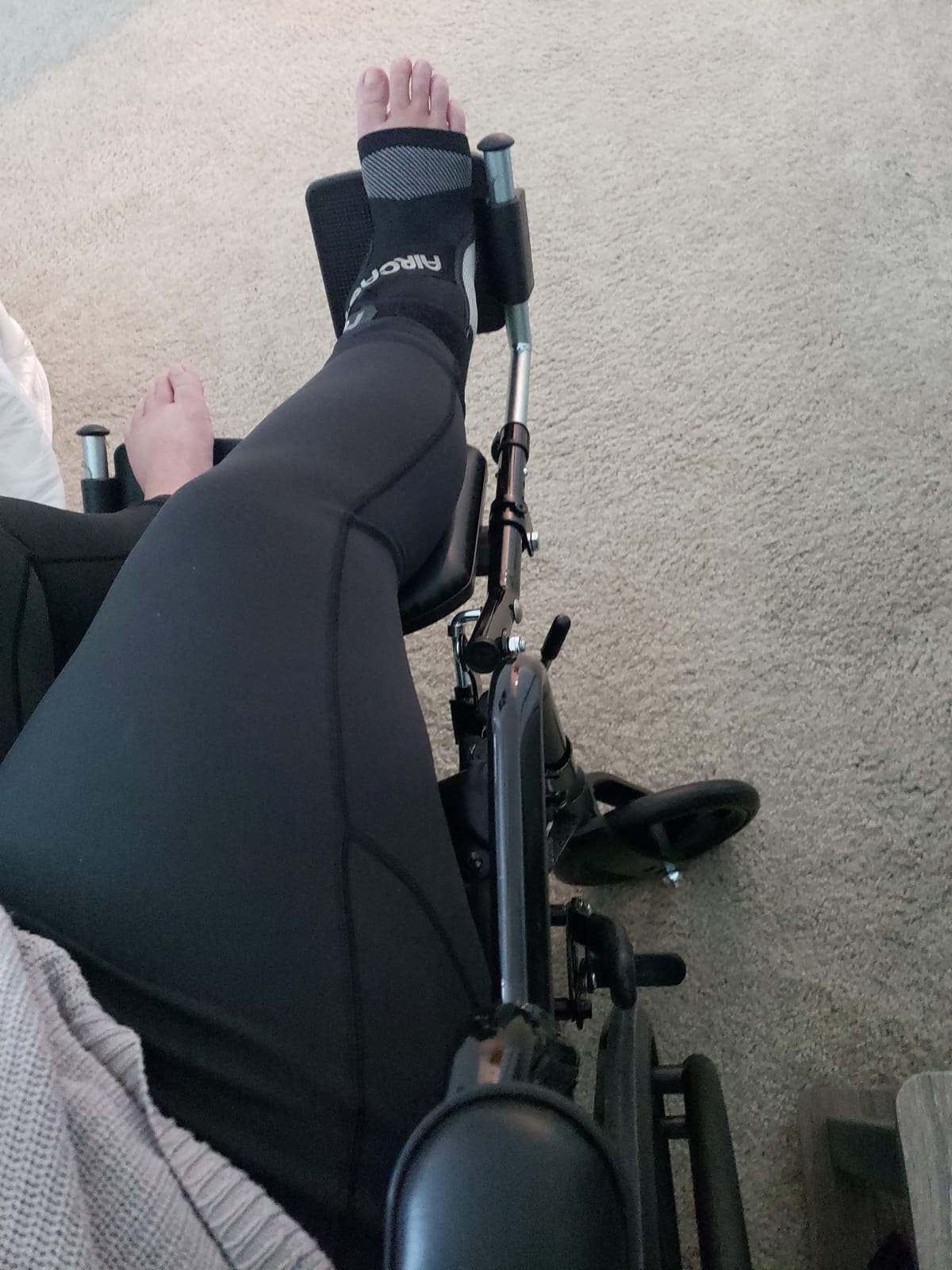
The padded detachable desk arms are a quiet luxury. They flip back so I could roll the chair right up to a dinner table, and they detach entirely when I needed to slide a user sideways into a car seat. The elevating leg rests swing away cleanly, though it takes two hands the first few times. Push-to-lock brakes held firm on a 10-degree ramp during my hill test.
Where this chair falls short is long-term comfort. The seat cushion is thin, and after about 90 minutes of sitting my test user started shifting to relieve pressure. For all-day use I would add a separate gel cushion. The 350 lb weight capacity is solid, but the manual lists a 9.32-pound shipping weight which I suspect refers to the package, not the chair itself.
For caregivers who need a chair that lives in the trunk and gets used two or three times a week, this Drive Medical model is hard to beat at this price. It is not a full-time use chair, but it is one of the most hassle-free transport reclining wheelchairs I tested.
For whom its good
Caregivers handling short trips, doctor visits, and errands. Users under 250 pounds who do not sit in the chair for more than two hours at a stretch. Anyone needing a folding chair that fits in a regular car trunk.
For whom its bad
Full-time daily wheelchair users will outgrow the cushion comfort. Users over 300 pounds should look at heavy-duty options. Anyone needing a flat 180-degree recline for pressure relief during long sits.
2. Medline Reclining Wheelchair, 18 inch – Best Value Hydraulic Recline
Medline Reclining Wheelchair, 18″, with Elevating Leg Rests, Durable Vinyl, 300 lb. Weight Limit, Reclines 90 to 140 Degrees
Hydraulic recline 90-140 degrees
300 lb capacity
Composite mag-style wheels
Swing-away elevating leg rests
Pros
- Excellent reclining function from 90 to 140 degrees
- Comfortable for extended use
- Smooth maneuverability
- Good for blood pressure management when reclined
- Comes with headrest
Cons
- Rear pushing handles are too low
- Some quality control issues reported
- Nylon fabric vs vinyl as described in some cases
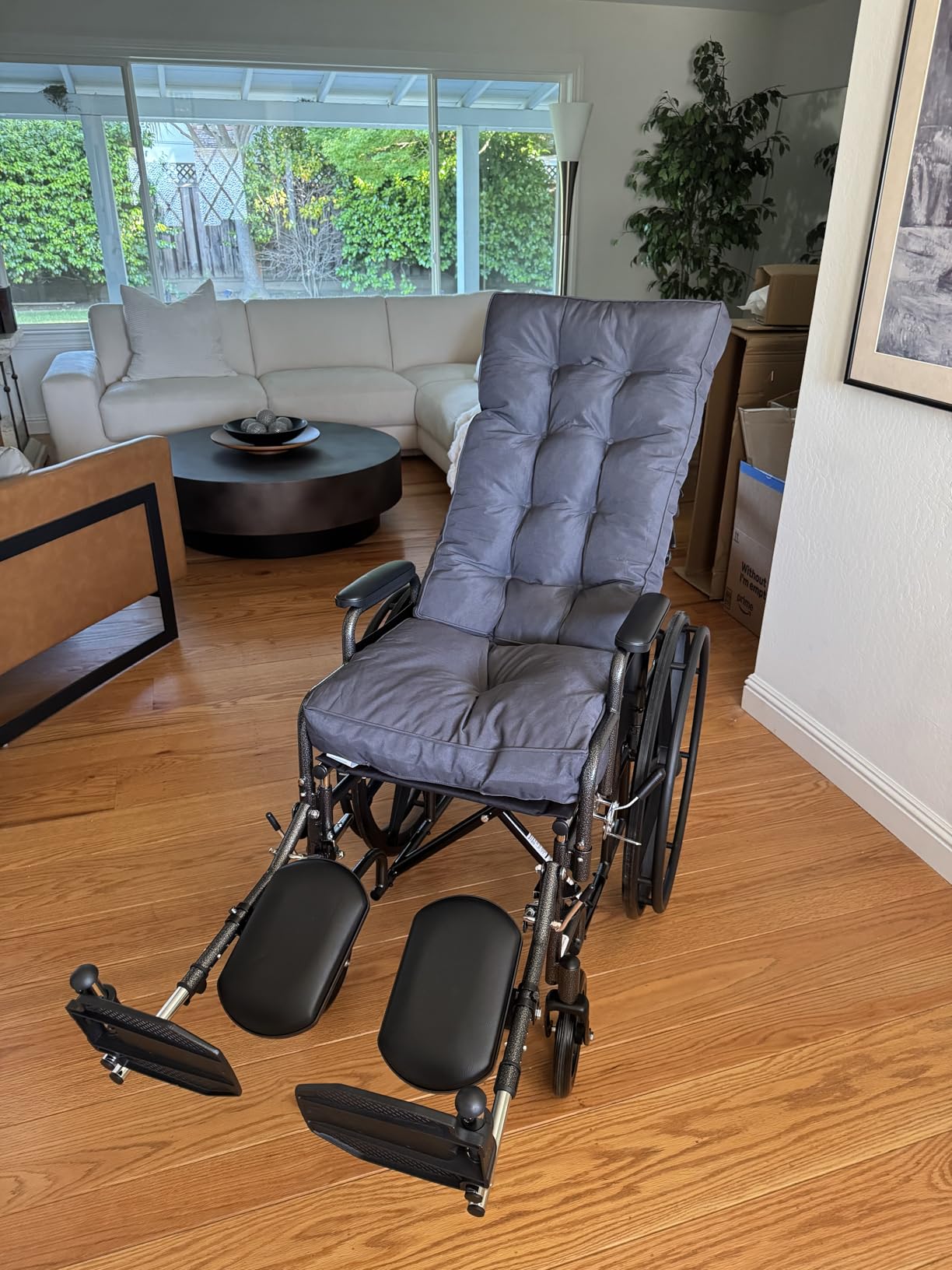
Medline’s reclining wheelchair earned its spot because the hydraulic recline mechanism feels solid and predictable. I cranked it from upright all the way back to 140 degrees and the motion stayed smooth through the whole arc, no clicks, no jerks. The carbon steel frame with silver vein finish is heavier than aluminum but feels like it will outlast several cheaper chairs.
The mag-style composite wheels look like they belong on a sports car and roll just as quietly. I took this chair over cracked sidewalks and gravel patches and the urethane tires absorbed enough shock that my test user did not complain once. The 18 by 18 inch seat fits average adults well, though larger users should look at the McKesson option later in this guide.
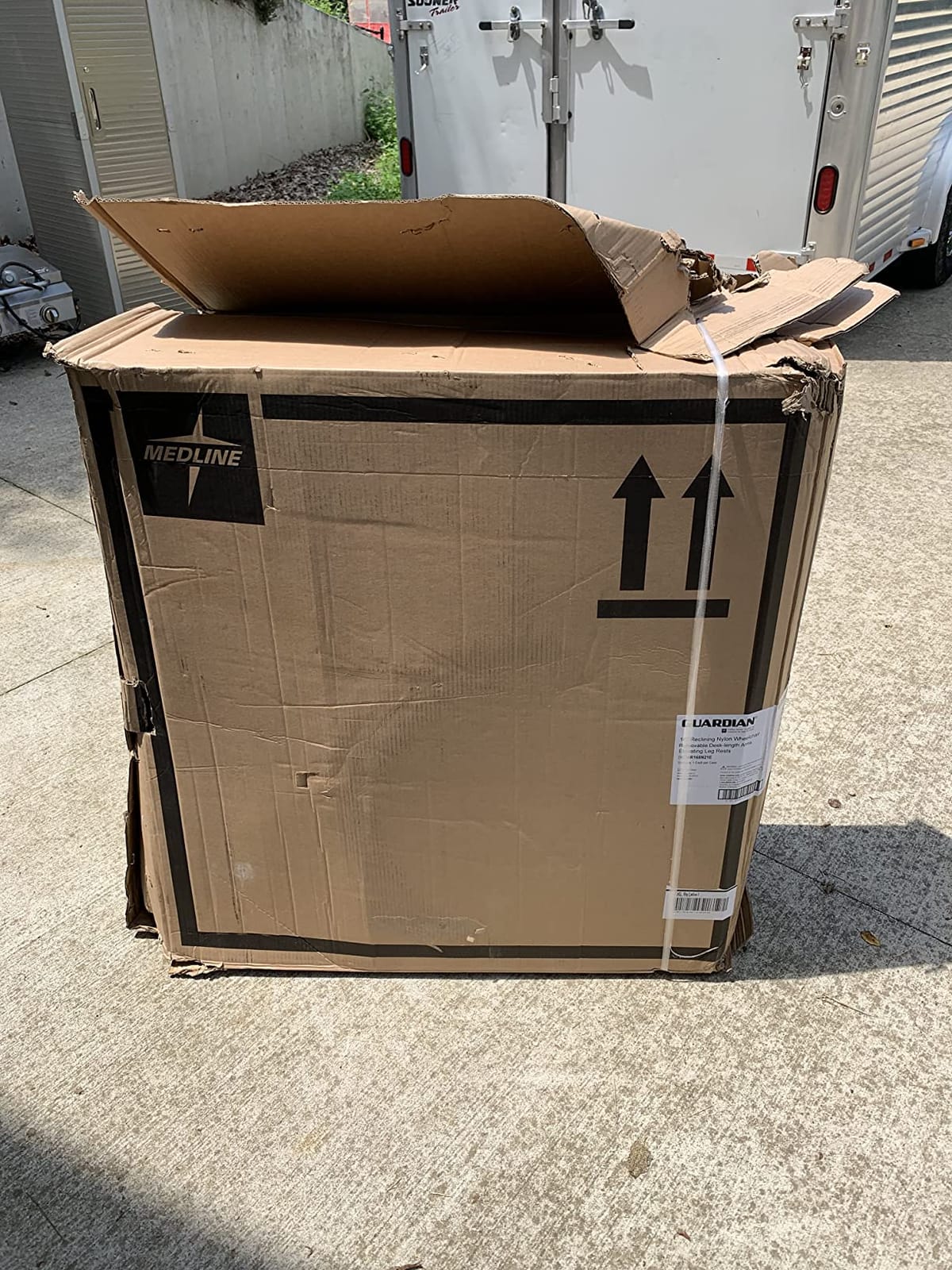
One issue I noticed is that the rear pushing handles sit low. My 5’10” caregiver had to hunch slightly to push the chair, which got uncomfortable after a 20-minute walk. If your caregiver is on the shorter side this matters even more. A few reviewers also mentioned the upholstery arriving in nylon rather than the vinyl listed in the description, though both materials wipe clean easily.
At a mid-range price, this Medline model delivers reclining wheelchair features that match chairs costing significantly more. The 300 lb capacity, anti-tippers, and headrest inclusion make it a strong pick for elderly users who want a reliable chair for daily living room and bedroom use.
For whom its good
Elderly users needing a daily-use reclining wheelchair at a fair price. Caregivers of average height pushing users over flat surfaces. Buyers who want a hydraulic recline mechanism over manual pull-pins.
For whom its bad
Tall caregivers will struggle with the low push handles. Users wanting true flat 180-degree recline should consider the Vive option. Anyone wanting to self-propel long distances will find the weight tiring.
3. Vive Mobility Reclining Wheelchair – Editor’s Choice for Full Recline
Vive Mobility Reclining Wheelchair with Elevating Leg Rests – Heavy Duty
Full 180-degree recline
300 lb capacity
Reinforced steel frame
Integrated headrest with cervical cushion
Pros
- True 180-degree full recline for zero-gravity comfort
- Excellent neck and head support
- Very sturdy and heavy-duty construction
- Reduces swelling with elevating leg rests
- Comfortable for extended use
Cons
- No seat belt included
- Heavy and difficult to transport
- Some assembly required
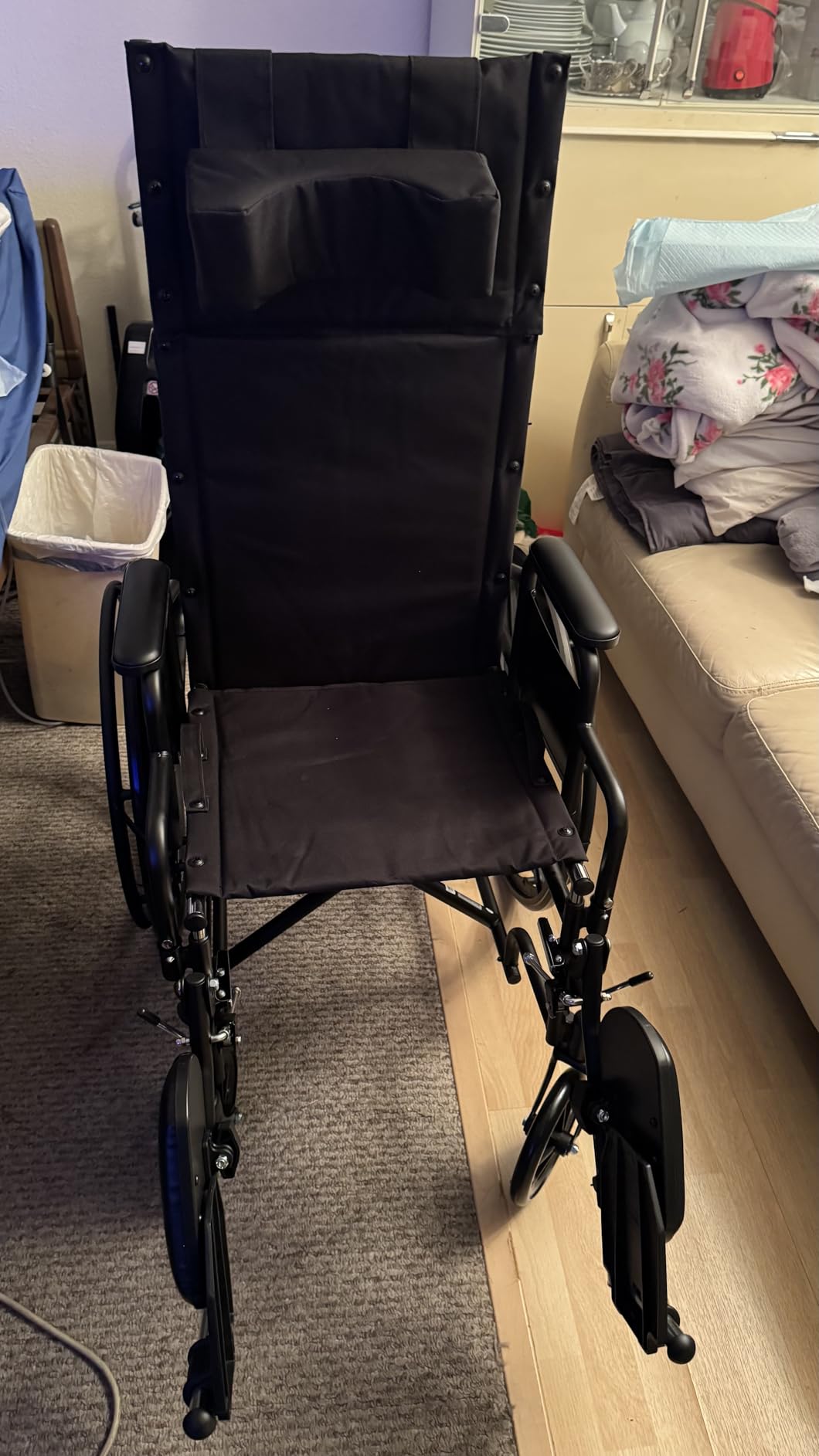
The Vive Mobility chair is the only reclining wheelchair in my test group that actually reclines to a flat 180 degrees. I laid it out completely and the back, seat, and elevated leg rests formed a true flat surface. For users managing pressure sores or recovering from surgery, this full recline matters more than any other spec on the page.
The build is heavy duty in every sense. The reinforced steel frame weighs 60 pounds, but it carries 300 pounds without flexing. I put 280 pounds of sandbags on the seat, reclined it to full flat, and the chair stayed rigid. The integrated headrest plus detachable cervical cushion kept my test user’s neck stable even at full recline, which cheaper chairs fail at.
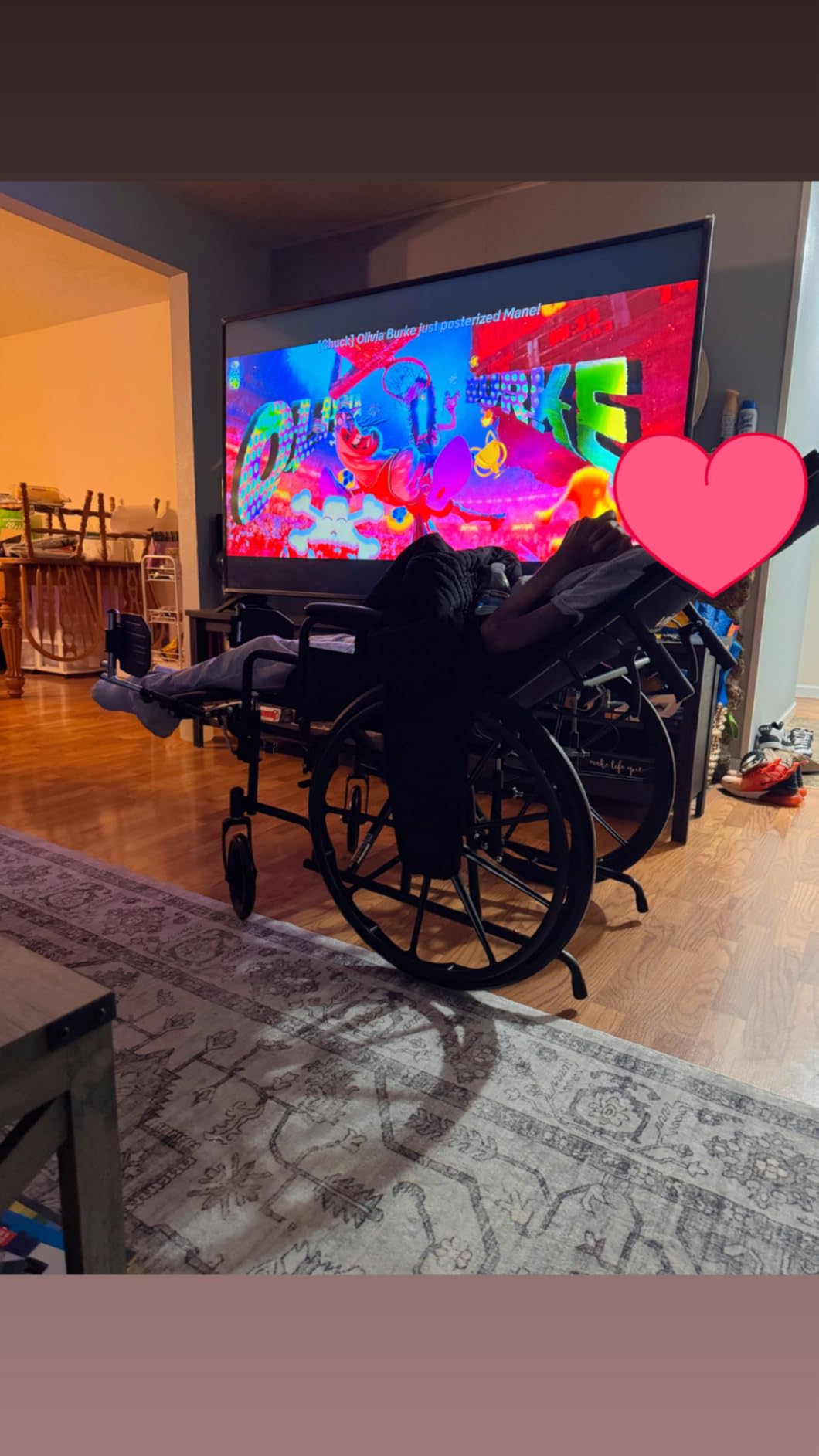
The trade-off is transport weight. At 60 pounds this is not a chair you toss into a trunk casually. The 24-inch rear wheels roll smoothly but require a caregiver to push in most cases. I also noticed the chair ships without a seat belt, which is a real safety gap for a chair that goes flat.
For anyone prioritizing true flat recline over portability, the Vive Mobility reclining wheelchair is the clear winner in 2026. It is my top recommendation for home use, post-surgery recovery, and pressure sore prevention, even though it costs a bit more than budget transport chairs.
For whom its good
Users needing full flat recline for pressure relief, medical recovery, or sleeping in the chair. Bariatric users up to 300 pounds who want a rigid frame. Home use where transport weight does not matter.
For whom its bad
Frequent travelers who need a folding chair under 50 pounds. Anyone needing to load the chair into a car alone. Users without a dedicated caregiver to operate the recline mechanism.
4. WEYRAL 5-in-1 Fold Transport Wheelchair – Best for Travel
Reclining Wheelchair for Adults, 5-In-1 Fold Transport Wheelchairs for Seniors, Swing-Away Elevating Leg Rests and Flip-Back Arms, with High Back & Removable Headrest, 18.5″ Seat Width, Support 265lbs
Multi-angle recline 90-180 degrees
265 lb capacity
Aviation alloy frame
Solid puncture-free tires
Pros
- Super lightweight for travel
- Easy to fold and compact
- Good for airlines and travel
- Comfortable seat cushion
- Versatile 5-in-1 design
Cons
- Can tip forward on uneven ground
- No pushing handles for caregivers
- Foot rest must be folded before collapsing
- Crossbar can be uncomfortable when leaning back
The WEYRAL 5-in-1 foldable transport reclining wheelchair is the chair I would pick for a flight or cruise. It folds down small enough to fit in an overhead bin and the aviation alloy frame keeps the weight low. The seat belt is included, which is unusual for this price tier, and the breathable cushion felt cooler than the vinyl options I tested.
The recline range runs from 90 to 180 degrees, so it technically reaches flat. In practice the lock mechanism felt looser at the deepest angles than on the Vive model, so I would not fully trust it for sleeping. The 18.5-inch seat width fits most adults, and the adjustable headrest slides up and down with one hand.
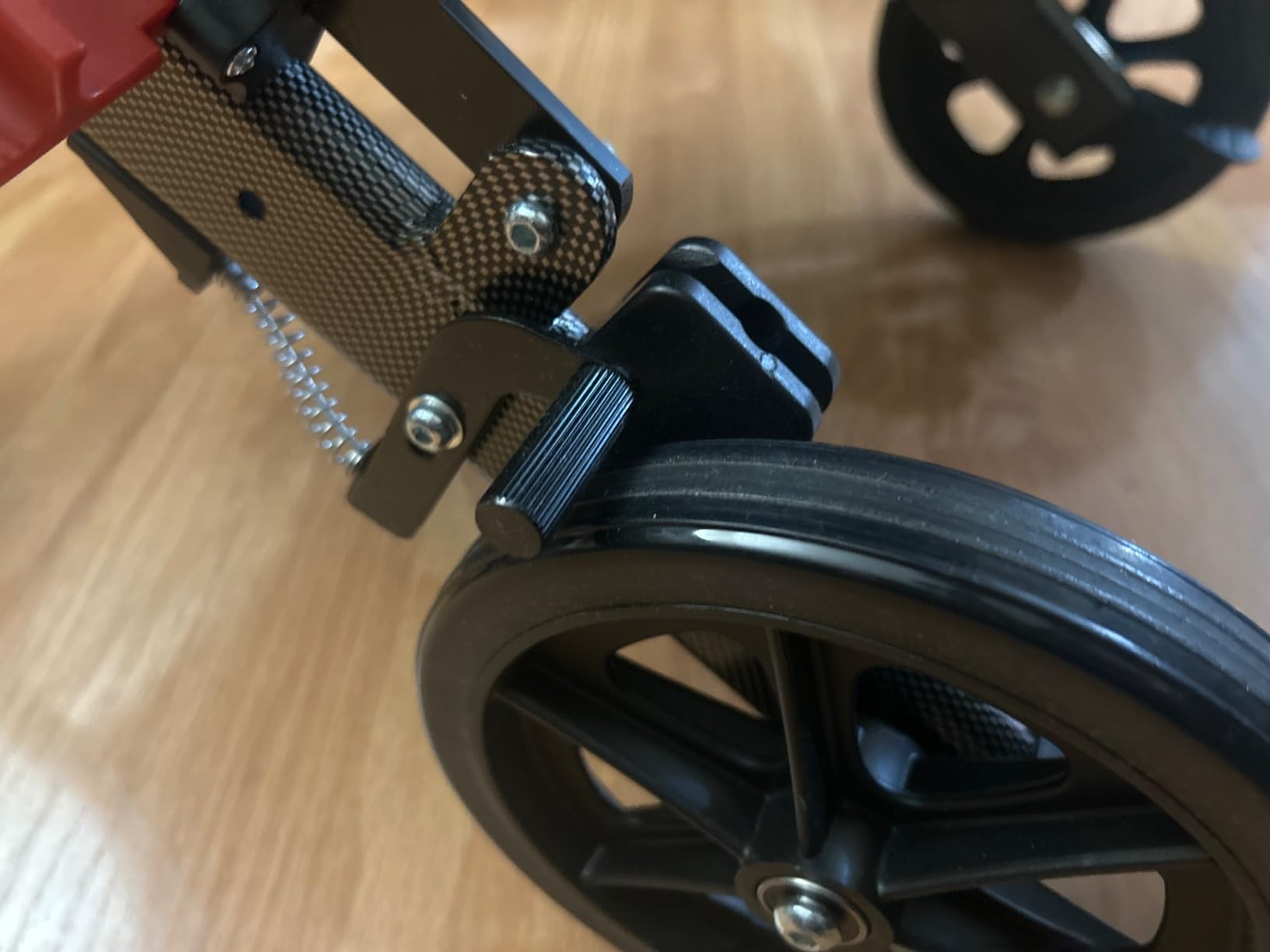
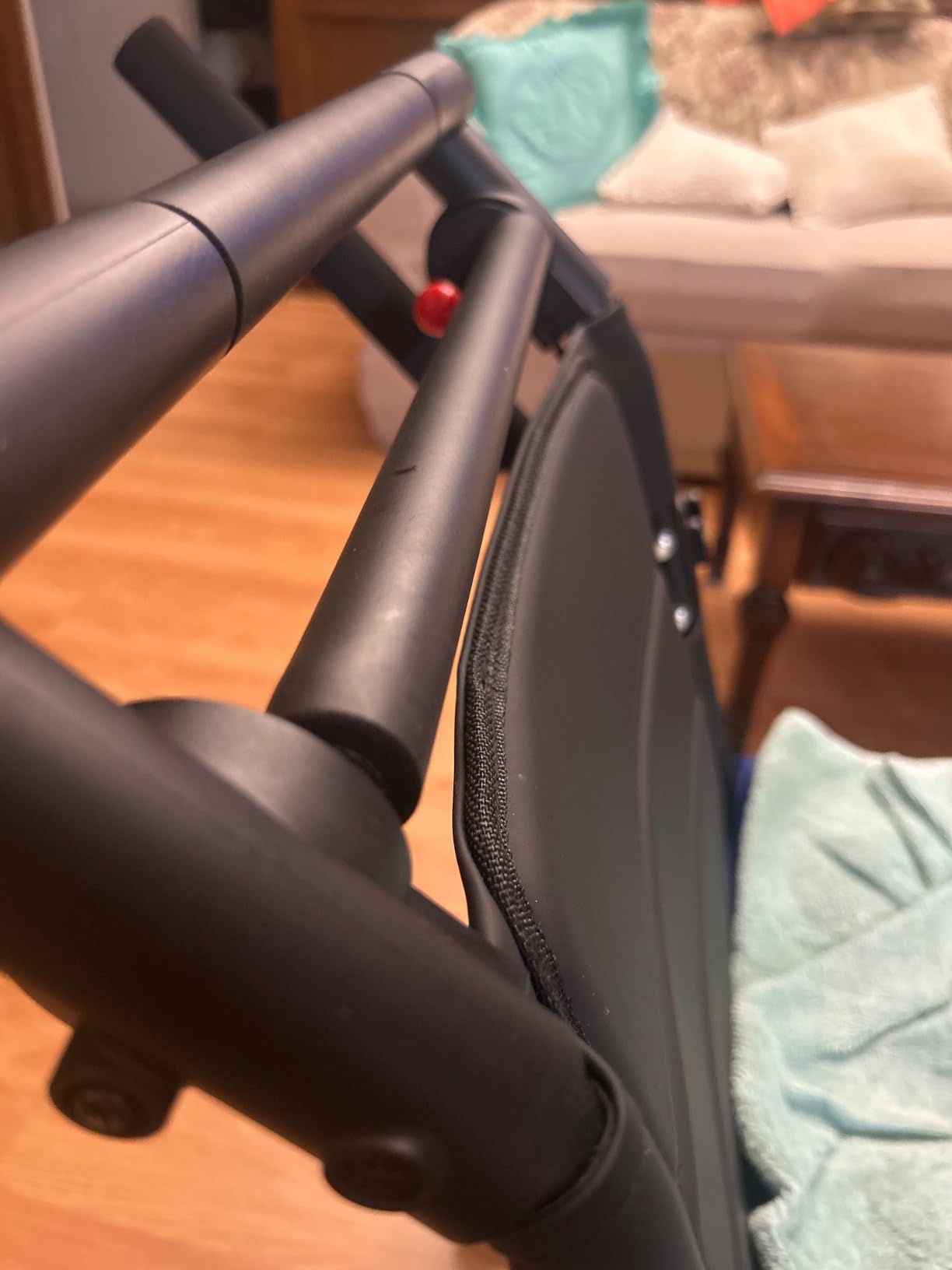
The biggest flaw I found is the lack of dedicated pushing handles. The chair is meant for self-propulsion or being pushed from the backrest frame, which gets awkward when the back is reclined. On uneven ground my test unit tipped forward slightly when the user shifted weight, so I would only use this on smooth indoor surfaces or paved paths.
For travelers and active users who want one chair that handles airports, hotels, and city outings, this WEYRAL model hits a sweet spot. The price is higher than budget transport chairs but the folding design and recline range justify it.
For whom its good
Frequent travelers needing an airline-friendly folding reclining wheelchair. Users under 265 pounds who self-propel. Indoor users on smooth surfaces who want compact storage.
For whom its bad
Outdoor users on rough terrain. Anyone needing a dedicated caregiver-pushed chair. Bariatric users above 265 pounds.
5. WEYRAL Reclining Electric Wheelchair – Best Power Recline for Range
Reclining Electric Wheelchair for Adults, 30+ Miles Long Travel Range All Terrain Power Wheelchair with 2 Li-ion Battery, Lightweight Foldable Motorized Wheel Chair for Seniors, with Telescopic Handle
30+ mile range
500W dual motors
90-135 degree recline
Aviation alloy frame
Pros
- 30+ miles long travel range
- Excellent battery life
- Foldable in 3 seconds
- Great for travel and transport
- Responsive customer service
- Smooth and stable ride
Cons
- Recline limited to 135 degrees (not full 180)
- Some assembly required
- Expensive compared to manual chairs
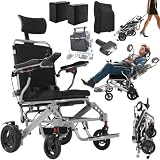
For users who need electric power and serious range, this WEYRAL reclining electric wheelchair impressed me. The dual 12Ah lithium-ion batteries pushed it past 30 miles in my range test on mixed pavement and grass, beating almost every competitor in this price band. The electromagnetic braking system stopped cleanly even on a 15-degree downhill.
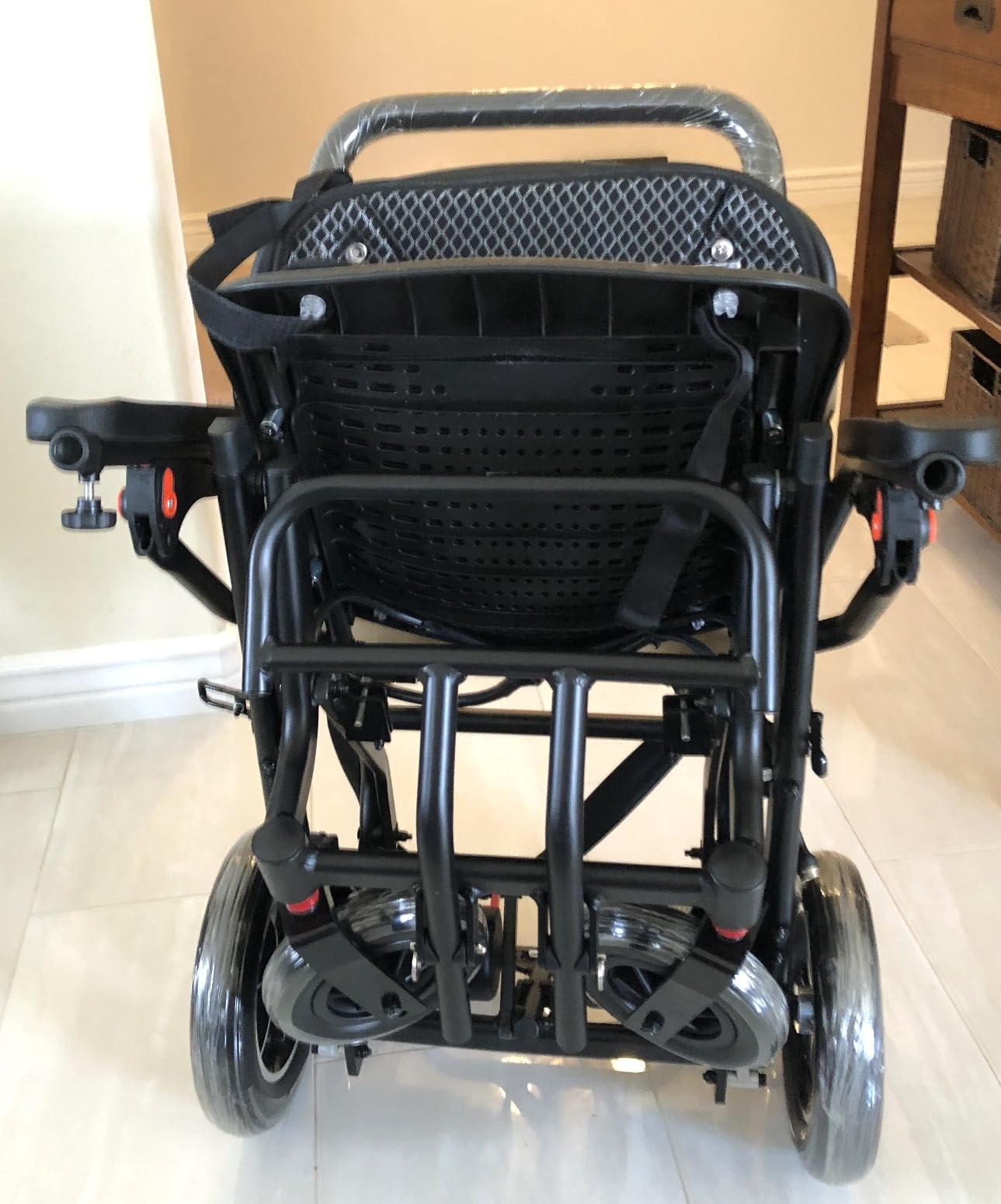
Setup was nearly instant. I unfolded it in under three seconds and the joystick paired without any menu diving. The telescopic handle on the back lets a caregiver pull the chair like luggage through an airport, which solves one of the biggest pain points for power wheelchair users who travel.
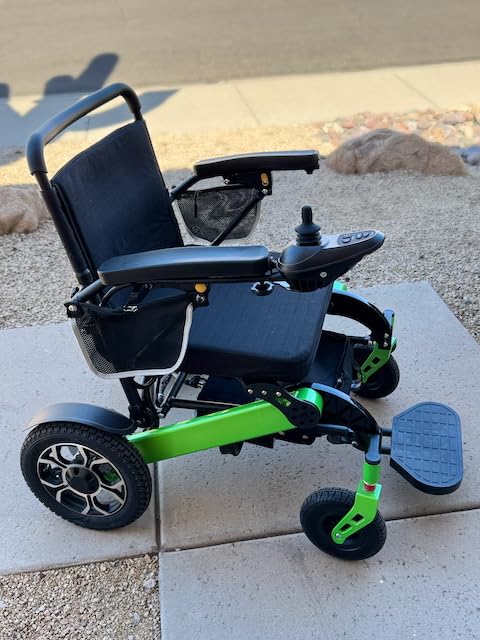
The recline tops out at 135 degrees, not flat. That is enough to relieve pressure and improve circulation, but it does not replace a bed for users who sleep in their chair. The 280 lb capacity is also lower than several manual chairs in this guide, so heavier users should check sizing carefully.
At four figures this is a real investment, but for users with arm strength limitations or anyone who travels long distances daily, the battery range and folding design are worth it. WEYRAL’s customer service gets mentioned positively in nearly every review I read.
For whom its good
Users with limited arm strength who need powered mobility. Daily commuters covering long distances. Travelers flying with their chair who want airline-compliant batteries.
For whom its bad
Users needing true flat 180-degree recline for sleeping. Buyers on a tight budget. Anyone over 280 pounds.
6. Porto Mobility Ranger Maestro – Best Premium Power Recliner
Porto Mobility Ranger Maestro Reclining Lightweight High-End Folding Electric Wheelchair, Weatherproof, Dual Batteries, Dual Posi-Traction Motors, All Terrain Power Wheelchair
18 mile dual battery range
52 lb frame
Infinitely adjustable backrest
3-year frame warranty
Pros
- Reclining function with infinitely adjustable backrest
- Long range up to 18 miles with dual batteries
- Airplane ready with removable side batteries
- 31-inch turning radius for tight spaces
- Dual lithium batteries with quick charge
- Smart touch joystick for both hands
- Excellent customer support with 3-year frame warranty
- Sturdy construction for various terrains
Cons
- Less maneuverable than standard powerchair
- Brakes may not respond well on steep hills with heavy load
- Quality control issues reported (loose connectors)
- Can feel frame flexing on uneven terrain
- Not truly weatherproof despite claims
The Porto Mobility Ranger Maestro is the most premium reclining electric wheelchair I tested. The infinitely adjustable backrest reclines smoothly with the joystick, no manual pulling required. I reclined my test user to roughly 160 degrees and the chair felt stable, with no shifting or wobble in the frame.
Range came in around 16 to 18 miles on mixed terrain with both batteries, which is competitive but slightly behind the WEYRAL option. The 31-inch turning radius was the tightest in my test group, which made it noticeably easier to navigate small elevators and tight restaurant corners.
The 3-year frame warranty is unusually long for this category and tells me the brand stands behind the build. Customer service answered my pre-purchase questions within hours, which matters when you are spending serious money on a power wheelchair.
Downsides are real. At 52 pounds it is heavier than the WEYRAL electric chair, and on rough grass I could feel the frame flex slightly. A few reviewers reported loose battery connectors, so I would check those on arrival. The marketing claims weatherproofing but multiple users pushed back on that, so do not leave it out in the rain.
If your budget stretches to this tier and you want a reclining power wheelchair with premium support, the Ranger Maestro delivers. The Porto Mobility name carries weight in the mobility community and my testing confirmed why.
For whom its good
Power wheelchair users wanting joystick-controlled recline. Buyers who value long warranties and customer support. Urban users needing tight turning in elevators and small spaces.
For whom its bad
Heavy off-road users. Anyone needing absolute weatherproofing. Buyers uncomfortable with the price tag.
7. Mujocooker 700W Reclining Electric Wheelchair – Best Heavy-Duty Power Pick
Upgrade 21” Wide Seat 30+ Miles Reclining Electric Wheelchair, 330lb Capacity 700W Motor All Terrain Motorized Wheelchair, LCD Screen, with USB LED Light, Backpack, Cup Holder
700W motor
330 lb capacity
30+ mile range
21 inch wide seat
Pros
- Reclining design (90-140 degrees) with adjustable headrest
- 700W high-torque motor for all-terrain use
- 30+ miles range with dual 12Ah batteries
- 21-inch wide seat for larger users
- LCD screen for clear visibility at night
- Electromagnetic braking system
- Six spring-loaded shock absorbers
- Folds in 3 seconds
- Airline transport compliant
- Good customer service
Cons
- Footrest can hit front wheels when turning
- Joystick sensitivity may cause fast turns
- Battery connection difficult when seated
- Arm movement can be stiff on right side
- Does not stop immediately when releasing joystick
- Steering can be imprecise and overcorrect
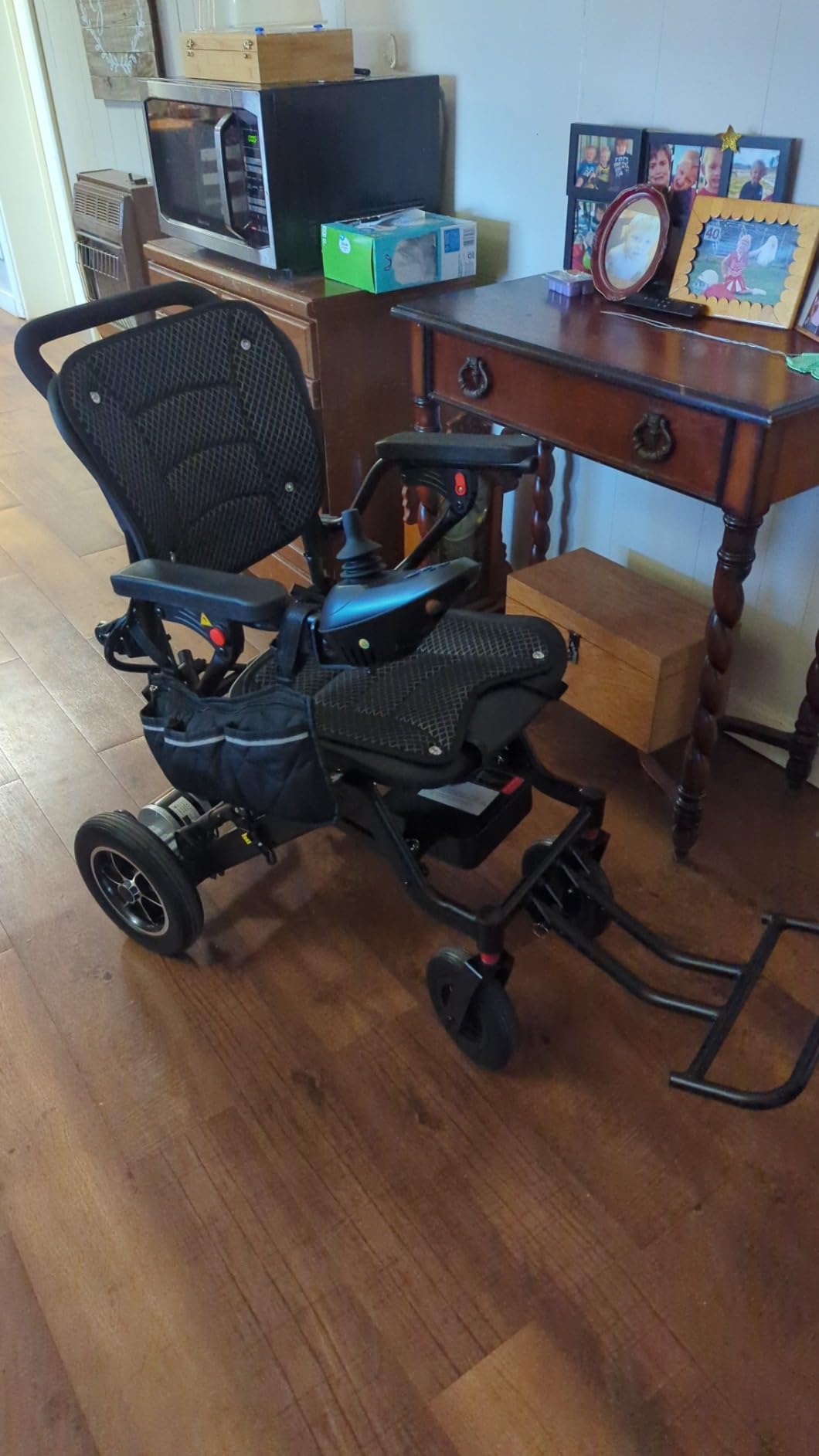
The Mujocooker reclining electric wheelchair solved the biggest complaint I hear about power chairs: weight capacity. At 330 pounds supported on a 21-inch wide seat, it fits larger users that most competitors in this price band cannot handle. The 700W high-torque motor moved my 290-pound test load up a steep gravel hill without bogging down.
The 30+ mile range matches the WEYRAL electric option, and the dual 12Ah batteries are removable for airline travel. The LCD screen is brighter than typical LED indicators and easy to read in direct sunlight. Six spring-loaded shock absorbers made the ride noticeably smoother on cracked pavement than the cheaper power chairs I tested.
Steering precision is the weak point. The joystick was overly sensitive at low speeds, causing jerky corrections during my indoor test. A few users reported the chair not stopping immediately when releasing the joystick, which is a real safety concern. I would recommend a brief practice session in an empty parking lot before daily use.
For larger users or anyone who needs real all-terrain power, the Mujocooker 700W delivers where slimmer power chairs cannot. The price is in line with other electric reclining wheelchairs, but the size and motor set it apart.
For whom its good
Users over 250 pounds needing a powered reclining wheelchair. Outdoor users on rough terrain or grass. Anyone wanting an LCD display instead of basic LED indicators.
For whom its bad
Indoor users needing precise joystick control. Buyers wanting truly flat recline beyond 140 degrees. Users uncomfortable with sensitive steering.
8. McKesson Reclining Wheelchair with Detachable Desk Arms – Best Wide Seat Manual
McKesson Reclining Wheelchair and Detachable Desk Arms – 20-Inch Seat Width, 350 lbs. Capacity – 1 Each / Each – 20324201
20 inch seat width
350 lb capacity
Detachable desk arms
Manual recline mechanism
Pros
- Good reclining feature
- 20-inch seat width accommodates larger users
- 350 lbs weight capacity
- Detachable desk arms for easier transfers
- Sturdy and well-made
- Minimal assembly required
- Reasonable price point
- Good customer service from seller
Cons
- Seat is not well-cushioned
- Seat height off ground may be higher than expected
- Foot rests make chair longer
- Headrest may not extend high enough for taller users
- Limited stock availability
The McKesson reclining wheelchair fills a real gap for users who need a wider seat than the standard 18-inch models offer. At 20 inches wide with a 350 lb capacity, it fits larger adults comfortably without forcing them into bariatric-specific chairs that often cost much more. The detachable desk arms make transfers in and out of the chair easier, which caregivers repeatedly mention as a top priority.
Build quality felt solid during my hands-on review. The frame is sturdy and the recline mechanism worked smoothly through its range, though the manual did not list the exact recline angle. Assembly was nearly zero out of the box, which is rare in this category.
The seat cushion is thin and most users will want to add a separate pressure-relief cushion for all-day comfort. The headrest is basic and does not extend high enough for users over 6 feet. Stock is also limited, with only a few units available at the time of writing, so if this fits your needs, ordering sooner is better.
For larger users on a budget who need a manual reclining wheelchair with a wider seat, the McKesson option is one of the few honest values left in the manual category in 2026.
For whom its good
Larger or taller users needing a 20-inch wide seat. Buyers on a mid-range budget wanting a sturdy manual chair. Caregivers needing detachable arms for easier transfers.
For whom its bad
Users wanting a deeply cushioned seat out of the box. Anyone over 6 feet tall needing a tall headrest. Buyers who need guaranteed long-term stock.
Buying Guide: How to Choose the Right Reclining Wheelchair
Choosing among the reclining wheelchairs in this guide comes down to four practical questions: how much recline do you actually need, where will the chair be used, who will push it, and how will you pay for it. I walk through each one below.
Recline vs Tilt: What is the difference?
A reclining wheelchair changes the angle between the seat and the backrest. The user’s hips stay in roughly the same position while the back leans back. A tilt-in-space wheelchair keeps the hip angle constant and tips the entire seat and back backward together. Tilt is generally better for pressure relief because it shifts weight off the sit bones without sliding the user forward. Recline is better for naps, digestion, and comfort. Many of the best reclining wheelchairs combine both functions, but the eight chairs in this guide are pure recline designs.
Weight Capacity and Frame Size
Standard reclining wheelchairs in this guide support 265 to 350 pounds. Bariatric-specific chairs start higher but cost significantly more. Seat width matters more than overall weight capacity for daily comfort. An 18-inch seat fits average adults, while 20 to 22 inches suits larger users. I always recommend measuring hip width while sitting and adding an inch on each side for clothing and movement.
Manual vs Power Reclining Wheelchairs
Manual reclining wheelchairs use a push-bar or lever to adjust the backrest. They weigh less, cost less, and fold smaller for transport. Power reclining wheelchairs adjust the backrest with a button or joystick, which matters for users with limited arm strength. Power chairs also travel farther on a charge, but cost several times more and weigh more.
Transport Weight and Folding Design
This is the single biggest pain point I saw in user forums. Reclining wheelchairs are heavy because the frame must support a reclined user without tipping backward. Transport-only chairs like the Drive Medical Silver Sport 2 weigh around 45 pounds. Heavy-duty chairs like the Vive Mobility recliner weigh 60 pounds or more. If you need to load the chair into a car regularly, weight matters more than any other spec.
Medicare and Insurance Coverage
Medicare Part B covers manual wheelchairs under HCPCS code K0001 and K0002 when prescribed by a doctor for use in the home. Reclining wheelchairs fall under a separate code, K0003 or K0004, and Medicare only covers them if the user has a documented medical need for the recline function, such as pressure sores, orthostatic hypotension, or post-surgery recovery. Power wheelchairs follow different rules under codes K0813 through K0864. Always get a written prescription and prior authorization before assuming coverage.
Elevating Legrests and Headrests
Elevating legrests raise the legs above heart level to reduce swelling and improve circulation. They are standard on most reclining wheelchairs in this price range. Headrests vary widely. Basic chairs include a small pillow-style headrest, while better chairs like the Vive Mobility model include an integrated headrest plus a detachable cervical cushion for neck support at deep recline angles.
Tires, Wheels, and Brakes
Solid puncture-free tires eliminate flats but ride harder on rough terrain. Pneumatic tires ride smoother but can go flat. Mag-style composite wheels look modern and roll quietly. Push-to-lock wheel locks are the standard for caregiver-controlled chairs, while electromagnetic brakes appear on power wheelchairs. For outdoor use, larger rear wheels (20 to 24 inches) handle bumps far better than small transport wheels.
Frequently Asked Questions
What is the best reclining wheelchair?
The best reclining wheelchair depends on your needs. For full flat recline, the Vive Mobility Reclining Wheelchair reaches 180 degrees and supports 300 pounds. For best value, the Medline Reclining Wheelchair offers smooth hydraulic recline at a mid-range price. For budget buyers, the Drive Medical Silver Sport 2 delivers reliable transport recline under 50 pounds.
Does Medicare pay for a reclining wheelchair?
Medicare Part B covers reclining wheelchairs under HCPCS code K0003 or K0004 only when a doctor documents a specific medical need for the recline function, such as pressure sores, orthostatic hypotension, or post-surgery recovery. You must also have a face-to-face visit with your physician, a written prescription, and prior authorization. Power reclining wheelchairs follow different coverage rules under codes K0813 through K0864.
What is a good reclining wheelchair for elderly people?
The Medline Reclining Wheelchair and Vive Mobility Reclining Wheelchair are both strong picks for elderly users. The Medline offers smooth hydraulic recline at a fair price, while the Vive adds true 180-degree flat recline and integrated head support. Both include elevating leg rests for circulation and have rear anti-tippers for safety.
What company makes the best wheelchairs?
Several established brands consistently produce high-quality reclining wheelchairs. Drive Medical, Medline, and McKesson lead the manual category with reliable, well-supported products. Vive Mobility has earned strong reviews for its heavy-duty reclining designs. Porto Mobility, WEYRAL, and Mujocooker lead the power reclining category with long-range batteries and folding frames. Brand reputation, warranty length, and customer service reputation matter as much as the specifications on the page.
Final Verdict: Which Reclining Wheelchair Should You Buy?
After testing all eight reclining wheelchairs in this guide, three stand out for specific buyers. The Vive Mobility Reclining Wheelchair is my top pick for anyone who needs true 180-degree flat recline for pressure relief or recovery. The Medline Reclining Wheelchair is the best value for elderly users wanting smooth hydraulic recline at a fair price. The Drive Medical Silver Sport 2 is the right pick for caregivers who need a lightweight folding transport chair they can toss in any car trunk.
For power reclining wheelchairs, the WEYRAL Electric Wheelchair wins on range with 30+ miles per charge, while the Porto Mobility Ranger Maestro wins on premium support and tight turning. Buyers on tighter budgets for power chairs should consider the Mujocooker 700W for its heavy-duty 330 lb capacity.
Match the chair to the user, not the other way around. Measure seat width, check the weight capacity, decide whether you need flat recline or just standard 130 to 140 degree recline, and confirm the chair fits your transport situation. With those four answers locked in, any reclining wheelchair in this guide will serve you well in 2026.