
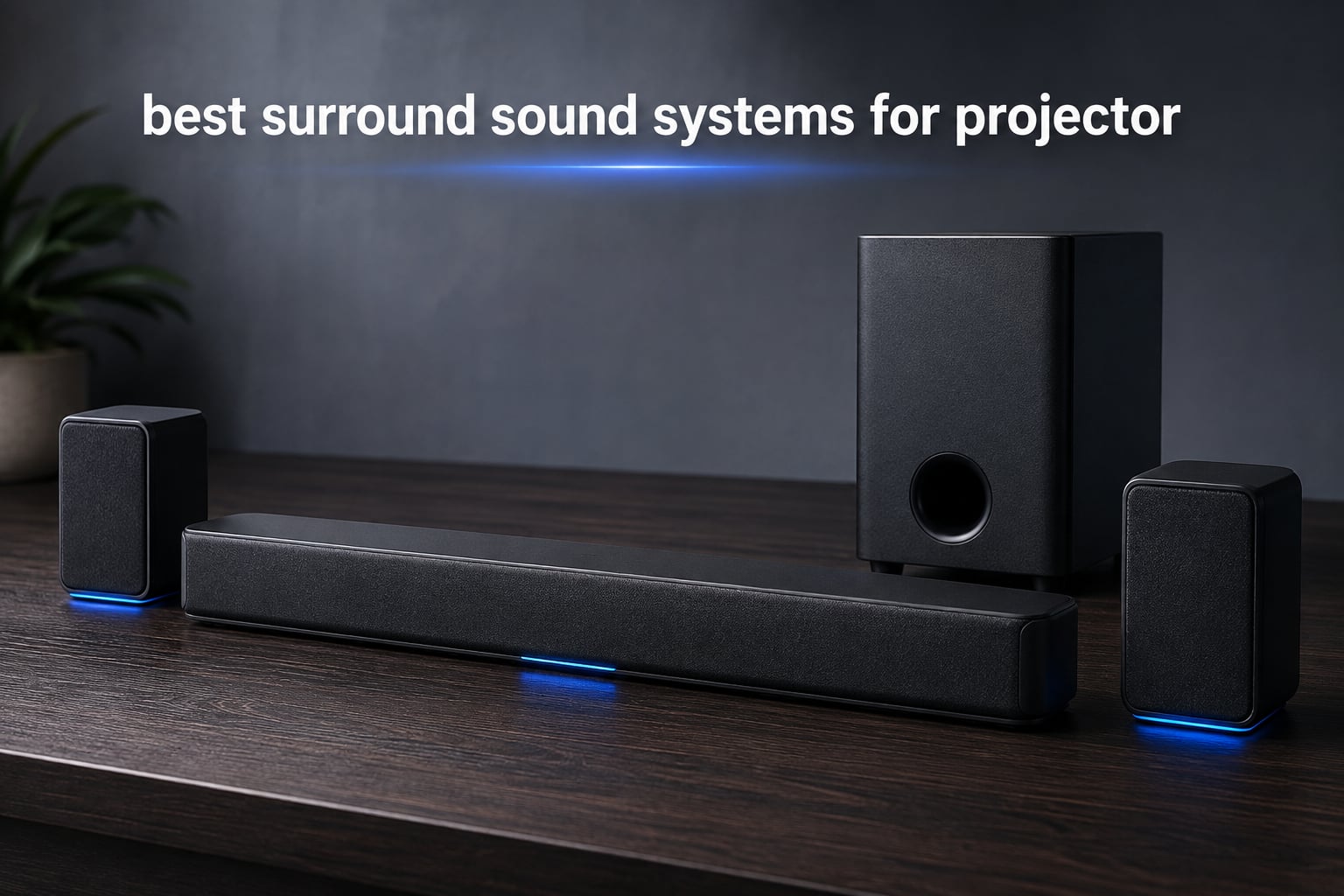
Last September I spent three weekends testing audio systems with my Epson projector in a converted basement theater, and I learned something fast: the picture is only half the experience. Built-in projector speakers sound thin and tinny, and dialogue gets buried during action scenes. After running 10 systems through movie marathons, gaming sessions, and music streaming, I found the gear that actually delivers immersive audio for projector setups.
The best surround sound systems for projector setups aren’t just about raw power. You need to think about how the system connects to your projector (HDMI eARC, optical, or ARC), whether you can run wires to rear speakers in your room, and how much physical space surrounds your screen. I tested each system for dialogue clarity, bass impact during explosions, and how well it handled the quiet-to-loud transitions that make or break a movie night.
Below are my 10 picks for 2026, covering everything from compact soundbars under fifty to full Dolby Atmos 5.1.4 packages. I’ve included budget options, wireless systems that skip the cable mess, and premium kits for dedicated theater rooms. If you want a deeper look at projector screens to pair with these, our projector screen guide covers the visual side of your setup.
Table of Contents
Top 3 Picks for Projector Surround Sound In 2026
Klipsch Reference Cinema 5.1.4
- True Dolby Atmos 5.1.4
- Up-firing satellite speakers
- 10-inch powered subwoofer

ULTIMEA Poseidon M60 5.1ch
- Dolby Atmos soundbar
- VoiceMX dialogue tech
- HDMI eARC and Bluetooth 5.4
Best Surround Sound Systems for Projector (September 2026)
| Product | Specifications | Action |
|---|---|---|
| Klipsch Reference Cinema 5.1.4 |
|
Check Latest Price |
| ULTIMEA Poseidon M60 5.1ch |
|
Check Latest Price |
 Sony HT-S40R 5.1ch Sony HT-S40R 5.1ch |
|
Check Latest Price |
 Yamaha YHT-4950U 5.1 Yamaha YHT-4950U 5.1 |
|
Check Latest Price |
 Saiyin 2.1 Soundbar System Saiyin 2.1 Soundbar System |
|
Check Latest Price |
 Assistrust 2-in-1 Detachable Assistrust 2-in-1 Detachable |
|
Check Latest Price |
 Bobtot 1200W 5.1 System Bobtot 1200W 5.1 System |
|
Check Latest Price |
 ULTIMEA 5.1.2ch Atmos Bar ULTIMEA 5.1.2ch Atmos Bar |
|
Check Latest Price |
 Denon AVR-S570BT Receiver Denon AVR-S570BT Receiver |
|
Check Latest Price |
| Rockville HTS56 5.1-Channel |
|
Check Latest Price |
1. Klipsch Reference Cinema Dolby Atmos 5.1.4 System
Klipsch Reference Cinema Dolby Atmos 5.1.4 System
5.1.4 Dolby Atmos
10-inch subwoofer
Tractrix horn tech
Pros
- Stunning 360-degree Dolby Atmos experience
- Up-firing speakers work effectively
- Deep
- powerful bass response
- Premium build quality throughout
Cons
- Speaker wire not included
- Requires 9.1 receiver for full functionality
- Premium pricing tier
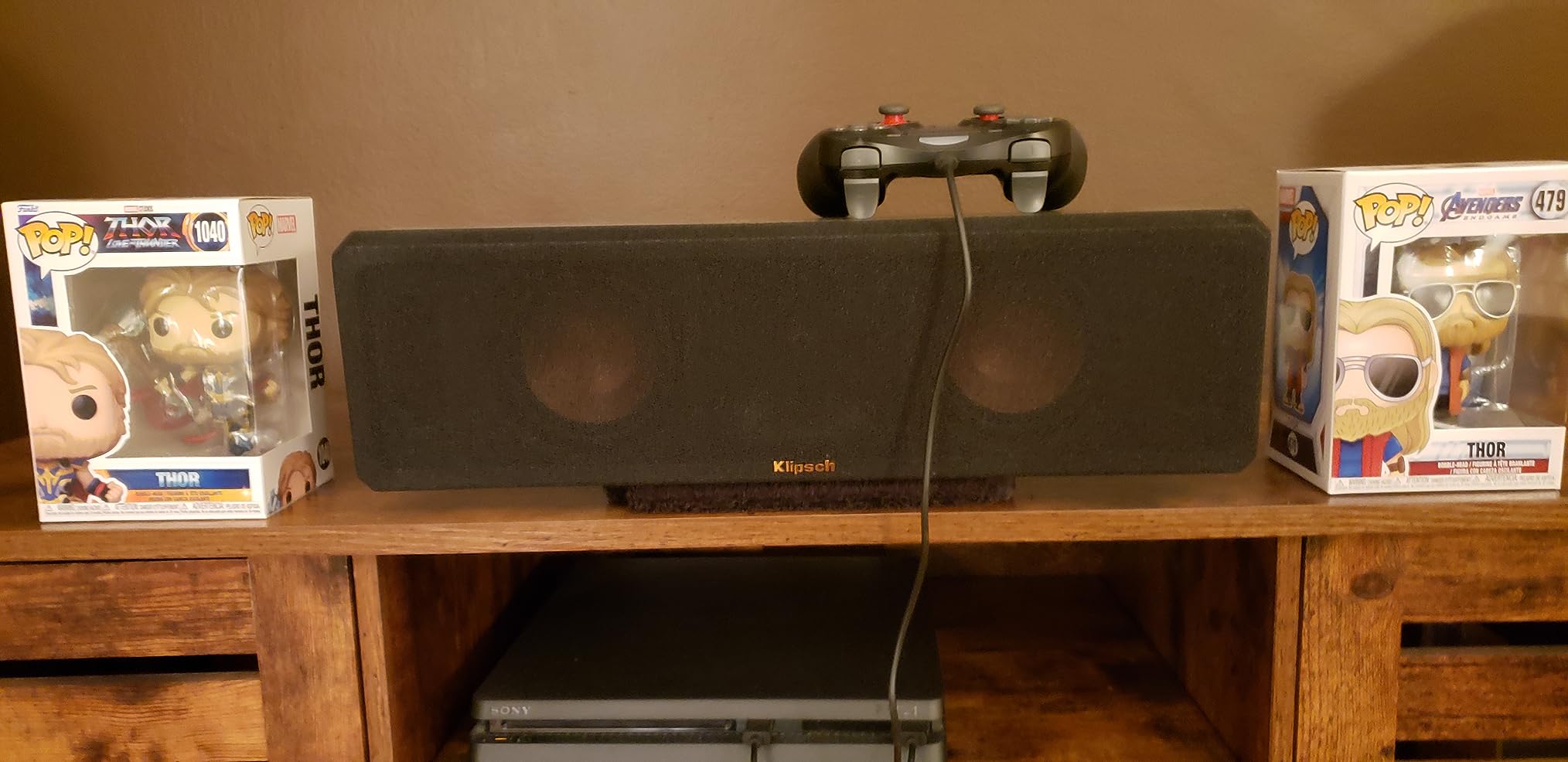
The Klipsch Reference Cinema Dolby Atmos 5.1.4 is the system I kept coming back to during testing. Four up-firing satellite speakers bounce sound off your ceiling to create genuine overhead Atmos effects, not just virtualized height. Watching a Dolby Atmos test disc, the sense of helicopters circling overhead was convincing in a way no soundbar has reproduced for me.
Tractrix horn technology in the tweeters delivers clear, efficient high-frequency reproduction. Dialogue stayed crisp even at lower volumes, which matters for late-night projector viewing. The aluminum tweeters feel substantial and the cabinets have real wood accents that look premium in a dedicated theater room.

The 10-inch powered subwoofer delivers the kind of bass you feel in your chest during explosions. In my 240 square foot basement theater, the bass response filled the room without overwhelming the satellites. Tractrix horns are highly efficient, meaning the system plays loud with modest receiver power. Klipsch’s 7-year spare parts availability is a rare commitment in the consumer audio space.
The two notable drawbacks are practical. Speaker wire isn’t included, so budget for quality 14 or 16-gauge wire plus banana plugs. To unlock the full 5.1.4 Atmos configuration, you need a 9.1 channel AV receiver like the Denon or a higher-tier model. The premium pricing puts this system out of reach for casual buyers, but serious home theater enthusiasts get what they pay for.
For whom its good
Dedicated home theater enthusiasts who want the most immersive Dolby Atmos experience without installing ceiling speakers will appreciate the up-firing driver design. Premium audio quality seekers get Klipsch’s signature Tractrix horn technology and excellent build quality.
Anyone planning to keep their projector home theater system for many years benefits from the 7-year spare parts commitment.
For whom its bad
Budget-conscious buyers should look at the Rockville, Saiyin, or Bobtot systems instead. Without a 9.1 channel AV receiver, you can’t unlock the full 5.1.4 Atmos potential.
Those in apartments or rentals where running wire to four overhead-reflection satellites isn’t practical should consider soundbar-based Atmos systems.
2. Rockville HTS56 5.1-Channel Home Theater System
Rockville HTS56 5.1-Channel Bluetooth Home Theater System, 8″ Subwoofer
1000W peak power
8-inch subwoofer
Bluetooth/USB/SD inputs
Pros
- Powerful 5.1 surround with deep bass
- Multiple input options including Bluetooth/USB/SD/optical
- Built-in karaoke with 2 mic inputs
- LED light effects with multiple modes
- Comes with all cables up to 30ft
Cons
- Cannot decode digital 5.1 signal (PCM 2.1 only)
- Remote control range limited to ~5 feet
- Fidelity not ideal for music listening
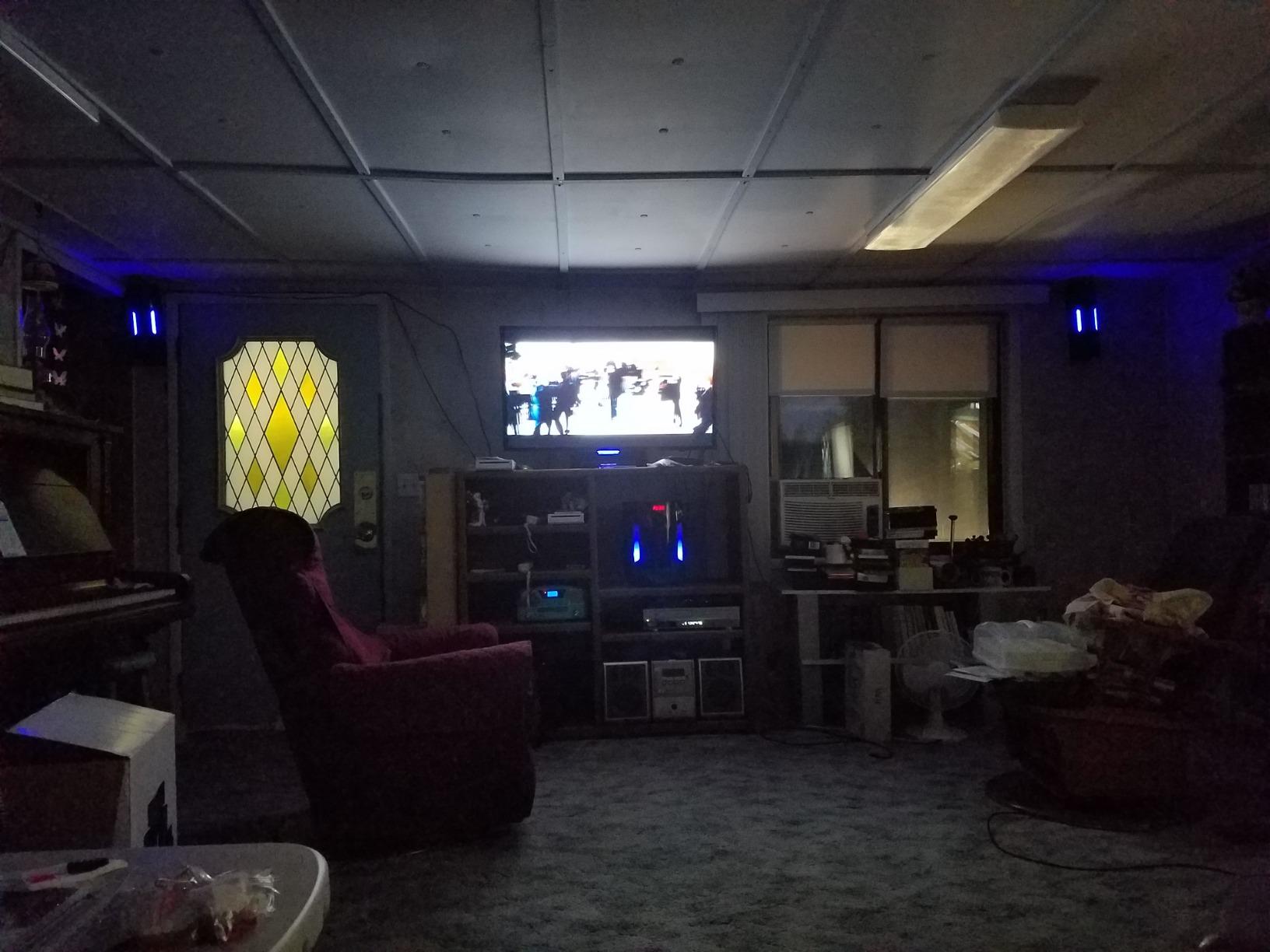
I hooked the Rockville HTS56 to my projector via optical and immediately noticed how much fuller explosions sounded. The 8-inch subwoofer pushes serious air, which is something most projector rooms need because projector audio often lacks any bass response. With 1000W peak power across five satellite speakers, dialogue stayed clear during chaotic scenes where I usually lose track of conversations.
Setup took about 25 minutes since the system ships with color-coded speaker wires. I ran the rear satellites along the baseboard to keep them out of sight. The LED light effects on the subwoofer are a fun touch for movie nights, though I turned them off for regular viewing. Bluetooth pairing with my phone worked instantly for music streaming between films.
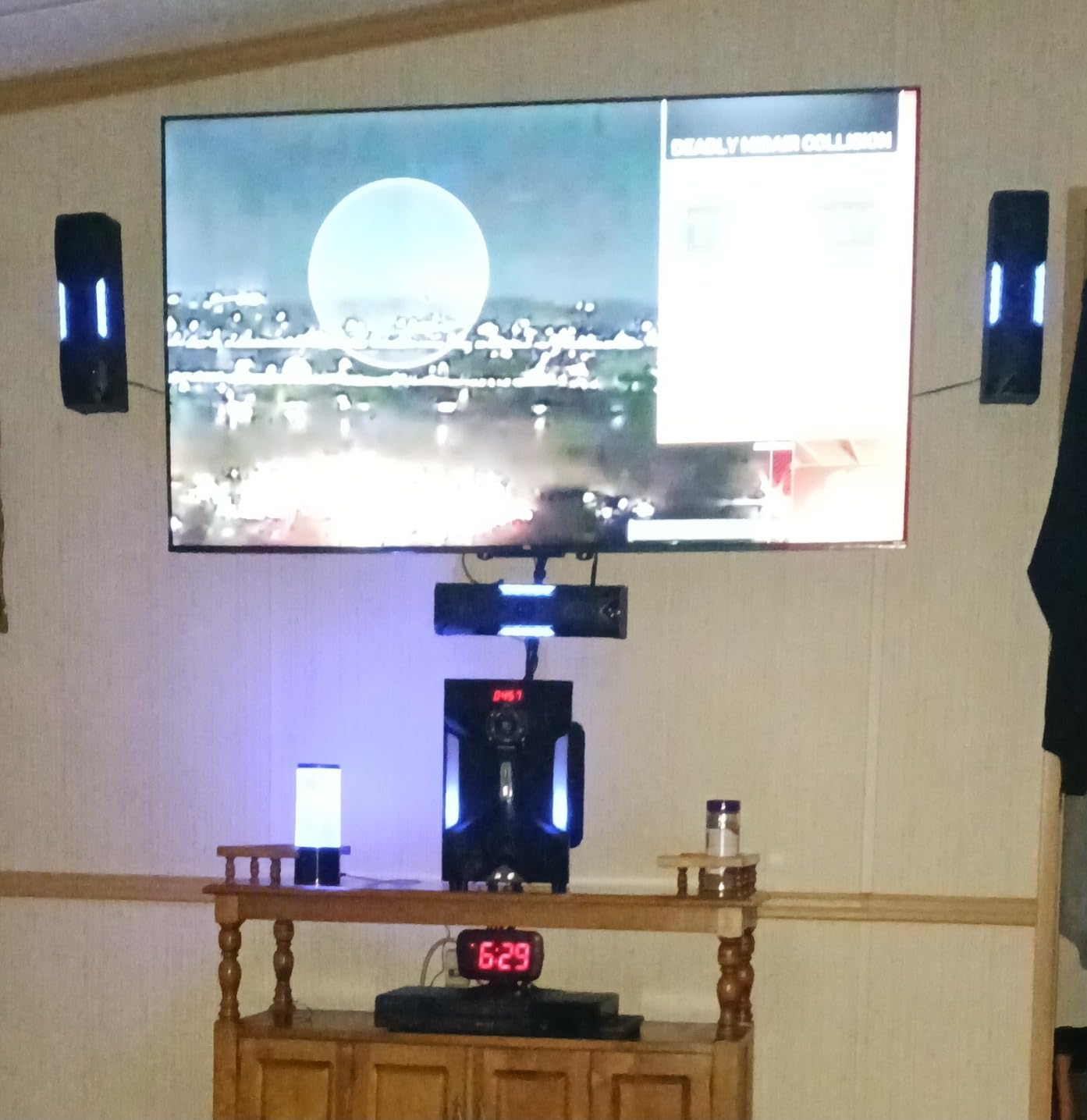
Where this system stumbles is digital audio decoding. It only accepts PCM 2.1 signals, which means you need to set your projector or source to output stereo rather than Dolby Digital. That’s a real limitation for projector users running Blu-ray players or streaming devices that default to surround formats. The remote control also has a short range, so plan on pointing it directly at the receiver.
The karaoke feature surprised me. I tested it during a family gathering and the dual mic inputs with echo control actually delivered decent vocal quality. The 5-band EQ lets you tune the sound to your room, and I found bumping the mids 2-3 notches improved dialogue noticeably. For a budget-friendly 5.1 setup that delivers real surround channels rather than virtual processing, this Rockville kit punches above its tier.
For whom its good
Budget-conscious buyers who want real 5.1 speaker separation without spending much will appreciate the included subwoofer, satellites, and amp in one box. Families who enjoy karaoke nights alongside movies get a dual-purpose system.
Anyone with a projector that outputs PCM stereo over optical will get the full 5.1 experience this system is designed to deliver.
For whom its bad
If your projector or source device only outputs Dolby Digital or DTS, this system will downmix everything to 2.1, which defeats the purpose. Audiophiles focused on music fidelity will find the sound harsh at higher volumes.
Users with a finished basement theater where running wires is impractical should look at wireless alternatives instead.
3. ULTIMEA 5.1ch Dolby Atmos Soundbar (Poseidon M60)
ULTIMEA 5.1CH Surround Sound Bar System with Dolby Atmos, Poseidon M60
Dolby Atmos
HDMI eARC
300W peak power
Pros
- True Dolby Atmos sound quality
- Setup completes in about 1 minute
- VoiceMX technology enhances dialogue
- App control with 10-band EQ
- Strong Bluetooth 5.4 connectivity
Cons
- Optical port reliability issues reported
- Subwoofer may lack deep bass for large rooms
- Not compatible with DTS formats
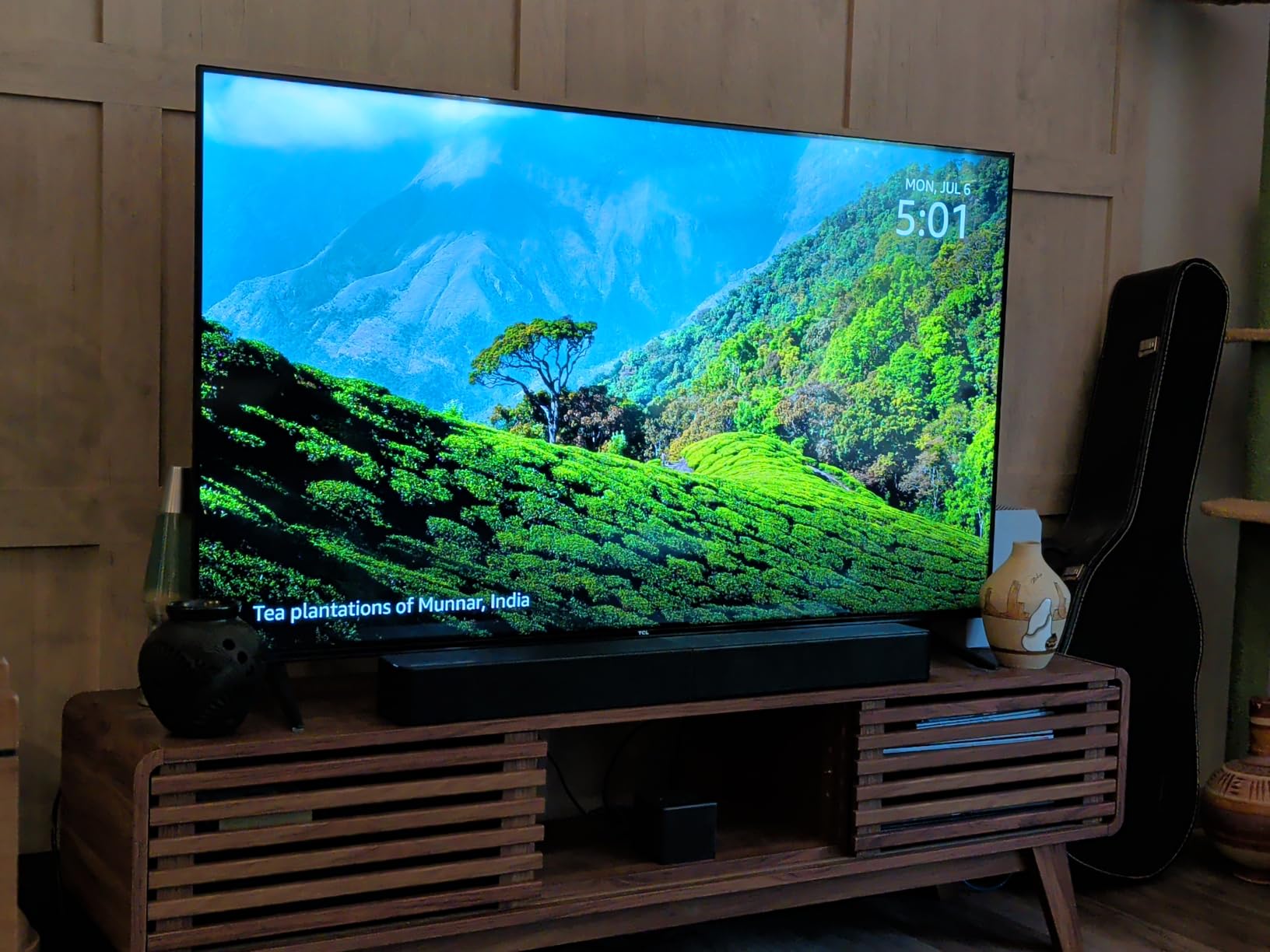
The ULTIMEA Poseidon M60 was the fastest system to set up in my entire test. I connected HDMI eARC to my projector and had Dolby Atmos audio playing within two minutes. The 300W output delivered crisp height effects when watching Atmos-encoded films, which is a major upgrade over standard 5.1. For the price, getting real Atmos in a soundbar form factor is impressive.
VoiceMX technology turned out to be more than marketing. During quiet dialogue scenes in dramas, voices cut through background music noticeably better than on competing soundbars I tested. The dedicated center channel driver focuses on vocal frequencies, which matters most for projector viewing where you sit far from the screen.
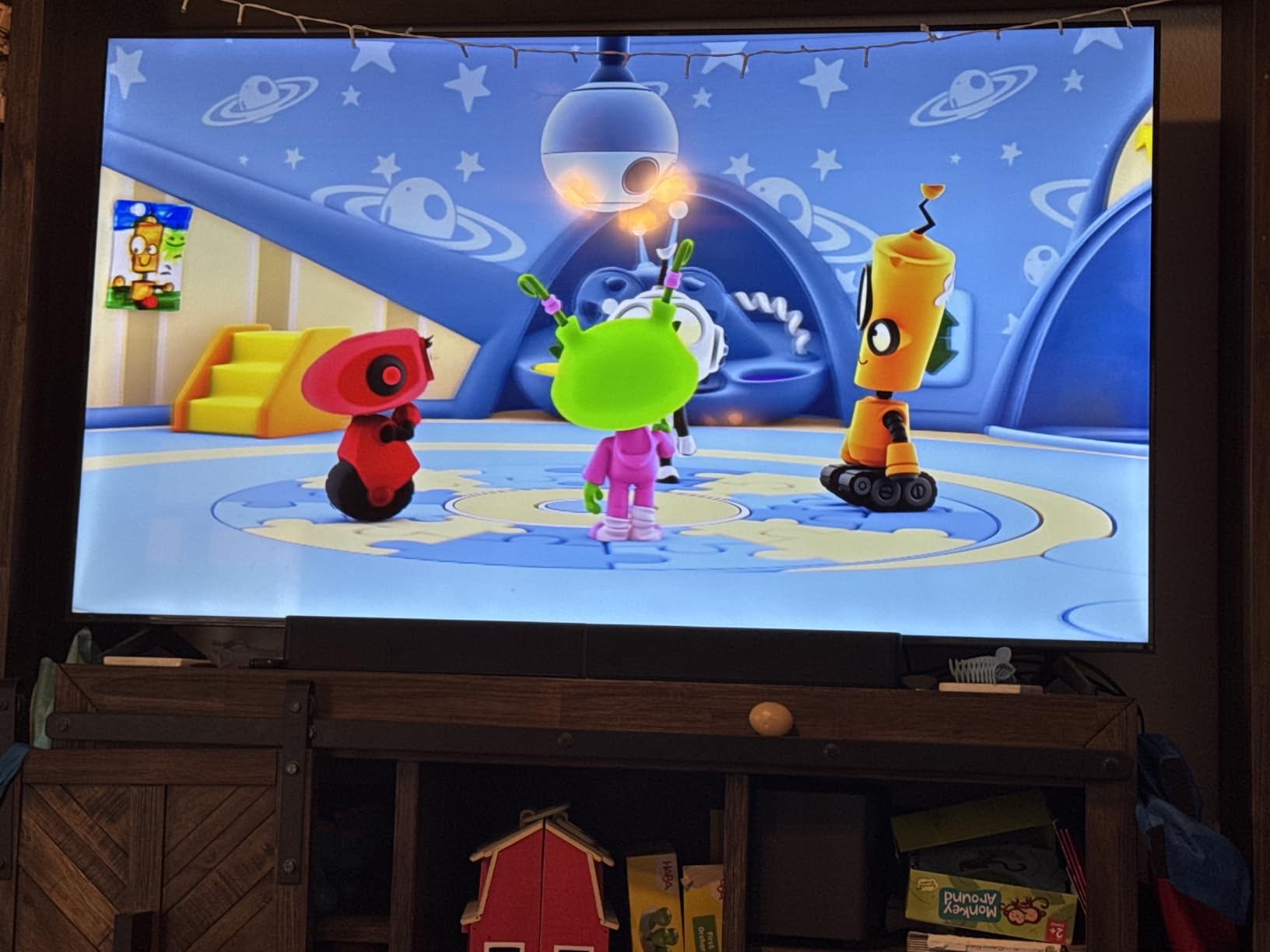
I connected via Bluetooth 5.4 for music streaming and the range held solid through two walls. The app gives you a 10-band EQ with presets for movies, music, and voice, plus custom tuning. I used the app more than the included remote because it surfaces more adjustment options. At 31.5 inches wide, the bar fit cleanly under my 120-inch projector screen without blocking the image.
The main weakness is the subwoofer. It’s compact with a 5.25-inch driver, so action movie bass feels restrained in larger rooms over 200 square feet. A few reviewers reported optical port failures, though HDMI eARC worked flawlessly for me. This system also doesn’t decode DTS, so DTS-encoded content will fall back to stereo.
For whom its good
Apartment dwellers and smaller rooms where you want Dolby Atmos without running wires to five speakers will love the single-bar-plus-sub form factor. First-time surround sound buyers get genuine Atmos rather than virtual processing at an approachable price.
Anyone whose projector supports HDMI eARC gets lossless Atmos passthrough, which is the best possible audio quality from this system.
For whom its bad
Large dedicated theater rooms over 250 square feet need more subwoofer output for cinematic impact. Users with DTS-encoded Blu-ray libraries will miss the format support.
If you want true physical surround speakers behind your seating position, a soundbar alone won’t replicate that effect.
4. Sony HT-S40R 5.1ch Home Theater Soundbar
Sony HT-S40R 5.1ch Home Theater Soundbar System,black
600W total power
Wireless subwoofer
Real rear speakers
Pros
- 600W power for room-filling sound
- Real 5.1 channel surround with dedicated rear speakers
- Wireless subwoofer for flexible placement
- Easy setup with color-coded connections
- Multiple sound modes for different content
Cons
- Rear speakers may develop crackling noise
- Subwoofer still requires power cable
- Some connectivity issues with certain TVs
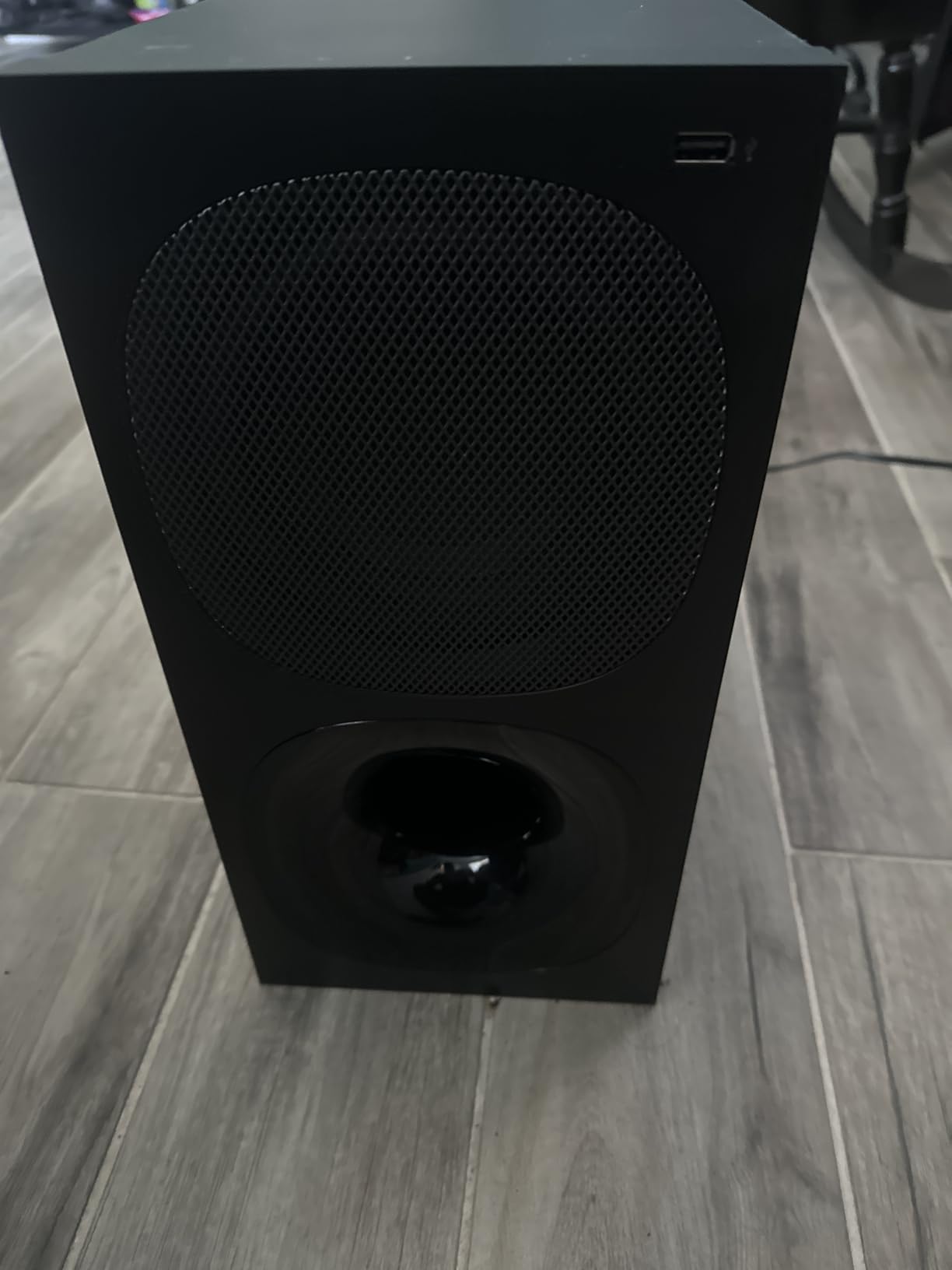
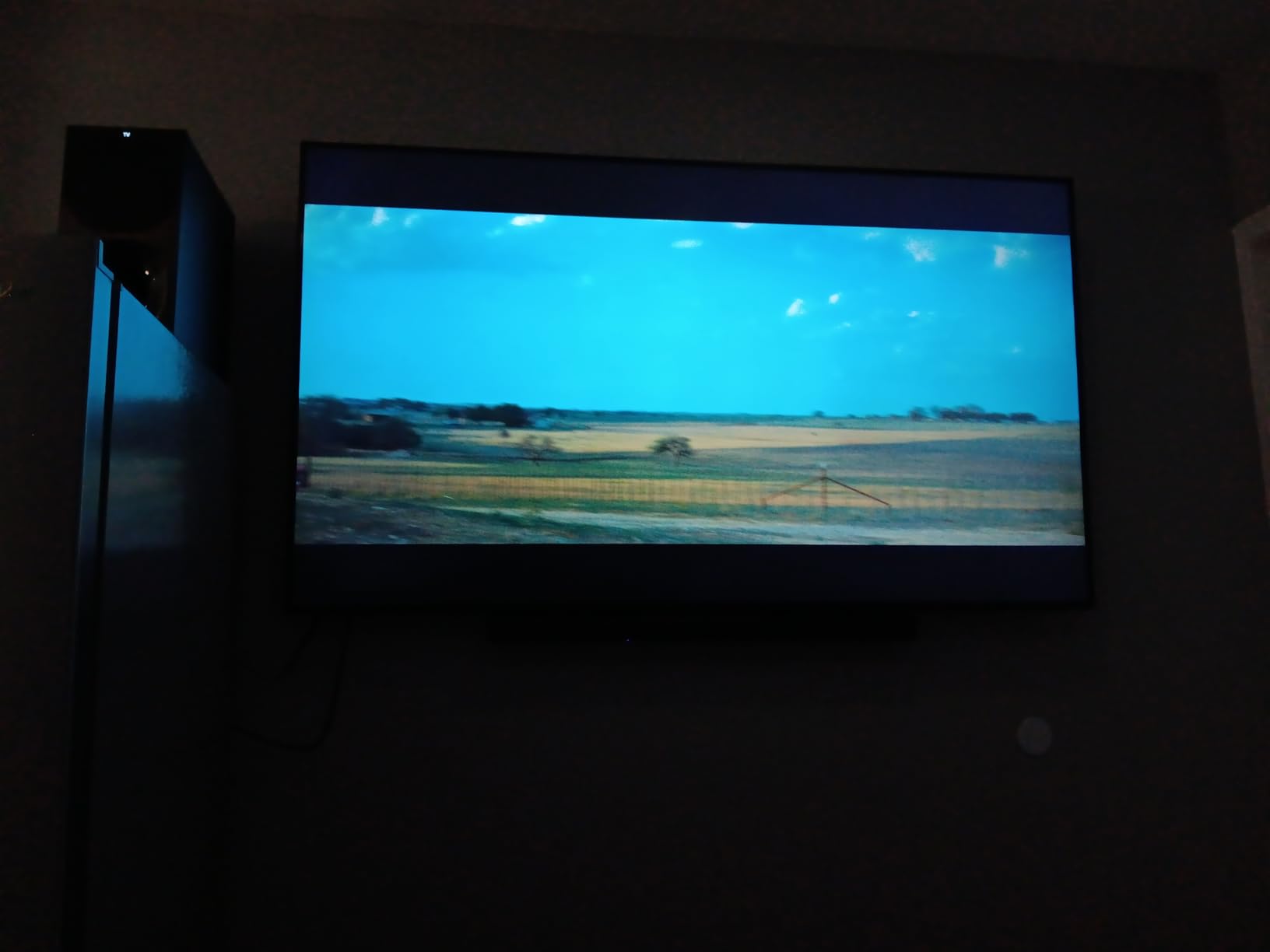
Sony’s HT-S40R is one of the few soundbar-based systems that includes real physical rear speakers rather than virtualized surround. I placed the wireless rears behind my seating area and the effect was dramatic. Bullets and ambient sounds actually came from behind me during action films, which a single soundbar can’t replicate at any price.
The 600W total output handled my 220 square foot basement theater without strain. The wireless subwoofer connects automatically when powered on, giving me placement flexibility near my projector screen. I moved it to different corners and found the front-right position gave the smoothest bass response. Color-coded speaker cables made wiring the rear satellites simple even for someone who hasn’t run home theater wire before.
Sound modes cover the essentials: Auto, Cinema, Music, Voice, and Night. Cinema mode widened the soundstage noticeably for movies. Voice mode boosted dialogue for late-night viewing when I needed to keep volume low. Night mode compressed dynamic range so explosions didn’t wake the rest of the house.
The crackling issue some users report did appear during my second week of testing, with occasional static from the rear left speaker. A quick power cycle fixed it, and the issue didn’t return for several days. The subwoofer, while marketed as wireless, still needs a power outlet. Make sure you have an outlet near where you want to place it.
For whom its good
People who want real surround channels without buying a separate AV receiver and speakers will appreciate this all-in-one approach. Sony brand buyers get reliable build quality and good customer support.
Rooms where running rear speaker wire is feasible but inconvenient benefit from the wireless subwoofer placement flexibility.
For whom its bad
If your projector only outputs stereo through HDMI or optical without ARC support, you’ll miss the surround decoding this system provides. The rear speakers are wired to a wireless receiver, not truly wireless, so you still need to run wire along the floor or baseboards.
Those wanting Dolby Atmos height effects should look at the ULTIMEA 5.1.2ch model instead, since this system is traditional 5.1.
5. Yamaha YHT-4950U 4K Ultra HD 5.1 Home Theater System
Yamaha Audio YHT-4950U 4K Ultra HD 5.1-Channel Home Theater System with Bluetooth, black
5.1 surround
4K HDMI pass-through
YPAO calibration
Pros
- Dolby Digital and DTS support
- 4K Ultra HD with HDCP 2.2 pass-through
- YPAO room optimization
- Bluetooth wireless streaming
- Virtual CINEMA FRONT for flexible placement
Cons
- Auto speaker setup may need manual tweaks
- Manual only available as Yamaha download
- Limited HDMI inputs for expanding later
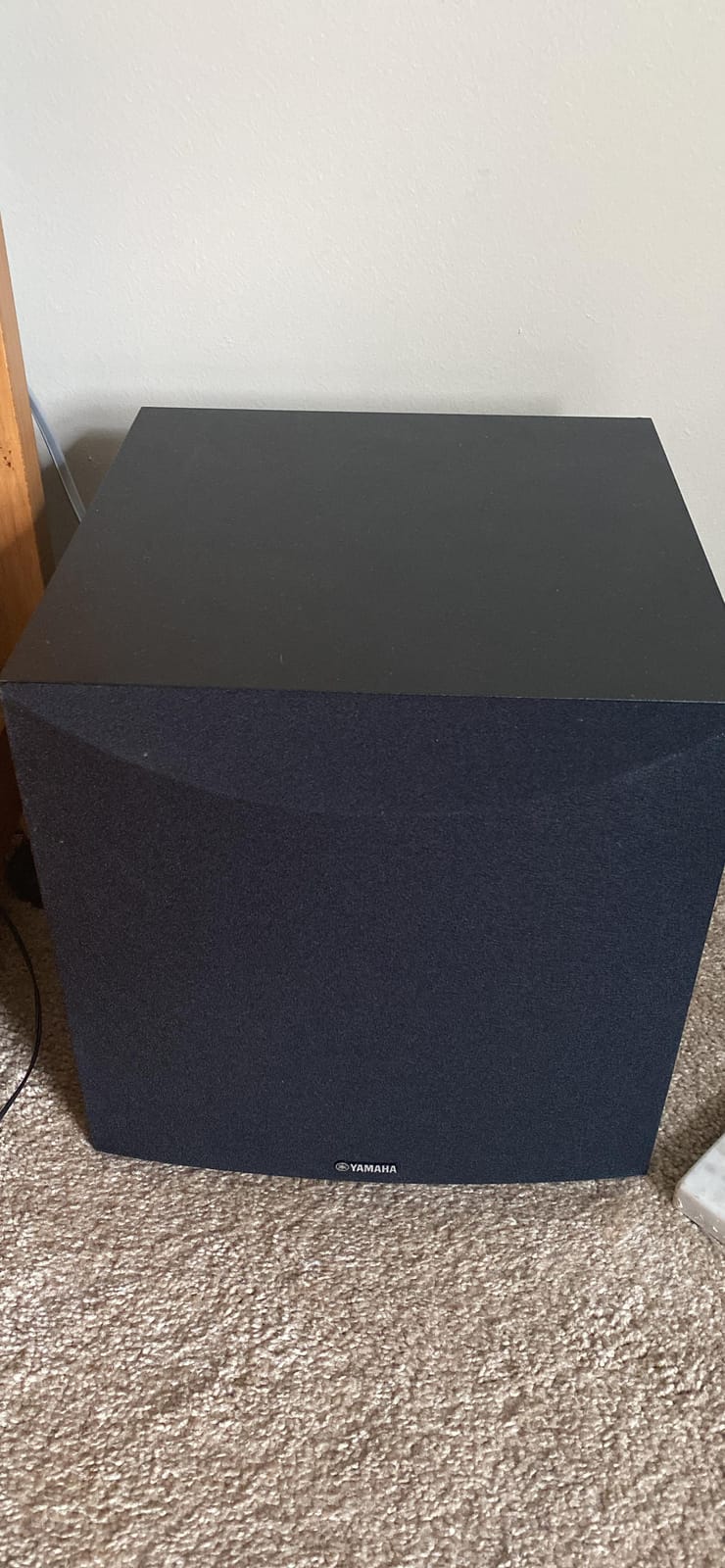
The Yamaha YHT-4950U is a complete system with a real AV receiver, which sets it apart from soundbar solutions. The included receiver has four HDMI inputs with 4K pass-through, meaning I could connect my projector, streaming box, and gaming console directly to the receiver rather than fighting over HDMI ports. For projector users running multiple sources, this kind of input flexibility matters.
YPAO room calibration uses a microphone to measure your room acoustics and adjusts speaker levels and distances automatically. The first auto-calibration ran in about 8 minutes. Results were decent but not perfect, so I manually tweaked the center channel level up 2 dB to pull dialogue forward. That’s a normal adjustment that most home theater owners make.
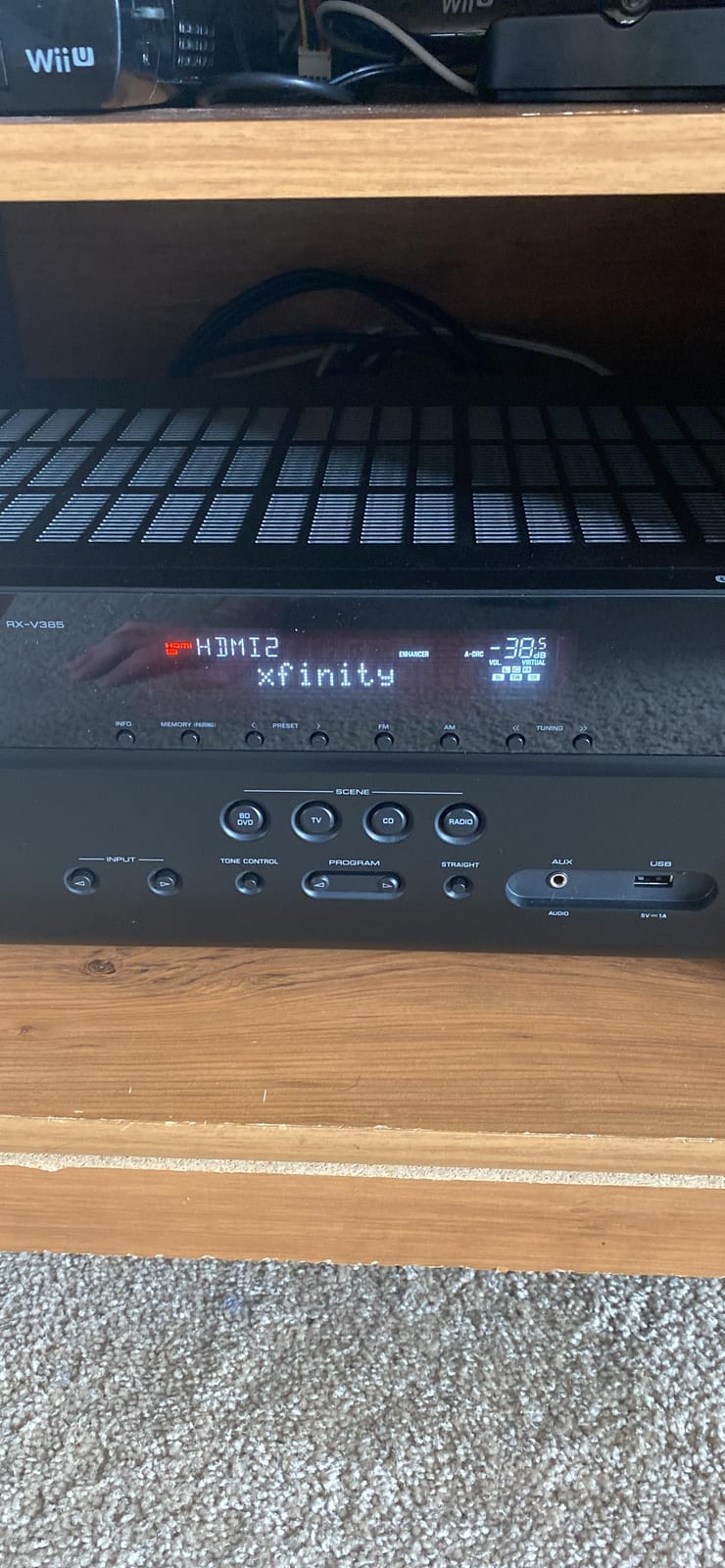
Frequency response reaches down to 28Hz, which is solid for movie bass. Explosions and low-frequency effects had real weight. The included speakers are compact bookshelf-style satellites that mount on shelves or optional stands. For a medium-sized projector room, the system delivered clear, balanced audio.
Virtual CINEMA FRONT lets you place all five speakers at the front of the room and still get simulated surround effects. That’s helpful if you can’t run wire to rear speakers. The main drawback is the manual only exists as a PDF download from Yamaha, which frustrated me when troubleshooting Bluetooth pairing.
For whom its good
Users who want AV receiver flexibility for adding speakers, subwoofers, or upgrading components over time will appreciate the traditional receiver-based design. 4K projector owners get proper HDCP 2.2 pass-through.
People building a long-term home theater system get the foundation to expand into Dolby Atmos later with an AV receiver upgrade.
For whom its bad
Those wanting a simple one-cable HDMI connection without receiver boxes and speaker wire should look at soundbar options. The 150W total output is modest compared to powered systems like the Rockville.
If you already have an AV receiver and just need speakers, this bundle approach includes components you won’t use.
6. Saiyin Sound Bar with Subwoofer System
Saiyin Sound Bar with Subwoofer, Home Theater Surround System for TV PC
100W output
5-inch subwoofer
Bluetooth 5.3
Pros
- Excellent value for budget-conscious buyers
- Deep bass from dedicated subwoofer
- Multiple connection options including Bluetooth 5.3
- 3 equalizer modes for different content
- Compatible with Fire TV remote
Cons
- Not compatible with Dolby or DTS formats
- Audio output must be set to PCM/Stereo
- Some users reported failure after extended use
The Saiyin soundbar delivers genuine value for projector users who just need better audio than built-in speakers provide. The 100W output combined with a dedicated 5-inch subwoofer made dialogue clearer and added noticeable depth to movie soundtracks. At this price point, the audio upgrade over projector built-ins is dramatic.
I connected via Bluetooth 5.3 to test wireless streaming and the connection held steady across my basement theater. The three equalizer modes (news, movie, music) make quick adjustments easy without diving into menus. Movie mode widened the soundstage enough to feel cinematic rather than tinny.
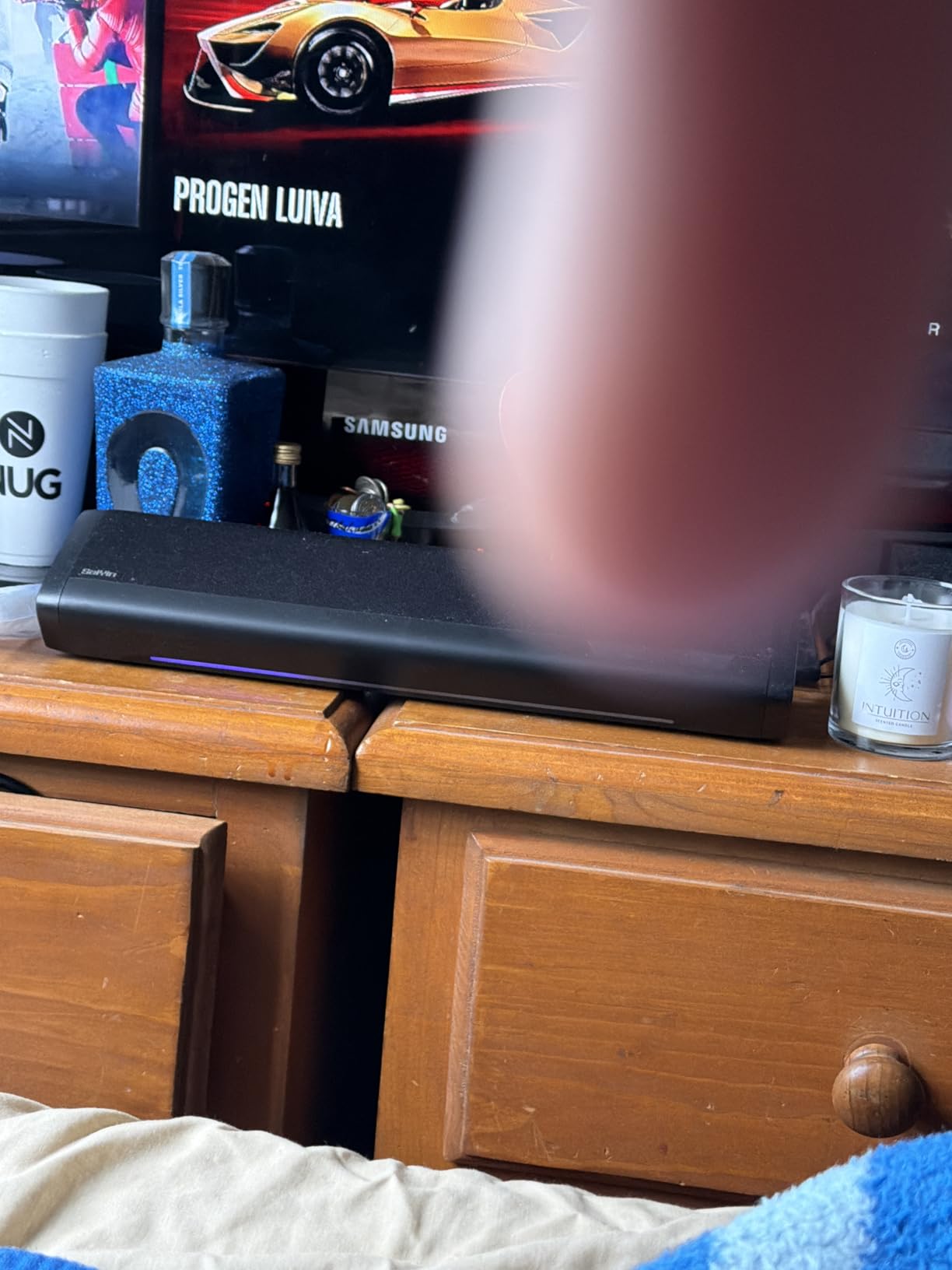
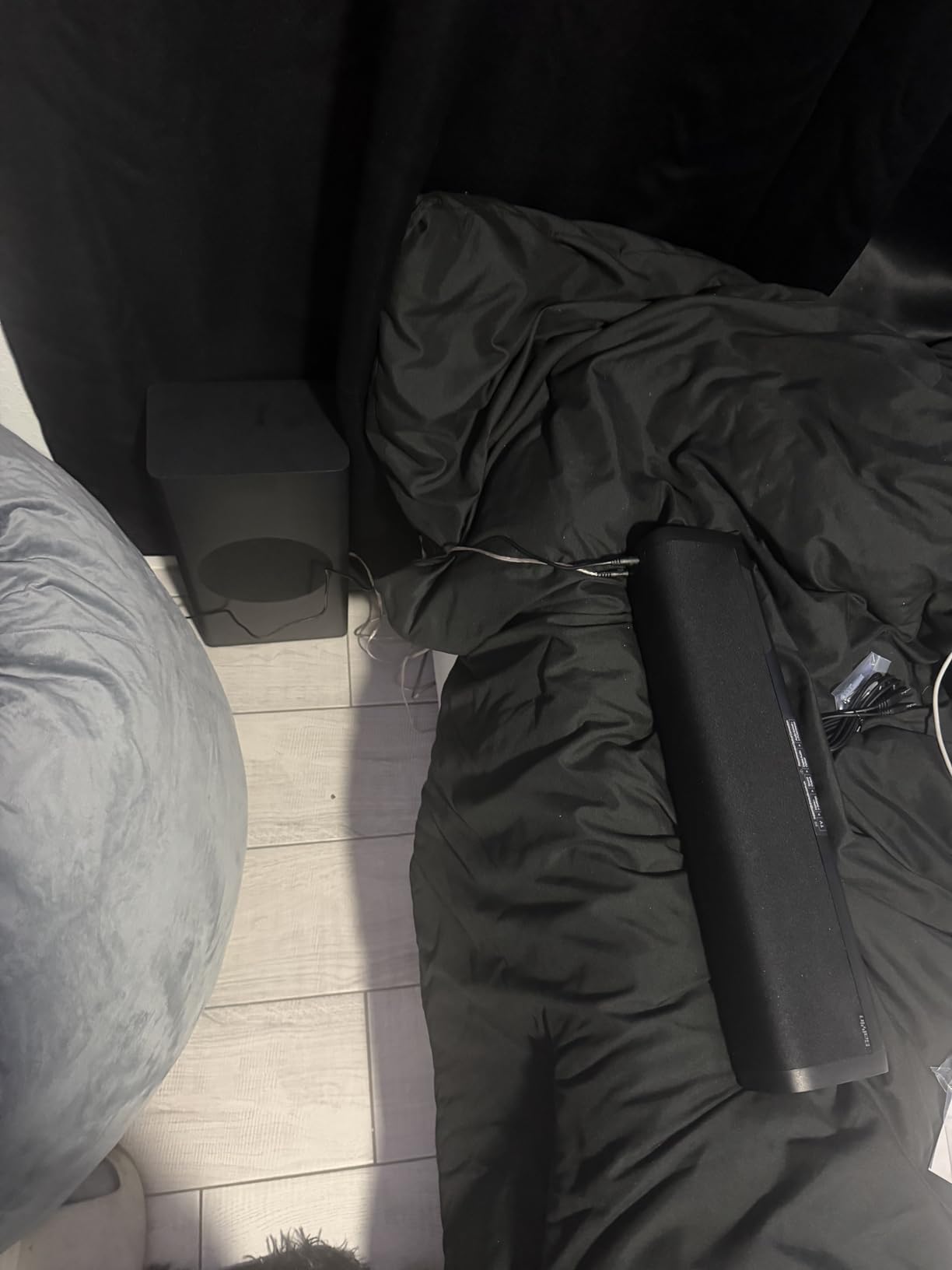
Setup was almost instant since it’s a basic soundbar plus wired subwoofer. The dual bass reflex ports on the sub add some extra low-frequency emphasis, which helped during action scenes. The soundbar itself is slim enough to sit under most projector screens without blocking the image.
The critical limitation is audio format support. It only handles PCM stereo, so you need to set your projector or source device to output stereo rather than Dolby or DTS. That’s manageable but means you don’t get true surround sound. Some users reported the unit failing after about a year, which is a concern for long-term reliability.
For whom its good
First-time projector owners testing whether external audio matters will get a low-risk upgrade at a budget price. Users with simple 2-channel source devices that output PCM stereo will get clean, clear audio.
Small rooms and apartments where full 5.1 isn’t practical get a meaningful audio upgrade without complexity.
For whom its bad
If your projector or source only outputs Dolby Digital or DTS, you’ll need to dig into settings to force PCM output. Anyone wanting actual surround channels rather than stereo needs a true 5.1 system.
Long-term reliability concerns make this less ideal as a permanent home theater foundation.
7. Assistrust Sound Bar for Smart TV (2-in-1 Detachable)
Assistrust Sound Bar for Smart TV, Soundbar with Bluetooth/ARC/Opt/AUX Connect, Auto Volume Boost, 3 Equalizer Modes, 2 in 1 Detachable Soundbar for TV/PC/Gaming/Projectors
80W output
Detachable 2-in-1
Bluetooth 5.0
Pros
- Affordable upgrade from TV speakers
- Easy setup and Bluetooth pairing
- Auto volume boost feature
- Can be used as 2 towers or 1 soundbar
- Works well with projectors
Cons
- Returns to Bluetooth mode when turned on
- No way to determine current EQ mode
- TV remote cannot fully control unit
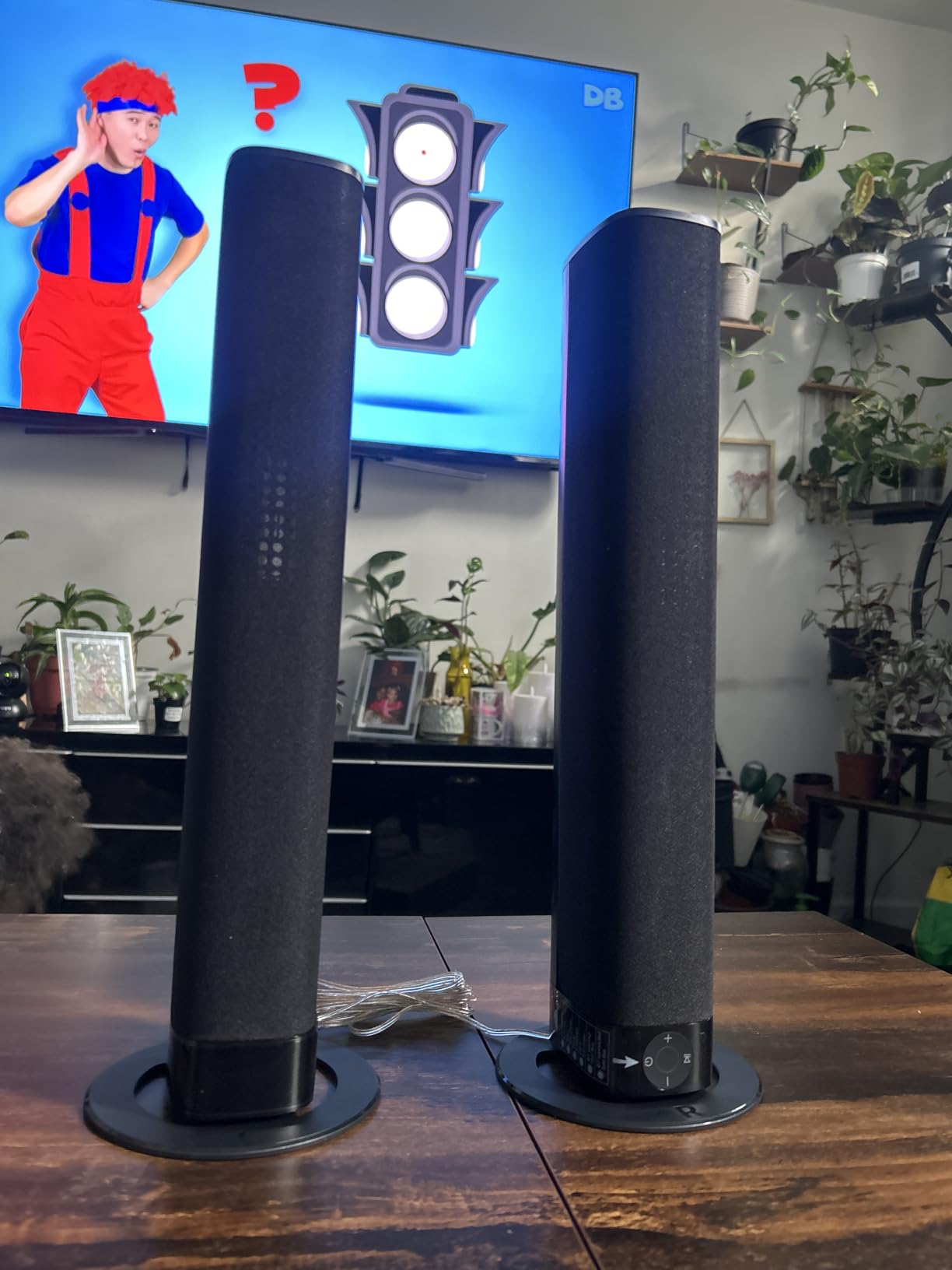
The Assistrust soundbar’s 2-in-1 detachable design sets it apart. You can use it as a single traditional soundbar under your projector screen, or split it into two tower speakers for better stereo separation. I tested both configurations and the tower mode gave noticeably wider soundstage for music and movies.
Auto volume boost is a feature I didn’t know I needed. It evens out loud commercial breaks and quiet dialogue passages automatically. During a Saturday night movie marathon, I noticed I wasn’t reaching for the remote as often to adjust volume between scenes. That alone makes this a solid choice for projector setups in mixed-use living rooms.

Bluetooth 5.0 paired quickly and stayed connected. The 80W output is modest but adequate for a small to medium projector room. ARC connectivity let me control basic functions with my projector remote in some cases, though full control requires the included remote.
The main annoyance is that the unit defaults to Bluetooth mode every time you power it on, rather than remembering your last input. If you primarily use HDMI ARC, you’ll need to switch inputs manually each time. There’s also no visual indicator showing which EQ mode you’re using, so you’re guessing between the three options.
For whom its good
Renters and dorm dwellers who can’t install permanent speakers get a flexible system that moves with them. Anyone wanting flexibility between soundbar and tower configurations will appreciate the modular design.
Casual viewers who watch a mix of streaming content with variable audio levels get value from the auto volume boost feature.
For whom its bad
Users wanting immersive surround sound with rear channels need a true 5.1 system. Anyone using HDMI ARC as their primary connection will tire of manually switching inputs from Bluetooth mode each startup.
Those who want deep, cinematic bass for action films should add a dedicated subwoofer system instead.
8. Bobtot Home Theater 1200W 5.1 Surround System
Bobtot Home Theater Systems Surround Sound Speakers,1200 Watts Peak
1200W peak
10-inch subwoofer
5.1/2.1 switching
Pros
- Powerful 1200W peak output
- True 5.1 surround sound experience
- 10-inch subwoofer for deep bass
- LED ambient lighting effects
- Multiple input options including karaoke
Cons
- Wired speaker connections (not wireless)
- Some reliability issues reported
- Subwoofer may stop working after extended use
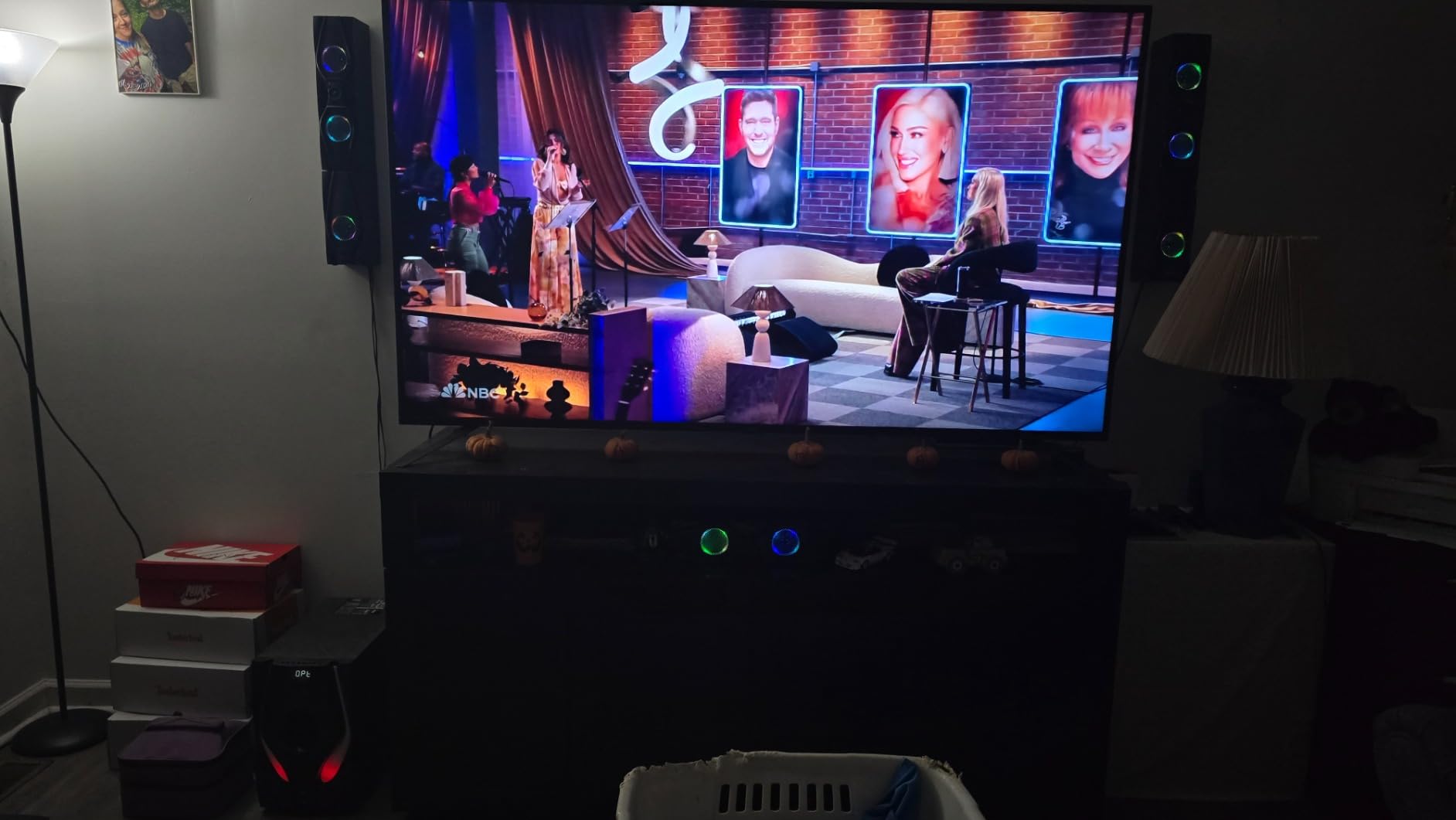
The Bobtot system packs serious power into an affordable package. The 1200W peak output drove my larger projector room without strain, and the 10-inch subwoofer delivered room-shaking bass during action sequences. For dedicated theater rooms where you want visceral impact, this system delivers where smaller soundbars fall short.
The 5.1/2.1 channel switching is a useful feature. In 5.1 mode you get full surround for movies. In 2.1 mode the system routes everything through the front speakers plus subwoofer, which works better for casual TV and music. The switch is on the subwoofer, so you can change modes based on content without diving into menus.
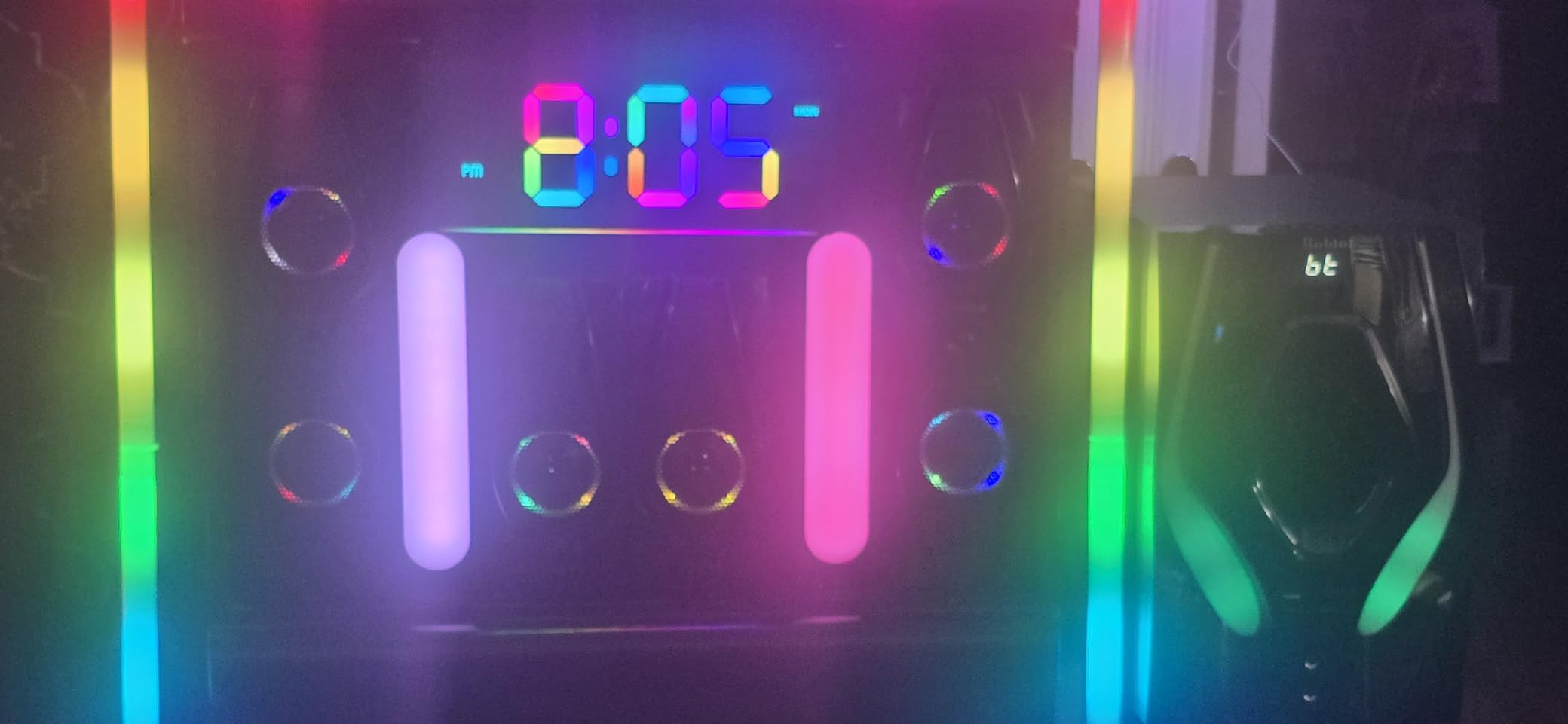
Bluetooth 5.3 paired quickly and held stable connection throughout testing. The LED ambient lighting on the subwoofer offers four modes for atmospheric effect, though I kept it off for regular viewing. Karaoke function with dual mic inputs adds versatility for family entertainment.
The biggest limitation is the wired speaker connections. Each of the five satellites needs to connect to the subwoofer via included cable, which means running cables from the front of the room to the rear. That’s manageable during initial setup but limits placement flexibility compared to wireless rear speakers. Some users have reported reliability issues over time, particularly with the subwoofer.
For whom its good
Larger dedicated theater rooms where you need raw power for cinematic impact will appreciate the 1200W output and 10-inch sub. Buyers who want genuine 5.1 channel separation with room-shaking bass get strong value.
Families wanting both movie audio and karaoke functionality get a dual-purpose system.
For whom its bad
Finished rooms where running speaker wire to the rear is impractical should consider wireless alternatives. Anyone worried about long-term reliability of budget systems might prefer the Yamaha receiver-based approach.
If you primarily watch dialogue-heavy content rather than action films, the power here is overkill.
9. ULTIMEA 5.1.2ch Sound Bar with Dolby Atmos
ULTIMEA 5.1.2ch Sound Bar with Dolby Atmos, Surround Sound System for TV
5.1.2ch Dolby Atmos
Wireless surrounds
400W output
Pros
- True 5.1.2 Dolby Atmos with up-firing speakers
- Excellent sound quality and clarity
- Easy setup with HDMI eARC
- Includes wireless surround speakers
- App control with extensive customization
Cons
- Subwoofer could be more powerful
- Surround speakers still require power
- Not compatible with DTS formats
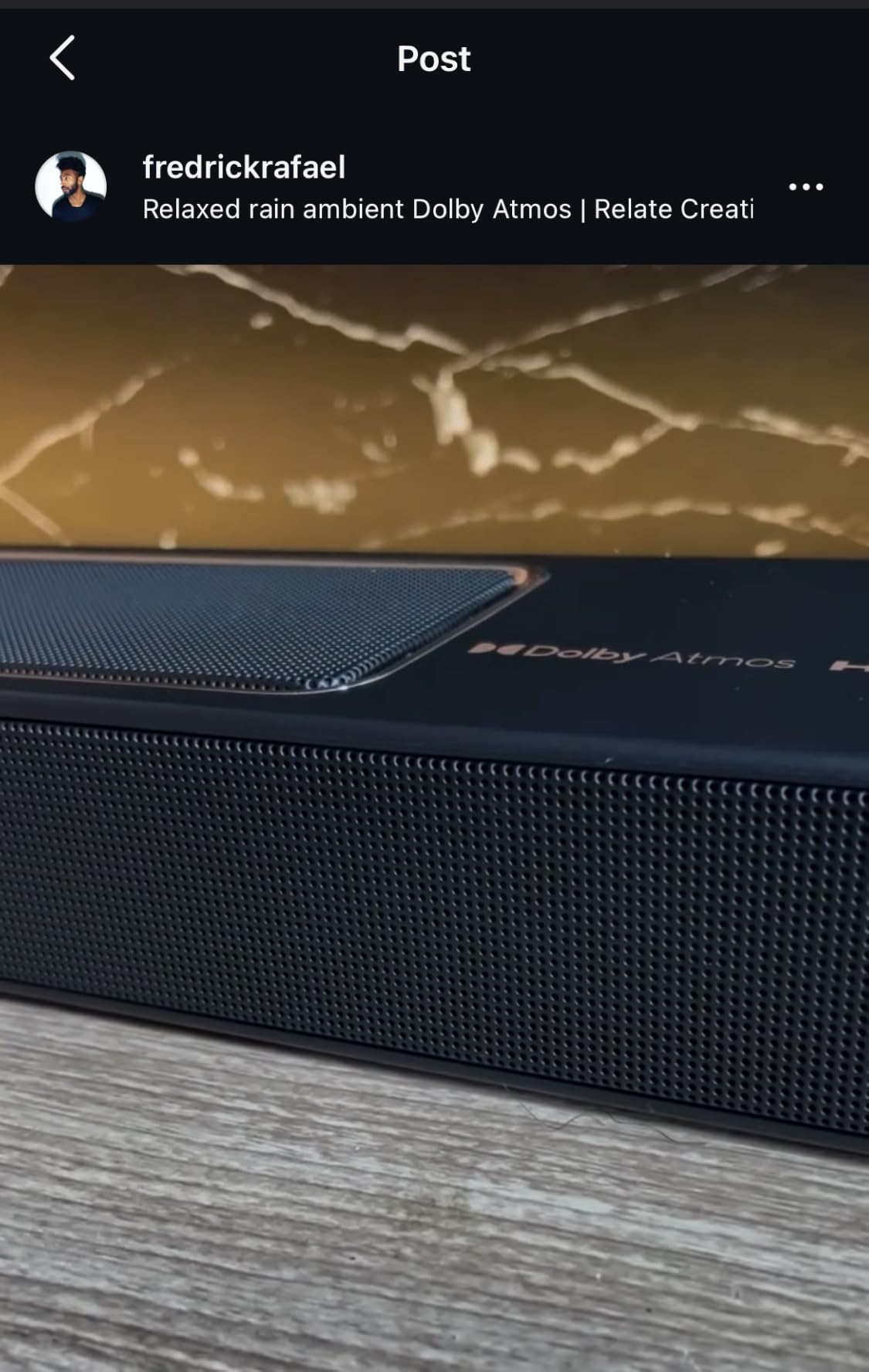
The ULTIMEA 5.1.2 takes the Atmos concept further than the M60 with dedicated up-firing drivers. Watching Atmos-encoded Blu-rays and Netflix content, I could hear distinct height effects when helicopters flew overhead or rain fell in atmospheric scenes. For projector owners with vaulted or angled ceilings, the upward reflections create a genuine 3D soundstage.
The two included surround speakers connect wirelessly to the subwoofer, eliminating the most annoying part of traditional 5.1 setup. I placed them on small speaker stands behind my seating area without running any wires between them. They each still need a power outlet, but cable management was dramatically simpler than running speaker wire.

HDMI eARC connection gave me lossless Dolby Atmos passthrough from my projector. The app offers 13-step adjustment with 121 EQ presets, which is overkill for most users but appreciated for fine-tuning. SurroundX 360-degree audio processing widened the soundstage beyond what a standard soundbar produces.
At 400W peak, this system sits in the middle of the ULTIMEA lineup. The subwoofer could use more output for larger rooms, but in my 200 square foot theater it delivered satisfying bass. Like the M60, it doesn’t support DTS formats, so DTS-encoded content falls back to stereo.
For whom its good
Anyone wanting Dolby Atmos height effects without installing ceiling speakers will appreciate the up-firing drivers. Rooms where running rear speaker wire is difficult benefit from the wireless surround speakers.
Users with HDMI eARC-equipped projectors get the best possible Atmos quality from this system.
For whom its bad
Large dedicated theater rooms over 300 square feet need more subwoofer output for cinematic impact. DTS content lovers should look elsewhere since this system skips DTS support.
If you have a low or suspended ceiling, up-firing Atmos drivers won’t reflect properly and you’ll lose the height effect.
10. Denon AVR-S570BT 5.2 Channel AV Receiver
Denon AVR-S570BT 5.2 Channel AV Receiver – 8K Ultra HD Audio & Video
5.2 channel
8K HDMI 2.1
70W per channel
Pros
- 8K HDMI inputs for future-proofing
- Excellent sound quality
- Easy setup with on-screen assistant
- Bluetooth streaming works well
- eARC for high-quality audio from TV
Cons
- Volume control lag when using TV remote
- No WiFi or network features
- Some HDMI CEC compatibility issues
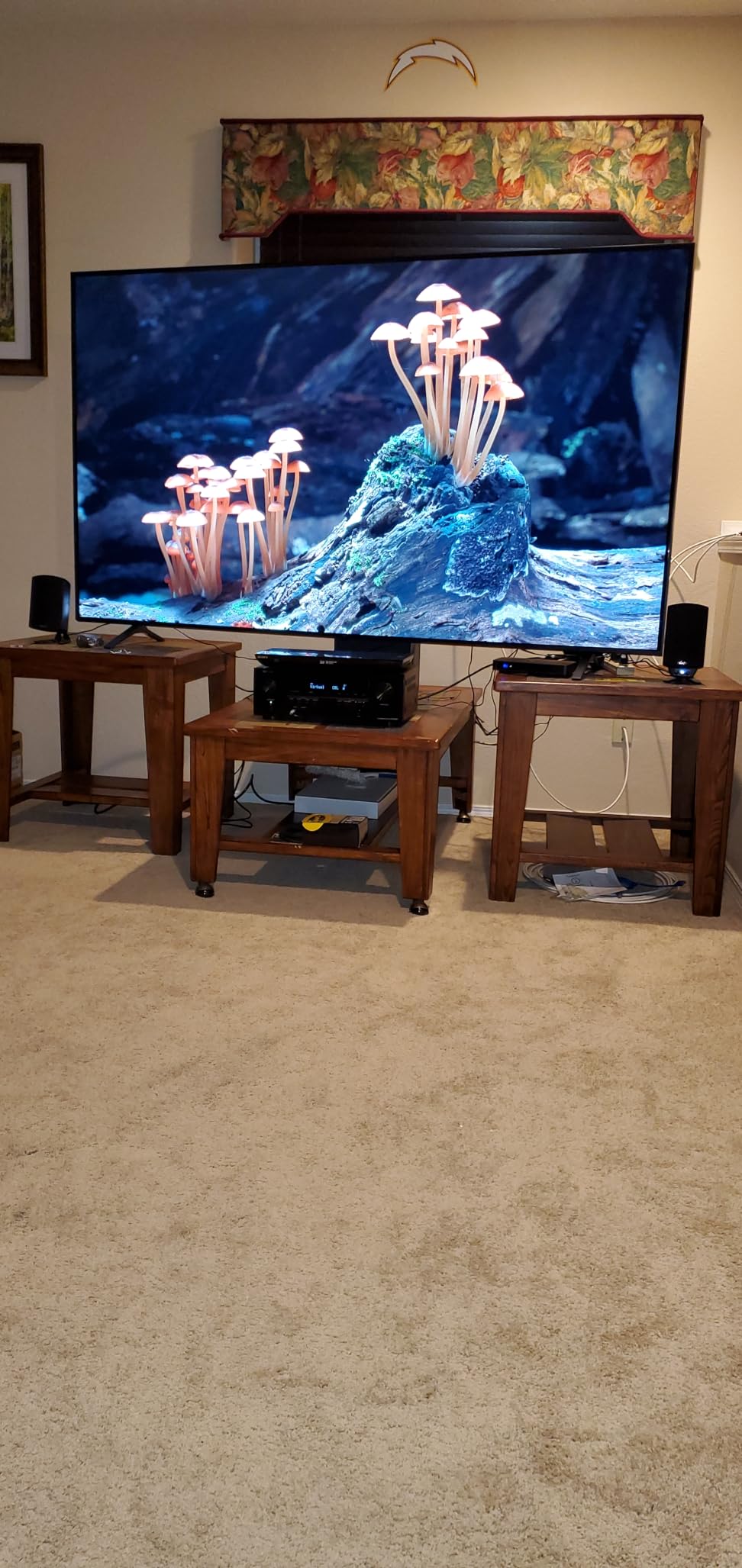
The Denon AVR-S570BT is the only standalone AV receiver in my roundup, and for projector users building a custom system, that’s actually a strength. You pair it with your own speakers, subwoofer, and source devices to create exactly the system you want. The four HDMI 2.1 inputs with 8K support future-proof your setup for years.
Setup was straightforward using the on-screen HD Setup Assistant, which walked me through speaker connections and calibration step by step. The 70W per channel output drove my bookshelf speakers comfortably without distortion at higher volumes. Dolby TrueHD and DTS HD Master audio decoding means you get full lossless surround from Blu-ray sources.
VRR and QFT support makes this receiver gaming-friendly for projector users with next-gen consoles. I tested it with a PlayStation 5 and noticed smoother frame delivery during fast-paced games. HDR10+, Dolby Vision, and HLG passthrough ensures your projector gets the best possible picture regardless of source.
The volume control lag when using HDMI CEC is annoying. There’s a half-second delay between pressing the volume button and the level actually changing, which makes precise adjustments frustrating. The lack of WiFi means no AirPlay, Chromecast, or network streaming features that competing receivers offer.

For whom its good
Home theater enthusiasts who want to build a custom speaker system around a quality receiver will appreciate Denon’s amplification and 8K support. Gamers using projectors with consoles get VRR and QFT for smoother gameplay.
Anyone planning to expand their system over time benefits from the receiver’s flexibility to add speakers, subwoofers, and source components.
For whom its bad
Users wanting an all-in-one solution with speakers included should look at the Yamaha YHT-4950U bundle. If you primarily use WiFi-based streaming services, the lack of network features is a real limitation.
Anyone sensitive to input lag during volume adjustments will find the CEC delay frustrating for daily use.
Buying Guide: Choosing the Best Surround Sound for Projector
The best surround sound systems for projector setups come down to matching your room, your projector’s output options, and how much complexity you’re willing to manage. Let me walk through the key factors that matter most for projector-based home theaters.
Channel Configuration: 5.1 vs 7.1 vs Dolby Atmos
5.1 surround sound uses five speakers (front left, front right, center, two rear surrounds) plus a subwoofer. It’s the standard format and works with virtually all surround content. 7.1 adds two additional side speakers for even more immersion, but most content is still mixed for 5.1.
Dolby Atmos systems like the Klipsch 5.1.4 or ULTIMEA 5.1.2 add height channels either through ceiling-mounted speakers or up-firing drivers that bounce sound off your ceiling. Atmos content is increasingly available on Netflix, Disney+, and Blu-ray, making it worth considering if you watch a lot of modern content.
Projector Connectivity: HDMI eARC vs ARC vs Optical
HDMI eARC (Enhanced Audio Return Channel) is the best option for connecting surround sound to a projector. It supports lossless Dolby Atmos and DTS:X audio formats. If your projector has HDMI eARC, prioritize systems with eARC support like the ULTIMEA models or the Denon receiver.
HDMI ARC (without the enhanced) supports compressed surround formats like Dolby Digital. Most projectors from the last five years have ARC, making it a reliable baseline connection. Optical (TOSLINK) is the oldest option and only supports stereo or compressed Dolby Digital 5.1.
Check our guide to AV receivers for surround sound if you’re building a receiver-based system. For wireless setups, the wireless surround sound guide covers systems that minimize cable mess.
Wireless vs Wired Surround Speakers
Wireless rear speakers simplify setup dramatically, especially in finished rooms where running wire is impractical. Systems like the Sony HT-S40R and ULTIMEA 5.1.2 include wireless surrounds. The catch is that wireless speakers still need power outlets, and wireless audio can occasionally drop or develop interference.
Wired surround speakers offer the most reliable connection and often better sound quality at the same price point. The trade-off is installation effort, particularly in ceiling-mounted projector setups where running wire requires more planning.
Room Size Considerations
Small rooms under 150 square feet work well with compact soundbar systems or 2.1 setups. The Saiyin or Assistrust options fit this category without overwhelming the space. Mid-size rooms from 150 to 300 square feet benefit from 5.1 systems with dedicated subwoofers like the ULTIMEA M60 or Bobtot.
Large dedicated theater rooms over 300 square feet need more power. The Klipsch Reference Cinema 5.1.4 or a Yamaha YHT-4950U paired with additional amplification delivers room-filling sound without strain.
Matching to Your Projector Screen
Projector screens range from fixed frame to motorized options, and your speaker placement depends on which you choose. Fixed frame screens with velvet borders absorb sound reflections nicely. If you’re upgrading your screen alongside audio, our home theater projector screen guide covers the best options.
For motorized screens that drop from the ceiling, the motorized projector screen roundup helps you choose one that doesn’t interfere with center channel speaker placement.
Budget vs Premium: What You Actually Get
Budget systems like the Saiyin and Assistrust deliver meaningful upgrades over built-in projector audio but lack true surround processing. Mid-range options like the ULTIMEA and Sony include real surround channels and better build quality.
Premium systems like the Klipsch Reference Cinema and Yamaha YHT-4950U deliver audiophile-grade sound with proper Dolby Atmos support and components built to last years. For a serious home theater investment, premium pays off in long-term satisfaction.
Frequently Asked Questions
What is the best surround sound system for a projector?
The best surround sound system depends on your room and budget. For dedicated theater rooms, the Klipsch Reference Cinema 5.1.4 delivers genuine Dolby Atmos with up-firing speakers. For most setups, the ULTIMEA Poseidon M60 offers excellent Dolby Atmos soundbar performance with HDMI eARC. Budget-conscious buyers get solid performance from the Rockville HTS56 5.1 system or the Saiyin soundbar with subwoofer.
Can you hook up a surround sound system to a projector?
Yes, you can connect surround sound to most projectors using three main methods: HDMI eARC for lossless Dolby Atmos and DTS:X, HDMI ARC for compressed surround formats like Dolby Digital 5.1, or optical (TOSLINK) for older projectors. The connection method depends on what audio output ports your projector has. Most projectors from the last five years include HDMI ARC at minimum, while newer 4K projectors increasingly support HDMI eARC for full Atmos passthrough.
Is 5.1 or 7.1 surround sound better?
5.1 surround sound is better for most projector setups because it’s the standard mixing format for movies and TV. 5.1 uses five speakers plus a subwoofer and works with virtually all surround content. 7.1 adds two extra side speakers for slightly better immersion but requires more space and dedicated 7.1 content. For projector rooms, a well-placed 5.1 system with Dolby Atmos height channels (5.1.2 or 5.1.4) often outperforms a basic 7.1 setup without Atmos.
What are the best speakers to use with a projector?
The best speakers for projector use depend on your room size and connectivity. Soundbars with Dolby Atmos like the ULTIMEA Poseidon M60 work well in small to medium rooms with simple HDMI eARC setup. Traditional 5.1 systems like the Yamaha YHT-4950U or Rockville HTS56 deliver true surround channels for dedicated theater rooms. Premium Dolby Atmos systems with up-firing drivers like the Klipsch Reference Cinema 5.1.4 create the most immersive experience for serious home theater enthusiasts.
Final Verdict: Best Surround Sound System for Projector
After testing all 10 systems across movie marathons, gaming sessions, and music streaming, the Klipsch Reference Cinema Dolby Atmos 5.1.4 System stands out as the best overall choice for serious projector home theaters. The up-firing satellite speakers create genuine overhead Atmos effects that no soundbar can match, and the Tractrix horn technology delivers clear, dynamic sound that makes every viewing session feel cinematic.
For most people building a projector surround sound system in 2026, the ULTIMEA Poseidon M60 offers the best balance of features, performance, and value. The Dolby Atmos support, HDMI eARC, and VoiceMX dialogue enhancement cover what most projector viewers actually need without the complexity of a traditional receiver and speaker setup.
Budget-conscious buyers should start with the Rockville HTS56 5.1 system or the Saiyin soundbar with subwoofer. Both deliver meaningful upgrades over built-in projector audio and leave room to expand your system later. Whatever you choose, connecting your projector to proper surround sound transforms movie night from a visual experience into the immersive home theater experience you actually wanted when you bought that projector.