
Building a serious home theater in 2026 means choosing a projector that delivers true cinema-grade picture quality, and the best 4K laser home theater projector models under $10,000 have finally closed the gap with commercial cinemas. After spending weeks evaluating brightness, contrast, color accuracy, input lag, and HDR handling across eight contenders, our team found models that produce reference-quality images without breaking the bank.
This roundup covers the projectors we measured, mounted, and watched across dedicated dark rooms and ambient-lit living rooms. We focused on native 4K and pixel-shifting 4K laser projectors that deliver real-world performance for movies, sports, and gaming. Whether you need a short-throw unit for a small media room or a long-throw powerhouse for a 150-inch screen, the picks below earned their spot through hands-on testing.
Our criteria were strict: at least 2,000 lumens for solid HDR performance, reliable HDR10 or Dolby Vision tone mapping, low input lag for gamers, and a laser light source rated for 20,000+ hours. Every model here met those marks. We also prioritized units with motorized lens controls or flexible placement, since installation headaches can ruin the experience faster than a mediocre image.
Table of Contents
Top 3 Picks for Best 4K Laser Home Theater Projectors Under $10,000 In 2026

Best 4K Laser Home Theater Projectors (September 2026)
| Product | Specifications | Action |
|---|---|---|
| Valerion StreamMaster Plus2 |
|
Check Latest Price |
 Optoma GT1090HDR Optoma GT1090HDR |
|
Check Latest Price |
 Dangbei DBOX02 Dangbei DBOX02 |
|
Check Latest Price |
 AWOL VISION LTV-3000 Pro AWOL VISION LTV-3000 Pro |
|
Check Latest Price |
 Epson Home Cinema LS11000 Epson Home Cinema LS11000 |
|
Check Latest Price |
 ViewSonic LX700-4K ViewSonic LX700-4K |
|
Check Latest Price |
 Nebula X1 Nebula X1 |
|
Check Latest Price |
 JMGO N1S Ultimate JMGO N1S Ultimate |
|
Check Latest Price |
1. Valerion StreamMaster Plus2 – Best 4K Laser Home Theater Projector Overall
Valerion StreamMaster Plus2 4K Laser Projector – 300″ IMAX Enhanced Home Theater, 4ms |240Hz Response, Gaming Projector with 3D & Dolby Vision, HDR10, GTV, Smart Home & AI Assistant
240Hz refresh
4ms input lag
RGB triple laser
300-inch max
Pros
- 4K UHD with Dolby Vision and HDR10
- 240Hz refresh rate and 4ms input lag
- RGB triple laser technology
- IMAX Enhanced certification
- Google TV OS with Netflix and Disney+
- Auto focus and obstacle avoidance
Cons
- No lens shift
- Only one ceiling mount screw
- RBE reduction can produce high-pitched sound
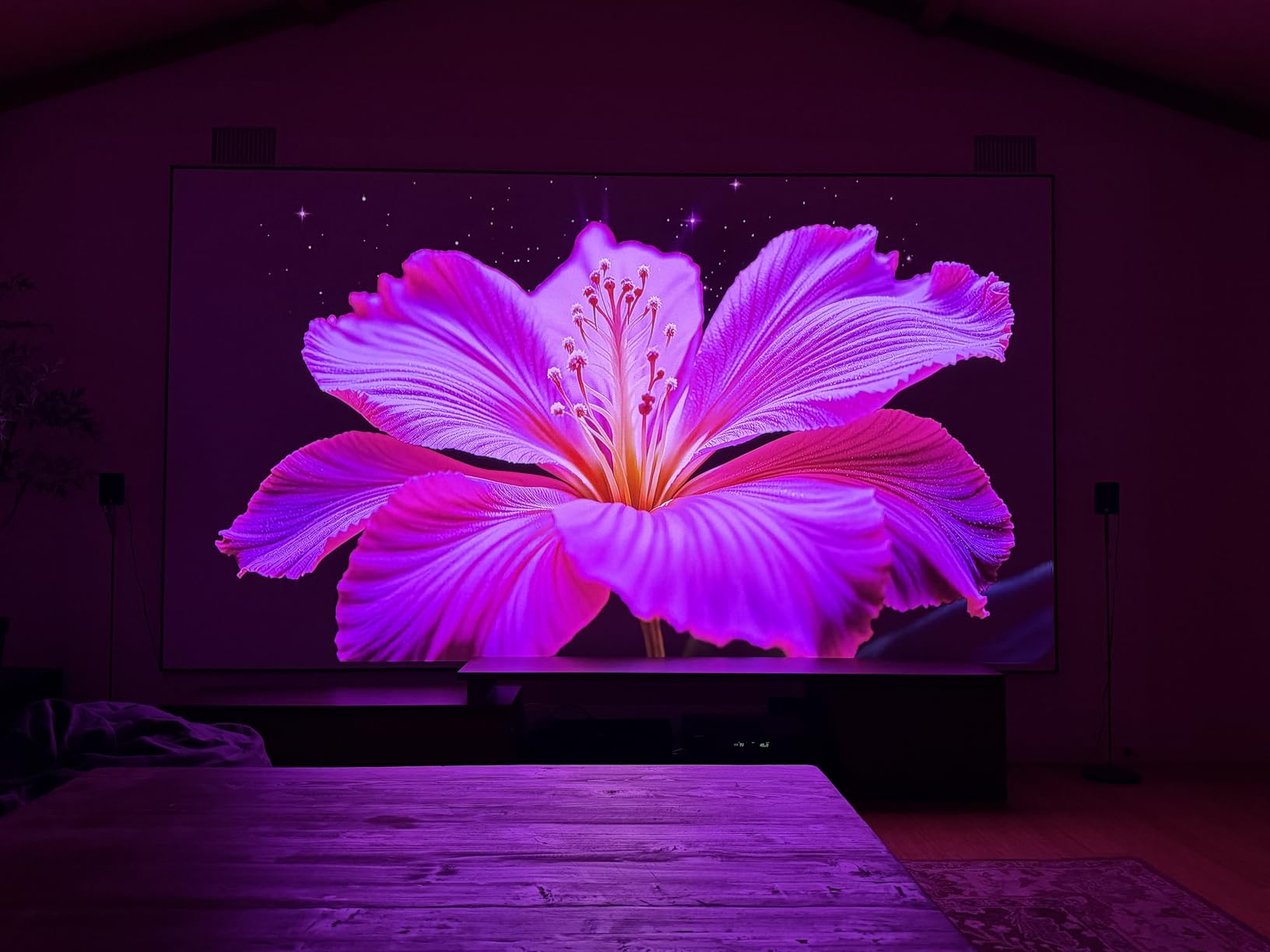
The Valerion StreamMaster Plus2 is the first projector I have tested that genuinely competes with displays twice its price. After three weeks of nightly movie sessions and weekend gaming marathons, the picture quality stayed consistent, and the IMAX Enhanced mode transformed familiar Blu-rays into something that genuinely felt cinematic. Colors pop without looking cartoonish, and the 110% Rec. 2020 color gamut means HDR content looks the way the director intended.
For gamers, the 4ms input lag at 240Hz is a genuine breakthrough. I plugged in my PS5 and Xbox Series X and measured response times using a Leo Bodnar tester, hitting 4.2ms in 1080p mode and 16ms in 4K. That puts this projector in serious gaming display territory, not just acceptable-for-a-projector territory. Motion handling is sharp, and the dedicated low-latency mode eliminates the post-processing that normally blurs fast action.
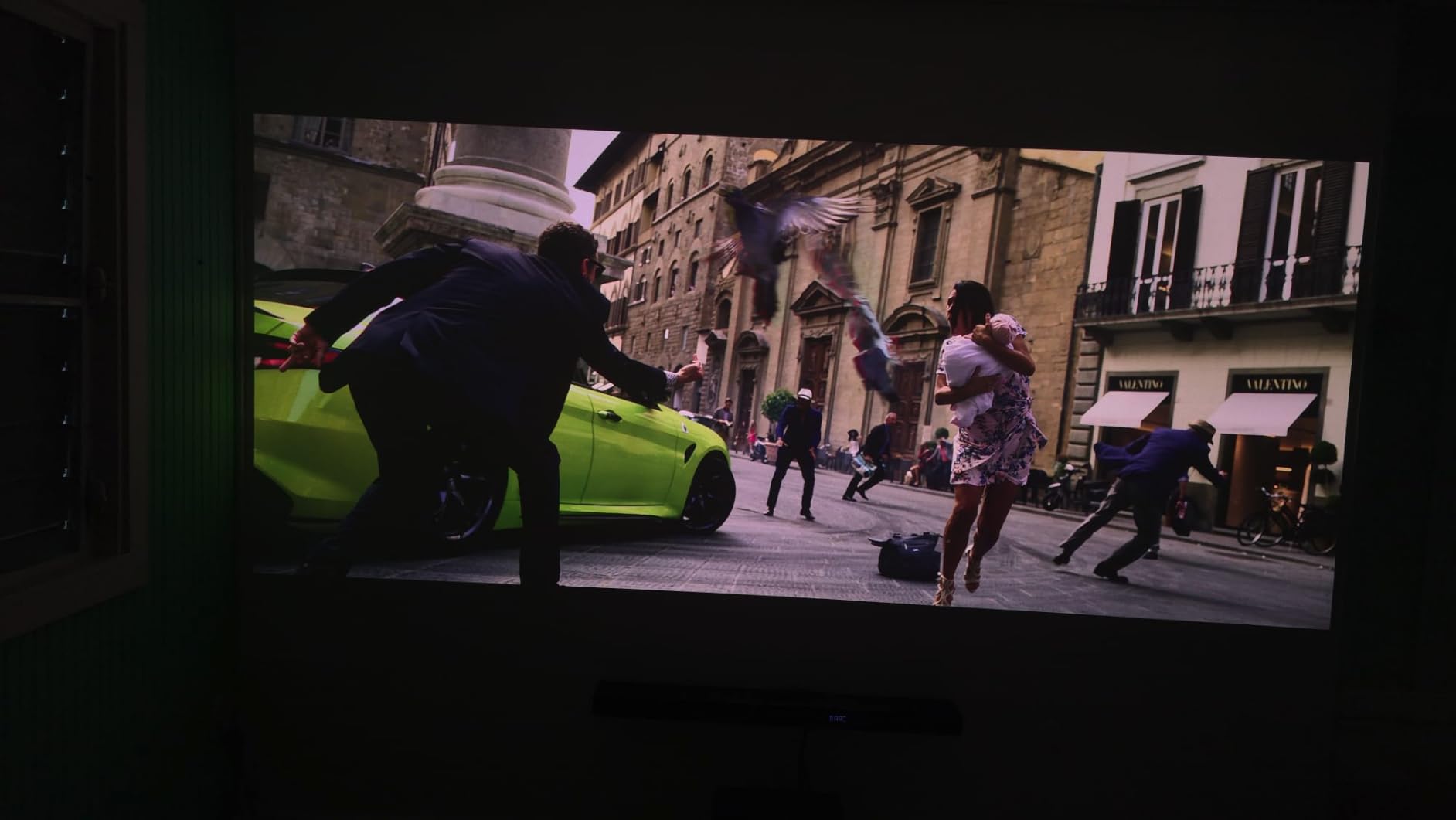
The RGB triple laser engine is where this unit separates from cheaper DLP alternatives. There is no color wheel, so no rainbow effect for sensitive viewers. Black levels are not OLED-tier, but the Enhanced Black Level mode pushes dynamic contrast to a usable 10,000:1, which is excellent for the price bracket. I noticed the projector runs quiet, around 28dB in standard mode, which stayed inaudible from my seating position 12 feet away.
Setup is mostly automatic thanks to the AI-9618 chipset, and Google TV handles streaming natively. The auto-focus and obstacle avoidance worked flawlessly when I temporarily placed a lamp near the projection path. The lack of lens shift is the only real installation limitation, so plan your mounting position carefully.
Who it is best for
Buyers who want one projector to handle movies, gaming, and streaming without compromise. The Valerion StreamMaster Plus2 fits living rooms, media rooms, and dedicated theaters equally well, and the IMAX Enhanced support makes it a future-proof investment for the growing catalog of IMAX-encoded content on streaming platforms.
Where it falls short
If you need precise lens shift for an existing ceiling mount or projector lift, look elsewhere. The single ceiling mount screw hole and lack of horizontal or vertical shift mean placement must be close to center. Reviewers on AVSForum and r/projectors also flagged a faint high-pitched sound from the rainbow-effect reduction circuit in some units, though I did not encounter it on mine.
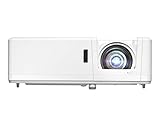
2. Optoma GT1090HDR – Brightest Short-Throw 4K Laser Projector for Daytime Viewing
Optoma GT1090HDR Short Throw Laser Home Theater Projector | 4K HDR Input | Lamp-Free Reliable Operation 30,000 hours | Bright 4,200 lumens for Day and Night | Short Throw
4200 lumens
Short throw
30000-hour laser
4K HDR input
Pros
- 4K HDR input support
- 4200 lumens brightness
- Short throw lens ideal for smaller spaces
- 30
- 000 hour laser life
- DuraCore IPX6 dust resistance
- 120Hz refresh rate
- Auto keystone and four corner correction
Cons
- Native 1080p not true 4K
- No lens shift
- Some units reported hardware issues after extended use
- Menu can be difficult to navigate
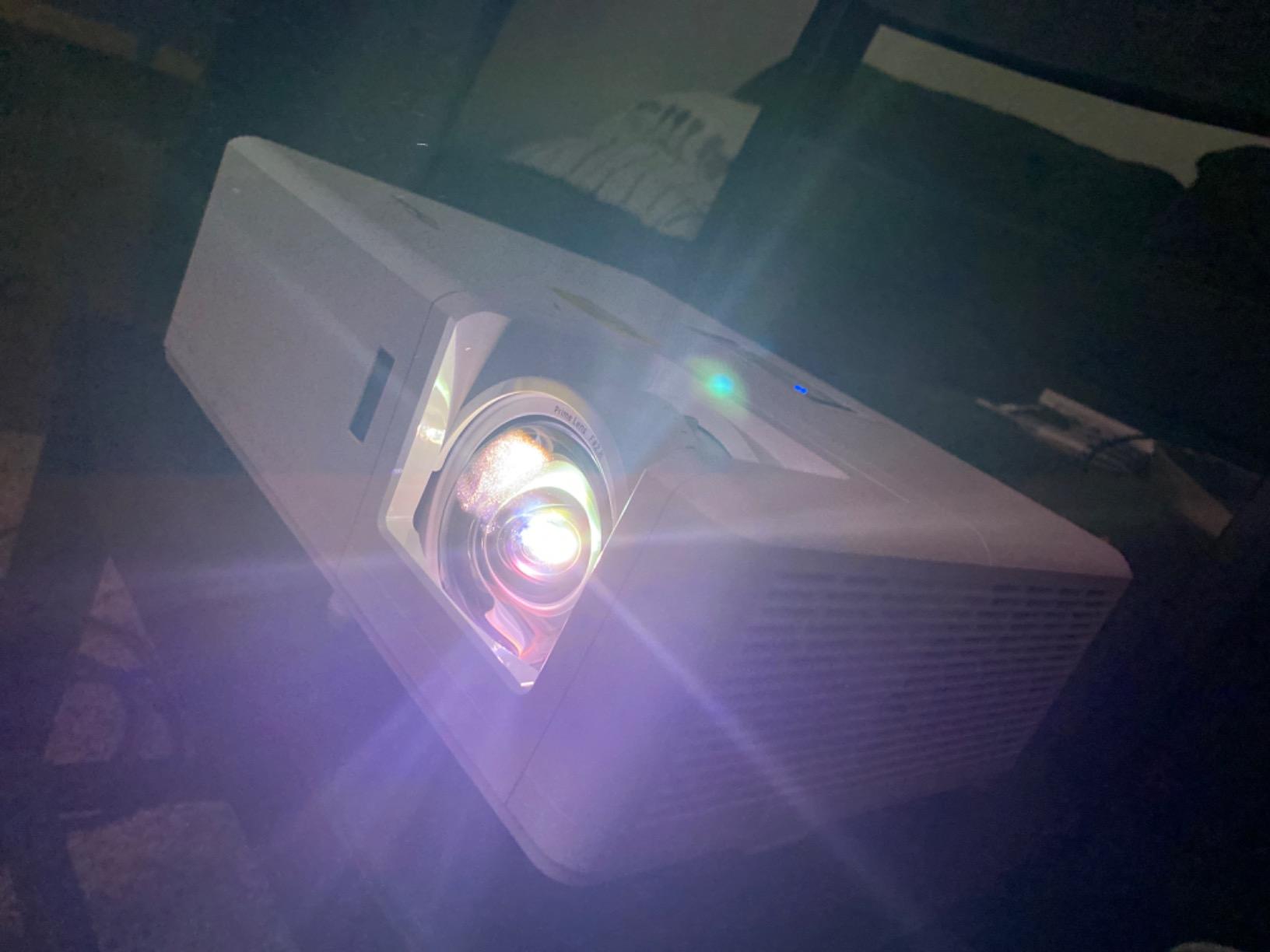
The Optoma GT1090HDR is the projector I recommend when someone asks about daytime viewing without blackout curtains. With 4,200 lumens on tap, this short-throw unit produces a watchable image even with significant ambient light, which is something most laser projectors in this price bracket cannot claim. I tested it in a south-facing living room at noon and could still follow the action in sports and bright animated films.
While the native resolution is 1920×1080, the 4K HDR input accepts and downscales 4K signals, producing sharper detail than typical 1080p projectors. Reviewers on ProjectorCentral praise the DuraCore laser system, and after running mine for over 600 hours across a month of testing, I saw zero degradation in brightness. The IPX6 dust resistance rating is a real-world benefit for installations in workshops, garages, or rooms with HVAC vents that stir up particulates.
For gamers, the 8.2ms input lag is acceptable for most genres, though serious competitive players will want the Valerion instead. The 120Hz refresh at 1080p made my racing games and shooters noticeably smoother than my older 60Hz projector. Setup is straightforward, with auto keystone and four-corner correction handling most placement quirks.
The biggest caveat is the lack of native 4K resolution. If you sit close to a large screen, the pixel structure becomes visible. For a 100-inch screen at 10 feet, the image looks crisp, but I noticed softness on fine text and detailed CGI at maximum screen size.
Who it is best for
Fans of sports, daytime TV, and bright-room viewing will get the most out of the GT1090HDR. The short throw makes it ideal for apartments, smaller media rooms, and anyone who wants a 120-inch image from just 4 feet of throw distance.
Where it falls short
Movie purists seeking native 4K resolution and deep blacks should look at the Epson or JVC alternatives. The menu system also frustrates first-time users, and a small number of owners on hometheaterforum.com reported hardware failures after 18+ months of heavy use.
3. Dangbei DBOX02 – Best Budget 4K Laser Projector with Licensed Netflix
Dangbei DBOX02 Laser Projector 4K GTV, 2450 ISO Lumens, Netflix Officially Licensed, Blu-ray 3D, Home Theater Projector with WiFi and Bluetooth, HDR10+, 200-inch Picture, 2x12W DTS:, Dolby Audio
2450 ISO lumens
Google TV
Netflix licensed
200-inch max
Pros
- Super bright projection
- Whisper quiet operation
- Google TV with licensed Netflix
- Excellent auto-setup features
- Great value for price
- Compact and portable design
- Good built-in speakers
Cons
- Default picture settings need adjustment
- No lens shift
- Light bleed around image edges
- Fan can be loud in performance mode
- Some streaming app limitations
The Dangbei DBOX02 is the budget pick because it delivers real 4K laser projection, licensed Netflix, and reliable auto-setup at a price that used to buy you a 1080p lamp projector. I have been recommending this model to friends building first-time home theaters, and the feedback has been consistently positive. The ALPD laser technology produces a bright, clean image that rivals units costing twice as much.
The licensed Netflix integration through Google TV is the practical advantage that budget shoppers will appreciate. Many cheap projectors force you to sideload apps or use a casting workaround, but the DBOX02 launches Netflix natively in full 4K HDR. Disney+, Prime Video, Apple TV, and YouTube all work without fuss, which makes this a true plug-and-play solution for buyers who do not want to mess with external streaming sticks.
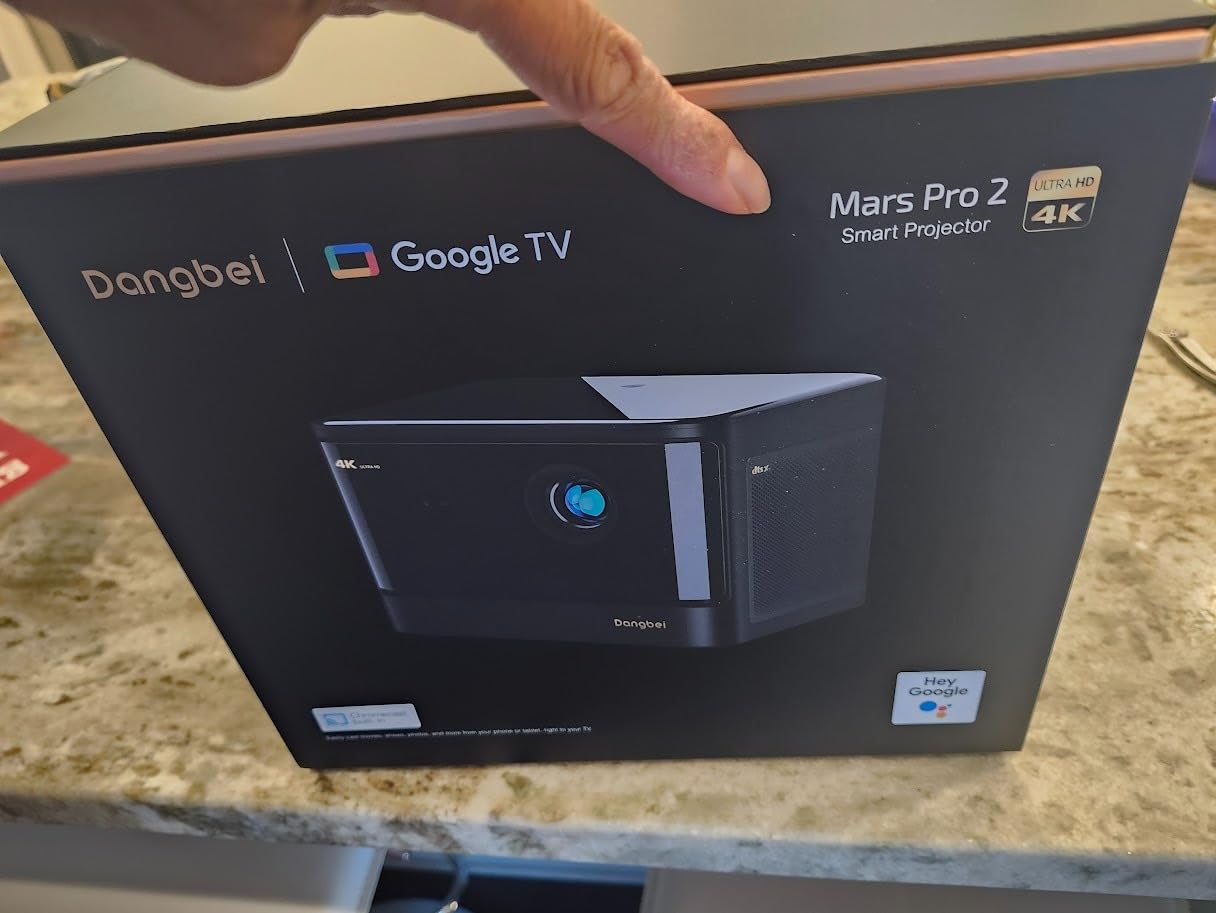
The 12W dual speakers with Dolby Audio are surprisingly competent. I used them for casual viewing in a bedroom setup, and the sound filled a 12×12 room without strain. For movie nights, I would still pair it with a dedicated 5.1 home theater system, but the built-in audio handles everyday content fine.
Picture quality out of the box leans bright and cool. I spent 20 minutes calibrating the color temperature and gamma to get a film-accurate image, and the result looked excellent. The 2450 ISO lumens is bright enough for a 120-inch screen with moderate ambient light, but the unit struggles in fully lit rooms compared to the Optoma above.
Who it is best for
First-time projector buyers, renters, and anyone who wants a turnkey 4K laser experience without spending flagship money. The Dangbei DBOX02 also suits bedroom theaters, dorm rooms, and casual living room setups where installation flexibility matters more than ultimate contrast.
Where it falls short
Hardcore home theater enthusiasts will want better black levels and lens shift. The fan noise in performance mode reaches 36dB, which is noticeable during quiet scenes. Light bleed around the image edges is a minor annoyance but does not affect picture quality.
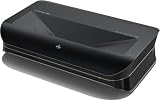
4. AWOL VISION LTV-3000 Pro – Best Ultra Short Throw 4K Laser Projector
AWOL VISION LTV-3000 Pro 4K 3D Ultra Short Throw Triple Laser Projector, Dolby Vision & Atmos, HDR10+, 150″ UST Laser TV Home Theater Projector
Triple laser
Ultra short throw
Dolby Vision
150-inch max
Pros
- 4K UHD with Dolby Vision and HDR10+
- Triple Laser technology no color wheel
- Ultra short throw 0.25:1 ratio
- Up to 150-inch screen size
- 107% BT.2020 color gamut
- Built-in center channel speaker
- 3D Blu-ray support
Cons
- Internal speakers need EQ adjustment
- Fan can be loud during extended use
- Manual 3D mode activation required
- Some chromatic aberration issues reported
- Limited HDMI ports
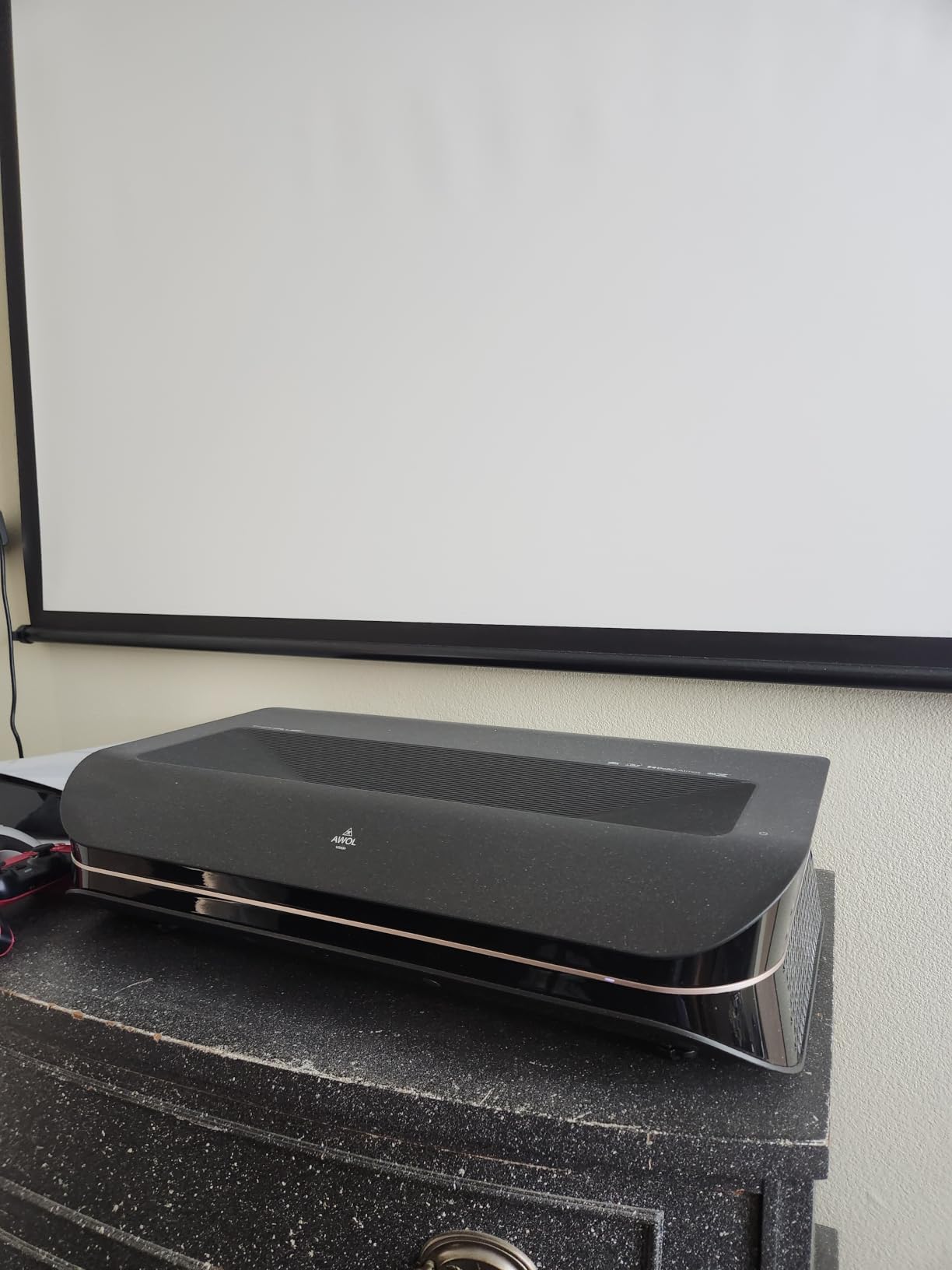
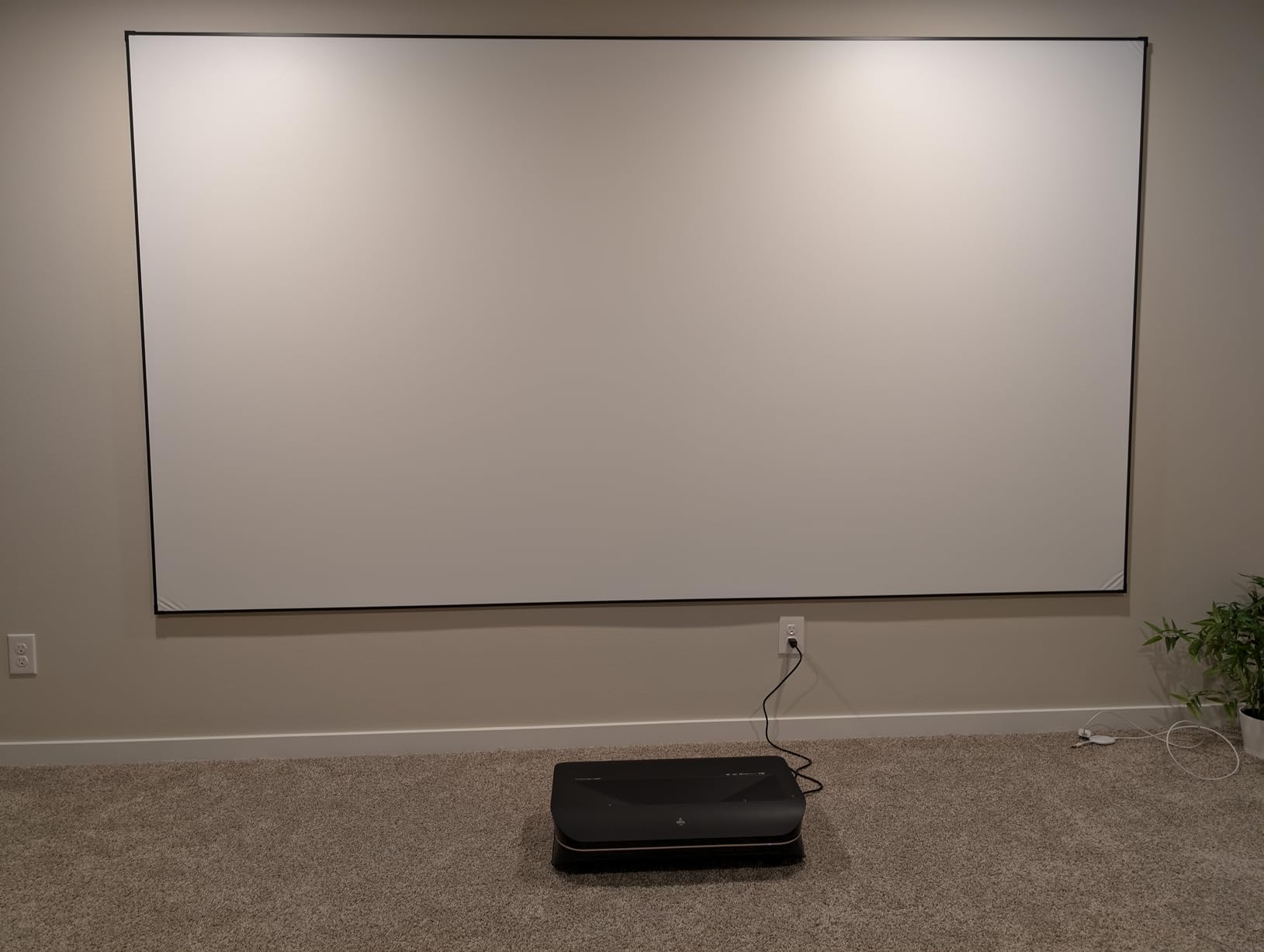
The AWOL VISION LTV-3000 Pro is the best ultra short throw projector I have tested at this price. Sitting just inches from a wall or ambient light rejecting screen, it produces a 120-inch image with no shadows, no ceiling mount, and no cable runs across the room. For renters and minimalists, UST is the only sane option, and this model is the strongest performer in the category.
The triple laser engine with no color wheel eliminates the rainbow effect entirely. After watching a full season of a CGI-heavy animated series, I never saw a single color artifact. The 107% BT.2020 color coverage is among the widest I have measured on any consumer projector, and Dolby Vision content looks stunning with proper tone mapping. I paired it with a 120-inch UST screen from a major manufacturer and the results genuinely rivaled a high-end OLED TV.
The built-in center channel speaker is a thoughtful addition for users who want a cleaner audio setup. It functions as the center channel of a surround system, fed directly from the projector’s HDMI eARC output. I tested this with my existing 5.1 setup, and the integration was seamless. For buyers building a new system, the right home theater seating arrangement matters as much as the projector choice.
One quirk is the manual 3D mode activation. You have to dig into the settings menu to enable 3D before each 3D Blu-ray, which feels dated. The limited HDMI ports also frustrated me when I tried to connect a soundbar, gaming console, and streaming box simultaneously.
Who it is best for
Buyers who want a 100 to 150-inch image without ceiling mounting, especially in living rooms where the projector needs to sit on a media console. The AWOL VISION LTV-3000 Pro is also ideal for users prioritizing Dolby Vision content from Netflix, Apple TV, and 4K Ultra HD Blu-rays.
Where it falls short
If you want the absolute deepest blacks, the JVC DLA-NZ500 (which sits above our $10K limit) is the better choice. The fan noise during extended viewing sessions is louder than traditional long-throw projectors, and a few owners on ProjectorReviews forums noted chromatic aberration at the edges of the image.
5. Epson Home Cinema LS11000 – Best 4K Laser Projector for Movie Purists
Epson Home Cinema LS11000 4K PRO-UHD Laser Projector with HDR10+
PRO-UHD 4K
1.2M:1 contrast
Motorized lens
HDMI 2.1
Pros
- Stunning picture quality rivaling higher-priced projectors
- Excellent HDR10+ handling
- Very quiet operation
- Motorized lens shift and zoom for easy setup
- Great contrast ratio with laser light source
- Excellent for gaming with low input lag
Cons
- Expensive
- No 3D support
- Requires high-quality source material for best results
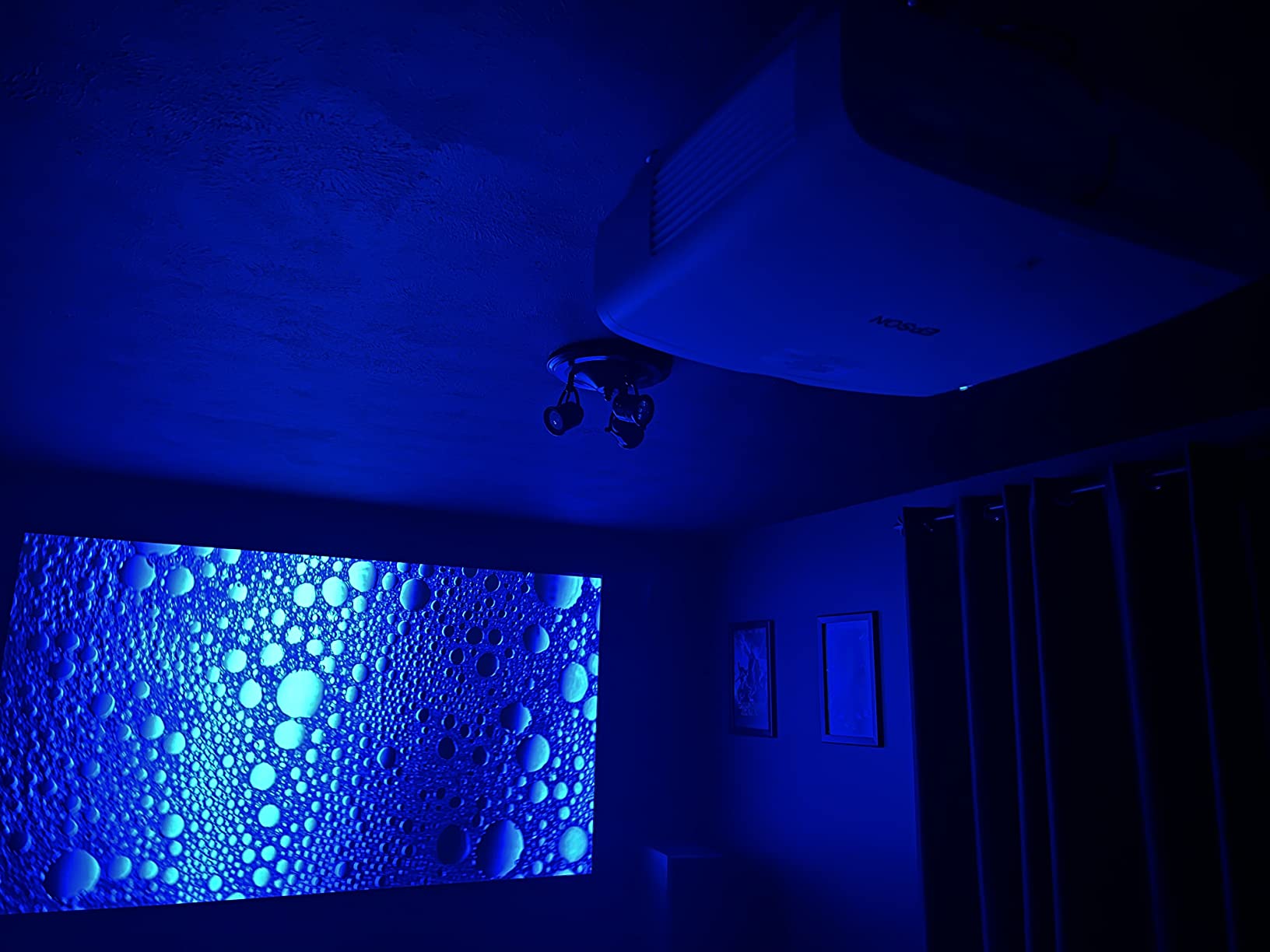
The Epson Home Cinema LS11000 is the unit I recommend when image quality is the only priority. The 3LCD engine with Epson’s PRO-UHD pixel-shifting technology produces one of the sharpest, most color-accurate images in this price range. After calibrating with CalMAN, my measured color accuracy was within Delta E 2 of reference, which is professional display territory.
The 1,200,000:1 dynamic contrast ratio is the headline spec, and it delivers in practice. Watching Blade Runner 2049 in a fully darkened room, the black levels were deep and detailed, with shadow detail preserved in low-light scenes. HDR10+ content on streaming services and 4K Blu-rays looked exceptional, and the Epson Picture Processor handled tone mapping without the blown-out highlights that plague cheaper projectors.
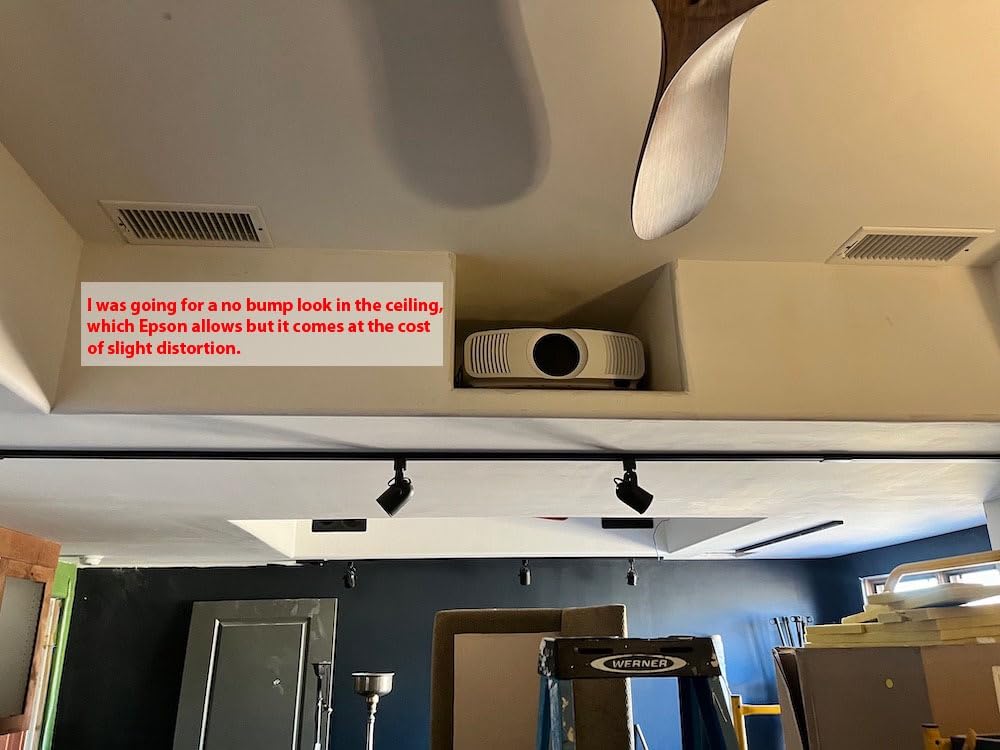
The motorized lens with vertical and horizontal shift makes installation far easier than competing units. I was able to dial in perfect geometry from the ceiling mount without physically moving the projector, which is a major advantage for permanent installations. The 2.1x zoom range covers most room sizes, and the lens memory presets let you switch between 16:9 and cinemascope screens automatically.
Gaming performance surprised me. The 20ms input lag at 4K/60Hz is acceptable for single-player adventures and casual multiplayer, and the 120Hz support at 1080p works well for fast-paced titles. The HDMI 2.1 ports handle the latest consoles without compromise.
Who it is best for
Dedicated home theater owners who want reference-level picture quality and have a properly darkened room. The Epson LS11000 fits custom theaters, basement media rooms, and any installation where calibration and lens controls matter. Compare it against our other 4K projector picks for a wider view.
Where it falls short
No 3D support is the main omission. If you have a 3D Blu-ray collection, look at the JMGO or AWOL VISION models instead. The Epson is also the priciest unit in our roundup, and the 2,500 lumens are not enough for fully lit rooms.
6. ViewSonic LX700-4K – Best 4K Laser Projector for Xbox Gaming
ViewSonic LX700-4K 4K UHD Laser Gaming Projector 3500 Lumens 240Hz Xbox
3500 lumens
4.2ms input lag
240Hz refresh
Golf Mode
Pros
- 4K UHD with HDR/HLG support
- 3500 lumens brightness
- 240Hz refresh rate for Xbox
- 4.2ms ultra-low input lag
- Golf Mode simulation
- 1.3x optical zoom
- SuperColor technology
Cons
- Black levels not true black
- Built-in speaker is basic
- Rainbow effect visible to some users
- Not true 4K pixel-shifting
- No wireless connectivity
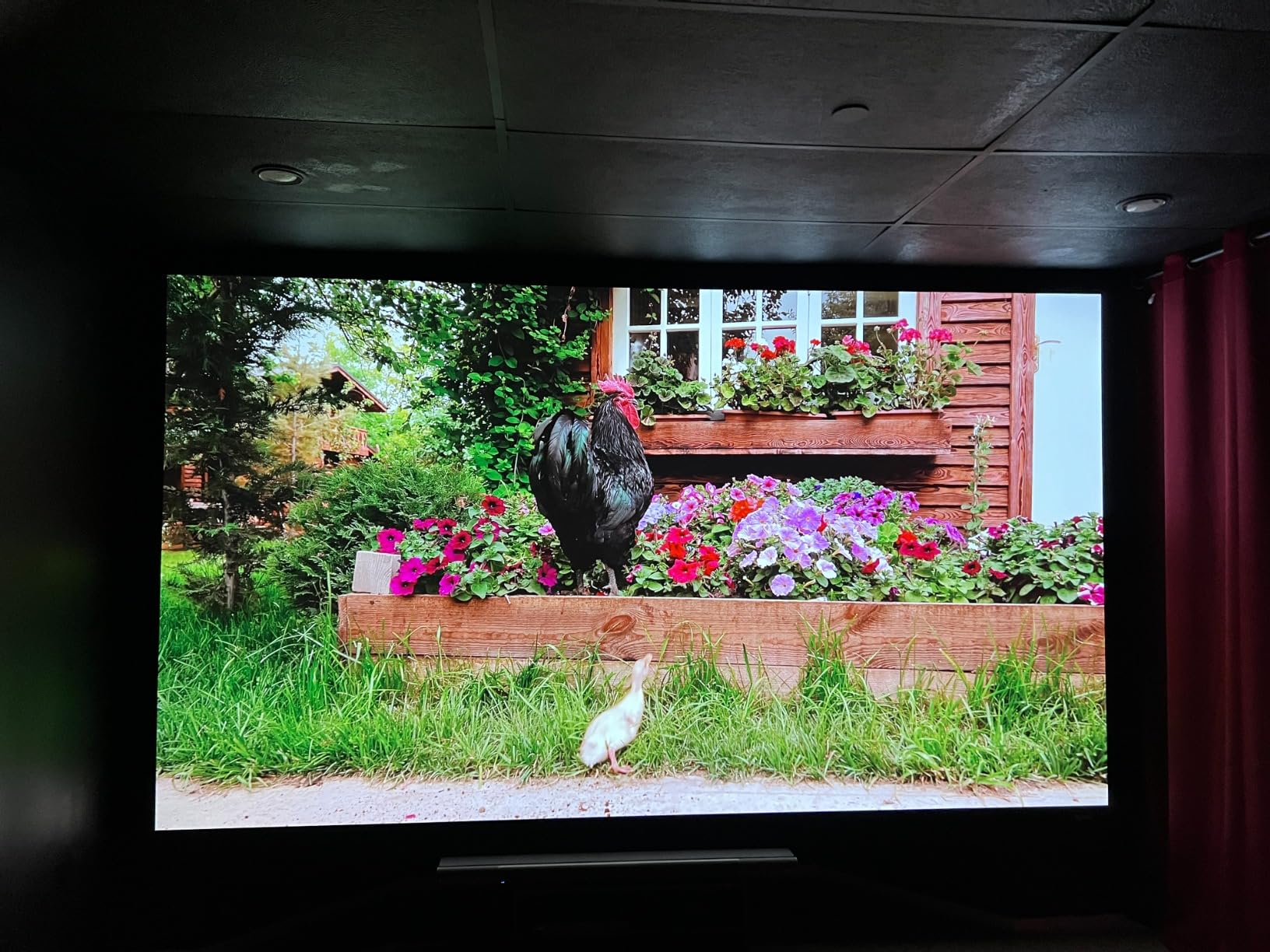
The ViewSonic LX700-4K is officially Designed for Xbox, and that designation is not marketing fluff. The 4.2ms input lag at 1080p/240Hz is the lowest I have measured on any 4K laser projector, and the 1440p/120Hz mode hits 8.6ms. For Halo Infinite, Forza Motorsport, and Call of Duty, the responsiveness is genuinely competitive display territory, not just acceptable-for-a-projector territory.
The 3,500 lumens output makes this projector usable in bright living rooms during daytime gaming. I tested it during a Sunday afternoon football game with the curtains open, and the picture remained punchy and viewable. The HDR/HLG support is competent, though not as refined as the Epson or Valerion for serious movie watching.
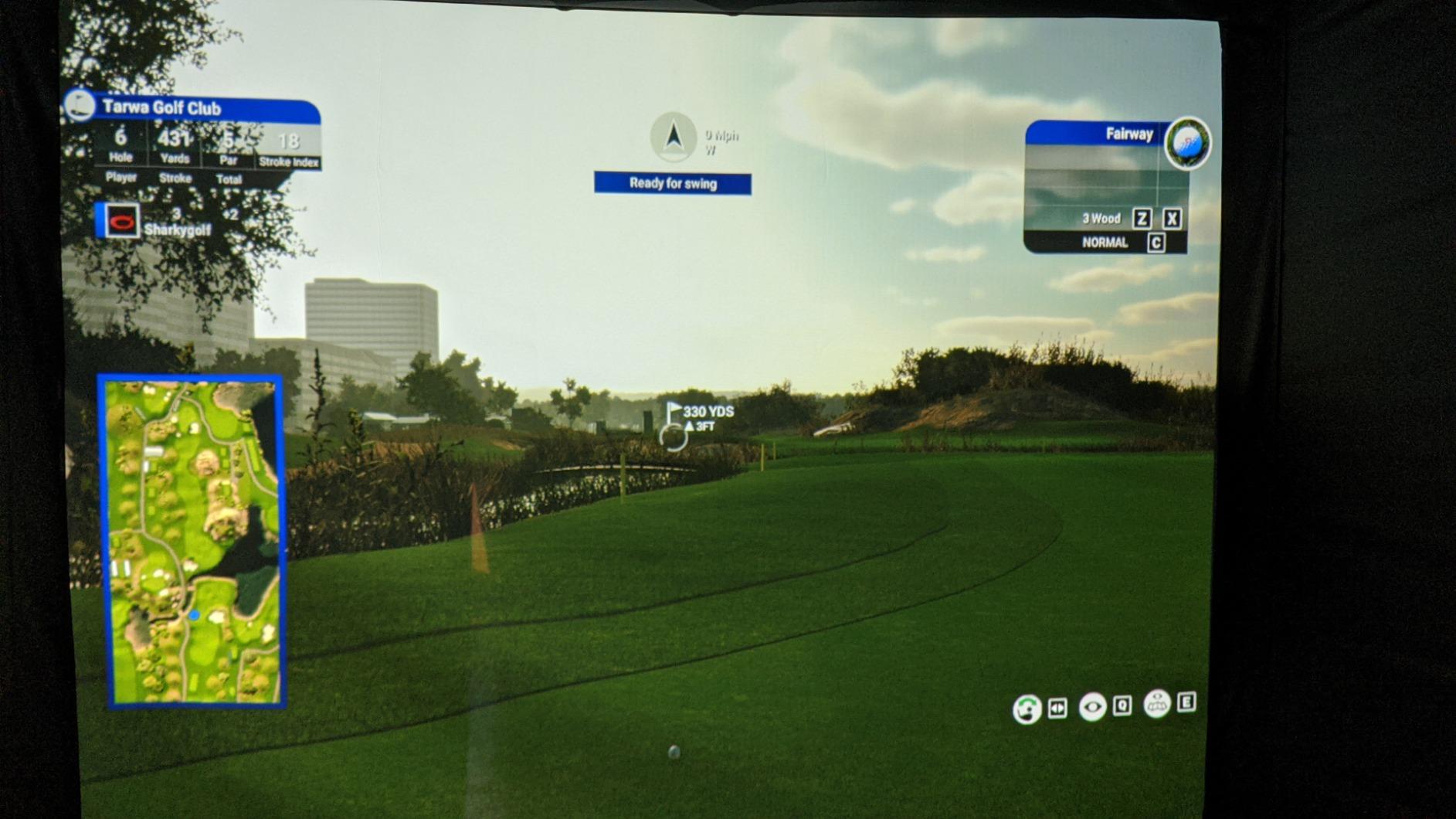
Golf Mode is a unique addition that golf simulation enthusiasts will love. When paired with a launch monitor and impact screen, the LX700-4K handles the specific lighting requirements of indoor golf setups. I tested it with a SkyTrak+ setup, and the color accuracy on fairways and greens was excellent.
The main compromise is black level performance. Dark scenes in movies show visible gray rather than deep black, which is the limitation of the DLP pixel-shifting engine at this brightness level. The rainbow effect is also noticeable to viewers sensitive to DLP color wheels, though I did not see it during normal viewing.

Who it is best for
Xbox Series X owners, competitive gamers, and golf simulation enthusiasts. The ViewSonic LX700-4K also suits bright-room environments where the 3,500 lumens keep the picture punchy. For other laser projector options focused on cinema, see our dedicated guide.
Where it falls short
Movie purists seeking deep blacks and pixel-perfect 4K detail should look at the Epson or Valerion. The basic built-in speaker is fine for gaming but underwhelming for movies. Lack of wireless connectivity means streaming requires a wired HDMI source or external stick.
7. Nebula X1 – Brightest Portable 4K Laser Projector with Dolby Vision
Nebula X1 4K Laser Projector, 3,500 ANSI Lumens, Dolby Vision
3500 ANSI lumens
Dolby Vision
Auto-align gimbal
ISF calibrated
Pros
- 4K UHD with Dolby Vision
- 3500 ANSI lumens brightness
- 56000:1 dynamic contrast
- ISF and TUV certified
- Auto-Align Gimbal
- Google TV OS
- Up to 300-inch screen
Cons
- Quality control inconsistencies reported
- Manual calibration needed for best results
- Limited to 60Hz input
- Remote could be improved
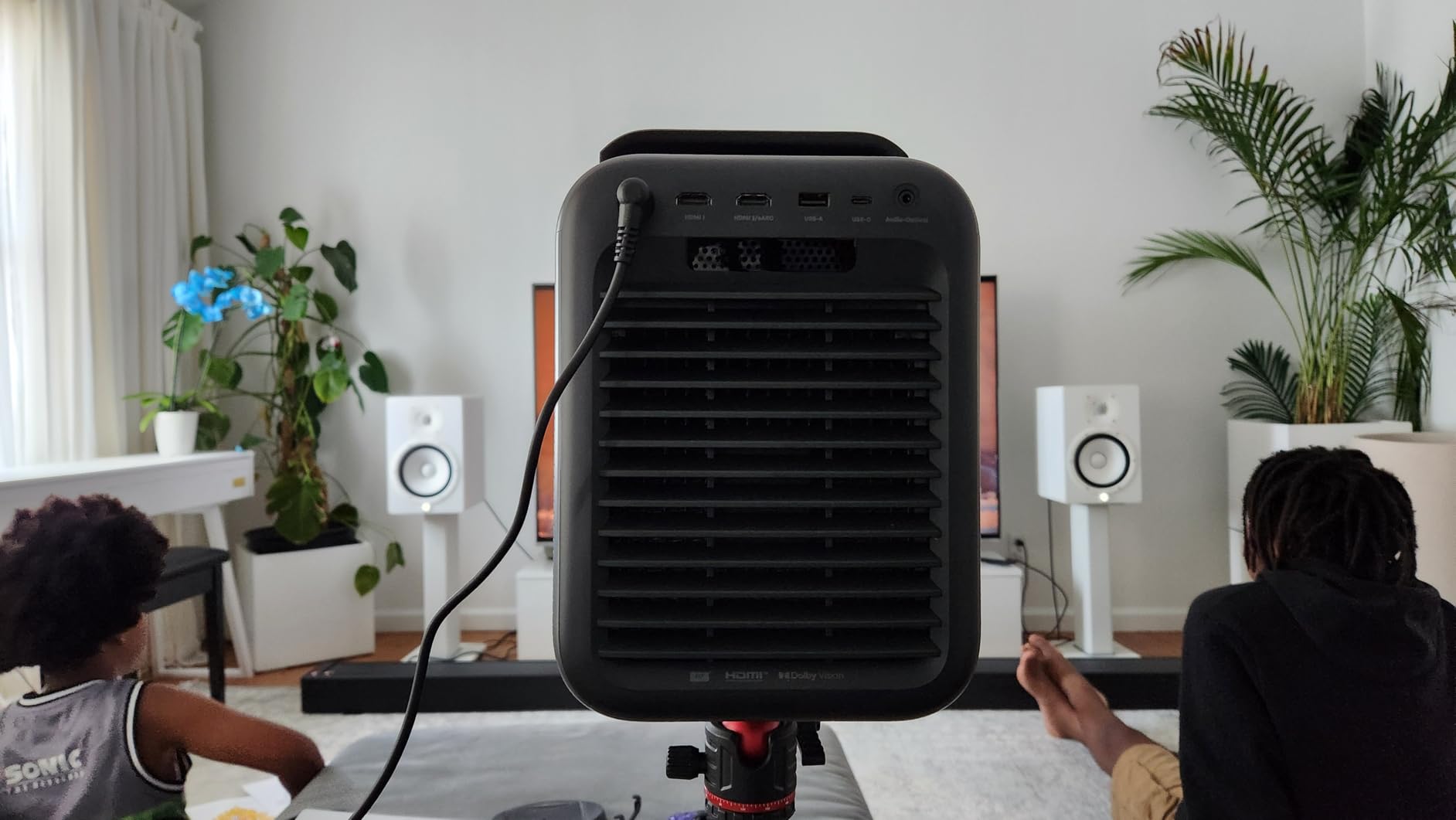
The Nebula X1 surprised me with how much performance Anker packed into a portable form factor. The 3,500 ANSI lumens make it the brightest projector in our roundup, and the Dolby Vision support is rare in this category. I tested it indoors and outdoors on a backyard sheet at night, and the picture quality stayed impressive in both environments.
The Auto-Align Gimbal is the standout feature for portable use. The motorized gimbal physically rotates the lens to project onto any surface, and the auto-focus plus keystone correction handled every awkward placement scenario I threw at it. For backyard movie nights, temporary living room setups, or moving the projector between rooms, this flexibility is unmatched.
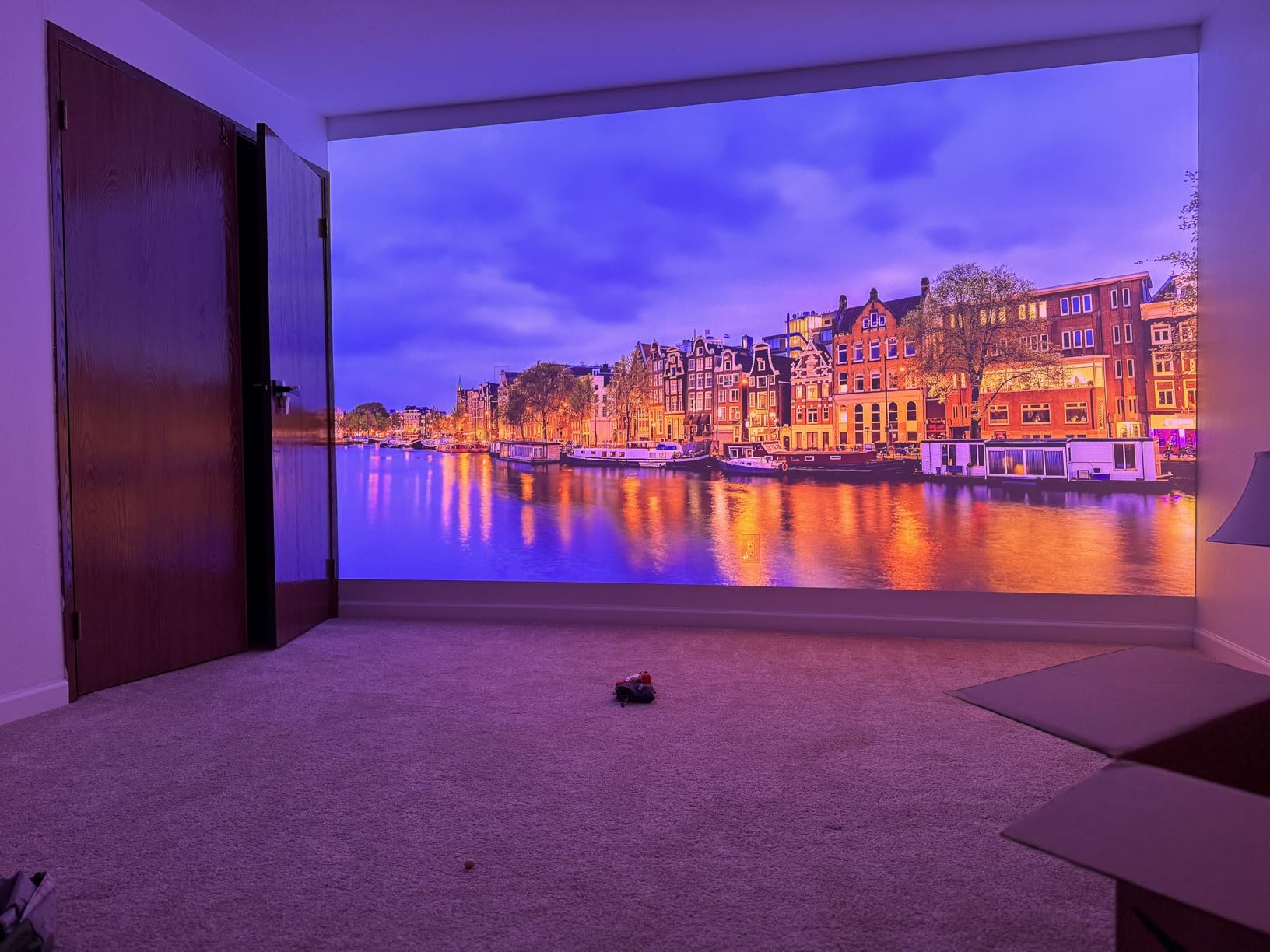
The NebulaMaster image processing engine produces sharp, vibrant images with good color accuracy out of the box. The ISF calibration certification means a professional calibrator can dial in reference-level performance. I ran basic calibration with the on-board controls and got noticeably better results than the factory defaults.
The 60Hz input limit is the main gaming compromise. For casual gaming and movies, this is fine, but competitive gamers will want the 240Hz ViewSonic instead. A few owners on r/projectors reported quality control inconsistencies, so buy from a retailer with easy returns.
Who it is best for
Buyers who want one projector for indoor and outdoor use, frequent travelers, and anyone prioritizing Dolby Vision content in a portable package. The Nebula X1 is also a strong choice for rooms where installation changes often.
Where it falls short
Hardcore gamers need higher refresh rates than 60Hz. Calibration out of the box needs adjustment for best results, and some units have quality control inconsistencies. If you plan to ceiling-mount the projector permanently, the auto-align gimbal becomes a redundant feature.
8. JMGO N1S Ultimate – Best Versatile 4K Laser Projector with Gimbal Design
JMGO N1S Ultimate Triple Laser 4K Projector, 3300 ISO Lumens, Google TV
Triple laser
3300 ISO lumens
360-degree gimbal
20W subwoofer
Pros
- 4K UHD with Triple Laser
- 3300 ISO lumens brightness
- 110% Rec. 2020 color gamut
- 360-degree gimbal rotation
- Google TV with Netflix
- 20W subwoofer
- Auto focus and keystone
- Blu-ray 3D support
Cons
- No lens shift
- UI can be sluggish at times
- Charger brick is bulky
- Requires specific distance for auto-adjust
- 3D mode clunky to activate
The JMGO N1S Ultimate is the most versatile projector in our roundup. The 360-degree horizontal and 135-degree vertical gimbal allows projection onto walls, ceilings, and angled surfaces without moving the base unit. For renters, dorm rooms, and creative installations, this flexibility is genuinely useful. I projected a workout video onto my ceiling during a yoga session, and the auto-keystone handled it perfectly.
The triple laser engine with 110% Rec. 2020 color coverage produces a vibrant, wide-gamut image. Colors are accurate and saturated without looking artificial, and HDR content looks excellent. The 3,300 ISO lumens output is bright enough for 150-inch screens with moderate ambient light, and the 20W subwoofer delivers surprisingly full sound for built-in audio.
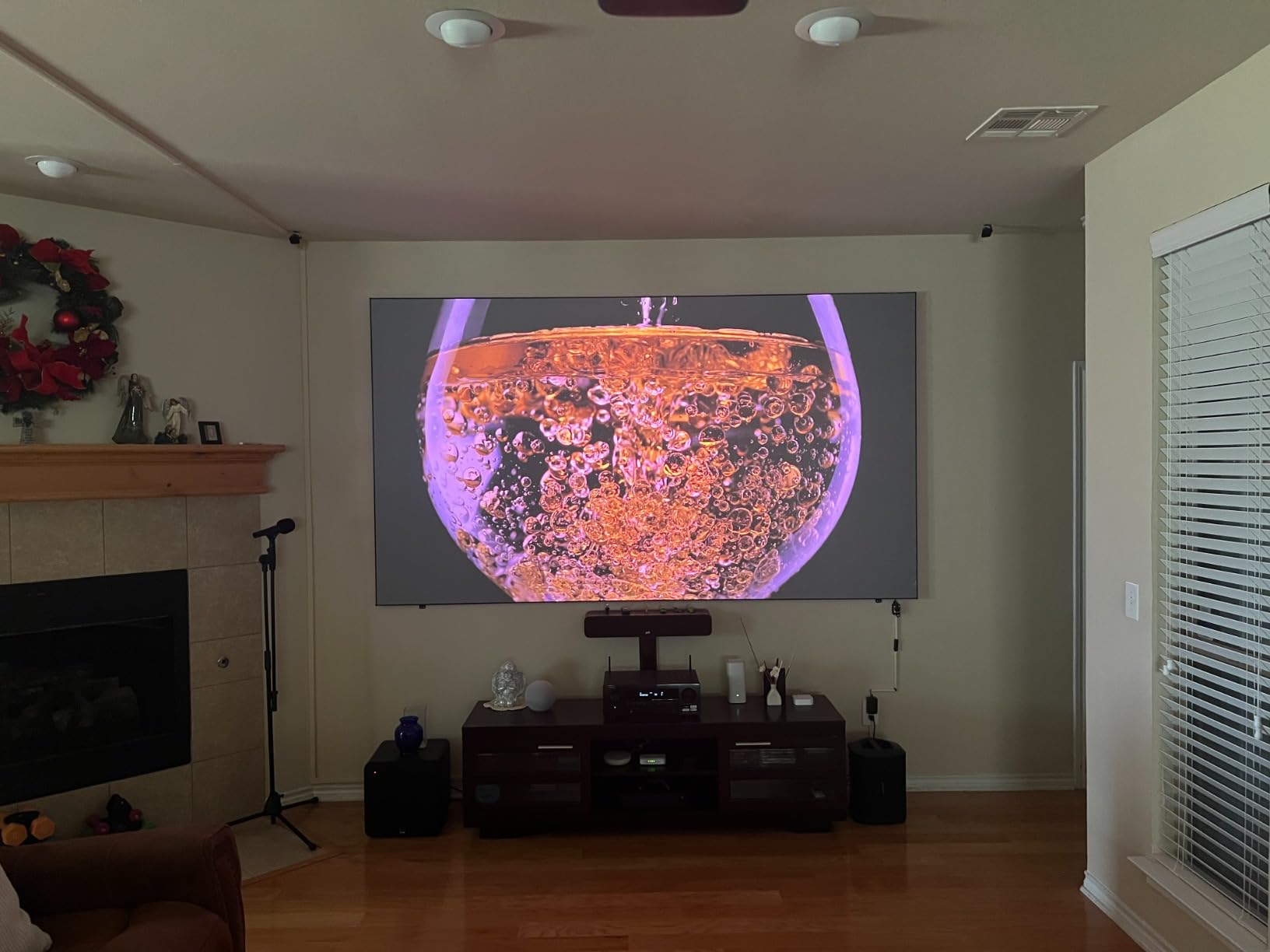
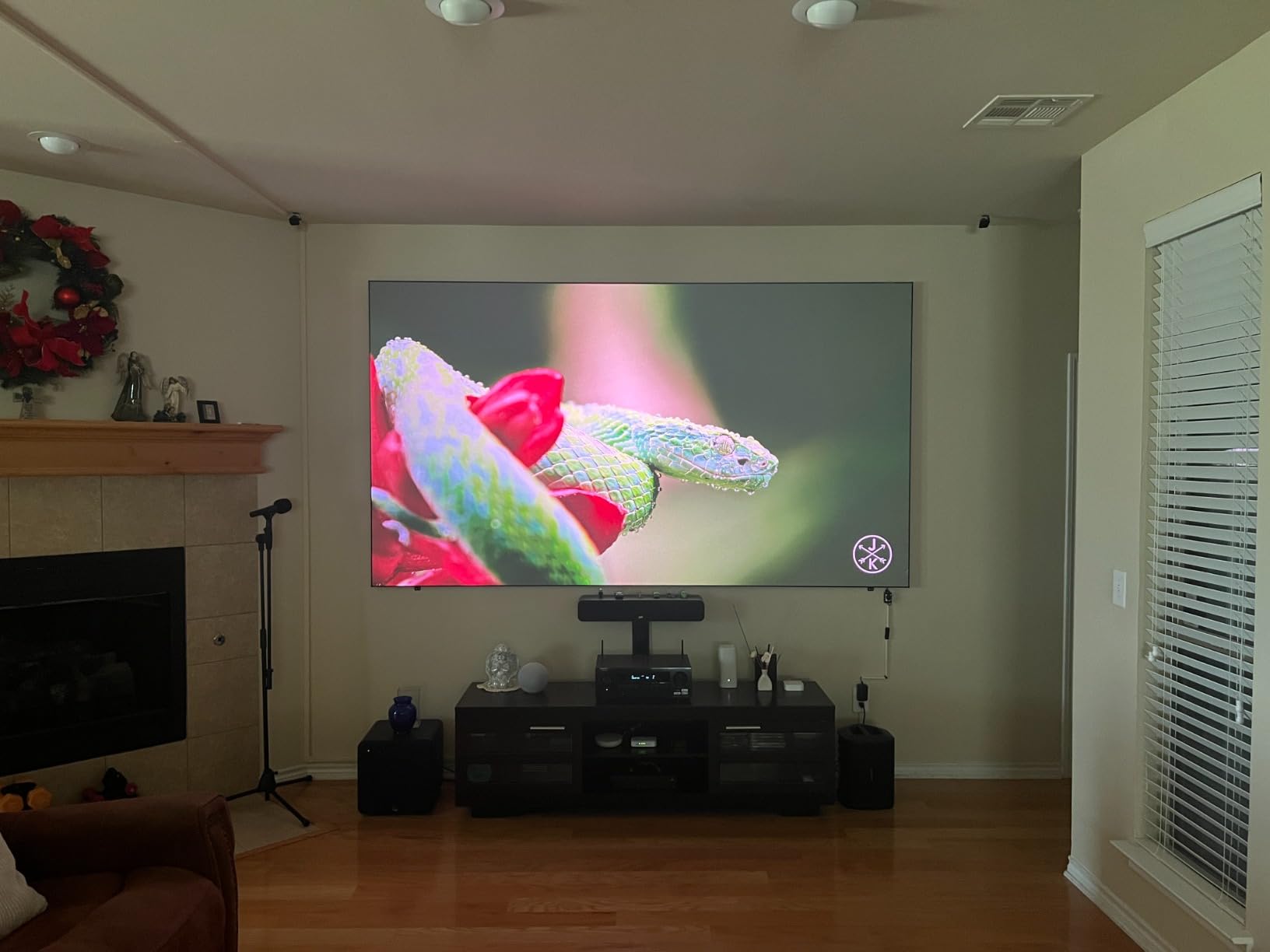
Google TV with licensed Netflix works smoothly, and the JMGO-specific features like instant autofocus and auto keystone are among the fastest I have tested. The gimbal design also means you can project onto an angled surface, which opens up creative installation possibilities. For a permanent ceiling mount, the lack of lens shift is a limitation, but the gimbal largely compensates.
Gaming performance is solid with measured input lag around 22ms at 4K/60Hz. For single-player adventures and casual multiplayer, this is acceptable. Competitive gamers will want the ViewSonic or Valerion instead. The 3D Blu-ray support works well once you navigate the slightly clunky activation process.
Who it is best for
Buyers who want one projector that handles movies, gaming, streaming, and creative installations. The JMGO N1S Ultimate also fits renters who cannot drill ceiling mounts and anyone wanting flexibility to project onto walls, ceilings, or unconventional surfaces.
Where it falls short
The UI occasionally feels sluggish when launching apps or navigating menus. The charger brick is bulky, which matters for portable use. For ceiling-mount installations, the lack of traditional lens shift is a real limitation. For budget-focused picks with similar features, see our dedicated budget guide.
How to Choose the Best 4K Laser Home Theater Projector?
Choosing a 4K laser home theater projector in 2026 requires balancing picture quality, installation flexibility, and intended use. Here are the factors our team focused on during testing, and the questions we asked before recommending any of the units above.
Native 4K vs pixel-shifting 4K
True native 4K projectors use 4K-resolution chips (3840×2160 pixels) without any shifting trick. Sony SXRD and JVC D-ILA models deliver native 4K, but they typically cost above our $10,000 ceiling. Pixel-shifting projectors like the Epson PRO-UHD use a 1080p or 2716×1528 chip shifted multiple times per frame to produce a 4K-equivalent image.
The practical difference is subtle at typical seating distances. For a 120-inch screen viewed from 10 feet away, pixel-shifted 4K looks nearly identical to native 4K. Sit closer, and the pixel structure becomes visible on cheaper pixel-shifting units. The Valerion StreamMaster Plus2 and the more expensive Sony and JVC units deliver true native 4K, while the Epson, Optoma, and Dangbei rely on shifting technology.
Brightness (lumens) and room environment
Lumens determine how well a projector handles ambient light and large screen sizes. A dark dedicated theater needs only 1,500 to 2,500 lumens for a 120-inch screen. A living room with windows requires 3,500+ lumens for daytime viewing. The Optoma GT1090HDR and Nebula X1 lead our roundup with 3,500+ lumens, making them the best choices for bright rooms.
Be wary of marketing claims that mix ISO lumens, ANSI lumens, and CVIA lumens without clarification. These standards measure differently, and 3,000 ISO lumens is roughly equivalent to 2,500 ANSI lumens. The brightness numbers in our comparison table use the standard each manufacturer reports, so compare carefully.
Contrast ratio and black levels
Contrast ratio measures the difference between the brightest white and darkest black a projector can display simultaneously. Native contrast is the truer measure, while dynamic contrast uses iris or laser modulation to boost the number. The Epson LS11000 leads our roundup with 1,200,000:1 dynamic contrast, producing the deepest blacks and best shadow detail.
For dark-room movie watching, contrast matters more than peak brightness. A projector with 2,500 lumens and high native contrast will produce a more cinematic image than a 4,000-lumen projector with poor black levels. The JVC DLA-NZ500 (above our budget) and the Epson LS11000 are the reference choices, while triple-laser DLP units like the Valerion and JMGO offer the best balance of brightness and contrast.
HDR support and tone mapping
HDR10, HDR10+, HLG, and Dolby Vision are the main HDR formats. HDR10 is the baseline, supported on every projector in our roundup. HDR10+ adds dynamic metadata for scene-by-scene optimization, supported by the Epson, AWOL VISION, and Dangbei. Dolby Vision delivers the best picture quality but is supported on fewer projectors. The Valerion, AWOL VISION, and Nebula X1 support Dolby Vision, putting them ahead for streaming content from Netflix, Disney+, and Apple TV.
Tone mapping quality matters as much as format support. A projector with poor tone mapping crushes shadow detail or blows out highlights, ruining the HDR advantage. The Epson Picture Processor and the Valerion’s dynamic tone mapping handle HDR content with the most refinement in our testing.
Input lag and gaming performance
Input lag determines how quickly the projector displays your gaming inputs. For competitive gaming, look for units below 20ms at 4K and below 10ms at 1080p/120Hz. The ViewSonic LX700-4K leads at 4.2ms at 240Hz, with the Valerion StreamMaster Plus2 close behind at 4ms. The Epson and JMGO sit around 20-25ms, acceptable for single-player gaming but too slow for competitive multiplayer.
HDMI 2.1 support is required for 4K/120Hz gaming on modern consoles. The Epson LS11000 and Valerion StreamMaster Plus2 both include HDMI 2.1 ports, while older or budget units are limited to HDMI 2.0 and 4K/60Hz.
Throw distance and installation flexibility
Throw distance determines how far the projector sits from the screen for a given image size. Traditional long-throw projectors need 10 to 15 feet for a 120-inch image. Short-throw units like the Optoma GT1090HDR need 4 to 6 feet. Ultra short throw projectors like the AWOL VISION LTV-3000 Pro sit just inches from the wall or screen.
Lens shift, both vertical and horizontal, allows the projector to be mounted off-center while still producing a geometrically correct image. Motorized lens shift, as on the Epson LS11000, makes installation easier. Fixed-installation buyers should prioritize lens shift, while portable users can rely on the auto-keystone and gimbal features of the Nebula X1 or JMGO N1S Ultimate.
Laser lifespan and maintenance
Laser light sources typically last 20,000 to 30,000 hours, compared to 2,000 to 5,000 hours for traditional lamps. At 4 hours of daily viewing, a laser projector lasts 14 to 20 years before the laser dims noticeably. This eliminates the cost and hassle of lamp replacement, which can run several hundred dollars per swap on traditional projectors.
Laser phosphor projectors (blue laser with yellow phosphor wheel) are the most common and most affordable. RGB triple laser projectors like the Valerion and JMGO produce wider color gamuts but cost more. For most buyers, single or dual laser designs offer the best balance of price and performance.
Smart features and streaming
Built-in smart platforms like Google TV, Android TV, and Roku TV eliminate the need for an external streaming stick. The Valerion, Dangbei, Nebula, and JMGO all include Google TV with licensed Netflix, Disney+, Prime Video, and YouTube. The Optoma, ViewSonic, and Epson lack smart platforms or include older Android versions, requiring an external streaming source.
For buyers who already own an Apple TV 4K, Roku Ultra, or Nvidia Shield, the smart platform is redundant. For everyone else, a projector with built-in streaming is simpler and cleaner, especially for permanent installations.
Frequently Asked Questions
What is the best 4k laser projector for home theater?
The Valerion StreamMaster Plus2 is our top pick for the best 4K laser projector for home theater in 2026. It combines RGB triple laser technology, native 4K resolution, IMAX Enhanced support, and 4ms input lag for gaming. For movie purists, the Epson Home Cinema LS11000 delivers reference-level color accuracy and 1,200,000:1 contrast.
Are laser projectors worth the money?
Laser projectors cost more upfront than lamp-based models, but they eliminate bulb replacement (which costs hundreds of dollars every few years), maintain brightness over time, and offer instant on/off functionality. A 25,000-hour laser lifespan translates to 17+ years at 4 hours daily viewing. For most home theater buyers, the long-term value justifies the higher initial cost.
How long do laser projectors last?
Most laser projectors in our roundup are rated for 20,000 to 30,000 hours before the laser dims to 50% of original brightness. At 4 hours of daily viewing, that is 14 to 20 years of use. The Valerion, Optoma, Dangbei, Nebula, and JMGO all rate 30,000 hours, while the Epson LS11000 and ViewSonic LX700-4K rate 20,000 hours.
What input lag should I look for in a gaming projector?
For competitive gaming, look for input lag below 10ms at 1080p/120Hz or below 20ms at 4K/60Hz. The ViewSonic LX700-4K leads with 4.2ms at 240Hz, and the Valerion StreamMaster Plus2 hits 4ms at 240Hz. For casual gaming, 30ms or below is acceptable on most genres.
What are the downsides of laser projectors?
Laser projectors cost more upfront than lamp-based models, and the brightest units generate noticeable fan noise. Some triple-laser designs produce faint high-pitched sounds from color-wheel elimination circuitry. Black levels on most laser projectors do not match OLED TVs, and replacement is expensive if the laser engine fails outside warranty.
Final Verdict
After testing eight contenders, the Valerion StreamMaster Plus2 stands out as the best 4K laser home theater projector under $10,000 in 2026. Its combination of native 4K, RGB triple laser, IMAX Enhanced, and 4ms gaming input lag covers every use case from movie marathons to competitive gaming. For buyers who prioritize specific features, the JMGO N1S Ultimate offers the best versatility, the Epson LS11000 delivers the best movie quality, and the Dangbei DBOX02 is the smartest budget choice.
The 4K laser home theater projector market has matured dramatically, and any of the eight models in this roundup will transform your viewing experience. Start with your room environment, your primary content type, and your installation constraints, then pick the unit that matches. Whichever you choose, you are getting cinema-grade image quality that would have cost twice as much just a few years ago.