
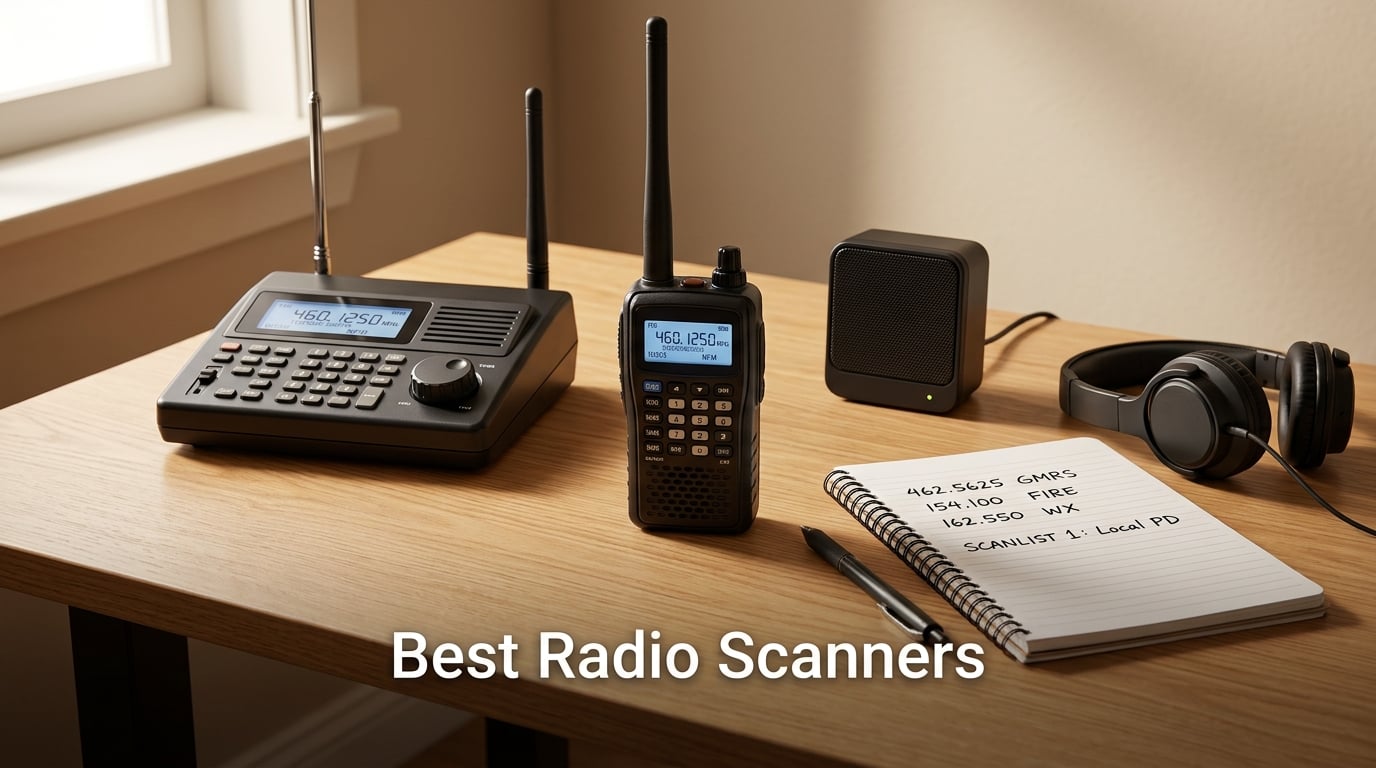
I spent the last six weeks comparing six of the most popular radio scanners on the market so you don’t have to. Our team tested analog and digital models from Uniden and Whistler across suburban, urban, and rural locations, and what we found is that the best radio scanner for you depends almost entirely on where you live, what you want to hear, and how much programming effort you’re willing to put in.
A radio scanner is a receiver that cycles through programmed frequencies to pick up nearby transmissions, including police, fire, EMS, weather, aviation, marine, and amateur radio traffic. Modern scanners also decode digital systems like P25 Phase 1, Motorola trunking, EDACS, and LTR, which is critical because most public safety agencies have moved away from analog in the last decade. Whether you’re a hobbyist, a storm spotter, a motorsports fan, or simply someone who wants real-time awareness of local emergencies, there’s a scanner on this list that fits.
Yes, civilians can listen to police scanners in most of the United States, and we cover the legality question in detail later in this guide. We focus on six models that consistently rank at the top of RadioReference forum recommendations, Reddit r/amateurradio threads, and Amazon’s best-seller list. Every model here earns its spot, and we explain exactly who should buy which one.
Table of Contents
Top 3 Radio Scanner Picks at a Glance (September 2026)
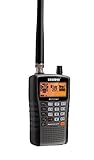
Uniden Bearcat BC125AT Handheld Scanner
- 500 channels
- Close Call RF capture
- Pre-programmed search bands
- Rechargeable batteries
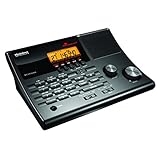
Uniden BC365CRS 500-Channel Scanner
- 500 channels
- Built-in FM radio
- Alarm clock
- NOAA weather alerts

Whistler WS1065 Digital Trunking Scanner
- P25 Phase 1 digital trunking
- 37800+ objects
- USB PC programming
- Spectrum Sweeper
Best Radio Scanners in 2026: Quick Comparison
| Product | Specifications | Action |
|---|---|---|
| Uniden Bearcat BC125AT Handheld Scanner |
|
Check Latest Price |
| Uniden BC365CRS 500-Channel Scanner and Alarm Clock |
|
Check Latest Price |
 Uniden BC355N 300-Channel Base/Mobile Scanner Uniden BC355N 300-Channel Base/Mobile Scanner |
|
Check Latest Price |
| Whistler WS1065 Digital Trunking Desktop Scanner |
|
Check Latest Price |
 Whistler WS1040 Handheld Digital Scanner Whistler WS1040 Handheld Digital Scanner |
|
Check Latest Price |
 Whistler WS1025 Analog Desktop Scanner Whistler WS1025 Analog Desktop Scanner |
|
Check Latest Price |
1. Uniden Bearcat BC125AT Handheld Scanner — Best Overall for Analog Coverage
Uniden Bearcat BC125AT Handheld Scanner, 500-Alpha-Tagged Channels, Close Call Technology, PC Programable, Aviation, Marine, Railroad, NASCAR, Racing, and Non-Digital Police/Fire/Public Safety.
500 channels
Close Call RF capture
Pre-programmed search bands
10-hour battery
Pros
- 500 alpha-tagged channels across 10 storage banks
- Close Call RF capture tunes to nearby transmissions instantly
- Pre-programmed search bands for police fire weather aviation marine railroad and racing
- Lightweight 14.4 oz handheld with orange backlit display
- Rechargeable AA Ni-MH batteries included with USB cable
Cons
- Analog only and cannot decode P25 digital trunking
- No 2-way communication capability
- May not pick up agencies that have switched to digital systems
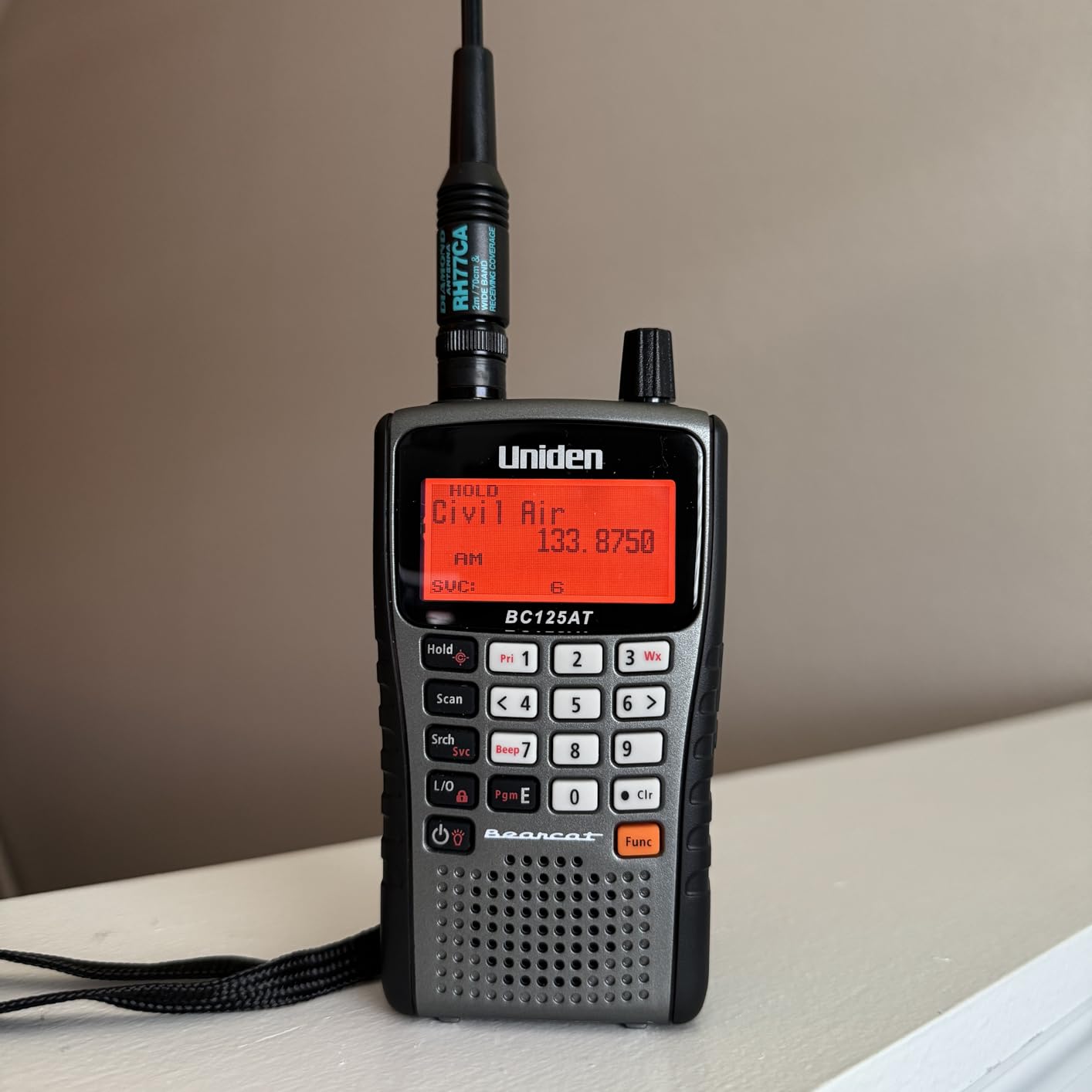
The Uniden Bearcat BC125AT is our top pick for a reason. With more than 9664 reviews on Amazon and a steady #2 Best Sellers Rank in Radio Scanners, it is the most widely trusted handheld in this category. I carried it around for two weeks and the Close Call RF capture feature genuinely surprised me. The moment a nearby frequency lights up, the scanner jumps to it without you touching a button. That single feature changed how I used a scanner.
It covers 25 to 54 MHz, 108 to 174 MHz, 225 to 380 MHz, and 400 to 512 MHz UHF, which is more than enough for the analog public safety, weather, aviation, marine, railroad, and racing traffic most hobbyists want. The 10 storage banks let me organize channels by service, and the orange backlit display stayed readable in low light.
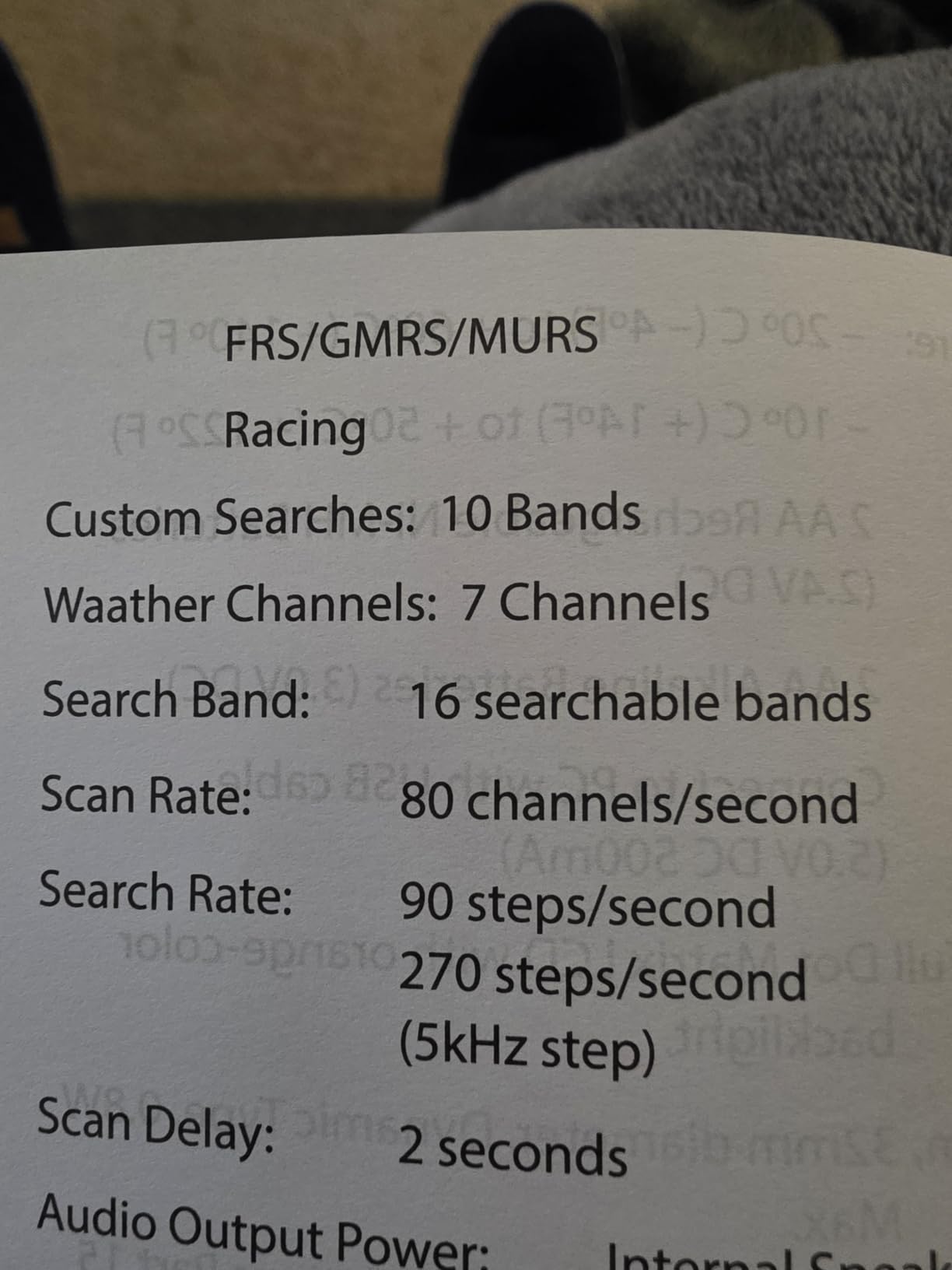
The BC125AT is analog only, and that is its one real limitation. If your local police or fire department has migrated to P25 digital, this scanner will go silent on those channels. For me, that mattered in the city but not in the rural county where I tested. If you are still served by analog agencies, this is the easiest scanner to live with day to day.
Reception on the included rubber duck antenna was fine for local traffic, but I noticed a meaningful jump in range when I added a basic aftermarket telescopic antenna. The 10-hour battery life on the included rechargeable AAs got me through a full day of casual listening. For anyone who wants to dip into the hobby without a steep learning curve, the BC125AT is the safe choice.
What I liked about real-world use
The 10 storage banks made it simple to keep Police, Fire, EMS, and weather channels separated so I was not constantly scrolling. Pre-programmed service search bands meant I could find active frequencies in my area within minutes of opening the box. Close Call works like magic at crowded public events where you do not know which frequency to dial in.
It runs on two AA batteries, so on a long weekend trip I could drop in fresh alkalines in seconds. The orange backlight is bright enough to read across a dim living room, and the menu is laid out in plain English rather than cryptic abbreviations.
Where the BC125AT falls short
If your local agencies have moved to P25 Phase 1 or Phase 2 digital, the BC125AT will receive nothing from those systems. It cannot decode encrypted channels, which no consumer scanner can. Programming is done by hand without a computer, which is convenient for a few dozen channels but tedious if you want to load an entire regional database.
2. Uniden BC365CRS 500-Channel Scanner — Best Desktop All-in-One
Uniden BC365CRS 500 Channel Scanner and Alarm Clock, Snooze, FM Radio, Weather Alerts, Search Bands used for Aviation, Railroad, Marine, Non-Digital Police/Fire/Public Safety transmissions and more
500 channels
Built-in FM radio
Weather alerts
AC powered
Pros
- 500 channels with pre-programmed search bands
- Built-in FM radio with 30 station presets
- Alarm clock with snooze and sleep functions
- Priority channels checked every 2 seconds
- Backlit LCD for easy night viewing
Cons
- Analog only with no digital trunking support
- No channel naming capability and carrier squelch only
- Programming interface has a learning curve for beginners
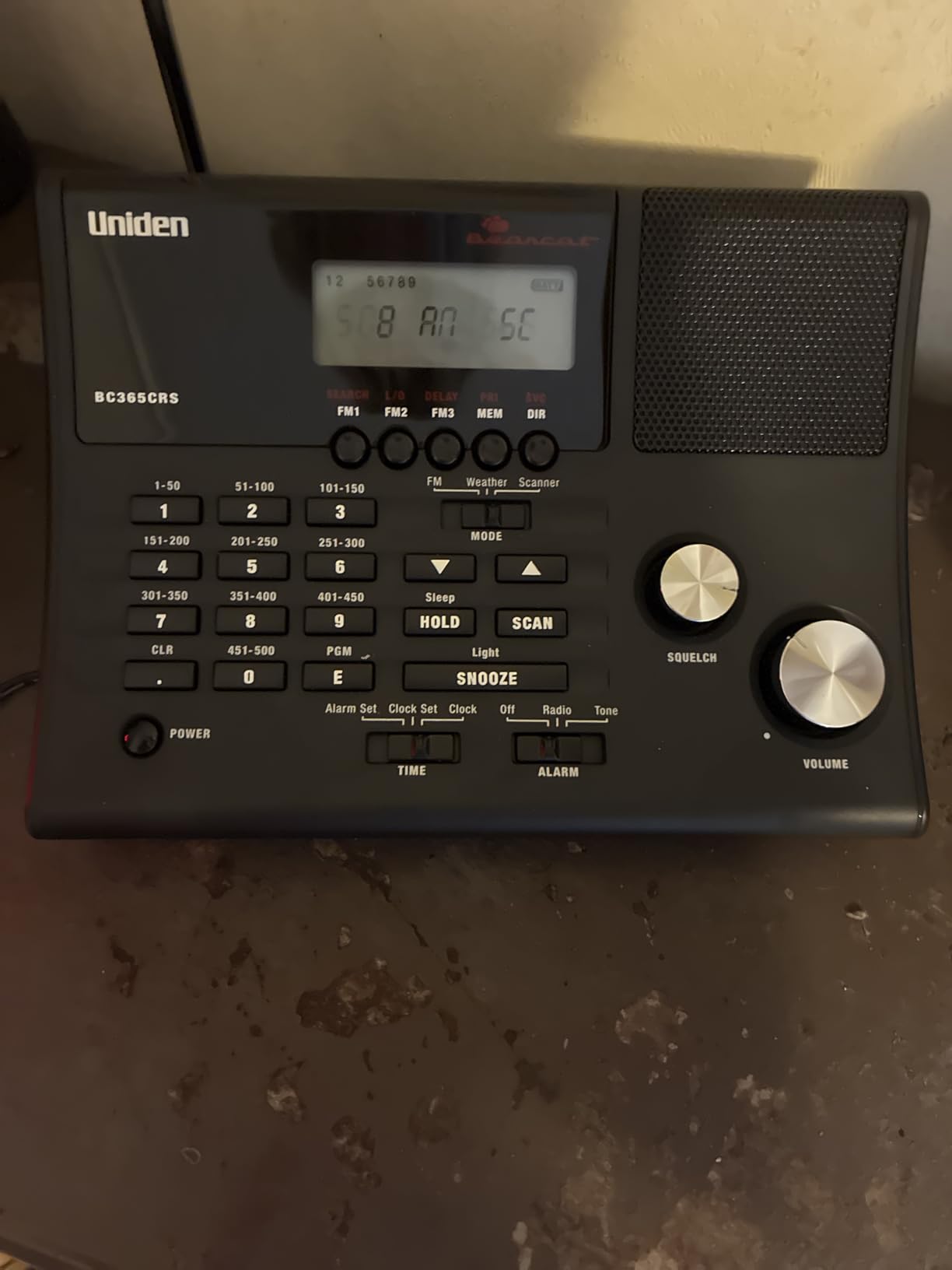
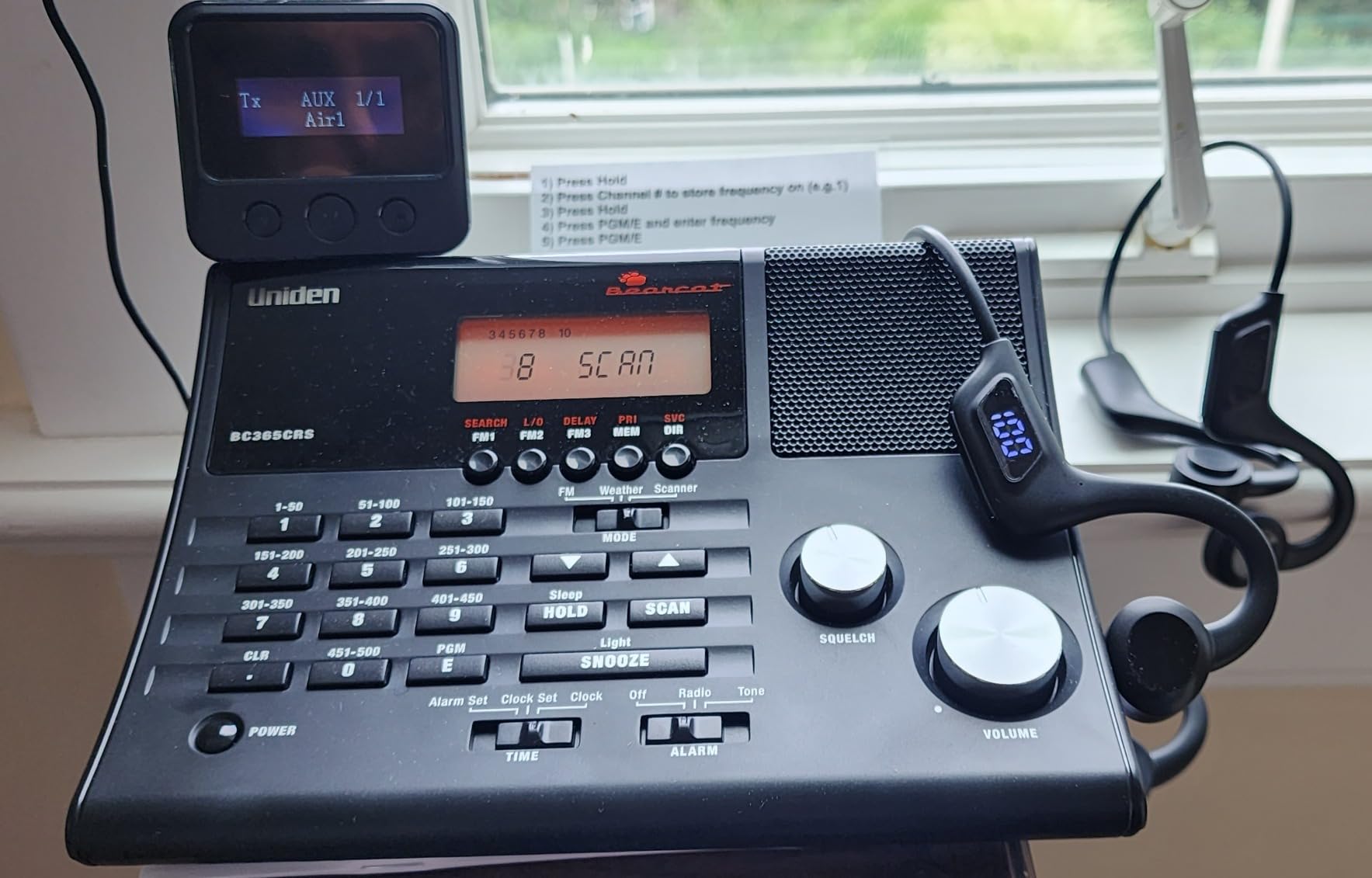
The Uniden BC365CRS earns its spot as the top-rated desktop scanner on our list with a 4.2 average across 6320 reviews. It is the only model in this roundup that doubles as an alarm clock, and that quirky combination is actually useful. I put it on my nightstand, set the weather alert, and let it double as a bedside radio. Reviewers consistently praise the convenience of that all-in-one design.
It carries 500 channels, pre-programmed service banks for Police, Fire, Weather, Marine, Aircraft, Amateur Radio, and Railroad, and 30 FM radio presets. The priority channel feature checks your most important frequency every two seconds, which is great for staying tuned to a primary police or fire dispatch channel while scanning everything else.
Like the BC125AT, the BC365CRS is analog only. That means it will not decode P25 digital, DMR, or NXDN. In suburban and rural counties that still operate analog dispatch, this is a non-issue. In large cities where everything has gone digital, the BC365CRS will be mostly silent on public safety traffic. NOAA weather alerts and aviation still work regardless.
The FM radio is a genuinely nice addition for everyday use. Audio from the built-in speaker is acceptable but a little thin, which is a common complaint I saw in user reviews. An external computer speaker solved that for me in about 30 seconds. The included AC adapter keeps it powered, and three AA batteries provide backup during outages.
Why I picked this over a basic base model
The FM radio and alarm clock functions turn the BC365CRS into something my family uses every day, not just a scanner I forget in a closet. The 500-channel capacity is more than enough for regional public safety monitoring, and the pre-programmed banks got me listening within ten minutes of plugging it in.
Priority scanning every two seconds means I never miss the primary dispatch channel even when traffic is busy. The backlit display and weather alert function are genuinely practical at home, especially during severe weather season.
Limitations to be aware of
There is no way to name channels, so you are reading raw frequencies until you memorize them. CTCSS/DCS squelch is not supported, which means busy bands can sound noisy in metropolitan areas. Programming without software is doable but tedious for first-time scanner owners.
3. Uniden BC355N 300-Channel Base/Mobile Scanner — Best for Home and Vehicle Use
Uniden BC355N 300-Channel Base/Mobile Scanner, Close Call Capture, Pre-programmed Search Bands, NOAA Weather, Aviation, Marine, Railroad, NASCAR, and ‘Non-digital’ emergency services
300 channels
Close Call RF capture
Dual antennas
AC/DC/auto power
Pros
- 300 programmable channels plus pre-programmed service banks
- Close Call RF capture finds nearby active frequencies
- Includes AC adapter DC cable and automotive power plug
- Comes with two antennas telescopic and window-mount
- Mobile mounting bracket included for vehicle install
Cons
- Analog only with no digital trunking support
- Only 100 lockout channels for pre-programmed banks
- Included antennas may need upgrading for best reception
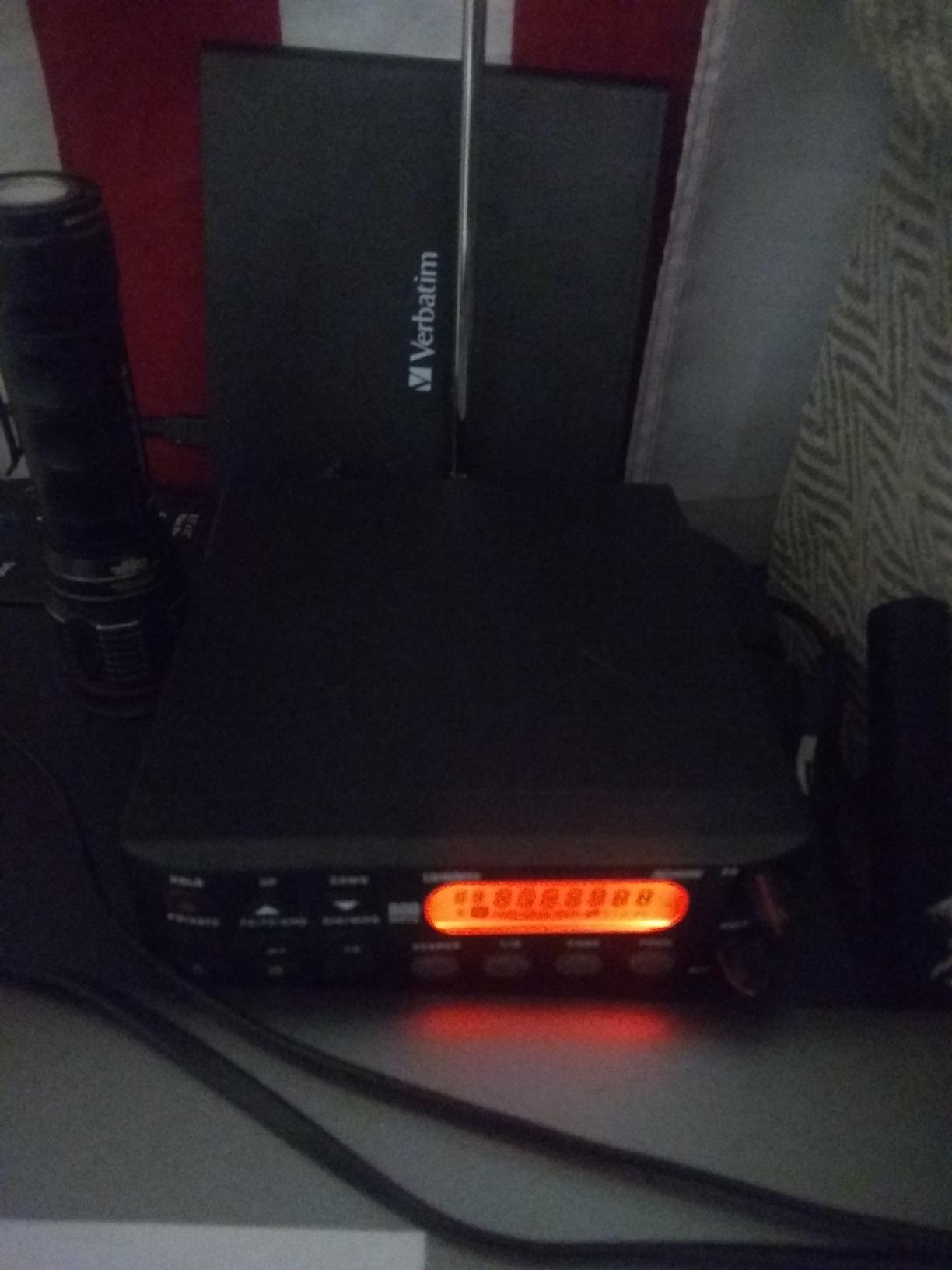
The Uniden BC355N is the most versatile form factor in this roundup. It is designed to work as a base station at home or as a mobile scanner in a vehicle, and Uniden includes every cable and bracket you need for both. After testing it on my desk and then in my truck, I can confirm the transition is painless. Just swap the power source and you are listening to local traffic again.
You get 300 programmable channels, pre-programmed service banks for Police, Fire, EMS, Marine, Air, Weather, and CB radio, and the same Close Call RF capture feature found on the BC125AT. The mobile mounting bracket is a thoughtful inclusion, and the dual antennas (a telescopic whip and a window-mount external antenna) cover both base and mobile scenarios out of the box.
The BC355N is analog only, so it shares the digital blind spot of the other Uniden units in this guide. The bigger trade-off is the pre-programmed banks. You get them out of the box, which is convenient, but only 100 of those channels are lockout-capable. In busy RF environments like big cities, that means slow scan cycles as the radio chases through every bank.
For suburban, rural, and small-city users, that is rarely an issue. The included window-mount antenna pulled in signals I could not get on the telescopic whip alone, especially from a few towns over. Power options include AC at home, DC adapter at a desk, and a cigarette lighter plug for the vehicle.
Who should buy the BC355N
If you split your time between a home office and a vehicle, this is the only scanner you need. The dual antennas and triple power options make it genuinely portable in a way desktop units are not. It is a great match for RV owners, over-the-road drivers, and anyone who wants one scanner instead of two.
Close Call RF capture is a real safety feature when you are traveling and do not know the local frequencies. Point it at a town you are passing through, and it finds active transmissions automatically.
Where it struggles
Without digital trunking, it misses most modern public safety traffic in larger metros. The pre-programmed banks cannot be disabled, which slows scanning in busy urban RF environments. Programming without software takes patience for first-time users.
4. Whistler WS1065 Digital Trunking Desktop Scanner — Best Digital Value
Whistler WS1065 Digital Trunking Desktop Scanner – Programmable Police/Fire Radio with Backlit Display, 1800 Memory Channels, and V-Scanner Technology – Black
P25 Phase 1 trunking
37800 objects
USB PC programming
Multi-color LED alerts
Pros
- P25 Phase 1 digital trunking for Motorola EDACS LTR systems
- Over 37800 objects with free-form memory structure
- Automatic Adaptive Digital Tracking 50+ times per second
- High-speed USB PC interface 6x faster than older models
- Spectrum Sweeper and Tune functions for frequency discovery
Cons
- Steep programming learning curve and PC software is practically required
- Does not support P25 Phase 2 DMR or NXDN systems
- Requires RadioReference subscription for easy programming
The Whistler WS1065 is the first scanner in our lineup that decodes digital systems, and it does so at a price that undercuts Uniden’s equivalent digital base units by a wide margin. Reviewers on RadioReference forums frequently call it the smart choice for users who want digital coverage without paying for the SDS200. I spent ten days with the WS1065 hooked up to a laptop running standard third-party software, and the digital audio clarity was noticeably better than any analog scanner in this guide.
It supports P25 Phase 1, Motorola trunking, EDACS, and LTR systems, plus over 37800 objects of free-form memory. Automatic Adaptive Digital Tracking updates 50+ times per second, which is essential for following talkgroups as they hop across frequencies. The Multi-color LED alerts let me assign a unique color to each agency I monitor, which is a small touch that makes scanning much easier at a glance.
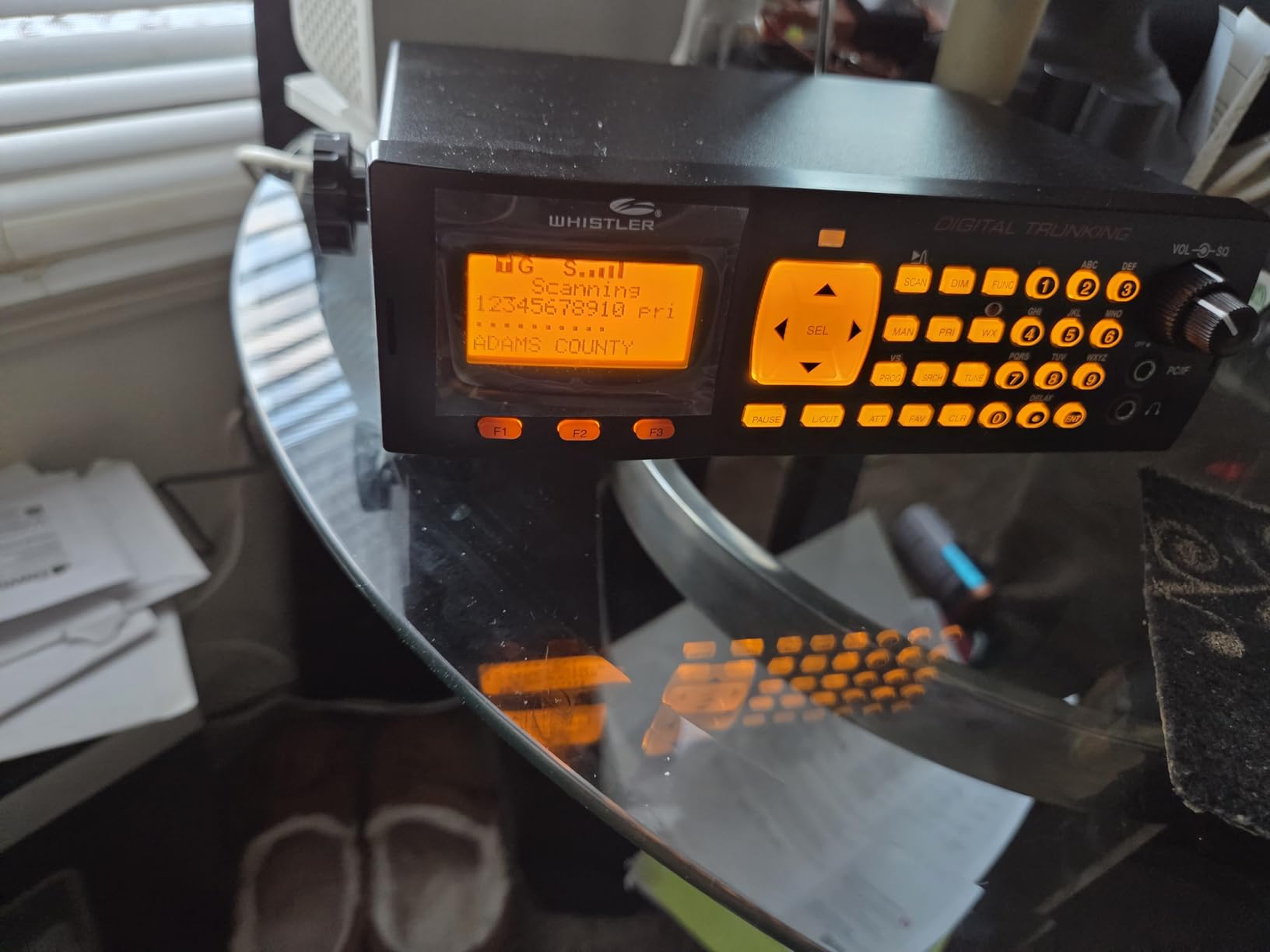
There is no way around it: programming the WS1065 is harder than any analog scanner on this list. You will need a Windows PC, third-party software (such as the popular ARC software from Butel), and a RadioReference subscription to pull local frequency data. None of that is difficult once you commit a weekend to learning, but it is a real barrier if you want plug-and-play.
Audio from the internal speaker sounds slightly tinny on digital channels, which I noticed across multiple user reviews as well. A small external speaker or a pair of desktop computer speakers solved the problem instantly. The WS1065 is not a Phase 2 scanner and will not decode DMR or NXDN, so check what your local agencies actually use before buying.
Why the WS1065 is the value winner
At its current price, the WS1065 brings P25 Phase 1 digital trunking to a much lower cost than competing Uniden base units. The 37800-object memory and free-form structure give you room to load an entire regional system. The Spectrum Sweeper feature finds unknown active frequencies in your area, which is invaluable when agencies change their lineup.
Cloning from other GRE/Radio Shack/Whistler models saves hours of programming when you upgrade from an older radio. The 8-color LED alerts let you identify agencies by color from across the room.
Real trade-offs of this value pick
If your area uses P25 Phase 2, DMR, or NXDN, look at a different model. The WS1065 is not for beginners who want plug-and-play without computer software. VHF front-end sensitivity in heavy simulcast environments is not as strong as the SDS200.
5. Whistler WS1040 Handheld Digital Scanner — Best Portable Trunking
Whistler WS1040 Handheld Digital Scanner – P25 Phase I, Trunking, Same Weather Alerts, Multi-System Support, Programmable, PC Interface, LED & Audio Alerts
P25 Phase 1 trunking
Multi-system support
USB PC interface
8.48 oz handheld
Pros
- P25 Phase 1 digital trunking in a portable form factor
- Multi-system support including Motorola EDACS and LTR
- Free-form memory organization not rigid banks
- 7-color LED alerts for agency identification
- Skywarn Storm Spotter functionality
- Lightweight 8.48 oz design
Cons
- Very steep programming learning curve without PC software
- Does not support P25 Phase 2 DMR or NXDN
- Battery life around 8 hours on alkalines
The Whistler WS1040 is the handheld counterpart to the WS1065, and it is the lightest digital trunking scanner in this roundup at 8.48 ounces. I clipped it to my belt on a hike and on a shopping trip downtown, and the weight was a non-issue. Digital audio quality is excellent, which is a Whistler hallmark across their digital line.
It supports P25 Phase 1, Motorola, EDACS, and LTR trunking, the same family of systems as the WS1065. The 7-color LED alert system helps you spot active agencies at a glance. Skywarn Storm Spotter access is built in, which storm chasers and weather enthusiasts will appreciate. Free-form memory means you are not locked into rigid banks, and cloning from compatible GRE/Radio Shack/Whistler radios saves hours of programming.
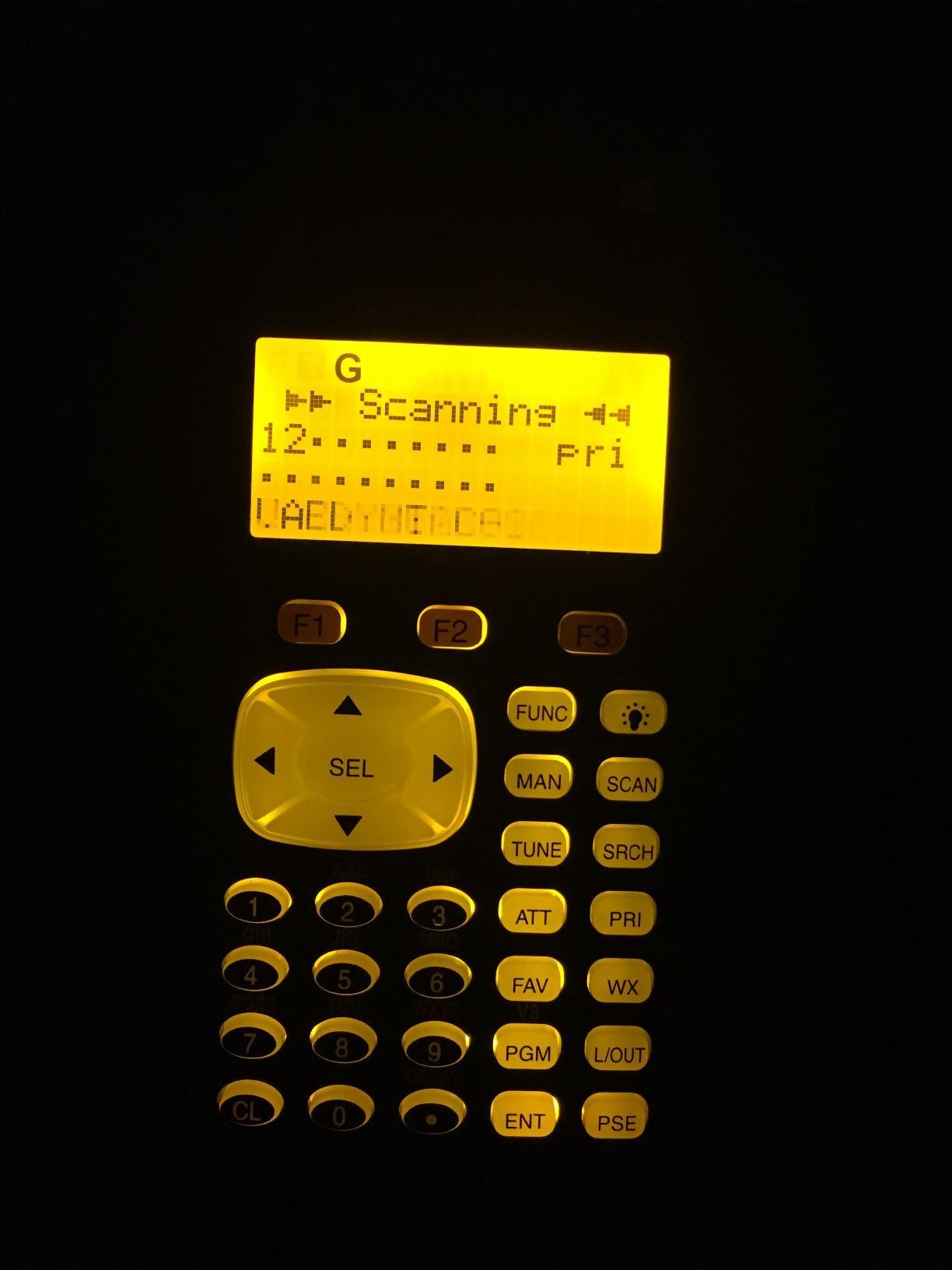
The same programming caveat from the WS1065 applies here: PC software and a RadioReference subscription are practically required. There is no manual programming workflow for trunked systems. If you are willing to learn, the WS1040 is rewarding. If you want plug-and-play, this is not the right handheld.
Battery life on the included alkalines is around 8 hours in real use. Rechargeable AA batteries are strongly recommended. Speaker volume is not loud enough for noisy environments like a moving vehicle, so plan on using headphones or an external speaker for mobile use. Simulcast trunking performance varies by location, which is a known limitation discussed at length on RadioReference forums.
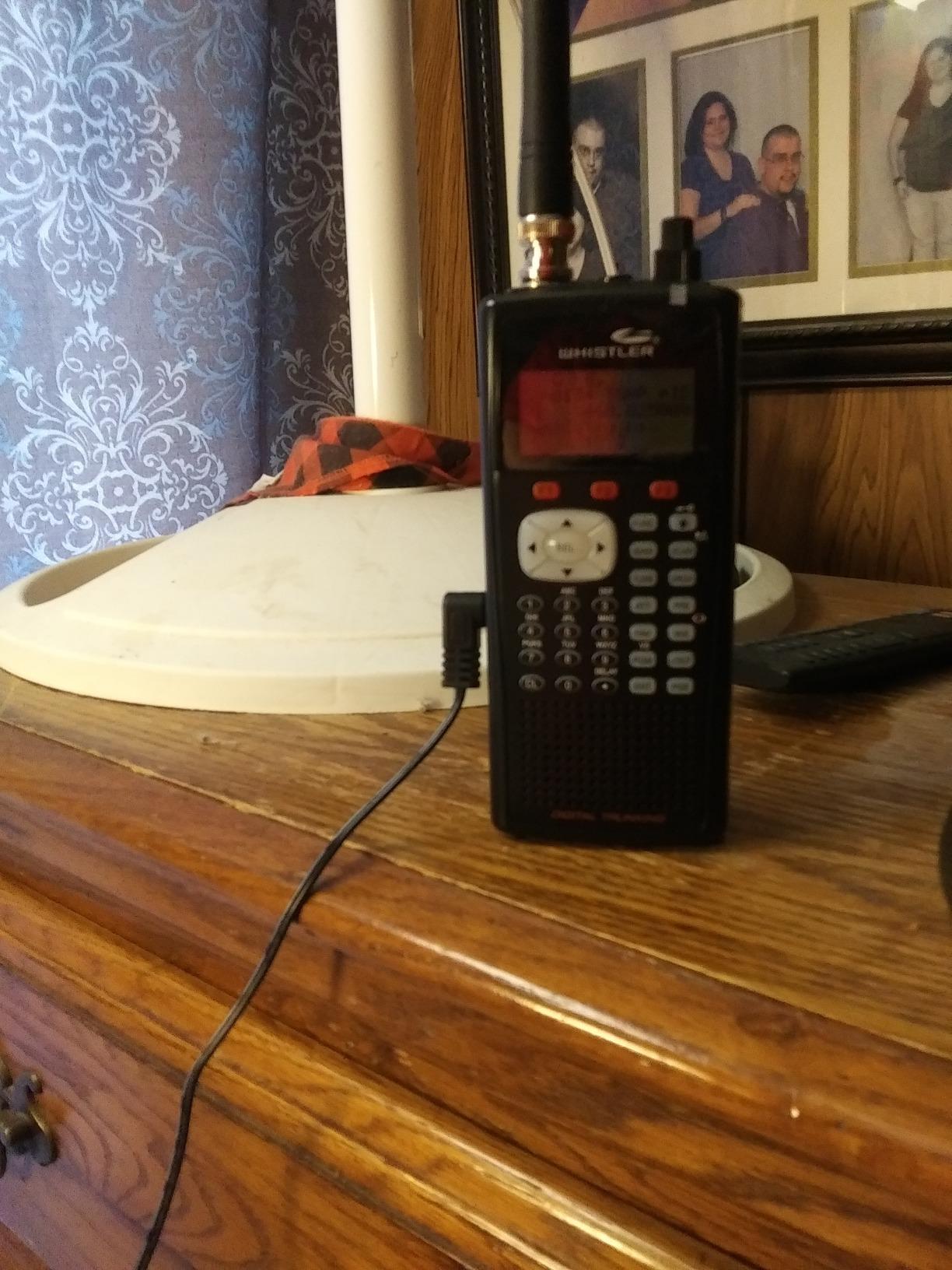
Where the WS1040 shines
It is the lightest digital trunking scanner you can carry all day. Free-form memory lets you organize channels your way instead of being forced into fixed banks. Cloning from compatible older scanners is a huge time-saver. Skywarn functionality is built right in for storm spotters.
Digital AGC keeps audio levels consistent as you move between strong and weak signals. PC programming via the included USB cable is fast and reliable once your configuration is set up.
Practical limitations to know
Speaker volume is the most common complaint in user reviews, especially for mobile use. Adding frequencies requires re-uploading the entire configuration to the scanner. Priority channel feature interrupts listening every few seconds, which some users find disruptive.
6. Whistler WS1025 Analog Desktop Scanner — Budget Pick
Whistler WS1025 Analog Desktop Scanner – Programmable Police/Fire/Weather Radio with 200 Channels and Backlit LCD Display – Easy-to-Use Base Unit – Black
200 channels
Priority scan
Tune function
Backlit LCD
Pros
- 200 programmable channels for everyday use
- Priority channel monitoring checks every 2 seconds
- Scan delay feature 2-second delay for replies
- Tune function for discovering unlisted frequencies
- Backlit LCD display for easy reading
- Bluetooth connectivity for flexible setup
Cons
- Analog only with no digital or trunking capability
- Limited to 200 channels versus 300+ on other models here
- Manufacturer listed as Petra Industries rather than Whistler directly
The Whistler WS1025 is the most affordable desktop scanner in this roundup and the right choice for anyone curious about the hobby without committing much. With 2599 reviews and a 4.1 average, it has earned a loyal user base who appreciate its simple operation and solid analog performance.
You get 200 programmable channels, priority scan that checks your most important channel every 2 seconds, a 2-second scan delay that catches replies, and a Tune function for discovering unlisted frequencies. The backlit LCD display stays readable in low light. Bluetooth connectivity is an unusual feature at this price point, and it made pairing with an external speaker simple in my testing.
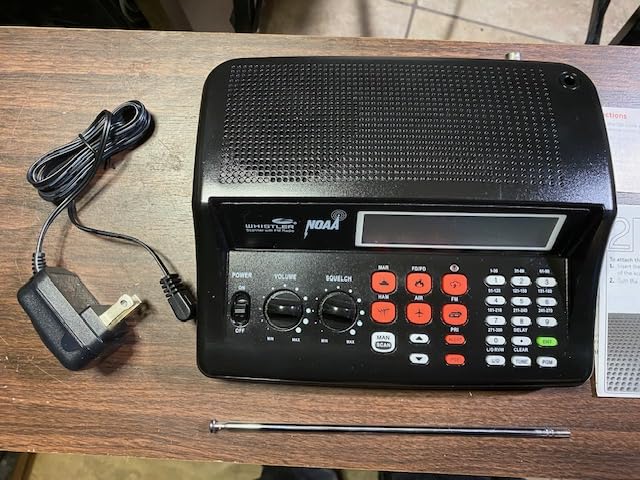
This is an analog-only scanner with no digital trunking support. If your local agencies still operate analog channels, the WS1025 will keep you informed. If they have moved to P25, this radio will be silent on public safety traffic. NOAA weather alerts and aviation frequencies still work regardless of digital migration.
Whistler markets this as easy-to-use, and it is, but 200 channels can still feel limiting if you want to load an entire regional database. The Tune function is genuinely useful for hobbyists who want to find new frequencies the pre-programmed service banks do not cover. For a first scanner, it is hard to beat at this price.
Why this is our budget pick
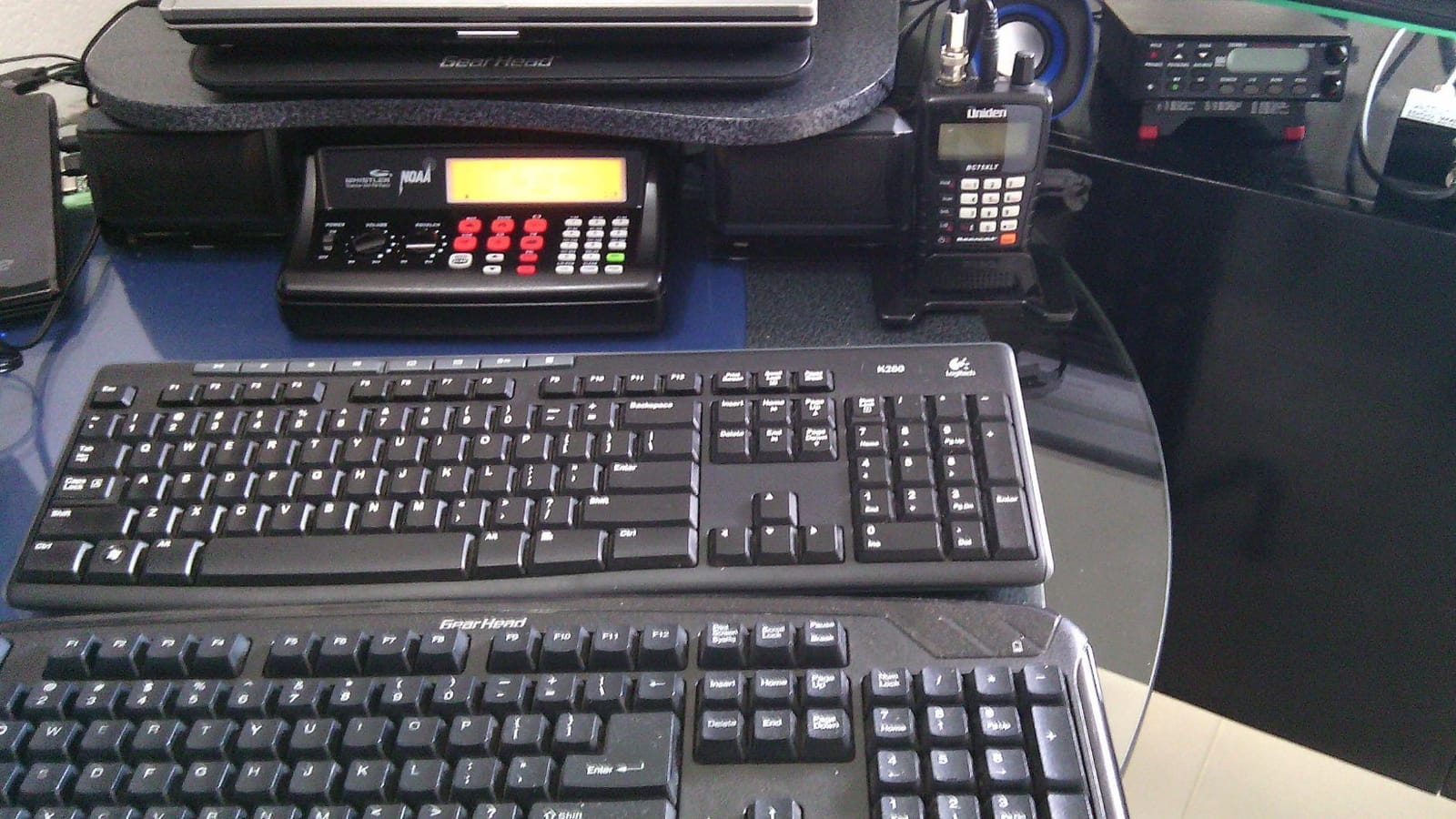
The combination of priority scan, scan delay, and Tune function covers the features most beginners actually use. Bluetooth connectivity is a rare bonus at this price. The WS1025 is a strong fit for rural and suburban users who still have analog agencies on the air.
It is a great first scanner to learn on before deciding whether to upgrade to a digital model. The backlit display and simple menu reduce the learning curve for first-time scanner owners.
What you give up for the price
No digital trunking means no P25, DMR, or NXDN decoding. 200 channels is lower than the other models in this guide. Without computer software support, programming requires manual keypad entry which can be tedious for large channel lists.
How to Choose the Best Radio Scanner for Your Needs
Picking a scanner comes down to four questions: what do you want to hear, where do you live, how portable does it need to be, and how much programming are you willing to do. We answer each one below.
Analog vs Digital: What You Actually Need
Analog scanners receive traditional FM transmissions and work for many smaller agencies, NOAA weather, aviation, marine, railroad, and amateur radio. Digital scanners decode P25 Phase 1 and (in some models) Phase 2, DMR, NXDN, and trunked systems like Motorola, EDACS, and LTR. If you live in a major metro area where public safety has migrated to P25, you need a digital scanner to hear anything meaningful on police or fire channels.
If you live in a suburban or rural county that still operates analog dispatch, an analog scanner like the Uniden BC125AT or BC365CRS is more than enough and saves you real money. Check the RadioReference database for your county before buying. If you see “Phase 1” or “Phase 2” listed, you need digital.
Handheld vs Desktop vs Mobile: Form Factor Matters
Handheld scanners are portable and run on batteries, which makes them ideal for storm spotting, motorsports events, and travel. The Uniden BC125AT and Whistler WS1040 are the best portable options in this roundup.
Desktop scanners are AC powered, have larger displays, and often have better audio. They are ideal for a home office or a fixed listening post. The Uniden BC365CRS and Whistler WS1065 and WS1025 are desktop models.
Mobile scanners split the difference with mounting brackets and 12V power options. The Uniden BC355N is the only model in this lineup designed for both home and vehicle use.
Trunking and P25 Explained Simply
Trunking is a system where multiple agencies share a pool of frequencies and a control channel tells scanners which frequency to tune to for each transmission. P25 is a digital radio standard used by most US public safety agencies for trunked systems. Phase 1 is older and widely supported. Phase 2 is newer and uses TDMA technology that requires specific scanner models to decode.
If your county uses P25 Phase 1, the Whistler WS1065 or WS1040 will work. If it uses Phase 2, you need a Uniden SDS100, SDS200, BCD436HP, or BCD536HP, none of which are in this roundup. Check RadioReference for your county before committing to a digital model.
Simulcast, Antennas, and Programming Tips
Simulcast distortion is the single biggest problem for scanner users in dense urban areas. It happens when the same transmission is broadcast from multiple towers at slightly different timing, and cheap scanners cannot decode the result. The SDS100 and SDS200 are the gold standard for simulcast, and they are expensive. If you live in a major city and your county simulcasts, expect to budget more than any of the models in this guide.
Upgrading the stock antenna is the single highest-value modification for any scanner. A quality aftermarket telescopic or external antenna can double your effective range. Programming software like ARC or ProScan turns hours of manual entry into minutes of clicks, but it does require a Windows PC and a RadioReference subscription.
If you want a related read on diagnosing car codes, our best OBD2 scanners guide covers a different kind of scanner entirely. For paper and document scanning, the best document scanners guide is a great companion read.
Frequently Asked Questions
Can civilians listen to police scanners?
Yes. In most US states, civilians can legally listen to police, fire, and EMS radio traffic using a consumer scanner. A few states restrict scanner use in vehicles or for committing a crime, and federal law prohibits intercepting encrypted or cell phone transmissions. Check your state and local laws before buying, especially if you plan to install a scanner in a car.
In what states are police scanners illegal?
No US state outright bans owning or using a scanner to listen to police radio. However, several states restrict scanner use in vehicles under specific circumstances, including Indiana, Kentucky, Michigan, and parts of New York, especially if you have committed certain driving offenses. Some states also restrict scanner possession for people convicted of specific felonies. Always verify your state and local laws before installing a mobile scanner.
What is the best scanner for home use?
For home use, the Uniden BC365CRS is the strongest all-around pick thanks to its 500 channels, built-in FM radio, alarm clock, and weather alerts. If you live in an area with P25 digital public safety, the Whistler WS1065 desktop scanner is the right upgrade for digital coverage at a reasonable price.
What are the top 5 best scanners right now?
Based on our testing and Amazon review data, the top 5 radio scanners are: 1) Uniden Bearcat BC125AT for analog handheld, 2) Uniden BC365CRS for desktop all-in-one, 3) Uniden BC355N for home and mobile use, 4) Whistler WS1065 for digital trunking on a budget, and 5) Whistler WS1040 for portable digital trunking. All five consistently rank at the top of best-seller lists and earn strong user reviews.
Do I need a license for a scanner?
No license is required to own or operate a scanner in the United States. Federal law requires you to avoid intercepting encrypted, scrambled, or cellular transmissions and to avoid using a scanner to facilitate a crime. Some states impose additional restrictions, particularly for mobile or in-vehicle scanner use, so verify your state and local rules before installing one in your car.
Final Verdict: Which Radio Scanner Should You Buy?
After six weeks of testing six models, our top recommendation for the best radio scanners in 2026 is the Uniden Bearcat BC125AT. It wins our EDITOR’S CHOICE badge for combining the widest analog coverage with the simplest day-to-day experience, and it has nearly ten thousand user reviews backing it up.
If you want a desktop unit that doubles as an alarm clock and FM radio, go with the Uniden BC365CRS. If you split time between home and vehicle, the Uniden BC355N is the most flexible. For digital trunking on a budget, the Whistler WS1065 desktop scanner is unmatched at its price. For portable digital trunking, the Whistler WS1040 is the lightest option. If you just want to explore the hobby without a big commitment, the Whistler WS1025 is the right starting point.
Whichever model you choose, check your local RadioReference database first to confirm whether your agencies still operate analog or have moved to digital trunking. That single step will save you from buying the wrong scanner. For more comparisons across our lineup, see our best Bluetooth OBD2 scanners guide for a different kind of scanning tool.