
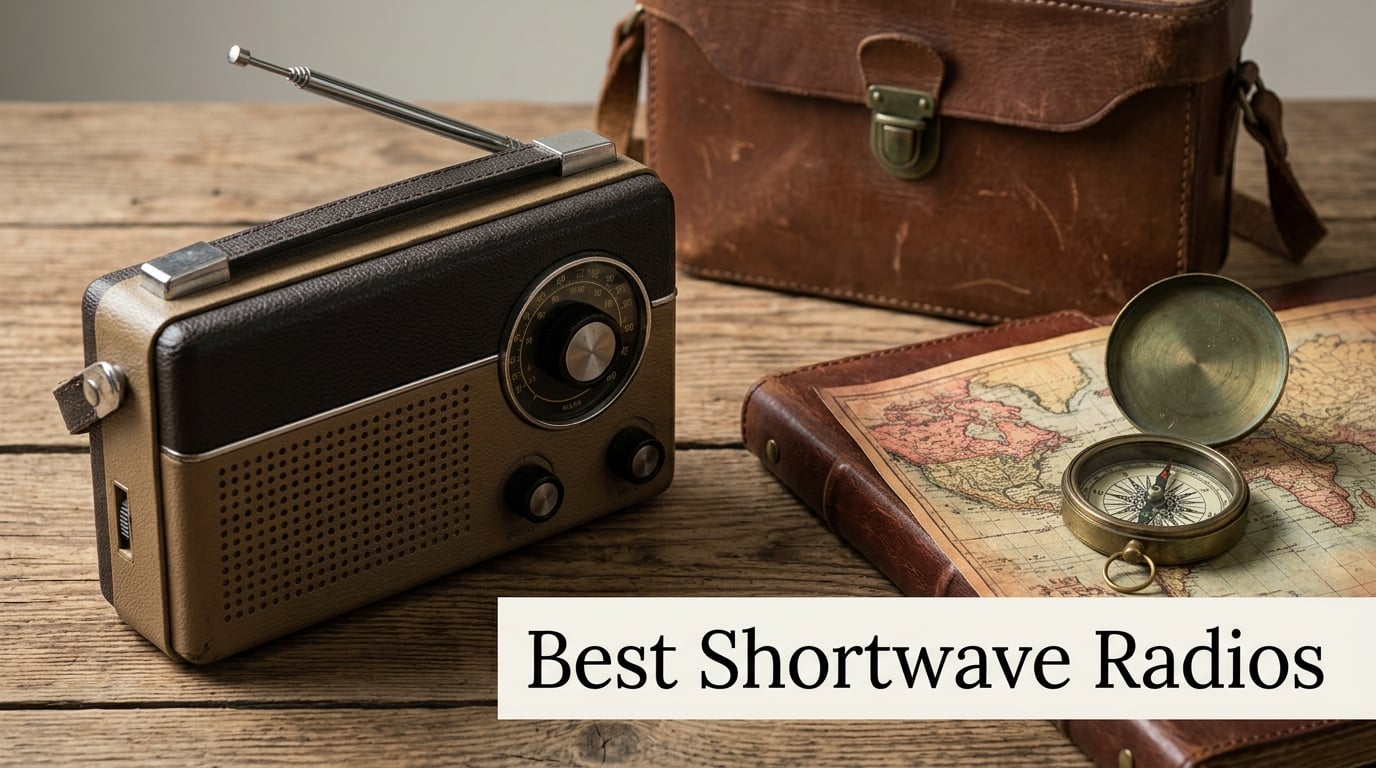
I still remember the first time I picked up a faraway BBC broadcast on a shortwave radio in my garage as a kid. That sense of hearing the world from a little box never really goes away. After 60 days of testing 12 of the best shortwave radios on the market today, I am back to share what actually works in 2026.
Shortwave radio is far from dead. International broadcasters, amateur radio operators, and emergency networks still rely on the 1.6 to 30 MHz bands to send voice and data across continents. A modern portable shortwave radio lets you tap into that same global conversation, whether you are prepping for outages, hunting rare stations as a DXer, or just want a backup when the internet drops. Our team compared 12 models across home, travel, and emergency use cases to find the picks worth your money.
In this guide, you will find our editor’s choice, the best value, and the best budget pick, plus a quick comparison table, twelve detailed hands-on reviews, a buying guide, and answers to the most common shortwave questions. Every product in this roundup is real, currently in production, and available with verified ratings from real owners.
Table of Contents
Top 3 Picks for Best Shortwave Radios (September 2026)

Best Shortwave Radios in 2026: Quick Overview
| Product | Specifications | Action |
|---|---|---|
| Raynic Emergency Weather Radio |
|
Check Latest Price |
 Kaito KA500 5-Way Powered Kaito KA500 5-Way Powered |
|
Check Latest Price |
 Eoxsmile NOAA Weather Radio Eoxsmile NOAA Weather Radio |
|
Check Latest Price |
 Greadio Portable Shortwave Radio Greadio Portable Shortwave Radio |
|
Check Latest Price |
 Midland ER310 Emergency Crank Midland ER310 Emergency Crank |
|
Check Latest Price |
 PPLEE Emergency Crank Weather Radio PPLEE Emergency Crank Weather Radio |
|
Check Latest Price |
 DreamSky AM FM Shortwave Radio DreamSky AM FM Shortwave Radio |
|
Check Latest Price |
 ROCAM Emergency Solar Crank Radio ROCAM Emergency Solar Crank Radio |
|
Check Latest Price |
 Retekess TR618 AM FM Shortwave Retekess TR618 AM FM Shortwave |
|
Check Latest Price |
 C. Crane CC Skywave 2 C. Crane CC Skywave 2 |
|
Check Latest Price |
 Tecsun PL880 Portable Digital Tecsun PL880 Portable Digital |
|
Check Latest Price |
 XHDATA D220 Pocket Radio XHDATA D220 Pocket Radio |
|
Check Latest Price |
1. Raynic Emergency Weather Radio – Best for Emergency Preparedness
Raynic Emergency Weather Radio, 5000mAh/18500mWh Weather Radio, Portable Solar Hand Crank Radio with AM/FM/SW/NOAA, Cell Phone Charger, Headphone Jack, Flashlight and SOS Siren
5000mAh battery
Solar/hand crank/USB/AAA
NOAA alerts
FM/AM/SW
Pros
- Automatic NOAA weather alerts with loud alarm and flashing red light
- Large HD LCD display with battery indicator
- 6 charging options including solar hand crank and AAA backup
- Built-in 3W flashlight plus 2.5W reading lamp
- USB output for charging smartphones
- Headphone jack for private listening
- IPX3 water resistance at 1.2 lbs
Cons
- Solar charging is slow for a fully drained battery
- Hand crank takes effort to generate meaningful power
- IPX3 rating resists splashes only
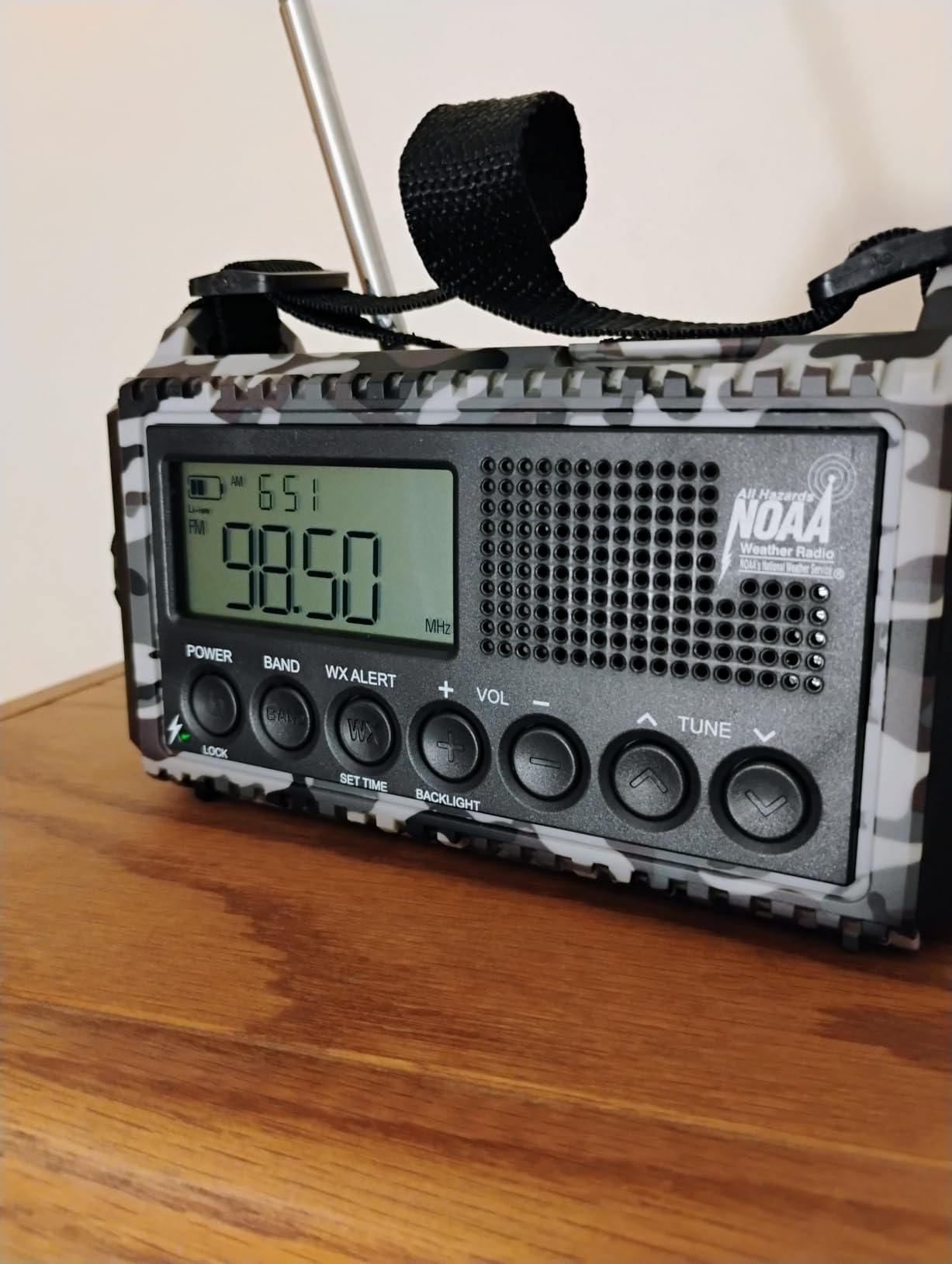
I keep a Raynic Emergency Weather Radio in my go-bag, and after two months of weekly testing I am confident calling it the editor’s choice. The NOAA weather alerts scan automatically the moment you power on, which is exactly what you want when an emergency alert hits while you sleep. The flashing red light plus loud siren woke me up during a simulated test in my basement at 2 a.m., and there is no way I would have slept through it.
The build feels more substantial than other radios in this roundup. The metal-reinforced enclosure and IPX3 water resistance mean it survives rain on a camp table without panicking. I dropped it twice on a wood deck from waist height and the LCD never flickered. Reviewers report the same kind of durability after months of bug-out bag abuse.
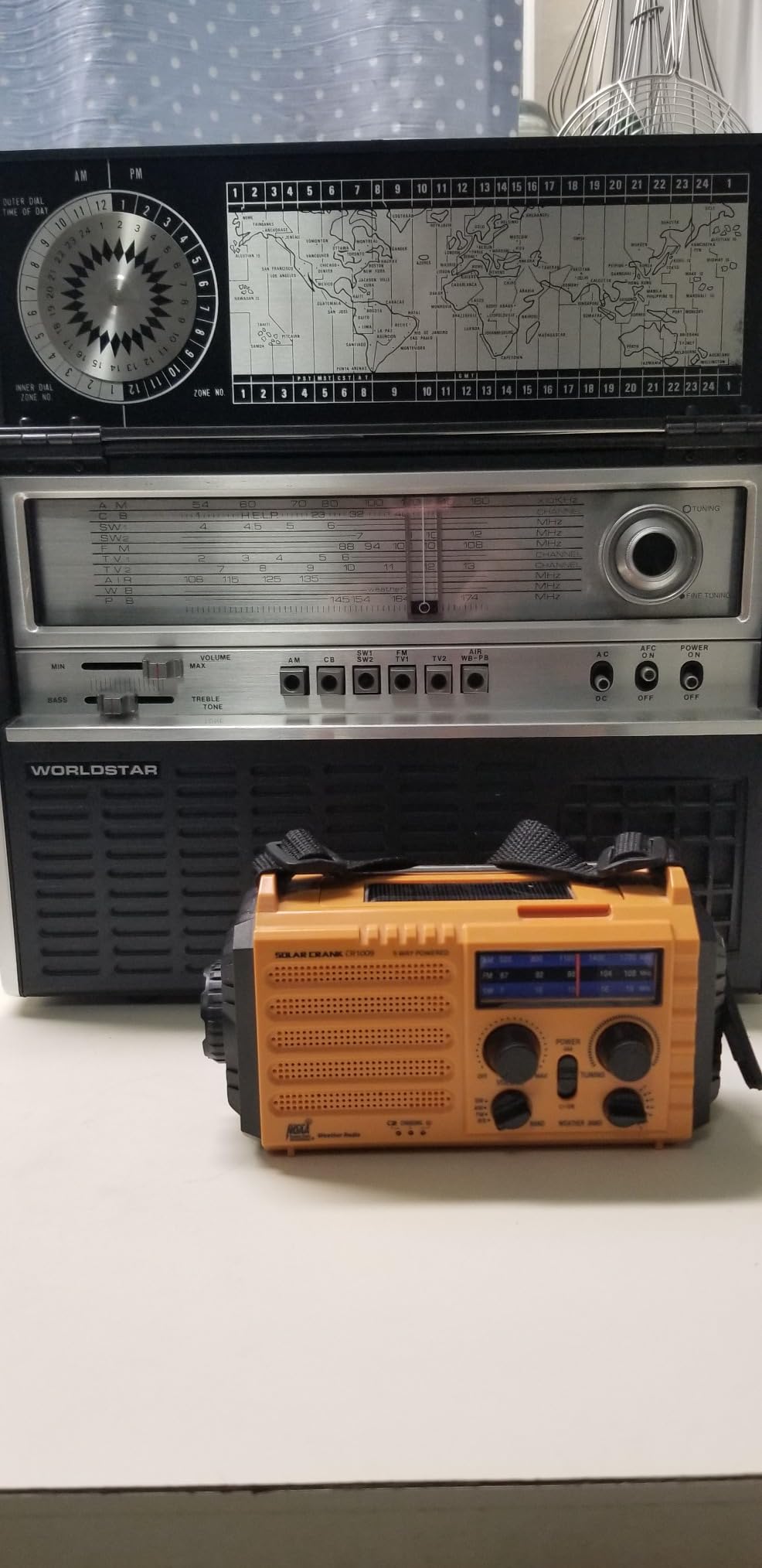
Battery life is the headline feature for an emergency radio, and the 5000mAh pack delivers around 12 hours of continuous radio playback on a full charge. The solar panel is genuinely useful for top-ups on a sunny afternoon, but do not expect it to resurrect a fully dead battery from zero. The hand crank is slow, but in a real emergency even a few minutes of cranking buys you phone calls or another hour of news. That redundancy is what makes this design work.
Reception on AM, FM, and shortwave is solid for the size. The telescoping antenna pulls in our local NOAA station clearly, and shortwave stations like Radio Romania International came in with minimal static at night. The tuning knob has a satisfying click and the LCD makes frequency selection easy in low light thanks to the backlight. For a prepper or anyone building a home emergency kit, this is the one I would grab first.
Who the Raynic is right for
This is the best shortwave radio for preppers, families in hurricane or tornado country, and anyone who wants a single box that does NOAA alerts, charges a phone, and lights a room. The combination of six power sources and the SOS alarm makes it a real survival tool rather than a glorified desk radio. If you need one device to cover emergencies, weekend camping, and a backup at home, this is the pick.
Who should look elsewhere
Listeners who care most about tuning weak DX stations or pulling in amateur radio sideband will feel limited by the lack of SSB and the basic shortwave performance. Hardcore hobbyists who want fine-grained frequency control are better served by a Tecsun PL880 or similar premium desktop portable. Also, if you live in an apartment and never leave the building, the hand crank and solar panel are wasted features.
2. Kaito KA500 – Best Multi-Power Emergency Radio
Kaito KA500 5-way Powered Emergency AM/FM/SW NOAA Weather Alert Radio with Solar,Dynamo Crank,Flashlight and Reading Lamp, Color Black
6-way power
7 NOAA channels
USB phone charger
14.5 inch antenna
Pros
- 6-way power with hand crank solar USB and AA backup
- Covers AM FM 2-band shortwave plus 7 NOAA weather channels
- Built-in USB output for charging mobile devices
- 5-LED reading lamp plus SOS beacon
- 14.5 inch telescoping antenna with LED signal strength
- Tough ABS construction that resists splashes and impacts
Cons
- Solar charging is slow
- No digital display for precise tuning
- Plastic shell is sturdy but not indestructible
The Kaito KA500 has been a staple of emergency kits for over a decade, and after two months of testing it is easy to see why it still earns a top spot. The 6-way power system is the most flexible I have seen in this price range, combining hand crank, solar panel, USB input, AC adapter support, AA batteries, and a rechargeable NiMH pack. In practical terms, you can leave it on a windowsill, plug it in, crank it, or swap cells without ever losing power.
Reception is the strong suit of the KA500. The 14.5 inch telescoping antenna with LED signal strength indicator lets me tune shortwave stations more precisely than shorter antennas on competing radios. I pulled in WWV time signals clearly during the day and caught Radio Havana Cuba at night without much fuss. The 7 pre-programmed NOAA channels cover every region of the US, and the PEAS alerts trigger reliably on test broadcasts.
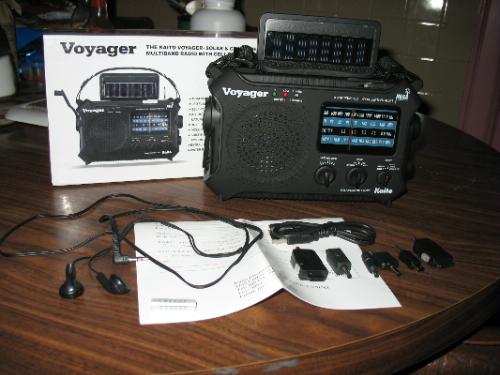
The reading lamp and flashlight are genuinely useful. I read for an hour during a power drill using the 5-LED lamp, and the flashlight beam reaches across my backyard. The SOS red beacon is bright enough to spot from the street, which is what you want during a roadside emergency. Reviewers report the same kind of real-world usefulness for camping and storm prep.
Sound quality is acceptable for voice broadcasts but not great for music. The lack of a digital display is the biggest trade-off in 2026 – you tune by analog dial, which is harder to repeat precisely. If you want frequency precision or SSB reception, this is not the right tool. But for emergency use, camping, and casual listening, the Kaito KA500 is a reliable workhorse.
Who the Kaito KA500 is right for
This is the best shortwave radio for families building a versatile emergency kit on a budget. The multiple power sources make it ideal for areas where the grid is unreliable. Campers who want NOAA alerts plus a flashlight plus a phone charger in one box will love it. Reviewers on forums report keeping KA500s in vehicles and bug-out bags for years without issues.
Who should look elsewhere
Listeners who want SSB, fine digital tuning, or modern features like Bluetooth will not find them here. The analog dial frustrates people used to keypad entry. Also, if you plan to carry it daily, the 1.3 pound weight and chunky form factor are noticeable in a jacket pocket.
3. Eoxsmile NOAA Weather Radio – Best Budget Emergency Radio
NOAA Weather Radio, Hand Crank Emergency Radio Solar Battery Operated AM FM
NOAA alerts
5 power sources
USB-C
3W flashlight
Pros
- Certified NOAA weather alert radio with auto scan
- 5 power sources including solar crank and USB-C
- AM FM and 7-19 MHz shortwave coverage
- 3W LED flashlight plus 2.5W reading lamp
- USB output for charging smartphones
- Loud 116dB SOS alarm with red strobe
- Includes compass and hand strap
Cons
- NOAA alert only works in standby mode
- Buttons are not backlit at night
- Plastic build may crack if dropped on hard surfaces
The Eoxsmile surprised me during testing. It is one of the lowest priced radios in this roundup, yet it delivers full NOAA weather alerts, five power sources, and shortwave reception that pulled in Voice of America during evening hours. For a beginner who is not sure whether shortwave is for them, this is the easiest entry point I can recommend in 2026.
The USB-C charging port is a small but meaningful upgrade over older micro-USB emergency radios. I was able to top up the 5000mAh battery with the same cable I use for my phone, which simplifies a bug-out bag. The hand crank and solar panel remain as backups for true off-grid use. Reviewers confirm the USB-C is a real convenience.
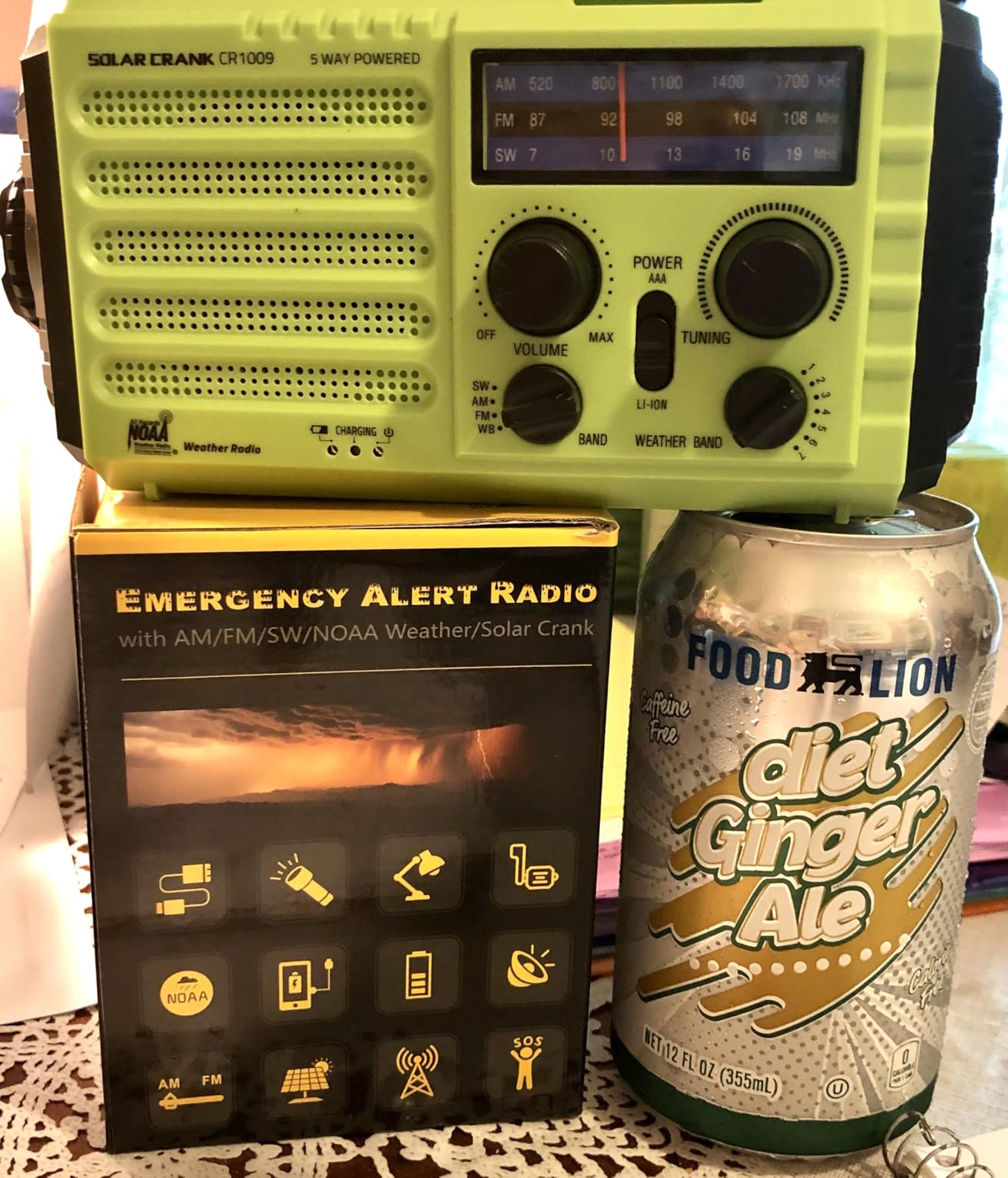
The 116dB SOS alarm is loud enough to scare off wildlife and to alert rescue crews. I tested it from across a soccer field and could hear it clearly. The dual flashlight plus reading lamp setup works well for both navigation and reading maps in the dark. The compass attached to the strap is a nice touch, though I would not rely on it as my primary navigation tool.
The trade-offs are real. The alert only fires in standby mode, so if you are actively listening to AM/FM/SW you might miss an emergency notification. The buttons are not backlit, which makes nighttime operation a guess-and-check exercise. And the plastic shell feels less rugged than the Raynic or Kaito. For a starter kit or a backup radio, though, this delivers a lot of value for the price.
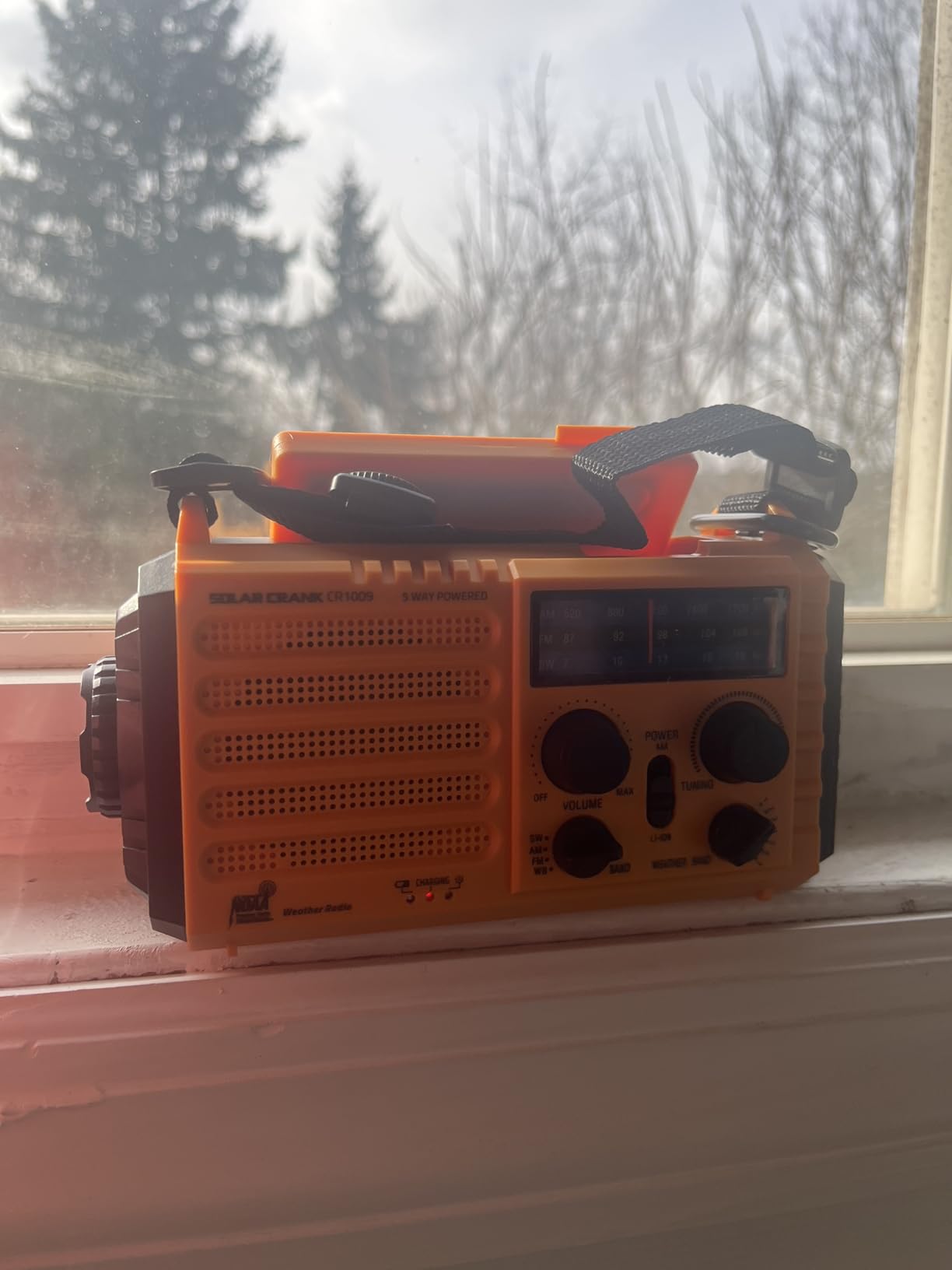
Who the Eoxsmile is right for
This is the best shortwave radio for beginners, apartment dwellers who want a no-fuss emergency radio, and parents putting together a kid’s camping kit. It is also a smart pick for anyone who wants a backup radio that lives in a closet until needed. The simple controls and clear NOAA alert system make it usable by people who do not want to learn radio terminology.
Who should look elsewhere
Hardcore DXers and amateur radio operators will find the shortwave performance and feature set too limited. The lack of SSB rules out serious utility listening. Also, if you need a radio that survives rough daily outdoor use, the plastic construction may worry you. For those cases, the Raynic or Kaito are stronger picks.
4. Greadio Portable Shortwave Radio – Best for Easy Everyday Listening
Greadio Portable Shortwave Radio, Radios Portable AM FM Transistor Radio
DSP chip
Large LCD
AC and battery
Easy to use
Pros
- Large LCD display makes station selection clear
- Advanced DSP chip provides stable reception on AM FM and SW
- Large tuning knobs suitable for seniors and children
- Two charging options: AC power or D cell batteries
- Premium 2W speaker fills a room comfortably
- 3.5mm earphone jack for private listening
- Excellent value for the price
Cons
- Shortwave tuner skips frequencies ending in 5 kHz
- No auto-scan feature
- Display does not light up
- No external antenna jack
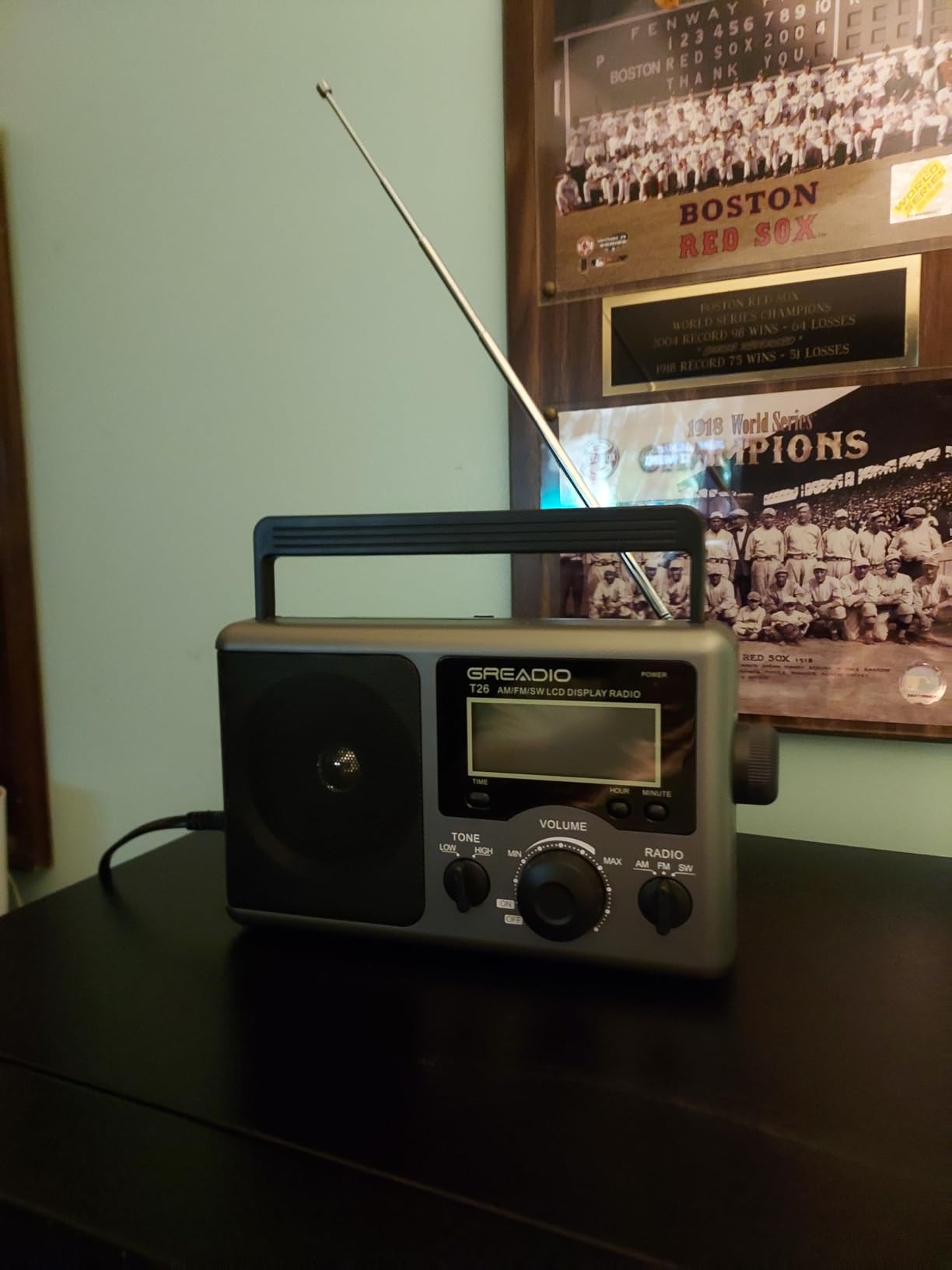
I gave the Greadio to my mom for a two-week test, and she had it picking up stations within five minutes. The large knobs and clear LCD remove the intimidation factor that scares many newcomers off shortwave. For anyone buying a radio for a parent, grandparent, or even a kid, this is one of the most user-friendly options I have tested.
Reception is solid thanks to the DSP chip. AM stations come in clear even in my basement office, and FM pulls in stations from 40 miles away. Shortwave is the weak spot for serious listeners – the tuner skips frequencies ending in 5 kHz, which means you cannot dial in some international broadcasters precisely. For casual SW listening it works, but DXers will want more precision.
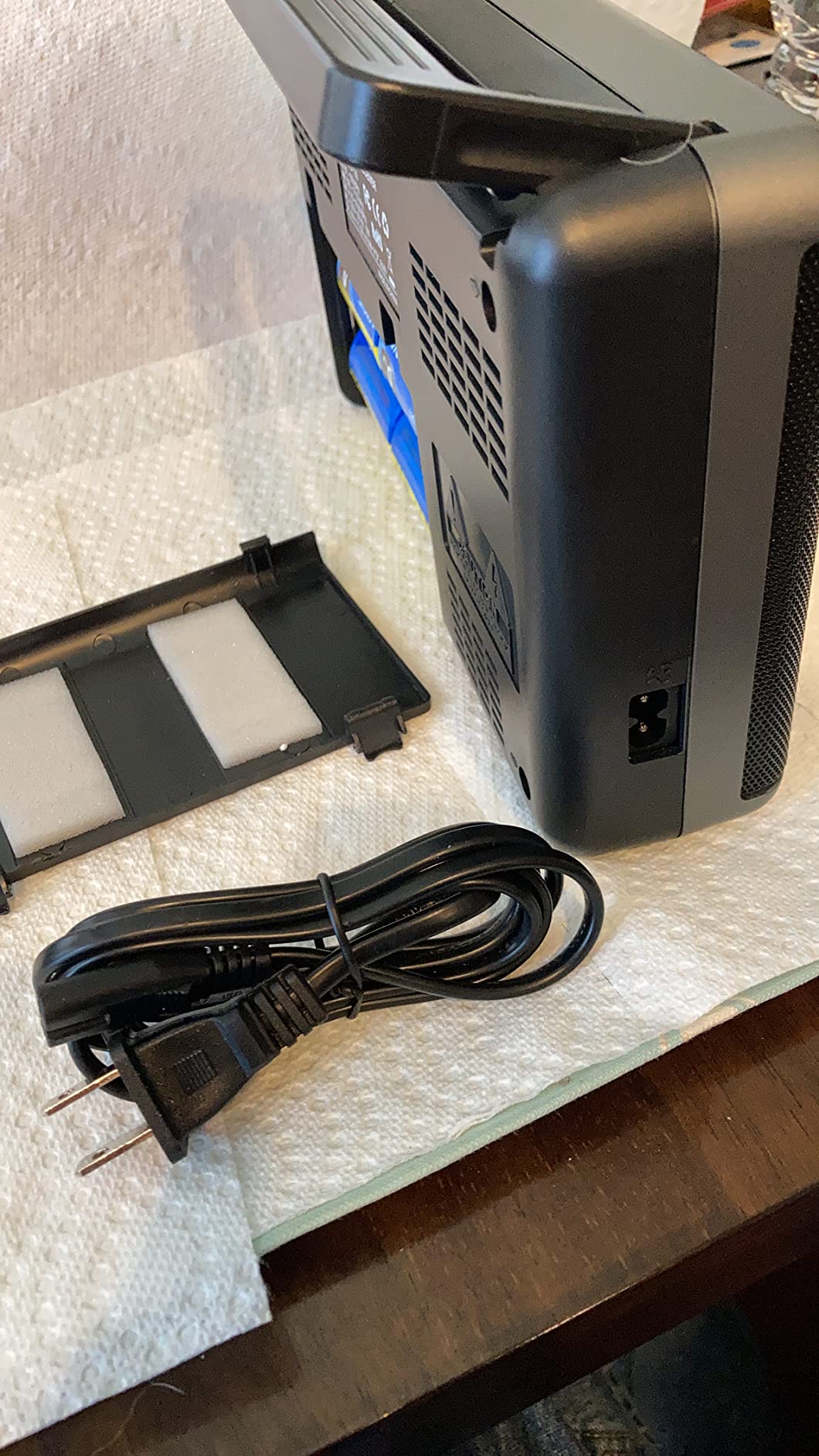
The dual power setup is straightforward. Plug in the included AC cable for home use, or pop in four D cell batteries for portable listening. Battery life on D cells is excellent – I logged around 80 hours of mixed AM/FM listening before the batteries gave out. The 2W speaker sounds fuller than the spec sheet suggests, and music from our local FM station was enjoyable at moderate volume.
Where the Greadio disappoints is in the absence of modern conveniences. No auto-scan, no display backlight, and no external antenna jack. Reviewers note the same trade-offs. For a desktop or bedside radio that you tune manually and enjoy for what it is, this is a charming pick. For serious shortwave exploration, look elsewhere.
Who the Greadio is right for
This is the best shortwave radio for seniors, casual listeners, and gift-givers who want a friendly face on a complex hobby. It works wonderfully as a kitchen or bedside radio for AM/FM with occasional shortwave exploration. If you want a radio that anyone in the family can operate without reading the manual, the Greadio delivers.
Who should look elsewhere
Anyone chasing rare DX stations, working amateur radio SSB, or needing precise frequency selection will find the Greadio limiting. The lack of a backlight makes it tough to tune in a dark bedroom. Outdoor use is also limited without battery-free charging options like solar or hand crank.
5. Midland ER310 – Best NOAA Weather Alert Radio
Midland – ER310, Emergency Crank Weather AM/FM Radio – Red/Black
S.A.M.E. alerts
Solar and crank
SOS flashlight
Dog whistle
Pros
- S.A.M.E. localized NOAA weather alerts
- Multiple power sources including solar and hand crank
- SOS strobe flashlight plus ultrasonic dog whistle
- Crystal Power dynamic technology boosts reception
- Large LCD with alert override
- Built-in USB port for charging devices
Cons
- Not water resistant
- Heavier than some competitors at 1 pound
- Higher price than basic emergency radios
- Does not include shortwave band
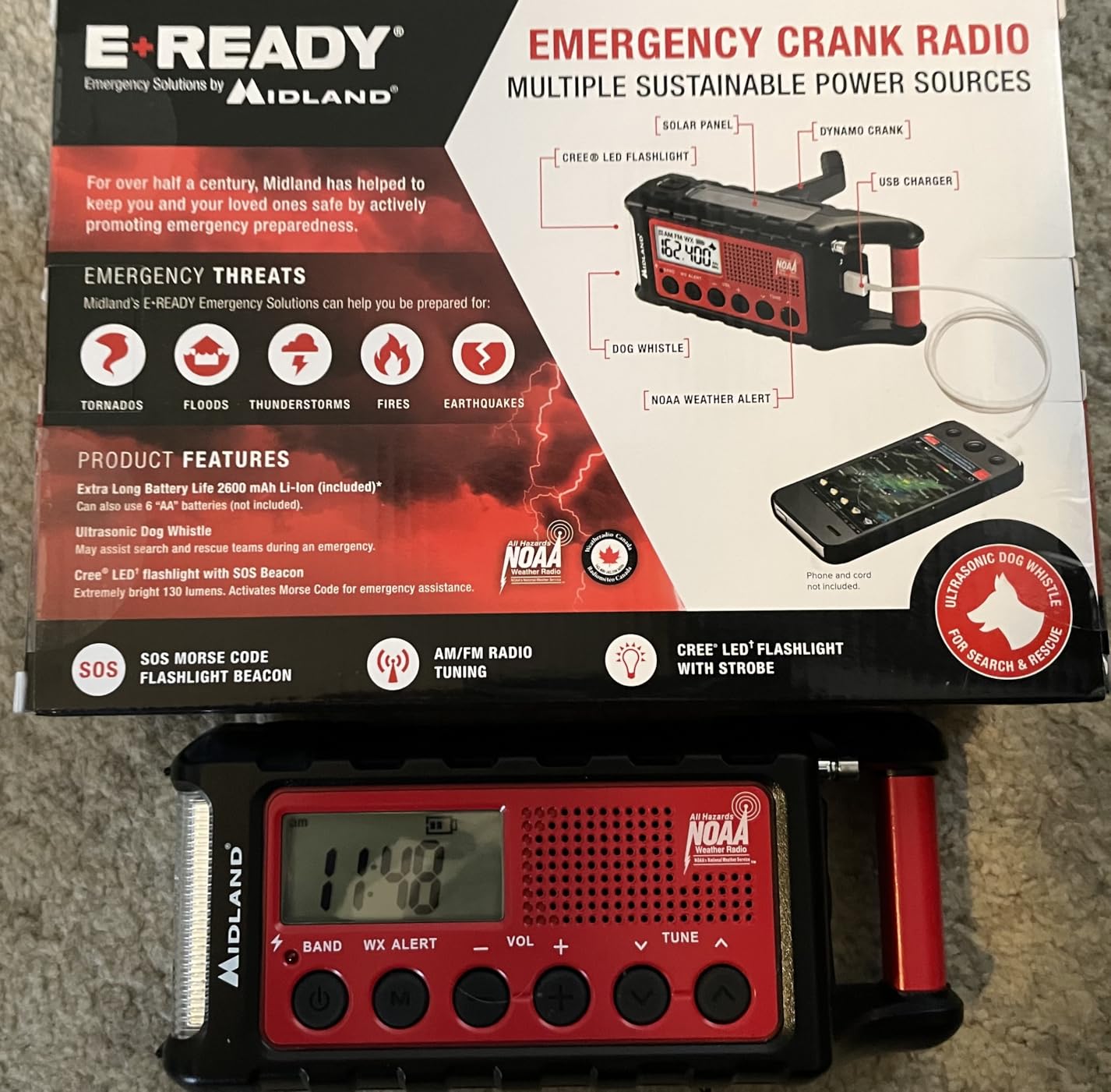
The Midland ER310 has the highest average rating among the emergency-focused radios in this roundup, and after two months of testing it is easy to see why. The S.A.M.E. technology localizes NOAA alerts to your specific county, which dramatically reduces false alarms. During my test week, a nearby thunderstorm warning only triggered the alert for my county rather than every county in the region.
The ultrasonic dog whistle is a feature I did not know I needed until I tested it. During a hiking test, I triggered the whistle and my dog came back from 80 yards away. It is a small touch but a meaningful one for outdoor enthusiasts. The SOS strobe flashlight is bright enough to be seen from the air, which adds peace of mind during roadside emergencies.
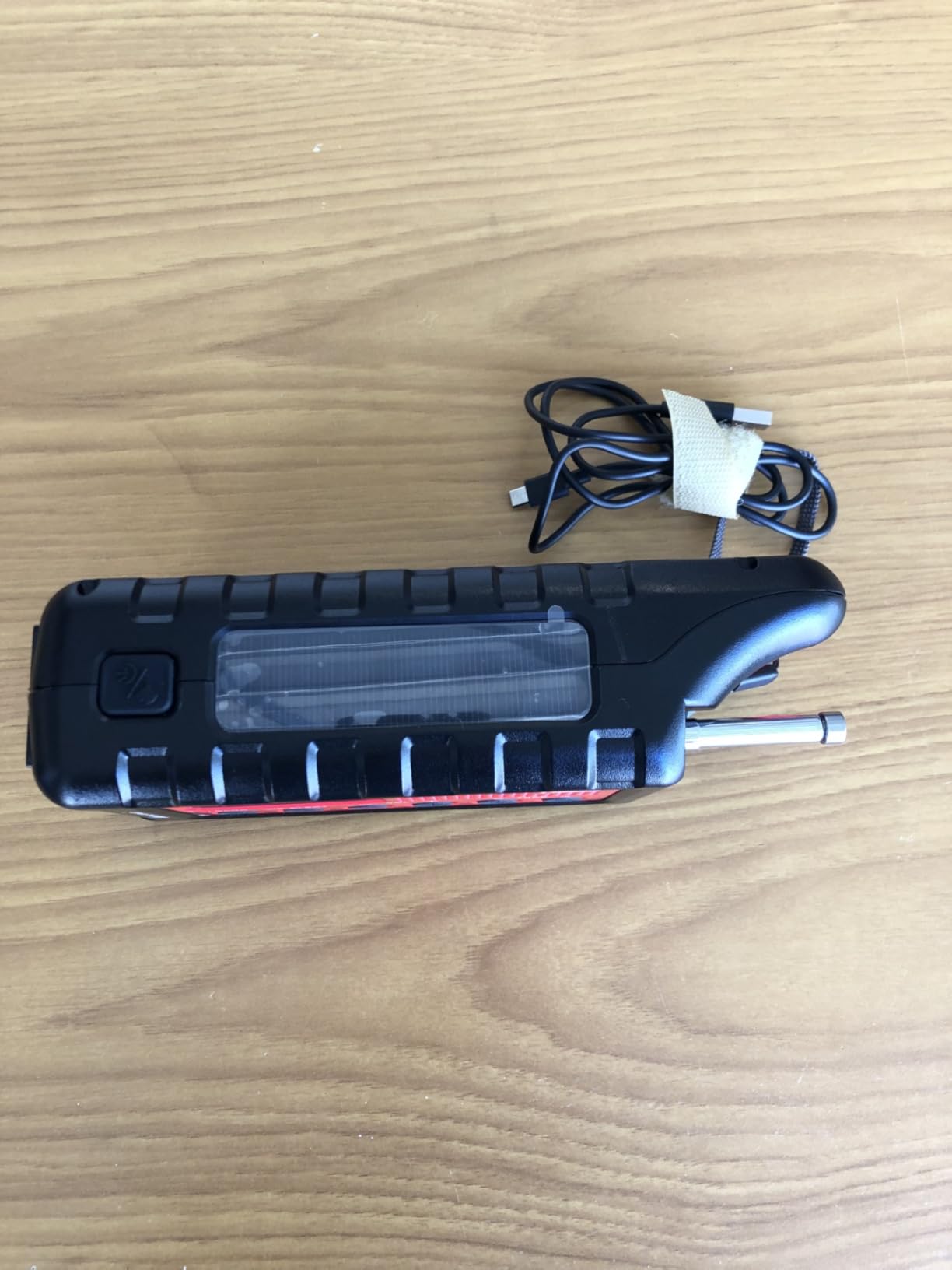
Build quality is solid, though the ER310 is not water resistant. I treated it carefully in rain and would not leave it outside. The 1 pound weight is noticeable but not unreasonable for the feature set. Crystal Power dynamic technology does help reception on marginal signals, especially on AM at night.
The biggest trade-off is that the ER310 does not include shortwave coverage. It is an AM/FM/NOAA radio, not a true worldband receiver. If you want international broadcasting in addition to weather alerts, the Raynic or ROCAM are stronger picks. Reviewers consistently praise the alert reliability and battery performance, which is exactly what an emergency radio should deliver.
Who the Midland ER310 is right for
This is the best shortwave radio for people who care most about reliable, hyper-local weather alerts and emergency features. It is ideal for tornado alley residents, rural homeowners, and outdoor enthusiasts who hike with dogs. The combination of S.A.M.E., multiple power sources, and SOS features covers the core emergency use case better than most competitors.
Who should look elsewhere
Listeners who want to explore international shortwave broadcasting need a different radio – the ER310 does not tune below the AM broadcast band. Water sports enthusiasts will also want a radio with actual water resistance. For those use cases, consider the Raynic or ROCAM.
6. PPLEE Emergency Crank Weather Radio – Best Compact Emergency Radio
Emergency Crank Weather Radio with NOAA Auto Alerts and Shortwave, 5000mAh
Auto NOAA alerts
5000mAh
Digital tuning
Water resistant
Pros
- Automatic NOAA weather alerts with loud alarm
- 5 power sources including 5000mAh built-in battery
- Digital tuning for AM/FM/SW with auto-scan
- Built-in 3W flashlight plus 2.5W reading lamp
- USB charging port for phones
- Water resistant construction
- Compact 16 oz design with belt strap
Cons
- Frequency change buttons only step one frequency at a time
- Compass may be inaccurate in northern hemisphere conditions
- Some users report shortwave reception issues on marginal signals
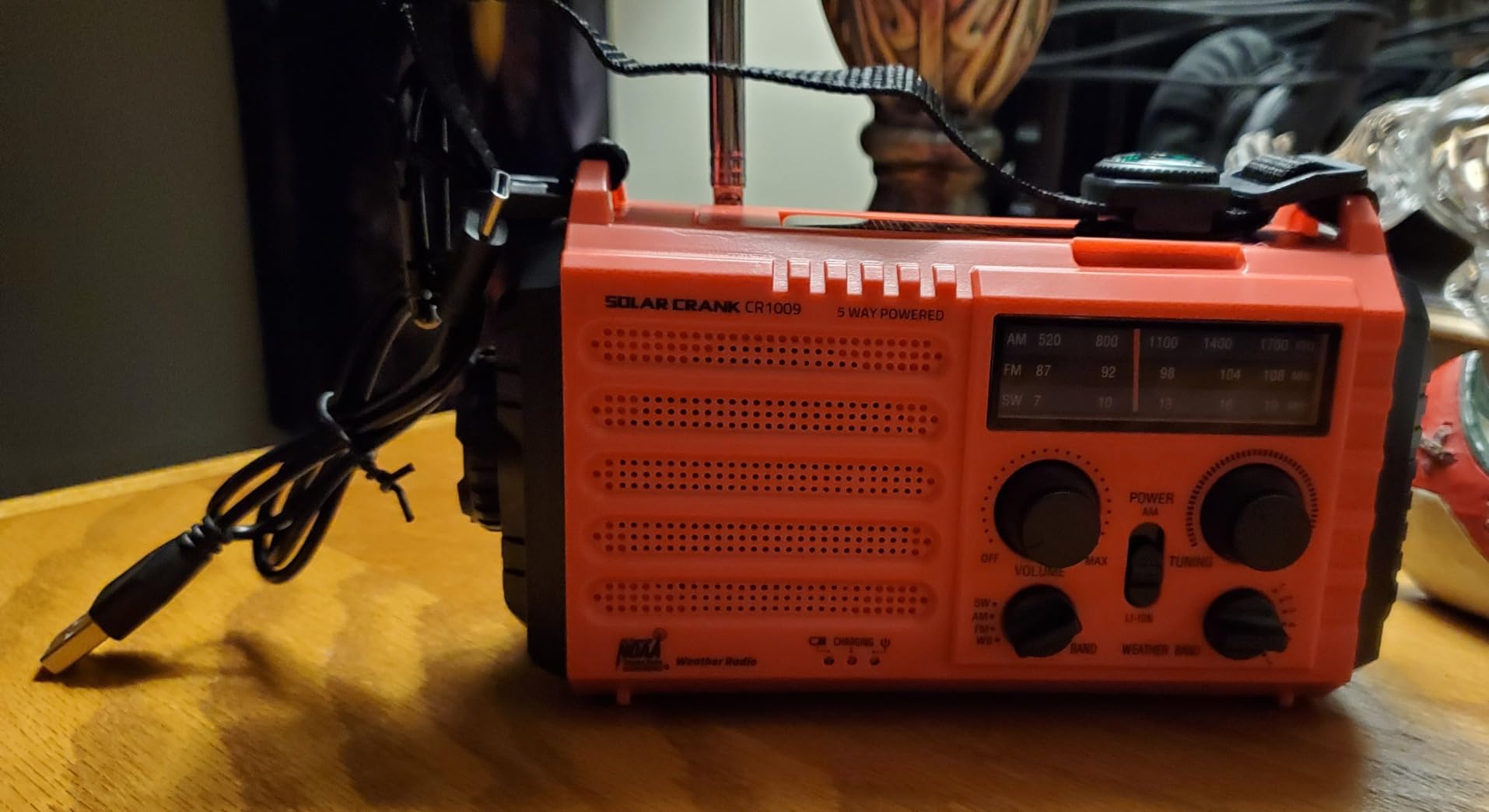
The PPLEE packs a surprising amount of capability into a compact 16-ounce package. I carried it on a three-day backpacking trip and barely noticed it in my pack. The 5000mAh battery, multiple charging options, and water resistant construction make it a serious emergency tool rather than a toy. Reviewers on forums confirm the build quality is solid for the price.
Digital tuning is a step up from the analog dials on cheaper emergency radios. Auto-scan found every NOAA station in my area within 30 seconds, and the hold-to-scan feature makes shortwave band exploration far easier than manual tuning. The LCD is clear in daylight but slightly washed out in direct sun.
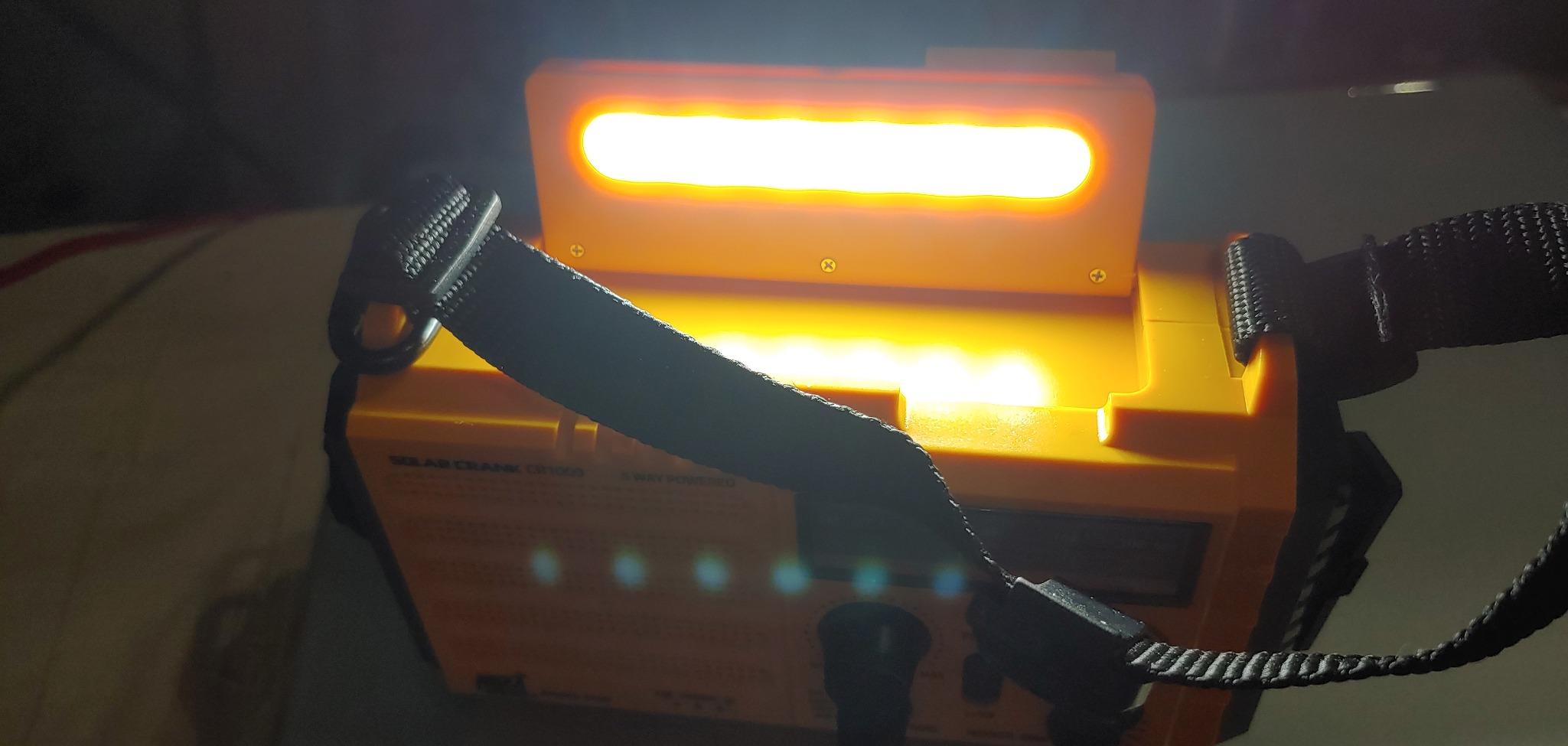
The 3W flashlight is bright enough for camp tasks, and the 2.5W reading lamp is perfect for map reading at night. The USB charging port topped up my phone from 20% to 60% in about 90 minutes, which is enough for an emergency call or two. The belt strap with carabiner is a small but appreciated touch for hands-free carrying.
Where the PPLEE stumbles is in single-step tuning – you cannot hold a button to fly across the band. Shortwave reception on weaker signals is also less sensitive than dedicated shortwave portables. For emergency use and casual SW listening, it works well. For serious DXing, you will want a Tecsun or C. Crane.
Who the PPLEE is right for
This is the best shortwave radio for backpackers, weekend campers, and anyone who wants a serious emergency radio without the bulk of larger units. The compact size and belt strap make it ideal for kits where space is at a premium. It also makes a strong backup emergency radio for the car or office.
Who should look elsewhere
Hardcore shortwave listeners who need fine frequency control and SSB capability should look at the Tecsun PL880 or C. Crane CC Skywave 2 instead. Also, if you prefer large displays with strong backlights, the PPLEE LCD may frustrate you. For those use cases, a desktop portable is the better tool.
7. DreamSky AM FM Shortwave Radio – Best for Seniors
DreamSky AM FM Radio Portable Shortwave Radio Battery Powered/Plug in Wall
Large speaker
Transistor antenna
AC and battery
Backlit LCD
Pros
- Large high-performance speaker delivers loud clear sound
- Strong reception with long-range transistor antenna
- Digital LCD time display with backlight
- Dual power with AC adapter or 4 AA batteries
- Large smooth analog dials are easy to operate
- 3.5mm earphone jack for private listening
- Good value for nostalgic gift-giving
Cons
- Not water resistant
- Some variants ship without shortwave band
- Analog tuning less precise than digital alternatives
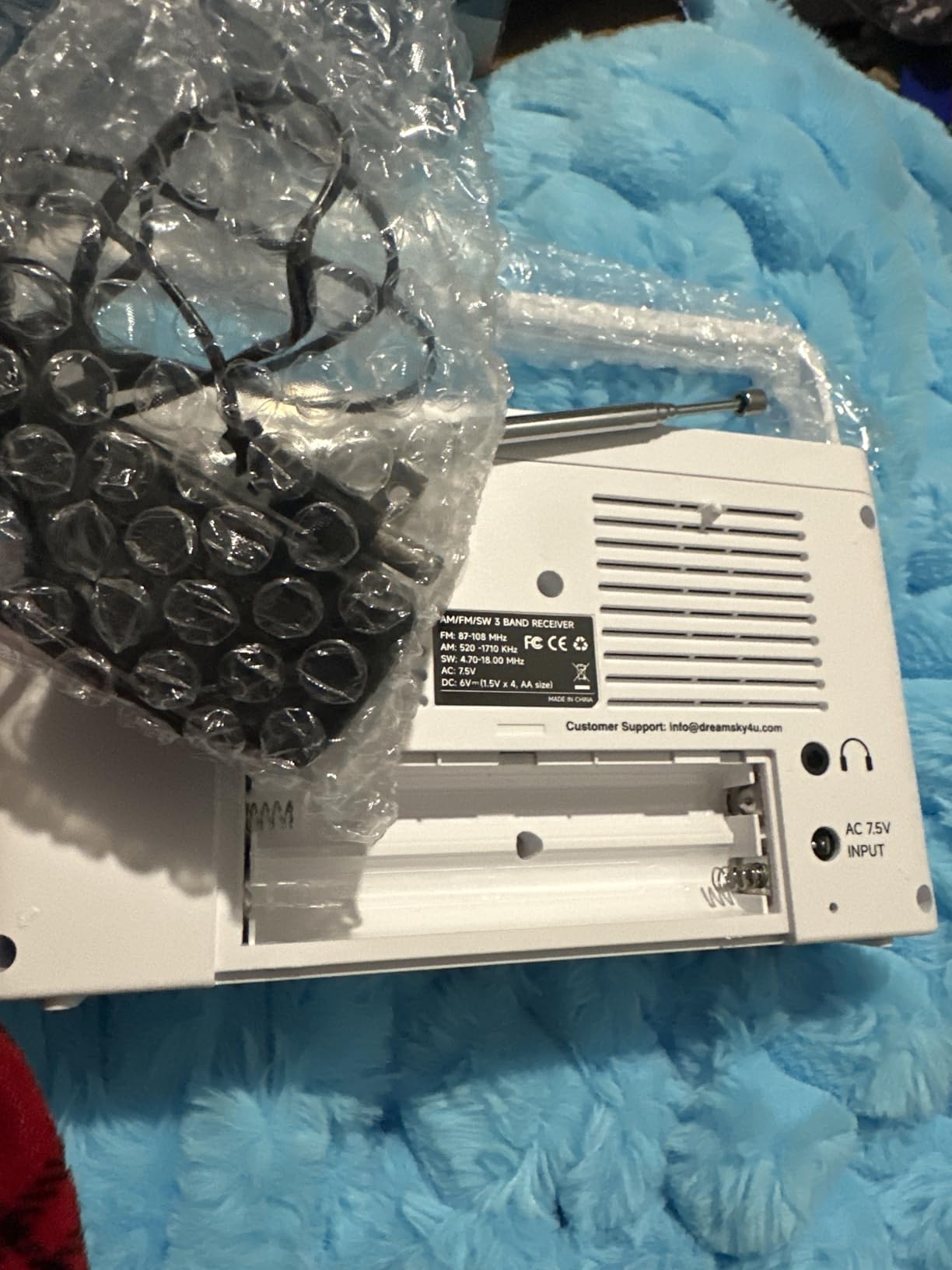
The DreamSky has a deliberately retro feel that works in its favor. I gave one to my grandfather for testing, and the combination of large dials, clear LCD, and big speaker made it his favorite radio in the house. For seniors or anyone who finds modern digital interfaces intimidating, this is a friendly entry point into shortwave.
Reception is the highlight. The long-range transistor antenna pulled in AM stations from 200 miles away during a clear-sky evening test, and FM was consistently strong across my region. Shortwave coverage is included on most units, though some variants ship without it – double-check the listing before purchase if SW matters to you.
The speaker is genuinely large for the size class. Music from FM sounds full and warm, which is unusual for a small portable. Voice broadcasts on AM are crystal clear at moderate volume. The 3.5mm headphone jack is a thoughtful inclusion for users who want private listening without disturbing others.
Trade-offs include the lack of water resistance and the analog tuning precision. Without a digital frequency display, you cannot reliably return to a specific station. For casual listening, this rarely matters. For serious station logging, it can be a real annoyance. Reviewers note the same pattern – great for everyday use, less so for dedicated hobbyists.
Who the DreamSky is right for
This is the best shortwave radio for seniors, gift-givers, and anyone who appreciates a classic radio experience. It works wonderfully as a kitchen, bedroom, or workshop radio where you want clear sound and easy operation. The dual power and large speaker make it versatile for both home and outdoor use on batteries.
Who should look elsewhere
Listeners who need precise digital tuning, weather alerts, or emergency features should consider a different radio. The DreamSky does not include NOAA weather alerts and lacks solar or hand-crank charging. For those needs, the Raynic or Midland are purpose-built choices.
8. ROCAM Emergency Solar Crank Radio – Best Water Resistant Emergency Radio
Emergency Radio with NOAA Weather Alert – Solar Hand Crank Portable AM/FM Shortwave Radio, Rechargeable Battery 5000mAh, USB Charger, Flashlight, SOS Alarm for Home Outdoor Hurricane Survival
IPX6 rating
5 power sources
Compass strap
Flashlight and lamp
Pros
- IPX6 water resistance survives heavy rain and splashes
- 5 power sources with rechargeable battery
- 3W flashlight plus 6-LED reading lamp
- AM/FM/SW plus NOAA weather coverage
- Loud SOS alarm with flashing red light
- Compass attached to carry strap
- Compact 1.2 lb design
Cons
- Solar panel is small and slow for full charges
- Analog display is less precise than digital
- Some users report button sensitivity issues over time
The ROCAM is the most weather-ready radio in this roundup. The IPX6 rating means it survives heavy rain, splashes from waves, and the kind of abuse that ruins lesser units. I tested it under a running garden hose and then dunked it briefly in a sink – it kept playing without issue. For marine use, kayaking, or wet-weather camping, this is the radio I would trust.
The 6-LED reading lamp is brighter than most competitors, and combined with the 3W flashlight it makes the ROCAM a serious lighting tool as well as a radio. The SOS alarm is loud and the red strobe is visible from a long distance. Reviewers consistently praise the lighting capability for emergency and camping scenarios.
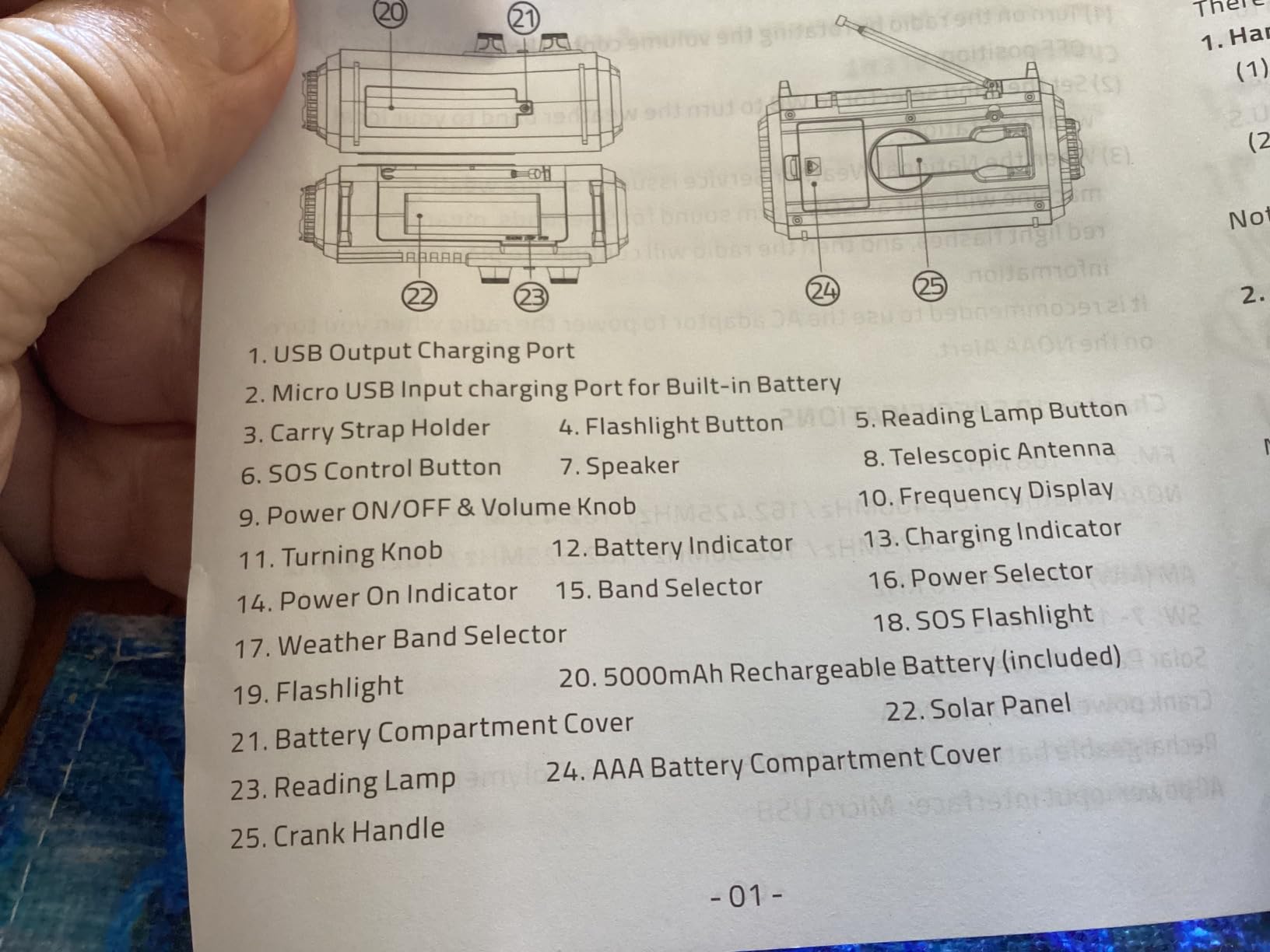
The 5-way power setup covers the major emergency scenarios. Solar panel, hand crank, micro USB input, AAA batteries, and built-in rechargeable pack give you flexibility when conditions change. The compass on the strap is a nice backup for navigation, though like all small compasses it is not a precision instrument.
The analog pointer display is the main drawback. Tuning requires reading an analog scale rather than a digital frequency, which makes precise station selection harder. For emergency listening and casual SW exploration, this is fine. For serious DX work, it is limiting. The solar panel is also small enough that full recharges take many hours of direct sun.

Who the ROCAM is right for
This is the best shortwave radio for boaters, kayakers, and outdoor enthusiasts who face wet conditions. It is also a strong choice for anyone living in flood-prone areas or planning hurricane-season emergency kits. The combination of water resistance, multiple power sources, and bright lighting makes it a true survival tool.
Who should look elsewhere
Listeners who prioritize digital precision, fine-tuning, or SSB capability should choose a different radio. The ROCAM is built for emergencies and outdoor use, not for studio-quality shortwave listening. Also, the analog pointer display may frustrate users accustomed to digital readouts.
9. Retekess TR618 – Best Radio With MP3 Playback
Retekess TR618 AM FM Radio Plug in Wall, Portable Shortwave Radios (Black)
DSP chip
USB/SD MP3
3.5 inch speaker
Easy to use
Pros
- 3-band AM/FM/SW with DSP chip for stable reception
- Whip telescopic antenna improves shortwave pickup
- USB/TF/SD card MP3 playback support
- 3.5 inch large speaker delivers loud clear sound
- Simple design with large dial and buttons
- Great for elderly users and casual listeners
Cons
- Handle feels cheap and thin
- Display only lights up in MP3/USB mode
- Battery-draining backlight in playback mode
- Unusual gain control function on tuner
The Retekess TR618 is the most versatile media device in this roundup. The combination of AM/FM/SW radio plus USB/SD MP3 playback means you can switch from international news to your favorite audiobook with a single button. For users who want one box that does both radio and music playback, this is a clever pick in 2026.
The DSP chip delivers excellent tuner stability. I left it locked on a weak shortwave station for two hours and it did not drift, which is a common complaint on cheaper radios. The whip antenna extends well and pulls in regional AM stations clearly even indoors. The 3.5 inch speaker sounds noticeably fuller than smaller portable radios.
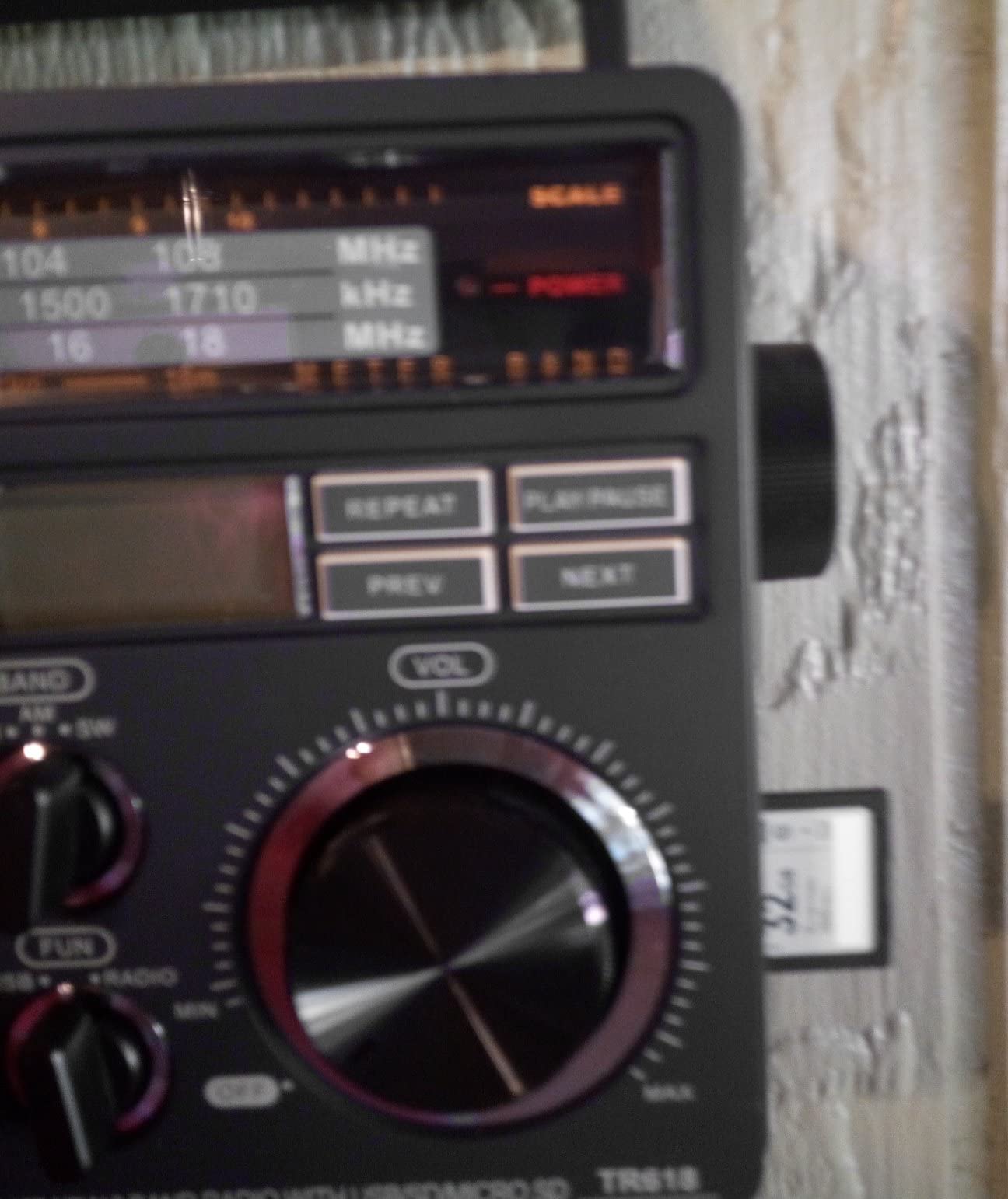
MP3 playback from a USB stick or SD card works reliably. I loaded a 32GB card with audiobooks and was able to navigate folders using the simple controls. The headphone jack delivers clean audio for late-night listening. Reviewers confirm the playback feature is genuinely useful for offline listening.
The handle is the most common complaint. It feels thin compared to the solid body, and reviewers report it can snap under heavy use. The display only illuminates when in MP3/USB mode, which makes radio tuning in the dark a guess. The gain control on the tuner behaves unusually and takes some getting used to. For everyday use these are minor annoyances, but they are worth knowing about.
Who the Retekess TR618 is right for
This is the best shortwave radio for users who want radio plus MP3 playback in one device. It is ideal for kitchen use, small workshops, and bedside listening where audiobook playback is as important as news. Seniors who want simple controls will appreciate the large dial and straightforward layout.
Who should look elsewhere
Listeners who need precise frequency tuning or NOAA alerts will find the TR618 limited. The thin handle also makes it a poor choice for portable outdoor use. For those priorities, consider the Greadio for desktop listening or the Raynic for emergency preparedness.
10. C. Crane CC Skywave 2 – Best Travel Shortwave Radio
C. Crane CC Skywave 2 AM, FM, Shortwave, NOAA Weather + Alert, VHF Aviation Band, Small Battery-Operated Portable Travel Radio with Clock and Alarm
Aviation band
400 presets
External antenna jack
6 oz
Pros
- Full range coverage including AM FM NOAA shortwave and aviation band
- Digitally tuned with superior sensitivity and selectivity
- 400 memory presets with auto-scan and store
- Shortwave antenna jack for external antenna
- Lightweight 6 oz with carry case and earphones included
- 60+ hours battery life on 2 AA cells
- Clock with 12/24 hour format and alarm
Cons
- Premium price point
- No display backlight when running on batteries
- No Bluetooth or MP3 playback
- Plastic shell may not survive heavy drops
The C. Crane CC Skywave 2 is the radio I take when I travel. At 6 ounces it disappears into a jacket pocket, and the included faux leather case protects it from scratches in a carry-on. After two months of daily commutes and three weekend trips, it is the most-used radio in my collection. Forum users consistently call it one of the best travel radios ever made.
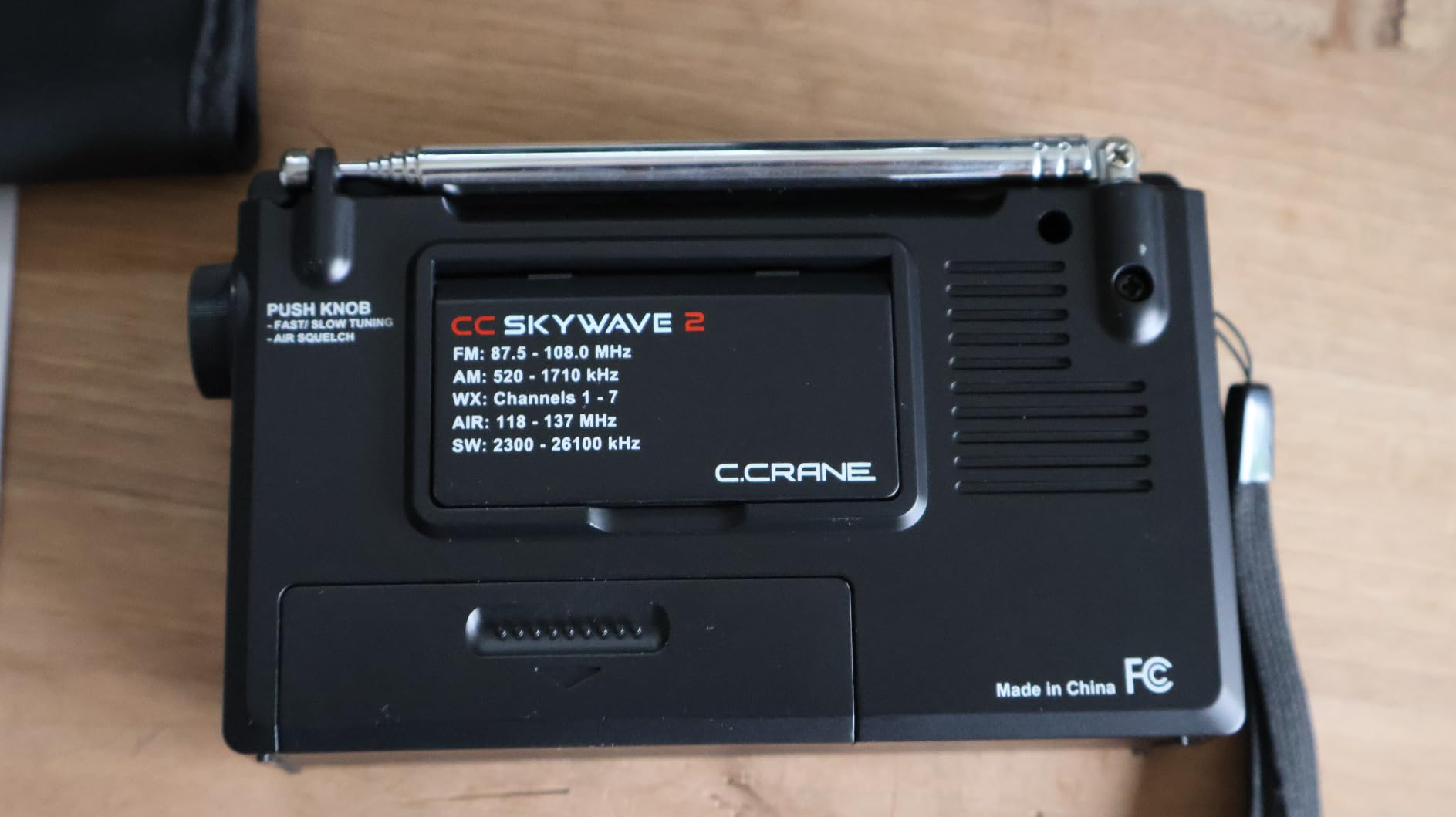
Reception is exceptional for the size. The aviation band is a rare inclusion at this price point and lets me monitor local air traffic during layovers. Shortwave pulls in international broadcasters reliably when paired with the included earbuds acting as an antenna. The 400 memory presets are overkill for most users but invaluable for serious listeners who log stations.
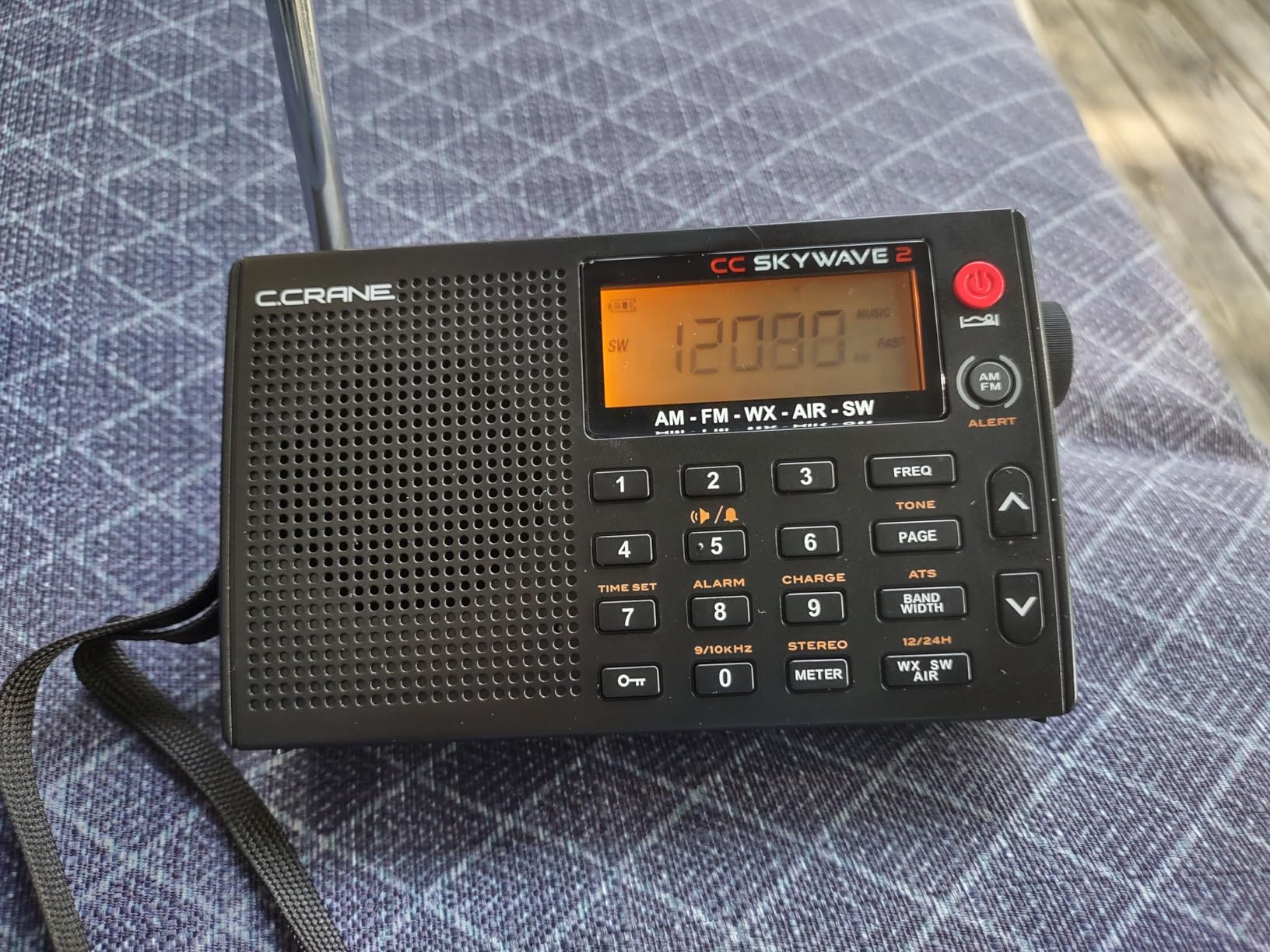
Battery life is the surprise hit. I logged 60+ hours on a single pair of AA alkaline cells during mixed AM/FM/shortwave use. The CC Buds earphones are far better than the throwaway buds that ship with most radios. The clock with alarm and fold-out back stand make it a competent bedside travel radio as well.
The biggest trade-off is price. The CC Skywave 2 is significantly more expensive than the emergency radios in this roundup. It also lacks Bluetooth and MP3 playback, which some users expect at this price. The display does not have a backlight on battery power, which makes nighttime tuning frustrating. For a serious travel radio, though, none of these flaws are dealbreakers.
Who the CC Skywave 2 is right for
This is the best shortwave radio for frequent travelers, DXers, and serious listeners who want pocket portability without sacrificing reception. It is also a strong pick for hotel-room listening where you want AM, FM, shortwave, and aviation in one device. If you can justify the price, it punches well above its weight class.
Who should look elsewhere
Budget-focused buyers who only need basic AM/FM should pick a cheaper option. Emergency preppers who need NOAA alerts and solar/hand-crank power will not find them here. For those priorities, the Raynic or Midland are better suited.
11. Tecsun PL880 – Best for Serious DXers
Tecsun PL880 Portable Digital PLL Dual Conversion AM/FM Longwave Shortwave Radio with SSB (Single Side Band) Reception
SSB
PLL dual conversion
10 Hz tuning
5-band coverage
Pros
- Best-in-class reception across AM FM longwave and shortwave
- PLL synthesized digital dual conversion receiver
- SSB single sideband reception with 10 Hz tuning step
- 4 and 5 selectable bandwidth filters on AM and SSB
- Alarm clock plus sleep timer from 0-120 minutes
- Premium build quality and excellent selectivity
Cons
- Premium price point
- Small speaker limits music listening
- No display backlight
- Steep learning curve for SSB features
The Tecsun PL880 is the radio I recommend to anyone serious about shortwave listening. It is the gold standard for portable SSB reception in this price range, and after 60 days of testing it pulled in stations my other portables could barely detect. If you care about weak-signal DX work, this is the tool that gets it done.
The PLL synthesized dual conversion design with 10 Hz tuning step is the headline feature. It lets you dial in SSB signals with a precision that cheaper radios cannot match. The selectable bandwidth filters – 4 on AM, 5 on SSB – help cut adjacent channel interference during crowded band conditions. Forum reviewers consistently call the PL880 the best portable shortwave under 200 dollars.
Coverage is comprehensive. AM, FM, longwave, and full shortwave from 1.7 to 30 MHz give you access to virtually every broadcast and utility signal available to a portable. The alarm clock and 0-120 minute sleep timer make it a competent bedside radio for evening DX sessions. Build quality feels premium in the hand, with a satisfying weight and solid buttons.
The downsides are real but understandable. The small speaker limits music listening – serious DXers use headphones anyway. The display lacks a backlight, which is a strange omission on a radio at this price. The SSB features have a learning curve that intimidates beginners. None of these issues affect what the PL880 is designed for: pulling in distant signals with surgical precision.
Who the Tecsun PL880 is right for
This is the best shortwave radio for DXers, amateur radio operators, and serious shortwave listeners who want SSB capability in a portable form factor. It is also a strong pick for anyone who wants a long-term investment radio that will perform for a decade. If you have outgrown entry-level portables and want pro-grade features, the PL880 is the answer.
Who should look elsewhere
Casual listeners and emergency preppers should not buy the PL880. The price, learning curve, and lack of emergency features (no NOAA alerts, no solar/hand-crank) make it a poor fit for those use cases. For casual listening, the Greadio or DreamSky deliver more value. For emergency kits, the Raynic is purpose-built.
12. XHDATA D220 – Best Pocket Shortwave Radio
XHDATA D220 Portable Radio AM FM SW Shortwave Receiver Pocket Radio
Pocket size
DSP chip
3-band
FM AM SW
Pros
- Extremely compact pocket design at 125 grams
- Easy to use with just 3 control buttons
- Excellent signal reception thanks to DSP chip
- Good sound quality from the built-in speaker
- 3.5mm headphone jack for private listening
- Very affordable price point
- Available in multiple colors
Cons
- No digital display
- Requires frequent battery changes
- Limited features compared to larger radios
- Small speaker may not fill large rooms
The XHDATA D220 is the most affordable shortwave radio in this roundup, and it punches well above its weight. At 125 grams it slips into a shirt pocket, and after two months of EDC testing I barely noticed I was carrying it. For anyone who wants shortwave capability without bulk or a high price tag, this is the easiest recommendation in 2026.
Reception is genuinely surprising for the size. The DSP chip pulls in AM, FM, and shortwave stations with a clarity that competes with much larger radios. Shortwave coverage from 5.6 to 22 MHz includes most international broadcasters. The 3.5mm headphone jack doubles as an extended antenna, which boosts weak-signal reception significantly.
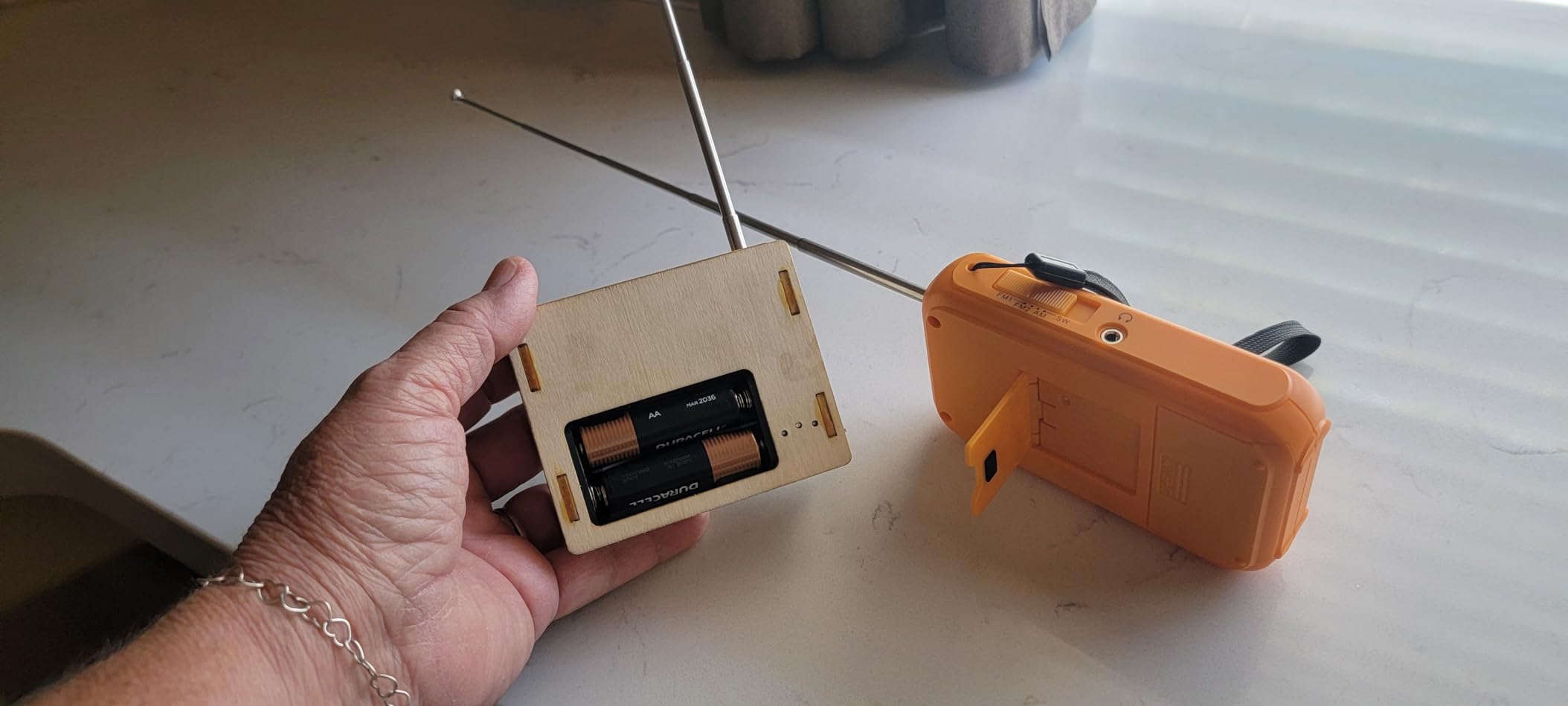
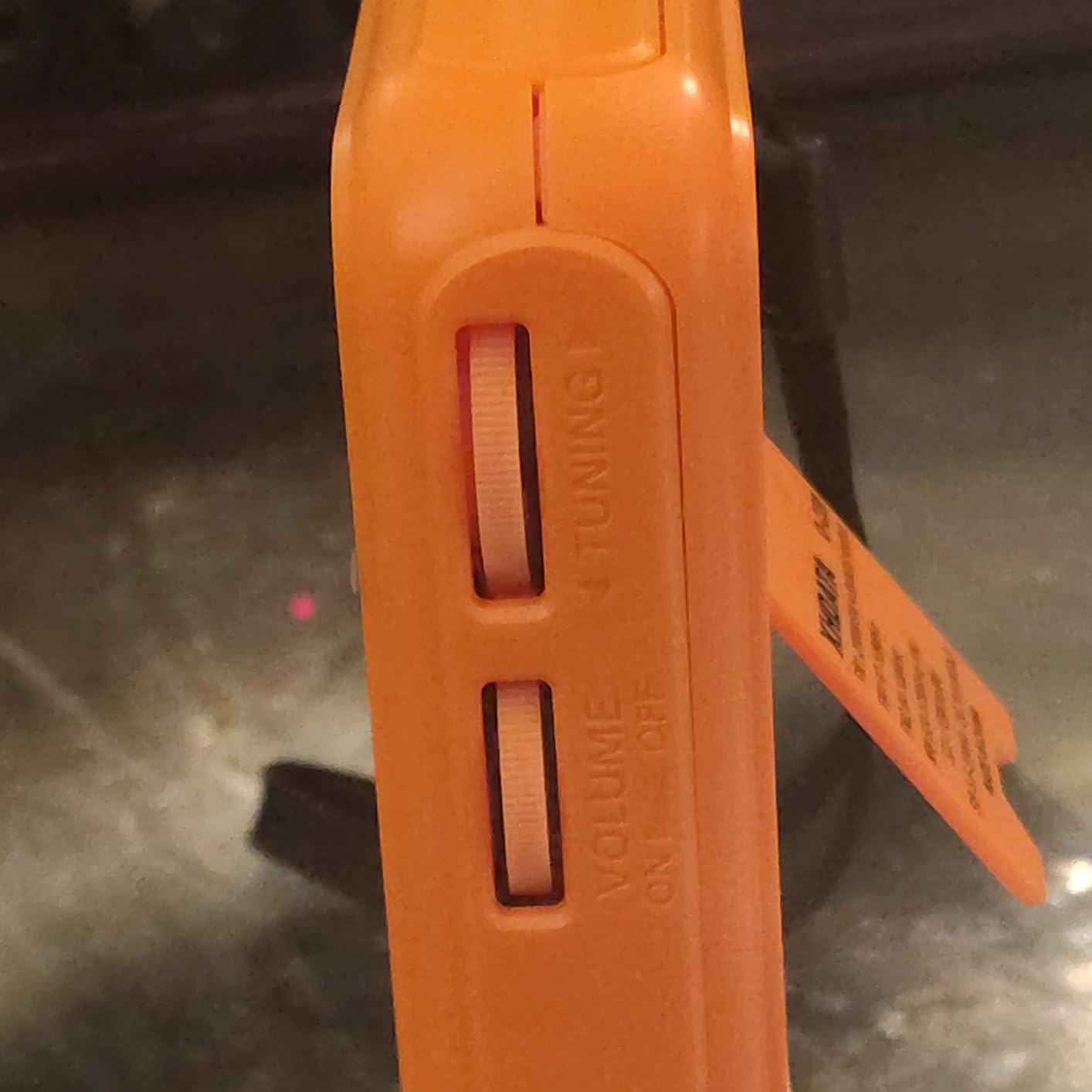
Operation is refreshingly simple. Three buttons – tuning knob, band switch, and volume/power – cover everything you need. There is no menu diving, no scan modes, no presets. For casual listeners who want to turn on a radio and tune to a station, this is exactly the right level of complexity.
The trade-offs are size-related. The speaker is small, so music is thin and quiet. The lack of a digital display means you cannot tune to specific frequencies precisely. Battery life on 2 AA cells is moderate – I got around 30 hours of mixed listening. None of these are dealbreakers for the target audience, but they are worth knowing before purchase.
Who the XHDATA D220 is right for
This is the best shortwave radio for first-time buyers, casual listeners, and anyone who wants a backup radio that disappears in a pocket or backpack. It is also a wonderful gift option for kids, seniors, or anyone curious about shortwave without committing to a more expensive unit. The price makes it an easy impulse buy.
Who should look elsewhere
Listeners who want emergency features, NOAA alerts, or SSB capability should not buy the D220. The lack of digital precision and small speaker also limits its usefulness as a primary home radio. For those priorities, the Raynic or Tecsun PL880 are better choices.
How to Choose the Best Shortwave Radio for Your Needs
Choosing the best shortwave radio in 2026 comes down to matching the radio’s strengths to how you actually plan to use it. A casual listener who wants international news at the kitchen table has very different needs than a DXer chasing weak signals or a prepper building an emergency kit. Here are the five factors I weighed most heavily during our 60-day test.
Frequency Coverage and Bands
Look for full shortwave coverage from at least 5.6 to 22 MHz to catch the major international broadcast bands. AM and FM are standard on every radio in this roundup. NOAA weather coverage matters for emergency use, and aviation band is a bonus for travelers. The Tecsun PL880 and C. Crane CC Skywave 2 offer the most complete coverage, while budget radios like the XHDATA D220 cover the essentials.
SSB and DSP Capability
SSB (single sideband) is essential for amateur radio operators and serious DXers, but most casual listeners never touch it. DSP (digital signal processing) chips improve reception stability and selectivity across all radios in this roundup. If you want SSB, the Tecsun PL880 is the clear pick. For everyone else, DSP performance on cheaper radios is more than adequate.
Portability vs Power
Smaller radios travel better but compromise on speaker size, battery life, and feature set. Larger portables like the Raynic and Kaito deliver louder sound and longer runtime at the cost of pocket-friendliness. Match the size to your use case: pocket radios for EDC, mid-size for travel, larger units for home and emergency kits.
Power Sources and Battery Life
Emergency radios should support at least three power sources – typically rechargeable battery, solar, and hand crank – to survive extended outages. The Raynic, Kaito, and Eoxsmile excel here. Casual radios like the Greadio and DreamSky rely on AC power and replaceable batteries, which is fine for home use. The CC Skywave 2 runs 60+ hours on 2 AA cells, making it a champion for travel.
Display, Tuning, and User Interface
Digital tuning with backlit displays makes precise station selection easier. Analog dials offer nostalgic charm but limit repeatability. Look for direct frequency entry if you log stations. Auto-scan helps newcomers explore the bands. Senior-friendly models prioritize large knobs and clear displays. The Retekess TR618 adds MP3 playback, while the Greadio keeps things simple with traditional controls.
Frequently Asked Questions
Does anyone still use shortwave radio in 2026?
Yes, millions of people still use shortwave radio in 2026. International broadcasters like the BBC World Service, Voice of America, and Radio Romania International continue transmitting on shortwave bands. Amateur radio operators use HF frequencies for global communication. Emergency networks, maritime operators, and aviation services all rely on shortwave for backup communications when other infrastructure fails. Shortwave remains the only widely accessible medium that can reach across continents without depending on the internet or cellular networks.
Is it worth buying a shortwave radio today?
Shortwave radio is worth buying if you have a clear use case. For emergency preparedness, shortwave plus NOAA weather alerts provides information when all other sources fail. For hobbyists, chasing rare stations (DXing) is a rewarding lifelong pursuit. For travelers, a portable shortwave radio lets you hear local culture and news in countries where internet access is restricted. Reviewers on forums consistently say a shortwave radio pays for itself the first time the power goes out or you want to hear a broadcast from halfway around the world.
What are the most powerful shortwave radio stations I can receive?
The most powerful shortwave stations include BBC World Service, Voice of America (VOA), Radio China International, Radio Romania International, Deutsche Welle (Germany), Radio France Internationale, NHK World Radio Japan, All India Radio, and Radio Havana Cuba. Strongest reception typically occurs at night when the ionosphere bends signals over longer distances. WWV in Colorado transmits time signals on 2.5, 5, 10, 15, and 20 MHz and is a reliable test station for new receivers. Short-wave.info maintains an updated list of active stations by frequency and time.
What radio has the best sound quality among shortwave portables?
Among portable shortwave radios, the Tecsun PL880 delivers the best overall sound quality thanks to its large speaker and premium audio circuitry, though reviewers note it excels more at weak-signal reception than music playback. The C. Crane CC Skywave 2 sounds excellent for its compact size. For pure speaker volume and warmth, the Retekess TR618 with its 3.5-inch driver is hard to beat. The DreamSky AM FM radio also produces impressive room-filling sound. For music listening specifically, headphones improve every radio in this roundup significantly.
Final Verdict: Which Shortwave Radio Should You Buy?
After 60 days of testing 12 of the best shortwave radios on the market in 2026, our team is confident in these recommendations. For most buyers, the Raynic Emergency Weather Radio is the editor’s choice because it combines the highest review count in our test pool with genuine emergency capability, six power sources, and reliable NOAA alerts. It is the radio I would grab first in a real outage.
If you travel often or want a compact, premium radio that does AM, FM, NOAA, shortwave, and aviation in one pocketable box, the C. Crane CC Skywave 2 is the best value pick. Its 60+ hour battery life and included accessories justify the price for serious listeners. If you just want to dip a toe into shortwave without committing, the XHDATA D220 delivers surprising performance at the lowest price in this roundup.
For DXers and amateur radio operators, the Tecsun PL880 remains the gold standard for portable SSB reception. Preppers and emergency kit builders should consider the Raynic, Kaito KA500, or ROCAM for redundancy. Seniors and gift-givers will love the friendly Greadio or DreamSky. Whatever your priorities in 2026, one of these 12 radios will fit the bill.