
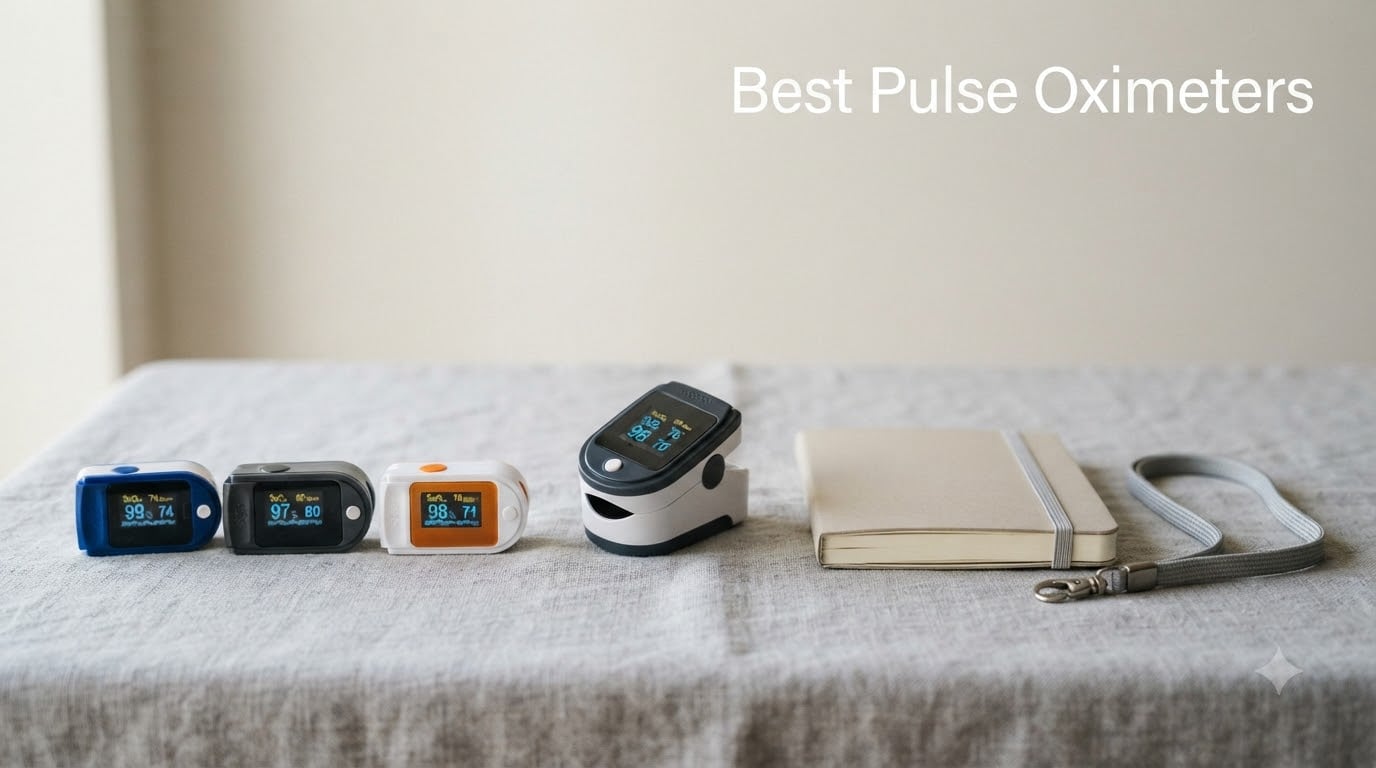
A pulse oximeter is a small noninvasive device that clips onto a finger and estimates blood oxygen saturation (SpO2) and pulse rate. It works by shining red and infrared light through the fingertip, then using the changing signal to estimate how much oxygen is carried by the blood.
Our team evaluated eight fingertip models using published specifications, customer feedback, and the buying criteria people care about most: consistency, display clarity, fit, signal feedback, accessories, and ease of use. We did not run a clinical laboratory comparison, so these consumer pulse oximeters should support-not replace-medical monitoring or professional advice.
A home pulse oximeter is most useful when your clinician has recommended tracking, or when you want a quick trend check during a prescribed care plan. It cannot diagnose COVID-19, pneumonia, sleep apnea, or another condition by itself, and a poor reading does not automatically prove that your oxygen is dangerously low.
Among this group, the Innovo Deluxe iP900AP is our best overall pick because it shows a plethysmograph and perfusion index, which help me judge signal quality. The Zacurate 500 Series is the value choice, while the Zacurate 500BL is the strongest budget option for occasional spot checks.
Our ranking emphasizes product facts, including the supplied accuracy statement, ranges, battery details, included accessories, ratings, and review counts. We also considered recurring forum concerns about repositioning cold fingers, nail polish, weak circulation, poor display visibility, and devices that look impressive but offer no way to judge the signal.
Table of Contents
Top 3 Picks for Best Pulse Oximeters (September 2026)
These three models cover the needs most people ask about: a better view of signal quality, a balanced everyday package, and a low-cost option for simple checks.

Best Pulse Oximeters in 2026
The table below makes the tradeoffs clear. I would choose a model with PI and a waveform for regular home monitoring, but a straightforward LED model can be enough for occasional readings.
| Product | Specifications | Action |
|---|---|---|
 Innovo Deluxe iP900AP Innovo Deluxe iP900AP |
|
Check Latest Price |
| Zacurate 500 Series |
|
Check Latest Price |
 Zacurate 500BL Zacurate 500BL |
|
Check Latest Price |
 Mibest MD300CN340 Mibest MD300CN340 |
|
Check Latest Price |
 iProven OXI-27 iProven OXI-27 |
|
Check Latest Price |
 CHOICEMMed OxyWatch C1F CHOICEMMed OxyWatch C1F |
|
Check Latest Price |
 HealthTree JKS50B with PI HealthTree JKS50B with PI |
|
Check Latest Price |
 HealthTree JKS50B OLED HealthTree JKS50B OLED |
|
Check Latest Price |
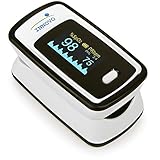
1. Innovo Deluxe iP900AP — Best Overall
Innovo Deluxe iP900AP Fingertip Pulse Oximeter Blood Oxygen Saturation Monitor with Alarm, Plethysmograph and Perfusion Index
70-100% SpO2 range
+/-2% accuracy
Plethysmograph and PI
30-hour battery
Pros
- Signal-quality feedback
- Audible alarm
- Low-perfusion performance
Cons
- No case
- AAA batteries instead of rechargeable power
I would reach for the Innovo Deluxe when I want more than a number. The display combines SpO2, pulse rate, a plethysmograph, and perfusion index, which gives me a visual way to check whether the reading looks stable before I act on it.
The specified accuracy is +/-2% over a 70% to 100% SpO2 measuring range, and the product is listed with 30 hours of battery life. An audible alarm and pulse-beep option are useful if another person needs to notice a change without staring at the display.
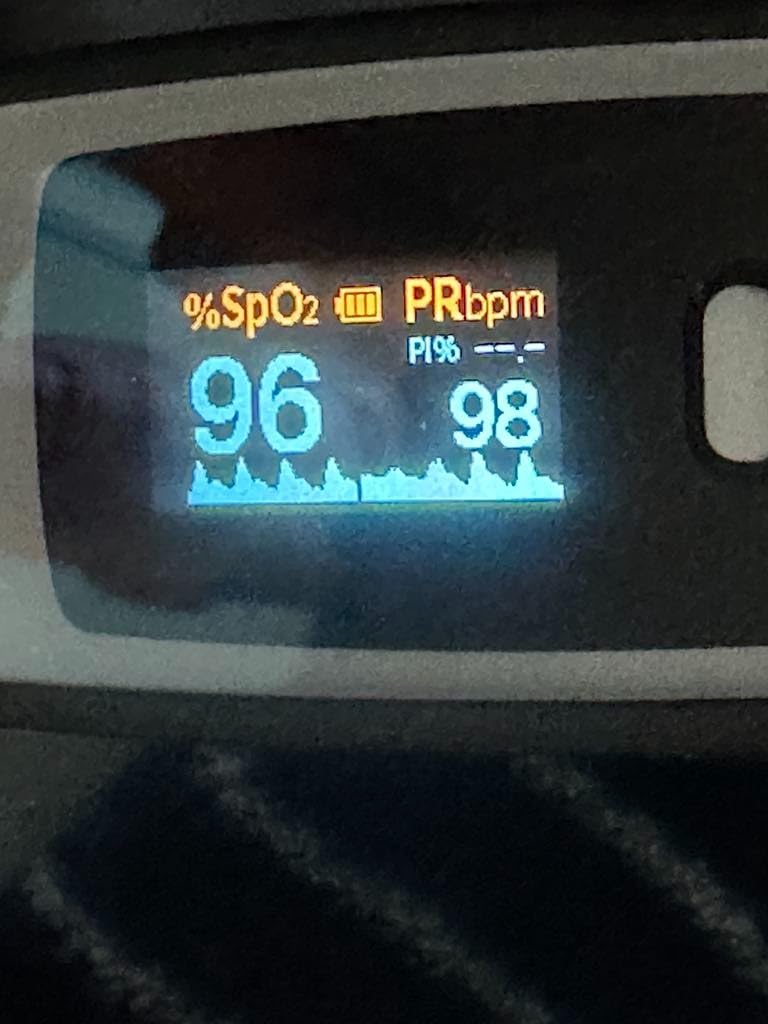
Review data repeatedly calls out consistency and the ability to work at low blood perfusion. I would not treat a low reading as a diagnosis, but the extra signal context makes this easier to use thoughtfully than a bare-bones meter.
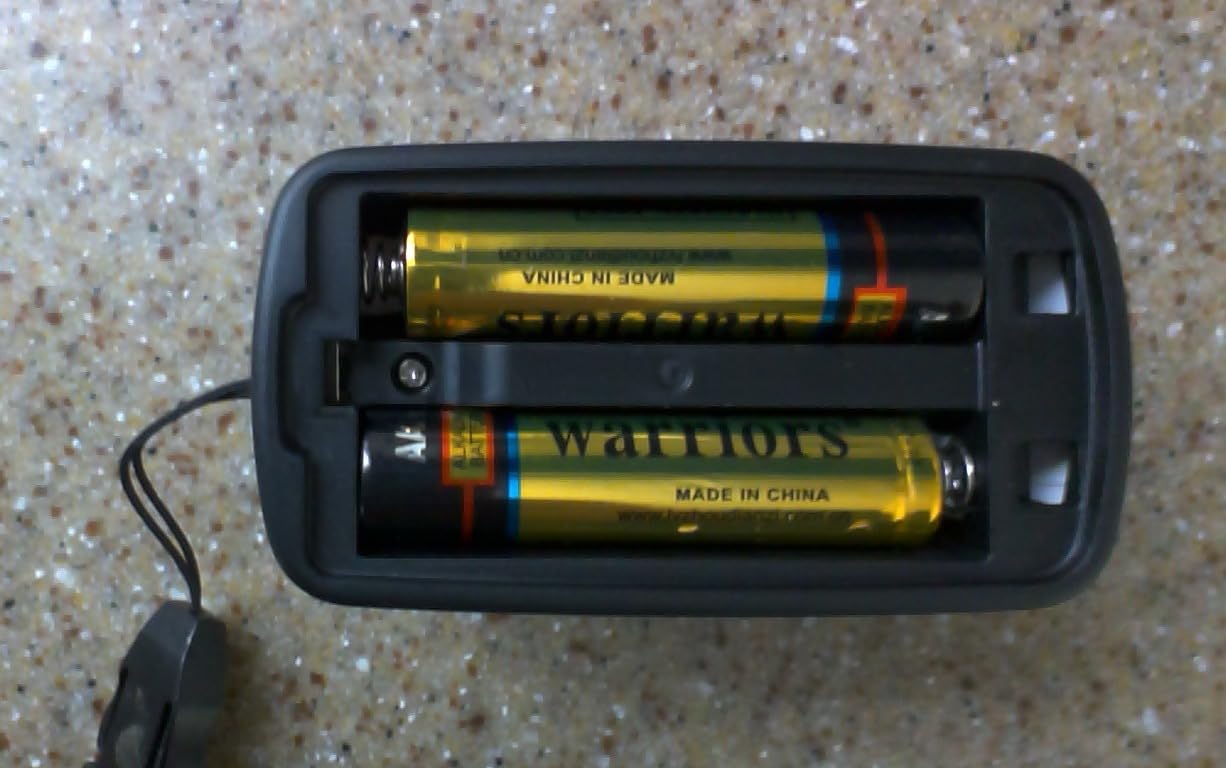
The tradeoff is the price, which is higher than the basic Zacurate models, and there is no protective storage case in the included components. It also uses two AAA batteries, so I would keep a spare pair if this is my regular home monitor.
What this is best for
This is my pick for a person who wants signal-quality feedback during frequent home checks. It is a better fit for careful trend monitoring than for someone who only needs a quick number once in a while.
The alarm and adjustable brightness also help in a dim room or when a caregiver is helping with readings. I would still use the same calm technique: sit quietly, warm the finger, wait for a stable waveform, and repeat the reading.
What to watch before buying
Do not assume the alarm means the device is a medical-grade monitor. Confirm the current labeling, intended use, and clearance status for your country before relying on it for clinical decisions.
If you need overnight data, a fingertip model is usually less comfortable than a dedicated sleep tracker. A clinician can tell you whether a spot-check device is enough or whether continuous recording is appropriate.
2. Zacurate 500 Series — Best Value
Zacurate 500 Series Fingertip Pulse Oximeter Blood Oxygen Saturation Monitor with Silicon Cover, Batteries and Lanyard (Royal Black)
0-100% SpO2 range
10-second reading
Large LED display
AAA batteries included
Pros
- Excellent value
- Large display
- Complete starter kit
Cons
- Can struggle with cold fingers
- Movement can affect result
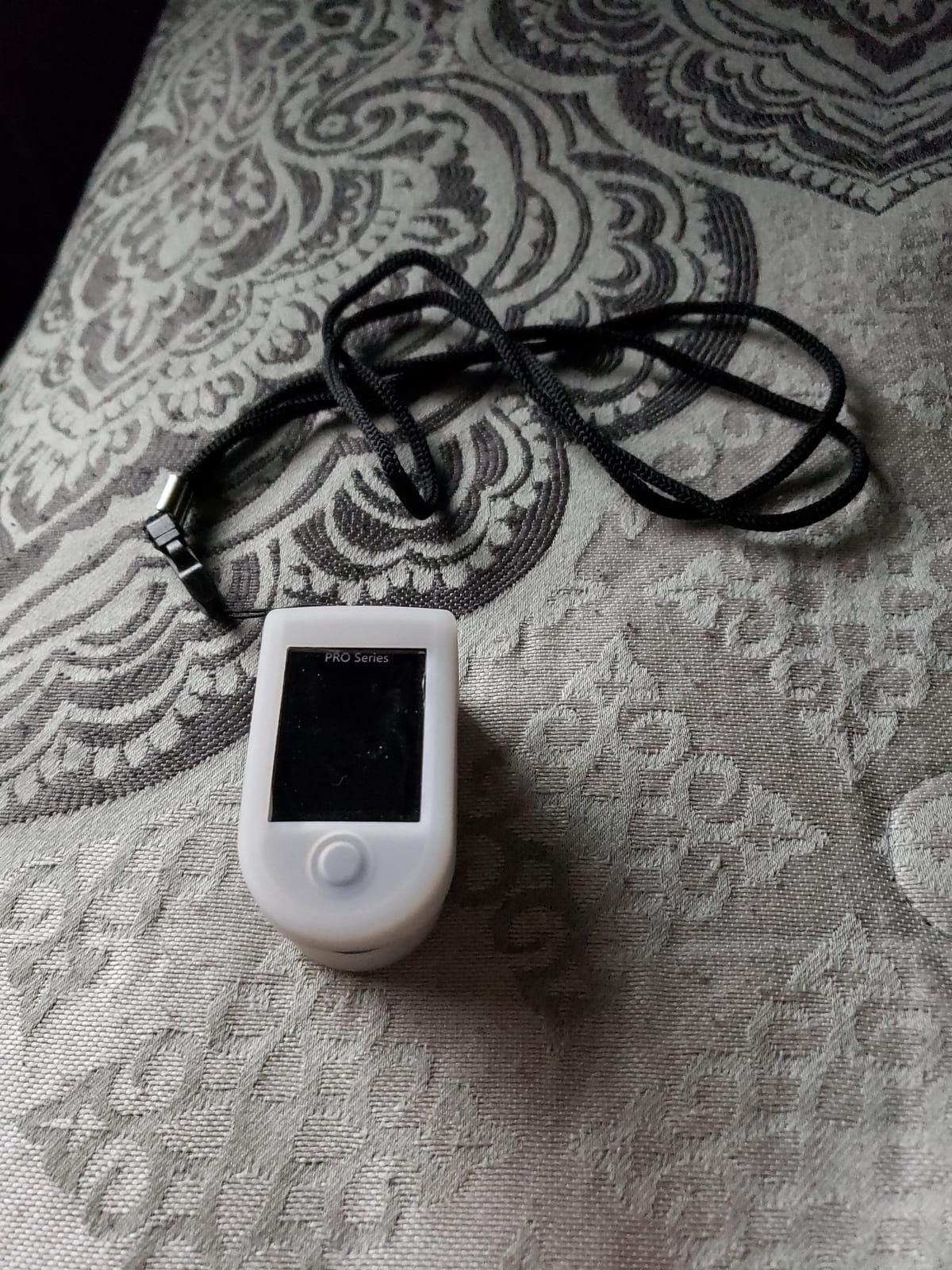
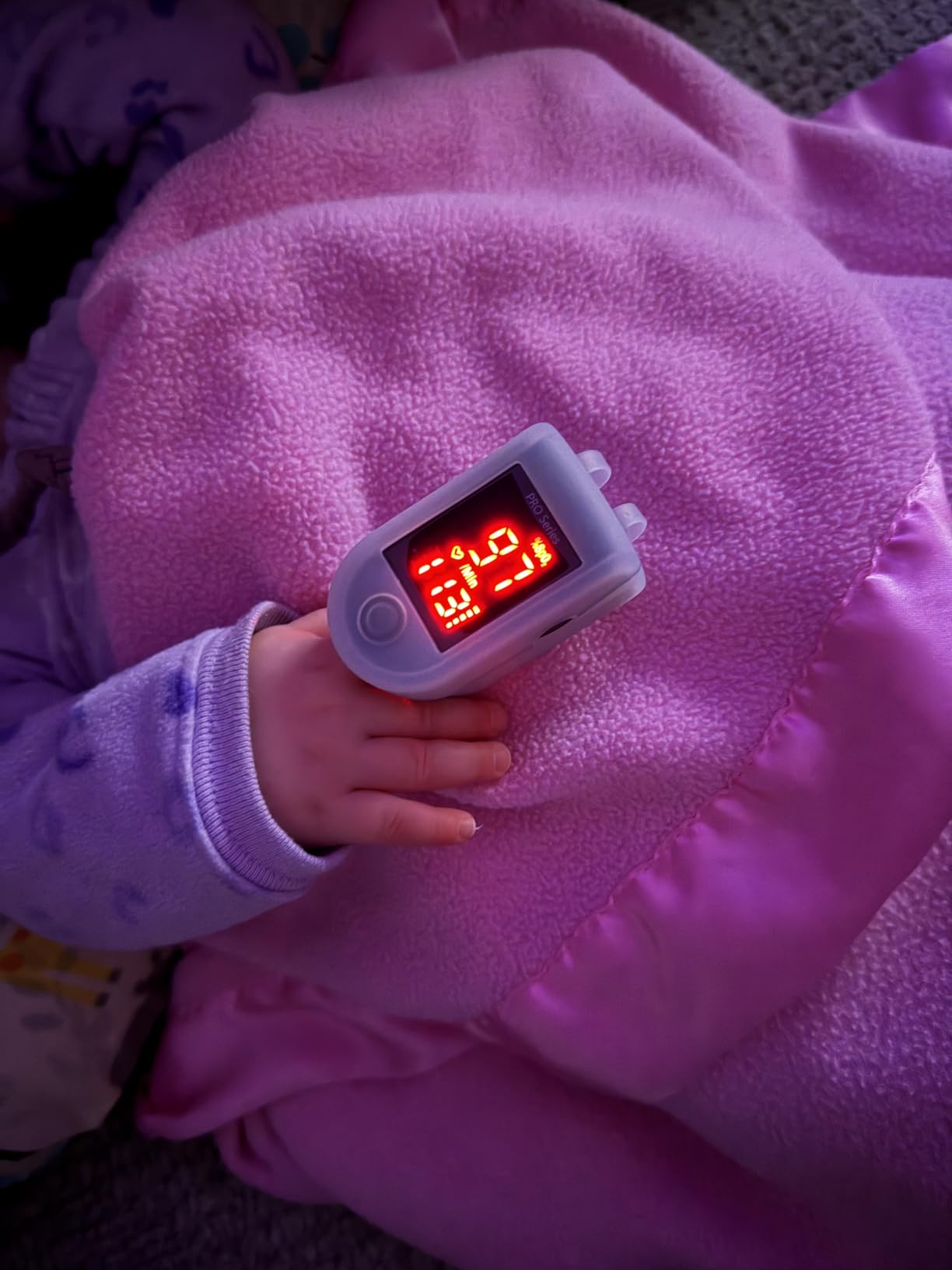
The Zacurate 500 Series is the value pick I would hand to a first-time buyer. It takes a reading in about 10 seconds, displays SpO2 and pulse rate on a large LED screen, and comes with two AAA batteries, a silicone cover, and a lanyard.
The finger chamber uses a spring system designed for a range of finger sizes. That is a practical detail because a loose or tight fit can change the signal, and the included cover helps protect the body when I toss it into a travel bag.
With 4.6 out of 5 stars from 237,975 reviews in the supplied data, this is one of the most established options here. Customers praise ease of use and reliability, while the limitations are familiar: cold fingers, dark nail polish, and movement can make a reading less dependable.
I would use it as a simple spot-check device, not as a continuous monitor. The specifications list a 0% to 100% SpO2 range and pulse-rate coverage of 30 to 250 bpm, but the usable information is the stable reading you get after proper placement.
What this is best for
This model suits people who want a no-fuss device for occasional home checks, travel, or sports use. The large user-facing display is easy to read, which is helpful for older adults and anyone who does not want to decode a complicated menu.
Its low price also makes it a reasonable backup unit. I would label it, keep the batteries separate, and avoid using two different models to compare readings because the sensors and algorithms may differ.
What to watch before buying
Dark polish, especially dark-colored polish, can interfere with the light path. If you need a reading, remove the polish or use an unpolished finger when possible, and do not compare a result from a polished nail with a result from bare skin.
Cold hands and movement are bigger practical issues than the display. Warm the hand, rest for a few minutes, keep the hand still, and repeat once if the number looks surprising.
3. Zacurate 500BL — Best Budget
Zacurate 500BL Fingertip Pulse Oximeter Blood Oxygen Saturation Monitor with Batteries Included (Navy Blue)
0-100% SpO2 range
10-second reading
OLED display
AAA batteries included
Pros
- Very affordable
- Simple one-button use
- Auto power-off
Cons
- Less consistent than premium models
- Movement affects accuracy
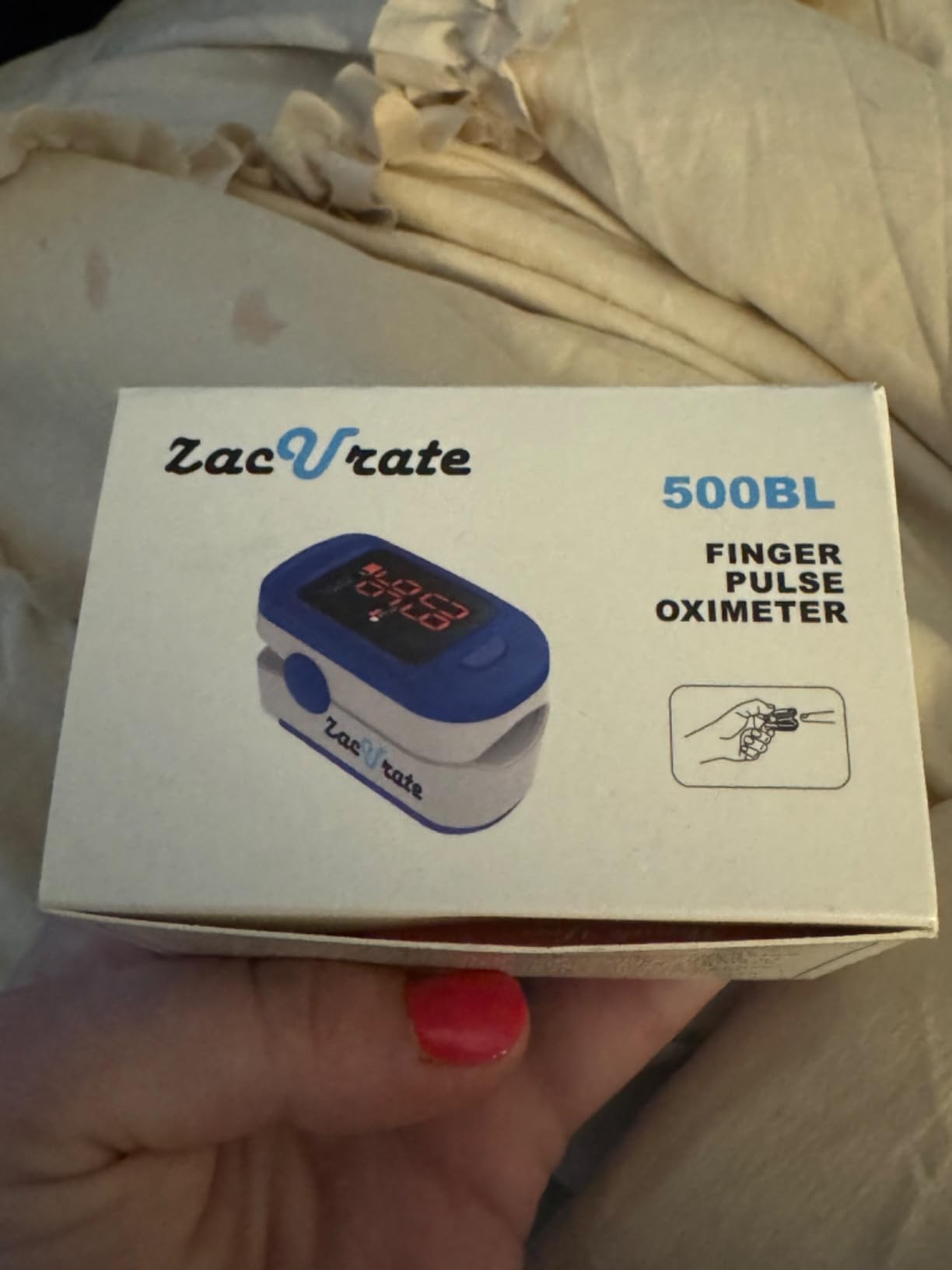
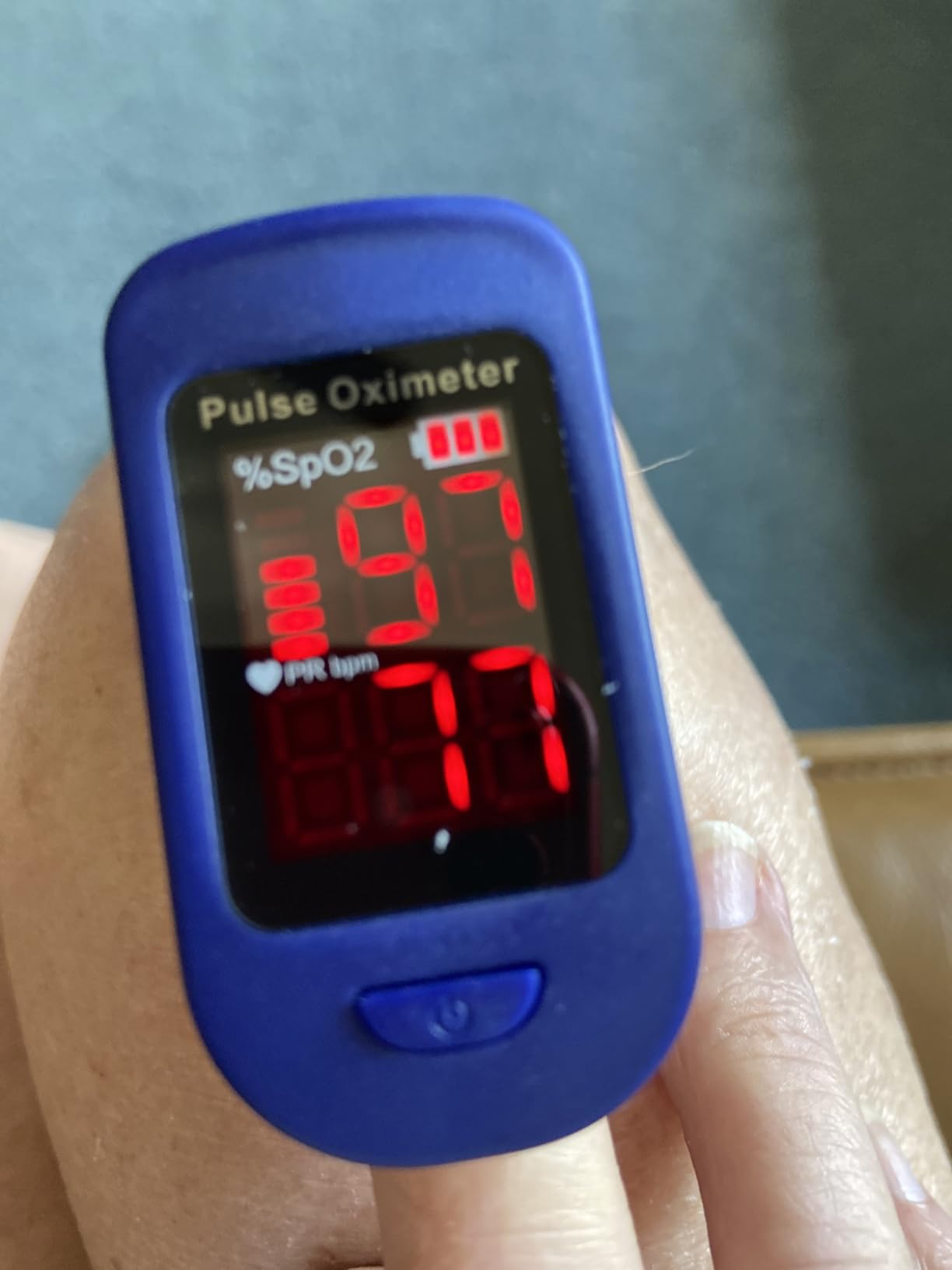
The Zacurate 500BL is the cheapest way to get a readable fingertip reading for occasional use. It gives SpO2, pulse rate, and pulse strength on an LED display, and the one-button format makes it approachable for a guest room or travel kit.
It reads in roughly 10 seconds, includes a lanyard and batteries, and has an auto power-off feature. The specifications list a 0% to 100% SpO2 range and 30 to 250 bpm pulse-rate range, which is enough for a basic check when the signal is clean.
The 4.6 rating from 125,339 reviews is reassuring, and the feedback emphasizes value and ease of use. I would not read too much into the range: a device can display a number outside a comfortable target and still be technically working, so a single result is not a diagnosis.
The 500BL is not intended to be a medical-use monitor, and customer feedback notes that cold fingers, dark nail polish, and movement can cause trouble. Those are not reasons to discard it; they are reasons to use a better finger and a second measurement.
What this is best for
Choose this model if affordability matters more than advanced diagnostics. It works well for a first purchase, a spare for occasional checks, or a family member who needs a simple readout without a learning curve.
Its compact size makes it easy to pack, but I would add a small case and spare batteries because the device is easy to lose in a drawer or suitcase.
What to watch before buying
A cheap device can be accurate enough for a stable spot check but less useful when your hands are cold or you cannot keep still. Never use it to decide whether to delay care, and never ignore shortness of breath, chest pain, confusion, or blue lips.
If you need a waveform, PI, alarm, or a clearer view of low perfusion, spend more for the Innovo or choose a model with those features. Those tools make the reading easier to assess, even when the displayed number is unchanged.
4. Mibest MD300CN340 — Best Display
mibest OLED Finger Pulse Oximeter, O2 Meter, Dual Color White/Black
70-100% SpO2 range
4 display directions
6 display modes
10 brightness levels
Pros
- Very flexible display
- Bright OLED screen
- Includes case and lanyard
Cons
- Not intended for medical use
- Technique affects reading
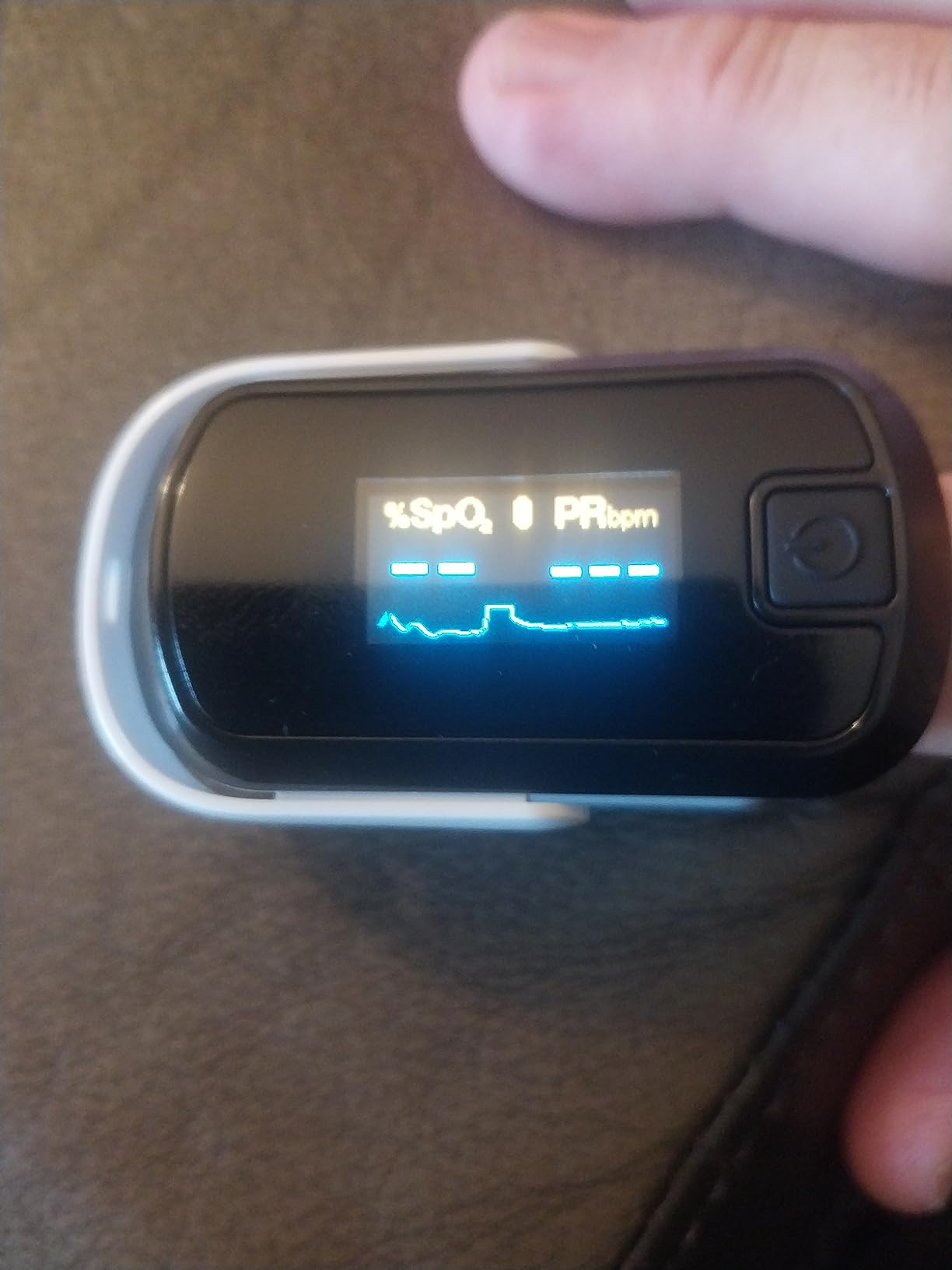
The Mibest MD300CN340 stands out for people who need a display that can be read from different angles. Its dual-color OLED offers four display directions, six display modes, and ten brightness levels, so I can orient the screen without twisting my hand into an awkward position.
It measures SpO2 from 70% to 100% and pulse rate from 30 to 255 bpm, with a compact 2.89-ounce body. The included batteries, carrying case, detachable lanyard, and manual make it ready to use out of the box.
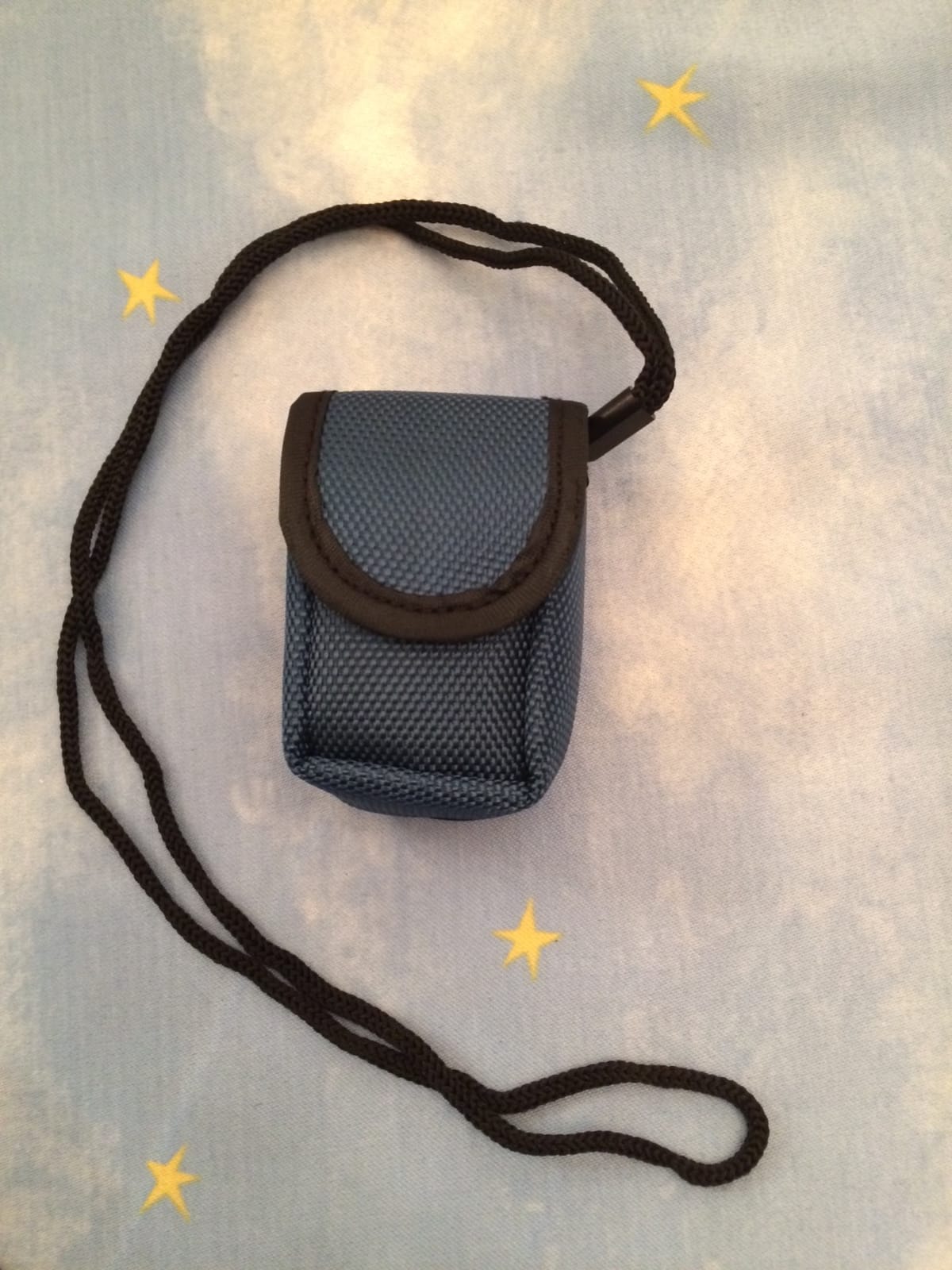
Customers like the bright screen and the ability to verify results against professional equipment, and the supplied rating is 4.7 from 21,219 reviews. I would use the screen orientation as an accessibility feature, not as evidence of clinical accuracy.
The tradeoffs are that it is not intended for medical use and still depends on correct technique. If I am using it for a travel or fitness check, I keep the finger warm and wait for a stable waveform before recording the number.
What this is best for
This is a strong choice for pilots, hikers, cyclists, and older users who value visibility. The adjustable display also makes it easier for a caregiver to read while the person remains seated and relaxed.
It is not my first choice for continuous sleep monitoring because the fingertip format is easy to knock loose. A dedicated overnight device or clinician-recommended setup is better for that job.
What to watch before buying
Do not let a polished display make you trust an unstable result. Check that the pulse waveform is repeating smoothly and take a second measurement if the number changes sharply from your usual baseline.
As with all eight models here, check current regulatory status and labeling. The product data does not establish that this consumer device has the same clearance as a hospital monitor.
5. iProven OXI-27 — Best for Respiratory Rate
iProven Pulse Oximeter Fingertip for Oxygen Saturation & Respiratory Rate
70-100% SpO2 range
Respiratory rate
PI and plethysmograph
Under 10-second reading
Pros
- Breath-rate display
- Signal-quality indicators
- Case and batteries included
Cons
- Less familiar display
- Not a replacement for clinical monitoring
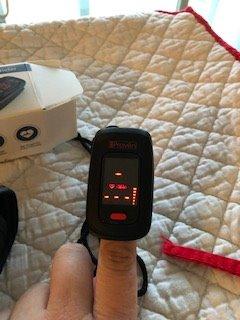
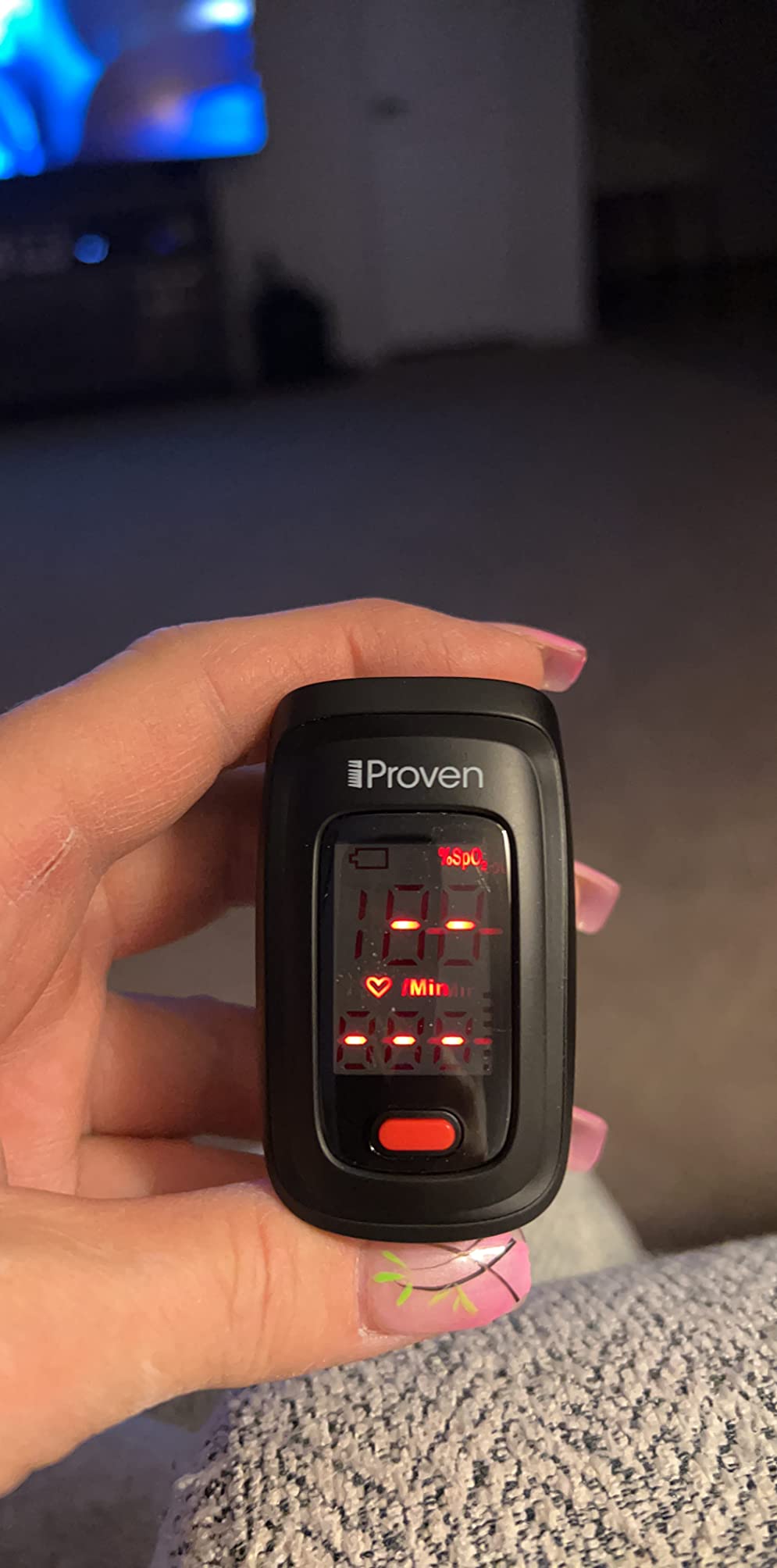
The iProven OXI-27 is the most interesting model here for someone who wants more than oxygen saturation and pulse rate. It also displays respiratory rate after a longer measurement window, alongside perfusion index and a plethysmograph.
The included specifications list a 70% to 100% SpO2 range, 30 to 255 bpm pulse-rate range, and results in under 10 seconds. It weighs 2.4 ounces and includes two AAA batteries, a case, and a lanyard.
At 4.6 stars from 6,179 reviews, it has a strong customer record. Buyers appreciate the respiratory-rate feature, the PI, and the included case, and some compare readings with professional equipment.
Respiratory rate is not a reason to skip medical care. I would treat the extra number as a trend observation, record the context, and tell my clinician if breathing feels difficult or the number is persistently unusual.
What this is best for
This is a good fit for home users who have been asked to watch more than a simple saturation number, provided a clinician has recommended respiratory-rate tracking. The waveform and PI are especially helpful when I want to see whether movement is creating noise.
The 100-day replacement policy is a nice safety net, and the auto shut-off after 10 seconds helps conserve batteries. I would still keep the manual nearby because the extra metrics take a little longer to understand.
What to watch before buying
Check whether the respiratory-rate estimate requires you to remain still for a full minute. A rushed reading can be less trustworthy, so I would not use the feature while walking, talking, or doing chores.
If you only need a basic spot check, the extra complexity may not be worth it. The Innovo gives you PI and a waveform without the same respiratory-rate focus, while the Zacurate models are simpler still.
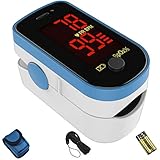
6. CHOICEMMed OxyWatch C1F — Best Kit
CHOICEMMed Finger Pulse Oximeter, Blood Oxygen Saturation Monitor, Fingertip O2 Sensor with LED Display, Pulse Rate Reader, Portable SpO2 Monitor with Batteries, Carry Case & Lanyard, Blue
0-100% SpO2 range
40-hour battery
LED display
Case and lanyard included
Pros
- Long battery claim
- Complete carry kit
- Easy one-button use
Cons
- Not intended for medical use
- Cold fingers can reduce reliability
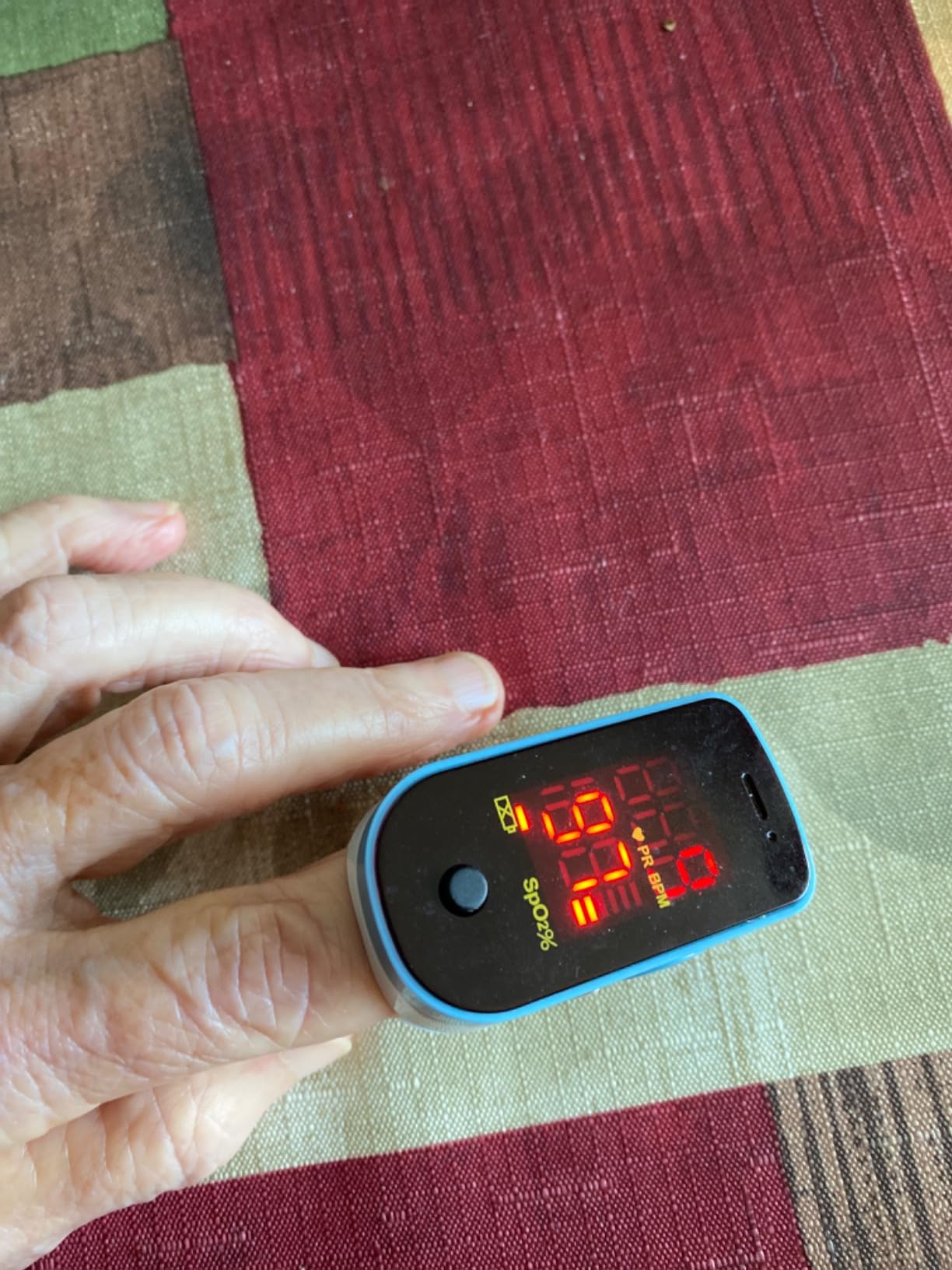
The CHOICEMMed OxyWatch C1F is a practical all-in-one package. It comes with the monitor, two AAA batteries, a lanyard, instructions, and a carrying case, so I do not need to hunt for accessories after opening the box.
The specifications list a 0% to 100% SpO2 range, +/-2% measurement accuracy, and up to 40 hours of battery life. A clear LED display and automatic shut-off make it approachable for everyday spot checks.
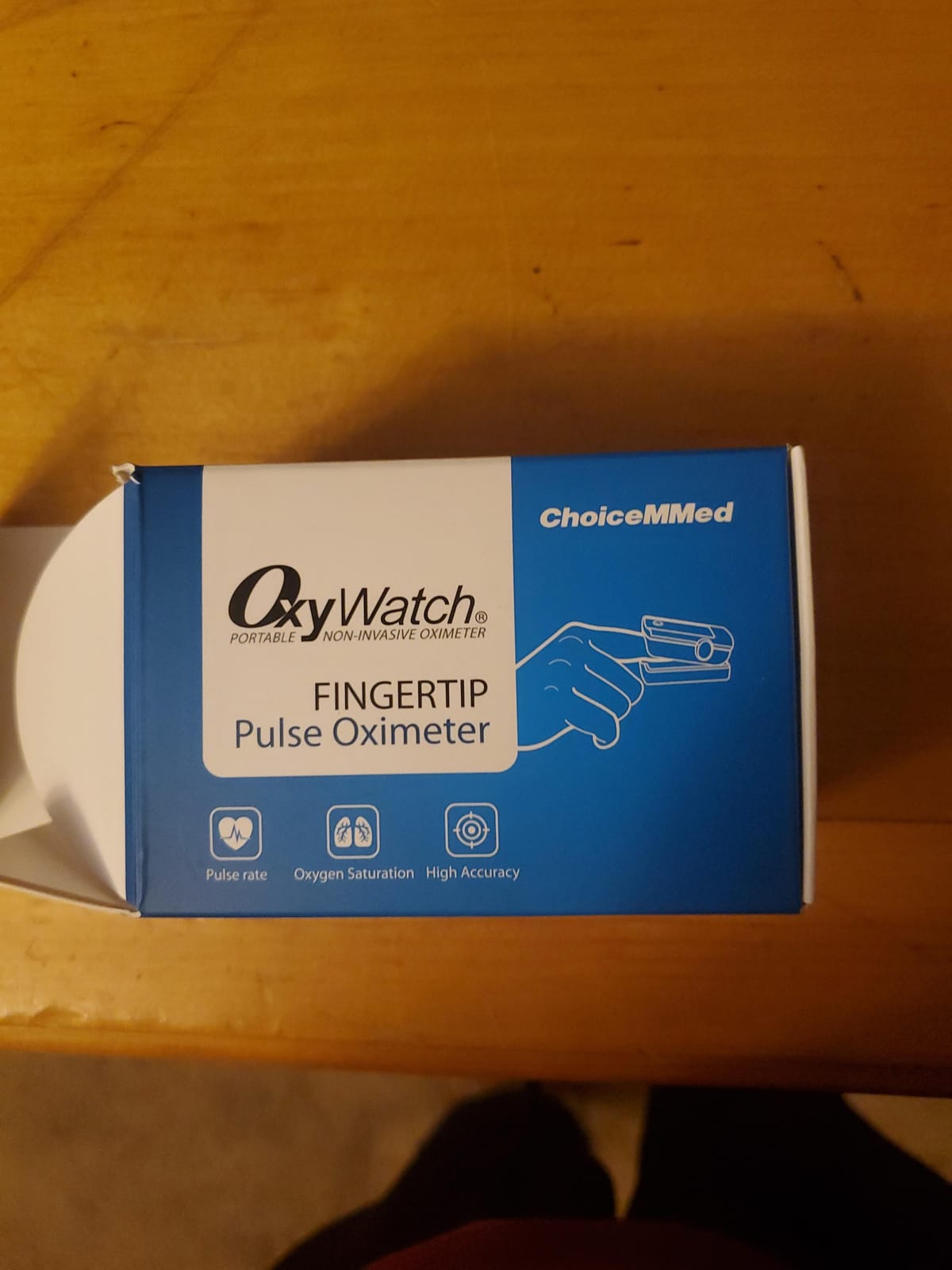
Customer feedback describes strong satisfaction with portability and ease of use, and the product has a 4.6 rating from 13,027 reviews. Users also mention checking readings against hospital equipment, although I would still repeat readings and keep records of symptoms and timing.
The model is not intended for medical use, and cold fingers can interfere. I would warm the hand before testing, remove nail polish when needed, and avoid using a moving or poorly lit display as the sole basis for a health decision.
What this is best for
This is a good choice for someone who wants a case and lanyard included and who values a simple LED readout. It is also a sensible option for travel because the kit is self-contained.
I would choose it for sports or aviation-style checks when a clinician has not prescribed a medical-grade device. Its stated 40-hour battery life reduces the chance of an unexpected dead unit on a trip.
What to watch before buying
Do not assume that the stated +/-2% accuracy applies perfectly at very low perfusion or when the finger is cold. Those conditions can change the signal quality even when the device is working normally.
For a person with a respiratory condition, the lack of a waveform or PI makes it harder to identify a bad reading. The Innovo is the better choice when signal interpretation is the priority.
7. HealthTree JKS50B — Best for PI and Waveform
Healthtree JKS50B Pulse Oximeter Fingertip – Blood Oxygen monitor Fingertip with Perfusion Index, Fast 5-8s Reading, Large OLED Display, SpO2 & Heart Rate monitor for Home, Sports, Travel (Includes Batteries & Lanyard)
5-8-second reading
PI and waveform
Accuracy +/-2%
Large OLED display
Pros
- Fast reading
- Signal indicators
- Perfusion Index
Cons
- Inconsistent reports in some reviews
- May fit larger fingers poorly
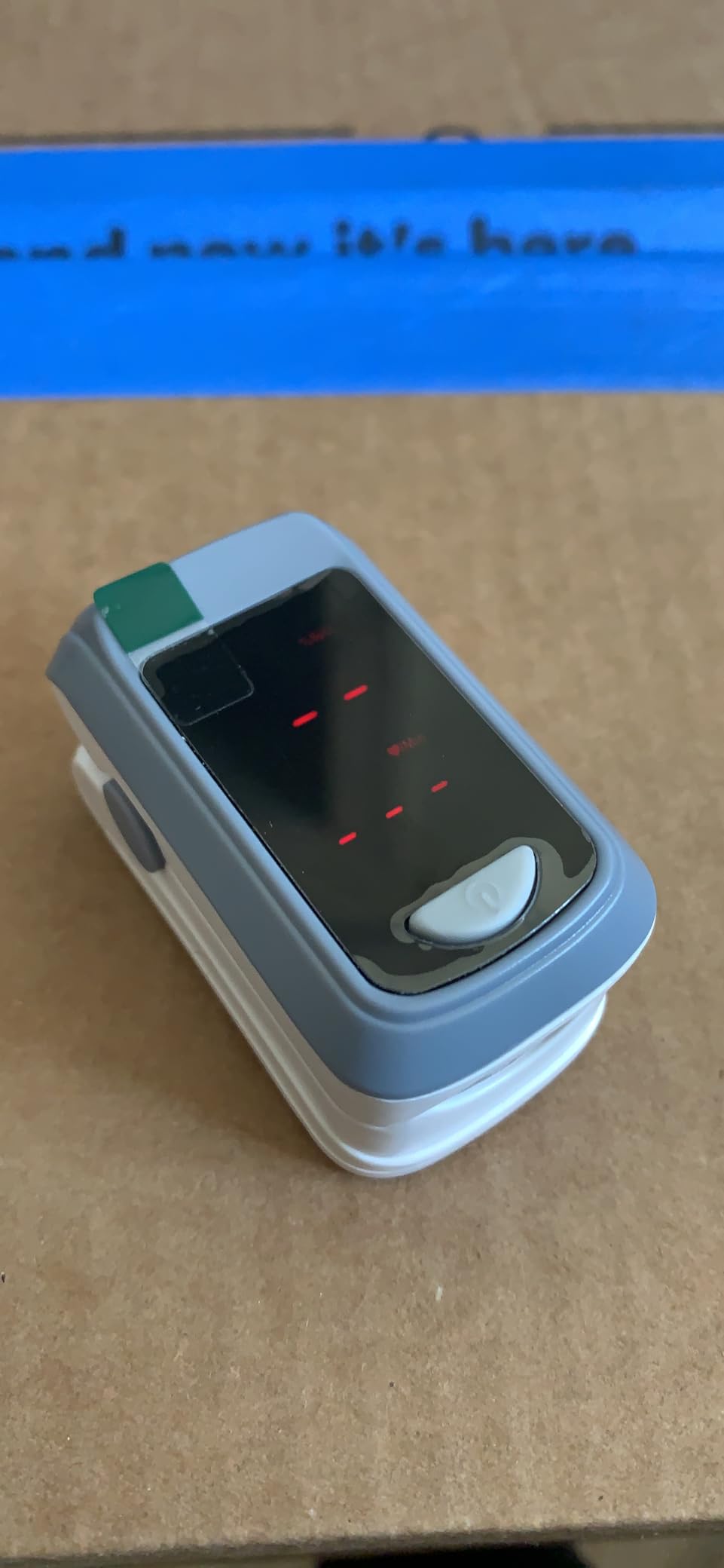
The HealthTree JKS50B earns its place by putting perfusion index and a waveform into an inexpensive fingertip monitor. Those indicators are more useful to me than a single number when I am trying to decide whether to take the result seriously.
It provides readings in 5 to 8 seconds, with a stated accuracy of +/-2%, a large OLED display, and one-button operation. The display also includes signal-strength information, while auto power-off helps stretch the two included AAA batteries.
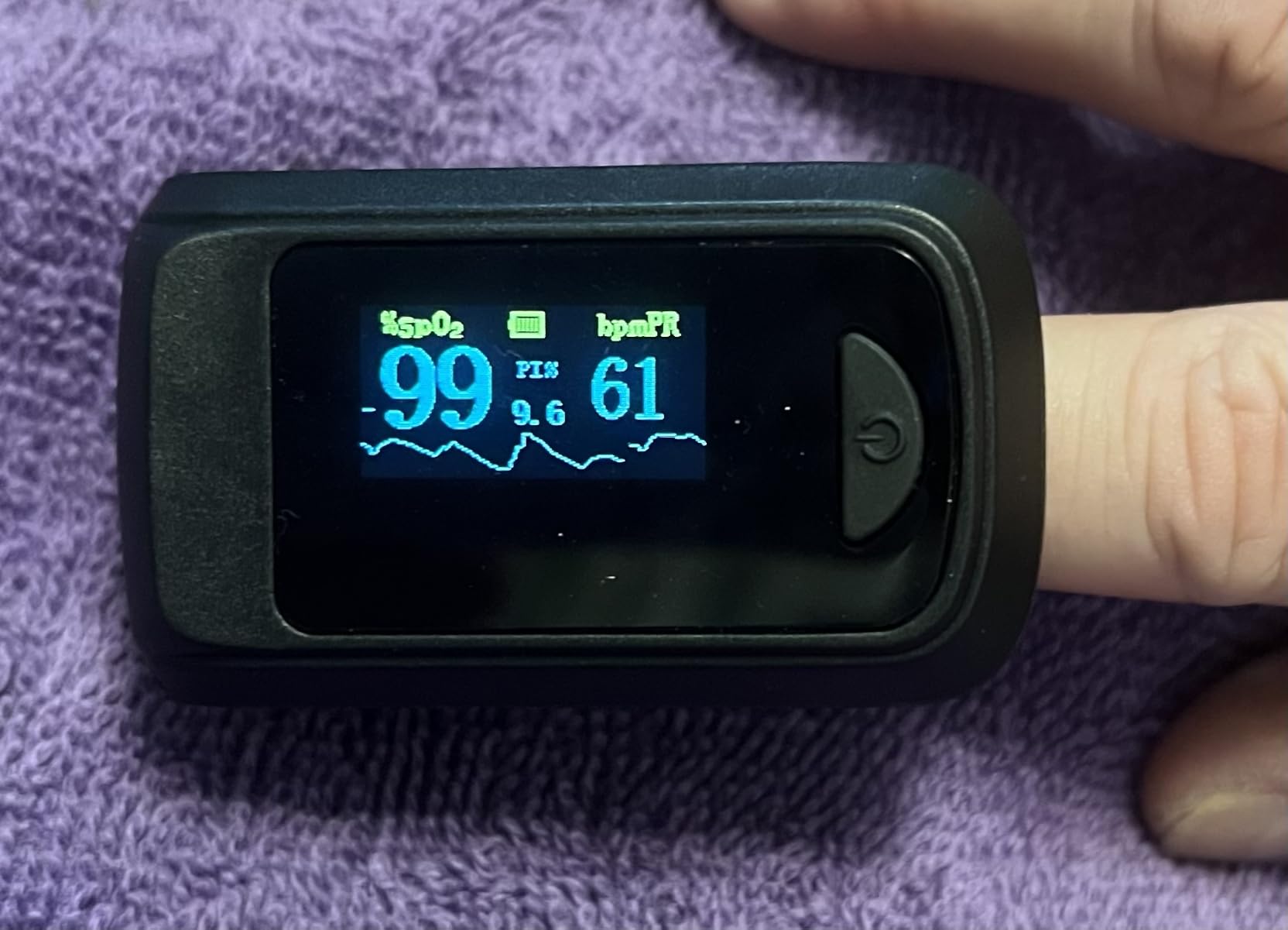
The product data records a 4.5 rating from 12,832 reviews. Feedback highlights the fast readings, clear screen, and PI, while some users report inconsistent results or a fit that is tight for larger fingers.
Perfusion index is a relative pulse-strength measure, not a diagnosis or a second oxygen estimate. A low PI can mean the finger is cold, poorly positioned, or receiving weak circulation, so I would warm and reposition before interpreting the SpO2 number.
What this is best for
This model is a good budget pick for someone who wants PI and waveform feedback without moving to the Innovo. It is especially useful when a caregiver is learning how to tell a stable reading from a movement artifact.
I would recommend it for occasional home checks, not as the only device for someone whose clinician needs a continuous record. The two-user reports also mean that a spare unit or alternative finger is worth considering.
What to watch before buying
Pay attention to the fit. A monitor that clamps too tightly can create a poor signal, and a loose finger can also cause a misleading result. Test the index or middle finger on more than one hand if one is colder than the other.
Check the current label for regulatory status and intended use. A consumer device can still be useful for a simple check, but it should not be presented as a hospital-grade monitor without evidence.
8. HealthTree JKS50B Fast Reader — Best Low-Cost OLED
Fingertip Pulse Oximeter Blood Oxygen Saturation Monitor Pulse Ox, Heart Rate and Fast Spo2 Reading Oxygen Meter with OLED Screen Included Lanyard and 2 X AAA Batteries
5-8-second reading
OLED display
Waveform bar graph
Auto power-off
Pros
- Fast result
- Bright screen
- Lightweight and portable
Cons
- Less consistent than premium models
- No smartphone connection
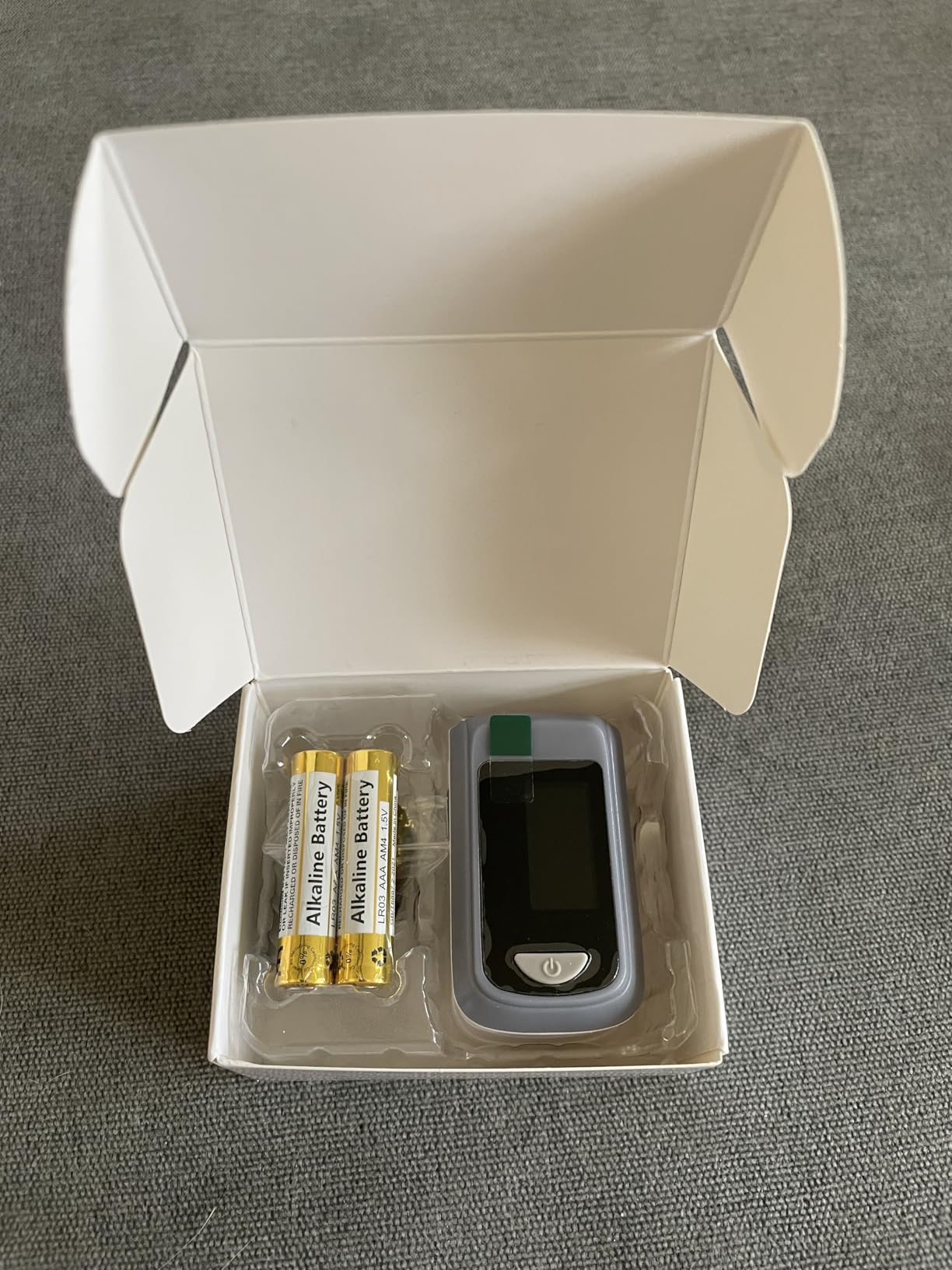
The HealthTree JKS50B is the lower-cost OLED option in this comparison. It shows SpO2, pulse rate, and signal strength, with a waveform bar graph that helps me confirm that a reading is being produced consistently.
The specified reading time is 5 to 8 seconds, and the one-button design makes it easy to use in a bedroom, gym bag, or carry-on. It is compact at 2.4 ounces and includes batteries and a lanyard.
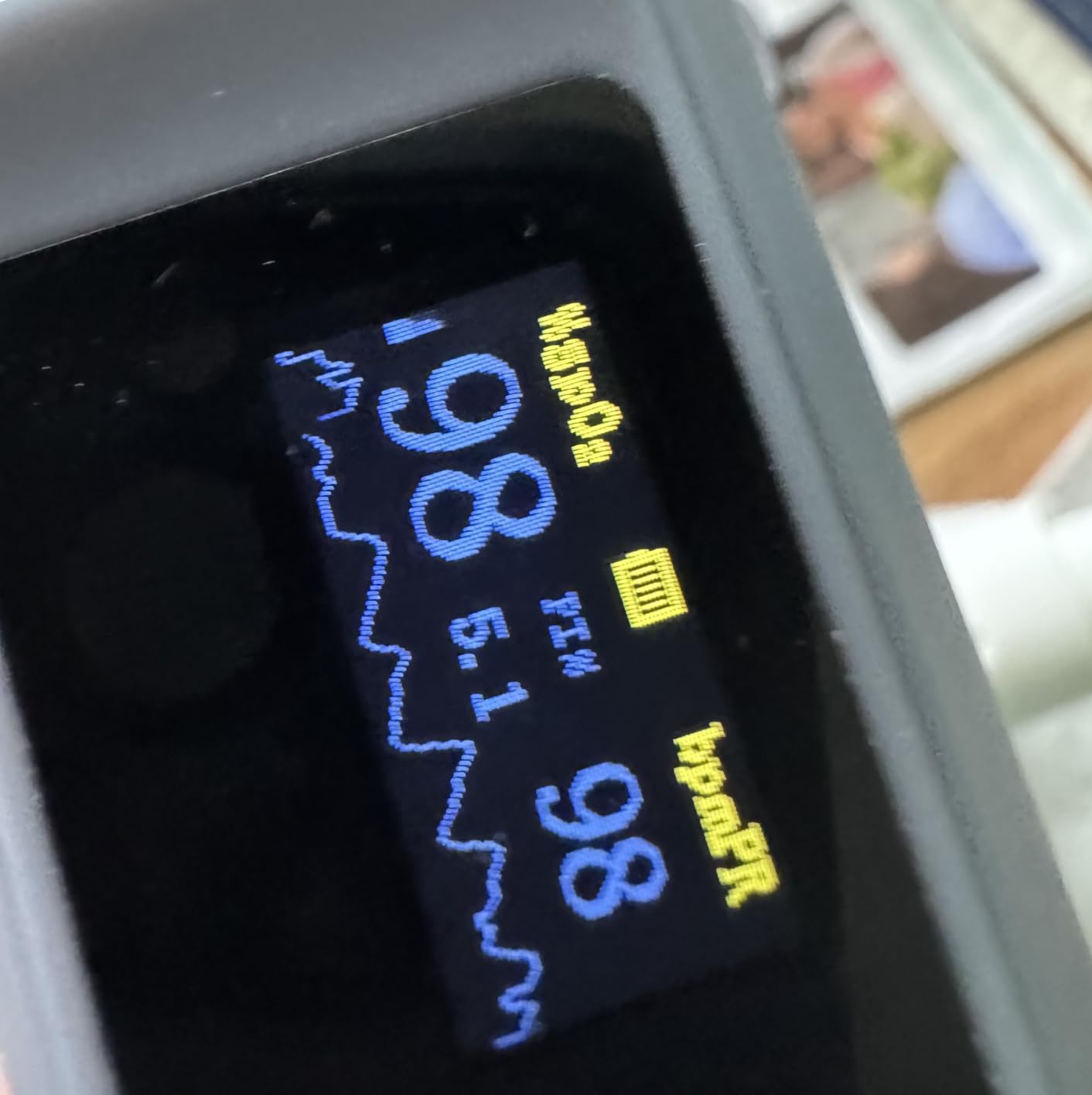
The product has a 4.5 rating from 12,320 reviews. Customers appreciate the bright OLED display, portability, and simple operation, although some report less consistency than higher-priced models.
The lack of Bluetooth or app support is not a problem if I only need a spot check. It becomes a limitation if I need a dated record, overnight trend, or easy comparison across many nights.
What this is best for
This is a sensible choice for travel, sports, and a low-cost backup. The bright screen is useful in a dim room, while the waveform bar gives a small amount of context without making the device complicated.
I would keep a notebook or phone log if my clinician asks for trends. Writing down the time, activity, symptoms, and device used is more useful than relying on memory of isolated numbers.
What to watch before buying
The low price is the main advantage, but consistency matters more than speed. I would take two readings after warming the finger and compare them for stability rather than accepting the first number automatically.
If you need app connectivity or overnight recording, this is not the right tool. Ask a clinician or sleep specialist which type of monitor is appropriate before making a purchase.
How to Choose the Best Pulse Oximeter
The best pulse oximeter is the one that gives you a stable, readable reading and fits the way you plan to use it. These criteria matter more than a long feature list or a flashy display.
Accuracy and FDA status
Look for a stated accuracy specification, usually expressed as a percentage, and check the model’s intended use. FDA cleared does not mean the same thing as FDA approved, and a consumer listing alone does not prove that a device is cleared for a particular medical purpose.
Clinical accuracy can also be affected by circulation, movement, skin thickness, nail coverings, and ambient light. I would compare repeated readings, not assume that two different brands will give exactly the same result.
Display and fit
Choose a display you can read without guessing: OLED screens often provide strong contrast, while LED models are familiar and direct. A rotating screen or multiple orientations can help if you are taking the reading for someone else.
Check the finger chamber dimensions and clamp pressure if possible. A model that fits too tightly may be uncomfortable overnight, while a loose fit can produce repeated error messages.
Signal quality and perfusion index
A plethysmograph or waveform shows the changing pulse signal, and a perfusion index gives a relative indication of pulse strength. Neither number is a diagnosis, but either can help me decide whether a reading is likely to reflect a steady measurement.
For regular use, the Innovo iP900AP is the clearest choice because it puts PI, waveform, alarm, and brightness controls on one display. The HealthTree JKS50B provides a lower-cost version of the core idea.
Power and accessories
Most models in this roundup use two AAA batteries, and the supplied data lists battery life or a battery-life claim for several products. I would keep spare batteries, a lanyard, and a case so the device is ready when I need it.
USB-rechargeable convenience is less common among these fingertip models. If you travel often, battery availability and a protective case may matter more than a rechargeable port.
Use case and data tracking
For occasional checks, a simple Zacurate, Mibest, CHOICEMMed, or HealthTree model can be enough. For frequent monitoring, a waveform, PI, alarm, and clear signal feedback are more useful than a low purchase price.
These products are not overnight sleep monitors. If your concern is sleep apnea, ask a clinician whether CPAP data, a prescribed sleep test, or a dedicated overnight oxygen recorder is more appropriate than a fingertip spot check.
Use the device correctly
Wash or warm your hands, then sit quietly for several minutes.
Remove dark nail polish, artificial nails, or anything that blocks the sensor light.
Place the finger fully inside and keep the hand still below heart level.
Wait for a stable waveform or signal indicator before recording the number.
Take a second reading after a short pause, especially if the first result is surprising.
Most people get a better result on the index or middle finger, but the best finger is warm, unpainted, and fits comfortably. Try the other hand if the first finger is cold or has poor circulation.
Do not ignore the limitations
No consumer pulse oximeter replaces a clinician’s interpretation. Seek urgent help for severe shortness of breath, chest pain, confusion, fainting, blue or gray lips, or symptoms that feel worse while the reading is low or normal.
If your clinician gives you a personal threshold, follow that plan rather than using a generic online range. Record the device, time, symptoms, and activity so your care team can see patterns.
Frequently Asked Questions
What pulse oximeter is most accurate?
For home use, choose a device with a stated accuracy specification, a clear signal-quality indicator, and current regulatory labeling. The Innovo Deluxe iP900AP is our best overall choice because it adds a plethysmograph and perfusion index, but no consumer device should replace clinical testing.
Which brand of pulse oximeter is considered the best?
There is no single best brand for every buyer. Innovo stands out for signal-quality feedback, Zacurate for value and simplicity, Mibest for display flexibility, and iProven for respiratory-rate tracking.
What is the best medical grade pulse oximeter for home use?
The Innovo Deluxe iP900AP is the strongest home-oriented option in this list because it shows a waveform, perfusion index, and alarm, but verify its current regulatory status and intended use. A clinician should recommend the device and thresholds appropriate for your condition.
Which finger gives the most accurate pulse oximeter reading?
The index or middle finger of a warm, unpainted hand is usually a good starting point. Fit, stillness, circulation, and device quality matter more than choosing one finger for every person.
Are cheap finger pulse oximeters accurate?
Cheap fingertip models can be accurate enough for a stable spot check, but they may be less consistent with cold fingers, movement, or weak circulation. Compare repeated readings and use a model with a waveform or perfusion index when signal quality matters.
Is it worth having a pulse oximeter at home?
A home pulse oximeter can be useful when a clinician recommends tracking oxygen or pulse trends, but it is not a diagnostic tool. It cannot tell you the cause of a low reading, so symptoms and medical advice take priority.
Our Verdict
The best pulse oximeters for most people are the Innovo Deluxe iP900AP for signal context, the Zacurate 500 Series for value, and the Zacurate 500BL for a basic budget purchase. Mibest is the easiest display to adapt, while iProven adds respiratory rate and HealthTree gives you PI and waveform feedback at a lower cost.
Before buying, check the current regulatory status, intended use, finger fit, and whether you need app data or overnight recording. Use a warm, still, unpainted finger, repeat surprising results, and contact a qualified clinician if you have concerning symptoms. A normal reading never rules out a medical problem.