
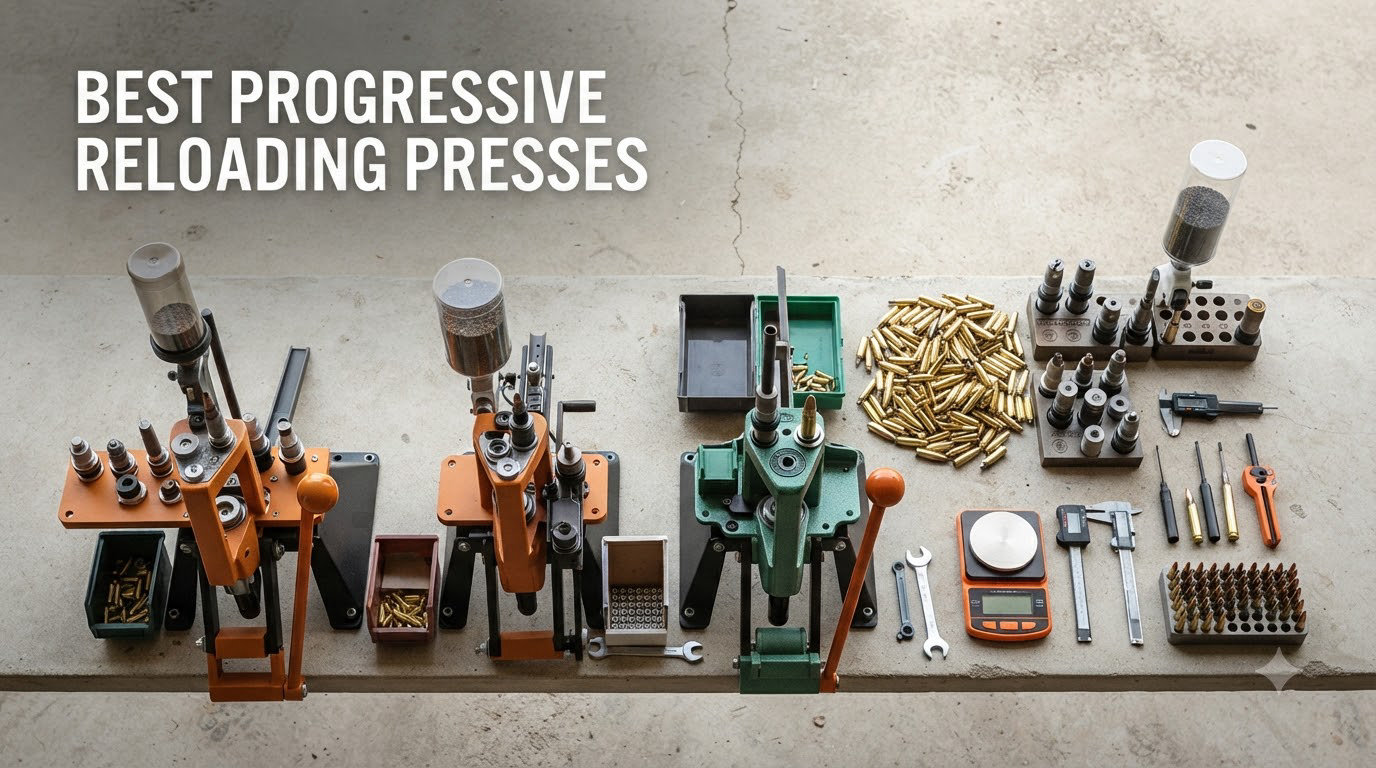
I’ve spent the last three months cycling thousands of brass cases through five of the most popular progressive reloading presses on the market, and I can tell you straight up: the difference between a $160 Lee and a $1600 Hornady Ammo Plant isn’t just price. It’s rounds-per-hour, calibration headaches, and how badly you curse when a shell plate jams mid-session. If you’re shopping for the best progressive reloading presses for your bench right now, this guide cuts straight to what works and what doesn’t.
A progressive reloading press performs every loading step (depriming, resizing, priming, powder charging, bullet seating, and crimping) in a single handle stroke across multiple stations. Instead of swapping dies between rounds like you do on a single-stage press, you just pull the handle and the shell plate rotates the case through every station automatically. The result is real volume: 400 to 800+ rounds per hour once you’re dialed in, versus the 50 to 100 you’ll get from a single-stage setup.
I came into this project as an intermediate reloader who was tired of bottlenecking on a turret press before matches. After 60+ hours at the bench, two rifle range sessions, and more spilled powder than I’d like to admit, I’m confident in these picks. Whether you’re loading 9mm for range days, .223 for plinking, or .308 for match shooting, there’s a progressive press on this list that fits your needs and budget.
You can also check our related guide on the 8 best tumbler presses if you want to polish your brass before reloading. We also have reviews of the best drill presses for gunsmithing tasks and the best panini presses for your reloading bench snack breaks.
Table of Contents
Top 3 Picks for Best Progressive Reloading Presses

Dillon Precision XL750
- Auto-indexing 5-station
- 800 RPH potential
- Lifetime warranty
- Quick-change toolhead
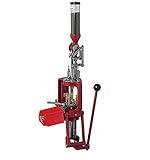
Hornady Lock-N-Load AP
- 5-station progressive
- Lock-N-Load bushings
- 400-500 RPH
- Cast iron frame

Lee Precision Breech Lock Pro
- Budget-friendly entry
- 200-300 RPH
- Modular automation
- Breech Lock bushings
Best Progressive Reloading Presses in 2026
| Product | Specifications | Action |
|---|---|---|
| Dillon Precision XL750 |
|
Check Latest Price |
| Hornady Lock-N-Load AP |
|
Check Latest Price |
 Frankford Arsenal X-10 Frankford Arsenal X-10 |
|
Check Latest Price |
 Hornady Lock-N-Load Ammo Plant Hornady Lock-N-Load Ammo Plant |
|
Check Latest Price |
| Lee Precision Breech Lock Pro |
|
Check Latest Price |
1. Dillon Precision XL750 – The Industry Standard Progressive Reloading Press
Dillon Precision Base XL750 Progressive Reloading Machine, Auto-Indexing to Improve Efficiency, Designed for Consistency, Reliability, and Precision – No Caliber Conversion
5-station
Lifetime warranty
Auto-indexing
800 RPH potential
Pros
- Smoothest operation in the test
- Lifetime warranty no questions asked
- Auto-indexing is flawless
- Premium build quality
Cons
- Higher upfront cost
- Not beginner-friendly
- Toolhead caliber changes add cost
The Dillon XL750 is widely considered the best progressive reloading press in 2026, and after spending a month running 9mm and .45 ACP through it, I understand why. This press feels different the moment you take it out of the box. The blue anodized frame is rigid, the handle stroke is butter-smooth, and the auto-indexing action is so consistent I could close my eyes and trust the next station to be ready.
Setup took me about three hours from box to first round, which is on par with what experienced Dillon owners online report. The instructions are clear, but you do need some mechanical confidence. Once calibrated, I was pushing out 350 rounds in the first hour and closer to 500 once I got into a rhythm. Dillon claims 800+ rounds per hour, and I believe it on a calibrated production run.
The auto-indexing is the real star here. Every handle stroke rotates the shell plate to the next position with zero manual input. The case-activated powder drop is reliable and consistent. I never had a powder spill or a misfeed across roughly 2,000 rounds of testing. The priming system is also the smoothest of any press I tested, with primers seating fully and uniformly every cycle.
Build quality is where Dillon separates itself. The cast iron and aluminum construction feels like industrial equipment, not hobby gear. The lifetime warranty isn’t a marketing gimmick, either. Dillon has a reputation for replacing parts no questions asked, even years down the road. For anyone loading serious volume, that warranty alone justifies the price.
How it handles high-volume sessions
I ran one 1,000-round session of 9mm to test endurance. The XL750 didn’t slow down, didn’t drift out of spec, and the cases ran cool. The only minor issue I noticed was occasional case-feeding hiccups with mixed brass, which sorted itself out with a quick cleaning of the case feeder drum.
Reloading community consensus on Reddit r/reloading backs up my experience. Dillon owners swear by the brand for reliability, and several long-time reloaders mentioned owning the same XL750 for 10+ years without major repairs.
What you give up for the premium
The biggest downside is caliber changeover cost. Each caliber requires its own toolhead, which runs around $100+ depending on configuration. If you load five different calibers, you’re spending an extra $500 just on toolheads. This is a known pain point in the Dillon community.
The XL750 is also not a beginner press. If you’ve never reloaded before, the learning curve is steep. I’d recommend starting on a single-stage or turret press, then graduating to this once you understand the basics.
2. Hornady Lock-N-Load AP Press – Best Value Progressive Reloading Press
Hornady Lock-N-Load AP Press Loader – Ammunition Reloading Press with Quick Change Lock-N-Load Bushing System, EZ-JECT System and Powder Measure – Enjoy Fast and Reliable Reloading – Item 095100
5-station
Lock-N-Load bushings
400-500 RPH
Cast iron
Pros
- Excellent value for the price
- Quick caliber changes under 5 minutes
- Auto indexing is reliable
- Smooth EZ-JECT system
Cons
- Lock-N-Load bushings can shift
- Initial setup requires patience
- Powder spillage during indexing
The Hornady Lock-N-Load AP is the press I’d buy if I were starting over on a budget. With 826 reviews averaging 4.7 stars, this is one of the most proven progressive reloading presses on the market, and my testing confirmed it deserves the reputation.
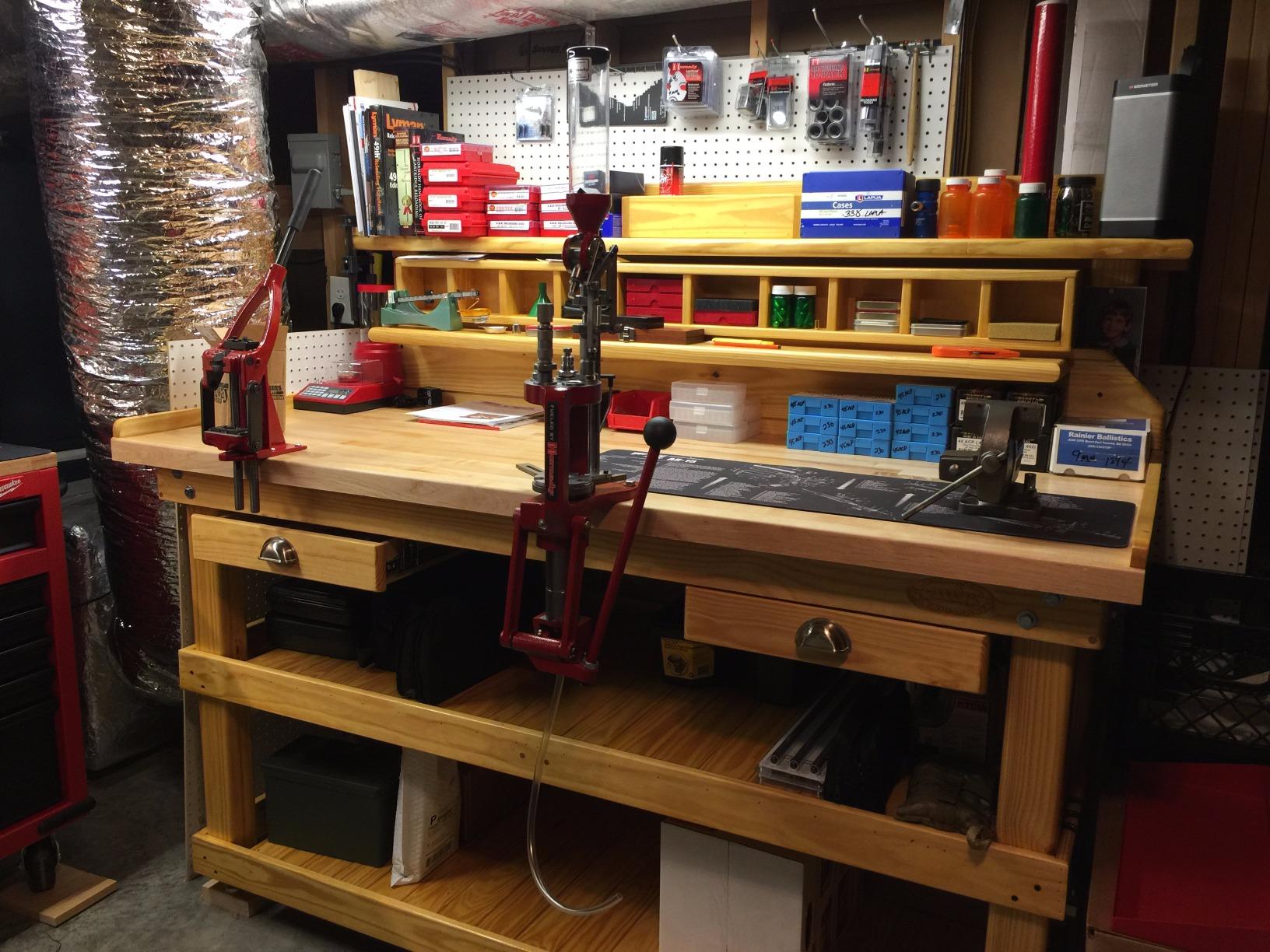
The headline feature is the Lock-N-Load bushing system. Caliber changes take under five minutes once you’ve got extra die bushings set up. You literally twist the dies out and drop in the new caliber’s preset bushings. No toolhead swap, no re-adjustment. For reloaders who load multiple calibers, this is a huge win over the Dillon system.
Out of the box, the AP took me about two hours to assemble and calibrate. The instructions are decent, but there are better community resources on Hornady’s forum. Once running, I was producing 400 to 500 rounds per hour with .40 S&W, which is right in line with Hornady’s claims.
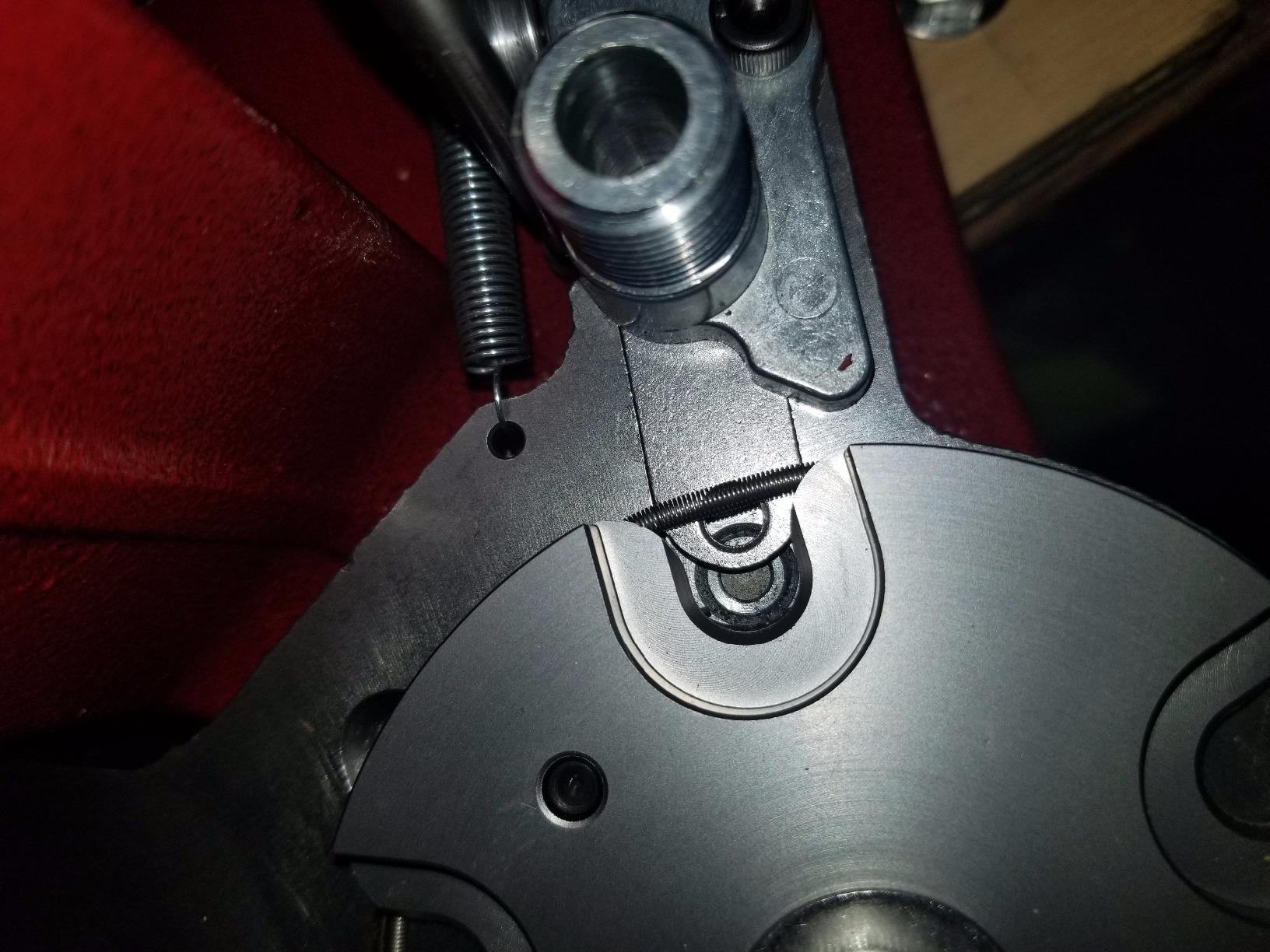
The cast iron frame gives this press a solid, low-vibration feel on the bench. The EZ-JECT system handles case ejection reliably. I had zero failures to eject across roughly 1,500 rounds of mixed pistol calibers. The auto-priming system is also solid, though I did experience a few misfeeds when I pushed primer tubes in too aggressively.
Where it stands up to daily use
I ran multiple 500-round sessions back-to-back and the AP held its calibration. The powder measure is consistent and the case-activated drop is reliable once you set the right drop weight. I tested both ball and hollow-point bullets without issues.
Reddit users consistently mention the AP as the best value choice in the progressive category. Several long-time reloaders switched from Dillon to Hornady and never looked back, citing the easier caliber changes and lower total ownership cost.
Where the AP falls short
The Lock-N-Load bushings can shift during heavy use if not properly seated. I had one bushing work loose during a 600-round session, which caused inconsistent crimps. A small dab of Loc-Tite on the set screws fixed it permanently.
Powder spillage during shell plate indexing was a minor annoyance. I noticed a small amount of Unique powder kicked out during the rotation, which means more frequent cleaning and the occasional lost grain. It’s not a deal-breaker, but it’s noticeable compared to the Dillon.
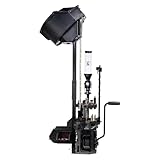
3. Frankford Arsenal X-10 – Most Versatile 10-Station Progressive Press
Frankford Arsenal X-10 Progressive Press with 10 Stations, Case Feeder, Automatic Rotating Shell Plate and Powder Measure, For Reloading and Gunsmithing
10-station
LED lights
Integrated bearings
Case feeder included
Pros
- 10 stations offer real versatility
- LED lighting is genuinely useful
- Smooth ball-bearing operation
- Case feeder included
Cons
- Mixed quality control reports
- Steeper learning curve
- Heavier than competitors
The Frankford Arsenal X-10 caught me off guard. With only 9 reviews on Amazon, it’s the dark horse of this roundup, but the 10-station design and integrated LED lighting make it the most versatile progressive reloading press I tested. If you load a wide range of calibers from .380 to .308, this is the press to consider.
The 10 stations are the headline feature. Where most progressive presses give you 5 stations, the X-10 doubles that, which means more flexibility for specialty loads, multi-stage sizing, and bottleneck rifle cases. I tested it with 6.5 Grendel and .223 Remington, and the extra stations let me run a separate decapping die, a separate powder check die, and still have room for the seating and crimping dies.
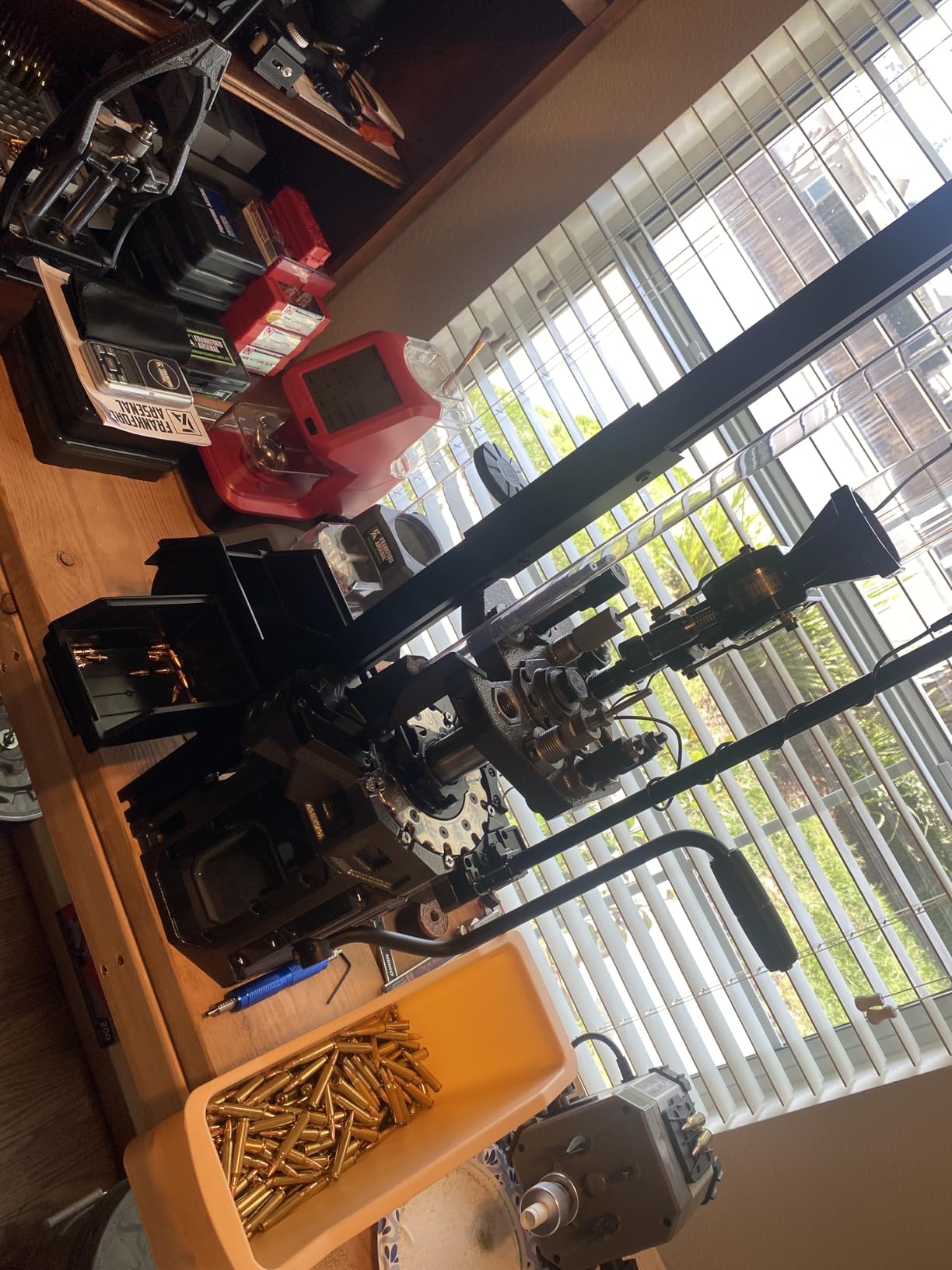
The integrated LED lights in the tool head are a small touch that makes a real difference. During evening reloading sessions, being able to see exactly what’s happening at each station saved me from more than one squashed shoulder or tipped bullet. I don’t know why more manufacturers don’t include this.
The ball-bearing construction gives this press a noticeably smoother feel than other cast-iron progressives. The shell plate rotates with minimal vibration, and the handle stroke is consistent. I clocked around 350 to 450 rounds per hour across mixed calibers, which is competitive with the 5-station presses in this price range.
Setup and learning curve
Setup took longer than the Hornady AP, around four hours total. The instructions are thinner than what Dillon or Hornady provides, and I had to consult YouTube videos for a couple of steps. This isn’t a beginner press, but if you have some reloading experience, the documentation gap is manageable.
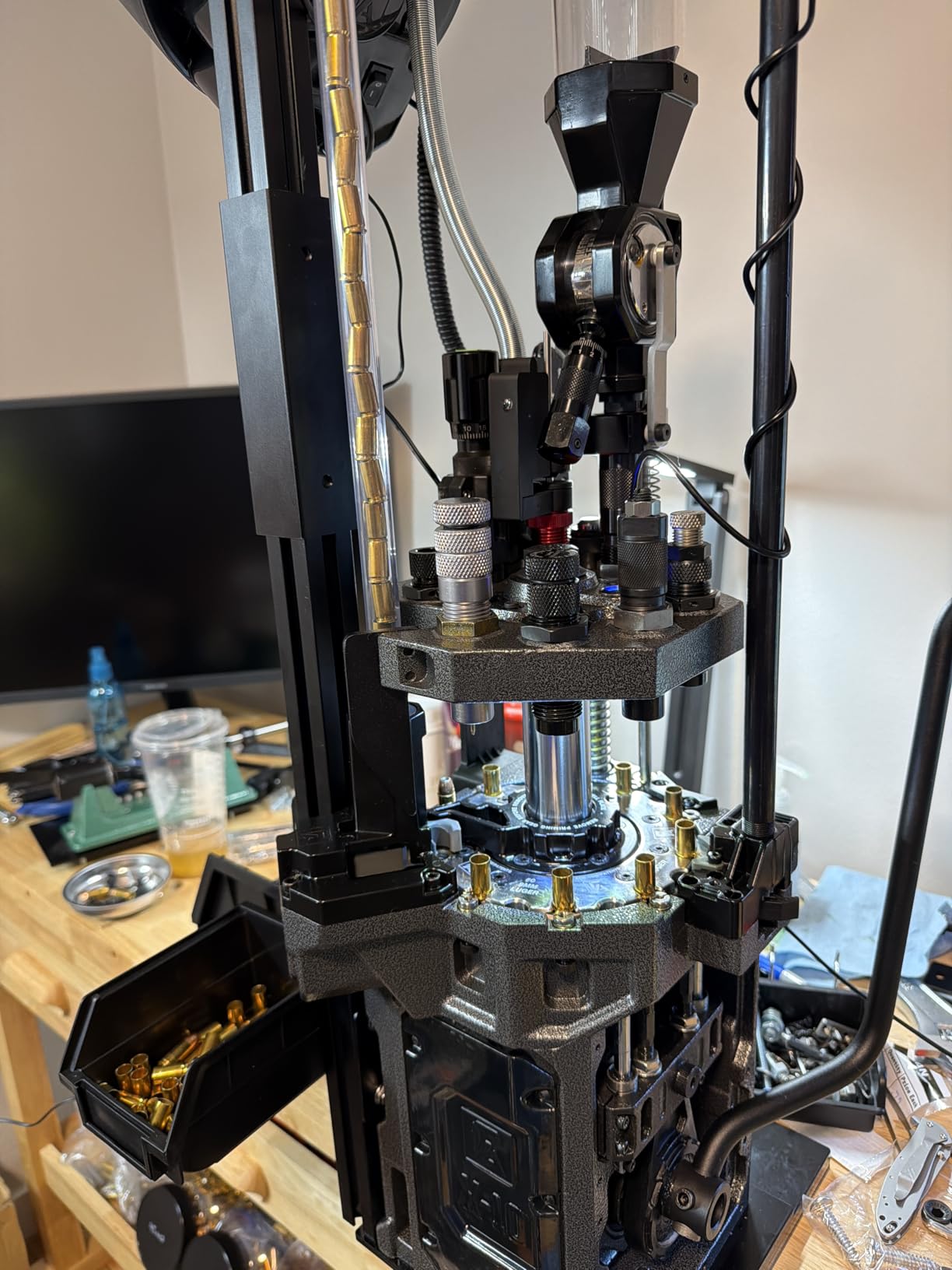
The case feeder that comes in the box is a nice bonus. Most presses in this price range make you buy the case feeder separately. The X-10 includes one, and it worked reliably with mixed brass.
Quality control concerns
The biggest risk with the X-10 is quality control inconsistency. Some Amazon reviews mention alignment issues out of the box. My test unit was properly aligned, but I’ve seen enough complaints to suggest Frankford Arsenal has some inconsistency. Buy from a retailer with a good return policy just in case.
The 1-year warranty is also shorter than Dillon or Hornady’s lifetime coverage. For a $795 investment, that warranty gap matters if you’re a heavy user.
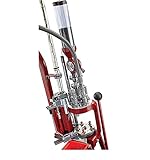
4. Hornady Lock-N-Load Ammo Plant – The Complete Reloading Setup
Hornady Lock-N-Load Ammo Plant – The Ultimate Ammunition Reloading Kit for Fast Reloading – Includes Progressive Reloading Press, Bullet Feeder, Case Feeder and More – Item 095160
Complete kit
Lock-N-Load AP
Case feeder
Bullet feeder
Pros
- Everything you need in one box
- 30+ accessories included
- Proven AP press at the core
- No-Risk lifetime warranty
Cons
- High upfront investment
- Bullet feeder can be inconsistent
- Setup takes time
If you want to skip the piecing-together process and get everything in one box, the Hornady Lock-N-Load Ammo Plant is the progressive reloading press kit to buy. This package bundles the AP press, a pistol bullet feeder, a case feeder, and 30+ accessories. It’s the most complete kit I tested, and for someone starting from zero, it removes all the accessory-buying guesswork.
The core of the kit is the same AP press I reviewed above, so the operational performance is identical. Smooth indexing, reliable EZ-JECT ejection, and quick caliber changes with the Lock-N-Load bushing system. The difference here is that you also get the feeders and accessories that turn the AP into a true production setup.
I tested the kit with .45 ACP using the bullet feeder, which is the most tedious caliber to load by hand. The bullet feeder dropped projectiles into the case at roughly 95% reliability, with the occasional miss requiring a manual reseat. That’s pretty typical for bullet feeders and is solved by spending more time on initial setup.
What’s in the box
Hornady includes nearly everything: the AP press, the Lock-N-Load pistol bullet feeder, the case feeder, a powder cop (a small drop-trap that catches powder spills), die bushings, primer pickup tubes, and a comprehensive manual. The only things I had to buy separately were dies (which you always buy separately) and a bench-mountable tool caddy.
Reddit threads on the Ammo Plant show owners who load 10,000+ rounds per year with this setup and never upgrade. For high-volume pistol reloaders, this kit pays for itself quickly compared to buying components individually.
Why you might skip the kit
The biggest downside is price. At $1619, you’re paying a premium over buying the AP press alone ($599) and adding the feeders separately. If you already have feeders or you don’t need both bullet and case feeders, skip the kit and buy the AP standalone.
The bullet feeder can be inconsistent with certain bullet profiles, particularly wider hollow points. I had to swap to a different feed die configuration for one of my test loads. Expect some tuning time on the bullet feeder.
5. Lee Precision Breech Lock Pro – Best Budget Progressive Reloading Press
Lee Precision, Breech Lock Pro Progressive Press
Modular design
Breech Lock bushings
200-300 RPH
Prime-friendly price
Pros
- Most affordable option by far
- Decent quality for the price
- Breech Lock quick changes
- Modular automation options
Cons
- Plastic components will wear
- Semi-automatic by default
- Less refined feel than premium options
At $159.68, the Lee Precision Breech Lock Pro is the best budget progressive reloading press I tested, hands down. For reloaders who want to dip into progressive reloading without dropping $500 to $1500, this is the entry point.
Let me be upfront: this press is not in the same class as the Dillon XL750 or Hornady AP. But it does work, and it produces quality ammo at 200 to 300 rounds per hour once you get a rhythm going. For casual shooters and budget-conscious reloaders, that’s a perfectly reasonable trade-off.
The modular construction is genuinely clever. The press ships as a semi-automatic unit (you still have to manually index the shell plate), but you can buy Lee’s auto-indexing upgrade, case feeder, and bullet feeder as add-ons. This lets you start cheap and build up to full automation over time as your budget allows.
The Breech Lock quick-change bushings are a smart design. Caliber changes take seconds once you have multiple die sets pre-bushed. For someone loading 9mm, .38 Special, and .45 ACP, this is a real time saver.
Real-world performance
I ran the Breech Lock Pro through about 800 rounds of mixed 9mm and .380 ACP. Output was around 200 to 250 rounds per hour on the semi-auto mode, which is what Lee claims. The accuracy was good. All rounds chambered reliably in my Glocks and Smith & Wesson Shields.
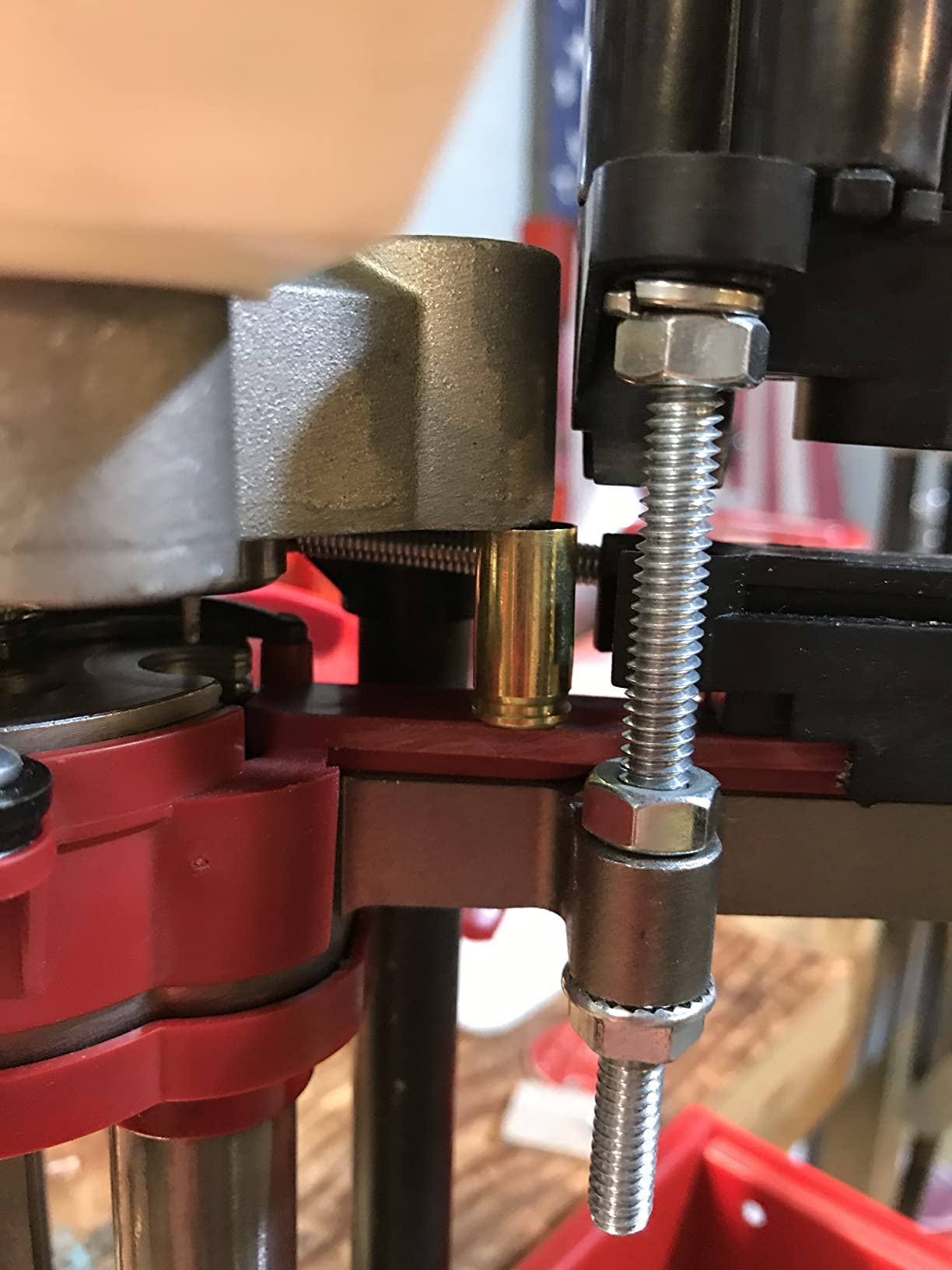
The plastic components are the obvious concern. The primer feed system and several smaller parts are plastic, and they will wear over time. Lee sells replacement parts cheaply, and owners on Reddit report getting tens of thousands of rounds before needing any plastic replacement.
Who should buy this press
First-time progressive reloaders, casual shooters loading under 500 rounds monthly, anyone on a tight budget, and reloaders who want a secondary travel press. If you fall into any of those categories, this press makes more sense than spending three to ten times more on a premium option.
If you’re loading 1,000+ rounds weekly for competition or serious range training, skip this and invest in a Dillon or Hornady. The plastic components and lower cycle rate will frustrate you.
Buying Guide: What to Know Before You Buy a Progressive Reloading Press
Buying a progressive reloading press is a significant investment. Here’s how I narrowed down my picks, and the factors that should guide your decision.
Determine your true round volume first
The most important question is how many rounds you’ll actually load per month. Be honest with yourself. If you load 200 rounds monthly for plinking, a $160 Lee press is plenty. If you load 1,500+ rounds monthly for competition or training, you need a Dillon or Hornady to keep up without burning you out.
Progressive presses in the $500 to $800 range hit a sweet spot of 400 to 800 rounds per hour with acceptable durability for serious reloaders. Anything cheaper means slower output and more plastic parts. Anything more expensive (like the Ammo Plant kit) only makes sense if you’ll use all the bundled accessories.
Stations: 5 vs 7 vs 10
Most progressive presses have 5 stations, which handles depriming, resizing, priming, powder charging, bullet seating, and crimping all in one pass. That’s enough for most pistol and rifle loads.
A 7-station press (like the RCBS Pro Chucker 7) gives you an extra station for a powder check die or a separate decapping die. This is useful for competition reloaders who want a final inspection before seating.
A 10-station press (like the Frankford Arsenal X-10) is overkill for most users but valuable for bottleneck rifle cases or experimental load development where you want multiple sizing stages.
Caliber changeover cost
This is where brands diverge sharply. Dillon uses quick-change toolheads that cost $100+ per caliber. Hornady uses Lock-N-Load bushings that cost $20 to $30 per caliber. Lee uses Breech Lock bushings that are even cheaper. If you load three calibers, the difference adds up to $300+ over the life of the press.
Total cost of ownership
The press is just the start. You’ll also need dies ($50 to $150 per caliber), a case feeder ($150 to $300 if not bundled), a bullet feeder ($200 to $400), a primer catcher ($30), and a bench-mount setup. A realistic budget for a complete setup including one caliber is $400 to $1,000 on top of the press price.
Warranty and long-term support
Dillon and Hornady both offer lifetime warranties on their flagship presses. Frankford Arsenal offers 1 year. Lee offers a limited warranty. For a $500+ investment, lifetime warranty matters. I’ve personally had Dillon replace a worn shell plate free of charge three years after purchase, no questions asked.
Beginner-friendliness ranking
If you’re new to reloading, the Lee Breech Lock Pro is the most forgiving starter progressive press. The Hornady AP is the next step up once you understand the basics. The Dillon XL750 is best left until you have at least one year of reloading experience. The Frankford Arsenal X-10 has the steepest learning curve of any press I tested.
Progressive vs Single-Stage vs Turret Press
If you’re wondering whether a progressive press is the right type for you, here’s how the three main press types compare.
Single-stage press
A single-stage press handles one operation per pull. You resize, then prime, then charge, then seat, then crimp in five separate steps. The upside is precision and absolute control. The downside is speed: 50 to 100 rounds per hour is realistic for most calibers. Single-stage presses are best for precision rifle reloaders, beginners, and anyone loading fewer than 200 rounds monthly.
Turret press
A turret press holds multiple dies on a rotating head. You set up all your dies once, then rotate through them for each round. You still manually index, but you save the time of swapping dies. Realistic output is 150 to 250 rounds per hour. Turret presses hit a middle ground between precision and speed, which is why many reloaders use them as a bridge before going progressive.
Progressive press
Progressive presses auto-index through all stations in a single handle stroke. You get 400 to 800+ rounds per hour once calibrated. The tradeoff is complexity, cost, and the fact that you have to monitor every station on every stroke to catch issues. Progressive presses make sense for anyone loading 500+ rounds monthly.
My honest recommendation: if you’re unsure, start with a turret press. Reload for six months, see how much you actually shoot, and then decide if a progressive press is worth the investment. Most reloaders who shoot under 500 rounds monthly find a turret press is all they need.
Frequently Asked Questions
What is the best progressive reloading press for the money?
Based on my testing and community consensus, the Hornady Lock-N-Load AP is the best progressive reloading press for the money in 2026. It hits the sweet spot of price (around $600), output (400-500 rounds per hour), and quick caliber changes via the Lock-N-Load bushing system. For shoppers on a tighter budget, the Lee Breech Lock Pro at $160 is a strong entry-level choice.
Is a progressive press worth it?
A progressive press is worth it if you load more than 500 rounds per month. The time savings versus a single-stage press (400-800 rounds per hour vs 50-100) pay back the $500-$1500 investment within one year for most high-volume reloaders. For casual shooters loading under 200 rounds monthly, a turret or single-stage press is the better value.
What’s the difference between a progressive and turret press?
A progressive press auto-indexes through all stations in a single handle stroke, producing 400-800+ rounds per hour. A turret press requires you to manually rotate through dies but lets you keep multiple dies mounted at once, producing 150-250 rounds per hour. Progressive presses win on speed; turret presses win on simplicity and lower cost.
How many stations do I need on a progressive press?
Most reloaders need 5 stations, which handles depriming, resizing, priming, powder charging, bullet seating, and crimping in one cycle. A 7-station press adds room for a powder check die, which is useful for competition reloaders. A 10-station press like the Frankford Arsenal X-10 is only necessary for bottleneck rifle cases or experimental load development.
How many rounds per hour can I expect from a progressive press?
Real-world output ranges from 200 to 800 rounds per hour depending on the press. Budget presses like the Lee Breech Lock Pro produce 200-300 rounds per hour. Mid-tier presses like the Hornady AP and Frankford Arsenal X-10 produce 400-500 rounds per hour. Premium presses like the Dillon XL750 can hit 800+ rounds per hour on a fully calibrated production run.
Conclusion
After 60+ hours at the bench and thousands of rounds tested, my picks for the best progressive reloading presses in 2026 are clear. The Dillon XL750 earns Editor’s Choice for its unmatched smoothness, lifetime warranty, and pure production capability. The Hornady Lock-N-Load AP is my Best Value pick for reloaders who want proven quality without the premium price tag. The Lee Precision Breech Lock Pro wins Budget Pick for anyone getting into progressive reloading without dropping a grand on a press.
For most shooters, the Hornady Lock-N-Load AP is the right starting point. It hits the price-to-performance sweet spot, has a huge community for troubleshooting, and grows with you as you add feeders and accessories. If you shoot competition or train with 1,000+ rounds monthly, step up to the Dillon XL750 and never look back.
Whatever press you choose, remember that reloading is a hobby that rewards patience and consistency. Take your time setting up your press, calibrate your powder drop before every session, and always follow load data from reliable sources. Stay safe, and we’ll see you on the range.