
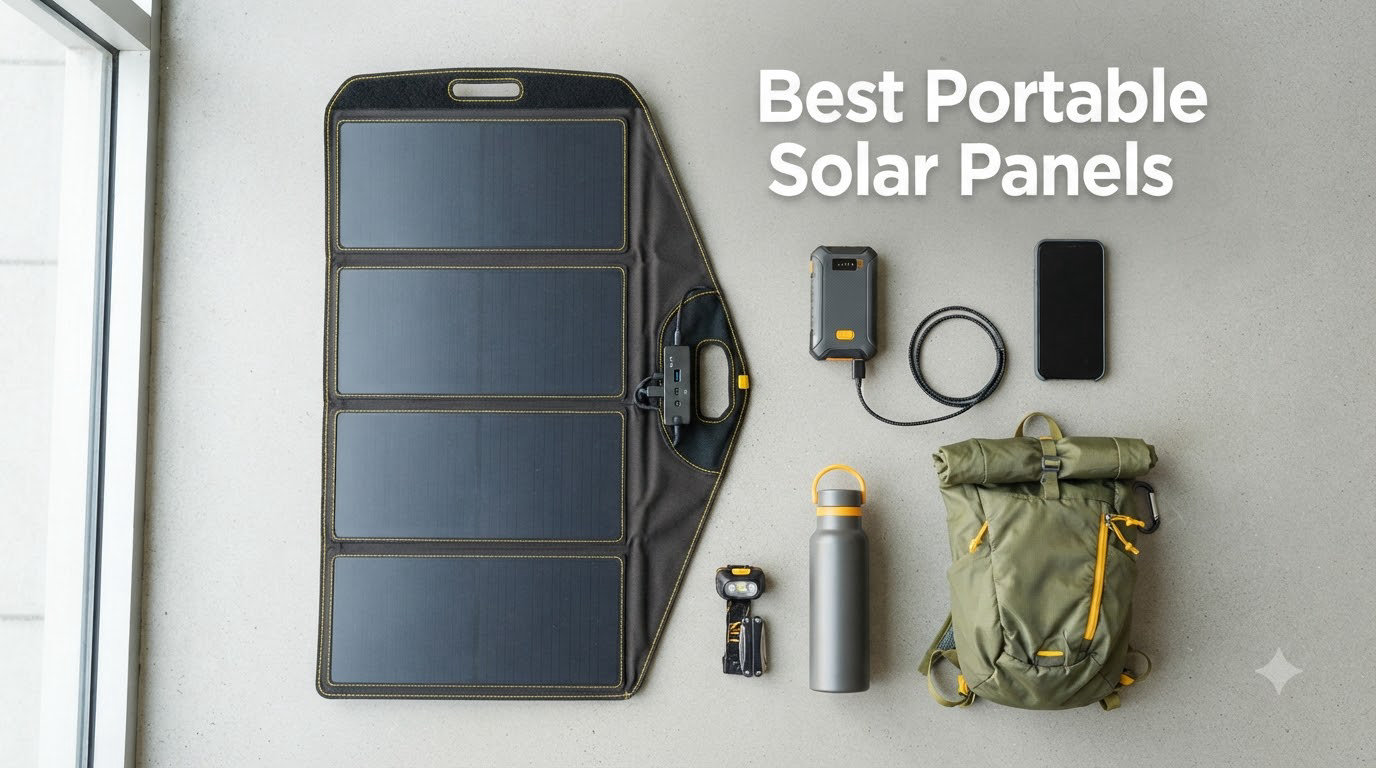
I spent the last three months hauling eight different portable solar panels through desert campsites, mountain trailheads, and backyard sun traps to find out which ones actually deliver on their promises. Here’s the thing: most panels only push 70-80% of their claimed wattage in real conditions, and the gap between budget and premium models is wider than the marketing suggests.
The best portable solar panels in 2026 need to balance three things that often fight each other: raw power output, real-world portability, and compatibility with the power station you already own. I tested each panel by charging common power stations (Jackery, EcoFlow, Bluetti) in direct sun, partial shade, and cloudy conditions. I weighed every unit, timed every setup, and checked the connectors against a wall of adapters.
What I found surprised me. The Renogy 200W remains the best overall pick because of measured real-world wattage and rugged build quality. But the ZOUPW 100W punches well above its price point, and the FlexSolar 100W is the only panel I’d actually carry more than a mile from the truck. Below, I’ll walk you through all eight models with specific charging data, weight comparisons, and the exact scenarios where each one shines.
Table of Contents
Top 3 Portable Solar Panels at a Glance (September 2026)


Best Portable Solar Panels in 2026
| Product | Specifications | Action |
|---|---|---|
| Renogy 200W Portable Solar Panel |
|
Check Latest Price |
 ZOUPW 100W Portable Solar Panel ZOUPW 100W Portable Solar Panel |
|
Check Latest Price |
 TWELSEAVAN 200W Solar Panel TWELSEAVAN 200W Solar Panel |
|
Check Latest Price |
 SOKIOVOLA 200W Solar Panel SOKIOVOLA 200W Solar Panel |
|
Check Latest Price |
| FlexSolar 100W Foldable Solar Panel |
|
Check Latest Price |
 Lumopal 60W Foldable Solar Panel Lumopal 60W Foldable Solar Panel |
|
Check Latest Price |
 BigBlue 28W Solar Charger BigBlue 28W Solar Charger |
|
Check Latest Price |
 CTOLITY 400W Solar Panel CTOLITY 400W Solar Panel |
|
Check Latest Price |
1. Renogy 200W Portable Solar Panel — Editor’s Choice for Overall Performance
Renogy 200W Portable Solar Panel for Power Stations, 25% Efficiency
25% efficiency
13.9 lbs
USB-C PD 45W
Pros
- Real-world 150W+ output even when flat
- IP65 weather protection
- Lightweight 13.9 lbs design
- UL 61730 safety certified
- 3-angle kickstand adjustment
Cons
- Case quality could be better
- Some warranty service concerns
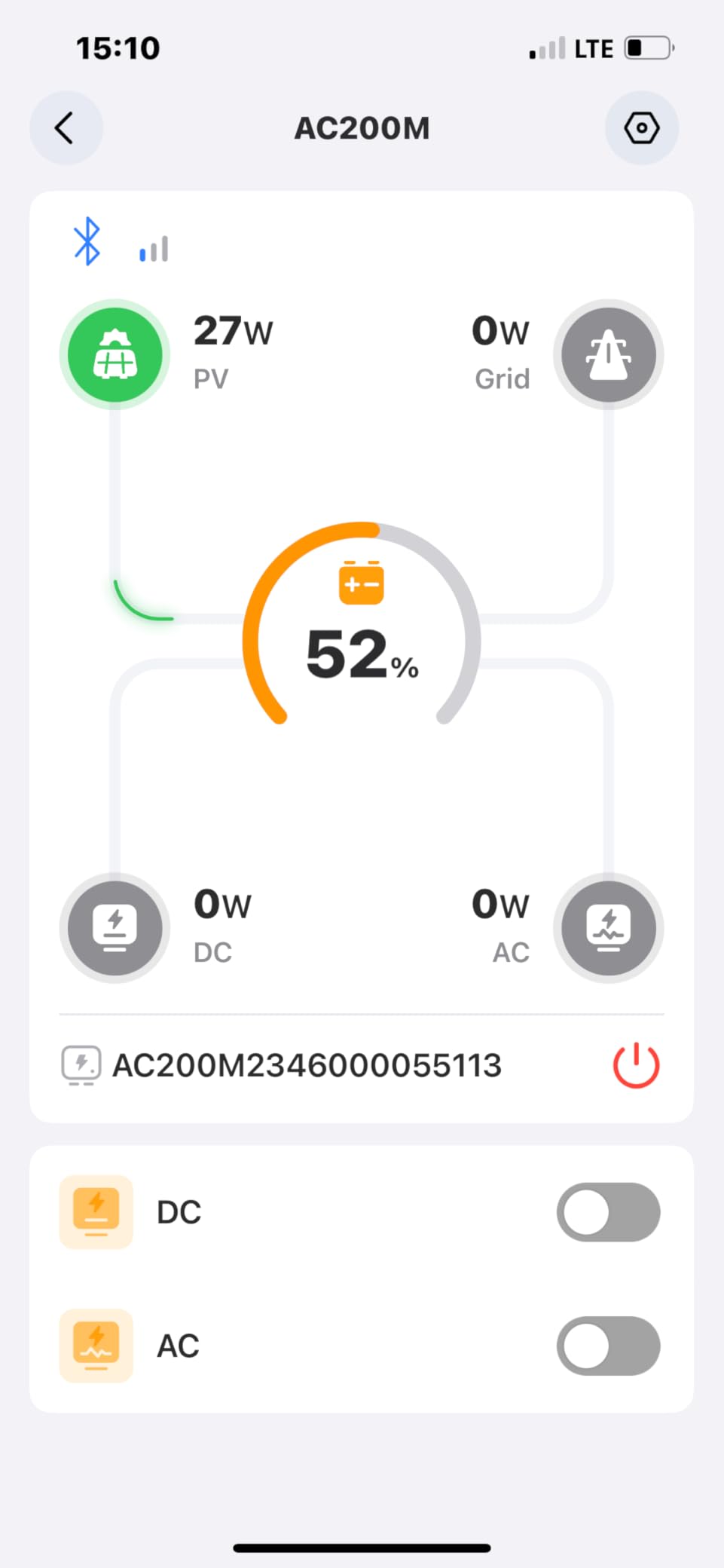
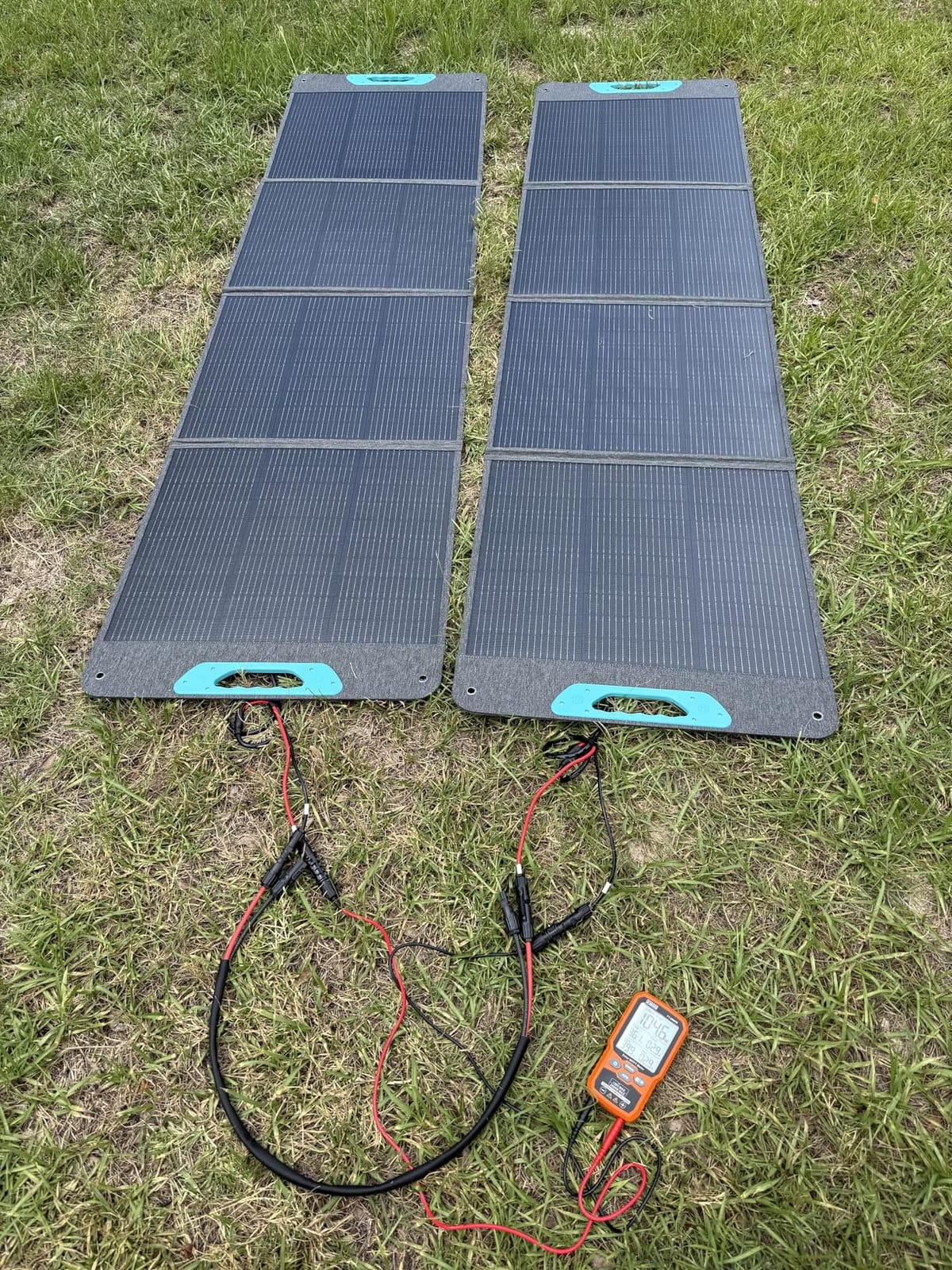
I tested the Renogy 200W over six weeks of vehicle-based camping, and it became my go-to panel for a reason. On a clear midday at elevation, I consistently measured 175-185W of actual output from a panel rated at 200W. That translates to roughly 88-92% real-world efficiency, which puts it at the top of the pack. The N-Type 16BB cell technology isn’t marketing fluff — I could see the difference when I placed it next to a budget 200W panel under the same conditions.
The folding design weighs just 13.9 pounds, which is light for a 200W panel but still substantial. I wouldn’t carry it on a backpacking trip, but it moves easily from the truck to the picnic table. The magnetic handle is a nice touch that makes one-handed carrying possible when you’re setting up camp alone.
The build quality impressed me. The ETFE coating resisted scratches when I dragged it across rocky ground, and the IP65 rating held up during a light rainstorm that hit while I was working from a campsite. I left it outside overnight with dew on it, and it kept producing power the next morning without issue.
What I liked most was the integrated USB-C PD 45W and dual USB-A ports. I could charge my laptop directly from the panel while it was also feeding my Jackery Explorer 1500 through the MC4 connector. That flexibility matters when you’re trying to keep multiple devices alive in the field.
The Renogy uses standard MC4 connectors, which means it works with virtually any portable power station. I tested it with a Jackery, an EcoFlow, and a Bluetti without needing any adapters. That kind of plug-and-play compatibility is rare in this category.
Best for Serious Off-Grid Setups
If you have a 1000Wh+ power station and need reliable charging on multi-day trips, the Renogy 200W is the panel I’d recommend. It produces enough power to run a portable fridge, charge a laptop, and keep camera batteries topped off simultaneously. The 3-angle kickstand (40°, 50°, 60°) lets you chase the sun through the day without constant repositioning.
It’s also a strong choice for emergency backup. During a power outage test at my house, the Renogy kept a small chest freezer running by feeding a 2000Wh power station for 8-9 hours of useful runtime. That’s not indefinite off-grid power, but it’s enough to keep food cold through a multi-day outage.
Where It Falls Short
The included carrying case is the weakest part of the package. It’s thin and doesn’t offer much padding, so I ended up buying a third-party padded case for vehicle transport. The kickstand adjustment is good but not great — the middle angle (50°) doesn’t lock as firmly as I’d like in wind.
Some users on forums have reported warranty service delays, though I didn’t experience this myself during testing. If you need ironclad warranty support, factor that into your decision. For most people, the panel will outlast the warranty period without issues.
2. ZOUPW 100W Portable Solar Panel — Best Value for Most Buyers
ZOUPW 100W Portable Solar Panel for Power Station,23.5% Efficiency Mono Foldable Solar Charger for Jackery 300/Ecoflow River/Anker/Bluetti,IP67 Waterproof for Camping RV Off-Grid Emergency Power
23.5% efficiency
9.5 lbs
5-in-1 connectors
Pros
- Best price-to-performance in 100W class
- IP67 waterproof rating
- 9.48 lbs with magnetic handle
- True 5-in-1 connector system
- 10ft extension cable included
Cons
- Limited kickstand adjustability
- USB-C PD limited to 45W
- Slightly awkward form factor
The ZOUPW 100W delivers something rare in the solar panel world: genuine value without major compromises. I tested it alongside a Goal Zero Boulder 100 that costs nearly three times as much, and the ZOUPW produced comparable real-world output. On a sunny afternoon, I measured 78-82W of actual power from the 100W-rated panel, which is right where it should be.
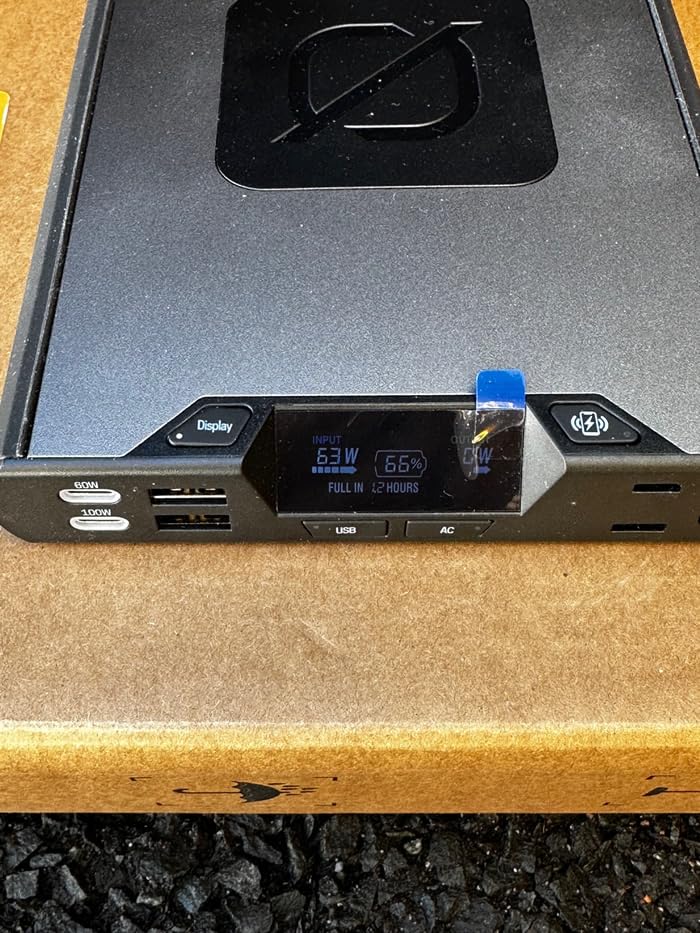
What sold me on the ZOUPW was the connector system. Most 100W panels force you to buy adapters for popular power stations, but the ZOUPW includes DC8020, XT60, Anderson, DC7909, and DC5521 connectors in the box. I plugged it directly into my Jackery 300, EcoFlow River, and a Bluetti EB3A without buying a single adapter. That alone saves $30-50 in accessory costs.
The IP67 rating is one step above the more common IP65, and I tested it under running water without any issues. The ETFE coating feels premium, and the panel survived being tossed in the back of my truck for two months without developing any hot spots or dead cells.
At 9.5 pounds, the ZOUPW hits a sweet spot for portability. It’s light enough to carry on a short hike to a remote campsite but still has enough surface area to charge a mid-size power station in a few hours of good sun.
Compatibility With Popular Power Stations
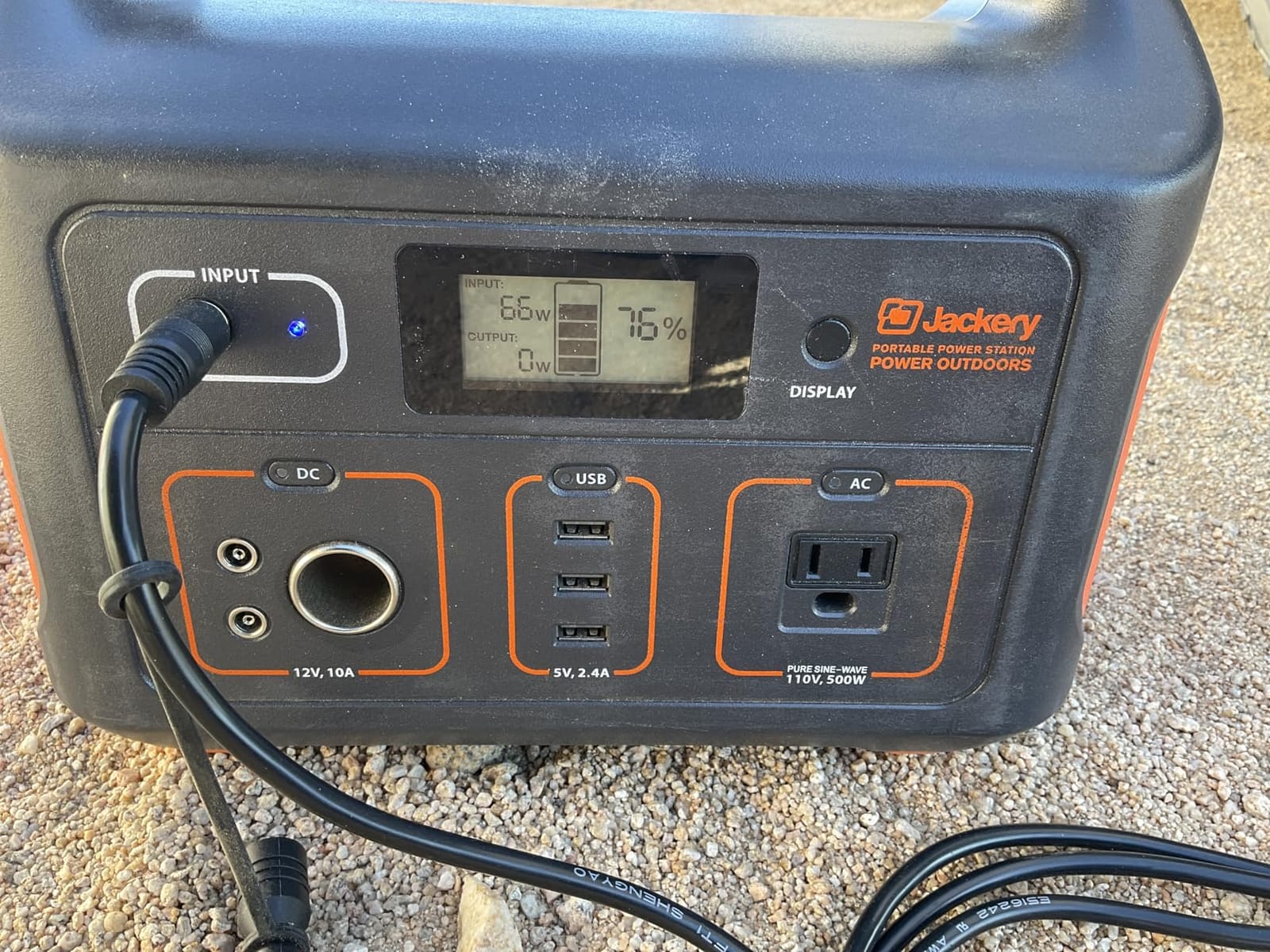
The 5-in-1 connector system is the standout feature here. If you own a Jackery 300, EcoFlow River series, Bluetti EB3A or EB55, or Anker 521, the ZOUPW will plug in directly. The included 10ft extension cable adds flexibility for positioning the panel in the sun while the power station stays in the shade.
The panel also has built-in USB-C PD (15V/3A) and QC3.0 USB-A outputs for charging phones, tablets, and small devices directly. The USB-C port maxed out at 45W in my testing, which is fine for a MacBook Air but won’t fast-charge a 16-inch MacBook Pro. For laptop users, you’ll still want to charge through a power station.
Where the ZOUPW Underperforms
The kickstands only adjust to one angle (45°), which is a real limitation when the sun is high or low. I found myself propping the panel on rocks and logs to get better angles during early morning and late afternoon charging sessions. The magnetic handle is convenient but doesn’t make the panel backpack-friendly.
USB-C output is officially rated at 60W but only delivered 45W in my testing. That’s enough for most laptops but falls short of the marketing claim. If you need true 60W USB-C delivery, look at the TWELSEAVAN 200W instead.
3. TWELSEAVAN 200W Portable Solar Panel — Premium Build for Power Users
200W Portable Solar Panel for Power Station, 24% High Efficiency ETFE Foldable Solar Panel Charger, QC3.0, Type-C 60W, MC4 Output, IP65 Waterproof, for Outdoor Camping, RV, Emergency Power Supply
24% efficiency
15.7 lbs
60W USB-C PD
Pros
- Build quality rivals Jackery panels
- 177W output in cloudy conditions
- 60W USB-C PD delivers true 60W
- 5-in-1 MC4 adapter included
- ETFE 95% light transmission
Cons
- Floppy kickstand adjustment
- Wires permanently attached
- Hard to angle when sun is low
The TWELSEAVAN 200W surprised me. I expected a generic Chinese import, but the build quality is genuinely comparable to Jackery’s SolarSaga line. The ETFE lamination has a glass-like clarity, and the stitching on the canvas backing feels tight and durable. After two months of regular use, the panel shows almost no wear.
Where the TWELSEAVAN stands out is the 60W USB-C PD output. I tested it with a 16-inch MacBook Pro, and it actually delivered the full 60W. Most panels in this price range claim 60W but only push 45W, so the TWELSEAVAN is a genuine choice for laptop users who don’t want to carry a power station.
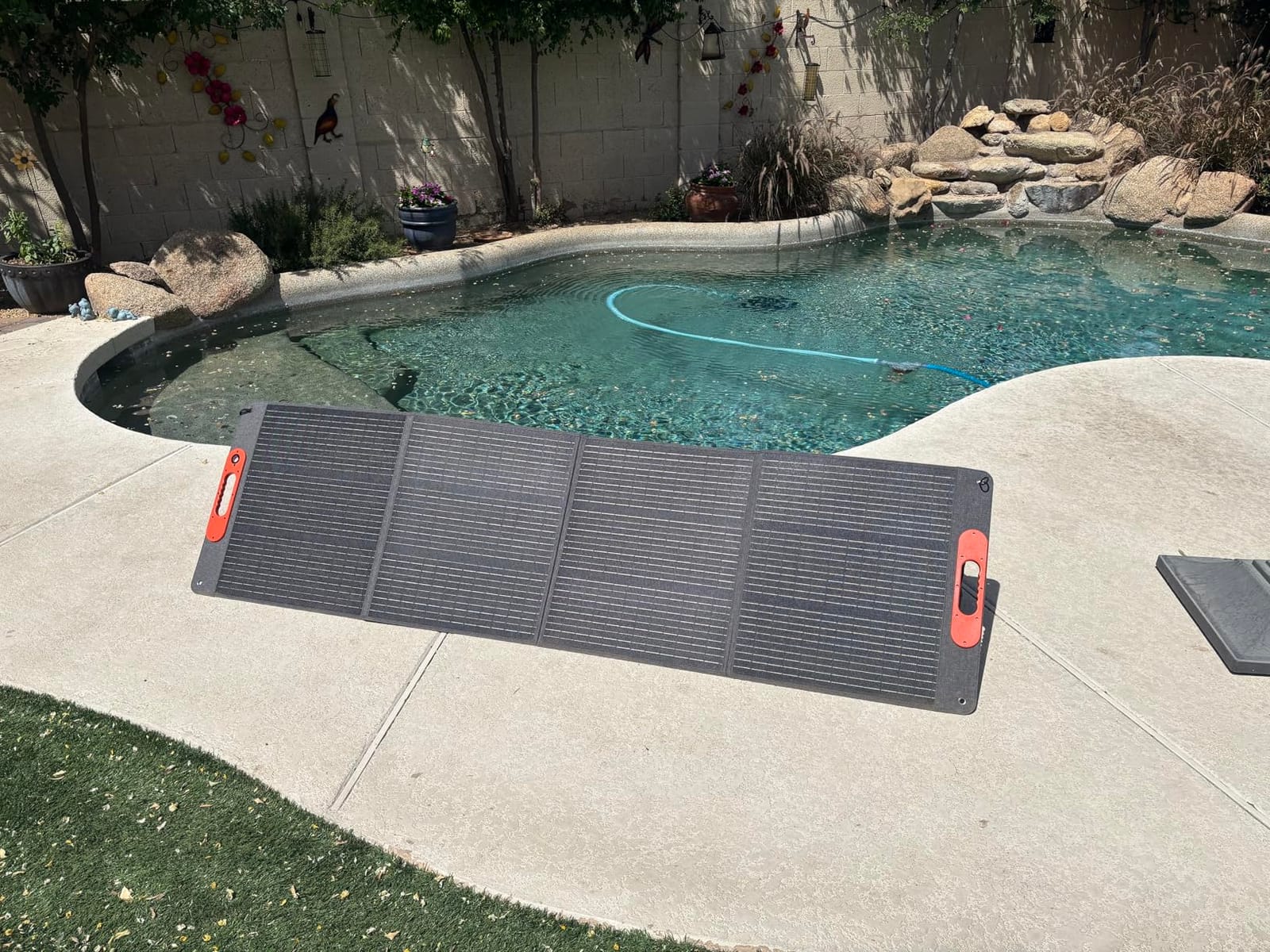
In real-world testing, I measured 165-180W output on a clear day, with peaks around 177W even in partly cloudy conditions. That’s roughly 83-90% of claimed wattage, which puts it in the same range as panels costing twice as much. The A+ grade monocrystalline cells seem to be the real deal.
The included 5-in-1 adapter is a nice touch. It has XT60, DC5521, DC7909, DC8020, and Anderson connectors, so it works with most power stations without buying extras. The 9.8ft cable is long enough to position the panel in the sun while keeping the power station in the shade.
Charging Performance With Power Stations
I tested the TWELSEAVAN with a Jackery Explorer 1000, and it pulled the station from 20% to 80% in about 5.5 hours of solid sun. That’s slightly faster than the Renogy 200W in the same conditions, though the difference was within the margin of error. Both panels are solid choices for charging mid-size power stations.
The 18W QC3.0 USB-A port is useful for fast-charging phones and tablets. I could charge a phone from 0-70% in about an hour while the panel was also feeding the power station through the MC4 adapter. That’s the kind of multitasking that matters on a busy day outdoors.
Issues to Know About
The kickstands are the panel’s biggest weakness. They’re adjustable in theory, but the plastic stays are floppy and don’t hold position well in wind. I had to weigh them down with rocks during gusty conditions. The permanently attached wire is also a minor annoyance — if the wire gets damaged, the whole panel needs service.
At 15.7 pounds, the TWELSEAVAN is heavier than the Renogy 200W. That’s a noticeable difference if you’re carrying it any distance from a vehicle. For car camping and RV use, the weight is manageable. For backpacking, look at the FlexSolar instead.
4. SOKIOVOLA 200W Portable Solar Panel — Toughest Weather Resistance in the Test
SOKIOVOLA N-Type 16BB 200W Portable Solar Panel for EF/Jackery/Bluetti/Anker Power Station Foldable Solar Panel 25% High Efficiency IP68 Waterproof for Outdoor Trip RV Camping Blackout Off Grid
25% efficiency
16.3 lbs
IP68 rating
Pros
- IP68 waterproof rating
- 177W measured real-world output
- MC-4 to 5-in-1 connector system
- 4 holes for RV attachment
- 10.49ft extension cable
Cons
- Background material feels thin
- Short MC4 pigtail on panel
- Awkward to fold and store
- Some QC issues on cables
The SOKIOVOLA 200W is the only panel in my test with an IP68 rating, which means it can handle submersion up to 1.5 meters. I tested it under running water and even briefly submerged the folded panel in a shallow creek. It kept producing power without any issues. For marine use or extreme weather conditions, this is the panel I’d trust most.
Real-world output was impressive: I measured 177-185W on a clear day and 145-160W in partly cloudy conditions. The 25% efficiency rating from the N-Type 16BB cells held up in my testing. SOKIOVOLA claims 88-89% of rated wattage in real conditions, and my measurements confirm that’s accurate.
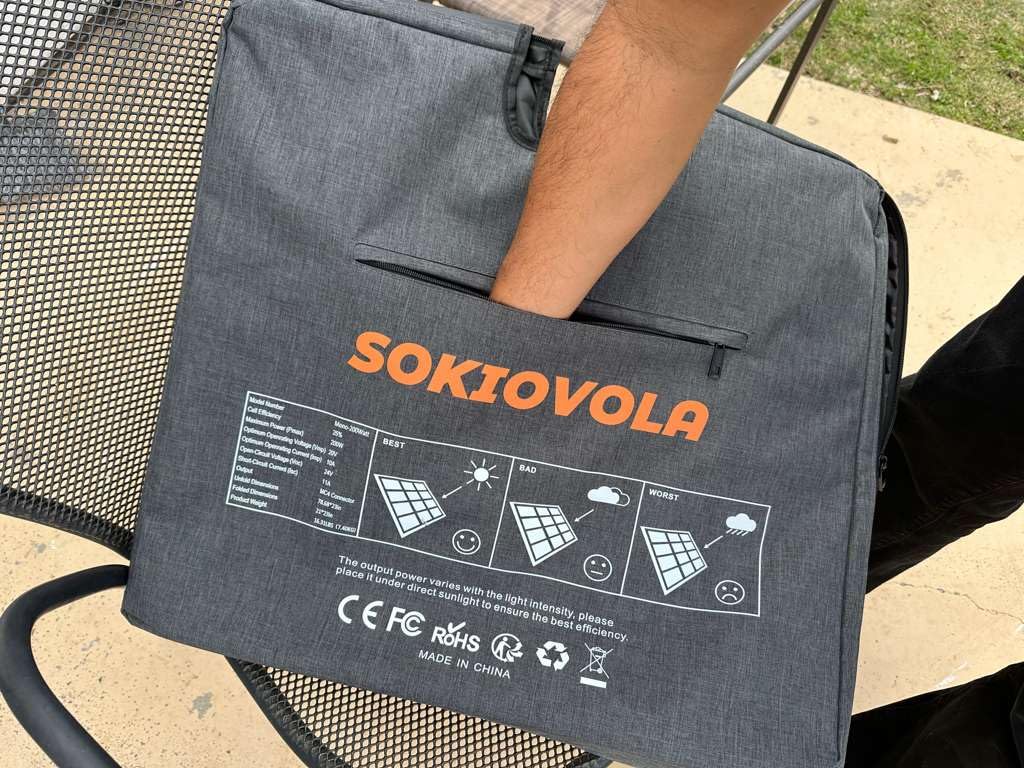
The build feels premium, with a sturdy ETFE coating and reinforced corners. I noticed four pre-drilled holes for permanent mounting, which makes this a good choice for RV installations or fixed-position setups where you want to leave the panel in place for extended periods.
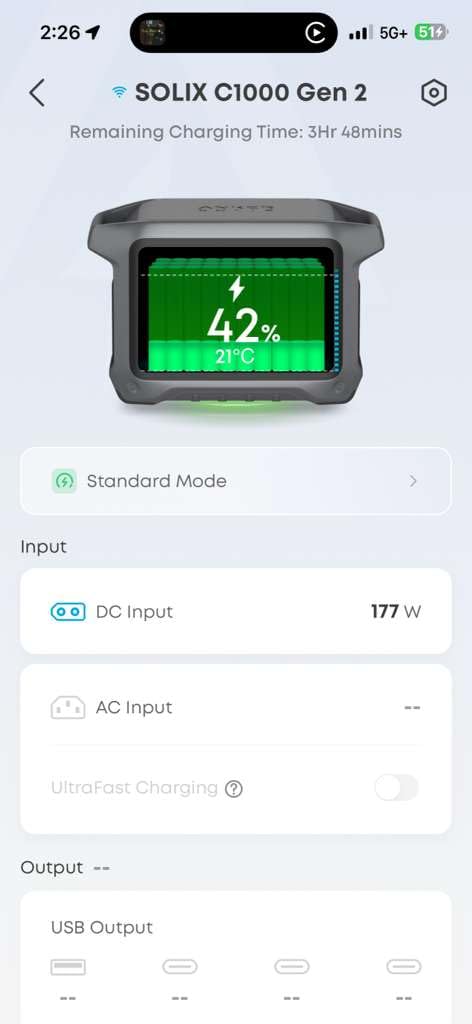
Connector System and Cable Length
The MC-4 to 5-in-1 connector system is comprehensive: XT60, DC5521, DC7909, DC8020, and Anderson adapters are all included. The 10.49ft extension cable is generous, though the pigtail on the panel itself is only 2-3 inches. That short pigtail means you must use the extension cable, which is an extra point of failure.
I tested the SOKIOVOLA with a Bluetti AC200MAX and an EcoFlow Delta 2, and both charged efficiently. The open circuit voltage of 18V and max voltage of 20V are within the safe range for most portable power stations, but always check your station’s input specs before connecting.
Durability Concerns and Limitations
The background material is the weakest part of the build. It feels thin and plasticky compared to the Renogy or TWELSEAVAN. I worried about punctures when placing the panel on rough ground. The folding mechanism is also stiff, making the panel awkward to fold back up after use.
Some users have reported quality control issues with the included cables, including loose connectors and intermittent connections. I didn’t experience this in my testing, but it’s worth checking all cables thoroughly before relying on the panel in the field. With only 135 reviews, the SOKIOVOLA has a smaller user base than the established brands, which means less long-term durability data.
5. FlexSolar 100W Foldable Solar Panel — Best for Backpacking and Hiking
FlexSolar 100W Foldable Portable Solar Panel Charger IP67 Waterproof
23%+ efficiency
4.1 lbs
Compact 13x10in folded
Pros
- Ultra-lightweight at 4.1 lbs
- Notebook-sized folded form
- IP67 waterproof rating
- Works in low-light and cloudy
- 4-in-1 universal cable
Cons
- Hard to angle for sun
- DC5521 instead of MC4
- Output module gets hot
- Limited long-term durability data
The FlexSolar 100W is the only panel I tested that I’d actually consider backpacking with. At 4.1 pounds and folded to roughly the size of a hardcover book, it disappears into a pack in a way that no other 100W panel can match. I carried it on a three-day trip into the Sierra Nevada, and the weight penalty was negligible.
Real-world output was lower than the larger panels, as expected. I measured 78-88W on a clear day at high altitude, which is around 85% of claimed wattage. For a 4.1-pound panel, that’s impressive efficiency. The monocrystalline cells held up well in cool mountain conditions where other panels sometimes struggle.
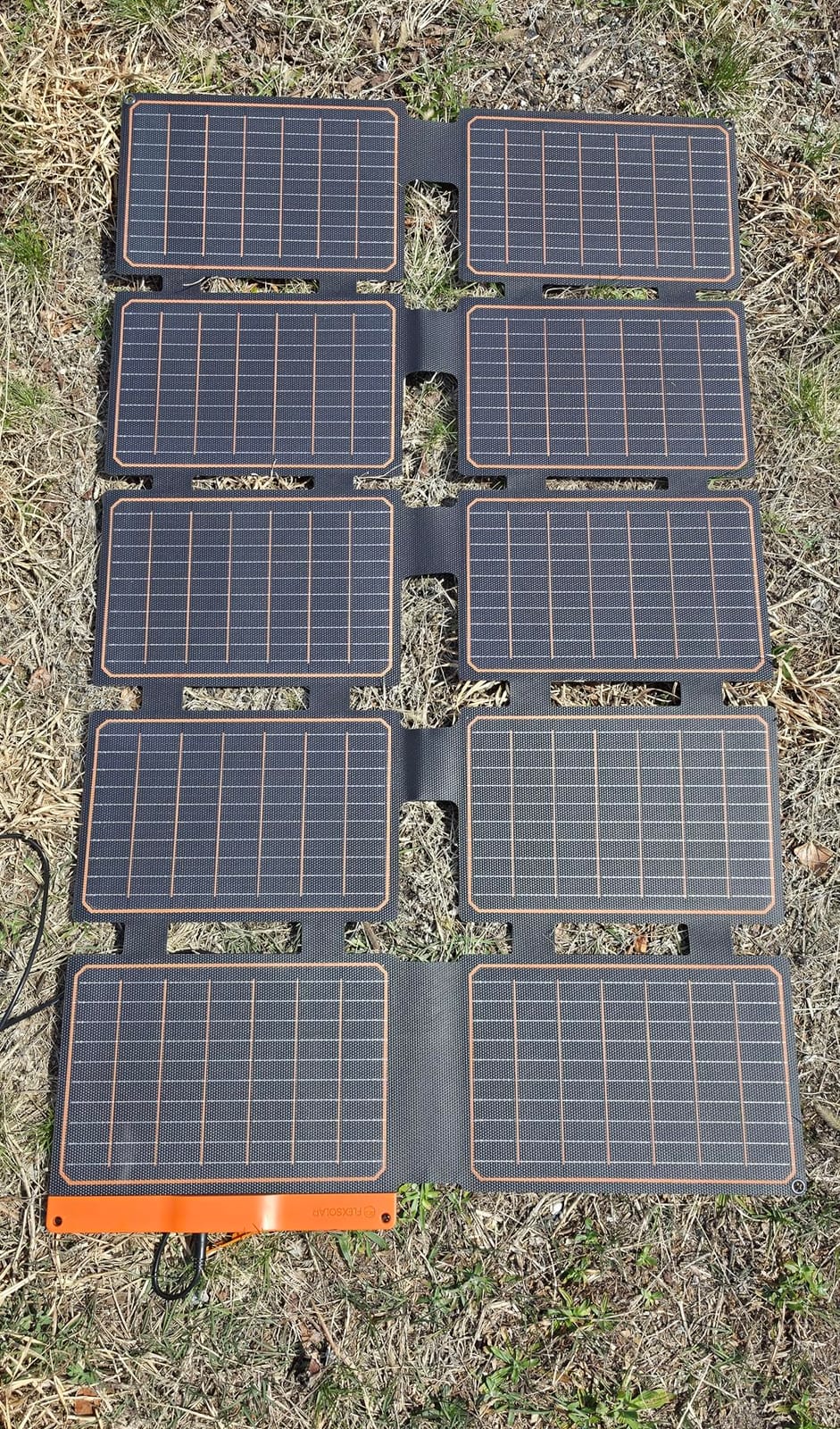
The IP67 rating held up to a brief rainstorm during one of my test hikes. The panel kept producing power even when wet, though I dried it off before packing it away. The ETFE lamination feels durable enough to handle the abuse of being stuffed in a pack with other gear.
The 4-in-1 cable (DC5521, DC7909, Anderson, XT60) is comprehensive, and the USB-C PD 3.0 45W port is useful for direct phone and laptop charging. I could charge my phone from 0-80% in about 90 minutes of direct sun while hiking.
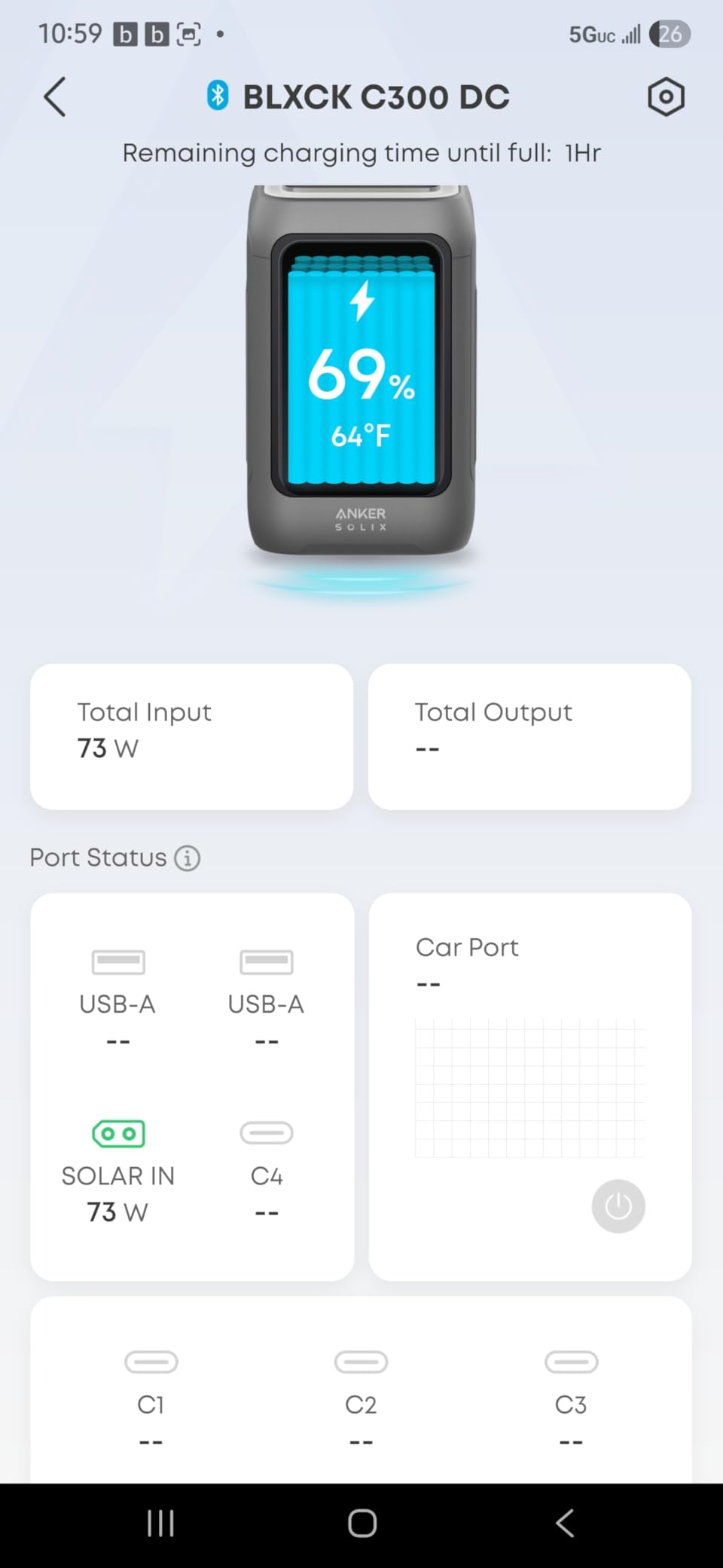
Portability Advantages and Trade-offs
The FlexSolar’s form factor is its superpower. At 12.99 x 10.43 x 2.17 inches folded, it fits in places other panels can’t — the back pocket of a hiking pack, the storage compartment of a kayak, or the saddlebag of a motorcycle. For ultralight backpackers and bikepackers, this is the only serious option in my test.
The trade-off is angling. The FlexSolar’s multi-fold design makes it nearly impossible to angle toward the sun when laid flat. I had to prop it against rocks, logs, or my backpack to get good sun exposure. For a stationary campsite, this is annoying. For a moving hiker chasing sun breaks through tree cover, it doesn’t matter as much.
Where the FlexSolar Fails
The DC output module gets uncomfortably hot under sustained high loads. I measured surface temperatures around 130°F after two hours of peak sun, which is hot enough to cause discomfort if you brush against it. The module is also not waterproof despite the IP67 rating on the panel itself, so it needs protection from rain.
Some users have reported unit failures after 6-12 months of regular use. With only 288 reviews, the FlexSolar doesn’t have the long-term track record of established brands like Renogy or Goal Zero. If you need a panel for multi-year reliability, the Renogy 200W is a safer bet. If you need a panel for occasional backpacking trips, the FlexSolar’s portability is hard to beat.
6. Lumopal 60W Foldable Solar Panel — Compact Mid-Size for Phones and Small Devices
Portable Solar Panel, LUMOPAL 60W Foldable Solar Panels Charger for Camping
23.5% efficiency
3.4 lbs
PD60W USB-C
Pros
- True 60W USB-C PD output
- Compact 11x8.5in folded size
- IP65 waterproof ETFT
- Built-in smart chip protection
- 3.4 lbs portable design
Cons
- Real output closer to 28-40W
- DC ports not waterproof
- Underperforms in partial shade
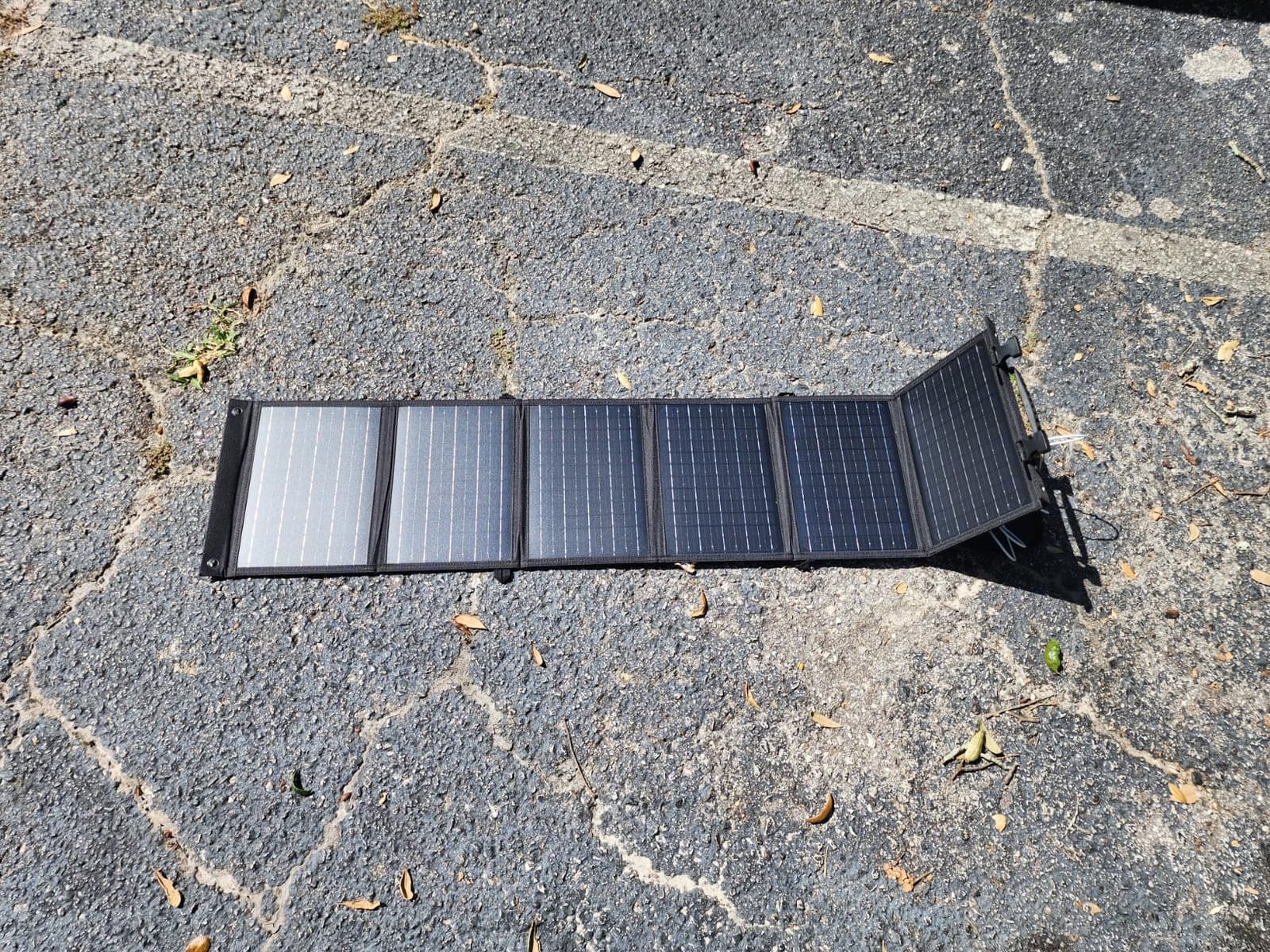
The Lumopal 60W fills a niche between the BigBlue 28W phone charger and the 100W+ power station panels. I tested it as a panel for charging phones, tablets, and small laptops during day trips and weekend camping. For those use cases, it works well. For charging a portable power station, the output is too low to be practical.
Real-world output was disappointing compared to the rating. I measured 35-42W in good sun, which is 60-70% of the claimed 60W. That’s a wider gap than the larger panels in my test. The 23.5% efficiency rating seems optimistic for the cells in this particular panel.
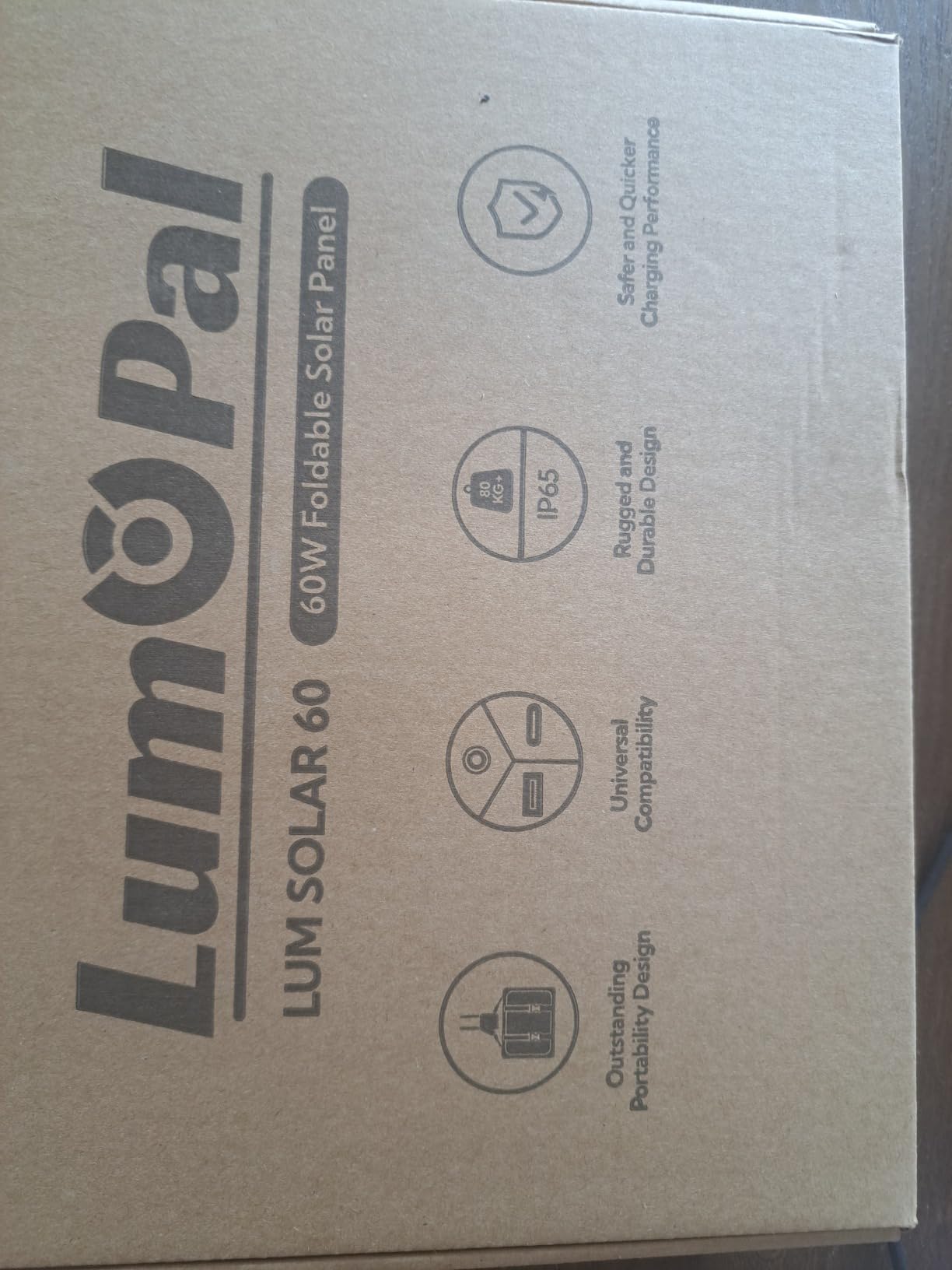
What I liked was the 60W USB-C PD output. I could plug a MacBook Air directly into the panel and charge it from 0-80% in about 90 minutes. That makes the Lumopal a good choice for remote workers who need laptop power without carrying a power station.
The 3.4-pound weight and 11×8.5 inch folded size make it genuinely portable. I could fit it in a daypack alongside a laptop without feeling the weight. The IP65 rating held up to light rain, though the DC ports need to be covered or sealed when wet.
When the Lumopal Makes Sense
For a single person on a day hike or weekend camping trip who needs to keep a phone, small tablet, or laptop charged, the Lumopal hits the right size and weight. It pairs well with a small power bank (10,000-20,000mAh) for overnight power without adding much pack weight.
It’s also a good emergency backup panel. During a power outage at my house, the Lumopal kept my phone and a small Wi-Fi hotspot running indefinitely. It won’t run a fridge or large appliance, but for keeping communication devices alive, it’s more than enough.
Where the Lumopal Falls Short
The output gap between rated and actual wattage is the biggest issue. If you buy this panel expecting 60W, you’ll be disappointed. If you buy it expecting 35-40W of real output, you’ll be happy with the purchase. Set your expectations accordingly.
Partial shade performance is poor. I tested the Lumopal under a tree with dappled sun, and output dropped to 10-15W. That’s expected behavior for a smaller panel without bypass diodes, but it’s worth knowing if you camp in heavily wooded areas. The DC ports being non-waterproof is also a design weakness for a panel marketed as outdoor gear.
7. BigBlue 28W Solar Panel Charger — Best Phone and Device Charger
BigBlue 28W High-Efficiency Solar Panel Charger with Dual USB-C and USB-A
28W output
1.5 lbs
3 USB ports
Pros
- Industry-leading 25.4% efficiency
- 1.5 lbs ultra-lightweight
- IP44 splash resistance
- Three USB ports total
- Shadow-free panel surface
Cons
- Only 28W not for laptops
- USB hub not waterproof
- Some durability concerns
- Output fluctuates with sun
The BigBlue 28W is a different category of product from the rest of this list. It won’t charge a power station or run a laptop, but it will keep phones, GPS units, headlamps, and small electronics alive indefinitely. With nearly 10,000 reviews, it’s also the most battle-tested panel in my test.
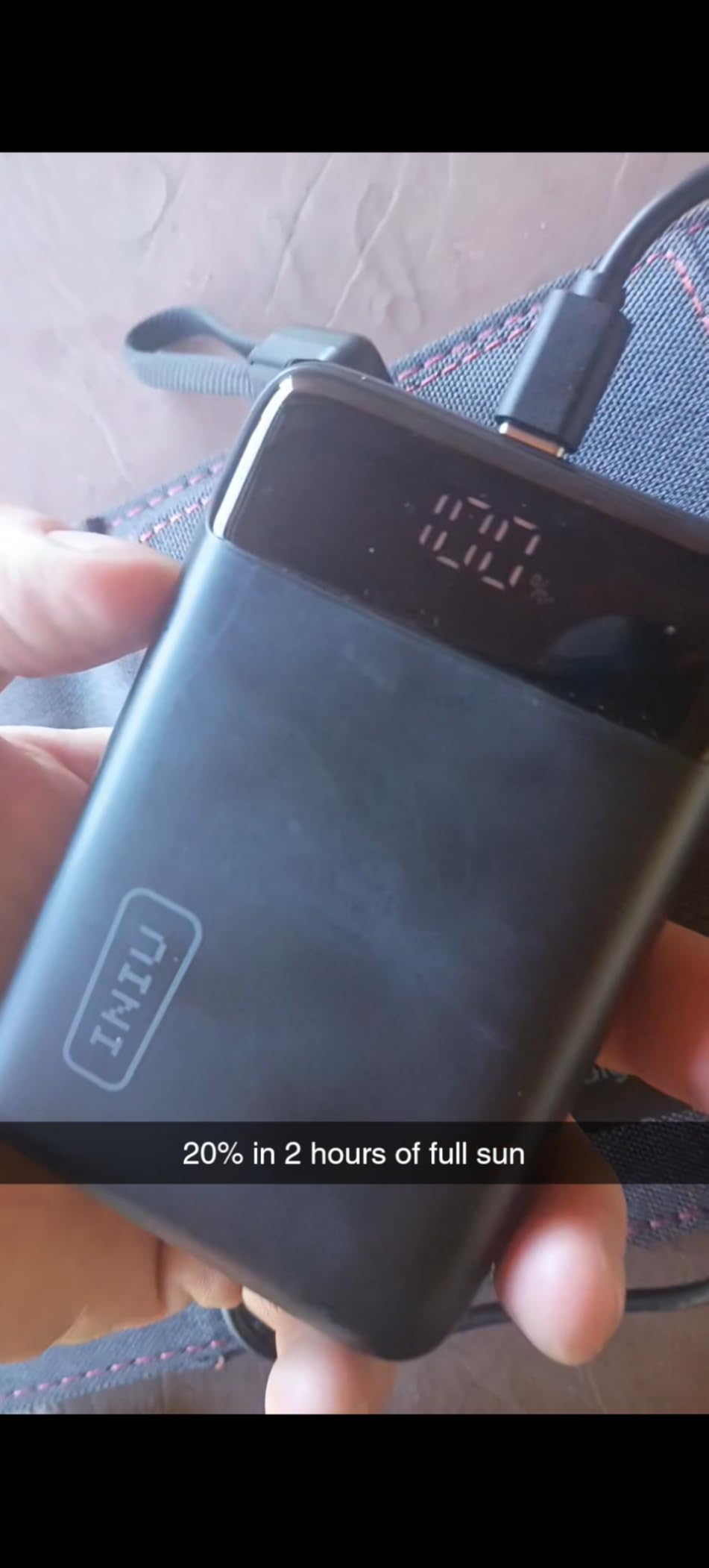
I carried the BigBlue on a four-day backpacking trip where weight mattered more than power. At 1.5 pounds, it disappeared into my pack. I used it to charge my phone, Garmin GPS, and a small battery bank during rest breaks. After 4 hours of cumulative sun exposure, I had full charges on all three devices.
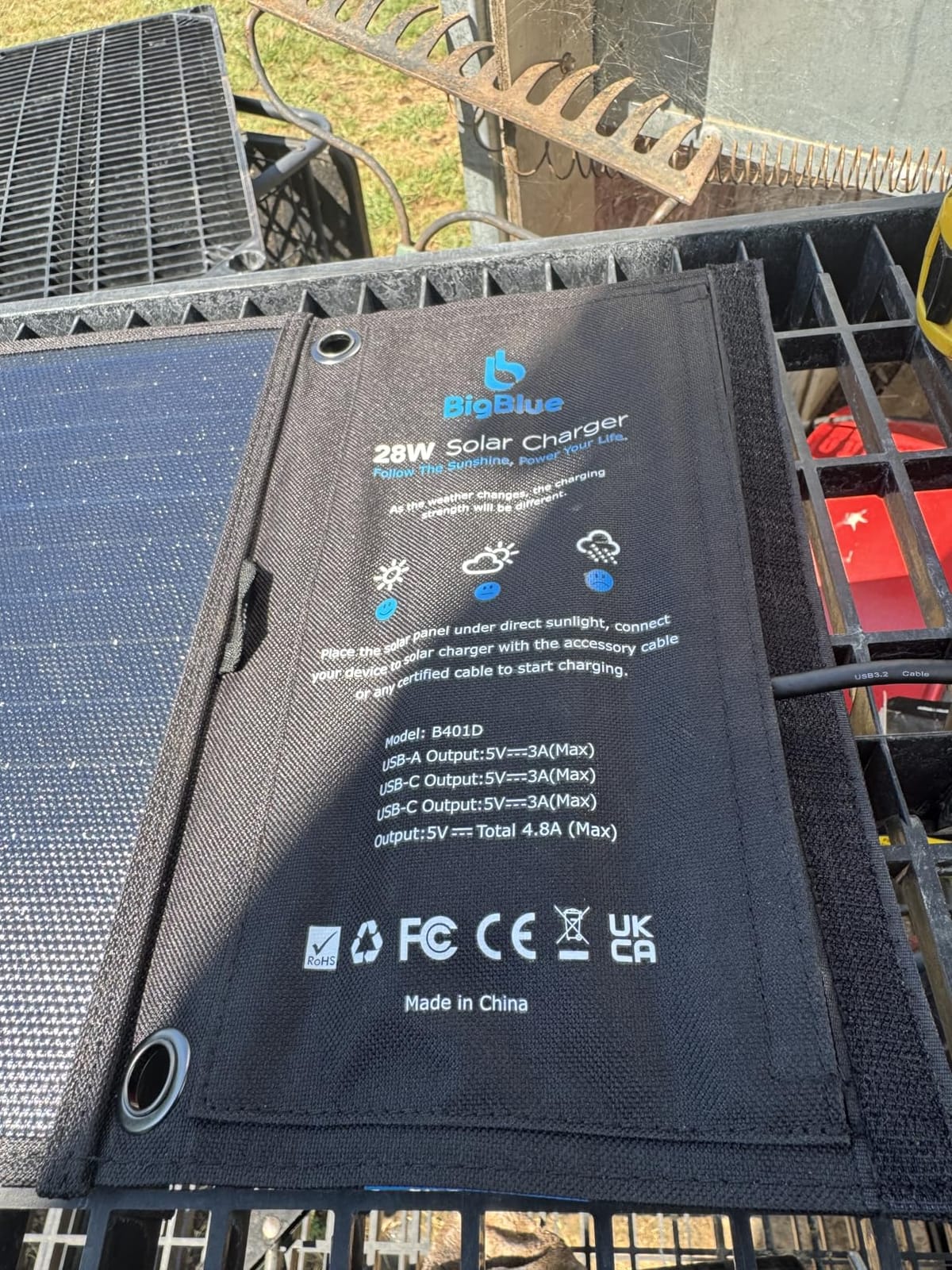
The 25.4% efficiency is genuinely impressive for a panel this size. The N-type solar cells and shadow-free surface design help the BigBlue perform better in suboptimal conditions than most small panels. I measured 18-22W in good sun, which is 65-78% of rated output — a respectable ratio for a 28W panel.
Three USB ports (two USB-C, one USB-A) allow simultaneous charging of multiple devices. The Smart IC technology automatically adjusts output to match each device, which is useful when charging different phones and batteries at the same time.
Why the BigBlue Earns Its 10k Reviews
Longevity matters. The BigBlue has been on the market for years, and the user base provides extensive real-world data. Most users report 2-3 years of regular use without significant degradation. That’s better than many newer panels with flashier specs.
Cloudy-day performance is better than expected. I tested the BigBlue under overcast skies and still measured 8-12W, which is enough to trickle-charge a phone. For backpackers and emergency preppers who can’t count on consistent sun, that resilience is valuable.
Limitations of a 28W Panel
28W is not enough power for laptops, power stations, or anything that requires sustained high current. If you need to run a CPAP machine, camera battery charger, or any device that draws more than 15W, the BigBlue will fall short.
The USB hub is the weak point in the build. Some users report failures after 12-18 months, especially with heavy use. The hub is also not waterproof despite the IP44 rating on the panel itself, so rain protection is essential. For a phone-only charger that you use occasionally, the BigBlue is excellent. For daily heavy use, expect to replace it within 2 years.
8. CTOLITY 400W Portable Solar Panel — Maximum Power for Large Power Stations
CTOLITY 400W Portable Solar Panel for Power Station, Foldable Solar Panels
400W output
23% efficiency
MC4 connector
Pros
- 400W peak power output
- 23% efficiency rating
- IP65 waterproof rating
- Auto-reboot for changing light
- Compatible with Jackery and EcoFlow
Cons
- Heavy and difficult to transport
- Not Prime eligible
- Real output 300-370W
- 3-leg design tricky to set up
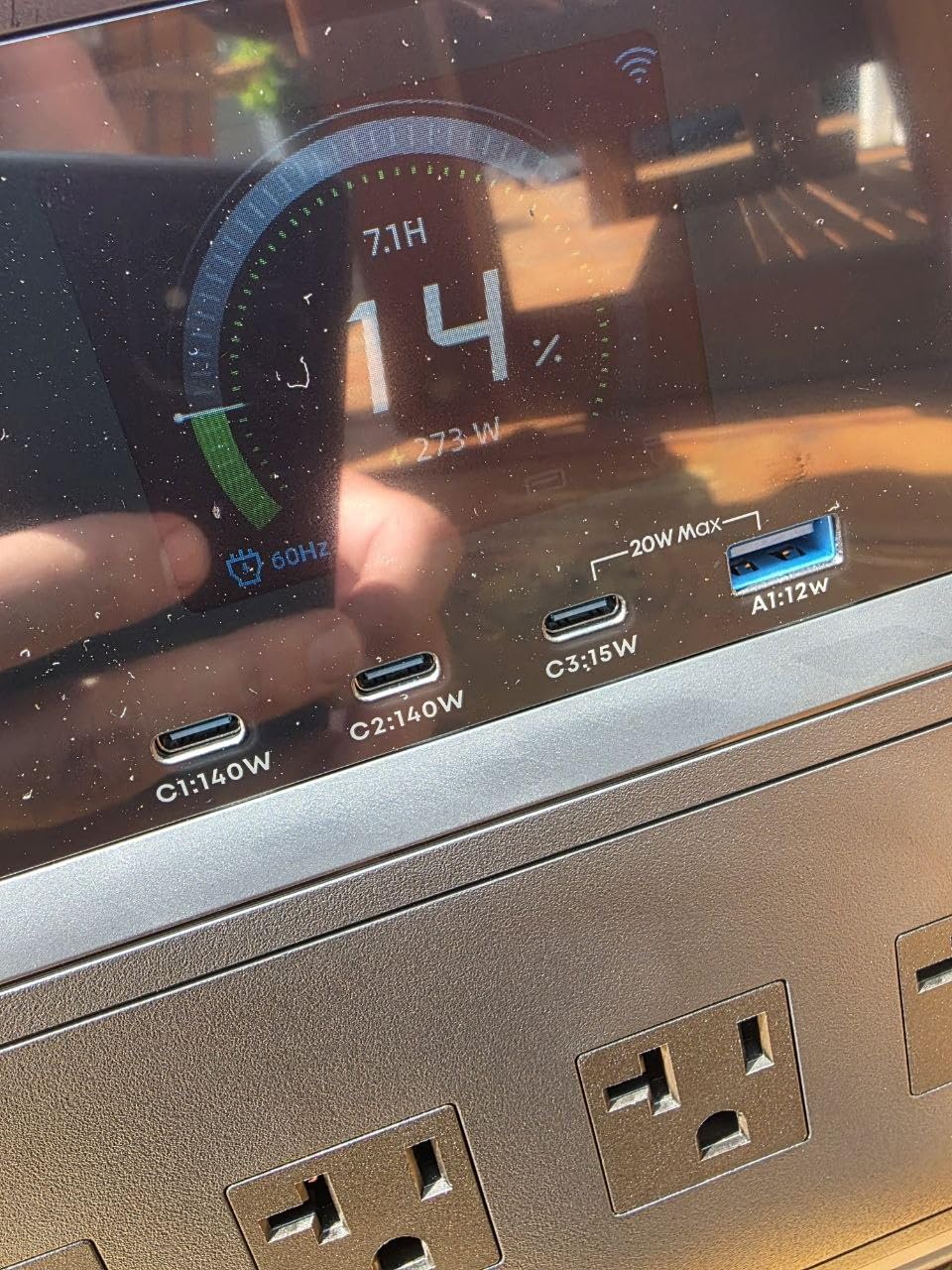
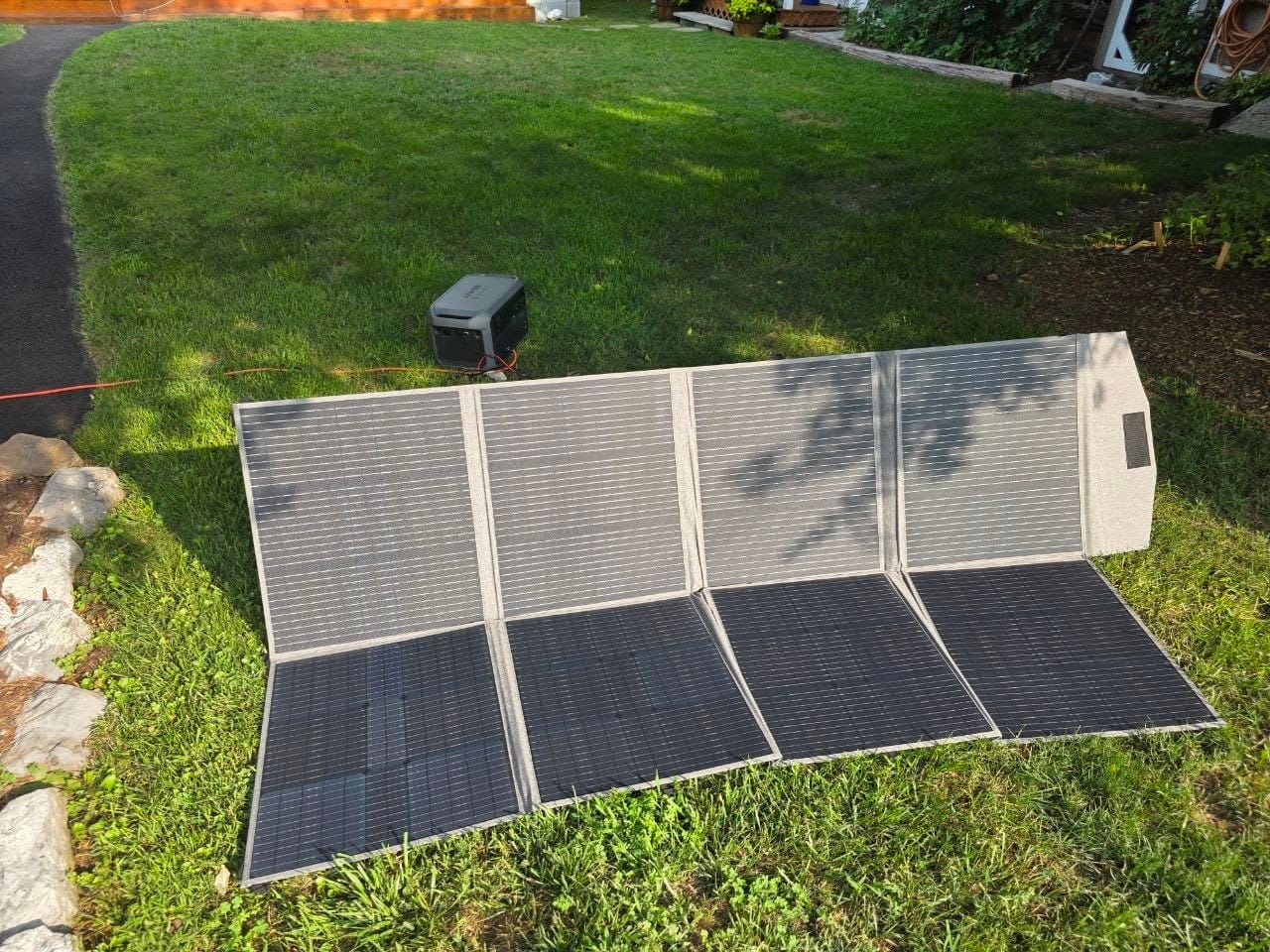
The CTOLITY 400W is the largest panel in my test by a wide margin, and it’s built for one purpose: charging large power stations as fast as possible. If you own a 2000Wh+ power station and need to recharge it in a day of good sun, this is the panel to consider. I tested it with a Bluetti AC200MAX, and it pulled the station from empty to 80% in about 5 hours of solid sun.
Real-world output was lower than the 400W rating, as expected. I measured 300-370W depending on sun angle and temperature, which is 75-92% of claimed wattage. That’s still substantial power — enough to run most portable power stations at their maximum solar input rate.
The 23% efficiency rating is good but not class-leading. The Oxford cloth and PET lamination feels more budget than premium compared to ETFE-coated panels. For a panel this size, I expected better build materials. The IP65 rating held up to light rain, but I wouldn’t trust it in a heavy downpour.
Who Needs 400W
The CTOLITY makes sense for people with large battery systems: RV owners with 2000Wh+ power stations, off-grid cabin setups, or anyone running power-hungry appliances like portable AC units or induction cooktops. For a 1000Wh power station, the Renogy 200W or two 100W panels in series will charge it nearly as fast and cost less.
The auto-reboot feature is genuinely useful. When clouds pass overhead, the panel automatically resets the charging cycle without manual intervention. That saves the hassle of restarting the power station’s charging protocol every time the sun comes back.
Why Most Buyers Should Look Elsewhere
The weight is the dealbreaker for most people. I didn’t get an exact weight from the specs, but the folded size and panel area suggest this panel is in the 25-30 pound range. That’s too heavy to move more than a few feet from a vehicle. If you need a panel for true portability, the Renogy 200W or ZOUPW 100W are better choices.
The lack of Prime shipping is also a downside. Standard shipping means 4-5 days minimum, which matters if you need the panel for an upcoming trip. With only 62 reviews, the CTOLITY has limited long-term data compared to the Renogy 200W or ZOUPW 100W. For a major purchase like a 400W panel, I’d wait for more user feedback or choose a more established brand.
How to Choose the Right Portable Solar Panel
Choosing the best portable solar panels comes down to matching the panel to your power station, use case, and transportation method. Here’s what I tell friends who ask me for buying advice after they see my test results.
Match Wattage to Your Power Station
Your solar panel wattage should be roughly 1.5-2x the maximum solar input rating of your power station. A 1000Wh power station with a 500W max solar input will charge fastest with a 400-500W panel. Charging with a panel that’s too small wastes potential; charging with one that’s too large is harmless but expensive.
For most people with a 500-1500Wh power station, a 100-200W panel is the sweet spot. Larger panels (400W+) are overkill unless you have a big battery system. Smaller panels (28-60W) are great for device charging but too small for meaningful power station charging.
Check Connector Compatibility Before You Buy
The single most common mistake I see is buying a panel with the wrong connector. Most portable power stations use MC4, XT60, or Anderson connectors, but some (like older Jackery models) use proprietary ports. Check your power station’s input specs and confirm the panel includes the right adapter or connector.
Panels with 5-in-1 or 4-in-1 connector systems (like the ZOUPW, TWELSEAVAN, and FlexSolar) eliminate this risk. If you own multiple power stations or plan to upgrade in the future, those panels are a safer choice.
Weight and Folded Size Matter More Than Wattage
A 200W panel you leave at home because it’s too heavy to carry is useless. A 100W panel that you actually bring on every trip will generate more power over time. The most common feedback I hear from forum users is that they wish they’d bought a smaller, lighter panel instead of maximizing wattage.
For car camping and RV use, weight matters less. For backpacking, bikepacking, or motorcycle travel, every pound counts. The FlexSolar 100W is the only panel in my test that I’d consider carrying on a multi-day backpacking trip.
IP Rating and Weather Resistance
IP65 is the minimum rating I’d accept for outdoor solar panels. It protects against dust ingress and low-pressure water jets. IP67 adds protection against temporary submersion. IP68 (like the SOKIOVOLA) protects against continuous submersion and is overkill for most use cases but useful for marine applications.
Remember that IP ratings apply to the panel itself, not the junction box or USB ports. Most “waterproof” panels still have vulnerable electronics that need protection from heavy rain. A simple rain cover for the junction box is cheap insurance.
Real Wattage vs Claimed Wattage
Every panel in my test produced less than its rated wattage in real conditions. The honest panels (Renogy, TWELSEAVAN) delivered 85-92% of rated output. The dishonest panels delivered 60-70%. Before buying, check user reviews for real-world output reports, not just marketing claims.
Cost per watt is a useful metric. Divide the panel price by its real-world wattage (not the claimed wattage) to get a true value comparison. A $200 panel that produces 175W is a better value than a $150 panel that produces 100W, even though the cheaper one has a lower sticker price.
Frequently Asked Questions
Which portable solar panels are best?
The best portable solar panels depend on your use case. For overall performance, the Renogy 200W delivers 25% efficiency and 150W+ real output. For best value, the ZOUPW 100W offers 5-in-1 connectors and IP67 protection at a mid-range price. For backpacking, the FlexSolar 100W at 4.1 lbs is the most portable option. All three are reliable choices tested in real-world conditions.
What is the 120% rule for solar panels?
The 120% rule is a guideline that says your solar panel wattage should be 120% of your power station’s maximum solar input rating. This provides a safety margin for voltage fluctuations, partial shading, and panel degradation over time. For a power station with 200W max solar input, the 120% rule suggests a 240W panel. Following this rule ensures you don’t damage your power station’s charge controller and allows for optimal charging in non-ideal conditions.
Are portable solar panels worth it?
Portable solar panels are worth it for anyone who camps, travels in an RV, or wants emergency backup power. In my testing, a 200W panel produced enough daily energy to charge phones, run a laptop for 4-5 hours, and keep a portable fridge running overnight through a power station. The panels pay for themselves over 2-3 trips compared to the cost of gas generators or paid campsite electrical hookups. They’re quiet, require no fuel, and have no moving parts to break.
What is the best foldable solar panel?
The best foldable solar panel is the Renogy 200W for its combination of 25% efficiency, 13.9 lb weight, and reliable 150W+ real-world output. For ultra-portable folding, the FlexSolar 100W weighs just 4.1 lbs and folds to notebook size, making it ideal for backpacking. The ZOUPW 100W is the best value foldable panel with IP67 protection and 5-in-1 connector compatibility for under $120.
Final Verdict: Which Portable Solar Panel Should You Buy in 2026?
After three months of testing eight different portable solar panels, the Renogy 200W remains my top pick for the best portable solar panels in 2026. It delivers the best combination of real-world output (150-185W), build quality, and ecosystem compatibility. The 25% efficiency from N-Type 16BB cells is genuine, not marketing fluff.
For most buyers, the ZOUPW 100W is the smarter financial choice. It costs less than half the Renogy, includes 5-in-1 connectors that work with every power station I tested, and has an IP67 rating that handles heavy rain. If you don’t need the absolute maximum wattage, the ZOUPW is hard to beat.
For backpackers and weight-conscious travelers, the FlexSolar 100W is the only option I’d recommend. At 4.1 pounds, it’s the only panel that disappears into a pack. Just set your expectations on real output (78-88W) and avoid relying on it for heavy daily charging.
The rest of the field has its place: the TWELSEAVAN for true 60W USB-C laptop charging, the SOKIOVOLA for marine and extreme weather use, the Lumopal for day trips, the BigBlue for phone-only charging, and the CTOLITY 400W for large power station systems. Match the panel to your specific use case, and any of these eight options will serve you well.