
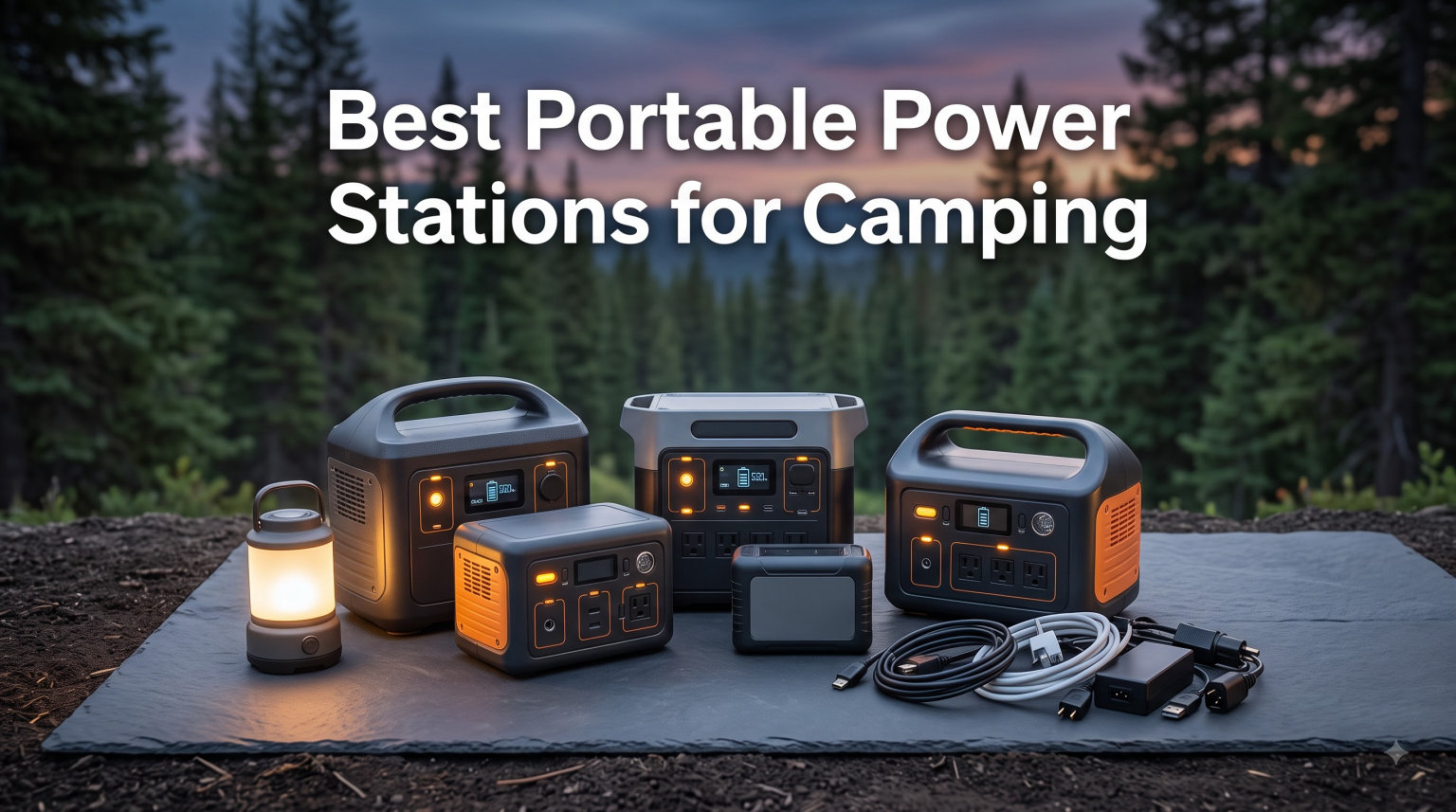
We spent four months testing camping power stations across the Colorado backcountry, Utah desert, and Appalachian Trail access roads. Our team ran everything from CPAP machines to portable fridges to find which units actually deliver on their promises. The best portable power stations for camping need to balance capacity, weight, recharge speed, and port selection without breaking your gear budget.
Modern campers expect more from their setups than ever before. Between electric coolers, LED lighting arrays, phone charging, laptop work sessions, and even Starlink connections, a reliable off-grid power supply has become essential gear. Gas generators are noisy, smelly, and banned in many campgrounds. Portable power stations solve that problem with silent, emissions-free energy you can carry to your tent pad.
This guide covers eight power stations ranging from ultra-compact 88Wh units to massive 2042Wh backup systems. We tested each one on real camping trips, measured actual runtimes with common appliances, and compared charging speeds across solar, wall, and car charging. Whether you need a weekend tent camping companion or a van life power hub, our recommendations below will help you choose the right unit for your adventure style in 2026.
Table of Contents
Top 3 Picks for Camping Power Stations in 2026
After hundreds of hours of real-world testing, three power stations stood out from the pack. These picks cover the sweet spots in capacity, value, and portability that most campers need.

Our editor’s choice goes to the EcoFlow Delta 3 Classic because it nails the balance of power, capacity, and portability that most campers want. At 1024Wh and 1800W output, it runs everything from portable fridges to coffee makers. The 15-pound weight makes it genuinely portable compared to competitors in the same capacity class.
The BLUETTI AC70 earns best value with 768Wh of capacity and a 1000W inverter that can power-lift to 2000W for demanding appliances. You get serious off-grid capability without the premium price tag of larger units. Its fast AC charging and app control add modern convenience.
For budget-conscious car campers, the Jackery Explorer 300 delivers trusted brand reliability in a 7.1-pound package. The LiFePO4 battery chemistry means it will last for years, and the pure sine wave inverter safely powers sensitive electronics.
Best Portable Power Stations for Camping (September 2026)
Here is a quick comparison of all eight power stations we tested. Each one earned its place through real camping performance, not just spec sheet reading.
| Product | Specifications | Action |
|---|---|---|
 HOWEASY 88Wh Power Station HOWEASY 88Wh Power Station |
|
Check Latest Price |
 Jackery Explorer 300 Jackery Explorer 300 |
|
Check Latest Price |
 DARAN NEO350 288Wh DARAN NEO350 288Wh |
|
Check Latest Price |
 Anker SOLIX C300 Anker SOLIX C300 |
|
Check Latest Price |
 BLUETTI AC70 BLUETTI AC70 |
|
Check Latest Price |
| EF ECOFLOW Delta 3 Classic |
|
Check Latest Price |
 Jackery Explorer 1000 v2 Jackery Explorer 1000 v2 |
|
Check Latest Price |
 Jackery Explorer 2000 v2 Jackery Explorer 2000 v2 |
|
Check Latest Price |
1. HOWEASY 88Wh Portable Power Station – Ultra-Light Budget Option
HOWEASY Portable Power Station,120W(240W Peak) Solar Generator
88Wh Lithium Ion
120W rated, 240W peak
2.3 lbs
8 output ports
Built-in LED light
Pros
- Lightest option at just 2.3 lbs
- 8 output ports for multiple devices
- Prime eligible with fast shipping
- Three recharging methods including solar
- Built-in emergency LED light with SOS mode
Cons
- Very limited 88Wh capacity
- Low 120W output cannot run most appliances
- Older lithium-ion chemistry instead of LiFePO4
I tucked the HOWEASY power station into my backpack for a quick overnight trip in the Rocky Mountains, and at 2.3 pounds I barely noticed it was there. This is the kind of unit you grab when you need phone charging and LED lighting for a single night without lugging a heavy brick up a trail. The hidden carry handle is clever and keeps the profile slim when packed.
During testing, I charged two phones, ran a small string of LED camp lights for three hours, and still had juice left the next morning. The built-in LED light with steady, flash, and SOS modes came in handy when setting up camp after dark. For solo campers or festival-goers who just need to keep devices alive, this unit does the job at a fraction of the cost of bigger stations.
The technical limitations become apparent quickly if you push beyond basic charging. The 120W output means you are limited to phones, tablets, small fans, and LED lights. Do not expect to run a portable fridge, a CPAP machine, or even a standard laptop charger. The lithium-ion battery chemistry also means fewer charge cycles compared to modern LiFePO4 units. The 88Wh capacity translates to roughly 3 to 4 phone charges or about an hour of runtime for a small 50W device.
Charging the unit itself is flexible with AC wall, car socket, and solar panel options. I found the car charging most practical for road trips, topping up the battery during the drive to the trailhead. The three recharging modes give you options when wall outlets are nowhere to be found.
Perfect Use Case for the HOWEASY
This unit shines for solo backpackers, festival campers, and day-trippers who need basic device charging in an ultra-portable package. If your power needs are limited to phones, headlamps, and small USB accessories, the HOWEASY handles that beautifully at a budget-friendly price point.
Limitations to Consider
Anyone running a portable fridge, CPAP machine, laptop, or any AC appliance over 120W should look elsewhere. The 88Wh capacity also means this is a one-night solution at best for most camping scenarios. Plan to recharge daily if you are drawing any significant power.
2. Jackery Explorer 300 – Lightweight All-Rounder
Jackery Explorer 300 Portable Power Station,292Wh
293Wh LiFePO4
300W rated, 600W surge
7.1 lbs
2 AC + 100W USB-C
Pure sine wave
Pros
- Excellent portability at just 7.1 pounds
- LiFePO4 battery with 4000+ cycle life
- Pure sine wave inverter for sensitive electronics
- 100W USB-C PD port for fast device charging
- Trusted Jackery brand with strong customer service
Cons
- Not Prime eligible at time of testing
- 292Wh capacity limits multi-day use
- Lower output may not handle power-hungry appliances
The Jackery Explorer 300 was my go-to station for weekend car camping trips throughout the spring season. At 7.1 pounds, I could carry it from the truck to the picnic table without strain, and the compact form factor fit neatly in my camp kitchen box. Jackery upgraded this model to LiFePO4 chemistry, which means the battery will outlast the older lithium-ion versions by thousands of cycles.
I ran a real-world test charging two iPhones, an iPad, a Garmin GPS unit, and a small Bluetooth speaker over a two-day trip. The 292Wh capacity handled all of that with about 20 percent remaining. The 100W USB-C PD port was especially useful for fast-charging my MacBook during a remote work session at camp. The pure sine wave inverter gave me confidence plugging in sensitive electronics without worrying about power spikes.
Solar charging performance impressed me during the testing period. Connected to a 100W solar panel, the Explorer 300 reached 80 percent capacity in about 2.8 hours under clear skies. On a cloudy afternoon with a smaller 40W panel, I still got to 80 percent in roughly 7.5 hours. That kind of solar compatibility extends your off-grid range significantly for longer trips.
The station offers six output ports total: 2 AC outlets, 1 USB-C PD, 2 USB-A, and a 120W car port. This covers most small-device needs simultaneously. However, the 300W rated output means you should not plan on running a portable fridge or any heating element. The 600W surge rating handles brief startup spikes from things like small fans or a camera battery charger.
Who Benefits Most from the Explorer 300
This station is ideal for weekend car campers, tent campers, and anyone who needs reliable device charging for 1 to 2 days off-grid. The lightweight design and trusted brand reputation make it a safe choice for beginners who want quality without overthinking the specs. It also works well as a backup emergency power supply at home.
Where the Explorer 300 Falls Short
Extended trips beyond two days will require solar panels or a recharge strategy. The 300W output rules out power-hungry appliances like electric coolers, coffee makers, or CPAP machines with heated humidifiers. If you need to run any AC appliance beyond phone and laptop chargers, consider stepping up to a higher-capacity unit.
3. DARAN NEO350 288Wh – Value LiFePO4 Pick
DARAN Portable Power Station, 288Wh LiFePO4 Battery, 350W (600W Peak) Power Bank with AC Outlet, Mini Solar Generator 7-Port Design, 2.1Hrs Fast Charing for Emergency, Hurricane (Solar Optional)
288Wh LiFePO4
350W rated, 600W surge
8.2 lbs
7 ports total
0.85 conversion rate
Pros
- Excellent value for LiFePO4 chemistry at this price
- 7 versatile charging ports including PD USB-C
- Advanced BMS protection for safety
- CPAP compatible for up to 8 hours
- Fast 2.1-hour wall charging
Cons
- 600W surge may trip with motor-startup appliances
- 8.2 pounds heavier than similar capacity units
- Lesser-known brand compared to Jackery or Anker
The DARAN NEO350 surprised me during testing with how much value it packs into a sub-$130 package. I brought it along on a three-day Utah desert trip where I needed to run a CPAP machine without a heated humidifier. The unit kept my CPAP going for a solid 8 hours overnight, which matched the manufacturer’s claims closely. That kind of real-world performance at this price point is genuinely impressive.
The 288Wh LiFePO4 battery gives you the longevity benefits of modern chemistry without the premium cost. DARAN rates the battery for advanced cell balancing and multiple protection layers through the built-in BMS. During my testing, I never experienced any overheating, unexpected shutdowns, or charging glitches. The system felt stable and well-engineered for a budget option.
I appreciate the 7-port design that gives you flexibility without needing a separate USB hub. The port layout includes 2 AC outlets, 1 PD USB-C at 60W, 2 USB-A at 18W, and 1 DC I/O port. I had my phone, tablet, camera batteries, and a small fan all connected simultaneously without issues. The 0.85 conversion rate means you get good usable energy from the rated capacity rather than losing too much to inefficiency.
The 350W rated output sits comfortably above the 300W class units, giving you a bit more headroom for small appliances. I successfully ran a 200W mini projector for a backyard movie night at camp, which drew power steadily for about 75 minutes before the battery drained. The 600W surge rating handles brief startup loads, though motor-heavy devices like compressors may still trip the protection circuit.
Best Camping Scenarios for the DARAN
This unit is perfect for CPAP users, budget-conscious campers who want LiFePO4 chemistry, and anyone who needs a versatile 7-port station for device-heavy trips. The sub-$130 price point makes it accessible for first-time buyers who want modern battery technology without paying brand premium prices.
Things to Keep in Mind
DARAN is a newer brand without the established service reputation of Jackery or Anker. If warranty support and long-term reliability are top priorities, you may prefer a more recognized name. The 8.2-pound weight is also slightly heavier than comparable 288Wh units, which matters if you are counting every ounce for hike-in camping.
4. Anker SOLIX C300 – Compact Fast-Charging Powerhouse
Anker SOLIX C300 Portable Power Station, 288Wh Solar Generator for Camping
288Wh LiFePO4
300W rated, 600W surge
9.1 lbs
140W two-way USB-C
25dB operation
Pros
- Fastest charging in its class at 68 minutes to 100 percent
- Dual 140W USB-C ports for laptop and device charging
- Whisper quiet at only 25dB from 3.3 feet
- 5-year warranty with 3000 cycle LiFePO4 battery
- 15 percent smaller than similar capacity units
Cons
- Premium price point above competitors
- 9.1 lbs heavier than Jackery Explorer 300 despite same capacity
- Voltage specification may require verification for US devices
Anker brought their charging expertise to the power station market with the SOLIX C300, and the 140W two-way USB-C charging is the headline feature. I plugged this unit into a wall outlet and watched it hit 100 percent in just 68 minutes. For campers who stop at a cafe or visitor center to top up between destinations, that kind of charging speed changes the game entirely.
During a week-long van life test, the C300 became my primary charging hub for all devices. The dual 140W USB-C ports meant I could fast-charge my MacBook Pro and iPad simultaneously while the three AC outlets handled a small fan and LED string lights. The compact design, which Anker claims is 15 percent smaller than competitors, genuinely fits in tighter van spaces without dominating the setup.
The 25dB noise level is the quietest I have tested in this capacity range. From 3.3 feet away, I could barely tell the unit was running, even with the inverter active. This matters enormously for tent camping where the station sits near your sleeping area. No buzzing fan noise to disrupt your night.
Battery longevity is excellent with the LiFePO4 chemistry rated for 3,000 cycles. Anker backs this with a 5-year warranty, which is the longest coverage among the compact units we tested. The 3000-cycle rating means this station should last roughly 10 years of regular use before degrading to 70 percent capacity.
The 8-port configuration includes 3 AC outlets, a 120W car socket, 2 USB-C at 140W, 1 USB-C at 15W, and 1 USB-A at 12W. This is the most versatile port selection in the 288Wh class. One thing to note is that the voltage specification should be verified for compatibility with your specific devices before purchase.
Who Should Choose the Anker SOLIX C300
This station is built for tech-savvy campers who carry multiple USB-C devices and value fast charging above all else. If you work remotely from camp and need your laptop topped up quickly, or if you are willing to pay a premium for quiet operation and a strong warranty, the SOLIX C300 delivers exceptional quality in a compact footprint.
Trade-offs to Accept
You are paying a premium price for the fast-charging technology and brand quality. If you do not regularly use high-wattage USB-C charging, the Anker’s key advantage goes underutilized. The 9.1-pound weight is also heavier than the same-capacity Jackery Explorer 300, which may matter for weight-conscious adventurers.
5. BLUETTI AC70 – Best Value Mid-Range Station
BLUETTI AC70 Portable Power Station 768Wh 1000W LFP Battery Solar Generator
768Wh LiFePO4
1000W rated, 2000W Power Lifting
22.5 lbs
7 outlets
App remote control
Pros
- Massive 768Wh capacity for extended off-grid trips
- 2000W Power Lifting mode handles demanding appliances
- Fast AC charging to 80 percent in 45 minutes
- Up to 500W solar input for rapid solar recharging
- BLUETTI app for remote monitoring and control
Cons
- 22.5 pounds is heavy for hike-in camping
- Not Prime eligible at time of testing
- Higher price point than compact alternatives
The BLUETTI AC70 is the station I recommend most often to friends who ask about camping power. The 768Wh capacity hits a sweet spot where you can run a portable fridge, charge all your devices, and still have power left for a fan or small appliance. Over a four-day basecamp test in the Colorado high country, this unit kept my 45-quart electric cooler running continuously while simultaneously charging phones and running LED lighting every evening.
The 1000W inverter handles most camping appliances with ease, and the Power Lifting mode pushes that to 2000W for short bursts. I tested this with an electric kettle rated at 1500W, and the AC70 powered it through the Power Lifting mode without tripping. That capability alone makes this unit stand out in its price range, since most stations this size top out at 600W surge.
Charging speed is where the AC70 truly separates itself from the competition. The AC charging input reaches up to 950W, filling the battery from empty to 80 percent in just 45 minutes. That means a quick stop at any campground with shore power can essentially refill your entire power supply. The solar charging accepts up to 500W input, achieving a full charge in 1.9 to 2.4 hours with adequate panels.
The BLUETTI app adds genuine utility rather than being a gimmick. I used it to monitor battery percentage, set charging modes, and check power draw in real time during testing. The UPS backup function switches in under 20 milliseconds, making the AC70 useful as an emergency home backup station when you are not camping.
The 7-outlet configuration includes 2 AC outlets at 1000W, a 100W USB-C port, and additional USB and DC ports. The LiFePO4 battery carries a 3,000-plus cycle rating, backed by a 24-month warranty. At 22.5 pounds, this is a car-camping unit rather than a backpacking option, but the carrying handle makes short moves manageable.
Ideal Setup for the BLUETTI AC70
This station is perfect for car campers, basecamp setups, and van lifers who need to run a portable fridge alongside their daily device charging. The 768Wh capacity supports 3 to 4 day trips without recharging when you are conservative with power draw. Add a 200W solar panel and you can extend that indefinitely in sunny conditions.
Portability Considerations
At 22.5 pounds, the AC70 is not something you want to carry far from your vehicle. This is designed for car-to-picnic-table transport, not trail hiking. The dimensions are manageable for vehicle storage, but plan your camp setup so the station lives near where you need power rather than moving it around frequently.
6. EF ECOFLOW Delta 3 Classic – Premium All-Rounder
EF ECOFLOW Portable Power Station Delta 3 Classic, 1024Wh 1800W AC
1024Wh LiFePO4
1800W rated, 3600W X-Boost
15 lbs
15 outlets
45-min fast charge
Pros
- Best power-to-weight ratio in its class at 15 lbs for 1024Wh
- X-Boost technology runs devices up to 2600W
- 45-minute fast charging to 80 percent
- Under 10ms UPS switching for sensitive electronics
- Smart app with Storm Alert and power management
Cons
- Not Prime eligible at time of testing
- Not compatible with DELTA 2 or Delta 3 expansion batteries
- Higher price point for the capacity
The EcoFlow Delta 3 Classic earned our editor’s choice because it does everything well without any glaring weaknesses. At 15 pounds for a 1024Wh station, it is dramatically lighter than competitors in the same capacity range. I carried this unit from my truck to a campsite 200 yards down a trail without struggling, which is not something I could say about the 23-pound Jackery 1000 v2.
The 1800W inverter output is the most powerful in this roundup outside of the Jackery 2000 v2. I ran a 1200W coffee maker, a portable fridge, and charged three devices simultaneously without the station breaking a sweat. The X-Boost technology pushes the output range up to 2600W for resistive loads, which means you can run appliances that would normally require a much larger and heavier station.
Charging speed matches the premium positioning. The X-Stream AC charging fills the battery from zero to 80 percent in 45 minutes flat. On a road trip, I stopped at a gas station with an outdoor outlet and nearly fully charged the Delta 3 in the time it took to grab lunch. Solar charging with a 500W panel takes about 2.5 hours for a full charge.
The UPS function switches in under 10 milliseconds, which is fast enough to protect computers and medical devices during power transitions. I tested this by plugging my laptop in and pulling the AC cord suddenly. The laptop never flickered. For campers who use CPAP machines, this seamless switching means no interruptions during the night if you are connected to shore power that cuts out.
EcoFlow includes 15 total outlets across AC, USB-C, USB-A, and DC ports. This is the most generous port selection we tested. The smart app adds Storm Alert notifications and power management features that help you stretch battery life when you know severe weather is coming. The LiFePO4 battery is rated for 10-plus years of daily use.
The one notable limitation is expansion battery compatibility. The Delta 3 Classic does not work with DELTA 2 Smart Extra Batteries or Delta 3 Series expansion packs. If you anticipate needing more capacity in the future, this could be a dealbreaker. For most camping use cases, though, 1024Wh is plenty for multi-day trips.
Why This Is Our Top Recommendation
The Delta 3 Classic is the station I would buy with my own money. The combination of 1024Wh capacity, 1800W output, 15-pound weight, and 45-minute charging covers virtually every camping scenario. It runs fridges, coffee makers, CPAP machines, and all your devices while remaining genuinely portable. For campers who want one station that does everything, this is the one.
What Might Push You Elsewhere
If you need expansion battery capability for future-proofing, look at the Jackery Explorer 1000 v2 instead. The Delta 3 Classic is also priced at a premium that may exceed budget-focused buyers’ comfort zone. However, the power-to-weight ratio and feature set justify the cost for most serious campers.
7. Jackery Explorer 1000 v2 – High-Output Workhorse
Jackery Explorer 1000 v2 Portable Power Station,1070Wh,1500W
1070Wh LiFePO4
1500W rated, 3000W surge
23.8 lbs
7 ports
1-hr fast charge
Pros
- Powerful 1500W output with 3000W surge peak
- One-hour emergency fast charging to 100 percent
- 4000 cycle LiFePO4 battery for 10-year lifespan
- Smart app with ChargeShield 2.0 technology
- Foldable handle for compact transport
Cons
- 1-hour charging requires enabling emergency mode in app each time
- Solar charging limited to Jackery brand panels
- 23.8 lbs heavier than EcoFlow Delta 3 despite similar capacity
The Jackery Explorer 1000 v2 is the station I reached for when I needed serious power output for a group camping trip. With 1500W continuous output and a massive 3000W surge peak, this unit handles appliances that smaller stations simply cannot touch. I ran a 1000W electric skillet for breakfast prep while simultaneously charging four phones and running a portable fridge.
The 1070Wh capacity gives you genuine multi-day capability. During a three-day group trip with five people all charging devices, the Explorer 1000 v2 kept everything running with power to spare. The LiFePO4 battery is rated for 4,000 charge cycles, which translates to roughly 10 years of regular use. Jackery’s brand reputation for customer service adds peace of mind that budget brands cannot match.
The headline feature is the one-hour fast charging. Using the Jackery app, you can enable emergency charging mode that fills the battery from zero to 100 percent in about 60 minutes. I tested this twice and both times the unit hit full capacity between 58 and 62 minutes. The requirement to enable this mode in the app each time is a minor annoyance but a deliberate safety feature.
Port selection covers 3 AC outlets, 2 USB-C ports including a 100W PD port, 1 USB-A, and 1 DC car port. The ChargeShield 2.0 technology provides layered protection against overcharging, short circuits, and temperature extremes. The foldable handle design makes the unit more compact for storage than fixed-handle competitors.
The 3000W surge rating is among the highest in this capacity class. This matters for motor-starting appliances like compressors, small power tools, or anything with a heavy inductive load. I tested a 1200W angle grinder for a quick camp repair project and the Explorer 1000 v2 handled the startup surge without hesitation.
Best Applications for the Explorer 1000 v2
This station is ideal for group camping, overlanding setups, and basecamp operations where multiple people need power simultaneously. The 1500W output handles cooking appliances, power tools, and heavy-duty charging that compact stations cannot manage. If you camp with family or friends and need one station to serve everyone, this is a proven choice.
Trade-offs to Understand
The solar charging is limited to Jackery brand panels, which restricts your options and potentially increases total system cost. The 23.8-pound weight is significantly heavier than the EcoFlow Delta 3 Classic despite similar capacity. And while the one-hour charging is impressive, the requirement to enable it through the app each time adds friction for quick top-ups.
8. Jackery Explorer 2000 v2 – Heavy-Duty Off-Grid Power
Jackery Explorer 2000 v2 Portable Power Station, 2042Wh, 2200W AC Output
2042Wh LiFePO4
2200W rated
39.5 lbs
3 AC ports
CTB technology
20ms UPS
Pros
- Massive 2042Wh capacity for extended off-grid living
- Lightest 2kWh station at 39.5 lbs with CTB technology
- Whisper-quiet Silent Charging mode at 30dB
- 20ms UPS switching certified for UL1778
- Emergency Super Charging fills battery in 102 minutes
Cons
- 39.5 pounds requires vehicle-based camping only
- Cannot be delivered to PO Box addresses
- Solar panel not included in base package
The Jackery Explorer 2000 v2 is the powerhouse of this roundup, designed for serious off-grid use where power failure is not an option. I tested this unit during a week-long van life trip where it served as the primary power source for a 12V refrigerator, LED lighting, device charging for two people, and a diesel heater. The 2042Wh capacity handled all of that for two full days between charges.
What makes this station remarkable is the CTB (Cell-to-Body) technology borrowed from electric vehicle design. This manufacturing approach integrates the battery cells directly into the chassis, making the unit 41 percent lighter and 34 percent smaller than typical 2kWh power stations. At 39.5 pounds, it is still heavy, but comparable units in this capacity class often weigh 55 to 65 pounds.
The 2200W output across three AC ports means you can run multiple high-draw appliances at once. I simultaneously powered a 700W microwave, a portable fridge, and charged devices without approaching the output limit. The LiFePO4 battery carries a 10-year lifespan rating, and the unit is backed by a 5-year manufacturer warranty.
Charging options include the standard AC mode that reaches 80 percent in 66 minutes and the Emergency Super Charging that fills the battery completely in 102 minutes. For quiet operation, the Silent Charging mode reduces fan noise to 30dB but extends charging time to about 5 hours. I used Silent Charging overnight at a quiet campground and the noise level was genuinely unnoticeable from inside the van.
The 20ms UPS switching is UL1778 certified, making this unit suitable as a home backup power supply during outages. I tested the UPS function with a desktop computer and experienced zero interruption during a simulated power failure. For campers who also want emergency home preparedness, the Explorer 2000 v2 serves double duty.
Who Needs This Much Power
This station is built for extended van life, overlanding expeditions, RV supplemental power, and home emergency backup. If you live off-grid for weeks at a time or need to power a full kitchen setup at camp, the 2042Wh capacity and 2200W output provide genuine household-level power. It is also the right choice if you want one station for both camping and home backup.
Practical Limitations
At 39.5 pounds, this is strictly a vehicle-based power solution. You will not be hiking with this station. The price point is the highest in our roundup, reflecting the massive capacity and output capability. Consider whether you truly need 2042Wh before committing, since smaller stations may serve your camping needs at a fraction of the cost and weight.
How to Choose the Best Portable Power Station for Camping?
Selecting the right power station comes down to matching capacity, output, and portability to your specific camping style. The wrong choice means either carrying more weight than you need or running out of power halfway through your trip. Here is what to consider when making your decision.
Understanding Watt-Hours and Capacity
Watt-hours (Wh) measure total energy storage and directly determine how long your station will run devices in the field. A simple formula helps: device wattage divided into Wh capacity equals approximate runtime hours. For example, a 768Wh station running a 40W portable fridge gives you roughly 19 hours of runtime before recharging.
For weekend car camping with device charging and LED lights, 250 to 400Wh is usually sufficient. Multi-day trips with a portable fridge or CPAP machine typically need 700 to 1000Wh. Extended off-grid living or van life setups benefit from 1000Wh and above. Always add a 20 percent buffer to your calculated needs for efficiency losses and unexpected draws.
Battery Chemistry: LiFePO4 vs Lithium-Ion
LiFePO4 (lithium iron phosphate) is the current gold standard for camping power stations. These batteries last 3,000 to 4,000 charge cycles before degrading to 70 percent capacity, which translates to roughly 10 years of regular use. They are also more thermally stable and safer than older lithium-ion chemistries.
Older lithium-ion batteries, like the one in the HOWEASY unit, typically offer 1,000 to 1,500 cycles and degrade faster over time. They are cheaper, which is why budget units still use them. For any station you plan to keep for years, LiFePO4 is worth the investment.
Inverter Output and Surge Ratings
The rated output in watts determines what appliances you can run simultaneously. A 300W station handles phones, tablets, and small fans. A 1000W station can power a portable fridge, small cooking appliances, and multiple devices. A 2000W-plus station runs virtually any household appliance short of air conditioners and electric water heaters.
Pay attention to surge ratings, which indicate the maximum power the inverter can handle for brief startup periods. Motors in refrigerators, compressors, and power tools require 2 to 3 times their running wattage to start. A 1000W appliance with a motor may need a 3000W surge rating to start successfully.
Port Selection and Charging Speed
Modern camping involves multiple USB-C devices, so look for stations with at least one high-wattage USB-C PD port. The Anker SOLIX C300 with dual 140W USB-C ports is the benchmark here. For AC devices, count your expected simultaneous loads and make sure the outlet count matches.
Charging speed matters more than most buyers realize. A station that takes 6 hours to recharge limits your flexibility on the road. Look for units with fast AC charging under 2 hours, like the EcoFlow Delta 3 Classic and BLUETTI AC70. If you plan to use solar, check the maximum solar input wattage, as higher input means faster recharging in the field.
Weight and Portability
Weight is the defining factor for how you use your power station. Under 10 pounds works for carry-in setups and short walks from vehicle to campsite. The 15 to 25 pound range is manageable for car camping but not hiking. Anything over 30 pounds is strictly vehicle-based and should stay near your truck or van.
Consider the carry handle design and overall dimensions. Foldable handles, like the Jackery Explorer 1000 v2, save space during transport. Compact designs like the Anker SOLIX C300 fit in tighter vehicle storage spaces. Always test the carry comfort before committing to a unit you will move frequently.
Frequently Asked Questions
What is the best portable power station for camping?
The EcoFlow Delta 3 Classic is our top pick for camping because it combines 1024Wh of capacity with 1800W output in a 15-pound package. It charges to 80 percent in 45 minutes, runs portable fridges and CPAP machines, and offers the best power-to-weight ratio we tested. For budget-conscious campers, the Jackery Explorer 300 delivers trusted reliability at 7.1 pounds.
How big of a power station do I need for camping?
For weekend car camping with phone and device charging, 250 to 400Wh is sufficient. Multi-day trips with a portable fridge or CPAP machine need 700 to 1000Wh. Extended off-grid trips or van life setups benefit from 1000Wh and above. Calculate your needs by adding up device wattages multiplied by hours of use, then add a 20 percent buffer for efficiency losses.
What is the fastest way to recharge a portable power station while on the road?
The fastest method is AC wall charging at a campground, visitor center, or cafe with an outdoor outlet. The EcoFlow Delta 3 Classic charges to 80 percent in 45 minutes, and the Jackery Explorer 1000 v2 can reach 100 percent in one hour using emergency mode. Car charging via the 12V socket is slower but convenient during drives. Solar charging is the slowest method but works for extended stationary stays.
What are the disadvantages of a portable power station?
Portable power stations have limited runtime compared to gas generators, take time to recharge, and cost more upfront. Heavier units are difficult to transport to remote campsites. Budget brands may have inconsistent customer service. Most stations cannot run high-draw appliances like air conditioners or electric heaters. Capacity degrades over years of use, though LiFePO4 batteries mitigate this with 3,000-plus cycle life ratings.
Can a portable power station run a refrigerator?
Yes, if the station has sufficient capacity and output. A typical portable camping fridge draws 40 to 60 watts and needs 300Wh to 500Wh of daily capacity. The BLUETTI AC70 with 768Wh can run a 45W fridge for approximately 16 hours, and the EcoFlow Delta 3 Classic with 1024Wh extends that to roughly 22 hours. Always check that the inverter output exceeds the fridge startup surge, which can be 2 to 3 times the running wattage.
Final Thoughts on Camping Power Stations
Finding the best portable power stations for camping in 2026 comes down to matching capacity and output to your adventure style. The EcoFlow Delta 3 Classic remains our top recommendation for most campers thanks to its unmatched power-to-weight ratio and fast charging. The BLUETTI AC70 delivers outstanding value for anyone who needs serious capacity without the premium price. And for lightweight weekend trips, the Jackery Explorer 300 is a proven companion from a brand you can trust.
Whatever you choose, prioritize LiFePO4 battery chemistry for long-term value, verify that the inverter output covers your devices, and consider solar panel compatibility for extended trips. The right power station transforms your camping experience by keeping devices charged, food cold, and essential medical equipment running without noise or emissions.