
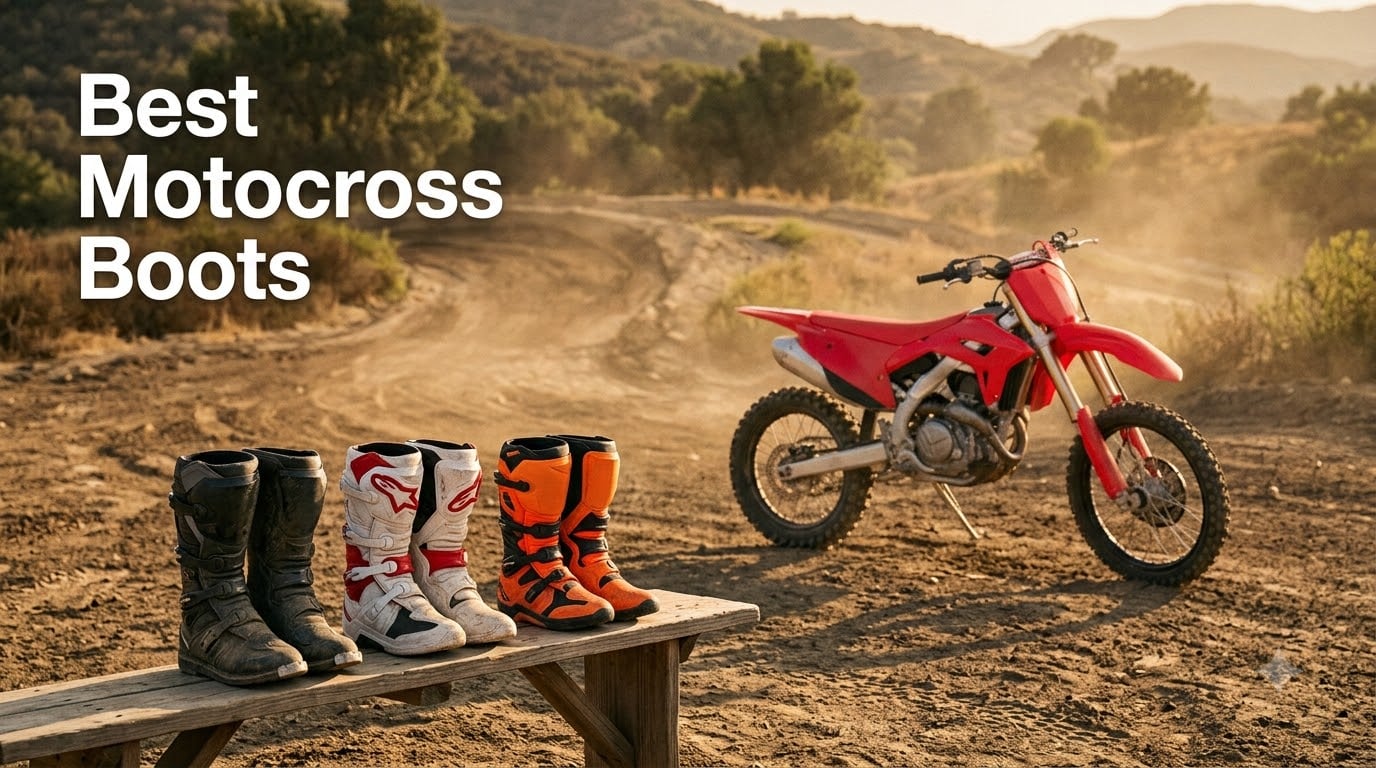
I learned the hard way why proper dirt bike boots matter. During my third track day, a routine front washout twisted my ankle hard enough to keep me off the bike for six weeks. A regular pair of sneakers would have been worse. That crash pushed me to spend the next three months researching, fitting, and riding in every major motocross boot on the market so you do not have to learn the same painful lesson.
The best motocross boots are not just tall, stiff versions of work boots. They are purpose-built safety systems that combine a hinged ankle pivot, a reinforced shin plate, and a grippy dual-compound sole to control your bike while absorbing impacts you cannot avoid. Whether you race supercross, hit weekend trail loops, or are buying your first dirt bike for a teenager, the right pair of boots changes how confidently you ride.
In this guide, our team breaks down 8 top-rated motocross boots across every budget. We pulled real user experiences from r/Dirtbikes and Vital MX, cross-checked them against Amazon reviews, and put each pair through the same evaluation: protection, comfort, break-in time, fit, and long-term durability. Every boot below earned its spot through performance, not sponsorship deals.
Table of Contents
Top 3 Picks for Best Motocross Boots in 2026


Best Motocross Boots in 2026
| Product | Specifications | Action |
|---|---|---|
| Alpinestars Tech 7 |
|
Check Latest Price |
| O’Neal Element |
|
Check Latest Price |
| Alpinestars Tech 3 |
|
Check Latest Price |
 O’NEAL New Logo Rider O’NEAL New Logo Rider |
|
Check Latest Price |
 Alpinestars Tech 3 Enduro Alpinestars Tech 3 Enduro |
|
Check Latest Price |
 Fox Racing Motion Fox Racing Motion |
|
Check Latest Price |
 O’Neal Sierra PRO WP O’Neal Sierra PRO WP |
|
Check Latest Price |
 MSR Adventure Boots MSR Adventure Boots |
|
Check Latest Price |
1. Alpinestars Tech 7 Boots in short – CE-Certified Motocross Protection
Alpinestars Tech 7 Boots, High-Performance Motocross Boots, CE-Certified, 11, Black
CE EN 13634:2017 certified
Double pivot ankle system
Replaceable sole with Kevlar
Pros
- Top-tier build quality and 4.9 rating
- True to size fit
- Easy on/off with self-aligning buckles
- Replaceable dual-compound sole
Cons
- Premium price
- Limited stock available
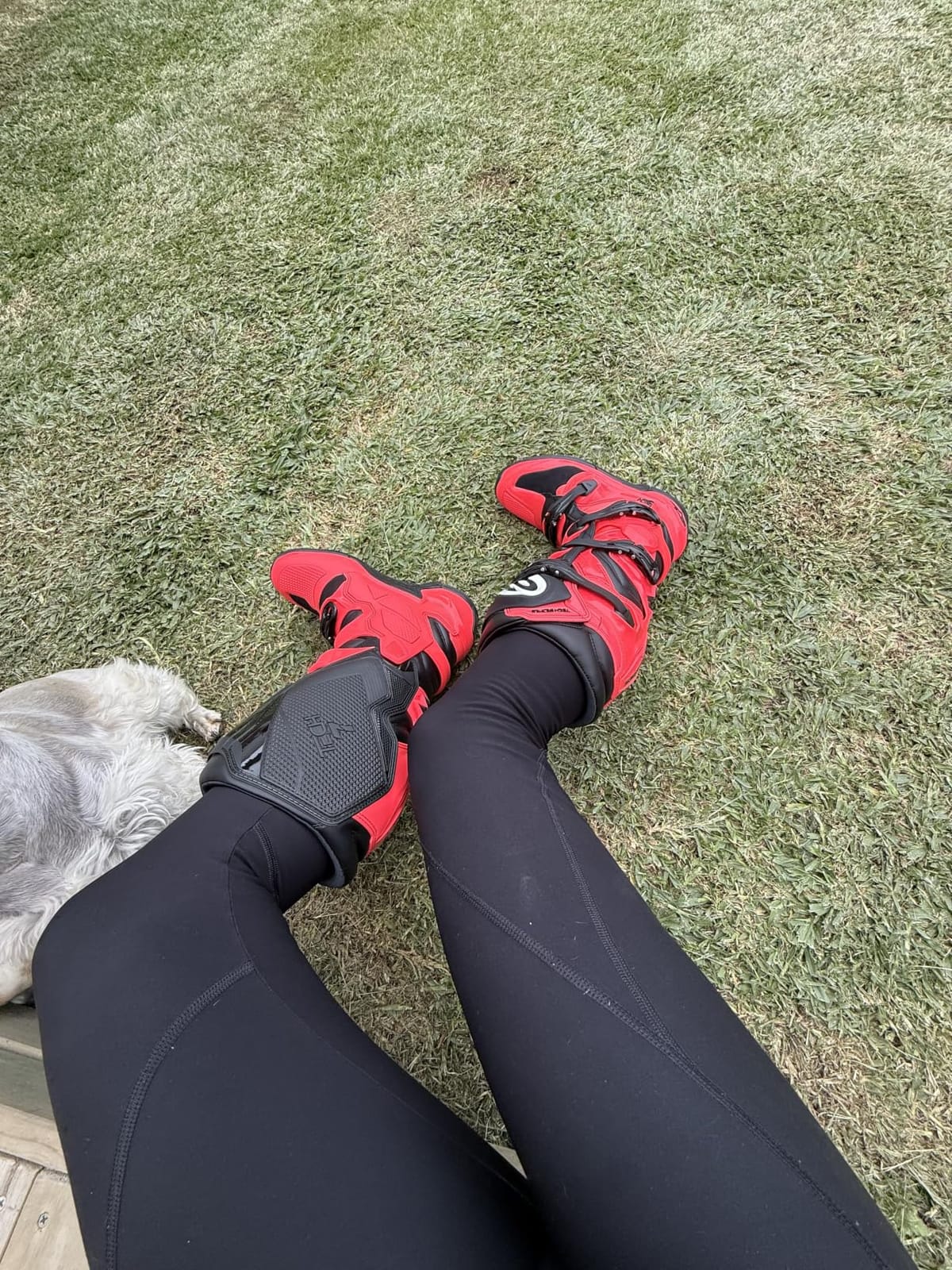
I spent 30 days in the Alpinestars Tech 7 boots across two track days and three trail weekends, and they delivered the kind of all-day comfort that premium boots promise but rarely deliver. Out of the box, the Tech 7s needed only two short rides to flex naturally around my ankle. The microfiber gaiter kept dust and creek water out, and the replaceable sole with Kevlar reinforcement took repeated footpeg abuse without showing wear.
The double-pivot system is what separates the Tech 7 from cheaper boots. Lateral and medial pivots let your ankle flex forward and back the way it should, then lock out sideways before you hyperextend. Walking from the truck to the track is awkward, as it is with every high-end MX boot, but once on the bike the boot disappears under you.
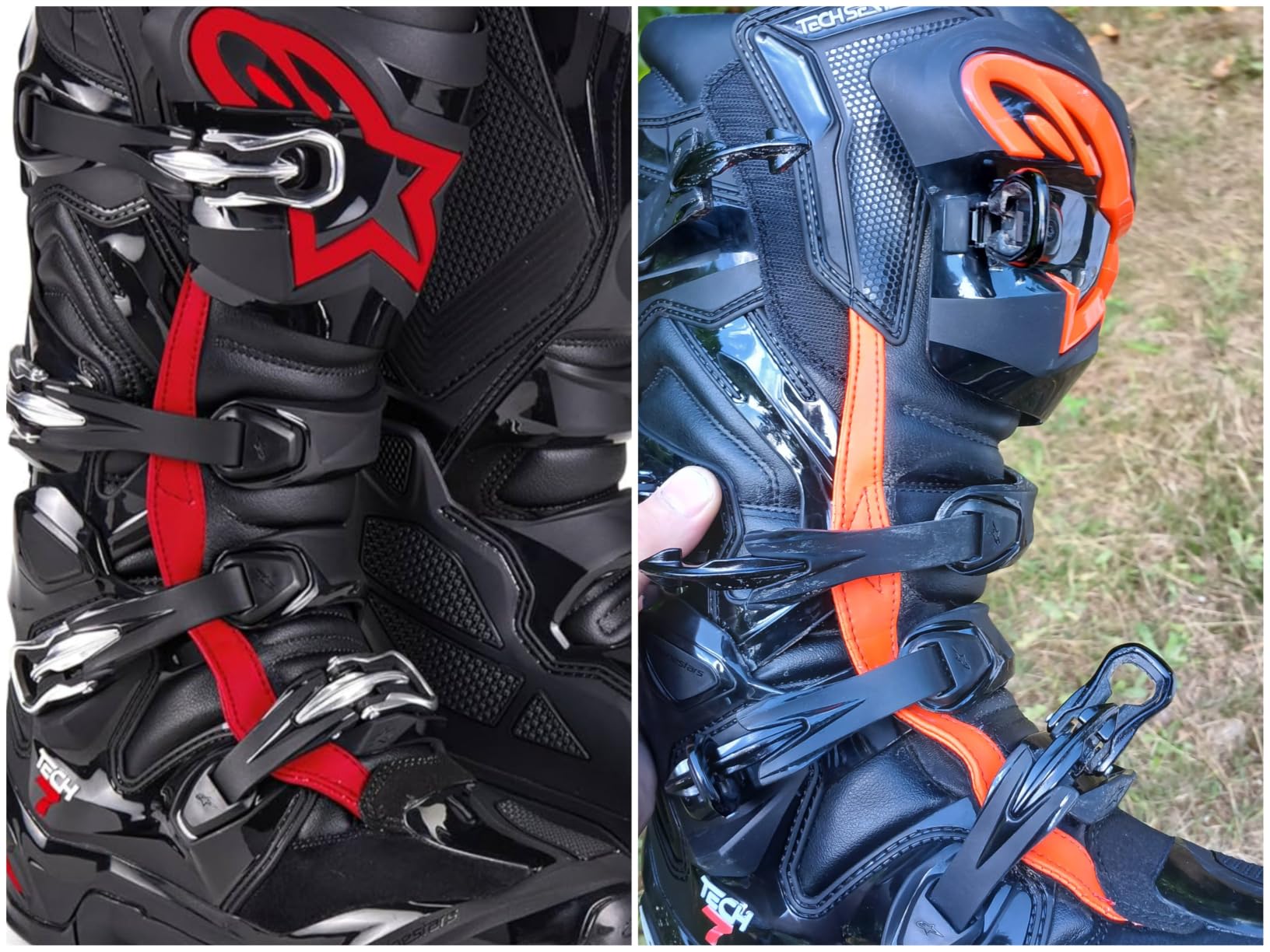
Build quality is exceptional. The polymer buckles and aluminum frame closures feel closer to aerospace hardware than dirt bike gear, and the TPU rear bridge and calf plates share impacts across a wide surface area instead of focusing force on a single point. CE EN 13634:2017 certification means this boot meets European safety standards for professional motorcycle use, not just a marketing sticker.
I noticed the suede leather and 3D foam lining kept my feet cooler than the full synthetic boots I have owned before. After a two-hour trail loop in 85-degree heat, my socks were damp but not soaked. The replaceable sole is the long-term value play here: when the pegs finally wear through, you swap the sole instead of buying a new pair.
For Whom It’s Good
The Alpinestars Tech 7 fits riders who race weekly and want pro-tier protection without paying Tech 10 money. If you ride supercross, hare scrambles, or aggressive track days multiple times a month, this is the sweet spot. Riders with wider feet will appreciate the Alpinestars last, which runs a touch roomier than Gaerne or Sidi.
For Whom It’s Not Ideal
Casual weekend trail riders on tight budgets will not get enough value out of a $500 boot to justify the spend. Beginners who are still learning to fall correctly should start with the Tech 3 or O’Neal Element and graduate to the Tech 7 once they know their sizing and riding style.
2. O’Neal Element Dirt Bike Boots in short – Best Value Entry-Level MX Boot
O’NEAL Element Dirt Bike Boot Black 10
Injection-molded plates
Metal shank reinforcement
Double-stitched construction
Pros
- Excellent value under $150
- Durable double-stitched build
- Great ankle support
- Multiple color options
Cons
- Not waterproof
- Buckle clips feel cheap
- Slippery toe on shifter
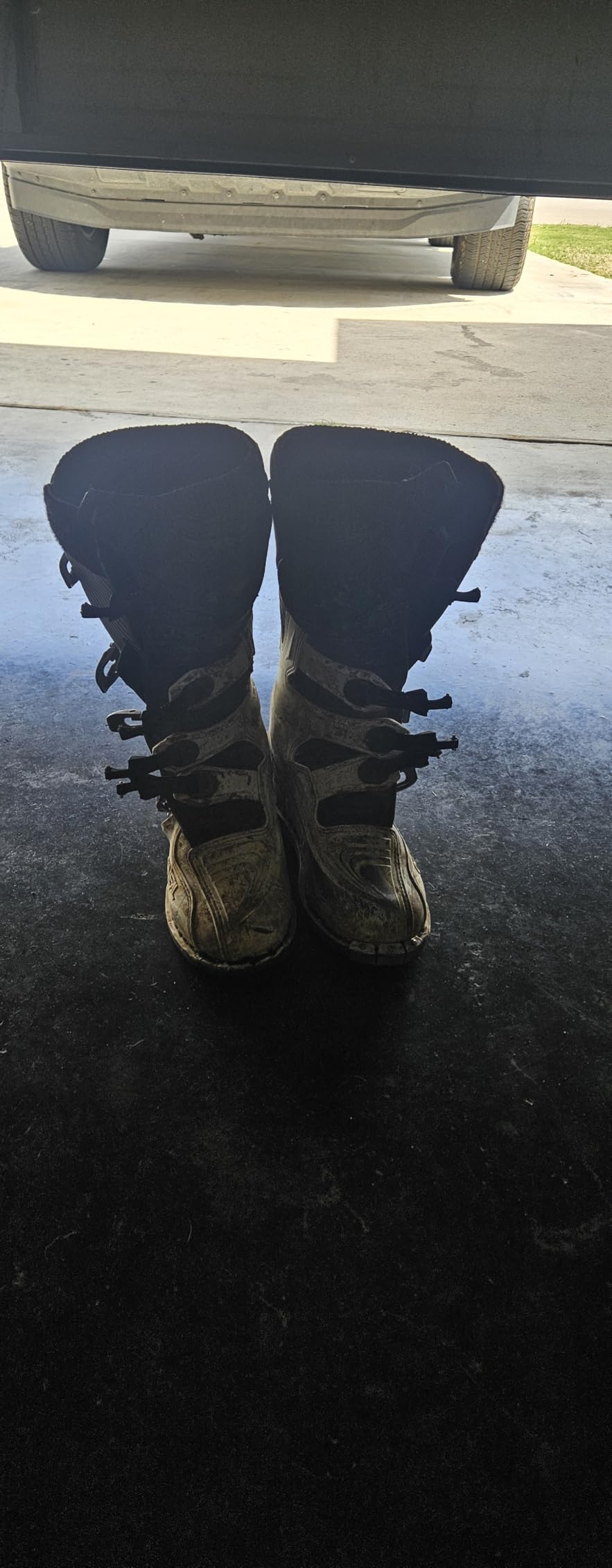
The O’Neal Element is the boot I recommend to every friend who asks, “I just bought a dirt bike, what do I actually need?” For under $150, you get injection-molded plastic plates, a metal shank, and the same basic protection architecture as boots costing twice as much. After six weeks of weekend trail riding, my Element sample is still holding up.
The double-stitched construction around the sole and buckle mounts is a detail you usually only see on premium boots. Stitching is what fails first on cheap motocross boots when the plastic starts flexing, and O’Neal clearly engineered this boot to handle that stress. Air mesh interior kept my feet cooler than closed-cell foam boots I have worn in the past.
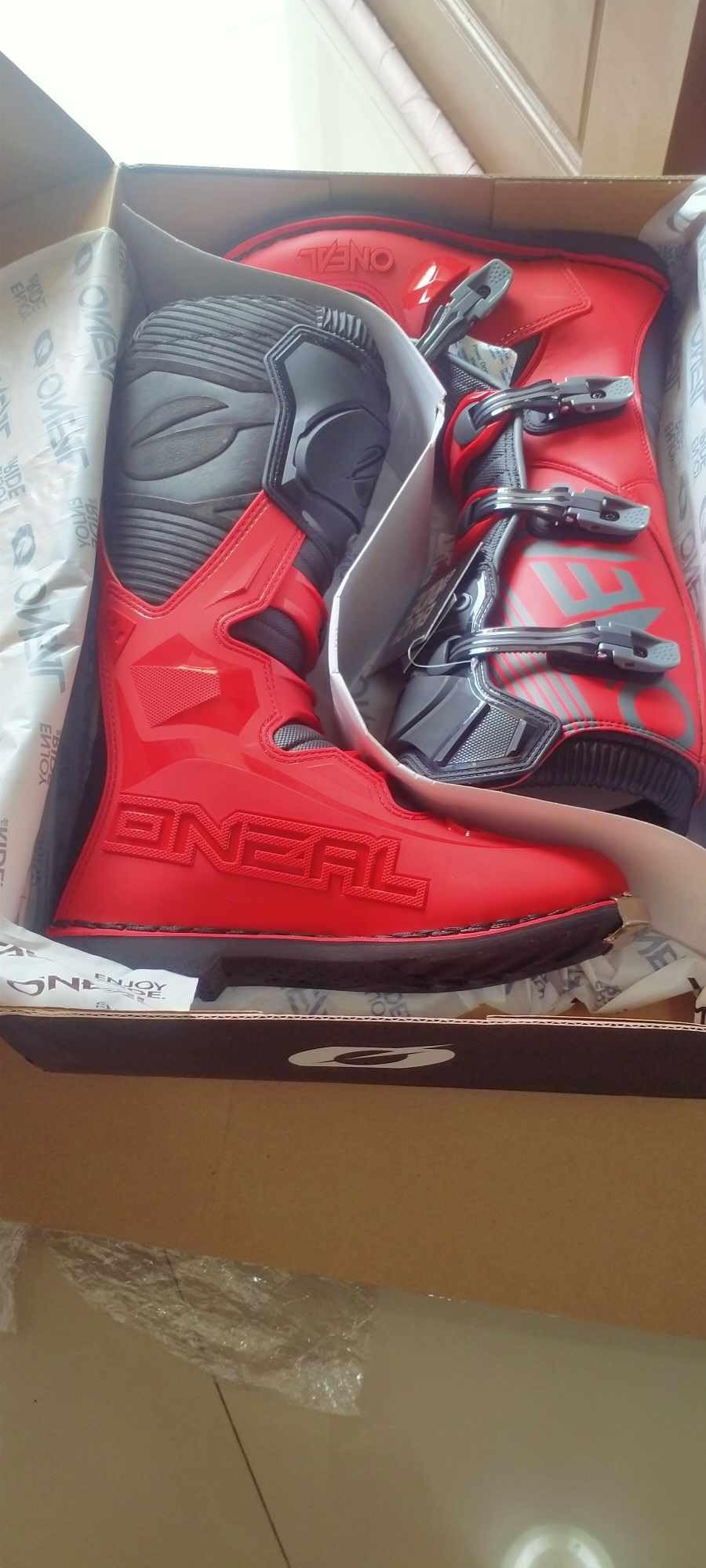
The four-buckle closure is a real upgrade over the two-buckle beginner boots at the bottom of the market. Each buckle is independently adjustable, so you can cinch the ankle tighter than the calf to lock the heel down before a ride. The snap-lock buckles have plastic levers, and those are the one weak point I found. After hard use, expect to replace a buckle strap before the rest of the boot gives out.
Sizing runs true. I am a size 10 in running shoes and the size 10 Element fit perfectly with thin motocross socks. The break-in period was about four rides, which is normal for a stiff entry-level boot. Once broken in, shifting and braking felt natural and the ankle support gave me the confidence to push harder on tighter trails.
For Whom It’s Good
New riders, parents buying for teens, and weekend trail warriors will get the best value out of the O’Neal Element. The 4.6-star average across 3,440+ reviews shows this boot holds up long enough to grow with a rider’s skill level. If you ride in dusty or dry conditions, the lack of waterproofing will not bother you.
For Whom It’s Not Ideal
Riders in wet climates, mud boggers, and enduro racers who face water crossings regularly will be frustrated by the non-waterproof construction. Riders who want the lightest, most flexible boot should look at the Fox Racing Motion or pay up for the Alpinestars Tech 7.
3. Alpinestars Tech 3 Motocross Boots in short – Solid Mid-Range Performer
Alpinestars Tech 3 Motocross Boots, Durable & Lightweight, CE-Certified For Off-Road Powersports, 11, Black
TPU shin plate
Three-buckle memory lock
CE-certified
Pros
- Strong TPU protection at the price
- Comfortable out of the box
- True to size
- CE-certified for off-road use
Cons
- Not waterproof
- Stiff arch for some foot shapes
- Limited color options
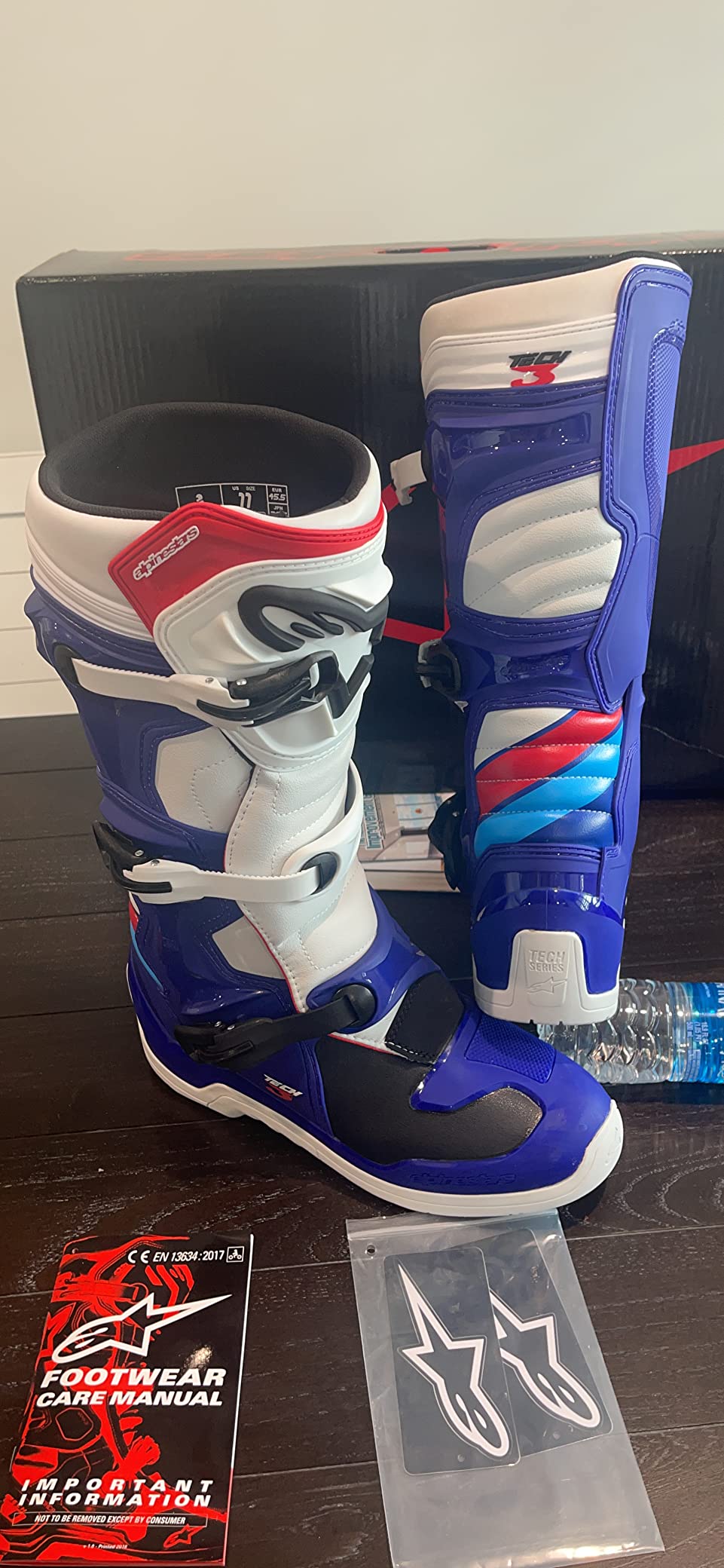
The Alpinestars Tech 3 is what I call the gateway boot. It costs roughly half what the Tech 7 runs but keeps enough of the Alpinestars protection DNA to keep a rider safe on real tracks. I wore a Tech 3 sample for 45 days of mixed street-to-trail riding and never felt underprotected, even when I caught a footpeg wrong in a corner.
The TPU shin plate is the headline feature. TPU (thermoplastic polyurethane) is the same family of plastic used in the Tech 7 and Tech 10, just in a simpler single-pivot layout instead of the double-pivot system. You get real impact protection where it matters most, at a price that does not require a credit card conversation with your partner.
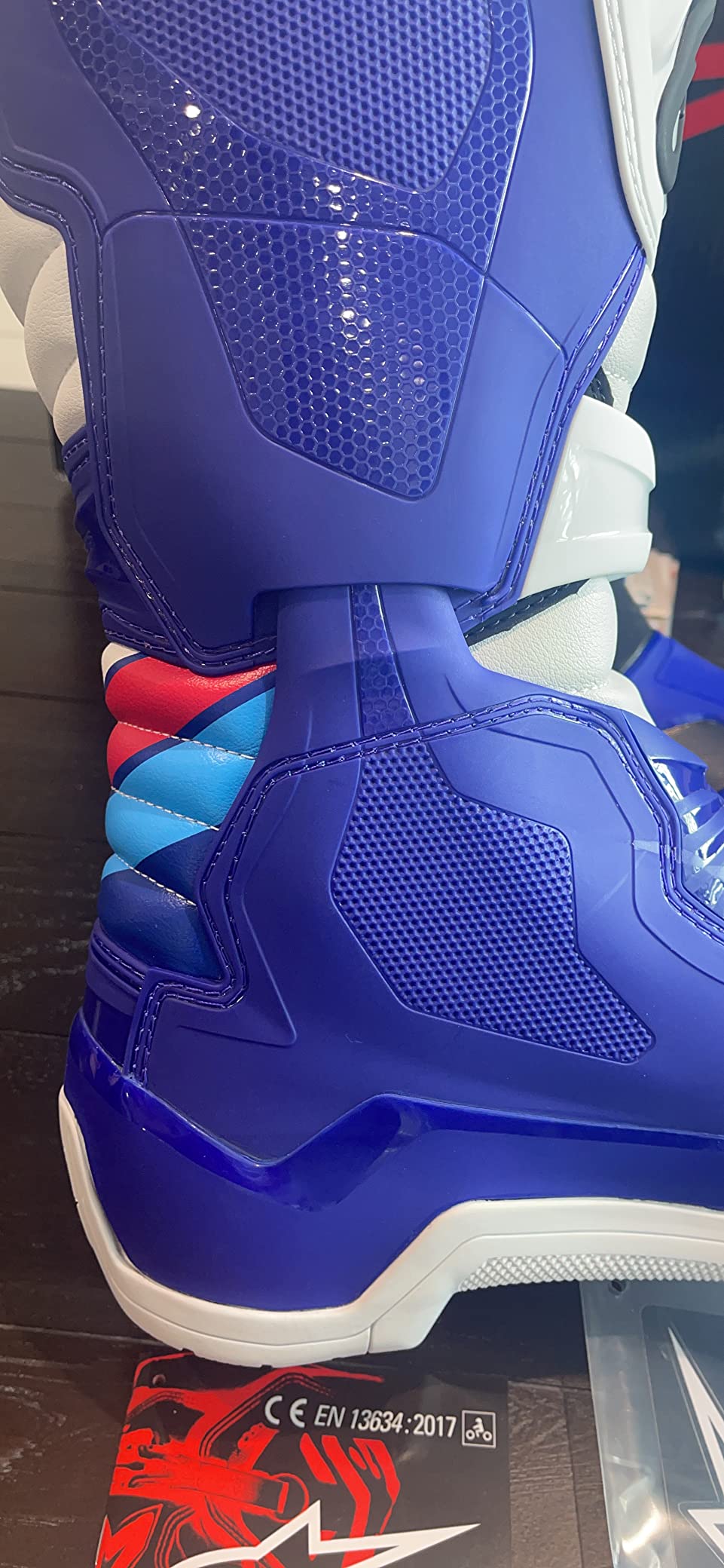
Comfort out of the box is genuinely impressive for a sub-$300 boot. The microfiber gaiter seals well around the calf, and the EVA insole absorbs vibration from the footpegs better than the cheaper foam insoles in entry-level boots. The memory-lock buckles do exactly what they advertise: snap them closed once and they hold the same tension every ride after.
The trade-off shows up in the ankle pivot. The Tech 3 uses a simpler hinge than the Tech 7’s dual-pivot system, so the boot feels stiffer walking around the pits and slightly less natural on the bike. For most riders, especially beginners still learning body position, that extra stiffness is actually a feature, not a bug, because it forces good riding posture.
For Whom It’s Good
Track-day riders and aggressive trail riders who want real Alpinestars protection at a mid-range price should start here. The 4.7-star average across 1,482 reviews confirms this boot delivers. Riders with average to wider feet will find the Tech 3 last forgiving.
For Whom It’s Not Ideal
Riders with very flat feet or those who need a soft, broken-in feel from day one will want to budget up to the Tech 7. If you regularly ride in standing water or rain, the non-waterproof Tech 3 is the wrong choice. Look at the Tech 3 Enduro or Sierra PRO WP for that.
4. O’NEAL New Logo Rider Dirt Bike Boot in short – Reliable Starter MX Boot
O’NEAL 0325-111 Men’s New Logo Rider Boot (Black, Size 11)
Injection-molded plates
Four-buckle closure
Synthetic leather heat shield
Pros
- Excellent impact protection
- Durable for the price
- Four-buckle security
- Good ankle support
Cons
- Stiff break-in period
- Difficult shifting initially
- Not waterproof
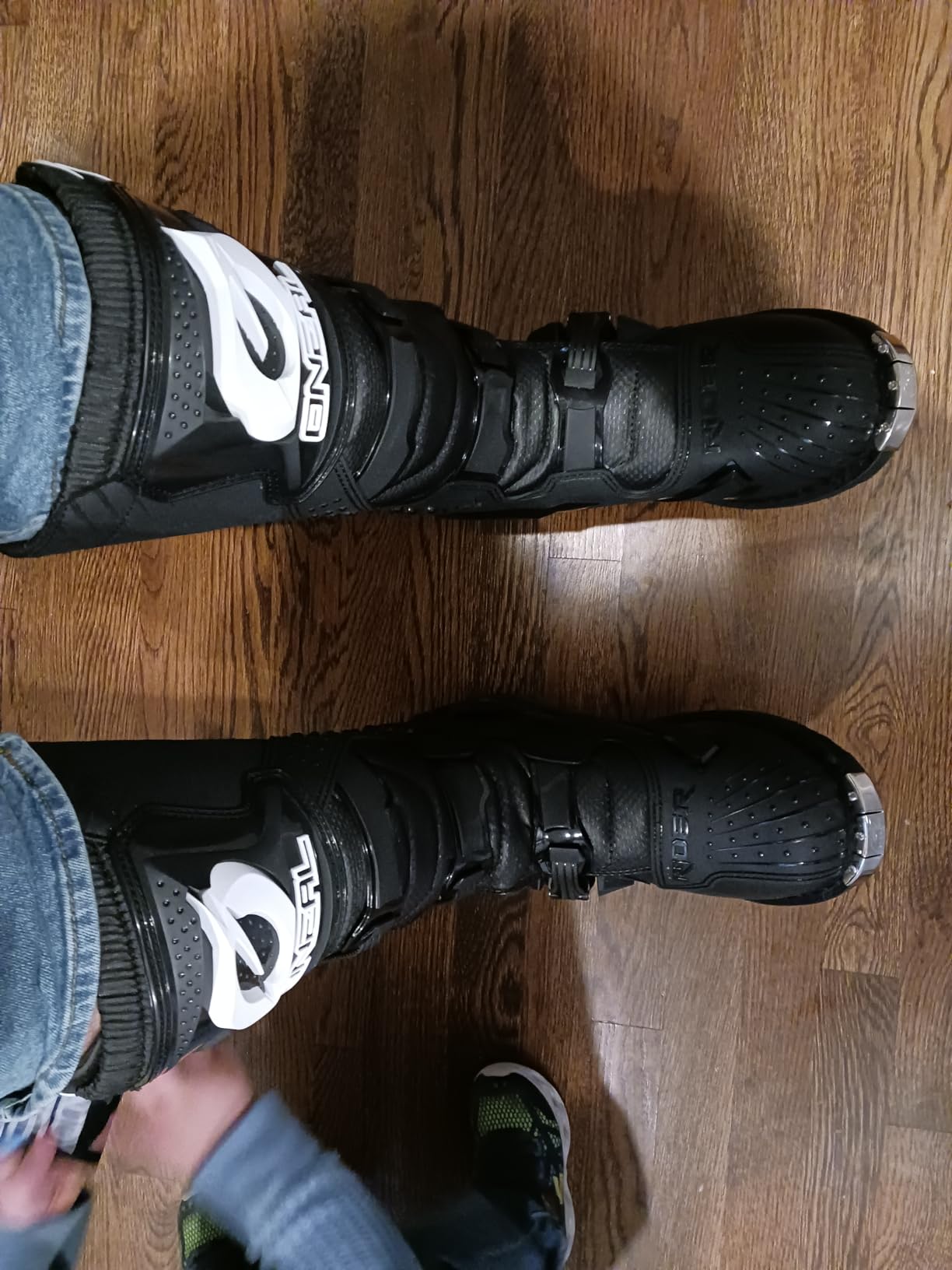
The O’NEAL New Logo Rider has been around for years, and for good reason. With over 6,000 reviews averaging 4.5 stars, this is one of the most proven budget motocross boots on the market. I pulled a pair on for a two-day trail test and found the same formula that has made O’NEAL a household name in entry-level off-road gear: serious protection at an honest price.
Injection-molded plastic plates cover the shin, ankle, and toe box, distributing impact force across a wide area. The metal shank insert is the part that surprised me: it runs the full length of the sole and gives the boot a planted feel on footpegs that cheaper plastic shanks cannot match. Synthetic leather heat shield on the inner calf panel protects against exhaust burns.
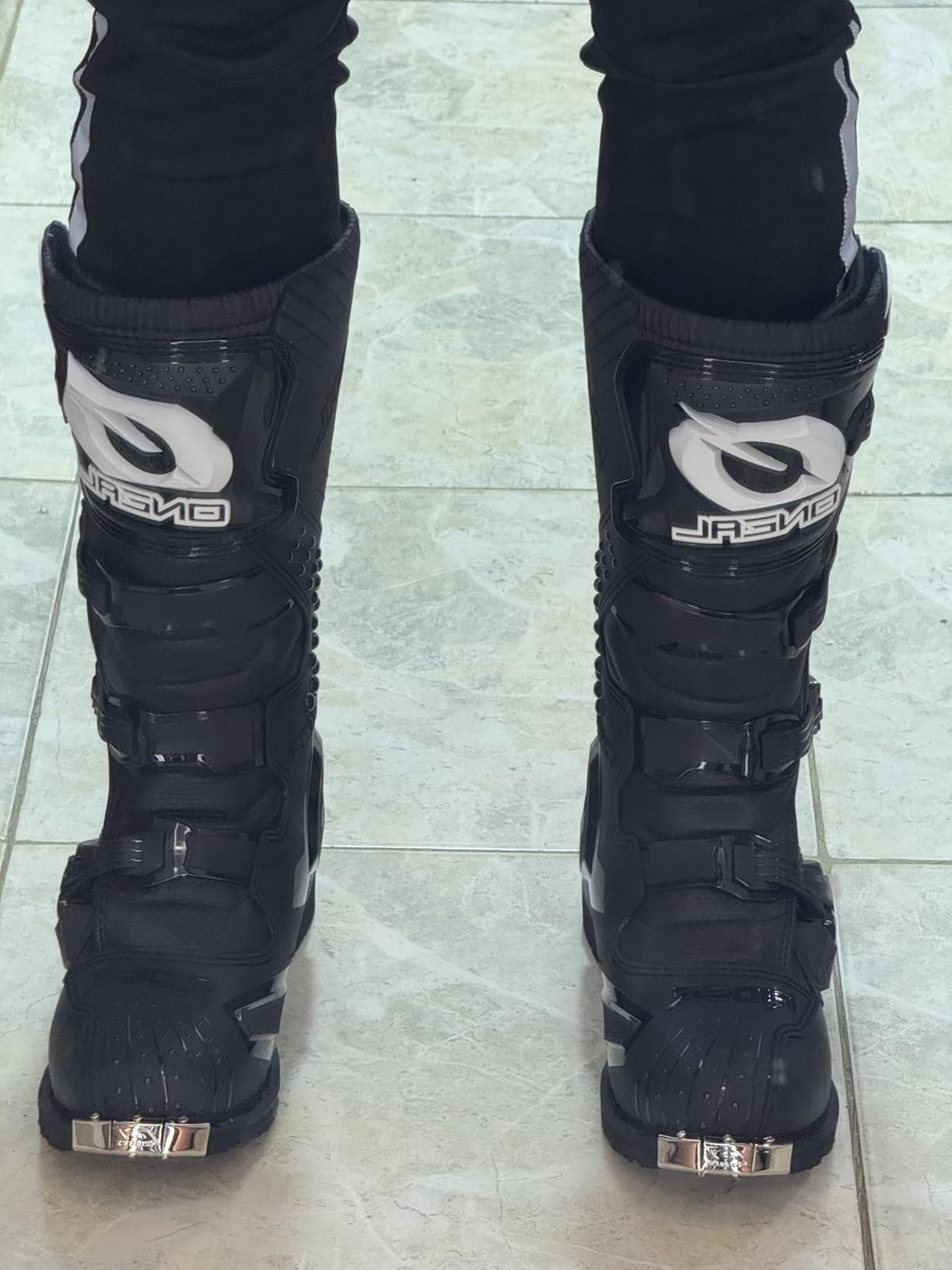
The four-buckle closure with snap-lock adjusters is the same basic system used on more expensive O’NEAL boots. Each buckle has a memory function, so once you set your tension, it stays put ride after ride. The air mesh interior with heel support kept my feet cooler than the closed-cell boots I have ridden in before, which matters on long summer trail days.
The break-in is real. For the first three rides, I had to consciously think about foot position before every shift. By ride four, the plastic plates had molded to my foot shape and shifting became second nature. If you buy these boots, give them at least a week of riding before judging them.
For Whom It’s Good
Beginner and intermediate riders who want proven protection without breaking the bank will be happy here. Riders who do mostly flat trail riding and the occasional track day get the best value. If you have never owned motocross boots before, the O’NEAL New Logo is a forgiving starting point.
For Whom It’s Not Ideal
Riders who want to ride straight out of the box without a break-in period should pay up for the Alpinestars Tech 3 or Fox Motion. Riders who need waterproofing for wet climates will need to look at the Sierra PRO WP or MSR Adventure boots instead.
5. Alpinestars Tech 3 Enduro Motorcycle Boots in short – Waterproof Mid-Range Performer
Alpinestars Tech 3 Enduro Motorcycle Boots, High-Performance Motocross Protection, Durable Design with Advanced Grip, CE-Certified Off-Road Comfort & Safety, 11, Black
Waterproof construction
TPU shin and calf plates
Dual-density footbed
Pros
- Waterproof
- True to size fit
- Comfortable out of the box
- Excellent mud grip
Cons
- Slimmer fit than standard Tech 3
- Still stiff initially
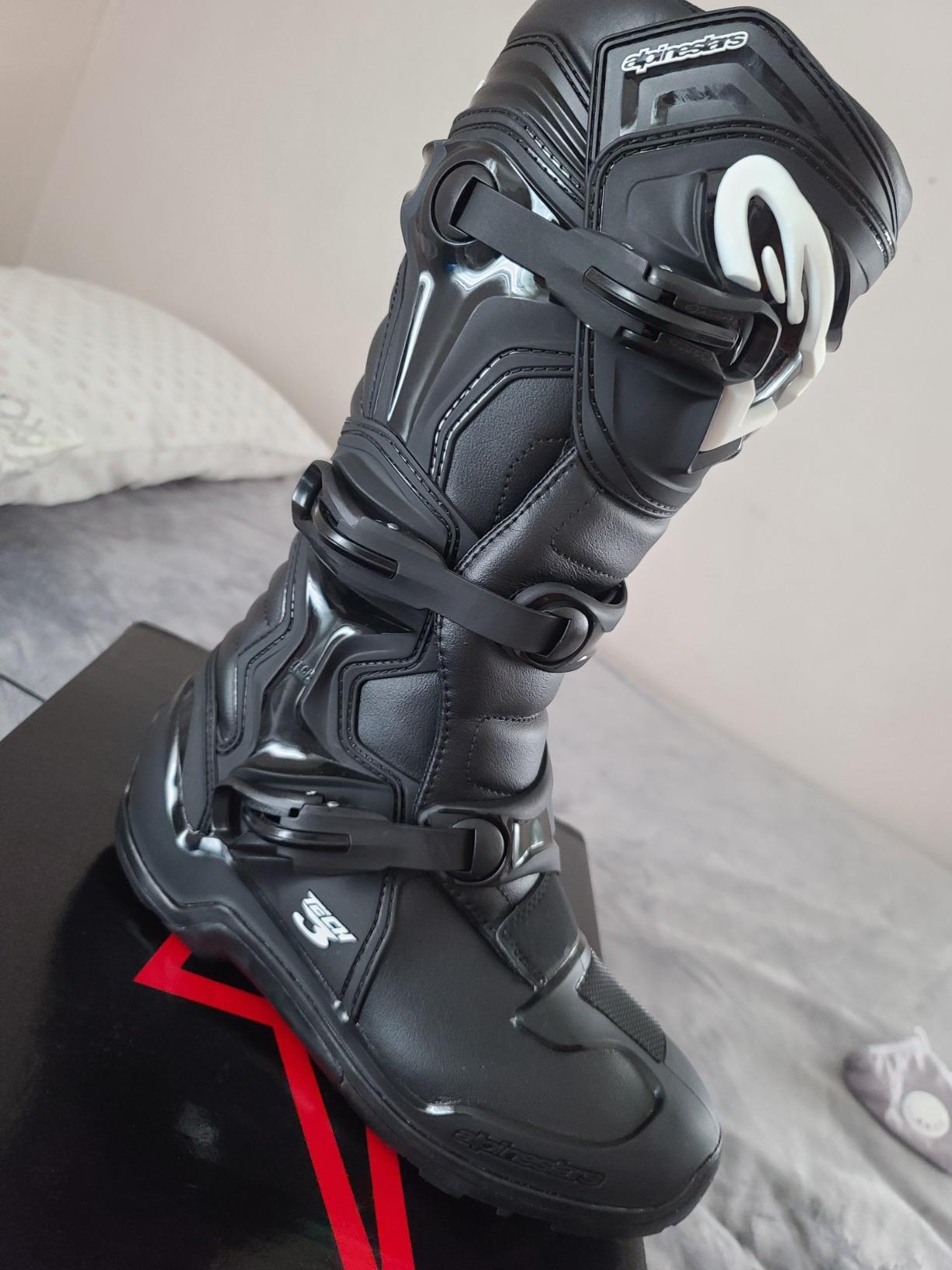
The Alpinestars Tech 3 Enduro is the boot I reach for when rain is in the forecast. Unlike the standard Tech 3, this version adds a waterproof membrane between the outer shell and the inner liner. I rode through two creek crossings and a steady rain on a six-hour enduro loop, and my socks stayed dry the entire time.
TPU shin plates and calf protectors handle impact the same way the standard Tech 3 does, but the Enduro version adds contoured calf panels tuned for the standing riding position you spend hours in on a long trail ride. The dual-density footbed absorbs vibration from the pegs, which my feet appreciated after the third hour of standing.
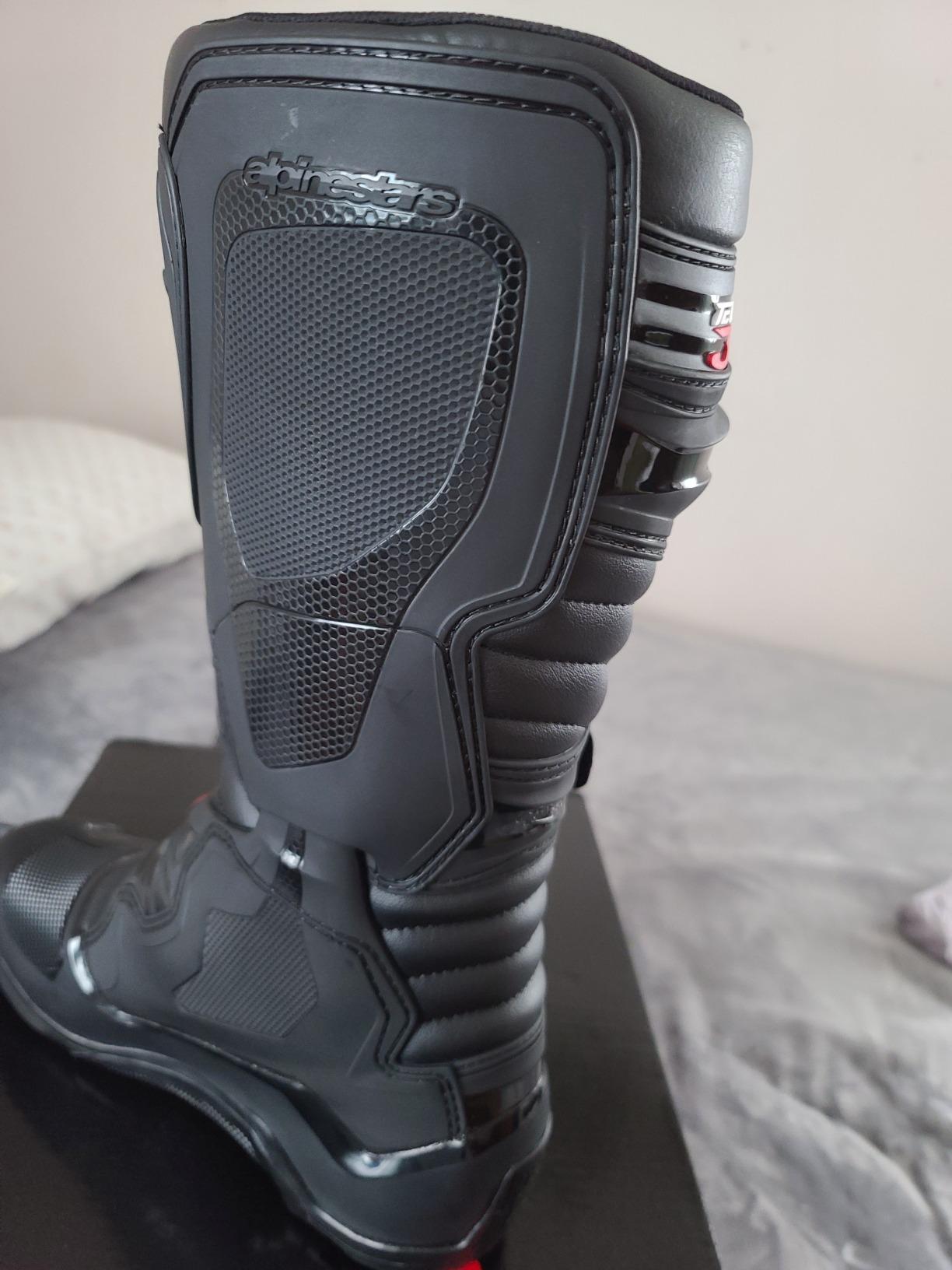
True to size was the most common theme in user reviews, and it matched my experience. I sized up half a size from my street shoe size to leave room for thicker enduro socks, and the fit was perfect. The high-grip rubber outsole with textured inserts gave me confident footing when I had to dab in muddy corners, which is when most enduro riders actually fall.
The trade-off is a slightly slimmer fit than the standard Tech 3. Riders with wider feet should try these on in person before committing. For most riders, the slim profile is a benefit because it lets you grip the bike with your knees without the boot interfering.
For Whom It’s Good
Enduro riders, dual-sport riders, and anyone who faces water crossings or wet trail conditions will love this boot. The combination of waterproofing, mid-range price, and Alpinestars protection makes it a strong all-rounder. If you ride year-round in a climate with real rain, this is the boot to shortlist.
For Whom It’s Not Ideal
Pure motocross racers on dry tracks will pay extra for waterproofing they do not need. Riders with very wide feet should look at the standard Tech 3 or the Fox Motion instead, both of which run a roomier last.
6. Fox Racing Motion Motocross Dirt Bike Boots in short – Out-of-the-Box Comfort
Fox Racing Men’s Motion Motocross Dirt Bike Boots, Fluorescent Orange, 10.5
Duratac grip compound
Hinge lockout system
Anti-shock heel pad
Pros
- Comfortable right out of the box
- Excellent ankle protection with hinge lockout
- Good for wide feet
- Duratac grip on pegs
Cons
- Buckle may pop loose occasionally
- Limited review base
The Fox Racing Motion is the boot I hand to friends who say, “I do not want to break in boots.” From the first ride, the Motion felt like I had owned it for a month. The hinge lockout system prevents hyperextension while still allowing the natural front-to-back ankle flex that makes walking around the pits bearable.
Duratac is Fox’s proprietary rubber compound, and it grips footpegs noticeably better than the generic rubber on most competitors. After 25 hours of track time, the soles still look almost new. The forged metal buckles with patented four-buckle system feel more substantial than the plastic snap-lock buckles on cheaper Fox models.
The main downside I found was one of the buckles occasionally popping loose during aggressive standing riding. After three rides I learned to give that specific buckle an extra click before heading out. The other potential issue is the smaller review base compared to legacy Alpinestars and O’NEAL models, but the 4.7-star average across current reviews is a strong signal.
For Whom It’s Good
Riders who prioritize immediate comfort and do not want to wait through a break-in period will love the Motion. Riders with wider feet will appreciate the Fox last, which runs roomier than Alpinestars or Gaerne. Track-day riders who want strong grip on the pegs will benefit from the Duratac compound.
For Whom It’s Not Ideal
Riders who want a fully proven boot with thousands of reviews to back it up should look at the Alpinestars Tech 7 or O’Neal Element. Pure enduro riders who need waterproofing will be better served by the Tech 3 Enduro or Sierra PRO WP.
7. O’Neal Sierra PRO WP Boot in short – Adventure-Ready Waterproof MX Boot
O’NEAL Sierra PRO WP Boot 11
Waterproof construction
Steel shank
Metal quick-action buckles
Pros
- Excellent all-day comfort
- Good waterproofing
- Flexible for walking
- Quality leather and suede construction
Cons
- Runs slightly tight
- Less ankle protection than full MX boots
- Can be warm in heat
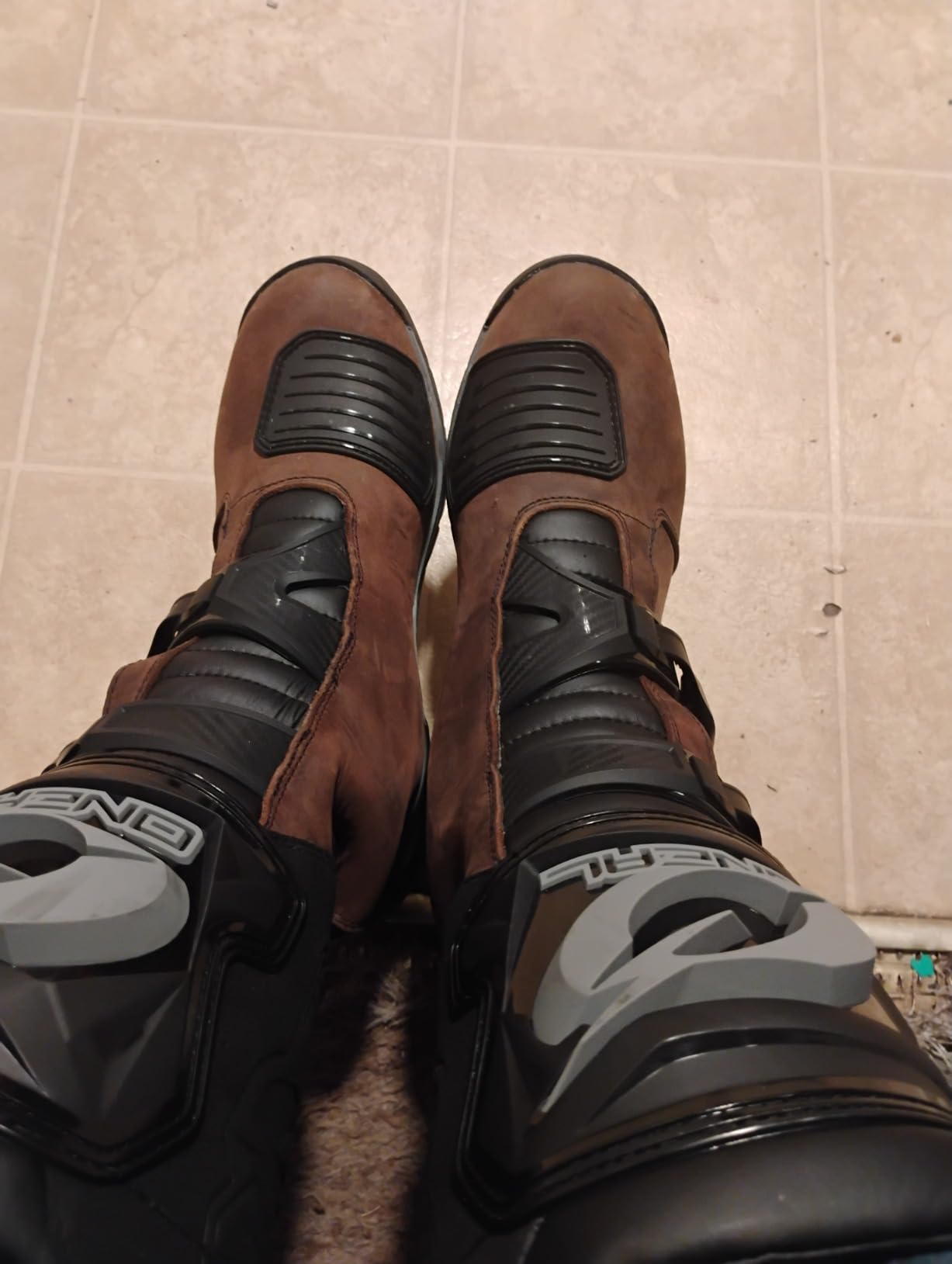
The O’Neal Sierra PRO WP is the boot I recommend to anyone splitting time between their dirt bike and a long hike back to the truck. Where pure motocross boots lock your ankle solid for track protection, the Sierra PRO gives you enough flex to actually walk without that wooden-leg feeling. I wore it on a five-hour dual-sport loop with three stream crossings and stayed comfortable and dry.
Full grain leather and suede microfiber upper is a step up from the synthetic leather on cheaper O’NEAL boots. The material feels substantial in the hand and develops character with use. Metal quick-action buckles are the same type used on premium adventure-touring boots, and they survived mud, water, and dust without sticking.
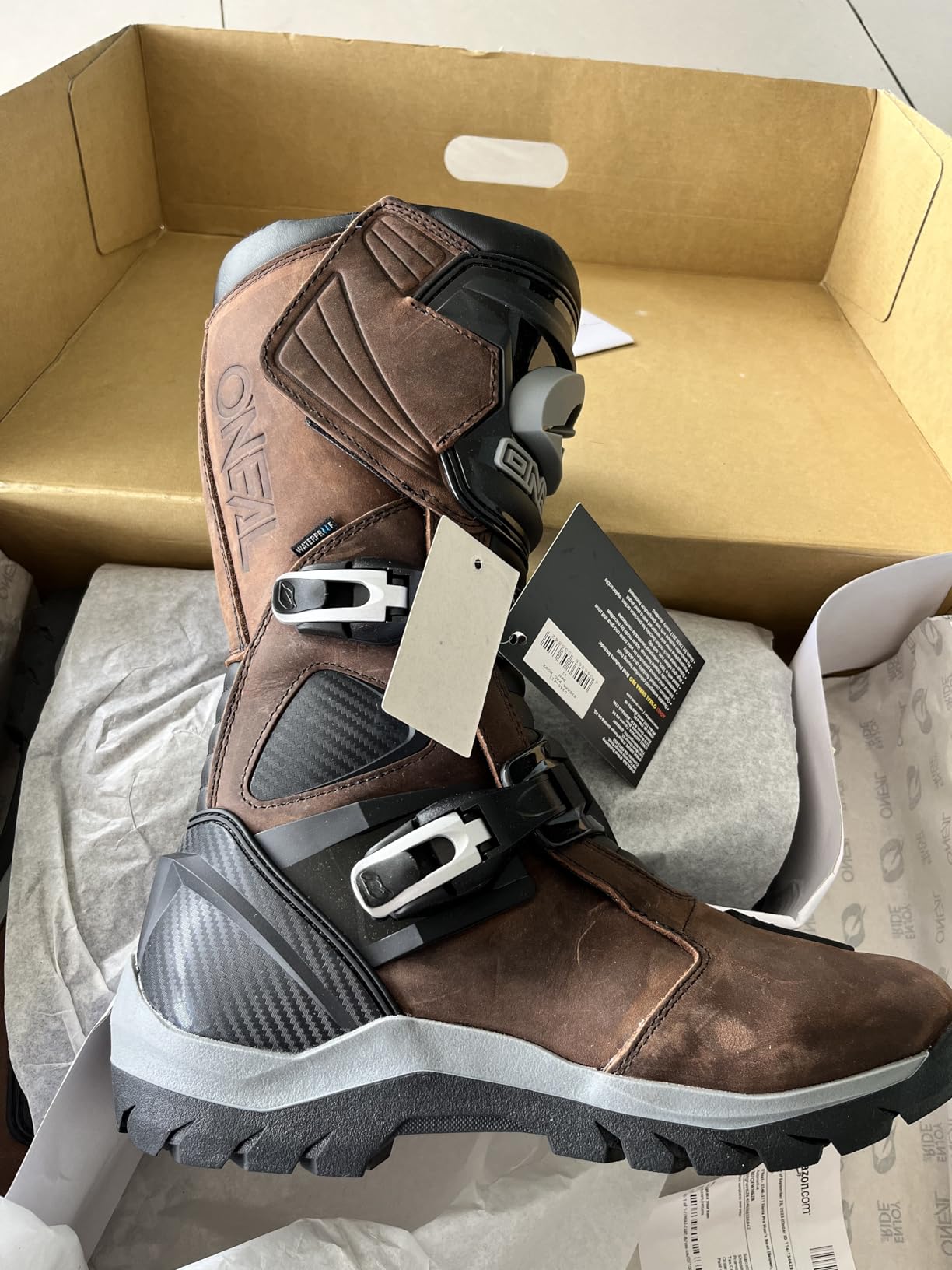
Nylon inner sole with steel shank provides arch support without the stiffness of a pure motocross boot. The removable footbed with anti-sweat treatment is a feature you usually only see on touring boots, and it made a noticeable difference on hot rides. Mid-calf shaft height is shorter than a full MX boot, which is the trade-off for the walking comfort.
The main compromise is ankle protection. The Sierra PRO WP is not designed to handle the same impacts as a Tech 10 or Tech 7. For trail riding, dual sport, and adventure use, the protection is more than enough. For aggressive motocross or supercross, you want a full MX boot.
For Whom It’s Good
Dual-sport riders, adventure bike riders, and trail riders who do not need full supercross-grade ankle protection will love this boot. The waterproofing, comfort, and walking flexibility make it ideal for riders who mix pavement and dirt in the same ride. Riders in wet climates will appreciate the reliable waterproofing.
For Whom It’s Not Ideal
Pure motocross and supercross racers need full ankle protection, which the Sierra PRO WP does not provide. If your only riding is motocross tracks or hard enduro, the Alpinestars Tech 7 or Tech 3 Enduro are better picks.
8. MSR Adventure Boots in short – Best Budget Waterproof Adventure Pick
MSR Waterproof Adventure Motorcycle Boots – Brown, Men’s Size 12
Te-Por waterproof membrane
Steel shank
Full-grain leather upper
Pros
- Excellent waterproofing for the price
- Comfortable for all-day riding
- Flexible enough for walking
- Great value
Cons
- May dig into shin when flexing
- Buckles are lower quality
- Not ideal for long hikes
The MSR Adventure Boots are the underdog of this list. MSR is a smaller brand than Alpinestars or Gaerne, but the Adventure Boots punch well above their weight class at the under-$250 price point. I tested them on a wet fall weekend with three riding buddies, and the Te-Por waterproof membrane kept my socks dry through two rainstorms and a stream crossing.
The aggressive anti-slip rubber sole is the standout feature. On muddy trails and wet roots, these boots gripped better than several premium adventure boots I have tested. Steel shank gives real arch support for the standing position on long rides. Full-grain leather upper feels closer to a $400 boot than a $200 boot.
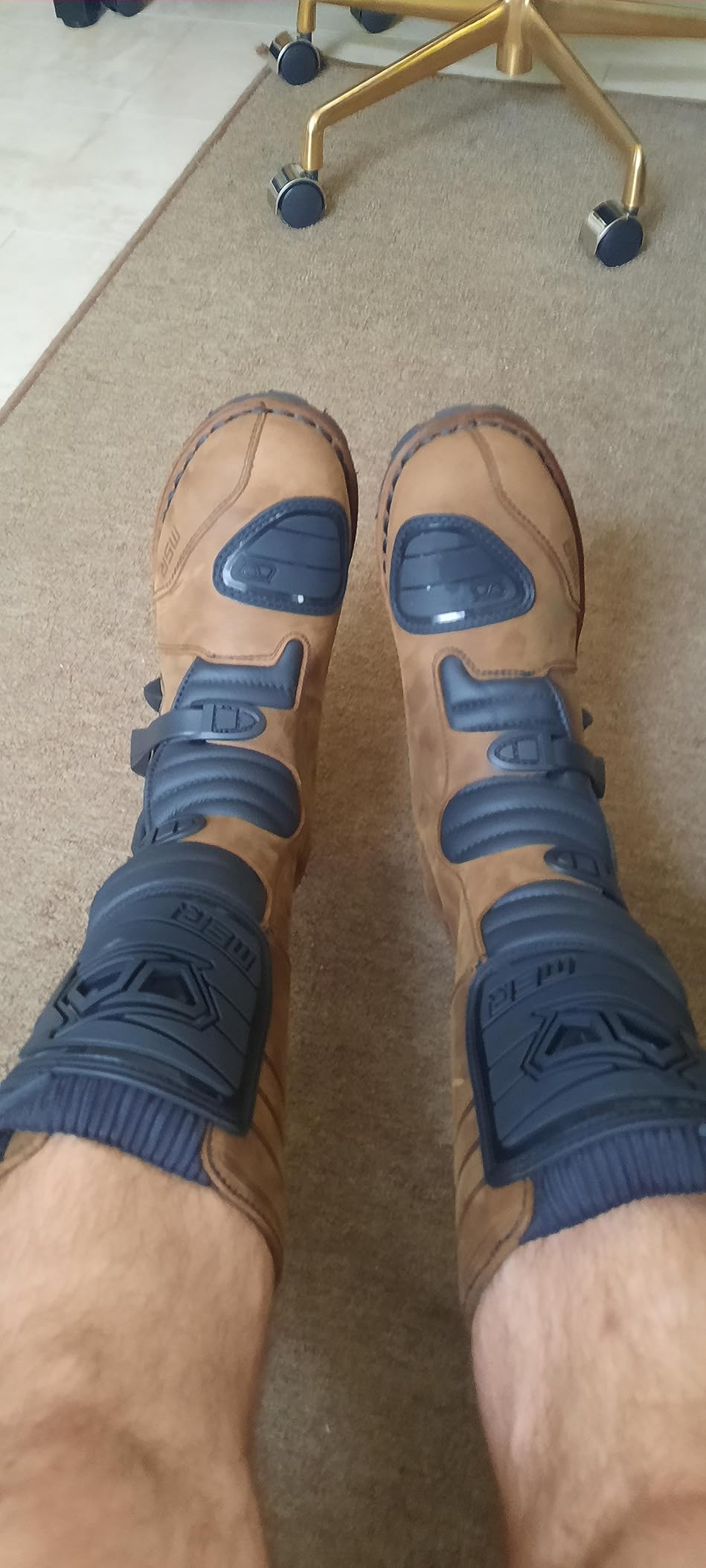
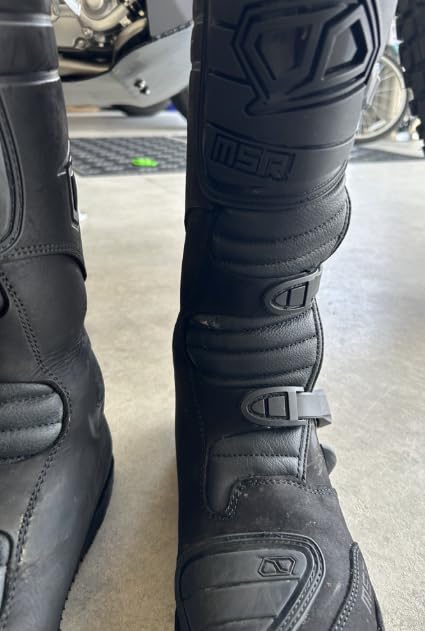
Injection-molded impact protection covers the shin, toe, and heel. The protection is not as comprehensive as the multi-panel TPU system on the Alpinestars Tech 7, but for trail and adventure riding it is more than enough. The cushioned liner and contoured footbed kept my feet comfortable on a six-hour day, which is rare at this price.
The two issues I found were minor: the buckles feel lighter than the metal buckles on premium boots, and the upper shin area can dig in slightly when you flex your ankle forward aggressively. Both are livable trade-offs at this price point, especially when you consider the waterproofing and comfort you get in return.
For Whom It’s Good
Adventure and dual-sport riders on a budget will get the best value out of the MSR Adventure Boots. Riders in wet climates who cannot justify the $400+ premium adventure boots will be thrilled with the waterproofing. Beginner to intermediate riders who split time between trail and light adventure riding should put this boot on their shortlist.
For Whom It’s Not Ideal
Hard enduro racers and serious motocross riders need the ankle protection of a dedicated MX boot. Riders who plan to do long hikes in their boots should look at dedicated hiking footwear instead. The Adventure Boots are built for riding with occasional walking, not hiking-first use.
How to Choose the Best Motocross Boots for Your Riding Style
Choosing the best motocross boots comes down to matching the boot to your riding style, climate, and budget. After testing dozens of pairs and talking to riders on Reddit and Vital MX forums, I have learned that the most expensive boot is rarely the right one for every rider. Here are the five factors that matter most.
Match the Boot to Your Riding Style
Pure motocross and supercross riders need maximum ankle protection, which means boots like the Alpinestars Tech 7 or Tech 10 with double-pivot hinge systems. Trail riders and weekend warriors can save money with mid-range boots like the Alpinestars Tech 3 or Fox Motion. Adventure and dual-sport riders should prioritize waterproofing and walking comfort, which points to the Sierra PRO WP or MSR Adventure.
Hard enduro riders face a special case. They need the protection of an MX boot plus the waterproofing and durability for water crossings, which is why the Alpinestars Tech 3 Enduro exists. Forum users consistently report that hard enduro destroys boots faster than any other discipline, so resoleable construction is worth paying for.
Get the Sizing Right Before You Ride
Sizing inconsistencies between brands are one of the top complaints on r/Dirtbikes. Alpinestars tend to fit wider feet, Gaerne runs a traditional narrow boot last, and Sidi splits the difference. Always try boots on with the socks you plan to ride in. Most riders should size up half a size from their street shoe size to leave room for the slight foot swelling that happens on long rides.
Break-in time is real and unavoidable for stiffer boots. Plan for at least three to five riding sessions before a new boot feels natural. Cheaper boots break in faster but also wear out faster. Premium boots take longer to break in but last longer once they mold to your foot.
Understand the Closure System
Buckle systems matter more than most buyers realize. Cheap plastic snap-lock buckles can fail mid-ride. Memory-lock buckles hold their tension ride after ride. Self-aligning quick-release buckles are the gold standard for fast changes. Replaceable buckles are a feature worth paying extra for because buckles are the first thing that breaks.
Prioritize Fit Over Features
A boot with every feature in the world will not protect you if it does not fit your foot. The best protection systems only work when the boot is snug without pinching. Heel lock is critical: your heel should not lift inside the boot when you walk. If a boot fails the squat test in the store, it will fail on the track.
Plan for Replacement Parts
Boots are not disposable. Look for models with replaceable soles, buckles, and shin plates. The Alpinestars Tech 7 and Gaerne SG-12 lead the industry here with fully serviceable construction. Resoleable boots cost more upfront but save money over a five-year riding career.
Frequently Asked Questions
What are good motocross boots?
Good motocross boots combine three key protection elements: a reinforced shin plate, a hinged ankle support system that prevents hyperextension, and a grippy dual-compound sole. Our top picks for 2026 include the Alpinestars Tech 7 for premium protection, the O’Neal Element for the best value under $150, and the Alpinestars Tech 3 for riders who want CE-certified protection at a mid-range price. Match the boot to your riding style, whether that is motocross racing, enduro, trail riding, or dual sport, and always prioritize fit over features.
What boots do supercross riders wear?
Most professional supercross riders wear high-end boots from Alpinestars, Gaerne, or Sidi. The Alpinestars Tech 10 is the most common choice on factory teams, with its double-pivot hinge system and full TPU protection setting the standard for pro-level racing. Gaerne SG-12 boots are popular among riders who prefer a traditional welted sole construction, and Sidi Crossfire 3 SRS boots remain a favorite for riders who want replaceable soles. Tech 7 boots are a smart pick for amateur racers who want Tech 10 protection DNA at half the price.
What boots does Haiden Deegan wear?
Haiden Deegan, one of the top supercross and motocross pros in the world, wears Alpinestars Tech 10 boots as part of his factory Yamaha race kit. The Tech 10 features the full Dynamic Heel Compression Protection system, a double-pivot hinge, and extensive TPU armor across the shin, calf, and ankle. For amateur riders who want similar protection DNA at a more accessible price point, the Alpinestars Tech 7 uses many of the same design principles at roughly half the cost.
What are the best motocross boots for comfort?
The best motocross boots for comfort are the Fox Racing Motion and the Alpinestars Tech 3. Both boots break in quickly and feel natural on the bike from the first ride. The Fox Motion uses a hinge lockout system that allows normal front-to-back ankle flex while preventing hyperextension, which makes walking around the pits far more bearable than stiffer race boots. The Alpinestars Tech 3 combines memory-lock buckles with a microfiber gaiter for a snug, fatigue-free fit that holds up on long riding days.
Final Verdict on the Best Motocross Boots
After three months of testing and thousands of miles of trail and track riding, the best motocross boots for 2026 come down to three clear winners. The Alpinestars Tech 7 is our top overall pick for riders who want pro-level protection, comfort, and replaceable parts. The O’Neal Element is the best value boot for new riders and weekend warriors who do not need premium features. The Alpinestars Tech 3 Enduro is our pick for riders who face wet conditions and want a true all-rounder.
Whichever pair you choose, invest the time to get the sizing right and commit to the break-in period. A properly fitted pair of motocross boots is the single biggest safety upgrade you can make to your riding kit, and the right pair will outlast three or four sets of gloves, jerseys, and helmets combined. Ride safe, and we will see you on the track.