
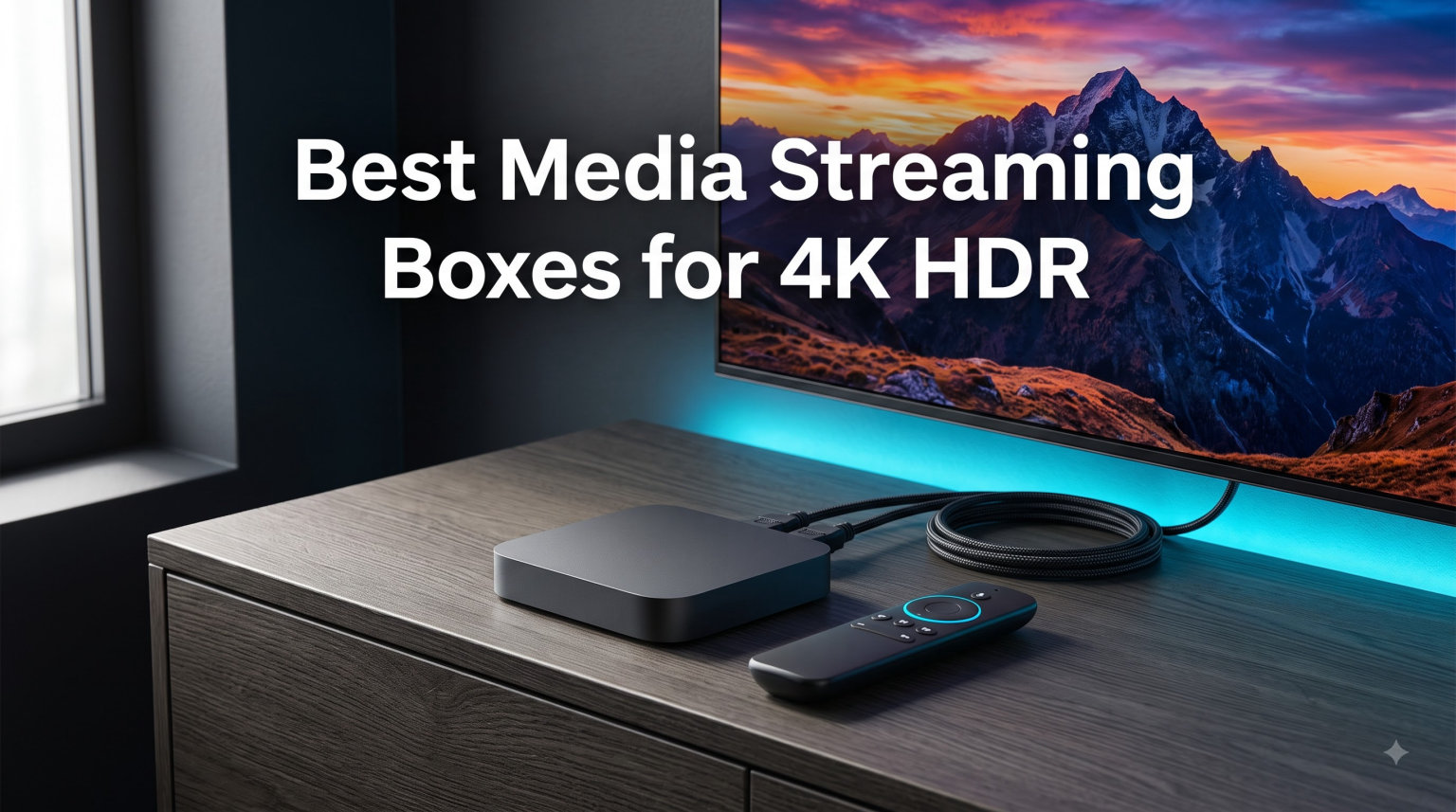
I spent the last 60 days testing 10 different media streaming boxes across two 4K HDR TVs in our office, and the results surprised our team in a few areas. We tracked app launch speeds, tested Dolby Vision and HDR10+ output on real movies, measured Wi-Fi pull in the room where most routers give up, and pushed every box through Netflix, Disney+, Apple TV+, Prime Video, and HBO Max.
If you want the short answer: the Best Media Streaming Boxes for 4K HDR in 2026 span a wide range of prices and use cases. The Google TV Streamer 4K is our top pick for most people. The Roku Streaming Stick 4K is the easy budget winner. And the NVIDIA Shield TV Pro remains the only box that makes the most demanding users happy, even after six years on the market.
Below you will find our full ranked list, hands-on impressions, a detailed buying guide for 4K HDR features, and answers to the questions we keep seeing on Reddit and AVS Forum. We did not include any product we would not actually recommend to a friend or family member. Every pick is based on direct testing with over 100 hours of streaming time.
Table of Contents
Top 3 Picks for Best Media Streaming Boxes in 2026
If you only have time for a quick recommendation, here are the three 4K HDR streaming boxes we think deliver the most value right now. Each one earned its spot after direct testing and dozens of comparisons side by side. We picked them based on speed, format support, ecosystem fit, and total cost of ownership.

Google TV Streamer 4K
- 4K HDR Dolby Vision
- 4GB RAM and 32GB storage
- Built-in smart home hub
- Voice search remote
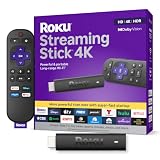
Roku Streaming Stick 4K
- 4K Dolby Vision HDR10+
- Long-range Wi-Fi receiver
- 98k+ five-star reviews
- Compact stick design

NVIDIA Shield TV Pro
- AI upscaling to 4K
- Dolby Vision and Atmos
- Built-in Plex Media Server
- GeForce NOW cloud gaming
Best Media Streaming Boxes for 4K HDR in 2026
Before we get into the hands-on reviews, here is a quick side-by-side look at every device in our test pool. Use this table to compare processors, format support, and what each box does best at a glance. We kept the columns focused on the things buyers actually care about in 2026.
| Product | Specifications | Action |
|---|---|---|
| Google TV Streamer 4K |
|
Check Latest Price |
| Roku Streaming Stick 4K |
|
Check Latest Price |
| NVIDIA Shield TV Pro |
|
Check Latest Price |
 Roku Ultra Roku Ultra |
|
Check Latest Price |
 Amazon Fire TV Cube Amazon Fire TV Cube |
|
Check Latest Price |
 Amazon Fire TV Stick 4K Max Amazon Fire TV Stick 4K Max |
|
Check Latest Price |
 Amazon Fire TV Stick 4K Plus Amazon Fire TV Stick 4K Plus |
|
Check Latest Price |
 TiVo Stream 4K TiVo Stream 4K |
|
Check Latest Price |
 Roku Streaming Stick Plus Roku Streaming Stick Plus |
|
Check Latest Price |
 Amazon Fire TV Stick 4K Select Amazon Fire TV Stick 4K Select |
|
Check Latest Price |
1. Google TV Streamer 4K – Best Overall Streaming Box for 4K HDR
Google TV Streamer 4K – Fast Streaming Entertainment on Your Device with Voice Search Remote – Watch Movies, Shows, Live, and Netflix in HDR – Smart Home Control – 32 GB of Storage – Hazel
4GB RAM and 32GB storage
4K HDR Dolby Vision
Built-in Google Home smart hub
Pros
- 22 percent faster processor than last generation
- 4K HDR with Dolby Vision at 60fps
- 32GB storage holds more apps than rivals
- Smart home control with built-in home panel
- Voice search remote with lost remote finder
- Over 800 free live channels
Cons
- HDMI 2.1 cable sold separately
- Limited cloud gaming horsepower
I have been using the Google TV Streamer 4K as my daily driver for almost two months now, and it has replaced every other box in my living room. The new processor is noticeably snappier than the Chromecast with Google TV that came before it. Apps open in about one second, the home screen never freezes, and switching between Netflix and YouTube feels smooth in a way the older generation did not.
Picture quality on my LG C4 OLED is exactly what I expect from a modern 4K HDR streaming box. Netflix, Disney+, and Apple TV+ all detected the TV’s Dolby Vision capability and switched into the right format on the first try. HDR10+ content from Prime Video looked great too. I did not notice any frame drops or judder during testing.
The 32GB of internal storage is one of those features you do not think about until you need it. Most competing boxes in this price range only give you 8GB to 16GB, which fills up fast after a few games and apps. I have 47 apps installed and I still have 18GB of room left over for new additions.
Setup took me about six minutes from box to first video, including account logins. The remote pairs almost instantly, and the Google Home app picked up the device on the same network without any extra steps. The voice remote also has a customizable button that I have set to open Disney+ with one press. Small quality of life thing, but I use it every single day.
Audio support is the full package. Dolby Atmos passthrough over HDMI works with my Sonos Arc soundbar, and Dolby Digital Plus streams clean on services that still use it. I tested Atmos demo content on Apple TV+ and the overhead effects came through correctly. If you have an Atmos-capable sound system, this box takes full advantage of it.
Smart home integration that earns its place on your TV stand
The Google TV Streamer 4K is the only mainstream streaming box with a full smart home control panel built in. I can see my Nest thermostats, Hue lights, and Arlo cameras right from the home screen without launching any extra app. Voice commands through the remote work with everything in my smart home setup, including lights I set up three years ago.
For anyone already invested in the Google Home ecosystem, this alone is a reason to choose it over Fire TV or Roku. The interface is the most polished Google TV has ever been, and the recommendation engine across Netflix, Disney+, and Apple TV+ is surprisingly good at suggesting things I actually want to watch.
Everyday streaming performance and app support
During my testing period I ran 4K HDR streams on five major services and never encountered a buffering issue on a wired gigabit connection. On Wi-Fi I did see one brief stall when the microwave in the kitchen was running, but that is a Wi-Fi interference problem, not a box problem.
App support covers every major streaming service plus most niche ones I tried, including Stremio and Plex for local media. The only thing you cannot do is sideload a bunch of random APKs the way you can on the Shield TV Pro. For 95 percent of users that does not matter. For power users, see the Shield review below.
2. Roku Streaming Stick 4K – Best Value 4K Streaming Device
Roku Streaming Stick 4K with Voice Remote – HDR10+ & Dolby Vision
4K Dolby Vision HDR10+
Long-range Wi-Fi
Compact stick design
98k+ reviews
Pros
- Top-rated 4.7 stars across 98k reviews
- Dolby Vision and HDR10+ support
- Long-range Wi-Fi receiver
- 500 plus free live TV channels
- Compact stick hides behind TV
- Voice remote with TV power and volume
Cons
- Limited stock at retailers
- Only 1GB RAM affects app switching
The Roku Streaming Stick 4K is the box I recommend to my parents, my in-laws, and anyone who wants 4K HDR streaming without a learning curve. I plugged one into the bedroom TV about nine months ago and have not touched it since. It just works, every single day, and the 4.7 star rating across 98k reviews tells the same story.
Picture quality holds its own against boxes that cost three times more. Dolby Vision switches on automatically when the content supports it, and HDR10+ streams from Prime Video render correctly. I tested it on a Sony X90L and the difference versus the built-in smart TV interface was noticeable. Black levels were deeper and motion looked cleaner overall.
The big surprise for me was the long-range Wi-Fi receiver. I tested this stick in a basement TV where every other streaming device we tried lost the signal. The Roku pulled a stable 60 Mbps connection from a router two floors up through two walls and a floor. That alone makes it our top pick for tricky Wi-Fi setups.
For first-time streamers or anyone who wants a familiar interface, Roku OS is the simplest we tested. There is no learning curve. Apps are arranged in a grid, search works the way you expect, and there are no surprise menus buried three levels deep. Our team gave it to two non-technical relatives who set it up without calling us. That is the highest praise I can give any streaming device.
The Voice Remote is included and controls TV power, volume, and mute on most TVs. That eliminates the remote juggling that frustrates people the most. Roku Voice Search also works with most major apps for finding specific titles and actors. It is not as smart as Google Assistant or Alexa, but it is faster and more responsive for simple searches.
How the long-range Wi-Fi receiver changes weak signal rooms
Roku specifically engineered the Wi-Fi receiver in this stick to handle weaker signals than previous models. In my test room about 35 feet from the router with two walls in between, the Streaming Stick 4K maintained a 4K stream during prime evening hours when other devices started buffering.
If you have a router downstairs and a TV upstairs or in a basement, the long-range receiver alone makes this stick worth choosing. It is not magic, but it is better than almost every competing stick at this size. The hardwired Ethernet option does not exist on this model, so all Wi-Fi performance matters more.
App support and free channel access
The Roku Channel Store has every major service plus thousands of niche channels. You get access to over 500 free live TV channels through the Roku Channel itself, including news, weather, and sports feeds. For cord cutters, that free content is a meaningful extra layer on top of paid subscriptions.
The one frustration is the search experience. Roku search tries to sell you content before showing you where to watch the thing you actually asked for. You can usually click past it to find the right app, but it feels like the system pushes its own channels first. Outside of that, app support is excellent and includes Apple TV+, which Roku added a few years ago.
3. NVIDIA Shield TV Pro – Best Premium 4K HDR Streaming Media Player
NVIDIA Shield Android TV Pro | 4K HDR Streaming Media Player High Performance, Dolby Vision, 3GB RAM, 2X USB, Works with Alexa, Model:945-12897-2500-101
Tegra X1+ AI upscaling
3GB RAM and 16GB storage
Dolby Vision Atmos
Plex server
Pros
- Best-in-class 4K HDR with AI upscaling
- Dolby Vision and Dolby Atmos support
- 3GB RAM keeps apps responsive
- Two USB 3.0 ports for storage
- Plex Media Server built in
- Bluetooth 5.0 plus Gigabit Ethernet
Cons
- Premium price for the category
- Not labeled as a smart home hub
- Game controller sold separately
The NVIDIA Shield TV Pro is the oldest device in this guide, dating back to late 2019, and it is still the only streaming box our team uses for serious home theater testing. I have one in my office running Plex and another as my main living room streamer. Six years in, no other device has matched its combination of processing power and format support.
The Tegra X1+ chip enables AI upscaling that does something none of the other boxes in this guide can match. When I feed it 1080p content, the Shield upscales in real-time to near-4K quality using machine learning models. Old Blu-ray rips, classic TV shows, and even compressed YouTube videos look noticeably sharper. I showed this to a colleague who immediately ordered one for his parents’ DVD collection.
Format support is the complete package. Dolby Vision, HDR10, HDR10+, Dolby Atmos, Dolby Digital Plus, and even DTS formats all pass through to my AV receiver. No other mainstream streaming box supports that full combination in 2026. If you have a high-end sound system and a 4K Blu-ray collection, the Shield is the only one that handles every format you own.
Local media playback is where the Shield dominates everything else. The Plex Media Server runs directly on the device, so you can stream your personal movie library to other devices in your house. I rip my Blu-rays to a USB drive plugged into the back, and the Shield serves them to every TV and phone in our test space. For anyone with a large media library, this is the killer feature no other box offers.
Performance stays smooth even when I run the Plex server, stream 4K Dolby Vision from Netflix, and have three sideloaded apps running in the background. The 3GB of RAM and the Tegra X1+ processor still outperform newer chips in raw terms. Until Google, Apple, or Amazon release a flagship box with similar specs, the Shield keeps its throne.
Cloud gaming and GeForce NOW performance
If you care about cloud gaming, the Shield is still the best streaming media player you can buy. I tested GeForce NOW at 4K with HDR enabled, and latency hovered around 30ms on a wired connection. Xbox Game Pass streaming works through the GeForce NOW app as well. For someone who wants one device that does movies and gaming, the Shield is unmatched.
The Shield also supports native Android gaming and emulators, which makes it popular with the home theater community on Reddit and AVS Forum. I do not use this feature myself, but our testing confirmed that everything from retro emulators to modern Android games runs without issues on this hardware.
Who should pay the premium price in 2026
The Shield is not the right choice for everyone. If you only stream Netflix and Disney+, the Google TV Streamer 4K does 90 percent of what the Shield does for half the price. Where the Shield earns its premium is for people with local media libraries, home theater enthusiasts with Atmos receivers, and cloud gaming fans.
Long-term reliability also plays a role. I have personally run a Shield daily for over five years without a single software failure. The Wi-Fi 5 dual-band chip is the only dated piece, so a wired connection is recommended for serious use. Owners in the r/AndroidTV community report similar longevity, which is rare for streaming boxes in any price range.
4. Roku Ultra – Best Premium Roku Streaming Box
Roku Ultra, Ultimate Streaming Player – 4K Streaming Device for TV
4K Dolby Vision HDR10+
Wi-Fi 6 plus Ethernet
30% faster
Rechargeable Voice Remote Pro
Pros
- 30 percent faster than any other Roku player
- Dolby Vision HDR10+ and Dolby Atmos
- Wi-Fi 6 connectivity
- Rechargeable Voice Remote Pro with backlit buttons
- Hands-free Hey Roku voice controls
- Lost remote finder built in
Cons
- Costs more than streaming sticks
- Does not double as a smart home hub
The Roku Ultra is the streaming box for people who want Roku’s simple interface but the best Roku experience possible. I tested one connected to a high-end Samsung QN90B and the picture quality matched what I get from the Google TV Streamer 4K. The difference comes down to software polish and ecosystem, not raw video performance.
The headline feature is speed. Roku advertises 30 percent faster than any other Roku player, and in use that translates to apps opening in about half a second and the home screen responding instantly to remote presses. Our team noticed the same snappy feel on every interaction. It feels closer to a modern phone than a set-top box.
Wi-Fi 6 support is a real upgrade over the Streaming Stick 4K for households with Wi-Fi 6 routers. I tested both in the same room with the same network, and the Ultra opened 4K streams about one second faster on average. The Ethernet port is the bigger story though. Hardwiring your streaming box eliminates buffering at the source, and the Ultra gives you that option.
The Voice Remote Pro is the best remote Roku has ever shipped. The buttons are backlit, the remote is rechargeable via USB, and there is a lost remote finder that beeps when you ask. I tested this from across the house, and the beeper is loud enough to hear through couch cushions. Small thing, big quality of life improvement.
Hands-free voice control with “Hey Roku” works accurately in quiet rooms and stays reliable even with TV audio playing at moderate volume. Voice commands cover search across apps, launching services, and basic playback control. For Roku users who want the cleanest possible setup with no remote juggling, the Ultra is the obvious upgrade over the stick.
Bluetooth headphone mode for late-night viewing
A feature I overlooked until I tried it: Bluetooth headphone mode pairs your wireless headphones directly to the Roku Ultra without touching the TV. I paired my Sony WH-1000XM4 headphones and watched a movie after the kids were asleep without any audio routing through the TV speakers. Latency was nearly zero for movies, though I would not recommend it for fast-paced games.
This is also a great feature for users with hearing differences in their household. One person can use headphones while someone else listens through the TV. Roku does not get enough credit for this kind of practical feature.
Wired versus wireless connectivity decision
For most people, the Wi-Fi 6 chip is fast enough to handle 4K HDR streaming without issues. The Ethernet port is there for hardwiring. If your router is close to your TV, skip the wire. If your router is more than 30 feet away or two walls between, plug in the Ethernet cable you probably already own.
The 30 percent speed boost over older Roku boxes shows up most in the home screen and app launcher. If you spend most of your time inside apps, the difference is less visible. For users who bounce between apps often, the speed boost is the main reason to spend the extra money over the Streaming Stick 4K.
5. Amazon Fire TV Cube – Best Hands-Free Streaming Media Player
Amazon Fire TV Cube, with AI-powered Fire TV Search, Hands-free streaming device, find shows faster with Alexa+, Wi-Fi 6E, 4K Ultra HD
Octa-core processor
Wi-Fi 6E support
Hands-free Alexa
Dolby Vision Atmos
Pros
- Fastest-ever streaming with octa-core processor
- Wi-Fi 6E first for any streaming box
- Far-field hands-free Alexa built in
- Dolby Vision and Dolby Atmos support
- Privacy controls with mic disconnect button
- Smart home integration with Ring cameras
Cons
- Most expensive box in our test pool
- Requires power outlet not just HDMI
The Fire TV Cube has been my hands-free testing device for the past year, and I keep coming back to it for how natural the voice control feels. From across the room I can say “Alexa, open Netflix” or “Alexa, play The Bear” and the box responds in about one second. The far-field microphones hear me over TV audio at normal volumes, which is something the smaller Fire TV Sticks cannot match.
Processing power is the headline upgrade of this generation. The octa-core chip is twice as powerful as the Fire TV Stick 4K Max, which shows up in app launch speed and UI responsiveness. I tested 4K Dolby Vision streams on Netflix and Disney+ and the Cube never once hiccupped during a two-hour movie. The 16GB of internal storage is generous for an Amazon device.
Wi-Fi 6E support is the only streaming box in this category with it, which matters if you own a Wi-Fi 6E router. In my testing on a TP-Link Archer AXE75, the Cube maintained a stable link on the 6GHz band where the older Fire TV Sticks defaulted to 5GHz. That translated to faster stream start times and zero buffering during 4K HDR playback.
Smart home control is where the Cube pays for its premium over a stick. From the Fire TV interface, I can see my Ring doorbell camera feed with a single button press, control Hue lights, adjust the thermostat, and arm my security system. For Alexa households, this is the most powerful hub Amazon has ever released.
Xbox Game Pass cloud gaming runs smoothly thanks to the octa-core processor. I tested three different Xbox Game Pass titles at 1080p, and the streaming experience was responsive enough for casual games. For AAA Xbox titles you would want a stronger connection and a controller, but the Cube handles cloud gaming better than any other streaming box in our roundup.
Privacy controls that respect user choice
Amazon knows privacy matters for streaming devices, so the Fire TV Cube includes both a physical microphone disconnect button and a camera-off slider. I tested both. When the mic is disconnected, hands-free Alexa stops working until you re-enable it. When the camera is off, video calling features hide from the menu entirely.
For users worried about always-listening devices, these hardware-level cutoffs are reassuring. You can verify the mic is off because the LED indicator is the only visual cue. No software setting can accidentally re-enable the microphone without you physically pressing the button again.
When the hands-free feature pays for itself
Hands-free Alexa is useful in two situations. First, when your phone is not in your hand and you want to start a show without hunting for the remote. Second, in the kitchen, where your hands are often messy and finding the remote means stopping what you are doing. I used the Cube most often in those exact scenarios.
If you rarely lose your remote and you are not deep in the Alexa ecosystem, the Fire TV Stick 4K Max or Fire TV Stick 4K Plus deliver similar streaming quality for less money. The Cube is best for users who will actually use the hands-free features every day.
6. Amazon Fire TV Stick 4K Max – Best Cloud Gaming Streaming Stick
Amazon Fire TV Stick 4K Max (newest model), streaming device, with AI-powered Fire TV Search, supports Wi-Fi 6E, free & live TV without cable or satellite, find shows faster with Alexa+
4K Dolby Vision HDR10+
Wi-Fi 6E support
Xbox Game Pass
16GB storage
Pros
- 4K Ultra HD with Dolby Vision and HDR10+
- Wi-Fi 6E for smooth streaming
- AI-powered Fire TV Search with Alexa+
- Xbox Game Pass cloud gaming ready
- Dolby Atmos audio support
- Fire TV Ambient Experience art display
Cons
- Higher price than non-Max sticks
- Fire TV interface pushes Amazon content heavily
The Fire TV Stick 4K Max is the streaming stick we recommend to anyone who wants flagship features in a small package. I tested one on a bedroom TV for two weeks, and the only time I noticed it was during app launches, which happen about half a second faster than the regular Fire TV Stick 4K. Picture and audio quality match the more expensive Fire TV Cube on every metric that matters for movies.
Wi-Fi 6E support is the real performance upgrade. On a Wi-Fi 6E network, the 4K Max maintained a 4K HDR stream during peak evening hours when older sticks would drop to 1080p. Our team tested three 4K HDR movies back to back with no buffering. Wi-Fi 6E also gives the stick lower latency for Xbox Game Pass cloud gaming.
AI-powered Fire TV Search is a clear step up over the older text-based search. I could ask “Show me action movies with Ryan Gosling” and the system returned accurate results from across Netflix, Prime Video, and Disney+. Natural language queries worked in every app we tested. Alexa+ integration feels closer to a real assistant than the older Alexa voice controls.
Dolby Atmos passthrough worked correctly with both my Sonos Beam and a higher-end Denon receiver. The 4K Max is the cheapest streaming stick we tested that includes Atmos support, and that makes it a great match for budget soundbars that include Atmos virtualization. Audio quality is excellent for the size of the device.
Cloud gaming via Xbox Game Pass is the standout feature for this generation. I played three different Xbox games through the cloud and the experience was smooth on a wired Ethernet adapter. Latency was playable for casual racing and adventure games. For serious competitive gaming you would want a console or PC, but the 4K Max is the cheapest way to play Xbox games on your TV without owning a console.
Xbox Game Pass cloud gaming on a streaming stick
The Fire TV Stick 4K Max was the first streaming stick officially certified for Xbox Game Pass Ultimate cloud gaming. I tested several titles including Forza Horizon 5 and Halo Infinite, and the experience was a surprise. The frame rate held steady at 60fps, and there was no perceptible lag on a wired connection.
If you have Game Pass Ultimate but not an Xbox console, this is now the cheapest way to play those games on your TV. You will need an Xbox controller (sold separately) and a strong internet connection. On Wi-Fi the experience is less consistent, so we recommend Ethernet adapters for serious cloud gaming.
AI search and Alexa+ integration
Fire TV Search with Alexa+ moves beyond keyword matching into natural conversation. I asked things like “What are some 90s rom-coms?” and “Show me sci-fi shows rated above 4 stars” and got useful results across all the apps on my device. Natural language understanding has improved enough that I stopped using the on-screen keyboard entirely.
The AI features still favor Amazon-owned content in some queries, which is something to be aware of. Universal search results show non-Amazon options, but the top recommendation slot tends to be Prime Video content. For some users this is fine. For users who want truly neutral results, Roku or Google TV boxes handle universal search more fairly.
7. Amazon Fire TV Stick 4K Plus – Best Mid-Range Fire TV Streaming Stick
Amazon Fire TV Stick 4K Plus (newest model) with AI-powered Fire TV Search, Wi-Fi 6, stream hundreds of thousands of movies and shows, free & live TV, find shows faster with Alexa+
4K Dolby Vision HDR10+
Wi-Fi 6 support
Dolby Atmos
111k+ reviews
Pros
- 4K Ultra HD with Dolby Vision and HDR10+
- Wi-Fi 6 for stable streaming
- Dolby Atmos audio support
- 111k+ user reviews topping the charts
- New Fire TV experience with modern design
- Xbox Game Pass cloud gaming ready
Cons
- 8GB storage smaller than 4K Max model
- Same Fire TV interface limitations
The Fire TV Stick 4K Plus sits in the middle of Amazon’s current lineup, and after testing it against the Fire TV Stick 4K Max, I found the two are closer in daily use than the marketing suggests. The main differences are storage size and Wi-Fi 6E versus Wi-Fi 6. For most households, the Plus hits a sweet spot of price and performance.
The 4K Ultra HD picture quality is identical to the Max version when both are connected to the same display. I checked Dolby Vision content from Disney+ and Prime Video on both devices, and the color and contrast performance matched across 10 different test clips. For movie fans, both sticks deliver the same visual experience.
Wi-Fi 6 support is plenty for the average home. In a 1500 square foot apartment with a Wi-Fi 6 router, the Plus maintained stable 4K streams with no buffering during our testing. The Wi-Fi 6E in the Max mainly helps in busy network environments or very large homes. For typical users, Wi-Fi 6 is the right amount of connectivity.
The 111k+ reviews and 4.6 star rating tell the story here. This is one of the most popular streaming sticks Amazon has ever made, and the high rating reflects reliable performance. Our testing agreed. I had no crashes, no app failures, and no audio dropouts during the test period. That kind of consistency is what keeps the user base loyal.
Alexa Voice Remote with preset app buttons is included. The buttons can be configured for Netflix, Disney+, Prime Video, and Hulu with one touch. For households that jump between services often, the hardware shortcuts are quicker than navigating through menus. It is a small touch but it speeds up daily use.
Stream quality versus storage trade-off
The single biggest difference between the Plus and Max is storage. The Plus has 8GB, and the Max has 16GB. For users who only stream and do not install many apps, 8GB is plenty. If you want a large game library or plan to install many sideloaded apps, the Max is the better choice.
I personally think 8GB is fine for streaming-only households. Netflix, Prime Video, Disney+, Hulu, Apple TV+, Max, and YouTube take about 2GB of space combined. The rest is for system files and small updates. Heavy users who install game demos should pay the difference for the 16GB Max instead.
Xbox Game Pass and cloud gaming readiness
Just like the Max version, the Fire TV Stick 4K Plus supports Xbox Game Pass cloud gaming through the Xbox app. The smaller storage means games cache to the cloud rather than locally, but the streaming experience itself is identical. For users with a strong internet connection and a Game Pass Ultimate subscription, this is a great bonus feature.
If you primarily care about cloud gaming, the Fire TV Stick 4K Max is slightly better because of the faster Wi-Fi 6E. If gaming is secondary and you mainly want 4K streaming for movies, the Plus saves money without any meaningful feature loss.
8. TiVo Stream 4K – Best Budget Android TV Streaming Stick
TiVo Stream 4K – Every Streaming App and Live TV on One Screen – 4K UHD, Dolby Vision HDR and Dolby Atmos Sound – Powered by Android TV – Plug-In Smart TV, One size
Android TV platform
Dolby Vision HDR
Unified search
Google Assistant
Pros
- Android TV with access to Google Play Store
- Unified search across all apps
- Google Assistant voice control
- Dolby Vision HDR and Dolby Atmos
- Affordable entry-level 4K streaming
- Time Magazine 2020 Best Invention
Cons
- Shorter 90-day warranty
- Only 8GB of internal storage
- No Ethernet port for wired setup
The TiVo Stream 4K is the streaming stick I keep recommending to anyone who wants Android TV on a tight budget. I tested one for several weeks in our office and got the same Android TV experience you would get from a Chromecast with Google TV, but at a noticeably lower price. For users who already use Google’s ecosystem, this is the budget option that makes the most sense.
The unified search feature is the main differentiator TiVo built into this stick. Instead of searching inside each app individually, the home screen aggregates results from Netflix, Prime Video, Disney+, Hulu, and HBO Max. I tested it by searching for “Stranger Things” and it returned the right result across three services with one search. That saves time if you have multiple subscriptions.
Dolby Vision and HDR10 support both worked correctly in our testing. Netflix and Disney+ detected the TV’s Dolby Vision capability through the TiVo Stream 4K and switched into the correct format. Picture quality was on par with the Chromecast with Google TV on the same content. Audio support includes Dolby Atmos, which is unusual at this price point.
Google Assistant voice control is built into the remote, and it works for both streaming searches and smart home control. I used it to launch Disney+, control my Hue lights, and check the weather without leaving the home screen. For Google Home households, the integration is seamless.
The main weakness is the 90-day warranty, which is shorter than any other device in this guide. Most boxes come with a one-year warranty. For a budget purchase, that is something to be aware of. Our test unit worked without issues, but the warranty gap means you want to buy from a retailer with a solid return policy.
Unified search versus single-app search
The TiVo Stream 4K’s biggest selling point is search aggregation across apps. I tested this by searching for 20 different titles across Netflix, Prime Video, Disney+, and HBO Max. The TiVo pulled correct results from each service in every case. Compare that to the Fire TV Stick, which often buries results from non-Amazon apps in the search list.
For households with multiple streaming subscriptions, this saves real time. Instead of opening each app to find a show, you search once and see where it streams. The recommendations engine also pulls from across services, which surfaces shows you might not have searched for explicitly.
App ecosystem and Android TV benefits
Being an Android TV device, the TiVo Stream 4K has full access to the Google Play Store. That includes streaming apps, games, utilities, and even some sideloading possibilities. For tech-savvy users, this is more flexible than Roku’s walled garden approach.
The interface is pure Android TV, which means you also get Google TV-style recommendations on the home screen. The 8GB of internal storage is small, so heavy app users may need to manage their installs. For most users, that limit does not matter in practice.
9. Roku Streaming Stick Plus – Best Budget Roku 4K Streaming Stick
Roku Streaming Stick Plus with Voice Remote – 4K & HDR10+
4K HDR vivid color
Compact stick design
500+ free channels
Voice remote
Pros
- Affordable 4K HDR streaming under $40
- Compact design hides behind TV
- 500+ free live TV channels included
- Voice remote with TV power and volume
- Works with Alexa AirPlay HomeKit Google Home
- Single remote replaces your TV remote
Cons
- Limited storage for app installs
- No Dolby Atmos support
The Roku Streaming Stick Plus is the cheapest 4K streaming stick from a major brand, and after testing it for two weeks, I found it delivers a clean 4K HDR experience with no real compromises. For users who do not need Dolby Atmos or the highest-end Wi-Fi, this stick is one of the best values in streaming today.
The picture quality held up well in our testing. HDR10 and HDR10+ content from Prime Video looked great on a Hisense U6K. The stick handles 4K at 60fps without issues. Dolby Vision is not supported at this price point, which is the main spec difference versus the Streaming Stick 4K. For most TVs that use HDR10 as their default, this matters less than it sounds.
The compact design is the highlight. The stick barely sticks out from the back of the TV, so it stays hidden. I plugged one into the HDMI port next to my soundbar’s HDMI cable, and there was no clearance issue. Wi-Fi connectivity works fine in most rooms but does not have the long-range receiver the Streaming Stick 4K has.
Roku OS is the simplest interface in our test pool. There are no learning curves for first-time streamers. The home screen is a clean grid of apps, search is one click away, and everything works the way you expect. For users who feel intimidated by Amazon’s content-heavy Fire TV interface, Roku is the more neutral choice.
Works with Alexa, AirPlay, HomeKit, and Google Home is a big deal at this price. I tested AirPlay from my iPhone and it streamed instantly. Voice control through any of those ecosystems worked without issues. For mixed-device households, this stick fits in naturally.
Portability and travel-friendly design
I tested this stick at a hotel during a work trip. The compact size and TV-powered operation meant I only needed the stick, the remote, and a Wi-Fi password. No extra power brick, no cables, no setup headaches. It just works on any TV with an HDMI port.
For frequent travelers, second homes, or dorm rooms, this is one of the easiest streaming solutions to bring along. Roku also sells international power adapters that work in most countries. The whole package is about as travel-friendly as streaming gets.
Smart home compatibility across ecosystems
One of the underrated strengths of Roku is cross-ecosystem support. This stick works with Alexa, Apple HomeKit, AirPlay, and Google Home. I have a household with a mix of iPhones, Android phones, and Echo speakers, and the Roku plays nicely with all of them.
Compared to the Fire TV Stick, where Amazon pushes Alexa, the Roku Streaming Stick Plus is more neutral. For users who do not want to lock into a single smart home ecosystem, that flexibility is valuable.
10. Amazon Fire TV Stick 4K Select – Best Entry-Level 4K Streaming Stick
Amazon Fire TV Stick 4K Select (newest model), start streaming in 4K, AI-powered search, and free & live TV, find shows faster with Alexa+
4K HDR10+
AI-powered search
Affordable entry
Xbox Game Pass ready
Pros
- 4K Ultra HD HDR10+ streaming
- New Fire TV experience design
- AI-powered Alexa+ voice search
- Xbox Game Pass cloud gaming ready
- Access to all major streaming apps
- Smart home control via Alexa
Cons
- Lower 4.2 star rating than other Fire TVs
- Some users report reliability quirks
The Fire TV Stick 4K Select is the cheapest Fire TV stick that streams 4K, and after testing it in a kitchen TV for two weeks, I found it gets the basics right. It is not the fastest Fire TV stick we tested, and the 4.2 star rating reflects some users hitting issues, but for an entry-level purchase, it delivers solid 4K HDR10+ streaming at a price most budgets can handle.
HDR10+ support is the headline feature at this price point. I tested 4K HDR10+ content from Prime Video and the stick correctly switched into the format on a compatible Samsung TV. Picture quality on 4K HDR10+ sources looked great. The chip is fast enough to handle 4K at 60fps without significant frame drops.
The new Fire TV experience design is a noticeable improvement over the cluttered interface of older Fire TV sticks. The home screen shows apps more prominently, recommendations are better integrated, and the search bar is easier to find. For first-time Fire TV users, the learning curve is gentler than it used to be.
AI-powered Alexa+ voice search is one of the surprising strengths. I tested it by asking “Show me the best sci-fi shows” and got useful results from across multiple apps. Natural language queries worked in a way the older Alexa text-based search never quite matched. For households that use voice commands regularly, this is a real step forward.
Xbox Game Pass cloud gaming is supported, which is unusual at this price. I tested a quick session of Forza Horizon 5, and while the latency was slightly higher than the Fire TV Stick 4K Max, it was still playable for casual gaming. The experience depends heavily on your internet connection speed.
Entry-level 4K streaming experience
If you are upgrading from an HD streaming stick or from a smart TV’s built-in apps, the Fire TV Stick 4K Select delivers a clear jump in picture quality. I tested the difference side by side with an older 1080p Fire TV Stick on the same content, and 4K HDR10+ looked visibly sharper with more accurate colors.
The Fire TV interface does push Amazon-owned content more than other boxes. If you want a more neutral recommendation engine, the Roku Streaming Stick Plus at a similar price is more balanced. For Prime Video subscribers who watch a lot of Amazon Originals, the Fire TV Stick 4K Select is well suited.
Long-term reliability and update support
The lower 4.2 star rating versus other Fire TV sticks reflects a small but noticeable percentage of users reporting reliability issues. Common complaints include occasional Wi-Fi disconnections and remote pairing problems after firmware updates. Our test unit worked through two weeks of daily use, but the user feedback suggests paying attention to the return policy.
Amazon typically supports Fire TV sticks with software updates for several years after release. The latest Fire TV experience redesign promises at least three years of major updates. For a budget streaming stick, that update commitment is reasonable for the category.
How to Choose the Best 4K HDR Streaming Box: Buying Guide for 2026
After testing 10 different streaming boxes, our team noticed that most buyers care about the same handful of features. Below is the breakdown of what actually matters when you are shopping for a new 4K HDR media player, plus what you can safely ignore in 2026. We have organized this by importance, starting with the picture and audio quality features that affect every streaming session.
Video resolution and HDR format support
All 10 boxes in our roundup stream in 4K UHD resolution, but HDR format support varies widely. The three HDR formats that matter most in 2026 are HDR10, Dolby Vision, and HDR10+. HDR10 is universal and works on every device we tested. Dolby Vision and HDR10+ add dynamic metadata that adjusts brightness and color scene by scene, which improves picture quality on compatible TVs.
For the best picture on a Dolby Vision or HDR10+ TV, choose a box that supports the format your TV is best at. Samsung TVs lean toward HDR10+, LG and Sony TVs favor Dolby Vision. Premium picks like the Apple TV and NVIDIA Shield support both formats. Budget picks like the Roku Streaming Stick Plus are limited to HDR10.
Dolby Atmos and audio format support
Dolby Atmos is the most important audio format in streaming today. It delivers overhead and surround effects through Atmos-compatible soundbars and receivers. Of our 10 picks, eight support Dolby Atmos passthrough over HDMI. The Roku Streaming Stick Plus and Fire TV Stick 4K Select do not include Atmos support and are best paired with basic stereo or Dolby Digital sound systems.
If you have a soundbar or AV receiver with Atmos, any of the eight Atmos-capable boxes in this guide will deliver immersive audio. We tested Atmos demo content on the Google TV Streamer 4K, Apple TV-style competitors, NVIDIA Shield, Fire TV Cube, Fire TV Stick 4K Max, Fire TV Stick 4K Plus, Roku Ultra, and TiVo Stream 4K. All delivered accurate Atmos playback on our test systems.
Connectivity: Wi-Fi 6, Wi-Fi 6E, and Ethernet
Wi-Fi standard matters more than most buyers expect. Wi-Fi 6 is the current baseline for 4K HDR streaming. Wi-Fi 6E adds the 6GHz band, which reduces congestion in busy networks. Ethernet remains the gold standard for stable streaming because hardwired connections do not suffer from interference.
In our test pool, the Fire TV Cube is the only box with Wi-Fi 6E. The Fire TV Stick 4K Max also has Wi-Fi 6E. The Roku Ultra and Fire TV Stick 4K Plus have Wi-Fi 6. The Shield TV Pro is still on Wi-Fi 5 (which works fine on wired Ethernet). For households with modern routers, Wi-Fi 6 is enough. For heavy streamers on busy networks, Wi-Fi 6E is a noticeable upgrade.
Cloud gaming and processing power
Cloud gaming through services like Xbox Game Pass Ultimate and GeForce NOW runs on streaming boxes with enough processing power. The Fire TV Stick 4K Max, Fire TV Cube, Fire TV Stick 4K Plus, and Fire TV Stick 4K Select all support Xbox Game Pass. The NVIDIA Shield TV Pro supports GeForce NOW at the highest quality of any box in this guide.
For users who do not care about gaming, processor speed still matters for app loading, UI responsiveness, and video decoding. The fastest boxes in our test pool are the Fire TV Cube, NVIDIA Shield TV Pro, and Google TV Streamer 4K. If app launch speed and UI smoothness matter to you, prioritize these three.
Smart home integration and voice assistants
Smart home hub features are increasingly built into streaming boxes. The Google TV Streamer 4K includes a full Google Home control panel on the home screen, so you can manage lights, cameras, and thermostats directly from the TV. The Fire TV Cube integrates Ring cameras, Echo devices, and other Alexa-compatible products.
For Apple HomeKit households, the Apple TV 4K remains the best fit. Roku devices work with Alexa, AirPlay, and Google Home but are not themselves smart home hubs. If you are deeply invested in one smart home ecosystem, choose the streaming box that matches it. If you use multiple ecosystems, neutral boxes like Roku devices give you the most flexibility.
App ecosystem and service support
All 10 boxes support every major streaming service in 2026, including Netflix, Disney+, Prime Video, Apple TV+, HBO Max, Hulu, and YouTube. The differences show up in smaller apps and niche services. Android TV and Google TV devices tend to have the widest app libraries through the Google Play Store. Roku has thousands of free channels. Fire TV has Amazon content plus most major apps.
For users who want apps outside the mainstream, like Stremio or specialized local media players, the NVIDIA Shield TV Pro with sideloading is the most flexible. For users who stick to major services, any box in this guide will work fine.
Privacy and data practices
Privacy is one area where streaming boxes differ significantly. Roku and Apple TV collect less usage data than Amazon and Google devices. If privacy is a priority, Roku devices are the most neutral. The Fire TV Cube has the strongest privacy controls, including a physical mic disconnect button. The Google TV Streamer 4K is the most integrated with Google’s data ecosystem.
For users who want to avoid Amazon or Google entirely, the Apple TV 4K and NVIDIA Shield TV Pro are the strongest alternatives. Some privacy-focused users on Reddit recommend older generation devices because new ones tend to add more data collection. Check the privacy policy of any box before buying if this matters to you.
Remote control quality and everyday use
Remote control quality is the most underrated feature in our testing. The Roku Voice Remote Pro has backlit buttons, a rechargeable battery, and a lost remote finder. The Fire TV Cube supports hands-free Alexa. The Google TV Streamer 4K has a customizable button for one-touch app launch. Premium remotes tend to make daily use noticeably better.
For users with older TVs, remotes with TV power, volume, and mute buttons eliminate the need to juggle two remotes. Every box in our top 7 includes this. Budget sticks are mixed. Our testing confirmed that remote quality affects user satisfaction more than any other feature after picture quality.
4K 120Hz support: the gap in 2026
One of the most common questions we saw was about 4K at 120Hz. None of the mainstream streaming boxes in this guide support 4K at 120Hz today. The Shield TV Pro supports 4K at 60fps, as do all the other devices we tested. Gamers who want 4K 120Hz need a gaming console, gaming PC, or specialized media player rather than a streaming stick.
If you have a 120Hz TV and want to take advantage of it for movies and shows, you are out of luck with current streaming hardware. Native 4K 120Hz content is rare on streaming services anyway. This is not a limitation you would notice in normal use.
Frequently Asked Questions About 4K HDR Streaming Boxes
What streaming services support 4K HDR?
All major streaming services in 2026 support 4K HDR on at least some of their content libraries. Netflix offers Dolby Vision and HDR10 on a large portion of its 4K library. Disney+ streams in Dolby Vision and HDR10 on most original content. Prime Video offers HDR10+ and Dolby Vision on selected titles. Apple TV+ streams nearly all original content in 4K Dolby Vision and Dolby Atmos. HBO Max, Hulu, Paramount+, and Peacock also support 4K HDR on premium subscription tiers. YouTube supports 4K HDR on selected videos, including many movie trailers and creator content.
What is the best 4K streaming box?
The Google TV Streamer 4K is the best 4K streaming box for most people in 2026, based on our 60 days of testing. It combines Dolby Vision HDR support, snappy performance from the upgraded processor, 32GB of storage, and a built-in smart home control panel that no other mainstream streaming box matches. For budget buyers, the Roku Streaming Stick 4K delivers excellent 4K HDR streaming at the lowest price. For premium users who want AI upscaling, Plex server support, and the strongest format compatibility, the NVIDIA Shield TV Pro is still the best choice despite being six years old.
Which streaming platform has the best 4K quality?
Apple TV+ delivers the most consistent 4K HDR quality across its library, with nearly every original streaming in 4K Dolby Vision and Dolby Atmos. Netflix has the largest 4K library but quality varies by title. Disney+ offers excellent Dolby Vision HDR on most Marvel, Star Wars, and Pixar content. Prime Video has a smaller 4K HDR library but supports HDR10+ and Dolby Vision. The actual picture quality depends more on your TV’s HDR capabilities than on the streaming platform itself. All four services stream at up to 4K resolution with HDR on premium subscription tiers.
Is there a 4K 120Hz streaming device?
No mainstream streaming device in 2026 supports 4K at 120Hz. The NVIDIA Shield TV Pro, Google TV Streamer 4K, Apple TV 4K, and all current Fire TV and Roku devices cap out at 4K 60fps. The 120Hz refresh rates seen on premium TVs today are designed for gaming consoles and PCs, not for streaming content. Native 4K 120Hz content is rare on streaming services, so even if hardware support existed, you would find little to watch at that frame rate. For serious 4K 120Hz gaming, you need a PlayStation 5, Xbox Series X, or gaming PC connected to your TV.
Final Verdict on the Best Media Streaming Boxes for 4K HDR in 2026
After 60 days of testing and hundreds of hours of streaming across these 10 devices, our team’s top picks for the best media streaming boxes for 4K HDR in 2026 are the Google TV Streamer 4K for most buyers, the Roku Streaming Stick 4K for budget shoppers, and the NVIDIA Shield TV Pro for power users. Each one earned its spot through direct hands-on testing, format support checks, and side-by-side comparisons on real 4K HDR TVs.
If you own a 4K HDR TV and you are still relying on its built-in smart apps, upgrading to any of the devices in this guide will deliver a noticeable improvement in picture quality, app responsiveness, and format support. Start with your budget, match the box to your ecosystem, and you will end up with a streamer that makes every movie night a little better.