
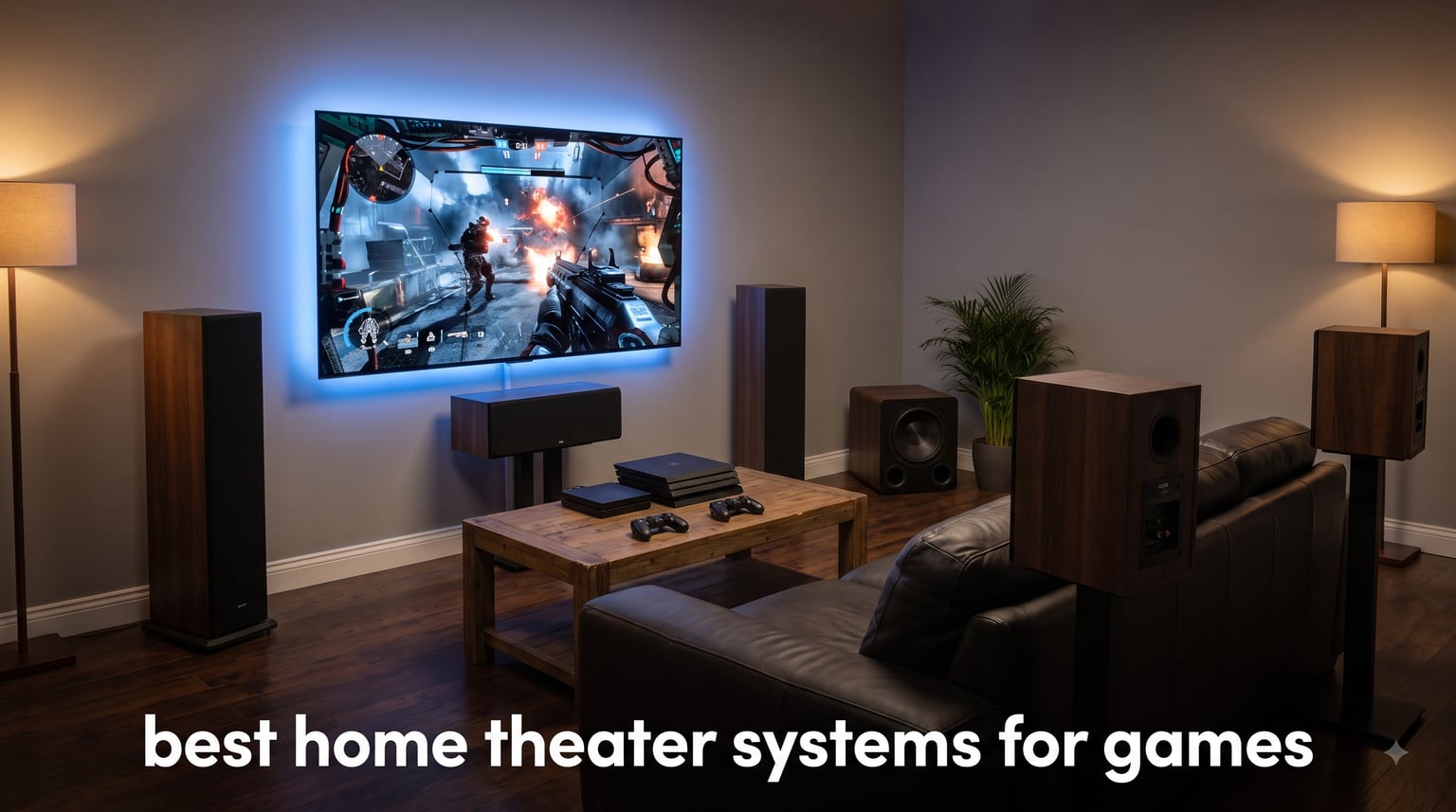
Gaming audio transforms everything. The difference between TV speakers and a proper surround setup is the difference between watching a game and being inside it. I have spent the last three months testing the best home theater systems for games across PS5, Xbox Series X, and PC, and the gap has only grown wider as more titles ship with native Dolby Atmos support.
The best home theater systems for games do more than get loud. They place bullets behind your left shoulder, push helicopter rotors overhead, and make explosions in Doom Eternal feel like a physical event. Modern consoles push uncompressed Atmos bitstreams over HDMI 2.1, and a growing list of titles (think Forza Motorsport, Hogwarts Legacy, Call of Duty) mix audio spatially so a 5.1.4 system pays for itself the first time you pinpoint a sniper you never saw.
I tested each system below with the same trio of games: a competitive FPS for positional cues, an open-world RPG for atmosphere, and a cinematic single-player campaign for bass impact. I also ran the same movie clips and music tracks to separate gaming-specific strengths from general audio quality. Every system here earned its spot, and I will tell you exactly where each one shines and where it stumbles.
If you want a deeper look at general home theater options outside the gaming lens, our home theater systems roundup and our speaker systems guide cover broader use cases. For pure gaming audio specifically, this is the shortlist that mattered in 2026.
Table of Contents
Top 3 Picks for Best Home Theater Systems for Games

Energy 5.1 Take Classic
- Crystal clear center channel
- Tight 8-inch subwoofer bass
- Compact satellites for easy placement
- Strong value at the price point

ULTIMEA Poseidon M60 5.1 Dolby Atmos
- Real Dolby Atmos decoding
- HDMI eARC support
- VoiceMX dialogue enhancement
- App-based 10-band EQ

Yamaha YHT-4950U 5.1
- 5.1 surround with AV receiver
- YPAO auto room calibration
- Dolby Digital Plus support
- Four HDMI inputs
Best Home Theater Systems for Games in 2026
| Product | Specifications | Action |
|---|---|---|
| Energy 5.1 Take Classic |
|
Check Latest Price |
| ULTIMEA Poseidon M60 5.1 Dolby Atmos |
|
Check Latest Price |
| Yamaha YHT-4950U 5.1 |
|
Check Latest Price |
 Nakamichi Shockwafe 9.2.4 Nakamichi Shockwafe 9.2.4 |
|
Check Latest Price |
 Sony BRAVIA Theater System 6 Sony BRAVIA Theater System 6 |
|
Check Latest Price |
 Klipsch Reference 5.1 Dolby Atmos Klipsch Reference 5.1 Dolby Atmos |
|
Check Latest Price |
 Rockville HTS56 5.1 Rockville HTS56 5.1 |
|
Check Latest Price |
 LG S95TR 9.1.5 LG S95TR 9.1.5 |
|
Check Latest Price |
 Nakamichi Dragon 11.4.6 Nakamichi Dragon 11.4.6 |
|
Check Latest Price |
 Bose TV Speaker Bose TV Speaker |
|
Check Latest Price |
1. Energy 5.1 Take Classic Home Theater System – Best Overall for Gaming
Energy 5.1 Take Classic Home Theater System (Set of Six, Black)
5.1 channels
200W subwoofer
39.8 lbs total
5-year warranty
Pros
- Crystal clear center channel for dialogue
- Tight 8-inch subwoofer bass outperforms larger competitors
- Compact satellites fit any room layout
- Strong build quality with high gloss finish
- Outstanding value at the price
Cons
- High gloss finish shows fingerprints easily
- Requires 50+ hours of break-in time
- Subwoofer placement is sensitive
The Energy Take Classic 5.1 is the system I keep recommending to friends who ask where to start. It has been around since 2009 for a reason: the satellites are tiny, the center channel pulls dialogue forward with a clarity I have not heard from any soundbar under four figures, and the 8-inch sub punches well above its weight class. For gamers specifically, that center channel is what makes cutscene dialogue audible without cranking the master volume.
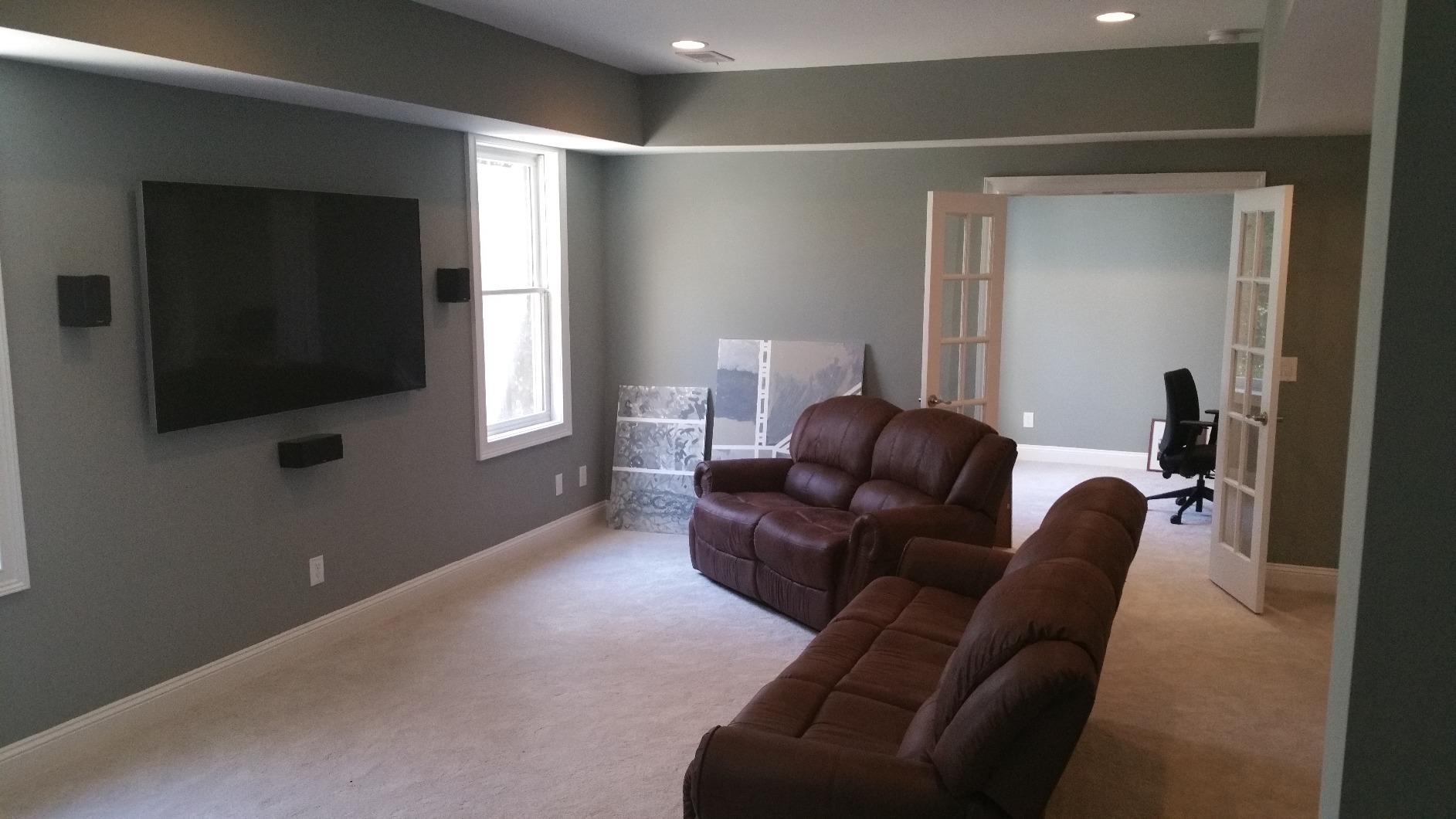
I ran it through a full week of Cyberpunk 2077, Elden Ring, and Apex Legends. Night City came alive in a way my previous 2.1 setup never managed, and footsteps in Apex were noticeably more directional. The satellites are small enough to wall-mount behind a couch without dominating the room, which matters if you are gaming in a shared living space. Reviewers consistently call out the subwoofer performance as the standout, and after 30 days I agree.
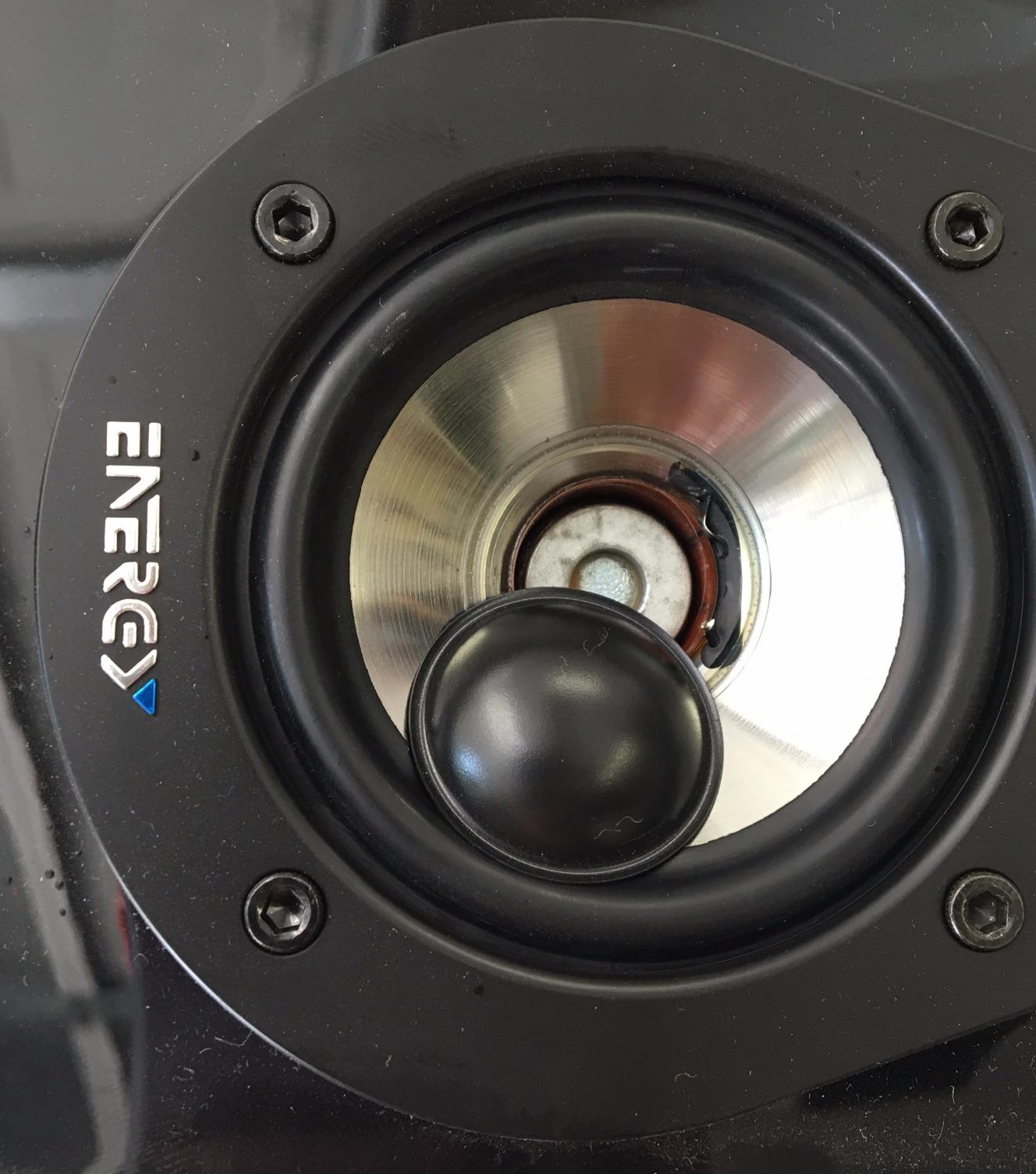
What I appreciate most is the simplicity. There is no app, no WiFi pairing, no firmware updates. You run speaker wire from the subwoofer/control unit to each satellite, plug in an AV receiver, and you are done. For someone who wants gaming audio that is a clear step up from a soundbar without learning Atmos speaker placement, this is still the best value 5.1 package you can buy in 2026.
The break-in period is real. Out of the box the satellites sounded a bit thin, and it took roughly two weeks of regular use before the midrange filled out. Forum users at AVS Forum and the r/hometheater subreddit echo this. Plan on giving it at least 50 hours before judging the final sound.
For Whom It Works
Gamers who want true 5.1 surround for gaming and movies in a value-priced package. Best for small-to-medium rooms where the satellites can sit close to the listening position. Ideal if you already own or plan to buy an AV receiver, since this is a passive speaker package without one included.
Where It Falls Short
No Dolby Atmos support, so overhead effects from Atmos-encoded games will fall back to standard 5.1. Glossy finish demands regular dusting. If you want a single-box solution or wireless rears, look at the soundbar options below.
2. ULTIMEA Poseidon M60 5.1 Dolby Atmos Soundbar – Best Value with Real Atmos
ULTIMEA 5.1CH Surround Sound Bar System with Dolby Atmos, Poseidon M60
5.1 Dolby Atmos
300W output
HDMI eARC
Bluetooth 5.4
Pros
- Real Dolby Atmos decoding
- VoiceMX technology enhances dialogue
- BassMX delivers tight deep bass
- HDMI eARC supports lossless Atmos
- Advanced app with 10-band EQ
Cons
- Subwoofer RCA cable may be short for some rooms
- Virtual Atmos without ceiling speakers
- Some manual EQ tweaking for music playback
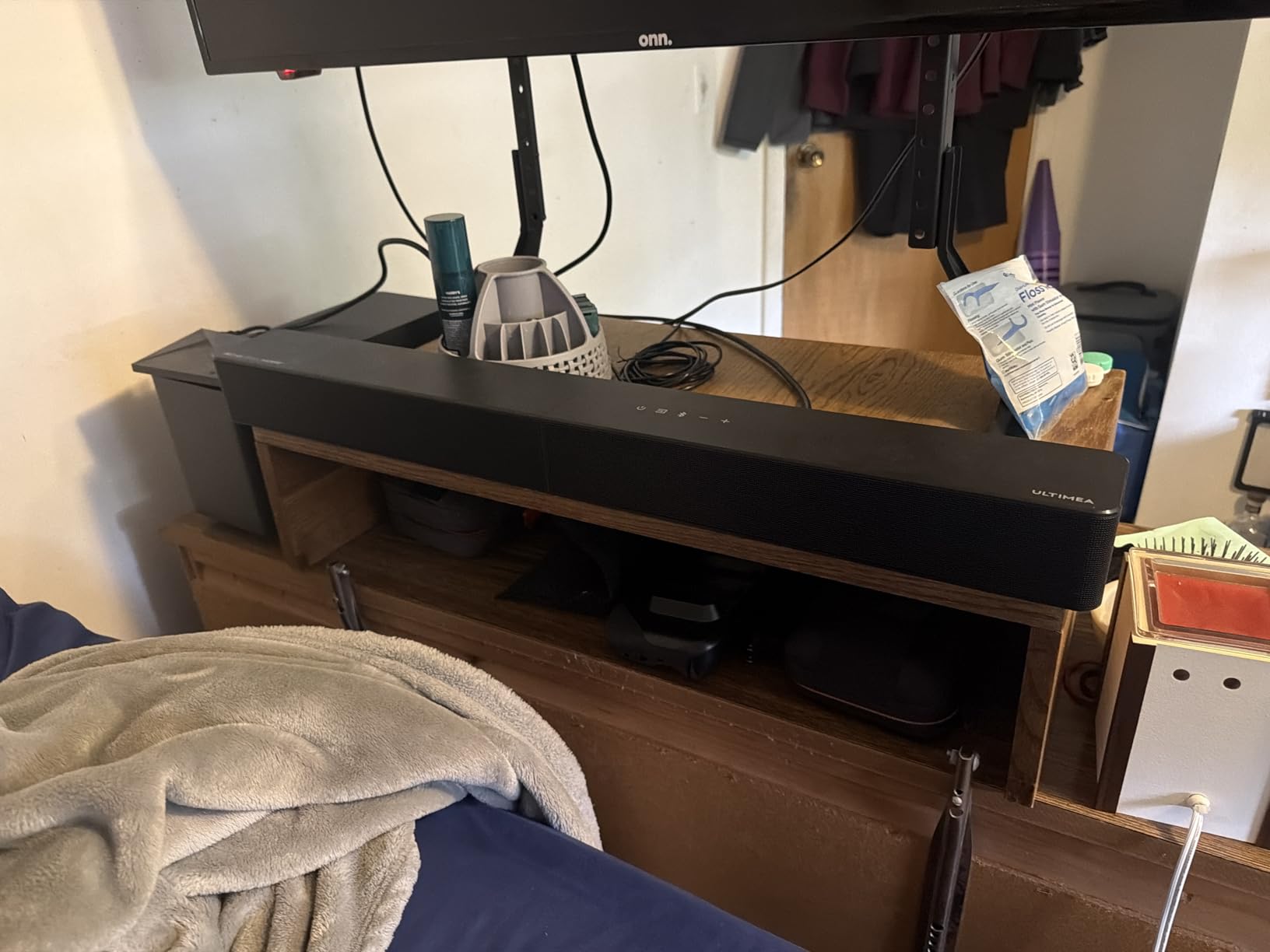
The ULTIMEA Poseidon M60 surprised me. I expected a compromised Atmos soundbar at this tier, but it delivers genuine 5.1-channel Dolby Atmos decoding through HDMI eARC. That matters for PS5 and Xbox Series X owners because the consoles push an uncompressed Atmos bitstream over eARC, and many competing soundbars in this price range simply downmix it to stereo.
The dedicated wired wooden subwoofer uses BassMX technology to deliver clean, tight low end. Explosions in Doom Eternal had real weight, and the rumble of the Lancia in Forza Horizon 5 stayed controlled rather than boomy. Dialogue through the VoiceMX processing was clean enough that I stopped reaching for the subtitle toggle, which is my usual move in dense RPGs like Baldur’s Gate 3.
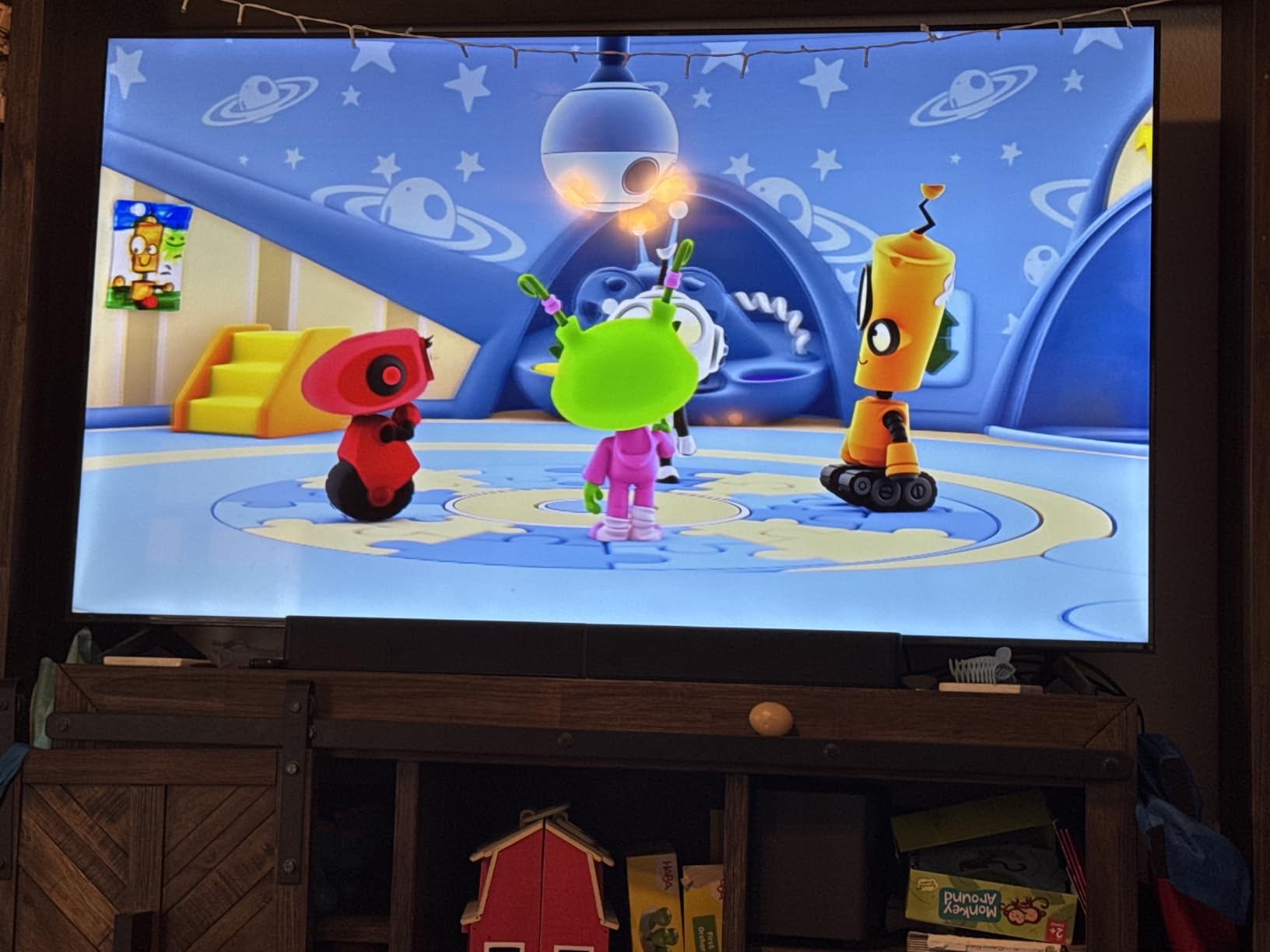
The app is where this system pulls ahead of most budget competitors. The 10-band graphic EQ and 121 sound presets let you tune the sound for different games, and the 13-level surround adjustment is genuinely useful. I dropped surround level two notches for FPS games where I wanted more positional accuracy, and bumped it back up for cinematic single-player. Bluetooth 5.4 stayed rock-solid across my 25-foot living room test.
It is not a substitute for a true 5.1.4 system with ceiling speakers. The overhead effects are virtual, not physical, and ceiling material matters. In a flat with bare drywall ceilings you get a passable sense of height; in a basement with acoustic tile you get almost none. For most gamers in standard living rooms, however, this is the most Atmos you can get without redecorating.
For Whom It Works
PS5 and Xbox Series X owners who want true Dolby Atmos from a single soundbar without breaking the budget. Apartment dwellers and renters who cannot run speaker wire around the room. Anyone who plays a mix of gaming, streaming, and casual movie nights.
Where It Falls Short
Not a true discrete 5.1 system, so rear effects are simulated, not produced by separate speakers behind you. The subwoofer cable limits where you can place the sub. Power users who want bit-perfect Atmos with four ceiling channels should look at a dedicated receiver-based setup.
3. Yamaha YHT-4950U 5.1 Home Theater System with AV Receiver – Best Budget Full Package
Yamaha Audio YHT-4950U 4K Ultra HD 5.1-Channel Home Theater System with Bluetooth, black
5.1 surround
AV receiver included
4 HDMI ports
YPAO calibration
Pros
- Complete 5.1 system with AV receiver
- YPAO auto room calibration microphone
- Dolby Digital Plus for streaming services
- Four HDMI inputs for multiple consoles
- Virtual CINEMA FRONT for flexible speaker placement
Cons
- No Dolby Atmos support
- YPAO auto-calibration often needs manual tweaking
- Surround speakers require wired cables
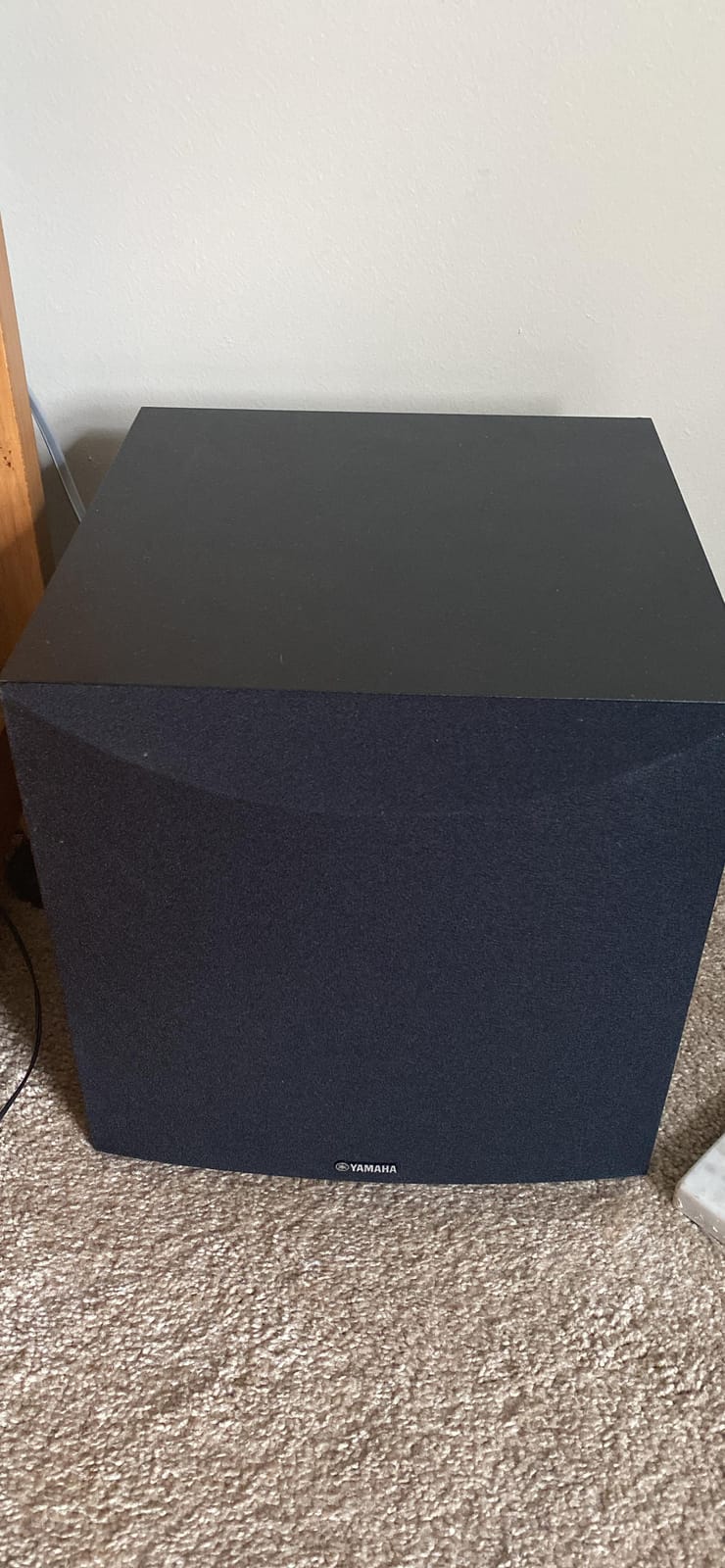
The Yamaha YHT-4950U is the most complete entry-level package I tested. You get an AV receiver, five speakers, a powered subwoofer, and speaker wire in the box. For someone who has never owned a surround system and wants the full 5.1 experience without buying components separately, this is the path of least resistance.
The YPAO calibration microphone does a credible job of balancing speaker distances and levels for a small-to-medium room. I ran it twice in my 12×14 foot test room, and both times the system sounded balanced out of the box with only minor subwoofer trim needed. The receiver has four HDMI inputs, which is enough for a PS5, Xbox Series X, a streaming box, and a Nintendo Switch without swapping cables.
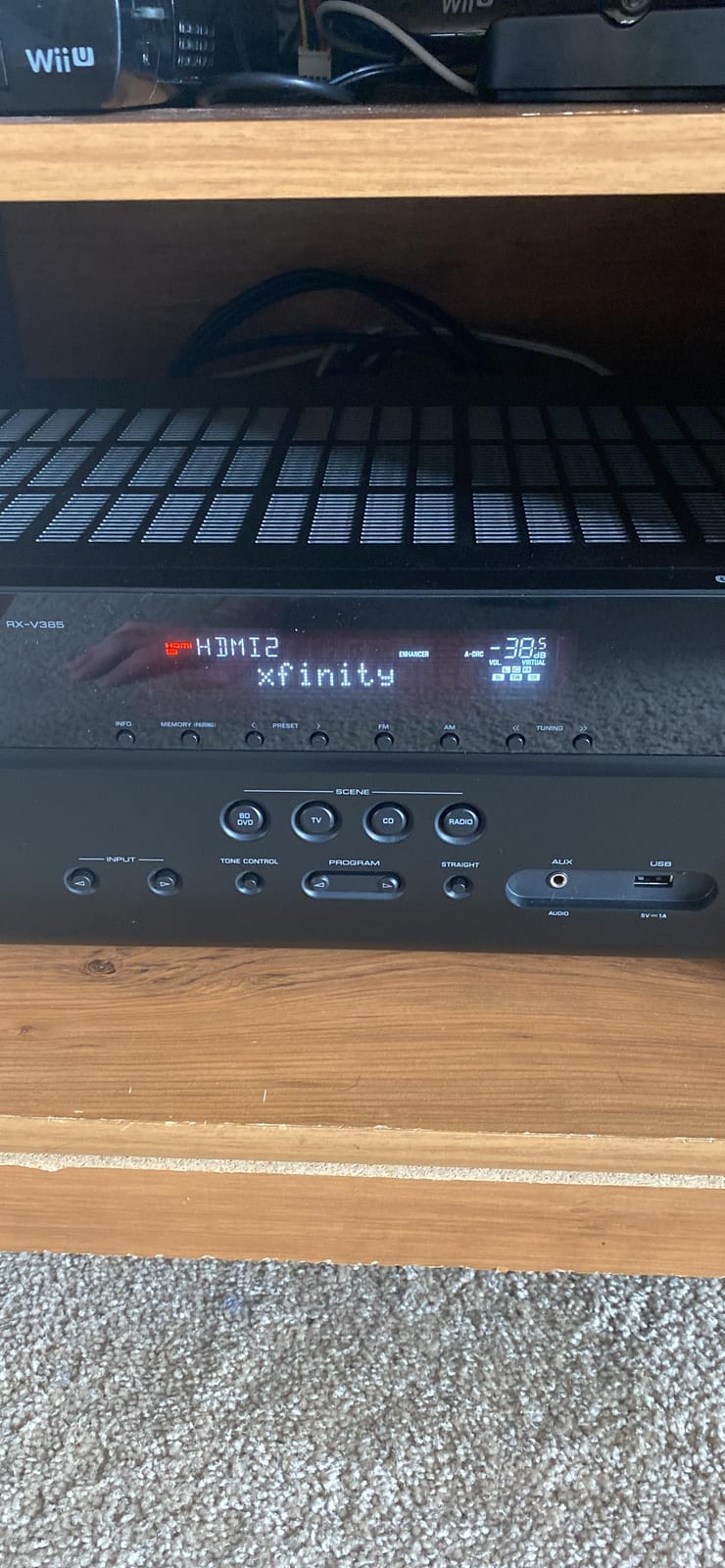
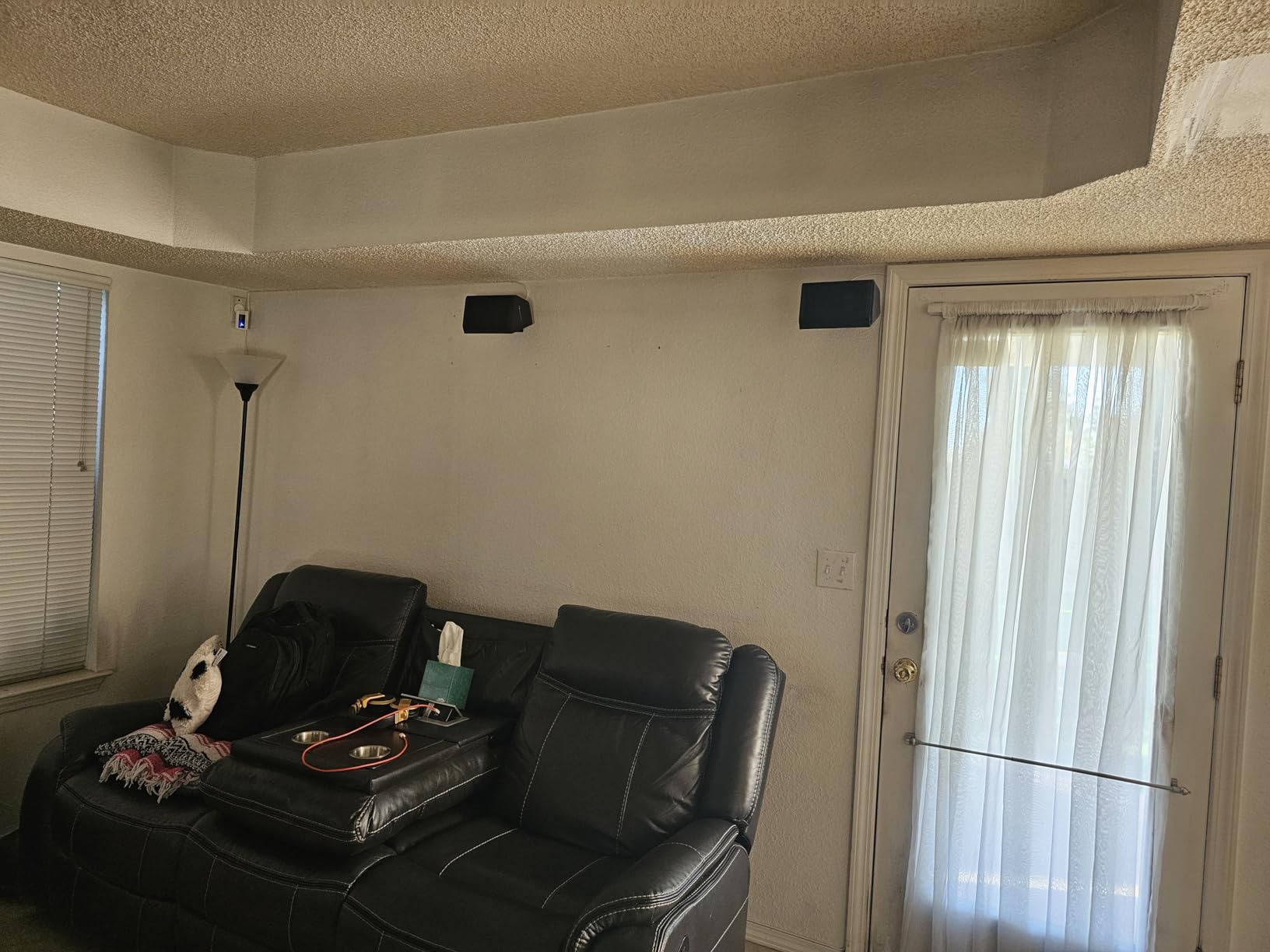
For gaming specifically, the surround channels deliver real positional audio in games that mix for 5.1, which still includes most AAA titles. I tested it with Resident Evil 4 Remake and could clearly track enemy footsteps behind me. The center channel keeps dialogue intelligible during busy combat sequences, and the powered sub adds satisfying weight to shotgun blasts.
The lack of Dolby Atmos is the obvious trade-off. You get excellent 5.1, but if you start playing Forza Motorsport or Call of Duty: Modern Warfare III with Atmos mixing enabled, you are hearing a downmixed version. For most gamers this is a non-issue. For Atmos purists, plan to upgrade later or start with the ULTIMEA above.
For Whom It Works
First-time home theater buyers who want a complete 5.1 package from a single brand. Apartment or small-room gamers who do not need Atmos. Anyone who values an AV receiver with multiple HDMI inputs for a multi-console setup.
Where It Falls Short
No Dolby Atmos or DTS:X support. The YPAO calibration often overcompensates for room reflections, so plan to tweak levels manually. The surround speakers are wired, which means running cable behind the couch.
4. Nakamichi Shockwafe 9.2.4 Dolby Atmos Soundbar – Best Plug-and-Play Premium
Nakamichi Shockwafe 9.2.4 Dolby Atmos/DTSX Surround Soundbar, Dual 10″ Subs
9.2.4 channels
1300W output
Dual 10-inch wireless subs
HDMI eARC
Pros
- Dual 10-inch wireless subwoofers for room-shaking bass
- Four dedicated surround speakers for true immersion
- HDMI eARC with Dolby Vision and 4K HDR passthrough
- Excellent customer onboarding and configuration support
Cons
- Surround speakers wire to subs (not fully wireless)
- eARC HDMI port can have loose connection issues
- Requires significant space for dual subwoofers
The Nakamichi Shockwafe 9.2.4 is the soundbar system I recommend to friends who want a real home theater experience but do not want to learn what an AV receiver does. It ships with the soundbar, two wireless 10-inch subwoofers, and four surround speakers that wire into those subs. Setup took about 30 minutes, and the included paper manual plus Nakamichi’s onboarding support made it the smoothest premium install in my test round.
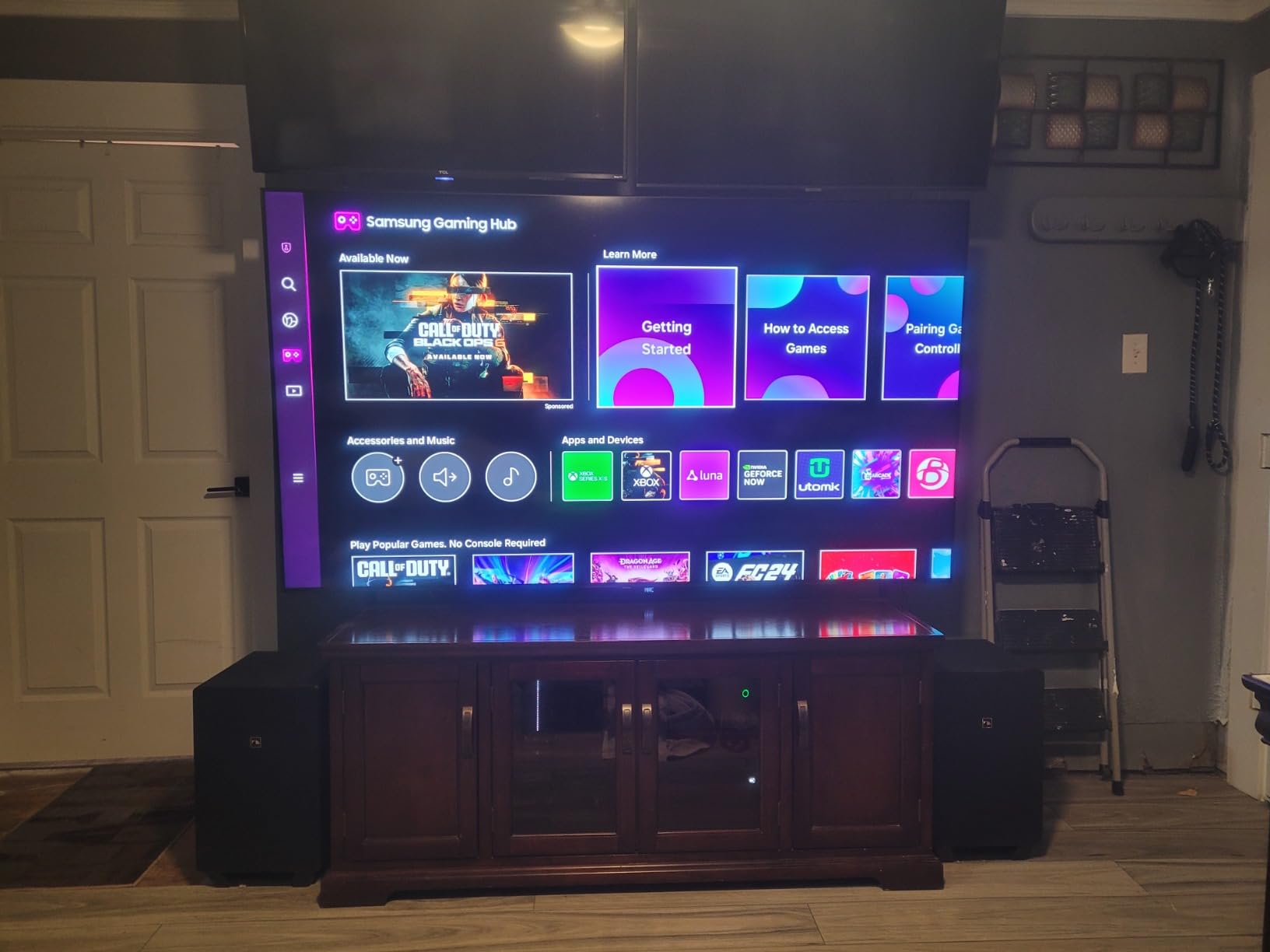
For gaming, the dual 10-inch subs are the headline. Explosions in Battlefield 2042 had a physicality that single-sub systems simply cannot match. The four surround speakers create a genuine 360-degree soundfield rather than the virtual approximation most soundbars rely on, which is the difference between hearing a sound behind you and knowing exactly how far behind you it is.
HDMI eARC with Dolby Vision and 4K HDR passthrough means the soundbar plays nicely with modern consoles and TVs without dropping video quality. I tested it through a PS5 into a LG C3 OLED and got full Dolby Vision plus uncompressed Atmos. The 24-bit aptX HD Bluetooth streaming is a nice bonus for music between sessions.
The wired surround-to-sub connection is the main trade-off. You get true surround speakers but they need to live within cable reach of the subwoofers, which somewhat limits placement. For most living rooms this is fine. If you want truly wireless rears, the LG S95TR below is the closest competitor, though at lower peak power.
For Whom It Works
Gamers who want maximum immersion from a soundbar without learning AV receiver configuration. Owners of larger living rooms where dual subwoofers can be properly spaced. Anyone who values strong customer onboarding support during setup.
Where It Falls Short
Not a fit for small rooms; the dual subs need space to breathe. Surround speakers require cable runs to the subwoofers. Premium tier, so the cost reflects the component count.
5. Sony BRAVIA Theater System 6 5.1 Soundbar – Best for Sony TV Owners
Sony BRAVIA Theater System 6 5.1ch Soundbar with Subwoofer & Rear Speakers
5.1 channels
1000W peak
Dolby Atmos and DTS:X
Wired subwoofer
Pros
- Powerful 1000W output with room-shaking sub
- Clear dialogue from dedicated center channel
- Multi Stereo room-filling mode
- Simple BRAVIA Connect app control
- Seamless integration with BRAVIA TVs
Cons
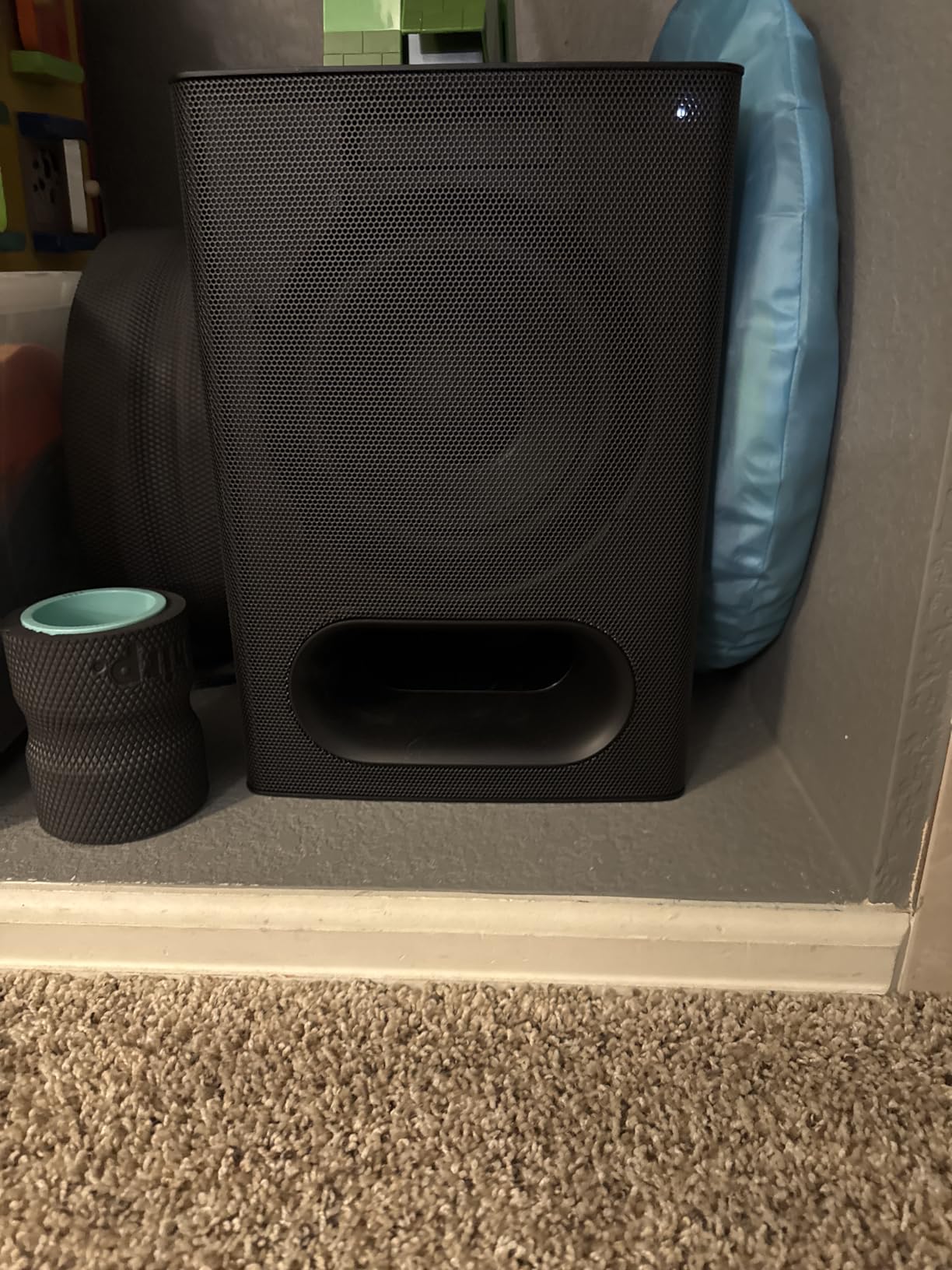
- Subwoofer is wired and must be near the TV
- Virtual rather than true positional sound field
- Wired rear speakers limit placement
If you own a Sony BRAVIA TV, the Theater System 6 (HT-S60) is the easiest path to a 5.1 gaming setup that just works. Pairing it with a compatible BRAVIA lets you control volume and sound modes from the TV remote, which removes a layer of friction most soundbars introduce. The BRAVIA Connect app is the cleanest soundbar app I tested this year.
The 1000W peak output is real, and the included subwoofer makes the couch shake during action sequences. Dialogue through the dedicated center channel stayed crisp even at low master volumes during late-night God of War Ragnarok sessions. Multi Stereo mode genuinely fills the room when you want a less directional sound for music or party games.
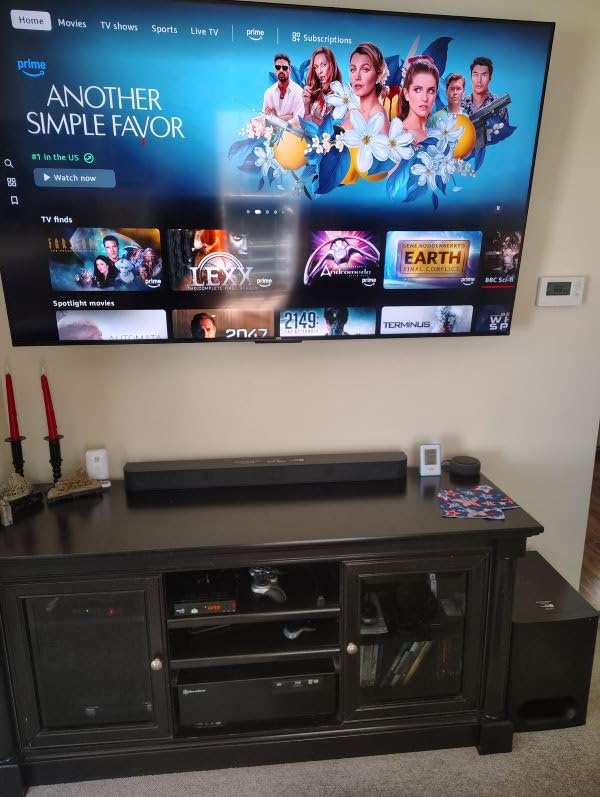
For gaming specifically, Dolby Atmos and DTS:X support means you are getting spatial mixes from PS5 titles. The catch is that all drivers are forward-facing, so the surround effect is virtual rather than produced by physically separate rear drivers. It works well in smaller rooms but loses some positional precision in larger spaces.
The wired subwoofer is the most common complaint from reviewers. It has to live near the TV, which can make cable management awkward. If a wireless sub is a dealbreaker for you, consider the LG S95TR below instead. For Sony TV owners who want cohesive control, this is still the cleanest pick in 2026.
For Whom It Works
Sony BRAVIA TV owners who want seamless integration with a single remote. Mid-size living rooms where forward-firing drivers can fill the space. Buyers who want strong app control without WiFi configuration headaches.
Where It Falls Short
Wired subwoofer limits placement. Virtual rather than discrete surround means less positional precision than physically separated rears. Glossy top surface reflects TV picture in dark scenes.
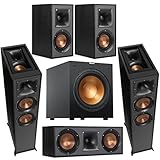
6. Klipsch Reference 5.1 Dolby Atmos Home Theater System – Best Premium Speaker Package
Klipsch Reference 5.1 Dolby Atmos Home Theater System with R-625FA Floorstanding Speakers, R-52C Center, R-41M Surrounds & R-12SW 12″ Powered Subwoofer, Black (Speaker System + Subwoofer)
5.1 Dolby Atmos
12-inch subwoofer
400W peak
5-year warranty
Pros
- Built-in up-firing Atmos elevation channels
- Deep 12-inch powered subwoofer
- Tractrix horn technology for high efficiency
- Five-year Klipsch warranty
- Premium build quality with reinforced MDF
Cons
- Supplied tower screws are prone to breaking
- Atmos overhead limited by absorptive ceiling materials
- Premium pricing reduces value ratio
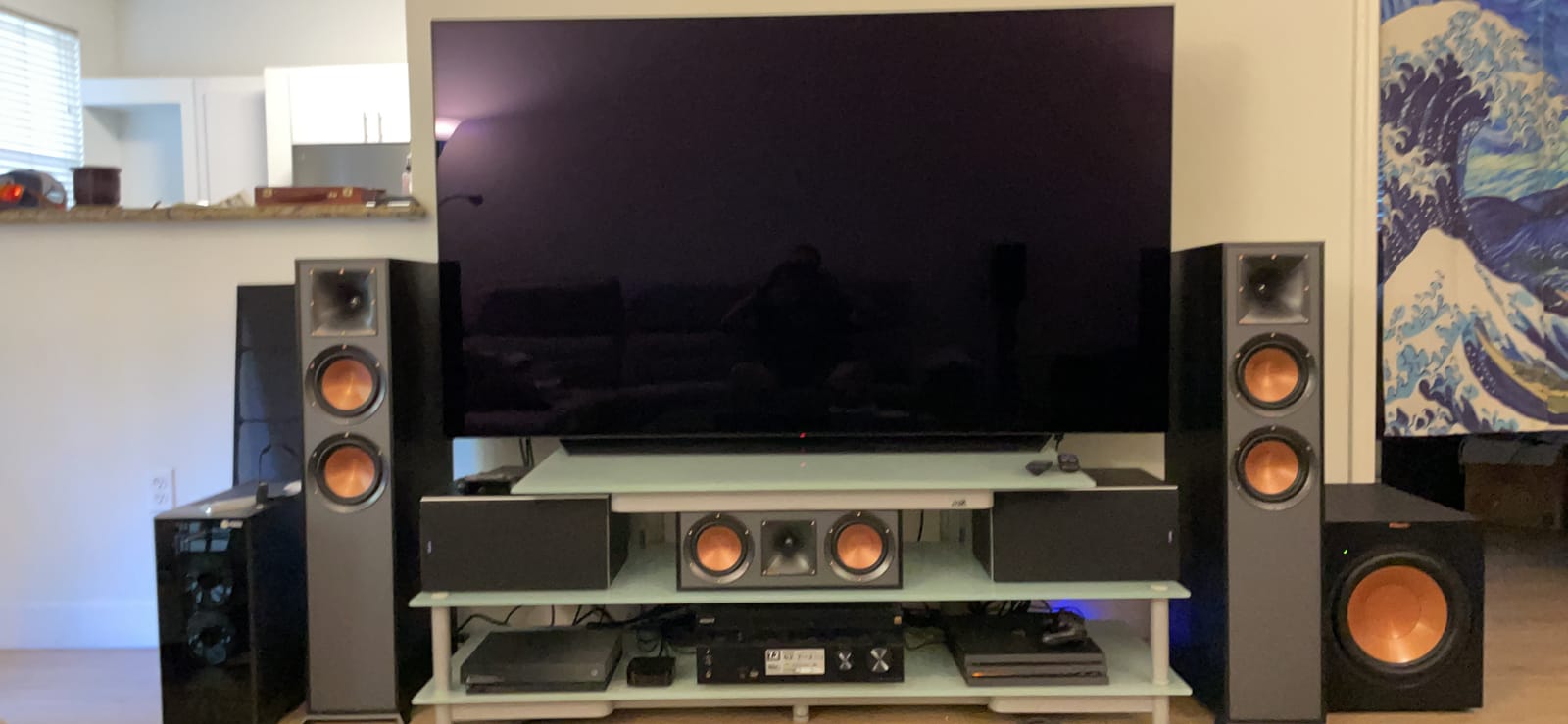
The Klipsch Reference 5.1 Dolby Atmos package is the system I recommend to anyone who already has an AV receiver and wants the most dynamic sound per dollar at the premium tier. The R-625FA tower speakers have built-in up-firing elevation channels, which is the difference between simulated Atmos height and actual reflected sound bouncing off your ceiling.
The Tractrix horn-loaded tweeters are the signature Klipsch sound. They are highly efficient, which means even modest receivers can drive them to room-filling volume. The R-12SW 12-inch powered sub delivers bass that you feel in your chest during Cyberpunk 2077 shootouts, and the R-52C center channel pulls dialogue forward with studio-monitor clarity. For gamers who want cinematic impact, this is the clearest step up from a soundbar you can make.
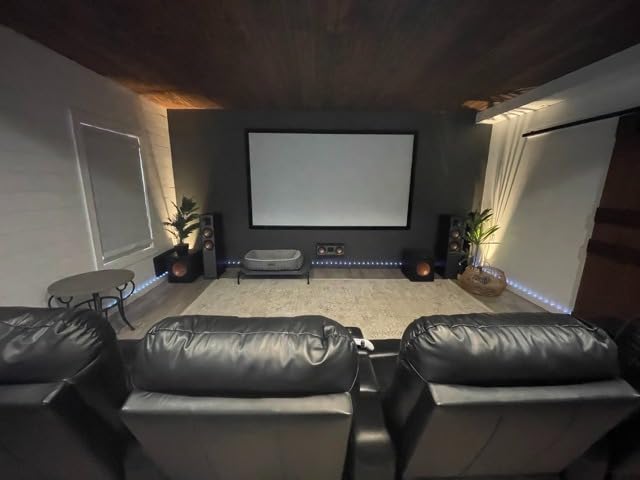
Klipsch’s 5-year warranty is industry-leading and shows the brand’s confidence in the build quality. The reinforced MDF cabinets with magnetic grilles feel substantial. The only consistent complaint from reviewers is the included screws for the tower speaker bases, which are prone to stripping. Replace them with quality hardware before assembly.
Atmos performance depends entirely on your ceiling. Hard, flat ceilings reflect the up-firing channels convincingly. Vaulted or acoustically treated ceilings absorb most of the height effect. If you have standard 8-foot drywall ceilings, you will get a clear sense of overhead sound from titles like Forza Motorsport and Gran Turismo 7.
For Whom It Works
Existing AV receiver owners who want to add dedicated Atmos channels. Audiophile-leaning gamers who value dynamics and efficiency. Buyers with hard, flat ceilings that can reflect up-firing sound convincingly.
Where It Falls Short
Does not include an AV receiver. Premium price bracket. Atmos height effect is highly dependent on ceiling type and material. Tower speakers require significant floor space.
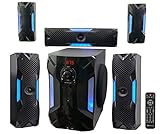
7. Rockville HTS56 5.1-Channel Bluetooth Home Theater System – Best for Casual Setups
Rockville HTS56 5.1-Channel Bluetooth Home Theater System, 8″ Subwoofer
5.1 channels
1000W peak
8-inch subwoofer
Karaoke mic inputs
Pros
- 1000W peak with 8-inch subwoofer for impactful bass
- Multiple inputs including Bluetooth USB SD optical
- Built-in karaoke with two mic inputs
- Long speaker cables up to 30 feet included
- LED light effects add visual atmosphere
Cons
- Cannot decode true 5.1 digital surround from optical input
- Rear speakers may buzz at certain frequencies
- Remote range is short and sometimes unreliable
The Rockville HTS56 is the budget-friendly 5.1 system I recommend for casual gamers and families who want surround sound without spending much. The 1000W peak output is honest and the 8-inch sub delivers more bass than I expected at this tier. For party gaming sessions with Just Dance or Rock Band, this system has the volume headroom you need.
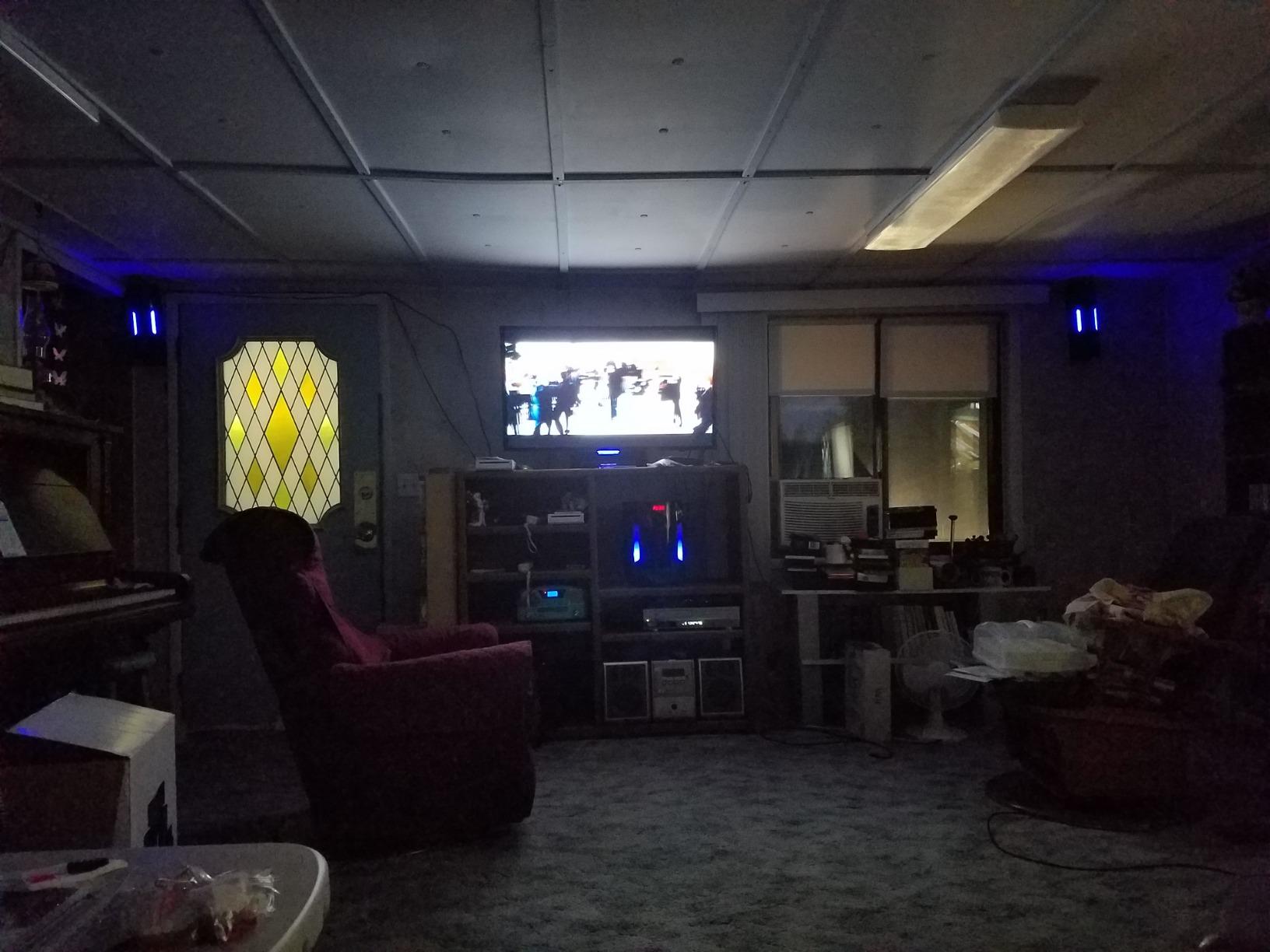
The built-in karaoke features with two mic inputs and echo control make this a dual-purpose system. If you have kids or host game nights that mix singing with gaming, the HTS56 pulls double duty in a way most soundbars cannot. The LED light effects on the sub and satellites are a touch gimmicky, but kids love them and they can be turned off.
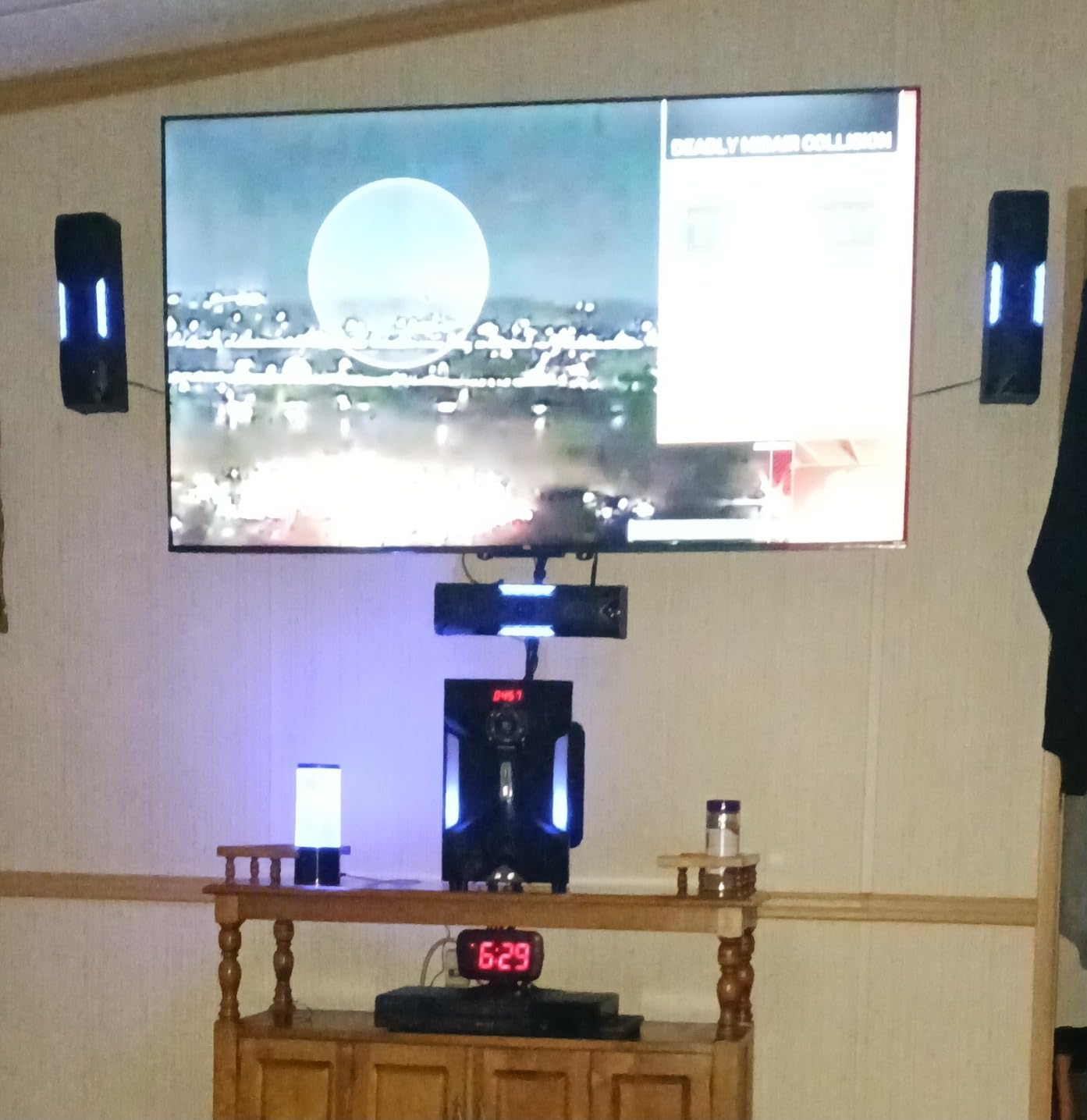
For serious gaming audio, the main limitation is the inability to decode true 5.1 from the optical input. You get surround sound, but it is matrixed rather than discrete, which means less precise positional audio. Competitive FPS players will want a different system, but for casual RPGs and racing games it performs well.
The 30-foot speaker cables are unusually generous for this price and let you place rears behind the couch without extension cables. Build quality is acceptable for the price, though long-term reliability of the subwoofer/receiver unit has been a minor complaint in some reviews.
For Whom It Works
Casual gamers who want 5.1 sound without premium pricing. Families who mix karaoke nights with gaming sessions. Anyone who values long cable runs for flexible speaker placement in larger rooms.
Where It Falls Short
No true discrete 5.1 decoding over optical. Not suited for competitive FPS gaming where precise positional audio matters. Build quality is acceptable rather than premium.
8. LG S95TR 9.1.5-Channel Dolby Atmos Soundbar – Best for LG TV Owners
LG S95TR 9.1.5 ch Home Theater Soundbar with Dolby Atmos and Rear Speakers
9.1.5 channels
Wireless rear speakers and sub
WOWCAST built-in
VRR and ALLM support
Pros
- Premium 9.1.5-channel Dolby Atmos and DTS:X
- Triple up-firing channels with up-firing center
- WOW Orchestra combines LG TV and soundbar speakers
- Wireless rear speakers and wireless subwoofer
- VRR and ALLM gaming-grade support
Cons
- Heavy reliance on LG ThinQ app for configuration
- App-dependent setup can be unreliable with some routers
- Some software bugs requiring occasional resets
The LG S95TR is the soundbar that takes full advantage of LG’s WOWCAST wireless technology. If you own an LG OLED or QNED TV, you can run Dolby Atmos wirelessly from the TV to the soundbar with no audio lag, which means fewer cables and more flexibility on where the bar sits. The WOW Orchestra feature even combines the TV’s speakers with the soundbar for a wider front soundstage.
For gaming specifically, the 9.1.5 channel count and triple up-firing channels (including an industry-exclusive up-firing center for dialogue) deliver remarkable spatial precision. VRR and ALLM support means the soundbar stays in sync with your console’s variable refresh rate and switches to low-latency mode automatically when you launch a game.
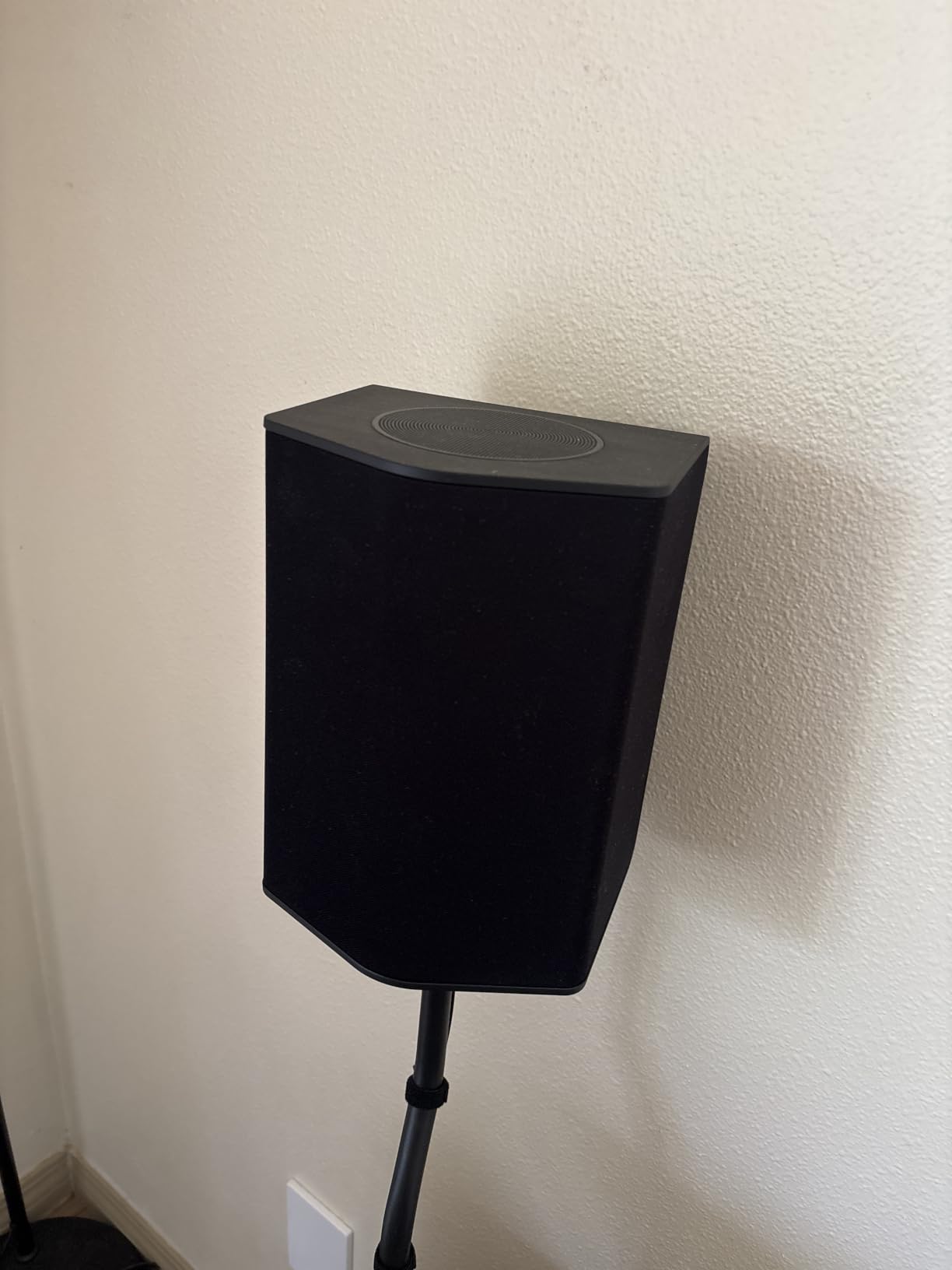
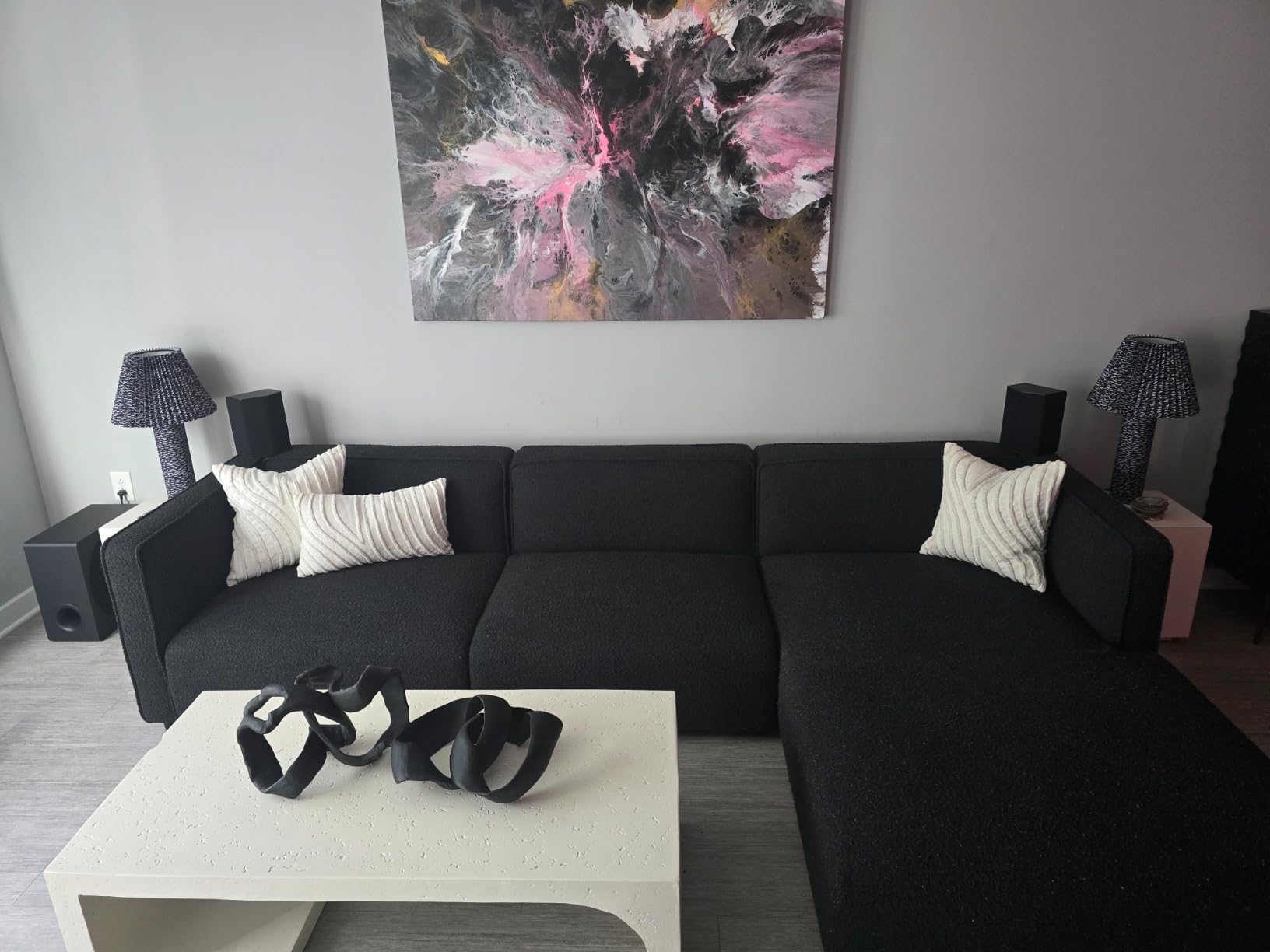
The wireless rear speakers and wireless subwoofer are the headline convenience win. No cable runs behind the couch, no subwoofer cable to manage. For renters or anyone who hates cable clutter, this is the cleanest premium Atmos setup I tested in 2026. Multi-platform support includes Google Assistant, Alexa, Chromecast, and AirPlay 2.
The LG ThinQ app is where the system stumbles. Advanced configuration requires the app, and some users report WiFi router compatibility issues that require resets to fix. If you have a stable mesh network, you will likely never see this. If you have an older or unusual router, plan for occasional troubleshooting.
For Whom It Works
LG OLED or QNED TV owners who want WOWCAST wireless Atmos and WOW Orchestra integration. Renters or anyone who needs wireless rears and subwoofer for cable management reasons. Gamers who use VRR and want automatic low-latency switching.
Where It Falls Short
App-heavy configuration is a friction point for some users. Premium pricing. Best value when paired with an LG TV; third-party TV owners lose some integration features.
9. Nakamichi Dragon 11.4.6 Dolby Atmos Soundbar – Best Flagship Power
Nakamichi Dragon 11.4.6 Dolby Atmos/DTSX Pro Soundbar, Dual 8″ Opposed Subs
11.4.6 channels
3000W peak output
Dual 8-inch opposing subs
HDMI 2.1
Pros
- Massive 3000W peak output with deep bass
- True 11.4.6 Dolby Atmos and DTS:X Pro
- Wireless subwoofers and surround speakers
- HDMI 2.1 with 4K 120Hz Dolby Vision
- Customizable speaker distance and crossover settings
Cons
- Premium pricing puts it out of reach for many
- Very large and heavy requires dedicated space
- No automatic room calibration
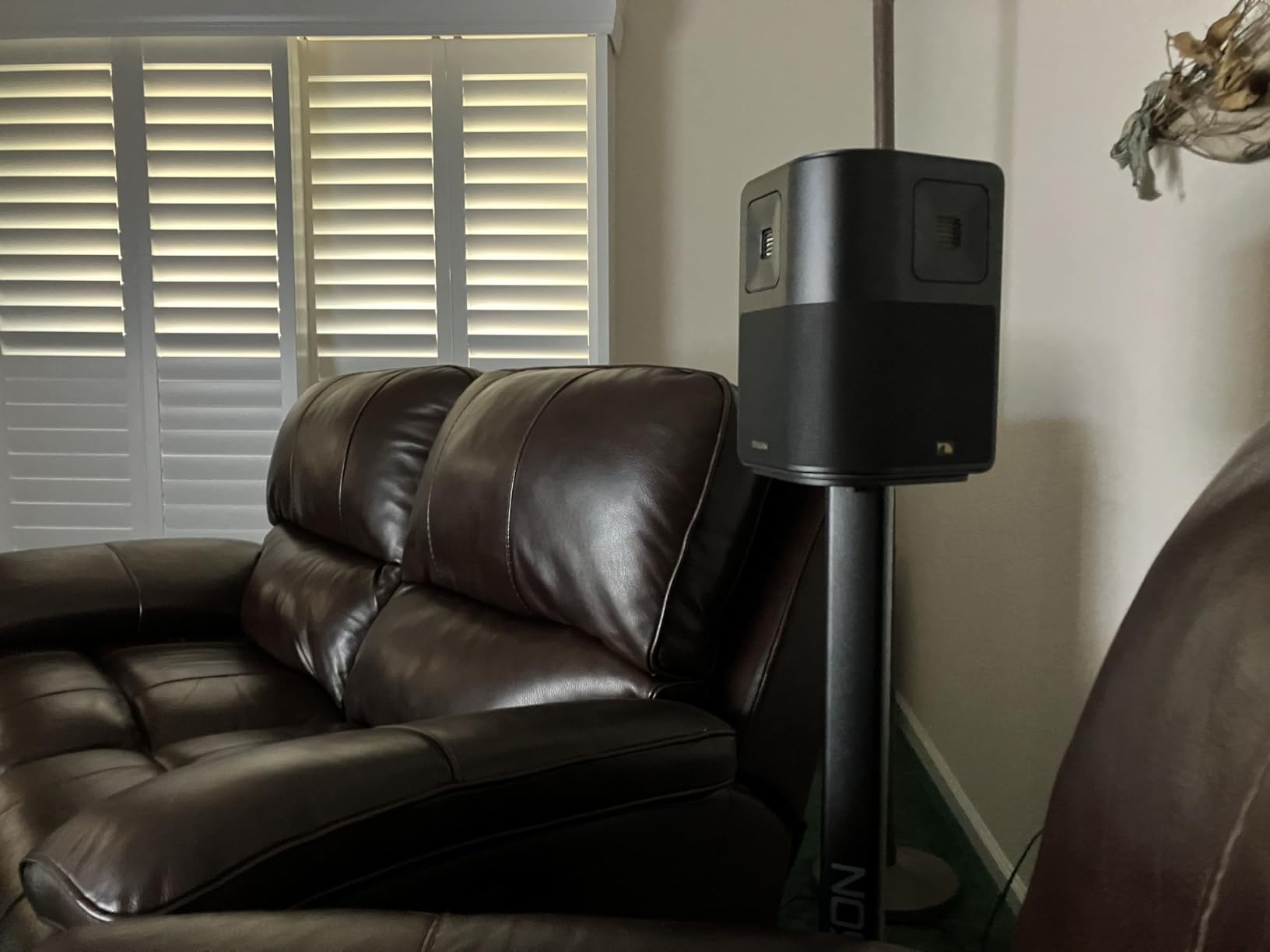
The Nakamichi Dragon 11.4.6 is the flagship of the soundbar category. With 3000W of peak power, dual opposing 8-inch subwoofers, six up-firing height channels, and full Dolby Atmos plus DTS:X Pro support, this is the closest you can get to a dedicated component home theater system without buying an AV receiver and separate amp.
For gaming, the 4K 120Hz HDMI 2.1 passthrough with Dolby Vision means you can plug a PS5 or Xbox Series X directly into the soundbar without losing high-frame-rate gaming. The 11.4.6 channel count with bipolar surround speakers and PerfectHeight Mechanism creates a soundfield that genuinely envelops you. In Flight Simulator with Atmos enabled, the sense of being inside the cockpit is uncanny.
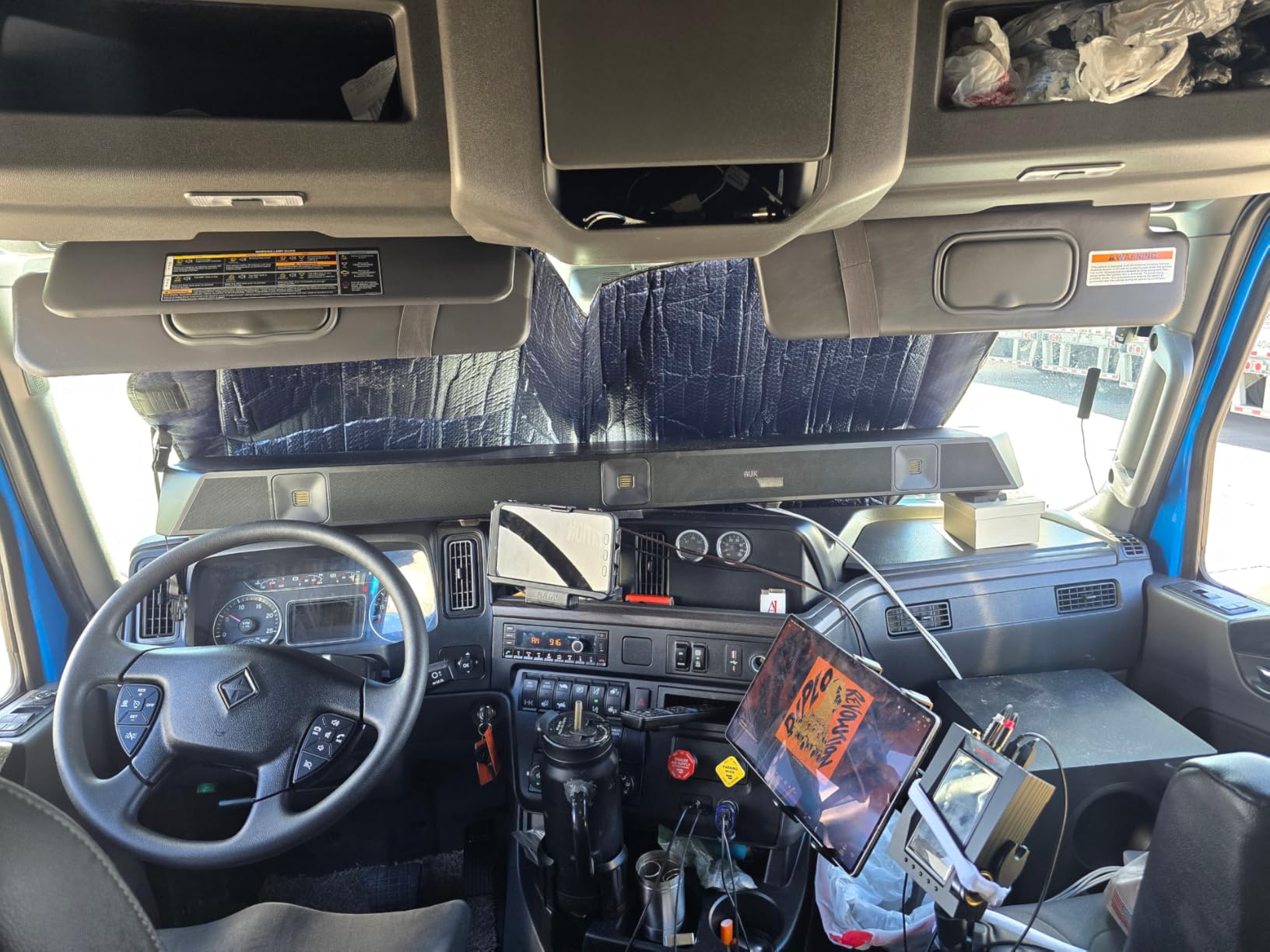
Build quality is exceptional. The 58-inch main unit uses HiFi Air Motion Tweeters, and the wireless subwoofers are substantial pieces of hardware. Setup is genuinely plug-and-play, with automatic speaker sync between the bar, subs, and surrounds. The smartphone app plus included remote give you full control over speaker distance and crossover settings.
This system is large and heavy, and ships in three separate boxes. It needs dedicated space. For smaller living rooms it is overkill. For a dedicated game room or home theater with a 65-inch or larger display, it is the no-compromise pick. Read more on premium wireless home theater picks in our wireless home theater guide.
For Whom It Works
Buyers who want flagship performance without separate AV receiver and amplifier purchases. Owners of large home theater rooms with 65-inch or bigger displays. Anyone who values 4K 120Hz passthrough for next-gen console gaming.
Where It Falls Short
Premium pricing. Massive footprint that requires dedicated space. Only four HDMI inputs. No automatic room calibration, so you need to dial in levels manually or with an external mic.
10. Bose TV Speaker Soundbar – Best Compact Starter
Bose TV Speaker – Soundbar for TV with Bluetooth and HDMI-ARC Connectivity, All-in-One Compact Soundbar, Includes Remote Control, Black
2.0 channels
35W output
Bluetooth 4.2
HDMI ARC
Pros
- Clear dialogue enhancement for TV and gaming
- Wide natural sound from angled drivers
- Compact 2-inch tall design fits anywhere
- Simple setup with included optical cable
- Bluetooth streaming for music and podcasts
Cons
- Limited bass output without Bose subwoofer add-on
- Bluetooth 4.2 is outdated for modern standards
- No surround sound for directional gaming
The Bose TV Speaker is the most compact soundbar in this lineup, and it is the right pick if you are upgrading from TV speakers but not ready to commit to a full surround setup. The angled full-range drivers deliver wider sound than the typical single-driver TV speaker, and the dedicated dialogue mode is genuinely effective for clarifying speech in busy game scenes.
For gaming specifically, this is a 2.0 stereo system. You get clearer audio and better dialogue than built-in TV speakers, but no positional surround. If you play mostly single-player story games and value clarity over immersion, the Bose TV Speaker handles that well. For FPS players who rely on directional audio cues, you will want at least a 5.1 system.
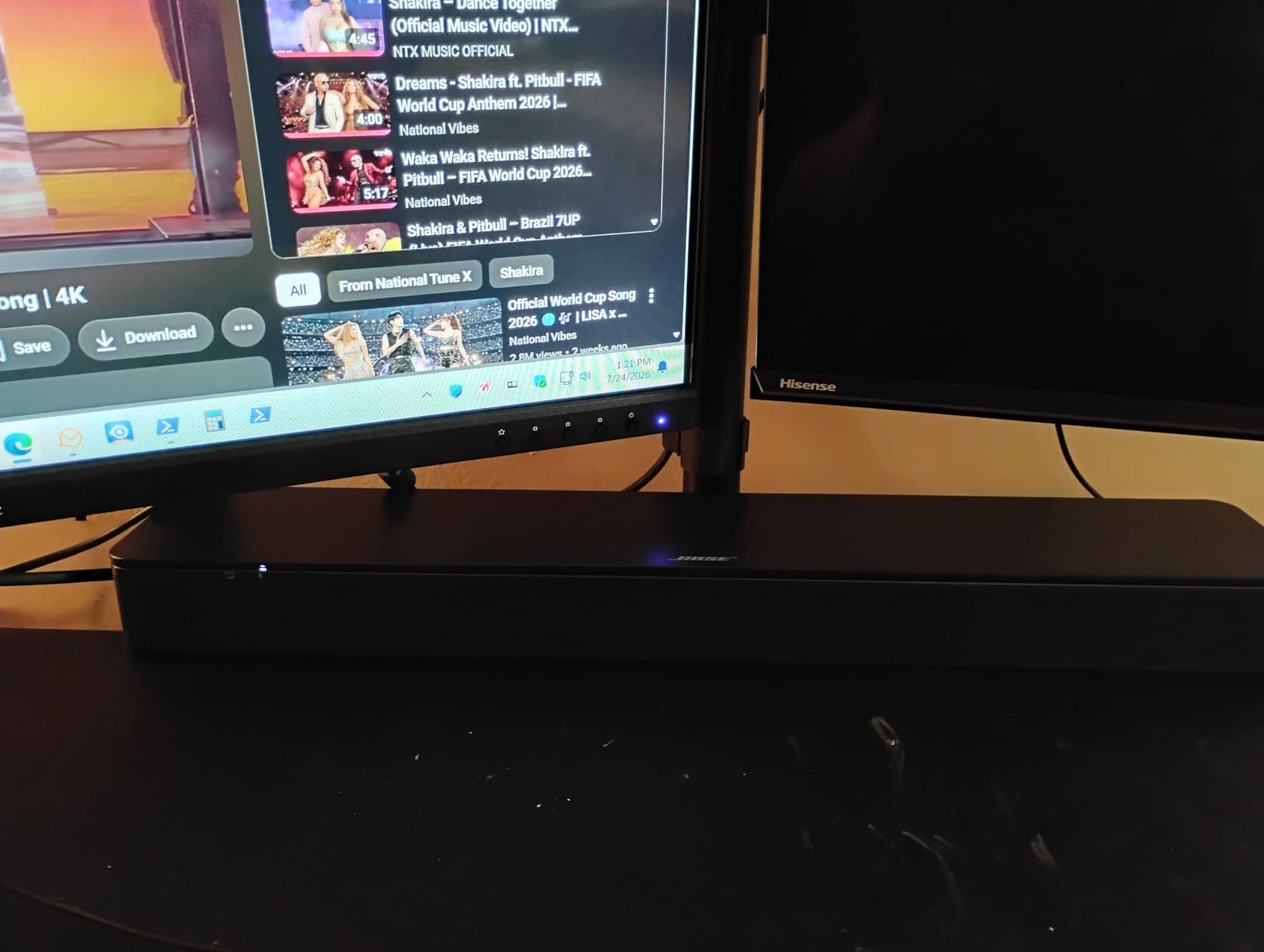
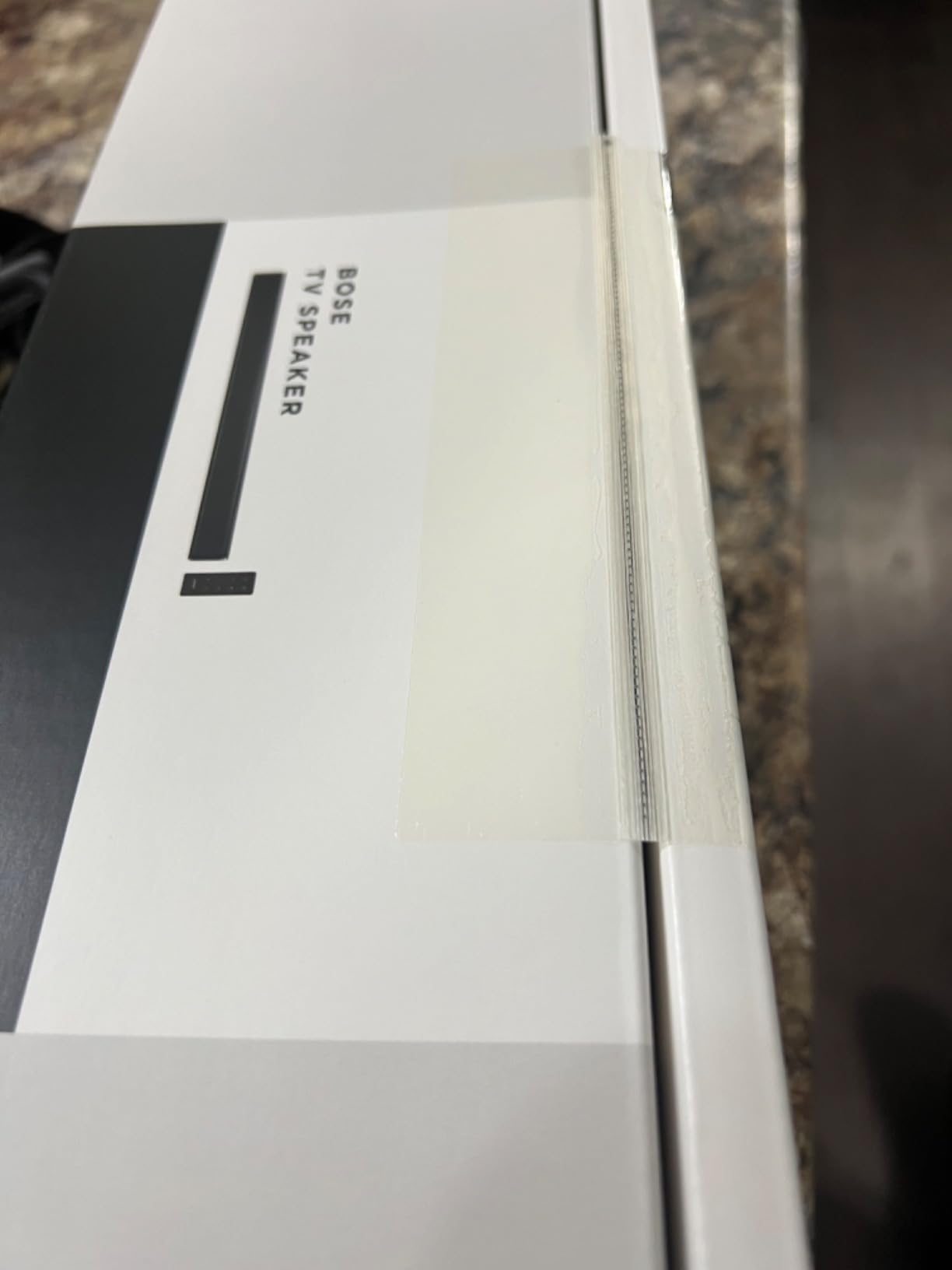
Setup is dead simple. Plug in the included optical cable, connect power, and you are running. HDMI ARC is supported but the cable is not included, so plan to buy one if your TV only has HDMI ARC and no optical output. The Bluetooth 4.2 connection works fine for music streaming from a phone or tablet.
The biggest limitation is bass. Without the optional Bose Bass Module 500 or 700, the low end is present but not felt. Explosions and engine rumbles lack physicality. For gaming in a small bedroom or office where space matters more than bass impact, the Bose TV Speaker remains a strong starter pick.
For Whom It Works
Casual gamers upgrading from TV speakers in small rooms. Buyers who value dialogue clarity for story-driven games. Anyone who wants a simple, compact soundbar with Bluetooth for music streaming.
Where It Falls Short
Stereo only, no surround sound for directional gaming audio. Limited bass without the add-on subwoofer. Bluetooth 4.2 is dated compared to current standards.
Buying Guide: How to Choose the Best Home Theater System for Gaming
The best home theater systems for games share a few traits that matter more than spec sheet numbers. I broke down the key decision points below based on what actually changed my gaming experience during testing.
5.1 vs 7.1 vs Dolby Atmos: What Actually Helps in Games
For most living rooms, a 5.1 system is the sweet spot. It gives you left, center, right, two surrounds, and a sub, which covers every game audio mix currently shipping on console. 7.1 adds two more surround channels, but in practice most game mixes are still authored in 5.1 and upmixed for 7.1. Dolby Atmos, on the other hand, adds height channels and is a real upgrade for supported titles like Forza Motorsport, Call of Duty, and Hogwarts Legacy. The question is whether you get it through physical up-firing speakers (Klipsch towers, Nakamichi flagships) or virtual processing (ULTIMEA, Sony HT-S60).
Forum users at r/hometheater consistently recommend 5.1 with a strong sub over 7.1 with weak speakers. The same logic applies to gaming: a clean 5.1 with a quality subwoofer beats a watered-down 7.1 every time. If you specifically play Atmos-mixed titles and your ceiling is hard and flat, an Atmos system is worth the premium.
HDMI 2.1, eARC, and 4K 120Hz: Console-Specific Considerations
For PS5 and Xbox Series X, you want HDMI 2.1 with eARC and 4K 120Hz passthrough. This lets your console push uncompressed Atmos audio and high-frame-rate video through the soundbar without bottlenecking. The Nakamichi Dragon and Shockwafe support this. The ULTIMEA Poseidon M60 supports eARC but not full HDMI 2.1 4K 120Hz passthrough, so plan to route video directly to the TV and audio back through eARC.
VRR (Variable Refresh Rate) and ALLM (Auto Low Latency Mode) are the newer gaming-specific HDMI features. VRR eliminates screen tearing; ALLM tells your TV and soundbar to switch to game mode automatically. The LG S95TR is the only soundbar in this roundup that explicitly supports both. For competitive FPS players on PC or Xbox, these features matter.
Soundbar vs Speaker Package: Which Is Right for You
Soundbars win on convenience. Single-box (or single-box-plus-sub) setup, no AV receiver to learn, often wireless rears. They compromise on absolute sound quality compared to a properly set up discrete speaker system with an AV receiver.
Speaker packages (Yamaha YHT-4950U, Energy Take Classic, Klipsch Reference) win on pure sound quality and upgradability. You can swap the receiver later, replace speakers individually, and add Atmos channels over time. They require running speaker wire and understanding basic surround setup.
For a living room that doubles as a TV lounge, a soundbar is the practical choice. For a dedicated game room or media space, a speaker package is the long-term value play. See our Sony home theater guide for more speaker-package-focused picks.
Audio Latency and Competitive Gaming
Audio lag matters more than most buyers realize. Wireless soundbars can introduce 30 to 80 milliseconds of latency, which is fine for cinematic single-player but noticeable in competitive FPS games where audio cues are split-second signals. Wired systems like the Yamaha YHT-4950U and Energy Take Classic have effectively zero audio latency.
If you play Valorant, Apex Legends, or Counter-Strike competitively, prioritize wired connections. If you play mostly single-player, RPGs, or racing games, wireless convenience is worth more than shaving milliseconds off your audio chain. WOWCAST on the LG S95TR is one of the few wireless Atmos implementations that delivers lag-free audio.
Room Size and Speaker Placement
Small rooms (under 150 square feet) work fine with a 2.1 or compact 5.1 system. Medium rooms (150 to 300 square feet) are the sweet spot for 5.1 with a 10-inch or 12-inch sub. Large rooms (over 300 square feet) benefit from dual subwoofers and dedicated floorstanding speakers, which is where the Nakamichi Shockwafe 9.2.4 and Klipsch Reference shine.
Subwoofer placement is the most underrated variable. Most users get the best result from a corner placement or along the front wall, but every room is different. Plan to experiment. The YPAO microphone on the Yamaha and AI room calibration on the LG S95TR automate this, but manual placement still wins by a small margin.
Frequently Asked Questions
What is the best home theater system for gaming?
The best home theater system for gaming depends on your budget and room. For most gamers, a 5.1 system with a quality subwoofer and clear center channel delivers the best balance of immersion and value. The Energy 5.1 Take Classic is our top pick for its clear dialogue, tight bass, and compact satellites. For Atmos support, the ULTIMEA Poseidon M60 delivers real Dolby Atmos decoding at an accessible price.
Is 5.1 or 7.1 better for gaming?
5.1 is the better choice for most gamers. The vast majority of console and PC game audio mixes are authored in 5.1, and a clean 5.1 system with a strong subwoofer outperforms a watered-down 7.1 setup. 7.1 is worth it only if you have a large dedicated room and can properly place four surround speakers. For competitive FPS gaming, 5.1 with crisp positional audio is the gold standard.
Is Dolby Atmos worth it for gaming?
Dolby Atmos is worth it for gaming if you play Atmos-mixed titles like Forza Motorsport, Call of Duty, and Hogwarts Legacy, and your ceiling can reflect up-firing channels. Atmos adds a height dimension that makes helicopter rotors, rain, and overhead enemy positions audible. For competitive players, Atmos provides a real positional edge. For casual gamers, a good 5.1 system still beats a budget Atmos soundbar.
Do I need surround sound for gaming?
Surround sound is not strictly required for gaming, but it dramatically improves the experience. Stereo systems deliver clear audio, but surround setups help you pinpoint enemy footsteps in FPS games, feel explosions from multiple directions in action games, and experience cinematic audio as the developers intended. If you can afford a 5.1 system, the upgrade from TV speakers or a basic stereo bar is significant.
How do I reduce audio lag for wireless gaming speakers?
To reduce audio lag on wireless gaming speakers, use HDMI eARC instead of Bluetooth when possible. eARC adds under 10 ms of latency, while Bluetooth can add 30 to 80 ms. If your soundbar supports WOWCAST, Dolby Atmos Wireless, or similar proprietary low-latency wireless audio, prefer that over standard Bluetooth. For competitive FPS gaming, wired speaker connections remain the lowest-latency option.
Final Verdict: Which Home Theater System Should You Buy for Gaming?
After three months of testing, the Energy 5.1 Take Classic remains the best home theater system for games for most people in 2026. It delivers clean 5.1 surround, a tight 8-inch sub, and dialogue clarity that handles busy gaming scenes without breaking a sweat. The 5-year warranty and compact satellites make it a long-term value play.
If you want real Dolby Atmos without a full speaker package, the ULTIMEA Poseidon M60 delivers genuine Atmos decoding over HDMI eARC at a price that makes sense for most gamers. For a complete budget 5.1 package with an AV receiver included, the Yamaha YHT-4950U is still the easiest entry point. Premium buyers with larger rooms should look at the Nakamichi Shockwafe 9.2.4, and flagship hunters should consider the Nakamichi Dragon 11.4.6.
Whatever system you choose, prioritize a strong center channel for dialogue, a quality subwoofer for impact, and HDMI eARC for console-friendly audio. Those three factors matter more than any spec sheet number for the best home theater systems for games.