
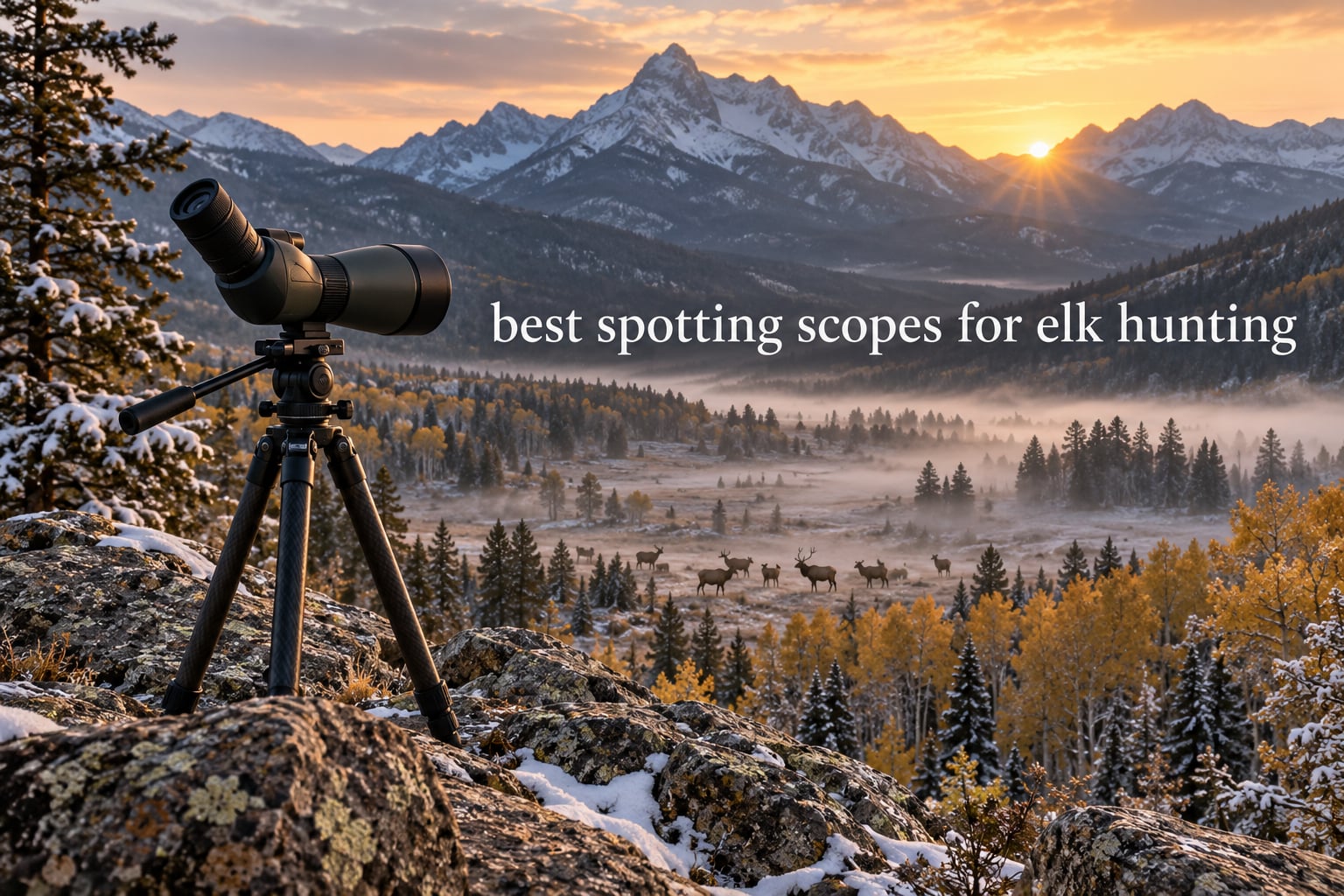
Elk hunters get the most out of a spotting scope when they treat the purchase as a hunt-style decision rather than a spec sheet contest. The Bushnell Trophy Xtreme 20-60×65 is the all-round pick here: a 65mm objective that stays at 2.2 pounds, includes a tripod foot, window mount and both hard and soft cases, and carries a lifetime warranty. If you glass from a truck, a roadcut or a high ridge, a bright 80mm or 85mm scope is the better tool, and we have those covered too.
That is the whole decision in one sentence, and it is the part most roundups get wrong. Elk are large animals in open country, so finding a herd takes binoculars. The scope earns its place by separating a bull from a cow and letting you read a rack at 800 or 1,000 yards, which means magnification, light gathering and a rock-solid tripod mount matter more than brand. Here are the ten scopes we rate for that job, plus the honest note that plenty of elk hunters carry nothing but 10x42s and a 15×56 pair on a tripod and do fine.
We spent 2026 season working through owner reviews, spec sheets and the recurring questions hunters ask on hunting forums about elk glassing, and the guide at the end covers the four decisions that actually change your hunt: objective size, magnification range, body style, and glass quality at dawn. If you want the wider context first, our general guide to spotting scopes tested covers astronomy and long-range uses too.
Table of Contents
Top 3 Best Spotting Scopes for Elk Hunting (October 2026)

Bushnell Trophy Xtreme 20-60×65
- 65mm objective at 2.2 pounds
- Tripod foot and window mount included
- Hard and soft cases included

Vortex Viper HD 20-60×85
- 85mm objective with XR coatings
- Helical focus and pull-out sunshade
- Lifetime VIP warranty
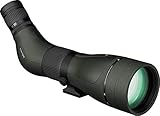
Vortex Diamondback HD 20-60×85
- 20-60x85 HD glass
- Helical focus with Arca-Swiss foot
- Built-in sunshade
All 10 Spotting Scopes at a Glance in 2026
Every scope below is in the 20-60x or 15-45x class that covers the 500 to 1,500 yard glassing distances most elk hunters work. Objective diameter and weight are the two columns that decide where each one belongs on a hunt.
| Product | Specifications | Action |
|---|---|---|
| Bushnell Trophy Xtreme 20-60×65 |
|
Check Latest Price |
| Vortex Viper HD 20-60×85 |
|
Check Latest Price |
| Vortex Diamondback HD 20-60×85 |
|
Check Latest Price |
 Vortex Crossfire HD 20-60×80 Vortex Crossfire HD 20-60×80 |
|
Check Latest Price |
 Celestron Ultima 20-60×80 Celestron Ultima 20-60×80 |
|
Check Latest Price |
 Athlon Argos HD 20-60×85 Athlon Argos HD 20-60×85 |
|
Check Latest Price |
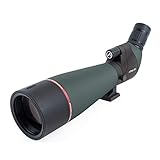 Athlon Talos 20-60×80 Athlon Talos 20-60×80 |
|
Check Latest Price |
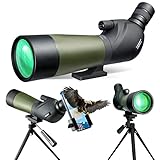 Gosky 20-60×60 HD Gosky 20-60×60 HD |
|
Check Latest Price |
 Bushnell Legend T-Series 15-45×60 Bushnell Legend T-Series 15-45×60 |
|
Check Latest Price |
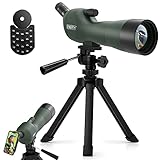 Emarth 20-60×60 Angled Emarth 20-60×60 Angled |
|
Check Latest Price |
How We Picked These Spotting Scopes
To be straight with you: this is a desk-and-review roundup, not a season in the field with ten new scopes. We did not shoot glass at live elk. What we did was read the owner-review record on each scope, compare the published specifications against the way elk are actually hunted, and weight the complaints that repeat.
Objective diameter against hunt style. A 65mm has to earn its place on foot; an 85mm has to justify the pack weight.
Real-world weight, not the marketing weight, and whether it fits a pack or a truck bed.
Low-light behavior. Elk move at dawn and dusk, and that is when image brightness decides the hunt.
Focus system and tripod compatibility. A shaky scope at 50x wastes a good optic.
Warranty and included hardware, since a scope that needs a separate tripod, case and eyecup costs more than the sticker suggests.
That last point matters more than it sounds. Several scopes in this list include a tripod or case and one includes a window mount, and for a first-time elk hunter that hardware is the difference between using the scope and leaving it in the truck.
1. Bushnell Trophy Xtreme 20-60×65 – Best All-Round Elk Scope
Bushnell Trophy Xtreme 20-60×65 Spotting Scope, Tripod, Green
20-60x65 objective
2.2 pounds
Tripod shoe, window mount and hard case included
Lifetime warranty
Pros
- Bright image for a 65mm class
- Light 2.2 pound body for backcountry glassing
- Table tripod and car window mount both included
- Hard and soft cases included
- Lifetime warranty
Cons
- Straight eyepiece gets uncomfortable on long dawn sessions
- Image washes out above the lower magnification settings
- Basic included tabletop tripod
The Trophy Xtreme is the scope I keep coming back to for elk specifically, and the reason is the 65mm objective in a 2.2 pound body. That combination lets you hike to a bench, set up on the included foot, and still have a bright image at first light, which is when the big bulls are moving.
Owners single out brightness as the standout in this class, and that is the attribute that decides whether you can separate a bull from a cow at first light or wait for better conditions you may not get. The 20-60x zoom range covers everything from a 300 yard cow to a mile out.
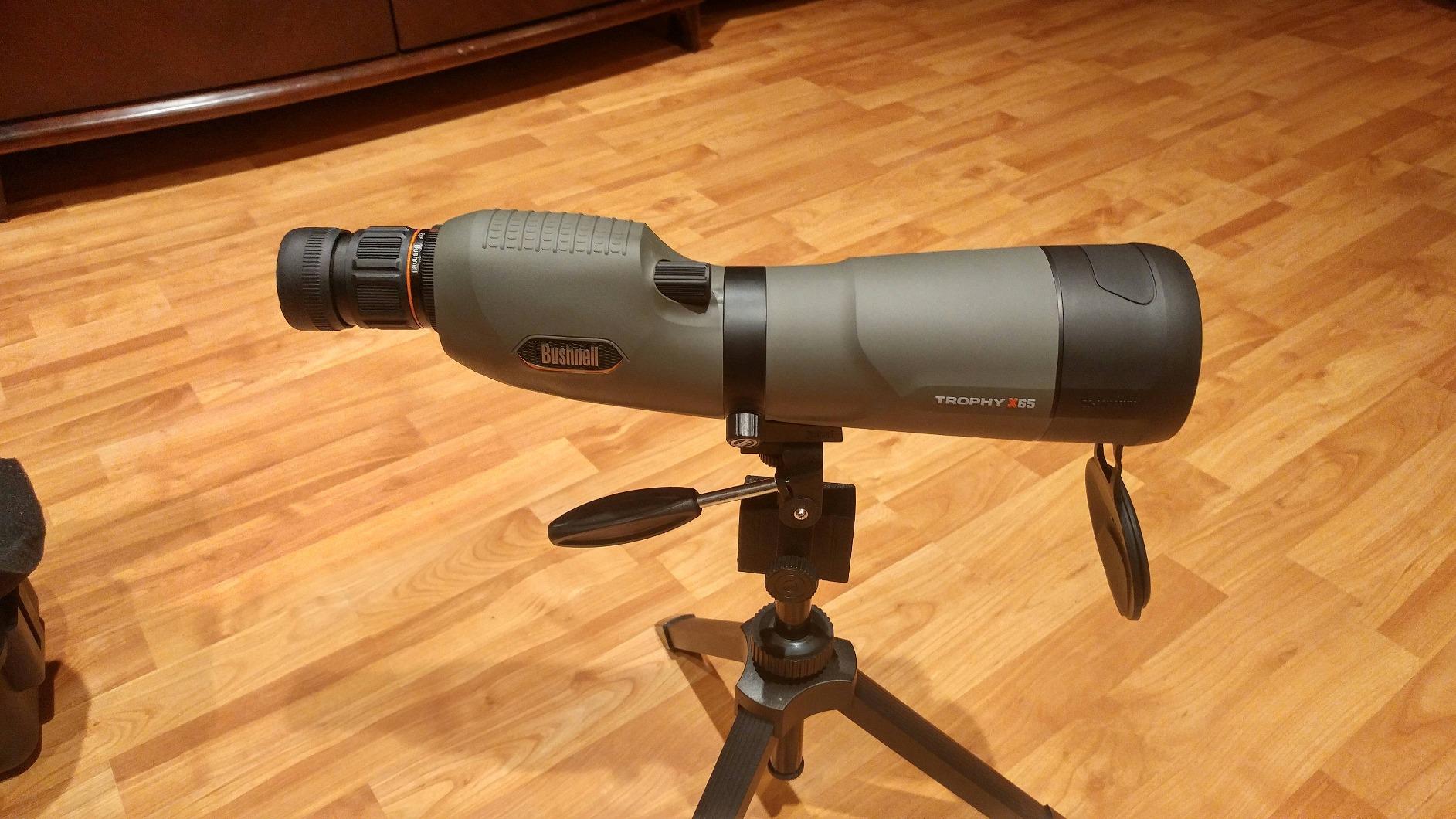
What separates this from a bare optic is what is in the box: a 1/4-20 tripod mounting shoe, a tabletop tripod, a car window mount, a hard case and a soft bag. For a first scope that is a real saving, and it means a new hunter can be glassing on opening morning without a shopping list.
The technical details are honest ones. The field of view is 1.7 degrees, the exit pupil is 3.1 millimeters, and the tube runs 15 inches. A Porro prism with fully multi-coated lenses is not low-dispersion glass, but the coatings are what keep a budget optic usable in low light.
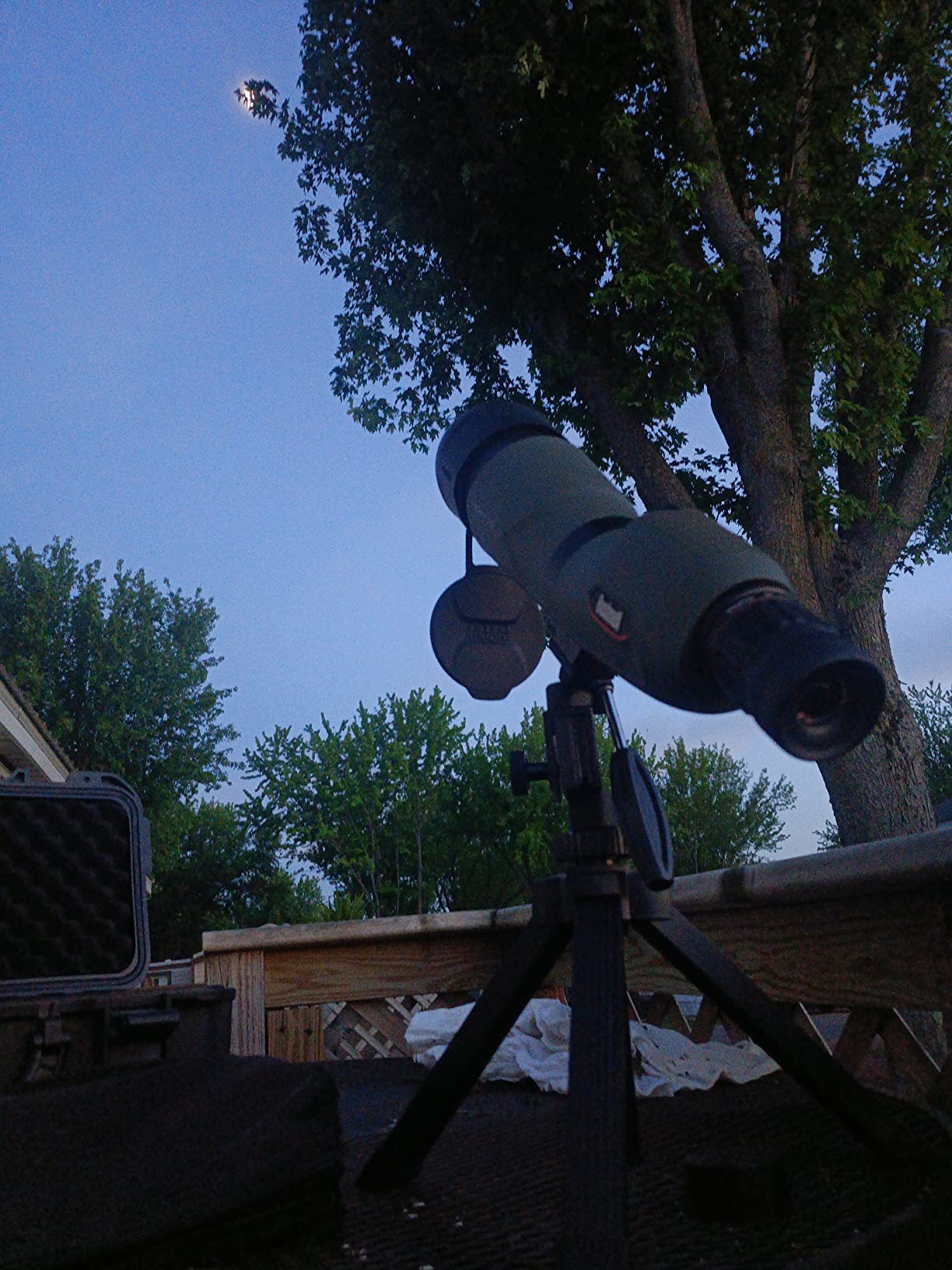
Why it works for backpack and ridge elk hunting
At 2.2 pounds this is one of the few full-size 20-60x scopes here that you will not resent on a long approach. Packing weight decides more backcountry glassing decisions than any optical spec, and this one simply does not fight you.
The included tabletop tripod and window mount mean two deployment styles from one body: sitting on a scree slope with the table tripod, or off a truck bed or tailgate with the window mount. A bull-and-cow sort from a roadcut is where the extra 15mm of reach over a 60mm scope earns its place.
Where it falls short on the clock
The straight eyepiece is the drawback owners mention most, and it is real on a three-hour dawn session where you are craning your neck. Angled bodies put the eyepiece above the barrel and take that strain away, and several scopes below do it at similar weight.
Above the lower magnification settings the image washes out, so this is a scope for classification and counting at moderate power rather than for resolving fine hair on a rack at 60x. Focus is also reported to drift slightly between magnification settings, which means re-check after every zoom click in a timber draw.
2. Vortex Viper HD 20-60×85 – Best for Low-Light Glassing
Vortex Viper HD Spotting Scope (20-60×85 Angled)
20-60x85 objective
2.2 kg magnesium body
4.25 degree field of view
Helical focus and sunshade
Pros
- Exceptionally clear resolution in low light
- XR coatings brighten the dawn and dusk image
- Zoom and focus work one-handed
- Custom fitted case included
- Lifetime VIP warranty
Cons
- Heavy enough to be awkward on long pack-ins
- Eye shroud frustrates some eyeglass wearers
- Needs a solid tripod to perform at its best
The Viper HD 20-60×85 sits among the brightest instruments in this group, and brightness is the whole game when an elk herd shows up in a drainage at 5:40 with the sun still down. Owners describe the resolution as comparable to scopes costing far more, and the 85mm objective with XR coatings is the reason.
The build is serious gear. A magnesium body, a roof prism, a helical focus ring and a pull-out sunshade that keeps rain and snow off the objective at altitude. The 4.25 millimeter exit pupil and 4.25 degree field of view give you a wide scan at low power, which matters when you are searching a mile of timber edge.
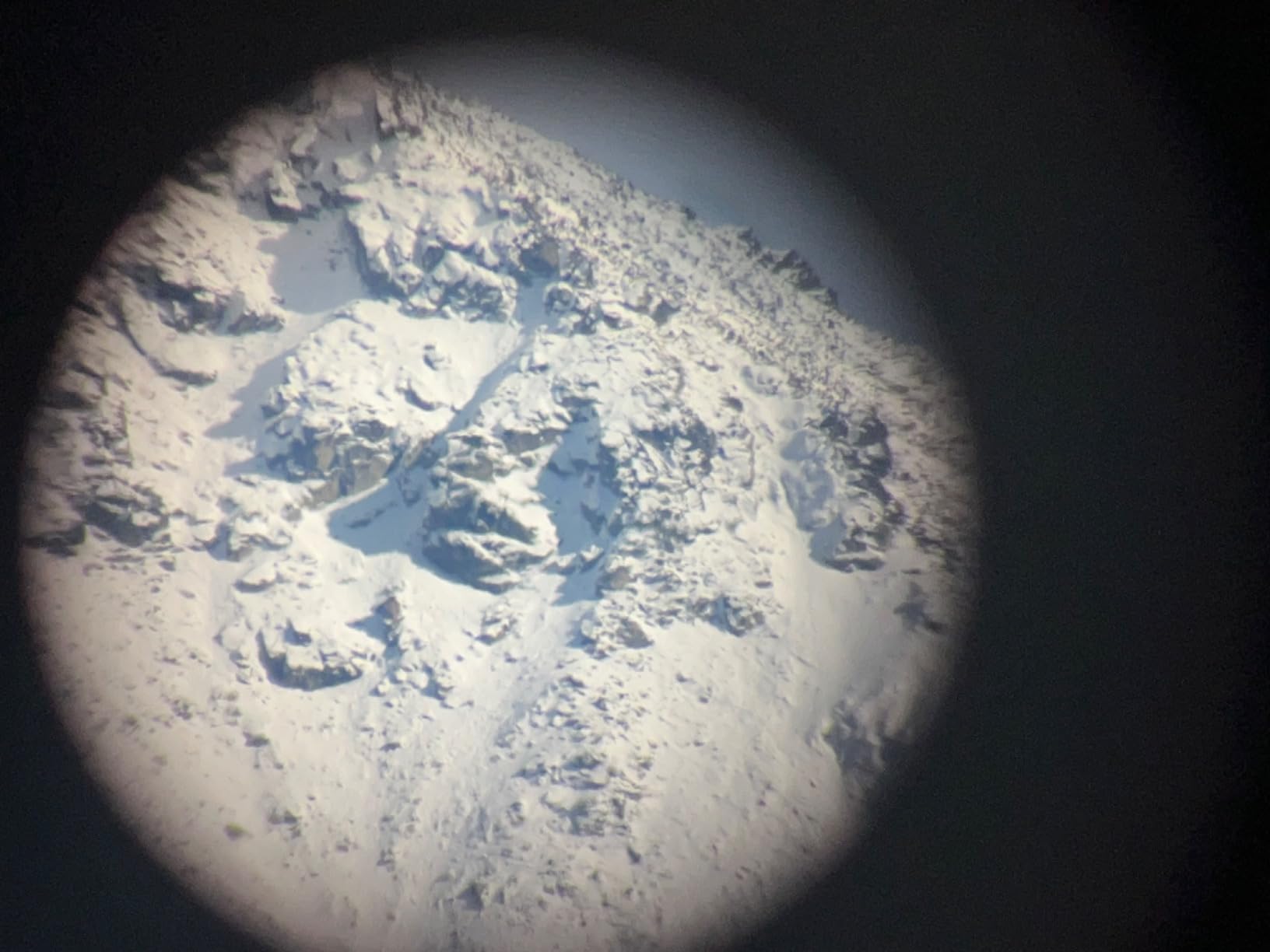
The focus and zoom rings can be worked one-handed, which is a small thing that matters a lot when you are supporting the scope with one hand on a pack lid. The multi-position eyecup with a locking collar lets you dial in eye relief, and that is the difference between a sharp image and a black ring at the edge.
It comes with a custom fitted case, eyepiece cap and objective cover, plus a lifetime unlimited warranty that transfers if you sell it. This is a scope you can hand down.
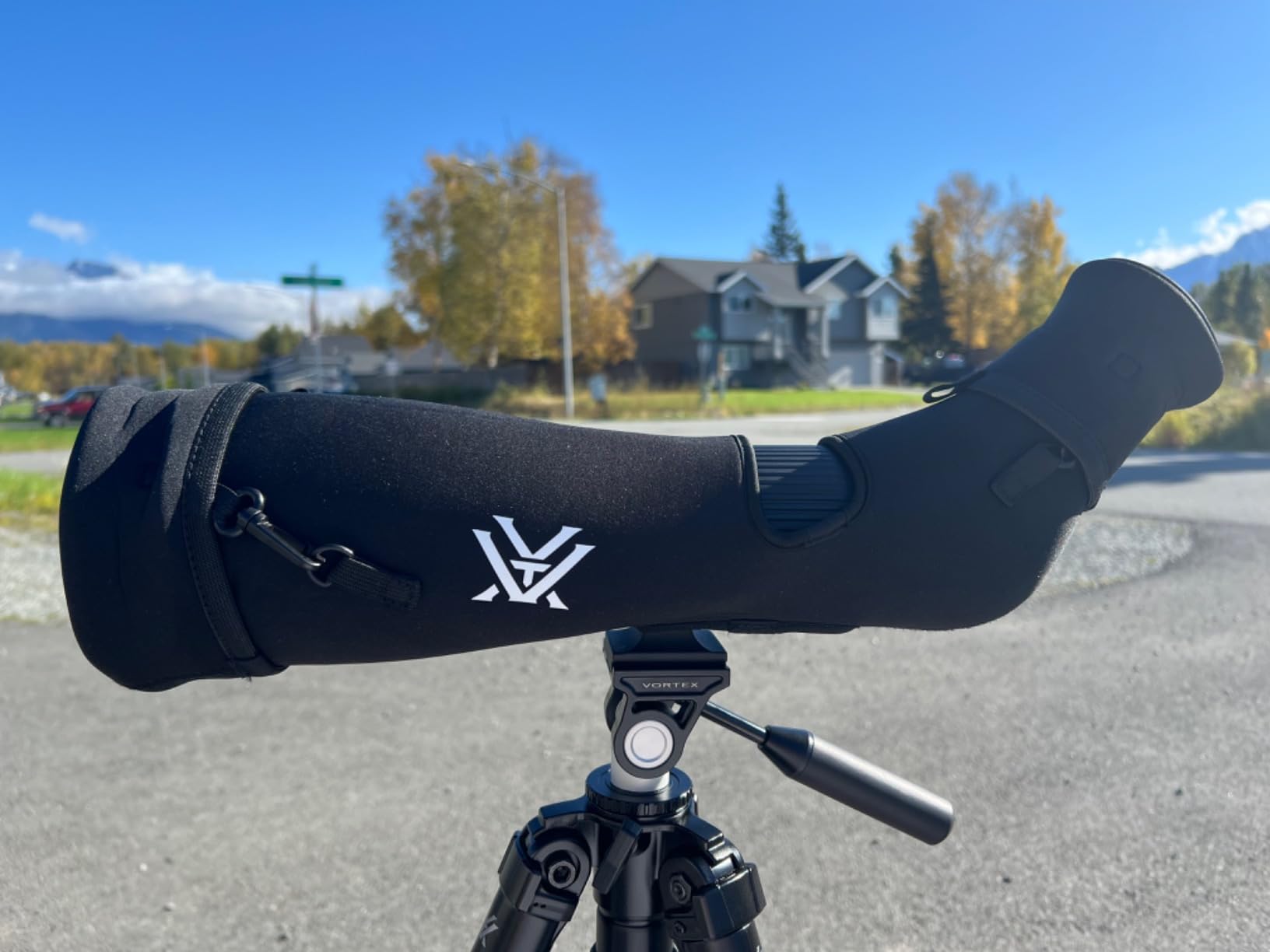
Why it works at dawn on a big basin
An 85mm objective collects substantially more light than a 60mm, and elk at distance in flat light are exactly the case where that difference is the difference between a shape and a countable rack. The XR coatings are designed for the same job.
At 20x the 4.25 degree field of view is wide enough to sweep a clearing, then the 60x end lets you confirm what you found. That find-then-confirm pattern is the correct way to glass elk, and this scope does both halves without a swap.
Where it becomes a pack problem
At 2.2 kg this is the heaviest optic in the list by a clear margin, and owners consistently name that as the trade-off. On a horse or a truck hunt it is irrelevant. Carrying it up a drainage on foot for an hour is a different conversation, which is why the 65mm Trophy Xtreme takes the top spot.
Two smaller complaints: the eye shroud does not please every eyeglass wearer, and the scope needs a genuinely stable tripod to deliver what the glass is capable of. Plan for a tripod in your kit budget rather than a beanbag on a windy ridge.
3. Vortex Diamondback HD 20-60×85 – Best Value for Elk Glassing
Vortex Diamondback HD Spotting Scope 20-60×85 Angled
20-60x85 objective
3.8 pounds
108 feet of view at 1000 yards
16 inch optical tube
Pros
- Excellent low-light brightness for western hunting
- Fast and precise helical focus
- Arca-Swiss compatible foot plus 1/4-20 threads
- Built-in sunshade for rain and snow
- Compact streamlined body
Cons
- Heavier than smaller-aperture scopes in this group
- Chromatic aberration can show at the top of the zoom range
The Diamondback HD is the pick for a hunter who wants an 85mm without stepping up to premium glass, and it carries a large owner base at 461 reviews for this configuration. Owners describe low-light brightness they associate with western hunting, which is precisely the dawn glassing that elk demand.
The field of view of 108 feet at 1,000 yards is one of the more useful numbers on this whole list. At that distance you are seeing roughly a third of a football field across, which is enough to hold a moving herd rather than chasing a single animal.
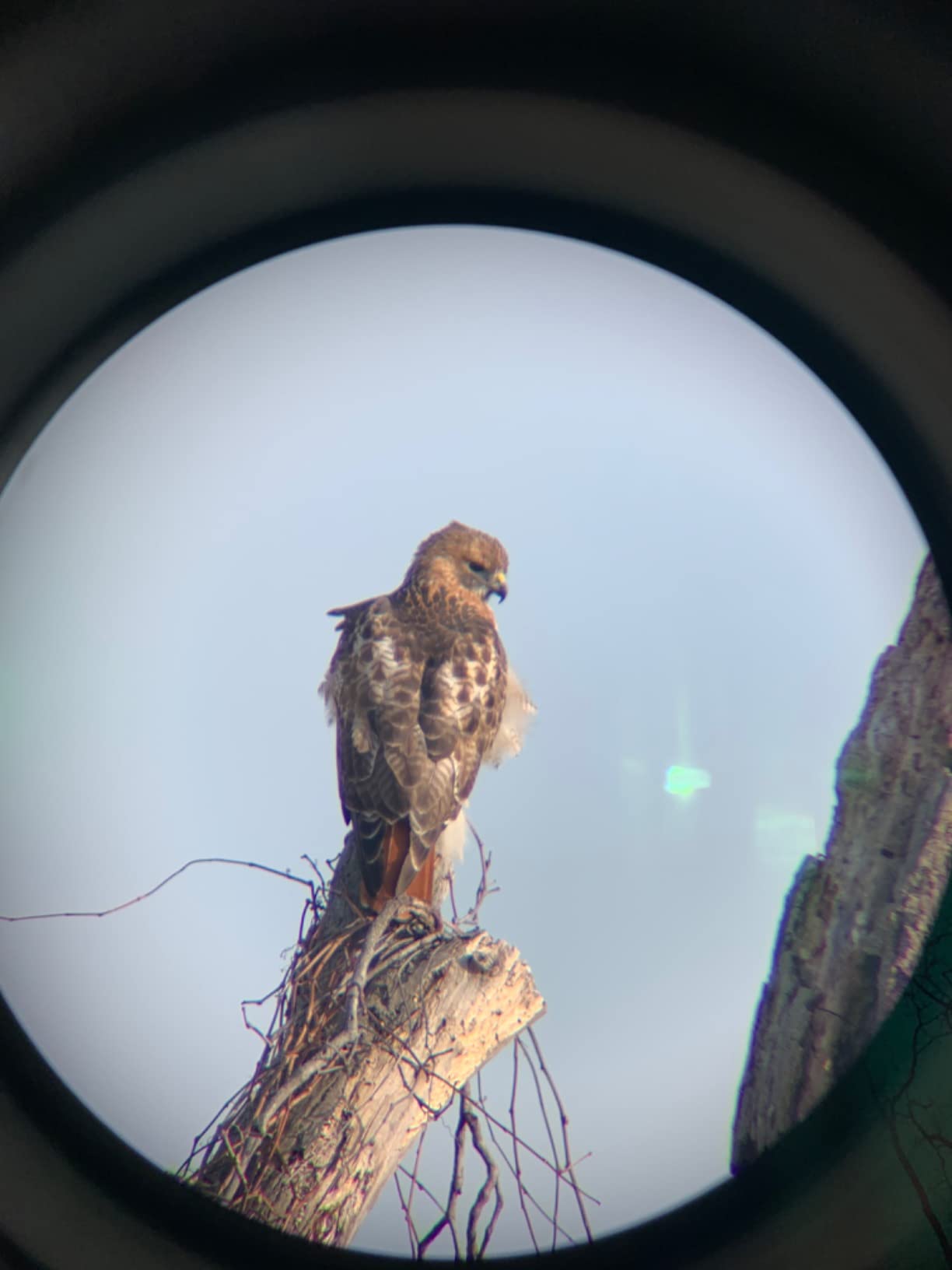
The helical focus wheel is fast and precise, and the helical design is easier to feather than a fine-focus setup. Eyecups adjust so you can shoot the eyepiece with or without glasses, and the aluminum body is rubber armored with Armortek coatings on the lenses.
Mounting is where it separates from cheaper 85mm scopes: an Arca-Swiss compatible foot plus 1/4-20 threads means you can put it on a proper photo head or a rail without an adapter plate. The built-in sunshade is more useful than it sounds when a front moves through rain at 9,000 feet.
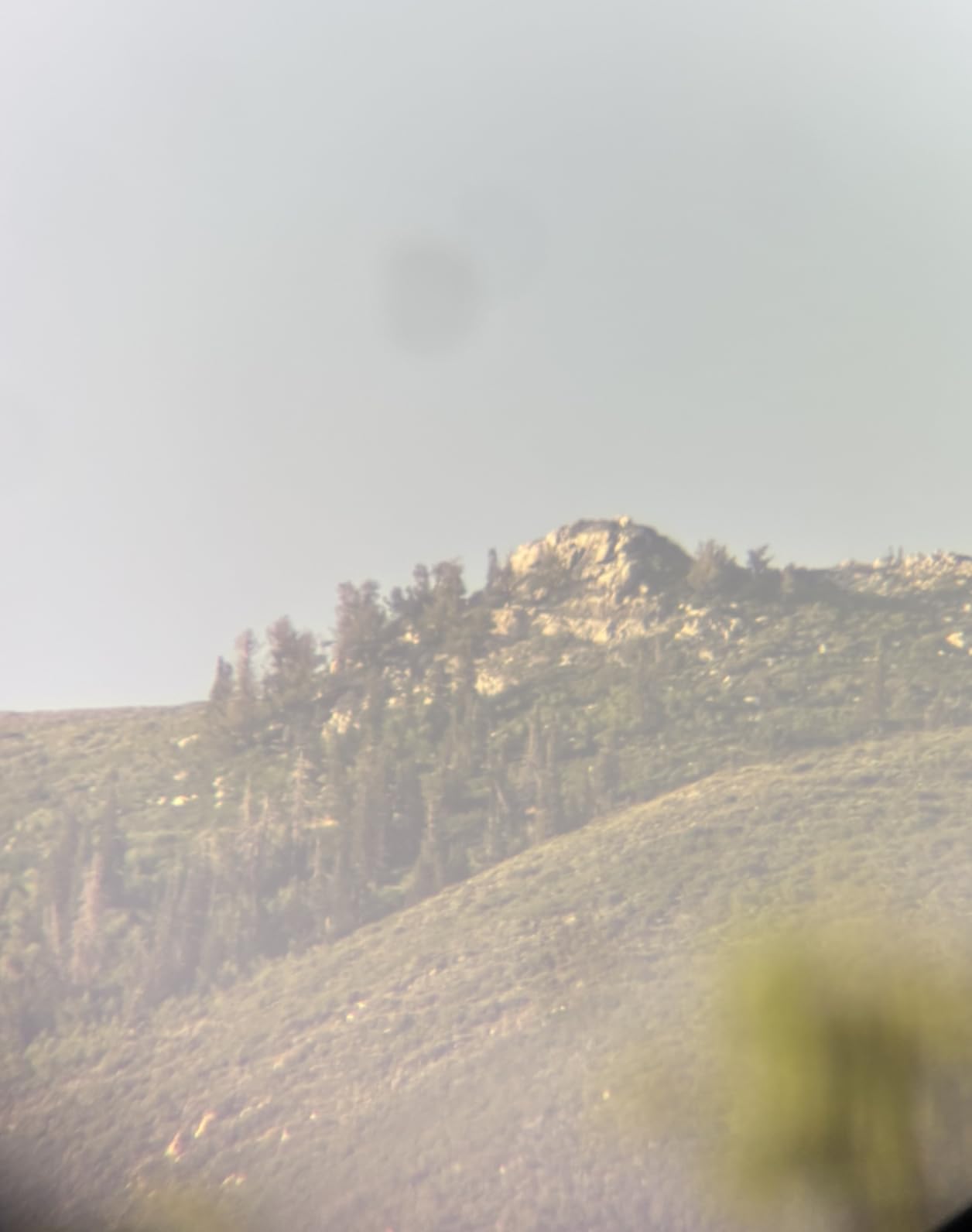
Why it suits a truck-and-roadcut hunter
This is a scope that wants to live on a tailgate or a ridge road. The Arca-Swiss foot locks onto standard plates so the scope is stable in seconds rather than balanced, and the 20-60x range covers both a roadside cow camp and a mile out across a bench.
For a bowhunter pairing with a shooter, the wide field of view makes it easy to spot for two people without losing the animal. The sunshade and the waterproof, argon-purged sealing handle the wet forecast that turns up every October.
Where the weight and the glass cost you
At 3.8 pounds it is one of the heavier bodies here, and reviewers flag it for long pack-ins. This is a glass-and-watch glass, not a glass-and-walk glass.
Some examples show visible chromatic aberration, a colored fringe, at the top of the zoom range. Below 50x it is not something most hunters will notice, but if you plan to count points at 60x in fading light, look elsewhere on this list.
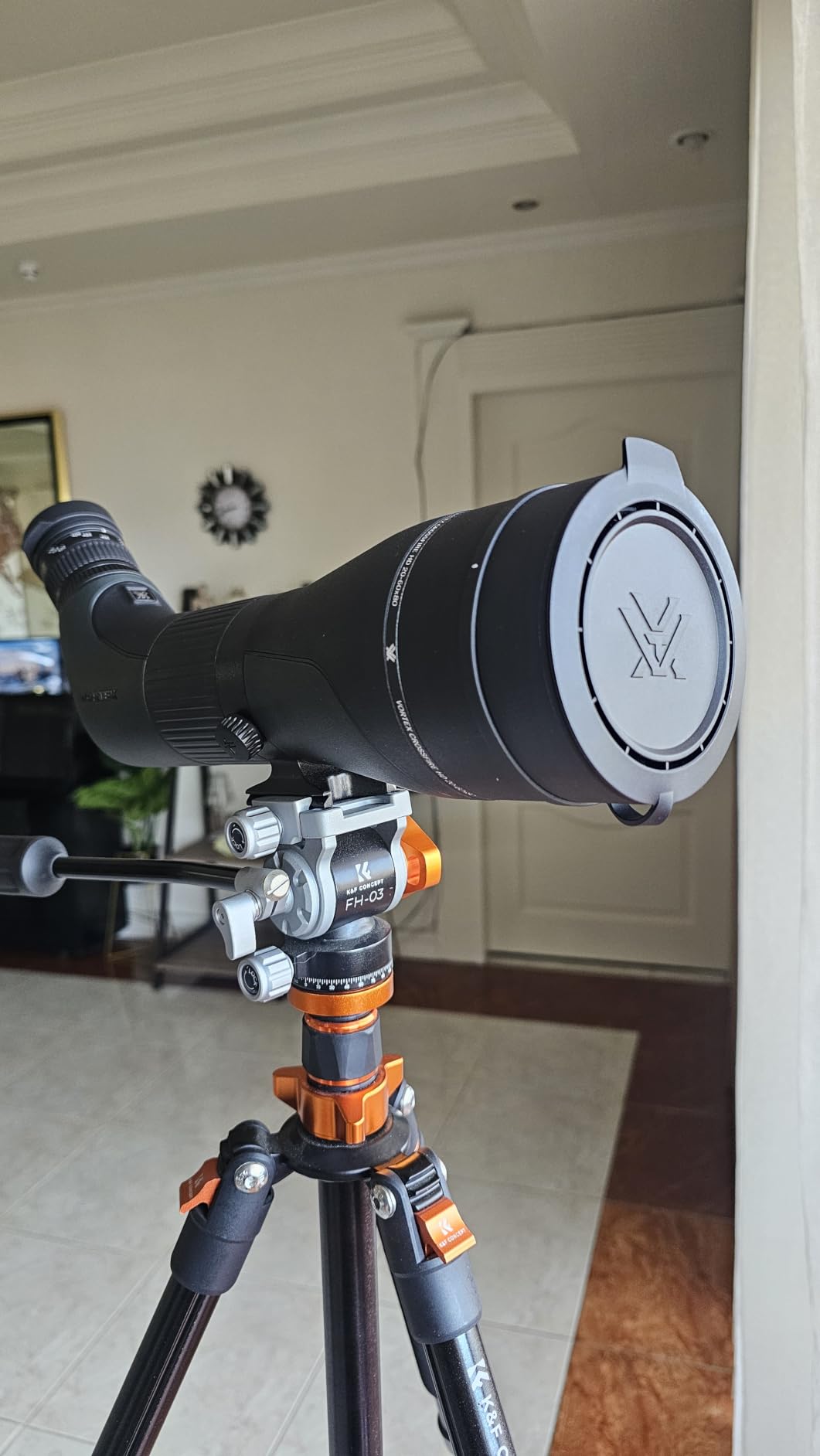
4. Vortex Crossfire HD 20-60×80 – Best Budget Scope for Elk Hunters
Vortex Crossfire HD Spotting Scopes (20-60×80 Angled)
20-60x80 objective
3.3 pounds
An angled eyepiece
Wide field of view for scanning
Pros
- Sharp and bright at this tier
- Angled eyepiece avoids neck strain
- Helical focus ring is smooth
- Arca-Swiss compatible foot
- Excellent value for range and hunting
Cons
- Bulky to pack on a hike
- Included neoprene cover blocks the eyepiece angle screw
- Tripod is not included
- Image dims somewhat at dusk
The Crossfire HD 20-60×80 is the budget answer that does not feel like a compromise at 30x. Reviewers call the image sharp and bright for the tier, and the angled eyepiece is the feature most often praised, because it lets you glass a basin for hours without the neck ache that straight eyepieces cause.
An 80mm objective on a 3.3 pound body is a real compromise between light gathering and pack weight, and for most elk hunters it is the sweet spot. The HD optical system cuts chromatic aberration, and the wide field of view is built for scanning terrain rather than staring at one tree.
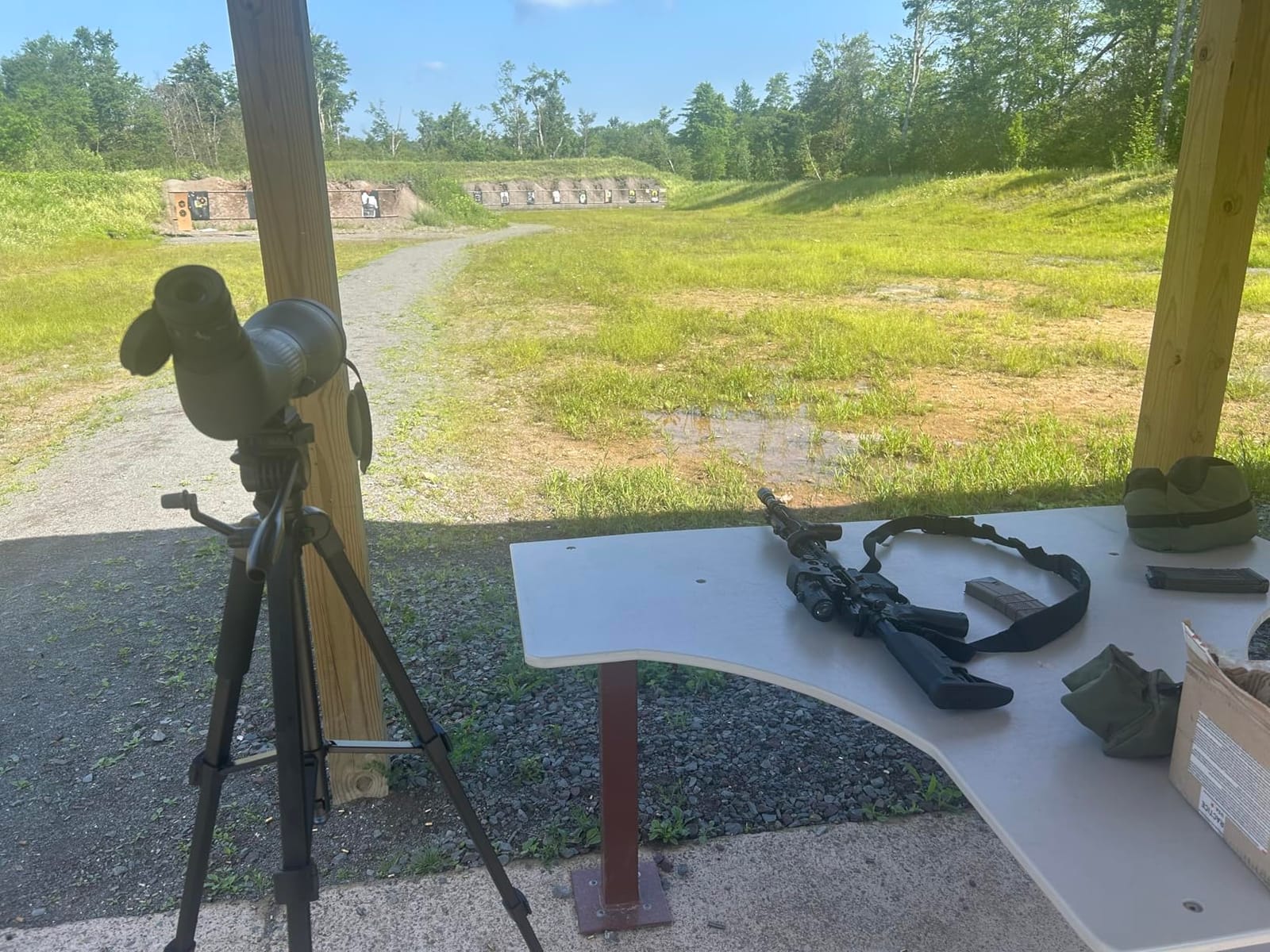
It is nitrogen purged, waterproof and fogproof with shockproof rubber armor, so October rain and altitude temperature swings are not a worry. The adjustable eyecups work with or without glasses, and the helical focus ring is smooth enough to feather onto a moving animal.
The Arca-Swiss compatible foot means you can put it on the same head as a bigger scope when the trip calls for one. That flexibility is worth more to a serious hunter than a slightly sharper image at 60x.
Why it works for a hunter buying their first scope
An 80mm objective is the size most hunters asking for a first spotting scope for mule deer and elk actually want, and this one costs little enough that a tripod budget is realistic. Between the Arca-Swiss foot and the wide scan, it behaves like a much more expensive tool.
For a bowhunter who spots then stalks, the angled eyepiece and wide field of view make it easy to find a herd and then hand off a position to a partner at the same time. Owners also use it for range work, where the 20x end is more than adequate.
Where it needs help on a real hunt
Brightness dims somewhat at dusk, which is an honest limit of an 80mm at this tier. If your hunt is a dawn-heavy, low-light affair, spending up for a brighter scope or a 65mm that runs at 2.2 pounds is the better trade.
The supplied neoprene cover blocks the eyepiece angle adjustment screw, so leave it off when you are dialing the eyepiece in. No tripod is included, and at 3.3 pounds the 80mm body is bulky on a long pack-in.
5. Celestron Ultima 20-60×80 – Best Scope for Recording Elk
Celestron Ultima 20-60×80 Angled Spotting Scope for Wildlife
20-60x80 objective
3.6 pounds
45 degree angled eyepiece
Built-in T-adapter
Pros
- Bright multi-coated images for the tier
- Angled eyepiece is comfortable on long sessions
- Large focus dial focuses fast on moving animals
- Integrated T-adapter works with cameras and phones
- Limited lifetime warranty
Cons
- Heavier and bulkier than smaller-aperture scopes
- Focus ring can be stiff out of the box
- Trails premium HD glass at the top of the zoom
The Ultima is the one to buy if you want to record what you are looking at. The eyepiece has an integrated T-adapter, so a phone or a camera body goes on without buying a separate adapter, and for pre-season scouting that means a mapped list of the big bulls on a drainage instead of a memory you argue about in the truck.
At 1,346 owner reviews it is one of the most established scopes in this roundup, and that history shows up in the details. The 45-degree angled eyepiece, the extended tripod plate with a rotating collar, and a soft carrying case with an eyepiece pouch and lens cloth in the box.
Multiple anti-reflective coatings on every lens surface keep the image bright and contrasty for a multi-coated scope, and the large focus dial is easy to find with cold fingers and quick to bring a moving herd into focus.
The rotating collar lets you swing the scope around a tripod without twisting your body, which during a long glassing session is worth as much as any coating. It is waterproof, fogproof, UV protected and backed by a limited lifetime US warranty with US-based support.
Why it suits a pre-season scouting trip
Recording bulls and mapping a herd is the single most useful scouting habit an elk hunter can build, and the Ultima makes it the least painful. The T-adapter is built into the eyepiece rather than sold as an accessory, which is the difference between doing it and not doing it.
Its 64 degrees of apparent field of view at 1,000 yards translates to a scan wide enough to work a whole clearing at low power. Owners also use the rotating tripod plate to share the scope between two hunters without re-mounting it.
Where the older design shows
Optically it trails premium HD glass at the highest zoom, so 60x is a confirmation tool rather than a counting tool. If your plan is to read fine points on a rack a mile out, step up a tier.
At 3.6 pounds it is bulky for a long approach, and the focus ring can be stiff out of the box before it breaks in. A few owners note the rotation needs loosening again on a hard drive.
6. Athlon Argos HD 20-60×85 – Bright Budget 85mm
Athlon Optics Argos HD 20-60×85 Spotting Scope – 45 Degree, Green/Black
20-60x85 objective
4.3 pounds
HD glass, fully multi-coated
Argon purged and waterproof
Pros
- 85mm objective delivers a bright low-light image
- Angled eyepiece improves comfort on long sessions
- Rotating tripod ring for flexible positioning
- Argon purged and waterproof in harsh weather
- Lifetime warranty
Cons
- Heavy body at 4.3 pounds
- Color fringing reported at high magnification
- Soft case gives minimal impact protection
The Argos HD gets you an 85mm objective without moving up a tier, and an 85mm is the right call if your glassing happens from a fixed position: a ridge, a roadcut, a blind. Owners point to the bright, low-light image as the reason the price works, which is the whole reason an 85mm exists.
HD glass with fully multi-coated lenses handles the low-light brightness, and the 45-degree angled eyepiece with a rotating tripod ring means you can get into a comfortable position behind brush or in a truck bed. The rubber-armored body takes the knocks.

The optical tube runs 16.9 inches, which is short for an 85mm and part of why the body looks compact. It is argon purged, waterproof and fogproof, and a soft sided case plus cleaning cloth and lens caps are in the box.
A lifetime warranty is attached, which matters on a scope this size because the 85mm objective is the most expensive part to replace if something goes wrong. That is one of the reasons to buy from a brand that covers it.
Why it works from a fixed glassing position
Weight is only a problem when you are walking. Set up on a ridge with a good head and the Argos gives you an 85mm image with no penalty, and the rotating tripod ring lets you frame a drainage without repositioning the legs.
The angled eyepiece is the detail that separates it from cheaper 85mm scopes. On a fixed glass, you are locked in place for a while, and neck comfort is what determines whether you stay on target or take a break.
Where it loses on a moving hunt
At 4.3 pounds this is one of the heavier bodies here, and it is the pick to leave at home if you are covering ground on foot. That is the honest limit of buying the biggest objective you can find.
Some owners report color fringing at high magnification, and edge-of-field softness is a recurring remark. The included soft case offers minimal impact protection, so for a truck glass add a hard shell before elk season.
7. Athlon Talos 20-60×80 – Lightweight Full-Size Scope
Athlon Optics Talos 20-60×80 Spotting Scope with Tripod and Carrying Case – Angled, Charcoal Grey – 315001G
20-60x80 objective
2.4 pounds
K9 glass prisms, silver coated
Nitrogen purged and waterproof
Pros
- Bright images from K9 glass at a budget tier
- Rotating tripod ring for long sessions
- Waterproof and nitrogen purged for wet weather
- Lighter than most 80mm scopes
- Soft case and lens caps included
Cons
- Narrow eye box is finicky to find
- Manual focus with no fine adjustment ring
- Edge sharpness falls off at high magnification
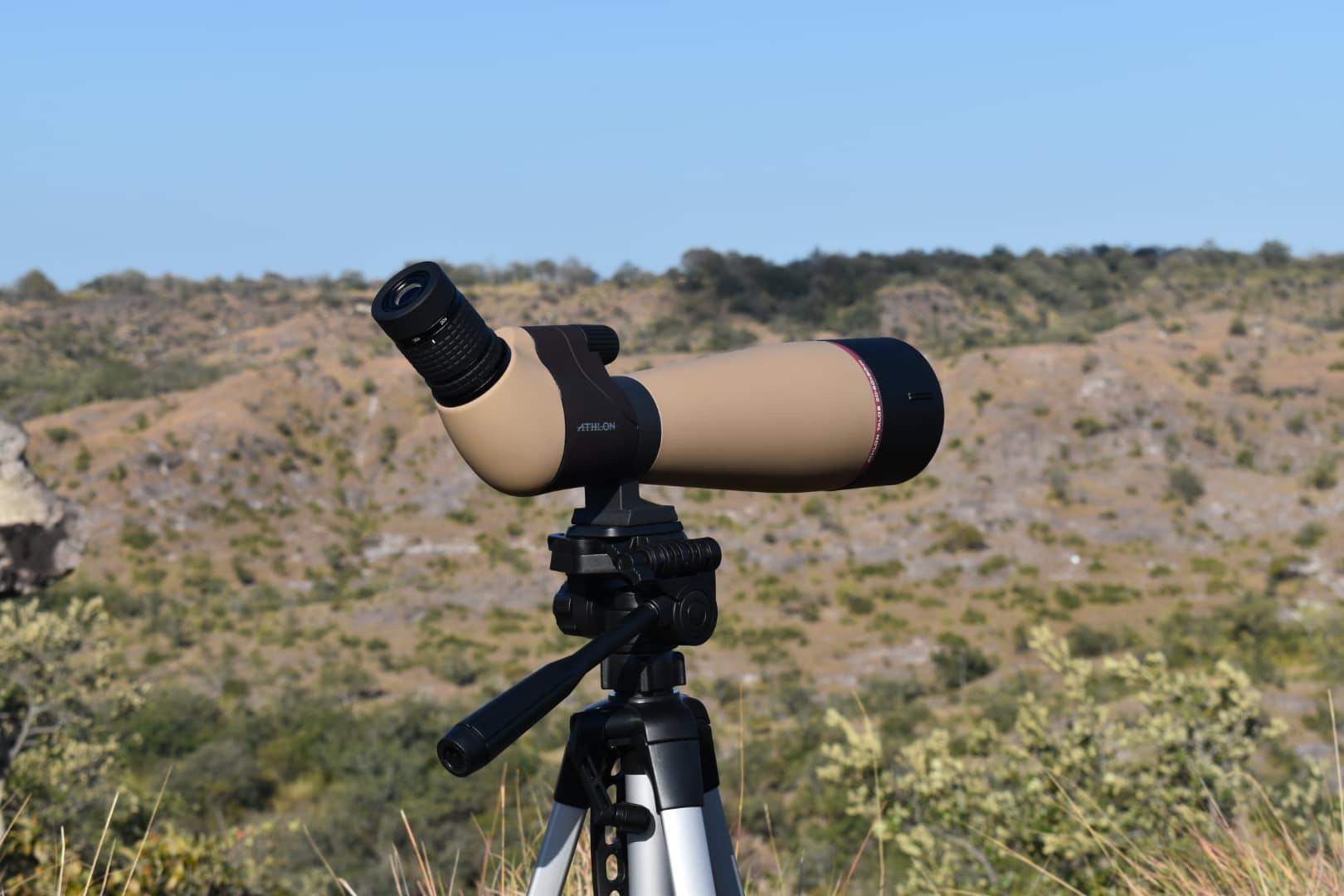
The Talos solves a specific problem: an 80mm objective that weighs 2.4 pounds. Most 80mm scopes here run between 3.3 and 3.6 pounds, so for a hunter carrying a glass on a shoulder strap through timber, the difference is the difference between using it and leaving it in the pack.
The optics are K9 glass prisms with a silver coating and fully multi-coated lenses, and owners rate the resulting image as bright for the price. Nitrogen purging handles the dew and rain that settle into a Colorado or Wyoming drainage in October.
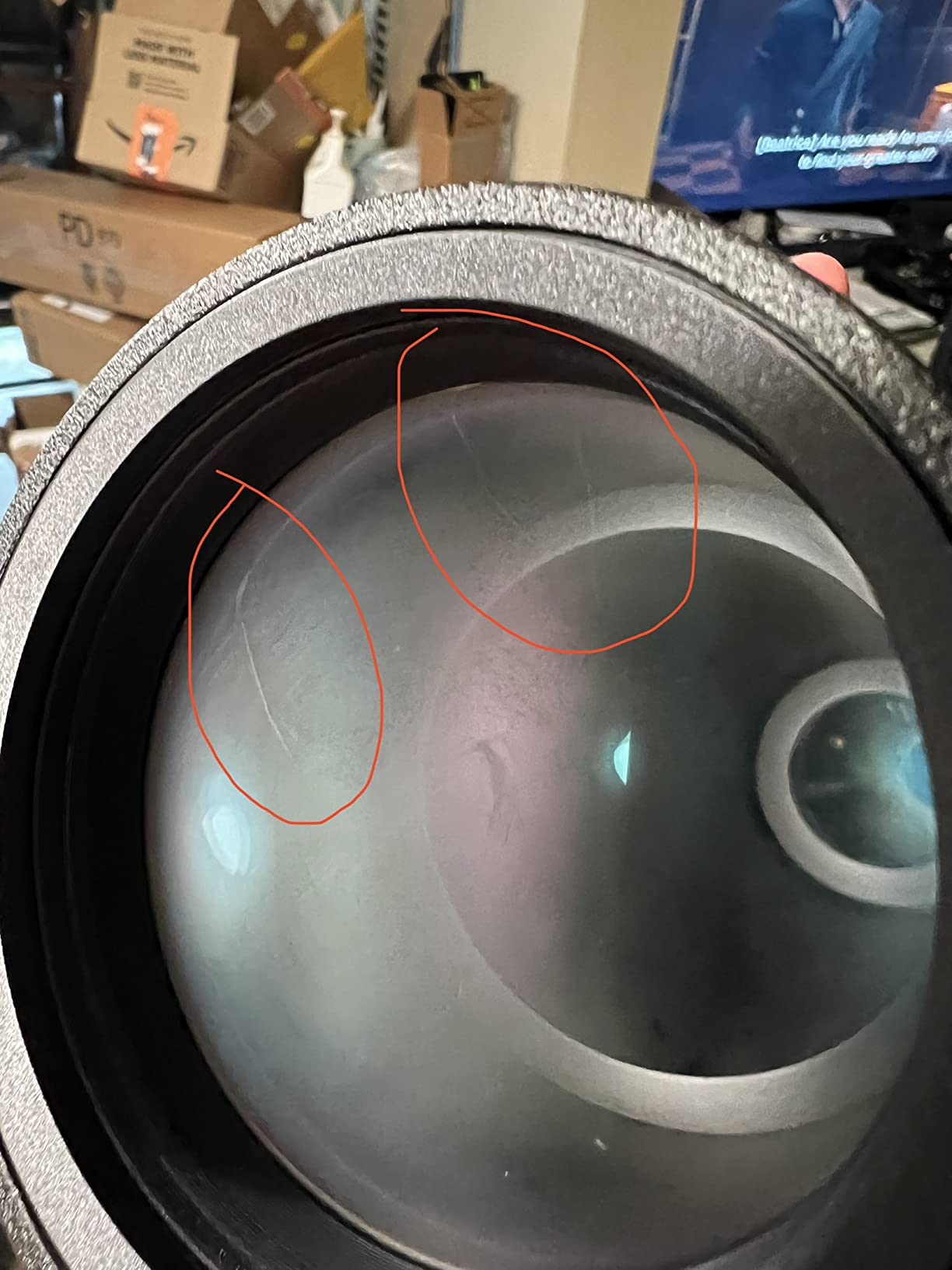
The rotating tripod ring is the quiet hero here. It lets you dial the body into a comfortable angle behind a tree or a rock, and for long sessions that is worth more to most hunters than another increment of magnification. Diopter adjustment of plus or minus 1 lets you focus without glasses.
A soft sided case and lens caps are included, and the aluminum body is fully multi-coated and waterproof with a lifetime warranty attached.
Why it works for glassing on the move
Two and a half pounds is a scope you can actually carry. The 20-60x range still gives you a 60x ceiling for confirming a bull across a clearing, and the 80mm objective keeps the image usable when the light starts to go.
For a hunter who covers country instead of sitting on one bench, this is the practical pick. The rotating ring also means you can set up quickly against whatever is available rather than searching for a level spot.
Where it is not the tool
The narrow eye box is the most common complaint and it is a real one. A tight eye box makes it harder to get a full, bright image without careful alignment, and it is frustrating if you wear glasses.
Focus is manual with no fine adjustment ring, so dialing in on a moving animal takes practice. Edge sharpness falls off at higher magnification, which means this is a find-and-classify scope more than a count-the-points scope.
8. Gosky 20-60×60 HD – Best Complete Kit for New Elk Hunters
Gosky 20-60×60 HD Spotting Scope with Tripod, Carrying Bag and Scope Phone Adapter – BAK4 45 Degree Angled Spotter Scope Bird Watching Wildlife Scenery
20-60x60 objective
2.6 pounds
BAK4 Porro prism, multi-coated
Tripod, bag and phone adapter included
Pros
- Tripod
- carry bag
- phone adapter and lens covers included
- Angled eyepiece for long sessions
- Bright high-contrast image for a 60mm objective
- Rubber armor and O-ring sealed waterproofing
- Light enough for backpacking
Cons
- Sharpness and color trail premium HD glass
- Manual focus is coarse
- Only a one-year warranty
- 60mm objective dims sooner than 80-85mm scopes
The Gosky is one of the most-reviewed scopes in this roundup, with 3,294 owner reviews, and the reason is simple: it arrives with everything. Tripod, carrying bag, smartphone digiscoping adapter, lens covers and a cloth, in a 2.6 pound body with a 45-degree angled eyepiece.
That is the whole argument for a first-time buyer. A hunter who buys a bare optic and then needs a tripod, a case and a way to record a bull has spent more and waited longer, and on a compressed pre-season schedule that matters.
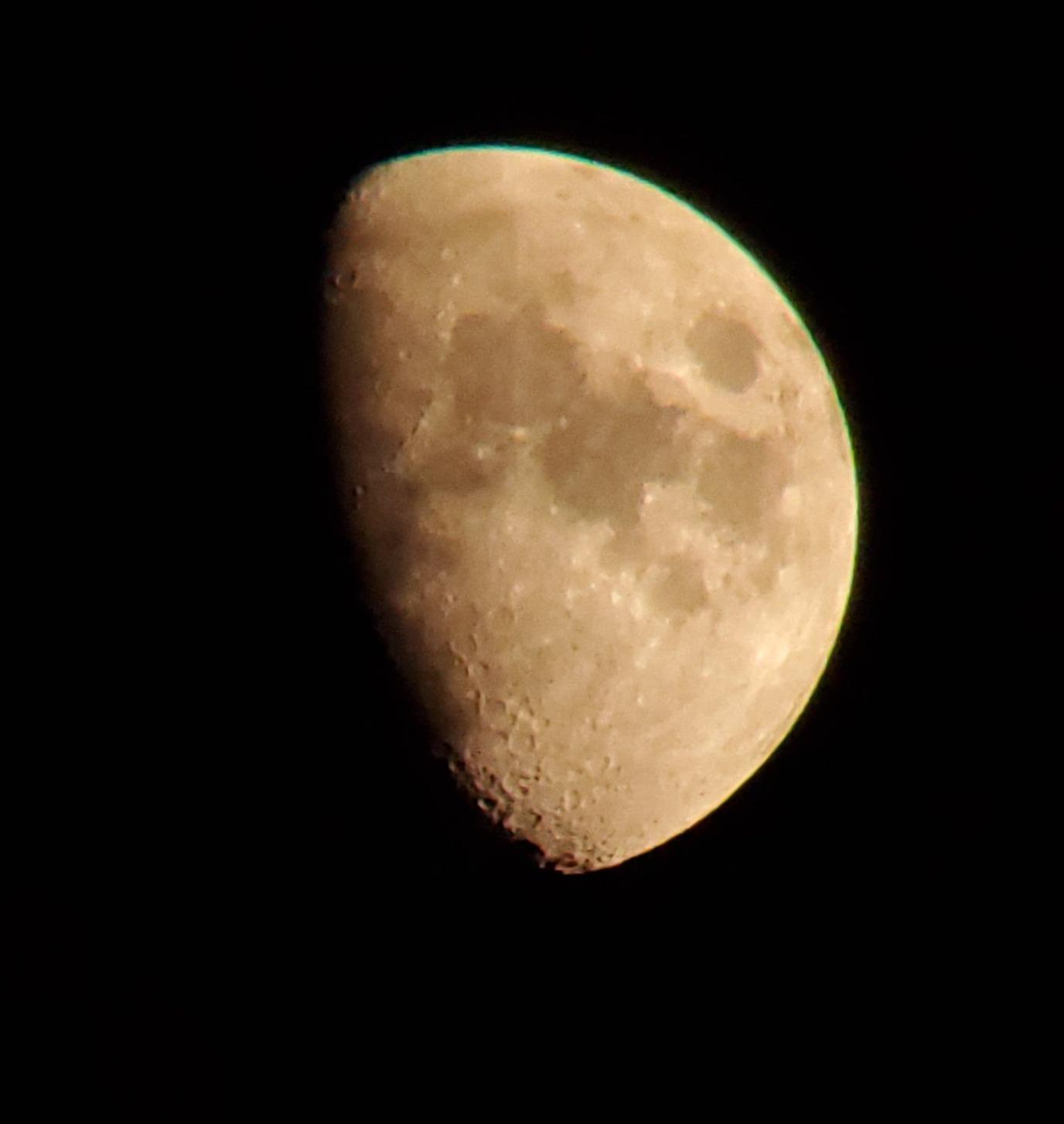
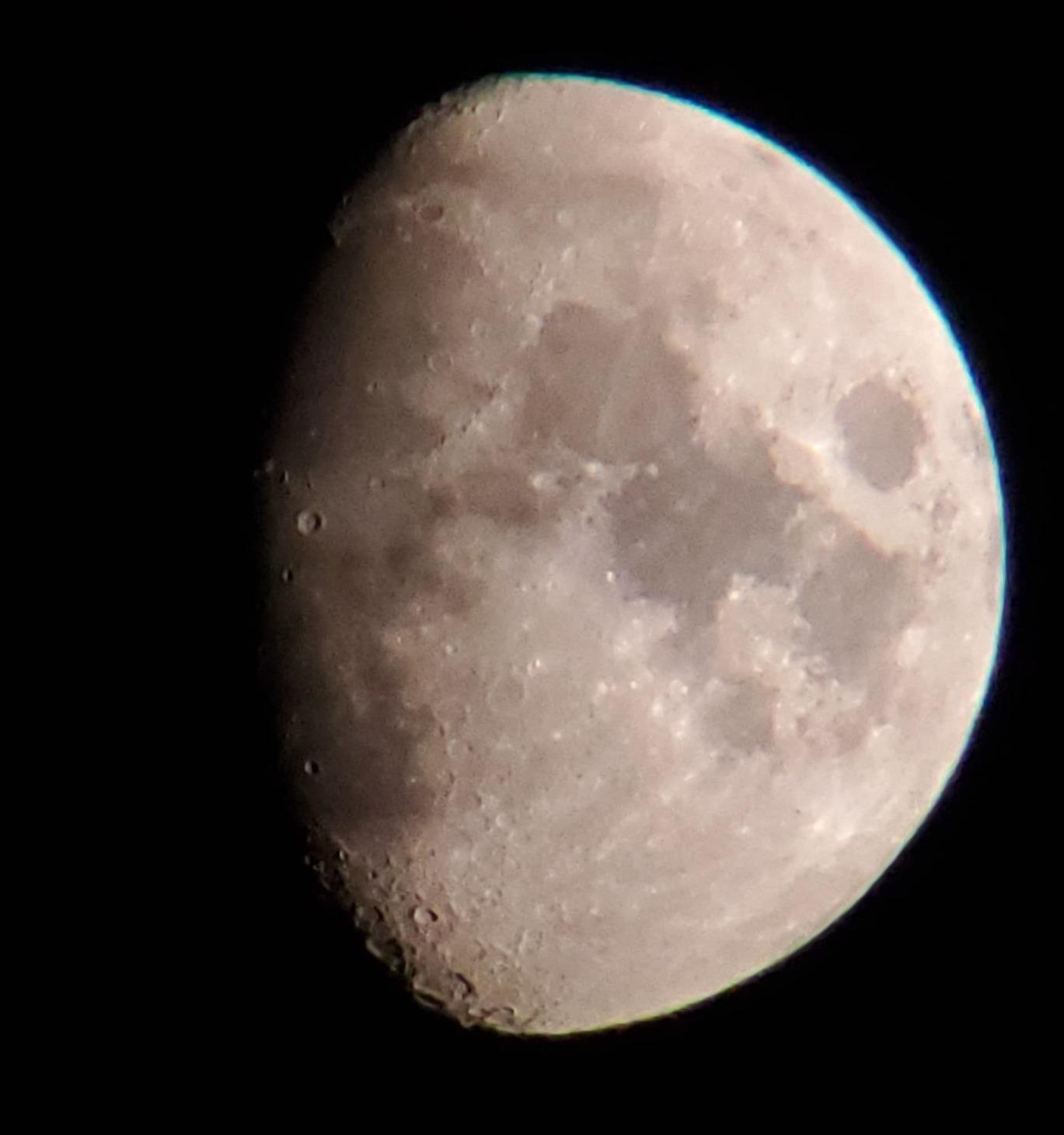
Optically it is a BAK4 Porro prism with a multi-coated 60mm objective and a 3 millimeter exit pupil, with a 1.3 degree field of view. The rubber armor and O-ring sealed, nitrogen-purged body hold up in wet weather, and an extendable eyepiece shield protects the ocular.
The phone adapter makes it easy to capture a herd map without buying a T-adapter, and owners on forums and reviews note the accessory bundle as the deciding factor. It is also a light kit to carry on a pack-in at 2.6 pounds.
Why it suits a hunter starting from nothing
A 60mm objective is the right size for a hunter who will glass mostly inside 800 yards in timber and openings, which is where a lot of elk hunting actually happens. The image stays bright and high-contrast in those conditions.
The included tripod means you are not balancing the scope on a pack or a fence post on the first morning. For a bowhunter scouting solo, that stability is what makes counting a rack at 40x possible at all.
Where the price tier shows up
Optical sharpness and color fidelity trail premium HD glass, so the top of the 20-60x range is soft. And a 60mm objective dims sooner than an 80mm or 85mm when the light goes, which is the main risk on a dawn hunt.
Focus is manual and coarse, which makes tracking a moving animal harder than a helical or dual-speed focus would. Most importantly, the warranty is one year, against the unlimited lifetime warranties on most scopes in this list. Buy it as a complete kit, not as a long-term optic.
9. Bushnell Legend T-Series 15-45×60 – Best Reticle Spotter for Elk
Bushnell Legend T-Series 15-45x60mm Spotting Scope, MIL-Hash, Tan
15-45x60 objective
2.3 pounds
MIL-Hash first focal plane reticle
Picatinny rails and ED Prime glass
Pros
- MIL-Hash reticle on the first focal plane
- Multiple picatinny rails for a red dot
- Light 2.3 pound compact body
- Clarity reported close to a Viper HD for glassing
Cons
- Focus is hard to bring to sharp and lacks fine adjustment
- Dial can stiffen in cold weather and has spun on some units
- Image is warmer than premium Vortex glass
- 60mm objective is dimmer past 100 yards
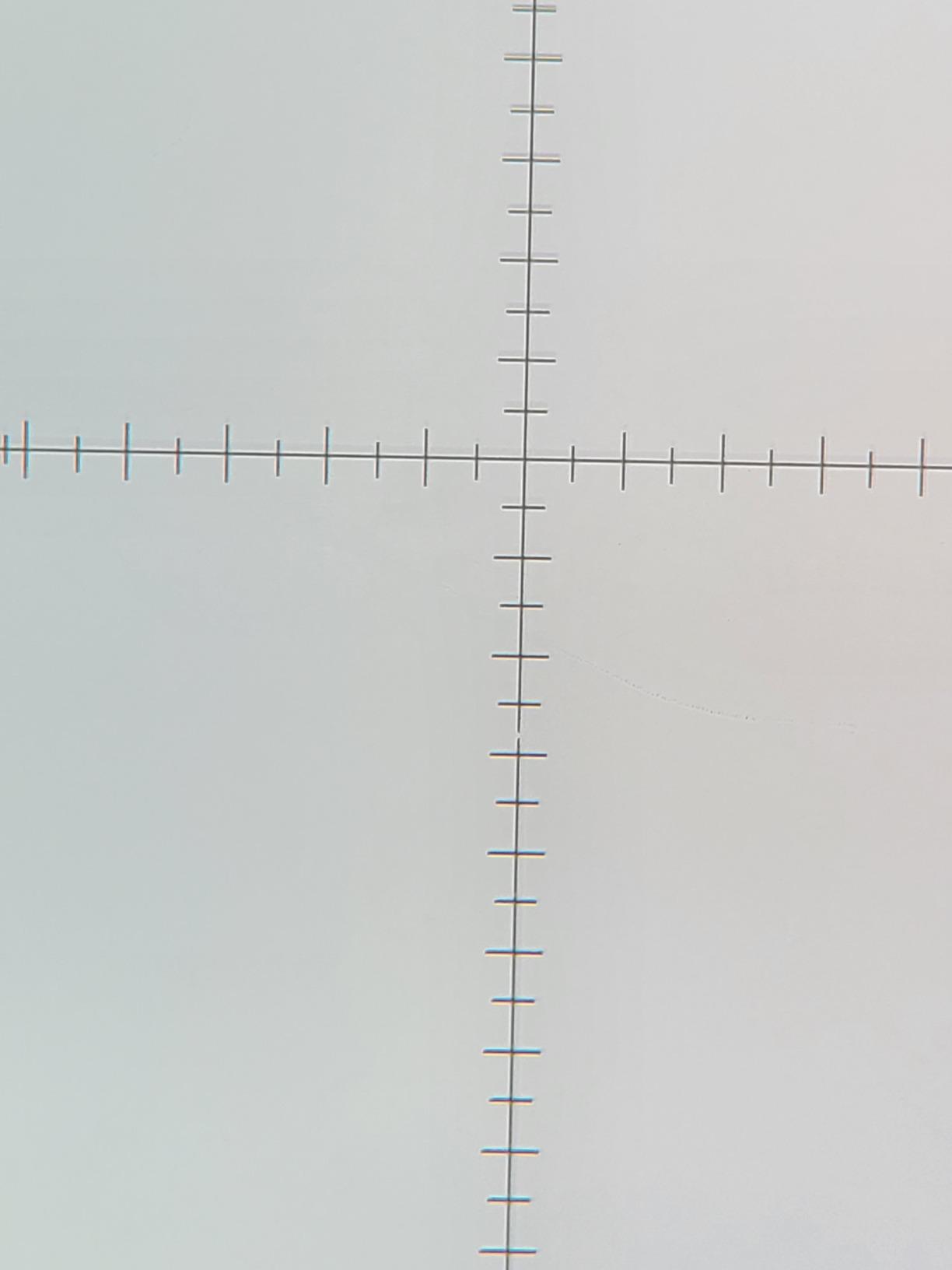
This is the pick if you are spotting for a rifle shooter rather than for yourself. The MIL-Hash reticle on the first focal plane gives you wind, drop and range holds on a first focal plane reticle, so the reticle scales with magnification and you can call a hold on an elk at distance. That is a capability no other scope in this list offers.
The glass is ED Prime extra-low dispersion with BaK-4 prisms in a compact body, and owners report clarity close to a Viper HD when spotting steel at 600 yards. At 2.3 pounds and an 11-inch tube, it is also one of the easiest here to pack.
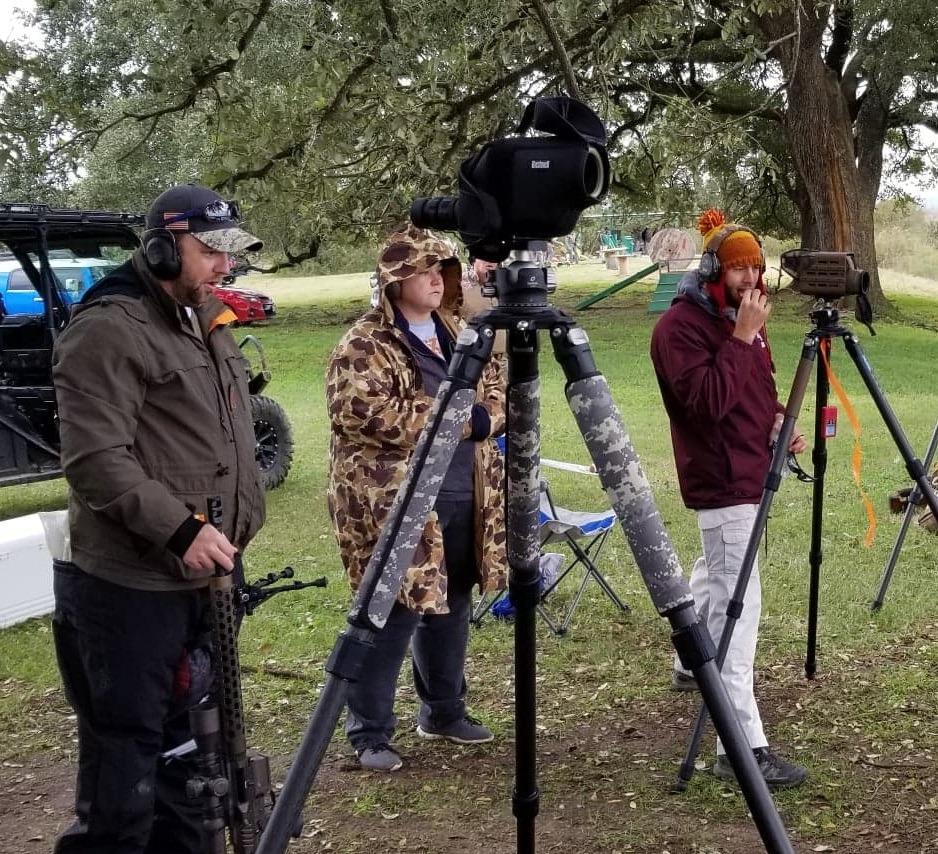
Multiple picatinny rails let you mount a red dot for rapid target acquisition, which solves the problem of a scope with one magnification and one job. The RainGuard HD coating sheds water, and the scope is waterproof and fogproof with a 4 millimeter exit pupil.
Close focus is 35 feet, so it will not focus on game in thick timber at close range. That is a real limit for elk country and worth checking against how you hunt.
Why it works as a spotter scope
A reticle turns a spotter into a spotting scope with a measuring function. Once you have a zero, the MIL-Hash pattern gives you a holdover for any range, which means your shooter can be given a number instead of an opinion. For bowhunting that is less relevant, for rifle seasons it is the whole point.
The red dot rails solve the other half of the problem. At 15x you cannot find a moving elk, and a mounted red dot on the same body lets you acquire instantly and then dial up once the animal is located.
Where it frustrates owners
Focus is the biggest complaint and it appears in three forms: it is hard to bring to a sharp image, there is no fine focus ring, and the dial can stiffen in cold weather. Some owners have had the focus knob spin on its shaft, which is a failure mode worth knowing about before an autumn hunt.
The image also reads warmer and yellower than premium Vortex glass, and a 60mm objective is dimmer and hazier past 100 yards than an 85mm. Quality control has been inconsistent, with some units showing internal glass specks or an inaccurately installed reticle, so inspect it on arrival. For counting points on a bull at a mile, this is the wrong tool despite the reticle.
10. Emarth 20-60×60 Angled – Lightest Scope to Carry on Foot
Emarth 20-60×60 Angled Spotting Scopes for Target Shooting/Hunting/Birding
20-60x60 objective
1.4 pound listed weight
14 inch tabletop tripod included
1/4-20 standard thread
Pros
- About 1.4 pounds
- easy to carry on a hunt or hike
- Wide field of view at 20x makes animals easy to find
- Included tripod has wide legs and resists tipping
- Waterproof and nitrogen filled for dew and rain
- Soft shoulder-strap case included
Cons
- Entry-level sharpness compared with 80-85mm scopes
- 60mm objective dims in low light
- Tabletop tripod limits elevation
- Manual focus with no fine adjustment ring
The Emarth is the lightest kit here at about 1.4 pounds as listed, and with nearly 4,800 owner reviews it has become the default first spotting scope for a lot of hunters. For an elk hunter covering ground on foot with a heavy pack, that weight is the entire argument.
What that review count also reveals is the buyer profile. This is the scope people buy once, keep in the truck or on the pack lid, and rarely replace, so the owner record is full of long-term durability notes rather than optical comparisons against scopes three times the price.
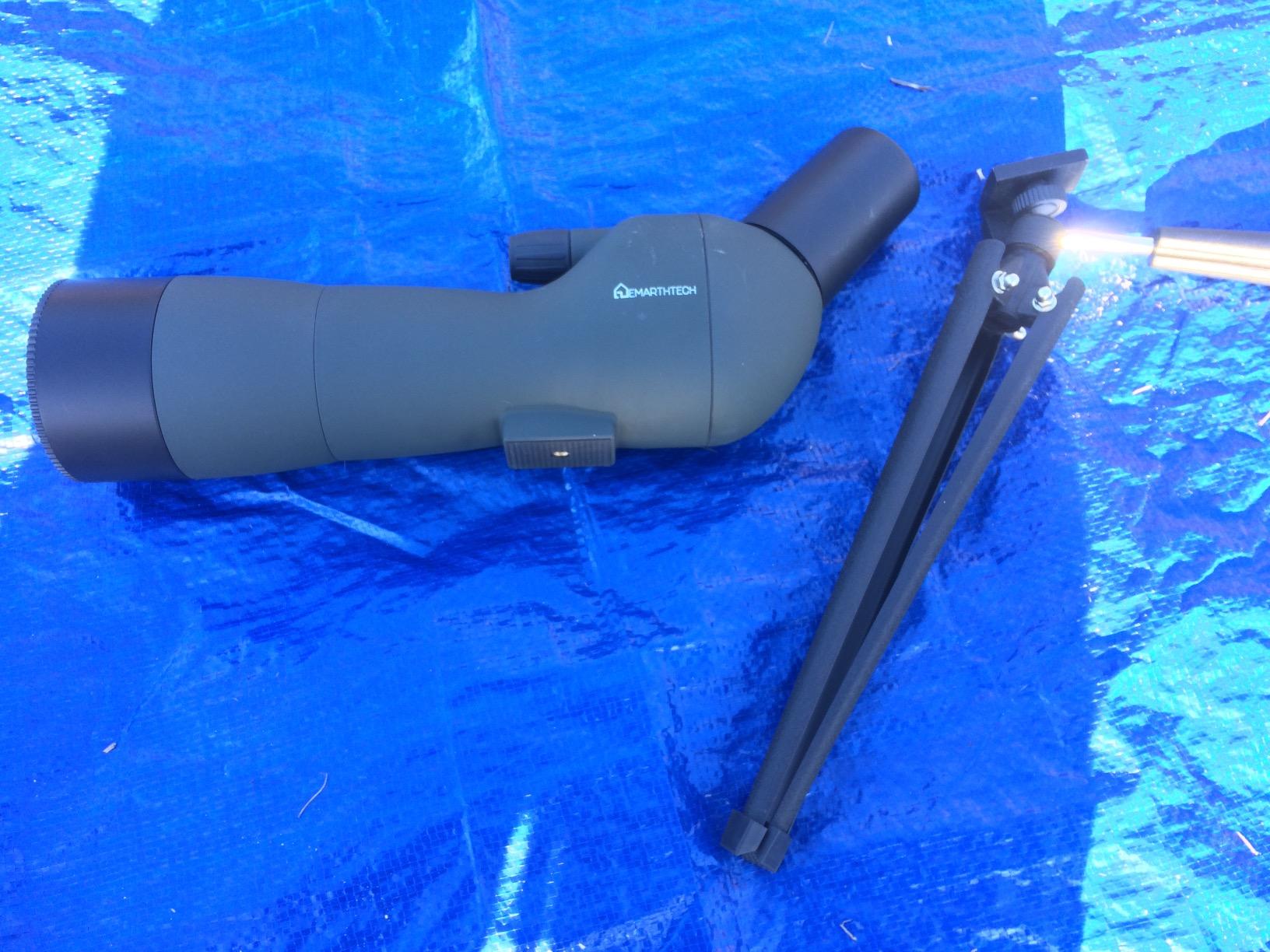
It is a 20-60×60 in a 45-degree angled body with a BAK-4 prism and fully multi-coated lens, 17 millimeters of eye relief, and a standard 1/4-20 thread. The angled eyepiece means you can glass comfortably from a sitting position without craning.
A 14-inch tabletop tripod with wider, more stable legs is included, and reviewers note it resists tipping on uneven ground. It threads onto full-size tripods, window mounts and railings, so it can graduate from a pack-side scope to a truck-bed scope when you want it.
The body is nitrogen filled, waterproof and fogproof with a matte non-slip grip, and a soft shoulder-strap carrying case is in the box. The wide field of view at 20x makes finding animals fast, which is the first thing you need on a scan.
Why it works for backcountry pack-ins
Nothing else on this list gets under two pounds, and for a hunter walking into elk country that is decisive. A scope you will actually carry is worth more than a better optic you leave behind, and the 20x wide scan compensates for the 60mm objective on daytime glassing.
The 1/4-20 thread means you can add a proper tripod at home later, so this is a starter kit rather than a dead end. Owners commonly pair it with 10x42s on the chest, scanning with binoculars and pulling the scope out to confirm.
Where it stops being enough
At 60mm the image dims noticeably in low light, so it is a daytime and early-morning scope rather than a full-dawn glassing scope. Sharpness and contrast are entry-level next to an 80mm or 85mm, and the image softens badly at 60x.
The included tabletop tripod limits how high you can sight, which is a problem on a steep hillside. Focus is manual with no fine-focus ring, so tracking a moving herd is harder than it should be. If your elk glassing is mostly dawn and dusk, spend up for a brighter objective.
How to Choose a Spotting Scope for Elk Hunting
Objective lens size: 60-65mm vs 80-85mm for elk
The objective lens is the light-gathering diameter at the front of the scope, and it is the single most important number for elk hunters because elk feed and move at dawn and dusk. The trade is direct: more objective means a brighter image and more usable magnification, and also more weight, length and cost.
60-65mm, 2.2 to 2.6 pounds: the backcountry and backpacking answer. Bright enough for a dawn start inside 800 yards, light enough to carry all day. Start here if you walk to your glass.
80mm, 2.4 to 3.8 pounds: the compromise most hunters end up with. A full one to two stops brighter than a 60mm, wide enough to scan, and manageable on a shoulder strap.
85mm, 2.2 kg to 4.3 pounds: the maximum light-gathering option for a fixed position: a truck, a roadcut, a ridge, a blind. Not a pack scope.
A shortcut for estimating low-light performance is the twilight factor, which is the objective diameter multiplied by the highest magnification. An 85mm at 20x gives a much brighter image than an 85mm at 60x, so keep the zoom near the bottom for scanning and turn it up only to confirm what you found.
Magnification range for typical elk glassing distances
Most elk glassing happens between 500 and 1,500 yards, and you do not need 60x to see an elk. You need 20x to find the herd, 30x to 40x to classify, and 45x to 60x to read a rack. A 20-60x range covers the whole job, which is why nine of these ten scopes use it.
Very high magnification is where scopes fail you. Above 45x to 55x, images go dark and grainy on entry-level glass, which is exactly when you are trying to count antler points. Judge the low-power end by field of view instead: a wider view finds more elk, and finding is most of the work.
Only the Bushnell Legend T-Series at 15-45x trades the top end for a built-in reticle, which is the right trade when someone else is shooting.
Angled vs straight body
An angled eyepiece sits at 45 degrees to the barrel; a straight eyepiece lines up with it. Angled bodies are more comfortable over a long session because you are not craning your neck, they sit better on uneven ground, and they let you share the scope with a hunting partner facing the opposite way. Straight bodies are shorter, slightly lighter and traditional.
Six of the ten scopes here are angled, and the Trophy Xtreme is the most-cited comfort drawback among the straight-bodied options. Eye relief matters more than most buyers expect: it is the distance between your eye and the lens, and too little means you fight a black ring instead of watching the animal. Adjustable or multi-position eyecups solve it, and most scopes here have them.
Glass, coatings and durability in October conditions
HD, ED and APO mark tiers of low-dispersion glass that control color fringing at the edges of the image. Fully multi-coated lenses and anti-reflective coatings keep the image bright, and on a dawn glassing that brightness is worth more than edge-to-edge sharpness.
Elk country is wet, cold and high. Look for O-ring sealed, nitrogen or argon purged construction and a waterproof rating, plus a pull-out sunshade to keep rain and snow off the objective. The Bushnell Diamondback HD and the Vortex Crossfire HD both have a built-in sunshade, which is a small feature with real consequences on a snowy bench at 9,000 feet.
Warranty is an underrated value driver. Most scopes here carry a lifetime warranty, some unlimited and transferable, while the Gosky carries one year. On an optic this size, a lifetime warranty is real insurance.
Tripod, mount and the cost of a full kit
A 60x scope in the hand is an unusable scope. Budget for a stable head and plan on an Arca-Swiss compatible foot, which is the standard interface and accepts the quick-release plates most serious hunters already own. Every scope in this roundup is tripod adaptable, and most need a tripod bought separately.
Count the full cost: optic, tripod or window mount, a case that protects an 85mm objective, and lens caps. A soft case is fine for a truck; a hard case is what protects an 85mm from a dropped pack. Four scopes here ship with a tripod or case, and the Bushnell Trophy Xtreme is the only one with both a hard case and a window mount, which is worth weighing against the sticker.
Spotting Scope vs 15x/18x Binoculars for Elk Hunting
Do you need a spotting scope for elk hunting? Often not, and the most common real-world setup we see described by hunters is a 10×42 or 10×44 pair on a chest strap for scanning, with a scope pulled only to confirm a long-range animal. Elk are large. Finding them is a wide-angle job, and binoculars do it faster with less weight.
High-power 15×56 or 18x binoculars on a tripod are the real alternative, and a fair number of hunters prefer them. They are lighter than an 85mm, they let you scan with two eyes open, and a wider field of view reduces eye strain over a long session. Where a scope wins is at the top of the zoom: holding 60x on a bull a mile out and reading the rack is much easier through a long objective.
Our read: binoculars for scanning, a scope for confirmation. If you hunt alone on foot, the 65mm Trophy Xtreme and the light 60mm options below cover the confirmation job without punishing your pack. If you glass from a vehicle or a ridge, the 80mm and 85mm scopes are where the image quality jump shows. For more on the binocular side, our picks in the general spotting scope guide cover the wide-field end of the market.
Frequently Asked Questions
What size spotting scope is best for elk hunting?
A 65mm objective is the best all-round size for elk because it stays near 2.2 pounds and stays bright enough for dawn glassing inside 800 yards. Choose 80mm if you glass from a truck or a roadcut, and 85mm if you hold a fixed position such as a ridge or a blind, where the extra light and pack weight do not matter.
Do I need a spotting scope for elk hunting?
Often not. Elk are large, so a 10×42 or 10×44 binocular on a chest strap finds herds faster and weighs less. A scope earns its place when you need to separate a bull from a cow and count antler points at 800 to 1,500 yards, or when a 15×56 pair on a tripod is not enough reach. A practical kit is both.
Is an angled or straight spotting scope better for hunting?
An angled eyepiece is better for most elk hunters. The 45-degree position takes the strain off your neck over a long dawn session, sits more comfortably on uneven ground, and lets you show the herd to a partner facing the other way. A straight body is shorter and slightly lighter, which matters if pack weight is the deciding factor.
What is the best hunting spotting scope for the money?
The Bushnell Trophy Xtreme 20-60×65 is the best value for elk because it pairs a 65mm objective with a 2.2 pound body and includes a tripod foot, a window mount and hard and soft cases. If you want more light and plan to glass from a vehicle, the Vortex Diamondback HD 20-60×85 is the step up.
What magnification do I need to count antler points on a bull at a mile?
You need the 45x to 60x end of a 20-60x range to read points at 1,000 yards, but you should only turn up to that power to confirm an animal you already found. Scan and classify at 20x to 30x, where the field of view is wide and the image is bright, then zoom up on the bull. On entry-level glass the image goes dark and soft above 45x.
What scope is best for mountain and backcountry elk hunts?
Weight decides it. A 65mm at about 2.2 pounds, such as the Bushnell Trophy Xtreme, is the standard choice for walking glass because it stays bright and stays packable. An 85mm at 3.5 to 4.3 pounds is a fixed-position scope and a poor choice if you are covering country on foot with a loaded pack.
Final Verdict: Which Elk Scope Should You Buy?
Buy the Bushnell Trophy Xtreme 20-60×65. For the best spotting scopes for elk hunting judged on how the glass is actually used, a 65mm objective at 2.2 pounds with a tripod foot, a window mount, a hard case and a lifetime warranty is the most complete answer on this list, and the 65mm is the size most hunters asking for a first scope actually want.
Glass from a truck, roadcut or ridge and step up to the Vortex Viper HD 20-60×85 for the brightest image here, or the Vortex Diamondback HD 20-60×85 for most of that brightness at a lower tier. Buying on foot and weight is the constraint, the Bushnell is still right and the Emarth is the lightest option. Spotting for a rifle shooter, the Bushnell Legend T-Series is the only scope here with a MIL-Hash first focal plane reticle.
One last practical note before 2026 season: buy a tripod with the scope, not after it. Every scope on this list is useless at 60x without a stable head, and most of them do not include one. Pair it with the binoculars you already own for scanning, and if you are setting up treestands or a ground blind for the same hunt, our tree stand picks and blind reviews cover the rest of the camp.