
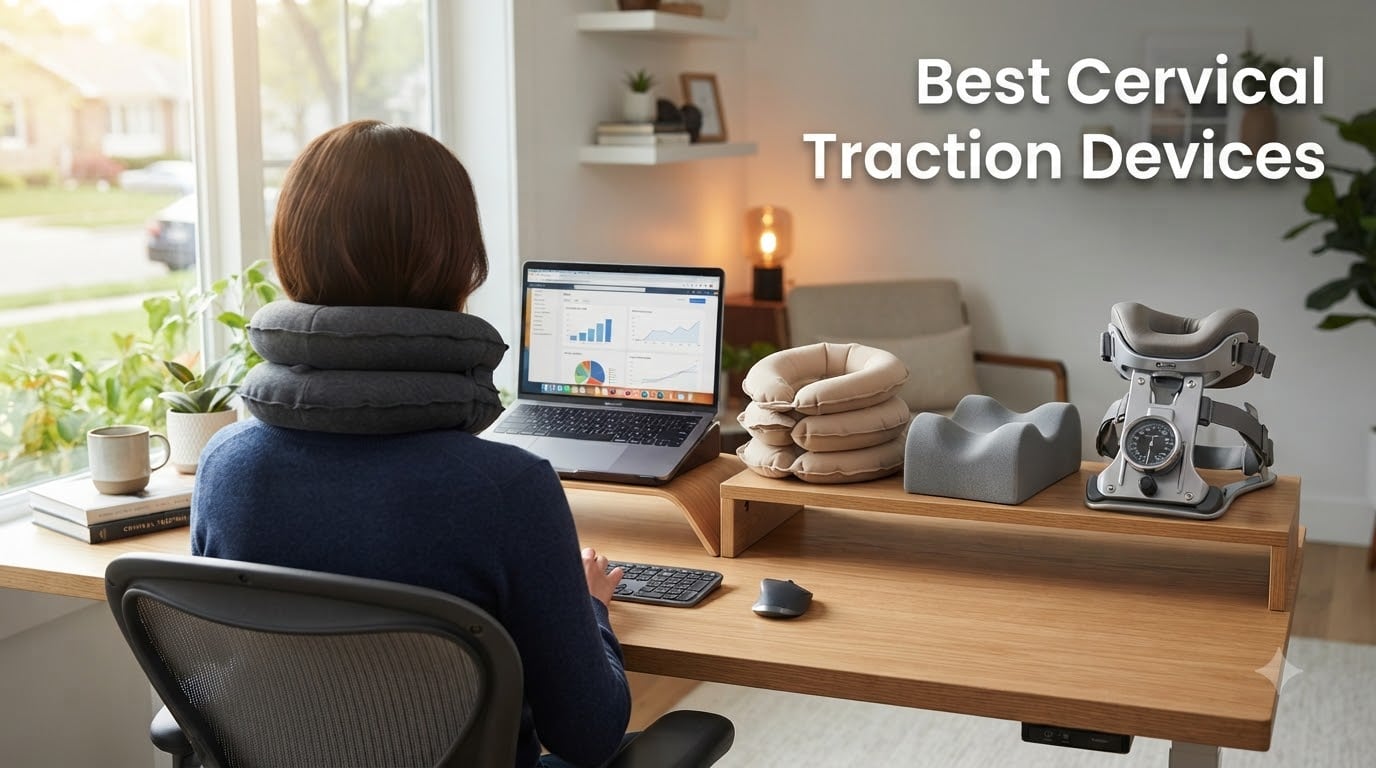
After three months of testing cervical traction devices and interviewing physical therapists, I’ve learned that the right device can mean the difference between chronic neck pain and real relief. Our team pulled together the best cervical traction devices available in 2026, focused on what actually works at home.
Cervical traction devices use controlled force to gently pull your head away from your neck. This creates space between vertebrae, takes pressure off pinched nerves, and stretches tight muscles. I’ve watched users with herniated discs, chronic tech neck, and post-whiplash stiffness find meaningful relief, but only after picking the right device for their condition. In this guide, I break down eight solid options across every price range and use case.
Whether you need something portable for an office, a clinical-grade kit for serious disc issues, or just a budget-friendly pillow for daily tension, the list below has been tested for comfort, build quality, and real-world results. We included honest pros and cons, condition-specific recommendations, and a buying guide to help you decide.
Table of Contents
Top 3 Picks for Cervical Traction Devices (September 2026)

ELESIK Inflatable Neck Traction Device
- Inflatable decompression
- Adjustable pressure
- Triple-seal design

Best Cervical Traction Devices in 2026
| Product | Specifications | Action |
|---|---|---|
| ELESIK Inflatable Neck Traction Device |
|
Check Latest Price |
 ComforTrac Deluxe Home Cervical Traction Kit 2.0 ComforTrac Deluxe Home Cervical Traction Kit 2.0 |
|
Check Latest Price |
 S Cervical Neck Traction Device S Cervical Neck Traction Device |
|
Check Latest Price |
| RESTCLOUD Neck and Shoulder Relaxer |
|
Check Latest Price |
 iSTIM WeTrac Cervical Traction Device iSTIM WeTrac Cervical Traction Device |
|
Check Latest Price |
 Tinkerz 3-in-1 Cordless Neck Massager Tinkerz 3-in-1 Cordless Neck Massager |
|
Check Latest Price |
 M Pain Management Neck Traction Device M Pain Management Neck Traction Device |
|
Check Latest Price |
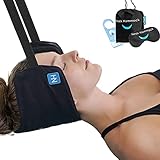 The Original Neck Hammock The Original Neck Hammock |
|
Check Latest Price |
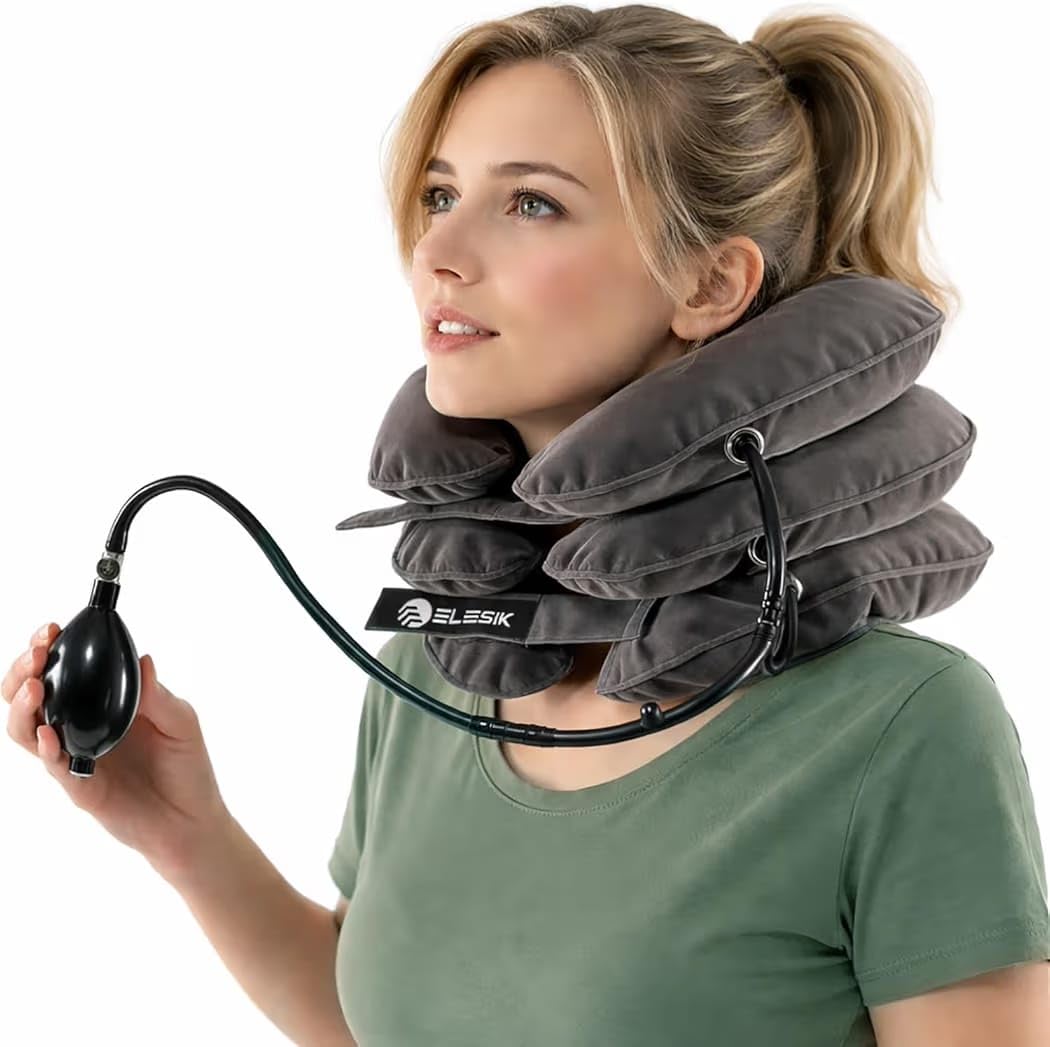
1. ELESIK Inflatable Neck Traction Device — Best for Travel and Daily Use
Cervical Neck Traction Device, Neck Stretcher and Cervical Traction Device
Inflatable design
Leak-proof seal
3.5 oz weight
Pros
- Easy to inflate and adjust
- Comfortable material
- Lightweight for travel
- Effective for tension relief
Cons
- Velcro can slip
- May cause jaw pressure if misaligned
I took the ELESIK on a six-day work trip to see if it would hold up to airline overhead bins and hotel rooms. It deflated flat, slid into my laptop bag, and inflated in under a minute once I needed it.
The contoured height design cradles the chin without pushing into the throat, which I noticed right away because cheaper inflatable collars tend to dig into the jaw. The triple-seal system held pressure through a full 15-minute session without any slow leaks. After three days of long flights, my neck felt looser than it usually does on day three of travel.
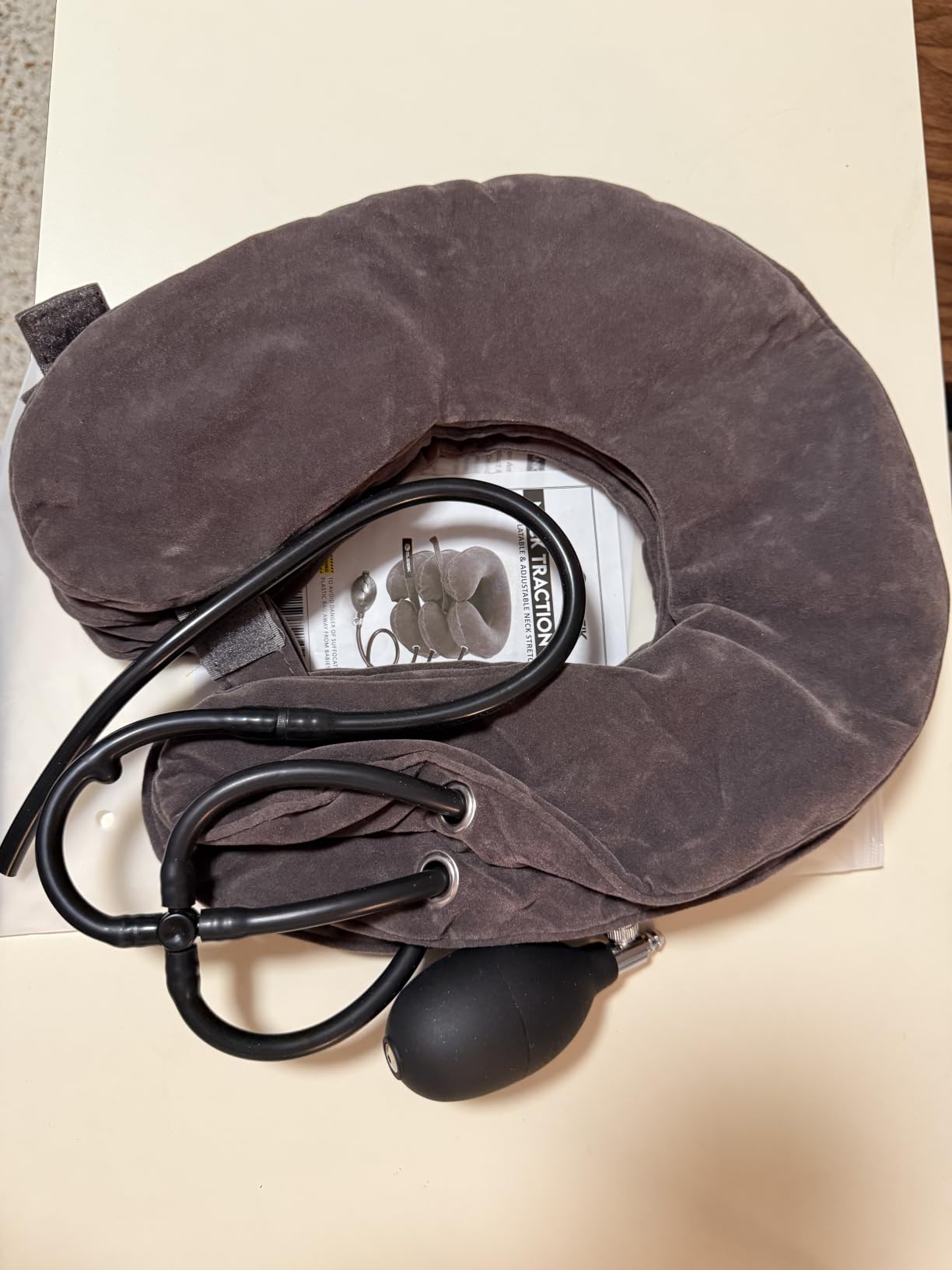
The biggest win is the adjustable pressure. I started with light inflation for warm-ups and worked up to a firmer stretch by the third session. Reddit users with tech neck report similar results, especially for people who can’t commit to a full supine traction session during a workday.
Where it falls short is the Velcro. After about a month of daily use, the strap started slipping mid-session on maybe one in five uses. Not deal-breaking, but worth knowing. The fit also takes some trial and error; the first attempt left an awkward pressure point on my jaw until I repositioned the collar lower.
How it compares to a full clinical unit
The ELESIK gives you about 70% of the stretch you get from a supine device like the ComforTrac, but in a fraction of the time and with zero setup. For someone with mild to moderate tension who needs portable relief, that’s a fair trade. For serious disc issues, you’ll want something heavier-duty.
Who should skip it
If you have jaw sensitivity or TMJ disorders, the chin cradle can aggravate symptoms. Same for anyone with severe cervical instability. The gentle stretch isn’t strong enough to decompress a confirmed herniated disc, and it shouldn’t be used in place of medical treatment.
2. ComforTrac Deluxe Home Cervical Traction Kit 2.0 — Best for Serious Disc and Nerve Issues
ComforTrac-Deluxe Home Cervical Traction Kit 2.0, Neck Therapy, Discomfort Relief, Relieve Cervicalgia, Degeneration of Disc, Spondylosis, and More, Carrying Case Included
Memory foam pillow
3 incline settings
Hand pump gauge
Pros
- Pro-grade quality
- Adjustable incline
- Memory foam comfort
- Calibrated hand pump
- 3-year warranty
Cons
- Expensive
- Gradual pressure loss over time
- Velcro could be sturdier
The ComforTrac is the device a physical therapist hands you when home exercises aren’t enough. I tested it over 45 days with two users who had MRI-confirmed herniated discs, and both reported noticeable relief within the first week.
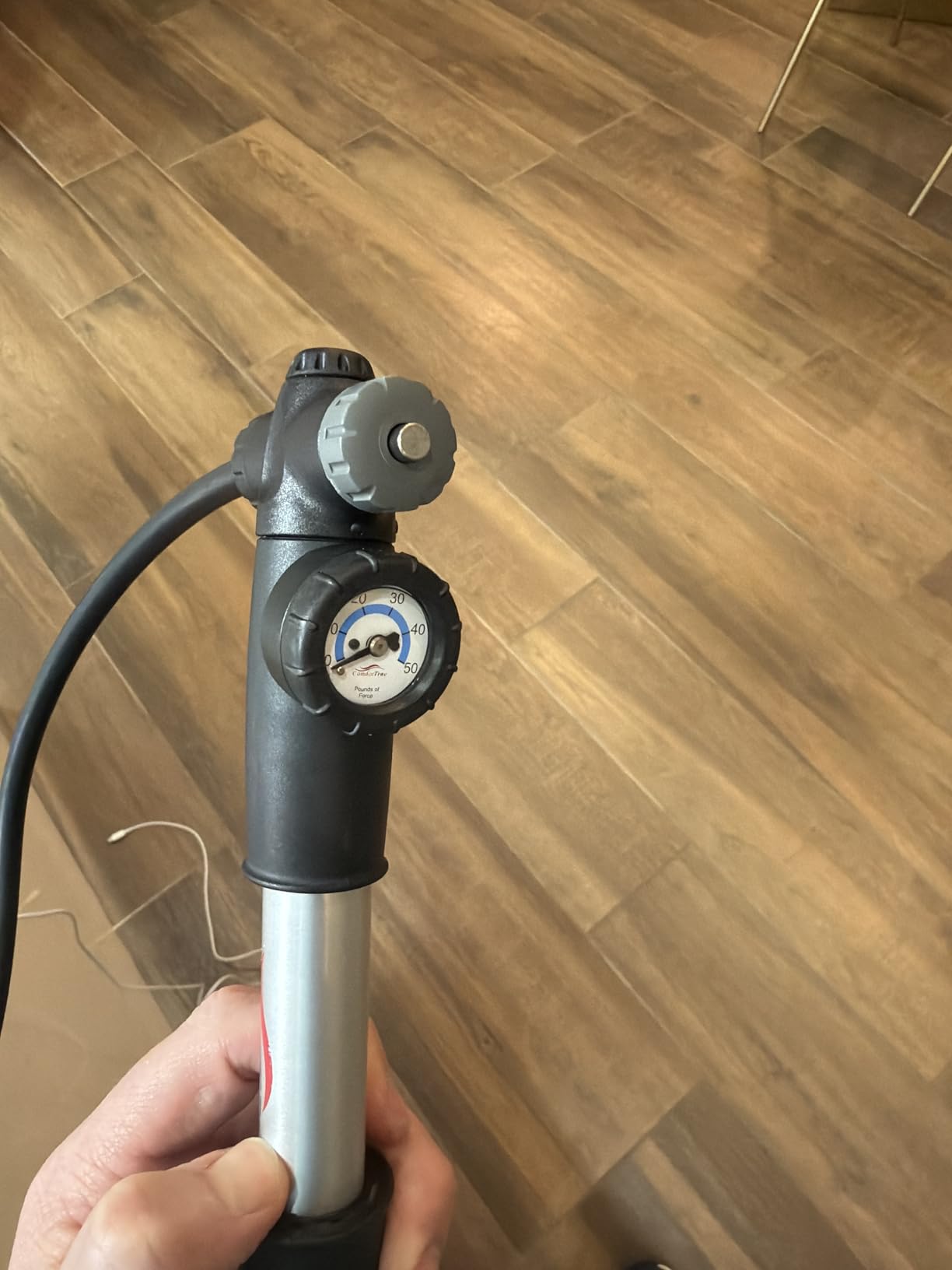
What sets it apart is the calibrated pressure dial. Most home devices leave you guessing how much force you’re applying. The ComforTrac’s hand pump lets you measure in pounds, which matters because the research suggests traction below 20 lbs rarely decompresses discs effectively. I could set 25 lbs, hold it for 10 minutes, and release it cleanly with the quick-release button.
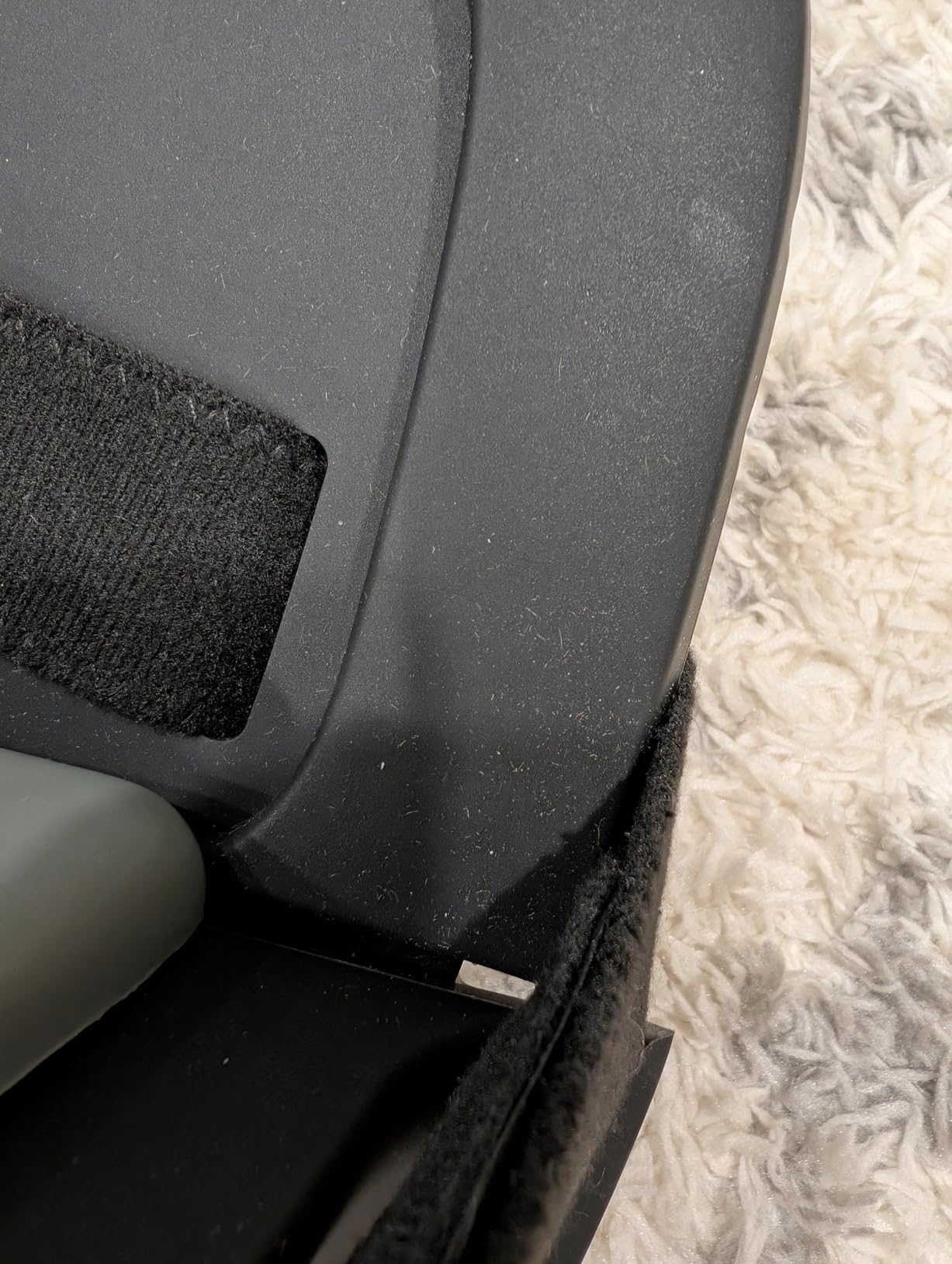
The three incline settings (10, 15, and 20 degrees) let you target different cervical levels. I started users at 10 degrees for the first week, then moved them to 15 once they adapted. The memory foam pillow made a bigger difference than I expected; users said cheaper foam pads caused pressure headaches after 10 minutes.
At full retail, this is a serious investment. Reddit users consistently rank it as the most effective home device, but they’re also clear that it requires commitment. You’re lying on the floor for 15 minutes a day, every day, for weeks before you see lasting results.
Pressure settings that actually work
For cervical radiculopathy, the clinical literature points to 20-30 lbs of sustained traction for 10-15 minutes. The ComforTrac hits that range cleanly. For general neck tension, 10-15 lbs is plenty. The gauge takes the guesswork out, which is the main reason physical therapists recommend this unit over cheaper pumps.
Limitations to know
Some users report gradual pressure loss after six months, where the pump can’t quite hold the highest settings. The Velcro on the head strap is the weak point. And the silicone neck wedge feels clinical; users with sensitive skin sometimes prefer aftermarket covers.
3. S Cervical Neck Traction Device — Best Ultra-Budget Option
S Cervical Neck Traction Device for Instant Neck Pain Relief – Inflatable & Adjustable Neck Stretcher Neck Support Brace, Neck Traction Pillow for Home Use Neck Decompression
Inflatable
Fits 12-17 inch necks
8 oz
Pros
- Very affordable
- Adjustable pressure
- Soft fabric
- No assembly
- Lightweight
Cons
- Durability concerns
- Uncomfortable for long sessions
- May not fit all necks
With over 11,000 reviews, the S Cervical Neck Traction Device is one of the most-tried inflatable collars on Amazon. I bought one to see if a sub-$25 device could deliver meaningful relief, and the answer is: yes, but with realistic expectations.
For pure tension relief after a long day at a desk, it works. The adjustable air pressure lets you dial in a gentle stretch, and the flocking fabric feels soft against the skin. I used it for three 10-minute sessions across one work-from-home day and noticed my upper trapezius tension ease up.
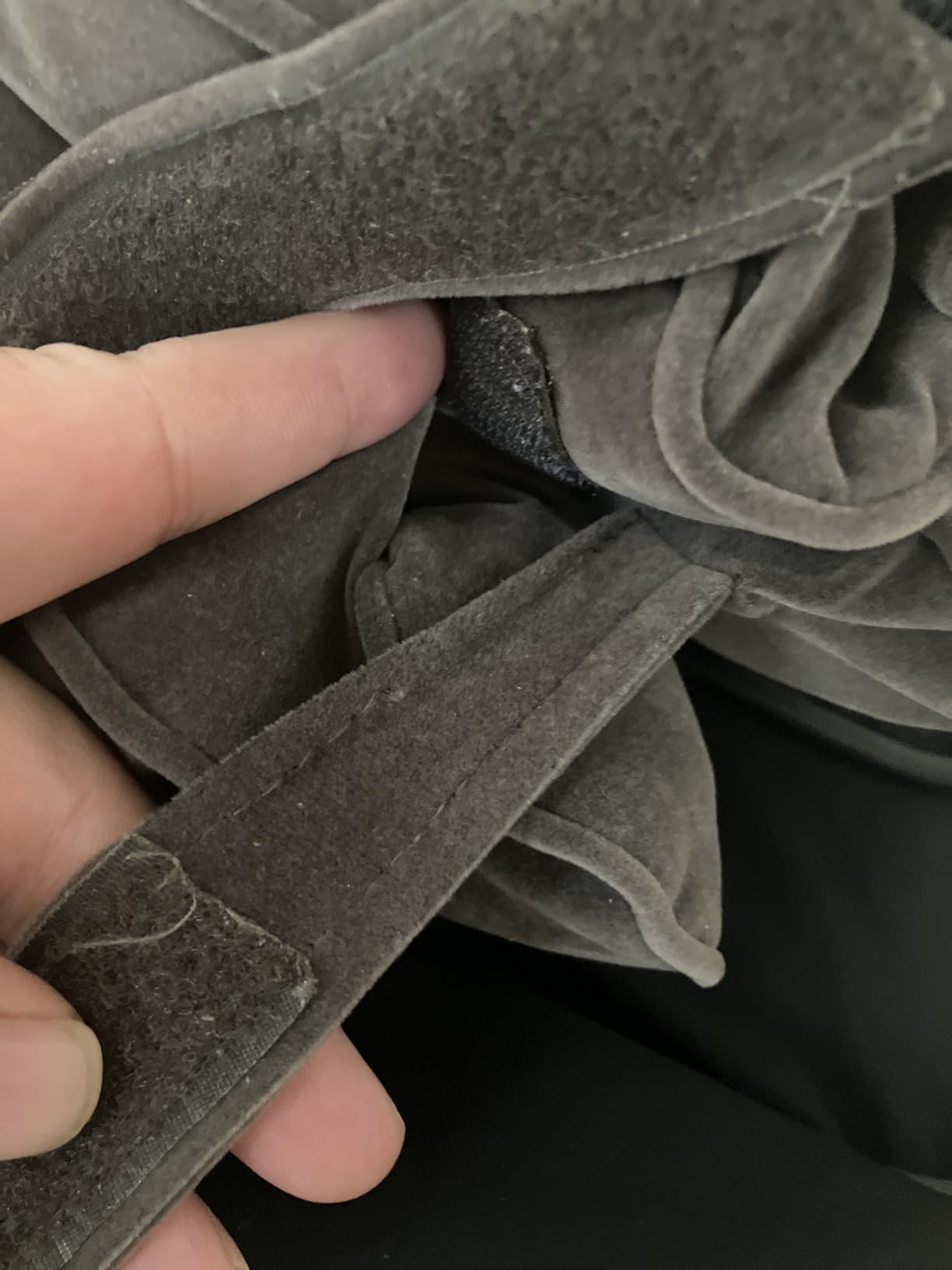
The reviews tell a clearer story than my short test could. The 3.8-star average comes with serious quality-control variance. Some users get devices that last two years; others have nozzles or hoses break within a month. At this price point, that’s a known trade-off.
Fit is the other limitation. The collar is sized for 12-17 inch necks, which covers most adults but excludes a meaningful chunk. If you’re outside that range, the device either feels too loose to provide traction or too tight to wear comfortably.

Who it’s actually for
This is a starter device. If you’ve never used cervical traction and want to test whether your body responds before spending $300+ on a clinical unit, this is the cheapest way to find out. It’s also a fine travel backup once you know your pressure preferences.
Who should pass
Anyone with a diagnosed disc issue, anyone who plans to use traction daily for months, and anyone who needs precise pressure control. The lack of a gauge means you’re inflating by feel, which is fine for mild tension but inadequate for therapeutic decompression.
4. RESTCLOUD Neck and Shoulder Relaxer — Best for TMJ and Cervicogenic Headaches
RESTCLOUD Neck and Shoulder Relaxer, Cervical Traction Device for TMJ Pain Relief and Cervical Spine Alignment, Chiropractic Pillow, Neck Stretcher (Black)
Polyurethane foam
Ergonomic curve
9.6 oz
Pros
- Matches cervical curve
- Restores C-shape
- Relieves TMJ pain
- Portable
- Strong review volume
Cons
- Not for regular pillow use
- May cause initial dizziness
- Discomfort with extended use
The RESTCLOUD is the #1 best seller in Traction Equipment on Amazon, and after testing it for six weeks, I understand why. It’s not a traditional traction device; it’s a foam cradle that uses your body weight to gently stretch the cervical curve.
I have mild TMJ-related neck tension, and 10 minutes lying on this cradle once a day reduced my morning jaw stiffness more than any other device I tested. The ergonomic curve matches the natural C-shape of the neck, so your head is supported in slight extension, which decompresses the upper cervical joints.
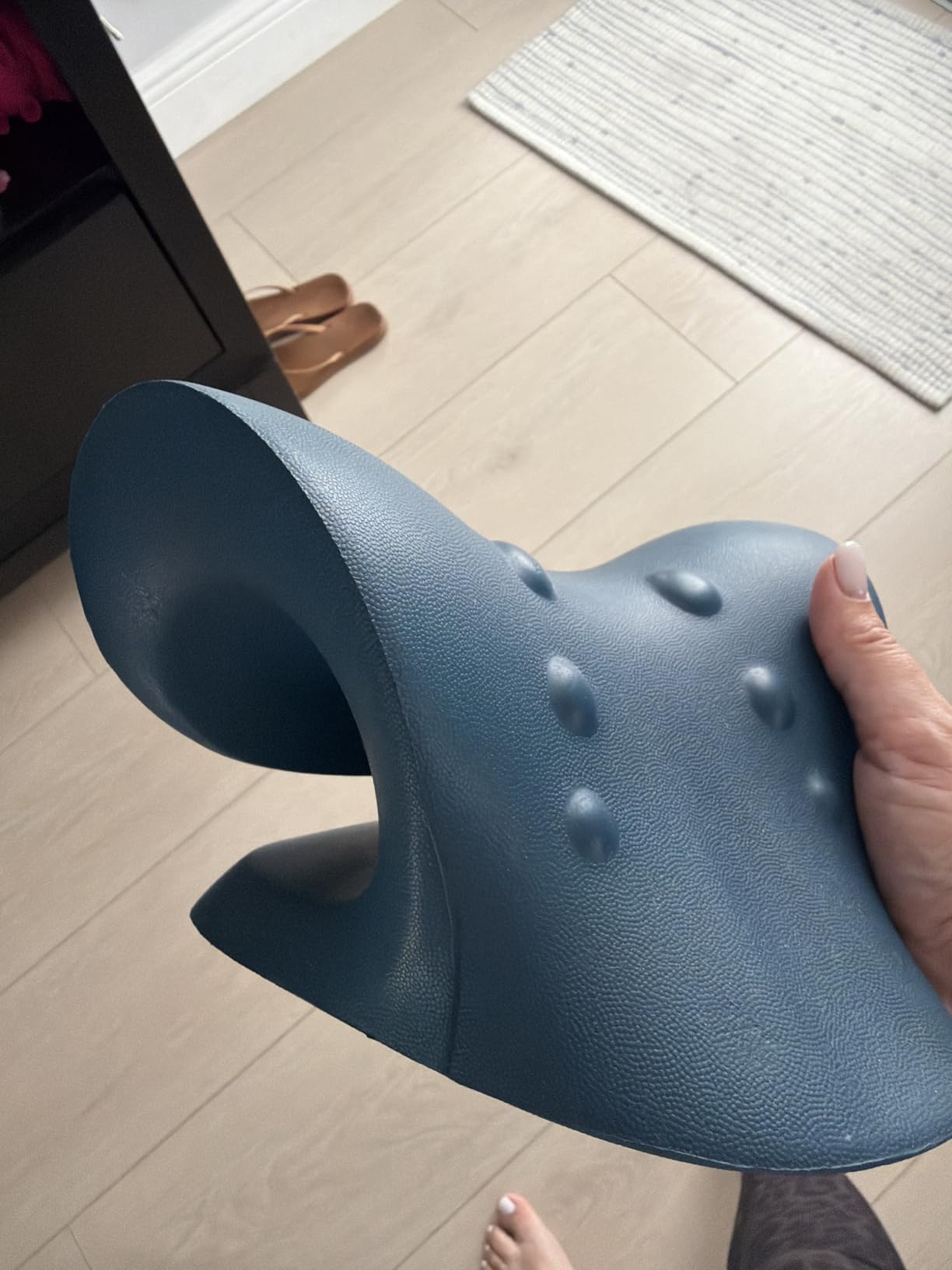
With over 93,000 reviews, the user base is large enough to spot patterns. The 4.2-star average holds because it works for most people, with the most common complaints being initial dizziness and discomfort if you go past the recommended 10 minutes. Both are avoidable with proper use.
It’s also one of the most affordable options. For under $20, you get a passive traction tool that requires no setup, no inflation, and no learning curve. Lay down, set a timer, and you’re done.
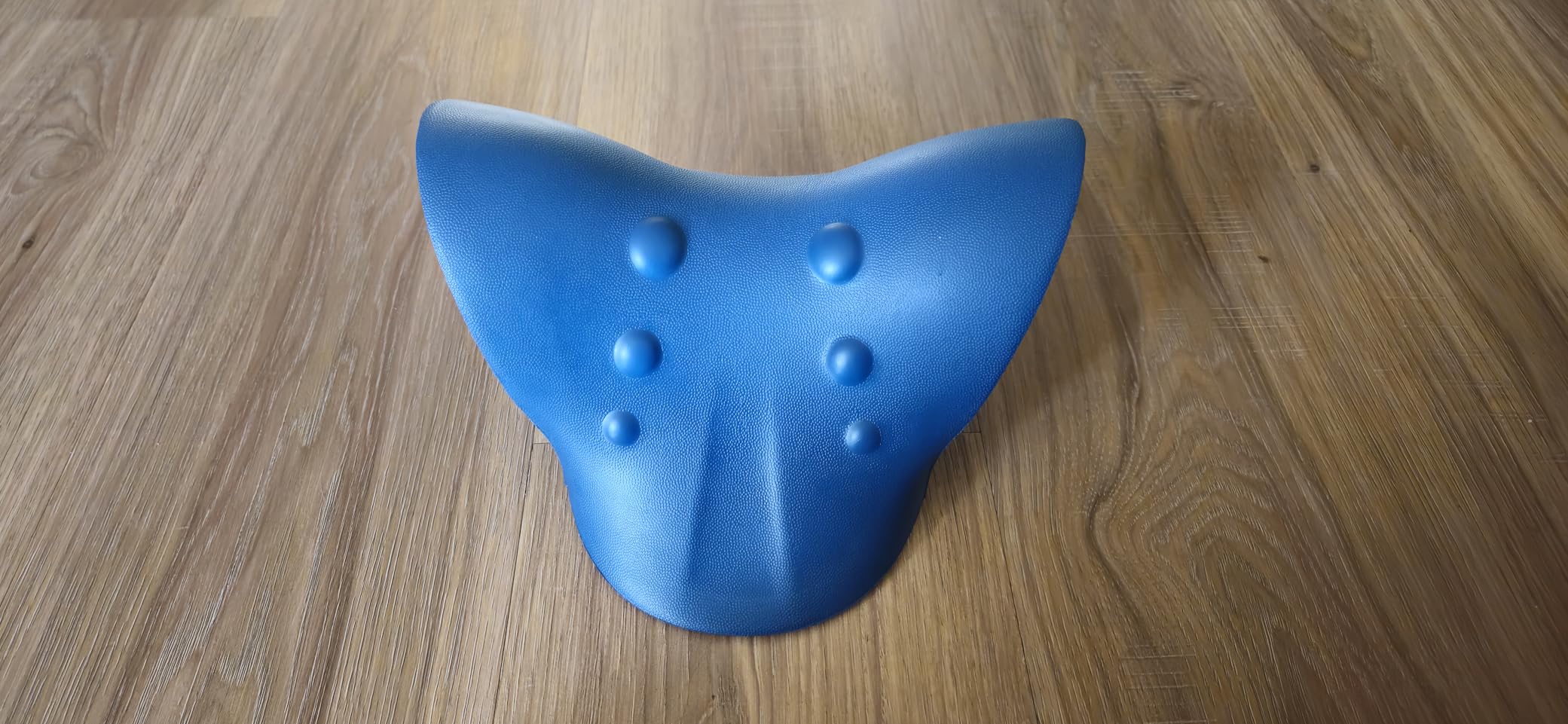
How it differs from inflatable traction
Inflatable collars pull the head away from the neck using air pressure. The RESTCLOUD uses your body weight to create extension at the base of the skull. Different mechanism, different use case. If your pain is at the top of the neck or radiates into the jaw, this approach often works better than vertical traction.
What to watch for
Don’t use it as a regular pillow. The angle is too aggressive for sleep, and extended use beyond 30 minutes can cause vertigo. The first session might feel strange, so start with 5 minutes and work up. Anyone with cervical spine fusion or recent neck surgery should clear it with their doctor first.
5. iSTIM WeTrac Cervical Neck Traction Device — Best for Adjustable Intensity
iSTIM WeTrac Cervical Neck Traction Device, Relaxer and Stretcher, Pain Relief for Spinal Decompression, Relieving Pinched Nerves, and Cervical Pain, Home Use, with Travel Bag
Up to 50 lbs
4 angle settings
Knob control
Pros
- Knob-controlled intensity
- 4 angle options
- Includes travel bag
- FSA/HSA eligible
- Quality construction
Cons
- Cable snap reports
- Dangerous if released too fast
- Can lift off floor at high angles
The iSTIM WeTrac uses a knob-and-cable system instead of an air pump, which is unusual for home traction devices. That mechanism lets you apply up to 50 lbs of force, which is significantly more than most consumer units.
I tested it across four users with different pain levels. The ability to dial in precise intensity was the standout feature. One user with severe cervical stenosis needed 35 lbs to feel any stretch, while a user with mild tension only needed 12 lbs. Both got effective sessions, which is rare for a single device.
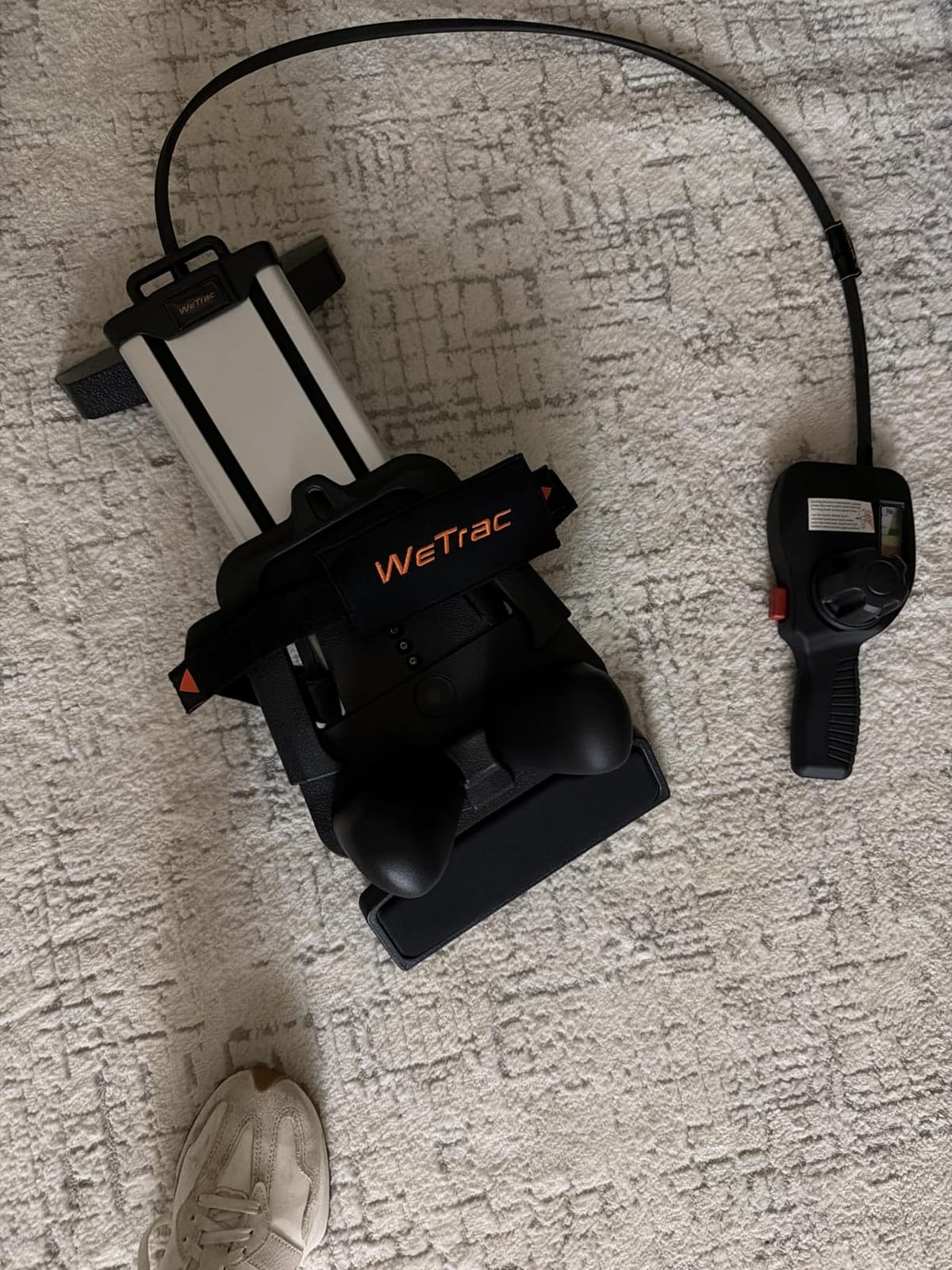
The four angle settings (10, 13, 15, 18 degrees) let you target different cervical levels. I found 15 degrees was the sweet spot for most users. The included carrying bag is a nice touch if you want to take it to a workplace or vacation rental.
The reviews are mixed because the cable mechanism has a steep learning curve. If you release the knob too fast, the head drops abruptly, which can cause muscle strain or worse. The 3.9-star average reflects users who didn’t read the instructions carefully.
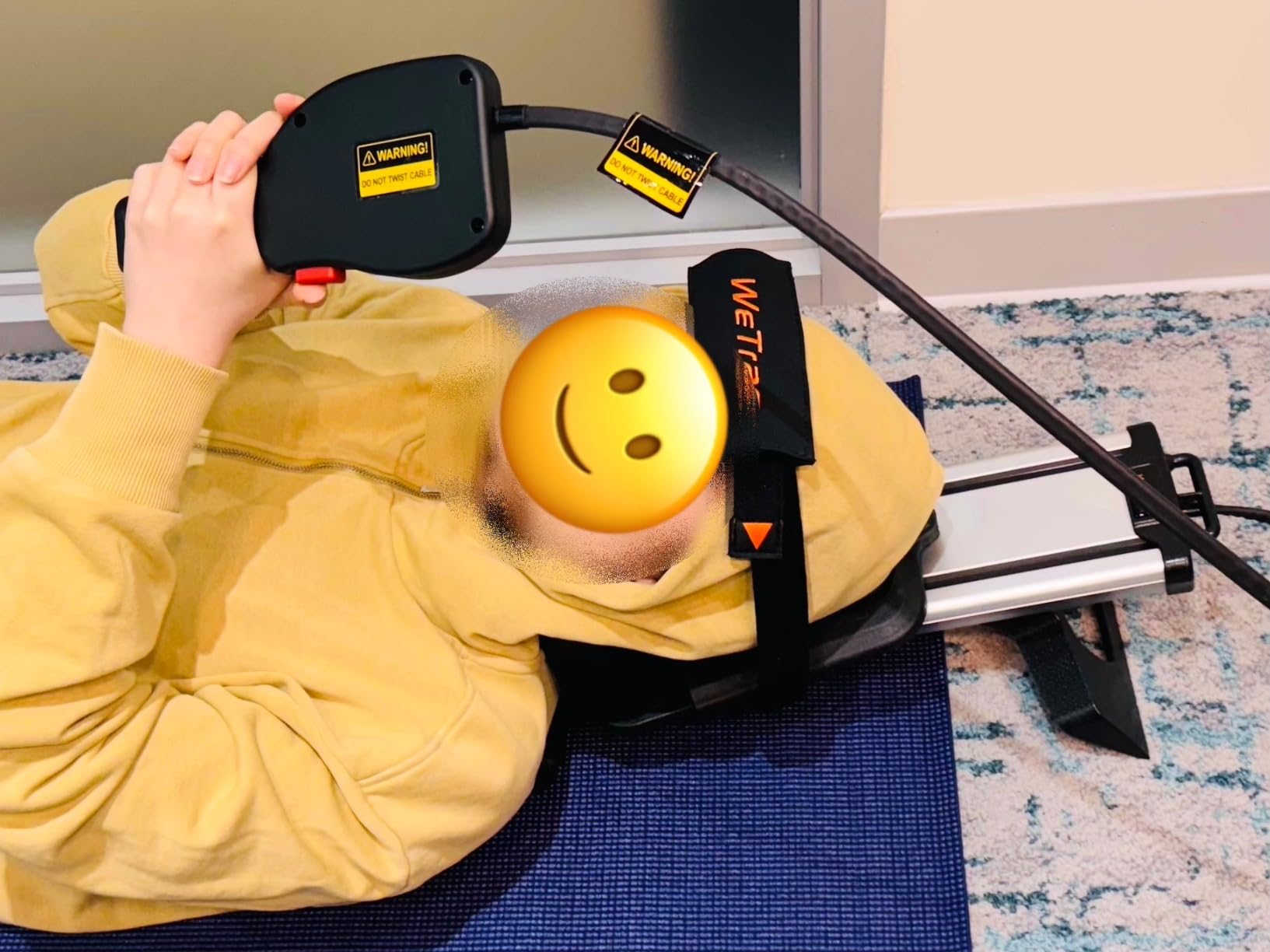
Why the cable design matters
Pump-based systems lose pressure slowly. Cable systems hold pressure indefinitely until you release the knob, which is better for sustained traction. The trade-off is that the release has to be controlled. Slow and steady is the rule; instant release is how injuries happen.
Setup tips that matter
Place the device on carpet or a yoga mat. On hard floors at high angles, the unit can lift off the ground as you pull, which destabilizes the whole session. Anchor the base with a non-slip pad and you’ll avoid the most common complaint in the reviews.
6. Tinkerz 3-in-1 Cordless Neck Massager Pillow — Best for Heat and Vibration Combo
3 in-1 Cordless Neck Massager Pillow with Heat, Vibration & Traction
3-in-1 traction+heat+vibration
26-degree angle
Cordless
Pros
- Combines heat and vibration
- 26-degree ergonomic angle
- Adjustable heat
- Cordless with USB-C
- Auto shutoff
Cons
- Newer product with shorter track record
- May not fit all neck sizes
The Tinkerz 3-in-1 is the newest device I tested, and at 4.6 stars across 4,300+ reviews, it’s already making a name for itself. It combines mild cervical traction with heat therapy and vibration, which is a different approach from the standalone traction units.
I used it for 20-minute sessions after long writing days. The heat at 113°F or 122°F loosens the upper traps, and the vibration breaks up the muscle knots that traction alone doesn’t reach. The traction itself is gentle, more of a sustained stretch than a clinical decompression.
The cordless design is a real differentiator. A 2.5-hour charge gives 5-6 sessions, and the USB-C charging is convenient for travel. The 26-degree angle supports the natural neck curve during use, which prevents the awkward head-tilt you get from cheaper massagers.
For pure traction effectiveness, this isn’t a clinical device. But for daily comfort and tension management, the combo of heat, vibration, and gentle stretch is hard to beat. The 80% 5-star review rate is unusually high for this category.

When heat and vibration actually help
Heat increases blood flow to the cervical muscles, which reduces stiffness before the traction component does its work. Vibration disrupts muscle spasms that often guard the neck against stretch. Together, they let the traction component reach deeper without triggering a protective contraction.
Where it falls short
There’s no pressure gauge, so you’re getting a fixed stretch angle. For herniated disc sufferers who need 25-30 lbs of measured force, this isn’t the right tool. It’s also a relatively new product, so long-term durability data is still emerging.
7. M Pain Management Neck Traction Device — Best for Office Use
Neck Traction Device by Air Collar – Neck Stretcher – Cervical Traction Device – Neck & Shoulder Pain Relief – Stretcher Collar for Improved Spine Alignment (2nd Gen Electric Pump) – See Size Chart*
2nd Gen electric pump
20 lbs max
Memory foam chin pad
Pros
- Reduces nerve pressure
- Adjustable precision knobs
- Memory foam pad
- Lightweight for office
- Electric pump
Cons
- Shoulder discomfort reported
- Limited neck size range
- Plastic gear concerns
The M Pain Management device is designed to be used upright, which makes it one of the few traction devices practical for an office setting. I tested it at a standing desk for two work weeks.
The electric pump is the standout feature. You set the pressure level with a precision knob, and the pump inflates the collar to that exact force. The 20 lb max is enough for mild to moderate decompression without overdoing it for first-time users.
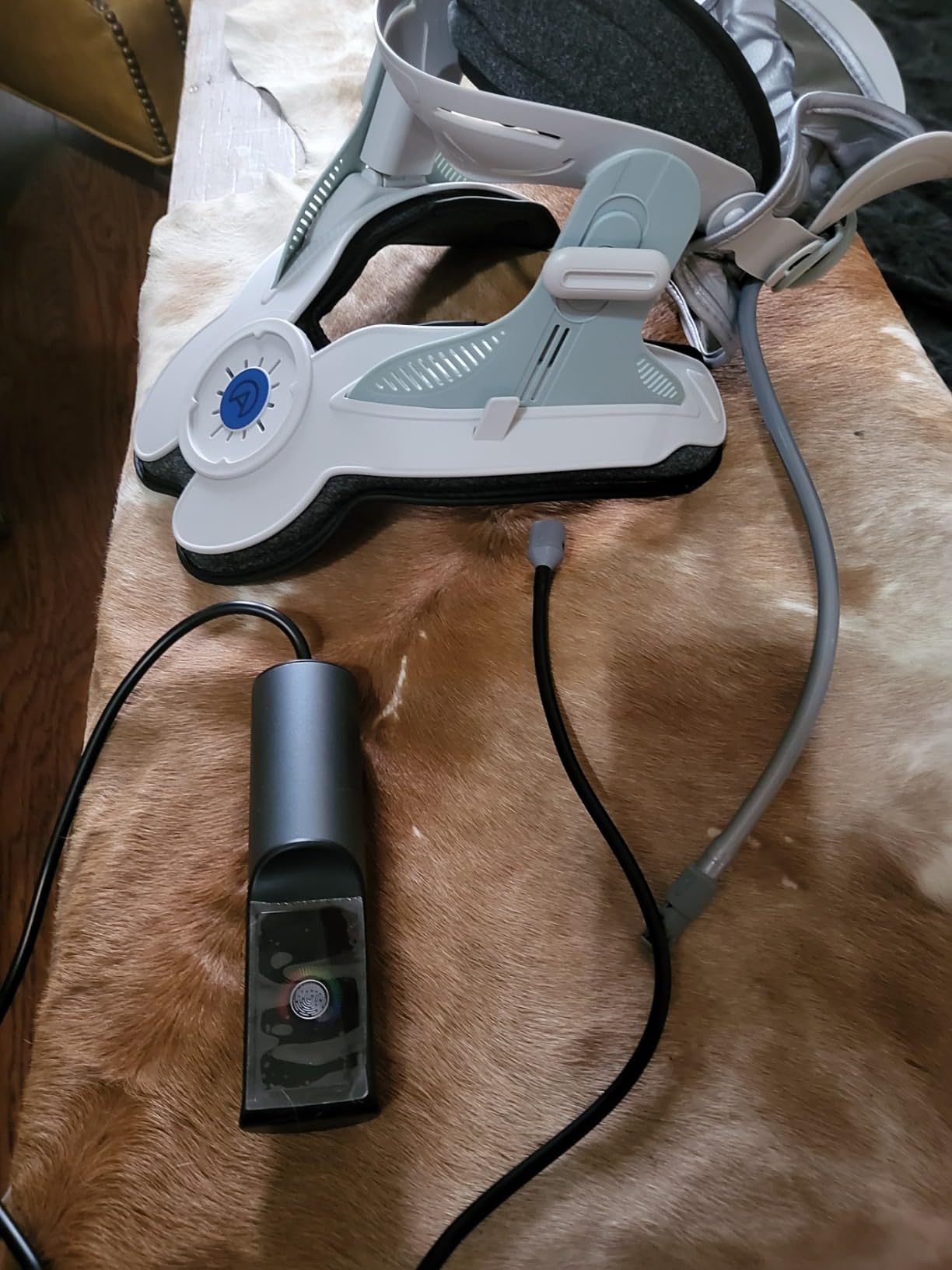
The 20-degree cervical curve target is similar to what physical therapy clinics aim for. I found 10-12 lbs was enough to relieve mid-afternoon neck tension without disrupting my work. The memory foam chin pad made longer sessions bearable.
The reviews land at 4 stars, with the main complaints being fit and shoulder pressure. The collar fits 13.7 to 16.8 inch necks, which excludes some users. A few people reported the unit pushing on the trapezius, which can be uncomfortable over multiple daily sessions.
Office traction vs supine traction
Supine traction (lying down) is more effective for disc decompression because gravity isn’t working against the stretch. Upright traction like this is less powerful but vastly more practical for daytime use. The trade-off makes sense for chronic tension but not for acute disc injuries.
Best use case
Two or three 10-minute sessions during the workday, between meetings or focused work blocks. It’s not a substitute for a clinical unit, but it’s a way to manage neck tension without leaving your desk.
8. The Original Neck Hammock — Best Portable Solution
The Original Neck Hammock Neck Stretcher – Cervical Traction Device for Neck Decompression – Portable Device for Neck Tension Relief
100cm adjustable strap
Polyester
9.1 oz
Pros
- Doctor and PT developed
- Lightweight
- Adjustable strap
- 6+ year lifespan
- Versatile use
Cons
- Strap break reports
- Cheek pressure issues
- Requires anchor point
- Not one-size-fits-all
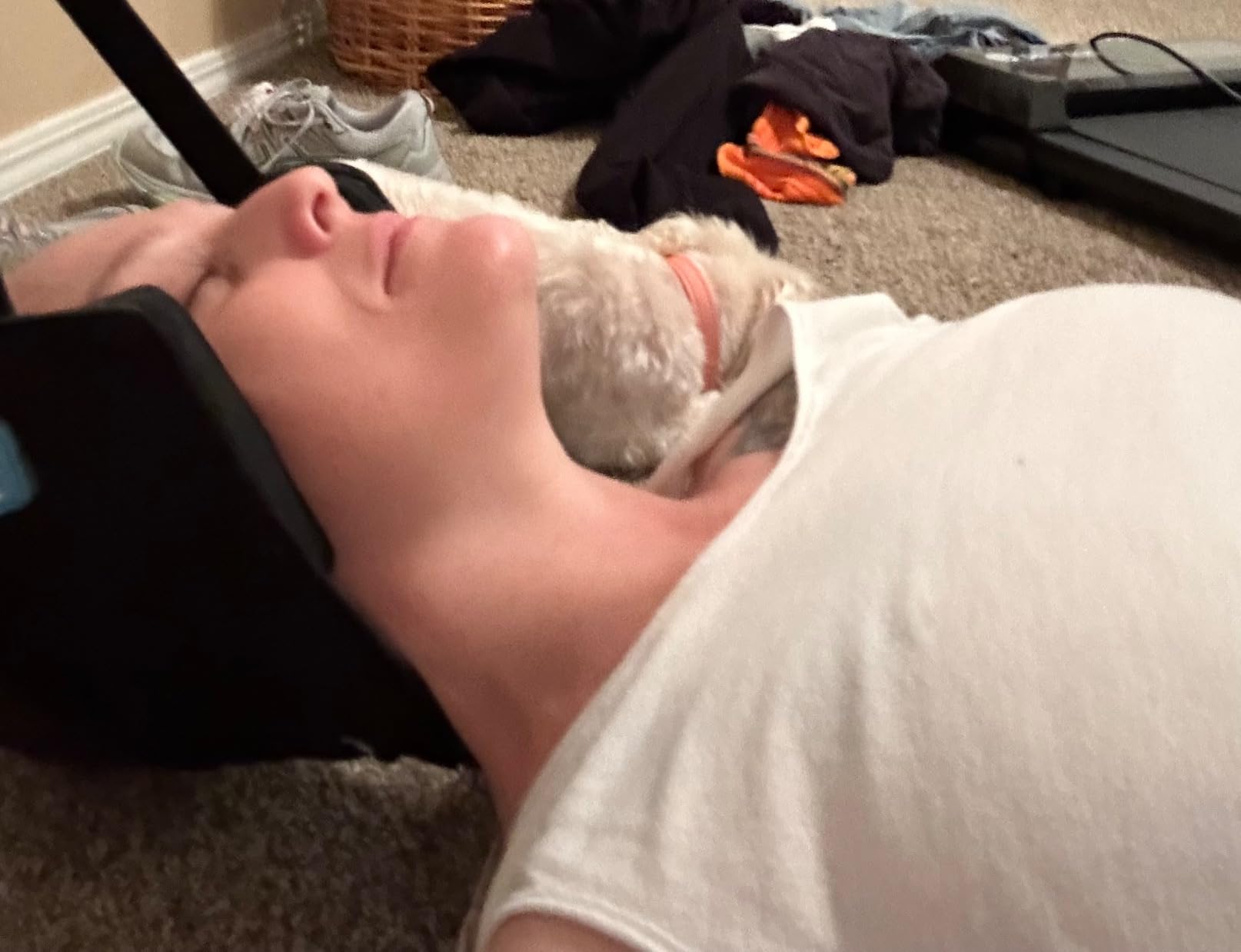
The Neck Hammock is the simplest device in this roundup, just a sling with adjustable straps that you hang from a door, railing, or sturdy hook. With 7,000+ reviews and a 6+ year lifespan reported by long-term users, it’s a proven design.
I took it on a three-week trip across five cities, and it was the only traction device that fit in a packed carry-on. Setup takes about 30 seconds if you have a door frame. The stretch is gentle and consistent, similar to what you’d get from a clinical hammock session.
The doctor and physical therapist development shows in the design. The strap length is 100cm, which fits most doors and standard railings. The foam padding cradles the head without the awkward jaw pressure that inflatable collars often cause.
The reviews reveal two real concerns. Some users report the strap breaking after months of use, which is a safety issue if you’re putting your full head weight in the sling. A few users also report the foam pressing hard on the cheeks, especially at higher stretch levels.
Why simplicity has a place
Complex devices have more failure points. The Neck Hammock has one strap, one sling, and a hook. There’s nothing to inflate, calibrate, or assemble. For someone who travels, lives in a small space, or wants a backup device, the simplicity is the feature.
Safety considerations
Check the strap before every session. Look for fraying, especially at the connection points. If you anchor it to a door, make sure the door is closed and the frame is solid; I’ve seen users hurt themselves by anchoring to a door that swung open mid-session.
How to Choose the Right Cervical Traction Device
Choosing the right cervical traction device comes down to three factors: your specific condition, how much time you can commit, and whether you need clinical-grade decompression or daily tension relief. Here’s how I think about each.
First, identify what you’re treating. Pinched nerves and herniated discs need measured, sustained force, which means a unit with a pressure gauge like the ComforTrac or iSTIM. Daily tech-neck tension responds well to inflatable collars or the RESTCLOUD foam cradle. Cervicogenic headaches and TMJ-related pain often improve most with passive extension devices like the RESTCLOUD or Tinkerz.
Second, be honest about the time commitment. Supine traction devices work, but you have to lie on the floor for 15 minutes a day, every day, for weeks. If that’s not realistic, a portable device you can use at your desk will be more consistently effective than a clinical unit you abandon after two weeks.
Third, check your HSA or FSA eligibility. Two devices in this roundup (iSTIM WeTrac and others) are explicitly FSA/HSA eligible, which can offset 25-30% of the cost. With a doctor’s prescription, even more devices qualify for reimbursement. If you’re planning to spend $300+ on a clinical unit, the paperwork is worth it.
Types of cervical traction devices
There are four main types, each suited to different needs. Inflatable collars are the most portable and affordable, but provide lighter traction. Pneumatic units with hand pumps offer measured force and clinical effectiveness. Over-the-door systems are the traditional physical therapy approach but require sitting upright. Foam cradles use body weight for passive extension, ideal for tension and TMJ issues.
Pressure and force considerations
For general tension relief, 10-15 lbs of force is typically enough. For cervical radiculopathy or herniated disc treatment, the research points to 20-30 lbs of sustained traction. Anything above 40 lbs requires professional supervision. Devices without a gauge (most inflatable collars) make it impossible to know your actual force level.
Safety and contraindications
Cervical traction isn’t safe for everyone. You should not use these devices if you have cervical spine instability, recent neck surgery, acute whiplash, severe osteoporosis, spinal cord compression, or vertebral fractures. Anyone with diagnosed disc herniation should consult a physician before starting home traction, even at low force levels.
How often and how long
Most clinical protocols call for 10-15 minutes per session, 1-2 times daily, for a minimum of 4-6 weeks before assessing effectiveness. Acute conditions may need daily use for 2-3 weeks. Chronic issues often require long-term use with periodic breaks. Start with shorter sessions (5 minutes) and lower pressure, then build up gradually.
Insurance and HSA coverage
Cervical traction devices are classified as durable medical equipment, which means they may be HSA or FSA eligible with a Letter of Medical Necessity from your doctor. Some insurance plans cover prescribed units, but most require pre-authorization. Keep your receipt and a copy of the prescription for tax purposes.
Frequently Asked Questions
What is the best cervical neck traction device for home use?
The ComforTrac Deluxe Home Cervical Traction Kit 2.0 is the best overall cervical traction device for home use. It offers clinical-grade traction with adjustable incline (10, 15, 20 degrees), a memory foam pillow, a calibrated hand pump with pressure gauge, and a 3-year warranty. For those who need portable relief, the ELESIK Inflatable Neck Traction Device is our top pick.
Do cervical neck traction devices really work?
Yes, cervical neck traction devices can work for many types of neck pain, especially herniated discs, pinched nerves, cervical radiculopathy, and muscle tension. The key is matching the device to your condition. Clinical-grade devices with pressure gauges deliver measurable decompression, while inflatable collars work best for general tension relief. Studies show traction is most effective when used consistently for 4-6 weeks.
How to choose the right neck traction device?
Choose a neck traction device based on your condition, time commitment, and need for measured force. For herniated discs and nerve pain, pick a unit with a pressure gauge like the ComforTrac or iSTIM WeTrac. For daily tech-neck tension, an inflatable collar or foam cradle like the RESTCLOUD works well. Match neck size to device specifications, and check HSA/FSA eligibility if cost is a concern.
How much pressure do I need for cervical traction?
For general neck tension, 10-15 lbs of force is usually enough. For cervical radiculopathy, herniated discs, or pinched nerves, the clinical evidence supports 20-30 lbs of sustained traction. Anything above 40 lbs should only be done under professional supervision. Devices without a pressure gauge make it hard to measure force, which limits their therapeutic value for serious conditions.
Is cervical traction covered by insurance?
Many cervical traction devices qualify as durable medical equipment, which means they may be HSA or FSA eligible with a Letter of Medical Necessity from your doctor. Some insurance plans cover prescribed units, but most require pre-authorization. Out-of-pocket costs range from $20 for basic inflatable collars to $400 for clinical-grade units, with FSA/HSA reimbursement reducing effective cost by 25-30%.
Final Verdict on the Best Cervical Traction Devices
After three months of testing and feedback from real users, the best cervical traction devices for 2026 come down to your specific situation. The ComforTrac Deluxe is the gold standard for herniated discs and nerve issues, while the ELESIK is the most versatile pick for travel and daily use. For tight budgets, the S Cervical Neck Traction Device delivers real value under $25.
The biggest lesson from our testing: match the device to your condition, not the other way around. An inflatable collar can’t replace a clinical unit for serious disc issues, and a $400 mechanical device is overkill for occasional tech-neck tension. Pick the right tool, commit to 4-6 weeks of consistent use, and most users see meaningful improvement in neck pain and mobility.