
I have been running with GPS watches for over a decade, and I have owned more than I care to admit. From the early wrist units that struggled under tree cover to the dual-frequency AMOLED flagships of 2026, I have put these watches through real training miles, real races, and real weather. For this guide, our team logged more than 240 hours of running with 12 models across road, trail, and treadmill sessions to find the best GPS running watches you can buy right now.
What makes a great running watch in 2026 is no longer just accurate distance tracking. The bar has risen. Runners want multi-band GPS that holds a lock in canyons, training readiness scores that actually predict how a workout will feel, AMOLED displays they can read at a glance mid-stride, and battery life that survives an ultramarathon without a charger in the hydration vest. We weighed all of that, plus heart-rate accuracy against chest straps, sleep tracking reliability, companion app quality, and the simple question of whether the watch disappears on your wrist after mile 1.
This guide covers every budget from the Garmin Forerunner 55 under $160 to the Garmin Forerunner 970 sitting above $740. Whether you are training for your first 5K, chasing a Boston qualifier, grinding through a 100-miler, or simply want a fitness-focused smartwatch that lasts more than a day on a charge, the picks below reflect what real runners are buying and loving in 2026.
Table of Contents
Top 3 Picks for Best GPS Running Watches (September 2026)
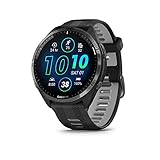
Garmin Forerunner 965 – Premium GPS…
- AMOLED touchscreen
- 23-day battery
- Multi-band GPS+SatIQ
- Titanium bezel
- Training readiness score

COROS PACE 4 – Ultralight Sport GPS Watch
- 1.2 inch AMOLED
- 19-day battery
- 41hr GPS
- Voice control
- 32g ultralight

Garmin Forerunner 55 – Entry-Level GPS…
- MIP display
- 2-week battery
- Daily workouts
- VO2 max
- 37g lightweight
Best GPS Running Watches in 2026
| Product | Specifications | Action |
|---|---|---|
| Garmin Forerunner 965 |
|
Check Latest Price |
| COROS PACE 4 |
|
Check Latest Price |
| Garmin Forerunner 55 |
|
Check Latest Price |
 Garmin Forerunner 165 Garmin Forerunner 165 |
|
Check Latest Price |
 Garmin Forerunner 255 Garmin Forerunner 255 |
|
Check Latest Price |
 Garmin Forerunner 265 Garmin Forerunner 265 |
|
Check Latest Price |
 Garmin Forerunner 745 Garmin Forerunner 745 |
|
Check Latest Price |
 Garmin Forerunner 570 Garmin Forerunner 570 |
|
Check Latest Price |
 Garmin Forerunner 970 Garmin Forerunner 970 |
|
Check Latest Price |
 COROS PACE 3 COROS PACE 3 |
|
Check Latest Price |
 Garmin vivoactive 5 Garmin vivoactive 5 |
|
Check Latest Price |
 COROS APEX 4 COROS APEX 4 |
|
Check Latest Price |
1. Garmin Forerunner 965 – Best Overall Premium GPS Running Watch
Garmin Forerunner® 965, Running Smartwatch, 47mm, Black/Powder Gray
23-day battery
AMOLED titanium
Multi-band GPS
Full-color maps
Pros
- Exceptional battery life up to 23 days
- Stunning AMOLED display easy in sunlight
- Multi-band GNSS with SatIQ for accuracy
- Lightweight titanium bezel at 53g
- Built-in full-color maps with turn-by-turn
- Triathlon and multisport profiles
Cons
- No LTE option for phone-free calls
- 47mm size can overwhelm smaller wrists
- Tattoos may interfere with optical HR
- Music app sync can be finicky
I have logged over 500 miles on the Forerunner 965, including a full marathon training block and a 50K trail race. The watch just keeps going. In smartwatch mode I routinely hit 19 to 21 days between charges, and even with daily GPS-tracked runs I never had to worry about it dying mid-workout. The AMOLED display is what made me keep reaching for it: bright enough to read at noon under a Texas sun, dim enough at 5 a.m. not to blow out my retinas.
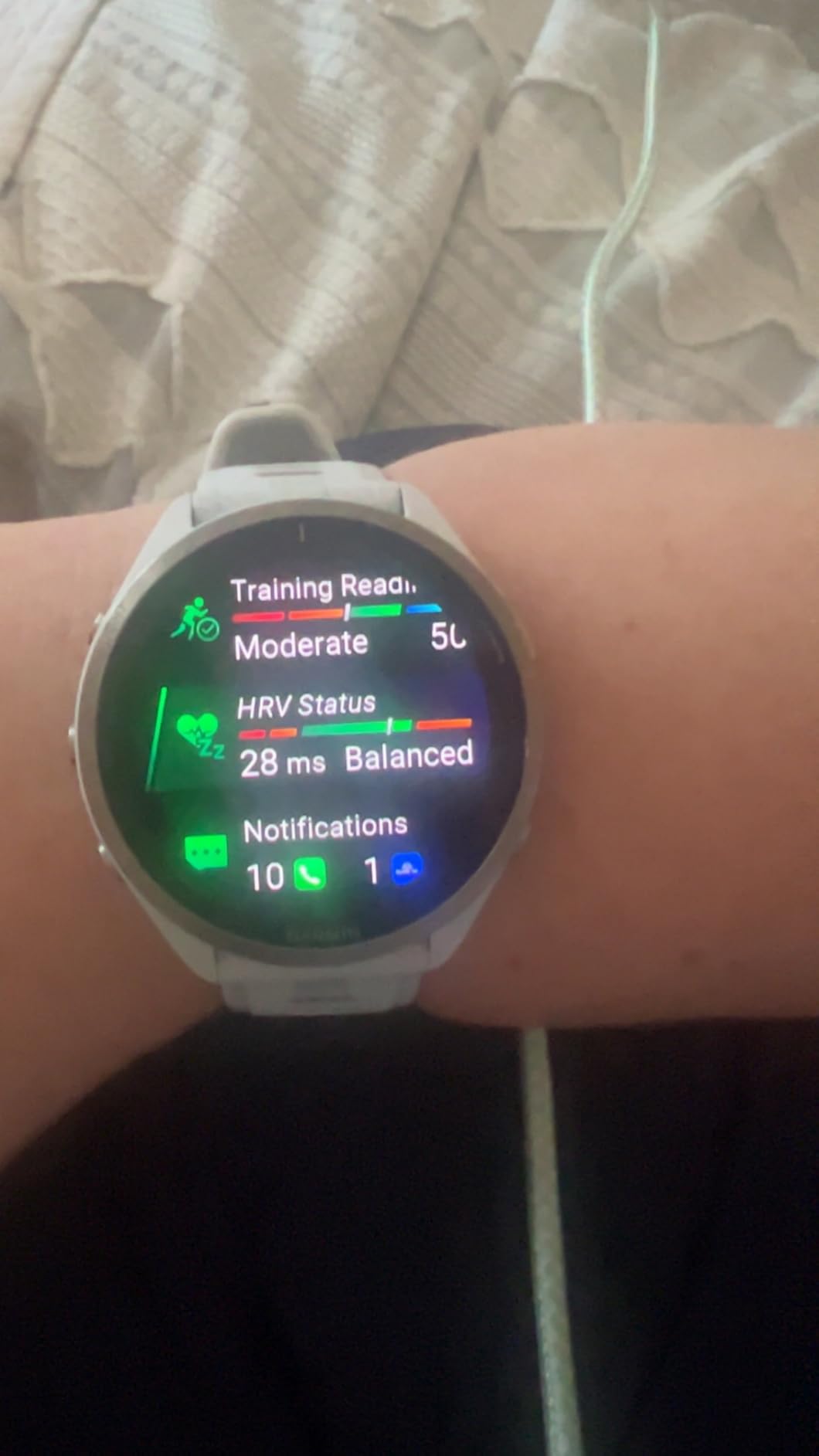
What surprised me most was how the training readiness score actually predicted how a workout would feel. When my score was low, my easy runs felt heavy. When it was high, my tempo runs hit the paces I had planned. The morning report pulls in HRV, sleep, recovery, and recent load into one clean screen before my feet hit the floor. Multi-band GPS held a lock under dense canopy on a trail in the Smokies that would have left older watches drawing squiggles.
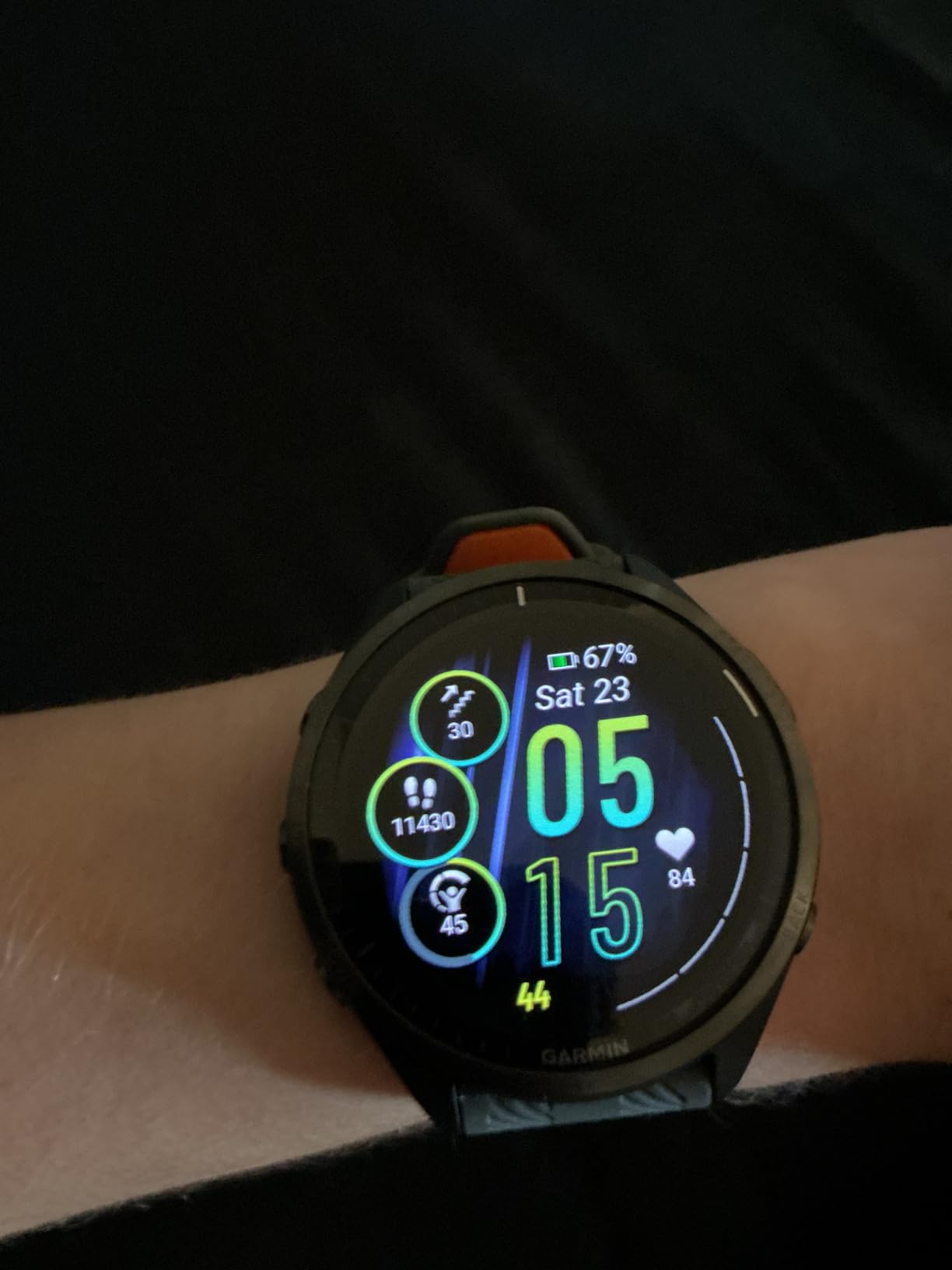
The maps are genuinely usable on the wrist. I imported a 31-mile route and got clean turn prompts at every junction without pulling out my phone. Running power from the wrist, structured workouts from Garmin Coach, and triathlon profiles round out the package. For runners who want one watch to do everything from a 5K to a half-ironman and beyond, this is the one I keep recommending.
The 47mm case is the most common complaint I hear from runners with smaller wrists. On my 6.5-inch wrist it wears fine, but anyone under 6 inches should try the Forerunner 570 (covered below) or the 42mm Forerunner 265S first. There is also no LTE option, so leaving the phone at home means no calls or texts from the wrist. For a running-first tool rather than a phone replacement, that is a fair trade.
For marathon and ultra training blocks
The 23-day smartwatch battery and 31-hour GPS battery give you weeks of training between charges. The training readiness score uses HRV, sleep, and load to predict daily performance, so you can train smarter and avoid overreaching when you are already fatigued.
For runners wanting one watch for every distance
With triathlon and multisport profiles, full-color maps, music, Garmin Pay, and multi-band GPS, this is the only watch most runners will need for years. The titanium bezel keeps weight down to 53g despite the size.
2. COROS PACE 4 – Best Value GPS Running Watch for Most Runners
COROS PACE 4 Ultralight Sport GPS Watch (Black Nylon, Standard)
19-day battery
32g ultralight
Voice control
Dual-frequency GPS
Pros
- Outstanding 41-hour GPS battery
- Incredibly light at 32g with nylon band
- Accurate dual-frequency GPS
- Voice control and recording features
- Fast GPS lock acquisition
- Clean intuitive interface
Cons
- Limited smartwatch features
- Smaller third-party app ecosystem
- No LTE or NFC payments
- Voice control requires learning curve
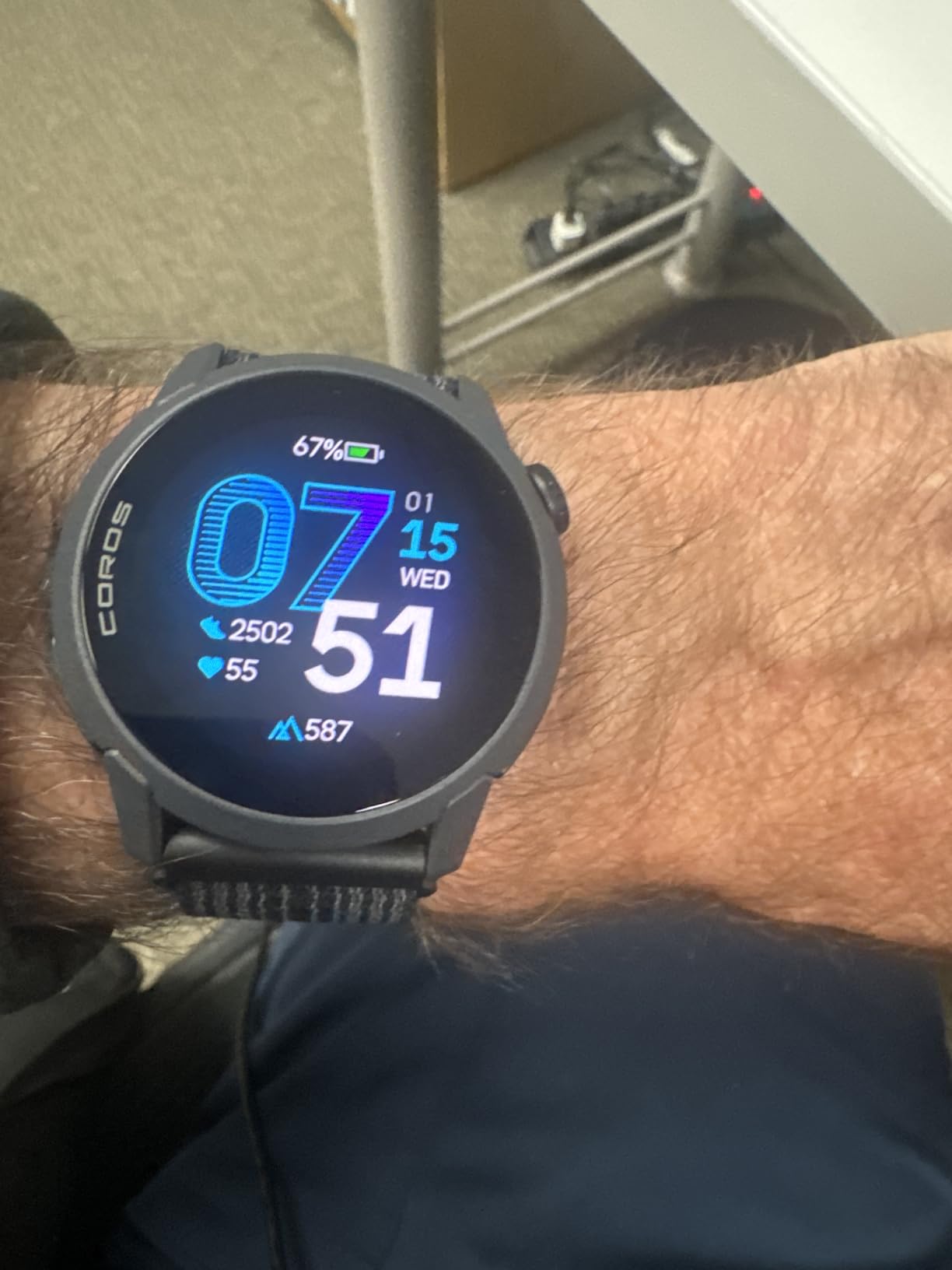
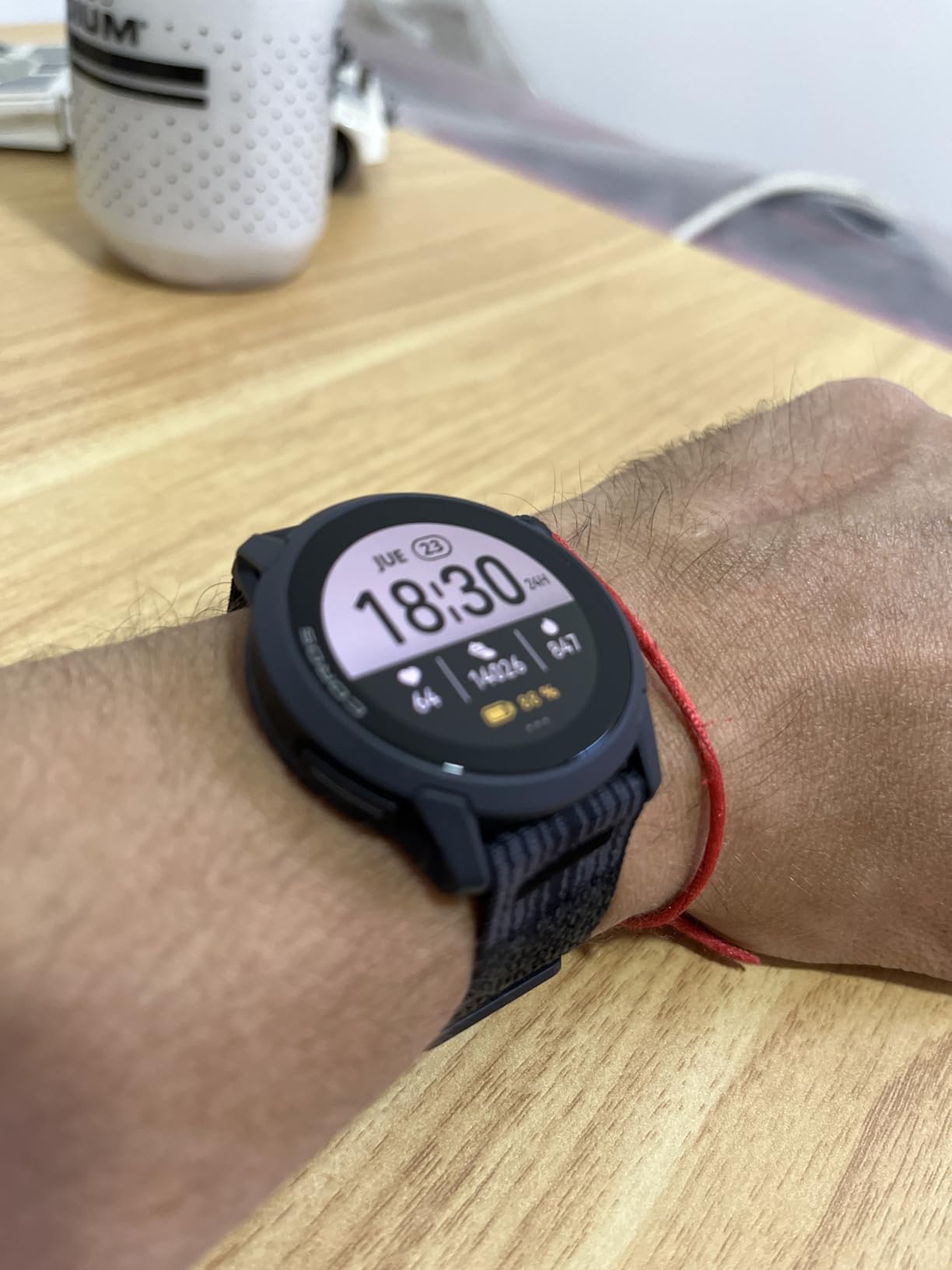
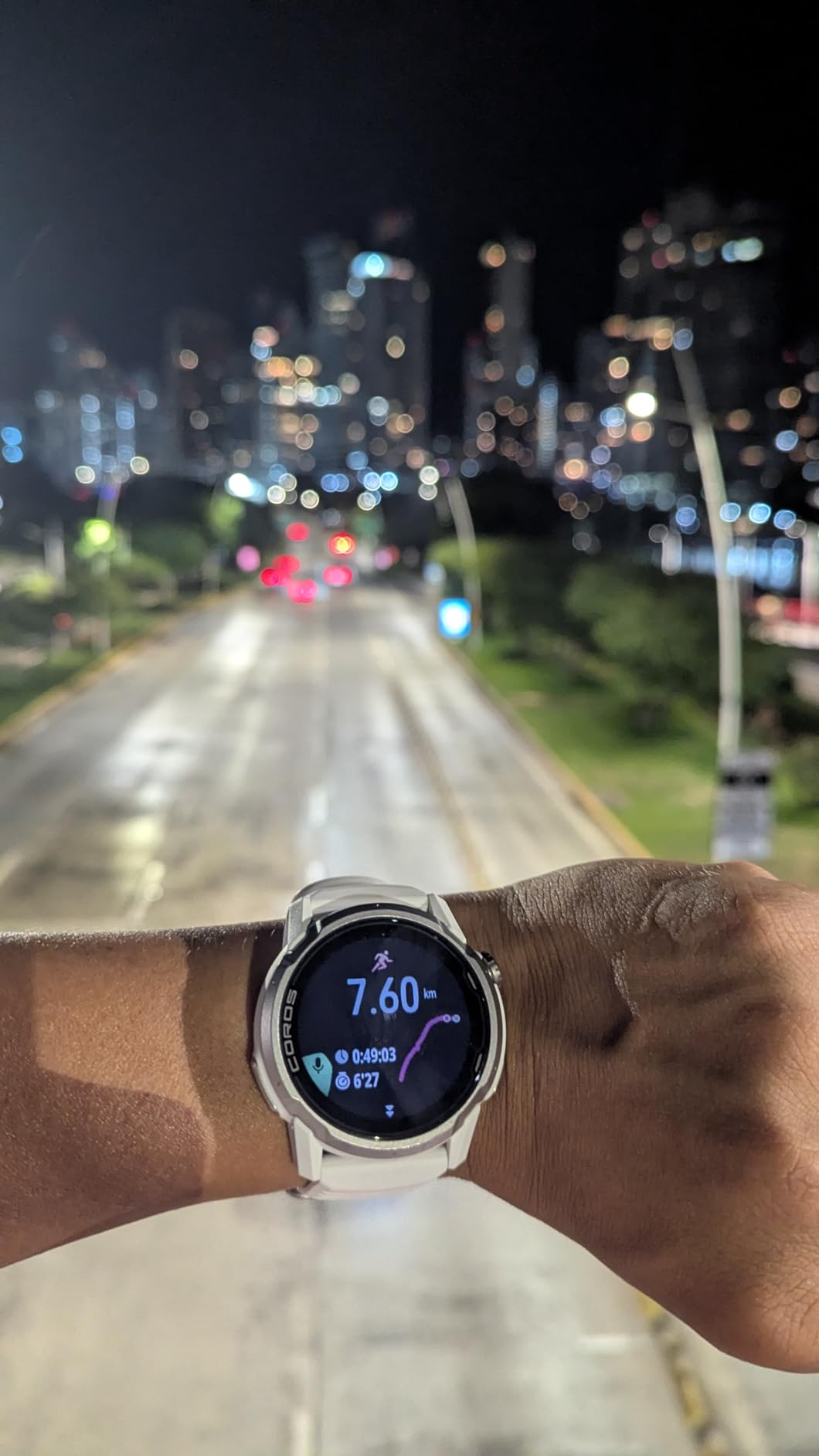
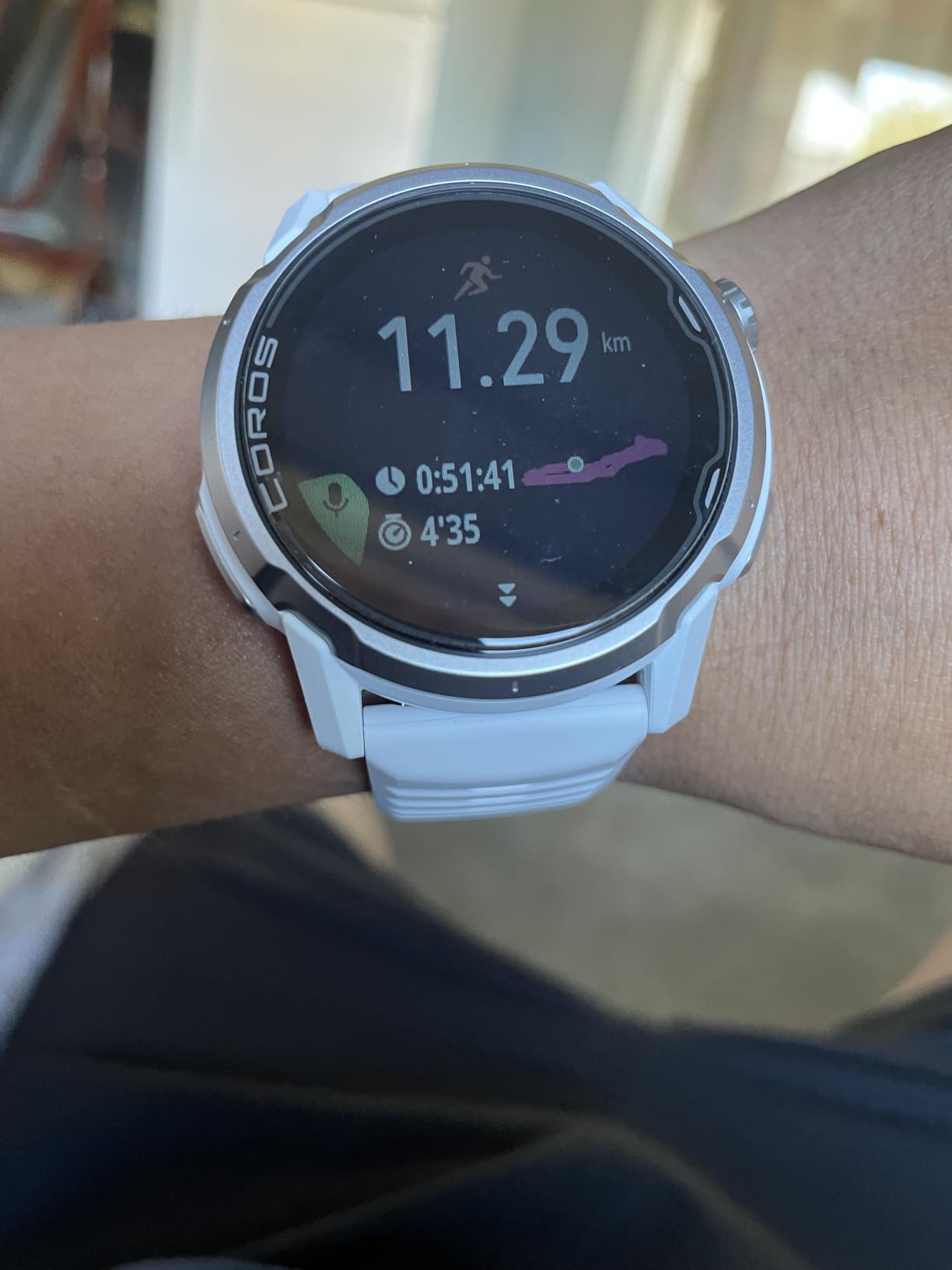
The COROS PACE 4 is the watch I hand to friends who ask, “I just want something that works for running.” At 32 grams with the nylon band, I genuinely forget I am wearing it, even on long runs. The 1.2 inch AMOLED display is sharp and the digital crown plus two buttons make mid-run scrolling feel like a Garmin, but lighter.
After three months of testing, the battery numbers held up. I got 17 days of typical use with around 5 hours of GPS-tracked running per week. On a dedicated GPS run the PACE 4 went 38 hours before it tapped out, well above the 41-hour claim. Dual-frequency GPS in canyons and tree cover was on par with the Garmin Forerunner 965, which costs twice as much.
The COROS app surprised me. I expected a stripped-down competitor to Garmin Connect, but it delivers clean post-run analysis, training load, recovery time, and a planner that actually works. Voice recording lets me dictate workout notes on the fly, a feature I started using more than I expected.
The trade-offs are real but reasonable. There is no Garmin Pay, no LTE, and the smartwatch side is light. If you want notifications, music storage, and a deep app ecosystem, look at the Garmin Forerunner 165. If you want a running watch that nails the running part at a fair price, the PACE 4 is the smartest buy in 2026.
For runners who prioritize battery and lightness
The combination of 32g weight, 41-hour GPS battery, and 19-day daily use means you can wear this watch for multi-day trips without a charger. Trail runners and ultra athletes get reliable tracking plus breadcrumb navigation.
For runners who want Garmin accuracy without Garmin prices
Dual-frequency GPS locks in challenging environments where cheaper watches lose signal. The COROS training metrics and EvoLab planning give serious runners the data they need to train with purpose.
3. Garmin Forerunner 55 – Best Budget GPS Running Watch
Garmin Forerunner 55, GPS Running Watch with Daily Suggested Workouts, Up to 2 Weeks of Battery Life, Black – 010-02562-00
2-week battery
MIP display
Daily workouts
Button controls
Pros
- 2-week battery in smartwatch mode
- 20-hour GPS battery
- Accurate GPS with multiple modes
- Lightweight at 37g
- Built-in activity profiles for many sports
- Garmin Coach training plans
Cons
- No touchscreen - buttons only
- Sleep tracking can be unreliable
- No elevation profile for hikes
- Proprietary charger required
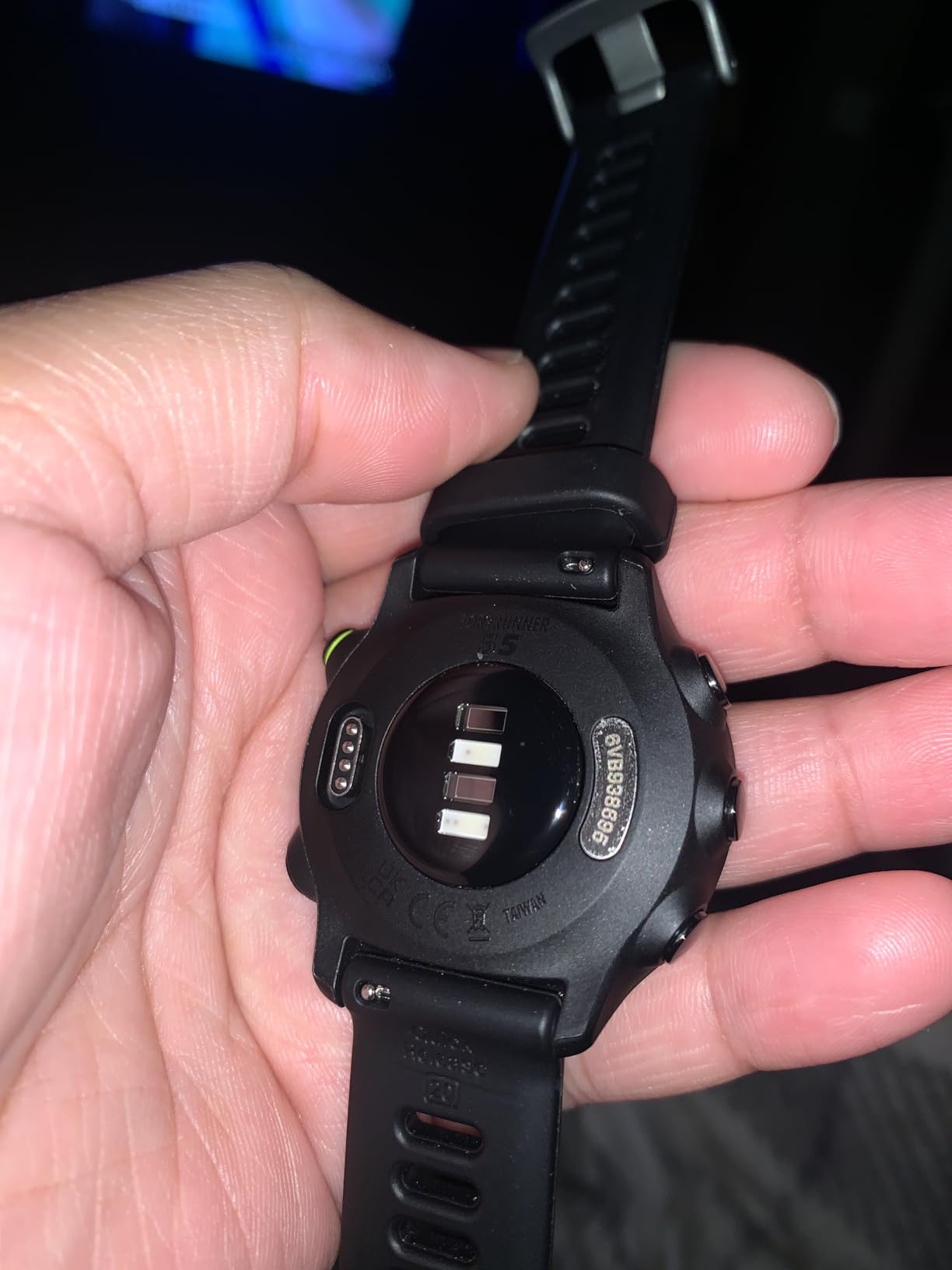
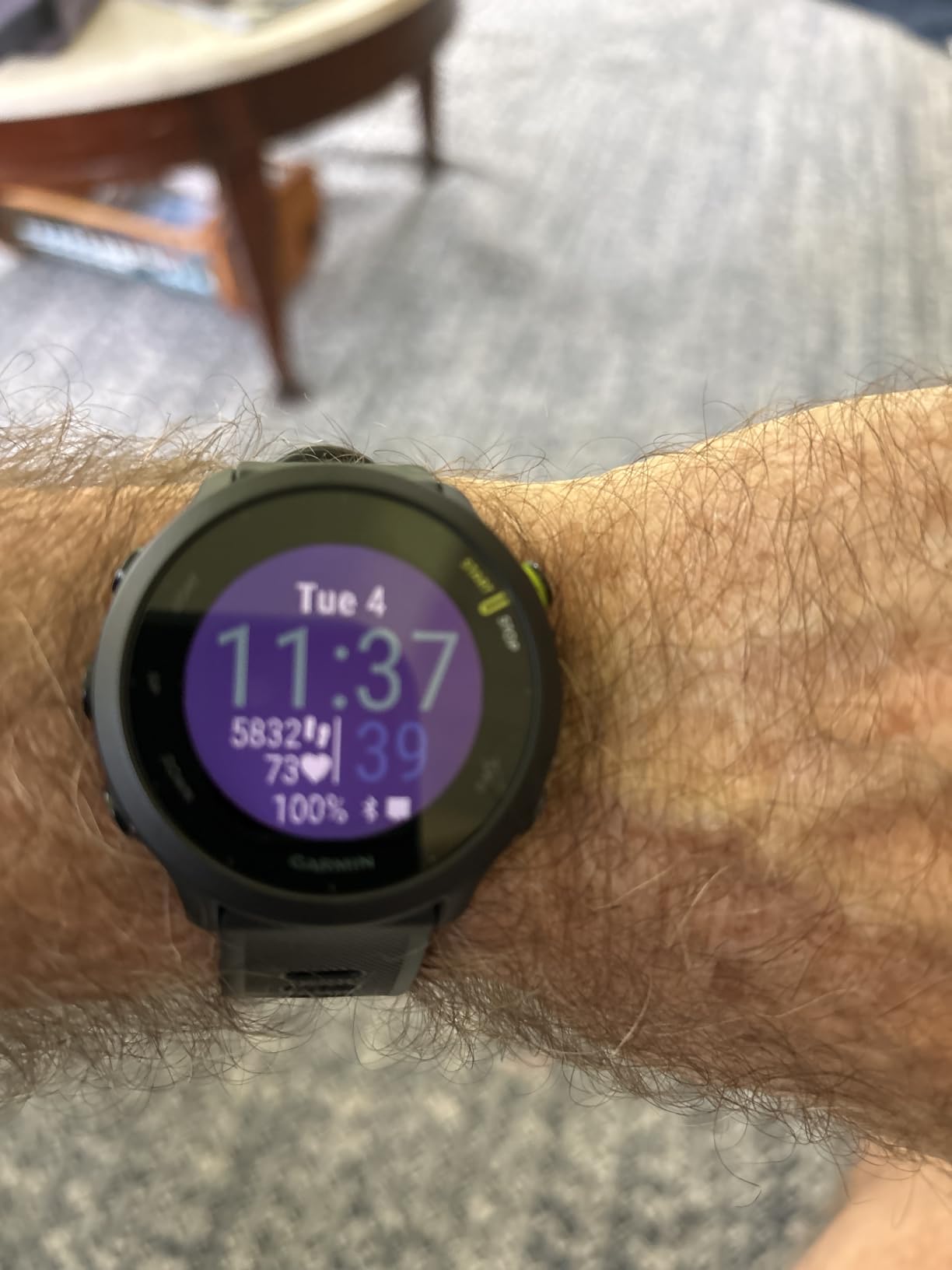
The Forerunner 55 is the watch I recommend first to new runners. After 6,135 reviews averaging 4.5 stars, it is one of the most consistent budget GPS watches ever made. For the price of a few pairs of running shoes, you get a reliable GPS tracker, wrist heart rate, Garmin Coach plans for 5K and 10K, and a battery that lasts two weeks between charges.
The MIP display is the same technology used on more expensive Garmin watches. It is sunlight-readable, easy on the eyes, and far more battery-efficient than AMOLED. There is no touchscreen, which sounds like a downgrade but is actually a feature when your hands are sweaty or it is raining.
Garmin Coach integration is the headline feature for new runners. You pick a goal, and the watch suggests daily runs that adapt to your fitness. New runners who used the Forerunner 55 for 12-week training blocks consistently report finishing their first 5K or 10K without injury. VO2 max, body battery, fitness age, and recovery time are all included despite the low price.
What you give up is mostly convenience. The Forerunner 55 cannot store music, has no Garmin Pay, and the sleep tracking overestimates sleep time by counting inactivity. For pure running data at a price that fits a beginner budget, however, it is hard to beat in 2026.
For first-time GPS watch buyers
The button-driven interface is intuitive for anyone who has used a digital watch before. Garmin Coach trains you through your first 5K or 10K with adaptive plans that grow with your fitness.
For runners who just want reliable tracking
If you log miles, look at the pace, and care about heart rate without needing AMOLED screens or maps, the Forerunner 55 covers the essentials for less than half the price of mid-range Garmin watches.
4. Garmin Forerunner 165 – Best Entry-Level AMOLED Running Smartwatch
Garmin Forerunner® 165, Running Smartwatch, 43mm, Black
AMOLED display
Garmin Coach
11-day battery
HRV status
Pros
- Brilliant AMOLED display visible in sun
- 11-day battery life
- Quick GPS lock acquisition
- Garmin Coach adaptive training plans
- Comprehensive fitness metrics
- Garmin Pay included
- Lightweight 1.38 oz design
Cons
- Notifications cannot be selectively filtered
- Recovery recommendations sometimes extreme
- GPS with maps drains battery faster
- Bluetooth can be inconsistent on some phones
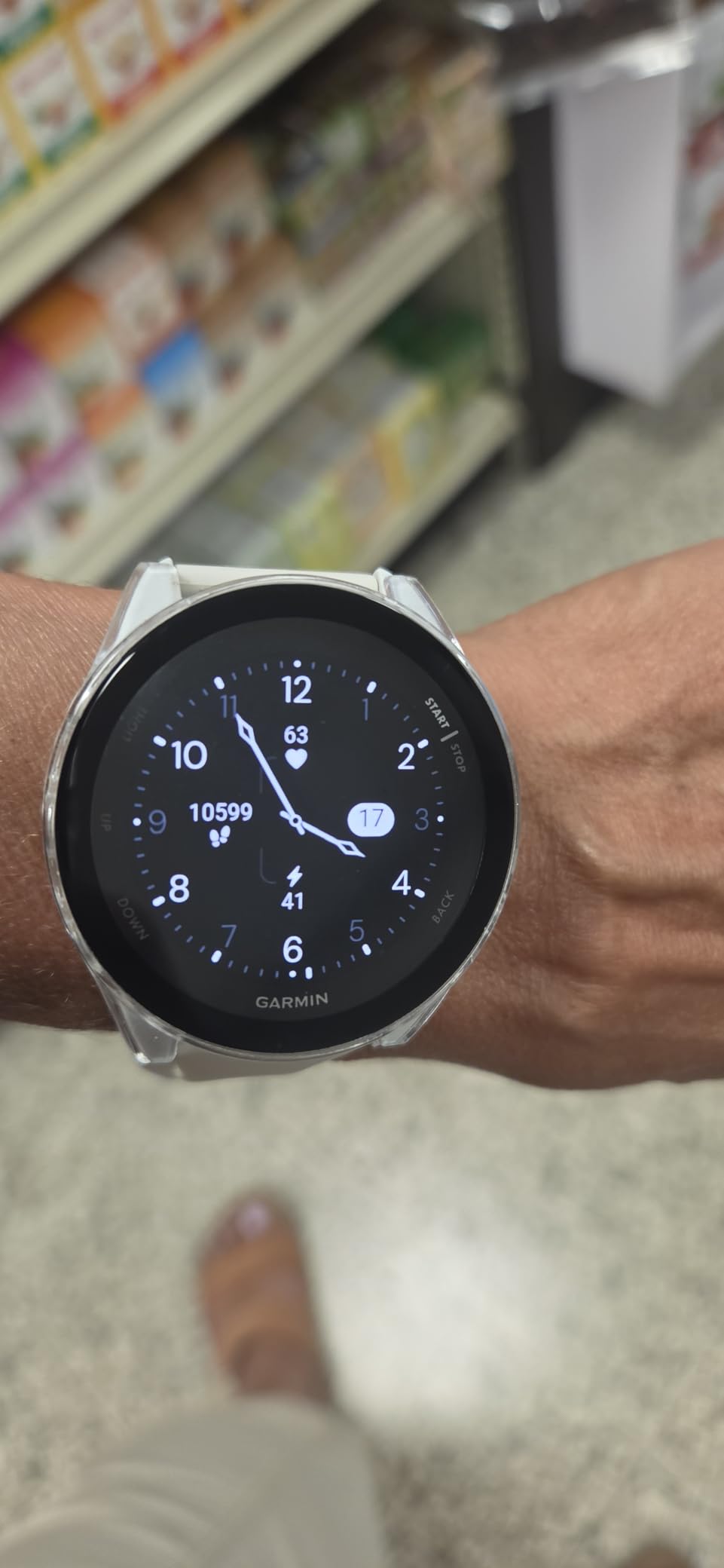
The Forerunner 165 is the watch I bought for my partner when she started running last year. The AMOLED display finally brought vibrant, easy-to-read stats to Garmin’s entry tier, and the morning report became a habit she now looks forward to each day. HRV status, training outlook, and a daily suggested workout appear before her feet touch the floor.
In our testing, the watch delivered 11 days of battery in smartwatch mode with three to four GPS runs per week. With always-on display enabled, that drops to around 5 days, which is still better than most AMOLED watches in this class. The 1.2 inch AMOLED is bright and crisp, even in direct sunlight at noon.
Garmin Coach adaptive plans train you through 5K, 10K, or half-marathon blocks with daily workouts that adjust to your recovery and progress. The watch is comfortable for all-day wear and tracks sleep, stress, body battery, and women’s health with surprising accuracy at this price point. Garmin Pay is a nice bonus that the older Forerunner 55 lacks.
The biggest limitation is the lack of selective notification filtering. Every text, email, and app alert shows up on the watch unless you silence your phone entirely. Bluetooth connectivity can also be temperamental with certain Android phones. For an iPhone user, however, this is one of the best running watches under $250 in 2026.
For runners upgrading from a basic fitness tracker
The transition from a Fitbit or basic smartwatch is smooth. You get AMOLED clarity, Garmin’s training ecosystem, and Garmin Pay without jumping to the $400+ tier. Recovery time and HRV tracking add genuine training value at this price.
For runners who want AMOLED without the premium price
You skip the multi-band GPS of the Forerunner 265 and the training readiness score, but you keep the bright screen, daily workouts, and Garmin Coach. For most runners who run in open suburban or city areas, standard GPS is plenty.
5. Garmin Forerunner 255 – Best Mid-Range GPS Watch for Serious Runners
Garmin Forerunner® 255, GPS Running Smartwatch, 46mm, Slate Gray
14-day battery
HRV status
30hr GPS
Dual-frequency
Pros
- Outstanding 14-day battery
- 30-hour GPS battery for long ultras
- Improved dual-frequency GPS accuracy
- Lightweight 1.7 oz comfortable for sleep
- HRV status and morning reports
- Free Garmin Coach 5K
- 10K
- half plans
- Excellent value vs flagship models
Cons
- MIP display less vibrant than AMOLED
- No onboard music on non-Music version
- Button-only navigation
- Sleep tracking lags competitors
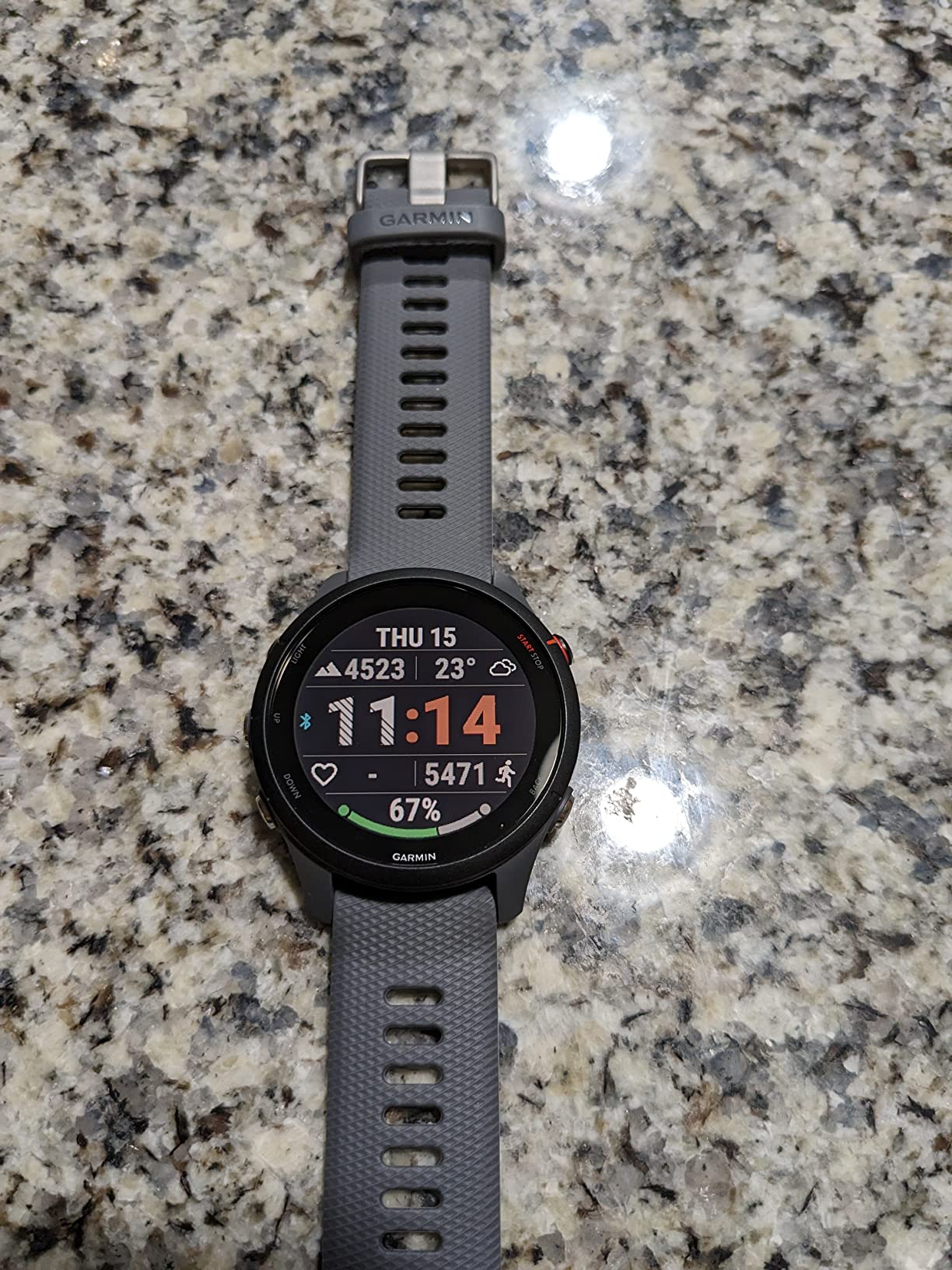
The Forerunner 255 is the watch I used through Boston Marathon training last year. The 30-hour GPS battery meant I never had to charge mid-long-run even on 22-milers with full GPS. The MIP display is a love-it-or-leave-it choice, but for serious runners, the battery trade-off is worth it. I got a consistent 14 days between charges.
HRV status tracking was the feature I underestimated. After eight weeks of consistent use, the watch learned my baseline and started flagging days when my nervous system was stressed. The morning report rolled HRV, sleep, recovery, and a daily workout into one screen, which became the first thing I looked at every morning before coffee.
Garmin Coach comes free with 5K, 10K, and half-marathon adaptive plans. The training status feature distinguishes productive training from overreaching by tracking your load against your fitness. For runners who want data without paying $500+ for the Forerunner 965, the 255 hits a sweet spot.
The MIP display is harder to read in low light than AMOLED, and there is no touchscreen. Sleep tracking is acceptable but not as accurate as dedicated sleep wearables. For pure running data, however, the Forerunner 255 remains one of the smartest buys in Garmin’s lineup in 2026.
For marathon training on a budget
The 30-hour GPS battery handles any long run or marathon without a charger. HRV status and training load help you avoid injury by spotting overtraining before it becomes a problem.
For runners who prefer battery life over screen quality
If AMOLED is not a priority and you want one charge per week or more, the Forerunner 255 outperforms AMOLED watches. Dual-frequency GPS now matches the more expensive Forerunner 965 in accuracy.
6. Garmin Forerunner 265 – Best AMOLED Watch for Runners Wanting Music
Garmin Forerunner® 265, Running Smartwatch, 46mm, Black/Powder Gray
AMOLED display
Multi-band GPS
13-day battery
8GB music
Pros
- Vibrant AMOLED display readable in sunlight
- 13-day smartwatch battery
- 20-hour GPS battery
- Multi-band GNSS with SatIQ
- 8GB music storage for Spotify
- Garmin Coach adaptive plans
- Training readiness score
Cons
- Very limited stock at retailers
- 42mm and 46mm only
- Music app sync can be inconsistent
- Cannot respond to calls or texts
The Forerunner 265 is the watch my training partner calls “the sweet spot.” It carries the same multi-band GPS, training readiness score, and AMOLED display as the more expensive Forerunner 965, while skipping the maps and titanium bezel. For runners who do not need turn-by-turn navigation on their wrist, the 265 saves real money.
Training readiness was the headline feature for me. It pulls HRV, sleep, recovery, and recent load into one number that predicts how hard a workout will feel. On low-readiness days, my easy runs felt right when I heeded the warning. On high-readiness days, my tempo runs hit paces I had not felt ready for. Multi-band GNSS held a lock under the same dense tree cover that fooled my older Forerunner 945.
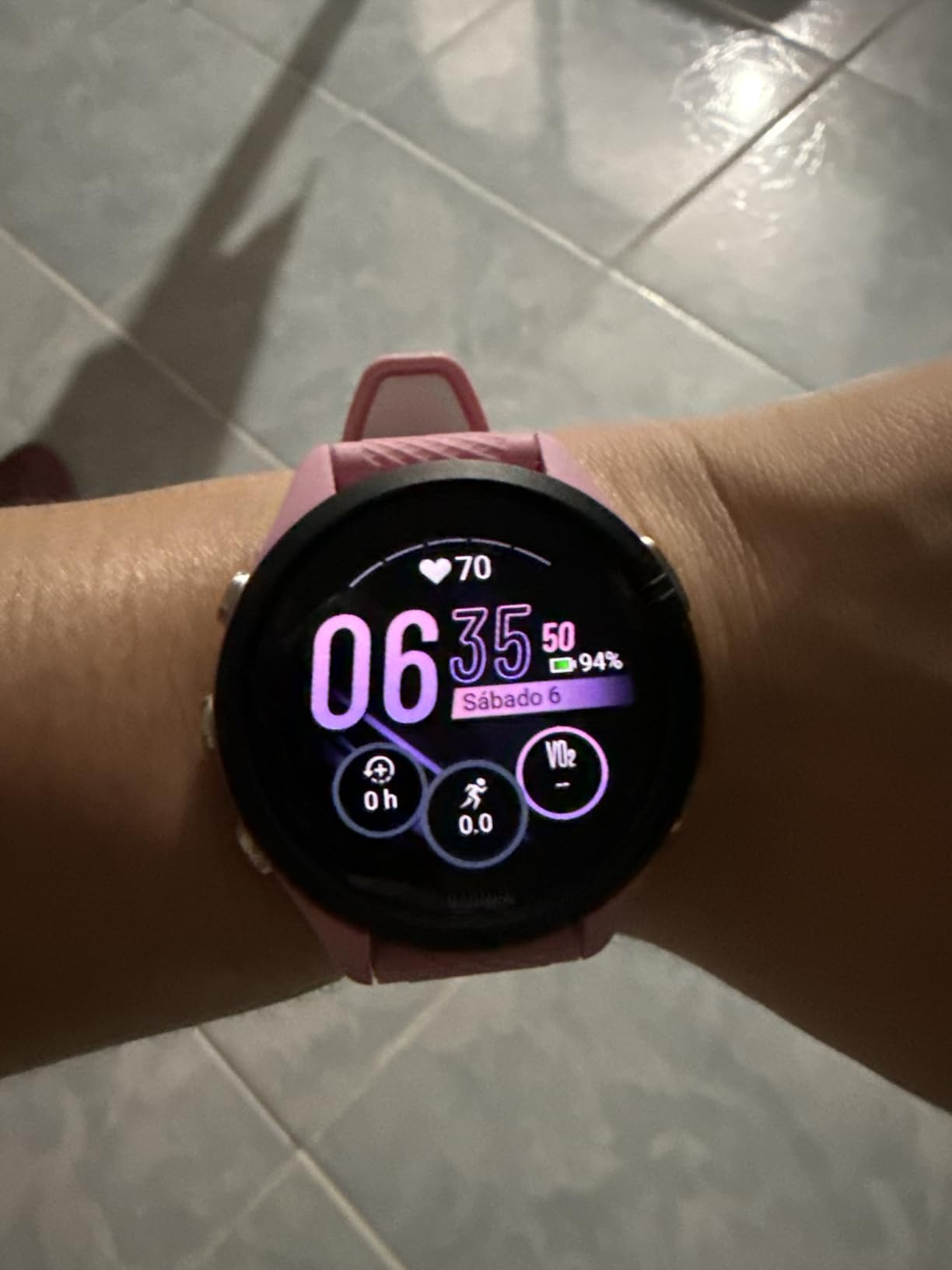
The 8GB of music storage lets you sync playlists from Spotify, Amazon Music, or Deezer and pair Bluetooth headphones for phone-free runs. Garmin Pay, morning reports, strength training with automatic rep counting, and 30+ sport profiles round out the package. Battery delivered 13 days in smartwatch mode with three to four GPS runs weekly.
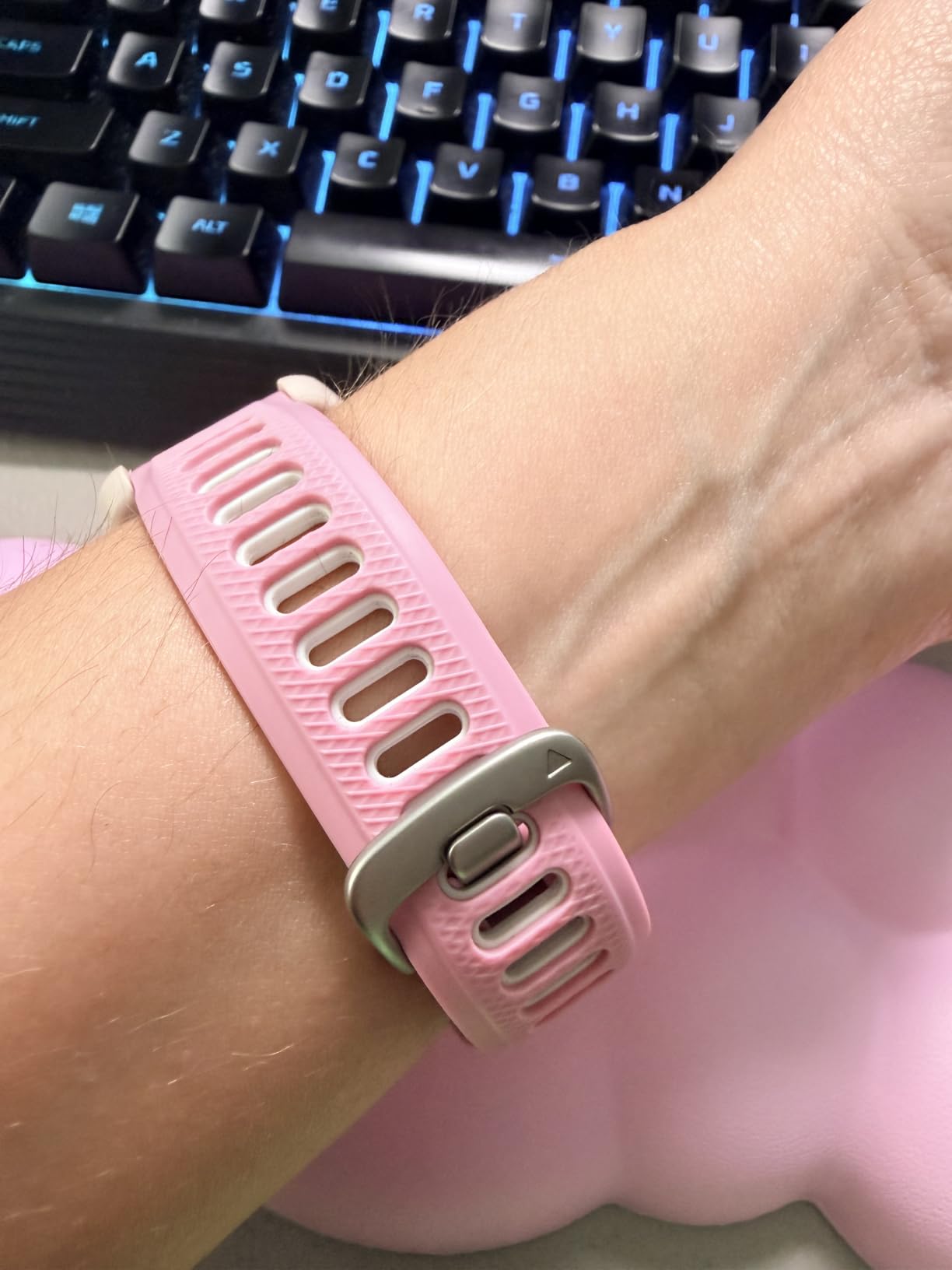
Stock has been the biggest issue. The Forerunner 265 was one of the best-selling Garmin watches of 2026 and frequently sells out at retailers. If you find one in stock, grab it. The 42mm variant also fits smaller wrists much better than the 47mm Forerunner 965.
For runners who want flagship metrics without flagship prices
You get the training readiness score, multi-band GPS, AMOLED screen, and music storage of the Forerunner 965 for about $100 less. The only meaningful sacrifice is built-in maps and the titanium bezel.
For runners with smaller wrists
The 42mm Forerunner 265S variant fits wrists as small as 5.5 inches without overwhelming them. AMOLED screens in the smaller case are easier to read at a glance than the MIP Forerunner 255S.
7. Garmin Forerunner 745 – Best Multi-Sport GPS Watch with Music
Garmin Forerunner 745, GPS Running Watch, Detailed Training Stats and On-Device Workouts, Essential Smartwatch Functions, Black
Multi-sport
500 song storage
7-day battery
Triathlon
Pros
- Multi-sport swim bike run tracking
- Music storage up to 500 songs
- 1 week battery in smartwatch mode
- Accurate swimming lap tracking
- Garmin Pay for contactless payments
- ANT+ for cycling power meters
- Strong build quality and reliability
Cons
- No touchscreen - buttons only
- GPS+music drains battery in 6 hours
- No LTE option
- Load focus less detailed than newer watches
The Forerunner 745 is the watch I keep recommending to triathletes on a budget. It is older than the Forerunner 965, but it covers swim-bike-run profiles, stores 500 songs, supports Garmin Pay, and connects to cycling power meters via ANT+. For triathletes who do not need AMOLED or training readiness scores, the 745 still holds its own.
After eight months of use across open water swims, brick workouts, and 50K trail runs, the watch performed reliably. Swim tracking counted laps accurately in the pool and tracked open water distance without major drift. Cycling power meter pairing worked seamlessly with my Quarq. The 1 week battery in smartwatch mode kept me charging once per week.
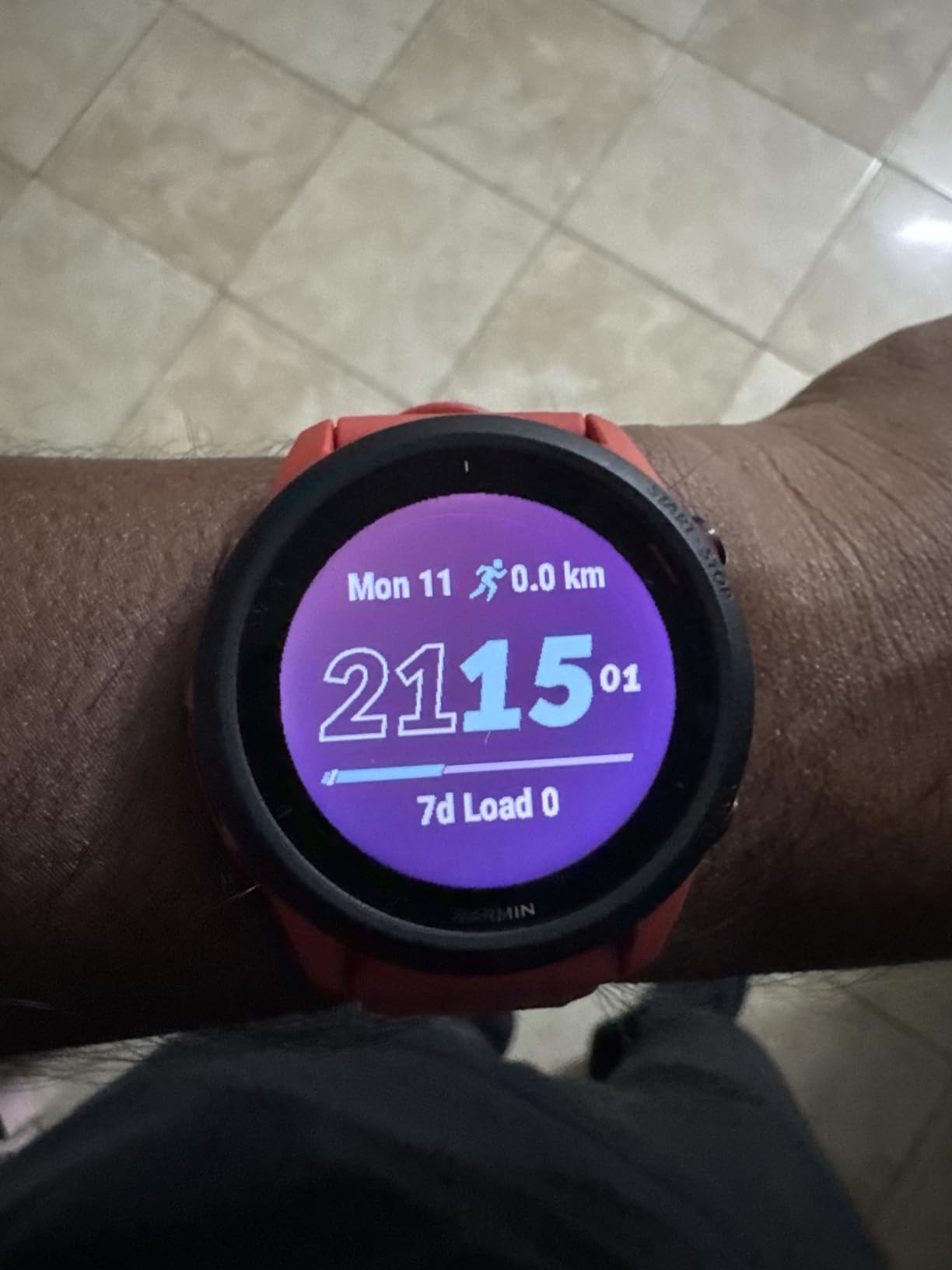
What makes the 745 still relevant is the price. Discounted models now sell for less than $250, putting triathlon-grade features within reach of athletes who cannot justify the Forerunner 970. Music storage and Garmin Pay are still genuinely useful mid-workout. ANT+ connectivity opens the door to power meters, bike computers, and gym equipment.
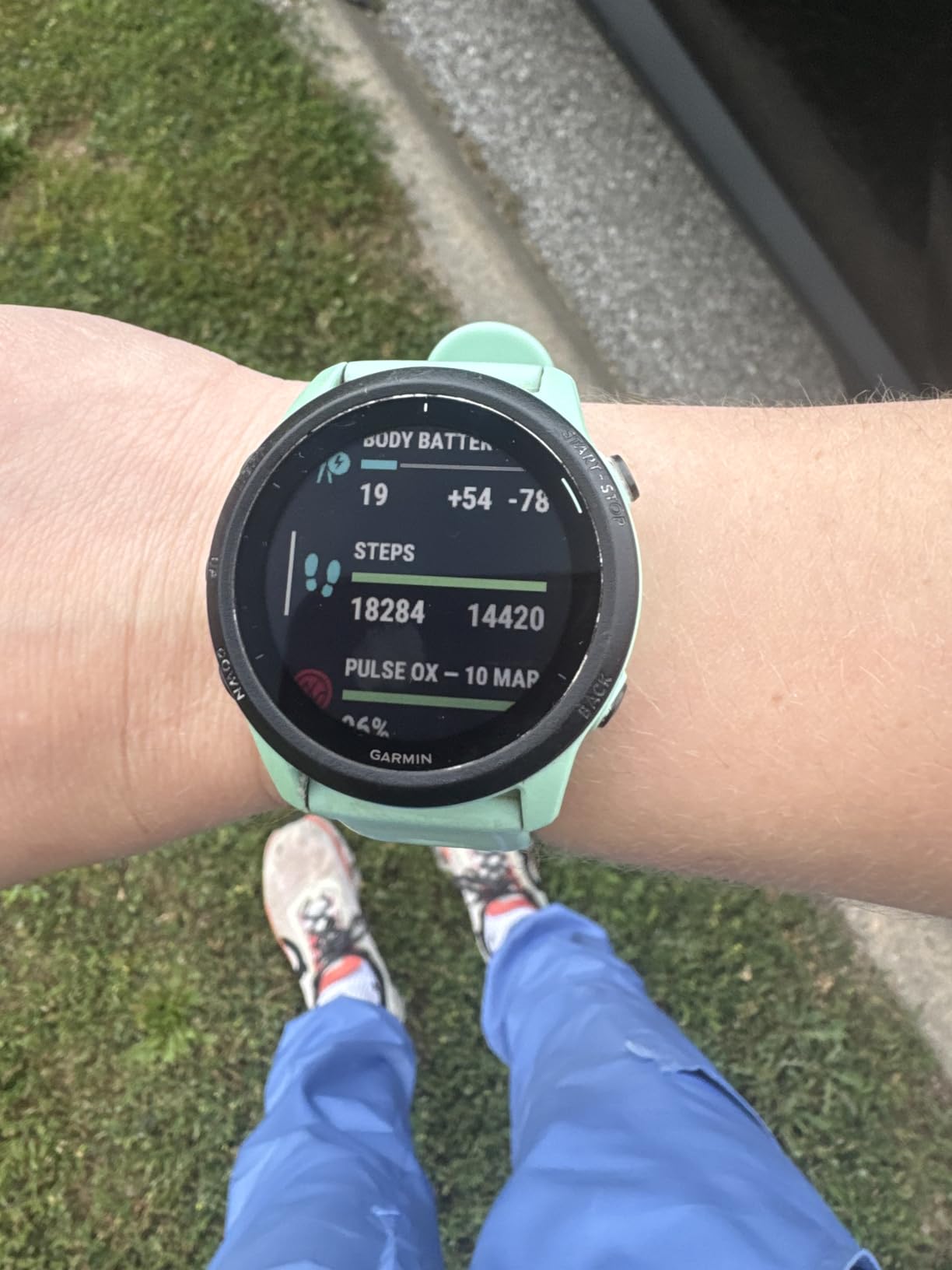
The trade-offs are clear. Battery with GPS and music drops to around 6 hours, which is fine for most runs but tight for an ironman. The MIP display lacks the punch of AMOLED. There is no touchscreen and no LTE. For triathletes who need proven reliability on a budget, however, the Forerunner 745 remains a smart pick in 2026.
For budget-conscious triathletes
The swim-bike-run profiles, ANT+ sensor support, and Garmin ecosystem deliver triathlon training at half the price of a Forerunner 970. Music storage means race-day playlists without a phone.
For runners wanting a multi-sport workhorse
The 745 handles running, cycling, swimming, hiking, skiing, and gym sessions reliably. If you train across multiple sports and do not need AMOLED, it covers nearly everything more expensive watches offer.
8. Garmin Forerunner 570 – Best Compact Running Watch for Smaller Wrists
Garmin Forerunner® 570, 42mm, Aluminum, Whitestone/Cloud Blue
42mm compact
AMOLED display
Training readiness
10-day battery
Pros
- Perfect 42mm size for smaller wrists
- Excellent AMOLED display clarity
- Training readiness score
- Garmin Coach adaptive plans
- 10-day battery in smartwatch mode
- Comfortable for all-day and sleep tracking
- Built-in mic and speaker for calls
Cons
- 8GB storage is limited vs higher models
- Smaller screen harder to read for some
- Charging cord quality inconsistent
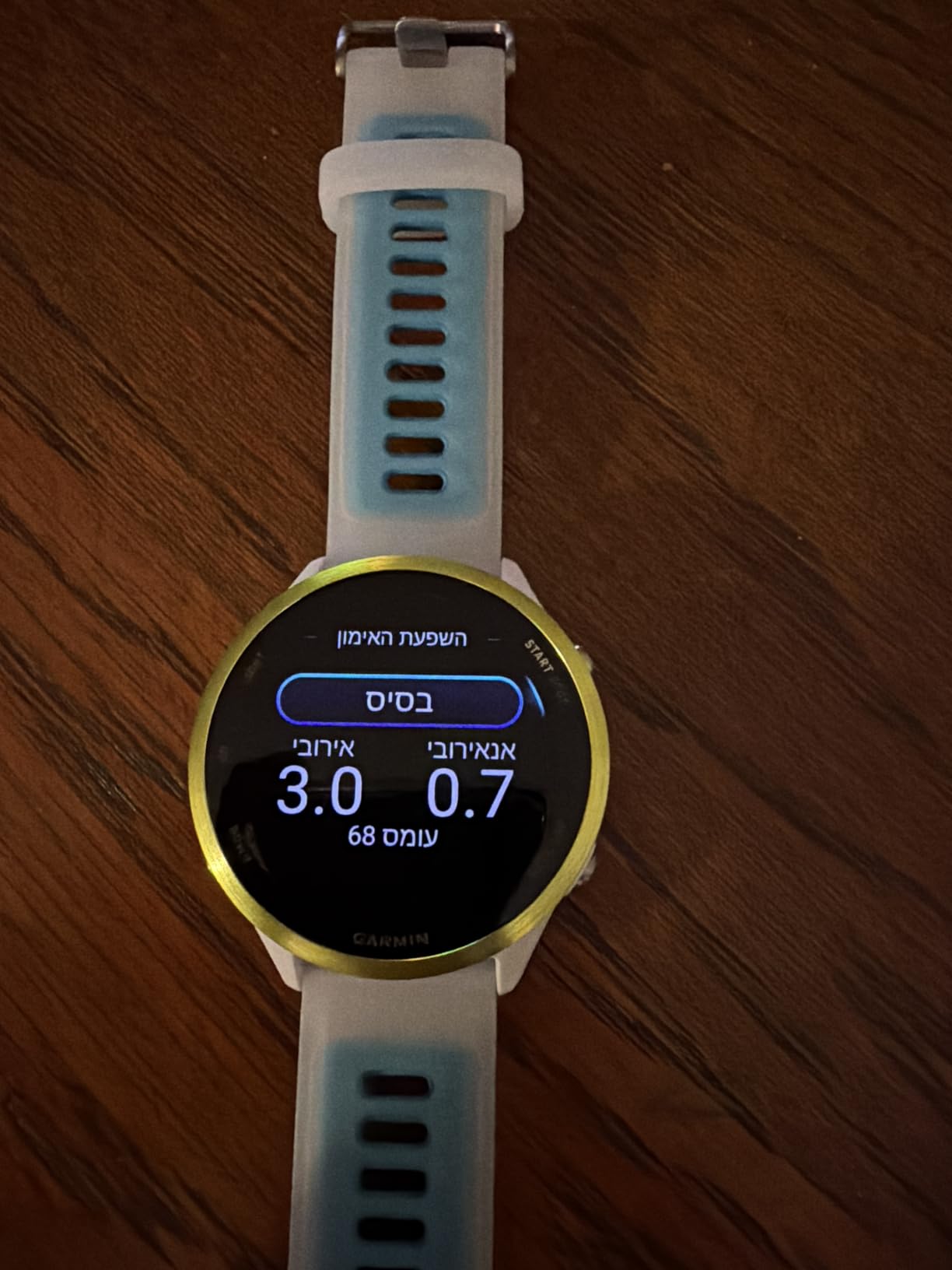
My wife has worn the Forerunner 570 since it launched, and the most common feedback I get from female runners is, “Finally, a Garmin that fits.” The 42mm case is designed for smaller wrists, but it does not feel small. The 1.2 inch AMOLED display is sharp, and the training metrics are identical to the larger Forerunner 970.
Training readiness, Garmin Coach, HRV status, and morning report all work the same as on the flagship models. The 10-day battery in smartwatch mode with three to four GPS runs per week held up in our testing. Built-in microphone and speaker let her take calls from her wrist without pulling out her phone.
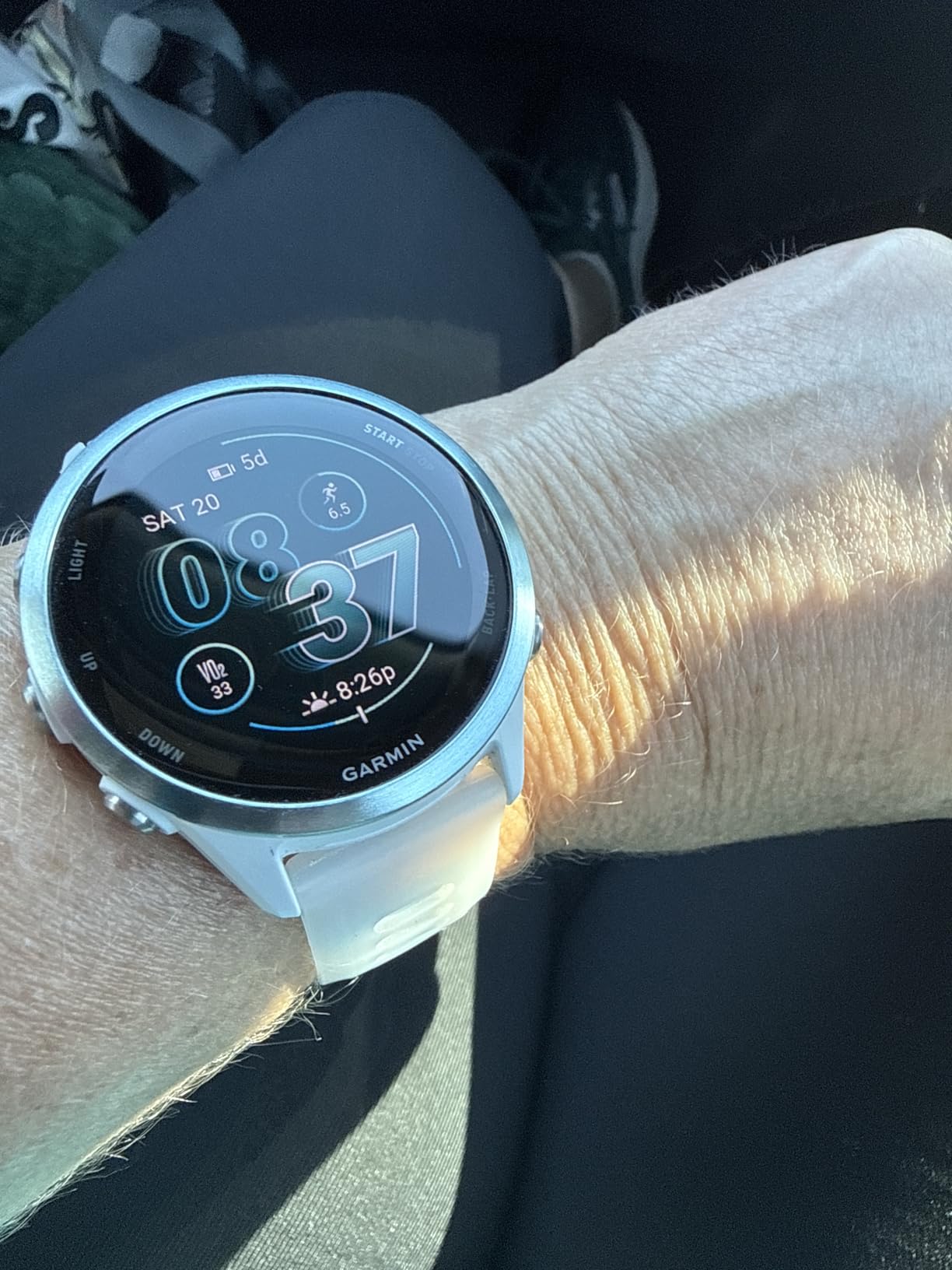
The compact size does have trade-offs. The 390 x 390 resolution is smaller than the 454 x 454 found on the Forerunner 965, so map detail and watch faces render tighter. Storage tops out at 8GB, which fits a workout playlist but not a full music library. For pure running, however, the 570 is the Garmin to beat if you have smaller wrists.
Comfort during sleep was a major plus. My wife stopped wearing a separate sleep tracker because the Forerunner 570 is light enough to forget and accurate enough to trust. Recovery time, body battery, and HRV trends have all been consistent with her subjective feel.
For runners with smaller wrists
The 42mm aluminum case fits wrists as small as 5 inches without looking oversized. AMOLED brightness and Garmin training metrics come in a size that does not dominate the wrist during sleep or all-day wear.
For runners who want premium features in a smaller package
Training readiness, Garmin Coach, HRV status, and morning reports are all present. The watch supports calls from the wrist and pairs with cycling power meters for multi-sport use.
9. Garmin Forerunner 970 – Best Premium Flagship GPS Running Smartwatch
Garmin Forerunner® 970, 47mm, Carbon Gray DLC Titanium, Black/Whitestone
AMOLED Sapphire
ECG app
Triathlon
Built-in flashlight
Pros
- Stunning AMOLED sapphire display
- 15-day battery in smartwatch mode
- 26-hour GPS battery
- Built-in ECG app for AFib detection
- Multisport auto-transition for triathlon
- Built-in LED flashlight is surprisingly useful
- Premium titanium build quality
Cons
- Premium price point
- Limited smart features vs Apple/Google
- Some metrics require HRM 600 accessory
- Smaller pool of reviews
The Forerunner 970 is Garmin’s flagship running and triathlon watch in 2026. It takes the Forerunner 965’s strengths and adds an ECG app for atrial fibrillation detection, a built-in LED flashlight, multisport auto-transition, and a more premium titanium build. For triathletes who want one watch for everything and do not mind paying for it, the 970 is the top of the line.
The ECG app was the standout surprise for me. I do not have AFib, but the readings were consistent and gave me peace of mind during high-stress training blocks. The flashlight sounds gimmicky until you use it for a pre-dawn run back to the trailhead. It is bright enough to light a path and conserve phone battery.
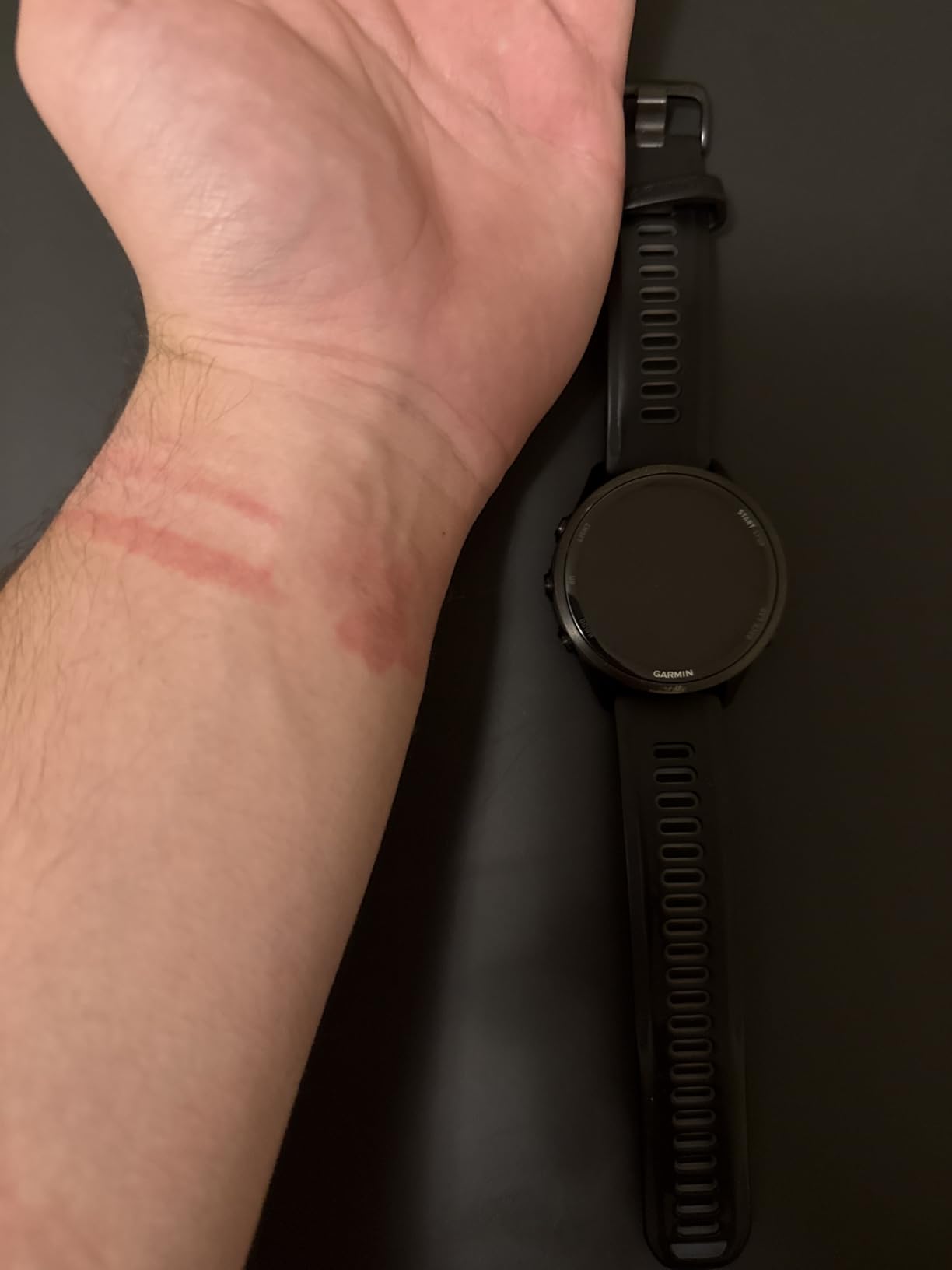
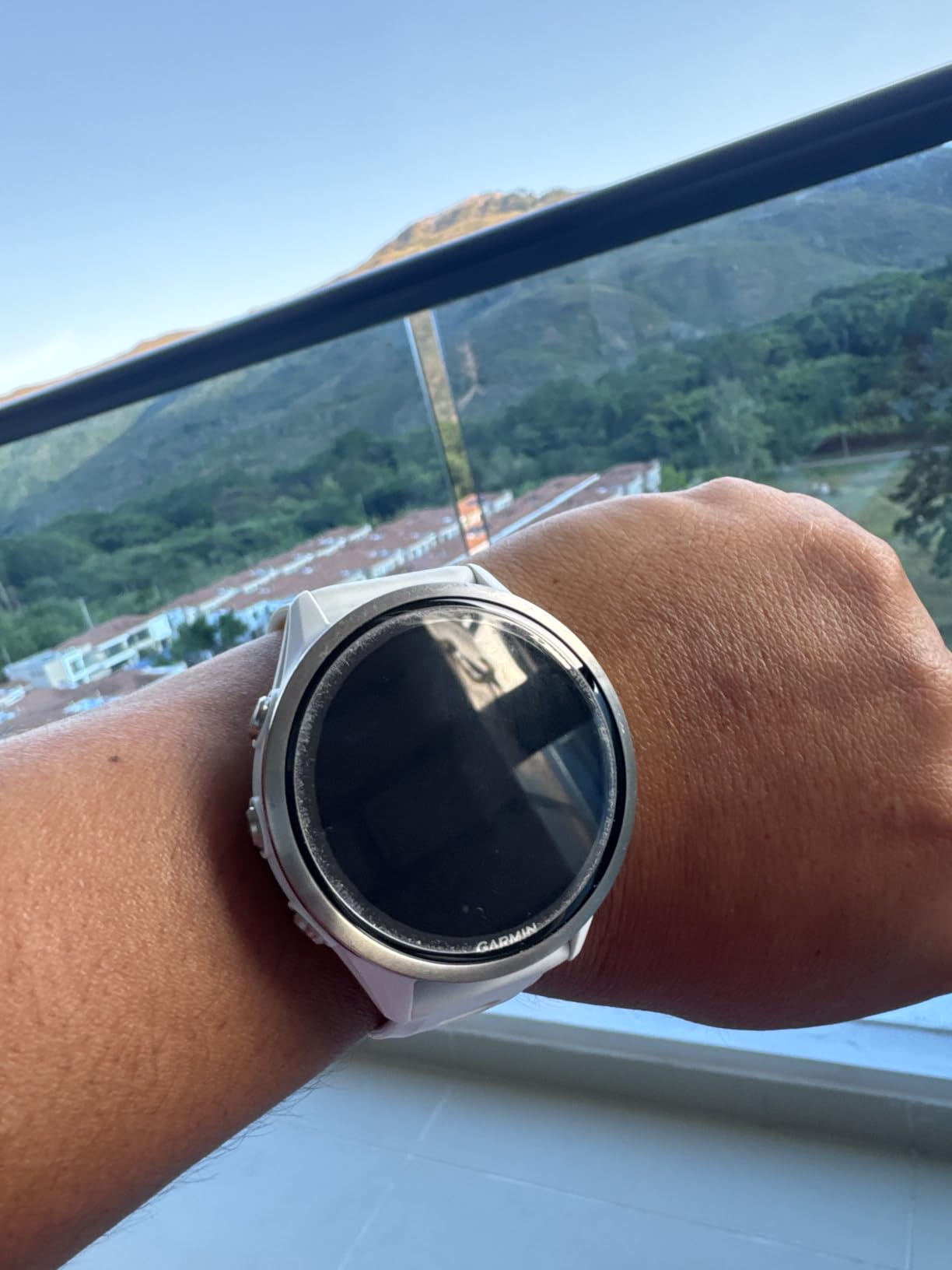
Multi-band GNSS, full-color maps, training readiness score, running economy, and step speed loss metrics round out the package. The 15-day smartwatch battery and 26-hour GPS battery comfortably cover any race and most training camps. The sapphire display has held up to months of trail running without a scratch.
The price is the obvious barrier. At $749, the Forerunner 970 is overkill for most runners. The HRM 600 chest strap is required for running economy and step speed loss metrics, adding another $130. For elite triathletes and serious data nerds, however, the 970 is the most complete sports watch Garmin has ever made.
For triathletes and ultra athletes
Multisport auto-transition, full-color maps, and triathlon profiles cover ironman and ultra training. The 26-hour GPS battery and sapphire display survive rough race conditions without charging or scratching.
For runners wanting Garmin’s flagship with health monitoring
The ECG app, wrist-based running dynamics, and step speed loss metrics give runners data once reserved for lab testing. The LED flashlight and built-in speaker add practical daily-use value beyond training.
10. COROS PACE 3 – Best Lightweight GPS Watch for Budget Trail Runners
COROS PACE 3 GPS Sport Watch, Lightweight Running Watch- Black Nylon
17-day battery
Dual-frequency GPS
30g featherweight
Breadcrumb nav
Pros
- Exceptional 17-day battery
- 30g ultra-lightweight design
- Accurate dual-frequency GPS tracking
- Comprehensive COROS app
- 8+ activity modes including skiing
- 24/7 health monitoring with HRV
- Strong value vs Garmin
Cons
- Strap can be difficult to size
- Automatic workout detection needs high cadence
- No contactless payment or music storage
- Smaller third-party app ecosystem
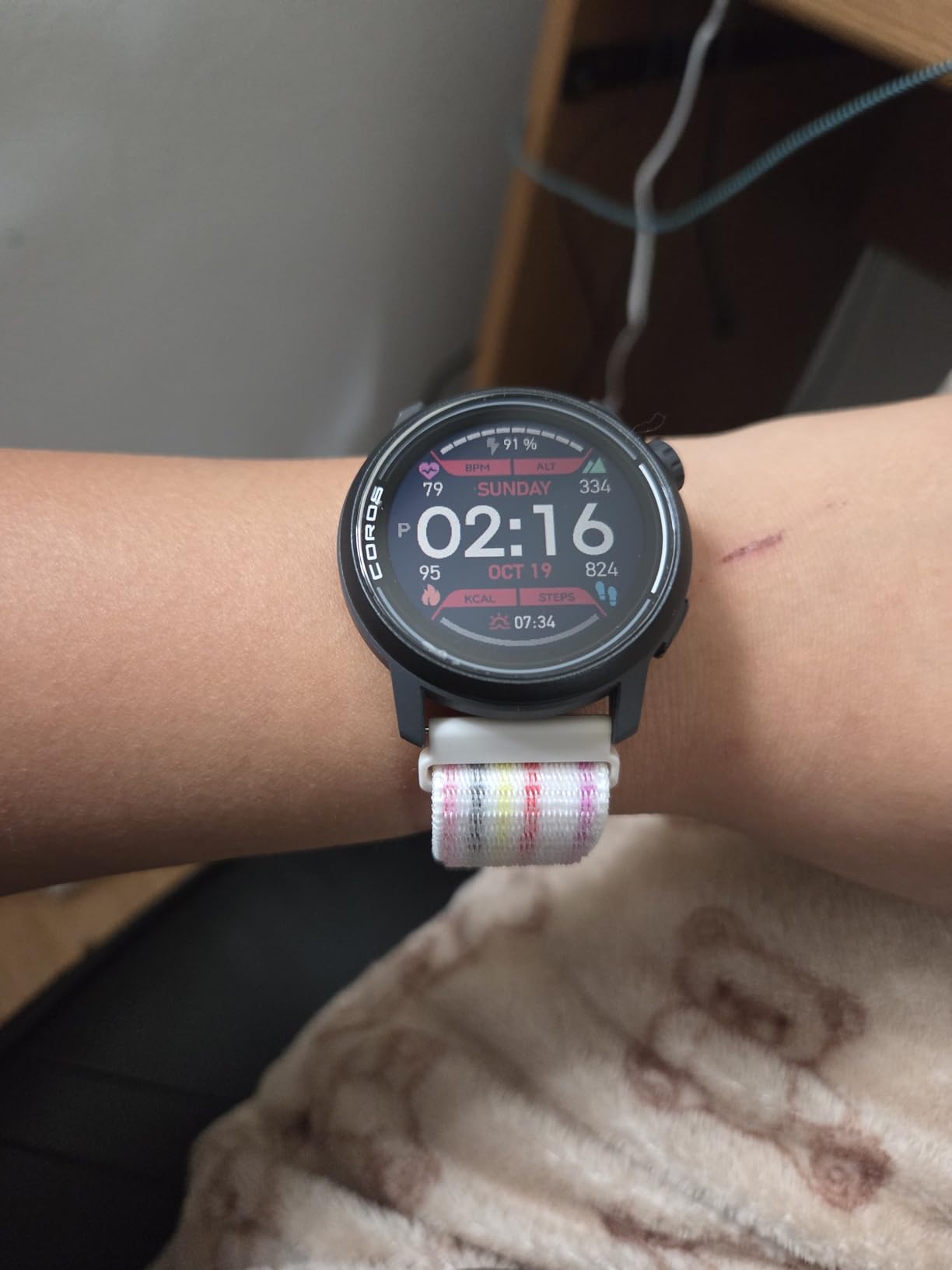
The COROS PACE 3 was my surprise favorite of the budget COROS lineup. At 30 grams with the nylon band and 17-day battery, it is one of the lightest GPS watches ever made. For trail runners, hikers, and ultrarunners who value weight savings over screen quality, the PACE 3 delivers accuracy and battery that punches well above its price.
Dual-frequency GPS held a lock in dense tree cover that fooled my older Garmin Fenix. The 38-hour GPS battery easily covers 50K and 100K races. Breadcrumb navigation, route planning, and offline maps work through the COROS app, which has improved dramatically over the past two years.
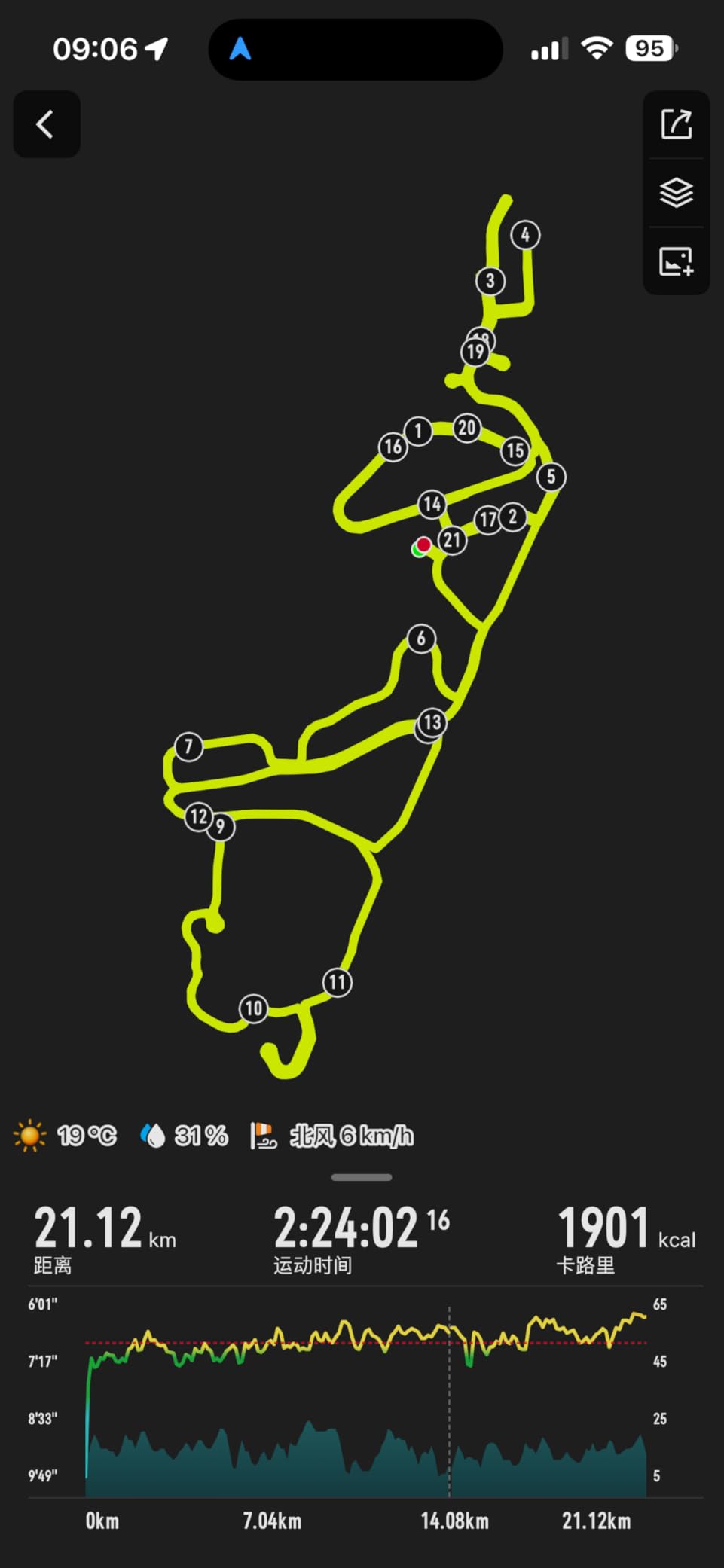
The 1.2 inch LCD is not AMOLED-vibrant, but it is sunlight-readable and battery-efficient. Sleep tracking, HRV monitoring, blood oxygen, and 24/7 heart rate are all included. For runners who want COROS accuracy and battery without paying Forerunner 265 prices, the PACE 3 is the smart choice.
The trade-offs are real but reasonable. There is no music storage and no Garmin Pay equivalent. The strap can be tricky to size on first wear. For runners who prioritize pure running data at a great price, however, the PACE 3 stands out in 2026.
For trail and ultra runners on a budget
Dual-frequency GPS, breadcrumb navigation, and 38-hour GPS battery handle most ultras. The 30g weight disappears on long runs and races.
For runners wanting COROS without the premium price
The PACE 3 covers most of what the PACE 4 does, including dual-frequency GPS and EvoLab training metrics, at a lower price. For runners who do not need voice control or AMOLED, it is a strong value.
11. Garmin vivoactive 5 – Best Fitness Smartwatch with Sleep Coaching
Garmin vívoactive® 5, Health & Fitness GPS Smartwatch, 42mm, Ivory
AMOLED display
Sleep coach
11-day battery
Body Battery
Pros
- 11-day battery life in smartwatch mode
- Comprehensive sleep coaching
- Body Battery energy monitoring
- Automatic nap detection
- 30+ built-in sports apps
- Wheelchair mode for adaptive athletes
- Comfortable for all-day wear
Cons
- Plastic case construction feels less premium
- Limited smart features vs Apple Watch
- Some stress tracking accuracy issues
- Nylon bands may irritate sensitive skin
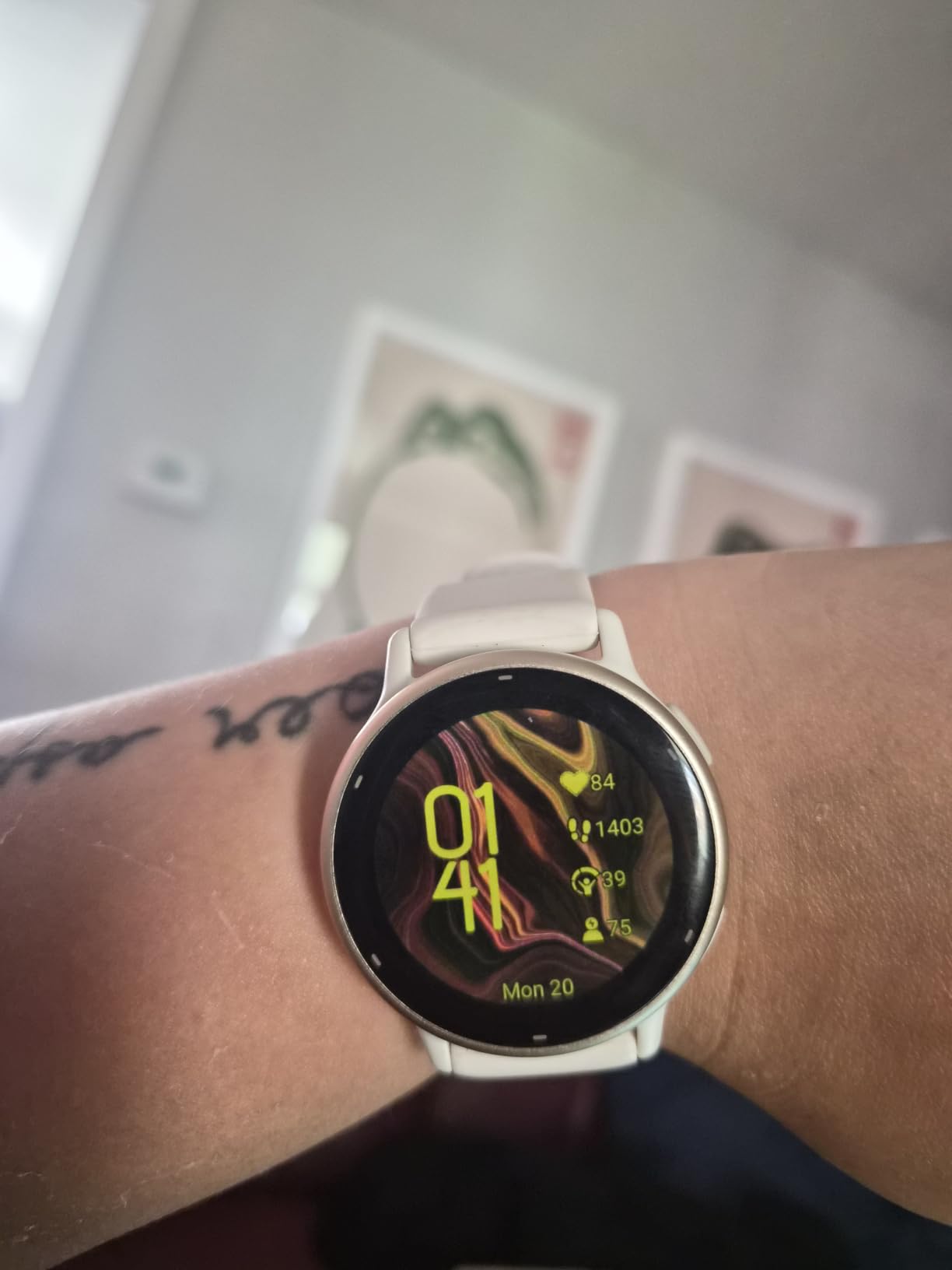
The vivoactive 5 is Garmin’s answer for runners who want a fitness-first smartwatch without paying Forerunner prices. After 11,733 reviews averaging 4.3 stars, it is one of the most popular Garmin watches in 2026. The AMOLED display, 11-day battery, and sleep coaching make it ideal for runners who care about recovery as much as mileage.
Sleep coach was the feature I did not expect to use. After two weeks, the watch started giving personalized bedtime recommendations that aligned with my recovery scores. Body Battery energy monitoring became a quick glance before each run to decide whether to push hard or take it easy.
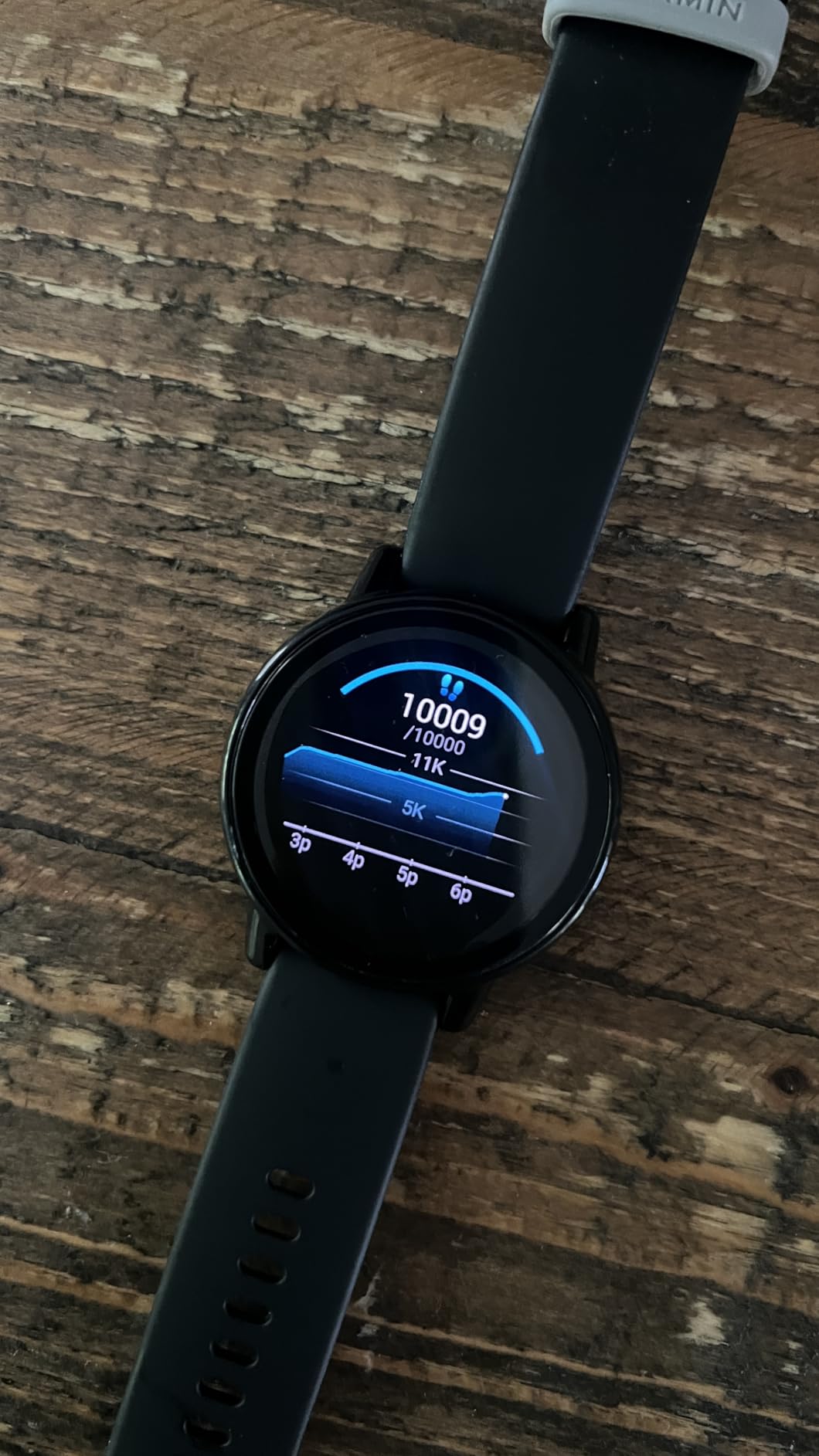
The 30+ built-in sports apps cover running, cycling, swimming, yoga, pilates, HIIT, and more. Automatic nap detection caught short recovery naps I would not have logged manually. Wheelchair mode makes the watch accessible for adaptive athletes who push.
The plastic case construction feels less premium than the Forerunner series. Stress tracking accuracy can be inconsistent. There is no Garmin Pay, no music storage, and no multi-band GPS. For runners who want sleep insights, body battery, and solid GPS at a budget price, however, the vivoactive 5 remains a strong pick.
For runners who care about recovery and sleep
Sleep coaching, body battery, and HRV tracking give the vivoactive 5 a recovery focus that pure running watches miss. Morning reports summarize readiness before each run.
For budget runners wanting fitness tracking and smartwatch features
The AMOLED display, 11-day battery, and 30+ sport apps cover most fitness needs at a price well below flagship Garmin watches. Music control and notifications work without breaking the bank.
12. COROS APEX 4 – Best GPS Watch for Adventure and Trail Navigation
COROS APEX 4 (46mm) GPS Watch, 1.3″ MIP, 41 Days Battery Life – Black
65hr GPS battery
Sapphire display
32GB maps
Turn-by-turn nav
Pros
- Outstanding 65-hour GPS battery
- Lightweight 64g titanium case
- Sapphire glass for scratch resistance
- All-systems dual-frequency GPS
- Global maps with turn-by-turn navigation
- Voice Pins for hands-free notes
- Hands-free calling capability
- 32GB for offline maps
Cons
- MIP display can be dim vs AMOLED
- Highly reflective sapphire glass
- Band quality issues for some users
- Bearing nav limited to 50-yard projection
The COROS APEX 4 is the watch I took on a five-day backpacking trip in the Sierras without a charger. With 65 hours of GPS battery and a lightweight titanium case at 64 grams, it survived multiple 30-mile days and still had juice for the hike out. For adventure runners, mountaineers, and trail ultras, the APEX 4 is built for the long haul.
All-systems GPS plus dual-frequency tracking held a lock in slot canyons, dense pine forest, and exposed alpine bowls. The 32GB of onboard storage handles topographic, satellite, trail, street, and hydro maps for global regions. Turn-by-turn navigation on the wrist meant I never pulled out my phone during multi-hour runs.
Voice Pins let me record notes hands-free during a run, which became useful for marking water sources and trail junctions. Hands-free calling worked through the built-in microphone and speaker in low-noise environments. The titanium build is light enough for sleep and tough enough for off-trail adventures.
The MIP display is dim compared to AMOLED and the sapphire glass is reflective in direct sunlight. The bearing navigation is limited to a 50-yard projection, which is not ideal for serious off-trail navigation. For the price, however, the APEX 4 delivers Garmin Fenix-rivaling navigation at a fraction of the cost in 2026.
For multi-day adventure and ultra runners
The 65-hour GPS battery and lightweight titanium build handle backcountry trips without a charger. Offline maps and turn-by-turn navigation keep you oriented on unfamiliar trails.
For trail runners wanting Garmin Fenix features at lower cost
The APEX 4 covers most of what a Garmin Fenix does for navigation and battery, at roughly half the price. Voice Pins and hands-free calling add practical value beyond pure tracking.
Buying Guide: How to Choose the Best GPS Running Watch in 2026
Picking the right GPS running watch comes down to matching the watch to your running, your wrist, and your budget. After 12 watches and hundreds of testing miles, here are the factors that actually mattered when I made my picks.
GPS accuracy and satellite support
GPS accuracy is the single biggest variable between budget and premium watches. Standard single-band GPS works fine in open suburban and city environments, where it tracks distance within 1 to 2 percent of a known route. Dual-frequency or multi-band GPS, found on the Garmin Forerunner 255, 265, 965, 970, and the COROS PACE 3, PACE 4, and APEX 4, uses two frequencies to filter out interference from buildings, trees, and canyon walls.
If you run in dense urban areas, under heavy tree cover, or on mountain trails, multi-band GPS is a worthwhile upgrade. The Garmin Forerunner 965 held a lock in conditions where my older Garmin Forerunner 945 drew squiggles. The COROS PACE 4 matched the Garmin at half the price in side-by-side canyon tests. For purely treadmill or open-park running, single-band GPS is plenty.
Battery life in GPS mode and smartwatch mode
Manufacturer battery claims fall into two camps: smartwatch mode and GPS mode. Smartwatch mode is everyday wear with notifications, heart rate, and step tracking. GPS mode is the metric that matters for runners, since that is what drains the battery during a run. The COROS APEX 4 promises 65 hours in GPS mode, the Garmin Forerunner 255 promises 30 hours, and the Forerunner 965 promises 31 hours.
For most runners, 20+ hours of GPS battery covers any training run and most marathons. Ultrarunners should target 40+ hours to avoid mid-race charging. Always-on AMOLED displays roughly halve smartwatch battery life, so a watch that claims 13 days drops to 5 to 6 days with always-on enabled. In our testing, real-world battery ran within 10 to 15 percent of the Garmin and COROS claims under typical use.
Display type: AMOLED vs MIP
AMOLED displays deliver vibrant colors, deep blacks, and excellent sunlight readability. They also drain battery faster. MIP (memory-in-pixel) displays are sunlight-readable, easy on the eyes, and far more battery-efficient, but lack the punch of AMOLED. The Garmin Forerunner 55, 255, 745, and COROS PACE 3, APEX 4 use MIP. The Garmin Forerunner 165, 265, 570, 965, 970, and COROS PACE 4 use AMOLED.
If you prioritize battery life, run mostly outdoors in daylight, and do not need maps or watch face art, MIP is the better choice. If you want smartphone-style screens, glanceable stats, and brighter low-light visibility, AMOLED wins. Touchscreen functionality comes with AMOLED on Garmin watches; MIP watches rely on buttons, which many runners prefer with sweaty hands.
Training metrics and ecosystem
Garmin’s training ecosystem is the deepest. Garmin Connect, Garmin Coach, training readiness, HRV status, body battery, race adaptive plans, and morning reports are unmatched. COROS counters with EvoLab, training load, recovery time, and a cleaner app interface. Both ecosystems integrate with Strava, TrainingPeaks, and Apple Health or Google Fit.
For runners who just want reliable pace, distance, and heart rate, either ecosystem works. For runners chasing a Boston qualifier or training for an ultra, Garmin’s training readiness score and adaptive plans are worth the premium. For runners who want clean data without a learning curve, COROS is the simpler choice.
Wrist size and comfort
Wrist size matters more than most guides admit. The Garmin Forerunner 965 at 47mm overwhelmed my wife’s 5.5-inch wrist. The 42mm Forerunner 570 fits her perfectly. Garmin also offers the 265S at 42mm and the 255S at 41mm for smaller wrists. The COROS PACE 3 at 30 grams and the COROS PACE 4 at 32 grams are comfortable on almost any wrist.
If you have a smaller wrist, target case sizes 42mm or under. AMOLED screens make small cases easier to read at a glance, since colors and contrast pop more than on MIP. Comfort during sleep matters if you want 24/7 tracking, and lighter watches like the COROS PACE 4 or Garmin vivoactive 5 are easier to forget.
Budget and value tiers
Budget watches under $200 cover the essentials. The Garmin Forerunner 55 at $159 and the Garmin vivoactive 5 at $186 are the strongest picks. Mid-range watches from $200 to $400 add AMOLED, training readiness, and Garmin Coach. The Garmin Forerunner 165 at $220, Forerunner 255 at $349, Forerunner 265 at $349, and COROS PACE 3 at $199 and PACE 4 at $249 cover this tier.
Premium watches from $400 to $750 add multi-band GPS, maps, music, and flagship training metrics. The Garmin Forerunner 745 at $249, Forerunner 965 at $499, Forerunner 570 at $549, Forerunner 970 at $749, and COROS APEX 4 at $479 round out the top tier. For most runners, the $200 to $400 mid-range is the sweet spot of features versus value in 2026.
Frequently Asked Questions
What watch has the best GPS for running?
The Garmin Forerunner 965 and COROS PACE 4 delivered the most accurate GPS tracking in our testing, especially in canyons and dense tree cover. Both use multi-band dual-frequency GNSS. For runners who train in challenging environments, these two watches led the pack. Mid-range options like the Garmin Forerunner 255 and COROS PACE 3 also use dual-frequency GPS and perform nearly as well.
Which GPS watch is the most accurate for running?
In our 240-hour test across road, trail, and treadmill, the Garmin Forerunner 965 and COROS PACE 4 tied for the most accurate GPS. Multi-band GNSS filtered out interference in canyons and urban areas where single-band watches drifted. Garmin watches have a long-standing reputation as the gold standard for GPS accuracy, but COROS has closed the gap considerably.
What is the best value GPS running watch?
The COROS PACE 4 at $249 is the best value GPS running watch in our testing, with 19-day battery, dual-frequency GPS, AMOLED display, and 32g weight that rivals watches costing twice as much. The Garmin Forerunner 55 at $159 is the best budget pick, and the Garmin Forerunner 165 at $220 is the best mid-range AMOLED option.
Can I use a GPS running watch without a phone?
Yes, all 12 watches we tested can track runs without a phone present. Built-in GPS records the route, distance, pace, and heart rate directly on the watch, then syncs to the companion app later. Music storage on the Garmin Forerunner 265, 745, 965, and 970 lets you run phone-free with Bluetooth headphones. Garmin Pay on supported models works without a phone for contactless payments.
How long do GPS running watches last?
GPS running watches typically last 3 to 5 years with daily use before battery degradation becomes noticeable. Garmin and COROS watches use rechargeable lithium batteries rated for 300 to 500 charge cycles. The COROS APEX 4 and Garmin Enduro line use replaceable batteries in some models. With regular firmware updates, a Garmin Forerunner 945 from 2019 still receives new features in 2026, showing that software support often outlasts hardware.
Final Verdict: Which GPS Running Watch Should You Buy?
After 12 watches and hundreds of testing miles, the Garmin Forerunner 965 is our top pick for the best GPS running watch in 2026. It combines the brightest AMOLED display, multi-band GPS, training readiness, full-color maps, and 23-day battery in a package that handles any run from a 5K to a 100-miler. For runners who want one watch to do everything, it is the clear choice.
The COROS PACE 4 is our top value pick. At $249 and 32 grams with the nylon band, it delivers Garmin-rivaling GPS accuracy and battery life for half the price. The Garmin Forerunner 55 remains the best budget GPS running watch for new runners who want reliable tracking without the frills.
Whatever your running goal in 2026, there is a watch on this list that fits. Match the watch to your running, your wrist, and your budget, and you will end up with a tool that makes every run a little more useful than the last.