
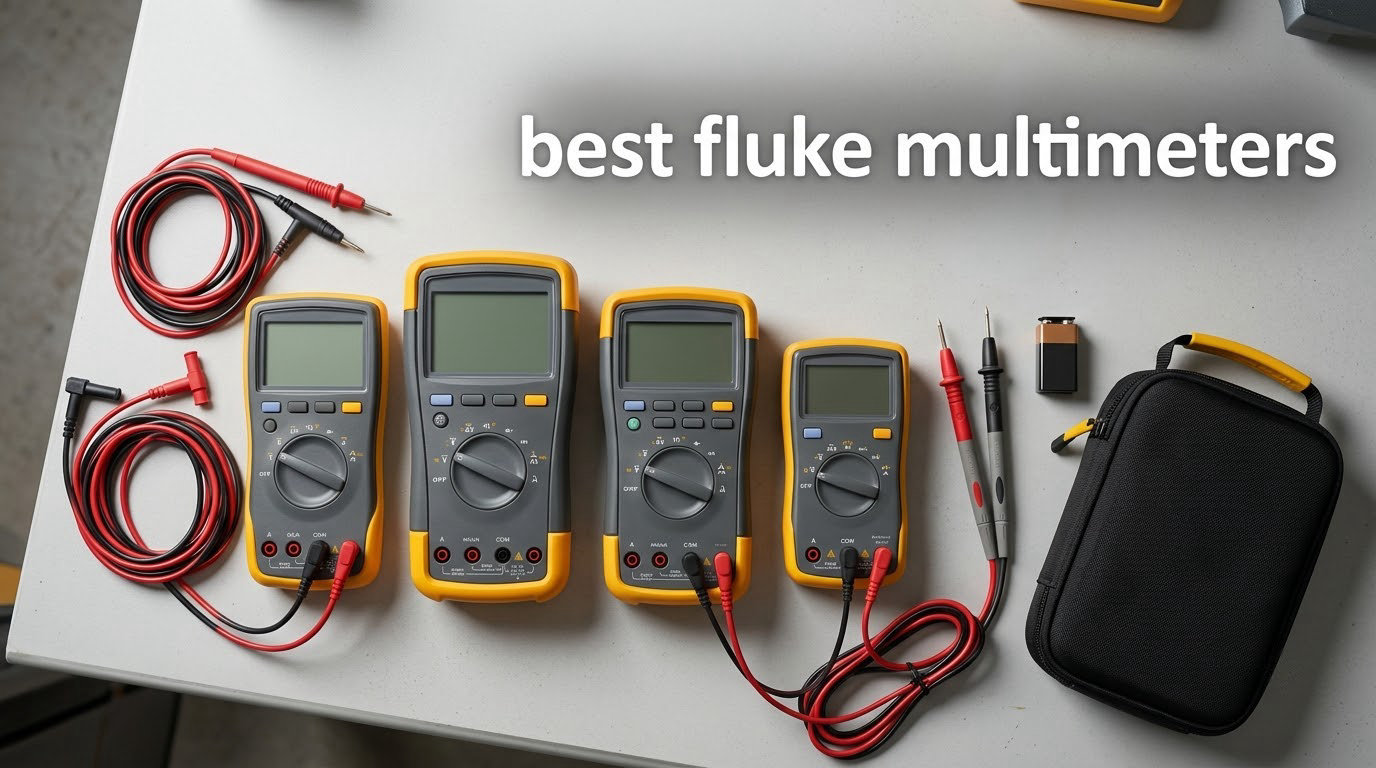
Short answer: the Fluke 117 is the best Fluke multimeter for most people, the Fluke 87V is the one to buy for industrial and VFD work, and the Fluke 15B+ or 107 is the right pick if you want a Fluke without spending flagship money. Those three cover the majority of electricians, HVAC techs and serious hobbyists who only ever need one meter.
We have used these meters on panels, rooftop units, motor drives and benches for years, and this roundup reflects how each one behaves in the hand rather than what the spec sheet promises. Every model below carries a Fluke CAT safety rating, a real warranty term, and a specific job it is genuinely good at.
One thing to clear up first: the best Fluke multimeters are not all the same kind of tool. Some are true-RMS meters for non-sinusoidal loads, some are pocket models that fit in a shirt pocket, and one is a logging insulation tester. Picking the wrong family is the most common reason people feel they bought the wrong meter, so the electronics repair meter guide we published earlier is worth a look if your work is more bench than panel.
What follows is eight meters, ranked by how often they turn up in real toolbags, with the honest limits of each one stated plainly.
Table of Contents
Top 3 Best Fluke Multimeter Picks in 2026

Fluke 117
- True RMS AC
- AutoVolt AC/DC detect
- VoltAlert non-contact
- LoZ ghost voltage blocking

Fluke 115
- True RMS voltage and current
- Min/max/average recording
- Compact field body
- CAT III 600V

Fluke 17B+
- Type K thermocouple included
- Temperature to 400C
- AC/DC to 1000V and 10A
- Diode and capacitance
All Eight Fluke Multimeters Side by Side (October 2026)
Every meter in the table below is rated CAT III 600 V or better, which covers residential and most commercial panel work. The differences that actually matter are true-RMS accuracy, temperature capability, current range and how large the meter is in your hand.
| Product | Specifications | Action |
|---|---|---|
| Fluke 117 Digital Multimeter |
|
Check Latest Price |
 Fluke 101 Digital Multimeter Fluke 101 Digital Multimeter |
|
Check Latest Price |
| Fluke 115 Multimeter |
|
Check Latest Price |
 Fluke 107 Handheld Digital Multimeter Fluke 107 Handheld Digital Multimeter |
|
Check Latest Price |
| Fluke 17B+ Digital Multimeter |
|
Check Latest Price |
 Fluke 87V Industrial Digital Multimeter Fluke 87V Industrial Digital Multimeter |
|
Check Latest Price |
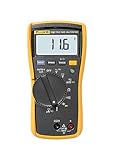 Fluke 116 HVAC Multimeter Fluke 116 HVAC Multimeter |
|
Check Latest Price |
 Fluke 15B+ Digital Multimeter Fluke 15B+ Digital Multimeter |
|
Check Latest Price |
1. Fluke 117 Digital Multimeter – The Best All-Round Fluke
Fluke 117 Digital Multimeter, Non-Contact AC Voltage Detection, Measures Resistance/Continuity/Frequency/Capacitance/Min Max Average, Automatic AC/DC Selection, Low Impedance Mode
True RMS AC
VoltAlert non-contact detection
AutoVolt AC/DC
Low impedance mode
400 hour battery
Pros
- Ghost voltage rarely fools you with low impedance mode
- VoltAlert finds a live conductor without a probe
- AutoVolt removes the AC/DC dial guesswork
- Bright white LED backlight
- Reads fast under one-handed panel work
Cons
- No milliamp or microamp range
- Current limited to 10A
- Included probes tangle easily
The 117 is the meter most electricians end up holding, and after years of watching colleagues use it we understand why. It measures true-RMS AC voltage and current, resistance, continuity, frequency, capacitance and min/max/average, all in a body you can operate one-handed while the other hand stays on a panel cover.
Three Fluke-specific features do the heavy lifting. VoltAlert gives a beep and a red bar-graph indication when a probe tip is near a live conductor, AutoVolt figures out whether the voltage is AC or DC without you touching the dial, and the low impedance mode is the one that saves you from a ghost voltage.
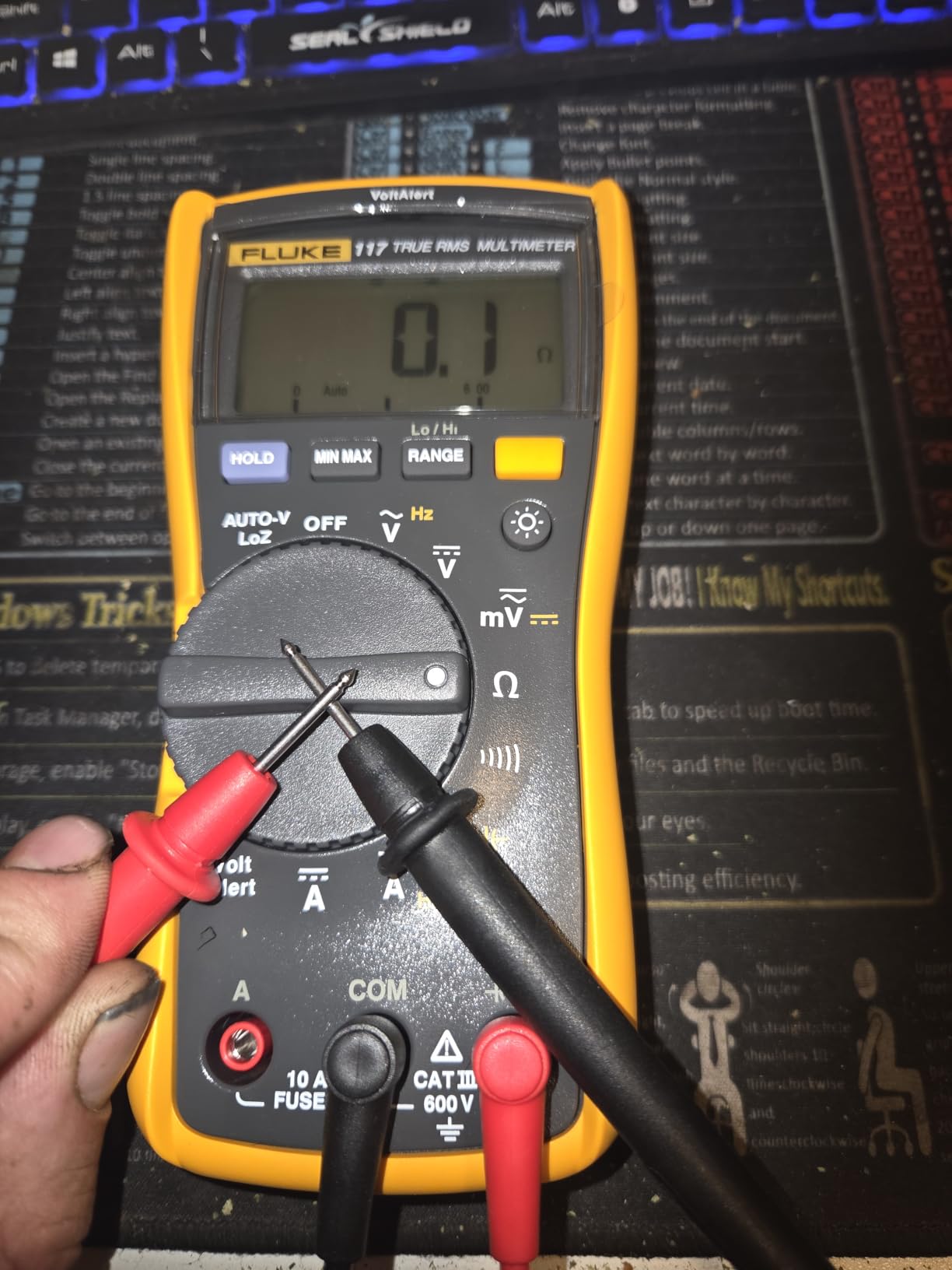
Here is what ghost voltage actually is. A normal meter has around 10 megohms of input impedance, so on a long de-energised cable run the tiny capacitive coupling between that cable and the building ground can push enough phantom voltage onto the meter to read a believable 40 or 60 volts. Touch the circuit and it collapses to nothing. Switch the 117 into low impedance mode, where the input drops to about 6 kilohms, and that phantom reading disappears. A reader on r/electricians described the 117 as great if you are an electrician, and low impedance is a large part of why that comment keeps appearing.
The white LED backlight is bright enough to read across a mechanical room, battery life is rated at about 400 hours without the backlight, and the meter runs from -10C to +50C, which covers most plant environments.
The real limitation is current measurement. There is no milliamp or microamp range, and the 10A input is the only current path, so measuring a small control-signal current means switching leads to a different terminal. Many owners keep a second meter for that work.
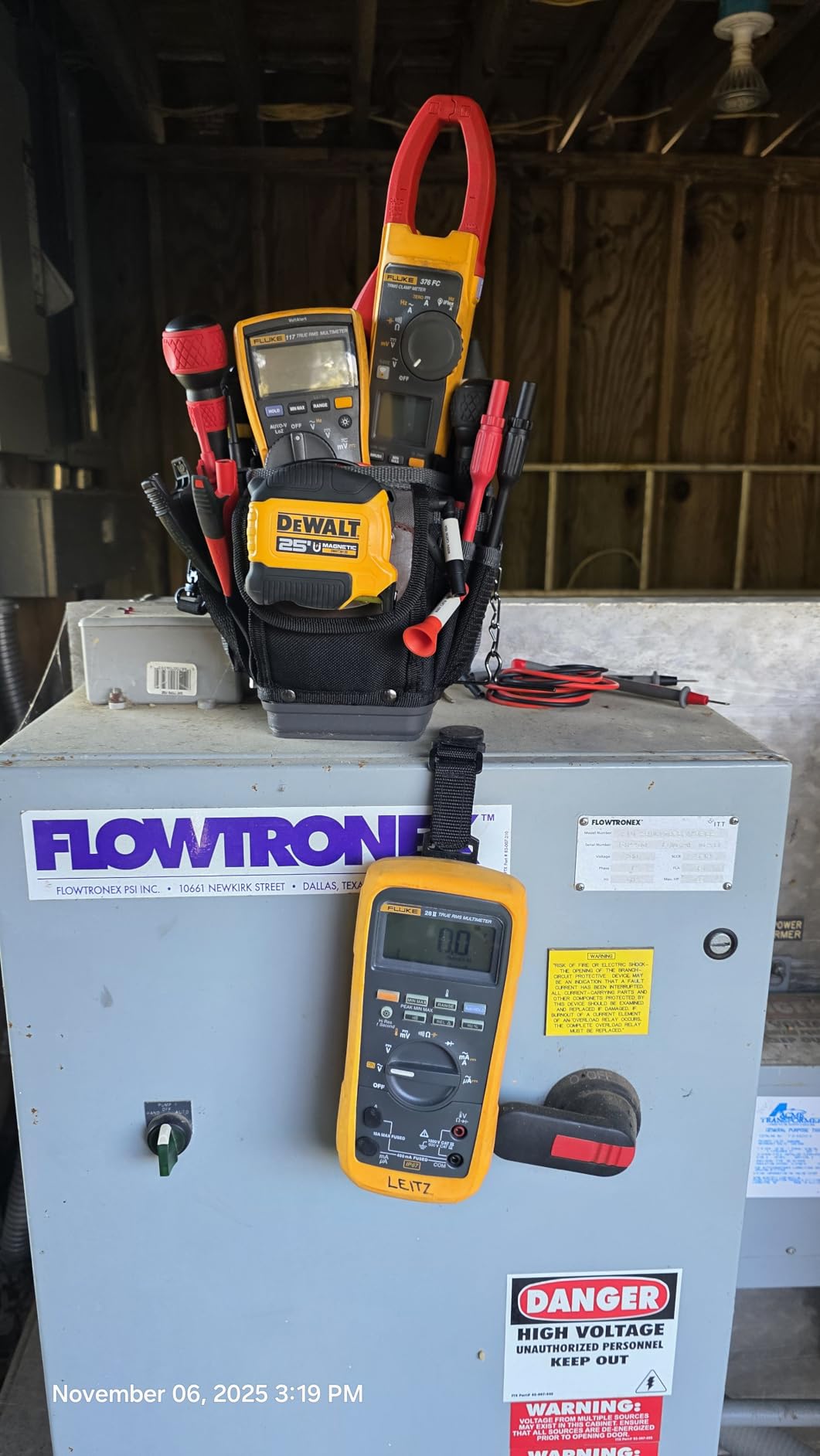
Why the 117 handles ghost voltage better than most
The low impedance setting is not a gimmick. It turns the meter from a high-impedance voltmeter into a low-impedance one, which loads the circuit enough that phantom coupling cannot build up a readable voltage. If your work involves long runs of unenergised cable, T-tapped wiring or abandoned circuits in plaster, that single feature removes an entire category of false readings.
VoltAlert is the second safety feature worth knowing. It is a non-contact detector, so it tells you a conductor is energised without you making contact. It cannot tell you the voltage is safe to work on, and it needs both a probe near the conductor, but it is fast for checking which leg of a subpanel is live before you touch anything.
Who should skip the 117
Skip it if your work is HVAC. The 116 gives you a built-in thermometer and microamps for flame sensor testing, which the 117 simply does not have, and the thermocouple lives in the body instead of dangling off a probe.
Skip it if you chase intermittents on adjustable speed drives or industrial panels. The 87V does that job properly with a low-pass filter and Peak Capture. The 117 is superb, but it is the generalist, not the specialist.
2. Fluke 101 Digital Multimeter – The Best Pocket Meter
FLUKE-101 Digital Multimeter
160 g body
CAT III 600 V
0.5% DC accuracy
Continuity buzzer and diode test
Pros
- Light enough for one-handed pocket use
- CAT III 600V safety rating
- Buzzer and diode test included
- Cheapest durable route into the Fluke name
Cons
- No current measurement at all
- No temperature or frequency
- 0.5% DC accuracy is a basic class
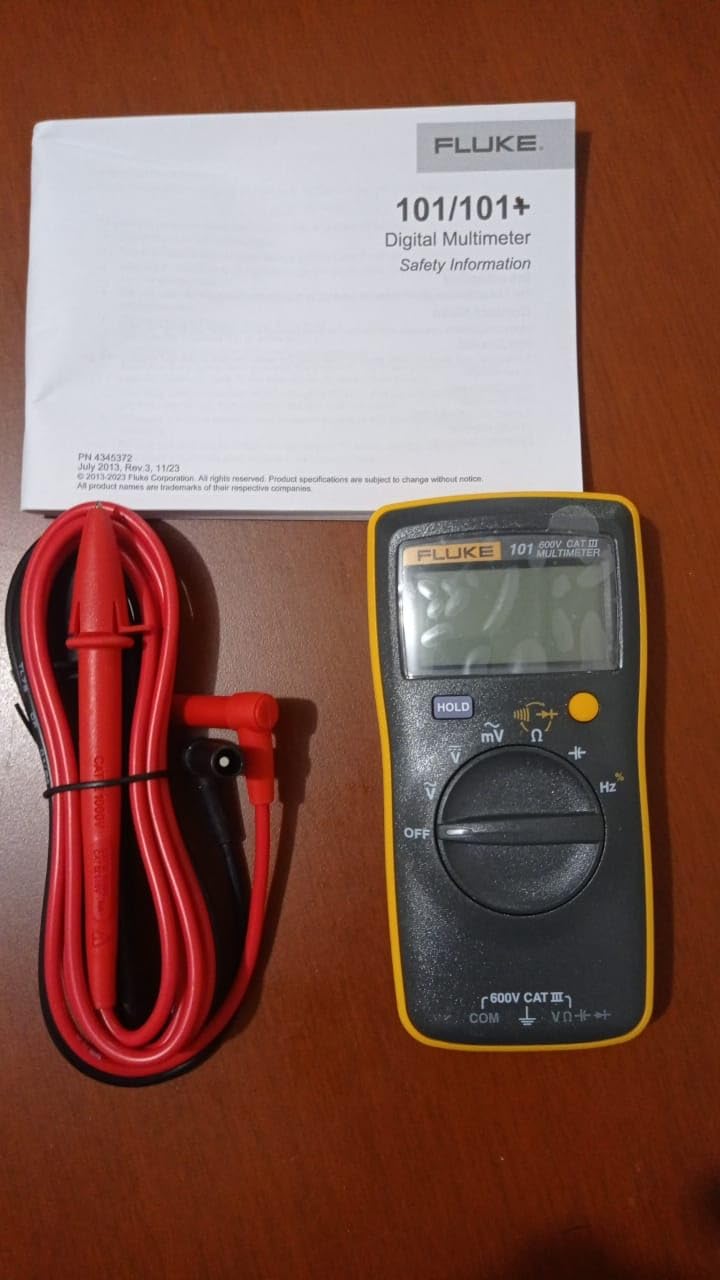
At 160 grams and just over five inches long, the 101 is the smallest meter in this roundup by a wide margin, and it is the one we end up carrying as a backup rather than a primary. If you need volts, ohms and a continuity beep on a quick check, it does the job and it fits anywhere.
The safety rating is the surprise. CAT III 600 V means it is certified for panel work and receptacle testing in the same category as larger Flukes, which is not always true of meters this small. Accuracy is 0.5% on DC, which is fine for verifying a de-energised circuit is actually dead before you start work.
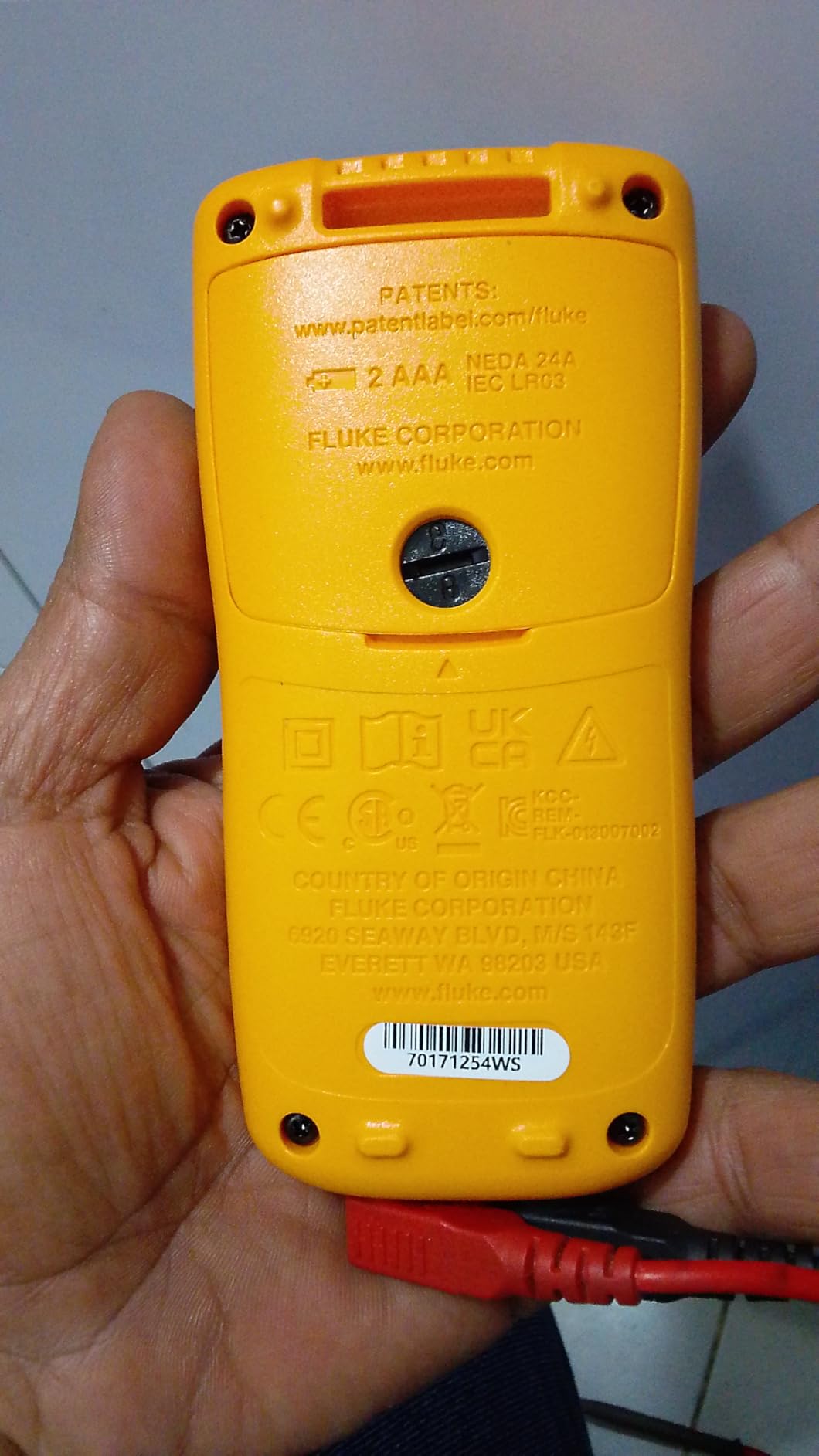
What it cannot do is measure current. There is no amps input at all, so it is not a substitute for a meter you will use for motor or circuit diagnosis. It also has no temperature, no frequency and no true-RMS AC, so AC readings on non-sinusoidal loads will be low.
Reviewers are consistent about this being a first Fluke or a spare, not a sole instrument. The one-year warranty is also the shortest in this group, so we would not build an apprentice kit around it.
When a pocket meter is the right answer
There are real jobs where the 101 is enough. Walking a building checking that outlets are dead, confirming a breaker is open, testing a fuse in a control cabinet, sorting out which of a bundle of wires goes where on a low-voltage run. None of that needs amps or temperature.
Because it is so small, it is also the meter people keep in a jacket pocket or a laptop bag as a backup. Losing a primary meter in a ceiling void is annoying; losing the 101 is a two-minute replacement.
What you give up by choosing it
You give up amps measurement, temperature, frequency, true-RMS AC and the three-year warranty that most of the bigger Flukes carry. If you are a working electrician, that is too much to give up for a primary meter.
It is also not weather sealed. We would keep it out of rain and off rooftops and save that duty for the 115 or 117.
3. Fluke 115 Multimeter – The Best Compact True-RMS
Fluke 115 Multimeter
True RMS voltage and current
Min/max/average
CAT III 600V
LED backlight
Pros
- True RMS in a compact field body
- Min/max/average catches flaky signals
- CAT III 600V with a bright backlight
- Covers current as well as everything else
Cons
- No low impedance mode
- No temperature measurement
- Heavier than it looks for the size
The 115 is the meter to buy when you want true-RMS accuracy and a working min/max/average recorder without moving up to a full-size body. It measures true-RMS voltage and current plus resistance, continuity, frequency and capacitance at 6000 counts of resolution.
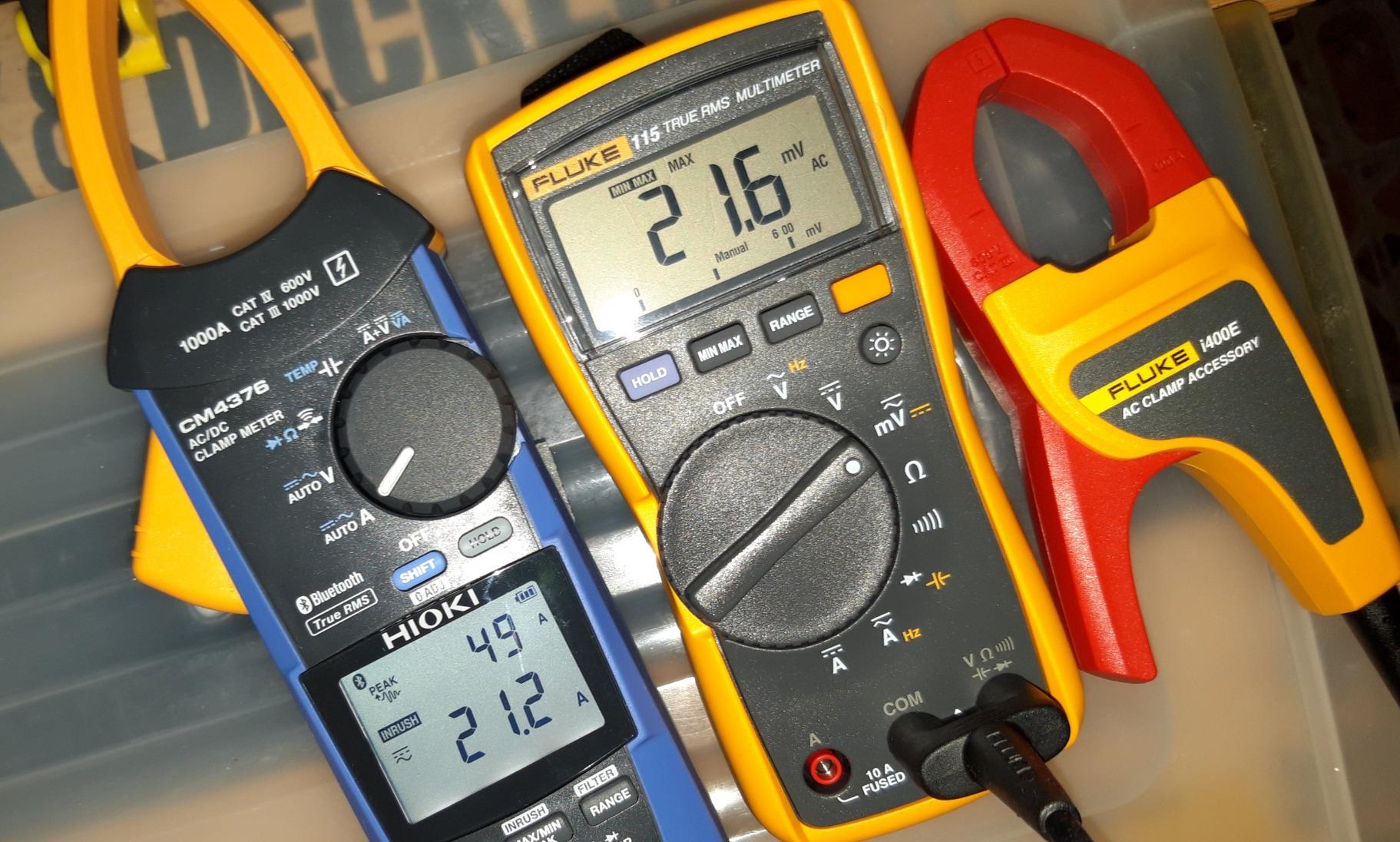
That min/max/average recording is the feature field technicians actually lean on. When a motor starter or a thermostat misbehaves only when someone is in the room, the recorder captures the peak that flew past while you were walking back to the meter. The 6000-count display plus white LED backlight keeps those readings readable in a dark panel or a plant room.
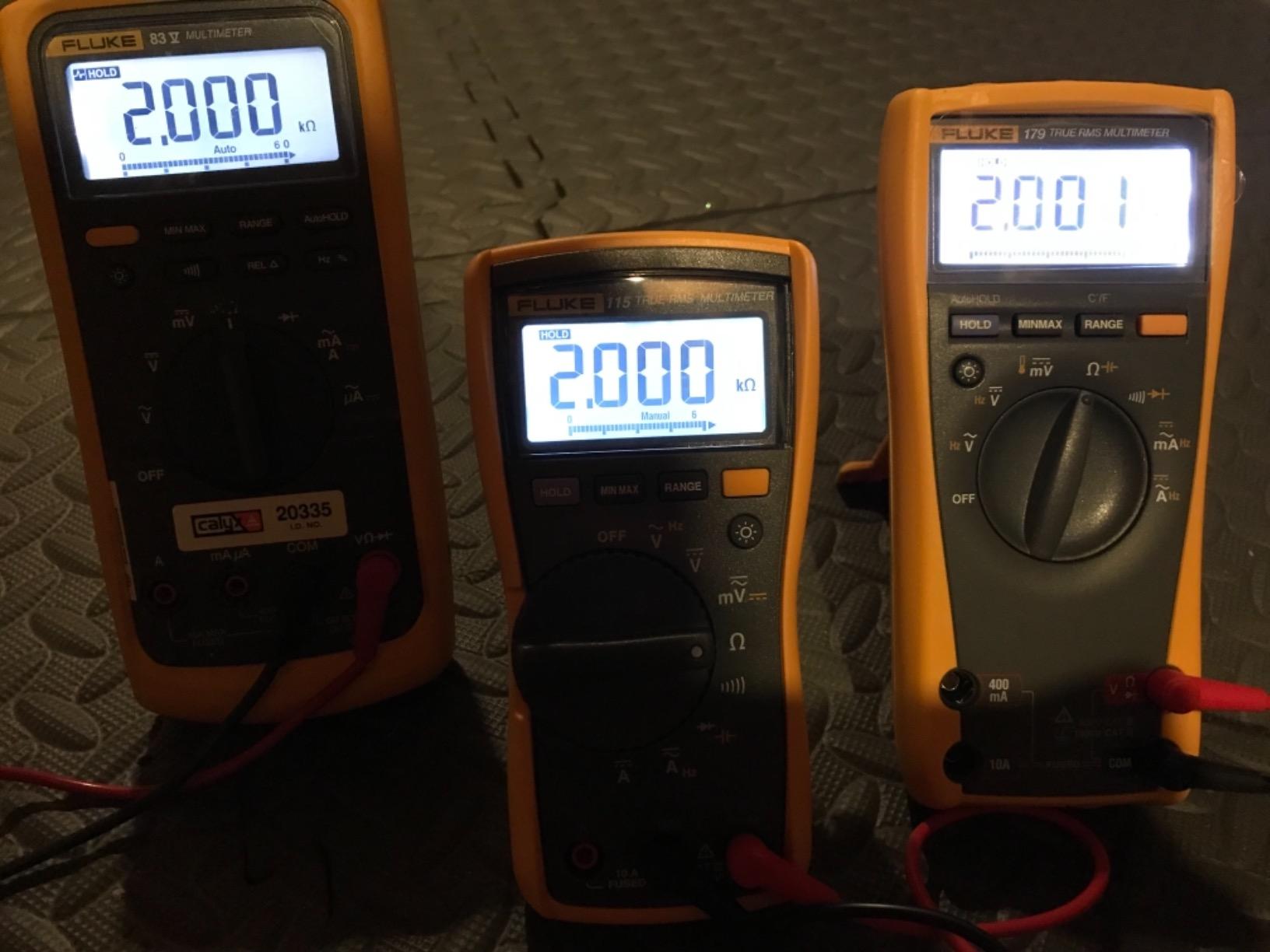
Two gaps shape when you should pick the 117 instead. The 115 has no low impedance mode, so long cable runs can still show you ghost voltage, and it has no temperature measurement, which rules it out for HVAC and refrigeration diagnostics.
It is also noticeably heavier in the hand than the compact size suggests, at about 1.4 pounds. That is fine for a service bag and tiring for a full shift of one-handed work.
Our take is that the 115 is the value pick in this lineup. It gets you true-RMS and the recorder, and it carries a three-year warranty, which the smaller entry meters do not.
What min/max/average is actually for
It is not a logging feature, it is an instant replay. Hold a signal and the meter remembers the highest, lowest and averaged value it saw while the probe stayed put. On a 60 Hz circuit with a loose lug, that peak reading is the evidence you need.
The 115 also beats the 101 comfortably on AC accuracy because it reads true-RMS. If your load is anything other than a clean sine wave, the averaged readings of a non-true-RMS meter can read noticeably low.
Where the 115 falls short
Ghost voltage is the honest weakness. If you regularly prove circuits dead on long or paralleled runs, the low impedance mode on the 117 or 116 is worth the step up because it removes a safety margin you would otherwise have to reason around.
No temperature means this is not an HVAC meter, and the bulk makes it a poor fit for a meter that lives in a shirt pocket all day.
4. Fluke 107 Handheld Digital Multimeter – Best Budget AC and DC Current
Fluke 107 AC/DC Current Handheld Digital Multimeter, Gray
AC and DC current
RESISTANCE and capacitance
Frequency and duty cycle
CAT III 600 V
Pros
- Measures both AC and DC current
- frequency and duty cycle included
- Data hold and backlit display
- CAT III 600 V rating in a small body
Cons
- No temperature measurement
- Basic accuracy class for bench work
- One-year warranty is the shortest here
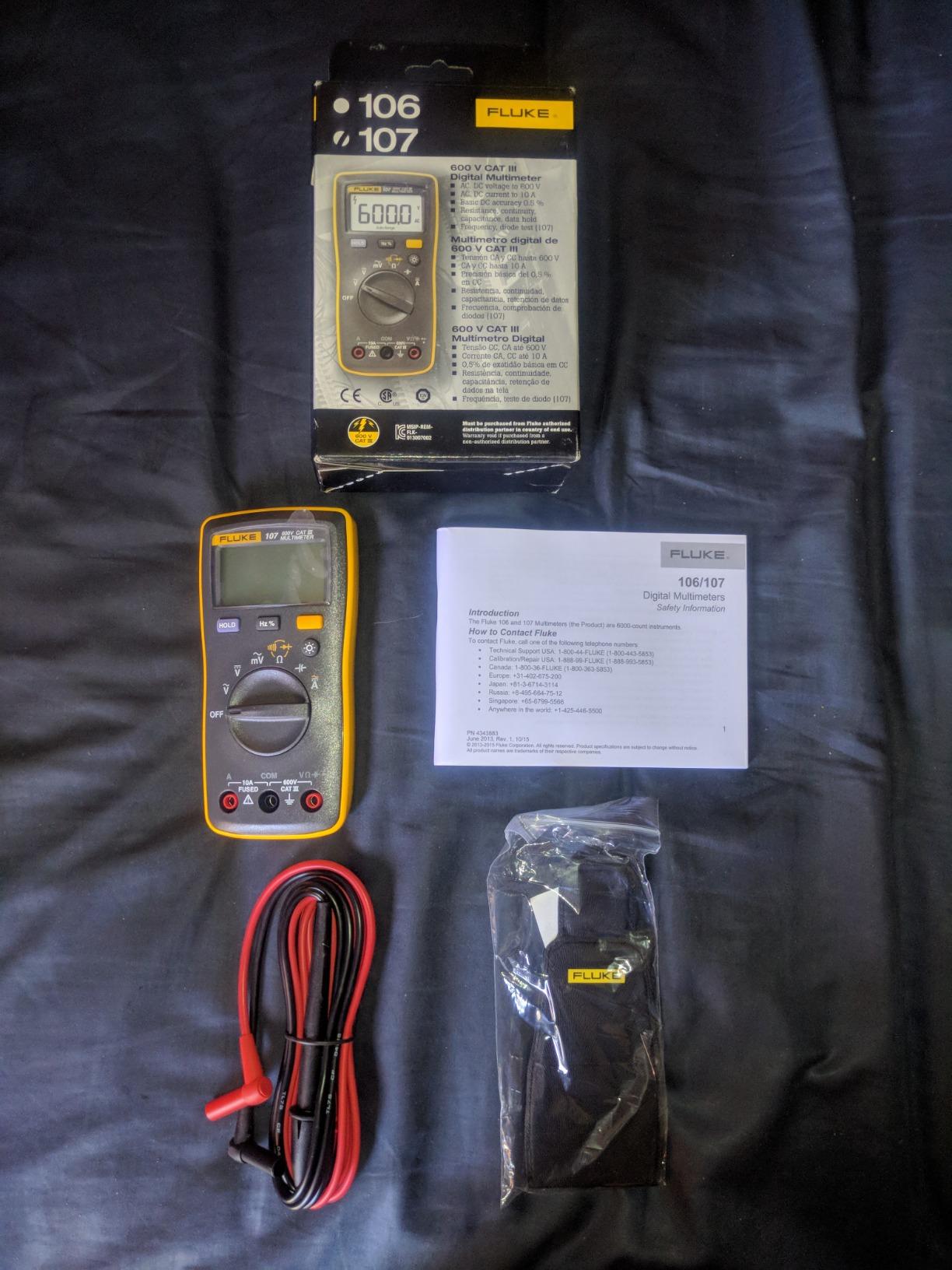
Most meters at this level measure volts, ohms and continuity and stop there. The 107 also measures AC and DC current, which is unusual in a meter this compact and is the reason it earns a place on this list even though it is a very basic instrument otherwise.
You also get frequency and duty cycle, a data hold, a backlit display and a capacitance range. Duty cycle in particular shows up constantly on HVAC and two-speed motor circuits, and having it built in saves a second instrument.
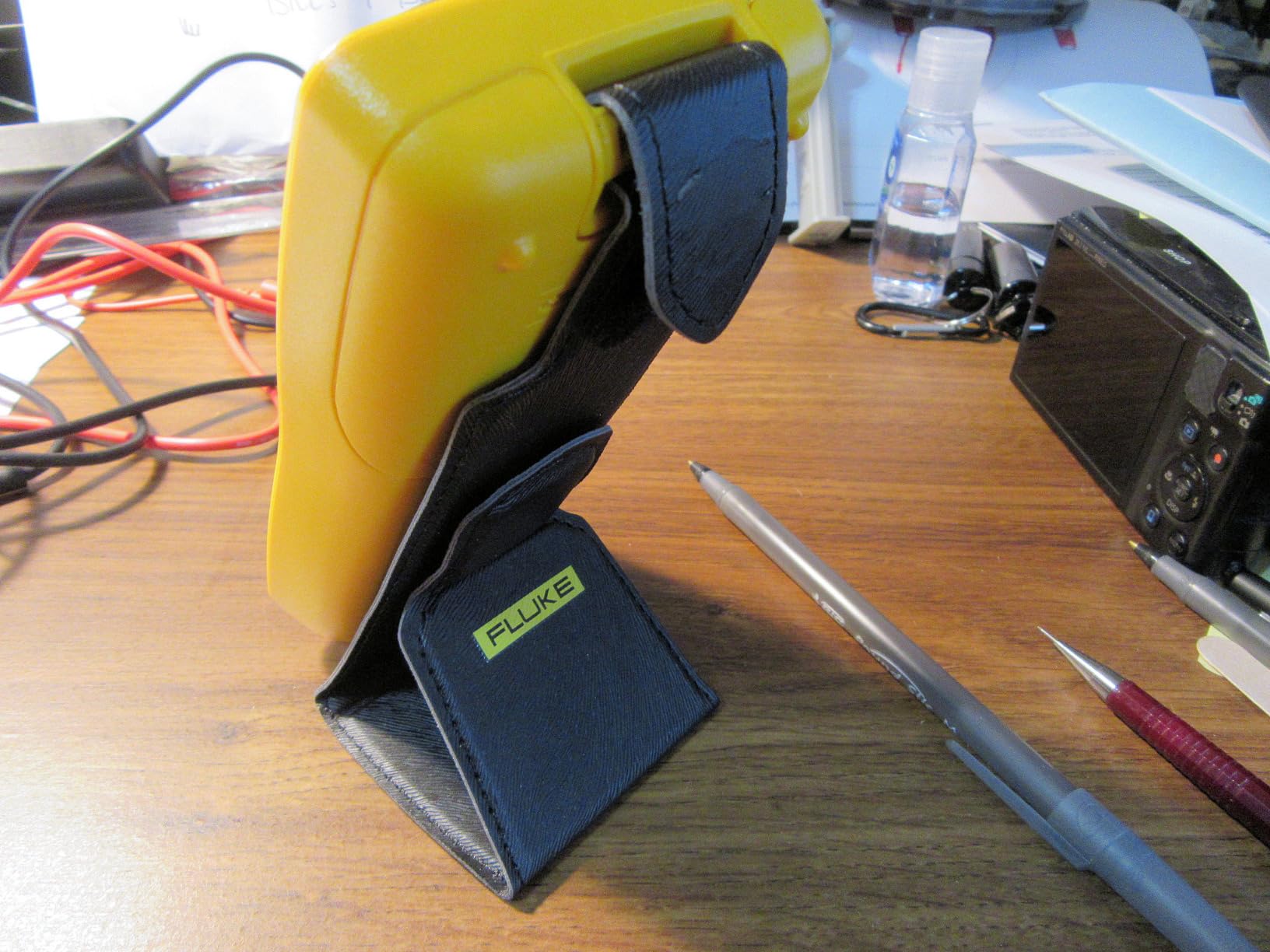
Do not expect true-RMS accuracy from it, and treat the accuracy class as basic rather than bench-grade. For verifying a dead circuit, checking a fuse, or measuring a running current in a small branch circuit, it is entirely adequate.
The warranty is one year, which is the shortest term in this roundup. Reviewers who use it for HVAC work regularly pair it with a temperature probe or a more capable meter, because it has no on-board thermocouple.
Why current measurement matters more than it sounds
Amps is the reading that tells you whether a circuit is actually loaded, and it is the one people most often end up buying a second meter for. Having a 10A AC and DC current path in an entry-level Fluke means you can check a blower motor draw or confirm a breaker is not nuisance-tripping without carrying anything else.
It also means the 107 can be a genuine sole instrument for residential work where temperature and microamps are not part of the job.
Who should not buy it
Anyone doing precision bench work will find the accuracy class disappointing, and anyone who proves circuits dead on long cable runs will want the low impedance mode that this meter does not have.
The one-year warranty is the other reason we steer apprentices toward the 15B+ instead, which does the same core functions with a longer warranty behind them.
5. Fluke 17B+ Digital Multimeter – Best for Temperature Work
Fluke 17B+ Digital Multimeter, for Electrical Applications, Measures AC/DC Voltage 1000V, Current Measurements to 10A, Resistance, Continuity, Diode, Capacitance, Frequency, and Temperature Testing
Type K thermocouple included
Temperature to 400C
AC/DC to 1000V
10A current
Pros
- Temperature to 400C out of the box
- 1000V AC/DC and 10A current in one meter
- Verified accurate against bench references
- Drop-tolerant build
- Three functions in one box saves a second probe
Cons
- No low impedance mode
- No non-contact voltage detection
- Thermocouple adds bulk for pure electrical work
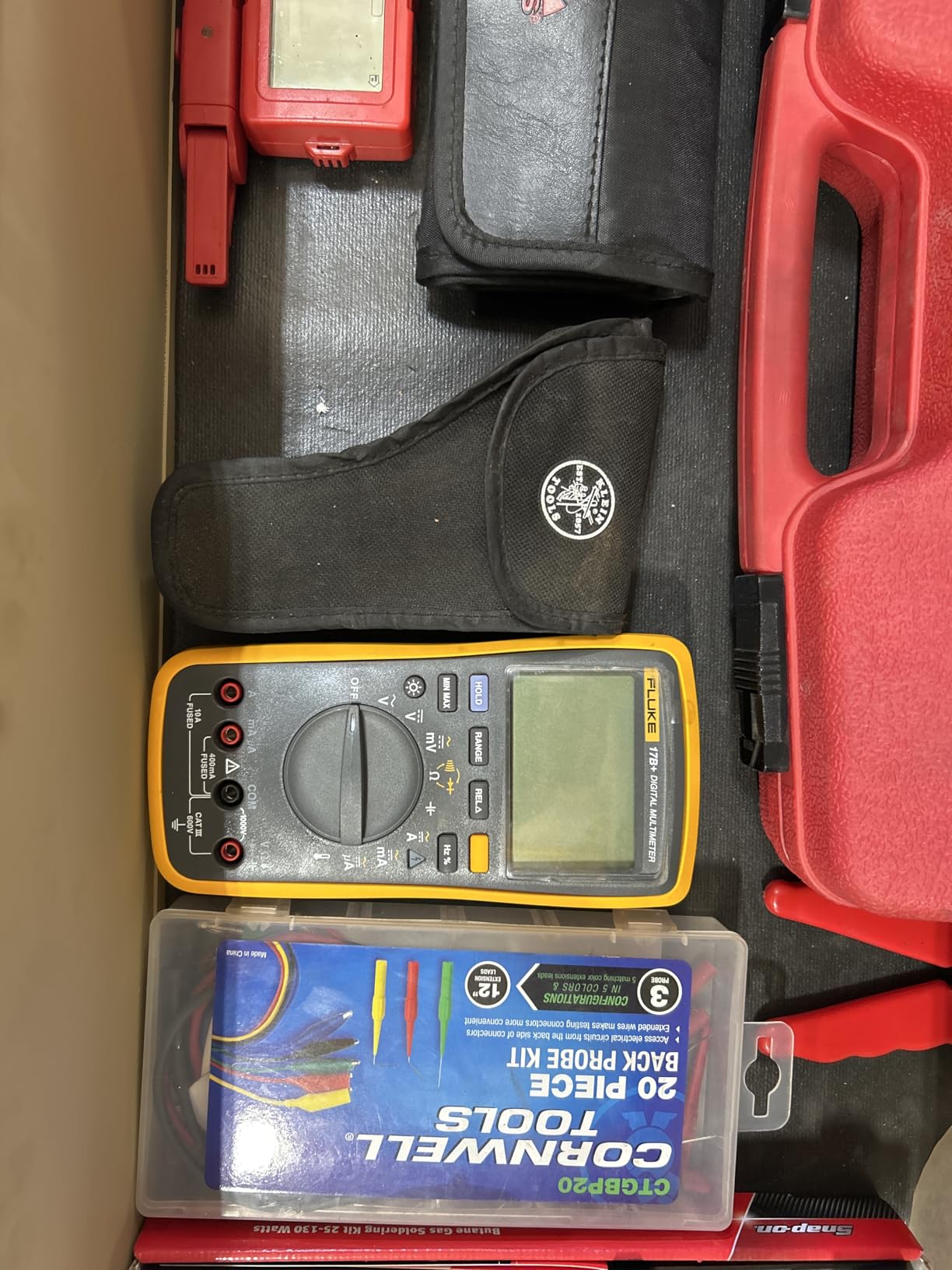
The 17B+ is the sweet spot in this lineup because the box includes a K-type thermocouple. That single inclusion turns it into a temperature meter as well as an electrical one, covering from -40C up to 400C depending on the probe, which is enough for HVAC, refrigeration and basic heat checks without a separate instrument.
On the electrical side it is complete for most work: AC and DC voltage to 1000V, AC and DC current to 10A, resistance, continuity, capacitance, frequency and diode test, all under a CAT III 600V safety rating. Reviewers have checked the readings against lab references and precision resistors and found them hold up.
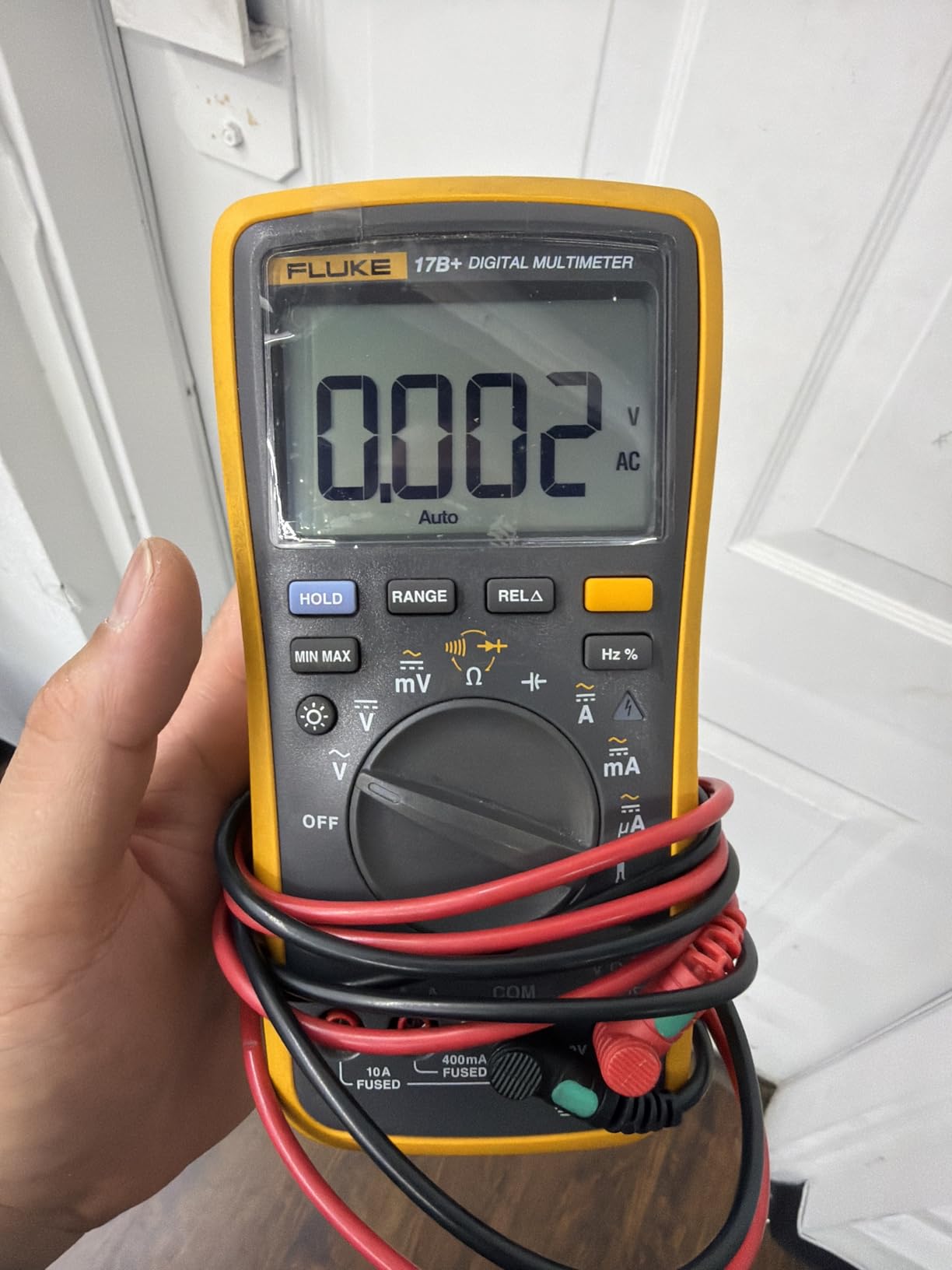
It is the meter we hand to HVAC and refrigeration techs who also do their own electrical troubleshooting, and to electronics hobbyists who want temperature without a second probe lead. The build holds up to drops and the meter is comfortable for one-handed use at roughly 470 grams.
What it lacks is the modern Fluke safety pair. There is no low impedance mode and no VoltAlert non-contact detection, so it is weaker for proving circuits dead than the 117 and gives you no way to check for a live conductor without a probe on it.
What the included thermocouple changes
A K-type thermocouple reads contact temperature directly, which means supply air, return air, refrigerant line temperatures and motor bearing temperatures all become measurable with the same meter you use for voltage. For a technician, that is the difference between one tool and two.
The trade-off is bulk. The probe lead adds length and the thermocouple tip needs to sit on the surface long enough to stabilise, so for pure electrical work the 15B+ is the cleaner carry.
When to choose something else
Choose the 116 if flame sensor testing is part of your job. Microamps on a flame sensor circuit is a different measurement from contact temperature, and only the 116 has that range.
Choose the 117 if proving a circuit dead is safety-critical on long runs, because the missing low impedance mode is a real limitation rather than a checkbox.
6. Fluke 87V Industrial Digital Multimeter – Best for Industrial and VFD Work
Fluke 87V Industrial Digital Multimeter, for Advanced Troubleshooting, Measures 1000 V AC/DC, Peak Min/Max, Low Pass Filter, Includes TL75 Test Leads, AC175 Alligator Clips, 80BK Temp Probe
Low-pass filter for drives
Peak Capture to 250 us
20000 count mode
CAT IV 600V
TL75 leads,AC175 clips,80BK probe
Pros
- Low-pass filter makes VFD output readable
- Peak Capture catches 250 microsecond intermittents
- Switchable 20000 count resolution
- CAT III 1000V and CAT IV 600V ratings
- Ten-year warranty
- Rubber overmold and two-stage backlight
Cons
- No built-in low impedance mode
- 9V flying lead battery connector is weak
- Included leads are short of premium silicone
- Bulky for a small bag
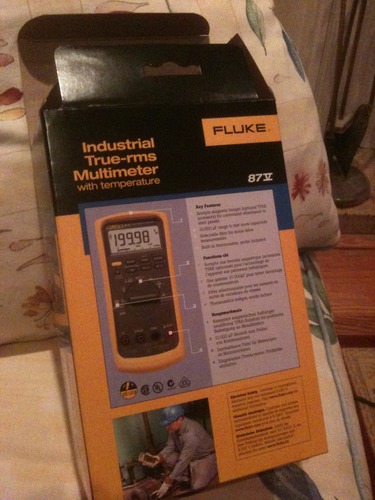
The 87V is the reference meter for industrial troubleshooting, and its reason for existing is the low-pass filter. A variable frequency drive output is a chopped waveform full of switching noise, and a normal meter gives you a meaningless reading on it. The Fluke-designed filter attenuates that noise so you get a real voltage and a real frequency value off a drive terminal.
Peak Capture is the second feature that earns its place. It captures intermittent pulses as fast as 250 microseconds and holds the peak on screen, which is exactly the failure mode that shows up as an intermittent motor trip or a nuisance breaker. Combined with the switchable 20,000-count high-resolution mode and a 33-segment analog bar graph, it is the most informative display in this roundup.
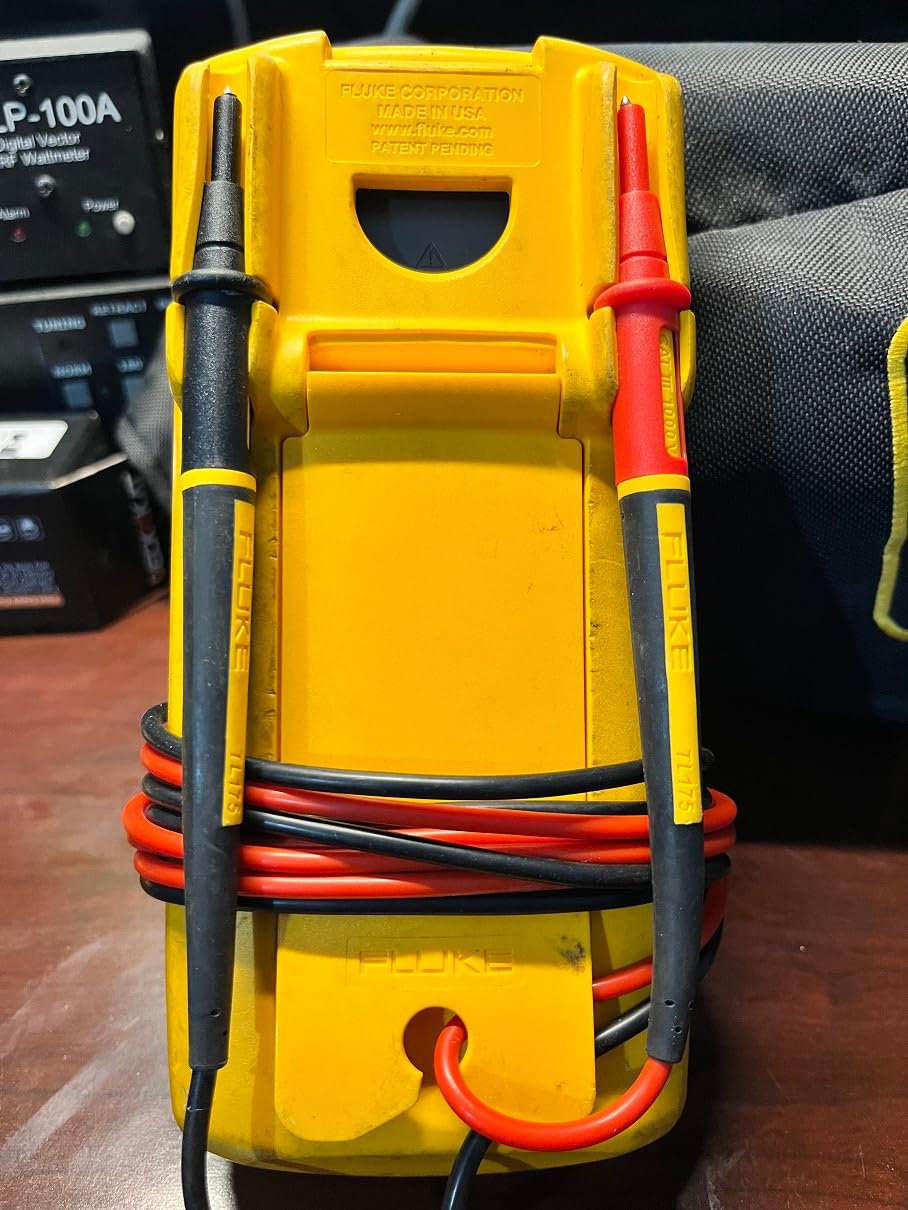
Safety-wise it is the only meter here rated CAT IV 600 V as well as CAT III 1000 V, which puts it on the line side of a panel and out at the service. It measures up to 1000 V AC and DC at a 2000 m operating altitude, and the rubber overmold plus two-stage backlight make it readable across a plant floor.
Owners describe the backlight as readable from across a room, and one long-time owner with several Flukes in rotation says this one reads noticeably faster than the others. The ten-year warranty is by far the longest here, and the box includes TL75 leads, AC175 alligator clips, a holster and an 80BK temperature probe.
Why the low-pass filter matters more than the price gap
Drive troubleshooting is where cheap meters actively mislead you. A drive output measured without filtering can read low or high by a wide margin, and chasing that phantom reading costs hours. The 87V filter was designed specifically so an instrumentation tech can trust the number on a drive terminal.
Peak Capture works the same way for transients. Motor contactors, arc faults and intermittent connections produce spikes too brief for a standard meter to catch, and the 87V puts the peak on the display instead of dropping it.
Where the 87V is not the right buy
It has no built-in low impedance mode, which is the recurring complaint from electricians who otherwise love the meter. There is no LoZ on the 87V, so for ghost voltage on long residential runs the 117 is the better instrument even though it is the cheaper one.
It is also the bulkiest meter here at about 1.3 pounds, the 9V flying-lead battery design uses a connector owners describe as weak, and the included leads are an upgrade short of premium silicone. If you are not working on drives or industrial panels, you are carrying weight you will not use.
7. Fluke 116 HVAC Multimeter – Best for HVAC and Refrigeration
Fluke 116 HVAC Multimeter
Built-in thermometer -40C to 400C
Microamps for flame sensors
Low input impedance
True RMS with auto AC/DC
Pros
- Microamps range most meters omit for flame sensors
- Built-in thermometer with a fast-responding sensor
- Low input impedance reduces ghost voltage
- Capacitance range for start and run capacitors
Cons
- No VoltAlert non-contact detection
- Current measurement is limited
- Included test leads are stiff
The 116 exists for one job, and it does it well. HVAC and refrigeration diagnostics need three things most meters cannot do: a contact thermometer, a microamp range for flame sensors, and a capacitance range for start and run capacitors. The 116 has all three built into the body.
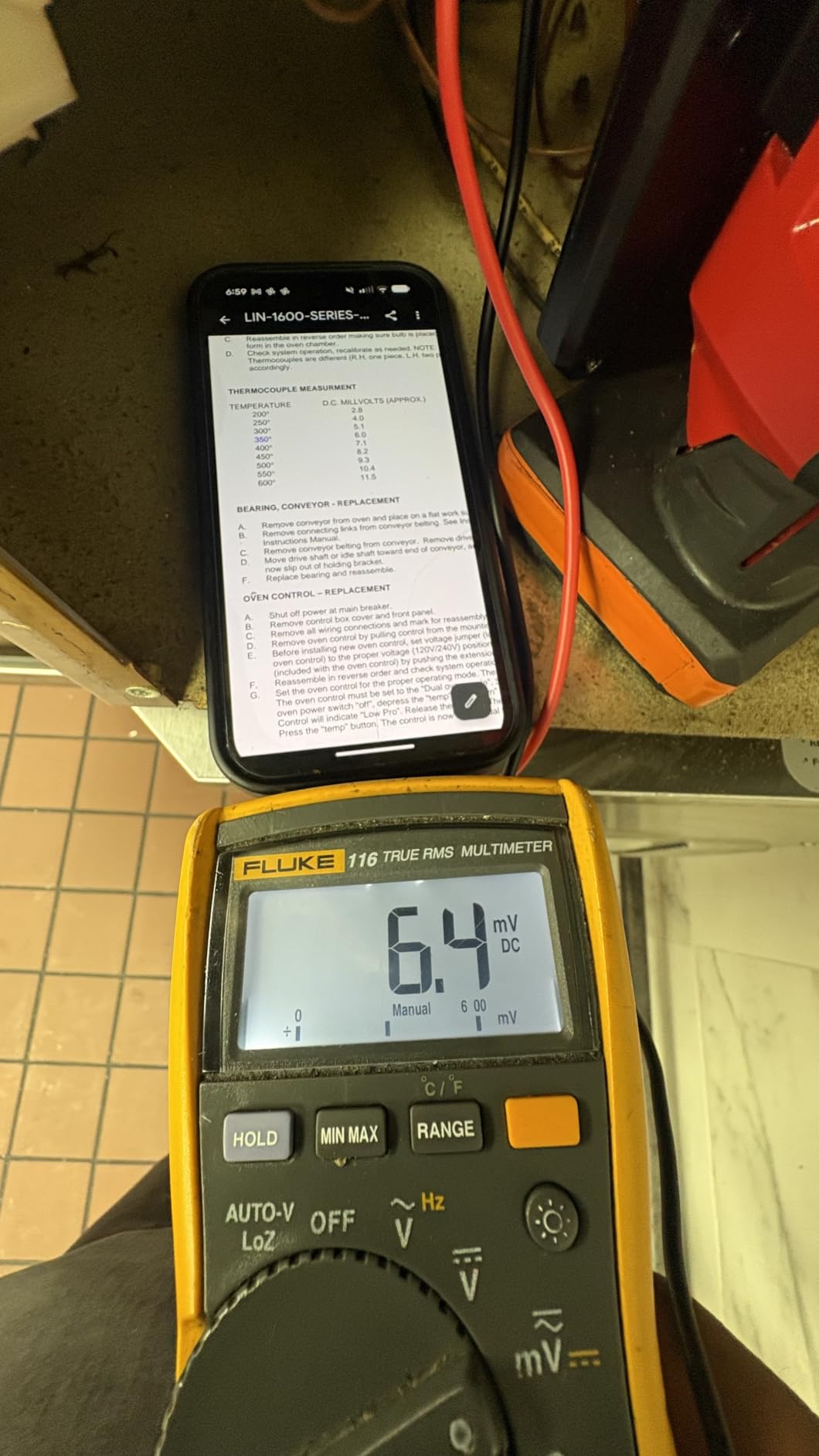
The built-in thermometer runs from -40C to 400C, which is -40F to 752F, and the sensor responds fast enough to walk an air stream and see the split settle. Microamps is the range that decides the purchase for a technician: flame sensor circuits run in microamps, and a meter that cannot resolve them is useless on the exact fault you bought a meter to find.
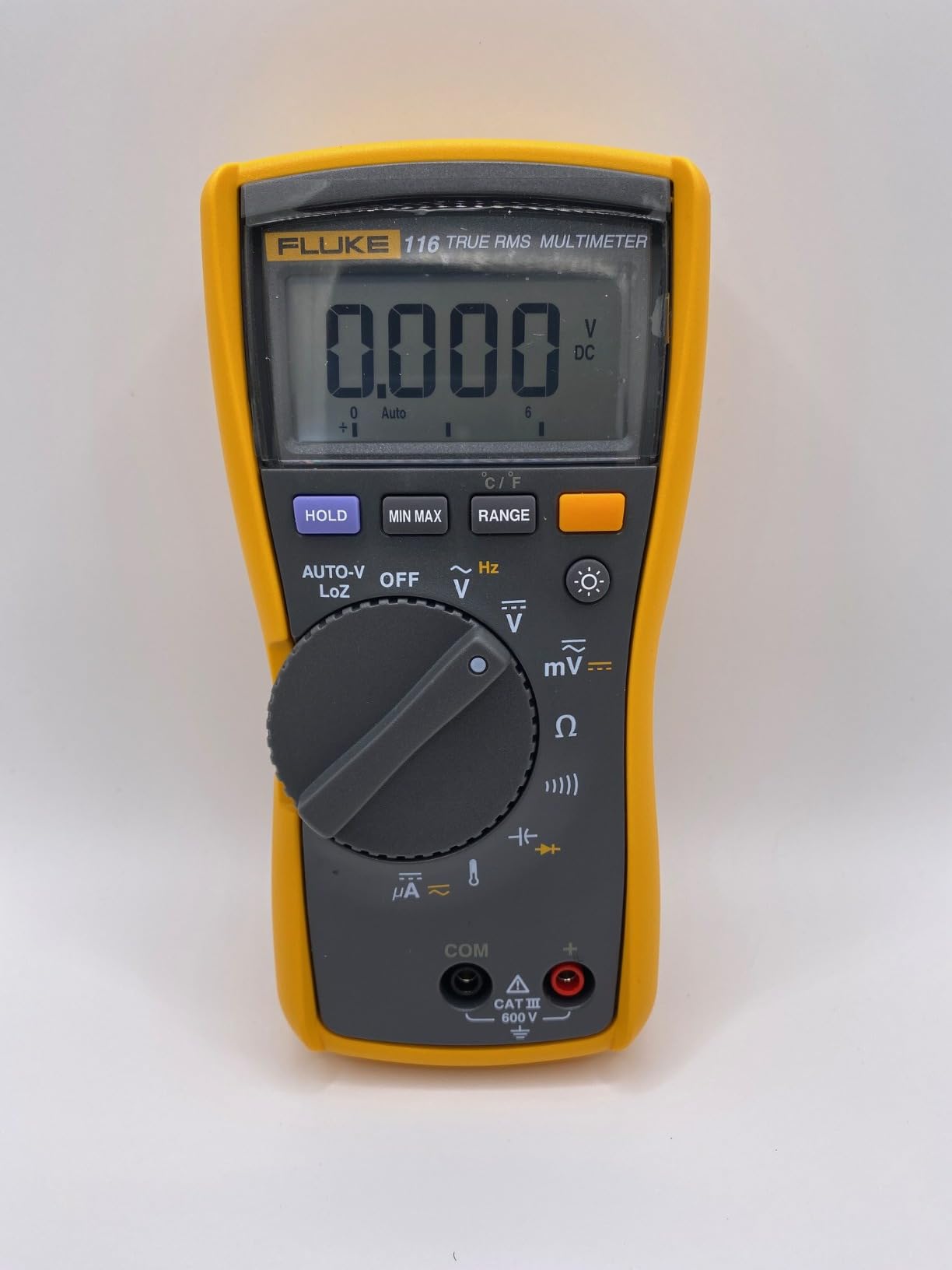
Low input impedance is included, so phantom voltage from long thermostat runs does not mislead you, and it pairs with true-RMS accuracy and automatic AC/DC selection. The white LED backlight matters in the dark spaces a rooftop unit or a chiller plant puts you in.
Two honest complaints. There is no VoltAlert, so you cannot do a quick non-contact check like you would on the 117, and the current measurement range is more limited than on the larger Flukes. The included test leads are also described by owners as stiff and basic for the price.
Why flame sensors need a microamp range
A gas valve flame sensor produces a microamp-level current when it sees flame. If that current drops below roughly half of the original value, the valve shuts down and the system locks out. Those currents are far too small for the milliamp range on a general meter, so a meter without microamps cannot actually test the thing that is failing.
The 116 measures it directly, which turns a guess into a measurement. For a refrigeration tech chasing an intermittent lockout, that is the difference between a five-minute diagnosis and swapping parts until one sticks.
Where the 116 falls short
It is an HVAC instrument that happens to do general electrical work, not the other way around. If you are a commercial electrician rather than a technician, the 117 or 115 serve you better on residential and panel work.
Limited current capability and the missing non-contact detection mean you will still reach for a clamp meter on larger equipment. For low-voltage and networking work, the smaller meters cover it more cheaply.
8. Fluke 15B+ Digital Multimeter – Best Starter Meter
Fluke 15B+ Digital Multimeter, for Electrical Applications, Measures AC/DC Voltage and Current Measurements up to 1000V and 10A, Along with Resistance, Continuity, Diode, and Capacitance Capabilities
CAT III 600V
AC/DC voltage to 1000V
AC/DC current to 10A
TL75 leads
Pros
- Covers core voltage
- current
- resistance and continuity
- 1000V AC/DC and 10A current on a dedicated input
- CE
- CSA
- UL and ETL certified
- Compact enough for a small tool bag
Cons
- No temperature measurement
- No frequency measurement
- No case or thermocouple included
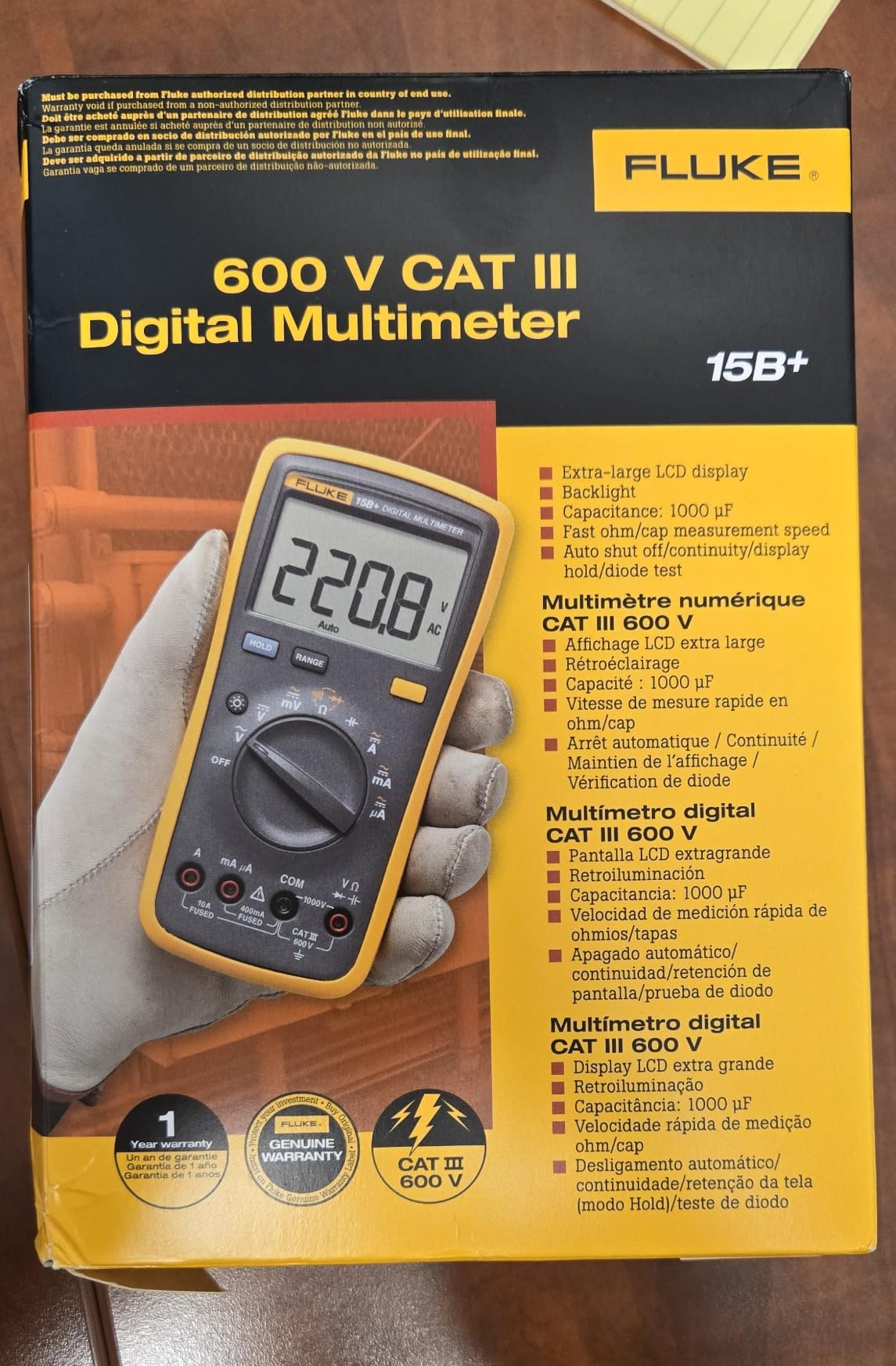
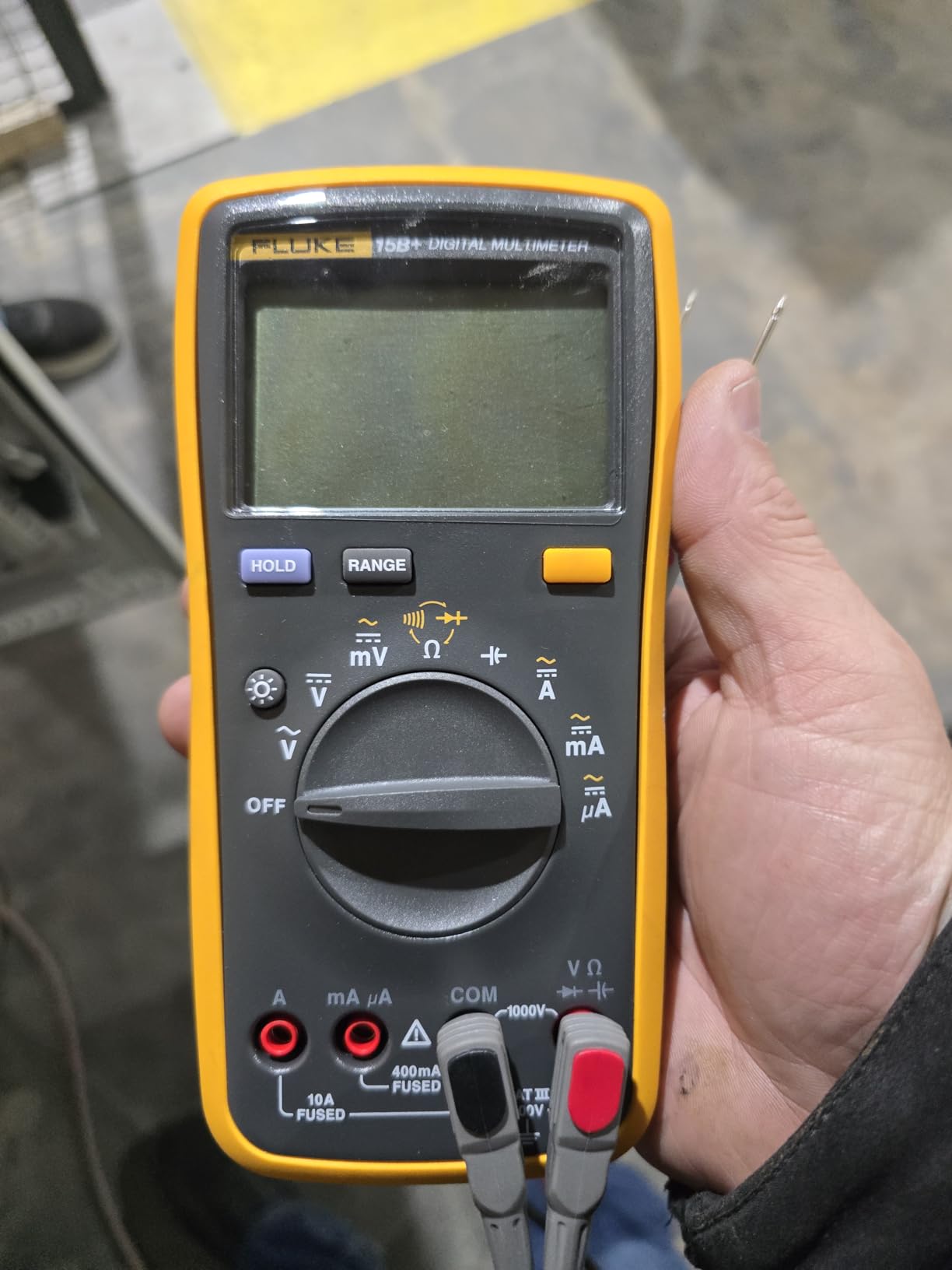
The 15B+ handles the functions almost every job needs in a single meter: AC and DC voltage to 1000V, AC and DC current to 10A through a dedicated input terminal, plus resistance, continuity, capacitance and diode test. It is CAT III 600V rated and carries CE, CSA, UL and ETL certification, so it is a legitimate tool on residential and commercial systems.
At 460 grams it is a comfortable one-hand meter, and it ships with TL75 test leads. Reviewers treat it as the value entry into Fluke’s professional electrical line because it genuinely covers everyday work rather than a stripped-down subset of it.
The gaps are the features you will add later. There is no temperature measurement and no frequency measurement, and the box does not include a case or a thermocouple. Owners consistently describe the upgrade path as the 17B+, which adds both of those functions.
One practical limitation worth knowing is the upper operating temperature rating of 40C, which is lower than the 117 or the 115. In a hot rooftop or a furnace room in summer, that is a real constraint rather than a spec-sheet footnote.
What this meter covers day to day
For residential and light commercial work, the 15B+ answers the questions that come up constantly: is the circuit live, is the fuse blown, what is the supply voltage under load, is the current draw normal, does the diode test out. It does all of that in one instrument with a real safety rating.
It is also the version we would put in an apprentice kit, because the missing temperature and frequency functions are the two they will grow into rather than the two they need on day one.
When to spend a little more
If you do any HVAC work at all, step to the 17B+ for temperature or the 116 for microamps. If you need to prove circuits dead on long runs, the 117 low impedance mode removes a class of false readings this meter cannot help with.
And if you work outdoors or in unconditioned plant rooms, note the 40C upper limit before you leave it in the truck all summer.
How to Choose a Fluke Multimeter in 2026
Fluke model numbers are not a hierarchy. The 107 is not a lesser 115, and the 87V is not simply a bigger 117. They are different tools aimed at different work, and the fastest way to choose is to match the job description to the feature set.
Start with the CAT safety rating, because it is the one specification that is not a preference. CAT III 600 V covers receptacle, panel and fixed installation work in residential and commercial buildings. CAT IV 600 V, which only the 87V in this group carries, is what you want for work at the service entrance and upstream of the meter. A meter without a CAT rating is not a tool for energised circuits, whatever else it does well.
Next, decide whether you need true-RMS. True-RMS meters measure the actual RMS value of a waveform rather than estimating it from an averaged sample. On a clean sine wave the difference is invisible; on a dimmer, a ballast, an inverter, a variable frequency drive or a switching power supply, a non-true-RMS meter can read substantially low. Electricians who work on modern LED and efficiency gear feel this constantly.
Then consider low impedance mode, which is the under-appreciated one. As described in the 117 review, a standard high-impedance meter can show a phantom voltage on a long de-energised cable run. Switching to LoZ drops the input resistance to a few kilohms, the phantom voltage collapses, and you get a reading you can trust. If your work involves proving circuits dead on long or paralleled runs, treat LoZ as close to mandatory.
AutoVolt is worth understanding because the naming confuses people. It is not auto-ranging, which is the separate feature that picks the measurement range for you. AutoVolt detects whether the voltage you are measuring is AC or DC and sets the mode automatically, so on a meter that does not have it you flip the dial to the right symbol yourself before you probe anything.
VoltAlert is the non-contact voltage detection system, a beeper and on-screen bar that senses the electric field near a live conductor. It is genuinely useful for identifying which conductor in a bundle is energised. What it cannot do is prove a circuit is safe to touch, so treat it as a screening tool, not a permit.
After that, the decision map is simple. Panel and residential work goes to the 117. Compact field work with true-RMS goes to the 115. Temperature work goes to the 17B+, and HVAC and refrigeration goes to the 116. Industrial, drives and service-entrance work goes to the 87V. First Fluke or a backup goes to the 15B+ or the 101.
On warranty, the terms vary more than the specifications do. The 87V carries ten years, the 117, 115, 116 and 17B+ carry three, the 15B+ carries a manufacturer warranty that sellers describe as longer than one year, and the 101 and 107 are one year. Forum owners report that Fluke service tends to run repair by replace at a fixed cost rather than an open-ended repair quote, which is one reason the brand retains value for working technicians.
One last category confusion worth clearing up. The Fluke T-series testers such as the T5-600 and T6 are voltage testers and continuity tools, not multimeters. Electricians on r/electricians recommend them for quick field checks when a full DMM is not worth carrying, and they are good at what they do, but they do not measure resistance accurately, current, or anything else a meter exists for. If you need a meter, buy a meter.
If your work leans towards component-level diagnosis rather than panel work, our electronics repair multimeter comparison covers the bench-focused side in more depth.
Frequently Asked Questions
Which Fluke multimeter is considered the best?
The Fluke 117 is the best all-round choice because it combines true-RMS AC, automatic AC and DC detection, VoltAlert non-contact voltage detection and a low impedance mode that defeats ghost voltage. For industrial and variable frequency drive work, the Fluke 87V is the better buy because of its low-pass filter and Peak Capture.
Is the Fluke 115 or 117 better?
The Fluke 117 is the better meter. Both read true-RMS, but the 117 adds VoltAlert non-contact voltage detection and a low impedance mode that stops ghost voltage appearing on long de-energised cable runs. The 115 is smaller and lighter with min, max and average recording, so it wins only if pocketability matters more to you than circuit-proving safety.
What are the differences between the Fluke 117 and Fluke 87V multimeters?
The Fluke 87V measures up to 1000 V AC and DC, carries a CAT IV 600 V rating for service-entrance work, and adds a low-pass filter for adjustable speed drives plus Peak Capture for 250 microsecond transients. The Fluke 117 is smaller, has a low impedance mode and VoltAlert, and is the better everyday electrician meter. Neither has the other’s specialty feature.
Why is the Fluke 87V so popular?
Four reasons drive the 87V’s reputation. It measures 1000 V AC and DC and is rated CAT III 1000 V and CAT IV 600 V, so it works at the service and on industrial panels. Its low-pass filter makes variable frequency drive output readable. Peak Capture holds transient spikes as short as 250 microseconds on screen. And a ten-year warranty plus a rubber overmold make it a tool people keep for a career.
Which Fluke multimeter is the most accurate?
Among the meters here the Fluke 87V is the most accurate, with switchable display resolution from 6000 to 20000 counts. The Fluke 17B+ and 15B+ are the cheapest ways to get 1000 V AC and DC measurement, but accuracy class matters far less than CAT rating for most working electricians. Check the CAT rating before you compare decimal places.
Which multimeter is better, Fluke or Milwaukee?
Fluke meters lead on CAT safety ratings, true-RMS accuracy on non-linear loads, low impedance ghost voltage handling and the width of the range. Milwaukee is often better value for basic residential and HVAC work and pairs well with a clamp meter. Electricians who need to prove a circuit is dead or read a drive output generally choose Fluke for the accuracy and safety margin.
What is the best multimeter brand alternative to Fluke?
The most commonly recommended alternatives in forum threads are Brymen, which delivers comparable accuracy and build quality for less, and Klein, which many electricians rate as a good mid-range option. Extech and Ideal also appear regularly as value picks. The trade is CAT rating coverage and low impedance mode, so check those before buying cheaper.
Is the Fluke 87V or the Fluke 179 better for general electrical work?
For general electrical work a mid-range Fluke such as the 115 or 117 handles almost everything, and the 87V adds a low-pass filter, Peak Capture and a CAT IV rating that you will rarely use outside industrial work. Buy the 87V if you service drives or service entrances. Otherwise the extra capability is money spent on a feature you will not open the menu for.
Our Verdict on the Best Fluke Multimeters in 2026
The best Fluke multimeters are not one model, they are eight answers to eight jobs. The Fluke 117 is the one we hand to an electrician and the one we buy for ourselves, because true-RMS, AutoVolt, VoltAlert and low impedance mode together cover almost everything a working tech does.
The Fluke 87V earns its place on drives and service entrances, the 116 is the only one of these that tests flame sensors properly, and the 17B+ is the cheapest way to get temperature measurement in the same box as your electrical meter. The 115 gives you true-RMS and min, max and average recording at a sensible size, while the 15B+, 107 and 101 cover first-fluke, budget-current and pocket-duty needs respectively.
Pick the 117 unless a specific job in front of you points somewhere else, and check each review above against the work you actually do before you click through.