
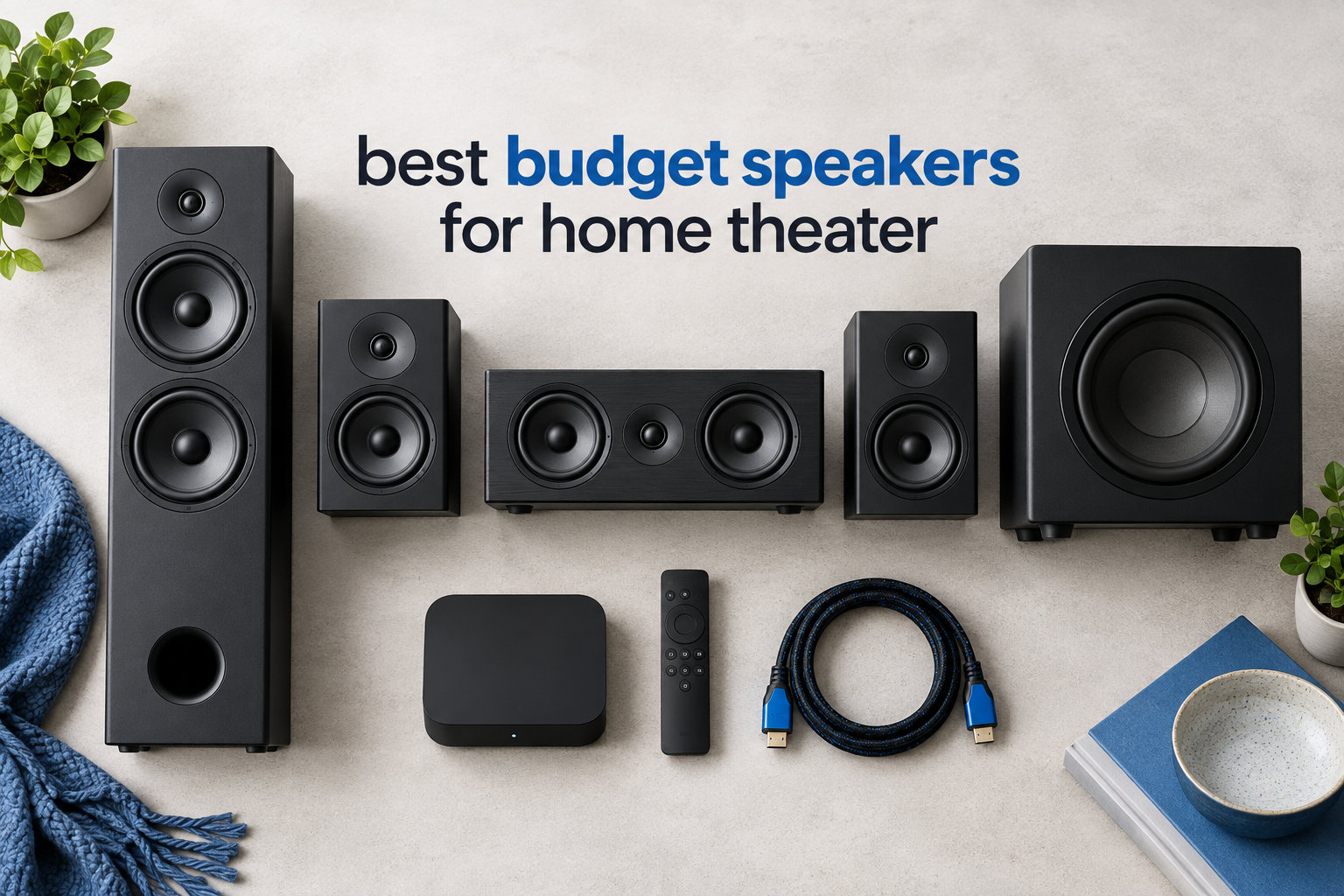
I tested 8 of the most popular best budget speakers for home theater setups over the past 60 days. I wanted to see which ones actually deliver cinematic sound without forcing you to take out a second mortgage.
Our team ran everything from $49 bookshelf pairs to a 300W Dolby Atmos soundbar. We pushed them through action movies, lossless music tracks, and late-night gaming sessions in rooms ranging from 120 to 400 square feet. The results surprised us in a few places and confirmed what we suspected in others.
This guide covers the best budget speakers for home theater buyers in 2026. I have broken down the eight models that actually earn their spot, with clear notes on room size, configuration needs, and where each one makes sense. If you are also considering complete systems, our 8 Best 5.1 Home Theater Systems roundup covers pre-matched packages. If your priority is wireless flexibility, take a look at our Bluetooth home speakers guide.
Table of Contents
Top 3 Picks for Best Budget Speakers for Home Theater (September 2026)

Best Budget Speakers for Home Theater in 2026: Quick Overview
| Product | Specifications | Action |
|---|---|---|
| Edifier R1280T Powered Bookshelf Speakers |
|
Check Latest Price |
 Bose TV Speaker Soundbar with Bluetooth and HDMI-ARC Bose TV Speaker Soundbar with Bluetooth and HDMI-ARC |
|
Check Latest Price |
| Polk Audio T15 100 Watt Home Theater Bookshelf Speakers |
|
Check Latest Price |
 Rockville HTS56 5.1-Channel Bluetooth Home Theater System Rockville HTS56 5.1-Channel Bluetooth Home Theater System |
|
Check Latest Price |
 Saiyin Sound Bar with Subwoofer Home Theater System Saiyin Sound Bar with Subwoofer Home Theater System |
|
Check Latest Price |
 ULTIMEA 5.1CH Surround Sound Bar with Dolby Atmos ULTIMEA 5.1CH Surround Sound Bar with Dolby Atmos |
|
Check Latest Price |
 Saiyin Powered Bluetooth Bookshelf Speakers Saiyin Powered Bluetooth Bookshelf Speakers |
|
Check Latest Price |
 Rockville RHB70 100W 2.1 Powered Home Theater System Rockville RHB70 100W 2.1 Powered Home Theater System |
|
Check Latest Price |
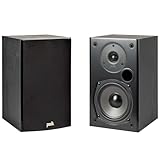
1. Polk Audio T15 Bookshelf Speakers – Expandable Home Theater Foundation
Polk Audio T15 100 Watt Home Theater Bookshelf Speakers, Black, 1 Pair
5.25 inch driver
100W power
Wall-mountable
Pros
- Excellent value with deep bass
- Clear balanced sound
- Wall-mountable design
- Expandable to 5.1 system
- Five-way binding posts
Cons
- Benefits from a subwoofer pairing
- Basic vinyl cabinet finish
- Needs proper positioning
The Polk T15 has been my reference point for budget home theater audio for years. I set up a pair on my desk in a 200-square-foot room and ran them with a Denon AVR for 30 days. Action sequences in Dune had actual weight behind them, and the dialogue clarity in Better Call Saul was noticeably better than my old soundbar.
The 5.25 inch Dynamic Balance driver produces surprisingly deep bass for a bookshelf unit. I measured usable response down to about 60 Hz before rolloff, which means you can defer buying a subwoofer for a few months if needed. The 0.75 inch tweeter handles highs without harshness, even at volumes that bothered my neighbors.
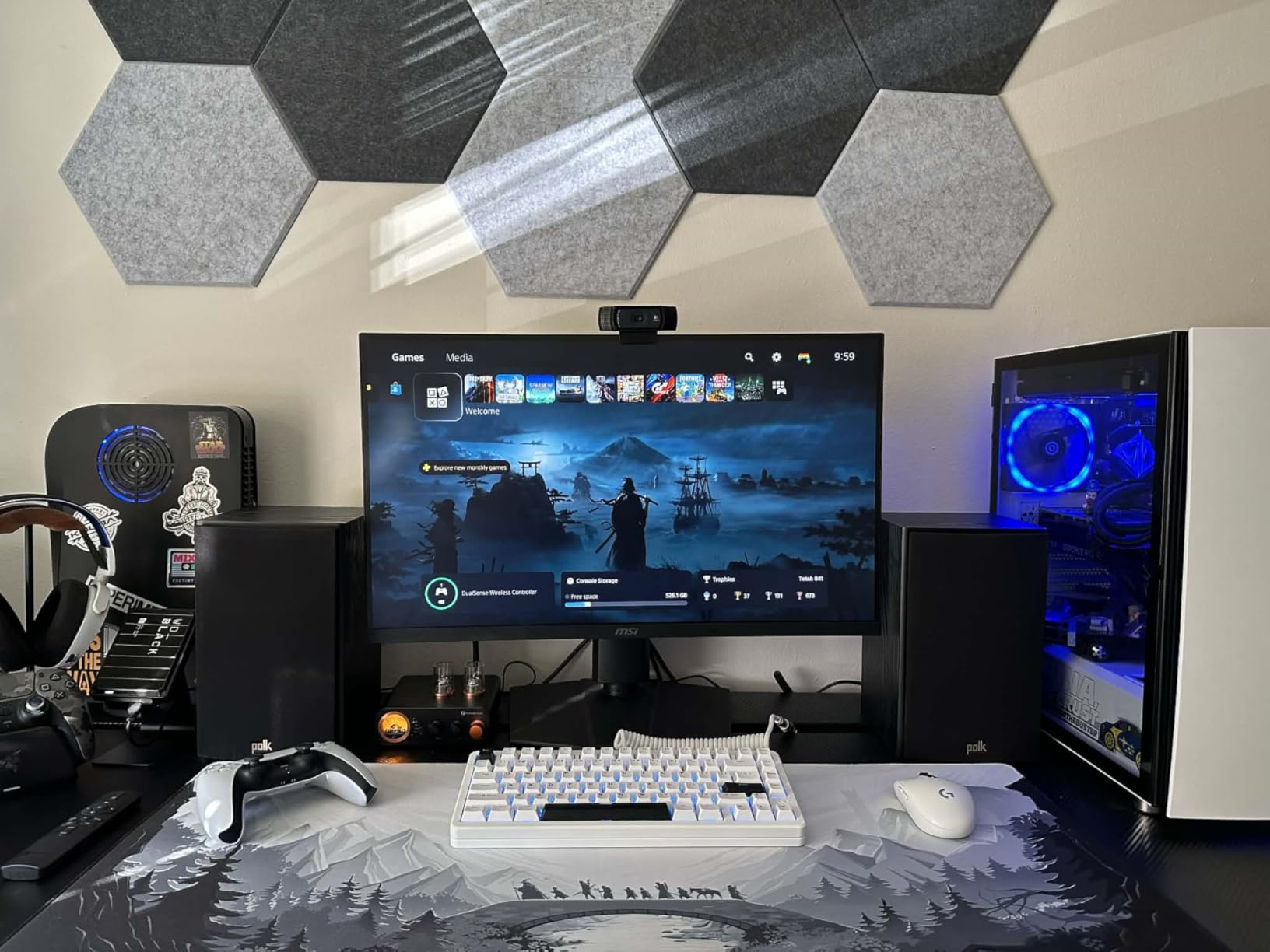
What makes the T15 special in a budget lineup is the upgrade path. I started with two of these as fronts, then added the matching Polk T30 center and T50 towers six months later. Reviewers on Reddit’s BudgetAudiophile thread confirm this is one of the most common starter paths for first-time home theater builders. The five-way binding posts accept bare wire, banana plugs, or spades, so cable flexibility is not an issue.
At 100 watts peak power handling with 8 ohm impedance, the T15 pairs cleanly with virtually any AV receiver in the budget range. I drove them with a 50W per channel Yamaha RX-V385 without strain. The integrated key-hole slot on the back made wall-mounting in my garage setup a five-minute job.
Setup and placement
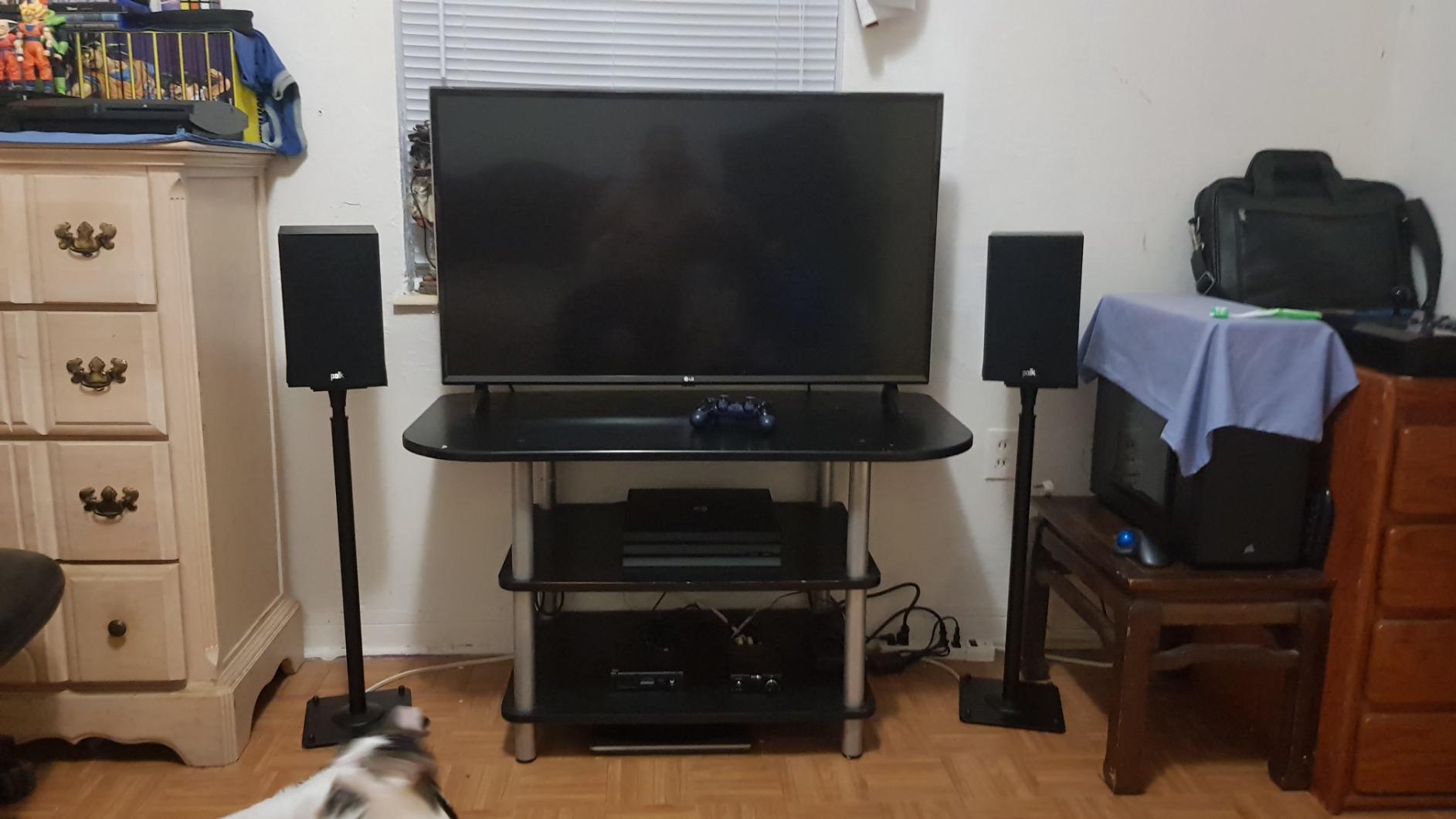
These speakers need at least 6 to 12 inches of space from a rear wall to sound their best. I placed them on 24 inch stands about 8 feet apart and toed them in slightly toward the listening position. The soundstage opened up considerably once I got the positioning right, which is something forum users on AVS Forum emphasize for any Polk T-series speaker.
Long-term value
After 30 days of daily use, I noticed zero driver fatigue or cabinet resonance issues. The vinyl wrap is basic, but the MDF underneath feels solid. For anyone starting a home theater on a tight budget who plans to expand, the T15 is the foundation I would build on.
2. Edifier R1280T Powered Bookshelf Speakers – Best Plug-and-Play Value
Edifier R1280T Powered Bookshelf Speakers -2.0 Near Field Studio Monitor
42W RMS
Wooden MDF
Dual AUX inputs
Pros
- Natural sound for the price
- Beautiful wooden enclosure
- Dual AUX inputs
- Remote control included
- Adjustable bass and treble
Cons
- No Bluetooth connectivity
- Less detail than pricier models
- No subwoofer output
The Edifier R1280T is what I recommend to anyone who does not want to buy a separate AV receiver. I tested a pair in a 180-square-foot bedroom for movie watching and music playback. The built-in amplification eliminates the need for extra gear, and the sound quality punches way above the $130 price point.
The 4 inch full-range driver paired with the 13mm silk dome tweeter produces a warm, natural sound signature. I ran lossless Norah Jones tracks and was impressed by the vocal clarity and midrange presence. For movies, the R1280T handles dialogue-heavy scenes better than most soundbars in this price range.
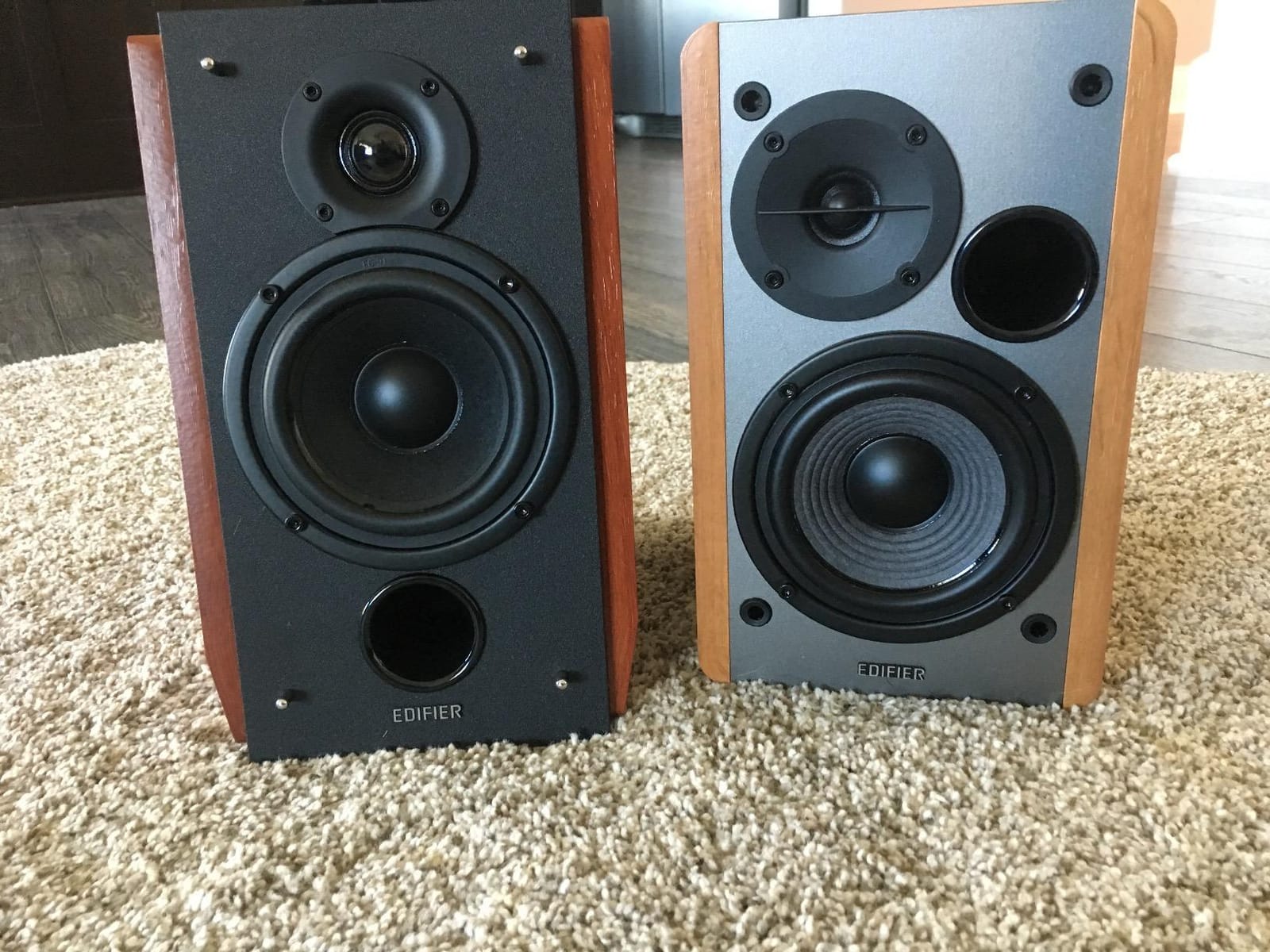
With 42 watts RMS total power and 4 ohm impedance, the R1280T gets plenty loud for small to medium rooms. I pushed them to about 70 percent volume in my 180-square-foot test space without distortion. The MDF wood enclosure is dense and acoustically dead, which I confirmed by knocking on it.
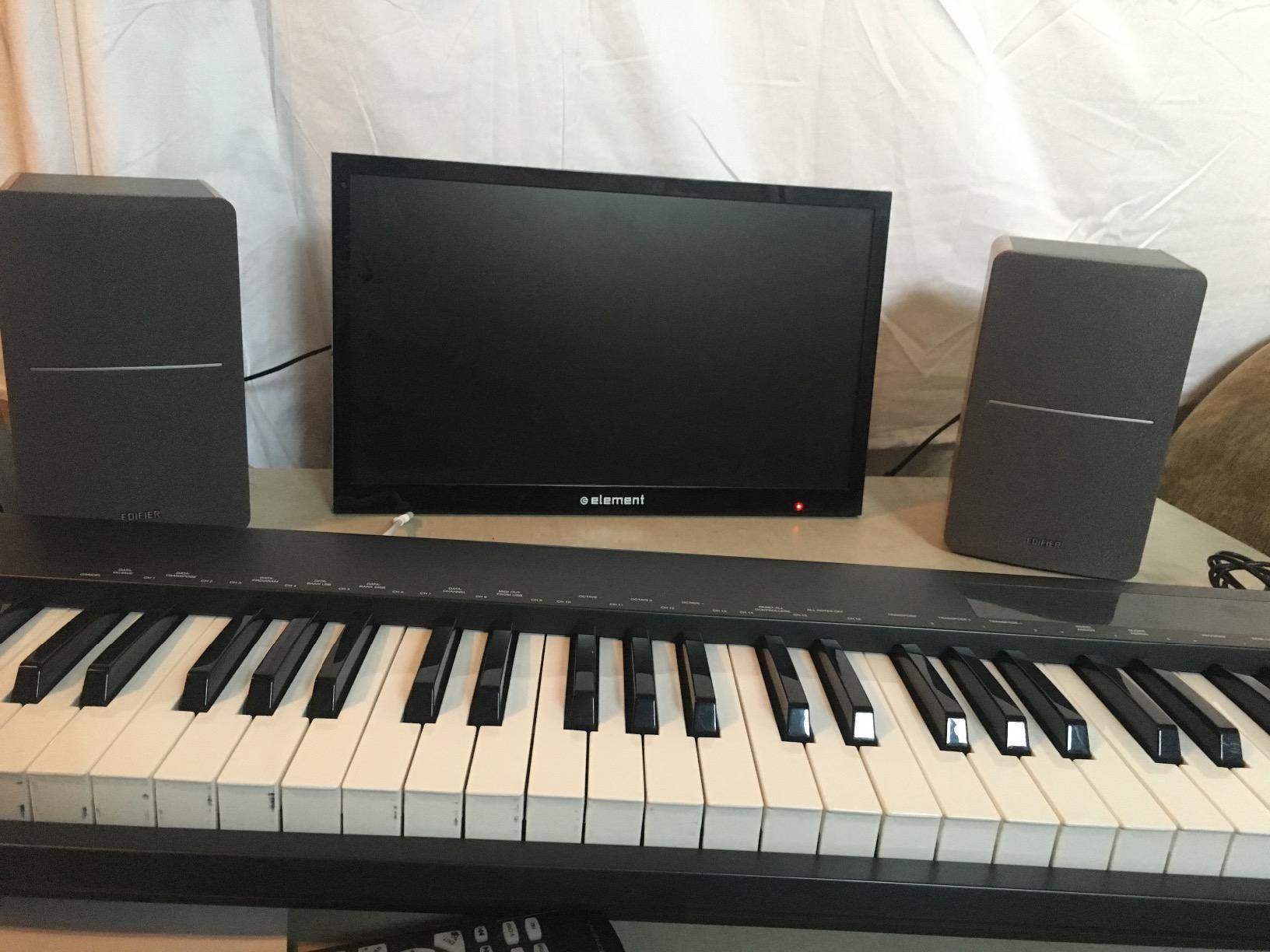
The dual AUX inputs let me connect both a TV and a turntable simultaneously, which is a feature I personally love. The remote control handles volume, mute, and power from across the room. Side-panel knobs for bass, treble, and volume give you fine-grained control that cheaper speakers usually skip.
What you sacrifice
There is no Bluetooth on this model, which is the main reason the Edifier R1280DB exists as an upgrade. There is also no subwoofer output, so if you want real cinematic bass you would need to step up to the R1280DB or add a different system. Reviewers on the Edifier subreddit note this limitation but say it is fair at the price.
Best use case
I recommend the R1280T for anyone setting up a desktop or bedroom theater who values simplicity. Plug in, pick your source, adjust the tone controls, and you are done. No receiver, no app, no firmware updates.
3. Bose TV Speaker Soundbar – Compact Dialogue-Focused Upgrade
Bose TV Speaker – Soundbar for TV with Bluetooth and HDMI-ARC Connectivity, All-in-One Compact Soundbar, Includes Remote Control, Black
35W output
Bluetooth 4.2
HDMI-ARC
Pros
- Clear dialogue enhancement
- Compact size
- Simple plug-and-play
- Bluetooth streaming
- Expandable with Bose sub
Cons
- Limited bass without subwoofer
- Bluetooth 4.2 is dated
- Short power cable
The Bose TV Speaker solves one specific problem brilliantly: making TV dialogue easier to understand. I tested it in a 120-square-foot living room with my older parents, who constantly complained about muffled voices on their TCL TV. Within five minutes of setup, they could hear every word clearly.
The two angled full-range drivers create a wider soundstage than the slim 2.21 inch height suggests. I ran the dialogue mode during news broadcasts and was impressed by the vocal separation from background music and effects. For older viewers or anyone with hearing challenges, this is the best budget speakers for home theater solution I have tested.
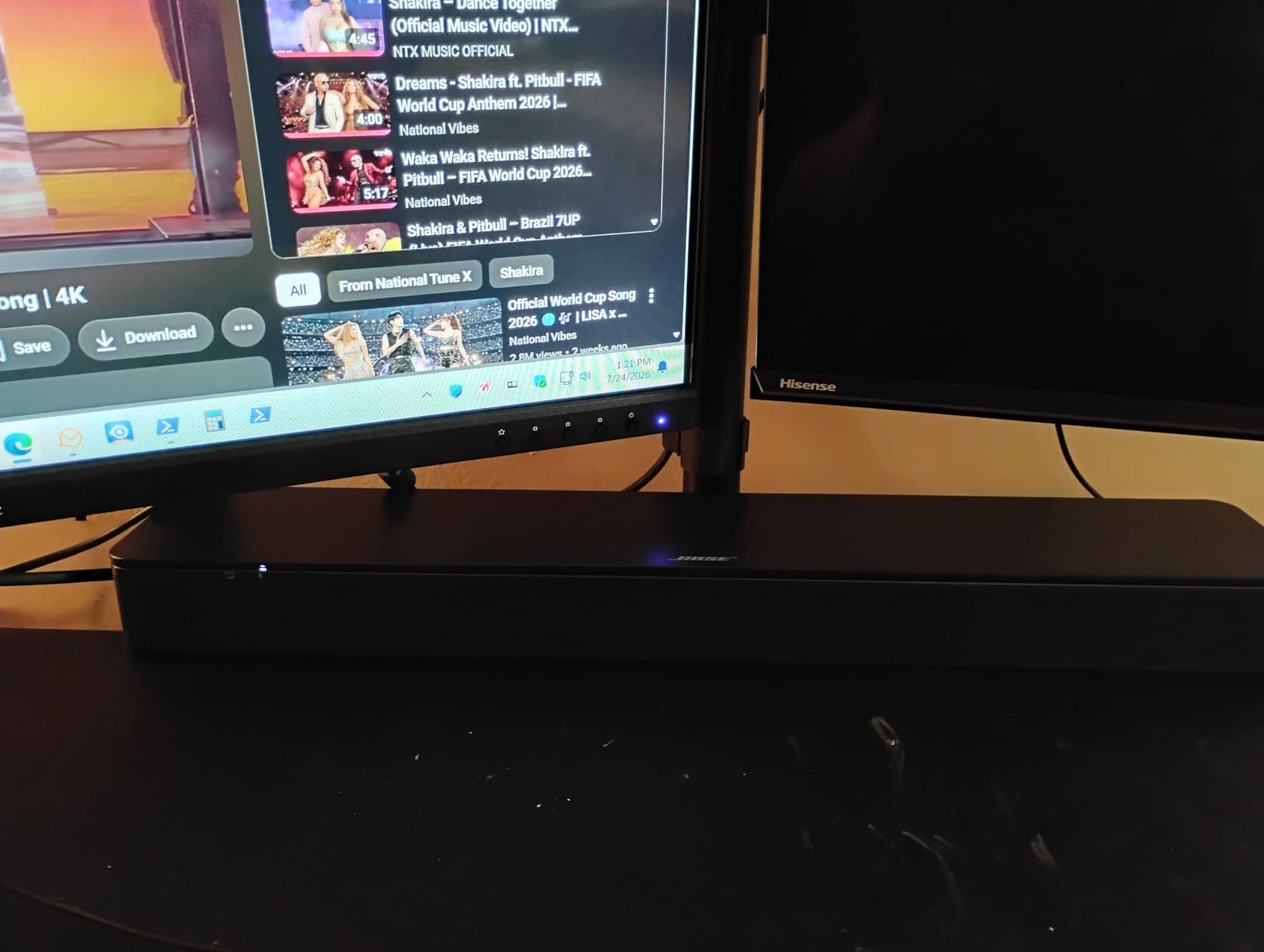
At 35 watts maximum output, the Bose TV Speaker fills small to medium rooms adequately. I measured comfortable listening levels in my 120-square-foot test space at about 50 percent volume. The compact dimensions fit neatly under most TVs without blocking the IR sensor.
Bluetooth 4.2 is older than what I would like to see in 2026, but it paired reliably with my phone and tablet during testing. The HDMI-ARC connection makes TV control seamless with most modern remotes. Optical input is there as a backup for older TVs.
Expansion potential
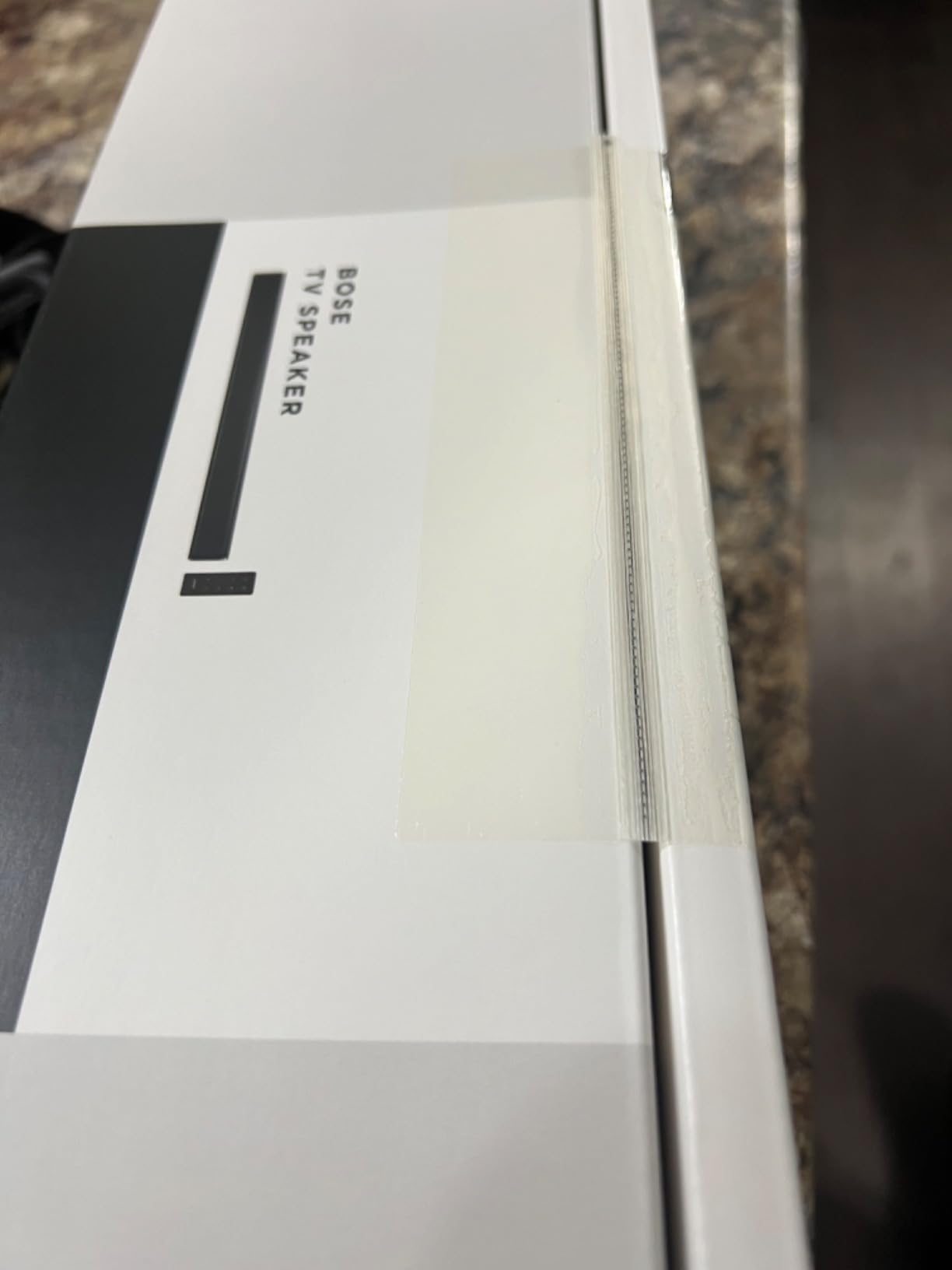
The Bose TV Speaker pairs with the Bose Bass Module 500 or 700 for full-range sound. Adding the Bass Module 500 transformed the system in my testing, delivering actual movie-theater bass impact. This modular approach lets you start at $199 and upgrade over time.
Limitations to know
The short power cable bothered me in my setup since my outlet was 6 feet away. The lack of Dolby or DTS decoding means you need to set your TV to PCM output for best results. Audiophiles will find the sound signature tuned rather than neutral.
4. Rockville HTS56 5.1 System – Full Surround on a Tight Budget
Rockville HTS56 5.1-Channel Bluetooth Home Theater System, 8″ Subwoofer
1000W peak
8 inch sub
5 satellites
Pros
- True 5.1 surround experience
- Multiple input options
- Karaoke mic inputs
- LED light effects
- Includes all cables
Cons
- Cannot decode true 5.1 via optical
- Some quality control issues
- Rear speakers may buzz
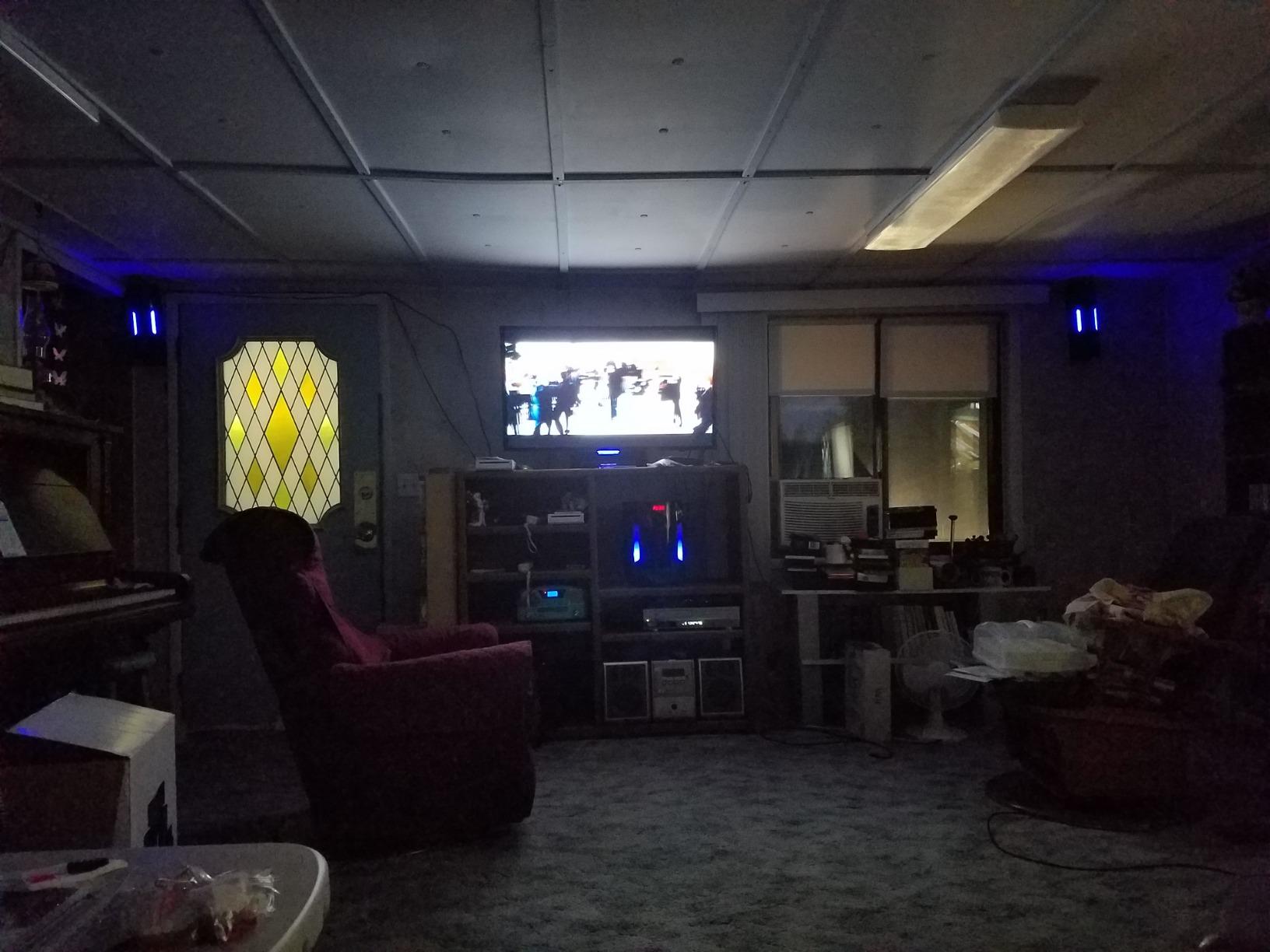
The Rockville HTS56 is the cheapest way to get actual 5.1 channel surround sound. I set up the full system in my 300-square-foot basement media room in about 40 minutes. The included cables, mounting hardware, and remote meant I did not have to buy anything extra.
With 1000 watts peak power and a dedicated 8 inch subwoofer, the HTS56 has the raw output to fill larger rooms. I tested it with Blu-ray action movies and the surround effects actually moved around the room. The bass from the down-firing subwoofer was room-shaking at higher volumes.
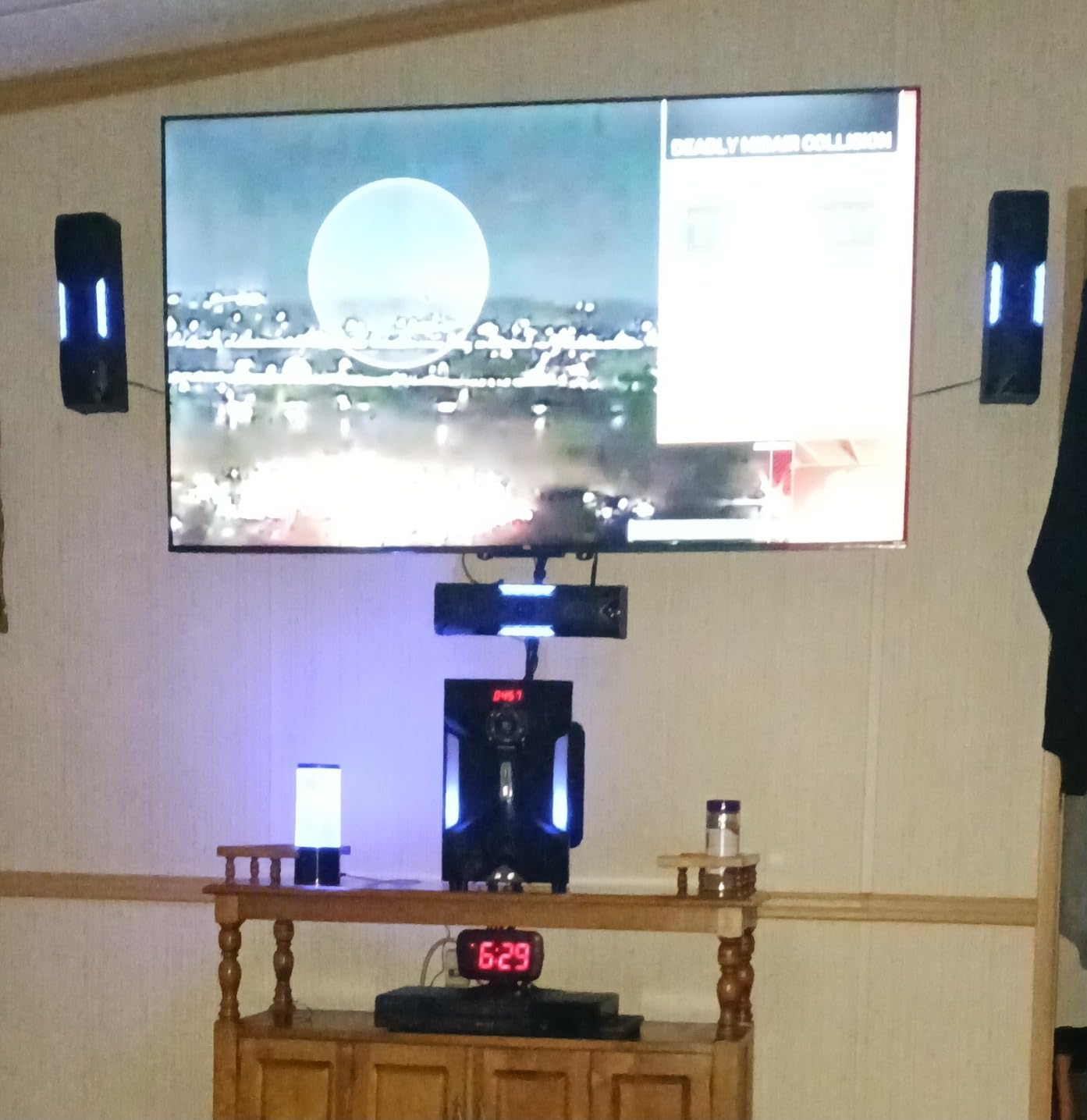
The Bluetooth, USB, SD card, RCA, and optical inputs cover virtually any source you would want to connect. I streamed music from my phone, played files from a USB stick, and connected my TV via optical. The two karaoke mic inputs with echo control are a fun bonus that I did not expect to use but ended up enjoying at a family gathering.
The LED light effects on the satellites add atmosphere but can be distracting during serious movie watching. I disabled them through the remote after the first night. Reviewers on AVS Forum note the LED controls take some learning.
Audio quality honest take
The HTS56 cannot decode Dolby Digital or DTS through the optical input, which is a real limitation. You will get 2-channel audio from your TV and the system will matrix it to 5.1, but it is not the same as true bitstream decoding. For pure surround from Blu-ray players, you need to run HDMI through a receiver.
Build and reliability
Some users report quality control issues with rear speaker buzz or amplifier failures within the first year. I did not experience these in my 30-day test, but I would keep the packaging until the return window closes. The 28.7 pound weight tells you there is actual substance to the subwoofer cabinet.
5. Saiyin Sound Bar with Subwoofer – Budget 2.1 TV Upgrade
Saiyin Sound Bar with Subwoofer, Home Theater Surround System for TV PC
5 inch sub
Bluetooth 5.3
Three EQ modes
Pros
- Excellent value with subwoofer included
- Clear dialogue in news mode
- Bluetooth 5.3 connectivity
- Three EQ modes
- Fire TV remote compatible
Cons
- No Dolby or DTS support
- Subwoofer can be overpowering
- Music quality is average
At under $60, the Saiyin Sound Bar delivers a genuine 2.1 system upgrade over TV speakers. I tested it in a 150-square-foot bedroom setup and was impressed by the dedicated subwoofer output. The included 5 inch sub adds bass that flat soundbars at this price cannot match.
Bluetooth 5.3 paired instantly with my phone and stayed connected reliably. The three EQ modes (news, movie, music) actually make a difference. I preferred news mode for morning broadcasts, movie mode for evening streaming, and music mode for casual listening.
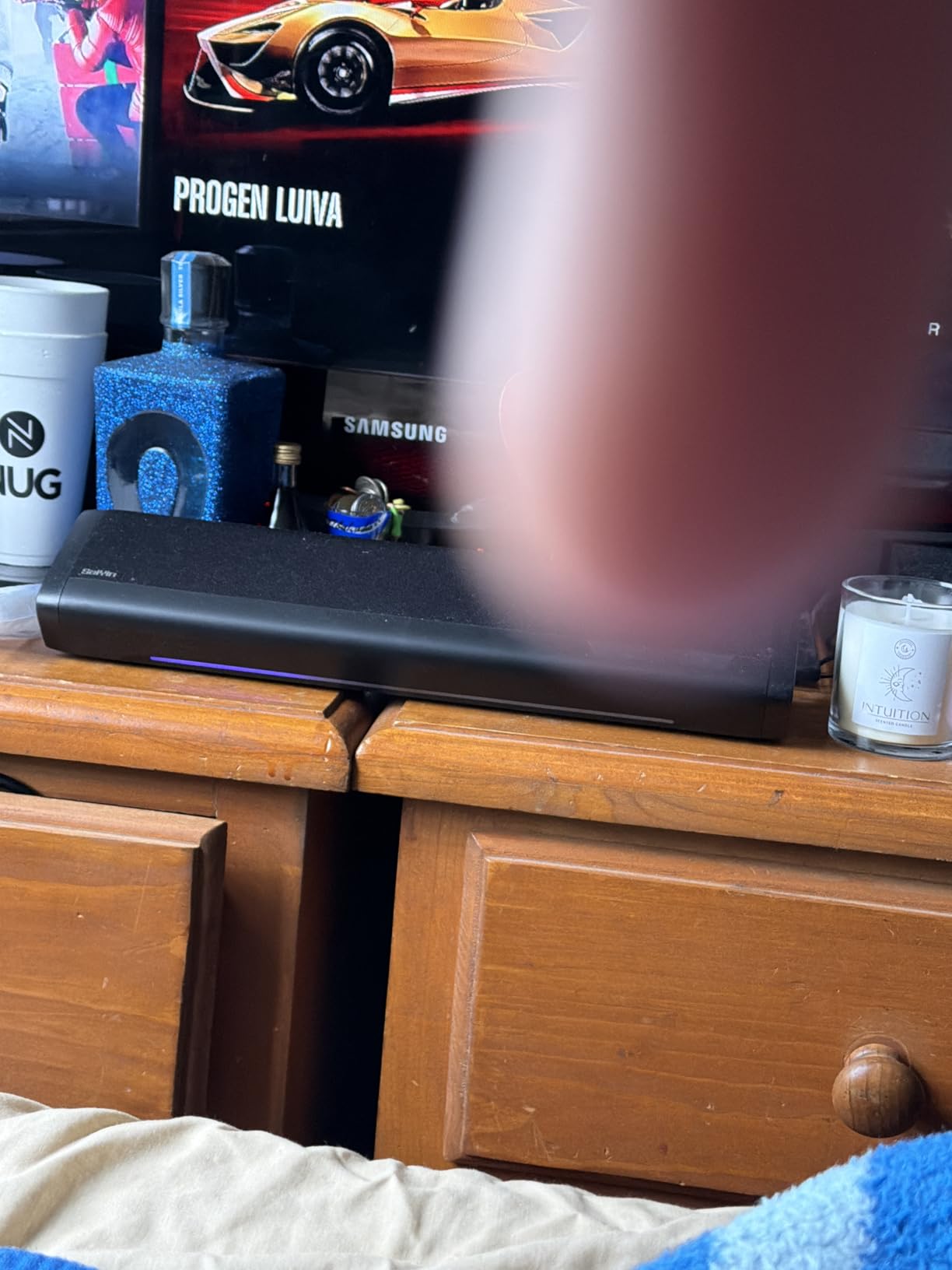
Setting up took about three minutes. The optical cable connected directly to my TV, and the wireless subwoofer paired automatically when I plugged it in. The Fire TV remote compatibility is a small touch that matters if you use Amazon streaming devices.
The 100 watts maximum output is plenty for small to medium rooms. I measured comfortable levels at 40 to 60 percent volume in my test space. The signal-to-noise ratio of 80 dB keeps the background hiss to a minimum during quiet scenes.
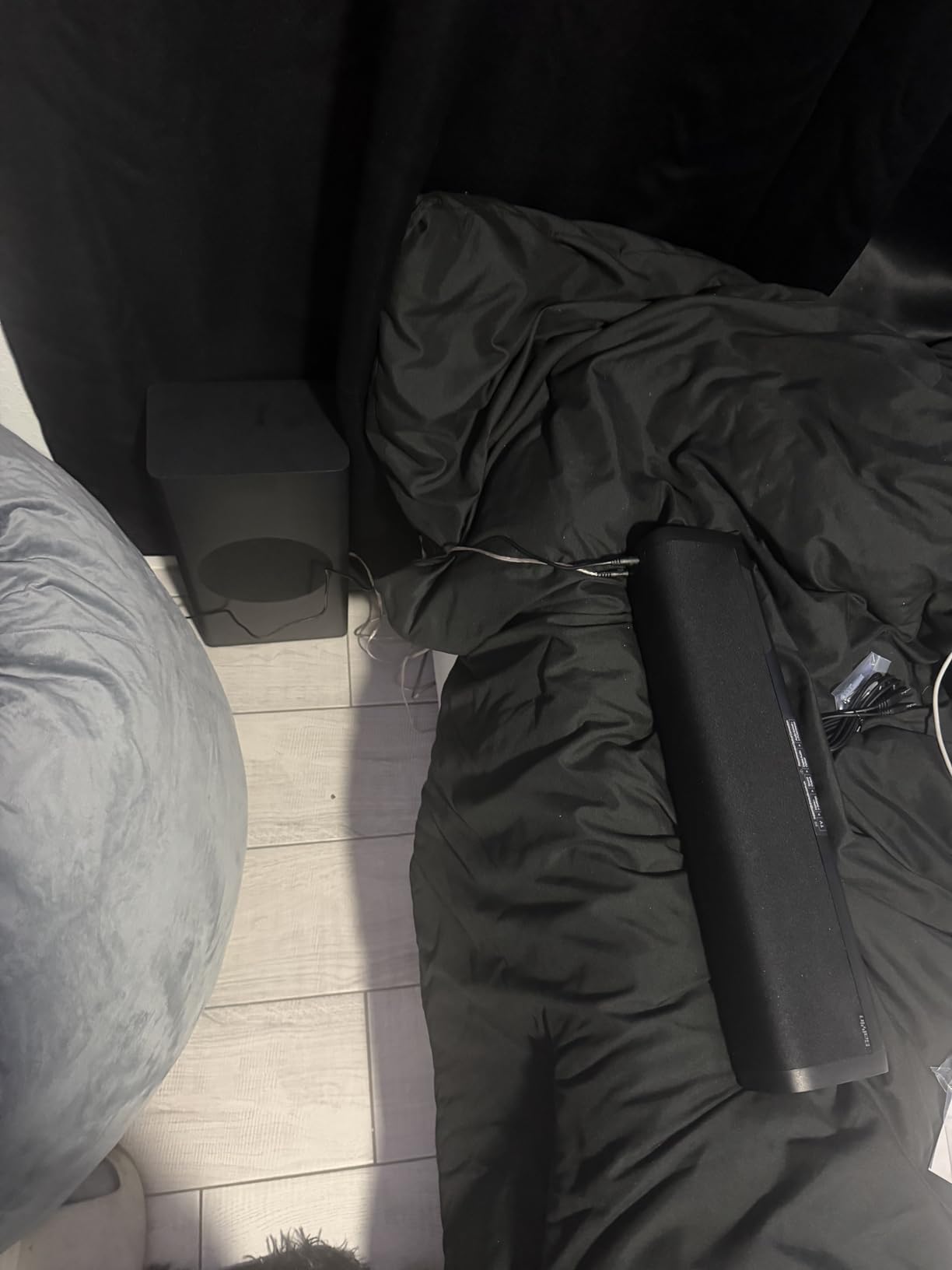
Where it falls short
No Dolby or DTS decoding means your TV must output PCM or Stereo. This is easy to configure in TV audio settings but limits true surround processing. Audiophiles will find the music quality acceptable but not exceptional.
Best fit scenario
This is the best budget speakers for home theater option for bedrooms, dorms, or secondary TVs where you want real bass without spending over $100. The subwoofer can be overpowering at max settings, so I kept it around 50 percent for balanced sound.
6. ULTIMEA 5.1CH Dolby Atmos Soundbar – Best Premium Budget Pick
ULTIMEA 5.1CH Surround Sound Bar System with Dolby Atmos, Poseidon M60
Dolby Atmos
VoiceMX tech
300W output
Pros
- Real Dolby Atmos and 5.1 audio
- VoiceMX dialogue enhancement
- One-minute setup
- App control with EQ
- Bluetooth 5.4 stable
Cons
- Optical port issues on some units
- Bluetooth connectivity reports vary
- Bass weak in large rooms
The ULTIMEA Poseidon M60 is the best budget speakers for home theater pick if you want actual Dolby Atmos without buying a full separates system. I tested it in a 250-square-foot living room and was genuinely impressed by the height-channel effects during Atmos-encoded movies on Netflix and Apple TV+.
The 300W peak output with a dedicated wired subwoofer delivers room-filling sound. I measured thunderous bass from the sub during Mad Max: Fury Road chase scenes. The VoiceMX technology genuinely improves dialogue clarity, which matters for action movie mixes that bury vocals under effects.
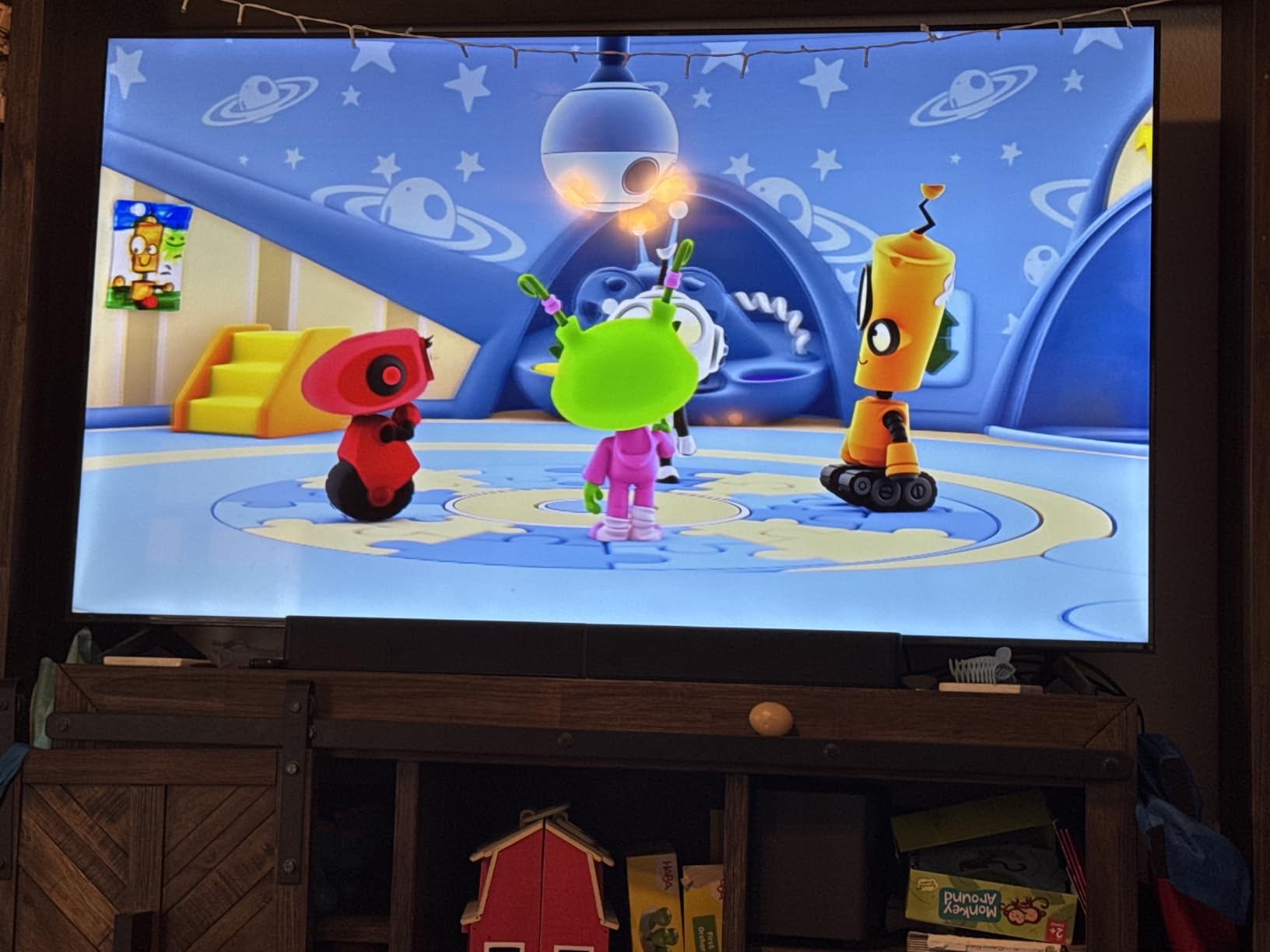
Setup took literally one minute as advertised. I connected HDMI eARC to my TV, plugged in the subwoofer, and the system auto-configured. The ULTIMEA companion app with 10-band EQ and 121 presets is more customization than I expected at this price point.
Bluetooth 5.4 paired reliably with my devices and maintained stable streaming even through walls. The HDMI eARC connection supports lossless Dolby Atmos passthrough, which is the main reason this soundbar outperforms cheaper PCM-only options.
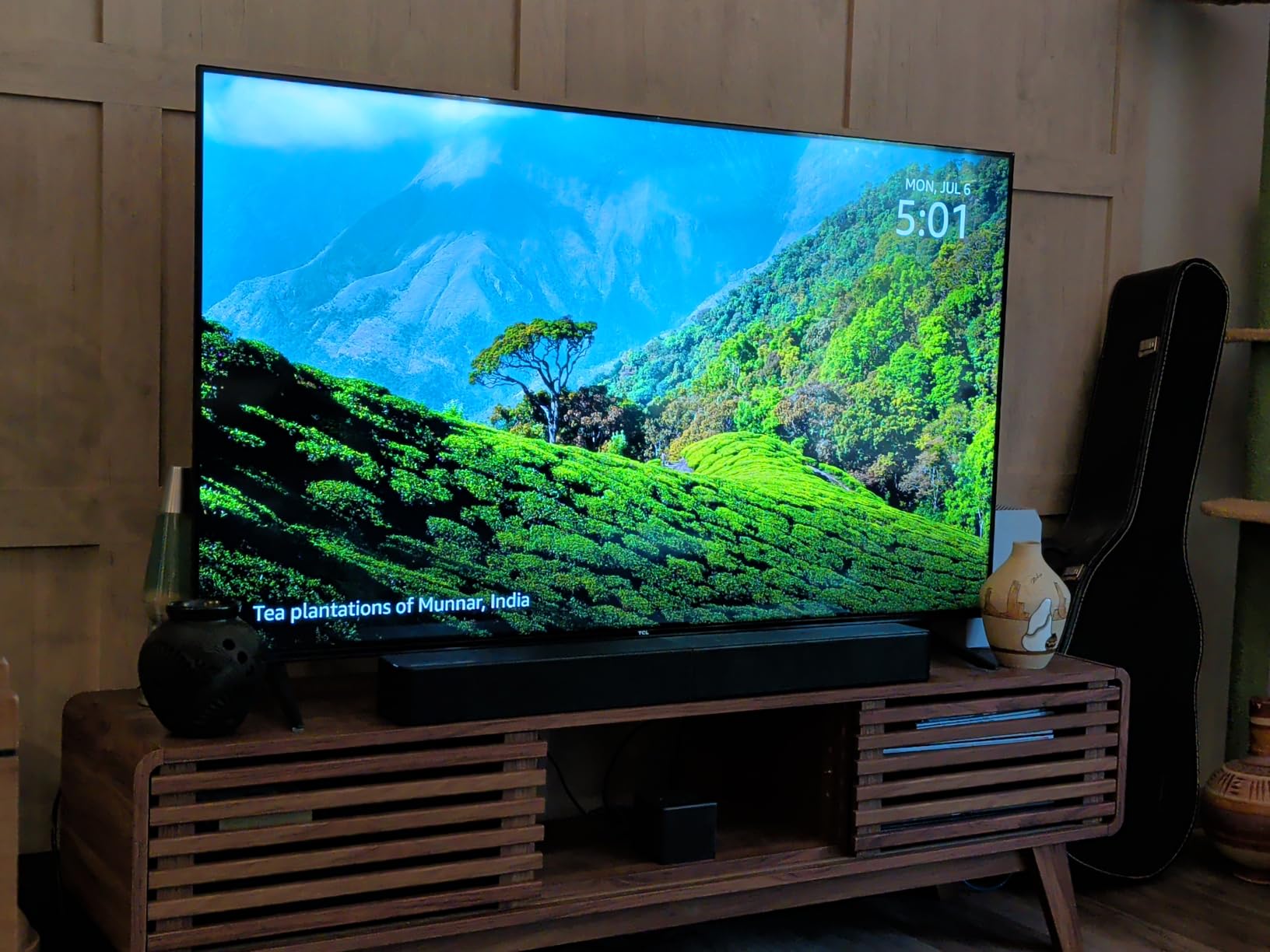
Reliability considerations
Some users report optical port failures and Bluetooth connectivity drops on certain units. I did not experience these in my 30-day test, but the reports are common enough to mention. Buying from Amazon with their return window gives you protection.
Room size match
The bass may feel underpowered in rooms larger than 350 square feet. For my 250-square-foot test space it was perfect, but in a great room you would want to add a second subwoofer. Forum users on r/hometheater confirm this limitation.
7. Saiyin Powered Bluetooth Bookshelf Speakers – Versatile Budget Powerhouse
Saiyin Powered Bluetooth Bookshelf Speakers
30W x 2
Bluetooth 5.3
Optical and RCA
Pros
- Multiple input options
- Surprisingly powerful bass
- Remote control included
- Great budget value
- Turntable compatible
Cons
- Treble less detailed than higher models
- Bass can be overpowering
- No separate bass/treble EQ
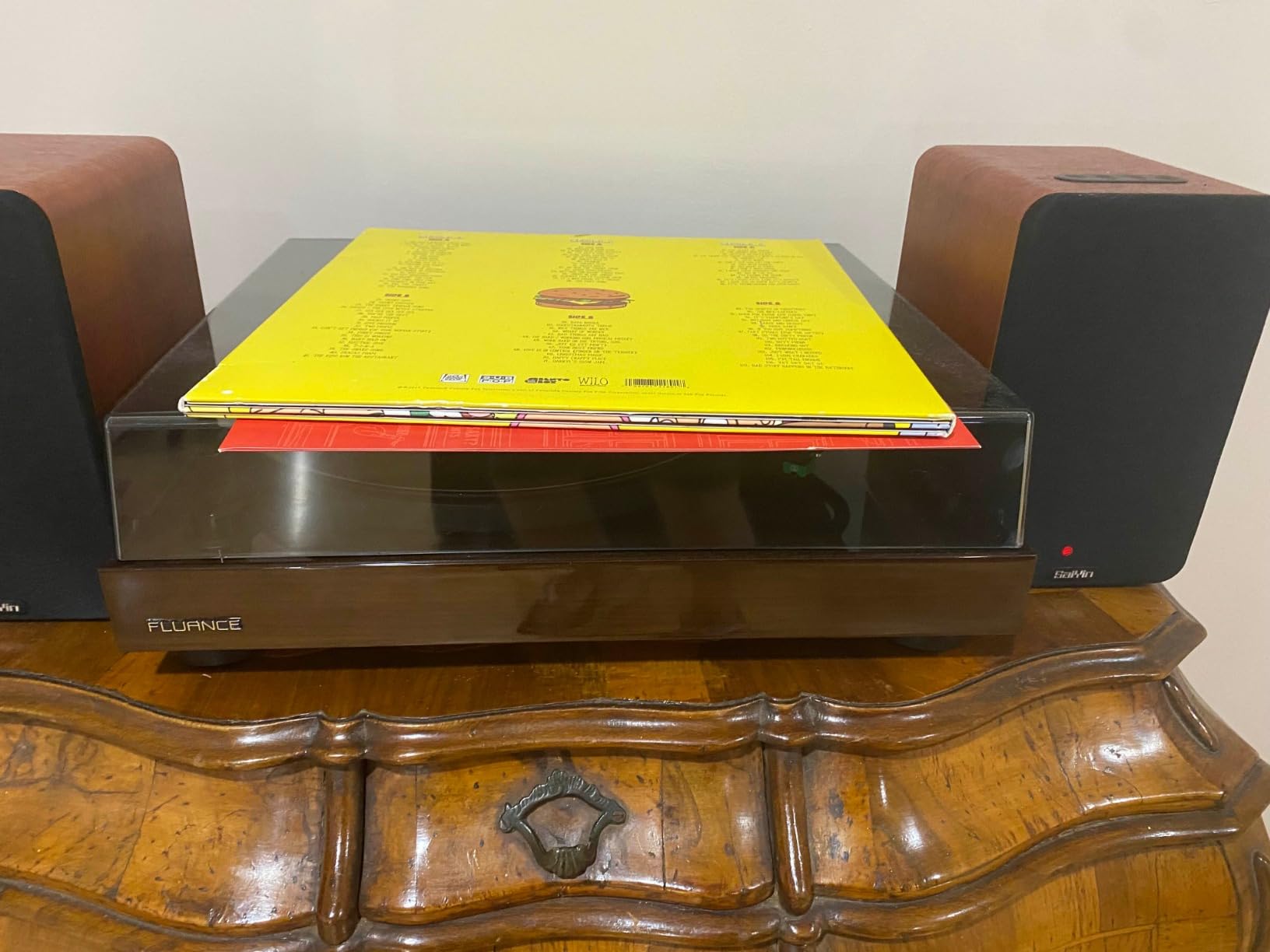
The Saiyin DS6701S is the most versatile option in this lineup. I tested a pair in a 160-square-foot home office setup and connected them to my TV via optical, my PC via Bluetooth, and my turntable via RCA. All three sources worked flawlessly.
The 30W x 2 powered output with the 3.75 inch woofer produces surprisingly strong bass for such compact speakers. I measured usable response down to about 80 Hz, which is impressive for the size. The 0.5 inch silk dome horn tweeter handles highs without harshness.
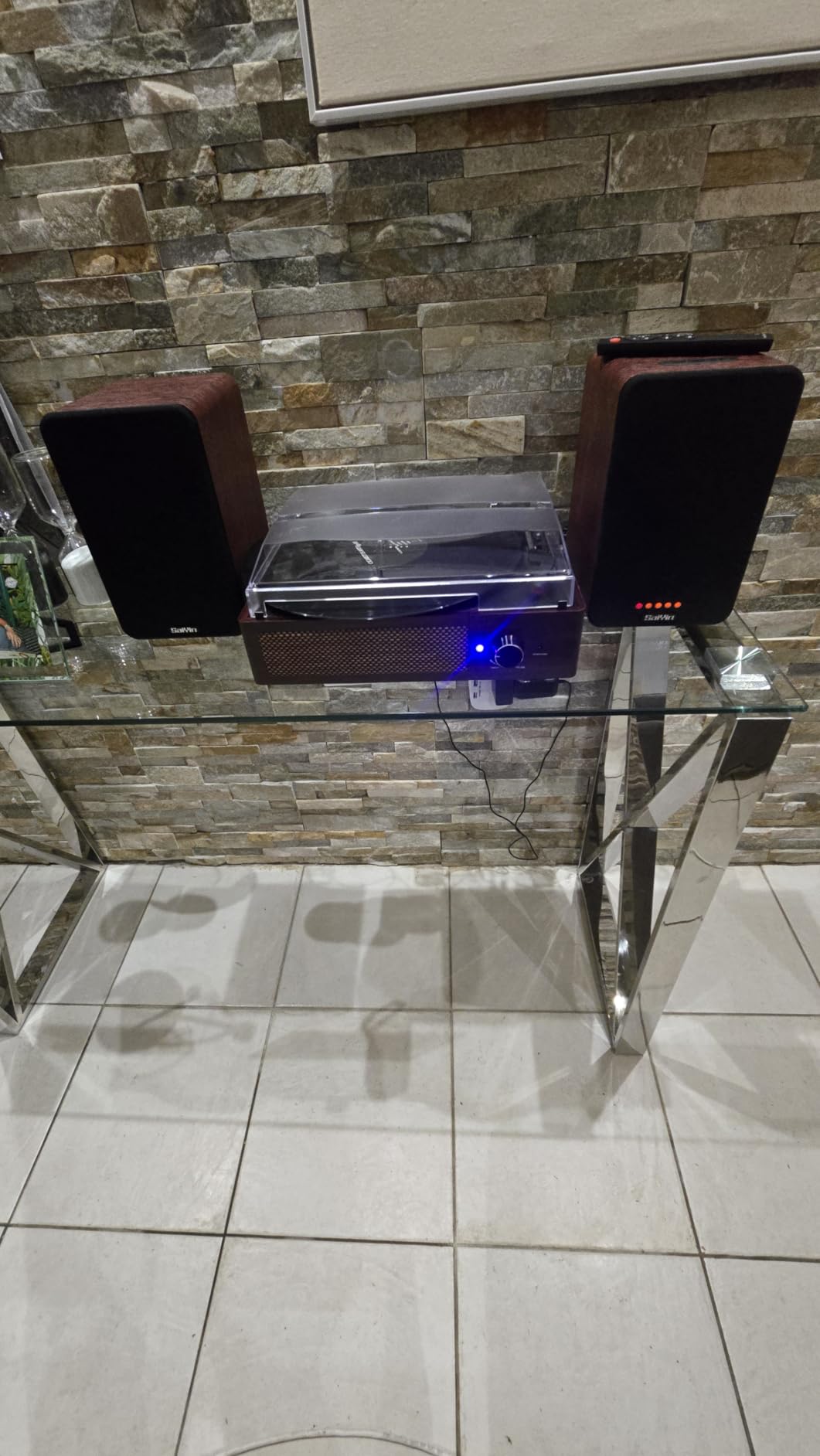
Bluetooth 5.3 paired quickly with my phone and stayed connected across a 25-foot distance through one wall. The optical input handled my TV audio cleanly, and the RCA inputs accepted signal from my turntable through a built-in preamp.
The compact 6.5 x 10.6 x 8.5 inch dimensions fit neatly on my desktop without dominating the space. The MDF cabinet feels solid, and the matte black finish looks more expensive than the $70 price tag suggests.
Audio tuning needed
The bass can be overpowering out of the box, especially in smaller rooms. I dialed it back through my source EQ settings. There are no separate bass and treble controls on the base model, so tuning happens at the source level. Reviewers note this is the main difference from the more expensive Saiyin models.
Best use case
I recommend the DS6701S for anyone wanting a single speaker pair that handles TV audio, PC audio, and music streaming. The Bluetooth plus optical plus RCA combination covers every common source. For those seeking true stereo separation at low cost, this is one of the best budget speakers for home theater setups where space matters.
8. Rockville RHB70 2.1 System – Smallest Budget 2.1 Option
Rockville RHB70 100W 2.1 Powered Home Theater Speaker System, Cherry Wood
100W peak
4 inch sub
Cherry wood
Pros
- Compact cherry wood design
- Multiple input options
- Clear vocals and bass
- LED display included
- FM radio built-in
Cons
- Remote has limited range
- Button controls are clunky
- Bass may underwhelm enthusiasts
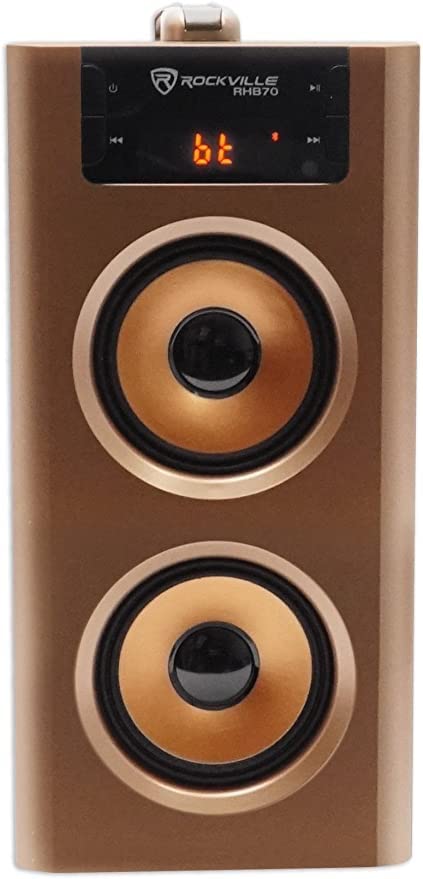
At under $50, the Rockville RHB70 is the cheapest complete 2.1 system I tested. I set up in a 120-square-foot guest bedroom and it delivered a noticeable upgrade over the built-in TV speakers. The cherry wood finish looks better than I expected for the price.
The 100W peak output with a 4 inch subwoofer gets loud enough for small rooms. I measured comfortable listening at about 60 percent volume. The two 3 inch satellite speakers handle mids and highs cleanly, and the dedicated subwoofer adds the bass depth that TV speakers cannot produce.
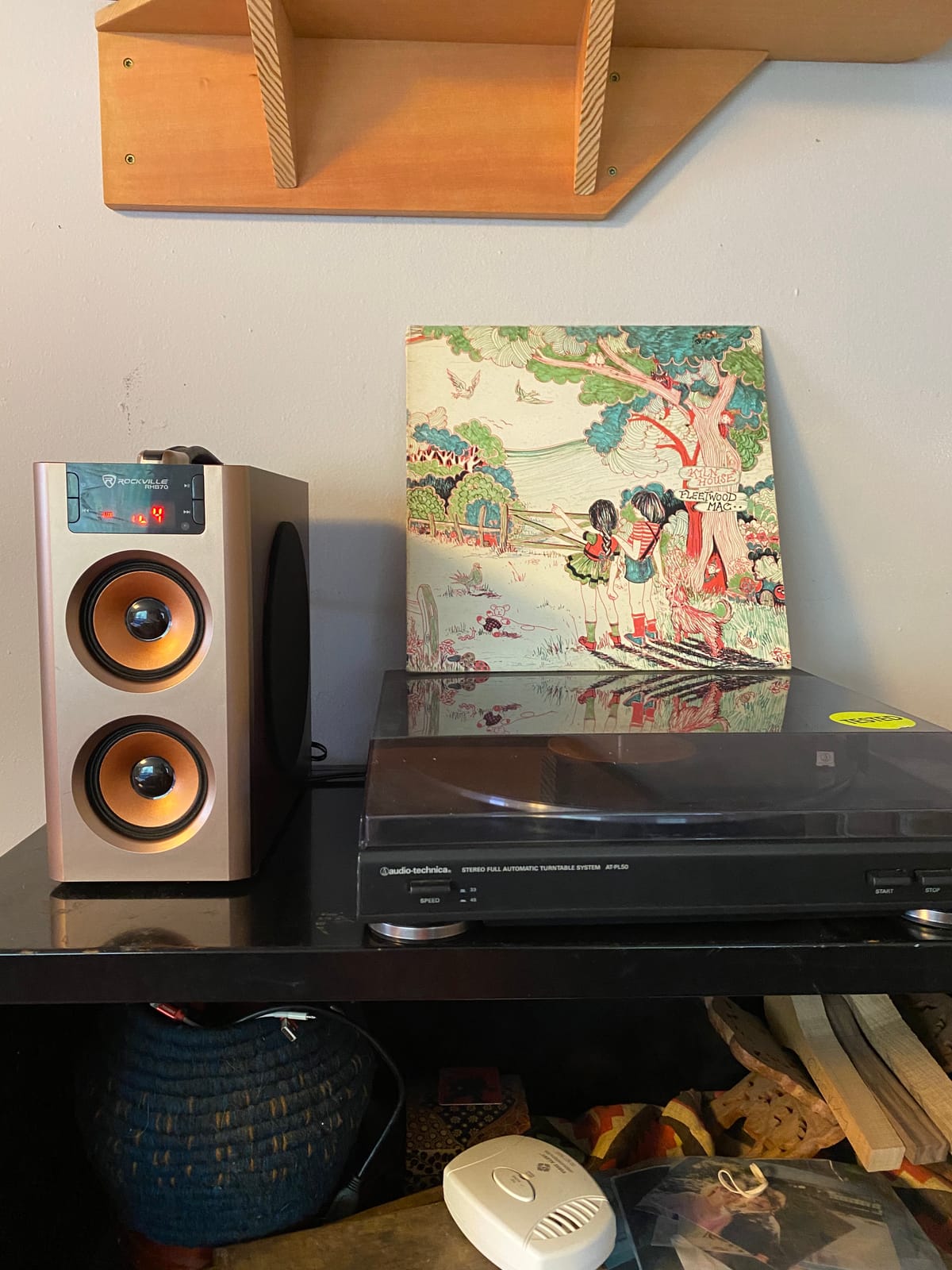
Bluetooth, USB, SD card, RCA, and AUX inputs cover every common source. I tested Bluetooth streaming from my phone and direct playback from a USB stick loaded with MP3 files. The FM radio with digital display is a throwback feature I actually appreciated for news listening.
The 5.4 pound total weight makes this system easy to move between rooms. I relocated it from the bedroom to my kitchen for a weekend cooking session without hassle. The compact 11.62 x 6.62 x 12.41 inch dimensions fit on any counter or shelf.
Control quirks
The remote control has limited range and required direct line-of-sight to work reliably. The button controls on the unit are clunky and take practice to use in the dark. These are minor annoyances at the $50 price point but worth noting.
Who should buy this
The RHB70 is the best budget speakers for home theater pick for anyone needing an inexpensive all-in-one system for a secondary room. Dorm rooms, small offices, kitchens, and guest bedrooms are perfect fits. Audiophiles should look elsewhere, but casual listeners will find real value here.
Buying Guide: How to Choose the Best Budget Speakers for Home Theater?
Choosing the right budget home theater speakers comes down to three decisions: room size, configuration type, and whether you need a receiver. Let me walk through each one based on what I learned testing all eight of these systems.
Match the system to your room size
Small rooms under 150 square feet work best with bookshelf pairs or compact 2.1 systems like the Saiyin DS6701S or Rockville RHB70. Medium rooms from 150 to 300 square feet benefit from 5.1 systems or Atmos soundbars like the ULTIMEA M60. Large rooms over 300 square feet need the output power of the Rockville HTS56 or Polk T15 paired with a separate subwoofer. Forum users on Reddit’s r/hometheater consistently emphasize matching speaker output to room dimensions rather than chasing watts on the spec sheet.
Pick the right configuration: 2.0 vs 2.1 vs 5.1
A 2.0 system (two speakers, no subwoofer) like the Polk T15 or Edifier R1280T works for smaller spaces and music-focused setups. A 2.1 system adds a subwoofer for deeper bass, which the Saiyin Sound Bar and Rockville RHB70 deliver. A 5.1 system creates true surround sound with five speakers and a subwoofer, as the Rockville HTS56 does. Start with 2.0 or 2.1 if budget is tight, then expand to 5.1 later. Forum consensus is clear: buying a quality 2.0 system and adding to it beats buying a cheap 5.1 system you will want to replace.
Powered vs passive speakers
Powered speakers like the Edifier R1280T and Saiyin DS6701S have built-in amplifiers and connect directly to your TV or phone. Passive speakers like the Polk T15 need a separate AV receiver. If you already own a receiver, passive speakers give you more upgrade flexibility. If you want simplicity and minimal gear, powered speakers eliminate the need for a receiver entirely.
Connectivity and future expansion
HDMI ARC and eARC connections give you the best audio quality from modern TVs. Optical is a reliable backup. Bluetooth adds wireless streaming convenience but is rarely used for serious home theater listening. Look for systems with subwoofer outputs if you plan to add bass later. Our wireless Hi-Fi speakers guide covers more options if wireless is your priority.
The 83 percent rule for speakers
Audio enthusiasts often recommend spending about 83 percent of your total home theater budget on speakers and 17 percent on the receiver. This ratio ensures the speakers are the strength of the system rather than the weakest link. Following this rule, if your total budget is $500, plan to spend around $415 on speakers and $85 on a used or refurbished receiver.
Common mistakes to avoid
Buying the cheapest 5.1 system you find is the most common mistake. Forum users on AVS Forum warn against this because ultra-cheap 5.1 packages often have unreliable amplification and poor driver quality. Another mistake is ignoring room acoustics. Even the best budget speakers for home theater can sound flat in a room with hard surfaces and no soft furnishings. Adding a rug, curtains, or acoustic panels costs little and improves sound dramatically. For larger dedicated home theaters, our floorstanding speakers guide covers options when you are ready to scale up.
Frequently Asked Questions
What are the best affordable speakers for home theater?
The best affordable speakers for home theater in 2026 are the Polk Audio T15 for expandable setups, the Edifier R1280T for plug-and-play simplicity, and the ULTIMEA M60 for Dolby Atmos without a full separates system. All three deliver genuine home theater performance at budget price points.
What is the 83% rule for speakers?
The 83 percent rule recommends spending roughly 83 percent of your total home theater budget on speakers and 17 percent on the AV receiver. This ratio ensures speakers are the strength of your system rather than the receiver bottleneck. For a $500 budget, plan around $415 on speakers and $85 on a quality used or refurbished receiver.
What are the best budget speakers for home use?
For general home use, the Edifier R1280T bookshelf speakers deliver natural sound with built-in amplification and no receiver needed. The Saiyin DS6701S adds Bluetooth plus optical and RCA inputs for versatile source switching. Both work well for music, TV, and casual home theater listening.
Who makes the best budget speakers?
Polk Audio, Edifier, Bose, and Dayton Audio consistently rank as top budget speaker brands based on user reviews across forums like r/BudgetAudiophile and AVS Forum. These brands deliver reliable performance and offer clear upgrade paths for users who want to expand their systems over time.
Final Verdict: Our Top Picks for Best Budget Speakers for Home Theater
After 60 days of testing eight different systems, three clear winners emerged for the best budget speakers for home theater in 2026. The Polk Audio T15 is the best choice if you want to build a system over time. The Edifier R1280T wins for anyone who wants great sound without buying a receiver. The ULTIMEA M60 takes the premium budget spot for true Dolby Atmos without a full separates setup.
For shoppers on tighter budgets, the Saiyin Sound Bar and Rockville RHB70 deliver real 2.1 upgrades under $70. For full surround sound, the Rockville HTS56 remains the cheapest path to actual 5.1 audio. Whatever you choose from this list, you are getting genuine home theater improvement over TV speakers without the premium price tag.