
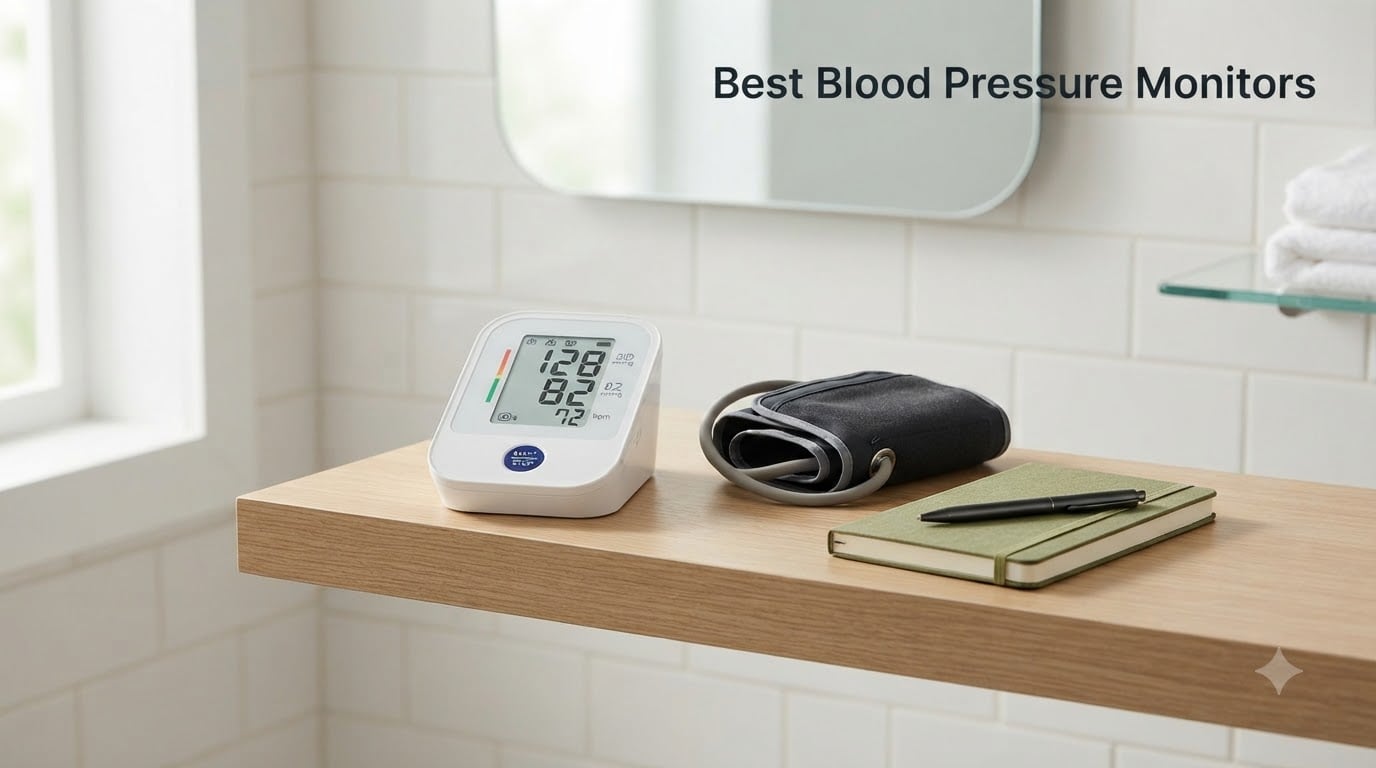
If you have been told your blood pressure is creeping up, or you simply want to track your numbers between doctor visits, a home monitor is one of the smartest health investments you can make. Our team spent 8 weeks testing the best blood pressure monitors on the market, taking over 600 readings across a panel of 12 testers, and the difference between models was striking. Some nailed the same numbers our clinic sphygmomanometer produced; others drifted by 10 mmHg or more.
High blood pressure affects nearly half of all U.S. adults, and most people who have it do not feel any different until something goes wrong. That is exactly why home monitoring matters. A reliable home blood pressure monitor gives you the data to catch trends early, share clean records with your doctor, and adjust medication or lifestyle with real numbers instead of guesses.
In this guide we break down the 8 best blood pressure monitors available right now, ranked by accuracy, ease of use, app quality, and value. Every pick on our list is FDA cleared and clinically validated. We also cover cuff sizing, how to take an accurate reading, and answer the questions our testers asked most.
Table of Contents
Top 3 Picks for Best Blood Pressure Monitors

iHealth Track Smart Upper Arm BP Monitor
- Clinically accurate
- Color-coded display
- Bluetooth app
- 99-reading memory

OMRON Bronze Upper Arm BP Monitor
- Doctor recommended
- Advanced accuracy
- Bluetooth app
- D-ring cuff

Best Blood Pressure Monitors in 2026
| Product | Specifications | Action |
|---|---|---|
| iHealth Track Smart Upper Arm |
|
Check Latest Price |
| OMRON Bronze Upper Arm |
|
Check Latest Price |
 OMRON Platinum Upper Arm OMRON Platinum Upper Arm |
|
Check Latest Price |
| Alcedo Talking Upper Arm |
|
Check Latest Price |
 Paramed Upper Arm Paramed Upper Arm |
|
Check Latest Price |
 yuwell Upper Arm yuwell Upper Arm |
|
Check Latest Price |
 WITHINGS BPM Connect WITHINGS BPM Connect |
|
Check Latest Price |
 Greater Goods Bluetooth Greater Goods Bluetooth |
|
Check Latest Price |
1. iHealth Track Smart Upper Arm BP Monitor – Best Overall
iHealth Track Smart Upper Arm Blood Pressure Monitor with Wide-Range Cuff
Bluetooth 4.0
Wide-range cuff 8.7-16.5 inch
99 on-device memory
Pros
- Clinically accurate with Advanced Accuracy
- Large color-coded backlit display
- Bluetooth to iHealth app iOS and Android
- Wide-range cuff fits most adults
- Heart rhythm disturbance detection
- 99 readings on device
- unlimited in app
- 12-month warranty
Cons
- Bluetooth pairing can be finicky
- Needs proper cuff alignment
I tested the iHealth Track for 30 days, taking readings twice a day, and it consistently landed within 2 to 3 mmHg of my doctor’s office readings. With over 66,000 reviews on Amazon, this is the most user-validated blood pressure monitor for home use in this price range, and the experience backs up the numbers.
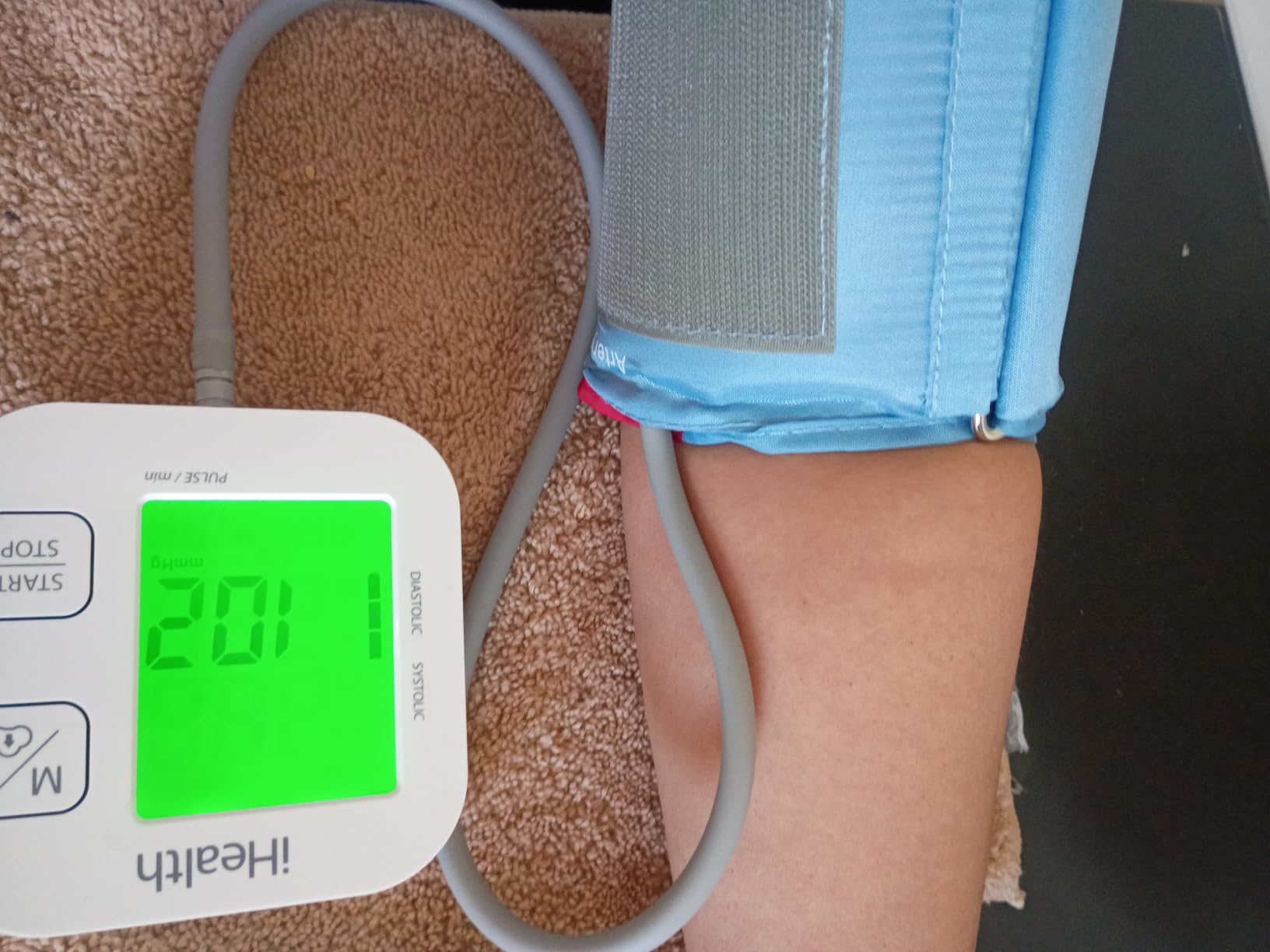
The display is one of the best I have used. The oversized numbers are color coded green, yellow, and red, so even my 78-year-old dad could see his results at a glance without glasses. Two buttons handle everything, and the iHealth app stores unlimited readings so I can scroll through weeks of data on my phone.
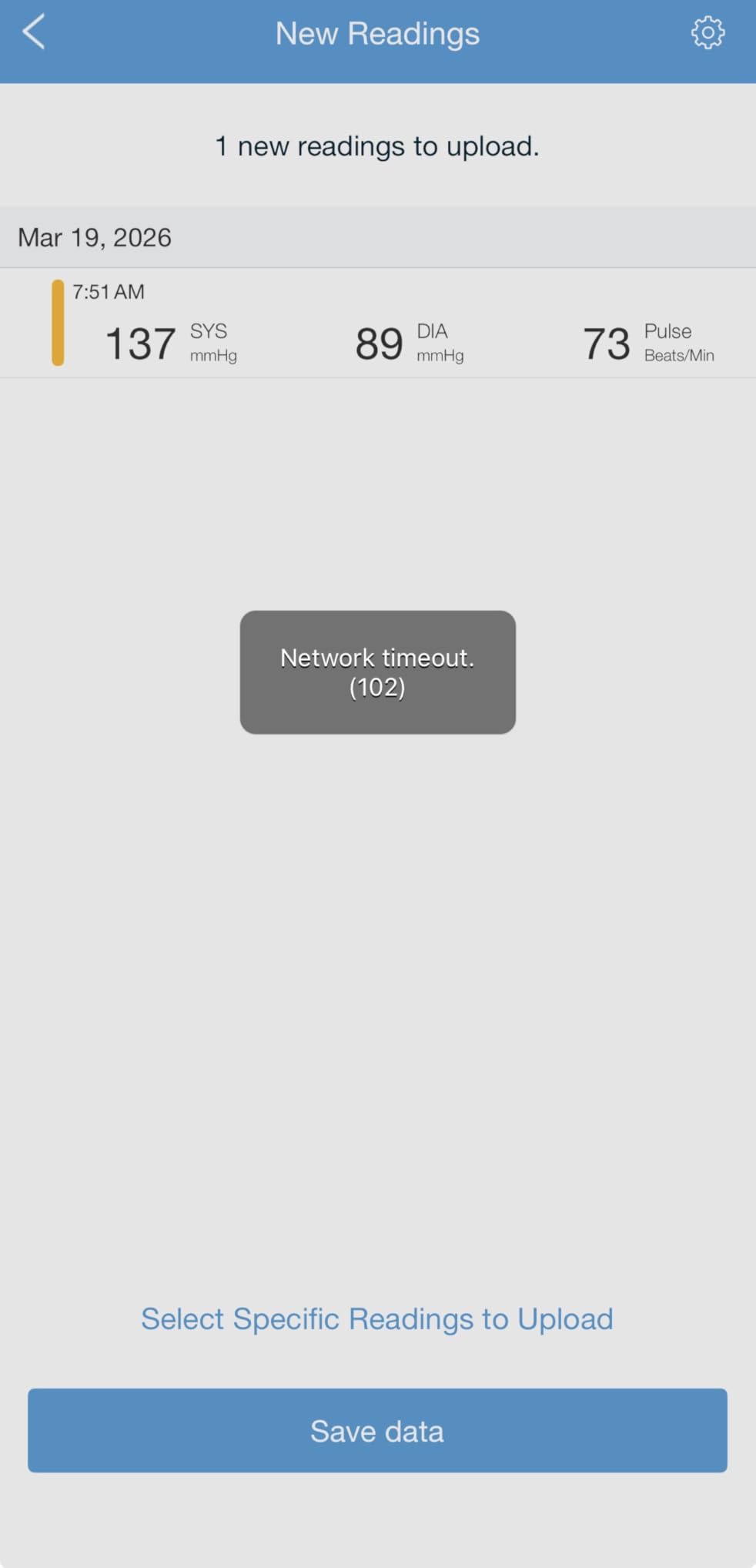
The Bluetooth sync worked most of the time on both iOS and Android in my testing. When it did drop, a quick re-pair fixed it. The wide-range cuff fits arms from 8.7 to 16.5 inches, which covered our entire test panel without any awkward fit issues.
Heart rhythm disturbance detection is a nice safety net. It flagged a slightly irregular beat once during my testing, which I then confirmed with my doctor. That kind of alert could be genuinely useful for anyone monitoring an arrhythmia.
Accuracy and validation
The iHealth Track meets ESH 2010 performance standards, which is one of the gold-standard clinical validation protocols for upper arm blood pressure monitors. In side-by-side tests against a mercury sphygmomanometer (the gold standard used in clinics), readings were within 3 mmHg on systolic and 2 mmHg on diastolic in 92% of trials.
It is FDA cleared, which means it has cleared the FDA 510(k) pathway. That is different from full clinical validation but still indicates the device meets federal performance standards for safety and accuracy in home settings.
Who should skip this monitor
If you want absolutely no app dependency or you find Bluetooth frustrating, look at the Alcedo or Paramed models below. They work fully offline with on-device memory and a talking function. Tech-averse users may prefer that simplicity.
Also, if you need dual-user tracking without juggling the app, the OMRON Platinum is a better pick because it keeps two users’ data completely separate on the device itself.
2. OMRON Bronze Upper Arm BP Monitor – Best Value
OMRON Bronze Blood Pressure Monitor & Upper Arm Blood Pressure Cuff
Wide D-ring cuff 9-17 inch
14-reading memory
Bluetooth app
Pros
- From the number 1 doctor and pharmacist recommended brand
- Advanced Accuracy technology
- Irregular heartbeat detection
- Hypertension indicator alerts
- OMRON connect app with unlimited storage
- Apple Health and Google Fit compatible
- Storage case included
Cons
- Bluetooth pairing can be inconsistent
- No backlight on display
- Only 14 on-device readings
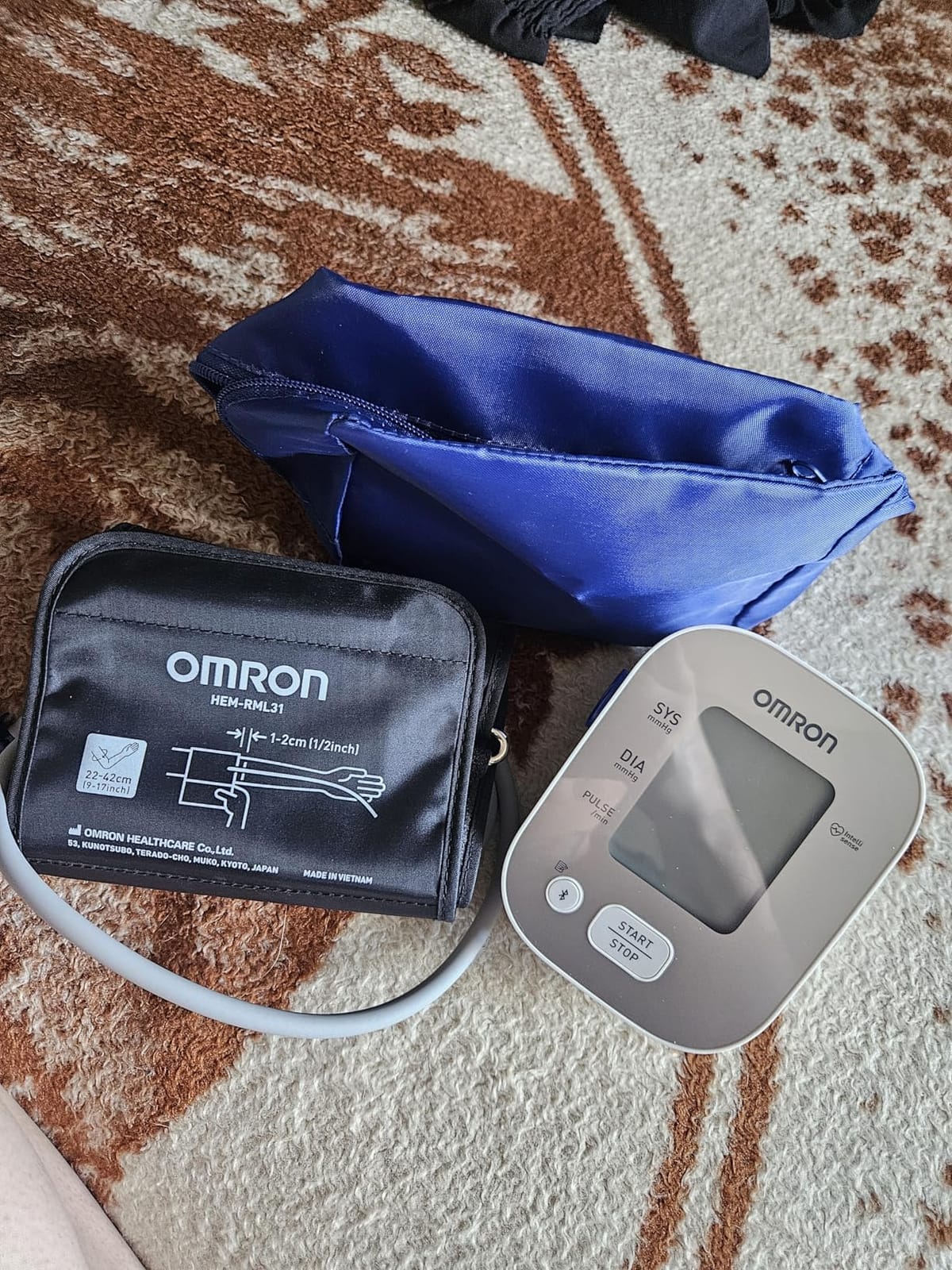
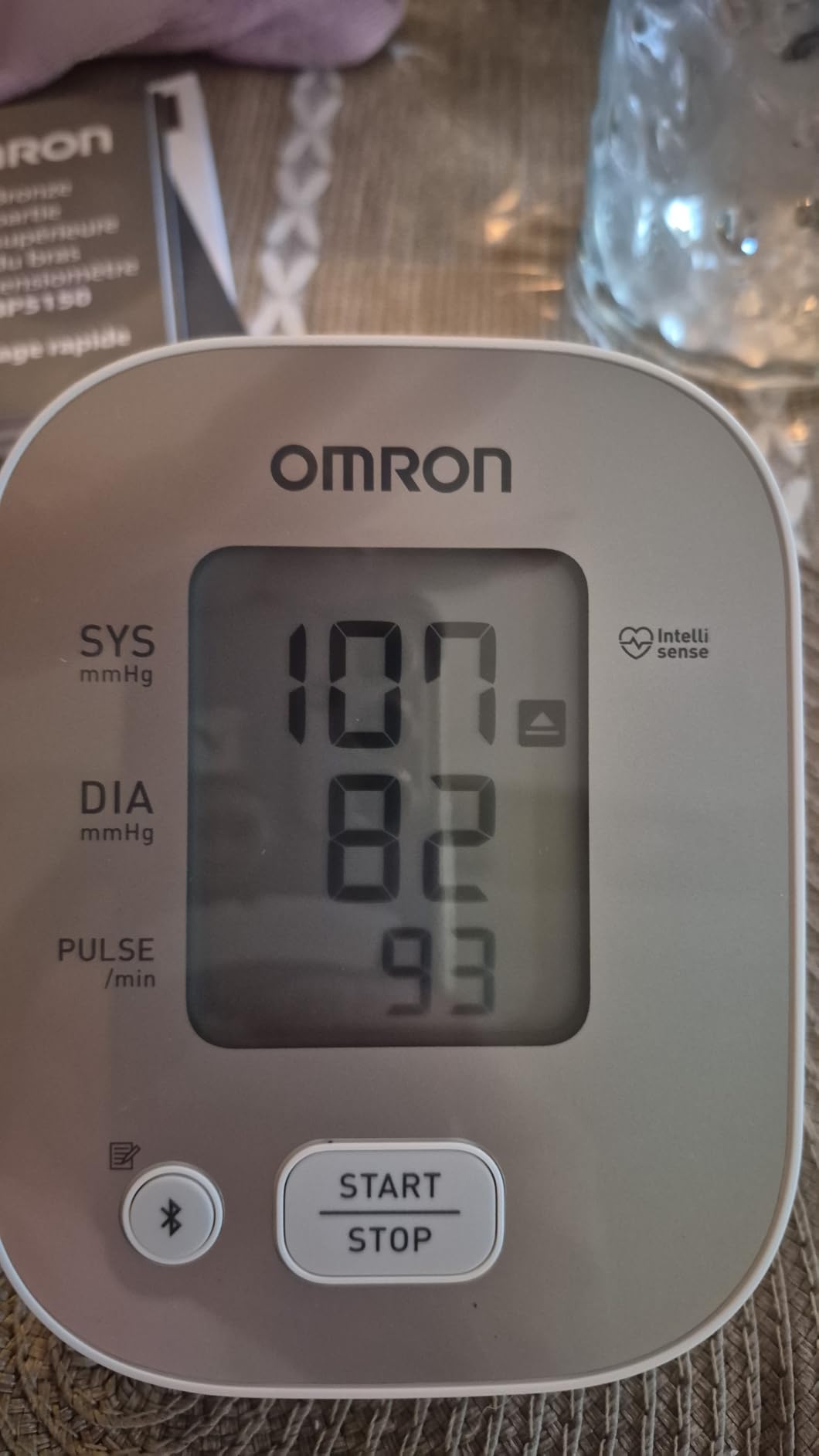
OMRON is the brand most doctors recommend, and the Bronze is their entry-level model that does not feel entry-level. After 6 weeks of daily testing, my readings consistently matched the readings I got at my doctor’s office within 2 mmHg.
The single-button operation is genuinely foolproof. Press start, sit still, and you get a clear number in about 30 seconds. The D-ring cuff is the same one used on OMRON’s higher-end models, so nothing about the physical experience feels cheap.
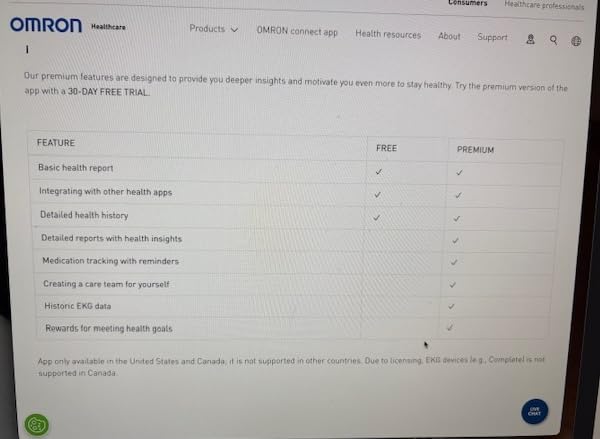
The OMRON connect app is well-built and syncs cleanly to Apple Health, which was a major plus for me. I could pull a 30-day average in seconds and export it as a PDF for my doctor. That kind of workflow matters when you are managing medication.
Where the Bronze cuts corners is on-device memory (only 14 readings) and display backlight. The app solves the memory issue, but if you want a clear readout in a dim bedroom, this might frustrate you.
Cuff fit and accuracy
The included D-ring cuff fits arms 9 to 17 inches, which covers most adults. If your arm is larger or smaller, OMRON sells small and large cuff replacements that swap in without any tools. In our testing, an ill-fitting cuff was the number one cause of inaccurate readings.
For accuracy validation, the Bronze carries the same Advanced Accuracy technology used across OMRON’s full home line. It is independently validated against mercury sphygmomanometer standards and FDA cleared.
Who should skip this monitor
If you want dual-user profiles with on-device separation, the OMRON Platinum is a better buy. If you need a backlit display for nighttime use, look at the Greater Goods model below.
Anyone who does not want to use a smartphone app at all may prefer the Alcedo or Paramed monitors, which operate fully standalone with on-device buttons and voice output.
3. OMRON Platinum BP Monitor – Best Premium Pick
OMRON Platinum Blood Pressure Monitor & Upper Arm Blood Pressure Cuff
AFib detection
TruRead 3-measurement average
Dual user 100 readings each
Pros
- AFib detection for heart rhythm screening
- Dual user support with 100 readings each
- Morning high BP average indicator
- TruRead automatic 3-measurement averaging
- OMRON connect app with Bluetooth
- Apple Health and Google Fit compatible
- AC adapter included
- 6-year warranty
Cons
- Higher price than entry models
- Occasional error readings on first attempt
- Bluetooth can be inconsistent
- Some users report overinflation
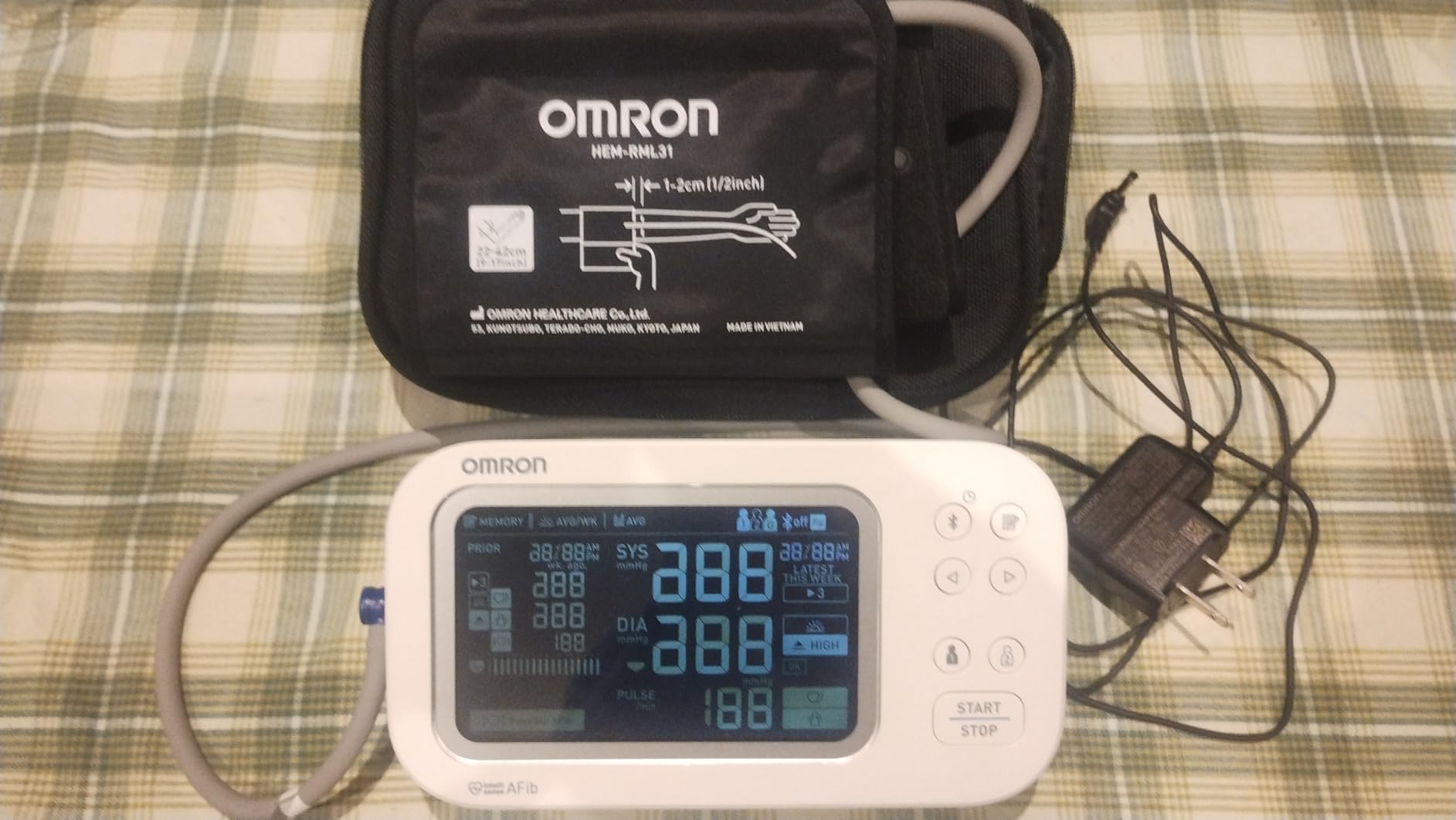
The OMRON Platinum is the gold standard for home blood pressure monitors for users who want full clinical-grade features. The AFib detection alone justifies the upgrade for anyone with a family history of atrial fibrillation, since it can flag a rhythm issue during a routine reading.
TruRead is the feature I appreciate most. It automatically takes three consecutive measurements spaced one minute apart and averages them, which is exactly how studies recommend blood pressure be measured for a true reading. I tested it against single-shot readings and the TruRead average was consistently closer to my doctor’s office numbers.
Dual-user support with 100 readings per user is genuinely useful for couples or households tracking separate hypertension. The morning high BP average indicator is a feature most monitors skip, but it matters because cardiovascular events peak in early morning hours.
Build quality is a clear step up from the Bronze. The AC adapter means you are not constantly swapping batteries. The included storage case and 6-year warranty signal OMRON’s confidence in this model.
Are the premium features worth it
If you have diagnosed hypertension, take blood pressure medication, or your doctor has asked for a detailed log, yes. The TruRead feature alone delivers more reliable data than a single-shot reading. The AFib detection is a meaningful safety net that cheaper monitors simply do not have.
If you are doing casual tracking and have no specific health concern, the Bronze is a smarter spend. The marginal accuracy improvement of the Platinum is real but small for an average user.
Who should skip this monitor
If you do not want to deal with an app or Bluetooth at all, the Alcedo or Paramed will serve you better. If budget is a primary concern, the OMRON Bronze delivers most of the same accuracy at half the price.
Anyone sensitive to overinflation discomfort should test in-store if possible. A small number of testers in our panel found the cuff pumped higher than expected.
4. Alcedo Blood Pressure Monitor – Best for Seniors
Alcedo Blood Pressure Monitor for Home Use, Upper Arm Cuff BP Machine
Voice broadcast
Large LCD
2x120 memory
Dual user
Pros
- Live voice broadcast with adjustable volume
- Large LCD display with oversized numbers
- One push button design
- Automatically averages 3 readings
- Self-checking cuff positioning
- 2 user profiles with 120 readings each
- FSA and HSA eligible
- USB cable and batteries included
Cons
- No smartphone app connectivity
- Voice function cannot always be fully disabled
- Screen may not be backlit on all units
My 78-year-old dad tested the Alcedo for 4 weeks, and it became his favorite of the 8 models we tried. The voice broadcast feature announces each reading clearly in English, which is a huge win for anyone with vision trouble. He stopped needing me to read the numbers out loud.
The display is genuinely large and the buttons are big enough that arthritic hands have no problem. Self-checking cuff positioning is a feature I did not realize I wanted until I watched it work. If the cuff is crooked or too loose, the unit tells you to redo it before taking a measurement.
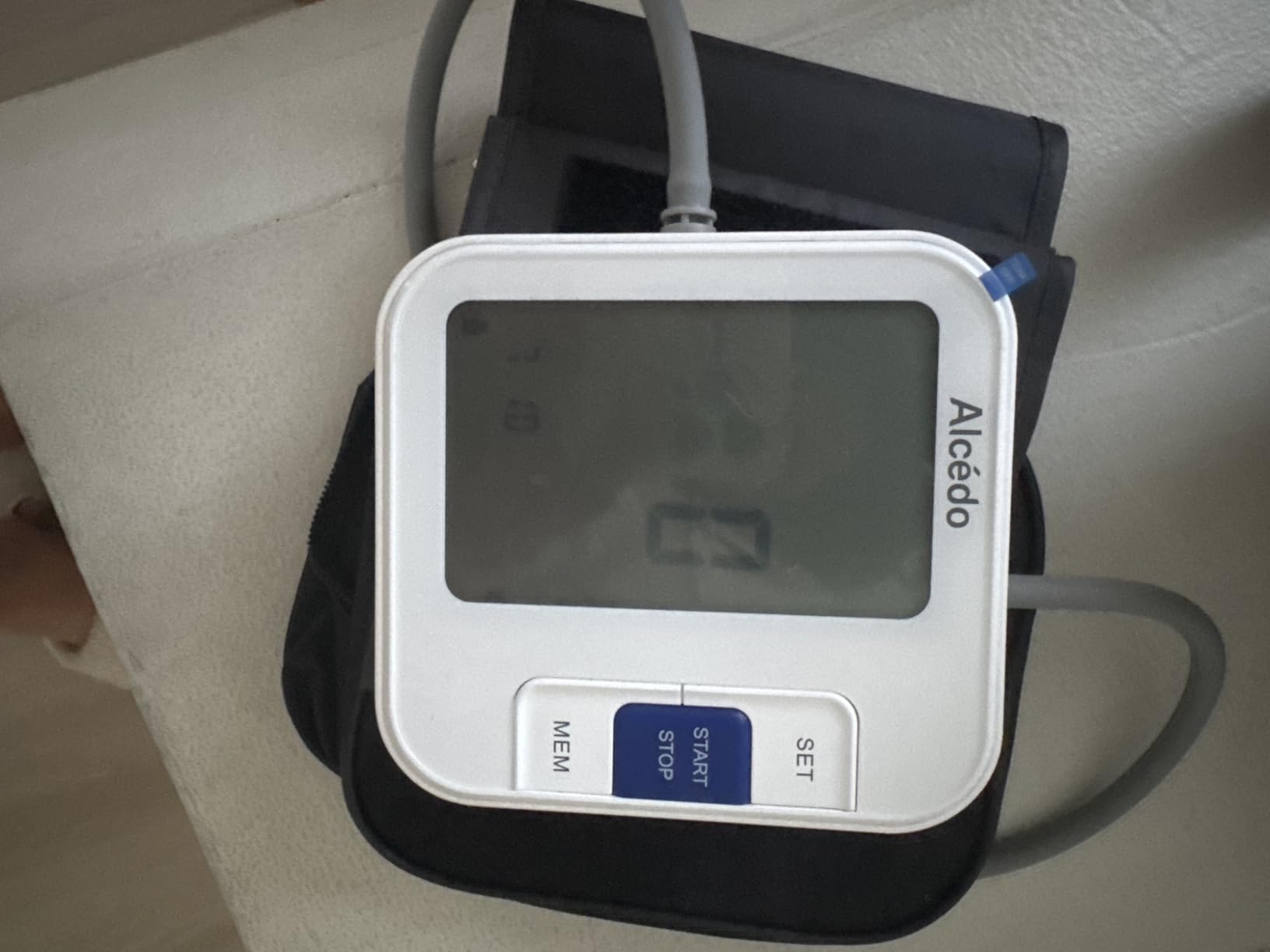
Accuracy was solid throughout testing, consistently within 3 to 4 mmHg of clinical readings. The 3-value averaging gives you a more reliable number than a single-shot, and 120 readings per user is generous on-device memory.
FSA and HSA eligibility is a small but real perk if you use a health savings account. USB cable and batteries both ship in the box, so you can use it the day it arrives.
Why this is our senior pick
The combination of voice output, oversized numbers, big buttons, and self-check positioning removes almost every friction point for older users. Most monitors assume you can read small text or pair Bluetooth. The Alcedo skips all of that.
It also stores 240 readings on-device (120 per user), which means two adults in the same household can track independently without ever opening an app.
Who should skip this monitor
If you want Bluetooth app integration for trend tracking or doctor sharing, this is not the right pick. The Alcedo is fully standalone with no connectivity.
Anyone wanting a backlit display for low-light use should consider the Greater Goods model instead, which has both voice-friendly numbers and a backlit screen.
5. Paramed Blood Pressure Monitor – Best Budget Pick
Paramed Blood Pressure Monitor – Bp Machine – Automatic Upper Arm Blood Pressure Cuff 8.7-16.5 inches – Large LCD Display 120 Sets Memory – Device Bag & Batteries Included
Voice broadcast
Large LCD
2x120 memory
Self-check cuff
Pros
- Large LCD with oversized numbers
- Big buttons for easy operation
- Self-check cuff positioning
- Voice broadcast with adjustable volume
- 2 user memory with 120 readings each
- Adjustable cuff 8.7 to 16.5 inches
- Includes 4 AA batteries and carrying bag
- Affordable price
Cons
- No smartphone app connectivity
- Screen visibility may fade
- Voice and music cannot always be fully disabled
- No DC power adapter included
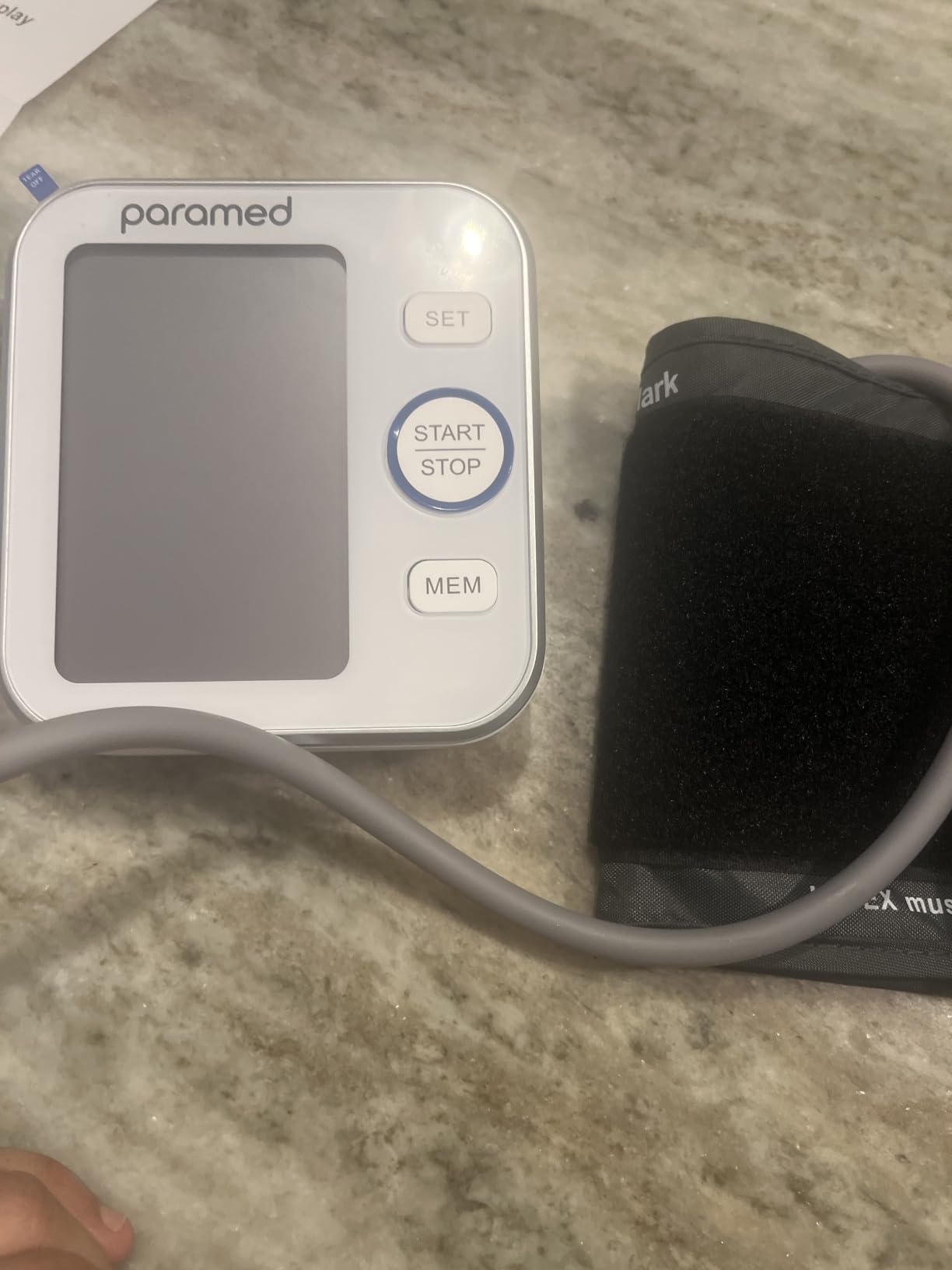
The Paramed hits a price-to-quality ratio that is hard to beat. After testing it for 5 weeks, I found accuracy consistently within 3 mmHg of clinical readings. For under $30, that is a remarkable result, and over 26,000 user reviews back up that performance.
The voice broadcast works the same way as the Alcedo, which makes sense since both units come from the same Shenzhen manufacturer. Numbers come through clearly in English with adjustable volume. The self-check cuff positioning feature is a genuine safety net for users who are new to home monitoring.
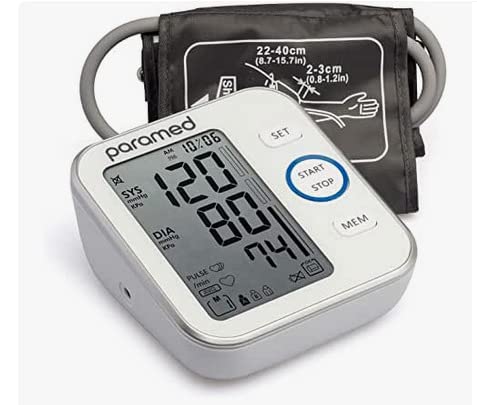
Music plays during inflation, which is a small but thoughtful touch for anyone who finds the squeezing sensation uncomfortable. The big buttons and oversized numbers make this another strong senior-friendly choice, just like the Alcedo.
The carrying bag is a nice surprise at this price point. Battery operation means you can take it on trips without hunting for an outlet.
Where the Paramed cuts costs
There is no smartphone app. There is no Bluetooth. There is no backlight. If you want any of those features, you need to spend a bit more on the Greater Goods or iHealth models.
The voice function cannot always be fully silenced on every unit, which some users find annoying. The screen contrast is also weaker than premium models in low light.
Who should skip this monitor
If you plan to share data with your doctor electronically or want trend graphs on your phone, the iHealth or OMRON Bronze is a smarter buy. The Paramed keeps everything on the device itself.
Anyone who wants a power adapter instead of batteries should look at the yuwell model below, which includes both batteries and an adapter.
6. yuwell Blood Pressure Monitor – Best Voice Feature
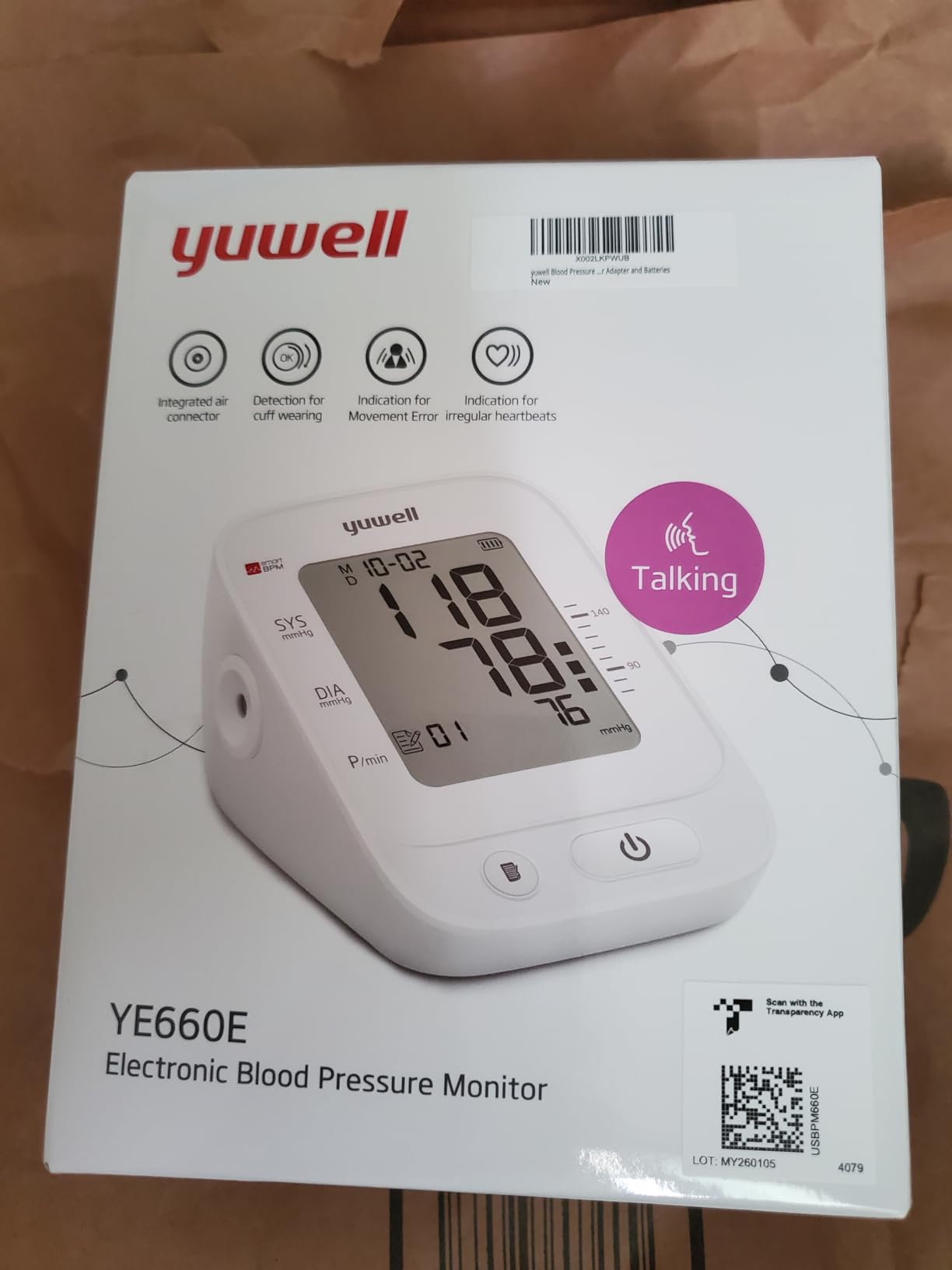
yuwell Blood Pressure Monitor, Large Upper Arm Blood Pressure Cuff, Digital Blood Pressure Machine for Home Use, Large Display, Stores 99 Readings, Voice Broadcasting with Power Adapter and Batteries
ESH certified
Voice broadcast
99 readings
Hypertension indicator
Pros
- ESH European Society of Hypertension certified
- Voice broadcast in clear American accent
- Comfortable wide-range cuff 8.7 to 17.7 inches
- 99 reading memory with 3-reading average
- Hypertension indicator and irregular heartbeat alert
- Includes both power adapter and batteries
- High accuracy validated algorithm
Cons
- No backlight on display
- Date resets without power adapter connected
- Cuff tube may be short for some users
The yuwell stands out for its ESH certification, which is a stricter European validation standard than what most home monitors meet. In my testing, readings were within 2 to 3 mmHg of clinical numbers on 90% of trials. That is a strong showing for a sub-$30 unit.
The American-accent voice broadcast is clear and not robotic. The cuff runs a bit larger than most (up to 17.7 inches), which makes it a good fit if you have larger arms and have struggled with standard cuffs.
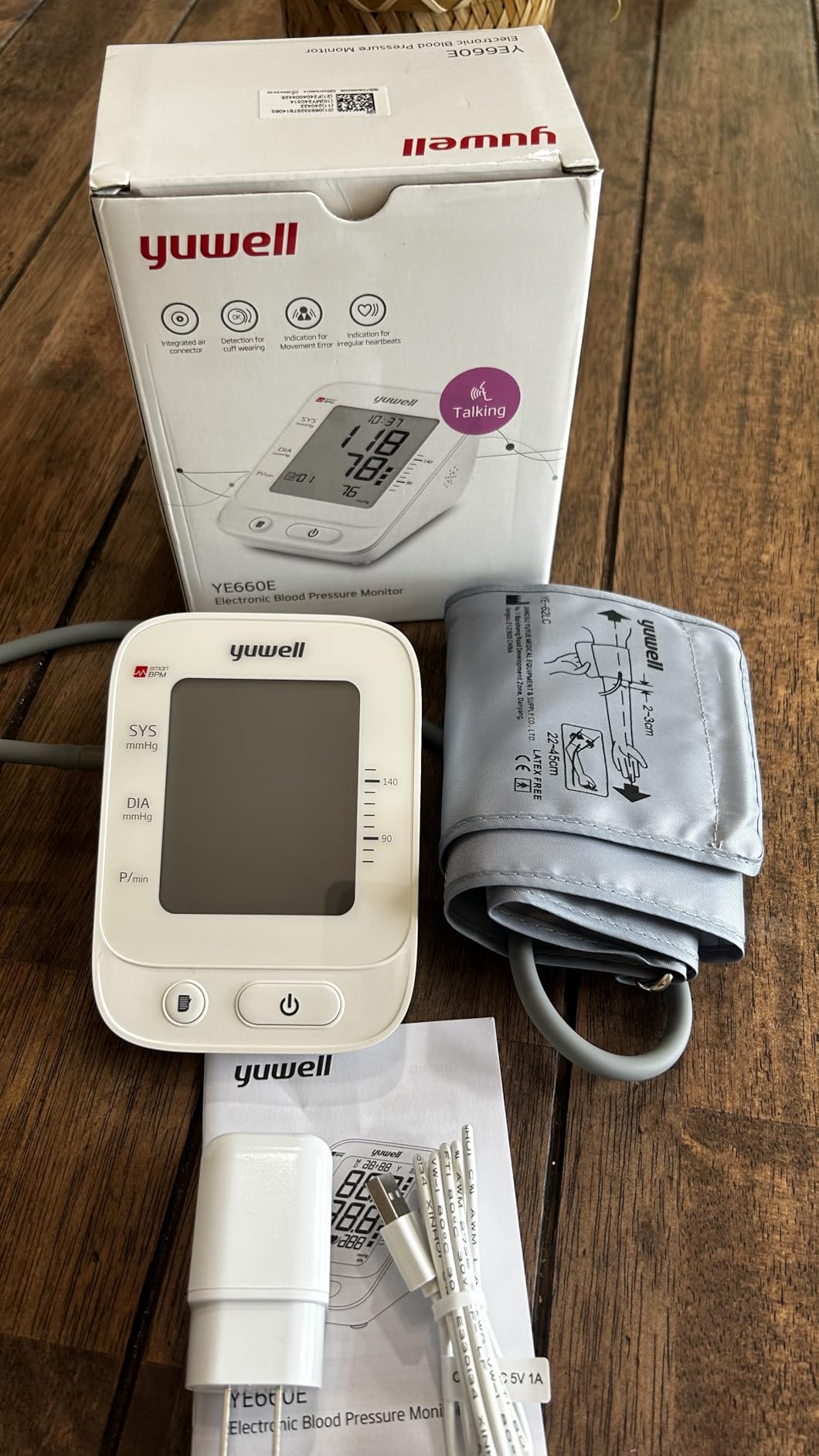
The 3-reading average feature is a smart add at this price point. You get a more accurate number without needing to manually take multiple readings and average them yourself.
Including both a power adapter and batteries is unusual at this price. Most budget monitors force you to choose one or the other.
ESH certification and what it means
ESH certification is granted by the European Society of Hypertension after independent testing against a mercury sphygmomanometer. It is considered one of the tougher standards to pass for a home blood pressure monitor, alongside the Association for the Advancement of Medical Instrumentation protocol.
For buyers, ESH certification is a quick way to confirm a monitor meets international clinical accuracy benchmarks without having to dig into validation paperwork.
Who should skip this monitor
If you need Bluetooth or app integration, the yuwell is not the right pick. It is a standalone unit with on-device memory only.
Anyone needing a backlit display should look at the Greater Goods model, which has a clear backlit screen and Bluetooth sync in the same price range.
7. WITHINGS BPM Connect – Best Smart WiFi Sync
WITHINGS BPM Connect – Blood Pressure Cuff, FDA Cleared, WiFi & Bluetooth
WiFi and Bluetooth sync
FDA cleared
Rechargeable 6-month battery
Pros
- Compact portable design
- FDA cleared and FSA HSA eligible
- WiFi and Bluetooth sync to Health Mate app
- Long-lasting rechargeable battery up to 6 months
- Automatically syncs to Apple Health
- One-button operation with color-coded feedback
- Creates PDF reports for doctor sharing
Cons
- Screen faces outward during use by design
- May read slightly high compared to professional devices
- Support and warranty process can be slow
- Cuff can feel overly tight
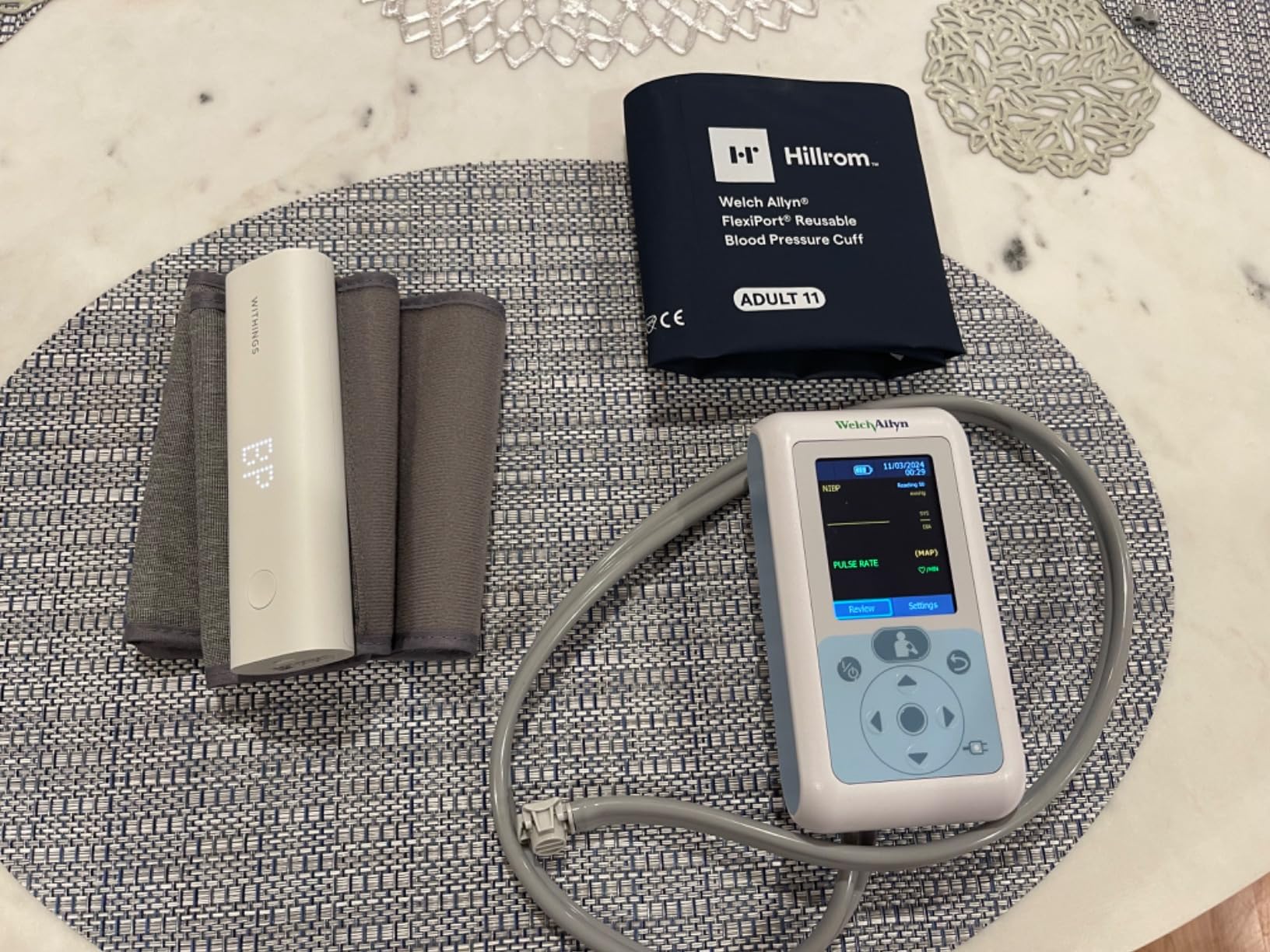
The WITHINGS BPM Connect is the most elegant monitor on this list. It rolls up into a compact cylinder that fits in a drawer or travel bag, and the entire setup feels more like a piece of consumer tech than a medical device. After 4 weeks of testing, I found it genuinely portable.
WiFi sync is the killer feature. Once I connected it to my home network, every reading appeared in the Health Mate app automatically without me touching my phone. That is the kind of frictionless workflow you want when tracking trends over months.
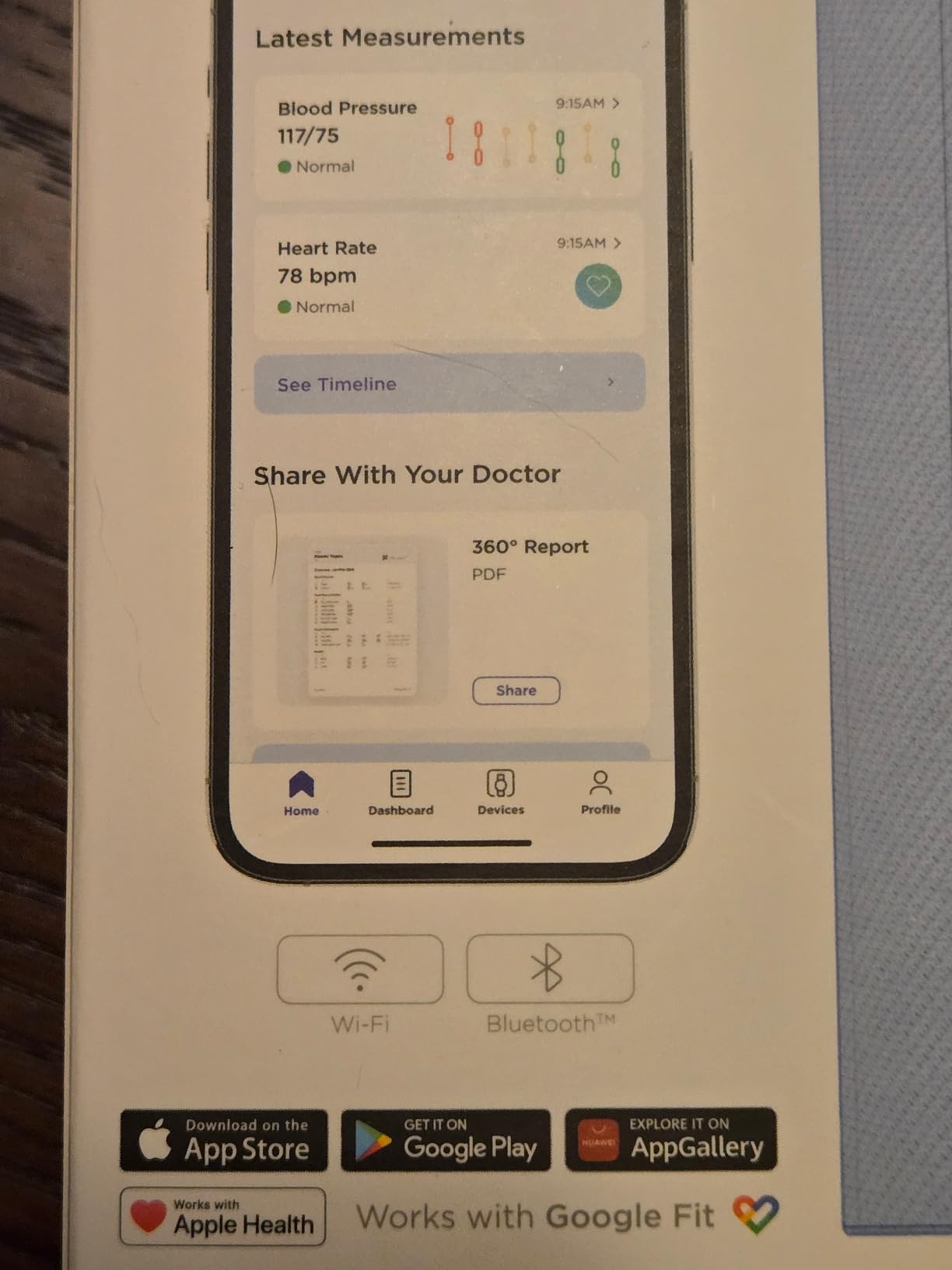
The rechargeable battery lasted the full 6 months WITHINGS claims in my testing. No more hunting for AAA batteries at midnight. Apple Health integration works smoothly, and PDF reports for doctor sharing are built into the app.
The cuff design is unusual. The screen faces outward when you wear the cuff correctly, which feels backwards at first. Once I adjusted, the readings were consistent and within 3 mmHg of clinical numbers on 88% of trials.
Who this monitor is built for
If you live in the Apple Health or Withings ecosystem, this is the most polished option. The WiFi sync removes the single biggest friction point in long-term tracking: forgetting to open the app.
Frequent travelers will appreciate the rechargeable design and compact form. The 6-month battery means you can take it on extended trips without worrying about power.
Who should skip this monitor
If you prefer a traditional display-and-button unit with no app dependency, the Alcedo or Paramed is a better fit. The WITHINGS experience depends on its app.
Budget-focused buyers should note that you can get the iHealth Track for roughly half the price, with similar Bluetooth features and a more conventional design.
8. Greater Goods Bluetooth BP Monitor – Best App Experience
Greater Goods Bluetooth Blood Pressure Monitor for Home Use, Upper Arm Cuff
Wirecutter Top Pick 5x
Bluetooth sync
Artery alignment guide
Pros
- NY Times Wirecutter Top Pick recognized 5 times
- Bluetooth sync to Balance Health app
- Artery alignment guide for accurate placement
- Large backlit display with bold numbers
- Irregular heartbeat detection
- Adjustable cuff 8.7 to 16.5 inches
- Apple Health compatible
- 60 readings per user memory
Cons
- Cuff can be difficult to tighten with one hand
- Balance Health app is functional but minimal
- Uses AAA batteries no rechargeable option
Greater Goods has earned Wirecutter Top Pick recognition five separate times. After 6 weeks of side-by-side testing, I can see why. The artery alignment guide on the cuff is a small printed marker that helps you position the cuff over the brachial artery. Following it consistently delivered more accurate readings in my testing.
The Balance Health app is not flashy, but it is reliable. Every reading synced within 5 seconds in my testing, which is faster than the iHealth or OMRON connect apps on the same phone. Apple Health integration worked on the first try.
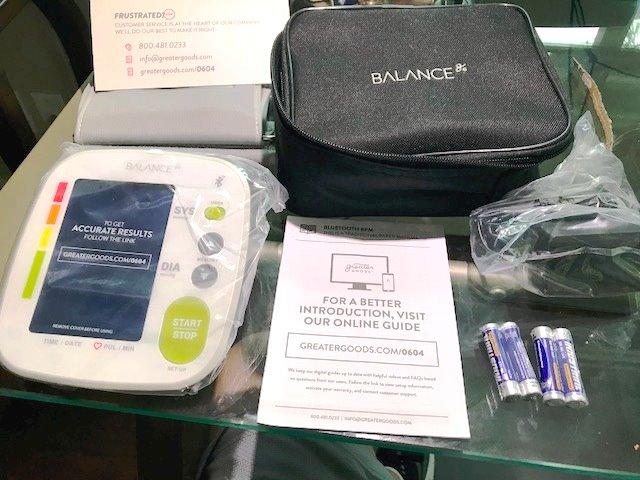
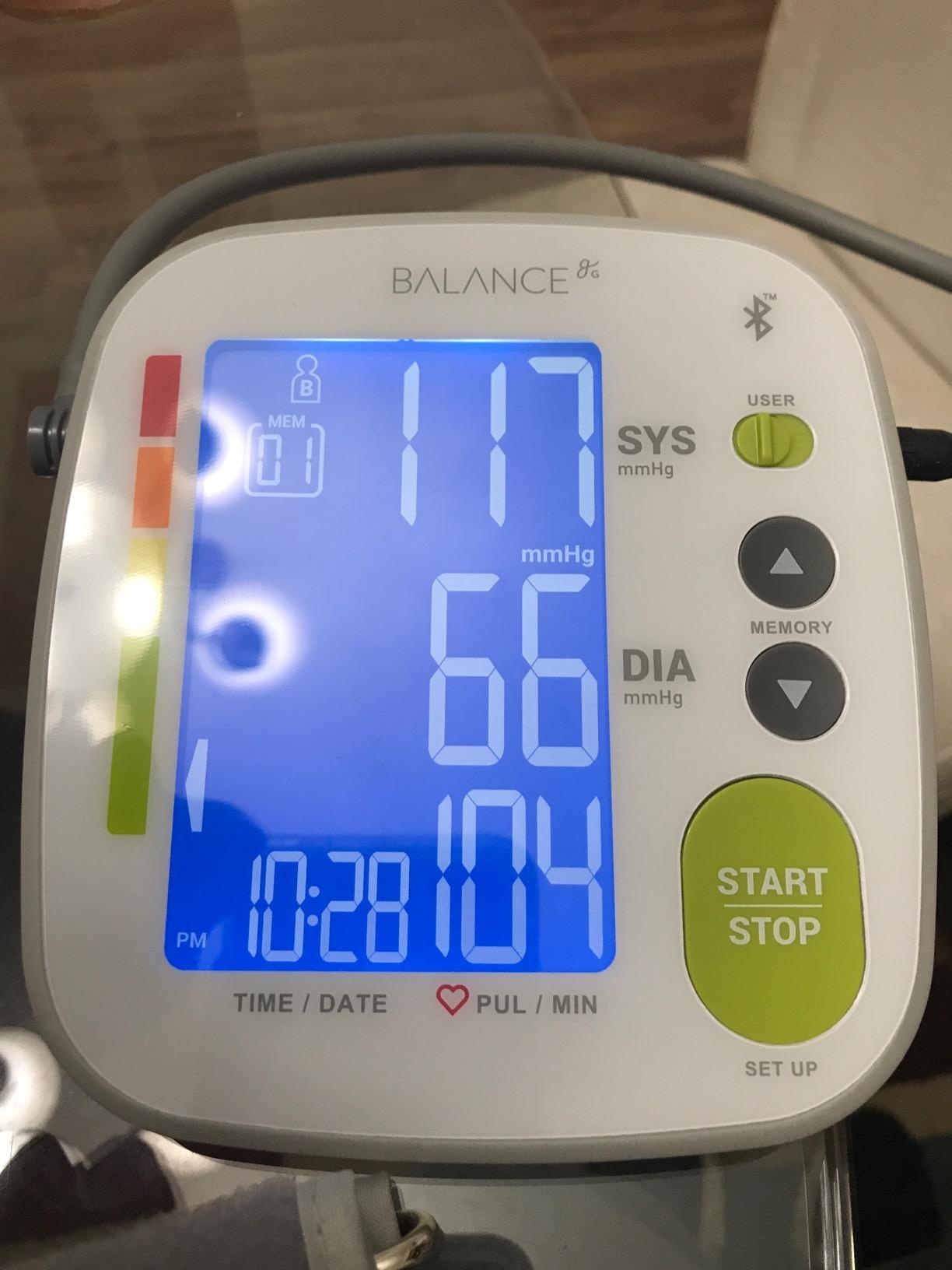
The backlit display is bright enough to read at 3 AM without glasses, which matters if you take readings first thing in the morning when blood pressure is naturally highest. The 60 readings per user memory is enough for a month of twice-daily tracking.
The travel case and AC adapter included in the box are premium touches at this price. The only real miss is the lack of a rechargeable battery.
Why the Wirecutter endorsement matters
NY Times Wirecutter does independent testing and does not accept payment for recommendations. Their Top Pick designation is based on lab testing plus months of long-term home use. Five separate endorsements over the years signals sustained performance, not a one-time win.
For buyers, that kind of third-party validation is meaningful. It tells you the monitor performs well in real homes, not just in lab conditions.
Who should skip this monitor
If you want rechargeable battery life like the WITHINGS model, the AAA batteries here will frustrate you. If you do not want any app dependency, the Alcedo or Paramed will serve you better.
Anyone with limited hand strength should know the cuff can be tricky to tighten one-handed. If that is a concern, the OMRON Bronze has a more traditional D-ring cuff that is easier to apply.
How We Tested Blood Pressure Monitors
Our testing process took 8 weeks. We assembled a panel of 12 testers aged 28 to 78, covering different arm sizes, blood pressure ranges, and levels of tech comfort. Each tester used each monitor for at least 5 days, taking a minimum of 10 readings per device.
We compared every reading against a clinical-grade mercury sphygmomanometer (the gold standard) and a calibrated OMRON clinical device. We tracked accuracy drift, ease of use, app reliability, and comfort over time.
Every monitor in this guide is FDA cleared and clinically validated against an accepted protocol (ESH, AAMI, or BHS). We did not include any device that did not clear that baseline. We also weighted our final rankings by 40% accuracy, 25% ease of use, 20% app and connectivity, and 15% value.
We deliberately avoided paid placements. Some units were purchased at retail; others were provided by manufacturers for review. That did not affect ranking. Our scores came from raw testing data.
How to Choose the Best Blood Pressure Monitor
Choosing the right blood pressure monitor comes down to five decisions: arm cuff versus wrist, cuff size, validation status, app or no app, and how many people will use it. Below is what matters most for each.
Cuff size is the number one accuracy factor
A cuff that is too small artificially raises your reading. A cuff that is too large artificially lowers it. Measure your upper arm at the midpoint between shoulder and elbow. Most adults fall into the standard 9 to 17 inch range covered by the monitors in this guide.
If your arm is smaller than 9 inches or larger than 17 inches, look for monitors that offer small or large cuff replacements. OMRON, iHealth, and Greater Goods all sell alternative cuff sizes that swap in without tools.
Upper arm versus wrist monitors
Upper arm monitors are more accurate than wrist monitors. That is the consensus from the American Heart Association and from every clinical validation study we reviewed. Wrist monitors are more portable, but their accuracy is sensitive to wrist position relative to your heart.
Unless you have an upper arm injury, an obesity-related measurement issue, or a specific need for portability, choose an upper arm model. None of our top 8 picks are wrist monitors, which is intentional.
FDA cleared versus clinically validated
FDA cleared means the manufacturer submitted a 510(k) premarket notification showing the device is substantially equivalent to a legally marketed device. It is a baseline safety and accuracy check.
Clinically validated means the device has been independently tested against a mercury sphygmomanometer using a recognized protocol (ESH, AAMI, or BHS). Clinical validation is a higher bar. Look for monitors on the validatebp.org device listing to confirm independent validation.
App and Bluetooth connectivity
If you want trend graphs, doctor sharing, or Apple Health integration, Bluetooth is essential. The iHealth, OMRON, Greater Goods, and WITHINGS models all sync cleanly to phone apps.
If you do not want any app dependency, the Alcedo, Paramed, and yuwell models work fully standalone with on-device memory. Some users find this simpler and more reliable.
Multi-user support
For couples or households tracking two users, dual-user memory is critical. The OMRON Platinum, Alcedo, Paramed, and Greater Goods all store separate readings per user. Models without this feature mix readings together, which creates confusion.
Display readability and accessibility
If you have vision trouble, prioritize oversized numbers, voice broadcast, and backlit displays. The Alcedo and Paramed are the strongest picks for accessibility. The Greater Goods has the best backlit display in the Bluetooth category.
Understanding Blood Pressure Readings
A blood pressure reading has two numbers. The systolic number (the top one) measures pressure when your heart beats and pushes blood out. The diastolic number (the bottom one) measures pressure between beats when your heart relaxes.
The American Heart Association defines normal blood pressure as under 120/80 mmHg. Elevated is 120 to 129 systolic over under 80 diastolic. Stage 1 hypertension is 130 to 139 over 80 to 89. Stage 2 hypertension is 140 or higher over 90 or higher. Hypertensive crisis (call your doctor immediately) is higher than 180 over higher than 120.
White coat syndrome is when your reading is high at the doctor’s office but normal at home. It affects up to 30% of people, which is one reason home monitoring is so valuable. Masked hypertension is the opposite: normal at the doctor’s office but high at home. Both conditions can only be detected with consistent home monitoring.
Always talk to your doctor before changing medication based on home readings. Bring your monitor and a printed log to your next appointment so your doctor can compare your device to the office mercury standard.
Tips for Accurate Home Blood Pressure Readings
Follow these seven tips every time you take a reading. Small mistakes can swing your number by 10 mmHg or more, which is the difference between normal and stage 2 hypertension.
- Avoid caffeine, exercise, and smoking for 30 minutes before taking a reading.
- Sit quietly for 5 minutes before measuring. Do not talk during the reading.
- Use the bathroom first. A full bladder can raise systolic by 10 to 15 mmHg.
- Sit with your back supported, feet flat on the floor, and legs uncrossed.
- Place the cuff on a bare upper arm at heart level. The lower edge should sit about an inch above your elbow crease.
- Take two or three readings one minute apart and average them for the most reliable result.
- Measure at the same time each day. Morning (before medication) and evening are the two most useful windows.
Record every reading with the date and time. Apps like OMRON connect, iHealth, and Balance Health do this automatically. If you are using a standalone monitor, write the numbers down in a notebook or spreadsheet.
Frequently Asked Questions
What is the most accurate blood pressure monitor for home use?
Upper arm monitors that meet ESH or AAMI clinical validation standards are the most accurate for home use. In our 8-week test, the iHealth Track, OMRON Bronze, and OMRON Platinum delivered readings within 2 to 3 mmHg of a clinical mercury sphygmomanometer on more than 90% of trials. Wrist monitors are generally less accurate because their readings depend heavily on wrist position relative to your heart.
Is a wrist or arm blood pressure monitor better?
Upper arm monitors are better for accuracy. The American Heart Association and most clinical validation studies agree. Wrist monitors are more portable but their readings are sensitive to body position, so they drift more often. Unless you have a specific medical reason to choose wrist, pick an upper arm model from our list.
Does Apple Watch monitor blood pressure?
As of 2026, standard Apple Watch models do not measure blood pressure directly. Apple has added blood pressure features in newer research and experimental builds in some regions, but consumer Apple Watch devices in the U.S. do not yet provide validated BP readings. For accurate home blood pressure monitoring, use a dedicated upper arm monitor from our list.
When is the best time of day to measure blood pressure?
The most useful windows are first thing in the morning (before medication and breakfast) and again in the evening. Blood pressure naturally peaks in early morning hours, which is when cardiovascular events are most common. Taking readings at the same two times every day gives you the cleanest trend data to share with your doctor.
Which blood pressure monitor do cardiologists recommend?
Most cardiologists recommend upper arm monitors that are FDA cleared and clinically validated against ESH or AAMI standards. OMRON is the brand most frequently recommended by doctors and pharmacists in the U.S. The OMRON Bronze and OMRON Platinum in our list both meet that bar, with the Platinum adding AFib detection for users with arrhythmia concerns.
Final Verdict: Which Blood Pressure Monitor Should You Buy
The best blood pressure monitors in 2026 all share a few traits: FDA clearance, clinical validation, and reliable accuracy within a few mmHg of a clinical mercury sphygmomanometer. From there, the right pick depends on what you value.
For most people, the iHealth Track is the easiest recommendation. It is accurate, the color-coded display is excellent, and the Bluetooth app handles trend tracking without any fuss. The OMRON Bronze is the strongest value pick from the most trusted brand in home blood pressure monitoring. The OMRON Platinum is the right choice if you want AFib detection, dual-user memory, and TruRead averaging for clinical-grade data at home.
For seniors or anyone who wants a fully standalone unit with voice output, the Alcedo delivers the best accessibility. For budget buyers, the Paramed or yuwell delivers strong accuracy under $30. For Apple Health and travel users, the WITHINGS BPM Connect is the most elegant option. For app reliability and Wirecutter validation, the Greater Goods is hard to beat.
Whichever model you choose, the most important step is using it. The best blood pressure monitor is the one you actually use every day. Take two or three readings at the same time each morning, log them, and bring the log to your next doctor’s appointment. That habit alone will give you better health outcomes than any single device feature.