
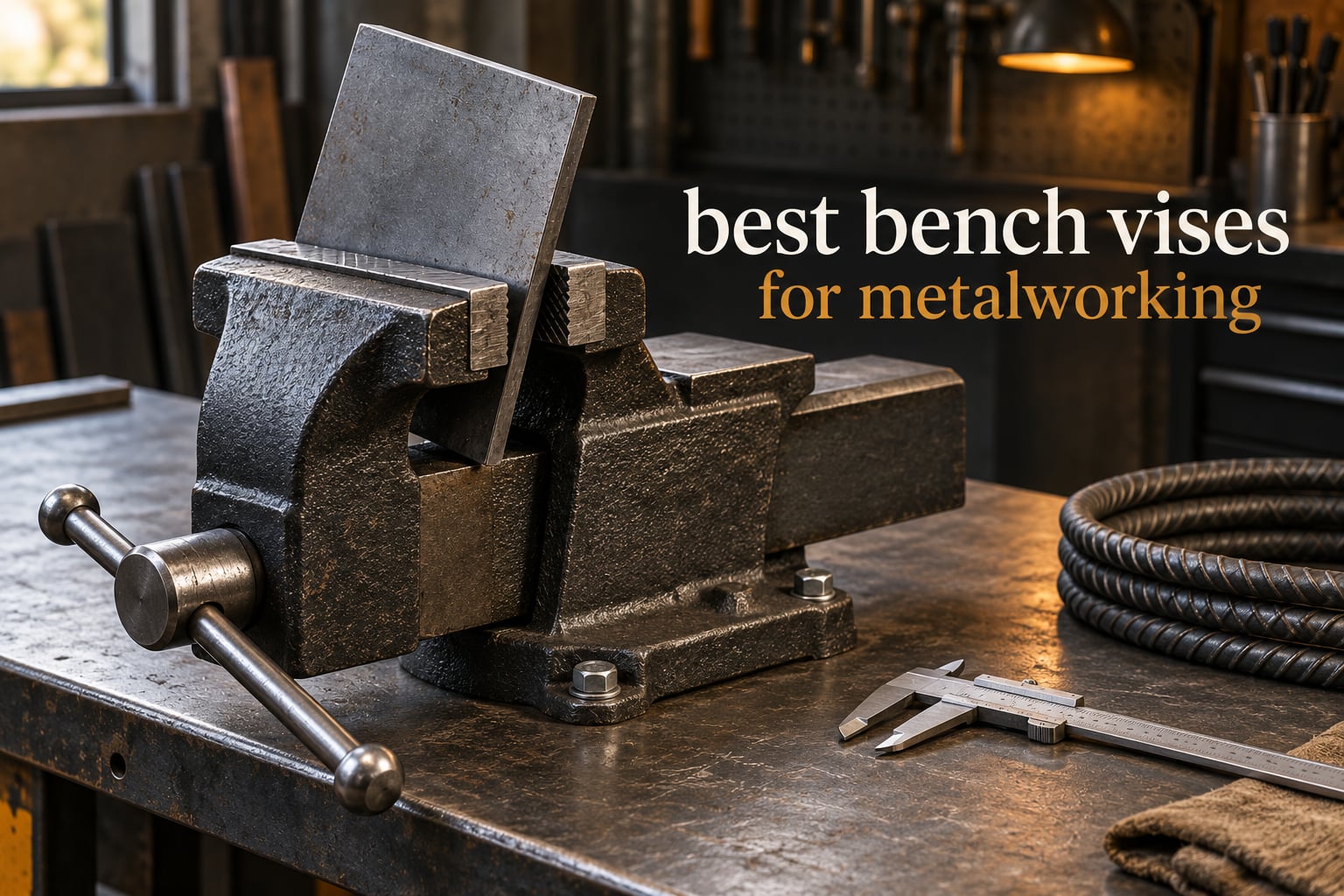
A bench vise is the one tool that decides whether a metalworking project ends straight or crooked. Clamp a workpiece properly and your drill bit, hacksaw or grinder works on material that stays exactly where you put it. Clamp it badly and the work twists, the bit grabs, and you get a snapped cutter and a ruined part. Every one of the ten vises below was picked for metalwork first, not woodworking, and each has a spec sheet behind it rather than a marketing line.
Our top pick for the best bench vises for metalworking is the Forward DT08125A, a 5-inch ductile iron engineering vise with three interchangeable jaw sets and a rotating head. It has the highest rating and the largest review base of anything we looked at, which matters because a vise is a long-term purchase and you are buying the screw, the jaw parallelism and the mounting hardware as much as the casting.
We also flag what each vise costs you in trade-offs. A cheap imported vise will out-clamp an expensive one and still lose points on jaw squareness, screw backlash and the bolts supplied in the box. Read the jaw width, throat depth and mounting notes for each entry, then pick the one whose weaknesses match the work you actually do. If you grind or sharpen metal nearby too, our bench grinder roundup covers the other half of that bench setup.
Table of Contents
How We Chose These Ten Bench Vises?
We built this list around published specifications first, then owner feedback second. Every product here has a stated jaw width, jaw opening, throat depth, material and weight from the manufacturer, and those numbers are reproduced below without rounding them into marketing language.
Our criteria were simple. We wanted vises with serrated or replaceable jaws rather than fixed textured faces, because fixed jaws cannot be re-dressed when they wear flat. We wanted stated clamp force, since an unrated vise gives you no way to compare it against the next one. We weighted replaceable jaws highly because a one-piece forged body locks you into factory replacement forever. And we kept the list metalworking-only, which rules out face vises and wooden screw vises entirely.
On ownership reports, we looked for long-term data rather than first-week impressions. A vise that feels great on day one and develops play at the swivel joint two years later is a worse buy than one that feels solid immediately. Where owners disagree, we say so.
Top 3 Best Bench Vises for Metalworking in 2026
The Forward DT08125A takes the top slot on the strength of its 4.8 rating across roughly 2000 reviews, three jaw sets and a rotating head that indexes in both axes. The VEVOR 6-inch is the budget pick when capacity matters most, and the Forward CR40A is the one to buy if a compact bench and the highest stated clamp force in the group matter more than articulation.
Forward DT08125A 5 Inch Vise
- 5 inch jaw with 5500 lb clamp force
- Three jaw sets including pipe and V-jaws
- 360-degree rotating head and swivel base

VEVOR 6 Inch Bench Vise
- 6 inch jaw and 5.9 inch opening
- 360-degree swivel base with dual locks
- Includes magnetic soft jaw pads

Forward CR40A 4.5 Inch Vise
- 4.5 inch jaw with full 5 inch opening
- 6600 lb clamp force
- 210-degree swivel base with anvil
Best Bench Vises for Metalworking at a Glance (October 2026)
This table lists all ten vises with the figures you should compare before buying. Jaw width sets the size of material you can clamp face-on, throat depth decides how tall a workpiece you can hold without it twisting, and the swivel column tells you whether you can reposition a part without unclamping.
| Product | Specifications | Action |
|---|---|---|
| Forward DT08125A 5 Inch Vise |
|
Check Latest Price |
| VEVOR 6 Inch Bench Vise |
|
Check Latest Price |
| Forward CR40A 4.5 Inch Vise |
|
Check Latest Price |
 Wilton WS5 Shop Vise Wilton WS5 Shop Vise |
|
Check Latest Price |
 Yost 750-DI Multi-Jaw Vise Yost 750-DI Multi-Jaw Vise |
|
Check Latest Price |
 Wilton 550P Multi-Purpose Vise Wilton 550P Multi-Purpose Vise |
|
Check Latest Price |
 IRWIN 5 Inch Multi-Purpose Vise IRWIN 5 Inch Multi-Purpose Vise |
|
Check Latest Price |
 Stanley MaxSteel 5 Inch Vise Stanley MaxSteel 5 Inch Vise |
|
Check Latest Price |
 PONY 5 Inch Heavy Duty Vise PONY 5 Inch Heavy Duty Vise |
|
Check Latest Price |
 Wilton 745 Mechanics Vise Wilton 745 Mechanics Vise |
|
Check Latest Price |
1. Forward DT08125A 5 Inch Vise: Best Overall for Metalworking
Forward DT08125A 5 Inch Heavy Duty Bench Vise with 360°Swivel Base and Head
Jaw 5 in
Opening 5 in
Throat 2.6 in
Clamp 5500 lb
33 lbs
60k PSI ductile iron
Pros
- 4.8 stars across nearly 2000 reviews
- Three jaw sets: microgroove
- pipe and V-jaws
- Rotating head plus swivel base
- Large reinforced anvil
- Mounting bolts included
Cons
- Rotating joints can develop play with age
- Jaw parallelism is adequate not precision grade
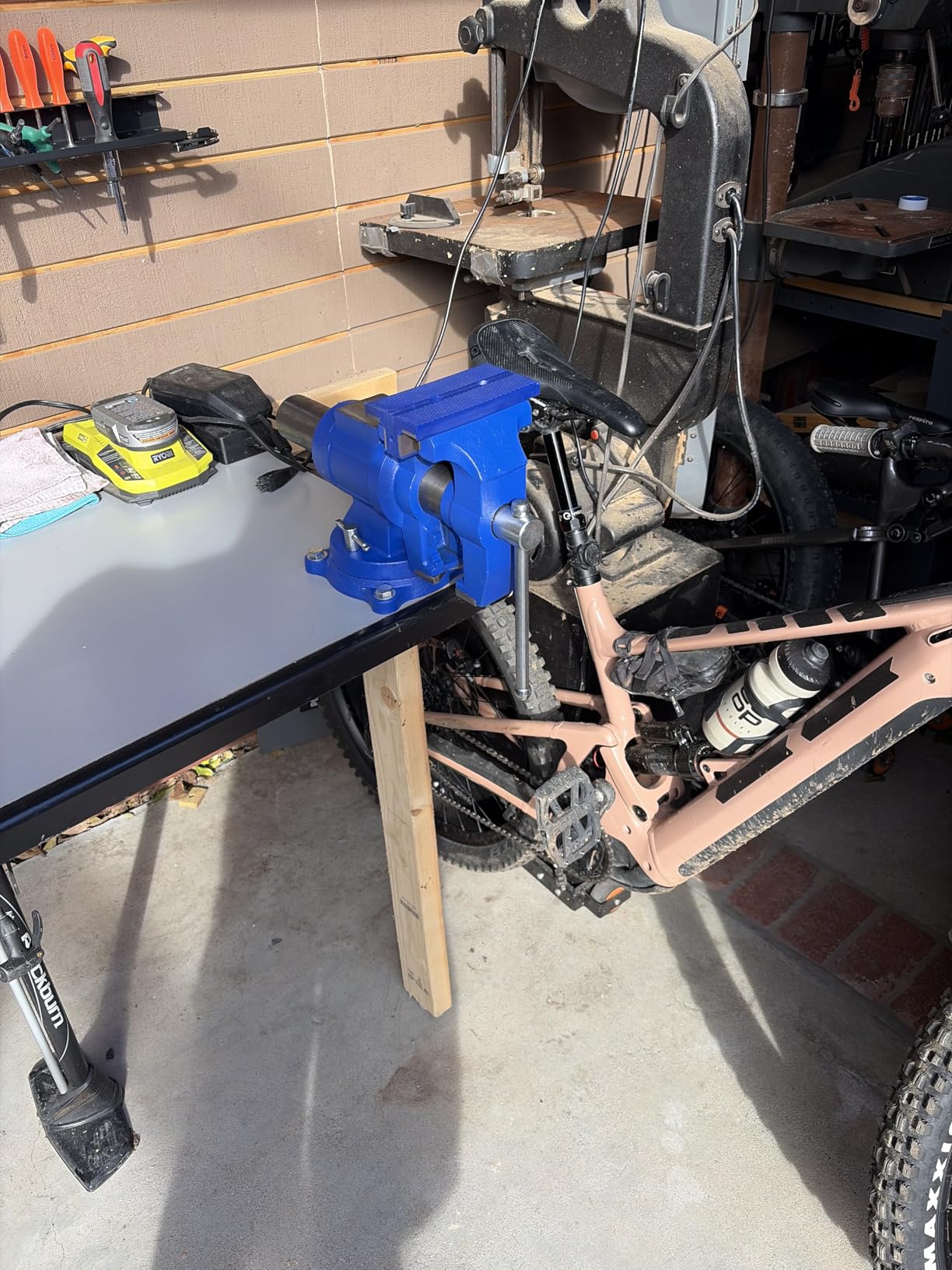
The DT08125A is the vise we would put on our own bench without hesitating. The casting is 60,000 PSI ductile iron rather than grey cast iron, which means it survives being dropped, leaned on and used as an anvil without chipping the way a cheaper iron casting will. At 33 pounds it is heavy enough to feel bolted down even when you have not bolted it down yet.
What separates it from ordinary 5-inch vises is the jaw system. You get three sets of machined jaws: replaceable microgroove top jaws for general clamping, built-in pipe jaws covering 3/5 inch to 2-1/2 inch, and V-jaws for round bar. Most competitors at this capacity ship one jaw set and charge you for a second.
The rotating head and the swivel base both turn through 360 degrees, so a bracket that would be awkward at one angle can be turned ninety degrees without you unclamping and re-clamping. Owners report the lead screw running smoothly and the slide staying quiet, which is the thing that ages worst on cheap vises.
One caution worth stating plainly. This is an engineering vise, not a precision machinist vise, so the jaws are adequate rather than ground to a fine standard. If you need to drill a hole dead square in a machined face, use a machinist vise. For sawing, filing, grinding, drilling, tapping and general holding, it is very hard to argue with.
Who the Forward DT08125A suits
It suits the garage shop that does mixed work: one day a bracket for a truck, the next a cut length of conduit or a round bar turned in a vice. Having pipe jaws and V-jaws already in the box removes the temptation to buy a separate pipe vise that then lives in a drawer.
The reinforced anvil is a genuine bonus for flattening stock ends and light peening, and the included mounting bolts save a trip to the hardware store. Anyone who wants one vise to cover 90 percent of bench tasks will be happy with this.
Who should look elsewhere
Skip it if your work is fine layout or tapping where parallelism matters more than clamping force, because there is no premium machinist vise in this roundup and precision is the wrong criterion here. Also consider a fixed-base model if you never need angled work, since the rotating joints are the parts that wear first over decades.
2. VEVOR 6 Inch Bench Vise: Best Value for Jaw Capacity
VEVOR Bench Vise, 6-inch Jaw Width 5.9-inch Jaw Opening, 360-Degree Swivel Locking Base Multipurpose Vise w/Anvil, Heavy Duty Ductile Iron Workbench Vise w/Bolts & Nuts, for Drilling, Pipe Cutting
Jaw 6 in
Opening 5.9 in
Throat 3.5 in
Clamp 4496 lb
25 lbs
60k PSI ductile iron
Pros
- 6 inch jaw capacity at an entry-level cost point
- Two swivel locking screws for extra hold
- Magnetic nylon soft jaw pads included
- 2.9 by 3 inch anvil surface
- Powder coat resists rust
Cons
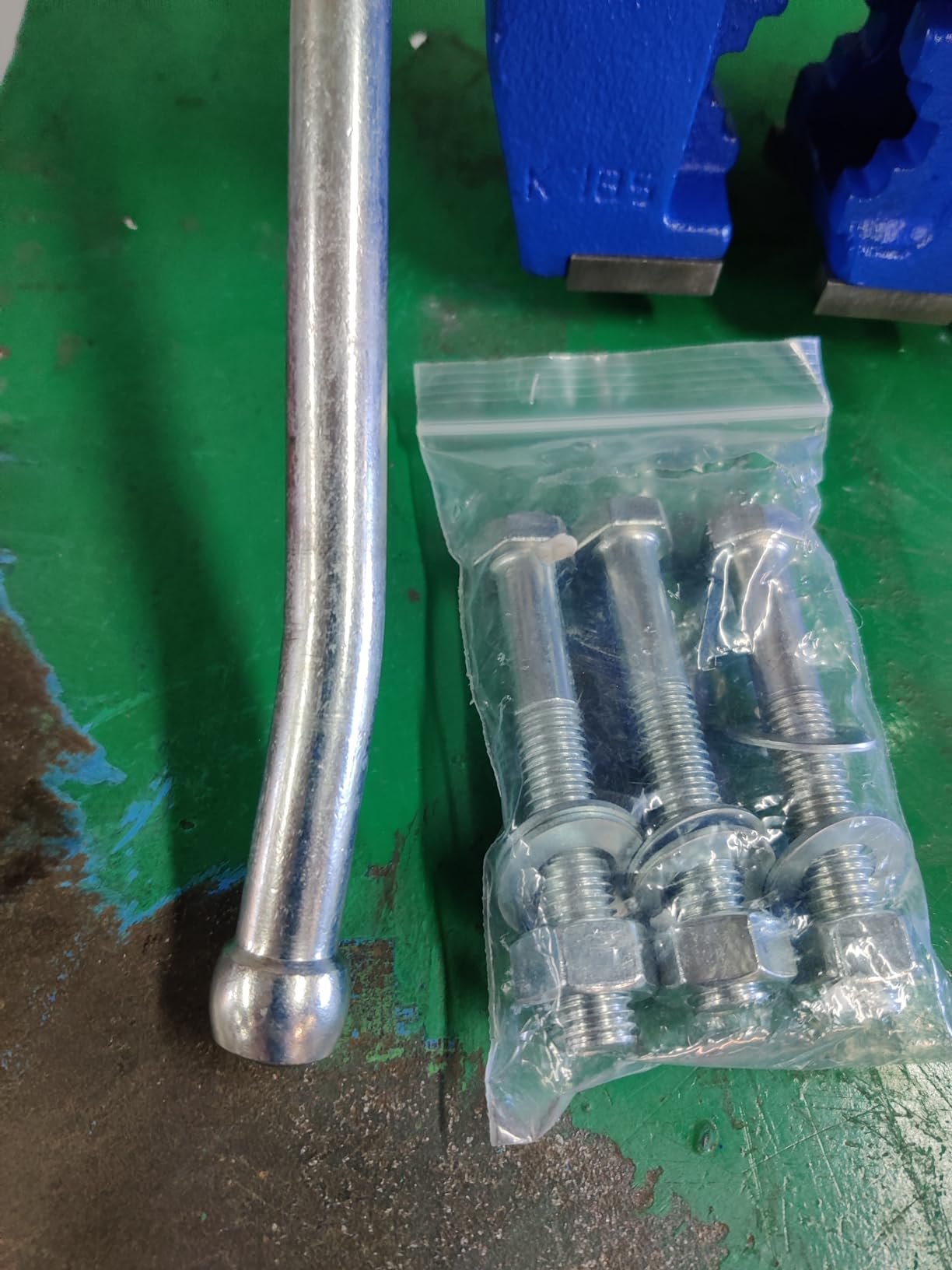
- Supplied bolts are too short for most benches
- Jaws sit slightly off when fully closed
- Base is small for a nominal 6 inch vise
Most 6-inch vises come with a heavier body and a larger base than a 5-inch model. This one keeps the weight at 25 pounds while still giving you a 6-inch jaw and a 5.9-inch opening. The cast body is 60,000 PSI ductile iron with a rust-proof powder coat, and the 3.5-inch throat is deeper than the 2.6 to 3 inches typical of most 5-inch vises in this roundup.
Two features stand out for the money. The swivel base carries two locking screws rather than one, so you can tighten it against drift from two directions, and the box includes magnetic nylon soft jaw pads that stick to the jaws to keep finished work from getting serrated.
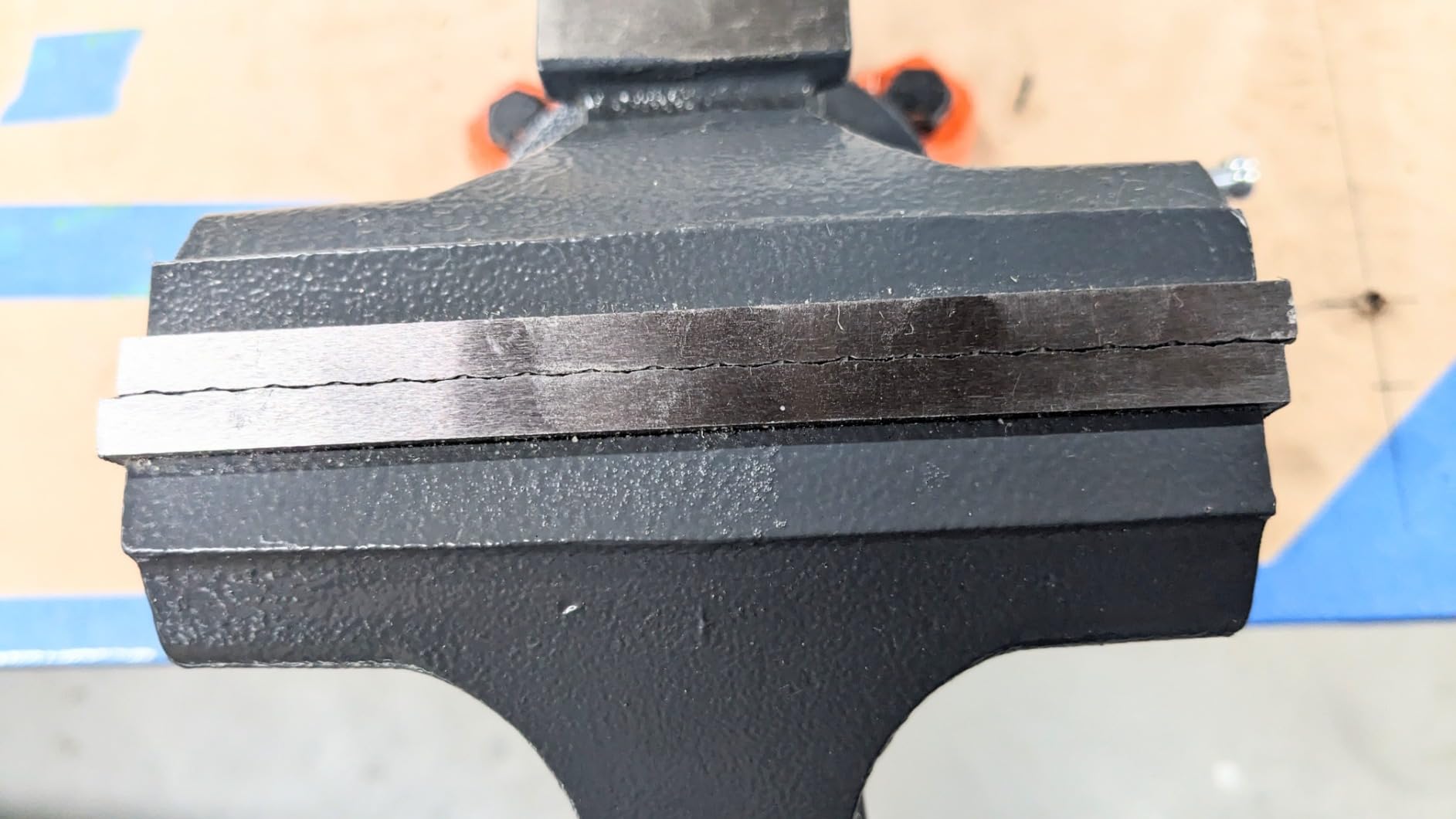
Buyers consistently rate the screw action as smooth and the teeth as sharp enough to hold slick material without slipping. Clamping force is rated at 4496 pounds, which is honest for a casting of this class and enough for drilling, sawing and light tapping.
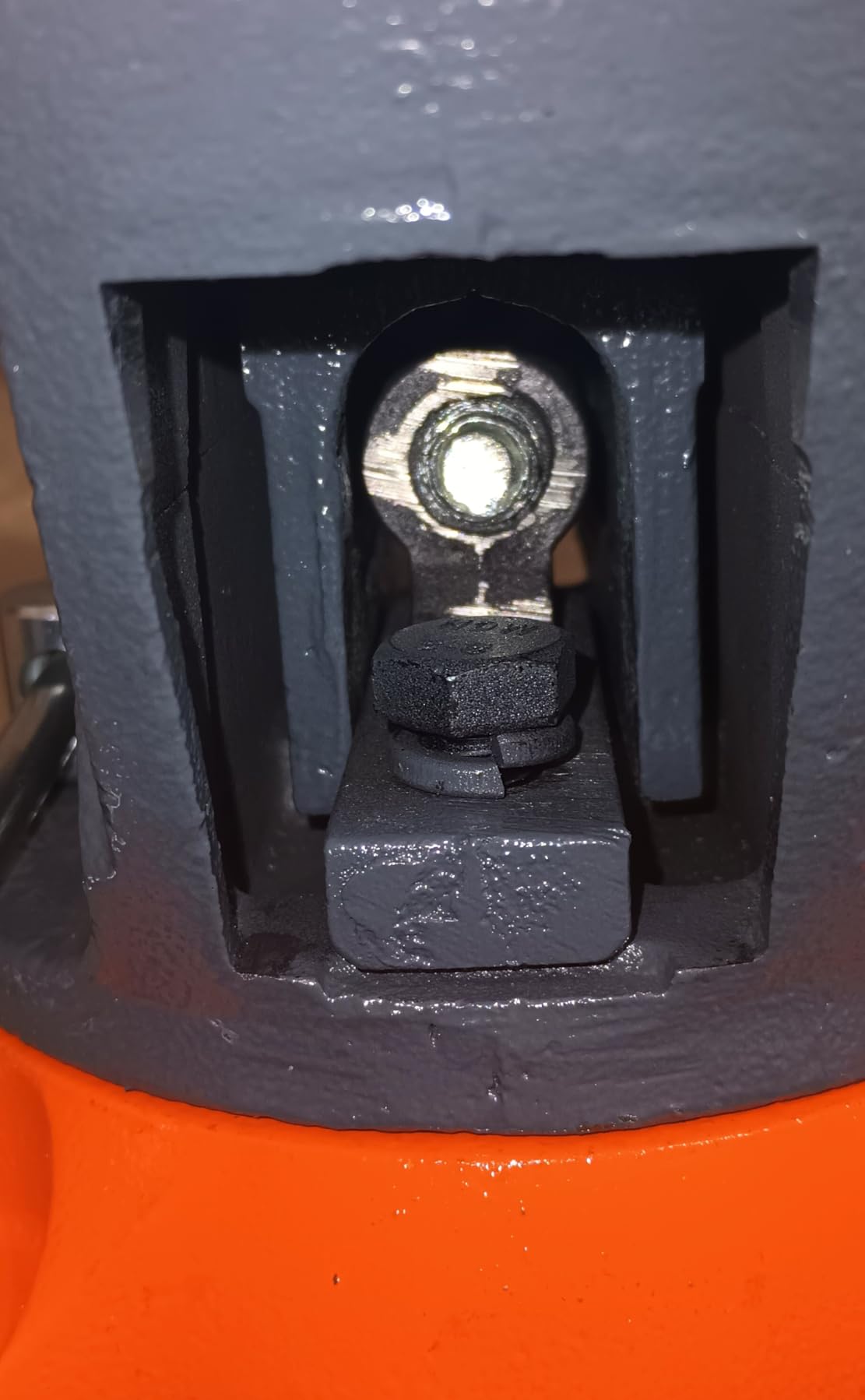
The repeated complaint is the mounting hardware. The four M10 bolts supplied are short for a real workbench, and several owners replaced them. Plan on buying your own grade 8 bolts and washers sized to your benchtop, and budget an afternoon to drill if the supplied template does not line up with your existing hole pattern.
Who the VEVOR 6 Inch suits
It suits anyone clamping plate, flat bar or structural shapes that will not fit a 5-inch jaw, and anyone who wants a soft jaw solution in the box on day one. The 3.5-inch throat also handles taller workpieces better than most vises of its size, which matters when you are sawing a vertical cut.
First-time builders working from a single roller bench will also like the low 25-pound weight, since it is easier to position before drilling.
Who should look elsewhere
Professional fabricators doing daily production work should note that owners do not rate it for sustained heavy shop abuse. If your week is filled with cheater pipe, hardened bar and dropped steel, step up to a heavier casting with a lifetime warranty, such as the Wilton 745 further down this list. Also check the base footprint against your bench before ordering, since it is compact for a 6-inch vise.
3. Forward CR40A 4.5 Inch Vise: Best for Compact Benches
Forward CR40A 4.5 Inch Bench Vise Heavy Duty with Anvil and 210°Swivel Base
Jaw 4.5 in
Opening 5 in
Throat 2.6 in
Clamp 6600 lb
60k PSI ductile iron
Pros
- Highest stated clamping force in the roundup
- Compact body with a full 5 inch opening
- Two jaw sets including pipe jaws
- Swivel base and large anvil
Cons
- 210-degree swivel is not full rotation
- Only two jaw configurations supplied
- Compact footprint limits very large material
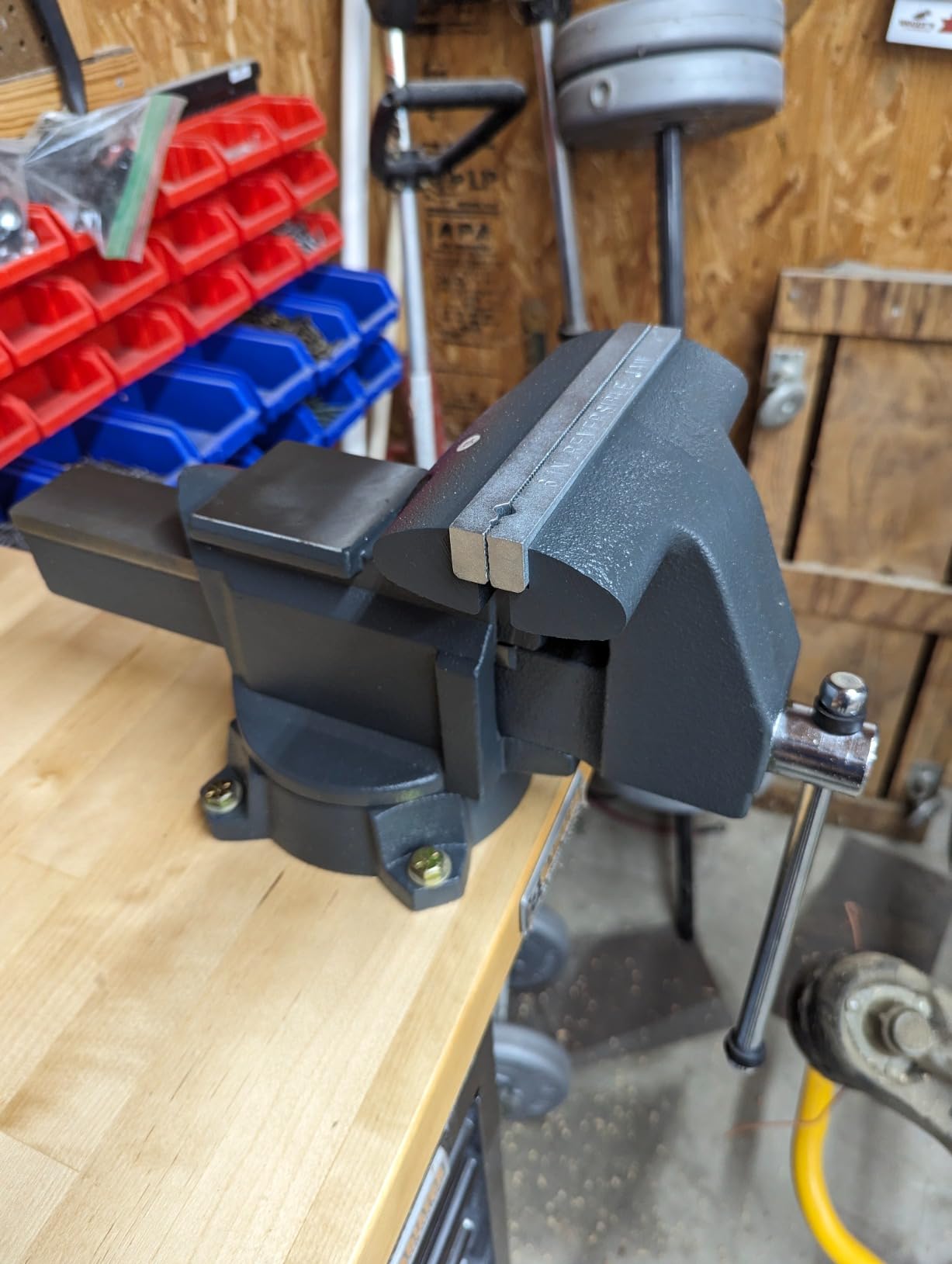
The CR40A answers a specific problem: a bench that is too small or too light for a full-size vise. At 4.5 inches of jaw it still opens to a full 5 inches, so it takes a decent width of flat bar despite the narrower face, and it publishes the highest clamping force figure in this group at 6600 pounds.
The body is the same 60,000 PSI ductile iron used in the larger Forward, and the 210-degree swivel base covers most of the angled positions you will realistically need. The reinforced anvil handles light grinding and flattening work.
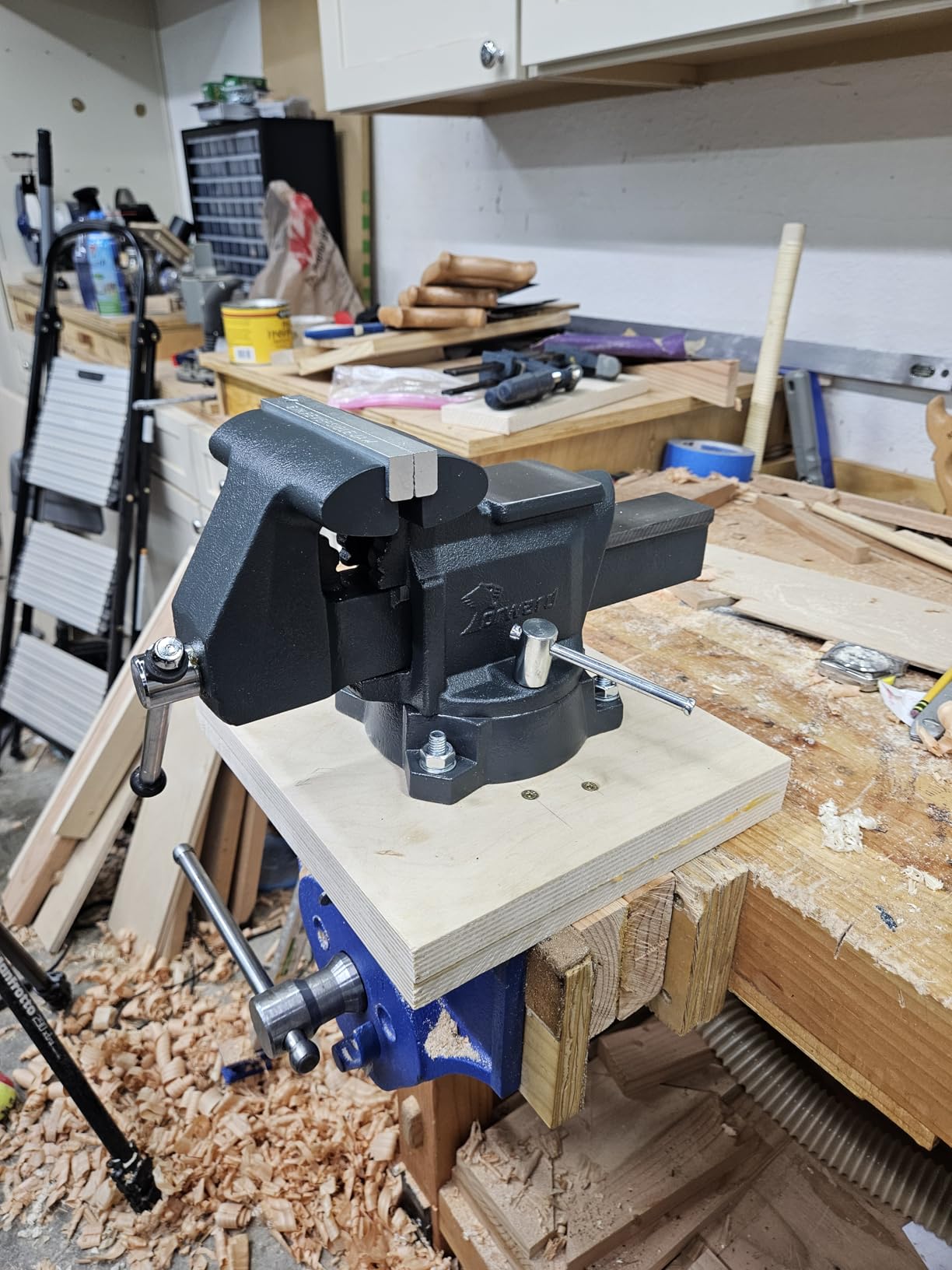
Two machined jaw sets come as standard: replaceable flat jaws with slot jaws, plus built-in pipe jaws covering half an inch to 3-1/2 inches. The slide and screw are reported as smooth, which is where cheaper castings usually feel gritty within a year.
Where it falls short is capacity and articulation. A 210-degree swivel means there are positions you cannot reach without removing the workpiece, and the compact footprint simply will not take large plate or structural section. It is a fit-for-purpose vise rather than a do-everything vise.
Who the Forward CR40A suits
It suits hobby machinists, motorcycle restorers and anyone working at a small bench where a 6-inch vise would overhang the top. The combination of a 5-inch opening with a 4.5-inch face makes it unusually good for cutting and filing short sections of bar without needing a lot of room behind the jaws.
If you also handle pipe, the built-in pipe jaws remove a separate purchase, which is where a lot of the value sits at this capacity.
Who should look elsewhere
If you regularly clamp plate wider than 4.5 inches, or hold tall workpieces that need deep clamping, step up to the 5-inch or 6-inch options instead. The 2.6-inch throat is on the shallow side, and shallow throats let tall work twist in the jaws under clamping load.
4. Wilton WS5 Shop Vise: Best Value with a Lifetime Warranty
Wilton Shop Bench Vise, 5″ Jaw Width, 5″ Max Jaw Opening, 3″ Throat (Model WS5)
Jaw 5 in
Opening 5 in
Throat 3 in
60k PSI ductile iron
28.2 lbs
Lifetime warranty
Pros
- Lifetime warranty with long-term parts support
- Very rigid with almost no slop once locked
- Jaws reported to line up perfectly
- Two lockdown bolts and four mounting holes
Cons
- Arrives heavy and grease-coated
- Swivel can feel clunky out of the box
- Occasional transit damage at this weight
The WS5 is the answer to the question shopkeepers ask most often: which brand do you trust to still be there in fifteen years. Wilton is repeatedly named as a default general-purpose choice in machinist forums, and the practical reason is the lifetime warranty combined with a parts catalogue that keeps older models supported.
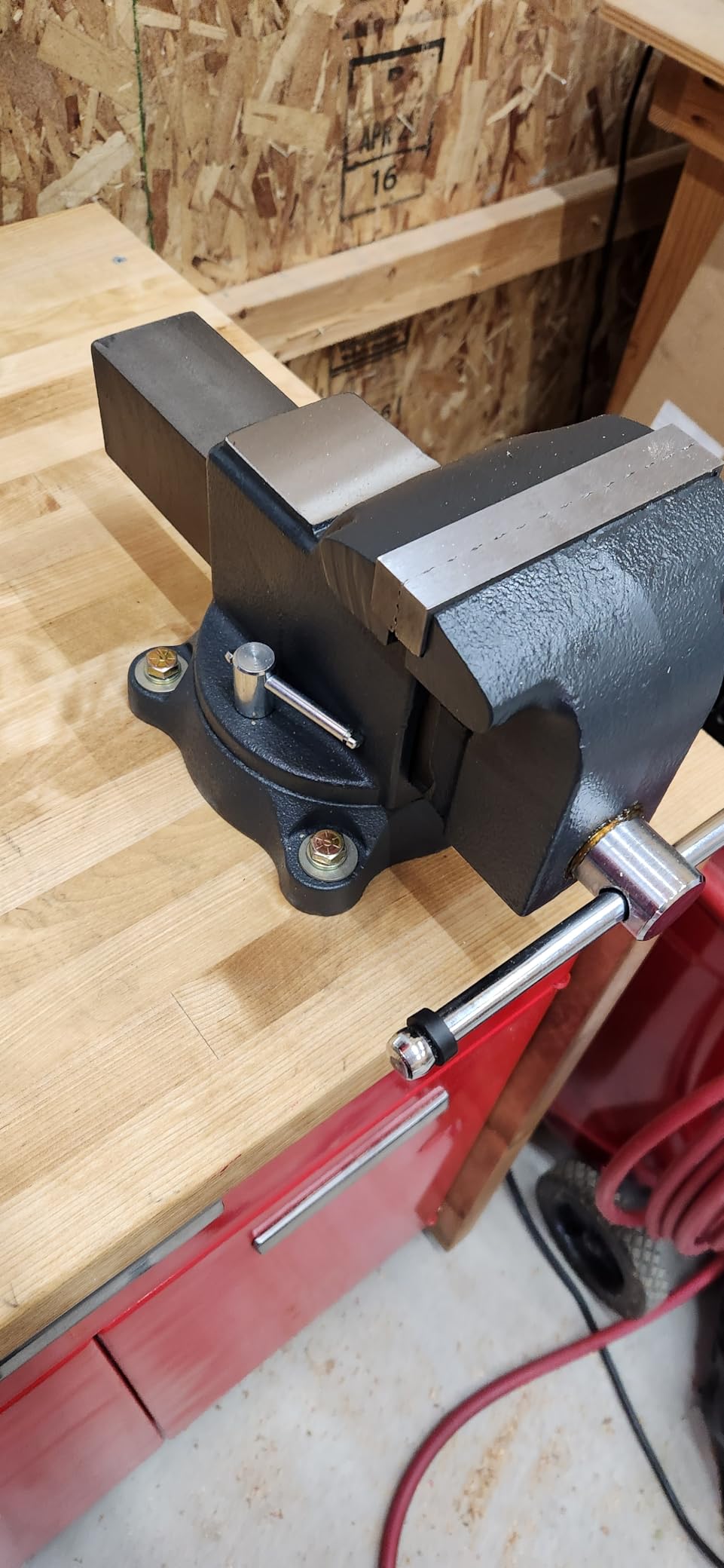
On paper it is well proportioned. A 5-inch jaw with a 5-inch opening and a 3-inch throat sits in the sweet spot for general shop work, and the 28.2-pound ductile iron body is rigid without being awkward to move. Owners repeatedly confirm the jaws stay aligned and there is almost no slop after the dual lockdown bolts are tightened.
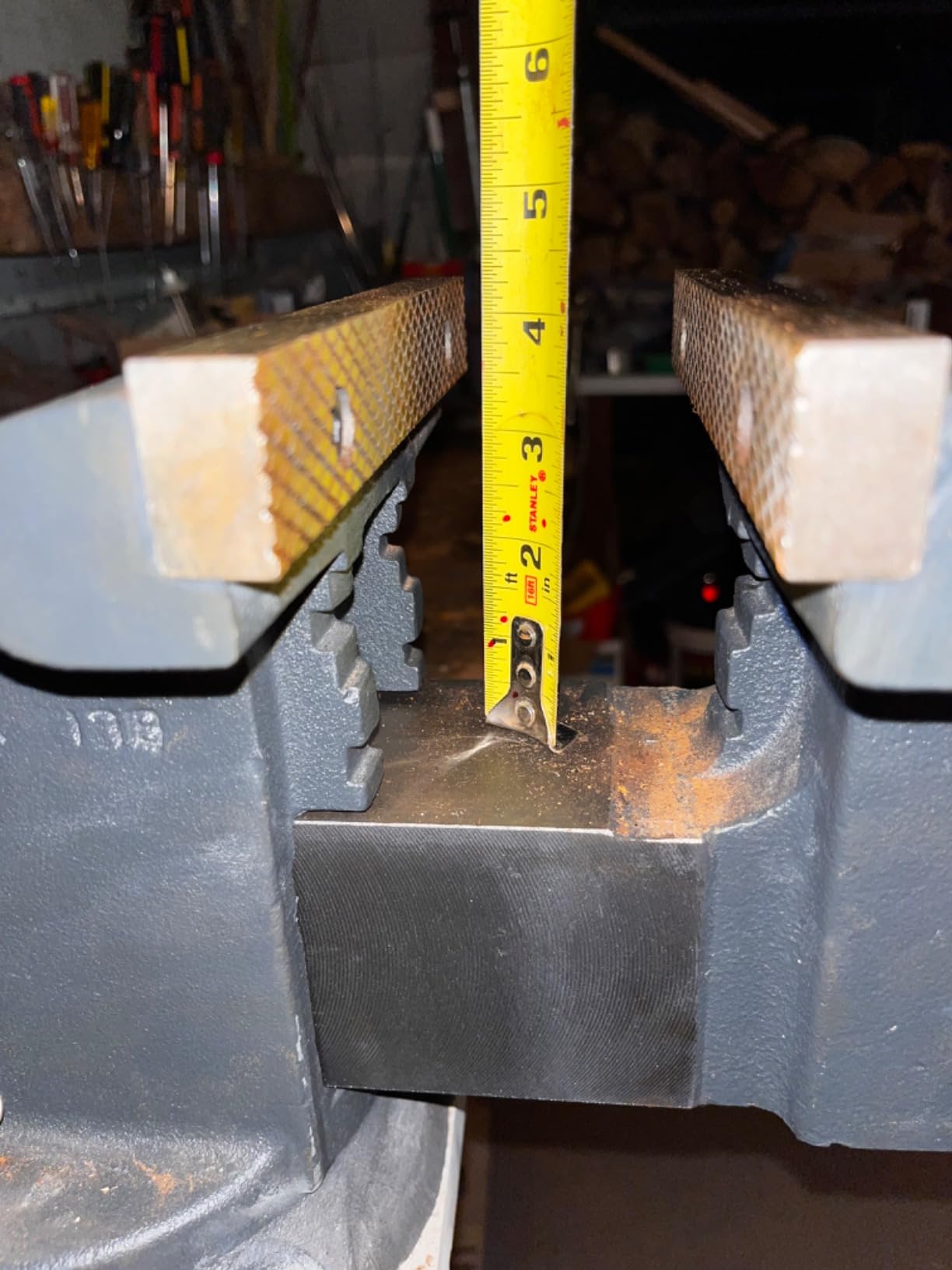
One detail matters more than it sounds: four mounting holes instead of three. Extra mounting points are the single cheapest insurance against the base rocking when you clamp something hard, and they cost nothing at installation time but cannot be added later.
The recurring negatives are about arrival rather than performance. These vises frequently turn up coated in transport grease with metal shavings in the channels, so budget twenty minutes to clean, degrease and lubricate the screw before first use. At this weight class, occasional bent handles and cracked mounting tabs happen in transit.
Who the Wilton WS5 suits
It suits mechanics, fabricators and repair shops that want a general-purpose vise they will not think about again. It also suits anyone who has inherited an older Wilton and wants matching hardware and support, since the brand keeps older mounting patterns in the catalogue.
The built-in pipe jaws and replaceable serrated top jaws mean most day-to-day clamping is covered without accessories, and the rubber pinch-point guards are a genuine safety improvement when you are working close to the screw.
Who should look elsewhere
Skip it if you need a rotating head for gunsmithing or angled clamping, since this model swivels at the base only. If you are very sensitive to the arrival condition of a new tool, note the grease and debris reports. It is also a general-purpose vise, so precision drilling is not what it is built for.
5. Yost 750-DI Multi-Jaw Vise: Most Versatile for Rotating Work
Yost Vises 750-DI Multi-Jaw Rotating Vise System | 2 in 1 Multipurpose Bench and Pipe Vise | Secure Grip with Swivel Base | Made with a Combination of Ductile Iron & Hardened Steel | Gray
Jaw 5 in
Opening 5 in
Throat 4 in
65k PSI ductile iron
27 kg casting
Pros
- Dual-axis rotation with a 12-position indexed head
- Deepest throat in this roundup at 4 inches
- Three hardened jaw sets included
- Well-machined burr-free screw and slide
Cons
- Tall body crowds the handle on high benches
- Head pin has slight play with jaws open
- Swivel is stiff without added springs
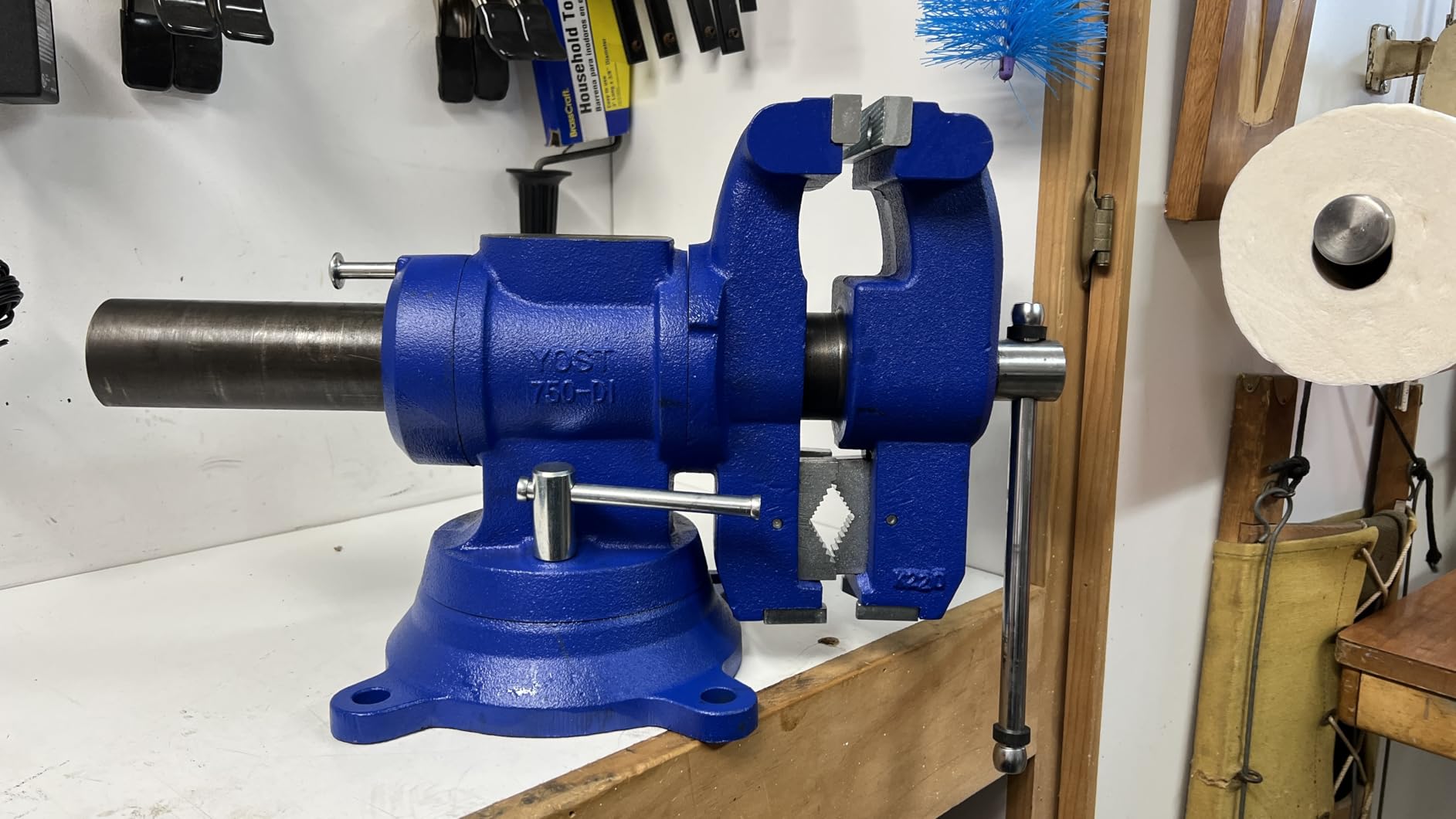
The Yost 750-DI is the most capable vise here in terms of articulation, and for the construction you get it is hard to argue with. The body rotates 360 degrees on an interlocking V-grooved swivel base with two lockdowns, and separately the head rotates through 360 degrees locked at every 30 degrees across twelve positions.
The 4-inch throat depth is the deepest in this roundup by a clear margin, and it is the figure that matters when you clamp a tall workpiece. With a shallow throat the top of the part sits above the jaws and can rotate under load; with 4 inches, most work stays captured. Three sets of replaceable hardened steel jaws cover bench work, pipe and V-jaws for round bar.
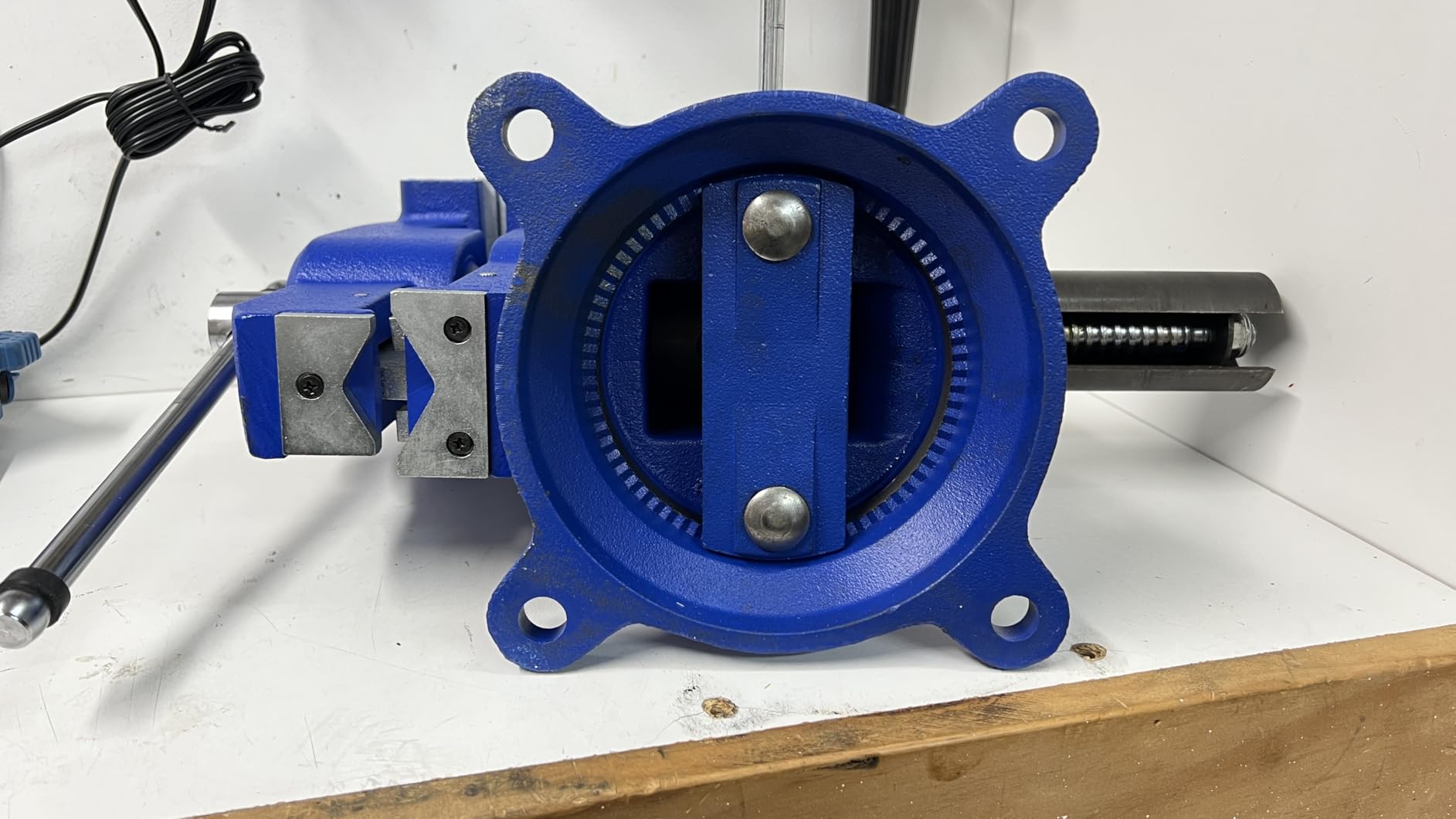
Owners with long manufacturing backgrounds single it out as the best rotating vise in its class, and the casting is 65,000 PSI ductile iron rather than the brittle grey iron used in cheaper vises. The screw and slide are reported as burr-free and operable one-handed.
A few practical notes from owners. The vise is tall, and on a high bench the handle sits close to the head, so check your clearance before ordering. The swivel base runs stiff until you add small springs beneath it, an inexpensive fix several buyers recommend.
Who the Yost 750-DI suits
It suits anyone who constantly rotates work rather than lifting it out, including fabricators, plumbers and repair shops handling awkward shapes. Holding a bracket in a compound angle without reclamping saves more time than almost any other feature on a vise.
It also suits anyone who fits vises under benches on pedestals, since Yost is frequently recommended in machinist forums for underside clearance and can be paired with a fabricated steel pedestal. The pipe jaws reach down to 1/8 inch, covering everything from small tubing to 3-1/2 inch pipe.
Who should look elsewhere
Note that once the jaws are clamped, the workpiece cannot be repositioned within the head, by design. If your bench is very high, measure first because of the handle clearance issue. The warranty on castings is limited compared with Wilton lifetime coverage, so weigh that against how long you plan to keep it.
6. Wilton 550P Multi-Purpose Vise: Best for Gunsmithing and Angled Work
Wilton Multi-Purpose Bench Vise, 5-1/2″ Jaw Width, 5″ Max Jaw Opening, 2-3/4″ Throat (Model 550P)
Jaw 5.5 in
Opening 5 in
Throat 2.75 in
40 lbs
Lifetime warranty
Pros
- Indexed 360-degree rotating head for angled clamping
- Lifetime warranty with catalogue parts support
- Replaceable hardened steel serrated jaws
- Switches to pipe clamp in a quarter turn
Cons
- No bearings at the swivel joint so it can rust stiff
- Head must be backed out to swivel
- Not intended for beating large plate
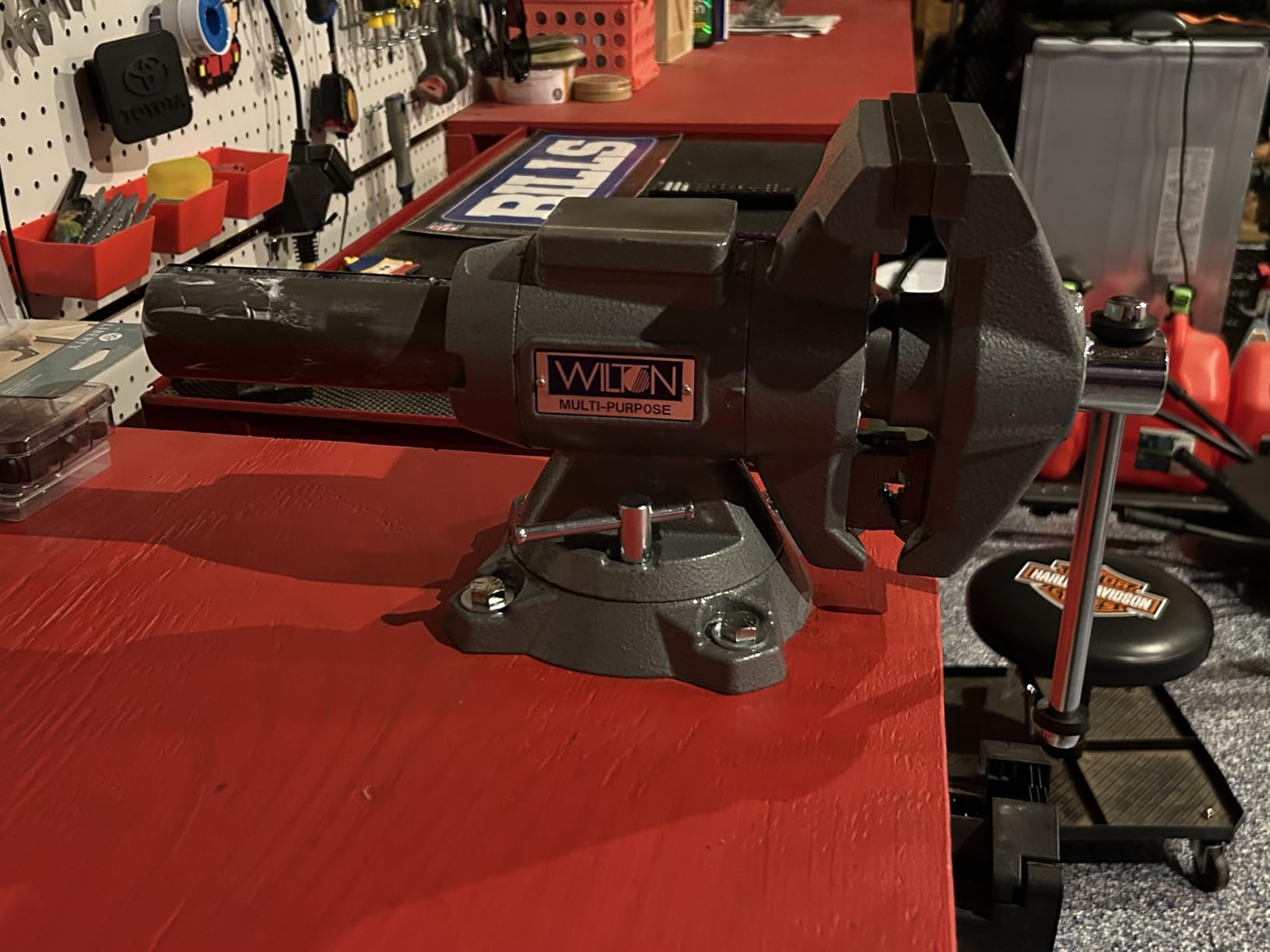
The 550P exists for people who cannot get their part into a straight-ahead vise. Its 360-degree rotating head is indexed every 30 degrees, so a receiver, a barrel blank or a chassis bracket can be held at a compound angle while you file, grind or fit it.
At 5-1/2 inches the jaw is the widest in this roundup short of the VEVOR, which gives you more clamping face for long flat work. It weighs 40 pounds, enough resistance to flex to stay put under load, and it carries a Wilton lifetime warranty against manufacturing defects with replacement parts still catalogued.
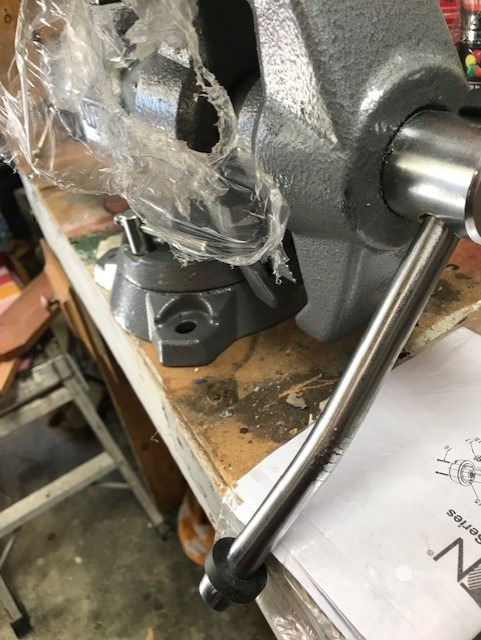
Switching from bench work to pipe clamping takes about a quarter turn of a set screw. Replaceable hardened steel pipe jaws and V-jaws for holding round bar vertically are both standard, and the large built-in anvil handles light forming and flattening.
The technical complaint that comes up most is the absence of bearings between the swivel base and the body. Exposed machined surfaces in a humid shop can rust against each other over years, so grease or a PTFE lubricant at the joint during routine maintenance is worth doing.
Who the Wilton 550P suits
It suits gunsmiths, motorcycle builders and anyone doing repair work where the part is easier to finish at an angle than square on. The wide jaw also suits plumbers and electricians holding long runs of trim or moulding.
Owners report accurate jaw alignment and a slide and screw that stay exceptionally smooth, which is the combination that makes finishing work pleasant rather than a fight.
Who should look elsewhere
It is not meant for beating large steel plate into shape, and the 2-3/4 inch throat is shallower than several rivals. Because rotating the head requires backing out the handle several full turns, it is not the fastest vise for repetitive light work.
7. IRWIN 5 Inch Multi-Purpose Vise: Best for Pipe and Round Bar
IRWIN Tools Multi-Purpose Bench Vise, 5-Inch (4935505)
Jaw 5 in
Swivel 360 degrees
33.1 lbs
Cast iron
Fused steel handle
Pros
- Rotates in both planes with a pipe gripper
- Reported to survive a decade of cheater pipe abuse
- Jaws reported to stay square over long service
- Heavy casting resists flex
Cons
- Pipe jaw is shallow and partly blocked by casting
- Fit and finish described as sloppy by experienced users
- Not a precision machinist vise
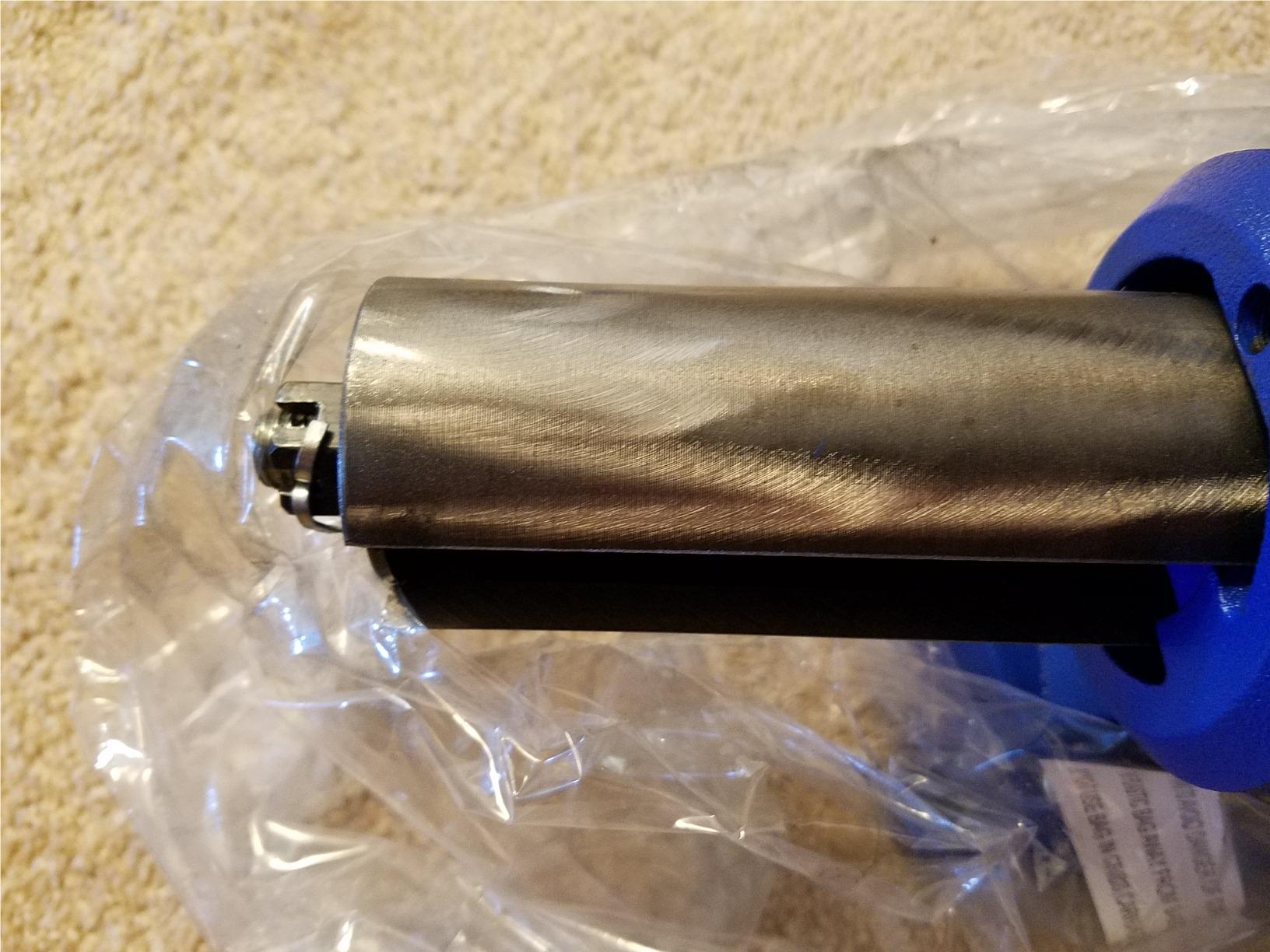
The IRWIN multi-purpose vise is the odd one out here in a useful way. Its machined steel pipe gripper rotates into the top of the jaws, so the same vise grips round pipe vertically or horizontally rather than forcing you to choose a bench vise or a pipe vise.
It is a 33.1-pound cast iron body with a fused steel handle for fast adjustment and an incorporated anvil to keep the base engaged while you work. The whole assembly rotates in both the vertical and horizontal planes from the 360-degree swivel base.
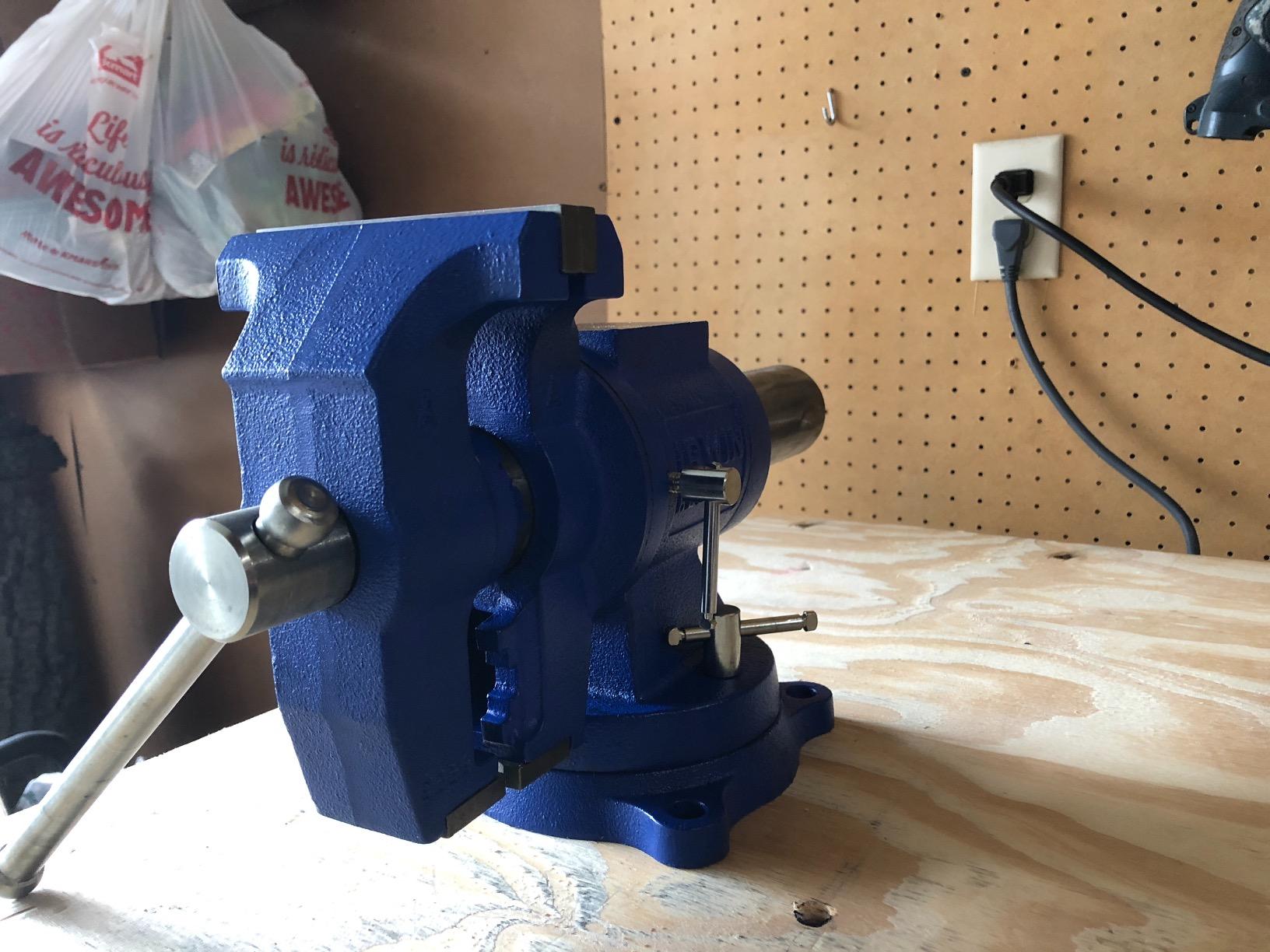
The strongest part of the feedback is durability. Multiple owners report long service lives including heavy cheater pipe tightening, and the specific detail that keeps coming up is that the jaws stayed square throughout. Jaw squareness after years is the property that separates a vise worth keeping from one that gets replaced.
The design critique raised by experienced fabricators is real, though. The machined steel pipe jaw is partly obstructed by the surrounding casting, so it cannot accept material as deep as the 5-inch jaw width suggests. Plan your pipe work around a shallower bite.
Who the IRWIN multi-purpose vise suits
It suits plumbers, pipefitters and HVAC technicians who would otherwise own two vises. Anyone who holds round bar for grinding, sanding or threading gets the same benefit, since the gripper takes the round work directly.
It also suits owners who want to hand a vise down or keep it for decades, because cast iron bodies with square jaws age better than complicated mechanisms with moving joints.
Who should look elsewhere
If your work is thin sheet, small fasteners or anything needing a fine finish, the serrated grip marks will be aggressive and the cast iron lacks the damping of ductile iron. Experienced users also describe the fit and finish as somewhat sloppy for the price, which tells you what to expect cosmetically.
8. Stanley MaxSteel 5 Inch Bench Vise: Best as a First Vise
Stanley 183067 MaxSteel Heavy-Duty Bench Vice 125mm 5-inch
Jaw 5 in
Cast iron body
Swivel base with lock
Roll-formed screw threads
Pros
- Simple and affordable fixed-position design
- Roll-formed screw threads run smoothly
- Chrome-plated hardware resists corrosion
- Locking swivel base holds solidly
Cons
- No rotating head and no pipe jaws
- Lowest average rating in this roundup
- Plain cast iron with no anvil surface
The Stanley MaxSteel does one job simply: it clamps a workpiece between 5-inch serrated jaws and stays put. There is no rotating head, no pipe jaws and no anvil. For a first vise, a student bench or a renter setup, that simplicity is a legitimate design choice rather than a shortfall.
The swivel base does lock, so you can still angle a part within the limits of that base. The roll-formed screw threads are reported to run smoothly and resist wear, and the chrome-plated hardware holds up better against shop moisture than plain steel fittings.
What gives us pause is the consistency of the reviews. At 4.5 stars this has the lowest average in the roundup, with a 6 percent share of three-star ratings, noticeably higher than the rest of the list. That pattern usually signals unit-to-unit variation in castings and machining rather than a specific fault.
Owners who keep it generally report satisfaction with the screw action and the solid swivel lock. The limitation everyone mentions is the fixed layout, which rules it out of contention for pipe work, angled clamping or any forming task that wants an anvil.
Who the Stanley MaxSteel suits
It suits someone buying their first vise for occasional filing, assembly, sawing and layout work, or a workshop bench that needs a reliable clamp for light tasks. The recognised brand name also means replacement parts and fittings are easy to source.
Because it has fewer moving joints than the rotating vises here, it also suits anyone who wants a vise that will still work in ten years with nothing more than grease.
Who should look elsewhere
If you plan to build a working metal shop, start higher. The lack of pipe jaws, anvil and rotating head means you will hit the limits quickly, and the mixed quality reports suggest you may need to inspect the unit carefully on arrival. Anyone working with pipe or round stock should skip this entirely.
9. PONY 5 Inch Heavy Duty Vise: Best for Screw Protection
PONY 5 Inch Heavy Duty Bench Vise with 360-Degree Swivel Base and Head
Jaw 5 in
Opening 5 in
Throat 2.6 in
Clamp 5512 lb
Alloy steel body
Pros
- Base and front jaw both swivel 360 degrees
- Cold-formed steel channel beams shield the screw
- Permanent pipe jaws with large forming horns
- Replaceable hardened serrated jaw faces
Cons
- Smallest review base in the roundup at 303
- Highest share of one-star ratings at 4 percent
- Anvil surface is small at 3.3 by 2.6 inches
- Shallow throat for tall workpieces
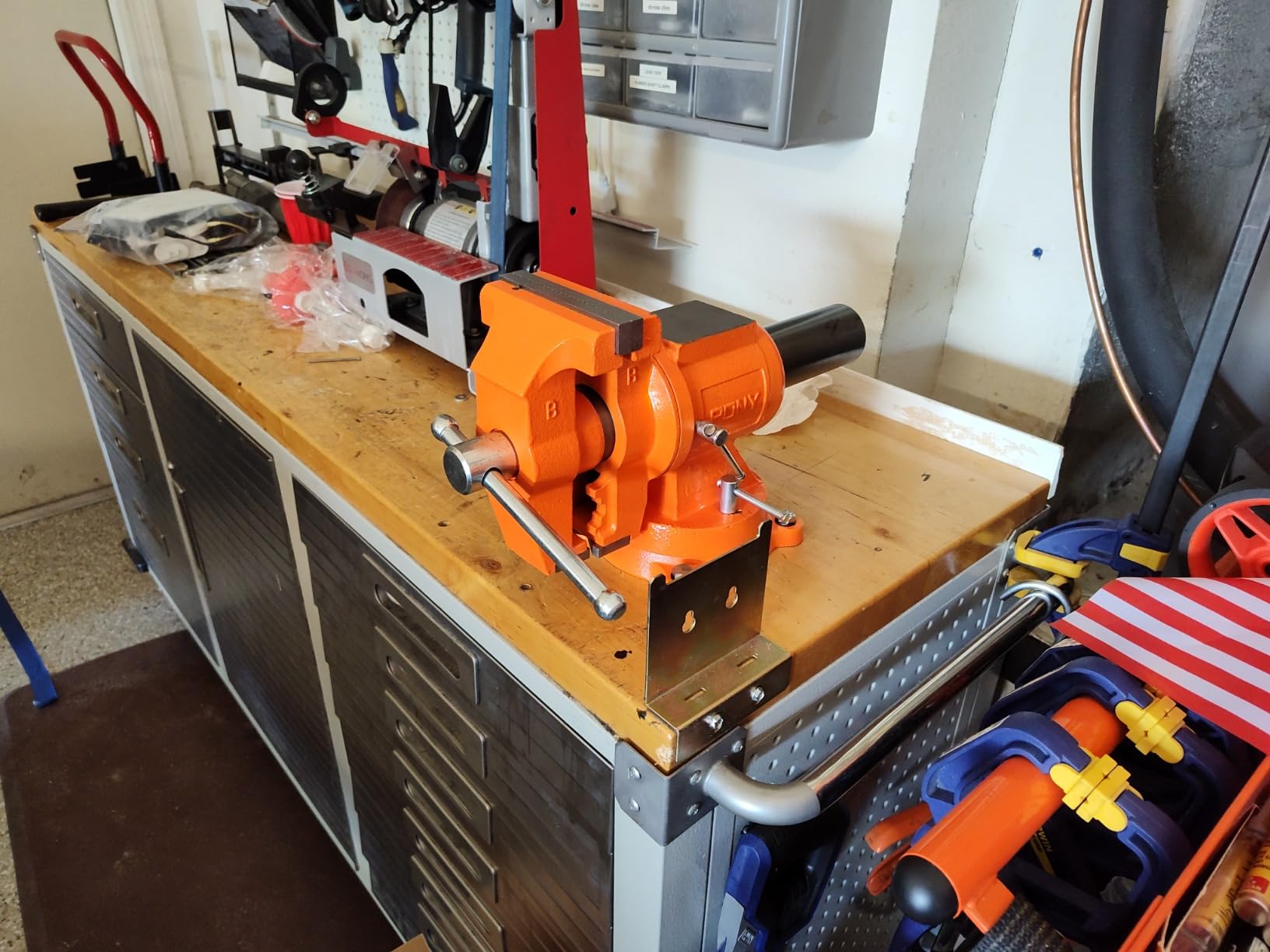
The PONY has one design decision that stands out from everything else in this list: the main screw runs behind cold-formed steel channel beams rather than sitting exposed. On most vises, swarf and grinding dust land directly on the screw and slide, which is what makes a vise feel gritty after a few years.
Both the base and the front jaw swivel through 360 degrees, with dual lock nuts on the base to stop it drifting. Clamping force is rated at 5512 pounds, and permanent pipe jaws with forming horns are cast into the body along with a ground and polished anvil measuring about 3.3 by 2.6 inches.
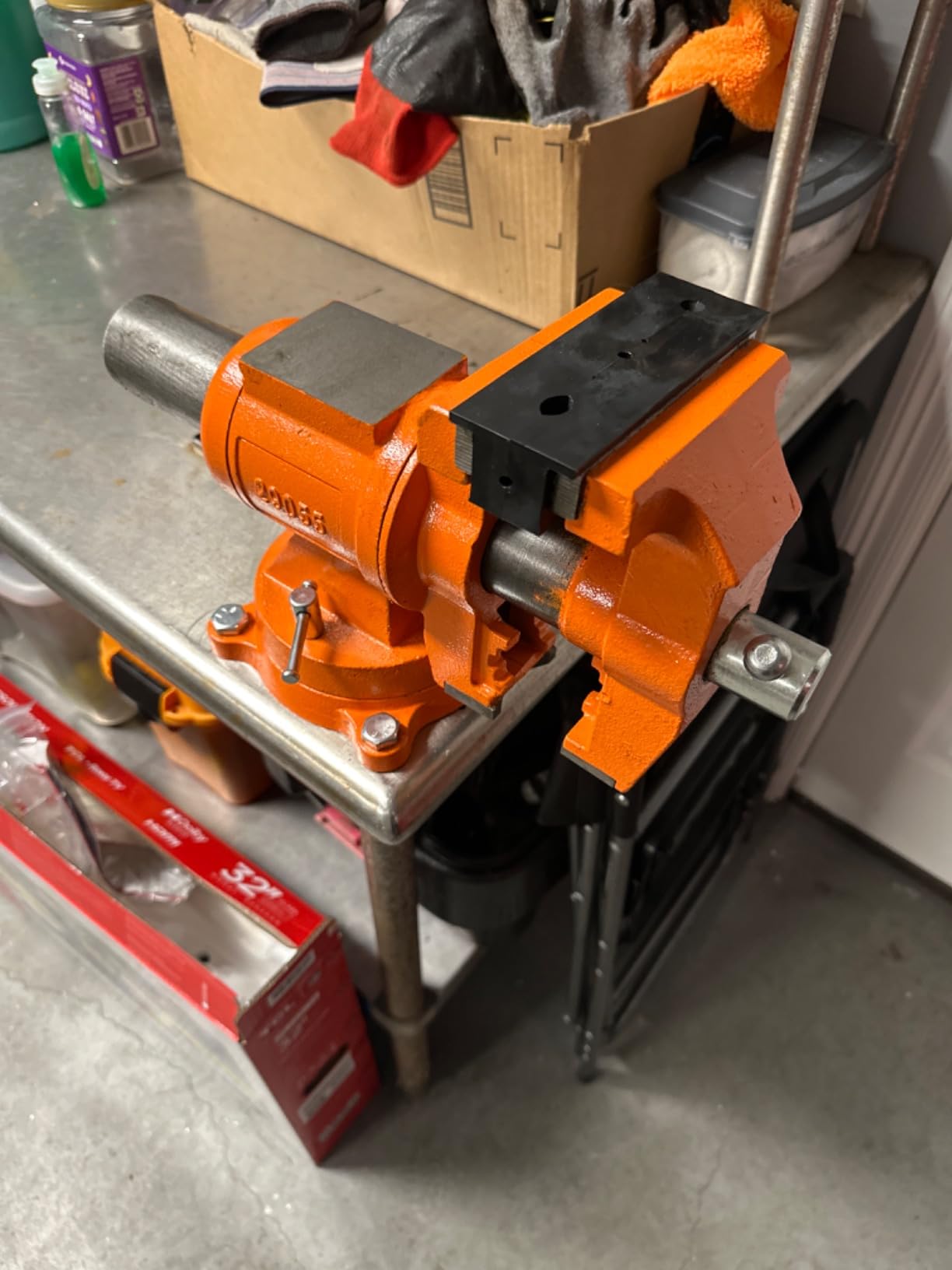
Jaw faces are replaceable hardened steel with a serrated pattern, and a pair of vise jaw pads comes in the box. Owners like the combination of dual-axis swivel with a protected screw, which is unusual in this class.
The caution is data volume. At 303 reviews this has by far the smallest owner base in the roundup, and a 4 percent share of one-star ratings is the highest negative share here. That combination means you have less long-term evidence to lean on and slightly more unit variation to expect.
Who the PONY 5 Inch vise suits
It suits shops where grinding and filing happen right next to the bench, because the shielded screw is the feature that keeps operation smooth in that environment. The dual-axis swivel also covers most angled and pipe work without needing a second vise.
Anyone who wants an alloy steel body rather than iron will also like the general toughness, and the included jaw pads give basic protection for finished work from day one.
Who should look elsewhere
If you want documented long-term durability, this is the wrong pick given the review volume. The throat depth of 2-5/8 inches is shallow for this class, so tall workpieces are more likely to twist. Those needing a large anvil for heavy forming will also find this one cramped.
10. Wilton 745 Mechanics Vise: Best for Heavy Fabrication
Wilton Mechanics Bench Vise, 5″ Jaw Width, 5-1/4″ Jaw Opening, 3-3/4″ Throat (Model 745)
Jaw 5 in
Opening 5.25 in
Throat 3.75 in
45.6 lbs
Lifetime warranty
Pros
- Heavy rigid casting with a 3.75 inch throat
- Fully enclosed spindle keeps grease in and dirt out
- Powder coat resists scratches
- Double lockdowns hold the swivel rigid
Cons
- Requires a solid bench and heavy bolts
- Some arrive with debris in the threads
- Review base is small at 331 ratings
The Wilton 745 is the one to buy when your bench is built properly and you want a rigid vise bolted to it. At 45.6 pounds it is a genuinely heavy casting, and the 3-3/4 inch throat is the second deepest here, which is what keeps tall work from twisting under clamping load.
The detail that separates it from a heavier economy casting is the fully enclosed spindle and nut. Grease stays in and swarf stays out, which protects the mechanism that actually wears out first. The powder coat finish also holds up better against scratches than a painted casting.
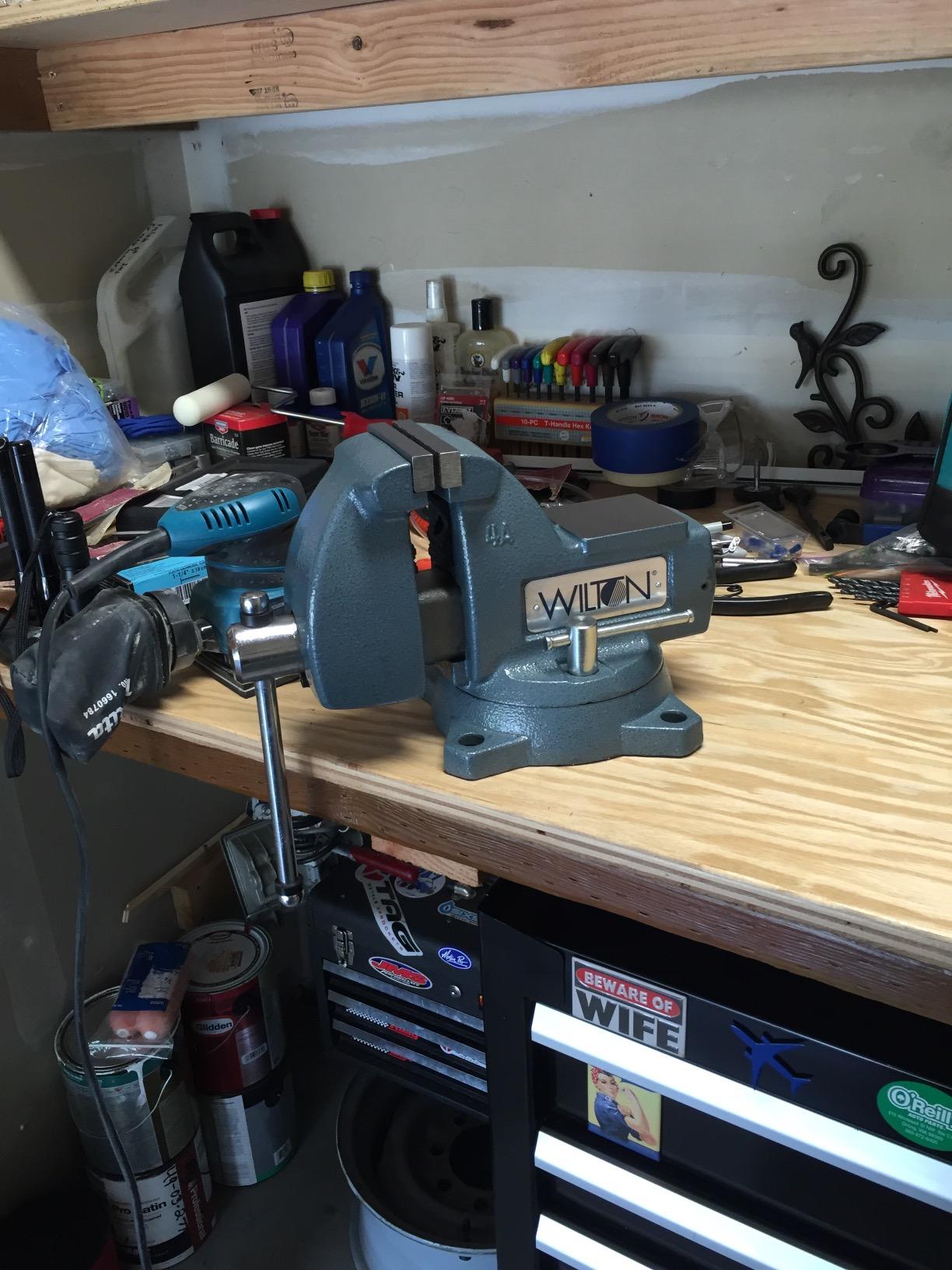
Replaceable hardened steel top and pipe jaws are standard, the 360-degree ductile iron swivel base carries double lockdowns, and there is a large anvil work surface. Owners with prior Wilton experience describe it as robust and precise once cleaned and greased.
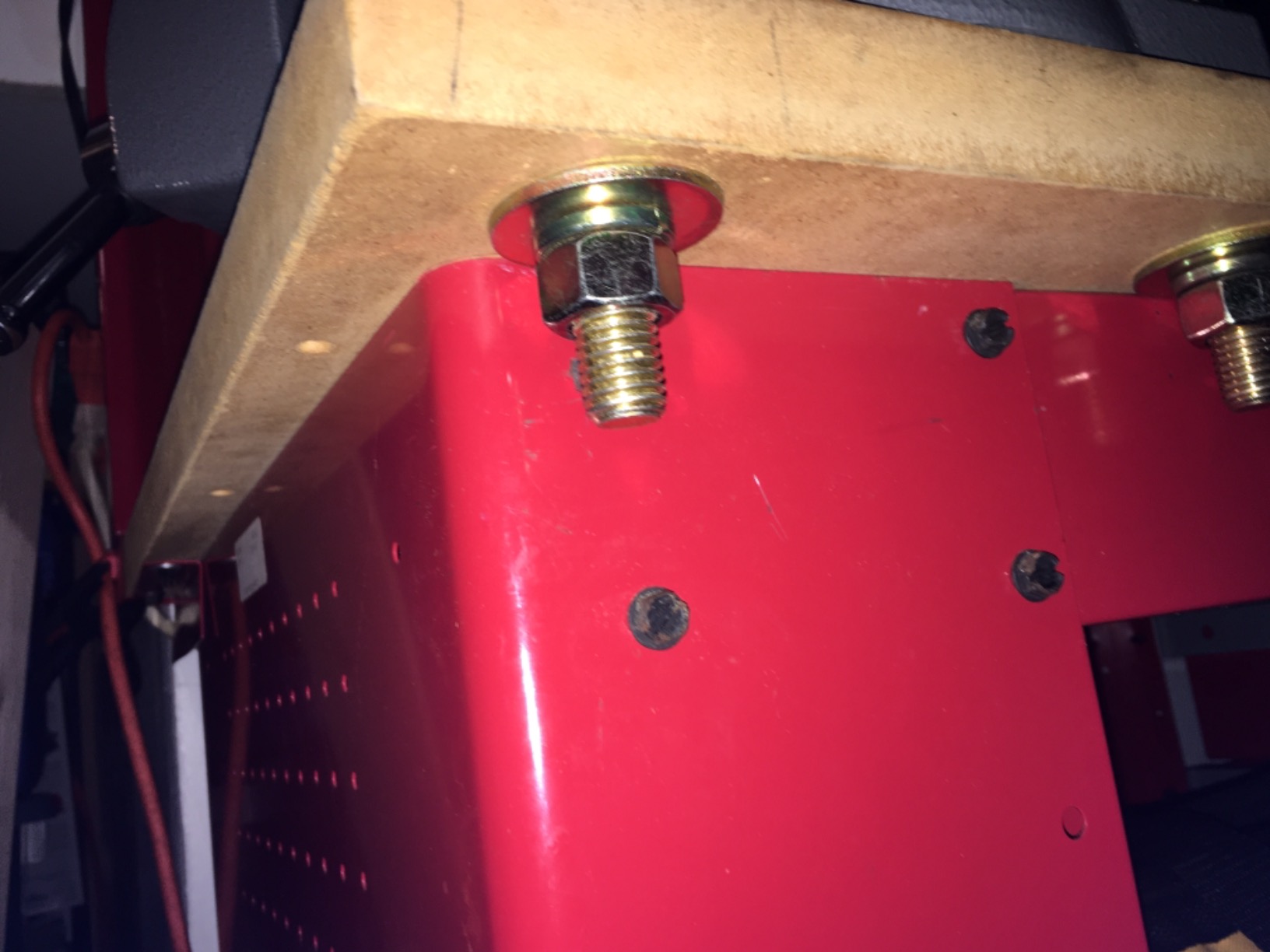
This is not a light-shop tool, and it needs a genuinely substantial bench with heavy bolts, not a hollow-frame bench on a single sheet of particle board. Some arrive with debris in the threads and no grease applied, so plan to service it before first use.
Who the Wilton 745 suits
It suits production and repair shops where the vise sees cheater pipe, hardened bar and dropped stock several times a week, and where a lifetime warranty is worth real money. Machinists building a fixed workbench with a steel top will appreciate the enclosed spindle most.
The weight is an advantage here. A heavy casting resists the flex that makes lighter vises lose jaw squareness under hammering and heavy cutting.
Who should look elsewhere
Anyone with a light bench, a rental workshop or a small hobby bench should not buy this. Mounting it properly needs thick benchtop material and bolts into framing, which is real work and real cost. The review base is also the second smallest in the roundup, so expect some assembly quality variance at this tier.
How to Choose a Bench Vise for Metalworking
Choose a vise by matching its geometry to your material and its mounting to your bench. Everything below comes down to four decisions: which type of vise, what size, what material and how it is fixed down. Get those four right and the brand matters far less than buyers think.
Engineering vise vs machinist vise vs pipe vise
An engineering vise is the general-purpose workhorse, and it is what this roundup covers. Its jaws are serrated or toothed to bite into flat bar, plate and tube, and it is built to survive being used as a step, a hammer surface and an anvil. It is the right answer for sawing, filing, grinding, drilling, tapping and general assembly.
A machinist vise is a different instrument. It is fixed rather than swivel-mounted, its jaws are hardened and ground smooth rather than toothed, and its slide is precision-ground so a workpiece does not shift when you clamp it. That smoothness is exactly why you cannot drill a square hole accurately in a serrated engineering vise: the tooth pattern releases and re-grips as the drill applies torque.
A milling vise is the most precise of the three, with compound rotation, a ground spindle and accurate angle graduations, and it costs several times as much. A pipe vise grips round pipe with curved serrated jaws and is useful mainly if you do pipe. A clamp-on vise skips bolting entirely and trades some rigidity for portability, which makes it a travelling or field tool rather than a production bench tool.
The practical answer is that most shops end up wanting an engineering vise for the bench and a machinist or milling vise only if they routinely do accurate drilling and tapping. The forum consensus on this question is consistent: general-purpose vises are destroyed by precision work and precision vises are destroyed by general abuse, so do not buy one tool expecting it to do both.
Sizing: jaw width, jaw opening and throat depth
Match jaw width to the widest material you regularly clamp face-on. A 4-inch jaw handles thin sheet, small parts and light bar; 5 to 6 inches covers general shop work and plate. Note that jaw width does not limit the length of stock you can feed into the jaws, because vises have no side braces.
The sizing heuristic that circulates in machinist forums is worth repeating: a 4-inch bench vise is worth its weight in silver, and a 6-inch vise is worth its weight in lead. In plain terms, a 4-inch vise is light enough to move easily and good for most work, while a 6-inch vise is heavy enough that most people never carry it and therefore use it more seriously.
Jaw opening is simply the maximum gap between the jaws, and it sets the thickest material you can clamp. Throat depth is measured from the top of the jaws up to the top of the screw, and it governs tall workpieces. If you regularly clamp a tall bracket or a length of upright tube, prioritise throat depth over jaw opening, because a shallow throat lets tall work twist in the jaws even when the clamp force is high.
Materials: cast iron, ductile iron, forged iron and alloy steel
Cast iron is the traditional vise material and it is brittle. It casts complex shapes cheaply and machines well, but it can crack if you drop a heavy workpiece on it or lever against the jaws. Ductile iron behaves more like a tough steel, tolerating impact and shock far better, and it is why most vises worth owning specify a PSI figure such as 60,000 or 65,000.
Forged iron and forged steel are stronger still because the grain structure follows the shape of the part. The trade-off is that a one-piece forged body usually has no replaceable jaws, which forum regulars treat as a genuine long-term cost because smooth or custom jaws then require machining the vise itself. Always check whether the jaws are replaceable before buying a forged model.
Alloy steel appears on some imported vises and is very tough, but it is heavy and expensive to cast at this scale. In practice, published tensile strength in PSI tells you more about abuse resistance than the material name does, and 60,000 PSI ductile iron is the sweet spot for general metalworking.
Clamp force versus torque rating
Clamp force is what the jaws deliver, measured in pounds. Torque rating is what the handle feels when you turn it, usually expressed in foot-pounds. They are linked through screw diameter and thread pitch, but they answer different questions, and confusing them is how shoppers overpay.
Clamp force matters when you want to hold material still: drilling into flat plate, sawing a cut line, grinding. Torque matters when you are turning the screw under load, which is exactly what happens when you tap a thread, press on a punch or peen a piece of metal with the jaws closed. A vise with high clamp force and a fine thread pitch can feel stiff and transmit shock poorly, while a coarse thread on a large diameter screw takes abuse well.
Published clamp force is also the least trustworthy spec on the internet, because it is usually measured on an idealised bench. Judge a vise on whether the jaws stay square after a year of hard use, which is the only number that predicts the future.
Swivel base versus fixed base
A swivel base lets you rotate the vise body under a clamped workpiece, which is how you reach an awkward angle without removing the part. A dual-axis design adds a rotating head so you can also tilt the work in the other plane. Once you start using one, you rarely go back.
The cost is precision. Every swivel joint introduces clearance, and that clearance becomes backlash when you are trying to hold a thin workpiece for tapping or when you are checking whether a part is square. On this roundup, the Yost 750-DI and the Wilton 550P give up the most articulation, and the fixed-base Stanley gives up the most flexibility. If you drill and tap for a living, fixed is quieter. If you fit and grind, swivel is faster.
Made in USA versus imported
Country of manufacture matters less than most buyers assume, because the big American brands have had products made overseas for years. What genuinely separates them is screw quality, jaw parallelism and whether the jaws are replaceable. That said, if domestic construction is a requirement, Wilton, Yost and Fireball Tool are the names to look for, and Pittsburgh from Harbor Freight is a value option assembled in the United States.
On the imported side, the pattern is that budget importers publish large clamp force figures and include soft jaw pads, while the mid-tier imports publish better geometry and more jaw sets. The recurring warning sign is mounting hardware: several vises here include bolts too short for a real bench, and that is the first thing to replace. Nothing here carries a machining tolerance spec, so treat published clamp force as a marketing-grade number.
Mounting your vise so the base never lifts
A vise that lifts or rocks under load will destroy your work and can injure you, and almost every report we saw about cheap vises wobbling traces back to mounting rather than to the vise itself. Four steps fix it properly.
First, use grade 8 or better bolts sized to the vise, not the hardware in the box. Thread them into the bench framing or a hardwood rail rather than only into a thin laminate top. Second, check that your benchtop is thicker than the vise base, because a base sinking into a thin top has nothing to grip.
Third, fit a backing plate underneath the bench and run bolts through the top and the plate into the framing. This is what actually stops the vise peeling off when you clamp something hard. Fourth, tighten to a firm seated torque rather than maximum effort, then re-check after a week of use and once more after a month, because castings settle.
Ask for spare parts when you buy. Jaws, screws and handles wear in a predictable order, and a brand with a catalogue makes those repairs cheap instead of a reason to replace the whole vise.
Maintenance: lubricating the screw, rust and jaw replacement
A vise needs ten minutes of attention a year and almost nobody gives it any. Start by cleaning out swarf from the slide channels and wiping the screw and nut before adding a heavy oil or grease, then work the handle through its full travel to distribute the lubricant along the threads.
If a screw has gone stiff or shows surface rust, remove the handle, back the nut out and clean the threads with a wire brush and solvent before re-lubricating. Do not force a stiff screw, because the usual result is a stripped nut. On vises with an exposed swivel joint such as the Wilton 550P, add grease or a PTFE lubricant at the joint while you are there.
Jaw wear is normal and correctable. When the serrations round off, replace the top jaws if the vise allows it, or have the jaws re-cut and re-hardened. Grinding vise jaws flat is a legitimate technique for sheet-metal bending and press work, and it works on vises with replaceable jaws without touching the body.
Soft jaws and jaw covers for finished work
Serrated jaws will mark anything softer than tool steel, so before clamping a finished or precision-machined face, cover the jaws. The cheapest option is a sacrificial jaw insert made from aluminium or copper with screws tapped into the serrations, or an over-centre strap for quick work.
The VEVOR in this roundup includes magnetic nylon pads in the box, which is the simplest first step. For repeated precision work, a set of aluminium soft jaws drilled and tapped to your bolt pattern pays for itself quickly and keeps your serrations clean.
Who this roundup is not for
None of these ten vises is right for you if you are building furniture or working with solid timber. A face vise with a wooden or cast face, a wide jaw and gentle clamping force is what holds a cabinet door without crushing the edge. Buying an engineering vise for woodworking gives you serrated marks in every face you sand and finish.
They are also not milling vises. If your work is precision hole placement in machined parts, you need a fixed machinist or milling vise with ground jaws, and none of the ten products here is one.
Frequently Asked Questions
What is the best brand of bench vise for mechanics?
Wilton is the most commonly recommended brand for mechanics because of its lifetime warranty, long parts catalogue and rigid castings, and the WS5 is the model most shops default to. Yost earns its reputation for ductile iron construction and unusually deep throats, while Fireball Tool is the name to look at when abuse resistance matters more than features. Brand means less than jaw width, so match the vise to the widest material you clamp before comparing names.
What is the best bench vise made in the USA?
For domestic manufacture, look at Wilton, Yost Vises and Fireball Tool, all of which build vises in the United States and back them with real warranties and replaceable parts. Wilton leads on lifetime warranty coverage, while Yost leads on casting strength and throat depth. Pittsburgh from Harbor Freight is a value option assembled in the US. Note that some Wilton models are made overseas to specification, so check the listing if domestic assembly is a hard requirement.
What size bench vise do I need for metalworking?
Match jaw width to the widest material you clamp face-on. A 4-inch jaw suits thin sheet, small parts and light bar, while 5 to 6 inches covers general shop work and plate. Check throat depth as well: it is measured from the top of the jaws to the top of the screw and decides how tall a workpiece you can hold without it twisting. A 4-inch vise is easy to move, a 6-inch vise is heavy enough that people use it seriously.
Is a machinist vise better than an engineering vise?
They solve different problems. A machinist vise is fixed rather than swivel-mounted, with hardened ground jaws and a precision-ground slide, so a clamped workpiece does not shift while you drill or tap. An engineering vise has serrated jaws that bite hard into material and tolerate abuse, making it better for sawing, filing, grinding and general holding. Use a machinist vise for accurate holes and an engineering vise for everything else.
How do I stop my bench vise from lifting off the bench?
Use grade 8 or better bolts rather than the hardware supplied, and thread them into the bench framing or a hardwood rail instead of only into a thin laminate top. Check that your benchtop is thicker than the vise base. Fit a backing plate underneath and run bolts through the top, the plate and into the framing, which is what stops the vise peeling off under heavy clamping. Tighten to a firm seated torque, then re-check after a week of use.
Which Bench Vise Should You Buy?
For most metalworking shops, the Forward DT08125A is the safest decision we can make for you: three jaw sets, dual-axis rotation, a 60,000 PSI ductile iron body and the strongest owner record in the group. Buy the VEVOR 6-inch if you clamp plate wider than five inches and want soft jaw pads in the box, and buy the Wilton WS5 if a lifetime warranty and a decade of parts support matter more to you than features.
Pick the Yost 750-DI when you rotate work constantly or clamp tall pieces, the Wilton 550P when you fit at compound angles, and the IRWIN when pipe and round bar are half your workload. Buy the Wilton 745 only if your bench is heavy enough to carry it, and spend a weekend on proper mounting hardware before you clamp anything hard.
Whichever you choose, replace the supplied bolts, grease the screw before first use and buy soft jaw covers before you touch a finished part. Those three habits do more for a vise than the model name does. Our best bench vises for metalworking shortlist for 2026 covers every option here with the full specification, and pairing the vise with the right grinder keeps the whole bench setup consistent.