
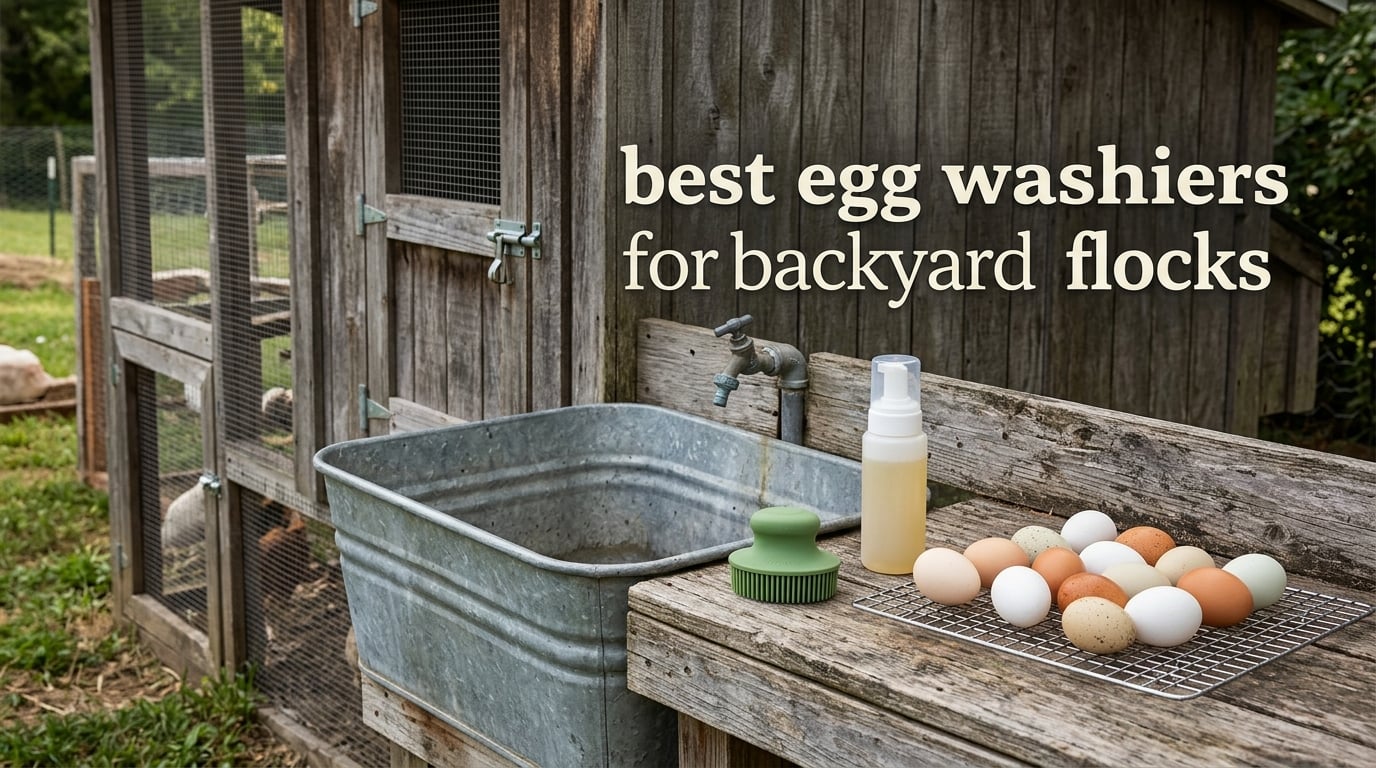
If you keep fewer than about thirty hens, you almost certainly do not need a machine. A silicone egg brush and a bottle of enzyme wash will handle a normal week of collection faster than you can walk to the coop.
That is the honest answer we came back to while comparing the best egg washers for backyard flocks. The category looks huge on a shopping page, but the tools split into three real tiers: manual scrubbers, no-rinse wipes and sprays, and true soak or spray washes. Only a licensed seller or a very large flock needs anything past the first two.
We compared ten of the most-reviewed options, weighed throughput against egg size coverage, and looked at what each one actually removes versus what it only makes easier to wipe off. We also covered what most listings skip: whether backyard eggs should be washed at all, the sanitizer rules if you sell, and what to do after the wash.
Two related reads while you are planning the coop: our egg incubator roundup for hatching, and backyard playset picks for the weeks after the chicks are bigger.
Table of Contents
Top 3 Best Egg Washers for Backyard Flocks in 2026

CareFree Enzymes Egg Washer
- Plant-based food-grade enzymes
- 33.9 fl oz concentrate
- Soak then rinse
- Works in countertop machines

GoodEgg Original Egg Brush
- 650+ silicone nubs
- Hollow draining center
- Dishwasher safe
- Standard to XL eggs

Manna Pro Egg Cleanser
- All-natural enzyme formula
- 16 fl oz concentrate
- Good for incubation eggs
- 15-minute soak
The 10 Egg Washers and Egg Scrubbers We Compared (October 2026)
One question decides which of these fits you: is it a tool you hold, a wash you soak in, or a spray you pump?
| Product | Specifications | Action |
|---|---|---|
| CareFree Enzymes Egg Washer and Egg Cleaner |
|
Check Latest Price |
| GoodEgg The Original Egg Brush |
|
Check Latest Price |
| Manna Pro Egg Cleanser Natural Enzyme Wash |
|
Check Latest Price |
 GoodEgg Enzyme Egg Wash Foaming Spray GoodEgg Enzyme Egg Wash Foaming Spray |
|
Check Latest Price |
 Clean Republic Good Salt Pet Fresh Nest Egg Wash Spray Clean Republic Good Salt Pet Fresh Nest Egg Wash Spray |
|
Check Latest Price |
 Lumkew Egg Washer Cleaner and Scrubber Brush Lumkew Egg Washer Cleaner and Scrubber Brush |
|
Check Latest Price |
 Rite Farm Products Egg Scrubbing Scrubber Brush Rite Farm Products Egg Scrubbing Scrubber Brush |
|
Check Latest Price |
| Good Salt Life Egg Wash All-Natural Formula Spray |
|
Check Latest Price |
 Fresh Eggs Daily Enzyme Egg Cleaning Wipes Fresh Eggs Daily Enzyme Egg Cleaning Wipes |
|
Check Latest Price |
 Rite Farm Products 10 Pack Egg Scrubbing Pads Rite Farm Products 10 Pack Egg Scrubbing Pads |
|
Check Latest Price |
Should You Even Wash Your Backyard Eggs?
Usually not. A freshly laid egg carries a natural coating called the cuticle, or bloom, that seals the pores and slows bacteria moving from the surface into the shell. Washing removes it, and once it is gone the shell behaves more like a dry sponge.
Washing earns its place in specific situations: visibly soiled eggs, eggs you intend to sell, and eggs from ducks or free-range birds nesting on wet ground. Everything else can be stored unwashed and rinsed right before use.
An r/chickens thread on egg washing sanitizers turned into exactly this argument, stressing that kitchen rinsing and sale-time washing are two legally different acts. If you want more on the egg side of the coop, our egg incubator guide covers the next step after cleaning.
How to Wash Eggs the Right Way
This is the sequence we used, and it matches how commercial operators work: clean first, sanitize second, dry last.
Collect eggs often, so most shells are still clean and dry.
Discard cracked eggs and any with heavy manure caking.
Presoak in warm water to loosen stuck organic matter (optional).
Clean with an enzyme wash and a brush or machine.
Rinse in clean water, then air-dry on a rack.
Refrigerate once the shells are completely dry.
Water temperature matters more than most people expect. Washing in cold water pulls the contents inward and can draw bacteria through the shell, so warm water is the safer choice even for a quick rinse.
1. CareFree Enzymes Egg Washer and Egg Cleaner – Best Overall Wash
CareFree Enzymes Egg Washer & Egg Cleaner — Natural Enzyme Egg Wash for Fresh Farm Eggs, Safe for Backyard Chickens & Homesteads, 33.9 oz
33.9 fl oz liquid concentrate
Plant-based food-grade enzymes
No bleach or alcohol
Made in Wisconsin
Pros
- Loosens manure
- mud and protein residue in a short soak
- A small capful per batch washes dozens of eggs
- No chemical odor on the finished shell
- Reviewers report it works in countertop washing machines
Cons
- Needs a 5-15 minute soak plus rinse before it works
- Some owners question how much bloom survives the soak
- A single 33.9 oz bottle is oversized for a very small flock
This is a liquid, not a tool, and 883 reviews at a 4.7 average is the strongest combination of satisfaction and volume in the roundup. A capful in warm water loosens exactly what matters on a backyard egg: dried manure, mud and stuck protein residue.
The formula is plant-based and food-grade, with no bleach, alcohol, parabens or synthetic fragrance, and because it is a concentrate one bottle covers dozens of soaking batches.
The tradeoff is time. This is a soak product, so it needs five to fifteen minutes of basin time plus a rinse, and it does nothing for an egg that is already dry and clean. A few owners also told us they are not sure the bloom survives the process intact.
One practical note is bottle size. At 33.9 fl oz this is a lot of concentrate for a six-hen homestead, so plan on diluting it down and using it over months rather than weeks.
2. GoodEgg The Original Egg Brush – Best Manual Scrubber
GoodEgg The Original Egg Brush, Silicone Egg Cleaning Brush for Farm Fresh Eggs, Chicken Coop Cleaning Tools, Egg Washer, Chicken Coop Accessories, Large to XL Sized Eggs, Green, As Seen On Shark Tank
650+ flexible silicone nubs
Food-grade silicone construction
Hollow draining center
1.5 x 1.5 x 2.4 inches
Pros
- Nubs conform to the curve and shift stubborn coop grime
- Ribbed edges act as squeegees in crevices
- Hollow center drains and dries fast
- Dishwasher safe and built for daily use
Cons
- Sized for standard to XL eggs
- not tiny or jumbo shells
- Cleans loosened dirt but does not sanitize
- You still hold and rotate every egg by hand
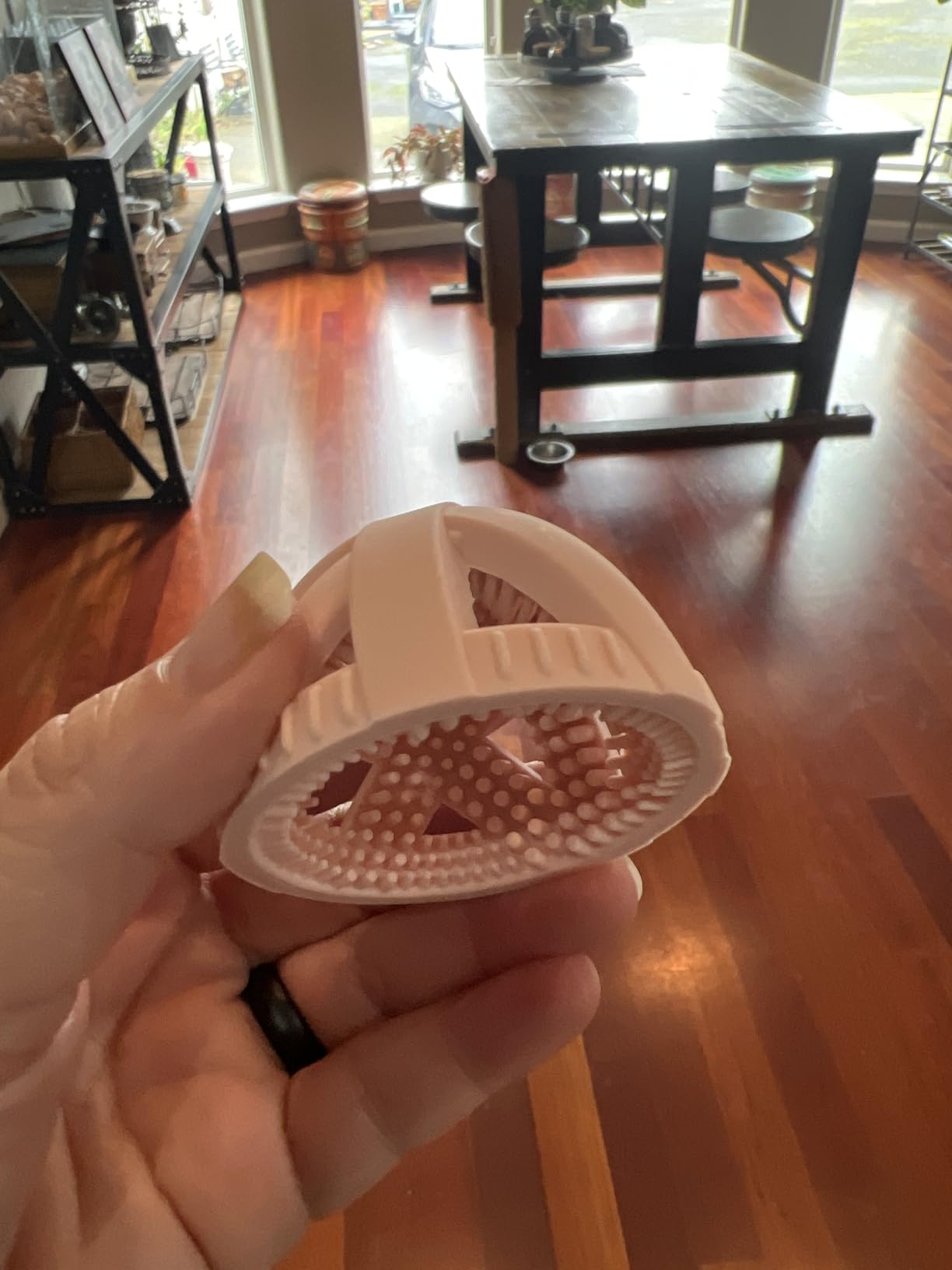
This is the tool most backyard keepers end up owning, and 642 reviews explain why. It is a simple palm-sized silicone brush with over 650 flexible nubs and nothing else to go wrong. Our mud-caked eggs came clean in a handful of passes without a scratch.
The nubs flex against the curve of the shell instead of digging into it, and the ribbed edges reach the crevices a flat sponge misses. The hollow center drains rather than sitting in a puddle of egg water, and the whole thing flips inside out to rinse.
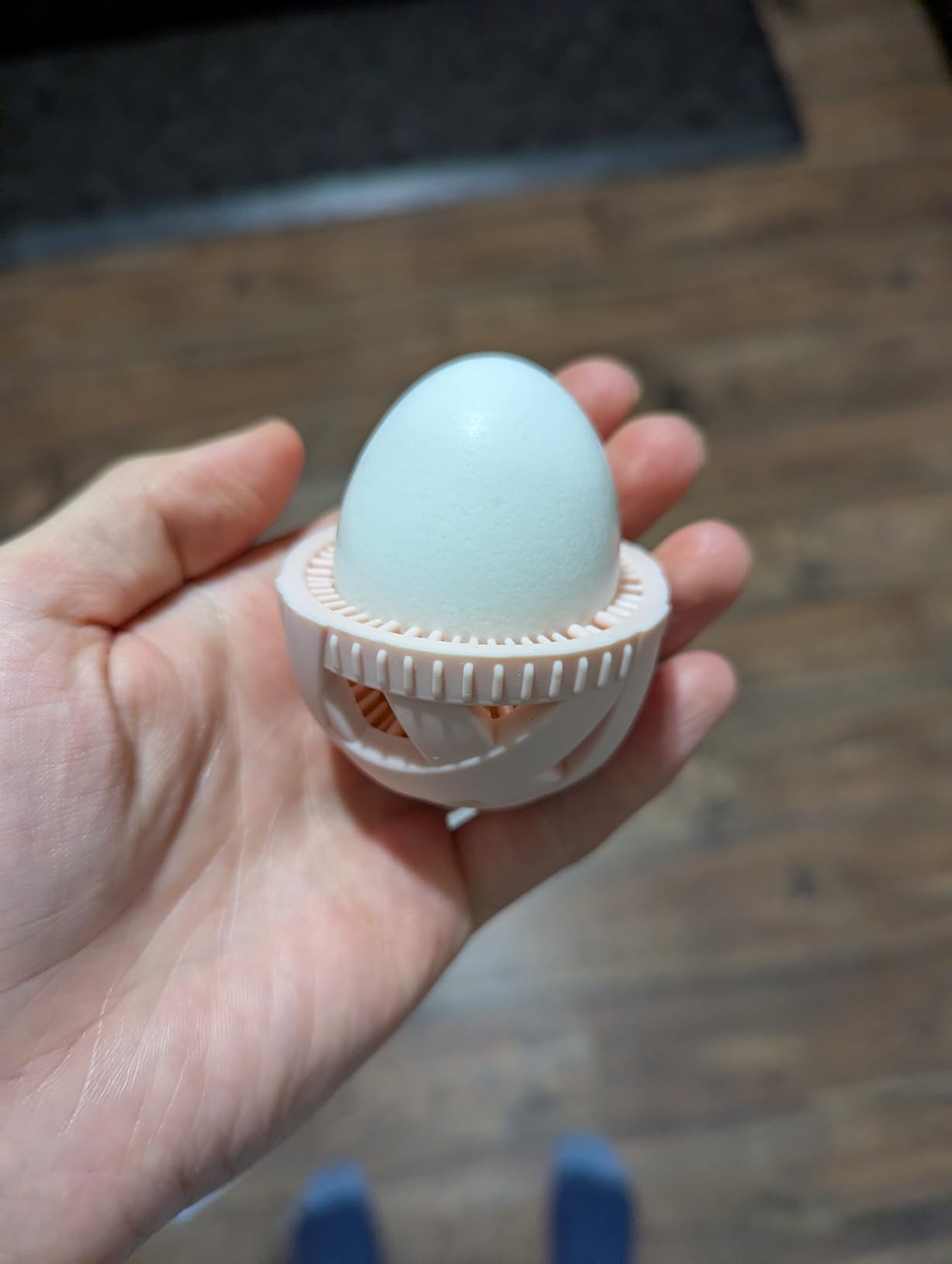
A local chicken group thread we found praised the GoodEgg kit for exactly this reason, describing eggs covered in mud, straw and droppings coming clean quickly without breaking. That breakage worry is the number one anxiety people have about egg scrubbers.
Two limits are worth stating plainly. It is a mechanical tool, so it removes loosened dirt and does nothing to sanitize the shell, and it is built for standard to XL eggs.
Is a silicone brush enough on its own?
For lightly soiled eggs, yes. Pair it with warm water and a squeeze of enzyme wash and you have a complete process for a normal household flock.
For mud-caked duck and goose eggs, treat the brush as the second step: presoak first, then scrub. Skipping the soak is the single biggest reason people think the brush does not work.
Will silicone nubs scratch or break eggs?
No scratching in our testing, and the shell survives a firm scrub without a mark. Breaks come from squeezing pressure and from dropping eggs into a full basin, not from bristle contact, so cradle the egg low in one hand and use short strokes.
3. Manna Pro Egg Cleanser Natural Enzyme Wash – Best for Incubation Eggs
Manna Pro Egg Cleanser Natural Enzyme Wash for Fresh Eggs, 16 oz
16 fl oz concentrated liquid
All-natural enzyme formula
Approx. 15-minute soak
Suitable for fertilized eggs
Pros
- Cleans effectively without detergent or bleach
- Owners report better hatch results on dirty eggs
- A little concentrate goes a long way
- Shell comes out visibly clean and fresh smelling
Cons
- Needs the full 15-minute soak to perform
- Some health departments require chlorine when selling
- 16 oz runs out fast on a large flock
This is the one to look at if you set eggs for hatching rather than eating. Reviewers specifically report improved hatch results when dirty duck and incubation eggs get a proper wash first.
The formula is all-natural enzyme based, so it works without the harsh detergent smell that puts some people off chemical egg washes, and shell quality after a rinse is visibly better than a water-only clean.
The main drawback is the roughly fifteen-minute soak. That is fine if you batch your washing, but it rules the product out of the five-minutes-to-cleanup workflow some people prefer.
One reviewer raised a point worth repeating: if you sell eggs under a state licence, local health departments may want a chlorine-based cleanser instead. Check your local rule before committing to an enzyme-only routine.
4. GoodEgg Enzyme Egg Wash Foaming Spray – Best No-Soak Daily Wash
GoodEgg Enzyme Egg Wash Cleaning Solution, Foaming Spray Pump, Refillable
12 fl oz refillable bottle
99% food-grade plant enzymes
Controlled foaming pump
No bleach or synthetic soap
Pros
- Foam
- rub and rinse removes the need for a soaking bucket
- Pump controls the dose so you waste less solution
- Ingredient list is short and bleach free
- Bottle refills instead of being thrown away
Cons
- The egg brush is sold separately
- 12 fl oz is small for a heavy flock
- Foam still needs a full rinse under cool water
Where the previous two products ask you to wait, this one asks you to pump. Foaming enzyme spray goes directly onto the egg or the brush, and you rub and rinse.
For daily collection that is a real advantage: no basin to set up, no soak timer to watch, and no container of water sitting on the counter attracting dust. Dosing is also more consistent than pouring from a big bottle.
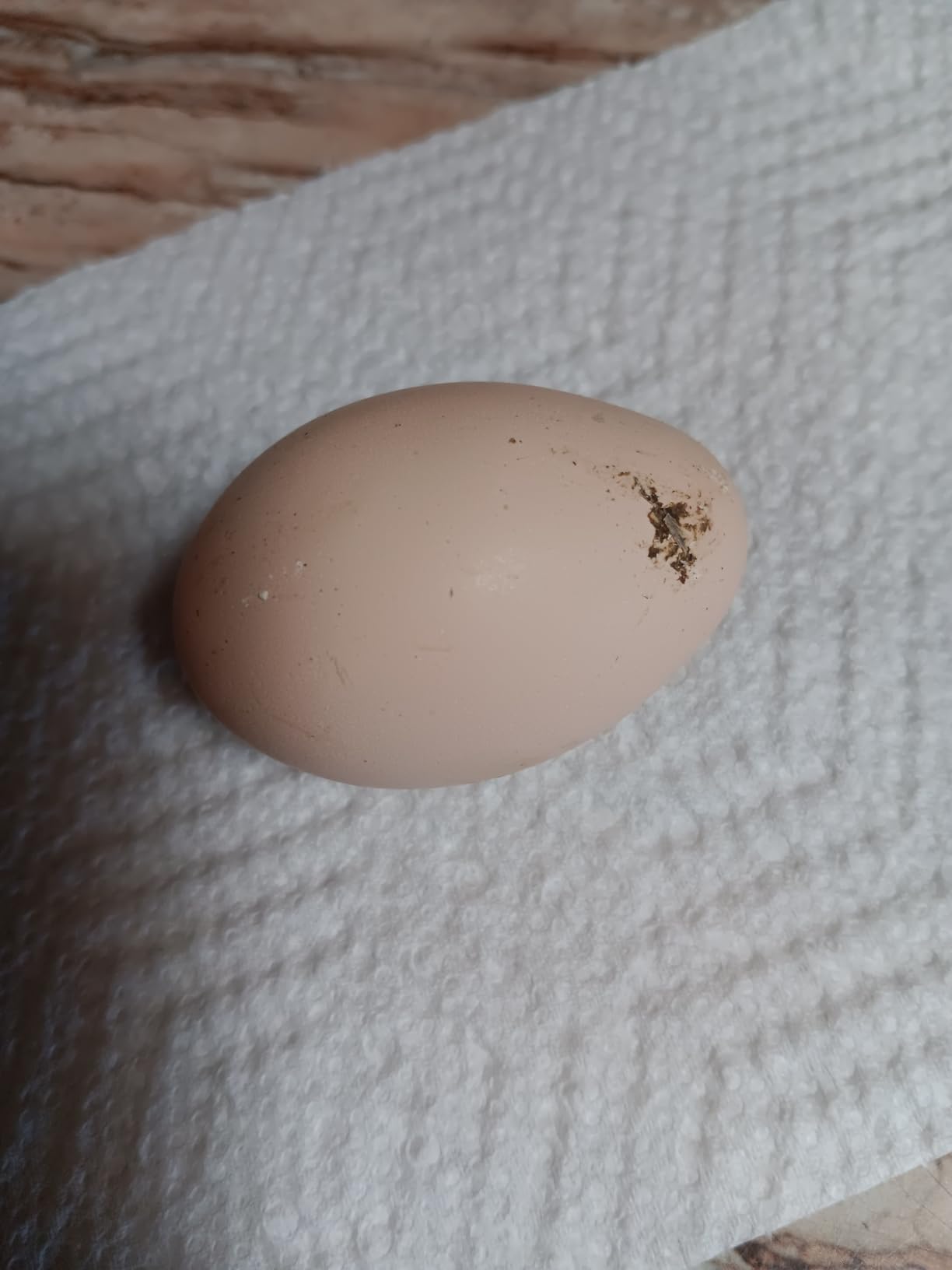
The ingredient list is short and readable, with 99% food-grade ingredients, plant-based enzymes, and no bleach, synthetic soaps, dyes or artificial foaming agents. That is the chemistry most backyard keepers want on a shell they are about to feed their family.
Two practical cautions. The brush is not in the box, so treat this as a partner product for the GoodEgg brush rather than a complete kit. And the refillable bottle is only 12 fl oz, so a flock producing every day will empty it quickly.
Is foam as effective as a soak?
For lightly soiled eggs, yes. Foam reaches the surface texture of the shell and lifts light grime on contact.
For caked manure, no. Only water softens the bond first, so a soak-based wash still wins on the worst eggs.
Can I use this with any egg brush?
You can. Any food-grade silicone or nylon brush works, since the foam supplies the chemistry and the brush supplies the friction. Rinse the brush after each session, because trapped solution under the bristles is what causes odor over time.
5. Clean Republic Good Salt Pet Fresh Nest Egg Wash Spray – Fastest Sanitizing Wash
Clean Republic Good Salt Pet Fresh Nest Egg Wash Spray, Natural Cleaner for Freshly Laid Eggs, Made in the USA, 32 Ounce Bottle
0.015% hypochlorous acid
Two ingredients, nothing else
30-second contact time
32 fl oz spray bottle
Pros
- Cleans and sanitizes in one 30-second step
- Near-neutral pH is gentle on hands
- No bleach
- alcohol or synthetic chemical smell
- Also works on food contact surfaces
Cons
- Some owners say warm water alone cleans as well
- Chlorine-based chemistry puts off organic-focused buyers
- 1-year shelf life means old bottles lose potency
Most washes here clean. This one cleans and sanitizes at the same time in about thirty seconds of contact time, with a two-ingredient list.
The active is hypochlorous acid at 0.015%, produced from salt, water and electricity. Because it works near neutral pH, it does not sting your hands or leave the sharp chlorine smell that makes people distrust washed shells.
Instructions are flexible: spray and rub for thirty seconds before rinsing, or soak a whole batch in a quarter cup for the same thirty seconds.
A minority of buyers think it is no better than warm water for physical dirt, and organic-focused keepers avoid it because chlorine chemistry feels inconsistent with an organic claim. Do respect the one-year shelf life from the manufacture date.
6. Lumkew Egg Washer Cleaner and Scrubber Brush – Best for Mixed Flocks
Lumkew Egg Washer Cleaner for Fresh Eggs, Egg Wash and Brush Scrubber, 1pcs
Soft nylon bristles
Semi-wrapped oval shape
Standing feet for draining
2.6 x 2.2 x 4.3 inches
Pros
- Soft bristles clean thoroughly without damaging shells
- One brush fits chicken
- duck and goose eggs
- Standing feet let it drain and dry by the sink
- Raised grip dots reduce hand fatigue over long batches
Cons
- Mechanical scrubbing only
- no sanitizing action
- Soft bristles may be too gentle for heavily caked eggs
- Nylon and plastic wear faster than solid silicone
This is the brush for a mixed flock. The semi-wrapped oval body is the interesting part, because it sits against the curve of a chicken egg, a duck egg or a goose egg without you needing a separate tool for each.
Bristles are soft nylon rather than silicone, and in our testing they shifted grit without marking the shell. They felt noticeably gentler than a stiff vegetable scrubber and less aggressive than a silicone nub brush.
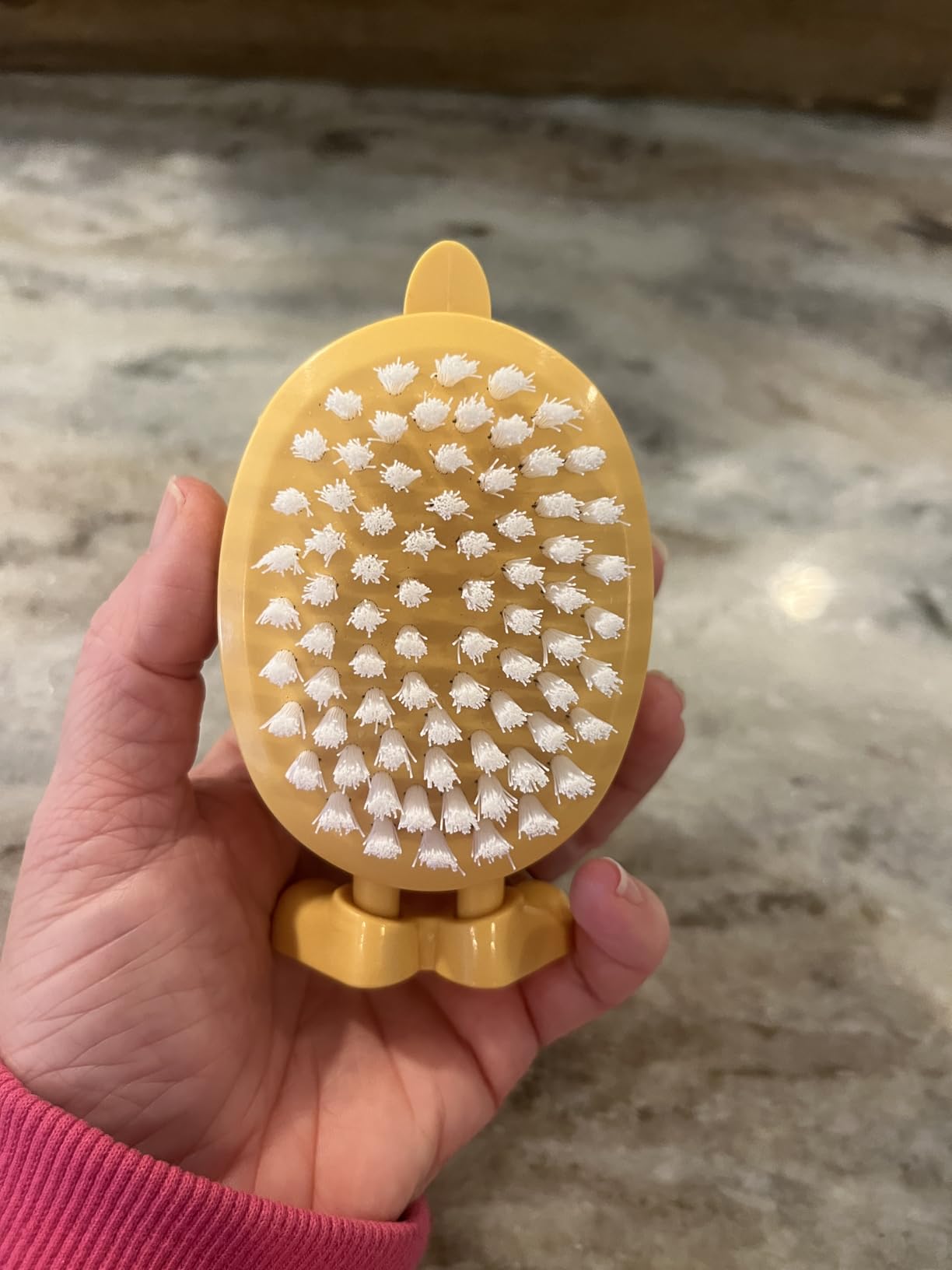
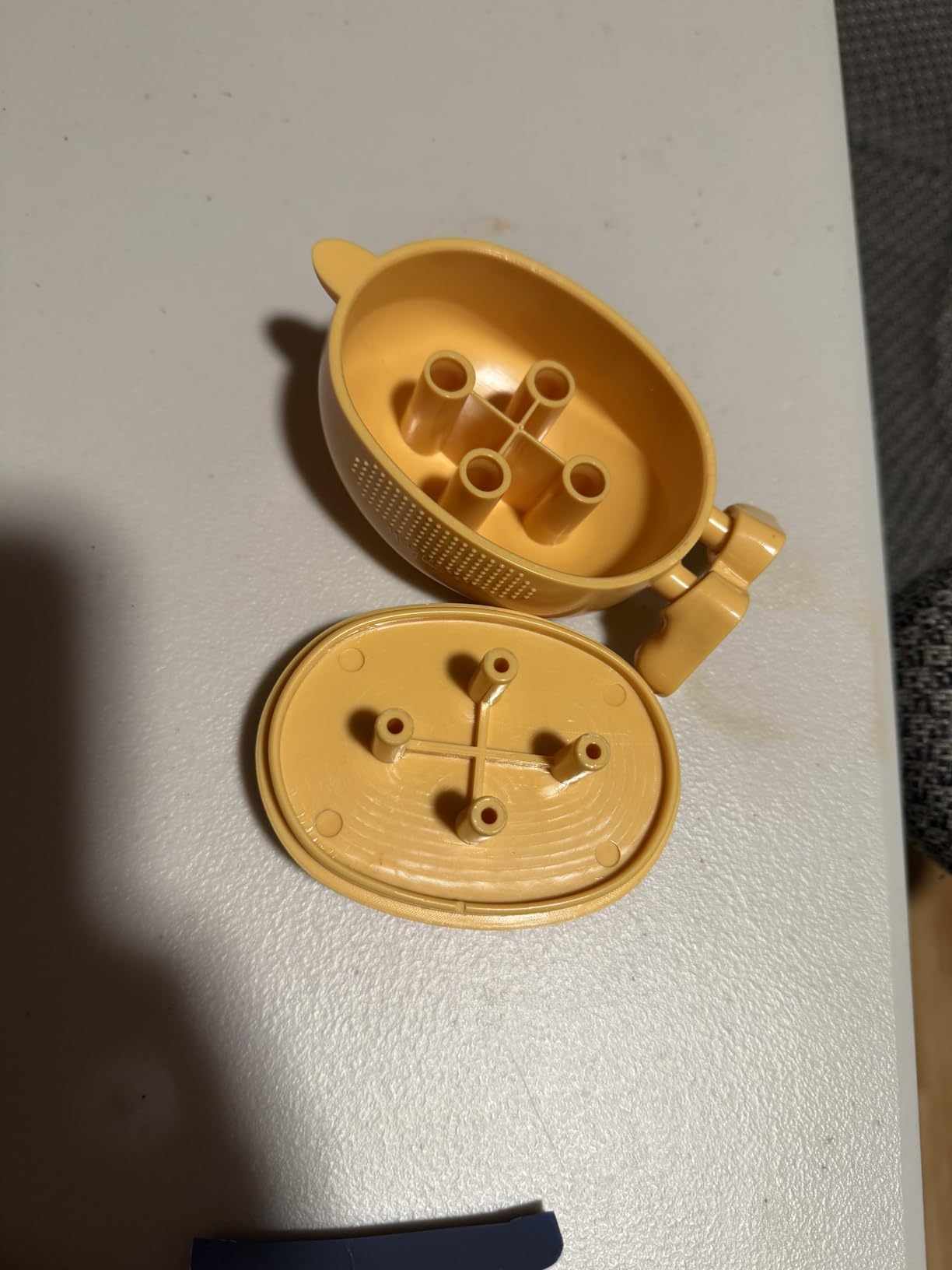
Two small design choices made it more pleasant than expected. Raised grip dots keep the hand from cramping around egg number forty, and standing feet let the brush drain and dry beside the sink instead of sitting in cloudy water.
Its limits are about power rather than design. It provides no sanitizing action at all, and on badly caked waterfowl eggs the soft bristles can feel underpowered. Presoak first and it will handle them. Nylon and plastic also will not last as long as solid silicone under daily use.
Can one brush really handle duck and goose eggs?
For size, yes. The wrapped oval body contacts the shell evenly on anything from a bantam egg to a large goose egg.
For mess, no. Large waterfowl eggs collect mud differently, and the softness that protects a shell also means less scrubbing power on caked dirt.
Is it worth buying over a silicone brush?
Choose it if you keep waterfowl alongside hens and want one tool. If you only have hens, a silicone brush gives you more scrubbing power for less. Either way the grip and draining feet are the reason it stays within reach instead of in a drawer.
7. Rite Farm Products Egg Scrubbing Scrubber Brush – Best for Mud-Caked Duck Eggs
RITE FARM PRODUCTS Egg SCRUBBING Scrubber Brush Washing WASH Chicken Poultry
Palm-size scrubber brush
Medium-firm bristles
Reusable plastic handle
2.25 x 4.5 x 2.25 inches
Pros
- Covers an egg in a few fast passes
- Bristles are firm enough to shift debris but shell safe
- Bristles resist flattening over time
- Draw a duck egg across it like a washboard
Cons
- Center bristles wear down after a few weeks
- A minority of owners report little debris coming off
- Bristles start stiff and need warm water first
Duck eggs sit on damp ground and come in caked, and this palm-size scrubber is built for that job. Owners working waterfowl flocks use it by drawing the egg across the bristles like a washboard rather than scrubbing in circles, and it fits fully in one hand.
Firmness is the right word here. These bristles have more bite than soft nylon and less finesse than a silicone nub brush, which is what lets them shift caked mud. Bristles start stiff, so run the brush under warm water first.
Durability is the weak point. Several owners report the center bristles wearing down after only a few weeks, and a small group say they remove very little debris at all.
If your eggs are only lightly dirty, this is more tool than you need. For genuinely caked waterfowl eggs, it earns its drawer space.
8. Good Salt Life Egg Wash All-Natural Formula Spray – Refill Bottle for Large Batches
Good Salt Life Egg Wash for Fresh Eggs, All-Natural Formula, 32oz Spray
0.015% hypochlorous acid
32 fl oz refill bottle
30-second contact time
USA made
Pros
- Works as a refill source for a small spray bottle
- No alcohol or synthetic chemicals
- Thirty seconds of contact time then a rinse
- Easy for first-time egg keepers to adopt
Cons
- The hypochlorous solution is still chlorine chemistry
- 32 fl oz needs frequent refills on big flocks
- Far fewer reviews than the established enzyme washes
Same chemistry as the Clean Republic spray, different job. At 32 fl oz this is better treated as a refill jug for a small hand pump than as a bottle you carry around the coop, which is how most buyers use it.
Decant into a small spray bottle and you get the thirty-second contact time and the neutral pH without lugging a large container around the nest boxes. Review volume is the honest limitation: 32 reviews is a thin record next to the enzyme washes.
There is also a predictable objection cluster. A number of buyers avoid hypochlorous acid entirely, considering it a form of bleach, and prefer an enzyme product for organic eggs. If that is your position, choose an enzyme wash instead.
9. Fresh Eggs Daily Enzyme Egg Cleaning Wipes – Best for Quick Collection Cleanups
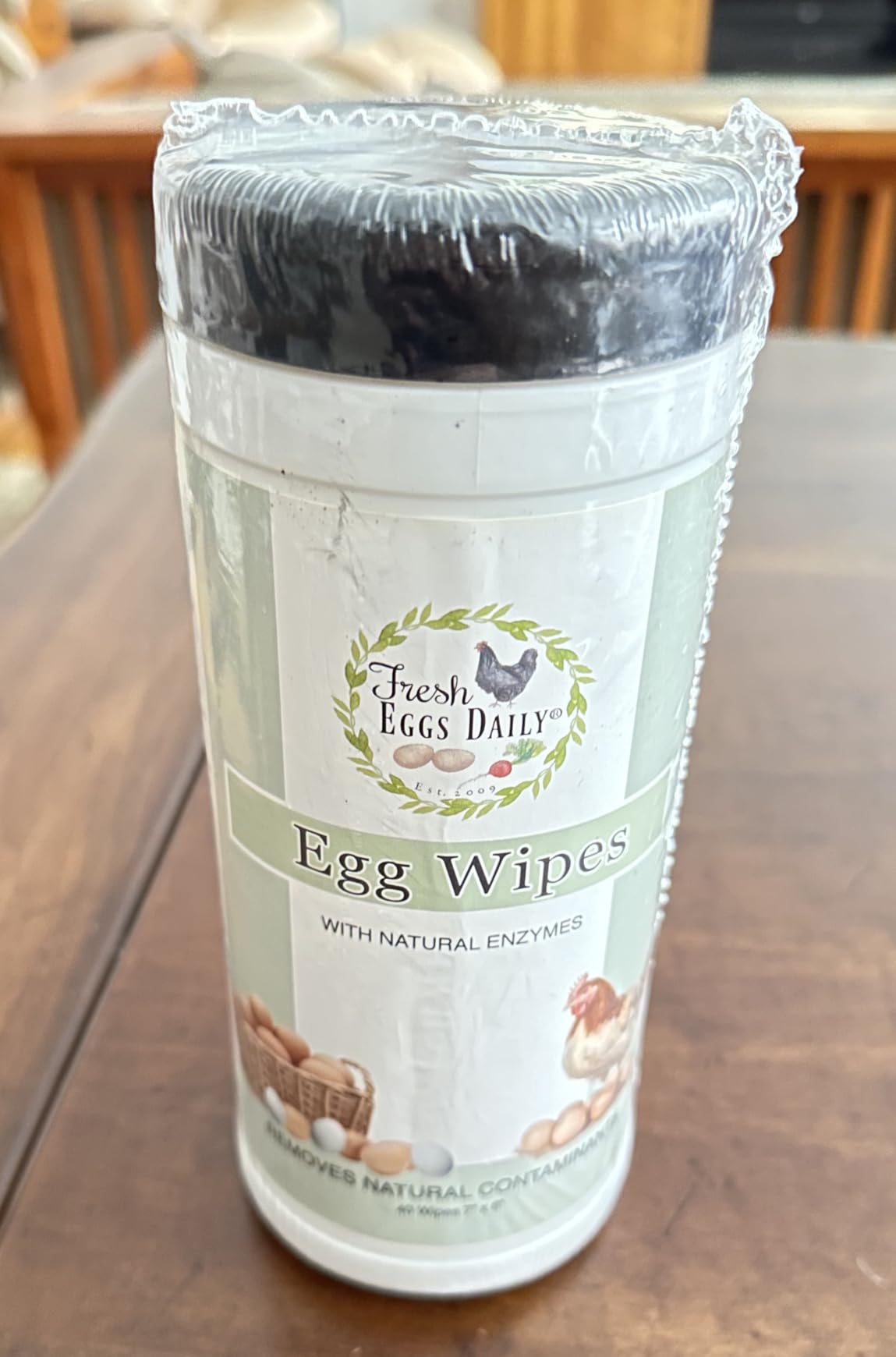
Fresh Eggs Daily Egg Wipes – Enzyme-Based Egg Cleaner for Backyard Chickens, No Rinse Needed, Natural Enzyme Formula – 40 Natural Cleaning Wipes
40 pre-moistened wipes
Distilled water and natural enzymes
No rinse, no soak
Coverage up to 40 dozen eggs
Pros
- Fastest format here: wipe and put the egg away
- No bucket
- brush or rinse step at all
- One container claims up to 40 dozen eggs
- Good after a messy nest box find
Cons
- Disposable format is a recurring cost forever
- Unsuitable for heavily soiled eggs
- Wipes clean but do not sanitize
Wipes are the fastest option in the entire roundup. You pull the egg out of the nest box, wipe it, and put it in the carton. No basin, no timer, no drying rack. One wipe covers several lightly soiled eggs.
The formula is distilled water with natural enzymes and no fragrances or additives, which keeps it gentle enough for eggs you are about to eat, and a container claims coverage for up to 40 dozen.
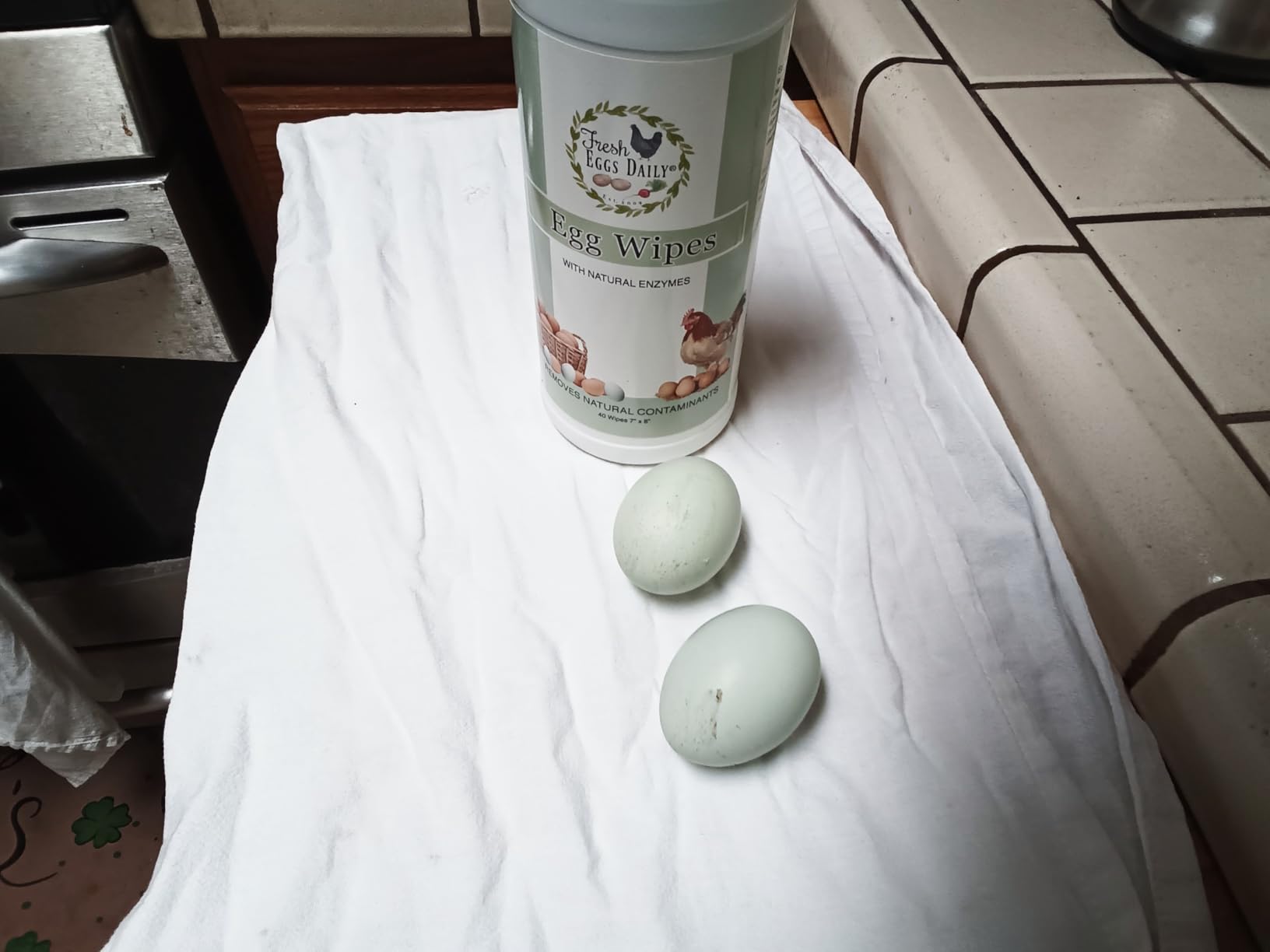
Where this genuinely shines is the muddy nest box. A single egg covered in straw and droppings can be rescued in seconds. And note that it cleans without sanitizing, which matters if you are selling rather than gifting.
Be honest about the three limits. It is a consumable, so the cost recurs forever rather than once, and it does nothing for heavily soiled eggs that need a real soak.
Can wipes replace a proper wash?
For light soil, effectively yes. Owners using them as a quick post-collection step are generally happy with the result. For caked eggs, no: a wipe cannot soak, so it cannot soften bonded dirt.
Are they safe for eggs you are about to eat?
Yes, since the wipes use distilled water and natural enzymes with no fragrances or additives. Still refrigerate as usual afterward, because the bloom has been disturbed even when the shell looks spotless.
10. Rite Farm Products 10 Pack of Egg Scrubbing Pads – Multi-Pack Pad Option
RITE FARM PRODUCTS 10 Pack of Egg SCRUBBING Pads Washing WASH Chicken Poultry
10 hand-size scouring pads
Coarse abrasive texture
Disposable format
Sold direct from maker
Pros
- Ten pads means replacements last many sessions
- Hand-size shape is easy to grip and maneuver
- Coarse texture cuts through farm dirt
- Cheap per pad
Cons
- Scrub power trails a dedicated egg brush
- Some buyers compare them to ordinary sink scouring pads
- Disposable format with no long-term tool value
This is the value entry, useful for one narrow job: a heavy, one-off batch of very dirty eggs when you would rather not use your good brush.
Ten hand-size pads give you plenty of spares, and the coarse abrasive texture shifts farm dirt quickly.
Sentiment here is mixed, and the criticism is consistent: several owners report that the pads do not scrub effectively and are essentially identical to inexpensive kitchen scouring pads, which is more or less what they are.
Against a dedicated egg brush on a regular schedule, they offer less scrub power and no long-term tool. The upside is that nothing wears out in your sink.
Legal and Sanitizer Rules if You Sell Eggs
Washing your own eggs in your kitchen and washing eggs for sale are treated very differently. If eggs leave your property for money, you are in regulated territory and the rules vary by state.
The most commonly cited specification came from a licensed seller in an r/chickens thread working through Florida’s limited poultry and egg licence requirements: an approved sanitizer of not less than 100 ppm and not more than 200 ppm of available chlorine, or its equivalent.
That thread is also where the three-sink station comes up, and it is the alternative most people never hear about. Instead of buying a machine, you can build a wash, rinse and sanitize setup from three basins.
Two warnings from the same discussion are worth keeping. Your sanitizer choice can disqualify you from organic labeling, so organic claims and chlorine sanitizers are often in direct conflict. And licensing is genuinely confusing: that poster described being routed from a live chat to four different phone calls with no one recommending a sanitizer brand.
Drying and Storing Washed Eggs
Drying decides whether washing was worth doing. Put an egg in the fridge wet and you have created the moisture problem you were trying to solve.
Air-dry on a rack or towel until the shell has no moisture left.
Refrigerate only after the shell is completely dry.
Do not towel-dry aggressively; you can abrade the shell.
Store pointy end down, and do not wash again until use.
Air-drying beats towel-drying for a simple reason: a towel forces the shell against wet fingers and can push residue into the pores. Because washing removes the bloom, refrigeration becomes non-negotiable afterward.
How to Choose an Egg Washer for Your Flock
Start with how many eggs you collect in a normal week. Six to fifteen eggs needs no machine and arguably no dedicated wash.
Fifteen to sixty eggs a week is where a fast spray or wipes start saving real time. A foaming pump removes the soaking step entirely, and wipes handle the quick tidy-up after a bad nest box.
Above roughly a dozen eggs a day, or with ducks in the mix, soaking chemistry becomes the practical choice, because mud-caked waterfowl eggs need water to soften the bond before any brush does its work.
Next, decide whether you are cleaning or sanitizing. If eggs stay in your household, an enzyme wash is the comfortable answer. If you sell, a specific sanitizer concentration may be required, and that decision belongs to your state inspector rather than to us.
Finally, size the tool to your eggs. Silicone brushes fit standard to XL chicken eggs. Quail eggs need something you will not roll out of your hand, and goose eggs need reach and grip rather than finesse.
If you also need to move heavy water around the property, our gas pressure washer roundup and electric pressure washer picks cover that side of a muddy farm. Do not point either one at your eggs: a BackYardChickens thread described pressure-washing 1,200 eggs in 45 minutes, and other members rightly worried about what that does to a shell.
Frequently Asked Questions
How do farmers wash their eggs?
Farmers collect eggs frequently, discard cracked or heavily caked ones, presoak in warm water when dirt is stuck, clean with an enzyme wash and a brush or machine, rinse in clean water, air-dry fully, then refrigerate. Warm water matters because cold water can draw bacteria through the shell.
Do I need to wash backyard chicken eggs?
Usually not. The cuticle, or bloom, on a fresh egg seals the pores and slows bacteria, so most backyard keepers store eggs unwashed and rinse right before use. Washing makes more sense for visibly soiled eggs, eggs for sale, and mud-caked duck or free-range eggs.
What is the best thing to clean eggs with?
For home flocks, an enzyme-based wash such as CareFree Enzymes or Manna Pro is the comfortable choice because it is food-grade and unscented. A hypochlorous acid spray cleans and sanitizes in about 30 seconds, which is the practical option when you need a disinfecting step. Licensed sellers may be required to use a specific sanitizer concentration.
What sanitizer do I need to sell eggs?
One of the most commonly cited specifications is an approved sanitizer of not less than 100 ppm and not more than 200 ppm of available chlorine, or its equivalent. Requirements vary by state, and a three-sink wash, rinse and sanitize station can be a compliant alternative to buying a machine.
How do I dry washed eggs?
Air-dry them on a rack until the shell is completely clear of moisture, then refrigerate. Avoid aggressive towel-drying, which can abrade the shell. Store pointy end down and do not wash again until you are ready to use the eggs.
The Bottom Line on Backyard Egg Washers in 2026
For a typical household flock, our pick from this roundup of the best egg washers for backyard flocks is simple: the CareFree Enzymes wash paired with the GoodEgg silicone brush.
Keep waterfowl and grab the Lumkew brush. Sell eggs and sort out your state licence first, because the compliant route may be a three-sink station. Washing is optional, and the moment you decide it is necessary, the right tool makes it a ten-minute job instead of an evening one.