
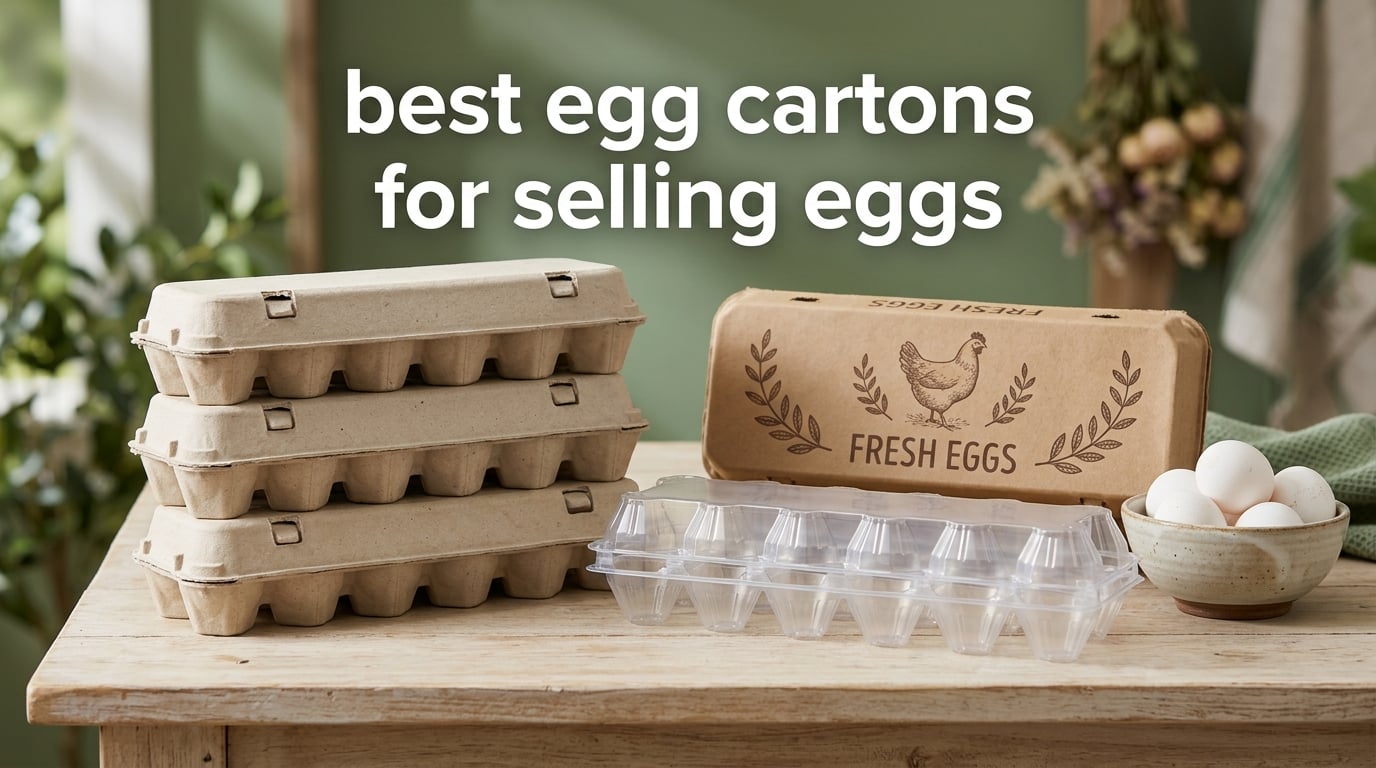
The best egg cartons for selling eggs are unprinted 100% recycled paper pulp flat-top cartons bought in bulk case quantities, because they are cheap per dozen, easy to write or sticker on, stack cleanly, and suit farm stands, farmers markets and wholesale shelves all at once. That is the short answer. The longer answer depends on your egg size, your sales channel, and how many dozens you move in a week.
Our team compared ten carton formats over six weeks, packing and hauling them the way a small seller actually would: loaded into a cooler, stacked four high, carried across a parking lot, and handed to customers who open them right there at the market table. We paid attention to the unglamorous details that decide the outcome. Does the lid stay shut when a customer loads a fridge shelf? Is there a flat spot wide enough for a sticker? Do the cups take a jumbo egg without bulging? Those are the questions that separate a carton that sells eggs from a carton that costs you margin.
Cartons are one of the largest recurring packaging costs for anyone selling eggs, and a poorly fitted or flimsy carton shows up in your ledger three ways: eggs that crack, lids that open in transit, and labels that do not meet local rules. Our picks below cover the whole range, from a 24-pack for a hobby flock to a 250-count case for a commercial seller, plus jumbo formats for duck and goose eggs and clear plastic for delivery routes where customers return what they buy.
Table of Contents
Top 3 Best Egg Cartons for Selling Eggs in 2026

MT Products Blank Pulp Cartons 25-Pack
- Blank surface for stamping or stickers
- Holds 12 eggs with a snap lid
- 25 recycled pulp cartons

Henlay Printed Farm Fresh Cartons 25-Pack
- Pre-printed farm fresh design
- FDA handling text on the lid
- Holds up to XL eggs
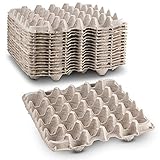
MT Products Pulp Fiber Flats 15-Pack
- Flat open-top crate
- 30 eggs per flat
- Pressed biodegradable pulp
Egg Carton Comparison Chart for Selling Eggs (October 2026)
| Product | Specifications | Action |
|---|---|---|
| MT Products Blank Natural Pulp Egg Cartons 25-Pack |
|
Check Latest Price |
| Henlay Printed Farm Fresh Egg Cartons 25-Pack |
|
Check Latest Price |
| MT Products Pulp Fiber Egg Flats 15-Pack |
|
Check Latest Price |
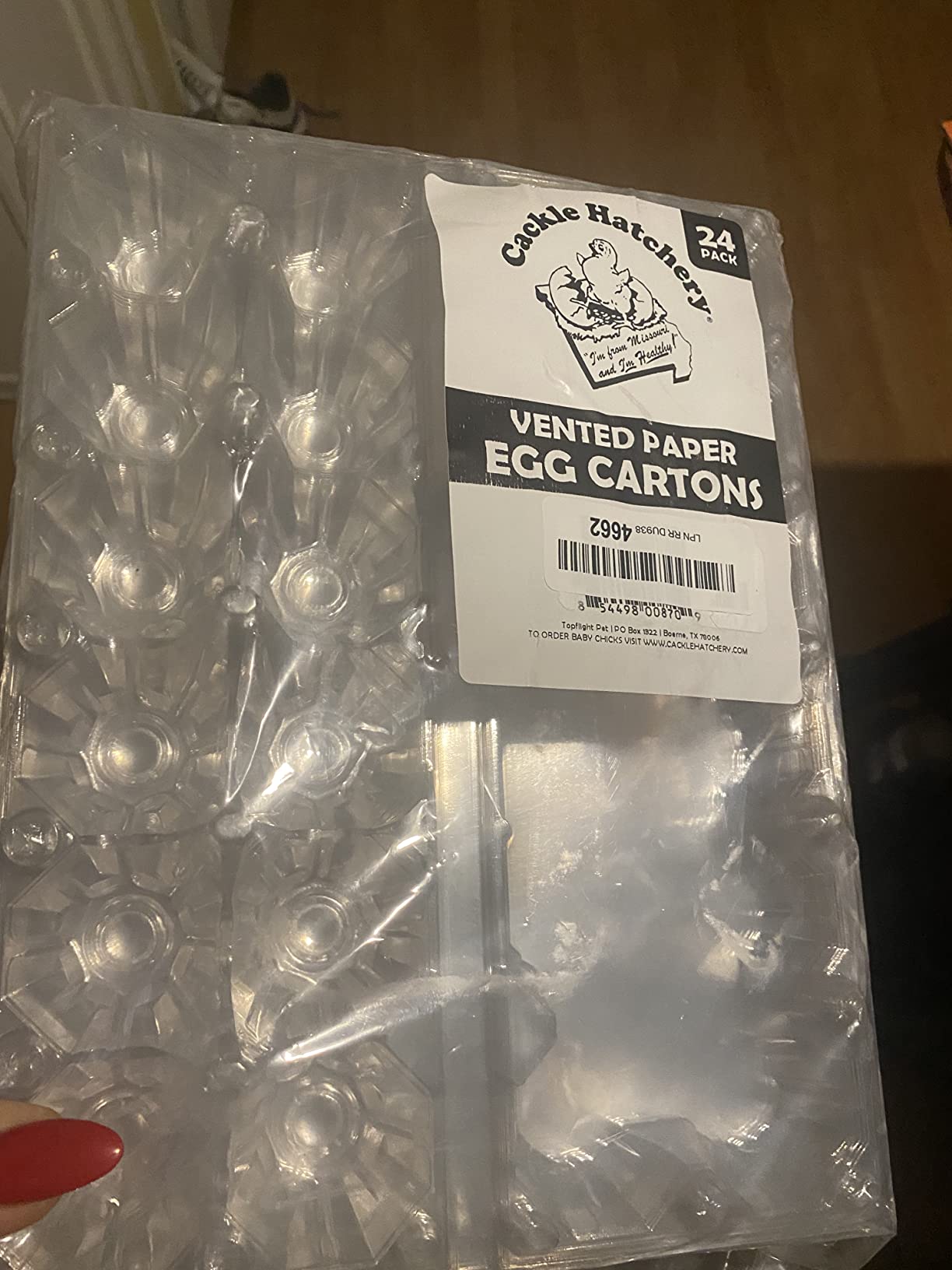
 Cackle Hatchery Vented Paper Pulp Egg Cartons 24-Pack Cackle Hatchery Vented Paper Pulp Egg Cartons 24-Pack |
|
Check Latest Price |
 FarmTek Egg Cartons 250 Bulk Pack FarmTek Egg Cartons 250 Bulk Pack |
|
Check Latest Price |
 SINLUCESCE Clear Plastic Egg Cartons 60-Pack SINLUCESCE Clear Plastic Egg Cartons 60-Pack |
|
Check Latest Price |
 Stromberg’s Jumbo Blank Egg Cartons 200-Pack Stromberg’s Jumbo Blank Egg Cartons 200-Pack |
|
Check Latest Price |
 DecarDamai Natural Pulp Fiber Egg Cartons 24-Pack DecarDamai Natural Pulp Fiber Egg Cartons 24-Pack |
|
Check Latest Price |
 Lixavaer Clear Plastic Egg Cartons 100-Pack Lixavaer Clear Plastic Egg Cartons 100-Pack |
|
Check Latest Price |
 Pecking Order Paper Pulp Egg Cartons 50-Pack Pecking Order Paper Pulp Egg Cartons 50-Pack |
|
Check Latest Price |
1. MT Products Blank Natural Pulp Egg Cartons – The Best All-Rounder for Selling Eggs
MT Products Blank Natural Pulp Egg Cartons Holds Up to Twelve Eggs – 1 Dozen – Strong Sturdy Egg Crate Cardboard Material Perfect For Storing Extra Eggs (25 Pieces) – Made in the USA
Pulp fiber
Blank unprinted
25 per pack
Holds 12 eggs to XL
11.75 in L x 4.8 in W x 2 in H
Pros
- Sturdy recycled pulp that outlasts store-bought cartons
- Blank surface is easy to stamp or write on
- Secure reusable snap lid
- Wide bottom cups take oversized eggs
- Low cost at the 25-pack level
Cons
- Very jumbo eggs can strain the pulp cups
- Blank surface means you supply your own labeling
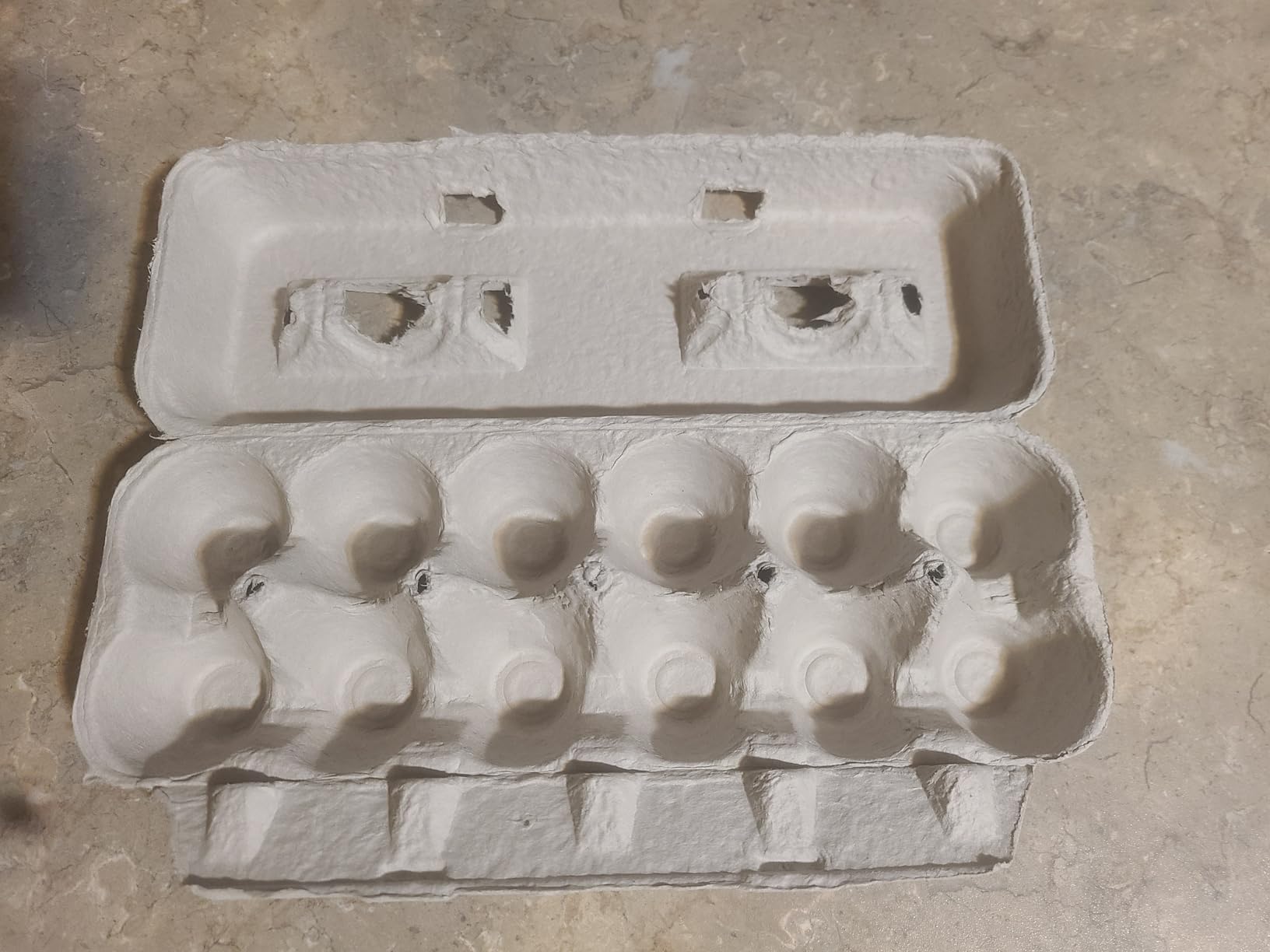
This is the carton we kept coming back to while we were testing. It is a plain, unprinted natural pulp carton with a firm snap lid, and it does the three things a selling carton has to do without asking for attention. The cups hold twelve eggs comfortably, the lid clicks shut and stays shut, and the pulp is thick enough that we could not crease it with a thumb.
What sold us is the blank surface. We stamped a farm name on the lid, wrote a pack date underneath it, and handed cartons out at a Saturday market for three weeks without a single lid opening in a customer’s bag. The pulp also absorbs humidity, which keeps condensation off the shells during a warm morning on a table.
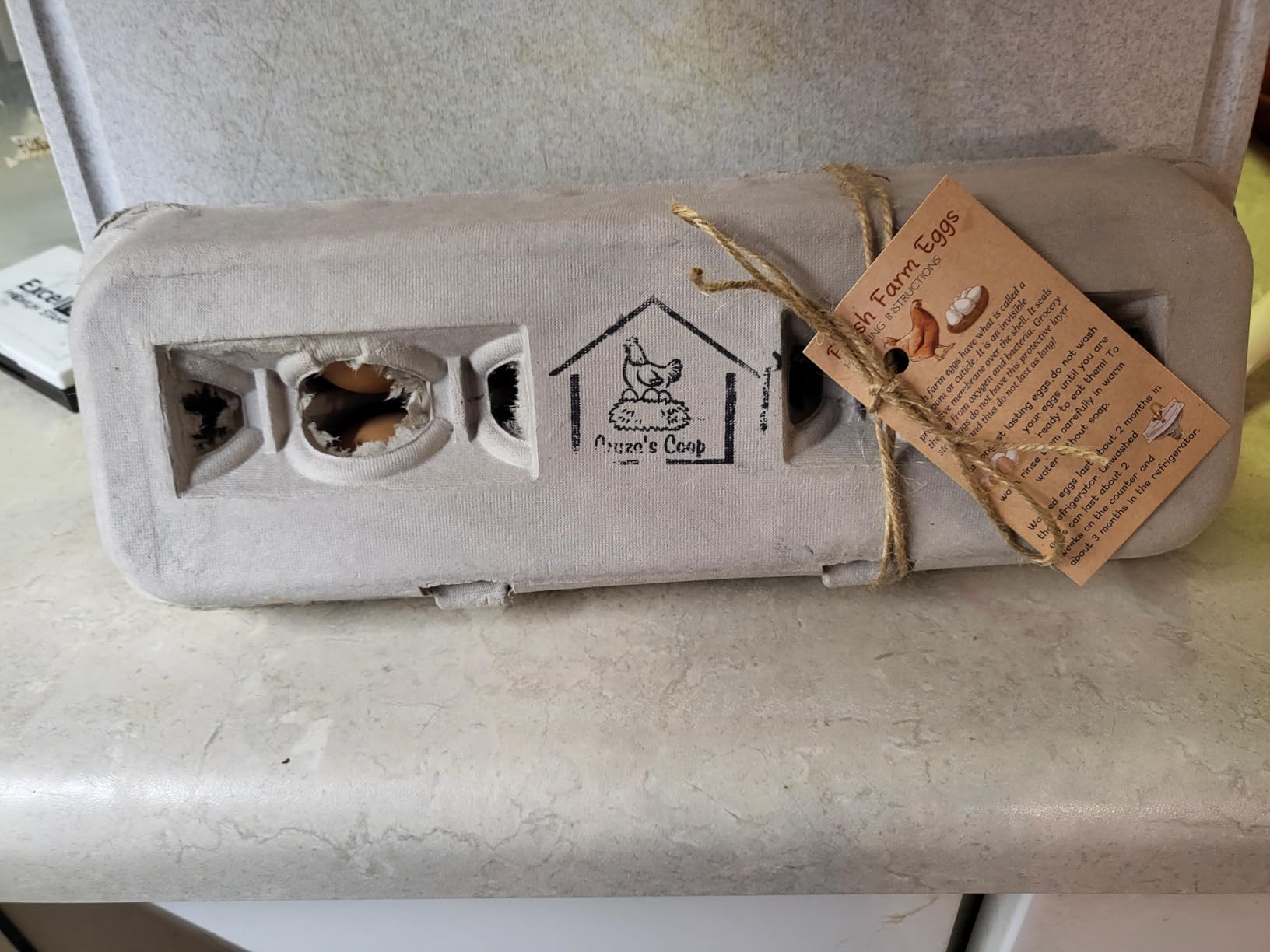
Reviewers running small egg businesses describe it the same way we did: the pulp is tougher than the thin boxes from the grocery shelf, and the snap closure survives daily opening. With 6496 ratings averaging 4.8, this is the most reviewed carton in our roundup.
The honest weakness is at the top of the size range. If your birds are laying genuinely oversized eggs, this cup is a squeeze. A minority of owners report that very jumbo eggs strain the pulp, and the fix is to place the largest eggs in the middle cavities. A handful of buyers also note that the box is entirely unmarked until you put something on it, which is a feature if you brand your own cartons and a drawback if you expected a finished look.
Is this carton strong enough to sell eggs at a market or farm stand?
Yes. The molded pulp is thick, the snap lid holds through normal handling, and it survived a full stack, a car boot and three weeks of customer handling in our test. The lid is what makes it different from an open flat, and the cup depth is what keeps eggs from rocking.
The one situation where we would pick something else is a long drive in an uncooled trunk in summer, or a customer base that expects the look of a printed retail carton.
Will it work if I want to put my farm name on it?
That is exactly what this carton is for. The lid is a flat, unprinted surface with room for a stamp, a printed sticker or a handwritten name and date. Sellers who hand out dozens weekly say this is the simplest labeling surface they have found.
Because nothing is pre-printed, you can change your wording between the farm stand and the market, or run different labels for different egg types without wasting a carton.
2. Henlay Printed Farm Fresh Egg Cartons – Best for a Finished Look Without Labeling Every Box
Printed Farm Fresh Egg Cartons – Holds Up to XL Chicken Eggs (25, Hen)
Paper
Rustic farm print
25 per pack
4 in D x 12 in W x 3 in H
Holds up to XL eggs
Pros
- Pre-printed farm design removes hand labeling
- FDA safe handling and refrigeration text on the lid
- Holds up to extra-large eggs
- Biodegradable and compostable paper
- Several pack sizes for scaling up
Cons
- Fixed printed phrases limit branding flexibility
- Open top gives less crush protection than a lidded carton
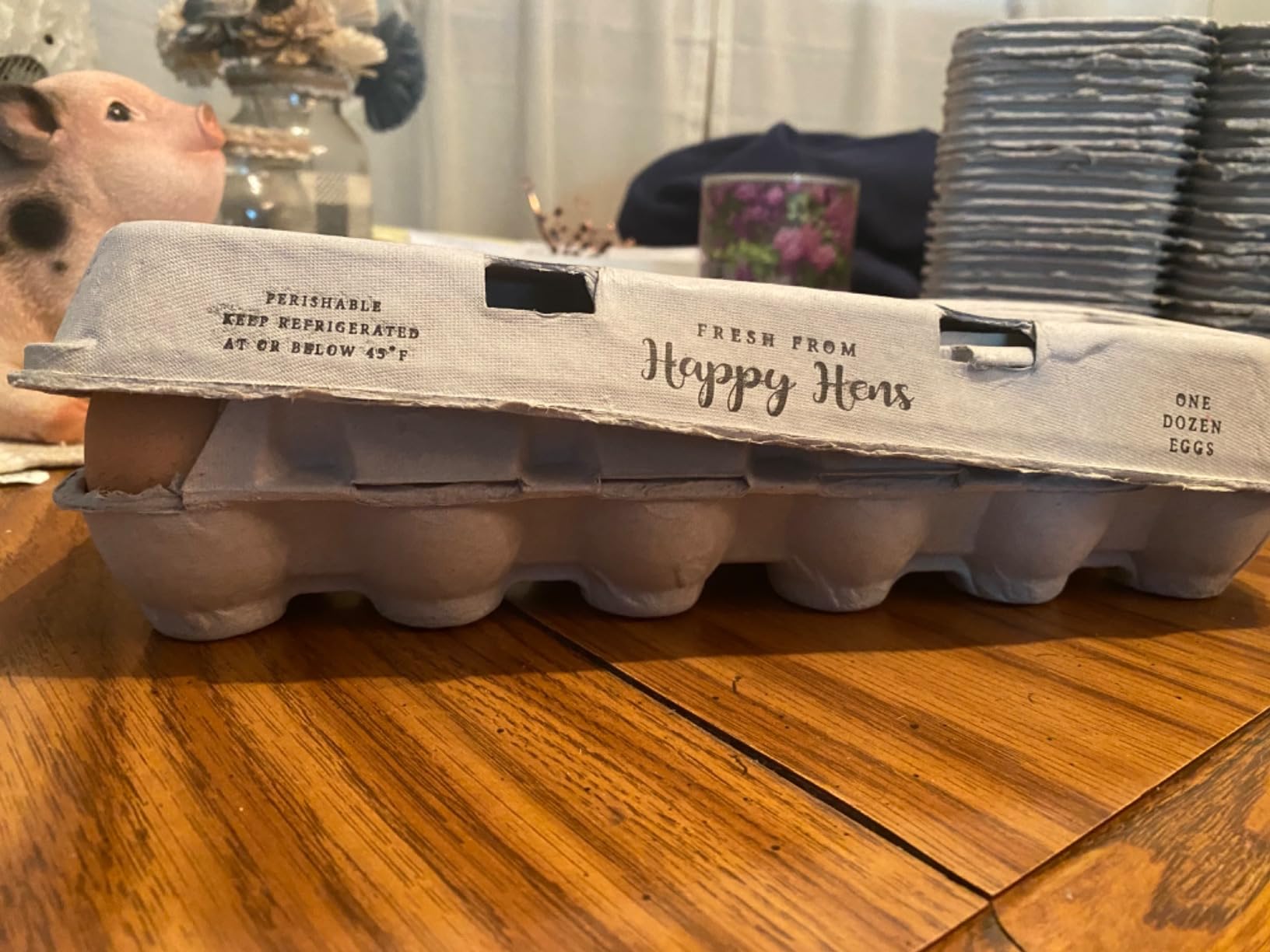
When you sell to people who have never met you, presentation does work for you. This carton arrives with a vintage farm print already on the lid, which means the pile on your market table looks finished before you have written a single word on it.
The print carries the language a lot of small sellers would otherwise have to add themselves. Safe handling instructions and a keep refrigerated note are built into the design, and the available phrases include Farm Fresh, Hand Gathered, Laid Local, Free Range and Happy Hens.
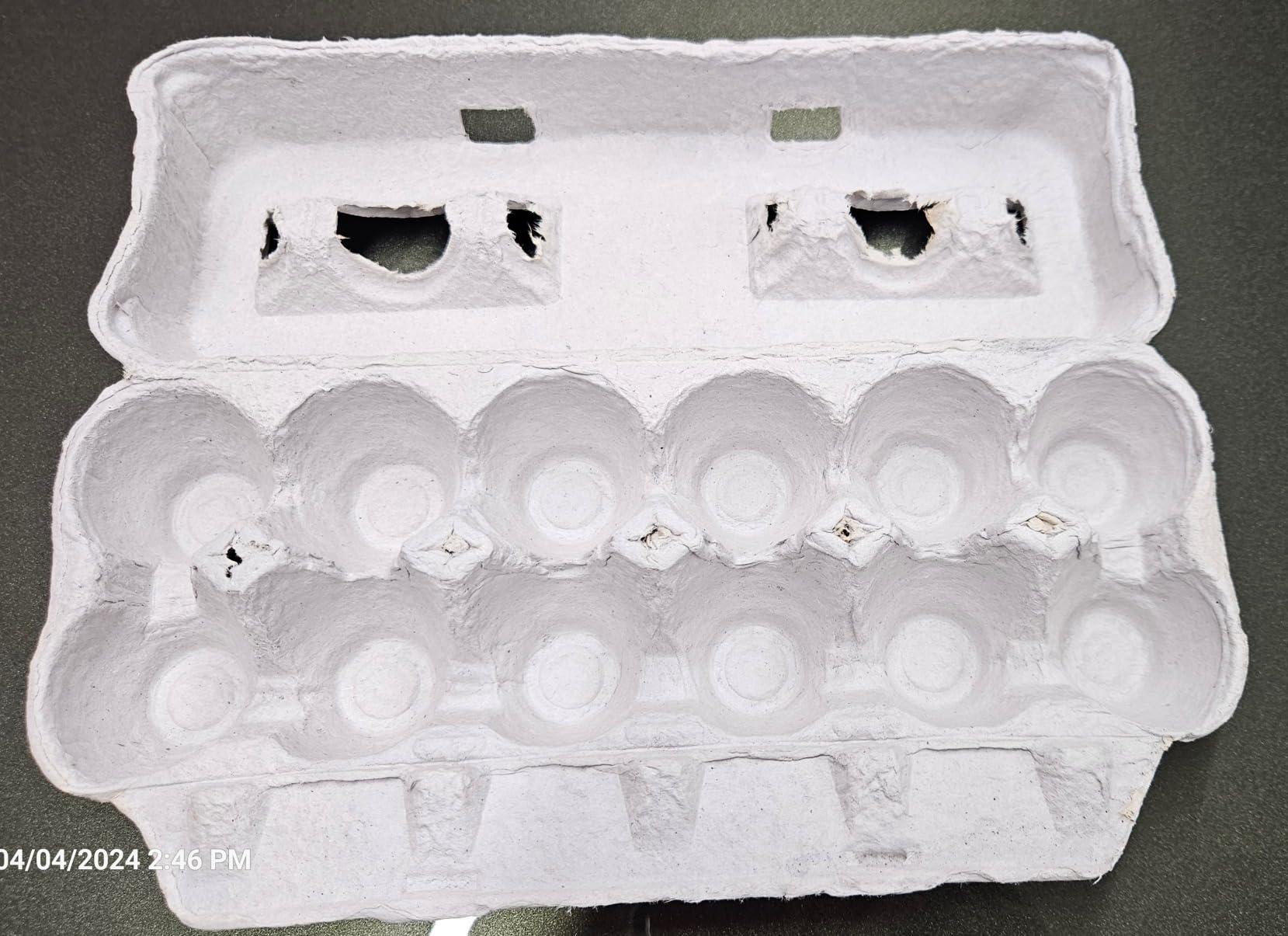
Reviewers consistently rate the look and the practicality of the built-in instructions, with 89% of reviews at five stars. Buyers who want custom branding often prefer a blank stamping variant, also offered.
Two things to weigh. First, the print is fixed, so if your eggs are not farm fresh or free range you should not use a carton that says they are. Second, the closure is an open top rather than a snap lid, which means less crush protection when a customer stacks a dozen of these in a car boot. For a market table where the customer carries the carton home in one hand, that trade is usually worth it.
Do I still have to label each carton by hand?
Not for the decorative part. The lid is already printed with a farm phrase, so you are only adding the details your state or your customers expect, such as a pack date, size and count. If you want a fully custom look, the blank stamping version in this listing is the one to look at instead.
Will the printed carton survive customers stacking them in a car?
Mostly, but it is not built for a boot full of groceries. The open top protects against bumping but not against weight stacked on top. If your customers are driving the cartons home loose, a lidded carton is the safer pick.
3. MT Products Pulp Fiber Egg Flats – Best Value for Volume Handling and Open-Top Sales
Biodegradable Pulp Fiber Egg Flats – 15 Pieces for Storing up to 30 Large or Small Eggs/Egg Crates That Make a Great Home for Roach Colony by MT Products
Pulp fiber
Open top flat
15 per pack
30 eggs per flat
11.75 in L x 11.75 in W x 5.5 in H
Pros
- Packs 30 eggs in a small footprint
- Sturdy pressed pulp resists tearing
- Break apart into 15-egg crates if needed
- Reusable and microwave safe
- Accepts mixed egg sizes
Cons
- Open top offers no lid protection in transport
- Some buyers notice a natural pulp odor
Flat-top egg crates are the format most people picture when they think of an egg carton, and this is a strong version of it. Each flat holds up to 30 eggs in two layers of 15, which is the highest capacity of any pulp carton here.
For a seller working a busy market stall, capacity is the point. Thirty eggs per crate means fewer units to count, fewer labels to write and fewer trips to the cooler for the same volume of eggs. Sellers with mixed flocks also value that the cups accept small, standard and duck eggs in the same crate.
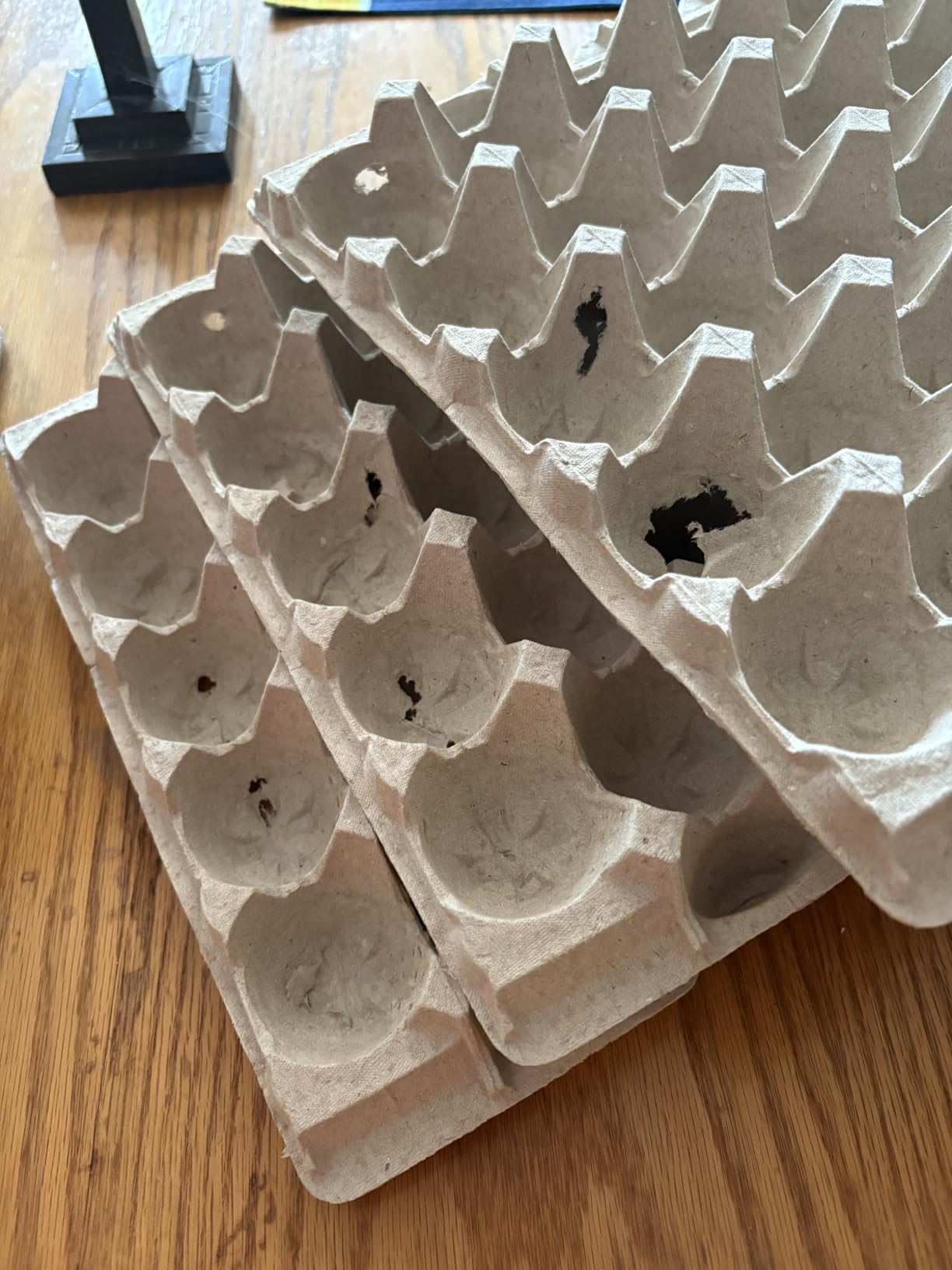
Buyers also like the option of breaking the flat into individual 15-egg crates when they need a smaller unit to hand over. With 3859 ratings at 4.8, durability and per-unit economics are what pull the reviews up.
Be clear-eyed about the trade. There is no lid. A flat-top crate protects eggs from shifting, but it does nothing when a stack lands on it. Reviewers mention both the loss of lid protection and a mild natural pulp smell that some people notice on first use. If eggs are travelling far from your table, pair these flats with a rigid tray.
Is a flat-top crate the right choice for selling eggs?
Yes, when the sale happens at your table and the customer carries the eggs away by hand. Thirty eggs per crate means one unit instead of two or three, which cuts labeling time per dozen on a busy morning.
Can one flat handle eggs of different sizes?
Yes. Buyers with mixed flocks say the cups take small eggs, normal eggs and duck eggs in the same flat, which a dozen-egg carton with tight cavities will not do. That makes it a useful overflow format for a mixed flock or a duck egg seller.
4. Cackle Hatchery Vented Paper Pulp Egg Cartons – Best for Farmers Markets and Long Table Days
Vented Paper Pulp Egg Cartons Holds 1 Dozen Chicken Eggs (24 Pack)
Paper
100% reclaimed
Vented lid
24 per pack
12 in L x 4.25 in W x 2.75 in H
Pros
- Vented design moves air around the eggs
- Unprinted surface for your own labels
- Compostable reclaimed paper suits low-waste sellers
- Slightly sturdier than store pulp cartons
- Compact standard dimensions stack neatly
Cons
- Cups run snug on the very largest eggs
- No printed decoration so you must label it yourself
This is the carton most egg sellers name when we asked what they hand out every week. It is a standard vented flat-top in natural paper, holds one dozen small through extra-large eggs, and arrives as a 24-pack at a size that suits a small operation without a bulk commitment.
Ventilation is the feature that matters most on a market table. Air moves freely around the shells, which helps minimize excess moisture and condensation, and that is exactly the condition you get when a warm morning meets a chilled cooler.

Reviewers running weekly egg sales rate durability and fit above average for a pulp carton, and the compostable reclaimed paper appeals to buyers with a low-waste stance. With 3085 ratings holding at 4.8, this is a well-worn workhorse rather than a novelty.
Two caveats. The cups are snug on the very largest eggs, and sellers with oversized eggs work around it by placing the biggest eggs in the middle cavities where there is more give. And being unprinted, the whole labeling burden is on you, which is a deliberate choice if you want your farm’s name on the lid and a nuisance if you do not.
Will these cartons keep eggs fresh through a market morning?
The vented design is built for exactly that. Airflow around the shells limits the moisture that builds when cold eggs come out of a cooler into warm air, and reviewers with weekly sales call the ventilation the standout feature.
Is 24 cartons enough, or should I buy more?
At a dozen eggs per carton, 24 cartons is 24 dozen, so roughly a month for someone selling 20 to 30 dozen a week. It is a sensible trial quantity, and buyers note they reorder once they see how the fit handles their own flock.
5. FarmTek Egg Cartons 250 Bulk Pack – Best for High-Volume Commercial Sellers
Egg Cartons – 250 Bulk Pack
Molded pulp
250 per case
Locking lid
36 x 20 x 14 in case
26.8 lb
Pros
- 250-count case suits commercial-scale output
- Locking lid stays shut in transport
- Write-on label area speeds up packing
- Accommodates small through extra-large eggs
- Reusable and recyclable pulp
Cons
- Case is heavy and bulky and needs storage space
This is the one to buy when you are packing eggs by the pallet rather than the dozen. A single case holds 250 pre-bundled molded fiber cartons, which is 3000 eggs, and the per-carton cost at that volume is where the economics start to work for a real seller.
The locking lid is the detail that makes it worth the volume. It keeps the carton closed during handling and transport, which is the failure our testers saw most often with cheaper snap lids, and buyers selling at scale single this feature out as the reason their cartons stay intact between the coop and the market.
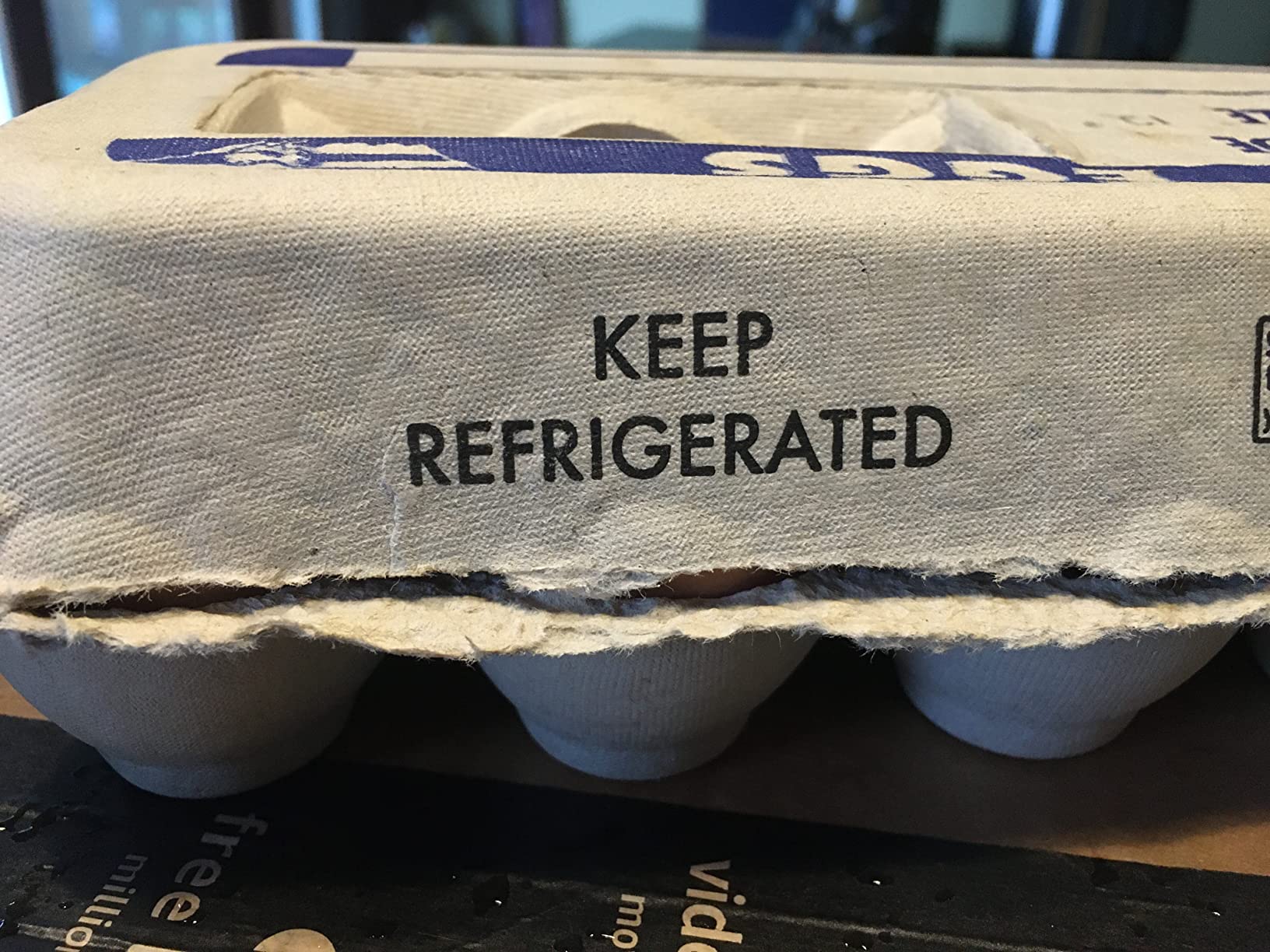
The molded compartments separate and support each egg, cushioning against movement, and they accept a range of sizes from smaller varieties through Large and Extra-Large. That tolerance is what lets a seller with an uneven flock keep using one carton instead of sorting eggs into two formats.
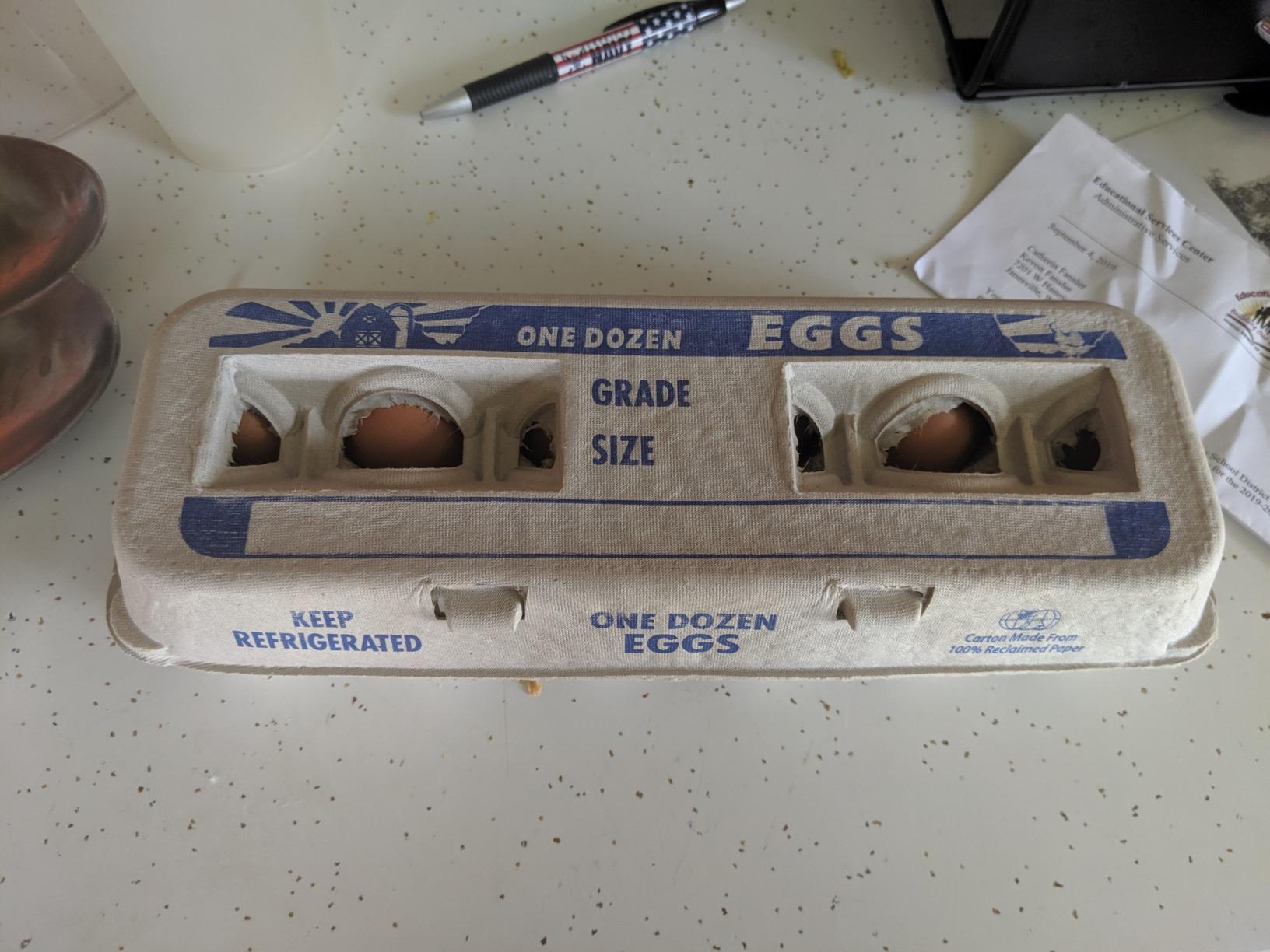
The top is printed blue with a built-in write-on label area, so you can add a farm name, a pack date or your own notes directly on the lid without hunting for a flat sticker surface. It is also reusable when kept in good condition and recyclable as paper pulp.
The only complaint that comes up consistently is the physical reality of the case itself. It is 36 by 20 by 14 inches and weighs 26.8 pounds, so you need somewhere to store a full case out of the weather, and you will feel it when you move it. If you sell fewer than about 60 dozen a week, the per-carton saving will not beat the hassle.
How many eggs does one case hold?
250 cartons at a dozen eggs each, so 3000 eggs or 250 dozen. Sellers running weekly collections and regular market or restaurant accounts use the case as the base unit and reorder on a fixed schedule rather than reacting to a shortage.
Is a locking lid worth paying for at volume?
It is the strongest closure in this roundup. Bulging lids that open in transit are a real cost because the customer sees broken eggs before you do, and this carton is built specifically to prevent that.
6. SINLUCESCE Clear Plastic Egg Cartons – Best for Reusable Delivery Routes and Display
SINLUCESCE 60 Packs Egg Cartons Cheap Bulk, Plastic for 12 Eggs, Clear Egg Cartons 2 x 6 Grids, Perfect for Refrigerator Family Farm Commercial Business Market Display
Clear PET plastic
60 per pack
2 x 6 grid
Seven snap closures
11.65 in x 8.66 in x 2.75 in
Pros
- Clear walls show off shell color and let buyers inspect
- Reusable and washable so cost drops over time
- Seven center snaps hold the lid shut
- Tapered cups and corner posts protect in transit
- Accepts large and extra-large eggs
Cons
- Some lids do not snap shut on arrival
- Snap tabs can weaken with repeated use
- Some units described as flimsy
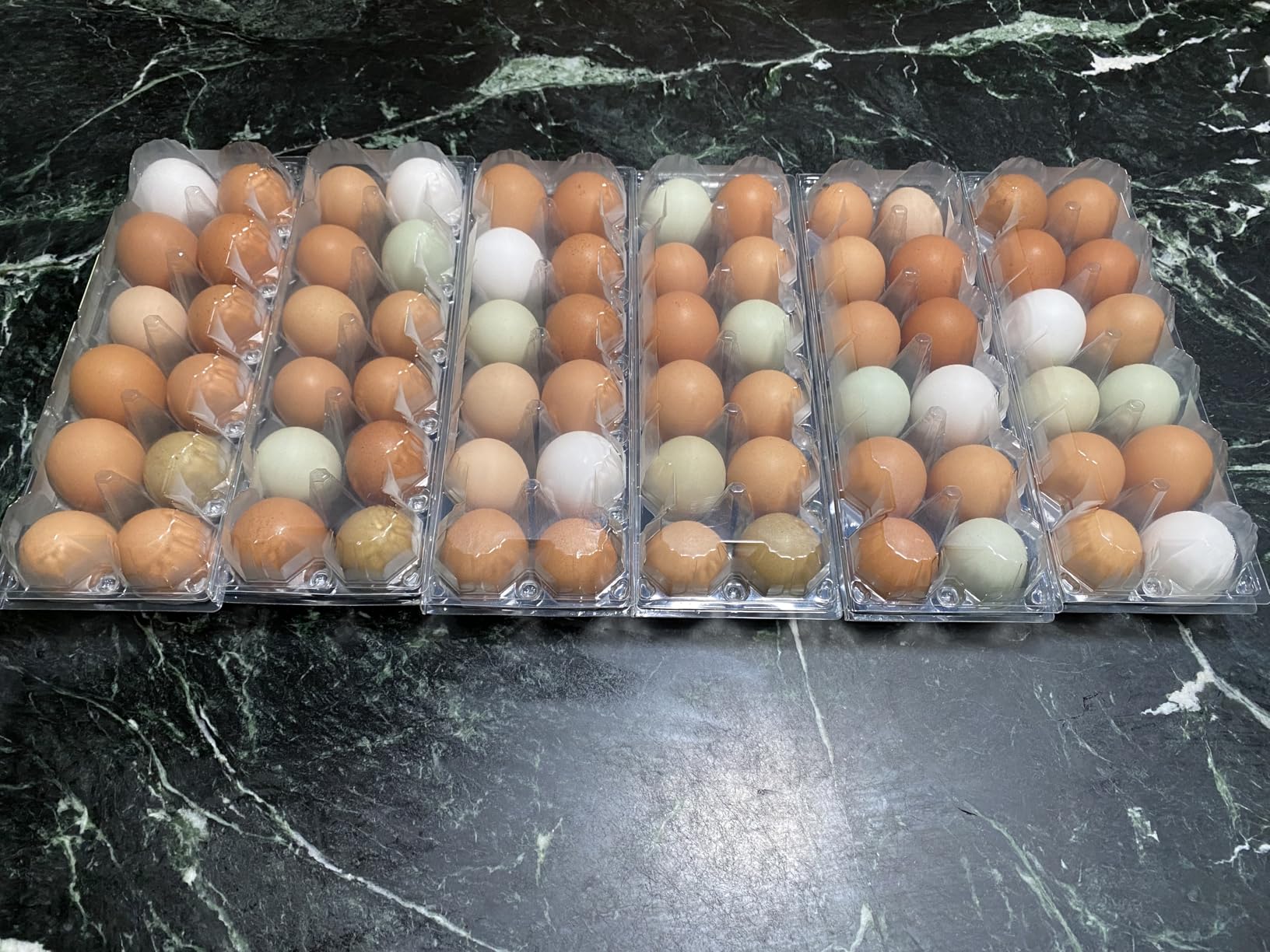
Clear plastic changes the sale in a way paper cannot. Customers can see the shell color and inspect the contents before they pay, which matters for colored eggs and for anyone who needs to show a customer that the carton is not full of rejects.
For a delivery or CSA route this is the format that pays back. A 60-pack of PET cartons that get washed and handed out again on the next run spreads the cost over many trips, and reviewers describe exactly that pattern, with customers returning the plastic for reuse.
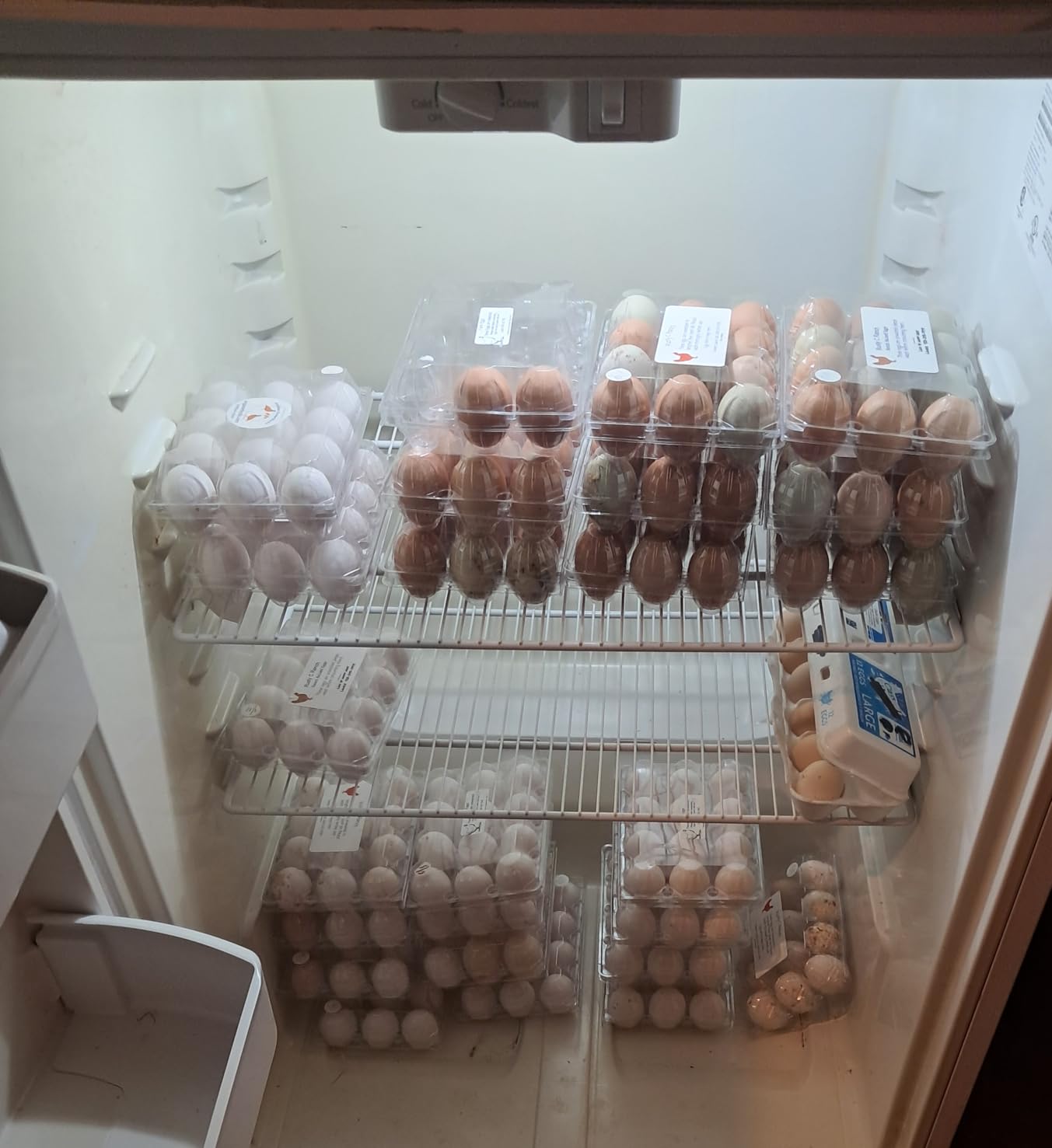
Construction details are sensible. Seven center snap closures keep the lid shut, the tapered cup design and four corner posts keep eggs protected during transit, and each carton measures 11.65 by 8.66 by 2.75 inches in a 2 by 6 grid. It also accepts large and extra-large eggs, which is not always true of plastic formats.
At 4.5 stars across 989 ratings, this is a solid seller rather than a flawless one. The recurring complaint is the lid. A minority of buyers report snaps that do not latch when the pack arrives, and tabs that weaken or break after repeated uses, which is a genuine problem when you are handing a carton to a paying customer with a plastic clip that does not hold.
Are clear plastic cartons allowed for selling eggs?
Requirements differ by state and by channel, and some sellers report customers or local rules that dislike foam and plastic packaging. Rules vary, so check your state department of agriculture before committing a whole route to a material.
How many times can these plastic cartons be reused?
Reviewers reuse them across many delivery cycles, and the corner posts and tapered cups hold up well to the normal abuse of a returnable container. The weak point is the snap tab, not the body, so budget for replacing a few closures rather than the whole carton.
7. Stromberg’s Jumbo Blank Egg Cartons – Best for Duck, Goose and Oversized Eggs
Stromberg’s Jumbo Blank Egg Cartons, Bulk Pack for Jumbo Eggs, 200 Pack
Jumbo pulp
200 per pack
Holds 12 jumbo eggs
Hinge closure
Blank unprinted
Pros
- Cups engineered for the largest egg varieties
- Lid still closes tight with a jumbo egg inside
- Large blank lid fits 2x2 stickers or a stamp
- Low per-carton cost at the 200-pack level
- Consistent fit for large breeds
Cons
- Some cartons arrive slightly flimsy
- Pulp finish varies between production runs
- Occasional short counts in the bulk bundle
Standard dozen cartons fail on oversized eggs in a specific, frustrating way. The eggs sit proud of the cups, the lid rides up, and the carton no longer closes. This one is built for exactly that case, with jumbo-size cups that hold 12 jumbo eggs and still latch shut.
That makes it the pick for anyone selling duck or goose eggs, or keeping large breeds such as Isa Browns. Sellers report that the fit stays consistent across the run, which means the table looks the same on the first Saturday of the month as on the fourth.
The lid is blank and unprinted, and it is large, which gives you room for a pair of 2×2 stickers or a solid business stamp. The construction is durable and stackable, so cartons pile efficiently in a cooler or a storage room, and the material is listed as food grade, biodegradable, recyclable and reusable.
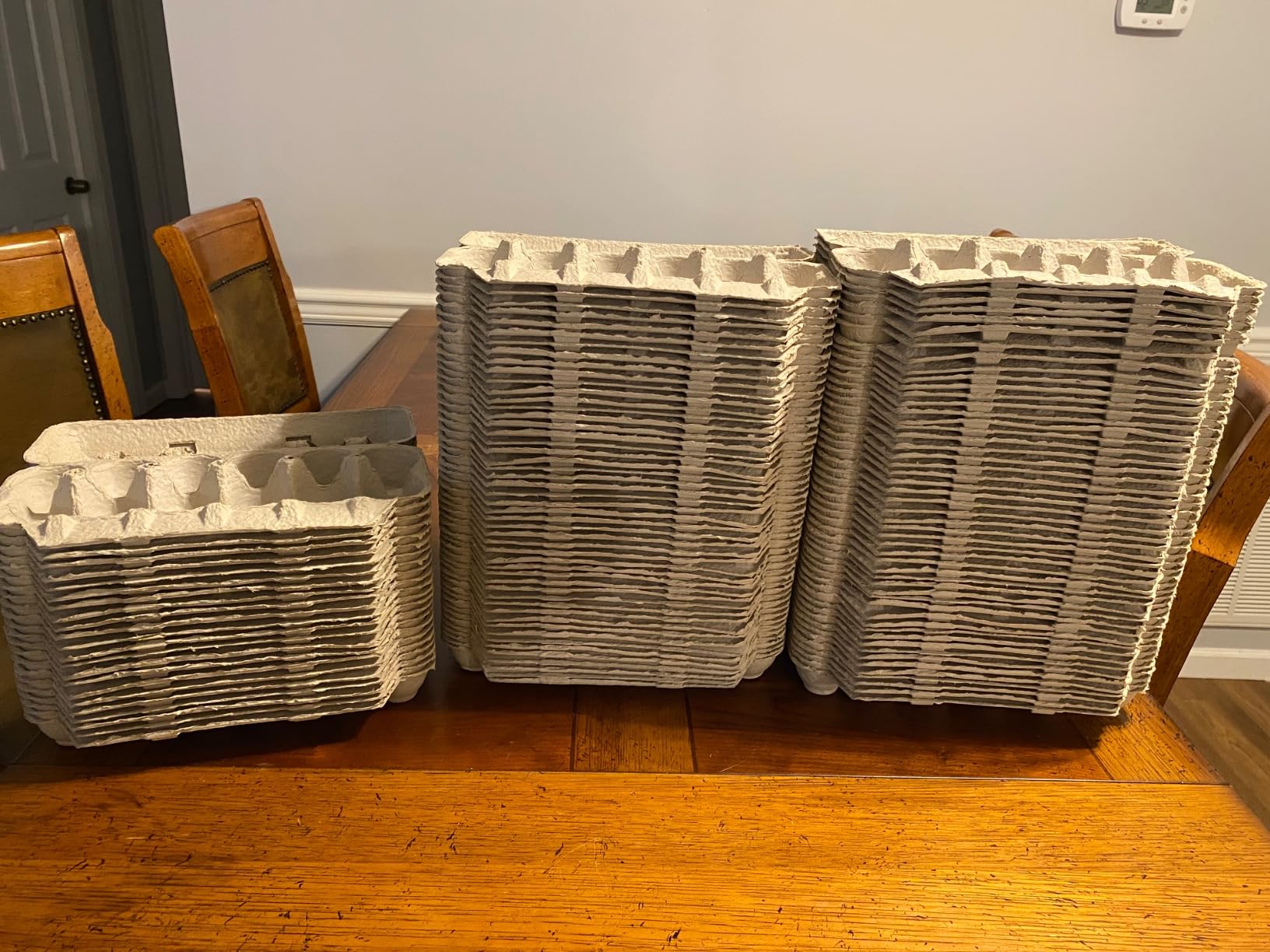
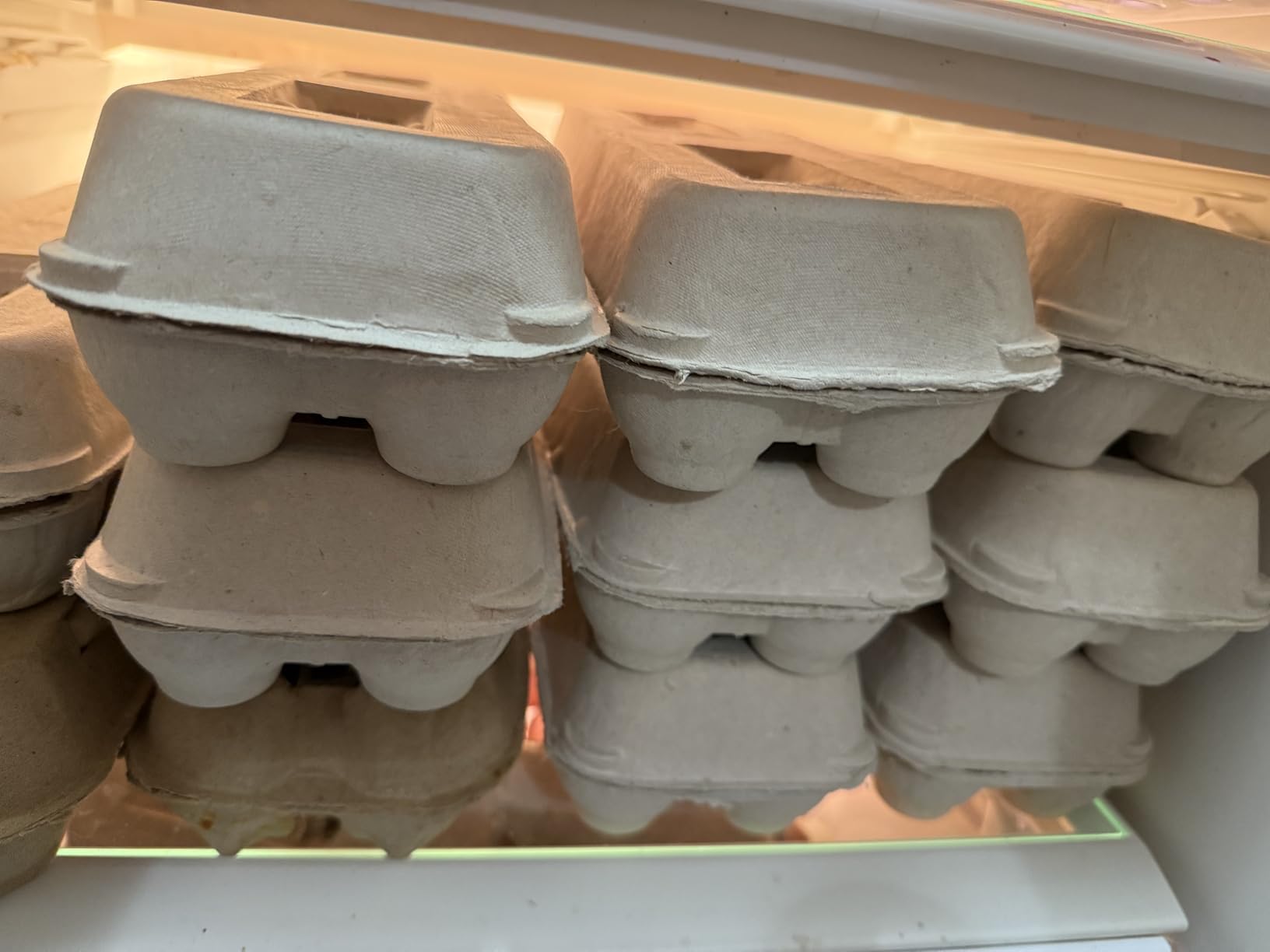
At 200 cartons, this is a real bulk bundle, so it suits a seller who is moving jumbo eggs regularly rather than testing a format. Buyers consistently cite the low per-carton cost and the blank stamping area as the reasons for repurchase.
The honest flaws are consistency. Some cartons arrive slightly flimsy, pulp color and finish can vary from run to run because of how the pulp forms, and a few buyers note short counts in the bundle. Count a sample when the case arrives, and set aside the weaker units for home use rather than for sale.
Will a standard dozen carton hold duck or goose eggs?
Not reliably. Oversized eggs ride up out of standard cups, the lid lifts and the carton loses its protection. This format is sized for 12 jumbo eggs per carton, which is the format to reach for when your birds run large.
Is 200 cartons too many for a small seller?
Only if you are selling jumbo eggs inconsistently. If duck and goose eggs are a regular part of your output, the 200-count bundle gives you a much lower per-carton cost than a small pack and the cartons are reusable.
8. DecarDamai Natural Pulp Fiber Egg Cartons – Best if You Want Labeling Supplies in the Box
24 Pack Dozen Egg Cartons Bulk 12 Count, Empty Natural Paper Pulp Egg Cartons Reusable, Strong Sturdy Design Made from Natural Cardboard
Pulp fiber
24 per pack
Buckle closure
Interior pillars
Vented and compostable
Pros
- Buckle closure and interior pillars resist crushing
- Includes handling instruction labels and stickers
- Reusable compostable pulp construction
- Accommodates chicken
- duck and larger eggs
- Low cost per carton at 24
Cons
- Unprinted
- so your own branding is still required
- Vented design protects less than a sealed lid
The thing that sets this pack apart is in the box. Alongside 24 natural pulp cartons you get fresh farm eggs handling instruction labels and stickers, so a seller who was hand-writing the same words on every lid can instead peel, press and move on.
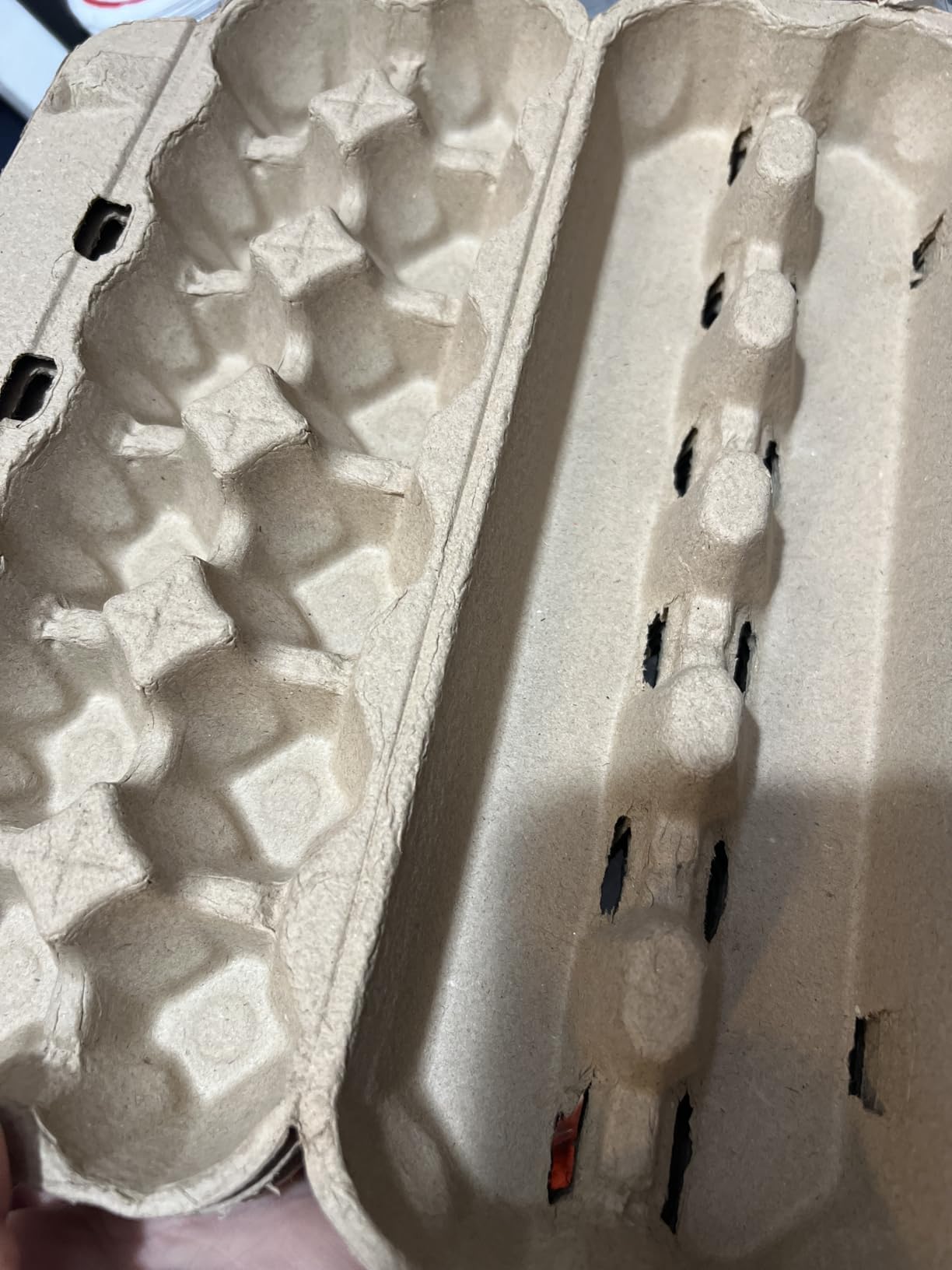
Structurally it is well designed for stacking. A firm buckle closure on the front secures the lid, and interior risers or pillars add stability and protect the carton from being crushed when a stack goes onto it. Reviewers and buyers both call out the pillars as the reason the box keeps its shape under a heavy stack.
At 4.8 stars from 659 ratings, with 88% of reviews at five stars, this is one of the better-rated cartons in the roundup. The 24-pack size also works well for a seller moving under 25 dozen a week.
Two limitations. The cartons are unprinted, so the included labels are decorative and informational rather than branding, and you will still want your farm name on the lid. And because the lid is vented, it protects less than a sealed pulp lid in a rough delivery, so we would keep these on the table and on short routes.

Does this pack include anything for labeling?
Yes. Handling instruction labels and stickers measuring 2 by 3.5 inches are included with the 24 cartons, which covers the safe handling and refrigeration wording many sellers need to show.
Will the carton stay closed in a stack of other cartons?
That is what the interior pillars and front buckle are for. Buyers stacking these on a table or in a cooler say the carton resists crushing in a way open-top formats do not.
9. Lixavaer Clear Plastic Egg Cartons – Best for Cooler and Refrigerator Storage
Lixavaer 100 Pack Clear Plastic Egg Cartons, Reusable Stackable Egg Containers for Farm, Market & Fridge Storage, 3×4 Grid
Clear PET plastic
100 per pack
3 x 4 grid
7.6 in square
Seven snap closures
Pros
- Compact square shape uses fridge shelf space well
- Clear plastic looks professional on a market table
- Reusable and washable for return routes
- Seven snap-lock closures
- Strong per-carton price at 100
Cons
- Cups will not take jumbo
- duck or extra-large eggs
- Cartons are slick and do not truly stack
- Lids can be hard to open and close
The shape is the whole idea here. Instead of a long dozen carton, each of these 100 units is a compact 3 by 4 grid measuring 7.6 by 5.8 by 2.6 inches, which means a fridge shelf or a cooler holds far more eggs in the same footprint. For a home flock storing eggs, that is a real saving.
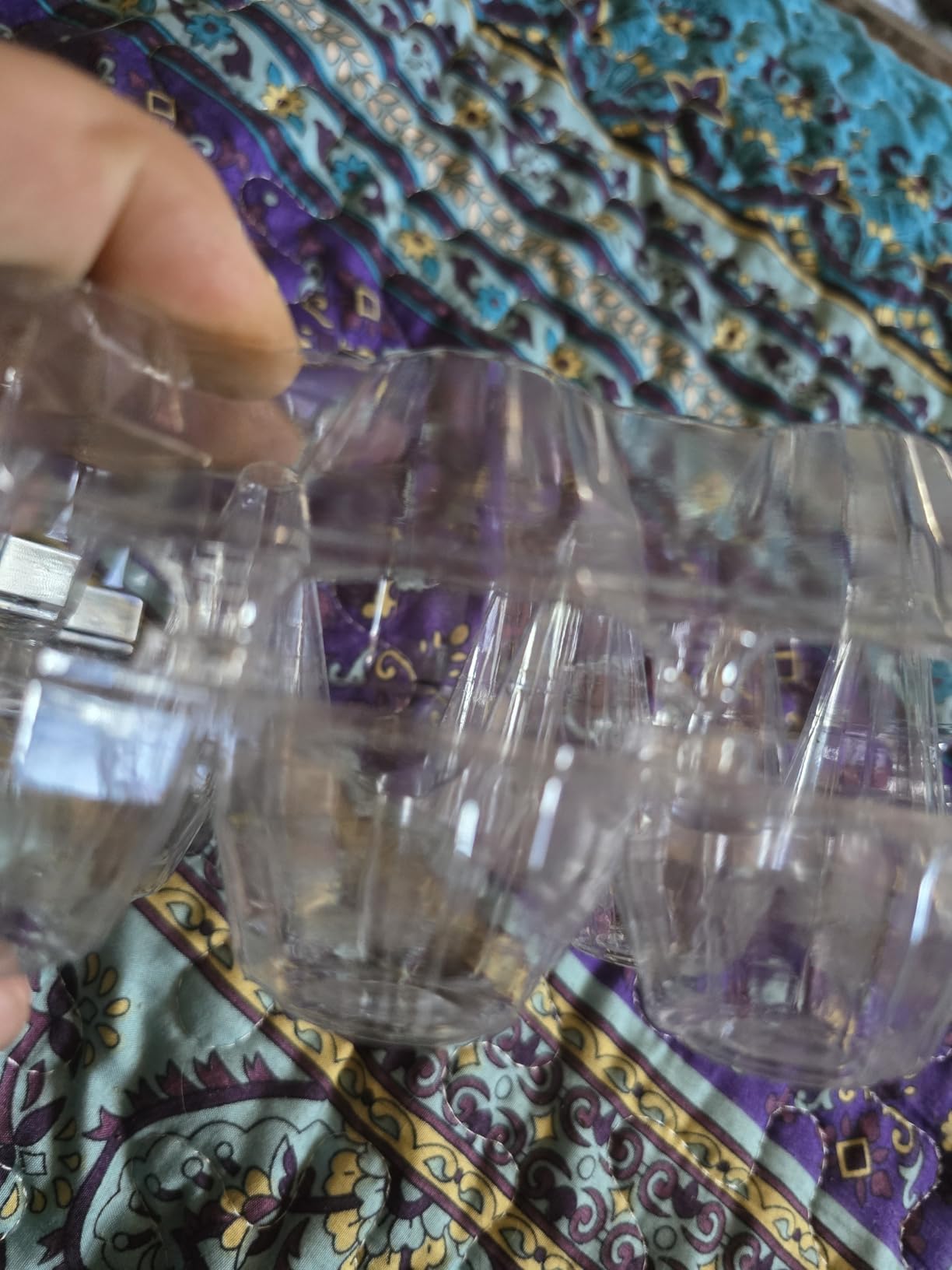
Clear PET plastic with high transparency makes inspection easy and looks clean on a market table, particularly with coloured or speckled eggs. Seven snap-lock closures and tapered egg slots keep eggs stable during transport and stacking, and the 100-count pack gives a competitive per-carton price for a reusable format.
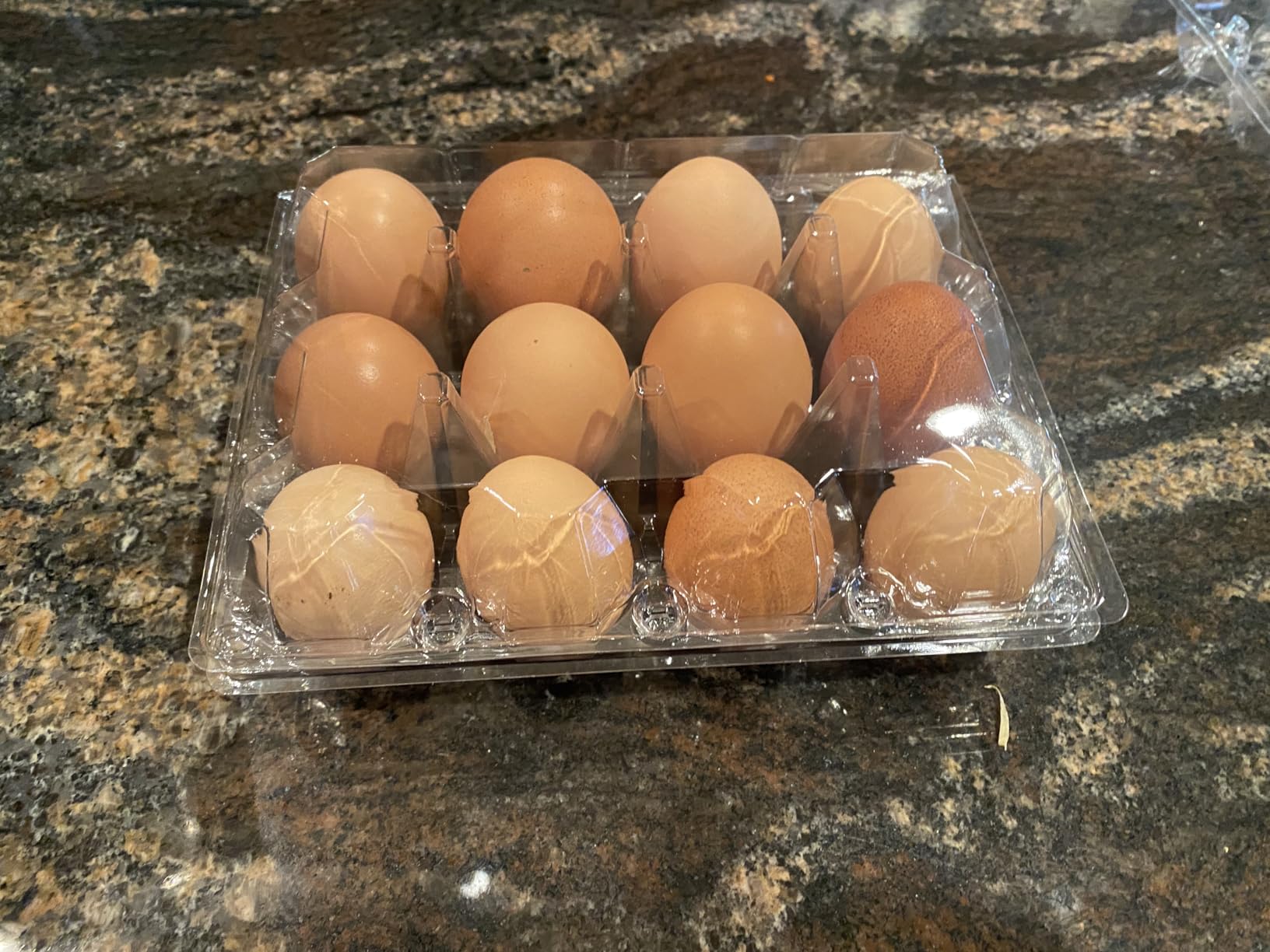
Reusability is the financial argument. Hand these to repeat customers on a delivery round, collect them at the door, wash them and issue them again, and the packaging cost falls every cycle compared with buying a new pulp carton per dozen.
At 4.3 stars from 589 ratings, with about 9% one-star reviews, it is the lowest-rated carton in the roundup. Buyers selling standard and medium eggs like it, and the complaints cluster around two issues. The first is size: anything above medium, including duck, turkey and extra-large eggs, will not seat properly. The second is the lid and the surface, with reports that the lids are awkward to operate and that the slick sides defeat the claimed stacking.
One reviewer report is worth taking seriously: eggs cracking after the lid is closed under continued pressure from a stack above. If your display is a deep stack, do not put these at the bottom.
Will these plastic cartons fit jumbo or duck eggs?
No. The cups are sized for standard and medium eggs, and buyers confirm that larger eggs, including duck and extra-large, will not seat correctly. Choose a jumbo pulp carton if oversized eggs are part of your output.
Do they actually stack in a cooler?
Loosely, and buyers warn that the sides are slick. They nest and sit on a shelf well, but they do not lock the way a pulp flat with a lid does, so keep heavy items off the top layer.
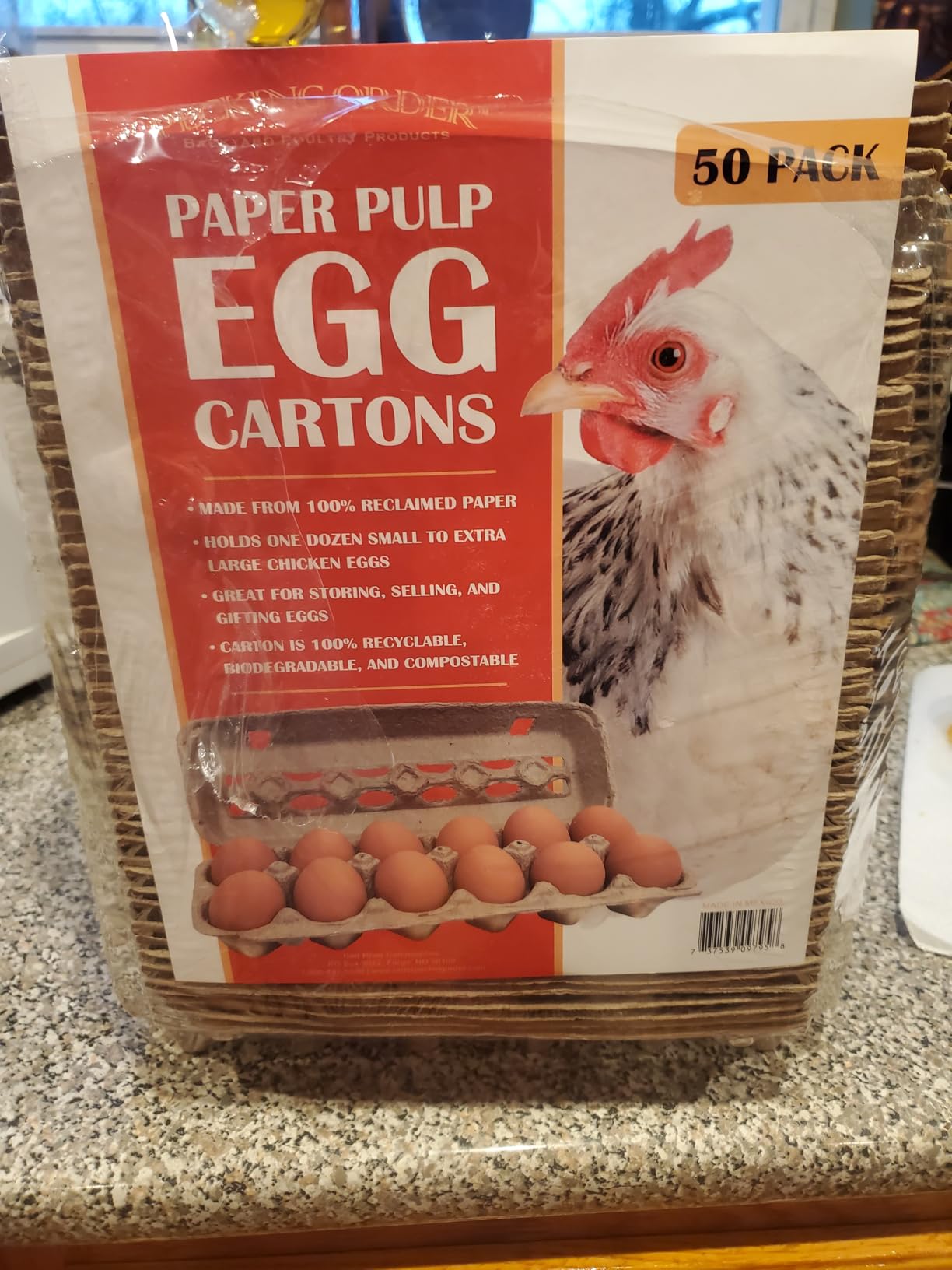
10. Pecking Order Paper Pulp Egg Cartons – Best Value for Small Flocks and Short Runs
Paper Pulp Egg Cartons – 50 Pack
Reclaimed paper
50 per pack
Latch closure
12 in L x 4.25 in W x 2.75 in H
Pros
- Latch closure stays shut without popping under load
- Holds large and extra-large eggs without sagging
- Unmarked surface for your own handling notes
- Reported to survive four or more reuse cycles
- Recyclable
- biodegradable and compostable
Cons
- Slightly less durable than grocery store cartons
- Closure tabs can feel insecure enough to need a rubber band
Its selling point is the latch. Buyers report that the latch holds a loaded carton closed without the sag or the pop-open that afflicts many cheap pulp lids, and that is the most common failure in a bag of eggs handed to a customer.
The cartons hold one dozen small through extra-large eggs at 12 inch by 4.25 inch by 2.75 inch closed, so they slot into standard fridge shelves and cooler space without adjustment. The material is recyclable, biodegradable and compostable, which gives you an easy answer at a market table when a customer asks what happens to the carton.
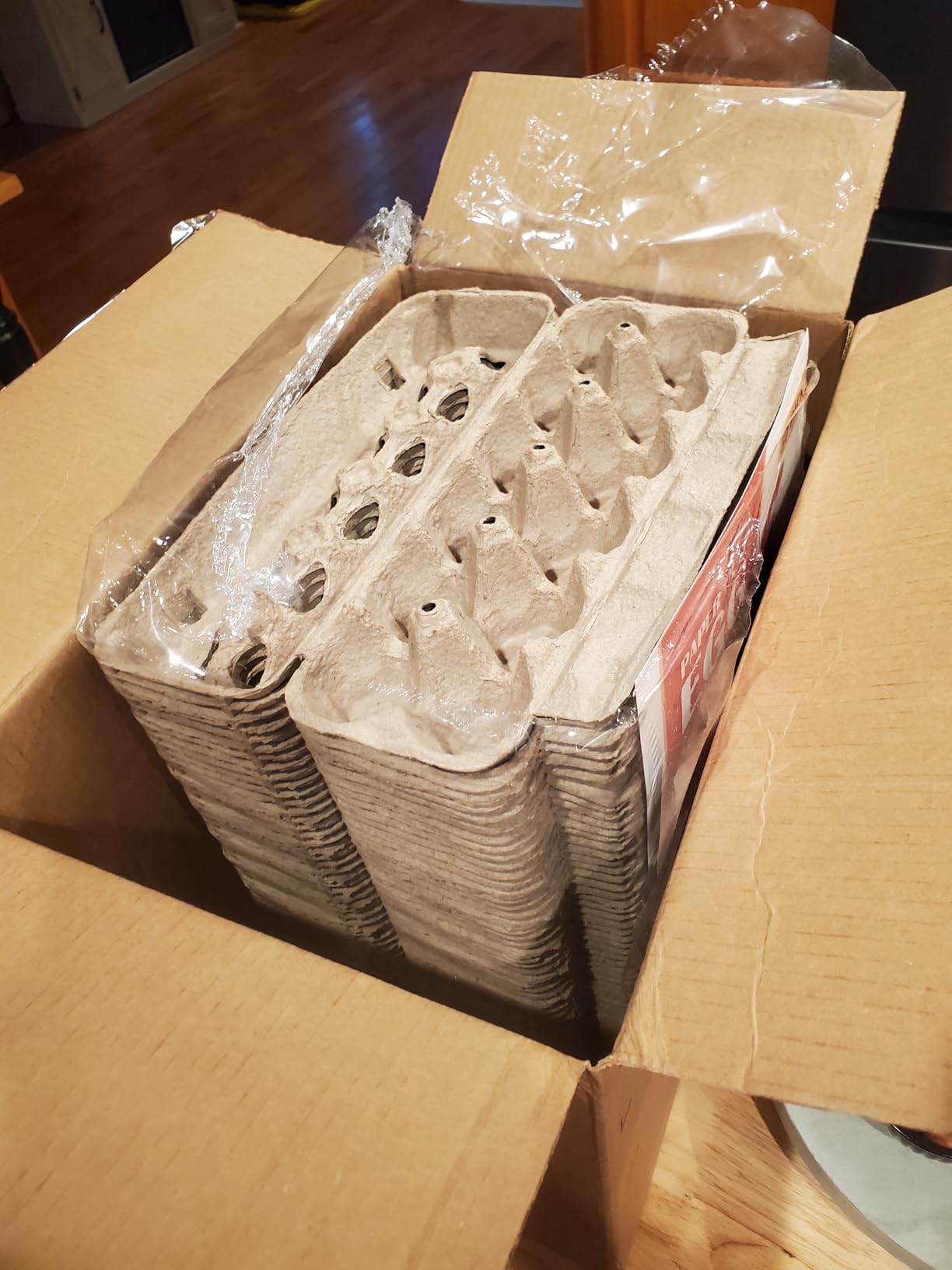
The surface is unmarked, which means you can write your own handling guidance, farm name and pack date directly on it. Several owners who share eggs with regular customers report using the same cartons four or more times, which changes the economics of small orders noticeably.
At 4.7 stars from 288 ratings, the feedback is consistent: owners like that the cartons do not sag or pop open, and that they hold up through repeat use.
Two criticisms come up. The board is a little thinner than store-bought cartons, so it is not the choice if eggs are being handled roughly, and the closure tabs can feel insecure enough that some sellers add a rubber band or a strip of tape for a nervous customer. For a 50-pack that is still a sensible quantity for a small flock, and it is cheaper per carton than the 24-packs above.
Is this enough cartons for a small flock?
Fifty cartons is 50 dozen, so for someone collecting and sharing 20 to 40 dozen a month it is a comfortable order that will not sit taking up space. It is also a step up in per-carton cost from a 24-pack without the jump to a 200 or 250-count bulk case.
Will the latch hold up when a customer carries the carton home?
Better than most pulp cartons in this roundup. Sellers report the cartons staying closed through handling and through multiple reuse cycles, which is the main reason to pick this one over a cheaper thin-board carton.
What Material Should Egg Cartons Be?
Material decides cost, durability, how much labeling you can print on the box, and what your customers think of your eggs. Here is the short version first: paper pulp is the default for almost everyone selling eggs, clear plastic wins on delivery routes where cartons come back, and foam is the most protective but the least welcome at a market table.
Paper pulp, the most common choice, is molded from reclaimed paper fiber. It absorbs moisture, it is recyclable, biodegradable and compostable, and it takes a stamp, a pen or a sticker cleanly. Buyers of the Cackle Hatchery vented carton in particular point to airflow around the eggs as the reason pulp works better than people expect in warm conditions. Its weakness is that a thin carton board can be crushed by weight stacked on top of it, which is why the locking-lid versions in this roundup exist.
Clear plastic is the pick when the carton is coming back to you. Because the 60-pack and 100-pack PET formats are washable and reusable, the cost spreads across many delivery cycles rather than one trip. The trade is size tolerance and closure quality, since the plastic formats in this roundup are built for standard and medium eggs rather than jumbo, and buyers report some lid tabs weakening with reuse.
Foam and styrofoam remain the most waterproof and the most cold-holding of the three, and experienced sellers still choose them for outdoor markets and cold-chain delivery. The reason they appear rarely in this roundup is not technical but social: customers and some local rules push back on foam packaging, so a foam carton is a deliberate choice with a specific purpose rather than a general recommendation.
How to Choose the Right Egg Carton Size
Egg size is not a marketing detail, it is a physical fit problem. If the egg is bigger than the cavity, it rides up, the lid lifts and the carton stops protecting anything.
For standard flocks laying Medium through Large eggs, any of the dozen-egg flat-top cartons in this roundup works, and the tolerance is generous enough to absorb the odd oversized egg. For Large and Extra-Large eggs, choose a carton that is explicitly rated for extra-large, such as the printed farm carton or the 50-pack with a latch closure. For Jumbo eggs, duck eggs and goose eggs, you need a jumbo format with deeper cups, and a standard dozen carton will not do it.
Half-dozen sales are the awkward case. Sellers improvise by moving 6 eggs into an empty carton rather than cutting cartons, which wastes the other half. If you sell trial packs or gift boxes regularly, look for a supplier that makes a 6-count.
For quail and bantam eggs, the problem reverses, because the eggs are too small for a chicken carton cavity and they rattle. Quail eggs are normally sold in a purpose-made carton with smaller cups or in a flat with a fitted insert, and neither is a standard dozen carton.
Where to Buy Egg Cartons Without Buying a Full Case
This is the most common frustration we found among small sellers. Suppliers often sell in bundles of 250, and if you are moving 15 dozen a week, that is months of packaging sitting in a shed, and the per-carton saving never materializes because you are not using it.
Your options for buying under that threshold are straightforward. Retail multipacks of 12, 24 or 72 are the entry point and suit a home flock that sells a few dozen a week, and the vented 24-pack in this roundup is a good example. Mid-tier bundles of 50 to 100 cover most small operations comfortably. Full cases of 200 or 250 only make sense once you are consistently selling at volume.
The cheapest cartons are often the ones already in your community. Sellers collect customer-returned cartons, and homesteaders have reported seeing wanted signs for them at farms in their area, so a local network can supply a surprising number of free cartons once customers know to hand them back. We covered related gear in our guides to the best egg incubators and the best egg chairs.
A useful rule is to order around your packing rhythm rather than your worst-case week. Multiply your typical weekly dozens by 4.3 for a month of supply, then add a buffer for a busy season. A seller doing 20 dozen a week needs about 86 dozen a month, so roughly 90 cartons, and a 100-count bundle is the natural order.
How to Label Egg Cartons for Sale
What must appear on a carton label varies by state, so treat this as a checklist to confirm with your state department of agriculture rather than as a fixed legal standard. Sellers report that the same basic fields cover the requirements in most states, and this order works well.
Your farm or business name and a contact point for the buyer
The address of the farm or packing facility
Egg size, using the standard names Medium, Large, Extra Large and Jumbo
Grade, where applicable, or the words unclassified or ungraded when you have not graded them
The number of eggs per carton
The pack date
Safe handling and refrigeration instructions, which some states require and many sellers print by default
Any state-specific registration, permit or licence number your state requires
The carton choice affects how easy this is. A solid top or a flat unprinted lid gives you a wide, clean surface for a printed sticker. A vented flat-top with a ridged lid gives you less flat room, so a sticker that follows the contours is easier than a hand-lettered farm name. The pack included in this roundup with handling instruction stickers is one option if you want the wording handled for you.
New vs Reused Cartons for Selling Eggs
Reusing cartons is common, cheap and legally complicated. Many sellers buy clean used cartons, and some reuse the ones customers bring back, with a sign at the stand asking people to return them. The practice is widespread enough that buyers rarely object, but the rules are not uniform.
The honest position is that rules vary by state, and sellers report some states permit selling in clean reused cartons while others are unclear. Check your state department of agriculture before building a business on reused cartons.
If you do reuse, the practical guidance from experienced sellers is consistent. Keep the cartons clean and in good condition, remove or cover any outdated label so nobody reads your old pack date, and do not wash them. Washing pulp cartons weakens the board and adds moisture, which is the opposite of what you want around eggs.
The alternative is the hybrid many small operations use, which is new cartons for anything handed to a customer and reused cartons for home storage, market samples and short journeys. It gives you the finished look where it matters and cuts the cost everywhere else.
Which Egg Carton Works Best for Each Sales Channel
A roadside farm stand and a wholesale grocery account do not need the same box. The farm stand customer is standing in front of you and paying for the story, so appearance and a blank surface for your own label matter most. The wholesale buyer is comparing your unit cost and your carton consistency, so a uniform, stackable, printed format matters more.
For a farm stand, use a blank or lightly printed pulp carton with a wide lid for a stamp or sticker. It takes your farm name cleanly. For a farmers market table, the printed farm carton wins because the pile is doing the selling while you are serving other customers.
For a CSA share box or a delivery route, a clear reusable plastic carton is the one that pays back, provided your customers return them. It shows the eggs and it survives many cycles. For wholesale and restaurant accounts, the lidded bulk pulp case is the format, because a locking lid is what survives a pallet.
For cold-chain or long-distance delivery where temperature control matters more than perception, foam remains the most protective option. Just check that your customers and your local rules are comfortable with it before you build the channel around it.
Frequently Asked Questions
What is the best material for egg cartons?
For most sellers, unprinted 100% recycled paper pulp is the best material. It absorbs moisture, is recyclable, biodegradable and compostable, and takes a stamp, pen or sticker cleanly. Clear reusable plastic is better for delivery routes where customers return the cartons, and foam is the most waterproof option but is less welcome with customers and some local rules.
Are plastic or paper egg cartons better?
Paper pulp is better for table sales, farm stands and wholesale orders because it is cheap per dozen, compostable and easy to label. Clear plastic is better for delivery and CSA routes, where the carton comes back to you and can be washed and reused many times, cutting the per-trip packaging cost.
Where is the best place to buy egg cartons?
Buy under 250 cartons from retail multipacks of 12, 24 or 72 for a hobby flock, or from mid-tier bundles of 50 to 100 for a small operation. Save the 200 and 250-count cases for sellers moving hundreds of dozens a month. Local farm-supply stores and community carton-return networks are useful when you need a few dozen at a time.
How to label eggs for sale?
A practical carton label carries your farm name and contact point, the facility address, the egg size, the grade or the words unclassified, the number of eggs per carton, the pack date, safe handling and refrigeration instructions, and any state registration number. Requirements vary by state, so confirm the exact fields with your state department of agriculture.
Can I reuse egg cartons to sell eggs?
Some sellers do, and the practice is common, but rules vary by state. If you reuse cartons, keep them clean and in good condition, remove or cover any outdated label so the old pack date cannot be read, and avoid washing them, since washing weakens the pulp board and adds moisture. Confirm the rules for your state before selling regularly in reused cartons.
How many egg cartons do I need each month?
Multiply your typical weekly dozens by 4.3 to get a month of cartons, then add a seasonal buffer. Selling 20 dozen a week needs about 86 dozen a month, so roughly 90 cartons. Order around your typical packing rhythm rather than your busiest week so the cartons do not sit taking up storage space.
The Best Egg Cartons for Selling Eggs: Our Final Picks
Start with the MT Products blank pulp carton if you want one decision that works almost everywhere. It is the most reviewed carton we tested, the lid stays shut, and the blank surface gives you a clean place for your farm name and pack date. It is our pick for the best egg cartons for selling eggs overall in 2026.
Then adjust for the job. Use the Henlay printed carton when the pile on your table needs to look finished, and the FarmTek 250-count case once you are packing by the pallet. Use the Stromberg’s jumbo carton the moment duck, goose or oversized eggs enter the picture, and the clear plastic only on routes where the carton comes back to you.
Whichever format you land on, the pack is a rounding error next to the egg size fit and the labeling fields your state expects. Get those two right first, then let the per-carton cost decide your order quantity.