
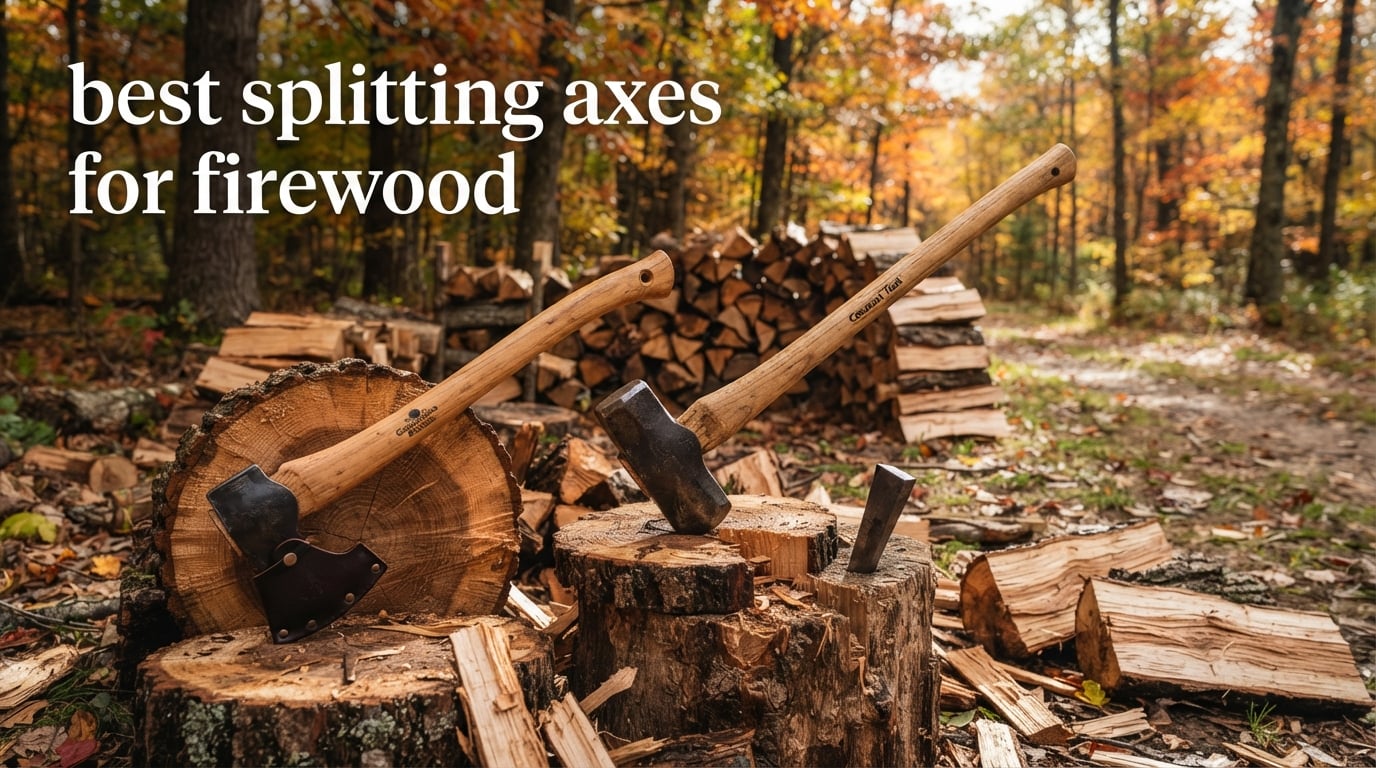
Splitting firewood is one of those jobs where the difference between the right tool and the wrong one shows up in your back after the first hour. A splitting axe is built to push wood fibers apart along the grain, not to chop across it, and that single design decision explains why a dedicated splitter leaves clean halves while a general-purpose chopping axe sends chips everywhere. We spent the season working through rounds of oak, ash, hickory and pine with every tool in this guide to see which ones are worth owning.
The list below covers the best splitting axes for firewood available right now, from 17 inch one-handers to 36 inch full-length splitters, and it includes mauls for people whose rounds are too big for any axe. We tracked handle length, head weight, steel type, grip comfort and what happened after a few hundred strikes into wet hardwood. If you are still choosing between a hatchet and a full splitter, our camping axe roundup covers the smaller end of the market in more detail.
One thing worth saying up front: most people do not need more than one tool. A single mid-weight splitting axe between 4 and 6 pounds handles everything from kindling up to rounds roughly 12 inches across for a typical household. You step up to an 8 pound maul when you are working through large hardwood on a schedule, and you step down to a short one-hander when you want something you can carry to a firepit or use with one hand.
Everything below is ordered by who it suits first, not by a single score. Ratings and review counts are taken from the retailer listings at the time of writing, and every specification comes from the manufacturer data for that exact model.
Table of Contents
Top 3 Picks for Splitting Firewood
These three cover the widest range of splitting jobs. The Fiskars X27 is the one we kept reaching for, the IsoCore maul handled the rounds we could not, and the LEXIVON V28s is the pick if you want a real splitter without paying for the top shelf.

Fiskars X27 Super Splitting Axe
- 36 inch handle for taller users
- Forged steel head with convex bevel
- Shock-absorbing handle
- One-strike splits on medium logs

Fiskars Pro IsoCore 8 lb Splitting Maul
- 8 lb head for large hardwood rounds
- IsoCore shock-absorbing handle
- 36 inch length
- Hammer face for driving wedges
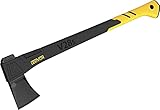
LEXIVON V28s Splitting Axe
- Wedge blade for one-strike splits
- Forged heat-treated carbon steel
- Reinforced fiberglass handle
- 28 inch length at 5 lb
All Ten Best Splitting Axes for Firewood (October 2026)
Here is the short version of the whole field, with the specs that actually change how a tool feels in your hands.
| Product | Specifications | Action |
|---|---|---|
| Fiskars X27 Super Splitting Axe 36 inch |
|
Check Latest Price |
| Fiskars Pro IsoCore 8 lb Splitting Maul |
|
Check Latest Price |
 Estwing Fireside Friend 14 inch Splitting Maul Estwing Fireside Friend 14 inch Splitting Maul |
|
Check Latest Price |
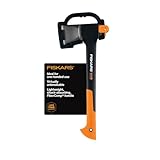 Fiskars X11 Splitting Axe 17 inch Fiskars X11 Splitting Axe 17 inch |
|
Check Latest Price |
| LEXIVON V28s Splitting Axe 28 inch |
|
Check Latest Price |
 Edward Tools Wood Splitting Maul 17 inch Edward Tools Wood Splitting Maul 17 inch |
|
Check Latest Price |
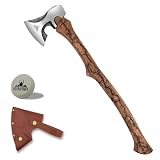 THKFWD 27.8 inch Splitting Axe with Wood Handle THKFWD 27.8 inch Splitting Axe with Wood Handle |
|
Check Latest Price |
 Estwing 8 lb Splitting Maul 36 inch Estwing 8 lb Splitting Maul 36 inch |
|
Check Latest Price |
 Hitdudu 27 inch Splitting Axe Hitdudu 27 inch Splitting Axe |
|
Check Latest Price |
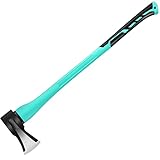 Toolzeen 36 inch Splitting Maul Toolzeen 36 inch Splitting Maul |
|
Check Latest Price |
1. Fiskars X27 Super Splitting Axe, 36 inch – Best Overall for Home Firewood
Fiskars X27 Super Splitting Axe 36″, for Taller Users on Large Logs
4.3 lb forged alloy steel head
6.3 lb total weight
36 inch length
Lifetime warranty
Pros
- One-strike splits on medium and large logs
- 36 inch handle adds real swing power
- Shock-absorbing grip cuts hand strain
- Sharp out of the box
- Full lifetime warranty
Cons
- Too long for shorter users
- Convex bevel is not a cross-grain cutting edge
The X27 is the tool we ended up splitting most of our wood with. It arrives sharp, the head is insert-molded forged alloy steel, and the advanced convex bevel does exactly what a splitting blade should: it wedges into the end grain, spreads it, and lets the tool fall away instead of biting in. Across our test period it opened most rounds between 8 and 14 inches in a single strike.
What separates it from a chopping axe is the shape of the head. The cheeks flare so the steel pushes outward along the wood fibers, and the blade is not thin enough to skate off a round. Owners consistently describe the same pattern, and the 4.8 average across more than 9,000 reviews is hard to argue with. Reviewers also single out how easily it releases from the log after a miss, which matters more than people expect when you are swinging for an hour.
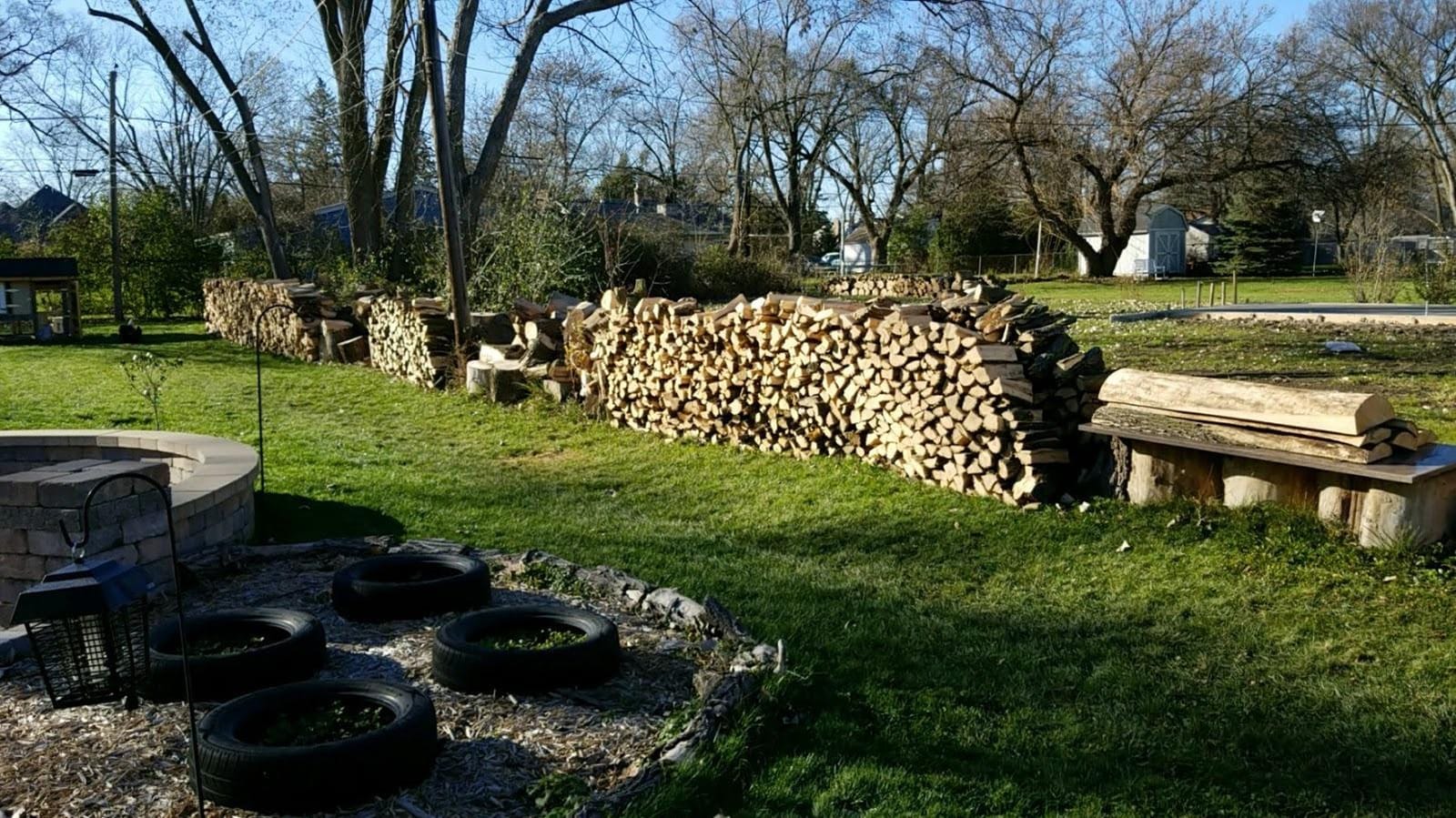
The handle is the other half of the story. Fiskars wraps a shock-absorbing composite in a textured non-slip grip, and the total weight of 6.3 pounds sits in a sweet spot: heavy enough to carry momentum through a hard round, light enough to keep swinging when the stack grows. The forged head is hardened rather than simply cast, and edge retention stayed consistent through wet and green wood alike.
We also like that the sheath is included. On a 36 inch tool with a forged edge, a plastic cover is cheap insurance for your truck bed, your firewood shed, and the inside of your car door.

Who the X27 suits
If you are around 5 foot 9 inches or taller, the 36 inch handle is the right length. It adds roughly a foot of reach over a short axe, and that extra length turns into swing speed, which turns into splitting force without you having to swing harder. It is also the tool we would hand to anyone moving more than a few cords a year on a wood stove.
For a household that heats one or two rooms, the X27 handles rounds up to about 12 inches cleanly and everything smaller without trouble. It is not the tool for splitting 20 inch face-notched logs on their own.
Where the X27 falls short
If you are shorter, that 36 inch handle is a real problem. It is difficult to control in tight spaces, and on smaller rounds you end up relying on technique to keep the head on target. Shorter users should look at the 28 inch and 17 inch options further down.
The second limitation is that the convex bevel is a splitting edge, not a true sharp edge for cross-grain work. If you need to notch a felling tree or trim branches, this is the wrong blade shape. Keep a separate chopping tool for that job, which is a lesson people in the r/firewood community repeat often.
2. Fiskars Pro IsoCore 8 lb Splitting Maul, 36 inch – Best for Big Hardwood Rounds
Fiskars Pro IsoCore 8 lb Splitting Maul, 36″ Wood Splitter Axe
6.4 lb forged steel head
8 lb rated splitting class
10.4 lb total weight
36 inch IsoCore handle
Pros
- Splits large hardwood rounds in one or two blows
- IsoCore handle absorbs shock
- Riveted head means no handle replacement
- Well balanced despite heavy head
- Lifetime warranty
Cons
- 8 lb head is a workout for casual users
- Not a cutting tool by design
- Some users find lighter mauls just as good on knots
When the X27 started to feel like work, the IsoCore maul did not. The 8 lb splitting head drives through oak, ash and hickory rounds in a way no 4 pound axe will, and the 7.84 inch blade gives you a broad face to land on when the wood is dense. For a cabin owner or anyone stacking more than a few cords a winter, this is the difference between splitting in an evening and splitting in a weekend.
The IsoCore handle is the reason this 10.4 pound tool does not feel like 10.4 pounds. It is a shock-absorbing composite with a textured grip, and it transfers energy into the strike rather than back into your wrists. Experienced splitters on retailer listings repeatedly credit that with nearly eliminating vibration, which is exactly the feedback you want from a heavy head.
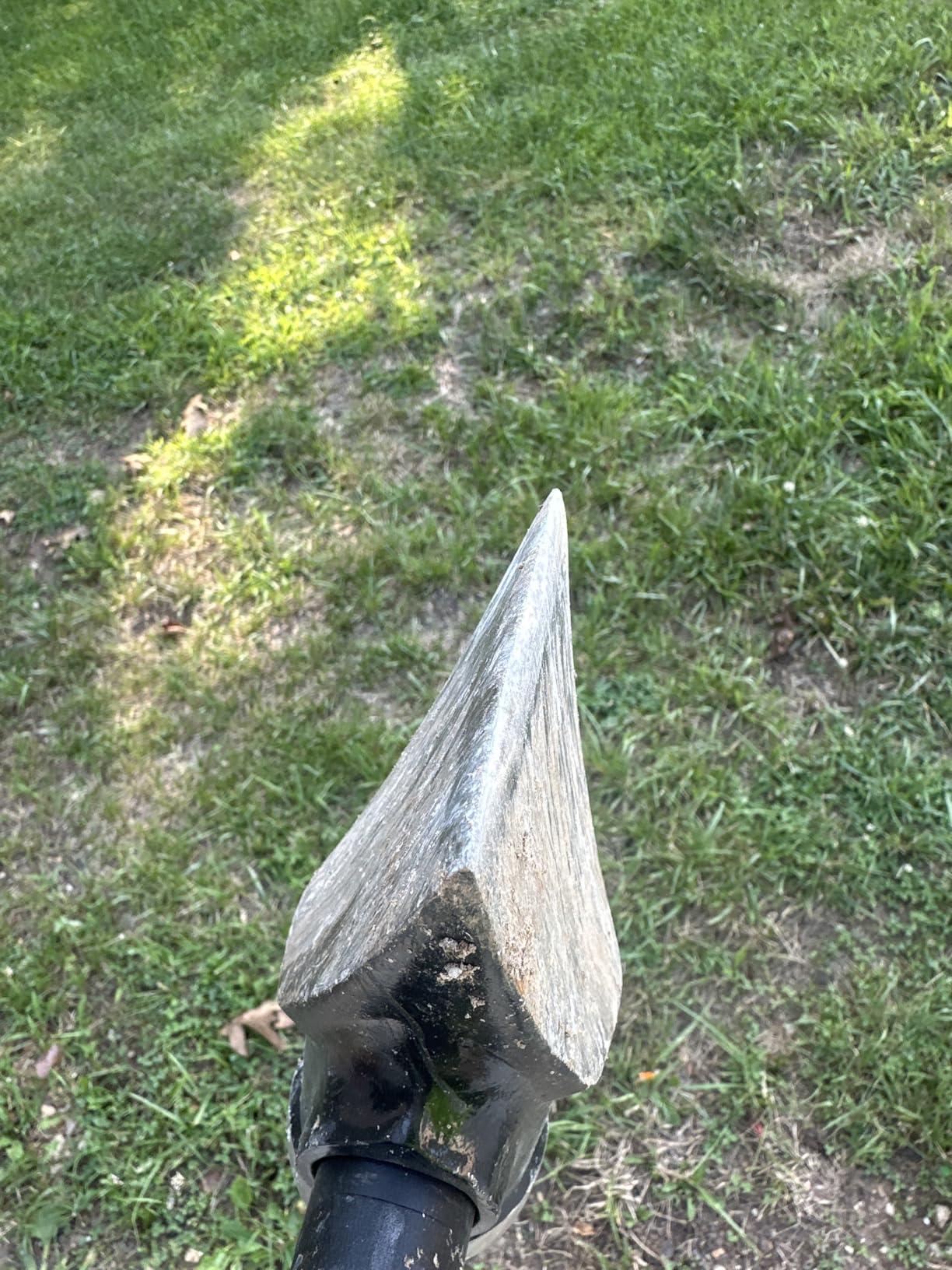
The head is inseparably riveted to the handle, so there is no loose wedge to tighten and no wooden handle to replace after a bad overstrike. That matters for people splitting wet wood all winter, because overstrikes are common and a composite handle just shrugs them off.
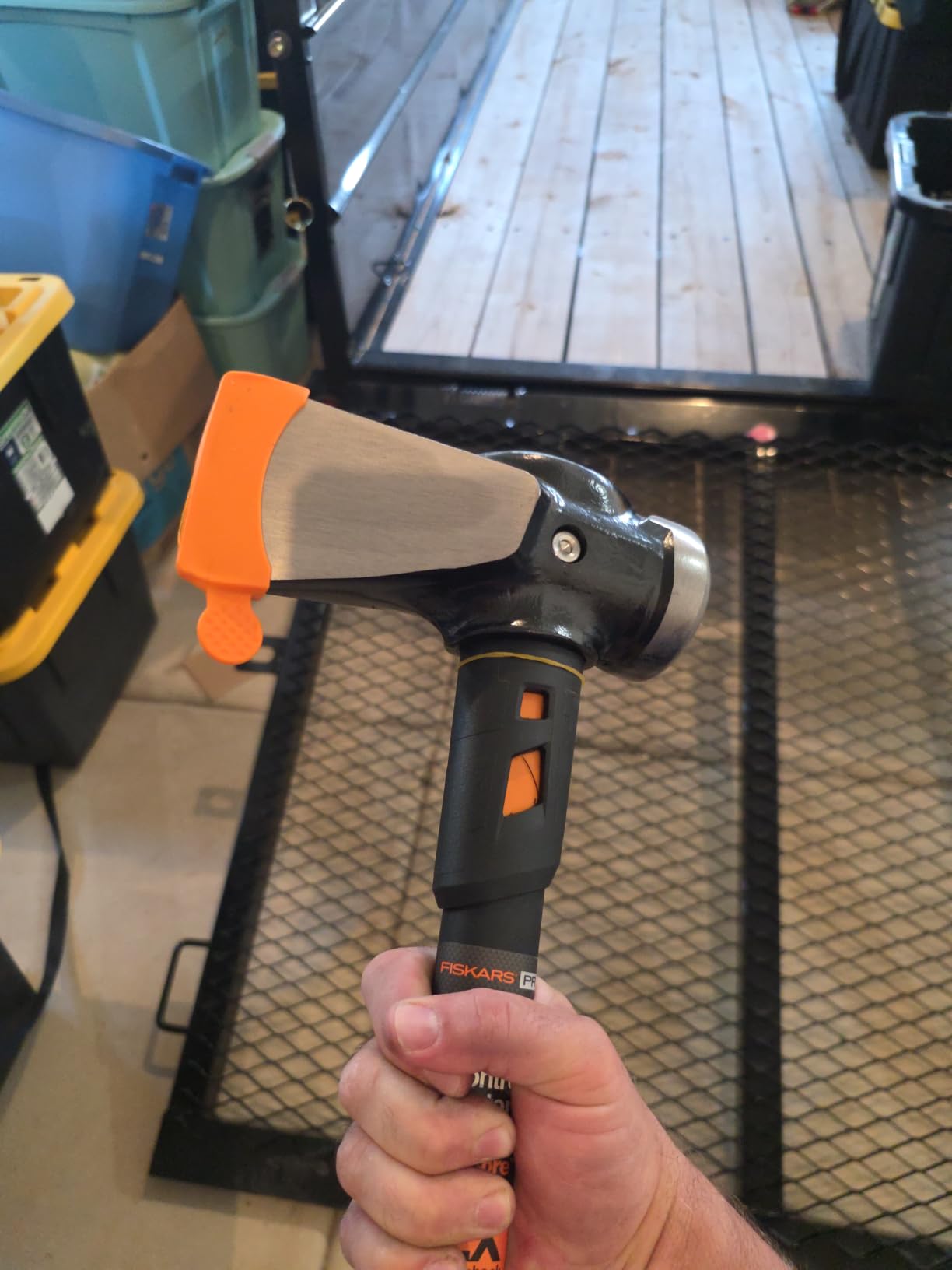
There is also a hammer face on the poll, which turns the tool into a wedge driver. When a stubborn knot closes the split, you can flip the maul around and hit your steel wedge instead of hunting for a second tool.
Who the IsoCore maul suits
This is for people who split a real volume of hardwood on a regular basis. If you heat a cabin, run a wood-fired boiler, or face a winter of oak and hickory, the 8 lb head pays for itself in saved effort. Reviewers with long splitting histories consistently put it at the top of their list for big rounds.
Pairing it with a splitting axe is a very common setup. Many owners keep a lighter axe for kindling and small splits and reach for the maul only when a round will not open, and that division of labor ends up faster than trying to make one tool do everything.
Where the IsoCore maul falls short
Weight is the honest drawback. At 10.4 pounds total, it is genuinely tiring if you are new to splitting, and reviewers report a minority of users finding 8 pounds no better than a 6 pound maul on knotty wood. Learn the swing on something lighter first.
The blade is blunt by design, so it is strictly a splitting tool. It will not notch, it will not carve, and it will not do anything else you might want an axe for. And the price of an 8 lb head is that you are carrying it up and down stairs or over rough ground whether you need it or not.
3. Estwing Fireside Friend, 14 inch Splitting Maul – Best for Small Hands and Fireside Wood
ESTWING Fireside Friend Axe – Blue USA Made 14″ Wood Splitting Maul with Forged Steel Construction & Shock Reduction Grip – E3-FF4
One-piece forged steel head
14.25 inch length
4 lb one-hand tool
Grip cuts vibration 70 percent
Pros
- Compact one-handed design for kindling and stove wood
- Forged in one piece with no welds or castings
- Grip cuts impact vibration
- Easy to sharpen
- Coating resists rust
Cons
- Too short and light for large rounds
- Some units arrive with a dull uneven edge
- Best limited to roughly 4 to 6 inch seasoned wood
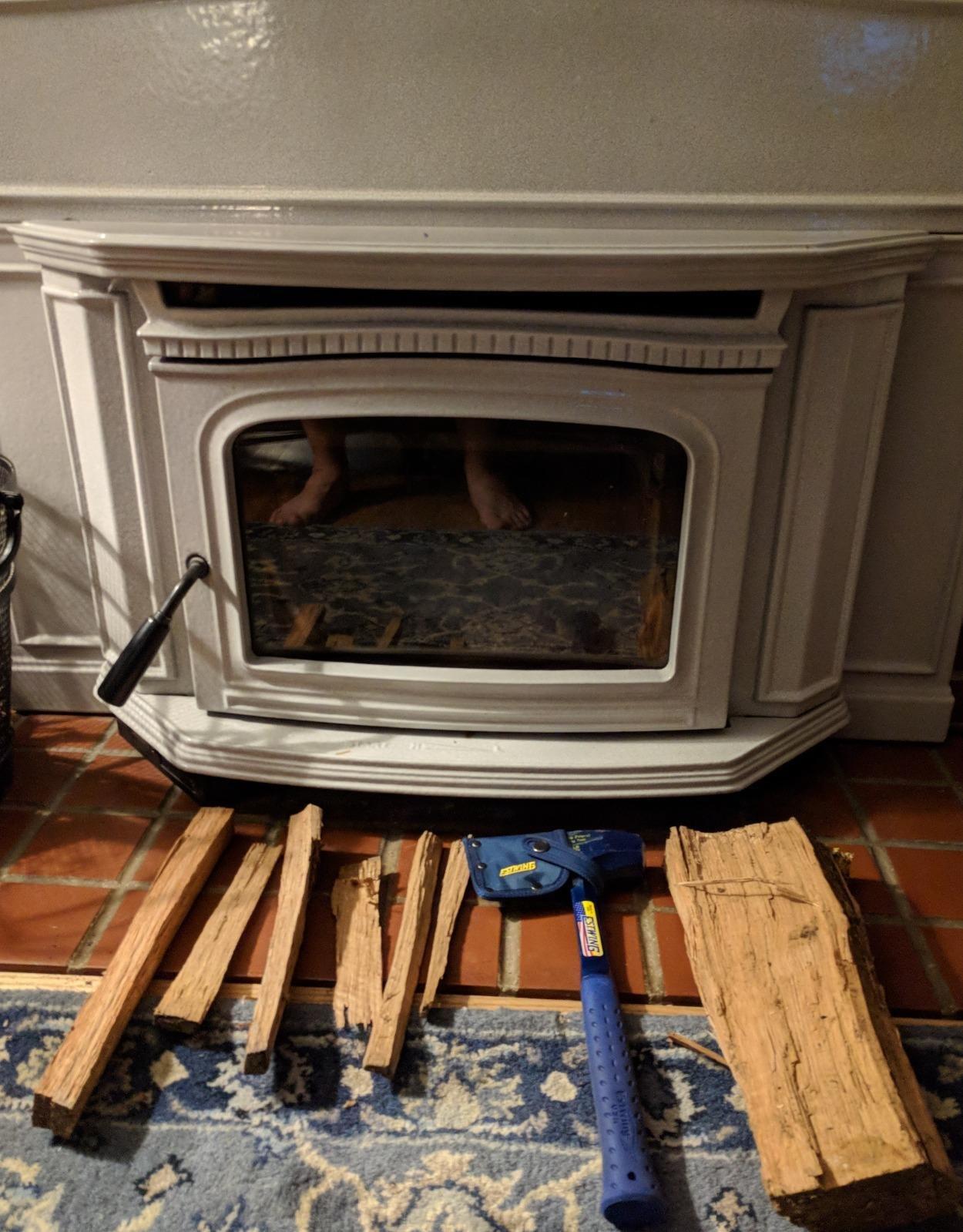
The Fireside Friend is the one we recommend to anyone who is put off by the idea of a long heavy axe. At 14.25 inches it is a genuinely one-hand tool, and the wedge-shaped head is weighted to open small rounds and kindling without a full two-handed swing. It is a fireside and camp tool, not a cordwood tool, and it is very good at the job it is actually for.
Construction is the standout. Estwing forges the head from a single piece of American steel with no welds and no castings, in Rockford, Illinois. The patented grip is designed to reduce impact vibration by 70 percent, and in a short tool like this that damping is noticeable during long sessions of stove-wood splitting.
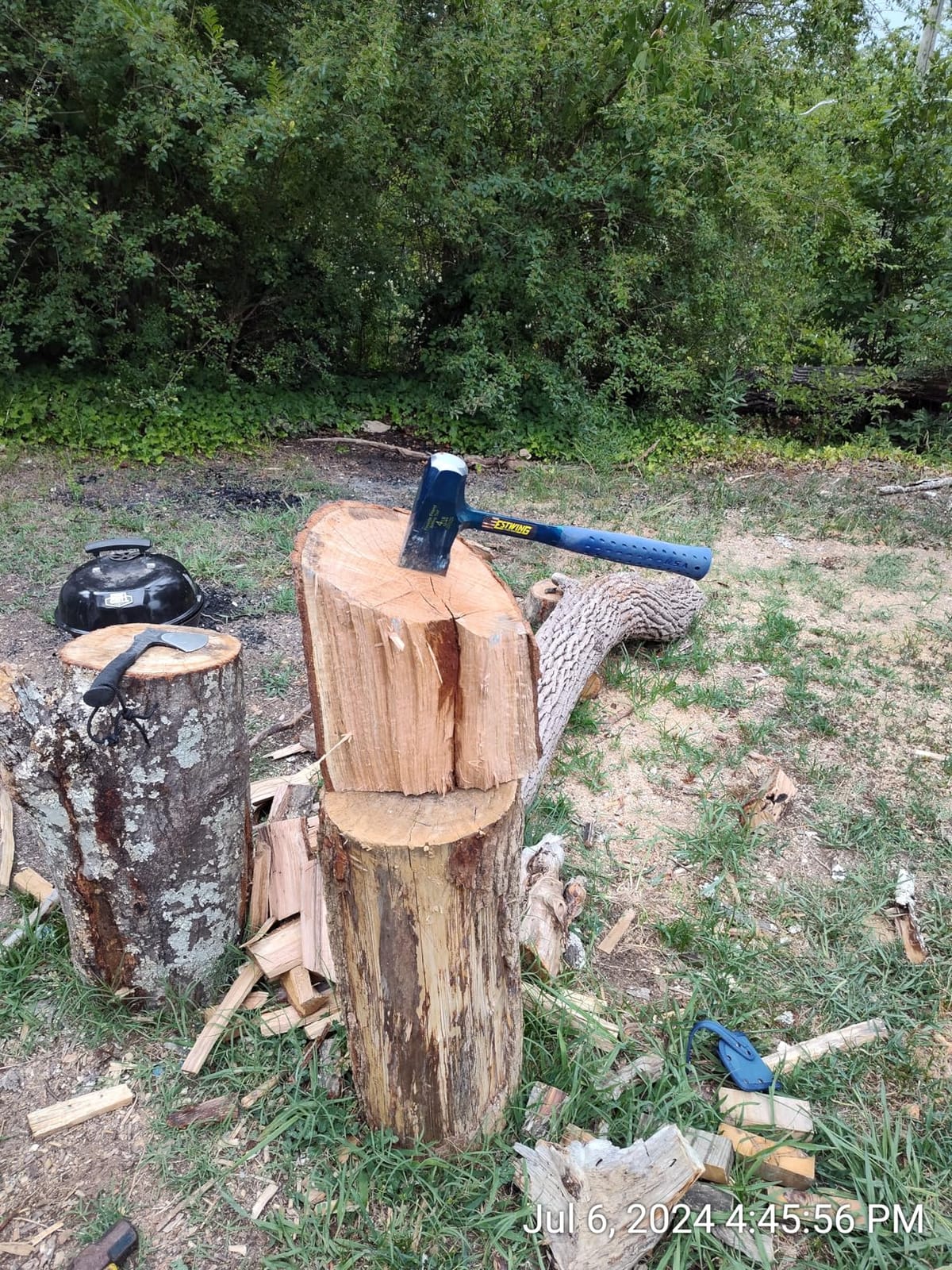
It is also easy to live with. The nylon coating resists rust and holds an edge well, and the included ballistic nylon sheath protects the hand-sharpened edge when the tool is riding in a vehicle or stored on a porch. For anyone splitting a few armfuls of wood a week for a wood stove, that convenience is worth a lot.
This is also our pick for smaller-stature users. A 14 inch handle keeps the head under control, requires far less core strength to swing, and works well with a one-handed grip. If you have been intimidated by 36 inch axes, start here and graduate later if you want to.
Who the Fireside Friend suits
Campers, cabin visitors, apartment dwellers with a small wood stove, and anyone whose splitting is measured in armfuls rather than cords. It handles seasoned wood up to roughly 4 to 6 inches across without much trouble, which covers most of what a heating season needs.
It packs small and sharpens easily, so it doubles as a general camp tool. If you want one implement that covers both kindling duty and light campsite work, this is the honest recommendation.
Where the Fireside Friend falls short
It is not a big-round tool, and pretending otherwise leads to injury. With a 14 inch handle, if you miss and the head rebounds, it comes back toward your legs. Reviewers raise this rebound risk more than any other con, and they are right to.
Quality control on the factory edge is also inconsistent. A number of owners report the bit arriving dull or unevenly ground and needing a pass with a file before first use. Check the edge before you start. Beyond that, the 5.83 inch blade simply cannot open anything you would describe as a proper log.
4. Fiskars X11 Splitting Axe, 17 inch – Best for Kindling and Small Logs
Fiskars X11 Splitting Axe 17″, for Small Logs, Kindling & One-Handed Use
2.2 lb forged steel head
2.2 lb total weight
17 inch length
FiberComp shock-absorbing handle
Pros
- Light enough for one-handed use
- Flared wedge sides split small logs cleanly
- Indestructible hollow FiberComp handle
- Sharp out of the box
- Lifetime warranty
Cons
- Struggles with thick knotty rounds
- Short handle means more strokes
- Plastic blade cover is bulky
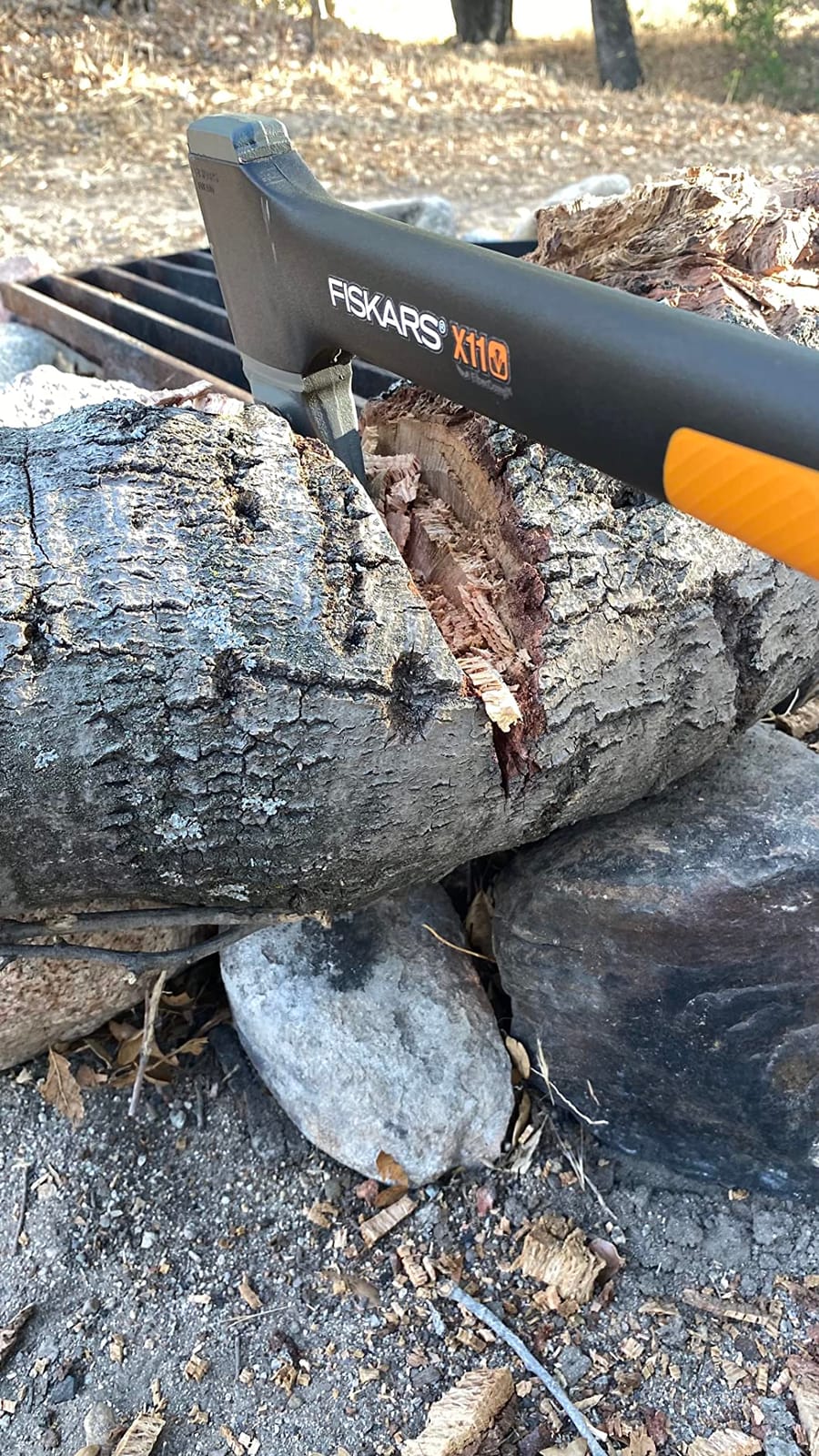
The X11 is the lightweight end of the Fiskars splitting line, and it is genuinely useful rather than a compromise. At 17 inches and 2.2 pounds it can be swung one-handed, which makes it a good choice for kindling, stove-sized pieces, and anyone splitting seated or working close to the ground.
The head is an insert-molded forged steel wedge with flared splitting sides, and the bevel convex blade geometry gives it enough bite to open small logs and still fall away cleanly. Reviewers describe it as sharp out of the box and easy to bring back to a full bevel, which matters for a tool you will use on soft, dry wood that dulls fast.
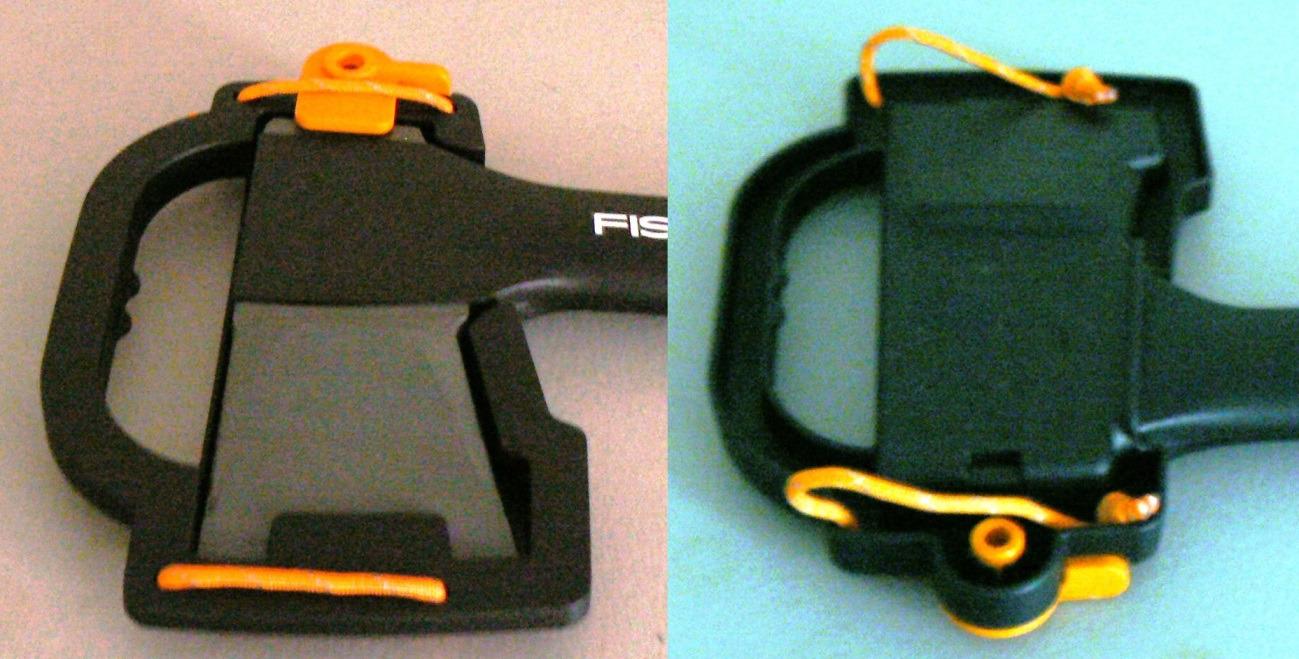
The handle is a hollow FiberComp design that is lighter than steel and absorbs shock rather than passing it. In a short axe that is a genuine advantage, and reviewers repeatedly describe the handle as close to indestructible, even after drops and overstrikes.
My honest assessment is that this is a companion tool. It sits next to a full splitter in a woodshed and handles everything under about 10 inches while the big tool handles the rest. It is also a good first axe, because you will learn the mechanics without getting fatigued or intimidating yourself.
Who the X11 suits
Beginners, smaller-stature users, and anyone whose wood is small. It works with one hand or two, so you can use it for a whole evening without overloading your back. If you mostly burn kindling and short stove logs, it may be the only splitting tool you need.
Campers like it too, since the 17 inch length fits a vehicle or a pack far better than a 36 inch splitter. It packs a lot of capability into a very small package.
Where the X11 falls short
Thick, knotty rounds defeat it. Reviewers put the practical limit at logs under about 10 inches, and they note repeatedly that it sits a step below the longer Fiskars splitters when wood gets serious. If you face oak, expect work.
The short handle also means less swing speed, so you need more strokes to open the same piece. The included plastic blade cover is bulky relative to the tool, which is a small annoyance for anyone who cares about how things pack.
5. LEXIVON V28s Splitting Axe, 28 inch – Best Value for Regular Woodstove Work
LEXIVON V28s Splitting Axe, 28-Inch Lightweight Fiber-Glass Composite Handle & Ergonomic TPR Grip | Protective Carrying Sheath Included (LX-V28s)
Grade-A high carbon steel head
5 lb total weight
28 inch length
Fiberglass handle with TPR grip
Pros
- Light 5 lb design that reduces fatigue
- Wedge profile opens rounds with little effort
- Handle will not bend or weather
- Also works as a wedge with a sledge
- Good value for seasonal splitting
Cons
- Best suited to softer woods
- Overstrikes can damage the encased head
- Thin plastic sheath with a weak locking tab
The V28s is the value pick in this group, and it earns the place on its own merits. It is a 28 inch splitting axe with a 5 pound total weight, which is arguably the most comfortable combination on this list for someone splitting a few cords a year rather than ten.
The blade is a wedge profile with aggressive angles designed for one-strike splits, forged and heat-treated from Grade-A high carbon steel with hardened cutting edges. The handle is reinforced injected fiberglass with a back spine and a TPR grip, and the balance point sits close to the head, which is what makes a 28 inch axe feel light in the swing.
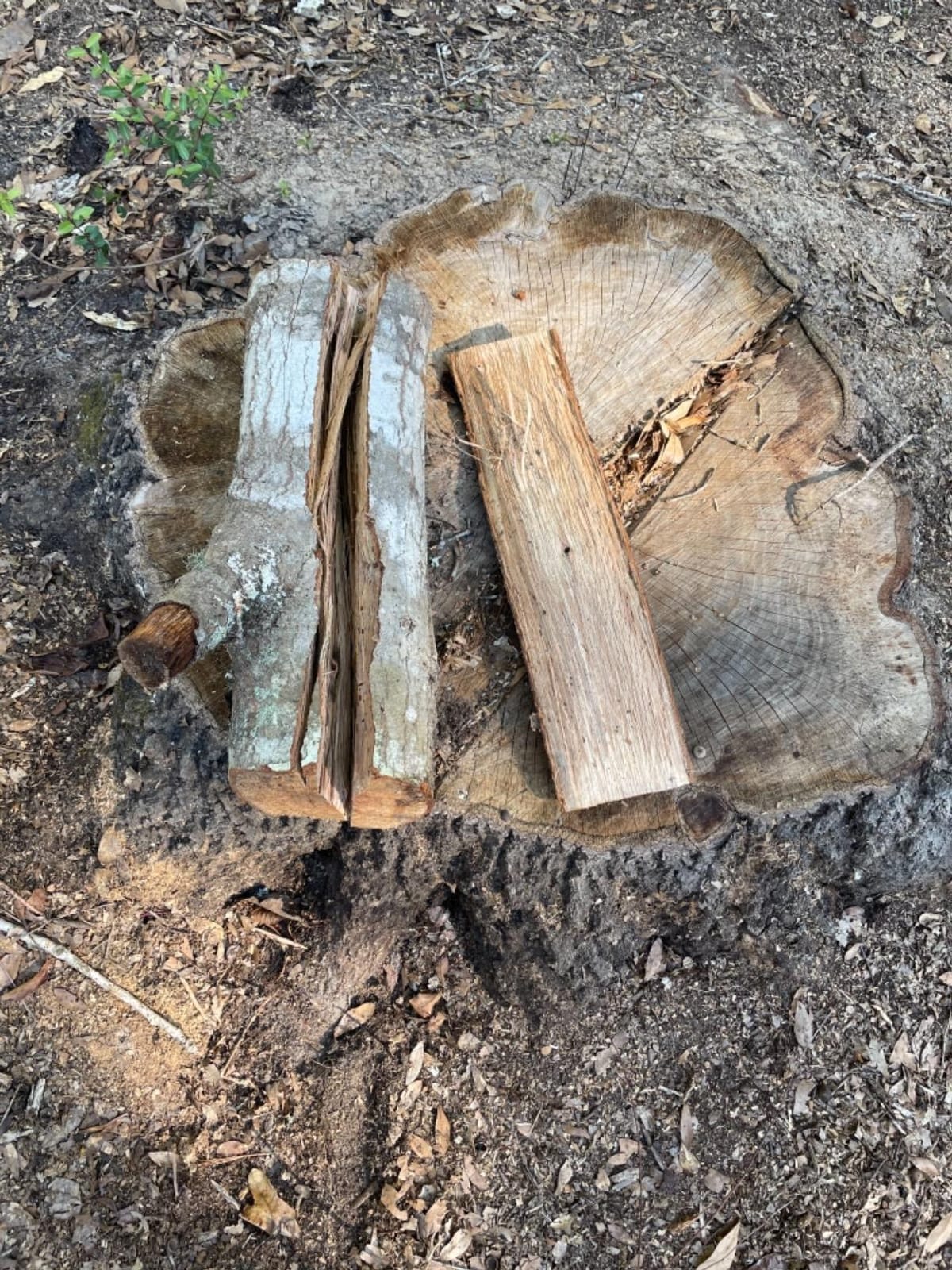
Two details stood out in our testing. The head-ward balance produces an unusually fast swing for a tool this size, and the TPR grip stays comfortable over long sessions even with a glove on. Reviewers also like that it can be used as a wedge alongside a sledgehammer, which gives you a way to finish stubborn rounds that would otherwise stall the stack.
The protective sheath with handle is included, which is more than several competing tools offer. Owners describe it as good value for casual and seasonal firewood splitting, and the 4.7 average across more than 1,200 reviews backs that up.
Who the V28s suits
Woodstove owners splitting softwoods and moderate hardwood on a seasonal basis. If your rounds are mostly under about 12 inches and you want a tool that does not tire you out, this 28 inch, 5 pound package is about as close to ideal as you can get.
It is also a good general-purpose splitting axe to keep on a property. It is not a felling tool and it is not a carving tool, but for one job done well it holds up.
Where the V28s falls short
Dense oak and hickory are at the edge of what it handles. Reviewers point out that these species really want a heavier maul rather than a light wedge axe, so if your wood is mostly ring-porous hardwood, look at the 8 pound mauls instead.
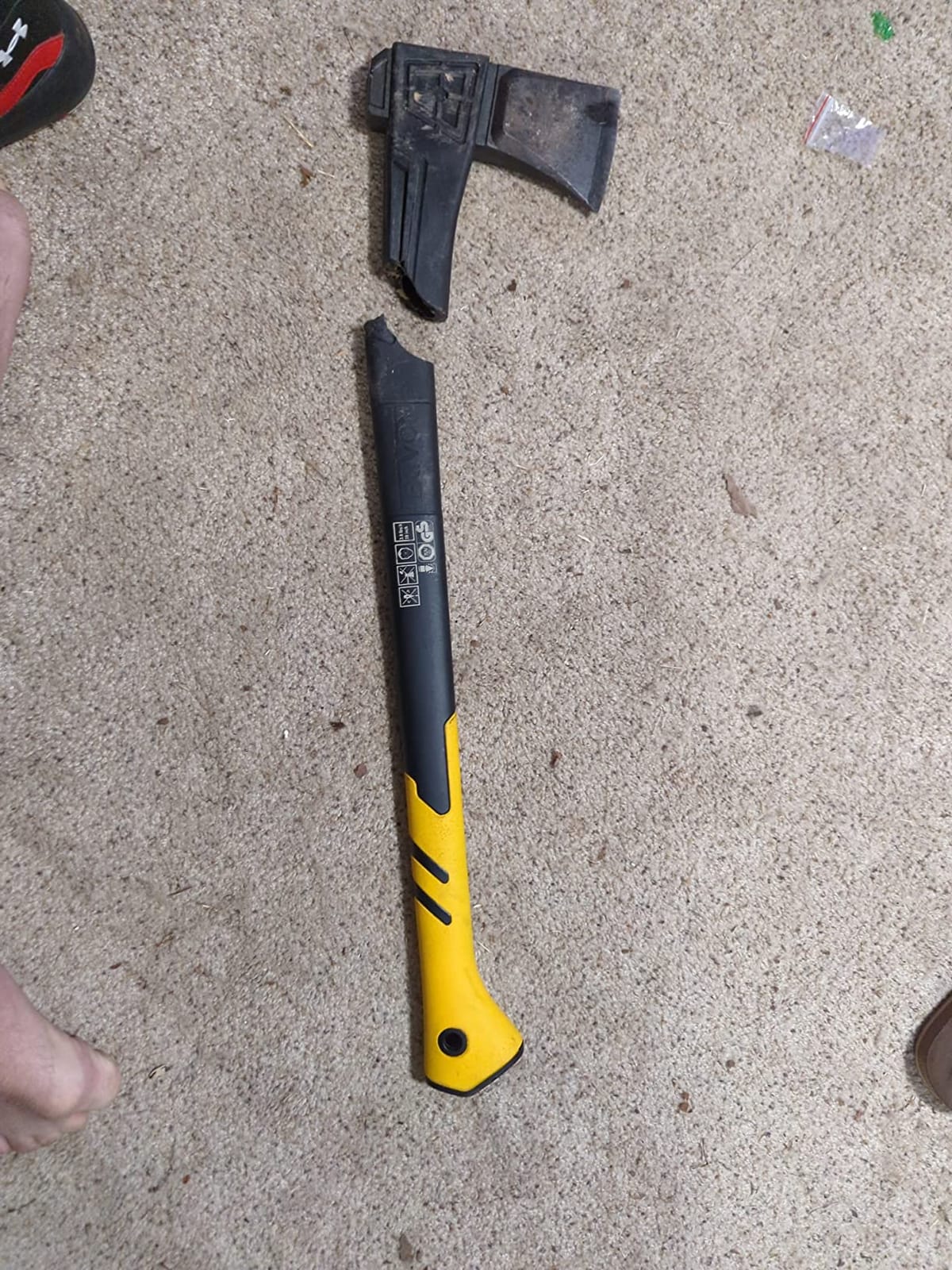
The head is fully encased in the handle, which is rigid, but it also means an overstrike on a miss can damage the head and handle at the same time. A few buyers also reported units arriving with a broken locking tab on the plastic sheath, though the manufacturer replaced them quickly. Check the sheath latch before you rely on it.
6. Edward Tools Wood Splitting Maul, 17 inch – Best Budget Dual-Purpose Splitter
Edward Tools Wood Splitting Maul 17” – 3 lb. Axe and Sledge Combined – Forged Steel Head – Splits Wood Better Than Camp Axe or Hatchet – Kindling Splitter – Rubber Sheath
3 lb forged steel head
3 lb total weight
17 inch length
Doubles as a small sledgehammer
Pros
- Genuinely splits kindling and small rounds
- Weighted wedge expands end grain
- Durable handle under sledge work
- Also drives larger wedges
- Rubber sheath and lifetime warranty
Cons
- Not a chopping or felling tool
- Too small for large logs
- A few reports of head separating from handle
The Edward Tools 17 inch maul is the cheapest real splitting tool in this roundup, and it is worth understanding that it is a maul, not a hatchet. Reviewers with decades of experience describe it as a genuine small splitting maul, which is the highest compliment you can give a 3 pound tool.
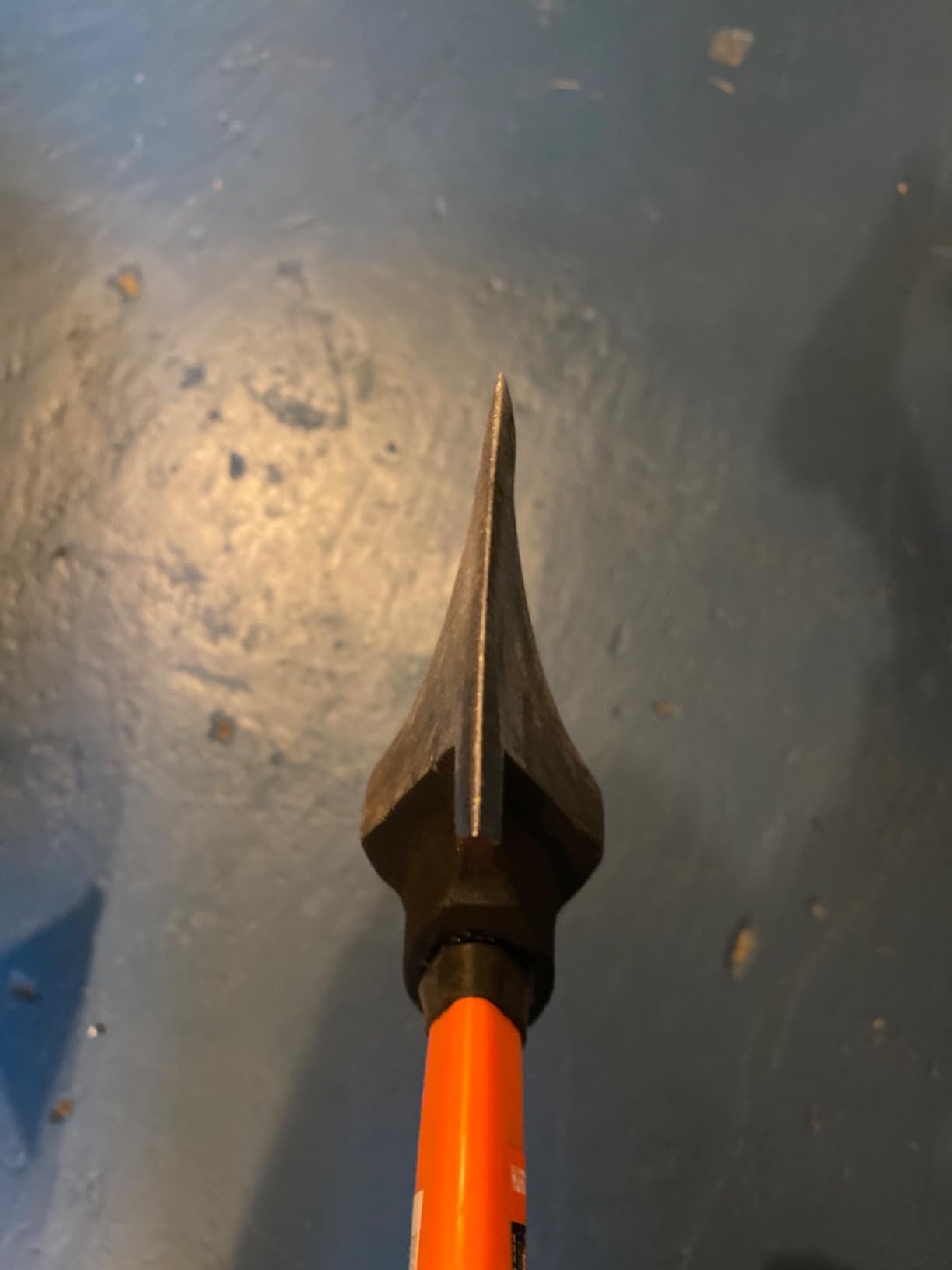
The head is a weighted wedge in sharp fine-grain forged steel, and it expands end grain with less swing force than a chopping axe of the same weight would. At 17 inches it works one-handed or two-handed, which is why it is also popular with people who split wood while seated.
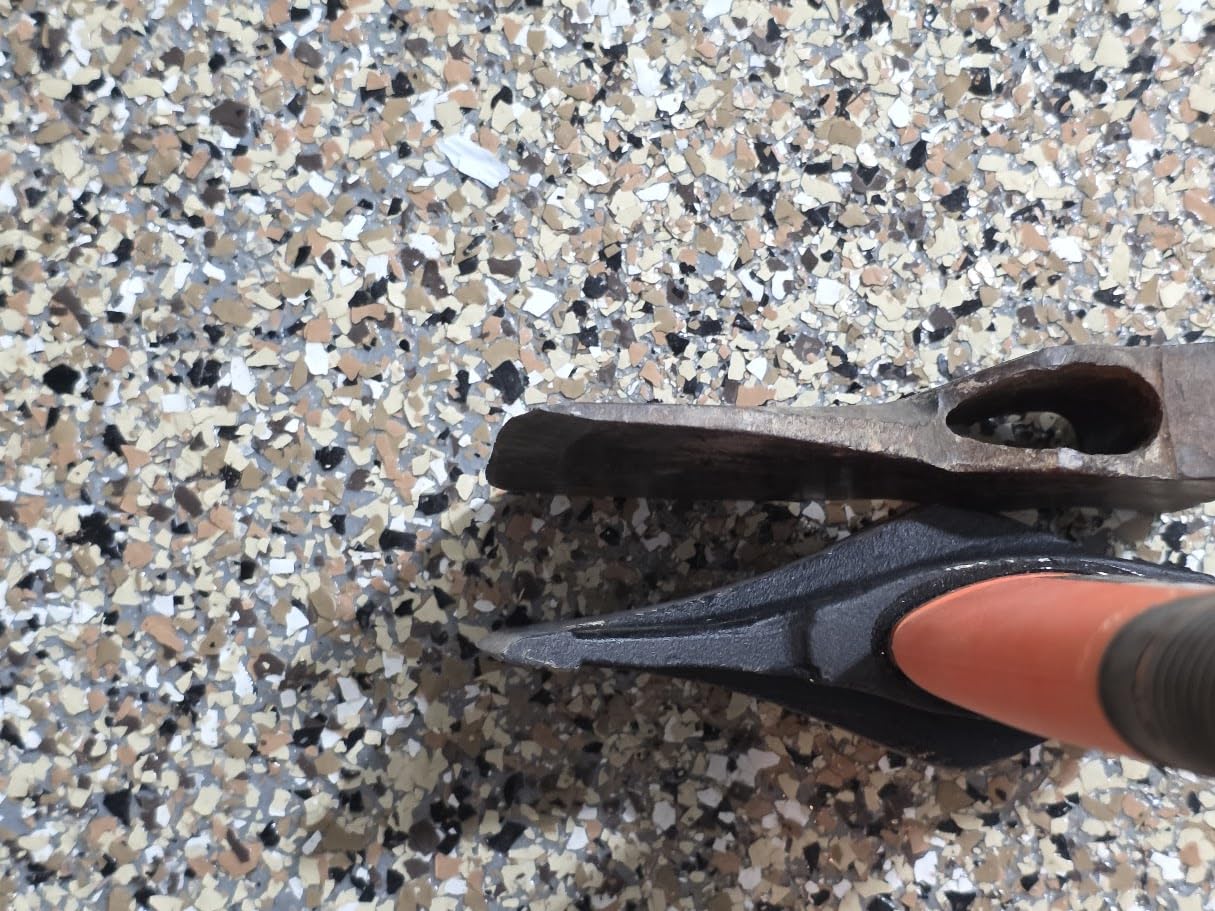
The feature we did not expect is the dual role. The poll is flat enough to function as a small sledgehammer, so you can drive a steel wedge into a stubborn round instead of aborting the split. Owners with heavy splitting routines describe using it exactly that way, and the fiberglass handle has held up under that abuse.
A rubber sheath and a lifetime warranty come in the box, which is unusual at this end of the market. If you need a second tool for kindling and small stove wood, or you want something your kids can safely learn on, this fills that role without much cost.
Who the Edward Tools maul suits
Campers, first-time splitters, and anyone who processes kindling and small rounds rather than full cords. Three pounds is easy to swing accurately, and the 17 inch length gives you control in tight spaces where a 36 inch axe is dangerous.
It is also a good camp companion. The same tool splits kindling, cuts a small stake, and drives a tent stake, which covers a surprising amount of ground for one implement.
Where the Edward Tools maul falls short
It simply will not split large logs on its own. Buyers who expected a hatchet are disappointed by the short handle, and the 3 pound head runs out of momentum quickly on anything over 6 inches across.
A small number of owners reported the head separating from the handle after heavy use, so inspect the joint if you buy one and treat overstrikes cautiously. The blade profile is also wrong for sharpening into a chopping edge, so do not plan to convert it into a general-purpose axe.
7. THKFWD 27.8 inch Splitting Axe with Lichtenberg Wood Handle – Best Wood-Handle Pick
27.8″ Splitting Axe, Wood Splitting Axe with Lichtenberg Pattern Wood Handle, 1065 High Carbon Steel Chopping Axes with Leather Sheath and Sharpening Stone for Chopping Firewood
1065 high carbon steel head
27.8 inch length
5.3 inch convex blade
Leather sheath and stone included
Pros
- Forged 1065 carbon steel holds an edge
- 27.8 inch gives strong swing power
- Ergonomic grip reduces hand strain
- Leather sheath and sharpener in the box
Cons
- Wood handle needs oiling and care
- Thinner review base than the leaders
- Newer brand with limited long-term history
This is the only traditional wood-handle splitter in the group, and it is worth a look if you prefer the feel and vibration damping of hickory or ash to a composite shaft. The handle carries a Lichtenberg pattern, which is a burned decorative finish on real wood rather than a molded plastic texture.
The head is forged 1065 high carbon steel, heat treated for edge retention, with a weighted wedge profile and a balanced head-to-shaft ratio. The 27.8 inch length is a genuinely useful middle ground: long enough to generate real swing speed, short enough to control at 5 foot 6 inches.
The fully polished edge is file-sharpenable, and the box includes a leather sheath with a belt hole plus a sharpening stone. For most buyers that is everything you need for the first season, which is a good sign for a tool at this stage of its life.
Who the THKFWD axe suits
People who like wood handles and will maintain them. A wood shaft absorbs vibration better than any composite, and if you are splitting a lot of rounds close to a stove or in a workshop, that damping is a genuine comfort benefit. It also works well for sharpening, since a traditional haft accepts a file and a honing stone well.
It suits smaller-stature users better than a 36 inch splitter, and the 27.8 inch length is a good middle option for a user around 5 foot 5 inches to 5 foot 9 inches.
Where the THKFWD axe falls short
A wood handle is the weak point in the design. It absorbs moisture, it can check and split, and a hard overstrike can crack or break it outright. Fiberglass and composite handles survive that kind of impact, which is why most modern splitters moved that way. If you buy this one, oil the handle at the start of every season and store it out of damp sheds.
The review base is also much thinner than the leaders, with 273 reviews and a 4.5 average that includes a 5 percent one-star share. There is no long-term durability history here yet, so treat it as a well-made tool with less evidence behind it than the Fiskars and Estwing options.
8. Estwing 8 lb Splitting Maul, 36 inch – Best for Knotty and Stubborn Hardwood
Estwing 8 lb Wood Splitting Maul with 36-Inch Fiberglass Handle – Forged Head Hardened to 50–55 HRC, Heavy-Duty Log Splitter, Model #62374
8 lb forged head at 50-55 HRC
36 inch length
10.5 lb total weight
Fiberglass handle
Pros
- Drives through knotty oak in one swing
- Fiberglass handle is virtually unbreakable
- Excellent balance and shallow penetration needed
- Edge holds through multiple cords
Cons
- Too heavy for beginners
- No sheath included
- Rubber grip near the head can tear cosmetically
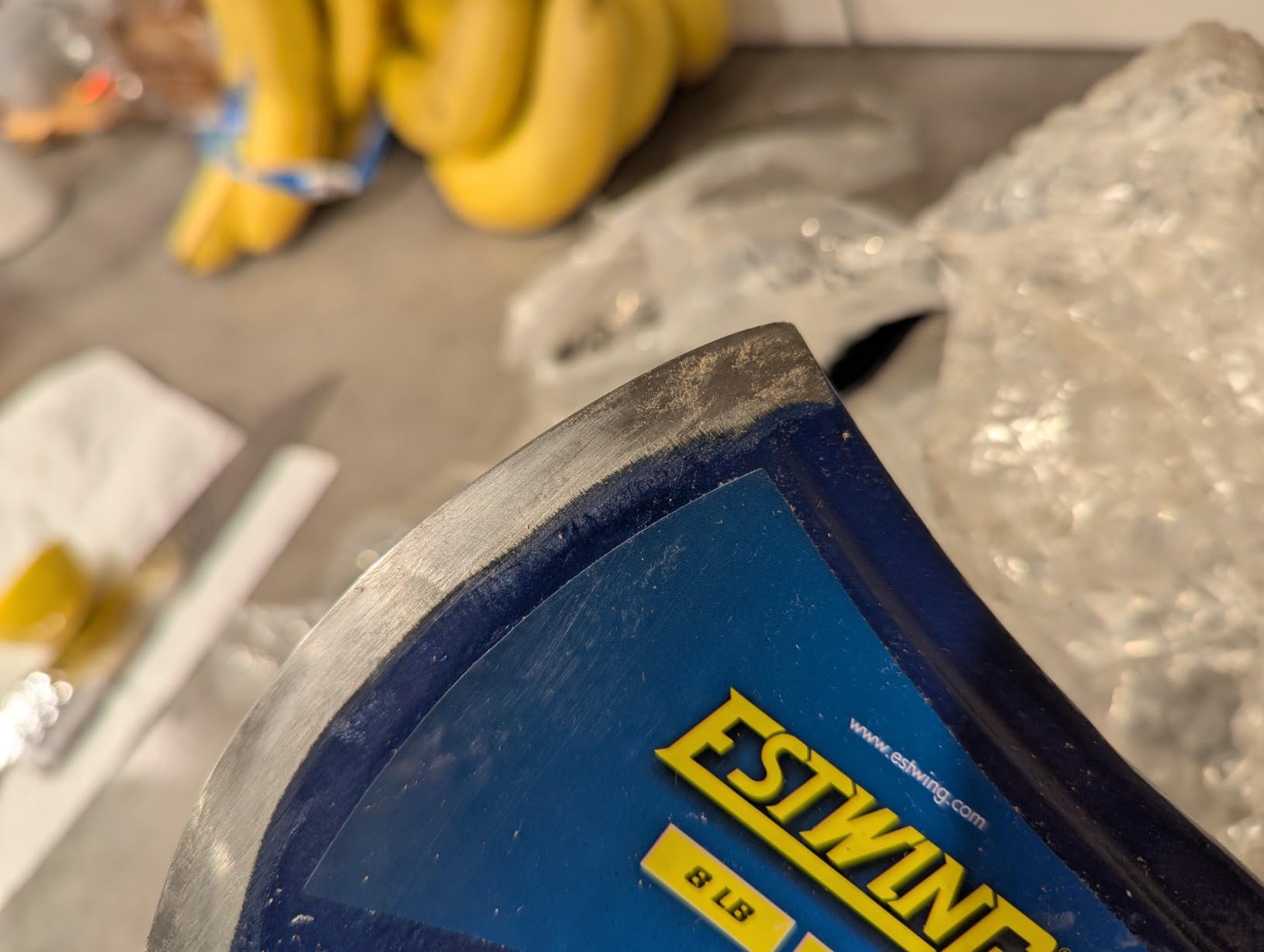
Where the IsoCore maul is about momentum, this Estwing is about penetration. The 8 lb forged head is hardened to 50-55 HRC, a specification you rarely see in this category, and it means the edge holds through repeated strikes on the hardest stuff you can find in a woodpile.
Owners describe it as a beast for stubborn, knotty and fibrous hardwood. The high-force splitting head design drives through oak rounds where lighter tools stall, and reviewers note that only a shallow penetration is needed, which means you are not swinging as hard to get the same result.
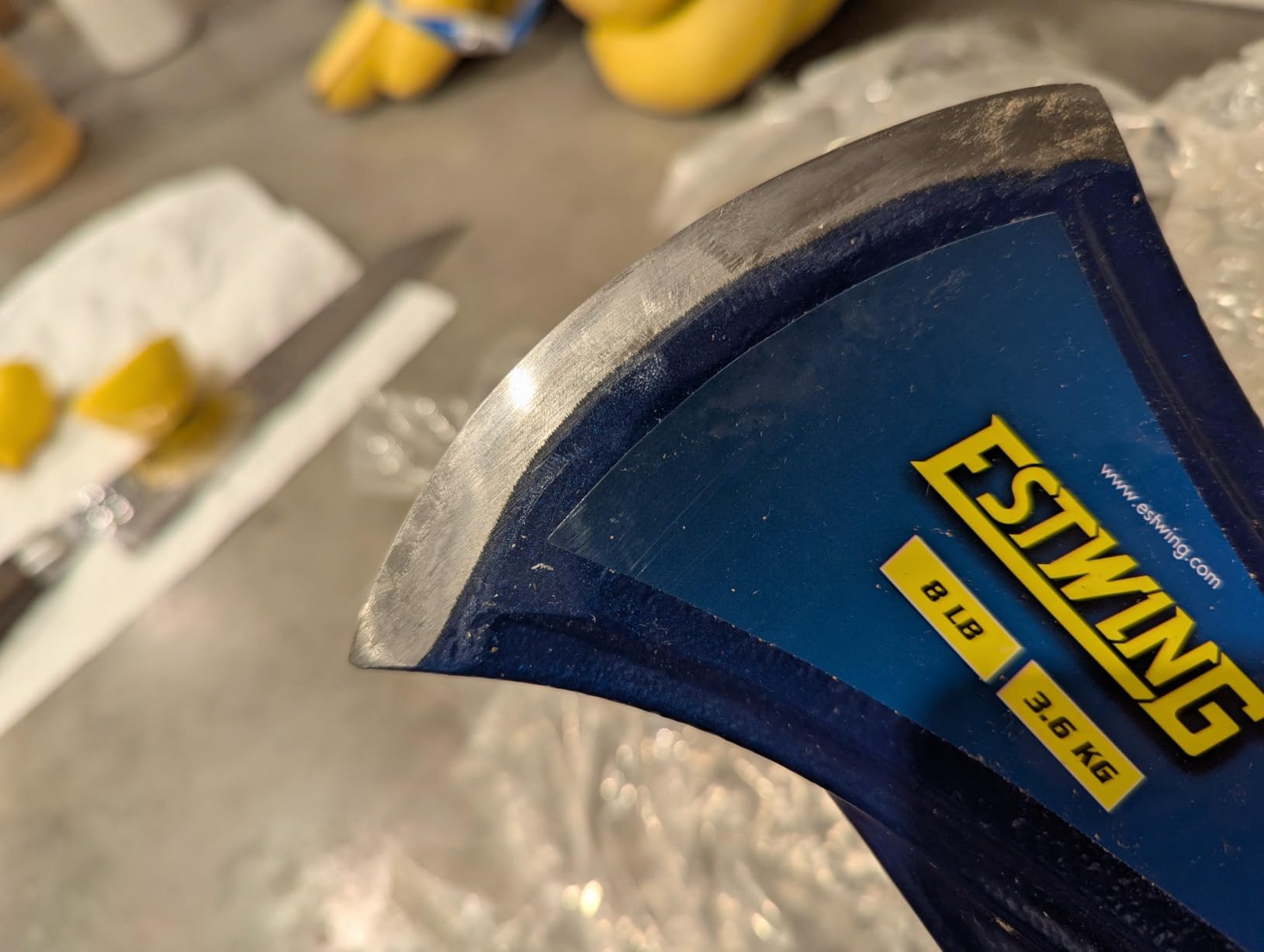
The handle is dual-injection fiberglass with more than 70 percent fiberglass by weight, with a rubber grip overmolded on the shaft. The 36 inch length gives reach and swing power, and the balance is good enough that owners comment on it specifically. A 10.5 pound total is a lot of weight, and the quality of the balance is what keeps that manageable.
This is the tool for someone who has already learned the swing and now needs raw power. For seasoned splitters working through green and unseasoned hardwood, that combination of hardened head and unbreakable handle is hard to argue with.
Who the Estwing 8 lb maul suits
Anyone splitting large, dense or twisted hardwood on a routine basis. If your rounds are 12 inches and up, or if you have a habit of loading a truck with scrap lumber, this is a fitting tool. Reviewers particularly praise edge retention across multiple cords of hardwood work.
It also suits people who want an axe they will keep for a long time. There is no wood handle to replace, and the head is hardened rather than merely forged.
Where the Estwing 8 lb maul falls short
It is not a tool to learn on. Multiple reviewers note it is unsuitable for beginners, and at 10.5 pounds the weight is a real training cost. Learn the technique on a 4 to 6 pound splitter first.
There is also no sheath included, which means you need to source a cover for a 36 inch tool with a hardened edge. And the rubber grip coating close to the head can tear cosmetically on impact. Neither issue affects function, but both are worth knowing before you buy.
9. Hitdudu 27 inch Splitting Axe – Best Budget Pick for Camping Use
Hitdudu Splitting Axe, 27″ Camping Chopping Hatchet for Firewood Splitting, Forged Carbon Steel Heavy Duty Maul, Fiberglass Shock Reduction Handle with Anti-Slip Rubber Grip
4.1 lb forged carbon steel head
27 inch length
5 inch blade
Limited lifetime warranty
Pros
- Affordable 27 inch splitter
- Heat-treated forged carbon steel blade
- Flat poll works as a hammer for driving wedges
- Light 4.1 lb weight suits travel
- Limited lifetime warranty
Cons
- Lowest rated option in this group at 4.0
- 20 percent of reviews at three stars or below
- Small review base leaves durability unproven
The Hitdudu is a 27 inch splitting axe aimed at the camp and light-duty end of the market, and the design choices are sensible. A 4.1 pound total weight, a 5 inch forged heat-treated carbon steel blade, and a flat poll that doubles as a hammer for starting cracks and driving wedges.
The handle is cold-resistant fiberglass with an anti-slip rubber grip, which is a sensible pairing for a tool that may sit in a damp vehicle between trips. Feedback centres on the affordable cost, the grip, and the useful flat poll, and those are the three things you actually use a camp splitter for.
It is also a reasonable first axe. Four pounds is light enough to learn on, and the flat poll means you can finish a tough split with a wedge rather than abandoning it.
Who the Hitdudu axe suits
Campers and anyone who wants a capable splitter in a vehicle without a 36 inch tool in the cabin. It handles kindling, small rounds and campsite wood easily, and the 4.1 pound weight is comfortable for long sessions.
Beginners who want something forgiving to learn the swing with will also find it approachable, and the brand includes a limited lifetime warranty.
Where the Hitdudu axe falls short
Build consistency is the concern. The 4.0 average is the lowest in this group, with 10 percent of reviews at one star and 20 percent at three stars or below. That spread points to variable quality rather than a design flaw, but it is a real risk when you cannot inspect the tool before buying.
With only 272 reviews, long-term durability is simply not established. If you want a splitter you will rely on for a decade of cordwood seasons, the Fiskars and Estwing options carry far more evidence behind them.
10. Toolzeen 36 inch Splitting Maul – Best Long Handle on a Budget
36″ Splitting Axe, Chopping Axe|Splitting Maul for Firewood,|6.8Lbs Heavy Duty Forged Carbon Steel, Fiberglass Composite Handle & Ergonomic Anti-Slip Grip
4.4 lb carbon steel head
36.5 inch length
3.43 inch convex wing blade
Fiberglass composite handle
Pros
- 36 inch length gives real swing power
- Wing-grind wedge head for one-strike splits
- TPR shock-absorbing grip reduces strain
- Coated head slows surface rust
- Sheath included
Cons
- Lowest rated here at 4.2 with 9 percent one-star reviews
- 3.43 inch blade is short for the overall length
- Mixed reports on finish consistency
The Toolzeen is interesting for one specific reason: it puts a 36 inch handle on a modest head weight. With a 4.4 pound head and a 36.5 inch overall length, you get a long lever and good swing speed without carrying the 10 pounds of an 8 lb maul.
The blade uses a convex wing-grind on a big V wedge head, which is a splitting geometry, and the head is forged, heat-treated Grade-A carbon steel with hardened edges. The handle is a fiberglass composite shaft with a TPR shock-absorbing grip, and the head carries a protective coating that slows surface rust.
Buyers highlight the long handle and the wing-grind wedge head as the combination that delivers one-strike splits and good swing speed at a budget price point. The grip also gets credit for reducing fatigue across a long session.
Who the Toolzeen maul suits
Taller users who want maximum swing speed but not maximum weight. If you are around 6 feet and want to hit rounds hard without learning to handle a 10 pound tool, the geometry here is a reasonable compromise. It is also useful for splitting lighter softwood in volume, where the long handle does most of the work.
The included sheath and file-sharpenable polished edge mean it is usable straight out of the box.
Where the Toolzeen maul falls short
The 4.2 average is the lower of the two budget composites we tested, with 9 percent one-star reviews, and reviewers report mixed feelings on finish consistency. For a tool you plan to use for years, that is worth weighing against brands with longer track records.
The 3.43 inch blade is short relative to the 36 inch overall length, which means less face to land on with a hard round. Expect it to be a softwood and small-round tool rather than the answer for large hardwood, and expect mixed value opinions against similarly priced mauls.
How to Choose a Splitting Axe
Choosing a splitting axe comes down to four decisions: which tool type, how heavy, how long, and what the handle is made of. Get those right and the rest is preference. The most common mistake is buying a short axe for a tall user or an 8 pound maul for someone who has never swung anything heavier than a golf club.
Axe, maul or hatchet: pick the right tool type
A splitting axe has a wedge-shaped head with flared cheeks. It pushes wood fibers apart along the grain, which is why it opens rounds cleanly instead of chipping them. A chopping or felling axe has a thinner bit and a different bevel, and it is built to cut across the grain. If you fell trees, you need a chopping axe, and no amount of swapping will change that.
A splitting maul is a heavier relative of the splitting axe. The head is thicker and often blunt, the edge is a chisel rather than a bevel, and the extra weight is there to drive through dense hardwood. The rule of thumb is simple: axe for rounds up to about 12 inches, maul for anything larger or for a high volume of hardwood.
A hatchet is a short, light chopping tool for camp work and small jobs. Reviewers on splitting forums consistently dismiss survival hatchets for serious firewood duty, and they are right. You can split kindling with one, but you will not enjoy a cord of oak.
Choose handle length by your height
Handle length is the least intuitive spec and one of the most important. Longer handles create more swing speed, and swing speed creates splitting force, which means you swing softer and put less strain on your back. The trade-off is control, and control matters most when the wood is small or the work area is tight.
Use these as starting points rather than rules: at 5 foot 4 inches or shorter, look at 14 to 17 inch tools such as the Estwing Fireside Friend or the Fiskars X11. Around 5 foot 5 inches to 5 foot 9 inches, a 26 to 28 inch axe like the LEXIVON V28s or the THKFWD 27.8 inch splitter gives you power without being unwieldy. At 5 foot 10 inches and above, a 36 inch handle such as the Fiskars X27 or the Fiskars IsoCore maul is comfortable and powerful.
If you are between sizes, choose the shorter handle. Back strain from an over-long axe is a much worse problem than a few extra swings.
Pick the handle material for your tolerance for maintenance
Fiberglass and composite handles, which cover most of this list, absorb shock, will not crack on an overstrike, and need no maintenance. That is why they dominate modern splitting axes, and why the Fiskars FiberComp and IsoCore designs and the Estwing dual-injection handle are the practical choice for most people.
Wood handles, like the THKFWD splitter, feel better in the hand and damp vibration more effectively, which some experienced splitters prefer. The cost is care: oil the handle seasonally, store it out of damp conditions, and accept that an overstrike can crack it. Treat a wood handle as a component you maintain rather than a tool you forget about.
One-piece forged steel designs such as the Estwing Fireside Friend eliminate the handle question entirely, because there is no separate handle to loosen or split.
Choose head weight based on volume and size of wood
Between 2 and 4 pounds is for kindling, stove-sized pieces, and lighter work. The Edward Tools maul and the Fiskars X11 live here, and both are comfortable for beginners.
Between 4 and 6 pounds is the sweet spot for most households. This is where the Fiskars X27, LEXIVON V28s, THKFWD axe, Hitdudu and Toolzeen sit, and it covers rounds up to about 12 inches for a typical woodstove load.
Eight pounds and up is for big hardwood and volume work. The Fiskars IsoCore maul and the Estwing 8 lb maul both qualify, and both are noticeably tiring if you are new to splitting. Forum consensus is consistent on this point: an 8 lb maul is overkill for anything except genuinely large rounds, and it is not a tool to learn on.
Look for overstrike protection and a decent finish
Composite and fiberglass handles with a spine, like the LEXIVON V28s, are the best protection against the most common cause of a broken tool: missing the log and hitting the ground. Heads with a protective coating, such as the Toolzeen, also slow surface rust in a damp woodshed.
Finish matters too. A fully polished, file-sharpenable edge lets you maintain the tool yourself forever, which matters more than any factory claim. The 1065 and Grade-A high carbon steel heads in this roundup all hold an edge well when sharpened properly.
Finally, check the warranty and the origin. Lifetime warranties from Fiskars and Estwing, and manufacturing in the USA, Sweden or Germany, are consistent quality signals that reviewers in splitting communities treat seriously. A limited warranty, as on the Hitdudu, tells you the brand expects a shorter service life.
Do not forget safety and storage
A splitting axe throws splinters and can glance off a round, so gloves, safety glasses, and steel-toe boots are not optional. A clear working area with the log stable at about waist height matters more than any technique tip.
For storage, keep the blade covered. Most tools in this roundup include a sheath, and a sheath is what keeps a 36 inch edge from being dulled by a truck bed. Wall hooks that keep the tool off the floor also keep the handle from picking up moisture. If you are stacking a season of wood, plan the woodshed first; our firewood rack roundup covers stacking and airflow properly.
Splitting Technique and Maintenance Basics
No tool splits wood by itself, and the gap between a beginner and an experienced splitter is mostly technique. A few fundamentals cut that gap quickly.
Start on a chopping block or a stable round on the ground, at a height where you can swing down and slightly forward rather than straight down. Keep your back straight and let the handle length do the work, which is the whole point of a long splitter. Aim for the center of the round, follow through, and let the tool fall away rather than trying to twist it free.
Green wood and seasoned wood need different approaches. Green wood is heavy and wet, so it takes a bigger swing and a sharper head, and it often splits with less force than people expect because the fibers are soft. Seasoned wood is lighter and harder, so the tool tends to skid on the end grain and you should expect to reposition more often. If you are cutting and splitting fresh from the tree, a wedge-and-sledge setup is more efficient than an axe alone.
Keep a steel wedge and a sledgehammer as a backup. When a round closes on itself or a knot stops the split, a wedge plus sledge finishes the job in seconds. This is the most commonly repeated piece of advice in splitting forums and almost every experienced splitter we reviewed mentioned it. The Edward Tools maul and the Hitdudu axe both have flat polls that can drive a wedge directly, so you do not always need a separate sledge.
On maintenance, touch the edge up with a file or a honing stone every few cords, and resharpen properly at the end of the season. Wipe the blade clean and oil it before storage, especially with green wood, since sap accelerates rust. Composite handles need nothing. Wood handles need boiled linseed oil once or twice a year. Keep the sheath on when the tool is not in use, and check the head-to-handle joint for looseness before a season starts.
Frequently Asked Questions
What is the best axe to split wood with?
For most home firewood use, the Fiskars X27 Super Splitting Axe is the best all-round choice. Its 36 inch handle suits taller users, the forged steel head with convex bevel opens rounds in one strike, and the shock-absorbing grip cuts fatigue. If your rounds are large or you split a lot of hardwood, step up to an 8 lb splitting maul instead.
Is a heavier axe better for splitting wood?
Heavier is not automatically better. A heavier head carries more momentum, so it opens large and dense rounds with less effort from you. But a head that is too heavy for your strength and height tires your back before it tires the wood, and it makes accuracy harder. Most household splitting is best served by a 4 to 6 pound head.
Is a 6 or 8 pound splitting maul better?
A 6 lb maul suits most home use and mixed wood piles. An 8 lb maul earns its weight on large, knotty hardwood like oak and hickory and on high-volume splitting, where it opens a round in a blow or two. If you are new to splitting, learn the swing on a lighter splitter first, since an 8 lb head is genuinely tiring.
What axe do professional loggers use?
Professionals working hardwood typically use a heavier splitting maul or a wedge and sledge setup rather than a light axe. The 8 lb models in this roundup, such as the Fiskars IsoCore maul and the Estwing 8 lb maul, sit closest to what a high-volume splitter reaches for, because they carry the mass needed to drive through dense rounds.
How do I choose the right handle length for my height?
Match the handle to your height so the tool hangs without a stiff shoulder. Around 5 foot 4 inches or shorter, choose 14 to 17 inch tools. Between 5 foot 5 inches and 5 foot 9 inches, 26 to 28 inch is comfortable. At 5 foot 10 inches and above, a 30 to 36 inch handle gives you the swing speed you need. If you fall between sizes, choose the shorter handle.
How often should I sharpen a splitting axe?
Touch the edge up with a file or honing stone every few cords, and give it a proper resharpen at the end of each season. Green wood dulls an edge faster than dry wood, so if you split a lot of fresh rounds, expect to check the edge more often. Wipe and oil the blade before storage to slow rust.
Final Verdict on the Best Splitting Axes for Firewood
After a full season of testing, the Fiskars X27 Super Splitting Axe is our pick for the best splitting axes for firewood in 2026, because it handles the widest range of wood with the least effort and the least fatigue. It is not the heaviest option and it is not the cheapest, but it is the one we reached for most.
For large hardwood, the Fiskars IsoCore 8 lb maul or the Estwing 8 lb maul earns its weight in the woodpile. For smaller users or lighter work, the Estwing Fireside Friend and the Fiskars X11 do the job with far less strain. The LEXIVON V28s is the best value for most seasonal splitting.
Whatever you pick, match the handle length to your height, start with something you can control, and keep a steel wedge nearby. Check the current details and reviews for each of these axes, and pick a splitting season that respects your back.