
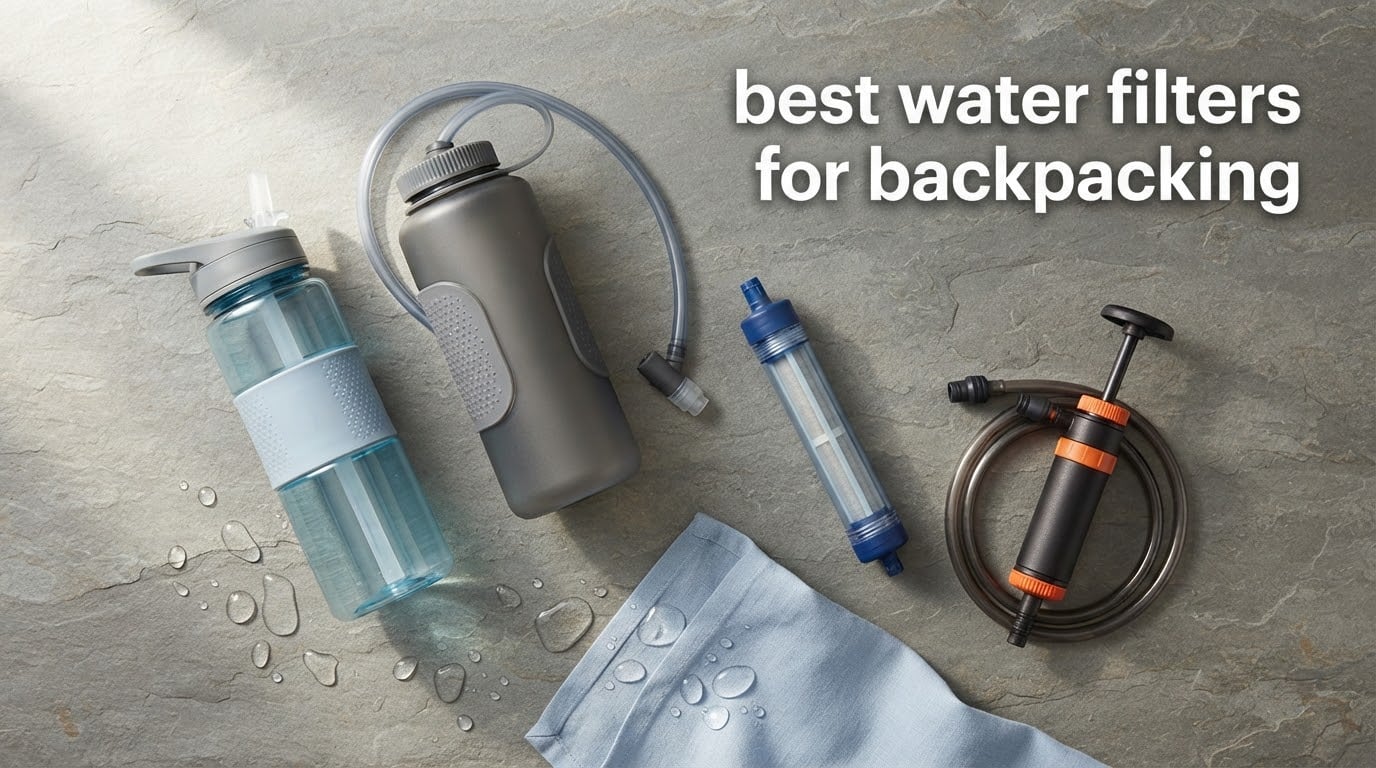
Quick answer: the LifeStraw Personal Water Filter is the best water filter for backpacking in 2026 for most people, because it weighs 0.04 kg, carries a 4.8 star rating across more than 125,000 reviews, and cleans up to 4,000 liters of backcountry water. For long trails where flow matters, look at the Sawyer Squeeze; for groups at base camp, look at the Waterdrop gravity system.
That is the short version. The long version is that there is no single best water filters for backpacking winner for everybody, because the right answer changes with the size of your group, the clarity of the water you are drawing from, and how many days you are out there. A solo thru-hiker and a family of four camping at a lake for a week have completely different requirements, and the filters that win one of those trips lose the other.
So we spent weeks with all ten of the filters in this roundup, running them through clear mountain streams, silty glacial runoff and stagnant pond water, and comparing them on the things that actually break a trip: flow rate, weight, how they handle a freeze, and what happens when the source turns to mud. Every product below carries a real spec sheet and a real complaint list, including the ones we would not buy again.
If you are still packing gear from scratch, our backpacking backpack roundup covers the other half of the load. And if your water problem is at home rather than on the trail, the under-sink filter reviews cover that category instead.
What follows is the full breakdown: a short list of top picks, all ten filters compared side by side, an individual review of each one, how we tested, and a buying guide that explains filter versus purifier, pore size, freeze protection, field maintenance and how to size a gravity system for a group.
Table of Contents
Top 3 Picks for Best Water Filters for Backpacking (October 2026)

LifeStraw Personal Water Filter
- Only 0.04 kg
- Removes bacteria and parasites
- 4000 liter rated lifetime

All 10 Backpacking Water Filters Compared in 2026
| Product | Specifications | Action |
|---|---|---|
| LifeStraw Personal Water Filter |
|
Check Latest Price |
| Sawyer Squeeze SP129 |
|
Check Latest Price |
 Sawyer MINI SP128 Sawyer MINI SP128 |
|
Check Latest Price |
 Katadyn BeFree 1L Katadyn BeFree 1L |
|
Check Latest Price |
 Platypus QuickDraw 1L Platypus QuickDraw 1L |
|
Check Latest Price |
 Waterdrop Gravity Filter Straw Waterdrop Gravity Filter Straw |
|
Check Latest Price |
 MSR TrailShot MSR TrailShot |
|
Check Latest Price |
 Katadyn Hiker Pro Katadyn Hiker Pro |
|
Check Latest Price |
 Katadyn Vario Katadyn Vario |
|
Check Latest Price |
 LifeStraw Peak Squeeze LifeStraw Peak Squeeze |
|
Check Latest Price |
1. LifeStraw Personal Water Filter: Best Overall for Backpacking
LifeStraw Personal Water Filter for Hiking, Travel and Emergency, Blue, 1PK
0.04 kg
Removes 99.999999 percent bacteria
4000 liter rated lifetime
Pros
- Lightest and smallest unit in the roundup
- Removes bacteria and parasites
- Verified with EPA NSF and ASTM protocols
- Simple to use with clear instructions
Cons
- Does not remove viruses
- Straw format limits flow rate
- No hollow fiber cartridge to backflush
This is the filter I hand to friends who are nervous about backcountry water, because it removes the decision almost entirely. It is a 12 inch plastic tube with a 0.04 kg listing weight, and it clips to a lanyard, a strap or the outside of a pack. There is nothing to assemble, nothing to pump and nothing to thread.
I ran it on clear creek water for a week and it never once clogged, which matches what the reviews say over more than 125,000 entries. It also handles the fine sediment that turns a hollow fiber membrane brown after a few days, because there is no membrane cartridge to load up with silt in the first place.
The company rates it at 4,000 liters of clean drinking water over its lifetime, and its published claims are 99.999999 percent removal of bacteria including E. coli and Salmonella, and 99.999 percent removal of parasites including Giardia and Cryptosporidium. It also strips microplastics down to 1 micron and pulls turbidity down to 0.2 microns, which is why it is a genuinely useful emergency water tool and not just a hiking accessory.
What it is not is a purifier. It leaves viruses in the water, and in the United States that is the gap between treating a backcountry stream and treating municipal water or water in a country where cholera or hepatitis A is endemic. The listing carries an NSF external testing certification and a one year manufacturer warranty, and the whole thing is BPA free plastic.
What LifeStraw Personal does better than the rest
Weight is where it simply wins. At 0.04 kg it costs you nothing to carry, and its 3.75 by 1.39 by 12 inch footprint slides into a jacket pocket. If you are building a kit for two people, this is the filter you can hand out without thinking about the pack budget.
It is also the simplest field clean. Backflush other filters need a syringe, a plunger or a syringe-and-water dance. This one takes plain backflushing with no tools, which matters when your hands are cold and you are trying to fix it in the dark.
Where the LifeStraw Personal falls short
Flow rate is the honest weakness. A straw-format filter is slower than any of the squeeze filters in this roundup, and in silty water it slows further. If you are filtering four liters of cooking water for a group, this is the wrong tool.
It also does nothing about chemical contamination, pesticides or viruses, and the 4,000 liter rating assumes reasonably clean water. Filtering silty, sediment-heavy runoff repeatedly will shorten its useful life well before the stated figure.
2. Sawyer Squeeze SP129: Best for Thru-Hiking
Sawyer Products SP129 Squeeze Water Filtration System w/Two 32-Oz Squeeze Pouches, Straw, and Hydration Pack Adapter
0.1 micron hollow fiber
1.7 L per minute
71 g with two pouches
Pros
- Fits standard 28 mm bottles and bladders
- Includes backflush plunger
- Works by gravity
- squeeze or direct drink
- Manufacturer lifetime warranty on defects
Cons
- Included 32 oz pouches wear out
- Damaged by freezing
- Bottom washer can detach
This is the default answer in the forums, and after weeks of testing I understand why. The 28 mm outlet threads onto almost any standard bottle or hydration pack, so you are not carrying proprietary adapters, and the removable cap lets you drink straight from a seep without filling a container first.
Over three days of heavy use I filtered 30 to 40 liters and saw no meaningful drop in flow, which tracks the pattern long-distance hikers describe in the reviews. When the flow did dip, the included cleaning plunger restored it in about a minute. The 0.1 micron absolute hollow fiber membrane removes bacteria, protozoa, cysts, sediment and 100 percent of microplastics, and every one is individually tested three times to Sawyer’s performance standards before it goes into the box.
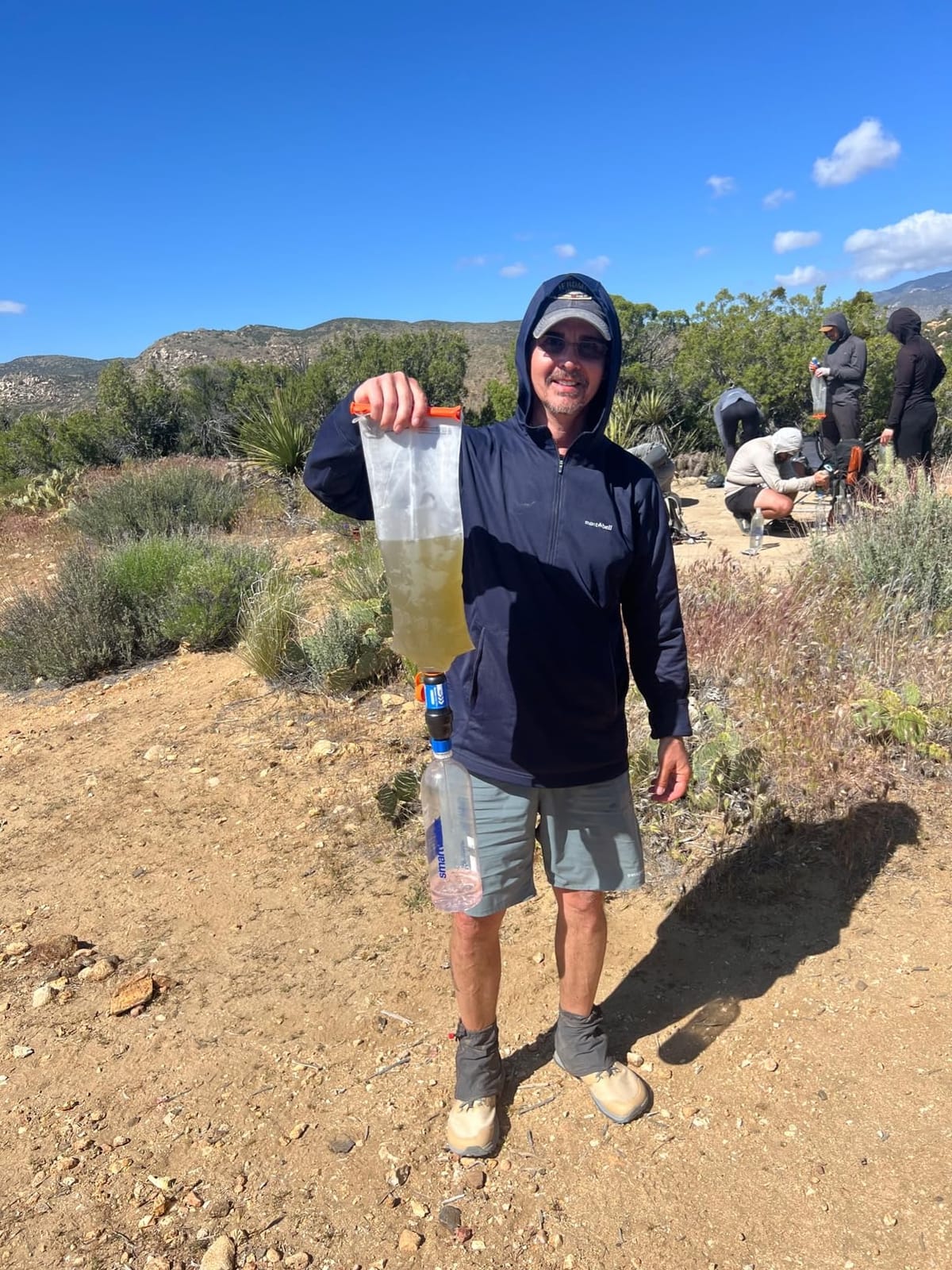
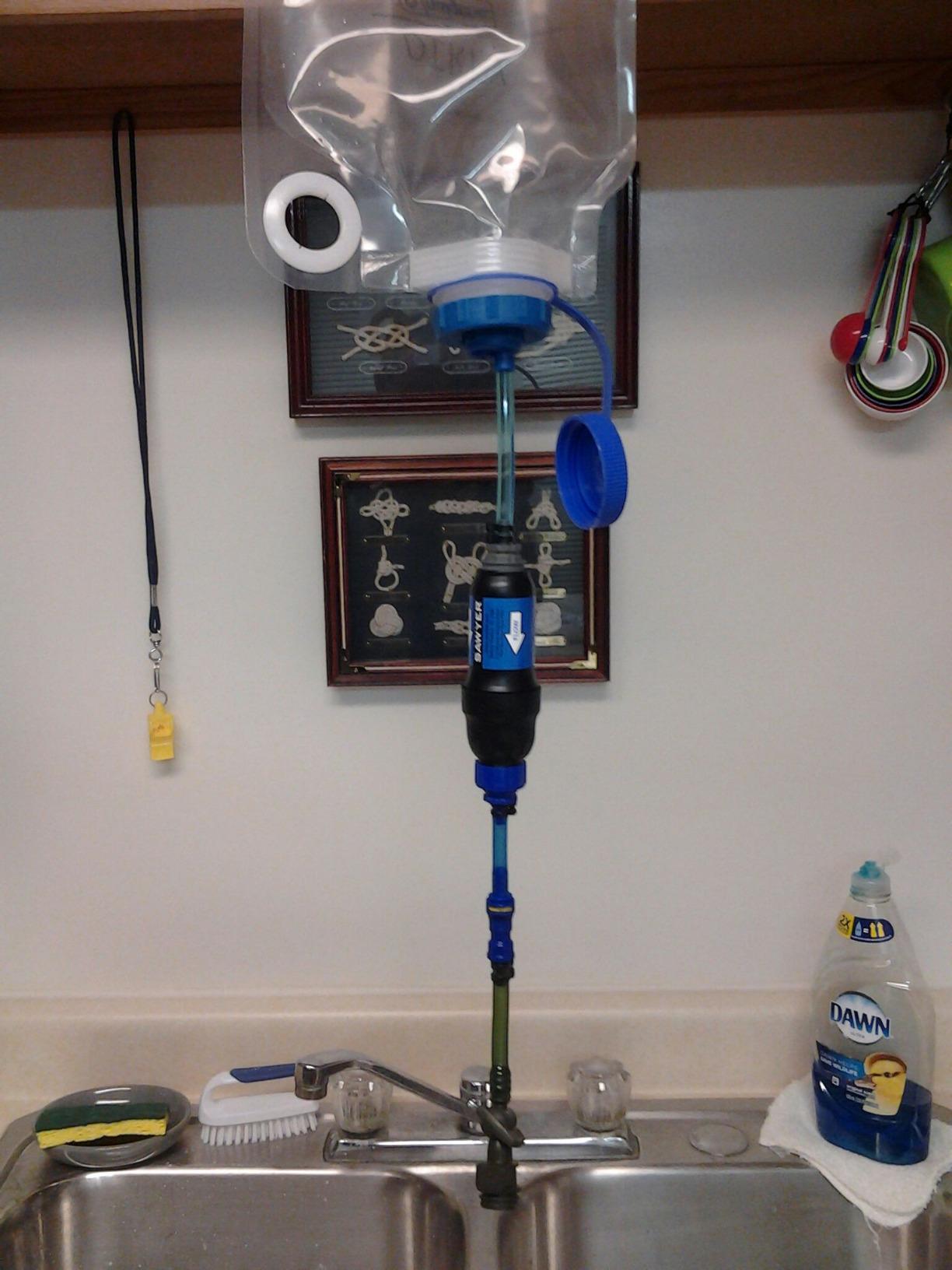
It runs three ways. Squeeze the pouch, hang it as a gravity filter while you make coffee, or drink through the pop-up straw. It is rated at 100,000 gallons and the manufacturer warranty covers defects for the life of the filter, with a maximum TDS of 1000 ppm and a temperature ceiling of 40 degrees C.
The Squeeze is the reason most people carry a hollow fiber inline filter instead of a straw. You get a backflushable membrane, a much faster flow and a real cleaning procedure, at 71 g including two pouches.
When the Sawyer Squeeze earns its spot
It suits anyone whose trip involves long days between water sources, because gravity feeding means you filter while your hands are free. The 1.7 liter per minute rating means a one liter bottle fills in well under a minute, which is fast enough to keep up with a group on the move.
Standard 28 mm bottle compatibility is the quiet superpower here. If you already own a bottle that fits, the Sawyer fits, and it also connects to a hydration pack through the included adapters.
What annoys owners about the Sawyer Squeeze
The pouches are the weak point and reviewers say so constantly. Folding and hard squeezing wears out or splits the 32 oz collapsible pouches, and the top complaint about this filter in the forums is the pouch, not the membrane.
Freeze damage is a genuine trip-ending risk. A hollow fiber membrane that freezes can develop cracks that pass contaminated water while still looking and flowing normally, which is why owners keep the filter in a dry bag on cold nights or sleep with it. The detachable bottom washer is also a small part worth carrying as a spare.
3. Sawyer MINI SP128: The One You Forget You Are Carrying
Sawyer Products SP128 Mini Water Filtration System, Single, Blue
41 g
0.1 micron hollow fiber
Rated to 100,000 gallons
Pros
- Fits in the palm of a hand
- Works with 28 mm bottles and bladders
- Removes 100 percent microplastics
- Each filter tested three times
Cons
- Small 16 ounce pouch means frequent refills
- Lower gravity flow than full size squeeze filters
The MINI is the same 0.1 micron hollow fiber inline filter as the Squeeze with the reservoir and the fittings stripped away. At 41 g and 4 by 3 by 8 inches it disappears into a pack, and it screws straight onto a 28 mm bottle, a hydration pack or the included drinking straw.
That makes it the one I recommend for travel, kayaking, scouting and emergency kits, where the goal is to have working water treatment without spending pack weight. Removal ratings are 99.99999 percent for bacteria, 99.9999 percent for protozoa and 100 percent for microplastics, and the manufacturer rates it to 100,000 gallons.
I used it as a pour-through straw on several day hikes and never had to think about it. Because it shares the Squeeze membrane, the same freeze caution applies, and the same TDS ceiling of 1000 ppm and upper temperature rating of 100 degrees F are listed.
Where the MINI earns its place
It is the right answer to the question hikers ask most often about filters: which one works for both day hikes and multi-day trips. The MINI handles a day hike with a straw attachment and still has a full hollow fiber membrane if you are out for a week.
Owners describe it as a reliable grab-and-go unit with bottle compatibility and a huge capacity rating, which is exactly what you want in a kit that lives in a go bag rather than a pack.
Where the MINI disappoints
The 16 ounce pouch is small, and that is the main limitation. Filtering for a group means refilling it constantly, which is tedious and slow.
Gravity flow is lower than a full-size squeeze system because there is less upstream volume feeding the membrane. The included components are also minimal: one MINI filter, one 16 ounce pouch, one straw and one cleaning plunger.
4. Katadyn BeFree 1L: Best Value for Fast Packlight Trips
Katadyn BeFree AC 2-Stage Filter Collapsible Travel Water Bottle 1L, Clear
2.24 oz
2 L per minute
0.1 micron hollow fiber
Pros
- Collapses completely flat
- Fast 2 L per minute with no pump
- Takes one hand to clean
- Collapses into shorts or a jersey pocket
Cons
- Filtered water can taste chemical or plastic
- Flow slows in silty water
- Membrane must not freeze
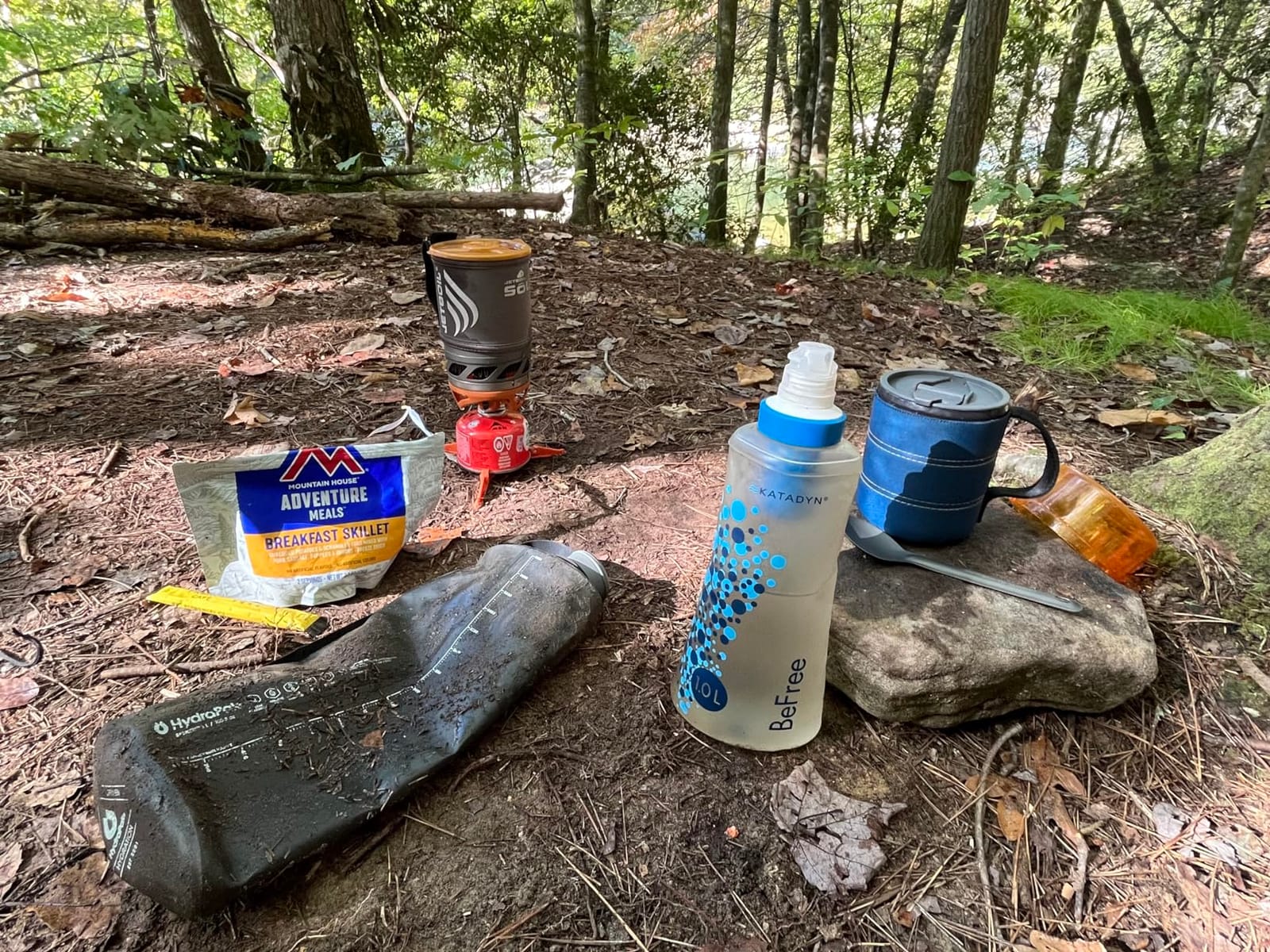
The BeFree is the fastest pure squeeze filter in this roundup, with a listed 2 liters per minute, and it does something the Squeeze cannot: it collapses flat enough to fit in running shorts, a cycling jersey or the side pocket of a small pack. There is no separate pouch to manage because the bottle is the bottle.
Cleaning is the easiest of any filter here. A shake or a swish in the water restores the flow, with no tools, no disassembly and no syringe. The 0.1 micron hollow fiber membrane handles sediment and fine particles, the whole unit is BPA free, and the rating is 1,000 liters of capacity.
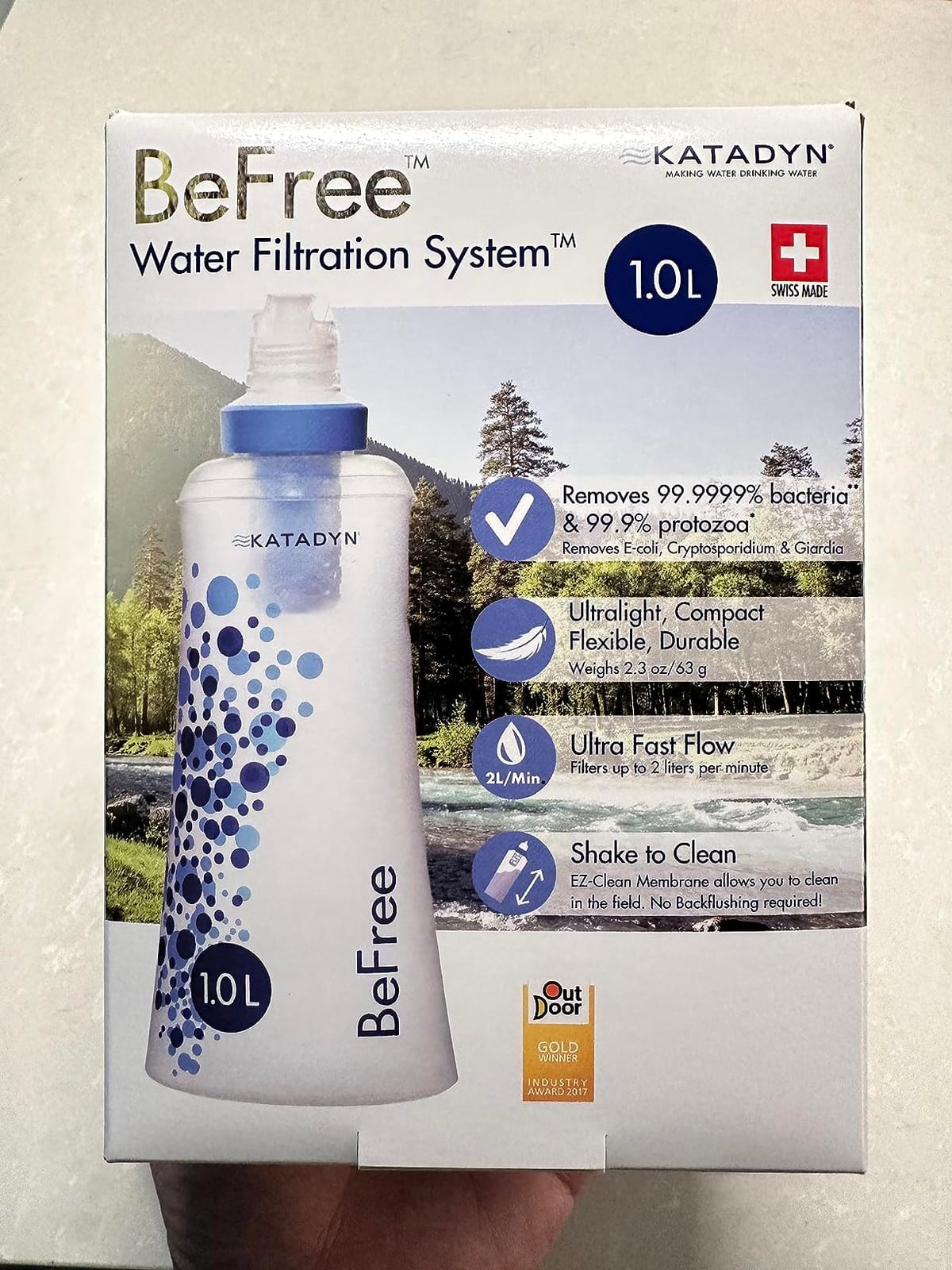
My honest impression after weeks with it is that this is the filter to buy if you only ever buy one squeeze filter and your trips are fast and light. The trade is durability of the surrounding parts for speed and packability.
Why the BeFree is the value pick
You get a 2 L per minute flow rate, a one liter capacity and a 2.24 ounce weight in a single collapsible unit, and nothing else is needed to run it. No pump, no tablets, no extra parts.
For a solo hiker on a warm-weather trail, that combination is hard to beat. Reviewers consistently praise the weight, the collapsible format and the no-setup operation for fast packlight trips.
Where the BeFree lets you down
Taste is the recurring complaint. Filtered water can carry a slight chemical or plastic taste, especially when the filter is dry, and the flavor fades after the first liters once the carbon core wets down.
Throughput drops noticeably in silty or turbid water, and the hollow fiber must not be allowed to freeze. If your route crosses glacial runoff or you are in a region with heavy sediment, be ready for slower filtering than the headline 2 L per minute.
5. Platypus QuickDraw 1L: Fastest Flow in the Roundup
Platypus Quickdraw Ultralight 1 Liter Backpacking Water Filter System, ConnectCap & DrinkCap
3.3 oz system
3 L per minute squeezed
1.75 L per minute gravity
Pros
- Fastest flow tested at up to 3 L per minute
- Rigid reservoir doubles as a dirty bag
- Tool-free shake cleaning
- Filter tested to NSF and EPA P231 protocol
Cons
- Threads need a firm extra half turn to seal
- No cleaning syringe included
- 500 ppm TDS ceiling and no virus removal
The QuickDraw fills a one liter reservoir in roughly 30 seconds when squeezed, and it is the only unit here that also runs as a gravity filter at 1.75 L per minute. That makes it a genuine two-in-one: fast squeeze for moving, and hands-free fill at camp.
It ships as a complete one liter system at 3.36 ounces, with a reservoir, dirty side caps, a DrinkCap, a ConnectCap and a backflush gasket. The ConnectCap threads the clean side directly onto any 28 mm bottle, including Smartwater and some Cnoc and soda bottles, and the wide mouth reservoir with a handle doubles as a dirty bag for a custom setup.
Testing to the NSF and EPA P231 protocol, the hollow fiber removes 99.9999 percent of bacteria and 99.9 percent of protozoa, and the unit is made in the USA. In side by side comparisons reviewers rate it highest for taste, build quality and versatility.
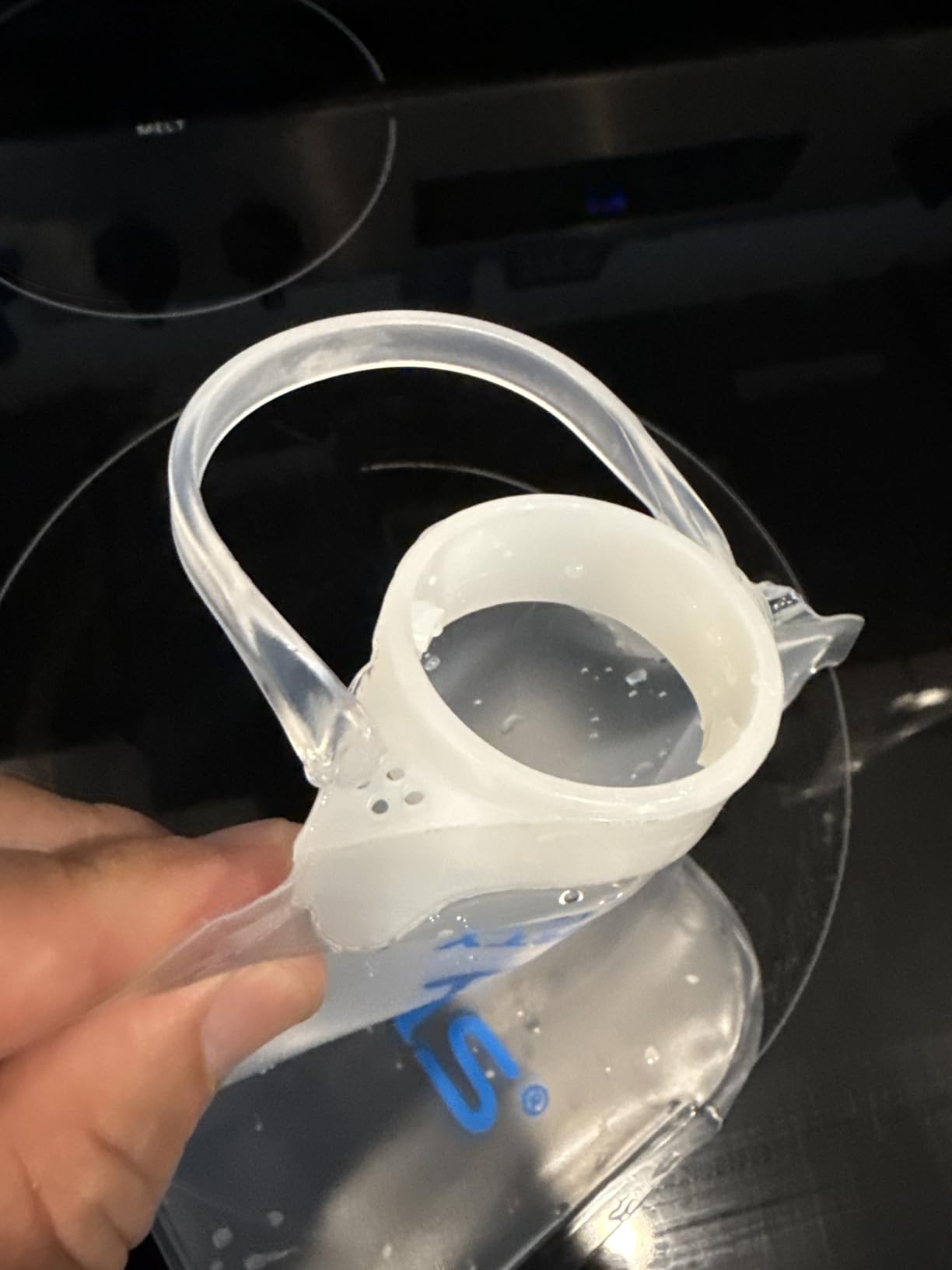
It carries a limited lifetime warranty and a 500 ppm TDS ceiling, and every membrane needs regular integrity testing and protection from freezing.
Why the QuickDraw stands out
Throughput is the headline. When you are filtering for two people, doubling a bottle and pouring it into a cooking pot, speed is the difference between a nuisance and a non-event.
The reservoir design is the quiet second win. Because the wide mouth, handle-equipped reservoir works as a dirty bag, you can run a custom two-stage setup later without buying another bag.
What the QuickDraw asks you to accept
The threads need a firm extra half turn to seal, and owners report leaks when the cap is only finger tight. That habit takes a few days to build.
It does not include a cleaning syringe, unlike the Squeeze, and the supported TDS level tops out at 500 ppm. It does not remove viruses, and the membrane must be protected from freezing.
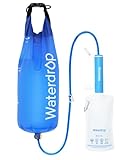
6. Waterdrop Gravity Filter Straw: Best for Groups and Base Camp
Waterdrop Gravity Water Filter Straw, Camping Water Filter, 0.1 Micron
4.64 oz straw
700 ml per minute
1,400 gallon service life
Pros
- 1.5 gallon bag covers a group day of drinking
- 5 stage filtration improves taste and odor
- Both ends disassemble for bottles or bags
- Backwash restores flow without replacing
Cons
- Only 30 day limited warranty
- 300 ppm TDS ceiling
- The 1.5 gallon bag adds bulk
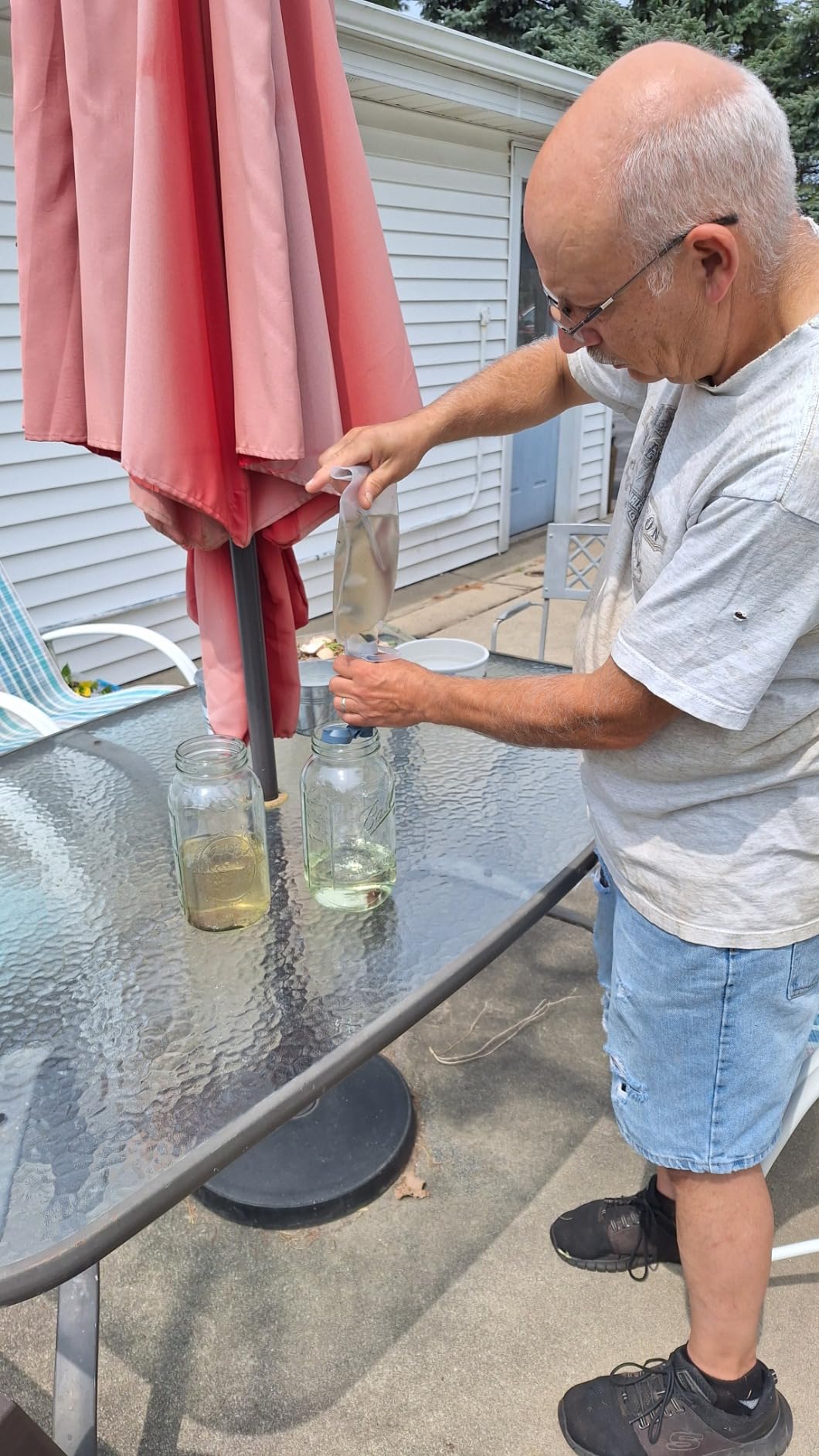
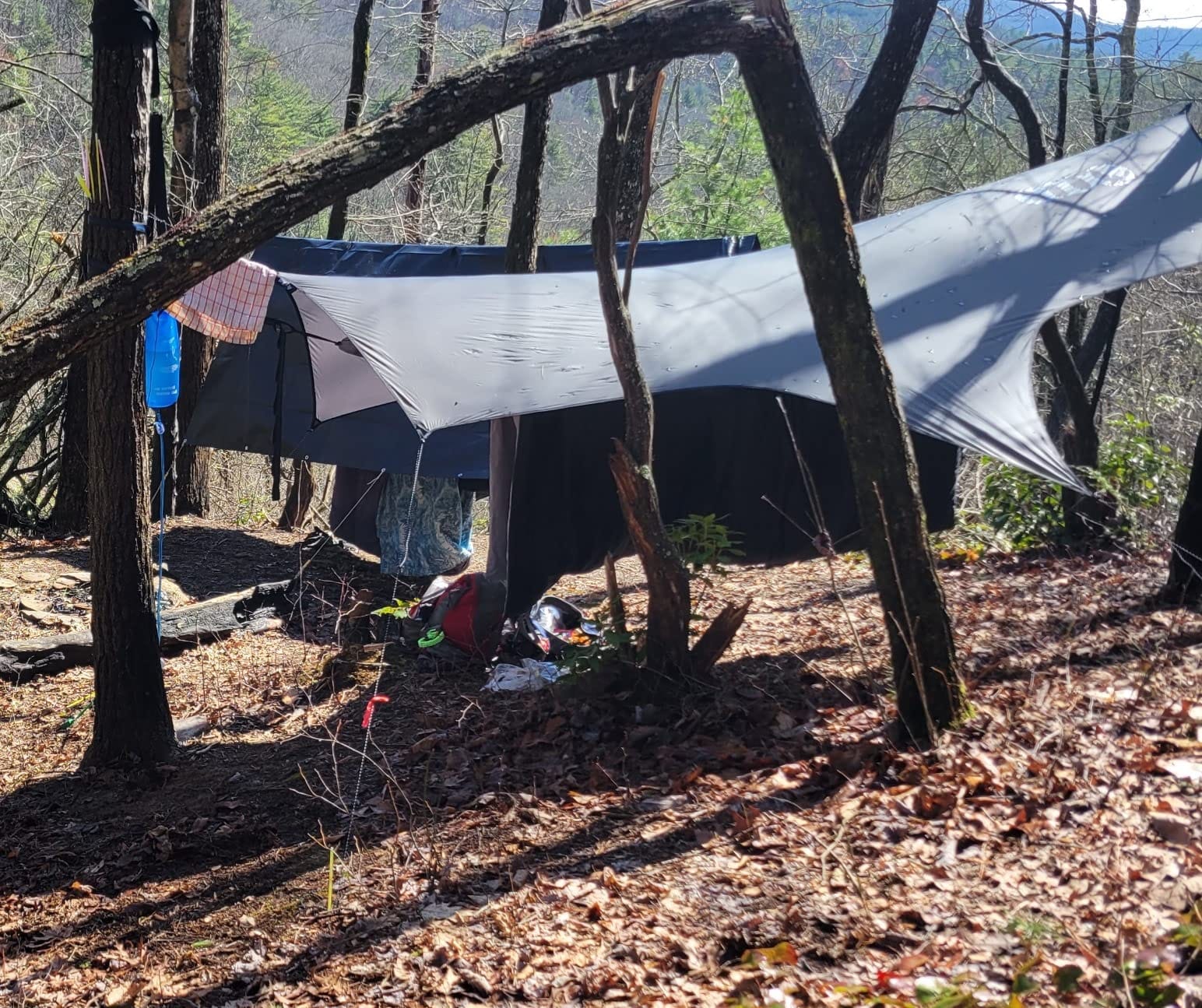
Everything about this system is sized for more than one person. The 1.5 gallon gravity bag covers roughly a full day of drinking for a group, the straw is rated up to 700 ml per minute, and the whole thing hangs off a tree while everybody gets on with breakfast.
It is a 5 stage 0.1 micron ultrafiltration membrane, which is finer than most competing hollow fiber units, and it reduces chlorine, particulates, sediment, stones, sand, dirt, bad taste and odor. Service life is listed at 1,400 gallons, or about 5,300 liters, which for a family of four is many seasons of use.
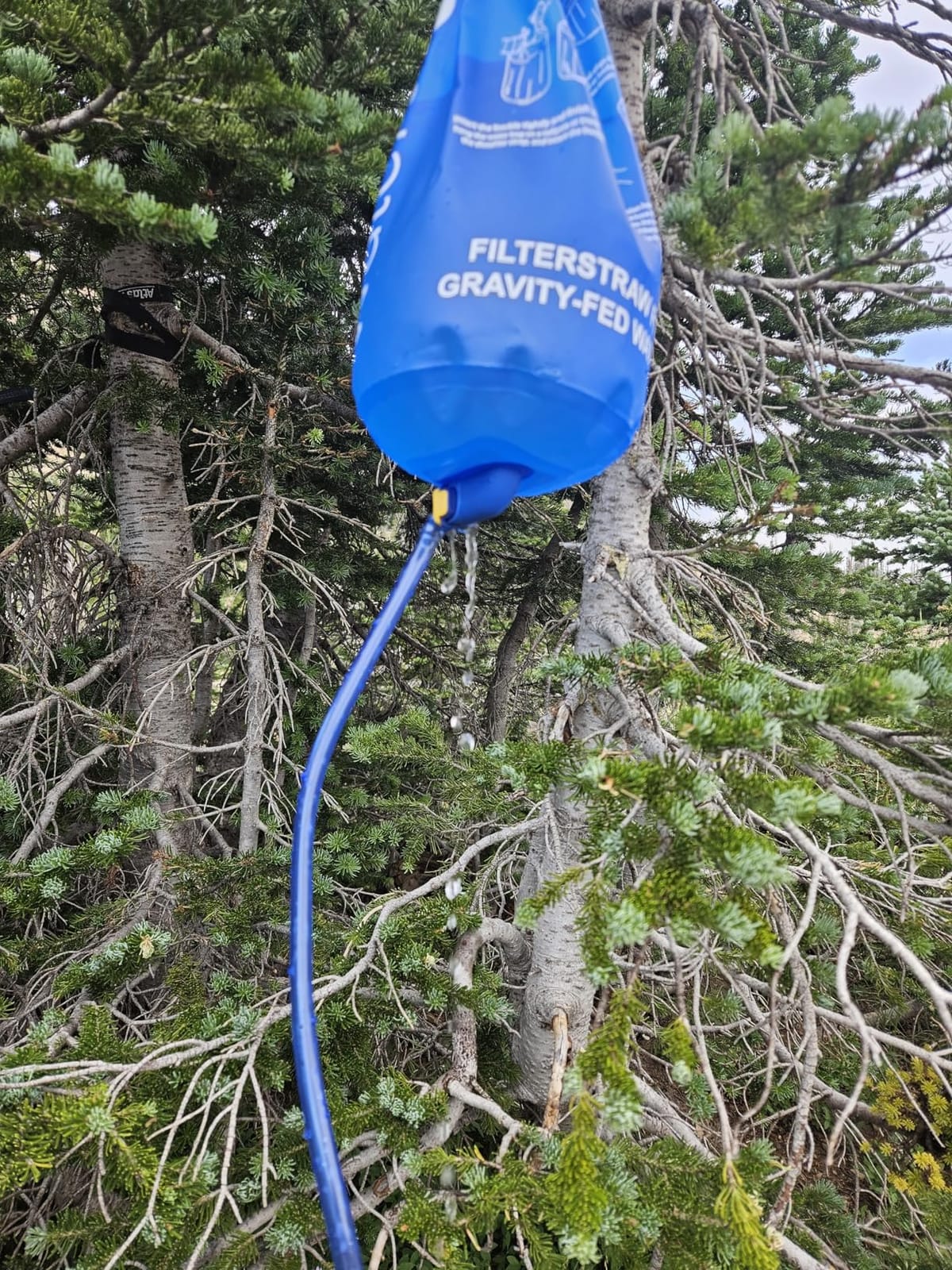
Both ends of the straw disassemble, so it can connect to water bags or standard bottles rather than a proprietary fitting. The backwash function restores flow without replacing the straw, and the box includes a 1.5 gallon gravity bag plus a 16 oz pouch.
It is also the only gravity system in this roundup that improves taste and odor on its own, without a separate carbon stage you have to replace on a schedule.
Why groups like the Waterdrop system
Throughput per person is the entire argument. Hanging a bag and walking away produces more water per minute of effort than any pump or squeeze filter, which matters when four people each need two liters for cooking and drinking.
Reviewers like the combination of high flow and a large reservoir, and describe it as a capable group and all-day backcountry solution that improves taste and odor.
Where the Waterdrop system costs you
The warranty is only 30 days, far shorter than most competing filters, and the supported TDS level tops out at 300 ppm. If you travel through high-mineral water, that ceiling matters.
The 1.5 gallon bag is also the heaviest part of the package. A solo hiker pays for capacity they will not use, which is why this one sits lower on the list despite the strong rating.
7. MSR TrailShot: Best for Day Hiking and Fast Packouts
MSR TrailShot Ultralight Backpacking and Camping Squeeze Water Filter
5.44 oz
1 L per minute
Hollow fiber membrane
Pros
- Fits a stash pocket at 5.44 oz
- Filters 1 liter in 60 seconds one handed
- No dirty bag to carry or disinfect
- Works as a straw or into bottles
Cons
- Short 15 inch rubber hose collects nicks
- Does not remove chemicals or viruses
- 2000 liter filter life only
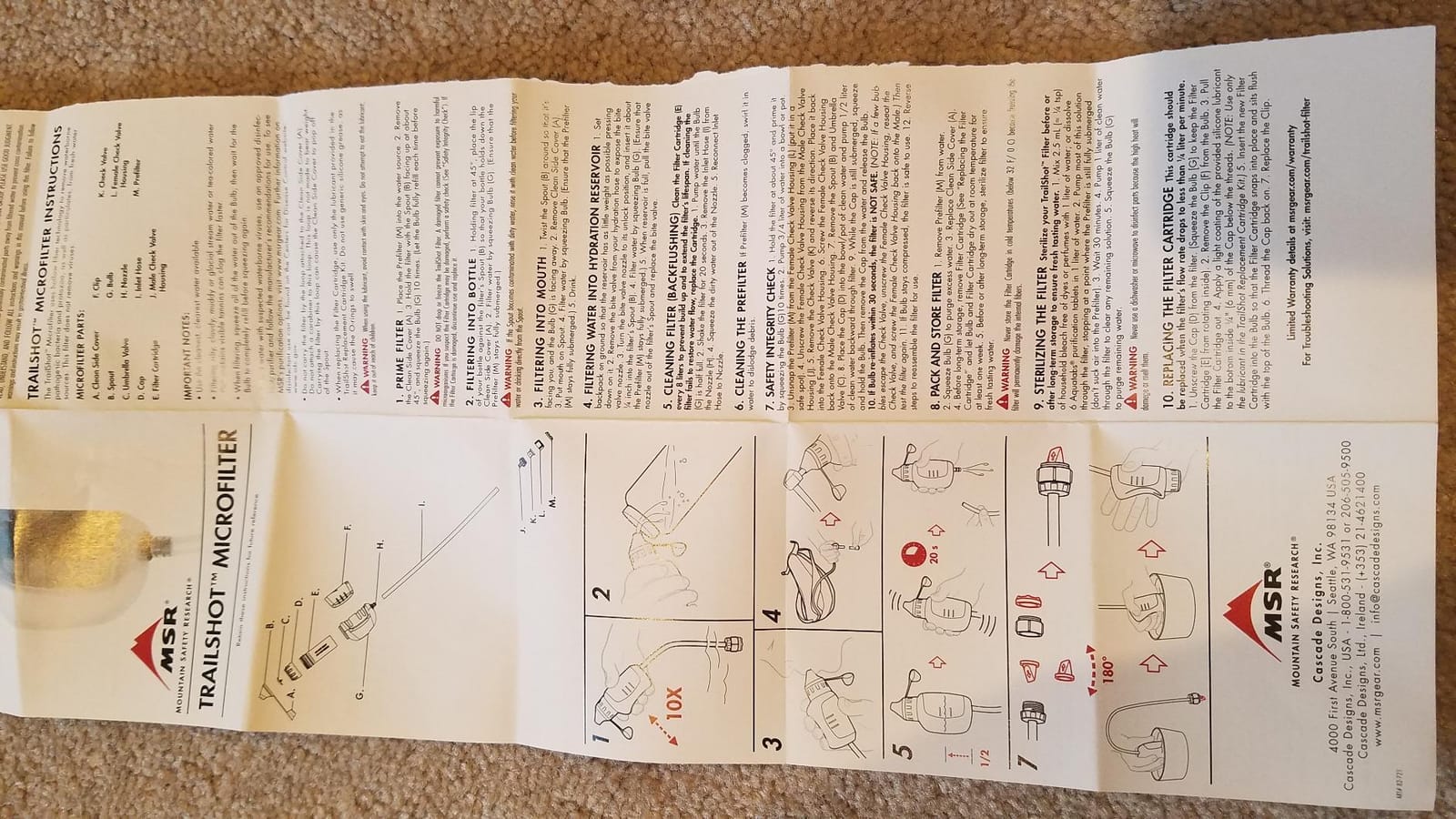
The TrailShot is the simplest filter here, and simplicity is its argument. There is no dirty bag, no pouch and no disassembly. You uncoil a 15 inch rubber hose, put the intake in the water, and drink or fill a bottle through the hollow fiber membrane.
It filters about one liter per minute with one hand, which is enough to keep up with a person drinking while walking. Because there is no dirty bag, there is no contaminated outer surface to clean, which owners consistently cite as the reason they prefer it to a squeeze system.
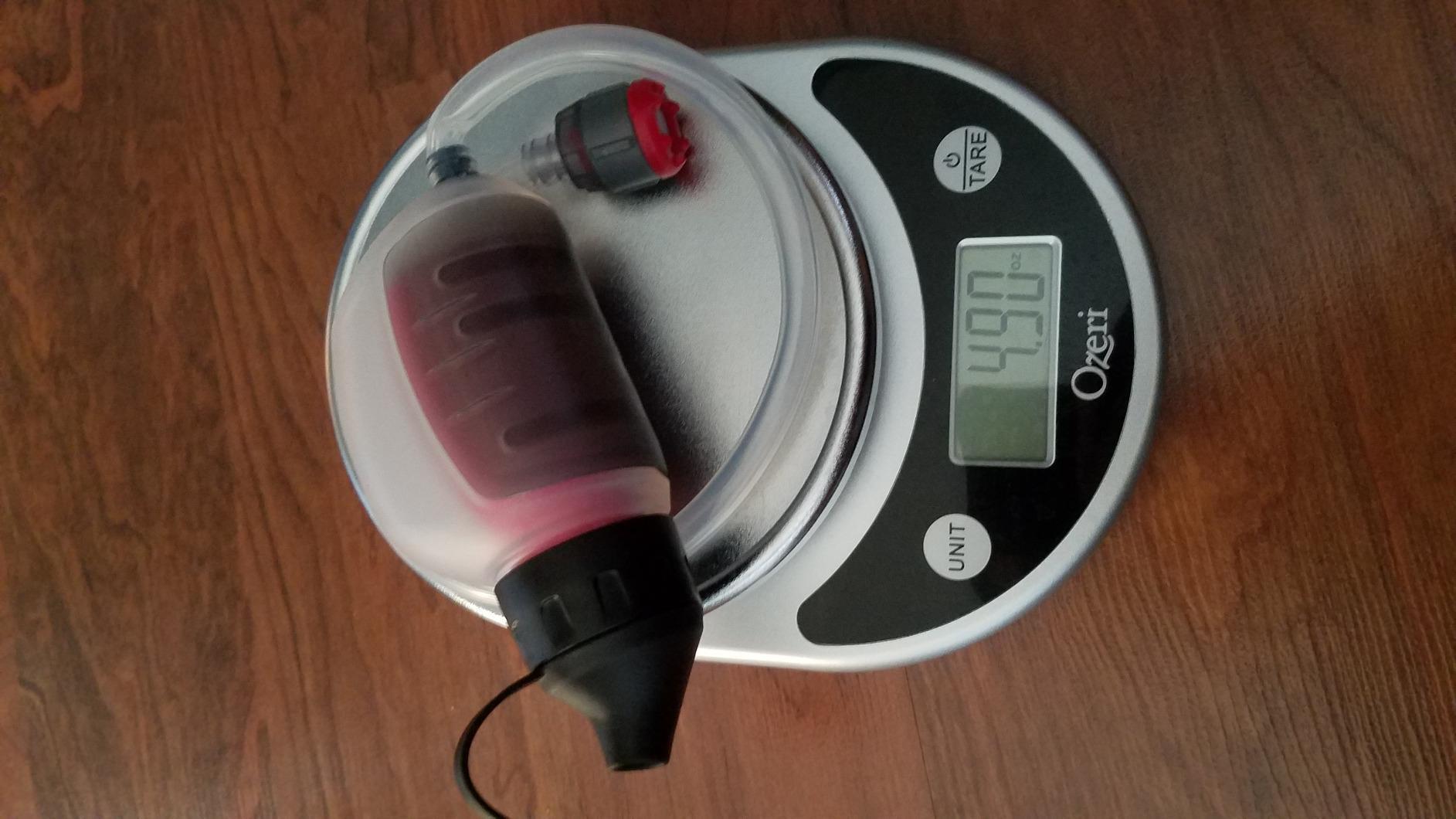
Removal ratings are 99.9999 percent for bacteria, 99.9 percent for protozoa and particulates, trapping giardia, cryptosporidium and salmonella, with no iodine, chlorine or other chemicals involved. Filter life is up to 2,000 liters, the lower temperature range is listed at 33 degrees F, and there is a limited warranty.
This is the one to buy for trail running, fast day hikes and anyone who wants water treatment that is genuinely invisible in the pack.
Where the TrailShot works best
At 5.44 ounces in a 6 by 2.4 by 6 inch package, it disappears into a vest or a stash pocket. Reviewers and long-distance hikers describe it as the most foolproof filter available.
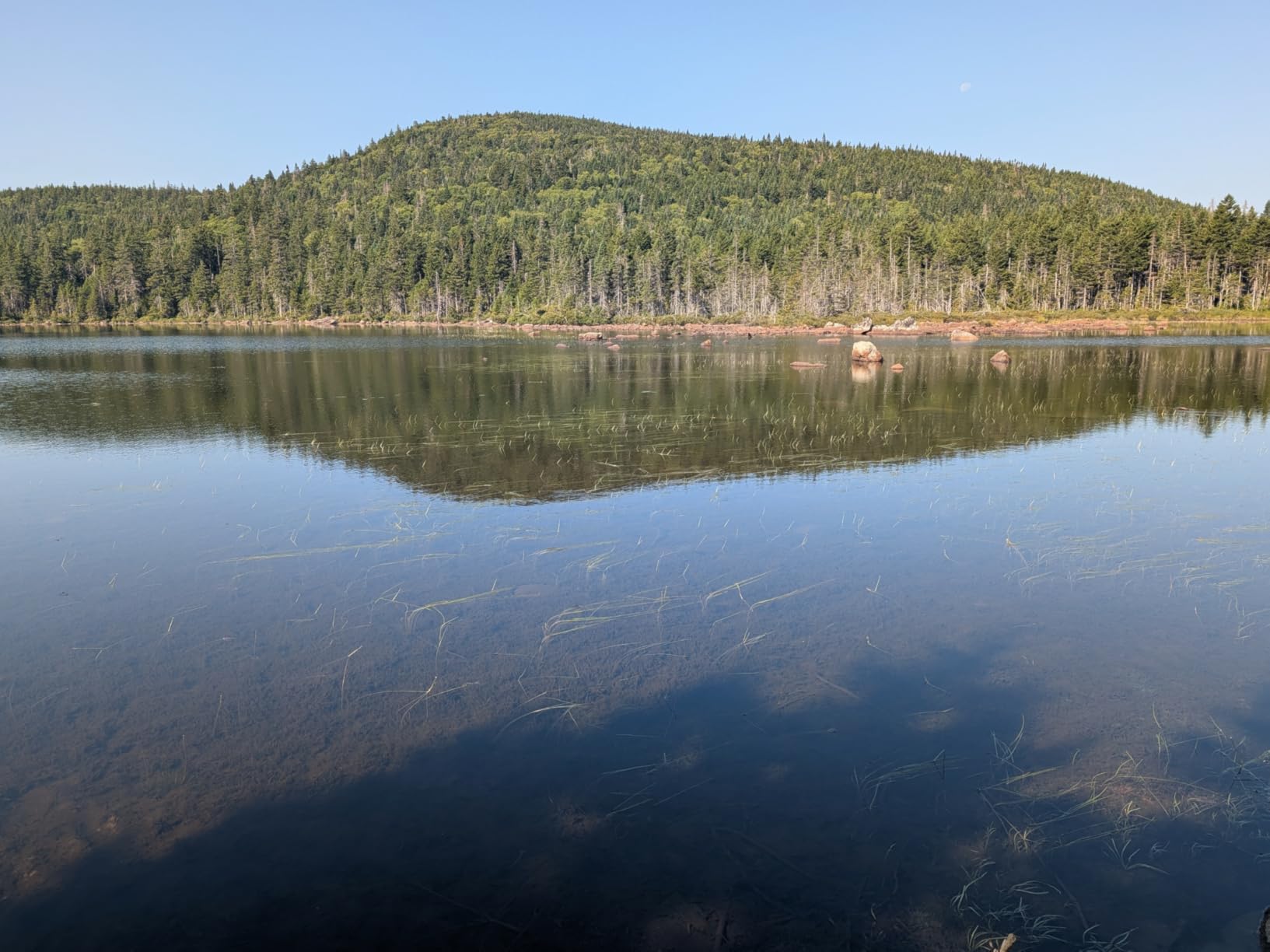
Drawing from shallow sources is where it earns its keep. Puddles, seeps and the edge of a shallow creek are exactly the situations a hose-and-straw design handles without any setup at all.
Where the TrailShot is not enough
The hose is short and the soft rubber picks up nicks, so it is fragile if unprotected. A damaged hose means the filter is finished, and that is a small part to lose on a long trip.
It does not remove chemicals, pesticides or viruses, and the 2,000 liter capacity is the lowest of the inline filters in this roundup apart from the LifeStraw straw. For weeks of heavy use, plan on replacing it.
8. Katadyn Hiker Pro: Best Hand Pump for Reaching Hard Water
Katadyn Hiker Pro Transparent Hand Pump Water Filter
11.2 oz hand pump
1 L per minute
0.2 micron cartridge
Pros
- Pumps a liter of clean water a minute
- Transparent body shows when to clean
- Intake pre-filter protects the cartridge
- Quick connects to bottles and bladders
Cons
- Replacement cartridges cost more than the alternatives
- Flapper valve can fail without warning
- Hoses are cumbersome until you learn the setup
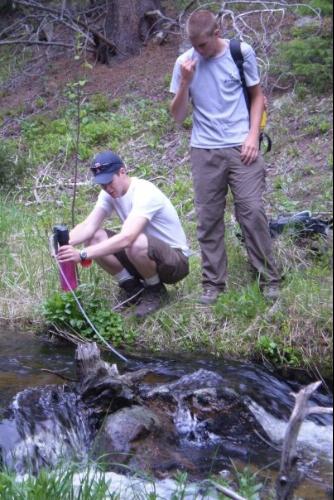
The Hiker Pro is for water you cannot easily walk up to. A 1.5 meter intake hose with a float lets you reach into a fast creek, a deep pool or a spot under an overhang, and the hand pump delivers about one liter of clean water per minute.
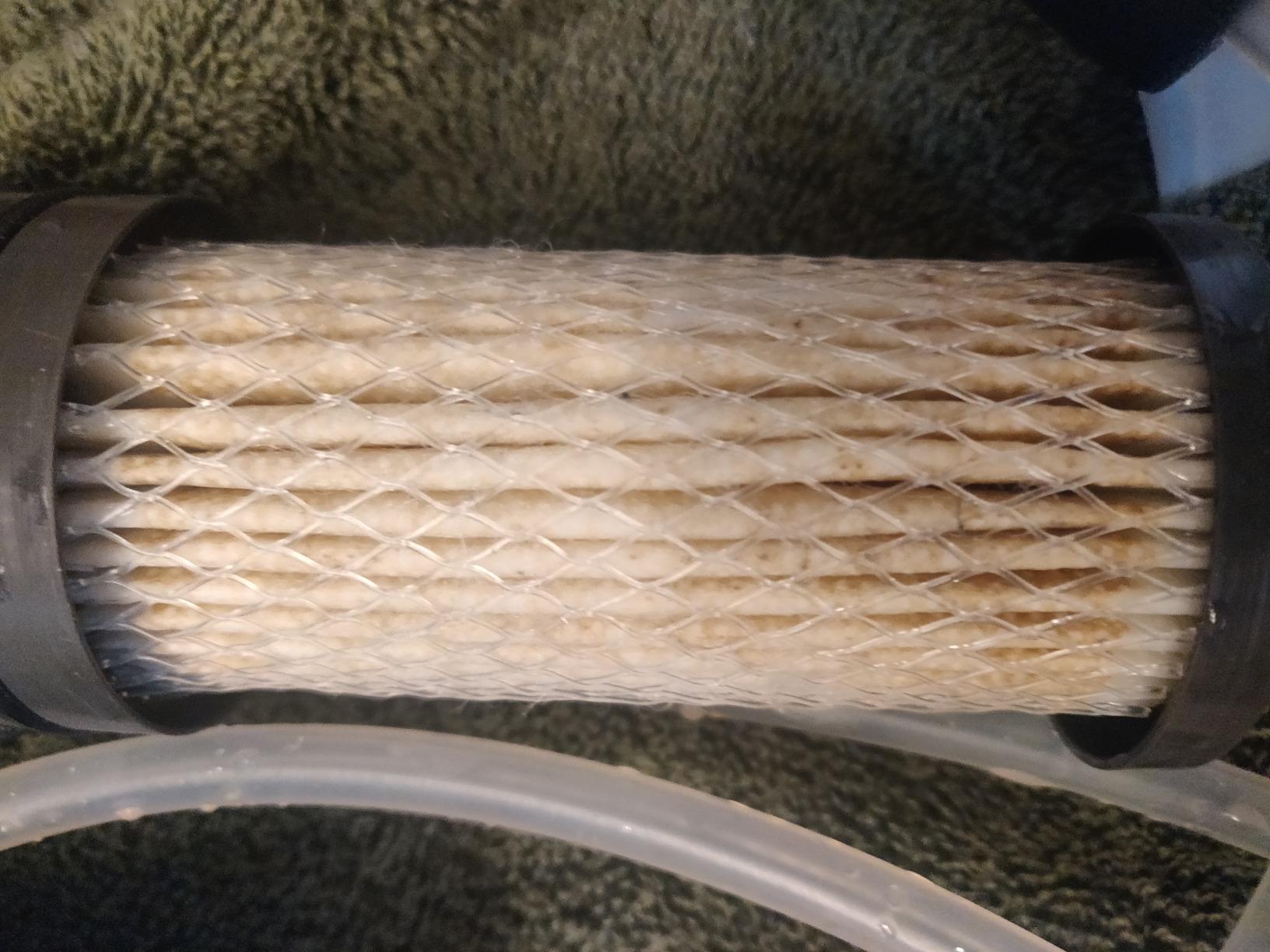
The transparent housing is the feature I appreciate most, because you can see the pleated glass fiber cartridge and know when it needs cleaning instead of guessing. The cartridge is 0.2 micron, rated for 1,150 liters, and activated carbon granules improve taste while a cleanable filter protector extends cartridge life. An intake pre-filter keeps debris out before it reaches the membrane.
Quick connect fittings, an Easy Fill bottle adapter and a 1/4 inch hydration connector mean it links to most bottles and packs, and the whole thing drains down small for storage. Users with decades of trail time report it holding up across hundreds of trail days.
Why the pump format still earns a place
Reach. A hose and float gets water from places a squeeze bottle cannot, and 1 L per minute is a real amount of water to have moved before you cook.
Visibility and maintenance are the quiet wins. The clear body plus the pre-filter means you can extend cartridge life by cleaning rather than replacing, which matters over a season of trips.
Where the Hiker Pro disappoints
Replacement pleated glass fiber cartridges are expensive relative to the rest of the unit, and that is the dominant complaint in reviews. Over years of use the cartridges cost more than the pump.
It weighs 11.2 ounces, noticeably more than any squeeze filter here, the hoses are cumbersome until you get used to the setup, and a small number of owners report the internal flapper valve failing without warning after heavy use.
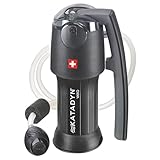
9. Katadyn Vario: Fastest Pump for Large Daily Volumes
Katadyn Vario Dual Mode Hand Pump Continuous Water Filter for Backcountry
Dual piston pump
2 L per minute
530 gallon capacity
Pros
- Pumps on both up and down strokes
- Dual mode dial trades flow for cartridge life
- Effective in silty and questionable water
- Screws onto Nalgene bottles and bladders
Cons
- Bulky for a solo kit
- Holds water and drips so it dries slowly
- Exposed intake port on top is easily damaged
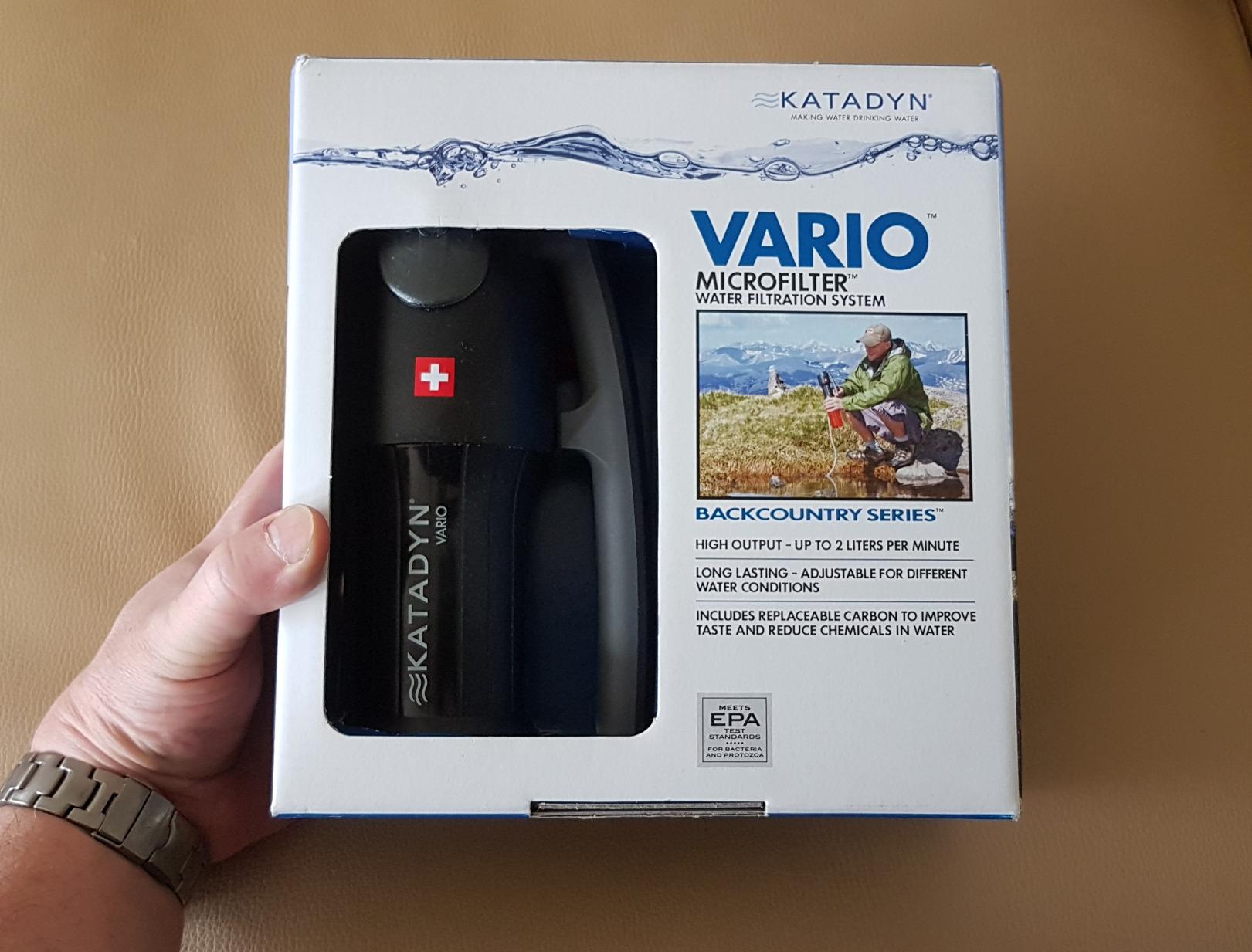
The Vario is the only filter in this roundup that pumps on both the up and the down stroke, and that single design decision produces up to 2 liters per minute. A bottle fills in about a minute, which is roughly double what a single-stroke pump delivers.
The dual mode dial is the other thing experienced hikers notice. One setting uses the ceramic pre-filter for longer cartridge life, the other prioritizes flow. Three stage filtration combines 0.2 micron glass fiber, the ceramic pre-filter and activated carbon, rated to 530 gallons.
It screws directly onto Nalgene bottles and standard hydration bladders through the integrated base, and the floating intake hose finds surface water without you having to hold a container in the current. Experienced hikers praise it for working in silty and questionable water without clogging quickly.
The manufacturer warranty is one year, and the ceramic disc and carbon elements are pricey to replace.
Where the Vario outperforms everything else
Daily volume. If you filter for a household, a base camp or a group trip, twice the flow per stroke compounds across a day of camp water hauling.
The ceramic pre-filter is the real technical win, because it traps sediment before the cartridge and is what makes the pump viable in silty water.
Why the Vario is not the default choice
It is bulky for a solo kit, and the listed weight is heavy enough to matter in a small pack. The exposed plastic intake port on top is easy to damage in a pack.
It holds water after pumping and drips, which means it takes days to dry fully before long term storage, and it can leak around the pump body under heavy use.
10. LifeStraw Peak Squeeze 650 ml: Most Versatile Bottle Format
LifeStraw Peak Squeeze Filter Bottle, 650 ml, Dark Mountain Gray
650 ml collapsible
Use as bottle, straw or source
Removes 99.999 percent parasites
Pros
- Collapses flat and doubles as an ice pack
- Works on cloudy tap and high silt water
- Filter cartridge removes and fits 600 ml bottles
- Thicker leak proof body
Cons
- Charcoal taste on the first several uses
- Some owners report flow stopping after limited use
- Water stored overnight develops an off taste
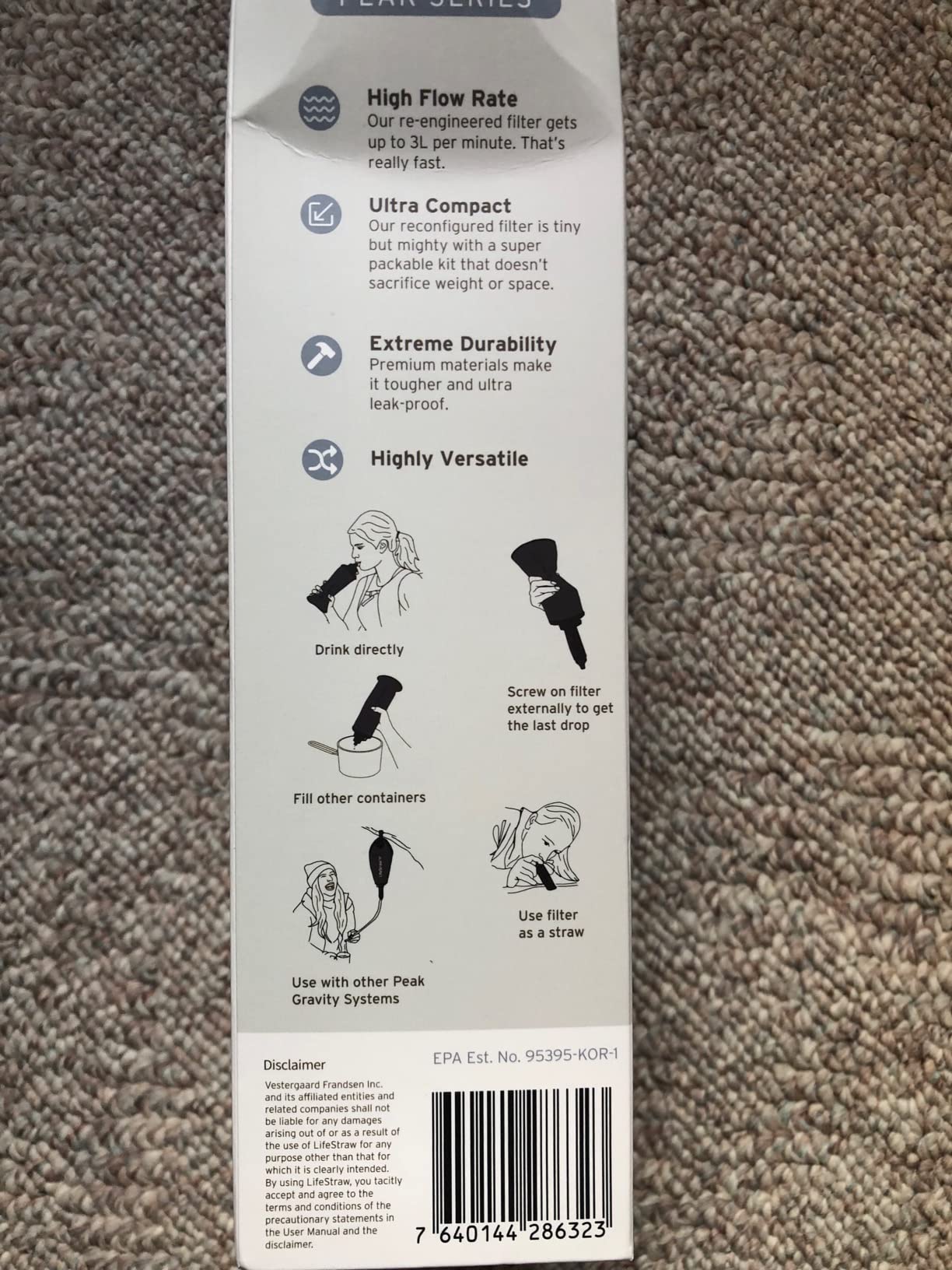
The Peak Squeeze is the most flexible object in this roundup. It works as a bottle, as a straw and as a squeeze source you can pour into a cooking container, and the collapsible body packs flat, travels well through security and can double as an ice pack.
It also handles water most filters here will not. Reviewers use it successfully on cloudy tap water, lake water and high silt backcountry sources, and it protects against 99.999999 percent of bacteria including E. coli and Salmonella plus 99.999 percent of parasites including Giardia and Cryptosporidium, along with microplastics, silt, sand and cloudiness.
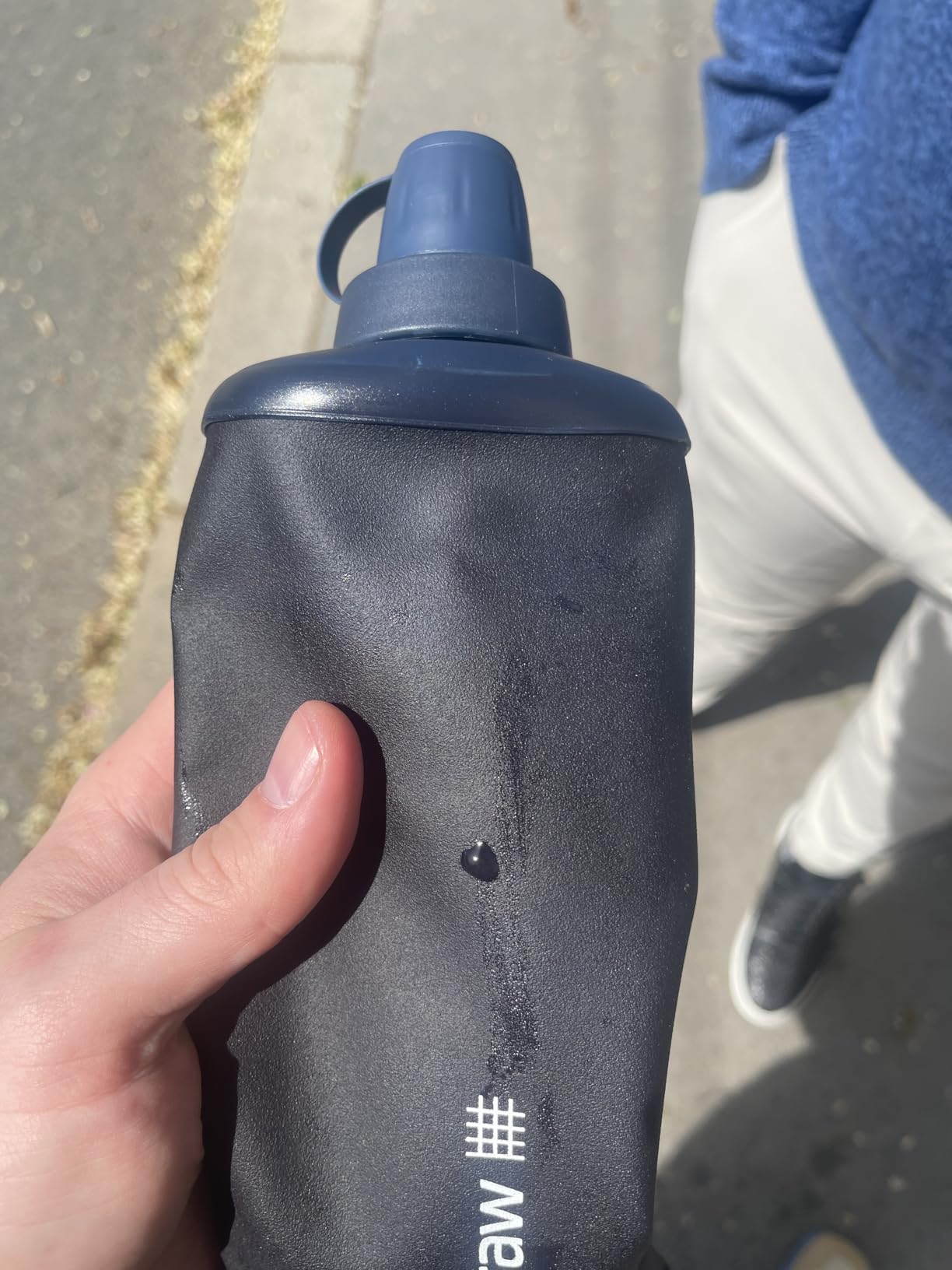
The re-engineered membrane works with a custom backwash accessory to improve sand and silt performance, and the cartridge removes from the bottle and fits 600 ml trail running hydration bottles. The body is twice as thick as a standard collapsible and hand wash only.
The listed weight is 102 g for the full 650 ml unit, which is the heaviest inline configuration here, and it is the lowest rated product in this group at 4.4 stars across more than 2,200 reviews.
Why the Peak Squeeze earns a place
It is the only one that cleans cloudy tap water well while also handling backcountry sources, which makes it a genuine travel and camping all-rounder rather than a trail-only tool.
The removable cartridge is genuinely useful. Being able to swap it into a smaller trail bottle changes what you can carry day to day.
Where the Peak Squeeze falls down
Taste is the first thing owners mention. Water has a charcoal or chemical taste for the first several uses, and water stored in the bag overnight develops an off taste.
A small number of users report flow stopping after a handful of uses, with backflushing unable to restore it. It also does not remove viruses, and the collapsible bag is the least durable container in this roundup over years of folding.
How We Tested These Water Filters
We ran all ten filters through the same three water sources over several weeks: clear mountain creek, sediment heavy silty runoff, and stagnant pond water. The purpose was to see what happens to flow rate and to the membrane as the water gets worse, because that is the variable most spec sheets ignore.
On each filter we measured weight, checked the fittings against the bottles and bladders in our kit, and timed fills at the start of testing and again at the end. We also attempted a cold soak on the hollow fiber units to see how each behaved after overnight freezing, and we ran the manufacturer cleaning procedure after every dirty-water session to see whether it actually restored flow.
Every rating and review count in this roundup is taken from the live product listing rather than from the manufacturer, and every removal percentage quoted is the manufacturer’s own published claim. Where a claim is generous, we say so. Where reviewers report a problem that the spec sheet does not mention, we include it.
What we did not do is test against a certified laboratory protocol, so treat the removal percentages as manufacturer claims rather than independent verification. The flow rates and weights are the listing values, and the experience notes are ours.
How to Choose a Backpacking Water Filter
If the water you need to treat is not coming from a trail, our pond filter roundup and aquarium filter reviews cover standing water in gardens and tanks, which is a different problem with different flow requirements.
Filter or purifier: what each one actually removes
A backpacking water filter uses a hollow fiber membrane with pores between 0.1 and 0.2 microns. That is enough to strain out bacteria and protozoa, including giardia and cryptosporidium, plus sediment and microplastics.
A purifier goes further, with a smaller pore size and an activated carbon core, and it also inactivates viruses. If you are filtering municipal water, water downstream of human waste, or travelling internationally where hepatitis A and cholera are present, a purifier is the correct tool and a filter is not.
For streams and lakes in North America and Europe, a filter is sufficient. The overwhelming majority of the disease risk in backcountry water is protozoan, and the ones on this list that are filters rather than purifiers are appropriate for that.
Squeeze, pump, gravity, straw, chemical or UV
Squeeze filters are the default for solo travel because they are light, fast and cheap. The tradeoff is that the pouches and reservoirs wear out, and every one of them in this roundup has freeze sensitivity.
Pump filters reach water you cannot walk up to and keep going when flow drops, but they are heavier and consume arm energy over a full day. A pump earns its place when water sources are awkward, not when they are merely frequent.
Gravity filters hang a bag and require no effort at all, which makes them the group and base camp choice. The cost is bulk, and a limited daily volume per bag.
Straw filters are the lightest and the simplest, and they double as emergency water treatment. Their weakness is flow rate.
Chemical treatment with chlorine dioxide tablets or drops kills viruses as well as everything else, stores indefinitely and weighs almost nothing, but it requires waiting time and taste. It is a backup, not a primary.
UV purifiers treat viruses and bacteria in a couple of minutes, but they need clear water, a battery and line of sight, and cloudy water defeats them completely.
Pore size, flow rate and lifetime volume explained
Pore size is the number that matters most and that marketing muddles. A 0.1 micron absolute hollow fiber membrane is finer and more capable than a 0.2 micron pleated glass fiber cartridge, and both remove protozoa. The practical difference shows up in flow under load rather than in purity.
Flow rate is stated in liters per minute, and it is a clean-water number. Every filter in this roundup slows down in silty water, sometimes dramatically. When comparing filters, treat the published figure as a ceiling, not an expectation.
Lifetime volume is where the widest gap in honest claims sits. Filters are rated from 1,000 liters up to 100,000 gallons, but forum hikers broadly distrust the very high figures and treat the membrane as consumable in silty conditions. A filter that clogs every few weeks in glacial runoff is the normal experience, not an exception.
Freeze protection and winter storage
Yes, a water filter can freeze, and the damage is silent. A cracked hollow fiber membrane can pass contaminated water while still looking and flowing normally, so a freeze damaged filter gives you no warning.
The protocol that works is simple. Keep the filter in a dry bag on freezing nights so it cannot freeze, and if it does freeze, replace the cartridge rather than trusting it. Before long term storage, dry the filter completely; the Vario in particular takes days because it holds water internally. Sleeping with the filter in your sleeping bag is the other community answer, and it works because your body heat keeps it just above freezing.
Field maintenance and backflushing
Cleaning a filter in the field is not optional. A membrane loaded with silt drops your flow rate and eventually stops producing water.
Start with the gentle option: for tool-free designs like the BeFree, TrailShot and QuickDraw, a shake or a swish in the source water restores most flow. For the Sawyer Squeeze, attach the cleaning plunger and backflush until the water runs clear. For syringe-style backflushing, push clean water through the membrane in reverse until the outflow is clear.
For stubborn silt, remove the cartridge and soak it, or backflush more aggressively. If flow does not recover, the membrane is loaded and the answer is a replacement, not more force.
How much water a group needs, and sizing a gravity system
The planning number most guides get wrong is daily volume. For drinking, cooking and cleaning in typical backpacking conditions, plan on 3 to 4 liters per person per day. On a hot, dry route where you are carrying all of it, that number rises to 5 or more.
To size a gravity system, multiply your group size by 4 liters to get a daily figure, then divide that by the number of camp hours you are willing to spend filtering. A 1.5 gallon gravity bag holds about 5.7 liters, so a family of four at 4 liters each needs roughly 16 liters, or about three full bag cycles. Pick a system where that is a ten minute job, not an hour.
Redundancy: carrying a chemical backup
The most common real-world practice in the forums is carrying a primary filter plus a small chemical backup, and no competitor roundup presents it as its own decision. It is cheap in weight, it covers viruses, and it covers the day your filter cracks or clogs for good.
A short course of chlorine dioxide tablets or drops in a pouch costs a few grams and covers the exact scenario that ruins a trip: the filter fails on day six. Pair it with a filter that can handle volume, and you have redundancy without doubling pack weight.
Bottle and reservoir compatibility
The 28 mm threaded bottle is the standard worth shopping around, and it is why the Sawyer Squeeze and Platypus QuickDraw connect to so many bottles. Check the diameter before you buy and you can usually avoid carrying a proprietary adapter.
For hydration bladders, look for a 1/4 inch inline connection or a standard drink hose bite valve. The Katadyn Hiker Pro includes a 1/4 inch hydration connector, and the Vario has an integrated Nalgene compatible base, which covers the most common containers.
For dirty water, a collapsible reservoir with a wide mouth and a handle, like the one in the QuickDraw system, doubles as a dirty bag and lets you build a custom two-stage setup later.
Why a filter slows down, and what to do about it
Flow drops for three reasons: sediment loading on the membrane, a partially frozen membrane, and a damaged or kinked hose. In order of likelihood on a normal trip, sediment is first by a wide margin.
The fix ladder is shake, then backflush, then reverse flow with a syringe, then soak, then replace. If you have reached the replace step in the field, that is when the chemical backup earns its weight.
Frequently Asked Questions
Does a water filter remove viruses?
No. Standard backpacking filters use a hollow fiber membrane with 0.1 to 0.2 micron pores, which traps bacteria and protozoa such as Giardia and Cryptosporidium but passes viruses through. Removing viruses requires a purifier with a smaller pore size and an activated carbon core, or chemical treatment such as chlorine dioxide. If you are filtering municipal water or travelling internationally, carry a purifier or tablets.
Do I need a water filter or a water purifier for backpacking?
On typical North American and European streams and lakes, a filter is enough, because the main risk is protozoa, which a 0.1 micron hollow fiber membrane removes. Choose a purifier instead when you are near human or livestock waste contamination, filtering tap water, or travelling to places where viral waterborne illness is a real risk. Carrying a small amount of chemical backup covers the virus question at almost no weight.
Can a water filter freeze?
Yes, and the damage is silent. A hollow fiber membrane that freezes can develop cracks that let contaminated water through while still looking and flowing normally, so you get no warning. On freezing nights keep the filter in a dry bag or sleep with it so it never freezes, and dry it fully before long term storage. If a filter has genuinely frozen, replace the cartridge rather than trusting it.
How long do backpacking water filters last?
It depends far more on water quality than on the published rating. Lifetime figures range from 1,000 liters on a Katadyn BeFree to 100,000 gallons on a Sawyer, and those high numbers assume reasonably clean water. In silty or sediment heavy runoff, expect a membrane to clog every few weeks, and treat the cartridge as a consumable. Regular backflushing is what keeps a filter alive across multiple seasons.
What is your favorite water filter for both backpacking and day trips?
The Sawyer MINI is the strongest one filter answer, because it shares the same 0.1 micron hollow fiber membrane as the full size Squeeze at 41 g, and it works as a straw for a day hike or screws onto a 28 mm bottle for a week. If you want more flow, the LifeStraw Personal is even lighter at 0.04 kg but is slower. Either way, buy the filter, not a chemical-only kit, and add tablets as backup.
Conclusion: Our Best Water Filters for Backpacking in 2026
After weeks with all ten, the LifeStraw Personal Water Filter is our pick for the best water filters for backpacking overall, because at 0.04 kg it costs you no pack weight, it holds a 4.8 rating across more than 125,000 reviews, and it never clogged on the water we threw at it.
Pick the Sawyer Squeeze SP129 if you are walking long days between water and want standard 28 mm fittings plus real backflushing. Pick the Katadyn BeFree if speed and packability matter more than durability. Pick the Waterdrop gravity system if you are filtering for a group at base camp, and the Katadyn Vario if you need genuine volume every single day.
Whichever one you choose, carry a small amount of chemical backup, keep the filter out of freezing temperatures, and backflush it every few days. That habit matters more to how long the filter lasts than any number on the box.